Category: Nation World News Wires

  • Patriots defensive lineman Christian Barmore accused of domestic assault

    Patriots defensive lineman Christian Barmore accused of domestic assault

    New England Patriots defensive lineman Christian J. Barmore is facing a domestic assault and battery charge after his girlfriend told police he threw her to the ground in August at his home outside Boston.

    A criminal complaint issued Dec. 18 claims Barmore, 26, briefly took the woman’s phone, threw her to the ground, and grabbed her by the shirt inside the home in Mansfield, Mass.

    Mansfield Police Sgt. John Armstrong said the woman called police on Aug. 25 to report what had occurred almost three weeks earlier. The woman told police she had stayed at the home periodically during their relationship of several years.

    Barmore was a second-round draft pick in 2021 out of Alabama. He starred in high school at Lincoln before transferring to Neumann Goretti.

    Barmore’s lawyer, David Meier, issued a statement Wednesday saying “the evidence will demonstrate that no criminal conduct took place.” Meier called it a personal matter and said he expected it to be “resolved in the near future and both parties will move forward together.”

    Jets quarterback Justin Fields throws a pass under pressure from New England’s Christian Barmore on Nov. 13.

    The woman told police she took their daughter early the morning of Aug. 8 into Barmore’s bedroom, where Barmore was upset because the thermostat was 2 degrees warmer than he preferred. She said their daughter wanted to see him.

    She claimed Barmore “picked up the child, placed her on the floor just outside the master bedroom, turned back into the room and slammed the door shut,” according to police.

    As the woman packed her belongings to leave later in the day, Barmore took the phone from her hand and disconnected a call with the woman’s mother, according to the criminal complaint. When she headed for the front door to call for help, police said, Barmore allegedly “grabbed her before she could and threw her to the floor.”

    Barmore grabbed her by the shirt but “eventually let go” and the woman got up, she told police. A car provided by the team picked up the woman and their daughter and drove them to Delaware. She provided police with a photo showing bruises she said occurred when she was thrown to the floor.

    New England coach Mike Vrabel said that Barmore was away from the team with an illness Wednesday but that he hadn’t heard anything that would make him unavailable to play Sunday.

    “We’ve made a statement and we’ve taken the allegations very seriously,” Vrabel said, referring to allegations against both Barmore and receiver Stefon Diggs. Diggs has been charged with felony strangulation or suffocation and misdemeanor assault and battery in a dispute with his former private chef.

    “I don’t think we have to jump to any sort of conclusions right now. Let the process take its toll,” Vrabel said.

    An arraignment was scheduled for early February. The charge is a misdemeanor.

    The team’s public relations office e-mailed a statement saying it had been aware of the matter when it occurred and notified the league.

    “The matter remains part of an ongoing legal process. We will respect that process, continue to monitor the situation closely, as we have over the past few months, and cooperate fully with the league,” the Patriots said.


  • France grants citizenship to George and Amal Clooney and their twins Ella and Alexander

    France grants citizenship to George and Amal Clooney and their twins Ella and Alexander

    PARIS — Call them Monsieur and Madame Clooney.

    France’s government says that George Clooney, his wife Amal, and their twins Ella and Alexander have been awarded French citizenship.

    The naturalizations of the Kentucky-born movie star and his family were announced last weekend in the Journal Officiel, where French government decrees are published.

    The government notice indicated that human rights lawyer Amal Clooney was naturalized under her maiden name, Amal Alamuddin. It also noted that George Clooney’s middle name is Timothy.

    The couple purchased an estate in France in 2021. In an interview with Esquire in October, Clooney described their “farm in France” as their primary residence — a decision the 64-year-old actor and his 47-year-old wife made with their children in mind.

    “I was worried about raising our kids in LA, in the culture of Hollywood,” he told the magazine. “I don’t want them to be walking around worried about paparazzi. I don’t want them being compared to somebody else’s famous kids.”

    Growing up away from the spotlight in France, “they’re not on their iPads, you know?” he said. “They have dinner with grown-ups and have to take their dishes in. They have a much better life.”

    Representatives for George Clooney did not respond to the Associated Press’ request for comment Monday. It wasn’t clear whether he retained his American citizenship. Amal Clooney was born in Lebanon and raised in the United Kingdom. The 8-year-old twins were born in London.

    The French government’s Interior Ministry did not explain why the Clooneys were entitled to French citizenship but said in a statement to the AP that the couple “followed a rigorous procedure” with security checks and interviews required as part of the naturalization process.

    Non-French residents of France have multiple possible routes to becoming naturalized, including if they are deemed to have abilities and talents that would enable them to render what the government describes as “important services to France.”

    In recent media interviews when he was promoting Jay Kelly, Clooney said that he is trying to teach himself French using a language-learning app but that it remains “horrible, horrible.” He said that his wife and children speak the language perfectly.

    “They speak French in front of me so that they can say terrible things about me to my face and I don’t know,” he joked, speaking to French broadcaster Canal+.

    French media have reported that the Clooneys live part-time in their luxury 18th-century villa outside the town of Brignoles in southern France, where they can keep a lower profile and their children are protected from unauthorized photographs by French privacy laws.

    Brignoles Mayor Didier Brémond told broadcaster BFMTV on Tuesday that the Clooneys are “a very simple and very accessible family” and noted that the actor shops in town and attended the opening of its cinema. Their decision to become French citizens testified to “his love for our country,” the mayor said.

    “Here, he wants to live normally and that’s what he is trying to do,” he said.

  • Gospel singer Richard Smallwood has died at 77, leaving a legacy that inspired many in music

    Gospel singer Richard Smallwood has died at 77, leaving a legacy that inspired many in music

    Richard Smallwood, a gospel singer and recording artist nominated eight times for Grammy Awards, has died. He was 77.

    Mr. Smallwood died Tuesday of complications of kidney failure at a rehabilitation and nursing center in Sandy Spring, Md., his representative Bill Carpenter announced.

    Mr. Smallwood had health issues for many years, and music gave him the strength to endure, Carpenter said in an interview.

    “Richard was so dedicated to music, and that was the thing that kept him alive all these years,” he said. “Making music that made people feel something is what made him want to keep breathing and keep moving and keep living.”

    Mr. Smallwood’s songs were performed and recorded over the years by artists such as Whitney Houston, Stevie Wonder, Destiny’s Child, and Boyz II Men. Houston brought his music to film by performing “I Love the Lord” in the 1996 movie The Preacher’s Wife, according to Mr. Smallwood’s biography at the Gospel Music Hall of Fame.

    Mr. Smallwood “opened up my whole world of gospel music,” singer and songwriter Chaka Khan wrote on Facebook after his death.

    “His music didn’t just inspire me, it transformed me,” she said. “He is my favorite pianist, and his brilliance, spirit, and devotion to the music have shaped generations, including my own journey.”

    Mr. Smallwood was born Nov. 30, 1948, in Atlanta and began to play piano by ear by the age of 5, according to biographic materials provided by Carpenter. By age 7, he was taking formal lessons. He had formed his own gospel group by the time he was 11.

    He was primarily raised in Washington, D.C., by his mother, Mabel, and his stepfather, the Rev. Chester Lee “C.L.” Smallwood. His stepfather was the pastor of Union Temple Baptist Church in Washington.

    Mr. Smallwood was a music pioneer in multiple ways at Howard University in Washington, where he graduated cum laude with a music degree. He was a member of Howard’s first gospel group, the Celestials. He was also a founding member of the university’s gospel choir, according to an obituary from Carpenter.

    After college, Mr. Smallwood taught music at the University of Maryland and went on to form the Richard Smallwood Singers in 1977, bringing a contemporary sound to traditional gospel music. He later formed Vision, a large choir that fueled some of his biggest gospel hits, including “Total Praise.”

    “Total Praise” became a modern-day hymn that touched people from all types of backgrounds and walks of life, Carpenter said by phone Wednesday.

    “You can go into any kind of church — a Black church, a white church, a nondenominational church — and you might hear that song,” he said. “Somehow it found its footing throughout the whole Christian world. If he never wrote anything else, that would have put him in the modern hymn book.”

    Wonder performed “Total Praise” at the funeral of the Rev. Dr. Martin Luther King Jr.’s son Dexter Scott King at Ebenezer Baptist Church in Atlanta on Feb. 10, 2024.

    In recent years, mild dementia and other health issues prevented Mr. Smallwood from recording music, and members of his Vision choir helped care for him.

    His legacy will live on “through every note and every soul he touched,” Khan said.

    “I am truly looking forward to singing with you in heaven,” she said.

  • Russian drone attack injures 3 Ukrainian children as Putin expresses confidence in victory

    Russian drone attack injures 3 Ukrainian children as Putin expresses confidence in victory

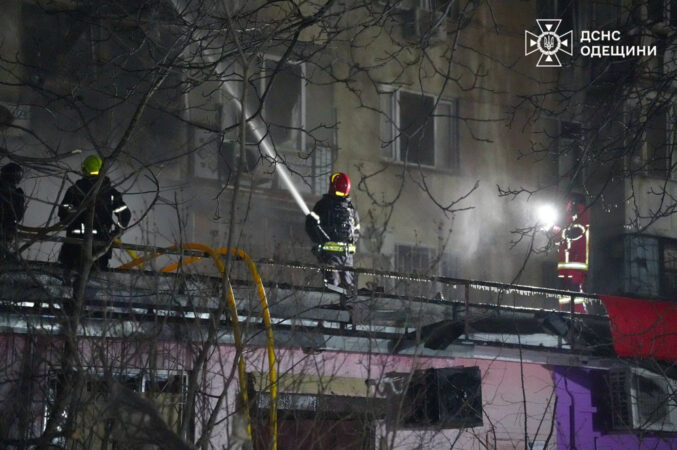
    KYIV, Ukraine — Russian drones blasted apartment buildings and the power grid in the southern Ukraine city of Odesa in an overnight attack that injured six people, including a toddler and two other children, officials said Wednesday.

    Russian President Vladimir Putin expressed confidence in his country’s eventual victory in the nearly four-year war against its neighbor.

    Four apartment buildings were damaged in the Odesa bombardment, according to regional military administration head Oleh Kiper. The DTEK power provider said two of its energy facilities had significant damage. The company said 10 substations that distribute electricity in the region have been damaged in December.

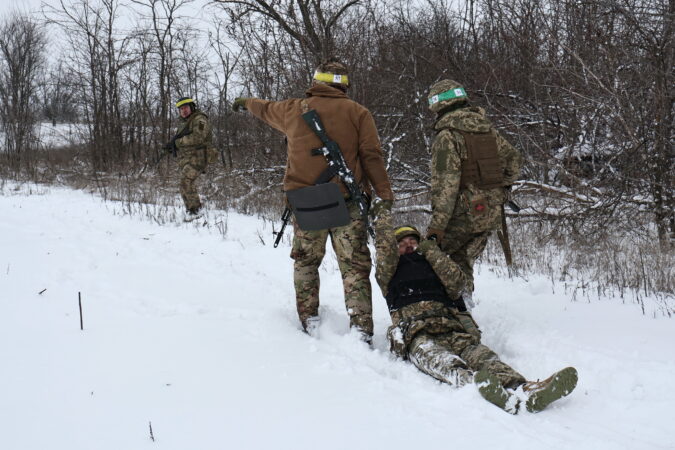
    Russia has escalated attacks on urban areas of Ukraine. As its invasion approaches a four-year milestone in February, it has also intensified targeting of energy infrastructure, seeking to deny Ukrainians heat and running water in the bitter winter months.

    Between January and November, more than 2,300 Ukrainian civilians were killed and more than 11,000 were injured, the United Nations said earlier in December. That was 26% higher than in the same period in 2024 and 70% higher than in 2023, it said.

    Renewed diplomatic push to stop the fighting

    Trump’s special envoy Steve Witkoff said he, Secretary of State Marco Rubio, and Trump’s son-in-law and adviser Jared Kushner had a “productive call” with the national security advisers of Britain, France, Germany, and Ukraine “to discuss advancing the next steps in the European peace process.”

    “We focused on how to move the discussions forward in a practical way on behalf of (Trump’s) peace process, including strengthening security guarantees and developing effective deconfliction mechanisms to help end the war and ensure it does not restart,” Witkoff said in a post on X.

    He added that a main element of the conversation was the reconstruction of Ukraine and how to ensure its prosperity in the future.

    Wednesday’s call comes after U.S. President Donald Trump hosted Ukrainian President Volodymyr Zelensky on Sunday and announced that a settlement is “closer than ever before.” European and Ukrainian officials plan to meet Saturday, lead Ukrainian negotiator Rustem Umerov reaffirmed, adding that U.S. representatives were expected to join remotely.

    Zelensky also is due to hold talks next week with European leaders supporting his efforts to secure acceptable terms.

    Putin is convinced of victory

    Despite progress in peace negotiations, which he didn’t mention, Putin reaffirmed his belief in Russia’s eventual success in its invasion during his traditional New Year’s address.

    He gave special praise to Russian troops deployed in Ukraine, describing them as heroes “fighting for your native land, truth, and justice.”

    “We believe in you and our victory,” Putin said, as cited by Russian state news agency Tass.

    The Russian Defense Ministry said 86 Ukrainian drones were shot down overnight over Russian regions, the Black Sea and the illegally annexed Crimea peninsula.

    Russia claims Putin’s residence was attacked

    Russia’s Defense Ministry released a video of a downed drone that it said was one of 91 Ukrainian drones involved in an alleged attack this week on a Putin residence in northwestern Russia, a claim Kyiv has denied as a “lie.”

    The nighttime video showed a man in camouflage, a helmet and a Kevlar vest standing near a damaged drone lying in snow. The man, his face covered, talks about the drone. Neither the man nor the Defense Ministry provided any location or date.

    The video and claims could not be independently verified.

    Kyiv has denied the allegations of an attack on Putin’s lakeside country residence and called them a ruse to derail progress in peace negotiations.

    Ukraine’s Center for Countering Disinformation said Wednesday the images could not be considered evidence of the attack as the origin of the damaged drone, as well as the time and location of the video itself, remained unknown.

    “It took Russia more than two days to fabricate this ‘evidence’. The photographs of metal fragments laid out on the snow, published by the Russian Defense Ministry, do not prove anything in themselves,” the center said in a statement on its website.

    “There is no video of air defense operations in the area of ​​the residence, no recorded drone crashes in the claimed locations and no consistency even in its own figures, which have changed repeatedly.”

    Maj. Gen. Alexander Romanenkov of the Russian air force claimed that the drones took off from Ukraine’s Sumy and Chernihiv regions. At a briefing where no questions were allowed, he presented a map showing the drone flight routes before they allegedly were downed by Russian air defenses over the Bryansk, Tver, Smolensk, and Novgorod regions.

    The European Union’s foreign policy chief, Kaja Kallas, called the Russian allegations “a deliberate distraction” from peace talks.

    Ukraine weapons fund receives billions of dollars

    Zelensky said Romania and Croatia are the latest countries to join a fund that buys weapons for Ukraine from the United States.

    The financial arrangement, known as the Prioritized Ukraine Requirements List, or PURL, pools contributions from NATO members, except the United States, to purchase U.S. weapons, munitions, and equipment.

    Since it was established in August, 24 countries are now contributing to the fund, according to Zelensky. The fund has received $4.3 billion, with almost $1.5 billion coming in December, he said on social media.

    Meanwhile, Ukraine’s Security Service carried out a drone strike on a major Russian fuel storage facility in the northwestern Yaroslavl region early Tuesday, according to a Ukrainian security official who was not authorized to speak publicly.

    Long-range drones struck the Temp oil depot in the city of Rybinsk, part of Russia’s state fuel reserve system, the official told the Associated Press. Rybinsk is about 500 miles from the Ukrainian border.

  • Idaho company recalls nearly 3,000 pounds of ground beef for E. coli risk

    Idaho company recalls nearly 3,000 pounds of ground beef for E. coli risk

    An Idaho-based company is recalling nearly 3,000 pounds of raw ground beef that may have been contaminated with E. coli bacteria.

    The recall involves 16-ounce vacuum-sealed packages labeled “Forward Farms Grass-Fed Ground Beef.” Affected packages were produced Dec. 16 and have a label telling customers to use or freeze the meat by Jan. 13. The affected beef also bears the establishment number “EST 2083” on the side of its packaging.

    The meat was produced by Heyburn, Idaho-based Mountain West Food Group and was shipped to distributors in Pennsylvania, California, Colorado, Idaho, Montana, and Washington.

    The U.S. Department of Agriculture’s Food Safety and Inspection Service, which announced the recall Saturday, didn’t say which retailers may have sold the meat. The USDA and Mountain West Food Group didn’t respond to messages left Tuesday by the Associated Press.

    The USDA said there have been no confirmed reports of illness due to consumption of the meat. The issue was discovered in a sample of beef during routine testing.

    The USDA said the type of E. coli found can cause illness within 28 days of exposure. Most infected people develop diarrhea, which is often bloody, and vomiting. Infection is usually diagnosed with a stool sample.

    The USDA said customers who have purchased the affected products should either throw them away or return them to the place they were bought. The agency also advises all customers to consume ground beef only if it has been cooked to a temperature of 160 degrees Fahrenheit.

  • European and Canadian leaders discuss U.S.-led peace efforts in Russia-Ukraine war

    European and Canadian leaders discuss U.S.-led peace efforts in Russia-Ukraine war

    KYIV, Ukraine — Leaders from Europe and Canada held talks Tuesday on U.S.-led peace efforts to end the nearly four-year war between Russia and Ukraine, as Moscow and Kyiv sparred over Russian claims, denied by Ukraine, of a mass drone attack on a lakeside residence used by President Vladimir Putin.

    The virtual meeting included European leaders as well as Canadian Prime Minister Mark Carney, heads of European institutions, and NATO Secretary-General Mark Rutte, according to Polish Prime Minister Donald Tusk.

    “Peace is on the horizon,” Tusk told a Polish cabinet meeting. But he added: “It is still far from a 100% certainty.”

    It was the first meeting of European leaders since President Donald Trump hosted Ukrainian President Volodymyr Zelensky at his Florida resort on Sunday. Trump insisted that Ukraine and Russia are “closer than ever before” to a peace settlement, although he acknowledged that outstanding obstacles could still prevent a deal.

    Zelensky on Tuesday announced plans for forthcoming meetings with officials from about 30 countries, dubbed the Coalition of the Willing, that support Kyiv’s effort to end the war with Russia on acceptable terms.

    National security advisers from those countries aim to meet in Ukraine on Jan. 3, followed by a meeting of the countries’ leaders on Jan. 6 in France, he said on social media. He thanked Trump administration officials for their readiness to participate but provided no further details.

    “We are moving the peace process forward,” German Chancellor Friedrich Merz, who attended Tuesday’s talks, said in a post on X. ”Transparency and honesty are now required from everyone — including Russia.”

    His pointed reference to Russia came after Russian and Ukrainian officials exchanged bitter accusations over Moscow’s allegations that Ukraine attempted to attack the Russian leader’s residence in northwestern Russia with 91 long-range drones almost immediately after Trump’s Sunday talks with Zelensky.

    The claims and counterclaims threatened to derail peace efforts. “I don’t like it. It’s not good,” Trump said Monday after Putin told him by phone about the alleged attack.

    Ukrainian Foreign Minister Andrii Sybiha noted Tuesday that Russia “still hasn’t provided any plausible evidence” to support its allegations.

    Moscow won’t do so because “no such attack happened,” he wrote on X.

    “Russia has a long record of false claims,” he added, referencing the Kremlin’s denials that it intended to attack Ukraine ahead of its Feb. 24, 2022, all-out invasion of its neighbor.

    Zelensky, speaking Monday, also branded the allegation as “another lie” from Moscow designed to sabotage peace efforts.

    Kremlin spokesperson Dmitry Peskov countered Tuesday that the alleged Ukrainian attack is “aimed at thwarting President Trump’s efforts to promote a peaceful resolution” to the war.

    Russia and Ukraine have throughout the war exchanged accusations about attacks that cannot be independently verified because of the fighting.

    Peskov did not say whether Moscow would present physical evidence of the attack, such as drone wreckage, saying that such a step would be a matter for Russia’s military. “I don’t think there needs to be any evidence here,” he said.

    The rural Novgorod region is home to one of the Russian presidency’s official residences, Dolgie Borody, close to the town of Valdai, about 250 miles northwest of Moscow. The area has been used to host a vacation retreat for high-ranking government officials since the Soviet era.

    The Institute for the Study of War, a Washington think tank, said that since Trump launched a diplomatic push at the start of the year to end the war, “the Kremlin has sought to delay and prolong peace negotiations in order to continue its war undisturbed, prevent the U.S. from imposing measures intended to pressure Russia into meaningful negotiations, and even to extract concessions about bilateral U.S.-Russian relations.”

  • China flexes blockade capabilities near Taiwan on second day of military drills

    China flexes blockade capabilities near Taiwan on second day of military drills

    TAIPEI, Taiwan — China’s People’s Liberation Army staged a second day of large-scale military drills around Taiwan on Tuesday, unleashing a live-fire show of force as part of what it called “Justice Mission 2025” to demonstrate its ability to deter any external support for the island it claims as part of its sovereign territory.

    Taiwanese officials said some of China’s live rounds landed closer to the island than before.

    The maneuvers increased tension around the Taiwan Strait as 2025 drew to a close, but the impact extended beyond military pressure into everyday life. Taiwan’s Civil Aviation Administration was notified that seven temporary “dangerous zones” had been set up around the strait. The schedules of Taiwan’s four international airports on Tuesday afternoon showed over 150 international and domestic flights had revised times, delays, or cancellations.

    Xinhua, China’s official news agency, posted a commentary late Monday saying the drills sent an unequivocal message: that Beijing is always ready to prevent anything that tries to split Taiwan from China. Each escalation, it said, would be met with stronger countermeasures.

    “By currying favor with the United States through obsequious loyalty gestures and promoting arms purchases, the DPP is binding the entire island of Taiwan to its catastrophic secessionist chariot, disregarding public opinion,” it wrote, referring to Taiwan’s ruling Democratic Progressive Party.

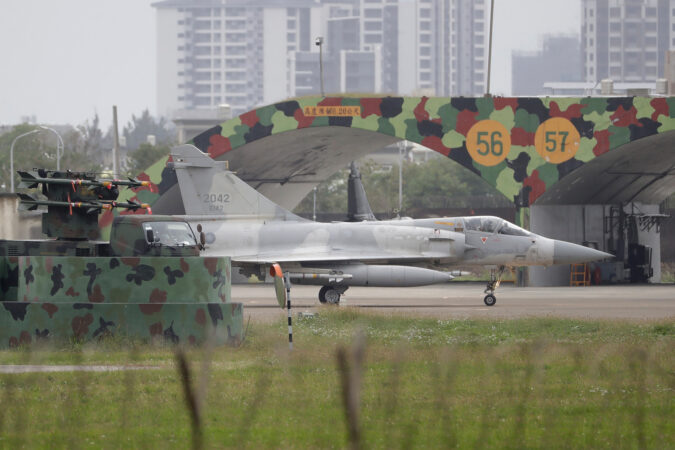
    The PLA’s Eastern Theater Command sent destroyers, frigates, fighters, and bombers to the waters to the north and south of the island to test its ability in sea-air coordination and blockading. Its ground forces carried out long-range, live-fire drills in the waters to the island’s north. They also organized live-fire training alongside a simulated long-range joint strike with air, navy, and missile units in the waters to Taiwan’s south, achieving what command spokesperson Li Xi called “desired effects.”

    Hsieh Jih-sheng, deputy chief of the general staff for intelligence at the Taiwanese Defense Ministry, said some of the 27 rockets detected in the waters near Taiwan fell within its 24-nautical-mile line. “The landing points of rounds definitely were closer to Taiwan compared to the past,” he said. “This is a message it deliberately wants to convey.”

    Aircraft, vessels, and a Chinese balloon detected

    Taiwan President Lai Ching-te said Tuesday his territory would act responsibly by neither escalating conflict nor provoking disputes. He condemned the drills.

    Taiwan’s Defense Ministry said it had detected 130 aircraft, including fighters and bombers; 14 military ships; and eight other official ships around the island between 6 a.m. Monday and 6 a.m. Tuesday. Its forces kept monitoring and deployed aircraft, navy ships, and coastal missile systems in response. Ninety of the Chinese aircraft crossed the median line of the strait. A Chinese military balloon was also spotted, it said.

    The ministry later said it detected 71 aircraft, 13 military ships, and 15 coastal guard and official vessels as of 3 p.m. Tuesday, in addition to four other warships in the western Pacific. A total of 941 flights were affected by the drills, it said.

    “The military power is not necessarily the strongest, but the scale of the drills has become larger each time compared to the last,” Hsieh said. He accused Chinese forces of trying to influence public morale and undermine trust in the Taiwanese military and government.

    China has vowed to seize the island, by force if necessary. Beijing sends warplanes and navy vessels toward the island on a near-daily basis.

    Chinese Defense Ministry spokesperson Zhang Xiaogang said the drills served as a stern warning to “Taiwan independence” separatist forces and external forces, without naming any countries.

    He criticized Lai’s administration for what it called pandering to external forces and pursuing independence, saying that was the root cause of disrupting the status quo in the strait and escalating tensions.

    Last week, Beijing imposed sanctions against 20 defense-related U.S. companies and 10 executives, following a Washington announcement of large-scale arms sales to Taiwan valued at more than $10 billion.

    Under U.S. law, Washington is obligated to assist Taipei with its defense, a point that has become increasingly contentious with China over the years.

    Beijing slams Japan

    On Monday, President Donald Trump said that while he had not been informed of the military exercise in advance, neither was he particularly worried about it. He touted his “great relationship” with Chinese President Xi Jinping and suggested he did not think Xi was going to attack Taiwan.

    The Taiwan issue also heightened China-Japan tensions. Beijing has expressed anger at a statement by Japan’s prime minister, Sanae Takaichi, saying its military could get involved if China takes action against the democratically ruled island. There remains widespread overall suspicion in China about Japan that goes back generations to when imperial Japan brutally took over parts of China in the years before World War II.

    Chinese Foreign Minister Wang Yi slammed both Japan and Taiwan’s “pro-independence forces.”

    “Japan, which launched the war of aggression against China, not only fails to deeply reflect on the numerous crimes it committed, but its current leaders also openly challenge China’s territorial sovereignty, the historical conclusions of World War II, and the postwar international order,” he said Tuesday during an event in Beijing. China, Wang added, “must be highly vigilant against the resurgence of Japanese militarism.”

    China and Taiwan have been governed separately since 1949, when the Communist Party rose to power in Beijing following a civil war. Defeated Nationalist Party forces fled to Taiwan, which later transitioned from martial law to multiparty democracy.

    Stoking the tensions, China’s Eastern Theater Command posted a series of online images and videos carrying provocative language throughout the exercises. It posted a video of live rounds being fired from ships and a ground-based launcher on Tuesday.

    Chen Wen-chin, chairman of the Keelung District Fishermen’s Association in Taiwan, said the group started radio broadcasting every hour starting Monday to inform anglers about where China’s exercises took place, urging them to avoid danger.

    “The Chinese military exercises have prevented fishermen from fishing, which is their livelihood,” Chen said. “The inability to fish has had a significant impact on them and caused economic losses.”

  • Trump administration says it’s freezing childcare funds to Minnesota after series of fraud schemes

    Trump administration says it’s freezing childcare funds to Minnesota after series of fraud schemes

    President Donald Trump’s administration announced on Tuesday that it is freezing childcare funds to Minnesota after a series of fraud schemes in recent years.

    Deputy Secretary of Health and Human Services Jim O’Neill said on the social platform X that the step was in response to “blatant fraud that appears to be rampant in Minnesota and across the country.”

    Minnesota Gov. Tim Walz pushed back in a post on X, saying that fraudsters are a serious issue that the state has spent years cracking down on but that this move is part of “Trump’s long game.”

    “He’s politicizing the issue to defund programs that help Minnesotans,” Walz said.

    O’Neil called out a right-wing influencer who had posted a video Friday claiming he found that daycare centers operated by Somali residents in Minneapolis had committed up to $100 million in fraud. O’Neill said he has demanded that Walz submit an audit of these centers that includes attendance records, licenses, complaints, investigations, and inspections.

    “We have turned off the money spigot and we are finding the fraud,” O’Neill said.

    The announcement came one day after U.S. Department of Homeland Security officials were in Minneapolis conducting a fraud investigation by going to unidentified businesses and questioning workers.

    There have been years of fraud investigations that began with the $300 million scheme at the nonprofit Feeding Our Future, for which 57 defendants in Minnesota have been convicted. Prosecutors said the organization was at the center of the country’s largest COVID-19-related fraud scam, when defendants exploited a state-run, federally funded program intended to provide food for children.

    A federal prosecutor alleged earlier in December that half or more of the roughly $18 billion in federal funds that supported 14 programs in Minnesota since 2018 might have been stolen. Most of the defendants are Somali Americans, they said.

    O’Neill, who is serving as acting director of the Centers for Disease Control and Prevention, also said in the social media post Tuesday that payments across the U.S. through the Administration for Children and Families, an agency within the U.S. Health and Human Services Department, will now require “justification and a receipt or photo evidence” before money is sent. Officials have also launched a fraud-reporting hotline and email address, he said.

    Walz, the 2024 Democratic vice presidential nominee, has said fraud will not be tolerated and his administration “will continue to work with federal partners to ensure fraud is stopped and fraudsters are caught.”

    Walz has said an audit due by late January should give a better picture of the extent of the fraud. He said his administration is taking aggressive action to prevent additional fraud. He has long defended how his administration responded.

    Minnesota’s most prominent Somali American, Democratic U.S. Rep. Ilhan Omar, has urged people not to blame an entire community for the actions of a relative few.

  • Saudi Arabia bombs Yemen port city over weapons shipment from UAE for separatists

    Saudi Arabia bombs Yemen port city over weapons shipment from UAE for separatists

    DUBAI, United Arab Emirates — Saudi Arabia bombed Yemen’s port city of Mukalla on Tuesday after a weapons shipment from the United Arab Emirates arrived for separatist forces in the war-torn country, and warned that it viewed Emirati actions as “extremely dangerous.”

    The bombing followed tensions over the advance of Emirates-backed separatist forces known as the Southern Transitional Council. The council and its allies issued a statement supporting the Emeratis’ presence, even as others allied with Saudi Arabia demanded that Emirati forces withdraw from Yemen in 24 hours’ time.

    The Emirates called for “restraint and wisdom” and disputed Riyadh’s allegations. But shortly after that, it said it would withdraw its remaining troops in Yemen. It remained unclear whether the separatists it backs will give up the territory they recently took.

    The confrontation threatened to open a new front in Yemen’s decade-long war, with forces allied against the Iranian-backed Houthi rebels possibly turning their sights on each other in the Arab world’s poorest nation.

    It also further strained ties between Saudi Arabia and the Emirates, neighbors on the Arabian Peninsula that increasingly have competed over economic issues and regional politics, particularly in the Red Sea area. Tuesday’s airstrikes and ultimatum appeared to be their most serious confrontation in decades.

    “I expect a calibrated escalation from both sides. The UAE-backed Southern Transitional Council is likely to respond by consolidating control,” said Mohammed al-Basha, a Yemen expert and founder of the Basha Report, a risk advisory firm.

    “At the same time, the flow of weapons from the UAE to the STC is set to be curtailed following the port attack, particularly as Saudi Arabia controls the airspace.”

    Airstrike hits Mukalla

    A military statement carried by the state-run Saudi Press Agency announced the strikes on Mukalla, which it said came after ships arrived there from Fujairah in the Emirates.

    “The ships’ crew had disabled tracking devices aboard the vessels, and unloaded a large amount of weapons and combat vehicles in support of the Southern Transitional Council’s forces,” the statement said.

    “Considering that the aforementioned weapons constitute an imminent threat, and an escalation that threatens peace and stability, the Coalition Air Force has conducted this morning a limited airstrike that targeted weapons and military vehicles offloaded from the two vessels in Mukalla,” it added.

    It was not clear if there were any casualties.

    The Emirati Foreign Ministry hours later denied it shipped weapons but acknowledged it sent the vehicles “for use by the UAE forces operating in Yemen.” It also claimed Saudi Arabia knew about the shipment ahead of time.

    The ministry called for “the highest levels of coordination, restraint and wisdom, taking into account the existing security challenges and threats.”

    The Emirati Defense Ministry later said it would withdraw its remaining troops from Yemen over “recent developments and their potential repercussions on the safety and effectiveness of counterterrorism operations.” It gave no timeline for the withdrawal. The Emirates had broadly withdrawn its forces from Yemen years earlier.

    Yemen’s anti-Houthi forces not aligned with the separatists declared a state of emergency Tuesday and ended their cooperation with the Emirates. They issued a 72-hour ban on border crossings in territory they hold, as well as entries to airports and seaports, except those allowed by Saudi Arabia. It remained unclear whether that coalition, governed under the umbrella of Yemen’s Presidential Leadership Council, would remain intact.

    The Southern Transitional Council’s AIC satellite news channel aired footage of the strike’s aftermath but avoided showing damage to the armored vehicles.

    “This unjustified escalation against ports and civilian infrastructure will only strengthen popular demands for decisive action and the declaration of a South Arabian state,” the channel said.

    The attack likely targeted a ship identified as the Greenland, a vessel flagged out of St. Kitts. Tracking data analyzed by the Associated Press showed the vessel had been in Fujairah on Dec. 22 and arrived in Mukalla on Sunday. The second vessel could not be immediately identified.

    Jens Laerke, a spokesperson for the U.N. humanitarian office, urged combatants to protect civilians and civilian infrastructure, like the port, saying any disruption to its operations “risks affecting the already dire humanitarian situation and humanitarian supply chains.”

    Strike comes as separatists advance

    Mukalla is in Yemen’s Hadramout governorate, which the council seized in recent days. The port city is about 300 miles northeast of Aden, which has been the seat of power for anti-Houthi forces after the rebels seized the capital, Sanaa, in 2014.

    Yemen, on the southern edge of the Arabian Peninsula off East Africa, borders the Red Sea and the Gulf of Aden. The war there has killed more than 150,000 people, including fighters and civilians, and created one of the world’s worst humanitarian disasters.

    The Houthis, meanwhile, have launched attacks on hundreds of ships in the Red Sea corridor over the Israel-Hamas war in the Gaza Strip, disrupting regional shipping. The U.S., which earlier praised Saudi-Emirati efforts to end the crisis over the separatists, has launched airstrikes against the rebels under both Presidents Joe Biden and Donald Trump.

    Tuesday’s strike in Mukalla came after Saudi Arabia targeted the council in airstrikes Friday that analysts described as a warning for the separatists to halt their advance and leave the governorates of Hadramout and Mahra.

    The council had pushed out forces there affiliated with the Saudi-backed National Shield Forces, another group in the anti-Houthi coalition.

    Those aligned with the council have increasingly flown the flag of South Yemen, which was a separate country from 1967 to 1990. Demonstrators have been rallying to support political forces calling for South Yemen to secede again.

    A statement Tuesday from Saudi Arabia’s Foreign Ministry directly linked the council’s advance to the Emiratis for the first time.

    “The kingdom notes that the steps taken by the sisterly United Arab Emirates are extremely dangerous,” it said.

    Allies of the council later issued a statement in which they showed no sign of backing down.

  • SNAP bans on soda, candy, and other foods take effect in five states Jan. 1

    SNAP bans on soda, candy, and other foods take effect in five states Jan. 1

    Starting Thursday, Americans in five states who get government help paying for groceries will see new restrictions on soda, candy, and other foods they can buy with those benefits.

    Indiana, Iowa, Nebraska, Utah, and West Virginia are the first of at least 18 states to enact waivers prohibiting the purchase of certain foods through the Supplemental Nutrition Assistance Program, or SNAP.

    It’s part of a push by Health Secretary Robert F. Kennedy Jr. and Agriculture Secretary Brooke Rollins to urge states to strip foods regarded as unhealthy from the $100 billion federal program — long known as food stamps — that serves 42 million Americans.

    “We cannot continue a system that forces taxpayers to fund programs that make people sick and then pay a second time to treat the illnesses those very programs help create,” Kennedy said in a statement in December.

    The efforts are aimed at reducing chronic diseases such as obesity and diabetes associated with sweetened drinks and other treats, a key goal of Kennedy’s Make America Healthy Again effort.

    But retail industry and health policy experts said state SNAP programs, already under pressure from steep budget cuts, are unprepared for the complex changes, with no complete lists of the foods affected and technical point-of-sale challenges that vary by state and store. And research remains mixed about whether restricting SNAP purchases improves diet quality and health.

    The National Retail Federation, a trade association, predicted longer checkout lines and more customer complaints as SNAP recipients learn which foods are affected by the new waivers.

    “It’s a disaster waiting to happen of people trying to buy food and being rejected,” said Kate Bauer, a nutrition science expert at the University of Michigan.

    A report by the National Grocers Association and other industry trade groups estimated that implementing SNAP restrictions would cost U.S. retailers $1.6 billion initially and $759 million each year going forward.

    “Punishing SNAP recipients means we all get to pay more at the grocery store,” said Gina Plata-Nino, SNAP director for the anti-hunger advocacy group Food Research and Action Center.

    The waivers are a departure from decades of federal policy first enacted in 1964 and later authorized by the Food and Nutrition Act of 2008, which said SNAP benefits can be used for “any food or food product intended for human consumption” except alcohol and ready-to-eat hot foods. The law also says SNAP cannot pay for tobacco.

    In the past, lawmakers have proposed stopping SNAP from paying for expensive meats like steak or so-called junk foods, such as chips and ice cream.

    But previous waiver requests were denied based on U.S. Department of Agriculture research concluding that restrictions would be costly and complicated to implement, and that they might not change recipients’ buying habits or reduce health problems such as obesity.

    Under the second Trump administration, however, states have been encouraged and even incentivized to seek waivers — and they responded.

    “This isn’t the usual top-down, one-size-fits-all public health agenda,” Indiana Gov. Mike Braun said when he announced his state’s request last spring. “We’re focused on root causes, transparent information, and real results.”

    The five state waivers that take effect Jan. 1 affect about 1.4 million people. Utah and West Virginia will ban the use of SNAP to buy soda and soft drinks, while Nebraska will prohibit soda and energy drinks. Indiana will target soft drinks and candy. In Iowa, which has the most restrictive rules to date, the SNAP limits affect taxable foods, including soda and candy, but also certain prepared foods.

    “The items list does not provide enough specific information to prepare a SNAP participant to go to the grocery store,” Plata-Nino wrote in a blog post. “Many additional items — including certain prepared foods — will also be disallowed, even though they are not clearly identified in the notice to households.”

    Marc Craig, 47, of Des Moines, said he has been living in his car since October. He said the new waivers will make it more difficult to determine how to use the $298 in SNAP benefits he receives each month, while also increasing the stigma he feels at the cash register.

    “They treat people that get food stamps like we’re not people,” Craig said.

    SNAP waivers enacted now and in the coming months will run for two years, with the option to extend them for an additional three, according to the USDA. Each state is required to assess the impact of the changes.

    Health experts worry that the waivers ignore larger factors affecting the health of SNAP recipients, said Anand Parekh, chief policy officer at the University of Michigan School of Public Health.

    “This doesn’t solve the two fundamental problems, which is healthy food in this country is not affordable and unhealthy food is cheap and ubiquitous,” he said.