Category: Nation World News Wires

  • Times Square to feature patriotic crystal ball for New Year’s Eve, kicking off U.S. 250th birthday

    Times Square to feature patriotic crystal ball for New Year’s Eve, kicking off U.S. 250th birthday

    After the crystal ball drops on New Year’s Eve in New York City, it will rise again, sparkling in red, white, and blue to usher in 2026 and kick off months of celebrations for the nation’s upcoming 250th birthday.

    The patriotic touches at this year’s Times Square gathering, including a second confetti drop, will offer an early glimpse of what’s ahead: hundreds of events and programs, big and small, planned nationwide to mark the signing of the Declaration of Independence in 1776.

    “I’m telling you right now, whatever you’re imagining, it’s going to be much more than that,” said America250 Chair Rosie Rios, who oversees the bipartisan commission created by Congress in 2016 to organize the semiquincentennial anniversary. “It’s going to be one for the ages, the most inspirational celebration this country and maybe the world has ever seen.”

    Rios and her group worked with the Times Square Alliance business district and One Times Square, the building from which the ball is dropped, to make the changes to this year’s ceremonies. They’re also planning a second ball drop event on July 3, the eve of the nation’s birthday, “in the same beautiful style that Times Square knows how to do it,” Rios said.

    It will mark the first time in 120 years there will be a ball drop in Times Square that doesn’t occur on New Year’s Eve, she said.

    A New Year’s Eve ball was first dropped in Times Square in 1907. Built by a young immigrant metalworker named Jacob Starr, the 700-pound, 5-foot-diameter ball was made of iron and wood and featured 100 25-watt light bulbs. Last year, the Constellation Ball, the ninth and largest version, was unveiled. It measures about 12 feet in diameter and weighs nearly 12,000 pounds.

    The only years when no ball drop occurred were 1942 and 1943, when the city instituted a nightly “dimout” during World War II to protect itself from attacks. Crowds instead celebrated the new year with a moment of silence followed by chimes rung from the base of One Times Square.

    This year, the stroke of midnight will also mark the official launch of America Gives, a national service initiative created by America250. Organizers hope to make 2026 the largest year of volunteer hours ever aggregated in the country.

    On the following day, America250 will participate in the New Years Day Rose Parade in Pasadena, Calif., with a float themed “Soaring Onward Together for 250 Years.” It will feature three larger-than-life bald eagles representing the country’s past, present, and future.

    “We want to ring in this new year from sea to shining sea. What better way to think about it than going from New York to California,” Rios said. “This has to be community-driven, this has be grassroots. We’re going from Guam to Alaska, from Fairbanks to Philadelphia, and everything in between.”

    President Donald Trump has also announced the “Freedom 250” initiative to coordinate additional events for the 250th anniversary.

    Rios said she sees the wide range of celebrations and programs planned for the coming months, from large fireworks displays and statewide potluck suppers to student contests and citizen oral histories, as an opportunity to unite a politically divided nation.

    “If we can find something for everyone … having those menus of options that people can pick and choose how they want to participate,” she said. “That’s how we’re going to get to engaging 350 million Americans.”

  • Millions of Afghans face hunger as aid cuts deepen a humanitarian crisis

    Millions of Afghans face hunger as aid cuts deepen a humanitarian crisis

    KABUL, Afghanistan — For 10 hours a day, Rahimullah sells socks from his cart in eastern Kabul, earning about $4.5 to $6 per day. It’s a pittance, but it’s all he has to feed his family of five.

    Rahimullah, who like many Afghans goes by only one name, is one of millions of Afghans who rely on humanitarian aid, both from the Afghan authorities and from international charity organizations, for survival. An estimated 22.9 million people — nearly half the population — required aid in 2025, the International Committee for the Red Cross said in an article on its website Monday.

    But severe cuts in international aid — including the halting of U.S. aid to programs such as food distribution run by the United Nations’ World Food Program — have severed this lifeline.

    More than 17 million people in Afghanistan now face crisis levels of hunger in the winter, the World Food Program warned last week, 3 million more than were at risk more than a year ago.

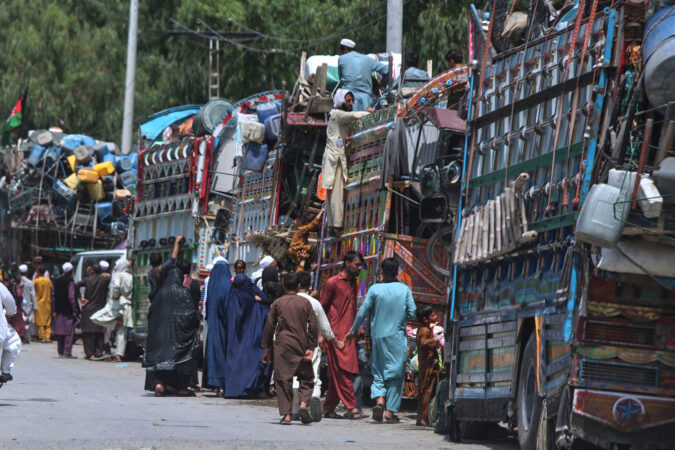
    The slashing in aid has come as Afghanistan is battered by a struggling economy, recurrent droughts, two deadly earthquakes, and the mass influx of Afghan refugees expelled from countries such as Iran and Pakistan. The resulting multiple shocks have severely pressured resources, including of housing and food.

    U.N. appeals for help

    Tom Fletcher, the U.N. humanitarian chief, told the Security Council in mid-December that the situation was compounded by “overlapping shocks,” including the recent earthquakes and increasing restrictions on humanitarian aid access and staff.

    While Fletcher said nearly 22 million Afghans will need U.N. assistance in 2026, his organization will focus on 3.9 million facing the most urgent need of lifesaving help due to reduced donor contributions.

    Fletcher said this winter was “the first in years with almost no international food distribution.”

    “As a result, only about 1 million of the most vulnerable people have received food assistance during the lean season in 2025,” compared to 5.6 million last year, he said.

    The year has been devastating for U.N. humanitarian organizations, which have had to cut thousands of jobs and spending in the wake of aid cuts.

    “We are grateful to all of you who have continued to support Afghanistan. But as we look towards 2026, we risk a further contraction of life-saving help — at a time when food insecurity, health needs, strain on basic services, and protection risks are all rising,” Fletcher said.

    Returning refugees

    The return of millions of refugees has added pressure on an already teetering system. Minister of Refugees and Repatriation Affairs Abdul Kabir said Sunday that 7.1 million Afghan refugees had returned to the country over the last four years, according to a statement on the ministry website.

    Rahimullah, 29, was one of them. The former Afghan Army soldier fled to neighboring Pakistan after the Taliban seized power in 2021. He was deported back to Afghanistan two years later, and initially received aid in the form of cash as well as food.

    “The assistance was helping me a lot,” he said. But without it, “now I don’t have enough money to live on. God forbid, if I were to face a serious illness or any other problem, it would be very difficult for me to handle because I don’t have any extra money for expenses.”

    The massive influx of former refugees has also sent rents skyrocketing. Rahimullah’s landlord has nearly doubled the rent of his tiny two-room home, with walls made half of concrete and half of mud and a homemade mud stove for cooking. Instead of 4,500 afghanis (about $67), he now wants 8,000 afghanis (about $120) — a sum Rahimullah cannot afford. So he, his wife, daughter, and two young sons will have to move next month. They don’t know where to.

    Before the Taliban takeover, Rahimullah had a decent salary and his wife worked as a teacher. But the new government’s draconian restrictions on women and girls mean women are barred from nearly all jobs, and his wife is unemployed.

    “Now the situation is such that even if we find money for flour, we don’t have it for oil, and even if we find it for oil, we can’t pay the rent. And then there is the extra electricity bill,” Rahimullah said.

    Harsh winters compound misery

    In Afghanistan’s northern province of Badakhshan, Sherin Gul is desperate. In 2023, her family of 12 got supplies of flour, oil, rice, beans, pulses, salt, and biscuits. It was a lifesaver.

    But it only lasted six months. Now, there is nothing. Her husband is old and weak and cannot work, she said. With 10 children, seven girls and three boys between the ages of 7 and 27, the burden of providing for the family has fallen on her 23-year-old son — the only one old enough to work. But even he only finds occasional jobs.

    “There are 12 of us … and one person working cannot cover the expenses,” she said. “We are in great trouble.”

    Sometimes neighbors take pity on them and give them food. Often, they all go hungry.

    “There have been times when we have nothing to eat at night, and my little children have fallen asleep without food,” Gul said. “I have only given them green tea and they have fallen asleep crying.”

    Before the Taliban takeover, Gul worked as a cleaner, earning just about enough to feed her family. But the ban on women working has left her unemployed, and she said she developed a nervous disorder and is often sick.

    Compounding their misery is the harsh cold of the northern Afghan winter, when snow halts construction work where her son can sometimes find jobs. And there is the added expense of firewood and charcoal.

    “If this situation continues like this, we may face severe hunger,” Gul said. “And then it will be very difficult for us to survive in this cold weather.”

  • Thailand and Cambodia sign a new ceasefire agreement to end border fighting

    Thailand and Cambodia sign a new ceasefire agreement to end border fighting

    BANGKOK — Thailand and Cambodia signed a ceasefire agreement on Saturday to end weeks of fighting along their border over competing territorial claims.

    The agreement took effect at noon and calls for a halt in military movements and airspace violation for military purposes.

    Only Thailand has carried out airstrikes, hitting sites in Cambodia as recently as Saturday morning, according to the Cambodian Defense Ministry.

    The deal also calls for Thailand, after the ceasefire has held for 72 hours, to repatriate 18 Cambodian soldiers it has held as prisoners since earlier fighting in July. Their release has been a major demand of the Cambodian side.

    Within hours of the signing, Thailand’s Foreign Ministry protested to Cambodia that a Thai soldier sustained a permanent disability when he stepped on an anti-personnel land mine it charged had been laid by Cambodian forces.

    Defense ministers met at the border

    The agreement was signed by the countries’ defense ministers, Cambodia’s Tea Seiha and Thailand’s Nattaphon Narkphanit, at a border checkpoint. It followed three days of lower-level talks by military officials.

    It declares that the sides are committed to an earlier ceasefire that ended five days of fighting in July and follow-up agreements.

    The original July ceasefire was brokered by Malaysia and pushed through by pressure from U.S. President Donald Trump, who threatened to withhold trade privileges unless Thailand and Cambodia agreed. It was formalized in more detail in October at a regional meeting in Malaysia that Trump attended.

    Despite those deals, the countries carried on a bitter propaganda war and minor cross-border violence continued, escalating in early December to widespread heavy fighting.

    On Saturday, U.S. Secretary of State Marco Rubio welcomed the ceasefire announcement and urged Cambodia and Thailand to fully honor it and the terms of the peace accord reached earlier in Malaysia.

    Civilians bore the brunt of the fighting

    Thailand has lost 26 soldiers and one civilian as a direct result of the combat since Dec. 7, according to officials. Thailand has also reported 44 civilian deaths.

    Cambodia hasn’t issued an official figure on military casualties, but says that 30 civilians have been killed and 90 injured. Hundreds of thousands of people have been evacuated on both sides of the border.

    “Today’s ceasefire also paves the way for the displaced people who are living in the border areas to be able to return to their homes, work in the fields, and even allow their children to be able to return to schools and resume their studies,” Cambodia’s Seiha told reporters after the signing.

    Each side blamed the other for initiating the fighting and claimed to be acting in self-defense.

    The agreement also calls on both sides to adhere to international agreements against deploying land mines, a major concern of Thailand.

    Thai soldiers along the border have been wounded in at least 10 incidents this year by what Thailand says were newly planted Cambodian mines. Cambodia says the mines were left over from decades of civil war that ended in the late 1990s.

    Following the latest injury on Saturday, Thailand’s Foreign Ministry noted that the new agreement “includes key provisions on joint humanitarian demining operations to ensure the safety of military personnel and civilians in the border areas as soon as possible.”

    Another clause says the two sides “agree to refrain from disseminating false information or fake news.”

    The agreement calls for a resumption of previous measures to demarcate the border. The sides also agreed to cooperate in suppressing transnational crimes. That’s primarily a reference to online scams perpetrated by organized crime that have bilked victims around the world of billions of dollars each year. Cambodia is a center for such criminal enterprises.

    Malaysia’s leader hails agreement

    Malaysia’s Prime Minister Anwar Ibrahim, who was instrumental in putting together the original ceasefire, said the new agreement “reflects a shared recognition that restraint is required, above all in the interest of civilians.”

    Many clauses similar to those in Saturday’s agreement were included in October’s ceasefire document, and were open to various interpretations and generally honored only in part. These included provisions concerning land mines and the Cambodian prisoners.

    The fragility of the new agreement was underlined by Thailand’s Defense Ministry spokesperson Surasant Kongsiri in a news briefing after Saturday’s signing. He said that the safe return of civilians to their homes would indicate the situation had stabilized enough to allow the repatriation of the captured Cambodian soldiers.

    “However, if the ceasefire does not materialize, this would indicate a lack of sincerity on the Cambodian side to create sure peace,” he said. “Therefore, the 72- hour ceasefire beginning today is not an act of trust nor unconditional acceptance but a time frame to tangibly prove whether Cambodia can truly cease the use of weapons, provocations, and threats in the area.”

  • A scrapyard worker injured in the UPS plane crash dies on Christmas, raising deaths to 15

    A scrapyard worker injured in the UPS plane crash dies on Christmas, raising deaths to 15

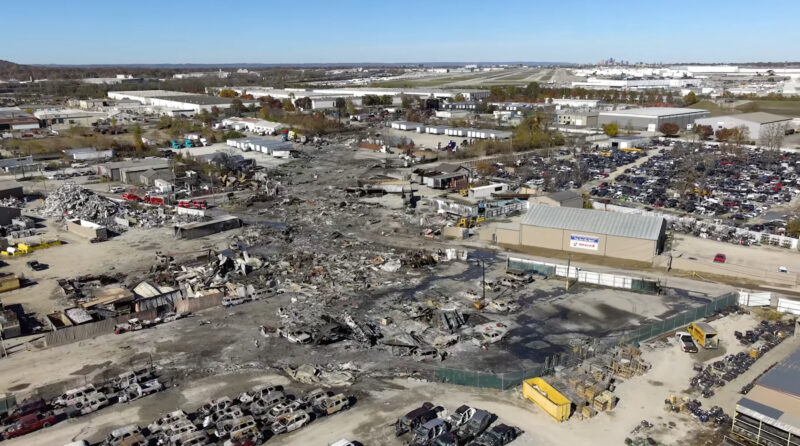
    LOUISVILLE, Ky. — A Cuban immigrant who had built a new life working at a Kentucky scrapyard died on Christmas Day from severe burns suffered in last month’s UPS cargo plane crash, raising the death toll to 15, officials said.

    Alain Rodriguez Colina was on the ground when the plane, fully loaded with fuel for a flight to Hawaii, plowed into businesses after departing Louisville’s airport, exploding in a massive fireball. Gov. Andy Beshear and Louisville Mayor Craig Greenberg confirmed his death via social media.

    “May Alain’s memory be a blessing,” the mayor said late Thursday.

    Three pilots and multiple people died after the plane’s left engine detached during takeoff on Nov. 4, and cracks were later found where the engine connected to the wing, the National Transportation Safety Board said. Louisville’s Muhammad Ali International Airport is home to the largest UPS package delivery hub.

    Colina had worked since 2023 at the nearby Grade A Auto Parts & Recycling, moving up rapidly to the position of metal buyer, said owner and CEO Sean Garber in a phone interview Friday. Colina embraced the company’s culture and life in Louisville, even becoming a University of Kentucky fan. His mother and siblings lived in the area and he had a daughter in Cuba, he said.

    Workers at the scrapyard have described the scramble to help survivors after the crash. Colina had been with a customer and a coworker who died, Garber said. Colina got out but was burned over 50% of his body, and doctors didn’t have much hope for a recovery.

    He was in an induced coma, never regaining consciousness. His family visited often. It seemed like he was starting to heal, Garber said, but on Thursday he took a turn for the worse.

    Colina was a good man, Garber said, with a big heart who cared about the business, customers, and his family.

    “He believed in the opportunity he got in the United States and really made the most of it,” Garber said. “He should still be with us.”

    Earlier this month, a lawyer filed two wrongful death lawsuits that allege that the company kept flying older aircrafts without increasing maintenance beyond what’s regularly scheduled. The lawsuit also names General Electric, which made the plane’s engine. Both UPS and GE have said they don’t comment on pending lawsuits but safety remains their top priority as they assist the federal investigation. That litigation does not include Colina.

    Local businesses and more than 90 people affected by the crash, including Colina, plan to file another lawsuit in the coming weeks, said attorney Masten Childers III, whose firm is one of two representing those plaintiffs.

    “Alain fought hard,” Childers said. “Alain’s passing must be honored by holding those responsible for his death accountable.”

    The Federal Aviation Administration has grounded all MD-11s, the type of plane involved in the crash, which have been used only for hauling cargo for more than a decade.

  • Trump overturned decades of US trade policy in 2025. See the impact of his tariffs, in four charts.

    Trump overturned decades of US trade policy in 2025. See the impact of his tariffs, in four charts.

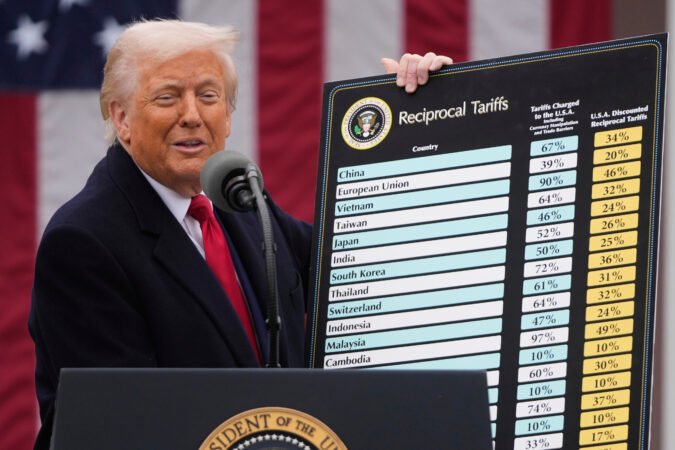
    Since returning to the White House in January, President Donald Trump has overturned decades of U.S. trade policy — building a wall of tariffs around what used to be a wide open economy.

    His double-digit taxes on imports from almost every country have disrupted global commerce and strained the budgets of consumers and businesses worldwide. They have also raised tens of billions of dollars for the U.S. Treasury.

    Trump has argued that his steep new import taxes are necessary to bring back wealth that was “stolen” from the U.S. He says they will narrow America’s decades-old trade deficit and bring manufacturing back to the country. But upending the global supply chain has proven costly for households facing rising prices. The taxes are paid by importers who typically attempt to pass along the higher costs to their customers. That includes businesses and ultimately, U.S. households.

    And the erratic way the president rolled out his tariffs — announcing them, then suspending or altering them before conjuring up new ones — made 2025 one of the most turbulent economic years in recent memory.

    Here’s a look at the impact of Trump’s tariffs over the last year, in four charts.

    Effective U.S. tariff rate

    A key number for the overall impact of tariffs on U.S. consumers and businesses is the “effective” tariff rate — which, unlike headline figures imposed by Trump for specific trade actions, provides an average based on the actual imports coming into the country.

    In 2025, per data from the Yale Budget Lab, the effective U.S. tariff rate peaked in April. But it’s still far higher than the average seen at the start of the year. Before finalizing shifts in consumption, November’s effective tariff rate was nearly 17% — seven times greater than January’s average and the highest seen since 1935.

    Tariff revenue vs America’s trade deficit

    Among selling points to justify his tariffs, Trump has repeatedly said they would reduce America’s longstanding trade deficit and bring revenue into the Treasury.

    Trump’s higher tariffs are certainly raising money. They’ve raked in more than $236 billion this year through November — much more than in years past. But they still account for just a fraction of the federal government’s total revenue. And they haven’t raised nearly enough to justify the president’s claim that tariff revenue could replace federal income taxes — or allow for windfall dividend checks for Americans.

    The U.S. trade deficit, meanwhile, has fallen significantly since the start of the year. The trade gap peaked to a monthly record of $136.4 billion in March, as consumers and businesses hurried to import foreign products before Trump could impose his tariffs on them. The trade gap narrowed to $52.8 billion in September, the latest month for which data is available. But the year-to-date deficit was still running 17% ahead of January-September 2024.

    Import shifts with America’s biggest trading partners

    Trump’s 2025 tariffs hit nearly every country in the world — including America’s biggest trading partners. But his policies have had the biggest impact on U.S. trade with China, once the biggest source of American imports and now No. 3 behind Canada and Mexico. U.S. tariffs on Chinese imports now come to 47.5%, according to calculations by Chad Bown of the Peterson Institute for International Economics.

    The value of goods coming into the U.S. from China fell nearly 25% during the first three-quarters of the year. Imports from Canada also dropped. But the value of products from Mexico, Vietnam, and Taiwan grew year-to-date.

    Market swings

    For investors, the most volatile moments on the stock market this year arrived amid some of the most volatile moments for Trump’s tariffs.

    The S&P 500, an index for the biggest public companies in the U.S., saw its biggest daily and weekly swings in April — and largest monthly losses and gains in March and June, respectively.

  • Delaware State Police say DMV gunman let customers leave, fired at approaching officers

    Delaware State Police say DMV gunman let customers leave, fired at approaching officers

    A man accused of fatally shooting a Delaware State Police trooper at a DMV office allowed customers to leave and then fired at approaching officers before being killed, investigators said Friday.

    State Police Cpl. Matthew Snook was working an overtime assignment at the New Castle DMV reception desk on Tuesday afternoon when Rahman Rose entered as a customer, approached him from behind, and shot him with a handgun, state police said in a news release.

    Rose, 44, of Wilmington, continued firing at the trooper, who pushed a DMV employee out of the way and told them to run, investigators said. Rose then allowed customers to leave but fired multiple rounds at law enforcement as they approached the building.

    A New Castle county police officer shot Rose through a window from outside the building. Rose later died at a hospital.

    Snook, who went by “Ty,” was a 10-year veteran of the state police force. On Wednesday, members of the community lined roadways and displayed messages of gratitude as a procession of troopers, police officers and firefighters escorted his body from the state medical examiner’s office to a funeral home.

    William Crotty, superintendent of the Delaware State Police, said the outpouring of support served as a reminder that Snook’s service and sacrifice will not be forgotten.

    The shooting remains under investigation, and authorities have asked witnesses or others with relevant information to contact detectives.

  • Zelensky: Talks will address security guarantees and reconstruction

    Zelensky: Talks will address security guarantees and reconstruction

    KYIV, Ukraine — Ukrainian President Volodymyr Zelensky said Friday that he will meet with U.S. President Donald Trump in Florida over the weekend.

    Zelensky told journalists that the two leaders will discuss security guarantees for Ukraine during Sunday’s talks, and that the 20-point plan under discussion “is about 90% ready.”

    An “economic agreement” also will be discussed, Zelensky said, but added that he was unable to confirm “whether anything will be finalized by the end.”

    The Ukrainian side will also raise “territorial issues,” he said. Moscow has insisted that Ukraine relinquish the remaining territory it still holds in the Donbas — an ultimatum that Ukraine has rejected. Russia has captured most of Luhansk and about 70% of Donetsk — the two areas that make up the Donbas.

    Zelensky said that Ukraine “would like the Europeans to be involved,” but doubted whether it would be possible at short notice.

    “We must, without doubt, find some format in the near future in which not only Ukraine and the U.S. are present, but Europe is represented as well,” he said.

    The announced meeting is the latest development in an extensive U.S.-led diplomatic push to end the nearly four-year Russia-Ukraine war, but efforts have run into sharply conflicting demands by Moscow and Kyiv.

    Zelenskyy’s comments came after he said Thursday that he had a “good conversation” with U.S. special envoy Steve Witkoff and Jared Kushner, Trump’s son-in-law.

    Kremlin spokesman Dmitry Peskov told reporters on Friday that the Kremlin had already been in contact with U.S. representatives since Russian presidential envoy Kirill Dmitriev recently met with U.S. envoys in Florida.

    “It was agreed upon to continue the dialogue,” he said.

    Trump is engaged in a diplomatic push to end Russia’s all-out war, which began on Feb. 24, 2022, but his efforts have run into sharply conflicting demands by Moscow and Kyiv.

    Zelensky said Tuesday that he would be willing to withdraw troops from Ukraine’s eastern industrial heartland as part of a plan to end the war, if Russia also pulls back and the area becomes a demilitarized zone monitored by international forces.

    Though Russian Foreign Ministry spokeswoman Maria Zakharova said Thursday that there had been “slow but steady progress” in the peace talks, Russia has given no indication that it will agree to any kind of withdrawal from land it has seized.

    On the ground, two people were killed and six more wounded Friday when a guided aerial bomb hit a busy road and set cars aflame in Ukraine’s second biggest city, Kharkiv, mayor Ihor Terekhov wrote on Telegram.

    One person was killed and three others were wounded when a guided aerial bomb hit a house in Ukraine’s Zaporizhzhia region, while six people were wounded in a missile strike on the city of Uman, local officials said Friday.

    Russian drone attacks on the city of Mykolaiv and its suburbs overnight into Friday left part of the city without power. Energy and port infrastructure were damaged by drones in the city of Odesa on the Black Sea.

    Meanwhile, Ukraine said that it struck a major Russian oil refinery on Thursday using U.K.-supplied Storm Shadow missiles.

    Ukraine’s General Staff said that its forces hit the Novoshakhtinsk refinery in Russia’s Rostov region.

    “Multiple explosions were recorded. The target was hit,” it wrote on Telegram.

    Rostov regional Gov. Yuri Slyusar said that a firefighter was wounded when extinguishing the fire.

    Ukraine’s long-range drone strikes on Russian refineries aim to deprive Moscow of the oil export revenue it needs to pursue its full-scale invasion. Russia wants to cripple the Ukraine’s power grid, seeking to deny civilians access to heat, light and running water in what Ukrainian officials say is an attempt to “weaponize winter.”

  • China sanctions 20 U.S. defense companies and 10 executives over massive arms sales to Taiwan

    China sanctions 20 U.S. defense companies and 10 executives over massive arms sales to Taiwan

    BEIJING — Beijing imposed sanctions on Friday against 20 U.S. defense-related companies and 10 executives, a week after Washington annoucned large-scale arms sales to Taiwan.

    The sanctions entail freezing the companies’ assets in China and banning individuals and organizations from dealing with them, according to the Chinese foreign ministry.

    The companies include Northrop Grumman Systems Corporation, L3Harris Maritime Services and Boeing in St. Louis, while defense firm Anduril Industries founder Palmer Luckey is one of the executives sanctioned, who can no longer do business in China and are barred from entering the country. Their assets in the East Asian country have also been frozen.

    The announcement of the U.S. arms-sale package, valued at more than $10 billion, has drawn an angry response from China, which claims Taiwan as its own and says it must come under its control.

    If approved by the American Congress, it would be the largest-ever U.S. weapons package to the self-ruled territory.

    “We stress once again that the Taiwan question is at the very core of China’s core interests and the first red line that must not be crossed in China-U.S. relations,” the Chinese foreign ministry said in a statement on Friday. “Any company or individual who engages in arms sales to Taiwan will pay the price for the wrongdoing.”

    The ministry also urged the U.S. to stop what it called “the dangerous moves of arming Taiwan.”

    Taiwan is a major flashpoint in U.S.-China relations that analysts worry could explode into military conflict between the two powers. China says that the U.S. arms sales to Taiwan would violate diplomatic agreements between China and the U.S.

    China’s military has increased its presence in Taiwan’s skies and waters in the past few years, holding joint drills with its warships and fighter jets on a near-daily basis near the island.

    Under the American federal law, the U.S. is obligated to assist Taiwan with its self-defense, a point that has become increasingly contentious with China. Beijing already has strained ties with Washington over trade, technology and other human rights issues.

  • A Venezuelan family’s Christmas: From the American dream to poverty

    A Venezuelan family’s Christmas: From the American dream to poverty

    MARACAY, Venezuela — This was not the Christmas that Mariela Gómez would have imagined a year ago. Or the one that thousands of other Venezuelan immigrants would have pictured. But Donald Trump returned to the White House in January and quickly ended their American dream.

    So Gómez found herself spending the holiday in northern Venezuela for the first time in eight years. She dressed up, cooked, got her son a scooter, and smiled for her in-laws. Hard as she tried, though, she could not ignore the main challenges faced by returning migrants: unemployment and poverty.

    “We had a modest dinner, not quite what we’d hoped for, but at least we had food on the table,” Gómez said of the lasagna-like dish she shared with her partner and in-laws instead of the traditional Christmas dish of stuffed corn dough hallacas. “Making hallacas here is a bit expensive, and since we’re unemployed, we couldn’t afford to make them.”

    Gómez, her two sons, and her partner returned to the city of Maracay on Oct. 27 after crossing the U.S.-Mexico border to Texas, where they were quickly swept up by U.S. Border Patrol amid the Trump administration’s crackdown on immigration. They were deported to Mexico, from where they began the dangerous journey back to Venezuela.

    They crossed Central America by bus, but once in Panama, the family could not afford to continue to Colombia via boat in the Caribbean. Instead, they took the cheaper route along the Pacific’s choppy waters, sitting on top of sloshing gasoline tanks in a cargo boat for several hours and then transferring to a fast boat until reaching a jungled area of Colombia. They spent about two weeks there until they were wired money to make it to the border with Venezuela.

    Gómez was among the more than 7.7 million Venezuelans who left their home country in the last decade, when its economy came undone as a result of a drop in oil prices, rising corruption, and mismanagement. She lived in Colombia and Peru for years before setting her sights on the U.S. with hopes of building a new life.

    Trump’s second term has dashed the hopes of many like Gómez.

    As of September, more than 14,000 migrants, mostly from Venezuela, had returned to South America since Trump moved to limit migration to the U.S., according to figures from Colombia, Panama, and Costa Rica. In addition, Venezuelans were steadily deported to their home country this year after President Nicolás Maduro, under pressure from the White House, did away with his long-standing policy of not accepting deportees from the U.S.

    Immigrants arrived regularly at the airport outside the capital, Caracas, on flights operated by a U.S. government contractor or Venezuela’s state-owned airline. More than 13,000 immigrants returned this year on the chartered flights.

    Gómez’s return to Venezuela also allowed her to see the now 20-year-old daughter she left behind when she fled the country’s complex crisis. They talked and drank beer during the holiday knowing it might be the last time they share a drink for a while — Gómez’s daughter will migrate to Brazil next month.

    Gómez is hoping to make hallacas for New Year’s Eve and is also hoping for a job. But her prayers for next year are mostly for good health.

    “I ask God for many things, first and foremost life and health, so we can continue enjoying our family,” she said.

  • New storm hitting waterlogged Southern California could cause more flooding and mudslides

    New storm hitting waterlogged Southern California could cause more flooding and mudslides

    WRIGHTWOOD, Calif. — Another powerful storm system threatening to soak Southern California with its wettest Christmas in years rolled into the region on Thursday, bringing the potential for more flooding and mudslides a day after heavy rain and gusty winds were blamed for at least two deaths.

    Forecasters warned the additional rain could increase the risk of debris flows in waterlogged areas scorched by wildfires in January. Those burn scar zones have been stripped of vegetation by fire and are less able to absorb water.

    Outside of California, a major storm system was moving toward the Midwest and Northeast and was expected to interfere with travel, according to the National Weather Service.

    A mix of freezing rain and sleet could create icy conditions across much of Pennsylvania and parts of Michigan and Maryland. Forecasters warned significant ice accumulation on tree limbs and power lines could cause outages. Heavy snow was expected to blanket the Northeast early Friday.

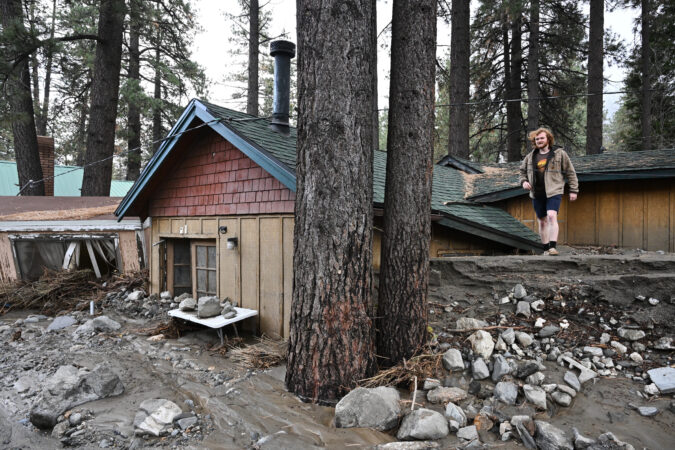
    The San Bernardino County Sheriff’s Department in Southern California issued an evacuation warning for Wrightwood, a mountain town about 80 miles northeast of Los Angeles, due to a risk of mudslides.

    County firefighters on Wednesday said they rescued people trapped in cars when mud and debris rushed down a road leading into Wrightwood. It was not immediately clear how many people were rescued.

    Roads in the town of about 5,000 people were covered in rocks, debris, and thick mud on Thursday. With power out, a local gas station and coffee shop running on generators were serving as hubs for residents and visitors. Statewide, more than 80,000 people were without power Thursday evening, according to PowerOutage.us.

    “It’s really a crazy Christmas,” said Jill Jenkins, who was spending the holiday with her 13-year-old grandson, Hunter Lopiccolo.

    Lopiccolo said the family had almost fled the previous day, when water washed away a chunk of their backyard. But they eventually decided to stay and still celebrated the holiday. Lopiccolo got a new snowboard and e-bike.

    “We just played card games all night with candles and flashlights,” he said.

    Resident Arlene Corte said roads in town turned into rivers, but her house was not damaged.

    “It could be a whole lot worse,” she said. “We’re here talking.”

    With more rain on the way, more than 150 firefighters were stationed in the area, said San Bernardino County Fire spokesperson Shawn Millerick.

    “We’re ready,” he said. “It’s all hands on deck at this point.”

    Deaths and heavy rain

    A falling tree killed a San Diego man Wednesday, news outlets reported. Farther north, a Sacramento sheriff’s deputy died in what appeared to be a weather-related crash.

    Residents around burn scar zones from the Airport Fire in Orange County were under evacuation orders.

    Areas along the coast, including Malibu, were under a flood watch until Friday afternoon, and wind and flood advisories were issued for much of the Sacramento Valley and the San Francisco Bay Area.

    The storms were the result of multiple atmospheric rivers carrying massive plumes of moisture from the tropics during one of the busiest travel weeks of the year.

    Southern California typically gets half an inch to 1 inch of rain this time of year, but this week many areas could see between 4 and 8 inches with even more in the mountains, National Weather Service meteorologist Mike Wofford said.

    Snow at higher elevations

    More heavy snow was expected in the Sierra Nevada, where wind gusts created “near white-out conditions” in places and made mountain pass travel treacherous. Officials said there was a “high” avalanche risk around Lake Tahoe and a winter storm warning was in effect through Friday.

    Ski resorts around Lake Tahoe recorded about 1 to 3 feet of snow overnight, said Tyler Salas, a National Weather Service meteorologist in Reno, Nev. Forecasters expect to see up to another 3 feet of snow through Friday, Salas said. The area could see 45 mph gusts of wind in low elevation areas and 100 mph winds along mountain ridges.

    Gov. Gavin Newsom declared a state of emergency in six counties to allow state assistance in storm response.

    The state deployed emergency resources and first responders to several coastal and Southern California counties, and the California National Guard was on standby.