Category: Nation World News Wires

  • An app’s blunt life check adds another layer to the loneliness crisis in China

    An app’s blunt life check adds another layer to the loneliness crisis in China

    BEIJING — In China, the names of things are often either ornately poetic or jarringly direct. A new, wildly popular app among young Chinese people is definitively the latter.

    It’s called, simply, Are You Dead?

    In a vast country whose young people are increasingly on the move, the new, one-button app — which has taken the country by digital storm this month — is essentially exactly what it says it is. People who live alone in far-off cities and may be at risk — or just perceived as such by friends or relatives — can push an outsized green circle on their phone screens and send proof of life over the network to a friend or loved one. The cost: 8 yuan (about $1.10).

    It’s simple and straightforward — essentially a 21st-century Chinese digital version of those American pendants with an alert button on them for senior citizens that gave birth to the famed TV commercial: “I’ve fallen, and I can’t get up!”

    Developed by three young people in their 20s, Are You Dead? became the most downloaded paid app on the Apple App Store in China earlier this month, according to local media reports. It is also becoming a top download in places as diverse as Singapore and the Netherlands, Britain and India, and the United States — in line with the developers’ attitude that loneliness and safety aren’t just Chinese issues.

    “Every country has young people who move to big cities to chase their dreams,” Ian Lü, 29, one of the app’s developers, said Thursday.

    Lü, who worked and lived alone in the southern city of Shenzhen for five years, experienced such loneliness himself. He said the need for a frictionless check-in is especially strong among introverts. “It’s unrealistic,” he said, “to message people every day just to tell them you’re still alive.”

    A reflection of life in modern China

    Against the backdrop of modern and increasingly frenetic Chinese life, the market for the app is understandable.

    Traditionally, Chinese families have tended to live together or at least in close proximity across generations — something embedded deep in the nation’s culture until recent years. That has changed in the last few decades with urbanization and rapid economic growth that have sent many Chinese to join what is effectively a diaspora within their own nation — and taken hundreds of millions far from parents, grandparents, aunts, and uncles.

    Today, the country has more than 100 million households with only one person, according to an annual report from the National Bureau of Statistics of China in 2024.

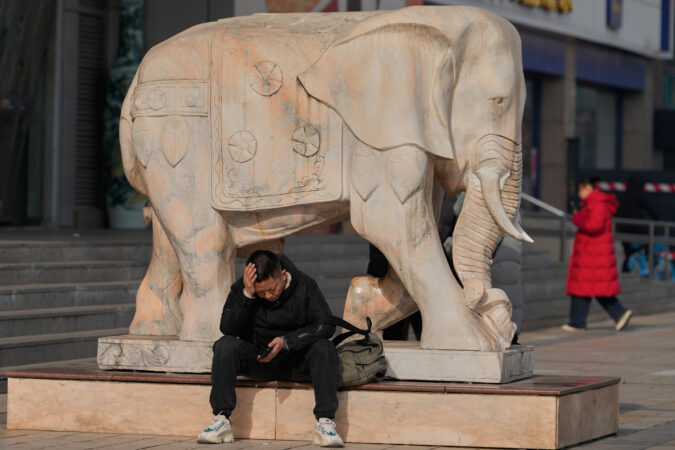
    Consider Chen Xingyu, 32, who has lived on her own for years in Kunming, the capital of southern China’s Yunnan province. “It is new and funny. The name Are You Dead? is very interesting,” Chen said.

    Chen, a “lying flat” practitioner who has rejected the grueling, fast-paced career of many in her age group, would try the app but worries about data security. “Assuming many who want to try are women users, if information of such detail about users gets leaked, that’d be terrible,” she said.

    Yuan Sangsang, a Shanghai designer, has been living on her own for a decade. She’s not hoping the app will save her life — only help her relatives in the event that she does, in fact, expire alone.

    “I just don’t want to die with no dignity, like the body gets rotten and smelly before it is found,” said Yuan, 38. “That would be unfair for the ones who have to deal with it.”

    Is the app tapping into a particular angst?

    While such an app might at first seem best suited to elderly people — regardless of their smartphone literacy — all reports indicate that Are You Dead? is being snapped up by younger people as the wry equivalent of a social media check-in.

    “Some netizens say that the ‘Are you dead?’ greeting feels like a carefree joke between close friends — both heartfelt and gives a sense of unguarded ease,” the business website Yicai, the Chinese Business Network, said in a commentary. “It likely explains why so many young people unanimously like this app.”

    The commentary, by writer He Tao, went further in analyzing the cultural landscape. He wrote that the app’s immediate success “serves as a darkly humorous social metaphor, reminding us to pay attention to the living conditions and inner world of contemporary young people. Those who downloaded it clearly need more than just a functional security measure; they crave a signal of being seen and understood.”

    That name, though

    Death is a taboo subject in Chinese culture, and the word itself is shunned to the point where many buildings in China have no fourth floor because the word for four and the word for death sound the same — si. Lü acknowledged that the app’s name sparked public pressure.

    “Death is an issue every one of us has to face,” he said. “Only when you truly understand death do you start thinking about how long you can exist in this world, and how you want to realize the value of your life.”

    Early Friday, the app had disappeared from Apple’s App Store in China, at least for the time being. The developers wouldn’t say why, only that the incident “occurred suddenly.”

    A few days ago, though, the developers said on their official account on China’s Weibo social platform that they’d be pivoting to a new name. Their choice: the more cryptic Demumu, which they said they hoped could “serve more solo dwellers globally.”

    Then, a twist: Late Wednesday, the app team posted on its Weibo account that workshopping the name Demumu didn’t turn out “as well as expected.” The app team is offering a reward for whoever offers a new name that would be picked over the weekend. Lü said more than 10,000 people have weighed in.

    The reward for the new moniker: $96 — or, in China, 666 yuan.

  • Judge rules feds in Minneapolis immigration operation can’t detain or tear gas peaceful protesters

    Judge rules feds in Minneapolis immigration operation can’t detain or tear gas peaceful protesters

    MINNEAPOLIS — Federal officers in the Minneapolis-area participating in its largest recent U.S. immigration enforcement operation can’t detain or tear gas peaceful protesters, a U.S. judge in Minnesota ruled Friday.

    U.S. District Judge Kate Menendez ruled in a case filed in December on behalf of six Minnesota activists.

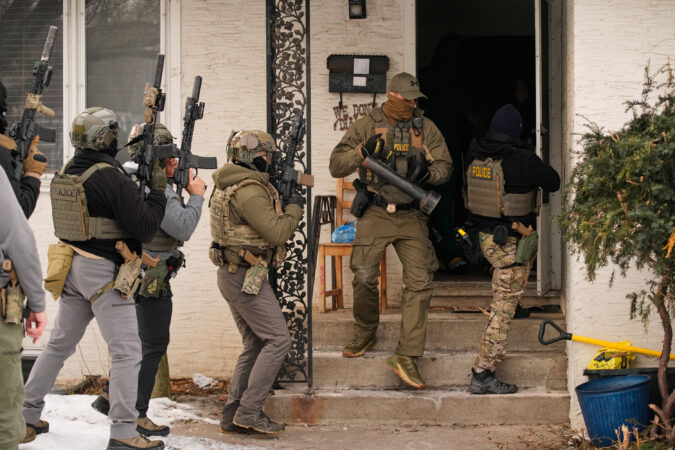
    Thousands of people have been observing the activities of Immigration and Customs Enforcement and Border Patrol officers enforcing the Trump administration’s immigration crackdown in the Minneapolis-St. Paul area since early December.

  • Justice Department investigating whether Minnesota’s Walz and Frey impeded immigration enforcement

    Justice Department investigating whether Minnesota’s Walz and Frey impeded immigration enforcement

    WASHINGTON — The Justice Department is investigating whether Minnesota Gov. Tim Walz and Minneapolis Mayor Jacob Frey have impeded federal immigration enforcement through public statements they have made, according to two people familiar with the matter.

    The investigation focused on potential violation of a conspiracy statute, the people said.

    The people spoke to the Associated Press on condition of anonymity because they were not authorized to discuss a pending investigation by name.

    CBS News first reported the investigation.

    In response to reports of the investigation, Walz said in a statement: “Two days ago it was Elissa Slotkin. Last week it was Jerome Powell. Before that, Mark Kelly. Weaponizing the justice system and threatening political opponents is a dangerous, authoritarian tactic.”

    Walz’s office said it has not received any notice of an investigation.

    Minneapolis Mayor Jacob Frey’s office did not immediately respond to an email and voicemail requesting comment.

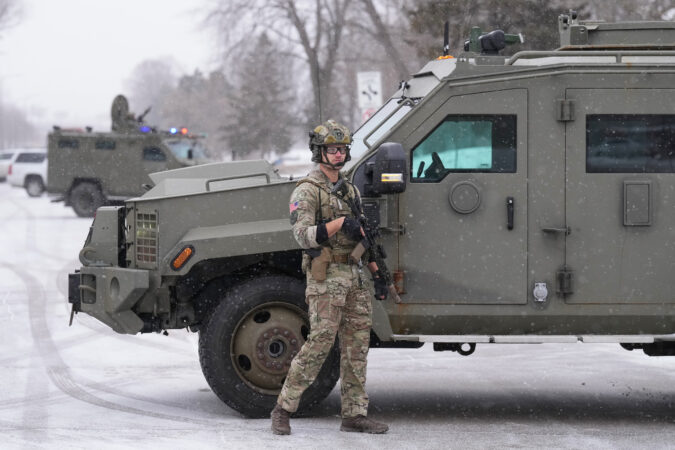
    The investigation comes during a weekslong immigration crackdown in Minneapolis and St. Paul that the Department of Homeland Security has called its largest enforcement operation, resulting in more than 2,500 arrests.

    The operation has become more confrontational since the fatal shooting of Renee Good on Jan. 7. State and local officials have repeatedly told protesters to remain peaceful.

  • Justice Department says members of Congress can’t intervene in release of Epstein files

    Justice Department says members of Congress can’t intervene in release of Epstein files

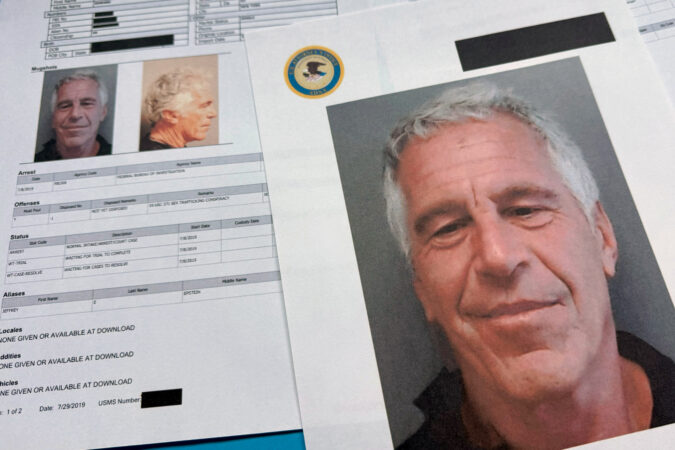
    NEW YORK — Manhattan’s top federal prosecutor said Friday that a judge lacks the authority to appoint a neutral expert to oversee the public release of documents in the sex trafficking probe of financier Jeffrey Epstein and British socialite Ghislaine Maxwell.

    Judge Paul A. Engelmayer was told in a letter signed by U.S. Attorney Jay Clayton that he must reject a request made earlier this week by the congressional cosponsors of the Epstein Files Transparency Act to appoint a neutral expert.

    U.S. Rep. Ro Khanna, a California Democrat, and Rep. Thomas Massie, a Kentucky Republican, say they have “urgent and grave concerns” about the slow release of only a small number of millions of documents that began last month.

    In a filing to the judge they said they believed “criminal violations have taken place” in the release process.

    Clayton, though, said Khanna and Massie do not have standing with the court that would allow them to seek the “extraordinary” relief of the appointment of a special master and independent monitor.

    Engelmayer “lacks the authority” to grant such a request, he said, particularly because the congressional representatives who made the request are not parties to the criminal case that led to Maxwell’s December 2021 sex trafficking conviction and subsequent 20-year prison sentence for recruiting girls and women for Epstein to abuse and aiding the abuse.

    Epstein died in a federal jail in New York City in August 2019 as he awaited trial on sex trafficking charges. The death was ruled a suicide.

    The Justice Department expects to update the court “again shortly” regarding its progress in turning over documents from the Epstein and Maxwell investigative files, Clayton said in the letter.

    The Justice Department has said the files’ release was slowed by redactions required to protect the identities of abuse victims.

    In their letter, Khanna and Massie wrote that the Department of Justice’s release of only 12,000 documents out of more than 2 million documents being reviewed was a “flagrant violation” of the law’s release requirements and had caused “serious trauma to survivors.”

    “Put simply, the DOJ cannot be trusted with making mandatory disclosures under the Act,” the representatives said as they asked for the appointment of an independent monitor to ensure all documents and electronically stored information are immediately made public.

    They also recommended that a court-appointed monitor be given authority to prepare reports about the true nature and extent of the document production and whether improper redactions or conduct have taken place.

  • National Guard troops to stay on Washington, D.C., streets through 2026

    National Guard troops to stay on Washington, D.C., streets through 2026

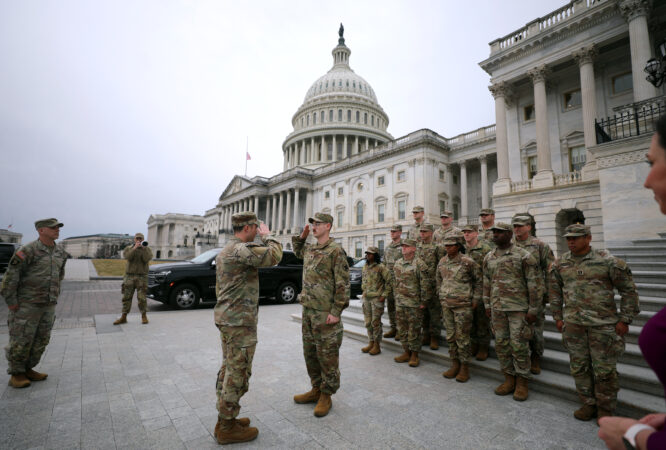
    WASHINGTON — National Guard troops will be on the streets of Washington, D.C., until the end of the year, according to a memo reviewed by the Associated Press.

    The memo, signed by Army Secretary Dan Driscoll and dated Wednesday, said “the conditions of the mission” warranted an extension past the end of next month to continue supporting President Donald Trump’s “ongoing efforts to restore law and order.”

    Meanwhile, Trump said this month that for now he was dropping his push to deploy National Guard troops in Chicago, Los Angeles, and Portland, Ore., which had provoked legal challenges. He also backed off a bit Friday from his threat a day earlier to invoke the Insurrection Act to deploy troops to quell protests in Minnesota.

    In Washington, troops have been charged with patrolling the streets and picking up trash. Trump has asserted repeatedly that crime has vanished in the city.

    Two National Guard troops from West Virginia that were part of the mission in D.C. were shot the day before Thanksgiving. Specialist Sarah Beckstrom, 20, died from her injuries.

    The National Guard has about 2,400 troops in Washington, with about 700 from D.C. and the rest from 11 states with Republican governors, including Indiana, South Carolina, Alabama, and Oklahoma.

  • Cuba launches mass demonstration to decry U.S. attack on Venezuela and demand Maduro’s release

    Cuba launches mass demonstration to decry U.S. attack on Venezuela and demand Maduro’s release

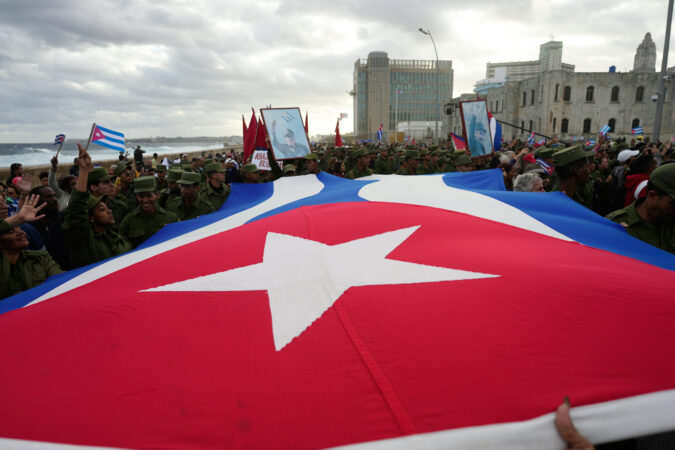
    HAVANA — Tens of thousands of Cubans demonstrated Friday outside the U.S. Embassy in Havana to decry the killing of 32 Cuban officers in Venezuela and demand that the U.S. government release former Venezuelan President Nicolás Maduro.

    They crowded into the open-air José Martí Anti-Imperialist plaza across from the embassy in a rally organized by the Cuban government as tensions between Cuba and the U.S. spike following the U.S. attack Jan. 3 on Venezuela.

    The 32 Cuban officers were part of Maduro’s security detail killed during the raid on his residence in Caracas to seize the former leader and bring him to the U.S. to face drug trafficking charges.

    “Humanity is experiencing something very complex, and (the U.S.) is governed by a president who considers himself an emperor,” said René González, 64, one of the protesters.

    “We must show him that ideas are worth more than weapons,” he said. ”This march is a message of our unity. Independence is sacred, and we will defend it tooth and nail if necessary.”

    Cuba’s national anthem rang out at Friday’s demonstration as large Cuban flags waved in the chilly wind and big waves broke nearby along Havana’s famed sea wall. Cuban President Miguel Díaz-Canel shook hands with members of the crowd clad in jackets and scarves before speaking to them.

    “The current U.S. administration has opened the door to an era of barbarism, plunder, and neo-fascism,” he said.

    The demonstration was a show of popular strength after U.S. President Donald Trump recently demanded that Cuba make a deal with him before it is “too late.” He did not explain what kind of deal.

    Trump also has said that Cuba will no longer live off Venezuela’s oil and money. Experts say the move could have catastrophic consequences since Cuba is already struggling with severe blackouts.

    “No one here surrenders,” Díaz-Canel said. “The current emperor of the White House and his infamous secretary of state haven’t stopped threatening me.”

    Washington has maintained a policy of sanctions against Cuba since the 1960s to pressure the island’s government to improve its human rights record, end its one-party communist system, and allow democracy. The sanctions have been further tightened during Trump’s presidency, suffocating the island’s economy.

    “Cuba does not have to make any political concessions, and that will never be on the table for negotiations aimed at reaching an understanding between Cuba and the United States,” Díaz-Canel said. “It is important that they understand this. We will always be open to dialogue and improving relations between our two countries, but only on equal terms and based on mutual respect.”

    After the president’s speech, the demonstration transitioned into a parade that Cubans call a “combatant march,” a custom that originated during the time of the late leader Fidel Castro. The crowd was led by a line of people holding pictures of the 32 officers killed.

    “Down with imperialism!” the crowd yelled. “Cuba will prevail!”

    The demonstration was organized a day after tens of thousands of Cubans gathered at the headquarters of the Ministry of the Revolutionary Armed Forces to pay their respects to the 32 officers slain.

    Their remains arrived home on Thursday morning, and they were scheduled to be laid to rest on Friday afternoon in various cemeteries following memorial ceremonies in all of Cuba’s provincial capitals.

  • Defendant in Charlie Kirk’s killing asks judge to disqualify prosecutors

    Defendant in Charlie Kirk’s killing asks judge to disqualify prosecutors

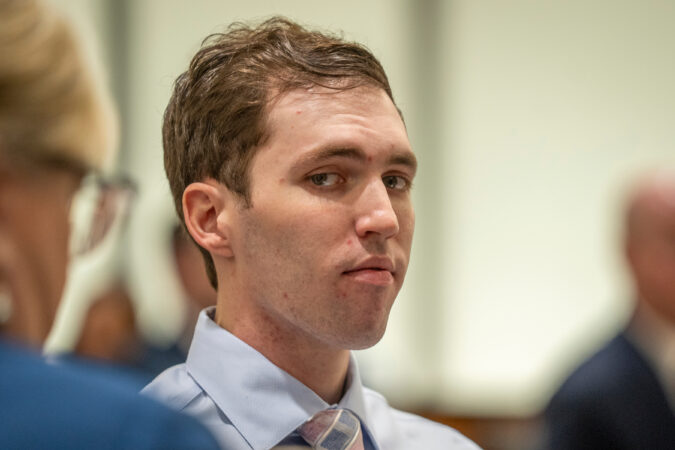
    PROVO, Utah — The Utah man charged with killing conservative activist Charlie Kirk returned to court Friday as his attorneys seek to disqualify prosecutors because an adult child of a deputy county attorney involved in the case attended the rally where Kirk was shot.

    Defense attorneys say the relationship represents a conflict of interest after prosecutors said they intend to seek the death penalty against Tyler Robinson for aggravated murder.

    Robinson, 22, has pleaded not guilty in the Sept. 10 shooting of Kirk on the Utah Valley University campus in Orem, just a few miles north of the Provo courthouse.

    The 18-year-old child who attended the event — and whose name was redacted from court filings — later texted with their father in the Utah County Attorney’s Office to describe the chaotic events around the shooting, the filings from prosecutors and defense lawyers state.

    Robinson’s attorneys say that personal relationship is a conflict of interest that “raises serious concerns about past and future prosecutorial decision-making in this case,” according to court documents. They also argue that the “rush” to seek the death penalty against Robinson is evidence of “strong emotional reactions” by the prosecution and merits the disqualification of the entire team.

    Defense attorney Richard Novak urged Judge Tony Graf on Friday to bring in the state attorney general’s office in place of Utah County prosecutors to address the conflict of interest. Novak said it was problematic for county prosecutors to litigate on behalf of the state while defending their aptness to remain on the case.

    Utah County Attorney Richard Gray replied that Novak’s last-minute request was aimed at delaying the case against Robinson.

    “This is ambush and another stalling tactic to delay these proceedings,” Gray said.

    The director of a state council that trains prosecutors said he was not aware of any other major case where attorneys had been disqualified for bias.

    “I would bet against the defense winning this motion,” Utah Prosecution Council Director Robert Church said. “They’ve got to a show a substantial amount of prejudice and bias.”

    Several thousand people attended the outdoor rally where Kirk, a co-founder of Turning Point USA who helped mobilize young people to vote for President Donald Trump, was shot as he took questions from the audience. The adult child of the deputy county attorney did not see the shooting, according to an affidavit submitted by prosecutors.

    “While the second person in line was speaking with Charlie, I was looking around the crowd when I heard a loud sound, like a pop. Someone yelled, ‘he’s been shot,’” the child stated in the affidavit.

    The child later texted a family group chat to say “CHARLIE GOT SHOT.” In the aftermath of the shooting, the child did not miss classes or other activities, and reported no lasting trauma “aside from being scared at the time,” the affidavit said.

    Prosecutors have asked Judge Graf to deny the disqualification request.

    “Under these circumstances, there is virtually no risk, let alone a significant risk, that it would arouse such emotions in any father-prosecutor as to render him unable to fairly prosecute the case,” county attorney Gray said in a filing.

    Gray also said the child was “neither a material witness nor a victim in the case” and that “nearly everything” the person knows about the actual homicide is mere hearsay.

    If the Utah county prosecutors were disqualified, the case would likely be picked up by prosecutors in a county with enough resources to handle a big case. That could be Salt Lake City, or possibly even the state attorney general’s office, said prosecution council director Church. The judge would have the final say, he said.

    Prosecutors have said text messages and DNA evidence connect Robinson to the killing. Robinson reportedly texted his romantic partner that he targeted Kirk because he “had enough of his hatred.”

    At the school where the shooting took place, university president Astrid Tuminez announced Wednesday that she will be stepping down from her role after the semester ends in May.

    The state university has been working to expand its police force and add security managers after it was criticized for a lack of key safety measures on the day of the shooting.

    Prosecutors are expected to lay out their case against Robinson at a preliminary hearing scheduled to begin May 18.

  • ICE says a Cuban immigrant died in a suicide attempt. A witness says guards pinned and choked him

    ICE says a Cuban immigrant died in a suicide attempt. A witness says guards pinned and choked him

    WASHINGTON — A Cuban immigrant died in a Texas immigration detention facility earlier this month during an altercation with guards, and the local medical examiner has indicated that his death will likely be classified as a homicide.

    The federal government has provided a differing account surrounding the Jan. 3 death of Geraldo Lunas Campos, saying the detainee was attempting suicide and staff tried to save him.

    A witness told the Associated Press that Lunas Campos died after he was handcuffed, tackled by guards, and placed in a chokehold until he lost consciousness. The immigrant’s family was told by the El Paso County Medical Examiner’s Office on Wednesday that a preliminary autopsy report said the death was a homicide resulting from asphyxia from chest and neck compression, according to a recording of the call reviewed by the AP.

    The death and conflicting accounts have intensified scrutiny into the conditions of immigration jails at a time when the government has been rounding up immigrants in large numbers around the country and detaining them at facilities like the one in El Paso where Lunas Campos died.

    U.S. Immigration and Customs Enforcement is legally required to issue public notification of detainee deaths. Last week, it said Lunas Campos, a 55-year-old father of four and registered sex offender, had died at Camp East Montana, but made no mention of him being involved in an altercation with staff immediately before his death.

    In response to questions from the AP, the Department of Homeland Security, which includes ICE, on Thursday amended its account of Lunas Campos’ death, saying he tried to kill himself.

    “Campos violently resisted the security staff and continued to attempt to take his life,” DHS spokesperson Tricia McLaughlin said. “During the ensuing struggle, Campos stopped breathing and lost consciousness.”

    In an interview before DHS updated its account, detainee Santos Jesús Flores, 47, from El Salvador, said he witnessed the incident through the window of his cell in the special housing unit, where detainees are held in isolation for disciplinary infractions.

    “He didn’t want to enter the cell where they were going to put him,” Flores told the AP on Thursday, speaking in Spanish from a phone in the facility. “The last thing he said was that he couldn’t breathe.”

    Among the first sent to Camp Montana East

    Camp Montana East is a sprawling tent facility hastily constructed in the desert on the grounds of Fort Bliss, an Army base. The AP reported in August that the $1.2 billion facility, expected to become the largest detention facility in the United States, was being built and operated by a private contractor headquartered in a single-family home in Richmond, Va. The company, Acquisition Logistics LLC, had no prior experience running a corrections facility.

    It was not immediately clear whether the guards present when Lunas Campos died were government employees or those of the private contractor. Emails seeking comment on Thursday from Acquisition Logistics executives received no response.

    Lunas Campos was among the first detainees sent to Camp Montana East, arriving in September after ICE arrested him in Rochester, N.Y., where he lived for more than two decades. He was legally admitted to the U.S. in 1996, part of a wave of Cuban immigrants seeking to reach Florida by boat.

    ICE said he was picked up in July as part of a planned immigration enforcement operation due to criminal convictions that made him eligible for removal.

    New York court records show Lunas Campos was convicted in 2003 of sexual contact with an individual under 11, a felony for which he was sentenced to one year in jail and placed on the state’s sex offender registry.

    Lunas Campos was also sentenced to five years in prison and three years of supervision in 2009 after being convicted of attempting to sell a controlled substance, according to the New York corrections records. He completed the sentence in January 2017.

    Lunas Campos’ adult daughter said the child sexual abuse accusation was false, made as part of a contentious custody battle.

    “My father was not a child molester,” said Kary Lunas, 25. “He was a good dad. He was a human being.”

    Conflicting accounts

    On the day he died, according to ICE, Lunas Campos became disruptive while in line for medication and refused to return to his assigned dorm. He was then taken to the segregation block.

    “While in segregation, staff observed him in distress and contacted on-site medical personnel for assistance,” the agency said in its Jan. 9 release. “Medical staff responded, initiated lifesaving measures, and requested emergency medical services.”

    Lunas Campos was pronounced dead after paramedics arrived.

    Flores said that account omitted key details — Lunas Campos was already handcuffed when at least five guards pinned him to the floor, and at least one squeezed his arm around the detainee’s neck.

    Within about five minutes, Flores said, Lunas Campos was no longer moving.

    “After he stopped breathing, they removed the handcuffs,” Flores said.

    Flores is not represented by a lawyer and said he has already consented to deportation to his home country. Though he acknowledged he was taking a risk by speaking to the AP, Flores said he wanted to highlight that “in this place, guards abuse people a lot.”

    He said multiple detainees in the unit witnessed the altercation, and security cameras there should have captured the events. Flores also said investigators had not interviewed him.

    DHS did not respond to questions about whether Lunas Campos was handcuffed when they say he attempted suicide, or exactly how he had tried to kill himself.

    “ICE takes seriously the health and safety of all those detained in our custody,” McLaughlin said. “This is still an active investigation, and more details are forthcoming.”

    DHS wouldn’t say whether other agencies were investigating. The El Paso medical examiner’s office confirmed Thursday that it conducted an autopsy, but declined further comment.

    A final determination of homicide by the medical examiner would typically be critical in determining whether any guards are held criminally or civilly liable. When such deaths are ruled accidental or something other than homicide, they are less likely to trigger criminal investigations, while civil wrongful death lawsuits become harder to prove.

    The fact that Lunas Campos died on an Army base could also limit state and local officials’ legal jurisdiction to investigate. An El Paso County District Attorney’s Office spokesperson declined to comment Thursday on whether it was involved in an investigation.

    The deaths of inmates and other detainees after officers hold them face down and put pressure on their backs and necks to restrain them have been a problem in law enforcement for decades. A 2024 AP investigation documented hundreds of deaths during police encounters in which people were restrained in a prone position. Many uttered “I can’t breathe” before suffocating, according to scores of body camera and bystander videos. Authorities often attempt to shift the blame for such deaths to preexisting medical conditions or drug use.

    Victor Weedn, a forensic pathologist who has studied prone restraint deaths, said the preliminary autopsy ruling of homicide indicates guards’ actions caused Lunas Campos’ death, but does not mean they intended to kill. He said the medical examiner’s office could come under pressure to stop short of calling it a homicide, but will probably “stick to its guns.”

    “This probably passes the ‘but for’ test. ‘But for’ the actions of the officers, he would not have died. For us, that’s generally a homicide,” he said.

    ‘I just want justice, and his body here’

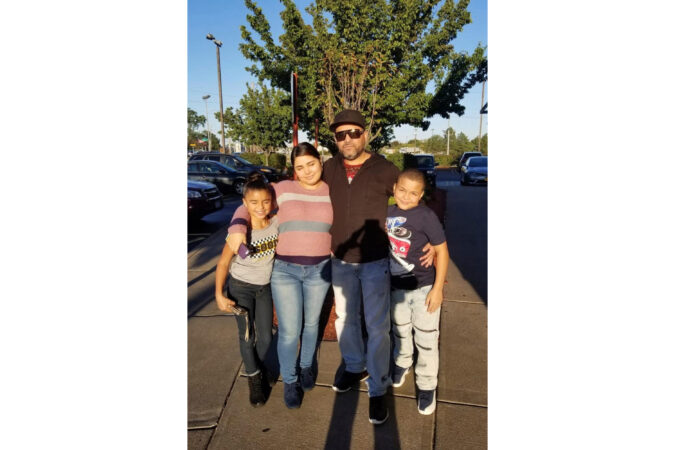
    Jeanette Pagan-Lopez, the mother of Lunas Campos’ two youngest children, said the day after he died the medical examiner’s office called to inform her that his body was at the county morgue. She immediately called ICE to find out what happened.

    Pagan-Lopez, who lives in Rochester, said the assistant director of the El Paso ICE field office eventually called her back. She said the official told her the cause of death was still pending and that they were awaiting toxicology report results. He also told her the only way Lunas Campos’ body could be returned to Rochester free of charge was if she consented to his being cremated, she said.

    Pagan-Lopez declined and is now seeking help from family and friends to raise the money needed to ship his body home and pay for a funeral.

    After failing to get details about the circumstances surrounding his death from ICE, Pagan-Lopez said she got a call from a detainee at Camp Montana East who then put her in touch with Flores, who first told her about the altercation with guards.

    Since then, she said she has repeatedly called ICE, but is no longer getting a response. Pagan-Lopez, who is a U.S. citizen, said she also twice called the FBI, where an agent took her information and then hung up.

    Pagan-Lopez said she and Lunas Campos were together about 15 years before breaking up eight years ago. She described him as an attentive father who, until his detention, had worked in a minimum-wage job at a furniture store, the only employment she said he could find due to his criminal record.

    She said that in the family’s last phone call the week after Christmas, Lunas Campos talked to his kids about his expected deportation back to Cuba. He said he wanted them to visit the island, so that he could stay in their lives.

    “He wasn’t a bad guy,” Pagan-Lopez said. “I just want justice, and his body here. That’s all I want.”

  • Trump to pardon ex-Puerto Rico governor Vázquez in campaign finance case, official says

    Trump to pardon ex-Puerto Rico governor Vázquez in campaign finance case, official says

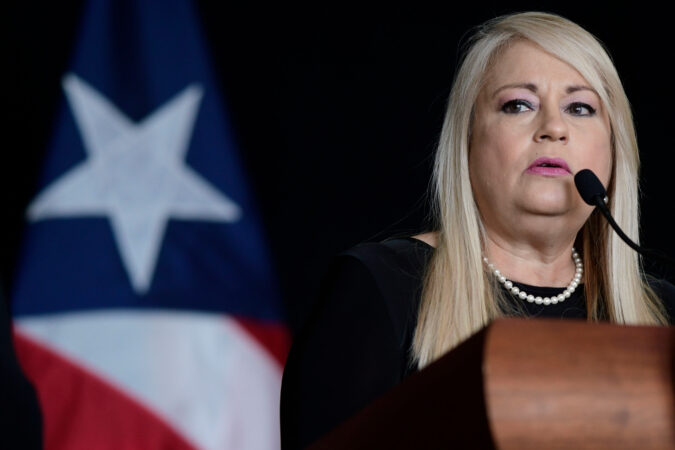
    WASHINGTON — President Donald Trump plans to pardon former Puerto Rico Gov. Wanda Vázquez, a White House official said Friday.

    Vázquez pleaded guilty last August to a campaign finance violation in a federal case that authorities say also involved a former FBI agent and a Venezuelan banker. Her sentencing was set for later this month.

    Federal prosecutors had been seeking one year behind bars, something that Vázquez’s attorneys opposed as they accused prosecutors of violating a guilty plea deal reached last year that saw previous charges including bribery and fraud dropped.

    They noted that Vázquez had agreed to plead guilty to accepting a promise of a campaign contribution that was never received.

    Attorneys for Vázquez did not immediately respond to requests for comment.

    The official who confirmed the planned pardon indicated Trump saw the case as political prosecution and said the investigation into Vázquez, a Republican aligned with the pro-statehood New Progressive Party, had begun 10 days after she endorsed Trump in 2020. The official wasn’t authorized to reveal the news by name and spoke on the condition of anonymity.

    CBS News was the first to report the plan to pardon Vázquez.

    Pablo José Hernández, Puerto Rico’s representative in Congress and a member of the island’s main opposition party, condemned a pardon for Vázquez.

    “Impunity protects and fosters corruption. The pardon … undermines public integrity, shatters faith in justice, and offends those of us who believe in honest governance,” said Hernández, a Democrat with Puerto Rico’s Popular Democratic Party.

    Vázquez, an attorney, was the U.S. territory’s first former governor to plead guilty to a crime, specifically accepting a donation from a foreigner for her 2020 political campaign.

    She was arrested in August 2022 and accused of engaging in a bribery scheme from December 2019 through June 2020 while governor. At the time, she told reporters that she was innocent.

    Authorities said that Puerto Rico’s Office of the Commissioner of Financial Institutions was investigating an international bank owned by Venezuelan Julio Martín Herrera Velutini because of alleged suspicious transactions that had not been reported by the bank.

    Authorities said Herrera and Mark Rossini, a former FBI agent who provided consulting services to Herrera, allegedly promised to support Vázquez’s campaign if she dismissed the commissioner and appointed a new one of Herrera’s choosing.

    Authorities said Vázquez demanded the commissioner’s resignation in February 2020 after allegedly accepting the bribery offer. She also was accused of appointing a new commissioner in May 2020: a former consultant for Herrera’s bank.

    Vázquez was the second woman to serve as Puerto Rico’s governor and the first former governor to face federal charges.

    She was sworn in as governor in August 2019 after former Gov. Ricardo Rosselló resigned following massive protests. Vázquez served until 2021, after losing the primaries of the pro-statehood New Progressive Party to former Gov. Pedro Pierluisi.

  • How the Trump administration erased centuries of Justice Department experience

    How the Trump administration erased centuries of Justice Department experience

    WASHINGTON — Michael Ben’Ary was driving one of his children to soccer practice on an October evening last year when he paused at a red light to check his work phone. He was in the middle of a counterterrorism prosecution so important that President Donald Trump highlighted it in his address to Congress.

    Ben’Ary said he was shocked to see his phone had been disabled. He found the explanation later in his personal email account, a letter informing him he had been fired.

    A veteran prosecutor, Ben’Ary handled high-profile cases over two decades at the Justice Department, including the murder of a Drug Enforcement Administration agent and a suicide bomb plot targeting the U.S. Capitol. Most recently he was leading the case arising from a deadly attack on American service members in Afghanistan.

    Yet the same credentials that enhanced Ben’Ary’s resumé spelled the undoing of his government career.

    His termination without explanation came hours after right-wing commentator Julie Kelly told hundreds of thousands of online followers that Ben’Ary had previously served as a senior counsel to Lisa Monaco, the No. 2 Justice Department official in Democratic President Joe Biden’s administration. Kelly also suggested Ben’Ary was part of the “internal resistance” to prosecuting former FBI Director James Comey, even though Ben’Ary was never involved in the case.

    As Trump’s attorney general, Pam Bondi, approaches her first year on the job, the firings of lawyers such as Ben’Ary have defined her turbulent tenure. The terminations and a larger voluntary exodus of lawyers have erased centuries of combined experience and left the department with fewer career employees to act as a bulwark for the rule of law at a time when Trump, a Republican, is testing the limits of executive power by demanding prosecutions of his political enemies.

    Interviews by the Associated Press of more than a half-dozen fired employees offer a snapshot of the toll throughout the department. The departures include lawyers who prosecuted violent attacks on police at the Capitol on Jan. 6, 2021; environmental, civil rights, and ethics enforcers; counterterrorism prosecutors; immigration judges; and attorneys who defend administration policies. This week, several prosecutors in Minnesota moved to resign amid turmoil over an investigation into the shooting of a woman in Minneapolis by an Immigration and Customs Enforcement officer.

    “To lose people at that career level, people who otherwise intended to stay and now are either being discharged or themselves are walking away, is immensely damaging to the public interest,” said Stuart Gerson, a senior official in the George H.W. Bush administration and acting attorney general early in Bill Clinton’s administration. “We’re losing really capable people, people who have never viewed themselves as political and attempted to do the right thing.”

    Justice Connection, a network of department alums, estimates that more than 230 lawyers, agents, and other employees from across the department were fired last year, apparently because of their work on cases they were assigned or past criticism of Trump, or seemingly for no reason. More than 6,400 employees are estimated to have left a department that at the end of 2025 had roughly 108,000, the group says.

    The Justice Department says it has hired thousands of career attorneys over the past year. The Trump administration has characterized some of the fired and departed workers as out of step with its agenda.

    Ben’Ary left with unfinished business, including the prosecution stemming from the airport bombing in Kabul, the Afghan capital, and the national security unit he led at the U.S. attorney’s office for the Eastern District of Virginia.

    Left to pack his belongings, he posted a typed note near his door that functioned as a distress call, reminding colleagues they had sworn an oath to follow the facts “without fear or favor” and “unhindered by political interference.”

    But, he warned, “In recent months, the political leadership of the Department have violated these principles, jeopardizing our national security and making American citizens less safe.”

    Unparalleled in scale, scope, and motivation

    Since its founding in 1870, the Justice Department has occupied elevated status in American democracy, sustained through transitions of power by reliance on facts, evidence, and law.

    To be sure, there has always been a political component to the department, with lawyers appointed by the president.

    But even during turbulent times, when attorneys general have been pushed out by presidents or resigned rather than accede to White House demands — as in the Watergate-era “Saturday Night Massacre” — the department’s rank and file have generally been insulated thanks to long-recognized civil service protections.

    “This is completely unprecedented in both its scale and scope and underlying motivation,” said Peter Keisler, a senior official in the George W. Bush Justice Department.

    In his first term, Trump pushed out one attorney general and accepted another’s resignation, but the workforce remained largely intact. He returned to office in January 2025 seething over Biden-era prosecutions of him and vowing retribution.

    The firings began even before Bondi arrived in February. Prosecutors on special counsel Jack Smith’s team that investigated Trump were terminated days after the inauguration, followed by prosecutors hired on temporary assignments for cases resulting from the Capitol insurrection in 2021.

    “The people working on these cases were not political agents of any kind,” said Aliya Khalidi, a Jan. 6 prosecutor who was fired. “It’s all people who just care about the rule of law.”

    The firings have continued, at times surgical, at times random and almost always without explanation.

    Adam Schleifer, a Los Angeles prosecutor targeted in a social media post by far-right activist Laura Loomer over past critical comments about Trump, was fired in March. The Justice Department the following month fired attorney Erez Reuveni, who conceded in court that Salvadoran national Kilmar Abrego Garcia was mistakenly deported. Reuveni later accused the department of trying to mislead judges to execute deportations. Department officials deny the assertion.

    Two weeks after Maurene Comey completed a sex trafficking trial against Sean “Diddy” Combs, the New York prosecutor was fired, also without explanation. Like Ben’Ary, she wrote a pointed farewell, telling colleagues that “fear is the tool of a tyrant.” Her father, the former FBI director who was a frequent Trump target, said those same words after being indicted in September in a case that has been dismissed.

    Among the most affected sections is the storied Civil Rights Division. A recent open letter of protest was signed by more than 200 employees who left in 2025, with several supervisors recently giving notice of plans to depart. The Public Integrity Section, which prosecutes sensitive public corruption cases, has also been hollowed out by resignations.

    The Justice Department has disputed the accounts of some of those who have been fired or quit and has defended the termination of those who investigated Trump as “consistent with the mission of ending the weaponization of government.”

    “This is the most efficient Department of Justice in American history, and our attorneys will continue to deliver measurable results for the American people,” the department said in a statement. More than 3,400 career attorneys have been hired since Trump took office, the department says.

    The departures have caused backlogs and staff shortages, with senior leaders soliciting job applications. It has affected the department’s daily business as well as efforts to fulfill Trump’s desires to prosecute political opponents.

    Desperate for lawyers willing to file criminal cases against Comey and New York Attorney General Letitia James, the administration in September forced out the veteran U.S. attorney for the Eastern District of Virginia, replacing him with Lindsey Halligan, a White House aide with no experience as a federal prosecutor.

    Halligan secured the indictments but the win was short-lived.

    One judge later identified grave missteps in how Halligan presented the Comey case to a grand jury. Another dismissed both prosecutions outright, calling Halligan’s appointment unlawful.

    Smith, the special counsel who investigated Trump but left before he could be fired, has himself lamented the losses. “These are not partisans,” he recently told lawmakers.

    “They just want to do good work,” he added, “and I think when you lose that culture, you lose a lot.”

    ‘Our dream was to be federal prosecutors’

    Khalidi joined the department in 2023 in a group of new prosecutors hired to help with the hundreds of cases stemming from the Capitol riot.

    Upon Trump’s return to the White House, she watched cases she prosecuted get dismantled by Trump’s sweeping clemency for all 1,500 defendants charged in the riot, including those who attacked police.

    Less than two weeks later, a Justice Department demand for the names of FBI agents involved in Jan. 6 investigations triggered rumors of potential mass firings. Worried about the agents she worked with, Khalidi spent the day checking in on them. But as she started preparing dinner one Friday evening, she received an email suggesting she had lost her own job.

    Attached was a memo from then-acting Deputy Attorney General Emil Bove ordering the firings of prosecutors such as Khalidi who had been hired for temporary assignments but were moved into permanent roles after Trump’s win, a maneuver Bove called “subversive personnel actions by the previous administration.” Neither the email nor memo identified the fired prosecutors, leaving them to guess.

    Khalidi grabbed a suitcase to collect family photos and other personal items she kept at work and rushed to the office, retreating with fellow shocked prosecutors to a bar where they received termination emails.

    The group of 15 fired attorneys later assembled to surrender their computers and phones, entering the same room where they gathered on their first day in 2023.

    “For a lot of us, our dream was to be federal prosecutors,” Khalidi said. “And so we had happy memories of that room, of being excited on our first day. So it was just kind of surreal to be back there turning in our stuff.”

    The news came for Anam Petit, an immigration judge, during a break between hearings.

    Hired during the Biden administration, she said she felt a little uneasy when Trump won the election but also figured her position would probably be safe because immigration judges generally have job stability and because they bear responsibility for issuing removal orders for those who are in the United States illegally, a core presidential priority.

    Petit arrived on Sept. 5 bracing for bad news because it was the Friday of the pay period before her two-year work anniversary, when her probationary appointment was poised to become permanent. Though she said she had received strong performance reviews and had already exceeded her case completion goal for the year, she had become anxious as colleagues were fired amid an administration push to accelerate deportations.

    She was in the courtroom between hearings when she learned via email that she had been fired. She left to text her husband, then returned to the courtroom to render a decision in the case before her.

    “I just put my phone back in my pocket and went into the courtroom and delivered my decision, with a very shaky voice and shaky hands, trying to center myself back to that decision just so that I could relay it,” Petit said.

    Joseph Tirrell was mindful of his job security from the very start of the Trump administration. As the department’s chief ethics officer, he had affirmed that Smith, the special counsel, was entitled to a law firm’s free legal services, a decision he sensed had the potential to rile incoming leadership.

    But he remained in the position and over the ensuing months counseled Bondi’s staff on the propriety of accepting various gifts, including a cigar box from mixed martial arts fighter Conor McGregor.

    He was fired in July, just before a FIFA Club World Cup final in New Jersey that Tirrell had said Bondi could not ethically accept a free invitation to. He was not terribly surprised, he says, when it was later reported that Bondi attended in Trump’s box. The Justice Department said in a statement that none of Tirrell’s advice “was ever overruled” and that “the Attorney General obtained ethics approval to attend this event in her official capacity as a member of the FIFA Task Force.”

    “There’s a great deal of fear there just because I was fired and just because so many others were summarily fired,” Tirrell said. “Are you going to get fired because you provided ethics advice? Are you going to get fired because you have a pride flag on your desk?”

    ‘Our country depends on you’

    Trump was promoting his administration’s commitment to counterterrorism during his address to Congress in March when he announced a success: the capture of a militant from the Islamic State group’s Afghanistan affiliate who was charged in the Kabul airport bombing that killed 13 American service members during the 2021 withdrawal from the country.

    Mohammad Sharifullah arrived the following day in the United States, encountering Ben’Ary in an Alexandria, Va., courtroom.

    Ben’Ary spent the next several months working on the case, but on Oct. 1, he was fired. It was the apparent result, he told colleagues, of a social media post he said contained “false information” — a reference to the one from Kelly, the commentator.

    The termination was so abrupt that Ben’Ary could not tell his colleagues where he had saved important filings and notes. Another prosecutor listed on the case, James Comey’s son-in-law, Troy Edwards, had resigned days earlier upon Comey’s indictment. Once set for trial last month, the case has been postponed.

    In his farewell note, Ben’Ary observed that he was not alone, that in “just a few short months” career employees like himself had been removed from U.S. attorneys offices, the FBI “and other critical parts of DOJ.”

    “While I am no longer your colleague, I ask that each of you continue to do the right thing, in the right way, for the right reasons,” Ben’Ary wrote. “Follow the facts and the law. Stand up for what we all believe in — our Constitution and the rule of law. Our country depends on you.”