Category: Nation World News Wires

  • Winter storm rips through Gaza, exposing failure to deliver enough aid to territory

    Winter storm rips through Gaza, exposing failure to deliver enough aid to territory

    DEIR AL-BALAH, Gaza Strip — Rains drenched Gaza’s tent camps and dropping temperatures chilled Palestinians huddling inside them Thursday as winter storm Byron descended on the war-battered territory, showing how two months of a ceasefire have failed to sufficiently address the spiraling humanitarian crisis there.

    Families found their possessions and food supplies soaked inside their tents. Children’s sandaled feet disappeared under opaque brown water that flooded the camps, running knee deep in some places. Dirt roads turned to mud. Piles of garbage and sewage cascaded like waterfalls.

    “We have been drowned. I don’t have clothes to wear and we have no mattresses left,” said Um Salman Abu Qenas, a displaced mother in a Khan Younis tent camp. She said that her family couldn’t sleep the night before, because of the water in the tent.

    Aid groups say not enough shelter materials are getting into Gaza during the truce. Figures recently released by Israel’s military suggest it hasn’t met the ceasefire stipulation of allowing 600 trucks of aid into Gaza a day, though Israel disputes that finding.

    “Cold, overcrowded, and unsanitary environments heighten the risk of illness and infection,” the U.N. agency for Palestinian refugees, UNRWA, said on X. “This suffering could be prevented by unhindered humanitarian aid, including medical support and proper shelter.”

    Rains wreak havoc

    Sabreen Qudeeh, also in the Khan Younis camp, in a squalid area known as Muwasi, said that her family woke up to rain leaking from their tent’s ceiling and water from the street soaking their mattresses.

    “My little daughters were screaming,” she said.

    Ahmad Abu Taha, also living in the camp, said there wasn’t a tent that escaped the flooding. “Conditions are very bad, we have old people, displaced, and sick people inside this camp,” he said.

    Floods in south-central Israel trapped more than a dozen people in their cars, according to Hebrew media. Israel’s rescue services, MDA, said that two young girls were slightly injured when a tree fell on their school.

    The contrasting scenes with Gaza made clear how profoundly the Israel-Hamas war had damaged the territory, destroying the majority of homes. Gaza’s population of around 2 million is almost entirely displaced, and most people live in vast tent camps stretching along the coast, or set up among the shells of damaged buildings without adequate flooding infrastructure and with cesspits dug near tents as toilets.

    At least three buildings in Gaza City already damaged by Israeli bombardment during the war partially collapsed under the rain, Palestinian Civil Defense said. It warned people not to stay inside damaged buildings, saying they too could fall down on top of them.

    The agency also said that since the storm began, they have received more than 2,500 distress calls from people across Gaza whose tents and shelters were damaged.

    With buckets and mops, Palestinians laboriously scooped water out of their tents.

    Aliaa Bahtiti said her 8-year-old son “was soaked overnight, and in the morning he had turned blue, sleeping on water.” Her tent floor had an inch of water on it “We cannot buy food, covers, towels, or sheets to sleep on.”

    Baraka Bhar was caring for her 3-month-old twins inside her tent as the rain poured outside. One of the twins has hydrocephalus, a build-up of fluids in the brain.

    “Our tents are worn out … and they leak rain water,” she said. “We should not lose our children this winter.”

    Not enough aid

    Aid groups say that Israel isn’t allowing enough aid into Gaza to begin rebuilding the territory after years of war.

    Under the agreement, Israel agreed to comply with aid stipulations from an earlier January truce, which specified that it allow 600 trucks of aid each day into Gaza, It maintains it’s doing so, but The Associated Press found that some of its own figures call that into question.

    The January truce also specified that Israel let in a number of caravans and tents. No caravans have yet entered Gaza during the ceasefire, said Tania Hary, executive director of Gisha, an Israeli group advocating for Palestinians’ right to freedom of movement.

    The Israeli military body in charge of coordinating aid to Gaza, called COGAT, said on Dec. 9 it had “lately” let 260,000 tents and tarpaulins into Gaza and more than 1,500 trucks of blankets and warm clothing.

    Shelter Cluster, an international coalition of aid providers led by the Norwegian Refugee Council, sets the number lower. It says the U.N. and international nongovernmental organizations have gotten 15,590 tents into Gaza since the truce began, and other countries have sent about 48,000. Many of the tents aren’t properly insulated, it says.

    Amjad al-Shawa, Gaza chief of the Palestinian NGO Network, told Al Jazeera on Thursday that only a fraction of the 300,000 tents needed had entered Gaza. He said that Palestinians were in dire need of warmer winter clothes and accused Israel of blocking the entry of water pumps to help clear flooded shelters.

    “All international sides should take the responsibility regarding conditions in Gaza,” he said. “There is real danger for people in Gaza at all levels.”

    Khaled Mashaal, a Hamas leader, said in an interview with Al Jazeera that Gaza needs the rehabilitation of hospitals, the entry of heavy machinery to remove rubble, and the opening of the Rafah crossing — which remains closed after Israel said last week it would shortly open.

    COGAT didn’t immediately respond to a request for comment on the claims that Israel wasn’t allowing water pumps or heavy machinery into Gaza

    Amnesty accuses Hamas of crimes against humanity

    Amnesty International said in a report released Thursday that Hamas and other militant groups committed crimes against humanity in the Oct. 7, 2023, attack on southern Israel that triggered the war in Gaza.

    In the 173-page report, Amnesty pointed to what it found to be widespread and systematic killing of civilians in the attack, as well as torture, hostage-taking and sexual abuse.

    In the attack, Hamas fighters and other militants rampaged through southern Israel, killing some 1,200 people and taking around 250 others hostage. Israel’s campaign in Gaza has since killed more than 70,300 Palestinians, roughly half of them women and children, according to the territory’s Health Ministry, which does not distinguish between militants and civilians in its count. Last year, Amnesty accused Israel of committing genocide in Gaza, a charge Israel denied.

    Amnesty said it conducted interviews with 70 people, including 17 survivors of the attack and family members of some of those killed. It also reviewed hundreds of open-source videos and photos from the day of the attack.

    Contrary to Hamas claims it was targeting the military, it said, the attack was intentionally “directed against a civilian population” and met international law standards for crimes against humanity.

    It said sexual assaults were also committed, although it could not reach a conclusion on their “scope or scale.” It interviewed one man who testified he was raped by armed men at the Nova music festival, as well as a therapist who said she provided intensive treatment to three other survivors of rape.

    Hamas condemned the report, saying it “echoed false claims” by Israel.

    Israeli Foreign Minister spokesperson Oren Marmorstein derided the report in a posting on X, saying it took more than two years for Amnesty to address the attack “and even now its report falls far short of reflecting the full scope of Hamas’ horrific atrocities.”
  • U.S. national park gift shops ordered to purge merchandise promoting DEI

    U.S. national park gift shops ordered to purge merchandise promoting DEI

    The Trump administration is expanding its crackdown on diversity, equity and inclusion by ordering national parks to purge their gift shops of items it deems objectionable.

    The Interior Department said in a memo last month that gift shops, bookstores and concession stands have until Dec. 19 to empty their shelves of retail items that run afoul of President Donald Trump’s agenda.

    The agency said its goal is to create “neutral spaces that serve all visitors.” It’s part of a broader initiative the Trump administration has pursued over the last year to root out policies and programs it says discriminate against people based on race, gender and sexual orientation — an effort that has led some major corporations and prominent universities to roll back diversity programs.

    Conservation groups say the gift shop initiative amounts to censorship and undermines the National Park Service’s educational mission. But conservative think tanks say taxpayer-funded spaces shouldn’t be allowed to advance ideologies they say are divisive.

    Employees of the park service and groups that manage national park gift shops say it’s not clear what items will be banned. They didn’t want to speak on the record for fear of retribution.

    A debate over what’s acceptable for park gift shops

    “Our goal is to keep National Parks focused on their core mission: preserving natural and cultural resources for the benefit of all Americans,” the Interior Department said in a statement. The agency said it wants to ensure parks’ gift shops “do not promote specific viewpoints.”

    Alan Spears, the senior director for cultural resources at the National Parks Conservation Association, said removing history books and other merchandise from gift shops amounts to “silencing science and hiding history,” and does not serve the interests of park visitors.

    Other groups called the review of gift shops a waste of resources at a time of staffing shortages, maintenance backlogs and budget issues.

    Stefan Padfield, a former law professor who now works with a conservative think tank in Washington, said there is no way to defend the government’s promotion of “radical and divisive” ideologies through the sale of books and other items, though he said the challenge for the Trump administration will be in deciding what is acceptable and what isn’t.

    “Now, are there going to be instances of the correction overshooting? Are there going to be difficult line-drawing exercises in gray areas? Absolutely,” said Padfield, the executive director of the Free Enterprise Project at the National Center for Public Policy Research.

    The order is open to interpretation

    All items for sale at parks and online are supposed to be reviewed for neutrality. That includes books, T-shirts, keychains, magnets, patches and even pens.

    But the memo issued by a senior Interior Department official didn’t give any examples of items that could no longer be sold, leaving the order open to interpretation. No training sessions have been offered to park service employees.

    Some parks had already completed their reviews, finding nothing to add to the list.

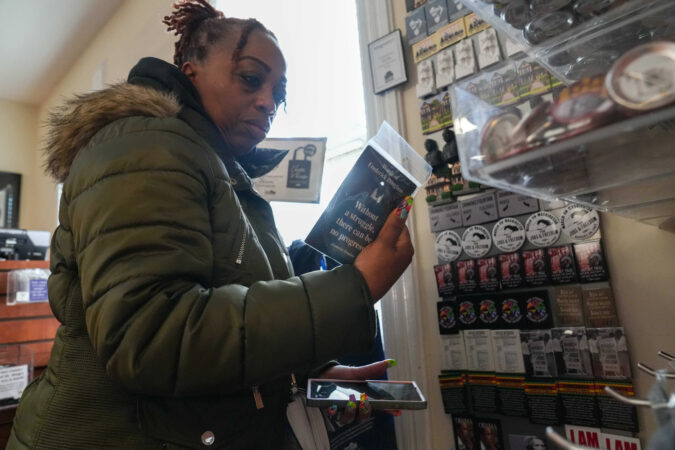
    On display this week at Independence National Historical Park in Philadelphia were items featuring Frederick Douglass. At the Martin Luther King, Jr. National Historical Park store in Atlanta, there were various books on the Civil Rights Movement and a book for children about important Black women in U.S. history. For sale online was a metal token for the Belmont-Paul Women’s Equality National Monument.

    There already is a thorough process for vendors to get merchandise into national park stores. Items are vetted for their educational value and to ensure they align with the themes of the park or historical site.

    National parks in the spotlight

    The park service in recent weeks faced criticism when it stopped offering free admission to visitors on Martin Luther King Jr. Day and Juneteenth, while extending the benefit to U.S. residents on Flag Day, which also happens to be Trump’s birthday next year.

    Earlier this year, the Interior Department’s ordered parks to flag signs, exhibits and other materials it said disparaged Americans. That order sparked debate about books related to Native American history and a photograph at a Georgia park that showed the scars of a formerly enslaved man.

    In one of his executive orders, Trump said the nation’s history was being unfairly recast through a negative lens. Instead, he wants to focus on the positive aspects of America’s achievements, along with the beauty and grandeur of its landscape.

    Mikah Meyer knows that beauty well after a three-year road trip to visit all 419 national park sites. He said part of the mission of his travels, which he shared on social media and in a documentary, was to illustrate that parks are welcoming to the LGBTQ+ community.

    That message aligns with his business, Outside Safe Space, which at its peak was selling stickers and pins featuring a tree with triangle-shaped, rainbow-colored branches to more than 20 associations that operated multiple park stores. His items started to be pulled from some stores after the executive orders were issued earlier this year.

    “How is banning these items supporting freedom of speech?” Meyer said.

  • Homeland Security Secretary Noem defends Trump’s hard-line immigration policies at hearing

    Homeland Security Secretary Noem defends Trump’s hard-line immigration policies at hearing

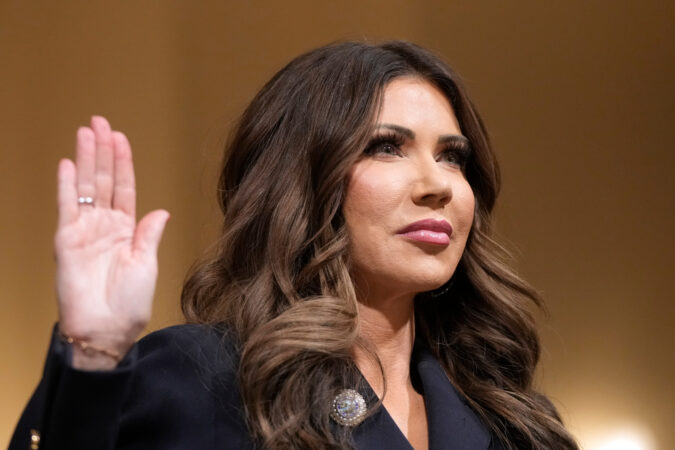
    Homeland Security Secretary Kristi Noem defiantly defended the Trump administration’s hard-line immigration policies on Thursday during a House committee hearing, portraying migrants as a major threat faced by the nation that justifies a crackdown that has seen widespread arrests, deportations and a dizzying pace of restrictions on foreigners.

    Noem, who heads the agency central to President Donald Trump’s approach to immigration, received backup from Republicans on the panel but faced fierce questioning from Democrats — including many who called for her resignation over the mass deportation agenda.

    The secretary’s testimony was immediately interrupted by protesters shouting for her to stop Immigration and Customs Enforcement raids and “end deportations.” They trailed her down the halls as she left early for another engagement, chanting, “Shame on you!”

    But she vowed she “would not back down.”

    “What keeps me up at night is that we don’t necessarily know all of the people that are in this country, who they are and what their intentions are,” Noem said.

    The hearing was Noem’s first public appearance before Congress in months, testifying at the House Committee on Homeland Security on “Worldwide Threats to the Homeland,” and it quickly grew heated as she emphasized how big a role she believed immigration played in those threats. It focused heavily on the Trump administration’s immigration policies, whereas in years past the hearing has centered on issues such as cybersecurity, terrorism, China and border security.

    Rep. Bennie Thompson, the panel’s ranking Democrat, said Noem has diverted vast taxpayer resources to carry out Trump’s “extreme” immigration agenda and failed to provide basic responses as Congress conducts its oversight.

    “I call on you to resign,” the Mississippi congressman said. “Do a real service to the country.”

    Trump returned to power with what the president says is a mandate to reshape immigration in the U.S. In the months since, the number of people in immigration detention has skyrocketed; the administration has continued to remove migrants to countries they are not from; and, in the wake of an Afghan national being accused of shooting two National Guard troops, Noem’s department has dramatically stepped up checks and screening of immigrants in the U.S.

    Tough questions from Democrats

    Several Democrats repeatedly told Noem flatly that she was “lying” to them and to the public over claims they are focused on violent criminals. They presented cases of U.S. citizens being detained in immigration operations and families of American military veterans being torn apart by deportations of loved ones who have not committed serious crimes or other violations.

    “You lie with impunity,” said Rep. Delia Rodriguez (D., Ill.) who said Noem should resign or be impeached.

    Republicans largely thanked Noem for the work the department is doing to keep the country safe and urged her to carry on.

    “Deport them all,” said Rep. Andy Ogles (R., Tenn).

    Since Noem’s last Congressional appearance in May, immigration enforcement operations, especially in Los Angeles and Chicago, have become increasingly contentious, with federal agents and activists frequently clashing over her department’s tactics.

    Noem did not address the calls to resign, but she tangled with the Democratic lawmakers — interrupting some — and suggested that she and the department she leads weren’t going anywhere.

    “We will never yield. We will never waver,” she said.

    Noem, whose own family, including an infant granddaughter, was in the audience, praised the Trump administration’s efforts when it comes to immigration, saying, “We’re ending illegal immigration, returning sanity to our immigration system.”

    During the hearing, a federal judge ordered the government to free Kilmar Abrego Garcia, whose wrongful deportation to a notorious prison in El Salvador made him a flashpoint in the Trump administration’s immigration enforcement. Noem did not address the judge’s order, nor was she asked about it during the hearing.

    Noem left early, saying she was headed to a meeting of the Federal Emergency Management Agency review council. The meeting, however, was abruptly canceled with no reason given.

    Noem, department under scrutiny

    The worldwide threats hearing, usually held annually, is an opportunity for members of Congress to question the leaders of the Department of Homeland Security, the FBI, and the National Counterterrorism Center.

    FBI Director Kash Patel did not appear, but sent Michael Glasheen, operations director of the national security branch of the FBI.

    Glasheen said the nation faces “serious and evolving” threats, and pointed to so-called antifa, and Trump’s executive order designating the group as a domestic terror organization, as the “most immediate violent threat” facing the country.

    Pressed by Thompson for details — where is antifa headquartered? How many members does it have? — the FBI’s representative appeared unable to provide answers, saying it’s “fluid” and investigations are “ongoing.”

    And, notably, he did not identify immigration as among the most pressing concerns for the homeland.

    Asked about the U.S. seizure of an oil tanker off the Venezuelan coast, Noem linked it to the Trump administration’s antidrug campaign in the region, saying cocaine had been kept from entering the U.S. as a result.

    The hearing offered lawmakers a rare opportunity to hear directly from Noem, but many members of the panel used the bulk of their allotted time to either praise or lambast her handling of immigration enforcement.

    During one sharp exchange, the secretary levied broad criticism for the program through which the man suspected of shooting two National Guard members last month came to the United States.

    “Unfortunate accident?” Noem retorted after Thompson raised the issue. She called it a “terrorist attack.”

    The program, Operation Allies Welcome, was created by then-President Joe Biden’s Democratic administration after the 2021 decision to leave Afghanistan following 20 years of American intervention and billions of dollars in aid. Thompson pointed out that the Trump administration approved the asylum claim of the suspect in the National Guard attack.

    Noem’s department is under particular scrutiny because Congress in July passed legislation giving it roughly $165 billion to carry out its mass deportations agenda and secure the border. The department is getting more money to hire 10,000 more deportation officers, complete the wall between the U.S. and Mexico and increase detention and removal of foreigners from the country.

    The secretary’s appearance also comes as a federal judge is investigating whether she should face a contempt charge over flights carrying migrants to El Salvador.

  • Indiana Republicans defy Trump and reject his House redistricting push in the states

    Indiana Republicans defy Trump and reject his House redistricting push in the states

    INDIANAPOLIS — Indiana’s Republican-led Senate decisively rejected a redrawn congressional map Thursday that would have favored their party, defying months of pressure from President Donald Trump and delivering a stark setback to the White House ahead of next year’s midterm elections.

    The vote was overwhelmingly against the proposed redistricting, with more Republicans opposing than supporting the measure, signaling the limits of Trump’s influence even in one of the country’s most conservative states.

    Trump has been urging Republicans nationwide to redraw their congressional maps in an unusual campaign to help the party maintain its thin majority in the House of Representatives. Although Texas, Missouri, Ohio, and North Carolina went along, Indiana did not — despite cajoling and insults from the president and the possibility of primary challenges.

    “The federal government should not dictate by threat or other means what should happen in our states,” said Spencer Deery, one of the Republican senators who voted no on Thursday.

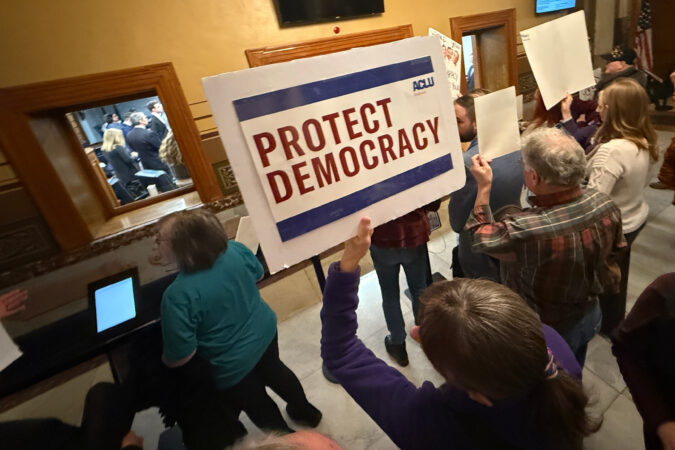
    When the proposal failed, cheers could be heard inside the chamber as well as shouts of “thank you!” The debate had been shadowed by the possibility of violence, and some lawmakers have received threats.

    The proposed map was designed to give Republicans control of all nine of Indiana’s congressional seats, up from the seven they currently hold. It would have effectively erased Indiana’s two Democrat-held districts by splitting Indianapolis among four districts that extend into rural areas, reshaping U.S. Rep. André Carson’s safe district in the city. It would’ve also eliminated the northwest Indiana district held by U.S. Rep. Frank Mrvan.

    District boundaries are usually adjusted once a decade after a new census. But Trump has described redistricting as an existential issue for the party as Democrats push to regain power in Washington.

    “If Republicans will not do what is necessary to save our Country, they will eventually lose everything to the Democrats,” Trump wrote on social media the night before the vote.

    The president said anyone who voted against the plan should lose their seats. Half of Indiana senators are up for reelection next year, and the conservative organization Turning Point Action had pledged to fund campaigns against them.

    Inside the state Senate chamber, Democratic lawmakers spoke out against redistricting ahead of the vote.

    “Competition is healthy my friends,” said Sen. Fady Qaddoura. “Any political party on earth that cannot run and win based on the merits of its ideas is unworthy of governing.”

    In the hallways outside, redistricting opponents chanted “Vote no!” and “Fair maps!” while holding signs with slogans like “Losers cheat.”

    Three times over the fall Vice President JD Vance met with Republican senators — twice in Indianapolis and once in the White House — to urge their support. Trump joined a conference call with senators on Oct. 17 to make his own 15-minute pitch.

    Behind the scenes, James Blair, Trump’s deputy White House chief of staff for political affairs, was in regular touch with members, as were other groups supporting the effort such as the Heritage Foundation and Turning Point USA.

    “The administration made a full-court press,” said Republican Sen. Andy Zay, who was on the phone with White House aides sometimes multiple times per week, despite his commitment as a yes vote.

    Across the country, mid-cycle redistricting so far has resulted in nine more congressional seats that Republicans believe they can win and six more congressional seats that Democrats think they can win. However, some of the new maps are facing litigation.

    In Utah, a judge imposed new districts that could allow Democrats to win a seat, saying Republican lawmakers violated voter-backed standards against gerrymandering.

    Despite Trump’s push, support for gerrymandering in Indiana’s Senate was uncertain. A dozen of the 50 senators had not publicly committed to a stance ahead of the vote.

    Republican Sen. Greg Goode signaled his displeasure with the redistricting plan before voting no. He said some of his constituents objected to seeing their county split up or paired with Indianapolis. He expressed “love” for Trump but criticized what he called “over-the-top pressure” from inside and outside the state.

    Sen. Michael Young, another Republican, said the stakes in Washington justify redistricting, as Democrats are only a few seats away from flipping control of the U.S. House in 2026. “I know this election is going to be very close,” he said.

    Republican Sen. Mike Gaskill, the redistricting legislation’s sponsor, showed Senators maps of congressional districts around the country, including several focused on Democratic-held seats in New England and Illinois. He argued other states gerrymander and Indiana Republicans should play by the same rules.

    The bill cleared its first hurdle Monday with a 6-3 Senate committee vote, although one Republican joined Democrats in opposing it and a few others signaled they might vote against the final version. The state House passed the proposal last week, with 12 Republicans siding with Democrats in opposition.

    Among them was state Rep. Ed Clere, who said state troopers responded to a hoax message claiming a pipe bomb outside his home Wednesday evening. Indiana state police said “numerous others” received threats but wouldn’t offer details about an ongoing investigation.

    In an interview, Clere said these threats were the inevitable result of Trump’s pressure campaign and a “winner-take-all mentality.”

    “Words have consequences,” Clere said.

  • Justice Department again fails to re-indict New York Attorney General Letitia James, AP source says

    Justice Department again fails to re-indict New York Attorney General Letitia James, AP source says

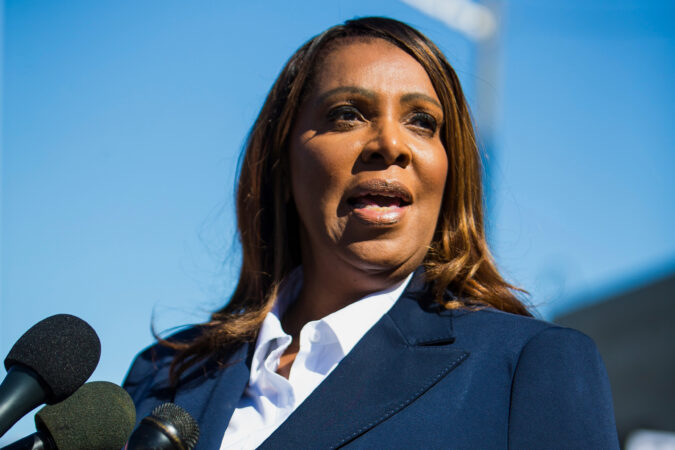
    ALEXANDRIA, Va. — A grand jury declined for a second time in a week to re-indict New York Attorney General Letitia James on Thursday in another major blow to the Justice Department’s efforts to prosecute the president’s political opponents.

    The repeated failures amounted to a stunning rebuke of prosecutors’ bid to resurrect a criminal case President Donald Trump pressured them to bring, and hinted at a growing public leeriness of the administration’s retribution campaign.

    A grand jury rejection is an unusual circumstance in any case, but is especially stinging for a Justice Department that has been steadfast in its determination to seek revenge against Trump foes like James and former FBI Director James Comey. On separate occasions, citizens have heard the government’s evidence against James and have come away underwhelmed, unwilling to rubber-stamp what prosecutors have attempted to portray as a clear-cut criminal case.

    A judge threw out the original indictments against James and Comey in November, ruling that the prosecutor who presented to the grand jury, Lindsey Halligan, was illegally appointed U.S. attorney for the Eastern District of Virginia.

    The Justice Department asked a grand jury in Alexandria, Va., to return an indictment Thursday after a different grand jury in Norfolk last week refused to do so. The failure to secure an indictment was confirmed by a person familiar with the matter who was not authorized to publicly discuss the matter and spoke on the condition of anonymity.

    It was not immediately clear Thursday whether prosecutors would try for a third time to seek a new indictment. A lawyer for James, who has denied any wrongdoing, said the “unprecedented rejection makes even clearer that this case should never have seen the light of day.”

    “This case already has been a stain on this Department’s reputation and raises troubling questions about its integrity,” defense attorney Abbe Lowell said in a statement. “Any further attempt to revive these discredited charges would be a mockery of our system of justice.”

    James, a Democrat who infuriated Trump after his first term with a lawsuit alleging that he built his business empire on lies about his wealth, was initially charged with bank fraud and making false statements to a financial institution in connection with a home purchase in 2020.

    During the sale, she signed a standard document called a “second home rider” in which she agreed to keep the property primarily for her “personal use and enjoyment for at least one year,” unless the lender agreed otherwise. Rather than using the home as a second residence, prosecutors say James rented it out to a family of three, allowing her to obtain favorable loan terms not available for investment properties.

    Both the James and Comey cases were brought shortly after the administration installed Halligan, a former Trump lawyer with no prior prosecutorial experience, as U.S. attorney amid public calls from the president to take action against his political opponents.

    But U.S. District Judge Cameron McGowan Currie threw out the cases last month over the unconventional mechanism that the Trump administration employed to appoint Halligan. The judge dismissed them without prejudice, allowing the Justice Department to try to file the charges again.

    Halligan had been named as a replacement for Erik Siebert, a veteran prosecutor in the office and interim U.S. attorney who resigned in September amid Trump administration pressure to file charges against both Comey and James. He stepped aside after Trump told reporters he wanted Siebert “out.”

    James’ lawyers separately argued the case was a vindictive prosecution brought to punish the Trump critic who spent years investigating and suing the Republican president and won a staggering judgment in a lawsuit alleging he defrauded banks by overstating the value of his real estate holdings on financial statements. The fine was later tossed out by a higher court, but both sides are appealing.

    Comey was separately charged with lying to Congress in 2020. Another federal judge has complicated the Justice Department’s efforts to seek a new indictment against Comey, temporarily barring prosecutors from accessing computer files belonging to Daniel Richman, a close Comey friend and Columbia University law professor whom prosecutors see as a central player in any potential case against the former FBI director.

    Prosecutors moved Tuesday to quash that order, calling Richman’s request for the return of his files a “strategic tool to obstruct the investigation and potential prosecution.” They said the judge had overstepped her bounds by ordering Richman’s property returned to him and said the ruling had impeded their ability to proceed with a case against Comey.

  • Senators clash over Trump’s National Guard deployments as military leaders face questioning

    Senators clash over Trump’s National Guard deployments as military leaders face questioning

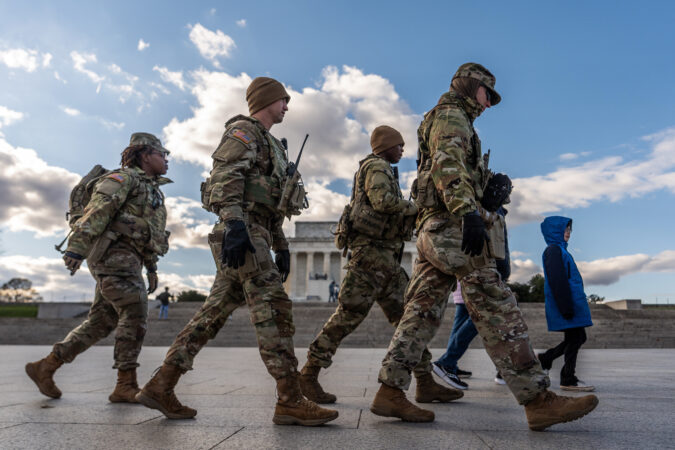
    WASHINGTON — Members of Congress clashed Thursday over President Donald Trump’s use of the National Guard in American cities, with Republicans saying the deployments were needed to fight lawlessness while Democrats called them an extraordinary abuse of military power that violated states’ rights.

    Top military officials faced questioning over the deployments for the first time at the hearing before the Senate Armed Services Committee. They were pressed by Democrats over the legality of sending in troops, which in some places were done over the objections of mayors and governors, while Trump’s Republican allies offered a robust defense of the policy.

    It was the highest level of scrutiny, outside a courtroom, of Trump’s use of the National Guard in U.S. cities since the deployments began and came a day after the president faced another legal setback over efforts to send troops to support federal law enforcement, protect federal facilities and combat crime.

    “In recent years, violent crime, rioting, drug trafficking and heinous gang activity have steadily escalated,” said Mississippi Sen. Roger Wicker, the committee chairman. The deployments, he said, are “not only appropriate, but essential.”

    Democrats argued they are illegal and contrary to historic prohibitions about military force on U.S. soil.

    Sen. Tammy Duckworth (D., Ill.) said domestic deployments traditionally have involved responding to major floods and tornadoes, not assisting immigration agents who are detaining people in aggressive raids.

    “Trump is forcing our military men and women to make a horrible choice: uphold their loyalty to the Constitution and protect peaceful protesters, or execute questionable orders from the president,” said Duckworth, a combat veteran who served in the Illinois National Guard.

    Democrats ask military officials about illegal orders

    Democrats asked military leaders about Trump’s comments about “the enemy within” America and whether service members could be asked to follow orders that violate their oath.

    Sen. Elissa Slotkin (D., Mich.) said Trump’s comments about rigged elections and his rhetoric about political opponents have created a “trust deficit” and fueled suspicions about the domestic use of the military.

    She asked Charles Young III, principal deputy general counsel at the Pentagon, whether Trump could place troops at polling places during next year’s election and whether such an order would be legal.

    The idea “sends a shiver down the spine of every American, and should whether you’re a Democrat or a Republican,” Slotkin said.

    Young said he could not answer such a question without details, calling it “a hypothetical situation.” He said the Supreme Court has ruled that the president has exclusive authority to decide whether an emergency exists that could require a National Guard response.

    Slotkin was one of six Democratic lawmakers who recorded a video calling on troops to uphold the Constitution and defy “illegal orders.” In response, Trump accused the lawmakers, all military or intelligence veterans, of sedition “punishable by DEATH.”

    Sen. Elizabeth Warren (D., Mass.) pressed Young on news reports that the administration had dismissed advice from military lawyers on deploying Guard and bombing alleged drug boats in Latin America.

    “If an attorney raises concerns about the legality of military operations, do you think the appropriate response is to tell them to shut up and get out of the way?” Warren asked Young.

    Young denied those reports, saying leadership is “very attentive” to the concerns of military lawyers.

    When asked about Trump’s statements about an “invasion within” or an “enemy within,” Air Force Gen. Gregory Guillot, commander of U.S. troops in North America, said, “I do not have any indications of an enemy within.”

    Republicans and Democrats see the deployments differently

    In one exchange, Sen. Mazie Hirono (D., Hawaii) noted how former Defense Secretary Mark Esper alleged that Trump inquired about shooting protesters during the George Floyd demonstrations. She asked whether a presidential order to shoot protesters would be lawful.

    Young said he was unaware of Trump’s previous comments and that “orders to that effect would depend on the circumstances.”

    Republicans countered that Trump was within his rights — and his duty — to send in troops.

    Republican Sen. Tim Sheehy of Montana, a former Navy SEAL officer, argued during the hearing that transnational crimes present enough of a risk to national security to justify military action, including on U.S. soil.

    Sheehy claimed there are foreign powers “actively attacking this country, using illegal immigration, using transnational crime, using drugs to do so.”

    Military leaders point to training

    During questioning, military leaders highlighted the duties that National Guard units have carried out. Troops are trained for their specific missions, they said, and are prohibited from using force unless in self-defense.

    Since the deployments began, only one civilian — in California — has been detained by National Guard personnel, Guillot said. He says the troops are trained to de-escalate tense interactions with people, but do not receive any specific training on mental health episodes.

    “They can very quickly be trained to conduct any mission that we task of them,” Guillot said.

    During the hearing, senators also offered their sympathies after two West Virginia National Guard members deployed to Washington were shot just blocks from the White House in what the city’s mayor described as a targeted attack. Spc. Sarah Beckstrom died a day after the Nov. 26 shooting, and her funeral took place Tuesday. Staff Sgt. Andrew Wolfe remains in a Washington hospital.

    Hearing follows court setback for Trump

    A federal judge in California on Wednesday ruled that the administration must stop deploying the California National Guard in Los Angeles and return control of the troops to the state. The judge put the decision on hold until Monday, and the White House said it plans to appeal.

    Trump called up more than 4,000 California National Guard troops in June following protests over immigration raids. It marked the first time in decades that a state’s National Guard was activated without a governor’s request and marked a significant escalation in the administration’s efforts to carry out its mass deportation policy.

    Trump also had announced National Guard members would be sent to Illinois, Oregon, Louisiana, and Tennessee. Other judges have blocked or limited the deployment of troops to Portland, Oregon, and Chicago, while Guard members have not yet been sent to New Orleans.

  • Senate rejects extension of healthcare subsidies as costs are set to rise for millions of Americans

    Senate rejects extension of healthcare subsidies as costs are set to rise for millions of Americans

    WASHINGTON — The Senate on Thursday rejected legislation to extend Affordable Care Act tax credits, essentially guaranteeing that millions of Americans will see a steep rise in costs at the beginning of the year.

    As Republicans and Democrats have failed to find compromise, senators voted on two partisan bills instead that they knew would fail — the Democratic bill to extend the subsidies, and a Republican alternative that would have created new health savings accounts.

    It was an unceremonious end to a monthslong effort by Democrats to prevent the COVID-19-era subsidies from expiring on Jan. 1, including a 43-day government shutdown that they forced over the issue.

    Ahead of the votes, Senate Democratic Leader Chuck Schumer of New York warned Republicans that if they did not vote to extend the tax credits, “there won’t be another chance to act,” before premiums rise for many people who buy insurance off the ACA marketplaces.

    “Let’s avert a disaster,” Schumer said. “The American people are watching.”

    Republicans and Democrats never engaged in meaningful or high-level negotiations on a solution, even after a small group of centrist Democrats struck a deal with Republicans last month to end the shutdown in exchange for a vote. Most Democratic lawmakers opposed the move as many Republicans made clear that they wanted the tax credits to expire.

    The deal raised hopes for a compromise on healthcare. But that quickly faded with a lack of any real bipartisan talks.

    “We failed,” said Alaska Sen. Lisa Murkowski, one of four Republicans who voted for the Democratic bill, after the vote. “We’ve got to do better. We can’t just say ‘happy holidays, brace for next year.’”

    A Republican alternative

    The dueling Senate votes were the latest political messaging exercise in a Congress that has operated almost entirely on partisan terms, as Republicans pushed through a massive tax and spending cuts bill this summer using budget maneuvers that eliminated the need for Democratic votes. In September, Republicans tweaked Senate rules to push past a Democratic blockade of all of Trump’s nominees.

    On healthcare, Republicans similarly negotiated among themselves, without Democrats. The health savings accounts in the GOP bill that they eventually settled on would give money directly to consumers instead of to insurance companies, an idea that has been echoed by President Donald Trump.

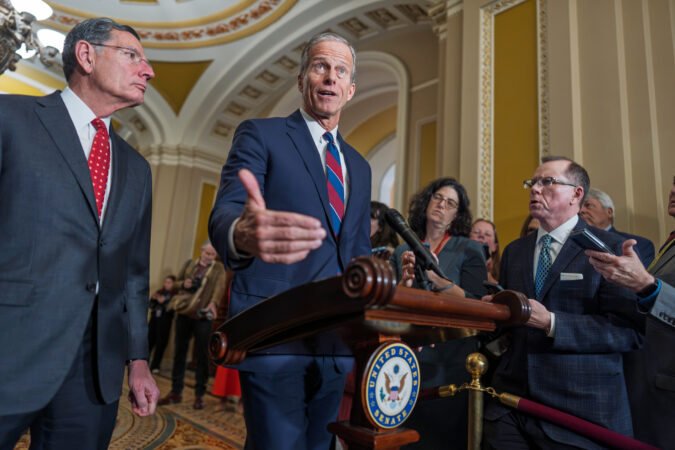
    Senate Majority Leader John Thune (R., S.D.) said ahead of the vote that the Democrats’ simple extension of the subsidies is “an attempt to disguise the real impact of Obamacare’s spiraling healthcare costs.”

    But Democrats immediately rejected the GOP plan, saying that the accounts wouldn’t be enough to cover costs for most consumers.

    The Senate voted 51-48 not to move forward on the Democratic bill, with four Republicans — Maine Sen. Susan Collins, Missouri Sen. Josh Hawley and Alaska Sens. Murkowski and Dan Sullivan — voting with Democrats. The legislation needed 60 votes to proceed, as did the Republican bill, which was also blocked on a 51-48 vote.

    An intractable issue

    The votes were the latest failed salvo in the debate over the Affordable Care Act, former President Barack Obama’s signature law that Democrats passed along party lines in 2010 to expand access to insurance coverage.

    Republicans have tried unsuccessfully since then to repeal or overhaul the law, arguing that healthcare is still too expensive. But they have struggled to find an alternative. In the meantime, Democrats have made the policy a central political issue in several elections, betting that the millions of people who buy healthcare on the government marketplaces want to keep their coverage.

    “When people’s monthly payments spike next year, they’ll know it was Republicans that made it happen,” Schumer said in November, while making clear that Democrats would not seek a compromise.

    Even if they view it as a political win, the failed votes are a loss for Democrats who demanded an extension of the benefits during the shutdown — and for the millions of people facing premium increases on Jan. 1.

    Maine Sen. Angus King, an independent who caucuses with Democrats, said the group tried to negotiate with Republicans after the shutdown ended. But, he said, the talks became unproductive when Republicans demanded language adding new limits for abortion coverage that were a “red line” for Democrats. He said Republicans were going to “own these increases.”

    House to try again

    Republicans have used the looming expiration of the subsidies to renew their longstanding criticisms of the ACA, also called Obamacare, and to try, once more, to agree on what should be done.

    In the House, Speaker Mike Johnson (R., La.) has promised a vote next week on some type of healthcare legislation. Republicans weighed different options in a conference meeting on Wednesday, with no apparent consensus.

    Murkowski and other Senate Republicans who want to extend the subsidies expressed hope that the House could find a way to do it. GOP leaders were considering bills that would not extend the tax credits, but some Republicans have launched longshot efforts to try to go around Johnson and force a vote.

    “Hopefully some ideas emerge” before the new year, said Republican Sen. Thom Tillis of North Carolina, who has been pushing his colleagues for a short-term extension.

    “Real Americans are paying the price for this body not working together in the way it should,” said Alabama Sen. Katie Britt, a Republican.

    Republican moderates in the House who could have competitive reelection bids next year are pushing Johnson to find a way to extend the subsidies. But more conservative members want to see the law overhauled.

    Rep. Kevin Kiley (R., Calif.) has also been pushing for a short extension.

    If they fail to act and healthcare costs go up, the approval rating for Congress “will get even lower,” Kiley said.

  • U.S. sanctions Venezuelan President Maduro’s 3 nephews as pressure campaign ratchets up

    U.S. sanctions Venezuelan President Maduro’s 3 nephews as pressure campaign ratchets up

    WASHINGTON — The U.S. imposed sanctions on three nephews of Venezuelan President Nicolás Maduro, among others, on Thursday as President Donald Trump looks to inflict further pressure on the South American nation.

    The new sanctions on Franqui Flores, Carlos Flores and Efrain Campo come a day after Trump announced that the U.S. had seized an oil tanker off the coast of Venezuela. Also included in the sanctions are Panamanian businessman Ramon Carretero, six firms and six Venezuela-flagged ships accused of transporting Venezuelan oil.

    Carretero is accused of facilitating oil shipments on behalf of the Venezuelan government, and the Treasury says he has had business dealings with the Maduro-Flores family, including partnering in several companies together.

    The Treasury’s Office of Foreign Assets Control published the list of sanctions on Thursday.

    The sanctions are meant to deny them access to any property or financial assets held in the U.S., and the penalties are intended to prevent U.S. companies and citizens from doing business with them. Banks and financial institutions that violate that restriction expose themselves to sanctions or enforcement actions.

    Treasury Secretary Scott Bessent said in a statement that “Nicolas Maduro and his criminal associates in Venezuela are flooding the United States with drugs that are poisoning the American people.”

    “Under President Trump’s leadership, Treasury is holding the regime and its circle of cronies and companies accountable for its continued crimes,” he said.

    This is not the first time Maduro’s family has been involved in a political tit-for-tat with the U.S.

    In October 2022, Venezuela freed seven imprisoned Americans in exchange for the United States releasing Flores and Campo, who had been jailed for years on narcotics convictions. The pair were arrested in Haiti in a Drug Enforcement Administration sting in 2015 and convicted the following year in New York.

    Carlos Flores had been sanctioned in July 2017 but was removed from Treasury’s list in 2022 during the Biden administration years in an effort to promote negotiations for democratic elections in Venezuela.

    The U.S.’s latest actions against Venezuela follow a series of deadly strikes the U.S. has conducted on alleged drug-smuggling boats in the Caribbean Sea and eastern Pacific Ocean, which have killed at least 87 people since early September.

    Trump has justified the attacks as a necessary escalation to stem the flow of drugs into the United States and asserted the U.S. is engaged in an “armed conflict” with drug cartels.

    Putin’s backing

    Russian President Vladimir Putin expressed “solidarity with the Venezuelan people” on Thursday amid growing tensions between Maduro and the Trump administration.

    The Kremlin said in a statement that Putin spoke with Maduro by phone and reaffirmed his support for the Venezuelan leader’s policy of “protecting national interests and sovereignty in the face of growing external pressure.”

    During testimony before Congress on Thursday, Homeland Security Secretary Kristi Noem linked the seizure of the vessel to the Trump administration’s anti-drug efforts in the region. The U.S. has built up its largest military presence in the region in decades and launched a series of deadly strikes on alleged drug-smuggling boats.

    Maduro has insisted the real purpose of the U.S. military operations is to force him from office. Venezuela’s government said the tanker seizure “constitutes a blatant theft and an act of international piracy.”

    The South American country’s government said that Putin had “categorically reaffirmed his support” for Maduro in their call.

    It said in a statement that Putin had told Maduro that direct communication between Moscow and Caracas would “remain permanently open” and Russia would continue to support Venezuela “in its struggle to assert its sovereignty, international law, and peace throughout Latin America.”

    Like his predecessor, the late President Hugo Chávez, Maduro has forged a close relationship with Russia, which has offered Venezuela help, ranging from coronavirus vaccines to the design of a cryptocurrency. In 2018, it also briefly dispatched a pair of nuclear-capable Tu-160 bombers to the airport outside Venezuela’s capital amid soaring Russia-U.S. tensions.

    Last year, two Russian naval ships docked in the Venezuelan port of La Guaira after exercises in the Atlantic Ocean that Moscow said were to “show the flag” in remote, important regions.

    In Belarus, authoritarian President Alexander Lukashenko, a Putin ally, met with the Venezuelan ambassador to Russia, Jesus Rafael Salazar Velázquez, on Thursday, for the second time in just over two weeks.

    Details of what was discussed were not revealed, but Belarus’ state news agency Belta quoted Lukashenko as saying that the diplomat was expected to discuss “certain issues” with Maduro after their first meeting on Nov. 25 and to travel to Belarus again, so that they could reach “a certain decision.”

    During the November meeting, Lukashenko extended an invitation to Maduro to visit Belarus, and said that he would try and find the time to visit Venezuela, too.

  • Hundreds are quarantined in South Carolina as measles spreads there, elsewhere

    Hundreds are quarantined in South Carolina as measles spreads there, elsewhere

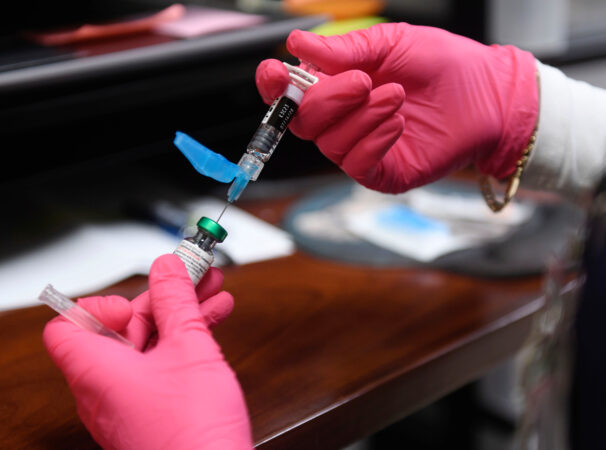
    Measles outbreaks are growing along the Utah-Arizona border and in South Carolina, where hundreds are in quarantine.

    Between Friday and Tuesday, South Carolina health officials confirmed 27 new measles cases in an outbreak in and around northwestern Spartanburg County. In two months, 111 people have been sickened by the vaccine-preventable virus.

    More than 250 people, including students from nine area elementary, middle and high schools, are in quarantine — some for the second time since the outbreak began in October. Most of the state’s new cases stemmed from exposures at Way of Truth Church in Inman. Church leaders have been “very helpful,” said state epidemiologist Dr. Linda Bell.

    “We are faced with ongoing transmission that we anticipate will go on for many more weeks, at least in our state,” said Bell.

    In Arizona and Utah, an outbreak has ballooned since August. Mohave County, Arizona has logged 172 cases and the Southwest Utah Public Health Department has logged 82 cases. The border cities of Colorado City, Arizona, and Hildale, Utah, are the heaviest hit.

    Overall, Utah has confirmed 115 measles cases this year. Arizona has confirmed 176.

    Nationally, the measles case count is nearing 2,000 for a disease that has been considered eliminated in the U.S. since 2000, a result of routine childhood vaccinations.

    Last month, Canada lost that designation — which applies when there is no continuous local spread of the virus — as did the larger health region of the Americas.

    Experts say the U.S. is also at risk of losing that status. For that to happen, measles would have to spread continuously for a year. A large outbreak in Texas, New Mexico and Oklahoma that started in January sickened nearly 900 and kicked off the United States’ worst measles year in more than three decades.

    All but eight states have logged at least one measles case this year, according to the Centers for Disease Control and Prevention. The CDC has confirmed 47 outbreaks this year, compared with 16 in 2024. Three people — two of them Texas school children — have died.

    The measles, mumps and rubella vaccine is safe and provides 97% protection against the disease after two doses. Most children in the U.S. are required to get the shot to attend school. But vaccination rates have declined as more parents waive the shots or have fallen behind on recommended vaccination schedules.

  • Zelensky says U.S.-led peace talks wrestling with Russian demands for Ukrainian territory

    Zelensky says U.S.-led peace talks wrestling with Russian demands for Ukrainian territory

    KYIV, Ukraine — Ukrainian President Volodymyr Zelensky said Thursday that negotiators are wrestling with the question of territorial possession in U.S.-led peace talks on ending the war with Russia, including the future of Ukraine’s eastern Donetsk region and the Russian-occupied Zaporizhzhia nuclear power plant, one of the world’s 10 biggest atomic plants.

    Zelensky revealed details of the ongoing discussions before he headed into urgent talks Thursday with leaders and officials from about 30 countries that support Kyiv’s efforts to obtain fair terms in any settlement to halt nearly four years of fighting.

    Zelensky said Ukraine submitted a 20-point plan to the U.S. on Wednesday, with each point possibly accompanied by a separate document detailing the settlement terms.

    “We are grateful that the U.S. is working with us and trying to take a balanced position,” Zelensky told reporters in the Ukrainian capital Kyiv. “But at this moment it is still difficult to say what the final documents will look like.”

    Russia has in recent months made a determined push to gain control of all parts of Donetsk and neighboring Luhansk, which together make up Ukraine’s valuable Donbas industrial region.

    Ukraine doesn’t accept the surrender of Donbas, Zelensky said, saying that both sides remaining where they currently stand along the line of contact would be “a fair outcome.”

    American negotiators have put forward the possibility of a “free economic zone” in the Donbas, with the Russians terming it a “demilitarized zone,” according to Zelensky.

    Russian officials have not publicly disclosed their proposals.

    U.S. negotiators foresee Ukrainian forces withdrawing from the Donetsk region, with the compromise being that Russian forces do not enter that territory, Zelensky said.

    But he said that if Ukraine must withdraw its forces, the Russians should also withdraw by the same distance. There are many unanswered questions, including who would oversee the Donbas, he added.

    The Russians want to retain control of the Zaporizhzhia plant in southern Ukraine, which is not currently operating, but Ukraine opposes that.

    The Americans have suggested a joint format to manage the plant, and negotiators are discussing how that might work, Zelensky said.

    Ukraine’s allies discuss peace plan with Zelensky

    The leaders of Germany, Britain and France were among those taking part in the meeting of Ukraine’s allies, dubbed the Coalition of the Willing, via video link.

    Zelensky indicated the talks were hastily arranged as Kyiv officials scramble to avoid getting boxed in by President Donald Trump, who has disparaged the Ukrainian leader, painted European leaders as weak, and set a strategy of improving Washington’s relationship with Moscow.

    In the face of Trump’s demands for a swift settlement, European governments are trying to help steer the peace negotiations because they say their own security is at stake.

    German Chancellor Friedrich Merz said Thursday that he, British Prime Minister Keir Starmer and French President Emmanuel Macron suggested to Trump that they finalize the peace proposals together with U.S. officials over the weekend. There may also be talks in Berlin early next week, with or without American officials, he said.

    The talks are at “a critical moment,” European leaders said Wednesday.

    Next week, Ukraine will coordinate with European countries on a bilateral level, Zelensky said late Wednesday, and European Union countries are due to hold a regular summit in Brussels at the end of next week.

    Russia has new proposals on security

    Trump’s latest effort to broker a settlement is taking longer than he wanted. He initially set a deadline for Kyiv to accept his peace plan before Thanksgiving. Previous Washington deadlines for reaching a peace deal also have passed without a breakthrough.

    Russia is also keen to show Trump it is engaging with his peace efforts, hoping to avoid further U.S. sanctions. Russia’s Foreign Minister Sergey Lavrov said Thursday that Russia has relayed to Washington “additional proposals … concerning collective security guarantees” that Ukraine and Europe say are needed to deter future aggression.

    NATO Secretary-General Mark Rutte said Thursday that so far this year Russia has launched over 46,000 drones and missiles against Ukraine.

    He warned his European audience at a speech in Berlin: “We are Russia’s next target.”

    He also described China as “Russia’s lifeline” for its war effort in Ukraine by providing most of the critical electronic components Moscow needs for its weapons. “China wants to prevent its ally from losing in Ukraine,” Rutte said.

    Russia claims battlefield progress

    Putin claimed Thursday in a call with military leaders that Russian armed forces are “fully holding the strategic initiative” on the battlefield.

    Russian troops have taken the city of Siversk, in the Donetsk region of eastern Ukraine where fighting has been fierce in recent months, Lt. Gen. Sergei Medvedev told Putin.

    Ukrainian officials denied Siversk had been captured.

    Putin wants to portray himself as negotiating from a position of strength, analysts say, although Russia occupies only about 20% of Ukraine. That includes Moscow’s 2014 illegal annexation of Crimea and the seizure of territory in the east by Russia-backed separatists later that year, as well as land taken after the full-blown invasion in 2022.

    Ukrainian drones hit Russian oil rig, disrupt Moscow flights

    Meanwhile, Ukrainian long-range drones hit a Russian oil rig in the Caspian Sea for the first time, according to an official in the Security Service of Ukraine who was not authorized to talk publicly about the attack and spoke on condition of anonymity.

    The oil rig in the northern part of the Caspian Sea, about 600 miles from Ukraine, belongs to Russia’s second-biggest oil company, Lukoil, the official told The Associated Press. The rig took four hits, halting the extraction of oil and gas from over 20 wells, he said.

    Russian officials and Lukoil made no immediate comment on the claim.

    Ukraine also launched one of its biggest drone attacks of the war overnight, halting flights in and out of all four Moscow airports for seven hours. Airports in eight other cities also faced restrictions, Russian civil aviation authority Rosaviatsia said.