Category: Nation World News Wires

  • Trump warns of third impeachment if House Republicans lose midterms

    Trump warns of third impeachment if House Republicans lose midterms

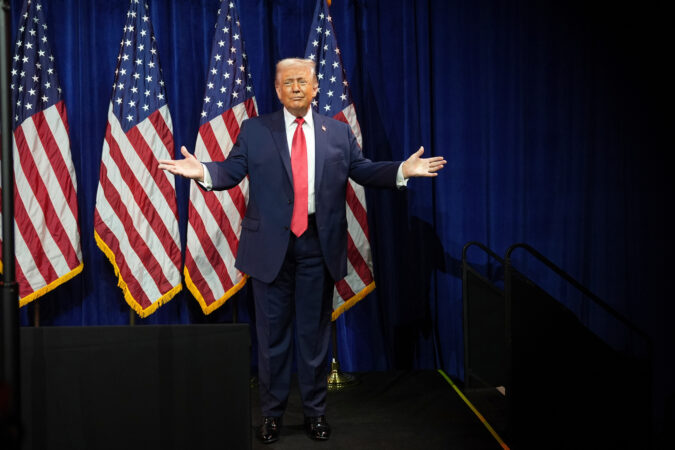
    WASHINGTON — President Donald Trump on Tuesday warned that Democrats would “find a reason to impeach me” if the GOP lost control of Congress — using the prediction to pressure lawmakers to unify behind a narrow set of electoral priorities to win the 2026 midterm elections.

    “You got to win the midterms, because if we don’t win the midterms, they’ll find a reason to impeach me,” Trump said. “I’ll get impeached.”

    The remark was a rare acknowledgment of Trump’s political vulnerability as Republicans prepare to face a Democratic Party buoyed by a string of off-year election victories, favorable polling, and voter anxiety over an economy now fully under Trump’s stewardship. The warning framed the midterms not only as a referendum on his agenda, but as a test of his legacy.

    Trump addressed the representatives at the start of an all-day policy forum for House Republicans inside the Kennedy Center, a performing arts building recently renamed in his honor. The setting in the heart of Washington underscored how far Trump has come since Jan. 6, 2021, exactly five years ago, when rioters stormed the Capitol and set off years of criminal prosecution and political isolation.

    In an address meant to energize his party, Trump conceded that his agenda has struggled to break through with voters. He complained that Americans had quickly moved past his record on illegal immigration and that the press had paid little attention to his push to pressure drug companies to cut prices, which has yielded wins, albeit limited, for some consumers.

    He urged House Republicans to focus their messaging on drug prices, transgender athletes in women’s sports and cracking down on violent crime — issues he argued could sharpen contrasts with Democrats and mobilize voters ahead of 2026. And he instructed Republicans to set internal disputes aside and focus on a disciplined message he believes can carry them in November.

    He also used the moment to defend Speaker Mike Johnson (R., La.), who has struggled to manage an ideologically divided conference with a razor-thin majority without Trump’s interference.

    “He’s as tough as anybody in the room actually,” the president said. “But you can’t be tough when you have a majority of three.”

    “You can’t be Trump,” he said, appearing to mock his own confrontational style. “You make 10 enemies, 20 enemies and that’s the end of that.”

    The endorsement came at a critical moment for Johnson, who is trying to unify his unruly conference behind a second legislative package after passing a sweeping tax and immigration effort — dubbed by Trump the One Big Beautiful Bill.

    Trump also urged House Republicans to reclaim healthcare from the Democrats as a political issue and to pass a voting ID law, while urging conservatives to remain “flexible on Hyde” a signal to lawmakers who have stalled negotiations over abortion language.

    “You got to be a little flexible. You got to work something,” Trump said. “We’re all big fans of everything but you got to have flexibility.”

    Since returning to the presidency, Trump has continued to minimize the violence of the riot, calling the insurrection “a day of love” and ultimately fulfilling his promise to pardon participants charged with misdemeanors and felonies. On Tuesday, he again downplayed his role.

    Across town, House Democrats marked the anniversary with a hearing featuring lawmakers, Capitol Police officers and Pamela Hemphill, a rioter who entered the Capitol and later rejected a pardon from Trump.

    “Once I got away from the MAGA cult and started educating myself about January the 6th, I knew what I did was wrong,” she said. “When Donald Trump pardoned us I rejected the pardon. Accepting that pardon would be lying about what happened on January 6. I am guilty.”

    Republicans meanwhile refocused on their agenda Tuesday, which the party is seeking to anchor on Trump’s economic agenda. That effort has been complicated by his decision to deploy U.S. forces to Venezuela and seize control of the country’s oil assets, a move that has resonated with some hawkish Republicans and members of both parties critical of Nicolás Maduro, but concerned others who fear the president’s “America First” base will lose patience with his interventionism.

    Trump argued the action would lower energy costs.

    “Got a lot of oil to drill,” he said.

    Trump’s address lasted for more than an hour and included everything from jokes about FDR’s disability to an aside about first lady Melania Trump’s distaste for his dance moves.

    “I think I gave you something,” he concluded. “It’s just a road map. It’s a road map to victory.”

  • Musk’s AI chatbot faces global backlash over sexualized images of women and children

    Musk’s AI chatbot faces global backlash over sexualized images of women and children

    LONDON — Elon Musk’s AI chatbot Grok is facing a backlash from governments around the world after a recent surge in sexualized images of women and children generated without consent by the artificial intelligence-powered tool.

    On Tuesday, Britain’s top technology official demanded that Musk’s social media platform X take urgent action while a Polish lawmaker cited it as a reason to enact digital safety laws.

    The European Union’s executive arm has denounced Grok while officials and regulators in France, India, Malaysia, and Brazil have condemned the platform and called for investigations.

    Rising alarm from disparate nations points to the nightmarish potential of nudification apps that use artificial intelligence to generate sexually explicit deepfake images.

    Here’s a closer look:

    Image generation

    The problem emerged after the launch last year of Grok Imagine, an AI image generator that allows users to create videos and pictures by typing in text prompts. It includes a so-called “spicy mode” that can generate adult content.

    It snowballed late last month when Grok, which is hosted on X, apparently began granting a large number of user requests to modify images posted by others. As of Tuesday, Grok users could still generate images of women using requests such as, “put her in a transparent bikini.”

    The problem is amplified both because Musk pitches his chatbot as an edgier alternative to rivals with more safeguards, and because Grok’s images are publicly visible, and can therefore be easily spread.

    Nonprofit group AI Forensics said in a report that it analyzed 20,000 images generated by Grok between Dec. 25 and Jan. 1 and found that 2% depicted a person who appeared to be 18 or younger, including 30 of young or very young women or girls, in bikinis or transparent clothes.

    Musk response

    Musk’s artificial intelligence company, xAI, responded to a request for comment with the automated response, “Legacy Media Lies.”

    However, X did not deny that the troublesome content generated through Grok exists. Yet it still claimed in a post on its Safety account, that it takes action against illegal content, including child sexual abuse material, “by removing it, permanently suspending accounts, and working with local governments and law enforcement as necessary.”

    The platform also repeated a comment from Musk, who said, “Anyone using Grok to make illegal content will suffer the same consequences as if they upload illegal content.”

    A growing list of countries are demanding that Musk does more to rein in explicit or abusive content.

    Britain

    X must “urgently” deal with the problem, Technology Secretary Liz Kendall said Tuesday, adding that she supported additional scrutiny from the U.K.’s communications regulator, Ofcom.

    Kendall said the content is “absolutely appalling, and unacceptable in decent society.”

    “We cannot and will not allow the proliferation of these demeaning and degrading images, which are disproportionately aimed at women and girls.”

    Ofcom said Monday it has made “urgent contact” with X.

    “We are aware of serious concerns raised about a feature on Grok on X that produces undressed images of people and sexualised images of children,” the watchdog said.

    The watchdog said it contacted both X and xAI to understand what steps it has taken to comply with British regulations.

    Under the U.K.’s Online Safety Act, social media platforms must prevent and remove child sexual abuse material when they become aware of it.

    Poland

    A Polish lawmaker used Grok on Tuesday as a reason for national digital safety legislation that would beef up protections for minors and make it easier for authorities to remove content.

    In an online video, Wlodzimierz Czarzasty, speaker of the parliament, said he wanted to make himself a target of Grok to highlight the problem, as well as appeal to Poland’s president for support of the legislation.

    “Grok lately is stripping people. It is undressing women, men, and children. We feel bad about it. I would, honestly, almost want this Grok to also undress me,” he said.

    European Union

    The bloc’s executive arm is “well aware” that Grok is being used to for “explicit sexual content with some output generated with childlike images,” European Commission spokesman Thomas Regnier said

    “This is not spicy. This is illegal. This is appalling. This is disgusting. This is how we see it, and this has no place in Europe. This is not the first time that Grok is generating such output,” he told reporters Monday.

    After Grok spread Holocaust-denial content last year, according to Regnier, the Commission sought more information from Musk’s social media platform X. The response from X is currently being analyzed, he said.

    France

    The Paris prosecutor’s office said it’s widening an ongoing investigation of X to include sexually explicit deepfakes after officials receiving complaints from lawmakers.

    Three government ministers alerted prosecutors to “manifestly illegal content” generated by Grok and posted on X, according to a government statement last week.

    The government also flagged problems with the country’s communications regulator over possible breaches of the EU’s Digital Services Act.

    “The internet is neither a lawless zone nor a zone of impunity: sexual offenses committed online constitute criminal offenses in their own right and fall fully under the law, just as those committed offline,” the government said.

    India

    The Indian government on Friday issued an ultimatum to X, demanding that it take down all “unlawful content” and take action against offending users. The country’s Ministry of Electronics and Information Technology also ordered the company to review Grok’s “technical and governance framework” and file a report on actions taken.

    The ministry accused Grok of “gross misuse” of AI and serious failures of its safeguards and enforcement by allowing the generation and sharing of ”obscene images or videos of women in derogatory or vulgar manner in order to indecently denigrate them.”

    The ministry warned failure to comply by the 72-hour deadline would expose the company to bigger legal problems, but the deadline passed with no public update from India.

    Malaysia

    The Malaysian communications watchdog said Saturday it was investigating X users who violated laws prohibiting spreading “grossly offensive, obscene, or indecent content.”

    The Malaysian Communications and Multimedia Commission said it’s also investigating online harms on X, and would summon a company representative.

    The watchdog said it took note of public complaints about X’s AI tools being used to digitally manipulate “images of women and minors to produce indecent, grossly offensive, or otherwise harmful content.”

    Brazil

    Lawmaker Erika Hilton said she reported Grok and X to the Brazilian federal public prosecutor’s office and the country’s data protection watchdog.

    In a social media post, she accused both of generating, then publishing sexualized images of women and children without consent.

    She said X’s AI functions should be disabled until an investigation has been carried out.

    Hilton, one of Brazil’s first transgender lawmakers, decried how users could get Grok to digitally alter any published photo, including “swapping the clothes of women and girls for bikinis or making them suggestive and erotic.”

    “The right to one’s image is individual; it cannot be transferred through the ‘terms of use’ of a social network, and the mass distribution of child pornography by an artificial intelligence integrated into a social network crosses all boundaries,” she said.

  • Abortion stays legal in Wyoming as its top court strikes down laws, including first US pill ban

    FORT COLLINS, Colo. — Abortion will remain legal in Wyoming after the state Supreme Court ruled Tuesday that two laws barring the procedure, including the country’s first explicit ban on abortion pills, violate the state constitution.

    The justices sided with the state’s only abortion clinic and others who had sued over the abortion bans passed since 2022, when the U.S. Supreme Court overturned the landmark Roe v. Wade decision.

    Wyoming is one of the most conservative states, but the 4-1 ruling from justices all appointed by Republican governors was unsurprising in that it upheld every previous lower court ruling that the abortion bans violated the state constitution.

    Wellspring Health Access in Casper, the abortion access advocacy group Chelsea’s Fund and four women, including two obstetricians, argued that the laws violated a state constitutional amendment ensuring competent adults have the right to make their own healthcare decisions.

    Voters approved the constitutional amendment in 2012 in response to the federal Affordable Care Act. The justices recognized that the amendment wasn’t written to apply to abortion but said it’s not their job to “add words” to the state constitution.

    “But lawmakers could ask Wyoming voters to consider a constitutional amendment that would more clearly address this issue,” the justices wrote.

    The ruling upholds abortion as “essential healthcare” that shouldn’t be subject to government interference, Wellspring Health Access President Julie Burkhart said in a statement.

    “Our clinic will remain open and ready to provide compassionate reproductive healthcare, including abortions, and our patients in Wyoming will be able to obtain this care without having to travel out of state,” Burkhart said.

    The clinic opened in 2023 as the only facility of its kind in the state, almost a year later than planned after an arson attack. A woman who admitted breaking in and causing heavy damage by lighting gasoline that she poured over the clinic floors pleaded guilty and has been serving a five-year prison sentence.

    Attorneys for the state had argued before the state Supreme Court that abortion can’t violate the Wyoming constitution because it is not healthcare.

    Gov. Mark Gordon, a Republican, said in a statement that the court ruling disappointed him. He called on state lawmakers meeting later this winter to pass a constitutional amendment banning abortion that would go before voters this fall.

    “This ruling may settle, for now, a legal question, but it does not settle the moral one, nor does it reflect where many Wyoming citizens stand, including myself. It is time for this issue to go before the people for a vote,” Gordon said.

    Such an amendment would require a two-thirds vote to be introduced as a nonbudget matter in the monthlong legislative session that will be devoted primarily to the state budget. But it would have wide support in the Republican-dominated statehouse.

    One of the laws overturned Tuesday sought to ban abortion except to protect a pregnant woman’s life or in cases involving rape or incest. The other law would have made Wyoming the only state to explicitly ban abortion pills, though other states have instituted de facto bans on abortion medication by broadly prohibiting abortion.

    Abortion has remained legal in the state since Teton County District Judge Melissa Owens in Jackson blocked the bans while the lawsuit challenging them went ahead. Owens struck down the laws as unconstitutional in 2024.

    Last year, Wyoming passed additional laws requiring abortion clinics to be licensed surgical centers and women to get ultrasounds before having medication abortions. A judge in a separate lawsuit has blocked those laws from taking effect while that case proceeds.

    Thirteen states currently ban abortion completely after the North Dakota Supreme Court overturned an earlier ruling and upheld that state’s abortion ban in November.

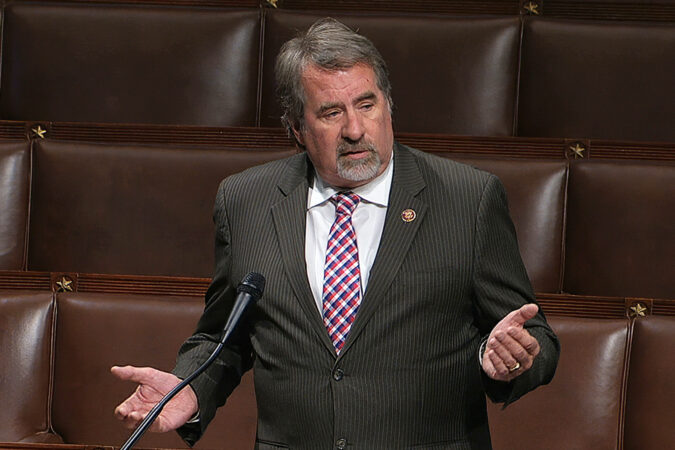
  • Rep. Doug LaMalfa of California dies, reducing GOP’s narrow control of the House to 218-213

    Rep. Doug LaMalfa of California dies, reducing GOP’s narrow control of the House to 218-213

    WASHINGTON — Republican Doug LaMalfa, a seven-term U.S. representative from California and a reliable vote on President Donald Trump’s agenda, has died, reducing the GOP’s narrow control of the House. He was 65.

    A former state lawmaker and rice farmer, LaMalfa had more than a dozen years in Congress, where he regularly helped GOP leaders open the House floor and frequently gave speeches. His death, confirmed by Majority Whip Tom Emmer and National Republican Congressional Committee Chairman Richard Hudson, trims the Republicans’ margin of control of the House to 218 seats to Democrats’ 213.

    “I was really saddened by his passing,” Trump said.

    The president said he considered not giving the speech to honor LaMalfa but decided to go ahead with it “because he would have wanted it that way.”

    Trump said the late congressman “wasn’t a 3 o’clock in the morning person” like other lawmakers he would call in the wee hours to lobby for their votes.

    “He voted with me 100% of the time,” Trump said. “With Doug, I never had to call.”

    Details surrounding LaMalfa’s death were unclear.

    David Reade, a former chief of staff of LaMalfa’s from the state legislature, became emotional remembering LaMalfa, who he said was committed to his district and proud of his family and Christian faith.

    “One of my great memories of Doug is that, you know, he would show up at the smallest events that were important in people’s lives in this district,” Reade said in a phone interview. “Whether it was a birthday, it was, you, know, a family gathering, it was the smallest organization in his district, and he would drive literally hundreds and hundreds of miles to be there.”

    California Gov. Gavin Newsom, a Democrat, must call a special election to replace LaMalfa, his office said. The election could happen as late as June, when California will hold its primary for the 2026 midterm.

    Hudson, the NRCC chairman, called LaMalfa “a principled conservative and a tireless advocate for the people of Northern California.”

    “He was never afraid to fight for rural communities, farmers, and working families,” Hudson said. “Doug brought grit, authenticity, and conviction to everything he did in public service.”

    First elected to Congress in 2012, he was a regular presence on the House floor, helping GOP leadership open the chamber and offer his view local and national affairs.

    C-SPAN in a recent compilation said he gave at least one set of remarks for the record on 81 days in 2025. Only two other lawmakers spoke on the House floor more frequently.

  • The fifth anniversary of the Jan. 6 insurrection brings fresh division to the Capitol

    The fifth anniversary of the Jan. 6 insurrection brings fresh division to the Capitol

    WASHINGTON — Five years ago outside the White House, outgoing President Donald Trump told a crowd of supporters to head to the Capitol — “and I’ll be there with you” — in protest as Congress was affirming the 2020 election victory for Democrat Joe Biden.

    A short time later, the world watched as the seat of U.S. power descended into chaos, and democracy hung in the balance.

    On the fifth anniversary of Jan. 6, 2021, there is no official event to memorialize what happened that day, when the mob made its way down Pennsylvania Avenue, battled police at the Capitol barricades and stormed inside, as lawmakers fled. The political parties refuse to agree to a shared history of the events, which were broadcast around the globe. And the official plaque honoring the police who defended the Capitol has never been hung.

    Instead, the day displayed the divisions that still define Washington, and the country, and the White House itself issued a glossy new report with its own revised history of what happened.

    Trump, during a lengthy morning speech to House Republicans convening away from the Capitol at the rebranded Kennedy Center now carrying his own name, shifted blame for Jan. 6 onto the rioters themselves.

    The president said he had intended only for his supporters to go “peacefully and patriotically” to confront Congress as it certified Biden’s win. He blamed the media for focusing on other parts of his speech that day.

    At the same time, Democrats held their own morning meeting at the Capitol, reconvening members of the House committee that investigated the Jan. 6, 2021, attack for a panel discussion. Recalling the history of the day is important, they said, in order to prevent what Rep. Jamie Raskin (D., Md.) warned was the GOP’s “Orwellian project of forgetting.”

    And the former leader of the militant Proud Boys, Enrique Tarrio, summoned people for a midday march retracing the rioters’ steps from the White House to the Capitol, this time to honor Trump supporter Ashli Babbitt and others who died in the Jan. 6 siege and its aftermath. More than 100 people gathered, including Babbitt’s mother.

    Tarrio and others are putting pressure on the Trump administration to punish officials who investigated and prosecuted the Jan. 6 rioters. He was sentenced to 22 years in prison for seditious conspiracy for orchestrating the Jan. 6 attack, and he is among more than 1,500 defendants who saw their charges dropped when Trump issued a sweeping pardon on his return to the White House last year.

    “They should be fired and prosecuted,” Tarrio told the crowd before they arrived at the Capitol, confronted along the way by counterprotesters, and sang the national anthem.

    The White House in its new report highlighted the work the president has already done to free those charged and turned the blame on Democrats for certifying Biden’s election victory.

    Echoes of 5 years ago

    This milestone anniversary carried echoes of the differences that erupted that day.

    But it unfolds while attention is focused elsewhere, particularly after the U.S. military’s stunning capture of Venezuela’s president, Nicolás Maduro, and Trump’s plans to take over the country and prop up its vast oil industry, a striking new era of American expansionism.

    “These people in the administration, they want to lecture the world about democracy when they’re undermining the rule of law at home, as we all will be powerfully reminded,” House Democratic leader Hakeem Jeffries of New York said on the eve of the anniversary.

    House Speaker Mike Johnson of Louisiana, responding to requests for comment about the delay in hanging the plaque honoring the police at the Capitol, as required by law, said in a statement on the eve of the anniversary that the statute “is not implementable,” and proposed alternatives “also do not comply with the statute.”

    Democrats revive an old committee, Republicans lead a new one

    At the morning hearing at the Capitol, lawmakers heard from a range of witnesses and others — including former U.S. Capitol Police officer Winston Pingeon, who said as a kid he always dreamed of being a cop. But on that day, he thought he was going to die in the mayhem on the steps of the Capitol.

    “I implore America to not forget what happened,” he said, “I believe the vast majority of Americans have so much more in common than what separates us.”

    Also testifying was Pamela Hemphill, a rioter who refused Trump’s pardon, blamed the president for the violence and silenced the room as she apologized to the officer sitting alongside her at the witness table, stifling tears.

    “I can’t allow them not be recognized, to be lied about,” Hemphill said about the police who she said also saved her life as she fell and was trampled on by the mob. “Until I can see that plaque get up there, I’m not done.”

    Among those testifying were former Rep. Adam Kinzinger of Illinois, who along with former Rep. Liz Cheney of Wyoming were the two Republicans on the panel that investigated Trump’s efforts to overturn Biden’s win. Cheney, who lost her own reelection bid to a Trump-backed challenger, did not appear. Speaker Emerita Nancy Pelosi urged the country to turn away from a culture of lies and violence that she said sends the wrong message about democracy.

    Republican Rep. Barry Loudermilk of Georgia, who has been tapped by Johnson to lead a new committee to probe other theories about what happened on Jan. 6, rejected Tuesday’s session as a “partisan exercise” designed to hurt Trump and his allies.

    Many Republicans reject the narrative that Trump sparked the Jan. 6 attack, and Johnson, before he became the House speaker, had led challenges to the 2020 election. He was among some 130 GOP lawmakers voting that day to reject the presidential results from some states.

    Instead, they have focused on security lapses at the Capitol — from the time it took for the National Guard to arrive on the scene to the failure of the police canine units to discover the pipe bombs found that day outside Republican and Democratic party headquarters. The FBI arrested a Virginia man suspected of placing the pipe bombs, and he told investigators last month he believed someone needed to speak up for those who believed the 2020 election was stolen, authorities say.

    “The Capitol Complex is no more secure today than it was on Jan. 6,” Loudermilk said in a social media post. “My Select Subcommittee remains committed to transparency and accountability and ensuring the security failures that occurred on Jan. 6 and the partisan investigation that followed never happens again.”

    The aftermath of Jan. 6

    At least five people died in the Capitol siege and its aftermath, including Babbitt, who was shot and killed by police while trying to climb through the window of a door near the House chamber, and Capitol Police Officer Brian Sicknick died later after battling the mob. Several law enforcement personnel died later, some by suicide.

    The Justice Department indicted Trump on four counts in a conspiracy to defraud voters with his claims of a rigged election in the run-up to the Jan. 6 attack.

    Former Justice Department special counsel Jack Smith told lawmakers last month that the riot at the Capitol “does not happen” without Trump. He ended up abandoning the case once Trump was reelected president, adhering to department guidelines against prosecuting a sitting president.

    Trump, who never made it to the Capitol that day as he hunkered down at the White House, was impeached by the House on the sole charge of having incited the insurrection. The Senate acquitted him after top GOP senators said they believed the matter was best left to the courts.

    Ahead of the 2024 election, the Supreme Court ruled ex-presidents have broad immunity from prosecution.

  • FAA picks 2 firms to replace 612 outdated radar systems that air traffic controllers rely on

    FAA picks 2 firms to replace 612 outdated radar systems that air traffic controllers rely on

    The federal government has picked two companies to replace 612 radar systems nationwide that date back to the 1980s as part of a multibillion-dollar overhaul of the nation’s air traffic control system.

    Transportation Secretary Sean Duffy and the Federal Aviation Administration said Monday that contractors RTX and Spanish firm Indra will replace the radar systems by the summer of 2028. The administration set an ambitious goal of completing the overhaul by the end of 2028 near the conclusion of President Donald Trump’s current term in office.

    “Our radar network is outdated and long overdue for replacement. Many of the units have exceeded their intended service life, making them increasingly expensive to maintain and difficult to support,” FAA Administrator Bryan Bedford said.

    The FAA has been spending most of its $3 billion equipment budget just maintaining the fragile old system that still relies on floppy discs in places. Some of the equipment is old and isn’t manufactured anymore, so the FAA sometimes has to search for spare parts on eBay.

    Technical failures twice knocked out the radar for air traffic controllers managing planes around Newark Liberty International Airport last spring, and those problems led to thousands of cancellations and delays at the major hub airport.

    Redundancy in the system helps keep flights safe, but there have been a number of occasions when both the primary and backup systems failed, as happened in the Philadelphia facility directing planes into and out of the Newark airport.

    The FAA didn’t immediately provide an estimate of the cost of the new radar systems that will replace 14 different existing radar systems in use across the country and will simplify maintenance and repairs.

    The FAA has already committed more than $6 billion of the $12.5 billion that Congress approved to pay for the overhaul, but Duffy has said that another $20 billion will be needed to complete the project. The agency has already replaced more than one-third of the outdated copper wires the system was relying on with modern connections like fiber optic lines, and it hired a national security contractor named Peraton to oversee the work.

  • Their homes survived the historic LA area wildfires, but a year later they fear living in them

    Their homes survived the historic LA area wildfires, but a year later they fear living in them

    ALTADENA, Calif. — “DANGER: Lead Work Area” reads a sign on a front door of an Altadena home. “May damage fertility or the unborn child. Causes damage to the central nervous system.”

    Block after block, there are reminders that contaminants still linger.

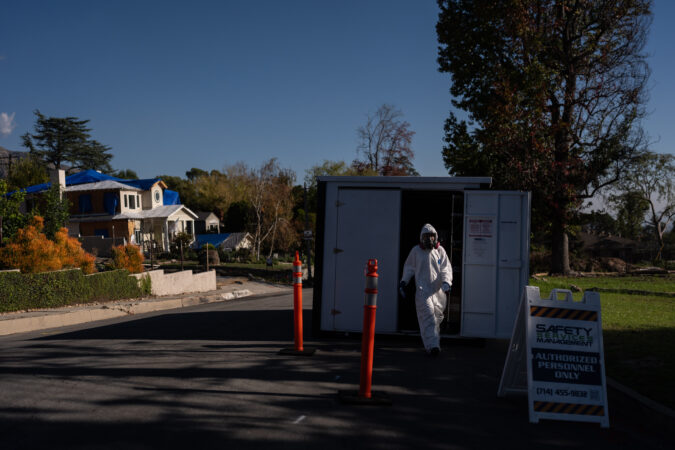
    House cleaners, hazardous waste workers, and homeowners alike come and go wearing masks, respirators, gloves, and hazmat suits as they wipe, vacuum, and power-wash homes that weren’t burnt to ash.

    It’s been a year of heartbreak and worry since the most destructive wildfires in the Los Angeles area’s history scorched neighborhoods and displaced tens of thousands of people. Two wind-whipped blazes that ignited on Jan. 7, 2025, killed at least 31 people and destroyed nearly 17,000 structures, including homes, schools, businesses, and places of worship. Rebuilding will take years.

    The disaster has brought another wave of trauma for people afraid of what still lurks inside their homes.

    Indoor air quality after wildfires remains understudied, and scientists still don’t know the long-term health impacts of exposure to massive urban fires like last year’s in Los Angeles. But some chemicals released are known to be linked to heart disease and lung issues, and exposure to minerals like magnetite has been associated with Alzheimer’s disease.

    Ash in the area is a toxic soup of incinerated cars, electronics, paints, furniture, and every other kind of personal belonging. It can contain pesticides, asbestos, plastics, lead, or other heavy metals.

    Many people with homes still standing are now living with the hazards left by the fires.

    People forced back into their Altadena homes

    Nina and Billy Malone considered their home of 20 years a safe haven before smoke, ash, and soot seeped inside, leaving behind harmful levels of lead even after professional cleaning. Recent testing found the toxin is still on the wooden floors of their living room and bedroom.

    They were forced to move back home in August anyway, after insurance cut off their rental assistance.

    Since then, Nina wakes up almost daily with a sore throat and headaches. Billy had to get an inhaler for his worsening wheezing and congestion. And their bedroom, Nina said, smells “like an ashtray has been sitting around for a long time.” She worries most about exposure to unregulated contaminants that insurance companies aren’t required to test.

    “I don’t feel comfortable in the space,” said Nina, whose neighbors’ homes burned down across the street.

    They’re not alone.

    Data shows dangerous lead levels still in homes

    According to a report released in November by the Eaton Fire Residents United, a volunteer group formed by residents, six out of 10 homes damaged from smoke from the Eaton Fire still have dangerous levels of cancer-causing asbestos, brain-damaging lead, or both. That’s based on self-submitted data from 50 homeowners who have cleaned their homes, with 78% hiring professional cleaners.

    Of the 50 homes, 63% have lead levels above the Environmental Protection Agency’s standard, according to the report. The average lead levels were almost 60 times higher than the EPA’s rule.

    Even after fires were extinguished, volatile organic compounds from smoke, some known to cause cancer, lingered inside of people’s homes, according to a recent study. To mitigate these risks, residents returning home should ventilate and filter indoor air by opening windows or running high-efficiency particulate air (HEPA) purifiers with charcoal filters.

    Zoe Gonzalez Izquierdo said she can’t get her insurance company to pay for an adequate cleanup of her family’s Altadena home, which tested positive for dangerous levels of lead and other toxic compounds.

    “They can’t just send a company that’s not certified to just wipe things down so that then we can go back to a still contaminated home,” Gonzalez said, who has children ages 2 and 4.

    Experts believe the lead, which can linger in dust on floors and windowsills, comes from burned lead paint. The University of Southern California reported that more than 70% of homes within the Eaton Fire were built before 1979, when lead paint was common.

    “For individuals that are pregnant, for young children, it’s particularly important that we do everything we can to eliminate exposure to lead,” said pediatrician Lisa Patel, executive director for the Medical Society Consortium on Climate and Health and a member of the climate group Science Moms.

    The same goes for asbestos, she added, because there is no safe level of exposure.

    “We have to live in the scar”

    People who lived in the Pacific Palisades, which was also scorched, face similar challenges.

    Residents are at the mercy of their insurance companies, who decide on what they cover and how much. It’s a grueling, constant battle for many. The state’s insurer of last resort, known as the California Fair Access to Insurance Requirements Plan, has been scrutinized for years over its handling of fire damage claims.

    Homeowners want state agencies to enforce a requirement that insurance companies return a property to prefire condition.

    Julie Lawson won’t take any risks. Her family paid about $7,000 out of pocket to test the soil in their Altadena home, even though their insurance company had already agreed to pay to replace the grass in their front yard. They planned to test for contaminants again once they finished remediating the inside, the process of making a home contaminant-free after a fire. If insurance won’t cover it, they’ll pay for it themselves.

    Even if their home is livable again, they still face other losses — including equity and the community they once had.

    “We have to live in the scar,” she said. “We’re all still really struggling.”

    They will be living in a construction zone for years. “This isn’t over for us.”

    Challenges and mental health toll

    Annie Barbour with the nonprofit United Policyholders has been helping people navigate the challenges, which include insurance companies that resist paying for contamination testing and industrial hygienists disagreeing on what to test for.

    She sees the mental health toll it’s having on people — and as a survivor herself of the 2017 Tubbs Fire in Northern California, she understands it.

    Many were at first joyful to see their houses still standing.

    “But they’ve been in their own special kind of hell ever since,” Barbour said.

    Now residents like the Malones are inspecting their belongings, one by one, fearing they may have absorbed toxins.

    Boxes, bags, and bins stuffed with clothes, chinaware, and everything in between fill the couple’s car, basement, garage, and home.

    They have been painstakingly going through their things, assessing what they think can be adequately cleaned. In the process, Nina is cleaning cabinets, drawers, and floors and still finding soot and ash. She wears gloves and a respirator, or sometimes just an N95 mask.

    Their insurance won’t pay to retest their home, Billy said, so they’re considering paying the $10,000 themselves. And if results show there’s still contamination, their insurance company told them they will only pay to clean up toxins that are federally regulated, like lead and asbestos.

    “I don’t know how you fight that,” said Nina, who is considering therapy to cope with her anxiety. “How do you find that argument to compel an insurance company to pay for something to make yourself safe?”

  • Zelensky replaces Ukraine’s security chief and hires a Canadian economic adviser

    Zelensky replaces Ukraine’s security chief and hires a Canadian economic adviser

    KYIV, Ukraine — President Volodymyr Zelensky replaced the head of Ukraine’s security service Monday, continuing a top-level reshuffle ahead of a trip to Paris where he hoped to finalize agreements with allies on how to ensure that Russia doesn’t repeat its invasion if a peace agreement is signed.

    Zelensky is trying to revamp his administration as the grinding war of attrition with Russia marks its fourth anniversary next month. He is keen to keep up the momentum of U.S.-led peace talks as well as sharpen Ukraine’s focus on defense if those efforts collapse.

    The Paris talks are expected to include the leaders of about 30 countries, dubbed the “coalition of the willing,” which are ready to provide security guarantees to keep Ukraine safe in the future.

    Key issues include whether countries are prepared to deploy troops inside or close to Ukraine and what the remit of any force overseeing a ceasefire might be. Russia has said it won’t accept troops from NATO countries on Ukrainian soil.

    Zelensky’s changes at the top

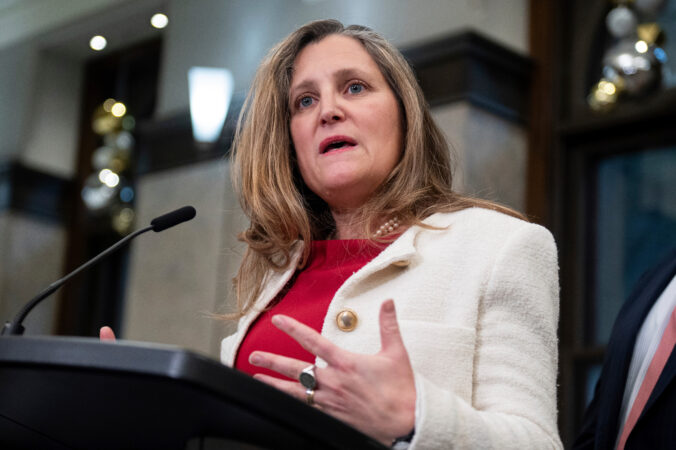
    Zelensky also announced the appointment of Canada’s former Deputy Prime Minister Chrystia Freeland as Ukraine’s economic development adviser, describing her as an expert on the issues with “significant experience in attracting investment and carrying out economic transformations.”

    Amid Ukraine’s biggest top-level reshuffle in about six months, Lt. Gen. Vasyl Maliuk, the head of the Security Service, or SBU, announced his resignation on the agency’s website.

    Zelensky published a decree on the presidential website appointing Ievhen Khmara, former head of the “A” Special Operations Center of the Security Service, as the agency’s acting head.

    Under Maliuk, the SBU produced some stunning successes against Russia, including Operation Spiderweb, which Ukraine said damaged or destroyed 41 Russian military aircraft in coordinated strikes on four air bases.

    On Friday, Zelensky appointed the head of Ukraine’s military intelligence as his new chief of staff.

    Announcing the appointment of Lt. Gen. Kyrylo Budanov, Zelensky said Ukraine needs to focus on security issues, developing its defense and security forces, and peace talks — areas that are overseen by the office of the president.

    New adviser has been a staunch critic of Putin

    Zelensky also is looking to strengthen the war-battered economy, including through projects in partnership with the U.S. and other countries. Freeland, who is of Ukrainian heritage and is a strong critic of Russian President Vladimir Putin, is a former journalist and Canadian lawmaker.

    Besides being a former deputy prime minister, she also served as Canada’s minister of international trade, foreign minister, and finance minister, and helped negotiate trade agreements with both Europe and the U.S.

    The Harvard University graduate has served as Canada’s special representative for the reconstruction of Ukraine — a position outside the Cabinet — in addition to her responsibilities as a lawmaker.

    Freeland and U.S. President Donald Trump have had a sometimes-fraught relationship that could work against Ukraine. In Trump’s first term, Freeland played a key role in negotiating the U.S.-Mexico-Canada Trade Agreement, and occasionally frustrated Trump aides with her tactics.

    During Trump’s first meeting with Canadian Prime Minister Mark Carney in the Oval Office, the president recalled his own antipathy for Freeland. “She was terrible, actually — she was a terrible person,” Trump said.

    When Freeland left former Prime Minister Justin Trudeau’s Cabinet, Trump said on social media that “her behavior was totally toxic.”

    One opposition lawmaker in Canada argued that Freeland could not be a member of the country’s parliament and at the same time work as an adviser to a foreign government.

    Ukraine seeks to counter size of Russian forces

    In his New Year’s address, Zelensky said a proposed U.S.-brokered peace deal was “90% ready” but warned that the remaining 10%, believed to include issues such as the future of disputed territory, would determine the outcome of the push for peace.

    Moscow hasn’t been forthcoming about details of the negotiations. Officials have, however, restated Russia’s demands and insist there can be no ceasefire until a comprehensive settlement is agreed.

    The fighting has not subsided along the roughly 600-mile front line that snakes along southern and eastern Ukraine.

    Zelensky said he met with Budanov on Monday to look at ways to reduce Russia’s edge in larger armed forces.

    “Russia has one significant advantage in this war, namely the ability to put pressure on Ukraine with the scale of strikes, the scale of assaults,” he said on social media. “We have and must respond with more active use of technology, faster development of new types of weapons, new tactics.”

    An overnight Russian drone strike at a private clinic in Kyiv’s Obolon district killed a 30-year-old old patient and injured three others, the capital’s prosecutor’s office said Monday.

    Energy workers and repair crews worked across the country after Russian drones damaged energy infrastructure, causing more power disruptions for civilians in the bitter winter, Zelensky said. Russia fired nine ballistic missiles and 165 long-range drones at Ukraine overnight, the air force said Monday.

    Meanwhile, a Ukrainian drone sparked a fire at an industrial facility in Yelets, in Russia’s western Lipetsk region, according to regional Gov. Igor Artamonov. There were no casualties, he said.

    The Russian airports of Ivanovo, Nizhny Novgorod, and Yaroslavl briefly suspended flights because of Ukrainian drone attacks, authorities said.The Russian Defense Ministry reported downing another 50 Ukrainian drones later Monday over the Belgorod, Kursk and Lipetsk regions.

  • Maduro says ‘I was captured’ as he pleads not guilty to drug trafficking charges

    Maduro says ‘I was captured’ as he pleads not guilty to drug trafficking charges

    NEW YORK — A defiant Nicolás Maduro declared himself “the president of my country” as he protested his capture and pleaded not guilty Monday to federal drug trafficking charges that the Trump administration used to justify removing him from power in Venezuela.

    “I was captured,” Maduro said in Spanish as translated by a courtroom reporter before being cut off by the judge. Asked later for his plea to the charges, he stated: “I’m innocent. I am not guilty. I am a decent man, the president of my country.”

    The courtroom appearance, Maduro’s first since he and his wife were seized from their home in a stunning middle-of-the-night military operation, kicked off the U.S. government’s most consequential prosecution in decades of a foreign head of state. The criminal case in Manhattan is unfolding against a broader diplomatic backdrop of an audacious U.S.-engineered regime change that President Donald Trump has said will enable his administration to “run” the South American country.

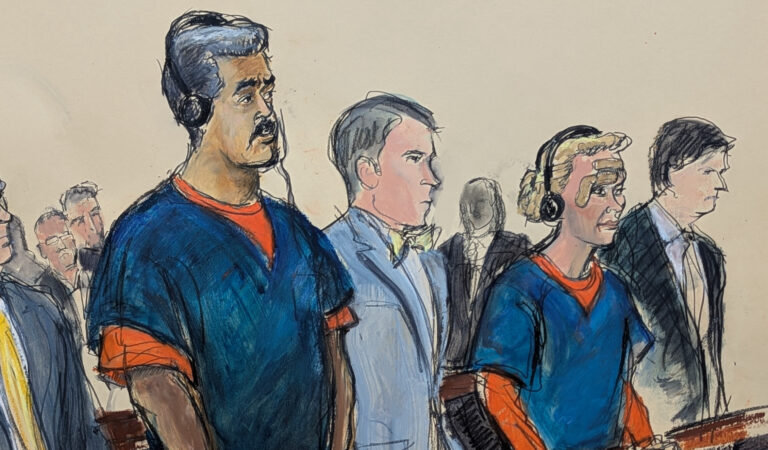
    Maduro was led into court along with his co-defendant wife just before noon for the brief legal proceeding. Both put on headsets to hear the English-language proceeding as it was translated into Spanish.

    The couple was transported to the Manhattan courthouse under armed guard early Monday from the Brooklyn jail where they’ve been detained since arriving in the U.S. on Saturday.

    A legal fight begins

    As a criminal defendant in the U.S. legal system, Maduro will have the same rights as any other person accused of a crime — including the right to a trial by a jury of regular New Yorkers. But he’ll also be nearly — but not quite — unique.

    The stakes were made clear from the outset as Maduro, who took copious notes throughout the proceedings and wished a Happy New Year to reporters in court, repeatedly pressed his case that he had been unlawfully abducted.

    “I am here kidnapped,” Maduro said. “I was captured at my home in Caracas.”

    U.S. District Judge Alvin Hellerstein, a 92-year-old jurist who was appointed to the federal bench in 1998 by Bill Clinton, interrupted him, saying: “There will be time and place to go through all of this.” Hellerstein added that Maduro’s attorney could do so later.

    “At this time, I just want to know if you are Nicolás Maduro Moros,” which Maduro confirmed that he was.

    Maduro’s lawyers are expected to contest the legality of his arrest, arguing that he is immune from prosecution as a head of state. Barry Pollack, a prominent Washington lawyer whose clients have included WikiLeaks founder Julian Assange, said Maduro is “head of a sovereign state and entitled to the privilege” that the status ensures. He also said the defense would raise “questions about the legality of his military abduction.”

    Panamanian strongman Manuel Noriega unsuccessfully tried the same immunity defense after the U.S. captured him in a similar military invasion in 1990. But the U.S. doesn’t recognize Maduro as Venezuela’s legitimate head of state — particularly after a much-disputed 2024 reelection.

    Maduro’s wife, Cilia Flores, also pleaded not guilty on Monday. She had bandages on her forehead and right temple, and her lawyer said had she suffered “significant injuries” during her capture.

    A 25-page indictment accuses Maduro and others of working with drug cartels to facilitate the shipment of thousands of tons of cocaine into the U.S. They could face life in prison if convicted.

    Among other things, the indictment accuses Maduro and his wife of ordering kidnappings, beatings, and murders of those who owed them drug money or undermined their drug trafficking operation. That included a local drug boss’ killing in Caracas, the indictment said.

    Outside the courthouse, police separated protesters of the U.S. military action from prointervention demonstrators. Inside the courtroom, as Maduro stood to leave with federal officers, a man in the audience stood and began speaking forcefully at him in Spanish, calling him an “illegitimate” president.

    The man, 33-year-old Pedro Rojas, said later that he had been imprisoned by the Venezuelan regime. As deputy U.S. marshals led Maduro from the courtroom, the deposed leader looked directly at the man and shot back in Spanish: “I am a kidnapped president. I am a prisoner of war.”

    Trump reiterates U.S. will ‘run it’

    The U.S. seized Maduro and his wife in a military operation early Saturday, capturing them in their home on a military base. Trump said Saturday the U.S. would “run” Venezuela temporarily and reiterated Sunday night that “we’re in charge,” telling reporters aboard Air Force One that “we’re going to run it, fix it.”

    Secretary of State Marco Rubio had tried to strike a more cautious tone on Sunday morning talk shows, saying the U.S. would not govern the country day to day other than enforcing an existing “oil quarantine.”

    But on Monday, NBC’s Kristen Welker reported that in a phone interview Trump insisted that top administration officials, including Rubio, Vice President JD Vance, Defense Secretary Pete Hegseth, and deputy chief of staff Stephen Miller would be in charge of Venezuela.

    When Welker asked who the top person in charge would be, Trump responded, “Me.”

    Before his capture, Maduro and his allies claimed U.S. hostility was motivated by lust for Venezuela’s rich oil and mineral resources.

    Trump has suggested that removing Maduro would enable more oil to flow out of Venezuela, but oil prices rose a bit more than 1% in Monday morning trading to roughly $58 a barrel. There are uncertainties about how fast oil production can be ramped up in Venezuela after years of neglect of the industry, as well as questions about governance and oversight of the sector.

    Venezuela’s new interim leader, Delcy Rodríguez, has demanded that the U.S. return Maduro, who long denied any involvement in drug trafficking — although late Sunday she also struck a more conciliatory tone in a social media post, inviting collaboration with Trump and “respectful relations” with the U.S.

    Rodríguez was sworn in on Monday by her brother, National Assembly leader Jorge Rodríguez.

    “I come with sorrow for the suffering inflicted upon the Venezuelan people following an illegitimate military aggression against our homeland,” she said with her right hand up. “I come with sorrow for the kidnapping of two heroes.”

    Maduro’s son and Venezuelan congressman Nicolás Maduro Guerra warned on Monday that his father’s capture could set a dangerous precedent globally and demanded that his parents be returned.

    “If we normalize the kidnapping of a head of state, no country is safe. Today it’s Venezuela. Tomorrow it could be any nation that refuses to submit. This is not a regional problem. It is a direct threat to global political stability,” Maduro Guerra said.

    Hegseth, Rubio brief congressional leaders

    Congressional leaders expected to hear more about the U.S. government’s plans for the future of Venezuela, as top officials from Trump’s administration headed to Capitol Hill to brief select lawmakers Monday evening.

    Rubio, Hegseth, and other officials were to discuss Venezuela with House and Senate leadership, as well as top members of the intelligence committees and national security committees.

    The top Republican and Democrat on the Senate Judiciary Committee say they should have been included.

    The briefing Monday was for members of the “gang of eight,” which include the four congressional leaders and the heads of the House and Senate Intelligence Committees. It also included leaders from the various national security committees.

    But the Judiciary Committee, which oversees the Justice Department, is not among those committees, said Sen. Chuck Grassley (R., Iowa) and Illinois Sen. Dick Durbin, the top Democrat on the committee. That is not all right, they say, because the administration has said this was a law enforcement operation involving key DOJ entities.

    “There is no legitimate basis for excluding the Senate Judiciary Committee from this briefing,” Grassley and Durbin said in a joint statement. “The administration’s refusal to acknowledge our Committee’s indisputable jurisdiction in this matter is unacceptable and we are following up to ensure the Committee receives warranted information regarding Maduro’s arrest.”

  • U.S. allies and adversaries use U.N. meeting to critique Venezuela intervention as America defends it

    U.S. allies and adversaries use U.N. meeting to critique Venezuela intervention as America defends it

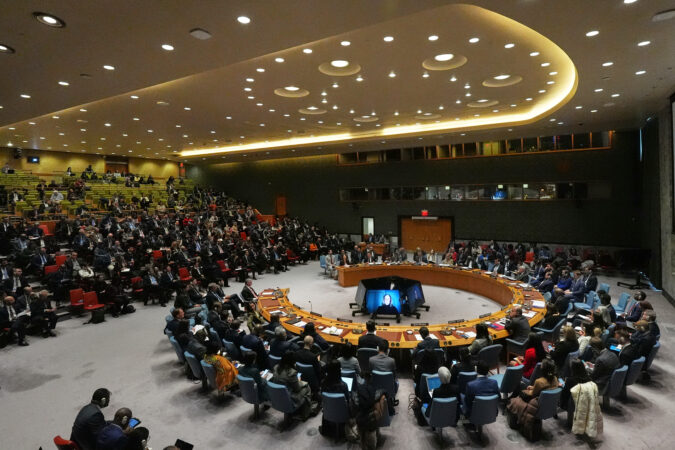
    UNITED NATIONS — Both allies and adversaries of the United States on Monday used an emergency meeting of the U.N. Security Council to voice opposition to the audacious U.S. military operation in Venezuela that captured leader Nicolás Maduro.

    Before the U.N.’s most powerful body, countries critiqued — if sometimes obliquely — President Donald Trump’s intervention in the South American country and his recent comments signaling the possibility of expanding military action to countries like Colombia and Mexico over drug trafficking accusations. The Republican president also has reupped his threat to take over the Danish territory of Greenland for the sake of U.S. security interests.

    Denmark, which has jurisdiction over the mineral-rich island, carefully denounced U.S. prospects for taking over Greenland without mentioning its NATO ally by name.

    “The inviolability of borders is not up for negotiation,” said Christina Markus Lassen, Danish ambassador to the U.N.

    She also defended Venezuela’s sovereignty, saying “no state should seek to influence political outcomes in Venezuela through the use of threat of force or through other means inconsistent with international law.”

    U.S. allies push back on Venezuela

    While French President Emmanuel Macron recently endorsed Maduro’s capture, its U.N. envoy was slightly more critical Monday, saying any violations of international law by the five permanent members of the U.N. Security Council, which include the U.S., erodes “the very foundation of the international order.”

    “The military operation that has led to the capture of Maduro runs counter to the principle of peace dispute resolution and runs counter to the principle of nonuse of force,” said Jay Dharmadhikari, deputy French ambassador to the U.N.

    U.S. envoy Mike Waltz defended the operation in Venezuela as a justified and “surgical law enforcement operation,” calling out the 15-member council for criticizing the targeting of Maduro.

    “If the United Nations in this body confers legitimacy on an illegitimate narco-terrorist with the same treatment in this charter of a democratically elected president or head of state, what kind of organization is this?” said Waltz, who is Trump’s former national security adviser.

    Maduro’s 2024 reelection was widely disputed.

    U.N. Secretary-General Antonio Guterres said in a statement that he is “deeply concerned that rules of international law have not been respected with regard to the 3 January military action.” He said the “grave” action by the U.S. could set a precedent for how future relations between nations unfold.

    Venezuela calls on the U.N. to take action

    Even with the strong support for Venezuela’s sovereignty, its envoy called on the U.N. to go beyond veiled comments and condemnation. Ambassador Samuel Moncada urged the Security Council to demand that Washington release Maduro and his wife.

    “If the kidnapping of a head of state, the bombing of a sovereign country, and the open threat of further armed action are tolerated or downplayed, the message sent to the world is a devastating one: namely that the law is optional, and that force is the true arbiter of international relations,” Moncada said.

    He warned that other countries can’t afford to look away: “Accepting such a logic would mean to open the door to a deeply unstable world.”

    Neighboring Colombia described the raid as reminiscent of “the worst interference in our area in the past.”

    “Democracy cannot be defended or promoted through violence and coercion, and it cannot be superseded, either, by economic interests,” Ambassador Leonor Zalabata said.

    China, Russia are expectedly critical

    The biggest critics of U.S. foreign policy, China and Russia, which are also permanent members of the Security Council, called for the U.N. body to unite in rejecting America turning back to an “era of lawlessness.”

    Maduro, like his predecessor, forged a close relationship with Russia, while China was the main destination for most Venezuelan oil.

    “We cannot allow the United States to proclaim itself as some kind of a supreme judge, which alone bears the right to invade any country, to label culprits, to hand down and to enforce punishments irrespective of notions of international law, sovereignty, and nonintervention,” Russian ambassador Vassily Nebenzia said.

    His own country’s 2022 invasion of Ukraine has drawn widespread condemnation within the U.N. and from the U.S., although the Trump administration is engaging with Russia in hopes of brokering an end to the fighting.

    The U.S. seized Maduro and his wife early Saturday from their home on a military base and put them aboard a U.S. warship to face prosecution in New York in a Justice Department indictment accusing them of participating in a narco-terrorism conspiracy. Maduro declared his innocence during his first appearance in a Manhattan courthouse Monday.

    His stunning removal came after months of the U.S. amassing a military presence off Venezuela’s coast and blowing up alleged drug trafficking boats. Trump has insisted that the U.S. would run Venezuela at least temporarily and tap its vast oil reserves to sell to other nations.

    Secretary of State Marco Rubio, however, says the U.S. would enforce an oil quarantine that was already in place on sanctioned tankers and use that leverage to press policy changes in Venezuela.