TOKYO — A powerful 7. 6-magnitude earthquake struck late Monday off northern Japan, triggering a tsunami of up to 27 inches in Pacific coast communities and warnings of potentially higher surges, the Japanese Meteorological Agency said.
Several people were injured, media reports said.
The quake struck at about 11:15 p.m. (1415 GMT) in the Pacific Ocean about 50 miles off the coast of Aomori, the northernmost prefecture of Japan’s main Honshu island, the agency said.
A tsunami of 27 inches was measured in Kuji port in Iwate prefecture, just south of Aomori, and tsunami levels of up to 20 inches struck other coastal communities in the region, the agency said.
The agency issued an alert for potential tsunami surges of up to 10 feet in some areas, and chief cabinet secretary Minoru Kihara urged residents to immediately head to higher ground or take shelter inside buildings or evacuation centers until the alert is lifted.
Several people were injured at a hotel in the Aomori town of Hachinohe and a man in the town of Tohoku was slightly hurt when his car fell into a hole, public broadcaster NHK reported.
Kihara said nuclear power plants in the region were conducting safety checks and that so far no problems were detected.
Several cases of fires were reported in Aomori, and about 90,000 residents were advised to take shelter at evacuation centers, the Fire and Disaster Management Agency said.
Satoshi Kato, a vice principal of a public high school in Hachinohe, told NHK that he was at home when the quake struck, and that glasses and bowls fell and smashed into shards on the floor.
Kato said he drove to the school because it was designated an evacuation center, and on the way he encountered traffic jams and car accidents as panicked people tried to flee. Nobody had yet come to the school to take shelter, he said.
Prime Minister Sanae Takaichi, in brief comment to reporters, said the government set up an emergency task force to urgently assess the extent of damage. “We are putting people’s lives first and doing everything we can,” she said.
The quake struck about 50 miles northeast of Hachinohe, below the sea surface, the meteorological agency said.
It was just north of the Japanese coast that suffered the magnitude 9.0 quake and tsunami in 2011 that killed nearly 20,000 people.
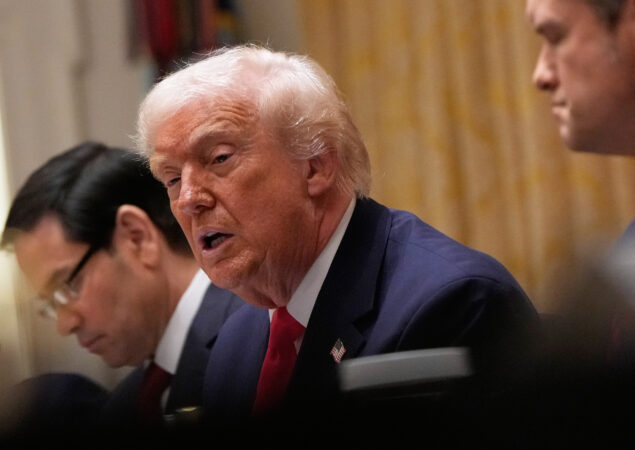
Trump blasted Cuellar for “Such a lack of LOYALTY,” suggesting the Republican president might have expected the clemency to bolster the GOP’s narrow House majority heading into the 2026 midterm elections.
Cuellar, in a television interview Sunday after Trump’s social media post, said he was a conservative Democrat willing to work with the administration “to see where we can find common ground.” The congressman said he had prayed for the president and the presidency at church that morning “because if the president succeeds, the country succeeds.”
Citing a fellow Texas politician, the late President Lyndon Johnson, Cuellar said he was an American, Texan, and Democrat, in that order. “I think anybody that puts party before their country is doing a disservice to their country,” he told Fox News Channel’s Sunday Morning Futures.
Trump noted on his Truth Social platform that the Democratic President Joe Biden’s administration had brought the charges against Cuellar and that the congressman, by running once more as a Democrat, was continuing to work with “the same RADICAL LEFT” that wanted him and his wife in prison — “And probably still do!”
“Such a lack of LOYALTY, something that Texas Voters, and Henry’s daughters, will not like. Oh’ well, next time, no more Mr. Nice guy!” Trump said. Cuellar’s two daughters, Christina and Catherine, had sent Trump a letter in November asking that he pardon their parents.
Trump explained the pardon he announced Wednesday as a matter of stopping a “weaponized” prosecution. Cuellar was an outspoken critic of Biden’s immigration policy, a position that Trump saw as a key alignment with the lawmaker.
Cuellar said he has good relationships within his party. “I think the general Democrat Caucus and I, we get along. But they know that I’m an independent voice,” he said.
A party switch would have been an unexpected bonus for Republicans after the GOP-run Legislature redrew the state’s congressional districts this year at Trump’s behest. The Texas maneuver started a mid-decade gerrymandering scramble playing out across multiple states. Trump is trying to defend Republicans’ House majority and avoid a repeat of his first term, when Democrats dominated the House midterms and used a new majority to stymie the administration, launch investigations, and twice impeach Trump.
Yet Cuellar’s South Texas district, which includes parts of metro San Antonio, was not one of the Democratic districts that Republicans changed substantially, and Cuellar believes he remains well-positioned to win reelection.
Federal authorities had charged Cuellar and his wife with accepting thousands of dollars in exchange for the congressman advancing the interests of an Azerbaijan-controlled energy company and a bank in Mexico. Cuellar was accused of agreeing to influence legislation favorable to Azerbaijan and deliver a pro-Azerbaijan speech on the floor of the U.S. House.
Cuellar has said he and his wife were innocent. The couple’s trial had been set to begin in April.
In the Fox interview, Cuellar insisted that federal authorities tried to entrap him with “a sting operation to try to bribe me, and that failed.”
WASHINGTON — After the arrest of a man charged with placing two pipe bombs outside the headquarters of the Republican and Democratic national parties on Jan. 5, 2021, the warning from the Trump administration was clear: If you come to the nation’s capital to attack citizens and institutions of democracy, you will be held accountable.
Yet Justice Department leaders who announced the arrest were silent about the violence that had taken place when supporters of President Donald Trump stormed the Capitol and clashed with police one day after those bombs were discovered.
It was the latest example of the Trump’s administration’s efforts to rewrite the history of the riot, through pardons and the firings of lawyers who prosecuted the participants of the siege, and of the disconnect for a government that prides itself for cracking down on violent crime and supporting law enforcement but has papered over the brutality of the Jan. 6 attacks on police officers.
“The administration has ignored and attempted to whitewash the violence committed by rioters on Jan. 6 because they were the president’s supporters. They were trying to install him a second time against the will of the voters in 2020,” said Michael Romano, who prosecuted the rioters before leaving the Justice Department this year. “And it feels like the effort to ignore that is purely transactional.”
The White House referred comment to the Justice Department, which referred comment to the FBI. The bureau did not immediately respond to an email from the Associated Press on Friday.
Bongino once suggested pipe bomb incident was ‘inside job’
FBI Director Kash Patel, as a conservative podcast host during the Biden administration, had called the Jan. 6 rioters “political prisoners” and offered to represent them for free. But on Thursday, he said the arrest of the pipe bomb suspect, 30-year-old Brian Cole Jr., was in keeping with Trump’s commitment to “secure our nation’s capital.”
“When you attack American citizens, when you attack our institutions of legislation, when you attack the nation’s capital, you attack the very being of our way of life,” Patel said. “And this FBI and this Department of Justice stand here to tell you that we will always combat it.”
Patel’s deputy, Dan Bongino, had suggested before joining the FBI that federal law enforcement had wasted time investigating Jan. 6 rioters and anti-abortion activists.
“These are threats to the United States?” he said on a podcast last year. “Grandma is in the gulag for a trespassing charge on January 6th.”
Bongino indicated last year he believed the pipe bomb incident was an “inside job” that involved a “massive cover-up.” After joining the FBI, Bongino repeatedly described the investigation as a top priority that was receiving significant resources and attention.
“We were going to track this person to the end of the earth. There was no way he was getting away,” he said Thursday.
No public link has emerged between the pipe bombs and the riot, and Cole’s arrest was a significant development in a long-running investigation that had confounded authorities, who are now are assembling a portrait of Cole. People familiar with the matter told the Associated Press that among the statements Cole made to investigators is that he believed conspiracy theories about the 2020 election, which Trump has insisted was stolen from him in favor of Democrat Joe Biden. The people were not authorized to discuss the ongoing investigation publicly and spoke on condition of anonymity.
There was no widespread fraud in that election, which a range of election officials across the country, including Trump’s former attorney general, William Barr, have confirmed. Republican governors in key states crucial to Biden’s victory have also vouched for the integrity of the elections in their states. Nearly all the legal challenges from Trump and his allies were dismissed by the courts.
Administration played down Jan. 6 and aftermath
The tough-on-crime words heard during Thursday’s announcement about Cole’s arrest were at odds with the Republican administration’s repeated efforts to play down the violence of Jan. 6, absolve those charged in the insurrection, and target those who investigated and prosecuted the rioters.
Trump’s clemency action on his first day back in the White House in January applied to all 1,500-plus people charged with participating in the attack on the foundations of American democracy. That included defendants seen on camera violently attacking police with makeshift weapons such as flagpoles, a crutch, and a hockey stick. More than 100 police officers were injured, including some who have described being scared for their lives as they were dragged into the crowd and beaten.
Earlier this year, the Justice Department asked the FBI for the names of agents who participated in Jan. 6 investigations, a demand feared within the bureau as a possible precursor to mass firings. In August, Patel fired Brian Driscoll, who as the FBI’s acting director in the early days of the Trump administration resisted handing over those names.
Trump’s administration, meanwhile, has fired or demoted numerous prosecutors who worked on Jan. 6 cases, including more than two dozen lawyers who had been hired for temporary assignments to support the investigation but were moved into permanent roles after Trump won the 2024 election.
In October, two federal prosecutors were locked out of their government devices and told they were being put on leave after filing court papers that described those who attacked the Capitol as a “mob of rioters.” The Justice Department later submitted a new court filing that stripped mentions of the Jan. 6 riot.
One man whose case was dismissed because of Trump’s pardons was accused of hurling an explosive device and a large piece of wood at a group of officers who trying to defend an entrance to the Capitol. Some officers later said they had “believed they were going to die,” prosecutors wrote in court papers, and several reported suffering temporary hearing loss.
KERRVILLE, Texas — In an instant, frantic voices overwhelmed the two county emergency dispatchers on duty in the Texas Hill Country as catastrophic flooding inundated cabins and youth camps along the Guadalupe River.
A firefighter clinging to a tree who watched his wife be swept away. A family breaking through their roof, hoping for rescue. A woman calling from an all-girls camp, waters swirling around and unsure how to escape.
Their panic-stricken pleas were among more than 400 calls for help across Kerr County last summer when unimaginable floods hit during the overnight hours on the July Fourth holiday, according to recordings of the calls released Friday.
“There’s water filling up super fast, we can’t get out of our cabin,” a camp counselor told a dispatcher above the screams of campers in the background. “We can’t get out of our cabin, so how do we get to the boats?”
Amazingly, everyone in the cabin and the rest of campers at Camp La Junta were rescued.
The flooding killed at least 136 people statewide during the holiday weekend, including 117 in Kerr County alone. Most were from Texas, but others came from Alabama, California and Florida, according to a list released by county officials.
One woman called for help as the water closed in on her house near Camp Mystic, a century-old summer camp for girls, where 25 campers and two teenage counselors died.
“We’re OK, but we live a mile down the road from Camp Mystic and we had two little girls come down the river. And we’ve gotten to them, but I’m not sure how many others are out there,” she said in a shaky voice.
A spokesperson for the parents of the children and counselors who died at Camp Mystic declined to comment on the release of the recordings.
Calls came from people on rooftops and in trees
Many residents in the hard-hit Texas Hill Country have said they were caught off guard and didn’t receive any warning when the floods overtopped the Guadalupe River. Kerr County leaders have faced scrutiny about whether they did enough right away. Two officials told Texas legislators this summer that they were asleep during the initial hours of the flooding, and a third was out of town.
Using recordings of first responder communications, weather service warnings, survivor videos and official testimony, the Associated Press assembled a chronology of the chaotic rescue effort. The AP was one of the media outlets that filed public information requests for recordings of the 911 calls to be released.
Many people were rescued by boats and emergency vehicles. A few desperate pleas came from people floating away in RVs. Some survivors were found in trees and on rooftops.
But some of the calls released Friday came from people who did not survive, said Kerrville Police Chief Chris McCall, who warned that the audio is unsettling.
“The tree I’m in is starting to lean and it’s going to fall. Is there a helicopter close?” Bradley Perry, a firefighter, calmy told a dispatcher, adding that he saw his wife, Tina, and their RV wash away.
“I’ve probably got maybe five minutes left,” he said.
Bradley Perry did not survive. His wife was later found clinging to a tree, still alive.
Moving higher and higher to survive
In another heartbreaking call, a woman staying in a community of riverside cabins told a dispatcher the water was inundating their building
“We are flooding, and we have people in cabins we can’t get to,” she said. ”We are flooding almost all the way to the top.”
The caller speaks slowly and deliberately. The faint voices of what sounds like children can be heard in the background.
Some people called back multiple times, climbing higher and higher in houses to let rescuers know where they were and that their situations were getting more dire. Families called from second floors, then attics, then roofs sometimes in the course of 30 or 40 minutes, revealing how fast and how high the waters rose.
The 911 recordings show that relatives and friends outside of the unfolding disaster and those who had made it to safety had called to get help for loved ones trapped in the flooding.
One woman said a friend, an elderly man, was trapped in his home with water up to his head. She had realized his phone cut out as she was trying to relay instructions from a 911 operator.
Dispatchers gave advice and comfort
Overwhelmed by the endless calls, dispatchers tried to comfort the panic-stricken callers yet were forced to move on to the next one. They advised many of those who were trapped to get to their rooftops or run to higher ground. In some calls, children could be heard screaming in the background.
“There is water everywhere, we cannot move. We are upstairs in a room and the water is rising,” said a woman who called from Camp Mystic.
The same woman called back later.
“How do we get to the roof if the water is so high?“ she asked. “Can you already send someone here? With the boats?”
She asked the dispatcher when help would arrive.
“I don’t know,” the dispatcher said. “I don’t know.”
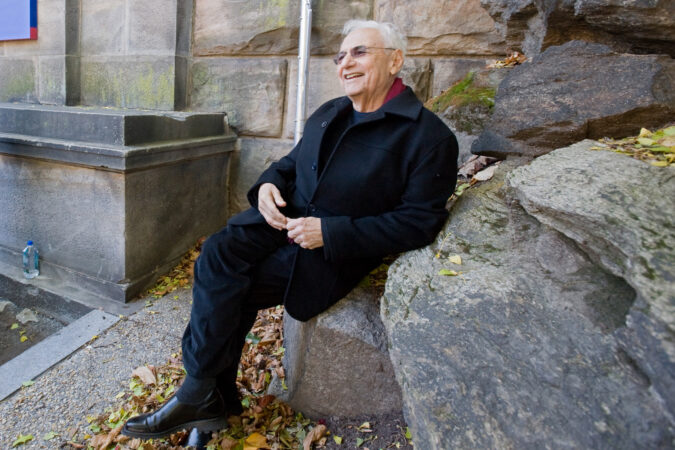
LOS ANGELES — Frank Gehry, who designed some of the most imaginative buildings ever constructed and achieved a level of worldwide acclaim seldom afforded any architect, has died. He was 96.
Mr. Gehry died Friday in his home in Santa Monica after a brief respiratory illness, said Meaghan Lloyd, chief of staff at Gehry Partners LLP.
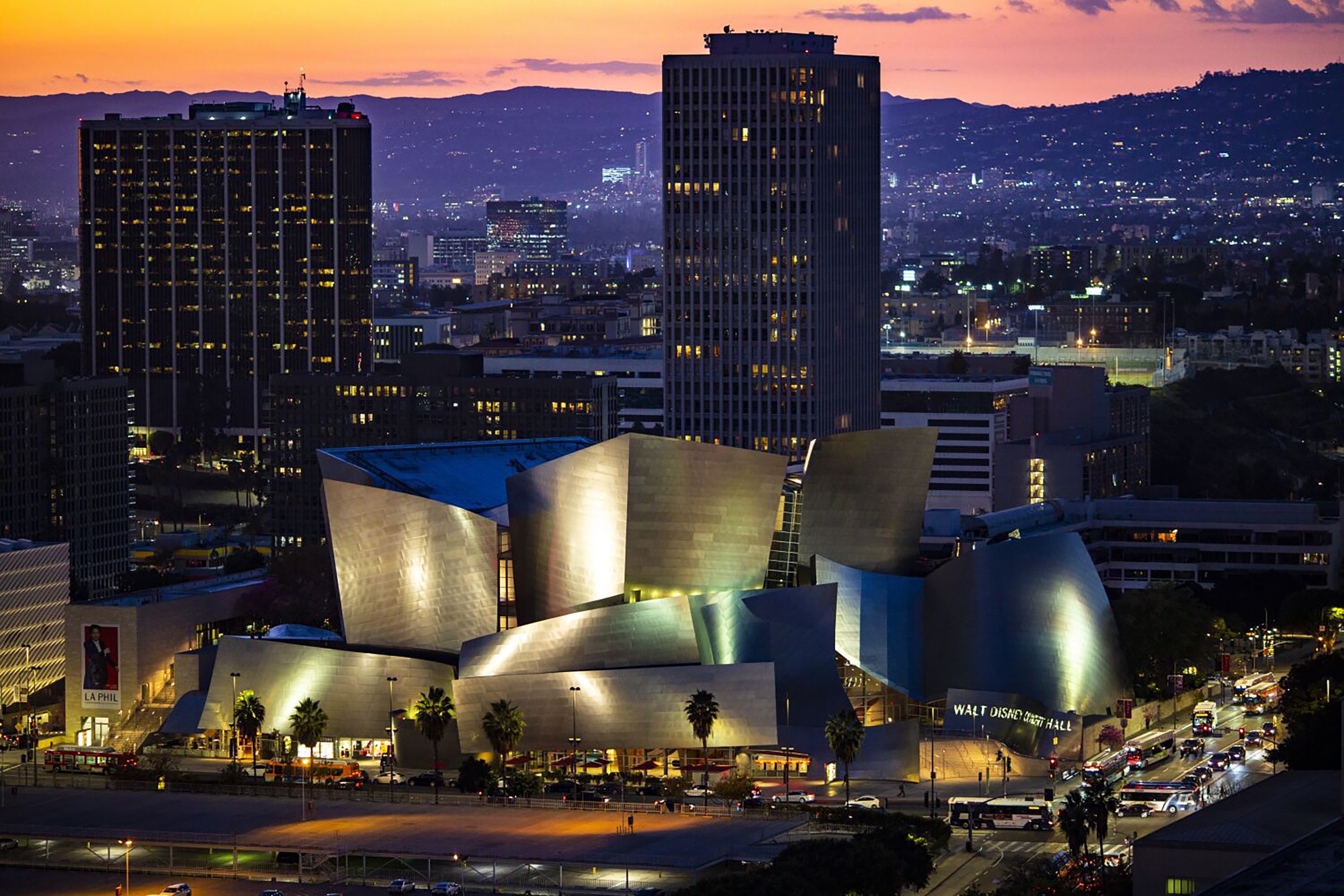
Mr. Gehry’s fascination with modern pop art led to the creation of distinctive, striking buildings. Among his many masterpieces are the Guggenheim Museum in Bilbao, Spain; the Walt Disney Concert Hall in Los Angeles; and Berlin’s DZ Bank Building.
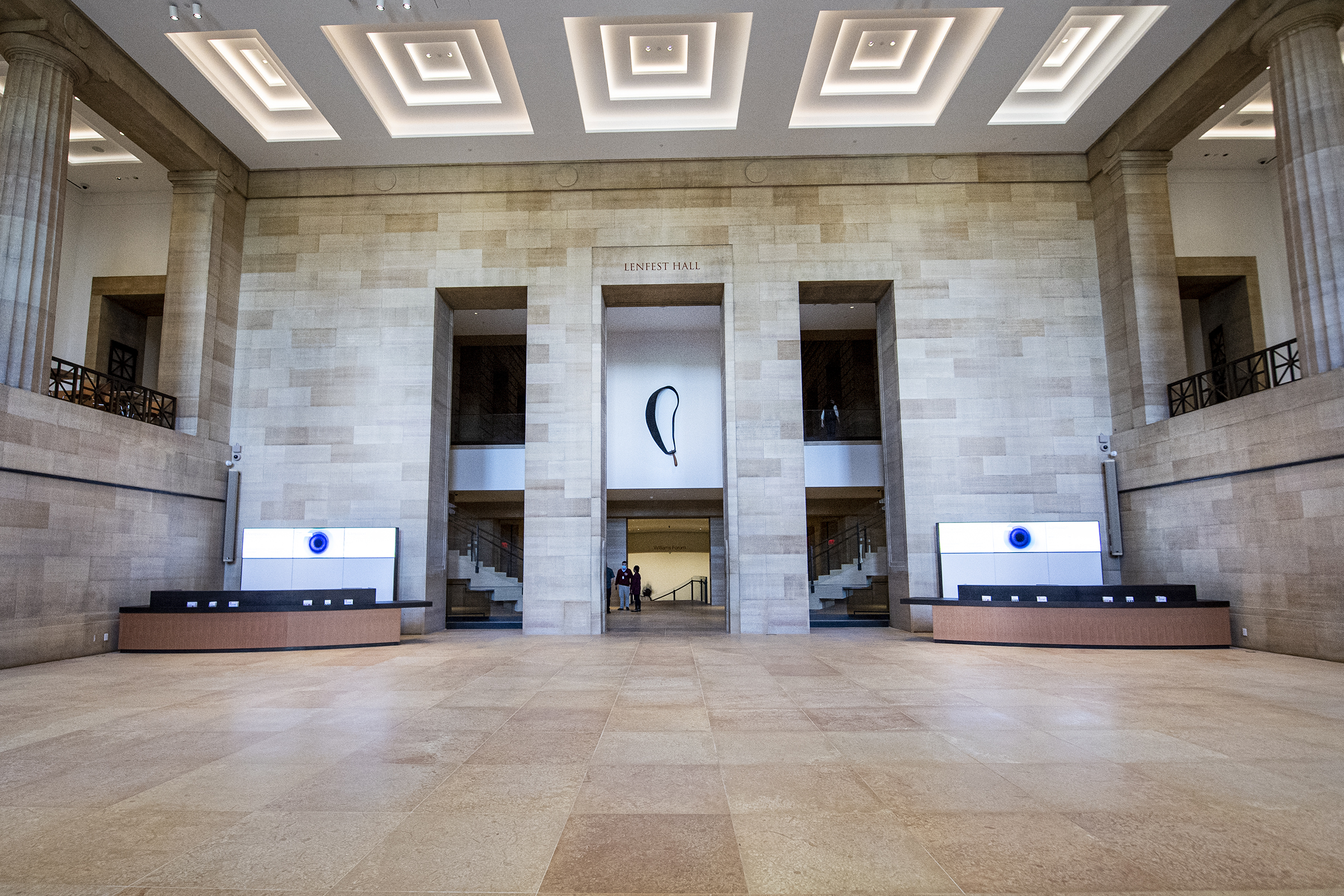
He also oversaw a $233 million renovation of the Philadelphia Museum of Art that stuck with tradition. “Instead of wreaking havoc, the 92-year-old architectural radical has played against type and given museum officials precisely what they wanted: clarity, light, and space,” Inquirer architecture critic Inga Saffron wrote when the new galleries and public spaces opened in 2021.
He also designed an expansion of Facebook’s Northern California headquarters at the insistence of the company’s CEO, Mark Zuckerberg.
Mr. Gehry was awarded every major prize architecture has to offer, including the field’s top honor, the Pritzker Prize, for what has been described as “refreshingly original and totally American” work.
Other honors include the Royal Institute of British Architects gold medal, the Americans for the Arts lifetime achievement award, and his native country’s highest honor, the Companion of the Order of Canada.
To improve the flow and sight lines into the Philadelphia Museum of Art, architect Frank Gehry took down the wall where Chagall’s theater backdrop hung and streamlined the space.
The start of his career in architecture
After earning a degree in architecture from the University of Southern California in 1954 and serving in the Army, Mr. Gehry studied urban planning at Harvard University.
But his career got off to a slow start. He struggled for years to make ends meet, designing public housing projects, shopping centers, and even driving a delivery truck for a time.
Eventually, he got the chance to design a modern shopping mall overlooking the Santa Monica Pier. He was determined to play it safe and came up with drawings for an enclosed shopping mall that looked similar to others in the United States in the 1980s.
To celebrate its completion, the mall’s developer dropped by Mr. Gehry’s house and was stunned by what he saw: The architect had transformed a modest 1920s-era bungalow into an inventive abode by remodeling it with chain-link fencing, exposed wood, and corrugated metal.
Asked why he hadn’t proposed something similar for the mall, Mr. Gehry replied, “Because I have to make a living.”
If he really wanted to make a statement as an architect, he was told, he should drop that attitude and follow his creative vision.
Mr. Gehry would do just that for the rest of his life, working into his 90s to create buildings that doubled as stunning works of art.
As his acclaim grew, Gehry Partners LLP, the architectural firm he founded in 1962, grew with it, expanding to include more than 130 employees at one point. But as big as it got, Mr. Gehry insisted on personally overseeing every project it took on.
The headquarters of the InterActiveCorp, known as the IAC Building, took the shape of a shimmering beehive when it was completed in New York City’s Chelsea district in 2007. The 76-story New York By Gehry building, once one of the world’s tallest residential structures, was a stunning addition to the lower Manhattan skyline when it opened in 2011.
That same year, Mr. Gehry joined the faculty of his alma mater, the University of Southern California, as a professor of architecture. He also taught at Yale and Columbia University.
The Walt Disney Concert Hall is the fourth hall of the Los Angeles Music Center and was designed by Frank Gehry. Here, it’s photographed from the Los Angeles City Hall Observation Deck on Feb. 14, 2018, in Los Angeles.
Imaginative designs drew criticism along with praise
Not everyone was a fan of Mr. Gehry’s work. Some naysayers dismissed it as not much more than gigantic, lopsided reincarnations of the little scrap-wood cities he said he spent hours building when he was growing up in the mining town of Timmins, Ontario.
Princeton art critic Hal Foster dismissed many of his later efforts as “oppressive,” arguing they were designed primarily to be tourist attractions. Some denounced the Disney Hall as looking like a collection of cardboard boxes that had been left out in the rain.
Still other critics included Dwight D. Eisenhower’s family, who objected to Mr. Gehry’s bold proposal for a memorial to honor the nation’s 34th president. Although the family said it wanted a simple memorial and not the one Mr. Gehry had proposed, with its multiple statues and billowing metal tapestries depicting Eisenhower’s life, the architect declined to change his design significantly.
If the words of his critics annoyed Mr. Gehry, he rarely let on. Indeed, he even sometimes played along. He appeared as himself in a 2005 episode of The Simpsons cartoon show, in which he agreed to design a concert hall that was later converted into a prison.
He came up with the idea for the design, which looked a lot like the Disney Hall, after crumpling Marge Simpson’s letter to him and throwing it on the ground. After taking a look at it, he declared, “Frank Gehry, you’ve done it again!”
“Some people think I actually do that,” he would later tell the AP.
Gehry’s lasting legacy around the world
Ephraim Owen Goldberg was born in Toronto on Feb. 28, 1929, and moved to Los Angeles with his family in 1947, eventually becoming a U.S. citizen. As an adult, he changed his name at the suggestion of his first wife, who told him antisemitism might be holding back his career.
Although he had enjoyed drawing and building model cities as a child, Mr. Gehry said it wasn’t until he was 20 that he pondered the possibility of pursuing a career in architecture, after a college ceramics teacher recognized his talent.
“It was like the first thing in my life that I’d done well in,” he said.
Mr. Gehry steadfastly denied being an artist though.
“Yes, architects in the past have been both sculptors and architects,” he declared in a 2006 interview with the Associated Press. “But I still think I’m doing buildings, and it’s different from what they do.”
His words reflected both a lifelong shyness and an insecurity that stayed with Mr. Gehry long after he’d been declared the greatest architect of his time.
“I’m totally flabbergasted that I got to where I’ve gotten,” he told the AP in 2001. “Now it seems inevitable, but at the time it seemed very problematic.”
The Gehry-designed Guggenheim Museum in Abu Dhabi, first proposed in 2006, is expected to finally be completed in 2026 after a series of construction delays and sporadic work. The 30,000-square-foot structure will be the world’s largest Guggenheim, leaving a lasting legacy in the capital city of the United Arab Emirates.
His survivors include his wife, Berta; daughter, Brina; sons Alejandro and Samuel; and the buildings he created.
Another daughter, Leslie Gehry Brenner, died of cancer in 2008.
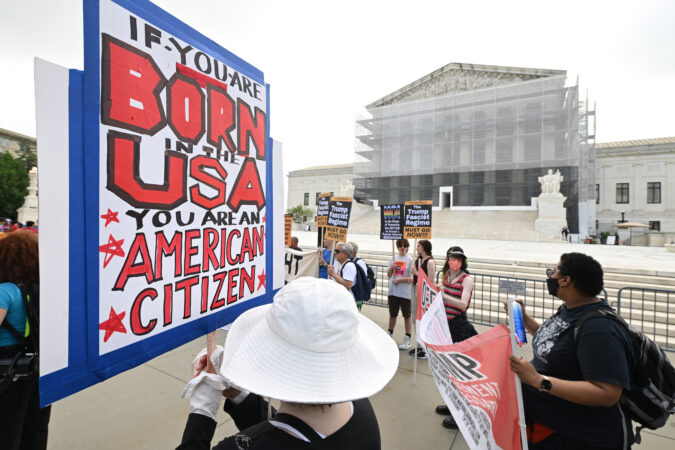
WASHINGTON — The Supreme Court agreed on Friday to take up the constitutionality of President Donald Trump’s order on birthright citizenship declaring that children born to parents who are in the United States illegally or temporarily are not American citizens.
The justices will hear Trump’s appeal of a lower-court ruling that struck down the citizenship restrictions. They have not taken effect anywhere in the country.
The case will be argued in the spring. A definitive ruling is expected by early summer.
The birthright citizenship order, which Trump signed Jan. 20, the first day of his second term, is part of his Republican administration’s broad immigration crackdown. Other actions include immigration enforcement surges in several cities and the first peacetime invocation of the 18th-century Alien Enemies Act.
The administration is facing multiple court challenges, and the high court has sent mixed signals in emergency orders it has issued. The justices effectively stopped the use of the Alien Enemies Act to rapidly deport alleged Venezuelan gang members without court hearings. But the Supreme Court allowed the resumption of sweeping immigration stops in the Los Angeles area after a lower court blocked the practice of stopping people solely based on their race, language, job or location.
The justices also are weighing the administration’s emergency appeal to be allowed to deploy National Guard troops in the Chicago area for immigration enforcement actions. A lower court has indefinitely prevented the deployment.
Birthright citizenship is the first Trump immigration-related policy to reach the court for a final ruling. His order would upend more than 125 years of understanding that the Constitution’s 14th Amendment confers citizenship on everyone born on American soil, with narrow exceptions for the children of foreign diplomats and those born to a foreign occupying force.
In a series of decisions, lower courts have struck down the executive order as unconstitutional, or likely so, even after a Supreme Court ruling in late June that limited judges’ use of nationwide injunctions.
The Supreme Court, however, did not rule out other court orders that could have nationwide effects, including in class action lawsuits and those brought by states. The justices did not decide at that time whether the underlying citizenship order was constitutional.
Every lower court that has looked at the issue has concluded that Trump’s order violates or likely violates the 14th Amendment, which was intended to ensure that Black people, including the formerly enslaved, had citizenship. Birthright citizenship automatically makes anyone born in the United States an American citizen, including children born to mothers who are in the country illegally, under longstanding rules.
The case under review comes from New Hampshire. A federal judge in July blocked the citizenship order in a class-action lawsuit including all children who would be affected. The American Civil Liberties Union is leading the legal team representing the children and their parents who challenged Trump’s order.
“No president can change the 14th Amendment’s fundamental promise of citizenship,” Cecillia Wang, the ACLU’s national legal director, said in a statement, adding, “We look forward to putting this issue to rest once and for all in the Supreme Court this term.”
The administration had also asked the justices to review a ruling by the 9th U.S. Circuit Court of Appeals in San Francisco. That court, also in July, ruled that a group of Democratic-led states that sued over Trump’s order needed a nationwide injunction to prevent the problems that would be caused by birthright citizenship being in effect in some states and not others. The justices took no action in the 9th Circuit case.
The administration has asserted that children of noncitizens are not “subject to the jurisdiction” of the United States and therefore not entitled to citizenship.
“The Fourteenth Amendment’s Citizenship Clause was adopted to grant citizenship to newly freed slaves and their children — not … to the children of aliens illegally or temporarily in the United States,” top administration top Supreme Court lawyer, D. John Sauer, wrote in urging the high court’s review.
Twenty-four Republican-led states and 27 Republican lawmakers, including Sens. Ted Cruz of Texas and Lindsey Graham of South Carolina, are backing the administration.
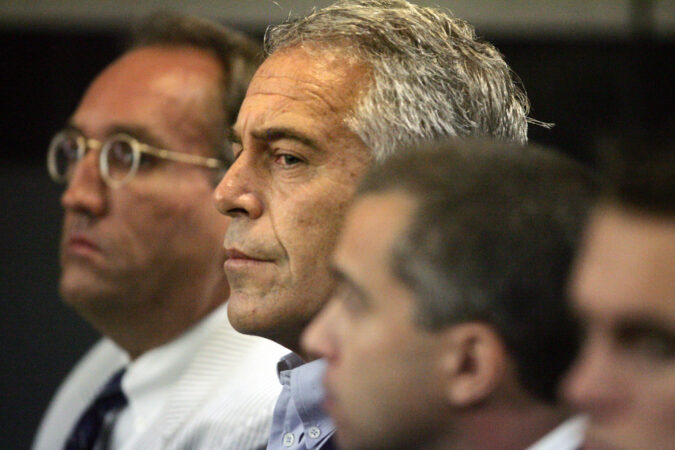
ORLANDO, Fla. — A federal judge on Friday gave the Justice Department permission to release transcripts of a grand jury investigation into Jeffrey Epstein’s abuse of underage girls in Florida — a case that ultimately ended without any federal charges being filed against the millionaire sex offender.
U.S. District Judge Rodney Smith said a recently passed federal law ordering the release of records related to Epstein overrode the usual rules about grand jury secrecy.
The law signed in November by President Donald Trump compels the Justice Department, FBI, and federal prosecutors to release later this month the vast troves of material they have amassed during investigations into Epstein that date back at least two decades.
Friday’s court ruling dealt with the earliest known federal inquiry.
In 2005, police in Palm Beach, Fla., where Epstein had a mansion, began interviewing teenage girls who told of being hired to give the financier sexualized massages. The FBI later joined the investigation.
Federal prosecutors in Florida prepared an indictment in 2007, but Epstein’s lawyers attacked the credibility of his accusers publicly while secretly negotiating a plea bargain that would let him avoid serious jail time.
In 2008, Epstein pleaded guilty to relatively minor state charges of soliciting prostitution from someone under age 18. He served most of his 18-month sentence in a work release program that let him spend his days in his office.
The U.S. attorney in Miami at the time, Alex Acosta, agreed not to prosecute Epstein on federal charges — a decision that outraged Epstein’s accusers. After the Miami Herald reexamined the unusual plea bargain in a series of stories in 2018, public outrage over Epstein’s light sentence led to Acosta’s resignation as Trump’s labor secretary.
A Justice Department report in 2020 found that Acosta exercised “poor judgment” in handling the investigation, but it also said he did not engage in professional misconduct.
A different federal prosecutor, in New York, brought a sex trafficking indictment against Epstein in 2019, mirroring some of the same allegations involving underage girls that had been the subject of the aborted investigation. Epstein killed himself while awaiting trial. His longtime confidant and ex-girlfriend, Ghislaine Maxwell, was then tried on similar charges, convicted and sentenced in 2022 to 20 years in prison.
Transcripts of the grand jury proceedings from the aborted federal case in Florida could shed more light on federal prosecutors’ decision not to go forward with it. Records related to state grand jury proceedings have already been made public.
When the documents will be released is unknown. The Justice Department asked the court to unseal them so they could be released with other records required to be disclosed under the Epstein Files Transparency Act. The Justice Department hasn’t set a timetable for when it plans to start releasing information, but the law set a deadline of Dec. 19.
The law also allows the Justice Department to withhold files that it says could jeopardize an active federal investigation. Files can also be withheld if they’re found to be classified or if they pertain to national defense or foreign policy.
One of the federal prosecutors on the Florida case did not answer a phone call Friday and the other declined to answer questions.
A judge had previously declined to release the grand jury records, citing the usual rules about grand jury secrecy, but Smith said the new federal law allowed public disclosure.
The Justice Department has separate requests pending for the release of grand jury records related to the sex trafficking cases against Epstein and Maxwell in New York. The judges in those matters have said they plan to rule expeditiously.
WASHINGTON — President Donald Trump’s advisers and Ukrainian officials say they’ll meet for a third day of talks on Saturday after making progress on finding agreement on a security framework for postwar Ukraine.
The two sides also offered the sober assessment that any “real progress toward any agreement” ultimately will depend “on Russia’s readiness to show serious commitment to long-term peace.”
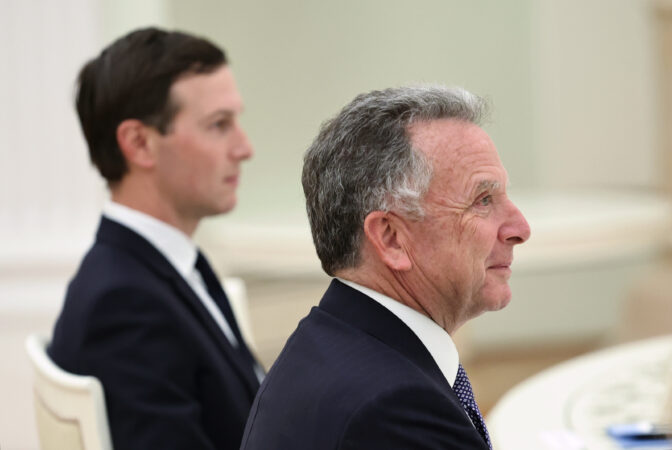
The statement from U.S. special envoy Steve Witkoff, Trump’s son-in-law Jared Kushner as well as Ukrainian negotiators Rustem Umerov and Andriy Hnatov came after they met for a second day in Florida on Friday. They offered only broad brushstrokes about the progress they say has been made as Trump pushes Kyiv and Moscow to agree to a U.S.-mediated proposal to end nearly four years of war.
“Both parties agreed that real progress toward any agreement depends on Russia’s readiness to show serious commitment to long-term peace, including steps toward de-escalation and cessation of killings,” the statement said. “Parties also separately reviewed the future prosperity agenda which aims to support Ukraine’s post-war reconstruction, joint U.S.–Ukraine economic initiatives, and long-term recovery projects.”
The U.S. and Ukrainian officials also discussed “deterrence capabilities” that Ukraine will need “to sustain a lasting peace.”
Friday’s session took place at the Shell Bay Club in Hallandale Beach, a high-end private golf and lifestyle destination owned by Witkoff’s real estate development company.
Previous diplomatic attempts to break the deadlock have come to nothing and the war has continued unabated. Officials largely have kept a lid on how the latest talks are going, though Trump’s initial 28-point plan was leaked.
Ukrainian President Volodymyr Zelensky said his country’s delegation in Florida wanted to hear from the U.S. side about the talks at the Kremlin.
Zelensky, as well as European leaders backing him, have repeatedly accused Putin of stalling in peace talks while the Russian army tries to press forward with its invasion. Zelensky said in a video address late Thursday that officials wanted to know “what other pretexts Putin has come up with to drag out the war and to pressure Ukraine.”
Speaking to Russian journalist Pavel Zarubin on Friday, Kremlin foreign affairs adviser Yuri Ushakov praised Kushner as potentially playing an important role in ending Russia’s invasion of Ukraine. Ushakov also took part in Tuesday’s talks at the Kremlin.
“If any plan leading to a settlement is put on paper, it will be the pen of Mr. Kushner that will lead the way,” Ushakov said.
The flattering comments about Kushner by the senior Russian official come as Putin has sought to sow division between Trump and Ukraine and Europe at a moment when Trump’s impatience with the conflict is mounting. Putin said his five-hour talks this week with Witkoff and Kushner were “necessary” and “useful,” but some proposals were unacceptable.
Kushner, who is married to Trump’s daughter Ivanka, was a senior adviser to Trump during his first term and was the president’s point person on developing the Abraham Accords, which formalized commercial and diplomatic ties between Israel and a trio of Arab nations.
Kushner has played a more informal role in Trump’s second go-around, but he helped Witkoff close out ceasefire and hostage negotiations between Israel and Hamas this fall. Trump tapped Kushner again to pair up with Witkoff to try to find an endgame to Russia’s invasion of Ukraine.
The European take on the peace talks
Ushakov, who accompanied Putin on a visit to India on Friday, repeated the Russian president’s recent criticism of Europe’s stance on the peace talks. Kyiv’s European allies are concerned about possible Russian aggression beyond Ukraine and want a prospective peace deal to include strong security guarantees.
Kyiv’s allies in Europe are “constantly putting forward demands that are unacceptable to Moscow,” Ushakov told Russia’s state-owned Zvezda TV. “Putting it mildly, the Europeans don’t help Washington and Moscow reach a settlement on the Ukrainian issues.”
French President Emmanuel Macron said Friday that he made progress during a visit to Beijing on getting Chinese leader Xi Jinping’s support for peace efforts.
“We exchanged deeply and truthfully on all points, and I saw a willingness from the [Chinese] president to contribute to stability and peace,” Macron said.
The French president said he stressed that Ukraine needs guarantees that Russia won’t attack it again if a settlement is reached and that Europe must have a voice in negotiations.
“The unity between Americans and Europeans on the Ukrainian issue is essential. And I say it, repeat it, emphasize it. We need to work together,” Macron said.
The latest drone attacks
Russian drones struck a house in central Ukraine, killing a 12-year-old boy, officials said, while long-range Ukrainian strikes reportedly targeted a Russian port and an oil refinery.
The Russian attack on Thursday night in Ukraine’s central Dnipropetrovsk region destroyed the house where the boy was killed and also two women were injured, according to the head of the regional military administration, Vladyslav Haivanenko.
The Ukrainian air force said Russia fired 137 drones of various types during the night.
Ukrainian drones attacked a port and an oil refinery inside Russia overnight as part of Kyiv’s campaign to disrupt Russian logistics, Ukraine’s general staff said.
The drones struck Temriuk sea port in Russia’s Krasnodar region and the Syzran oil refinery in the Samara region, starting blazes, a statement said. Syzran is about 500 miles east of the border with Ukraine.
The Russian Defense Ministry said only that its air defenses intercepted 85 Ukrainian drones over Russian regions and Crimea, which Russia illegally annexed in 2014.
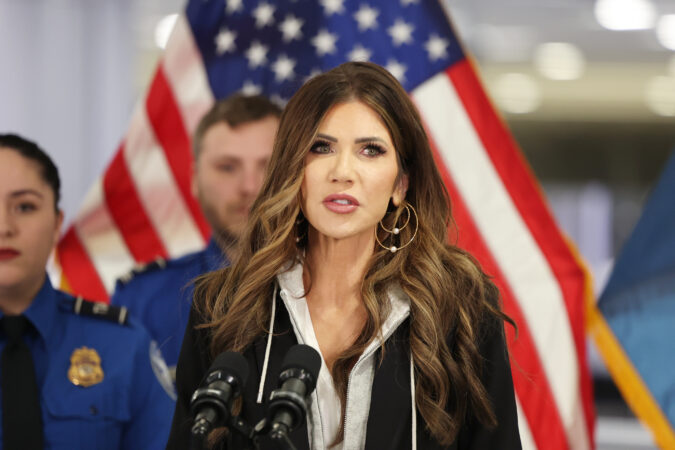
The expansion would build on a travel ban already announced in June by the Republican administration, which barred travel to the U.S. for citizens from 12 countries and restricted access to the U.S. for people from seven others. In a social media post earlier this week, Noem had suggested more countries would be included.
Noem, who spoke late Thursday in an interview with Fox News Channel host Laura Ingraham, would not provide further details, saying President Donald Trump was considering which countries would be included.
In the wake of the National Guard shooting, the administration already ratcheted up restrictions on the 19 countries included in the initial travel ban, which include Afghanistan, Somalia, Iran and Haiti, among others.
Ingraham asked Noem whether the travel ban was expanding to 32 countries and asked which countries would be added to the 19 announced earlier this year.
“I won’t be specific on the number, but it’s over 30. And the president is continuing to evaluate countries,” Noem said.
“If they don’t have a stable government there, if they don’t have a country that can sustain itself and tell us who those individuals are and help us vet them, why should we allow people from that country to come here to the United States?” Noem said.
The Department of Homeland Security did not respond to requests for comment about when an updated travel ban might go into effect and which countries would be included in it.
Additions to the June travel ban are the latest in what has been a rapidly unfolding series of immigration actions since the shooting Thanksgiving week of two National Guard troops in Washington.
Rahmanullah Lakanwal, who emigrated to the U.S. from Afghanistan after the U.S. withdrawal, has been charged with first-degree murder after one of the two victims, West Virginia National Guard Specialist Sarah Beckstrom, died of wounds sustained in the Nov. 26 shooting. The second victim, Staff Sgt. Andrew Wolfe, was critically wounded. Lakanwal has pleaded not guilty.
The Trump administration has argued that more vetting is needed to make sure people entering or already in the U.S. aren’t a threat. Critics say the administration is traumatizing people who’ve already gone through extensive vetting to get to the U.S. and say the new measures amount to collective punishment.
Over the course of a little more than a week, the administration has halted asylum decisions, paused processing of immigration-related benefits for people in the U.S. from the 19 travel ban countries and halted visas for Afghans who assisted the U.S. war effort.
On Thursday, U.S. Citizenship and Immigration Services announced it was reducing the time period that work permits are valid for certain applicants such as refugees and people with asylum so they have to reapply more often and go through vetting more frequently.
WASHINGTON — President Donald Trump’s administration has set forth a new national security strategy that paints European allies as weak and aims to reassert America’s dominance in the Western Hemisphere.
The document released Friday by the White House is sure to roil long-standing U.S. allies in Europe for its scathing critiques of their migration and free speech policies, suggesting they face the “prospect of civilizational erasure” and raising doubts about their long-term reliability as American partners.
At the same time the administration is sharply critical of its democratic allies in Europe and carrying out a pressure campaign of boat strikes in South America, it chides past U.S. efforts to shape or criticize Middle Eastern nations and seeks to discourage attempts for changes in those countries’ governments and policies.
The strategy reinforces, in sometimes chilly and bellicose terms, Trump’s “America First” philosophy, which favors nonintervention overseas, questions decades of strategic relationships, and prioritizes U.S. interests.
The U.S. strategy “is motivated above all by what works for America — or, in two words, ‘America First,’” the document said.
This is the first national security strategy, a document the administration is required by law to release, since the Republican president’s return to office in January. It is a stark break from the course set by President Joe Biden’s Democratic administration, which sought to reinvigorate alliances after many were rattled in Trump’s first term and to check a more assertive Russia.
Democratic Rep. Jason Crow of Colorado, who sits on House committees overseeing intelligence and the armed forces, called the strategy “catastrophic to America’s standing in the world and a retreat from our alliances and partnerships.”
“The world will be a more dangerous place and Americans will be less safe if this plan moves forward,” Crow said.
Criticism of Europe
The United States is seeking to broker an end to Russia’s nearly four-year-old war in Ukraine, a goal that the national security strategy says is in America’s vital interests. But the document makes clear that the U.S. wants to improve its relationship with Russia after years of Moscow being treated as a global pariah and that ending the war is a core U.S. interest to “reestablish strategic stability with Russia.”
The document also accuses America’s longstanding European allies, which have found themselves sometimes at odds with Trump’s shifting approaches to the Russia-Ukraine war, of facing not just domestic economic challenges but, according to the U.S., an existential crisis.
Economic stagnation in Europe “is eclipsed by the real and more stark prospect of civilizational erasure,” the strategy document said.
The U.S. suggests that Europe is being enfeebled by its immigration policies, declining birthrates, “censorship of free speech and suppression of political opposition” and a “loss of national identities and self-confidence.”
“Should present trends continue, the continent will be unrecognizable in 20 years or less. As such, it is far from obvious whether certain European countries will have economies and militaries strong enough to remain reliable allies,” the document said.
The document also gives a nod to the rise of far-right political parties in Europe, which have been outspoken in their opposition to illegal immigration and climate policies.
“America encourages its political allies in Europe to promote this revival of spirit, and the growing influence of patriotic European parties indeed gives cause for great optimism,” the strategy said.
German Foreign Minister Johann Wadephul acknowledged the U.S. is “our most important ally” in NATO but said questions about freedom of expression or “the organization of our free societies” are not part of alliance discussions.
“We also don’t think that anyone needs to give us any advice on this,” Wadephul told reporters.
Markus Frohnmaier, a lawmaker with the far-right, anti-immigration Alternative for Germany party, described the U.S. strategy as “a foreign policy reality check for Europe and particularly for Germany.”
Setting sights on power in the Americas
Despite Trump’s “America First” maxim, his administration has carried out a series of military strikes on alleged drug trafficking boats in the Caribbean Sea and the eastern Pacific Ocean while weighing possible military action in Venezuela to pressure President Nicolás Maduro.
The moves are part of what the national security strategy lays out as “a ‘Trump Corollary’ to the Monroe Doctrine” to “restore American preeminence in the Western Hemisphere.” The 1823 Monroe Doctrine, formulated by President James Monroe, was originally aimed at opposing any European meddling in the Western Hemisphere and was used to justify U.S. military interventions in Latin America.
Trump’s strategy document says it aims to combat drug trafficking and control migration. The U.S. also is reimagining its military footprint in the region even after building up the largest military presence there in generations.
That means, for instance, “targeted deployments to secure the border and defeat cartels, including where necessary the use of lethal force to replace the failed law enforcement-only strategy of the last several decades,” it says.
Shifting focus away from the Middle East
With a shift to the Americas, the U.S. will seek a different approach in the Middle East.
The U.S., according to the strategy, should abandon “America’s misguided experiment with hectoring” nations in the Middle East, especially monarchies in the Gulf, about their traditions and forms of government.
Trump has bolstered ties with nations there and sees Middle Eastern countries as ripe for economic opportunities, and the Arab nations are “emerging as a place of partnership, friendship, and investment,” the document says.
“We should encourage and applaud reform when and where it emerges organically, without trying to impose it,” it says.
This year, Trump made his first major foreign trip to the Middle East, and his efforts to settle the Israel-Hamas war in Gaza has been a major focus. But the U.S. plans to shift its focus from the region, the administration says, as America is less dependent on its oil supply.
‘Rebalance’ of U.S. relationship with China
Meanwhile, as the U.S. under Trump has overturned decades of free trade policies with his sweeping global tariffs, its ties with China have been a prime focus. America under Trump is seeking to “rebalance” the U.S.-China relationship while also countering Beijing’s aggressive stance toward Taiwan, according to the document.
The Trump administration wants to prevent a war over Taiwan, the self-governing island that Beijing claims as its own and to which the U.S. is obligated by its own laws to give military support, by maintaining a military advantage over China.
But the U.S. wants allies in the region to do more to push back against Chinese pressure and contribute more to their defense.
“The American military cannot, and should not have to, do this alone,” the strategy says. “Our allies must step up and spend — and more importantly do — much more for collective defense.”