Category: Nation World News Wires

  • Trump praises Congo and Rwanda as they sign U.S.-mediated peace deal

    Trump praises Congo and Rwanda as they sign U.S.-mediated peace deal

    WASHINGTON — President Donald Trump praised the leaders of the Democratic Republic of Congo and Rwanda for their courage as they signed onto a deal on Thursday aimed at ending the conflict in eastern Congo and opening the region’s critical mineral reserves to the U.S. government and American companies.

    The moment offered Trump — who has repeatedly and with a measure of exaggeration boasted of brokering peace in some of the world’s most entrenched conflicts — another chance to tout himself as a dealmaker extraordinaire on the global stage and make the case that he’s deserving of the Nobel Peace Prize. The U.S. leader hasn’t been shy about his desire to receive the honor.

    “It’s a great day for Africa, a great day for the world,” Trump said shortly before the leaders signed the pact. He added, “Today, we’re succeeding where so many others have failed.”

    Trump welcomed Presidents Felix Tshisekedi of Congo and Paul Kagame of Rwanda, as well as several officials from other African nations who traveled to Washington to witness the signing, in the same week he contemptuously derided the war-torn country of Somalia and said he did he did not want immigrants from the East African nation in the U.S.

    Lauded by the White House as a “historic” agreement brokered by Trump, the pact between Tshisekedi and Kagame follows monthslong peace efforts by the U.S. and partners, including the African Union and Qatar, and finalizes an earlier deal signed in June.

    But the Trump-brokered peace is precarious.

    The Central African nation of Congo has been battered by decadeslong fighting with more than 100 armed groups, the most potent being the Rwanda-backed M23 rebels. The conflict escalated this year, with M23 seizing the region’s main cities of Goma and Bukavu in an unprecedented advance, worsening a humanitarian crisis that was already one of the world’s largest, with millions of people displaced.

    ‘We are still at war’

    Fighting, meanwhile, continued this week in the conflict-battered region with pockets of clashes reported between the rebels and Congolese soldiers, together with their allied forces. Trump, a Republican, has often said that his mediation has ended the conflict, which some people in Congo say isn’t true.

    Still, Kagame and Tshisekedi offered a hopeful tone as they signed onto to the agreement.

    “No one was asking President Trump to take up this task. Our region is far from the headlines,” Kagame said. “But when the president saw the opportunity to contribute to peace, he immediately took it.”

    “I do believe this day is the beginning of a new path, a demanding path, yes. Indeed, quite difficult,” Tshisekedi said. ”But this is a path where peace will not just be a wish, an aspiration, but a turning point.”

    Indeed, analysts say Thursday’s deal also isn’t expected to quickly result in peace. A separate peace deal has been signed between Congo and the M23.

    “We are still at war,” said Amani Chibalonza Edith, a 32-year-old resident of Goma, eastern Congo’s key city seized by rebels early this year. “There can be no peace as long as the front lines remain active.”

    Rare earth minerals

    Thursday’s pact will also build on a Regional Economic Integration Framework previously agreed upon that officials have said will define the terms of economic partnerships involving the three countries.

    Trump also announced the United States was signing bilateral agreements with the Congo and Rwanda that will unlock new opportunities for the United States to access critical minerals–deals that will benefit all three nations’ economies.

    “And we’ll be involved with sending some of our biggest and greatest U.S. companies over to the two countries,” Trump said. He added, “Everybody’s going to make a lot of money.”

    The region, rich in critical minerals, has been of interest to Trump as Washington looks for ways to circumvent China to acquire rare earths, essential to manufacturing fighter jets, cell phones and more. China accounts for nearly 70% of the world’s rare earth mining and controls roughly 90% of global rare earths processing.

    Trump hosted the leaders on Thursday morning for one-on-one meetings at the White House as well as a three-way conversation before the signing ceremony at the Institute of Peace in Washington, which the State Department announced on Wednesday has been rebranded “the Donald J. Trump Institute of Peace.”

    Later Thursday, the U.S. Chamber of Commerce will host an event that will bring together American business leaders and the Congolese and Rwandan delegations to discuss potential investment opportunities in critical minerals, energy and tourism.

    Ongoing clashes

    In eastern Congo, meanwhile, residents reported pockets of clashes and rebel advances in various localities. Both the M23 and Congolese forces have accused each other of violating the terms of the ceasefire agreed earlier this year. Fighting has also continued in the central plateaus across South Kivu province.

    The hardship in the aftermath of the conflict has worsened following U.S. funding cuts that were crucial for aid support in the conflict.

    In rebel-held Goma, which was a regional hub for security and humanitarian efforts before this year’s escalation of fighting, the international airport is closed. Government services such as bank operations have yet to resume and residents have reported a surge in crimes and in the prices of goods.

    “We are waiting to see what will happen because so far, both sides continue to clash and attack each other,” said Moise Bauma, a 27-year-old student in rebel-held Bukavu city.

    Both Congo and Rwanda, meanwhile, have touted American involvement as a key step towards peace in the region.

    “We need that attention from the administration to continue to get to where we need to get to,” Makolo said. “We are under no illusion that this is going to be easy. This is not the end but it’s a good step.”

    Conflict’s cause

    The conflict can be traced to the aftermath of the 1994 genocide in Rwanda, where Hutu militias killed between 500,000 and 1 million ethnic Tutsi, as well as moderate Hutus and Twa, Indigenous people. When Tutsi-led forces fought back, nearly 2 million Hutus crossed into Congo, fearing reprisals.

    Rwandan authorities have accused the Hutus who fled of participating in the genocide and alleged that elements of the Congolese army protected them. They have argued that the militias formed by a small fraction of the Hutus are a threat to Rwanda’s Tutsi population.

    Congo’s government has said there can’t be permanent peace if Rwanda doesn’t withdraw its support troops and other support for the M23 in the region. Rwanda, on the other hand, has conditioned a permanent ceasefire on Congo dissolving a local militia that it said is made up of the Hutus and is fighting with the Congolese military.

    U.N. experts have said that between 3,000 and 4,000 Rwandan government forces are deployed in eastern Congo, operating alongside the M23. Rwanda denies such support, but says any action taken in the conflict is to protect its territory.

  • A quiet corner of Arkansas has become a hot spot for U.S. immigration crackdown, AP finds

    A quiet corner of Arkansas has become a hot spot for U.S. immigration crackdown, AP finds

    ROGERS, Ark. — She was already separated from her husband, the family breadwinner and father of her two youngest children, and had lost the home they shared in Arkansas.

    Then Cristina Osornio was ensnared by the nation’s rapidly expanding immigration enforcement crackdown just months after her husband was deported to Mexico. Following a traffic stop in Benton County, in the state’s northwest corner, she was jailed for several days on an Immigration and Customs Enforcement hold, records show, even though she is a legal permanent U.S. resident and the mother of six children.

    Best known as home to Walmart headquarters, the county and the wider region have emerged as a little-known hot spot in the Trump administration’s crackdown, according to an Associated Press review of ICE arrest data, jail records, police reports and interviews with residents, immigration lawyers and watchdogs.

    The county offers a window into what the future may hold in places where local and state law enforcement authorities cooperate broadly with ICE, as the Department of Homeland Security offers financial incentives in exchange for help making arrests.

    The partnership in Arkansas has led to the detention and deportation of some violent criminals but also repeatedly turned misdemeanor arrests into the first steps toward deportations, records show. The arrests have split apart families, sparked protests and spread fear through the immigrant community, including people born in Mexico, El Salvador, Guatemala, Honduras and the Marshall Islands.

    “Nobody is safe at this point because they are targeting you because of your skin color,” said Osornio, 35, who was born in Mexico but has lived in the U.S. since she was 3 months old.

    Her odyssey began in September, when an officer in the city of Rogers cited her for driving without insurance and with a suspended license, body cam video shows. She was arrested on a warrant for missing a court appearance in a misdemeanor case and taken to the Benton County Jail, where an ICE hold was placed on her.

    After four days behind bars, she said she was released without explanation. She called it a “very scary” experience that exacerbated her health conditions.

    Cristina Osornio and her 3-year-old daughter, Valentina, decorate a Christmas tree in their apartment in Rogers, Ark.

    Benton County offers the kind of help ICE wants nationwide

    More than 450 people were arrested by ICE at the Benton County Jail from Jan. 1 through Oct. 15, according to ICE arrest data from the University of California Berkeley Deportation Data Project analyzed by AP. That’s more than 1.5 arrests per day in the county of roughly 300,000 people.

    Most of the arrests were made through the county’s so-called 287(g) agreement, named for a section of immigration law, that allows deputies to question people who are booked into the jail about their immigration status. In fact, the county’s program accounted for more than 4% of roughly 7,000 arrests nationwide that were attributed to similar programs during the first 9 1/2 months of this year, according to the data.

    Under the program, deputies alert ICE to inmates suspected of being in the country illegally, who are usually held without bond and eventually transferred into ICE custody. After a couple of days, they are often moved to the neighboring Washington County Detention Center in Fayetteville, which has long held detainees for ICE, before they are taken to detention centers in Louisiana and potentially deported.

    ICE now has more than 1,180 cooperation agreements with state and local law enforcement agencies, up from 135 at the start of the new administration, and it has offered federal payments to cover the costs of training, equipment and salaries in some circumstances. Arrests under the programs have surged in recent months as more agencies get started, ICE data shows.

    The growth has been particularly pronounced in Republican-led states such as Florida, where new laws encourage or require such cooperation. Earlier this year, Arkansas Gov. Sarah Huckabee Sanders signed a law requiring all county sheriffs to cooperate with ICE through either a 287(g) program at the jail or a program in which they serve ICE warrants to expedite detentions and removals.

    ICE arrests have surged in Benton County this year

    Benton County’s partnership with ICE has been controversial off and on since its inception nearly 20 years ago.

    ICE data shows arrests have shot up this year in the county, a Trump stronghold in a heavily Republican state that has a large foreign-born population compared with other parts of Arkansas.

    About half of those arrested by ICE through the program have been convicted of crimes, while the other half have charges pending, according to the data. But the severity of the charges ranges widely.

    Jail records show those on recent ICE holds include people charged with forgery, sexual assault, drug trafficking, theft, and public intoxication. Offenses related to domestic violence and unsafe driving are among the most common.

    Local observers say they have tracked an uptick in people facing ICE detention after traffic stops involving violations such as driving without a license.

    “It just feels more aggressive. We’re seeing people detained more frequently on extremely minor charges,” said Nathan Bogart, an immigration attorney. “They’ve kind of just been let off the leash now.”

    County officials were unwilling to talk about their partnership with ICE. County Judge Barry Moehring, the county’s chief executive who oversees public safety, referred questions to the sheriff’s office.

    Sheriff Shawn Holloway, who has championed the program since his election in 2015, did not respond to several interview requests. The sheriff’s office spokesperson referred questions to ICE.

    A routine traffic stop turns into an ICE hold

    Body cam video shows that police officer Myles Tucker pulled Osornio over on Sept. 15 in a quiet neighborhood of Rogers as she drove to a bank to get change for her job at the retail chain Five Below.

    Tucker said he stopped Osornio because a check of her license plate number indicated that her auto insurance was unconfirmed, and he thought she made a suspicious turn after seeing police.

    In addition to issuing tickets for lacking insurance and driving with a suspended license, the officer learned she had a warrant for failing to appear for a misdemeanor domestic violence case. That case stemmed from a 2023 incident in which she argued and fought with her husband.

    Osornio disputed that she missed a court hearing. She told the officer that her husband had been deported and that she needed to arrange child care for her children.

    During the drive to the jail, Tucker played upbeat Christian-themed music in his patrol vehicle.

    He turned down the music to ask Osornio where she was born, saying the information would be required at the jail. “I ask the question because I have to put it on the form, not because I’m trying to get you in trouble,” he said.

    Osornio said she was baffled about why she was placed on an ICE hold. She offered to show her residency and Social Security cards, but jail staff told her she would have to meet with an immigration agent in a few days. She said that never happened and instead she was told the hold was “lifted.”

    Neither a jail spokesperson nor ICE responded to questions about the matter.

    Cpl. Don Lisi, spokesperson for the Rogers Police Department, said his agency has “nothing to do with” the county’s ICE partnership.

    But jail records show dozens of the department’s recent arrests have turned into ICE detentions once suspects are booked. Advocates for immigrants allege the department and others nearby engage in racial profiling in traffic stops.

    Afraid of racial profiling, local residents take precautions

    In interviews, nonwhite residents said they were afraid to drive in northwest Arkansas regardless of whether they had legal status. Some said they leave home only to go to work, have groceries and food delivered rather than eating out, and avoid other activities.

    “This is a kind of jail, one would say,” said Ernesto, 73, a school custodian born in Venezuela, from his apartment filled with Christmas decorations. He spoke on the condition that only his first name be used to avoid retaliation.

    One of Ernesto’s adult daughters was recently stripped of her asylum status, and his temporary legal status also recently expired. He recently witnessed authorities “taking away people” from a traffic stop.

    “Don’t just pull over people because they’re Latino or a foreigner,” he said. “I hope that all this is over soon, that the state of Arkansas sees who are the immigrants that are doing good here.”

    Immigration attorney Lilia Pacheco in her vehicle, which has a surveillance camera she installed on the windshield in order to record interactions with police should she be pulled over.

    Rogers-based attorney Lilia Pacheco said she started practicing law in the area during the first Trump administration, and “it’s day and night between the first administration as far as enforcement.” She said Benton County authorities have taken their cooperation with ICE to new heights, stepping up traffic stops, assisting with arrests and welcoming undercover agents.

    “We’re seeing that shift here, and I think that’s given a rise to the arrests and operations in the area,” she said. “It looks like their relationship is a lot closer than what we anticipated that it would be.”

    Pacheco said her husband was recently pulled over in Rogers while taking their daughter to school when he was driving the speed limit and could not understand why. The officer asked for his driver’s license, and he was let go without a ticket, she said.

    The family has since installed a dashboard camera in their car so that they can record any future interactions with police after the Supreme Court decision that allowed ICE to racially profile, she said.

    Pacheco said many who live in the area are from the state of Guanajuato in Mexico, and fear deportation because of a rise in violence linked to drug cartels. Those from El Salvador fear prolonged detention in their country, which has swept up innocent people in its crackdown on gangs, she said.

    After husband’s deportation, family has struggled

    Osornio said she has been with her husband, Edwin Sanchez-Mendoza, for eight years. They got together a couple of years after he illegally crossed the border from Mexico when he was in his late teens.

    They have two children together, a 5-year-old boy and 3-year-old girl. She said her husband worked in construction, and his salary paid the rent and bills in the home they shared in Bentonville.

    Court records show Sanchez-Mendoza was arrested on misdemeanor charges in September 2024 after he was accused of striking one of his teenage stepsons.

    Sanchez-Mendoza told police he was restraining the stepson in self-defense and believed the teen called police to scare him since he was not in the country legally. A Bentonville officer wrote in a report that the sheriff’s office should check “the legality of Edwin’s nationality status.”

    Sanchez-Mendoza was placed on a hold for ICE at the Benton County Jail. The charges were dropped after ICE transferred him elsewhere in January 2025.

    Ultimately, Osornio said her husband ended up at an ICE detention facility in Louisiana, where he found the conditions unbearable. He agreed to be deported and was flown last spring to Mexico, where he has since moved back to his rural hometown and helps on the family farm.

    His absence has been devastating financially and emotionally, Osornio said. When they drive past construction sites, their young daughter says, “Look, Mom, Daddy’s working there,” she said.

    The family could no longer afford their house. Osornio got the retail job but has struggled to pay for the apartment where they moved and their bills. She’s getting help from a local advocacy organization and asking for help on GoFundMe.

    She suffers from high blood pressure and said she suffered a stroke days after her release from jail.

    Osornio said Sanchez-Mendoza wants her to move to Mexico, and she and the kids visited him in May. But she’s agonizing over the decision, saying she fears it would put her children in danger of cartel violence and that she knows the U.S. as home.

    She’s anxiously waiting for her new permanent residency card to arrive after receiving a temporary extension earlier this year.

    “Obviously over there it’s the cartels. But here now the scare is with immigration. Now we don’t know even if we are safe here anymore,” she said. “Ever since that happened to me, I don’t go anywhere. I don’t go out of my house.”

  • Putin says there are points he can’t agree to in the U.S. proposal to end Russia’s war in Ukraine

    Putin says there are points he can’t agree to in the U.S. proposal to end Russia’s war in Ukraine

    Russian President Vladimir Putin says some proposals in a U.S. plan to end the war in Ukraine are unacceptable to the Kremlin, indicating in comments published Thursday that any deal is still some ways off.

    President Donald Trump has set in motion the most intense diplomatic push to stop the fighting since Russia launched the full-scale invasion of its neighbor nearly four years ago. But the effort has once again run into demands that are hard to reconcile, especially over whether Ukraine must give up land to Russia and how it can be kept safe from any future aggression by Moscow.

    Trump’s special envoy, Steve Witkoff, and son-in-law Jared Kushner, are set to meet with Ukraine’s lead negotiator, Rustem Umerov, later Thursday in Miami for further talks, according to a senior Trump administration official who wasn’t authorized to comment publicly and spoke on condition of anonymity.

    Putin said his five-hour talks Tuesday in the Kremlin with Witkoff and Kushner were “necessary” and “useful,” but also “difficult work,” and some proposals were unacceptable.

    Putin spoke to the India Today TV channel before he landed Thursday in New Delhi for a state visit. Ahead of the broadcast of the full interview, Russian state news agencies Tass and RIA Novosti quoted some of his remarks in it.

    Tass quoted Putin as saying that in Tuesday’s talks, the sides “had to go through each point” of the U.S. peace proposal, “which is why it took so long.”

    “This was a necessary conversation, a very concrete one,” he said, with provisions that Moscow was ready to discuss, while others “we can’t agree to.”

    Trump said Wednesday that Witkoff and Kushner came away from their marathon session confident that he wants to find an end to the war. “Their impression was very strongly that he’d like to make a deal,” he added.

    Putin refused to elaborate on what Russia could accept or reject, and none of the other officials involved offered details of the talks.

    “I think it is premature. Because it could simply disrupt the working regime” of the peace effort, Tass quoted Putin as saying.

    European leaders, left on the sidelines by Washington as U.S. officials engage directly with Moscow and Kyiv, have accused Putin of feigning interest in Trump’s peace drive.

    French President Emmanuel Macron met in Beijing with China’s leader Xi Jinping, seeking to involve him in pressuring Russia toward a ceasefire. Xi, whose country has provided strong diplomatic support for Putin, did not say respond to France’s call, but said that “China supports all efforts that work towards peace.”

    Russian barrages of civilian areas of Ukraine continued overnight into Thursday. A missile struck Kryvyi Rih on Wednesday night, wounding six people, including a 3-year-old girl, according to city administration head Oleksandr Vilkul.

    The attack on Ukrainian President Volodymyr Zelensky’s hometown damaged more than 40 residential buildings, a school and domestic gas pipes, Vilkul said.

    A 6-year-old girl died in the southern city of Kherson after Russian artillery shelling wounded her the previous day, regional military administration chief Oleksandr Prokudin wrote on Telegram.

    The Kherson Thermal Power Plant, which provides heat for over 40,000 residents, shut down Thursday after Russia pounded it with drones and artillery for several days, he said.

    Authorities planned emergency meetings to find alternate sources of heating, he said. Until then, tents were erected across the city where residents could warm up and charge electronic devices.

    Russia also struck Odesa with drones, wounding six people, while civilian and energy infrastructure was damaged, said Oleh Kiper, head of the regional military administration.

    Overall, Russia fired two ballistic missiles and 138 drones at Ukraine overnight, officials said.

    Meanwhile, in the Russia-occupied part of the Kherson region, two men were killed by a Ukrainian drone strike on their vehicle Thursday, Moscow-installed regional leader Vladimir Saldo said. A 68-year-old woman was also wounded in the attack, he said.

  • FBI makes arrest in investigation into pipe bombs placed in D.C. on eve of Jan. 6 riot, AP source says

    FBI makes arrest in investigation into pipe bombs placed in D.C. on eve of Jan. 6 riot, AP source says

    The FBI on Thursday arrested a man accused of placing two pipe bombs outside the headquarters of the Republican and Democratic national parties in Washington on the eve of the U.S. Capitol attack, an abrupt breakthrough in an investigation that for years flummoxed law enforcement and spawned conspiracy theories about Jan. 6, 2021.

    The arrest marks the first time investigators have publicly identified a suspect in an act that has been an enduring mystery for nearly five years in the shadow of the violent Capitol insurrection.

    The suspect was identified as Brian J. Cole Jr., 30, of Woodbridge, Va., but key questions remain unanswered after his arrest on explosives charges, including a possible motive and what connection if any the act had to the assault on the Capitol the following day by supporters of President Donald Trump.

    Law enforcement officials used credit purchases of bomb-making materials, cellphone tower data and a license plate reader to zero in on Cole, according to an FBI affidavit filed in the case. The FBI and Justice Department declined to elaborate on what led them to the suspect, but characterized his arrest as the result of a reinvigorated investigation and a fresh analysis of already collected evidence and data.

    “Let me be clear: There was no new tip. There was no new witness. Just good, diligent police work and prosecutorial work,” Attorney General Pam Bondi said at a news conference.

    Calls to relatives of Cole listed in public records were not immediately returned Thursday. Hours after Cole was taken into custody, unmarked law enforcement vehicles lined the cul-de-sac where Cole’s home is while FBI agents helped shoo away onlookers. Authorities were seen entering the house and examining the trunk of a car nearby.

    FBI says the bombs could have killed people

    The pipe bombs were placed on the evening of Jan. 5, 2021, near the offices of the Democratic and Republican national committees. Nobody was hurt before the bombs were rendered safe, but the FBI has said both devices could have been lethal.

    In the years since, investigators have sought the public’s help in identifying a shadowy subject seen on surveillance camera even as they struggled to determine answers to basic questions, including the person’s gender and motive and whether the act had a clear connection to the riot at the Capitol a day later, when supporters of Trump stormed the building in a bid to halt the certification of the Republican’s 2020 election loss to Democrat Joe Biden.

    Seeking a breakthrough, the FBI last January publicized additional information about the investigation, including an estimate that the suspect was about 5 feet, 7 inches tall, as well as previously unreleased video of the suspect placing one of the bombs.

    The bureau had for years struggled to pinpoint a suspect despite hundreds of tips, a review of tens of thousands of video files and a significant number of interviews.

    Investigative clues

    An FBI affidavit filed in connection with Cole’s arrest lays out a series of circumstantial clues that investigators pieced together.

    Using information from his bank account and credit cards, authorities discovered he purchased materials in 2019 and 2020 consistent with those used to make the pipe bombs, according to court papers. That included galvanized pipes and white kitchen-style timers, according to the affidavit. The purchases continued even after the devices were placed.

    Cole owns a 2017 Nissan Sentra with a Virginia license plate, the affidavit says. About 7:10 p.m. on Jan. 5, 2021, Cole’s vehicle drove past a license plate reader less than a half mile from where the person who placed the devices was first spotted on foot at 7:34 p.m. that night, the document says.

    Lack of evidence spawns conspiracy theories

    In the absence of harder evidence, Republican lawmakers and right-wing media outlets promoted conspiracy theories about the pipe bombs. House Republicans also criticized security lapses, questioning how law enforcement failed to detect the bombs for 17 hours. Dan Bongino, the current FBI deputy director, floated the possibility last year — before being tapped for his job — that the act was an “inside job” and involved a “massive cover-up.”

    The FBI’s top two leaders, Bongino and Director Kash Patel, sought to breathe new life into the investigation despite having openly disparaged the bureau’s broader approach to the Jan. 6 siege and despite Trump’s pardons on his first day back in office of the rioters who stormed the Capitol, including those who violently attacked police with poles and other makeshift weapons.

    In a long Nov. 13 post on X, Bongino wrote that the FBI had brought in new personnel to examine the case and “dramatically increased investigative resources” along with the public reward for information “to utilize crowd-sourcing leads.” He said in the same post, addressed to Rep. Thomas Massie, R-Ky., that “a week of near 24-hour work on RECENT open source leads in the case has yet to produce a break through.”

    Investigators hunt for clues

    Public attention over the years had centered in part on surveillance video, taken the night before the riot, showing the suspect spending close to an hour moving through the surrounding blocks, pausing on a park bench, cutting through an alley and stopping again as a dog walker passed.

    The person wore a light sweatshirt, dark pants and sneakers, with a dark backpack slung over one shoulder. Investigators have long said the gait suggested the person was a man, but a surgical mask and hood rendered the face all but impossible to see.

    Agents paired their video review with a broad sweep of digital records. They gathered cell tower data showing which phones were active in the neighborhood at the time and issued subpoenas to several tech companies, including Google, for location information.

    Investigators also analyzed credit card transactions from hobby shops and major retailers to identify customers who had purchased components resembling those used in the two explosive devices — each roughly 1 foot long and packed with gunpowder and metal, according to two law enforcement officials familiar with the investigation.

    Another avenue of the investigation centered on the suspect’s shoes, believed to be Nike Air Max Speed Turfs. After learning from Nike that thousands of pairs had been distributed through more than two dozen retailers, agents filed subpoenas for credit card records from Foot Locker and other chains as they worked to narrow down potential buyers. Still, for years, they had no solid breakthroughs.

  • Trump proposal would weaken vehicle mileage rules that limit air pollution

    Trump proposal would weaken vehicle mileage rules that limit air pollution

    WASHINGTON — President Donald Trump on Wednesday announced a proposal to weaken vehicle mileage rules for the auto industry, loosening regulatory pressure on automakers to control pollution from gasoline-powered cars and trucks.

    The plan, if finalized next year, would significantly reduce fuel economy requirements, which set rules on how far new vehicles need to travel on a gallon of gasoline, through the 2031 model year. The rules will increase Americans’ access to the full range of gasoline vehicles they need and can afford, officials said. The administration projects that the new standards would set the industry fleetwide average for light-duty vehicles at roughly 34.5 miles per gallon in the 2031 model year.

    The move is the latest action by the Trump administration to reverse Biden-era policies that encouraged cleaner-running cars and trucks, including electric vehicles. Burning gasoline for vehicles is a major contributor to planet-warming greenhouse gas emissions.

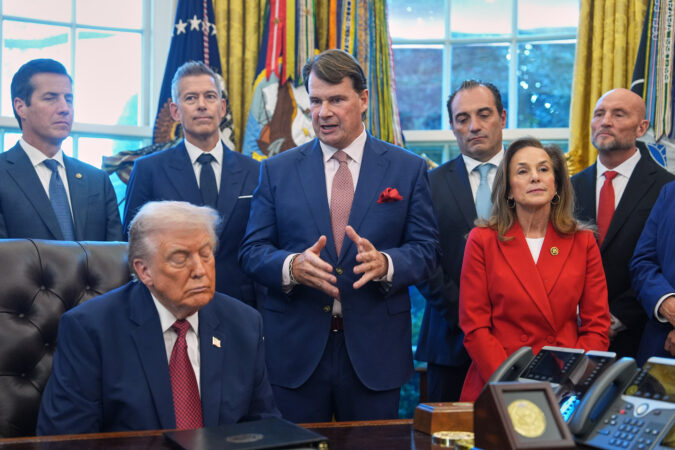
    “From Day One I’ve been taking action to make buying a car more affordable.” Trump said at a White House event that included top executives from the three largest U.S. automakers.

    The rule reverses a Biden-era policy that “forced automakers to build cars using expensive technologies that drove up costs, drove up prices, and made the car much worse,” Trump said.

    Rule change will save money, Trump says

    The action is expected to save consumers about $1,000 off the price of a new car, Trump said. New cars sold for an average of $49,766 on average in October, according to Kelley Blue Book.

    Automakers applauded the planned changes. They had complained that the Biden-era rules were difficult to meet.

    Ford CEO Jim Farley said the planned rollback was “a win for customers and common sense.”

    “As America’s largest auto producer, we appreciate President Trump’s leadership in aligning fuel economy standards with market realities. We can make real progress on carbon emissions and energy efficiency while still giving customers choice and affordability,” Farley said.

    Stellantis CEO Antonio Filosa said the automaker appreciates the administration’s actions to “realign” the standards “with real world market conditions.”

    Since taking office in January, Trump has relaxed auto tailpipe emissions rules, repealed fines for automakers that do not meet federal mileage standards, and terminated consumer credits of up to $7,500 for EV purchases.

    Environmentalists decried the rollback in mileage standards.

    “In one stroke Trump is worsening three of our nation’s most vexing problems: the thirst for oil, high gas pump costs, and global warming,” said Dan Becker, director of the Safe Climate Transport Campaign for the Center for Biological Diversity.

    “Gutting the [gas-mileage] program will make cars burn more gas and American families burn more cash,’’ said Katherine García, director of the Sierra Club’s Clean Transportation for All program.

    Polluting cars to stay on road

    “This rollback would move the auto industry backwards, keeping polluting cars on our roads for years to come and threatening the health of millions of Americans, particularly children and the elderly,” she said.

    Trump has repeatedly pledged to end what he falsely calls an EV “mandate,” referring incorrectly to Democratic President Joe Biden’s target that half of all new vehicle sales be electric by 2030. EVs accounted for about 8% of new vehicle sales in the United States in 2024, according to Cox Automotive.

    No federal policy has required auto companies to sell EVs, although California and other states have imposed rules requiring that all new passenger vehicles sold in the state be zero-emission by 2035. Trump and congressional Republicans blocked the California law earlier this year.

    Transportation Secretary Sean Duffy urged his agency to reverse existing fuel economy requirements, known as Corporate Average Fuel Economy, soon after taking office. In June, he said that standards set under Biden were illegal because they included use of electric vehicles in their calculation. EVs do not run on gasoline. After the June rule revision, the traffic safety agency was empowered to update the requirements.

    Under Biden, automakers were required to average about 50 miles (81 kilometers) per gallon of gas for passenger cars by 2031, compared with about 39 miles (63 kilometers) per gallon today. The Biden administration also increased fuel-economy requirements by 2% each year for light-duty vehicles in every model year from 2027 to 2031, and 2% per year for SUVs and other light trucks from 2029 to 2031. At the same time, it called for stringent tailpipe rules meant to encourage EV adoption.

    The 2024 standards would have saved 14 billion gallons of gasoline from being burned by 2050, according to the National Highway Traffic Safety Administration’s 2024 calculations. Abandoning them means that in 2035, cars could produce 22,111 more tons of carbon dioxide per year than under the Biden-era rules. It also means an extra 90 tons a year of deadly soot particles and more than 4,870 tons a year of smog components nitrogen oxide and volatile organic carbons going into the air in coming years.

    Mileage rules have been implemented since the 1970s energy crisis, and over time, automakers have gradually increased their vehicles’ average efficiency.

  • Trump targets Minnesota’s Somali community with harsh words and policies

    Trump targets Minnesota’s Somali community with harsh words and policies

    MINNEAPOLIS — Recent statements by President Donald Trump and top administration officials disparaging Minnesota’s large Somali community have focused renewed attention on the immigrants from the war-torn east African country and their descendants.

    Trump on Tuesday said he did not want Somalis in the U.S. because “they contribute nothing.” The president spoke soon after a person familiar with the planning said federal authorities are preparing a targeted immigration enforcement operation in Minnesota that would primarily focus on Somali immigrants living unlawfully in the U.S.

    Here are some things to know about Somalis in Minnesota:

    Largest Somali American population in the U.S.

    An estimated 260,000 people of Somali descent were living in the U.S. in 2024, according to the Census Bureau’s annual American Community Survey. The largest population is in the Minneapolis-St. Paul area, home to about 84,000 residents, most of whom are American citizens. Ohio, Washington and California also have significant populations.

    Almost 58% of the Somalis in Minnesota were born in the U.S. Of the foreign-born Somalis in Minnesota, an overwhelming majority — 87% — are naturalized U.S. citizens. Of the foreign-born population, almost half entered the U.S. in 2010 or later, according to the Census Bureau.

    They include many who fled the long civil war in their east African country and were drawn to the state’s welcoming social programs.

    Trump targets the community

    Trump has become increasingly focused in recent weeks on Somalis living in the U.S., saying they “have caused a lot of trouble.”

    Trump and other administration officials stepped up their criticism after a conservative news outlet, City Journal, claimed that taxpayer dollars from defrauded government programs have flowed to the militant group al-Shabab, an affiliate of al-Qaida that controls parts of rural Somalia and often has targeted the capital, Mogadishu.

    While Treasury Secretary Scott Bessent said in a social media post Monday that his agency is investigating whether “hardworking Minnesotans’ tax dollars may have been diverted to the terrorist organization,” little evidence has emerged so far to prove a link. Federal prosecutors have not charged any of the dozens of defendants in recent public program fraud cases in Minnesota with providing material support to foreign terrorist organizations.

    Last month, Trump said he was terminating Temporary Protected Status for Somali migrants in Minnesota, a legal safeguard against deportation. A report produced for Congress in August put the number of Somalis covered by the program at just 705 nationwide.

    The announcement drew immediate pushback from some state leaders and immigration experts, who characterized Trump’s declaration as a legally dubious effort to sow fear and suspicion.

    Fraud allegations lead to pushback

    Local Somali community leaders, as well as allies like Gov. Tim Walz and Minneapolis Mayor Jacob Frey, have also pushed back against those who might blame the broader Somali community for some recent cases of massive fraud in public programs.

    Those include what is known as the Feeding Our Future scandal, which federal prosecutors say was the country’s largest COVID-19-related fraud case. It involved a program meant to feed children during the pandemic. The defendants were accused of fraudulently claiming to be feeding millions of meals to children. While the alleged ringleader was white, many of the defendants were Somalis, and most of them were U.S. citizens.

    Prosecutors in recent months have raised their estimate of the thefts to $300 million from an original $250 million, and the number of defendants last month grew to 78. The cases are still working their way through the court system.

    Republican candidates for governor and other offices in 2026 are staking their hopes on voters blaming Walz for failing to prevent the losses to taxpayers. Trump has blasted Walz for allowing the fraud to unfold on his watch.

    Earlier terrorism cases still echo

    Authorities in Minnesota struggled for years to stem the recruiting of young Somali men by the Islamic State group and the Somalia-based militant group al-Shabab.

    The problem first surfaced in 2007, when more than 20 young men went to Somalia, where Ethiopian troops propping up a weak U.N.-backed government were seen by many as foreign invaders.

    While most of those cases were resolved years ago, another came to light earlier this year. A 23-year-old defendant pleaded guilty in September to attempting to provide material support and resources to a designated foreign terrorist organization.

    Mostly in the 2010s, the Islamic State group also found recruits in Minnesota’s Somali community, with authorities saying roughly a dozen left to join militants in Syria.

    Somalis have become a force in Minnesota politics

    The best-known Somali American is arguably Democratic U.S. Rep. Ilhan Omar, a fiery progressive whose district includes Minneapolis and is a frequent target of Trump.

    Several other Somali Americans have served in the Minnesota Legislature and the Minneapolis and St. Paul city councils. State Sen. Omar Fateh, a democratic socialist, finished second in the Minneapolis mayoral election in November to incumbent Mayor Frey.

  • Shredded cheese sold in dozens of states recalled due to potential for metal fragment contamination

    Shredded cheese sold in dozens of states recalled due to potential for metal fragment contamination

    There is a recall for more than 260,000 cases of shredded cheese sold in 31 states and Puerto Rico because of the potential for metal fragment contamination, according to the U.S. Food and Drug Administration.

    The FDA said that the various shredded cheeses were recalled by Great Lakes Cheese Co. The cheese products are sold under private store-brand labels at several retailers, including Target, Walmart and Aldi.

    The recall includes various cheeses such as mozzarella, Italian style, pizza style, mozzarella and provolone and mozzarella and parmesan.

    The recall has a Class II classification, because the product “may cause temporary or medically reversible adverse health consequences or where the probability of serious adverse health consequences is remote,” according to the FDA’s website.

    An FDA says ingesting metal fragments may cause injuries such as dental damage, laceration of the mouth or throat, or laceration or perforation of the intestine.

  • Pentagon knew boat attack left survivors but still launched a follow-on strike, AP sources say

    Pentagon knew boat attack left survivors but still launched a follow-on strike, AP sources say

    WASHINGTON — The Pentagon knew there were survivors after a September attack on an alleged drug boat in the Caribbean Sea and the U.S. military still carried out a follow-up strike, according to two people familiar with the matter.

    The rationale for the second strike was that it was needed to sink the vessel, according to the people familiar with the matter who spoke on the condition of anonymity because they weren’t authorized to discuss it publicly. The Trump administration says all 11 people aboard were killed.

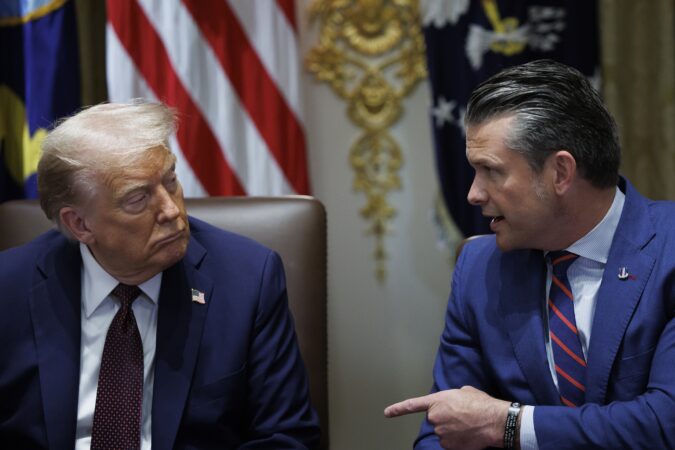
    What remains unclear was who ordered the strikes and whether Defense Secretary Pete Hegseth was involved, one of the people said. That will be part of a classified congressional briefing Thursday with the commander that the Trump administration says ordered the second strike, Adm. Frank “Mitch” Bradley.

    Hegseth has defended the second strike as emerging in the “fog of war,” saying he didn’t see any survivors but also “didn’t stick around” for the rest of the mission.

    Hegseth is under growing scrutiny over the military strikes on alleged drug traffickers in the Caribbean and eastern Pacific. Legal experts and some lawmakers say a strike that killed survivors would have violated the laws of armed conflict.

  • Americans gave $4B on Giving Tuesday 2025 as donations and volunteering gain big over last year

    Americans gave $4B on Giving Tuesday 2025 as donations and volunteering gain big over last year

    Americans gave $4 billion to nonprofits on Giving Tuesday in 2025, an increase from the $3.6 billion they gave in 2024, according to estimates from the nonprofit Giving Tuesday.

    More people also volunteered their time on the Tuesday after Thanksgiving this year, which fell on Dec. 2 and has become a major fundraising day for nonprofits. This year, 11.1 million people in the U.S. volunteered, up from, 9.2 million last year.

    Giving Tuesday started in 2012 as a hashtag and a project of the 92nd St Y in New York and has since become an independent nonprofit. The organization estimates how much was given and how many people volunteer using data from a wide variety of sources, including giving platforms, payment processors and software applications that nonprofits use.

    Woodrow Rosenbaum, the chief data officer for Giving Tuesday, said both the number of people giving and the overall donation amount may have increased this year as people seek a sense of belonging and connection.

    “Generosity is a really powerful way to get that,” Rosenbaum said in an interview with The Associated Press. ”But I think mostly it’s just that when people see need, they want to do something about it and Giving Tuesday is an opportunity to do that in a moment of celebration as opposed to crisis.”

    Overall donations increased 8.1% from last year when adjusted for inflation. Giving Tuesday has also seen the average donation increase in size over time and Rosenbaum said people may be seeking additional ways to give as well.

    “Volunteering is a way that you can add to your impact without it costing you money,” he said.

    Not everyone who volunteers their time does so through a nonprofit. They may volunteer with mutual aid groups or by helping out family members or neighbors, he said.

    Giving Tuesday does not include donations from corporations or foundations in their estimate, Rosenbaum said, as they are focused on the everyday generosity of individuals. That means they did not include the gift from billionaires Michael and Susan Dell of $6.25 billion to encourage families to claim new investment accounts created by the Trump administration.

    President Donald Trump hosted the Dells at the White House Tuesday, calling their commitment “one of the most generous acts in the history of our country.” The Dells will offer $250 to 25 million children 10 years old and younger to invest in accounts that the U.S. Department of Treasury will create next year. The ” Trump accounts ” were part of the administration’s tax and spending legislation passed in the summer.

    A significant portion of charitable giving to nonprofits happens at the end of the calendar year and Giving Tuesday is an informal kick off to what nonprofits think of as the giving season. A combination of economic and political uncertainty has meant it is hard to predict how generous donors will be this year. Rosenbaum said that the generosity demonstrated on GivingTuesday is an extremely encouraging bellwether for how the rest of the giving season will go.

    “What we really hope is that nonprofits and community groups see this as an opportunity that we are in a moment of abundance and that people are ready and willing to help,” Rosenbaum said.

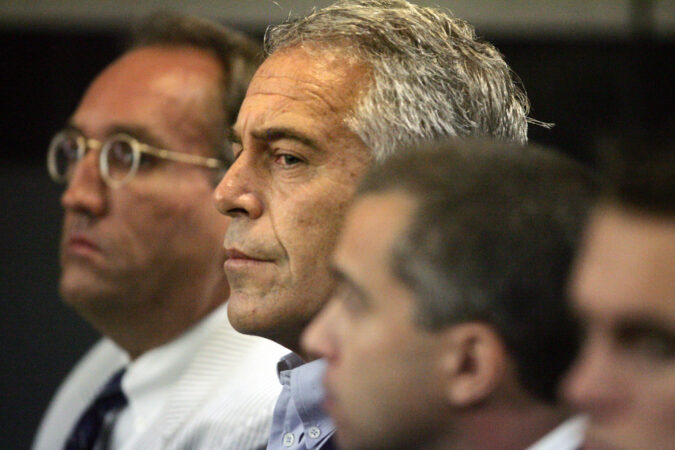
  • A vocal Jeffrey Epstein accuser is urging judges to unseal his court records

    A vocal Jeffrey Epstein accuser is urging judges to unseal his court records

    NEW YORK — One of Jeffrey Epstein and Ghislaine Maxwell‘s most vocal accusers urged judges on Wednesday to grant the Justice Department’s request to unseal records from their federal sex trafficking cases, saying “only transparency is likely to lead to justice.”

    Annie Farmer weighed in through her lawyer, Sigrid S. McCawley, after the judges asked for input from victims before ruling on whether the records should be made public under a new law requiring the government to open its files on the late financier and his longtime confidante, who sexually abused young women and girls for decades.

    Farmer and other victims fought for the passage of the law, known as the Epstein Files Transparency Act. Signed last month by President Donald Trump, it compels the Justice Department, FBI and federal prosecutors to release by Dec. 19 the vast troves of material they’ve amassed during investigations into Epstein.

    The Justice Department last week asked Manhattan federal Judges Richard Berman and Paul Engelmayer to lift secrecy orders on grand jury transcripts and other material from Epstein’s 2019 sex-trafficking case and a wide range of records from Maxwell’s 2021 case, including search warrants, financial records, and notes from interviews with victims.

    “Nothing in these proceedings should stand in the way of their victory or provide a backdoor avenue to continue to cover up history’s most notorious sex-trafficking operation,” McCawley wrote in a letter to the judges.

    The attorney was critical of the government for failing to prosecute anyone else in Epstein and Maxwell’s orbit. She asked the judges to ensure that any orders they issue do not preclude the Justice Department from releasing other Epstein-related materials.

    Farmer “is wary of the possibility that any denial of the motions may be used by others as a pretext or excuse for continuing to withhold crucial information concerning Epstein’s crimes,” McCawley wrote.

    Epstein, a millionaire money manager known for socializing with celebrities, politicians, billionaires, and the academic elite, killed himself in jail a month after his 2019 arrest.

    Maxwell was convicted in 2021 by a federal jury of sex trafficking for helping recruit some of Epstein’s underage victims and participating in some of the abuse. She is serving a 20-year prison sentence.

    In a court filing Wednesday, Maxwell’s lawyer again said that she is preparing a habeas petition in a bid to overturn her conviction. The lawyer, David Markus, first mentioned the habeas petition in court papers in August as she fought the Justice Department’s initial bid to have her case records unsealed. The Supreme Court in October declined to hear Maxwell’s appeal.

    Markus said in Wednesday’s filing that while Maxwell now “does not take a position” in the wake of the transparency act’s passage, doing so “would create undue prejudice so severe that it would foreclose the possibility of a fair retrial” if her habeas petition succeeds.

    The records, Markus said, “contain untested and unproven allegations.”

    Engelmayer, who’s weighing whether to release records from Maxwell’s case, gave her and victims until Wednesday to respond to the Justice Department’s unsealing request. The government must respond to their filings by Dec. 10. The judge said he will rule “promptly thereafter.”

    Berman, who presided over the Epstein case, ordered victims and Epstein’s estate to respond by Wednesday and gave the government until Dec. 8 to reply to those submissions. Berman said he would make his “best efforts to resolve this motion promptly.”

    Lawyers for Epstein’s estate said in a letter to Berman on Wednesday that the estate takes no position on the Justice Department’s unsealing request. The lawyers noted that the government had committed to making appropriate redactions of personal identifying information for victims.

    Last week, a lawyer for some victims complained that the House Oversight Committee had failed to redact, or black out, some of their names from tens of thousands pages of Epstein-related documents it has released in recent months.

    Transparency “CANNOT come at the expense of the privacy, safety, and protection of sexual abuse and sex trafficking victims, especially these survivors who have already suffered repeatedly,” lawyer Brad Edwards wrote.