Category: Nation World News Wires

  • Why Cyber Monday could break spending records despite economic uncertainty

    Why Cyber Monday could break spending records despite economic uncertainty

    NEW YORK — After four days of deal-fueled spending sprees that kicked off on Thanksgiving, shoppers shifted their focus on Cyber Monday, which is again expected to be the biggest sales day of the year for online retailers.

    Walmart was promoting up to 50% off on fashion on its website among some of the deals, while online juggernaut Amazon was hoping to ply customers with discounts of up to 55%.

    It’s no secret that buying things online is now a staple of many people’s everyday routines. And year after year, those purchases mount during the gift-giving holiday rush. Experts expect consumers to drive record Cyber Monday spending this year, despite wider economic uncertainty.

    Adobe Analytics estimated that U.S. shoppers will spend $14.2 billion online Monday, or 6.3% more than in 2024. Spending was expected to peak between the hours of 8 and 10 p.m. local time, when Adobe expected $16 million to pass through online shopping carts every minute nationwide.

    U.S. consumers already spent $11.8 billion online for Black Friday, $6.4 billion on Thanksgiving Day, and another $11.8 billion over the weekend — exceeding Adobe’s forecasts. Purchases made across Cyber Week — the five major shopping days between Thanksgiving and Cyber Monday — provides a strong indication of how much shoppers are willing to spend for the holidays.

    “Cyber Week is off to a strong start,” Vivek Pandya, lead analyst at Adobe Digital Insights, said. “Discounts are set to remain elevated through Cyber Monday, which we expect will remain the biggest online shopping day of the season and year.”

    Pandya said he will be analyzing Adobe data capturing Cyber Monday sales to see if some of the spending momentum dissipated after a strong weekend.

    Deals on electronics and apparel were expected to peak Monday at 30% and 26% off average listed prices, per Adobe’s latest estimates. But other categories will still continue to see deep discounts — including toys, which Adobe expects to reach 27% off listed prices.

    Meanwhile, software company Salesforce — which tracks digital spending from a range of retailers, including grocers — estimated Cyber Monday’s online sales will total $13.4 billion in the U.S. and $53.7 billion globally.

    While the amount of money going into online shopping carts was expected to reach new heights Monday, rising retail prices also may contribute to any record sales figures that materialize. Consumers may be buying fewer total items. Experts say tighter budgets are causing many to shop with more precision than in years past — such as focusing on a few “big ticket” purchases, for example, and spreading out what they buy over days of promotions in hopes of getting the most bang for their buck.

    Businesses and households have watched anxiously for financial impacts from U.S. President Donald Trump’s tariffs on foreign imports. Workers in both the public and private sectors are also struggling with anxieties over job security amid both corporate layoffs and the aftereffects of the 43-day government shutdown.

    For the November-December holiday season overall, the National Retail Federation estimates that U.S. shoppers will spend more than $1 trillion for the first time this year. But the rate of growth is slowing — with an anticipated increase of 3.7% to 4.2% year over year, compared with 4.3% during last year’s holiday season.

    An Amazon Prime delivery person lifts packages while making a stop on Nov. 28, 2023, in Denver.

    At the same time, credit card debt and delinquencies on other short-term loans have been rising. More and more shoppers are turning to “buy now, pay later” plans, which allow them to delay payments on holiday decor, gifts, and other items.

    Buy now, pay later loans are expected to drive $20.2 billion in online spending this holiday season, according to Adobe, up 11% from last year. The firm predicted that buy now, pay later loans would pass a new $1 billion milestone on Cyber Monday, the vast majority involving purchases made on mobile devices.

    Overall, mobile devices have become the dominant shopping platform consumers are turning to for the holidays. Adobe expects smartphones, wearable tech, and other handheld electronics to account for 58% of online spending this season.

    Five years ago, a majority of online purchases were made on desktops.

    Shopping services powered by artificial intelligence are also expected to play a role in what consumers choose to buy. For Black Friday, Salesforce estimated that AI assistants and digital agents contributed to $14.2 billion of the total $79 billion it said was spent online worldwide.

    Across the holiday season, “hot sellers” will include gaming consoles such as the Nintendo Switch 2 and toys-turned-fashion statements like Labubu Dolls, Adobe said. The analytics company anticipates the newest editions of popular consumer electronics — including the iPhone 17, Google Pixel 10, and Samsung Galaxy S25 — will also see high demand.

    To many, Cyber Monday is billed as the “last call” to take advantage of the deepest discounts in the days following Thanksgiving. But its reach has grown over the years.

    Cyber Monday is two decades old now, dating back to when the National Retail Federation first coined the term in 2005. Today, sales continue to bubble up throughout the week — riding on the hype that the industry has built to fuel consumer spending.


  • Starbucks to pay about $35M to NYC workers to settle claims it violated labor law

    Starbucks to pay about $35M to NYC workers to settle claims it violated labor law

    NEW YORK — Starbucks will pay about $35 million to more than 15,000 New York City workers to settle claims it denied them stable schedules and arbitrarily cut their hours, city officials announced Monday.

    The company will also pay $3.4 million in civil penalties under the agreement with the city’s Department of Consumer and Worker Protection. It also agrees to comply with the city’s Fair Workweek law going forward.

    A company spokesperson said Starbucks is committed to operating responsibly and in compliance with all applicable local laws and regulations in every market where it does business, but also noted the complexities of the city’s law.

    “This [law] is notoriously challenging to manage and this isn’t just a Starbucks issue, nearly every retailer in the city faces these roadblocks,” spokesperson Jaci Anderson said.

    Most of the affected employees who held hourly positions will receive $50 for each week worked from July 2021 through July 2024, the department said. Workers who experienced a violation after that may be eligible for compensation by filing a complaint with the department.

    The settlement also guarantees employees laid off during recent store closings in the city will get the chance for reinstatement at other company locations.

    The city began investigating in 2022 after receiving dozens of worker complaints against several Starbucks locations, and eventually expanded its investigation to the hundreds of stores in the city. The probe found most Starbucks employees never got regular schedules and the company routinely reduced employees’ hours by more than 15%, making it difficult for staffers to know their regular weekly earnings and plan other commitments, such as childcare, education, or other jobs.

    The company also routinely denied workers the chance to pick up extra shifts, leaving them involuntarily in part-time status, according to the city.

    The agreement with New York comes as Starbucks’ union continues a nationwide strike at dozens of locations that began last month, including at some Philadelphia stores. The number of affected stores and the strike’s impact remain in dispute by the two sides.

  • Gangs launch large-scale attack in Haiti’s central region as hundreds flee gunfire, burning homes

    Gangs launch large-scale attack in Haiti’s central region as hundreds flee gunfire, burning homes

    SAINT-MARC, Haiti — Heavily armed gangs attacked Haiti’s central region over the weekend, killing men, women, and children as they set fire to homes and forced survivors to flee into the darkness.

    Police made emergency calls for backup, asserting that 50% of the Artibonite region had fallen under gang control after the large-scale attacks targeting towns including Bercy and Pont-Sondé.

    “The population cannot live, cannot work, cannot move,” one of Haiti’s police unions, SPNH-17, said Sunday on X. “Losing the country’s 2 largest departments — West and Artibonite — is the greatest security failure in modern Haitian history.”

    The bulk of Haiti’s police force and the Kenyan officers leading a U.N.-backed mission to help repel gangs are in the capital, Port-au-Prince, which itself is largely held by gangs.

    Guerby Simeus, a Pont-Sondé official, told the Associated Press by phone on Monday that he had confirmed nearly a dozen deaths, including a mother and her child and a local government employee.

    “The gangs are still in Pont-Sondé,” he said, noting that no additional police had arrived.

    A run for the coast

    Many survivors fled to the coastal town of Saint-Marc, where hundreds of angry people on Monday demanded that the government take action against gangs who have repeatedly attacked Haiti’s central region.

    “Give me the guns! I’m going to fight the gangs!” said Réné Charles, who survived the attack. “We’ve got to stand up and fight!”

    The crowd tried to break into the mayor’s office, with one unidentified man telling the AP that they weren’t going to rely on the government any longer: “We’re going to take justice into our own hands!”

    Charlesma Jean Marcos, a political activist, said the gang announced last week that they were going to invade the area, and that they alerted authorities to no avail.

    “For now, the only people really fighting (the gang) is the self-defense group,” he said. “A country cannot run like this.”

    Marcos urged all the survivors sleeping on the street and in public parks to instead sleep inside police stations and government offices until the government can take back Artibonite.

    “A lot of people are going to be hungry,” he warned. “We can support you today, we can support you tomorrow, but we won’t be able to support you forever.”

    More than half of Haiti’s population is already experiencing crisis levels of hunger or worse, with gangs blocking main roads and the ongoing violence displacing a record 1.4 million people.

    A region overrun with gangs

    The attacks in central Haiti began late Friday and late Saturday, with gang members broadcasting them live on social media.

    The attacks were blamed on the Gran Grif gang, which operates in the area and was responsible for an attack on Pont-Sondé in October 2024 that killed at least 100 people, one of the biggest massacres in Haiti’s recent history.

    “I heard heavy shooting, so much shooting,” one unidentified man recalled to the Associated Press and criticized the lack of police, saying he was stuck inside his house all weekend until Monday morning. “Why don’t they send any drones to Artibonite? They just use the drones in Port-au-Prince. I feel this gang is special. They don’t want to destroy this gang.”

    A spokesperson for Haiti’s National Police did not immediately return a message seeking comment.

    Gran Grif is considered one of Haiti’s cruelest gangs. Its leader, Luckson Elan, recently was sanctioned by the U.N. Security Council and the U.S. government. Also sanctioned was Prophane Victor, a former legislator whom the U.N. accused of arming young men in the Artibonite region.

    The U.N. has said killings have risen dramatically in Haiti’s Artibonite and Centre departments this year, with 1,303 victims reported from January to August, compared with 419 during the same period in 2024.

    “These assaults underscore the capacity of gangs to consolidate control across a corridor from the Centre to the Artibonite amid limited law enforcement presence and logistical constraints,” a recent U.N. report stated.

    Fritz Alphonse Jean, a member of Haiti’s transitional presidential council who was sanctioned by the U.S. last month and is seeking to oust the current prime minister, condemned the latest attacks.

    “Blood continues to flow, lives and property continues to be lost in front of a government incapable of addressing the population’s problems for more than a year,” he wrote on X, adding: “Stability???!”

  • New York backs 3 new casinos, including at Mets stadium and a golf course Trump once ran

    New York backs 3 new casinos, including at Mets stadium and a golf course Trump once ran

    NEW YORK — New York City is poised to get its first Vegas-style casinos, including one next to the home stadium of baseball’s New York Mets and another that could see a windfall for President Donald Trump.

    They were among three casino proposals approved for lucrative gambling licenses on Monday by a key state panel. No casinos will end up coming to Manhattan, however, as several other competing proposals were already scrapped, including one in the heart of Times Square.

    The state Gaming Commission is expected to formally issue the licenses before the end of the year, as the gambling revenues are already factored into the state budget. Democratic Gov. Kathy Hochul said the casinos promise to unlock billions of dollars in funding for the state’s transit system and create jobs; however, opponents have repeatedly warned that easy access to casinos will lead to increased gambling addiction.

    Bally’s plan to spend $4 billion building a casino at the Ferry Point golf course in the Bronx could mean millions of dollars for Trump. When the company purchased the city-owned golf course’s operating rights from the Trump Organization in 2023, it promised to pony up another $115 million if it won a casino license. Spokespersons for the Trump Organization did not immediately respond to an email seeking comment.

    In nearby Queens, billionaire New York Mets owner Steve Cohen has proposed building an $8.1 billion Hard Rock casino on a parking lot of Citi Field. The complex would include a performance venue, a hotel, and retail and shopping space.

    Resorts World, meanwhile, has proposed investing more than $5 billion to expand an existing slots parlor into a full casino at the Aqueduct Race Track, which is also in Queens near John F. Kennedy International Airport. It too would add hotel, dining, and entertainment options.

    Vicki Been, chairperson of New York Gaming Facility Location Board, said the panel believed New York City was “plenty strong” enough to sustain the three planned casinos, despite their close proximity. The region’s dense and relatively affluent population, combined with high tourism, makes it one of the country’s most robust gaming markets, the board said, adding that nearby residents are expected to form the core of repeat visitors, bolstered by travelers from the U.S. and abroad.

    Using conservative assumptions, the board’s consultants estimated the casinos would bring $7 billion in gambling revenues for the state from 2027 to 2036, plus $1.5 billion in licensing fees and nearly $6 billion in related local taxes. The plans include public safety investments and upgrades to public transit and roadways.

    However, the board cautioned that the casinos have “ambitious” timelines for opening. The expansion at Aqueduct Race Track aims to open some facilities by March, while the Citi Field and golf course sites plan for a 2030 opening.

    Anti-casino protesters, meanwhile, chanted “Shame on you! Shame on you!” as they were escorted out of the meeting in midtown Manhattan.

    Jack Hu, one of the group’s organizers, said casino operators view older adults and workers as merely “cash cows to milk for money.” He said the proposals will have a disproportionately negative impact in the city’s Asian American communities, which are largely concentrated in Queens.

    “They bus our seniors to casinos, and they give them meal and gambling vouchers in the hopes that they’ll stay long enough to lose their entire Social Security check,” Hu said after the meeting.

    The commission is authorized to license up to three casinos in the New York City area after voters approved a referendum back in 2013 opening the door to casino gambling statewide.

    Since then, four full casinos with table games have opened in New York, but all of them are located upstate, miles away from Manhattan. The state also has nine gambling halls offering slot machines and other electronic gambling machines, but no live table games.

    The closely watched competition for a New York City license began with a crowded field, with some eight proposals in the running as recently as September.

    But four of the high-profile plans failed to get the stamp of approval from local advisory boards, automatically knocking them out of contention.

    Among the most notable was a Jay-Z-backed plan to build a Caesars Palace in Times Square, as well as two other resorts proposed in central Manhattan.

    Then in October, MGM abruptly pulled out of the license sweepstakes, saying the “competitive and economic assumptions underpinning” their plans had changed. The Las Vegas casino giant had planned a major expansion of the Empire City Casino, a slots parlor located at the Yonkers Raceway north of Manhattan.

  • National Guard member shot in D.C. has shown positive signs, W. Va. governor says

    National Guard member shot in D.C. has shown positive signs, W. Va. governor says

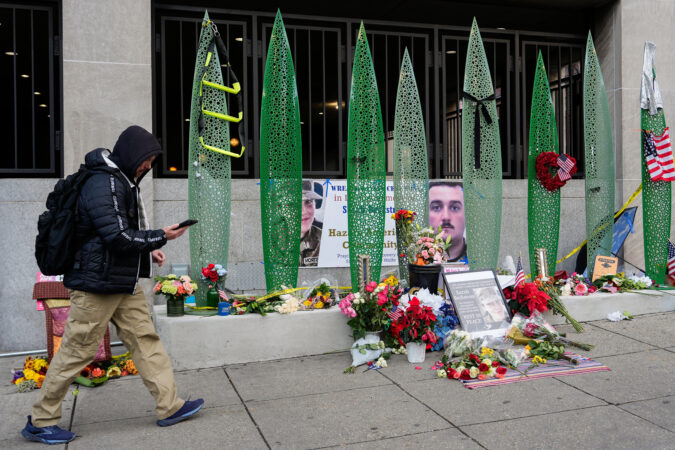
    CHARLESTON, W.Va. — A West Virginia National Guard member who was shot last week in a brazen daytime attack in Washington, D.C., remains in serious condition but showed positive signs by giving a thumbs-up that he could hear a nurse’s question and wiggling his toes, Gov. Patrick Morrisey said Monday.

    Morrisey said the family of 24-year-old U.S. Air Force Staff Sgt. Andrew Wolfe has asked the public to pray for him. Another member of the West Virginia National Guard, U.S. Army Spc. Sarah Beckstrom, 20, died after the shooting.

    “Andrew is still fighting for his life,” Morrisey said. “Andrew needs prayers.”

    Morrisey said he could not yet share details of any funeral arrangements for Beckstrom and wants to respect her family’s wishes.

    Beckstrom and Wolfe were shot Wednesday just blocks from the White House while deployed as part of President Donald Trump’s crime-fighting plan that federalized D.C. police.

    Investigators are working to determine a motive. Rahmanullah Lakanwal, a 29-year-old Afghan national, is charged with one count of first-degree murder and two counts of assault in the shooting.

    Authorities said Lakanwal, who was shot in the confrontation, remained hospitalized and a court appearance has not yet been scheduled.

    The shooting prompted the Trump administration to halt all asylum decisions and pause issuing visas for people traveling on Afghan passports.

    After the shooting, Defense Secretary Pete Hegseth said Trump asked him to send 500 more National Guard members to Washington. Morrisey said he has not been asked to deploy additional troops from West Virginia.

    Overall, nearly 2,200 troops currently are assigned to the joint task force operating in the city, according to the government’s latest update. More than 300 West Virginia National Guard members were deployed in August. In mid-November, up to 170 of them volunteered to extend their deployment until the end of the year while the others returned to West Virginia.

    “Our sole focus right now is looking after the well-being of the 170 service members who are on the ground, focusing on the family, assuring that prayers are going out,” Morrisey said.

  • White House says admiral ordered follow-on strike on alleged drug boat, insists attack was lawful

    White House says admiral ordered follow-on strike on alleged drug boat, insists attack was lawful

    WASHINGTON — The White House said Monday that a Navy admiral ordered a second strike on an alleged drug boat in the Caribbean Sea and insists that a September attack that has come under bipartisan scrutiny was lawful.

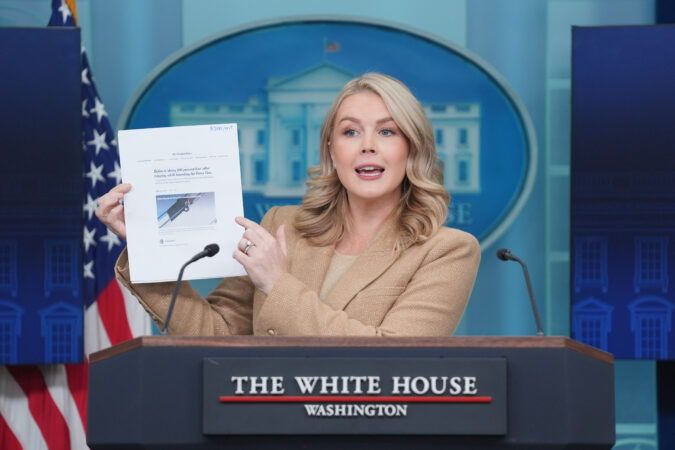
    White House press secretary Karoline Leavitt offered a justification for the Sept. 2 strike after lawmakers from both parties on Sunday announced support for congressional reviews of U.S. military strikes against vessels suspected of smuggling drugs in the Caribbean Sea and eastern Pacific Ocean, citing a published report that Defense Secretary Pete Hegseth issued a verbal order for a second strike that killed survivors on the boat in that incident.

    Leavitt in her comments to reporters on Monday did not dispute a Washington Post report that there were survivors after the initial strike in the incident. Her explanation came after President Donald Trump a day earlier said that he “wouldn’t have wanted that — not a second strike” when asked about the incident.

    “Secretary Hegseth authorized Admiral Bradley to conduct these kinetic strikes,” said Leavitt, referring to U.S. Navy Vice Admiral Frank Bradley, who at the time was the commander of Joint Special Operations Command. “Admiral Bradley worked well within his authority and the law, directing the engagement to ensure the boat was destroyed and the threat to the United States of America was eliminated.”

    The lawmakers said they did not know whether last week’s Post report was true, and some Republicans were skeptical. Still, they said the reports of attacking survivors of an initial missile strike posed serious legal concerns and merited further scrutiny.

    “This rises to the level of a war crime if it’s true,” said Sen. Tim Kaine (D., Va.).

    Rep. Mike Turner (R-Ohio), when asked about a follow-up strike aimed at people no longer able to fight, said Congress does not have information that happened. He noted that leaders of the Armed Services Committee in both the House and Senate have opened investigations.

    “Obviously, if that occurred, that would be very serious and I agree that that would be an illegal act,” Turner said.

    Trump on Sunday vigorously defended Hegseth.

    “Pete said he did not order the death of those two men,” Trump said. He added, “And I believe him.”

    Leavitt said Hegseth has spoken with members of Congress who may have expressed some concerns about the reports over the weekend.

    After the Post’s report, Hegseth said Friday on X that “fake news is delivering more fabricated, inflammatory, and derogatory reporting to discredit our incredible warriors fighting to protect the homeland.”

    “Our current operations in the Caribbean are lawful under both U.S. and international law, with all actions in compliance with the law of armed conflict—and approved by the best military and civilian lawyers, up and down the chain of command,” Hegseth wrote.

    Leavitt also confirmed that Trump later on Monday would be holding a meeting with his national security team to discuss the ongoing operations in the Caribbean Sea and potential next steps against Venezuela.

    The U.S. administration says the strikes in the Caribbean are aimed at drug cartels, some of which it claims are controlled by Venezuelan President Nicolás Maduro. Trump also is weighing whether to carry out strikes on the Venezuelan mainland.

    Trump on Sunday confirmed that he had recently spoken by phone with Maduro but declined to detail the conversation.

    The September strike was one in a series carried out by the U.S. military in the Caribbean Sea and eastern Pacific Ocean as Trump has ordered the buildup a fleet of warships near Venezuela, including the largest U.S. aircraft carrier.

    More than 80 people have been killed the strikes on small boats that the Trump administration alleges smuggle narcotics for drug cartels.

  • Doctor says Trump had preventative screening MRI on heart, abdomen with ‘perfectly normal’ results

    Doctor says Trump had preventative screening MRI on heart, abdomen with ‘perfectly normal’ results

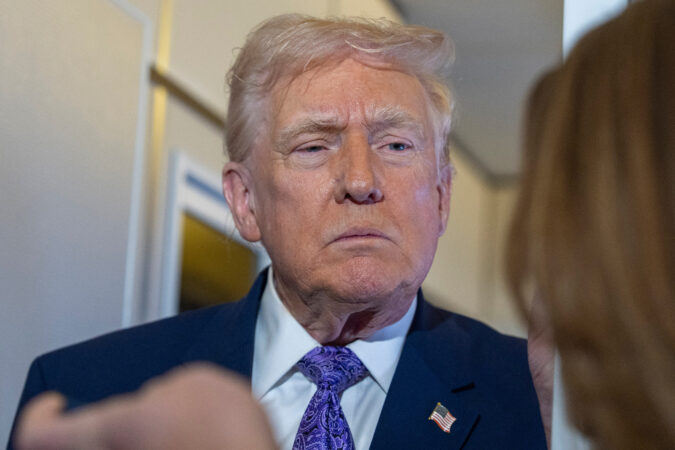
    WASHINGTON — Donald Trump’s doctor says the president had MRI imaging on his heart and abdomen in October as part of a preventative screening for men his age, according to a memo from the physician released by the White House on Monday.

    Sean Barbabella said in a statement that Trump’s physical exam included “advanced imaging” that is “standard for an executive physical” in Trump’s age group. Barbabella concluded that the cardiovascular and abdominal imaging was “perfectly normal.”

    “The purpose of this imaging is preventative: to identify issues early, confirm overall health, and ensure he maintains long-term vitality and function,” the doctor wrote.

    The White House released Barbabella’s memo after Trump on Sunday said he would release the results of the scan. He and the White House have said the scan was “part of his routine physical examination” but had declined until Monday to detail why Trump had an MRI during his physical in October at Walter Reed National Military Medical Center or on what part of his body.

    “I think that’s quite a bit of detail,” White House press secretary Karoline Leavitt said Monday when announcing the memo’s release.

    The Republican president said Sunday during an exchange with reporters as he traveled back to Washington from Florida that the results of the MRI were “perfect.”

    “If you want to have it released, I’ll release it,” Trump said.

    Trump added Sunday that he has “no idea” on what part of his body he got the MRI.

    “It was just an MRI,” he said. “What part of the body? It wasn’t the brain because I took a cognitive test and I aced it.”

  • Land and security are the main sticking points as Russia and Ukraine mull Trump’s peace proposal

    Land and security are the main sticking points as Russia and Ukraine mull Trump’s peace proposal

    Diplomats face an uphill battle to reconcile Russian and Ukrainian “red lines” as a renewed U.S.-led push to end the war gathers steam, with Ukrainian officials attending talks in the U.S. over the weekend and Washington officials expected in Moscow early this week.

    U.S. President Donald Trump’s peace plan became public last month, sparking alarm that it was too favorable to Moscow. It was revised following talks in Geneva between the U.S. and Ukraine a week ago.

    Ukraine’s President Volodymyr Zelensky has said the revised plan could be “workable.” Russian President Vladimir Putin called it a possible “basis” for a future peace agreement. Trump said Sunday, “There’s a good chance we can make a deal.”

    Still, officials on both sides indicated a long road ahead as key sticking points — over whether Kyiv should cede land to Moscow and how to ensure Ukraine’s future security — appear unresolved.

    Here is where things stand and what to expect this week:

    U.S. holds talks with Kyiv then Moscow

    Trump representatives met the Ukrainian officials over the weekend and plan to meet with the Russians in coming days.

    Ukraine’s national security council head Rustem Umerov, the head of Ukraine’s armed forces Andrii Hnatov, presidential adviser Oleksandr Bevz, and others met with U.S. officials for about four hours on Sunday. U.S. Secretary of State Marco Rubio said the session was productive but more work remains. Umerov praised the U.S. for its support but offered no details.

    Zelensky’s former chief of staff and former lead negotiator for Ukraine, Andrii Yermak, resigned Friday amid a corruption scandal and is no longer part of the negotiating team. It was only a week ago that Rubio met with Yermak in Geneva, resulting in a revised peace plan.

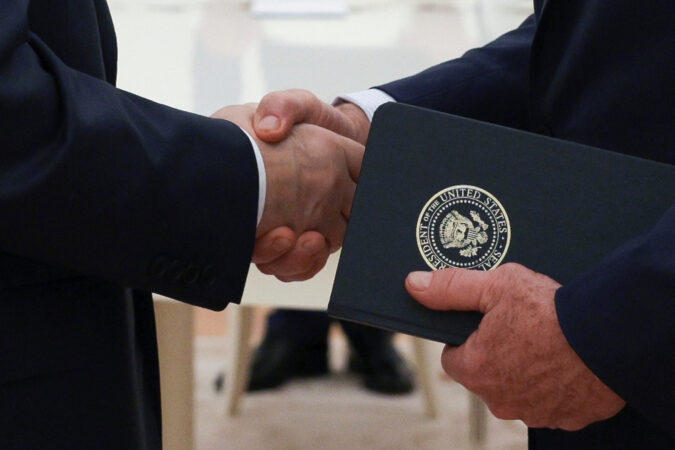
    Trump said last week that he would send his envoy Steve Witkoff to Russia. Kremlin spokesperson Dmitry Peskov confirmed Monday that Putin will meet Witkoff today.

    Trump suggested he could eventually meet with Putin and Zelensky, but not until there has been more progress.

    Witkoff’s role in the peace efforts came under scrutiny last week following a report that he coached Yuri Ushakov, Putin’s foreign affairs adviser, on how Russia’s leader should pitch Trump on the Ukraine peace plan. Both Moscow and Washington downplayed the significance of the revelations.

    Where the two sides stand

    Eager to please Trump, Kyiv and Moscow have ostensibly welcomed the peace plan and the push to end the war. But Russia has continued attacking Ukraine and reiterated its maximalist demands, indicating a deal is still a ways off.

    Putin implied last week that he will fight as a long as it takes to achieve his goals, saying that he will stop only when Ukrainian troops withdraw from all four Ukrainian regions that Russia illegally annexed in 2022 and still doesn’t fully control. “If they don’t withdraw, we’ll achieve this by force. That’s all,” he said.

    The plan, Putin said, “could form the basis for future agreements,” but it is in no way final and requires “a serious discussion.”

    Zelensky has refrained from talking about individual points, opting instead to thank Trump profusely for his efforts and emphasizing the need for Europe — whose interests are more closely aligned with Ukraine’s — to be involved. He also has stressed the importance of robust security guarantees for Ukraine.

    The first version of the plan granted some core Russian demands that Ukraine considers nonstarters, such as ceding land to Moscow that it doesn’t yet occupy and renouncing its bid to become a member of NATO.

    Zelensky has said repeatedly that giving up territory is not an option. One of the Ukrainian negotiators, Bevz, told the Associated Press on Tuesday that Ukraine’s president wanted to discuss the territory issue with Trump directly. Yermak then told the Atlantic in an interview on Thursday that Zelensky would not sign over the land.

    Zelensky also maintains that NATO membership is the cheapest way to guarantee Ukraine’s security, and NATO’s 32 member countries said last year that Ukraine is on an “irreversible” path to membership. Since he took office, Trump has made it clear that NATO membership is off the table.

    Moscow, in turn, has bristled at any suggestion of a Western peacekeeping force on the ground in Ukraine, and stressed that keeping Ukraine out of NATO and NATO out of Ukraine was one of the core goals of the war.

    Putin seems to have time on his side

    Zelensky, meanwhile, has been under pressure at home.

    Yermak’s resignation was a major blow for Zelensky, although neither the president nor Yermak have been accused of wrongdoing by investigators.

    “Russia really wants Ukraine to make mistakes. There won’t be mistakes on our side,” Zelensky said. ”Our work continues, our struggle continues. We don’t have a right not to push it to the end.”

    An activist with Ukraine’s nongovernmental Anti-Corruption Center, Valeriia Radchenko, said letting go of Yermak was the right decision and would open a “window of opportunity for reform.”

    Putin, meanwhile, seeks to project confidence, boasting of Russia’s advances on the battlefield.

    The Russian leader “feels more confident than ever about the battlefield situation and is convinced that he can wait until Kyiv finally accepts that it cannot win and must negotiate on Russia’s well-known terms,” Tatiana Stanovaya of the Carnegie Russia and Eurasia Center wrote on X. “If the Americans can help move things in that direction — fine. If not, he knows how to proceed anyway. That is the current Kremlin logic.”

    Europe’s conundrum

    NATO and the EU are holding several meetings this week focused on Ukraine.

    Zelensky is holding talks with French President Emmanuel Macron in Paris on Monday. In Brussels, NATO Secretary-General Mark Rutte is hosting Ukrainian Defense Minister Denys Shmyhal and EU defense and foreign ministers are gathering to discuss European military support for Ukraine and Europe’s defense readiness.

    On Wednesday, NATO foreign ministers will gather again in Brussels.

    The main issue for the EU right now is what to do with the frozen Russian assets in Belgium that the Trump peace plan in its initial version sought to use for postwar investment in Ukraine.

    Those funds are central to European Commission President Ursula von der Leyen’s strategy to ensure continued help for Ukraine while also maintaining pressure on Russia. But Belgium’s prime minister is holding out, worried about the legal implications of tapping the frozen assets for Ukraine, the impact that could have on the euro — and of Russian retaliation.

    The diplomacy set in motion by Trump’s peace plan “painfully exposed” Europe’s weakness, Nigel Gould-Davies of the International Institute for Strategic Studies wrote in a recent commentary.

    “Despite being the main source of Ukraine’s economic and military support, it is marginal to the diplomacy of the war and has done little more than offer amendments to America’s draft peace plan,” Gould-Davies wrote.

  • Indiana lawmakers in state House to convene session with redistricting top of mind

    Indiana lawmakers in state House to convene session with redistricting top of mind

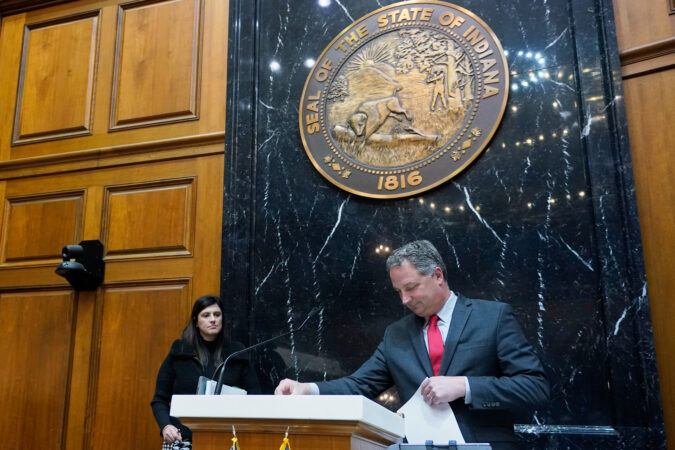
    Indiana House members are expected to press forward Monday with redrawing the state’s congressional districts in Republicans’ favor, increasing pressure on their defiant counterparts in the GOP-led Senate to meet President Donald Trump’s demands.

    Republicans who control the House have said there’s no doubt that redistricting will pass that chamber. But the fate of any proposal remains uncertain in the Senate. Republicans control that chamber, but caucus members have resisted pressure to redistrict for months.

    Senate leadership recently backed off its previous intentions not to meet at all, agreeing to convene next Monday. However, it’s still unclear whether enough senators will support a new map.

    Republicans hold seven of Indiana’s nine U.S. House seats. Trump and other Republicans want to make the map 9-0 in the GOP’s favor, seeking to give the party two extra seats in the 2026 elections that will determine control of the U.S. House. Democrats only need to flip a handful of seats to overcome the Republicans’ current margin.

    Indiana House Republicans published a draft of a map Monday morning still featuring nine congressional districts, but with new boundaries designed to oust the state’s two Democratic U.S. House members.

    The city of Indianapolis would be split among four congressional districts, a major change to the current map where the city makes up the entirety of the 7th District, which reliably backs Democrats.

    “It’s clear these orders are coming from Washington, and they clearly don’t know the first thing about our community,” longtime U.S. Rep. André Carson, a Democrat who represents Indianapolis, said in a statement.

    Indiana’s other current Democratic district is in the state’s northwest corner near Chicago. The new map would instead group a large portion of Republican counties in northern Indiana with the cities of East Chicago and Gary to make a new 1st Congressional District.

    The state House will meet Monday afternoon to begin the legislative process to advance the new map.

    Indiana lawmakers have been under mounting pressure from the White House to redistrict, as Republicans in Texas, Missouri, Ohio, and North Carolina have done. To offset the GOP gains, Democrats in California and Virginia have moved to do the same.

    But some Indiana Republicans have been far more resistant. Republicans in the state Senate rebelled against Republican Gov. Mike Braun in November and said they would not attend a special session he ordered on redistricting.

    The chamber’s top Republican, President Pro Tem Rodric Bray, at the time said the Senate did not have the votes. A spokesperson for Bray’s office did not respond Friday when asked if that is still the case.

    Meanwhile, Trump attacked Indiana senators on social media, particularly Bray. He swore to endorse primary opponents of defecting senators. A spree of threats and swatting attempts were subsequently made against lawmakers who either said they do not support redistricting or have not taken a stance. At least one lawmaker in favor of redistricting and Braun were also threatened.

    Last week, the House announced plans to convene in Indianapolis on Monday.

    “All legislative business will be considered beginning next week, including redrawing the state’s congressional map,” House Speaker Todd Huston said in a statement last week.

    The Indiana Senate, where several lawmakers objected to leadership’s refusal to hold a vote, then said members would reconvene Dec. 8.

    “The issue of redrawing Indiana’s congressional maps mid-cycle has received a lot of attention and is causing strife here in our state,” Bray said in a statement Tuesday. He said the Senate will finally decide the matter this month.

    Mid-cycle redistricting so far has resulted in nine more congressional seats that Republicans believe they can win and six more congressional seats that Democrats think they can win, putting the GOP up by three. However, redistricting is being litigated in several states, and there’s no guarantee that the parties will win the seats they’ve redrawn.

  • Luigi Mangione fights to exclude evidence from his trial over the killing of UnitedHealthcare’s CEO

    Luigi Mangione fights to exclude evidence from his trial over the killing of UnitedHealthcare’s CEO

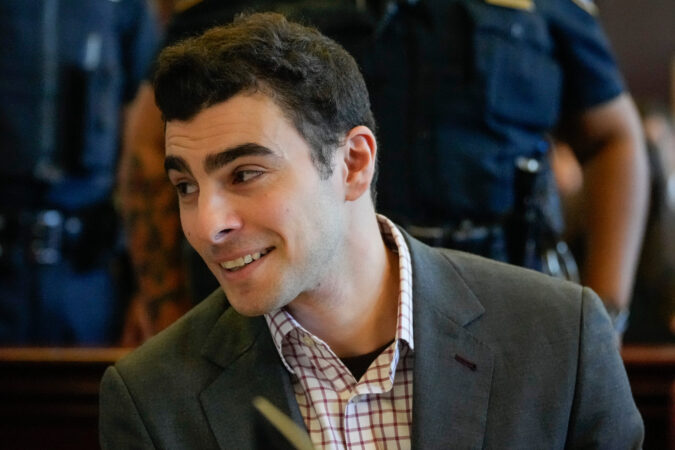
    NEW YORK — Luigi Mangione appeared in court Monday seeking to bar evidence from his state trial over the killing of UnitedHealthcare CEO Brian Thompson, including the gun that authorities say matches the one used in the brazen New York City attack.

    Among the evidence Mangione’s lawyers want to prevent the Manhattan District Attorney’s Office from presenting to jurors are a 9 mm handgun that prosecutors say matches the one used in the Dec. 4, 2024, killing and a handwritten notebook in which they say Mangione described his intent to “wack” a health insurance executive.

    After getting state terrorism charges thrown out in September, the defense lawyers are zeroing in on what they say was unconstitutional conduct that tainted his arrest and threatens his right to a fair trial.

    They contend that the gun and other items should be excluded because police lacked a warrant to search the backpack in which they were found. They also want to suppress some of Mangione’s statements to police, such as allegedly giving a false name, because officers started asking questions before telling him he had a right to remain silent.

    Eliminating the gun and notebook would be critical wins for Mangione’s defense and a major setback for prosecutors, depriving them a possible murder weapon and evidence they say points to motive. Prosecutors have quoted extensively from Mangione’s diary in court filings, including his praise for Unabomber Ted Kaczynski.

    In it, prosecutors say, Mangione mused about rebelling against “the deadly, greed fueled health insurance cartel” and said killing an industry executive “conveys a greedy bastard that had it coming.”

    Court officials say the hearings could last more than a week, meaning they would extend through Thursday’s anniversary of the attack.

    Mangione was allowed to wear normal clothing to the hearings instead of a jail uniform. He entered the courtroom Monday in a gray suit and a button-down shirt with a checkered or tattersall pattern. Court officers removed his handcuffs to allow him to take notes.

    The prosecution’s first witness, Sgt. Chris McLaughlin of the New York City Police Department’s public affairs office, testified about efforts to disseminate surveillance images of the suspect to the news media and on social media in the hours and days after the shooting.

    To illustrate the breadth of news coverage during the five-day search for the shooter, prosecutors played a surveillance video of the shooting that aired on Fox News Digital, footage from the network of police divers searching a pond in Central Park and clips from the network that included images of the suspected shooter that were distributed by police.

    Mangione looked up at a courtroom monitor as video of the shooting played, but he didn’t appear to have any reaction.

    A few dozen Mangione supporters watched the hearing from the back of the courtroom. One wore a green T-shirt that said: “Without a warrant, it’s not a search, it’s a violation.” Another woman held a doll of the Luigi video game character and had a smaller figurine of him clipped to her purse.

    Mangione, 27, has pleaded not guilty to state and federal murder charges. The state charges carry the possibility of life in prison, while federal prosecutors are seeking the death penalty. Neither trial has been scheduled yet.

    Mangione’s lawyers want to bar evidence from both cases, but this week’s hearings pertain only to the state case. The next hearing in the federal case is scheduled for Jan. 9.

    Defense lawyer Marc Agnifilo told a judge in an unrelated matter last week that Manhattan prosecutors could call more than two dozen witnesses.

    Thompson was killed as he walked to a Manhattan hotel for his company’s annual investor conference. Surveillance video showed a masked gunman shooting him from behind. Police say “delay,” “deny,” and “depose” were written on the ammunition, mimicking a phrase used to describe how insurers avoid paying claims.

    Mangione, the Ivy League-educated scion of a wealthy Maryland family, was arrested five days later at a McDonald’s in Altoona, Pa., about 230 miles west of Manhattan.

    Prosecutors in the state case have not responded to the defense’s written arguments.

    An officer searching a backpack found with Mangione was heard on a body camera recording saying she was checking to make sure there “wasn’t a bomb” in the bag. His lawyers argue that was an excuse “designed to cover up an illegal warrantless search of the backpack.”

    Federal prosecutors, fighting similar claims in their case, have said in court filings that police were justified in searching the backpack to make sure there were no dangerous items. His statements to officers, federal prosecutors said, were made voluntarily and before he was taken into police custody.