PHOENIX — Erika Kirk, widow of Turning Point USA founder Charlie Kirk and the organization’s new leader, endorsed a potential presidential bid by Vice President JD Vance on the opening night of the conservative youth group’s annual conference.
After telling the cheering crowd that Turning Point would help keep Congress in Republican hands next year, she said, “We are going to get my husband’s friend JD Vance elected for 48 in the most resounding way possible.”
Vance would be the 48th president if he takes office after President Donald Trump.
Kirk’s statement on Thursday is the most explicit backing of Vance’s possible candidacy by a woman who has been positioned as a steward to her late husband’s legacy. Charlie Kirk had become a powerbroker and bridge builder within the conservative movement before he was assassinated in September.
Vance was close with Charlie Kirk, whose backing helped enable his rapid political rise. After the assassination, Vance and his wife joined Erika Kirk in Utah to fly her husband’s remains home to Arizona aboard Air Force Two.
Vance is set to speak to Turning Point on Sunday, the conference’s last day. The convention has featured the usual spectacle and energy that have characterized the organization’s events, but the proceedings have also been marred by intense infighting among conservative commentators and estranged allies who have turned on each other in the wake of Kirk’s death.
As Trump’s vice president, Vance is well-positioned to inherit the movement that remade the Republican Party and twice sent Trump to the White House. But it would be no small task for him to hold together the Trump coalition, which is built around personal loyalty to him more than shared political goals.
Various wings of the conservative movement already are positioning to steer the party after Trump’s presidency, a skirmish that’s becoming increasingly public and pointed.
Turning Point, with its thousands of young volunteers, would provide a major boost for Vance in a fractious primary. Now 41, Vance would be the first Millennial president if elected, a natural fit for the organization built around mobilizing youth.
Trump has repeatedly mused about running for a third term despite a constitutional prohibition. However, he’s also speculated about a 2028 ticket featuring Vance and Secretary of State Marco Rubio.
Although Rubio previously ran for president in 2016, he has said he would support Vance as Trump’s successor.
Claudio Neves Valente, 48, a former Brown student and Portuguese national, was found dead Thursday night from a self-inflicted gunshot wound, said Col. Oscar Perez, the Providence police chief.
Investigators believe he is responsible for fatally shooting two students and wounding nine other people in a Brown lecture hall last Saturday, then killing MIT professor Nuno F.G. Loureiro two days later at his home in the Boston suburbs, nearly 50 miles (80 kilometers) from Providence. Perez said as far as investigators know, Neves Valente acted alone.
Portugal’s top diplomat said Friday that the government was taken aback by revelations that a Portuguese man is the main suspect in the mass shooting at Brown and the killing of an MIT professor who was of the same nationality. Police said they were contacted by U.S. authorities Thursday once Neves Valente was named.
Foreign Minister Paulo Rangel said Portugal has provided “very broad cooperation” in the case. He said in comments to the national news agency Lusa that “the investigation is far from over.”
Brown University President Christina Paxson said Neves Valente was enrolled there as a graduate student studying physics from the fall of 2000 to the spring of 2001.
“He has no current affiliation with the university,” she said.
Neves Valente and Loureiro attended the same academic program at a university in Portugal between 1995 and 2000, U.S. attorney for Massachusetts Leah B. Foley said. Loureiro graduated from the physics program at Instituto Superior Técnico, Portugal’s premier engineering school, in 2000, according to his MIT faculty page. The same year, Neves Valente was let go from his temporary student support and faculty liaison position at the Lisbon university, according to an archive of a termination notice from the school’s then-president in February 2000.
Neves Valente, who was born in Torres Novas, Portugal, about 75 miles (121 kilometers) north of Lisbon, had come to Brown on a student visa. He eventually obtained legal permanent resident status in September 2017, Foley said. It wasn’t immediately clear where he was between taking a leave of absence from the school in 2001 and getting the visa in 2017. His last known residence was in Miami.
After officials revealed the suspect’s identity, President Donald Trump suspended the green card lottery program that allowed Neves Valente to stay in the United States.
There are still “a lot of unknowns” in regard to motive, Rhode Island Attorney General Peter Neronha said. “We don’t know why now, why Brown, why these students and why this classroom,” he said.
Tip helps investigators connect the dots
The FBI previously said it knew of no links between the Rhode Island and Massachusetts shootings.
Police credited a person who had several encounters with Neves Valente for providing a crucial tip that led authorities to him.
After police shared security video of a person of interest, the witness — known only as “John” in a Providence police affidavit — recognized him and posted his suspicions on the social media forum Reddit. Reddit users urged him to tell the FBI, and John said he did.
John said he encountered Neves Valente about two hours before the attack in a bathroom in the engineering building, which was where the shooting occurred, and noticed he was wearing inappropriate clothing for the weather, according to the affidavit. Still before the attack, he again bumped into Neves Valente a couple blocks away and saw him suddenly turn away from a Nissan sedan when he saw John.
“When you do crack it, you crack it. And that person led us to the car, which led us to the name,” Neronha said.
His tip pointed investigators to a Nissan Sentra with Florida plates. That enabled Providence police to tap into a network of more than 70 street cameras operated around the city by surveillance company Flock Safety. Those cameras track license plates and other vehicle details.
After leaving Rhode Island, Providence officials said Neves Valente stuck a Maine license plate over his rental car’s plate to help conceal his identity.
Investigators found footage of Neves Valente entering an apartment building near Loureiro’s in a Boston suburb. About an hour later, Neves Valente was seen entering the Salem, New Hampshire, storage facility where he was found dead, Foley said. He had with him a satchel and two firearms, Neronha said.
Victims include renowned physicist, political organizer and aspiring doctor
Loureiro, a 47-year-old physicist and fusion scientist, joined MIT in 2016 and was named last year to lead the school’s Plasma Science and Fusion Center, one of its largest laboratories. The scientist from Viseu, Portugal, had been working to explain the physics behind astronomical phenomena such as solar flares.
In Lisbon, he was remembered as a highly regarded researcher and instructor for “all the contributions he gave and what he could still have given, all the equations left unwritten,” said Professor Bruno Gonçalves, head of the Institute for Plasmas and Nuclear Fusion at Instituto Superior Técnico.
Gonçalves added, “It is difficult to imagine in what context someone would want to harm someone that works in this field.”
The two Brown students killed during a study session for final exams were 19-year-old sophomore Ella Cook and 18-year-old freshman MukhammadAziz Umurzokov. Cook was active in her Alabama church and served as vice president of the Brown College Republicans. Umurzokov’s family immigrated to the U.S. from Uzbekistan when he was a child, and he aspired to be a doctor.
As for the wounded, three had been discharged and six were in stable condition Thursday, officials said.
Although Brown officials say there are 1,200 cameras on campus, the attack happened in an older part of the engineering building that has few, if any, cameras. And investigators believe the shooter entered and left through a door that faces a residential street bordering campus, which might explain why the cameras Brown does have didn’t capture footage of the person.
___
Associated Press reporters Barry Hatton and Helena Alves in Lisbon, Portugal, Mark Scolforo in Harrisburg, Pennsylvania, Audrey McAvoy in Honolulu, Hallie Golden in Seattle and Matt O’Brien in Providence contributed.
TEL AVIV, Israel — The spread of famine has been averted in the Gaza Strip, but the situation remains critical with the entire Palestinian territory still facing starvation, the world’s leading authority on food crises said Friday.
The new report by The Integrated Food Security Phase Classification, or IPC, comes months after the group said famine was occurring in Gaza City and likely to spread across the territory without a ceasefire and an end to humanitarian aid restrictions.
There were “notable improvements” in food security and nutrition following an October ceasefire and no famine has been detected, the report said. Still, the IPC warned that the situation remains “highly fragile” and the entire Gaza Strip is in danger of starvation with nearly 2,000 people facing catastrophic levels of hunger through April.
In the worst-case scenario, including renewed conflict and a halt of aid, the whole Gaza Strip is at risk of famine. Needs remain immense, and sustained, expanded and unhindered aid is required, the IPC said.
Palestinians wait to receive donated food at a community kitchen in Gaza City on Thursday, Oct. 23.
The Israeli military agency in charge of coordinating aid to Gaza, known as COGAT, said Friday that it strongly rejected the findings.
The agency adheres to the ceasefire and allows the agreed amount of aid to reach the strip, COGAT said, noting the aid quantities “significantly exceed the nutritional requirements of the population” in Gaza according to accepted international methodologies, including the United Nations.
The Israeli Foreign Ministry said Friday that it also rejects the findings, saying the IPC’s report doesn’t reflect reality in Gaza and more than the required amount of aid was reaching the territory. The ministry said the IPC ignores the vast volume of aid entering Gaza, because the group relies primarily on data related to U.N. trucks, which account for only 20% of all aid trucks.
The IPC said that the report totals include commercial and U.N. trucks and its information is based on U.N. and COGAT data.
Israel’s government has rejected the IPC’s past findings, with Israeli Prime Minister Benjamin Netanyahu calling the previous report an “outright lie.”
Palestinians grab sacks of flour from a moving truck carrying World Food Programme aid as it drives through Deir al-Balah in central Gaza on Nov. 15.
Ceasefire offsets famine
The report’s findings come as the shaky U.S.-brokered ceasefire between Israel and Hamas reaches a pivotal point as Phase 1 nears completion, with the remains of one hostage still in Gaza. The more challenging second phase has yet to be implemented and both sides have accused the other of violating the truce.
The IPC in August confirmed the grim milestone of famine for the first time in the Middle East and warned it could spread south to Deir al-Balah and Khan Younis. More than 500,000 people in Gaza, about a quarter of its population, faced catastrophic levels of hunger, with many at risk of dying from malnutrition-related causes, the August report said.
Friday’s report said that the spread of famine had been offset by a significant reduction in conflict, a proposed peace plan and improved access for humanitarian and commercial food deliveries.
There is more food on the ground and people now have two meals daily, up from one meal each day in July. That situation “is clearly a reversal of what had been one of the most dire situations where we were during the summer,” Antoine Renard, the World Food Program’s director for the Palestinian territories, told U.N. reporters in a video briefing from Gaza City Thursday.
Food access has “significantly improved,” he said, warning that the greatest challenge now is adequate shelter for Palestinians, many of whom are soaked and living in water-logged tents. Aid groups say nearly 1.3 million Palestinians need emergency shelter as winter sets in.
Aid is still not enough
Displacement is one of the key drivers behind the food insecurity, with more than 70% of Gaza’s population living in makeshift shelters and relying on assistance. Other factors such as poor hygiene and sanitation as well as restricted access to food are also exacerbating the hunger crisis, the IPC said.
While humanitarian access has improved compared with previous analysis periods, that access fluctuates daily and is limited and uneven across the Gaza Strip, the IPC said.
To prevent further loss of life, expanded humanitarian assistance including food, fuel, shelter and health care is urgently needed, according to the group’s experts, who warned that over the next 12 months, more than 100,000 children between the ages of 6 months and 5 years are expected to suffer from acute malnutrition and require treatment.
Figures recently released by Israel’s military suggest that it hasn’t met the ceasefire stipulation of allowing 600 trucks of aid into Gaza each day, though Israel disputes that finding. American officials with the U.S.-led center coordinating aid shipments into Gaza also say deliveries have reached the agreed upon levels.
Aid groups say despite an increase of assistance, aid still isn’t reaching everyone in need after suffering two years of war.
“This is not a debate about truck numbers or calories on paper. It’s about whether people can actually access food, clean water, shelter and health care safely and consistently. Right now, they cannot,” said Bushra Khalidi, Oxfam’s policy lead for Israel and the occupied Palestinian territory.
People must be able to rebuild their homes, grow food and recover and the conditions for that are still being denied, she said.
Even with more products in the markets, Palestinians say they can’t afford it. “There is food and meat, but no one has money,” said Hany al-Shamali, who was displaced from Gaza City.
HARRISBURG, Pa. — Federal regulators will allow tech companies to effectively plug massive data centers directly into power plants, issuing a long-awaited order Thursday, as the Trump administration urged the Federal Energy Regulatory Commission to help the U.S. lead the world in artificial intelligence and revive domestic manufacturing.
The commission’s unanimous order is designed to clear up pressing issues around so-called “colocation” agreements in the nation’s largest grid territory, which stretches across Mid-Atlantic states to parts of Illinois and Indiana.
But it could become a blueprint for how FERC handles an October request from Trump’s energy secretary, Chris Wright, to ensure that data centers and large manufacturers get the power they need as quickly as possible.
It also comes amid concerns that the Mid-Atlantic territory covering some 65 million people will face electricity shortages in the coming years, as the build-out of data centers outpaces the speed of new power sources coming online.
Laura Swett, FERC’s chair, told Thursday’s meeting that clearing the way for massive energy users — like data centers — to get electricity straight from power plants was a “critical step to give investors and consumers more certainty on how FERC believes we can solve the problem of meeting historic surging demand and realize our greatest potential as a country.”
It would, she said, also protect regular ratepayers, even as evidence mounts in various states that regular ratepayers are bearing the cost of new power plants and transmission lines to feed energy-hungry data centers.
Power plant owners applauded the step, as their share prices rose steeply in Thursday’s trading. Advanced Energy United, whose members provide solar and wind power, said the FERC order should help clarify how big power users can set up their own power sources.
The Edison Electric Institute, which represents for-profit utilities, said only that it would “continue to work” to support rapid data center connection, protect ratepayers from cost-shifts and strengthen the grid for everyone.
Jeff Dennis, executive director of the Electricity Customer Alliance, said the order showed that FERC is trying to address looming issues around fast-growing power demand and underscored the urgency to reform grid policy.
Thursday’s order grew out of a dispute between power plant owners and electric utilities over a proposed colocation deal between Amazon’s cloud-computing subsidiary and the owner of the Susquehanna nuclear power plant in Luzerne County, Pa.
For tech giants, such arrangements represent a quick fix to get power while avoiding a potentially longer and more expensive process of hooking into a fraying electric grid that serves everyone else.
But utilities protested that it allows big power users to avoid paying them to maintain the grid. Some consumer advocates maintained that diverting energy from existing power plants to data centers could drive up energy prices without an answer for how rising power demand will be met for regular ratepayers.
FERC’s Thursday order sets up a couple new regulatory tracks.
It requires the operator of the Mid-Atlantic grid, PJM Interconnection, to develop rates and conditions for different colocation scenarios involving new power plants or sources.
That could mean allowing a big power user to pay for only the transmission services they use, considerably less than they might otherwise pay to connect to the grid through a utility.
The order also could require a big power user that colocates with an existing power plant to pay the cost to replace the energy that it diverts away from the broader electric grid.
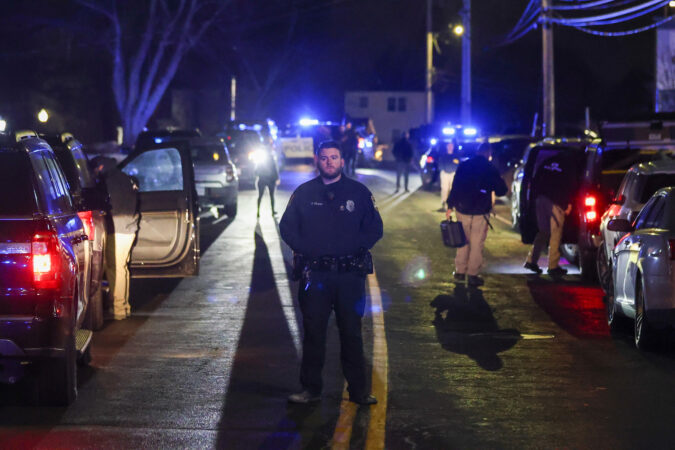
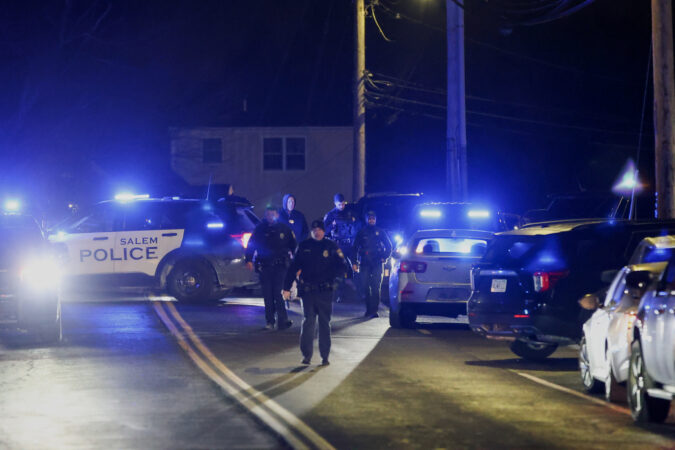
A frantic search for the suspect in last weekend’s mass shooting at Brown University ended Thursday at a New Hampshire storage facility where authorities discovered the man dead inside and then revealed he also was suspected of killing a Massachusetts Institute of Technology professor.
Claudio Neves Valente, 48, a former Brown student and Portuguese national, was found dead Thursday evening from a self-inflicted gunshot wound, said Col. Oscar Perez, the Providence police chief.
Investigators believe he is responsible for fatally shooting two students and wounding nine other people in a Brown University lecture hall last Saturday, then killing Portuguese MIT professor Nuno F.G. Loureiro two days later at his Brookline home, nearly 50 miles (80 kilometers) from Providence. Perez said as far as investigators know, Neves Valente acted alone.
Brown University President Christina Paxson said Neves Valente was enrolled there as a graduate student studying physics from the fall of 2000 to the spring of 2001.
“He has no current affiliation with the university,” she said.
Neves Valente and Loureiro previously attended the same academic program at a university in Portugal between 1995 and 2000, U.S. attorney for Massachusetts Leah B. Foley said. Loureiro graduated from the physics program at Instituto Superior Técnico, Portugal’s premier engineering school, in 2000, according to his MIT faculty page. The same year, Neves Valente was let go from a position at the Lisbon university, according to an archive of a termination notice from the school’s then-president in February 2000.
Neves Valente had studied at Brown on a student visa. He eventually obtained legal permanent residence status in September 2017, Foley said. It was not immediately clear where he was between taking a leave of absence from the school in 2001 and getting the visa in 2017. His last known residence was in Miami.
After officials revealed the suspect’s identity, President Donald Trump suspended the green card lottery program that allowed Neves Valente to stay in the United States.
There are still “a lot of unknowns” in regard to motive, Rhode Island Attorney General Peter Neronha said. “We don’t know why now, why Brown, why these students and why this classroom,” he said.
How the investigation has unfolded
Police credited a person who had several encounters with Neves Valente as providing the crucial tip that led to the shooter.
“When you do crack it, you crack it. And that person led us to the car, which led us to the name,” Neronha said.
After police posted images of a person of interest, the witness recognized him and posted his suspicions on the social media forum Reddit.
But it took days before police say they interviewed him and only after publicizing a video where Neves Valente appeared to run away from the other man. The Reddit commenter didn’t respond to questions from The Associated Press earlier week but returned to the forum on Wednesday night to say that he was just interviewed by investigators.
His tip gave investigators a key detail: a Nissan sedan with Florida plates. That enabled Providence police officers to tap into a network of more than 70 street cameras operated around the city by surveillance company Flock Safety. Those cameras track license plates and other vehicle details.
After leaving Rhode Island, Providence officials said Neves Valente stuck a Maine license plate over the rental car’s plate to help conceal his identity.
Video footage showed Neves Valente entering an apartment building near Loureiro’s in a Boston suburb. About an hour later, Neves Valente was seen entering the Salem, New Hampshire, storage facility where he was found dead, Foley said. He had with him a satchel and two firearms, Neronha said.
Loureiro joined MIT in 2016 and was named last year to lead the school’s Plasma Science and Fusion Center, one of its largest laboratories. He had been working to explain the physics behind astronomical phenomena such as solar flares.
The FBI previously said it knew of no links between the two shootings.
Although Brown officials say there are 1,200 cameras on campus, the attack happened in an older part of the engineering building that has few, if any, cameras. And investigators believe the shooter entered and left through a door that faces a residential street bordering campus, which might explain why the cameras Brown does have didn’t capture footage of the person.
What happened in past investigations?
In such targeted and highly public attacks, the shooters typically kill themselves or are killed or arrested by police, said Katherine Schweit, a retired FBI agent and expert on mass shootings. When they do get away, searches can take time.
In the 2013 Boston Marathon bombing, it took investigators four days to catch up to the two brothers who carried it out. In a 2023 case, Army reservist Robert Card was found dead of an apparent suicide two days after he killed 18 people and wounded 13 others in Lewiston, Maine.
The man accused of killing conservative political figure Charlie Kirk in September turned himself in about a day and a half after the attack on Utah Valley University’s campus. And Luigi Mangione, who has pleaded not guilty to murder charges in the killing of UnitedHealthcare CEO Brian Thompson in Manhattan last year, was arrested five days later at a McDonald’s in Pennsylvania.
SAN FRANCISCO — TikTok has signed agreements with three major investors — Oracle, Silver Lake, and MGX — to form a new TikTok U.S. joint venture, ensuring the popular social video platform can continue operating in the United States.
The deal is expected to close on Jan. 22, according to an internal memo seen by the Associated Press. In the communication, CEO Shou Zi Chew confirmed to employees that ByteDance and TikTok signed the binding agreements with the consortium.
“I want to take this opportunity to thank you for your continued dedication and tireless work. Your efforts keep us operating at the highest level and will ensure that TikTok continues to grow and thrive in the U.S. and around the world,” Chew wrote in the memo to employees. “With these agreements in place, our focus must stay where it’s always been — firmly on delivering for our users, creators, businesses and the global TikTok community.”
Half of the new TikTok U.S. joint venture will be owned by a group of investors — among them Oracle, Silver Lake, and the Emirati investment firm MGX, who will each hold a 15% share. 19.9% of the new app will be held by ByteDance itself, and another 30.1% will be held by affiliates of existing ByteDance investors, according to the memo. The memo did not say who the other investors are and both TikTok and the White House declined to comment.
The U.S. venture will have a new, seven-member majority-American board of directors, the memo said. It will also be subject to terms that “protect Americans’ data and U.S. national security.”
U.S. user data will be stored locally in a system run by Oracle.
TikTok’s algorithm — the secret sauce that powers its addictive video feed — will be retrained on U.S. user data to “ensure the content feed is free from outside manipulation,” the memo said. The U.S. venture will also oversee content moderation and policies within the country.
American officials have previously warned that ByteDance’s algorithm is vulnerable to manipulation by Chinese authorities, who can use it to shape content on the platform in a way that’s difficult to detect.
The algorithm has been a central issue in the security debate over TikTok. China previously maintained the algorithm must remain under Chinese control by law. But the U.S. regulation passed with bipartisan support said any divestment of TikTok must mean the platform cuts ties — specifically the algorithm — with ByteDance.
The deal marks the end of years of uncertainty about the fate of the popular video-sharing platform in the United States. After wide bipartisan majorities in Congress passed — and President Joe Biden signed — a law that would ban TikTok in the U.S. if it did not find a new owner in the place of China’s ByteDance, the platform was set to go dark on the law’s January 2025 deadline. For a several hours, it did. But on his first day in office, President Donald Trump signed an executive order to keep it running while his administration tries to reach an agreement for the sale of the company.
Three more executive orders followed, as Trump, without a clear legal basis, continued to extend the deadline for a TikTok deal. The second was in April, when White House officials believed they were nearing a deal to spin off TikTok into a new company with U.S. ownership that fell apart after China backed out following Trump’s tariff announcement. The third came in June, then another in September, which Trump said would allow TikTok to continue operating in the United States in a way that meets national security concerns.
TikTok has more than 170 million users in the U.S. About 43% of U.S. adults under the age of 30 say they regularly get news from TikTok, higher than any other social media app including YouTube, Facebook and Instagram, according to a Pew Research Center report published this fall.
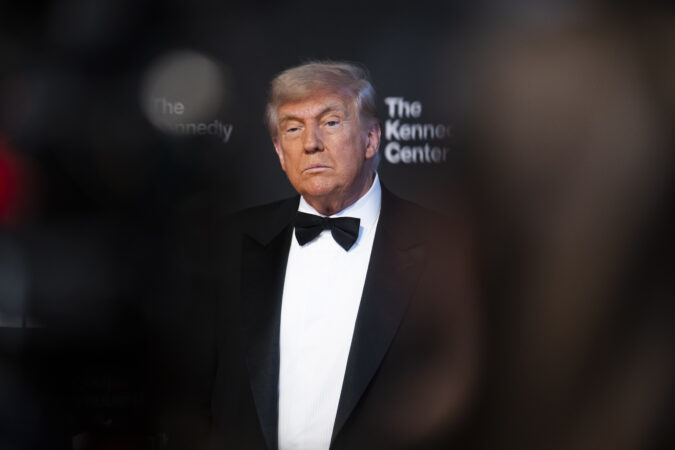
WASHINGTON — President Donald Trump’s handpicked board voted Thursday to rename Washington’s leading performing arts center as the Trump Kennedy Center, the White House said, in a move that made Democrats fume, saying the board had overstepped its legal authority.
Congress named the center after President John F. Kennedy in 1964, after his assassination. Donald A. Ritchie, who served as Senate historian from 2009-2015, said that because Congress had first named the center it would be up to Congress to “amend the law.”
Ritchie said that while Trump and others can “informally” refer to the center by a different name, they couldn’t do it in a way “that would [legally] stick.”
But the board did not wait for that debate to play out, immediately changing the branding on its website to reflect the new name.
House Democratic leader Hakeem Jeffries told reporters that legislative action was needed, “and we’re going to make that clear.” The New York Democrat is an ex officio member of the board because of his position in Congress.
Trump has teased the name change for some time
“The Kennedy Center Board of Trustees voted unanimously today to name the institution The Donald J. Trump and The John F. Kennedy Memorial Center for the Performing Arts,” said Roma Daravi, the institution’s vice president for public relations.
She said the vote recognized that Trump saved the center from “financial ruin and physical destruction,” a pair of claims denied by the venue’s ousted leadership.
“The new Trump Kennedy Center reflects the unequivocal bipartisan support for America’s cultural center for generations to come,” Daravi said.
Press secretary Karoline Leavitt announced the vote on social media, attributing it to the “unbelievable work President Trump has done over the last year in saving the building. Not only from the standpoint of its reconstruction, but also financially, and its reputation.”
Trump, a Republican who’s chairman of the board, said at the White House that he was “surprised” and “honored” by the vote.
“The board is a very distinguished board, most distinguished people in the country and I was surprised by it and I was honored by it,” he said.
Trump had already been referring to the center as the “Trump Kennedy Center.” Asked Dec. 7 as he walked the red carpet for the Kennedy Center Honors program whether he would rename the venue after himself, Trump said such a decision would be up to the board.
Earlier this month, Trump talked about a “big event” happening at the “Trump Kennedy Center” before saying, “excuse me, at the Kennedy Center,” as his audience laughed. He was referring to the FIFA World Cup soccer draw for 2026, in which he participated.
A name change won’t sit well with some Kennedy family members.
Maria Shriver, a niece of John F. Kennedy, referred to the legislation introduced in Congress to rebrand the Kennedy Center as the Donald J. Trump Center for the Performing Arts as “insane” in a social media post in July.
“It makes my blood boil. It’s so ridiculous, so petty, so small minded,” she wrote. “Truly, what is this about? It’s always about something. ‘Let’s get rid of the Rose Garden. Let’s rename the Kennedy Center.’ What’s next?”
Trump earlier this year turned the Kennedy-era Rose Garden at the White House into a patio by removing the lawn and laying down paving stones.
Another Kennedy family member, Robert F. Kennedy Jr., serves in Trump’s cabinet as secretary of the Department of Health and Human Services.
Trump showed scant interest in the Kennedy Center during his first term as president, but since returning to office in January he has replaced board members appointed by Democratic presidents with some of his most ardent supporters, who then elected him as board chairman.
He also has criticized the center’s programming and its physical appearance and has vowed to overhaul both.
Trump secured more than $250 million from the Republican-controlled Congress for renovations of the building.
He attended opening night of the musical Les Misérables, and last week he served as host of the Kennedy Center Honors program after not attending the show during his first term as president. The awards program is scheduled to be broadcast by CBS and Paramount+ on Dec. 23.
Sales of subscription packages are said to have declined since Trump’s takeover of the center, and several touring productions, including Hamilton, have canceled planned runs there. Rows upon rows of empty seats have been seen in the Concert Hall during performances by the National Symphony Orchestra.
Some performers, including actor Issa Rae and musician Rhiannon Giddens, have scrapped scheduled appearances, and Kennedy Center consultants including musician Ben Folds and singer Renée Fleming have resigned.
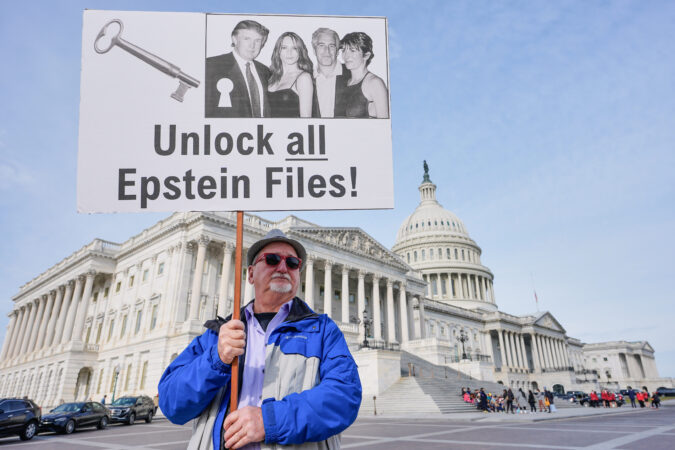
WASHINGTON — House Democrats released several dozen more photos Thursday from the estate of the convicted sex offender Jeffrey Epstein, showing his associations with the rich and famous, as the Department of Justice faces a deadline to release many of its case files on the late financier by the end of the week.
The photos released Thursday were among more than 95,000 that the House Oversight Committee has received after issuing a subpoena for the photos that Epstein had in his possession before he died in a New York jail cell in 2019. Congress has also passed, and President Donald Trump has signed, a law requiring the Justice Department to release its case files on Epstein, and his longtime girlfriend and confidant Ghislaine Maxwell, by Friday. Anticipation about what those files will show is running high after they have been the subject of conspiracy theories and speculation about his friendships with Trump, former President Bill Clinton, the former Prince Andrew, and others.
House Democrats have already released dozens of photos from Epstein’s estate showing Trump, Clinton and Andrew, who lost his royal title and privileges this year amid scrutiny of his relationship with the wealthy financier. The photos released Thursday showed Epstein cooking with Sultan Ahmed bin Sulayem, an Emirati businessman. The photos also include the billionaire Bill Gates and images of a 2011 dinner of notable people and wealthy philanthropists hosted by a nonprofit group. The committee made no accusations of wrongdoing by the men in the photos.
There were also images of passports, visas and identification cards from Russia, the Czech Republic, Ukraine, South Africa, and Lithuania with personally identifying information redacted, as well as photos of Epstein with women or girls whose faces were blacked out. The committee has said it is redacting information from the photos that may lead to the identity of victims being revealed.
Rep. Robert Garcia, the top Democrat on the oversight panel, said in a statement that the “new images raise more questions about what exactly the Department of Justice has in its possession. We must end this White House cover-up, and the DOJ must release the Epstein files now.”
PROVIDENCE, R.I. — Authorities said Thursday that they’re looking into a connection between last weekend’s mass shooting at Brown University and one two days later near Boston that killed a professor at another elite school, the Massachusetts Institute of Technology.
That is according to three people familiar with the matter who were not authorized to discuss an ongoing investigation and spoke on condition of anonymity. Two of the people said investigators had identified a person of interest in the shootings and were actively seeking that individual.
The attacker at Brown on Saturday killed two students and wounded nine others in a classroom in the school’s engineering building before getting away.
About 50 miles north, MIT professor Nuno F.G. Loureiro was gunned down in his home Monday night in the Boston suburb of Brookline. The 47-year-old physicist and fusion scientist died at a hospital the next day.
The FBI previously said it knew of no links between the cases.
This undated photo provided by the Massachusetts Institute of Technology in December 2025 shows Nuno Loureiro.
How is the Brown investigation going?
It’s been nearly a week since the shooting at Brown. There have been other high-profile attacks in which it took days or longer to make an arrest or find those responsible, including in the brazen New York City sidewalk killing of UnitedHealthcare’s CEO last year, which took five days.
But frustration is mounting in Providence that the person behind the attack managed to get away and that a clear image of their face has yet to emerge.
“There’s no discouragement among people who understand that not every case can be solved quickly,” the state attorney general, Peter Neronha, said at a news conference Wednesday.
Authorities have scoured the area for evidence and pleaded with the public to check any phone or security footage they might have from the week before the attack, believing the shooter might have cased the scene ahead of time.
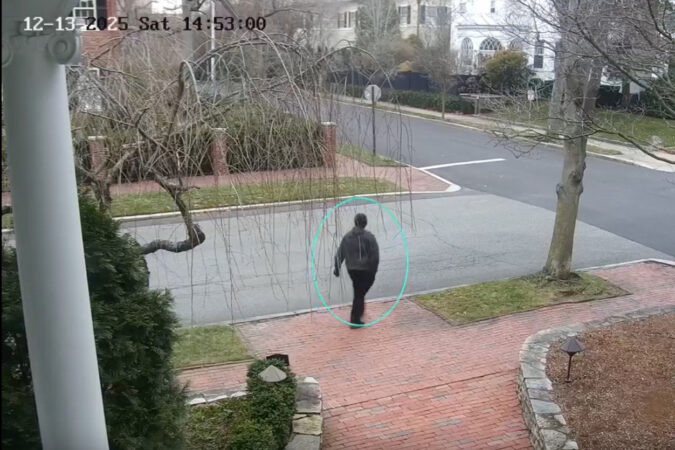
Investigators have released several videos from the hours and minutes before and after the shooting that show a person who, according to police, matches witnesses’ description of the shooter. In the clips, the person is standing, walking and even running along streets just off campus, but always with a mask on or their head turned.
Although Brown officials say there are 1,200 cameras on campus, the attack happened in an older part of the engineering building that has few, if any, cameras. And investigators believe the shooter entered and left through a door that faces a residential street bordering campus, which might explain why the cameras Brown does have didn’t capture footage of the person.
Providence Mayor Brett Smiley said Wednesday that the city is doing “everything possible” to keep residents safe. However, he acknowledged that it is “a scary time in the city” and that families likely were having tough conversations about whether to stay in town over the holidays.
“We are doing everything we can to reassure folks, to provide comfort, and that is the best answer I can give to that difficult question,” Smiley said when asked if the city was safe.
What can be learned from past investigations?
Although it’s not unheard of for someone to disappear after carrying out such a high-profile shooting, it is rare.
In such targeted and highly public attacks, the shooters typically kill themselves or are killed or arrested by police, said Katherine Schweit, a retired FBI agent and expert on mass shootings. When they do get away, searches can take time.
“The best they can do is what they do now, which is continue to press together all of the facts they have as fast as they can,” she said. “And, really, the best hope for solutions is going to come from the public.”
In the 2013 Boston Marathon bombing, it took investigators four days to catch up to the two brothers who carried it out. In a 2023 case, Army reservist Robert Card was found dead of an apparent suicide two days after he killed 18 people and wounded 13 others in Lewiston, Maine.
The man accused of killing conservative political figure Charlie Kirk in September turned himself in about a day and a half after the attack on Utah Valley University’s campus. And Luigi Mangione, who has pleaded not guilty to murder charges in the killing of UnitedHealthcare CEO Brian Thompson in Manhattan last year, was arrested five days later at a McDonald’s in Altoona, Pa.
Felipe Rodriguez, a retired New York police detective sergeant and adjunct professor at the John Jay College of Criminal Justice, said it’s clear that shooters are learning from others who were caught.
“Most of the time an active shooter is going to go in, and he’s going to try to commit what we call maximum carnage, maximum damage,” Rodriguez said. “And at this point, they’re actually trying to get away. And they’re actually evading police with an effective methodology, which I haven’t seen before.”
Investigators have described the person they are seeking as about 5 feet, 8 inches tall and stocky. The attacker’s motives remain a mystery, but authorities said Wednesday that none of the evidence suggests a specific person was being targeted.
MIT mourns the loss of an esteemed professor
Loureiro, who was married, joined MIT in 2016 and was named last year to lead the school’s Plasma Science and Fusion Center, where he worked to advance clean energy technology and other research. The center, one of MITl’s largest labs, had more than 250 people working across seven buildings when he took the helm. He was a professor of physics and nuclear science and engineering.
He grew up in Viseu, in central Portugal, and studied in Lisbon before earning a doctorate in London, according to MIT. He was a researcher at an institute for nuclear fusion in Lisbon before joining MIT, the university said.
“He shone a bright light as a mentor, friend, teacher, colleague and leader, and was universally admired for his articulate, compassionate manner,” Dennis Whyte, an engineering professor who previously led MIT’s Plasma Science and Fusion Center, told a campus publication.
Loureiro had said he hoped his work would shape the future.
“It’s not hyperbole to say MIT is where you go to find solutions to humanity’s biggest problems,” Loureiro said when he was named to lead the plasma science lab last year. “Fusion energy will change the course of human history.”
WASHINGTON — President Donald Trump’s administration has announced a massive package of arms sales to Taiwan valued at more than $10 billion that includes medium-range missiles, howitzers, and drones, drawing an angry response from China.
The State Department announced the sales late Wednesday during a nationally televised address by the Republican president, who made scant mention of foreign policy issues and did not speak about China or Taiwan. U.S.-Chinese tensions have ebbed and flowed during Trump’s second term, largely over trade and tariffs but also over China’s increasing aggressiveness toward Taiwan, which Beijing has said must reunify with the mainland.
If approved by Congress, it would be the largest-ever U.S. weapons package to Taiwan, exceeding the total amount of $8.4 billion in U.S. arms sales to Taiwan during President Joe Biden’s Democratic administration.
The eight arms sales agreements announced Wednesday cover 82 high-mobility artillery rocket systems, or HIMARS, and 420 Army Tactical Missile Systems, or ATACMS — similar to what the U.S. had been providing Ukraine during the Biden administration to defend itself from Russia — worth more than $4 billion. They also include 60 self-propelled howitzer systems and related equipment worth more than $4 billion and drones valued at more than $1 billion.
Other sales in the package include military software valued at more than $1 billion, Javelin and TOW missiles worth more than $700 million, helicopter spare parts worth $96 million, and refurbishment kits for Harpoon missiles worth $91 million.
The eight sales agreements amount to $11.15 billion, according to Taiwan’s Defense Ministry.
The State Department said the sales serve “U.S. national, economic, and security interests by supporting the recipient’s continuing efforts to modernize its armed forces and to maintain a credible defensive capability.”
“The proposed sale(s) will help improve the security of the recipient and assist in maintaining political stability, military balance, and economic progress in the region,” the statements said.
China’s Foreign Ministry attacked the move, saying it would violate diplomatic agreements between China and the U.S.; gravely harm China’s sovereignty, security and territorial integrity; and undermine regional stability.
“The ‘Taiwan independence’ forces on the island seek independence through force and resist reunification through force, squandering the hard-earned money of the people to purchase weapons at the cost of turning Taiwan into a powder keg,” said Foreign Ministry spokesperson Guo Jiakun.
“This cannot save the doomed fate of ‘Taiwan independence’ but will only accelerate the push of the Taiwan Strait toward a dangerous situation of military confrontation and war. The U.S. support for ‘Taiwan Independence’ through arms will only end up backfiring. Using Taiwan to contain China will not succeed,” he added.
Under federal law, the U.S. is obligated to assist Taiwan with its self-defense, a point that has become increasingly contentious with China, which has vowed to take Taiwan by force, if necessary.
Taiwan’s Defense Ministry in a statement Thursday expressed gratitude to the U.S. over the arms sale, which it said would help Taiwan maintain “sufficient self-defense capabilities” and bring strong deterrent capabilities. Taiwan’s bolstering of its defense “is the foundation for maintaining regional peace and stability,” the ministry said.
Taiwan’s Foreign Minister Lin Chia-lung similarly thanked the U.S. for its “long-term support for regional security and Taiwan’s self-defense capabilities,” which he said are key for deterring a conflict in the Taiwan Strait, the body of water separating Taiwan from China’s mainland.
The arms sale comes as Taiwan’s government has pledged to raise defense spending to 3.3% of the island’s gross domestic product next year and to reach 5% by 2030. The boost came after Trump and the Pentagon requested that Taiwan spend as much as 10% of its GDP on its defense, a percentage well above what the U.S. or any of its major allies spend on defense. The demand has faced pushback from Taiwan’s opposition KMT party and some of its population.
Taiwanese President Lai Ching-te last month announced a special $40 billion budget for arms purchases, including to build an air defense system with high-level detection and interception capabilities called Taiwan Dome. The budget will be allocated over eight years, from 2026 to 2033.
The U.S. boost in military assistance to Taiwan was previewed in legislation adopted by Congress that Trump is expected to sign shortly.
Last week, the Chinese embassy in Washington denounced the legislation, known as the National Defense Authorization Act, saying it unfairly targeted China as an aggressor. The U.S. Senate passed the bill Wednesday.