New York’s Brevet Capital Management revealed its vision for 1341 S. Christopher Columbus Blvd. to the Pennsport Civic Association on Wednesday night, showing a soaring tower on Delaware River with 620 units and promising a dramatic revision of public space in the area.
In addition to the tower and small retail building just to its west, the developer’s representatives outlined possible future phases that could include two additional towers.
“The retail building is constructed as a placeholder,” Meredith Trego, a zoning lawyer with Ballard Spahr, said at the Pennsport Civic Association meeting. “But the idea is in a future phase that a one-story building would go away, and a new tower could go in its place.”
The towering project, with its limited parking, is legally possible due to the unique zoning incentives available along the central Delaware riverfront.
In exchange for building as high as they want, the developers must meet a variety of requirements including paying into the city’s housing trust fund, providing public space, and upgrading, maintaining, and extending a rundown stretch of the Delaware River Trail down to Reed Street.
The first tower would be more than 380 feet tall, and renderings show possible future towers that would be even taller. To be allowed to build that high for future buildings, the developer would have to meet the city’s exacting requirements again, including by paying more into the housing trust fund (and they could not encroach on trail space).
Conditions on the pedestrian- and bike-friendly river trail have deteriorated below Washington Avenue. The infrastructure has not been maintained to the level it is farther north.
An encampment of homeless people has settled along this portion of the trail, although its residents have been moved around several times in sweeps orchestrated by the city, Delaware River Waterfront Corp., and property owners.
Another sweep is planned for Tuesday, the developer’s representatives said at the Pennsport meeting, and additional signage and fencing are planned to limit access to the property.
But currently the encampment is largely along the public access bike and pedestrian trail itself, not private property.
“Everyone knows that’s only going to last so long until we get density back there, people [will probably be] living back there,” said Matt McClure, a zoning lawyer representing Brevet. “That’s why we need an active use.”
A rendering of the proposed tower discussed at the Pennsport Civic Association meeting Wednesday night.
Brevet’s team said they would provide additional public space with the initial tower, including on disused piers that jut into the river. Currently they do not plan to build structures on the piers but turn them into publicly accessible green space.
Residents also asked that the developer address traffic conditions on Columbus Boulevard, which is a high-speed roadway that is unsafe for pedestrians.
“Big projects generate focus on improvements,” McClure said. “Hopefully it generates dialogue on making things better” on the boulevard.
The biggest applause of the night came when an attendee urged the developer to add more parking than the 187 spaces currently proposed within the tower. Another 100 spaces are available in an existing surface lot, although that is also the site for a possible third future residential tower.
The developer’s representatives tempered hopes for a greater share of parking in future development, while not ruling it out.
“So for future phases, if there’s a need for additional parking, we could incorporate that,” Trego said. Based on what they’re seeing in developments throughout the city, she added, garages are not as full as expected.
A rendering of the highly theoretical future two towers the developer has discussed as a possibility for the site.
Plans for the first tower have mostly smaller units — 50% one-bedroom units and 35% studios — but the developer said that could change.
“As we study this further, if there is desire for larger units, we can always make room for that,” said Milton Lau, a project architect with the firm Perkins Eastman.
Brevet expects to begin building in summer 2026, with an 18- to 24-month construction timeline for the first tower.
This is Brevet’s first real estate project in Philadelphia, although the company has built other developments in Florida, Texas, and California.
A New York developer is planning a 620-apartment development at 1341 S. Christopher Columbus Blvd. in South Philadelphia.
The 36-story project from Manhattan-based Brevet Capital Management makes use of multiple zoning bonuses to allow a taller, denser project than would otherwise be legal.
In exchange for those development benefits, the developer will pay into Philadelphia’s Housing Trust Fund and upgrade and maintainthe Delaware River Trail belowWashington Avenue, where its conditions currently get much rougher.
The zoning was changed before the pandemic to allow developers to build taller in exchange for extending the trail, but Brevet would be the first to do so.
“To me the most exciting aspect of this project is that they will be paying for and constructing the waterfront trail along their property,” said Matt Ruben, chair of the Central Delaware Advocacy Group, which has long pushed for responsible development on the riverfront.
“That’s one of the most important and consequential public benefits a developer can provide” in this area, said Ruben, who has not seen renderings of the buildings.
Jack O’Brien, who posts in JackPhillyRE’s Substack, first reported the latest project for this parcel in advance of a Wednesday night meeting with the developers before the Pennsport Civic Association. The permit with Brevet executives listed as owners was pulled on July 3 of this year.
“We are pleased to see the first major investment in Pennsport’s historically underutilized waterfront,” said Patrick Fitzmaurice, president of the Pennsport Civic Association. “We look forward to neighbors safely enjoying the waterfront with the proposed retail and recreational plans.
The project is designed by the international architecture firm Perkins Eastman, with its Philadelphia office listed, and is called Wharton Piers in plans filed with the city. The developer is represented by Matt McClure and Meredith Trego of the law firm Ballard Spahr.
Although no parking is required, the developer is providing 187 parking spaces on floors two to four of the housing tower. Over 10,000 square feet of commercial and office space will be on the ground floor, with amenity space on level five.
A small, neighboring one-story building will include 20,650 square feet of retail space.
A screenshot from plans filed with the city shows how the housing tower proposed on the right dwarfs the small retail building proposed on the left.
Previous proposals for the property
The property at 1341 S. Christopher Columbus Blvd. has had multiple development proposals over the years. Most recently, in 2023, New York-based Silverstein Properties proposed 612 apartments and 500 parking spaces across two towers.
Before the pandemic, it was the site of a 2,000-unit project that would have spanned 10 buildings. That plan, from Maryland-based developer Jeffery Kozero called Liberty on the River, drew widespread skepticism and went nowhere.
Kozero’s company at that time, K4 Associates LLC, is still listed as the permit holder. His proposal was met by backlash from the Central Delaware Advocacy Group and other neighborhood organizations.
K4 “tried to warp the entire overlay to allow the construction of 10 huge towers that many of us knew would never get built,” Ruben said.
Following the backlash, City Council changed the zoning overlay covering the waterfront in part by allowing developers to build taller in exchange for growing and maintaining the bike path, part of a larger plan.
“It’s ironic that this [new proposal] is the first project that will make use of the new density bonus system,” said Ruben, given that the old K4 project on the same site is the reason the zoning incentive exists at all.
Until recently, the vast vacant lot at 1341 S. Christopher Columbus had been used asan encampment by people who are homeless. Last December, The Inquirer reported that the property was being swept, with the tents and residents removed, at the behest of the property owners.
Today, an established encampment instead lines much of the bike and pedestrian trail below Washington Avenue.
This story has been corrected to make clear that the river bike trail does extend below Washington Avenue and that the developer promises to upgrade and maintain that part of the path.
Gloria Del Piano, 72, of Philadelphia, celebrated designer of silk clothing, fashion accessories, and jewelry, former Italian TV producer and public relations director, energy therapist, Italian translator, voice-over actor, and community volunteer, died Wednesday, Oct. 1, of complications from cancer at the Hospital of the University of Pennsylvania.
Energetic, artistic, and indomitable, Ms. Del Piano was 31 when she arrived in Philadelphia from Rome in 1984. She had little money and knew little English. But she discovered her skill for silk painting in a do-it-yourself class, and the colorful hand-painted silk scarves, evening wraps, handkerchiefs, handbags, and original jewelry she went on to create turned Gloria Del Piano Accessories LLC into a fashion powerhouse.
In just a few years, she opened a store on Bainbridge Street and contracted with Bergdorf Goodman, Neiman Marcus, Nan Duskin, Nordstrom, and hundreds of other fashion outlets to carry her designs in Philadelphia, New York, Los Angeles, San Francisco, Detroit, Minneapolis, and elsewhere around the country. Locally, her signature scarves and earrings were featured at gallery exhibits, charity benefits, private homes, and fashion shows at Penn’s Landing, Fairmount Park, the Wayne Art Center, and elsewhere.
Many of Ms. Del Piano’s designs were colorful.
Her line of accessories won awards for excellence and creativity at the Philadelphia Dresses the World fashion expos in 1986 and ’87, and she was inducted into the Philadelphia Get to Know Us Fashion Hall of Fame in 1988. The Inquirer, Daily News, Los Angeles Times, and other outlets publicized her exhibits, and a fashion writer for Newsday called her scarves, with flower and bird patterns, “exquisite” in a 1986 story.
Some of her scarves were priced between $220 and $300 in 1986, and a black cape listed in 1988 at $495. In 1993, a gold lace-trimmed handkerchief was $45. A fellow artist exhibited with Ms. Del Piano at a Philadelphia festival and said in a fashion blog: “We watched her tie a scarf so many ways so fast it was like a magic act.”
Earlier, from 1976 to 1984, Ms. Del Piano worked as a program producer and public relations director at GBR-TV in Rome during the station’s glory years. She also did Italian voice-overs, interpretations, and translations for clients of all kinds.
Ms. Del Piano (right) smiles at a model wearing her designs at an event at Memorial Hall in Fairmount Park.
She served on the board of the nonprofit Enabling Minds, volunteered in Philadelphia as aCourt Appointed Special Advocate for Children, and raised funds for other organizations she championed. In a Facebook tribute, a friend said she was “bigger than life itself” with “a flare of the Italian opera star and the warmth of the Mother Earth itself.”
Her partner, Wainwright Ballard, said: “She was generous and empathetic. She took care of everyone, including those abandoned or forgotten by others.”
Gloria Del Piano was born Jan. 20, 1953, in Rome. She was artistic as a girl and always interested in spiritual growth and personal transformation. She studied sociology and business administration after high school in Italy, was certified by the Florida-based Barbara Brennan School of Healing in 2000, and led seminars in healing therapy for years.
Ms. Del Piano and her partner, Wainwright Ballard, met in Chestnut Hill.
She married Roberto Borea in 1985, and they divorced in 1992. She met Ballard at the Mermaid Inn in Chestnut Hill, and they spent the last eight years dancing, traveling, and enjoying life together.
Ms. Del Piano doted on her family and friends in the United States and Italy, and returned often to Rome for reunions. She lived in Mount Airy and then a 20-room house in Germantown, and visitors marveled at her eclectic collection of art and antiques.
She enjoyed music, gardening, thrift shopping, and chatting with friends. Friends called her “a philosopher,” “a noble soul,” and “a magician in the kitchen.” She delighted in cooking and entertaining, Ballard said, and always sent guests home with armloads of leftovers.
Ms. Del Piano receives an award from then-Mayor Wilson Goode at a fashion expo in Philadelphia.
Her “fabulous parties” were “fun and adventurous,” a friend said. Ms. Del Piano said on Facebook: “You never know how wonderful what you have is when you have it. It is when you miss it that we realize how lucky we were.”
A friend said her “optimism, tenacity, enthusiasm, kindness, beauty, and elegance will always be with us.” Another friend said: “My life has been made richer having known Gloria Del Piano.”
In addition to Ballard, Ms. Del Piano is survived by a brother, two sisters, and other relatives. Her former husband died earlier.
A funeral mass is to be held at 9:30 a.m. on Tuesday, Nov. 4, at St. Vincent de Paul Church, 109 E. Price St., Philadelphia, Pa. 19144.
Donations in her name may be made to Unite for Her, 22 E. King St., Malvern, Pa. 19355.
Many of Ms. Del Piano’s designs featured flowers and birds.
For years, students at Temple University’s College of Public Health trekked to classes and met professors across two campuses and 10 buildings in North Philadelphia.
That changed this school year when the college finally moved into its own building, the first dedicated to public health since its founding in 1966.
Paley Hall is an expansion and renovation of the former Samuel L. Paley Library, which sat at the heart of Temple’s main campus on North Broad Street.
Jennifer Ibrahim, the college’s dean, spoke with The Inquirer about the new building and amenities designed for public health studies, including a “simulation” space with a replica park, restaurant, emergency room, and even a rowhouse where students can act out interactions with patients. The interview was lightly edited for length and clarity.
Why did Temple pick the former Paley library for the new College of Public Health building?
About eight years ago, we started the conversations about renovating Paley to become the new home of the School of Public Health. It’s at the center of campus, and public health has so many collaborations with medicine, with dentistry, with public policy, with law, that it felt really special and appropriate, given how collaborative and interdisciplinary we are.
Once Paley Hall was gutted, the beauty of the building was that it was created to hold books — to bear the weight of books. That allowed us to add two more floors and extend an east wing and a west wing, significantly increasing the square footage, and that made the building large enough for our different academic units to move into.
How does consolidating academic departments into one space help students and faculty?
We have so many different disciplines — public health, social work, nursing, speech, physical therapy, occupational therapy, athletic training, recreational therapy. And we have been in as many as 11 buildings over the history of the college on the main campus, but also on the health science campus [farther north on Broad Street]. It’s not that far, but it does create challenges for collaboration.
Jennifer Ibrahim, dean of Temple University’s College of Public Health, spoke with The Inquirer about the college’s new headquarters on Temple’s main campus.
That ability to bump into one another in the same physical space — just having those impromptu conversations brings a warmer human element to the interactions that we have.
What are some of the amenities in the new building?
There’s a couple of interesting spaces in the building. We have four classrooms in the building, and then we have the Aramark Community Teaching Kitchen, which is a kitchen space with capacity for 24 students to be learning.
The simulation center is at the heart of it. This was a collaboration from faculty across all of our disciplines.
When individuals have an acute injury, or a chronic condition, what we aim to do is get them back into the community and back into their social support system.
So about 40% of our simulation center is a community. There’s an ambulance bay, there’s a park, there’s a restaurant, there’s a corner grocery store, there’s a replica rowhouse, there’s a street, there’s a sidewalk — all of that allows students to practice safely before they go out and work with our community partners, to learn and to receive feedback.
The other half of our simulation center is more traditional. We have an inpatient and an outpatient area where students will be interacting with simulated patients as well as mannequins to help them learn [bedside manner].
We’re really excited for our disciplines to come together and get creative about ways that we can better prepare students for what it’s going to be like when they enter the workforce. We also feel that we have an obligation to our local and regional workforce, that we are putting out the best-prepared students to hit the ground running.
What does Temple’s investment in a project like Paley Hall say about its commitment to public health as a profession?
We know that there is an evidence base for what works and what doesn’t work.
We have an obligation to educate the public.
We have an obligation to conduct research to advance the evidence of what we know does and does not work.
We have an obligation to develop policy with our elected officials to figure out what can we do to protect the population in any way that we can.
I think Temple’s investment in this space is a statement about the importance of public health and health professionals more broadly.
Now is the time that we have to double down on our investments in public health, and Temple has done just that.
With a government shutdown looming, Jimmy Kimmel coming back, and former FBI Director James Comey being indicted, it would be easy to miss that the Trump administration has promised billions in taxpayer money to bail out one of the president’s buddies after he got in trouble down south.
Argentine President Javier Milei, who you may remember gave Elon Musk a “bureaucracy chain saw” onstage at the Conservative Political Action Conference in February, has put the power tools down and brought out the collection plate.
“As President [Donald] Trump has stated, we stand ready to do what is needed to support Argentina and the Argentine people,” Treasury Secretary Scott Bessent posted on X Wednesday. “The Treasury is currently in negotiations with Argentine officials for a $20 billion swap line with the Central Bank.”
That influx of cash is, of course, timed to the forthcoming midterm elections, as Milei is challenged over his poor handling of the economy and other political woes. Elected in 2023, the brash self-proclaimed anarcho-capitalist has cut a Trumpian path, governing by decree and force of personality. But corruption allegations surrounding his sister, growing wage stagnation, and rising unemployment have him on the ropes.
Now, helping a neighbor facing hard times is not a bad thing. I was in Mexico when President Bill Clinton took it upon himself to approve a $20 billion loan in 1995 to help stabilize the peso after that country’s economic collapse. But helping the nation next door was also in America’s best interest.
Elon Musk holds up a chain saw he received from Argentina’s President Javier Milei (right) as they arrive to speak at the Conservative Political Action Conference in February at the Gaylord National Resort and Convention Center in Oxon Hill, Md.
The U.S. had just entered into a trade agreement, and there were American jobs dependent on exports. Clinton also pragmatically argued that a broke Mexico would likely lead to more illegal immigration and destabilize the southern border.
The gamble worked. Mexico ended up paying back the loan, along with half a billion dollars in interest, ahead of schedule. The country also continued down the road to true democracy, with an opposition party winning the presidency in 2000 for the first time in more than 70 years. But Argentina is not Mexico.
The country is hardly a top export destination for American goods (imports from China almost double what U.S. producers sell there), and Milei has already burned through $15 billion in International Monetary Fund money. Not to mention Argentina owes another $45 billion from an IMF loan taken out in 2018.
Those are a lot of hopes and dreams riding on the right-wing Milei. As U.S. Rep. French Hill, the GOP chairman of the House Committee on Financial Services, wrote after a trip to Argentina recently, if Milei’s policies are successful, they could “reverse 150 years of macro financial disappointment to creditors.” I believe in long shots, but I’m not taking that bet.
Oh, wait. As a taxpayer, I guess I am.
Scott Bessent, U.S. Treasury secretary, (left) and Argentine President Javier Milei during the Atlantic Council Global Citizen Awards in New York on Wednesday.
What’s maddening about this situation is that it’s part of the cronyism that defines Trump’s second term. The president has made no secret, as usual, of what his motivations are, calling Milei “a very good friend, fighter, and winner” on Truth Social, and telling Argentines their president has his complete and total endorsement and “will never let you down!”
We can argue on the merits of propping up Argentina’s economy, but this is no way to run foreign policy in Latin America.
Not while the U.S. cozies up to the “world’s coolest dictator” (and America’s jailer) Nayib Bukele in El Salvador. Nor when we’re imposing 50% tariffs on Brazil — a country with an economy more than three times the size of Argentina’s — for convicting former president (and Trump pal) Jair Bolsonaro over a coup attempt after his electoral defeat in 2022.
Nor when Trump continues to order the extrajudicial killings of Venezuelans — at least 17 people — the White House claims were drug running in the Caribbean.
The little Republican pushback over the administration’s efforts to rescue Milei’s political career has come from U.S. Sen. Chuck Grassley, who objects to Argentina’s undercutting of U.S. farmers trying to sell to China. “Why would USA help bail out Argentina while they take American soybean producers’ biggest market???” Grassley posted to X on Thursday.
Not exactly a clarion call to action, but it’s a start. Maybe if we put soybeans on those Venezuelan boats the U.S. keeps blowing up, we’ll get some needed outrage from the right.
HARRISBURG — Pennsylvania Treasurer Stacy Garrity stepped in on Wednesday to offer counties and early education programs $500 million in low-interest loans to hold them over until a final state budget deal is complete, sidestepping the General Assembly and Gov. Josh Shapiro as they near the start of a third month at an impasse.
Garrity, a Republican who last month announced her bid to challenge Shapiro in next year’s gubernatorial election, announced the unprecedented move to allow the state Treasury to offer the loans to county human service departmentsfor the many social services they provide, as well as for early education Head Start programs, at a 4.5% interest rate.
Counties, schools, and social service providers have pleaded for months with the legislature to finalize a budget so they can begin receiving their expected state payments, which have been on hold since the beginning of the fiscal year on July 1. Some counties have had to secure private loans to hold them over until state payments begin, while others — including those around the Philadelphia region — have relied on their reserves. Other counties have frozen hiring and spending as they await a resolution to the budget stalemate.
The move would allow counties to access millions of dollars for early education programs serving 35,000 children across the state, as well as for county social services — all of which have been operating for months without their state appropriation, with no end to the budget impasse in sight.
Garrity’s decision to act unilaterally without the action of the General Assembly allows her to capitalize politically on the ongoing budget crisis over Shapiro, challenging his image as a moderate Democratic governor of a politically “purple” state willing to work across the aisle in a divided legislature. That brand, which he has built nationally as he is rumored to have interest in running for president in 2028, has been tested as he has so far been unable to secure a budget deal or a recurring funding stream for the state’s beleaguered mass transit agencies, including SEPTA.
Shapiro, for his part, has described his role in budget negotiations as being a go-between for Senate Republicans and House Democrats, who control their respective chambers, and has said that the two caucuses remain “diametrically opposed” on some issues.
A spokesperson for Shapiro said in a statement Wednesday that the real solution to the budget impasse is for Senate Republicans, whose leaders endorsed Garrity last week, to return to work in Harrisburg to finalize a budget deal with House Democrats. A spokesperson for House Majority Leader Matt Bradford (D., Montgomery) echoed the sentiment, arguing that Senate Republicans “refuse to negotiate on a realistic budget agreement.”
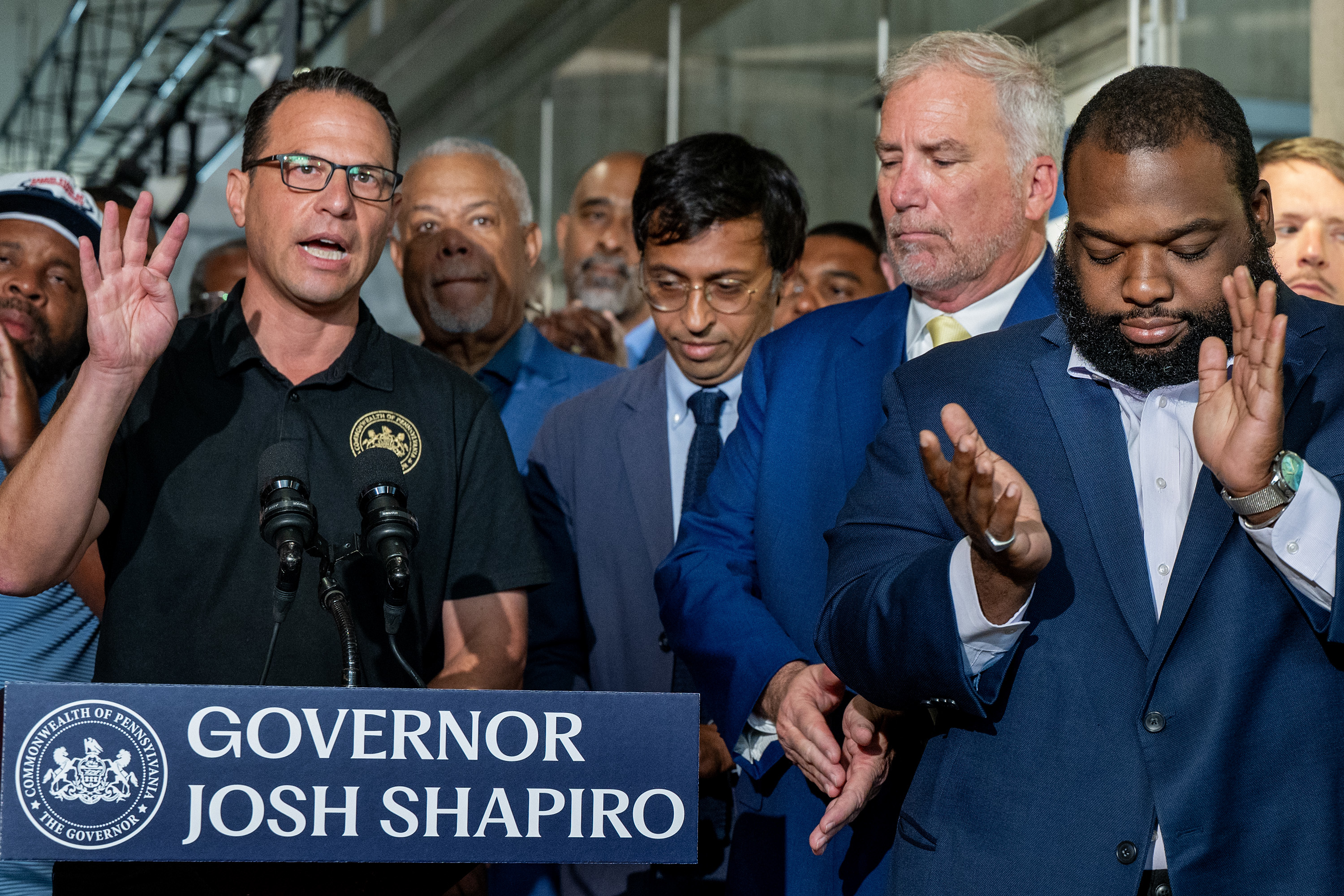
Gov. Josh Shapiro visits SEPTA headquarters Sunday, Aug. 10, 2025 to discuss funding for the transit agency and to pressure Senate Republicans as planned service cuts are pending because of a budget shortfall. To his right, from left, are state Democratic legislators Sen. Anthony H. Williams; Sen. Nikil Saval; Rep. Ed Neilson; and Rep. Jordan Harris.
Senate Majority Leader Joe Pittman (R., Indiana), the Senate’s top negotiator, who has met for months in closed-door budget talks with Bradford and Shapiro, said in a statement that it was Democrats who caused the prolonged impasse while demanding they include mass transit funding in the state budget. After mounting pressure as SEPTA enacted major service cuts, Shapiro ultimately sought to fund the agency on his own, and the issue will need to be revisited in two years.
Garrity, who kicked off her “Help Is on the Way” introductory campaign tour around the state earlier this week, said Wednesday her decision to intervene in the state budget stalemate was not political, despite her burgeoning run against Shapiro. Rather, she said that she had been thinking about a way to do so for months, including ahead of her announcement of her run for governor, and that most Pennsylvanians don’t even realize the state budget is late. She argued that if she wanted to be political, she would not intervene and would “keep the pressure” on Shapiro over the late state budget.
“I’m standing up here as Pennsylvania’s state treasurer, not as a candidate for governor,” Garrity said from a podium in the Harrisburg building that houses the state Treasury. “I think I have a responsibility to serve Pennsylvanians, that if I have something that I can do to provide some relief, then I should do it.”
However, that didn’t stop Garrity from inviting Montgomery County Commissioner Tom DiBello — the lone Republican on the board where Shapiro once served — to the podium at the news conference to deliver some direct criticisms of Shapiro and to praise Garrity’s intervention as a “lifeline” for counties, alongside two other GOP county commissioners from south-central Pennsylvania. While Montgomery County remains one of the wealthiest counties in the state, the late budget has required Pennsylvania’s third-most-populous county to spend down its reserves, money that it usually relies upon to continue earning interest as part of its annual revenue, DiBello said.
Pennsylvania Treasurer Stacy L. Garrity gives her acceptance speech after receiving the PA GOP’s endorsement for her campaign for governor during the Republican Party of Pennsylvania’s 2025 Fall Meeting at the Penn Stater Hotel & Conference Center in State College on Sept. 20.
“It starts at the top. The governor is responsible,” DiBello said. “He’s got to pull it together. It’s his signature at the end of the day.”
In response to Garrity’s announcement Wednesday, Montgomery County Commissioners Neil Makhija and Jamila Winder, both Democrats, said in a statement that the county needs a final state budget instead of a short-term loan program, urging Senate Republicans to “do their job.”
“A short-term loan at 4.5% interest is the state profiting from a problem of their own making, at the expense of the taxpayers,” the two commissioners added.
DiBello said he did not believe his invitation to Wednesday’s event had political motivations, adding: “I didn’t even think of that.” He also noted that he has come to Harrisburg to advocate on behalf of counties multiple times before.
Senate President Pro Tempore Kim Ward (R., Westmoreland), who has been one of Shapiro’s biggest critics since his first budget in 2023 and was quick to support Garrity’s candidacy, prodded at Shapiro’s pledge to “get stuff done” while praising Garrity’s leadership.
“Today, Treasurer Stacy Garrity made a bold move that shows what ‘get stuff done’ actually looks like,” Ward said in a statement. “Treasurer Garrity’s leadership is on display as her solution-driven option is exactly what we need, but has been glaringly missing from the present administration.”
Garrity said at the news conference Wednesday that she offered the loan program specifically to Head Start programs and county governments’ human service departments because both had asked her to help them get through the budget impasse. The state budget was due by July 1, and Pennsylvania is the only state besides Michigan that has not yet passed its budget. She said she is willing to offer similar loans to schools or other state-subsidized or funded programs as requested.
The Pennsylvania General Assembly can forgive the interest accrued by counties taking out loans during the budget impasse, Garrity said, adding that shewould support legislation that does so.
This suburban content is produced with support from the Leslie Miller and Richard Worley Foundation and The Lenfest Institute for Journalism. Editorial content is created independently of the project donors. Gifts to support The Inquirer’s high-impact journalism can be made at inquirer.com/donate. A list of Lenfest Institute donors can be found at lenfestinstitute.org/supporters.
Out of everything in the world, Ashley Huston loves sugar the best. It’s no surprise she is a baker. Huston opened Dreamworld Bakes, the Fishtown bakery, in December 2024 after years of running a bakery business out of her West Philly apartment.
Her perfect day, she said, would be a day when her bakery stays busy all day.
“I’m constantly working,” said Huston, who baked Patti LaBelle’s 80th birthday cake. Working and manifesting opening a boutique hotel in West Philly someday — “more like a bed-and-breakfast with a bakery under it.”
Her days involve coming into Fishtown every day, dreaming up her monthly menus, running Dreamworld, and going home to feed and pet her cats — Ketchup and Leeloo.
She wakes up around 4 a.m. and goes to sleep as early as 7 p.m. on some hard days. Usually, she is in bed by 9 p.m. and asleep by 10 p.m.
She tried to imagine what a perfect day in Philly would look like. Outside the bakery.
Ashley Huston, owner of Dreamworld Bakes, 2400 Coral St, Philadelphia, Thursday, August 21, 2025.
7 a.m.
On my perfect Philly day, I sleep in. I wake up and have coffee in my yard in West Philly. I drink a lot of my own coffee, our Dream World blend, but I also use a Trade Coffee subscription. Sometimes I go to ReAnimator Coffee, [on Pine Street] down the street from my house, and pick up an iced vanilla latte. And then I’ll sit in my yard, lay in my hammock. I try to “touch grass” whenever I can. Got to love those big West Philly backyards.
A family on a bike ride along Kelly Drive near the Schuylkill on March, 12, 2021.
9 a.m.
I have a vintage Peugeot Bike. A morning ride down to the Schuylkill trail before it gets too hot is always enjoyable. If I have time, I’ll do the whole loop. I’m pretty active, so I like to get some kind of movement in on a regular basis. Monarch Yoga in Kensington is a great studio with a very welcoming environment and community. My good friend, Michelle, is my favorite instructor. We went to the same hot yoga studio years ago, and now we’re both small business owners. If not yoga, I’d go to the gym, which is theWest Philadelphia YMCA.
Friends Veronica Teek (from left), Lucky Nwankwo, and Mikita Hill-Cashaw eat their slices, as they join other .cake lovers gathering in Clark Park for a cake picnic Sunday, May 18, 2025. They made a lemon olive cake to exchange, at the popular grassroots trend celebrating cake in all of its forms.
10 a.m.
I will have some breakfast. If I could, I would go down to South Philly every day and eat at Artisan Boulanger Patissiercafe. I really love their breakfast sandwich and almond croissants. More than mine, probably. They also have really good banh mis. I might even drop into a farmers market. My favorite is the one in Clark Park every Saturday morning. I’d get a pastry and some flowers and snag a squat in the park for an hour or so, and just watch people. We have such good characters in Philly. Our people sometimes get a bad rap, but we got the flavor.
Upon entering Riverwards Produce Market in Old City, shoppers are greeted by fresh flowers and kombucha.
Noon
I’d walk around downtown. Riverwards Produce is a great place for seasonal produce, especially in smaller quantities. Before I opened Dreamworld [brick and mortar], I had a hard time trying to find produce like sour cherries or pink chicories in an amount that could fit into my fridge. I also love Reading Terminal Market. It’s full of tourists but it’s fun. I pick up meat, cheese, and get one of those hot dog pretzels from Miller’s Twist. It’s also right next to Chinatown, which is one of my favorite places in the city. I could walk around there forever if I had the time.
Pho order number 1, Slices of eye-round steak, well-done flank, fat bisket, soft tendon and beef tripe with added meatballs. Pho 75, 1122 Washington Ave, Wing Phat Plaza, Philadelphia, Friday, September 5, 2025.
1 p.m.
Some of my favorite places to eat are in Chinatown, like Penang for their char-kway-teow or beef redang. I also love Sang Kee Peking Duck House with a passion. The roast pork noodle soup with dumplings makes me feel like I’m walking around Hong Kong and don’t even get me started on the duck.
If I’m still in West Philly, I’ll walk down to Hummus Grill in University City. Don’t sleep on it, it’s the best falafel in the city.
In South Philly, my lunch would be a Ba Le Bakery banh mi or pho at Pho 75.
The sun illuminates the Philadelphia Museum of Art as it sets in Philadelphia, Pa. on Thursday, March 7, 2024.
3 p.m.
I think all I do is eat, because my whole day in Philly revolves around food! I love vintage shopping too. Moore Vintage in Queen Village is a great place for one-of-a-kind finds. I love the Philadelphia Museum of Art, seeing any contemporary exhibits they may have on. I try to go a few times a year. I love when they bring new artists. I probably go there more than any other museum in the city.
7 p.m.
I’ll often bike down to the Ritzin Old City; sometimes with people, but also by myself. Or I’ll meet up with friends at a bar, get a margarita.
I love an outdoor situation, so I love LMNO. Mezcal paloma is my go-to anywhere. So if there’s a paloma on the menu, I’ll have it.
The outside dining area with the view of the Market–Frankford Line at LMNO in Fishtown on Friday, December 10, 2021.
I love to host and entertain and to care for people. And I love showing off my home [recently featured by Apartment Therapy]. When I have the time, the perfect day to me ends with an evening at my place.
Maybe in the yard with the lights on and the grill going. Or in my den having a game night with my besties and a signature cocktail.
The halibut at Little Water in Philadelphia, Pa., on Friday, Jan. 31, 2025.
If I’m going out, I like Little Waterwhere I went for dinner the other day. The seafood was phenomenal. They had a really nice, clarified paloma on their menu. It had a little lavender in there, so that was right up my alley. I also love Kalaya. I’m a sucker for crab fried rice, and their massaman is great.
I love Taqueria La Prima in South Philly. And I also love going to Le Virtu in Passyunk if I’m on a date. That’s such a romantic place.
Noah Marmar also know as “DJ On Mars,” prepares to play a vinyl record at the 48 Record Bar, a vinyl centric cocktail bar in Old City on Thursday, February 29, 2024.
8 p.m.
I’m a woman in my mid-30s, so I try to frequent places that have live jazz. I liked going to Say No More’s outdoor space. I miss them. I love 48 Record Bar. It’s always a good time, bomb drinks, and great music always. If people visit me from out of town, that’s a fun place to take them to.
Ashley Huston, owner of Dreamworld Bakes, 2400 Coral St, Philadelphia, Thursday, August 21, 2025.
10 p.m.
North Third in Northern Liberties is my food stop if I’m out late. I think they have the best wings in the city, especially their Thai chili wings. I’ve been going there since college, which is a hundred years ago.
For a late night drink, I’m a sucker for a tiki drink. So if there’s a tiki pop-up anywhere, I will go to that.
Ashley Huston in her West Philly kitchen on June 18, 2025.
11 p.m.
In my perfect bed. The trick is to get a hard to firm mattress, and top it with a memory foam and a down topper. You have to do both. That’s the perfect sleeping situation.
My perfect day, actually, begins and ends with getting a good night’s sleep. With Ketchup and Leeloo, who drive me insane. The perfect way to end my perfect day in Philly, in my bed in West Philly.
Too many people in this country think free speech comes with no consequences. A constitutionally protected free pass to say whatever you want with zero repercussions. But that’s not true. There is a cost to speaking out.
On the left, think Colin Kaepernick being blackballed by the NFL for taking a knee during the national anthem. On the right, think every yahoo who’s ever been fired from their job over some racist/sexist Facebook post.
If you think that’s an unfair comparison, write about it. Yell at me about it. That’s how free speech works. I say something, and you can say something back. How it definitely does not work is when the government steps in. The courts have been very clear that the First Amendment protects us from government censorship.
That means calls to boycott comedian Tony Hinchcliffe after he called Puerto Rico a “floating island of garbage” at a Donald Trump rally? Legal. ABC firing comedian Bill Maher for insensitive comments after 9/11? Legal. However much you or I can loathe so-called cancel culture, it’s legal.
What happened to Jimmy Kimmel is something else.
On Wednesday, Disney-owned ABC put the late-night talk show Jimmy Kimmel Live! on indefinite hiatus. This happened soon after Nexstar Communications Group said it would pull the program from its 23 ABC-affiliated stations over a joke Kimmel had made Monday about the MAGA reaction to the killing of Charlie Kirk. The leaders of the conservative-leaning Sinclair Broadcast Group also announced they would be preempting the show.
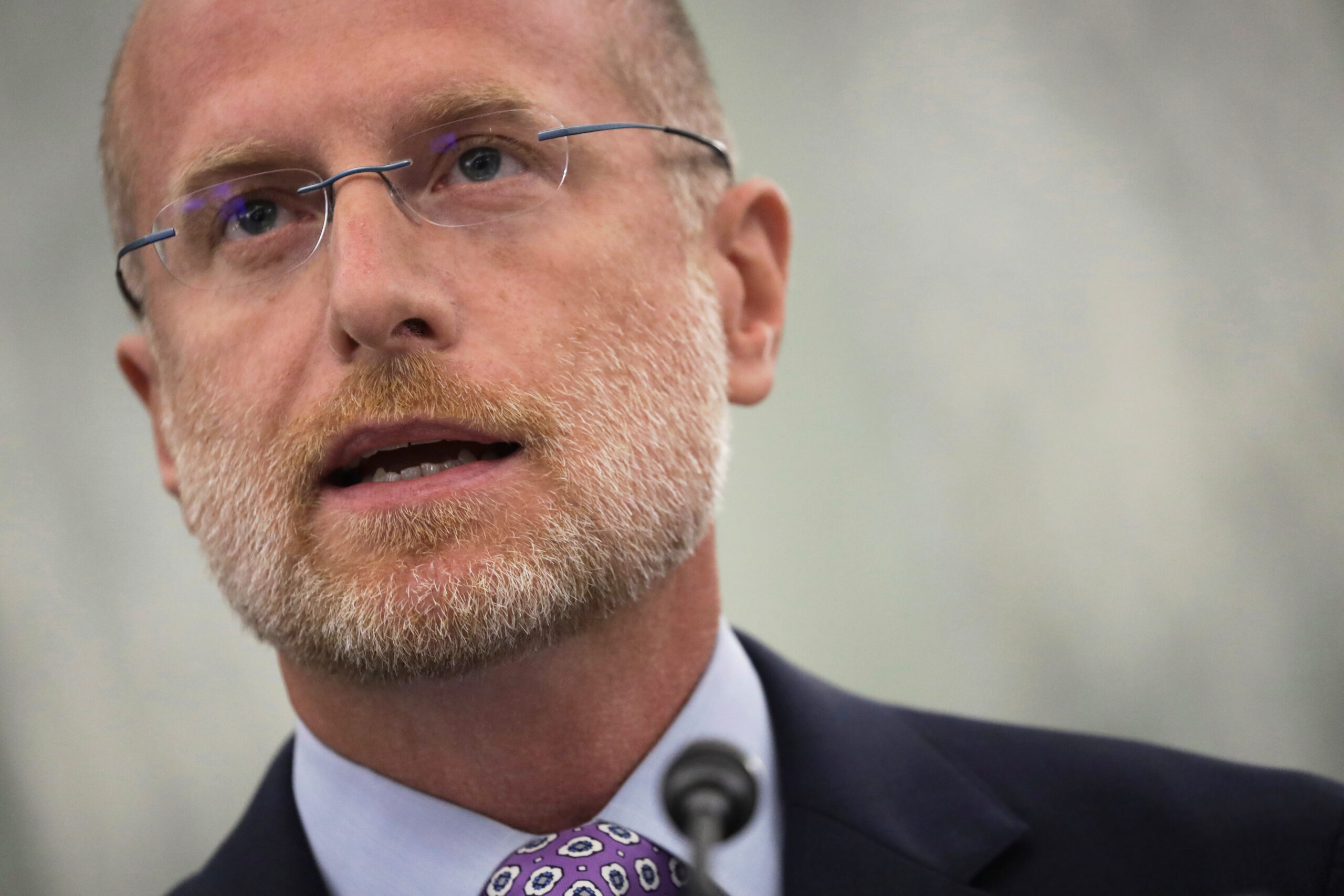
So far, so wrong, but within these private companies’ rights. The problem is that also on Wednesday, the head of the Federal Communications Commission, Brendan Carr, went on the right-wing podcast The Benny Show and laid out how the government could go after those who gave the late-night comedian his platform.
“There’s calls for Kimmel to be fired. You can certainly see a path forward for suspension over this. And again, the FCC is going to have remedies that we could look at,” Carr told host Benny Johnson. “Disney needs to see some change here, but the individual licensed stations that are taking their content, it’s time for them to step up.”
Now, the FCC cannot go after ABC because, like the other national networks, it does not hold a broadcast license to transmit over the public airwaves (although Disney owns a few stations), but it can absolutely go after local affiliates.
Not only that, but much like in the case of CBS’s cancellation of The Late Show with Stephen Colbert — which put the Trump-mocking show on the chopping block after the network’s parent company needed government approval for a merger — Nexstar is also in merger talks.
Brendan Carr, then a Federal Communications Commission commissioner, speaks during a Senate Commerce, Science, and Transportation committee hearing on Capitol Hill in Washington, in 2020.
With The Late Show, CBS executives could at least make the case (transparent as it was) that their decision was justified because ratings were down, and they would allow the show to run until the end of the host’s contract next year.
But for Kimmel, there hasn’t been even an attempt at that kind of pretense. He’s been suspended following a barely veiled threat by the guy in charge of allowing TV stations to do business. Now, I think what Nexstar did is cowardly, but it is by no means nonsensical.
Add it to the list of companies, universities, and law firms that have sold out American principles and are fully on board with endangering democracy by enabling Trump’s worst instincts — all for the sake of doing business.
Also, add this incident to the long list of examples of hypocrisy from the Trump administration and the right-wing commentariat. Unsurprisingly, back in 2023, Carr posted on X that “Free speech is the counterweight — it is the check on government control. That is why censorship is the authoritarian’s dream.” The same day Kimmel was suspended, Trump criticized England’s laws limiting speech (he’s right) while praising ABC’s decision.
The president has repeatedly threatened networks over their news coverage, and raged against late-night comedians like Kimmel and Colbert for making fun of him. Of the Big Three networks (sorry, kids, I’m old), Comcast-owned NBC has so far stood its ground.
This is important because Saturday Night Live alone has produced some definitive presidential portraits that have stood the test of time. In my late-night TV-watching lifetime, we’ve seen George H.W. Bush as awkward and out of touch (Dana Carvey), Bill Clinton as hungry horndog (Phil Hartman), George W. Bush as clueless bro (Will Ferrell), Barack Obama as professorial but cool (Jay Pharoah), and Donald Trump as game cue card reader desperate for love and attention (Donald J. Trump).
The show may want to amend Trump’s portrayal, though, to a thin-skinned demagogue who lost his sense of humor about the same time he found love and attention among the vilest peddlers of right-wing vitriol and hate on his way to authoritarianism.
As to what those of us who consider free speech one of the vital ingredients in the American Experiment can do, well, that’s easy.
Speak out, loudly and often — ideally respectfully, but the Constitution doesn’t say you need to be nice. What’s happening is not right, and we need to say so. Damn the consequences.
Crozer Health’s shutteredTaylor Hospital in Ridley Park will be soldto a group of local healthcare executives for $1 million, according to an agreement filed Friday in bankruptcy court proceedings for its owner, California-based Prospect Medical Holdings.
The buyer is a partnership led by Delaware County business owner Todd Strine. The group’s goal is to refill the empty property with medical services, Strine said.
“The ideal thing that could happen is we reopen an emergency room, because that’s what Delaware County needs,” said Strine, who is the majority owner of medical transport company Keystone Quality Transport.
Prospect closed Taylor in late April after the failure ofa state-led effort to find a new operator that would return the Crozer health system to nonprofit ownership. Shortly thereafter, Crozer-Chester Medical Center also closed.
Crozer was Delaware County’s largest healthcare system and a provider of critical safety-net services.For-profitProspect had previouslyclosed Springfield Hospital and Delaware County Memorial Hospital in 2022.
“It’s a fact that Delaware County is less safe today than it was when these hospitals were operating,” Strine said.
He said it seems unlikely that a full-blown hospital would return to Taylor.
Ridley Park Council president Dane Collins said he’s hopeful that an emergency department and doctors services will return to the site. “It’s no secret. The area’s in desperate need of it,” he said.
As part of the agreement, Delaware County, Ridley Park Borough, and the Ridley School District agreed to reduce the taxable value of the property from its assessed value of $60 million to a fair market value of $1 million for the next two years.
The reduced value slashes the amount of property taxes that can be earned on the property for the next two years. However, beginning in 2027, the taxing authorities would be permitted to appeal the value of the building.
The decision to reduce the building’s value so dramatically in tax rolls was opposed by some members of Ridley School District’s board of education, which only narrowly approved the measure on a 5 to 4 vote last week.
Prospect hasn’t paid property taxes on the property since 2022, according to public records.
Delaware County councilmember Christine Reuther called the new value a “tough pill to swallow” in an interview. The property was worth more than the “fire sale price” it had gone for, she said.
The building would be worth less than many homes on the county’s tax rolls, Reuther noted, at a time when property values and home costs are increasing.
She called the resolution yet another example of the negative fallout from Prospect’s abandonment of healthcare resources in the community.
“There’s literally nothing we can do that isn’t going to resolve in a worse result, and that’s wrong,” Reuther said.
Strine acknowledged that the price seems cheap, but noted the building is empty, and it’s a special-use building, making it harder to find tenants. “There’s a ton of carrying costs and a lot of uncertainty about how long it’s going to take to fill up,” he said.
The investment needed to bring the building back to life is going to be many times the price, Stine said.
“It’s positive movement to have an experienced local businessperson purchase the property instead of allowing the property to become abandoned,” said Frances Sheehan, president of the Foundation for Delaware County, whose mission is promoting health and welfare in the county.
Taylor is the second shuttered Crozer hospital to be sold in less than a month. Upper Darby School District bought the former Delaware County Memorial Hospital for $600,000 on Aug. 14. It plans to use the property for expansion of its neighboring high school.
In both cases, U.S. Bankruptcy Judge Stacey Jernigan said Prospect could abandon the properties, which means that local authorities would have had to put the real estate up for a tax sale.
Prospect had told the judge that the top offers it had received were $1.25 million for Delaware County Memorial, which closed in 2022, and $575,000 for Taylor.
Given the risk of abandonment by Prospect, county and local authorities riskeda totalloss to tax rolls ifProspect abandoned the property entirely.
Robert Strauss, an economics professor at Carnegie Mellon University who studies property tax, noted that the buyers may have backed out of a deal if they couldn’t obtain the reductions in property taxes.
“It’s hard to envision anything easy happening in the short run that would bring it back onto the tax rolls and be profitable,” he said. “The reduction in revenues seems to me to be inevitable in the next couple of years, regardless.”
This suburban content is produced with support from the Leslie Miller and Richard Worley Foundation and The Lenfest Institute for Journalism. Editorial content is created independently of the project donors. Gifts to support The Inquirer’s high-impact journalism can be made at inquirer.com/donate. A list of Lenfest Institute donors can be found at lenfestinstitute.org/supporters.
As Vladimir Putin blocks peace talks, Kyiv wants to share with the U.S. and Europe how to counter the AI-driven weapons of the future.
Betsyk, commander for the 3rd Separate Assault Brigade's special battalion for intercepting enemy drones, sits beside downed Russian reconnaissance drones.3rd Separate Assault Brigade
DIRECTION POKROVSK, Ukraine — In a warren of rooms filled with computers, 3D printers, colorful wires, and drone frames, the atmosphere was casual, but the intentions were deadly.
The young men in their 20s and 30s, dressed in cargo pants and T-shirts, wouldn’t have looked out of place at a Silicon Valley start-up. Except they were fighting for their lives — and their country’s survival.
In the basement command center, three of the soldier-techies stared at multiple screens with dozens of views delivered by Ukrainian-made surveillance drones. They were looking for Russian targets in a war that had lasted for three and a half years.
As I peered over their shoulders during a June visit to the rear of the front lines, a moving car was spotted.
Orders were quickly passed to a frontline drone navigator and pilot in a trench or basement who would make the final call as to whether the target was clearly visible and worth destroying — at which point the pilot’s goggles would let him watch the little exploding drone descend until a flash signaled another kill.
It was a slow day, and everyone’s attention had turned to other screens before I could learn the fate of the car. But there were always more targets to find.
By my side, the 31-year-old commander of an elite drone battalion of the 59th Assault Brigade, call sign Condor, told me there are up to 300 targets a day, which can range from a single fighter in the grass to a moving motorcycle to a small Russian dugout covered with branches or nets.
“The orcs outnumber us, and they don’t care about loss of lives,” Condor said, using the name of the grotesque enemy warriors in the Lord of the Rings series to refer to the Russians. “In this new way of war, infantry and artillery and mortars still matter, but everything is controlled by air. Now, a military is just a way of supporting drones.”
For Ukraine, drones are an essential part of why the country has been able to hold out so long against an army four times its size.
Source: Institute for the Study of War and AEI's Critical Threats Project.John Duchneskie/Staff Artist
The technology of unmanned weaponry is advancing at a pace that appears revolutionary — from aerial drones to drones that move by sea, robotic land drones, and long-range drones carrying missiles — all increasingly directed by artificial intelligence.
Sea drones drove Russian ships out of the Black Sea along the Ukrainian coast, and continue to strike at the critical Kerch Bridge connecting Russia to Crimea. In June, Ukrainian security services conducted the amazing Operation Spiderweb, which damaged or destroyed up to 40 Russian warplanes worth billions of dollars, deep inside Russia — all with 117 small drones costing $500 each.
But Russia is catching up. Ukraine needs the funds to massively scale up drone production.
That’s why the most important moment of President Donald Trump’s Monday meeting with Ukraine’s president and top European leaders may have been when Volodymyr Zelensky proposed to share his country’s breakthrough drone technology with the Pentagon.
Kyiv would sell tens of billions of dollars’ worth of advanced Ukrainian-made drones to America, and, in return, would buy double that dollar amount of U.S. weapons systems, financed by Europe. Both countries would then be far better equipped for the challenges of modern conflict.
The success of that proposal could bolster American preparedness for future tech wars, while helping Ukraine survive as a free, sovereign state.
More on Ukraine
Trump’s deference to Putin means only more bloodshed in Ukraine
The president could have used America’s power to force Vladimir Putin to negotiate seriously. Instead, he opened the door to blaming Ukraine for any failed "peace" talks.
Why so? Peace talks are going nowhere. Vladimir Putin has no interest in peace. He thinks he’s winning.
The Russian dictator “has no reason to compromise so long as the president refuses to apply any pressure on Moscow,” as former Russian political prisoner Vladimir Kara-Murza bluntly told MSNBC. “You cannot make peace by placating Russia.”
Despite the effusive red-carpet welcome Trump gave Putin at their recent Alaska summit, the Russian leader has rejected every one of the president’s proposals to end the war.
story continues after advertisement
No ceasefire. No strong security guarantees for Kyiv, as the naive White House negotiator Steve Witkoff claimed Putin had accepted. The Kremlin has already rebuffed a possible bilateral meeting between Putin and Zelensky that Trump has been touting.
Peace talks will become plausible only if the U.S. joins Europe in putting maximum pressure on Russia, convincing Putin he can’t win and can’t afford to fight any longer.
But that would require Trump to recognize what the Europeans already know: Ukraine has been able to hold off the Russians until now because it has pioneered a revolutionary new way of warfare — the war of drones.
So Zelensky’s proposal is in both countries’ interests. The U.S. is way behind in small drone production, but it has weapons systems crucial to Ukraine. A swap would signal to Putin that Trump is not a pushover.
If Trump wants to be a peacemaker, he must recognize that the Ukraine war is about far more than real estate. It is a battle over freedom, geopolitics — and who will win the tech wars of the future.
As I was told by former Ukrainian Minister of Strategic Industries Oleksandr Kamyshin: “This war started like the Second World War with drones. But it will finish as the First World Drone War.”
A pilot with the elite drone unit for HUR, the Ukrainian Defense Ministry’s intelligence service, demonstrates drone control.Trudy Rubin/Staff
In the air
My latest Ukraine visit — my fifth since the fighting began in February 2022 — showed me what it means when unmanned drones take over the battlefield.
Last year, I could still visit artillery emplacements and destroyed villages near the front where army units lived, showered outdoors, and ate outdoors. I could drive on roads to and from towns near the Donetsk front line inside the contested parts of the eastern Donbas region that Ukraine still controls. Military vehicles still sped along those roads.
Those days are over.
The 15 kilometers (roughly nine miles) on each side of the front line have become a kill zone where almost nothing moves on land because it is at risk of being hit by the other side’s drones.
The size of the kill zone keeps expanding.
Tanks are sitting ducks. So are medical evacuation vehicles. Indeed, military vehicles of any kind. No longer are the soldiers who man frontline positions or drone pilots rotated every day or two; they stay in place for days because the roads in and out are so risky.
Supplies are brought in and the wounded taken out by unmanned robotic carts, known as land drones. These robots also lay mines, and some are equipped with machine guns or rockets.
As for Ukraine’s cities, Putin is demonstrating how drones can be used as a cheap, terrifying tool of terror against civilians.
During my stay in Kyiv, the nightly Russian barrage of Shaheds — drones designed in Iran and gifted by the thousands to Putin by the ayatollahs — rained down nightly on civilian targets. I was lucky to be in a hotel with a comfortable basement shelter, but my Ukrainian friends and contacts were up each night huddled in their hallways or bathrooms. They still are.
Natalya Dubchek stands next to a minibus destroyed by a Shahed drone. The fire from the explosion torched her home in Odesa, Ukraine.Trudy Rubin / Staff
In Odesa one morning, I visited a neighborhood where a family of three was incinerated when a Shahed sheared off the top floor of their apartment building in a residential neighborhood. I spoke with a woman whose bungalow burned to its concrete walls, and who barely escaped the flames.
Even after my return to the U.S., I have kept the air raid alerts on my iPhone, which can be set to any city or region. My phone buzzes every time Russia launches another swarm of Shaheds (along with cruise and ballistic missiles) against Kyiv. For hours, the alerts go off every 20 minutes.
Each buzz means Ukrainian civilians, including the elderly and mothers with small children, must decide whether to descend to an underground shelter and spend miserable hours or the entire night there.
The Shaheds, which give off a chilling whine as they fly, are now copied and manufactured inside Russia with Tehran’s technical help. They have been made more lethal with the addition of jet engines, which enable them to fly higher and faster and elude countermeasures. They are meant to terrorize, exhaust, and kill civilians in Ukrainian schools, hospitals, markets, and apartment buildings.
The number of Shaheds in the skies has jumped dramatically since Putin concluded that Trump will never be serious about punishing Russia for its refusal to accept a ceasefire or engage in serious peace talks. And they are affecting morale. If the Russian barrage continues, more Ukrainians may try to leave for abroad.
A Ukrainian officer shows a thermobaric charge from a downed Shahed drone in a research laboratory in an undisclosed location in Ukraine in 2024.Efrem Lukatsky
Yet, despite the daily Shahed carnage and recent Russian gains on long stalemated front lines, Moscow is still not winning this war.
A prime reason is that Ukraine’s war of technology has so far enabled Kyiv to hold its defensive line, but not to take back territory.
Former Ukrainian commander in chief, now ambassador to the U.K., Valerii Zaluzhnyi, told a video forum in Kyiv that the only war Ukraine can wage is a “high-tech war of survival” until it destroys Russia’s military and economic ability to keep fighting over the long run.
The bad news is that Russia is learning from Ukraine and receiving large-scale tech aid, components, and ready-made drones not only from Iran, but from its other allies, China and North Korea.
This alliance of dictators is growing stronger, and its members are watching the Ukraine war for lessons in future drone warfare with the West. Think China and Taiwan.
story continues after advertisement
To shake up the Kremlin, Kyiv needs to vastly scale up its drone production and race to outdo the Russians with innovation, especially interceptors that can destroy Shaheds and fiber-optic drones.
European governments and private companies are entering agreements to jointly produce drones, both in Ukraine and in Europe. They are studying Kyiv’s technological advances, including on the front lines.
Ukraine wants to share its invaluable battle-tested knowledge with Washington, yet Trump still appears hung up on the vain hope that Putin “wants a peace deal,” which he mistakenly believes would entitle him to a Nobel Peace Prize.
So long as he refuses to recognize Kyiv’s importance as a strategic ally, the president undermines not only Ukraine’s security but ours.
A Ukrainian serviceman of 57th motorised brigade controls an FPV drone at the frontline in Kharkiv region, Ukraine in August.Andrii Marienko
Drone expansion
In June 2024, when I first met with then-infantry commander Condor of the 59th Assault Brigade in one of the hottest combat zones in eastern Ukraine, he was struggling to arm his depleted battalion. They were suffering through a terrible “shell hunger,” he told me, after the U.S. Congress had frozen military aid for six months. His men were often reduced to firing one artillery shell for every 10 fired by the Russians.
“Every day of [congressional] delay cost broken lives and deaths,” the former history teacher turned soldier said bitterly, as we sat in a dark, virtually empty cafe in the countryside near Pokrovsk. “So, we had no other choice but to be creative.”
To fend off a brutal Russian adversary with four times their population and massive industrial might, the nation’s techies and grunts turned their front lines and hidden basements into a tech incubator for modern war.
Desperate fighters, like Condor’s unit, were already using simple Chinese-made commercial drones to spy on Russian forces in 2023 and 2024.
Every unit I visited near the front during those years had guys working on benches in abandoned farmhouses or workshops, putting together drones from parts purchased on Amazon with their own salaries, or donated by families, friends, or private charitable foundations.
While Ukraine was well known in peacetime for talented engineers and a deep tech sector, many of those early do-it-yourself builders had no such background, but figured things out as they went.
By the summer of 2024, the men of Condor’s unit had come up with how to turn small commercial or DIY drones into little exploding drones.
Call sign Condor, commander of the UAV Forces Battalion of the 59th Assault Brigade.Trudy Rubin / Staff
“We cut sewage pipes and stuffed them with explosives,” Condor explained. “We did the same with energy drink cans.”
These makeshift mini bombs were then affixed to UAVs, the shorthand for unmanned aerial vehicles, mostly small Chinese DJI MAVIC quadcopters, the kind Americans use to record panoramic overhead views of weddings. The Ukrainians launched them at Russian tanks, artillery positions, and trenches.
“This is the art of war,” Condor said, with a grim smile. “When you have no supplies, you have to innovate.”
The turning point came in 2024, when the U.S.-induced shell hunger spurred a massive expansion of drone use to save Ukraine’s army. The goal was to protect and preserve precious frontline man power in a war in which Russia treats soldiers like cannon fodder — and to do so with weapons far cheaper than what they destroy.
Government and private companies produced two million drones in 2025, and are set to manufacture more than four million next year. They could produce eight million to 10 million, Zelensky has said, if they had enough funds.
Other weaponry still plays an important role, especially air defenses. While drones can hold the defensive line, taking territory still requires infantry. But 80% or more of the Ukrainian strikes on the front line are now made by drones.
More on Ukraine
A funeral for a tattoo artist-turned-soldier shows why Ukraine won’t capitulate to Moscow
The friends of Roman Tarasyuk vow to keep fighting despite Trump's support for Putin.
Those early exploding drones have evolved into larger attack drones with bigger payloads, including sea drones that resemble large rowboats filled with electronics and sometimes carrying rockets. Robotic ground drones are now mounted with machine guns, and larger long-distance drones can carry small missiles. All of these drones are unmanned and directed by pilots and navigators using goggles and tablets.
Anything that can be viewed by FPVs — first-person view drones in which pilots wearing special goggles can see exactly what the drone sees — is now vulnerable to drone attacks, including men, artillery, ships, helicopters, and low-flying planes.
story continues after advertisement
In the process, Ukraine has rewritten the rules of ground, sea, and air conflict.
As the war continues, artificial intelligence is certain to take on more of the piloting responsibilities (although target decisions will still be made by pilots and commanders, for now).
So crucial have drones become to modern warfare that the Ukrainian military has a new branch up and running whose task is coordinating drone warfare, called the Unmanned Systems Forces.
“We are the first country with an unmanned forces command,” I was told by Hanna Gvozdiar, deputy minister for Ukraine’s Ministry for Strategic Industries. She estimated Ukraine now produces 300 different varieties of drones.
Moreover, special drone units within most Ukrainian battalions have become central to every element of the conflict. Not only do many of them design their own drones, but they also provide constant updates to private drone manufacturers so they can stay ahead of Russian defenses.
As for Condor, he moved from commanding infantrymen to leading the UAV Forces Battalion of the same 59th Assault Brigade, one of the top drone units in the country. By the time I saw him in June, he was fighting a totally different war.
A worker inspects a combat drone at Fire Point's secret factory in Ukraine in August.Efrem Lukatsky
Advantage Ukraine
In the “genesis space” of a modern, glass-fronted office building in Kyiv, a group of start-up Ukrainian tech entrepreneurs has come to pitch their products to guests from the European Union — and to anyone who might fund them to scale up.
The program is sponsored by Brave1, a government-supported tech incubator that helps connect drone start-ups with investors and provides seed money for promising new projects.
“We are in a race with the Russian drone ecosystem,” I was told by Artem Moroz, Brave1’s head of international investment. “The Russians don’t need to fundraise for drone production,” he noted, with bitter irony.
“We want to win the war with the help of technology because we can’t compete with man power,” he continued. “Most of the innovation comes from the private sector. We unite 1,500 companies, some in apartments, some operating at a huge scale, providing thousands of drones.”
Before the show-and-tell, I listened to Oleksiy Babenko, one of Ukraine’s best drone producers, make his pitch to foreign investors. Babenko’s company, Vyriy — named for a paradise in pre-Christian Slavic mythology — makes a small FPV drone called Molfar, which can function in swarms and evade Russian electronic jamming.
“Practically every Ukrainian university has a polytech [division] that graduates a lot of talent. We are a technical hub for software development, and young tech entrepreneurs are migrating to the battlefield,” he told the group.
A technician prepares a Shrike drone at the Skyfall military technology company in Ukraine.Andrew Kravchenko
“But this brilliant talent needs investment, domestic or foreign, to scale up production. If we don’t do this, we will die.”
After Babenko came the young entrepreneurs with slide decks and videos: Bravo Dynamics promotes a radio-based mesh network that can connect drones, but could also have civilian uses. Farsight Vision produces software that digests visual data, which could help drone targeting or serve business uses. VMP has a robot model “that will be the main tool for logistics on the front line,” but could be used for civil defense.
There is both pride and a sense of frustration in the room. Ukraine is a start-up nation. These talented innovators, not Ukrainian government bureaucrats, have sparked the drone revolution.
Right now, Ukraine produces 94% of its own drones and is reducing its dependence on Chinese parts. Kyiv is also manufacturing 40% of its other weapons inventory.
But Ukrainian factories are operating at only one-fourth of capacity, according to Kamyshin, the former government minister. “We need $10 billion to $15 billion of necessary capital to produce what is needed,” he told me as we fast-walked through a park near his office so he could work off some of the daily tension. “We are much better innovators than the Russians, but we need to scale up.”
More on Ukraine
Ukraine’s drone attack was more than a morale booster, it showed the new face of modern war
Operation Spiderweb illustrated the brilliance of Ukraine’s technological skills and the flaws of the Russian military.
Private Ukrainian firms lead Europe and the U.S. in producing battle-tested drones, from mass-produced FPVs to highly secret deep strike missile drones. Ukraine seeks not only to intensively scale up its own drone production but to become an international hub for dual-use technology.
However, unlike Russia, which can draw on billions from its (dwindling) sovereign wealth fund, Ukrainians must raise funds to increase government and private drone production to keep up with Russian drone output — which has now expanded to industrial scale.
“Our only chance is to become our own arsenal and the arsenal for Europe,” argued former Ukrainian Defense Minister Andriy Zagorodnyuk over coffee. “The question is, how to organize that.”
European governments are seriously addressing this question of scaling up Ukrainian production, and some private investors are hovering. The question is whether they can act quickly enough to fund joint projects inside Ukraine or based in Europe. Especially now that Trump has decreed Washington will no longer give military aid to Kyiv, but will let Europeans buy weapons to transfer.
There’s no time to waste, as Russia is scaling up its drone output at a frightening rate.
In this photo taken from a video distributed by the Russian Defense Ministry Press Service in May, Russian servicemen train to operate military drones in an undisclosed location.Russian Defense Ministry Press Service via AP
Advantage Russia
Putin has rallied Russia’s entire state-run industrial machine behind the war effort, and the total drone output of its state-run industrial machine now exceeds Ukraine’s. Long-range drone production more than doubled from 2023 to 2025, and has increased fivefold since then.
Prodded by Ukraine’s success in drone technology, Moscow is rushing to build a drone empire, even introducing school curriculums about the development and operations of drones.
Moreover, while Russia receives support from its ever-tightening alliance with China, North Korea, and Iran, Trump is too transactional to see the broader geopolitical threat this drone quartet poses to the United States.
Tehran was the first to partner with Moscow by sending thousands of its long-range Shaheds to Russia in 2022. Since then, Shaheds have become the go-to UAV for terrorizing Ukrainian cities.
Iran also helped Russia set up its own production facilities in Tatarstan (now spread out over the whole country), which mass-produce the killer drones, along with decoy copies to confuse Ukrainian air defenses.
In this photo taken from a video distributed by the Russian Defense Ministry Press Service in August, a soldier launches a reconnaissance drone in an undisclosed location in Ukraine.Russian Defense Ministry Press Service via AP
Equally dangerous, Russia is giving North Korea the technology and production skills to start producing the Russian variants of Iran’s Shaheds, according to Ukraine’s head of military intelligence, Kyrylo Budanov. This will enable the North to strike targets across South Korea, changing the balance of power between the two nations, Budanov warned in an interview with the military news site the War Zone.
Meantime, China, despite its denials, is actively enabling Russia’s drone production, providing basic drones and many critical components. “China uses Russia as a research base,” I was told by Yehor Cherniev, deputy chairman of the Ukrainian parliament’s National Security Committee. “China watches aspects of the new warfare. It is about geopolitical vision on both sides.”
story continues after advertisement
Without Beijing’s aid, Russia would probably be unable to rapidly scale up its production of long-range UAVs.
Moreover, top experts on Russia and China warn that the quartets’ mutual interest in undermining the West should shatter any Trump illusions of splitting Russia from China.
Trump’s coddling of Putin only speeds Russia’s advancement in the new global drone wars, which could boomerang against Washington all too soon.
“The U.S. will be drawn in,” insisted former defense minister Zagorodnyuk. “China and Russia want to destroy Western dominance, starting with Europe and NATO, and leading to a clash with the United States.
“This war is not going to end, but is going to get worse.”
Prime Minister of Denmark Mette Frederiksen lays a wreath during a memorial ceremony, as her husband Bo Tengberg and Ukrainian President Volodymyr Zelenskyy, right, stand behind her at the Field of Mars at Lychakiv Cemetery in Lviv, Ukraine, in 2024.Mads Claus Rasmussen
What Europe understands
On Aug. 3, as Denmark took over the rotating European Union presidency, Danish Prime Minister Mette Frederiksen called on Europeans to “change our mindset” about helping Kyiv.
“Instead of thinking we are delivering weapons to Ukraine,” she stated bluntly, “we have to think of it as a part of rearming ourselves — because right now it is the army of Ukraine that is protecting Europe. I see no signs that Putin’s imperial dreams stop with Ukraine.”
The tough-minded Frederiksen, who stood up to Trump when he threatened to seize Greenland, is now echoed by most other European leaders, none of whom harbor illusions about Putin’s aims. They understand that Ukraine’s army is defending the line between Western democracies and Eurasian adversaries, as Europe’s NATO members struggle to beef up their weak defenses.
Russia has been conducting assassinations, sabotage, and cyberwarfare against European nations for the past several years. The Kremlin clearly seeks to militarize and control the Arctic, which impacts the Nordic states, and to exert its power in the Baltic Sea and the North Atlantic.
The three Baltic states — Estonia, Latvia, and Lithuania — along with other European nations that suffered under Soviet domination, all worry that Putin’s first move should Ukraine fall would be to move on them, perhaps using drones.
The aim would be to prove NATO was a paper tiger and would not come to its members’ defense, leading to the collapse of the alliance.
NATO Secretary General Mark Rutte, left, shakes hands with Ukrainian President Volodymyr Zelensky during their briefing in Kyiv, Ukraine, on Friday.Efrem Lukatsky
Mark Rutte, the former Dutch prime minister and current secretary-general of NATO, has gone one step further, warning that “Russia is reconstituting itself at an incredible pace, and the U.S. is not secure if the Atlantic, Europe, and the Arctic are not secured.”
Rutte has also cautioned that if China’s Xi Jinping attacks Taiwan, the Chinese leader might ask Putin to open a new front in Europe to distract NATO and the United States.
With Trump favoring Putin, the Europeans are moving to bolster Kyiv’s military production, including drones. They know they need Ukraine’s army as a buffer against Moscow. As Zelensky said at the Munich Security Conference in Germany in February, referring to the Russians: “Right now, Ukraine stops them. If not, who will stop them?”
Good question.
story continues after advertisement
Europe is far from ready to defend against drones or other Russian mischief now that the United States has turned its back. “The Europeans are really changing. They are buying time for themselves,” said Zagarodnyuk. “They realize they will be next.”
With that in mind, Frederiksen has pioneered the “Danish model,” a framework whereby Europeans fund drone production by private Ukrainian manufacturers, with Copenhagen vetting the contracts and effectiveness.
Germany, Norway, the Netherlands, Britain, and the European Union are following suit, as is a special fund set up by NATO. Private European weapons manufacturers are looking into joint production and sending representatives to Ukraine to test drones and components. Ukraine, meanwhile, has offered its front line for companies to “Test in Ukraine.”
Ukrainian drone units near the front line tell me they often host European military or civilian manufacturers looking to test drones or components. Few Americans come, they said, and U.S. special forces no longer visit. If Europe coordinates its efforts, that may suffice to fund Ukraine’s drone scale-up and block Russia’s push to dominate drone warfare.
But that goal will be Herculean if Trump continues to back Putin over Europe and Ukraine.
President Donald Trump meets with Ukraine's President Volodymyr Zelensky in the Oval Office at the White House on Aug. 18 in Washington. (AP Photo/Julia Demaree Nikhinson)Julia Demaree Nikhinson
What Trump doesn’t understand
Last fall, the former chairman of the Joint Chiefs of Staff, Mark Milley, and former Google CEO Eric Schmidt sounded the alarm over America’s lack of readiness for the wars of the future.
Writing in Foreign Affairs, the two men warned: “Future wars will no longer be about who can mass the most people or field the best jets, ships and tanks. Instead, they will be dominated by increasingly autonomous weapons systems (largely drones) and powerful algorithms. Unfortunately, this is a future for which the United States remains unprepared.”
Five days after Ukraine’s Operation Spiderweb garnered huge international publicity, Trump signed an executive order calling for “continued American development, commercialization and export of drones.” He called for American “drone dominance.”
What the president did not do was turn to Ukraine, which has extensive combat experience with drones that the U.S. military and its nascent drone manufacturers lack.
To understand whether that makes sense, I turned to Michael Horowitz, director of the University of Pennsylvania’s Perry World House, who served in the Biden administration as U.S. deputy assistant secretary of defense for force development and emerging capabilities. Translated, that means he is an expert on the new drone warfare, where large masses of relatively cheap unmanned drones can deliver precise and deadly strikes.
“The Ukraine war has been transformative to the U.S. military in a couple of ways,” he told me. “It showed how attack drones are now a ubiquitous part of warfare, and ready to scale up today.”
A Ukrainian serviceman operates a drone on the front line in the Zaporizhzhia region of Ukraine in 2024.Andriy Andriyenko
While the Pentagon has used thousands of drones against militants such as the Yemeni Houthis, the new warfare will demand millions, which “requires the U.S. to find a different model than the war on terrorism … drawing from the lessons from Ukraine,” Horowitz said.
There is another lesson at hand. The Pentagon is a slow-moving bureaucracy that normally deals with only a handful of defense contractors that take years to produce small numbers of very expensive ships, tanks, and planes — most (not all) of which are now vulnerable to cheap drones.
Moreover, the U.S. military structure generally emphasizes a rigid top-down command when it comes to weapons, which can make change difficult.
Ukraine, out of necessity, has cast aside this inflexible model, as small military units now do critical drone R&D and modify drones daily to adjust to changes in battlefield conditions. Moreover, private drone firms and their brilliant techies interact directly with the military and test on the battlefront.
More on Ukraine
How Ukraine can still beat Russia — even with Trump getting in the way
The president has spread dangerous myths about Ukraine that obscure that country's importance to our security and global standing. Trudy Rubin is in Ukraine to debunk those myths.
These are lessons yet to be absorbed by a Pentagon roiled by internal politics and reluctant to commit sufficient funds to scaling up small, inexpensive drones and robots that will be at the forefront of new wars.
Yet, lo and behold, a U.S. change agent has entered the picture.
Schmidt, the former Google CEO, has signed an agreement in Denmark with the Ukrainian government to produce hundreds of thousands of AI-enhanced drones this year, and more next year — particularly the desperately needed Shahed interceptors.
Schmidt’s secretive firm, Swift Beat, has already been supplying Ukraine with drones that have downed many Shaheds. Ukraine will have priority on the interceptors, which will be sold at cost.
This major project by a big name like Schmidt may give other U.S. drone firms — and even U.S. investment funds — the needed encouragement to take advantage of the talent and testing opportunities in Ukraine.
Unfortunately, Trump’s blindness to Putin’s motives will probably deter the U.S. military from making use of Ukrainian expertise in confronting Russia’s strategic army of drones. If he rejects cooperation with Ukraine and Europe — including giving a thumbs-down to any form of Zelensky’s proposed drone deal — it will help Russia surge ahead of the U.S. in drone dominance.
Should this course remain unchanged, sooner rather than later, Americans, Europeans, and Ukraine will pay a very high price.