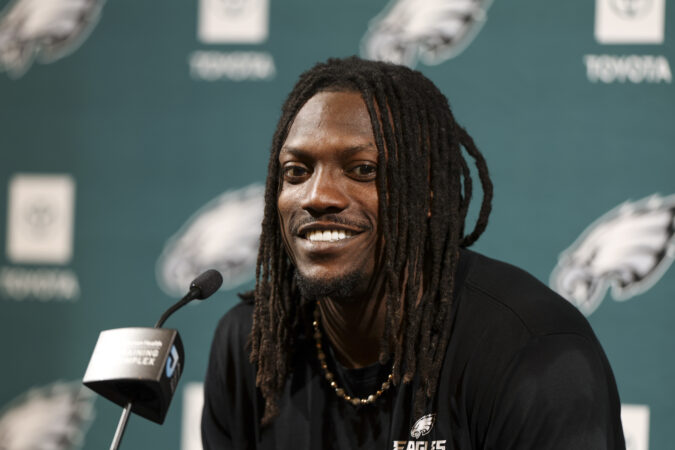
Much of the offseason focus for the Eagles was the impending trade of A.J. Brown and new offensive coordinator Sean Mannion taking the reins of the offense. During spring workouts, though, no player seemed to have more buzz than new defensive back Riq Woolen, who joined the Birds’ secondary after four seasons with the Seattle Seahawks.
The length, speed, and size combination of Woolen was enticing enough for Howie Roseman to spend $12 million on his services for one season in Philly. With Quinyon Mitchell and Cooper DeJean’s emergence in Vic Fangio’s secondary at corner and nickel, respectively, Woolen has an opportunity to flourish at a spot where the Eagles’ defense struggled last season.
Combining his film in Seattle with some eye-popping statistics, here’s why the Eagles are excited about Woolen — and how his acquisition helped set up DeJean for safety snaps in Fangio’s base defense.
Sticky coverage
It’s easy to forget that before the Seahawks picked him in the fourth round of the 2022 draft, Woolen was a wide receiver by trade. The University of Texas-San Antonio product spent only his final two collegiate seasons at cornerback before entering the NFL.
The transition hasn’t always been seamless, though he splashed onto the scene as a rookie with six interceptions. Grabby tendencies at the top of routes and biting on double moves were setbacks in his second and third seasons in the NFL, but what he did for the Super Bowl-winning Seahawks in 2025 was particularly special.
Woolen allowed just 2.7 yards per target in man coverage last year, the best mark among defensive backs with 20 or more targets, according to Next Gen Stats.
Even on plays new #Eagles DB Riq Woolen doesn't get a great jam in man coverage or allows a free release, he has the speed to turn and run with most players in the NFL. His length also allows him to play through the catch point. Rep is never truly over for him even in a trail… pic.twitter.com/RyyU0ouEvs
Even when his attempt to disrupt a receiver’s route timing misses, or he ends up in a trail position, Woolen has the closing speed and length to make up for it. His 33⅝-inch arms are in the 97th percentile among NFL defensive backs, and his 78⅝-inch wingspan is 89th percentile.
Woolen allowed 3.2 yards after the catch and his average target separation, which measures the average distance between the receiver and the nearest defender at pass arrival, was 2.2 yards, per Next Gen Stats. Both ranked among the best of qualified defensive backs.
For a cornerback his size, Woolen can transition quickly out of his backpedal or shuffle, which allows him to break on passes thrown in front of him. He is not always able to flip his hips fluidly against shiftier receivers, but his closing speed allows him to stifle pass catchers after the catch or recover fully before the ball is thrown.
Woolen’s length allows him to physically dislodge the ball out of the hands of receivers, especially on routes breaking across the middle of the field. He finished with 12 pass breakups in 2025.
First thing I noticed buzzing through coverage snaps from new #Eagles DB Riq Woolen is how disruptive he can be driving down on throws, whether it be stops, curls, out routes, and dig routes. Utilizing his length is a big part of his game, and he is really physical at the catch… pic.twitter.com/RxOPl0zlwa
Erasing downfield passes was a big factor in Woolen’s strong final season in Seattle. The defense as a whole prevented offenses from generating explosive plays, and Woolen’s presence was a factor.
Across his career on deep passes, Woolen had an expected points added of plus-10.5 on deep passes, but that number fell to plus-0.5 in 2025, according to TruMedia. He showed the ability to squeeze vertical routes toward the sideline, run stride-for-stride with receivers, and get his head around in coverage before the ball arrived.
On nine targets of passes that traveled 20 or more air yards, Woolen allowed just two catches and had one interception as the nearest defender, per Next Gen Stats.
On passes that traveled 20+ air yards last season, Riq Woolen allowed just 2 catches on 9 attempts and had one interception. He does a nice job squeezing deep routes toward the sideline and staying in the hip pocket of receivers downfield. pic.twitter.com/3dbBROXhih
Avoiding penalties should still be a priority for Woolen in coverage. He was charged with nine accepted penalties last year, which tied for sixth among NFL defensive backs. As teams will likely throw away from Mitchell’s side of the field in 2026, Woolen should expect to be tested early and often next season.
DeJean’s strong run support
If there’s an area of Woolen’s game that has been a glaring weakness, it’s his run support. He is an arm tackler and finished with 11 missed tackles across 16 regular-season games in 2025, according to Pro Football Focus.
Meanwhile, as DeJean moves from corner to safety in Fangio’s base defense this season, one thing that won’t change is the All-Pro’s willingness to tackle in the run game. Even as offenses deployed heavier personnel (two or three tight ends) to take advantage of the Eagles’ light boxes on defense (six or fewer players between the tackles) DeJean’s presence at nickel still made the Eagles difficult to run on over the last two seasons.
On plays with at least five defensive backs on the field, which included DeJean at nickel since 2024, the Eagles had a defensive EPA on designed rushing attempts of plus-0.15 and a 62.4% defensive rushing success rate, according to TruMedia.
One area I think Cooper DeJean will benefit the #Eagles being at safety in their base defense is his run support. Even when he bounced between outside corner (in base) and nickel last season, he consistently made plays in the run game.
He will likely fill the role vacated by Reed Blankenship, who signed with the Houston Texans this offseason. Blankenship excelled at filling the alley from his safety spot in the Eagles’ secondary, and while the team is bullish on Drew Mukuba’s development heading into his second year, he’s not as consistent a tackler in space as DeJean, nor is he as physical.
DeJean’s move to safety in the base defense also allows the Eagles to have their best four defensive backs on the field at once and could signal less reliance from Fangio operating in his nickel defense on early downs. It also could open the door for more flexibility in personnel matching against teams that are looking for formational advantages.
DeJean and Woolen have shown the ability to defend different body types of pass catchers. In Seattle, Woolen would sometimes defend tight ends and slot receivers in addition to traditional outside receivers at outside corner. DeJean, playing outside corner and nickel last season, faced similar matchups.
Most of Riq Woolen's snaps came at outside corner and I'd expect that to remain true with the #Eagles, but the #Seahawks lined him up at nickel 22 times last season, and seemed matchup dependent. Spent some time defending TEs (Kittle and McBride) and some hybrid/big slots like… pic.twitter.com/c8z6SVboCY
Woolen, DeJean and Mitchell could prove to be one of the best trios in the NFL, and they’ll have challenging games to make their case, from facing the Cowboys twice to going up against the Rams’ core. There’s reason to be optimistic about an Eagles secondary that added a talented player in Woolen who could cash in big-time next offseason, whether it’s in Philly or elsewhere.
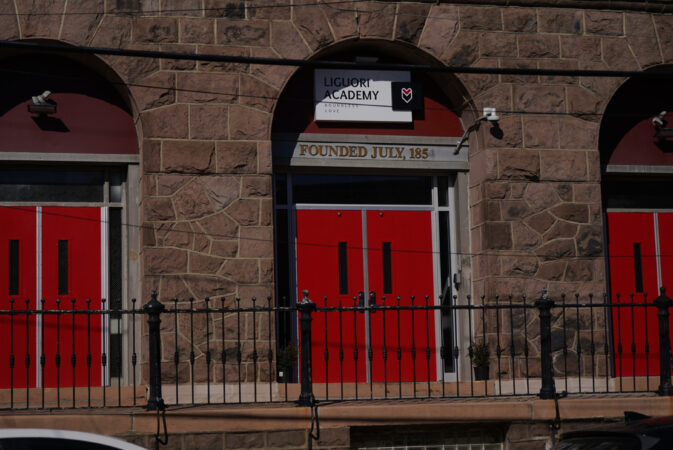
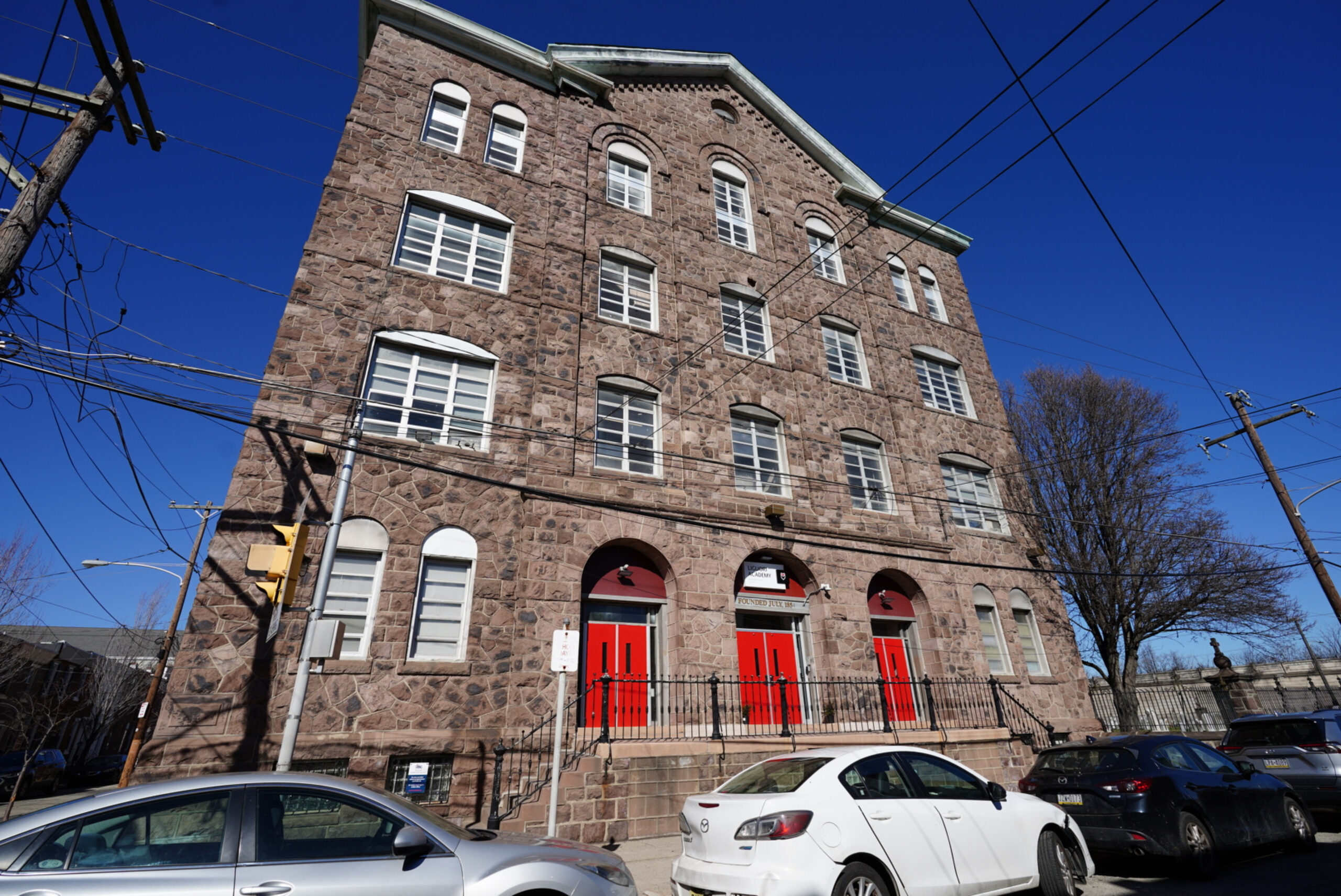
As president and chairman of a private school, we might seem out of place commenting on public policy. But recent state legislation that would undermine a vital Pennsylvania program — one that thousands of families and students depend on — compels us to speak up.
Conversations about education often focus on learning loss and declining academic performance, but students at our school, Liguori Academy, are moving in the opposite direction. Our students often arrive several grade levels behind, but they quickly recover and often surpass their peers.
And we have the numbers to back that up. This year, between 67% and 72% of our students, depending on grade level, demonstrated measurable growth in reading, gaining one and a half to more than two grade levels in a single school year. Many are now reading at a college level. In mathematics, between 58% and 74% of students also improved, with our ninth graders posting the strongest gains.
Conversations about education often focus on learning loss and declining academic performance, but students at Liguori Academy are moving in the opposite direction, write Michael Marrone and Joseph Marano.
Watching those students, who were so far behind academically, gain confidence, earn industry certifications, secure internships, and prepare for college and careers is a reminder of what is possible when students are given the support and opportunities they deserve.
And what has made this educational growth possible? It’s simple, really: Pennsylvania’s Educational Improvement Tax Credit program.
Unfortunately, state lawmakers may gut this life-changing program. The Pennsylvania House Education Committee passed legislation that would decimate the state’s wildly popular tax credit scholarship programs. Originally, House Bill 2632 proposed slashing $102 million from the Educational Improvement Tax Credit and robbing Pennsylvania kids of about 30,000 scholarships.
A committee amended the bill to avoid the cuts, but the updated bill still cuts tax credit levels, eliminates supplemental scholarships, hamstrings student eligibility, and imposes onerous taxes and regulations on scholarship organizations.
Critics of these programs — including many of the lawmakers sponsoring and supporting HB 2632 — will wrongly characterize this as a public vs. private issue. They claim the Educational Improvement Tax Credit “robs” funding from public education.
But nothing could be further from the truth. Although it may appear like a line item in the state budget, the Educational Improvement Tax Credit doesn’t use public funds. Instead, it relies on donations to scholarship organizations and the donors who receive a tax credit for their charity. Without the generosity of these donors, the Educational Improvement Tax Credit wouldn’t exist. If it went away, so would the philanthropy that funds it.
The timing of this bill is interesting, to say the very least. The Educational Improvement Tax Credit recently celebrated its 25th anniversary, having served more than 101,000 scholarships to kids across the state in conjunction with its partner program, the Opportunity Scholarship Tax Credit. Over their lifetime, these programs have awarded more than one million scholarships.
Despite this volume, there aren’t enough scholarships to go around. Even after awarding a record-level number of scholarships last year, nearly 70,000 scholarships went unfulfilled. But this isn’t because the students weren’t eligible; rather, state-legislated caps limit the number of available scholarships.
State lawmakers should take note: Pennsylvania families are demanding more, not fewer, scholarships.
These scholarships change lives and fuel academic success. The Children’s Scholarship Fund Philadelphia, one of the largest scholarship organizations in Pennsylvania, commissioned a report showing scholarship recipients from both programs outperforming their public and private school peers academically.
These scholarships provide equity for families struggling financially. The average household income for Liguori families, for example, is about $37,000, which is barely above the federal poverty line.
None of this happens without the Educational Improvement Tax Credit.
That is why what happened in Harrisburg recently should alarm every Pennsylvanian who believes every child — regardless of zip code or income — deserves a chance. This newly introduced legislation would take away much-needed scholarships not only from Liguori kids, but also from tens of thousands of Pennsylvania kids who worked hard to better themselves educationally.
As school leaders, we understand and welcome accountability. If scholarship programs are going to continue, schools must be prepared to demonstrate strong academic outcomes, sound financial stewardship, and compliance with program requirements.
But we have also seen the difference educational choice makes. We have watched students who arrived years behind their peers grow into young people ready for college and the workforce. That transformation is real — and the Educational Improvement Tax Credit made it possible.
Pennsylvania should be building more doors like ours, not slamming them shut.
Michael Marrone is the president and founder of Liguori Academy. Joseph Marano is chairman of the board of Liguori Academy.
Think you know your news? There’s only one way to find out. Welcome back to our weekly News Quiz — a quick way to see if your reading habits are sinking in and to put your local news knowledge to the test.
Question 1 of 10
Four friends from outside the U.S. lied to their employers as part of a pact to travel to Philly for the World Cup this year. They’ll stay until the Fourth of July. In the meantime, they’ve enjoyed many Philly gems, including cheesesteaks, hoagies, Rocky, and the Eagles. Where are the four fans from?
CorrectIncorrect. XX% of other readers got this question right.
The Frenchmen have marveled over Cheez Whiz and sports culture in Philly. But they’re not completely sure where smoking cigarettes is allowed, aren’t impressed with SEPTA and are skeptical of Uber Eats delivery robots. Still, they’d like to come back for a Birds game.
Question 2 of 10
Upsala mansion, on the border of Germantown and Mount Airy is listed for sale at $995,000 and comes with nine bedrooms, 10 fireplaces, 15 parking spaces, and a 70-page agreement that includes one particular caveat written into the home’s deed for:
CorrectIncorrect. XX% of other readers got this question right.
Built at the end of the 18th century on the site of a major Revolutionary War battle in Philadelphia, Upsala mansion was listed on the National Register of Historic Places in 1972. As part of the home’s deed, once a year, the owner must permit “a re-enactment of portions of the Battle of Germantown” on their front lawn.
story continues after advertisement
Question 3 of 10
Oh, Mary!, the wacky and irreverent Tony Award-winning play about first lady Mary Todd Lincoln, will stop in Philadelphia on its first national tour next spring, and tickets go on sale this week. The play focuses on the Lincolns in the weeks leading up to the assassination of President Abraham Lincoln, who is called ____ in the play.
CorrectIncorrect. XX% of other readers got this question right.
It’s Mary’s Husband. Written by actor/comedian Cole Escola, the dark, campy comedy first featured Escola in the role of Mary — which led them to win the 2025 Tony Award for best leading actor in a play — and has since hosted special guest stars like Maya Rudolph, Tituss Burgess, Jinkx Monsoon, and Jane Krakowski. The show also won the Tony for best direction of a play and was named a Pulitzer Prize finalist.
Question 4 of 10
Camden, New Jersey’s latest viral dance that has earned over a million fans across the world. What’s it called?
CorrectIncorrect. XX% of other readers got this question right.
Starting out on the basketball courts of Camden High School, the Camden Bop is a love letter to the city that’s often considered New Jersey’s most dangerous.
Question 5 of 10
Ronnie Gunter, a lacrosse player and recent Drexel graduate, made his TV debut Monday night on Love Island USA. But in 2024, Gunter went viral on TikTok for his resemblance to this public figure:
CorrectIncorrect. XX% of other readers got this question right.
Two years ago, in a TikTok reshared by accounts including ESPN, Gunter’s then-girlfriend said he’d get mistaken for Eagles quarterback Jalen Hurts “everywhere we go.” Gunter told The Inquirer at the time that the comparisons started coming around his sophomore year — along with stares and photo requests — but he welcomed the attention for the most part.
Subscribe to The Philadelphia Inquirer
Our reporting is directly supported by reader subscriptions. If you want more journalism like this story, please subscribe today.
Philadelphia's Blacktronika festival celebrates the artists and albums that helped shape Black electronic and futuristic music traditions. One featured event pays tribute to a landmark recording from a Philadelphia music legend. Which influential musician's album "Life on Mars" is included in the programming?
CorrectIncorrect. XX% of other readers got this question right.
Musical trailblazer Dexter Wansel was scheduled to join a Philly all-star band with Black Buttafly on keys, Anthony Tidd on bass, Tim Motzer on guitar, Elliot Levin on sax, and singers Lady Alma and Tonja Dixon. Poet Ursula Rucker was also on the bill. Wansel died last month at 75, so the inaugural Blacktronika Icon Award will be presented posthumously to his son, producer Pop Wansel. Black Music Month founder Dyana Williams will host.
Question 7 of 10
This popular food vendor will operate permanently at Triple Bottom Brewing:
CorrectIncorrect. XX% of other readers got this question right.
Triple Bottom owners Tess Hart and her husband, Bill Popwell, announced South Philly Barbacoa as their new permanent food vendor for the Spring Garden brewery. The South Philly Barbacoa menu at Triple Bottom features most of the same items found at its South Philly location inside Casa Mexico, where South Philly Barbacoa still operates.
Question 8 of 10
Mama-Tees, the community fridges around town notable for their bright yellow paint jobs, is selling flavor-infused olive oils as part of a fundraiser to combat food insecurity locally. There’s a basil oil, truffle oil, pepper oil, and this unique addition:
CorrectIncorrect. XX% of other readers got this question right.
It’s cheesesteak oil and it retails for $19. A survey of food reporters and local chefs had varying opinions on it. It can be purchased at Wegmans in King of Prussia, with other locations coming soon.
Question 9 of 10
Unsurprisingly, the Philly cheesesteak ranked high among World Cup tourists on a new survey about host city foods travelers looked forward to trying. What food landed in first place on the list?
CorrectIncorrect. XX% of other readers got this question right.
Guadalajara’s torta ahogada landed in first place, but the Philly cheesesteak snagged the No. 5 position, beating out a New York slice significantly.
Question 10 of 10
Who was a guest bartender at Jason and Kylie Kelce’s sixth annual Sea Isle fundraiser, Shore Birds, this week?
CorrectIncorrect. XX% of other readers got this question right.
United States Women’s rugby player Ilona Maher made her bartending debut, also serving Jello shots with the event’s matriarch, Donna Kelce. Maher was also on Team Kelce for a round of flip cup, working with both Jason and Kylie Kelce and Beau Allen to secure the win.
Your Results
You have skipped .
You scored XX out of 10.
The average reader scored XX out of 10
Seems like you’ve been skimming more than reading there, buddy. There’s always next week.
You’ve read some articles (or made some educated guesses) but we wouldn’t come to you first for our local news recaps. Better luck next week!
Do you work here? You’re a local news stan with the latest updates on Philly happenings. Your friends definitely ask you for summaries on what’s going on and it shows.
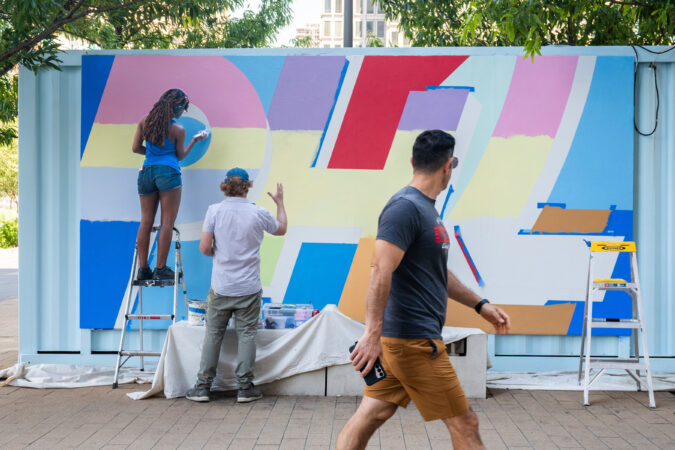
In past years, the city’s budget process has followed a certain pattern for Mural Arts Philadelphia and other groups.
The mayor’s proposed budget lists city funding at one level; City Council and others advocate for modifications at a higher level; and the budget goes back to the mayor and is finalized with the higher allocation in place.
This year was different.
Philadelphia’s nationally acclaimed program that puts colorful murals in neighborhoods and provides jobs was hoping for a boost in city funding.
Instead, the budget ultimately agreed to by Mayor Cherelle L. Parker’s administration and City Council cut funding to Mural Arts — from $5.1 million in fiscal year 2026 to $3.7 million in 2027.
Likewise the Philadelphia Cultural Fund. The group — which awards hundreds of grants to arts groups throughout the neighborhoods — was looking for increased funding in the city’s newly approved $7.1 billion budget for the fiscal year starting July 1.
But the arts nonprofit, established by the city recently, learned that it will get substantially less — $3.5 million instead of the $5 million it received from the city for the fiscal year now ending.
As a result, both groups say they will have to make deep cuts to programs.
Philadelphia’s arts and culture sector had greeted the start of Parker’s term 2½ years ago with optimism for increased funding. Today, it is “alarmed” by the cuts to Mural Arts and the Cultural Fund, said Patricia Wilson Aden, president and CEO of the Greater Philadelphia Cultural Alliance.
“We always say that your budget tells a story, and I have to say that the cultural community is disappointed and frustrated with the story being told by this FY27 budget,” she said. “Cutting the budget of signature programs like Mural Arts by 26% or decreasing funding to the Philadelphia Cultural Fund, that’s going to have ramifications throughout the city.”
Parker was not available for comment, a spokesperson said.
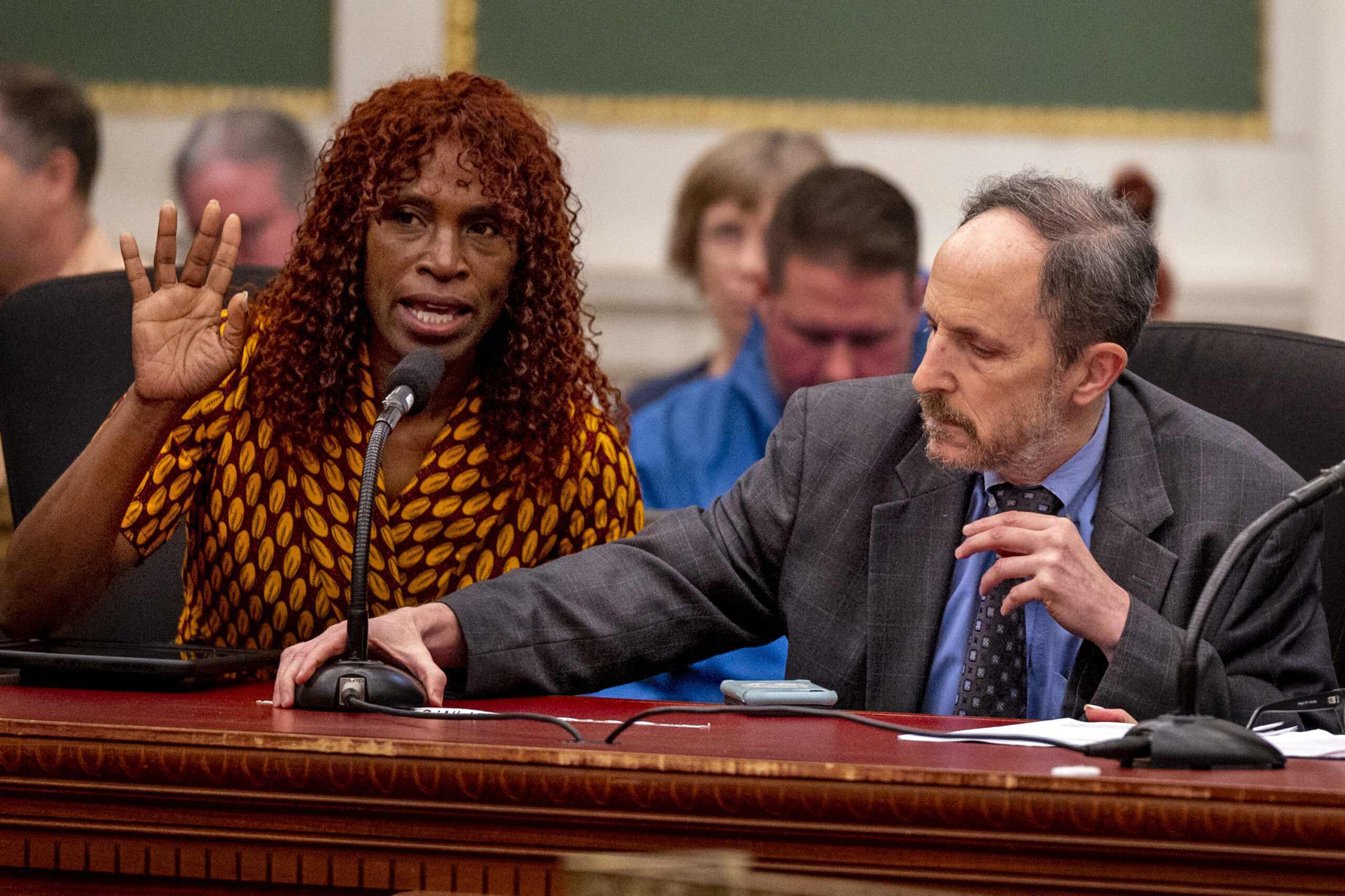
Valerie V. Gay (left) chief cultural officer with the City’s Office of Arts, Culture and the Creative Economy, and finance director Rob Dubow (right) testify at a Philadelphia City Council hearing, Aug. 8, 2024 on the collapse of the University of the Arts.
Valerie V. Gay, the city’s chief cultural officer, said it was the city’s view that funding for the two groups had remained flat from 2026 to 2027, since the base allocation stayed the same and it was only the added amount that did not come through — though she allowed that “absolutely I can see how it can be perceived.”
A ripple effect
The resulting cuts at both groups promise to be substantial. The Cultural Fund will be forced to reduce the number of grants it had been expecting to distribute in the coming year, from 332 to 232. It has changed its eligibility requirements, which will eliminate grants to a pool of midsize organizations currently eligible.
“It’s going to be a ripple effect. People are going to feel it and communities are going to feel it,” said Philadelphia Cultural Fund executive director Gabriela Sanchez.
“An investment in the Philadelphia Cultural Fund is more than a budget line item,” Sanchez wrote in a statement distributed by the group. “Funding to PCF represents how the city values neighborhood theaters, cultural centers, museums, arts education programs, festivals, dance companies, community storytelling initiatives, music programs, and cultural traditions that bring Philadelphians together. These spaces are where young people discover their creativity, where seniors find connection, where communities celebrate their heritage, and where residents gather across lines of difference.”
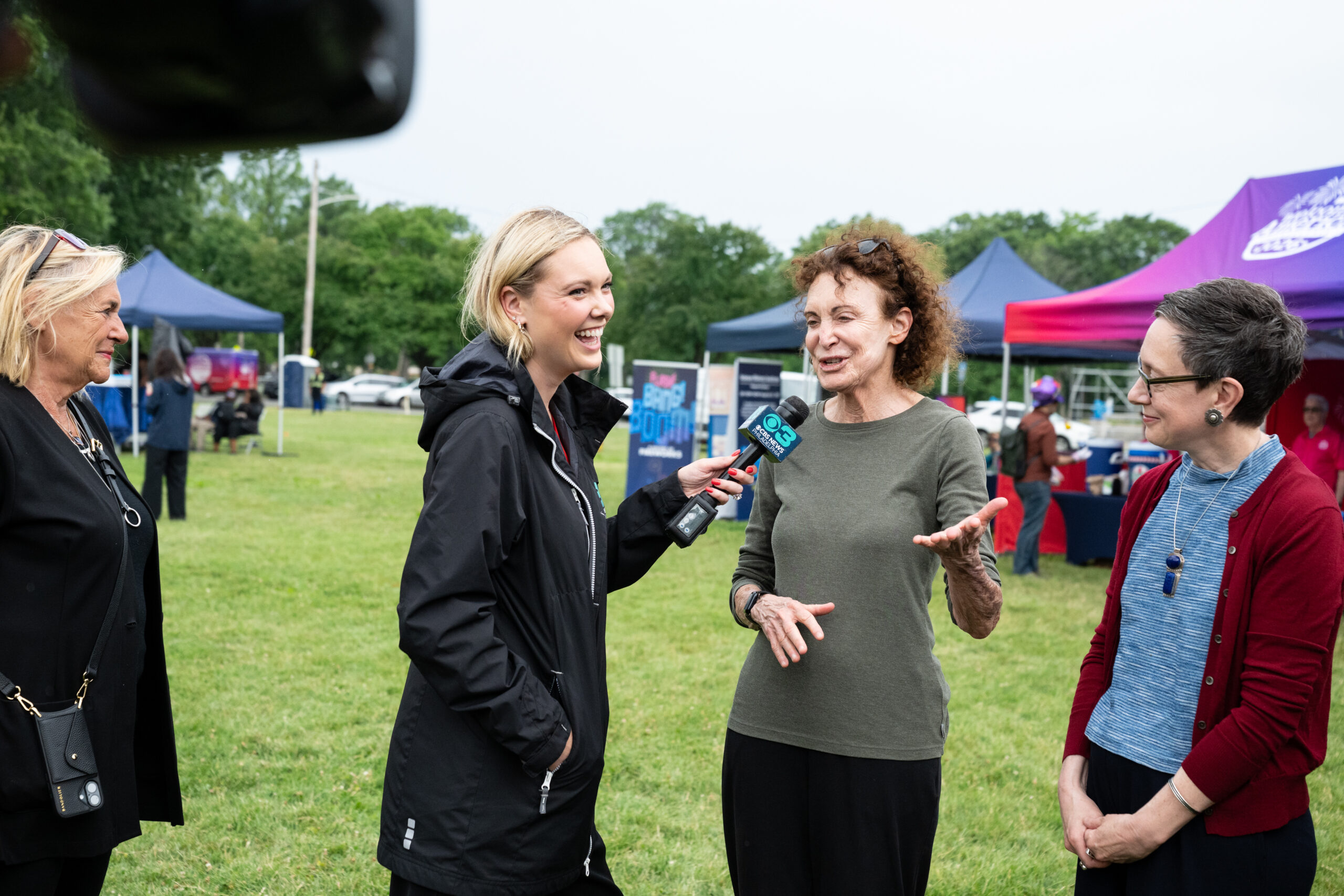
Jane Golden (center right) speaks with press at the Wawa Welcome America media preview for the Philly Fair 250, outside the Please Touch Museum in West Philadelphia, June 18, 2026. Mural Arts held a ceremonial unveiling of a 10-story-high mural replica, originally titled ‘CityKids Speak On Liberty,’ and created by Keith Haring.
Mural Arts director Jane Golden declined to comment, but an initial assessment from the group obtained by The Inquirer says that “hundreds of residents in at least 15 Philadelphia communities will lose the opportunity to develop public art projects,” and that opportunities for paid work, job training, and mentorship through the Mural Arts Restorative Justice program will be reduced by 25%.
Mural Arts will also have to cut by 75% its program of restoring and preserving the city’s murals, “putting at risk community landmarks that took years and significant public investment to create,” the impact statement reads.
Of the program reductions at both groups, Gay said: “I am always sad that any cuts are made or that any organizations are unable to do the work they thought they were going to be able to do. That’s always a sad time for us, and I’m looking forward to when we are a fully funded sector.”
A city spokesperson was unable to provide a full list of groups that in past years had received higher allocations after advocacy from City Council and others, but this year did not.
What’s behind the cuts
Aden says arts and culture has seen some significant recent “wins” from city government. Among them is the advancement of a referendum that, if approved by the mayor and then by voters this fall, would enshrine the city’s office of arts and culture, called Creative Philadelphia, in the City Charter.
The city has approved $500,000 a year to develop and implement a cultural plan for Philadelphia that would document financial needs and could identify potential pathways to establishing funding.
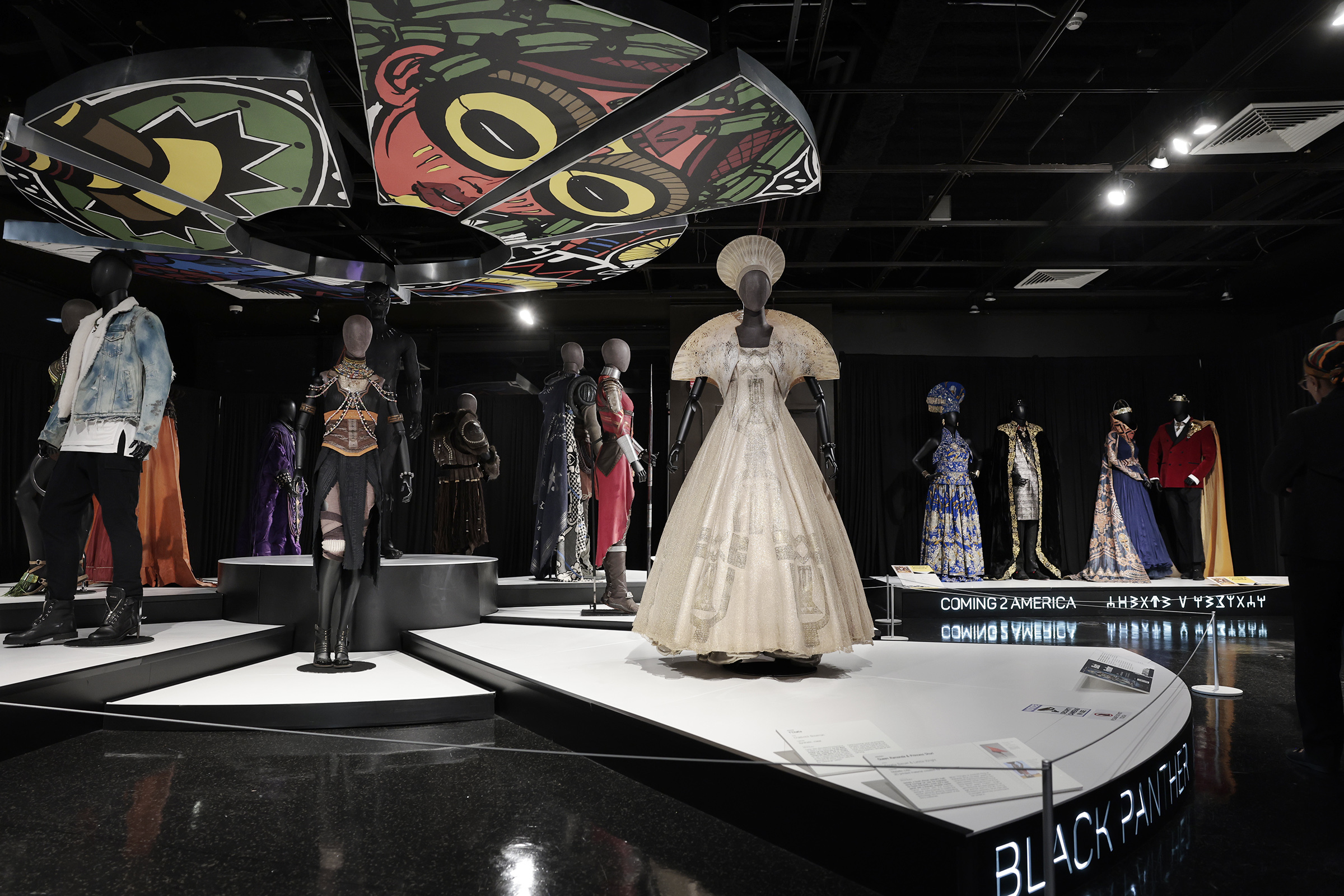
The ‘Ruth E. Carter: Afrofuturism in Costume Design’ exhibition at the African American Museum in Philadelphia, Nov. 1, 2025.
Sometimes the city’s support is for regular operations, and other times it is for specific capital projects. In an unusually large commitment, the city has pledged $50 million to the African American Museum in Philadelphia for its relocation to the Benjamin Franklin Parkway.
The city is providing nearly $32.5 million to arts and culture in FY27, according to a list provided by Parker’s office. While that total includes small items that might seem mundane — paying utility bills at various facilities, for instance — it also shows multimillion-dollar allocations to the Philadelphia Museum of Art, Dell Music Center, and Philadelphia Zoo.
But the arts and culture sector often finds itself fighting for adequate funding in the annual budget process. Arts leaders and others say it has been standard practice in recent memory that funding is listed at one level in the mayor’s proposed budget and after City Council testimony in budget hearings ends up being higher.
This year, the mayor “could have funded [the arts] at a higher amount,” as she did last year, but did not do so, Councilmember Rue Landau said.
The cuts came after a budget that passed without a series of tax increases proposed by Parker, including a $1 tax on rideshare services, after failing to win support from City Council. After Council signaled it would reject Parker’s tax proposals, the administration would not agree to any last-minute line items for new funding requests from lawmakers.
Councilmember Isaiah Thomas, a consistent arts supporter who, like Landau, is an ex-officio Mural Arts board member, said that with the lack of new tax revenue and the city’s extra allocation of $48 million to cover the Philadelphia School District’s budget shortfall, the funding pie for other allocations got smaller.
“This budget year, a lot of attention and advocacy went toward schools,” Thomas said. The funding cuts to Mural Arts and the Cultural Fund were “extremely unfortunate,” he said, “and I wish we could have done something different.”
The need for ‘predictable, stable, reliable’ funding for the arts
While the city’s budget is now final, there is another potential window of opportunity for funding through a midyear budget transfer process in which the city might see expenditures in certain areas coming in lower than expected, and then transfer money from those categories to other areas.
Asked whether funds might be restored through a budget transfer to Mural Arts or the Cultural Fund, Gay said:
“I think anything is on the table, but I also think nothing is guaranteed.”
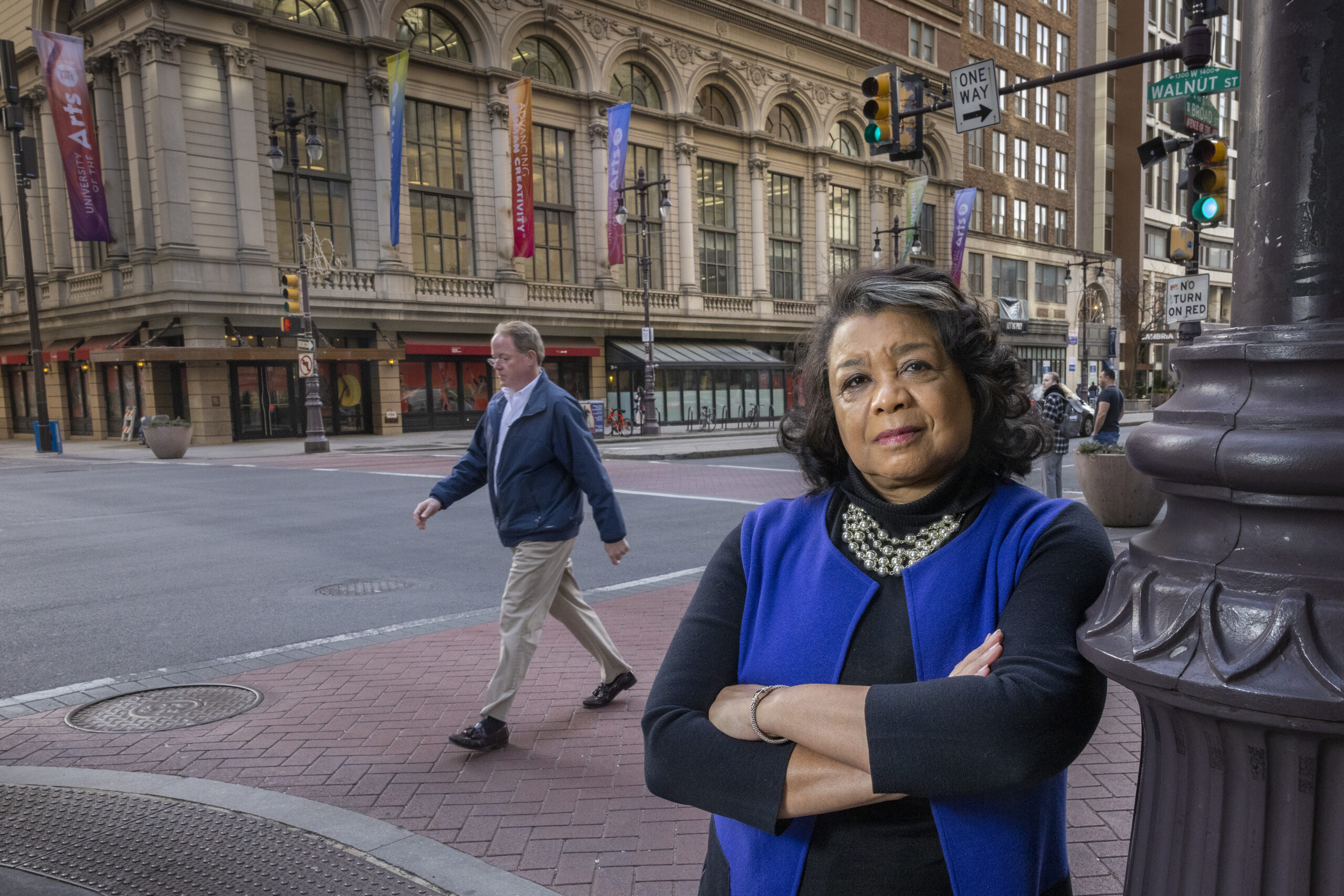
Patricia Wilson Aden, president and CEO of the Greater Philadelphia Cultural Alliance, at S. Broad Street and Walnut along the Avenue of the Arts, Feb. 15, 2023.
Any restoration of funds would happen after arts groups have already put cuts in place, and this kind of unpredictability “makes planning by these organizations very, very difficult,” Aden said.
“The practice of underfunding the arts and having Council and other entities have to go on an advocacy campaign to increase funding is illogical,” Landau said. “It is clear as day that we should be supporting the arts with additional funding every single year, so we don’t have to go through this and it won’t ever be a question mark for them.”
What is really needed, Aden said, is a dedicated arts fund in Philadelphia and the region.
“We’ve seen other regions benefit from this predictable, stable, reliable funding. And instead, here in Philadelphia, each year we have this conversation about increases and decreases and their impact. We are sometimes left to the will and whim of elected officials, and we would like to take the creative economy out of the political realm and put it solidly within our larger civic interest, so that it is stable and has the investment that is required to reach its full potential.”
Staff writer Anna Orso contributed to this article.
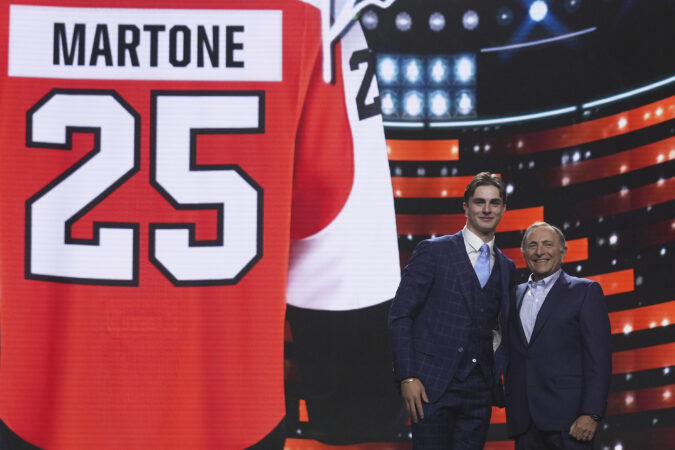
The Flyers are nearly on the clock for the first round of the 2026 NHL draft.
The draft starts Friday night and the Flyers will have four picks — one each in the first, second, fifth, and seventh rounds. Here’s everything you need to know before the draft begins.
The 2026 NHL draft officially starts at 7 p.m., but the Flyers won’t be on the clock for a lottery pick. The first round of the draft will air live on ESPN. The second round begins at 11 a.m. on Saturday, and the draft will end with the seventh round that same evening.
When do the Flyers pick?
After winning a playoff series overthe Pittsburgh Penguins during the 2026 postseason, the team’s first since 2019-20, the Flyers will pick at No. 21 overall during Friday’s first round.
The Flyers will also have three picks on Saturday: in the second round (53rd overall), fifth round (136th overall), and seventh round (213th overall). The fifth-rounder was obtained as part of the package in Thursday’s Garnet Hathaway trade, essentially replacing a sixth-rounder that was sent to the Florida Panthers in the deal.
Who are the top players?
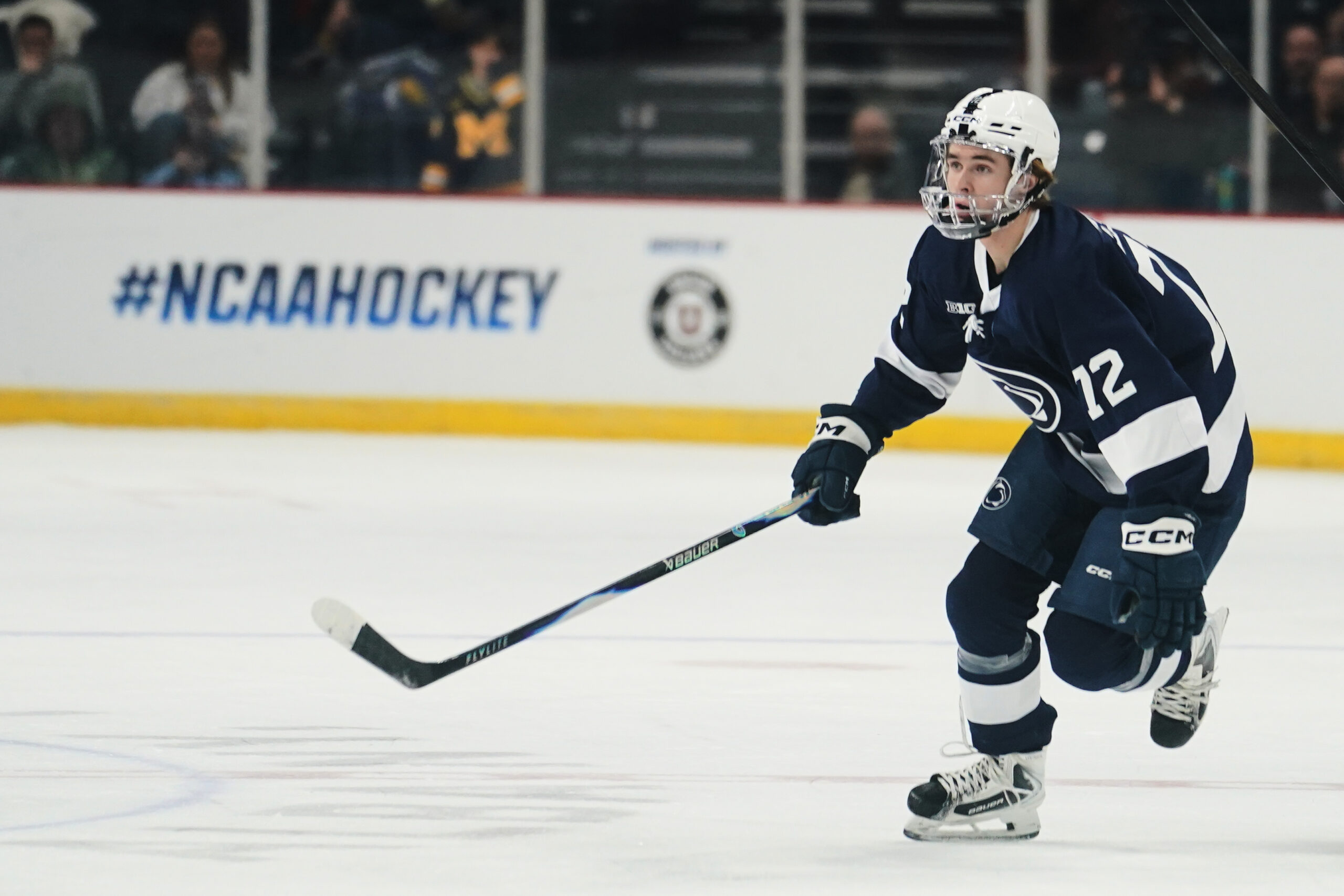
The projected top two picks are Penn State winger Gavin McKenna and Swedish winger Ivar Stenberg. The Toronto Maple Leafs won the draft lottery and the San Jose Sharks have the second overall pick. Other expected top picks include defensemen Chase Reid and Keaton Verhoeff, and center Caleb Malhotra.
McKenna finished with 36 assists (second-most in college hockey) and 51 points (tied for fourth-most) in 35 games.
Penn State forward Gavin McKenna is a projected top pick in the 2026 NHL draft.
“It was a good season, I think,” McKenna said at the NHL scouting combine. “In college, the guys are bigger and stronger and faster and stuff, and the game in itself, I think, is just a little different than junior. It’s more straightforward hockey.
“So found out early on that things [weren’t] just going to happen easy, and I think once I got to World Juniors, I kind of got my confidence back and kind of figured out the game a little bit more, and started working harder off the ice and on the ice and getting in the dirty areas a little bit more, and I think that’s why I started producing more.”
Who will the Flyers pick at No. 21?
Now that the Flyers aren’t up near the top of the draft, there are a lot more variables impacting who they might select.
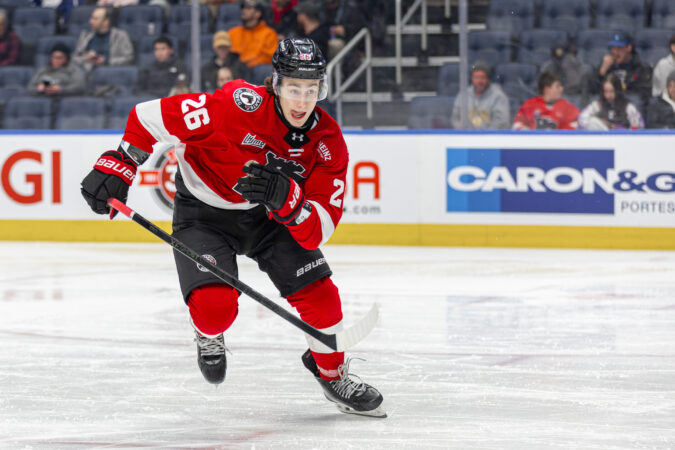
In Flyers beat writer Jackie Spiegel’s latest mock draft, she had the Flyers selecting center Jack Hextall, a distant relative of former Flyers goalie and GM Ron Hextall. The younger Hextall scored 20 goals and had 38 assists for the Youngstown Phantoms of the United States Hockey League last season.
“His bread and butter is how well-rounded he is,” The Athletic’s NHL draft and prospects reporter Scott Wheeler told The Inquirer. “The details off the puck, up and under sticks, retrievals, board battles, he’s got pro habits.
“If you talk to the guys in Youngstown, the first thing they say about him is that he’s a pro; this isn’t a junior hockey player, like a lot of these kids are. [He] does everything the right way, no selfishness to his game, and he doesn’t cheat for offense.”
What is Philadelphia music? If you've been following along all week, you've finally reached our answer: the top 10 songs on our list.
It’s the Sound of Philadelphia: Kenny Gamble and Leon Huff, as well as Thom Bell, their fellow songwriter-producer who completed the triumvirate known as the Mighty Three.
It’s hometown heroes like Harold Melvin & the Blue Notes and the Stylistics; out of towners pulled into the city’s orbit such as the O’Jays, Spinners, and David Bowie; and the musicians at Joe Tarsia’s Sigma Sound Studios who made the city a music mecca in the 1970s.
But of course, Philly music is much more than the rugged, sophisticated “soul music in a tuxedo” sound. It’s the street-forged rap of Schoolly D, Freeway, and Meek Mill; the luxurious strings of the Philadelphia Orchestra; and the 21st century indie rock of Kurt Vile, Dr. Dog, and Japanese Breakfast.
Philadelphia is a foundational jazz city, from South Philly’s Eddie Lang — the “Father of Jazz Guitar” — in the 1920s to John Coltrane writing Giant Steps in Strawberry Mansion in the 1950s to pianist McCoy Tyner, who’s represented with a “West Philly Tone Poem.”
Philly music means Chubby Checker and the teen idols of American Bandstand, rock singers who grew up on soul music like Hall and Oates and Todd Rundgren, soul singers par excellence like Teddy Pendergrass, Patti LaBelle, Jazmine Sullivan, Jill Scott, and irrepressible pop stars like Pink.
It’s a musician’s city that birthed the world’s greatest hip-hop band — the Roots — whose best known and loved member is the drummer. A gospel singer’s city that’s home to powerhouse vocalist Clara Ward with a concert hall named after a classical contralto — Marian Anderson — who also sang spirituals and broke racial barriers.
Timed to the celebration of the nation’s 250th birthday in the city where it was founded, what follows is an annotated list of the 76 most essential Philadelphia songs.
Are they also the best? For the most part, in my subjective opinion, yes. But along with quality, many of these songs — that are not always made by Philadelphians — are included mainly because they say something about Philadelphia, and who we are as Philadelphians.
And some are on the list due to ubiquity. They’ve become part of the fabric of daily life. You might hear them on your TV, on Broad Street on New Year’s Day, at any time of year at the sports complex, or in the summertime as an ice cream truck rounds the corner.
I made most of the decisions myself, but my colleague Peter Dobrin contributed when it came to all matters concerning classical music, and some of his choices are better described as pieces of music rather than songs, per se.
He knows far more about classical music than I do, so — like Rocky and Adrian in Rocky — we will fill each other’s gaps. So be on the lookout for Peter’s picks, and also for where the “Theme From Rocky” is going to land on the top 76.
You may think you've never heard Cliff Nobles’ “The Horse.” But if you’ve ever been to a high school football or basketball game, the pep band has probably played it.Courtesy of the artist
Cliff Nobles’ voice is not heard on his biggest song. After moving to Philadelphia, the Mobile, Ala., born singer recorded the single “Love Is All Right” for Phil-La of Soul Records in 1968. In a session at Virtue Recording on North Broad Street that Nobles didn’t attend, guitarists Bobby Eli and Norman Harris, sax player Mike Terry, bassist Ronnie Baker, and drummer Earl Young — all future members of Philadelphia International Records house band MFSB — jammed on an instrumental version of “Love Is All Right” that became the B-side. DJs preferred that version without words, and “The Horse” became a No. 2 pop hit. You might not think you know it, but if you’ve ever been to a high school football or basketball game, the pep band has probably played it.
75
Bahamadia, “Uknowhowwedu”
Antonia D. Reed, aka Bahamadia, was born in Philadelphia and started rapping when she was still in high school.Courtesy of Michael Branscom
Stone-cold classic from the underappreciated — though not by hip-hop heads — rapper Bahamadia, from her 1996 debut album Kollage. The artist born Antonia Reed made her debut with a guest verse on the Roots’ “Proceed III” in 1994. Here, she samples A Tribe Called Quest and Schoolly D and displays her verbal dexterity on a song that’s a flashback to a memorable Philly hip-hop era, as she name checks 215 rappers and DJs of the day, including the Roots, Ram Squad, Cash Money, Kolby Kolb, Cosmic Kev, and “Illadell” itself.
74
John Philip Sousa, “Liberty Bell March”
We let Monty Python’s Flying Circus borrow it for a while, but the piece is ours. Originally written for an operetta left unfinished, the piece wraps our resident bell in Sousa’s usual uplifting military garb. Tubular bells — and an optional ship’s bell — are used to suggest the famous one near Independence Hall that no longer rings. — Peter Dobrin
73
Mannequin Pussy, “Drunk II”
(Left to right) Colins “Bear” Regisford, Maxine Steen, Marisa Dabice, and Kaleen Reading, bandmates in Philly punk (and pop) band Mannequin Pussy, at Penn Treaty Park in Philadelphia on Feb. 15, 2024.Jessica Griffin / Staff Photographer
Mannequin Pussy identifies as a punk band, and for good reason. The group can whip up a righteous racket and singer Marisa Dabice’s lyrics seethe with capitalist critiques and feminist rage. But it’s also a pop band whose earworms are as musically pleasing as they are lyrically subversive. This 2019 song alternates between outer- and inner-directed anger, from a great Philly band representative of this time and place. So much so that when Mare of Easttown creator Brad Ingelsby created a fictional Delco rock band, he had them sing Mannequin Pussy songs.
72
Bill Doggett, “Honky Tonk, Parts 1 and 2”
Huge 1956 instrumental pop and R&B smash from Doggett, who was born in Philly in 1916 and played piano in Lucky Millinder’s Orchestra in the 1940s, when he cowrote “Shout, Sister, Shout!” for Sister Rosetta Tharpe, who will appear higher up on the Philly 76. Doggett was an innovator of the Hammond B-3 organ, and “Honky Tonk” was such a runaway hit that it was covered by Buddy Holly and the Beach Boys. It also pointed ahead to the great Philadelphia organ jazz tradition that includes Jimmy Smith, Jimmy McGriff, Trudy Pitts, Shirley Scott, and Papa John & Joey DeFrancesco.
71
Lee Andrews & the Hearts, “Long Lonely Nights”
Lee Andrews Thompson’s impact goes well beyond cocreating his son, Roots drummer Ahmir “Questlove” Thompson. (And his lineage goes back further: Lee Andrews’ father Beechie Thompson sang with Philly gospel greats the Dixie Hummingbirds.) In the late 1950s, when the Hearts were managed by influential Philly DJ Douglas “Jocko” Henderson, the band scored a series of heart-rending doo-wop hits. “Long Lonely Nights” is the one that hurts the most.
70
Evelyn “Champagne” King, “Shame”
The Phillie Phanatic dances with singer Evelyn "Champagne" King after she threw out the first pitch on June 21, 2013.Charles Fox / Staff Photographer
Evelyn King was discovered as a teenager singing in a bathroom at the Philadelphia International Records offices. “Champagne” was added to make her name sound less grown-up and give it the extra fizz suited to the disco explosion, which, in 1977, the song arrived in the middle of. Raymond Earl of Philly band Instant Funk plays bass, recently deceased Philadelphia International Records great Dexter Wansel plays keys, and Sam Peake is on sax.
69
Bobby Rydell, “Wildwood Days”
Bobby Rydell speaks about his experiences in Wildwood after the dedication of his “Icon of the Wildwoods” mural, in May 2014.Michael S. Wirtz / Staff Photographer
Bobby Rydell had a big 1963. Not only did the South Philly musician — originally a drummer, who played in a teenage band with guitar great Pat Martino — costar in Bye Bye Birdie, he also scored a hit with “Forget Him.” “Wildwood Days” is the summertime excursion that has stood the test of time. It’s featured in Season 2 of Upper Darby native Tina Fey’s Netflix series The Four Seasons. Sixty-three years after its release, the song still soundtracks a summer down the Shore, where “Every day’s a holiday, and every night’s a Saturday night.”
68
Woody Guthrie, “Philadelphia Lawyer”
Woody Guthrie in March 1943 with his guitar.Courtesy of Library of Congress
Woody Guthrie’s cowboy ballad is not about a personal injury attorney who advertises on billboards on I-95 and the Schuylkill Expressway luring clients with a big sack of money. But it could be: The protest and folk singer who wrote the words “This Machine Kills Fascists” on his guitars characterizes Philadelphia lawyers as slick, not to be trusted operators. So when the title character gets repaid in blood for romancing a Nevada cowboy’s sweetheart, no tears are shed. Willie Nelson and the Maddox Brothers and Rose also do fine versions.
67
Santigold, “Creator”
Santigold performs on the Rocky Stage during the Made In America Music Festival along the Benjamin Franklin Parkway on Sept. 2, 2012.Yong Kim / Staff Photographer
Mount Airy-raised Santi White is a Philly all-star going back to her days leading Stiffed, the New Wave and ska rock band she fronted in the early ‘00s. After moving to New York, she soon broke through with a 2008 album that stylishly mixed, dub, electro, punk, hip-hop, and pop and made her an avatar of 21st-century cool. “I’m the creator, thrill is to make it up,” she singjays on “Creator,” which found its audience in part through exposure on Gossip Girl and a Bud Light Lime ad.
66
Blind Willie Dunn’s Gin Bottle Four, “Jet Black Blues”
Salvatore Massaro changed his name twice. As Eddie Lang, the South Philly native was known as the Father of Jazz Guitar. Then he called himself Blind Willie Dunn so he could break the music industry color line and team with jazz and blues guitarist Lonnie Johnson at a time when Black and white players making music together was taboo. This 1929 song is important music that’s also delightful; and also tinged with tragedy as Lang would die in 1933 at age 30 from complications from a tonsillectomy that his friend Bing Crosby urged him to have.
65
McCoy Tyner, “West Philly Tone Poem”
In this July 14, 2009, file photo, jazz pianist McCoy Tyner performs during the 43rd Montreux Jazz Festival in Montreux, Switzerland.Courtesy of AP
The giant of jazz piano, known for his thunderous playing and early collaborations with John Coltrane, sounds soft and lovely here. He is accompanied on bowed bass by a Philly jazz great of a younger generation, Southwest Philly’s Christian McBride.
64
Blue Magic, “Sideshow”
Written by MFSB guitarist Bobby Eli with Vinnie Barrett, and produced by Norman Harris, “Sideshow” is an achingly beautiful song with a soaring vocal by lead singer Ted “Wizard” Mills, released on Atco Records. It demonstrates just how rich the Philly soul scene was in the 1970s, with Sigma Sound players like Eli and Harris scoring No. 1 R&B hits on Philly artists outside of the Philadelphia International family.
63
The Dovells, “Bristol Stomp”
Vocal group the Dovells pose for a portrait in 1961.Courtesy of Getty Images
Dance music culture in Philadelphia in the early days of rock and roll was at such a fever pitch that a song about a teen dance craze in Bucks County could — with the help of American Bandstand — become a No. 2 national pop hit. Len Borisoff, the lead singer of the Dovells, who also had a smash with “You Can’t Sit Down,” later went on to solo fame as Len Barry, with the divine 1965 hit “1-2-3.”
62
The Menzingers, “Anna”
Tom May, co-frontman of the Menzingers, at Union Transfer on Nov. 24, 2018, for the “After The Party Tour.”Courtesy of Kristen Balderas
Like any power pop band worth its salt, Scranton-born and Philly-based the Menzingers excel at yearning. The thing they’re longing for in 2019’s “Anna” is quality time with their significant other. “Anna, I have so much to tell ya” rhymes with “Please come back to Philadelphia.”
61
Rachmaninoff, “Symphonic Dances”
Undated photo of pianist, conductor, and composer Sergei Rachmaninoff (left) and Eugene Ormandy.Courtesy of Marston
“Unquestionably, they are the finest orchestral combination in the world,” Rachmaninoff said of the Philadelphia Orchestra in 1931. Among the works he wrote specifically for the ensemble is his Symphonic Dances, his last major work and one of the most colorful and emotionally far-reaching. — Peter Dobrin
60
Sheer Mag, “Point Breeze”
Christina Halladay (left), Hart Seely, and Kyle Seely (right), sit in their rehearsal space on Grays Avenue in Southwest Philadelphia on Tuesday, Aug. 21, 2019. The three are part of the band Sheer Mag, which was formed in Philadelphia.Margo Reed / Staff Photographer
Anti-gentrification rock and roll! The Christina Halladay-fronted hard-rock quartet draws inspiration from 1970s bands like Thin Lizzy and the Clash. “Point Breeze,” from the band’s 2014 debut EP makes pointed reference to an OCF Realty office and notes that “the streets are changing, a white breeze is blowing through.”
59
Jim Croce, “You Don’t Mess Around With Jim”
Jim Croce, a South Philly native and Villanova grad.
South Philly native and Villanova grad Jim Croce met a “pool shootin’ son of a gun” named Big Jim Walker in a West Philly bar. The title cut to Croce’s 1972 breakout album was also the blueprint for his 1973 hit “Bad, Bad Leroy Brown,” which Philly troubadour Kenn Kweder sang in tribute to Croce at the Philly Music Alliance gala this spring.
58
The American Dream, “Frankford El”
What was true in 1970 remains so today: “You can’t get to heaven on the Frankford El.” The reason why is succinctly explained on this ramshackle tune by one of the leading Philadelphia rock bands of the countercultural era, whose one and only album was the first to be produced by Todd Rundgren: “Because the Frankford El goes straight to Frankford.”
57
Lady B, “To the Beat, Y’all”
DJ Lady B in the WRNB studio in 2011, her 30th year in hip-hop.Courtesy of Laurence Kesterson
As a pioneering Power 99 DJ, Wendy Clark boosted the careers of Schoolly D, Run-DMC, and especially DJ Jazzy Jeff and the Fresh Prince. But she also made music history in 1979 when she recorded this snappy single, the first rap song released by a Philadelphia artist or female artist anywhere. In 2015, Vibe called her “maybe the most influential female in hip-hop radio history.”
56
Marah, “Christian Street”
In a photo from 1999, Serge Bielanko (right) of the group Marah goes through a sound check. To his left is his brother Dave, who is also a member of the band.Peter Tobia / Staff Photographer
A tour down the South Philly artery, from the Conshohocken-raised Bielanko brothers’ scrappy Springsteen-y band's 2000 album Kids in Philly. “Saint Paul’s is for soul salvage, 9th Street for my fennel and leek,” Dave Bielanko sings, while shouting out Rocky Balboa and Angelo Bruno. “Stop by Snockey’s for a short Amaretto, when the moon comes up rising like a giant pizelle.” From the smell of pepper and egg sandwiches to the corner payphone “for bettin’ the numbers,” the song — and entire album — teem with life and capture a fleeting turn-of-the-millennium moment.
55
Al Ham & the Hillside Singers, “Move Closer To Your World”
The Action News theme song, composed by jingle writer Al Ham, with lyrics by former 6abc exec Walt Liss, is still everyday listening in Philadelphia living rooms, 54 years after its release. Honorable mention in the category of songs that seem to be in the air, if not the wooder: the Mister Softee ice cream truck jingle, written by Les Waas, which has been omnipresent on the streets of Philadelphia since 1960.
54 to 33
54
Low Cut Connie, “Boozophilia”
Low Cut Connie’s Adam Weiner performs at the Fillmore Philadelphia on Oct. 14, 2021.Elizabeth Robertson / Staff Photographer
Barack Obama might have put this Low Cut Connie song on his inaugural presidential playlist in 2025 because Adam Weiner calls out “the South Side of Chicago.” But the raucous workout by the Philly rock and soul band — which has a patriotic protest album called Livin In the USA due July 4 — is also a song of 215 pride. “Where do we live?” Weiner asks when the band rips it up onstage. “We live in South Philly!”
53
Japanese Breakfast, “Everybody Wants To Love You”
Japanese Breakfast’s Michelle Zauner performs during the “Melancholy Tour” stop at the Met Philadelphia on May 15, 2025.Elizabeth Robertson / Staff Photographer
The coat check that Michelle Zauner once operated at Union Transfer was named in her honor in 2021, and the H Mart that gave a name to her best-selling memoir, Crying In H Mart, about grief and her Korean identity is in Elkins Park. This super sticky love song was originally recorded for Zauner’s Bryn Mawr College band Birthday Girls before finding its audience on the 2016 Japanese Breakfast album Psychopomp.
52
George Crumb's “Black Angels”
George Crumb’s “Black Angels” is absolutely hair-raising stuff.Courtesy of George Crumb
There’s a reason Crumb’s piece was dropped into The Exorcist. It is absolutely hair-raising. The Philadelphia composer, who died in 2022, was perhaps unmatched in bringing unusual sounds into Western classical music — sitar, Tibetan prayer stones, toy piano, and pretty much anything he heard and liked. Black Angels uses an electrified string quartet, and as frightening as the work was as the soundtrack to a demon presence, its original, real-life reference was even more horrifying. Written into the 1970 score are the Latin words In tempore belli (“in time of war”), a reference to the piece as a lament of the Vietnam War.
— Peter Dobrin
51
Beanie Sigel and Eve, “Remember Them Days”
Rapper Beanie Sigel performs for a crowd at the 50th Anniversary of Hip-Hop celebration hosted at Lou and Choo's Lounge in North Philadelphia on July 1, 2023.Ed Newton / For The Inquirer
This gets the nod over “Philly, Philly,” this duo’s more on-the-nose 215 track, simply because it’s a much better song. The two rappers are nostalgic for the good old days when times were bad, with a Good Times reference: “Welfare and white landlord, that life ain’t easy / The only ones movin’ up was George and Weezy.”
50
Young Gunz, “Can’t Stop, Won’t Stop”
At the Project Brotherly Love Concert, Young Neef, of the group Young Gunz, jumped into the crowd and sang during the concert.Vicki Valerio / Staff Photographer
The 2003 debut single from hip-hop duo Young Gunz — part of Beanie Sigel’s State Property crew — rides a minimalist groove and brims with youthful self-confidence. Rappers Young Chris and Neef Buck sound giddy: “The girls, the girls, they love us / ‘Cause we stay fresh to death, we the best, nothing less.” An ode to the hip-hop hustler’s life also lent its name to author Jeff Chang’s history of the culture.
49
The Intruders, “Cowboys To Girls”
The IntrudersCourtesy of the Artist
My mother would be disappointed that I didn’t pick “I’ll Always Love My Mama,” a single I’m proud to say I bought in 1973. The Intruders’ first big Gamble- and Huff-penned hit arrived in 1968 and was recorded pre-Sigma Sound at Cameo Parkway studio on South Broad Street. The group’s delicate harmonies and Bobby Martin’s gossamer arrangement are a perfect fit for the sweet innocence of the coming-of-age lyric.
48
Lee Morgan, “The Sidewinder”
American Art Blakey's Jazz Messengers with Lee Morgan, Jymie Merritt, and Art Blakey, Copenhagen, Denmark, December 1960.Courtesy of Getty Images
Named not for a venomous snake but a TV villain, “The Sidewinder” was then-25-year-old Philly trumpeter Lee Morgan’s comeback record; a jaunty, burst of soul-jazz with a boogaloo beat that put him back on track after a battle with heroin addiction. Its infectious energy and irresistible groove made it the high mark of Morgan’s career until he was tragically shot to death by his common-law wife in 1972. The song was added to the Library of Congress National Recording Registry in 2024.
47
Lil Uzi Vert, “XO Tour Llif3”
Lil Uzi Vert performs on the Liberty Stage in 2022.Heather Khalifa / Staff Photographer
“Push me to the edge, all my friends are dead”: Is that a dark look into the abyss, or a proud boast that Lil Uzi’s wallet is stuffed with Dead Presidents? The artist born Symere Woods, who grew up in the Francisville section of the city, is the only Philadelphia artist to ever release three consecutive albums to reach No. 1 on the pop charts. This dark, dreamy, addictive song sent the first of those, 2017’s Luv Is Rage 2, straight to the top.
46
Dr. Dog, “Where’d All The Time Go?”
Dr. Dog – (from left) Dmitri Matos (kneeling), Eric Slick, Scott McMicken, Frank McElroy, Zach Miller, and Toby Leaman.David Swanson / Staff Photographer
As a rock band that built a wide audience with a 1960s inspired buoyant sound, which helped put the Philly music scene on the map this century, Dr. Dog unquestionably belongs on the list. But what song from an 11-album run? This Scott McMicken-sung deep cut from 2010’s Shame, Shame cuts the band's easy charm with an undercurrent of dread. Thanks to TikTok, it’s far and away their most frequently streamed track, with over 600 million clicks. Honorable mention: “Philadelphia Lights,” by the band’s drummer, Eric Slick.
45
Billie Holiday, “Strange Fruit”
Billie Holiday singing at the Downbeat in New York, circa February 1947.Courtesy of Library of Congress
Billie Holiday was born in Philadelphia General Hospital in West Philly’s Black Bottom neighborhood in 1915. She grew up in Baltimore, but often stayed at the Douglass Hotel at 1409 Lombard St. when performing at the Showboat venue in the hotel basement. “Strange Fruit,” her harrowing anti-lynching protest song written by Abel Meeropol, was named song of the century by Time in 1999. It's also the name of a Zoe Leonard art installation at the Philadelphia Museum of Art, inspired by Holiday’s song.
44
Soul Survivors, “Expressway To Your Heart”
Soul Survivors, the soul-rock band founded by Charlie Ingui and his late brother RichieCourtesy of Getty Images
In 1967, Kenny Gamble and Leon Huff penned and produced this R&B hit for the soul-rock band founded by Charlie Ingui and his late brother Richie. Charlie still regularly performs with David Uosikkinen’s In The Pocket, whose entire repertoire consists of Philly songs like those found on this list. Inspired by I-76, the highway that bifurcates the City of Brotherly Love. Then as now: It’s much too crowded!
43
Sun Ra, “Space Is The Place”
Marshall Allen on the saxophone and vocalist Tara Middleton (right) perform during the Sun Ra Arkestra: Marshall Allen Birthday Celebration at the Lounge at World Cafe Live on May 27, 2023.Elizabeth Robertson / Staff Photographer
Interplanetary avant-jazz from the Afro-Futurist bandleader born Herman Poole Blount, who lived in Philadelphia from 1968 until his death in 1993. His steadily gigging sui generis Arkestra — fronted by the remarkable 102-year-old sax player Marshall Allen — still calls Germantown home.
42
The Orlons, “South Street”
The Orlons in the 1960s. The "South Street" singers were inducted into the Philadelphia Music Alliance Walk of Fame in 2025.Courtesy of the Artist
It’s where “the hippest,” not the hippies meet. Hippies weren’t a thing in 1963, when the Orlons released the song. The unorthodox vocal group, named after a synthetic fabric, had three female singers in lead vocalist Rosetta Hightower, Shirley Brickley, and Marlena Davis plus Stephen Caldwell. The song was written by Kal Mann and Dave Appell, who also penned hits by the Dovells and Bobby Rydell on this list.
41
Pink, “Get The Party Started”
Pink performs at Citizens Bank Park on September 18, 2023.Steven M. Falk / Staff Photographer
Doylestown’s own Alecia Moore didn’t write this song — Linda Perry of 4 Non Blondes did. But it was a smash hit that kick-started the success of Pink’s 2001 artistic breakthrough Mizzundaztood. And its irrepressible dance-pop energy helped create the enormously likable Pink persona that’s carried her to stadium-size aerial acrobatic superstardom.
40
Sister Rosetta Tharpe, “This Train”
Sister Rosetta Tharpe jams with (from left) Hot Lips Page, Duke Ellington and Cab Calloway in August 1939 at Burris Jenkins Studio in New York City.
Sanctified gospel singer and electric guitar pioneer Sister Rosetta Tharpe was born in Cotton Plant, Ark., and scored her most influential hits, like “Strange Things Happening Every Day” and “Rock Me,” years before she moved to Philadelphia in 1960. But she resided here until her death in 1973, and is buried in Northwood Cemetery in West Oak Lane, so we’re claiming her. “This Train” was recorded in 1939 and remained a staple of her concerts through her Philly years, including the 1964 tour of Europe witnessed by British guitar heroes like Keith Richards and Jimmy Page. Take a listen to Bruce Springsteen’s “Land of Hope and Dreams” and hear the echo of “This Train.”
39
James A. Bland, “Oh, Dem Golden Slippers”
A portrait of composer and minstrel performer James A. Bland (1854–1911) at the Mummers Museum on Dec. 29, 2025.Tom Gralish / Staff Photographer
The minstrelsy song that soundtracks the Mummers Parade in Philadelphia every New Year’s Day was written by a Black man and prolific songwriter who often had to wear blackface himself while performing in minstrel shows.
Bland’s “Oh, Dem Golden Slippers” was written in 1878 as a parody of the spiritual “Golden Slippers,” popularized by the Fisk Jubilee Singers, which celebrated the finery believers expected to wear in the afterlife after ascending to heaven. Bland moved to Philadelphia in 1901 and four years later, his second most famous song — he also wrote “Carry Me Back to Old Virginny” — was first performed by parading Mummers. In 1911, he died penniless. He’s buried in Merion Memorial Park in Bala Cynwyd, where the great Mississippi bluesman Skip James is also interred.
38
Charlie Gracie, “Fabulous”
Charlie Gracie in the 1950s.Courtesy of the Charlie Gracie Family
Philadelphia’s first rock-and-roll star scored two rockabilly hits that topped the pop charts in 1957: the sweetly romantic “Butterfly” and this hiccuping gem which was a Top 10 hit in England, and had a profound effect on a 15-year-old Paul McCartney.
37
“Fly, Eagles, Fly,” “Here Come The Sixers,” and “High Hopes”
Richard Sherwood, Terry Rocap, Randy Childress, Frank McDonnell, and Joe Sherwood when they were in a rock band called Wellington Arrangement. Rocap, Childress, and Joe Sherwood later formed Fresh Aire and wrote "Here Come The Sixers."Courtesy of Randy Chi
OK, we’re cheating here. This is a Philly sports music three for one. “Fly, Eagles, Fly,” the battle cry penned by 1950s admen Charles Borelli and Roger Courtland has been covered by the Roots and Coldplay, and is sung not only at Eagles games but at concerts and other sporting events by Philadelphians eager to express their love for their Iggles and their city. It’s the musical way to say: “Go Birds!”
Catchier still is “Here Come The Sixers,” the disco-ish ditty that counts down — “10, 9, 8, 76ers! … 3, 4, 5, Sixers!” — heard at Xfinity Mobile Arena in the closing seconds of every home win. “Play the song!” means victory has been secured. And “High Hopes” is the Jimmy Van Heusen-Sammy Cahn song sung by Frank Sinatra in the 1959 A Hole In the Head, which the late Phillies announcer Harry Kalas shows up to sing on the big screen at Citizens Bank Park at the close of every win. Go Phils!
36
Clara Ward and the Ward Sisters, “How I Got Over”
Gospel singer Clara Ward (at the piano) and Gertrude Ward (left) rehearse in a studio circa 1955.Courtesy of Getty Images
The classic gospel hymn and civil rights anthem that Ward wrote in 1951 was sung by Mahalia Jackson at the March on Washington in 1963. It also inspired the title track to the Roots’ 2010 album of the same name.
35
Elton John, “Philadelphia Freedom”
English pop singer Elton John in a flamboyant stage outfit of white suit with feather trim and rhinestone encrusted glasses, circa 1973.Courtesy of Terry O’ Neil Iconic Images
It’s not the greatest Philadelphia song by a British rock superstar — that would be David Bowie’s “Young Americans.” But this one was written by John and lyricist Bernie Taupin for Billie Jean King, then player/coach of the mixed gender World Team Tennis franchise, the Philadelphia Freedoms. An inscription on the label of the 45 reads “To B.J.K. and the Soulful Sounds of Philadelphia.”
Released in 1975, it became a Bicentennial anthem, a No. 1 hit, and later, a gay pride anthem. At the time, however, John saw it as an example of his overexposure: “I wish the bloody thing would piss off,” he told an interviewer about the song. “I can see why people get sick and tired of me. In America I get sick and tired of hearing myself on AM radio.”
34
Barbara Mason, “Yes, I’m Ready”
Singer Barbara Mason at Sigma Sound Studios in the 1970s, with (left to right) Norman Harris, Bobby Eli, Earl Young, and an unknown musician.Courtesy of Arthur Stoppe
Freeway, left, and Beanie Sigel perform at Gillie Fest 2023 at Franklin Music Hall in Philadelphia on Saturday, July 29, 2023.Heather Khalifa / Staff Photographer
The lead single for the 2003 debut album by Freeway — also known as Philly Freeway, also known as Leslie Pridgen Jr. — features Jay-Z, and was produced by Just Blaze. It samples Creative Source’s 1974 “I Just Can’t See Myself Without You,” which provides the song’s memorable morally conflicted hook about carrying on with sketchy activities “even though what we do is wrong.”
32 to 11
32
MFSB, featuring the Three Degrees, “T.S.O.P. (The Sound of Philadelphia)”
Earl Young seated on the right at the front in an early 1970s photo of MFSB (Mother, Father, Sister, Brother), the group of musicians who regularly played on songs produced by Kenny Gamble, Leon Huff and Thom Bell that were recorded at Sigma Sound Studios in Philadelphia.Courtesy of Earl Young
The studio musicians based at Sigma Sound Studios, who were in essence the Philadelphia International Records house band, called themselves Mother, Father, Sister, Brother. In 1974, the band built around the rhythm section of Ronnie Baker, Norman Harris, and Earl Young topped the charts with this largely instrumental number which became the theme to Soul Train. Vocals are by the Three Degrees, the trio that scored a hit that year with “When Will I See You Again,” and who — fun fact! — was the favorite group of then Prince and now King Charles.
31
The Hooters, “All You Zombies”
The Hooters, founded by Rob Hyman and Eric Bazilian, who met in 1971 as students at the University of Pennsylvania.Courtesy of Michael Dwornik
It’s a toss-up between this and “And We Danced” for the definitive Hooters song. The Rob Hyman- and Eric Bazilian-led band, who played Live Aid and defined Philly rock in the 1980s, is still kicking it with a robust fan base today. The biblical, reggaefied “Zombies” gets the nod for sheer weirdness, and Hyman and Bazilian deserve props for other songwriting successes such as Hyman’s “Time After Time” for Cyndi Lauper and Bazilian’s Joan Osborne hit “One Of Us.”
30
The Dead Milkmen, “Punk Rock Girl”
American satirical punk rock band The Dead Milkmen perform on stage at Cabaret Metro on March 3, 1989 in Chicago, Illinois, USA. Left to right: Dean Clean (Dean Sabatino), Joe Jack Talcum (Joe Genaro), Dave Blood (Dave Schulthise, 1956 – 2004) and singer Joe Jack Talcum (Rodney Linderman).Courtesy of Getty Images
Guitarist Joe Genaro takes the lead with singer Rodney Anonymous only occasionally chiming in on this 1988 juvenile delinquent ditty that nicely encapsulates the band’s bratty aesthetic. It’s a love song about a couple who meet at Zipperhead, the famed South Street punk rock emporium that closed in 2005 (but its unzipped facade remains). They then head out in search of Mojo Nixon records as they refuse, as always, to take themselves seriously.
29
The Philadelphia Orchestra and Leopold Stokowski, “Fantasia”
Conductor Anthony Parnther leads the Philadelphia Orchestra and The Crossing during the world premiere performance of “A Hundred Years On” at the Highmark Mann Center in Philadelphia on Wednesday, June 17, 2026.Elizabeth Roberston / Staff Photographer
The Philadelphia Orchestra and Leopold Stokowski recorded most of the soundtrack to the 1940 Disney film, including the conductor’s towering orchestration of Bach's Toccata and Fugue in D Minor. Stoki made it OK to take liberties with Bach (and others), a practice that only makes the rich Philadelphia Sound more convincing as the musical herd today follows the orthodoxy of early instruments and historical accuracy. — Peter Dobrin
28
The War On Drugs, “I Don’t Live Here Anymore”
War on Drugs frontman Adam Granduciel performs during the group’s “A Drugcember To Remember" show at Johnny Brenda's in Fishtown on Friday, December 19, 2025.Yong Kim / Staff Photographer
For the most part, the War On Drugs don’t live here anymore, though keyboard player Robbie Bennett and drummer Charlie Hall reside in the area, and Hall has a major impact as a bandleader and producer. Drugs main man Adam Granduciel decamped to Los Angeles a number of years ago.
This terrific 2021 song isn’t about departing Philadelphia — it’s about moving on to new creative places. Its title does call attention, though, to a pattern that’s shaped the Philly music scene this century. (Relatively) cheap rent and a vibrant musical community created conditions for young bands to thrive. When they make it big — like the Drugs, or Japanese Breakfast — they frequently move on, but still consider themselves Philly bands, because the city crept into their DNA.
27
Samuel Barber, “Adagio for Strings”
Samuel Barber circa 1932, when he was a student at Curtis.Courtesy of Curtis Archives
It had its beginnings as one movement in a string quartet, and then the string orchestra version became our national soundtrack to grief. Barber was a product of the Curtis Institute of Music, and though he went on to make incredibly valuable contributions to American music — Knoxville: Summer of 1915 on a text of James Agee is perhaps the high point — nothing has become as ingrained in the country’s consciousness as the Adagio. Billy Joel once said: “I hope before I can’t write anymore, I can create music like that.” — Peter Dobrin
26
Bill Conti, “Gonna Fly Now (Theme From ‘Rocky’)”
Music Director for the 78th Academy Awards Bill Conti at the Capitol Records building in Hollywood during rehearsals for the 78th Academy Awards on February 27, 2006.Courtesy of Getty Images
The music that scored Sylvester Stallone’s scamper up the Art Museum steps in Rocky caps off one of the most irresistible inspirational scenes in Hollywood history. The film score composer and conductor lifted the trumpet intro from an anonymous 17th-century Italian sonatina. Fitting enough for the hortatory theme music for the Italian Stallion, and the city of Philadelphia itself.
25
The Trammps, “Disco Inferno”
The Trammps (from left) Stanley Wade, Harold Wade, Earl Young, Robert Upchurch, and Jimmy Ellis.Courtesy of Atlantic Records
This absolute burner of a disco-defining hit was inspired by the 1974 disaster movie The Towering Inferno. It features an incendiary vocal by Jimmy Ellis and archetypal four-on-the-floor drumming by drummer Earl Young, the MFSB member and Trammps founder who also sings a bass vocal on the track. It was a modest hit when it came out in 1976, but gained in popularity when a 10-minute plus version was included on the Saturday Night Fever soundtrack. Burn, baby, burn!
24
William DeVaughn, “Be Thankful For What You Got”
William DeVaughn poses for a studio portrait in 1974 in the United States.Courtesy of Gilles Petard
William DeVaughn was a one-hit wonder. But what a hit that one hit was! DeVaughn was a government employee in Washington and he paid $900 to get his song, originally called “A Cadillac Don’t Come Easy,” recorded at Joe Tarsia’s Sigma Sound with MFSB member John Davis’ Omega Sound production company.
“Be Thankful”’s simple message of gratitude is timeless, and it doesn’t hurt that DeVaughn sounds so much like Curtis Mayfield that the song is often misunderstood to be one of Mayfield’s own.
And while the 1974 song’s message is ultimately anti-materialist, its slinky groove and repeated lyric — “Diamond in the back, sunroof top, diggin’ the scene with a gangsta lean” — has made it irresistible to hip-hop producers.
It was sampled by N.W.A. in “Gangsta, Gangsta,” and scores of others, including De La Soul, A Tribe Called Quest, and A$AP Rocky. And in Bill Nicoletti’s Sigma documentary, The Philly Sound: Heard ’Round the World, Tarsia’s status as a major player in creating the Sound of Philadelphia is underscored as as he cruises around Philly with DeVaughn’s No. 1 R&B hit pumping out of the speakers.
23
The Spinners, “Could It Be I’m Falling In Love”
The Spinners’ members were from Detroit, but became one of the shining lights of Philly soul when producer-arranger Thom Bell took on the challenge of turning the journeyman vocal group into 1970s top 40 stars. He succeeded magically, perhaps never more so than with this elegant, bewitching ballad. It’s marked by Bell’s delicate musical embellishments, Bobby Smith and Philippe Wynne’s dazzling lead vocals, and backup singers including Linda Creed and the trio of Barbara Ingram, Carla Benson, and Evette Benton, who were known as the Sweethearts of Sigma.
22
Ween, “Spirit of ’76”
Ween group portrait: Dean Ween, Gene Ween, Claude Coleman Jr, and Andrew Weiss. Hof Ter Lo, Antwerp, Belgium, March 27 1995.Courtesy of Getty Images
What better way to celebrate Philadelphia’s role in the founding of the U.S. than with Gene and Dean Ween? New Hope DIY music savant duo of Aaron Freeman and Mickey Melchiondo is a master of many styles. On this single, the two create a Philly soul music pastiche that's not only highly amusing but also — as is Ween’s wont — musically on point.
The video features the duo stealing the Liberty Bell, and with Freeman’s falsetto in fine form. “Fairmount Park in the summer, lookin’ good on the street,” he sings. “Mannequin was filmed at Woolworth’s, Boyz II Men still keepin’ up the beat.”
(Mannequin was actually filmed at Wanamakers, but Boyz II Men were, in fact, doing their part…)
21
Todd Rundgren, “Hello, It’s Me”
Todd Rundgren on stage at the Spectrum, Oct. 23, 2009.David M. Warren / Staff Photographer
Upper Darby’s finest! Todd Rundgren got his start in the Philadelphia music scene in the 1960s, first with bluesy Woody’s Truck Stop and power-pop band the Nazz, whose “Open My Eyes” probably deserves a spot on this list as well.
Rundgren’s list of credits as a producer is staggering: Patti Smith, XTC, Meatloaf, the Cars. He was raised on the radio by legendary Philly DJs like Jerry Blavat, Jimmy Bishop, and Georgie Woods. “I grew up listening to the Geator,” he told an audience at a Philly Music Walk of Fame gala in 2019. “He played the music that would have been called race records at the time. And that’s why so many white kids in Philly grew up wanting to sing R&B.”
“Hello, It’s Me” introduced Rundgren to the world. It was the first song he ever wrote. Its music was shaped by Rundgren’s reaction to Philly jazz organ great Jimmy Smith’s introduction to a version of “When Johnny Comes Marching Home.” It first appeared as a Nazz song as the B-side of “Open My Eyes” in 1968 and then on a different, more uptempo version on Rundgren’s 1972 double album solo debut Something/Anything?
20
Patti LaBelle, “If Only You Knew”
American R&B singer Patti Labelle sings with emotion during the Live Aid famine relief concert at JFK Stadium in Philadelphia, Pa., July 13, 1985.Courtesy of AP
There are so many Patti LaBelle eras. Her early ‘60s days with Patti LaBelle and the Blue Belles, the 1970s “Lady Marmalade” period in the group Labelle with Sarah Dash and Nona Hendryx and New Orleans producer Allen Toussaint, as well as the trio’s contributions to Laura Nyro’s classic Philly soul album Gonna Take A Miracle.
This song, written by Dexter Wansel and Cynthia Briggs, came at a key moment in her career, when she had joined Philadelphia International Records and was in need of a hit. She got a 1983 No. 1 R&B chart-topper with this subtle love song that starts off restrained before cutting loose with full Ms. Patti force. It set the stage for “New Attitude” the next year, and her showstopping performance at Live Aid in 1985.
19
DJ Jazzy Jeff and the Fresh Prince, “Summertime”
Jazzy Jeff & the Fresh Prince, Will Smith, c. 1990Courtesy of Getty Images
A truly iconic track in Philly hip-hop culture. Why did the Roots feel compelled to move its annual festival to Belmont Plateau this year? Of course, because the Fairmount Park hilltop with a view of the Center City skyline was a favorite hip-hop hangout in the 1980s and 1990s. But also because that era was immortalized and made famous by “Summertime.”
“Back in Philly we be out in the park,” Will Smith rhymes on the breezy, laidback track, which samples “Summer Madness” by Kool & the Gang. “A place called the plateau is where everybody go.”
Smith, who was 23 at the time, was already missing his carefree youth: “As I think back, makes me wonder how the smell of the grill could spark up nostalgia.”
Now, it’s the sound of this song that does the trick.
18
Boyz II Men, “Motownphilly”
Boyz II Men members, from left, Wanya Morris, Nathan Vanderpool, Shawn Stockman and Mike McCary pose at the American Music Awards in Los Angeles, Calif., on Jan. 25, 1993.Courtesy of AP
Boyz II Men came together in the late 1980s at South Philly’s High School for the Creative and Performing Arts. (Amazingly, they overlapped at CAPA with Black Thought and Questlove, and also jazz greats Christian McBride and Joey DeFrancesco.)
Released in 1991, it was the first single from the quartet’s Cooleyhighharmony debut. It’s not the band’s biggest song — both “End Of The Road” and “One Sweet Day,” with Mariah Carey, were even bigger later in the decade. But “Motownphilly” put the band on the map. The quartet of Shawn Stockman, Michael McCary, Nathan Morris, and Wanya Morris revived the Philly vocal harmony concept that harkens back to the street-corner soul sounds of the 1950s updated as modern “doo wop-hip-hop.”
17
Kurt Vile, “Pretty Pimpin”
Kurt Vile performs during a show at Anchor Rock Club in Atlantic City, NJ on Saturday, January 15, 2022.Miguel Martinez / For The Inquirer
Kurt Vile’s stream of consciousness songwriting and guileless self-regard are at their most appealing on this single from 2015’s B’lieve I’m Goin Down. In this song, the singer-guitarist encounters his reflection in the mirror and isn’t sure who he sees. But then he carries on as always, in pursuing his raison d’etre: “All I wanted to do was have some fun, and live my life like a son of a gun.”
Vile, who has his own mural in Northern Liberties, always reps his hometown hard — his new album is called Philadelphia’s Been Good To Me.
16
Schoolly D, “P.S.K. What Does It Mean?”
Rapper Schoolly D, aka Jesse Weaver, poses inside Taylor's cafe in Philadelphia, PA on May 17, 2017.David Maialetti / Staff Photographer
P.S.K. stands for Park Side Killas, which was the name of a West Philly gang that Schoolly D (aka Jesse Weaver) was affiliated with when, along with DJ Code Money, he made the massively influential reverb-drenched single. This 1985 track and its “Gucci Time” flipside are rightly considered to be the first gangsta rap recordings.
Schoolly has gone on to have an intriguing career: scoring films for Abel Ferrara, and making music for Aqua Teen Hunger Force. But if “P.S.K. What Does It Mean?” was all he ever did, his impact would still have been enormous.
The murky, unexpurgated content opened the door for West Coast rappers like Ice-T and Eazy-E, then East Coast MCs such as Notorious B.I.G. The sheer number of acts who sampled the chilling, spooky Roland TR-909 drum machine beat is staggering; that list includes Siouxsie & the Banshees, DJ Khaled, Eminem, and more.
15
Stylistics, “You Make Me Feel Brand New”
The Stylistics were one of Philadelphia's best known groups in the 1970s. Known for their smooth ballads, The Stylistics produced such hits as "You Make Me Feel Brand New" and "Betcha By Golly, Wow."Courtesy of The Artist
The Stylistics toss-up comes down to two compositions from Thom Bell (who posthumously went into the Rock & Roll Hall of Fame in 2025) and Linda Creed (who will be inducted this year). The quandary is between this one, from 1974, and “Betcha By Golly, Wow,” which was originally recorded under another title by Connie Stevens in 1970 before the Philly vocal group led by Russell Thompkins Jr. did it two years later.
Both are sublime. But I’ll go with “You Make Me Feel Brand New,” because Thompkins and his bandmate Airrion Love, who share vocal duties, make heartfelt sentiments like “Without you, life has no reason or rhyme / Like notes to a song out of time,” ringing true as their voices float about Bell’s feathery orchestrations. And also because Creed wrote the lyrics for Bell, and it’s such a tender expression of personal connection between the two halves of one of soul music's all-time greatest songwriter teams.
14
John Coltrane, “Giant Steps”
John Coltrane started playing the saxophone at age 13, and came to Philadelphia from North Carolina after high school to try to make it in music.Courtesy of AP
John Coltrane was born in North Carolina, but spent most of the 1950s in a house on North 33rd Street in Strawberry Mansion that the former Navy seaman bought in 1952 with a grant from the G.I. Bill. It was there that he wrote much of Giant Steps, the landmark album where he pioneered the wildly expressive “sheets of sound” approach to melodic phrasing that transformed modern jazz.
Other Giant Steps classics include “Cousin Mary,” about his cousin Mary Lyerly Alexander who lived in the Strawberry Mansion house for decades after Coltrane’s death in 1967. “Naima,” written for his then-wife Juanita Naima Grubbs, is a lovely ballad that has been covered by many artists, including a gorgeous live version recorded at the Tin Angel in Old City by the Philadelphia jazz guitar virtuoso Pat Martino.
13
David Bowie, “Young Americans”
David Bowie, from "Who Can I Be Now? 1974-1976." One album in the set was recorded at Philadelphia's Sigma Sound Studios.Courtesy of David Bowie Archive
David Bowie came to Sigma Sound Studios in 1974 seeking Philadelphia soul. The English rock star, shapeshifting out of a glam-rock phase, came away with his version of the Philly sound, which he called “plastic soul.” He, however, used his own musicians, rather than the Philly musicians of MFSB.
The Bowie Sigma sessions are the stuff of legend. There was a studio visit from Bruce Springsteen, who took the bus from Jersey and whose music Bowie was enamored of at the time. Then they recorded versions of “Growin’ Up” and “It’s Hard To Be A Saint In the City.”
Then there are the “Sigma Kids,” who slept outside the 12th Street studio to get a glimpse of their hero, with Bowie eventually inviting them in. Decades later, the ardor of those fans is undiminished, with Sigma Kid Patti Brett being the force behind January’s annual Philly Loves Bowie Week.
“Young Americans” is a remarkable track, with a sashaying groove featuring Carlos Alomar’s guitar, David Sanborn’s honking saxophone, and backup vocals by a young Luther Vandross and Ava Cherry, Bowie’s girlfriend at the time.
The song’s lyrics about a honeymooning couple for whom things are not going so well — “It took him minutes, took her nowhere” — is full of stream of consciousness impressions of American culture on the eve of the celebration of the country’s 200th birthday in Philadelphia. Richard Nixon, Ford Mustang, and Soul Train all get referenced.
12
Billy Paul, “Me and Mrs. Jones”
Billy Paul, back in 1975.
“We got a thing, goin’ on….” Kenny Gamble and Leon Huff got the idea for what might be the greatest cheating song of all time when they noticed a couple cozying up on a daily basis in the downstairs bar at the Schubert Building on South Broad Street. That building is also where the songwriters met in an elevator in a chance encounter years before. (It now houses the Miller Theater.)
Paul was a veteran jazz-soul singer who had recorded first for the Gamble label and then Gamble and Huff’s Neptune label, before having success with 360 Degrees of Billy Paul, his second album for Philadelphia International. It came out in 1972 and included “Me and Mrs. Jones,” which packs an emotional wallop when the moody instrumentation drops out and Paul sounds equally tortured and enraptured as he belts out the song’s title.
“Me and Mrs. Jones” topped the pop and R&B charts and won Paul a Grammy, but its follow-up single, the Gamble and Huff-penned “Am I Black Enough For You?” was judged to be “too militant” by radio stations and was a commercial failure. Schoolly D then sampled it on a song of the same name in 1989.
11
Marian Anderson, “Deep River”
Marian Anderson sings on the steps of the Lincoln Memorial on Easter 1939. In 1936, she had been prohibited from performing in Washington's Constitution Hall by its owners, the Daughters of the American Revolution.Courtesy of AP
Deep is the operative word here — a deep (and exceedingly rare) contralto voice, and a deep well of yearning. The South Philadelphia-born Anderson brings not just introspection to the spiritual, which was arranged and popularized by Harry T. Burleigh, but also tremendous authority. When she sings of “that promised land, where all is peace,” you are there. — Peter Dobrin
10 to 1
10
Jill Scott, “A Long Walk”
Jill Scott performs at The Met on March 16, 2023.Charles Fox / Staff Photographer
Philly rowhouse culture gets spotlighted in “A Long Walk,” a standout single from Jill Scott’s 2002 debut album Who Is Jill Scott? Words & Sounds Vol.1., which established her as a multi-hyphenate singer-poet-songwriter-actress. This year, she is part of the city’s July Fourth celebration, and has three shows coming up at the Met in July.
The video to this signature song finds Jilly from North Philly getting up from her steps to contemplate the possibilities of a relationship that would include “conversation, verbal elation, stimulation,” and might be helped along by a stroll around the park in hopes of finding “a spot for us to spark.”
9
Bruce Springsteen, “Streets of Philadelphia”
Bruce Springsteen and the E Street Band perform during The River Tour (#TheRiverTour) at Citizens Bank Park in Phila.,Pa. on September 7, 2016.Elizabeth Robertson / Staff Photographer
“Streets of Philadelphia” was written for Jonathan Demme’s Tom Hanks and Denzel Washington-starring 1994 film Philadelphia, which was one of the first mainstream Hollywood movies to deal with the HIV/AIDs epidemic in the U.S.
It’s a moody Bruce number, a sturdy march with his zoned out vocals cushioned by synthesizers in a spare, somber arrangement that soundtracks a man alone, his body ravaged by disease wondering if anyone will come to his aid.
“I was bruised and battered, couldn’t tell what I felt / I was unrecognizable to myself,” Springsteen sings, with his vocal bolstered by the voice of Little Jimmy Scott, ghostly in the background. “Oh brother, are you going to leave me wastin’ away, on the streets of Philadelphia?”
The song won an Oscar — beating out Neil Young’s “Philadelphia” from the same film — as well as four Grammys. It was Springsteen’s biggest hit of the ‘90s, and though it seemed like an isolated one-off, Springsteen fans learned last year that the Boss had actually recorded an entire Streets of Philadelphia Sessions album that was included in last year’s Tracks II box.
With its video that opens with an overhead shot of City Hall and shots of the Boss walking in Port Richmond, Camden, and by the Sacks Playground in South Philly, “Streets” is an obvious choice for the Springsteen Philly song. There are other options though, like “The Fever,” the unreleased track that became a radio hit on WMMR-FM (93.3) after Springsteen’s DJ pal Ed Sciaky put it in heavy rotation. And “Atlantic City,” the down the Shore corollary to “Streets” that has become the most popular Springsteen choice for artists to cover when they come through Philly.
8
Chubby Checker, “The Twist”
Chubby Checker, 20-year-old Philadelphia entertainer who started the "Twist" dance craze that has swept the nation, shows just how it's done with a hip-swiveling demonstration at a press reception in London, England, Dec. 14, 1961.Courtesy of AP
Until it was dethroned by the Weeknd’s “Blinding Lights” in 2020, Chubby Checker’s 1960 hit “The Twist” was ranked by Billboard as the No. 1 single on its all-time Hot 100 chart.
That’s 60 years at the top for the song that democratized dance culture. As Checker — who finally was inducted into the Rock & Roll Hall of Fame in 2025 — has pointed out, the hip-swiveling anyone-can-do-it dance meant anyone could do it on their own. You didn’t need a partner to do “The Twist.”
The song’s origin story has many … well, twists. It was written by Hank Ballard and was a No. 28 hit for him and his band the Midnighters in 1960. (Though Midnighters member Lawson Smith claimed Ballard stole it from its real author, Nathaniel Bills of the Gospel Consolators.)
Baltimore TV host Buddy Deane — whose dance show inspired John Waters’ 1988 movie Hairspray — recommended the song to Dick Clark, who tried to book Ballard on American Bandstand.
When Ballard was unavailable, Clark needed a substitute and landed on the teenager called Ernest Evans. Cameo Parkway songwriter Kal Mann first noticed the kid when Evans was working at Farm Fresh Poultry in the Italian Market, and would sing to entertain customers.
When Clark’s wife Barbara heard Evans’ impression of Fats Domino, she suggested the stage name Chubby Checker. His version of “The Twist” went to No. 1 after he performed it at the Rainbow Club in Wildwood and on Bandstand in the summer of 1960. It topped the chart again in 1962 after he performed it on TheEd Sullivan Show. It wasn’t Checker’s only dance craze hit: He also scored with “The Fly,” “Litbo Rock,” and of course “Let’s Twist Again.”
7
The Roots feat. Erykah Badu and Eve, “You Got Me”
(L-R) Erykah Badu, Black Thought of the Roots, and Eve perform at the Hennessy Artistry concert series on October 14, 2010 in New York City.Courtesy of Johnny Nunez
The best known song by the Roots — second place would go to “The Seed (2.0)” with Cody Chesnutt — was very much a group effort. Not just by the Roots themselves, but also by the trio of women that gave the heady hip-hop ballad its hooky chorus and pop appeal.
The song is the first single off Things Fall Apart, the 1999 release named after the 1958 novel by Nigerian author Chinua Achebe that is widely considered to be the band’s best album, and is a collaboration with Jill Scott, Erykah Badu, and Eve.
Scott wrote the melody and the words to the song's hypnotic hook about the challenges of a long distance relationship: “Baby don’t worry you know that you got me.” But the band’s label, MCA, wanted a bigger name to sing it because she was little known outside Philly. Badu was already an established star with a blockbuster 1997 album in Baduizm, which was largely recorded with the Roots at Sigma Sound Studio in Philadelphia. So she was brought in to sing the hook.
Up and coming rapper Eve Jeffers — then known as Eve of Destruction before her debut album came out later that year — portrayed Black Thought’s love interest in the song and acquitted herself with aplomb. But because of a technical error, she wasn’t awarded a Grammy when “You Got Me” won for best rap performance in 2000. That was finally rectified when she finally got her trophy in 2026.
6
Hall and Oates, “She’s Gone”
From left, John Oates, G.E.Smith and Daryl Hall perform collectively as Hall and Oates onstage at JFK Stadium in Philadelphia Pa. for the Live Aid famine relief concert July 13, 1985.Courtesy of AP
So many hits, it’s impossible to pick.
I considered “Fall in Philadelphia” but then I thought: I can't go for that, no can do. Because that’s a song — from the duo’s 1972 debut Whole Oats — that’s really about having had enough of the City of Brotherly Love, and needing to get away from a city of “seven million people without a hope.”
Like Gamble and Huff, Daryl Hall and John Oates met in an elevator, but in their case, at the Adelphi Ballroom in West Philly. The soul-pop band went on to become the most commercially successful duo in history.
Though they are currently at odds with one another and appear to be broken up for good — they last performed together in 2022 — they had a remarkable run, scoring 16 top ten hits, with songs like “You Make My Dreams,” “Sara Smile,” and “Maneater” all bearing the influence of the Philly soul and Motown records they grew up on.
“She’s Gone” was on their 1973 album Abandoned Luncheonette and initially stiffed in as a single, but was a hit when it was re-released in 1976. The duo teamed up on the heartbroken verses, and Hall sings the chorus (which Oates wrote) with a soaring vocal that makes it sound like something cataclysmic has occurred: “She gone, and she’s gone / Oh why, what went wrong?!”
5
The Delfonics, “La-La (Means I Love You)”
The Delfonics in the late 1960s.Handout
Choosing just one song by the sweet soul singing Delfonics, who recorded for Stan Watson’s Philly Groove label, is not an easy task. Thom Bell wrote this 1968 hit with William “Poogie” Hart. The late great producer-arranger told me in 2020 that credit should also have gone to Hart’s toddler son who heard the melody and started muttering gibberish that turned into the title.
Other contenders with parenthetical titles include “Ready or Not Here I Come (Can’t Hide From Love),” which the Fugees interpolated in “Ready Or Not,” from their 1996 album The Score, released on Conshohocken’s Ruffhouse Records. Just as tender and equally great is “Didn’t I (Blow Your Mind This Time),” which has a classic needle drop moment in a fabulous scene between Robert Forster and Pam Grier in Quentin Tarantino’s 1997 crime film Jackie Brown.
4
Harold Melvin & the Blue Notes, “If You Don’t Know Me By Now”
Sharon Paige with Harold Melvin (to her right) and the Blue Notes.Courtesy of Gamble Huff Entertainment
Teddy Pendergrass grew up in North Philadelphia and was ordained as a minister when he was 10 years old. He started off as a drummer, then took over lead vocals duties for Harold Melvin & the Blue Notes after the bandleader realized the extent of his talent.
“If You Don’t Know Me By Now,” the first single from the Blue Notes 1972 Philadelphia International debut album I Miss You, was originally offered to Labelle, Patti LaBelle’s early 1970s group with Nona Hendryx and Sarah Dash. For whatever reason, they passed on it and it fell to Melvin, a journeyman band leader with a new, super talented singer.
In Pendergrass’ hands, the song became the quintessential Sound of Philly power ballad. The strings soar, the horns carry the lover’s quarrel forward, and the singer roars; a soul man whose raw, raspy power has rarely been equalled.
Fans of the song include Bob Dylan, who included a strange chapter on it in his 2022 book The Philosophy of Modern Song. LaBelle has frequently performed it in concert, and British singer Mick Hucknall of Simply Red had a No. 1 hit with it in 1989.
Pendergrass leaned further into his lover man persona after leaving the Blue Notes in 1975, including treating women to white chocolate and lollipops at his “Ladies Only” concerts. Starting with his 1977 self-titled solo album, he released five consecutive million-selling albums for PIR, becoming the first artist ever to do so.
3
Meek Mill, “Dreams and Nightmares”
Meek Mill closes day 2 of the Roots Picnic 2025 while performing on the Fairmount Park Stage at the Mann Center on Sunday, June 1, 2025.Yong Kim / Staff Photographer
It’s a city of underdogs. Since Meek Mill dramatically introduced himself by opening his debut album of the same name with “Dreams and Nightmares” in 2012, the song’s status as the ultimate statement of Philly hip-hop’s can’t stop won’t stop pride and self-determination has only grown.
It’s such a brazen way to start an album, and a career. Though to be fair, Meek — who was born Robert Rihmeek Williams and raised in South and North Philly — was already a mixtape sensation and, as the song points out, had worked with Mariah Carey.
But for his official beginning as a recording artist, Meek began with a 3 minute 50 second manifesto that begins thoughtfully and then turns into a torrent of aggression, backed by a beat from producer Tone the Beat Bully. There's no chorus, no hook, no sampled sweetness. In a genre where “realness” and authenticity are prized, you couldn’t question Meek’s seriousness of purpose.
“I used to pray for times like this, to rhyme like this,” he starts off dreamily. “So I had to grind like that, to shine like this.” Along the way, he spent some time “on some locked up s—,” he raps, not knowing at the time that he had real legal troubles ahead.
In 2017, he was sentenced to two to four years in prison for violating his parole from an earlier gun charge, and was still in prison in February 2018 when the Eagles first used “Dreams and Nightmares” as a motivational anthem before winning a Super Bowl. It worked for the team again in 2025.
He was released on bail in April of that year and went straight via helicopter from the State Correctional Institution to the Wells Fargo Center for a Sixers playoff game. There, he rang a faux Liberty Bell and “Dreams and Nightmares” pumped up the building.
And perhaps the most dramatic “Dreams and Nightmares” scenario came later that year, when Meek headlined Jay-Z’s Made In America festival on the Ben Franklin Parkway. Returning to the city’s iconic stage as a free man, he declared himself “the king of the city.” Whenever “Dreams and Nightmares” plays and everyone in the room rhymed along in unison, it feels like he is.
2
The O’Jays, “Back Stabbers”
From left: Kenny Gamble, Leon Huff and Thom Bell. The songwriters and producers, known as 'The Mighty Three,' have their stories told in the documentary 'The Sound Of Philadelphia.'Courtesy of Philadelphia International Records
Among the O’Jays’ many Sound of Philadelphia classics, which one takes the prime position, or in this case, the second spot overall on this 76 Songs list?
“For The Love of Money”? No, sorry, that one is counted out due to The Apprentice theme song overexposure. (Though the 1973 Kenny Gamble, Leon Huff, and Anthony Jackson song’s assertion that “money is the root of all evil” seems as on point as ever these days.)
How about “Love Train?” No, for all of its locomotive power, it’s too Pollyanna-ish for these fractured times. Also: too many Coors Light commercials.
Instead, it’s a song that takes a darker view of human nature. “Back Stabbers,” the title cut from the first Philadelphia International album by the O’Jays. Its members hailed from Canton, Ohio, but became synonymous with the Philly Sound as Gamble and Huff realized Eddie Levert’s gruff vocalizing was perfect for the tough yet elegant music they were producing at PIR.
The song begins with Leon Huff’s piano being joined by Thom Bell’s shimmering string arrangement and gathers steam before it comes to a halt and Levert, Walter Williams, and William Power ask a musical question: “What they do?”
The answer is “smile in your face, all the time they want to take your place.” That dead-on assessment of the duplicity that makes the world go round was partly inspired by “Smiling Faces Sometimes,” the 1971 Motown hit by the Undisputed Truth that’s alluded to in a “Back Stabbers” lyric.
1
McFadden & Whitehead, “Ain’t No Stoppin’ Us Now”
Gene McFadden and John Whitehead when they performed on the Oprah Winfrey Show in 2002.Peter Tobia / Staff Photographer
Let’s finish up this list with a little positivity.
I didn’t plan this segue, but there’s no stopping it now. Gene McFadden and John Whitehead were house songwriters at Philly International, writing “Back Stabbers” together with Leon Huff, as well as Harold Melvin & the Blue Notes’ “Wake Up Everybody,” which was later covered by John Legend and the Roots.
As the 1970s wore on, however, the duo grew frustrated with working in the background and hoped to step in the limelight. They did so, and then some, with “Ain’t No Stoppin’ Us Now,” which Gamble suggested they give to the O’Jays. But McFadden and Whitehead chose to keep it for themselves and used it as the lead track to their self-titled 1979 solo album.
Good decision.
Before his death in 2004, Whitehead said that “if anything, the song was a declaration of independence from Gamble.” But “Ain’t No Stoppin’ Us Now,” which the duo cowrote with keyboard player Jerry Cohen, plays as something musically bigger than that; as a grand, joyous declaration to let “nothing, nothing stand in your way.”
As such it stands as a perfect distillation of Philly fighting spirit, an inspirational thumper that is the flip side of “Back Stabbers” in that it refuses to stand for negativity and instead, gears up for the good times.
“We won’t let nothing hold us back,” Whitehead sings on the song that became an anthem for the Sixers’ 1983 NBA championship run and Barack Obama’s 2008 presidential campaign. “We’re gonna get ourselves together, we’re polishing up our act.”
So by the time Barbara Ingram, Carla Benson, and Evette Benton — the Sweethearts of Sigma — join in on to repeat the song's title and the promise that “we’re on the move,” there can be no doubt that indeed, nothing can stop us.
More from this series
76 neighborhood gems that make Philadelphia Philly
A collection of recommendations from people who spend their days exploring Philadelphia.
More from this series
The top ten most iconic Philly foods revealed
The countdown ends with The Inquirer's list of Philadelphia's 10 most iconic dishes — the foods, traditions, and restaurant creations that helped define the city.
story continues after advertisement
Staff Contributors
Design: Julia Duarte
Development: Julia Duarte and Charmaine Runes
Reporting: Dan DeLuca and Peter Dobrin
Editing: Ann Applegate, Bedatri D. Choudhury and Sam Ruland
Photo Editing: Jasmine Goldband
Subscribe to The Philadelphia Inquirer
Our reporting is directly supported by reader subscriptions. If you want more journalism like this story, please subscribe today
The first round of the 2026 NHL draft is just hours away, and the Flyers are scheduled to pick at No. 21.
Who will be there, before general manager Danny Brière’s turn to face the camera and announce the pick, is anyone’s guess. With the expectation that prospects like Wyatt Cullen, Ryan Lin, and Alexander Command — who really does scream Flyer more than anyone on this list — will be long gone, here are nine players (in alphabetical order) the team could take in the first round.
“He was a tremendous skater. He just loves playing hockey. He’s kind of a rink rat. I think it’s what he’s always wanted to do,” Tommy Bleyl’s coach at Mid Fairfield, Ryan Haggerty, told The Inquirer.
Tommy Bleyl, RHD, Moncton (QMJHL)
With Lin expected to be gone, Bleyl is the next man up among defensemen under 6-feet tall. He was labeled as the player not enough people are talking about by FloHockey’s NHL draft and prospects analyst Chris Peters on Flyers Gameday Central’s draft preview show. NHL.com’s Mike Morreale and USA Today have Bleyl as the pick at 21 for the Flyers.
Listed at 5-foot-11¼, 170 pounds, the 18-year-old just put up one of the best rookie seasons by a defenseman in Quebec Maritimes Junior Hockey League history with 81 points in 63 regular-season games — breaking a rookie scoring record for blueliners that stood for 48 years — led the “Q” in assists (68), was named the top defensive rookie, and finished third in playoff scoring (28 points).
A self-described two-way defenseman who has good feet, a pretty strong hockey IQ, and is feisty, the New York native came from the same Mid Fairfield program as Trevor Zegras and is headed to a Flyers favorite, Michigan State, in 2027 alongside 2025 draft pick Matthew Gard, who committed on Thursday.
Maddox Dagenais, RW, Québec (QMJHL)
Why is Dagenais potentially the guy?
The Flyers like Canadians, with 13 of Brière’s draft picks coming from Canada. He is over 6-feet — officially 6-3¾ and 198 pounds — and the Flyers have drafted 17 out of 26 players under the GM at that line of demarcation.
He has pedigree — his dad, Pierre, played in the NHL — and the Remparts forward can play center and wing, with versatility a trait Brière has stressed as important. Dagenais also skated alongside Flyers prospect Nathan Quinn. And his GM in Québec is none other than Simon Gagné, so you know the Flyers have checked in on him. Peters had Dagenais to the Flyers in his final mock draft on Friday.
Dagenais was No. 2 on the Remparts with 62 points (30 goals, 32 assists) in 62 regular-season games and tied for No. 1 in power-play points (25) with Quinn, the Flyers’ 2025 sixth-rounder. A lefty who played the right side, he’s a high-volume shot-taker, can win in the faceoff circle, and loves to throw reverse hits — Gagné said that area of Dagenais’ game reminds him of his ex-Flyers teammate, Peter Forsberg.
An Illinois native, Jack Hextall played for the same youth hockey program as Flyers assistant coach Todd Reirden.
Jack Hextall, C, Youngstown (USHL)
A distant cousin of former Flyers goalie and GM Ron Hextall, this Hextall is a 6-0½ inch, 195-pound right-shot centerman who netted 58 points in 59 games for the Youngstown Phantoms last season and is off to Michigan State to play with Flyers prospect Shane Vansaghi in the fall.
The 18-year-old from Illinois is known for his non-stop motor, high hockey IQ, attention to detail, being relentless, and his pro habits. Those are all attributes the Flyers typically value highly, and Philly has done its homework on Hextall, who was one of the best forwards for the 2025 Hlinka Gretzky Cup-winning Americans with seven points, including three in the championship game.
“Jack has always cared about the whole ice in all three zones. He prides himself on being a trustworthy go-to guy for his coaches,” Youngstown coach Ryan Ward said. “He wants to thrive in all situations, whether that be a shutdown defensive situation or being on the ice when we need to score a goal. So he’s a very mature player for his age.”
JP Hurlbert, LW, Kamloops (WHL)
The 6-0, 190-pound left winger, who can play center, is coming off an impressive season where he won the Rookie of the Year award in the Western Hockey League after posting 97 points (42 goals, 55 assists) in 68 regular-season games. Hurlbert wore an “A” for the Blazers and said at the NHL scouting combine that he is an offensive-minded forward who can anticipate plays, has an accurate and deceptive shot, can freeze defenders, and is “dangerous” whether at five-on-five or on the power play.
“JP is a super offensive hockey player, and he’s really focused on scoring, and he’s good at it,” Nick Fohr, his coach at the U.S. National Team Development Program two seasons ago, told The Inquirer. “ … He’s a really good hockey player, and he’s driven to score. He loves to score, he loves to be around things offensively, and that’s really where he thrives, and where he’s at his best.”
A native of Texas, the 18-year-old thought he had a good meeting with the Flyers and is off to the University of Michigan with prospect Jack Nesbitt in the fall.
Nikita Klepov, RW, Saginaw (OHL)
Born in Florida and raised in Russia, Klepov posted 97 points in 67 games, with 38 points on the power play and three short-handed goals for Saginaw this past season. Bound for Michigan State in the fall, he was named the Ontario Hockey League’s Rookie of the Year and was the first newbie to lead the league in scoring since future Hall of Famer Patrick Kane.
“You don’t lead the OHL in scoring by accident,” The Athletic’s NHL draft and prospects reporter Scott Wheeler told The Inquirer of Klepov, who represents the U.S. internationally and will turn 18 on Saturday. “Extremely, extremely talented player with the puck. He’ll work, too; he’ll go and get it back. He’s average size, so average-size wingers can often linger.
“ … And if you’re looking for a top six guy in the second half of the first round, there’s not going to be a lot of guys who you can say his projection is as a top six guy. Nikita is one of those guys with his playmaking. ”
Miami (Ohio) center Ilia Morozov won’t turn 18 until August.
Ilia Morozov, C, Miami (OH) (NCAA)
TSN’s Craig Button, who has a pretty good knack for making picks, has the Flyers taking the 17-year-old Morozov in his latest mock draft.
Morozov, a two-way center at 6-2¾, 205 pounds who is smart, competitive, and physical, just wrapped up a freshman year at Miami (Ohio) in which he started as the youngest player in men’s college hockey. Morozov, who won’t turn 18 until August, started quickly but cooled off and finished with eight goals — three on the power play and one short-handed — and 20 points in 36 games, helping the school go from a three-win season to 18.
“Thought there was a maturity there, certainly the size and strength, but we still feel like he’s really scratching the surface, even strength-wise,” RedHawks coach Anthony Noreen told The Inquirer. “ … And I think, for me, that’s kind of what’s most exciting about him, this kid is just always taking a monumental leap every summer, and we really feel he’s going to continue to do that.”
Adam Novotný, LW, Peterborough (OHL)
Pro Hockey Group’s Jason Bukala has the Flyers picking Novotný at No. 21, citing his goal scoring abilities. At 6-1 and 200 pounds, the winger, who played the entire season in Peterborough, led his team in goals (34) and points (65) and finished second and tied for fourth in the OHL with 278 shots on goal and eight game-winners, respectively.
A standout at World Juniors, the power forward, who has speed and a strong work ethic, had three assists and a tournament-high 34 shots on goal in seven games for silver-medal-winning Czechia.
“Well-rounded. I think I am versatile, and I can play those different roles,” he said when asked to describe his game at the combine. “That’s maybe something that can help me in the future to make it to the NHL 100%. I think my speed is a weapon too. … And also one-on-one battles, I think I’m very strong in them.”
Maksim Sokolovskii first came to North America as a 16-year-old to play for Atlantic Coast Academy.
Maksim Sokolovskii, LHD, London (OHL)
ESPN, NHL.com’s Adam Kimelman, Wheeler, and Sportsnet’s draft guru Sam Cosentino all have Sokolovskii as the guy for the Flyers. In Western New York at the combine, the word going around was that the Flyers were very high on him but it does make one stop and pause slightly as the Flyers are known to make unexpected picks, like Nesbitt or Jett Luchanko.
But there are several reasons why this makes sense, starting with the fact that he plays for London, the same team from which the Flyers drafted Denver Barkey and Oliver Bonk. There’s the sheer size — 6-7¼, 240 pounds — that the Flyers also go for, having drafted fellow giants like the 6-5 Gard, Nesbitt, Carter Amico, and Luke Vlooswyk last year. Sokolovskii, who has a late birthday, is turning 18 in July.
And he’s raw and a project — the Flyers staff loves projects — who needs to work on his puck play. But he does not need to work on his skating and that’s the key here. “When you’re huge, and you can skate, that’s often all that you need for NHL scouts to sort of perk up and start to pay attention,” Wheeler said in Buffalo.
Despite turning 17 last Sept. 3 — quick reminder, players like Luchanko and Spencer Gill were later birthdays — Suvanto spent the majority of the past season skating for Tappara in Liiga, the top professional ice hockey league in Finland. He was a kid among men, skating in the middle-six, and notched two goals and 11 points in 48 games.
A 6-3, 213-pound two-way center, who draws comparisons to the Florida Panthers’ Aleksander Barkov, the fellow Finn considers himself a “big guy who can battle, can win some battles, can protect the puck” and has “OK game-reading skills, [and] can predict plays before that happens.” Suvanto, who was Elite Prospects’ Cam Robinson’s pick for the Flyers in his final mock draft, does want to work on his offensive game and be a bigger threat in the offensive zone.
Suvanto played with Flyers prospects Heikki Ruohonen and Max Westergård at World Juniors, where he played on a defensive-minded line. And the drum-playing, lefty-shooting center who hails from the same hometown as Rasmus Ristolainen, knows a thing or two about Philly: “Obviously, Rocky is from that city,” he said at the combine. “ … Big rivalry with the Penguins. … They got Trevor Zegras, good talented player, a lot of young great players so I think they’ve got a good future ahead of them.”
After the congratulatory hugs, picture posing and victory lap, Yan Diomande pointed to the sky.
It was unclear whether the Ivory Coast forward was thinking of his departed sister or just his country’s unprecedented accomplishment in the World Cup as he exited the field at Philadelphia Stadium following a 2-0 win over Curaçao on Thursday.
But surely it was a moment of emotion for the 19-year-old wunderkind.
Diomande’s arrival in the international consciousness of soccer took another step after the Ivory Coast advanced to the knockout stage of the tournament for the first time, ever. He might not have been Player of the Match — that honor was reserved for teammate Nicolas Pépé, who scored both goals — but Diomande assisted on the first and produced other chances.
The cutout of Yan Diomande (far right), is on display as (right to left) Yed Anikpo, of Ivory Coast, is with his family Jude, 13, Zeke, 9, and Eden, 14 at Thursday’s Ivory Coast-Curaçao match.
He will get at least one more opportunity to represent his homeland when Ivory Coast faces Norway in the round of 32 on Tuesday in Dallas. Philly, though, will be remembered as where Diomande first launched his star in America, especially for casuals who haven’t followed his meteoric rise over the last two years.
Most hardcore fans have been aware of the former United States high school athlete for some time. He was Rookie of the Season in the German Bundesliga playing for RB Leipzig, where he scored 12 goals and had nine assists last season.
And he’s been one of the most sought-after signings this offseason with powerhouse European clubs like Liverpool, Paris Saint-Germain, and Bayern Munich reportedly in pursuit. Diomande might not be a household name here, but the New York-based Roc Nation is his agency.
Rapper Jay-Z, Roc Nation’s founder, attended Ivory Coast’s first fixture of group play at Philadelphia Stadium, normally known as Lincoln Financial Field, in support of his client. Diomande dominated that game — a 1-0 victory over Ecuador on June 14 — from both wings.
On Thursday, five days after Ivory Coast suffered a late, gut-punching 2-1 loss to Germany, the forward played exclusively on the left flank. Diomande needed only minutes to make his presence felt. Gifted a Curaçao turnover, he penetrated along the end line and found Pepe in front for a one-touch goal in the 7th minute.
Diomande continued to be problematic when he dribbled at defenders. His combination of speed, agility, and power forced Curaçao to send multiple defenders his way. And yet, he still created the most chances (3) by the half.
Pépé’s second goal came in the 64th minute when he received a pass just inside the box and ripped a left-footer past keeper Eloy Room. Three minutes later, Diomande was subbed off, likely to preserve him for next week.
Yan Diomande (left) has put on a show in his pair of appearances with the Ivory Coast in Philadelphia.
Diomande has been playing with a heavy heart. A year ago, his 15-year-old sister, Roxane, died back home after her drink was spiked. Diomande penned an emotional open letter to his sister in The Players’ Tribune upon his return to the U.S. for the World Cup.
“I don’t feel anything. It’s like I’m not even human,” he wrote. “Since you died, I’m just blank.”
Diomande has, if anything, been the opposite on the pitch. In fact, that’s exactly how Ivory Coast native Lucas Droh described him before the match as he and his older brother, Pacome, tailgated in the lot outside Xfinity Mobile Arena.
“He’s expressive,” Lucas, 32, said. “He plays happy and with an imagination.”
10/10 – 🇨🇮 Yan Diomande is the only player this century to do the following across his first three FIFA World Cup games:
The Drohs, along with cousin Kevin Gnako, traveled from Charleston, S.C., to watch Diomande and Les Éléphants play on Thursday. They are from Abidjan, the largest city in the West African nation, and emigrated to the United States 15 years ago after their mother married.
Diomande is also from Abidjan. He wrote about his impoverished childhood and how he wore plastic sandals to play because his family couldn’t afford cleats. When he was finally given proper footwear, he wore them to bed, although he said that he still dons the sandals when he’s home.
“He’s from the streets,” Lucas said. “He grew up poor, so he’s hungry.”
At 15, Diomande relocated to the U.S. and ended up at DME Sports Academy in Florida. He had a short stint in the United Premier Soccer League and drew attention from MLS clubs, but Europe beckoned.
English Premier League teams like Chelsea, Bournemouth, and Crystal Palace, along with clubs in other countries, tried Diomande out. But it was Leganes in Spain that signed him in 2024. Just before he made his debut against Real Madrid, the former squad of his hero, Cristiano Ronaldo, he found out Roxane had died.
Côte D’Ivoire supporters take pictures with 19 year-old Yan Diomandé in stands after the match in Philadelphia, the shining star of the tournament so far for Les Éléphants 🐘🇨🇮 pic.twitter.com/9OfhcfOcIw
“I never got any answers. I don’t know if I want to know why,” Diomande wrote in the letter to his sister. “Maybe it was jealousy. Maybe it’s just something that happens in our country. Maybe I could have protected you. I don’t know.”
Diomande said that he doesn’t care about playing for money, and that he wants to use his success “to show the whole world” what Roxane saw in him, and that every time he scores, “I’ll make sure everybody knows your name.”
He has yet to score here, but goals are forthcoming, just like fame and fortune. While Liverpool reportedly balked at Leipzig’s initial price tag, Diomande could ultimately fetch close to €100 million.
In the meantime, he’s focused on the World Cup. Ivory Coast failed to qualify in 2022 and 2018, but it’s trying to recapture the glow of the early-to-mid 2000s when Didier Drogba, Yaya and Kolo Touré wore the orange in three appearances. As talented as those lineups were, they never got out of the group stage.
The Droh brothers and Gnako touted this version of Les Éléphants, which had knocked off France, 2-1, in a tune-up friendly earlier this month.
In the backdrop of an impressive performance in this World Cup from the Ivory Coast’s Yan Diomande is the heartbreak at the passing of his younger sister, Roxane.
“We didn’t lose a friendly coming in,” Pacome said. “The Elephant is going to do some stomping.”
Ivory Coast will likely have to ride Diomande if they are to advance. Pépé (Villareal), forward Ange-Yoan Bonny (Inter Milan), and midfielder Ibrahim Sangare (Nottingham Forest) are formidable and among many on the roster who play for European clubs.
But Diomande has been dubbed the second coming for his country.
“That’s the next Drogba. Everybody wants him now,” Pacome Droh said. “But he’ll always be ours.”
Ricky Bottalico spouts opinions each day on sports-talk radio and the Phillies’ television pre- and postgame show. But before all that, he had a solid career as a relief pitcher, even representing the Phillies in the 1996 All-Star Game at Veterans Stadium. With the baseball world set to descend on Philly again in a few weeks, Ricky Bo joined Phillies Extra to re-live his All-Star experience. Watch here.
A nascent property tax relief program for New Jersey seniors has been at the center of budget negotiations between Gov. Mikie Sherrill and lawmakers as the state’sbudget deadline quickly approaches.
That program, called Stay NJ, is expected to undergo changes that would slice the income eligibility by more than half, kicking off seniors that made hundreds of thousands of dollars and started reaping the benefit this year.
The benefit is currently available to seniors making less than $500,000, but that cap would be lowered to $200,000 under an agreement between the governor and legislative leaders, according to reports of closed-door budget talks. Those making less money would be eligible for a larger refund under the arrangement.
The proposal is a compromise between Sherrill, who pushed for cuts to the program, and House Speaker Craig Coughlin (D., Middlesex), a key player in budget negotiations who has championed Stay NJ.
As the name suggests, Stay NJ was created in 2023 to incentivize New Jerseyans to remain in the Garden State by providing refunds to eligible seniorhomeowners. The program was designed to start payments in 2026, so the very first checks had just begun going out when the first term governor presented her early March budget proposal.
Here’s what to know about the status of the Stay NJ program.
Is there a budget deal?
Sherrill, Coughlin, and State Sen. President Nicholas Scutari (D., Union) announced Tuesday that they came to a budget “agreement.” The closed-door deal wasn’t made public, and legislators continue to iron out the details ahead of the deadline this coming Tuesday.
They said the budget agreement totals $60.7 billion, the same total Sherrill proposed in March. The governor has touted her proposal as “fiscally responsible,” though it’s still the highest price tag in the state’s history.
The joint statement mentioned few details but cited a handful of measures, including Stay NJ.
The state leaderssaid their agreement ensures the program “is a sustainable benefit retirees can count on.”
The propertytax relief program issues refund payments to eligible seniors in quarterly installments. The first Stay NJ payments were issued in February with an average of $600 each, according to the state treasurer’s office.
Under the current policy, eligible homeowners over 65 years old who make under $500,000 a year are eligible to get refunds for as much as half their property tax bills. The refunds are capped at $6,500 in a year.
What did Gov. Sherrill want to change about Stay NJ?
Sherrill wanted to slice the eligibility cap in half so only seniors with an annual household income below $250,000 would qualify.
She also wanted to lower the maximum benefit to $4,000.
“That’s a fairer, more efficient use of taxpayer money,” she said in her budget address in early March.
Stephen Sigmund, a spokesperson for Sherrill, said at the time of her proposal that 90% of Stay NJ recipients would keep their benefits.
The AARP expressed outrage at her proposal as New Jersey seniors struggle with the cost of living. But critics of the program who believe it directs too much state money to higher earners praised her for wanting to rein it in.
So what’s actually changing?
According to reports of the budget agreement, Sherrill and legislators agreed on a compromise.
Sherrill agreed to steer an additional $100 million funding to the program, NJ.com reported.
Meanwhile, legislative leaders agreed to lower the income threshold to qualify for the program to $200,000, even lower than what Sherrill initially suggested.
And as part of the new plan, those earning the least would get bigger deductions, according to the report.
Seniors making $100,000 or less would qualify for up to $6,500; those making between $100,000 and $150,000 would be eligible for up to $5,000, and those making $150,000 to $200,000 would qualify for up to $4,000, according to the report.
Coughlin said at an AARP town hall that Sherrill’s proposed cap across the board of $4,000 was “too low,” and that he would “stand up for Stay NJ,” New Jersey Monitor reported earlier this month.
Spokespeople for the governor did not respond to a request asking for confirmation of the plan.