Blog

  • Philly shows ‘Abbott Elementary’ and ‘Task’ nominated for Emmy Awards

    Philly shows ‘Abbott Elementary’ and ‘Task’ nominated for Emmy Awards

    Following a banner year for TV shows set in Philadelphia, the ABC sitcom Abbott Elementary and HBO drama Task received multiple Emmy Award nominations on Wednesday.

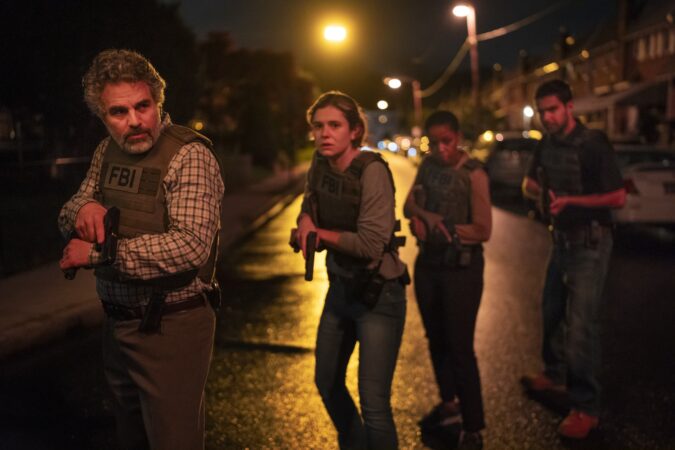
    The debut season of Task, the Delco crime thriller from Berwyn’s Brad Ingelsby which filmed throughout the region, marks a triumphant return to the Emmys red carpet for the Mare of Easttown creator.

    Starring Mark Ruffalo, the show received six nominations and began filming Season 2 in Manayunk this week with new cast members, including Mahershala Ali.

    Ruffalo and Tom Pelphrey both received acting nominations, in outstanding lead and outstanding supporting categories, respectively.

    The finale, “A Still Small Voice,” received particular attention: Ingelsby was nominated for outstanding writing for a drama series and editors Keiko Deguchi and Amy E. Duddleston were nominated in the picture editing category. The episode “Crossings” was recognized as well, with director of photography Alex Disenhof nominated for outstanding cinematography for a one-hour series.

    Additionally, director Salli Richardson Whitfield was nominated for directing the action-packed episode “Out Beyond Ideas of Wrongdoing and Rightdoing, There Is a River.” She was also nominated in the same category for directing an episode of HBO’s The Gilded Age.

    Ingelsby told The Inquirer in an email that the Task team is “deeply honored” by the recognition.

    Task exists solely because of the remarkable people who have believed in it and helped bring it to the screen. Thank you to HBO for shepherding it into the world so beautifully,” Ingelsby wrote. “I’m especially happy to see our cast leaders Mark Ruffalo and Tom Pelphrey nominated for their extraordinary performances.”

    “This recognition represents the entire Task team,“ he said, ”in front of and behind the camera who poured their enormous talent and hearts into bringing this story to life.”

    He added: “We are busy at work shooting Season 2 right now, and this is a very nice reason to pause for a moment and celebrate.”

    Fresh off concluding its fifth season, the Emmy-winning powerhouse Abbott Elementary returns to the awards ceremony with seven nods, including outstanding comedy series and outstanding casting. West Philly’s Quinta Brunson, Abbott’s star and creator, was nominated for outstanding lead actress in a comedy series for her role as Janine Teagues and outstanding writing for a comedy series for the episode “Team Building.” Brunson won an outstanding lead actress Emmy for the same role in 2023 and an outstanding writing award for the Abbott pilot in 2022.

    Joining Brunson in acting nominations are Janelle James, who plays the chaotically unpredictable principal Ava Coleman and is nominated for outstanding supporting actress in a comedy series. Tyler James Williams, who plays neurotic teacher Gregory Eddie, is nominated for outstanding supporting actor in a comedy.

    “Abbott Elementary” creator and star Quinta Brunson watches the Phillies play the Atlanta Braves during a taping of the show on Thursday, Aug. 28, 2025. in Philadelphia.

    Abbott Elementary also received a nod for outstanding directing for a comedy series, recognizing Randall Einhorn for his effort filming the “Ball Game” episode during a live Phillies game at Citizens Bank Park last August. Phillies fans will remember it as the night Kyle Schwarber made MLB history with four home runs, while Abbott fans will recall suspecting the mysterious janitor Mr. Johnson (William Stanford Davis) was secretly the Phanatic.

    “I couldn’t be more proud,” Brunson wrote on Instagram. “Congratulations to the hardworking cast and crew of Abbott. I am grateful for each and every person that makes this production move.”

    In the supporting actor category, Williams will compete with West Philly native Colman Domingo, who was nominated for his role as the sharp and sassy Danny in Tina Fey’s Netflix comedy, The Four Seasons. This is Domingo’s second consecutive year as a best supporting actor nominee. The show’s second season, released in May, was filmed partially at the Jersey Shore and revealed that Domingo’s character is also from Philadelphia.

    Domingo received a second Emmy nomination this year for the final season of HBO’s Euphoria, in the category of outstanding guest actor. He played the tenderhearted and justifiably furious addiction sponsor Ali to Zendaya’s lovably tragic character, Rue. In 2022, Domingo won the supporting actor Emmy for the same role.

    The actor was just in Philadelphia on July 4, when he received a Philadelphia Freedom Award from Mayor Cherelle L. Parker. Now on vacation in Europe, he’s celebrating the double Emmy nods that highlight his acting skills in both comedic and dramatic roles.

    “I think the diversity of work is what I’ve always hoped for, to have these opportunities to flex very different muscles,” Domingo told Deadline on Wednesday. He added that he believes the finale of Euphoria “is some of my best work” and he “gave it everything I had.”

    Another Philly son got a nomination this year: It’s Always Sunny in Philadelphia creator Rob Mac (formerly McElhenney) stars in and executive produces the Emmy-winning Welcome to Wrexham, about the Welsh soccer team he co-owns with Ryan Reynolds. The show is in the running for outstanding unstructured reality program, which it has won twice before. (Mac’s Always Sunny costar and wife, Kaitlin Olson, also received a nomination for her guest appearance in Hacks.)

    Leading in Emmy nominations were The Pitt, the emergency room drama set in Pittsburgh, with 25 nods, and Hacks, the comedy costarring Eagles superfan Hannah Einbinder, receiving 24. The daughter of a diehard Eagles fan from Doylestown, Einbinder is nominated again for outstanding supporting actress in a comedy series. She won the award last year and made headlines for ending her speech with “Go Birds, f — ICE, and free Palestine.”

    Hosted at the Peacock Theater in Los Angeles, the 78th annual Primetime Emmy Awards will air 8 p.m. Monday, Sept. 14, on NBC.

  • Police investigating after a man in Roxborough dies from puncture wounds to the chest

    Police investigating after a man in Roxborough dies from puncture wounds to the chest

    Police on Wednesday were investigating the death of a man who suffered puncture wounds to his chest Wednesday afternoon in the city’s Roxborough section, police said.

    Around 2 p.m., police responded to the 400 block of Ripka Street for a report of an injury. The victim was transported by medics to Jefferson Einstein Philadelphia Hospital, where he was pronounced dead at 2:45 p.m.

    Homicides detectives were investigating the case and a man was being questioned, police said.

    No further information was released.

  • Judge orders E. Jean Carroll be paid $5.8M in Trump sex abuse and defamation case; Trump appeals

    Judge orders E. Jean Carroll be paid $5.8M in Trump sex abuse and defamation case; Trump appeals

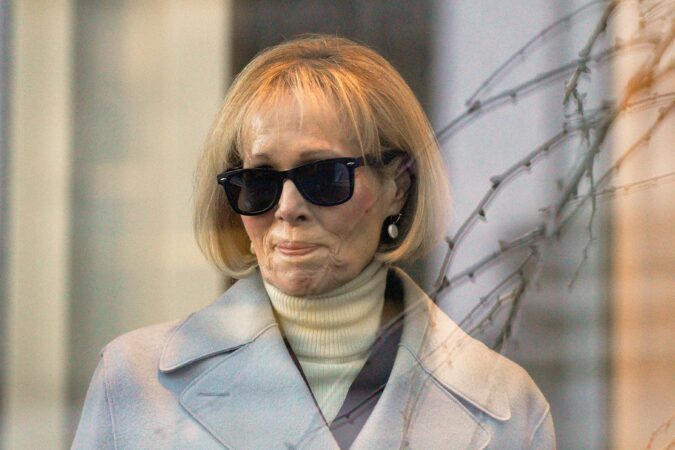
    NEW YORK — Writer E. Jean Carroll can collect $5.8 million held in escrow since a jury found that President Donald Trump sexually abused and defamed her, a federal judge ruled Wednesday. Trump’s lawyers immediately appealed to stop the payment.

    The president has already deposited the money in an account. The U.S. Supreme Court recently let the 2023 civil verdict stand, clearing the way for Judge Lewis A. Kaplan to release the money. The initial $5 million award has grown with interest.

    The jury found Trump attacked Carroll in 1996 in the dressing room of a luxury Manhattan department store, and defamed her after she described it publicly in a 2019 memoir, during his first term as president. Trump called her allegations false and said “she’s not my type” in an interview.

    Trump’s attorneys said Wednesday they would continue to appeal, and accused his political opponents of using the legal system against him. They asked the 2nd U.S. Circuit Court of Appeals to stop the payment. Carroll’s lawyers did not immediately respond to requests for comment.

    The jury had reached its verdict — in a trial that Trump did not attend — after Carroll testified that their flirtatious and friendly chance encounter at the department store turned violent. Trump insisted he never knew Carroll, now 82, a former advice columnist. He accused her of trying to sell books at his expense and of having political motives.

    Carroll sued Trump after New York changed its laws to give sexual abuse survivors a fresh chance to sue over attacks that happened in the distant past.

    Trump is also appealing $83 million in defamation compensation granted to Carroll by a separate Manhattan jury after a 2024 trial where Trump briefly testified.

    At that trial, Kaplan required the jury to accept the findings of the previous jury and only determine how much money, if any, Trump owed Carroll for comments he made about her while he was president.

    Trump’s lawyers complained that the judge, in setting rules for the damages trial, had barred Trump and his defense team from telling the jury that the encounter with Carroll never happened.

    When the 2nd Circuit declined to let all of its judges rehear an appeal of the $83 million award, Circuit Judge Denny Chin wrote that Trump had said multiple times over many years that Carroll lied for political and financial gain and had suggested she was too unattractive for Trump to have sexually assaulted her.

    “As a result of Trump’s statements, Carroll was harassed and humiliated, subjected to death threats, and feared for her physical safety for years,” Chin said. “And Trump showed no remorse, continuing his attacks against Carroll during and after two federal trials, and even proclaiming two days into the Carroll I trial that he would continue to defame her ‘a thousand times.’”

  • Five things that have kept the Sixers in the LeBron James sweepstakes

    Five things that have kept the Sixers in the LeBron James sweepstakes

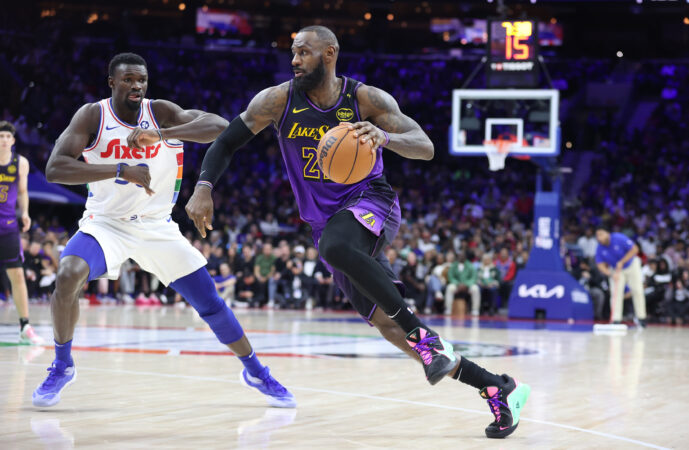
    The 76ers are reportedly among LeBron James’ top three preferred free-agency destinations as teams continue to court him deep into the summer. The other options are the Cleveland Cavaliers and Miami Heat, according to ESPN’s Shams Charania.

    Meanwhile, ESPN’s Brian Windhorst, who has deep Ohio ties, said the pendulum appears to be swinging toward the Cavaliers, but the Sixers and several other NBA franchises are not counting themselves out.

    So you’re telling the Sixers there’s still a chance? They’ve been here before, vying for James’ services most recently in 2018 as he considered teaming up with a young Joel Embiid and Ben Simmons. Now the Sixers once again have an attractive roster centered around Embiid, Tyrese Maxey, Jaylen Brown and VJ Edgecombe.

    It could be a while before we learn James’ final decision, but here are five things that make the Sixers attractive to the 41-year old.

    LeBron’s quest for a new challenge

    James has done all there is to accomplish in basketball. He has four NBA titles, 10 Finals appearances and he owned the Eastern Conference for a decade. And there’s even lore surrounding those titles, as he brought one championship to his home state and resurrected franchises in Miami and Los Angeles.

    He holds the NBA’s all-time record for scoring, minutes played, games played, and more. All-time greats in sports are constantly looking for new challenges, and James is running out of options. So if he’s looking for a place to retire, the Cavaliers hold the sentimental edge and Florida is the retirement capital of the country. But only the Sixers offer new territory.

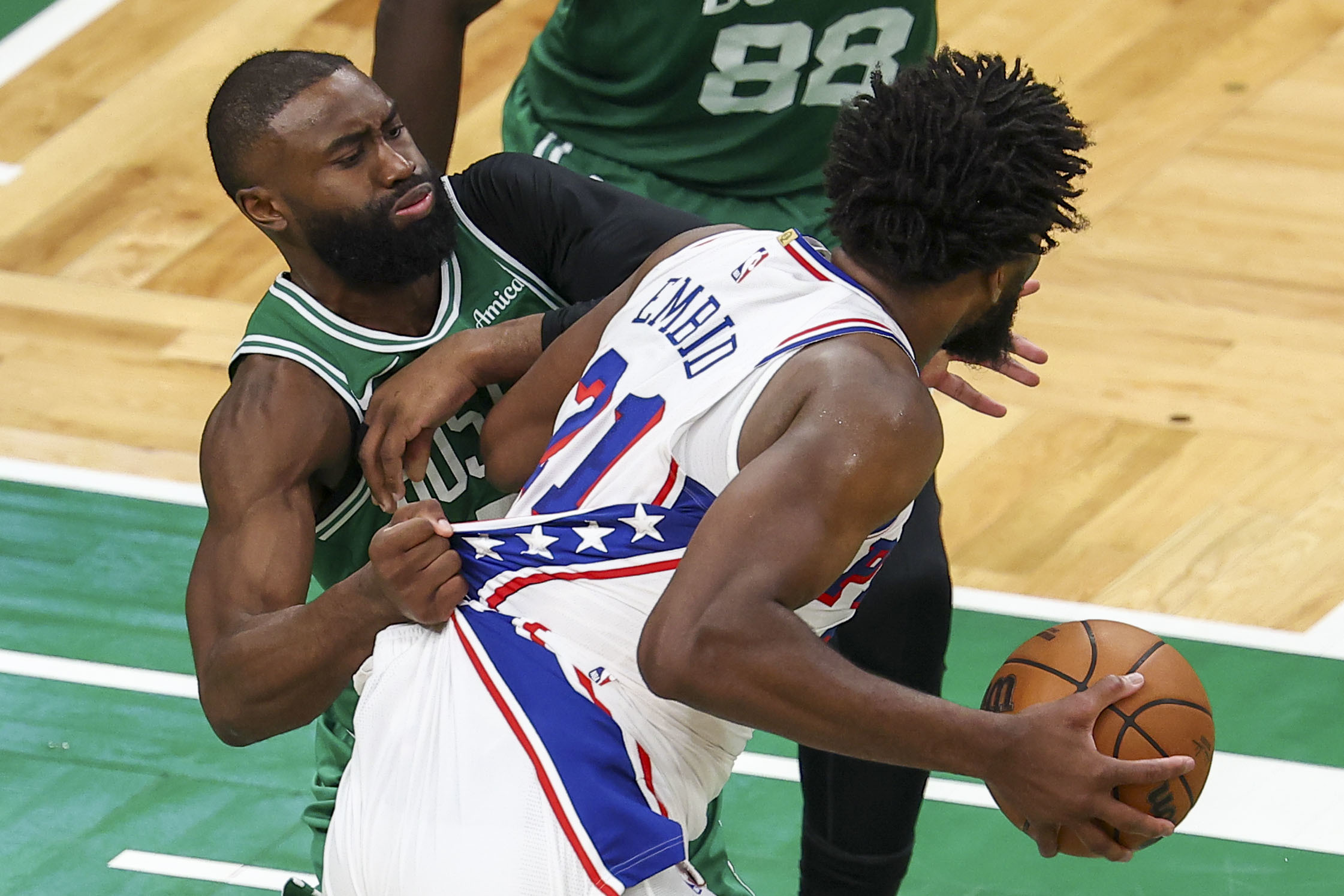
    Jaylen Brown and Joel Embiid battled in last year’s first-round series between the Celtics and Sixers.

    The Jaylen Brown trade

    Prior to the Brown trade, folks in Philly saw James’ departure from the Lakers on the news ticker and kept moving along. The addition of Brown created a potential starting lineup of Maxey, Edgecombe, Brown and Embiid. And while Dean Wade was a great free-agency addition, James could look at that lineup and slot himself in at power forward and see a real title contender. That’s the moment “everything changed” for the Sixers’ chances of landing James, according to James’ agent and Klutch Sports owner Rich Paul.

    The Eastern Conference has also presented a level of parity that could benefit the Sixers. While the East has won two of the last three titles, no team has made a repeat Finals appearance since James’ Cavaliers made it four straight times. Brown’s Celtics made the Finals in 2022 and won in 2024 and he knows how to get back. Famously, the Sixers haven’t made it past the second round since 2001, but it’s a notch in their belt to have someone who understands that process.

    Tyrese Maxey’s Klutch ties and infectious personality

    Maxey’s rise continues. Originally selected with the 21st pick out of Kentucky in 2020, Maxey had to wait his turn for the Sixers. He played behind Simmons and competed with Shake Milton for minutes. But once given a full-time role, Maxey’s star took off. He became a starter, then an All-Star and then an All-NBA performer. Now, Maxey is one of the pillars of the Sixers’ pitch to James after averaging 28.3 points, 4.1 rebounds and 6.6 assists and leading the Sixers to the postseason.

    There’s also the personality piece, because Maxey’s infectious persona and work ethic have been lauded by everyone in the Sixers’ organization. And, of course, as Klutch Sports clients with deep ties to Paul, James is familiar with both sides of Maxey. And Paul has repeatedly said that James “loves” Maxey.

    The greatness of peak Joel Embiid

    That it took this long to get to Embiid should say something about the state of things. Embiid played only 38 games last season and called that a success because he learned more about managing his knee that could benefit the Sixers going forward. Of course, it was to some extent because he played only 19 games the year before because of knee surgery. And when available, Embiid was exceptional in 2025-26, including a stretch where he looked like his old MVP self. He averaged 26.9 points on 48.9% shooting, 7.7 rebounds, 3.9 assists, and 1.2 blocks in 38 games.

    Then, when he appeared primed for a healthy postseason, Embiid was diagnosed with appendicitis and missed multiple games in the Sixers’ first-round series against the Boston Celtics. But then he showed flashes once again, powering the Sixers to a series win after they went down three games to one. He averaged 28 points, 9 rebounds and 7 assists in four games and the Sixers were 3-1 in games he played. And then he was drained as the Sixers were swept by the eventual champion New York Knicks. The highs and lows with Embiid are stark, but the highs are great enough that even a player like James could hold out hope.

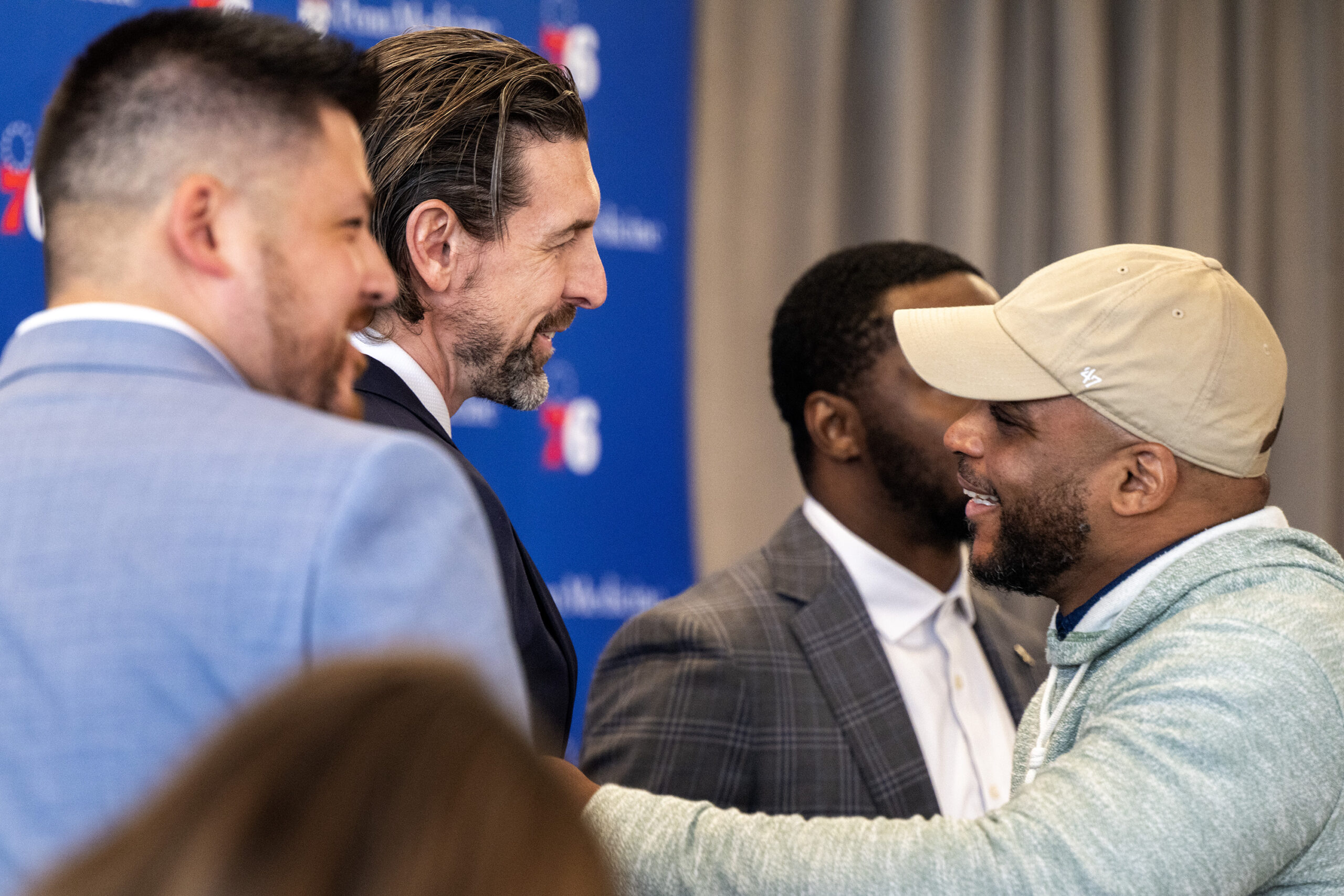
    Mike Gansey (second from left) and Jameer Nelson (right) have been busy filling out the Sixers’ roster this summer.

    Competence in the front office

    Previous iterations of the Sixers tried to land James, but they weren’t always taken seriously. They had talent with Simmons and Embiid in 2018, but weren’t stout up top as Brett Brown served as interim president of basketball operations and head coach. Former president of basketball operations Daryl Morey took big swings in recent years but saw trades for Paul George and James Harden fail to lift the team.

    Things appear to have taken a turn this summer. Mike Gansey, Bob Myers and Jameer Nelson are at the helm and appear to be building a team that will compete in the Eastern Conference. Moves to bring in Brown, Wade, Ariel Hukporti, Anfernee Simons and rookie Labaron Philon Jr., have started to add balance to the Sixers roster and are a good sign for the forthcoming Sixers season. And there’s still a chance one big name could be added to the bunch.

  • Prosecutors play video in court of suspect in Charlie Kirk’s shooting after he turned himself in

    Prosecutors play video in court of suspect in Charlie Kirk’s shooting after he turned himself in

    PROVO, Utah — Prosecutors played a video clip in court Wednesday of suspect Tyler Robinson after he had turned himself in to Utah authorities a day after the shooting of conservative activist Charlie Kirk.

    The video showed Robinson standing in a room at the Washington County Sheriff’s Office wearing a T-shirt and baseball cap. There was no audio and it was unclear if he was interviewed by investigators while at the sheriff’s office.

    State District Judge Tony Graf will decide at the conclusion of this week’s hearing if prosecutors have enough evidence to bring Robinson to trial on an aggravated murder charge in Kirk’s fatal shooting on the campus of Utah Valley University in September.

    Robinson’s roommate, Lance Twiggs, was interviewed twice as part of the investigation, State Bureau of Investigation Agent Brian Davis testified Wednesday. Twiggs was given immunity for the statements, meaning what he said cannot be used against him in a potential criminal case, Davis said.

    Robinson’s defense team objected to showing recordings of those interviews in open court.

    His lawyers have said repeatedly this week that they are concerned about his right to a fair trial if evidence in the case is made public. Graf did not immediately rule on the request.

    Prosecutors allege Robinson sent a text to Twiggs saying he targeted Kirk because he “had enough of his hatred.”

    On Tuesday, Robinson’s lawyers questioned the reliability of DNA testing used to link the defendant to the suspected murder weapon.

    A member of Tyler Robinson’s defense team interrogated a DNA analyst from the FBI about the techniques she used to connect Robinson to a towel wrapped around a rifle found at the college campus, where Kirk was shot while speaking to a large crowd.

    Defense lawyer Michael Burt cast doubt on the analyst’s conclusions.

    “She can’t match Mr. Robinson to the questioned samples,” Burt argued.

    Robinson has not yet entered a plea and his attorneys have not commented on his guilt or innocence. They have, however, sought to get the death penalty taken off the table, so far unsuccessfully.

    Prosecutors must show they have enough evidence for a trial

    Forensics expert Lawrence Quarino said law enforcement agencies use “extremely reliable” tests to determine the probability that a person matches with DNA found at a crime scene.

    DNA testing “is the gold standard in forensic science,” said Quarino, a professor and director of the forensic science program at Cedar Crest College in Pennsylvania.

    FBI analyst Amanda Bakker said that after Twiggs provided a DNA sample for comparison, she was able to rerun her tests and attribute all of the DNA to two people.

    Investigators found the towel and suspected murder weapon — a bolt-action rifle with one spent round — in a wooded area near where Kirk was shot.

    DNA on the towel matched to two people, Jennifer Faumuina with the State Bureau of Investigation testified. One was Robinson’s roommate and the other was very likely Robinson, she said. Twiggs, a key figure in the prosecution’s case, will not testify in person this week, but prosecutors have said they plan to introduce a recorded statement.

    Prosecutors allege Robinson confessed in a note left for Twiggs, who was also his romantic partner, that read: “I had the opportunity to take out Charlie Kirk and I’m going to take it.”

    Investigators say Robinson went to a rooftop near where Kirk was speaking and shot him once through the neck as the activist was taking questions from a crowd of several thousand people. Kirk was declared dead after being taken to a hospital.

    The defense team pushes back

    Prosecutors contend the shooting endangered others at Kirk’s campus event — an aggravating circumstance that could make the crime punishable by death under Utah law. Robinson also faces possible sentence enhancements based on the prosecution’s claim that he targeted Kirk because of his political views.

    During one of several appearances on campus on Sept. 10, the defendant went to the amphitheater where Kirk was later shot, State Bureau of Investigation Agent David Hull testified Tuesday. Hull said Robinson made contact with representatives of Turning Point USA, a group co-founded by Kirk that galvanized the conservative youth vote to help Trump win a second term.

    The investigator did not detail what occurred during that interaction or if members of Kirk’s security team were present.

    Robinson’s defense team pushed back Tuesday on the idea that he was hostile to Kirk’s politics. Defense attorney Richard Novak sought to block prosecutors from introducing a statement describing the traditional Christian values of Turning Point USA.

    “This doesn’t say anything about Mr. Robinson’s state of mind,” Novak said about the statement from Turning Point USA board member David Engelhardt. “I don’t think that this court should be deciding — based on the record before it — where, if at all, politics and religion intersect.”

    The judge ruled that the Turning Point statement was relevant and would be “provisionally admitted,” with a final decision later on.

  • Temple University will lay off employees and raise tuition for the second consecutive year

    Temple University will lay off employees and raise tuition for the second consecutive year

    Temple University approved a $1.3 billion operating budget Wednesday that includes an average 3.4% tuition hike for both in-state and out-of-state students and plans for about 40 layoffs.

    Both the average tuition increase — which is for undergraduate and graduate students — and the number of layoffs are smaller than those implemented last year. The university raised tuition an average of 3.6% in 2025 and laid off 50 employees.

    The layoffs, which will occur this week, constitute less than 1% of the university’s workforce. Temple officials did not elaborate on who was affected or which positions but said jobs across the university from senior levels to the operational ranks were considered. An effort was made to limit the impact on “student-facing” roles, said chief strategy officer and former interim provost David Boardman.

    “The decision-making overwhelmingly was made at the local level, at the schools, colleges, and administrative units,” said Boardman, who is also dean of Temple’s College of Media and Communication.

    Fry said last month that layoffs were “inevitable” as the university works to close a projected $85 million budget deficit for 2026-27. Temple, along with many peer institutions, faces enrollment declines and financial pressures as the available pool of high school students drops, public attitudes toward higher education change, and the number of international students declines following changes in federal policy.

    The budget, approved without public discussion by the executive committee of Temple’s board of trustees, includes a projected deficit of $25.5 million.

    “We have met our savings target, which is obviously imperative,” Fry said in an interview after the board meeting.

    Fry had asked schools, colleges, and administrative units to cut a total of $60 million, a significant portion of which was accomplished through the elimination of 236 positions, he said. That is on top of 190 positions that were eliminated last year.

    More than 80% of the positions cut this year came through voluntary retirements, including a faculty program that netted more than 70 takers, as well as resignations and the elimination of vacant positions. Layoffs accounted for the rest.

    “Implementing these targeted budget reductions and undertaking other organizational realignments is a critical first step toward returning the university to a balanced budget over the next three years,” Fry said in a message to the campus community.

    The university is working under a new budget model that will “allow us to better align our resources with our strategic plan,” Fry said.

    While the majority of the $60 million reduction was due to the position eliminations, schools, colleges, and administrative units are implementing other efficiencies. Some of the colleges, for example, have reduced doctoral student admissions, Boardman said.

    The university’s 27% decline in domestic enrollment since 2017 and increased financial aid costs have been the most significant factors causing the school’s budget pressures, Fry said. The loss of students has amounted to an average of more than $200 million in lost revenue annually, according to an internal Temple report obtained by The Inquirer in April.

    That report said the school anticipated falling below an 80% retention rate this fall.

    Temple’s U.S. enrollment stood at 29,503 last fall; projections for this fall are not yet available.

    But Fry said in his campus message that the school has received a record number of deposits for first-year enrollment compared with last year and that deposits from transfer students are up over last year.

    The school also plans to roll out a new “first-year experience” program to help improve the school’s freshman-to-sophomore retention rate, which fell from a high of 90% about a decade ago to 82% last fall.

    Employees from student affairs, enrollment management, and academic affairs have worked on the redesign with support from the National Institute for Student Success diagnostic, Fry said.

    “The teams have taken a comprehensive look at how students transition to Temple and identified where we can better support their success,” he said. “This work has helped us identify barriers and create a more coordinated approach to orientation, advising, communication, and student support.”

    The efforts already are having an impact. Because of changes to orientation, 3,268 first-year students were registered for the fall as of July 5, compared with 560 students the same time last year, Fry said.

    With the tuition increase, the new base rate for full-time students from Pennsylvania will rise to $20,376 annually and to $36,600 for out-of-state students. (Excluding Temple’s Japan campuses, 62% of students are Pennsylvania residents.) While the average increase is 3.4%, percentage increases fluctuate across Temple’s schools and majors, from a low of 2.9% to a high of 3.9%.

    Tuition increases are typical; the University of Pennsylvania increased its total costs by 3.8% for 2026-27. Pennsylvania State University, which approves tuition increases a year in advance, hiked tuition 2% for in-state students at University Park for 2026-27 and froze it for those attending Commonwealth campuses.

    At Temple, fees will rise $42, or 3.9%, to $1,098 annually. And room and board will increase 4%. Students in a typical double-occupancy room at Johnson and Hardwick residence hall with 12 meals per week will pay $15,094 for the year.

    Temple said it also would increase its financial aid budget by nearly 7% over last year, to $196.1 million, to help students with need afford the university.

    “We know that financial barriers can impact our students and prevent them from persisting,” David Marino, interim chief operating officer, said in a statement. “This year’s historic investment in financial aid is an investment in the success of our students.”

  • Trump’s DOJ said Pa. election officials could be criminally charged if they let noncitizens vote

    Trump’s DOJ said Pa. election officials could be criminally charged if they let noncitizens vote

    The Justice Department sent a letter this week threatening criminal charges against Pennsylvania’s top election officials if they allow votes by noncitizens to be counted in forthcoming elections — a largely nonexistent phenomenon that is already prohibited by law.

    The letter, addressed to Pennsylvania Secretary of State Al Schmidt and obtained by The Inquirer, was part of a nationwide effort by the Justice Department to say it is cracking down on what President Donald Trump has inaccurately described as a variety of problems with how ballots are cast and counted across the country. Similar letters were sent to election officials in all 50 states this week, the Justice Department said in a statement.

    An agency spokesperson said the letters were “asking for voluntary compliance in a timely manner with [officials’] obligations under federal law to ensure only citizens vote in federal elections.”

    The outreach came after Trump’s administration, during his second term, took other steps to target states’ election practices or voter rolls.

    A spokesperson for the Pennsylvania Department of State said in a statement that the state “is in compliance with federal and state election law.”

    “We will continue our nonpartisan work to ensure elections in the commonwealth remain free, fair, safe, and secure,” said Geoff Morrow, the department’s deputy communications director.

    Last month, a federal judge in Pittsburgh dismissed a Justice Department lawsuit that sought to obtain Pennsylvania’s entire unredacted voter database. Federal judges have rejected similar efforts by the Trump administration in at least 10 other states, although the Justice Department recently filed an appeal of the decision in Pennsylvania.

    The FBI, meanwhile, is reportedly assisting with a sweeping investigation into alleged irregularities in the 2020 election in Fulton County, Ga. — a key jurisdiction that contributed to Trump’s loss in that year’s presidential contest.

    Trump has repeatedly refused to acknowledge his defeat to Joe Biden that year, and he has long fueled evidence-free conspiracy theories about widespread and brazen fraud in elections, particularly in jurisdictions that tend to vote for his opponents. Experts generally agree that although voter fraud does happen, it has not historically occurred at rates that would tip the scales in high-profile contests.

    The effort also comes as Trump has been again pressuring congressional Republicans to pass the so-called SAVE America Act, a controversial bill that could require voters to provide proof of citizenship when registering or to show approved forms of identification when voting. Prior efforts to pass the bill into law have failed amid bipartisan resistance.

    As for the subject of the Justice Department’s most recent letter — which was signed by Assistant Attorney General Harmeet K. Dhillon — noncitizens are already barred from voting in federal and state elections under a law passed by Congress 30 years ago.

    Studies in a variety of states since then have found some instances of noncitizens being registered to vote or voting, but almost no evidence that the issue is widespread or common. In Utah, for example, officials said earlier this year that they had reviewed records of the state’s more than 2 million voters and found one person who was confirmed as a noncitizen.

    And in 2024, the director of U.S. Citizenship and Immigration Services wrote in a letter to Ohio’s secretary of state that “it is extremely uncommon for noncitizens to vote in Federal elections,” and that many of those who do are identified by authorities and prosecuted.

    Dhillon, in her letter, acknowledged that noncitizen voting is already illegal. But she nonetheless listed several provisions under which election officials could be criminally charged if it occurred.

    And she said Schmidt should reply within five days to describe “how the state of Pennsylvania intends to ensure it is complying with these federal laws,” a deadline the Pennsylvania Department of State said it intends to meet.

    Schmidt, a Republican who was chosen by Democratic Gov. Josh Shapiro to serve as the state’s top election official, has been at the forefront of addressing noncitizen voting dating back to his time as a Philadelphia city commissioner.

    In 2017, when he worked for the city, Schmidt discovered that the Pennsylvania Department of Transportation’s so-called motor voter system, which allows eligible citizens to register to vote when they get or renew a driver’s license, had a glitch dating back to the 1990s and was allowing legal residents who were noncitizens to register to vote, too.

    Schmidt found that the glitch had allowed at least 168 noncitizens in Philadelphia to register to vote. And he found that an additional 52 noncitizens in the city had registered by other means.

    Collectively, that group of people cast a total of more than 225 ballots in Philadelphia during the years they were registered, Schmidt’s office reported at the time. Schmidt said it was critical to rectify the issue, and all of the improper registrations were canceled. PennDot fixed the glitch in 2017.

    Still, the largest number of votes cast by noncitizens in the city during the affected time period occurred in the 2008 general election, when 47 such people submitted ballots — representing about .0065% of the city’s vote tally that year.

    “One thing that became very clear through that research and all evidence suggests that noncitizens voting in elections in the United States occurs very rarely,” Schmidt told Votebeat earlier this year. “It doesn’t mean that it’s not important. Like I said before, every vote is precious, and we want to make sure that we do everything we can to safeguard and strengthen election integrity. But there’s no evidence to suggest that it happens in any widespread way whatsoever.”

    Lauren Cristella, president of the Committee of Seventy, a Philadelphia-based nonprofit that advocates for good governance, said the Justice Department’s letter “represents another attempt to undermine faith in our elections without presenting any evidence or even allegations of wrongdoing.”

    The country’s elections have routinely been shown to have been conducted freely and fairly, Cristella said. And in Pennsylvania, she said, Schmidt has been “the person who’s been leading the charge to clean up our voter rolls.”

    State Auditor General Tim DeFoor, a Republican, found in an audit released earlier this year that the reforms made to the motor voter system after Schmidt’s exposures of PennDot’s systemic failures had been largely successful.

    The Justice Department’s effort to threaten election officials not only clouds that reality, Cristella said, but it “completely lacks integrity and is part of the distrust that is leading to the erosion of our democracy.”

  • Dozens charged with trying to steal thousands of beagles from research facility

    Dozens charged with trying to steal thousands of beagles from research facility

    Dozens of people were charged with felonies after trying to steal thousands of beagles from a Wisconsin research facility — a major development in a case that has drawn increased attention to animal testing practices.

    The facility, Ridglan Farms, outside Madison, breeds the beagles for research intended to improve veterinary medicine, but is now winding down operations. Protesters have tried on separate occasions in recent months to steal beagles from the facility in response to allegations of animal mistreatment, and in one case succeeded. The company has denied that it abuses animals.

    Prosecutors in Dane County, Wis., filed charges on Friday against at least 47 people they believe participated in a March break-in that ended with the removal of 22 dogs. The people, including members of a national animal welfare group, have each been charged with burglary, according to a criminal complaint. Four other individuals who authorities believe played a large role in the incident face additional charges, filed in April.

    For all but those four individuals, the maximum sentence for this latest round of charges is 12.5 years. Members of the group include residents of 19 U.S. states, Washington, D.C., and Canada.

    On March 15, the group, wearing a mix of white lab jumpsuits and all-black outfits, piled out of vans parked near Ridglan Farms. Some used hammers, crowbars and other tools to cut through fencing surrounding the facility and to break at least one window, according to the complaint. A few carried portable radios with attached earpieces. Others livestreamed their actions on Facebook, the complaint said.

    Weeks of planning predated the incident, according to the complaint. Organizers recruited participants, created a travel guide, held a training session, scoped out the facility and purchased materials, including protective gear, saws and mallets. Local authorities arrested dozens of participants at the scene.

    “Roads were blocked,” said Kalvin Barrett, the Dane County sheriff. “Drones were used.”

    About a month later, the police used tear gas and rubber bullets to halt another attempt by a group of more than 1,000 activists, and several more were arrested.

    Wayne Hsiung, founder of Direct Action Everywhere, a national animal welfare group, was among those arrested. “Only a deeply corrupt system” would deploy tear gas and rubber bullets against “peaceful activists,” Hsiung previously said in a statement from jail.

    Law enforcement officials were “just trying to protect the property and uphold the law,” Barrett said.

    Charges filed last week in Dane County concern the theft of beagles in March. But the sheriff’s office has also recommended charges related to the April incident to the Dane County District Attorney’s Office, Barrett said.

    It could not be reached for comment.

    All individuals charged thus far are expected to appear in court in August, a Dane County official confirmed. Meanwhile, Ridglan Farms is winding down its operations.

    Last fall — after former employees testified that dogs at the center had undergone eye surgeries without general anesthesia — a special prosecutor found that Ridglan Farms performed procedures that constituted animal mistreatment.

    The highly publicized beagle theft attempts prompted increased scrutiny of Ridglan Farms’ operations this year. In response to public concerns about the welfare of dogs at the facility, the sheriff’s office in April requested to accompany state officials on an unannounced walk-through of Ridglan Farms. That request was denied, Barrett said. Ridglan Farms could not be reached for comment on Tuesday.

    “Law enforcement cannot just go in there and shut it down because we don’t agree with what we’re seeing or what’s happening there,” Barrett said.

    Ridglan Farms previously bred beagles for experiments done on site and sold the dogs to other research labs. The company was expected to surrender its breeding license this summer, ending its ability to sell dogs to outside labs — a consequence of a state investigation. The facility would have maintained permission to perform experiments on its own beagles.

    Now, though, Ridglan Farms is on track to close in August, said Lauree Simmons, president and founder of Big Dog Ranch Rescue.

    After purchasing dogs from Ridglan Farms in May, Big Dog Ranch Rescue, which has campuses in Florida and Alabama, reached a deal with the company: Ridglan Farms will close its Wisconsin center, and Big Dog Ranch Rescue will purchase the remaining beagles, Simmons said.

    Other rescue groups across the country have also purchased dogs from Ridglan Farms. Currently, nearly 500 beagles remain there, Simmons said.

    “I think with all of the activists’ actions that brought this really to the world’s attention, I think they may have had enough,” Simmons said. The beagles that Big Dog Ranch Rescue has purchased from Ridglan Farms range from puppies to 10-year-olds, Simmons said. Many were scared and shy when they first arrived, she added, but “have really rebounded.”

    “This facility had a long history of violations, and they’re not the only one,” Simmons said. “Animal testing in this country, especially on dogs, is cruel and unnecessary.”

  • Funeral processions held in holy Iraqi cities for Iran’s late Supreme Leader Ayatollah Ali Khamenei

    Funeral processions held in holy Iraqi cities for Iran’s late Supreme Leader Ayatollah Ali Khamenei

    NAJAF, Iraq — Thousands of mourners attended funeral processions for Iran’s Ayatollah Ali Khamenei on Wednesday in the holy Iraqi cities of Najaf and Karbala as part of dayslong funeral ceremonies for the Islamic Republic’s late supreme leader.

    The ceremonies began on Saturday, with authorities shutting down streets, airspace, and daily life in Tehran, Iran’s capital, as throngs commemorated the life of the man who led Iran for decades with an iron fist while confronting the West. His body was later taken from Najaf to Karbala before it is to be returned to Iran.

    Khamenei was killed in late February in wide-scale U.S. and Israeli strikes on Iran that started the war. The 86-year-old supreme leader was among several senior Iranian leaders killed in strikes during the war.

    Talks on ending the war between the United States and Iran appear to be on hold until after the burial.

    However, strikes from both sides in the Persian Gulf on Tuesday and into Wednesday raised risks that the interim agreement to end the monthslong conflict that engulfed the Middle East could completely break down.

    The U.S. military attacked Iran Wednesday and again early Thursday after it said Tehran struck three ships in the Strait of Hormuz. Iran then launched retaliatory strikes on Kuwait and Bahrain.

    Khamenei’s body arrived on Tuesday in Najaf, considered one of the holiest of cities for millions of Shiite Muslims worldwide. Mourners holding portraits of Khamenei welcomed the body and senior officials escorting it, including Iranian President Masoud Pezeshkian and Foreign Minister Abbas Araghchi.

    The body was placed in a casket draped in the Islamic Republic’s flag and encased in glass.

    Some supporters performed self-flagellation on the streets, while others waved Iranian as well as red and black flags symbolizing mourning and revenge.

    Muhammad Taqi al-Hakim, a senior scholar at the Najaf seminary, led the funeral prayers at the Shrine of Imam Ali, the Prophet Muhammad’s cousin and son-in-law.

    As the coffin was carried into the shrine, large crowds pushed and shoved their way to get close to it. Some threw themselves onto the casket, as attendants struggled to control the crowd, urging the pallbearers to carry it closer to the ground for fear it might fall.

    “We, the people of Iraq, will remain a thorn in the eyes of the enemies,” said Jaafar Jawad, a funeral attendee. “(His body arriving here) is the greatest possible honor, and God willing, we will be loyal and repay a little of his debt in the holy city of Najaf.”

    The body later arrived in Karbala, also a holy city for Shiites, where Imam Hussein, the grandson of the prophet, was killed in 680 AD. Thousands of supporters gathered in the desert heat in and around the shrine while Abdul Mahdi al-Karbalaei, a representative of Iraq’s top Shiite religious authority, led the prayers there.

    Iran’s new supreme leader, Ayatollah Mojtaba Khamenei, has yet to make an appearance at the funeral ceremonies, which are unfolding over several days. He is believed to be in hiding after reportedly being wounded in the airstrike that killed his father.

  • Danish PM says her country is ‘ready to defend’ Greenland as Trump’s demands upend NATO summit

    Danish PM says her country is ‘ready to defend’ Greenland as Trump’s demands upend NATO summit

    ANKARA, Turkey — Denmark on Wednesday vowed to defend its territory after President Donald Trump insisted again that the United States should control Greenland, upending a NATO summit in Turkey meant to be a show of strength and unity.

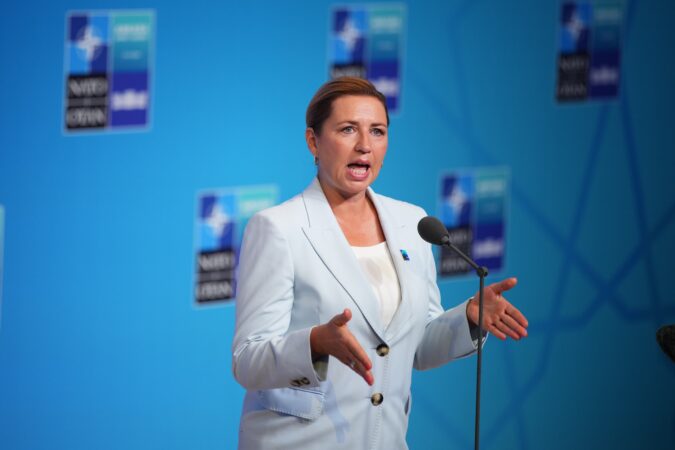
    Denmark’s Prime Minister Mette Frederiksen said her country is “ready to defend every inch of NATO including our own territory” in the event of an attack, and would rely on NATO allies to honor their commitment to defend each other.

    “We hope that all, including all allies, will respect the Greenland people’s right for self-determination,” Frederiksen said ahead of the meeting of NATO leaders. “Greenland is of course not for sale.”

    Trump had reopened old wounds on the eve of the meeting by insisting that the United States should control Greenland, a semiautonomous Danish territory.

    Arriving at the summit on Wednesday, Trump said he was “not happy with NATO” for its member nations’ pushback against his earlier efforts to take over Greenland, adding that the territory “is very important for the United States, but it’s not important for Denmark.”

    Trump’s renewed interest in Greenland could put at risk the entire future of NATO, which was founded in 1949 to counter the threat to European security posed by the Soviet Union during the Cold War.

    The organization is normally focused on outside threats such as that posed by Russia. It is not designed to deal with threats from within.

    Iceland’s Prime Minister Kristrún Frostadóttir said Greenland “belongs to the people of Greenland,” and called for unity in the face of Russia, which she called “the biggest threat.”

    NATO chief backs latest U.S. strikes on Iran

    NATO Secretary-General Mark Rutte said from Ankara on Wednesday that he believes the United States is fully committed to the alliance. He praised Trump for the series of U.S. strikes on Iran overnight, after Tehran struck three merchant ships in the Strait of Hormuz.

    “I think what you did last night was absolutely necessary,” Rutte said to Trump. “It was a very strong response, and I’m with you on this.”

    The U.S. strikes, as well as the revoking of a license allowing Iran to sell its oil on global markets, underscored the fragility of an interim deal to end months of fighting.

    Trump said Wednesday the interim agreement with Iran is “over” after the strikes, but that he will allow talks to continue.

    “For me, I think it’s over,” Trump responded when asked about the status of the ceasefire. “It’s just a waste of time dealing with them.”

    NATO leaders sought to show Trump they were boosting defense

    The meeting in Ankara was meant to focus on progress made toward meeting the alliance’s spending targets — something Rutte highlighted by noting numerous countries that are already investing more.

    “The commitment is there, no doubt,” Rutte said before chairing the summit, but noted the Trump administration expects “the Europeans and Canadian will equalize their spending with the United States.”

    In an attempt last month to mollify the U.S. leader, Rutte went to Washington to hail the “Trump Trillion” — the $1.2 trillion that European allies and Canada have added to defense spending since Trump came to power in 2017.

    Yet Trump has demanded “loyalty” and branded NATO a “paper tiger” after some allies refused to grant open access to their bases for U.S. forces to attack Iran.

    Trump on Wednesday blasted NATO member Spain for its refusals to allow U.S. forces to use its bases to attack Iran, saying it was a “terrible partner in NATO” and renewing his threats to cut off trade with Spain.

    As leaders converged on Ankara, Rutte hosted a “big reveal” event to showcase the many deals planned for the increased spending — much of it to be spent on U.S. companies, creating thousands of jobs for Americans.

    NATO diplomats and officials had hoped that Trump would take the win, but judging by some of his remarks since arriving in Turkey, they are in for yet another dressing down.

    NATO braces for Trump’s grievances

    Trump has long argued that the U.S. carries more than its fair share of the defense burden for NATO. At last year’s summit, the allies agreed to invest 5% of their gross domestic product on defense — 3.5% on their defense budgets and 1.5% on infrastructure so troops and equipment can move faster in times of conflict.

    Yet new figures released by NATO on Tuesday showed that Slovenia, Belgium, Spain, and the Czech Republic could be in hot water with the Trump administration as they struggle to meet the alliance’s old spending target of 2% of GDP.

    The Trump administration wants to see a more lean and lethal “NATO 3.0,” with Europe taking responsibility for its own security, including Ukraine, with conventional weapons while America would continue to provide its nuclear umbrella.

    However, the Pentagon has launched a six-month review of U.S. military presence in Europe, leaving allies to seek clarity on just how deeply Trump intends to cut U.S. force numbers.