Blog

  • Harvey Weinstein’s New York rape charge dropped after accuser says she can’t endure a fourth trial

    Harvey Weinstein’s New York rape charge dropped after accuser says she can’t endure a fourth trial

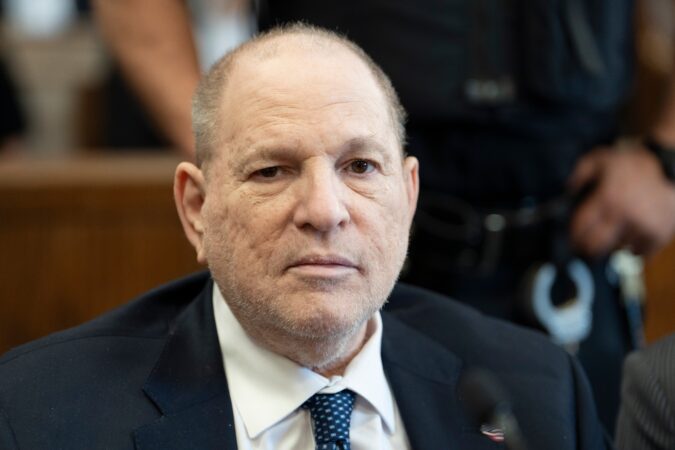
    NEW YORK — Harvey Weinstein won’t face a fourth trial on a New York rape charge. Prosecutors dropped the #MeToo-era case on Thursday after his accuser said she could not bear to testify again.

    The movie mogul still stands convicted of another sexual felony in New York and others in California, and he remains behind bars. But the New York rape charge had remained unresolved after an overturned conviction followed by two hung juries.

    Jessica Mann, a hairstylist and actor, spent days on the witness stand at all three trials, telling jurors that Weinstein raped her in a Manhattan hotel in 2013 and being questioned extensively about the complex relationship she had with him before and afterward. The Oscar-winning producer denied the charge and said everything that happened between him and Mann was consensual.

    In a letter that prosecutor Nicole Blumberg quoted in court Thursday, Mann said she could “no longer endure going through this,” adding that the 8-year-old case has “put me through more harm than good.”

    Blumberg told the court that prosecutors believe Mann and hail her “bravery, strength, courage and inspiration” to other survivors, but given her feelings about proceeding, “dismissal is appropriate.” With that, Judge Curtis Farber formally dismissed the case.

    Weinstein left court with a neutral expression, returning to jail to await a September sentencing on a New York sexual assault conviction involving a different woman. Prosecutors are seeking a 20-year prison term.

    Once Weinstein finishes whatever punishment he gets in New York, he’s due to serve 16 years in California, where he was convicted of raping a third woman, who’s an Italian actor. He is appealing both convictions.

    Weinstein’s lawyers said he was relieved by the dismissal of the case surrounding Mann’s allegation.

    “These charges should never have been brought to begin with,” lawyer Jacob Kaplan said outside court. “He is innocent.”

    Mann has testified that she had a consensual, on-and-off relationship with Weinstein, who was married at the time.

    But she told jurors she repeatedly tried to leave and said no to any sexual activity as he cornered her in a hotel room on March 18, 2013. They had planned to meet in the lobby for breakfast, but he had spontaneously taken a room.

    She said he persevered, demanding that she undress and grabbing her arms, until she was afraid to keep protesting.

    The latest trial, this spring, took a visible toll on Mann, 40. During five days of testimony, she was questioned for the first time about a diarylike, soul-baring note she wrote two days after the alleged rape, which the note did not mention. At one point during her testimony, Mann said she was struggling to focus, prompting court to wrap up early for the day.

    In her letter to the court Thursday, she said she had suffered a concussion shortly before her testimony, had headaches and other symptoms on the stand and ultimately “disassociated.” It was a humiliating addition to an already crushing experience, she wrote.

    “I have been fragmented, silenced, defamed and traumatized. I’ve paid the price of my reputation,” Mann wrote. Slamming the court, the media and Weinstein, she said her experience showed that “pursuing justice is better left a pipe dream.”

    Weinstein was one of the movie industry’s most powerful figures, a producer of such tastemakers and hits as Shakespeare in Love, Pulp Fiction, and Chocolat.

    Then a series of sexual misconduct allegations against him became public in 2017, fueling the #MeToo campaign for accountability and eventually leading to criminal charges in New York and Los Angeles.

    He denied all of them and was acquitted of some, even as he was convicted of others.

    During a series of trials, Weinstein was convicted in 2020 of raping Mann. Then an appeals court overturned that verdict for reasons unrelated to her testimony. Jury deliberations broke down at a 2025 retrial, and jurors deadlocked again at this year’s retrial.

    The rape charge in this case was a low-level felony punishable by up to four years in prison — less time than Weinstein, 74, already has served.

    Weinstein didn’t testify at any of the trials, though he complained during and after the 2025 New York retrial that it was unfair; the judge disagreed.

    His lawyers have maintained that all his accusers had completely consensual sexual liaisons with a movie studio boss who could help them go places in show business. Weinstein himself has said he “acted wrongly, but I never assaulted anyone.”

    The Associated Press does not identify people who say they have been sexually assaulted, unless they choose to be named, as Mann has done.


  • ‘Every game, we win’: Ivory Coast earns a World Cup win in Philly, but for fans of Curaçao, it was still a party

    ‘Every game, we win’: Ivory Coast earns a World Cup win in Philly, but for fans of Curaçao, it was still a party

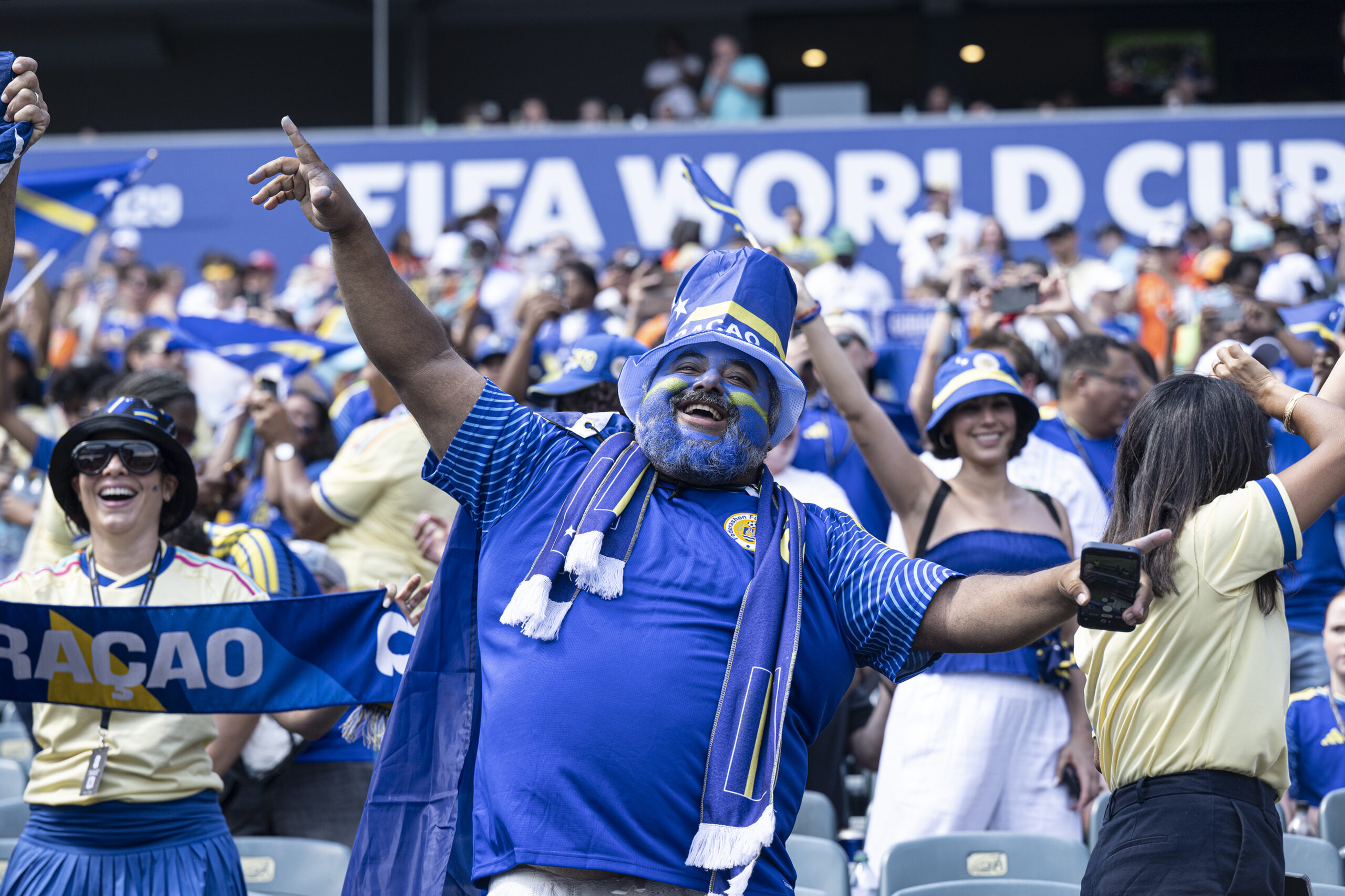
    Two dense blocks, one of orange, and one of dark blue, broke up the kaleidoscope of color in the stands at Philadelphia Stadium on Thursday. Fans came bearing jerseys and flags from basically any national team you could think of — from France and England to Honduras and Anguilla.

    And yes, even some Eagles jerseys.

    Curaçao vs. Ivory Coast was the least marquee matchup on Philly’s World Cup game slate. The teams don’t have the star power of France’s Kylian Mbappé, Croatia’s Luka Modrić, or Brazil’s Vinicius Jr., nor the massive stateside fanbase of Ecuador.

    That made it the easiest ticket to acquire for local and passionate soccer fans, as well as diehard supporters of both nations.

    In the end, it was the fans clad in orange who went home happy, watching a pair of goals from Ivory Coast forward Nicolas Pépé fuel a 2-0 defeat of Curaçao to advance to the knockout stage out of Group E.

    Ivory Coast’s Ange-Yoan Bonny (right), goes for a header against Curaçao’s Deveron Fonville during the first half of their Group E match on Thursday.

    Curaçao is the smallest nation in the World Cup, an island of just over 155,000 residents. Curaçao has fielded an independent team under its own flag since 2011, and had never qualified for the World Cup before this year.

    Despite its small size, it’s a country with a strong sporting tradition. A team from Curaçao memorably won the Little League World Series in 2004, and MLB stars like Hall of Famer Andruw Jones and Braves second baseman Ozzie Albies hail from the island.

    But in the World Baseball Classic, Albies competes for Team Netherlands, as Curaçao has never fielded an independent team. That’s why this team resonated so much with Isla, one of what she estimated was a group of 5,000 fans who traveled up from Curaçao for Thursday’s match.

    “What we are doing now, this is nation building,” said Isla, a Curaçao native who was there for the game. “It has to do with our identity, with our people, with our history of slavery. The island of Curaçao is now building on this. Since we can play under our flag, every match is a party for us. Every game, we win.”

    Curaçao fans cheer in the stands ahead of their nation’s World Cup match against the Ivory Coast in Philadelphia Stadium on Thursday.

    ‘It’s a dream’

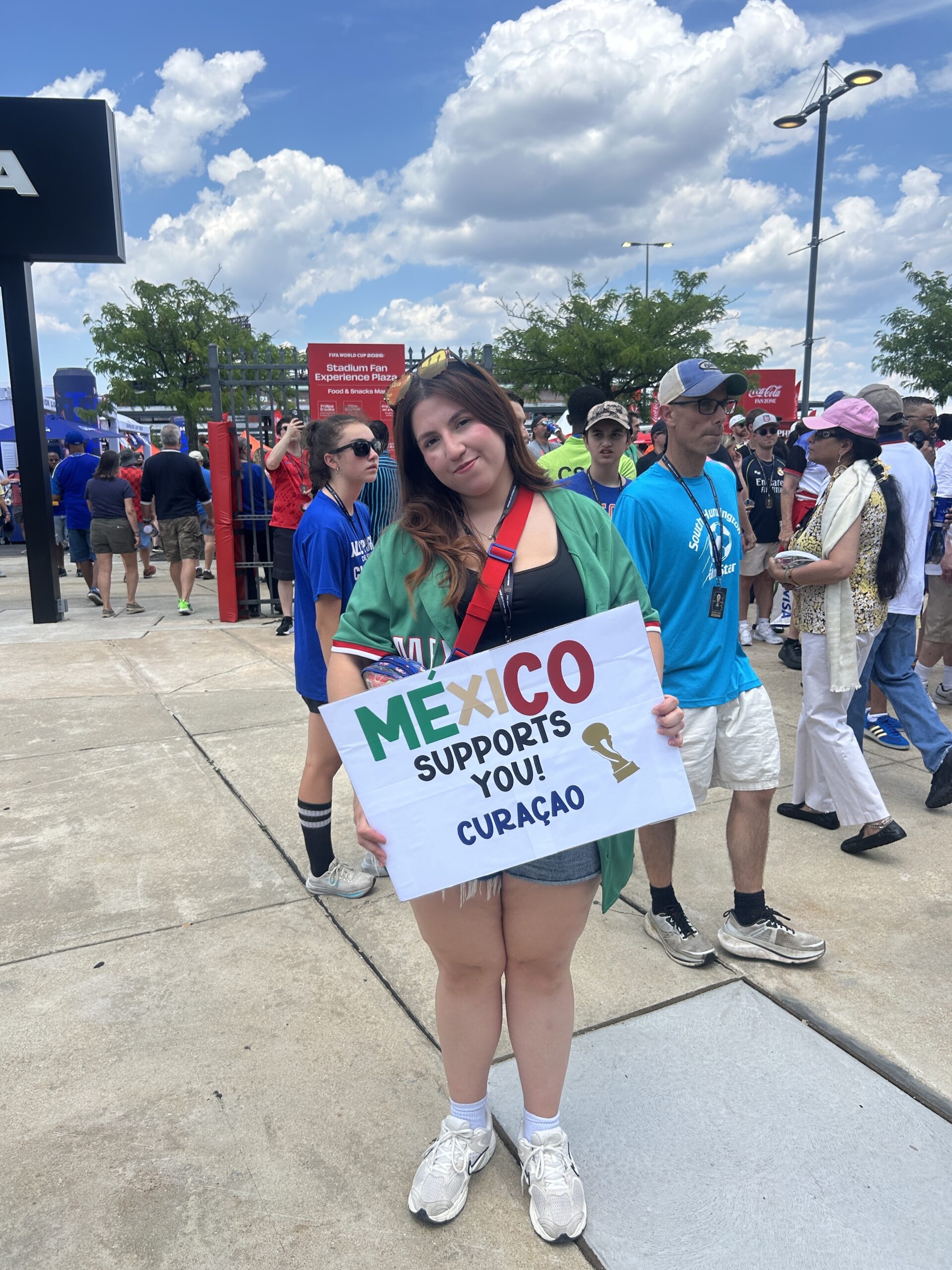
    Curaçao’s underdog story resonated beyond the island. Plenty of local fans came ready to rep Curaçao, including Anna Villarreal from Monterrey, Mexico, who wore a Mexico jersey and carried a “Mexico supports you Curaçao!” sign. Villarreal, 24, is spending the summer at the University of Maryland and snagged tickets to attend her first World Cup game in Philadelphia through the FIFA lottery after a lifetime of passionate soccer fandom.

    “We grew up watching the World Cup, but it’s in Brazil, Russia, Qatar — expensive!” Villarreal said. “Watching it in high school, college, kindergarten, but now it’s in North America, I’m so excited to have the opportunity to go to a game. … I don’t really have words. We grew up watching it on TV. I never thought I would be here right now. It’s a dream.”

    Anna Villarreal from Monterrey, Mexico, wore a Mexico jersey but carried a sign ‘Mexico supports you, Curaçao!’ into Thursday’s game against the Ivory Coast.

    Devon and Jay Geyer, siblings from Philadelphia, attended the game as a birthday trip. Jay now lives abroad in the Netherlands, so they chose to attend Thursday’s game to support Curaçao, thanks to that connection.

    “As a Philadelphian, it’s cool to see people come here and really enjoy it and appreciate it from an outside view,” Devon said.

    Plenty of Philadelphians jumped on the Ivory Coast bandwagon, given the team was headquartered in Chester at the Union’s training facility. Louie, a 23-year-old from central New Jersey, has Ivorian heritage and got all his friends on board, starting chants on the Broad Street Line on the way down to the stadium.

    “We went to the Union, they had their open practice and their scrimmage against the Philadelphia Union II,” said Giovanni Morales, one of Louie’s friends. “It was really nice to see them play, good atmosphere, good fans, everything was good.”

    Ken Palmer, 70, was cheering along with them on the train. His dream 70th birthday gift was a trip to Ivory Coast, where he spent 13 of the first 18 years of his life while his parents worked as missionaries, before moving back to the United States. A trip down to Philadelphia from his home in the Poconos to watch the national team play in the World Cup with his kids was close enough.

    “I tend to be a quiet, calm watcher, but I’m already excited,” Palmer said. “It’ll be a once-in-a-lifetime experience.”

    Another group of friends from Ontario got tickets through the FIFA lottery and decided to back Ivory Coast after finding jerseys in a Facebook group. They were hoping to get tickets in Toronto, but after striking out, decided Philadelphia was close enough for a road trip.

    Compared to the games featuring some of the biggest national teams like France and Brazil, Thursday’s game was by far the least expensive. Tickets were as low as $300 on the secondary market in the lead-up to the game, and while they did rise closer to game day, many fans cited the cheaper tickets as their primary motive for picking this game.

    Pat Diamond and Joe Staudenmayer, lifelong friends from South Jersey, picked this game because it was the easiest Philly game to get tickets for. Thomas Khatib drove up from Washington, D.C., and paid $350 to sit in the lower bowl, a price he felt was reasonable — although much more expensive than the free tickets he got to a Belgium-Saudi Arabia game at the 1994 World Cup. He attended with a fellow diehard soccer fan friend, both wearing Germany shirts. “Germany tickets got too expensive,” Khatib said.

    Salome Munoz and her husband live in Lansdale, Pa., but trace their own heritage to Colombia. They’re rooting for the Colombian national team, but Colombia wasn’t headed to Philly. As huge soccer fans, they wanted to still make the trip to a local game. The cheapest was Curaçao vs. Ivory Coast, paying $550 per ticket in the lower bowl.

    “It’s a once-in-a-lifetime experience,” Muñoz said. “I’m going for Curaçao, my husband’s going for Ivory Coast. I’m going for Curaçao because this is their first time, it’s a small country, anything that happens to them is brand new. I want to see a country vibe, just like Colombia has in so many other occasions when we’ve been to the World Cup.”

    The mostly local crowd, as compared to some of the other nations, was more subdued than other World Cup atmospheres. The neutral fans didn’t know the songs or the chants, and so aside from the two passionate fan sections, it felt a bit more like a Thursday afternoon Phillies game than the intense atmosphere at some of the other matches. But almost everyone still walked out happy, no matter what jersey they wore.

  • Three Phillies in running to start the All-Star Game after first phase of voting, but not Bryce Harper

    Three Phillies in running to start the All-Star Game after first phase of voting, but not Bryce Harper

    With less than a week left to vote, it hardly qualifies as a surprise that three Phillies players are in the running to start Philadelphia’s first All-Star Game in 30 years.

    The surprise: Bryce Harper isn’t among them.

    Harper finished third among first basemen in the first phase of fan voting, MLB announced Thursday. If the Face of the Phillies gets selected to his ninth All-Star Game on July 14 at Citizens Bank Park, it will be through player balloting as a National League reserve.

    But the Phillies may still be well-represented in the NL’s starting lineup. Brandon Marsh moved on to the second stage of fan voting by collecting the second-most votes among outfielders, while Bryson Stott and Alec Bohm did the same by finishing second at second base and third base, respectively.

    Kyle Schwarber, who leads the majors with 29 homers, ran second among designated hitters. But Dodgers star Shohei Ohtani locked up a starting spot by getting the most votes of any NL player. Schwarber is a virtual lock to be chosen as a reserve.

    Voting resumes at noon Monday on MLB.com and on the MLB app and concludes at noon next Thursday. Votes from the first phase of voting don’t carry over. MLB will announce the All-Star rosters, including starters, on July 4 at 7:30 p.m.

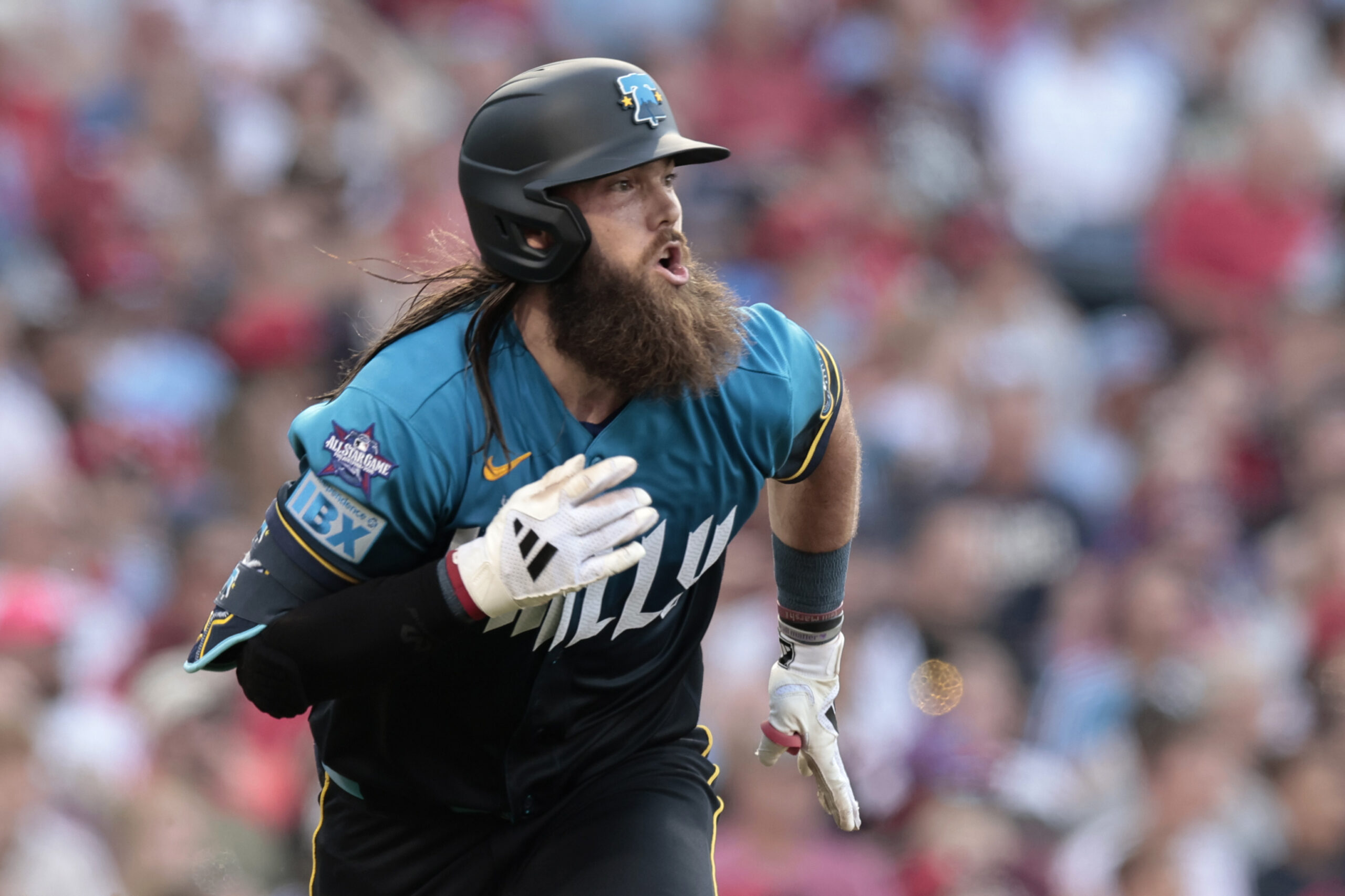
    Phillies outfielder Brandon Marsh is a candidate to start the All-Star Game for the National League.

    Marsh ranked third in the NL in hitting — and second among all major league outfielders — with a .321 average through Wednesday. He had 14 doubles, 11 homers, and an .860 OPS that was third among Phillies players behind Schwarber and Harper.

    Six NL outfielders advanced to the final round of voting, with the Dodgers’ Andy Pages and Teoscar Hernández, the Braves’ Ronald Acuña Jr. and Michael Harris II, and the Mets’ Juan Soto joining Marsh. Hernández and Acuña are on the injured list with hamstring strains.

    Bohm and Stott have recovered from awful starts to the season. Stott, in particular, was 19-for-58 (.328) with a .917 OPS in his last 16 games. He’s vying with Braves second baseman Ozzie Albies, and Bohm is pitted against Dodgers third baseman Max Muncy.

    Harper (.877 OPS, 17 homers entering Thursday night’s game) finished behind the Dodgers’ Freddie Freeman (.859, 13 homers) and the Braves’ Matt Olson (.870, 20 homers). The NL carried three third basemen last season (Freeman, Olson, and Pete Alonso).

    All-Star reserves and pitchers are selected through the player balloting.

    Cristopher Sánchez, second in the NL with a 1.80 ERA entering his start Thursday night in Washington, and closer Jhoan Duran (1.69 ERA, 19-for-20 in save opportunities) are strong candidates. Zack Wheeler (2.11 ERA in 11 starts) is also a possibility, though he missed the first month of the season.

    Schwarber and Harper said they’ll decide on competing in the Home Run Derby after they know whether they’re selected as All-Stars.

    Also Wednesday, Don Mattingly was named to the NL coaching staff, as expected, by Dodgers manager Dave Roberts. Phillies head athletic trainer Paul Buchheit, strength and conditioning coach Morgan Gregory, and clubhouse manager Phil Sheridan will be part of the NL staff. Kevin Steinhour will be the AL clubhouse manager.

  • Venezuelans search rubble for survivors after 2 strong quakes kill at least 188

    Venezuelans search rubble for survivors after 2 strong quakes kill at least 188

    LA GUAIRA, Venezuela — Venezuelans searched for survivors beneath collapsed buildings Thursday and rescue teams raced to northern areas rocked by a pair of powerful earthquakes that officials say killed at least 188 people and left more than 200 trapped.

    More were feared dead from the 7.2- and 7.5-magnitude earthquakes that struck Wednesday evening — among the strongest in Venezuela in more than a century and felt throughout the region. Some 1,500 people were injured, thousands were reported missing, and buildings were evacuated as far away as Brazil’s Amazon.

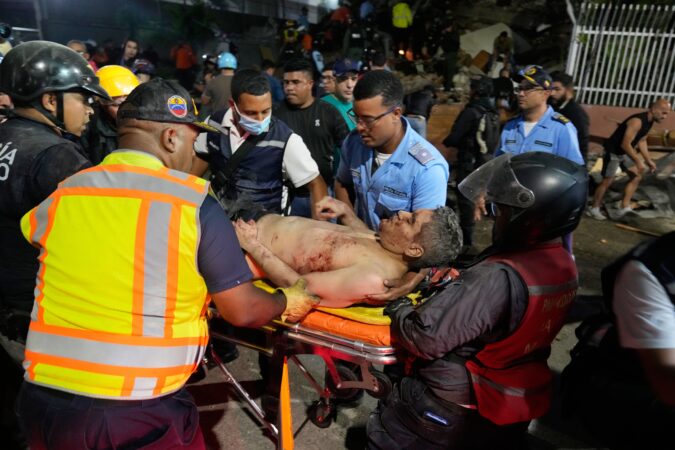
    In cities across northern Venezuela, panicked residents poured out into the streets and searched for the missing in the debris. Injured children, animals and civilians covered in dust and blood were pulled out of concrete rubble.

    One mother sobbed and collapsed in grief as the bodies of her 3- and 10-year-old children were wrapped in blankets and carried away. Others screamed the names of missing loved ones. Some stood in silent shock.

    The coastal region of La Guaira — north of the capital, Caracas — suffered some of the heaviest damage and casualties, and it’s there that the country’s main airport was damaged and closed, complicating aid efforts.

    Retired schoolteacher Juan Alberto Mendaño climbed through wreckage in La Guaira and past a dead body when he spotted a woman who was trapped and signaling with her hand for help.

    “May God rescue her as quickly as possible,” said Mendaño. “When we heard the scream, there was nothing we could do.”

    Offers of help poured in from around the world, including from the United States, which seized Venezuela’s then-president Nicolas Maduro at the beginning of the year in a surprise military operation.

    The natural disaster is just the latest challenge for acting President Delcy Rodríguez, the former vice president who took office in January after Maduro’s capture. Venezuela has been facing economic disarray for more than a decade, and many people reject the legitimacy of the political movement Rodriguez represents.

    Rescue teams head to heavily damaged coastal region

    Venezuelan authorities said they were diverting rescue teams from other parts of the country to La Guaira, which is no stranger to natural disasters; a 1999 mudslide there, considered one of the country’s worst natural disasters, killed thousands.

    Rodríguez appealed to businesses Thursday to make heavy construction equipment available for rescue operations, while a United Nations spokesperson said search and rescue teams were just hours away.

    “We are currently carrying out intensive rescue operations to save lives,” said Rodríguez, who referred to La Guaira as a “disaster zone.”

    Jorge Rodriguez, the president of Venezuela’s National Assembly and brother of the acting president, gave updated figures for the numbers of dead, trapped, and injured.

    While Venezuela sits near multiple fault lines, its position straddling the South American and Caribbean plates makes strong earthquakes much less common than in other parts of Latin America.

    The U.S. Geological Survey said the first earthquake, with a magnitude of 7.2, hit west of Moron on the Caribbean coast, about 105 miles west of Caracas. It had a depth of about 14 miles. Just a minute later, USGS reported a second 7.5 magnitude earthquake, with a depth of about 6 miles and an epicenter 10 miles southwest of Moron.

    The one-two punch of the quakes, combined with the shallow seismic movements, amplified the destruction, said Marcos Ferreira, a geophysicist and researcher at the Geological Survey of Brazil.

    “It is as if I am screaming and then someone starts screaming, too. That amplifies the vibration and adds to the potential hazard,” Ferreira said.

    Venezuela residents reeling from two strong quakes

    During the quakes, people ran from swaying buildings. Many were stunned Thursday morning as they saw buildings reduced to skeletons, furniture hanging out of windows and helicopters circling overhead.

    In La Guaira, Cristian Carreño stared at his charred apartment building tilting precariously to one side.

    “I lost everything,” he said. “There are people still inside, I imagine, that couldn’t get out. It’s incredibly devastating.”

    Dayana Delgado, mother of three children, said she was desperate because her 8-year-old son was missing. Delgado asked where the heavy machinery was that government officials had promised, pointing out that neighbors were the ones digging through the rubble.

    “I want to know where my child is, if he’s trapped or in a shelter,” she said.

    Authorities warned people against returning to homes with structural damage. In downtown Caracas, hundreds spent the night huddled in parks, parking lots and other open spaces.

    “We were afraid the buildings would collapse on us,” said María Cristina Díaz, a 41-year-old janitor. “My mother, my daughter, and I were cold. We didn’t sleep a wink.”

    “It was awful. We cried, we screamed. Thankfully, we’re alive,” she added.

    Parts of the capital lost power and cell phone service, Rodríguez said. Subway services were suspended and natural gas was shut off, she said. Classes will also be canceled for several days, and the Ministry of Education said some school buildings would be used as shelters and donation centers.

    Families began posting missing-person flyers with photos of loved ones, while others shared handwritten lists of names as they searched for those still unaccounted for. Venezuelans living abroad struggled to make contact with relatives.

    Shortly after U.N. officials in Venezuela called on the government to lift social media restrictions so people can get potentially life-saving information, Venezuelans in the country were able to access X. The site had been blocked by Maduro since August 2024, in an attempt to suppress the exchange of information among those who rejected his claim of victory in the July presidential elections.

    Several governments offered assistance

    Rodríguez declared a state of emergency in an address to the nation late Wednesday. She said the government was creating a $200 million reconstruction fund for damaged hospitals and homes.

    Countries from across the world — from Qatar to Mexico — began to send aid to Venezuela.

    Secretary of State Marco Rubio, who had spoken to Rodríguez following the quake, said the United States is “immediately” deploying search and rescue teams, medical resources other assistance, though he acknowledged the closure of the country’s main airport was creating some logistical challenges.

  • A West Philly man was sentenced to up to 40 months in prison for seeking to make bombs in support of a terror group

    A West Philly man was sentenced to up to 40 months in prison for seeking to make bombs in support of a terror group

    A West Philadelphia man who was convicted last year of seeking to build bombs in support of Islamic extremist groups was sentenced Thursday to 20 to 40 months in prison and six years of probation.

    Muhyyee-Ud-din Abdul-Rahman, 20, was found guilty in September of charges including attempting to possess weapons of mass destruction after jurors concluded he had experimented three years ago in and around his Wynnefield home with dangerous chemicals often found in high-volume explosives.

    Authorities said that Abdul-Rahman had done so after he communicated with Syrian extremists on Instagram, and that their arrest of Abdul-Rahman in 2023 had prevented him from unleashing a terror attack on the region.

    Jurors, however, found Abdul-Rahman not guilty of the more serious charge of possessing weapons of mass destruction, suggesting they believed he intended to build a bomb but had never succeeded. Common Pleas Court Judge Michele Hangley also threw out a conspiracy charge after ruling that prosecutors had not proved Abdul-Rahman had been working with anyone else.

    Abdul-Rahman told Hangley after being convicted that he had matured during his time in custody, much of it spent in a juvenile facility because he was arrested as a teen. And he said he had come to reject the radical beliefs promoted by the group he was following, Katibat al Tawhid wal Jihad, or KTJ.

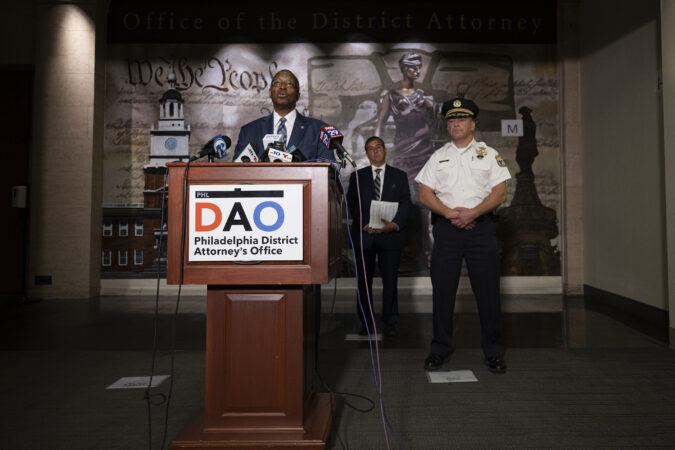
    Still, District Attorney Larry Krasner said Thursday that he was “deeply concerned” by what he cast as an insufficient penalty for a would-be terrorist. Krasner said his office had asked that Abdul-Rahman serve at least 10 years behind bars because prosecutors believe he remains “an extreme danger” to the city.

    “We ought to be able to live in a city where a terrorist is kept off the streets for a reasonable amount of time,” Krasner said.

    Federal investigators looking into KTJ’s activities in the United States in 2023 found that Abdul-Rahman was the only person in the country exchanging messages with some of its key online propagandists. Further investigation later revealed that Abdul-Rahman, around that time, had also applied for his first passport, tried to reach out to a Syrian border-crossing office, and purchased or possessed wires and chemicals common in homemade bombs.

    When authorities went on to conduct surveillance of Abdul-Rahman, officials said at trial, officers tailing him at a Lowe’s store saw him buy muriatic acid, a key component in a violent explosive dubbed TATP, also known as “the mother of Satan.” And a review of his internet search history around that time showed he had been looking up Philadelphia parade routes, trash can bombs, and nuclear power plants — something authorities said was consistent with “target and tactic” research.

    When federal agents questioned Abdul-Rahman inside a police station, an official testified, he admitted conducting bomb tests near his house and said he wanted to become a “bomb guy” for KTJ in Syria.

    Authorities arrested Abdul-Rahman in August 2023, just as he was to begin his senior year in high school. At the time, he was a promising wrestler with a college scholarship offer, and his father, Qawi Abdul-Rahman, is a well-known criminal defense lawyer who has mounted unsuccessful campaigns to become a city judge.

    Abdul-Rahman’s attorneys said at trial that he had made mistakes, but that he was an impressionable teen who had fallen down a “rabbit hole” of online propaganda. They also said he had never succeeded in building a bomb and did not take serious, in-person steps to advance the radical views he expressed online or in his house.

    At a hearing last month, one of his attorneys, Donald Chisholm, urged Hangley to consider that Abdul-Rahman’s path to the crime began when he was 16 years old.

    “Even at the age he is now,” Chisholm said, “he’s not fully matured.”

    Chisholm, said Thursday that he thought the sentence was fair, and that Krasner’s continued insistence on casting his client as dangerous was “disingenuous” and did not account for factors such as his client’s age at the time of arrest, or his growth over the last several years.

    The case attracted attention in part because it was a rare example of the district attorney’s office seeking to convict someone it described as a would-be international terrorist. Although federal counterterrorism agents were heavily involved in the investigation, juveniles are rarely prosecuted in federal courts.

    Krasner said Thursday that Abdul-Rahman likely would have faced a significantly harsher penalty if he had been convicted of similar conduct in the federal system, and he criticized the state’s sentencing guidelines, which prosecutors said Hangley cited when imposing her penalty.

    Abdul-Rahman has already served about 34 months in custody, meaning he will face a maximum of another six months in prison under the penalty Hangley imposed.

    Krasner said his office was weighing whether to appeal the sentence.

    Staff writer Jillian Kramer contributed to this article.

  • Unionized doctors at ChristianaCare finalize new contract

    Unionized doctors at ChristianaCare finalize new contract

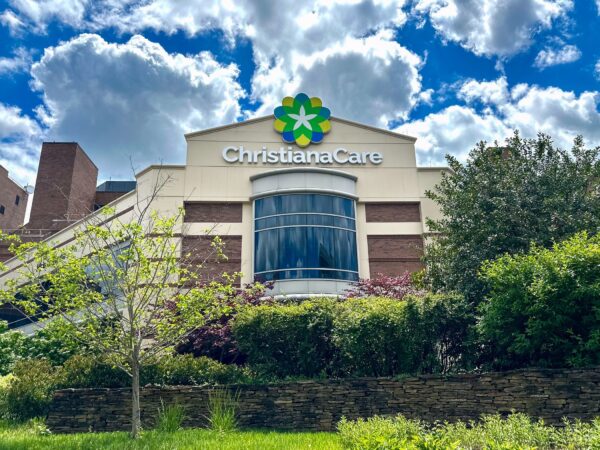
    Unionized ChristianaCare doctors — members of the first healthcare union in Delaware — ratified their first contract with the Wilmington-based health system this week.

    The contract covers three years and includes provisions to establish “formal structures for physician input on issues affecting clinical practice and patient care,” the union said in a statement.

    The contract also establishes a procedure for physicians to file grievances if they feel the contract has been violated, and forms labor management committees to address workplace safety concerns, union officials said.

    One 19-year-old was killed and another injured in a shooting at ChristianaCare’s Wilmington Hospital last week.

    “This is a major step forward in ensuring physicians have a meaningful voice at ChristianaCare,” Nisha Gandhi, an advanced heart failure cardiologist at the health system, said in a statement.

    A ChristianaCare spokesperson said the contract also included provisions against striking and “a mutual commitment to collaboration, stability and long-term partnership.”

    ChristianaCare has medical locations in Delaware, Southeastern Pennsylvania, and Maryland.

    Attending physicians at ChristianaCare voted to unionize in 2024, citing increased workloads with little support for added administrative tasks. They were the first group of attending doctors to unionize in the Philadelphia area.

    Since the 1980s, doctors have shifted from owning their own practices to opting for employment at hospitals and health systems. Just a quarter of physicians were self-employed in 2022, and unionization among physicians is growing.

    Last year, hundreds of medical residents across several Philadelphia hospitals also voted to unionize, but unions of attending physicians, who have completed their medical training, are rarer.

  • The Delco jail chief resigned after just months on the job

    The Delco jail chief resigned after just months on the job

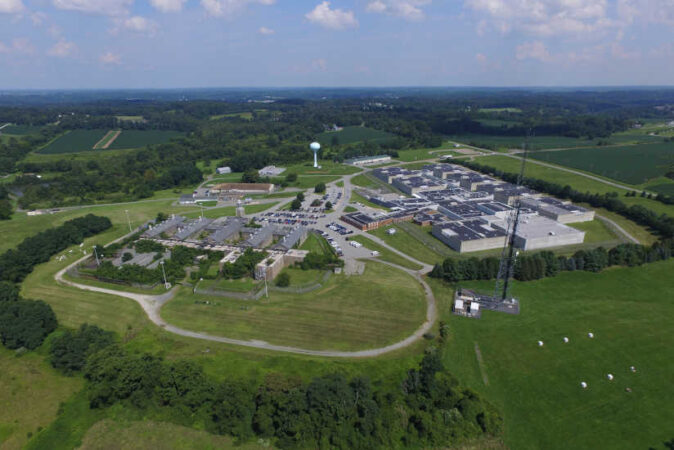
    The chief warden of the George W. Hill Correctional Facility in Delaware County has resigned after less than six months on the job, according to a statement released by the county government.

    Willie Bonds’ decision was motivated by family considerations and the opportunity to pursue other interests, according to the Delco officials. Bonds will continue to serve as the chief of the facility until an interim warden is appointed.

    The George W. Hill facility has been mired by scandal in recent years. The last chief to run the facility was ousted following a no-confidence vote by the labor union representing the prison’s guards. In the last two years, guards have been charged with smuggling fentanyl and K2 into the facility; inmates were accidentally released; and an inmate was killed by his cellmate, who was considered high-risk and supposed to be placed alone.

    Bonds was appointed to his position as chief of the facility in February. Last year, he served as the interim warden of the facility and he has worked in the facility since 2024, starting as deputy warden of security and training. He began his career in the New Jersey Department of Corrections in 1998.

    During his time as deputy warden, a federal lawsuit alleged that county officials fired guards without due process.

    After the Pennsylvania Prison Society conducted a walk-through of the facility and interviewed inmates in 2025, Bonds responded to the facility’s detailed shortcomings in a letter. The nonprofit advocacy group characterized his response, which added details about the prison’s conditions, as candid.

    The group said in a report that the facility had made significant improvements with a $50 million commitment from the county in 2025, but noted that the prison did not have enough staff for the number of inmates in the facility. At the time that the report was researched, there were 1,125 inmates, according to a response sent by Bonds. The total staff number was not reported.

    The Prison Society‘s report noted “the fundamentally unsafe conditions that Bonds now has the responsibility for fixing — conditions will not be fixed with building repairs alone but will require major shifts in organizational culture.”

    Delaware County hopes to continue efforts to improve the facility, the county’s statement said.

  • Roundup cases led to eye-popping Philly verdicts. Will that change because of the Supreme Court?

    Roundup cases led to eye-popping Philly verdicts. Will that change because of the Supreme Court?

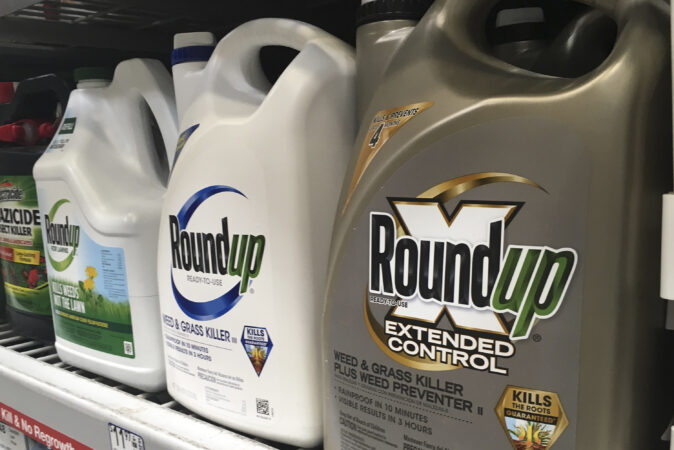
    The largest verdict issued by a Philadelphia jury in recent years came out of a trial in which a Pennsylvania man accused agricultural giant Monsanto’s weedkiller, Roundup, of causing his blood cancer.

    The jury awarded John McKivison $2.25 billion in 2024.

    The Lycoming County man was not the only one who has sued the German company. Thousands of cases are pending against Monsanto nationwide, including 462 active lawsuits in Common Pleas Court in Philadelphia alone.

    But on Thursday, the U.S. Supreme Court limited the types of claims that people who believe they developed cancer because of Roundup can argue in state courts.

    Here is what you need to know about the Monsanto Co. v. Durnell ruling and how it will affect Monsanto litigation in Philadelphia.

    What did the Supreme Court decide in ‘Monsanto v. Durnell’?

    In a 7-2 ruling, the Supreme Court held that lawsuits against Monsanto in state courts cannot include a failure-to-warn claim.

    The case arose out of Missouri, where a state court jury found that Roundup use caused John Durnell’s cancer, and that Monsanto should have included a cancer warning on the product’s label. Durnell was awarded $1.25 million for the company’s failure to warn him.

    Monsanto appealed, arguing that the Environmental Protection Agency had concluded that glyphosate — the main chemical in Roundup — is not cancer-causing, so the label did not need a warning.

    The case went all the way to the highest court in the land, which decided that states cannot force Monsanto to add anything to the EPA-approved label. So failure-to-warn claims cannot proceed in state courts, the Supreme Court said.

    “In sum, federal law requires Monsanto to sell Roundup with the label that EPA approved at the initial registration and that EPA has subsequently reapproved on multiple occasions — that is, the label without a cancer warning,” Justice Brett M. Kavanaugh wrote for the majority.

    When it comes to pesticide labeling, Kavanaugh said, federal law preempts any state labeling requirement because it would force companies to deviate from the EPA-approved label.

    Not all justices agreed. Justice Ketanji Brown Jackson wrote in a dissent, which Justice Neil M. Gorsuch joined, that adding a cancer warning would be in line with the federal law’s prohibition on misbranding.

    What does the ruling mean for lawsuits in Philadelphia?

    The ruling does not erase the 462 lawsuits in Philadelphia overnight.

    Lawyers usually included multiple claims in each lawsuit in an attempt to advance different theories that could convince a jury a company is liable.

    In the $2.25 billion case, the jury found that Monsanto did not adequately warn McKivison of Roundup’s cancer risk. But jurors also found that the company was negligent and that it sold a defective product.

    While the ruling prohibits failure-to-warn claims from moving forward, Monsanto can still face lawsuits under other claims.

    The Supreme Court ruling “narrowed the playing field,” said Tom Kline, the Kline & Specter attorney who represented McKivison. But “it’s not the end. It’s not lights out. It’s not game over,” he said.

    Juries will have to answer fewer questions moving forward, Kline said.

    Whether the ruling affects trial outcomes remains to be seen. So far Monsanto has lost four of the seven Roundup trials held in Philadelphia.

    The ruling could also affect other product liability lawsuits against pesticide manufacturers, such as those against manufacturers of weedkillers that contain paraquat, a toxic chemical that has been linked to Parkinson’s disease.

    “I think it’s part of a larger part of an industrywide strategy to piece-by-piece dismantle the tort liability for defective products,” Kline said.

    What is Monsanto saying about the ruling?

    The company said that the ruling would result in a dismissal of failure-to-warn claims, which according to Monsanto make up the “vast majority” of the litigation.

    Bill Anderson, the CEO of Monsanto’s parent company, Bayer, said in a statement that the decision provides “regulatory clarity” and brings “overdue justice on an issue that should have been clarified much earlier.”

    “This litigation has enormous costs for the company and has impacted public trust,” Anderson said.

    The executive affirmed the company’s commitment to a proposed nationwide class-action settlement of up to $7.25 billion as part of the company’s “multi-pronged containment strategy” on Roundup lawsuits.

    How does ‘Monsanto v. Durnell’ relate to the MAHA movement?

    The case has put President Donald Trump’s administration in an uncomfortable position with the Make America Healthy Again movement.

    Trump courted the movement during his campaign by recruiting Robert F. Kennedy Jr., whom he later appointed as his Department of Health and Human Services secretary. Before his turn to politics, Kennedy was an environmental lawyer who, in 2018, helped secure a $289 million verdict in the first Roundup cancer trial.

    And while the Trump administration has adopted some of the MAHA movement’s rhetoric on ultraprocessed foods, it took a different approach to pesticides.

    Trump’s solicitor general, John Sauer, filed briefs to the Supreme Court in support of Monsanto’s position on behalf of the White House, which drew the ire of MAHA supporters.

    After the ruling, MAHA influencers expressed anger at the administration.

    Kelly Ryerson, who is known online as Glyphosate Girl, posted Thursday on X that “never in history has an administration so blatantly and willingly sold out our fertility, vitality, and health to corporate interests.”

    Vani Hari, another MAHA influencer who posts to millions of followers as the Food Babe, said on Instagram she was “devastated” by the ruling.

    “We will remember who fought with us and who didn’t.”

  • SEPTA approved contracts with the transit police union and other workers

    SEPTA approved contracts with the transit police union and other workers

    The SEPTA board on Thursday approved new labor contracts with the Fraternal Order of Transit Police Lodge 109 and three unions representing workers in the Regional Rail Division.

    Transit police officers had threatened earlier this month to walk off the job while Philadelphia was hosting World Cup soccer matches, Major League Baseball’s All-Star week and events celebrating the 250th birthday of the U.S.

    Lodge 109 and SEPTA agreed on a three-year deal that gives the officers a 12% raise over the life of the contract, as well as a $2,500 signing bonus, longevity bonuses, and an increase in differential pay for evening and overnight shifts.

    Union members ratified the contract last week.

    Omari Bervine, president of Lodge 109, said the agreement was “fair to the hardworking men and women of the transit police” and thanked SEPTA General Manager Scott A. Sauer for helping restart negotiations.

    The transit police union represents 203 patrol officers who protect the regional agency’s transit and commuter rail networks, trolleys, buses and property, including stations and transportation hubs.

    “Historic reductions in crime over the last two years have come amid an unprecedented effort to bolster our transit police,” Sauer said at the board meeting. “Staffing is at its highest level in more than a decade.”

    Fifteen new officers joined the force this month after graduating from the police academy, and 18 cadets are scheduled to start their studies next month, SEPTA says.

    Officers had been working without a contract since March 31.

    The new agreement is retroactive to April 1 and runs through March 31, 2029.

    Lodge 109 members will receive a 5% increase in their hourly rates Sunday, with 3½% raises in June of each of the following two years. Longevity bonuses will range from $2,901 for officers with three years of experience, up to $9,552 for those who have 25 years or more of service.

    SEPTA’s board also approved new two-year contracts with the Brotherhood of Railway Carmen, International Association of Machinists and Aerospace Workers that together represent about 145 rail vehicle mechanics, welders, millwrights and maintenance custodians working on Regional Rail.

    The board also ratified a new contract with the Transportation Communications Union, which represents 76 Regional Rail clerical staff.

    Each deal with the three Regional Rail unions is for two years and gives workers raises totaling 7%, the same as the contract reached last year with the Transport Workers Union Local 234, SEPTA’s largest.

  • Measles detected in two more counties in Pennsylvania as health department recommends early vaccination

    Measles detected in two more counties in Pennsylvania as health department recommends early vaccination

    Pennsylvania health officials have now detected measles cases in York and Northumberland Counties as cases in Lancaster County, the center of an ongoing outbreak, continued to rise.

    And the state health department is now recommending early measles vaccinations for infants beginning at 6 months in affected areas in an effort to protect them against the spread of the highly contagious disease, which is particularly risky for young children. The same precautions should be taken by families with infants traveling to these areas.

    Six Pennsylvania counties have now seen measles cases since an outbreak was first confirmed in Lebanon County in April. In all, the state has reported 81 measles cases across eight counties in 2026, more than five times the cases reported in 2025.

    (function() {
    var l2 = function() {
    new pym.Parent(‘HE_MEASLES.html’,
    ‘https://media.inquirer.com/storage/inquirer/projects/innovation/arcgis_iframe/HE_MEASLES.html’);
    };
    if (typeof(pym) === ‘undefined’) {
    var h = document.getElementsByTagName(‘head’)[0],
    s = document.createElement(‘script’);
    s.type = ‘text/javascript’;
    s.src = ‘https://pym.nprapps.org/pym.v1.min.js’;
    s.onload = l2;
    h.appendChild(s);
    } else {
    l2();
    }
    })();

    State health officials said it was too early to tell how the latest cases in York and Northumberland Counties are connected to others in the region, but that contact tracing investigations are continuing. All cases were among people who had not received at least two doses of the measles, mumps, and rubella (MMR) or whose vaccination status was unclear.

    As of Wednesday, six cases had been confirmed in Northumberland County, to the north of Dauphin County, and one case had been detected in York County, along Lancaster’s western border.

    Lebanon County has reported 20 cases and Dauphin and Berks Counties have reported two cases each.

    Lancaster County has seen 38 cases of measles since late April, with health officials confirming seven cases in the last two weeks. The area was at the center of a prior measles outbreak in January, when state health officials confirmed eight cases in Lancaster County and an additional four between Chester and Montgomery Counties.

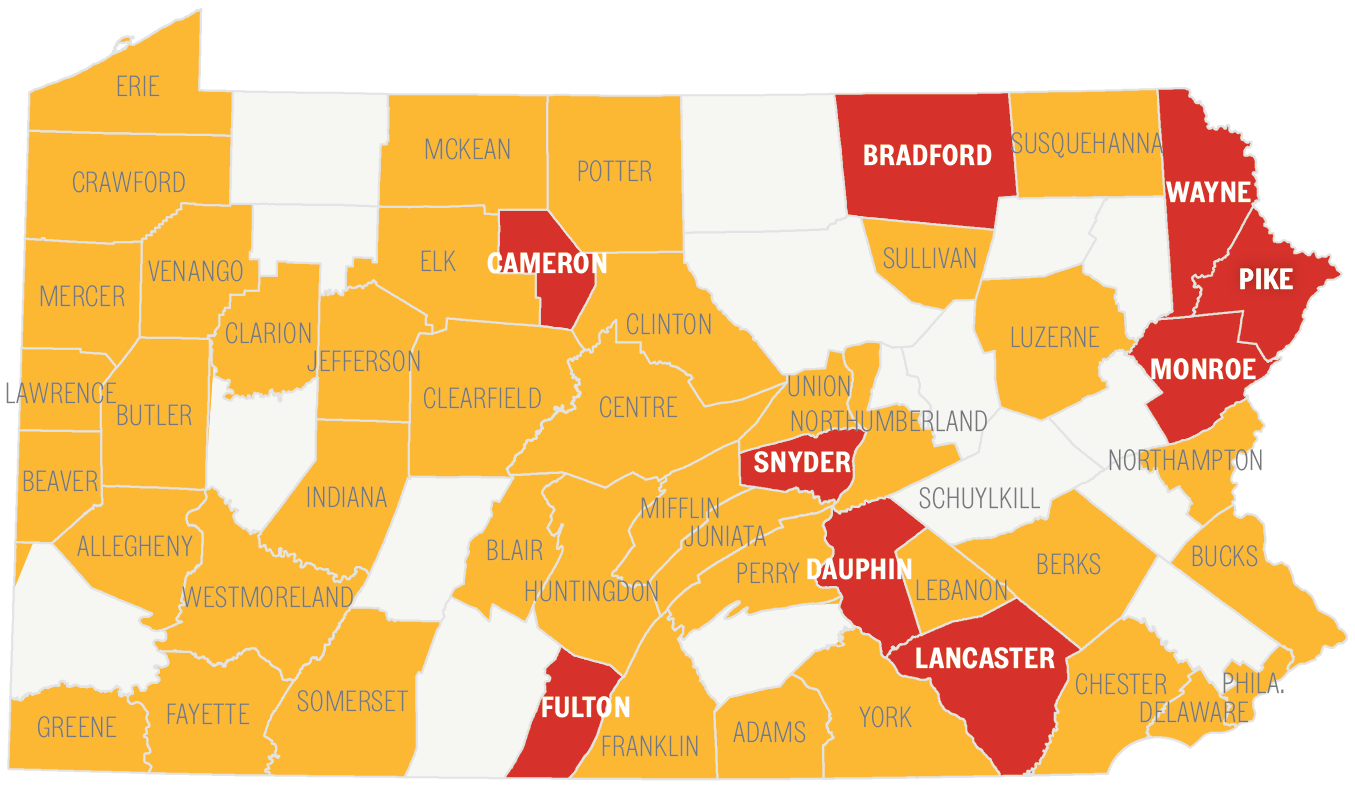
    Vaccination rates among kindergarteners have decreased across Pennsylvania in recent years, and some counties affected in the current outbreak have particularly low rates, including Lancaster, where about 88.5% of kindergarten students are vaccinated. Health experts say that 95% of a community must be vaccinated to prevent the spread of the disease.

    A map showing vaccination rates in kindergarteners for the 2024-2025 school year. Counties in yellow have vaccination rates between 95% and 90%. Counties in red have vaccination rates below 90%. To halt the spread of measles, at least 95% of a community must be vaccinated against the disease.

    Health officials have been conducting contact tracing to detect as many cases as possible. In the current outbreak, they have twice warned Lancaster residents that they could have been exposed to measles.

    Shoppers and employees at a local Kohl’s were potentially exposed to the virus over four days after a staffer tested positive in late May, LancasterOnline reported. And a person with measles visited the Lancaster County Courthouse on June 3.

    But doctors in Lancaster County say they fear some measles cases are going unreported, either because patients don’t understand the importance of tracking measles cases or because they fear repercussions.

    No cases have been confirmed in the Philadelphia region during this outbreak. But Delaware County health officials said last week that they had detected measles in two wastewater samples, indicating that someone with measles had used a bathroom connected to the county’s public water supply. It was unclear if that person lived in the county or was passing through.

    Early vaccination recommended

    On Wednesday, a statewide health alert urged physicians to accelerate vaccination schedules to protect children against measles. Officials had said they were considering the measure earlier this month as cases continued to rise.

    Measles can infect nine in 10 unvaccinated people who are exposed to it, and can linger in the air for up to two hours and incubate in patients for three weeks. The disease typically presents with a fever and a rash but can cause brain inflammation and pneumonia in serious cases.

    Typically, children receive the first of two MMR vaccines at 1 year old, then a second between 4 and 6 years old.

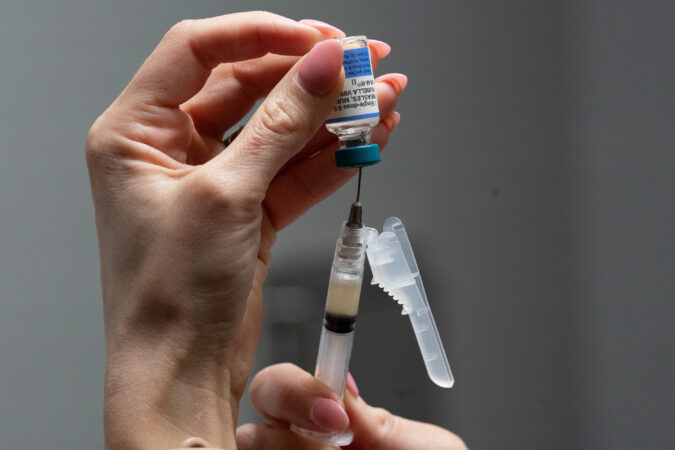
    But children as young as 6 months can receive an additional “dose zero” to protect them from the disease amid an outbreak. In its alert, the state health department said parents should vaccinate infants between 6 and 11 months with the “dose zero” if they live in affected areas or if they’re planning to travel there.

    Those children should then receive additional MMR doses at 12 to 15 months and 4 to 6 years.

    This “dose zero” is less effective than doses given at 1 year old, officials cautioned. But it’s 58% effective against measles when given at 6 to 8 months, and 83% effective when administered at 9 to 11 months.

    “Early MMR vaccination is safe and provides modest protection when measles is spreading,” officials wrote in the alert.

    Children older than 12 months who haven’t been vaccinated should get an MMR dose immediately, and a second 28 days later, health officials said. Unvaccinated adults, or those without evidence of immunity, should also get two MMR doses.

    And anyone who has received one dose of the MMR vaccine in the past should get a second at least 28 days after their first, officials said.

    Usually, children who received a first dose at around 12 months wait to get their second dose until they’re 4 to 6 years old. But in an outbreak situation, those children should get their second doses early — at least 28 days after their first shot.

    Adults born before 1957 are typically considered immune, but healthcare workers in that age group who don’t have lab evidence of immunity or prior infection should consider getting vaccinated, state officials said.

    Adults who received an inactivated measles vaccine between 1963 and 1967 are considered unvaccinated during an outbreak, and should also get two doses of the current MMR vaccine.

    Pregnant people, people with severely weakened immune systems, and people who have a history of experiencing severe allergic reactions, like anaphylaxis, to a vaccine ingredient or to a previous dose of MMR cannot receive the vaccine.