Main Line Health and UnitedHealthcare have an “agreement in principle” on new contract and will extend the current contract until the new deal is completed, Main Line Health said Wednesday.
Main Line’s contract with United was set to expire Tuesday, potentially disrupting care for 32,000 people who rely on Main Line doctors and have health insurance through United. The negotiations covered employer-sponsored plans and Medicare Advantage plans.
“For nearly a year, Main Line Health worked diligently and in good faith to reach a responsible agreement — one that reflects the true cost and complexity of the high-quality care we deliver to this community every day. We are pleased to have reached this milestone, and our patients will experience no disruption to their care,“ Main Line said in an email.
Main Line said the preliminary agreementrelieves some of the administrative burden for doctors and patients. They include prior authorization delays, claim denials, and excessive audit activity, Main Line said.
United, the nation’s largest health insurer, did not immediately provide a comment.
The company based in Eden Prairie, Minn., this year failed to reach a new agreement with Jefferson Health’s Lehigh Valley Health Network for Medicare Advantage and employer plans. That outcome added to the worry for some patients that the same thing would happen in Philadelphia’s western suburbs, where Main Line is the leading provider of healthcare services.
A 36-year-old survivor of slavery said he has tried to follow all the rules since fleeing Mauritania, a mostly desert land in West Africa, and seeking asylum in the United States in 2023.
But when Ousmane Soumare arrived at the U.S. Immigration and Customs Enforcement office in Philadelphia in November for a routine check-in, he was detained by officers.
Now Soumare, who was released by a federal judge’s order, and two other immigrants who fear a similar fate in their forthcoming appointments are suing ICE and the Department of Homeland Security over the policy change that led to such arrests.
The Philadelphia ICE field office violated federal law when it “unlawfully rescinded” a longstanding policy that largely allowed immigrants to pursue their immigration cases without fear of rearrest, the suit says. ICE then “began re-arresting and re-detaining people previously determined to pose no risk of flight or danger to the community and still in full compliance with all conditions of their release,” the suit says.
Soumare, Lassana Dianifaba, and a third immigrant, who was not named in court documents, filed the lawsuit Wednesday in federal court in Philadelphia.
“When the government releases a person from custody, there is an implicit promise that their liberty will be honored as long as they follow what is asked of them,” said Vanessa Stine, senior staff attorney with the ACLU of Pennsylvania, which represents the immigrants. “These rearrests disregard a decades-old policy and sow fear and chaos.”
ICE does not comment on pending litigation, a spokesperson said.
‘Unheard of’
In Philadelphia, ICE arrests of people who arrive for what they thought would be routine check-ins and appointments have gone from rare to common.
That is because “sometime toward the middle of 2025,” the suit says, the local ICE office rescinded its policy that required individualized evaluation of new circumstances that would indicate an immigrant is a danger or flight risk.
Each year thousands of people report to ICE or related immigration agencies for the mandatory check-ins. Some immigrants are required to appear every couple of weeks, some once a month, others once a year.
The appointments help immigration officials keep track of people who in the past have been low priorities for deportation, allowed to live freely as they pursue legal efforts to stay in the United States. Now that landscape has shifted.
The changes have put immigrants in risky positions, making every visit to the ICE field office a gamble, because they have little choice but to show up.
Six immigration attorneys filed affidavits in support of the new proposed class-action lawsuit that detail an explosion of cases. Christopher Casazza estimated his firm has represented roughly 190 people who were detained at ICE check-ins since September.
Before 2025, it was “unheard of” for a law-abiding immigrant to be detained at a routine check-in, Casazza said.
Steven Morley, who served as an immigration judge between 2010 and 2022, said in an affidavit that he could not recall “any circumstance” of people being re-detained unless they had committed a crime.
Philadelphia federal judges responding to the flood of lawsuits by immigrants challenging their detention have also taken notice of the shift.
In February, U.S. District Judge Gail A. Weilheimer wrote that ICE had set a “trap” for “thousands of noncitizens” by arresting immigrants who were following instructions.
ICE offices in other cities have similarly reversed course on requiring a material change in circumstance to re-detain released immigrants, and federal judges in California and New York found the lack of individual assessment unlawful.
The proposed class action in Philadelphia asks a federal judge to certify the class, and declare the rescission of the changed circumstances policy unlawful.
Soumare’s next check-in is scheduled for July, and he is anxious about visiting the ICE office again.
“When I think of the risk of being re-detained at my next check in, it scares me,” he said in a court filing. “But I will still attend because I want to follow all the necessary steps to stay here.”
Visa holders and green card applicants
Even people who are seeking legal status through lawful government processes are in danger of arrest.
Green-card applicants, asylum seekers, and others who have ongoing legal or visa cases to stay in the United States have been unexpectedly taken, part of a Trump administration strategy, lawyers and advocates say, to boost the number of immigration arrests and to deport anyone who can possibly be deported.
Arrests have occurred not just at ICE offices, but also at U.S. Citizenship and Immigration Services and at private offices of federal contractors.
ICE says that all immigrants who do not hold legal immigration status may be subject to arrest and removal. They say that arrests undertaken at federal agencies are safer for officers, because visitors have been screened for weapons when they enter the buildings.
DANA POINT, Calif. — Fifteen months ago, Mauricio Pochettino walked out of SoFi Stadium at the low point of his tenure as the U.S. men’s soccer team’s manager.
Not only had his players lost both games at the Concacaf Nations League final four, but they had lost badly, with a squad including many of the program’s stars. He had taken the job to prepare one of the World Cup’s cohosts for the biggest stage, and everything felt about as far from ready as possible.
Two weeks ago, Pochettino was back on the same field, about an hour north of here, joined by many of the same players. This time, they charged to a 4-1 rout of Paraguay in the Americans’ World Cup opener, jolting the tournament and the nation to attention.
“I didn’t recognize it,” he said in a gathering with media at his office in the team’s swanky hotel along the Pacific Ocean. “Because it was empty” the first time.
Mauricio Pochettino’s frustration showed during the U.S. team’s loss to Panama in last year’s Concacaf Nations League semifinals.
Indeed, the stands were mostly empty when the U.S. played Panama in the semifinals, then Canada in the third-place game. They were filled only in the other halves of those doubleheaders, when Mexico won twice to take its first Nations League title after three straight U.S. triumphs.
“I was crying afterward in the dressing room, because I felt so sad for all the American people, for the players, for the staff,” Pochettino recalled. “I said, ‘OK, we play in our own place, our own country, and 70,000 Mexican people’ … I cannot accept that.”
This time, as he put it, was “a completely different vibe, different energy.” The place was full, and backing the hosts. Sure, that it was a World Cup helped, even with the ticket prices. But it was clear from the moment the crowd joined in singing the national anthem that there really were U.S. national team fans in the stands.
There’s still a long way to go this summer, with progression to the knockout rounds and first place secured before Thursday’s group stage finale against Turkey (10 p.m., Fox29, Telemundo 62). And the U.S. team hopes there will be a long way still to go after that.
But given this game’s lessened stakes, there’s a moment to stop and survey just how far the program has come.
A big crowd was on hand on June 12 in Inglewood, Calif., for the U.S. World Cup opener against Paraguay.
‘The person you used to be’
The most striking feature of Pochettino’s office is a balcony with a postcard view of the water, the surfers in it, and the stunning sunsets beyond them. Ranked No. 2 is a wall covered with a U.S. Soccer logo and one of the team’s slogans for the tournament: Why Not U.S.?
Within the lines of type, Pochettino wrote a series of motivational phrases, some of his creation and some by others.
Growth is often painful, for it means saying goodbye to the person you used to be.
The talent has brought us here, but it is heart, effort, and unity that will make us unforgettable.
Heart turns effort into belief — and when everything hurts, heart keeps us fighting together.
Mauricio Pochettino (right) giving instructions to Auston Trusty (left) and Mark McKenzie during Tuesday’s U.S. practice at the team’s base camp in Irvine, Calif., ahead of Thursday’s match against Turkey.
“I think every single quote represents our journey from day one to today and beyond,” he said.
They’re also more proof of how Pochettino values the psychological side of the sport, a factor that’s even more important with national teams than it is with clubs.
National teams can’t buy players to boost their talent the way clubs can, especially Pochettino’s previous employers at England’s Chelsea and Tottenham Hotspur and France’s Paris Saint-Germain. If a national team’s top players aren’t delivering, all the manager can do is drop them, call in other players, and hope they do enough.
That’s what happened after the Nations League failure.
Yunus Musah (left) is perhaps the highest-profile player who has fallen out of the national team rotation during Mauricio Pochettino’s tenure.
“Maybe we didn’t feel or see how difficult the process was going to be,” Pochettino said. “We were so naive when we signed our contract. … We misjudged the situation — it was worse than we really believed.”
‘We were knocked out’
He and the assistants he brought with him came in believing that the players would immediately be as all-in on working toward the World Cup as the staff.
“And then we arrived here, we received a big punch,” he said, mimicking it, “and we were knocked out for a while.”
Pochettino was, as he relayed in these remarks with an expletive, shocked.
Mauricio Pochettino (center, in cap) and top assistant Jesús Pérez (foreground) during a U.S. practice last October.
“We were so excited about that, because it was so close to the World Cup,” he said. He expected in turn that people would be “desperate to help everyone, to be involved, come to the national team. And what’s the opposite?”
He felt it as soon as he took charge in the fall of 2024. By the time the Nations League final four arrived, he said “that punch, we expected” — words as damning as any he has said in his tenure.
“I think it was more a plan to have this punch that was painful, but it was necessary for people to realize in which place we were,” Pochettino said. “For the players to realize that this way, it was impossible to arrive in a good condition to the World Cup.”
We’ll never know what would have happened if the U.S. had won the Nations League title with its stars playing well. But because it didn’t, Pochettino moved quickly to start tearing things down, bringing in a slate of new players to challenge incumbents from the summer’s Gold Cup into the autumn.
Max Arfsten (left) is one of the new players who has gained Mauricio Pochettino’s trust.
There were a lot of questions along the way, and among outsiders, uncertainty as to whether the move would pay off. But when the Americans beat Japan in September, they showed they had reached the corner to turn around. Over the ensuing months, they got there.
Now, Pochettino has a galvanized group, and some of its biggest names have led the way in the World Cup. The U.S. might not be able to win it all, but there’s no questioning the players’ commitment now.
At one point, Pochettino was asked how much he has learned about American culture in the job. He has been asked that a few times in his tenure, and unfortunately hasn’t had much to answer with — not least because he and his staff don’t live in the United States.
This time, he had more to say.
Mauricio Pochettino (center) talking to his players during a hydration break in the U.S. match against Australia last Friday in Seattle.
“People are very approachable, they make you feel comfortable, it’s very welcoming,” he said. “You go to some place like Nashville and you go to a bar, and if you are alone, you make friends so quick. And it looks like in a few minutes, you belong that in that place.”
That, he said, “was a massive surprise. … Different states and everything, but you have the same essence of the human being.”
If it’s tempting to want such a message that can resonate in a divided country — especially during a unifying event like a World Cup — it bears saying that Pochettino probably hasn’t experienced the full depths of what has caused the divisions.
But conversations with people who know him bring up a reminder: He’s one of many foreign visitors, especially from his native Argentina, who look up to the United States culturally and see the good before the bad.
“The country is massive and the people are so good,” Pochettino said. “I think we’ve learned a lot, I think we are much better people now, knowing the country and the culture of the people here.”
He made a wisecrack about America’s reputation for junk food, a subject that the world has lived out in coming to our shores this summer. (Ask the Netherlands fans who went to Buc-ee’s, a famed Southern convenience store chain.)
“People say Americans have no healthy food. Yes, you have healthy food,” citing a trip he took to a Whole Foods supermarket. “But also you have the food that makes you feel, you know, like Chick-fil-A.”
He even said at one point that “when you are here, I think it’s difficult now to see yourself living in another place” and that “we will miss” the country.
Here was Mauricio Pochettino’s speech to the crowd at the start of the day:
That opened the door to ask if he’d like to stay in the job after his contract ends following the World Cup. There have been some discussions with U.S. Soccer, but the widespread presumption remains that he’ll go.
He avoided a direct answer, saying his focus now is on the World Cup.
“And then if we want to stay, we have months to talk, or days or weeks, because it’s four years until the next World Cup,” he said, later adding: “We told the federation we are open, but now I think it’s not to be distracted.”
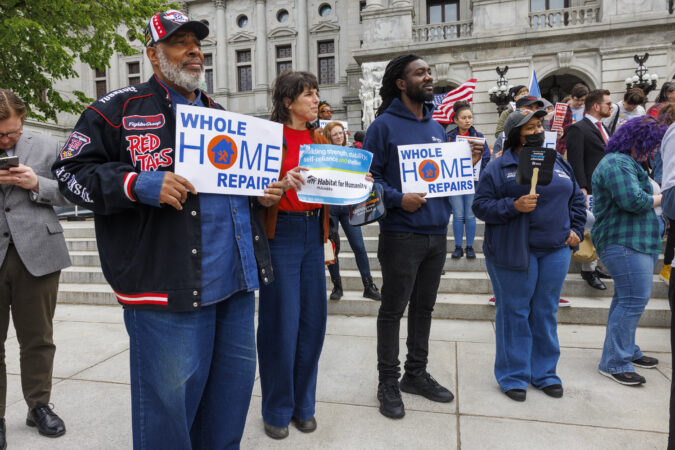
WASHINGTON — A Pennsylvania program that assists homeowners and small landlords by financing repairs was on track Wednesday to expand nationwide, after Congress this week passed a bill that both Republicans and Democrats are celebrating as the first major federal housing law in decades.
Tucked into the 374-page omnibus legislation is a pilot version of a federally backed Whole-Home Repairs program — an idea that was originally sponsored by State Sen. Nikil Saval (D., Philadelphia) and passed in Pennsylvania in 2022.
The program offers grants or loans to address safety, habitability, and efficiency concerns.
But despite wide bipartisan support for the program and dozens of other housing reforms in the larger bill, final approval was derailed on Wednesday when President Donald Trump canceled the bill-signing ceremony in an attempt to force Congress to first pass more restrictive voter-ID laws.
Democrats and some Republicans quickly rebuked the president, who still made a rare appearance on Capitol Hill to meet with Senate Republicans. The intraparty meeting turned contentious, according to multiple reports, while Democrats noted they had enough votes to overturn Trump’s veto if he holds out long enough.
“It’s a mess,” said U.S. Sen. Andy Kim (D., N.J.). “Finally, we’re doing something that the American people want. We got bipartisanship. We worked on it forever. … Then he just parachutes in and just blows it all up here at the end.”
The 21st Century ROAD to Housing Act aims to incentivize housing construction, restrict large institutional investors from buying single-family homes, improve financial literacy, and more.
More than a year in the making, it includes a separate stand-alone Whole-Home Repairs Act that U.S. Sen. John Fetterman (D., Pa.) had introduced in each of the last two sessions of Congress. Fetterman’s bill merged last year into the larger bill while keeping many of the same provisions as the Pennsylvania-level program.
Households that earn less than 80% of the area median income are eligible for grants, while small landlords with affordable units can access loans, including forgivable loans.
Saval said he expects the national version to also reflect that level of “immense demand” — particularly as the program starts small and as homeowners across the country face higher costs to maintain their residences.
“This is a huge issue. There are some 200,000 homes in Pennsylvania alone that have moderate to severe deficiencies,” Saval said. “Everyone is dealing with rising energy costs. Everyone’s dealing with the cost of materials and labor and the inability to pay for all that.”
Addressing those kinds of affordability concerns, which have become a top-of-mind political issue during this year’s high-stakes midterm elections, is a rare bipartisan effort to emerge from the U.S. Capitol.
Philadelphia-area lawmakers on both sides of the aisle had spent months advocating for the bill.
U.S. Sens. Dave McCormick (R., Pa.) and Lisa Blunt Rochester (D., Del.) — members of the Senate committee that advanced the legislation — both celebrated the final passage by talking about its impacts on affordability and “cutting red tape.” Kim called it a “historic” move to bring costs down.
“This package comes at a critical moment,” Blunt Rochester said in a statement, noting a nationwide housing shortage of as many as 7 million units. Five bills she separately sponsored — to accelerate building, increase investment in community development projects, develop zoning and land-use policies, and more — were featured in the final law.
The Whole-Home Repairs provision of the legislation was not a guarantee as negotiations developed over the last year. House Republicans were generally skeptical of creating a new government program, and specifically critical of the policy’s tenant protections, according to a source familiar with the negotiations. But their counterparts in the Senate, and Democrats in both chambers, helped keep it in the larger bill.
Fetterman said in a statement that Whole-Home Repairs “ensures families can stay in their homes” and that passing it had been a priority since he entered the Senate in 2023.
“I’ve consistently maintained that our housing crisis needs real solutions that help address the problems at the center,” Fetterman said.
Saval, who said he made multiple trips to Capitol Hill to work with sponsors and lobby for Whole-Home Repairs, said he was “thrilled” by the inclusion of a program that he and the coalition of advocates who helped push the idea had always envisioned as a model that could be replicated.
He said he expects the pilot program to prove successful in “a few states” where it is able to launch. Unlike previous version of the federal bill that would have allocated $30 million to the pilot, there is no specific funding number for Whole-Home Repairs in the 21st Century ROAD to Housing Act.
The legislation calls for the secretary of the U.S. Department of Housing and Urban Development to identify between two and 10 “implementing organizations” every year during the pilot, which is set to run through October 2031. The organizations will be local or state governments that administer the programs.
Saval said that no matter how much funding is allocated, it “will undoubtedly fall short of the need,” but that its effectiveness will spur further investment.
“It repays itself,” Saval said. “It repays itself in stabilized communities. It repays itself in stabilized property values, in people remaining in their homes rather than in unsafe or unhealthy homes, or rather than abandoning them.”
Staff writer Jake Blumgart contributed to this article.
A federal judge on Wednesday permanently barred President Donald Trump’s administration from implementing most of his first executive order on elections, part of which sought to require people to show documentary proof of citizenship when they register to vote.
The ruling by U.S. District Court Judge Denise Casper in Boston effectively converts a preliminary injunction she issued a year ago, in which she temporarily blocked many of Trump’s efforts to overhaul elections, into a permanent ban.
Casper rejected the Republican administration’s argument that the lawsuit to block the changes brought by Democratic state attorneys general was premature because the rules had yet to be put in place. Instead, she agreed that the Constitution gives states and Congress the authority to regulate elections, and that Trump’s requirements violated the separation of powers.
The Constitution “does not grant the President any specific powers over elections,” wrote Casper.
Among other proposed changes, Trump’s order would have required people to provide documentary proof of citizenship when registering to vote, prevented mail ballots from being counted if they arrive after Election Day, even if they were postmarked by then, and punished states that failed to comply by withholding certain federal money.
In a statement, New York Attorney General Letitia James said she was grateful the court had blocked Trump’s “unconstitutional attempt to seize control of our elections” and would continue to defend voting rights in this year’s midterm elections.
“Generations of Americans fought tirelessly for the right to vote, and we honor their legacy by protecting that right against anyone who tries to undermine it,” said James, a Democrat.
California Attorney General Rob Bonta, whose state was the lead plaintiff in the case, said the ruling reaffirmed the constitutional principle that it s up to the states and Congress to set election rules.
“While we are proud of this result, we are clear-eyed that President Trump’s attacks on voting rights and our elections show no signs of slowing down,” Bonta, a Democrat, said in a statement. “So let me be clear: we will keep fighting back every step of the way.”
Requests for comment sent to the White House and the U.S. Department of Justice were not immediately returned.
The ruling was the latest in a series against the elections executive order Trump signed just months after taking office for his second term. The Republican president has since signed another executive order on elections that seeks to create a national voter list and limit mail balloting. That directive also faces multiple legal challenges.
Last fall, a federal judge in Washington, D.C., overseeing a separate challenge to the first election executive order by civil rights and Democratic Party-aligned groups blocked the government from taking steps to include the proof-of-citizenship requirement on the federal voter registration form. That judge later barred Trump’s defense secretary from requiring documentary proof of citizenship when military personnel register to vote or request ballots.
In an apparent nod to the difficulty of implementing a proof-of-citizen requirement by executive order, Trump is pushing legislation in the Republican-controlled Congress to create such a mandate. The SAVE America Act has passed the House but has stalled in the Senate, leading Trump to advocate for eliminating the filibuster that is blocking the legislation.
On Wednesday, he abruptly canceled the expected signing of a bipartisan housing bill, saying he would not sign legislation until Congress passes his proof of citizenship requirement for voting.
The president and many of his Republican allies have been promoting the narrative that voting by noncitizens is a major problem, when in fact it’s quite rare. The federal voter registration form already requires people to attest that they are U.S. citizens. Violating that is punishable as a felony that can lead to prison or deportation.
In another major voting case, the U.S. Supreme Court is due to issue an opinion soon on whether mail ballots must arrive by Election Day. That could immediately change the rules in 14 states that allow grace periods ranging from days to weeks if the ballots are postmarked by Election Day.
Casper, who was nominated by Democratic President Barack Obama, is the chief judge for the U.S. District Court for the District of Massachusetts.
After finishing his call with new Toronto Maple Leafs general manager John Chayka on June 16, Simon Benoît reached out to Trevor Zegras.
Benoît and Zegras, along with Jamie Drysdale, played together for the Anaheim Ducks for several seasons, and the band is now back together. Benoît and goalie Joseph Woll were acquired June 16 from the Leafs for goalie Sam Ersson, defenseman Emil Andrae, and a third-round 2026 draft pick.
“I reached out to Zee right after I got the call from Chayka, and I told him, as a joke, keep your head up in practices, because I’m coming,” he said in a news conference held via Zoom on Wednesday. “I think he was laughing about that one. I know them, I spent a lot of time with them on the ice, outside the ice, so I was pretty happy that I knew two guys already on the team.”
Simon Benoît is expected to bring a physical defensive presence to the Flyers.
Benoît was pretty busy on his phone because he also called Woll. The call came at a good time because the goalie, who found out about the deal while going through his hockey card collection — “I’m a big hockey card collector,” he said — and didn’t know he’d have company in Philly.
“I was pretty sad to hear the news right when it happened, and went for a walk and actually had my buddy, Mr. Benoît, [he] gave me a call,” said Woll, also via Zoom. “… At that point, I was thinking about leaving the Leafs, and Bennie called me, and just excitement in his voice, I think, really helped, for me, see how an unbelievable opportunity this was.”
Woll’s phone was also busy. He got a message from Dan Vladař, his new goalie partner, and his mom, Shelly, mentioned she is friends with the mom of Flyers prospect Shane Vansaghi, who is from the St. Louis area like Woll’s family. Woll has already spoken to Flyers GM Danny Brière and coach Rick Tocchet, as has Benoît, and has chatted with goaltending coach Kim Dillabaugh. He said that he and “Dilly” already see eye to eye on where his game can go.
“I would say one major focus is getting back to playing to my strengths as a goalie,” Woll said when asked what he wanted to work on this summer. “I think I have a very good technical base, and I think I’m an elite skater, and I have great athleticism.
“I think sometimes I don’t let that come out enough in situations, and so one of my major goals is to really get back to playing to my strengths and letting those shine.”
Joseph Woll is coming off a career-worst year but was positive about the evolution of his game.
Woll is coming off the worst year of his three-plus-year career with a 3.34 goals-against average and .899 save percentage for a team that finished last in the Atlantic Division and is picking No. 1 in Friday’s draft. But over the course of his career, his numbers are pretty impressive: a 63-43-9 record, 2.94 GAA, and .906 save percentage. He is using the bad — like his disastrous turn for USA Hockey at World Championships in May — and the good, which includes impressive numbers in the postseason.
“I think one of the biggest things about goaltending, and probably like anything else in life, it’s a constant process that you’re honing your game over years, and the big benefits I find in goaltending are experience,” he said.
“And sometimes experience leads you to have positive outcomes, negative outcomes, and I think where a lot of the growth lies is in the negative outcomes, because that’s all a learning process, and learning and honing your game is a continual thing.”
Benoît, who will turn 28 around the start of training camp, will be honing his game on the blue line for the Flyers. A defensive defenseman, he prides himself on eating pucks, helping to clear out the front of the net, killing penalties, and being hard to play against. Considered a team-first guy, he has 36 points across 352 NHL games and isn’t afraid to drop the gloves if needed.
As of Wednesday, the Flyers’ defense does look a little crowded with Travis Sanheim, Rasmus Ristolainen, Cam York, Drysdale, and Nick Seeler expected to be slotted in. Then there is the expectation that David Jiříček, Oliver Bonk, Ty Murchison, and Hunter McDonald will push for jobs; Jiříček will have to clear waivers if he gets sent down.
“My whole career has been a battle. It’s not something new for me. I’ve been battling since I came in the league,” Benoît said. “Those spots are never for granted. You have to fight every year to stay in the lineup, every game, every practice, to be able to play that game.
“It’s such an unbelievable game that for me, having a chance to still compete and fight for those spots and play every night and wear the jersey to play in the National [Hockey League] is just a great opportunity.”
Simon Benoît’s style of play is well-known to the Flyers.
Where he plays in the lineup and if there is space is to be determined as the NHL’s officially in trade mode right now. Regardless, Benoît is excited to be in Philly — and on the same side as the fans here.
“I always felt playing in the barn where the fans are just crazy, it brings your emotion up, right? So having the chance to play for fans that are going to push this in the same direction as you, it’s just going to be magical,” he said.
“I feel like having that emotion from the stands is going to transfer to the ice for sure. Well, that’s how I feed. I feed on emotion. So for me, having the fans yelling every time [I] make a hit and stuff, it’s just better. It just feels like a playoff game every single game. So it’s fun.”
As police increasingly rely on a controversial investigative tool called facial recognition technology to identify crime suspects, New Jersey’s top court gave defense attorneys a win Wednesday, ordering prosecutors to more fully explain how they used the technology in a Jersey City murder case.
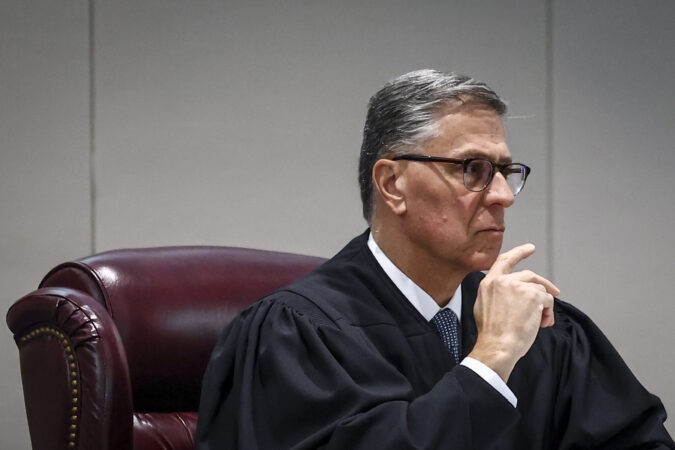
New Jersey Supreme Court Justice Douglas Fasciale, in a unanimous ruling, wrote that prosecutors were wrong to deny Tybear Miles’ discovery demand for details on which facial recognition software investigators relied on to arrest him in the June 2021 shooting death of Ahmad McPherson and how exactly they used it.
The technology is controversial because misidentifications have resulted in at least eight wrongful arrests nationally, with research showing it most often fails at identifying people of color, women, children, and elderly people. It also has gone largely unregulated both in New Jersey and nationally, alarming civil rights advocates.
Wednesday’s ruling builds upon a 2023 state appellate decision that required prosecutors to hand over 13 items related to the facial recognition software police used to charge Francisco Arteaga in a West New York armed robbery case.
Fasciale rejected any “mechanical application” of the Arteaga decision to other cases involving facial recognition technology, saying judges must decide such challenges based on case specifics.
Still, he said, fairness demands that defendants be able to scrutinize which tools police used to criminally charge them, both to challenge the tools’ reliability and to determine how police identified them as a suspect, examine whether the investigation was thorough, and demonstrate the possibility of another culprit.
“Although we reject a rigid checklist for [facial recognition technology] discovery, we note that such basic information will, in most cases, constitute the minimum necessary to safeguard a defendant’s right to a fair trial,” Fasciale wrote.
Attorney Dillon Reisman, who had argued before the court on behalf of the ACLU of New Jersey, called the decision “a really big win against the use of secret, opaque technology by law enforcement.”
“It’s a really positive sign that our court takes really seriously that new technologies are subject to constitutional safeguards,” Reisman said.
Tamar Lerer, deputy of the New Jersey Office of the Public Defender’s forensic science unit, had argued the case in court, too, and also applauded the ruling.
“Facial recognition technology may be novel, but the ability of people accused of crimes to find out how and why they were investigated is not,” Lerer said.
In Miles’ case, none of the crime’s eyewitnesses identified him as the shooter or even placed him at the scene, according to the ruling.
Instead, police identified him as a suspect after showing a confidential informant footage from surveillance cameras of six Black men seen nearby. That informant, who was not at the scene and did not see the slaying, identified Miles on the footage by his nickname (“Fat Daddy”) and Instagram handle, according to the ruling. Miles’ sister and ex-girlfriend also identified him as one of the men caught on camera.
Police then ran two facial recognition technology searches using Miles’ Instagram profile picture, according to the ruling. One search returned 10 possible matches and listed Miles as the eighth-likeliest match, while another search also produced 10 possible matches, the first five of which pictured Miles, the decision says.
After defense attorneys demanded more details about the facial recognition technology investigators used, a trial judge ordered prosecutors to turn over the same 13 items the appellate panel in Arteaga’s case specified. Prosecutors appealed, a state appellate court denied their motion, and the Supreme Court agreed to consider the case.
Fasciale upheld most of the lower court’s rulings, ordering prosecutors to hand over “basic information,” including the name and manufacturer of the software police used to search for suspects and its performance metrics, including error rates. He also directed prosecutors to provide “straightforward items” related to how investigators used the technology, including the original photograph police used as the “probe photograph,” edited copies of that probe photograph, and the photographs the technology identified as matches.
He reversed one particular part of the lower court’s rulings, though, rejecting the defense’s request for proprietary information, including the software’s source code. Miles’ attorneys had not proved a need for that information, Fasciale said. But if they do as the case progresses, the court can reconsider that request then, he added.
Lerer cheered that part of the ruling, too, saying it recognizes that “commercial concerns must yield to constitutional rights.”
Reisman noted that New Jersey still has not regulated facial recognition technology more than four years since the attorney general’s office solicited public input as a first step toward shaping statewide policy on its use by law enforcement.
Former Attorney General Gurbir Grewal in 2020 barred agencies from using one specific facial recognition technology app, Clearview AI, but little is known about how many of the state’s 500-some law enforcement agencies use the technology and how.
Dan Prochilo, a spokesperson for Attorney General Jen Davenport, called facial recognition technology “a valuable tool for investigating and solving crimes.”
“We welcome today’s Supreme Court ruling, which thoughtfully accounts for constitutional rights while confirming that defendants are not automatically entitled to unnecessarily burdensome, proprietary information that would short-circuit vital, well-conducted investigations and prosecutions that make New Jerseyans safer every day,” Prochilo said.
In Miles’ case, officers used a facial recognition system that is part of a multiagency initiative to crack down on illegal drugs in New Jersey and New York. That effort, known as a high intensity drug trafficking area task force, involves officers from federal, state, county, and local agencies in New Jersey and New York.
Those multiple jurisdictions and diffused investigations have made it tough for people arrested through the task force’s efforts to understand how they became criminal defendants, Reisman said.
“We still don’t even really know what government agency is ultimately responsible for the facial recognition system,” he said. “We don’t know anything about it, and because of that, we can’t even hold it accountable.”
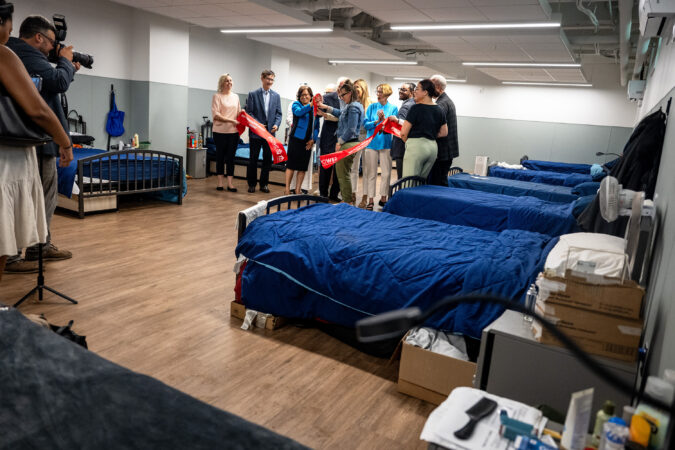
Project HOME is adding 20 beds to a Hunting Park shelter to house hospital patients who have nowhere to go once they’re discharged.
The new center, Hawthorne House Respite, expands the respite beds available at the housing nonprofit’s Sacred Heart Recovery Residence on Old York Road.
Renovations to the building, a former nursing home for cancer patients run by Dominican nuns, added 20 beds in dormitory-style housing — 10 for men, 10 for women — and cost $3.4 million. Funds came in part from $2.3 million raised at the behest of Jon Bon Jovi, a longtime Project HOME collaborator, at the organization’s 35th anniversary gala in 2024.
“We can’t stress enough how much housing is healthcare, and that respite beds at every level is so important as part of the ecosystem,” said Donna Bullock, Project HOME’s CEO, after a ribbon-cutting ceremony for the new beds Wednesday.
“People need different levels of care for healing, different levels of housing for stability.”
Sacred Heart, which also offers longer-term housing for people in recovery, already had 10 respite beds for residents.
Now, providers can refer more patients directly from the hospital to Sacred Heart. The program is part of the Project HOME Collaborative, a partnership to address homelessness and substance use recovery with Jefferson Health, Penn Medicine, Temple Health, and Prevention Point.
Project HOME officials say respite beds are in high demand and short supply across Philadelphia. Another respite program run by the Public Health Management Corporation in northwest Philadelphia offers 40 beds for patients with higher-level medical needs.
“It’s not enough,” Bullock said.
Gaps in the healthcare, shelter, and addiction treatment systems often make it difficult for homeless patients to heal after a hospital stay.
Inpatient addiction rehabs and shelters often do not have the capacity to care for patients with ongoing medical needs, while hospitals cannot sustain long-term care for patients who have recovered enough to be discharged.
“We know that recovery doesn’t stop when we discharge you and send you out into the community. Too often, individuals who are homeless face impossible challenges after they are discharged,” said Steve Carson, Temple Health’s senior vice president of population health.
Patients placed in respite beds say such programs are crucial to their recovery and continued stability. Amber Moon arrived at Sacred Heart two years ago after she developed endocarditis from injection drug use, resulting in two heart surgeries.
After months in the hospital, she was well enough to leave — but still needed support to heal. At Sacred Heart, staff arranged rides to doctors’ appointments and helped her navigate new medication regimens. Moon relished the opportunity to continue her recovery outside of a hospital room, surrounded by other residents who’d survived similar experiences.
“I was happy that I was around other people — not just the girls that I was staying with, but staff that understood what I was going through,” she said. “They treat you with humanity, like a regular person.”
Now a certified recovery specialist who helps other people with addiction navigate treatment, Moon is set to move into her own apartment soon.
“I‘m very grateful to have met all the people I’ve met, and been through what I’ve been through, because now I’m able to help others who think that there’s no chance,” she said. “There always is.”
On the latest Soccer Extra, Lisa Carlin and Jonathan Tannenwald break down the USMNT’s impressive start to the 2026 World Cup as Mauricio Pochettino’s squad tops Group D and prepares for the knockout stage. We also look at the latest All-Star action across different nations and the growing soccer excitement in Philadelphia as the city continues to shine on the world stage during this historic summer of soccer. Don’t miss the analysis, storylines, and biggest moments from around the game. Watch here.
TOKYO — The head of the U.N.’s nuclear agency said Wednesday that Iranian nuclear enrichment sites would be visited by his inspectors as part of the interim U.S.-Iran deal to reach an end to the war. An Iranian diplomat instead insisted any such visit would only come after a final deal.
The comments echoed contradictory remarks about nuclear inspections a day earlier from the U.S. and Iran. During the week since the two countries signed the deal, their leaders have repeatedly disagreed in public about what that document actually means.
International Atomic Energy Agency head Rafael Mariano Grossi on Wednesday acknowledged the “war of words” over Iran’s nuclear program. But the dueling narratives are playing out on several fronts, including Israel’s war with Iranian-backed Hezbollah militants in Lebanon and how Tehran will spend billions of dollars once unfrozen.
Through the signing of the memorandum of understanding, the U.S. and Iran agreed to a 60-day period to iron out these and other details. Until that happens — during private talks — leaders from both countries will also continue to negotiate in public, raising the risks of derailing the shaky ceasefire in the region.
The fighting between Israel and Hezbollah, a threat to the U.S.-Iran diplomacy, flared on Wednesday. Israel launched an airstrike that killed two people in southern Lebanon, the country’s state-run news agency said. It was Israel’s first airstrike on Lebanon since the latest ceasefire took effect on Saturday. There was no immediate comment from the Israeli military on the strike.
U.N.’s nuclear agency head says inspections will happen
Since Israel launched a 12-day war on Iran in 2025, the IAEA has been blocked by Tehran from visiting enrichment sites. The Islamic Republic is believed to store enough highly enriched uranium to potentially build as many as 10 nuclear weapons, should it choose. Iran maintains that its program is peaceful, though it is the only country in the world to have uranium enriched up to 60% purity without a weapons program.
Grossi’s remarks were the firmest yet from the United Nations agency, which is central to determining the status of Iran’s nuclear stockpile.
“I can understand political statements, they are part of the reality, but the fundamental thing I would like to remind you and draw your attention to is that there has been a memorandum of understanding, signed by both presidents,” he said at the tsunami-hit Fukushima Daiichi nuclear power plant.
The accord “says explicitly that the nuclear activities that are going to be carried out with regards to the nuclear material facilities will be supervised by the IAEA — in all letters,” he said.
“Obviously, to do that, we will have to inspect,” Grossi said. ”Whether this happens the day after tomorrow or in one week or in 10 days, it’s important, but not essential. This is going to happen.”
The deal calls for Iran’s uranium to be “downblended” from highly enriched levels.
Kazem Gharibabadi, an Iranian deputy foreign minister, took a swipe at Grossi after his remarks, saying Tehran didn’t meet with him while in Switzerland.
“These issues will be reviewed and decided only within the framework of a final agreement and as a result of practical action by the other side to end all sanctions and other measures.” Gharibabadi wrote on X.
He added: “You cannot advance the ‘stir up and take over’ policy with media hype.”
IAEA blocked from seeing bombed sites
The IAEA has been allowed to visit other nuclear sites in Iran since the 2025 war. But without accessing the enrichment sites, the IAEA says it can’t verify the status of Iran’s stockpile. Both Iran and the IAEA say Tehran hasn’t been enriching uranium, but nonproliferation experts worry the Islamic Republic may be moving its stockpile.
But the uneasy ceasefire already has been tested by Iran saying it closed the Strait of Hormuz again over fighting between Israel and the Iranian-backed militia Hezbollah in Lebanon.
Israel’s defense minister said Wednesday the U.S. has not demanded that Israel withdraw from Lebanon. Israeli leader Benjamin Netanyahu later declared that “as long as I am Prime Minister, we will maintain the security zone in southern Lebanon.”
Lebanese and Israeli officials are meeting this week in Washington as part of direct negotiations between the two countries, through which Lebanon hopes to reach a plan for Israeli withdrawal.
Technical-level talks between the U.S. and Iran are expected to resume early next week in Switzerland, Pakistan’s Foreign Ministry said Wednesday. Pakistan has been a key mediator.
U.S. has plan to oversee Iran’s frozen funds
The interim deal also includes a pledge to unfreeze billions in Iranian assets. U.S. President Donald Trump wants that money to go toward buying American-grown crops, but Iranian officials say they should decide how its spent.
U.S. Treasury Secretary Scott Bessent said his department would have people in Qatar to oversee what happens with the funds. He said in a CNBC interview that Iran would spend “a very large percent” of its released money on “U.S. foodstuffs and medicines.”
“We will be recycling the money back into U.S. products,” Bessent said.
Marco Rubio is in the Middle East
Secretary of State Marco Rubio traveled in the Persian Gulf for a three-nation tour, starting with a meeting in Abu Dhabi with Emirati President Mohammed bin Zayed Al Nahyan, the State Department said Wednesday.
“We’re not going to do anything that undermines the security of our allies,” Rubio later said while in Kuwait, where the Trump administration announced the limited reopening of the U.S. Embassy that was closed at the height of the Iran war.
Before leaving for Bahrain, Rubio said ongoing negotiations include the creation of “hundreds of specific areas” where Lebanon’s military could secure its territory. He called the discussions part of the process and said it’s not going to “happen overnight.”