By the time you read this, Philadelphia will have hosted two matches in the FIFA World Cup and will be steadfastly preparing for a third in quick succession come Monday.
France, a favorite by many to win the whole tournament, will take on Iraq in the second game of Group I, but if it’s anything like the previous two matches, the game itself will once again not be the story.
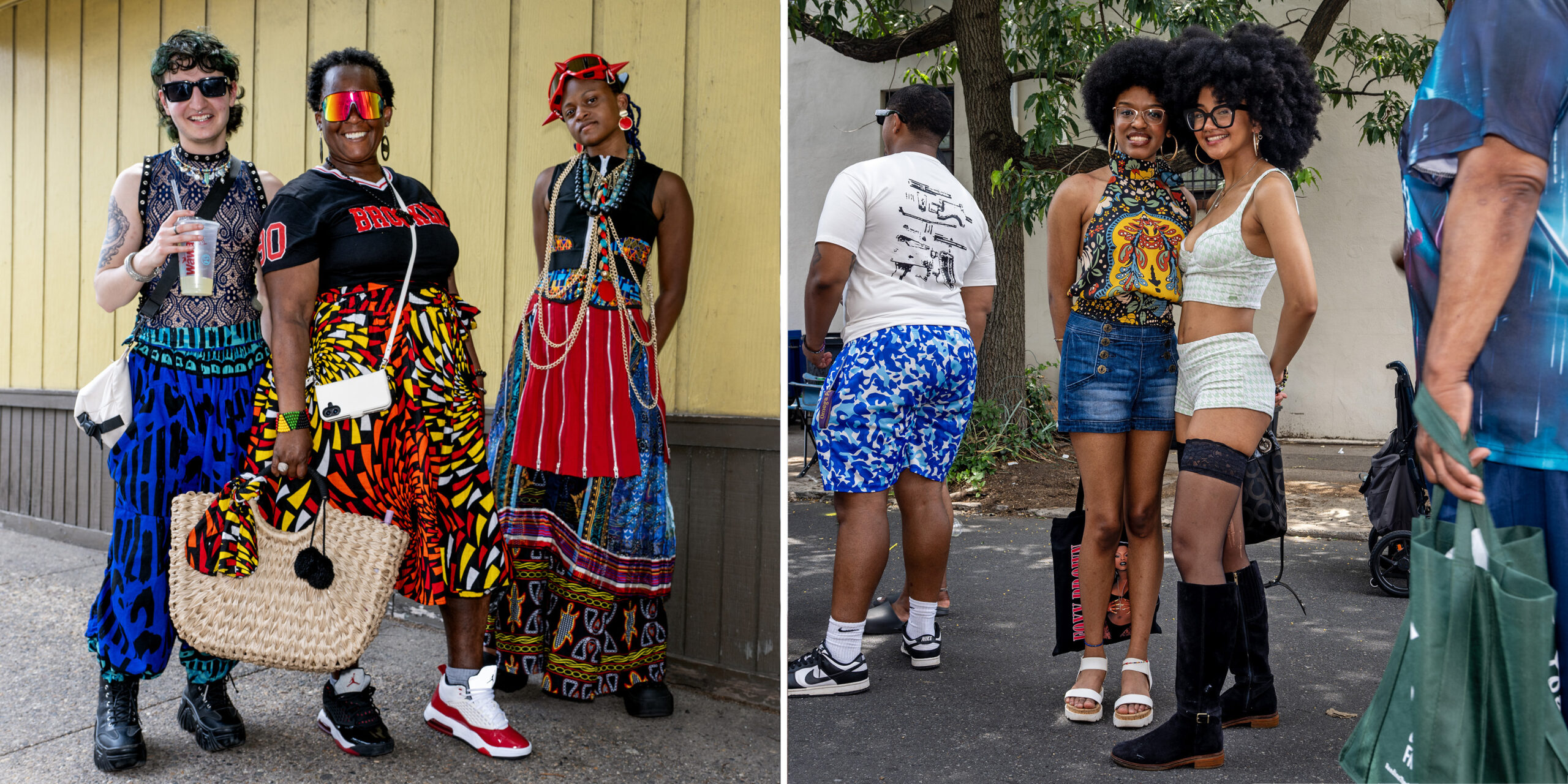
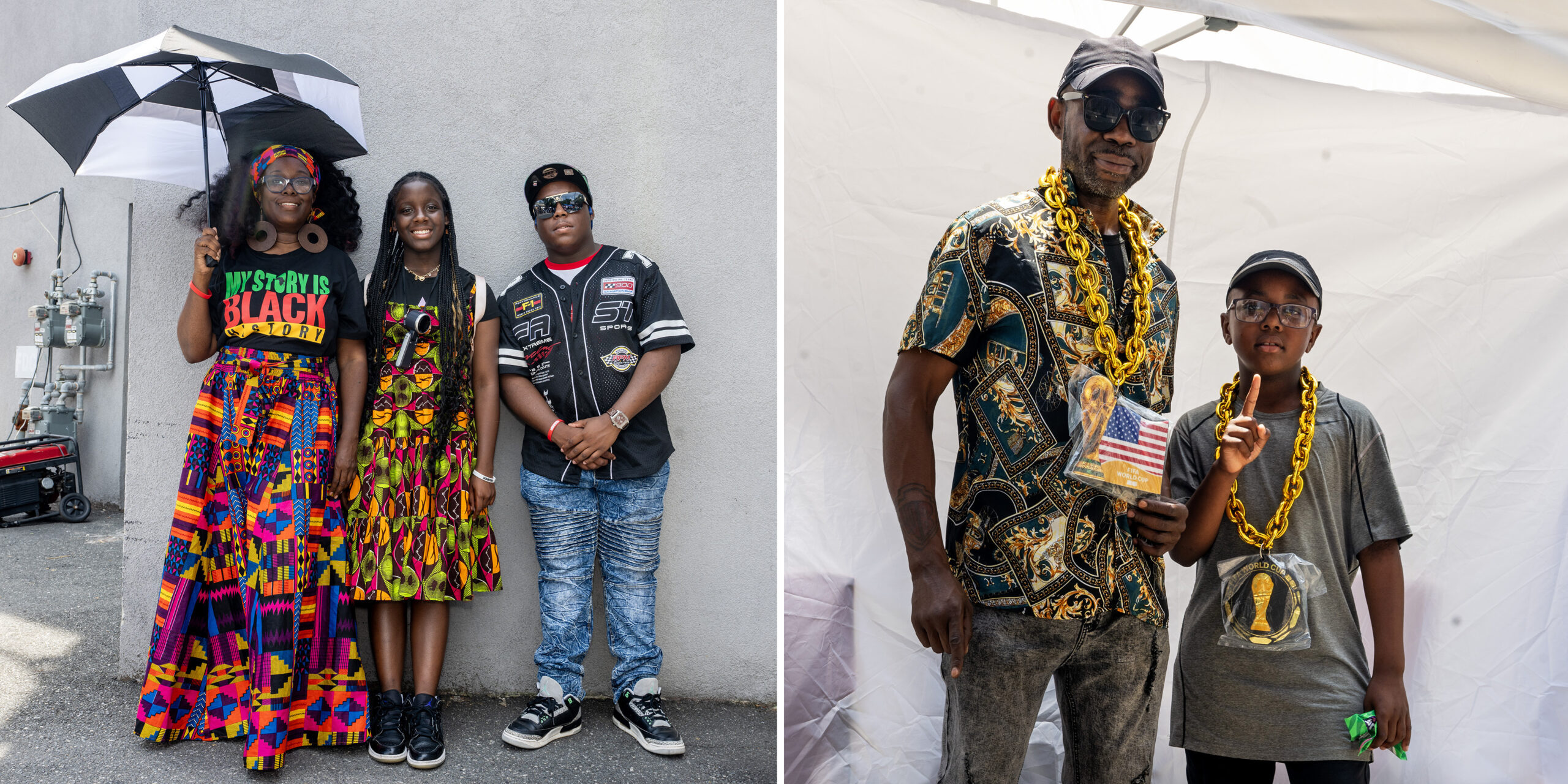
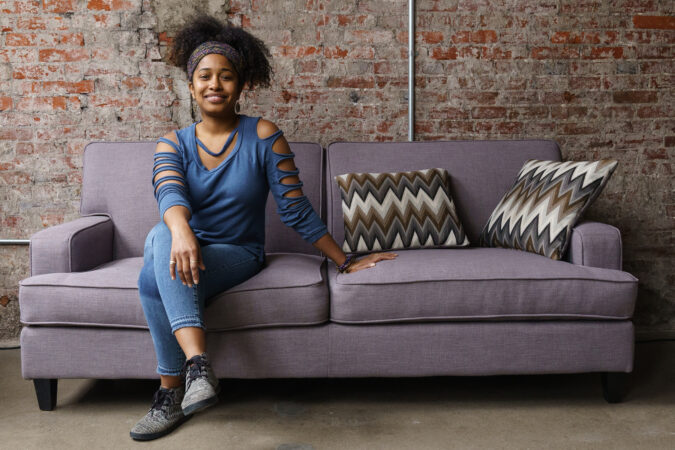
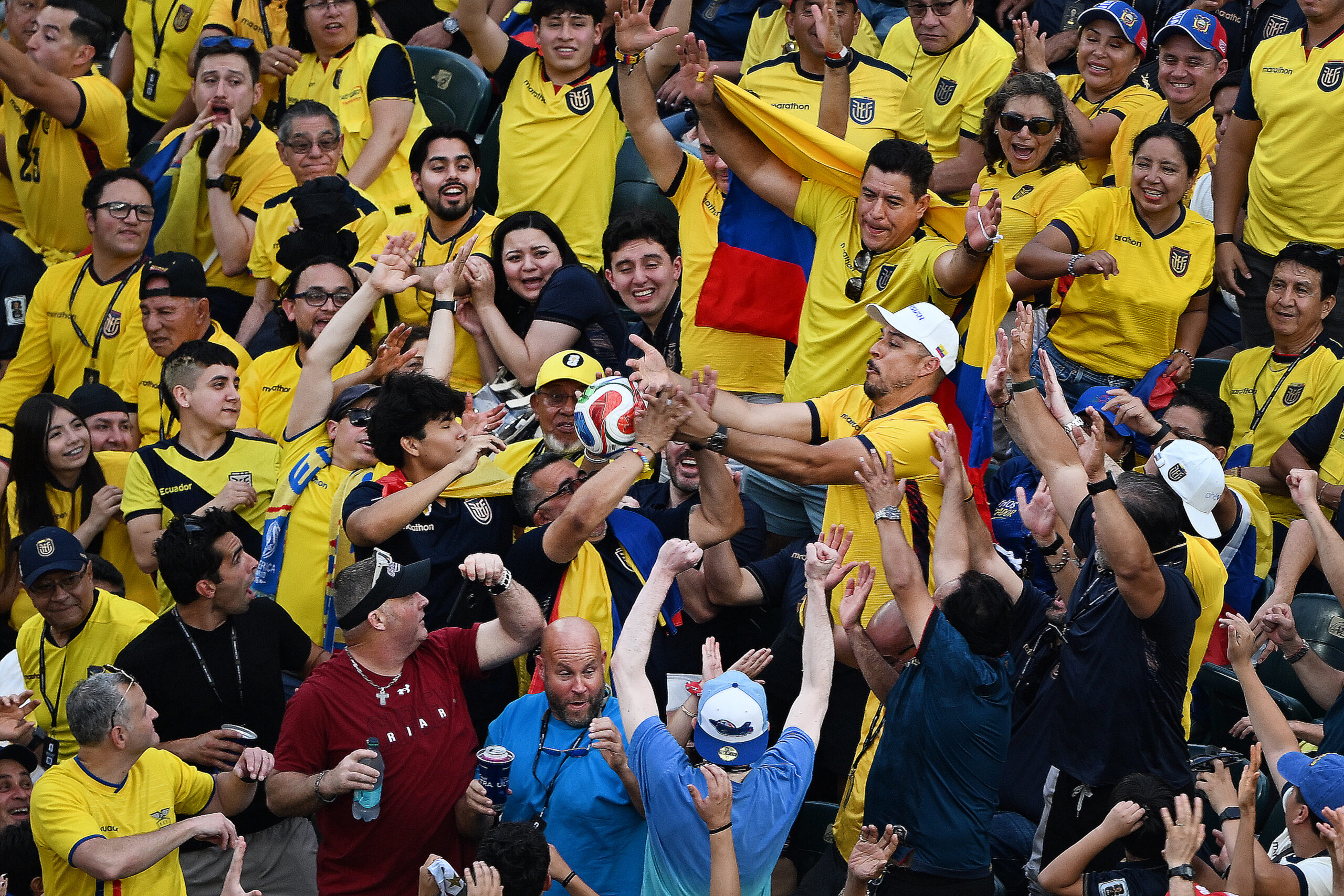
Because for the past two games, the attraction has been that of the fans, and the unbridled passion people have for not just a team and its players, but the nation so many have bought jerseys for, the emblem they proudly wear above their heart, or in the middle of their chest.
The heart of Brazil is in Philadelphia ahead of their match against Haiti
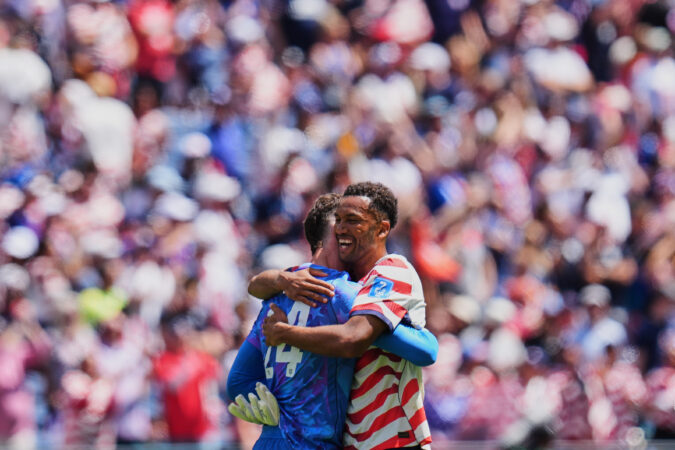
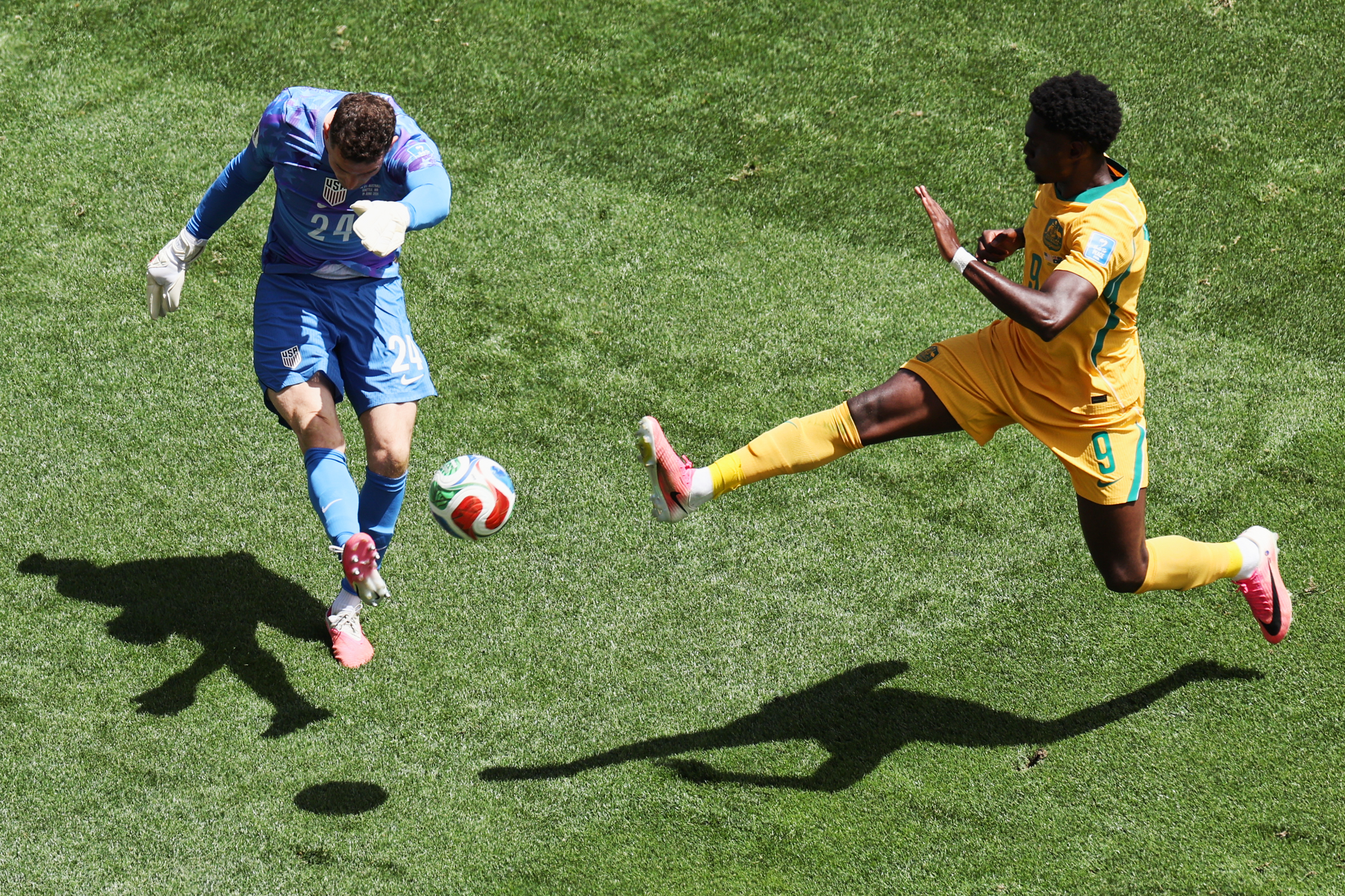
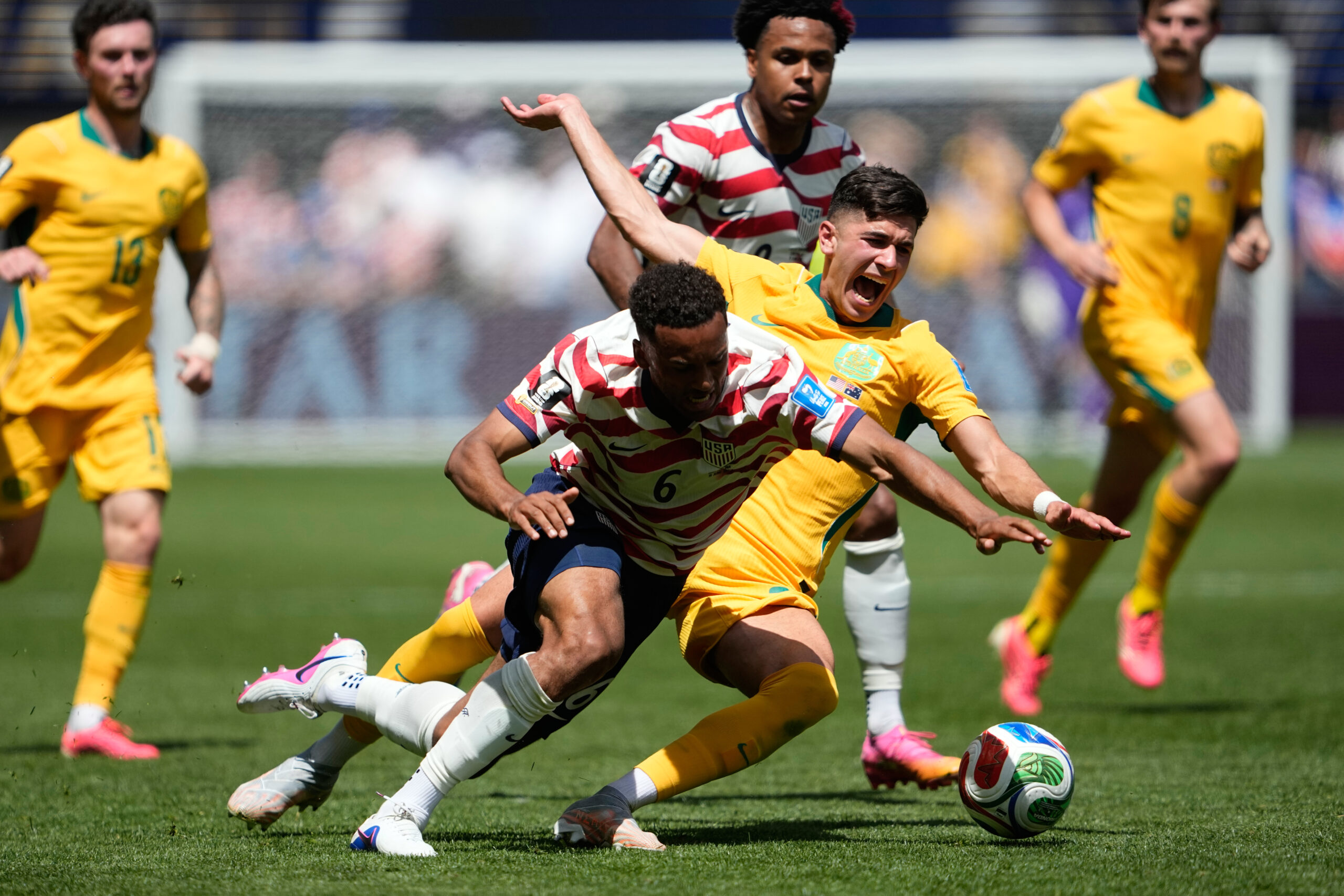
This spectacle of what will result in 104 matches of underdogs becoming story lines, a U.S. men’s national team exercising the type of dominance very few expected, has also seen Philly lead the way on the main stage, creating lasting memories for thousands of fans who have flocked to the city, all while becoming lore, in the process.
In the lead-up to the World Cup, the story lines circulated the unforeseen, the question marks that surrounded what the World Cup’s return to the United States would look like.
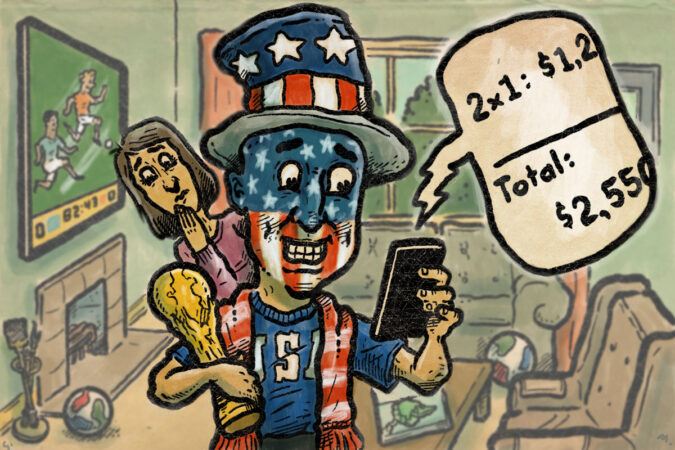
It came on the heels of perceived rampant greed from FIFA, which enacted dynamic pricing for the first time, sending ticket prices soaring to the highest they’ve ever been. They opened the door for broadcasters to run advertisements midgame, under the guise of hydrating tired players.
FIFA president Gianni Infantino (right) gives President Donald Trump the inaugural FIFA Peace Prize at the World Cup draw last December.
Let’s not forget the lobbying of the sitting U.S. president in the process, going as far as to create an inaugural peace prize for him while his administration destabilized governments and enabled a war in the Middle East.
But look at how quickly all of that has fallen into the backdrop.
Soccer in its purest form has provided an escape for a nation that desperately needed one. And what it’s also proved in the process is that people of different races, colors, and creeds don’t hate each other as much as their social media algorithms might suggest.
Proof was on display right here in Philly in the form of fans who packed the stands over the last two matches.
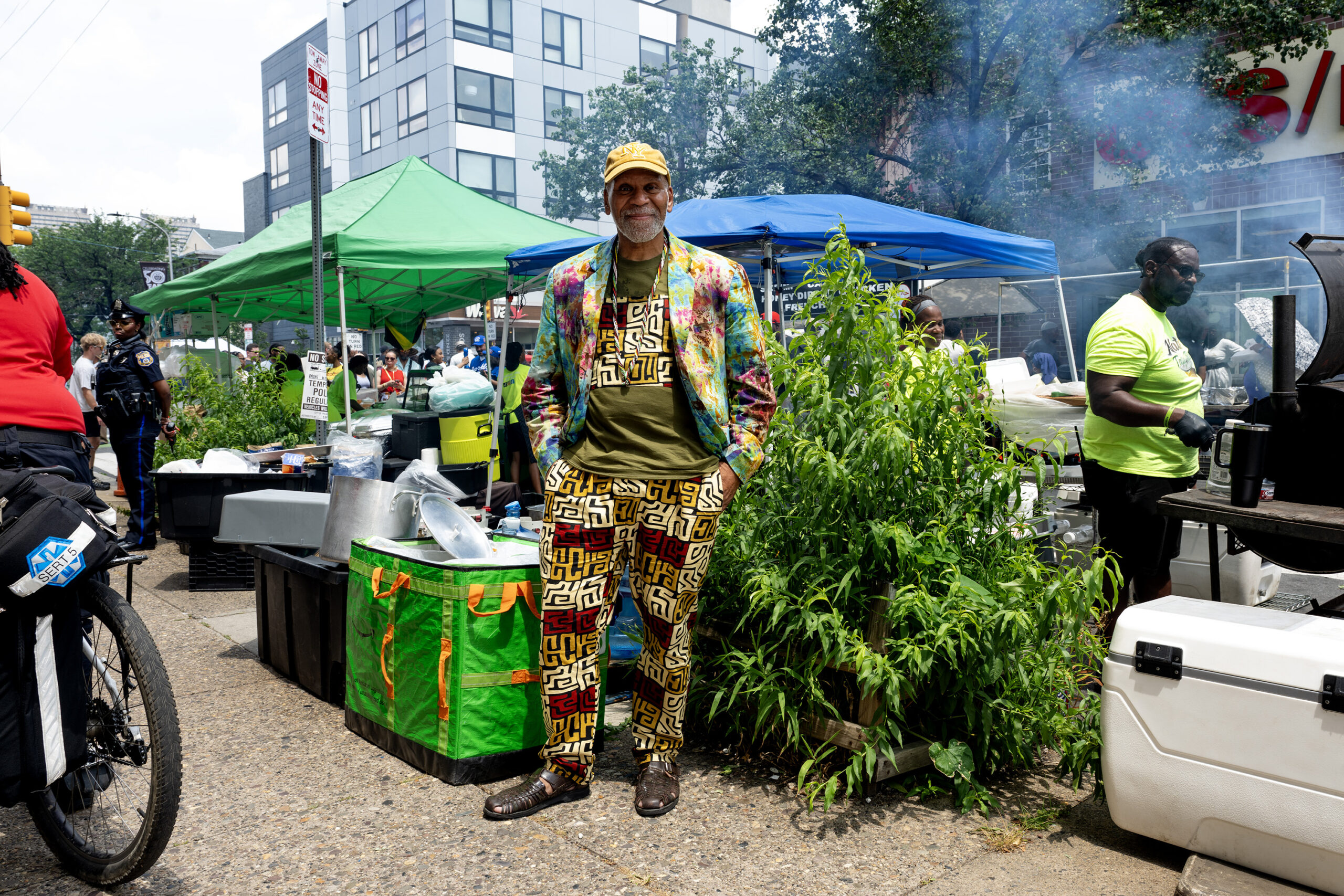
Fans like Maxence Jeanty, a 41-year-old Haitian native living in Chicago who traveled to Philly from the Windy City, dressed in a suit depicting liberator Jean-Jacques Dessalines, a key figure of the Haitian Revolution.
Maxence Jeanty, 41, a fan from Chicago arrived at the FIFA World Cup game between Brazil and Haiti, dressed as Jean-Jacques Dessalines, the leader of the Haitian revolution.
“When I was growing up in Haiti as a kid, I watched the World Cup, and I’ll never forget watching the 1994 World Cup,” Jeanty said. “It’s been so long that my people haven’t made it to the World Cup that the choice was to choose either Brazil or Argentina [as the nation to support]. But now, we’re stepping on the field as equals, and no matter what happens, we’re stepping on the field as equals. The pride that brings to me and to every Haitian fan here, man, that’s indescribable.”
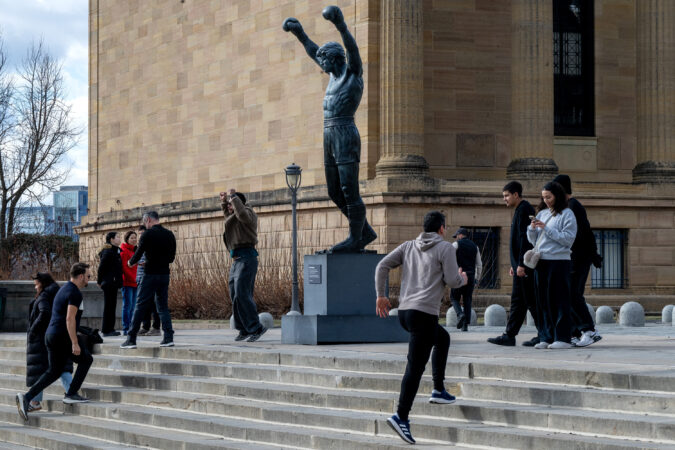
We witnessed massive gatherings on the most iconic steps of our fair city from supporters who, like Jeanty, boarded planes just to be a part of the moment.
Haiti fans celebrate during Friday’s FIFA World Cup Group C soccer match against Brazil.
Only a week and a half in, the World Cup has become for so many a momentary cure for what ails, the escape we didn’t know we needed. Lifelong supporters hang onto every kick, and casual fans are amazed by the sights and sounds.
Along the way, we’ve met supporters of other nations who’ve never met and have become instant friends. We saw dance parties on subway cars, in parking lots, and in the middle of streets.
Lucas Maninhu, 31, who arrived from New York and was draped in Brazil’s jersey, wanted to introduce me to his “new best friend,” a Haitian man who only wanted to go by Greguity. The two met in the parking lot on the day of the Brazil-Haiti match, struck up a conversation, walked into the stadium, and watched most of the game together.
Brazil fan Lucas Maninhu (right) and Haitian fan Greguity met at the World Cup match in Philly between Brazil and Haiti. Both said they’ve become “best friends” in the process.
“We met tonight,” Maninhu said. “We are here for different teams, but it doesn’t matter, tonight this is my boy. We’re all here for the same reason.”
And look, FIFA knows this. It knows the unifying power this tournament has had on the masses since before the end of the Second World War.
It’s why, despite laying the claim of being “Football for All,” this edition of the World Cup, from a financial perspective, has felt like football for the few.
But those few continue to sell out arenas, flock to stadium stores to buy World Cup merchandise, and drink $7 purified water. Outside the stadium, games are setting broadcast records, and people are filling the bars and restaurants across North America. There’s money to be made all around.
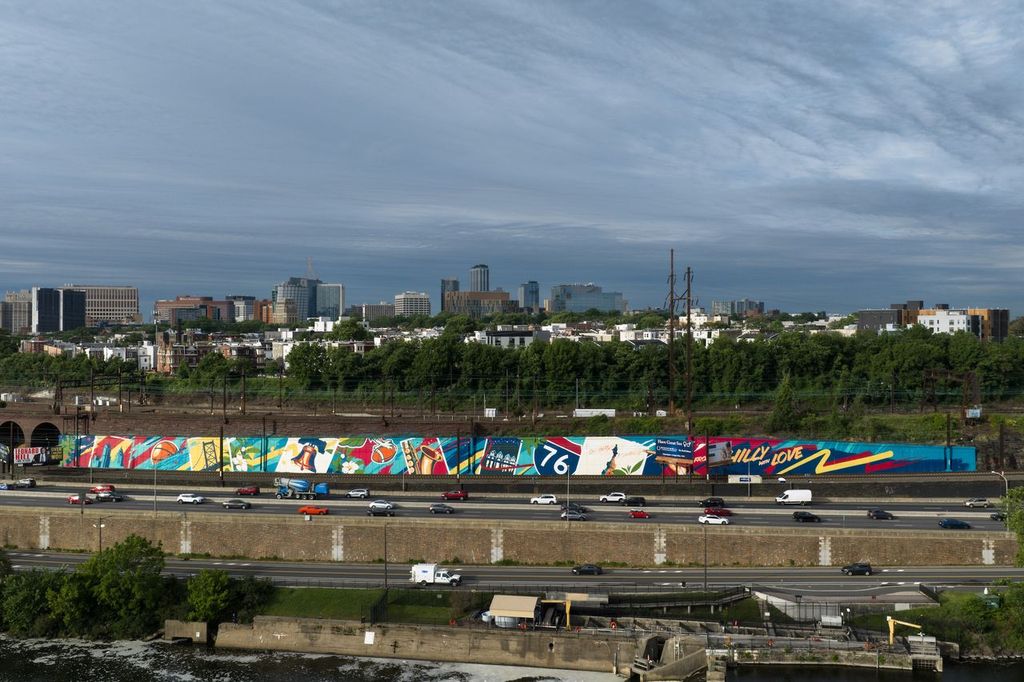
Let’s not forget the FIFA Fan Festivals, the official watch party situated in Philly at Lemon Hill. It’s made that neighborhood a noisy one, but it’s a good noise.
Think about it. At its core, the first 10 days of the World Cup have allowed many Americans to take a sigh of relief, to have something to look forward to, or have on in the background while life is happening in real time.
Cam Gorman, 23, of Gilbertsville, Pa., cheering with Philly Sports Guy Jamie Pagliei (front, center) at the FIFA Fan Festival in Lemon Hill as the U.S. beat Australia on Friday.
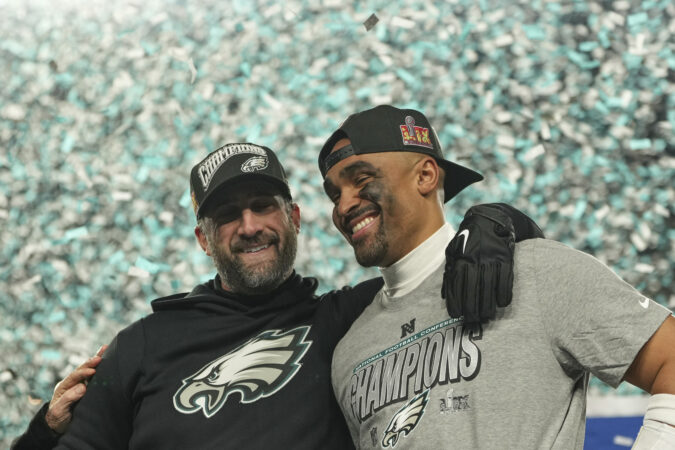
Here at home, you can try to equate the fervor to the Eagles winning it all in 2018, and then again in 2024, but it’s a different vibe, because this isn’t about wins or losses. To many fans, this is about the sheer joy that having the sport in their backyard has delivered.
It feels like the reprieve America needed, and Philly’s place in all of it has not gone unnoticed.
Given the atmosphere’s impatience, it would be understandable if some folks believe that the summer of 2026 began weeks ago.
But officially, the astronomical summer does not start until 4:24 a.m. Sunday, the instant of the solstice, when the sun beams its most direct light on the Tropic of Cancer. (That’s the one that bisects Mexico.)
Perhaps the pleasant temperatures this weekend are an overdue solstice gift to the region.
Officially, on 14 days this year, the temperature has reached at least 90 degrees at Philadelphia International Airport. While not a record — this happened 21 times before the 1991 summer solstice — that is a total more appropriate to midsummer. The annual average is about 30, and usually this kind of heat doesn’t get a jump start in mid-April.
Is it going to get hot again?
A woman walks past Swann Memorial Fountain as the sun rises last month.
Are polar bears white?
At least three veteran seasonal forecasters have commented that they expect the burgeoning El Niño event to work against punitive hot spells in the region.
During El Niño, sea-surface temperatures remain above normal in the tropical Pacific for several months, agitating the overlying air and affecting weather across the globe. This one may be among the strongest and is forecast to mature during the summer, earlier than usual.
During six early-developing strong El Niños, summer temperatures in Philadelphia were near or below average.
However, the scientists at the government’s Climate Prediction Center evidently are not buying it. In both the July and the July 1-through Aug. 31 outlooks posted Thursday, they saw the odds favoring above-normal temperatures.
On average Philly has a combined 20 days of 90-degree highs in July, when the Earth is the farthest it gets from the sun, and August. (Along with a September bonus of two more.)
How come it’s warmer, if we’re farther from the sun?
On average the Earth is about 93 million miles from the sun, but since its orbit is an imperfect circle the distance varies by roughly 3 million miles.
At 1 p.m. on July 6 our planet will be 94.5 million miles from the sun, by EarthSky’s calculation, its farthest distance of the year. It makes its annual closest approach in January, which is why winter in the Northern Hemisphere is the shortest season; the gravitational bump speeds up the trip, and February gets shortened.
The seasonal weather rhythms are about the Earth’s axial tilt, not distance from the sun, and the planet takes its time responding to the changes in solar energy. Just as January is colder than December on average, July is more than 5 degrees warmer in Philly than June on average. Just how warm it gets the rest of this summer may have a lot to do with how much drier it gets.
Will the drought conditions ever end?
They always have, but this has been quite an extraordinary run, even if the plant life has managed to avoid major distress.
The entire region, save for extreme northeastern Bucks County, is in a state of “severe drought,” according to the U.S. Drought Monitor, with Cape May County in “extreme drought.”
The promised rain to start the workweek should help, but Philadelphia has experienced 10 consecutive months of below-normal precipitation, a rarity in an area in such proximity to bodies of water that are sources of rainfall. All of New Jersey and Chester County remain under drought emergencies.
Dryness can promote heating, since the sun does not have to divert energy evaporating water.
However, unusual coolness also can accompany dryness, said Sarah Johnson, warning coordination meteorologist at the National Weather Service office in Mount Holly. Having lived in North Dakota for 20 years, she knows her dry air.
A lack of moisture can be a boon for cooler nights. Water vapor in the air inhibits nighttime cooling by blocking heat from escaping into the atmosphere.
It also happens that less vapor in the air is ideal for sky-watching, and that could come in handy in August.
This could be a big year for the Perseids
In this long exposure photo, a Perseid meteor streaks above Madrid.
Last year, you may recall that the moon showed its big face during the peak of the annual Perseid meteor showers, the most popular of the year.
This time around, the moon is getting out of the way, and will be in its “new” phase during the peak early mornings of Aug. 12 and 13.
While the Geminids, which occur in December, are considered the most prolific showers of the year, according to the American Meteor Society, they are not as popular as the Perseids: People tend to prefer August nights to December’s.
The Perseids are so named because the cometic detritus that is ignited by the atmosphere appears to radiate from the constellation Perseus. In the early-morning hours, that typically is low in the northern sky.
Under ideal conditions — ultra-dark, light-pollution free skies — as many as 90 meteors an hour might be visible, EarthSky says.
But the moon will be the star in late August
Billy Penn waves at the moon during a lunar eclipse.
Two weeks after the Perseid peak, Philadelphia and most of the rest of the Western Hemisphere will be treated to a lunar eclipse in which just about all of the moon will be in shadow.
The show begins at 9:24 p.m. Aug. 28, and more than 90% of the moon will be obscured by Earth’s shadow three hours later. It willbe all over around 4 a.m.
Chances are excellent that the region will still be needing rain, but may it choose another night.
Some are hidden gems. Some are hiding in plain sight. Together, these places tell the story of the city Philadelphians know and love.
Philadelphia is a city of favorites.
Ask someone for the best cheesesteak, neighborhood bar, park, bookstore, view, or place to spend a Saturday afternoon, and you’ll get an answer — often delivered with the confidence of someone who believes every other answer is objectively wrong.
That’s what made this list so difficult to assemble.
Together, they tell the story of a city that rewards curiosity, where a quiet garden, a neighborhood dive bar, a train-watching bridge, a community garden, or a bench with a view can become someone's favorite place.
This is not a ranking. No. 1 isn't better than No. 76, and No. 76 isn't lesser than No. 1. It’s also not an exhaustive list — we could have done 176, or 1,760, and still not captured everything that’s great about Philadelphia’s neighborhoods.
So think of this less as a ranked, definitive list and more as a collection of recommendations from people who spend their days exploring Philadelphia.
You may discover a new favorite. You may wonder how we left yours off. Honestly, we hope both happen. — Sam Ruland
story continues after advertisement
1
Navy Yard
The USS Arlington on Pier 4 at the Navy Yard in Philadelphia, Pa., on Oct. 11, 2025.Tyger Williams / Staff Photographer
What first brought me to theNavy Yard was the bench in the rickety ferry terminal — the wobbly old shack at the tip of the yard, the very southern terminus of Broad Street and South Philadelphia. It became a staple of my daily runs, the objective. “Make it to the shack.” What kept me coming back was the beauty of the place. The oldness. The newness (and there’s a lot more newness these days). The wide-open spaces. The feeling of being set apart, even with the skyline looming. I’ve done the math and I think my old Australian cattle dog, Sadie, who died last year at 14, must have walked close to 10,000 miles through the Navy Yard. On her last day, we took her to her favorite bench — one not so rickety — to put her face in the sun one last time. I swear she smiled. — Mike Newall
4747 S. Broad St.
2
Shofuso Japanese Cultural Center
Visitors walk around the Shofuso Japanese Cultural Center gardens on April 9, 2025, in Philadelphia.Jose F. Moreno / Staff Photographer
Peace and quiet are hard to come by in a city as big as Philadelphia, but the Shofuso Japanese Cultural Center in Fairmount Park tries to offer both in a manicured environment, in a way that feels otherworldly. Shofuso is a 17th-century-style Japanese house surrounded by gardens and ponds filled with orange-and-white koi. It was built in Japan and shipped to New York City’s Museum of Modern Art for a show, where it became a hit. After its run, cities put in bids to house it, and its builders chose Fairmount Park. It’s listed as a potential urban quiet park on Quiet Parks International, and you can spend hours there, staring off into the landscape with only the occasional car horn or leaf blower. — Jason Nark
Horticultural and Lansdowne Drives, in the western section of Fairmount Park
3
Singing Fountain
The Singing Fountain is located at the triangle formed by Passyunk Avenue, Tasker Street, and 11th Street.Tom Gralish / Staff Photographer
To me, the Singing Fountain is the heart of my East Passyunk neighborhood. An enchanting, transporting intersection of neighborhood gems like Urban Jungle plant shop, Dutch, Stateside, and Superette. All the old charms and new energy that define East Passyunk are on display daily at the Singing Fountain. Old men play chess and chew on cigars. Young coffee-fueled parents frolic with toddlers. Lovers swoon to the trickling rhythms of the fountain. Bands play. There’s a tiny free library. All in a space smaller than a baseball diamond. Everybody stops by the Singing Fountain. Eventually, you probably will, too. — Mike Newall
Cultural landmark, South 11th Street and East Passyunk Avenue
4
Magic Gardens
The Magic Gardens, created by award-winning mosaic mural artist Isaiah Zager, on April 27, 2022.Tyger Williams / Staff Photographer
With Isaiah Zagar’s death in February, we lost a monumental artist and champion for the city. His murals live on walls throughout the city, a fixture in the city’s visual identity, particularly South Philly, where his work lives in public view, on commutes, across from parks, and down random alleys — his art is among us, not cloistered away in white-walled galleries and magazine-ready estates. Magic Gardens is his masterpiece. A labyrinth of tile and glass created by a visionary who saw a different future for South Street. The place is no secret, even to tourists, but its programming is what keeps locals returning — activities for kids, outdoor concerts, and workshops. We’re lucky to have it. — Evan Weiss
1020 South St.
5
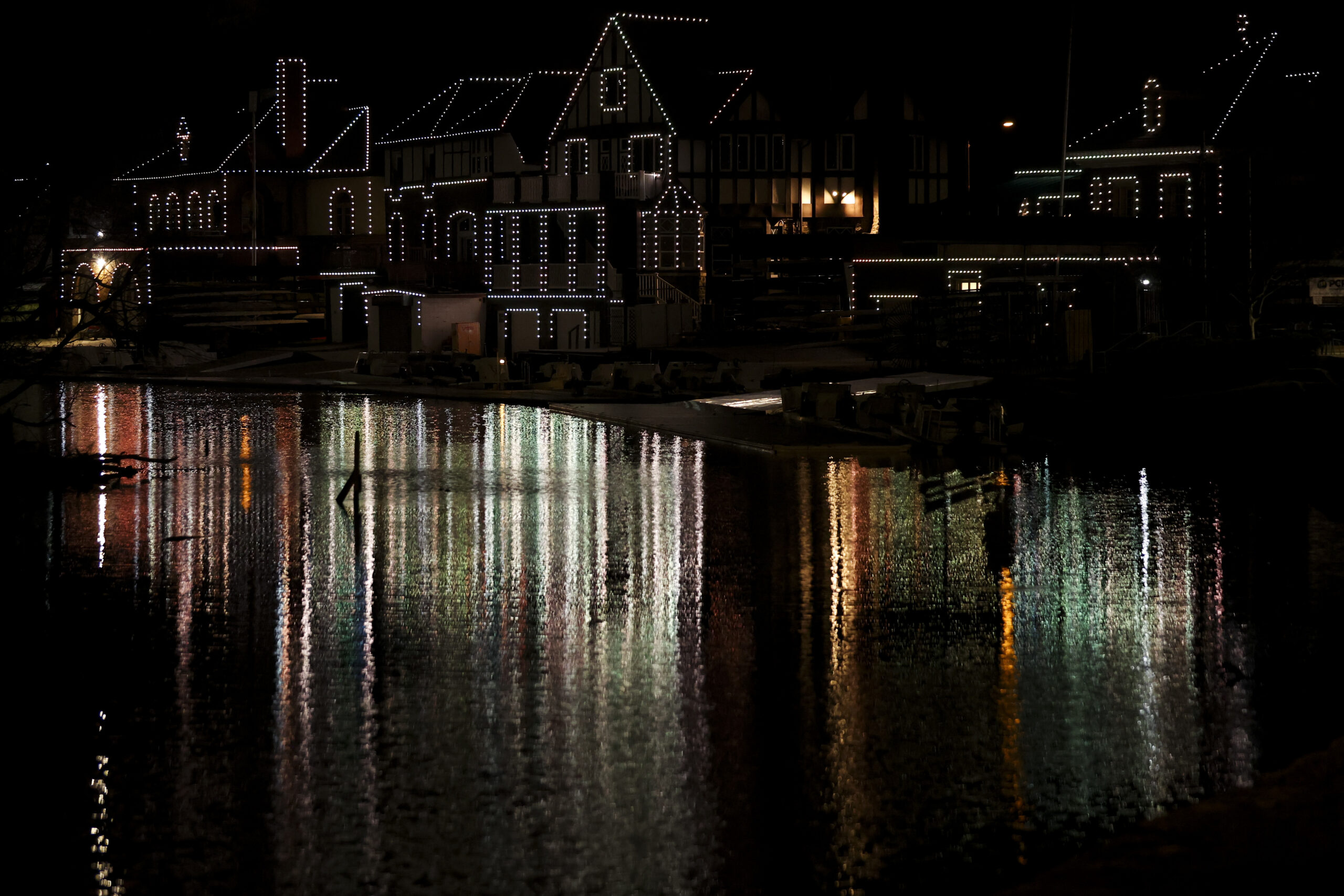
Boathouse Row at night
Boathouse Row is relit with a new programmable system containing 6,400 LED lights that allow for 16 million color combinations during a public ceremony at the fish ladder in Philadelphia on March 7, 2024.Monica Herndon / Staff Photographer
Some Philadelphia views never lose their ability to stop you in your tracks, and Boathouse Row glowing at night is one of them. The lights ripple across the Schuylkill while runners, cyclists, and late-night walkers move along Kelly Drive with Center City glowing in the background. There’s something about the contrast that makes it special: grand historic rowing houses sitting beside one of the busiest roads in the city, rowers still cutting through the water after dark, planes occasionally passing overhead. It’s the kind of view that makes people slow down mid-run, pull over on Kelly Drive, or sit by the water a few extra minutes to take it in. — Sam Ruland
Kelly Drive, Fairmount Park
6
Pennypack Trail
People in the community are out walking and biking at Pennypacker Park on March 21, 2020.Tyger Williams / Staff Photographer
People love to stereotype Northeast Philly as rows of identical houses and strip malls, but Pennypack Trail proves it all wrong. Stretching through some of the city’s least “trendy” neighborhoods, the sprawling trail cuts through creeks, wooded paths, fishing spots, and long scenic stretches perfect for biking or walking for miles. Parts of it feel surprisingly remote, like you’ve accidentally wandered out of the city altogether. It’s one of Philadelphia’s best outdoor spaces, but because it sits largely in the Northeast — far from the cafes and boutiques that define “cool Philly” to some people — it still feels oddly overlooked. Which honestly makes discovering it even better. — Sam Ruland
Multiple addresses, 8750 Pine Rd.
7
Halloween
I had barely moved to the U.S. when I first visited Philadelphia in 2016 to see a friend. She had defended her Ph.D. thesis and I wanted to buy her “something nice.” She said she knew just the place and took me to Halloween. If you have to get to Henri David’s jewelry store in a converted rowhouse on Pine Street, you do have to know just where it is; there are no signs outside. But inside, there is a cave of endless baubles and curiosities. Earrings, rings, necklaces, pendants hanging on walls, pillars, cases built like painting frames, and glass-topped tables. And all of it is handmade, either by staff or collected from all over the world. Then there are statues, antique busts, chandeliers, patterned wallpaper, showcases, and more showcases. We went in wanting to buy “something nice quickly” while it was still light out and emerged God-knows-how-many hours later with a little bag of jewelry we still wear. Every time we wear them, someone has something to say (usually nice) about the pieces. And we always have a story when people ask where we got them. Halloween will always remain my favorite place in Philly. It’s advised you call before you go. Don’t worry, if you’re nice to the person on the phone, they’ll be nice right back. — Bedatri D. Choudhury
1329 Pine St.
8
Strolling Delancey Street
Delancey Street in Philadelphia's Society Hill neighborhood has brick-lined sidewalks and rowhouses with low-set windows.Courtesy of Donkin Media
The closest we can get to walking in our founding heroes’ shoes is to walk where they walked. I can't say for certain whether Ben Franklin hobbled down the silver cobblestones lining the 300 block of Delancey Street, but it's the closest I feel I can get. Maybe it's the rowhouses, with the low-set windows so colonial-era residents could peek inside and see if the candles were on and their friends were home. Maybe it's the brick-lined sidewalks, or how well the current inhabitants pay homage to the past with blooming window boxes and colorful shutters. Maybe it's the air of quiet sophistication. Whatever it is, you feel as though you are walking in a different time, one step closer to the past. — Tommy Rowan
100-300 blocks of Delancey Street, Society Hill
9
The Dream Garden
The century-old Dream Garden mural, a 15-by-49-foot mosaic, sits in the lobby of the Curtis Center. The work was commissioned by Cyrus Curtis, of the Curtis Publishing Co., and is now owned by the Pennsylvania Academy of the Fine Arts.Jessica Griffin / Staff Photographer
On a nice day, Independence National Historic Park can be the busiest part of the city — teeming with tourists and office workers (including our very own Inquirer staff). To escape the (relative) madness, you can sneak into the Curtis Center, sit on a bench, and stare at a splendor of Tiffany glass tiles. The work of Maxfield Parrish was almost taken away from Philadelphia in the late ’90s, but we kept it and it is always surprising to me that people aren’t lined up to view the vibrant wonder. So sit there and take it in. Sometimes the player piano is going. Move closer to see the detail and then sit again. Then head back out into the world. — Evan Weiss
601 Walnut St.
10
Museum of the American Revolution
“The March to Valley Forge, December 19, 1777.” The oil on canvas work was painted by Philadelphia painter William Brooke Thomas Trego In Philadelphia in 1883. It is conserved with funds provided by the Society of the Descendants of Washington's Army at Valley Forge.Courtesy of Museum of the American Revolution
The Museum of the American Revolution isn’t just a Philly neighborhood gem. It’s a national gem. Its grand 250th exhibit, “The Declaration’s Journey,” is a must-see for anyone in town serious about the Semiquincentennial — or who just has a passing interest in understanding the ongoing experiment that is modern democracy. We’ve become regulars and have our own favorite little spots inside the thriving museum that opened in 2017. My son, who is almost 6, is a total sucker for Revolution Place, the museum’s family-friendly discovery center. Every single time, he runs to the center’s digital screen to enlist in the Continental Army with the swipe of a quill pen, before donning the child-size colonial garb and hats (the home screen image on my phone is a photo of him wearing … a pint-size replica British military redcoat uniform! Call me Benedict Arnold, but it’s just too cute). When he’s fully reenacted his heart out, we bring him upstairs to the final section of the museum’s core exhibition. The haunting display includes photos of Revolutionary figures who lived long enough into the 19th century to sit for portraits (the last known Revolutionary War vet died shortly after the Civil War). Looking into the eyes of the aged Revolutionary generation — I am pretty sure one dude is actually dead in his photo — is where I can most easily conjure the ghosts of America’s beginnings. There may be no more powerful reminder of America’s painful contradictions than staring into the dignified portrait of Isaac Jefferson, a man born into slavery on Thomas Jefferson’s plantation in 1775. — Mike Newall
101 S. Third St.
11
Bartram’s Garden Community Boathouse and Dock
Brenda Nguyen and Marlaine Erhart (right) drink local brews from Weyerbacher Brewing Company on the dock at the Bartram’s Garden Community Boathouse on the Schuylkill during Philly Beer Week in 2016.Tom Gralish / Staff Photographer
Bartram’s Garden has a way of making Philadelphia feel very far away. Tucked along the Schuylkill, the historic garden and boathouse area feel almost suspended in time, with quiet trails, shimmering creeks, towering trees, and stretches of water where birds glide past the shoreline. On warm days, people launch kayaks from the dock, wander through the gardens, or sit near the river listening to little more than rustling leaves. You can spend hours there without feeling the need to do much of anything at all. — Sam Ruland
5400 Lindbergh Rd.
12
For Pete’s Sake on Phillies game days
Anyone can tailgate in a parking lot, and Eagles games demand it. But sometimes, particularly for a Phillies day game, the corner of Front and Christian also beckons. Sit outside on game day at For Pete's Sake, underneath the faded Phillies flag, and fire up the beers and bloodies and roasted potato and chorizo hash. Is it always sunny at Front and Christian? Then it's just a quick drive down Columbus Boulevard and around Pattison to snag some free parking on Lawrence or Darien Streets. — Amy S. Rosenberg
900 S. Front St.
13
Ray’s Happy Birthday Bar
Patrons stand outside of Ray’s Happy Birthday Bar, in South Philadelphia on April 4, 2026. Ray’s Happy Birthday Bar and its patrons celebrate the late owner Lou Capozzoli’s life and birthday with tributes and performances by the Rage Band.Allie Ippolito / For The Inquirer
Ray’s Happy Birthday Bar feels like the kind of place Philadelphia doesn’t make enough of anymore. The tiny South Philly dive, wedged near Pat’s and Geno’s, has sticky floors, cake-flavored birthday shots, bad karaoke, old regulars at the bar, and a room full of people who somehow all end up talking to one another by the end of the night. If it’s your birthday, expect strangers to sing to you. If it’s not your birthday, there’s a decent chance they’ll sing to you anyway. Longtime owner Lou Capozzoli — a musician, jokester, and South Philly character who died earlier this year — helped make the bar feel less like a business and more like one long-running neighborhood bit everyone was invited into. — Sam Ruland
1200 E. Passyunk Ave.
14
Masonic Temple
Oriental Hall at the Masonic Temple on April 9, 2025 in Philadelphia. It is the headquarters of the Grand Lodge of Pennsylvania, Free and Accepted Masons. Visitors can purchase tickets for a guided tour of the Masonic Temple Wednesday through Saturday.Monica Herndon / Staff Photographer
Despite its imposing, cathedral-like structure and prominent location across from City Hall, the headquarters of Pennsylvania’s Freemasons remains an enigma to many and a hidden-in-plain-sight gem. Guided tours offer an inside look at the stunningly ornate interior, which features rooms inspired by Greek, Egyptian, and other cultures. But it’s the symbolic details — from the fossils embedded in the floor to a towering statue of Freemason Benjamin Franklin — that truly stir the imagination. Stepping inside this secret society’s headquarters feels like being transported into an Indiana Jones movie while standing right in the center of Philadelphia. For tour information and reservations, visit pamasonictemple.org. — Stephanie Farr
1 N. Broad St.
15
Burholme Park on a snow day
Sledders of all ages take to Burholme Park’s popular hill following a February snowstorm.Courtesy of G. Emil Reutter
A real snow day in Philadelphia feels rare now, but Burholme Park still brings back that old feeling. As soon as enough snow sticks, the sledding hill fills with kids, teenagers, parents, and adults pretending they’re just there to supervise. The massive hill, with the historic Ryerss Mansion rising behind it, becomes one of Northeast Philly’s great winter scenes: people flying downhill on sleds, wiping out, laughing, trudging back up to do it all over again. And somehow it keeps going after dark, when the white snow lights up the whole park and the cold sends everyone toward the local pizza shops afterward. Spending a few hours there reminds you what snow days used to feel like as a kid: exciting, chaotic, and like the entire neighborhood was in on the same tradition. — Sam Ruland
401 Cottman Ave.
16
Edgewood Lake at FDR Park
Jared Griffin, a Philadelphia birder, at FDR Park in South Philadelphia.Alejandro A. Alvarez / Staff Photographer
We always look forward to a stroll around Edgewood Lake in FDR Park. And not just because our city dog Buttercup revels in the lush wild smells of the marsh grasses that fringe this man-made lake, one of the key features the famed Olmsted brothers designed in 1913, when it was originally called League Island Park.
This nearly one-mile loop also offers one of the most joyful snapshots of the widest array of Philadelphians at play you’re likely to find in one place. On any given weekend, we can inhale the aromas of lemongrass-stuffed chicken wings and pungent papaya salads at the bustling Southeast Asian Market, or fragrant al pastor tacos being carved from turning trompo spits at pop-up food stands erected beside the fields near where Mexican soccer league teams play. There may also be a Little League baseball game underway, or skateboarders zooming the ramps of the skatepark tucked into the shadows under I-95. And on calm days, the families peacefully fishing crappies (and sometimes even snakeheads!) from the floating dock bobbing gently in front of the boathouse are having luck, too. By the time we usually arrive there, our lake loop stroll is almost done. But not before stopping for a treat at the chiming Mister Softee truck that parks beside the boisterous new playground, where the fun never really ends. — Craig LaBan
FDR Park at 1500 Pattison Ave.
17
The hideaway bench at historic Gloria Dei Old Swedes Episcopal Church cemetery
Gloria Dei (Old Swedes') Church at 916 South Swanson St. in Philadelphia on April 24, 2019.Jessica Griffin / Staff Photographer
The creaky centuries-old church, tilted tombstones, and lovely green space are reasons alone to make Old Swedes a Philly favorite. Not to mention the rock and roll shows and mainstay musicals the Sextons run all year to make money for the landmark church. But what brings me back to the church at the hardest times, is the bench tucked between some tall trees in the back of the cemetery. It’s a memorial tied to a story I won't get into here — but has a peacefulness to it. You're hidden away from the bustle of the world a stone’s throw from Delaware Avenue. I’ve lost myself there for hours, writing or reading, or thinking through a thing. You’re alone with the ghosts and the greenery and yourself. And we all need that from time to time. — Mike Newall
916 Swanson St.
18
Ontario Street Comics
The shy shop with a faded blue-and-white facade is set on a throwaway stretch of Port Richmond, and a tree blocks the marquee sign. You have to be looking for Ontario Street Comics. Inside, the warehouse is not exactly disorganized, but it’s not quite tidy, either. It’s where you can spend an entire afternoon stumbling through side rooms and tripping through aisles formed from stacks of action figures. Getting lost is the point. Director M. Night Shyamalan was so enthralled with the shop’s authenticity that he filmed scenes there for his 2000 thriller Unbreakable. It’s best to poke around its sea of slim white boxes of back-issue comics and pull out a title you weren’t looking for and follow the thread until you can’t help but search for more. Consider it the beginning of a new adventure. — Tommy Rowan
2235 E. Ontario St.
19
Rizzo Rink
Tatiana Suuta works on skating technique during a Halloween-themed skating event at Rizzo Rink on Oct. 20, 2022.Elizabeth Robertson / Staff Photographer
Rizzo Rink is the charming youth hockey arena located under I-95 in South Philadelphia. The traffic zooming by overhead sounds like rolling thunder and shakes the concrete pillars over the single set of bleachers. Pigeons coo in the rafters. It’s a lovely place to play hockey. Since 1979, boys and girls between the ages of 5 and 13 have skated in the instructional leagues running between November and March. In the heyday, fans jammed the cramped arena and toted homemade Stanley Cups. But the rink still thrives. And that’s because what really makes Rizzo Rink so special is the people. The dedicated volunteer coaches and administrators at the Ralph R. Rizzo Rink, named after the former mayor’s father, have more than made do at the tiny city rink. They've made it a neighborhood institution. When my boy is old enough to be on skates, I’ll bring him to Rizzo Rink. — Mike Newall
1001 S. Front St.
20
“We the Youth” by Keith Haring
"We the Youth," a Keith Haring mural from 1987, has been restored to its original vibrancy and will be maintained by the Philadelphia Mural Arts Program.Michael S. Wirtz/ Staff Photographer
When I used to walk home from the Inquirer offices near the Liberty Bell to Point Breeze, the Keith Haring mural on the corner of Ellsworth and 22nd Streets was how I knew I was in the home stretch. We the Youth is the only collaborative Haring mural that remains intact on its original site with Haring’s signature primary-colored characters brightening an otherwise drab stretch of brown rowhouses and former warehouses. That’s kind of the point: After the city rejected Haring’s initial proposal to graffiti a roving trash truck with Philadelphia high school students, he settled on this wall in Point Breeze (and the vacant lot next to it) to call attention to the neighborhood’s potential. Whether it succeeded is debatable, but I am certain that the mural served as a constant reminder to allow color — and spontaneity — into my life as I settled into the doldrums of my first post-grad job. — Beatrice Forman
2147 Ellsworth St.
21
Café Lutécia
Café Lutecia is a longtime breakfast and lunch cafe at 23rd and Lombard.Charles Fox / Staff Photographer
Valérie Blum will tell you the magic trick that transforms her corner cafe near Fitler Square into a genuine slice of France is the red wine vinegar she ferments from a “mother” starter handed down through three generations of women in her family. Indeed, that vinegar shines like a burst of bright Biarritz sunshine over the simple composed salads topped with olives, goat cheese, Southern French salami, or anchovies that have anchored the home-style menu of this mainstay at 23rd and Lombard for 36 years. But that sells Blum’s underrated skills as a chef too short. Her talent with soups like tomato bisque and coconut-curried lentil is legendary. Her pâté and brie-stuffed baguettes and croque monsieur are unparalleled. And she was baking super creamy Basque cheesecakes from her homeland long before they were trendy. But the true magic here is the tight-knit family hospitality that keeps it humming. Blum’s husband John is a fixture at the register and the espresso machine, and their daughter Jordane — just a baby when Café Lutécia opened — now cheerfully takes orders in front while her own young children prop up server’s trays in the corner to pass the time doodling colorful pictures of life growing up in one of Philly’s most beloved neighborhood cafes. — Craig LaBan
2301 Lombard St.
22
Avril 50
Admittedly, this was the spot where all the coolest University of Pennsylvania students would buy cigarettes between classes. But Avril 50 is also a portal into the bygone era of newsstands. An Iranian immigrant who came to Philly for college, owner John Shahidi opened the store on the 3400 block of Sansom Street in 1984 when it became clear he would not be able to return home after graduating. After that, the shop’s collection of international magazines, tobacco products, and imported snacks kept growing year after year. Avril 50 is known for its array of international coffees (which Shahidi will gladly brew samples of on the spot) but also its owner’s uncanny memory. He holds on to everything about his customers — their routines, their coffee orders, their preferred cigarette brand, the class you told him you hated — and is able to pick up right where you left off, even if there’s been a graduation and several years since your last purchase. — Beatrice Forman
3406 Sansom St.
23
Borski Park
A group exercises at Borski Park in the Bridesburg section of Philadelphia.Frank Wiese / Staff Photographer
Bridesburg tends to be defined by its factories, and, depending on the day, the chemical smell that drifts through from nearby industrial plants. For generations, the neighborhood’s waterfront belonged more to industry than to the people who lived there. That’s why Borski Park feels so special. Tucked along the Delaware River, the relatively new green space offers something Bridesburg long deserved: a place to simply sit outside and breathe in peace. There are benches overlooking the water, quiet walking trails, native plants, and surprising moments where the industrial backdrop fades just enough for you to think, Wow, this is beautiful. It’s not flashy, but that’s part of the charm — a reclaimed piece of calm in one of the city’s most overlooked corners. — Sam Ruland
Bridesburg waterfront,3150 Orthodox St.
24
“Playing Angels” sculpture
Boathouse Row might be the star of the Schuylkill River Trail (and not without reason), but don't sleep on the public art. Keep heading north and you'll eventually run into an impressive assortment of statues, sculptures, and monuments — among them, a trio of frolicking bronze angels by the Swedish-born artist Carl Milles. Installed in 1972, the three slender figures ended up in the city's hands after aserendipitous series of events several decades ago. Now, they hover above the river atop slim pedestals. Time your stroll for after dark and treat yourself to an especially majestic view: the angels, lit, with the glow of the city's skyline as a backdrop. — Dugan Arnett
25 Schuylkill River Trail
25
Knock Restaurant and Bar
Trevor Powell serves drinks and smiles with patrons at Knock Restaurant and Bar.Anton Klusener / Staff
Knock's welcoming vibe hits you the moment you walk in. And you might think, as I did, “this feels like Cheers.” Regulars pack a rhomboid-shaped bar mostly in small groups; denizens of every age, every stripe, all mirth, and whiskey sours. Out-of-towners and newbies are soon drawn in and the warmth spreads like gossip. Since soon after Knock’s opening 19 years ago, a beaming Trevor Powell has presided over the bar. It’s the multigenerational aspect of the clientele that he loves most about Knock. And the history: “You hear fascinating stories about the AIDS era,” Powell says. “Great retellings of Philly history happen here.”
“Knock is really like the Cheers of the Gayborhood. I know all their names … or at least what they’re drinking.” — Anton Klusener
225 S. 12th St.
26
Chestnut Hill Skyscape, "Greet the Light"
Blue light from the art installation by James Turrell radiates from the windows of Chestnut Hill Friends Meeting.Ron Tarver / Staff Photographer
A feat of astonishing magic sits quietly in Chestnut Hill. Contemporary Quaker artist James Turrell has built his career using light as a medium of creative expression. His enchanting series of skyscapes — enclosed spaces with cutouts in the ceiling and a lighting design that changes the color of the incoming sunlight — make site-specific performance art out of every sunrise and sunset. It’s a meditative and calming immersive installation that can only be experienced in some 90 locations worldwide. One of those just happens to be in Philadelphia, at the Chestnut Hill Friends Meeting Room. The work earned the title “Greet the Light” in reference to Turrell’s grandmother, who once brought him to a Quaker meetinghouse and encouraged him to “go inside and greet the light.” The 83-year-old artist recently said in an interview that his fixation on light is part of his attempt to call attention to the truth through creative illumination: “I’m interested in the thingness of light — not that light is revealing something about an object or another thing, but that light becomes a revelation itself.” Visitors can see Turrell’s artwork every Sunday at sunset (except during winter months), with select dates offering sunrise programs and accompaniments like harmonic music. — Rosa Cartagena
20 E. Mermaid Lane
27
Woodmere Art Museum
The Larry Day gallery at the Woodmere Art Museum in Philadelphia on Jan. 12, 2022. Larry Day was known as the dean of Philadelphia painting.Thomas Hengge / Staff Photographer
Housed in two historic houses a little more than a block apart, Woodmere’s Smith and Maguire Halls offer a diverse range of Philly-centric art that is both historic and contemporary. Some pieces at Woodmere, like George Beck’s Romantic Landscape, Schuylkill River, date to the Revolutionary War era. While others like that of mixed media artist Barbara Bullock speak to Woodmere’s dedication to representing the work of Philadelphia’s diverse community. The Victorian mansion and former convent that is now Maguire Hall houses Woodmere’s permanent collection, the most definitive group of paintings, sculptures, and prints by Philadelphia artists in the region, if not the world. — Elizabeth Wellington
Smith Hall, 9201 Germantown Ave.; Maguire Hall, 9001 Germantown Ave.
28
John Heinz National Wildlife Refuge
Christy Hyman' is shown birding at John Heinz National Wildlife Refuge.Jessica Griffin / Staff Photographer
A delicate coexistence seems to hang in the balance when you’re at this 1,000-acre wildlife refuge nestled in an urban setting. The dozens of species of birds feel no less present than the planes alighting nearby at Philadelphia International Airport. For anglers, it’s snakehead heaven, though you probably don’t want to eat anything you catch. Visitors who just want to get in their steps often find themselves bumping up against the encroachment of civilization, but there are enough pockets of thick flora and vistas across the marshy water that a few hours here — a 20-minute drive from Center City — make you feel like you’ve gotten away from it all. — Peter Dobrin
8601 Lindbergh Blvd., Tinicum
29
Darien Street on game day
There are flashier ways to tailgate in South Philly, but Darien Street has its own magic on Phillies and Eagles game days. A few blocks from the stadiums, it becomes a gathering place where people line up lawn chairs, crack open coolers, and settle in before heading toward the crowds. Walking up the street, you pass waves of jerseys, smoke from portable grills, and vendors weaving through with bootleg playoff shirts and ice-cold water. You can hear the energy from the lots nearby, but it feels less frantic and more like a ritual. It’s one of those game-day traditions that’s just as memorable as whatever happens inside the stadium. — Sam Ruland
Darien Street, near the South Philadelphia stadium complex
30
“ContraFuerte”
"Contrafuerte" by sculptor Miguel Antonio Horn in the 1200 block of Cuthbert. The eight human-like figures made of aluminum plates float 20 feet above the ground on both ends of the bridge/ramp.Tom Gralish / Staff Photographer
Halfway down a dark, narrow alley across from Reading Terminal Market, one of the city’s most impressive pieces of public art, ContraFuerte, hides in plain sight. A group of eight 15-foot-tall human figures made from thousands of aluminum plates grapple to hold up a bridge between two buildings while suspended 20 feet in the air. The musculature of the sculptures is stunning, particularly given the medium, and the subject matter is haunting. Are these people working together to hoist the bridge up or to keep it from falling? Are they working together at all or are the groups on either side of the bridge at odds? What does the bridge represent? Artist Miguel Antonio Horn, who completed the piece in 2021, won’t say. “My job is to inspire curiosity that never goes away,” he told The Inquirer. Tip: To check out the sculpture up close, head into the Parkway parking garage to which it’s attached. — Stephanie Farr
Cuthbert Street between 12th and 13th Streets
31
The Rosenbach Museum and Library
A selection of books by Maurice Sendak on display in the shop window of the Rosenbach Museum.David M Warren / Staff Photographer
The Rosenbach is more of a cultural safe-deposit box than a museum. The 1860s townhouse and garden, nestled between Rittenhouse and Fitler Squares, wears its age well, as does its array of priceless and rare pieces of Americana. The collection was the brainchild of colorful book dealer A.S.W. Rosenbach, who founded the library and museum with his brother Philip in the mid-20th century. What has survived them is an entity that shares its small but rich collection of rare books, paintings, sculptures, and manuscripts with the city and the Free Library. Among their treasures is the only surviving copy of Benjamin Franklin’s first Poor Richard’s Almanack, James Joyce's manuscript of Ulysses, Bram Stoker's notes for Dracula, Thomas Jefferson's inventory of slaves, portraits by Thomas Sully and Gilbert Stuart, and more than 100 of George Washington’s letters. It’s more diamond than gem. — Tommy Rowan
2008-2010 Delancey St., between Rittenhouse and Fitler Squares
32
Smith Playground Giant Slide
Three-year-old Maria Molina-Ramirez, left, and Johanna Rusinque, right, a child and family educator with the Health Federation of Philadelphia – Early Head Start Program, on the slide at Smith Memorial Playground,.Jessica Griffin / Staff Photographer
How can an institution be a hidden gem? In 2024, we had a story about how Abbott Elementaryrecreated the slide for its show. The comments were filled with love and nostalgia for a place people fondly remembered as kids or as a place they brought their own kids, and grandkids. Many, though, had never heard of it. The slide is older than the Ben Franklin Bridge and looks like it was made from vintage bowling alleys. And you don’t have to be a kid for it to make you smile. Show up and just watch as kids from all over the city gleefully slide. Close your eyes and you can hear them squeal. It is pure joy — free and simple. — Evan Weiss
3500 Reservoir Dr.
33
Stone Spiral Arch Bridge
The Stone Spiral Arch Bridge.Tyger Williams / Staff Photographer
Tucked into a quieter corner of Fairmount Park, the Stone Spiral Arch Bridge feels like one of Philadelphia’s best hidden discoveries. The winding paths leading to it pass the Chamounix Equestrian Center — where horses often peek over fences as people head down toward the trails — before opening up to the bridge’s striking stonework tucked among the trees. It’s peaceful in a way that’s hard to find in the city, with long stretches where all you hear are birds, rustling leaves, and the occasional dog collar jingling on the trail. The bridge itself feels almost transportive, the kind of place that makes you stop for a minute just to admire how much beauty can hide in plain sight. — Sam Ruland
50 Chamounix Dr., West Fairmount Park
34
Clark Park Farmers Market
Joani Walsh, a USDA undersecretary, looks over vegetables at Clark Park Farmers Market in West Philadelphia.
credit: Ron Tarver / Staff PhotographerRon Tarver / Staff Photographer
Every Saturday, the Food Trust transforms Clark Park into a community hub that feels less like a farmers market and more like a giant picnic with great party favors. Yes, the market has many of the same vendors as Philly’s other excellent farmers markets: Fresh produce from Hands on the Earth Orchards, artisan pastries from Lost Bread Company and Manna Bakery, brews from Triple Bottom, fancy pasta, and so much local honey. But what Clark Park has that those other markets don’t is spirit, a real sense that it could only exist in West Philly. Neighbors are known to set up informal tables next to the Food Trust’s official vendors, and the real magic is found in the hodgepodge of wares that shift from week to week. I’ve left with custom jewelry, vintage clothes, cheesecake, and even handmade ceramic tchotchkes (and sometimes all that and more in one trip). The best part is unpacking your haul with friends on a blanket near the dog bowl. — Beatrice Forman
4300-4398 Baltimore Ave.
35
Fairmount Hardware
You might walk in looking for just the right size screw to reinforce your loose fireplace andiron, and walk out with the cactus-specific soil you never knew you needed. Plus a box of chocolate-covered pretzels. Old-timey in the best sense, Fairmount Hardware manages that great clown-car trick of the retail subgenre: the illusion that almost no matter what you’re looking for, it’s waiting for you somewhere on the shelves. — Peter Dobrin
2011 Fairmount Ave.
36
Skyline view at Bok Bar
View of Center City Philadelphia from the BoK Bar atop the Bok building in South Philadelphia.Yong Kim / Staff Photographer
It's very Philly that the most sweeping and panoramic views of the city’s skyline are found at a rooftop bar on a shuttered public high school. And what seals its elite status isn't just the view, but the journey to reach the view. Uber drivers dropping riders off at the front doors of a hulking old school building is a peculiar though oddly familiar sight, as is walking past an old gymnasium and an auditorium to wait in an orderly line for the elevator. The doors open to a scene out of a Batman cartoon, and you start questioning the decision to attend this $14-a-cocktail party. And then you take your final walk out onto the deck, and the city's splendor spreads out before you, and the wind catches you off guard, and you need a minute to take it all in. — Tommy Rowan
800 Mifflin St.
37
“Freedom”
Artist Zenos Frudakis’ Freedom sculpture. The work shows four human figures emerging from a 20-foot-long bronze wall, as a way to explore humanity’s struggle to break from that which binds us. The sculpture is along heavily trafficked Vine Street.Courtesy of Frudakis Studio
Four human figures emerge from a 20-foot-long bronze wall in artist Zenos Frudakis’ Freedom, a powerful monument exploring humanity’s struggle to break from that which binds us, whatever it may be. All of the figures represent the same person in various stages — captive, writhing, and reaching — with the final figure placed on the sidewalk, his arms outstretched and face lifted toward the sun. Behind that last figure is an empty space in the wall, indicating where he broke free. The emotionally stirring sculpture is along heavily trafficked Vine Street, but the small details Frudakis included within it can be easily overlooked without a careful eye. The model he used to conceptualize the sculpture, which is just a few inches high, was cast in the lower left corner; in the lower right corner is a cast of Frudakis’ hands holding a sculpting tool; and the faces of the artist, his mother, father, and cat are all sculpted into the wall as well. Inside of the empty space from which the final figure appears to have broken free, Frudakis wrote the words, “stand here,” inviting the viewer to become a part of his art. — Stephanie Farr
1600 Vine St.
38
Prime Halal Meat Market
Exterior of Prime Halal Meat Market.Alejandro A. Alvarez / Staff Photographer
For years, Prime Halal Meat Market has sold a wide selection of beef, poultry, lamb, goat, seafood, dairy, and deli items on South 23rd. But the long-standing establishment is not just a butcher and market. It was founded in 1975 by Vietnam veteran Wali Scott, who saw the need for a halal meat supplier in the Philadelphia area. Today, Prime Halal is a mainstay for the Muslim community and anyone looking for the religiously halal meat options — includinglocal restaurants looking to convert their menus. — Hira Qureshi
500 S. 23rd St.
39
Schuylkill River Trail
Schuylkill River Development Corp. donors and other guests tour the new Christian to Crescent segment of the Schuylkill Banks trail.Monica Herndon / Staff Photographer
It’s become Philadelphia’s great civic space, a half-sylvan, half-industrial winding path carved out along the river. The stretch from the Art Museum through Center City and down south near Bartram’s Garden has a particularly utopian feel, whether you’re a runner, stroller, fisher, or student of the human condition. — Peter Dobrin
On the banks of the Schuylkill
40
Material Culture
If you're looking for an interesting and eclectic retail experience in the city, visiting this 60,000-square-foot emporium of antiques and artwork is a must. Located in a former radio manufacturing plant in East Falls, this purveyor of all things pretty and peculiar is filled with objects from around the world including furniture, sculptures, and an endless variety of beautiful rugs. On my last visit, they had a life-size standing bear statue decked out in sequins and a fez. There was also a large replica of the Eiffel Tower made of sprockets and various other mechanical parts. The high ceilings, vast inventory, and expansive layout make exploring this space feel more like an anthropological adventure than a trip to the store. — Stephanie Farr
4700 Wissahickon Ave.
41
Morning Glory Diner
The exterior of Morning Glory Diner.Heather Khalifa / Staff Photographer
They might not be for everyone, but the daily specials menus at Morning Glory Diner at 10th and Fitzwater are a bracing celebration of free speech, strong opinions, and left-wing politics. After you've walked past the "Donny is a pooper head!" and "We the people will never forget the cowards in congress who kept quiet" signs, you can order your "Krasner ‘f Around and Find out’" chorizo burrito or your "Dr. Stanford eats free triple 'shroom frittata" (an election day special) or the "draft Fetterman then eat choconana cakes" glory cakes. The lovingly made food, signature metal coffee mugs, and homemade and bottled ketchup, jam, and hot sauce complete the experience. — Amy S. Rosenberg
735 S. 10th St.
42
You & Me
You & Me is Chinatown's newest Asian grocery store. Drexel students shop in the basement of EnJoy Market.Hira Qureshi / Staff
On its surface, You & Me is a fun Chinatown toy store. Walk in and you’ll see shelves of mystery collectibles, plushies, model build kits, and a row of neon blue claw machines that look like they came from an arcade in Tron: Legacy. But it’s what’s below the surface here that’s the real treat. In the back of the shop is a set of rainbow steps leading down to an expansive Asian grocery store called EnJoy Market that’s stocked with imported food, beverages, condiments, cosmetics, and gifts. Here, you can find snacks you won’t find anywhere else in Philly, like coriander-flavored Doritos, cucumber-flavored Lay’s, and peach-flavored Oreos, or you can buy a knock-off Lego kit of a sushi restaurant (which I did). I’ve never spent less than an hour in this store and when I took my friend’s 12-year-old there recently she proclaimed she’d “Died and gone to heaven,” so plan your time accordingly. — Stephanie Farr
143 N. 11th St.
43
The Oval Movie Nights
There’s something about watching a movie outside on the Benjamin Franklin Parkway that feels like peak Philadelphia summer. Maybe it’s spreading out on a blanket with snacks and a cooler as the sun goes down behind the Art Museum. Maybe it’s seeing families, friend groups, and couples all settling in together for a free screening of favorites like The Goonies or A League of Their Own. Or maybe it’s the way the Oval manages to feel both timeless and distinctly Philly — the kind of summer tradition that makes you nostalgic for an era you might not have even lived through. Either way, it’s one of the city’s simplest and best warm-weather rituals. — Sam Ruland
Benjamin Franklin Parkway
44
Drexel Park
Natalia Bastida, a senior at Drexel, rests in a hammock at Drexel Park in Philadelphia on March 20, 2020.Heather Khalifa / Staff Photographer
A little pocket of land on the west side of the Schuylkill has a crystalline view of the city skyline and, if you’re in the right spot, the bonus of watching trains rumble slowly by on the nearby trestle bridge. It’s also a great perch for watching the Parkway’s Independence Day fireworks. — Peter Dobrin
32nd Street and Baring Street, Powelton Village
45
The Woodlands
Maggie Danna, 26, takes a selfie near a tree in bloom on the grounds of The Woodlands.David Maialetti / Staff Photographer
The Woodlands feels less like a cemetery and more like a hidden pocket of calm tucked inside West Philadelphia. On warm spring days, people read beneath blooming magnolias and forsythia while runners weave through winding paths lined with centuries-old mausoleums and gravestones. Trains rumble past in the distance — SEPTA and Amtrak cars cutting through the landscape above the Schuylkill — while people walk and bike along the nearby Grays Ferry Crescent Trail below. The whole place somehow feels both peaceful and deeply alive. It’s one of the rare spots in the city where history, nature, transit, and neighborhood life all seem to overlap at once. — Sam Ruland
4000 Woodland Ave.
46
Boxers’ Trail
In front, from left, Khalilah Boyd, Shauna Johnson, and Nya Mercer join other participants in the Black Girl Joy Bike Ride in Fairmount Park along the legendary Boxers’ Trail in North Philly on Aug. 11, 2024.Tom Gralish / Staff Photographer
Philly boxers Joe Frazier, Mathew Saad Muhammad, and Benny Briscoe are among the pugilists honored at the start of the Boxers’ Trail, which gets going at the corner of 33rd Street and Reservoir Drive in Strawberry Mansion. Then it heads into East Fairmount Park, through old growth forest of ivy-covered ash, elm, and maple trees, winding its way by 18th-century mansions Mount Pleasant and Ouriston, before becoming a secluded dirt track as it moves to a ridge high above Kelly Drive and the Schuylkill. Fighters still train here, and there’s a Boxers’ Trail 5K every September, but every time my dog and I have walked here, we have pretty much had the trail to ourselves. — Dan DeLuca
33rd Street and Reservoir Drive
47
Sue’s Produce Market
Sue’s is a throwback to the days when independent merchants anchored nearly every neighborhood in Philadelphia specializing in produce, seafood, or butchery before the rise of supermarkets and online delivery services put them nearly all out of business. Sue’s staying power over the past 50 years in its cozy storefront near Rittenhouse Square has been the story of one family’s tireless hard work, making early morning stops to the wholesale produce market to procure the ripest berries, romaine, and tomatoes ever since Soo Yang Chang founded it in 1976. It’s currently co-owned by Chang’s grandnephew, James Shin, who not only has expanded the business to another location with a deli in Society Hill Towers (275 St. James Place, Philadelphia, 215- 982-1678) where he makes bulgogi cheesesteaks to supplement the produce sales, but has also continued to evolve 18th Street into a destination for all-natural smoothies and homey Korean specialties, from kimbap to kimchi and mini-seafood pancakes, made early each morning by his mother, Mi Ja Shin. “People don’t cook as much as they used to,” Chang laments. But for those who do, Sue’s still has some of the best fresh herb prices in town. — Craig LaBan
114 S. 18th St.
48
Tildie’s Toy Box
Michelle Gillen-Doobrajh works in her Tildie's Toy Box shop in downtown Haddonfield on Oct. 15, 2025.Tom Gralish / Staff Photographer
There’s something comforting about an old-school toy store, especially now when so much shopping happens with a few taps online. Tildie’s Toy Box, tucked along East Passyunk Avenue, feels like the kind of place people worry doesn’t exist anymore. Inside, you’ll find shelves packed with games, stuffed animals, puzzles, and gifts that kids actually get excited to pick out in person. It’s the type of shop that turns a quick errand for a birthday present into wandering around for 20 extra minutes saying, “Oh wow, I had one of these.” It captures a little bit of the magic toy stores used to have before everything came in a cardboard box on your porch. — Sam Ruland
1829 E. Passyunk Ave.
49
Wooden Shoe Books
This volunteer-run anarchist bookstore has stood on South Street since 1976 and has some of the most unique after-hours events offered by a bookseller, from stick-fighting and lockpicking classes to monthly Know Your Rights and de-escalation trainings. The book selection at Wooden Shoe leans esoteric (so no Emily Henry, sorry!), but it’s a great place to let your curiosity guide you while perusing rows of books that, taken together, form a syllabus about how to be civically engaged. Think titles about how to start a mutual aid group, organize a union, or learn about systemic inequities. An added bonus: there are steep discounts. The Wooden Shoe offers year-round markdowns on hardcovers and children’s books, plus 20% off for book club orders. — Beatrice Forman
704 South St.
50
Brave New Worlds
Casey Crawford, assistant manager, at Brave New Worlds. She is in the back issues section of the store.Alejandro A. Alvarez / Staff Photographer
Brave New Worlds is the kind of comic shop you won’t be embarrassed to bring your boyfriend or girlfriend to. The Old City mainstay — it opened in 2007 — is art-gallery pretty, with elegant showcases of statuettes, toys, games, and carefully curated back issues. The back wall — beautifully arranged with rare gems from the Golden and Silver Age of comics — is a heartstopper. But what makes Brave New Worlds truly special is the staff:Rob, Cacey, and Brian, all gems themselves, and fully welcoming to newbies and old heads alike. It’s the type of place that makes you fall in love with comics again, and nostalgic for the time when you first did. — Mike Newall
55 N. Second St.
51
Yamatorium
In his Yamatorium, Steven Erdman is an artist, illustrator, and musician.Steven M. Falk / Staff Photographer
Philly’s most absurd immersive art experience isn’t found in a museum, but in the basement of artist Steven Erdman’s West Philly home. Created during the pandemic, this two-room imaginarium is a weird and wonderful world in which yams reign supreme. Here, there are yamophones, yamlights, a yamtrain, and even yam people, all of which Erdman created himself. Partially inspired by Pee-wee’s Playhouse, the Yamatorium is a panoply of the peculiar and a totally tubular time. As your host and tour guide, Erdman — who introduces himself to visitors as an alien who came from Planet Belopio aboard his Dreamotron machine — is along for the ride (and he often breaks out in song). Magician Teller (of Penn & Teller fame) stopped into the Yamatorium when he was in town last year to get his yam on. Visits are by appointment only and can be scheduled on Erdman’s website at yam-on.com. — Stephanie Farr
501 S. 47th St.
52
The Universal Sphere
Audience members enter the Universal Sphere in the second floor lobby of the Comcast Technology Center.Tom Gralish / Staff Photographer
Tucked inside the second-floor lobby of Philadelphia’s tallest skyscraper is a free, cinematic attraction within a 34-by-39-foot gleaming-white orb. Born out of collaboration among several companies owned by Comcast — including Universal Destinations & Experiences and DreamWorks — the sphere is an immersive theatrical experience with a rotating platform, vibrating seats, and short films custom-made for its curved screen. A new 15-minute movie, How to Train Your Dragon: Flight Academy, is running now through Nov. 20. The film is available in English, American Sign Language, French, German, Hindi, Mandarin, Portuguese, and Spanish. Reservations are recommended but can be made on-site on your phone. For more information visit comcastcentercampus.com/universal-sphere. — Stephanie Farr
1800 Arch St.,Comcast Technology Center
53
Richmond Street Flea
This flea is analog. The street-wide market along the 3100 block of Richmond Street, between Allegheny Avenue and Clearfield Street, is a personal experience as much as a business transaction. The soul of the event is vintage clothing and local art and collectible records, but the event runners wisely open up their stalls to vendors and traders of all kinds and from every neighborhood. It's more of a block party than a pop-up mall, but it still offers a wonderfully tactile experience. It transports attendees back to a time when a stroll through the market was a chance to connect with their community, and find something they didn't realize they needed. — Tommy Rowan
3100 block of Richmond Street
54
Philly Typewriter
Bill Rhoda types on a vintage typewriter at his shop, Philly Typewriter, on Jan. 9, 2026, in Philadelphia. A recent customer had a typewriter privately flown to the city for an extensive repair.Jose F. Moreno / Staff Photographer
In an age where most of us can barely remember a phone number, Philly Typewriter feels like a portal to a slower, more deliberate world. Inside the East Passyunk shop, rows of lovingly restored machines clack and ding while mechanics and apprentices keep alive a craft that has all but disappeared. Writers, collectors, passersby, and even Tom Hanks — who gifted the shop a typewriter from his personal collection — have fallen for its charm. Recently, a North Carolina pilot even flew his late mother’s IBM Selectric to Northeast Philadelphia so the shop could restore it. But beyond the celebrity stories and rare machines, what makes Philly Typewriter special is the feeling that history is still alive here — and that you’re encouraged to touch it, type on it, and maybe even leave with a page of your own. — Sam Ruland
1735 E. Passyunk Ave.
55
The Tioga Ballfield
In a world of cookie-cutter youth sports complexes, Kenderton Field — or “The Tioga ballfield,” as it’s better known — is a young ballplayer’s daydream. Thirty years ago, a man named David Fisher realized his beloved childhood baseball field had fallen into disarray and set out to do something about it. “It wasn’t always easy,” says Fisher, a retired Philadelphia Police detective – but the result is a baseball oasis. Home to the Tioga United Baseball Program, which Fisher oversees, the field features a perfectly cut grass infield, crisp chalk lines, brightly-colored wooden flower boxes filled with joyful summer blooms, and bleachers in a shady spot that also offers the perfect vantage point to watch a beaming 10-year-old who just ripped a triple celebrate with their third-base coach. The field is nestled between a lovely community garden and an elevated section of SEPTA’s regional rail, so the soothing sounds of the train complements the crack of the bats as silver rail cars glide past the outfield. Though owned by the city, it is maintained by a collection of volunteers and aided by donations, serving as a source of pride for the neighborhood and as a kind of holy grail for youth baseball teams throughout the city. — Dugan Arnett
North 20th and West Tioga streets
56
Forbidden Drive
Children feeding the Canada geese in the Wissahickon Creek near Valley Green Restaurant off Forbidden Drive.Alejandro A. Alvarez / Staff Photographer
For a city trail, Forbidden Drive somehow never feels like just a trail. Stretching through the Wissahickon, the wide gravel path winds past creeks, stone bridges, dense trees, and pockets of quiet that make it easy to forget you’re still in Philadelphia. But part of what makes it special is the people, too: runners weaving past families with strollers, cyclists ringing their bells, friends walking dogs, horseback riders trotting through the park, and couples moving slowly hand in hand beneath the trees. In every season, it feels alive in a calming way — one of those rare places where the city collectively seems to exhale for a minute. — Sam Ruland
Valley Green Rd., Wissahickon Valley Park
57
Fountain Porter
Drinks on the bar at Fountain Porter.Charles Fox / Staff Photographer
The only hint at what goes on behind the double black doors and timeless brick facade at the corner of 10th and Tasker Streets are the iconic red-and-yellow neon signs glowing in its picture windows. Inside, Fountain Porter delivers ideal servings of the things that get working people through the day: 20 drafts on tap, affordable wine, and a life-affirming $6 cheeseburger. Just about every night of the week it provides its diverse crowds with a taste of the neighborhood, and a confined dark space to take a breath. It opened in 2012, but it feels like a place that has always been there to provide the basics: a burger and a beer. Nothing snooty. — Tommy Rowan
1601 S. 10th St.
58
Uncle Bobbie's Coffee & Books
Uncle Bobbie's Coffee & Books.Alejandro A. Alvarez / Staff Photographer
For eight years, Uncle Bobbie's Coffee & Books has been an institution in Germantown. It’s one place where you can settle into plush couches, sip delicious lattes, read James Baldwin or bell hooks, and catch an event with the country’s most sought-after authors at sold-out appearances, from scholar Ta-Nehisi Coates to Supreme Court justice Ketanji Brown Jackson. The bookstore, owned by college professor and political pundit Marc Lamont Hill, is moving to a new location — a 3,000-square-feet space on the ground floor of a 47-unit apartment building with a rooftop terrace — this fall. — Hira Qureshi
5445 Germantown Ave.
59
Sally and the nearby birdhouses
Birdhouses installed on the exterior walls of a house on 23rd Street near Spruce Street.Jessica Griffin / Staff Photographer
Sally, the bar at 23rd and Spruce Streets, is a much-loved happy hour spot. After many a hard day at work, I have met up with colleagues, comrades, and friends there; chomping on some excellent small plates which come with one of the best sourdoughs in the city. A post-Sally ritual for me is to walk two blocks up to the corner of 23rd and Rittenhouse Square and stand in front of what I call the “birdhouse” house, for a few minutes. It’s the wall of someone’s home (I don't know them!) — decked with about 20 birdhouses of different sizes that peep out amid growing creepers on the facade. Sometimes the sun falls in a slant, sometimes I catch some birds hovering around, sometimes there’s a slow breeze, and sometimes there is the thick heat of the summer. But there is always a moment of stillness, a moment of quiet satisfaction before someone blares a horn close by. It’s whimsical, it’s beautiful, and it’s one of my favorite corners in the city. — Bedatri Choudhury
2229 Spruce St.
60
Independence Seaport Museum
The Cruiser Olympia on the Delaware River near the Independence Seaport Museum.Monica Herndon / Staff Photographer
It’s not inconspicuous or even out of the way, but it feels like Penn’s Landing’s Independence Seaport Museum floats just below the radar for most people in the Philadelphia area. You can never go wrong spending time at Penn’s Landing, but the Seaport Museum can surprise you. Founded in 1961, the museum documents the maritime history of the Delaware River, the reason Philadelphia exists. Outside, you can board the Olympia, “the oldest steel warship afloat in the world,” and the Becuna, a World War II submarine. There are also swan paddleboats and kayaking available on the river. Inside exhibits include “Patriots & Pirates” and a working boat shop where students and craftsmen make their own boats. — Jason Nark
211 S. Christopher Columbus Blvd.
61
Green space by Society Hill Towers
Flowers in flower bed are in full bloom, Welton’s Walk, Society Hill Towers.Alejandro A. Alvarez / Staff Photographer
Tucked away under a canopy of trees, the green space surrounding the Society Hill Towers offers a blink-and-you'll-miss-it oasis in the heart of the city. There's green grass, sprawling shrubbery, and oh-so-much shade (the three, 30-story towers help with that). A sizable fountain helps drown out the sound of traffic on nearby Dock and Spruce Streets. A short asphalt walking path is a nice touch, and the small collection of benches provide a perfect place for a private phone call or lazy lunch. If you need a (brief) break from the hustle and bustle of the city, stop here. — Dugan Arnett
285 St. James Place
62
Bocce court at Bardascino Park
Patrice Maro Forcine plays bocce at Bardascino Park.Jessica Griffin / Staff Photographer
There are beautiful pocket parks all across the city where neighbors meet, eat, relax. Some have playgrounds, some have spraygrounds, some are lined by benches, some a city oasis filled with flowers. A block from the heart of the Italian Market, across from a coffee shop, you’ll see the expected: people eating hoagies on benches, sharing pizzas at tables, but also … a well-kept bocce court. If it’s after 5, there will probably be kids running around, neighbors drinking a few glasses of wine, and generally serious players rolling for points. The court is well kept and has a few basic rules but is open for all to play when there is no league play. — Evan Weiss
1000 S. 10th St.
63
Fountain of the Sea Horses
Popular Philly lifestyle influencer Cass Matthews, 31, walks with her 3-month-old child, Wilde Matthews (inside the baby stroller), past the Fountain of the Sea Horses at the Azalea Garden near the Philadelphia Museum of Art.Yong Kim / Staff Photographer
Four horses with fish tails sit in the center of a traffic circle on one end of a parking lot behind the Philadelphia Museum of Art. They were a gift from the fascist regime of Italian Prime Minister Benito Mussolini for the American sesquincentennial in 1926, though they didn't arrive in time for the celebration. Modeled after Cristoforo Unterberger’s 1791 neoclassical original in the Villa Borghese in Rome, over the years the Mussolini fountain fell into disrepair, got back in working order for the bicentennial in 1976, then got a major makeover in 2012-13. It’s a reassuring sign of spring every year when the waters start flowing, and the benches that surround it are a prime rest stop on a bike ride down Kelly Drive on the way to Schuylkill Banks. — Dan DeLuca
Aquarium Drive west of Azalea Garden, behind Philadelphia Museum of Art
64
Academy of Music Art Museum
The room feels like a secret and holds just a handful of paintings, but the tiny gallery at the stage entrance to the Academy of Music is well worth seeking out. The theme? Music, of course. Among the residents is a Violet Oakley portrait of Albert Spalding, known as soloist in the world premiere of Barber’s Violin Concerto with the Philadelphia Orchestra right there on the Academy stage. — Peter Dobrin
240 S. Broad St.
65
Spruce Hill Bird Sanctuary
Jasmin Rees at the Spruce Hill Bird Sanctuary, in West Philadelphia.Jessica Griffin / Staff Photographer
Established in 2011 by two landscape architects with a community grant, this volunteer-run bird sanctuary is surrounded by rowhouses on a quiet block of West Philly. Yet when you step inside the pop-up park thick with trees and bird feeders, everything somehow manages to get more serene. Bucolic even. Roughly 16 different bird species have called this sanctuary home at one point or another — from blue jays and doves to, yes, mostly pigeons — but the true magic is in the stillness the space invites. Make a ruckus and the birds fly to hide on the nearest branch, but if you sit patiently (and maybe pretend not to be watching), a chubby chickadee or purple finch might emerge for a snack. And when they do, it’s such a worthwhile reward for attempting to touch grass. — Beatrice Forman
233 S. Melville St.
66
John B. Kelly Pool
Cadence Moon swims at the Kelly Pool.Jose F. Moreno / Staff Photographer
In the 2,000-acre sprawl of Fairmount Park — where the long list of attractions includes everything from zip-lining to zoo — it's inevitable that some things are going to get lost in the shuffle. But you'd be wise not to miss this summertime gem. Even in a city boasting 60-odd public pools, the Kelly Pool stands out. Anchored in the shadow of the Please Touch Museum, this summer staple boasts an eight-lane, Olympic-size pool that serves as a haven for serious lap swimmers, while also accommodating the countless kids and families that flock to the facility on summer afternoons. After a dip, stroll over to the vast expanse of green space that surrounds the pool for a post-swim picnic. Best of all, it's free. — Dugan Arnett
4231 Lansdowne Dr.
67
Sixth Sense Street
Crews tape outside a mansion at 21st and Delancey. The block has been in such films as "The Sixth Sense" and "Trading Places."Michael S. Wirtz / Staff Photographer
The brick-lined pedestrian street is packed tight between two rows of classic Second Empire-style townhomes. So close it seems the front doors glare at each other with resting Shyamalan-twist face. There's no asphalt between them, only a narrow yet carefully cultivated strip of garden. It feels like a block out of place in Devil’s Pocket. Walking beside marble steps you'll come across wrought-iron and wood benches, reminiscent of the perch from which Bruce Willis' character sat and studied the boy who saw dead people in M. Night Shyamalan's 1999 horror hit Sixth Sense. The benches will be an inviting sight, waving you over to sit and relish in all of the absurd novelty. But right before you commit, you'll sense you're being watched. And you'll swing your head around, and you'll meet the judging gaze of the door across the garden. — Tommy Rowan
2300 block of St. Albans Place, Devil’s Pocket
68
The train bridge at Schuylkill River Park
Pedestrians stand on the Schuylkill River Parks Connector Bridge to watch dogs run at the Schuylkill River Dog Park.Yong Kim / Staff Photographer
It's not really a bridge. Just an elevated walkway that connects the dog park to the river trail. But it’s the perfect place to watch the big trains zoom by. I used to take my son as a toddler. The rumbling freight cars and roaring locomotives put him to sleep. Now, a few years later, he likes to go on weekends and look down and call out passing trains. I used to think it was a city thing. But it’s not, of course. It’s one of the places in the city that could be anywhere in America. And there’s a connective comfort to that. If it's fun for him, it's fun for me. And it always reminds me of the Ginsberg line, “Boxcars Boxcars Boxcars.” — Mike Newall
300 S. 25th St.
69
Whispering benches
The curved whispering benches at Smith Memorial Arch.Heather Khalifa / Staff Photographer
In West Fairmount Park, a monument to Civil War heroes holds a quiet secret. Completed in 1912, Smith Memorial Arch — which is more of a concave gateway than an overhead arch — is a bronze-and-limestone monument featuring 14 sculptures. While many people drive through it on their way into the park or the Please Touch Museum, take time to explore the memorial with a friend to experience a little bit of everyday magic. Behind the monument are two curved benches. If you and your friend sit on opposite benches and whisper into the wall behind you, you’ll be able to hear each other clearly, even from 50 feet away. This is due to the parabola effect, a phenomenon in which sound waves become more focused around a curved surface. Philadelphians have been sitting at these benches for generations whispering secrets to each other, including Rob Mac (formerly McElhenney) whose dad whispered to him on the benches when he was a kid and his parents were going through a divorce. “He said, ‘I love you, and I always will, and so will your mom. You belong here and you belong with us and you belong with both of us. And I thought it was magic, I truly thought it was magic,” McElhenney recalled in 2023. — Stephanie Farr
Avenue of the Republic and Lansdowne Drive
70
Village of Arts and Humanities
Starr Granger (left) and Tamika Bell-Harlem (right) take photos May 12, 2021, by the installation, ”On the Day They Come Home,” a sculpture by Courtney Bowles and Mark Strandquist in the exhibition “Staying Power.” The two are featured in the piece with large photographs. Monument Lab, a public art initiative, worked with artists and the North Philadelphia community around the Village of Arts and Humanities to create monuments in the outdoor art exhibition and program series.Tom Gralish / Staff Photographer
While out reporting a few years ago, I stumbled upon the Village of Arts and Humanities’ stunning public art in North Philly and it felt like one of those magic moments this city gives you sometimes, if you’re open to them. The village’s brightly colored mosaics, murals, and statues span several noncontiguous blocks and can be found adorning 15 art parks and 10 buildings in the city’s Fairhill-Hartranft neighborhood. The imagery is fantastical and inspiring, the colors are bold and brilliant, and it feels like art is just waiting to be discovered around every corner (and it’s even embedded in the sidewalks too!). Founded in 1986, the village is a nonprofit organization that promotes artistic expression and community revitalization. A good place to start exploring their public art is at Ile Ife Park, next to the village’s headquarters at 2544 Germantown Ave. — Stephanie Farr
2544 Germantown Ave.
71
Upstairs Bar at Saloon Restaurant
The Saloon at 750 S. Seventh St.Elizabeth Robertson / Staff Photographer
Stepping into the upstairs bar at the Saloon in South Philly is transporting. By the time your cocktail hits the wood, you feel firmly planted in the 19th century. By the time you’ve sipped your second Fool’s Gold (a perfect blend of bourbon, Fernet-Branca, lemon, and honey) you feel perfectly muggleheaded. The dark wood, brick, old-time decor, and sepia-toned light slipping in from Seventh Street all bleeds authenticity. My wife and I first supped at the Saloon 18 years ago on one of our first dates (I of course spent a bunch of money I didn’t have; but hey it worked!). It’s never lost its allure. — Mike Newall
750 S. Seventh St.
72
The Book Trader
Dr. Horatio Pickles, the live-in cat at the Book Trader.Charles Fox / Staff Photographer
The shop cat inside this overflowing Old City bookstore is a local celebrity — he even has his own postcards. Dr. Abraham Horatio Pickles has lived inside the Book Trader since 2019 under the care of manager Miro Bullo, drawing in even the most casual readers for pets and games of hide-and-seek. This bookstore is so much more than its live-in tabby, though, with a collection of used books that spans two floors. Its name is also very literal. Trade in a stack of books and get up to 20% of the original sale price in store credit. I strongly suggest capping off your visit with at least 15 minutes of reading in one of the second floor’s cozy chairs. Dr. Pickles might just come by to keep you company. — Beatrice Forman
7 N. Second St.
73
LeSouk Market
In Northeast Philly, there’s a market filled with North African and Arab sweets, nuts, spices, and gifts. Bishara Kuttab and Zohra Saibi opened a space to share their home countries’ delicacies for the local Middle Eastern community. Bottles of Palestinian olive oil and jars of Algerian green olives line the shelves; and dried fruits, aromatic spices, and fresh coffee beans are up for grabs, too. While you’re there, visit the counter serving bubble waffles, sweet crepes, Turkish coffee, and a menu full of Dubai chocolate treats. — Hira Qureshi
7952 Oxford Ave.
74
Pine Street, from river to river
Homes along Pine Street in Society Hill.Tyger Williams / Staff Photographer
Pine Street flows like a canal through Center City. It starts at a small park off the Schuylkill and dead-ends at Front Street, which if not for I-95 would lead directly into the Delaware River. The stretch between the rivers is a roughly 1.7-mile runway that covers nearly 30 blocks, crossing through some of the city's bougiest zip codes and past some of its most exquisite public spaces. On a Saturday morning, sipping from a hot drink, the mostly residential strip dazzles with its tree-shaded calmness and buttoned-up townhomes and welcoming green spaces. You don't walk down Pine Street as much as you glide among the dog walkers who make way for the runners who yield to the strollers. It's like a cruise with a full-access backstage pass to watch Philly put its best foot forward. — Tommy Rowan
75
SEAMAAC Growing Home Community Garden
Growing Home Community Garden in South Philly, a garden where immigrants grow foods that taste like home.Steven M. Falk / Staff Photographer
In the middle of South Philadelphia rowhouses and city blocks, the SEAMAAC Growing Home Community Garden offers something slower and deeply human. Gardeners tend plots overflowing with vegetables, herbs, and fruits from all over the world while conversations drift through the air in different languages. People swap growing tips, recipes, stories about home, and ideas for what they’ll cook once harvest season arrives. It’s a shared space where neighbors connect through food, culture, and the simple ritual of taking care of something together. — Sam Ruland
728-42 Emily St.
76
Ubuntu Fine Art Gallery
The exterior of Ubuntu Fine Art Gallery. Steven CW Taylor founded the gallery.Monica Herndon / Staff Photographer
Photographer Steven CW Taylor has a gift for telling universal stories of discovery, joy, and sadness in a black and white photo of a little girl standing on a street corner in Germantown. He shares this gift on the stark white walls of 1,300-square-foot Ubuntu Fine Art Gallery. Taylor’s photography is bold. Some are simple black and white. Others are in dazzling technicolor. They all transmit an array of feeling, from immense joy to immense pain. Taylor’s photographic eye is nonjudgmental, but his vision of shared humanity is clear in every print and portrait. Taylor’s art often serves as a backdrop to Germantown community events from book signings, to bookmark making. Here locals have a chance to see, be seen, and enjoy art on their own terms. — Elizabeth Wellington
5423 Germantown Ave.
story continues after advertisement
Staff Contributors
Design: Julia Duarte
Development: Julia Duarte and Charmaine Runes
Reporting: Sam Ruland, Tommy Rowan, Stephanie Farr, Mike Newall, Beatrice Forman, Peter Dobrin, Amy Rosenberg, Anton Klusener, Bedatri D. Choudhury, Craig LaBan, Dan DeLuca, Dugan Arnett, Elizabeth Wellington, Evan Weiss, Hira Qureshi, Jason Nark, Rosa Cartagena
Editing: Sam Ruland and Kate Dailey
Photo Editing: Jasmine Goldband
Subscribe to The Philadelphia Inquirer
Our reporting is directly supported by reader subscriptions. If you want more journalism like this story, please subscribe today
SEATTLE — At the final whistle of the U.S. men’s soccer team’s 2-0 win over Australia on Friday, Auston Trusty walked over to Matt Freese to offer a big hug.
They didn’t know that a photographer from the Associated Press was standing nearby to capture the moment. But soon enough, everyone found out.
“He came over to me and said, ‘Two Delco-heads just had a shutout in the World Cup together. That’s fate,’” the Wayne-born Freese said after his shutout in net. “And I laughed and I said, ‘Yeah, who would have thought?’”
Perhaps Jim Curtin, or other coaches across the Union ranks who worked with the duo over the years. But not too many people beyond Chester, or Wayne in those days, since that was YSC Academy’s first home.
“It’s obviously such a cool thing to have known him for so long, and I knew him outside of the soccer world too,” Freese said of Trusty. “We were just friends. So it’s incredible.”
That wasn’t the only karmic coincidence of the day. Trusty made his World Cup debut in front of not just his wife, daughter, in-laws and cousins, but also two of his first youth soccer coaches with the old Nether United club in Nether Providence, Delaware County: Tor Hotham and John Waraksa.
Like so many people around American soccer, they circled this day in this soccer-mad city and decided they had to be there. The reward was beyond measure.
“To have them fly here, not knowing if I’m going to play or not, to come here and be here for this game where I actually make my World Cup debut, it’s just all meant to be,” Trusty said.
The Media native beamed with pride again when he reflected on finally reaching this moment at age 27, 11 years after going to an under-17 World Cup with Christian Pulisic, Tyler Adams, Alejandro Zendejas, and Haji Wright.
“When you’re a little kid, dreaming about the stadiums you play in and the atmospheres and everything involved, to play in a home turf World Cup, get minutes, it’s a dream come true,” Trusty said.
Freese had his family in attendance too, plus his girlfriend’s family, and old friends from high school at Episcopal Academy. He shouted out one of the closest, Michael Hinkley, a soccer teammate back then who went on to play basketball at Dickinson.
Matt Freese (left) clearing the ball in front ofAustralia’s Mo Touré during the first half.
“Obviously incredible support,” Freese said. “It means a lot to play in front of them, and play in front of everyone in this country.”
That support fueled the U.S. team all day, with the stands full and roaring well before kickoff. Trusty said the atmosphere “gives you chills,” especially when the crowd sang The Star-Spangled Banner over the orchestral rendition on the speakers.
“The atmosphere is one of those things you dream of,” Freese said. “I’ve heard ‘the 12th man’ is what they call the crowd here. It was definitely a 12th man for us — I think it was a 12th, 13th, 14th, 15th man for us today.”
But things were getting dicey when Trusty and Joe Scally entered the game in the 80th minute as defensive reinforcements. Australia was gaining momentum even though it hadn’t scored, and an already physical game was getting even more fractious.
Auston Trusty (left) tussling with Australia’s Cristian Volpato.
It got especially chippy in the last few minutes, but those two and the rest of the Americans kept their heads and finished the job. They did so at both ends, ensuring Australia didn’t score while also keeping a foot on the gas pedal in attack.
“Just keep the pressure up,” Trusty said. “They weren’t really pressing too much, they kind of had like a halfway-block [formation], and obviously in a back five [defensively], they want pressure on them. So just continue the press that we had and the movement we had, and really just keep momentum.”
Mission accomplished on all counts. Not only did the U.S. men qualify for the knockout rounds before the group stage finale against Turkey, but the program has two wins in one World Cup group stage for the first time since the inaugural tournament in 1930. And thanks to Turkey’s loss at the end of the night, the U.S. clinched first place with a game to spare.
“We came into the tournament wanting to make a statement,” Freese said. “The first part of that’s done, but, you know, there’s a lot more statements we want to make.”
It’s rare that, in the same week in June, you see three separate stories that pull back the curtain on the most secretive team in town, the Philadelphia Eagles.
That’s what’s happened over the past few days. They sent NFL junkies into paroxysms of delight. They turned radio waves all atwitter with fresh meat during a typical time of famine.
The most significant and best done of the three pieces involved a look at Julian Lurie, who will one day ascend to the throne occupied by his father Jeffrey, who has owned the Eagles since 1993. Jeff McLane of The Inquirer gave us our first look at the sensitive 31-year-old who already lends his voice to the team’s biggest decisions, just as a crown prince should do.
Mike Silver was the most prolific and capable NFL profile writer when Sports Illustrated remained the industry standard 30 years ago, and he has not lost his fastball at the Athletic. Silver joined combustible coach Nick Sirianni at the Eagles’ annual playground construction project and walked away with superb detail regarding Sirianni‘s unlikely interview and subsequent hiring in 2021, all done from the beach, in flip-flops with a white board. But Silver also got an endorsement of Sirianni from superstar running back Saquon Barkley that sparked debate about how valuable and competent Sirianni is compared with his peers.
Finally, our old friend (and sometimes colleague) Joe Santoliquito, a local freelancer who specializes in in-depth exposés and, apparently, in infuriating Eagles executives. He dropped a brief piece on the Bleeding Green Nation website about the most polarizing figure in the city. The story indicates that starting quarterback Jalen Hurts is upset that the Eagles seem willing to replace him if he struggles to produce better numbers for a third straight season.
McLane‘s trademark thoroughness left little room for controversy or discussion despite the delicate nature of his subject, but that’s to be expected, since McLane is the best-sourced reporter in town.
But Barkley’s contention to Silver that Sirianni is “legendary,“ and Santoliquito‘s revelation that Hurts is unhappy … well, those struck a nerve.
Legendary?
Only four coaches who have coached at least 60 games, including playoffs, have a better winning percentage than Sirianni. All of them — Guy Chamberlin, Vince Lombardi, John Madden, and George Allen — are in the Pro Football Hall of Fame.
“He doesn’t get enough credit at all, in my opinion. I don’t get why he doesn’t. Like, what he’s doing, in real time, is legendary.”
Is it, though?
A head coach’s primary job is to win games, to reach the playoffs, and to battle for a title. Sirianni has not missed the playoffs in any of his five seasons. He’s reached the Super Bowl twice. He’s won it once.
Sirianni did all that winning while developing Hurts, a quarterback of limited skills but unlimited ambition — a mirror, in some ways, of Sirianni himself. But that’s a different topic for a different day. He won while handling malcontent receiver A.J. Brown. He won while handling distractions that Sirianni himself created, mainly jeering fans of both his opponents and his own team.
Which brings us to the crux of the matter. Fairly, or not, the narrative surrounding Sirianni is that the team often wins in spite of its coach.
He has been heavily involved in the offense three times: 2021, 2023, and 2025. Each time, it foundered. The other two seasons, the Eagles went to the Super Bowl and the offensive coordinators were hired away as head coaches.
An elite defense and a legendary season from Barkley sent the Eagles to their second Super Bowl. Sirianni has no involvement with the defense, which was run by first-year coordinator Vic Fangio, and Sirianni is considered a pass-first coach.
The Eagles have made the playoffs in each of Nick Sirianni’s five seasons as coach.
When Sirianni was hired in 2021, he was required to retain Jeff Stoutland, the assistant coach who ran the best overall offensive line in the NFL from 2013-2025. Stoutland, like Fangio, operated with almost complete autonomy, and he was the run-game coordinator to boot.
Sirianni also took over a talent-heavy team from Doug Pederson, who was fired mainly because Carson Wentz didn’t want him around any more. Sirianni inherited a wealth of mature locker-room leaders with incredible pedigrees: elite tackles Lane Johnson and Jordan Mailata as well as center Jason Kelce; first-round receiver DeVonta Smith; defensive tackle Fletcher Cox; and defensive end Brandon Graham.
Finally, general manager Howie Roseman has consistently replenished the talent pool — Jalen Carter, Quinyon Mitchell, Cooper DeJean, Jordan Davis, Zach Baun, Landon Dickerson, Cam Jurgens, and Brown — to the degree that it’s fair to wonder if any coach could have failed to win, and win big.
So now you have a portrait of a coach with a sterling record but without a tangible identity. Nobody questions the character of Vince Lombardi, John Madden, or George Allen, and they all coached for at least a decade.
It’s hard to call anybody “legendary” five years into a career. Very good? Sure. Excellent? Maybe.
Legendary?
Let’s let that one breathe.
After all, Sirianni has always had stability at quarterback. Is that about to change?
The 2026 season is shaping up to be a big one for Jalen Hurts.
Hurt feelings?
Like McLane, Santoliquito specializes in long-play reporting that coalesces into bombshell stories that cause a sensation. Such was the case in 2019, when his piece just after the disappointing 2018 season included Eagles sources who called Wentz “selfish,” “uncompromising,” and “egotistical,” with crippling insecurities. After the story ran, Santoliquito received death threats, had property vandalized, and was castigated by both the Eagles organization and by Wentz’s camp.
I ripped him, too, for not giving the Eagles a fairer chance to respond. He admitted his error to me.
Within weeks, however, Santoliquito’s reporting was largely confirmed … by Wentz himself.
Unlike the landmark Wentz story, the recent article about Hurts was an opinion piece. The headline read, “Philadelphia better watch itself, or it will lose another superstar,” and Santoliquito wrote, “The fear here is that Philadelphia may be pushing another superstar out of the door.”
On that: No athlete since Phillies slugger Dick Allen was “pushed out” of Philadelphia by either the fans, the team, or the media. Not future Hall of Fame third baseman Scott Rolen, who was traded after contract negotiations collapsed; not ace Curt Schilling or stud Charles Barkley, who embraced trades after the Phillies and Sixers proved unable to build around them; and not even, as Santoliquito suggested, Wilt Chamberlain, who sought the brighter lights and cooler culture of Los Angeles as the Sixers underwent seismic changes after the 1967-68 season.
In this instance, Santoliquito, who has long been close to people in Hurts’ camp, relays signals from those contacts that Hurts is displeased that:
The Eagles, who wrote the book on saving money with early contract extensions, have not offered Hurts an extension; and,
The Eagles did not support him well enough when an ESPN story on April 1, citing sources on the team, painted Hurts as stubborn, uncoachable, and reluctant. The fallout from the story created a narrative that these traits have the Eagles considering moving on from Hurts if he struggles with the more complex scheme of new coordinator Sean Mannion.
Two things.
First: So what? So what if 2026 is a prove-it year for Hurts? If he plays well, he gets paid. Trust me, he won’t turn down cash. If he doesn’t play well he might get traded.
Second: The Eagles were irate that, as in 2019, Santoliquito did not come to them for comment in a timely manner (or at all, in this instance). Broadly, that’s a fair point. However, it’s a strange complaint in this instance, since it’s irrelevant whether Eagles players, executives, and coaches actually sufficiently supported Hurts. They did have a few words of support to offer, but it was not overwhelming.
What’s relevant is that Hurts, or his camp, feels that they didn’t support him enough.
In Santoliquito’s opinion, that might cost the Eagles the services of Hurts at some point in the future.
Searching for meaning with the 94-year-old John Williams in “Disclosure Day”
There’s plenty of wonder and foreboding in John Williams’ score to Disclosure Day. Anyone hoping for Williams the bellicose, or Williams the painter of twinkling stars that make us look to the Beyond, will find him here.
But what’s fascinating about the orchestral-vocal soundscape of Williams’ and Steven Spielberg’s 30th collaboration is its subtlety. The composer always was more nuanced than he’s generally given credit for being, and here is something unusually introspective.
Williams, 94, has been praised for his understatement in the score (released June 12). The soundtrack titles are listed in lowercase letters with ellipses and names like so many perfumes: “unseen …”, “believe …”, “empathy …”
John Williams conducting the Philadelphia Orchestra at the Kimmel Center, Feb. 20, 2024.
But as Spielberg has said:
“Disclosure Day is probably the most restrained score he has ever written for one of our collaborations — at least until it is not.”
As always, Williams — whose film and concert hall music have become a staple at the Philadelphia Orchestra — makes you feel things you can’t put into words. What is a memory if not ineffable, as the music in a so-titled track shows? The narrative progression of “caught…” from poignant oboe and bassoon, to mysterious celesta, to chilling strings and a heart-pounding race, make the track a piece in itself. It’s as good as any concert overture.
There’s no big signature melody or sweeping gesture à la E.T. anywhere in this music. What it does offer is something perhaps better suited to the times: a score that gives listeners the space to search for meaning in a world of ambiguity.
“Disclosure Day”is playing in theaters across the country. John Williams’ soundtrack is available on all streaming services.
— Peter Dobrin
The mural “One Philly, a United City, With Love” overlooks I-76, using bright colors to reflect the highlights of the city.
A burst of color on I-76
I think most everyone can agree that our highways could use a touch more color. A new mural overlooking the Schuylkill Expressway now provides 16,000 square feet of it.
One Philly, a United City, With Love stands over part of I-76, paying homage to the city ahead of the country’s 250th anniversary. It was commissioned by the City of Philadelphia as part of “Gateways to Philadelphia,” an anti-graffiti and highway beautification initiative headed by Mayor Cherelle L. Parker’s Office of Clean and Green Initiatives, the Pennsylvania Horticultural Society, and Mural Arts Philadelphia.
The mural took by artist Carlos Lopez Rosa, a Philly resident, two months to paint. There are depictions of the Benjamin Franklin Bridge, an eagle’s talons holding a football (Go Birds!), the Liberty Bell, an I-76 road sign, and the William Penn City Hall statue. There are arts-focused elements, too, like a blaring saxophone that reflects the city’s vibrant music scene.
Highways can often feel lifeless, simply a means of getting from point A to B. But if you’re ever traveling along the I-76, be sure to glance up and be reminded of the vividness of Philly.
“One Philly, a United City, With Love” mural can be seen on I-76 at Spring Garden Street.
— Morgan Ritter
America’s Reconstruction story with a little dose of Philly history, narrated by Malcolm Gladwell and Barack Obama
As I listened to the History Channel’s eight-part podcast Reconstruction: The Unfinished Promisehosted by Malcolm Gladwell and featuring special commentary by former President Barack Obama, I was amazed to learn of the political progress African Americans made in the 12 years after the Civil War.
The founding of Alabama State University by nine formally enslaved men, the rise of the Black politicians like Florida Sen. Emanuel Fortune, the oratorical genius of Frederick Douglass, even the unfortunate demise of the Freedman’s Savings and Trust Company are fascinating pieces of American history rarely taught in school.
Former President Barack Obama and Malcolm Gladwell recording “Reconstruction: The Unfinished Promise.”
I found myself most interested in the firsthand accounts of Addie Brown, a Black woman born free in Philadelphia in the 1840s, who found herself in Connecticut during Reconstruction working as a domestic. There, she formed a friendship and romantic relationship with Rebecca Primus, the daughter of the Black family for whom she worked.
The podcast draws from archives, letters, diaries, court records, eyewitness testimonies, and the work of some of America’s most accomplished scholars and storytellers, including Jelani Cobb, Kellie Carter Jackson, and Ashley C. Ford
Archival letters, according to historians, provide details about how women’s careers were limited by their sex, how they were forced into marriages, and followed social mores that simply did not serve them.
Salamishah Tillet, Pulitzer Prize-winning critic for the New York Times, distinguished professor of Africana Studies and Creative Writing at Rutgers University-Newark, and University of Pennsylvania graduate and former professor, also makes a brief appearance.
Tillet explains how the 1915 film Birth of a Nation was used to defend Jim Crow, the laws based on racial segregation put in place to undo the progress formerly enslaved people made during Reconstruction.
Cover art for “Reconstruction: The Unfinished Promise,” an eight-episode history lesson about how the 12-year period just after the Civil War impacted the America. It’s narrated by Malcolm Gladwell with guest narration by former President Barack Obama.
Both Gladwell and Obama repeatedly make the same point: The end of Reconstruction is proof that North won the war, but the South won the peace. Meaning, in order to appease Southern Dixiecrats, America was forced to abandon its attempts of creating a truly multiracial society.
“The Reconstruction Era was a brief but pivotal and turbulent chapter in our nation’s history,” Obama said in a news release. “One that is often overlooked even though its consequences are still felt today.”
In light of today’s political climate in which politicians are again trying to undo progress made by our country’s most marginalized, Reconstruction: The Unfinished Promise must be listened to, studied, and shared.
“Reconstruction: The Unfinished Promise” is available on Audible. It was produced in collaboration with Barack and Michelle Obama’s Higher Ground, Malcolm Gladwell’s Pushkin Industries, and Audible.
— Elizabeth Wellington
The memorial to Dinah by Philadelphia sculptor Karyn Olivier at the Stenton Museum at 4601 N. 18th St.
Remembering Dinah at Stenton Museum
On a humid day, just hours before a downpour, five Black women in brightly colored colonial-era gowns took the stage on the grounds of Stenton Museum in Germantown. That afternoon, they were all called Dinah as each actor represented the historical figure at different ages throughout her lifetime.
In the winter of 1777, an enslaved woman named Dinah saved the Stenton mansion from British soldiers who planned to burn it down. History has only remembered her with one name. In recent years, Black artists have continued to examine her story.
In this play by Philadelphia poet Trapeta B. Mayson (who codirected alongside fellow poet Yolanda Wisher), Dinah was revived in a lyrical portrayal that presented a fuller picture of the brave woman who rescued her enslavers’ home during wartime, demanded freedom, and received emancipation.
On the night of the show, with a neighboring home blasting dance music that occasionally distracted the audience, the ensemble delivered an ambitious and compelling performance full of profound emotion.
The exterior of Stenton Museum, 4601 N. 18th St., in Germantown.
It was powerful to see their interpretation of Dinah as the actors walked on the same ground she did some 250 years ago. Mayson has said it’s just the first chapter of this project — part of ArtPhilly’s ongoing What Now festival — and I look forward to seeing future iterations as she continues to develop it.
Though it was just a one-day performance, Stenton Museum and its surrounding gardens are open to the public.
Permanently on view is the memorial to Dinah, from Philadelphia sculptor Karyn Olivier, with a stone tablet listing questions she wished she could ask: What was your wildest dream? How did freedom feel? Did you ever wish you had let it burn?
The Stenton Museum is at 4601 N. 18th St., stenton.org
The Odunde Festival began in 1975 as a community event in South Philadelphia inspired by Yoruba traditions from Nigeria. It has since grown into one of the largest Black cultural festivals in North America.
“Odunde”is often translated as “the celebration has arrived.” The festival is rooted in the Yoruba New Year celebration and honors African heritage, history, and spirituality.
LEFT: Vonetta Jones, (from left), Cynthia Johnson and Alexis Murray. RIGHT: Lea and Damon Cunningham and their grandson, Noah, 6.
As a photographer working a Sunday-to-Thursday shift for decades, I’ve covered this and many other Sunday ethnic, religious, historic, and cultural festivals — always with a street-photographer vibe.
When I was assigned to photograph stylish clothing last Sunday — festivalgoers are known for expressing their cultural identity, heritage, and pride through fashion — I saw it as fun challenge to work outside my comfort zone and channel a bit of Philly influencer Big Rube or Humans of New York creator Brandon Stanton.
LEFT: Penny Thompson RIGHT: Kelvin Beck
Something I am always asked when speaking to camera clubs or groups of amateurs photographers is: “Do you have to ask people permission to take their picture?” Others ask, “Do you need to get their names?” The most consistent question, though, is: “How do you approach people you don’t even know?”
Joe Quinones.
I am not an extrovert, but early on I realized that “hiding” behind my camera gave me the confidence to meet and build rapport with strangers.
LEFT: Partners Julian Livingston (left) and Nyobi Nashedeem-Murphy (right) and Nyobi’s mother, Stacey Daniels. RIGHT: Tyanna Man and Bella Reina (right).
After years of doing it, talking to people has never been a concern. But using a flash outdoors to fill in shadows while also worrying about visual variety — different ages, genders, couples, individuals, and backgrounds — was not the way I usually work.
LEFT: Angelina Fletcher (left) and her niece and nephew, Leah Fletcher and TJ Fletcher. RIGHT: Jamar Williams and Jamar, Jr., 9.
I think it turned out OK, and I look forward to trying something similar with my visual coverage of the many events ahead this summer. Bring on the World Cup, America 250, the All-Star Game, and everything else.
Since 1998 a black-and-white photo has appeared every Monday in staff photographer Tom Gralish’s “Scene Through the Lens” photo column in the print editions of The Inquirer’s local news section. Here are the most recent, in color:
South Philly-raised director and actor Amina Robinson is one of the region’s most celebrated theater makers, known for directing major productions including Fat Ham, Once on This Island, and The Color Purple. Now based in Cherry Hill with her husband and son, Robinson was just named the new artistic director of Norristown’s Theatre Horizon, where she’ll take the helm later this year.
When she’s not directing plays and musicals like this spring’s Ain’t Misbehavin’, the Temple University professor spends her days walking around Philadelphia and visiting family in West Philly. On her perfect Philly day, she takes her family for cheesesteaks at Jim’s before walking around the Schuylkill and, of course, catching a show at her soon-to-be artistic home, Theatre Horizon.
8 a.m.
I get up and I wake up my son and my husband. We decide to get ready and go to Philly for breakfast. We’re gonna go to Eggcellent Cafe on Chestnut Street and I’m gonna eat their truffle avocado toast — it’s so big and good. I’m gonna have their golden turmeric latte, too.
Families and friends gather from all over to watch the firework show over the Delaware River on New Years Eve at Penn’s Landing in Philadelphia on Wednesday, Dec. 31, 2025.
10:30 a.m.
We’ll walk breakfast off by taking a nice little walk down Penn’s Landing, right along the water.
11 a.m.
After that, we’ll go visit my mom in Overbrook Park. I would bring her decaffeinated Dunkin’ Donuts coffee, that’s a must. Then we’ll sit and talk with my mom for a little bit. I would see my brother and my stepdad, and probably my nephew, and maybe my brother’s girlfriend would be there, but I really would be going to visit my mommy.
Ken Silver, owner of Jim’s Steaks, corner of 4th and South Street with sign on front of building.The restaurant is under construction after 2022 fire destroyed the cheesesteak restaurant. Photo taken on Monday, March 25, 2024.
1 p.m.
For lunchtime I want to go down to Jim’s on South Street and get a cheesesteak with whiz and fried onions. I probably need to walk off my cheesesteak, but I’m not going to walk off my cheesesteak. I’m going to let it just sit in my belly for a while.
3 p.m.
Then we’ll go out to the Art Museum area and chill out and walk around. Maybe we’ll have ice cream, there are usually ice cream trucks out there. I love walking around that area so much — I’ve always loved West River Drive and Kelly Drive. When I was a kid, I didn’t know that Boathouse Row was like boathouses, even though it’s called that — I used to always say, when I grew up, I’m gonna live in one of those houses.
Boathouse Row is relit with a new programmable system containing 6,400 LED lights that allow for 16 million color combinations in Philadelphia, Pa. on Thursday, March 7, 2024.
5:30 p.m.
At night, I’m gonna go to Norristown. There’s this Mexican restaurant on Main Street that’s so freaking good, Taqueria La Michoacana. I would definitely have their beans and rice, and tacos, and I don’t know what else.
7:30 p.m.
I would go see a show at Theatre Horizon. They want to foster empathy and edify the people who come to see the theater. As the incoming artistic director, I’d love to start programs like that to grow the artistic community there, all the while supporting the community that’s already been built there.
New artistic director Amina Robinson at an event for Theatre Horizon’s 2018 production of ‘The Color Purple.’
10 p.m.
I’d head home to sit outside and watch the cars go by, just like chill out and relax. Then I’ll lay on the couch and fall asleep watching a television show, probably a Lifetime Movie Network movie.
My husband has recently decided to get really into soccer. Of course he has decided he wants to get really into soccer right when the World Cup is here and tickets start around $1,000. Like most people, we can’t really afford that. If he’d been a lifelong fan, maybe I could justify it, but come on. Do I support his new passion or do I draw the line?
Rosa Cartagena, Arts & Entertainment Reporter
Well, arguably there’s no better time to pick up a passion for soccer in Philadelphia than right now because we’re one of the chosen few cities hosting the international spectacle renowned for celebrating the world’s most beloved sport.
I totally understand feeling wary of trying to get into the fray when it’s so prohibitively expensive, but I’ll admit that I’m definitely the person who would say yes to this — I think major live events are (typically!) worth it for the unparalleled experience you’ll have, especially if you can do it together.
Abigail Covington, Life & Culture Reporter
Unfortunately, for the reader’s finances, I totally agree with you, Rosa. I’m one of those idiots who paid an ungodly amount for “Eras” tour tickets, and I don’t regret it one bit. I can look back at that once in a lifetime event and say (I’m so sorry for this): it was rare, I was there, I remember it, ALL TOO WELL.
But enough about T. Swift. This is about your predicament. I suggest getting the cheapest tickets you possibly can. So much of the fun with these events comes from just being there. It doesn’t matter where your seats are. Especially if your husband is a new fan. Set a price limit. Do not allow him to purchase merch. Merch is for serious fans only.
Rosa Cartagena
Yeah I’m not gonna disclose how much I paid to see Bad Bunny during his San Juan residency but … I have never regretted it!
The other thing I’d note is that this World Cup opportunity could be what cements him as a lifelong soccer fan. Ultimately, I’d always encourage folks to support their partner’s passions instead of trying to come up with ways to restrict them. Of course, if you really can’t swing it, there are still fun ways to feel the energy of the World Cup outside of the stadium, from watch parties at local bars or the outdoor Fan Fest.
Abigail Covington
For what it’s worth, I would qualify being able to swing it as “I can put this on a credit card and eventually pay it off.” Or, “I can dip into our rainy day savings and make it work.”
If you have to take out a second mortgage to afford the tickets or, like, sell a kidney, don’t do that. Keep all your organs and go to the bar instead.
In general though, I’m also in favor of supporting your partner’s passions, especially if, like Rosa said, you guys can do it together. Call me a romantic, but I think you’ll enjoy seeing him in the stadium, geeking out over his newfound fandom.
Rosa Cartagena
Ha, yes I agree with you, Abigail — to be clear we are definitely advocating for a responsible way to afford those tickets!
The only other element I’m curious about is more context around the husband’s history: Has he picked up and dropped expensive hobbies or passions before? Is this a sore spot in the relationship due to some previous impulsive financial decisions? Because then I’d sympathize with wanting to avoid a pricey bandwagon move only for him to lose interest soon after.
Abigail Covington
Yeah, like if your husband suddenly got really into hockey ahead of the Olympics earlier this year and is now the proud owner of a pair of ice skates he never uses maybe proceed with caution. But otherwise, go forth and splurge!
An Ecuadorian influencer wrapped his country’s flag around the Rocky statue before Sunday’s World Cup match and immediately learned a lesson generations of visiting fans have learned before him.
After Ecuador lost 1-0, social media quickly concluded the curse had struck again. The poor guy spent the next 24 hours apologizing to an entire nation and explaining that he simply didn’t know the rules. (Another fan also put a custom jersey on the statue.)
But Philadelphians weren’t content with one curse. Almost immediately, attention shifted to Ecuador fans gathering at the Hard Rock Cafe, prompting comparisons to Commanders fans who famously “took over” the same restaurant before getting flattened by the Eagles in the NFC championship game.
The Rocky curse has decades of lore behind it. The Hard Rock curse appears to have been invented sometime this week.
Which is exactly how sports superstitions are supposed to work, right?
Hawker John Culin sells Surfside canned cocktails during a Phillies game at Citizens Bank Park in 2024. Surfside canned cocktails led the Phillies’ stadium drink sales last year.
Surfside has become the official drink of saying, “Fine, I’ll get one”: A-
There was a time when a Philadelphia summer meant a soft pretzel, a hot dog, and a beer.
Now, it apparently means spending $16 on a Surfside at Citizens Bank Park, and somehow doing it again the next inning.
The team from Kalaya on stage at the 2026 James Beard Awards with chef Chutatip “Nok” Suntaranon (from left): Al Lucas, Nick Kennedy, Greg Root, Jerome Skaggs, and Benjamin Duignan.
Philly’s James Beard haul: A
For years, Philadelphia food stories came with a chip on their shoulder. The city was seen as underrated and overlooked when compared to New York and D.C. But now, that argument gets harder to make every year.
Kalaya has spent years introducing diners to southern Thai cooking at a level that made national critics pay attention. Ito’s Royal Sushi & Izakaya is so sought-after that getting a reservation is almost impossible.
So these really aren’t underdog stories anymore, they’re expectations. Philadelphia sent seven finalists to Chicago for the awards and came home with two major wins.
A decade ago, that would’ve been a breakthrough, but now it feels like a normal year.
Fans reach for a ball that entered the stands during a FIFA World Cup Group E match between Ecuador and Ivory Coast on June 14, 2026, at Lincoln Financial Field. The match marked the first FIFA World Cup game played in Philadelphia.
Philadelphia’s World Cup debut: A
For months, the conversation centered on everything that might go wrong.
Traffic, transit, crowds, security, weather — if anyone would actually show up.
Instead, the first week of the World Cup has mostly served as a reminder that Philadelphia can throw a pretty good party. The city is filled with visiting fans, flags, jerseys, and the sort of international energy that rarely comes through town at this scale. SEPTA has had a few hiccups. The weather has done what Philadelphia weather does. But the city itself has looked good.
More important, Philadelphians seem to have embraced the whole thing.
There was always going to be some skepticism, but somewhere between the FIFA Fan Festival, the packed stadium, and thousands of visitors wandering around Center City, the World Cup stopped feeling like something Philadelphia was hosting and started feeling like something Philadelphia was enjoying.
And we’re only getting started.
PPA towing residents with permits: F
Like we just said, the World Cup has gone better than many people expected, which is why this one stands out.
Fairmount residents were told to register for special parking permits during the FIFA Fan Festival. They registered, but then some got ticketed anyway and a handful even got towed. The PPA says the tickets will be canceled and fees refunded, which is good.
But “we’ll fix it later” tends to land differently when you’re standing in an empty parking spot wondering where your car went.
The encouraging part is that the number of mistakes was relatively small compared with the thousands of tickets issued around the festival. But, if you’re one of the people who had to Uber to a tow lot in South Philly to retrieve your vehicle, that statistic probably isn’t very comforting.
Sixers new president of basketball operations Mike Gansey just jinxed Jesus Luzardo's no hit bid on the Phillies broadcast💀 pic.twitter.com/bMnsPFBg2K
Mike Gansey’s first Philadelphia sports lesson: Never say it out loud: D+
Every city has its rules, and Philadelphia’s are simple.
Don’t mess with Rocky. Don’t wear Cowboys gear. And under absolutely no circumstances should you mention a no-hitter while it’s happening.
The newly hired Sixers president learned that lesson the hard way this week when he casually noted on a TV broadcast that Jesús Luzardo’s no-hitter was still intact.
The good news is that Luzardo still pitched well, the Phillies still won, and Gansey appears genuinely remorseful. The bad news is that his first viral moment in Philadelphia involved accidentally becoming the physical embodiment of every fan yelling “shut up!” at their television.
Welcome to town, Mike!
The Highmark Mann Center, in Philadelphia, June 15, 2026.
The new Mann: A
For a city that never really got a big Semiquincentennial gift, the renovated Highmark Mann will do nicely.
The Mann opened in 1976, the last time America threw itself a big birthday party.
It’s fitting that one of the best things to come out of the 250th conversation is a 50-year-old Philadelphia institution getting ready for its next 50 years.
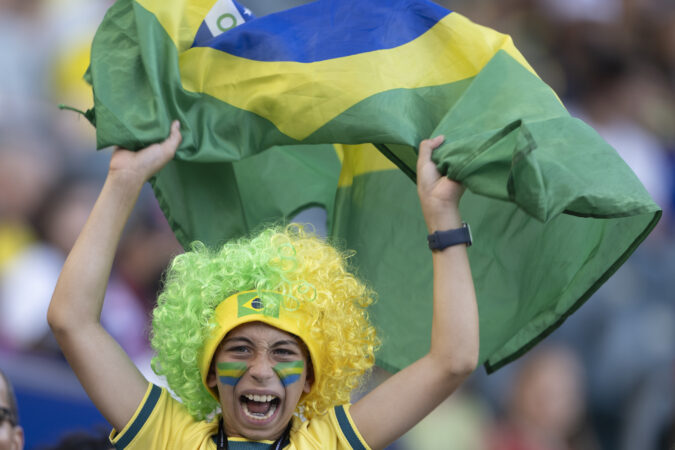
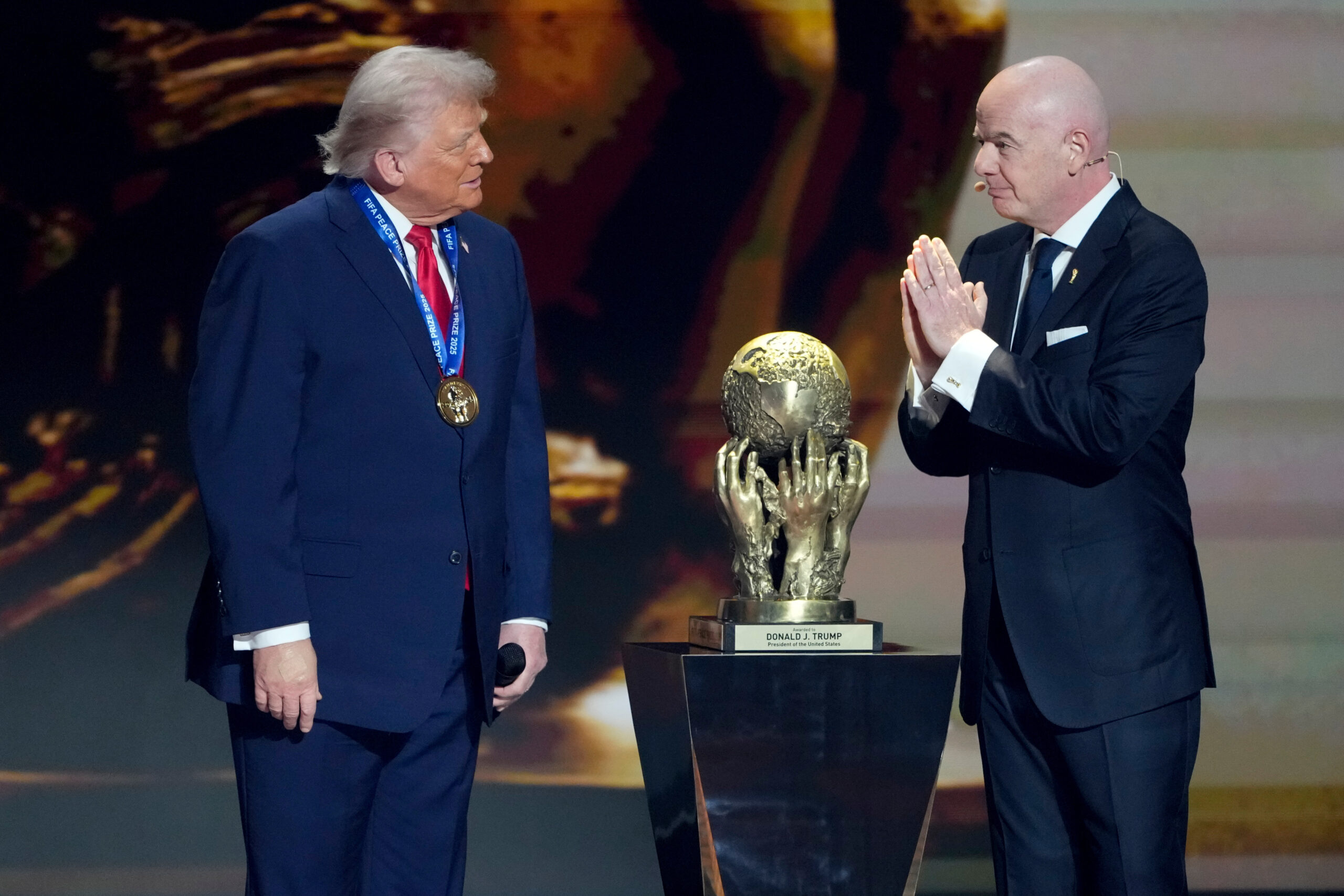
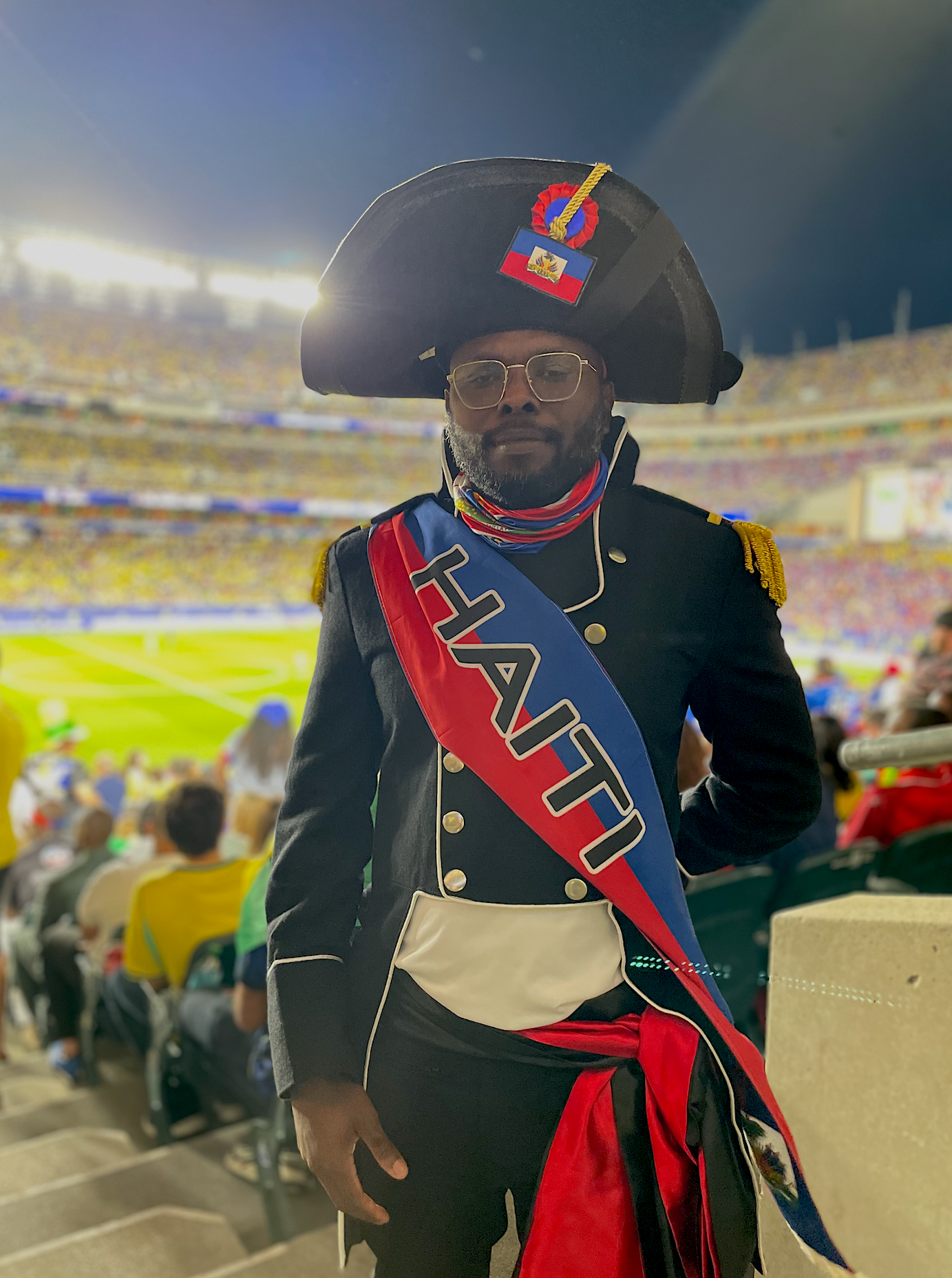
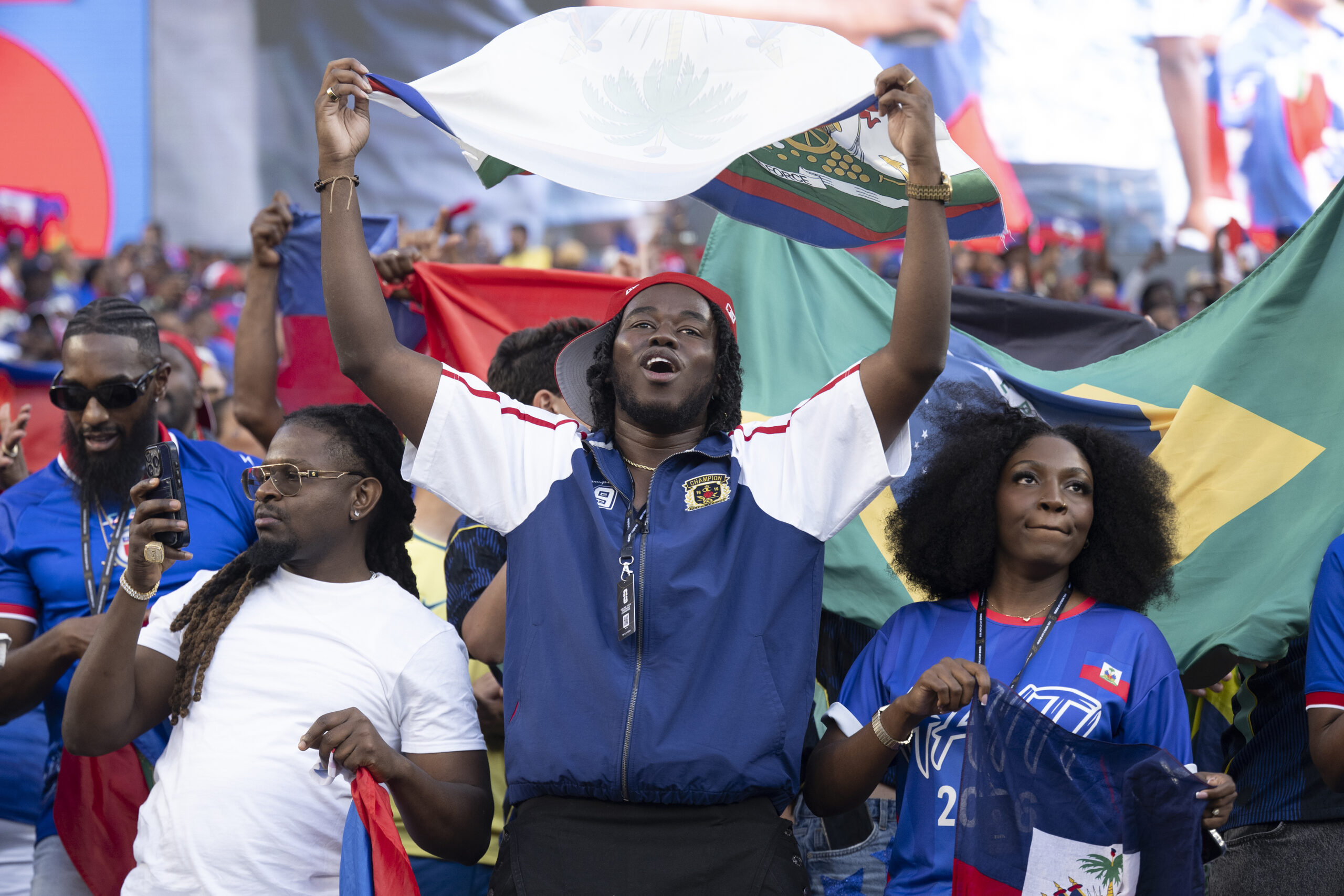
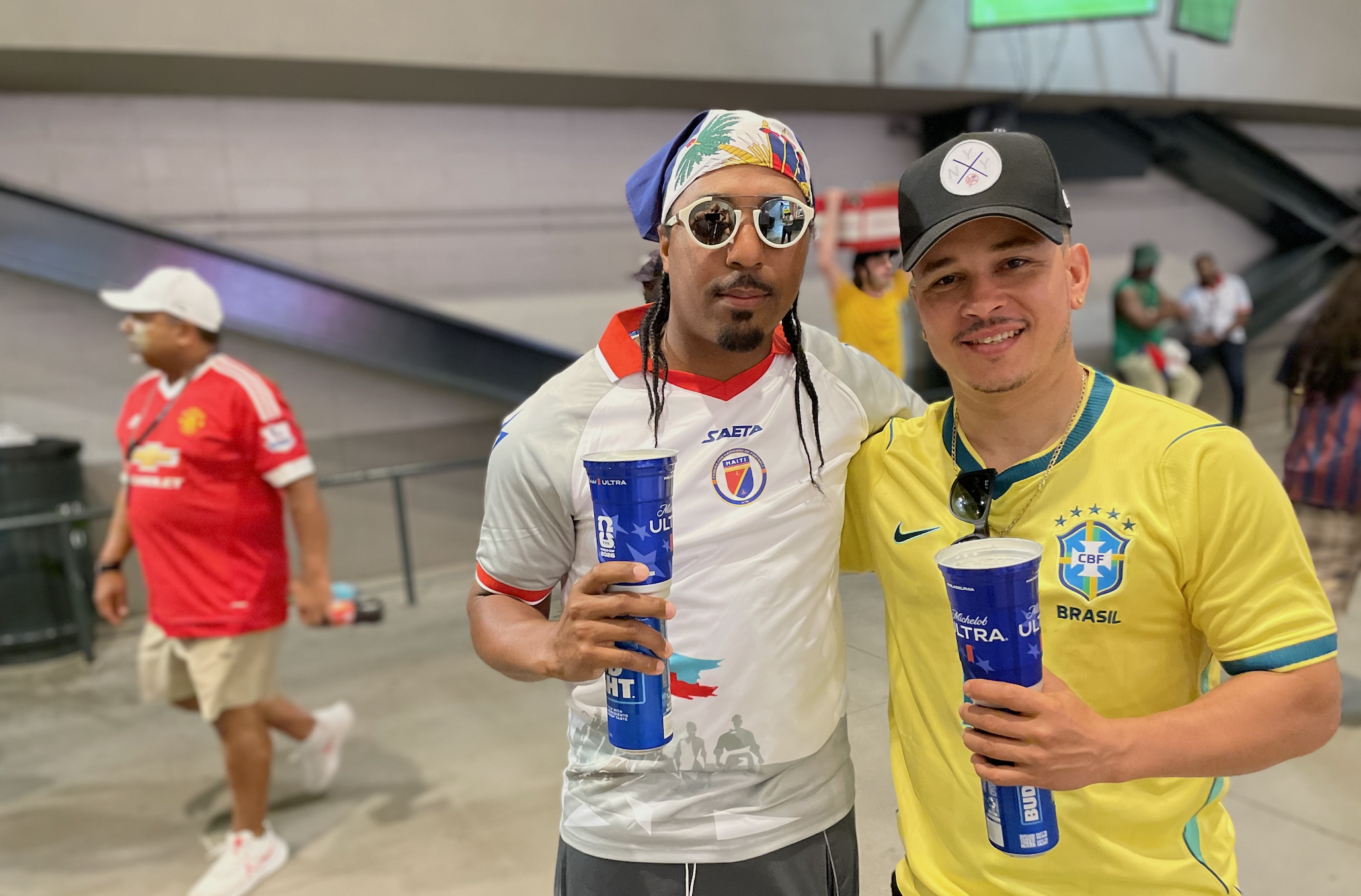
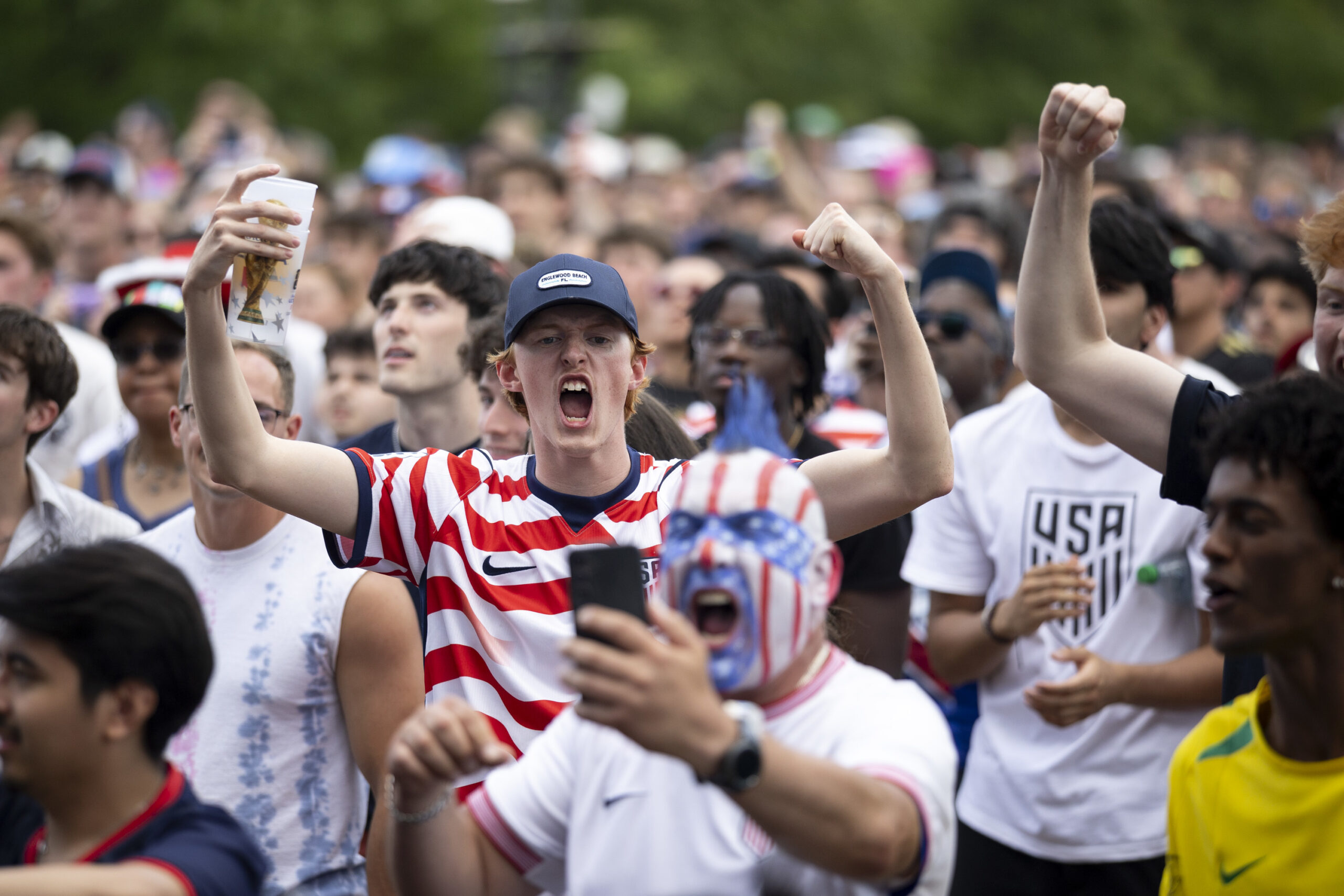
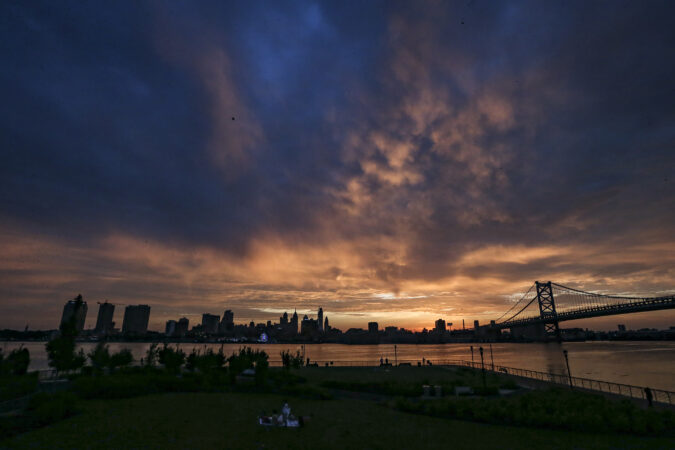
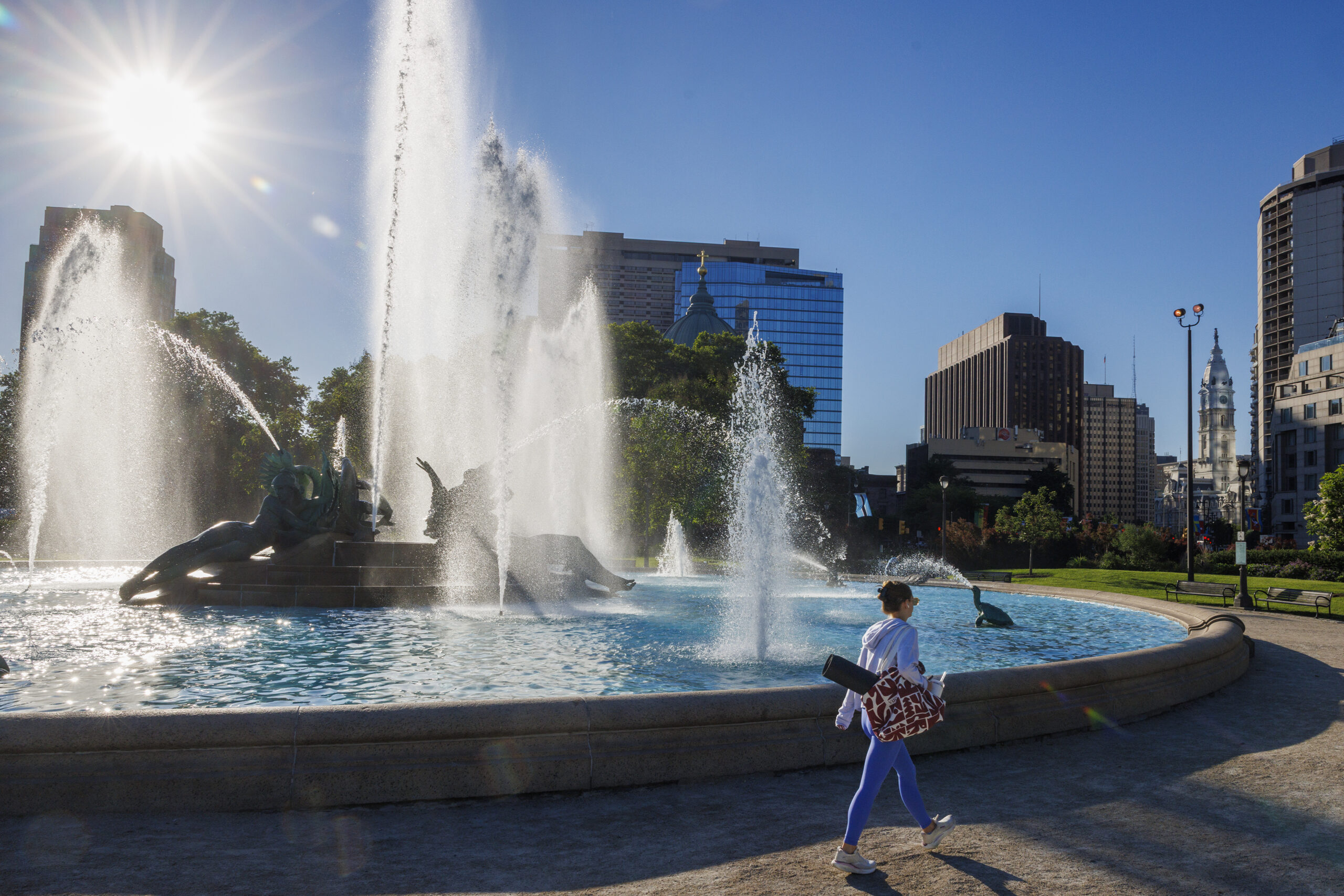
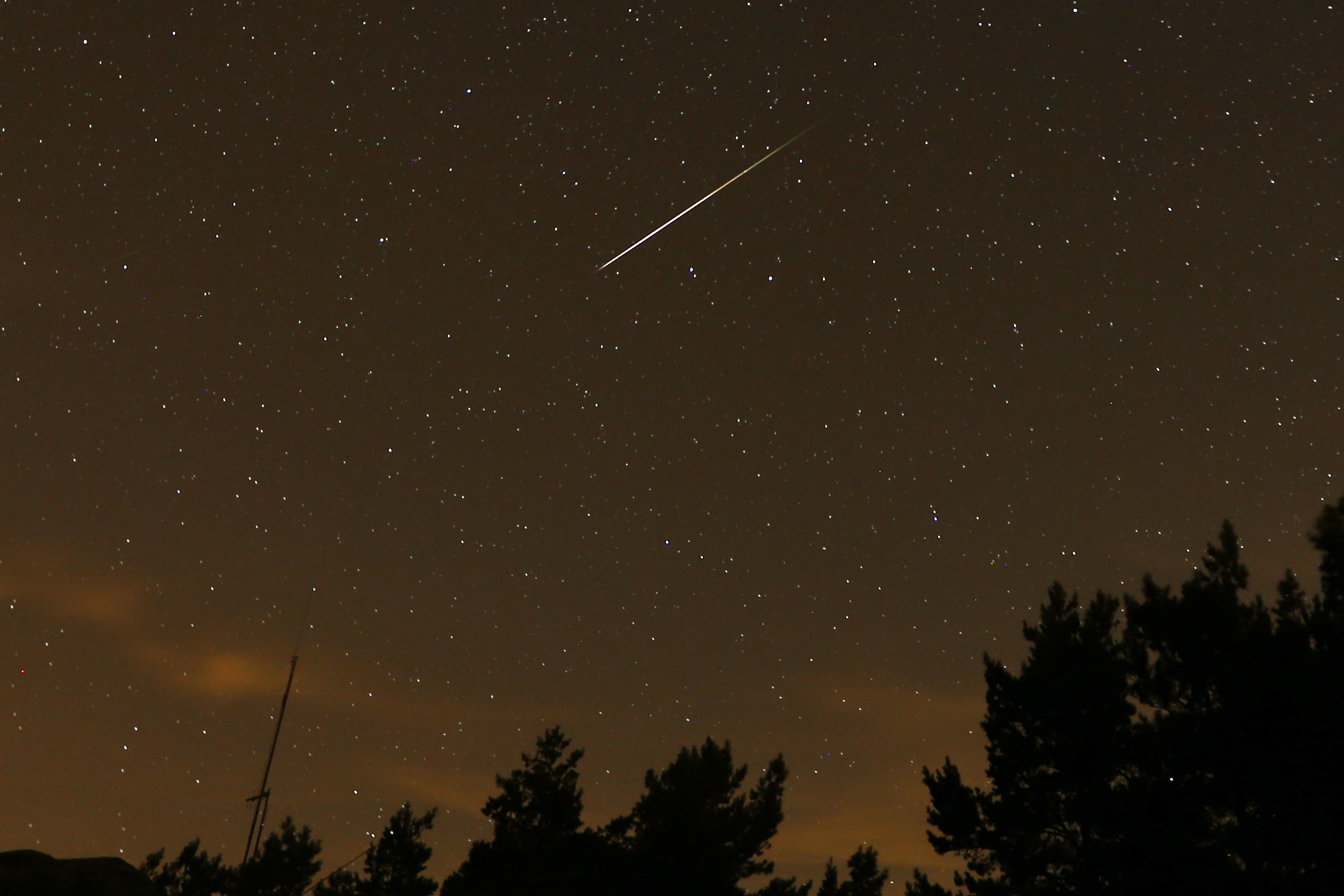
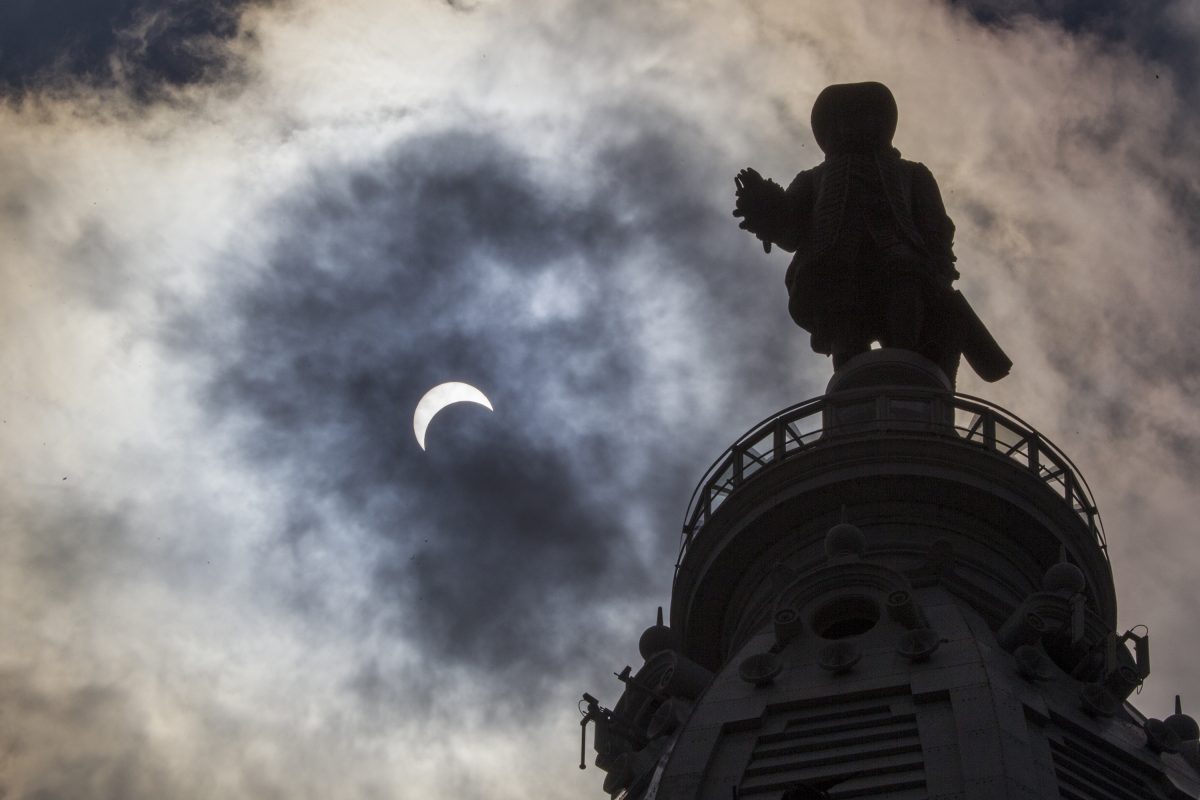


 g
g