Blog

  • The Flyers should be firm sellers at the NHL trade deadline despite their recent winning streak

    The Flyers should be firm sellers at the NHL trade deadline despite their recent winning streak

    When the curtain rose on the Flyers’ 2025-26 season on Oct. 9 in Sunrise, Fla., it almost seemed preordained that they would be in the exact position and dilemma they find themselves in at the NHL trade deadline.

    Entering Thursday’s game against Utah (7 p.m., NBCSP), the Flyers’ final tilt before Friday’s 3 p.m. deadline, Rick Tocchet’s seesaw club finds itself on a sudden upswing and just six points out of a playoff spot with 22 games to play. That brings us to the all-important question: Should the Flyers be buyers or sellers before Friday’s buzzer?

    Just a week ago, that answer seemed clear-cut. The Flyers emerged from their three-week Olympic sabbatical sitting eight points out of both third place in the Metropolitan Division and the final wild-card spot, and reeling from having lost 12 of their previous 15 games. A sleepy loss in Washington to the Capitals last Wednesday in their first game back from break, followed by an early 2-0 deficit in New York the next night to the lowly Rangers, seemed to be the final nails in the coffin. The Flyers were open for business … as sellers.

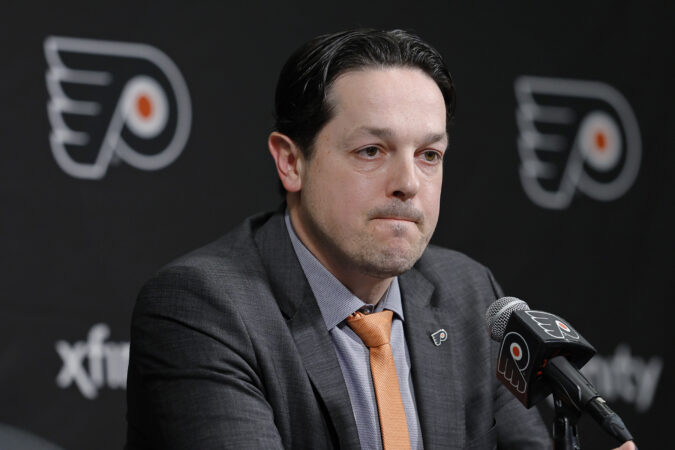
    But after rallying to beat the Rangers in overtime, followed by wins over wild-card rival Boston and then Toronto, the Flyers players have made that buy-or-sell decision a little more difficult on shot-callers Danny Brière and Keith Jones. Jones said before the season that “in the previous two years, we would be quick to make changes in order to get better for the future. Now, it would be about staying on course, which is advancing. It’s not about moving back.”

    So are the Flyers still taking the long-view approach to rebuilding or has patience worn thin? The next 48 hours will tell us a lot about how the organization views itself and those in charge.

    Why the Flyers should sell

    The proof is in the pudding. The Flyers are a wildly inconsistent team that hasn’t won more than three games in a row all season, and whose minus-11 goal differential ranks 12th of 15 teams in the Eastern Conference. In the conference, only the Rangers (14) have fewer than the Flyers’ 19 regulation wins, which also happens to be the first playoff tiebreaker.

    The Flyers have largely ridden an excellent season from goaltender Dan Vladař (.908 save percentage, 11 goals saved above expected, according to Money Puck), and some hot shooting at five-on-five (11th in shooting percentage, according to Natural Stat Trick). They’ve also been able to grind out points by getting to overtime in 20 of their first 60 games. Those three factors have largely papered over more worrying cracks, such as the team’s 24th-ranked Corsi For percentage, which measures control of shot attempts, 29th-ranked power play (16.2%), and the ongoing absence of a No. 1 center with no clear heir apparent in the organization.
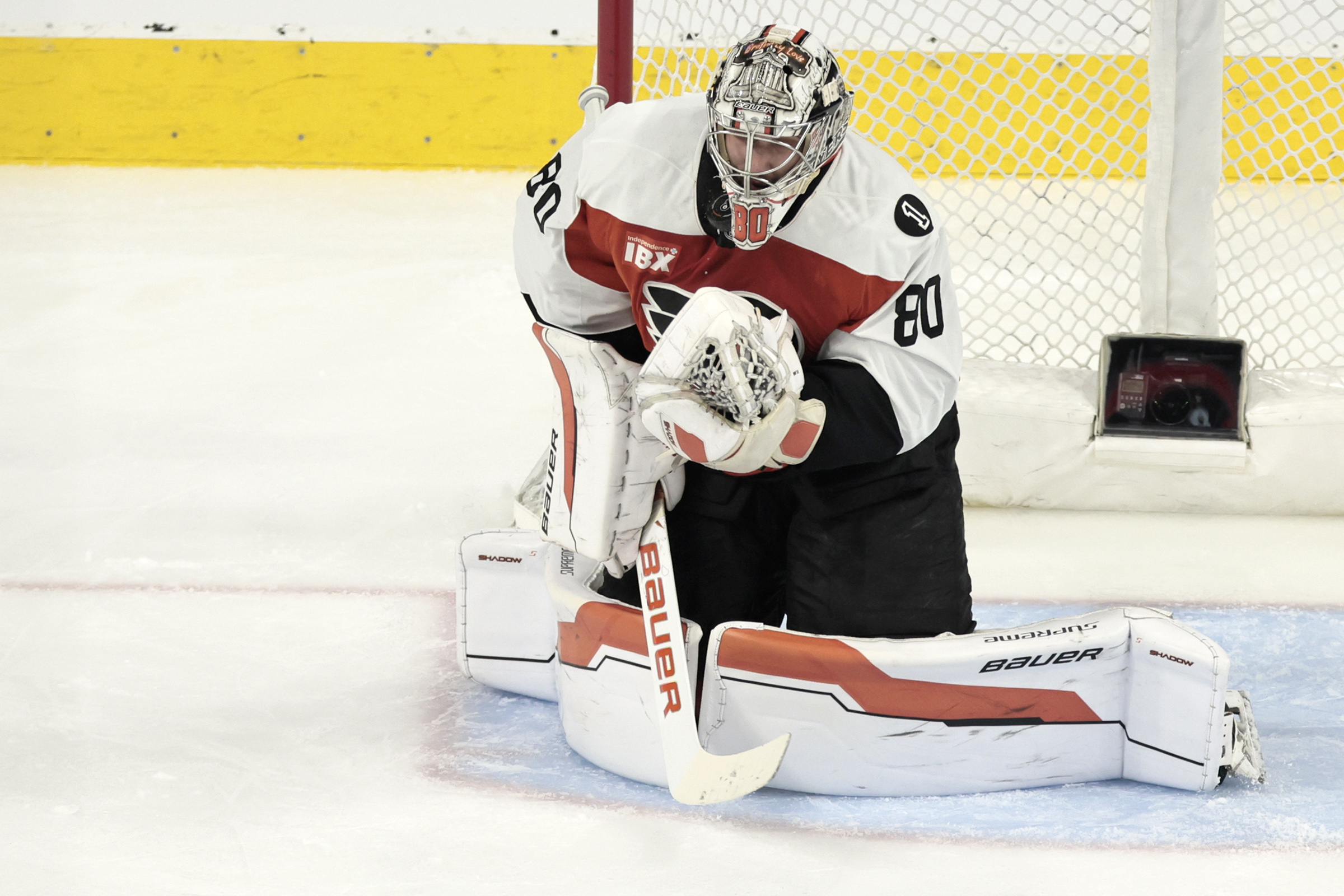
    Dan Vladař has covered up a lot of the Flyers’ warts this season with his stellar play in goal.

    The team’s recent 3-1-0 stretch post-Olympic break is also a bit of fool’s gold, as two of the wins came after regulation, while the Flyers have lost the expected goals percentage in three of those four games. The Flyers still need to leapfrog five teams to make the playoffs, which would likely require them to take at least 27 or 28 points from their final 44, or to play at somewhere near a .620 points percentage the rest of the way. They’ve played at a .558 clip so far this season.

    Even if the Flyers — who, according to Money Puck, have just an 11% chance to make the playoffs as of Wednesday — did pull off a miracle and reach the playoffs for the first time in six seasons, they would likely get steamrolled in Round 1 by Carolina or Tampa Bay, whom the Flyers haven’t beaten in six tries this season.

    While the Flyers are desperate for postseason hockey to return to the newly named Xfinity Mobile Arena, Jones, the team’s president, told The Inquirer in January that while it is “important that we reward our players,” the goal remains being “a playoff team that is a sustainable one. Not just a one-and-done.”

    If he’s true to his word and takes a good look at the Flyers in the mirror, the team won’t be adding short-term pieces to try to get over the playoff hump.

    What the Flyers have to move

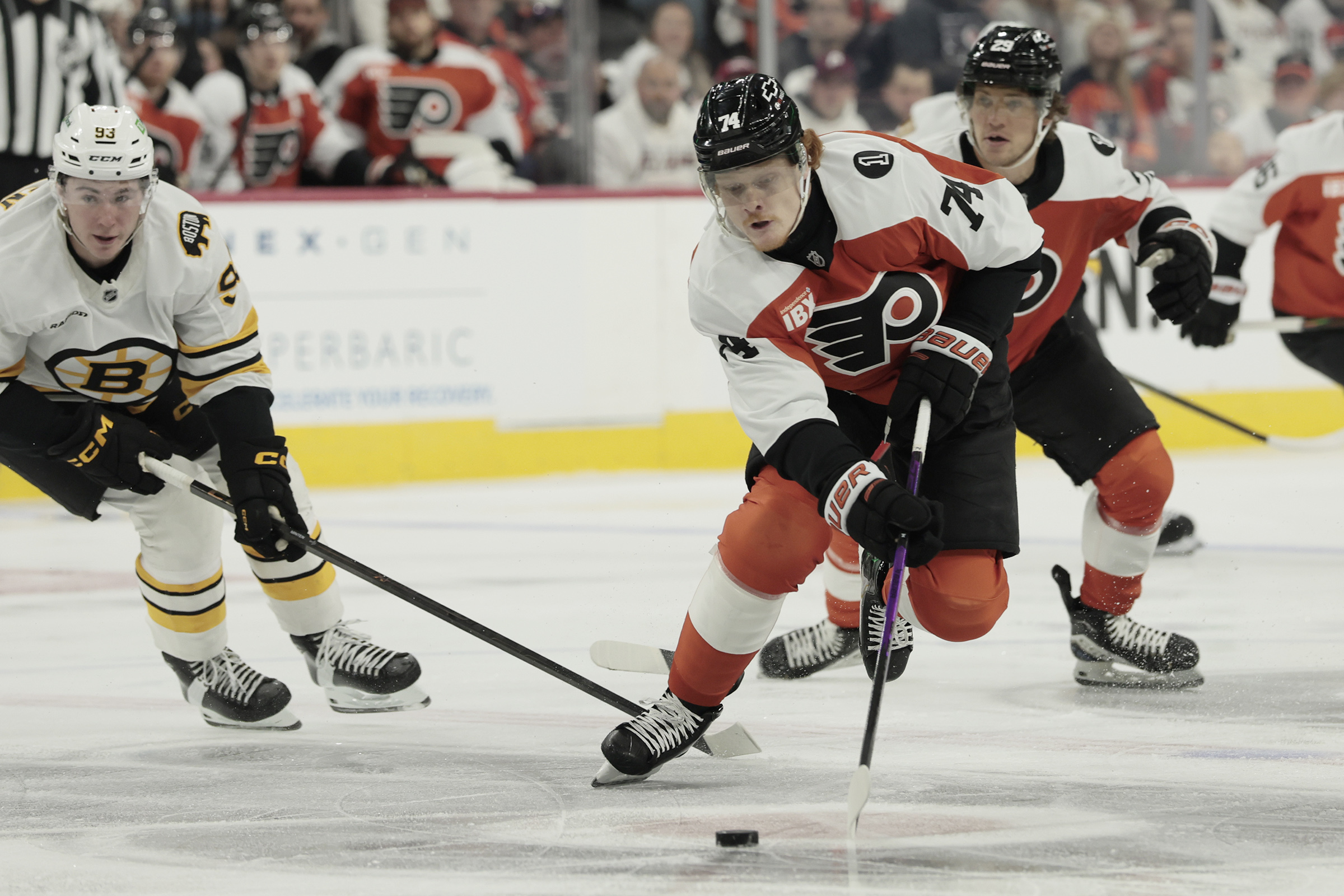
    The Flyers aren’t moving Vladař, Travis Konecny, Travis Sanheim, Matvei Michkov, Trevor Zegras, or top prospect Porter Martone, but everyone else would seem to be — and should be — in play.

    Topping that list is rugged but oft-injured defenseman Rasmus Ristolainen, who has been on the trade block each of the past two seasons but has so far stayed put. The 31-year-old doesn’t fit the team’s timeline, has a year remaining on his contract, and is exactly the type of player that contenders tend to overpay for due to his physicality and “playoff brand of hockey.”
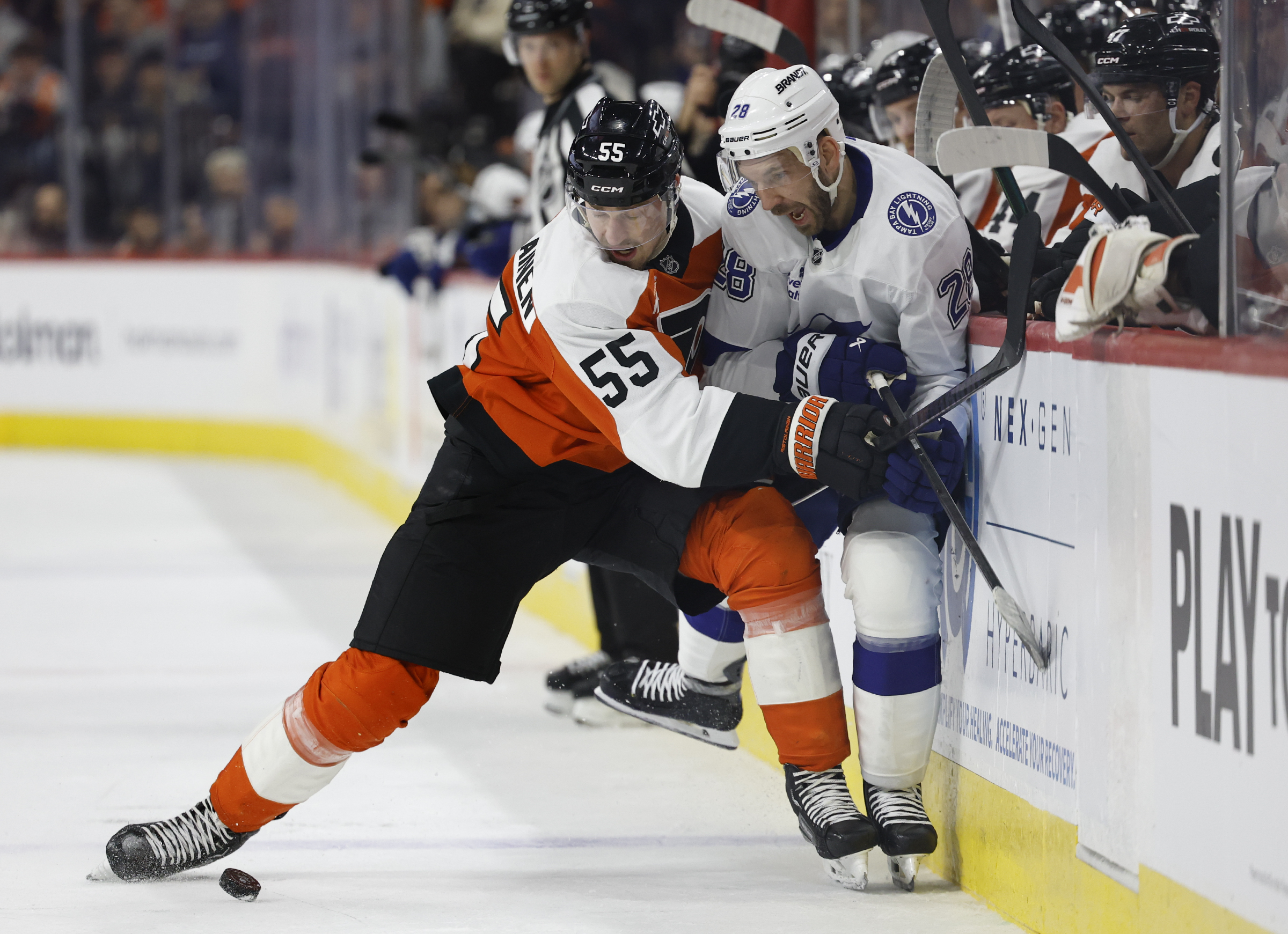
    Flyers defenseman Rasmus Ristolainen is an in-demand player as the trade deadline nears.

    Trading him at this deadline would at minimum land a second-rounder and a legit prospect, and potentially a first-rounder. The Flyers should look to cash in on the 6-foot-4, 208-pound Finn on the heels of his eye-catching Olympics and should be seeking a first-round pick or a high-end center or blueline prospect in return.

    The Flyers also have a surplus of wings with Konecny, Michkov, Zegras, Tyson Foerster, Owen Tippett, Bobby Brink, Denver Barkey, and Nikita Grebenkin, and more on the way, headlined by Martone and Alex Bump. Sooner or later the Flyers are going to have to make room for guys, and parting with Tippett or Brink would start that process and recoup the Flyers something in return, potentially at a position of need.

    With teams always looking for a scoring punch this time of year, trading the 27-year-old Tippett, who is cost-controlled for the next six seasons and on his way to a third 25-plus-goal season in four years, would yield the largest return, assuming Konecny and Zegras are off limits. The Flyers reportedly have a high ask on the speedy Tippett, including a first-round pick, but could a package that includes a center be enticing? The Flyers could opt to hold fast for a better return at the draft, when this type of trade may be easier to complete, but trading a winger or two before next season seems inevitable.

    The Flyers don’t seem willing to meet the high price for St. Louis Blues All-Star Robert Thomas, but Detroit’s Nate Danielson, Minnesota’s Danila Yurov and Charlie Stramel, Buffalo’s Noah Ostlund, Tampa Bay’s Conor Geekie, and Seattle’s Shane Wright are some younger center prospects who could be available in a package involving Ristolainen, Tippett, or someone else.
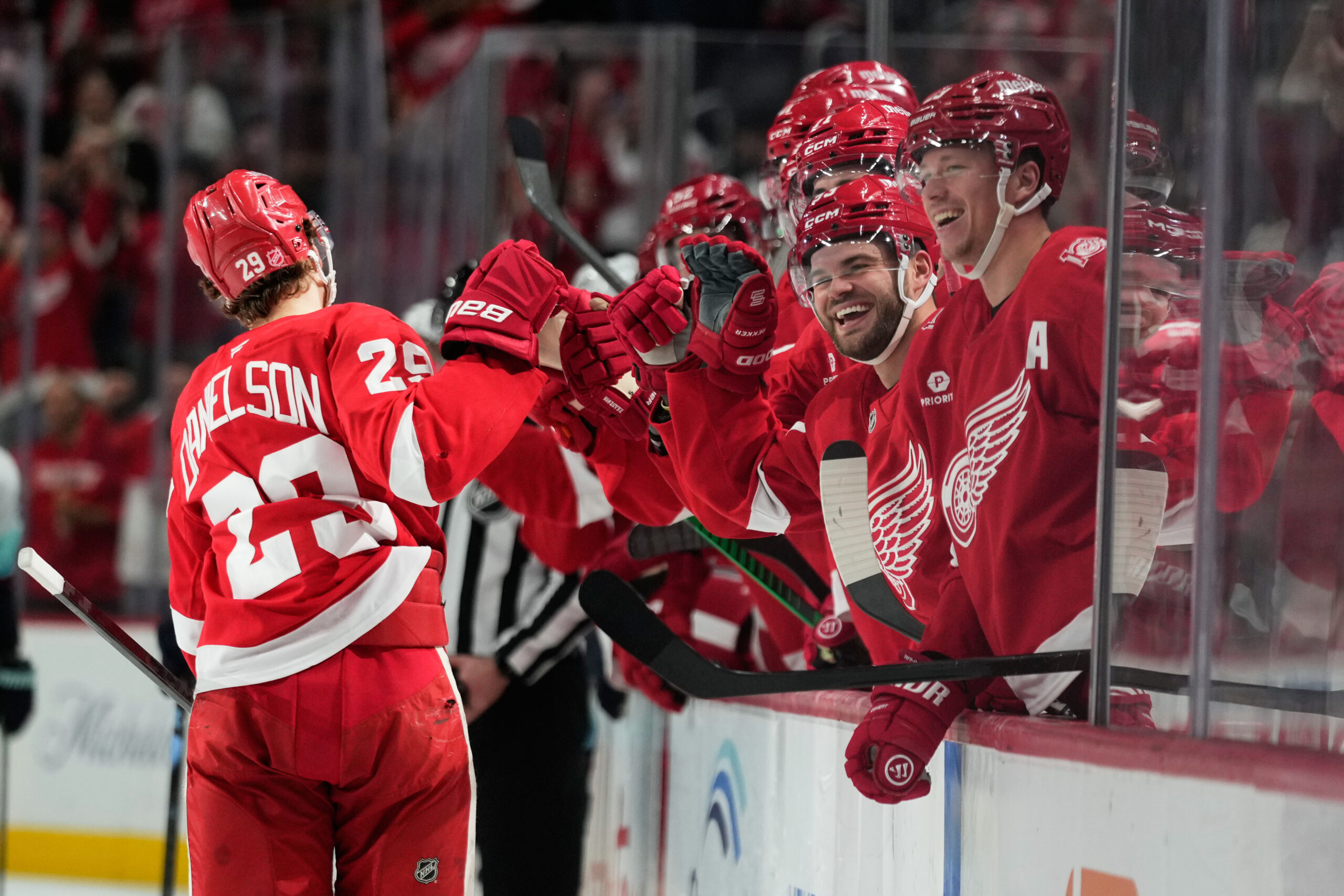
    Detroit Red Wings center Nate Danielson, 21, is the type of young center the Flyers need to add to their system.

    In addition to trying to move pending unrestricted free agents Nic Deslauriers, Noah Juulsen, and Carl Grundström, the Flyers could explore trading depth center Noah Cates or restricted free agent defensemen Jamie Drysdale and Emil Andrae, all young players with runways to improve who would generate some interest around the league. Like Ristolainen, Cates is a player that contending teams could view as a final piece due to his versatility, penalty killing, and two-way play. Andrae looks to be in need of a change of scenery and could be swapped for a player in a similar boat.

    Nick Seeler would have some value as a steady, stay-at-home defenseman, but the 32-year-old, who is currently nicked up, would have to waive his no-move clause. Maligned backup goalie Sam Ersson also could be offloaded for a mid-round pick, especially if the team has already decided it won’t extend a qualifying offer to the pending free agent.

    Brière has said he expects a quiet deadline, but trading Ristolainen is a must, while being creative to try to add another young center prospect to the pipeline should also be on the agenda. The Flyers aren’t ready to contend yet and still have several needs to address. We’ll see if they agree come Friday at 3 p.m.
  • Phones off, heads down: The Flyers players are trying not to think about Friday’s NHL trade deadline

    Phones off, heads down: The Flyers players are trying not to think about Friday’s NHL trade deadline

    This time of year, fans, reporters, and insiders’ phones will be dinging constantly with notifications, but there’s a good chance several phones in hockey will be off.

    “I’d say most guys probably stay off their phones around this time. You don’t want to see any tweets from guys that are breaking stuff,” forward Garnet Hathaway said with a bit of a grin, a laugh, and a glance as Sportsnet insider Elliotte Friedman was in earshot in the Flyers locker room in Toronto on Monday.

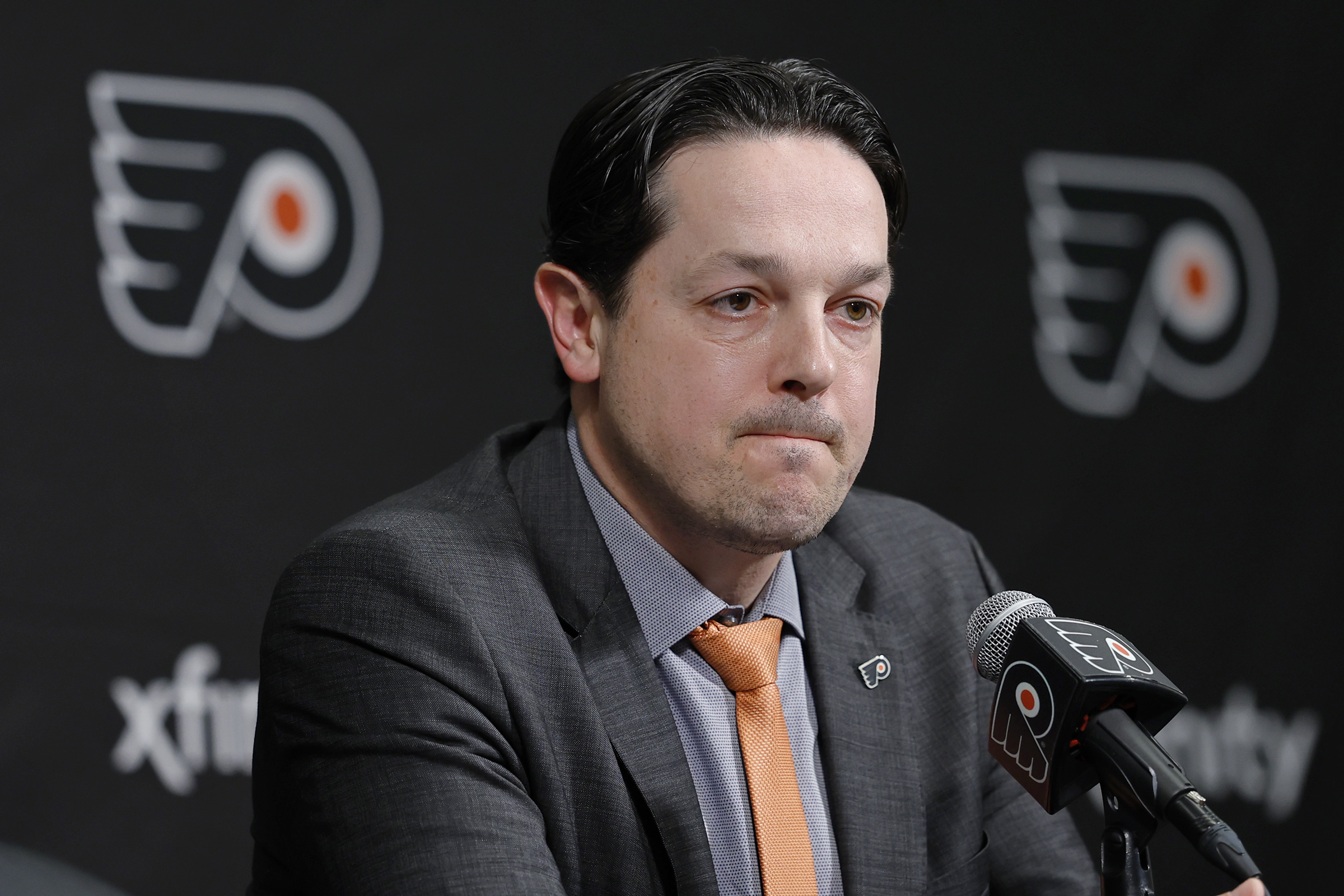
    The NHL trade deadline is fast approaching, with the final horn sounding on Friday at 3 p.m. But while everyone speculates and debates what Flyers general manager Danny Brière and management will do, the players are trying to stay in the moment.

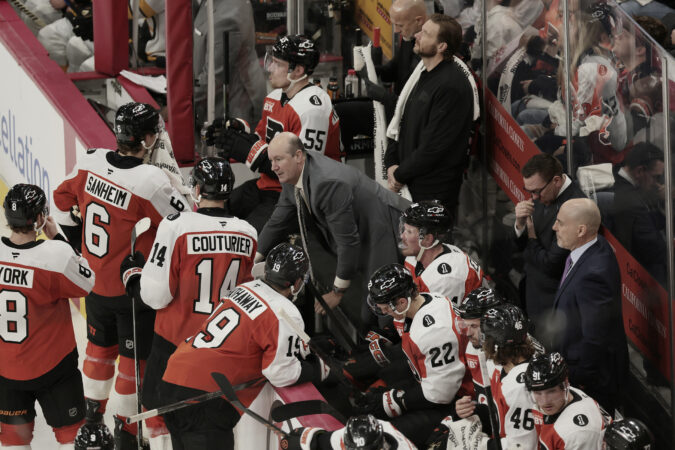
    “Focus on what we do on the ice and play some good hockey, try to win some games. Those are things that we don’t control,” captain Sean Couturier said. “It’s more you guys [the media] that talk about it and make big stories out of it. In the locker room, it’s not something we really talk about. We’ve got other things to focus on.”

    It’s totally fair for Couturier to say the media makes it a big deal. After all, is it not entertaining when the wheelin’ and dealin’ can come fast and furious? But what we all don’t see is the toll it can take.

    Last season, several players acknowledged that the trade of Morgan Frost and Joel Farabee in January to the Calgary Flames and Scott Laughton at the deadline to the Maple Leafs impacted the room. Two seasons ago, it was Sean Walker being dealt to the Colorado Avalanche that sent the defense into a tailspin, leading to a team looking at a playoff spot finding itself on the outside at the end.

    General manager Danny Brière could move a couple of Flyers players by Friday’s trade deadline.

    “One day you’re in one place, and the next morning you’re in a different place, getting ready to play a game,” recalled Owen Tippett, who was acquired by the Flyers in the Claude Giroux trade two days before the 2022 deadline. “I think I was traded at 6 o’clock at night and played the next day at 2 o’clock. So, pretty quick turnaround [after] you pretty much lift up your whole life and move. For me, I kind of had an idea it was coming. But it all happened so fast, so you don’t really have time to think until everything dies down.”

    “So, it’s a tough time of year,” he added. “Obviously, you don’t want to see anyone go, and you never know who could be on the move or, if it’s you, then you just have no choice but to roll with it and deal with it and settle things down as quick as you can.”

    If the Flyers do make moves — and rumors continue to swirl around defenseman Rasmus Ristolainen being one such player expected to find himself in a new jersey — the player they get in return will be facing an interesting time in Philly. Because the “other things” the captain alluded to are that the Flyers are not just focusing on their first four-game winning streak in over two years when they take on the Utah Mammoth on Thursday (7 p.m., NBCSP), but a playoff spot.

    Entering Wednesday, they were eight back of second and third in the Metropolitan Division, held by the Pittsburgh Penguins and the New York Islanders, respectively, and six back of the Boston Bruins, who hold the last wild card in the Eastern Conference.

    “We’re in the thick of it. We’re fighting for a playoff spot,” defenseman Nick Seeler said. “So that’s where our heads are at, and that’s what guys are focusing on, getting wins here, and that’s the most important thing.”

  • What to expect at the trade deadline, how the Flyers can get a No. 1 center, and more from our Reddit AMA

    What to expect at the trade deadline, how the Flyers can get a No. 1 center, and more from our Reddit AMA

    With just over 48 hours remaining until the 2026 NHL trade deadline, Inquirer Flyers reporter Jackie Spiegel hopped on r/Flyers to field some fan questions in a Reddit AMA (Ask Me Anything) Wednesday afternoon. Here are a few highlights …

    (Questions have been lightly edited for clarity and brevity.)

    Q. There’s been a lot of talk about selling at the deadline, with guys like Owen Tippett and Rasmus Ristolainen as top candidates. Is there anyone else who might be on the block and could be a ‘surprise’ player dealt at the deadline?

    A. It’s a good chance that Ristolainen is gone with how he’s been playing, his friendly contract, the farm system, and that he’s a right-shot defenseman. Tippett is less of a sure bet as he brings elements — size, speed, goal-scoring ability — that any team, including the Flyers, would want. However, Tippett does have a modified no-trade clause that begins on July 1, so if they’re going to do it, time is ticking.

    The Flyers do have a logjam on the wings, and one surprise, at least for this week, could be Bobby Brink, who has long been rumored to be on the way out because of who is waiting in the wings. There’s always a chance Danny Brière could do right by some veterans like Noah Juulsen and Nic Deslauriers, each on expiring contracts, and trade them to a contender looking for depth.

    Owen Tippett is a potential trade candidate for the Flyers
    Q. At what point do we finally trade away some of our right wings to fix the log jam we have? And why is it taking so long?

    A. The expectation was always that this process would begin over the summer, but it could come sooner. Names like Brink and Tippett have popped up in recent trade-deadline chatter. The only crux of trading Brink now is his size, as playoff teams are always looking to get bigger this time of year, but he is a pending restricted free agent. … But there is no denying that the Flyers need to make room for right winger Porter Martone.

    As to why it has taken this long — you can’t trade someone if you don’t have someone ready to take the spot. Some of the wait was the hope of reeling in a big fish during this summer’s free agency — that is gone — but more recently, the wait has been on Martone, with all signs pointing to him inking his entry-level contract once Michigan State’s season is over.

    Q. Where do you see us getting an actual top-line center option from and what would it realistically take?

    A. This is a great question. I think part of the issue for the Flyers is that they were banking on this upcoming offseason to get that No. 1 center and all those guys inked extensions. Could Trevor Zegras be that guy? Maybe. Could they swing for a Robert Thomas? Maybe, but from what I’ve been told, that deal would require sending at least one of the Flyers’ young centers in the system the other way. I’m starting to wonder if a true No. 1 center is needed, because if you have enough talented high-end wingers — like Tyson Foerster, Martone, Travis Konecny, Matvei Michkov, Tippett — maybe a less elite center works too?

    Sean Couturier has been the Flyers captain for a little over two years.
    Q. What do the Flyers plan to do about Sean Couturier? Having the captain of the team be the guy farthest from living up to his contract and visibly frustrated seems like a less-than-ideal leadership situation. Not to mention he’s signed for four more seasons after this one and his contract is buyout proof.

    A. From what I can tell, there are zero plans for Couturier. From the outside, yes, his production is down, but a lot of that, in my opinion, has to do with his focus on defense as he lets his younger, more skilled wingers take charge offensively. And heading into the return from the Olympic break, his analytics were actually some of the best on the team. There’s also the leadership in the room that fans do not see. As assistant coach Todd Reirden mentioned, while he was taking over media responsibilities with Rick Tocchet at the Olympics, Couturier’s “voice carries a lot of weight. He’s not [a captain] that’s rah rah, but when he does talk, no one’s not listening. I can tell you that much. So he’s the leader of our team for a reason.”

    Q. If you had to look for a funny quote for a story after a win who would be your best bet on the team this year?

    A. This is a great question. Funny is good, but what we call money bites (at least that was the term when I worked in TV) are always better. Dan Vladař is always good for that and usually has a funny quote or two. Zegras is always on with a quick, funny response. And Garnet Hathaway is always insightful, but brings a good quote too.

  • House committee votes to subpoena Attorney General Bondi to answer questions over the Epstein files

    House committee votes to subpoena Attorney General Bondi to answer questions over the Epstein files

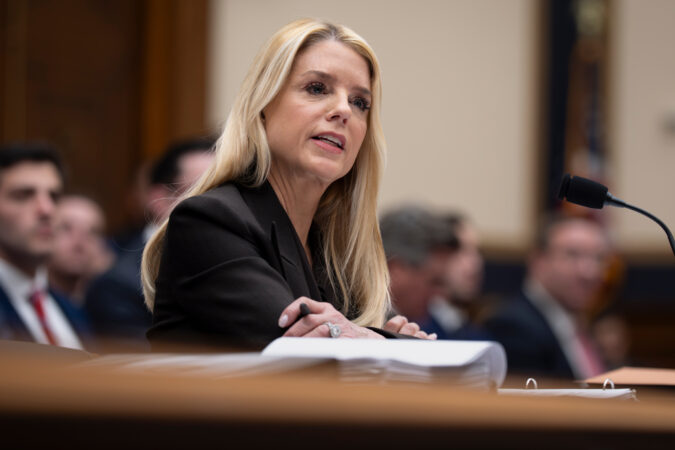
    WASHINGTON — The House Oversight Committee voted Wednesday to subpoena Attorney General Pam Bondi to answer questions over the Justice Department’s handling of files related to the Jeffrey Epstein sex trafficking investigation.

    Five Republicans joined Democrats to support the subpoena proposed by GOP Rep. Nancy Mace of South Carolina in a sign of continued frustration with the department’s review and release of a tranche of documents regarding the disgraced financier.

    The Justice Department had no immediate comment on the subpoena.

    Former President Bill Clinton and his wife, former Secretary of State Hillary Clinton, recently sat with lawmakers on the committee for their own depositions over the former Democratic president’s connections to Epstein from more than two decades ago.

  • ‘No resistance.’ ‘Soft.’ Tyrese Maxey and Nick Nurse explain the Sixers’ record-breaking blowout losses

    ‘No resistance.’ ‘Soft.’ Tyrese Maxey and Nick Nurse explain the Sixers’ record-breaking blowout losses

    There’s no shame in losing a basketball game.

    This is doubly true when the two highest-paid players in the history of the franchise are either hurt (again), suspended (seriously?), or, when they are available, less than fully whole.

    Sometimes, there’s even no shame in losing by 40.

    However, there is great shame in losing by 40 because you don’t play hard. There is humiliation in being down by 49 with 12 minutes to play because, for the previous 36 minutes, you generally played matador, playground, YMCA defense, despite playing at home, after a day off.

    The Sixers lost by 40 to the Spurs on Tuesday night, but it could have been 70, except the Spurs sat their starters in the fourth quarter. They trailed by 49 after three en route to ignominy.

    It is their third home loss by at least 40 points. They are the first team in NBA history to lose three home games in the same season by at least 40, according to @basketball-reference.com.

    They’re the league’s worst third-quarter team, and the second worst in the last 30 years, but they gave up 46 points in the second quarter Tuesday. They are nothing if not equal-opportunity no-shows.

    They played without Joel Embiid, whose side hurts, and they played without Paul George, who served the 14th game of his 25-game drug suspension.

    They have won plenty without either of them, and both. Fueled by an MVP-caliber season from Tyrese Maxey, the Sixers entered Wednesday night’s game against the visiting Jazz at 33-28, which gave them sixth place in the Eastern Conference. If they play hard, they are a viable team every night.

    So, on a night without their two future Hall of Famers, and a night without bed-sick forward Kelly Oubre Jr., you would think the Sixers, to a man, would play hard. You’d think they would prioritize defense and rebounding.

    They did not.

    They were outrebounded by 16. They gave up 131 points.

    They played weak and they played dumb and they played like a team that was defeated before it took the court. They did so in a national TV prime-time game that embarrassed the franchise in front of the nation.

    No resistance

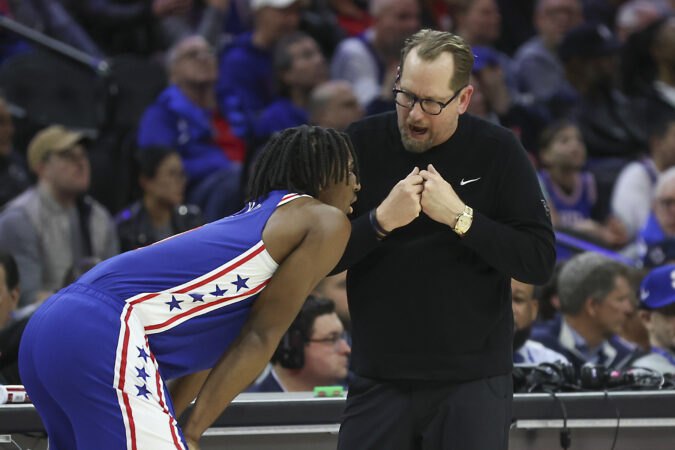
    “There just was no resistance, defensively,” coach Nick Nurse said.

    What he didn’t say was, again. He could have. For the Sixers, blowouts have become as common as bad draft picks.

    Blame Nurse if you like, or blame the players, or blame the bad luck and bad choices that have kept the stars in the trainer’s room, but the Sixers are conducting a clinic on how to chase fans to the parking lot before the fourth quarter is half over.

    This not only was the Sixers’ third loss by at least 40 points, it was their fourth loss by at least 37 points, and their seventh loss by at least 21 points. Despite it being a 40-point loss, it was still nine points shy of their worst loss of the year, a 49-point disgrace against the visiting Knicks on Feb. 11. Entering Wednesday night’s game against the Jazz, the Sixers had suffered three of the 17 worst losses in the NBA this season — a year in which about one-third of the league is tanking.

    All seven of the Sixers’ blowouts have come in their last 45 games, which means, lately, they’re getting destroyed more than 15% of the time.

    Is it road woes? No. Five of the seven blowouts came at home.

    Is it the competition? Not necessarily.

    The Spurs are a deep, well-coached team built around Victor Wembanyama, the game’s best two-way player. They’ve lost big to really good teams like San Antonio and Oklahoma City, but they’ve been dog-walked by three teams with worse records than their own: Orlando, Charlotte, and even woeful Washington.

    Maxey believes that when the Sixers don’t play hard and lack focus early, they have no chance late.

    “When we don’t start fast, defensively and aggressive in the right way — that’s when it happens,” Maxey said. “We start soft, and we’re not pressuring the ball, not getting to the ball, and we give up bad cuts, and stuff like that.”

    That’s occasionally true, but the Sixers have generally been able to match their oppositions’ output in the first quarter. However, they’ve had to come back to do so, and that sometimes leaves them exhausted when the second quarter comes around. They gave up 51 points to Orlando, 41 to Charlotte, and 46 to the Spurs in the second quarters of those blowouts.

    Forget the numbers. Forget the quarters. If you watched the games, you saw what Nurse saw:

    No resistance.

    C’mon, man

    You saw Maxey throw away a cross-court pass, then just watch the thief streak down the court.

    You saw Andre Drummond, a former defensive player of the year candidate and a four-time rebounding champion, foul Wembanyama twice in the first two minutes. Drummond, Embiid’s $5 million understudy, played just five minutes.

    Blowouts happen, especially when your roster fluctuates. Before their latest excuses for absence materialized, Embiid and George were only inconsistently available. This was due to age, injury management, and, frankly, a questionable desire to actually play in the games for which they are paid a combined $106 million this season.

    But their presence doesn’t ensure proficiency. Embiid and George both played in two of the blowouts. Embiid missed the other five, while George missed four of the five.

    Throw in a rookie like VJ Edgecombe, who, predictably, makes mistakes on defense, and add a dash of Maxey, who is congenitally defense-challenged, and you’re going to have the occasional train wreck.

    But it should only be occasional. It shouldn’t be more than 10% of the entire season.

    It might seem unfair to question players’ effort, especially that of Maxey and Edgecombe. Maxey leads the NBA in minutes played, and Edgecombe ranks eighth, and he leads all rookies, and the blowouts started about a month into the season.

    But Drummond, Edgecombe, and power forward Dominick Barlow, this season’s feel-good story of persistence and effort, earn their minutes from their defense.

    Embiid’s strained oblique will cost him at least one more game and probably more. George is out until March 25.

    Until they’re both back and both viable, the Sixers will have a talent void. They can best fill it with persistence and effort.

    But on nights when they offer “no resistance,” they will have no chance.

  • New York’s Blank Street, a coffee and matcha chain, to open on UPenn’s campus

    New York’s Blank Street, a coffee and matcha chain, to open on UPenn’s campus

    New York’s ubiquitous seafoam-green painted coffee and matcha cafe chain is headed to Philadelphia.

    Blank Street will open its first Philly location at 3603 Walnut Street, joining UPenn’s retail district. It’s expected to open in late summer.

    The six-year-old chain is known for its micro-cafe look and automated espresso systems for customers to grab matchas and lattes. And soon, Penn students, faculty and surrounding neighbors will experience the quick service inside the 3,500 square foot cafe.

    The Philly location will be one of the largest U.S. cafes on Blank Street’s expansive roster, which includes more than 40 locations in the U.S. and the United Kingdom.

    “We’re excited to be getting closer than ever to the UPenn community,” said Vinay Menda, Blank Street co-founder and U.S. managing director in a statement. Giving the company, “the opportunity to invest deeply in design and bring an elevated, hospitality-forward experience to the neighborhood.”

    The new Blank Street cafe location at 3603 Walnut Street will be their first in Philly.

    Founded in 2020 by Menda and Issam Freiha, Blank Street quickly expanded with New York’s pandemic-induced surge of lowered rent storefronts and private equity financing. But soon, the rapid growth raised scrutiny from skeptics, who saw “Blank Street as an avatar of gentrification and automation” resenting “the use of Wall Street money to compete with local businesses,” reported the New York Times. The cafe chain also has its fans, who lean younger and see the trendy matcha drinks as fashionable — even leading the brand to London Fashion Week this year.

    Blank Street cafe is one of several additions to the SHOP PENN retail district. James Beard Award winner Chef Tom Colicchio’s Root and Sprig will open in the spring. And Korea Taqueria opened a location at Franklin’s Table Food Hall in January.

  • Quinta Brunson’s hit ‘Abbott Elementary’ will be renewed for a sixth season

    Quinta Brunson’s hit ‘Abbott Elementary’ will be renewed for a sixth season

    School will be in session for a sixth year at West Philadelphia’s fictional Abbott Elementary.

    ABC announced Wednesday that Quinta Brunson’s mockumentary based on the goings-on at an underserved Philadelphia public school is being renewed for its sixth season. This was first reported by Variety.

    The news comes on the same day Abbott resumes its fifth season. A new episode is set to air Wednesday night.

    Since its 2021 debut, Abbott has been a crown jewel of ABC. It has been nominated for an Emmy 30 times, including the 2026 Emmy for outstanding comedy series. It has won six.

    Abbott, a workplace comedy about a group of dedicated, passionate teachers determined to help students succeed, has made audiences laugh by pushing boundaries of a typical comedy show. Brunson’s writing has made viewers aware of the bureaucracy in the school system, ageism in the workforce, and what it looks like when administrators count students out because of the neighborhoods they come from.

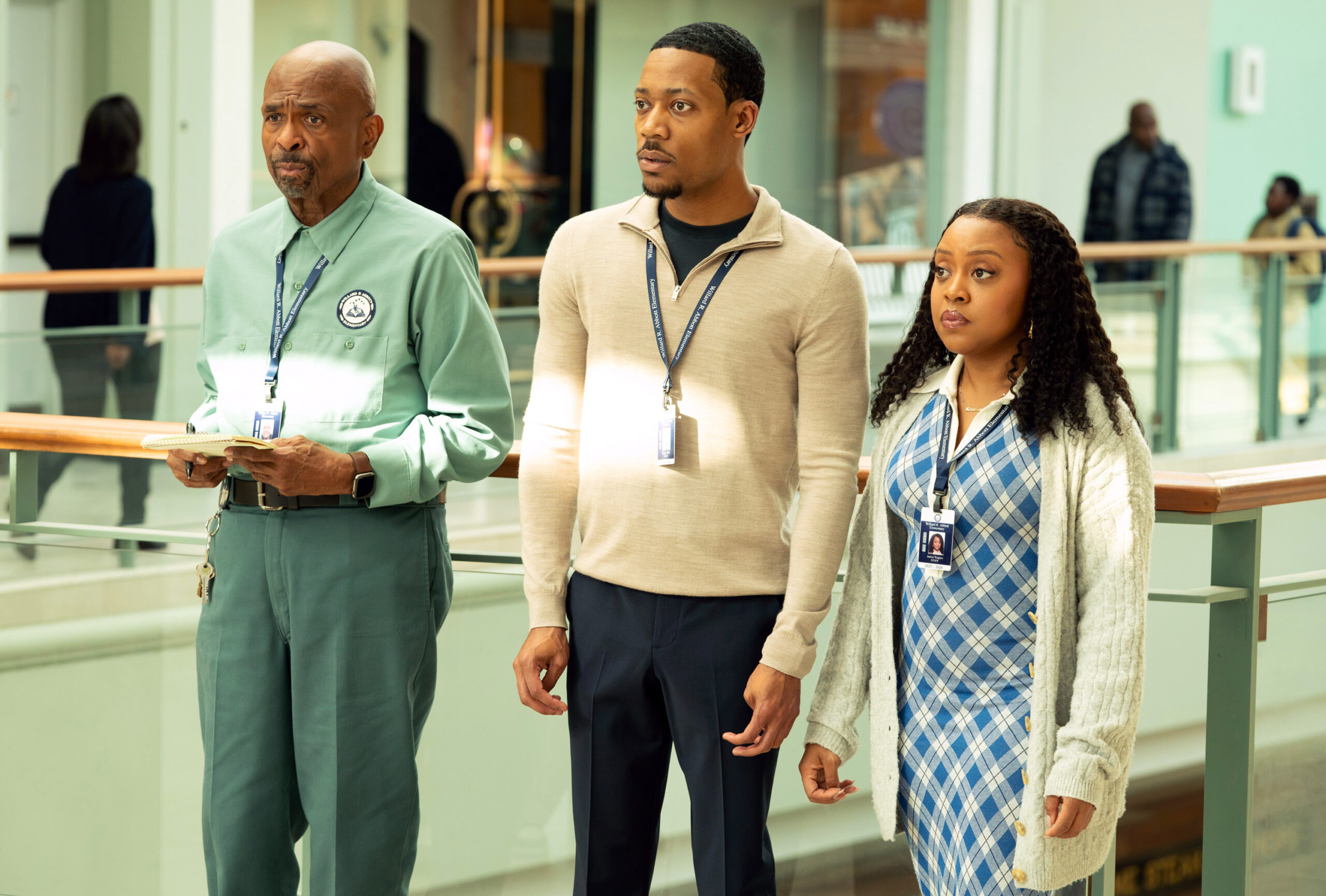
    William Stanford Davis (Mr. Johnson), Tyler James Williams (Gregory Eddie), and Quinta Brunson (Janine Teagues) in “Abbott Elementary.”

    The show enjoyed positive reviews from its crossover episodes with It’s Always Sunny in Philadelphia. Earlier this year, The Philadelphia Inquirer was featured on an episode.

    Brunson was one of the Philadelphia treasures featured on The Simpsons recent 800th episode, an animated homage to Philadelphia. In addition to starring and creating Abbott Elementary, she also serves as an executive producer for the show.

    Brunson grew up in West Philadelphia and spent time in district and charter schools, naming the show for Joyce Abbott, her sixth grade teacher at Andrew Hamilton Elementary.

    In late 2025, Brunson started the “Quinta Brunson Field Trip Fund” for district teachers and administrators to apply for grants after completing a short application. Last year, she received a key to the city of Philadelphia.

  • New Jersey Turnpike officials to test E-ZPass stickers instead of transponders

    New Jersey Turnpike officials to test E-ZPass stickers instead of transponders

    Could the white E-ZPass transponder on your windshield become a relic?

    Well, not yet.

    But New Jersey Turnpike officials will soon test out E-ZPass stickers in turnpike authority fleet vehicles, spokesperson Tom Feeney said Wednesday. The New Jersey Turnpike Authority also operates the Garden State Parkway.

    “If there are no problems,” Feeney added, “we will make a plan to introduce them to NJ E-ZPass customers.”

    The pilot, first reported Tuesday by NJ.com, takes a cue from other states that have transitioned from transponders to stickers.

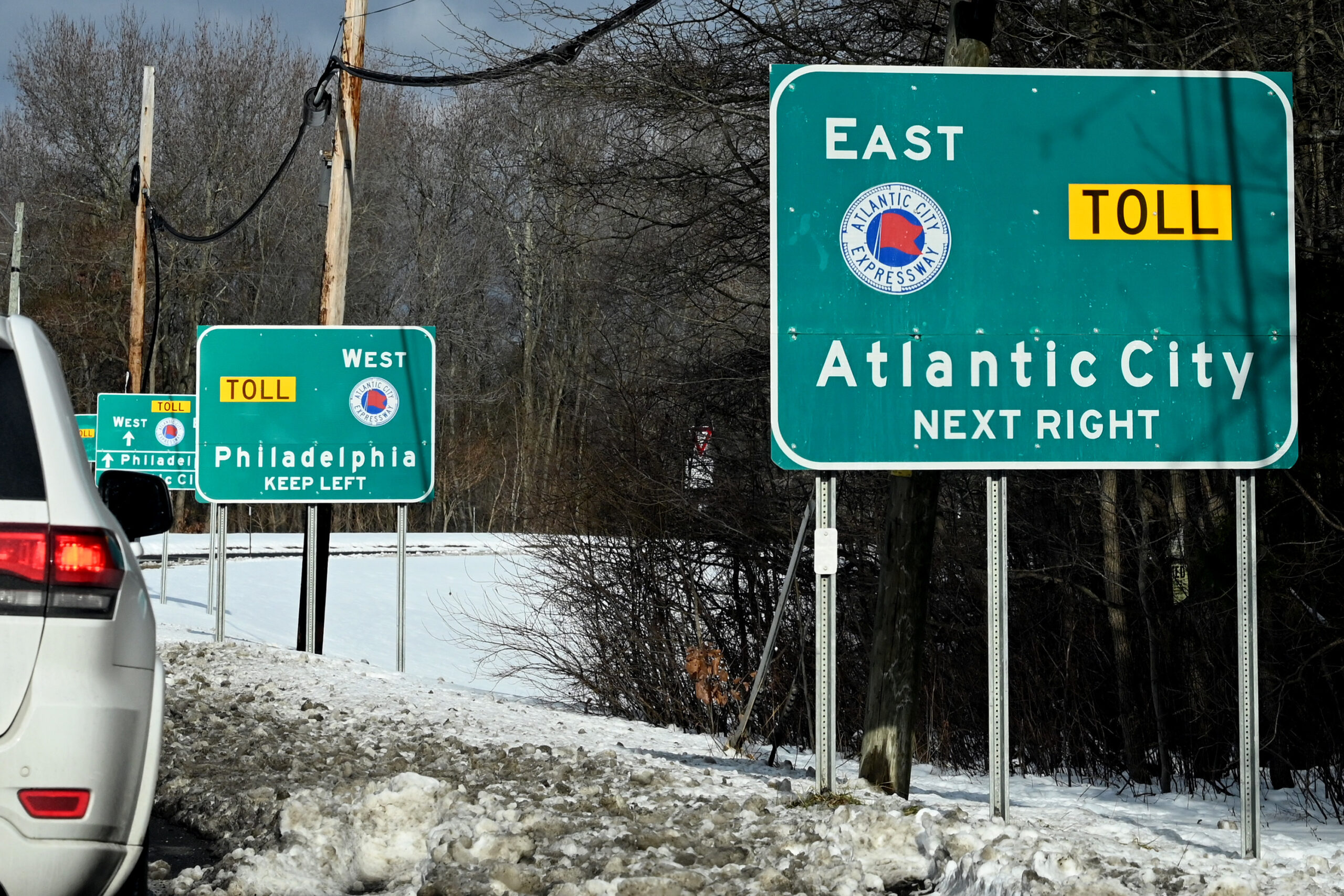
    Drivers approach the Williamstown entrance ramp to the Atlantic City Expressway in 2022.

    Both devices are equipped with digital chips, which are read by overhead gantries on the highways. The technology allows drivers to keep moving and be digitally charged for tolls.

    This week, the Massachusetts Department of Transportation rolled out E-ZPass stickers, free of charge for new customers and those who need to replace their transponders, according to several local news reports.

    Massachusetts officials estimate the switch will save the state more than $7 million a year, since the stickers’ production cost is a fraction of the cost of the transponders, according to a recent report from WBUR, the Boston NPR affiliate.

    In New Jersey, officials spent $8.4 million in 2022 to replace the batteries of 920,000 E-ZPass transponders, according to NJ.com.

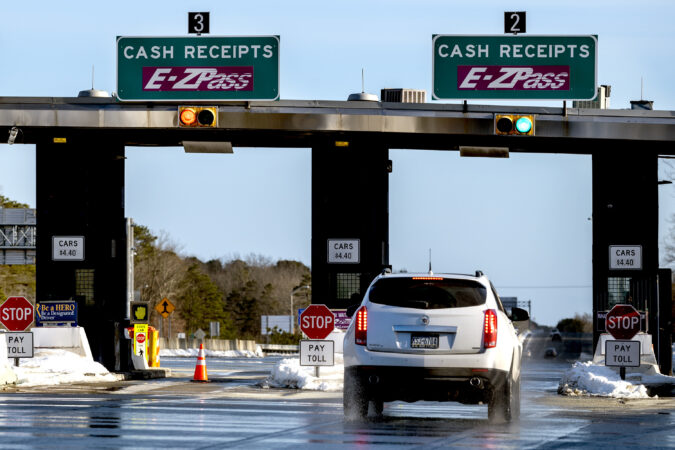
    News of the Garden State’s E-ZPass sticker test comes two months after the Atlantic City Expressway went cashless, with the Garden State Parkway and the New Jersey Turnpike set to follow. Across the river, the Pennsylvania Turnpike has been cashless since 2020.

  • Jefferson Health Plans had big gains in Medicare Advantage during open enrollment last year

    Jefferson Health Plans had big gains in Medicare Advantage during open enrollment last year

    Jefferson Health Plans added nearly 12,000 new customers to its Medicare Advantage plans during the open enrollment period for coverage this year, the biggest annual gain ever for the insurance arm of Thomas Jefferson University.

    About half of Jefferson’s enrollment gains were in Philadelphia, Montgomery, and Bucks Counties. Still, Jefferson remained the sixth largest provider of private Medicare plans in Southeastern Pennsylvania. The Inquirer compared February 2025 with last month.

    Philadelphia-based Independence Blue Cross was leader, with one-third of the region’s 383,000 Medicare Advantage customers. National companies Aetna, UnitedHealthcare, Humana, and Cigna occupied the next four spots.

    “This was the strongest Medicare Advantage enrollment period in Jefferson Health Plans’ history,” Jefferson Health Plans president Krista Hoglund said in an email.

    “That level of growth signals a clear gap in the market for coverage that is anchored in the local community, easier to use, and closely connected with the doctors and hospitals they know and trust,” she said.

    window.addEventListener(“message”,function(a){if(void 0!==a.data[“datawrapper-height”]){var e=document.querySelectorAll(“iframe”);for(var t in a.data[“datawrapper-height”])for(var r,i=0;r=e[i];i++)if(r.contentWindow===a.source){var d=a.data[“datawrapper-height”][t]+”px”;r.style.height=d}}});

    New Jersey has been a harder market for Jefferson. Enrollment more than doubled this year, but the eight counties in South Jersey where Jefferson sells plans still account for less than 10% of its members.

    Jefferson gained about 2,400 members in Lehigh Valley counties served by Lehigh Valley Health Network, which Jefferson acquired in 2024. Jefferson’s ownership of an insurer was a key reason why Lehigh Valley chose to become part of Jefferson, health system officials said at the time.

    Jefferson’s gains in the Lehigh Valley came amid a contract dispute with United HealthCare, leading to LVHN going out of network in January for UnitedHealthcare Medicare Advantage plans. Jefferson had warned in October that the contract was expected to end.

    United said then that the timing of the warning during the Medicare Advantage open enrollment period looked like a “negotiating tactic” that could lead United customers to choose other plans.

    The two Pennsylvania counties where United had the biggest percentage declines were Lehigh and Northampton, where LVHN has substantial operations.

    The biggest gains, however, went to Capital Blue Cross, of Harrisburg.

  • The sea is higher than we thought and millions more are at risk, study finds

    The sea is higher than we thought and millions more are at risk, study finds

    Climate change’s rising seas may threaten tens of millions more people than scientists and government planners originally thought because of mistaken research assumptions on how high coastal waters already are, a new study said.

    Researchers studied hundreds of scientific studies and hazard assessments, calculating that about 90% of them underestimated baseline coastal water heights by an average of 1 foot, according to Wednesday’s study in the journal Nature. The problem arises far more frequently in the Global South, the Pacific, and Southeast Asia, and less in Europe and along the Atlantic coasts.

    The cause is a mismatch between the way sea and land altitudes are measured, said study coauthor Philip Minderhoud, a hydrogeology professor at Wageningen University and Research in the Netherlands. And he attributed that to a “methodological blind spot” between the different ways those two things are measured.

    Each way measures its own areas properly, he said. But where sea meets land, there are a lot of factors that often do not get accounted for when satellites and land-based models are used. Studies that calculate sea level rise impact usually “do not look at the actual measured sea level, so they used this zero-meter” figure as a starting point, said lead author Katharina Seeger of the University of Padua in Italy. In some places in the Indo-Pacific, the figure is close to 1 meter, or about 3 feet, Minderhoud said.

    One simple way to understand that is that many studies assume sea levels without waves or currents, when the reality at the water’s edge is of oceans constantly roiled by wind, tides, currents, changing temperatures, and things like El Niño, Minderhoud and Seeger said.

    Adjusting to a more accurate coastal height baseline means that if seas rise by a little more than 3 feet — as some studies suggest will happen by the end of the century — waters could inundate up to 37% more land and threaten 77 million to 132 million more people, the study said.

    That would trigger problems in planning and paying for the impacts of a warming world.

    People at risk

    “You have a lot of people here for whom the risk of extreme flooding is much higher than people thought,” said Anders Levermann, a climate scientist at the Potsdam Institute for Climate Impacts Research in Germany, who was not part of the study. Southeast Asia, where the study finds the biggest discrepancy, has the most people already threatened by sea level rise, he said.

    Minderhoud pointed to island nations in that region as an area where the reality of discrepancy hits home.

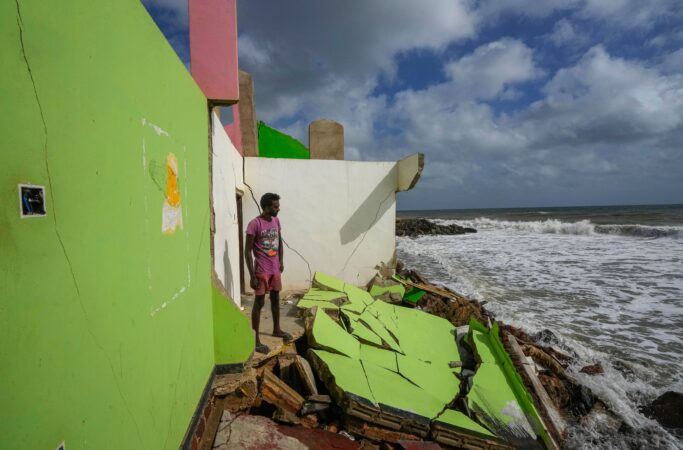
    For 17-year-old climate activist Vepaiamele Trief, the projections are not abstract. On her island home in the South Pacific archipelago of Vanuatu, the shoreline has visibly retreated within her short lifetime, with beaches eroded, coastal trees uprooted, and some homes now barely 3 feet from the sea at high tide. On her grandmother’s island of Ambae, a coastal road from the airport to her village has been rerouted inland because of encroaching water. Graves have been submerged and entire ways of life feel under threat.

    “These studies, they aren’t just words on a paper. They aren’t just numbers. They’re people’s actual livelihoods,” she said. “Put yourself in the shoes of our coastal communities — their lives are going to be completely overturned because of sea level rise and climate change.”

    Paying attention to the starting point

    This new study is pretty much about what is the truth on the ground.

    Calculations that may be correct for the seas overall or for the land are not quite right at that key intersection point of water and land, Seeger and Minderhoud said. That is especially true in the Pacific.

    “To understand how much higher a piece of land is than the water, you need to know the land elevation and the water elevation. And what this paper says the vast majority of studies have done is to just assume that zero in your land elevation data set is the level of the water — when, in fact, it’s not,” said sea level rise expert Ben Strauss, CEO of Climate Central. His 2019 study was one of the few the new paper said got it right.

    “It’s just the baseline that you start from that people are getting wrong,” said Strauss, who was not part of the research.

    Maybe not so bad, some scientists say

    Other outside scientists said that Minderhoud and Seeger may be making too much of the problem.

    “I think they’re exaggerating the implications for impact studies a bit — the problem is actually well understood, albeit addressed in a way that could probably be improved,” said Gonéri Le Cozannet, a scientist at the French geological survey. Most local planners know their coastal issues and plan accordingly, Rutgers University sea level expert Robert Kopp said.

    That’s true in Vietnam, in the high-impact area, Minderhoud said. Officials there have an accurate sense of elevation, he said.

    The findings come as a new UNESCO report warns of major gaps in understanding how much carbon the ocean absorbs. That report said that models differ by 10% to 20% in estimating the size of that carbon sink, raising questions about the accuracy of global climate projections that rely on them.

    Together, the studies suggest governments may be planning for coastal and climate risks with an incomplete picture of how the ocean is changing.

    “When the ocean comes closer, it takes away more than just the land we used to enjoy,” said Thompson Natuoivi, a climate advocate for Save the Children Vanuatu.

    “Sea level rise is not just changing our coastline, it’s changing our lives. We are not talking about the future — we’re talking about the right now.”