As we’re past the “what-if” stage of the 2025-26 NFL season, we move into the questions phase, specifically with the NFL scouting combine starting on Monday.
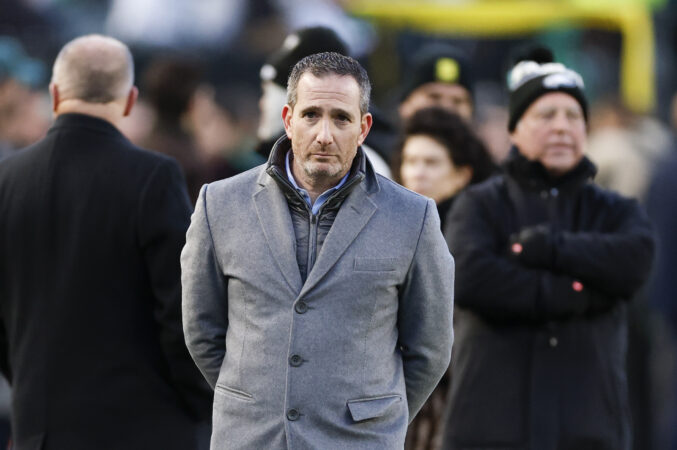
These questions circle less around the top prospects (though they’re in there), but more so around decisions that were made or are yet to be made this offseason by the Eagles.
What was it about Sean Mannion that made him the top choice to lead the Eagles’ offense?
Will A.J. Brown be back in midnight green (or the occasional Kelly green)?
These are a few questions that kick off your Thursday edition of Sports Daily, as Inquirer writer Jeff Neiburg delves into that and more in his latest story.
Speaking of Thursday, expect a carbon copy of yesterday across the region, with cloudy skies and temperatures in the mid-40s.
Shortstop Trea Turner is entering his fourth season with the Phillies.
Trea Turner hasn’t lost a step 10 years into his major league career. If anything, he may be a tick faster. As a 23-year-old rookie with the Nationals in 2016, he averaged 30 feet per second, according to Statcast. Last season, at age 32, he averaged 30.3.
Through the years, Turner has changed his nutritional habits. He cut out soda several years ago. He eats more carefully now, taking cues from Bryce Harper, Aaron Nola, and other teammates.
“Genetics, I’d say, is a big part of it,” said Brett Austin, Turner’s college teammate and close friend. “But I think his offseason program really allows him to optimize and maintain his speed.”
Indeed, the biggest reason Turner has remained in the fast lane is a training routine that he has followed since he was a teenager.
Softball masks, paddles, and tennis balls are all part of early spring workouts for Bobby Dickerson, whose drills are designed to get infielders to work on one of the game’s most basic skills.
Recently, J.T. Realmuto sat down with Inquirer Phillies writer Scott Lauber to discuss the offseason, all of the rumblings, and now that he’s secured a deal to remain in Philly, his aspirations for the season. Watch here.
What we’re …
🏟️ Sharing: The Ivory Coast has chosen the WSFS Sportsplex in Chester as its home base ahead of the 2026 FIFA World Cup.
🤔 Pondering: How long will it take to stop calling the Eagles’ training facility the NovaCare Complex after it was renamed the Jefferson Health Complex earlier this week?
🏀 Wondering: The lessons learned from a prep basketball skirmish that saw Carver Engineering & Sciences High School lose its opportunity to compete in the upcoming Public League playoffs.
⚽ Introducing: Union newcomer Agústin Anello and how choosing Philly coincided with a chance to be back on American soil.
Oliver Bonk was one of several players brought up to the Flyers’ first team for practice sessions during the Olympic break.
The Olympic break has always been a great reset for NHL teams. The Flyers are no different. Consider it a second training camp, if you will.
This week, the Flyers called up defensemen Oliver Bonk and Hunter McDonald, and goaltender Carson Bjarnason from Lehigh Valley to fill in for the players in Milan for the Winter Olympics. The coaches say having new, hungry players in practice has given the group a “new energy.”
“The guys, their spirits have been really high,” said Flyers assistant coach Todd Reirden. “Today’s practice was pretty spirited, with some competitions that we had. That, in conjunction with bringing in new players that are excited about getting an opportunity, I think, is a really great experience for everybody involved.”
So what does that mean for when the team is back at full strength? Well, that remains to be seen, but it’s definitely promising for a team looking for a spark in a push for the playoffs.
Cam Payne, who recently signed with the Sixers, said “When your focus is in the right place, things like this happen.
Cameron Payne was in the middle of a game with KK Partizan when his agent, Jason Glushon, alerted him that a return to the 76ers was in play. Payne had spent the summer waiting for the phone to ring and decided to take a deal overseas when an opportunity with the Phoenix Suns didn’t stick. But this was the moment he had waited for at that time. “You might want to pack,” Glushon told him.
Payne practiced with the Sixers on Wednesday and received praise from head coach Nick Nurse and star guard Tyrese Maxey. And while he wasn’t looking for an NBA opportunity, Payne was grateful. “I don’t know how I keep finding a way to get back,” Payne said. “But I guess the NBA’s still watching. And if you still take your game seriously and do the right things, play the right way, they’re still looking.”
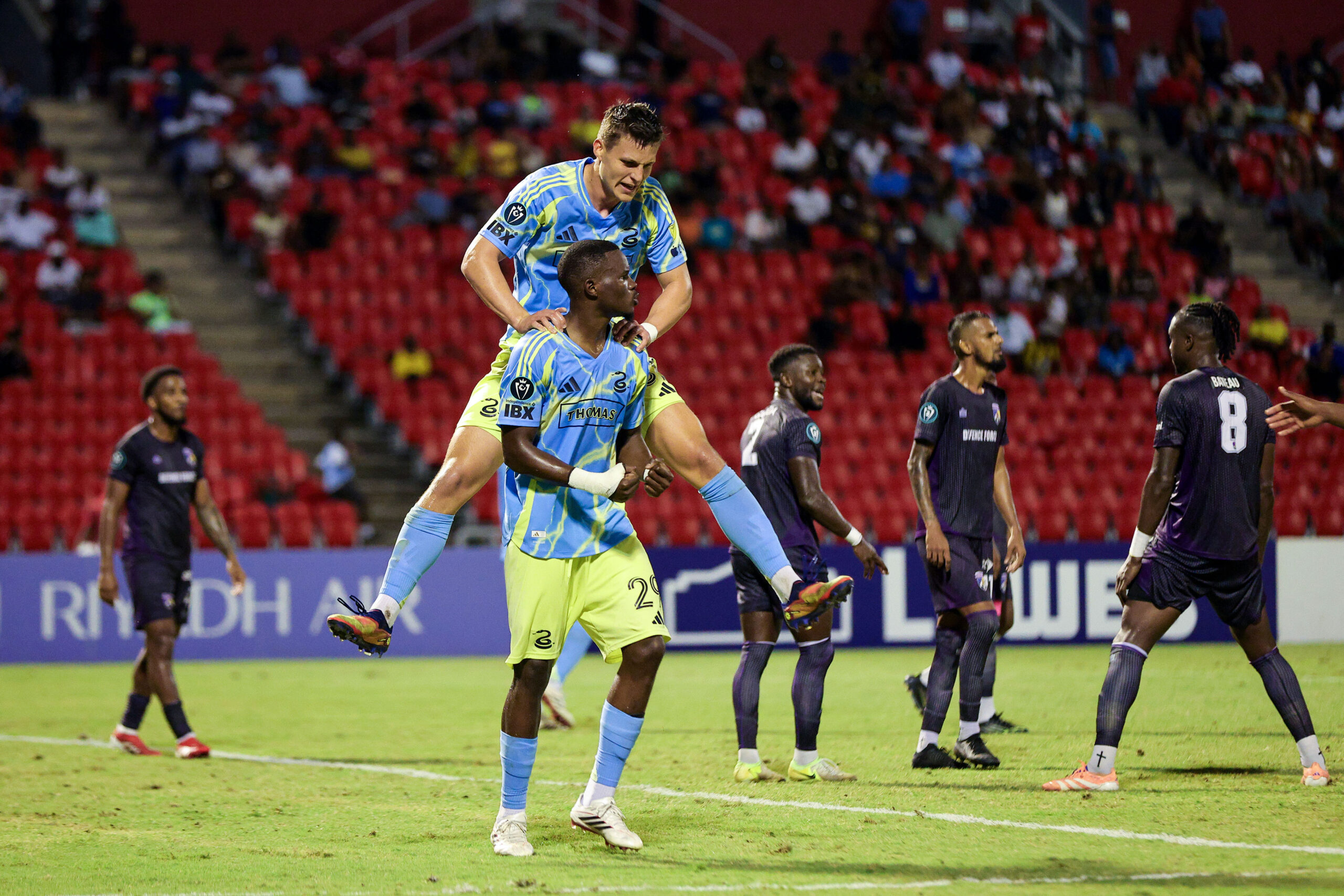
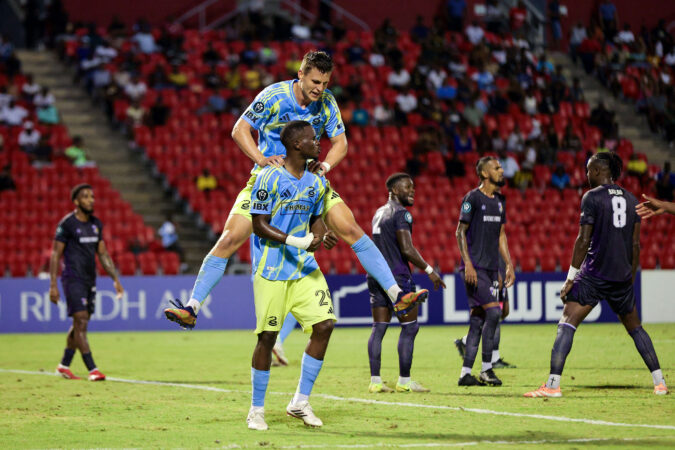
Union’s Stas Korzeniowski (top center) jumps to celebrate with teammate Olwethu Makhanya after Makhanya scored a goal during the Union’s Concacaf Champions Cup game against Defence Force FC on Wednesday.
The Union opened their 2026 season with a win on Wednesday night, defeating Defence Force FC, 5-0, in the first of a two-game Concacaf Champions Cup first round series at Hasely Crawford Stadium in Port of Spain, Trinidad.
Milan Iloski, Ezekiel Alladoh, Olwethu Makhanya, and Bruno Damiani (twice) all scored in the win. Next up for the Union is the MLS season-opener at D.C. United on Saturday.
On this date
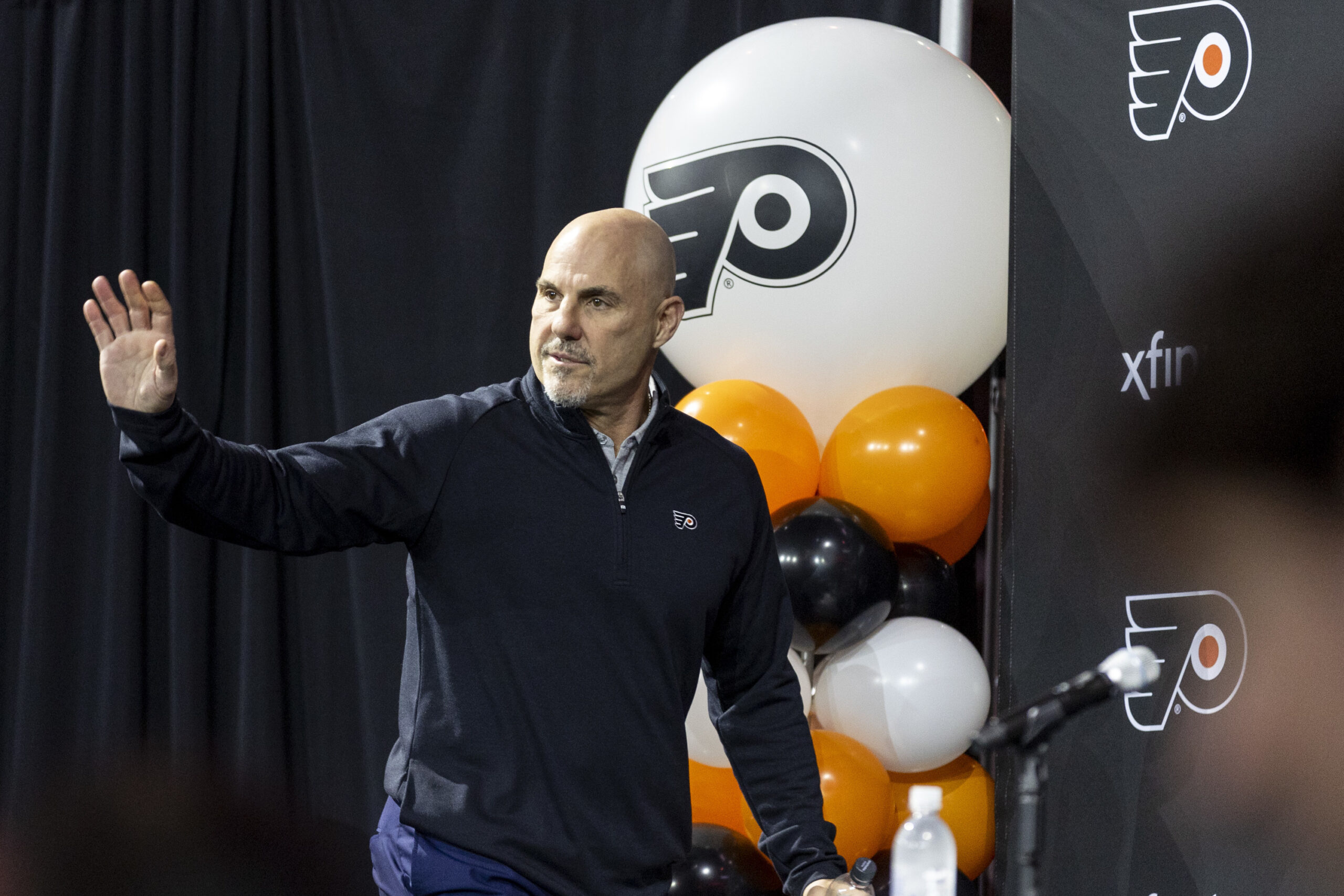
Flyers head coach Rick Tocchet was part of one of the biggest trades in Flyers history on this date, 34 years ago.
Feb. 19, 1992: The Flyers bid farewell to current head coach Rick Tocchet as a player in a monster trade with Pittsburgh that sent Mark Recchi, Kjell Samuelsson, and Ken Wregget to Philly.
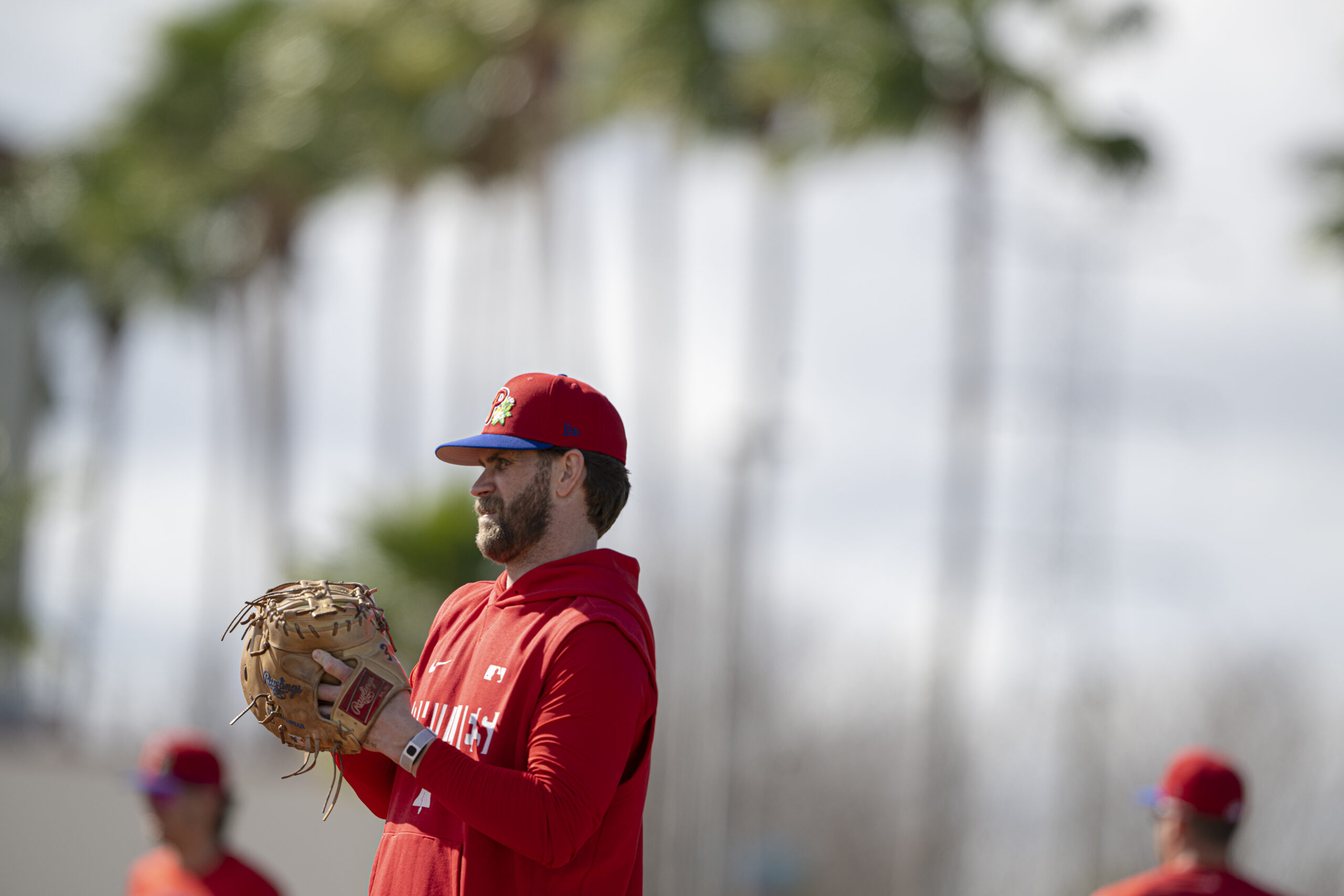
Phillies slugger Bryce Harper underwent a team workout during spring training in Clearwater, Florida, earlier this week.
The best way to understand Bryce Harper is to think about all the things he can’t say. He can’t say that Alec Bohm is a seven-hole hitter at best. He can’t say that Adolis García is much closer to Nick Castellanos than he is a legitimate four- or five-hole hitter. He can’t say that J.T. Realmuto isn’t the guy he was three years ago. He can’t say that he’d swing at fewer pitches out of the zone if he had more confidence that the guys behind him would get the job done. Murphy’s latest tries to dive inside the mind of Harper in the aftermath of comments made about him by team president David Dombrowski.
What you’re saying about collectibles
We asked: Do you have a sports card or any memorabilia that is meaningful to you, and why?
In 1965, I was 6 years old and living in Hedgerow Woods, a community in Morrisville, Pa. The tough card to find that summer was the 1965 Phillies team card. It actually showed the 1964 team, the season the Phillies blew the pennant. My buddy Mark Becker and I were always looking for that card, spending our quarters at Irv’s Pharmacy in the Makefield Shopping Center on packs of cards and enjoying the sweet bubblegum that came with them. We could not find that Phillies team card though. While wandering our neighborhood, Mark and I happened to look down, and there in the gutter was the card! Actually, half the card. Someone had torn the team card in half and tossed this portion the gutter. — Rich G.
I used to live in Havertown, but that was 48 years ago. I once corresponded with him to ask him questions about something I had, but that is a distant memory. I have some autographs, and used to collect tickets, and believe I still have one from Pittsburgh, the day Mike Schmidt hit is 500th homer. “It’s outta here.” I have not looked at anything I have for a long time. Will have to do that. — Everett S.
We compiled today’s newsletter using reporting from Jeff Neiburg, Scott Lauber, Jonathan Tannenwald, David Murphy, Gabriela Carroll, Lochlahn March, Mike Sielski, and Gina Mizell.
By submitting your written, visual, and/or audio contributions, you agree to The Inquirer’s Terms of Use, including the grant of rights in Section 10.
That’s my time. As always, thanks for reading. We’ll be in your inbox for the final time this week on Friday, to get you ready for the weekend. Take care. — Kerith
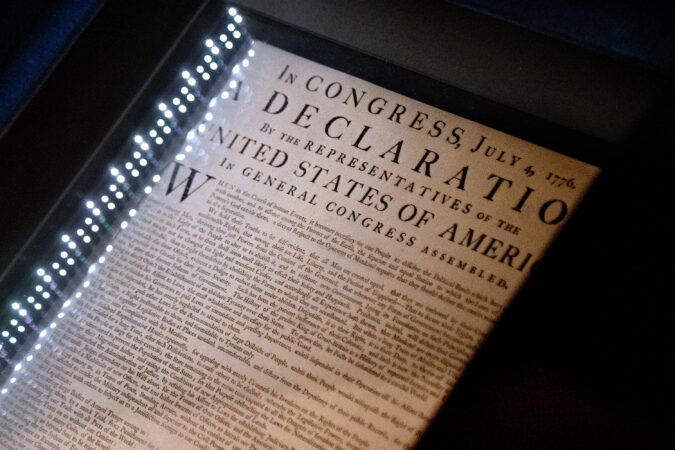
The most important printing job in American history took place in Philadelphia, on the corner of Second and High Streets, on the night of July 4, 1776.
There, in the shop of John Dunlap, the Declaration of Independence was first printed and sent around the new United States. Yet today, no Pennsylvania Historical Marker commemorates the spot on Market Street where the declaration first emerged to tell the world about the birth of a new country.
On the 250th anniversary of American independence, a marker should be erected as soon as possible by the city or state.
Dunlap’s job was of the first importance. Congress, led by the Boston merchant John Hancock, knew that getting word of independence out to the rest of the colonies was critical to gaining support at home for a war that was not going well. Since the war started in Lexington and Concord up in Massachusetts in April 1775, the Americans had forced the British out of Boston, but lost ground in New York. Independence was just as crucial for trying to get arms and money from Great Britain’s adversary, France, for George Washington’s poorly equipped Continental Army.
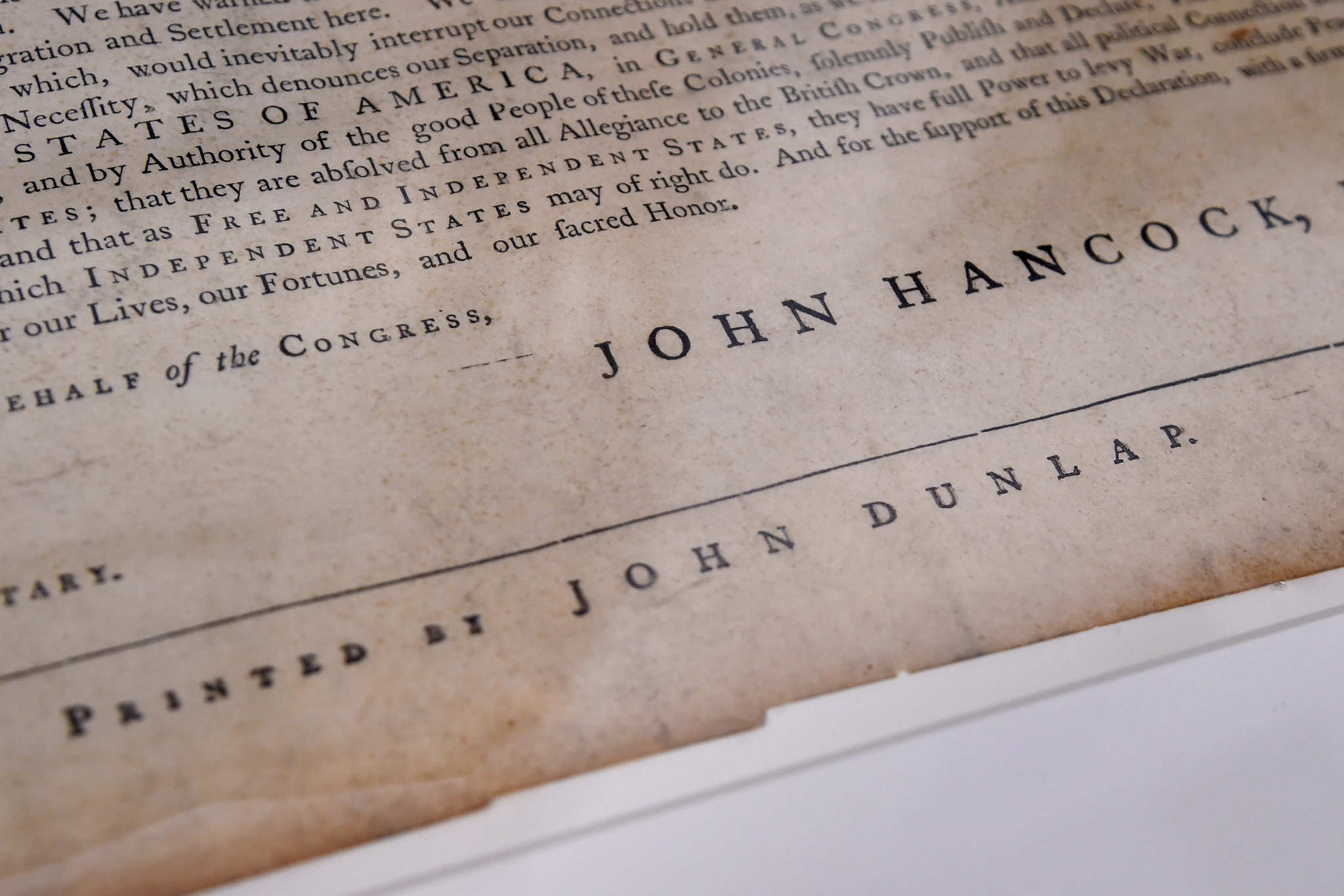
John Dunlap’s name — along with that of John Hancock, president of the Continental Congress — appears on the oversized declarations Dunlap printed on parchment or vellum.
Sometime in the afternoon of July 4, Thomas Jefferson walked from the State House on Chestnut Street to the shop of Dunlap, a 29-year-old Irish immigrant and publisher of the Pennsylvania Packet. Jefferson handed Dunlap the original handwritten copy of the Declaration of Independence, adopted just hours earlier by the Continental Congress, and ordered several hundred copies to be printed as soon as possible.
Working through the night, Dunlap and his assistants printed up at least two batches of “broadsides,” some on paper bearing the watermark of King George III. Dunlap had to rush, and some copies were printed slightly askew, while many were folded while still wet, leaving offset imprints.
They were rushed back to Congress and given to dispatch riders to distribute to colonial assemblies and the army. Washington received his on July 9 and had it read that day at his headquarters in Manhattan.
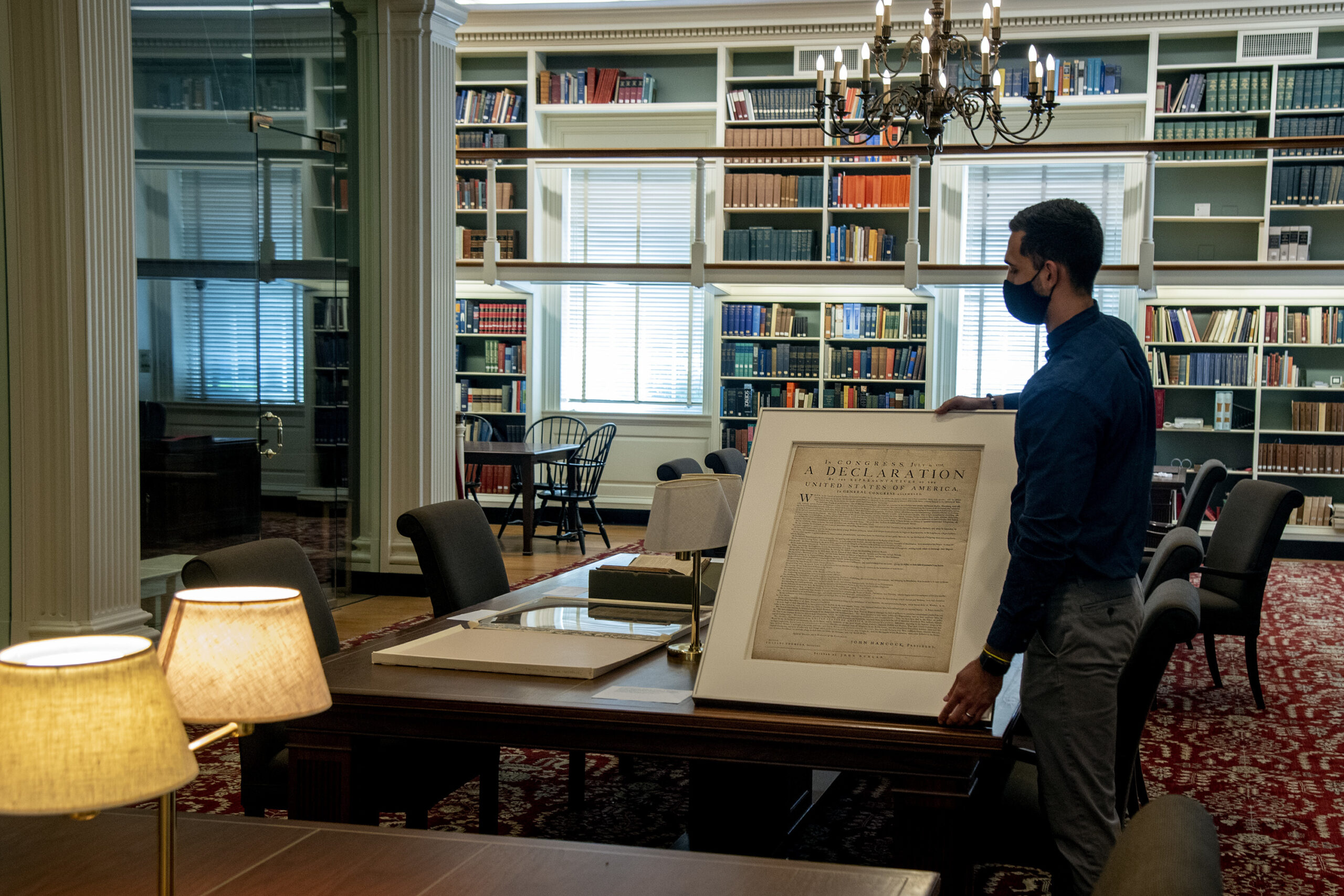
In their library on June 16, 2021, American Philosophical Society reference and digital services specialist Joe DiLullo holds its copy of a rare oversized Declaration of Independence printed by congressional printer John Dunlap on parchment or vellum in July 1776.
It took weeks for the other Dunlap broadsides to reach their destinations, the last arriving in Savannah, Ga., on Aug. 10.
One Dunlap broadside was used for the first public reading of the declaration, on July 8, in front of the State House, by Col. John Nixon. The scene was immortalized nearly a century later by Frederick Peter Rothermel, in a painting now hanging in the Union League Club.
To this day, no one knows how many were printed, but only 26 original Dunlap broadsides are known to exist, making them among the rarest of American artifacts.
The last one to come up for auction, in 2000, was bought for $8 million ($15 million in 2025 dollars) by the television producer and liberal activist Norman Lear. Most are held by museums or universities, but whenever they are displayed, the Dunlap broadsides draw crowds who are just as fascinated to see the words that declared a sovereign state as were those a quarter millennium ago.
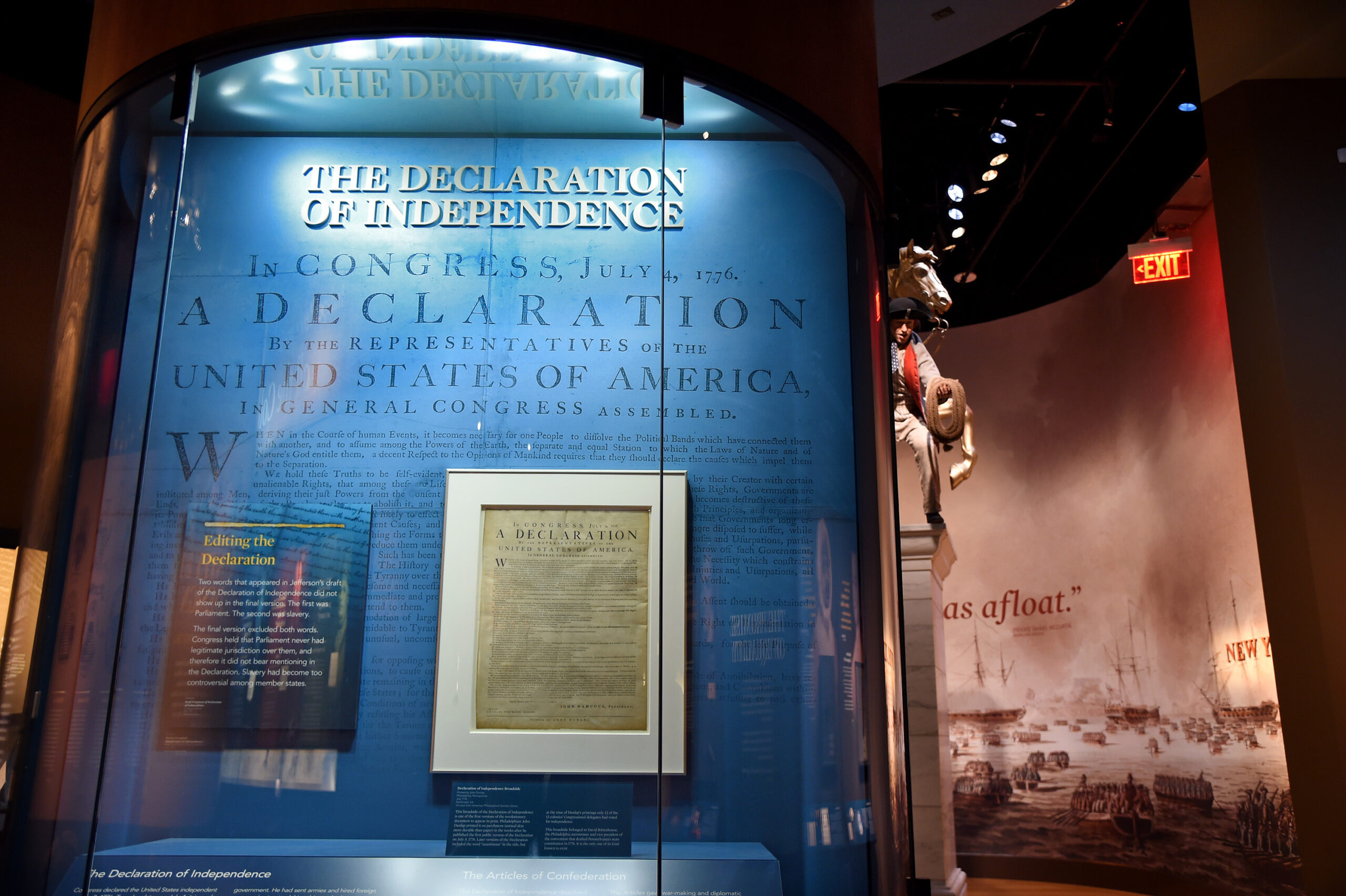
The only known copy of the Declaration of Independence printed on vellum by John Dunlap is on display at the Museum of the American Revolution.
Yet, few passersby, if any, stop to look at a tarnished, old plaque affixed to a rundown building at Market and Second. Put there 50 years ago by the Society of Professional Journalists, it is the only acknowledgment of one of the most important sites of the American Revolution.
Next to a shuttered diner, the plaque is likely all but ignored by any but the most dedicated history buff.
There is not enough time to go through the formal Pennsylvania State Historic Preservation Office process, but given the historic importance of the site, an ad hoc or special exemption by the city or state should be made, and a proper blue historical marker should be put up before July 4.
It is the least that can be done to commemorate a site where actions that still reverberate around the world took place.
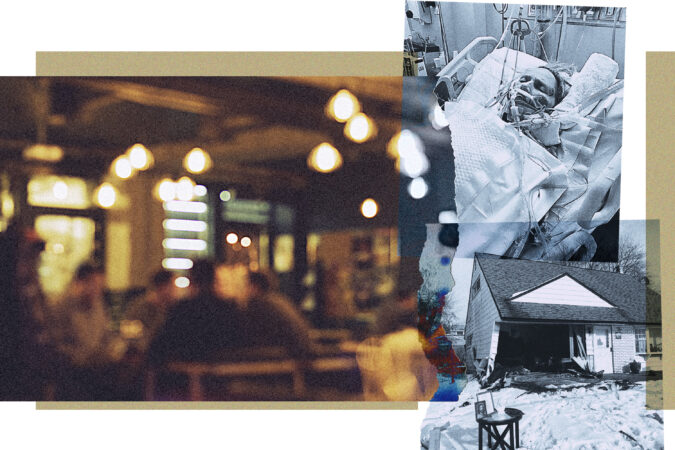
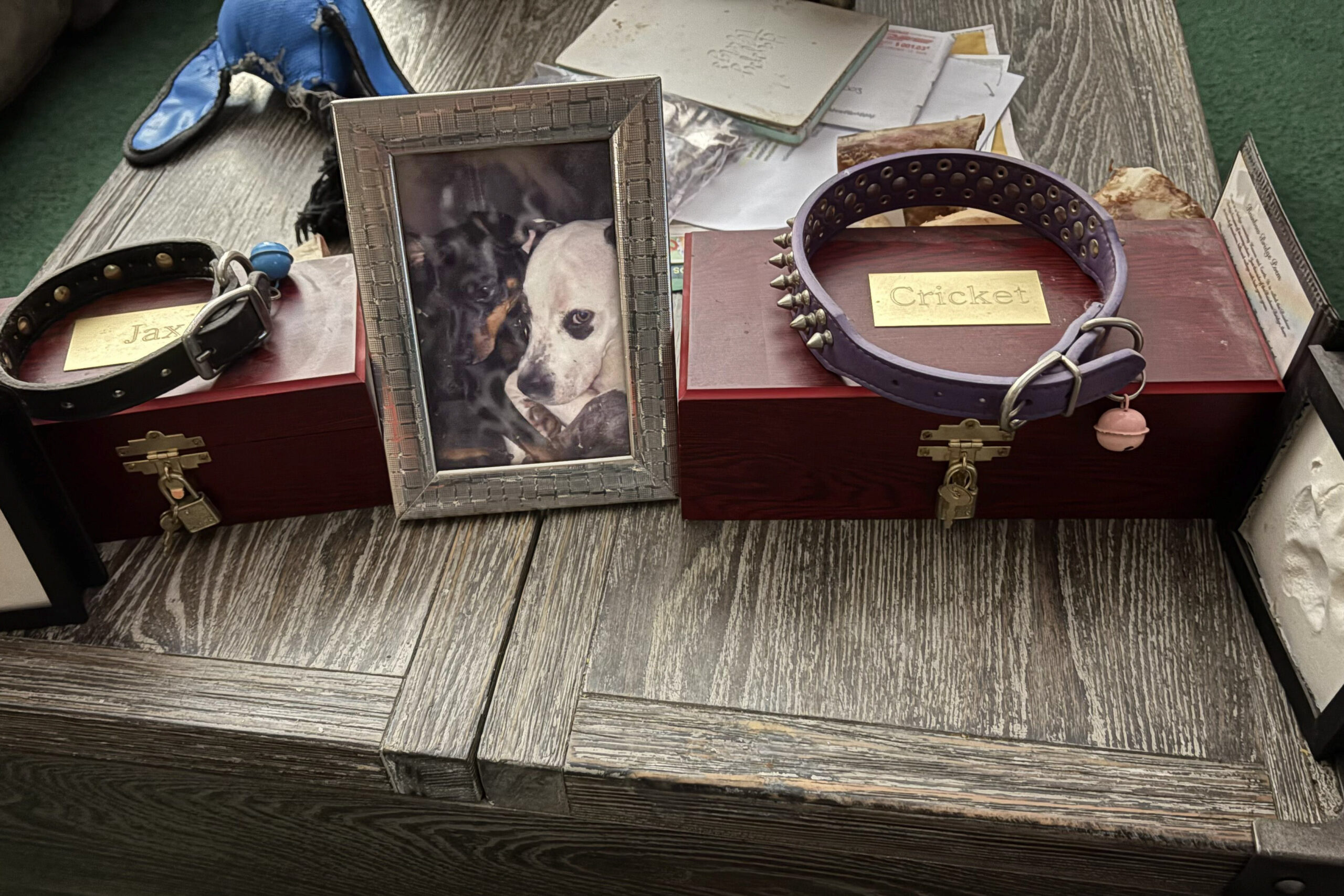
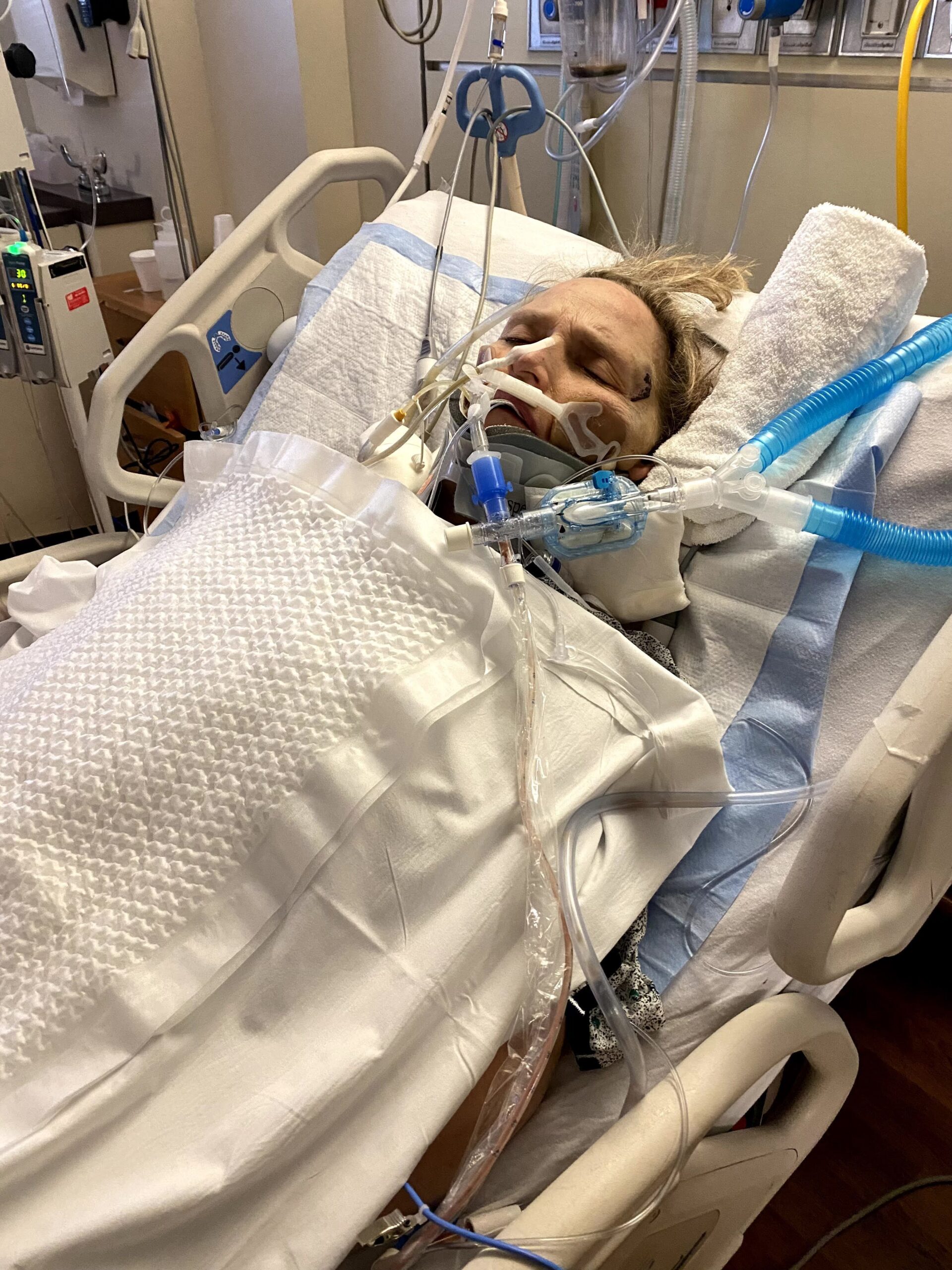
Raymond and Anna Wakeman had returned from dinner early on a Saturday night and were relaxing on the couch with their two rescue dogs in their Northeast Philadelphia home. Cricket, a pit bull, rested his head on Raymond’s shoulder. Jax, a miniature pinscher, was curled up next to Anna.
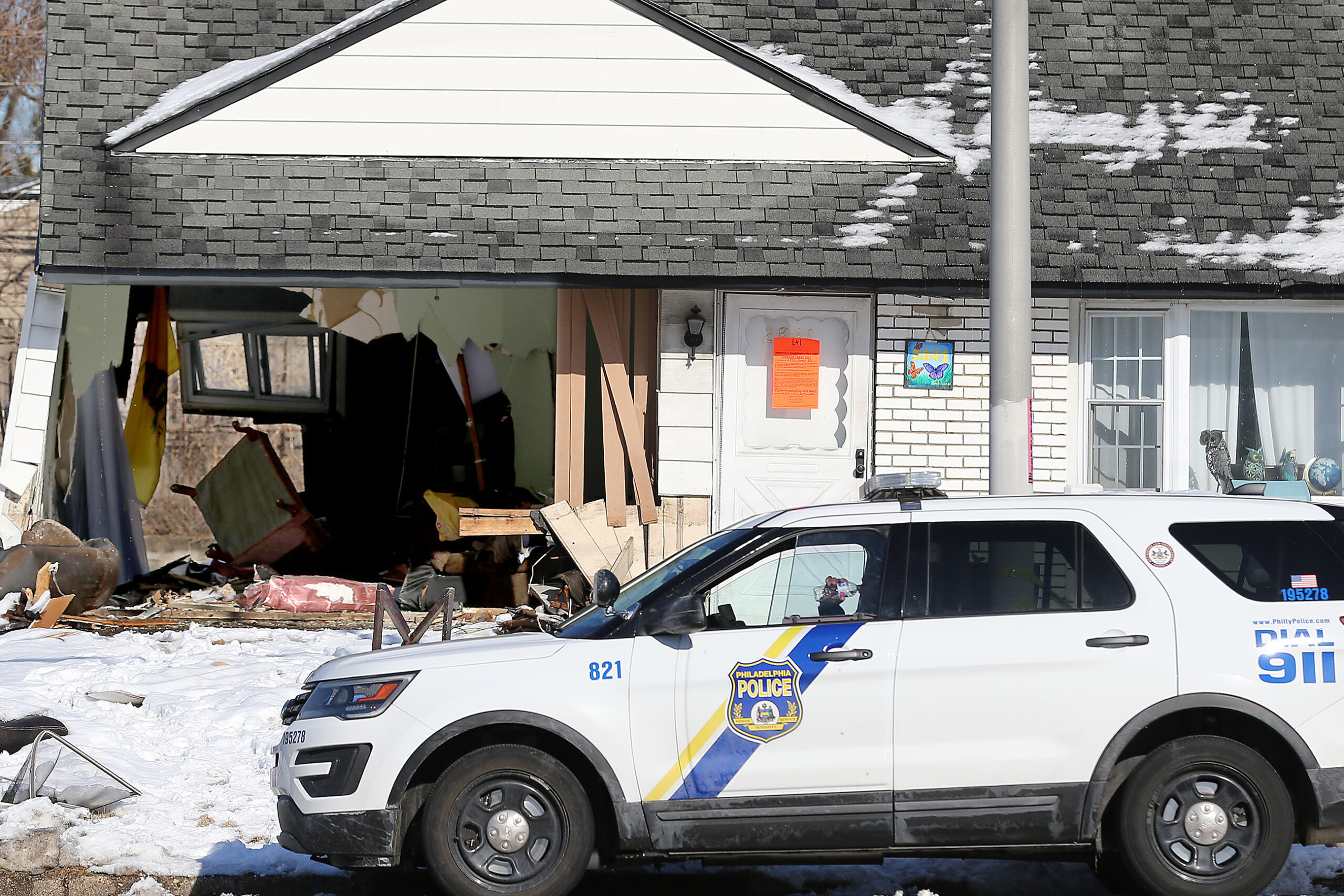
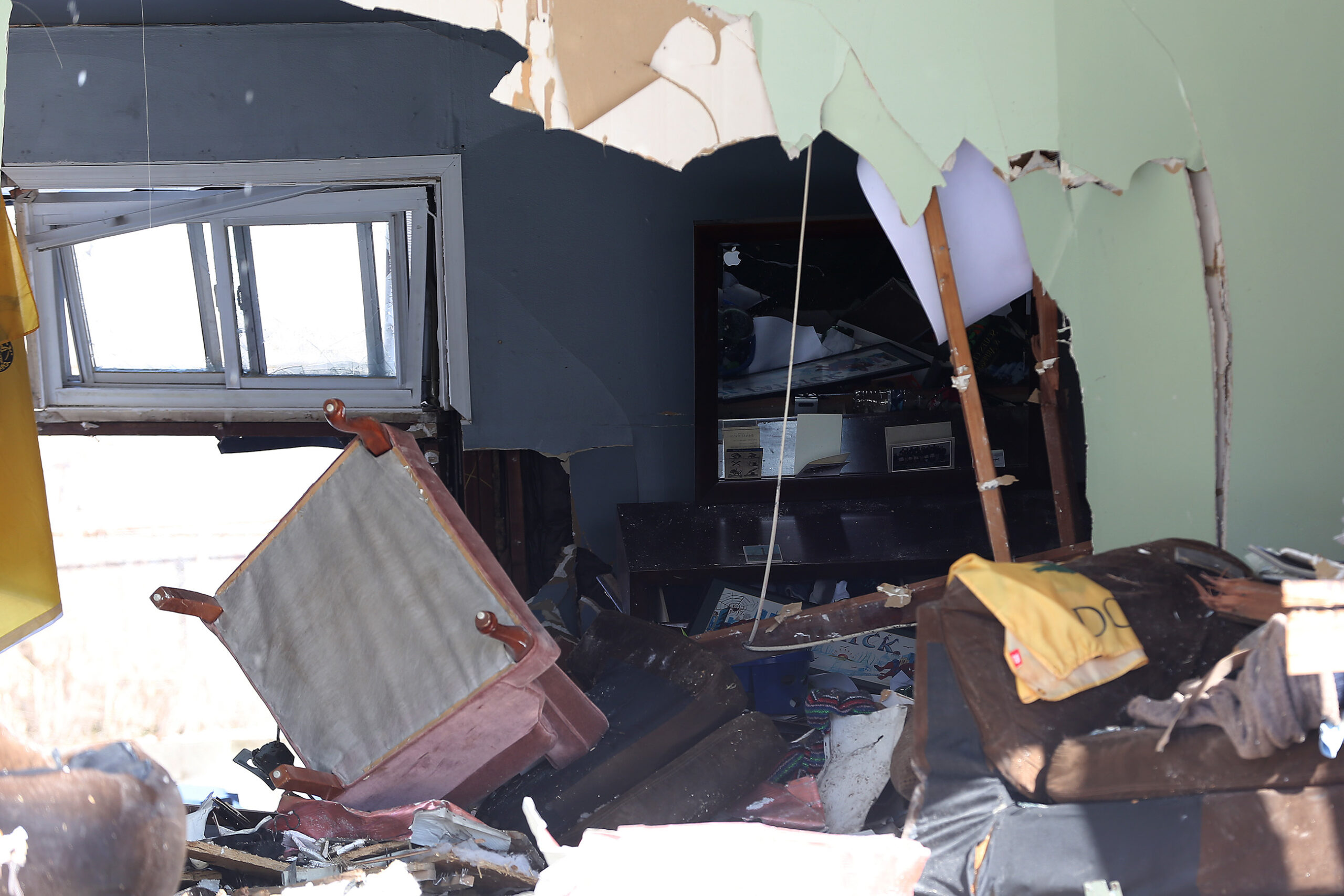
In an instant, a 2014 Dodge Dart exploded through the front of the Wakemans’ home and into their living room.
Firefighters arrived to find Anna in another room, pinned under the silver Dodge and gravely injured. Rescuers worked feverishly to free her from the wreckage and rush her to the hospital. Jax was dead. Cricket underwent emergency surgery, but died soon after.
Anna Wakeman assembled a memorial to the family’s two rescue dogs, Jax and Cricket, who were killed by a Gregory Campbell, a Philadelphia police officer who crashed his car into her home in 2021. Campbell spent hours consuming alcohol at a bar operated by the Fraternal Order of Police Lodge 5.
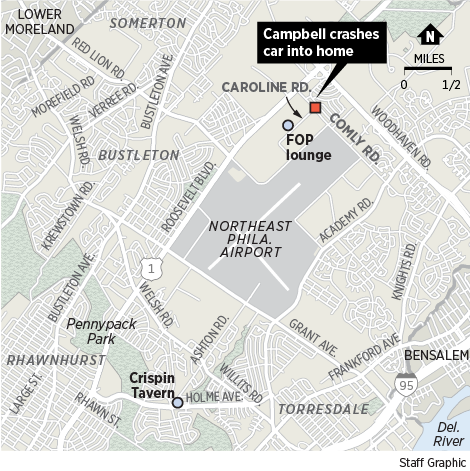
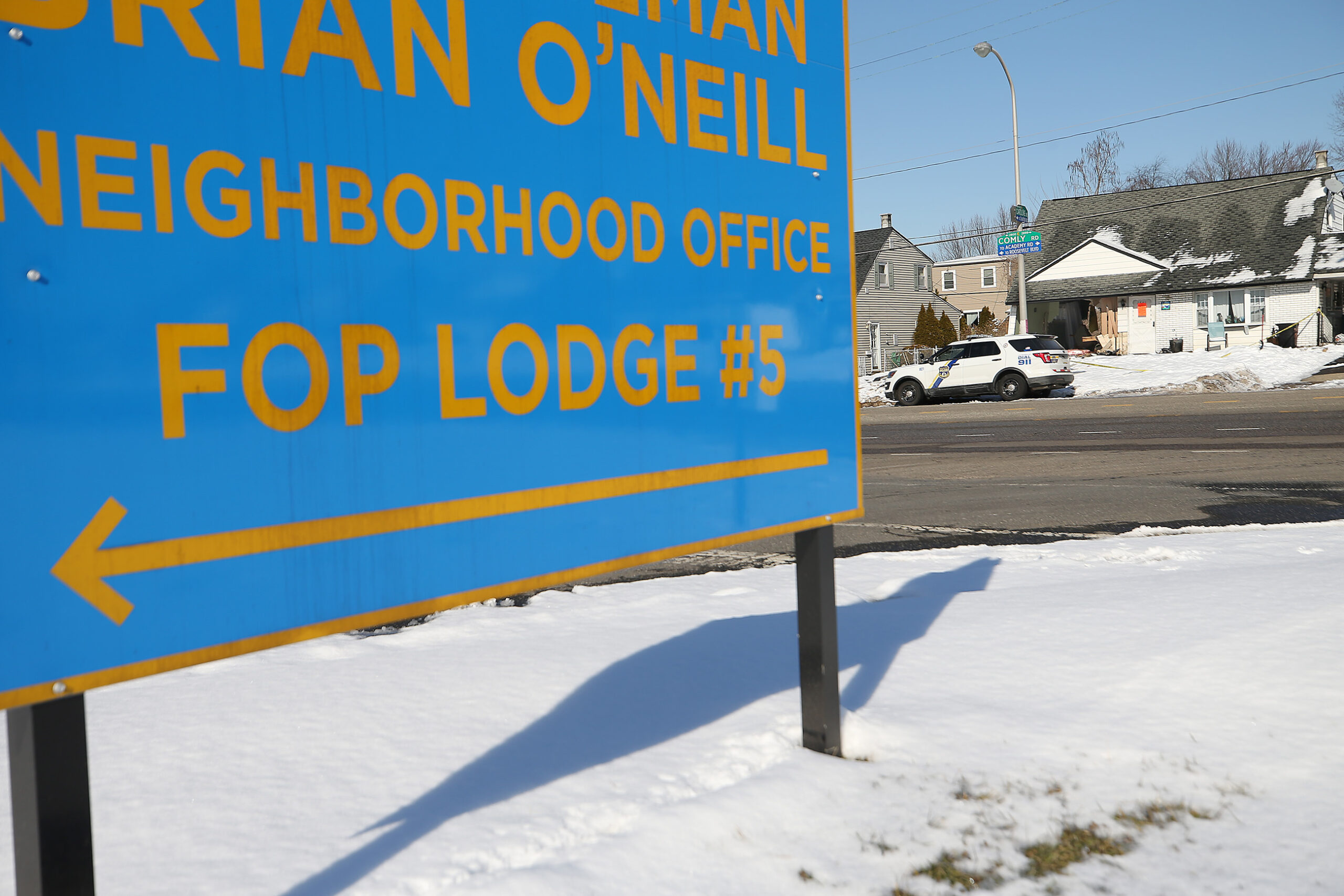
The driver, off-duty Philadelphia Police Officer Gregory Campbell, had been drinking since midafternoon on Feb. 6, 2021, and a lawsuit would later allege he had consumed as many as 20 alcoholic beverages. He had most of them where he ended his evening, at the 7C Lounge, a members-only club for active and retired cops operated by the Fraternal Order of Police Lodge 5, inside the union’s headquarters.
Campbell was arrested and fired from the police force after the crash. In June 2022, a Common Pleas Court judge sentenced him to 11½ to 23 months in prison.
“I am so sorry,” Campbell told the Wakemans in court, “for everything I’ve put you and your family through.”
Campbell’s accident and subsequent trial were widely covered at the time. But an Inquirer investigation has found troubling new details about that crash and the aftermath that were never made public, and identified two additional auto accidents tied to the 7C Lounge. The findings raise questions about how drunken-driving cases are investigated when they involve a powerful police union operating its own bar.
Records show that after crashing into the Wakeman house — and while it was still unclear whether Anna Wakeman had survived — Campbell was allowed to confer with FOP representatives and delay a blood-alcohol test for nearly six hours.
Gregory Campbell’s Dodge Dart sped from the parking lot outside the FOP’s 7C Lounge into the Wakemans’ home, killing the family’s two dogs and almost killing Anna Wakeman.
The delay was an apparent violation of Pennsylvania law, which requires suspected drunk drivers to undergo testing within two hours of being behind the wheel unless good cause is given. The records include no explanation for the delay.
An officer in the police department’s Crash Investigation District later testified in a deposition that he had never before encountered a person accused of driving under the influence who was allowed to seek guidance from his labor union before undergoing blood testing.
When Campbell’s blood was finally tested, his alcohol level registered at 0.23%, almost three times the 0.08 legal threshold for drunken driving. A toxicologist later estimated Campbell’s blood-alcohol content at the time of the accident was as high as 0.351%, more than four times the legal limit.
The Wakemans filed a lawsuit in Philadelphia Common Pleas Court against Campbell, the 7C Lounge, and Lodge 5. The couple’s attorney hired a liquor liability expert — a former police officer who had been an investigator for the New Jersey Division of Alcoholic Beverage Control for 11 years — who concluded that there was “overwhelming evidence” that the 7C Lounge had overserved Campbell and failed to monitor him or intervene.
The “actions and inactions were negligent and reckless” and “contributed directly to the accident, damages and injuries sustained by the Wakeman family,” the expert, Donald J. Simonini, wrote in his 23-page report.
On the night of the crash, a Philadelphia police accident investigator attempted to interview employees working at the 7C Lounge but was unable to do so because the bar had closed hours earlier than scheduled. The investigator said subsequent attempts to obtain information from the employees were also unsuccessful.
A manager later testified that he was “following orders” when he shut down the bar early.
An aerial view of Lodge 5’s headquarters, the 7C Lounge, and Anna and Raymond Wakeman’s home.
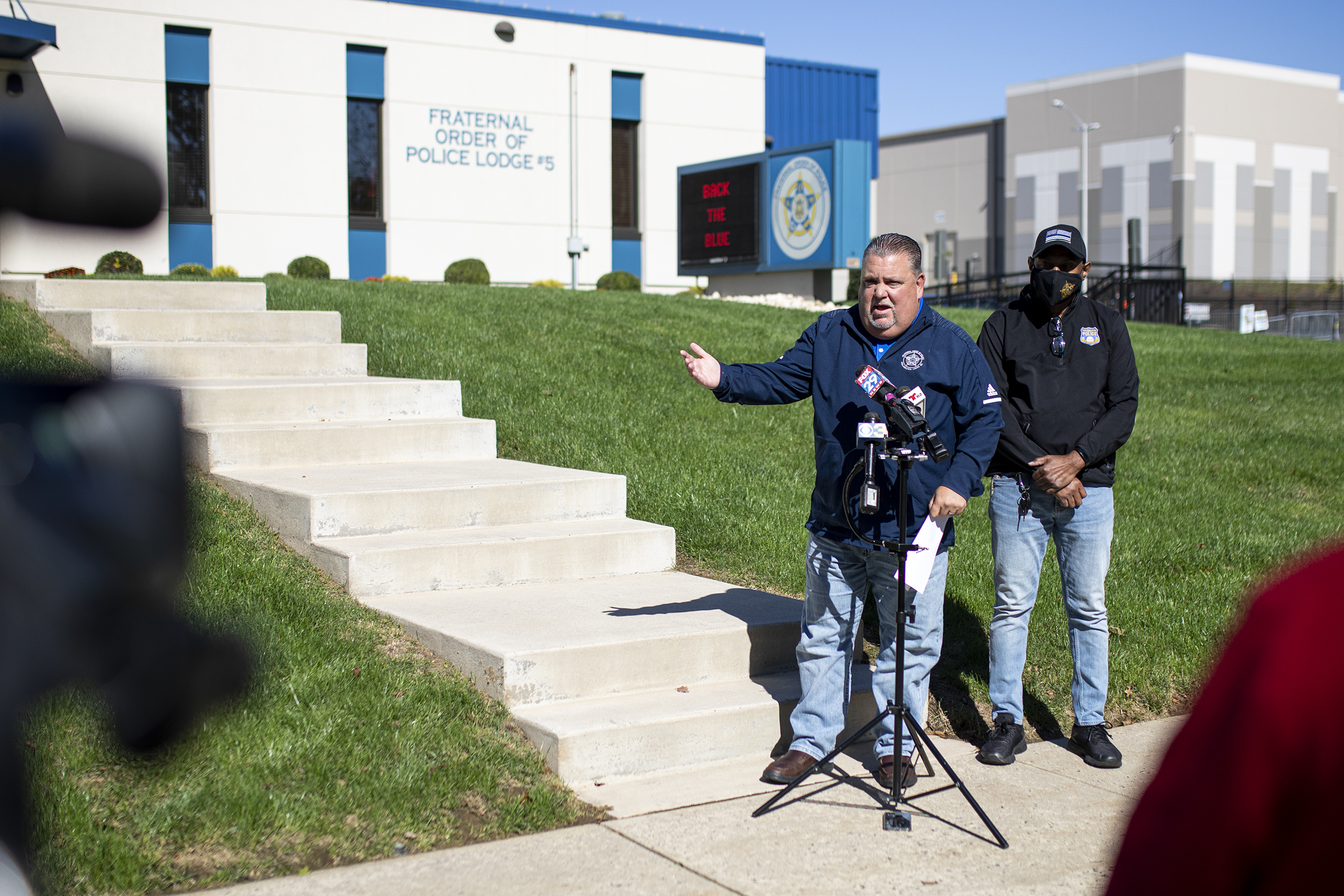
At that time, Lodge 5 was led by its longtime president, John McNesby. His chief of staff, Roosevelt Poplar, was vice president of the union’s Home Association, a nonprofit that operates the 7C Lounge.
Neither McNesby nor Poplar responded to requests for comment.
State law grants regulators broad authority to crack down on bars found to have overserved customers, with sanctions ranging from fines to suspension or revocation of a liquor license. Yet the FOP’s bar has faced no regulatory repercussions during the 16 years it has operated at its Northeast Philadelphia headquarters.
Paul Herron, a Philadelphia lawyer who specializes in liquor licenses and enforcement, said that the Pennsylvania State Police Bureau of Liquor Control Enforcement (BLCE) has “very stringent requirements” and that most establishments tend to have at least minor violations, such as improper recordkeeping. He said it is “very unusual” that the 7C Lounge has a clean slate given the severity of the Campbell case.
Campbell “had consumed monumental amounts of liquor, and for that to just not show up anywhere is awfully strange,” Herron said. “I would expect that if this happened to another place, that this would come to light, to the knowledge of the bureau, and they would ultimately issue a citation.”
In another incident tied to the 7C Lounge, regulators did not open an investigation because the union did not report what had happened.
The Inquirer viewed two minutes and 40 seconds of surveillance footage of the 7C Lounge parking lot from the evening of Nov. 22, 2021. The recordings come from three separate cameras and show a patron walking out of the 7C Lounge and getting into the driver’s seat of a compact SUV. At 11:21 p.m., the driver backs up, then accelerates forward into a parked truck, hitting it hard enough to slam the truck into the front bumper of an SUV parked behind it.
The motorist pauses a few seconds, reverses, then accelerates past the damaged vehicles and runs over two orange cones. The driver then plows through the FOP’s fence on Caroline Road, destroying a section of it, before disappearing from the camera’s view.
A source with firsthand knowledge of the incident said Poplar reviewed the footage of the parking lot crashes and took notes, including “4 cars hit” and “fence,” with the time each object was hit.
Roosevelt Poplar won a heated reelection battle for the FOP’s presidency in 2025. He previously served as the vice president of the union’s Home Association, a nonprofit that operates the 7C Lounge.
A police spokesperson said there is no record that the crashes in the 7C Lounge parking lot had ever been reported to authorities.
Herron said a typical bar would have almost certainly reported that type of incident.
“It’s just not something that would have happened maybe if it didn’t involve the police or the FOP,” he said.
‘I was dizzy’
There are potential conflicts of interest if law enforcement officers with arresting powers own establishments that serve alcohol. In fact, state law prohibits police officers from holding liquor licenses because they are responsible for enforcing liquor laws.
But that restriction does not extend to the FOP’s Home Association because it is considered part of a fraternal, nonprofit organization. State law defines such entities as “catering clubs” — much like a VFW post or an Elks Lodge — and permits them liquor licenses.
It’s a loophole in the law that Anna Wakeman, who barely survived the accident with Campbell’s Dodge, doesn’t understand.
“The cops can drink as much as they want there,” Wakeman, now 58, said. “The bartenders serve them till they’re blackout drunk and let them leave.”
When Campbell crashed into the Wakemans’ home, it was the second time the family’s property had been damaged by a patron who left the FOP’s bar impaired. Less than two years earlier, a former Philly cop had left the 7C Lounge, got into his car, and smashed into Anna Wakeman’s SUV, which was parked in her driveway.
Anna Wakeman and her husband couldn’t stomach the idea of returning to their Northeast Philadelphia home after the 2021 car crash, fearing it could happen again. They moved instead to West Virginia.
On a Sunday night in April 2019, an ex-Philly cop named Damien Walto worked as a DJ at the 7C Lounge, which has an expansive bar with gleaming dark wood and big-screen TVs. Walto was no longer an active member of Lodge 5: He had been fired from the police force in 2010 for allegedly assaulting a woman while off duty, and was later sentenced to three to six months in prison.
Walto left the bar just after 10 p.m. in his GMC Envoy. Rain was falling, the roads were slick, and Walto told a reporter that he lost control of his SUV when he tried to steer past a tractor-trailer on Caroline Road. He careered through the intersection at Comly Road and smashed into Anna Wakeman’s Chevrolet Equinox, which was sitting in her driveway.
The force of the impact crumpled the rear of the Equinox like an accordion and propelled it into Raymond Wakeman’s parked Chevrolet Silverado.
The Wakemans watched Walto stumble out of his Envoy, dazed and disoriented, then stagger along the sidewalk while clutching an Easter basket.
In a recent interview with The Inquirer, Walto said he does not remember if he drank any alcohol at the party, perhaps because he struck his head hard against the steering wheel.
“I was dizzy and messed up,” he said. “I didn’t know what was going on.”
Walto returned to his GMC and fumbled with a screwdriver in an attempt to remove an FOP-marked license plate from his SUV, the Wakemans said. He toppled over and the license plate remained in place, they said.
Walto said he was not trying to hide his link to the police union. “My tag fell off and I was trying to put it back on,” he said.
Police officers arrived at the scene and noted that Walto appeared to be under the influence of drugs or alcohol. They arrested him, and medics transported him to the hospital for chest pain, according to a police report. There is no mention in the report of Walto having suffered a head injury.
At the time of crash, Walto was also facing DUI charges in Montgomery County, court records show. In August 2019, he pleaded guilty there to driving under the influence and was sentenced to up to six months in prison; he spent 72 hours behind bars, he says.
His Philadelphia case was later dismissed.
The fact that the 7C Lounge has been connected to multiple drunken-driving incidents is troubling, experts say.
The 7C Lounge closed for business early the night Campbell crashed into the Wakemans’ house.
“The more accidents that result from serving alcohol at any bar, owned by the police union or anyone else, the more the public would be ordinarily concerned about the continuing operations of that establishment,” said Mark Carter, a longtime employer-side labor attorney and a member of the U.S. Chamber of Commerce’s Labor Relations Committee.
“Here, you’ve articulated a pattern of behavior that would create a legitimate interest by the city or the prosecutor’s office about the continuing operations of that establishment.”
The state BLCE, which has the authority to issue sanctions, would not confirm or deny the existence of any investigation.
‘Watch our boy’
Hours before the Wakemans were nearly killed in their home in 2021, off-duty Philly cops had gathered for what was supposed to have been a somber affair: paying tribute to James O’Connor IV, a police corporal who had been shot and killed in the line of duty in March 2020.
The Crispin Tavern, a small bar on Holme Avenue in Northeast Philadelphia, staged a beef-and-beer fundraiser for O’Connor’s family that afternoon. Among the bar’s patrons was Campbell, who recalled drinking about six beers there before he climbed into his car and drove to the 7C Lounge, court records would later show.
He arrived at the FOP’s bar just after 5:20 p.m. His next three hours inside the establishment are detailed in a report written by Simonini, the liquor liability expert, who watched video footage from the bar’s security feed.
Campbell, who had been on the police force since March 2018, joined a table of five. Nearby, a man in a white shirt had trouble standing and nearly fell several times as he struggled to get his jacket on. He took a swing at another customer who tried to steady him.
Simonini noted that a server walked by the stumbling man four times but did not once ask if he was OK.
During a deposition, an attorney representing the Wakemans asked the 7C Lounge’s bar manager, Ernie Gallagher, about the stumbling man’s apparent intoxication.
Gallagher theorized that instead of being drunk, the man might have suffered from a neurological disorder.
“A lot of times we have a lot of people come in who don’t even drink, and, you know, they have [multiple sclerosis],” Gallagher said. “They fall and they go, ‘He wasn’t even drinking.’”
When reached for comment recently, Gallagher said: “I have no recollection. I have no comment. I have nothing.”
Simonini wrote that Campbell was drinking what appeared to be bottled beer, Twisted Tea, and mixed drinks out of plastic cups. In one 36-minute period, Campbell downed both his own drinks and others served to people at the table.
This consumption went unnoticed by 7C staff, Simonini wrote.
Gallagher said in his deposition that he considers “two drinks an hour” a safe amount to serve a patron.
“Clearly, Campbell and his party were served far more than ‘two drinks an hour,’” Simonini wrote.
At 7:40 p.m., Campbell returned to the bar, where it appeared Gallagher waved him off. Gallagher said in his deposition that he told Campbell, “Yo, you’ve had enough,” and he thought he told a bartender, “Watch our boy, Greg.” That bartender said in a deposition that he had no recollection of Gallagher’s comment.
Simonini wrote in his report that the 7C bartenders “served Campbell and his party 6-7 drinks at a time, and never watched where the drinks were going and to whom.”
Around 8:10 p.m., Campbell finished a bottle of beer and drank from a plastic cup at the bar. He headed to a bathroom but appeared unsteady, Simonini wrote.
Campbell then went outside. Surveillance video appears to show him losing his balance while walking around a snow bank toward his Dodge Dart.
Lawyers showed Campbell footage from the nearly three hours he spent at the 7C Lounge. Asked in his deposition whether he should have been refused alcohol, he answered, “Yes, based on my blood level of intoxication, yes.”
“Could you safely operate a motor vehicle when you left that bar?” the Wakemans’ lawyer asked.
“No,” he replied.
‘Gurgling on blood’
Campbell got behind the wheel at 8:17 p.m. He pulled onto Caroline Road and drove north toward Comly Road.
The posted speed limit in the area is 30 mph.
Campbell’s Dodge rocketed to 82 mph.
He zoomed past a stop sign, then crossed four lanes of traffic before striking a curb at 70 mph. The Dart thundered over the Wakemans’ snow-covered front yard.
As smoke and dust filled his home, Raymond Wakeman stood up, in shock at the devastation that surrounded him. Shards of crushed glass cut his bare feet.
“The car went right by my face and took my dog,” Raymond recalled. “It took Anna and Jax.”
Campbell climbed out of his car, but didn’t seem to “know where he was or what happened,” Raymond said.
Raymond couldn’t find his wife. But he heard faint sounds coming from the undercarriage of the car, which had come to rest in their son’s bedroom.
“She was gurgling, breathing, but gurgling on blood or something,” he said.
Raymond ripped vinyl siding off his house and used it to shovel rubble and debris from the front of Campbell’s car.
Finally, he saw her battered face.
“There was blood coming out of her ears, nose, and mouth,” he said. “Her leg was hanging off. She was barely breathing.”
Medics transported the Wakemans to Jefferson Torresdale Hospital. When the couple’s 17-year-old son, Patrick, arrived at the hospital, a doctor told him his mother was unlikely to survive the night.
“Honestly, I thought that was going to be the last time I’d ever see my mom,” he said.
Police arrested Campbell outside the splintered remains of the Wakemans’ house and transported him to Jefferson Torresdale, where he was handcuffed to a bed and treated for a cut to his forehead. He was dazed and there was a stench of alcohol on his breath, the police report said.
Then he received special visitors at his bedside, according to court records: unnamed FOP representatives.
Poplar, in his deposition for the Wakemans’ lawsuit against the FOP, was asked how the union is notified after an officer is arrested.
FOP President Roosevelt Poplar (right) said in a deposition that the union was contacted shortly after Gregory Campbell crashed into the Wakemans’ home.
“So, this is just like an extra benefit that if you’re a cop that gets locked up, they call your union rep, 911 actually does?” the Wakemans’ lawyer asked.
“Yeah, that’s the only way we could get notified,” Poplar replied.
“I mean, look. There’s a lot of unions out there. Is there a 911 call going to the Teamsters if they get locked up to their union rep?” the lawyer asked.
“I don’t know,” Poplar replied. “I doubt it.”
Shortly after Campbell’s car bulldozed into the Wakemans’ home, a union representative called the 7C Lounge and told the staff to close for the night — even though closing time was not until 3 a.m. — because an officer had been involved in an accident after drinking there.
“I was following orders,” 7C Lounge bartender Andrew Reardon said in a deposition.
A.J. Thomson, the Wakemans’ attorney, alleged in court documents that the bar was closed to “prevent an investigation by Philadelphia Police and for any witnesses to be allowed to disperse prior to interviews. This was a possible homicide investigation that the FOP actively worked to torpedo.”
The FOP denied those allegations in a response to the Wakemans’ lawsuit, and its attorneys argued that bartenders did not serve Campbell while he was visibly intoxicated and did not cause the crash. The union vehemently denied allegations of negligence, recklessness, or carelessness.
At Jefferson Torresdale, Campbell conferred with Lodge 5 representatives and refused to take a blood-alcohol concentration (BAC) test.
Accident investigators obtained a warrant to draw Campbell’s blood, a process that took four hours. His blood was finally drawn and tested at 2:34 a.m., nearly six hours after his arrest.
Even with that delay, Campbell’s blood-alcohol level was almost three times the 0.08 legal threshold.
Those with a level between 0.25% and 0.40% are considered in a “stupor,” meaning they may be unable to stand or walk, and could be in an impaired state of consciousness and possibly die, according to Michael J. McCabe Jr., a toxicologist and expert on the effects of alcohol, who filed a report in the Wakeman lawsuit.
Herron, the liquor license lawyer, said in a case like this, he would expect the State Police Bureau of Liquor Control Enforcement to investigate and issue a citation. An administrative law judge would subsequently hear the case and decide what sanctions to impose.
The minimum fine for serving a visibly intoxicated person is $1,000.
“For more serious cases, if someone is injured, the administrative law judge has the discretion to impose larger fines or suspensions,” Herron said. “The problem with this case is that any investigation was sort of thwarted. It never really got to the point where there was an investigation.”
‘I should have died’
Anna Wakeman spent more than two months in a coma.
She had suffered a collapsed lung, a brain bleed, and a badly bruised heart muscle. Her spleen and her kidney were lacerated. Her sternum, thoracic vertebrae, collarbone, and 13 ribs were broken, along with her left leg.
She remained hospitalized for several weeks, then needed physical therapy.
Anna Wakeman spent more than two months in a coma after she was struck and dragged by Campbell’s car.
“I should have died,” she said. “The only reason I’m here is God was breathing for me.”
The Wakemans’ insurance company paid off the mortgage on their severely damaged home. The couple couldn’t stomach the idea of ever setting foot again inside, so they sold the property to a developer and moved to West Virginia.
They each spoke at Campbell’s sentencing hearing in June 2022.
“I was normal before this,” Anna said through tears, telling the judge she still suffers from a traumatic brain injury and lives in constant pain.
Campbell spent about a year in prison, and then was placed on house arrest.
“The man who did this to me walks free,” Anna Wakeman said in a recent interview “But I don’t have peace. We lost everything. I’m in pain all the time every single day. I’m in prison in my own body.”
The Wakemans sued the FOP under Pennsylvania’s Dram Shop Law, which holds bars liable if they serve alcohol to a drunk patron and that decision leads to injuries or damages.
In 2024, the case was settled for an undisclosed amount.
Records the Home Association filed as a 501(c) nonprofit do not require the kind of specificity that would show how the organization paid the Campbell settlement, or whether any payments were made related to the 2019 Walto crash or the unreported 2021 parking lot incident. An August investigation by The Inquirer found that while the union controls an array of nonprofits — including the Survivors’ Fund, Lodge 5, and the Home Association — its finances are opaque and difficult to track, in part because large amounts of cash move through the organizations.
Nearly five years after the accident that upended her life, Anna Wakeman still questions why 7C Lounge bartenders didn’t stop serving Campbell, or at least call him a cab, that evening.
“They let him leave knowing he was going to get behind the wheel,” she said. “These are officers of the law. They should hold the law sacred. There shouldn’t be different rules for them.”
By the early 1980s, Philadelphia’s Chinatown was more than 100 years old and struggling to survive.
Boxed in by the Vine Street Expressway, Market Street, the old Metropolitan Hospital, and the Convention Center, the neighborhood had no space to grow and no way to shine.
In 1982, executive director of the Philadelphia Chinatown Development Corp. Cecilia Moy Yep — well-known for stopping the razing of Holy Redeemer Chinese Catholic Church — and architect James Guo went to China and formalized a Sister City agreement between Philadelphia and the northern Chinese city of Tianjin.
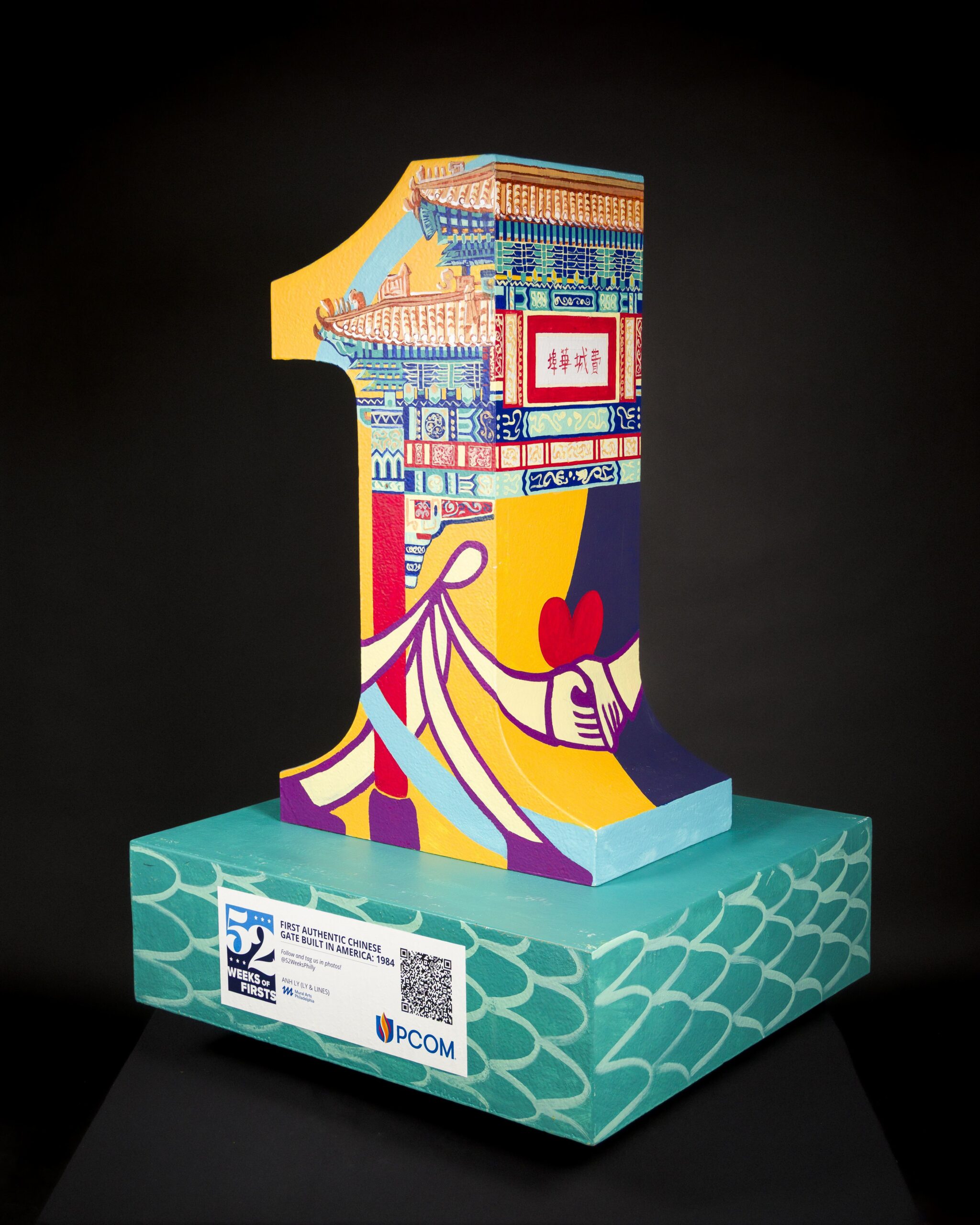
Anh Ly’s “One” sculpture unites Philly’s Friendship Gate and Tianjin’s Ferris wheel bridge. The supporting legs resemble two people holding hands across culture and distance. The Chinese dragon’s spirit reinforces this connection with resilience and reverence.
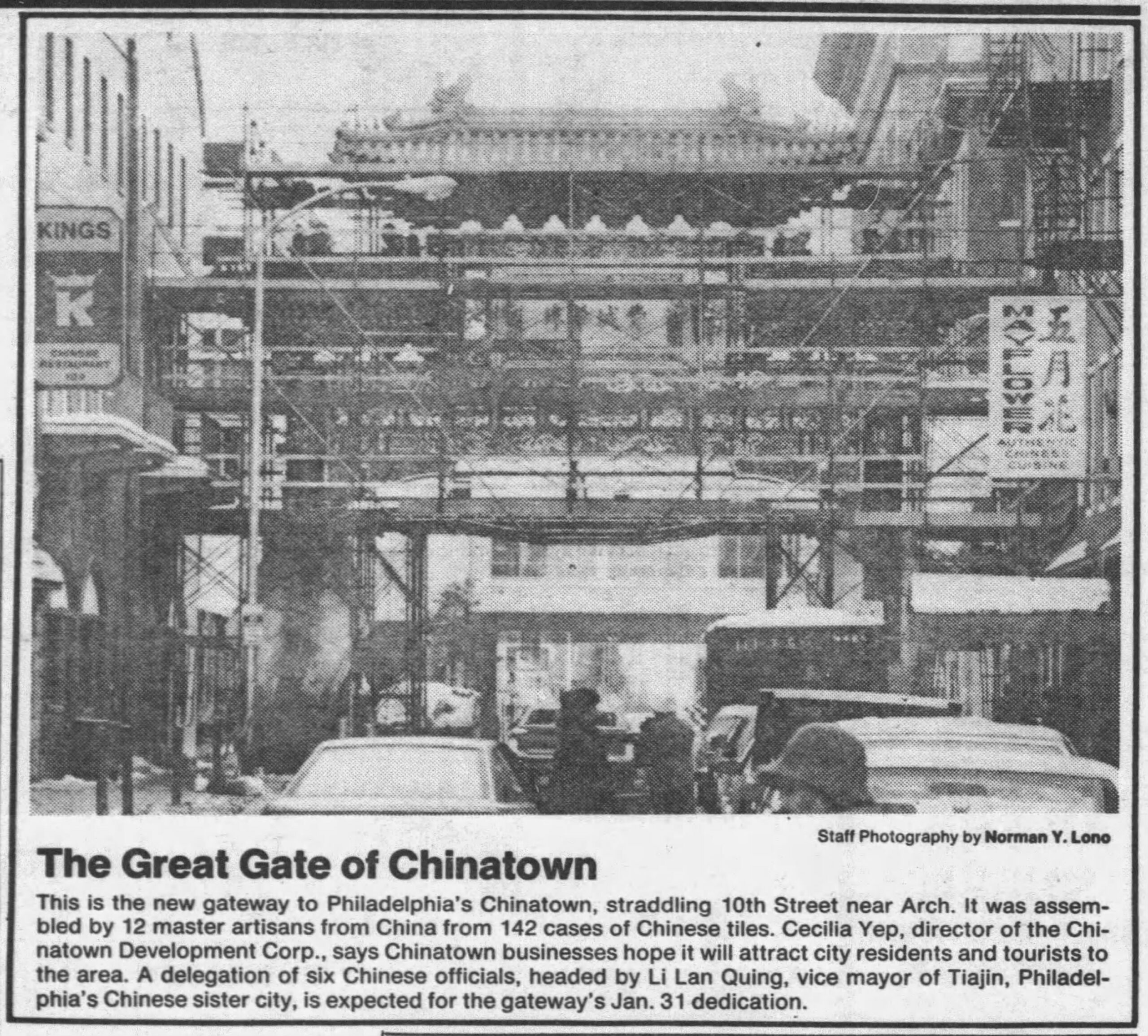
Plans for an ornate Chinatown entryway followed. In October 1983, 12 artisans from Tianjin and Beijing arrived in Philadelphia and spent three months building a 88-ton, 40-foot-tall gate with wood, tiles, stone bases, and a special material that incorporates pig’s blood that’s painted over the wood to stop it from fading and shipped from China.
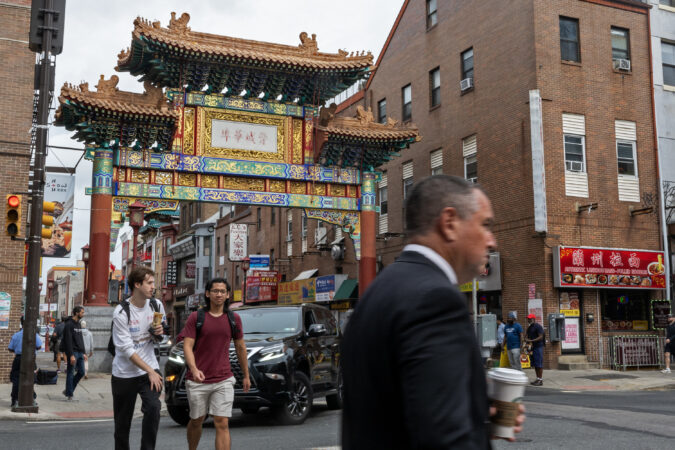
The San Francisco Chinatown Gate had been built in the 1970s and Boston’s was finished in 1982. But Philly’s Friendship Gate, erected at the intersection of 10th and Arch Streets, is the first Chinese American archway built with materials from Asia, making Philly’s gate the “authentic” deal.
That first authentic Chinese gate built in America will be feted Saturday in Chinatown at the Crane Community Center, this week’s Philadelphia Historic District’s Firstival celebration. Firstivals are a year’s worth of parties marking America’s 250th birthday, noting events that happened in Philadelphia before anywhere else in America and often the world.
The Friendship Gate, built in traditional Qing Dynasty style, cost more than $200,000 in city funds to construct. The ribbon-cutting ceremony in January 1984 featured the ceremonial dance of the Chinese lion known as Wushi, performed for good luck and to chase away evil spirits, and speeches from city officials in both Mandarin and English.
“We needed something to attract people into Chinatown,” Yep told The Inquirer, shortly after its Jan. 31, 1984, unveiling.
Its mud brown roof, square beams, dazzling green and gold patterns, and birds and dragons outlining the sky, mark the point where Center City meets the Chinese community.
A Daily News clipping from Jan. 23, 1984, shows Chinatown’s Friendship Gate during construction.
Five months after the Friendship Gate was completed, a fire — then the biggest in Center City history — raced north from 10th and Filbert Streets and stopped, almost magically, at the Friendship Gate.
“I am so glad the gate was not damaged,” T.T. Chang, then president of the Chinese Cultural Society — and unofficial mayor of Chinatown — told The Inquirer.
In September 1984, the Philadelphia Chinatown Development Corporation introduced the first official postcard with the Friendship Gate’s image, marking it as a bona fide tourist attraction. (Although its real goal was to raise $55,000 to pay for the portion of the gate the city refused to pay for.)
In 2008, in its 24th year as a recognized Philadelphia monument, the gate was rededicated after a yearlong, $200,000 renovation project.
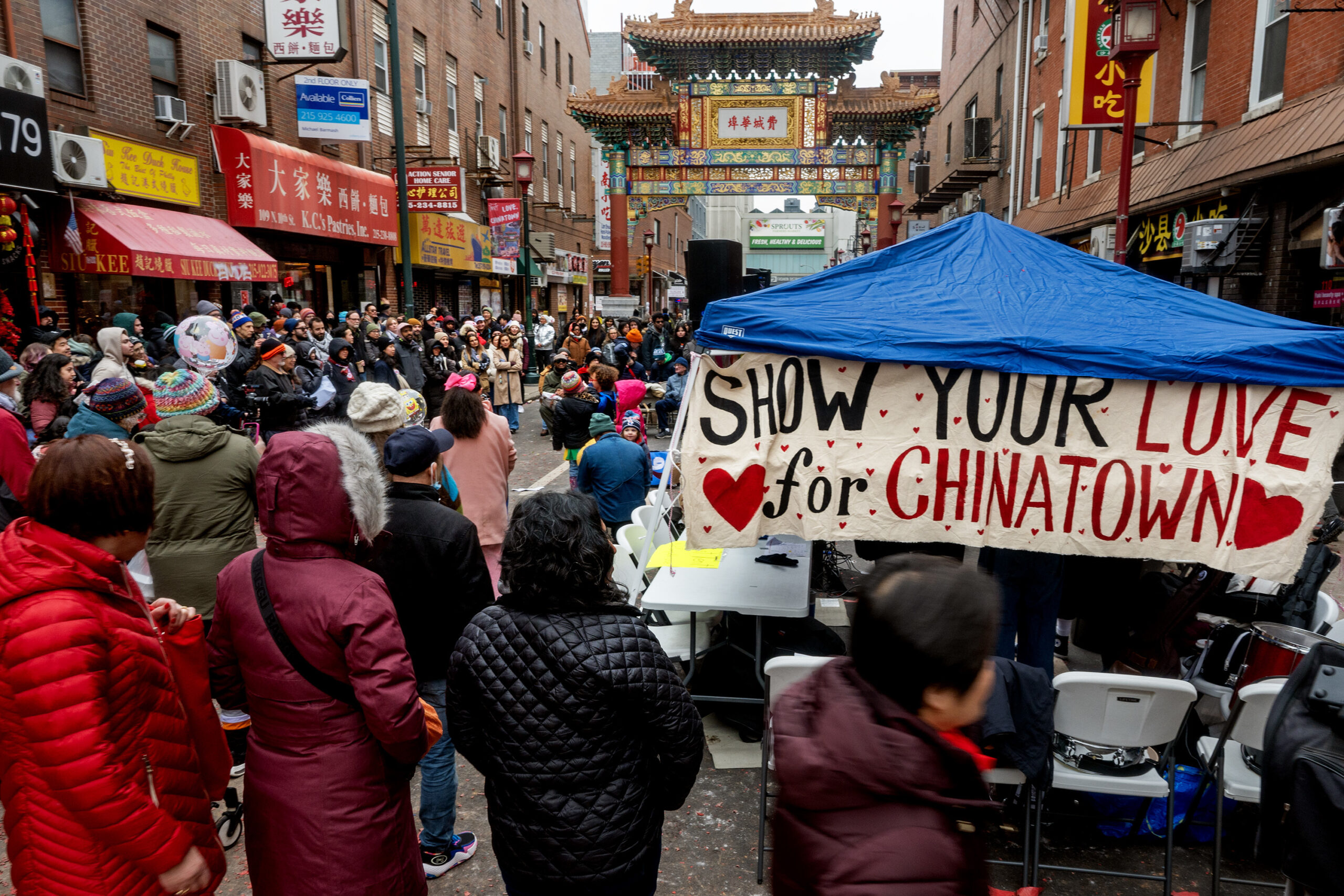
Community organizers hold a “No Arena” block party near the Friendship Gate in Chinatown on Feb. 2, 2025, as the neighborhood celebrates the Lunar New Year with a parade, lion dancers, and fireworks.
Chinatown has had its challenges over the last decades, but it continues to thrive. For 41 years, the Friendship Gate has stood proudly, a welcoming archway rooted in resistance.
This week’s Firstival is Saturday, Feb. 21, 11 a.m.-1 p.m., Crane Community Center, 1001 Vine St. The Inquirer will highlight a “first” from the Philadelphia Historic District’s 52 Weeks of Firsts program every week. A “52 Weeks of Firsts” podcast, produced by All That’s Good Productions, drops every Tuesday.
This patriot summarized things precisely by saying that there are things “more important than medals.” As Ukrainian President Volodymyr Zelensky said, “Having courage is worth more than any medal.”
The IOC should be condemned for failing to realize that remembrance is not political propaganda. Ukrainian Foreign Minister Andrii Sybiha hit the nail on the head by saying that it is “Russians who must be banned, not the commemoration of their victims.”
Leo Iwaskiw, Philadelphia
. . .
The Winter Olympics in Italy are spectacular — as always, a world stage celebrating extraordinary human skill and potential — within the realms of good sportsmanship. How inspiring it is to witness the best athletes not only perform but also encourage and congratulate each other, sometimes despite their own personal ambitions as well as disappointments.
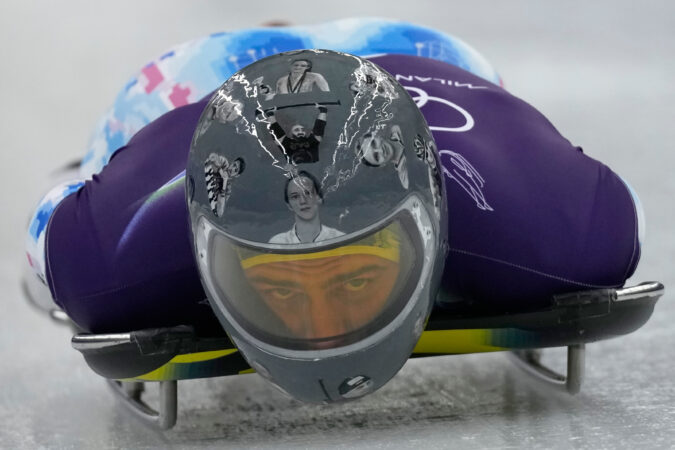
Yet, how disheartening that, as the fourth anniversary of the unprovoked invasion of Ukraine approaches, an issue has developed. Ukrainian skeleton competitor Vladyslav Heraskevych has been disqualified from the 2026 Winter Olympics by the International Olympic Committee for refusing to remove his “helmet of memory” with images of athletes who have been tragically killed as a direct result of Russia’s war on his nation — even as American men’s figure skating competitor Maxim Naumov continues to show a picture of his parents who were tragically killed in the plane crash over Washington, D.C., a year ago. What a double standard for these young people grieving heavy losses. Shame on the IOC for its blatantly biased ruling and its failure to honor basic humanity in each one of us.
Christine Fylypovych,Blue Bell
Ingrained images
The Vietnam War and U.S. Immigration and Customs Enforcement’s Minneapolis War are forever linked by their utter depravity by three photographs seared in the soul of America.
Saigon Execution. During the Tet Offensive on a Saigon street, a South Vietnamese police chief standing arm’s length from a handcuffed Viet Cong prisoner pulls the trigger. The photo was snapped simultaneously with the gun firing, showing the prisoner’s head beginning to explode.
Napalm Girl. A 9-year-old girl is running naked, with third-degree napalm burns on a third of her body, arms outstretched, mouth wide open, a terrorized look on her face as if she were attacked by some unimaginable horror. Four other children are running in the same direction, one crying, all followed by soldiers strolling behind, seemingly unconcerned.
Lost in America. Liam Conejo Ramos, 5 years old, wears a blue and white bunny hat with a Spider-Man backpack, standing next to a dirty vehicle, looking hopelessly forlorn. A man in black stands directly behind Liam with a hand on his backpack, apparently proud that he captured a hardened criminal.
The pictures encapsulate how both wars are rotten to the core. The Saigon execution and the napalm girl photos helped stir a nation. Liam’s photo and Renee Good’s and Alex Pretti’s executions, along with the courageous Minnesotans, have done the same.
Gary Goldman,Newtown
Join the conversation: Send letters to letters@inquirer.com. Limit length to 150 words and include home address and day and evening phone number. Letters run in The Inquirer six days a week on the editorial pages and online.
DEAR ABBY: I am 67, and my husband is 68. For the past six years, we have been caring for aging parents. My father-in-law, who had Alzheimer’s, passed away a few years ago. We went through a lot with him as his illness progressed. My mother-in-law is 87 and does not want to go into a nursing home. She still lives by herself, but my sister-in-law and I take turns cooking and bringing her food, and my husband works his tail off cutting the grass and doing maintenance and repairs she can no longer do. Although we are retired, our lives revolve around her needs.
I recently had a conversation with my daughter, my only child. She has three sets of parents — us, my ex and his wife and her husband’s parents. She said she loves us, but she doesn’t want to take care of any of us. When she retires, she wants to enjoy her retirement, travel and not have to worry about caring for anybody.
Having gone through it myself, I understand her feelings. Nobody WANTS to do this. At the same time, I’m a little hurt. All that we have — money, cars, house — is set up to go to her after we pass. Now it looks like we may need it to pay for assisted living. Abby, is it normal for kids these days to refuse to help aging parents?
— REVISING PLANS IN MISSOURI
DEAR REVISING: I don’t know whether it has become “normal,” but it is not unusual. Woe to any parent who assumes their children will take care of them, because it doesn’t always turn out that way. Be glad your daughter is speaking up now, so you can plan accordingly.
** ** **
DEAR ABBY: I lost my beloved mother-in-law five years ago. Since then, my father-in-law has become engaged to a woman who, frankly, is not liked by anyone in our family. She’s unkind and dismissive, and her presence creates tension at family gatherings.
They have now announced their wedding date, which happens to fall on my birthday. This has hit me hard. My parents have both passed away, and my birthday has always been a cherished day, filled with memories and meaning. It was one of the few days I felt truly celebrated. Now, I worry that every future birthday will be overshadowed by their anniversary and the complicated emotions tied to it.
Would it be selfish or inappropriate to ask them to consider a different date? I don’t want to cause drama, but I also feel deeply hurt. How do I navigate this without making things worse?
— TORN BETWEEN GRACE AND GRIEF
DEAR TORN: I am sorry for your disappointment, but the date of your birth does not belong solely to you. It’s clear that you disapprove of your father-in-law’s choice of a second wife, and I sincerely hope you will be able to adjust. I do not think it will go over well if you approach the happy couple and ask them to change the date of their nuptials to accommodate you.
ARIES (March 21-April 19). Stress doesn’t automatically mean something is wrong. Some stress is healthy, and some hard situations are worth sticking with if you know why you’re there. Check back in with your reasons and see if they still make sense.
TAURUS (April 20-May 20). You know what it’s like to have unappealing options: bad or worse, rock or hard place, lesser of two evils. That’s what makes today’s choices feel luxurious. You’ll appreciate, celebrate and attract even more good fortune with your attitude of gratitude.
GEMINI (May 21-June 21). You have allies in every area of life — professional, personal, spiritual and more. Call on them before you need them. You may never need them at all, and that’s what makes the relationship real. Otherwise, it’s just transactional.
CANCER (June 22-July 22). You don’t need to disconnect from the world to connect with yourself again. You just need a little quiet. Two hours of real focus will be enough to finish something that’s been hanging over you and remember that you’re brilliantly competent.
LEO (July 23-Aug. 22). A riddle you’ll easy guess: What do your loved ones crave when you’re not there, but sometimes take for granted when you are? Your presence. Warm, all-in, so you. Presence is a paradox: invisible in the moment, yet unforgettable in absence.
VIRGO (Aug. 23-Sept. 22). Your vision energizes you. Bringing a fantasy to life — or even failing to do so — is far more interesting to you than working for the approval of others. You’ll be guided by an internal logic akin to appetite.
LIBRA (Sept. 23-Oct. 23). Desire and availability are intertwined. When something is rare, it draws the eye and quickens the pulse. Some people, in certain moods, find that the risk of missing out awakens decisiveness they didn’t know they had.
SCORPIO (Oct. 24-Nov. 21). You’re feeling some uncertainty about the rules, your strategy or how to play the game in general. This is your subconscious nudging you to reevaluate. Go back to the beginning. Is this game even worth playing? What are your odds of winning?
SAGITTARIUS (Nov. 22-Dec. 21). When someone is defensive, resistant or closed off, new information can’t go in. People don’t learn with their arms crossed. Go where the teachers and students are receptive like you, hearts and minds open, and you’ll learn quickly.
CAPRICORN (Dec. 22-Jan. 19). The second easiest way to keep your promises is to make promises that are easy to keep. The top easiest way is not to make them in the first place. You’ll deliver more than expected today because you didn’t tell them what to expect.
AQUARIUS (Jan. 20-Feb. 18). What happens right before becoming? Exposure. Awkwardness. Uncertainty. So in a way, you can see those uncomfortable feelings as a sign of imminent arrival. At the very least, discomfort is the herald of improvement, and at most, transformation.
PISCES (Feb. 19-March 20). Your mind is open and your curiosity strong. Ideas are everywhere, but some are worth more than others, and you sense right away what’s worth moving on. A small choice today slowly opens a bigger adventure in the future.
TODAY’SBIRTHDAY (Feb. 19). It’s your Year of Buried Gold when “X” will mark the actual spot on the map where you should start digging. You’ll get the map through solid relationships, a mentorship and your own steady work and continuing education. Your curiosity and follow through are deservedly and richly rewarded. More highlights: a reunion, recognition for unseen efforts, and love that fits on multiple levels. Taurus and Pisces adore you. Your lucky numbers are: 12, 3, 44, 31 and 19.
Pennsylvania State Police identified the teen who died in a crash while allegedly fleeing from troopers in a stolen vehicle in Montgomery County early Saturday.
Zachery Carbo, 18, of Norristown, was pronounced dead at the scene of the crash, which happened around 12:10 a.m. on Route 422 eastbound at Route 202 in Upper Merion Township, state police said.
Two 19-year-old men and one 20-year-old man who were passengers in the Kia Soul, which had been reported stolen in West Norriton Township, were transported to Paoli Hospital for treatment, state police said.
Troopers had attempted to stop the Kia for traffic violations on eastbound 422 near Lewis Road in Limerick Township.
The vehicle did not stop and a pursuit ensued, state police said.
The pursuit ended when the Kia hit a concrete barrier on the right side of the road.
State police said Wednesday that no charges had been filed and the investigation was continuing.
The Union opened their 2026 season with a win on Wednesday night, defeating Defence Force FC, 5-0, in the first of a two-game Concacaf Champions Cup first round series at Hasely Crawford Stadium in Port of Spain, Trinidad.
Milan Iloski opened the scoring for the Union in the 29th minute, scoring on a free kick from just outside the 18-yard box. Ezekiel Alladoh added a second shortly after, heading a Frankie Westfield cross into the back of the net in the 32nd minute.
The Union added three more goals in the second half. Olwethu Makhanya scored the Union’s third goal in the 64th minute from a corner set-piece. Bruno Damiani added a fourth off an assist from Cavan Sullivan in the 69th. Damiani added another from the penalty spot to put the Union up, 5-0, in the 81st minute.
The Union also avoided injuries during their match with Defence Force, something Union manager Bradley Carnell noted in his postgame conference.
“Playing away from home, It’s always a tough challenge,” Carnell said. “We always have to sort out a few things.”
Iloski’s free kick was set up by a Defence Force foul on Jesús Bueno. Iloski lined up to take the kick and sent a right-footed strike up and over the Defence Force wall into the right side of the net.
On Damiani’s first goal, the forward came on as a substitute alongside Sullivan and Japhet Sery Larsen in the 65th minute. Sullivan, 17, played a centering pass to Damiani, who laced a left-footed strike into the net to put the Union up, 4-0.
Sullivan earned a penalty for the Union in the 81st after being tripped by Defence Force’s Sheldon Bateau inside the 18-yard box. Damiani slotted the penalty past Defence Force goalie Isaiah Williams to put the Union up, 5-0.
After Wednesday night’s win, the Union lead the series’ aggregate score by five goals. The Union will host Defence Force at Subaru Park for the second game of the series on Feb. 26 (7 p.m., Fox Sports 2).
If the Union lead the series’ combined score after the second leg, they will advance to face Liga MX’s Club América in the tournament’s round of 16.
Up next
The Union will visit D.C. United on Saturday for their MLS season opener (7:30 p.m., Apple TV).
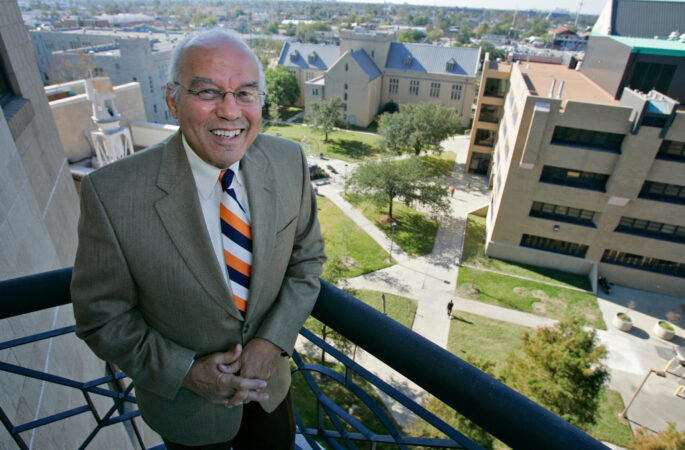
Norman C. Francis, a civil rights pioneer and champion of education who played a pivotal role in helping rebuild New Orleans after Hurricane Katrina, died Wednesday. He was 94.
Community members, activists, and leaders across Louisiana celebrated the life and accomplishments of Mr. Francis.
“The nation is better and richer for his having lived among us,” said Reynold Verret, the president of Xavier University, which confirmed Mr. Francis’ death Wednesday in a statement.
Mr. Francis took a high-profile role in the state’s response to Katrina, heading the Louisiana Recovery Authority, which was tasked with overseeing the multibillion-dollar rebuilding effort.
Former New Orleans Mayor Mitch Landrieu said that after Katrina, Mr. Francis “stood in the breach.” Landrieu, who served as lieutenant governor when Katrina decimated New Orleans in 2005, said he often turned to Mr. Francis for advice and counsel — including in “his toughest moments.”
“The most defining part of his character is that he treats every human being with dignity and respect,” Landrieu posted on X on Wednesday.
Mr. Francis was well-known for his role as president of Xavier University in New Orleans, the nation’s only predominantly Black Catholic university. Mr. Francis held the position for 47 years beginning in 1968.
During his tenure, enrollment more than doubled, the endowment mushroomed and the campus expanded. The small school gained a national reputation for preparing Black undergraduates for medical professions and for producing graduates in fields such as biology, chemistry, physics, and pharmacy.
In the aftermath of Hurricane Katrina, when parts of the school’s campus were submerged under 8 feet of water, Mr. Francis vowed that the college would return.
Multiple civil rights groups, including the American Civil Liberties Union, honored Mr. Francis as one of the nation’s top college presidents. In 2006, then-President George W. Bush awarded Mr. Francis with the Presidential Medal of Freedom.
“Dr. Francis was more than an administrator. He was an institution builder, a civil rights champion, and a man of quiet generosity,” Louisiana U.S. Rep. Troy Carter posted on social media. “He believed education was the pathway to justice. He believed lifting one student could lift an entire family.”
Mr. Francis, the son of a barber, grew up in Lafayette, Louisiana. He received his bachelor’s degree from Xavier in 1952. He became the first Black student at Loyola University’s law school — integrating the school and earning his law degree in 1955.
He went on to spend two years in the Army, then joined the U.S. Attorney General’s office to help integrate federal agencies.
Even then, he still couldn’t use the front door to enter many New Orleans hotels, restaurants, or department stores because of his race.
“Some people say to me, ‘My God! How did you take that?’” Mr. Francis said during a 2008 interview with the Associated Press. “Well, you took that because you had to believe that one day, the words that your parents said to you ‘You’re good enough to be president of the United States’ yes, we held onto that.”
In 1957, he joined Xavier in the role of Dean of Men, beginning his decades-long career at the university.
Mr. Francis’ wife, Blanche, died in 2015. The couple had six children and multiple grandchildren.