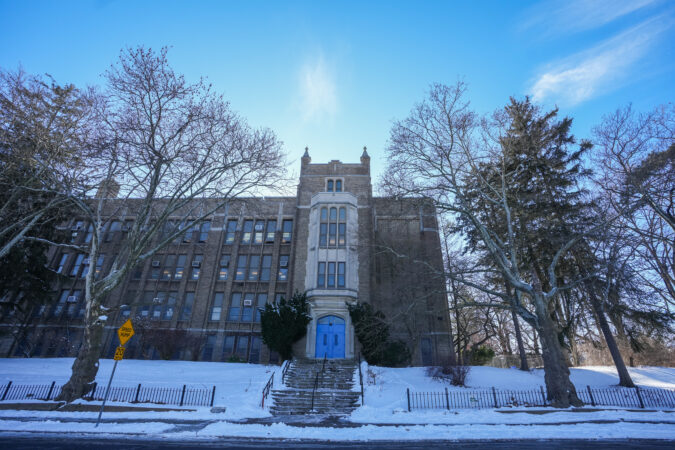
For nearly a century, the Samuel Pennypacker School has survived — a three-story brick anchor of the West Oak Lane neighborhood in Northwest Philadelphia.
Now it faces the threat of extinction.
ThePhiladelphia School District says the school’s building score is “unsatisfactory” and modernizing it would cost more than $30 million. District officials are calling for shutteringPennypacker following the 2026-27 school year, funnelingits students to nearby Franklin S. Edmonds or Anna B. Day schools— part of a citywide proposal to close20 district schools.
The recommendation, district officials say, is no reflection of the “incredible teachers, community, [and] students” at Pennypacker. Rather, it is an attempt by the district to optimize resources and equity for students.
Like many district schools, Pennypacker, which serves students in kindergarten through eighth grade, is aging and outdated, having opened in 1930. At just over 300 students, it is among the city’s smaller schools — and operating at about64% of building capacity.
Yet, it is those same qualities — its size and longevity — that represent some of its greatest strengths, say those in the school community who are not happy about the proposed closure.
It’s a school, they say, that is more than the sum of its aging parts.
On the school’s walls are pocks of chipped paint, yes, but also the colorful detritus of a small but vibrant student population: a poster composed of tiny handprints in honor of Black History Month; a “Blizzard of Positivity” — handwritten messages reading “Smile” and “Hugs” and “Help your friends when they fall.”
It’s where Wonika Archer’s children enrolled soon after the family emigrated from Guyana — the first school they had ever known.
“A lot of firsts,” Archer said. “Their first friends, their first teachers outside of their parents.”
It’s where, since 1992, Andreas Roberts’ youth drill team has been allowed to practice. The team, which includessome Pennypacker students, recently participated in its first competition andwon first place.
“Pennypacker has been very, very useful to us,” he said. “We have nowhere else to practice for the kids.”
It’s where Christine Thorne put her kids through school, her son and her daughter, and where her grandchildren now go. Around the school, they call her “Grandmama.”
“I feel as if my household is being destroyed,” she said recently.
For students, news of the imminent closure has been no less jarring.
When Janelle Pearson’s fourth-grade students learned recently that their school was poised to be shuttered under the district’s plan, they took it as a grim reflection on themselves.
“It makes them feel like, ‘What did we do wrong that they want to close our school?’” said Pearson, who has taught at Pennypacker for abouta decade. “That’s the part that tugs at your heart.”
Unwilling to go down without a fight, the fourth graders resolved to do what they could. Soon, a poster took shape, in marker and crayon, a series of pleas addressed to Philadelphia Superintendent Tony B. Watlington Sr.
“Pennypacker is our home.”
“Don’t uproot our education.”
“Our neighborhood depends on this school!”
The poster was presented to district officials earlier this month at a community meeting held in the school’s wood-seated auditorium.
At that meeting, representatives from the district did their best to explain the reasoning for the proposed closures. They presented a tidy PowerPoint and talked of student retention and program alignment, of building capacity and neighborhood vulnerability scores.
It stood in stark contrast to the parents and teachers and staffers who, one by one, held a microphone and spoke of love and family and community, of teachers and staffers who routinely went above and beyond to make their children feel safe. To make them feel special.
“It’s not just about a building,” said Richard Levy, a onetime Pennypacker teacher who now works at St. Joseph’s University. “The challenges here aren’t reasons to close the school — they’re reasons to strengthen it.”
Whether their appeals might affect the district’s decision remains to be seen. Other schools in the district slated for closure have mounted efforts of their own, and, despite a recent grilling by City Council members, it seems all but certain that several schools will ultimately shutter.
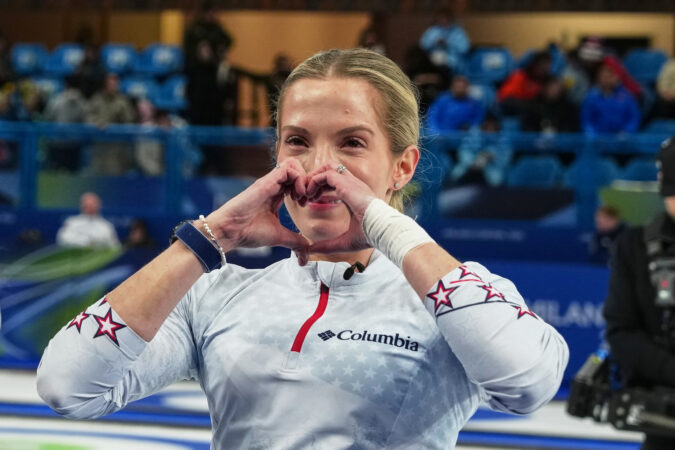
There haven’t been any giant “DELCO” flags in the stands at the Olympics, at least as far as we’ve been able to tell from home. But there is a Broomall native, Taylor Anderson-Heide, going for a bronze medal in women’s curling for the United States on Saturday.
The U.S. lost to Switzerland in the semifinals on Friday, in a match that was tightly contested throughout. You have to tip your broom to the outstanding shot by Swiss veteran Alina Pätz, a six-time world champion, that clinched the win.
So the Americans are playing Canada for bronze, adding another chapter to their long rivalry. Unfortunately, most of it is live just on Peacock, but USA Network will pick up coverage at 9:30 a.m.
Saturday is the last full day of Olympics action, but some other major Americans will be going for gold. We start in women’s bobsled, where the two-woman event has its last two runs.
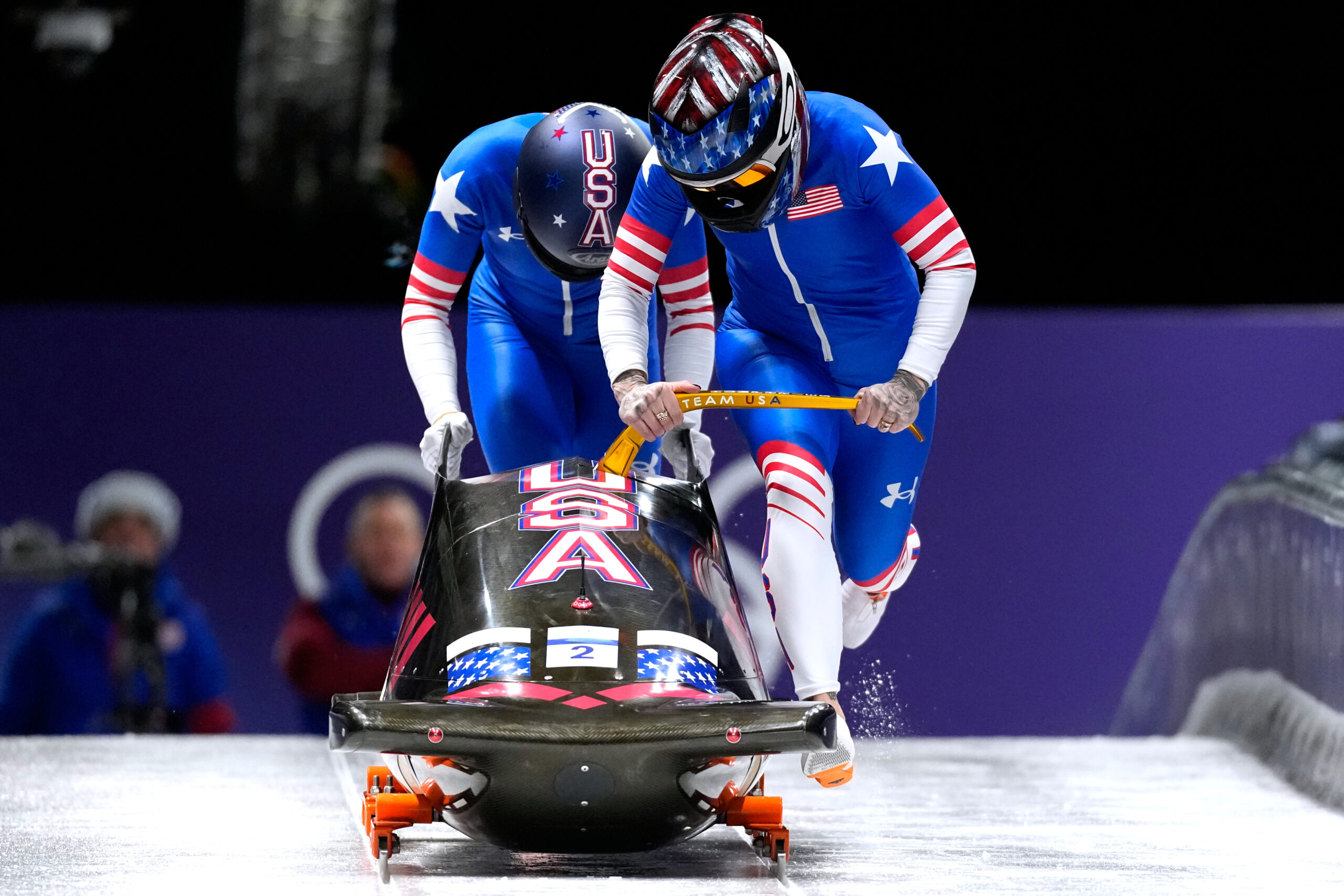
Americans Kaillie Humphries and Jasmine Jones were in third after Friday’s first two runs. Kaysha Love and Azaria Hill were in fifth, while monobob champion Elana Meyers Taylor and Jadin O’Brien were in 12th.
NBC has the first run live at 1 p.m. and the second run live at 3:05 p.m.
Kaillie Humphries and Jasmine Jones starting one of their bobsled runs in the first rounds on Friday.
Then there’s speedskating’s mass start, with Jordan Stolz in the men’s event going for his fourth medal in Milan. It’s an unusual 6,400-meter distance, 16 laps of the oval, and Stolz has admitted it’s “more like a bonus” for him. But it’s certainly a show, because as the name implies, it gets very crowded.
Instead of the usual two skaters on the track, the mass start has a lot of them all at once. The top eight finishers in each semifinal advance to the final. Coverage of the finals starts at 9 a.m. on USA Network, then moves to NBC at 10 a.m. when the network comes on air for the day.
As a general rule, our schedules include all live broadcasts on TV, but not tape-delayed broadcasts on cable channels. We’ll let you know what’s on NBC’s broadcasts, whether live or not.
NBC
10 a.m.: Speedskating — Men’s and women’s mass start finals
1:30 p.m.: Freestyle skiing — Women’s halfpipe final
2:55 p.m.: Figure skating — Gala
3:15 p.m.: Bobsled — Two-woman final run
3:50 p.m.: Back to the figure skating gala
4:30 p.m.: Freestyle skiing — Mixed team aerials (delayed)
5:15 p.m.: Bobsled — Four-man first and second runs (delayed)
8 p.m.: Prime time highlights including bobsled, freestyle skiing, speed skating, and figure skating
11:30 p.m.: Late night highlights including bobsled, speed skating, and freestyle skiing
USA Network
4 a.m.: Bobsled — Four-man, first run
4:45 a.m.: Freestyle skiing — Mixed team aerials final
6:10 a.m.: Cross-country skiing — Men’s 50km
7:30 a.m.: Ski mountaineering — Mixed relay final
8:15 a.m.: Biathlon — Women’s 12.5km mass start
9 a.m.: Speedskating — Men’s and women’s mass start finals
9:30 a.m.: Curling — United States vs. Canada women’s bronze medal game (joined in progress)
2:40 p.m.: Ice hockey — Finland vs. Slovakia men’s bronze medal game
CNBC
1:05 p.m.: Curling — Switzerland vs. Norway bronze medal game
How to watch the Olympics on TV and stream online
NBC’s TV coverage will have live events from noon to 5 p.m. Philadelphia time on weekdays and starting in the mornings on the weekends. There’s a six-hour time difference between Italy and here. The traditional prime-time coverage will have highlights of the day and storytelling features.
As far as the TV channels, the Olympics are airing on NBC, USA, CNBC, and NBCSN. Spanish coverage can be found on Telemundo and Universo.
NBCSN is carrying the Gold Zone whip-around show that was so popular during the Summer Olympics in 2024, with hosts including Scott Hanson of NFL RedZone. It used to be just on Peacock, NBC’s online streaming service, but now is on TV, too.
Every event is available to stream live on NBCOlympics.com and the NBC Sports app. You’ll have to log in with your pay-TV provider, whether cable, satellite, or streaming platforms including YouTube TV, FuboTV, and Sling TV.
On Peacock, the events are on the platform’s premium subscription tier, which starts at $10.99 per month or $109.99 per year.
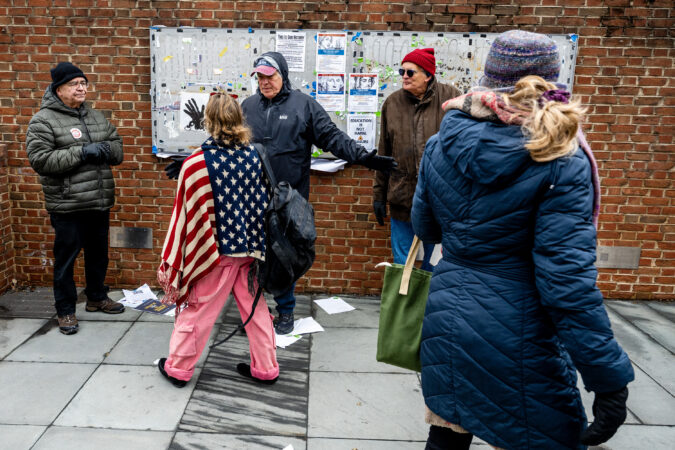
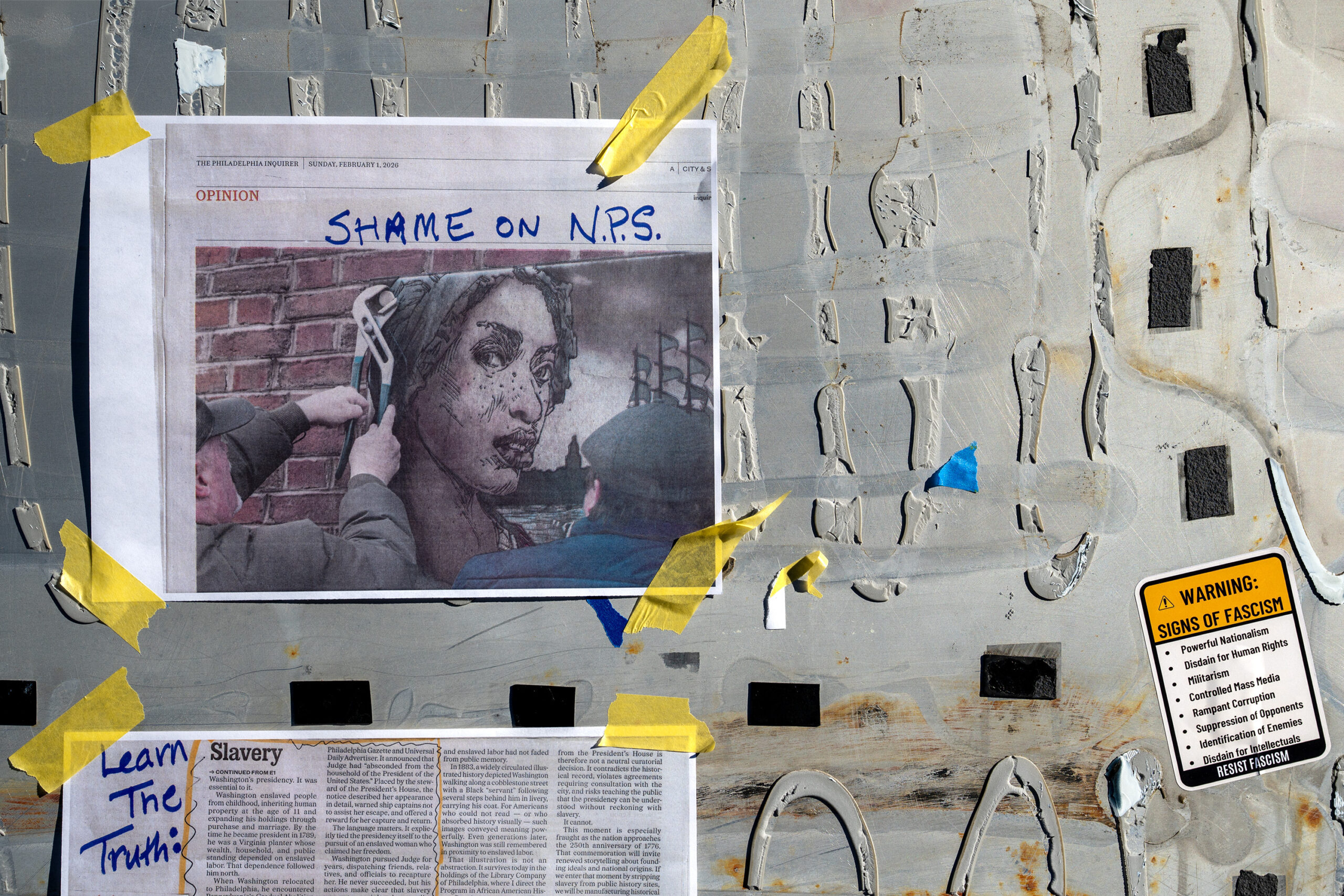
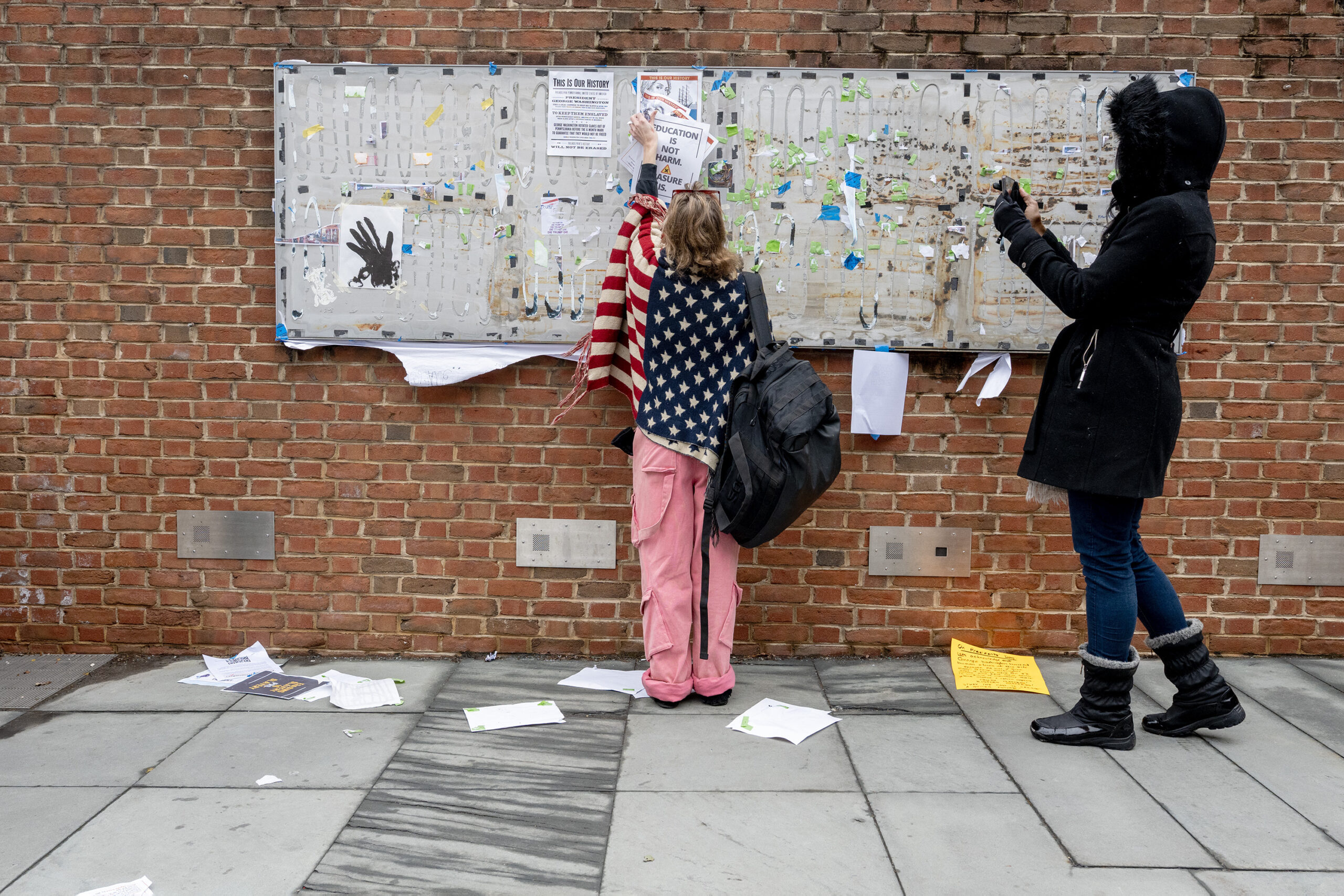
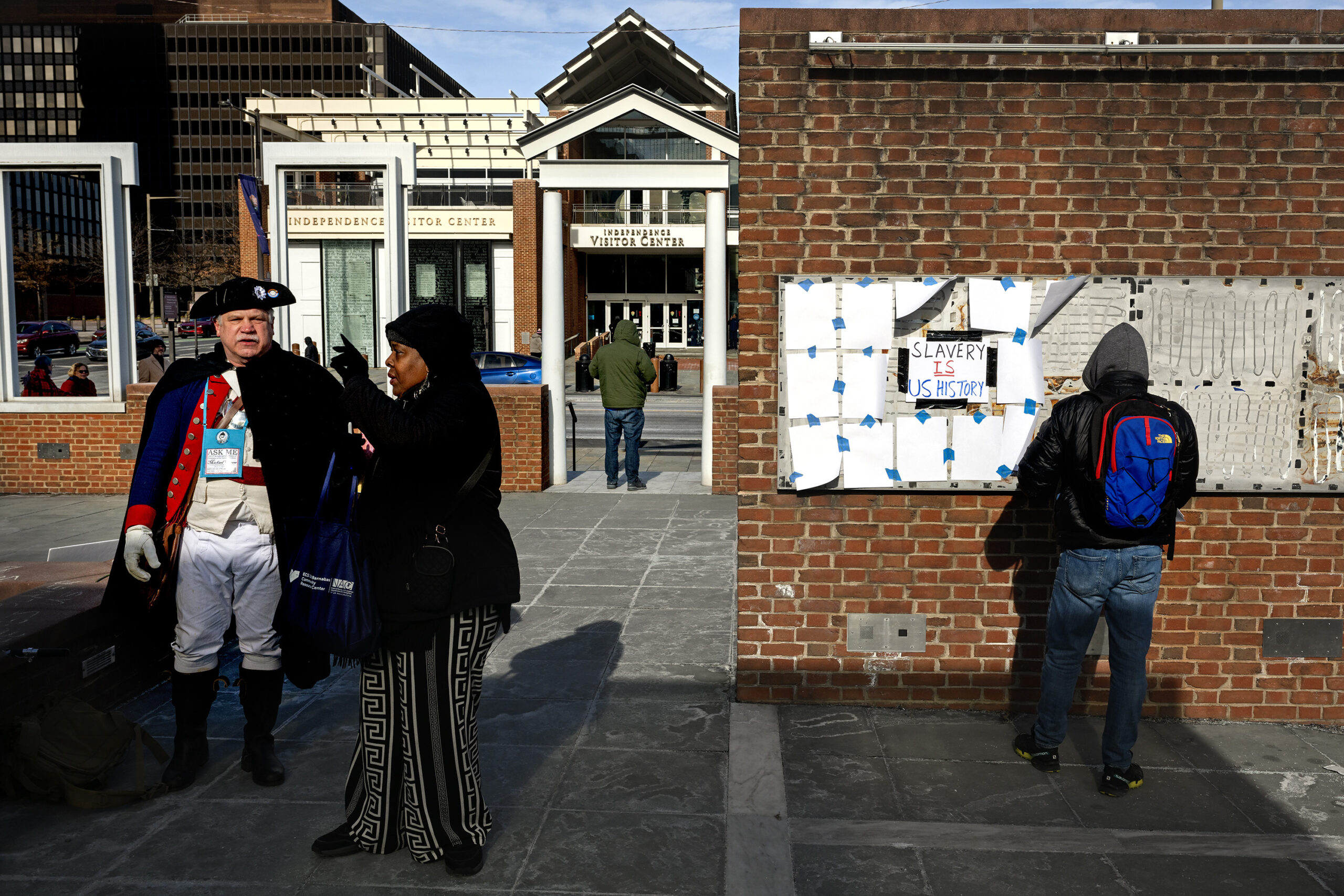
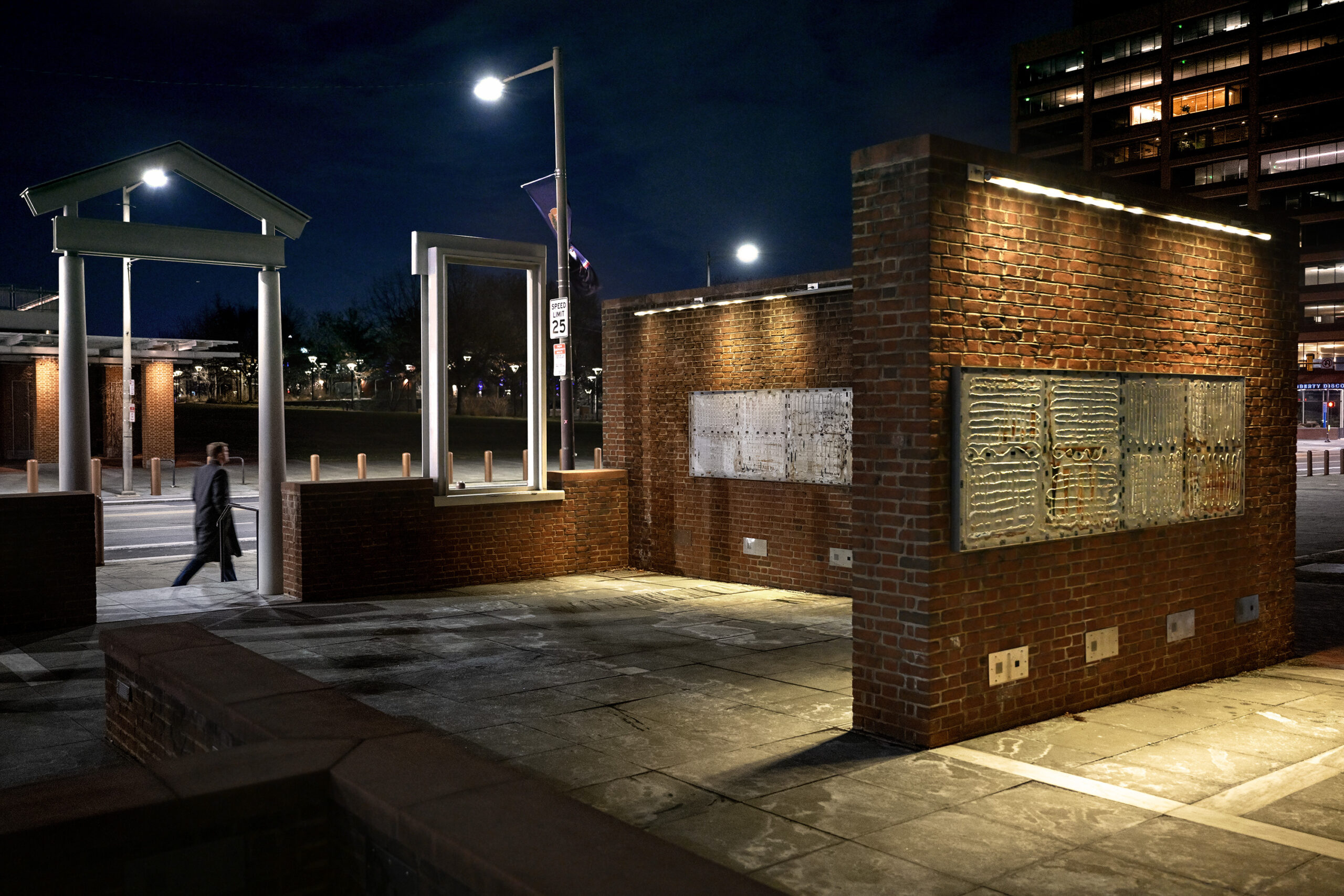
The brief confrontation came this week in front of the empty frames where visitors had been taping informal signs to fill the void where the original panels hung at the President’s House, after President Donald Trump’s administration removed the slavery exhibits last month.
Signs and notes placed by visitors at the President’s House in Independence National Historical Park.
Glenn Bergman and his wife Dianne Manning were just arriving at the Avenging the Ancestors Coalition’s annual Presidents’ Day observance. They had earlier attended the weekly ICE vigil a few blocks away. Bystanders yelled at the woman to stop as she declared it was her “First Amendment right” while tearing off the notes.
Bergman stepped in to block her, saying later, he “had to do something.” After a few seconds everyone stepped away, accusing her of “littering.”
She grabbed the papers off the ground and left abruptly, shouting “George Washington made this country great… for white people.”
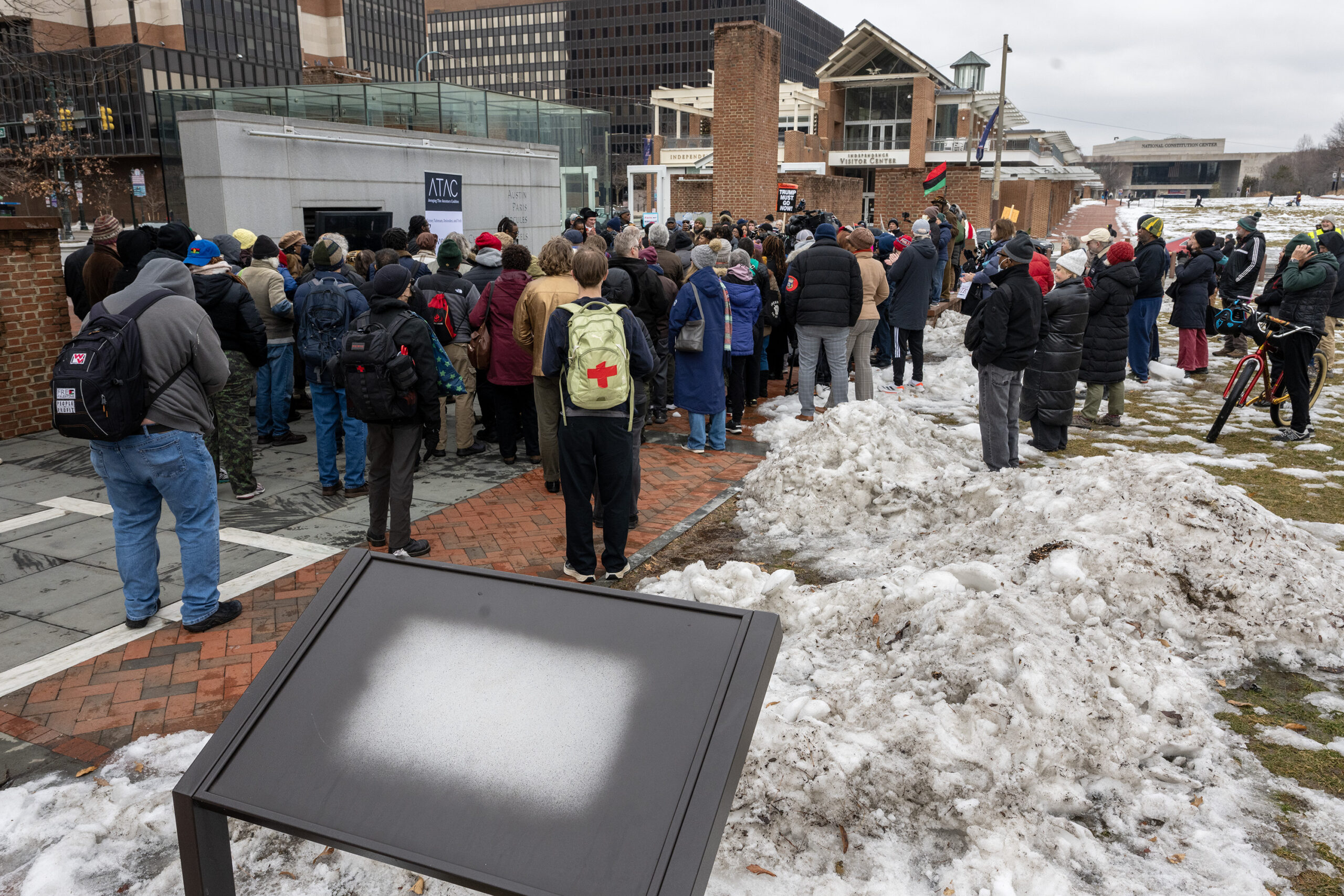
The entire interaction lasted less than three minutes — and unfolded right on the other side of the wall from where the main advocacy organization leading the fight to protect the President’s House was gathered.
The Avenging the Ancestors Coalition holds their annual Presidents’ Day observance at the President’s House Monday, Feb. 16, 2026. The empty frame in the foreground held a panel about slavery that was removed.
As the week of Presidents’ Day ends, I’m moving that presidential apostrophe back a letter and remembering my time photographing at the President’s House.
It is almost a year since our current President signed Executive Order #14253, titled “Restoring Truth and Sanity to American History,” on Mar. 27, 2025.
In addition to requiring the Secretary of the Interior to develop a plan to improve Independence National Historical Park in preparation for our 250th birthday, he directed National Park Service staff to identify language and historical depictions that “inappropriately disparage Americans past or living.”
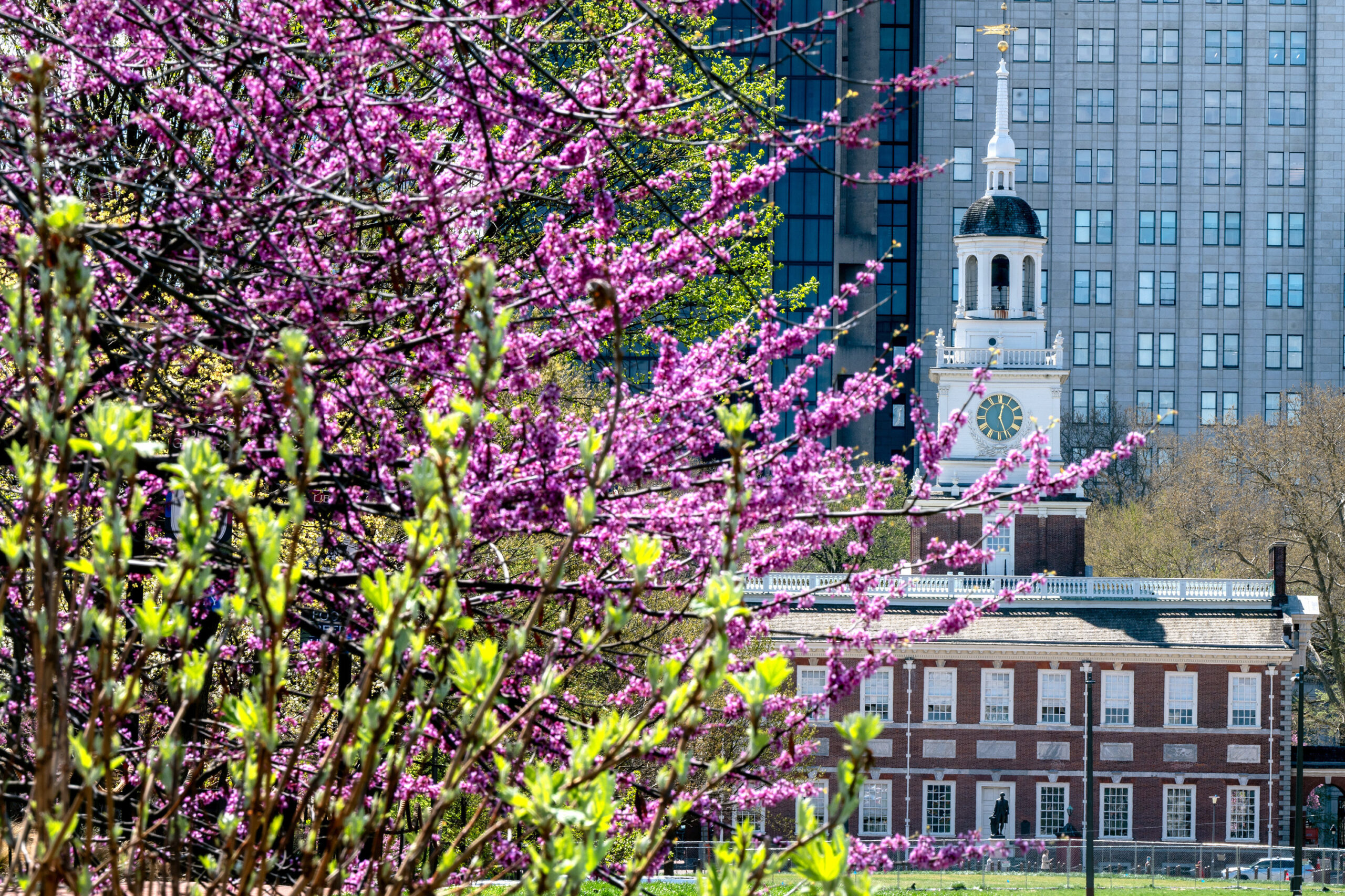
Flowering trees by Independence Hall in spring, 2025.
In May, Interior Secretary Doug Burgum issued an order that signs be posted in all National Park asking employees and visitors to report any negative information.
A sign and QR code located in Independence National Historical Park inviting the public to submit feedback on repairs, improvements, and content that is “negative about either past or living Americans.”
In July, President Donald Trump’s administration started taking steps to review or remove materials key to understanding the history of race in America.
But it didn’t happen until last month.
I was on another assignment nearby when the newspaper received a tip workers were on the site “with tape measures.”
They weren’t talking to our reporter, already on the site, when I arrived to find park service workers indeed examining the panels. So I just assumed if they would be dismantling the exhibits it would happen in the middle of the night — like when the statue of former Mayor Frank Rizzo was “disappeared” and his Italian Market mural was erased under cover of darkness in 2020.
I made a few photos then left to edit and upload, only to get a text, “it’s happening now.”
It was awkward as the workers asked me to “give us a break,” while I hovered around — not right on top of them — watching every move. I replied we were both doing our jobs.
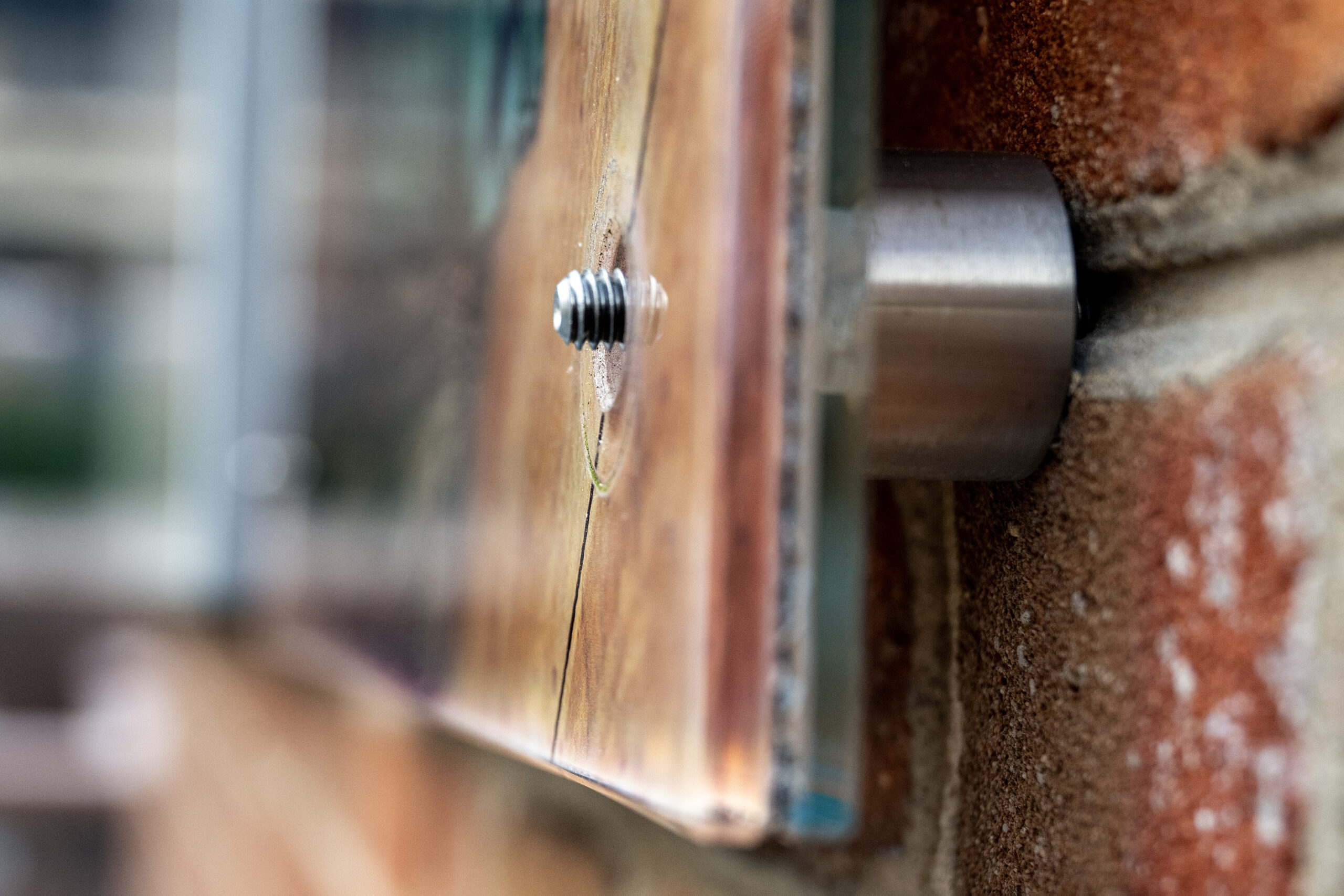
Bolts are removed from Interpretive panels as the exhibits are taken off the walls in Independence National Historical Park Thursday, Jan. 22, 2026.
It wasn’t long before other news media arrived, and I continued to document the entire removal. I was joined by photographer Elizabeth Robertson who made a photo from our newsroom overlooking the site. Later that evening, I returned to a much quieter scene.
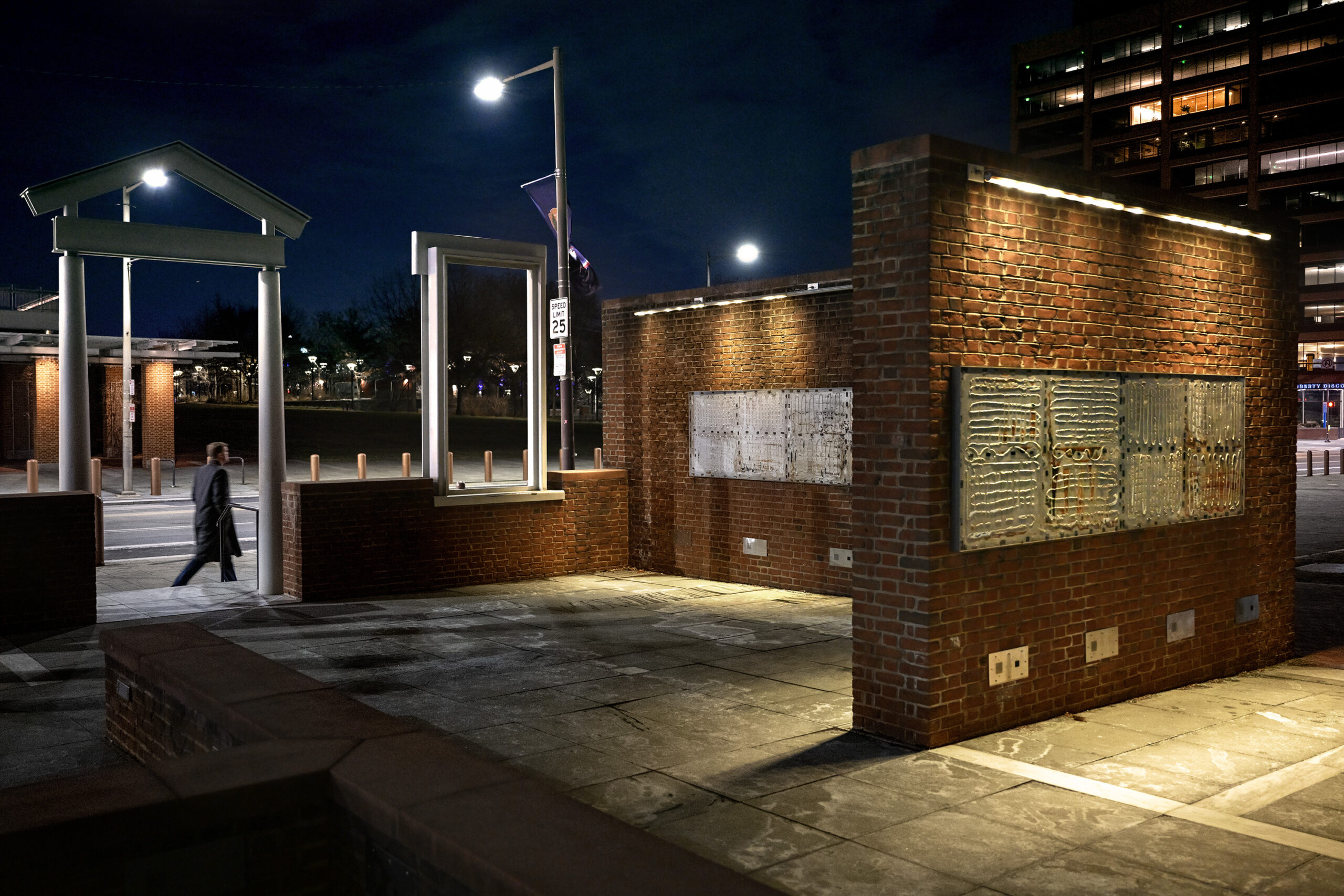
The President’s House Historical Park Jan. 22, 2026, after all historical exhibits were removed. The site, a reconstructed “ghost” structure titled “Freedom and Slavery in the Making of a New Nation” (2010), serves as a memorial to the nine people George Washington enslaved there during the founding of America.
That wasn’t the end of it. Protests continued…
Historical interpreter Michael Carver talks with visitors while he and other members of the Association of Philadelphia Tour Guides host “History Matters” offering “Free Talks with Tour Guides” Jan. 24, 2026 at the President’s House site two days after more than a dozen educational displays about slavery were removed from the site.
… and the City of Philadelphia sued the National Park Service and Department of Interior. District Judge Cynthia M. Rufe inspected the removed panels in storage for herself, visited the President’s House site, then ordered the federal government “restore the President’s House Site to its physical status as of January 21, 2026,” which is the day before the exhibits were removed.
Trump administration officials appealed her ruling calling it “unnecessary judicial intervention” and on Presidents’ Day, when Glenn Bergman and Dianne Manning of Mt. Airy were attending the Avenging the Ancestors Coalition rally, Judge Rufe issued an injunction that required the federal agencies to restore the interpretive panels.
So we all waited to see what happened next. The “what’s next?” was two days later the federal judge, citing the agencies’ “failure to comply” set a deadline of 5 p.m. Friday.
A spokesperson for the White House defended their inaction saying removal of the exhibits is not final because the Department of the Interior is “engaged in an ongoing review of our nation’s American history exhibits in accordance with the President’s executive order to eliminate corrosive ideology, restore sanity, and reinstate the truth.”
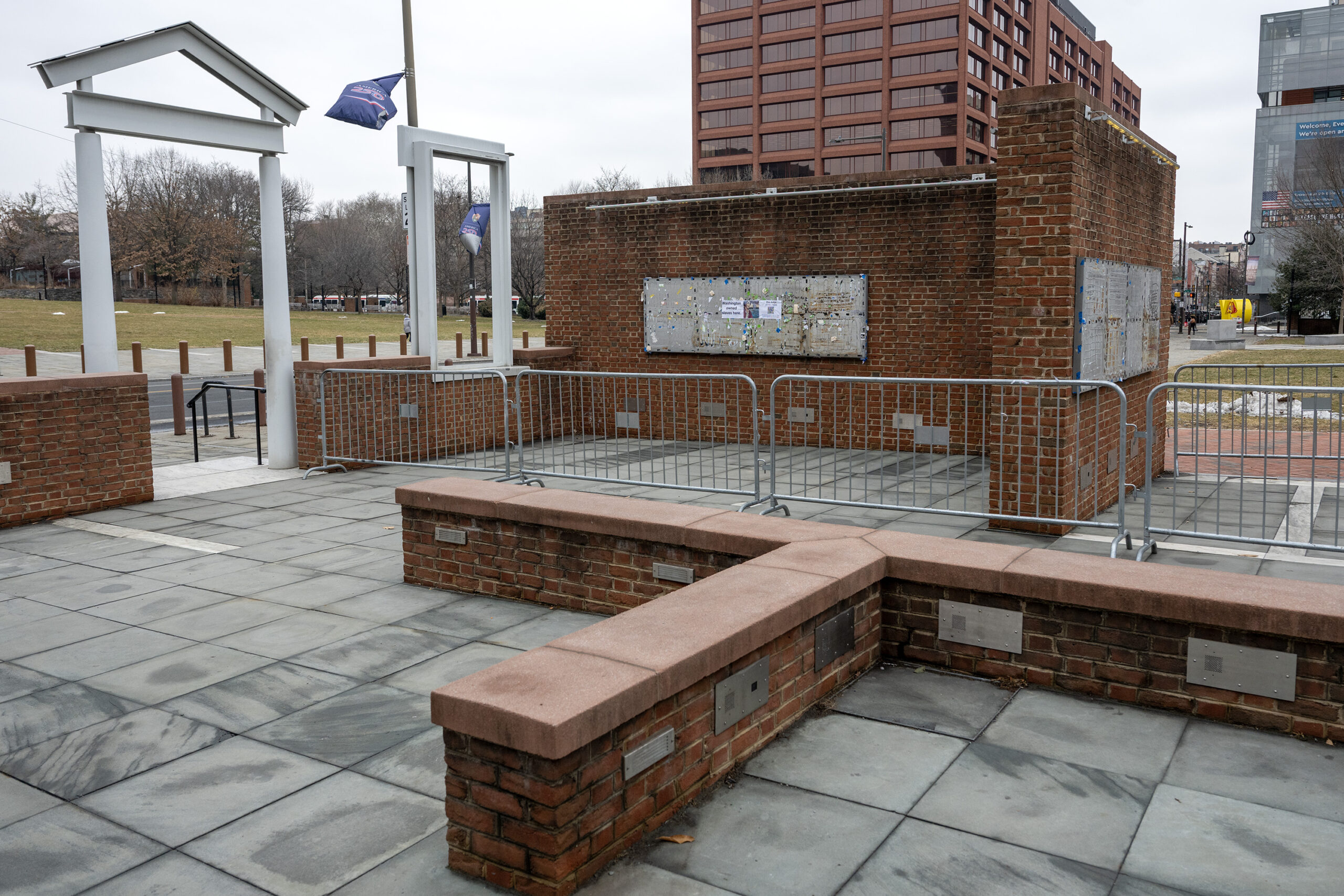
A cleaded up and power-washed President’s House site the day after a federal judge ordered the Trump administration to restore the slavery exhibits that the National Park Service removed from the President’s House in January.
Upon hearing the news I thought, “Friday is my day off. I will just have to read what my excellent reporting colleagues Fallon Roth, Maggie Prosser, and Abraham Gutman write about it. And live vicariously through the photos by whichever of my photo co-workers gets the assignment.“
I just couldn’t stay away, so I returned to the site early Thursday morning, just to “babysit.”
After about 30 minutes and only seeing two visitors, a park service worker arrived with a 5-gallon Lowe’s plastic blue bucket ($4.95, lid sold separately) and another, plain white plastic pail full of rags. More prep work for Friday, my day off, I figured.
When he returned with a six-foot Little Giant ladder ($255.99, King Kombo), I asked “so you’re not just doing more cleaning, right?”
I alerted my newsdesk, and spent the next six hours there.
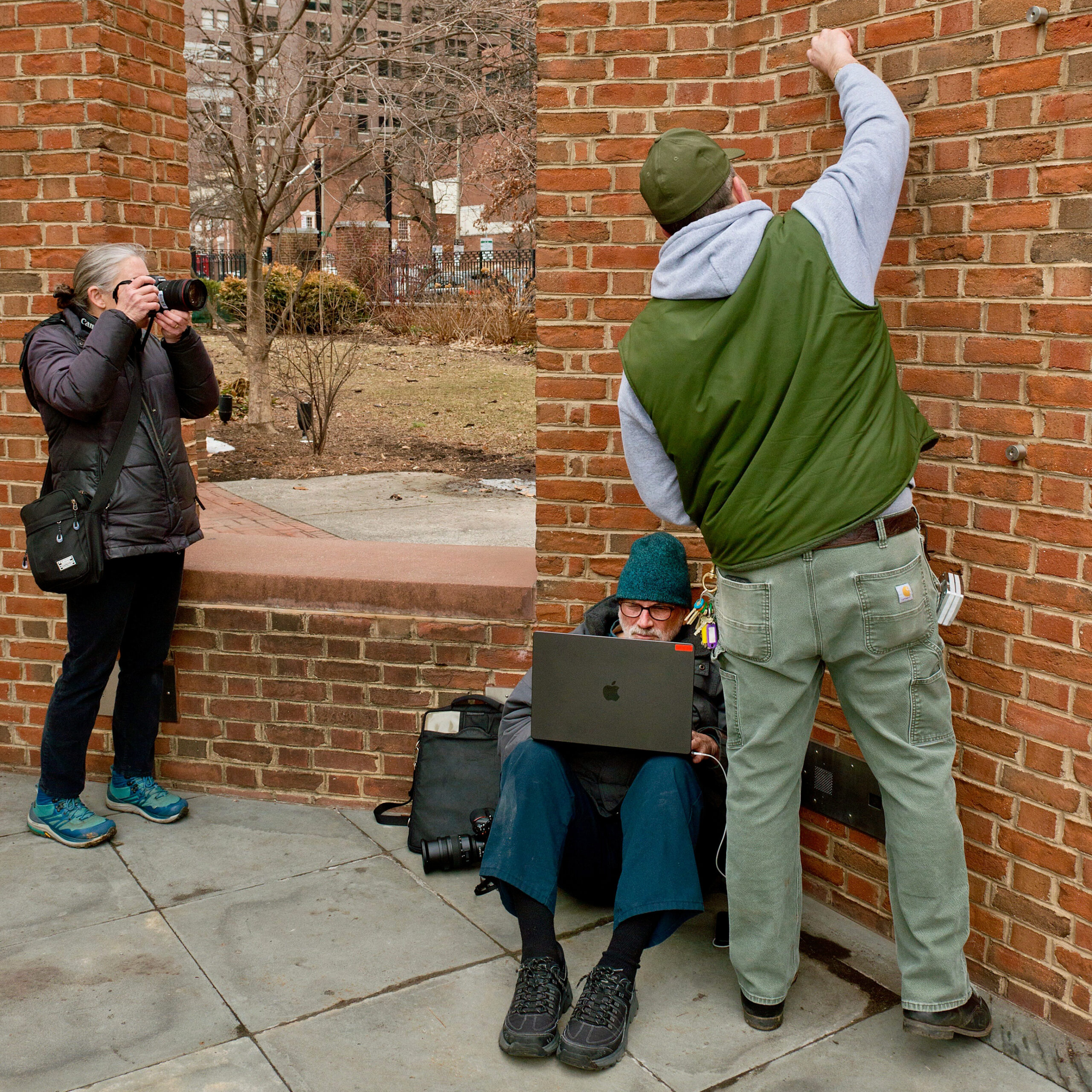
Philadelphia Inquirer staff photographer Tom Gralish edits his news photos at the President’s House site in Independence National Historical Park Thursday, Feb, 19, 2026 as park service workers restore the slavery exhibits that were removed in January. Gralish had met and talked with the NPS employee earlier in the morning before other news media arrived at the site, and hadn’t noticed a panel would be going back up later where he was sitting. “You’re okay,” the worker said, “you were here first.”
Since 1998 a black-and-white photo has appeared every Monday in staff photographer Tom Gralish’s “Scene Through the Lens” photo column in the print editions of The Inquirer’s local news section. Here are the most recent, in color:
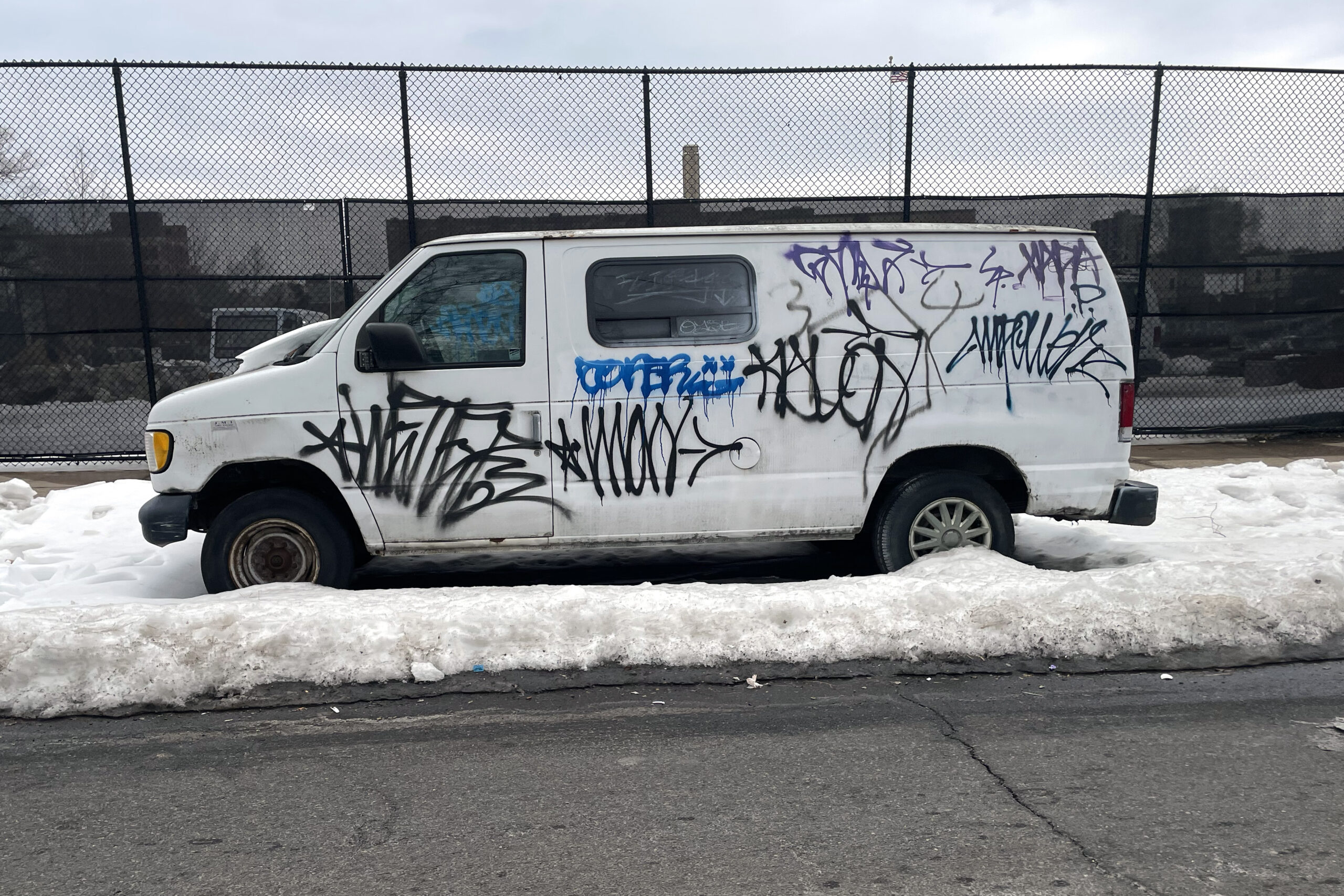
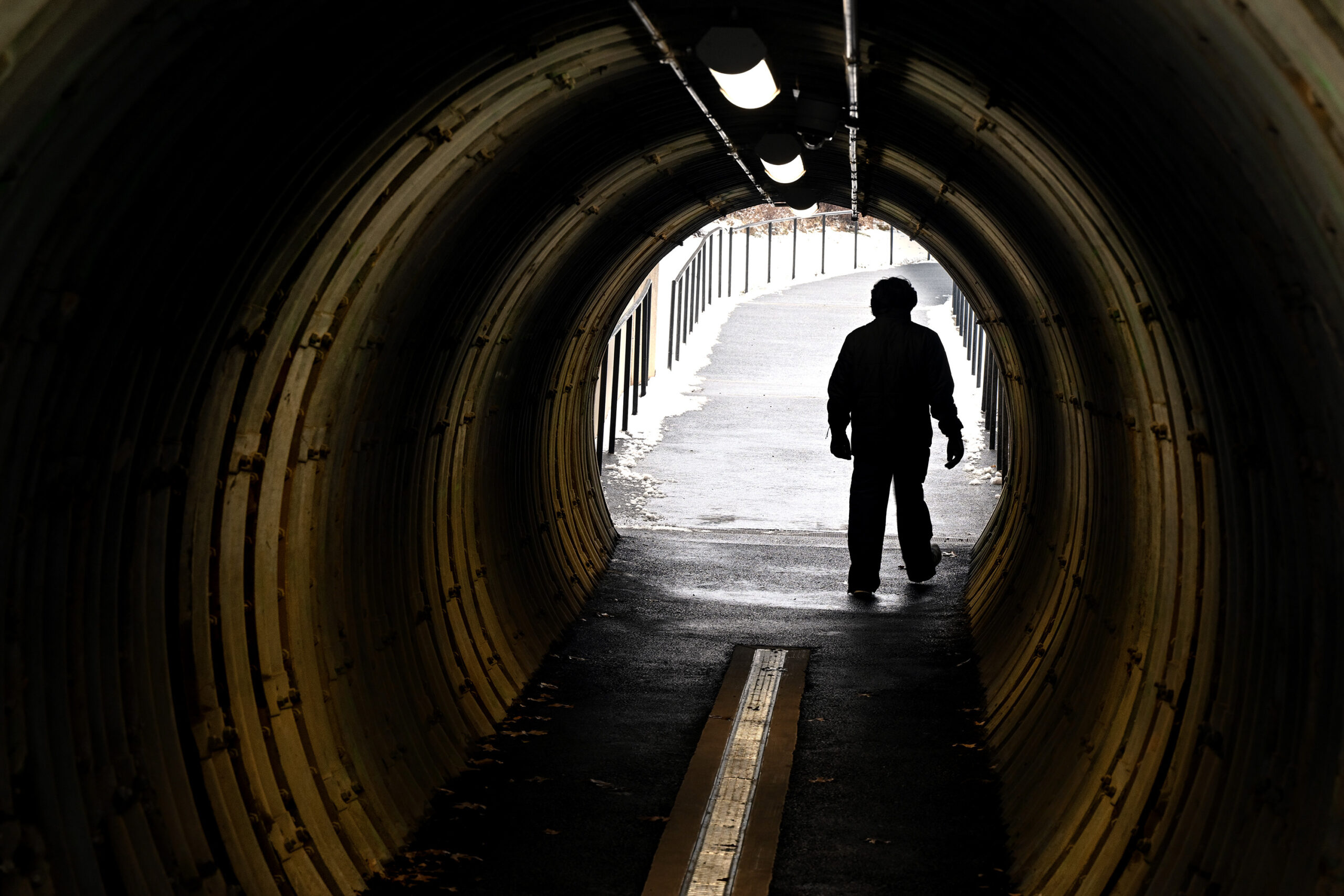
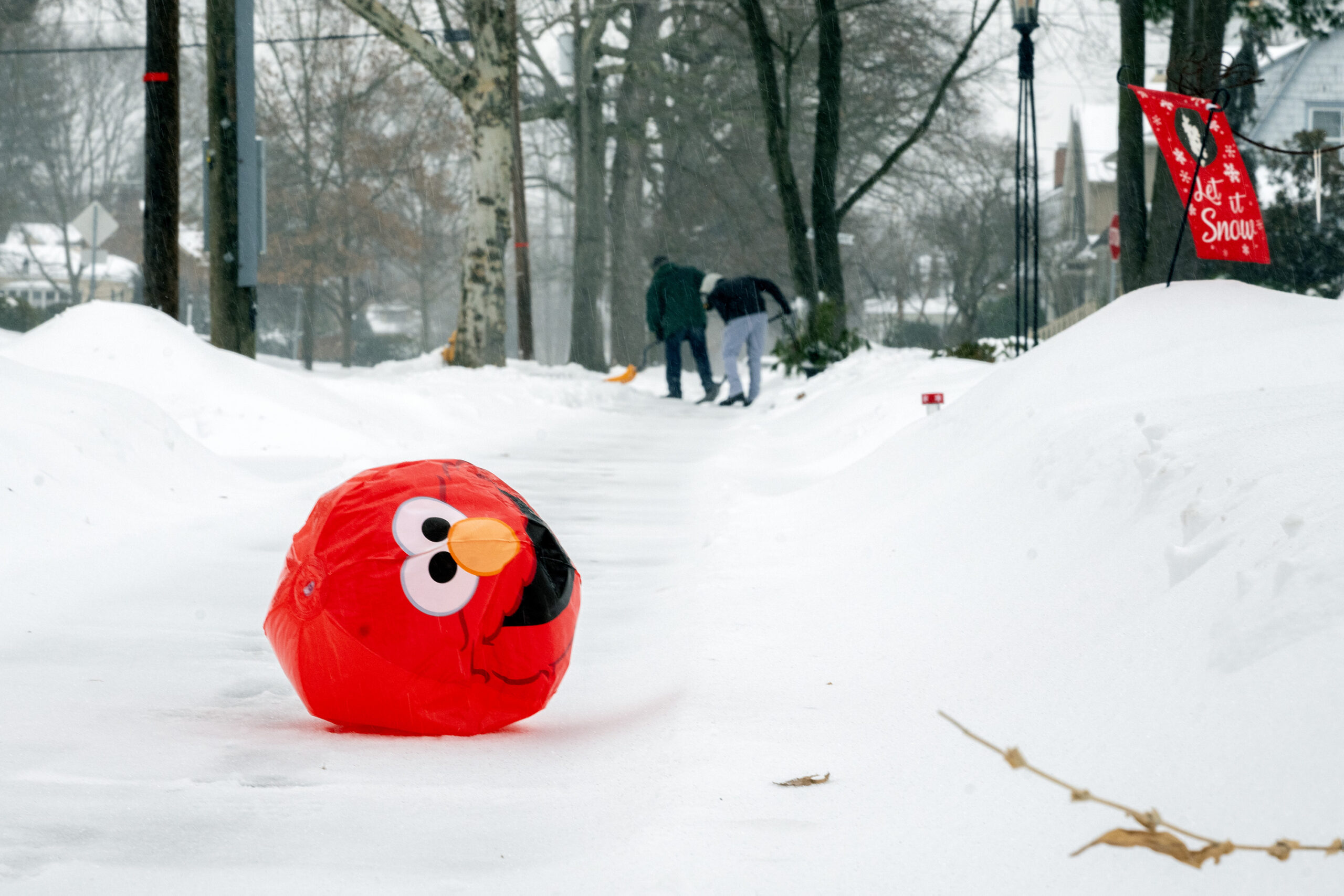
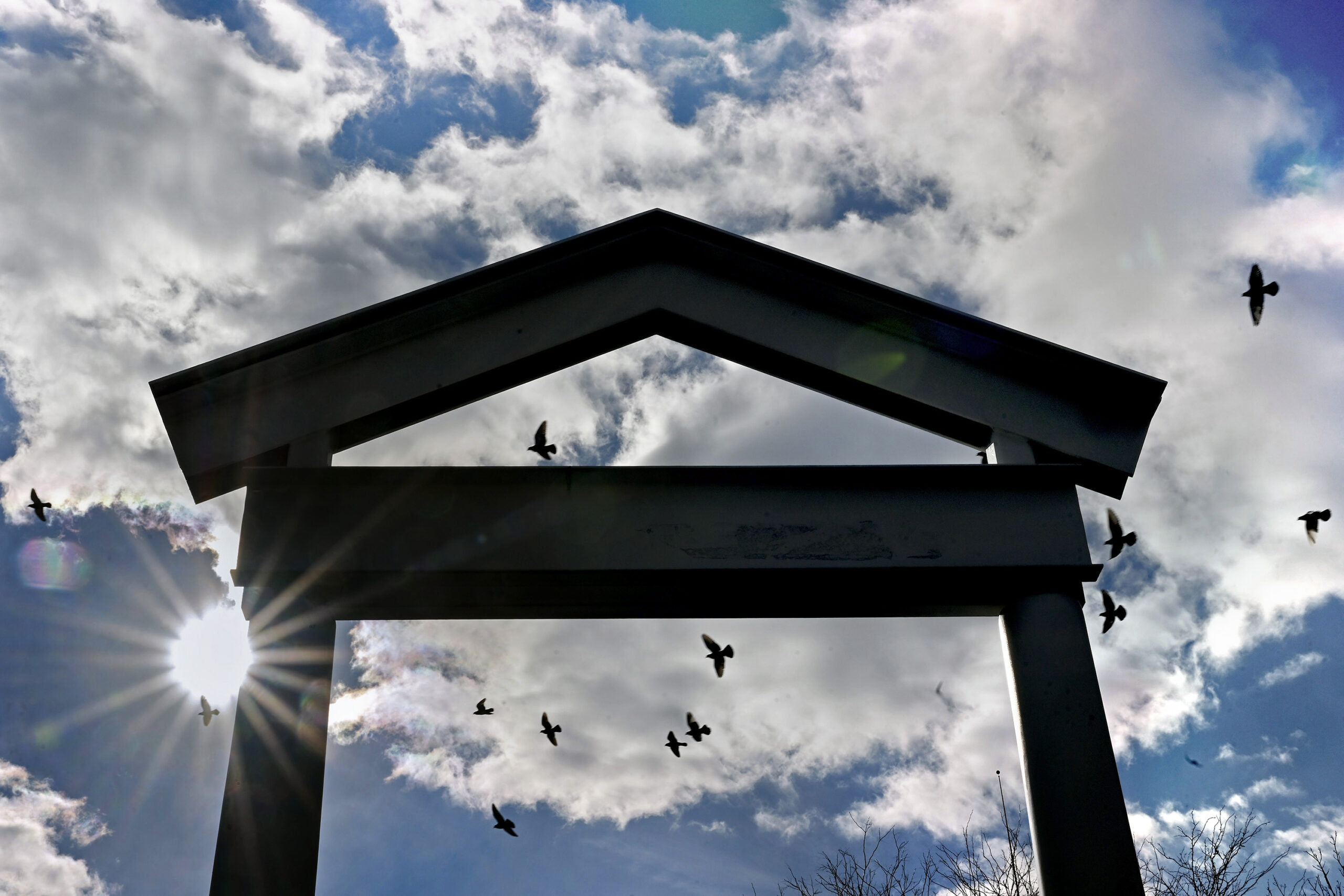
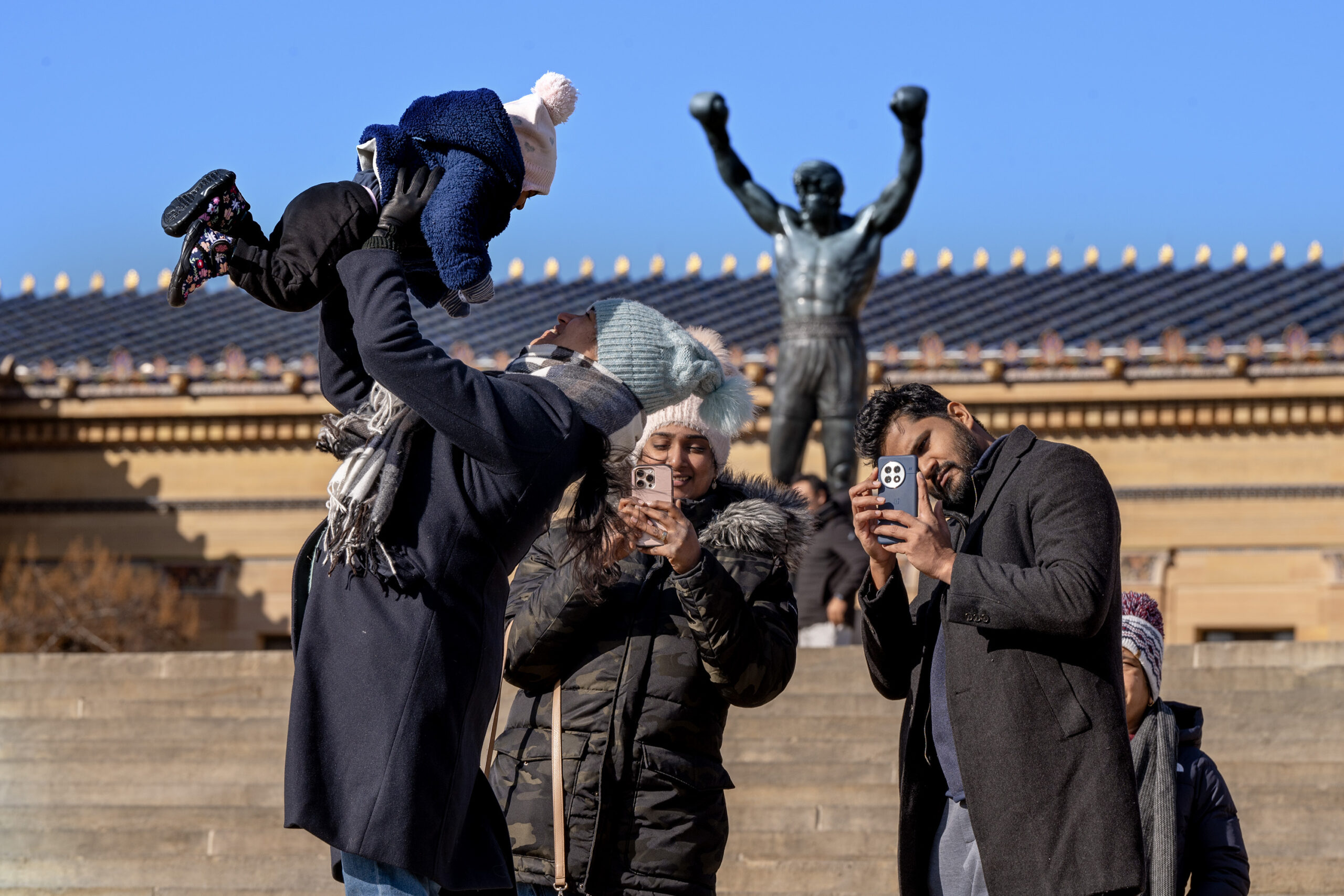
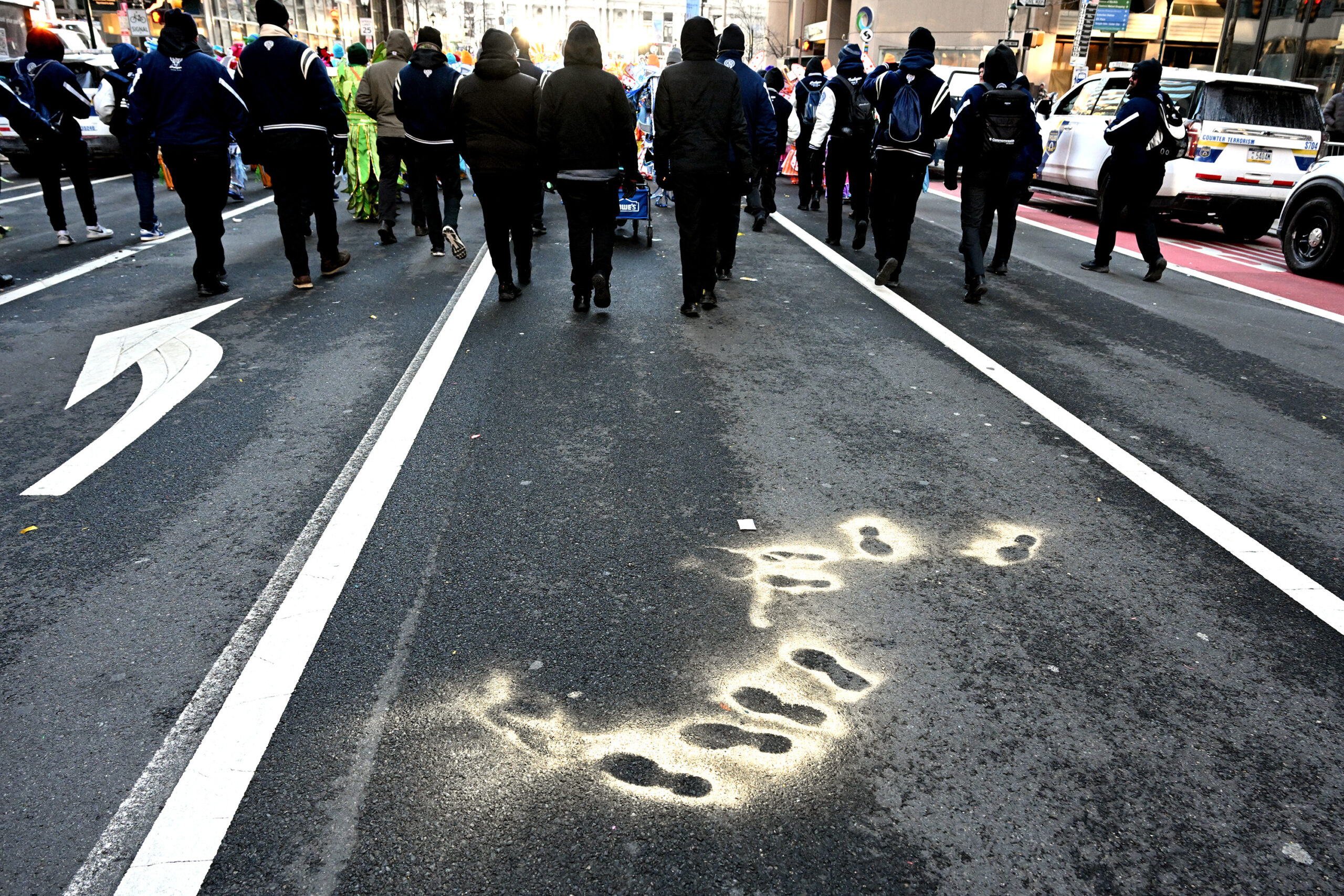
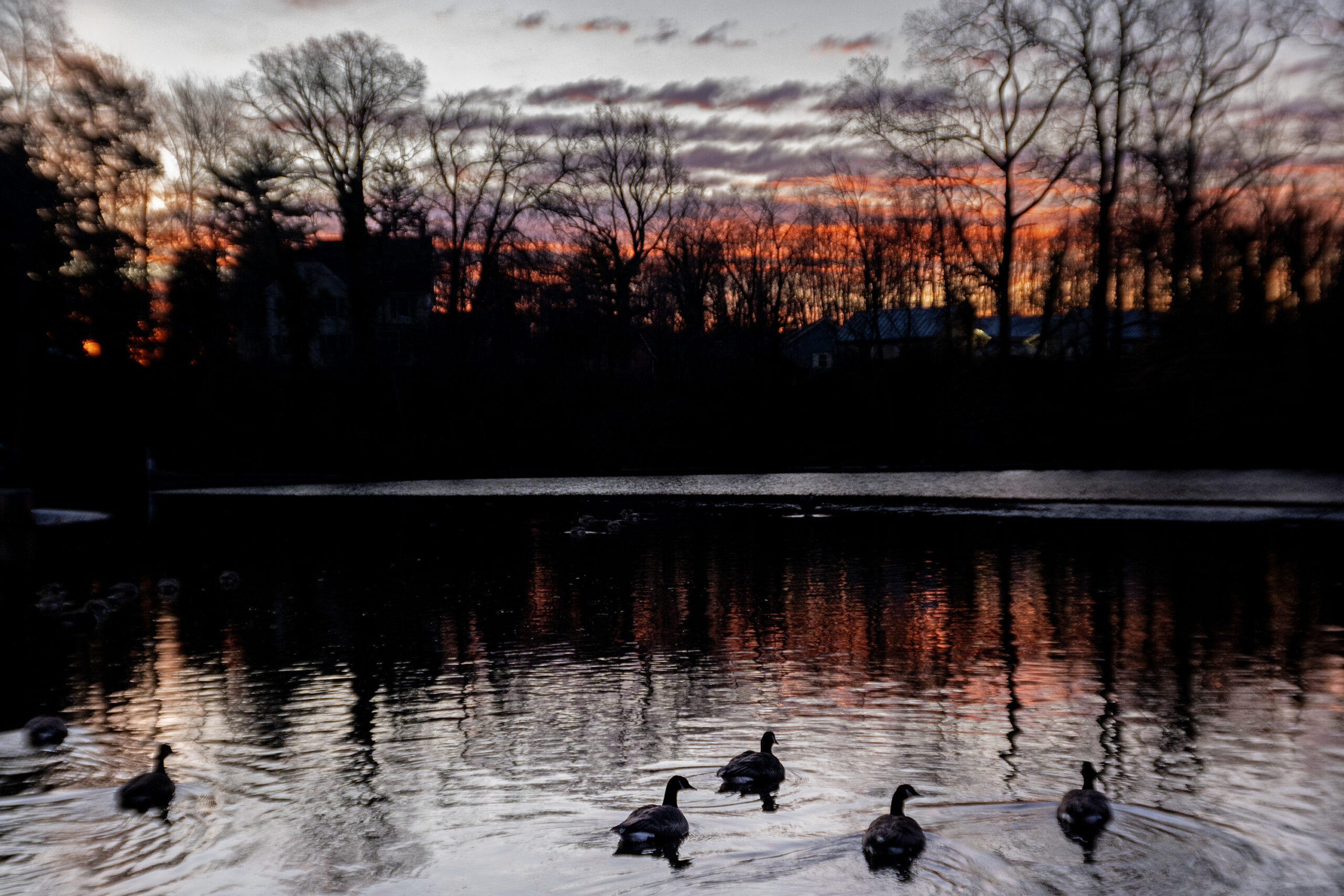
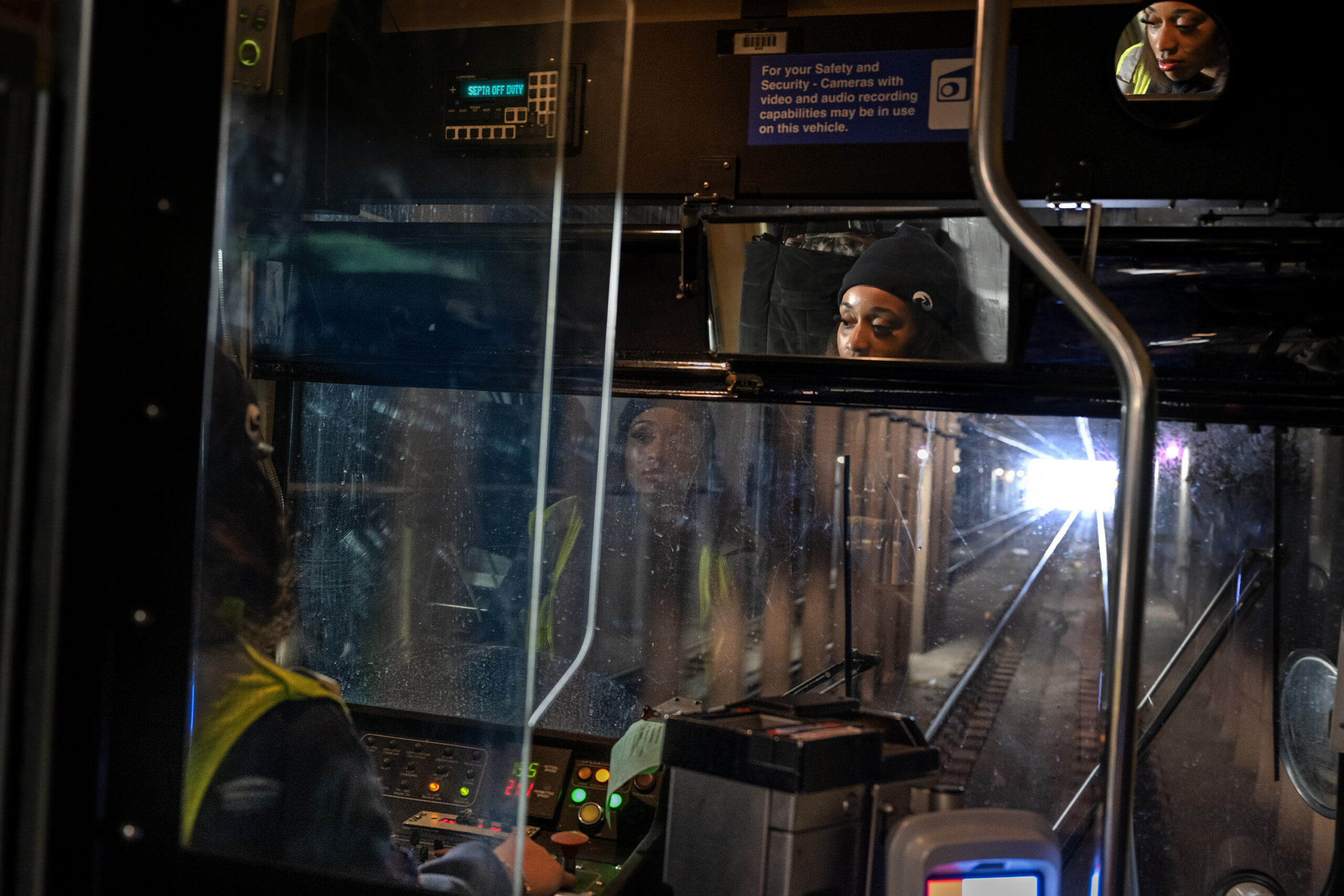
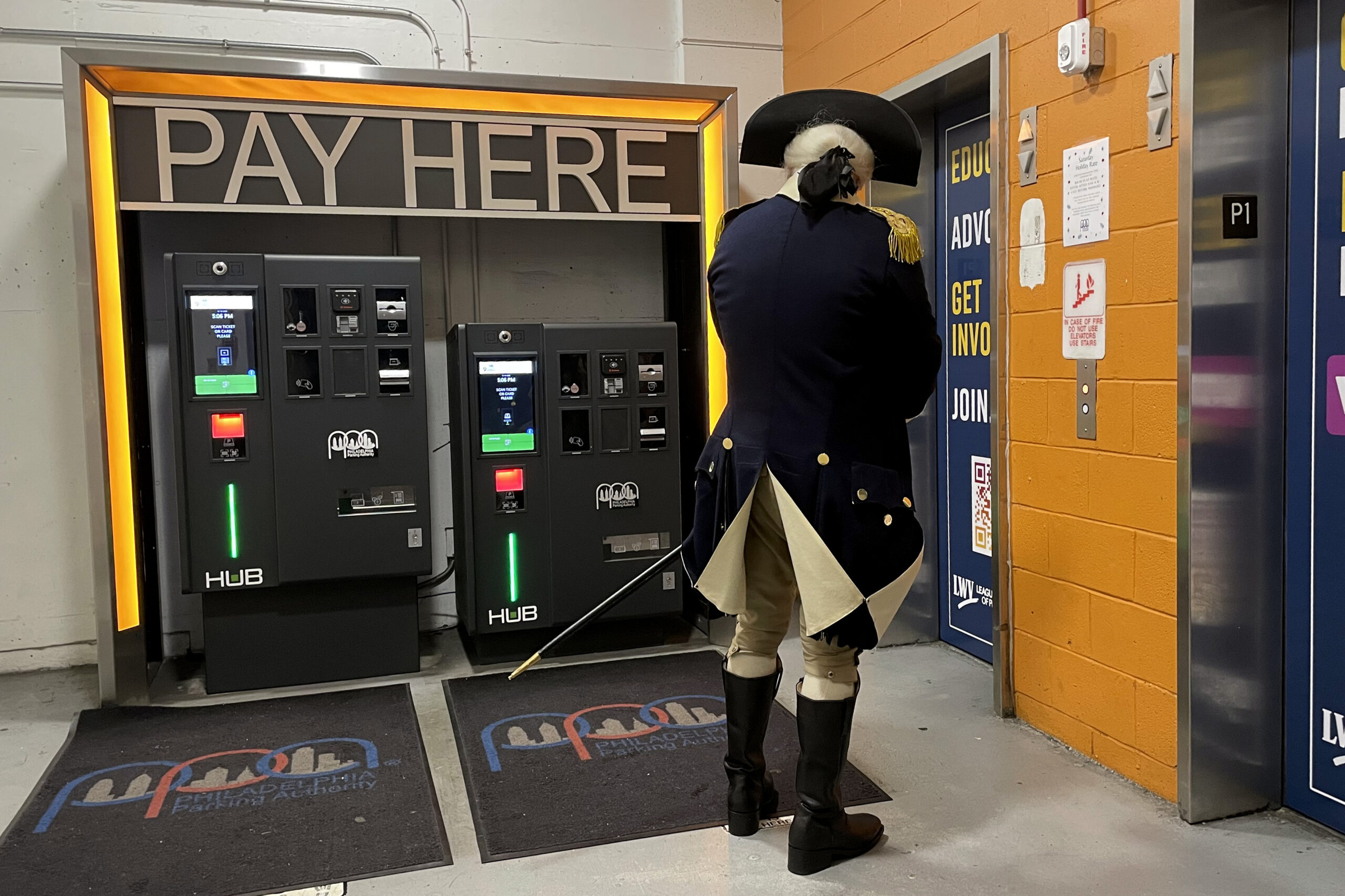
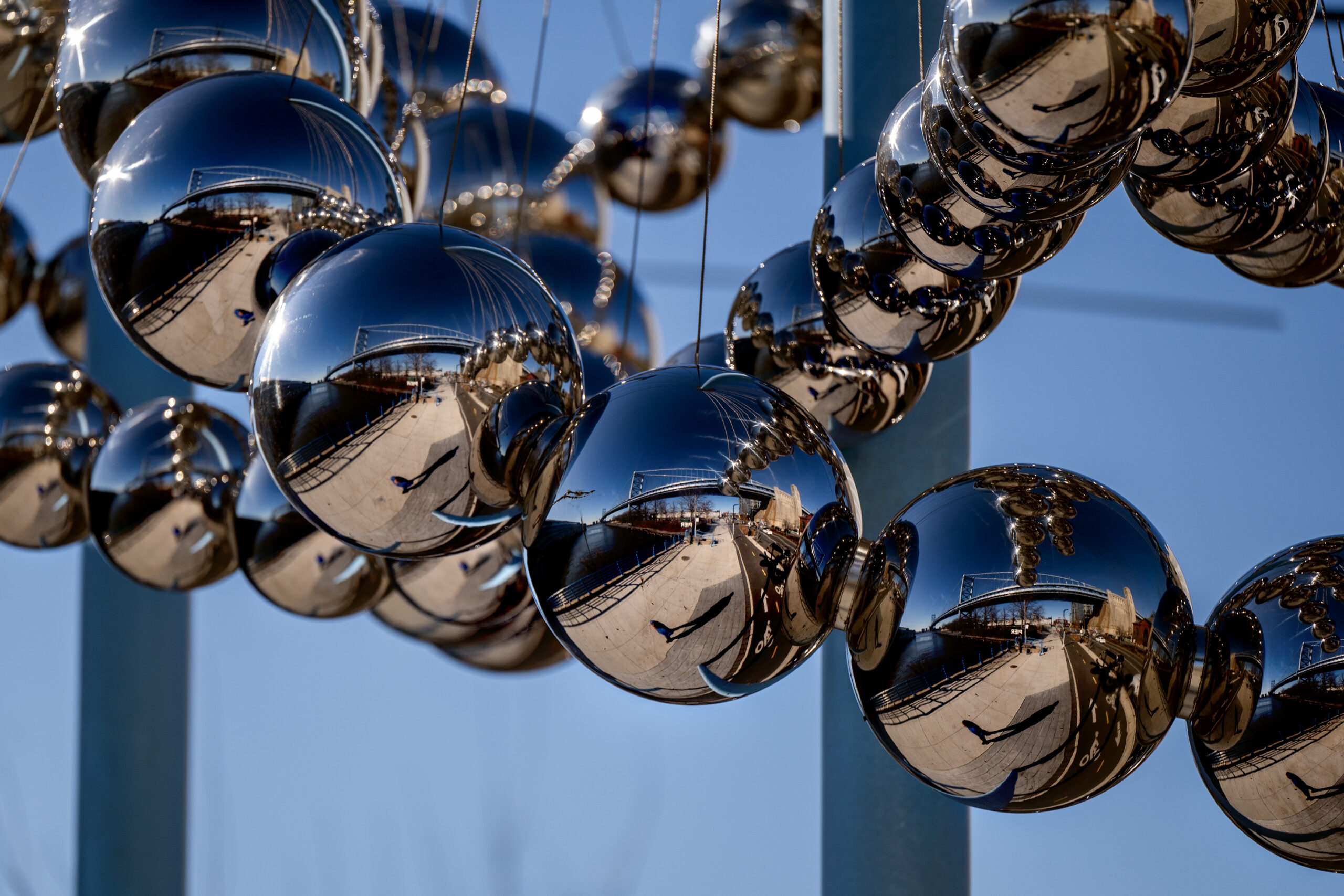
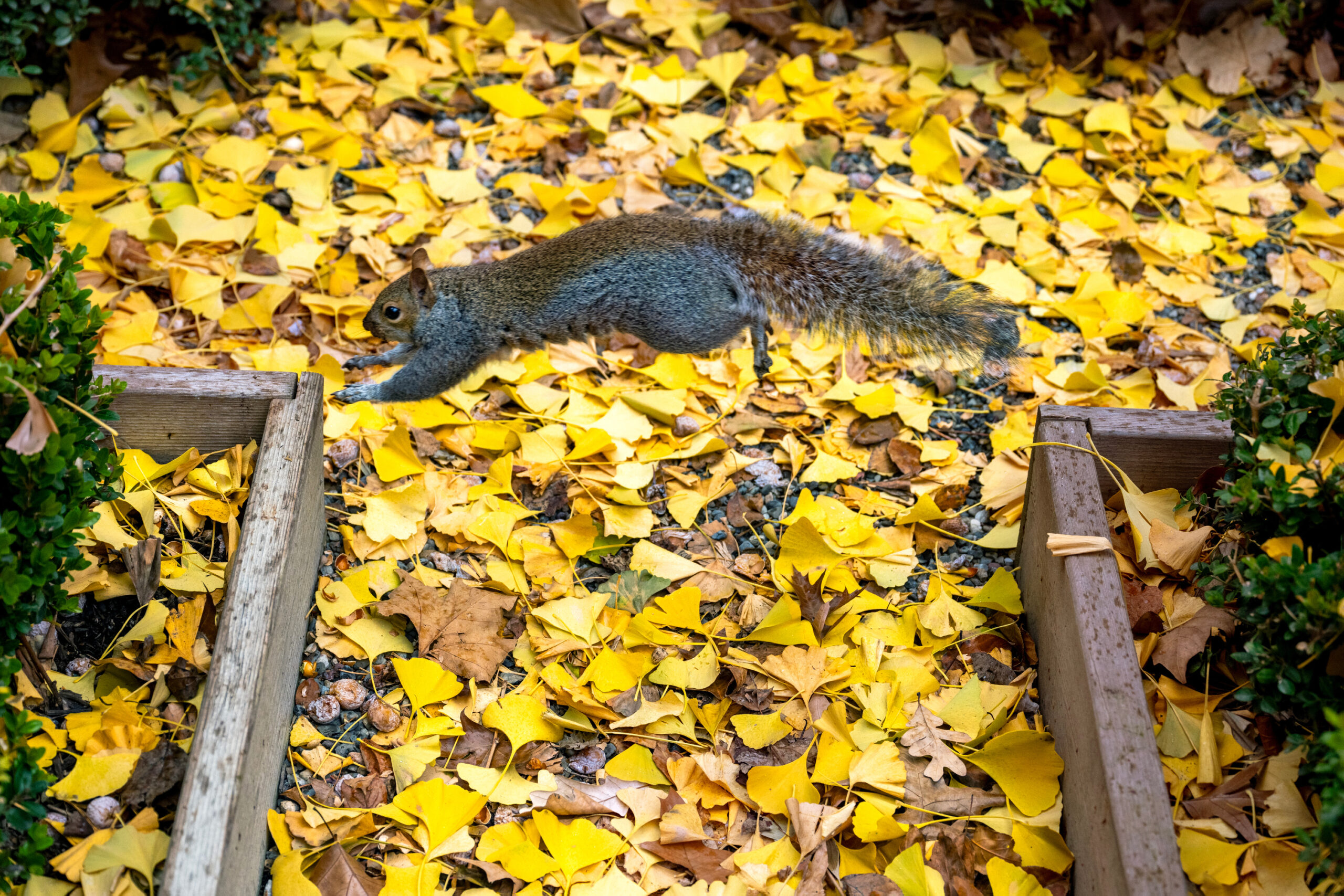
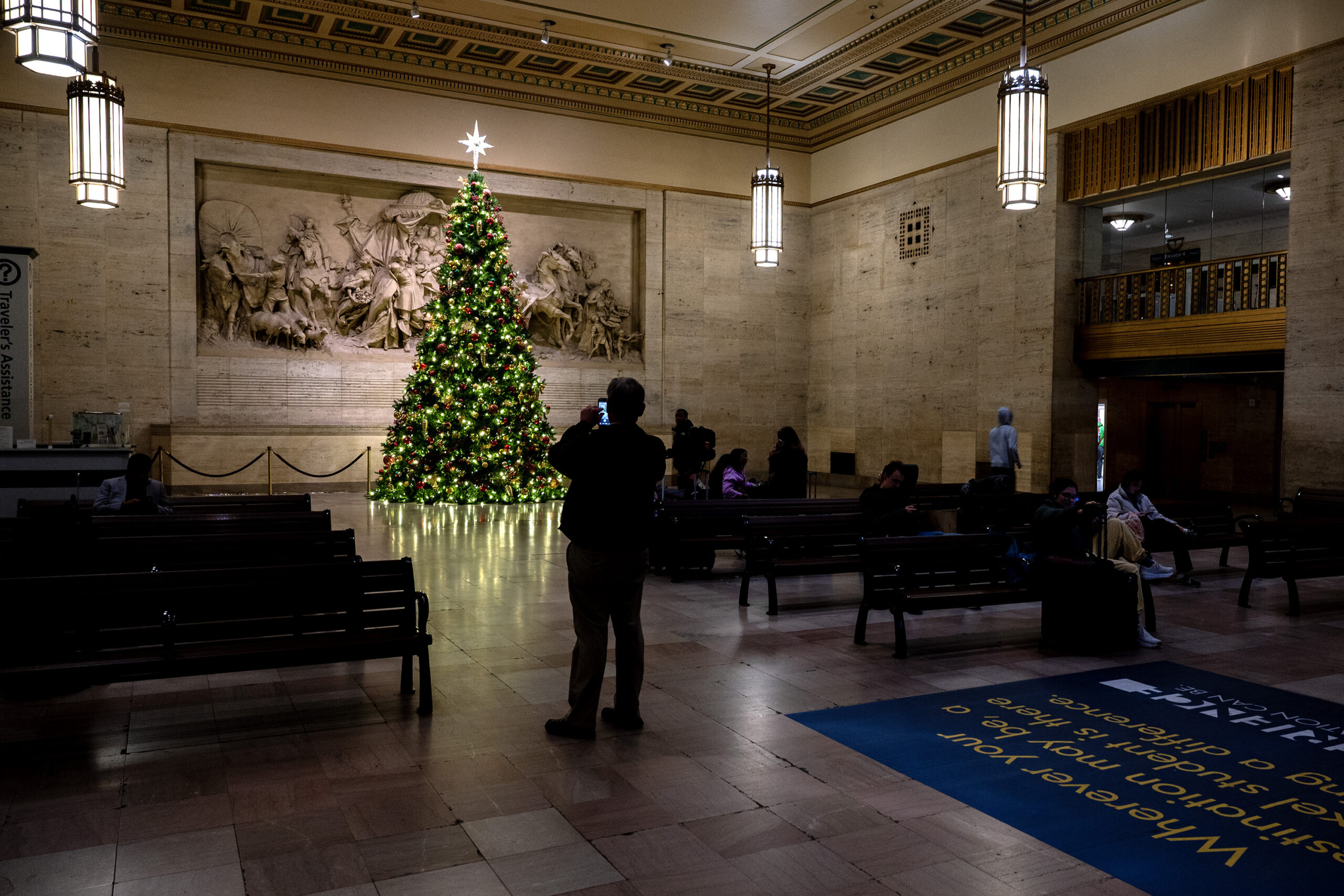
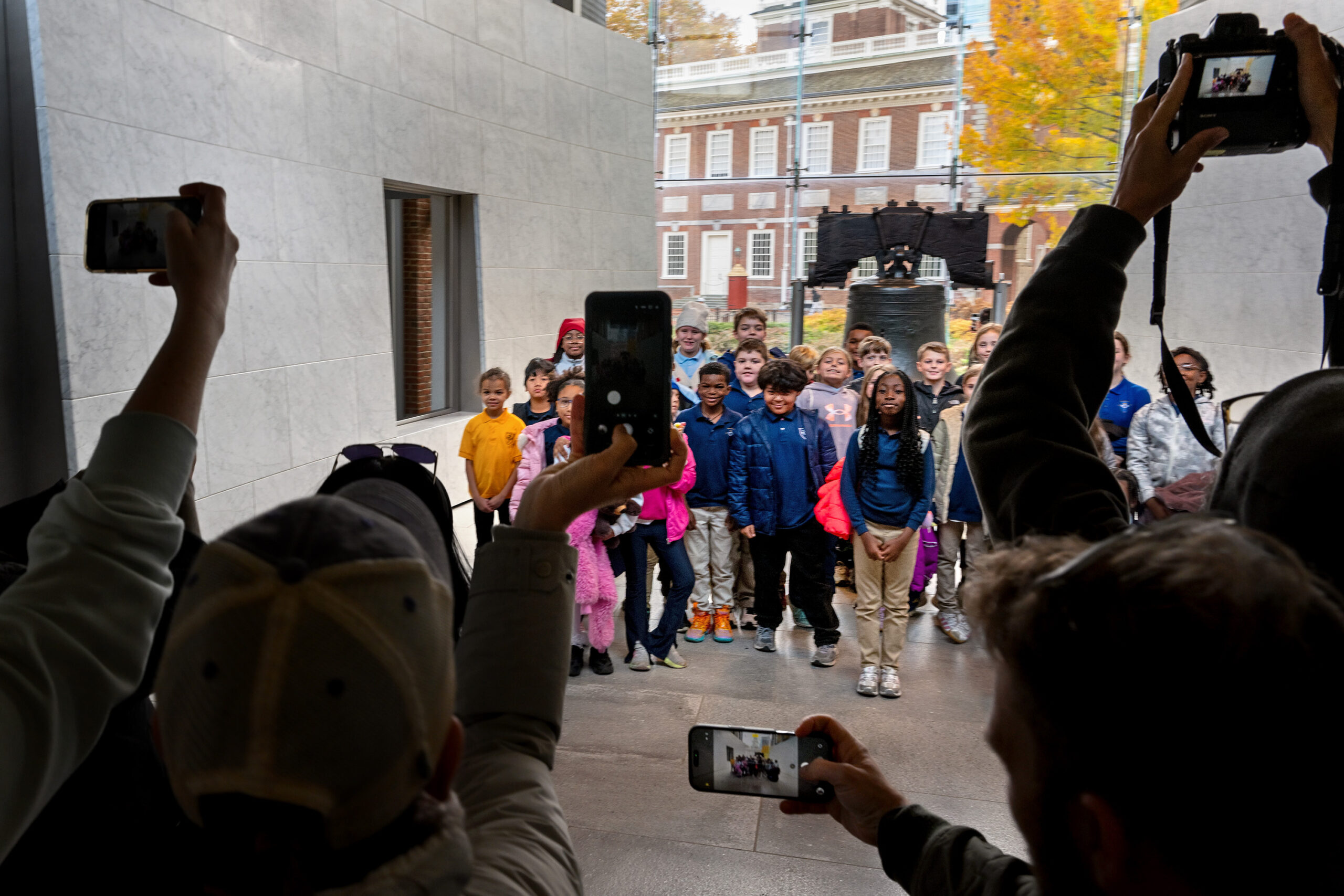
February 16, 2026: What came first? The dirty snowpacked berm of frozen slush or the graffiti? February 9, 2026: Walking through a corrugated metal culvert called the “Duck Tunnel,” a pedestrian navigates the passageway under the SEPTA tracks on the Swarthmore College campus. February 2, 2026: A light-as-air Elmo balloon rolls along a sidewalk in Haddonfield, propelled by the wind as Sunday’s heavy snow starts to turn to ice and sleet. January 26, 2026: The President’s House in Independence National Historical Park hours Jan, 22, after all historical exhibits were removed following President Trump’s Executive Order last March that the content at national parks that “inappropriately disparage” the U.S. be reviewed. The site, a reconstructed “ghost” structure titled “Freedom and Slavery in the Making of a New Nation” (2010), serves as a memorial to the nine people George Washington enslaved there during the founding of America.January 19, 2026: A low-in-the-sky winter sun is behind the triangular pediment of the “front door” of the open-air President’s House installation in Independence National Historical Park. The reconstructed “ghost” structure with partial walls and windows of the Georgian home known in the 18th century as 190 High St. is officially titled, “Freedom and Slavery in the Making of a New Nation” (2010). It is designed to give visitors a sense of the house where the first two presidents of the United States, George Washington and John Adams, served their terms of office. The commemorative site designed by Emanuel Kelly, with Kelly/Maiello Architects, pays homage to nine enslaved people of African descent who were part of the Washington household with videos scripted by Lorene Cary and directed by Louis Massiah. Deepika Iyer holds her niece Ira Samudra aloft in a Rockyesque pose, while her parents photograph their 8 month-old daughter, in front of the famous movie prop at the top of the steps at the Philadelphia Art Museum. Iyer lives in Philadelphia and is hosting a visit by her mother Vijayalakshmi Ramachandran (partially hidden); brother Gautham Ramachandran; and her sister-in-law Janani Gautham who all live in Bangalore, India.January 5, 2026: Parade marshals trail behind the musicians of the Greater Kensington String Band heading to their #9 position start in the Mummers Parade. Spray paint by comic wenches earlier in the day left “Oh, Dem Golden Slippers” shadows on the pavement of Market Street. This year marked the 125th anniversary of Philly’s iconic New Year’s Day celebration.Dec. 29, 2025: Canada geese at sunrise in Evans Pond in Haddonfield, during the week of the Winter Solstice for the Northern Hemisphere. December 22, 2025: SEPTA trolley operator Victoria Daniels approaches the end of the Center City Tunnel, heading toward the 40th Street trolley portal after a tour to update the news media on overhead wire repairs in the closed tunnel due to unexpected issues from new slider parts.December 15, 2025: A historical interpreter waits at the parking garage elevators headed not to a December crossing of the Delaware River, but an event at the National Constitution Center. General George Washington was on his way to an unveiling of the U.S. Mint’s new 2026 coins for the Semiquincentennial, December 8, 2025: The Benjamin Franklin Bridge and pedestrians on the Delaware River Trail are reflected in mirrored spheres of the “Weaver’s Knot: Sheet Bend” public artwork on Columbus Boulevard. The site-specific stainless steel piece located between the Cherry Street and Race Street Piers was commissioned by the City’s Public Art Office and the Delaware River Waterfront Corporation and created and installed in 2022 by the design and fabrication group Ball-Nogues Studio. The name recalls a history that dominated the region for hundreds of years. “Weaver’s knot” derives from use in textile mills and the “Sheet bend” or “sheet knot” was used on sailing vessels for bending ropes to sails. November 29, 2025: t’s ginkgo time in our region again when the distinctive fan-shaped leaves turn yellow and then, on one day, lose all their leaves at the same time laying a carpet on city streets and sidewalks. A squirrel leaps over leaves in the 18th Century Garden in Independence National Historical Park Nov. 25, 2025. The ginkgo (Ginkgo biloba) is considered a living fossil as it’s the only surviving species of a group of trees that existed before dinosaurs. Genetically, it has remained unchanged over the past 200 million years. William Hamilton, owner the Woodlands in SW Phila (no relation to Alexander Hamilton) brought the first ginkgo trees to North America in 1785.November 24, 2025: The old waiting room at 30th Street Station that most people only pass through on their way to the restrooms has been spiffed up with benches – and a Christmas tree. It was placed there this year in front of the 30-foot frieze, “The Spirit of Transportation” while the lobby of Amtrak’s $550 million station restoration is underway. The 1895 relief sculpture by Karl Bitter was originally hung in the Broad Street Station by City Hall, but was moved in 1933. It depicts travel from ancient to modern and even futuristic times. November 17, 2025: Students on a field trip from the Christian Academy in Brookhaven, Delaware County, pose for a group photo in front of the Liberty Bell in Independence National Historical Park on Thursday. The trip was planned weeks earlier, before they knew it would be on the day park buildings were reopening after the government shutdown ended. “We got so lucky,” a teacher said. Then corrected herself. “It’s because we prayed for it.”
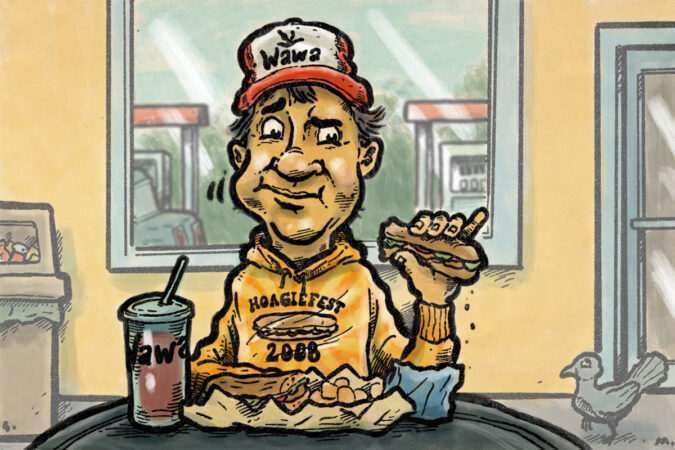
This week’s question is… Has Wawa’s food changed too much?
Stephanie Farr, Features Columnist
In my 19 years here I’ve found that Wawa has remained a consistent standard in my life, both in terms of quality and in terms of how often I eat it. I don’t think anyone would argue that it’s the best food in a very foodie town, but it’s never let me down.
Tommy Rowan, Programming Editor
Wawa lost something when they took out the meat slicers and stopped having bread delivered. In the early 2000s, at least to me, the sandwiches tasted fresher. It still had the spirit of a deli. Now it’s just like Subway. Which, hey, fine in a pinch. But I’m not going out of my way to stop anymore.
Jenn Ladd, Deputy Food Editor
I am a Montco native, so Wawa was a big part of my teenage years. Like most kids in this area, I thought of it as sort of a third space in high school — have many fond memories of sitting in or around my car or a friend’s car in Wawa parking lots in Flourtown, Wynnewood, Ocean City — and then when I went to college in Baltimore, that tether remained.
I’d drive 25 minutes each way from the northern edge of Baltimore City to a Wawa in like Parkville, Md., or something. I’d get gas, coffee, and a breaded chicken sandwich or the protein snack pack (grapes, cheese, crackers). Often, I’d round up the other Philly-area kids and we’d all go together at like 11 p.m. on a weeknight. It was a ritual.
All of that is to say, I once held deep-seated affection for Wawa.
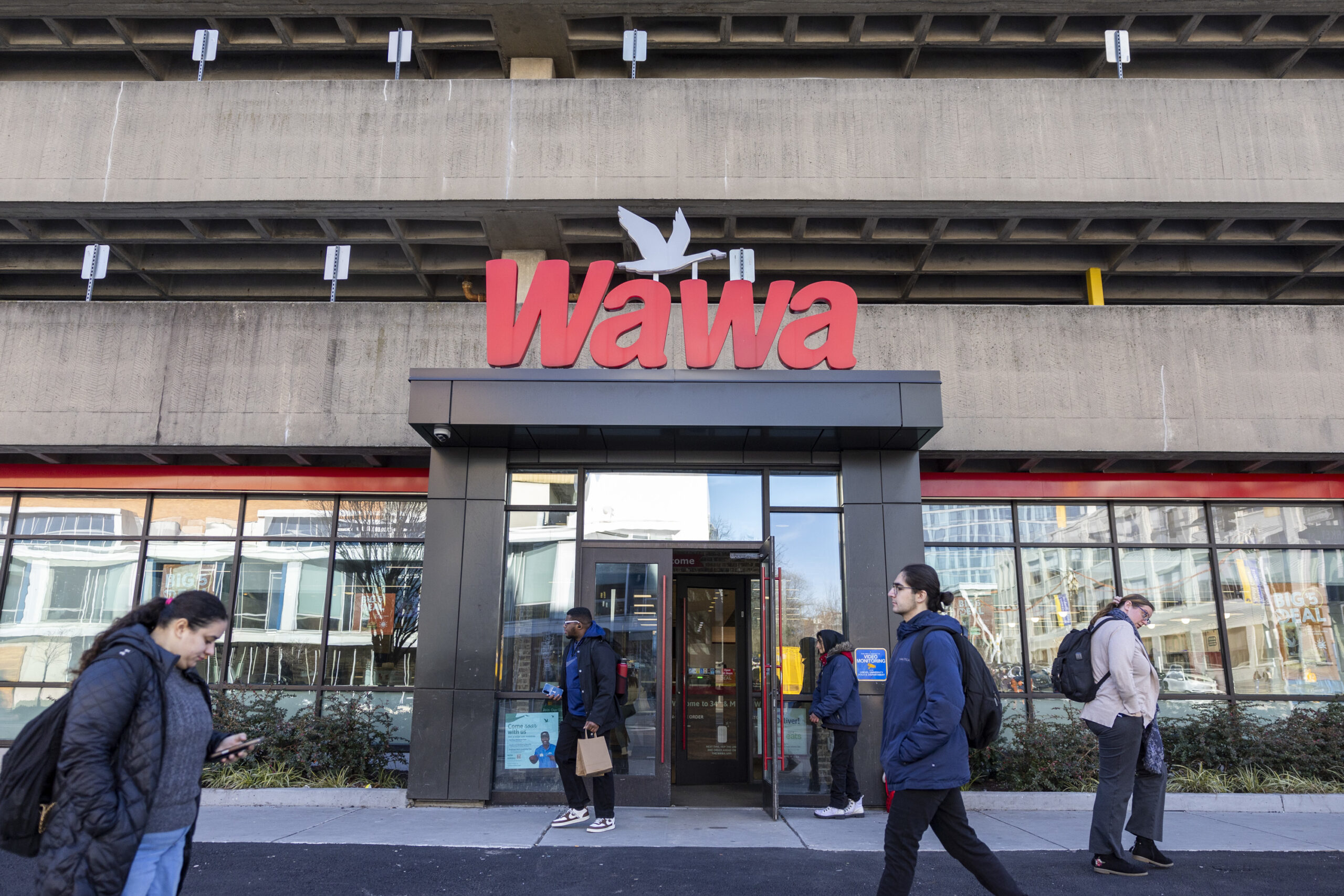
The Wawa at the corner of 34th and Market Street near Drexel University will be closing in Philadelphia, on Tuesday, Jan. 13, 2026.
But it has lost that spot in the past three or four years.
I used to commence each long-distance road trip with a Wawa breakfast hoagie — the scrambled eggs used to be so rich that you really didn’t need cheese because they were that good and plentiful; the sausage was really flavorful; the portion so abundant that you could drive for hours without feeling the need for a snack. The last time I got a breakfast sandwich from Wawa, I gotta tell you, it was sad.
I was sad.
Stephanie Farr
A road trip still doesn’t start for me until I get a Wawa Sizzli — croissant, egg, turkey sausage, and cheese — and I’ve never been disappointed. That being said, I recently got a breakfast sandwich at the flagship Wawa at Sixth and Market and that one came with scrambled eggs and it was a mess! I much prefer the egg mold.
What has gone downhill for you guys?
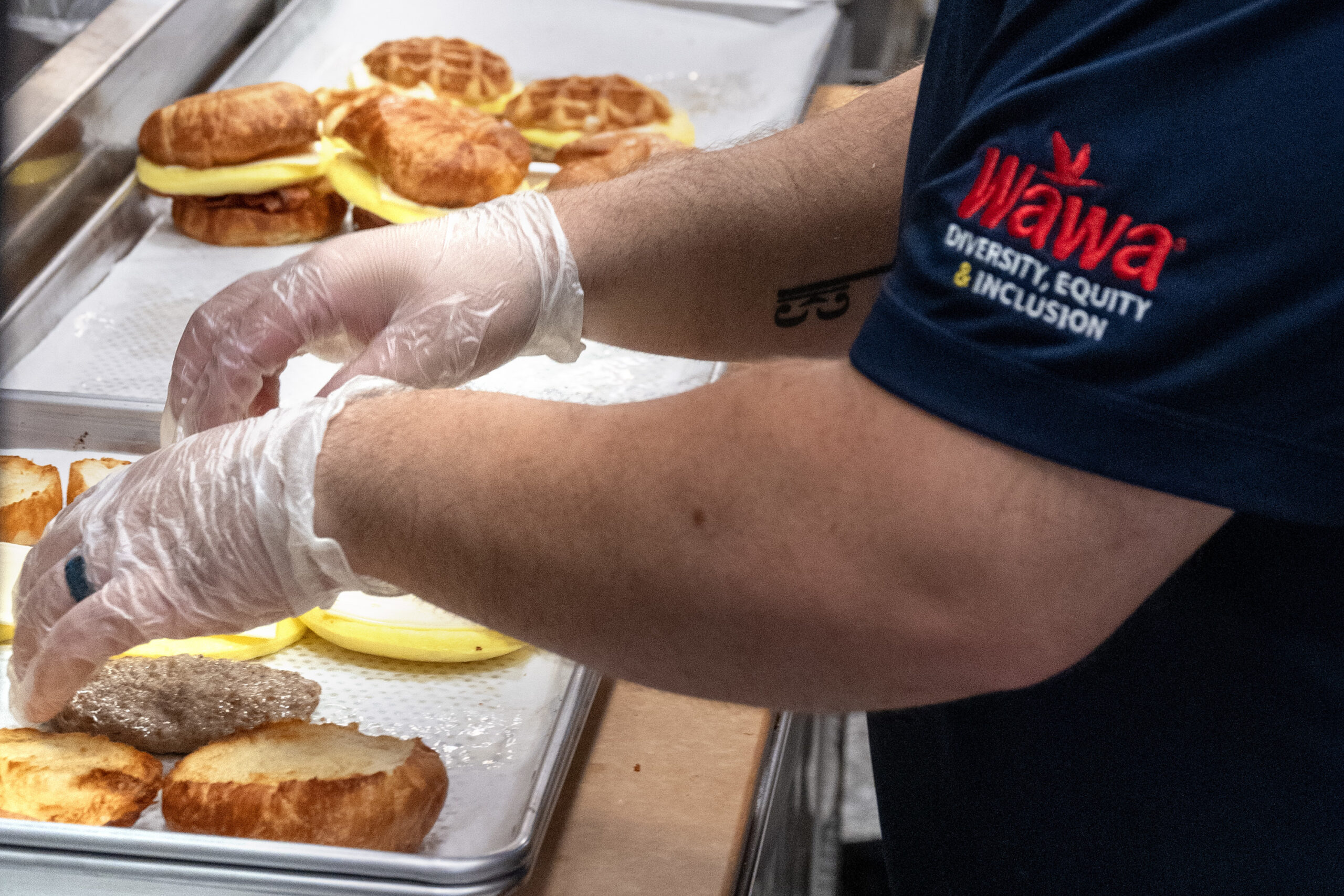
A worker assembles breakfast Sizzlis during the grand opening on Sept. 19, 2024, of the first Wawa in Central Pennsylvania — solid Sheetz territory — in the Dauphin County borough of Middletown.
Jenn Ladd
I’ve noticed that the portions have gotten kinda puny for the custom-ordered stuff, which was my jam for years. And now I think you’re better off with the grab-and-go things — the Sizzlis.
I think Wawa putting so much focus on the “Super Wawa” format and then constantly “innovating” with the food menu has really been its downfall. Like, just keep it simple.
Tommy Rowan
I still think about the old Buffalo Blue Breaded Chicken Sandwich. It was a robust and crispy chicken patty. And it was slathered in that bright orange buffalo-blue cheese sauce that brought the heat and the tang. It was unmistakable and worth the price of admission. And it came on a fresh kaiser roll, to boot.
They have introduced new lines of chicken sandwiches in recent years, but they’re not the same.
Jenn Ladd
I used to love those chicken sandwiches. They had my heart over a hoagie almost every time.
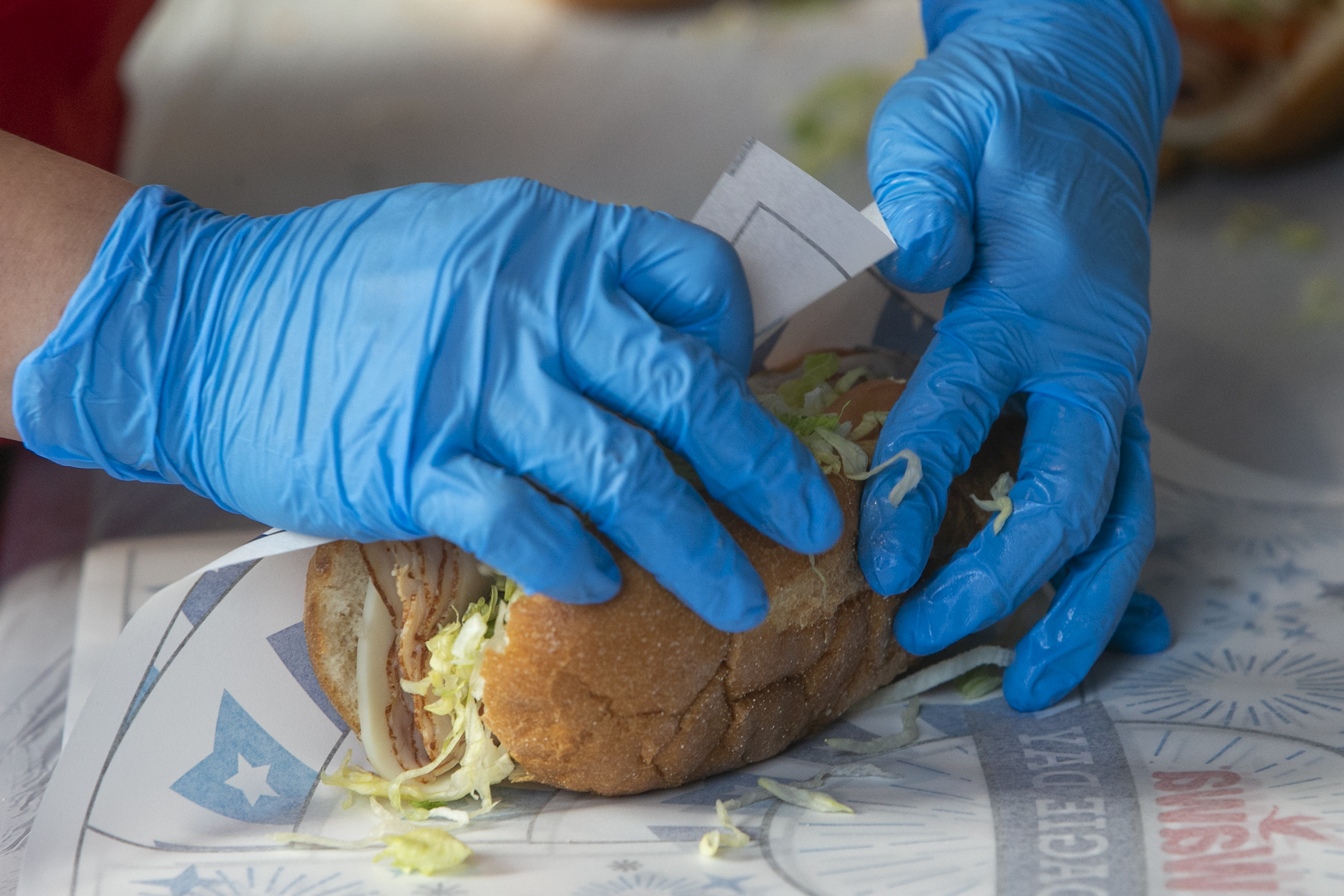
A worker at the Wawa at Sixth and Chestnut Streets wraps a turkey hoagie with provolone cheese and lettuce and tomato for Wawa Welcome America Hoagie Day in 2020.
Stephanie Farr
I’ve actually never tried one of their chicken sandwiches, but I am mad they took the spicy cherry pepper relish off the menu. That is a GOAT hoagie topping.
Personally, I like Wawa’s soups, particularly the chicken noodle and tomato bisque. I’m sure they come out of a bag, but they taste pretty good, and it’s not something you find at similar places, like Sheetz.
Jenn Ladd
[shudder at the thought of bagged soup]
Stephanie Farr
As I assumed you would, foodie. lol. It doesn’t bother me, but my standards are pretty low.
Evan Weiss, Deputy Features Editor
If you all could tell Wawa to change two things back, what would they be?
Stephanie Farr
Just give me back my spicy cherry pepper relish for the love of all that is holy please! Also, they better never get rid of the garlic aioli. Get that on a hoagie and bring it into a public place and everyone will ask you what smells so good. (It’s happened to me in the newsroom!)
Tommy Rowan
Bring back the slicers and the fresh bread. It would make a huge difference.
Jenn Ladd
I’d have them remember their roots as opposed to coming up with novelties and/or trying to compete with other convenience store chains on selection. (See Wawa pizza, a repeated failure.) They used to have great sandwiches and snacks. I’ll forever cherish the memory of a boss in Baltimore putting a Wawa pretzel on my desk because she had been in the Philly area earlier in the day. It was like a little love note from home. They’ve gotten too corporate, so I basically just treat it like a gas station now.
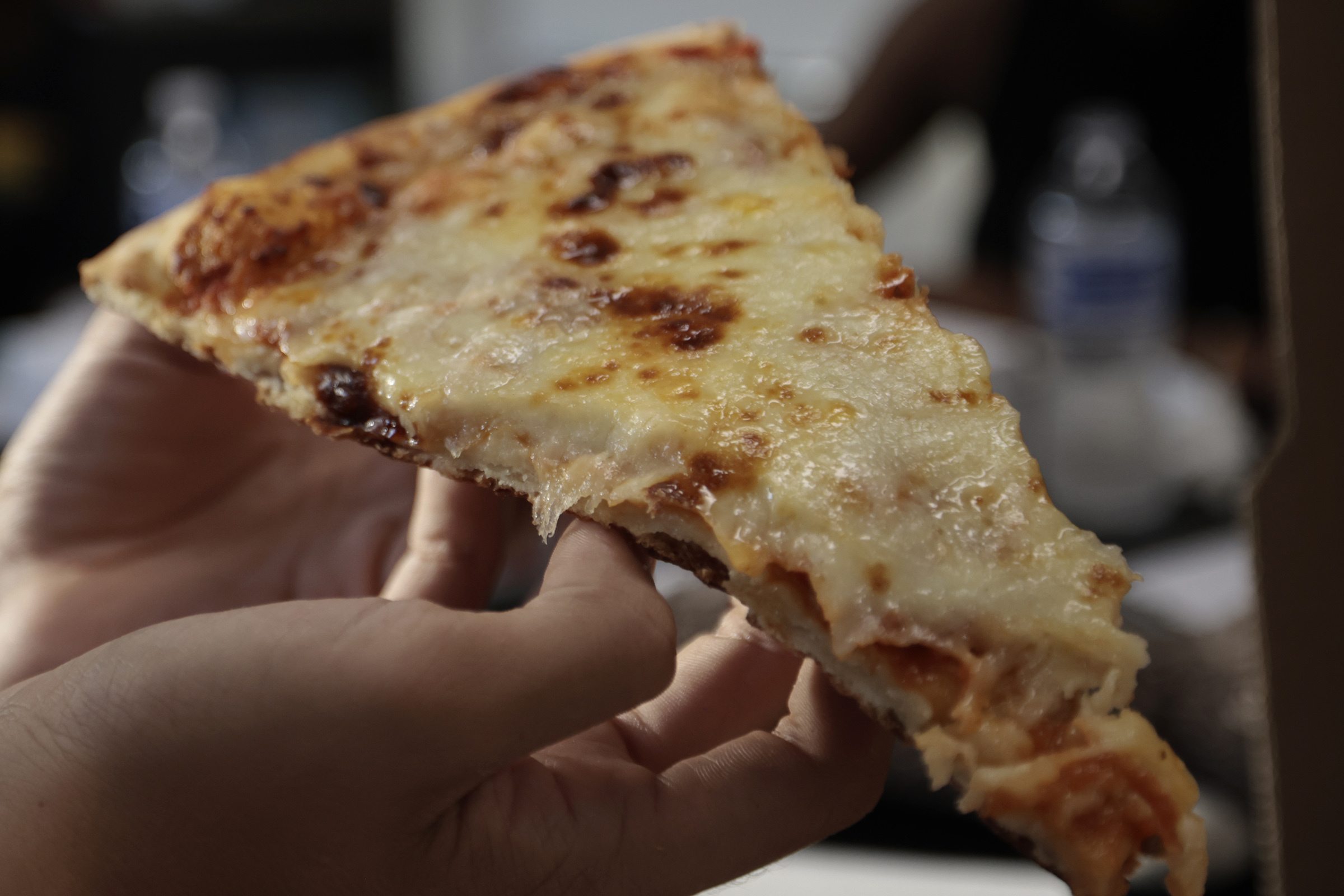
A slice of Wawa cheese pizza at Science Leadership Academy in Philadelphia in 2023.
Stephanie Farr
I was talking to someone about Wawa last week, after covering the first Sheetz opening in Montco, and they said while Sheetz may have more food offerings, Wawa will still remain supreme in the Philly region because: “We’re loyal and it has nothing to do with quality.”
Honestly, I think that’s one of the reasons I love Philly so much. Tommy and Jenn, are you bucking that trend, have you forsaken your Wawa loyalty?
Jenn Ladd
I don’t believe in blind allegiance.
But also, I don’t think we should just keep giving money to an entity that doesn’t seem to be minding the quality of what it’s putting out to customers.
Just because we are fond of it.
Stephanie Farr
So I take it you’re not a Phillies or Flyers fan, either?
Jenn Ladd
Ahahaha, well I’m not giving them any money, that’s true.
Tommy Rowan
Hahaha. I will always have a special place in my heart for Wawa. And I hope it comes back around. I’m going to be thinking of that chicken sandwich for the rest of the week now.
Jenn Ladd
I won’t even get into how Wawa has betrayed Philadelphia proper, but that’s another reason I’m loathe to be blindly loyal to them.
I’d love for Wawa to make a quality comeback, too, truth be told, but I don’t know that I’d realize that without this conversation.
Have a question of your own? Or an opinion? Email us at eweiss@inquirer.com.
There are two architects of Philadelphia’s chicken-bone temple. One has whiskers. The other has hands.
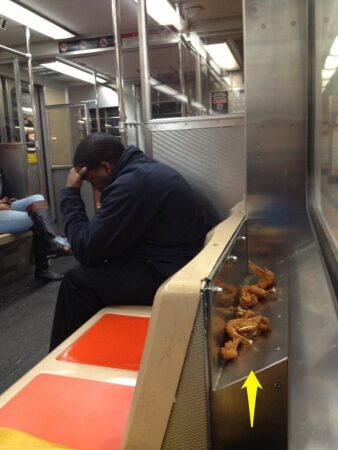
Curious Philly asked why there were so many chicken bones on the streets of our city. Turns out it’s a whole circle of life testament to gross urban living. Rats rip into trash bags, raccoons drag leftovers into the street, and yes, sometimes humans just … drop them.
Somewhere in Philly, a squirrel is dragging a drumstick across a crosswalk like it just led the Mummers Parade down Broad. A raccoon is performing minor surgery on a Hefty bag. And a rat is simply responding to the opportunity. Philadelphia is the eighth-rattiest city in America (which feels relevant here), and twice-weekly trash pickup means an extra day of opportunity. A ripped bag on the curb is an open invitation.
Meanwhile, dog owners are performing full-contact tug-of-war in the middle of the Gayborhood because their shih tzu refuses to give up a chicken bone that is just as likely to choke them to death.
So please, put a tight lid on the trash cans. Until then, the sidewalk wing night continues.
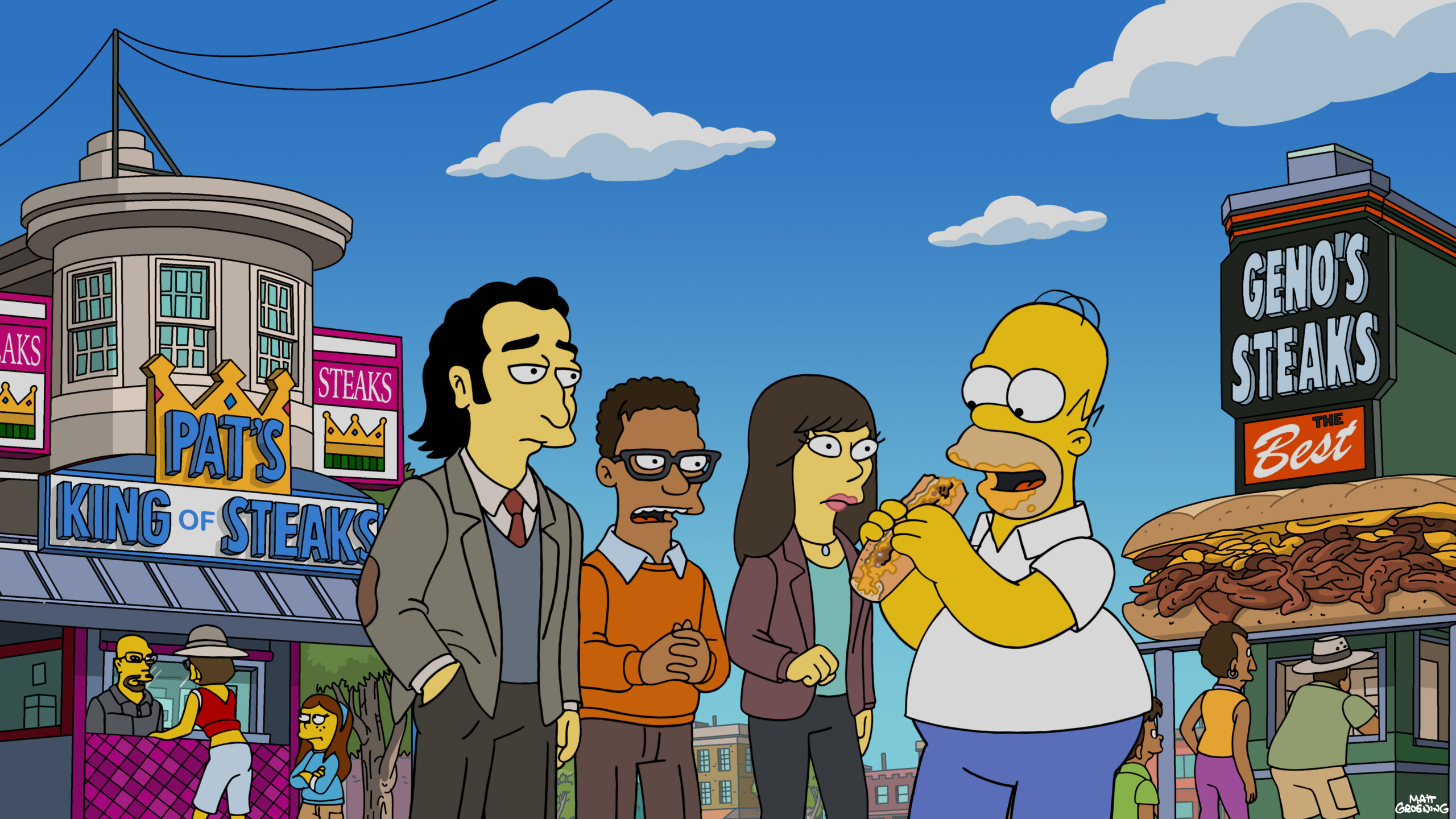
Homer (Dan Castellaneta) eats a cheesesteak in South Philly in an upcoming episode of ‘The Simpsons.’
They covered the obvious beats. Rocky, Wawa, cheesesteaks, the whole “wooder” universe. That’s low-hanging fruit.
But tucked into the background of the episode was a joke that wasn’t obvious, wasn’t tourist-friendly, and absolutely wasn’t generic: a fictional dog park called Michael Vick Reparation Park, “the best dog park in the world.” That’s a deep-cut, morally messy, and very-Philly sports memory.
Vick arrived here after serving prison time for running a dogfighting ring. His signing split the fan base and forced years of uncomfortable conversations about redemption, talent, and how much winning smooths things over. He rebuilt his career in Eagles green. Some fans forgave, while others never did. The tension is the punchline.
It works because it’s The Simpsons. And it lands because this episode wasn’t written by someone skimming Wikipedia. It was written by Christine Nangle, Oxford Circle-raised, Penn-educated, and still passionately Philly. You don’t make that joke unless you remember how complicated that era was.
The episode even found space to include a nod to the late Dan McQuade in the Roots concert scene. Blink and you’d miss it, but it’s a tribute that meant something if you knew.
So the moral of the story is anyone can animate the Liberty Bell. It takes a local to slip in a joke that sharp and trust the audience to understand it.
Bruce Springsteen and Max Weinberg performing during the Bruce Springsteen and the E Street Band 2024 World Tour at Citizens Bank Park in Philadelphia on Wednesday, August 21, 2024.
As in, windows-open, water-ice-in-hand, skyline-glowing, baseball-season May.
And instead of Citizens Bank Park, where he played two summers ago under actual sky, the “Land of Hope and Dreams” tour is landing at Xfinity Mobile Arena.
Indoors.
This is not anti-arena slander, but May in Philadelphia is outdoor concert weather. It’s built for a ballpark.
The tour includes 19 arena dates and one baseball stadium finale in Washington. Which makes it feel even more criminal that Philly — a city that will scream every word to “Born to Run” — is getting the indoor version.
(We’ll still go, obviously.)
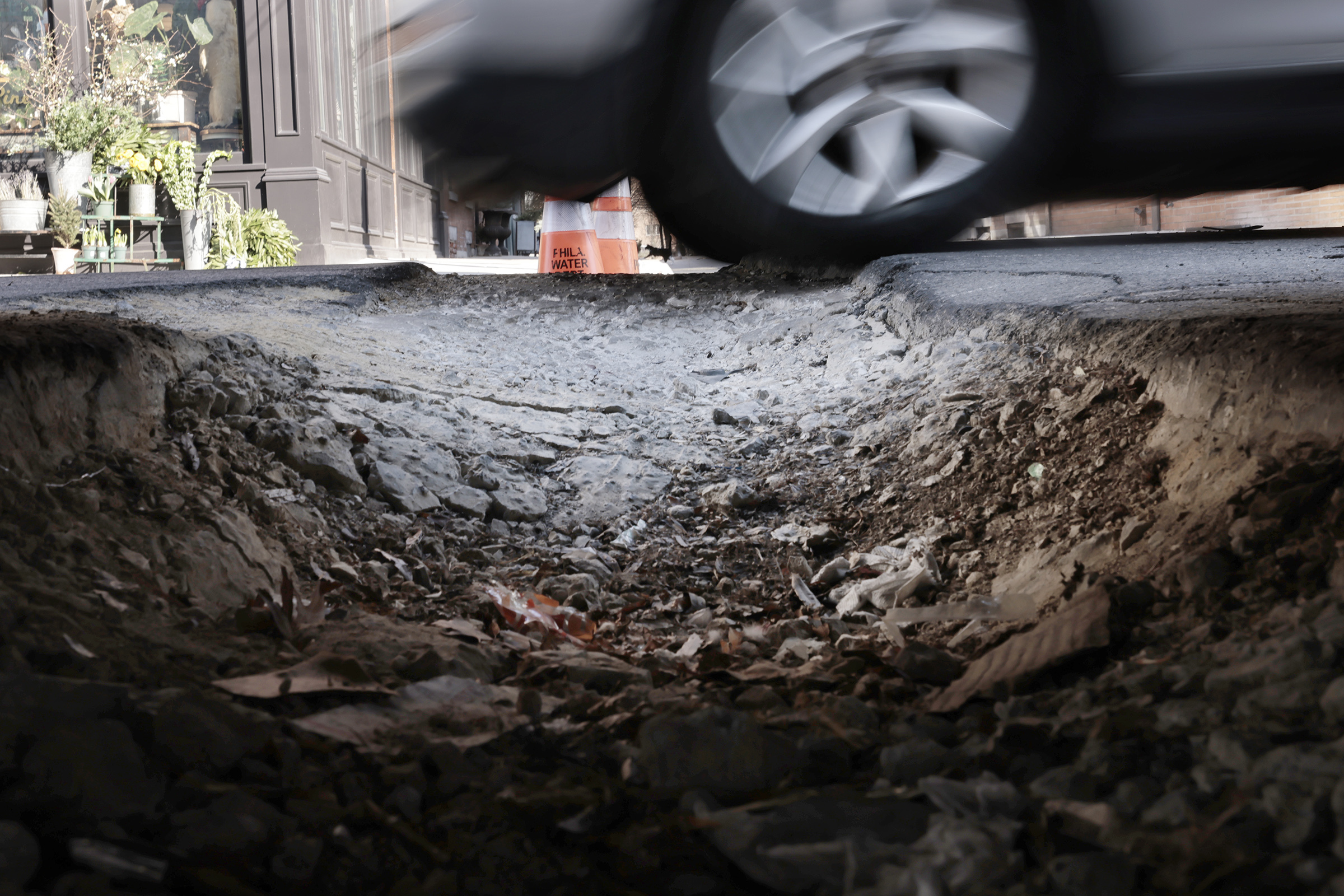
A car slams into the edge of a large pothole on the 700 block of South 4th Street in Philadelphia on Wednesday, March 12, 2025.
Pothole season officially begins: F
The snow is melting, which means two things in Philadelphia. People are wearing shorts in 42 degrees and the roads are about to betray us.
As the ice pulls back, the damage reveals itself. Broad Street suddenly looks like it survived a minor asteroid shower. A harmless bump from January is now a cavity. That thin crack you ignored all winter? Now you slow down for it instinctively.
You can tell the season has arrived by the driving alone. Traffic doesn’t flow in straight lines anymore, it zigzags. Group texts start circulating with hyper-specific intersection warnings. A single traffic cone materializes in the middle of the street and quietly becomes semi-permanent infrastructure.
Some craters get patched fast. Others linger long enough to earn neighborhood lore. “Turn left at the one that swallowed the Camry.”
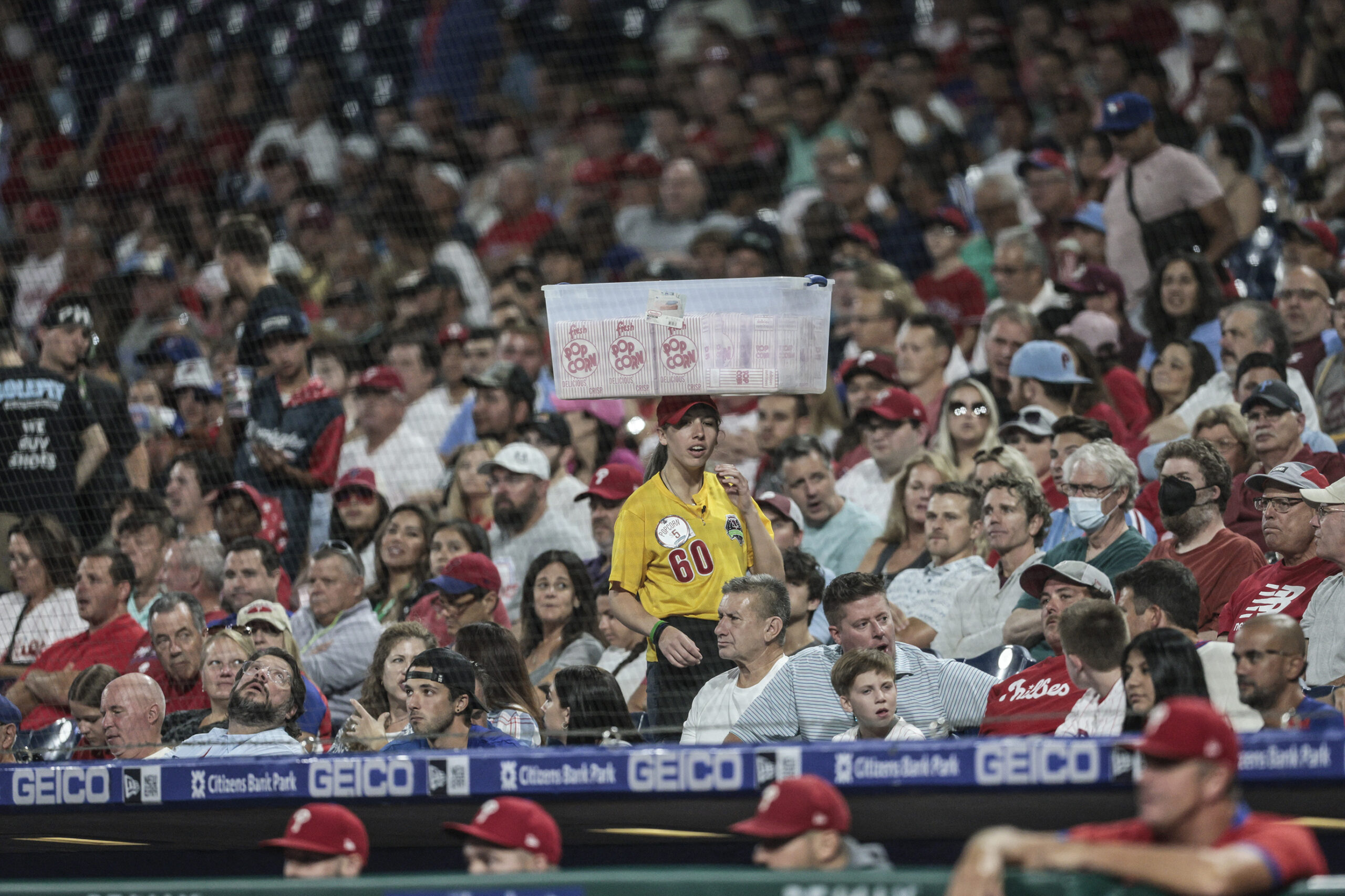
Samantha DiMarco, a popcorn vendor at Citizen Bank Park sells popcorn by balancing the box on her Tuesday, September 20, 2022
Citizens Bank Park without Sam the Popcorn Girl: F
The Phillies will still play. The popcorn will still be sold.
But one of the ballpark’s most recognizable faces won’t be in the aisles for most of the season.
Sam the Popcorn Girl is a minor celebrity at Citizen’s Bank Park, balancing popcorn on her head, popping up on Phanavision, and playfully sparring with Mets fans.
Over the last decade, she’s become an essential part of the atmosphere at the ballpark. Sure, she’s not on the roster, but she was part of the team. And this summer, she’ll be working on a Carnival cruise ship instead.
It’s temporary, and she promises she’ll be back. But this is Philadelphia. We’ve seen how this goes. First it’s a cruise contract. Next thing you know, the bullpen collapses in June.
Remove one of the ballpark’s regulars and suddenly everything feels off, and it’s way too early to be testing the baseball gods.
Booking the Shore before the snow melts: A-
There are still snowbanks clinging to street corners in Philadelphia.
And yet Margate agents are fielding multiple rental calls before lunchtime.
Last year, people waited, booking shorter stays and trying to read the market. This year, they’re locking in weeks while there’s still salt on the sidewalk.
The Shore has always been a seasonal reset button. But booking it in February (before anyone has even vacuumed the sand out of last year’s trunk) feels like a quiet shift.
After a few summers of sticker shock, people are now less afraid of being priced out then they are of being too late.
Soon we’ll be arguing over beach tags and debating Avalon vs. Sea Isle. Soon someone will be panic-buying Wawa hoagies on the Parkway.
We thought it was still winter. But summer, apparently, starts when the snow is still melting.
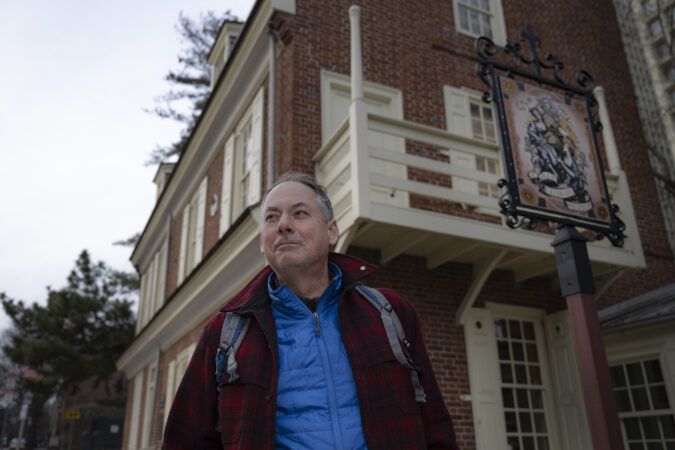
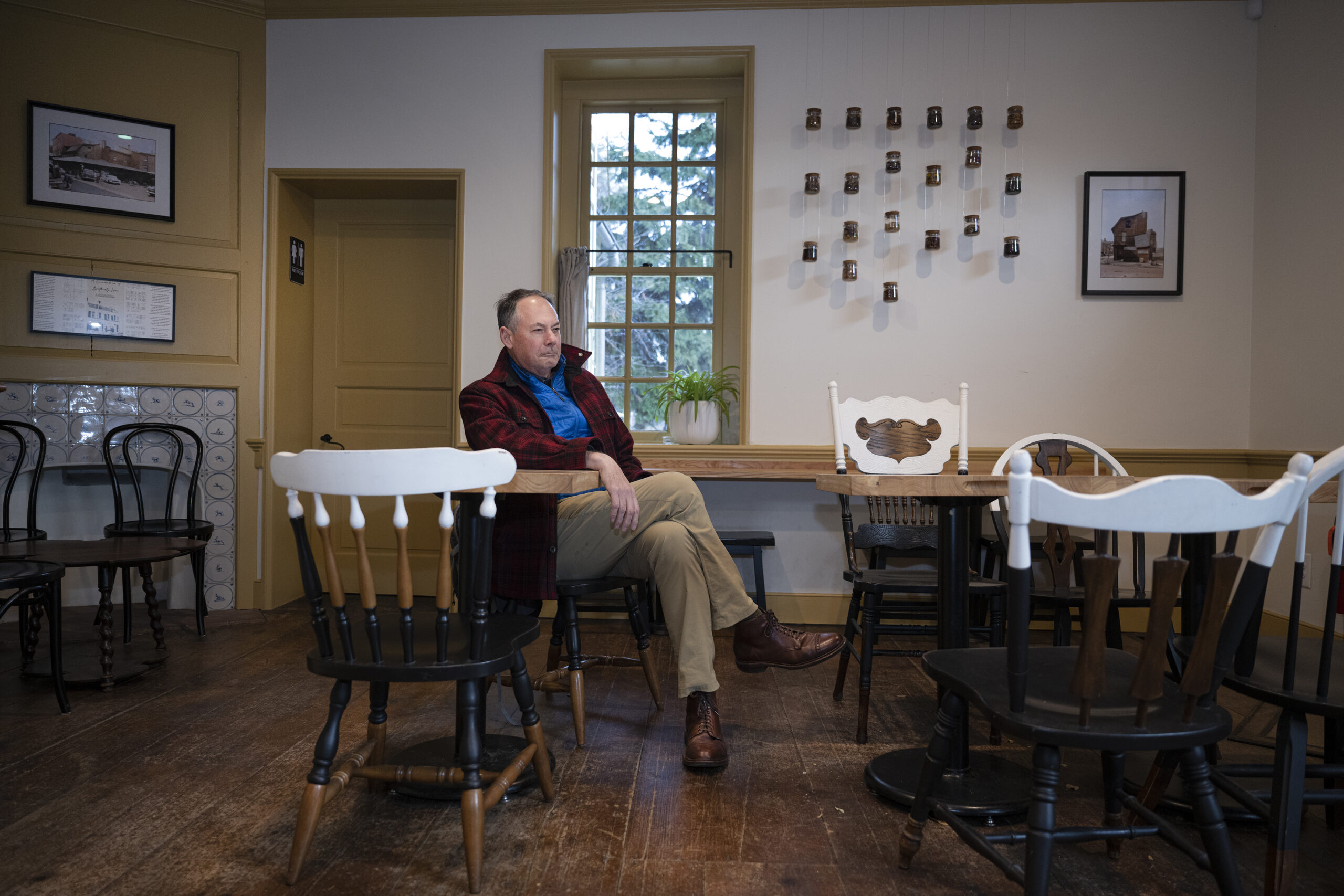
For R. Scott Stephenson, the ghosts of the Revolution are easily conjured. They are found on every block and every corner of his daily walk from his 18th-century home in Queen Village to the Museum of the American Revolution in Old City, where Stephenson has served as president and CEO since 2018.
“If you close your eyes, you can feel it,” Stephenson wrote about “The Declaration’s Journey,” the museum’s ongoing grand exhibit celebrating America’s 250th anniversary. “Over there, irascible John Adams and taciturn George Washington stroll to their first meeting. Down the street, brooding Thomas Jefferson takes a break from drafting a declaration to stretch his legs and find a nice pint of cider.”
R. Scott Stephenson has been president and CEO of the Museum of the American Revolution since 2018. This year, as the nation turns 250, the museum takes center stage.
As Philadelphia takes center stage in 2026 for the national milestone, also known as the Semiquincentennial, Stephenson will no doubt have a little less time to stretch his legs. This year, it falls to him to conjure the spirits of those fiery days of rebellion for the more than 1.5 million visitors Philadelphia is expecting in 2026.
It is a moment of celebration and introspection the museum has been planning for since before it opened in 2017. With the lauded exhibit exploring the history and global impact of the declaration, and their most robust slate of programming and exhibitions ever, the museum and its staff of about 100 historians and researchers, is ready, said Stephenson.
“It’s akin to a playwright,” he said. “You’ve written the play, you’ve cast all the characters, you’ve made all the costumes, you built the stage and been through endless rehearsals. We feel so supremely confident to meet the visitors that are coming.”
A Pittsburgh native, who earned a PhD in American History at the University of Virginia, Stephenson and his wife, a physician, and two adult children, have lived in the Philly area for 25 years. His perfect Philly day would include coffee before dawn, Italian Market shopping and exploring with his daughter, oysters and bookstores, Philly’s only Colonial-era tavern, and a home-cooked meal with the family. And all, with those ghosts trailing close behind.
Stephenson, 60, a Pittsburgh native, lives in Queen Village with his wife and daughter.
This interview has been condensed and edited for length.
5:30 a.m.
Our beloved adopted Philadelphian, Benjamin Franklin, said, “Early to bed, early to rise makes a man healthy, wealthy and wise.” So far, I’m just healthy, the other two may have not necessarily come (laughter). But I think maybe with the thousands of years of farmers in my past, my circadian clock has never changed. I am up without an alarm between 4:30 a.m. and 5:30 a.m. I start my day with a pot of really strong black coffee. Those first couple of hours before anyone is up is golden time for me. I read my periodicals, my newspapers. I still like the sound of paper wrinkling.
7:30 a.m.
We are a cooking family. On weekends, we are all about ending the day with a big meal that we make together. So a perfect day is my daughter and I walking to the Italian Market to browse around at the various shops, figuring out what protein we’re going to build dinner around. And nosing around the produce stands and cheese stops. At Fante’s Kitchen Shop are great reproductions of 18th-century German cookie molds for making gingerbreads.
I do not have one path to get from Point A to Point B anywhere in Philadelphia, so I’m usually going to want to zigzag around a bit. We like to do a little exploration as we bring the groceries back to the house.
11:30 a.m.
My wife and I love to walk over to Rittenhouse. Lunch at the Oyster House. I love that block of Sansom. It’s a street that feels like a previous era. There’s an original oyster house in Pittsburgh. That was a place both of my grandfathers ate lunch often. My father would go there. I was taken there as a kid. Although ironically, I have a great grandfather who died from eating, what was called on his death certificate, a “poisoned oyster.” He ate a bad one and died in 1905 when he ate a bad one that was a little too far from the Jersey Shore when it was consumed.
1 p.m.
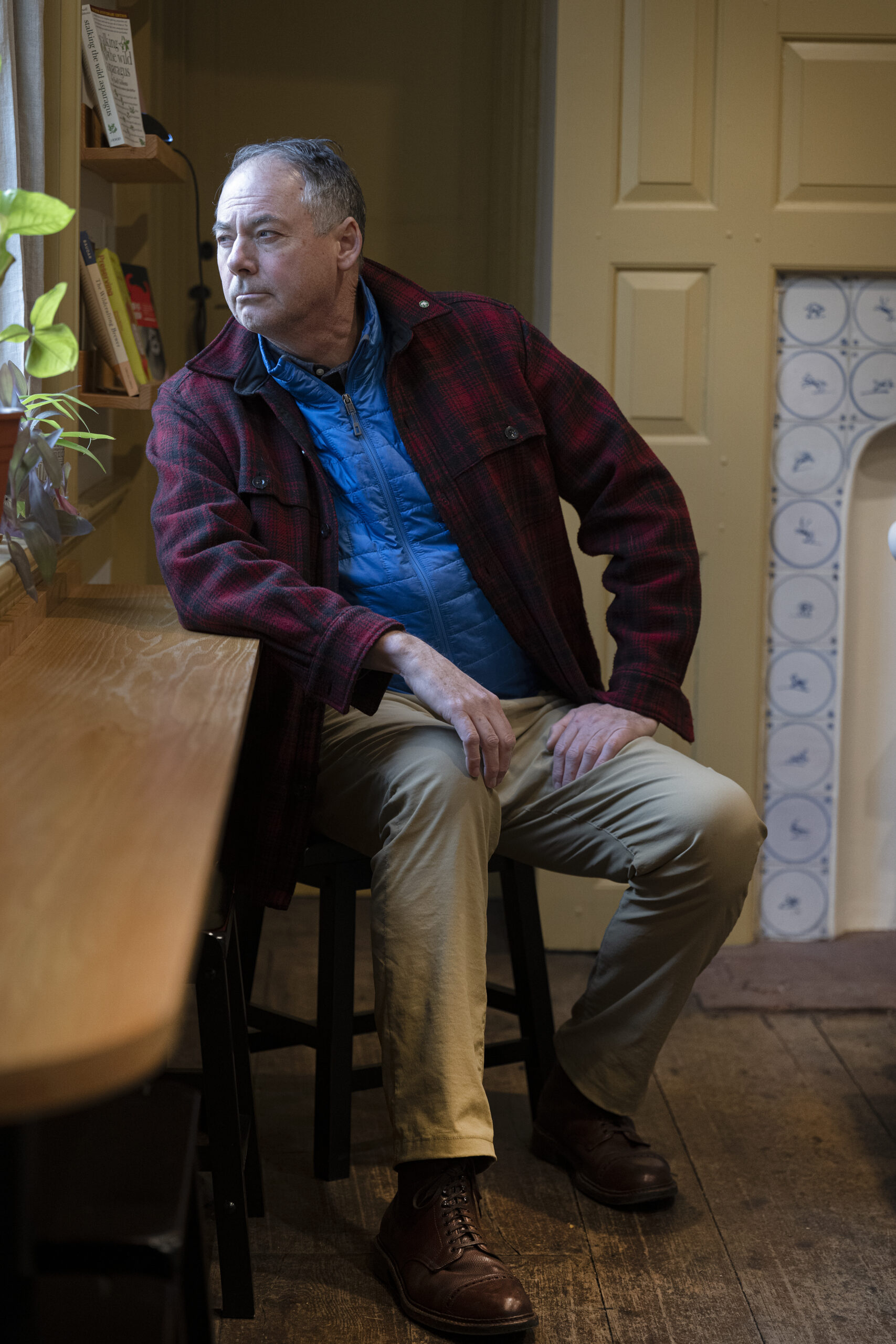
I’d definitely pop into Sherman Brothers Shoes right next door. Incredible shoe store. I am sort of obsessed with Alden shoes, these great, super sturdy, American made, old school leather shoes. So I am at least going to go drool a little bit, and think, “Oh, when I wear this pair out, what’s my next pair of Alden’s going to be?”
2 p.m.
On a perfect day, I’m popping into the museum, and trying to remain anonymous. Just for an hour, and go wander around the galleries or sit through a showing of “Washington’s Tent” — and just talk to guests. A lot of my job is storytelling. Being able to talk about the impact we have on people — the best way to do that is to actually tell a story that happened to me.
3 p.m.
Our other routine would be to go to Plough & the Stars in Old City. We absolutely love Plough & the Stars, particularly in the winter, to be able to sit in front of the fire there. Have a shephard’s pie or fish and chips and a Guinness.
4:30 p.m.
I’m gonna spend some time up at the Book Trader on Second Street. I’m not actually allowed to buy any more books. My library is mostly in storage right now. We just don’t have the room. But I do love a bookstore, particularly a used one.
Stephenson said of Man Full of Trouble tavern and museum: “That’s the only surviving tavern in Philadelphia from the 18th century, where you can literally sit in a room where rum punch and revolution was the game.”
5:30 p.m.
Walking home, and frankly whether or not I have been to Center City or Old City, I am almost certainly going to stop, and this a new addition since it just reopened, but at the Man Full of Trouble tavern and history museum. That’s the only surviving tavern in Philadelphia from the 18th century, where you can literally sit in a room where rum punch and revolution was the game. To me, it’s just another reason why this is the greatest city in the nation. Being a few blocks from the Man Full of Trouble, creates a lot of trouble (laughter).
6:30 p.m.
It’s probably time to start dealing with those groceries at this point (laughter). At least one weekend day every weekend is family dinner day, where we’re all going to be cooking. So my son and his girlfriend will be in — my daughter’s there, my wife’s there, and we’ll have figured out what’s on the menu. We have a long table. We love to have candles and a candlestick on the table, and turn the lights down. A no device moment, where we really are in each other’s presence.
8 p.m.
We are probably going to be playing Wingspan, it’s a board game. There’s a new one called Finspan, which is all about fish in the ocean. We are almost exactly a two minute walk from Queen & Rook Game Cafe. So we’re kind of in a board game neighborhood. We’ll be right at our dining room table and we’ll be playing for a while and drinking a little wine.
9 p.m.
Going back to Franklin for a minute, and you remember his aphorism was “Early to bed, early to rise.” I am not the life of a party. Most nights by 9 p.m., my eyes are closed and I am sawing wood (laughter).
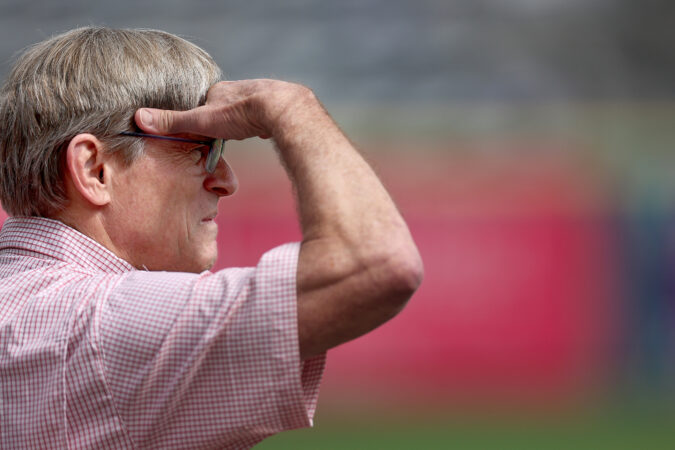
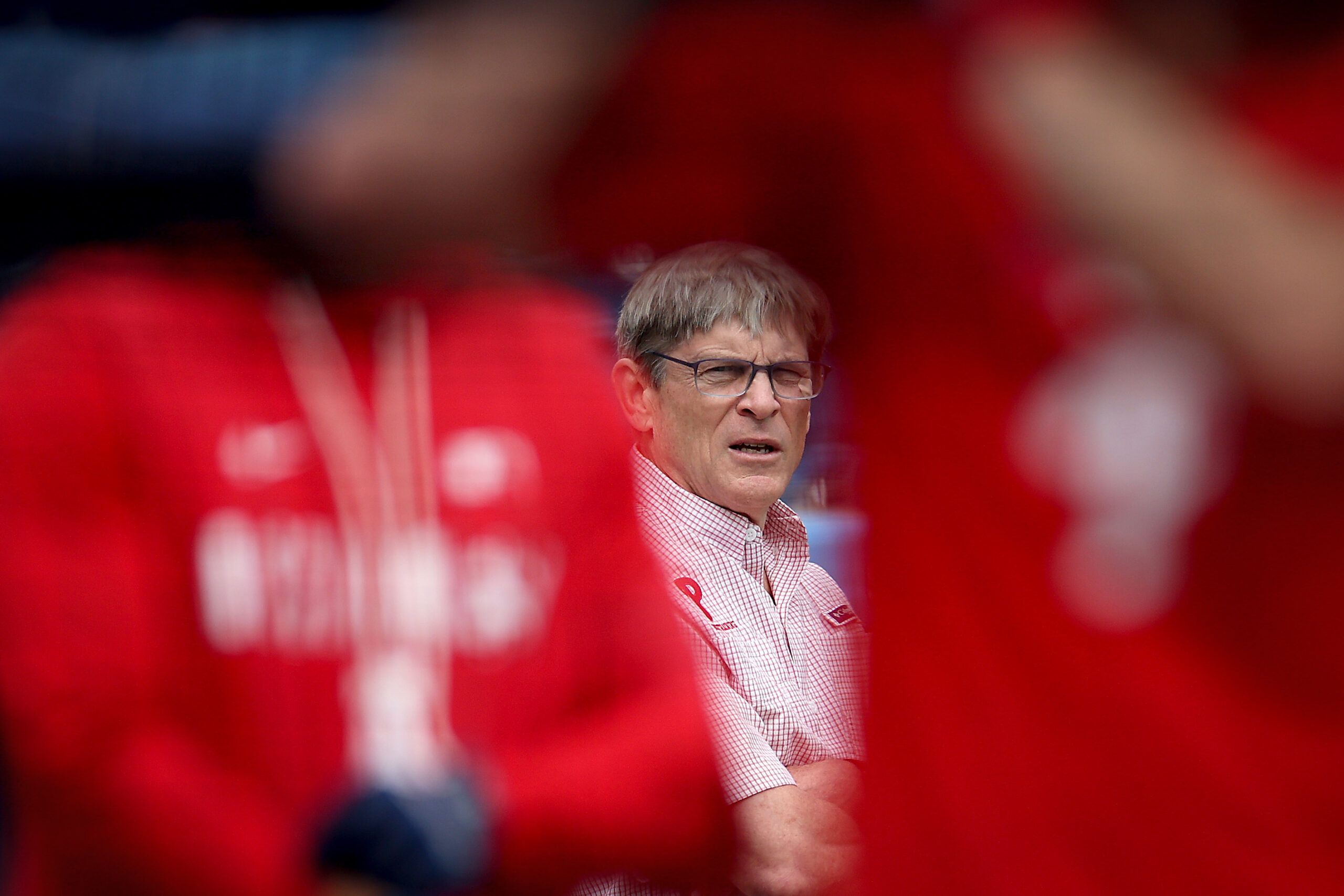
CLEARWATER, Fla. — From his third-floor office overlooking the Phillies’ spring-training ballpark, John Middleton can see clear sky for miles.
Never mind the creeping storm clouds.
“We’re way too far away from it,” Middleton said Friday. “I don’t know when in the next nine months, or whenever the heck it is, we’ll have a clearer sense of the landscape. But we sure as heck don’t have it now.”
So, why worry? Yes, baseball is barreling toward a labor battle that is expected to get nasty. The particulars: Many owners want a salary cap, similar to what the NFL, NBA, and NHL have; players have historically opposed all limits on wages. The collective bargaining agreement will expire Dec. 1, and a lockout seems inevitable, with the possibility that it could eat into next season.
But that’s 283 days away. There are 162 regular-season games from here to there, with an All-Star Game to host in July. And it will be another expensive season for Middleton and his ownership partners.
Last year, the Phillies’ luxury-tax payroll totaled $314.3 million, fourth-highest in the sport after the Dodgers, Mets, and Yankees. The Phillies paid a club-record $56.1 million in taxes and are bracing for a similar bill at the end of this year.
“Higher,” Middleton said.
Indeed, the projected payroll is $317 million. It will be the fifth consecutive season that the Phillies have gone into luxury-tax territory and the second year in a row they cleared the highest threshold ($304 million for 2026), which carries a 110% tax rate. Middleton said they’ve also budgeted $80 million in local revenue (tickets, concessions, media deals, etc.) for revenue sharing.
John Middleton and the Phillies missed out on signing Bo Bichette this offseason.
“Do the math,” he said. “You’re pushing $140 million in spending essentially [for] being taxed. If I had $140 million back, could I have a higher payroll? Yes. But that’s not happening, so I don’t think about that fantasy. But it’s a lot of money. It really is.”
It’s also life among the big spenders in baseball’s current economic system. Middleton doesn’t sit on the owners’ labor policy committee, which is headed by the Rockies’ Dick Monfort and includes the Yankees’ Hal Steinbrenner, and said he’s restricted by the National Labor Relations Act from speaking publicly about negotiations with the players’ union that are set to begin in late March.
But in a wide-ranging conversation with The Inquirer, Middleton said the Phillies’ offseason spending wasn’t impacted by the looming labor uncertainty. If anything, it was business as usual.
They re-signed Kyle Schwarber and J.T. Realmuto and added reliever Brad Keller and right fielder Adolis García. They were ready to make a seven-year, $200 million offer to free-agent infielder Bo Bichette, who signed a short-term (three years), higher-annual-salary ($42 million per year) deal with the Mets.
In all, the Phillies spent $227 million on free agents, then paid $19.2 million for Nick Castellanos to play elsewhere.
“Any time you get to the end of a collective bargaining agreement, you just never know what the next one’s going to look like,” Middleton said. “And the rules have changed [over the years]. So, you could make decisions in the year or two preceding a new CBA that you look back and you say, ‘Hmm, had I known this was going to be the new CBA with this new rule, I maybe would’ve done something different.’
“I just think the problem, if you give that too much weight, you don’t do things that you should be doing in today’s world with today’s sets of rules to win today. So, I would say we were aware of it, we talked about it, but it didn’t change any of the decisions that we made.”
Because Middleton is chasing that (dang) World Series trophy. It’s been 18 years since the Phillies won it. They went on an unexpected ride to Game 6 of the World Series in 2022 but haven’t won a postseason series since ‘23. They’re 2-8 in their last 10 postseason games.
Owner John Middleton wasn’t angry about the Phillies’ exit in the NLDS last season against the Dodgers.
Middleton, 70, has the sensibilities of a lifelong fan who grew up watching Dick Allen in the 1960s and the competitiveness of a former collegiate wrestler. He was disappointed after last year’s exit in the divisional round. But unlike the previous October, he wasn’t angry.
The Phillies went toe-to-toe with the vaunted Dodgers, holding them to 13 runs and a .199 batting average in four games. Their three losses came by a total of four runs. And don’t even get Middleton started on umpire Mark Wegner’s missed strike call on a 2-2 pitch to the Dodgers’ Alex Call with one out in the seventh inning of Game 4. Call walked on the next pitch and scored the tying run. Cristopher Sánchez said Wegner later admitted to him that he got it wrong.
“Assuming he made the correct call, all of a sudden that’s a strike, [Call is] out, [the run] never scores, we win the game, we go to Game 5 two days later in Philadelphia,” Middleton said. “I’m not telling you we would have beaten the Dodgers because they beat us twice at home. But the Dodgers didn’t want to play us in Game 5 in Philadelphia. There’s not a chance in the world that they were looking forward to that prospect.”
Middleton acknowledges that the Dodgers, owned by Guggenheim Partners, have inherent financial advantages that only Steve Cohen, the billionaire hedge-fund manager who owns the Mets, can match.
The Phillies have won more regular-season games in each of the last four seasons. Attendance to Citizens Bank Park has risen from 2.23 million fans in 2022 to 3 million in 2023, 3.36 million in ‘24, and 3.37 million last season.
But in 2024, Middleton also added three new investors to the Phillies’ ownership group. At the time, he said it would “allow us to pursue our strategic growth opportunities and long-term goals.”
“Look, when Hal Steinbrenner publicly says the Yankees can’t do what the Dodgers are doing — and the Yankees for decades have been the team that can do pretty much whatever it wants — that’s telling,“ Middleton said. ”[The Dodgers] are smart, competent people, which makes them fierce competitors. And the fact that they’ve got some financial clout, particularly clout that other teams can’t match, it makes them even tougher competitors.
“But the division series that we lost was the first time in three years, I think, that we lost a series to them. We were 5-1 against the Dodgers in series prior to that. So, it’s not like we haven’t beaten the Dodgers consistently.”
Middleton touched on other subjects, with answers lightly edited for brevity and clarity:
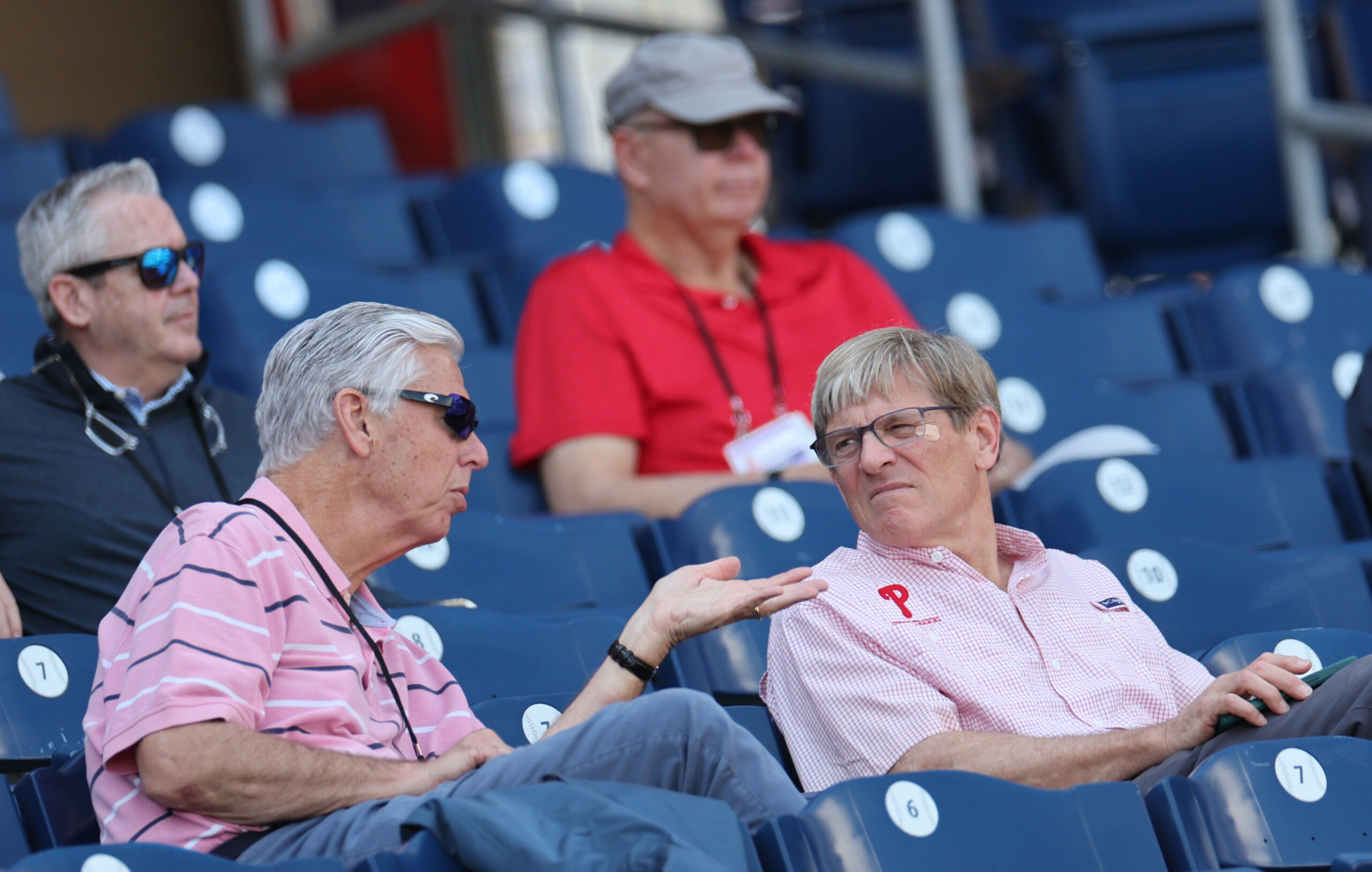
Phillies owner John Middleton (right) says president of baseball operations Dave Dombrowski (left) and Bryce Harper hashed out their differences recently.
Q: What was your perspective on Dave Dombrowski’s comments about whether Bryce Harper is still elite and the baseless rumors that followed about possibly trading him?
A: I just kind of chuckled to myself like, ‘Well, I guess they know something that I don’t know.’ The good news is Dave and Rob [Thomson] and Bryce talked it through after the last set of comments that Bryce made down here, and they’ve agreed that everything’s fine. I’m happy that they’ve reached that point, and I’m comfortable, confident that everything’s behind us now.
Q: You have a close relationship with Bryce. Did you personally call him to make sure everything was OK?
A: Nah. I’ve talked to Bryce over the years about other issues. But in Dave, you’re talking about one of the truly historically great GMs in the history of baseball. People in my position should not undermine their GMs and their head coaches, their managers. And when you have the background and the track record that Dave does, it’s particularly important that you understand your limitations [as an owner].
There have been times when Dave and I are talking about something, and he’ll look at me and say, ‘I’d like you to talk to the player.’ If he thought I needed to talk to Bryce, he would have been the first person to raise his hand and say, ‘John, it would be helpful if you talked to Bryce.’ He didn’t do it. Because Dave asked me to do it, I spent most of a day in Kyle Schwarber’s living room, at his kitchen table, because Dave said it would be helpful. And I talked to J.T. I’ll do whatever I need to do to be helpful, but I’m not going to force myself into a situation where I’m not needed.
Q: What’s your reaction to the narrative that the Phillies are “running it back” again with the same core that keeps falling short in October?
A: I understand the frustration. I will also tell you I do talk to a lot of fans, and there are clearly fans who voice the issue that you did. But I would tell you most of the fans understand. They look at it and they say, ‘OK, I get it. You were a missed call away from probably winning Game 4 and going on to Game 5.’ Not everybody’s going to acknowledge that. But it’s also not like we didn’t try. First of all, we re-signed Kyle. We could have let him go like the Mets, let [Edwin] Díaz go or [Pete] Alonso go. We re-signed J.T. We tried to sign Bichette. We actually thought we had a deal. At 11 o’clock that night, we had a deal, in our opinion. Not finalized. And the Mets did nothing that we wouldn’t have done and haven’t done, so I don’t blame the Mets. But you went to bed at 11 o’clock thinking we had a deal, and I woke up at 8 o’clock worried we didn’t have a deal, and two hours later, I knew we didn’t have a deal. So, it’s not like we didn’t try. We did try to tweak the team.
But go back to that [Phillies] team in ’76, ’77, ’78, they missed the World Series three years running. They go out and sign Pete Rose after the ’78 season. They promptly finish fourth in ’79 with theoretically a better team, and they ran it back in ’80. Now, that doesn’t mean we’re going to win the World Series in ’26 because the ’80 Phillies won the World Series after four tries. But you certainly don’t blow up teams. And it’s hard with a team that was good as that team was and our job is to improve it. You can look at certain places and say, ‘Well, you can improve it here or you can improve it there,’ but that means you have to go out and find the better player and bring that player in. Look, we tried to do that with Bichette. So, I get the frustration. I’m frustrated. I mean, Dave’s frustrated. Rob’s frustrated. A lot of the players are frustrated.
Going back to the Dodgers series, our players executed. You look at ’23 and ’24, even ’22 frankly a little bit, I think there were execution problems in those three years. I don’t feel that way about ’25.
Q: The Phillies have had a top-five payroll now for five years. Could you have ever envisioned a $317 million payroll?
A: So, the answer is yes. And I’d say yes because I think we have such a spectacular fan base. I trust the fan base. I have confidence in the fan base that, if we put the right team on the field, they’ll respond. And that doesn’t always happen. There’s plenty of examples in not just baseball, but other professional sports where there’s a team that’s really, really good and the fans yawn. And I knew that was never going to happen in Philadelphia. New York’s clearly a bigger market than Philadelphia, and they have higher prices than Philadelphia, so their seats sell for more, their hot dogs sell for more, their suites sell for more. But I always thought we could get reasonably close to them from a revenue standpoint, and then hopefully outcompete them. And look, I still feel that way.
Q: What has the ramp-up for the All-Star Game been like? How hectic are the next few months going to be?
A: I think we and MLB are better organized that I wouldn’t say it’s hectic. But there are a lot of details you have to get from the planning stage and the early conversation stage to a final decision and getting that decision implemented. And we’re kind of down that path so that we’ve kind of made final decisions on most everything. But now we’ve got to implement them, and that’s a whole other set of challenges. So, yeah, it’s nerve-wracking. I’m excited. I’m looking forward to it. I think of it like my daughter’s wedding. I’m excited, I’m looking forward to it, and I know I’ll be really happy the day after when I wake up and it’s done.
We’ll show you a photo taken in the Philly-area, you drop a pin where you think it was taken. Closer to the location results in a better score. This week is all about Lunar New Year of the Horse! Good luck!
Round #21
Question 1
Where is this lion grazing?
Loading…
ClickTap on map to guess the location in the photo
ClickTap again to change your guess and hit submit when you're happy
You will be scored at the end. The closer to the location the better the score
Margo Reed / Staff Photographer
Pretty good/Not bad/Way off! Your guess was from the location.Spot on! Your guess was exactly at the location. Here's also where a random selection of Inquirer readers guessed.
The lion dance, most often performed by two dancers in a single costume, is a traditional Chinese ceremonial dance performed during festive occasions such as Lunar New Year. The dance, along with firecrackers and fireworks that are set off during the celebrations, is thought to bring prosperity and ward off malevolent spirits.
Quiz continues after ad
Question 2
Another lion! Where’s this one?
Loading…
Jessica Griffin / Staff Photographer
Pretty good/Not bad/Way off! Your guess was from the location.Spot on! Your guess was exactly at the location. Here's also where a random selection of Inquirer readers guessed.
These lion dancers were performing outside Bo De Temple, a Vietnamese Buddhist temple at 13th and Washington that is a center of Vietnamese life in South Philadelphia. Lunar New Year is celebrated by many East and Southeast Asian cultures, including but not limited to the Chinese, Vietnamese, and Korean communities across Philadelphia.
Quiz continues after ad
Question 3
Not a lion but a horse! Where is it?
Loading…
Steven M. Falk / Staff Photographer
Pretty good/Not bad/Way off! Your guess was from the location.Spot on! Your guess was exactly at the location. Here's also where a random selection of Inquirer readers guessed.
It’s the Year of the Horse, after all! The Chinese zodiac follows a 12-year cycle based on the lunar calendar, with each year represented by a different animal. This horse is Freeway, who lives at the Fletcher Street Urban Riding Club in Strawberry Mansion. Freeway made news two years ago when he escaped his residence and ended up galloping down I-95.
Your Score
ARank
🧨 A crackling job! A result worth celebrating.
BRank
🧧 B is a job well done. An auspicious start of the year.
CRank
🐎 C is a passing, stable grade, but you could do better.
DRank
🐴 D isn’t great, best saddle up to do better next time!
FRank
We don’t want to say you failed, but you were definitely horsing around.
You beat % of other Inquirer readers.
We’ll be back next Saturday for another round of Citywide Quest.
Almost 250 years ago, George Washington created America’s first mass immunization mandate, relying on science to protect public health.
Oh, how times have changed.
Back then, smallpox had just helped end the Continental Army’s invasion of Canada. Despite making it all the way to Quebec, thousands of soldiers contracted the disease. Washington feared the same would happen to his own troops, fresh from their surprise victories at Trenton and Princeton. As Washington wrote at the time, “Necessity not only authorizes but seems to require the measure, for should the disorder infect the Army, in the natural way, and rage with its usual Virulence, we should have more to dread from it, than from the sword of the enemy.”
The inoculation methods of Washington’s time were crude. No genuine vaccine existed. Instead, scabs or pus were taken from someone infected with smallpox and then placed into scratches or small wounds. Another option was to inhale it. Either way, those who experienced variolation inevitably developed fevers, rashes, and other symptoms of smallpox. At least 1% of those who received it died. Still, without his tough choice, the Continental Army might have failed entirely, and America with it.
These days, safe vaccines are available for diseases that ravaged our ancestors. Forms of influenza, hepatitis, chickenpox, polio, rubella, mumps, measles, and many other diseases can now be prevented. The smallpox virus that Washington dreaded has been eradicated.
The quality and availability of vaccines are a modern miracle, one that all humanity should be proud of.
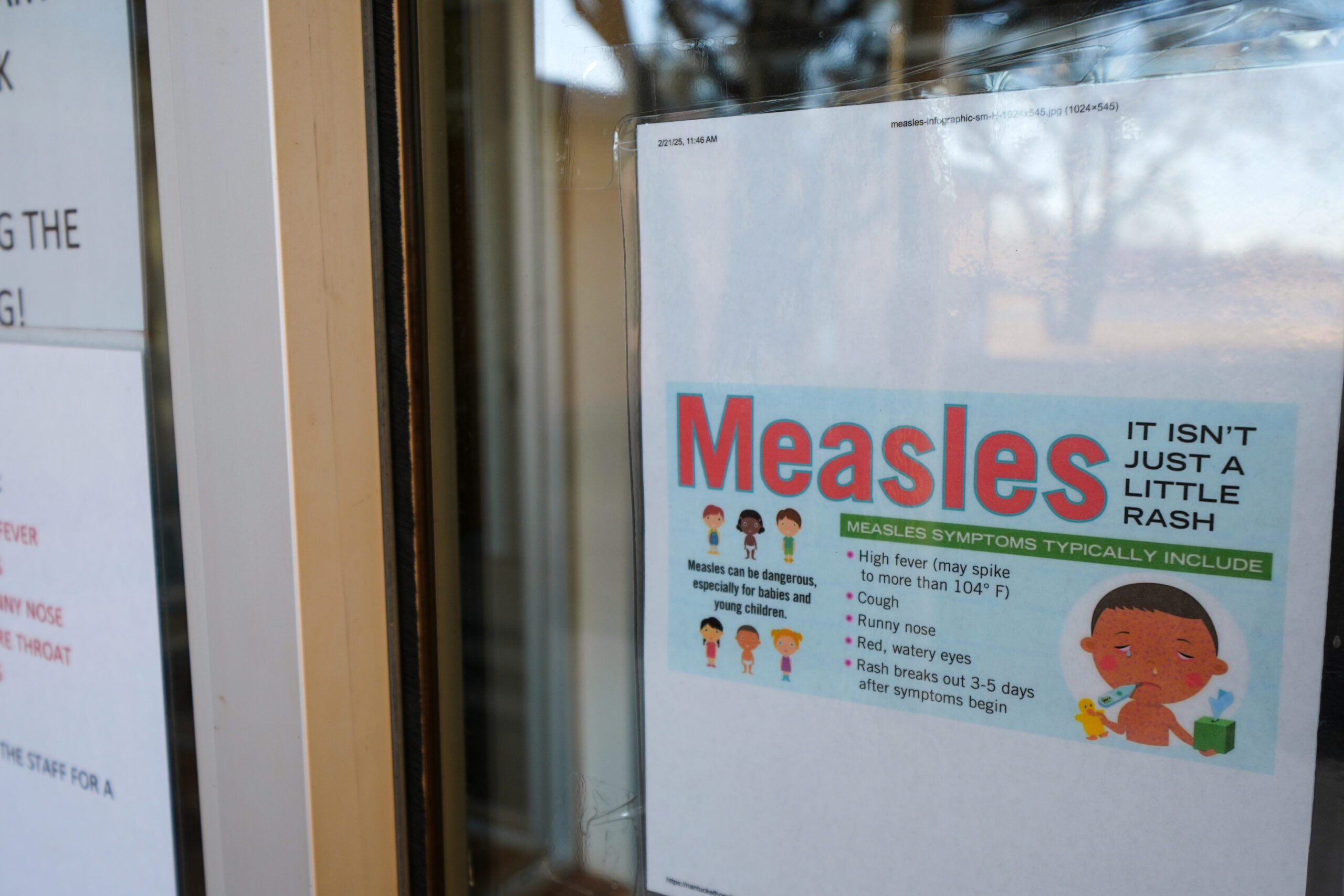
Yet, according to data from the Centers for Disease Control and Prevention, vaccination rates for measles in the U.S. are declining, and the number of cases is climbing. More and more parents are opting against vaccination for their children, which gives these diseases room to spread.
Pennsylvania, New Jersey, and Delaware have all slipped below the 95% vaccination rate the CDC says is necessary to keep measles outbreaks at bay. Despite being nearly eliminated in 2000, rates have reached their highest levels in decades.
A sign is seen outside a clinic with the South Plains Public Health District in February 2025, in Brownfield, Texas.
According to CDC data, more than 90% of infections occur in people who are either unvaccinated or have unknown inoculation status. Given this group makes up less than 10% of the overall population, that’s a staggering concentration of sickness. It also isn’t a surprise — the vaccines work.
Parents offer a range of justifications for refusing vaccinations. Some cite religious faiths that discourage inoculation. Others feel that the schedule of shots is too concentrated. A number of them mention debunked fears of shots “causing autism.”
In some cases, existing health issues may lead to medical professionals advising against vaccination. (These children rely on what scientists call herd immunity for protection, and are endangered by rising rates of voluntary refusal.)
It doesn’t help matters that Health and Human Services Secretary Robert F. Kennedy Jr. is a leading skeptic of both vaccines and modern medicine. Kennedy has strong opinions about public health based on no formal medical training.
This is the kind of privileged ignorance that can only thrive in a post-vaccine world, where mass immunization has dramatically changed life for the better.
In 1900, 30% of all U.S. deaths occurred in children under the age of 5. In 1915, the infant mortality rate was 100 out of every 1,000 live births. As late as 1952, a polio outbreak killed more than 3,000 people.
Unfortunately, rising vaccine refusal rates may bring some of this suffering back. While city health officials urge calm in the wake of a possible exposure at Philadelphia International Airport earlier this month, these events will only increase as vaccination rates continue to fall. So will unnecessary deaths among children.
Instead of turning back the clock, our leaders and parents must learn from Washington’s example. Necessity requires that we vaccinate our children.
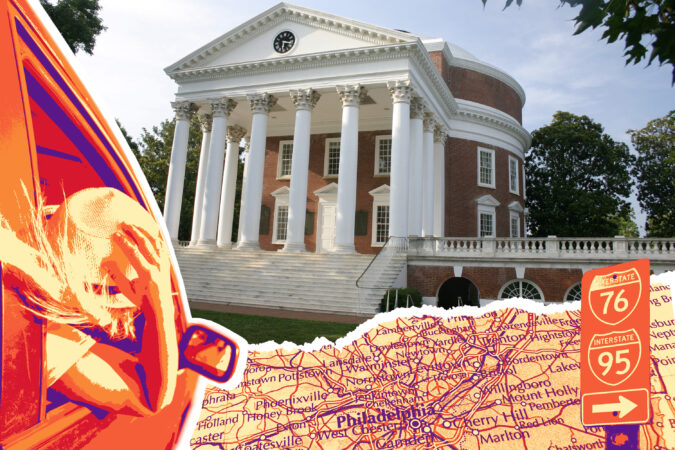
Nestled in the foothills of the Blue Ridge Mountains, Charlottesville is ready for spring. The season there comes a little earlier than ours — cherry blossoms popping, birds trilling — so those planning a March getaway should consider the Virginian city, where the weather is often mild enough to spend serious time outside. Rails and walking paths wind like shoelaces through downtown and into the surrounding countryside. As a university town, C’ville is also packed with arts, music, shopping, and dining, and Thomas Jefferson’s Monticello estate sits just on the outskirts of town, high on a hill.
The first stop in town, Oakhurst Cafe, announces you’ve arrived in the South with a house-baked buttermilk biscuits layered with country ham, apple butter and mustard. There’s also strawberry shortcake French toast, sweet potato hash with chorizo and fresh-fried beignets, served in a sunny room whose generous windows make the tangerine walls and hardwood floors gleam.
📍 1616 Jefferson Park Ave, Charlottesville, Va. 22903
Stay: Graduate Charlottesville
Charlottesville is a college town, with the University of Virginia’s idyllic and historic campus right downtown. Lean into it and stay at the Graduate, a newer property from the collegiate-themed brand under the Hilton umbrella. Opened in 2015, the hotel is still super fresh, with a game room, scenic rooftop, and rooms dressed in soothing blue walls, Cavalier-print curtains, and bolster pillows embroidered with “Wah-hoo-wa,” the university’s sports cheer.
A short walk from the Graduate, Charlottesville’s pedestrian Downtown Mall offers a solid orientation to the city’s commercial core. Visit shops like C’Ville Arts, a co-op gallery representing over 50 Virginia artists, or catch a show at the historic Paramount Theater, which opened in 1931, closed in 1974, and reopened after a $17-million restoration in 2004. When the biscuit craving returns, hit Miller’s Downtown for lunch. It’s famous for the Charlottesville Nasty chicken biscuit, but the pimento-cheese BLT is the actual move.
📍 East Main Street, between Second Street NW and Ninth Street NE, Charlottesville, Va.
Whether you think history is a snooze or can quote Hamilton from memory — “Thomas Jefferson’s coming home!”— Monticello is must-visit. Set on 2,500 bucolic acres, the estate features multiple exhibits inside, outside, and even beneath the mansion, with thoughtful attention paid to the enslaved people who worked Jefferson’s plantation, including Sally Hemings, with whom he fathered six children.
Beyond the landscaped gardens of Monticello proper, the fairytale woods and meadows of the estate beg for exploring. The Saunders-Monticello Trail is an easy lift for all activity levels, with a maximum 5% incline and two miles of wheelchair-accessible paved paths and boardwalks winding through forest and over ravines. Stop at Carter Overlook for panoramic views of Charlottesville and the Blue Ridge Mountains.
📍 Parking: 503 Thomas Jefferson Pkwy., Charlottesville, Va. 22902
Drink: Blenheim Vineyards
Dave Matthews Band got its start in Charlottesville, gigging at Miller’s on the mall and other stages around town. Though the singer now lives in Seattle, he maintains a strong connection to Virginia. One touchpoint is his winery, Blenheim Vineyards, situated on 32 acres of rolling chartreuse hills stitched with sauvignon blanc, chardonnay, and albarino vines. Giant windows in the wood-clad A-frame frame the landscape during guided tastings of five wines (just $25). Consider this your predinner drinks.
Back downtown, Smyrna’s oysters with ramp mignonette, hamachi crudo with anise-compressed melon, and manti dumplings dabbed with garlic yogurt earned chef Tarik Sengul a semifinalist nod from the James Beard Foundation this year. You’ll have to wait till April to find out if he advances to the finalist round of the awards — making right now an ideal time to check this sharp Aegean restaurant out for yourself.