Blog

  • State police ID teen killed in Montgomery County crash while allegedly fleeing in stolen vehicle

    State police ID teen killed in Montgomery County crash while allegedly fleeing in stolen vehicle

    Pennsylvania State Police identified the teen who died in a crash while allegedly fleeing from troopers in a stolen vehicle in Montgomery County early Saturday.

    Zachery Carbo, 18, of Norristown, was pronounced dead at the scene of the crash, which happened around 12:10 a.m. on Route 422 eastbound at Route 202 in Upper Merion Township, state police said.

    Two 19-year-old men and one 20-year-old man who were passengers in the Kia Soul, which had been reported stolen in West Norriton Township, were transported to Paoli Hospital for treatment, state police said.

    Troopers had attempted to stop the Kia for traffic violations on eastbound 422 near Lewis Road in Limerick Township.

    The vehicle did not stop and a pursuit ensued, state police said.

    The pursuit ended when the Kia hit a concrete barrier on the right side of the road.

    State police said Wednesday that no charges had been filed and the investigation was continuing.

  • Union open 2026 season with 5-0 rout of Trinidad’s Defence Force in the Champions Cup

    Union open 2026 season with 5-0 rout of Trinidad’s Defence Force in the Champions Cup

    The Union opened their 2026 season with a win on Wednesday night, defeating Defence Force FC, 5-0, in the first of a two-game Concacaf Champions Cup first round series at Hasely Crawford Stadium in Port of Spain, Trinidad.

    Milan Iloski opened the scoring for the Union in the 29th minute, scoring on a free kick from just outside the 18-yard box. Ezekiel Alladoh added a second shortly after, heading a Frankie Westfield cross into the back of the net in the 32nd minute.

    The Union added three more goals in the second half. Olwethu Makhanya scored the Union’s third goal in the 64th minute from a corner set-piece. Bruno Damiani added a fourth off an assist from Cavan Sullivan in the 69th. Damiani added another from the penalty spot to put the Union up, 5-0, in the 81st minute.

    The Union also avoided injuries during their match with Defence Force, something Union manager Bradley Carnell noted in his postgame conference.

    “Playing away from home, It’s always a tough challenge,” Carnell said. “We always have to sort out a few things.”

    Iloski’s free kick was set up by a Defence Force foul on Jesús Bueno. Iloski lined up to take the kick and sent a right-footed strike up and over the Defence Force wall into the right side of the net.

    Alladoh’s goal came afterthe forward made a frantic run to get on the end of a cross from Westfield. Alladoh arrived from Swedish club Brommapojkarna for $4.5 million in December.

    On the third goal, Iloski played a cross from the right corner flag that Makhanya was able to head into the net.

    On Damiani’s first goal, the forward came on as a substitute alongside Sullivan and Japhet Sery Larsen in the 65th minute. Sullivan, 17, played a centering pass to Damiani, who laced a left-footed strike into the net to put the Union up, 4-0.

    Sullivan earned a penalty for the Union in the 81st after being tripped by Defence Force’s Sheldon Bateau inside the 18-yard box. Damiani slotted the penalty past Defence Force goalie Isaiah Williams to put the Union up, 5-0.

    After Wednesday night’s win, the Union lead the series’ aggregate score by five goals. The Union will host Defence Force at Subaru Park for the second game of the series on Feb. 26 (7 p.m., Fox Sports 2).

    If the Union lead the series’ combined score after the second leg, they will advance to face Liga MX’s Club América in the tournament’s round of 16.

    Up next

    The Union will visit D.C. United on Saturday for their MLS season opener (7:30 p.m., Apple TV).

    D.C. finished at the bottom of the Eastern Conference last season but made significant additions in the offseason, which included adding Tai Baribo, who was the leading goal scorer for the Union last season.

  • Norman C. Francis, civil rights champion and recipient of Presidential Medal of Freedom, dies at 94

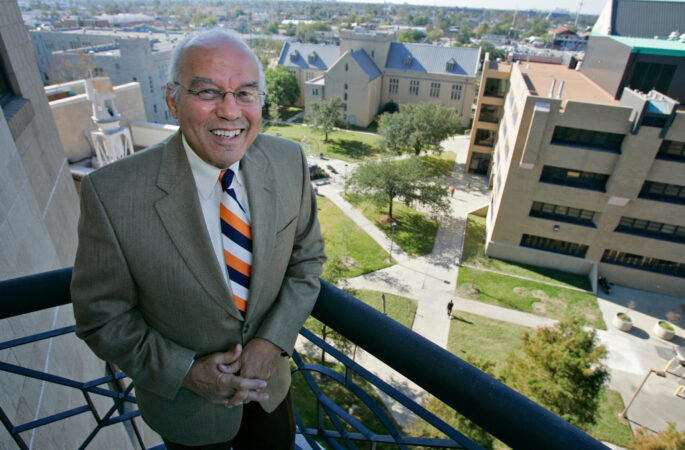
    Norman C. Francis, civil rights champion and recipient of Presidential Medal of Freedom, dies at 94

    Norman C. Francis, a civil rights pioneer and champion of education who played a pivotal role in helping rebuild New Orleans after Hurricane Katrina, died Wednesday. He was 94.

    Community members, activists, and leaders across Louisiana celebrated the life and accomplishments of Mr. Francis.

    “The nation is better and richer for his having lived among us,” said Reynold Verret, the president of Xavier University, which confirmed Mr. Francis’ death Wednesday in a statement.

    Mr. Francis took a high-profile role in the state’s response to Katrina, heading the Louisiana Recovery Authority, which was tasked with overseeing the multibillion-dollar rebuilding effort.

    Former New Orleans Mayor Mitch Landrieu said that after Katrina, Mr. Francis “stood in the breach.” Landrieu, who served as lieutenant governor when Katrina decimated New Orleans in 2005, said he often turned to Mr. Francis for advice and counsel — including in “his toughest moments.”

    “The most defining part of his character is that he treats every human being with dignity and respect,” Landrieu posted on X on Wednesday.

    Mr. Francis was well-known for his role as president of Xavier University in New Orleans, the nation’s only predominantly Black Catholic university. Mr. Francis held the position for 47 years beginning in 1968.

    During his tenure, enrollment more than doubled, the endowment mushroomed and the campus expanded. The small school gained a national reputation for preparing Black undergraduates for medical professions and for producing graduates in fields such as biology, chemistry, physics, and pharmacy.

    In the aftermath of Hurricane Katrina, when parts of the school’s campus were submerged under 8 feet of water, Mr. Francis vowed that the college would return.

    Multiple civil rights groups, including the American Civil Liberties Union, honored Mr. Francis as one of the nation’s top college presidents. In 2006, then-President George W. Bush awarded Mr. Francis with the Presidential Medal of Freedom.

    “Dr. Francis was more than an administrator. He was an institution builder, a civil rights champion, and a man of quiet generosity,” Louisiana U.S. Rep. Troy Carter posted on social media. “He believed education was the pathway to justice. He believed lifting one student could lift an entire family.”

    Mr. Francis, the son of a barber, grew up in Lafayette, Louisiana. He received his bachelor’s degree from Xavier in 1952. He became the first Black student at Loyola University’s law school — integrating the school and earning his law degree in 1955.

    He went on to spend two years in the Army, then joined the U.S. Attorney General’s office to help integrate federal agencies.

    Even then, he still couldn’t use the front door to enter many New Orleans hotels, restaurants, or department stores because of his race.

    “Some people say to me, ‘My God! How did you take that?’” Mr. Francis said during a 2008 interview with the Associated Press. “Well, you took that because you had to believe that one day, the words that your parents said to you ‘You’re good enough to be president of the United States’ yes, we held onto that.”

    In 1957, he joined Xavier in the role of Dean of Men, beginning his decades-long career at the university.

    Mr. Francis’ wife, Blanche, died in 2015. The couple had six children and multiple grandchildren.

  • Billionaire Les Wexner says he was ‘duped’ by adviser Jeffrey Epstein, ‘a world-class con man’

    Billionaire Les Wexner says he was ‘duped’ by adviser Jeffrey Epstein, ‘a world-class con man’

    NEW ALBANY, Ohio — The billionaire behind the retail empire that once blanketed shopping malls with names such as Victoria’s Secret and Abercrombie & Fitch told members of Congress on Wednesday that he was “duped by a world-class con man” — close financial adviser Jeffrey Epstein. Les Wexner also denied knowing about the late sex offender’s crimes or participating in Epstein’s abuse of girls and young women.

    “I was naive, foolish, and gullible to put any trust in Jeffrey Epstein. He was a con man. And while I was conned, I have done nothing wrong and have nothing to hide,” the 88-year-old retired founder of L Brands said in a statement to the House Oversight and Reform Committee released before his interview.

    The panel’s Democrats had subpoenaed him after the latest Justice Department release of Epstein-related documents revealed new details about Wexner’s relationship with the well-connected financier. Ranking member Rep. James Comer, a Kentucky Republican, said that Wexner “answered every question asked of him” during the six-hour proceeding and that a video and transcript would be released soon.

    Wexner described himself to the lawmakers as a philanthropist, community builder and grandfather who always strove “to live my life in an ethical manner in line with my moral compass,” according to the statement. He said he was eager “to set the record straight” about his ties with Epstein. Their relation ended bitterly in 2007, after the Wexners discovered he’d been stealing from them.

    As one of Epstein’s most prominent former friends, Wexner has spent years answering for their decades-long association and he sought to use the proceeding to dispel what he called “outrageous untrue statements and hurtful rumor, innuendo, and speculation” that have shadowed him.

    Rep. Robert Garcia, a California Democrat who sat in on Wednesday’s interview, expressed skepticism in comments to reporters gathered near the proceeding.

    “There is no single person that was more involved in providing Jeffrey Epstein with the financial support to commit his crimes than Les Wexner,” he said.

    In response to allegations by the prominent late Epstein victim Virginia Giuffre, who claimed in court documents that Wexner was among men Epstein trafficked her to, Wexner testified to utter devotion to his wife of 33 years, Abigail. He said he’d never once been unfaithful “in any way, shape, or form. Never. Any suggestion to the contrary is absolutely and entirely false.”

    Wexner’s name appears more than 1,000 times in the Epstein files, which does not imply guilt and Wexner has never been charged with any crimes. His spokesperson said the number of mentions is not unexpected given their long-running ties.

    ‘A most loyal friend’

    Epstein first met Leslie Wexner through a business associate around 1986.

    It was an opportune time for Wexner’s finances. The Ohio business owner had grown a single Limited store in Columbus into a suite of 1980s mall staples: The Limited, Limited Express, Lane Bryant and Victoria’s Secret. Bath & Body Works, Abercrombie & Fitch, Lerner, White Barn Candle Co., and Henri Bendel would follow.

    Wexner told lawmakers that it was several years before he turned over management of his vast fortune to Epstein, after the “master manipulator” connived to gain his trust. He gave Epstein power of attorney in 1991, allowing Epstein to make investments and do business deals and to purchase property and help Wexner as he developed New Albany from a small rural city to a thriving upscale Columbus suburb.

    Epstein had “excellent judgment and unusually high standards,” Wexner told Vanity Fair in a 2003 interview, and he was “always a most loyal friend.”

    On Wednesday, the billionaire said he didn’t circulate in Epstein’s social circle, but often heard accounts of his encounters with other wealthy people.

    Epstein “carefully used his acquaintance with important individuals to curate an aura of legitimacy,” Wexner said. He said he visited Epstein’s infamous island only once, stopping for a few hours one morning with his wife and young children while they were cruising on their boat.

    “It is interesting that Mr Wexner has already begun to clarify in his mind that somehow he and Mr. Epstein weren’t even friends,” Garcia told reporters. “We should be very clear that the two were very close, per reporting. They spent a lot of time together.”

    Epstein recalls ‘gang stuff’

    In one of the newly released documents, Epstein sent rough notes to himself about Wexner saying: “never ever, did anything without informing les” and “I would never give him up.” Another document, an apparent draft letter to Wexner, said the two “had ‘gang stuff’ for over 15 years” and were mutually indebted to each other — as Wexner helped make Epstein rich and Epstein helped make Wexner richer.

    Wexner spokesperson Tom Davies said Wexner never received the letter, characterizing it as fitting “a pattern of untrue, outlandish, and delusional statements made by Epstein in desperate attempts to perpetuate his lies and justify his misconduct.”

    Wexner told the congressional representatives that Epstein “lived a double life,” presenting himself to his wealthy clients as a financial guru with steady girlfriends while “most carefully and fully” hiding his misdeeds with underage girls. “He knew that I never would have tolerated his horrible behavior. Not any of it,” he said.

    Exploiting a sexy brand

    Some accusers said Epstein touted his ties to Wexner and claimed that he could help get them jobs modeling for the Victoria’s Secret catalog.

    One woman, an aspiring actor and model, told the FBI that Epstein said he was best friends with the longtime Victoria’s Secret owner and that she’d have to learn to be comfortable in her underwear and not be a prude, according to recently released grand jury testimony. Another woman said she reported Epstein to police in 1997 after he groped her during what she thought was a modeling interview for the Victoria’s Secret catalog. After Epstein’s 2019 arrest, Wexner’s lawyers told investigators that the business owner had heard a rumor that Epstein might be holding himself out as connected to Victoria’s Secret, prosecutors wrote in a recently disclosed memorandum summarizing the probe. When Wexner asked Epstein about it, Epstein denied doing so, the lawyers said, according to the memo.

    Wexner did not address the specific issue in his statement Wednesday, but repeatedly lamented being deceived by Epstein — “an abuser, a crook, and a liar.” L Brands sold off Victoria’s Secret in 2020, in one of Wexner’s final acts as chair.

    A relationship unravels

    Wexner did not publicly reveal until after Epstein’s arrest on federal sex trafficking charges in July 2019 that he had severed their relationship. In a Wexner Foundation letter that August, he said that happened in 2007. But the Justice Department’s newly released records show the two were in touch after that.

    Wexner emailed Epstein on June 26, 2008, after a plea deal was announced that would require him to serve 18 months in a Florida jail on a state charge of soliciting prostitution from a minor in order to avoid federal prosecution. He wound up serving 13 months.

    “Abigail told me the result … all I can say is I feel sorry. You violated your own number 1 rule … always be careful,” Wexner wrote. Epstein replied: “no excuse.”

    Davies said the 2007 date Wexner cited in 2019 applied to firing Epstein as financial adviser, revoking his power of attorney, and removing his name from Wexner’s bank accounts.

    Wexner also said in the 2019 letter that Epstein had misappropriated “vast sums” of his and his family’s fortune while overseeing his finances. An investigative memo from the latest document release says that Wexner’s attorneys told investigators in 2008 that Epstein had repaid him $100 million. Wexner said in Wednesday’s statement that Epstein returned “a substantial amount” of the undisclosed total.

    Garcia said that congressional investigators have identified more than $1 billion that was “either transferred, provided in stocks or given directly” by Wexner to Epstein — though Wexner “appears to be unaware” of much of it.

    Continuing fallout for Wexner

    On Wednesday, Wexner testified that he had never seen Epstein with any young girls and acknowledged the “unfathomable” pain he inflicted, even as discoveries in the Epstein files have placed new pressure on him.

    One survivor, Maria Farmer, said a redacted FBI report contained in the document release vindicated her longstanding claim that she filed one of the earliest complaints against Epstein while she was under his employ in 1996 working on an art project at the Wexners’ estate.

    Meanwhile, survivors of a sweeping sexual abuse scandal at the Ohio State University are citing Wexner’s association with Epstein to try to get his name removed from a campus football complex and university nurses also want his name scrubbed from the Wexner Medical Center.


  • Team USA defeats Sweden in OT to advance to Olympic men’s hockey semis

    Team USA defeats Sweden in OT to advance to Olympic men’s hockey semis

    MILAN — The U.S. and Canada are moving on to the semifinals at the Olympics. Each needed extra hockey to get through the quarterfinals.

    Quinn Hughes scored in overtime to put the U.S. past Sweden 2-1 after the Americans surrendered the tying goal to Mika Zibanejad with 91 seconds left in the third period. Dylan Larkin deflected Jack Hughes’ second-period shot in for the only U.S. goal in regulation.

    Earlier Wednesday, Nick Suzuki tied it for Canada late in regulation against Czechia, and Mitch Marner won it 4-3 in overtime to avoid what would have been a stunning early exit.

    “It was just all relief,” Canada’s Macklin Celebrini said after scoring three minutes in and then assisting on Marner’s goal. “A weight lifted off our shoulders, for sure. Just seeing that puck go in, knowing that we won the game. … It was a good feeling for all of us.”

    Finland also escaped an upset bid by rallying to beat Switzerland 3-2 in OT. Sweden is going home early from a tournament that did not go as planned for a team with a full roster of 25 NHL players, while upstart Slovakia is making another improbable run at the Olympic Games.

    After Canada did its part, albeit with a roller coaster of drama and emotion, the U.S. kept alive the possibility of the North American rivals meeting in the gold medal game Sunday by riding goaltender Connor Hellebuyck’s solid play past Sweden.

    The U.S. will face Slovakia in one semifinal on Friday night. Just before that, also unbeaten Canada plays Finland in the other.

    Canada survives Czechia’s upset bid

    After losing captain Sidney Crosby to injury, Canada was staring down what would have been a stunning quarterfinal exit until Suzuki tied it on a deflection goal with 3:27 left. Then Marner scored a little more than a minute into overtime to beat Czechia 4-3 and send the tournament favorite into the semifinals.

    “Everybody had complete faith in whoever was going over the boards,” coach Jon Cooper said. “It just felt it was like a matter of time. It was going to happen.”

    The nerves were palpable when Canada fell behind with 7:42 remaining on Ondřej Palát’s goal on an odd-man rush off a pass from Martin Nečas. Replays showed Czechia had six skaters on the ice, which Nathan MacKinnon said he and his teammates were aware of, even if on-ice officials didn’t notice.

    Mitch Marner was the hero for Canada in Wednesday’s quarterfinals.

    Suzuki just about did it all on the tying goal, sending the puck out to the point to Devon Toews and then redirecting the defenseman’s shot that was going well wide past Lukáš Dostál and into the net.

    “Toewser gave me a perfect opportunity to tip it,” Suzuki said. “Just trying to put something on net there.”

    Jordan Binnington denied Nečas on a breakaway with 70 seconds left to send the game past regulation. It was the biggest of Binnington’s 21 saves in an excellent performance from Canada’s starter.

    Then Marner summoned some more heroics playing for Canada, scoring his second OT goal in an international tournament in as many chances. Marner also scored in a similar fashion a year ago at the 4 Nations Face-Off.

    “It’s the ‘it’ factor, man: Mitch Marner’s got it,” Cooper said. “He doesn’t disappoint. Sometimes your hair falls out at times, but in the end, he never disappoints.”

    Finland rallies past Switzerland

    Much like Canada, Finland was trailing late in its game against Switzerland. The Finns also got a late goal to avoid an upset defeat.

    Miro Heiskanen tied it with 72 seconds left, Artturi Lehkonen scored in overtime, and Finland escaped with a 3-2 victory. Heiskanen’s shot banked in off Switzerland defenseman Jonas Siegenthaler’s stick and past goaltender Leonardo Genoni.

    “We are a relentless team,” Heiskanen said. “We never give up. We know we had a tough start. It was a slow start, but we kept playing, kept working, and it paid off.”

    Finland was actually down two goals after Switzerland’s Damien Riat and Nino Niederreiter scored 1:12 apart in the first period. It took until there was 6:06 left before Sebastian Aho got Finland on the board.

    Slovakia reaches semis

    Dalibor Dvorský turned in another brilliant performance with a goal and an assist, fellow NHL forward Pavol Regenda scored twice as part of his three-point game, and Slovakia dominated Germany 6-2 to reach the semifinals and guarantee playing for a medal in Milan.

    “Amazing,” said alternate captain Erik Černák, a two-time Stanley Cup champion with the Tampa Bay Lightning. “Before the tournament, if we would say we’re going to make semifinals, probably people would laugh at you. But we did it, and it’s not done yet.”

    Slovakia got an injury scare in the second period when 21-year-old emerging Montreal Canadiens star Juraj Slafkovský, the reigning Olympic MVP, went head-first into the boards and was slow to get up. A trainer applied an ice pack to the back of Slafkovsky’s neck, and he held it on himself when he got up to celebrate a goal scored while he was getting medical attention.

    “I’m OK,” Slafkovský said. ”I was a little shaken up, but after a couple minutes I felt OK again. I went out there, and head wasn’t spinning. I was seeing normal.”

  • Cameron Payne is happy to return to Sixers: ‘When your focus is in the right place, things like this happen’

    Cameron Payne is happy to return to Sixers: ‘When your focus is in the right place, things like this happen’

    Cameron Payne was in the middle of Sunday’s game with Serbian team KK Partizan, when his agent, Jason Glushon, shared that a rest-of-season contract with the 76ers was in the works.

    “You might want to pack,” Glushon told his client.

    The veteran guard was at Sixers practice by Wednesday afternoon, working with new (and old) teammates and reviewing film with assistant coach Matt Brase. Payne, who played for the Sixers for part of the 2023-24 season, adds depth to a guard group that lost Jared McCain and Eric Gordon at the trade deadline. And though Payne said another NBA comeback was not his overwhelming goal, he is pleased to rejoin a familiar team that exits the All-Star break with a 30-24 record and in the thick of the Eastern Conference playoff race.

    “Obviously, I wanted to get back,” Payne said following Wednesday’s practice. “But all my focus was there [with Partizan]. I feel like, sometimes, when your focus is in the right place, things like this happen.

    “I was really locked in there, and me playing there got the looks to come back here.”

    Payne was a trade-deadline pickup in February of 2024, averaging 9.3 points and 3.1 assists in 19.4 minutes across 31 regular-season games. The 31-year-old is a high-energy guard whom All-Star teammate Tyrese Maxey has seen “change games, honestly,” such as when he provided an 11-point burst on 3-of-4 shooting from beyond the arc in the Sixers’ Game 3 playoff victory over the New York Knicks two seasons ago.

    Payne then played for the Knicks last season, averaging 6.9 points and 2.8 assists in 15.1 minutes in 72 games before entering free agency. He spent the preseason with the Indiana Pacers before being released, then had a workout with the Phoenix Suns (where he played for parts of four seasons, from 2020-23) that did not result in a contract.

    Cameron Payne averaging 6.9 points and 2.8 assists in 15.1 minutes in 72 games with the Knicks last season.

    When Partizan circled back with an offer, Payne jumped at the opportunity.

    “Man, I’m tired of sitting down,” he said to himself. “Yeah, let’s play some basketball.”

    Payne called the fan environment for the Belgrade-based club “lit,” complete with arenas packed “wall-to-wall” and lit flares causing smoke to hover over the court. He also appreciated that he was trusted to run Partizan’s offense, “like they’re counting on you, for real.” He averaged 11.6 points, 3.8 assists, and 1.5 steals in 15 games.

    Payne believes he can carry that same “ownership” to the Sixers’ second unit, which has sputtered throughout this season.

    He will be asked to push the pace, play in the pick-and-roll, and shoot three-pointers. Perhaps more importantly, Payne is expected to give the occasional blow to Maxey, who leads the NBA in minutes per game (38.6), and VJ Edgecombe, who ranks in the league’s top 10 in that category (35.4) while already playing in more games than he did at Baylor. Sixers coach Nick Nurse said Wednesday that Payne can “eat into” those players’ stints and also log “superhuge minutes” in specific scenarios, such as back-to-backs or blowouts.

    Cameron Payne returns to the Sixers after previously playing for the team during the 2023-24 season.

    “We can almost throw him in there to take over for certain games,” Nurse said. “He’s capable of doing that.”

    To get from Serbia to Philly by the time the Sixers officially reconvened from the All-Star break, Payne first took an early-morning flight Tuesday that connected through Amsterdam. He arrived at the team’s Camden facility around 3:30 p.m. for his physical. He acknowledged Wednesday that he is still adjusting to the time difference and has not slept much.

    Still, Nurse said Payne looked in-rhythm during Wednesday’s practice, that “you forget how fast he is.” Payne started to learn new teammates’ tendencies, such as Trendon Watford can initiate the offense as a point forward and that he can “throw it up” to athletic center Adem Bona. With Brase, he went through “a little package” of plays that he could successfully execute should he be called upon to play in Thursday’s home matchup against the Atlanta Hawks.

    And during a phone call Wednesday morning with Glushon, Payne turned reflective about his return to the Sixers.

    “I don’t know how I keep finding a way to get back,” Payne said. “But I guess the NBA’s still watching. And if you still take your game seriously and do the right things, play the right way, they’re still looking.”

  • Flyers call-ups bring ‘a new energy’ as the team prepares for the stretch run

    Flyers call-ups bring ‘a new energy’ as the team prepares for the stretch run

    On Wednesday, Travis Sanheim, Rasmus Ristolainen, Dan Vladař, and Rick Tocchet were part of tense, overtime battles at the Olympics in Milan, Italy.

    Those high-pressure games are exactly the kind of battles the Flyers hope to find themselves in come April. But with the team currently eight points out of third in the Metropolitan Division, a lot has to change to make that happen.

    “That’s our No. 1 mindset and why we’re doing the things we’re doing in practices is with that endgame in mind,” assistant coach Todd Reirden said. “We’re going to approach every game with that mindset. It’s something that is attainable and our guys believe in.”

    Tocchet mentioned numerous times before the break that the Flyers haven’t had the opportunity to get a lot of practice time in. But the Olympic break provides an opportunity for a sort of second training camp — a full, uninterrupted week for the Flyers to drill new concepts and even work new faces into the mix.

    The Flyers called up defensemen Oliver Bonk and Hunter McDonald, and goaltender Carson Bjarnason, from Lehigh Valley to fill in for the players in Milan, and Reirden said having new, hungry players in practice has given the group a “new energy.”

    “The guys, their spirits have been really high,” Reirden said. “Today’s practice was pretty spirited, with some competitions that we had. That, in conjunction with bringing in new players that are excited about getting an opportunity, I think is really great experience for everybody involved.”

    Reirden said some of the drills were designed to test the Flyers’ prospects’ ability to handle NHL pace.

    During the hourlong practice, the Flyers ran five-on-five drills, and smaller one-on-ones and special teams sets. Drill losers dropped to the ice for pushups, and there were plenty of celebrations for goals and clears.

    “It’s cool,” Bonk said. “This is where you want to be all the time.”

    The Flyers still have a full week before their next game, on Feb. 25 in Washington, and they won’t be getting Tocchet back early after the Canadians pulled off the quarterfinal win.

    Travis Sanheim, pictured last year at the 4 Nations, is two games away from an Olympic gold medal.

    But Tocchet, working with some of the NHL’s best coaches, including Cup winners in Jon Cooper and Bruce Cassidy with Team Canada, also is picking up a lot of new tactics, Reirden said, which they’ve been discussing and implementing with the group back in Voorhees.

    “This scenario, I think, leads itself to more hockey discussion,” Reirden said. “There’s some things that he’s watching develop in terms of how they’re doing some different elements of their game strategically, and thinking about whether we should adjust different things. We’re always looking to tinker and tweak certain things to try to better fit the identity of our group.”

    Breakaways

    Sanheim, Tocchet, and Team Canada advanced to the Olympic semifinals with a 4-3 overtime win over Dan Vladař and Czechia … Ristolainen and Finland beat Switzerland, 3-2, in overtime to advance to the Olympic semifinals. Canada will play Finland on Friday, and the United States will play Slovakia.

  • Mark Zuckerberg quizzed on kids’ Instagram use in social media trial

    Mark Zuckerberg quizzed on kids’ Instagram use in social media trial

    LOS ANGELES — Mark Zuckerberg and opposing lawyers dueled in a Los Angeles courtroom on Wednesday, where the Meta CEO answered questions about young people’s use of Instagram, his congressional testimony and internal advice he’s received about being “authentic” and not “robotic.”

    Zuckerberg’s testimony is part of an unprecedented social media trial that questions whether Meta’s platforms deliberately addict and harm children.

    As of early afternoon, Zuckerberg has not directly answered the central question of the case: whether Instagram is addictive. The plaintiff’s attorney, Mark Lanier, asked if people tend to use something more if it’s addictive.

    “I’m not sure what to say to that,” Zuckerberg said. “I don’t think that applies here.”

    Attorneys representing the plaintiff, a now 20-year-old woman identified by the initials KGM, claim her early use of social media addicted her to the technology and exacerbated depression and suicidal thoughts. Meta Platforms and Google’s YouTube are the two remaining defendants in the case, which TikTok and Snap have settled.

    Beginning his questioning, Lanier laid out three options of what people can do regarding vulnerable people: help them, ignore them, or “prey upon them and use them for our own ends.” Zuckerberg said he agrees the last option is not what a reasonable company should do, saying, “I think a reasonable company should try to help the people that use its services.”

    When he was asked about his compensation, Zuckerberg said he has pledged to give “almost all” of his money to charity, focusing on scientific research. Lanier asked him how much money he has pledged to victims impacted by social media, to which Zuckerberg replied, “I disagree with the characterization of your question.”

    Lanier questioned the Meta CEO extensively about a comment he made during a past congressional hearing, where he said Instagram employees are not given goals to increase amount of time people spent on the platform.

    Lanier presented internal documents that seemed to contradict that statement. Zuckerberg replied that they previously had goals associated with time, but said he and the company made the conscious decision to move away from those goals, focusing instead on utility. He said he believes in the “basic assumption” that “if something is valuable, people will use it more because it’s useful to them.”

    Lanier also asked Zuckerberg about what he characterized as extensive media training, including for testimonies like the one he was giving in court. Lanier pointed to an internal document about feedback on Zuckerberg’s tone of voice on his own social media, imploring him to come off as “authentic, direct, human, insightful and real,” and instructing him to “not try hard, fake, robotic, corporate or cheesy” in his communication.

    Zuckerberg pushed back against the idea that he’s been coached on how to respond to questions or present himself, saying those offering the advice were “just giving feedback.”

    Regarding his media appearances and public speaking, Zuckerberg said, “I think I’m actually well known to be sort of bad at this.”

    The Meta CEO has long been mocked online for appearing robotic and, when he was younger, nervous when speaking publicly. In 2010, during an interview with renowned tech journalists Kara Swisher and Walt Mossberg, he was sweating so profusely that Swisher asked him if he wanted to “take off the hoodie” that was his uniform at the time.

    Lanier spent a considerable stretch of his limited time with Zuckerberg asking about the company’s age verification policies.

    “I don’t see why this is so complicated,” Zuckerberg said after a lengthy back-and-forth, reiterating that the company’s policy restricts users under the age of 13 and that they work to detect users who have lied about their ages to bypass restrictions.

    Zuckerberg mostly stuck to his talking points, referencing his goal of building a platform that is valuable to users and, on multiple occasions, saying he disagreed with Lanier’s “characterization” of his questions or of Zuckerberg’s own comments.

    Zuckerberg has testified in other trials and answered questions from Congress about youth safety on Meta’s platforms. During his 2024 congressional testimony, he apologized to families whose lives had been upended by tragedies they believed were caused by social media. But while he told parents he was “sorry for everything you have all been through,” he stopped short of taking direct responsibility for it. This trial marks the first time Zuckerberg stands before a jury. Once again, bereaved parents are sitting in the courtroom audience.

    The case, along with two others, has been selected as a bellwether trial, meaning its outcome could impact how thousands of similar lawsuits against social media companies are likely to play out.

    A Meta spokesperson said the company strongly disagrees with the allegations in the lawsuit and said they are “confident the evidence will show our longstanding commitment to supporting young people.”

    One of Meta’s attorneys, Paul Schmidt, said in his opening statement that the company is not disputing that KGM experienced mental health struggles, but rather disputing that Instagram played a substantial factor in those struggles. He pointed to medical records that showed a turbulent home life, and both he and an attorney representing YouTube argue she turned to their platforms as a coping mechanism or a means of escaping her mental health struggles.

    Zuckerberg’s testimony comes a week after that of Adam Mosseri, the head of Meta’s Instagram, who said in the courtroom that he disagrees with the idea that people can be clinically addicted to social media platforms. Mosseri maintained that Instagram works hard to protect young people using the service, and said it’s “not good for the company, over the long run, to make decisions that profit for us but are poor for people’s well-being.”

    Much of Mosseri’s questioning from the plaintiff’s lawyer centered on cosmetic filters on Instagram that changed people’s appearance — a topic that Lanier is sure to revisit with Zuckerberg. He is also expected to face questions about Instagram’s algorithm, the infinite nature of Meta’s feeds and other features the plaintiffs argue are designed to get users hooked.

    Meta is also facing a separate trial in New Mexico that began last week.

  • Sixers’ Joel Embiid will miss Hawks game with right shin soreness

    Sixers’ Joel Embiid will miss Hawks game with right shin soreness

    Joel Embiid will miss the 76ers’ game on Thursday against the Atlanta Hawks with right shin soreness, the team announced Wednesday evening.

    Embiid, the 2022-23 NBA MVP, reported the soreness while participating in a right knee injury management program during the All-Star break, the team said. Following a consultation with doctors, the team added, Embiid has received daily treatment while progressing through on-court work and strength and conditioning. He will be reevaluated before the Sixers play back-to-back road games Saturday at the New Orleans Pelicans and Sunday at the Minnesota Timberwolves.

    Before this shin issue, Embiid had missed the Sixers’ last two games leading up to the break to manage that right knee.

    Sixers coach Nick Nurse said Embiid participated in “a little bit” of the Sixers’ Wednesday practice and was scheduled to meet with team doctors later that afternoon.

    “He looked pretty good,” Nurse said of Embiid.

    Before those unscheduled absences last week, Embiid was in the middle of a dominant stretch. He averaged 33.1 points on 52.9% shooting, along with 8.6 rebounds and 5.2 assists, in his last 10 games, putting him in the conversation to be named an All-Star reserve. Overall this season, he’s averaging 26.6 points, 7.5 rebounds, and 3.9 assists in 31 games.

    Embiid’s left knee, not his right, is the one that has undergone multiple surgeries in recent years.

  • Judge sentences Bucks man who killed his mother and hid body beneath drugs and money to decades in prison

    Judge sentences Bucks man who killed his mother and hid body beneath drugs and money to decades in prison

    Northampton police went to the first-floor condominium on Beacon Hill Drive for a welfare check on Dolores Ingram, an 82-year-old grandmother of three known for gifting her sewn and crocheted creations to family, friends, and those in need.

    Inside, officers found the living room in disarray, a heap of household items stacked haphazardly. They moved the things aside — a flipped-over futon, glass plates, a shattered aquarium that once housed two lizards — until they uncovered a bare foot. It was cold to the touch.

    The body was that of Dolores Ingram, who authorities say died from blunt-force trauma, asphyxiation, and lacerations inflicted by her son, William Ingram, before he fled in her car.

    On Wednesday, nearly two years later, a Bucks County judge sentenced William Ingram, 51, to 30 to 64 years in prison for killing her inside the home they shared.

    Ingram pleaded guilty in December to third-degree murder in the June 2024 killing of his mother, as well as abuse of a corpse and related crimes. He also pleaded guilty to a string of drug offenses, including possession with intent to distribute.

    Investigators said that as they continued searching the pile atop Dolores Ingram that day, they found approximately six pounds of marijuana and more than $53,000 in cash — proceeds, prosecutors said, from a marijuana and psilocybin distribution business that William Ingram ran from the home.

    They also found the family’s pet reptiles dead on the floor.

    “The money you threw on top of her was more than most people make in a year in this country,” said Bucks County Court Judge Stephen Corr, adding that it illustrated Ingram’s “disrespect” for his mother.

    In court on Wednesday, Dolores Ingram’s two daughters described their mother as “generous” and “kind, a “good example of how to treat people.” She loved yard sales and thrift stores, they said. She also had “lifelong anxiety,” including over her son, who suffered from mental illness, they said.

    Authorities initially charged Ingram with first-degree murder, which carries a potential life sentence. In exchange for a guilty plea to the lesser charge of third-degree murder, Bucks County prosecutors agreed to a sentence of 26 to 54 years in state prison.

    Corr used his discretion when he sentenced Ingram to four to 10 years in prison for the drug crimes. He also sentenced Ingram to consecutive terms, calling the move “necessary” given the circumstances of the crimes and the need to “protect the community” from Ingram.

    Defense attorney Riley Downs argued that Ingram has been diagnosed with schizoaffective disorder, which went untreated in the days before the slaying.

    At the sentencing hearing, Downs asked Ingram if he missed his mother. “Yeah,” Ingram replied. He added: “I didn’t mean for this to happen. It doesn’t even seem real to me.”

    Ingram denied hitting his mother and said he did not remember piling things on top of her. However, in an affidavit of probable cause for Ingram’s arrest, Northampton Township police said he confessed to hitting his mother in the head during an argument, then throwing “all this stuff” on top of her body.

    Then, police said, Ingram stole his mother’s Honda Civic and drove to Washington. There, authorities said, he assaulted a local police officer while naked and was taken into custody about a day after the killing.

    Downs asked the judge to sentence Ingram to 26 years, arguing that he would be 75 years old at his first chance at parole — an amount of time he called “significant” for a man Ingram’s age.

    Prosecutor Monica Furber pressed for consecutive sentences. While she acknowledged Ingram’s mental illness, she countered that it “did not stop him in any way from running a criminal enterprise” or covering his mother’s body “in the drugs and proceeds.”

    Before announcing the sentence, Corr said Ingram had “turned” on “the one person who was trying to help him.”

    He added: “I hope you have an opportunity to grow while you spend what is likely the rest of your life in prison.”