WASHINGTON — The Justice Department has issued new subpoenas in a Florida-based investigation into perceived adversaries of President Donald Trump and the U.S. government response to Russian interference in the 2016 presidential election, according to multiple people familiar with the matter.
An initial wave of subpoenas in November asked recipients for documents related to the preparation of a U.S. intelligence community assessment that detailed a sweeping, multiprong effort by Moscow to help Trump defeat Democratic nominee Hillary Clinton in the 2016 election.
Though the first subpoenas requested documents from the months surrounding the January 2017 publication of the Obama administration intelligence assessment, the latest subpoenas seek any records from the years since then, said the people, who spoke on condition of anonymity to the Associated Press to discuss a nonpublic demand from investigators.
The Justice Department declined to comment Tuesday.
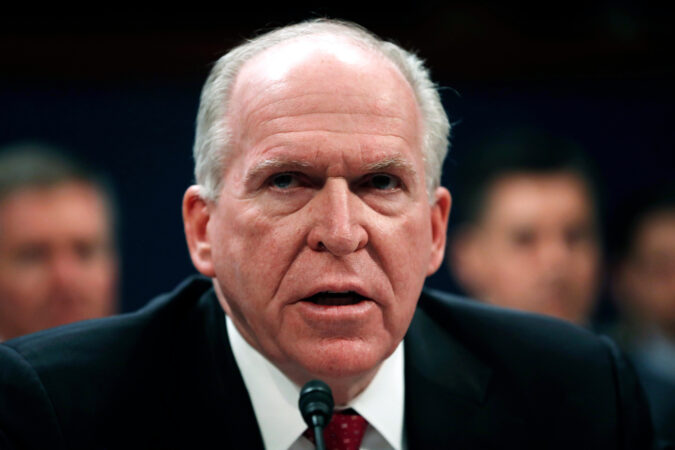
The subpoenas reflect continued investigative activity in one of several criminal inquiries the Justice Department has undertaken into Trump’s political opponents. An array of former intelligence and law enforcement officials have received subpoenas in the investigation. Lawyers for former CIA Director John Brennan, who helped oversee the drafting of the assessment and who has been called “crooked as hell” by Trump, have said they have been informed he is a target but have not been told of any “legally justifiable basis for undertaking this investigation.”
The intelligence community assessment, published in the final days of the Obama administration, found that Russia had developed a “clear preference” for Trump in the 2016 election and that Russian President Vladimir Putin had ordered an influence campaign with goals of undermining confidence in American democracy and harming Clinton’s chance for victory.
That conclusion, and a related investigation into whether the 2016 Trump campaign colluded with Russia to sway the outcome of the election, have long been among the Republican president’s chief grievances and he has vowed retribution against the government officials involved in the inquiries. Former FBI Director James Comey was indicted by the Trump administration Justice Department last year on false statement and obstruction charges, but the case was later dismissed.
Multiple government reports, including bipartisan congressional reviews and a criminal investigation by former special counsel Robert Mueller, have found that Russia interfered in Trump’s favor through a hack-and-leak operation of Democratic emails as well as a covert social media campaign aimed at sowing discord and swaying American public opinion. Mueller’s report found that the Trump campaign actively welcomed the Russian help, but it did not establish that Russian operatives and Trump or his associates conspired to tip the election in his favor.
The Trump administration has freshly scrutinized the intelligence community assessment in part because a classified version of it incorporated in its annex a summary of the “Steele dossier,” a compilation of Democratic-funded opposition research that was assembled by former British spy Christopher Steele and was later turned over to the FBI. That research into Trump’s potential links to Russia included uncorroborated rumors and salacious gossip, and Trump has long held up its weaknesses in an effort to discredit the entire Russia investigation.
A declassified CIA tradecraft review ordered by current Director John Ratcliffe and released last July faults Brennan’s oversight of the assessment.
The review does not challenge the conclusion of Russian election interference but chides Brennan for the fact that the classified version referenced the Steele dossier.
Brennan testified to Congress, and also wrote in his memoir, that he was opposed to citing the dossier in the intelligence assessment since neither its substance nor sources had been validated, and he has said the dossier did not inform the judgments of the assessment. He maintains the FBI pushed for its inclusion.
The new CIA review seeks to cast Brennan’s views in a different light, asserting that he “showed a preference for narrative consistency over analytical soundness” and brushed aside concerns over the dossier because he believed it conformed “with existing theories.” It quotes him, without context, as having stated in writing that “my bottom line is that I believe that the information warrants inclusion in the report.”
In a letter last December addressed to the chief judge of the Southern District of Florida, where the investigation is based, Brennan’s lawyers challenged the underpinnings of the investigation, questioning what basis prosecutors had for opening the inquiry in Florida and saying they had received no clarity from prosecutors about what potential crimes were even being investigated.
“While it is mystifying how the prosecutors could possibly believe there is any legally justifiable basis for undertaking this investigation, they have done nothing to explain that mystery,” the lawyers said.
Ramadan marks a time of spiritual renewal for Muslims, a time to practice patience, gratitude, charity, and abstinence. This year, the observance began Feb. 17 and ends March 19, following the lunar calendar. Muslims observing Ramadan fast from sunrise to sunset, refraining from food and drink (even water). They often gather for suhoor, the predawn meal, and iftar, the meal at dusk that breaks the fast.
Suhoor, can range from hearty traditional stews to a quick bowl of cereal. At sunset, iftar is traditionally observed with dates, fresh juices, fried snacks, and other festive favorites. While meals can be enjoyed at home, many Muslims plan gatherings to start and end the fast together.
If you’re looking to dine out this Ramadan, here’s a list of Philadelphia-area restaurants open during early suhoor hours and offering iftar specials. While most of these establishments serve halal meat, check our guide to halal hot chicken and other eats for more options.
This list will be updated. Offering suhoor or iftar? Email us.
Lagman soup with chewy, housemade noodles is one of the standout Uzbek specialties at Plov House in Northeast Philadelphia.
24-hour restaurants with suhoor favorites
Plov House
This Northeast restaurant is open 24 hours a day in a city where all-night restaurants have become endangered, according to Inquirer restaurant critic Craig LaBan. Expect halal Uzbeki homestyle dishes, including beef or lamb puff pastries, pilaf piled high with stewed meats and carrots, fried meaty turnovers, and crepes filled with cottage cheese and strawberry jam for your early morning feasting.
While traditional dishes are enjoyed during suhoor, classic American breakfast foods are a favorite, too. At Liberty Bell Diner, one of Philly’s few remaining 24-hour diners, you’ll find pancakes, omelets, and waffles around the clock.
8445 Frankford Ave., 215-331-4344, thelibertybelldiner.com, open 24 hours, seven days a week
Four Seasons Diner
This cozy 24-hour diner on Cottman Avenue offers cinnamon French toast, eggs any way, golden brown pancakes, and omelets. You could even end the predawn meal with a slice of strawberry cheesecake or chocolate fudge cake.
2811 Cottman Ave., 215-331-0797, fsdiner.com, open 24 hours, seven days a week
Makkah Market
In West Philly, this 24-hour market and kitchen offers a 25-seat dining area for sit-down suhoors and iftars. Since 1996, Makkah Market has been a staple in the neighborhood with Egyptian and Moroccan chefs cooking up meals to fill takeout boxes.
4249 Walnut St., 215-382-1821, makkahmarketpa.com, open 24 hours, seven days a week
At left is the haneeth and mandi duo, (lamb, chicken, and rice) beside the mixed grill, (lamb, chicken, beef, and fries) at Malooga, Chestnut Street in Old City, Philadelphia. A second location is in Narberth.
Where to find iftar menus in the Philly area
Yes Yasmine Kitchen
Every Thursdays during Ramadan, this pop-up offers take-home meals featuring djedj zitoune chicken (or cauliflower), black seed and black salt focaccia, Moroccan carrots, and an assortment of stuffed and chocolate-dunked dates. Weekly rotating meals are halal, with vegan options available for preorder on Tuesdays for pick-up on Thursdays from 4 to 6 p.m. Orders ($65 per person) can be placed online.
Old City’s Yemeni restaurant offers a $9.99 iftar special, which includes soup, two samosas, and three dates with any main dish. The special can be added to any dine-in order, from 5 p.m. until closing.
134 Chestnut St., 267-822-2327, maloogacatering.com, Monday to Thursday 11:30 a.m. to 10 p.m., Friday to Sunday 11:30 a.m. to 11 p.m. (The kitchen closes 30 minutes before closing time.)
Wah Gi Wah
This Pakistani restaurant in West Philly is offering Ramadan iftar boxes with appetizers, entrées, and naan. Items include chicken biryani, kabobs, or tandoori, along with salad, rice, and chana. Packages range from $9.99 to $19.99, depending on your options. Catering packages are available for $9.99 to $14.99.
4447 Chestnut St., 215-921-5597, wahgiwah.com, Sunday to Thursday noon to 10 p.m., Friday to Saturday noon to 11 p.m.
Alamodak Restaurant & Hookah Bar
Every Friday, Saturday, and Sunday, Alamodak Restaurant in North Philly hosts a Ramadan iftar buffet. The buffet items rotate, but customers can expect chicken mandi, maqluba, appetizers, soup, and sweets. There are also vegan and vegetarian options. Adults pay $26.99 on Friday and Sunday, and $30.99 on Saturday. Kids under 10 years pay $10. On Feb. 28, there will be a Ramadan tent set up with music and seating from 10 p.m. to midnight.
Pick any of the seminal moments from Black history over the last six decades — from the assassination of the Rev. Dr. Martin Luther King Jr. in 1968 to Barack Obama’s first speech as president-elect 40 years later — and the chances are that the Rev. Jesse Jackson Sr. was there, front and center.
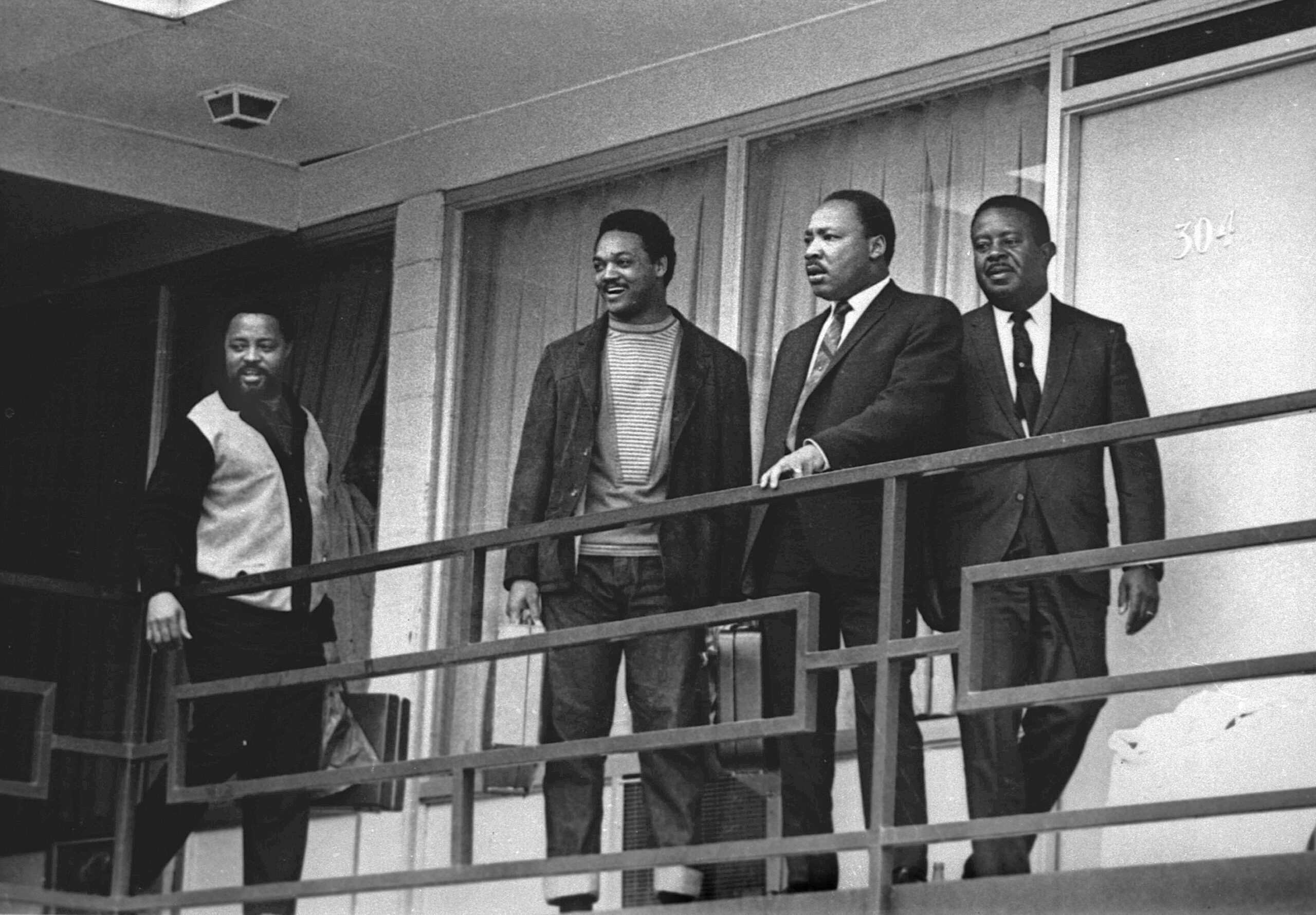
Jackson had spoken to King only moments before the civil rights leader was fatally shot while standing on a balcony of the Lorraine Motel in Memphis on April 4, 1968. Even though he was only 26 years old, Jackson went on to position himself to take up the mantle of leading the civil rights movement.
Years later, Jackson explained to an interviewer, “What I was clear on was that we could not let one bullet kill the whole movement.” He used the analogy of an athletic event during which the best player gets hurt. The answer, he said, isn’t to forfeit the game: “You can’t run away. You’ve got to keep fighting.”
The Rev. Martin Luther King Jr. (second from right) stands with Hosea Williams (left), Jesse Jackson (second from left), and Ralph Abernathy (right) on the balcony of the Lorraine Motel in Memphis on April 3, 1968, a day before he was assassinated while standing in approximately the same spot.
And that’s what he did for the rest of his life, advocating tirelessly for an end to racial injustice as well as for economic opportunities for poor people of all racial backgrounds through his iconic Rainbow coalition and during his two historic runs for the presidency.
Back when most Americans couldn’t conceive of a Black man becoming president of the United States, he could and tried to get the rest of us to believe in it, too. Jackson launched his first bid for the Democratic presidential nomination in 1984 and again in 1988.
Jackson rarely gets the credit, but his run for the White House helped lay the groundwork for the election of Obama, who fulfilled Jackson’s vision.
And, yes, when Obama gave his victory speech in Chicago’s Grant Park on election night 2008, Jackson was there, too. While Obama spoke, Jackson could be seen holding a miniature American flag with tears streaming down his cheeks.
“I wish for a moment that Dr. King or Medgar Evers” — the civil rights leader who was assassinated in Mississippi in 1963 — “could’ve just been there for 30 seconds to see the fruits of their labor,” Jackson later told the Associated Press about his emotions that night. “I became overwhelmed. It was the joy and the journey.”
Jackson’s death on Tuesday at the age of 84 came after years of illnesses, including a rare neurological disorder. Even in his later years, however, he stayed in the game — to continue his football metaphor — making an appearance onstage to thunderous applause during the Democratic National Convention in Chicago in 2024.
Inquirer columnist Jenice Armstrong interviews Jesse Jackson during the 50th anniversary commemoration of the assassination of the Rev. Martin Luther King Jr. on April 4, 2018.
News he had died hit me as hard as if I’d lost a dear relative. I didn’t know Jackson personally, but had the privilege of interviewing him multiple times during my career.
In fact, the first time I met him was asa student journalist on the campus of Howard University. The last time I’d actually gotten a chance to interview him was in 2018 during the 50th anniversary commemoration of King’s assassination in Memphis outside what had been the Lorraine Motel, which is now part of the National Civil Rights Museum. I wish I’d kept the recording of what he said.
As I processed the news of his death, I made a point of posting on Abby Phillip’s Instagram page a brief note ofthanks for her work chronicling Jackson’s life and legacy in her book, A Dream Deferred: Jesse Jackson and the Fight for Black Political Power. Phillip told me last year that she knew she was working against time and Jackson’s frail health to finish the project before his death.
Her goal, she said, “was to make sure that this chapter didn’t get lost to history.”
I was a kid in the 1970s during the Black Power era who repeated his chants, “I am somebody!”
Back then, it was affirming to see Jackson on TV with his then-signature Afro, or later delivering electrifying speeches during his groundbreaking runs for the presidency. We used to chant, “Run Jesse Run!”
One of the first articles I wrote for my student newspaper was about Jackson’s Operation PUSH, or People United to Save Humanity.
Jacksonspent his adult life at the forefront of the pursuit of equality for African Americans, and for that, we should always be grateful.
To me, losing this great leader in February during Black History Month — at a time when our people’s contributions to the nation’s history are being threatened with erasure — only magnifies the sense of loss. It should also remind those of us who care about civil and human rights that it’s our turn to take up the struggle — and keep fighting.
CHICAGO — The Rev. Jesse L. Jackson, a protégé of the Rev. Martin Luther King Jr. and two-time presidential candidate who led the Civil Rights Movement for decades after the revered leader’s assassination, died Tuesday. He was 84.
As a young organizer in Chicago, Rev. Jackson was called to meet with King at the Lorraine Motel in Memphis shortly before King was killed, and he publicly positioned himself thereafter as King’s successor.
Santita Jackson confirmed that her father, who had a rare neurological disorder, died at home in Chicago, surrounded by family.
Rev. Jackson led a lifetime of crusades in the United States and abroad, advocating for the poor and underrepresented on issues, including voting rights, job opportunities, education, and healthcare. He scored diplomatic victories with world leaders, and through his Rainbow/PUSH Coalition, he channeled cries for Black pride and self-determination into corporate boardrooms, pressuring executives to make America a more open and equitable society.
And when he declared, “I am Somebody,” in a poem he often repeated, he sought to reach people of all colors. “I may be poor, but I am Somebody; I may be young; but I am Somebody; I may be on welfare, but I am Somebody,” Rev. Jackson intoned.
It was a message he took literally and personally, having risen from obscurity in the segregated South to become America’s best-known civil rights activist since King.
“Our father was a servant leader — not only to our family, but to the oppressed, the voiceless, and the overlooked around the world,” the Jackson family said in a statement posted online. “We shared him with the world, and in return, the world became part of our extended family.”
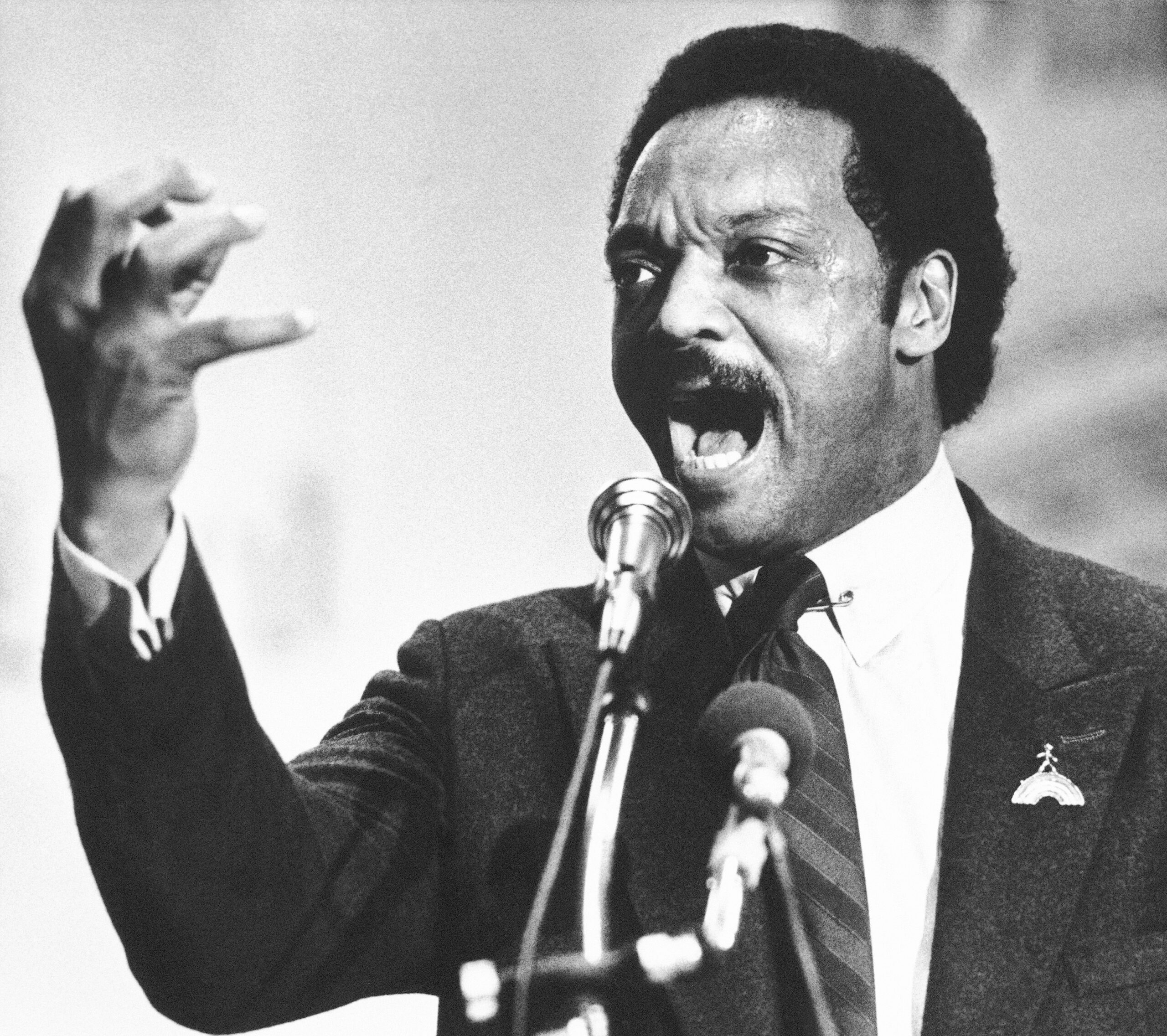
Democratic presidential primary candidate Jesse Jackson speaks to a group of his supporters at a rally held at a Baptist Church in Dayton, Ohio, on April 14, 1984.
Fellow civil rights activist the Rev. Al Sharpton said his mentor “was not simply a civil rights leader; he was a movement unto himself.”
“He taught me that protest must have purpose, that faith must have feet, and that justice is not seasonal, it is daily work,” Sharpton wrote in a statement, adding that Rev. Jackson taught “trying is as important as triumph. That you do not wait for the dream to come true; you work to make it real.”
“Even if we win,” he told marchers in Minneapolis before the officer whose knee kept George Floyd from breathing was convicted of murder, “it’s relief, not victory. They’re still killing our people. Stop the violence, save the children. Keep hope alive.”
Rev. Jackson’s voice, infused with the stirring cadences and powerful insistence of the Black church, demanded attention. On the campaign trail and elsewhere, he used rhyming and slogans such as “Hope not dope” and “If my mind can conceive it and my heart can believe it, then I can achieve it,” to deliver his messages.
Rev. Jackson had his share of critics, both within and outside of the Black community. Some considered him a grandstander, too eager to seek the spotlight. Looking back on his life and legacy, Rev. Jackson told the Associated Press in 2011 that he felt blessed to be able to continue the service of other leaders before him and to lay a foundation for those to come.
“A part of our life’s work was to tear down walls and build bridges, and in a half century of work, we’ve basically torn down walls,” Rev. Jackson said. “Sometimes when you tear down walls, you’re scarred by falling debris, but your mission is to open up holes so others behind you can run through.”
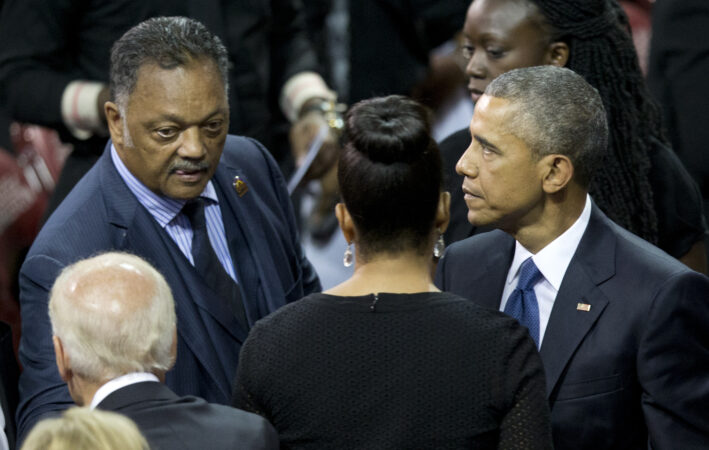
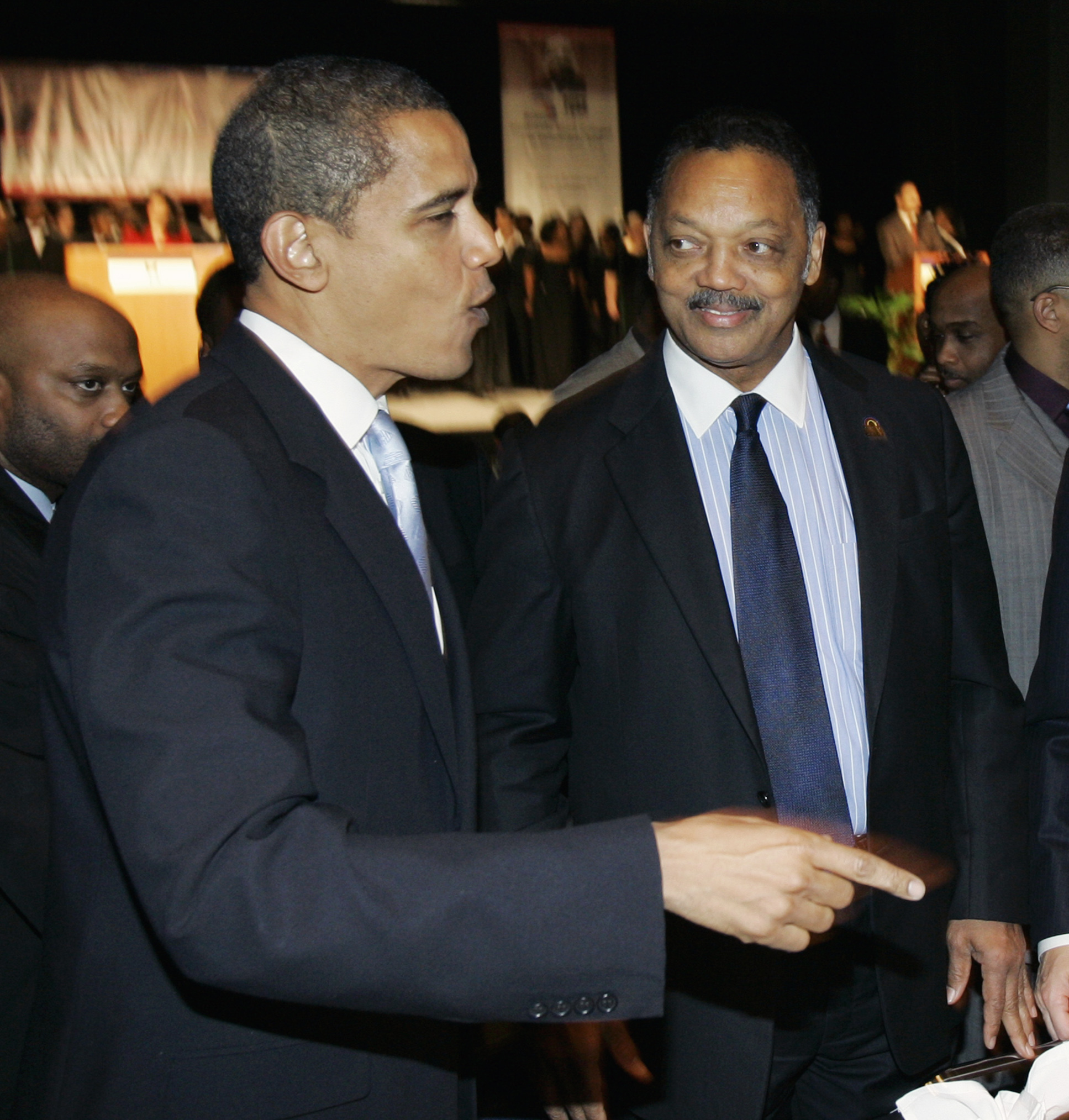
Barack Obama, then a senator. from Illinois, and the Rev. Jesse Jackson are seen at the Rev. Dr. Martin Luther King Jr. Scholarship Awards Breakfast in Chicago on Jan. 15, 2007.
In his final months, as he received 24-hour care, he lost his ability to speak, communicating with family and visitors by holding their hands and squeezing.
“I get very emotional knowing that these speeches belong to the ages now,” his son, Jesse Jackson Jr., told the AP in October.
A student athlete drawn to the Civil Rights Movement
Jesse Louis Jackson was born Oct. 8, 1941, in Greenville, S.C., the son of high school student Helen Burns and Noah Louis Robinson, a married man who lived next door. Jackson was later adopted by Charles Henry Jackson, who married his mother.
Rev. Jackson was a star quarterback on the football team at Sterling High School in Greenville, and he accepted a football scholarship from the University of Illinois. But after reportedly being told that Black people couldn’t play quarterback, he transferred to North Carolina A&T in Greensboro, where he became the first-string quarterback, an honor student in sociology and economics, and student body president.
Arriving on the historically Black campus in 1960 just months after students there launched sit-ins at a whites-only lunch counter, Rev. Jackson immersed himself in the blossoming Civil Rights Movement.
By 1965, he joined the voting rights march King led from Selma to Montgomery, Alabama. King dispatched him to Chicago to launch Operation Breadbasket, a Southern Christian Leadership Conference effort to pressure companies to hire Black workers.
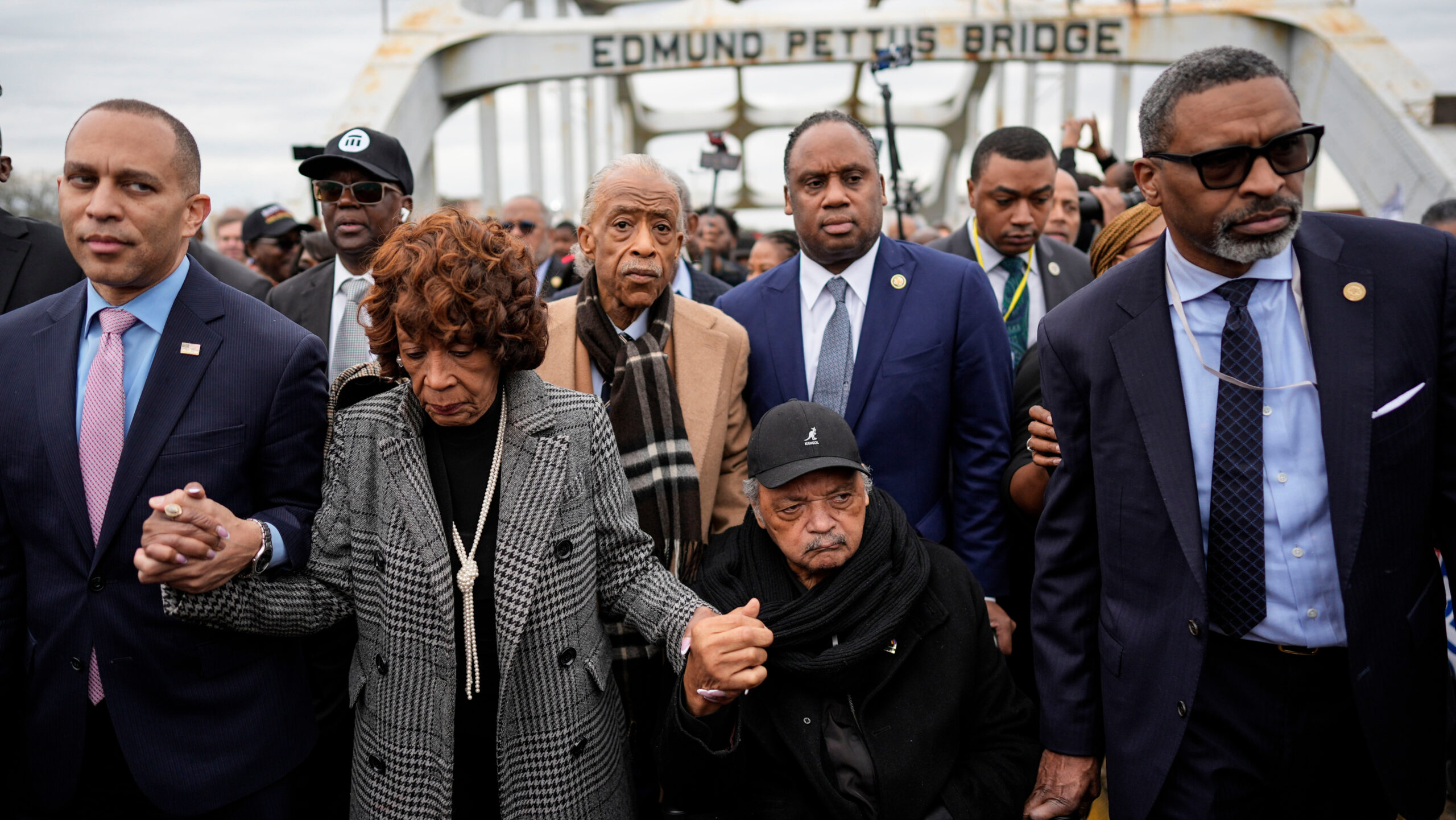
U.S. Rep. Hakeem Jeffries (D., N.Y.), U.S. Rep. Maxine Waters (D., Calif.), the Rev. Al Sharpton, Rev. Jesse Jackson and NAACP President Derrick Johnson walk across the Edmund Pettus bridge in Selma, Ala., on March 9, 2025, during the 60th anniversary of the march to ensure that African Americans could exercise their constitutional right to vote.
Rev. Jackson called his time with King “a phenomenal four years of work.”
Rev. Jackson was with King on April 4, 1968, when the civil rights leader was slain. Rev. Jackson’s account of the assassination was that King died in his arms.
Sharpton said he “always wondered how much trauma that must have been” for Rev. Jackson to witness King’s death. “He never would talk about it too much, but it drove him,” Sharpton said Tuesday. “He said, ‘We’ve got to keep Dr. King’s legacy alive.’”
With his flair for the dramatic, Rev. Jackson wore a turtleneck he said was soaked with King’s blood for two days, including at a King memorial service held by the Chicago City Council, where he said: “I come here with a heavy heart because on my chest is the stain of blood from Dr. King’s head.”
However, several King aides, including speechwriter Alfred Duckett, questioned whether Rev. Jackson could have gotten King’s blood on his clothing. There are no images of Rev. Jackson in pictures taken shortly after the assassination.
In 1971, Rev. Jackson broke with the Southern Christian Leadership Conference to form Operation PUSH, originally named People United to Save Humanity. The organization based on Chicago’s South Side declared a sweeping mission, from diversifying workforces to registering voters in communities of color nationwide. Using lawsuits and threats of boycotts, Rev. Jackson pressured top corporations to spend millions and publicly commit to hiring more diverse employees.
The constant campaigns often left his wife, Jacqueline Lavinia Brown, the college sweetheart he married in 1963, taking the lead in raising their five children: Santita Jackson, Yusef DuBois Jackson, Jacqueline Lavinia Jackson Jr., and two future members of Congress, U.S. Rep. Jonathan Luther Jackson and Jesse L. Jackson Jr., who resigned in 2012 but is seeking reelection in the 2026 midterms.
The elder Jackson, who was ordained as a Baptist minister in 1968 and earned his master’s of divinity degree in 2000, also acknowledged fathering a child, Ashley Jackson, with one of his employees at Rainbow/PUSH, Karen L. Stanford. He said he understood what it means to be born out of wedlock and supported her emotionally and financially.
On Tuesday, Harold Hall joined other mourners who stopped by the family home to pay their respects.
Hall, who once lived in the same Chicago neighborhood as Rev. Jackson, left a bouquet of flowers outside Rev. Jackson’s door and recalled that he helped local street organizations in the late 1960s and early 1970s.
Rev. Jackson “would come out and shoot ball and try to change the minds of many of our young folk,” urging them to stay out of trouble, Hall told reporters. “And in many instances, it happened. It worked.”
Presidential aspirations fall short but help ‘keep hope alive’
Despite once telling a Black audience he would not run for president “because white people are incapable of appreciating me,” Rev. Jackson ran twice and did better than any Black politician had before President Barack Obama, winning 13 primaries and caucuses for the Democratic nomination in 1988, four years after his first failed attempt.
His successes left supporters chanting another Rev. Jackson slogan, “Keep hope alive.”
“I was able to run for the presidency twice and redefine what was possible; it raised the lid for women and other people of color,” he told the AP. “Part of my job was to sow seeds of the possibilities.”
U.S. Rep. John Lewis said during a 1988 C-SPAN interview that Rev. Jackson’s two runs for the Democratic nomination “opened some doors that some minority person will be able to walk through and become president.”
Obama acknowledged Rev. Jackson’s efforts, saying he led some of the most significant movements for change in human history.
Michelle Obama “got her first glimpse of political organizing at the Jacksons’ kitchen table when she was a teenager,” Obama wrote on X. “And in his two historic runs for president, he laid the foundation for my own campaign to the highest office in the world.”
Rev. Jackson “was relentless in his belief that we are all children of God, deserving of dignity and respect,” the post read.
Rev. Jackson also pushed for cultural change, joining calls by NAACP members and other movement leaders in the late 1980s to identify Black people in the United States as African Americans.
“To be called African Americans has cultural integrity — it puts us in our proper historical context,” Rev. Jackson said at the time. “Every ethnic group in this country has a reference to some base, some historical cultural base. African Americans have hit that level of cultural maturity.”
Rev. Jackson’s words sometimes got him in trouble.
In 1984, he apologized for what he thought were private comments to a reporter in which he called New York City “Hymietown,” a derogatory reference to its large Jewish population. And in 2008, he made headlines when he complained that Obama was “talking down to Black people” in comments captured by a microphone he didn’t know was on during a break in a television taping.
Still, when Rev. Jackson joined the jubilant crowd in Chicago’s Grant Park to greet Obama that election night, he had tears streaming down his face.
“I wish for a moment that Dr. King or [slain civil rights leader] Medgar Evers … could’ve just been there for 30 seconds to see the fruits of their labor,” he told the AP years later. “I became overwhelmed. It was the joy and the journey.”
Exerting influence on events at home and abroad
Rev. Jackson also had influence abroad, meeting world leaders and scoring diplomatic victories, including the release of Navy Lt. Robert Goodman from Syria in 1984, as well as the 1990 release of more than 700 foreign women and children held after Iraq’s invasion of Kuwait. In 1999, he won the freedom of three Americans imprisoned by Yugoslav President Slobodan Milosevic.
In 2000, President Bill Clinton awarded Rev. Jackson the Presidential Medal of Freedom, the country’s highest civilian honor.
“Citizens have the right to do something or do nothing,” Rev. Jackson said, before heading to Syria. “We choose to do something.”
In 2021, Rev. Jackson joined the parents of Ahmaud Arbery inside the Georgia courtroom where three white men were convicted of killing the young Black jogger. In 2022, he hand-delivered a letter to the U.S. Attorney’s Office in Chicago, calling for federal charges against former Chicago Police Officer Jason Van Dyke in the 2014 killing of Black teenager Laquan McDonald.
Rev. Jackson, who stepped down as president of Rainbow/PUSH in July 2023, disclosed in 2017 that he had sought treatment for Parkinson’s, but he continued to make public appearances even as the disease made it more difficult for listeners to understand him. Last year, doctors confirmed a diagnosis of progressive supranuclear palsy, a life-threatening neurological disorder. He was admitted to a hospital in November for nearly two weeks.
During the coronavirus pandemic, he and his wife survived being hospitalized with COVID-19. Rev. Jackson was vaccinated early, urging Black people in particular to get protected, given their higher risks for bad outcomes.
“It’s America’s unfinished business — we’re free, but not equal,” Rev. Jackson told the AP. “There’s a reality check that has been brought by the coronavirus, that exposes the weakness and the opportunity.”
New Jersey prosecutors are dropping racketeering charges against Democratic power broker George E. Norcross III, ending a high-profile case that law enforcement officials had framed as a reckoning on the state’s culture of corruption.
Acting Attorney General Jennifer Davenport, an appointee of Democratic Gov. Mikie Sherrill, will not appeal a January appellate court ruling that upheld a judge’s decision to dismiss charges against Norcross and five codefendants, the attorney general’s office said Tuesday.
Davenport could have asked the state Supreme Court to review the Appellate Division’s decision, but prosecutors concluded that their resources “would be best spent on other matters,” Sharon Lauchaire, a spokesperson for the New Jersey Attorney General’s Office, said in a statement.
A three-judge panel said in a Jan. 30 decision that several of the racketeering conspiracy and extortion charges were time-barred under the statute of limitations. Other counts failed to state a crime, were untimely, or both, the panel said.
Norcross, 69, is a former longtime member of the Democratic National Committee, founder of insurance brokerage Conner Strong & Buckelew, and chair of Cooper University Health Care. He was accused of using threats of economic and reputational harm — and his purported control of Camden’s government — to obtain valuable property on Camden’s waterfront from a developer and a nonprofit.
His spokesperson on Tuesday portrayed the case against Norcross — announced in June 2024 by then-Attorney General Matthew J. Platkin — as a politicized abuse of the law similar to the Trump Justice Department’s targeting of perceived enemies.
“We always knew that Matt Platkin brought this case for reasons other than its legal merits — and now multiple judges and Platkin’s successor as AG agree the allegations simply weren’t true,” Norcross spokesperson Dan Fee said in a statement.
“The question now is whether Platkin’s supporters who cheered him on will take a serious look at what he did and whether other authorities will do the same,” he said. “We will certainly be making the case that he and anyone else who used lawfare against George should be held to account, no differently than Pam Bondi and her DOJ should.”
Platkin, who was appointed to the post by Democratic Gov. Phil Murphy, has denied pursuing the case for political reasons. He noted on Tuesday that the case “was presented to a grand jury by career prosecutors over several months.”
“Out of respect for the men and women who do brave work holding corruption to account, I won’t comment further — other than to say I remain proud to have supported their efforts at a time when trust in government is at an all-time low and I will never apologize for believing that everyone should be held to the same standards, no matter how powerful they may be,” Platkin said in a statement.
Notwithstanding the decision to drop charges, Lauchaire said the attorney general’s office “remains committed to prioritizing public corruption prosecutions in this time of deepening mistrust in government.”
“Wrongdoing by public officials undermines faith in our institutions, and the public rightfully demands and deserves that officials perform their duties with integrity and in accordance with the law,” she said. “We will never shy away from holding public officials accountable when they betray the public’s trust and behave unlawfully.”
The prosecution faced an earlier setback last February, when a Superior Court judge found that the charges were not timely and said that even if the allegations in the indictment were proven true, they amounted to hard bargaining in real estate deals and did not cross the line into unlawful threats.
Prosecutors appealed that ruling, arguing that the judge should review evidence presented to the grand jury before deciding whether the indictment was valid.
The appeals court affirmed the trial judge’s order, though the panel focused on the statute of limitations violations and largely sidestepped the question of whether the threats underpinning the indictment met the legal requirements for alleging conspiracy to commit extortion.
In addition to Norcross, prosecutors are dropping charges against his brother Philip Norcross, CEO of the law firm Parker McCay; attorney William Tambussi; former Camden Mayor Dana L. Redd; Sidney R. Brown, CEO of logistics firm NFI; and John J. O’Donnell, an executive at residential developer the Michaels Organization.
“We are pleased and gratified that this misguided, baseless prosecution has been finally laid to rest,” said Kevin H. Marino, a lawyer for Philip Norcross.
Henry Klingeman, an attorney for Redd, said his client “is relieved that this unjust and unnecessary ordeal is over.” The former mayor has “continued her unswerving commitment to bettering Camden,” Klingeman said.
Brown said he was “innocent of these baseless charges” and added that Tuesday’s decision showed “justice was carried out based on the facts.”
“Since its inception, this case was unfounded and attacked those of us who believed in the future of a thriving Camden,” the NFI CEO said in a statement.
Tambussi’s lawyers, Jeff Chiesa and Lee Vartan, said their client “engaged in the routine practice of law.” They said Platkin’s attempted prosecution “did damage to the profession” and “was rightly rejected by both courts.”
The University of Pennsylvania soon may be off-limits to Army officers and other military service members who are seeking tuition aid to further their educations.
The Ivy League university in West Philadelphia is among 34 schools the Army says are at risk of being banned from military funding for service members to pay for their graduate programs and other education, according to a CNN report. The messaging has caused confusion among military officers seeking advanced degrees in law, medicine, and nuclear engineering, the report states.
The G.I. Bill and similar programs to pay for college have long been a major draw for people who join the military. But last week, Defense Secretary Pete Hegseth said the DOD “will discontinue graduate-level professional military education, fellowships and certificate programs” at Harvard.
“Too many faculty members openly loathe our military,” said Hegseth, who obtained a master’s degree in public policy from Harvard in 2013. “They cast our armed forces in a negative light and squelch anyone who challenges their leftist political leanings, all while charging enormous tuition.”
File this under: LONG OVERDUE
The @DeptWar is formally ending ALL Professional Military Education, fellowships, and certificate programs with Harvard University.
Hegseth, a former Army National Guard officer who served in Iraq and Afghanistan, said the department, which he calls the Department of War, is evaluating its relationships with other schools as well.
“[We] will evaluate all existing graduate programs for active-duty service members at all Ivy League universities and other civilian universities,” he said. “The goal is to determine whether or not they actually deliver cost-effective strategic education for future senior leaders when compared to, say, public universities and our military graduate programs.”
CNN obtained a “preliminary list of at-risk schools compiled by the Army,” which includes the University of Pennsylvania, as well as nearby Princeton University and Carnegie Mellon University in Pittsburgh. Officials at Princeton and Penn did not immediately respond to requests for comment Sunday.
“We are aware of reports indicating that Carnegie Mellon is among several universities whose eligibility to support graduate training for military officers may be under review. At this time, we have received no formal notification confirming that any such review is underway,” a spokesperson for Carnegie Mellon said in a statement. “As always, CMU stands ready to engage constructively with the Department on ways to strengthen and advance military education.”
Numerous schools on the list are the alma maters of Trump administration officials. In addition to attending Harvard, Hegseth obtained a bachelor’s degree in politics from Princeton. President Donald Trump holds a bachelor’s degree in economics from the Wharton School of the University of Pennsylvania. Vice President JD Vance holds a law degree from Yale University.
Here is the preliminary list of “at-risk” schools:
American University
Boston College
Boston University
Brown University
Carnegie Mellon
Case Western University
Columbia University
College of William and Mary
Cornell University
Duke
Emory
Florida Institute of Technology
Fordham
Georgetown
George Washington University
Harvard
Hawaii Pacific University
Johns Hopkins University
London School of Economics and Political Science
MIT [Massachusetts Institute of Technology]
Northeastern University
Northwestern University
New York University
Pepperdine
Princeton
Stanford
Tufts
University of Miami
University of Pennsylvania
University of Southern California
Vanderbilt
Wake Forest
Washington University in St Louis
Yale
Update: This article has been updated to include comment from Carnegie Mellon University.
Breaking down Isabeau Levito’s figure skating costumes over the years
Since 2022, South Jersey’s Isabeau Levito has been one of figure skating’s biggest stars. Ahead of her Olympic debut Thursday in the women’s short program, we took a look back at her costumes since she burst onto the scene at 14 years old.
Isabeau Levito competes during the women’s free skating competition at the U.S. Figure Skating Championships, Friday, Jan. 9, 2026, in St. Louis. (AP Photo/Stephanie Scarbrough)
A star is born
Isabeau Levito, of Mount Holly, competes in the short program at the 2022 U.S. Figure Skating Championships in Nashville. Levito went on to win the bronze medal, but at 14, she is too young to make the Winter Olympics team.
Levito made her senior debut during the 2021-22 season at age 14. She skated her short program to “The Swan,” by Camille Saint-Saëns, performed by Joshua Bell.
Isabeau Levito was too young for the Olympics in 2022, but she won the bronze medal at the U.S. Figure Skating Championships in this dress, made in Russia. She was also named to the World Junior Championships, where she skated to the “Russian Dance” from Swan Lake by Tchaikovsky, and won.
Isabeau Levito competes in the women’s free skate program during the U.S. Figure Skating Championships Friday, Jan. 7, 2022, in Nashville, Tenn. (AP Photo/Mark Zaleski)
Isabeau Levito wore a Spanish-inspired dress for her short program in the 2022-23 season. She skated to “Una noche más” by Yasmin Levy.
Isabeau Levito performs during the women’s short program at the U.S. figure skating championships in San Jose, Calif., Thursday, Jan. 26, 2023. (AP Photo/Josie Lepe)
National champion
Isabeau Levito reacts after her performance during the women’s free skate at the U.S. figure skating championships in San Jose, Calif., Friday, Jan. 27, 2023. (AP Photo/Josie Lepe)
In January 2023, Levito won the U.S. Figure Skating Championships in San Jose, Calif. She went on to place fourth at the World Figure Skating Championships in Saitama, Japan.
Reputation era
21 September 2023, Bavaria, Oberstdorf: Figure Skating: Challenger Series – Nebelhorn Trophy, Individual, Ladies, Short Program. Isabeau Levito from the USA on the ice. Photo by: Angelika Warmuth/picture-alliance/dpa/AP Images
Early in the 2023-24 season, Levito wore a dress with a snake wrapped around her neck and the head on her arm. Ice dancers Madison Chock and Evan Bates had a snake program a few years before, and Chock advised Levito on this program.
Switching gears
COLUMBUS, OHIO – JANUARY 25: Isabeau Levito skates in the Women’s Short Program Dance during the U.S. Figure Skating Championships at Nationwide Arena on January 25, 2024 in Columbus, Ohio. (Photo by Matthew Stockman/Getty Images)
Levito changed her short program midseason in 2023-24. Because of the Russian invasion of Ukraine, Levito stopped getting dresses made in Russia. This one was made by Josiane Lamond in Canada.
Levito wore this layered black, white, and gray dress the first part of the 2023-24 season for her long program, skating to “The White Crow,” by Lisa Batiashvili. After placing third in the short program at Skate America that season, she finished second in the free skate to end in second overall.
Isabeau Levito, of the United States, competes in the women’s free skate program during the Grand Prix Skate America Series in Allen, Texas, Sunday, Oct. 22, 2023. (AP Photo/Roger Steinman)
Silver star
Isabeau Levito, of the United States, poses with her silver medal at the world figure skating championships Friday, March 22, 2024, in Montreal. (Christinne Muschi/The Canadian Press via AP)
Levito won the silver medal at the 2024 world championships in Montreal with this dress by Canada’s Lamond.
Road to Milan
Isabeau Levito of the United States skates in the Women’s Short Program in the 2025 Skate Canada International event in Saskatoon, on Friday, October 31, 2025. (Matt Smith/The Canadian Press via AP)
Levito is wearing this red dress by Lisa McKinnon for her short program this Olympic season. She is skating to a compilation of sassy songs from Sophia Loren movies. At Skate Canada, a Grand Prix event, she placed second with this routine.
Ticket punched
Isabeau Levito performs during the women’s free skating competition at the U.S. Figure Skating Championships in St. Louis. She won the bronze medal.
Levito is wearing this blue dress by McKinnon for her free skate (or long program) this season, and skates to “Cinema Paradiso” by Ennio Morricone. She won bronze at January’s U.S. Figure Skating Championships to earn the trip to Milan.
A throwback
South Jersey figure skater Isabeau Levito was announced as an Olympian on Sunday. She skated during the “Making Team USA” performance following the announcement.
Levito was injured for a chunk of 2024-25 season, so she did not compete at the U.S. championships, but came back to place fourth at worlds. She wore this dress from that year’s program for the exhibition after making the Olympic team.
Flying high
Red Bull commissioned this dress for Isabeau Levito from dressmaker Lisa McKinnon, who made costumes for all three American women in 2026, as well as many of the international competitors. It was featured in an amusing campaign on social media.
Red Bull commissioned this dress for Levito from McKinnon, who made costumes for all three American women in 2026, as well as many of the international competitors. It was featured in an amusing campaign on social media.
Bruce Springsteen & the E Street Band is headed out on the road this spring on its first U.S. tour dates in two years. These will be the band’s first performances since Springsteen made news last month with his anti-ICE protest song, “Streets of Minneapolis.”
Appropriately enough, the “Land of Hope and Dreams American Tour” begins in Minneapolis on March 31 before making its way to the Xfinity Mobile Arena in South Philly on May 8.
The itinerary includes east coast dates in Newark, N.J.; Long Island; Manhattan; and Brooklyn. There are 19 indoor arena shows in all, plus a closing night baseball stadium show in Washington on May 27.
In a statement accompanying the tour announcement, Springsteen said: “We are living through dark, disturbing and dangerous times, but do not despair — the cavalry is coming! Bruce Springsteen and The E Street Band will be taking the stage this spring from Minneapolis to California to Texas to Washington, D.C., for the Land of Hope And Dreams American Tour.”
“We will be rocking your town in celebration and in defense of America — American democracy, American freedom, our American Constitution and our sacred American dream — all of which are under attack by our wannabe king and his rogue government in Washington, D.C.,” Springsteen said in the statement.
Last year, the Boss made headlines while on tour in Europe for his pointed comments about the Trump administration, which he called “corrupt, incompetent, and treasonous” before performing his patriotic song “Land of Hope and Dreams.”
Trump responded on Truth Social by calling Springsteen “highly overrated” as well as a “dried out prune of a rocker” and “not a talented guy — Just a pushy, obnoxious JERK.”
Last month, Springsteen wrote “Street of Minneapolis” on the day that Alex Pretti was fatally shot by federal immigration enforcement agents in Minneapolis and released it three days later.
Calling out “King Trump’s private army from the DHS,” Springsteen memorializes “two dead, left to die on snow-filled streets, Alex Pretti and Renee Good.”
“Everyone, regardless of where you stand or what you believe in, is welcome — so come on out and join the United Free Republic of E Street Nation for an American spring of Rock ‘n’ Rebellion! I’ll see you there!,” Springsteen said in the statement.
Tickets for the Philadelphia stop of Bruce Springsteen’s “Land of Hope and Dreams” tour go on sale Feb. 21, 10 a.m. via Ticketmaster. The full tour itinerary is at BruceSpringsteen.net.
After 37 days of preseason, three centerback signings, three striker signings, and negotiations for a left back that aren’t done yet, the Union will play their first game of 2026 on Wednesday.
Bradley Carnell’s squad should be favored in its visit to Defence Force FC of Trinidad & Tobago in the Concacaf Champions Cup (6 p.m., FS2). But this group of Union players hasn’t played an official game together, and, as the manager said in the preseason, you don’t know until you know.
Now, it’s time to find out.
“I think we’re always ready,” Carnell said in a news conference from Trinidad on Tuesday morning. “We know it’s early in our in our season, and we know that there’s a schedule coming up that’s really tough. And so we’ve been working hard over the last couple of weeks to get everybody integrated as best as we could.”
Carnell had to contend with a series of absences during camp. Indiana Vassilev and Milan Iloski suffered injuries that they’ve recovered from, Bruno Damiani and Cavan Sullivan started the year with knocks, and Damiani was away for a few days this month to finish getting his U.S. green card.
Jovan Lukić also was a late addition to the list, as Carnell revealed Tuesday that the midfielder took a hit to the ribs in a recent practice.
“It’s preseason — there’s always a couple of things here and there,” he said. “But we’ve got a good competitive group here, ready to go.”
Of Lukić’s status, he said, “we’re still assessing that, and we’ll see if that makes sense or not” for him to play Wednesday.
Bruno Damiani (left) recently got his U.S. green card.
The Union have never played Defence Force, partially because no team from Trinidad has reached the Champions Cup since the 2016-17 edition. Defence Force hasn’t qualified since 2002, though it has a notable history as winners in 1978 and 1985.
The present-day squad is led by a familiar name, winger Kevin Molino. He played for Orlando, Minnesota, and Columbus from 2011 to 2023, then joined Defence Force in late 2024.
“This is the challenge and the joy of the Champions Cup,” Carnell said.
As if hosting a U.S. team in the region’s top soccer tournament wasn’t a big enough deal, Wednesday’s game will come right after Trinidad held its annual two-day Carnival around Mardi Gras.
That should add even more buzz to the atmosphere at Hasely Crawford Stadium, one of Concacaf’s most historic venues. It’s the home of Trinidad and Tobago’s national soccer teams and the site of one of the U.S. men’s team’s all-time wins: the 1989 triumph to earn qualification for the 1990 World Cup, ending a 40-year tournament drought.
Andre Blake is the only current Union player who has played a senior-level game in the venue, a World Cup qualifier last November that ended in a 1-1 tie. That might surprise some fans, but it’s true. Danley Jean Jacques hasn’t yet with Haiti, and Alejandro Bedoya never did with the United States.
Union defender Nathan Harriel said that while “there’s temptation — it’s really easy to go out and want to be a part of something,” the team is making sure this stays a business trip.
“There’s a lot of people here. It’s loud, noisy,” he said. “At the same time, we’re focused on the one thing at hand, and that’s getting a result on Wednesday. There’s distractions in any city you go to. … Just being able to manage that in the best way possible and just stay focused on the mission at hand is the most important.”
And for those players who’ve played in Concacaf tournaments before, especially the Champions Cup, they know to always expect the unexpected.
“I remember a few years ago in El Salvador, a dog ran on the field and grabbed the ball,” Harriel said, recalling the Union’s 2023 visit to Alianza. “So at the same time, you have to enjoy it, because you never know when you’ll be back. And you have to respect every opponent in this tournament — everybody is qualified to be in it, and we understand that.”
The historic Hasely Crawford Stadium in Port of Spain, Trinidad, where the Union will play Defence Force FC in the Concacaf Champions Cup on Wednesday.
Like Major League Baseball installing the pitch clock or Apple dropping the headphone jack from iPhones, a small shift can have a major impact.
The same is true of sandwiches: After 96 years, South Philadelphia landmark Pat’s King of Steaks has made two subtle but significant tweaks.
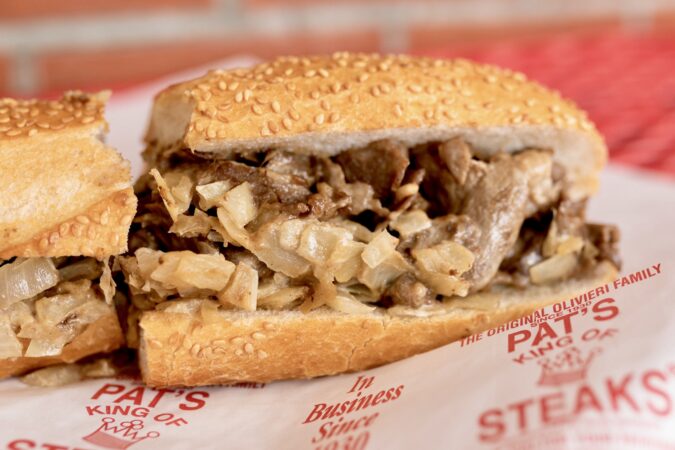
The stand at the crossroads of Ninth, Passyunk, and Wharton is now offering seeded rolls, from longtime supplier Aversa Italian Bakery, alongside the plain hoagie-style rolls Pat Olivieri first used when he introduced the steak sandwich in 1930.
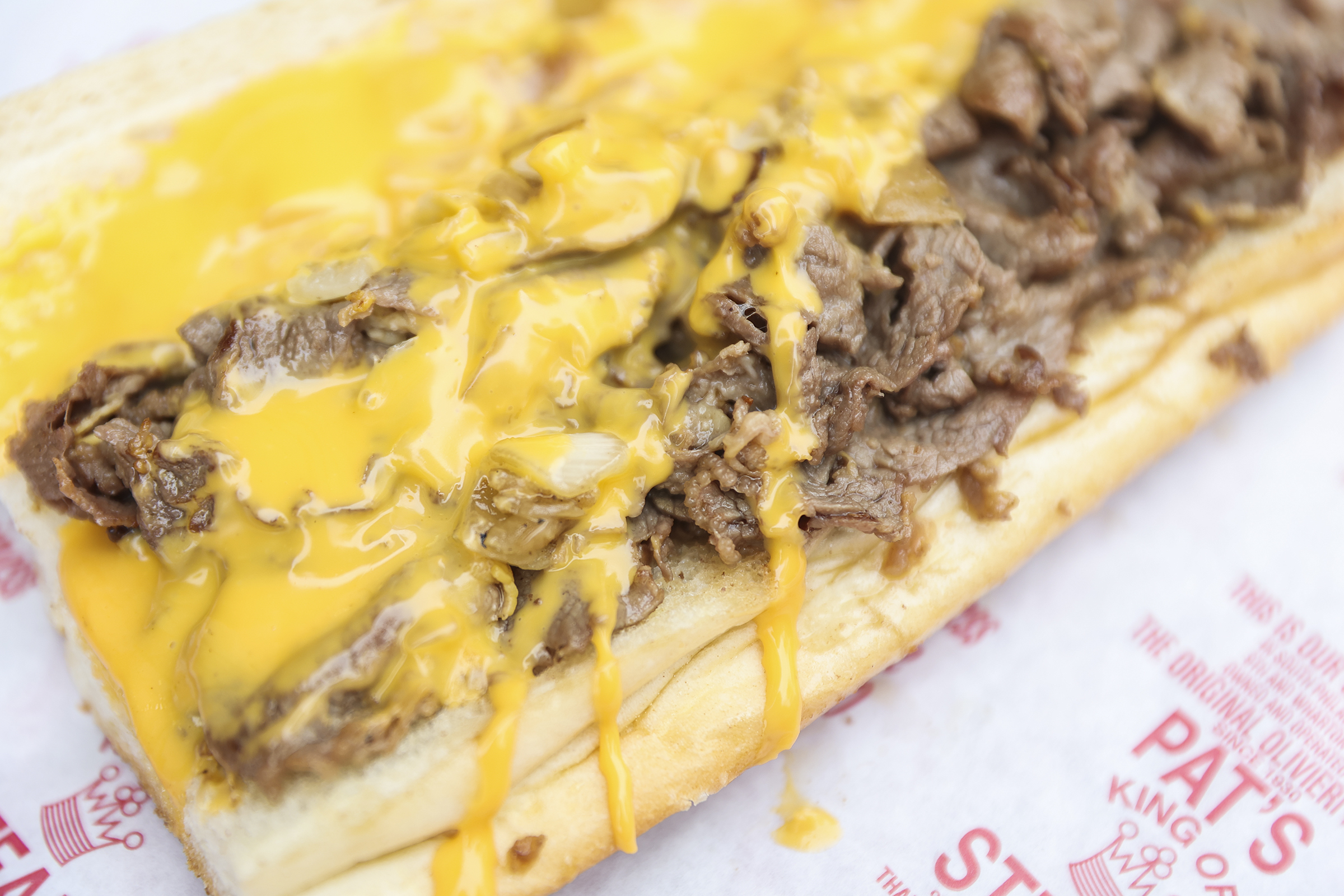
An O.G.-style cheesesteak with Cheez Whiz on top at Pat’s King of Steaks in 2024.
Owner Frank Olivieri said his father, Frank P. Olivieri, didn’t want seeded rolls “probably because his father [Harry] and his uncle [Pat] beat it into his head that he could not change the recipe whatsoever for whatever reason. But since my father unfortunately passed several weeks ago, I thought maybe it’s time to change up a little bit,“ he said. ”Seeded rolls are something that I do when I make them at home for myself.”
Pat’s announced the “new school” seeded-roll option on Instagram as a limited-time offering, but Olivieri said it likely will be permanent. (Across the street, Geno’s still offers plain rolls only.)
The second change — subtle but more significant — is happening on Pat’s grills.
Since Pat’s began offering cheesesteaks in the 1950s, cooks layered the sliced cheese over the beef and let residual heat do the melting on the sandwich. Now, the cheese is melted into the meat and optional onions on the grill before everything gets mixed and goes into the roll.
Pat’s is credited with inventing the steak sandwich in 1930.
Olivieri said his father resisted melting cheese on the grill out of concern for maintaining the cooking surface. The new method produces a more integrated bite, with cheese distributed evenly. (Traditionalists, he said, can ask for the classic layered technique.)
While newer operators often finely chop their steak, Pat’s remains committed to its sliced, or “slab,” style.
“There’ll be no banging on the grill,” Olivieri said.
Other additions have appeared. Two years ago, Pat’s started to offer chicken cheesesteaks and Cooper Sharp cheese — the darling of the new-gen shops. Pat’s still offers American, but Olivieri said he plans to phase it out. “It’s kind of redundant,” he said.
In the late 1970s, Olivieri said, he and his mother, Ritamarie, began offering mushrooms and peppers after hearing customers ask for them. His father didn’t notice at first.
“He was looking at one of the invoices and said, ‘When the hell did we start selling mushrooms and peppers?’” Olivieri recalled. “I said, ‘Three weeks ago, Dad.’ He goes, ‘Oh, are they selling?’ I said, ‘Yes.’”
They stayed.
Still, Olivieri sets some boundaries. “I draw the line at pepperoni,” he said.