Blog

  • Fatal crash on Route 55 in Deptford kills two, injures another

    Fatal crash on Route 55 in Deptford kills two, injures another

    A single-vehicle crash late Sunday night on southbound Route 55 in Deptford Township killed two women and injured another.

    New Jersey State Police responded to the crash at 10:55 p.m., Trooper Christopher Postorino said via email. A preliminary investigation shows some of what happened, though the crash is still under investigation.

    Ayzia J. Toledo, 22, of Bristol, Pennsylvania, was driving a BMW with Henrietta F. Carter, 22, of Darby, Pennsylvania, in the front passenger seat and another passenger in the rear when she lost control of the vehicle and ran off the roadway. The BMW overturned and struck a tree. Toledo and Carter died of their injuries, and the rear seat passenger was transported to an area hospital for minor injuries.

    The families of Toledo and Carter have been notified, Postorino said. No traffic delays were reported after the accident. A GoFundMe has been established in Toledo’s honor.

    Last March, three teens, including a student and a graduate of Delsea Regional High School, were killed in a car crash on northbound Route 55 in Elk Township.

    This is a developing story and may be updated.

  • Efforts to help smokers quit stall under Trump

    Efforts to help smokers quit stall under Trump

    WASHINGTON — The ads were jarring: a man with a hole in his throat where his larynx, or voice box, had once been. A woman whose teeth and jaw had been removed after oral cancer. Another woman speaking in a robotic voice, which was altered when her larynx was removed: “I wish I’d never seen a cigarette in my entire life.” A black screen followed, saying she died two days later.

    The Centers for Disease Control and Prevention’s 14-year ad campaign, called Tips From Former Smokers, was highly memorable and, research shows, highly effective in motivating people to quit. Last year, though, as tobacco companies gave millions to political organizations related to the Trump administration, the campaign went dark.

    There is no definitive evidence linking the donations to the lapse of the ad campaign. But the decision to terminate it was one of several steps the administration has taken to unravel federal government antismoking initiatives that had long had bipartisan support during a time when the administration has delivered significant policy wins to tobacco companies.

    The CDC’s Office on Smoking and Health, which managed the campaign and worked with states on smoking cessation measures, has been shut down for more than a year, after its staff was laid off as part of the administration’s government downsizing efforts. While hundreds of other federal health employees were eventually rehired, the smoking office staff members have not been.

    Even after Congress restored the office’s funding late last summer, its employees have remained on paid leave as litigation challenging the firings plays out.

    In recent weeks, under pressure from Congress, the CDC has given states diminished funding to air ads from the campaign’s archive, but the federal government will not produce new ads or negotiate contracts for them to air nationwide. The ads had prompted millions of smokers to dial state quit lines for help on how to stop smoking. In interviews, people who ran quit lines in several states said that since the ads went off the air, calls have plummeted along with enrollment in programs that offered counseling and nicotine gum and patches.

    The abandonment of an effort that was widely regarded as a public health triumph has puzzled antismoking activists who point out that Health Secretary Robert F. Kennedy Jr.’s platform was based on ending chronic diseases, which are a well-known consequence of smoking.

    “We find it very ironic in an administration that wants to make America healthy again that we’re cutting all of these resources related to smoking and vaping,” said Nancy Brown, CEO of the American Heart Association.

    Helping adults stop smoking is one of the most evidence-backed ways to improve the public’s health. Smoking rates in the United States have fallen significantly, to less than 10% of adults, compared with 42% of adults in the early 1960s. Still, smoking remains the leading cause of preventable death and disease in the country, causing about 490,000 premature deaths each year.

    A national survey of adults who smoked from 2012 through 2018 found that the Tips from Former Smokers campaign was associated with more than 16 million people attempting to quit smoking and 1 million succeeding. During those years alone, the campaign was associated with saving an estimated $7.3 billion in healthcare costs.

    “It’s crazy that they have cut this funding if they really want to save lives and save money,” said Sally Herndon, who ran North Carolina’s tobacco control program until her retirement last year.

    Emily Hilliard, a spokesperson for the Department of Health and Human Services, said in a statement that the CDC “remains committed to tobacco prevention and control and continues to support this priority through outreach, education, and surveillance.”

    The cuts have come as tobacco companies have aggressively lobbied the administration for policy changes that would likely increase their market share of vaping and other nicotine products.

    The New York Times recently reported that Reynolds American, which makes Newport and Camel cigarettes, saw a coveted new federal policy take shape that would allow an entire new class of flavored e-cigarettes onto the market. The initiative was announced just days after a $5 million donation and lunch with President Donald Trump at his golf course in Florida. Executives from Altria, which makes Marlboro cigarettes, were also present.

    The new policy was crafted over the objections of Marty Makary, then the FDA commissioner, who cited it as the reason for his resignation in May. It stunned some public health experts, who say the FDA set aside one of its central authorities: to approve or reject individual products based on their merits.

    “It’s very clear this guidance is a gift to the tobacco industry on a silver platter with a side of public health malpractice,” said Brian King, a former leader of the FDA’s tobacco division and executive vice president for U.S. programs of the Campaign for Tobacco-Free Kids.

    Opponents of the policy say flavored vapes will introduce young people who have never smoked to nicotine products.

    But Hilliard, the health department spokesperson, said the FDA was focused on protecting youth and a “science-based review process for tobacco products.”

    She added: “Cigarette smoking remains the leading cause of preventable disease and death in the United States. And the agency supports the development of products that may provide less harmful alternatives for adults who smoke.”

    The federal cuts to antismoking programs and what some view as lenient new policies represent a reversal of decades of setbacks for tobacco companies under both Democratic and Republican administrations.

    The CDC’s shuttered Office on Smoking and Health employed experts on effective tobacco interventions who worked with state health officials to advance antismoking policies such as bans on indoor smoking, higher tobacco taxes, and education for parents about e-cigarettes.

    The office sent most of its $240 million budget to states each year, but shortly after laying off the staff, in April 2025, the CDC notified states that their annual funding for tobacco control would not be coming.

    Many state tobacco control offices cut their own staff as a result, including in New York, Texas, and North Carolina. Late last year, Congress reinstated some funding to states that had relied on the CDC office for expertise.

    “We know that we really save lives and save money with tobacco prevention and control,” said Herndon, who until recently led North Carolina’s tobacco control efforts. “But without the training and technical assistance and support from the Office on Smoking and Health, a lot of the newer staff coming along are struggling to know what to do.”

    The Tips From Former Smokers campaign went off the air around September of last year, though some larger states such as New York and California continued to run some antismoking ads.

    Since then, calls to 1-800-QUIT-NOW lines — which traditionally experience a 30% spike in the weeks after an ad campaign — have fallen off significantly.

    National data on the quit line call volume was not compiled for the last year after the federal employee in charge was let go, said Thomas Ylioja, president of the North American Quitline Consortium.

    But at Quit for Life, an organization that operates quit lines in 19 states, Guam, and Washington, D.C., calls fell by 25% in the first half of 2026 compared with the first half of 2025 when the ads were on the air, according to Nick Fradkin, the group’s director of public health strategy.

    Officials in other states said calls had fallen off too — by about 45% in Texas, 25% in California, and 18% in New York. In Virginia, enrollment in the quit line counseling services fell by half from October 2025 through February 2026, said Logan Anderson, a spokesperson for the Virginia Department of Health.

    In recent weeks, the CDC offered $40 million, down from the usual $65 million, for states to air archived antismoking ads. It is unclear whether new ads will be created.

    In North Carolina, at least, “we don’t have the media machine that produced those fabulous ads,” Herndon said.

    This article originally appeared in the New York Times.

  • Downpours set off flood alerts and road closings — but now the Philly region could use some more rain

    Downpours set off flood alerts and road closings — but now the Philly region could use some more rain

    The waterfall downpours came just as the sun-cooked vegetation was showing those hay-brownish tints and taking on that desperate we-need-a-drink-now look.

    “You have to be careful what you wish for in the summer,” said Scott Kleebauer, branch forecaster at the national Weather Prediction Center in College Park, Md.

    But sometimes too much is not enough.

    While downpours flooded streets and caused Regional Rail problems for SEPTA, which also reported weather-relates signal problems, Kleebauer suggested it wouldn’t hurt for Philadelphia and other parts of the Mid-Atlantic to place an order for more rain.

    Through Sunday, Philadelphia’s year-to-date precipitation was about 75% of normal, and even with additional rains on Monday, still was roughly 4 inches — or a month’s worth — below long-term averages, according to the Middle Atlantic River Forecast Center.

    More rain might be about the last thing some people would want after rounds of strong storms on Sunday with frequent lightning and downpours on Sunday and Monday, when as much as 2 to 4 inches fell in a short period upon parts of Philadelphia, Bucks, and Burlington Counties, the National Weather Service said.

    And in the city of Camden, 4.38 inches was measured, the agency said.

    “Numerous roads remain closed due to flooding,” the agency said.

    In late morning, moderate flooding was reported along Frankford Creek, and the weather service posted a flood warning that remained in effect until early evening. At one point Kelly Drive was closed due to flooding on the Schuylkill.

    Comden County received about 1,000 911 calls just in the stretch of the morning storm, said Dan Keashen, Camden County’s public affairs director.

    SEPTA train service on the Trenton line was suspended due to water over the rails. A car got stuck in floodwaters by a rail bridge and Eighth Street and Fairmount Avenue, the weather service reported.

    The rains backed off during the afternoon, but the weather service has shower possibilities every day this week, except Wednesday.

    The federal Climate Prediction Center’s outlook for the 8-to-14-day period favors above-normal precipitation for the region.

    So, is the drought on the run in the Philly region?

    Maybe, but droughts are slow to develop and slow to abandon their methodical harvests.

    All of New Jersey and Chester County remain under state-declared drought “warnings,” and the majority of the region is under “moderate drought,” according to the interagency U.S. Drought Monitor.

    “There’s definitely been some improvement,” said Kleebauer. “Unfortunately there’s been some losers.”

    Summer rains are notoriously capricious and random.

    “My grass has been happy the past few days,” said Lee Robertson, a weather service meteorologist in Mount Holly, but he added that it’s going to “take a while” to make up the accumulated rain deficits.

    But in reality, “It’s really difficult to get everybody to win,” said Kleebauer.

    The steering currents aloft that move storms get as lazy as a lot of humans in the heat.

    “Stuff just kind of meanders or has slow general motion,” he said. Storms can get stuck in place, and the more one place gets, the less other places will get. Even in a juiced atmosphere, moisture is finite.

    Joe Puccio of Williamstown rolls up his pants legs to make his way to his truck in the flooded parking lot at the Ferry Avenue PATCO station in Camden Monday, July 6, 2026, as a flash flood threat continues for the region. He said he commutes to work in Philadelphia every day and the flooding is something that happens a lot in the area, but he has never seen it as bad before. His truck started okay, but Route 130, his normal way home was also under water so he had to take back roads.

    The extreme heat appears to be over, for now

    The rains at least have marked the end of the region’s extreme heat as the “heat dome” has migrated westward. It is not uncommon for storms to break out as a hot spell deteriorates.

    But that three-day stretch ending with that torrid 250th birthday party on July 4 was historic in its own right.

    It marked the first time in records dating to 1873 that the temperature had reached 101 or higher three consecutive days and only the third time it had hit 100 three days straight, according to the weather service.

    It may be hard to remember, but on Feb. 8 it got down to 8 degrees at the airport, proving that Philly truly is a four-season resort.

    Inquirer staff writers T.J. Furman and Sarah Nicell contributed to this article.

  • Trump says red card call on Folarin Balogun was ‘horrible’ but insists he left outcome to FIFA

    Trump says red card call on Folarin Balogun was ‘horrible’ but insists he left outcome to FIFA

    Editor’s note: This article was updated to reflect a statement made by FIFA president Gianni Infantino

    President Donald Trump on Monday took credit for getting FIFA to review a red card issued against the United States’ star forward Folarin Balogun at the World Cup but said he did not demand an outcome.

    “All I did was ask for a review,” Trump said when asked about it during an unrelated Oval Office event. “I didn’t say, ‘You have to do this.’”

    Trump confirmed that he called FIFA president Gianni Infantino and asked for a second look at the punishment against Balogun in the United States’ 2-0 win against Bosnia-Herzegovina last week. But he said FIFA made the final call to lift Balogun’s mandatory one-game ban for a foul tackle, allowing him to play in Monday’s round of 16 match with Belgium in Seattle.

    Hours later, Infantino released a statement coming off of Trump’s remarks, which read, in part:

    “Yes, I regularly discuss matters related to the FIFA World Cup with the President of the United States, and on this matter, I did receive a call from President Donald Trump, just as I receive calls from heads of state, government officials, football stakeholders, and business executives from around the world on many different issues.

    “During our conversation, I explained that there was an ongoing legal process involving FIFA’s independent judicial bodies and that the case would be decided in due course by those competent bodies. That is how FIFA’s system works, and it is a principle I will always uphold. I read the decisions of the FIFA Disciplinary Committee when they are issued. Sometimes, I am surprised by them. Sometimes I agree with them, and sometimes I disagree.”

    FIFA’s decision to suspend the one-game ban was celebrated by many in the United States but brought condemnation in the international sports world, where some called it an improper intrusion.

    In remarks on Monday, Trump called the referee’s decision a “horrible” call. He added that it would have been a stain on the tournament if Balogun, the U.S.’s leading scorer at this year’s World Cup with three goals, was held out against Belgium and the U.S. lost. He praised FIFA for making what he described as a brilliant decision in suspending the punishment.

    “I didn’t think it was a foul,” Trump said. “I thought it was two great athletes that crashed into each other and got entangled.”

    The president, who said he understands sports “really well,” acknowledged that he did not initially know what a red card is or the consequences it brings. When he learned it would lead to a one-game suspension for Balogun, he said, he decided to step in. He also took issue with the use of video review to issue the red card, arguing that slowed-down reviews can make plays look aggressive.

    Among those joining Trump for the Oval Office event was Republican Sen. Ted Cruz of Texas, who thanked Trump for stepping in.

    “On behalf of all Americans, thank you for getting rid of that ridiculous red card,” Cruz said. “It was spectacular. There was a reason the FIFA trophy sat here for as long as it did.”

    Cruz appeared to be referring to a White House event last year at which Infantino visited and brought the World Cup trophy.

  • Lillian’s opens in Point Breeze with rotating chefs and a parlor-style cocktail bar

    Lillian’s opens in Point Breeze with rotating chefs and a parlor-style cocktail bar

    For years, Sam Ahern imagined opening a place that felt less like a restaurant than a gathering spot.

    Now, just a few doors from her first Philadelphia apartment, she’s done exactly that.

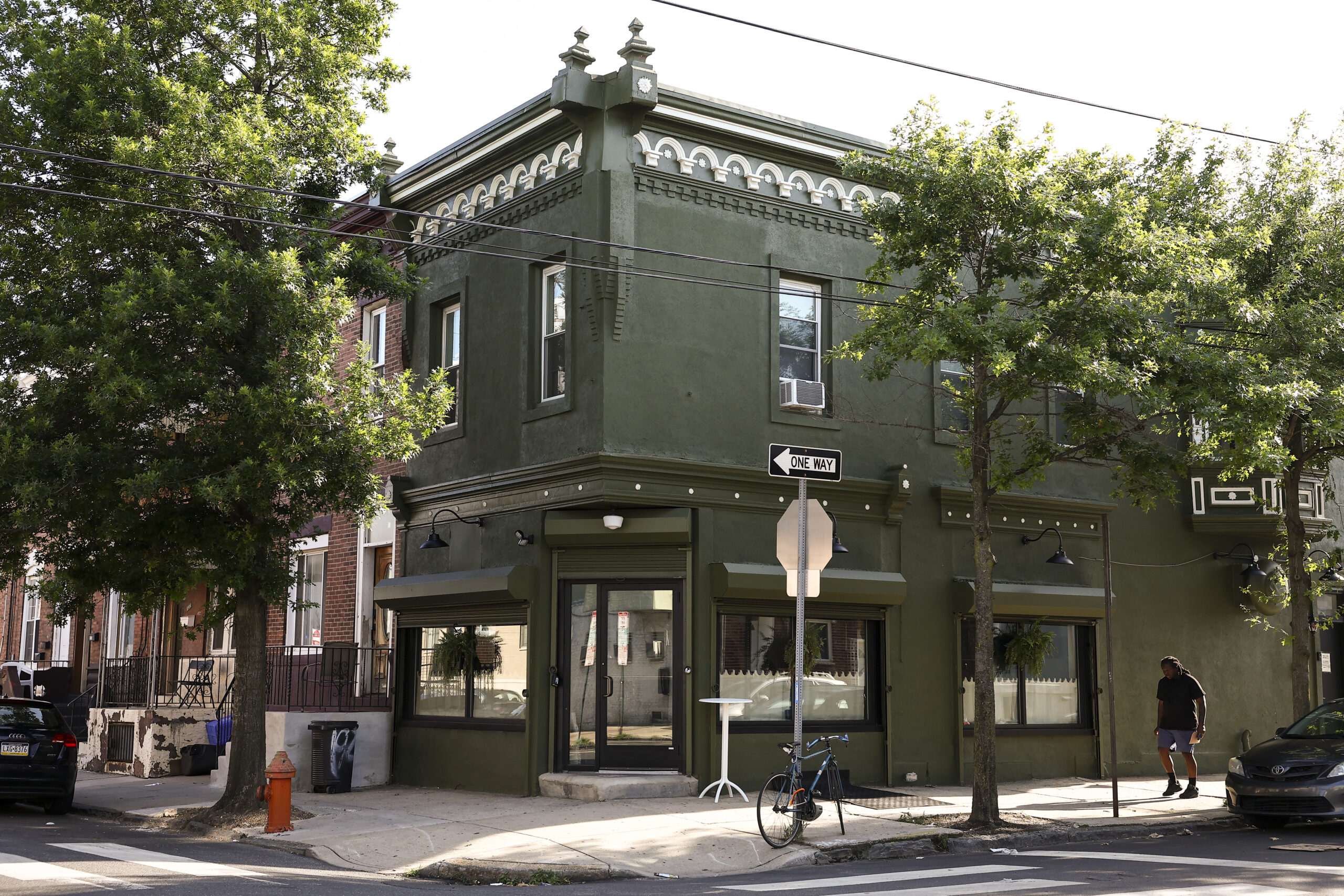
    Lillian’s opened last week at 19th and Mifflin Streets in Point Breeze, transforming a onetime barbershop into a bistro and cocktail bar decorated like an old-fashioned living room parlor, complete with vintage furnishings and an evolving food program that will regularly hand over its kitchen to guest chefs.

    Owner Sam Ahern and bar manager Avdo Babic at Lillian’s. They met while working at Fitler Club.

    “I wanted something that felt like you were hanging out in somebody’s house,” Ahern said.

    Ahern took the name from her great-great-grandmother, who had a speakeasy in her basement in North Jersey and was known in the family as Diamond Lil. “The story goes that she would keep jewelry if you couldn’t pay with cash, and apparently she made her own gin,” said Ahern, who accepts cash and credit cards at Lillian’s.

    The project is the culmination of a path Ahern never expected to follow. She studied graphic design and fiber arts in graduate school in Savannah, Ga., where she began helping a friend open a restaurant. Hospitality stuck.

    After moving to Philadelphia in 2018, she worked behind the bar at Cicala at the Divine Lorraine, then at the private Fitler Club, before becoming bar manager at Fabrika in Fishtown.

    She also put down roots in Point Breeze eight years ago. Her first apartment was three houses from where Lillian’s is now.

    Three brioche toasts (anchovy, sardine, and enoki mushroom) at Lillian’s.

    During the pandemic, Ahern and friends hosted backyard supper clubs featuring rotating chefs. The dinners proved there was an audience for intimate, chef-driven experiences outside the traditional restaurant model.

    When a property around the corner from her home came on the market, “it felt meant to be,” Ahern said. “At the same time, someone I knew was selling a liquor license and it also became available, so everything just fell into place.”

    Rather than hire a permanent executive chef, Ahern decided to build Lillian’s around residencies. The idea, she said, is to tie the supper-club ethos into a neighborhood bar where someone can stop in for a martini and a sandwich one night, then return weeks later to discover a different chef, menu, or cocktail.

    Chef Alejandro Martín Sánchez, who is location-shopping for his fine-dining restaurant Mesona, consulted on the opening menu, kitchen layout, and operations. Kitchen operations are managed by Isobella “Izzy” Ioffreda, while guest chefs rotate through for weekend or monthlong engagements.

    Panzanella salad at Lillian’s.

    The opening menu is intentionally concise, built around Mediterranean-inspired snacks and light meals meant to accompany cocktails. It includes mixed pickled vegetables ($5); panzanella salad ($12) with optional toppings; brioche toasts ($6 each), topped with anchovies, sardines, or enoki mushrooms; shrimp cocktail ($15 for five); a cheese and charcuterie board ($25), and sandwiches including vegetable ($13) with whipped ricotta, roasted piquillo peppers, and confit garlic; prosciutto and Manchego ($15) with house-made fig jam; and grilled chicken salad with Calabrian tomato jam ($15), topped with arugula and Parmesan on brioche toast. Desserts include flavored shortbreads ($2 each), chocolate mousse ($11) with Marsala and pretzel streusel, and olive oil cake ($13) with orange syrup, fig jam, and Greek yogurt. The menu is expected to evolve alongside the rotating chef residencies.

    The residency program begins this month with Miled Finianos’ Lebanese-focused Habibi Supper Club, which is on its way to a permanent location on Passyunk Square. On July 9-11, 17-18, and 23-25, Finianos will offer a six-course ticketed dinner at 8 p.m., preceded by a public happy hour from 5 to 7 p.m. featuring a more casual Habibi menu. August will be devoted to refining Lillian’s own operation before residencies resume in September.

    Lillian’s at 19th and Mifflin Streets on June 30, 2026.

    The cocktail program comes from Ahern’s former Fitler Club colleague Avdo Babic. Like Ahern, Babic came to Philadelphia through the arts, arriving to attend art school before discovering bartending under Katie Loeb at the Trestle Inn.

    The menu leans on classic cocktails interpreted through house-made ingredients. Babic prepares his own tinctures, bitters, shrubs, syrups, and cordials, drawing inspiration from Prohibition-era recipes as well as the homemade herbal infusions his family made while he was growing up in Bosnia.

    The Ms. Martinez ($15), for example, infuses Beefeater gin with osmanthus flowers and linden honey to lend floral, honeysuckle notes to the classic cocktail. Persephone’s Garden ($14) turns the martini savory through clarified pickle juice, dill, celery, coriander, black pepper, caraway, and Greek yogurt. La Molina ($16), a pisco sour, grew out of a recent research trip to Peru while incorporating a lime cordial recipe Babic has refined over several years.

    “We built it around seasonal ingredients, but the foundation is classic cocktails,” Babic said.


    Lillian’s, 1900 S. 19th St. Hours: 5 to 11 p.m. Tuesday to Thursday, 5 p.m. to midnight Friday and Saturday. Kitchen open to 10 p.m.

  • La Salle names Jarett Gerald as its new director of athletics

    La Salle names Jarett Gerald as its new director of athletics

    La Salle has found its new athletic director after Ash Puri departed from 20th and Olney for the same job at St. Joseph’s.

    The university announced Monday that Jarett Gerald will take over as vice president of athletics & recreation and director of athletics, starting in August. He’ll oversee the school’s 23 Division I programs, while managing a recreation department that serves nearly 3,500 students.

    “We are building tremendous momentum across our university, and I believe Jarett is exactly the kind of leader who will accelerate that momentum within Explorer Athletics,” wrote La Salle President Daniel J. Allen. “He understands that athletics is about far more than competition. It is about developing young people, strengthening our university, inspiring alumni and donors, and elevating the La Salle experience for our student-athletes and our entire campus community.”

    Gerald, who has spent 15 years in college athletics, previously served as assistant athletics director for major gifts at the University of Missouri, where he developed a naming rights and an endowment strategy, and secured six- and seven-figure commitments from donors.

    “Great institutions are built by people who believe deeply in a purpose greater than themselves,” Gerald wrote. “Throughout this process, I came to appreciate the strong foundation of faith, hope, and service that defines La Salle, along with the shared belief that the university’s best days are still ahead.”

    Prior to Mizzou, the Columbia, S.C. native spent about four years at Duke, where he moved roles from director of revenue strategy and associate director of administrative operations to the major gifts officer. He was credited for landing $11 million in athletic commitments, including multiple seven-figure gifts.

  • Yosemite offers many wonders. Crushing crowds are now among them.

    Yosemite offers many wonders. Crushing crowds are now among them.

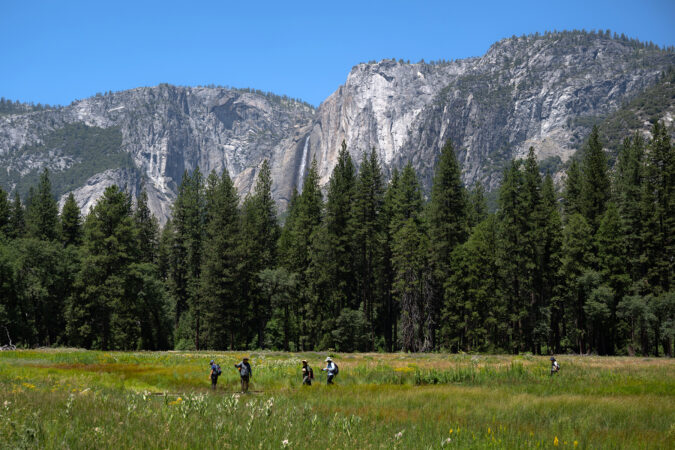
    YOSEMITE NATIONAL PARK, Calif. — At the base of Yosemite Falls, where white waters roared down a granite cliff, a couple jockeyed through dense crowds to try to take the perfect waterfall selfie. A family of five traded off resting in the single available seat on a wooden bench. A tourist tripped over a toddler, who fell and began wailing.

    There was one spectacle at Yosemite National Park last weekend not in the glossy brochures: the visitors themselves.

    The crown jewel of the nation’s park system, Yosemite is even more crowded than usual this year, after a decision by the Trump administration to do away with summer reservations here and at other popular parks.

    In the first half of 2026, visitors to and employees of California’s regal wilderness park reported hourslong traffic jams, waits at entrance stations, and long lines just to purchase a bite to eat.

    Employees of Yosemite and organizations that support it say that the hordes of visitors are demoralizing staff and damaging the park, as well as its reputation. Many visitors are determined to make the most of their visit, even with long waits. But some travelers have abandoned their plans altogether and driven out of the park’s gates after being turned away from every at-capacity major attraction.

    ”This is a far cry from the awe-inspiring sights Yosemite is known for,” the state’s two U.S. senators, Democrats Adam Schiff and Alex Padilla, wrote in a letter last week to the administration criticizing the cancellation of Yosemite’s reservation system.

    July is already the busiest month across national parks. And at Yosemite, it’s shaping up to be chaotic.

    On the morning of July 3, so many people had already arrived at Yosemite Valley, known for its sprawling meadows and towering palace of granite rock faces, that by 7 a.m. drivers were circling lot after lot as they tried to find a spot.

    “The traffic is terrible in the park,” said Lakshmi Duddukuru, 41, who spent 45 minutes of her first trip to Yosemite searching for a parking space. She spoke as she scaled the steep Mist Trail, where throngs of hikers were ascending in a slowly snaking line.

    Yosemite offers free shuttles to transport visitors between popular destinations, but many were too full to pick up any of the dozens of people waiting at the stops. On one bus, a frustrated driver trying to squeeze in more sightseers shouted, “If you’re not touching somebody, you’re not close enough.”

    Yosemite Valley helped inspire the creation of the national park system, as it was the first federally protected land to be designated for public use, under an act signed in 1864 by President Abraham Lincoln. Its waterfalls and glacier-carved monoliths, such as Half Dome and El Capitan, have made it one of the country’s most beloved national parks — and most visited.

    In 2020, Yosemite began experimenting with a summer reservation system to manage its ever-growing summer crowds. But Yosemite, as well as Arches National Park and Glacier National Park, did away with reservations this year, after President Donald Trump signed an executive order urging parks to rescind restrictions to improve access and help local economies.

    Ray McPadden, Yosemite’s superintendent, said that a reservation system should be a last resort. In previous years the park had to turn families away because they hadn’t booked a visit in advance, he said, which was unfair to them and meant a loss of fees that could have gone toward fixing up trails, campgrounds, and bathrooms.

    McPadden thinks the park is not overly crowded, except on holidays and Saturdays, he said. He expects a 12% increase in visits compared with last year, which would be about 4.7 million visitors, and the second-busiest year in the park’s history.

    “No secret: Yosemite is really popular,” he said. “We are having a great summer.”

    Some park employees disagree. The union local representing Yosemite staff, NFFE Local 465, said in a statement that the decision to end the reservation system had undermined staff and was “disheartening and disappointing,” particularly when the park was short-staffed after federal cuts. Gridlock traffic inside lengthens staff members’ commutes and makes it difficult, if not impossible, for them to perform their duties, the local said.

    Advocacy organizations point out that Yosemite did not benefit much from fee revenue over the holiday weekend. As part of his overhaul of the National Park Service, Trump ended free park entry on some days, such as Martin Luther King’s Birthday, while granting free park admission to U.S. residents on Trump’s birthday, which coincides with Flag Day, as well as July 3, 4, and 5.

    They worry that overcrowding encourages people to go off trail, and that guests aren’t as supervised as they once were. The bumper-to-bumper traffic also means that ambulances and other emergency vehicles can be delayed.

    The overcrowding “is an environmental disaster for the park, and it’s a safety issue for visitors,” said Mark Rose, the Sierra Nevada program manager for the nonprofit National Parks Conservation Association.

    For the most part, however, visitors seemed unfazed by the crowds. The magnificence of Yosemite’s glassy rivers and giant sequoias is difficult to diminish, and tourists said they expected summer crowds when they traveled.

    Duddukuru, who was visiting from Chicago, said that despite the delays the park was “wonderful.” She and her family had to wait 45 minutes to board a shuttle, but then spotted a bear, so the delay felt worth it, she said.

    Sasha Rubeiz, 23, said one particularly narrow trail felt a little dicey with so many other hikers, but they were mostly not a bother on her first, “unreal” visit here. She tilted her head up toward soaring pine trees and blue skies.

    “I’m looking up more than down,” said Rubeiz, who lives in Sacramento, Calif.

    McPadden said he was working on solutions to some of the crowding issues, including new fencing and boulders to stop people from parking illegally. He said he hoped to install digital signs showing guests which parking lots are already full so they don’t waste time circling.

    He would not say whether a reservation system would return next year. “I try to follow the facts, which generally are very, very positive here in the park,” he said.

    Brett Birkbeck, a police officer who lives in Huntington Beach, Calif., ate a hot dog and drank red wine out of a plastic cup as he set up camp at dusk under pine trees.

    Birkbeck, 49, said the crowds could not put a damper on his annual summer trip to Yosemite, during which he and his friends hike and grill ribs for a week in one of the most spectacular places on Earth.

    “I call it pressing the reset button on the year,” he said.

    This article originally appeared in the New York Times.

  • Superintendent Watlington announces promotions and other changes in Philly schools’ administration

    Superintendent Watlington announces promotions and other changes in Philly schools’ administration

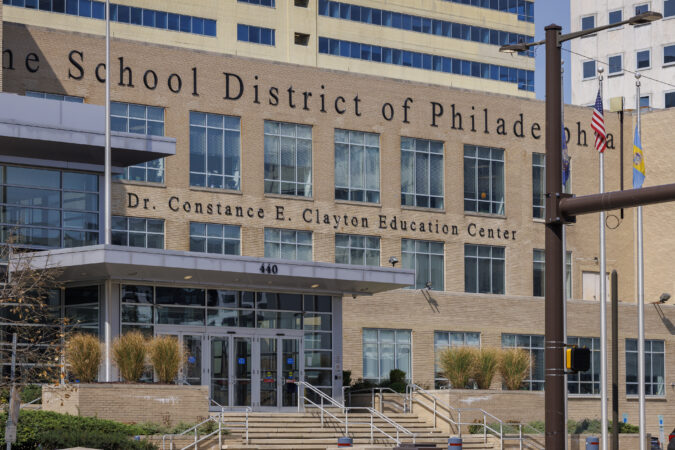
    Numerous changes are afoot in the Philadelphia School District, with Superintendent Tony B. Watlington Sr. promoting some staffers and shifting others around amid multiple departures from the system.

    The changes took effect July 1.

    Watlington, in an announcement sent to staff detailing the changes, said he was “confident this team will help us build on our momentum as we continue improving outcomes for students, strengthening support for our schools, and advancing our goal of becoming the fastest-improving large urban school district in the country.”

    The personnel shifts include:

    Brenda Elliott, who became interim deputy superintendent of academic services when Jermaine Dawson left Philadelphia to become Baltimore’s superintendent, got that job permanently.

    Elliott came to Philadelphia a year ago as associate superintendent of student life and innovation. She’s a former Tennessee state superintendent for school turnaround who has worked in a number of urban districts, including with Watlington in North Carolina.

    She also spent time as a teacher, principal, and officer in the U.S. Army.

    Tomás Hanna, who was associate superintendent for secondary schools, is now associate superintendent for student life and school operations.

    Noah Tennant, assistant superintendent for Learning Network 13, is keeping that job, but is also now interim associate superintendent for secondary schools while a search for a permanent administrator is completed.

    Michael Farrell is now chief academic officer. He had been chief learning officer. The new title combines two jobs: chief of curriculum and instruction and chief learning officer.

    Nathalie Nérée became chief of special education, diverse learners, and wellness. She had previously been chief of special education and diverse learners.

    Nyshawana Francis-Thompson, who was chief of curriculum and instruction, became senior adviser for strategic initiatives and innovation.

    Jamina Clay, who had been an assistant superintendent supervising a learning network, is now assistant superintendent of school management and organization.

    Kelly Espinosa, who has served as the principal of Fanny Jackson Coppin Elementary, is now interim assistant superintendent for Learning Network 4, replacing Clay. Janis Butler, a retired principal who often fills in as an interim principal in the district, will run Coppin.

    Two more retired educators are now serving as interim assistant superintendents — Wilfredo Ortiz for Learning Network 8 and Lucy Feria for Learning Network 9. Ortiz replaces Renato Lajara, who’s now superintendent in Bethlehem; Feria replaces Ariel Lajara, who left Philadelphia to run the Vineland school system in South Jersey.

  • Five arrested during Philly Fourth celebrations as protesters attempted to burn American flag

    Five arrested during Philly Fourth celebrations as protesters attempted to burn American flag

    Five people were arrested ahead of Philadelphia’s July Fourth celebration after protesters attempted to set an American flag on fire, according to police.

    A small group of protesters gathered outside Washington Square around 6 p.m. Saturday, with signs calling for “No celebrations of empire” and proclaiming “All empires fall.”

    According to video of the incident, what began as a peaceful protest unraveled as an unidentified woman attempted to light an American flag on fire.

    “During the protest, one of the individuals in the group placed an American flag on the sidewalk and doused it with a large amount of an accelerant,” a Philadelphia police spokesperson said in a statement.

    Burning an American flag is considered a protected form of free speech, upheld by the Supreme Court. But burning a flag on a public street in Philadelphia is generally prohibited due to the city’s strict safety rules on setting fires.

    After police intervened to prevent the flag from being lit on fire, a few protesters yelled obscenities at police and refused to leave the area, despite repeated calls from officers.

    “The group was given multiple warnings to disperse from the area and refused, leading to five arrests,” police said.

    The five individuals, who were not from Philadelphia and ranged in age from 18 to 25, were charged with failing to disperse and have since been released.

    There were no injuries reported, police said, and the remaining protesters gathered in a peaceful march through Center City following the incident, ending at the Wanamaker Building.

    Despite extreme heat and frustration stemming from weather delays, crowds were peaceful during the city’s celebration of the country’s 250th anniversary.

    Police said there were no arrests on the Parkway or outside Lincoln Financial Field, which hosted Philly’s final World Cup match Saturday. There were also no arrests stemming from other protests that happened across the city Saturday.

  • First-round pick Labaron Philon Jr. leads Sixers’ summer league roster

    First-round pick Labaron Philon Jr. leads Sixers’ summer league roster

    The 76ers on Monday announced their Las Vegas Summer League roster, headlined by first-round draft pick Labaron Philon Jr.

    Johni Broome, a 2025 second-round draft pick whose rookie season was interrupted by knee surgery, also is on the roster. Caleb Love and Rayan Rupert, who have either signed or agreed to a two-way contract with the Sixers, are not part of the team.

    The team will be coached by Sixers player development associate coach TJ DiLeo, who held the same role last year. DiLeo, the son of former Sixers coach and executive Tony DiLeo, played at Temple and has worked his way up the Sixers’ staff since 2021.

    The Sixers play their first game in Las Vegas Thursday against the Detroit Pistons. Their other set games are Saturday against the Indiana Pacers, July 14 against the Houston Rockets, and July 15 against the Orlando Magic.