Pennsylvania’s race for governor has officially begun. And 10 months before the election, the November matchup already appears to be set.
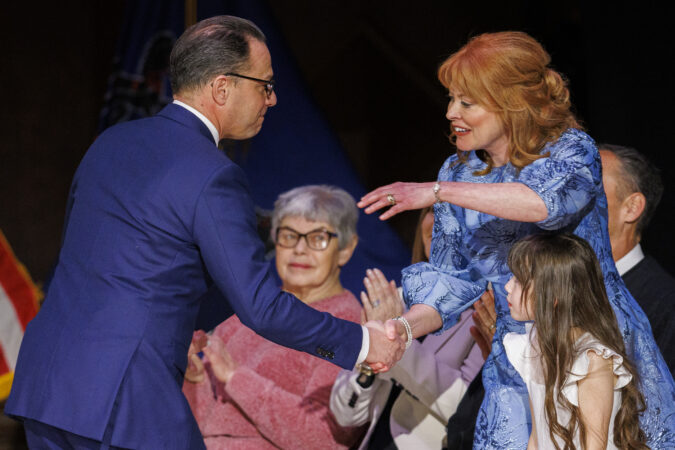
Democratic Gov. Josh Shapiro formally announced his reelection campaign Thursday — not that anyone thought he wouldn’t run. And Republicans have rapidly coalesced behind thestate party’s endorsed candidate, Pennsylvania Treasurer Stacy Garrity.
The racewilldominate Pennsylvania politics through November,but it could also havea national impact as Democrats hope Shapiro at the top of the state ticket can elevate the party’s chances in several key congressional races.
Here’s what you need to know about the high-stakes contest.
Shapiro was elected state attorney general in 2016, a year when Pennsylvania went for Republican Donald Trump in the presidential contest. The position put Shapiro in the national spotlight in 2020 when Trump sought to overturn his loss in the state that year through a series of legal challenges, which Shapiro’s office successfully battled in court.
He went on to decisively beat Trump-backed Republican State. Sen. Doug Mastriano for the governorship in 2022. Despite an endorsement from Trump, Mastriano lacked the support of much of Pennsylvania’s Republican establishment and spent the election cycle discouraging his supporters from voting by mail.
Throughout Shapiro’s first term as governor, he has highlighted his bipartisan bona fides and ability to “get stuff done” — his campaign motto — despite contending witha divided legislature. His launch video highlights the quick reconstruction of I-95 following a tanker explosion in 2023.
A strong supporter of Trump, Garrity is one of the only women that has been elected to statewide office in Pennsylvania history. If elected, she would be the first female governor in state history.
Garrity is a retired U.S. Army colonel who was executive at Global Tungsten & Powders Corp. before she was elected treasurer in 2020. Running a relatively low-key state office, Garrity successfully lobbied Pennsylvania’s General Assembly to allow her to issue checks to residents whose unclaimed property was held by her office, even if they hadn’t filed claims requesting it.
Anyone else?
While Shapiro and Garrity are the likely nominees for their parties, candidates have until March to file petitions for the race. That theoretically leaves the possibility of a primary contest open for both candidates, but it appears unlikely at this point.
The outcome of Pennsylvania’s gubernatorial race could hold wide-ranging impacts on transportation funding, election law, and education policy, among other issues.
The state’s governor has a powerful role in issuing executing actions, setting agendas for the General Assembly, and signing or vetoing new laws. The governor also appoints the secretary of state, the top Pennsylvania election official who will oversee the administration of the next presidential election in the key swing state.
Throughout the entirety of Shapiro’s first term, he has been forced to work across the aisle because of the split legislature. Throughout that time the balance of power in Harrisburg has tilted toward Democrats who hold the governor’s mansion and the Pennsylvania House. But many of the party’s goals — including expanded funding for SEPTA and other public transit — have been blocked by the Republican-held Senate.
If Garrity were to win that dynamic would shift, offering Republicans more leverage as they seek to cut state spending and expand school voucher options (while Shapiro has said he supports vouchers, the policy has not made it into any budget deals under him).
Shapiro coasted to victory against Mastriano in 2022, winning by 15 points. The 2026 election is expected to be good for Democrats with Trump becoming an increasingly unpopular president.
But Garrity is viewed as a potentially stronger opponent to take on Shapiro than Mastriano, even though her political views have often aligned with the far-right senator.
When the midterms conclude, the 2028 presidentialcycle will begin. If Shapiro can pull off another decisive win in a state that voted for Trump in 2024, it could go a long way toward aiding his national profile. But if Garrity wins, it could endthe governor’s chances of putting up a serious campaign for the presidency in 2028.
Every other race in Pennsylvania
The governor’s contest is the marquee race in Pennsylvania in 2026. Garrity and Shapiro have the ability to help or hurt candidates running for Pennsylvania’s statehouse and Congress.
The momentum of these candidates, and their ability to draw voters to the polls could play a key role in determining whether Democrats can successfully flip four competitive U.S. House districts as they attempt to take back the chamber.
Democrats also narrowly hold control of the Pennsylvania House and are hoping to flip three seats to regain control of the Pennsylvania Senate for the first time in decades. If Democrats successfully flip the state Senate blue, it would offer Shapiro a Democratic trifecta to push for long-held Democratic goals if he were to win reelection.
Strong Democratic turnout at the statewide level could drive enthusiasm down-ballot, and vice versa. Similarly, weak turnout could aid Republican incumbents in retaining their seats.
The dates
The election is still months away but here are days Pennsylvanians should put on their calendars.
May 4: Voter registration deadline for the primary election.
May 19: Primary election.
Oct. 19: Voter registration deadline for the general election.
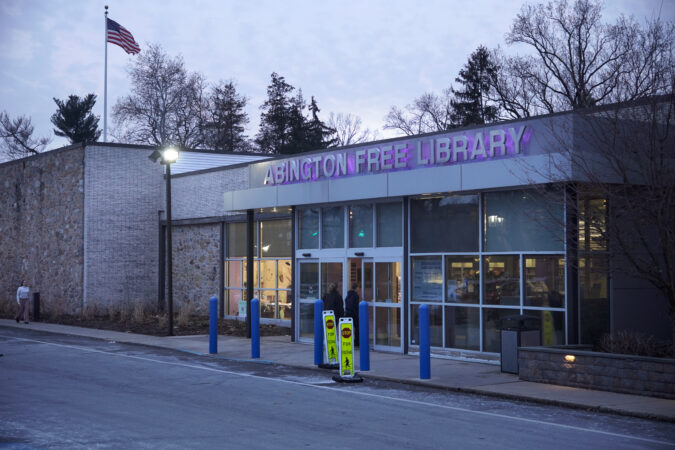
For more than four years, dozens of LGBTQ+ kids and their families have joined the Abington Township Public Library for Rainbow Connections, a monthly Zoom program, to read children’s books, craft, make new friends, and meet interesting people, such as “Jeopardy!” super champ Amy Schneider.
But within the past week, the program — the only one of its kind in Montgomery County libraries — has become a target of a right-wing social media campaign that has circulated misinformation and directed threatening language at the program, prompting the library to release a statement Monday setting the record straight, said Library Director Elizabeth Fitzgerald in an interview Tuesday.
“Rainbow Connections is not a sexual education class. Sexual health, reproduction, puberty, and intimate relationships are not discussed,” the statement said in part.
Though it’s “not different from any other story time or library program,” Fitzgerald says, Rainbow Connections’ mission is to foster a welcoming and intentional environment for LGBTQ+ kids in grades K-5, including those who may be struggling to make friends at school. Its virtual format has allowed families from around the country to join.
“Ultimately just a space where the kids could attend a library program and feel safe,” Fitzgerald said.
Comments attacking the program appeared on the library’s Facebook page early last week. A day later, LibsofTikTok, a controversial far-right social media account founded by Chaya Raichik, as identified by the Washington Post, posted about Rainbow Connections.
LibsofTikTok, which frequently targets LGBTQ+ people nationwide, spurred misinformed outrage from its millions of followers about the program’s upcoming events.
The account’s posts have often provoked real-life consequences. In 2024, after posting about the William Way Community Center, an LGBTQ+-focused nonprofit in Philadelphia, Democratic Sen. John Fetterman and former Democratic Sen. Bob Casey signed a letter requesting to withdraw federal funding from a renovation project that would have made the center’s headquarters more accessible and expanded William Way’s programming space.
“These are difficult times, and I think that the commentary that took off on social media underscores the reason why we need to create spaces where members of the LGBTQ community feel safe,” Fitzgerald said.
Library staff established the program in November 2021 after a community member reached out and asked if the library would help address a need for a safe space for LGBTQ+ kids.
According to anonymous comments from families provided by the library to The Inquirer, parents are profoundly grateful for the safe environment that Rainbow Connections has created for their children. Names were withheld by the library to protect families’ safety and privacy.
“My children live in a two-mom household, so I thought it would be a great program to connect with other kids and possibly see other families that look like ours,” one parent said.
Another parent said they had “tears in my eyes listening to [the kids] introduce themselves, awed by their bravery and vulnerability.”
A family who lives in North Carolina said Rainbow Connections helped their child better understand their identity and build community — “Your program brought us light, hope and education when we were feeling isolated, confused and hopeless.”
In Abington, it’s not the first time that events related to the LGBTQ+ community have been disparaged, said Township Commissioner John Spiegelman, who represents the area where the public library is located. The township’s yearly raising of the Pride flag has provoked a lawsuit against Spiegelman and other members of the board, he said.
“Is it getting worse here and everywhere? Certainly it is,” Spiegelman said.
In the aftermath of the social media posts, Fitzgerald said Rainbow Connections will be contacting parents to say the program will continue and that “their safety is ensured.”
“It is my hope that the children who participate don’t have any idea that this is going on,” Fitzgerald added.
Since the online backlash, the Montgomery County community has rallied around the library and Rainbow Connections, which has served as a model for other Pennsylvania libraries’ programming for LGBTQ+ youth.
“More communities should embrace programs like Rainbow Connections,” said Jason Landau Goodman, board chair of the Pennsylvania Youth Congress, an LGBTQ+ advocacy organization, in a statement. “Young students today read books that feature all types of people because diverse stories reflect the real world we live in.”
“Some students experience bullying or harassment based on who they are — and many still do not get opportunities to see themselves reflected in the stories they learn from,” added Goodman, who is also running for state representative in Montgomery County.
The Abington Human Relations Commission said in a statement Monday that they stand in “solidarity” with the library and encouraged community members to “seek information directly from reliable sources and to engage in dialogue grounded in respect and understanding.”
Fitzgerald said that in spite of the derogatory comments snowballing online, the library has been receiving an onslaught of supportive calls and emails.
“That’s really meant the world to us,” she said. “Just to know that the people who don’t want this program to exist, they’re a vocal, small, nonlocal majority, and that I believe there’s a much larger number of residents who love the library and who care about their neighbors and fellow community members.”
New Jersey has long coveted Petty’s Island, 300 acres in the Delaware River off Pennsauken, as a potential environmental and recreational haven with its grand views of Philadelphia.
Originally the hunting grounds of Native Americans, the island was later farmed by Quakers. Folklore claims pirate landings and an overnight stay by Ben Franklin. In more recent years, redevelopment proposals envisioned a hotel and golf course before the state’s embrace of a nature preserve.
Citgo Petroleum Corp. — the Houston-based refining arm of Venezuela’s national oil company — has owned the island for 110 years, leaving a legacy of pollution from oil storage and distribution.
Now recent international events and a court ruling on Citgo have clouded the island’s immediate future while underscoring the reach of the petroleum industry.
Formerly, it was the site of Fuel storage (center) for the Venezuelan oil company Citco.
Late last year, U.S. District Court Judge Leonard Stark in Delaware approved Amber Energy as buyer of Citgo’s Venezuelan parent company through a sale of shares to settle billions in debts, concluding a process that began in 2017. Amber Energy bid $5.9 billion in a court-organized auction.
Citgo owns a network of petroleum infrastructure that some analysts say could be worth up to $13 billion, according to the Wall Street Journal.
Venezuelan officials immediately denounced the sale as “fraudulent” and appealed the decision. Citgo is a subsidiary of Venezuela’s state-owned oil company, Petróleos de Venezuela (PDVSA).
However, on Jan. 3, the U.S. captured Venezuela President Nicolás Maduro and brought him to the U.S. to face narco-conspiracy charges. He has pleaded not guilty.
It is no longer clear whether Venezuela will continue with an appeal. President Donald Trump has said the U.S. is now running that country and is mapping out a vision for its vast crude oil reserves.
So it’s likely Amber Energy, an affiliate of activist hedge fund Elliott Management, will soon close on the arrangement to own Citgo — and presumably Petty’s Island.
Elliott Management was founded by Paul Singer. He or his firm have contributed tens of millions to political campaigns or groups, including Trump’s 2024 presidential campaign.
Amber Energy, through a spokesperson Braden Reddall, declined to comment this week. Reddall, however, noted in an email that the “transaction involving Citgo has not yet been completed.”
Citgo has long been working to eventually donate the island to the New Jersey Natural Lands Trust, which is overseen by the state Department of Environmental Protection (DEP).
The DEP declined to comment.
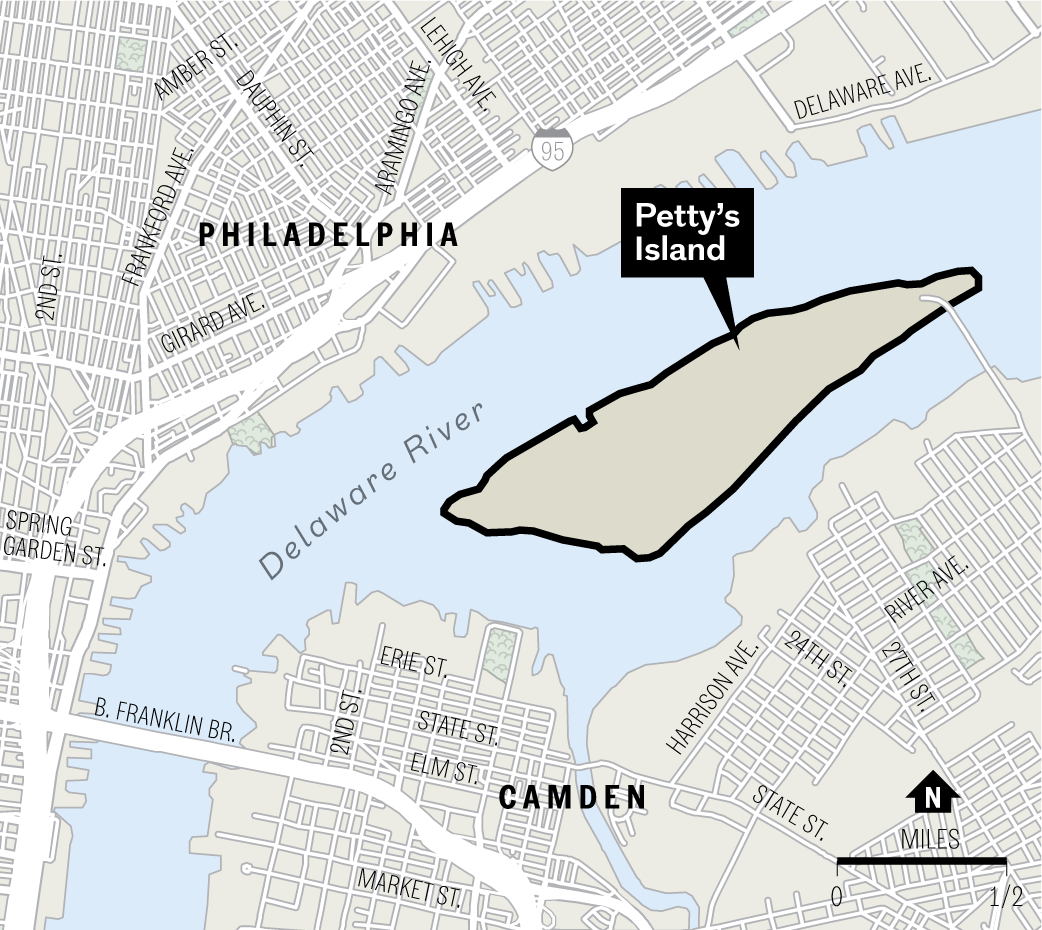
Map of Petty’s Island in the Delaware River, north of the Benjamin Franklin Bridge.
Citgo and Petty’s Island
Petty’s Island was originally inhabited by the Indigenous Lenni-Lenape people, and stories abound about its history, according to a DEP website for the trust. The island was once owned by William Penn.
In 1678, then-owner Elizabeth Kinsey, a Quaker, struck a deal to buy it from the Lenni-Lenape and allowed them to continue hunting and fishing — provided they agreed not to kill her hogs or set fire to her hayfields.
There are other tales of Blackbeard the pirate docking there and even Benjamin Franklin spending a night on the island, which was eventually named after John Petty, an 18th-century trader from Philadelphia.
The island had been used for farming, trading, and shipbuilding until Citgo, then an American company, began buying land there in 1916, continuing to do so until it owned the entire island by the 1950s. Venezuela’s PDVSA acquired ownership of Citgo in the 1980s.
In the early 2000s, the oil company sought to donate the island to New Jersey as a nature preserve, aligning with environmental efforts to conserve the land, which includes habitats for bald eagles, kestrels, and herons.
But in 2004, the state’s Natural Lands Trust rejected an offer from Citgo for a conservation easement under political pressure to develop it.
At the time, a development company in Raleigh, N.C., had planned a golf course, a hotel and conference center, and 300 homes for the island, which offers views of Philadelphia and Camden, but that proposal was abandoned.
In 2009, the Natural Lands Trust, created by the New Jersey Legislature to preserve land and protect nature, finally voted to accept the island from Citgo.
Then-Venezuelan President Hugo Chávez heralded the plans at the Summit of the Americas.
An informational sign for Petty’s Island, seen in the distance, at Cramer Hill Waterfront Park in Camden.
What is Elliott Management?
Singer, who leads Amber Energy’s parent company Elliott Management, was the seventh-largest donor in the 2024 election cycle, according to Open Secrets, a research group that tracks money in U.S. politics. That put him in a top 10 list that included Elon Musk, Timothy Melon, and Jeffrey Yass.
Singer contributed $43.2 million, with almost all going to conservative causes, including a $5 million contribution to Make America Great Again Inc., a super PAC that supports Trump. And $2 million went to the Keystone Renewal PAC to support conservative candidates in Pennsylvania.
The order for the sale of Citgo to the arm of Singer’s hedge fund was the last major legal step to wrap claims by up to 15 creditors that began in 2017 for debt defaults.
The deal is expected to close in coming months. Amber Energy plans to retain the Citgo brand.
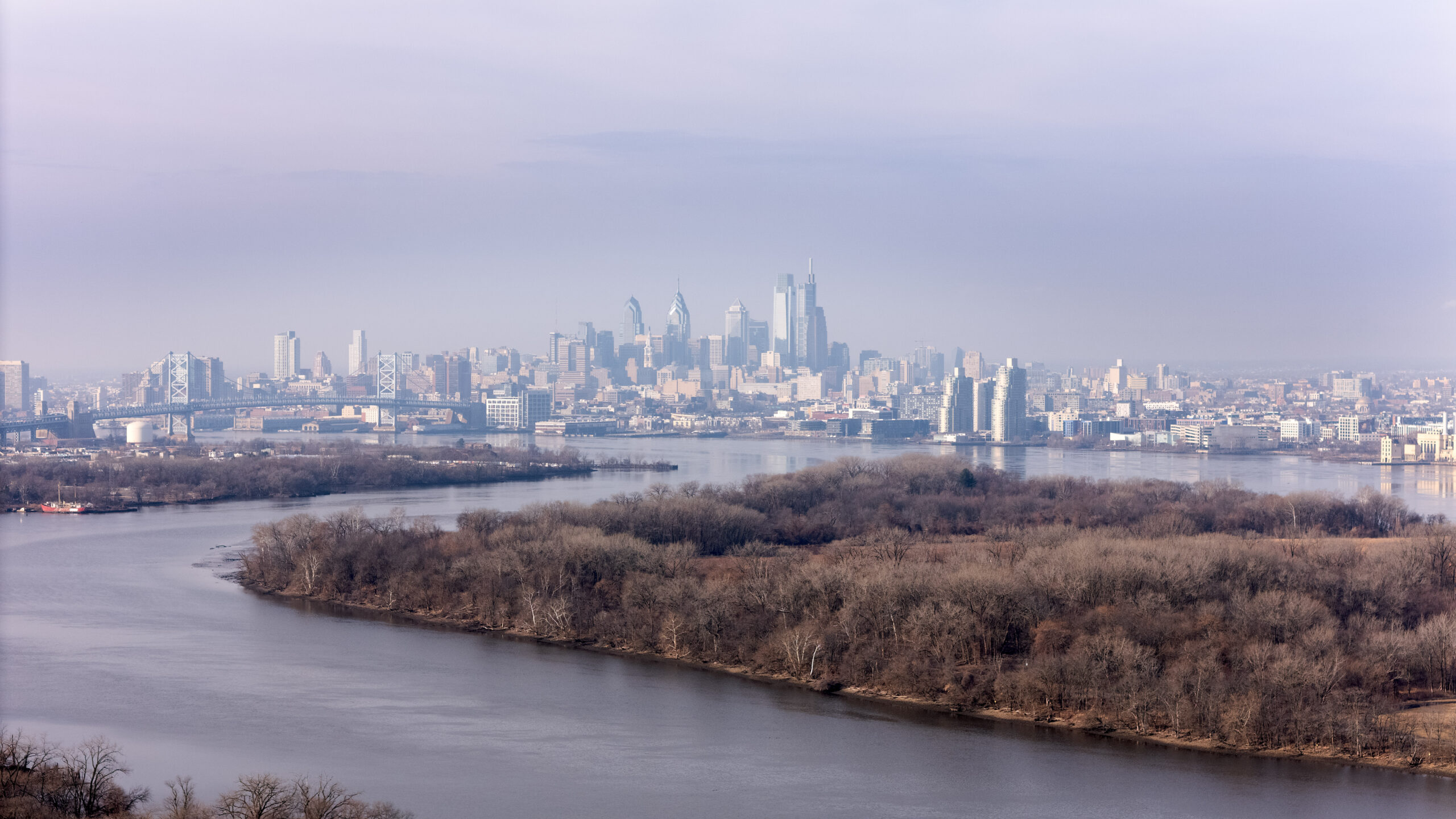
Petty’s Island (right) as seen by drone, Friday, Jan. 9, 2026. The 292-acre land sits in the Delaware river near the border between Pennsylvania and New Jersey. It is located between the Betsy Ross and Ben Franklin bridges. Formerly it was the site of Fuel storage for the Venezuelan oil company Citco.
What’s happening on the island now?
Currently, the New Jersey Natural Lands Trust holds a conservation easement for the island that prevents any development.
The state’s goal is to turn the island into an urban nature reserve with an environmental center, according to the Center for Aquatic Sciences in Camden, which is partnering with the trust in the endeavor.
Public access to the island is permitted only as part of scheduled programs. The trust has built a main trail along the southern perimeter and added connector trails for a total of two miles. It has installed 13 exhibits and kiosks along the trails.
Transfer of the title of the island ultimately depends on Citgo, which is responsible for removing the petroleum infrastructure and cleaning up contamination.
But before Citgo can turn the title over to the trust, the DEP must certify that the land is cleaned to state standards, according to the most recent information available on the DEP website for the trust.
Last year, Citgo agreed to place $13.3 million in a trust fund to remediate “all hazardous substances, hazardous wastes, and pollutants discharged,” on the island.
If Amber Energy assumes all liabilities of Citgo, it would presumably be responsible for the cleaning and transfer of title under the conservation easement.
Reddall, the spokesperson for Amber Energy, declined to comment on the cleanup.
He told the judge that he was from Scranton and began to explain where the town is located in Pennsylvania.
“I know where Scranton is,” said Seamus McCaffery, the judge presiding in the courtroom tucked into the basement of Veterans Stadium.
The man was a rabid Eagles fan but had never been to a game. His work was running a trip — tickets to see the Birds and free food and drinks on the bus ride there — to South Philadelphia. He was in.
But the only thing he could remember, he told McCaffery in December 1997, was that he drank so much on the bus that he had to be carried to his seat. He was soon surrounded by Philadelphia police and handcuffed.
“They put me in a jail cell, three hours later I appeared in front of you, and I missed the entire game,” the man told McCaffery. “And my bus went back to Scranton without me.”
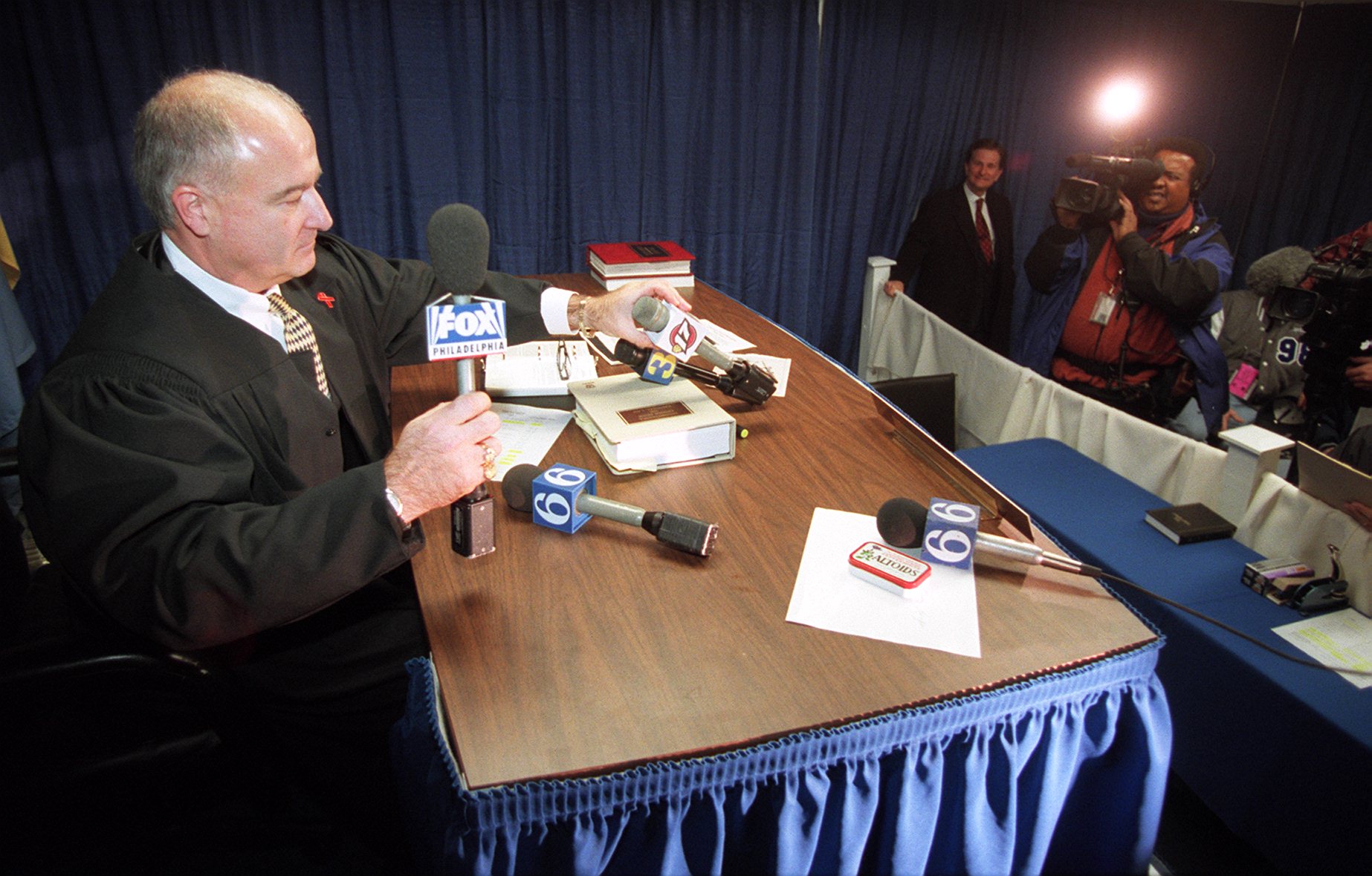
There was a courtroom for three games in 1997 in the bowels of Veterans Stadium, an attempt to curb what had become an unruly scene every week. McCaffery, a municipal court judge who operated a night nuisance court in the city, volunteered to be the judge.
He ruled on everything from fights in the stands to underage drinking to public urination to a guy from Scranton who missed his bus home. It was Eagles Court.
“The hardest part sometimes was keeping a straight face,” McCaffery said.
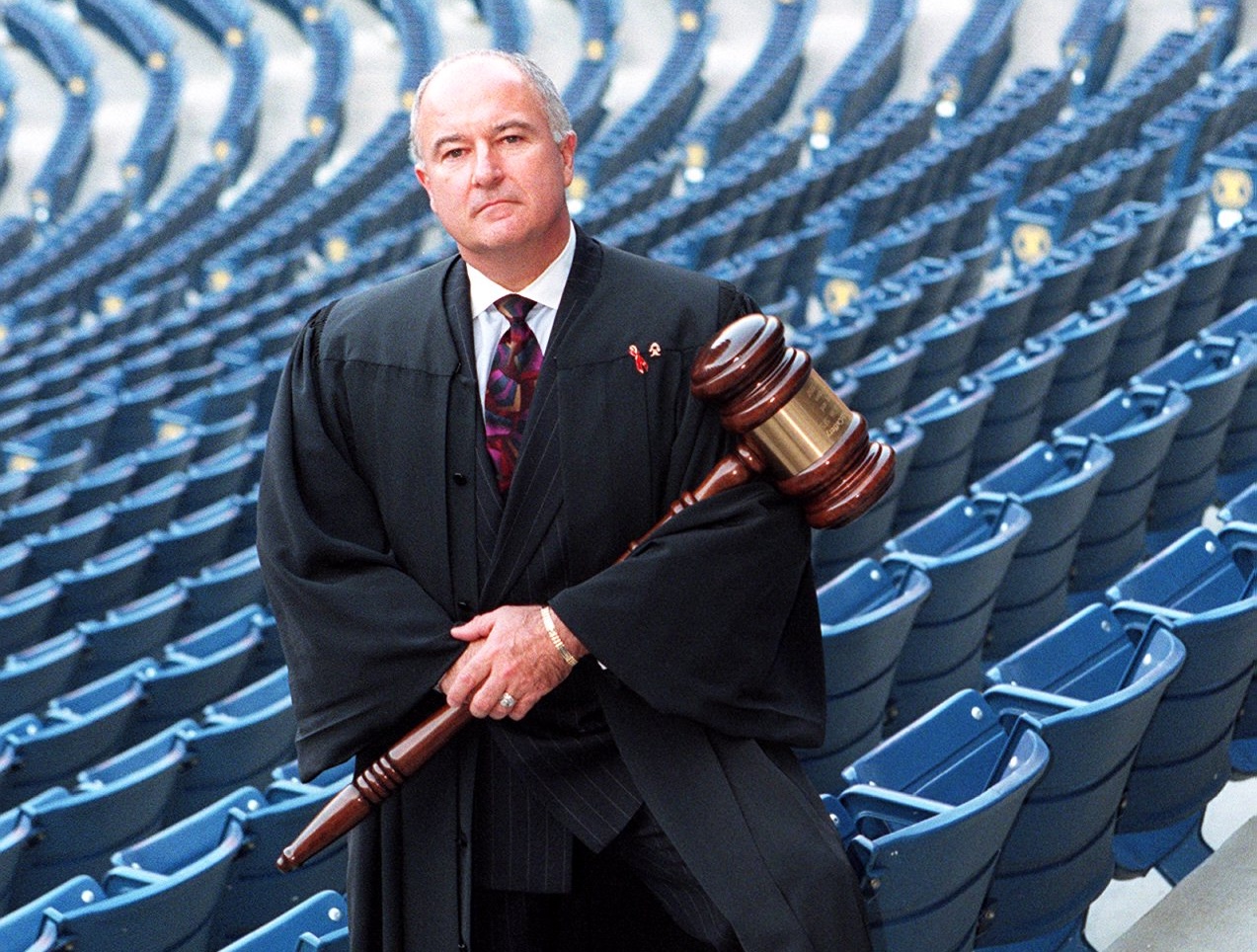
Seamus P. McCaffery, Philadelphia municipal court judge, at the Vet with his gavel in 1997.
A flare at the Vet
“How do you plead?” McCaffery asked a 19-year-old man after he was charged with trespassing at the Vet in 2003.
“I plead stupidity,” he said.
“Is that aggravated stupidity or simple stupidity?” the judge said.
“Whatever the lesser charge is. I was an idiot.”
The man was acquitted.
On Nov. 10, 1997, Jimmy DeLeon, a municipal court judge, was watching from home when a blowout loss to the 49ers on Monday Night Football became more about what was happening in the stands. There were over 20 fights, a gang of fans broke a man’s ankle, two folks ran onto the Vet turf, and a New Jersey man was arrested after firing a flare across the stadium.
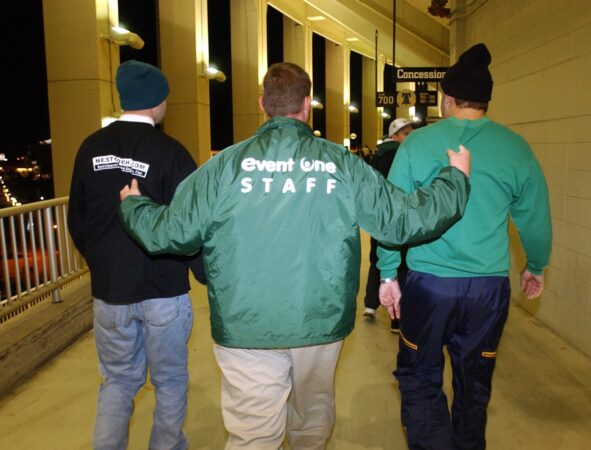
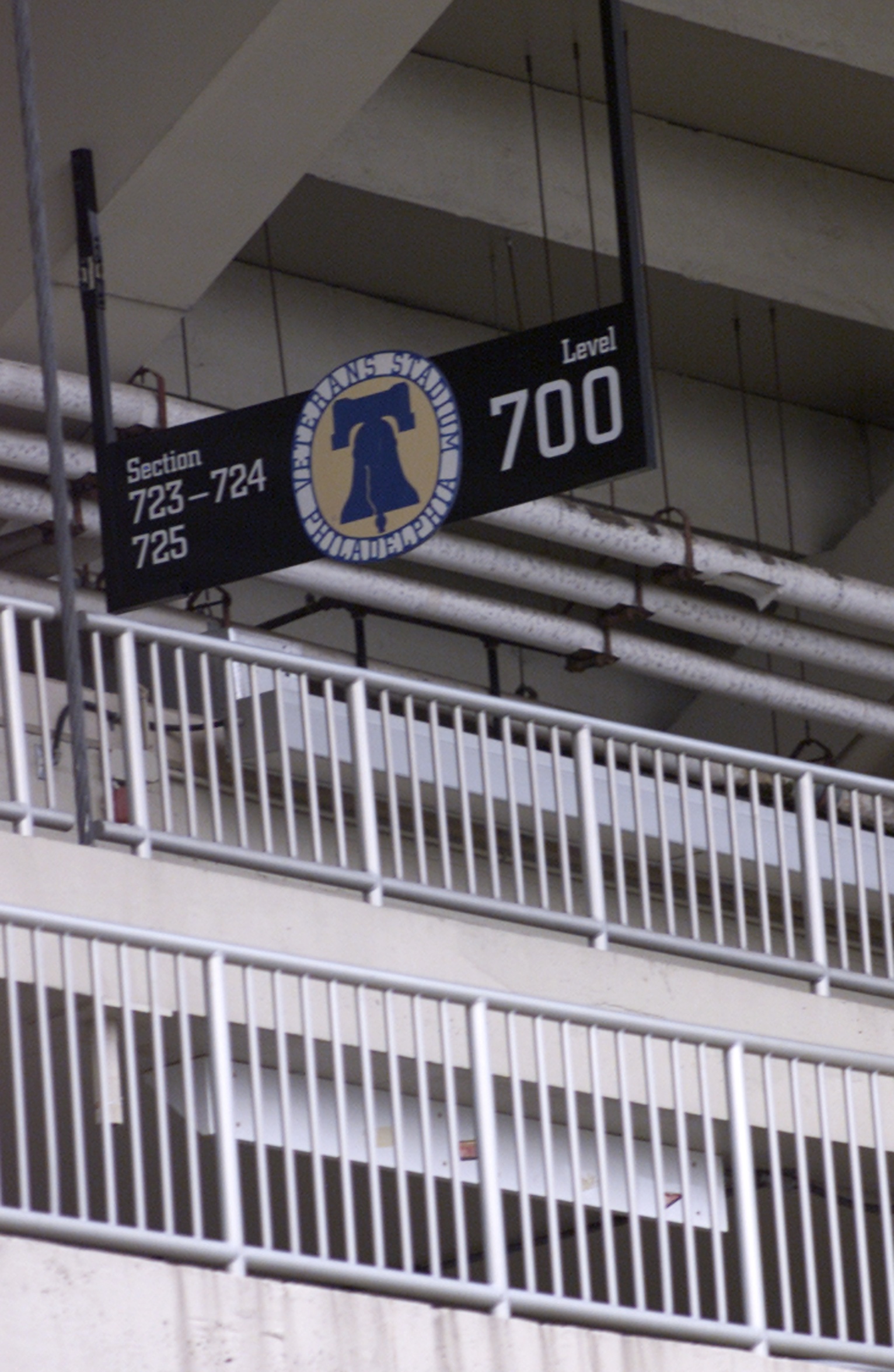
The concrete and steel fortress at Broad and Pattison had long been a haven for rough and rowdy football fans. There was the time the fans stole the headdress from the Washington fan who dressed like a Native American. And the whistling Cowboys fan who was chased out of the 700 Level.
“It was a nightmare,” said Bill Brady, a retired traffic cop who spent game days patrolling the 700 Level. “Fights galore. People passed out in the bathroom. One of the security guys up there used to box in the Blue Horizon. It was nothing but aggravation. You’d have roll call in the police room and go up to the 700 Level. By the end of the day, you were beat up.”
But this Monday night game against the 49ers was too much. The flare gun — the man said he saw people firing them in the parking lot and then brought one into the Vet — became national news as Philadelphia’s unruly stadium was now portrayed as a war zone.
DeLeon called McCaffery as the two volunteered as judges in the city’s nuisance night courts, a program in which people who committed “quality of life crimes” such as loitering, underage drinking, and curfew violations would be brought immediately to a judge and receive a fine. DeLeon told McCaffery that they had to do something about the Vet.
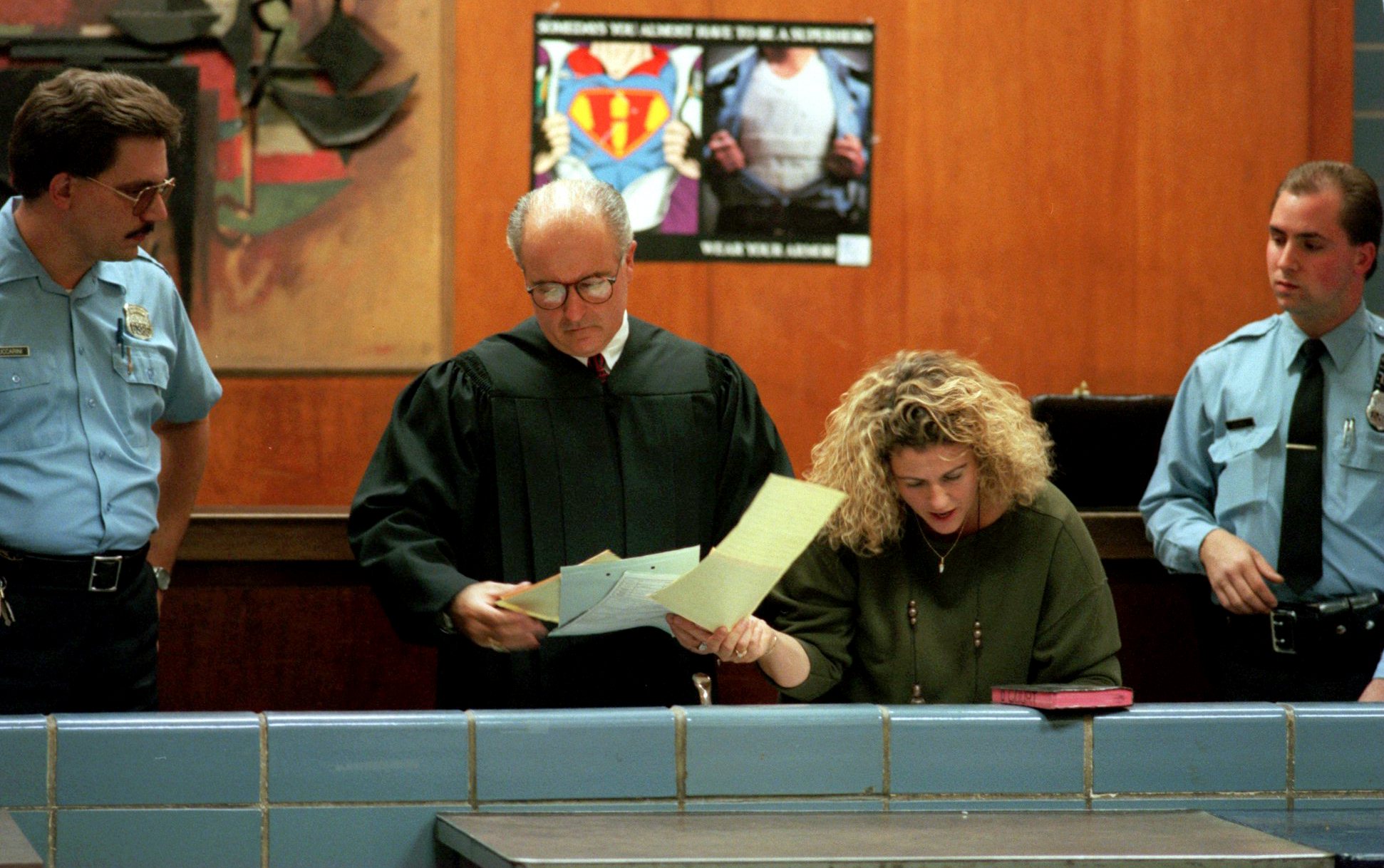
Judge Seamus McCaffery going over the night’s paperwork in 1996 with his wife, Lisa Rapaport, who was standing in for the court clerk, who was ill that day.
“He was right on it,” DeLeon said. “He took it over.”
McCaffery was soon in a meeting with Jim Kenney — the future mayor who was then on City Council — along with Eagles owner Jeffrey Lurie and president Joe Banner.
“I was a Flyers guy at the time, so I really wasn’t paying much attention to who Joe Banner and Jeff Lurie were,” McCaffery said. “But they said, ‘We need to do something for our image.’”
The night nuisance court was Kenney’s idea, and he thought it could work at the Vet. Arrested fans could be charged immediately, plead guilty, and be issued a fine by a judge.
Too often, an arrested fan would fail to show up to a court date and nothing more would happen. The city didn’t spend the resources to chase down fans from the 700 Level. McCaffery said it was a fine idea, but the stadium didn’t have a courtroom.
“Without missing a beat, Jeff Lurie said, ‘We’ll build you a courtroom here,’” McCaffery said.
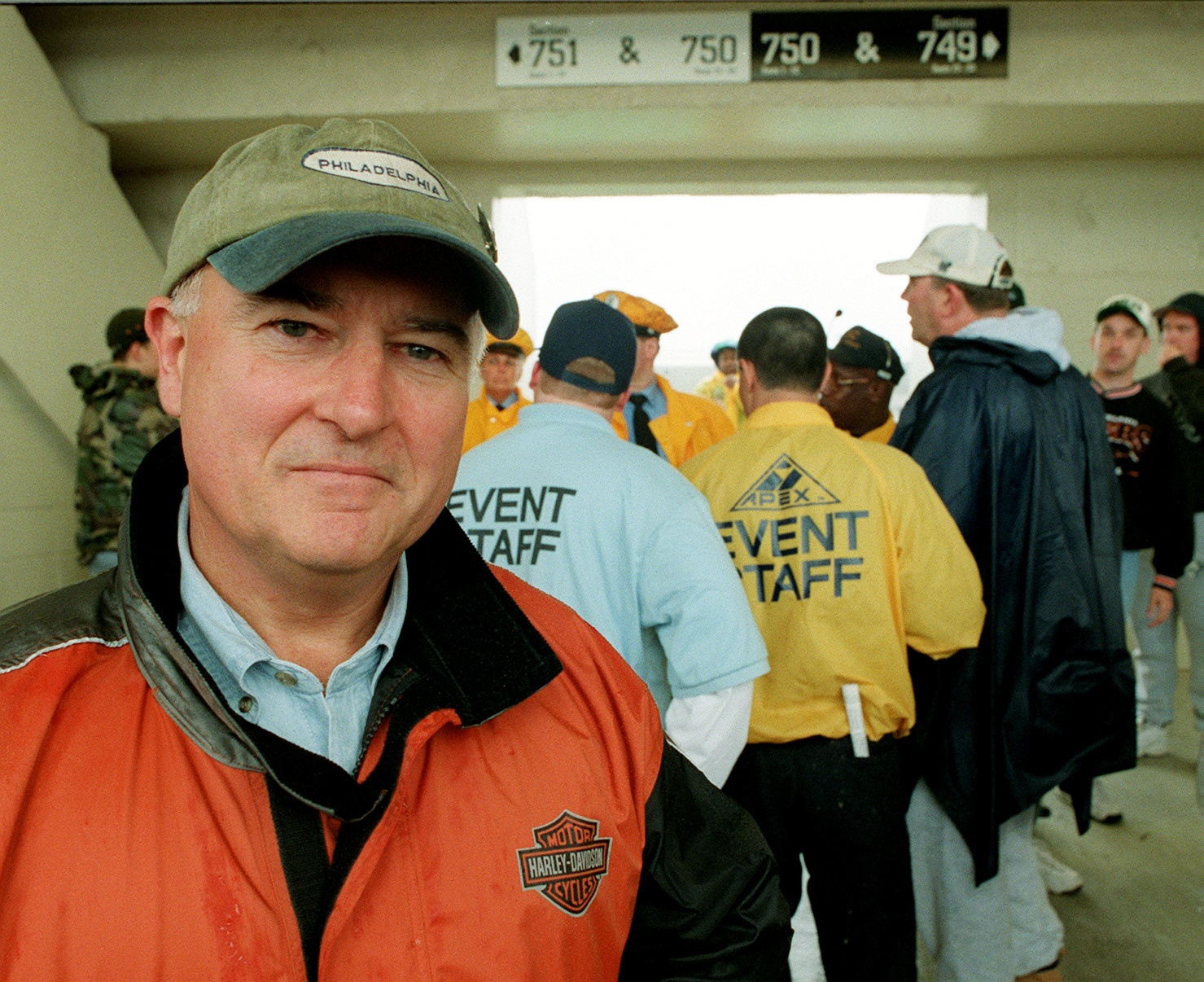
Eagles court judge Seamus McCaffery patrolling the 700 level at Veterans Stadium with security staff behind him.
Made for Netflix
“To be honest, I just wanted to see the game,” a man told McCaffery after being ejected and then arrested for sneaking back in. He was fined $198.50.
A maintenance room used by the Phillies in the stadium’s basement became a legitimate courtroom with public defenders, district attorneys, and flags.
“This was not a kangaroo court,” said McCaffery, who was not paid to be in the courtroom.
On Nov. 23, 1997, during a game against the Steelers, the first defendant at Eagles court was a 38-year-old from Delaware wearing a Starter jacket. Later that afternoon, a 34-year-old from Pennsauken pleaded not guilty to punching another fan. It was an elbow to the chin, he told the judge.
There were 20 fans arrested that game, and McCaffery doled out 18 fines ranging from $158.50 to $300.
“This would be something that would be great for Netflix,” said Anthony “Butch” Buchanico, who was a sergeant in South Philly’s Fourth District and oversaw the courtroom. “People would come in their 20s and 30s crying and begging for mercy.”
The fans were warned before the game on Phanavision that “on-site court proceedings will be presided over by the Honorable Judge Seamus McCaffery.” Everyone booed, McCaffery said.
The police had undercover officers enter the seating bowl dressed as opposing fans. If anyone confronted the “opposing fan,” a crew of police would intervene and McCaffery would have another case to hear. It was an operation.
The stadium was infamous for its concrete-like playing surface, but the upper deck of the “Nest of Death” was even more foreboding.
“I would be on the field and there would be fights in the 700 Level where players from both teams would look up and watch the fights,” Buchanico said. “It was insane. If you were faint of heart, you didn’t go up to the 700 Level. The people up there, that was their territory. They loved it.”
The fan who shot the flare was from New Jersey, and McCaffery likes to say that the majority of the people he saw in Eagles Court lived outside Philadelphia. He thought Eagles Court would be a way to prove that it wasn’t Philadelphians who made the Vet a madhouse.
A 700 Level sign at the Vet.
“Here’s our city, here’s Philadelphia on national news getting beat up and berated, and the vast majority aren’t from here,” said McCaffery, now 75, who grew up in Germantown after his family moved from Northern Ireland when he was 5. “People are thinking that we’re nothing but a rowhouse, trash city and it galled me.”
McCaffery said he got hammered in the press but didn’t care. A sportswriter called him “Shameless McCaffery” but was then “kissing my [butt]” a few years later when he saw what the judge was doing.
The arrested fans would be brought down to the basement where McCaffery did more than just issue a verdict.
“They’d march them up to the court and Judge McCaffery would berate them,” Buchanico said. “The majority of people weren’t from Philadelphia, and that really bugged the judge.
“He would say, ‘Why don’t you do this where you live? Are you proud of yourself? Get out of here.’ Then he would say, ‘Guilty. $300 fine. Pay now’ ‘I don’t have any money.’ ‘Well, there’s a MAC machine in the hallway.’”
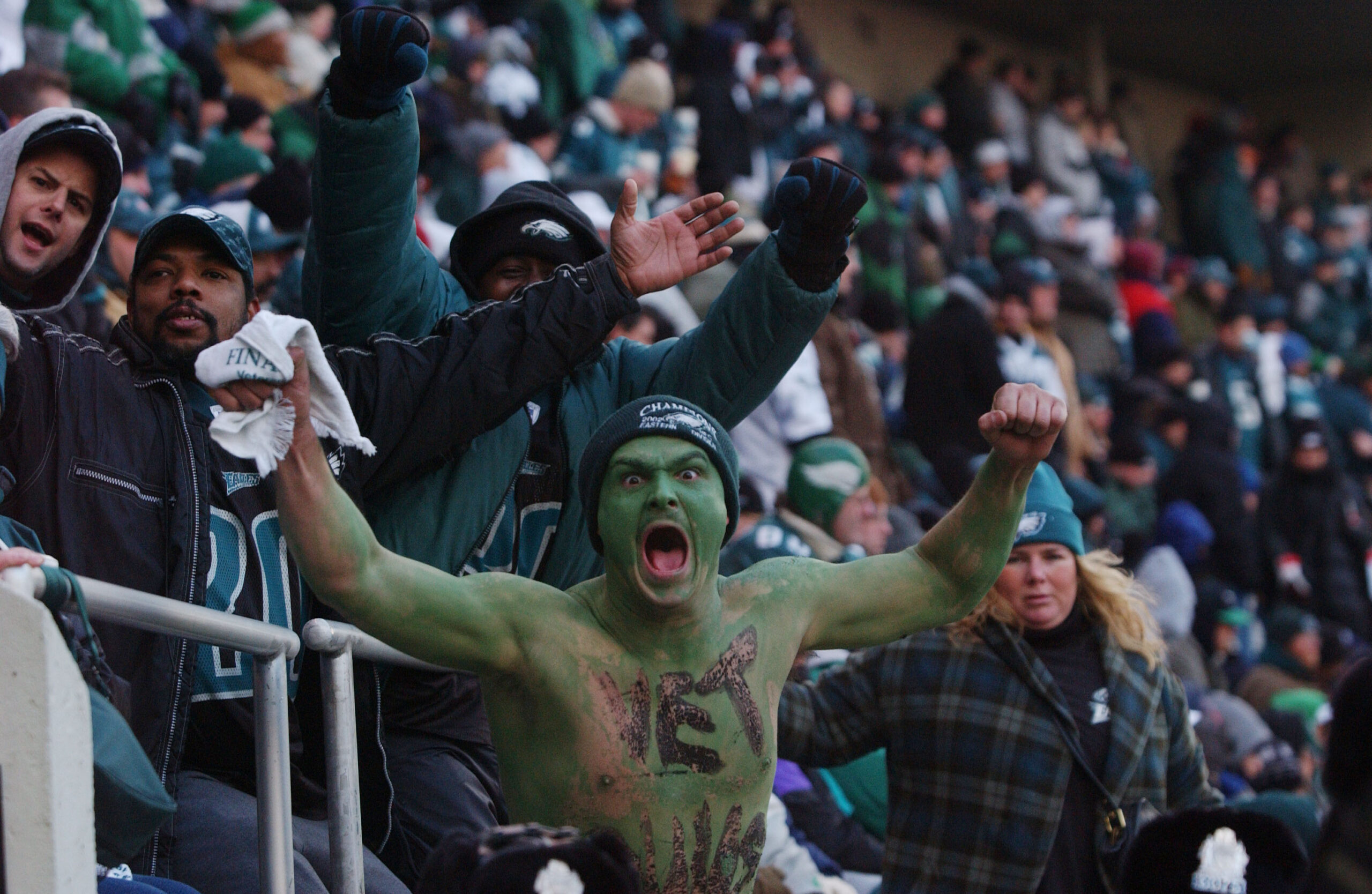
Don Wilson of North Philadelphia bares his chest as he cheers for the Eagles on Jan. 19, 2003, during the last football game at Veterans Stadium.
Something to gloat about
“I was washing my hands,” a man told McCaffery after he was arrested for urinating in a Vet sink.
A judge cannot accept a plea from someone who is intoxicated, and McCaffery said no one was ever drunk in his courtroom.
“I mean, who knows?” said DeLeon, who joined McCaffery and Rayford Means as the original judges of Eagles Court. “They were just bringing them in.”
The arrested fans appeared in Eagles Court just hours after their arrest — or longer if they needed to sober up — which meant they were still wearing whatever they wore to the Vet.
“Some of them would be bare-chested, and half their body was coated in green and the other half was coated in white,” DeLeon said. “Some people would have green faces. Back then, the people came ready for the game as if they were participants in the action. So they’d dress accordingly. We had some guys in helmets and shoulder pads. It was the ’90s.”
Municipal court Judge Seamus McCaffery talks with the media before the start of an Eagles game in 1997.
The court moved after the 1997 season to the Third District police precinct, and arrested fans would be driven from the stadium to 11th and Wharton Streets. And the arrests eventually slowed down so much that McCaffery saw just one case during one of the Vet’s final games in the 2002 season. Perhaps this was proof that Eagles Court made the stadium a safer place.
“Did it deter them? No,” Brady said. “They took it like a joke. Something to gloat about.”
The Eagles gave McCaffery a tour of Lincoln Financial Field before it opened in 2003, proudly showing him their enhanced security features and the cameras that could zoom in on every fan in the stadium. The judge could tell that Eagles Court would soon be phased out.
“The Linc is a church compared to what the Vet was,” said Buchanico, whose father patrolled the sidelines with Andy Reid as the team’s head of security.
McCaffery resigned from the state Supreme Court in 2014 after he acknowledged sending pornographic emails to state officials. He heard his last Eagles Court case in 2003 but is still known more than 20 years later as the judge from the Vet. He stopped that trial with the fan from Scranton and asked to talk to the police captain at the sidebar.
The judge quietly told the captain to drive the man to the bus station and gave him the money to buy his fare home.
“I turned around and said, ‘This officer here is going to give you a ride to the Greyhound bus terminal. There’s a bus that will take you to Scranton and you’re going to get on it,’” McCaffery said. “‘The next time you come down to an Eagles game, show up sober. This matter is discharged. Not guilty.’”
The man left the stadium’s courtroom and was thrilled even though he missed the entire game.
“Years later, I’m campaigning for Supreme Court justice and where do you think I am? Scranton, Pennsylvania,” McCaffery said. “Who do you think comes up to me at a big rally? The same guy.”
With all due respect to Ralph Waldo Emerson, a door can be a wall sometimes, too.
Take poor Kevin Patullo, for instance.
The goal of every NFL assistant on either side of the football is to eventually land a coordinator gig. It can be a tough slog. In addition to the long hours and relative anonymity, a position coach must contend with the weight of the knowledge that his fate is only partially within his control. There are a lot of positions on a football team, and only so many ways to distinguish oneself from his peers. At times, a promotion to play-calling duties can feel more like a function of internal politics and personal relationships than good old-fashioned gridiron merit.
Last February, after climbing the coaching ranks for two decades, Patullo finally got his chance to hold the laminated play sheet and talk into the magic microphone. Two of the last three men to hold the position with the Eagles had landed head coaching gigs within a year. His door had finally opened. All Patullo had to do now was repeat as Super Bowl champion and make sure a historically great running game didn’t take a step backward despite a short offseason and a tougher schedule and another year of age tacked on to a veteran core that had remained uniquely healthy in 2024.
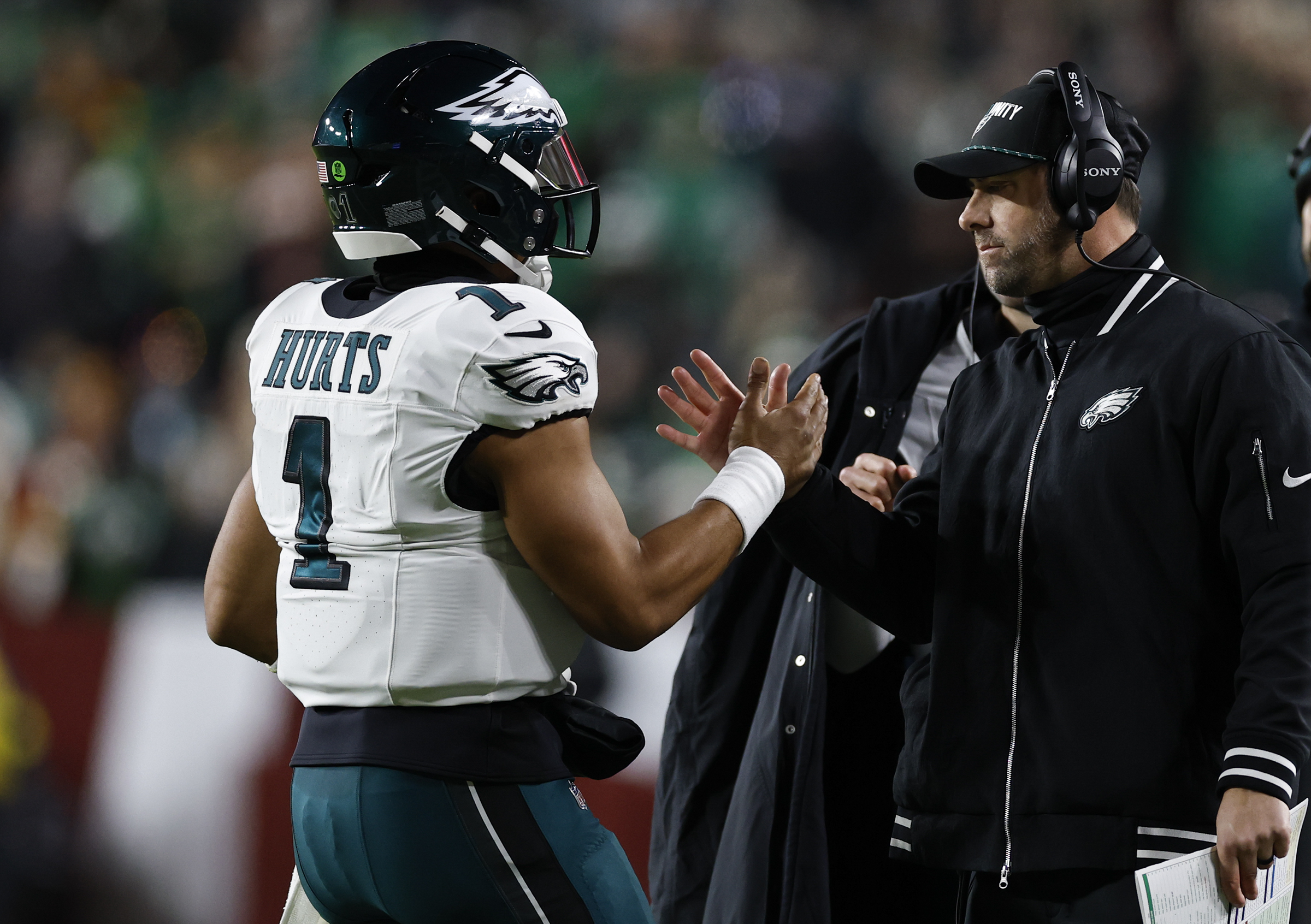
Jalen Hurts and the Eagles offense have sputtered under coordinator Kevin Patullo.
I’ll pause here to acknowledge the counterargument from Eagles fans.
Boooooooooooooooo!
Point taken. I’m not trying to paint Patullo as Gavroche in a headset. But I do wonder sometimes if he feels a little bit like Wile E. Coyote trying to run through a tunnel.
The Eagles offense took a lot of well-deserved heat during the regular season. Patullo has overseen a unit that fell from seventh in the league in scoring under Kellen Moore in 2024 with 463 points to 19th with 379 points. The Eagles likewise saw a significant drop in total yards, from eighth in the NFL to 24th, and yards per play, from 11th to 22nd. But the numbers also say that the bulk of the decline in overall production is attributable to something other than the passing concepts that have become the rage bait of choice of every amateur internet film sleuth with an NFL+ subscription. The Eagles offensive line was unsustainably dominant last season. This year, that dominance has not been sustained.
You can see it with your eyes. The numbers will back them up. Last season, Eagles rushers averaged 3.2 yards before contact, as good of a common statistical measure as there is for judging run-blocking. This year, they have averaged 2.6 yards. The difference between those two numbers is basically the difference between their overall yards-per-carry average last season and this year. They averaged 1.7 yards after contact in 2024, and 1.6 yards after contact in 2025.
Once can certainly argue that the selection and sequencing of plays can have an impact on an offensive line’s ability to block. One can also argue that the best coordinators are counterpunchers. What worked for a team last year, against last year’s opponents, may require adaptation in order to fit the present reality. But one can’t argue that the best coordinators can turn Fred Johnson into Lane Johnson, or Tyler Steen into Mekhi Becton. Nor can they fix whatever physical ailments have limited players like Landon Dickerson and Cam Jurgens.
The absence of star tackle Lane Johnson with a foot injury has not helped the Eagles offense.
Patullo certainly has a role in overcoming these things. I’m just not convinced that this year’s offense would look any different if Moore had remained at coordinator.
The pertinent question for Patullo and the Eagles now is what the offense will look like moving forward. This is a weird time of year. Sunday’s wild-card game against the 49ers could be the start of a month of football that leaves us memory-holing our four months of angst. Or, it could be the start of the offseason, and a litany of questions that sound way closer to January 2024 than January 2025.
The 49ers are something of a fresh start for Patullo. A new opportunity. The offensive line is rested. Lane Johnson is expected to be back. The Eagles have essentially had two weeks to prepare for the playoffs after their conscious mailing-in of Week 18. The opponent is ripe for a statement. The 49ers defense is a legacy unit that right now looks a lot closer to Hewlett Packard than Apple.
The Niners are a lot worse than even those of us who know how bad they’ve been probably realize. They finished the regular season with one of the NFL’s 10 worst defenses in yards per play (5.6, 22nd), net yards per pass attempt (6.5, 23rd) and turnover percentage (8.4, 23rd). The overall numbers looked good in Week 18 against the Seahawks, but Seattle punted once and twice had the ball inside the 10-yard-line and walked away with no points. All told the Seahawks left at least nine points and more accurately closer to 13 on the field. This, in a game when they only really had seven possessions.
Over the last four weeks, the 49ers have allowed 138 yards on 17 carries to Tony Pollard and Tyjae Spears, 92 on 17 to D’Andre Swift and Kyle Monangai, and 171 on 33 to Kenneth Walker and Zach Charbonnet. Bryce Huff is starting for them. Enough said.
Patullo needs this one.
Potential replacements are no doubt keeping a keen eye. Mike McDaniel, the former 49ers offensive coordinator recently fired by the Dolphins, is one of the best run-game schemers in the league. Since he arrived in Miami in 2022, the Dolphins rank sixth in the NFL rushing average at 4.5 yards per attempt. Kliff Kingsbury, who recently parted ways with the Commanders, led an offense that ranked third in the NFL in yards per carry in his two seasons at the helm. That includes 5.4 yards per attempt this year, despite missing Jayden Daniels for much of it.
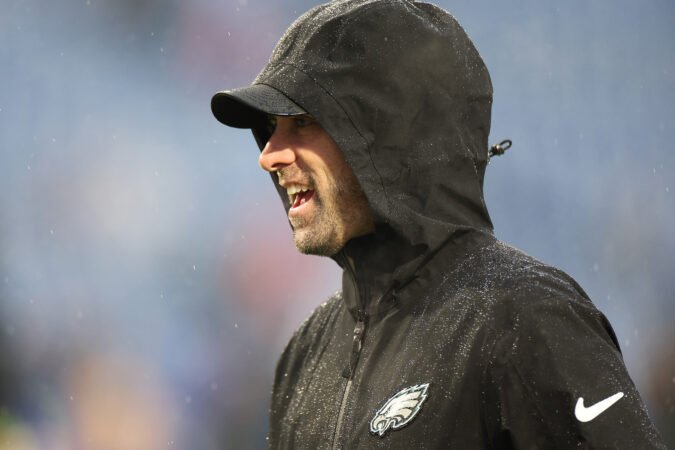
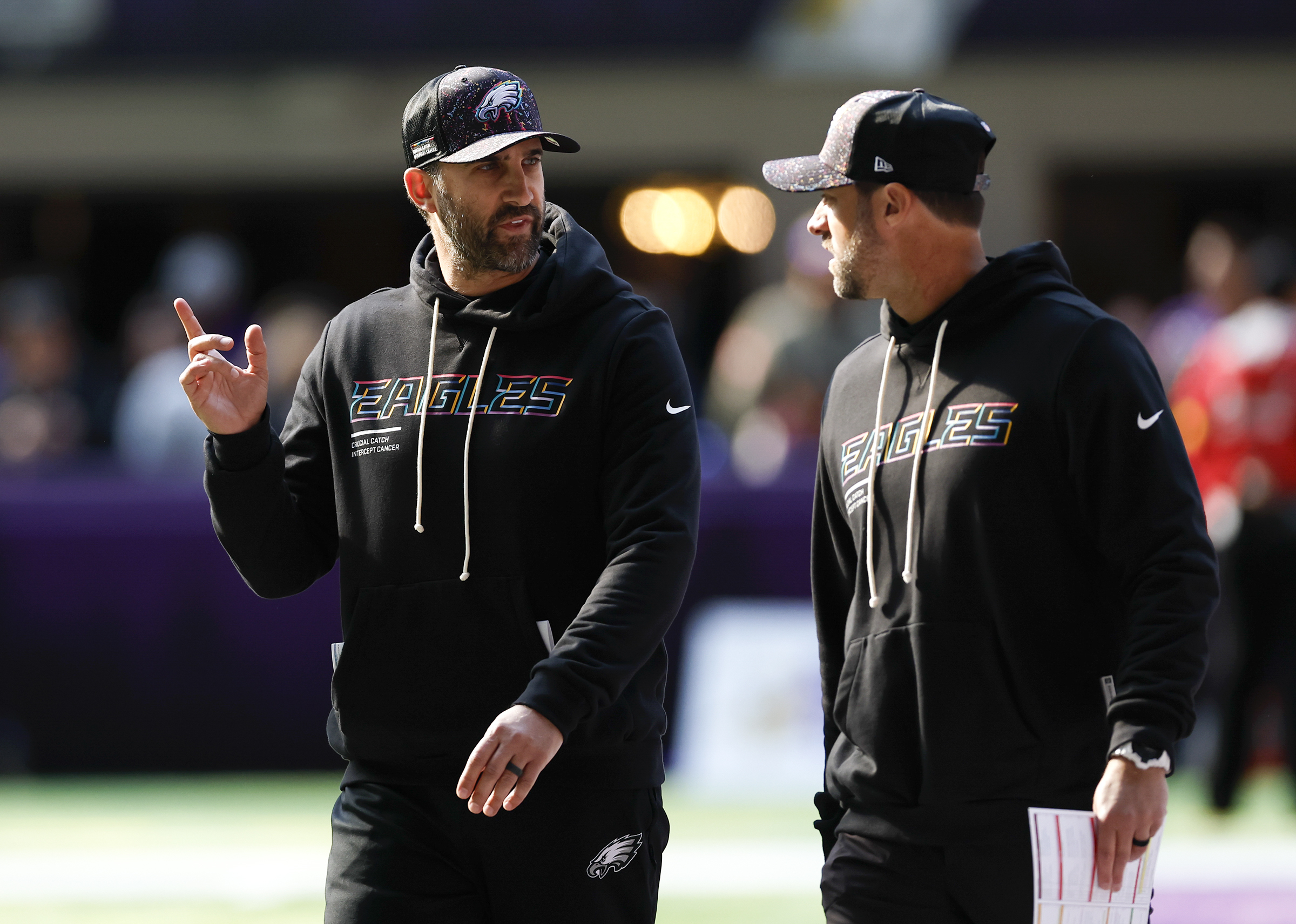
Coach Nick Sirianni with offensive coordinator Kevin Patullo before the Eagles played the Minnesota Vikings on Oct. 19.
The Eagles moved decisively at the coordinator position in 2023. With four losses in their last seven regular-season games and a wild-card loss, 2025 would look different only in the level of drama that accompanied a late-season swoon.
The Eagles are better than the 49ers. They need to be a team that scores plenty of points against this sort of opponent, in this sort of situation. This is a time of year when the scoreboard matters much more than individual coaching careers. Sunday will matter for both.
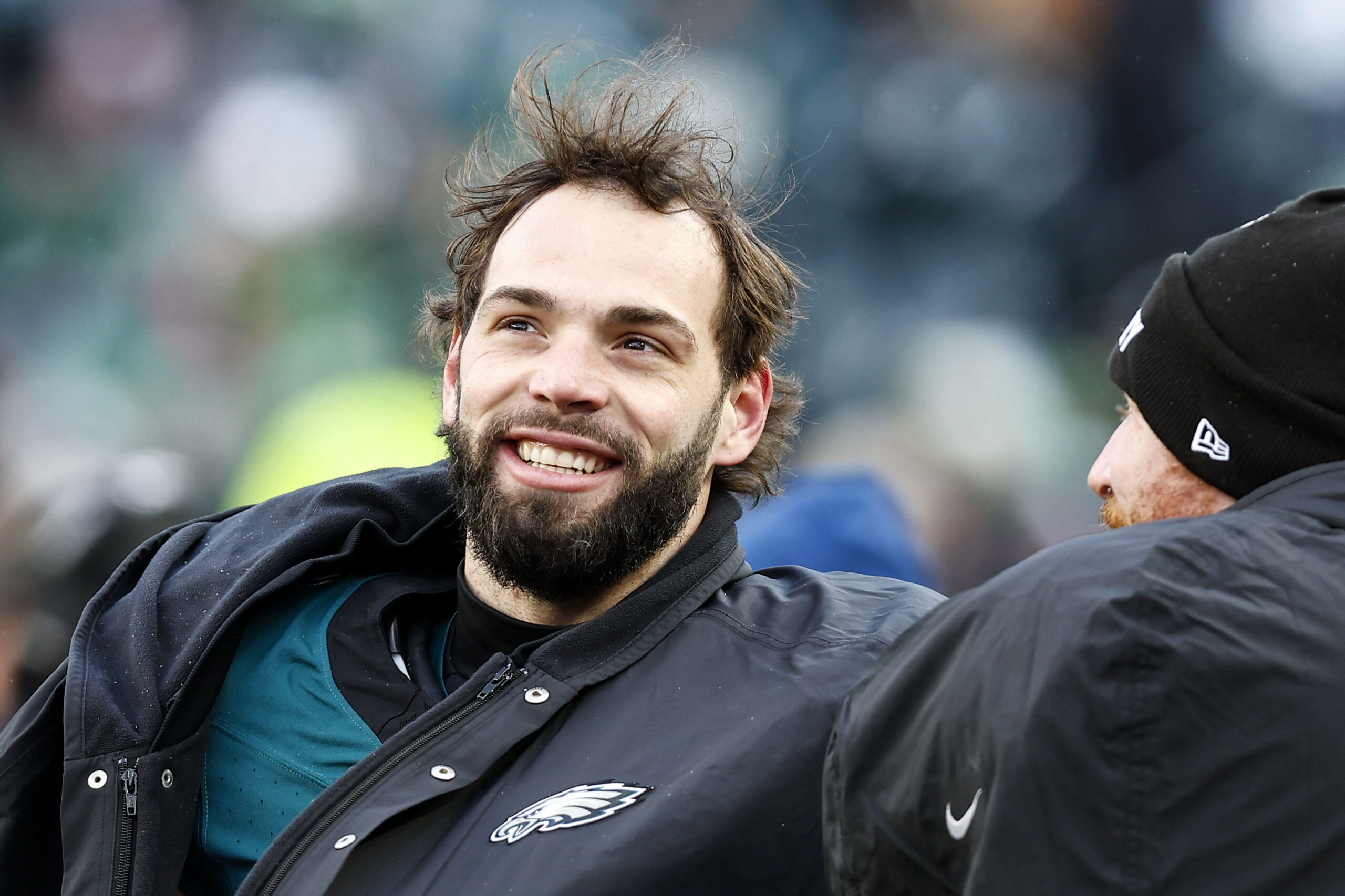
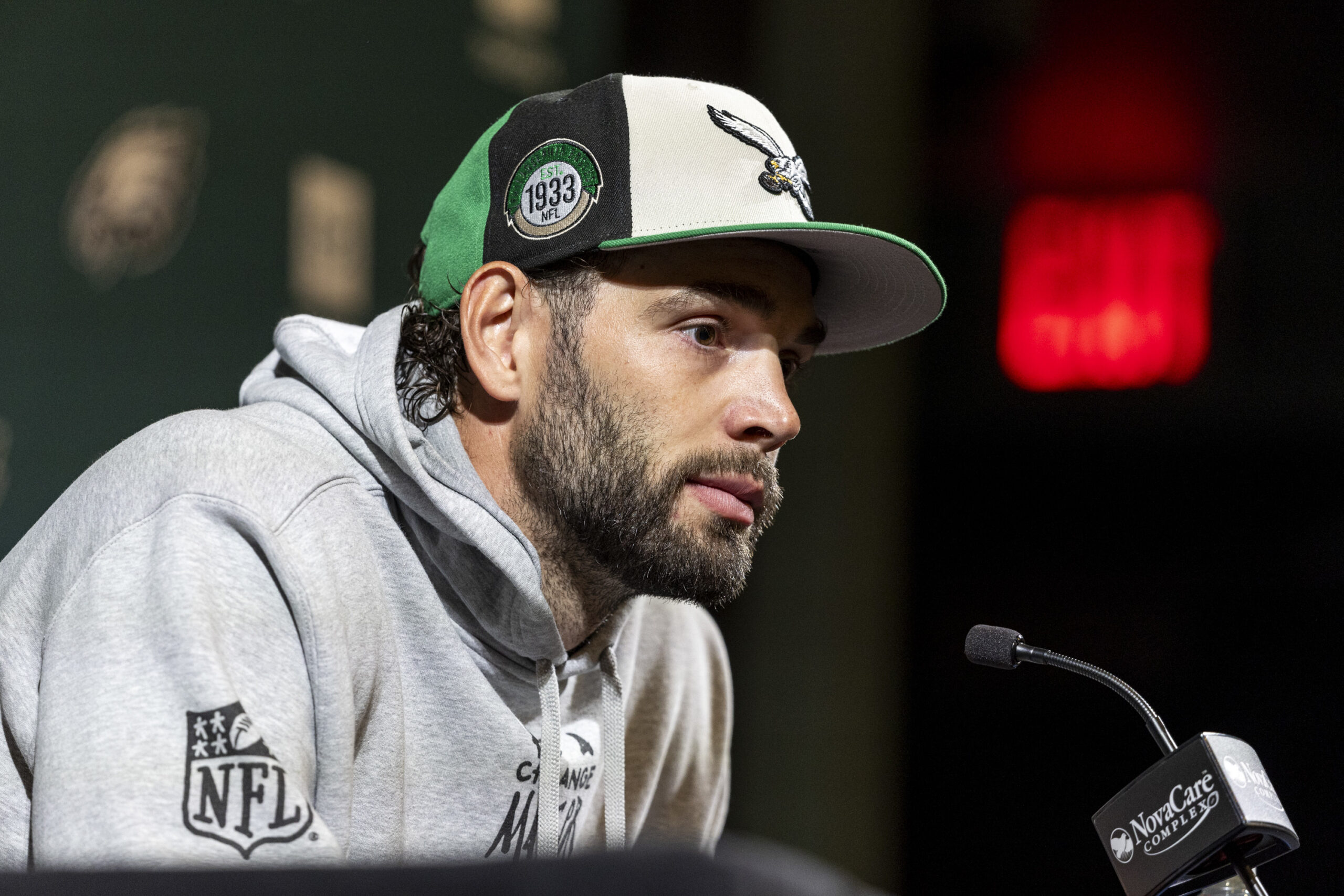
Eagles tight end Kylen Granson says he is still wrapping his head around the dichotomy of Dallas Goedert, nine months into their time as teammates.
Goedert’s reputation as a tight end preceded him, long before he set the franchise record in single-season touchdowns at his position this year. Granson was already familiar with Goedert’s greatness on the gridiron when they first met at Tight End University, the offseason summit for the do-it-all offensive skill players organized by George Kittle, Travis Kelce, and Greg Olsen.
It wasn’t until they became teammates this season when Granson got to see the other side of the 31-year-old tight end. Goedert, he says, is a “big goofball.”
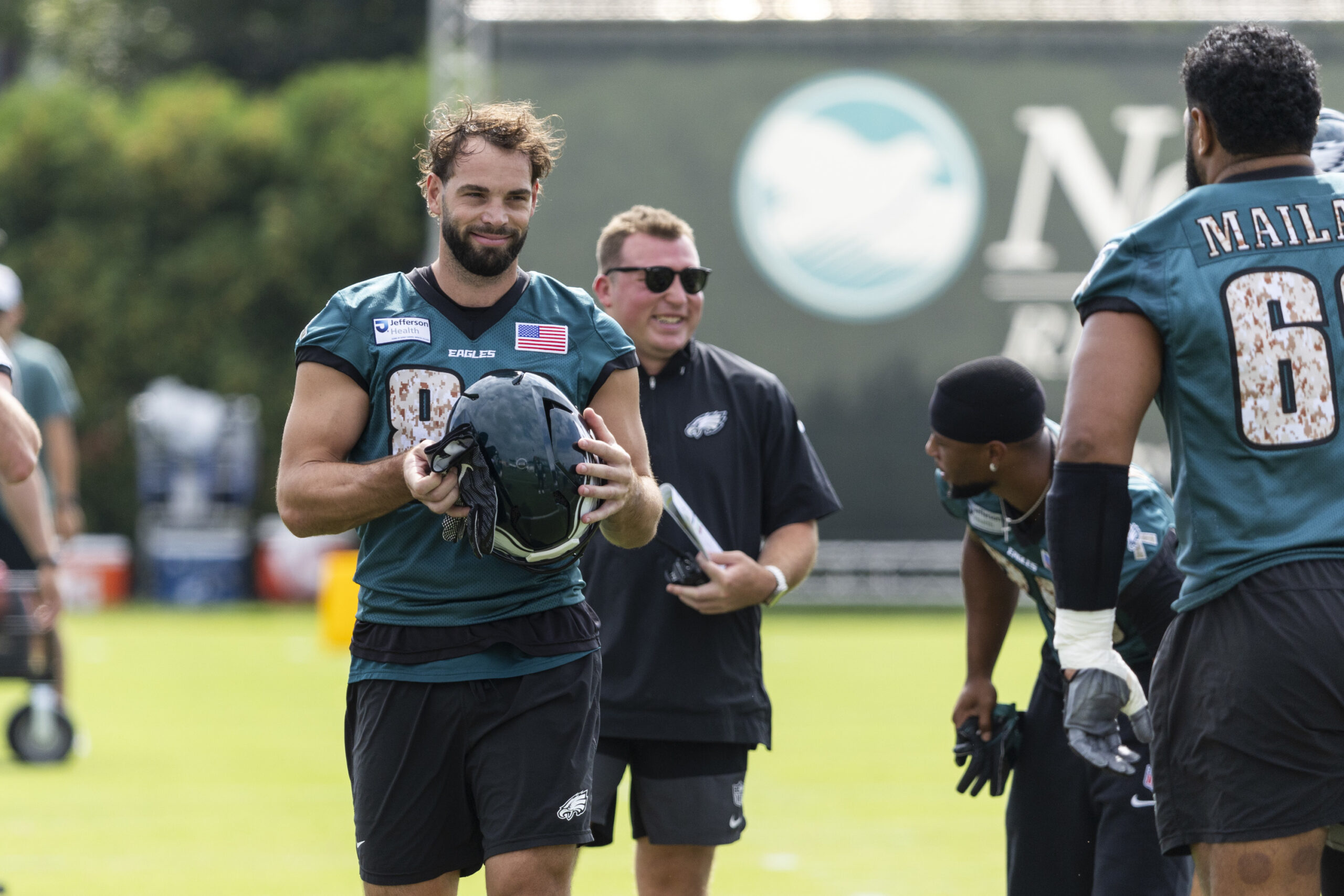
Players across the locker room corroborate that stance. Their examples are endless. Jordan Mailata says he cherishes Goedert’s “ah-ha-ha” awkward laugh that slices through uncomfortable conversations and gets his teammates giggling again.
EJ Jenkins, the practice squad tight end, is always on his toes around Goedert, bracing himself for “I-got-you” tricks, when he points at Jenkins’ shirt as if there’s something on it only to swipe up at his nose when he looks down.
Goedert’s pièce de résistance is his pregame breakdown of the tight end huddle. Instead of a “hoorah” message, he explained, he tries to lighten the mood. His quote before the 2024 season-opener in São Paulo, Brazil against the Green Bay Packers — “You know why they made sidewalks? ‘Cause the streets aren’t for everybody.” — remains a crowd favorite.
“It’s kind of funny, seeing the offset between the two,” Granson said. “It’s like, this goofball and this competitor are the same person?”
The affable Dallas Goedert has been a popular teammate throughout his eight years in Philly.
But one doesn’t exist without the other, Goedert says.
“I think it’s important for me to be loose when I play the game,” Goedert said. “When we’re going out for pregame, I just kind of want to be able to make people smile. Be able to make people laugh, ‘cause that’s when I feel like I play the best.”
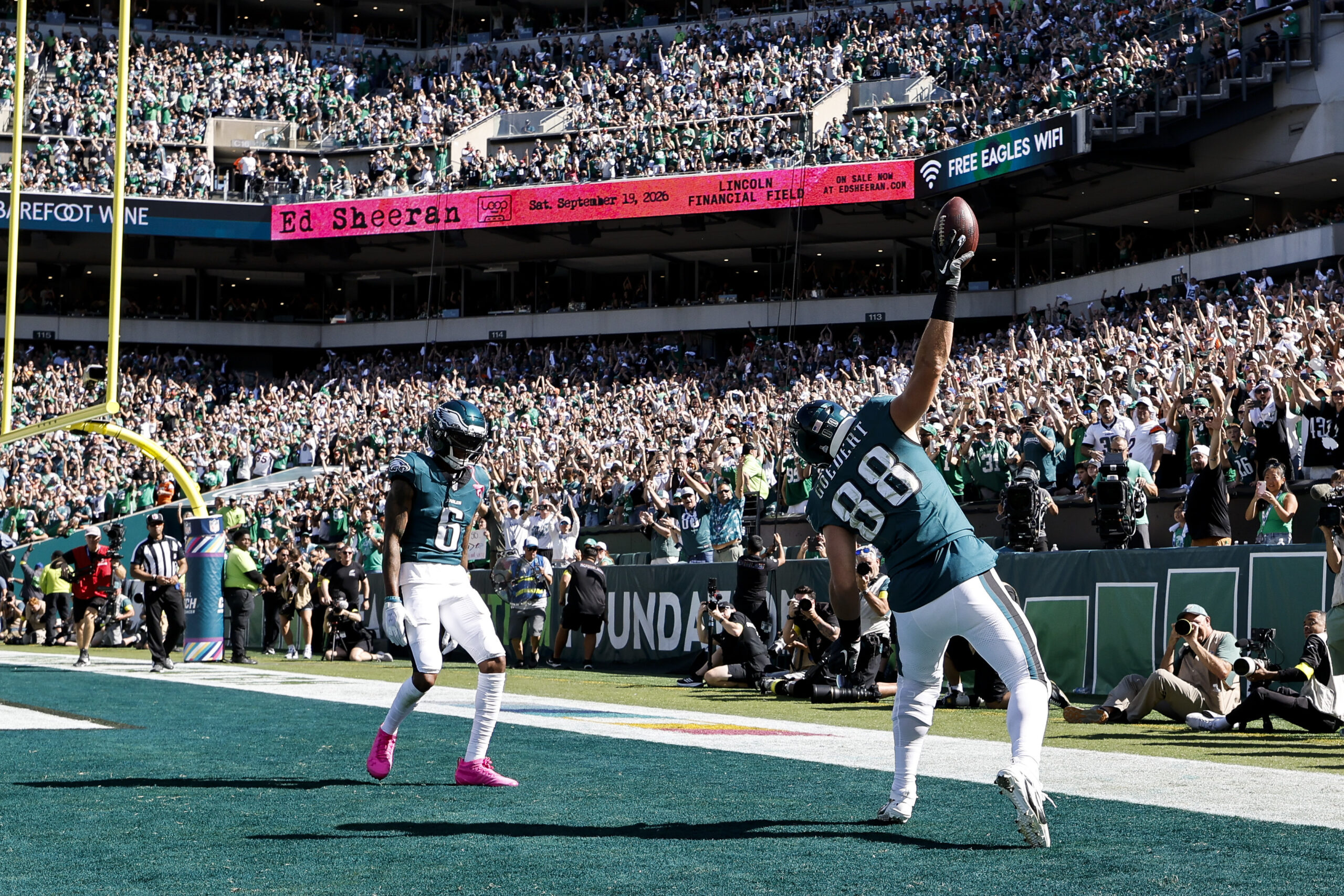
Goedert must be earning a few extra chuckles in the huddle this year. After an offseason of uncertainty, the veteran tight end is having a career year, scoring a personal-best 11 touchdowns through 15 starts, the most he’s had in the regular season in his eight years with the Eagles.
That touchdown total is tied for the league lead among tight ends and is more than double his previous career high (five touchdowns in 2019). Ten of those touchdowns have come in the red zone.
More uncertainty looms, as Goedert is nearing the end of his one-year, $10 million deal. But for now, Goedert is focused on the playoffs, with another milestone within reach — he’s two scores away from tying the franchise record for career postseason touchdowns (six, held by Harold Carmichael).
As much as Goedert tries to keep things light, there’s no joking about his ascent in Year 8.
“He’s been able to take advantage of the opportunities he’s had, and it’s awesome to see a guy like him who means so much in the room, to the offense, to this team,” said Jason Michael, the Eagles tight ends coach. “I don’t think there’s any question that his leadership shows who he is every day, and it’s cool to see that he’s been able to be rewarded for that.”
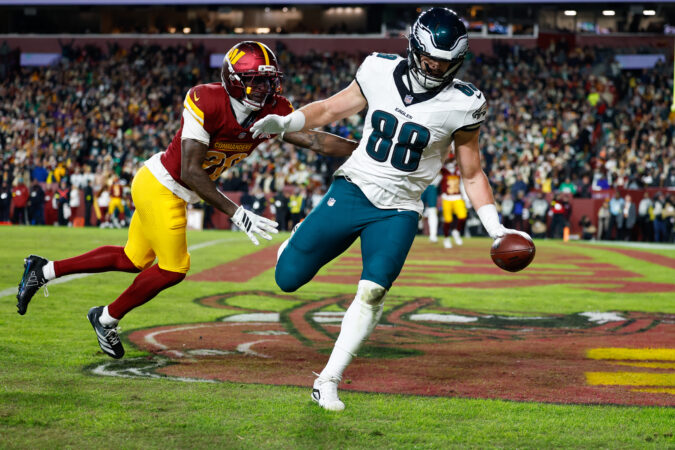
Dallas Goedert has been a touchdown machine for a team that has struggled in multiple aspects of offense this season.
The play that once worked “92% of the time,” according to former Eagles center Jason Kelce, isn’t the short-yardage juggernaut it was four years ago. Hurts has converted or scored on 77.8% of his quarterback sneak attempts this season, per Pro Football Focus, down from the 83% success rate the Eagles had achieved going into the year since 2021.
“The quarterback sneak hasn’t been working as good for us this year,” Goedert said. “So I feel like the next option [in the red zone] was me down there.”
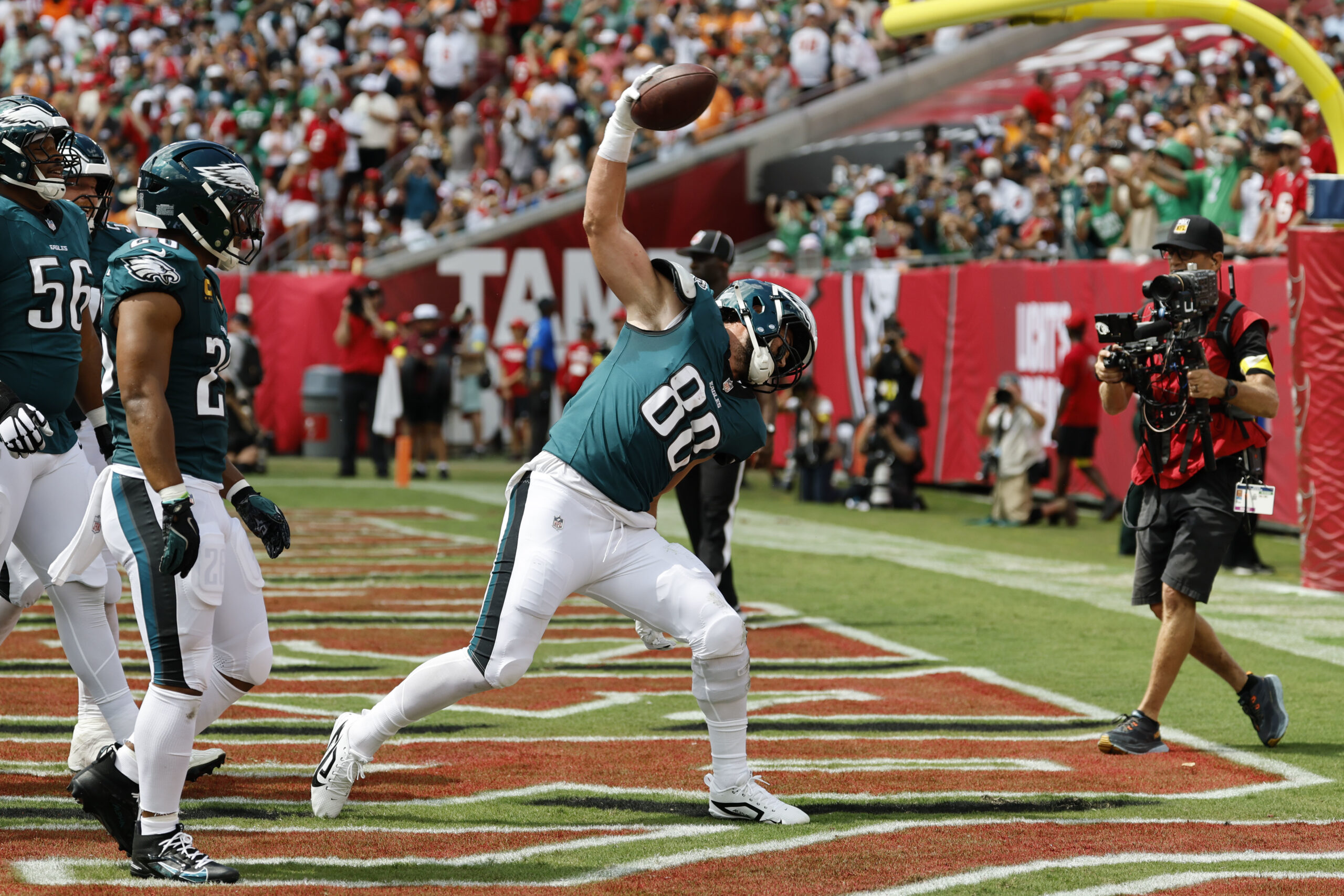
The Tush Push was Goedert’s entry point to his red-zone scoring surge this season, beginning in the first quarter of the Eagles’ Week 4 win over the Tampa Bay Buccaneers. On first-and-goal from the 2, Hurts lined up under center in his typical quarterback sneak position — a staggered stance with his left leg forward and his right leg back.
He had no pushers behind him, though, giving the illusion that he was running a traditional quarterback sneak. Instead, Hurts shoveled the ball to Goedert, who was aligned tight to the formation in the back of a bunch set to the quarterback’s right. Goedert followed a trio of blockers into the end zone for his first red-zone touchdown of the season.
That touchdown gave way to nine more in the red zone over the next 12 games. Goedert has accounted for 58.8% of the Eagles’ red-zone receiving touchdowns, according to Next Gen Stats, which is the greatest share for any NFL player in 2025.
“We’ve just kind of been running with it and I’m going to keep trying to make them work,” Goedert said. “But until they don’t work, I see us still trying to find different ways to give me the ball in that situation.”
Dallas Goedert has proven easy for Jalen Hurts to find in the red zone this season.
Why is Goedert the most logical red-zone target in the Eagles passing offense? To Granson, the answer is simple.
“Big body, big body, big body,” Granson said.
At 6-foot-5, 256 pounds, Goedert is a big, strong target primed for physical catch-and-runs in the most crowded area of the field. Five of his touchdowns came on catches made behind the line of scrimmage, requiring him to run with a sense of “anger,” as Nick Sirianni puts it, to overpower defenders on his way to the end zone.
Size isn’t the only factor that makes Goedert a go-to target. To get vertical quickly and have success running after the catch, Michael said that the veteran tight end has to be able to trust his hands to secure those passes in traffic.
Michael asserted that Goedert catches more balls in practice than anybody on the team. He isn’t involved in the special teams periods, a time when Goedert can typically be found going through a catch circuit. Together, Michael and Goedert work on a plethora of catches, from one-handed to contested.
Goedert’s ability as a run blocker gets him on the field in the red zone, too. Four of Goedert’s red-zone touchdowns this season have had some sort of run-action component, including three scores on run-pass options and one on a play-action pass. The tight end credits Hurts and Saquon Barkley for forcing defenses to respect them as run threats, thus allowing Goedert to get a step on the defense before making a play.
“The more you can do as a player, the more opportunities you’re going to open for yourself,” Michael said. “The fact that Dallas is a player that can stay on the field every down as a run blocker, as a pass protector, and be able to do those things, when you can do that, it allows you as an offense to use those things to your advantage in certain situations.”
Dallas Goedert’s contract situation threatened his status as a member of the Eagles in 2025.
Uncertainty leads to opportunity
Guard Matt Pryor, a member of the same 2018 draft class that brought Goedert and Mailata to Philadelphia, has a preferred nickname for the tight end.
“I call him ‘Philly,’” Pryor said. “Yeah, ‘Philly Goedert.’ ‘Cause Dallas wanted him, but we drafted him.”
The Eagles ensured that the Dallas Cowboys, bracing for the retirement of tight end Jason Witten, wouldn’t have a chance to select Goedert. Howie Roseman moved up to select him out of South Dakota State with the No. 49 overall pick in the second round, hurdling the Cowboys at No. 50.
Philly and its offense have become synonymous with Goedert. The Britton, S.D., native is the longest-tenured member of the Eagles’ passing game and one of the most productive tight ends in franchise history. With his goal-line touchdown against the Buffalo Bills two weeks ago, Goedert broke Pete Retzlaff’s 1965 record for single-season touchdowns by an Eagles tight end.
Tush Push inefficiency aside, that feat wouldn’t have been possible a year ago. Goedert missed seven games due to injury, including three games with a hamstring injury and a four-game stint on injured reserve with a knee issue.
Even after the Super Bowl, Goedert’s odds of setting a franchise record this season — or suiting up for another game as an Eagle — would have seemed long. At the start of the new league year, Goedert’s future in Philadelphia hung in the balance entering the final year of his contract, which contained no guaranteed money. Grant Calcaterra said he didn’t expect Goedert to come back to the team this year as negotiations carried on into May.
Initially, Goedert didn’t return, missing the beginning of the offseason program. But the two sides eventually agreed to a restructured deal, bringing Goedert back into the fold for one more season at $10 million.
Dallas Goedert made up for lost time after returning to the Eagles before camp.
Between the injuries and uncertainty that characterized last year for Goedert, Calcaterra said their leader in the tight ends room never lost his sparkle.
“He’s definitely had a lot of ups and downs,” Calcaterra said. “I feel like, especially last year, he’s always been a really consistent guy, on and off the field. He’s never too high, never too low. He always stays really consistent. I think that’s really important as a football player, and then also just in general, especially as a guy who is one of our best players. Just to be the same guy all the time. And I feel like it’s really easier said than done, and he always has done a really good job of that.”
Goedert said he never lost belief in his abilities, even when “really unfortunate” injuries prevented him from getting on the field. Neither did Hurts, who reached out to Goedert last offseason to lend his support amid contract negotiations.
In June, Goedert explained that while Hurts didn’t recruit him back to the team, he made him feel like he was an important piece of the group. Seven months after Goedert’s return, few players have been more integral to the Eagles’ top-ranked red-zone offense this season. That success, Hurts said, is a result of the time they invested in the work.
“No one knows necessarily what the offseason looks like or what the future looks like in the offseason,” Hurts said. “But I know he’s working and I know we’re spending that time together to improve. So just to see all of that play out the way it has and knowing that everything has been earned … it’s been good to be able to get that quality work in and then see it come out and shine and just build upon it.”
Goedert will have at least one more opportunity to shine when the Eagles face the San Francisco 49ers in the wild-card round on Sunday. The 49ers defense and its banged-up inside linebacker corps have given up the fourth-most touchdowns in the league to tight ends this season.
Dallas Goedert’s touchdown-making has been a constant for the Eagles in an uneven 2025.
The veteran Goedert ought to know a thing or two about getting into the end zone. He said he also knows he plays his best when he’s feeling loose and cracking jokes before the game with his teammates.
“I think you’ve just got to be yourself out there,” Goedert said. “You’ve got to have fun. I’m really close with all the guys in the tight end room. They understand who I am from the time we’ve spent together. And if I get nervous, if I’m worried about something, if I’m scared, I feel like that will just pass on to them. So I keep it lighthearted knowing that you’ve just got to play the next play and play as hard as you can.”
More uncertainty lies ahead for Goedert, who is set to become a free agent this offseason. But Goedert ought to know that uncertainty can lead to opportunity, as evidenced by his whirlwind of a year.
“I wouldn’t trade it for anything,” Goedert said. “I’m glad it worked out the way it did. I’m glad I’m back here.
“And hopefully, we can continue this year and go down the road and look back and maybe appreciate it a little bit more.”
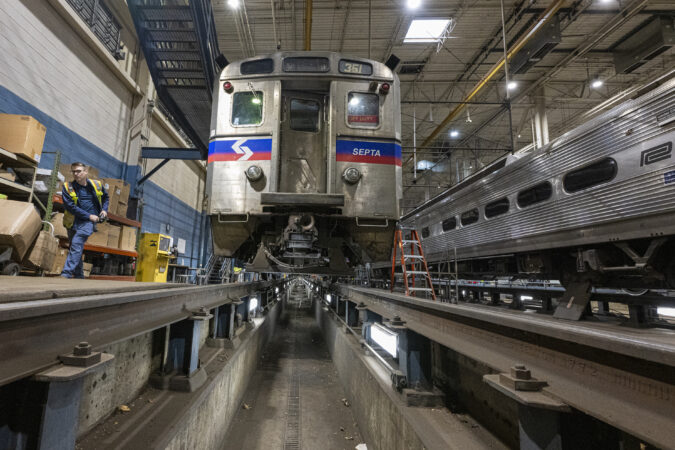
Regional Rail trains are operating with fewer canceled trips and are running with more cars after months of service disruptions while SEPTA rushed to inspect and repair 223 Silverliner IV cars after five caught fire last year.
Yet packed two-car trains and skipped stops persist on some lines during peak travel times.
“It’s been three months and our customers had reason to believe things would be better sooner and they’re frustrated — understandably,“ SEPTA spokesperson Andrew Busch said. ”There is still some catching up to do.”
SEPTA decided late Thursday to restore 24 Regional Rail express trips on the Lansdale/Doylestown, Media, Paoli, West Trenton, Norristown, and Wilmington Lines, Busch said. The restored expresses had been running as locals.
An Oct. 1 federal mandate to inspect and mitigate Silverliner IV fire risks required the transit authority to take the workhorse of Regional Rail offline, leading to shorter trains and furious riders.
SEPTA’s records show it canceled 2,544 Regional Rail trains from October through Dec. 31, though the number steadily droppedover time — from 1,324 to 752 to 468.
As of Thursday, 180 of the Silverliner IV cars had met all the milestones set by the Federal Railroad Administration to return to service.
Regulators demanded each car pass a safety inspection, have necessary repairs made, and have a modern thermal-detection circuit installed.
So far, however, just 78 of those 180 Nixon-Ford era rail cars have been returned to service.
That means work is yet to be completed on35 Silverliner IVs.All together, the carsmake up 57% of the Regional Rail fleet.
(function() { var l = function() { new pym.Parent( ‘regional-rail-return__graphic’, ‘https://media.inquirer.com/storage/inquirer/ai2html/regional-rail-return/index.html’); }; if(typeof(pym) === ‘undefined’) { var h = document.getElementsByTagName(‘head’)[0], s = document.createElement(‘script’); s.type = ‘text/javascript’; s.src = ‘https://pym.nprapps.org/pym.v1.min.js’; s.onload = l; h.appendChild(s); } else { l(); } })();
“Over the last couple of days, we’ve been adding more three and four-car trains,” Busch said. With the restoration of express service, that should continue, he said.
To keep Regional Rail service running in its slimmer form, SEPTA has been using its 120 Silverliner V cars, which arrived between 2009 and 2011, as well as 45 coach cars, which have no motors and are pulled by locomotives.
The Silverliners have onboard motors, carrying passengers and providing propulsion at the same time. The 78 returned to service will also add capacity.
In addition, SEPTA plans to use an additional 10 passenger coaches leased from Maryland’s commuter railroad. They are here, but train crews are undergoing training, which was delayed by vacations and work schedules over the holidays. They should be ready to go a couple of weeks, Busch said.
The transit agency is seeking to buy 20 used passenger cars from Montreal but has not heard whether it won the bidding.
Back-ordered shipments arrived around Christmas, and now there is plenty of wire to finish the job, SEPTA says. The deadline for the installations was Dec. 5, but under the circumstances, federal authorities did not punish SEPTA.
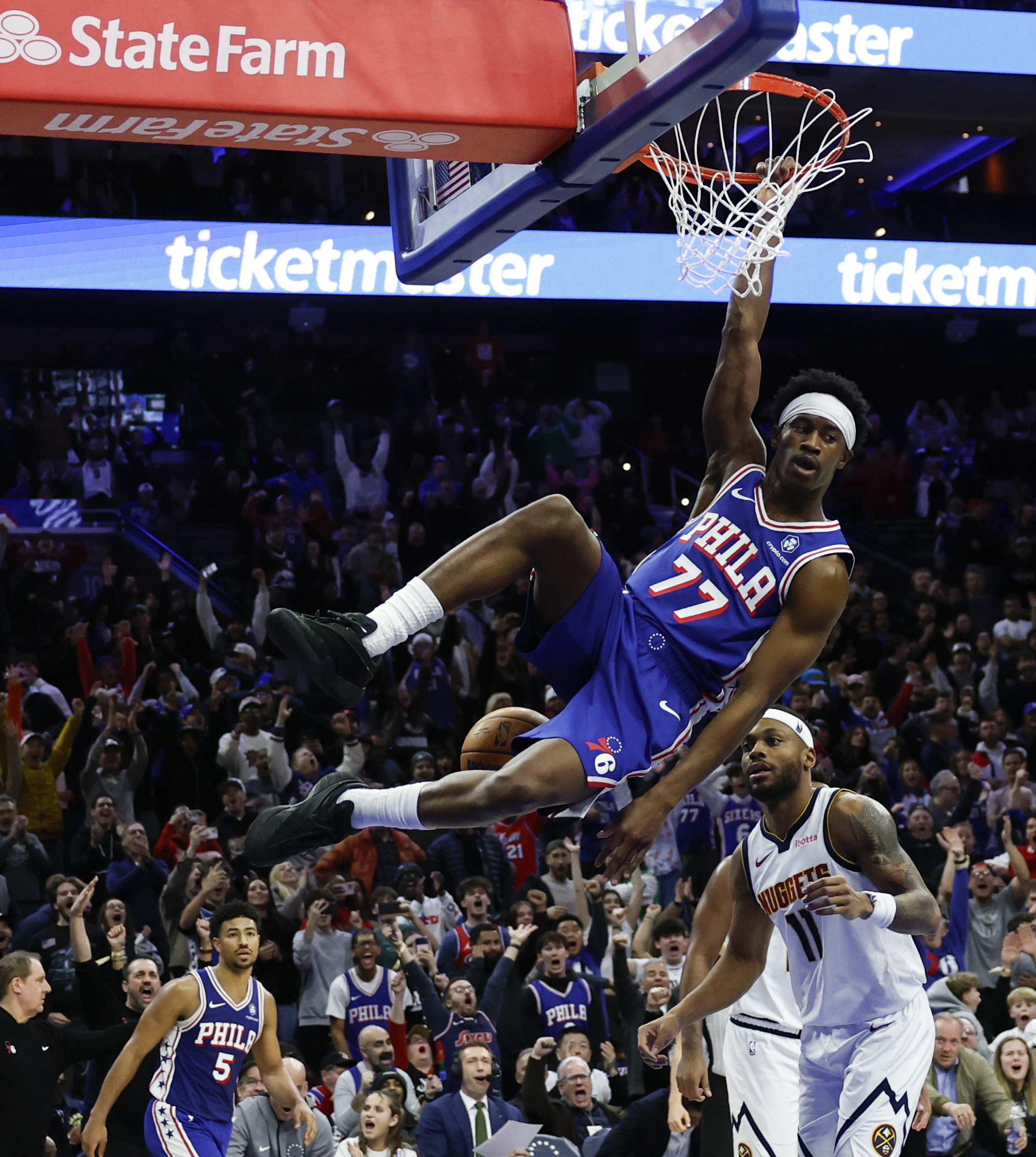
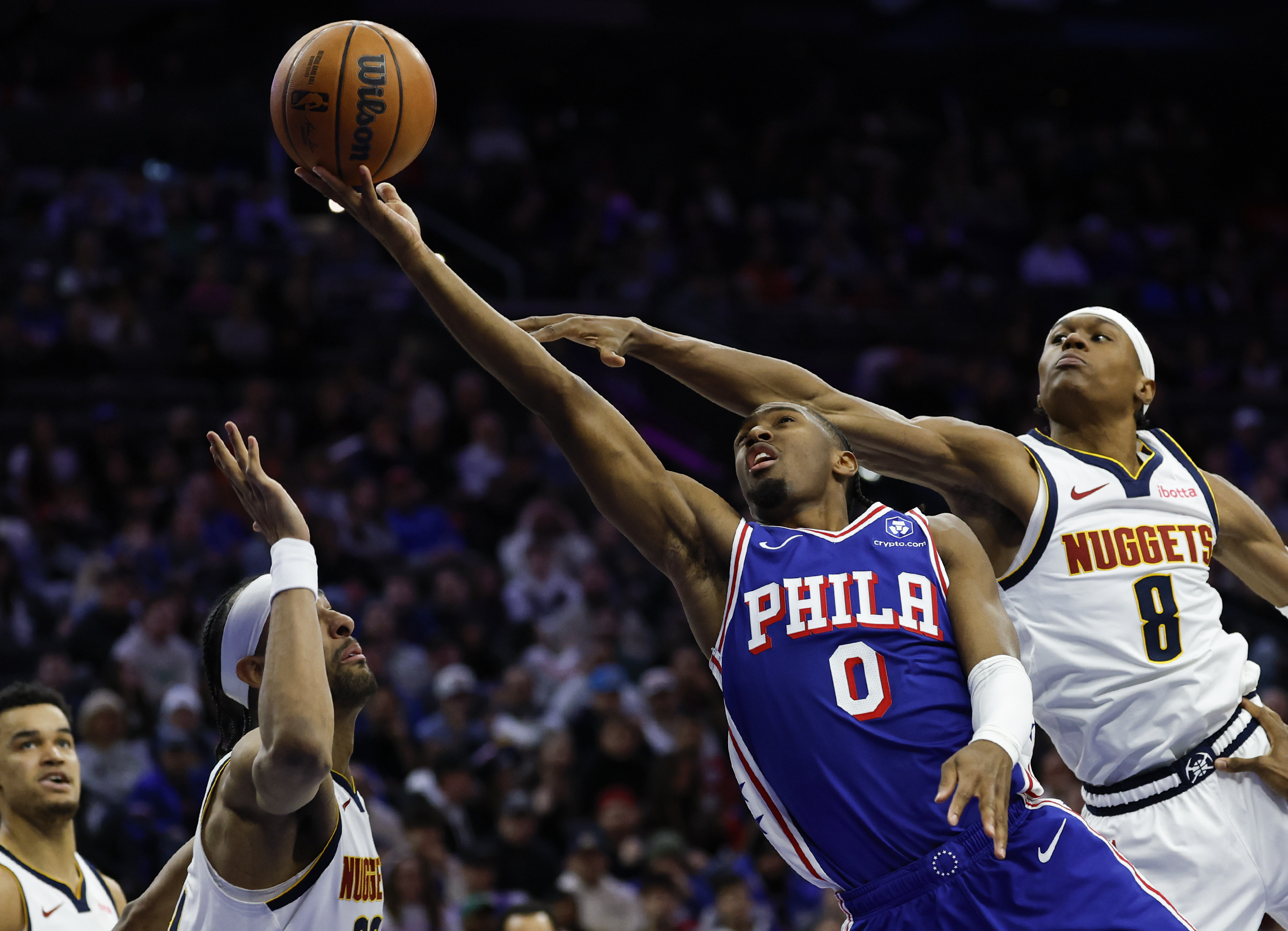
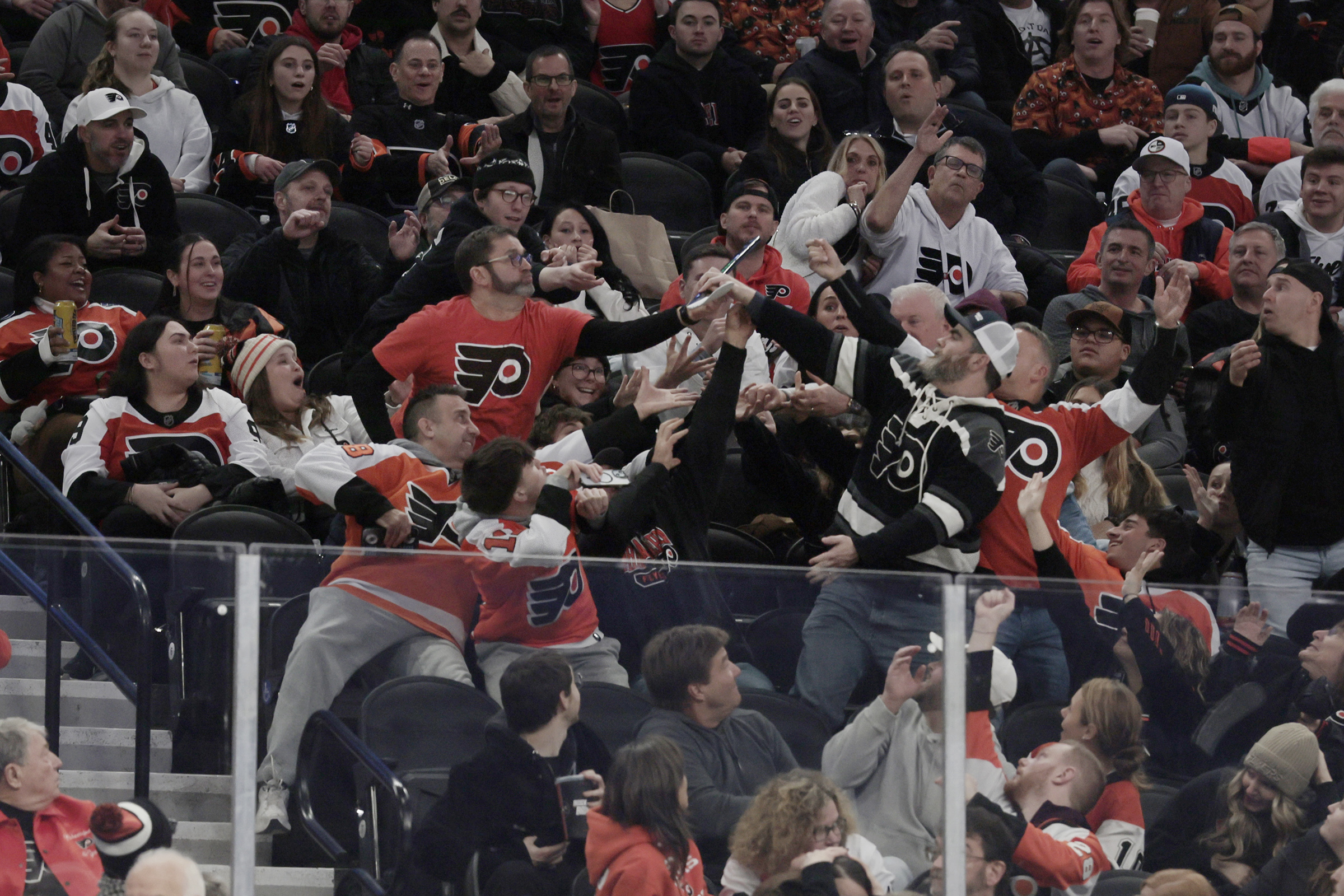
Each Friday, Inquirer photo editors pick the best Philly sports images from the last seven days. This week, we’ve got Joel Embiid and VJ Edgecombe leading the way for the Sixers, while Trevor Zegras and the Flyers get some revenge on Cutter Gauthier. And, of course, we’ve got the Eagles — both on the field and on the steps of the Art Museum …
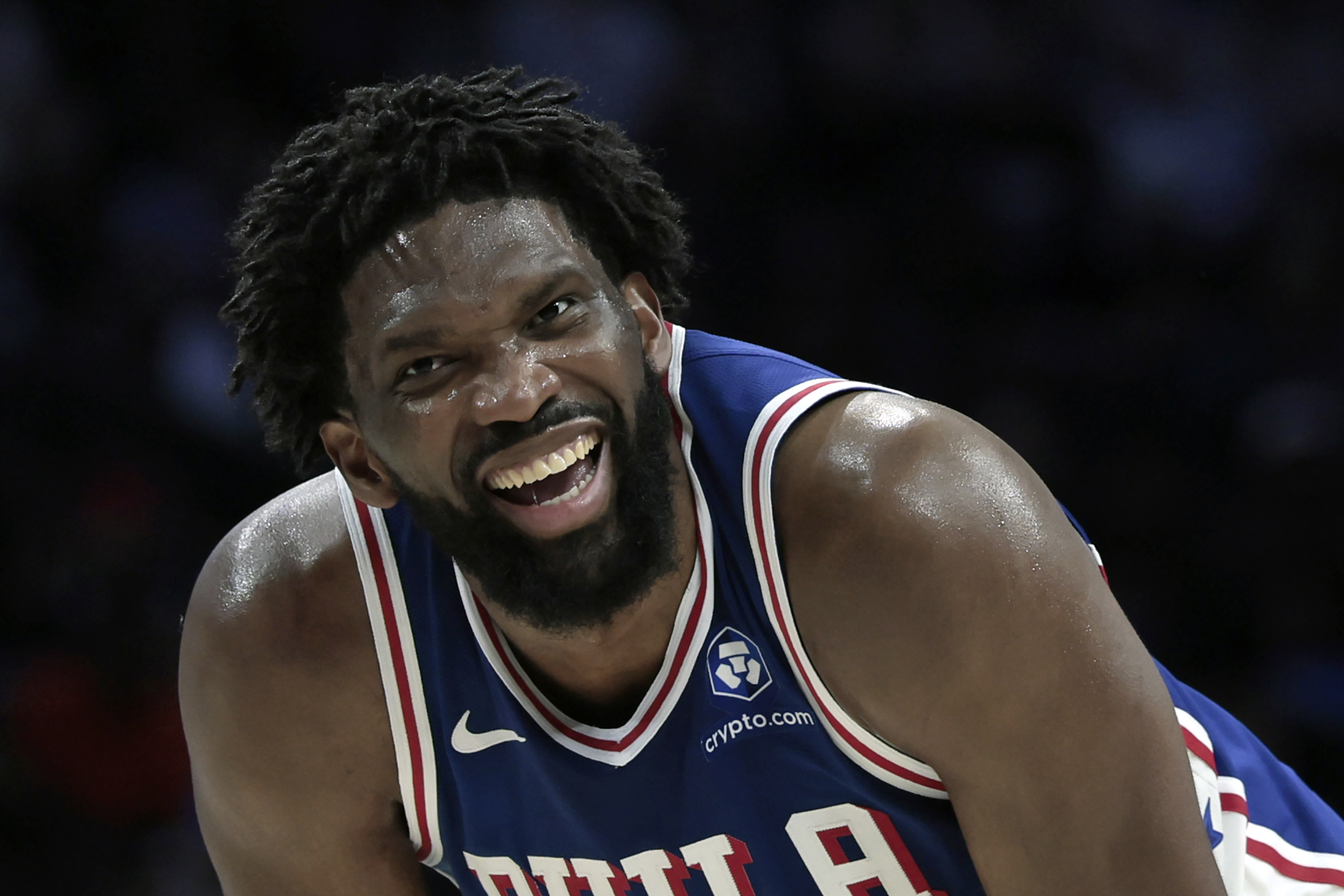
Joel Embiid and the Sixers cruised past the Washington Wizards, 131-110, on Wednesday night.
Tyrese Maxey couldn’t lift the Sixers over the Denver Nuggets this week, but he does remain one of the Eastern Conference’s top All-Star candidates after finishing third in the second round of fan voting.
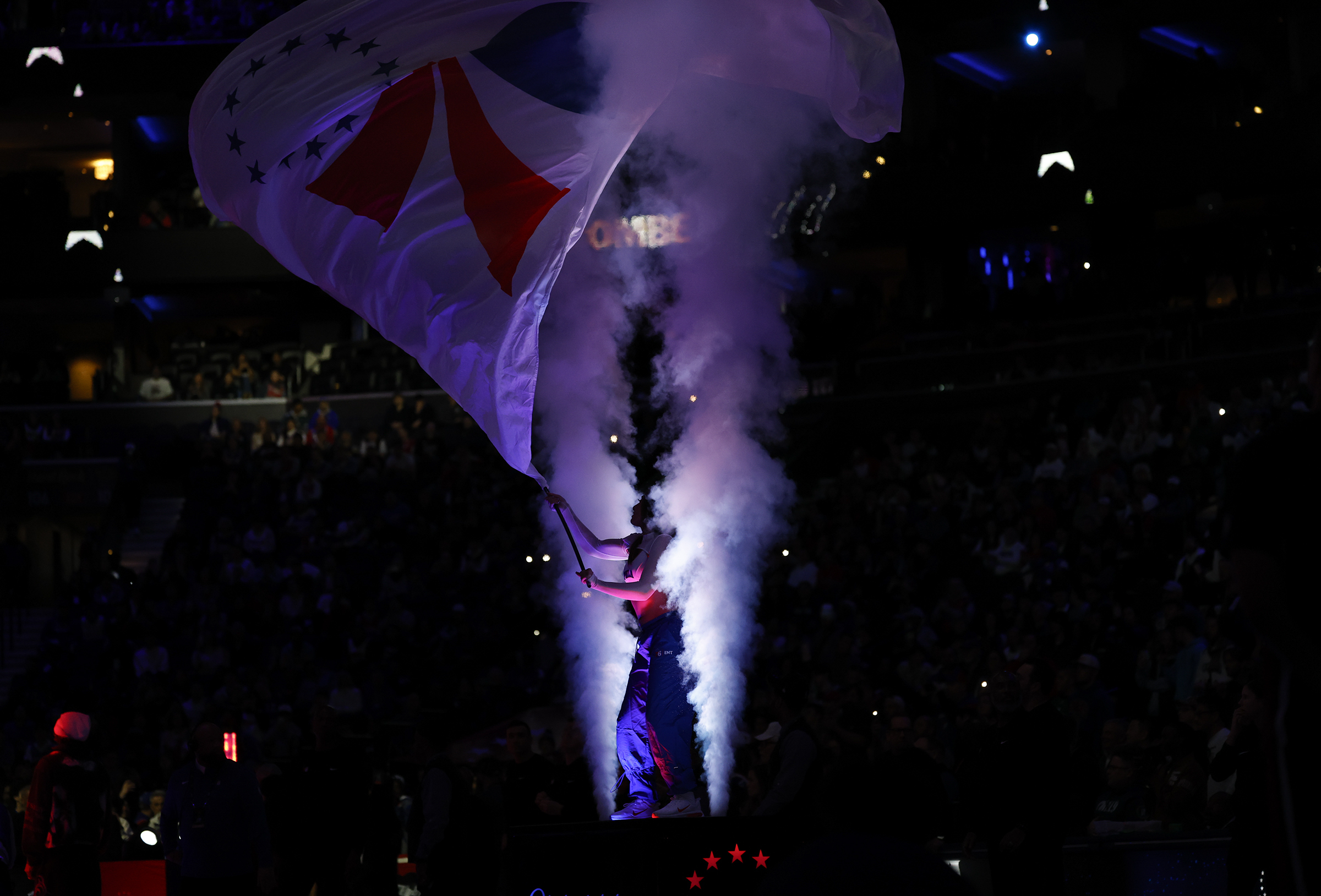
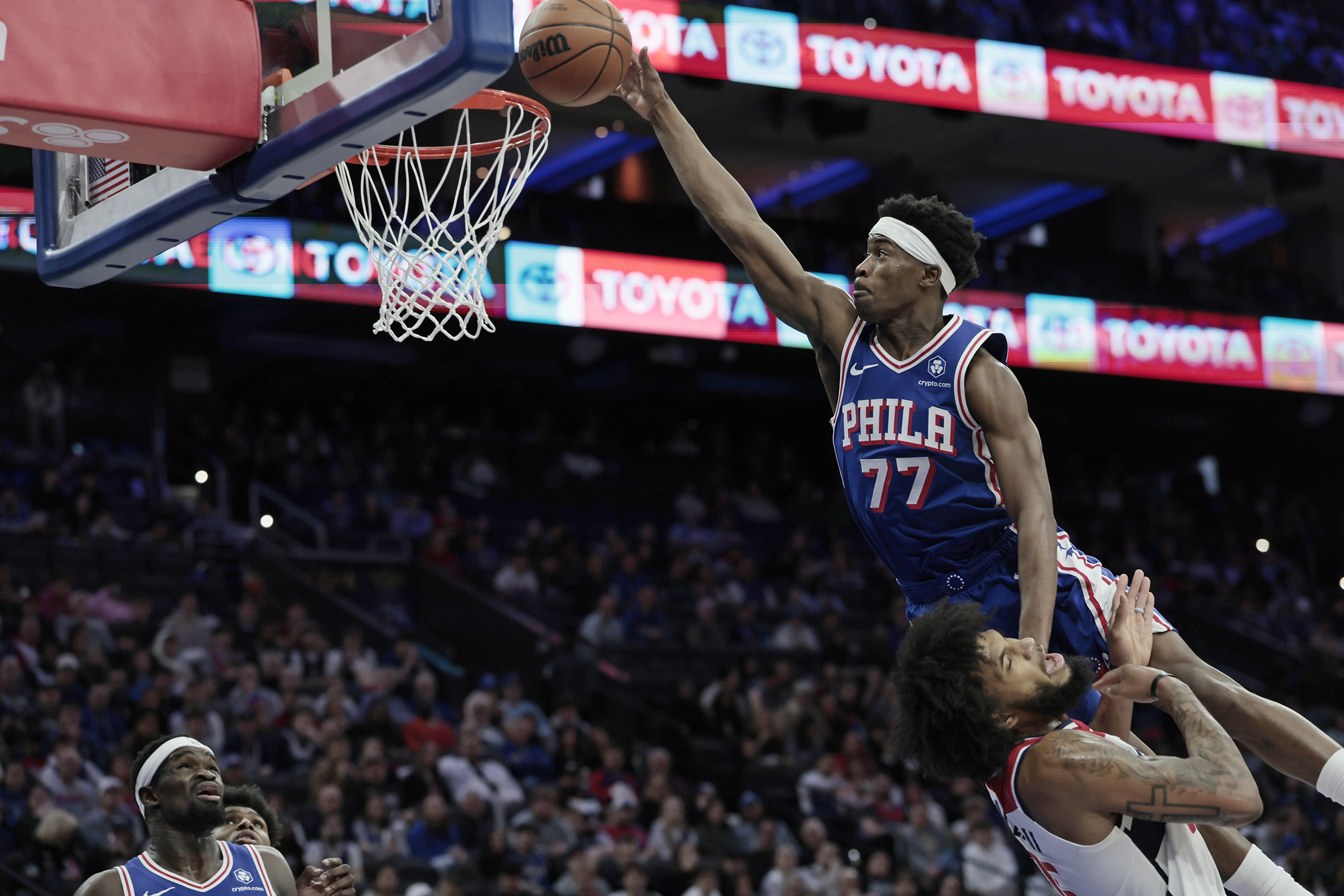
A member of the Sixers dance team waves the team flag before the Sixers game against the Nuggets.VJ Edgecombe tried to dunk over Washington’s Marvin Bagley III, but instead was called for an offensive foul in the first half of the Sixers’ latest win.
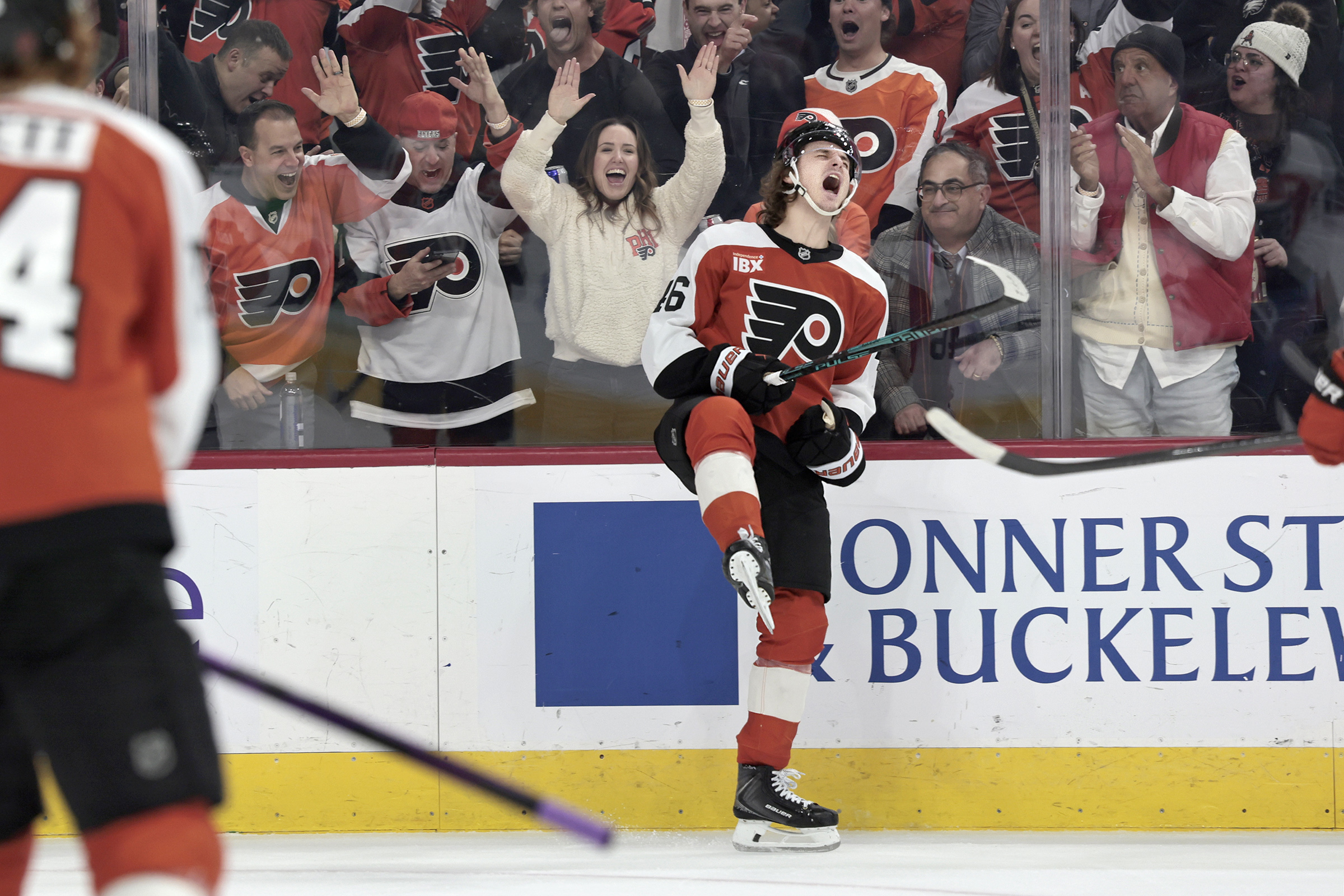
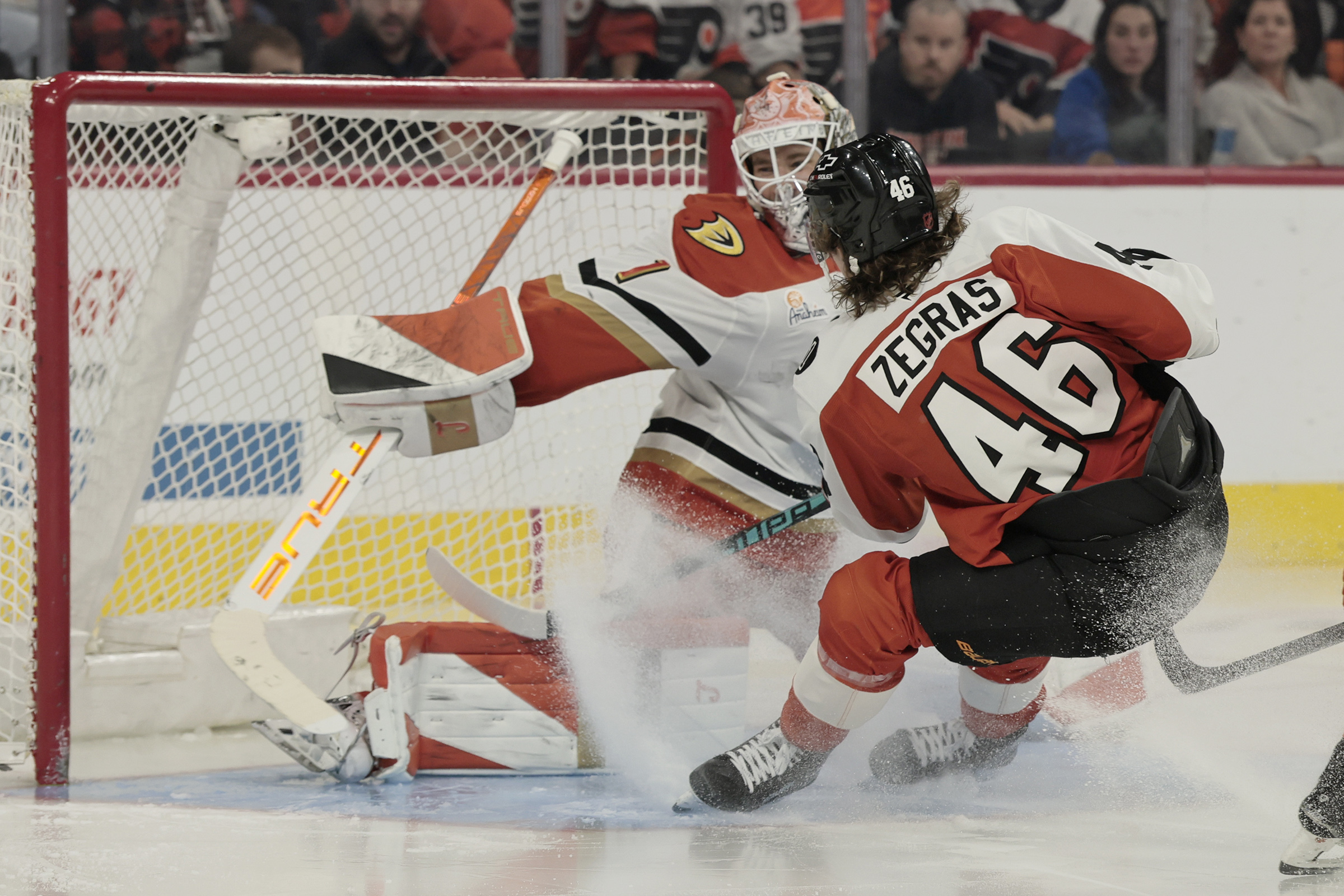
Former Flyers prospect Cutter Gauthier (not pictured) struck first, but Trevor Zegras answered with two first-period goals of his own Tuesday night. The Flyers went on to beat the Ducks, 5-2.
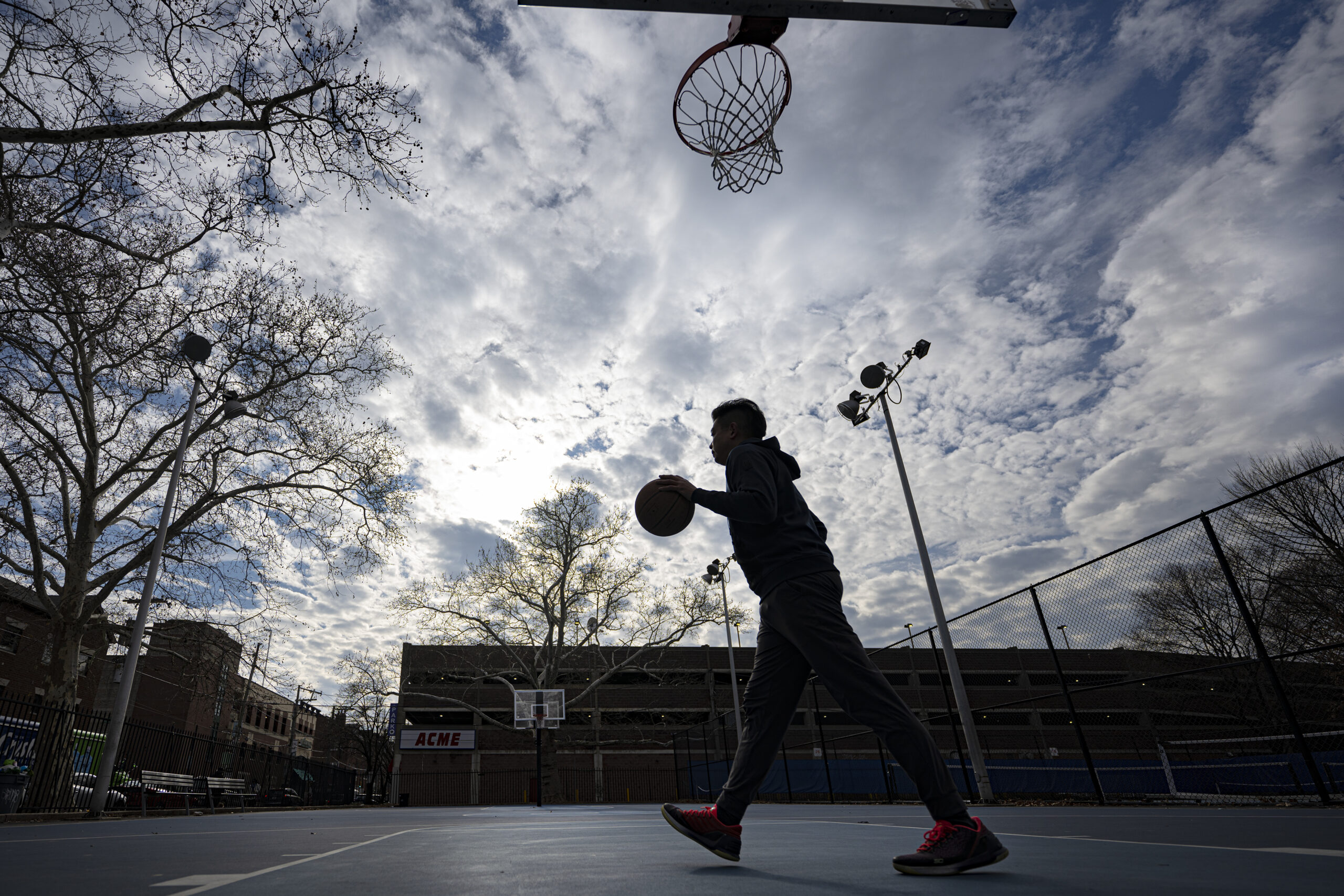
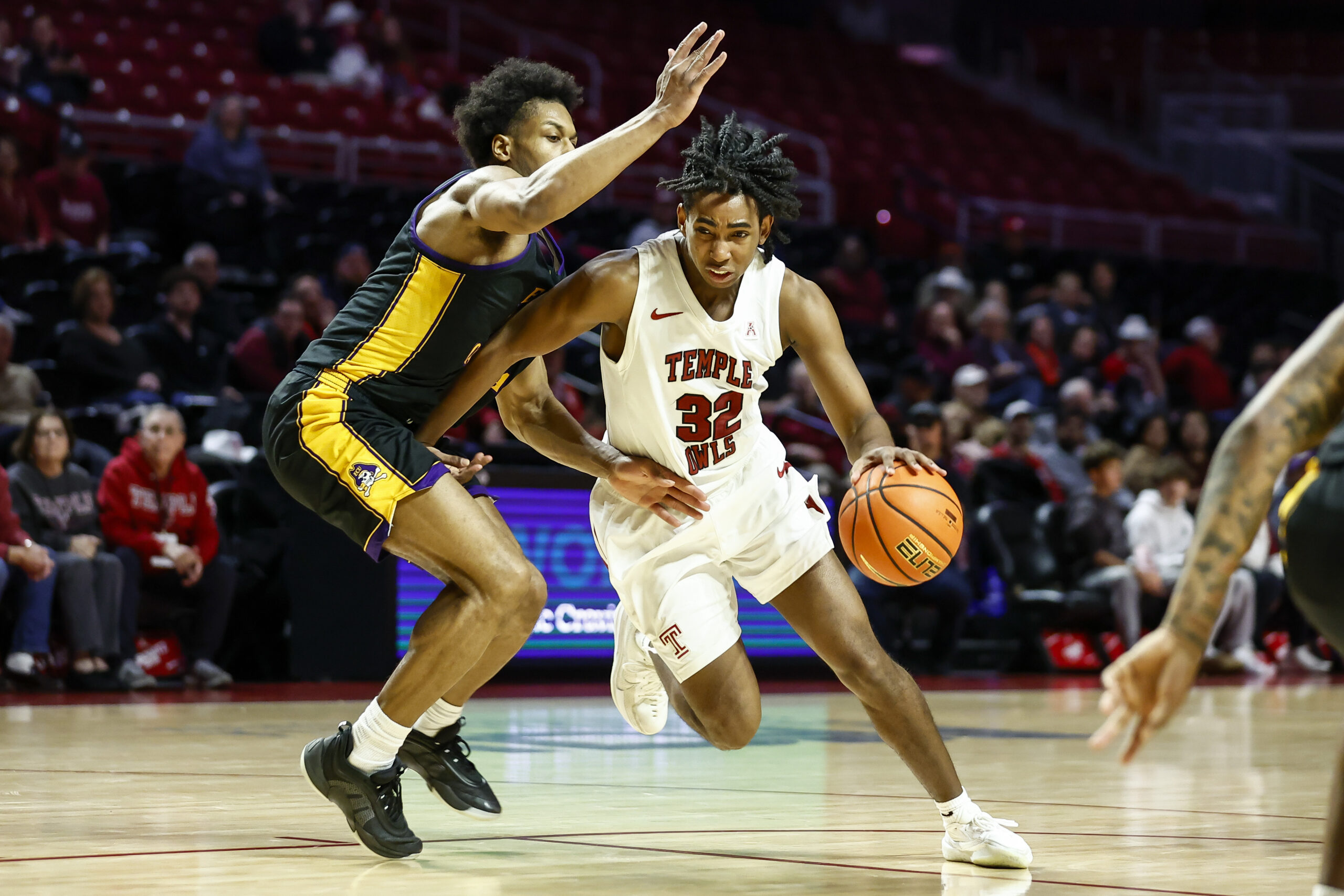
Peter Chang plays basketball during a mild winter afternoon Monday at Charles T. Mitchell Jr. Park in Philadelphia.Temple guard Jordan Mason drives past East Carolina guard Jordan Riley during the second half. Temple’s 75-67 victory pushed its winning streak to seven games.
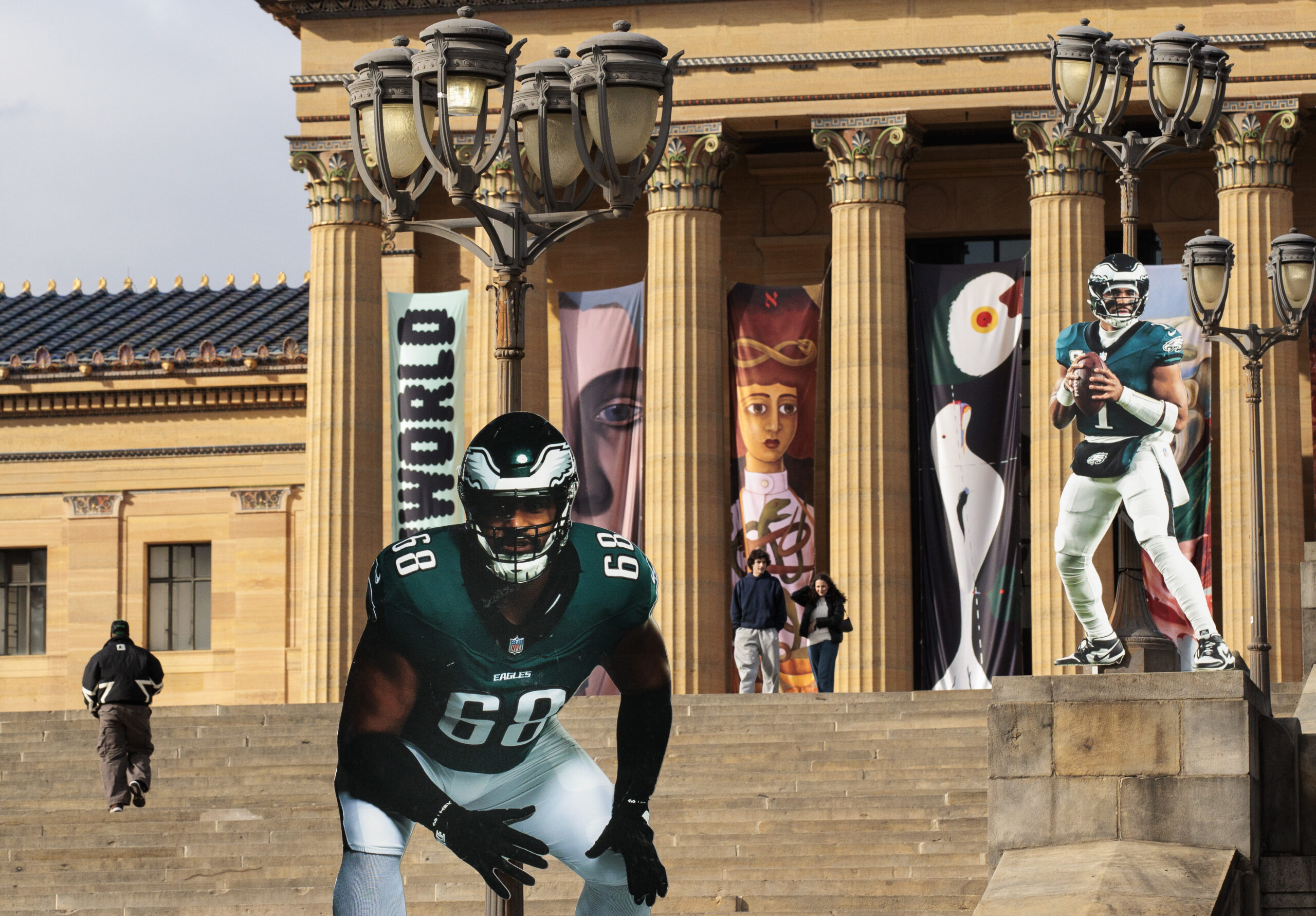
Large cutouts of Eagles players like Jordan Mailata and Jalen Hurts decorate the steps at the Art Museum on Wednesday, ahead of Sunday’s wild-card game against the San Francisco 49ers.
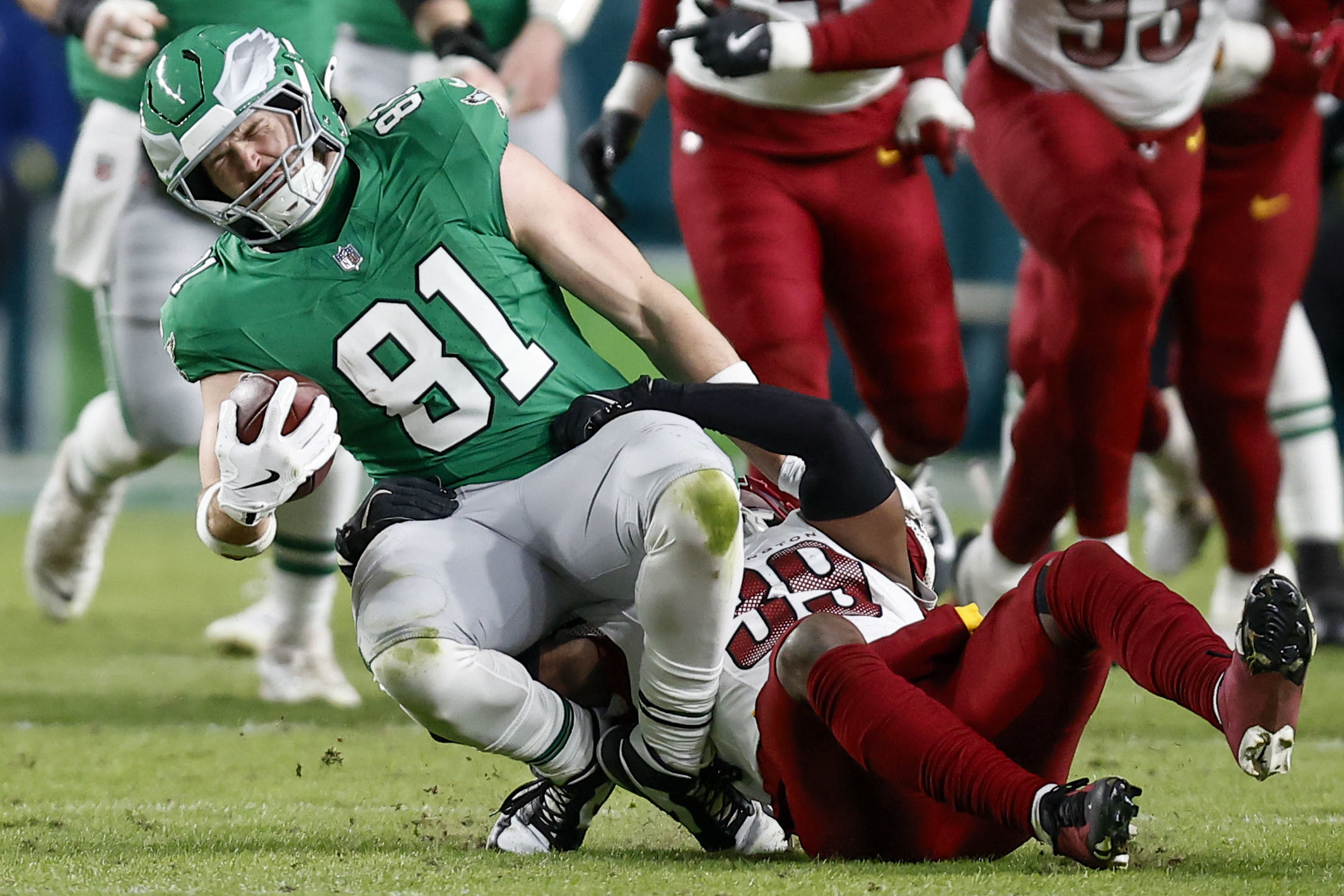
Eagles tight end Grant Calcaterra left Sunday’s game after he was injured on this tackle by Washington Commanders safety Jeremy Reaves in the third quarter.
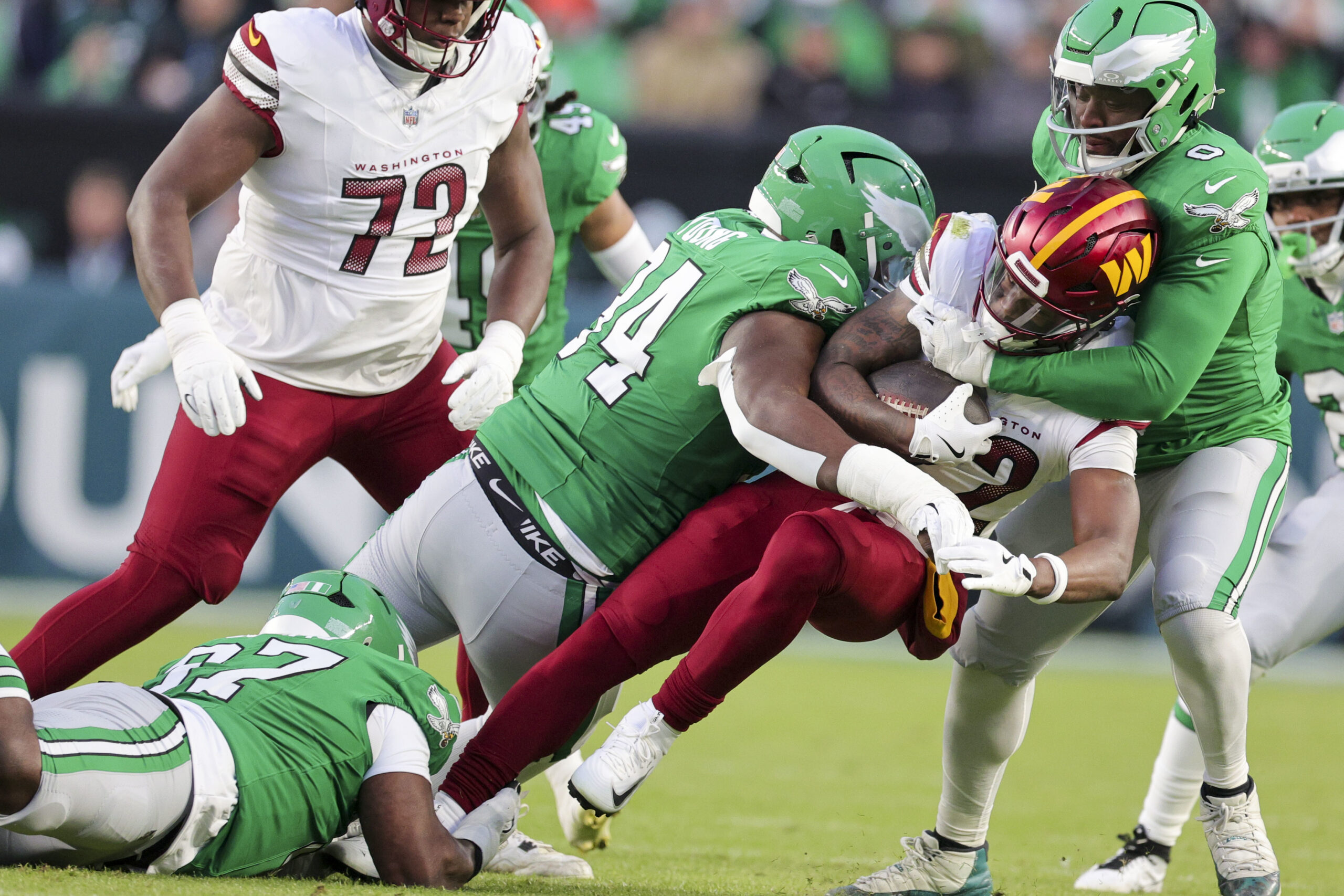
Eagles defensive tackle Byron Young (left) and linebacker Joshua Uche (right) tackle Commanders running back Jacory Croskey-Merritt. They were two Birds who saw extended playing time with the starters resting.
After a deep semifinal run in the Football Championship Subdivision playoffs, Villanova football will have to retool its roster for an upcoming inaugural season in the Patriot League.
Villanova lost a large portion of its starters to the transfer portal or graduation. With Power Four programs being able to spend more money on players, it is becoming increasingly difficult for Villanova to retain its players.
The program will be losing at least 15 players who no longer have collegiate eligibility. Notably, that includes quarterback Pat McQuaide, wide receivers Luke Colella and Lucas Kopecky, most of the offensive line, and linebackers Shane Hartzell and Richie Kimmel.
Nine players have officially entered the transfer portal, with three of them already committing to new schools.
Villanova historically is a program built on culture and growth. The program has retained key assets each offseason over the last six years. Current Buffalo Bills defensive back Christian Benford spent four years with the Wildcats and was drafted in the sixth round of the 2022 NFL draft. Benford recently signed a $76 million contract with the Bills last March.
Last year, Villanova convinced David Avit to return to the program after he entered his name in the transfer portal and visited multiple Football Bowl Subdivision programs.
Villanova has to fill some key position openings for the 2026 season.
Here is where Villanova stands one week into the transfer portal window, which closes next Friday.
David Avit (left) departed Villanova for Arizona State via the transfer portal.
Portal addition and subtractions
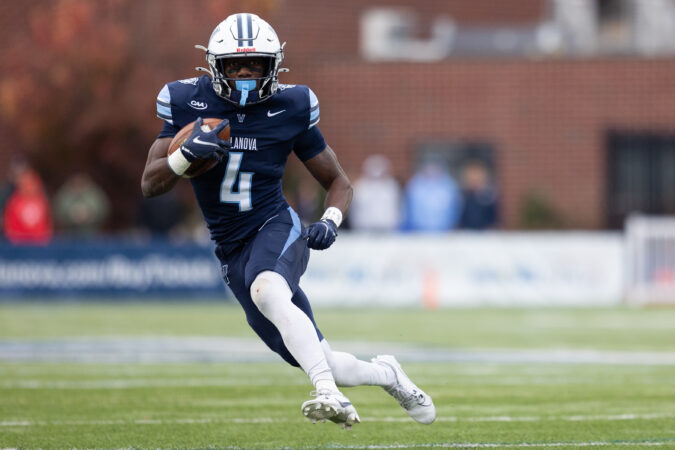
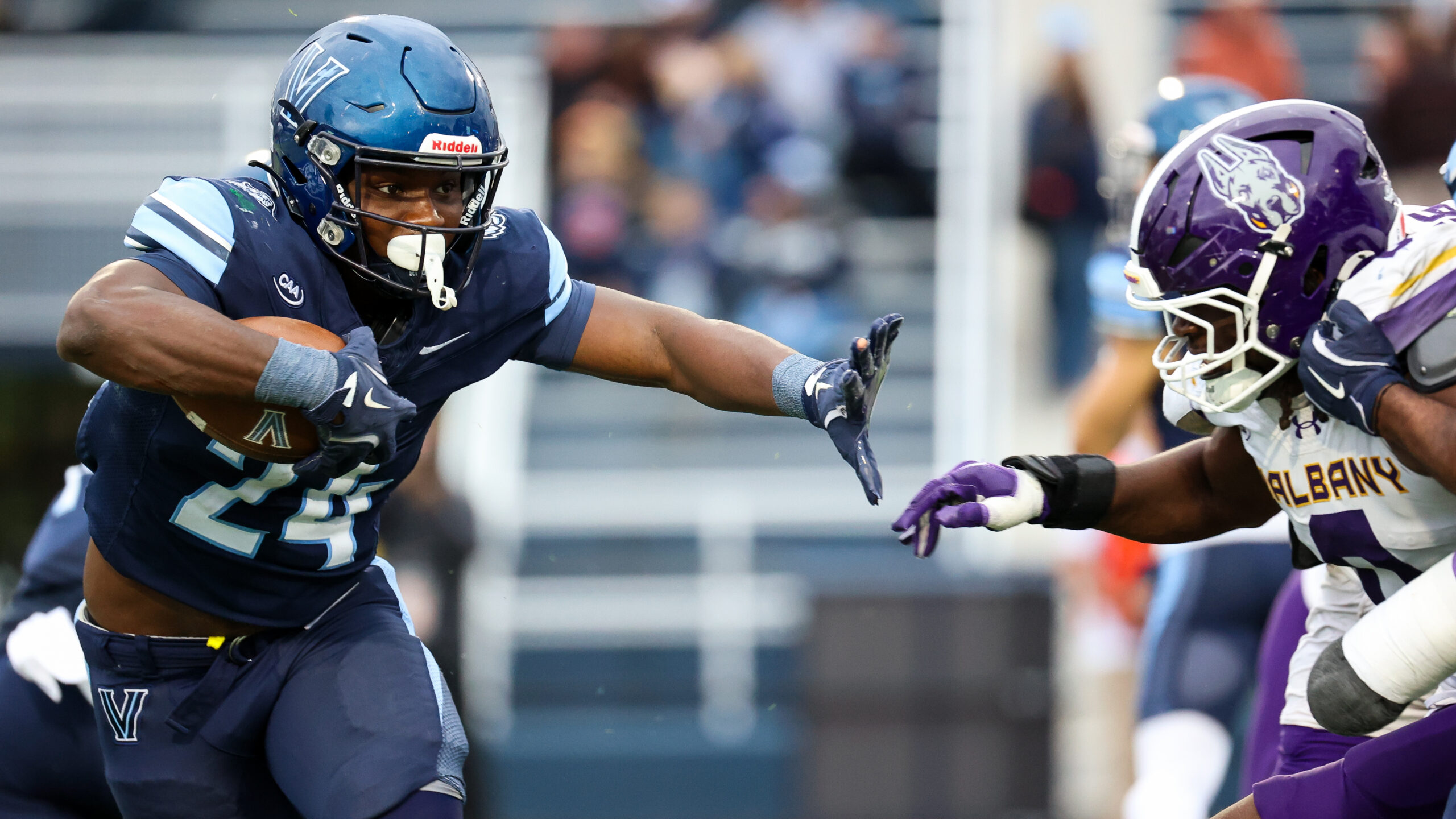
Villanova is bringing back Ja’briel Mace, who had a breakout season at running back and as a kick returner.
Mace withdrew his name from the transfer portal and announced he was returning to Villanova for the 2026 season on social media. The 5-foot-9, 175-pound running back rushed for a career-high 946 yards and 11 touchdowns on 128 carries..
Avit entered the transfer portal and quickly toured Arizona State before committing officially the following day on Jan. 4. The former Coastal Athletic Association offensive rookie of the year, Avit was Villanova’s main running back this past season. He rushed for 687 and eight touchdowns on 125 attempts until he suffered a knee injury against Towson on Nov. 8. It forced him to miss five consecutive games.
Defensive back duo redshirt sophomore Zahmir Dawud and redshirt freshman Anthony Hawkins also departed from Villanova via the transfer portal. Dawud, who only allowed one touchdown in coverage last season, committed to Rutgers in his hometown state of New Jersey.
Hawkins, a FCS Freshman All-America honoree, committed to Iowa.
Tight end Antonio Johnson, defensive back Nino Betances, offensive lineman Capri Martin, defensive back Damill Bostic Jr., and punter Daniel Mueller remain in the transfer portal.
As of Thursday, Villanova has not signed anyone from the transfer portal.
High school class
Villanova signed 13 high school recruits on National Signing Day on Dec. 3. Five recruits signed to join Villanova’s offense, and eight signed to its defense.
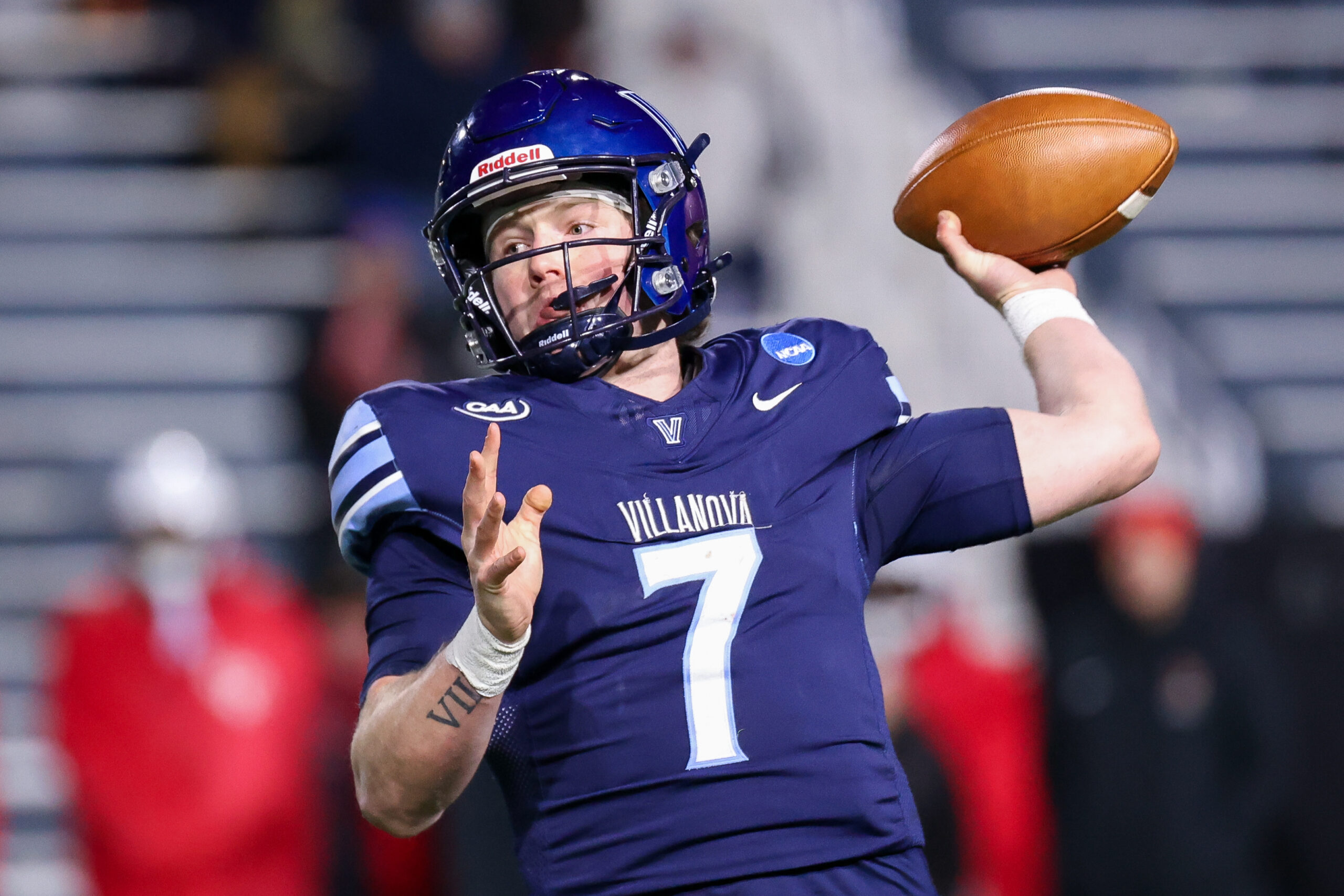
Villanova quarterback Pat McQuaide is graduating, leaving a vacancy at quarterback next season.
Who will be the next quarterback?
McQuaide has exhausted his eligibility. He became Villanova’s starter after a quarterback battle with junior Tanner Maddocks the entire summer camp. Maddocks ended up being Villanova’s backup quarterback and saw playing time late in games.
While Maddocks still had two years of eligibility remaining, he announced on LinkedIn that he had “wrapped up (his) time” with Villanova football. He instead is going forward full-time with his faith-branded energy drink brand, Agape Energy.
That means Villanova’s next starting quarterback is unknown. Villanova had seven quarterbacks on its roster last season. It could be a position that Villanova could pursue in the transfer portal after McQuaide’s success.
No current rostered quarterbacks have played any snaps under center for Villanova.
After getting Kopecky, a former Villanova lacrosse player, an extra year of football eligibility and adding Colella out of the transfer portal last year, the Wildcats had legitimate receiving weapons.
Villanova will now need to replenish its wideouts along with having a new quarterback under center. Colella caught a team-high 77 receptions, totaling 1,071 receiving yards and eight touchdowns.
Retooling the defense
There will be needs at various positions on Villanova’s defense, including at linebacker and in the secondary.
In addition to Dawud and Hawkins’ departures to the portal, Villanova also lost safety Christian Sapp, who is out of eligibility. Villanova had depth on its defense in 2025, but it will need to refill its depth chart even if the current rostered players step into starting positions.
At linebacker, Hartzell and Kimmel are large holes that will need to be filled after five years.
With the depth at linebacker, Villanova still has redshirt freshman Omari Bursey and juniors JR Strauss and Turner Inge, who will step into the starting roles as long as they remain on the Main Line.
Think you know your news? There’s only one way to find out. Welcome back to our weekly News Quiz — a quick way to see if your reading habits are sinking in and to put your local news knowledge to the test.
Question 1 of 10
A Facebook Marketplace listing is selling signage from this iconic Philly spot:
CorrectIncorrect. XX% of other readers got this question right.
Signage from the now-closed Melrose Diner was listed on Facebook Marketplace over the weekend. The diner, which opened at the intersection of 15th Street, West Passyunk Avenue, and Snyder Avenue in 1956, was demolished in 2023 to pave the way for a new six-story apartment building.
Question 2 of 10
The former CEO and President of this beloved — yet contentious, depending on your region — Pennsylvania empire died on Sunday.
CorrectIncorrect. XX% of other readers got this question right.
Stephen G. Sheetz, the former Sheetz president and CEO who popularized the Altoona convenience store chain, died Sunday. His legacy — and the Wawa vs. Sheetz rivalry — lives on.
Subscribe to The Philadelphia Inquirer
Our reporting is directly supported by reader subscriptions. If you want more journalism like this story, please subscribe today.
Which article of clothing or accessory did CBS Philadelphia anchor Jim Donovan set the Guinness record for having the largest collection of?
CorrectIncorrect. XX% of other readers got this question right.
Guinness World Records verified that the 15-time Emmy winner is now the owner of the world’s largest sock collection at 1,531 pairs, many of which have eccentric designs, including Friends and Star Trek-themed socks, and every color of the rainbow. Many of the socks were sent to him by fans during the span of his career as a journalist.
Question 4 of 10
The USWNT will play against this team at the SheBelieves Cup tournament in March:
CorrectIncorrect. XX% of other readers got this question right.
The Americans will play Colombia on March 7 at Sports Illustrated Stadium in Harrison as part of the annual SheBelieves Cup tournament. Canada and Argentina are the other teams in this year’s field, both of which are familiar foes for the U.S. team.
Question 5 of 10
The FDA issued a warning to an adult boutique on South Street, along with other shops nationwide, because it sells this item:
CorrectIncorrect. XX% of other readers got this question right.
Passional Boutique on South Street sells breast binders, mostly to trans men, online and at the store. The FDA says the store is violating its regulations because it's not registered to sell them. Critics say the warnings are a concerning attempt to police self-expression.
story continues after advertisement
Question 6 of 10
Why is the Trump store in Bensalem closing?
CorrectIncorrect. XX% of other readers got this question right.
The Trump Store is closing after six years in business. Mike Domanico's store thrived during the Biden administration, but Trump's return to the White House has been bad for business. Citing lagging sales, the store began its closeout sale on Tuesday, Jan. 6.
Question 7 of 10
The third-generation owner of Donkey's Place — the Camden eatery that’s been visited by Anthony Bourdain — says a penis bone that has sat on the bar for years was stolen. What animal did the bone belong to?
CorrectIncorrect. XX% of other readers got this question right.
Donkey’s ambience has not changed much since Bourdain’s visit. It’s cozy and packed to the gills with random decor, from beer memorabilia, boxing gloves, a megalodon tooth, and of course, the 27-inch-long walrus penis bone, also known as a walrus baculum.
Question 8 of 10
The mother of this Philly icon made her debut on Peacock’s Traitors this week:
CorrectIncorrect. XX% of other readers got this question right.
Jason and Travis Kelce’s mom, Donna Kelce — who earned recognition over the years for supporting both of her NFL sons with split-allegiance jerseys — appeared on the fourth season of The Traitors this week. The show has a similar premise to “Mafia” or “Clue.”
Question 9 of 10
“The Henriot Family (La Famille Henriot),” an oil painting completed around 1875, was removed from display last year at The Barnes Foundation to be restored. It’s back now and more vibrant. Who is the painting by?
CorrectIncorrect. XX% of other readers got this question right.
The oil painting, completed around 1875, is an impressionist work depicting three people and two long-haired dogs relaxing in a forest. A young woman in a white dress gazes directly at the viewer while a man to her right appears to be drawing her. The central figure is Henriette Henriot, one of Pierre-Auguste Renoir’s frequent models, and her admirer is the painter’s brother, Edmond Renoir.
Question 10 of 10
This TV personality will be performing with his band at Manayunk’s annual Sing Us Home festival in May:
CorrectIncorrect. XX% of other readers got this question right.
The political pundit funnyman playing the drums will be Jon Stewart, who sits on the throne behind his kit with Church and State™, the new band with whom he has played only a handful of gigs. Last month, Stewart told the audience on TheDaily Show that he picked up the sticks after failing to master the guitar or piano, and that playing in his first band at age 63 was extremely fun.
Your Results
You have skipped .
You scored XX out of 10.
The average reader scored XX out of 10
Seems like you’ve been skimming more than reading there, buddy. There’s always next week.
You’ve read some articles (or made some educated guesses) but we wouldn’t come to you first for our local news recaps. Better luck next week!
Do you work here? You’re a local news stan with the latest updates on Philly happenings. Your friends definitely ask you for summaries on what’s going on and it shows.