Blog

  • The glory days of Eagles Court | Sports Daily Newsletter

    The glory days of Eagles Court | Sports Daily Newsletter

    The San Francisco 49ers expect a raucous crowd to “greet” them when they face the Eagles in a wild-card playoff game Sunday at Lincoln Financial Field. The fans will be fierce, to be sure, but they don’t have the edge that the crowd had back in the day at Veterans Stadium.

    Fights in the 700 Level were abundant. A flare gun was fired during a Monday Night Football game. It was the definition of “when things get out of hand” — and they got out of hand every week. Something had to be done.

    Eagles Court was born. It went into session in the Vet’s basement in November 1997 and lasted until the stadium closed after a playoff game in January 2003. Seamus McCaffery was among the judges who presided, fining offenders on the spot in the ultimate in swift justice. The cases often involved over-imbibing fans, but many had humorous moments, to say the least.

    “How do you plead?” McCaffery asked a 19-year-old man after he was charged with trespassing at the Vet in 2003.

    “I plead stupidity,” he said.

    “Is that aggravated stupidity or simple stupidity?” the judge said.

    “Whatever the lesser charge is. I was an idiot.”

    The man was acquitted. Matt Breen tells the story.

    — Jim Swan, @phillysport, sports.daily@inquirer.com.

    If someone forwarded you this email, sign up for free here.

    Friendly competition

    Well-rested Eagles running back Saquon Barkley is ready to face a banged-up Christian McCaffrey and the 49ers.

    The winds will be whipping at the Linc on Sunday when the 49ers and Eagles meet in their wild-card playoff matchup, with gusts up to 40 mph in the forecast. That could affect the kicking and maybe even the passing game. So the running game might take center stage, and two of the league’s best will square off. It’s Christian McCaffrey vs. Saquon Barkley, two friends and fierce competitors.

    Of course, they won’t tasked with tackling each other, but Barkley says he still wants to beat his buddy: “It always comes down to, I can’t stop him, he can’t stop me, but I would be lying to you if I didn’t say that you want to go out there and win, especially against a guy like that.”

    Can Kevin Patullo get the Eagles offense humming in the playoffs? His job as offensive coordinator probably depends on it, David Murphy writes.

    The Eagles are the defending champions and have a chance to win another Super Bowl, but this season often has seemed like a joyless slog, Mike Sielski writes. Their toughest playoff opponent will be themselves.

    Phillies to meet with Bichette

    Free-agent infielder Bo Bichette figures to draw interest from other big-market teams, including the Yankees, Red Sox, and Cubs, according to the New York Post.

    The Phillies remain focused on bringing back J.T. Realmuto, according to multiple major league sources. But with the cornerstone catcher still unsigned, the team plans to have a video meeting next week with free-agent infielder Bo Bichette, a source said, confirming a report by The Athletic.

    Several hurdles exist in a potential pursuit of Bichette, not the least of which is his positional fit with the Phillies. Save for 32 innings at second base in last year’s World Series, he played only shortstop in seven seasons with the Blue Jays. The Phillies aren’t moving shortstop Trea Turner, and there is also a financial component.

    Healthy at last
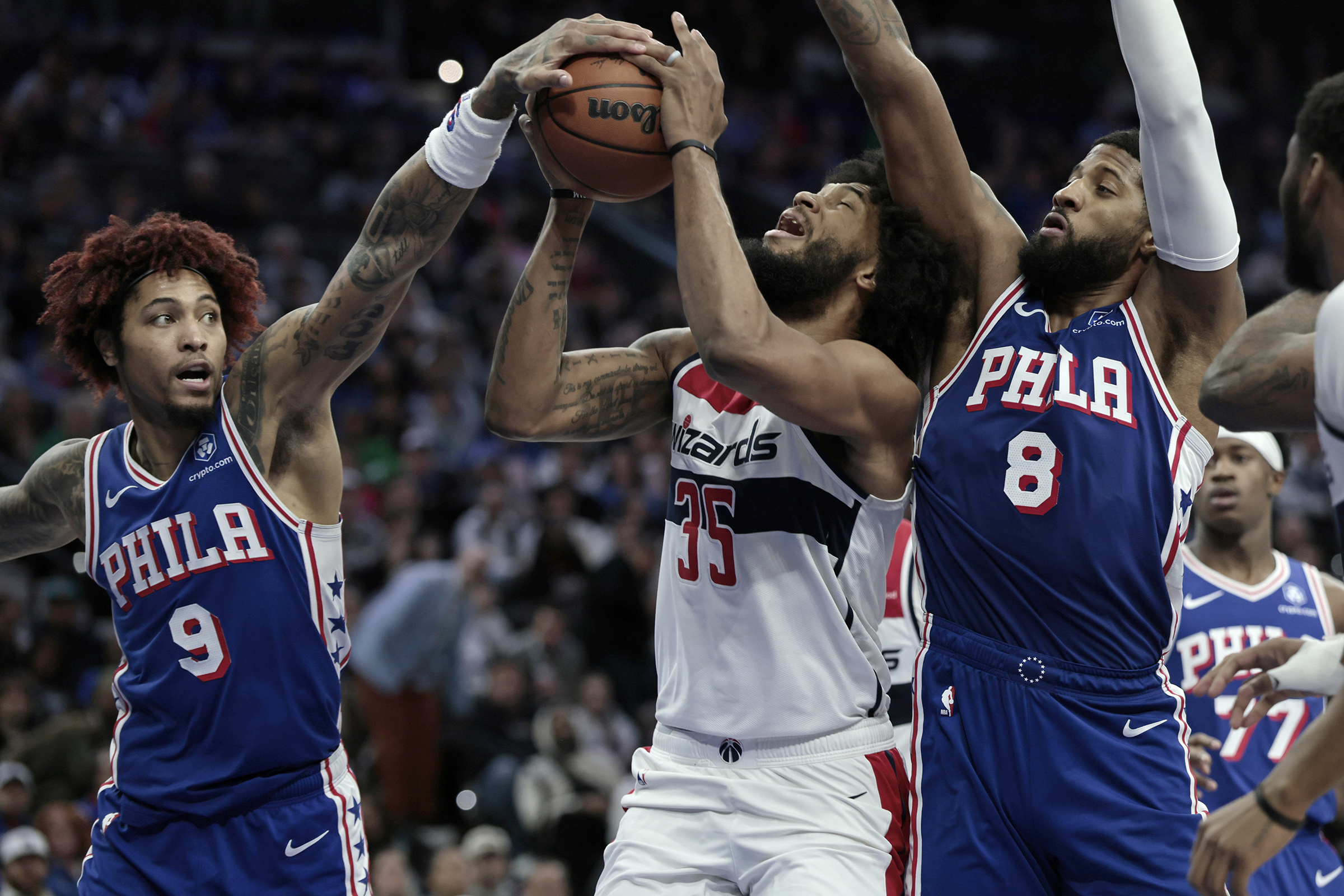
    Kelly Oubre (left) contests a shot by the Wizards’ Marvin Bagley III along with Paul George on Wednesday. Oubre played for the first time since Nov. 14.

    With Kelly Oubre Jr. and Trendon Watford back in action, the Sixers have their full roster available for the first time in two years. Of course, Nick Nurse will have to work around the careful management of Joel Embiid’s playing time, but the available bodies will allow him to be “a little more fluid” with his lineup combinations.

    Laughton’s return

    Maple Leafs center Scott Laughton, a longtime Flyer, waves to fans after a video tribute to him Thursday at Xfinity Mobile Arena.

    Scott Laughton was a longtime Flyer and made his former team pay in his return to Philly. The Maple Leafs center scored to tie the game as the Flyers lost in overtime to Toronto, 2-1. Travis Konecny opened the scoring for the Orange and Black in the second period.

    Join us before kickoff

    Gameday Central

    Live from Lincoln Financial Field: Beat writers Jeff McLane and Olivia Reiner will preview the Eagles’ wild-card playoff game against the San Francisco 49ers at 2:55 p.m. Sunday. Tune in to Gameday Central.

    Sports snapshot

    Alejandro Bedoya is entering his 11th season with the Union.

    Our best sports 📸 of the week

    Sixers rookie VJ Edgecombe tries to dunk over the Wizards’ Marvin Bagley III but draws an offensive foul.

    Each Friday, Inquirer photo editors will pick our best shots from the last seven days and share them with you, our readers. This week, photos include Eagles on the Art Museum steps, VJ Edgecombe’s high-flying dunks and more.

    Eagles forum

    It’s playoff time in Philadelphia, which means you probably have a lot of questions about the Birds. Eagles beat reporter Olivia Reiner is ready to answer them Friday at 9 a.m. on Reddit.com.

    What you’re saying about the 49ers

    We asked: What have you noticed about this 49ers team coming on Sunday? Among your responses:

    The Eagles sure better not take the 49ers for granted — Bill M.

    The 49ers are really beat up. If the Eagles can score early and often, that should take them out of the game. If we let them hang around, anything can happen. Oh! And someone should remind Big Dom to keep his hands in his pockets and to stay away from skirmishes! — Ronald R.

    I think the 49ers are coming for revenge after that humiliating defeat they suffered during their last visit when the Eagles knocked out their quarterbacks. 49ers have been a little more effective than the Eagles toward the end of the season and have a top 5 passing offense. The Eagles however have excellent defensive stats against the pass and have allowed the fewest TDs against the pass. Jaelan Phillips is quoted saying that the team has a sense of urgency regarding this game. The Eagles have not looked like a defending SB team for much of this year, but I think they will come up big in this game. — Everett S.

    We compiled today’s newsletter using reporting from Matt Breen, Jeff Neiburg, Mike Sielski, David Murphy, Gina Mizell, Scott Lauber, Jackie Spiegel, Jonathan Tannenwald, Katie Lewis, Dylan Johnson, Inquirer Staff Photographers, and Anthony Wood.

    By submitting your written, visual, and/or audio contributions, you agree to The Inquirer’s Terms of Use, including the grant of rights in Section 10.

    Have a great weekend. Thanks for reading and I’ll see you in Monday’s newsletter. — Jim
  • In dozens of cases, Philly’s federal judges have found Trump’s mandatory detention policy unlawful

    In dozens of cases, Philly’s federal judges have found Trump’s mandatory detention policy unlawful

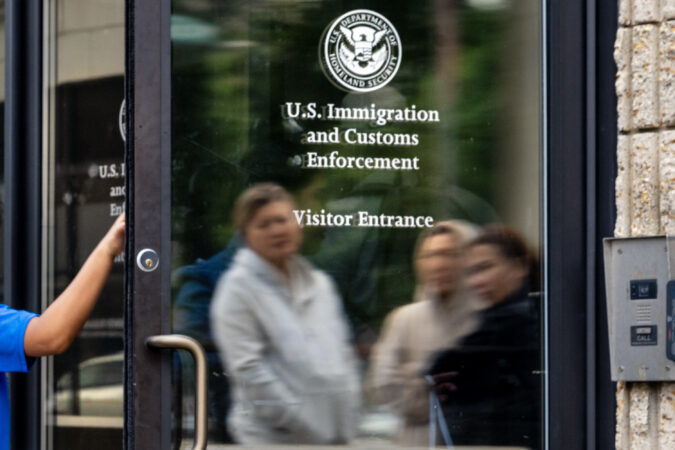
    Federal judges in Philadelphia have ruled dozens of times against a Trump administration policy that mandates detention for nearly all undocumented immigrants — joining a nationwide wave of decisions criticizing the government for applying the policy in unlawful ways.

    In the Eastern District of Pennsylvania, U.S. District Judge Juan R. Sánchez wrote in a memorandum this week that more than 40 people who have been detained in the region under that policy, which was rolled out by Immigration and Customs Enforcement last summer, have sought relief in the courts — and judges have ruled against the government in every case.

    Chief Judge Wendy Beetlestone was even more blunt in an opinion filed last month, writing that “the law is piled sky high against the government’s position” to mandate detention and deny bond hearings for all undocumented immigrants — even those seeking to stay here via appropriate legal channels.

    The administration’s insistence on employing the policy and defending it in court, Beetlestone wrote, was akin to the Greek myth of Sisyphus pushing a boulder up a hill.

    “The Government’s hope, presumably, is that if it keeps pushing the boulder of its argument up the hill, at least one judge may rule against the weight of the authority,” Beetlestone wrote. “But the tale before the courts is the traditional one of Greek mythology: the Government returns again and again to push the same theory uphill, only for courts to send it rolling back down again.”

    The pushback has added to a chorus of similar decisions in courts nationwide. Sánchez, appointed by George W. Bush, wrote in his memo that people challenging their detention in federal district courts “have prevailed, either on a preliminary or final basis, in 350 … cases decided by over 160 different judges sitting in about fifty different courts spread across the United States.”

    A Politico analysis of court dockets published this week put that tally even higher, reporting that over the last six months, more than 300 federal judges — comprising appointees of every president since Ronald Reagan — have ordered some form of relief in mandatory detention cases to about 1,600 challengers.

    Spokespeople for ICE did not reply to questions about the judicial rebukes, and many of the government’s court filings in cases challenging detention have been made under seal.

    Still, the Trump administration has made no secret of its desire to boost the number of people in federal immigration detention. And the mandatory detention policy has helped push the number of confined immigrants past 65,000, a two-thirds increase since Trump took office in January.

    Lilah R. Thompson, an immigration attorney in the community defense unit at the Defender Association of Philadelphia, said in an interview that mandatory detention “plainly violates the law and is an illegal policy.” But she said most challenges to it so far have come in individual cases, and the potential legal avenues seeking to strike it down nationwide are protracted and legally complex.

    In the meantime, Thompson said, the government has seemed content to use the policy in its attempt to apply pressure to immigrants and, ultimately, increase deportations.

    “[Authorities] are applying a blanket policy because when people are in detention, they aren’t able to withstand the horrors of detention,” Thompson said. “It makes their circumstances much more difficult.”

    A dramatic change in precedent

    ICE’s detention mandate was rolled out amid the Trump administration’s aggressive push to crack down on immigrants nationwide.

    It came as the Board of Immigration Appeals — the highest administrative body for interpreting the nation’s immigration laws — issued three precedential rulings that made it dramatically harder for detainees to be released on bond.

    In one of those rulings, the board held that immigration judges lack the power to hear or grant bond requests to people who entered the United States without permission — even if they had been in the country for years, or had few other infractions that might warrant detention as their cases wound through the immigration system.

    That upended decades of established government practice, which typically allowed otherwise law-abiding people who entered the country illegally to at least receive a bond hearing and determine if they could remain in the community as their cases moved forward.

    The decision also meant that thousands of detained immigrants who previously would have been eligible for bond hearings could be released only if they filed and won a federal lawsuit.

    For many detainees that created an impossible situation because they have neither a lawyer nor the money to hire one.

    “There are so many people that are getting picked up [under] the unlawful mandatory detention policy, but because they don’t have an attorney to file a [legal challenge], they’re still experiencing the consequences of the policy,” said Maria Thomson, another attorney in the Defender Association’s community defense unit.

    Officials at the federal Executive Office for Immigration Review, which oversees the BIA, declined to answer questions about the rulings.

    “The Executive Office for Immigration Review does not comment on federal court decisions,” spokesperson Kathryn Mattingly said in a statement.

    Detainees who have been able to hire attorneys and appear before federal judges have been winning relief at near-universal rates, with the courts ordering their freedom or directing the immigration court to hold a bond hearing.

    “The district courts have been overwhelming on this question. It’s been extremely lopsided,” said Jonah Eaton, a veteran immigration attorney who teaches law at Temple University and the University of Pennsylvania, adding that even some Trump-appointed judges “have said this is nonsense.”

    Earlier this week, District Judge John Murphy said in a court filing that judges had sided with detainees in all 50 cases filed so far in Pennsylvania’s Eastern District.

    And in November, District Judge Paul Diamond wrote that he’d found 288 district court decisions nationwide addressing the issue — and that judges had ruled against the administration in 282 of them.

    Diamond then went on to criticize the government’s attempts to justify its policy using what he said were competing interpretations of the law.

    It is “difficult to credit the Government’s squarely contradictory position here,” Diamond wrote.

    Significant challenges

    Still, not all wins for detainees are comprehensive.

    In some instances, immigrants are granted bond hearings before an immigration judge. But Eaton said some of those immigration judges will either deny bond or set an impossibly high figure. In Philadelphia, he said, it’s become common for attorneys to ask the federal judges to order release themselves, “because immigration judges won’t do it.”

    Immigration Court is part of the executive branch, not the judiciary, run by the Department of Justice. That has for years called the courts’ impartiality into question.

    “Even when we’re seeing bond hearings happening, they’re being denied at a higher rate,” said attorney Emma Tuohy, a deportation-defense specialist at Simon, Choi & Tuohy in Philadelphia. So immigrant defenders “are going straight to district court and filing habeas corpus, on the premise that people are being unlawfully detained.”

    Habeas corpus, Latin for “you have the body,” is a demand that the government bring a detained person to court and prove that they have been legally imprisoned. It’s considered a fundamental protection against arbitrary detention.

    Beyond bond hearings, Thompson, of the Defender Association, said there are challenges in seeking to provide ample legal assistance to people who have solid grounds to fight their detention: Many can’t afford lawyers, she said, there is no statewide funding to support lawyers pursuing such challenges, and ICE can move detainees to different jurisdictions at its discretion, increasing the difficulty of petitioning for release.

    “They are doing it because they can, and because the consequences are that most [immigrants] cannot fight this and will end up being deported,” she said.

    Cases that might threaten the overall detention policy, meanwhile, are likely to take time to wind through appellate courts, she said — and the administration could seek to litigate the matter in jurisdictions that have been more traditionally conservative.

    In the meantime, federal judges are going to continue having to confront the issue in district courts. Murphy wrote this week that there are approximately 25 petitions awaiting a ruling in Philadelphia’s federal courthouse.

    If Beetlestone’s opinion is any guide, the judges would prefer that ICE change its position — rather than continuing down the same path and hoping the ruling will be different next time.

    Relying on hope in the courts, Beetlestone said, “resembles a game of whack-a-mole, in which the mole (here, the Government) insists on repeatedly volunteering to get struck by the judicial gavel.”

  • Trump’s tax stimulus set to keep U.S. economy on track in 2026

    Trump’s tax stimulus set to keep U.S. economy on track in 2026

    After a year of rolling policy shocks, the U.S. economy is set to get a lift from President Donald Trump’s tax-cuts package to keep the expansion on track in 2026.

    American taxpayers will get bigger refunds in the first half of this year as a result of Trump’s signature bill, economists say, with estimates for the aggregate boost ranging from $30 billion to $100 billion. Incentives for companies to invest in plants and equipment are also likely to bolster growth while lower borrowing costs, and steadier trade policy should help too.

    Still, forecasters see grounds for caution. Any burst of consumer spending from Trump’s fiscal stimulus is expected to fade as the year goes on, while tariffs will continue to weigh on small businesses especially. Unemployment is on the rise, as are concerns about affordability and inequality. The AI boom may not deliver the kind of broad-based growth its advocates promise, and the U.S. attack on Venezuela shows the potential for geopolitical instability.

    Adding it all up, economists surveyed by Bloomberg in mid-December expected growth of 2% in 2026 — the same as their forecast for 2025. That would likely be enough to extend America’s streak of outperforming its developed-world peers, though it’s a modest pace by past U.S. standards.

    “2026 is shaping up to be a decent year — not a boom, not a bust, just solid trend growth,” said Olu Sonola, head of U.S. economic research at Fitch Ratings.

    Federal Reserve officials were slightly more optimistic than Wall Street at their meeting last month, penciling in an increase of 2.3% in gross domestic product this year. The central bank’s economic staff cited fiscal policy, easier financial conditions, and a dissipation of the tariff impact as growth drivers through 2028, minutes of the meeting released recently show.

    The world’s largest economy weathered the shocks of 2025 better than most pundits predicted. After an initial slump driven by tariff front-running, growth bounced right back — and unexpectedly accelerated to 4.3% in the third quarter, according to numbers eventually published on Dec. 23 after a long delay due to the government shutdown.

    “President Trump’s economic agenda unleashed historic job, wage, and economic growth in his first term,” White House spokesperson Kush Desai said in a statement. “The Trump administration is implementing this same agenda of rapid deregulation, working-class tax cuts, full equipment expensing, and energy abundance — accelerating GDP growth and trillions in investment commitments are proof that the best is yet to come in President Trump’s second term.”

    ‘Helps us invest’

    Trump’s legislation extended income-tax reductions and added new exemptions for tips and overtime pay. Refunds will average $300 to $1,000 more than in a typical year, according to the Tax Foundation. In aggregate, economists at Goldman Sachs Group Inc. anticipate an extra $100 billion for consumers in the first half, while Citigroup Inc. put the figure at $30 billion to $50 billion.

    A longer-lasting impact will likely come from business incentives, some economists say.

    Gregory Daco, chief economist at EY-Parthenon, expects the fiscal package to lift GDP by 0.3% this year. He says some elements of the bill, like cuts in Medicaid and food-aid programs, will be a drag on growth — but reckons they’ll be outweighed by others including higher defense and border-enforcement spending, and measures to help businesses deduct the cost of investments.

    Among those anticipating a boost is Gat Caperton, who runs furniture-maker Gat Creek in West Virginia.

    “It helps us invest in our business,” Caperton said. “There’s really good high-end technology equipment that’s very competitive and very productive for us. And we will spend aggressively to buy that type of material.”

    ‘Faster gear’

    Investments like these and the Fed’s easing of monetary policy will cushion a slowing job market, according to Kathy Bostjancic, chief economist at Nationwide Mutual Insurance Co. The unemployment rate rose to 4.6% in November, the highest in more than four years, and economists predict it will average 4.5% this year.

    “Labor demand should shift into a faster gear by mid-year as businesses increase investment in response to lower interest rates and tax incentives,” Bostjancic said.

    Fed policymakers including Chair Jerome Powell have said inflation linked to higher tariffs will likely be a one-off and eventually fade. Still, the cost of living was a major issue in November’s off-year elections, where Trump’s Republicans suffered losses. Companies remain concerned about tariffs and are projecting price increases of more than 3% in 2026, according to one recent survey.

    Jonathan Echeverry’s coffee business in Montclair, N.J., had to pay out an additional $150,000 in tariffs on beans, packaging, and other imports — just as his customers are becoming choosier in their spending.

    “People are opting to buy beans to brew at home rather than to buy beverages,” said Echeverry, who co-owns Paper Plane Coffee Co. “I doubt this year will be better.”

    Most forecasters anticipate a quieter year on the trade policy front compared with the chaos of 2025 — but there’s plenty of uncertainty still. The Supreme Court is expected to rule soon on the legitimacy of some of Trump’s import taxes. The president has floated the prospect of $2,000 tariff rebate checks, which would offer another boost to growth — and further pressure on the U.S. budget deficit.

    AI spillovers

    Another unknown is artificial intelligence. The rush to build and equip data centers helped lift business investment in 2025, and the AI-led equity boom amplified the purchasing power of wealthier Americans, but there’s also concern that the technology will replace human workers.

    There’s a disconnect between multibillion-dollar announcements of new data centers and the amount of hiring they generate, according to Michael Feroli, chief U.S. economist at JPMorgan Chase & Co.

    “It’s not creating as many jobs as the big nominal numbers might imply and that’s in contrast to past capex booms,” he said. “Labor demand continues to look soft, and that leaves us worried about downside risks.”

  • A Scranton neighborhood group put up a ‘hometown hero’ banner for Joe Biden outside his childhood home. Controversy ensued.

    A Scranton neighborhood group put up a ‘hometown hero’ banner for Joe Biden outside his childhood home. Controversy ensued.

    When a Scranton neighborhood group decided to honor Joe Biden with a “hometown hero” banner outside the 46th president’s childhood home recently, they expected a little bit of blowback.

    But members of the Green Ridge Neighborhood Association say they’re dumbfounded by the number of complaints and even threats, both locally and abroad.

    “Someone in Guam has been very vocal,” Roberta Jadick, the association’s secretary, said beneath the banner on North Washington Avenue on a recent snowy weekday.

    “Hometown Heroes” banners first appeared in Harrisburg in 2006, according to the program’s website, and they’ve become ubiquitous in small-town and suburban Pennsylvania. Most appear as black-and-white photos of men and women in uniform, thousands of veterans honored in nearly every corner of the Commonwealth.

    While most of the banners honor veterans, no rule prohibits municipalities, civic groups, or veterans’ groups from honoring others, said Laura Agostini, president of the Green Ridge group. Some towns have put up banners of high school athletes or law enforcement officials.

    “I mean, teachers are heroes, aren’t they?” Jadick said.

    The banner on North Washington Avenue near Biden Street depicts the former president in a suit, with the title “Commander in Chief, U.S. Armed Forces, 2021-2025″ written beneath it. Agostini said the group was aware that “Commander in Chief” was a civilian title.

    A banner featuring former president Joe Biden as a “hometown hero” has sparked controversy in Scranton. The neighborhood group that put it up plans to vote on its future Monday after getting criticism from veterans.

    Agostini said the initial blowback was political but that the issue “morphed” into a veterans’ issue.

    “We never intended to portray him as a veteran,” Agostini said. “There’s only been 46 presidents in the United States, and each one had a hometown, and we thought this is a unique honor.”

    A Dec. 21 Facebook post about the banner by the Green Ridge Neighborhood Association received nearly 250 comments, ranging from supportive to critical to crude.

    “He’s an embarrassment!” one commenter wrote.

    A similar controversy erupted in 2021, when a four-lane highway in Scranton was renamed President Joe Biden Expressway.

    Biden was born in Scranton in 1942 and lived there on and off, and he repeatedly mentioned Scranton as a formative place. A plaque outside the home where Biden lived with his maternal grandfather, Ambrose Finnegan, said he moved out when he was 10 years old.

    A Hometown Heroes banner honoring the Finnegans is just one light pole down from Biden’s. No one from the Hometown Heroes Banner Program returned requests for comment on Wednesday.

    One local veteran, Andy Chomko, said he doesn’t have a problem with Biden being honored in Scranton, but his banner should not look like veterans’ banners.

    “It’s a great thing that he lived here and had roots here,” Chomko said. “But the banner makes it look like he’s a veteran, and every one of those people on those other banners put their lives at risk for their country.”

    Navy veteran Harold Nudelman told WNEP-16 that Biden “didn’t put his life on the line.”

    “Don’t portray him as a veteran. He didn’t serve. He didn’t take that oath to serve as we did,” he told the news station.

    Chomko, who served in Iraq and Afghanistan with the Army, believes the Green Ridge group should remove the banner and “rethink it.”

    That could happen after Monday, the group will vote on the future of the banner at a public meeting.

    “I would say the vast majority of people support it or really don’t care,” Agostini said. “I don’t take any of this lightly, though, and while we were hoping it would be dying down, we’ll have an open discussion about it.”

    Jadick said the banner was never meant to divide the public even more than it is.

    “If Trump was from here, he’d have a banner up after he was out of office,” she said. “This is where Joe Biden is from. Those are his uncles on the other banner.”

    A banner featuring former president Joe Biden as a “hometown hero” has sparked controversy in Scranton. The neighborhood group that put it up plans to vote on its future Monday after getting criticism from veterans.
  • How student loans and financial aid are changing in 2026

    How student loans and financial aid are changing in 2026

    The landscape for financial aid is about to change.

    In 2026, the federal government will curb access to billions of dollars in student loans, reconfigure how borrowers repay their debt, and provide new grant money for short-term career training programs.

    All of these changes are slated to take effect in July and are the result of the One Big Beautiful Bill signed into law in summer. The financial aid provisions in the law, which extend tax cuts from President Donald Trump’s first term, will affect how families pay for higher education. Since November, the Education Department has been negotiating the terms of the policies with a panel of experts, as required by Congress. Terms for the new rules will be finalized early this year, with few anticipated changes.

    While some higher-education experts say the changes will deliver commonsense reforms, others worry they could discourage college enrollment and persistence. Either way, students entering college in fall 2026 will encounter a very different federal financial aid system.

    Here’s what you need to know.

    Student loan limits

    In one of the largest revisions to federal student loan policy in decades, the Education Department will impose new caps on the amount of money graduate students and parents can borrow from the government.

    The Grad Plus program, which lets students borrow up to the full cost of attendance to pay for graduate degrees, will sunset on July 1 for new borrowers. At the same time, people pursuing a master’s degree will have their borrowing capped at $20,500 a year and $100,000 over a lifetime. Those working toward a professional degree — say, an aspiring doctor or lawyer — will be capped at $50,000 a year and $200,000 in total from the federal government.

    In all, students will now face a lifetime maximum borrowing limit of $257,500 for undergraduate and graduate school federal loans combined. If those amounts are not enough to cover costs, students will have to pay the rest themselves or turn to private lenders.

    The distinction between graduate and professional degree programs has been a lightning rod for controversy. Nurses and others have railed against the Education Department’s proposal to exclude their fields from the higher loan limits. They worry the agency’s move to restrict the professional degree classification to 11 fields will discourage people from enrolling in other advanced degree programs.

    The proposal must still be published for public comment before it can be finalized, which allows its detractors to fight for a broader classification.

    Researchers say a substantial number of students pursuing master’s degrees will be affected by the new limits. An analysis by the Federal Reserve Bank of Philadelphia found that one-third of graduate students with federal loans have borrowed more than the new limits will allow. Research from the Postsecondary Education & Economics Research at American University found that students in professional programs are more likely to borrow in excess of the new limit.

    Beth Akers, a senior fellow at the conservative American Enterprise Institute, said she suspects that many people will be caught off guard by the new constraints on graduate borrowing, and she said colleges are not doing enough to prepare.

    “There could be a private-sector solution that covers the gap,” Akers said. “But I suspect that the coordination that’s necessary for that to happen by next fall will probably not happen.”

    There have been a lot of conversations among schools about offering institutional loans to help graduate students in need, said Scott Z. Goldschmidt, a partner at the law firm Thompson Coburn who works with higher-education clients. He said colleges are also exploring private loan alternatives and trying to identify scholarship opportunities.

    Limits on parents

    While the tax bill left undergraduate loan limits intact, it will affect how much parents can borrow to support students working toward an associate’s or bachelor’s degree.

    Parents and caregivers could previously take out as much as their child needed to attend college through the Parent Plus program, which is designed as a supplement when other types of student aid have been exhausted. Starting July 1, the program will set new limits of $20,000 a year, or a total of $65,000 per student.

    Because relatively few families use Parent Plus loans, researchers at the think tank Urban Institute estimate that the new limits will affect just 2% of students. Still, among families who rely on the loans, nearly a third will be affected by the annual cap, and 17% will run up against the $65,000-per-child total cap.

    “It will have a significant impact on a small number of people, and it will be people who we’re particularly concerned about, like disadvantaged populations who tend to use those resources the most,” Akers said.

    She hopes that colleges will provide more financial aid to lower the cost for students.

    Current borrowers are exempt from both of the new caps for three years.

    Fewer repayment plans

    The federal student loan repayment system is notoriously complex, with a multitude of options and terms that can be difficult to navigate. Instead of having seven repayment plans, new borrowers will have just two options after July 1: one standard plan and one new income-driven repayment (IDR) plan, called the Repayment Assistance Plan.

    The new standard plan will stretch monthly payments out from 10 to 25 years. The larger the debt, the longer the repayment term. Someone with an outstanding principal of less than $25,000 will repay the debt for no more than 10 years, while a borrower with more than $100,000 in federal loans will be in repayment for up to 25 years.

    Payments on the new income-driven plan will be based on a borrower’s total adjusted gross income, ranging from 1% to 10% depending on earnings. The plan cancels the remaining balance after 30 years of payments, instead of the current 20 or 25 years.

    Borrowers have to make a minimum monthly payment of $10. Those who make timely monthly payments will have their unpaid interest waived to prevent negative amortization, which happens when payments are not enough to cover the principal and interest. The plan also provides a monthly subsidy of up to $50 to ensure borrowers pay down their principal balance by at least that amount.

    An analysis from American University suggests that the principal subsidy could result in faster loan forgiveness for low-income, low-balance borrowers. Still, researchers said they worry that higher payments and a longer time before forgiveness for many low-income borrowers is likely to increase the rate of loan defaults.

    People who are currently repaying their loans can remain in any of the three existing plans that are not tied to income. Current borrowers on an income-driven plan can stay put until July 1, 2028, at which time they can switch to RAP or the original Income Based option. That income-based plan will give Parent Plus borrowers, who are barred from the new IDR plan, a repayment option tied to their earnings.

    There are some complications in consolidating the repayment plans. Congress gave borrowers enrolled in the Saving on a Valuable Education plan three years to exit, but a proposed settlement could speed up the timeline. The Education Department struck a deal in December with seven states to resolve a lawsuit challenging the legality of the Biden-era repayment plan. The agency stressed that enrollees would have a limited time to find another option to repay their debt, but it has not provided an explicit timeline.

    “Given what we’ve seen with folks not being able to enroll in plans and being stuck in a backlog … I’m really concerned there’s going to be even more chaos and confusion,” said Michele Zampini, associate vice president of federal policy and advocacy at the Institute for College Access & Success.

    Other student advocates worry about whether the Education Department will have revamped the repayment system to reflect all of the changes in time for the graduating class of 2026.

    People entering repayment for the first time will need an updated loan simulator, for instance, to select the best repayment plan, said Melanie Storey, president and chief executive of the National Association of Student Financial Aid Administrators. Although newly minted graduates have a six-month grace period before repayment kicks in, she said colleges need to start communicating to students about their options long before then.

    “We need information and we need clarity,” Storey said. “My members are the people on the ground who have to answer questions for students, and I’m concerned that given the schedule, we won’t have answers until well into the spring.”

    Pell Grant eligibility

    There are some significant changes ahead for the Pell Grant, the largest federal grant program for low- and middle-income college students. Chief among them is the expansion of the program to include students enrolling in career training programs that range from eight to 15 weeks in duration. Those programs, which are mainly offered at community and technical colleges, must provide at least 600 hours of instruction.

    In December, the Education Department reached a consensus with negotiators on the framework of the policy, dubbed Workforce Pell. The proposal must still be published and finalized, but higher-education experts expect few, if any, changes. It calls for governors to work with state advisory boards to determine program eligibility, with a focus on courses that are in high-demand fields such as nursing aides or emergency medical technicians.

    Other new policies could change the number of students eligible for Pell Grants. This summer, the Education Department will exclude assets from family farms, small businesses, and family-owned commercial fisheries from the calculation of the Student Aid Index, or SAI — a figure used to determine a student’s ability to pay for college and the amount of aid they receive.

    And some people may no longer be able to get a Pell Grant. The Education Department will begin including foreign income in the calculation of a student’s Pell eligibility, which could reduce eligibility. Furthermore, anyone who receives enough scholarship dollars to cover their full cost of attendance will no longer be eligible to receive Pell.

    Students will also be ineligible if their families have lots of assets but appear to have little income in the calculation of SAI. A student previously could qualify for Pell despite their family having a lot of assets if their parents generated business losses that lowered their adjusted gross income. Starting July 1, an SAI that is equal to or exceeds twice the amount of the maximum Pell award will be disqualifying.

  • Good intentions don’t build housing in Philly, and mediocre campaigns don’t win races in Pa. | Shackamaxon

    Good intentions don’t build housing in Philly, and mediocre campaigns don’t win races in Pa. | Shackamaxon

    This week’s column looks into what happens when City Council members try to use a bad practice to serve the public good, and the beginning of Pennsylvania’s gubernatorial race.

    Good intentions

    In the first few months of this column, much of the toughest criticism has been leveled at Councilmembers Jeffrey “Jay” Young and Cindy Bass. While every district legislator participates in the tradition to some degree, these two have been the most egregious practitioners of councilmanic prerogative, which gives district Council members absolute discretion over land use and transportation questions within their districts.

    Even worse, Young and Bass often struggle to offer coherent explanations for their actions. Over the past few years, I have spoken with a range of community members, local politicos, and development experts who have expressed total bewilderment about what exactly it is the pair is seeking to accomplish.

    That’s not the case with 3rd District Councilmember Jamie Gauthier. Her values are clear. When Gauthier leans into prerogative, she’s not seeking to micromanage minor decisions. She even went as far as creating an exemption for her entire district that removes the need to secure a city ordinance for outdoor dining. Gauthier legislates because she wants to produce more affordable housing and prevent displacement. In many ways, it is a bold and admirable approach.

    Still, when it comes to public policy, good intentions are not enough.

    University Place Associates is planning a 495-spot parking garage in Councilmember Jamie Gauthier’s district in West Philadelphia.

    Middling MIN

    Gauthier’s signature policy is her push for what she’s called the Mixed Income Neighborhoods overlay, or MIN. The policy, enacted in parts of both Gauthier and Councilmember Quetcy Lozada’s 7th District, builds off an existing city program, the Mixed Income Housing Bonus. Under the bonus program, developers could exceed current zoning limits in exchange for supporting affordable housing. This could be done either by building affordable units or by making a payment to the city’s housing trust fund.

    MIN, however, is mandatory. It also does not come with any bonuses. For larger development projects (10 or more units), builders are required to set aside 20% of the units for low-income households. The idea is to increase the city’s stock of statutorily affordable housing, promote income integration, and allow poorer households to move to and remain in high-opportunity areas, all without costing the city a dime.

    All of that sounds wonderful … in theory.

    In practice, things have not panned out the way advocates had hoped. Instead of producing significant amounts of affordable housing, the zoning requirements have stifled development overall. Of the 18 major projects considered by the city’s Civic Design Review Board, only two are located within the boundaries restricted by the policy. One of those projects doesn’t include any housing at all, instead supplying nearly 500 parking spots adjacent to the Market-Frankford Line.

    In an interview with Gauthier last fall, she told me she would stand by the results of MIN against the voluntary program or any other zoning program in the city of Philadelphia. Planning Commission data, however, tells a different story. In 2024, the most recent year studied, the MIN resulted in the completion of just five affordable units. The bonus program, on the other hand, created 63 affordable units and generates millions of dollars in bonus payments.

    This, of course, only looks at one factor, which is the impact on affordable housing programs. It doesn’t answer the question of how many market-rate units would have been built without the requirement. Housing costs no longer affect just the poorest, as 90% of Americans live in counties where home prices and rents rose faster than income. For most people, whether they are University of Pennsylvania students or longtime residents, this private market is where they will find housing. Without enough construction to meet demand, prices will continue to rise.

    The experience of cities like Austin, Texas, where rents are falling despite a surging population, demonstrates that new construction can help alleviate that pressure.

    There’s also the economic impact. Development projects employ skilled workers and provide money for the city’s affordable housing programs. Without more research, we have no idea how much MIN has impacted city coffers. Before Gauthier’s program expands to more communities, the city should undertake a comprehensive investigation.

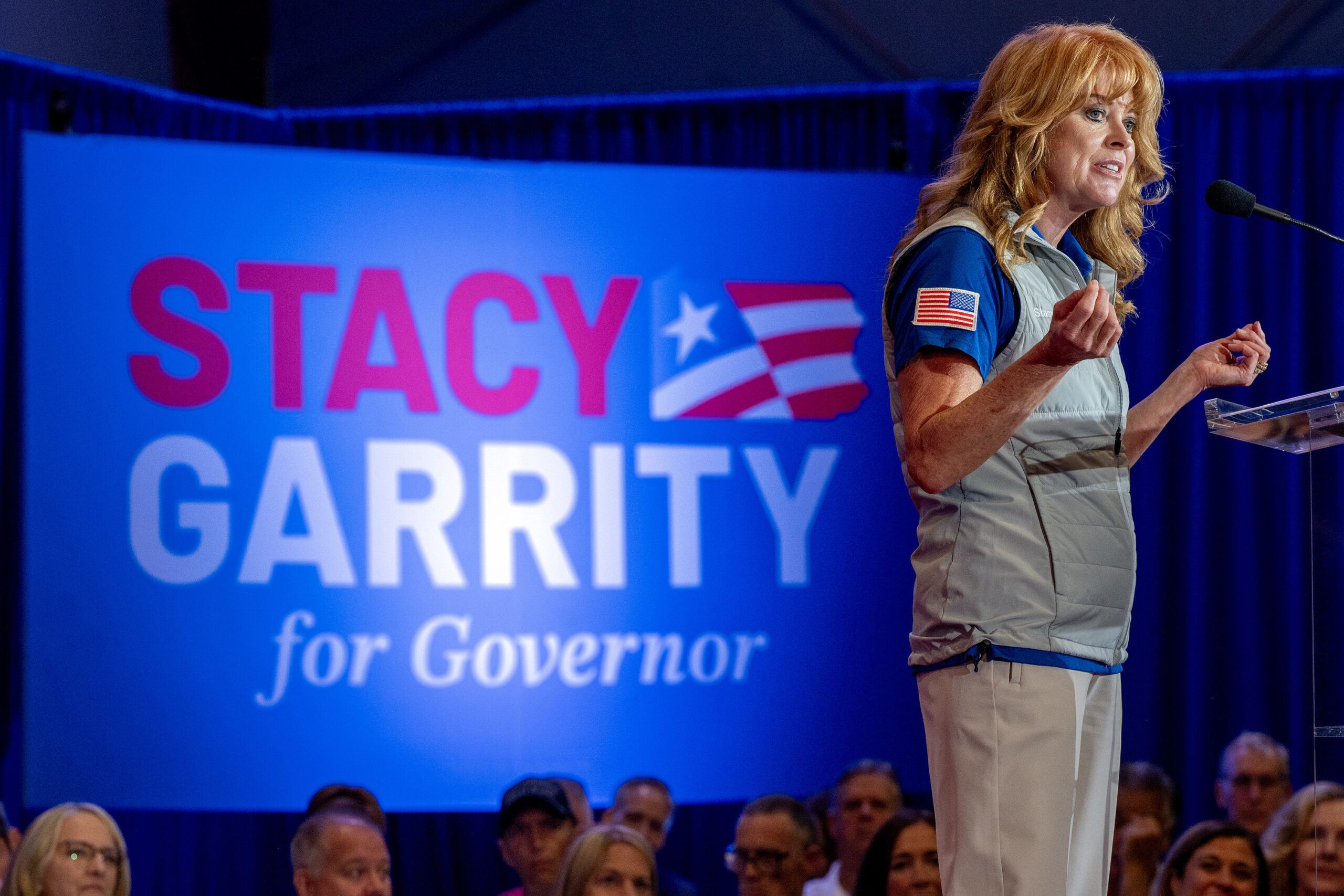
    State Treasurer and Republican candidate for governor Stacy Garrity holds a rally in Bucks County at the Newtown Sports and Events Center in September.

    Maximum meh

    With State Sen. Doug Mastriano officially out and Gov. Josh Shapiro officially in, the Pennsylvania governor’s race has begun. With no other Republicans or Democrats expressing an interest in the position, a November matchup between Shapiro and State Treasurer Stacy Garrity looks certain.

    Shapiro’s campaign launch video begins as you’d expect, with the rapid reconstruction of I-95 after a fire damaged several lanes in 2023 — a reminder of how the governor gets, uh, stuff done.

    Garrity, who announced all the way back in August, has a steep challenge on her hands. Besides Tom Corbett, no Pennsylvania governor has lost a reelection bid since the ban on consecutive terms was dropped from the state constitution in 1967. Shapiro has a record $30 million on hand for his reelection bid, three times more than what he started with four years ago, the previous record. He also has a 3-0 record in statewide elections and a 60% approval rating.

    This means Garrity will need to sell voters on her own ideas, rather than just banking on people souring on Shapiro. So far, it is worth asking what those ideas are.

    As treasurer, Garrity’s main job is to manage the commonwealth’s bank accounts, not exactly the kind of thing that stirs the electorate. Garrity’s campaign video focuses on her biography, which notes her service in Iraq. It also lines up multiple hits on Shapiro, including on his not-entirely subtle pining for the presidency. But when it comes to the biggest issues facing Pennsylvanians, Garrity has yet to supply any answers.

    Instead, the challenger used an interview with CBS 21 in Harrisburg to declare that Pennsylvania is “mediocre.” So far, that label seems more appropriate for Garrity’s campaign consultants than the commonwealth.

  • AI will drive the economy in 2026, for better or worse, economist says

    AI will drive the economy in 2026, for better or worse, economist says

    It seems like it is déjà vu all over again. The economy is growing, people are getting rich, and we are assuming the next great economic engine of growth, AI, will keep on keeping on.

    Unfortunately, history has shown us that growth, when it is not well diversified, can meet an untimely and difficult end.

    In the 1980s to early 1990s, savings and loan institutions teetered on the edge of failure. Many crashed and burned and so did the economy.

    In the second half of the 1990s, the dot.com mania spurred enormous investment — until the bubble burst, taking the economy with it.

    The mid-2000s gave us the housing bubble and the over-leveraging of the financial sector. The resulting near-total-meltdown of the world’s financial system led to the Great Recession.

    And now the economy has become dependent on artificial intelligence (AI), which has exploded with the creation of generative AI programs, new chip technologies, rapidly advancing robot technology, and the need for data centers.

    Will AI lead to an extended period of growth, or will we discover it was just another bubble?

    AI turned tepid growth into decent growth in 2025

    The economy grew moderately last year, but it needed significant help from the rush to cash in on AI.

    Spending on new data centers, servers, software, infrastructure, chip production, and everything else that goes into creating and supporting the AI computing capacity is estimated to have accounted for roughly 25% of GDP growth in the first half of 2025.

    When you account for the secondary expenditures by the public sector on things such as roads, utilities, and energy capacity, the AI capital expenditure binge impact on growth was even greater, as much as 30%.

    But there is more.

    AI-driven labor productivity gains are just starting to appear. It is hard to estimate how much AI has or will add to output per worker. But it will.

    Essentially, AI likely boosted 2025 growth from a tepid 1.5% to about 2%.

    This year, AI-related activity could be the most important driver of growth.

    Has the AI exuberance reached bubble status?

    AI has kicked the nation’s competitive spirits into high gear, pulling in capital similar to the way dot.coms did during the high-tech bubble.

    Every major tech company is spending or planning to spend at levels not seen before. The approach is simple: Spend big or pack it in.

    The problem is, we have no idea who or if there will be any big winners in the race to the top of the AI world.

    And we don’t know how long the winners can stay at the top of the mountain. The pace of innovation has accelerated to the point where leaders could be taken down in a much shorter time period than previously.

    Until then, the racers are being rewarded royally. And that is a worry.

    The Morningstar US Market Index measures most of the stocks traded. Last year, the tech and communication services sectors accounted for almost 60% of the index’s rise. Chipmaker Nvidia by itself accounted for about 12% of the total market’s gains.

    When it comes to the equity markets, it has been all about AI and its associated industries.

    That raises the question: Are the equity markets suffering from what former Fed Chair Alan Greenspan called “irrational exuberance?”

    The answer to that question will not be known for a while. As Greenspan noted, it is really difficult to determine whether a bubble exists or has reached a dangerous level until it has actually burst.

    He also recognized that slowly letting the air out of the bubble is exceedingly difficult without causing a recession. Greenspan’s successor, Ben Bernanke, learned that lesson all too well when he thought the housing market was headed for a soft-landing. Whoops.

    That’s the fear. The dot.com bubble was not a problem until it was a really big problem. Housing was not a problem until it was an even bigger problem and nearly took down the world economy.

    Now, few believe the concentration of growth in AI is a problem.

    What does this all mean?

    There are some lessons we can learn from the tech collapse.

    Dot.coms were going to change the world and guess what, they did! It’s just that there were too many of them and some were too far ahead of the times. Some had brilliant ideas that didn’t survive the competitive meat grinder. Some just ran out of money, especially when the bubble started to burst.

    And some just had products or services that were readily reproducible by competitors. Being first in or early leaders didn’t ensure survival. Remember BlackBerry, AOL, Netscape, and Myspace?

    Will we wind up with so many competitors that the demand cannot support all of them?

    Unlike the tech bubble, the other bust periods don’t tell us much.

    The S&L crisis was due to regulatory changes that essentially made those financial institutions zombies. That is not the case now.

    The housing bubble bursting caused a financial crisis because the sector became way overleveraged. The regulators were asleep at the switch. It’s not clear how regulation fits into today’s situation.

    Most of the companies fighting the AI survival of the fittest test are massive and at least for now financially capable of carrying on the fight for an extended period.

    But there is a problem that the Federal Reserve faced when the financial crisis reached its peak: Are there companies that are too big to fail?

    Few thought the biggest banks could be taken down so easily, but almost all needed bailout funding to survive.

    And that is my concern. The tech behemoths need to show the value of AI to the economy as a whole. They need to start generating real earnings this year. And they need to show that having a data center on every corner is a sustainable business model.

    AI holds out great hopes for the economy, but significant risks as well. Those hopes will be confirmed if at the end of the year we are saying “AI that” instead of “Google that.”

  • Letters to the Editor | Jan. 9, 2026

    Letters to the Editor | Jan. 9, 2026

    ICE fatal shooting

    As a former city councilwoman in Easton, Pa., I believe moments of national crisis require serious reflection on how policy choices at every level of government contribute to real-world outcomes.

    The killing of a woman, who was a U.S. citizen, during a U.S. Immigration and Customs Enforcement operation in Minneapolis has prompted renewed scrutiny of the White House’s policies toward migrants nationwide. That scrutiny should extend to state legislatures that expanded ICE’s authority without sufficient accountability.

    In Pennsylvania, this expansion was not limited to one vote or one year. In 2018, lawmakers advanced bills aimed at penalizing municipalities labeled as “sanctuary cities” by withholding state funding unless they cooperated with ICE. Despite warnings from civil rights advocates and law enforcement leaders that such measures would erode public safety, State Sen. Lisa Boscola was among a small number of Democrats who voted with Republicans to support them.

    That pattern persisted. In 2024 and again in 2025, the legislature passed bills expanding cooperation with federal immigration authorities, including a measure requiring district attorneys to notify ICE when they encounter someone without legal status, even in nonviolent cases. Only four Democrats supported the 2025 bill. State Sen. Boscola was one of them.

    These decisions matter. Expanded enforcement fuels detention systems now planning warehouse-style facilities in Pennsylvania, while public investment in wages, housing, and healthcare lags behind.

    Public safety should be rooted in accountability, dignity, and community trust, not unchecked enforcement.

    Taiba Sultana, former city councilwoman, Easton, Pa.

    Share the wealth

    So the Affordable Care Act subsidies have officially expired. Here’s what I don’t understand: Congress gets subsidies from the federal government (in other words, you and me) up to 75% of the cost of their “gold” plan health insurance. Why won’t Republican lawmakers provide the same for their fellow Americans?

    Penny Stanger, Phoenixville

    Join the conversation: Send letters to letters@inquirer.com. Limit length to 150 words and include home address and day and evening phone number. Letters run in The Inquirer six days a week on the editorial pages and online.

  • Horoscopes: Friday, Jan. 9, 2026

    ARIES (March 21-April 19). Family dynamics are in play. This could feel complicated, political, inconvenient or even dramatic. But it also feels expected. There are no surprises here, so make your move in full awareness of the familiar pattern.

    TAURUS (April 20-May 20). Choose stability. Work with what you know and can control. Unpredictable elements are exciting but could derail you from making real progress. You just can’t risk it today. In predictable conditions, you’ll build brilliant systems and quickly move ahead.

    GEMINI (May 21-June 21). Fences can keep people apart or bring people together. When people feel like their boundaries are being respected and protected, they let down their guard and are more inclined to connect in their preferred ways.

    CANCER (June 22-July 22). Every decision offers a lesson, no matter how it turns out. When things go your way, you learn. When they don’t, you learn something different, and often more valuable. So as long as you stay engaged and aware, you’re winning.

    LEO (July 23-Aug. 22). You may finish a mountain of work only to notice an entire mountain range still ahead. That’s why the cycle can’t be just “work, work, work.” Try: work, pause, celebrate. The pause restores you; the celebration fuels you. All steps are essential.

    VIRGO (Aug. 23-Sept. 22). Each relationship is distinct. Let each connection serve its natural purpose. Some are only built for a shared laugh or a passing hug. Don’t try to get deep with someone who can only meet you on the surface of life.

    LIBRA (Sept. 23-Oct. 23). Your environment seeps into your imagination, your imagination fuels your behavior and your behavior shapes the environment right back. It’s a loop you can use to your advantage now by putting yourself somewhere beautiful, and the rest will follow.

    SCORPIO (Oct. 24-Nov. 21). Real allies help you succeed, whether by boosting you up or giving you honest critique. Today they’ll give you what you need — a confidence boost if you’re wavering, or a clear-eyed critique when something just needs a bit of tightening.

    SAGITTARIUS (Nov. 22-Dec. 21). You have a gift for prioritizing the right things today. You’ll figure out what’s actionable, handle what’s relevant and ask for what’s necessary. You’ll create order, and it will be so attractive to people who need that anchor in their lives and work.

    CAPRICORN (Dec. 22-Jan. 19). You have great timing today, mainly because you’re early. Giving yourself wide margins for not only error but for creativity, peace and preparation simply gets you into the groovy vibe from which the day’s loveliness unfolds.

    AQUARIUS (Jan. 20-Feb. 18). Today the “good guys” have quirks, and the “bad guys” have charm, and the same person can fall into either category as the days and deals progress. Stay tuned to nuance. Most truths will live in a gray area.

    PISCES (Feb. 19-March 20). Don’t demand brilliance from yourself on command. Lower the bar to “something, anything.” A scribble becomes a sketch becomes a draft… you just have to start and trust that the work will develop from there.

    TODAY’S BIRTHDAY (Jan. 9). Welcome to your Year of Bright Opportunities. Invitations find you — to travel, to collaborate and to be a part of something epic and possibly romantic. You’ll get access to places or people you once thought out of reach. Your optimism returns in full color. More highlights: A family milestone brings joy, wins in games, and you’ll balance ambition and affection like a pro. Aquarius and Cancer adore you. Your lucky numbers are: 8, 1, 3, 22 and 37.

  • Dear Abby | Boyfriend is in no hurry to make a commitment

    DEAR ABBY: I have been in a relationship for almost two years with an incredible man who makes my heart sing. We are both in our mid-30s. I have three children. He has one whom, for lack of better words, his own parents co-parent.

    We are at the point in our relationship where I want to marry, move in together and do the whole family thing. He often says he wants to marry me and wants that life, but “not yet.” When I ask him why, he says, “I wish I knew why. I wish I could snap my fingers and make it something I want to do now.”

    His parents are amazing, but they always come before anyone else. If he had to choose right now, it would be his parents over me or any of the kids. I feel like I’m in a never-ending cycle of “Is he going to?” or “When will he get there?” What should I do? We’ve had long and extensive conversations, but I don’t feel he is actually trying to “get there.”

    — WANNABE WIFEY

    DEAR WANNABE WIFEY: Your boyfriend clearly likes the status quo. After two years, it’s time to offer him the option of couples counseling. If he refuses and you still want to take the relationship to a higher level, you will have to recognize that nothing is likely to change and act accordingly.

    ** ** **

    DEAR ABBY: I’ve been with my boyfriend for 12 years. We have two children and a third on the way. Three years ago, we got our family a dog, “Astro,” the love of our lives. She passed away three months ago from heat exhaustion. She was only 2 years old. I was driving while my boyfriend held her as we drove to the vet. She died before we got there.

    I am now in grief therapy. I expressed my grief to my boyfriend, and he has expressed his to me. I’m adamant about not wanting another dog. He told me he wanted another one, but that I had nothing to worry about for a while — more than likely, a year. I was OK with it because I felt it would give me time to grieve.

    Well, this past weekend, my boyfriend came home with a new dog. He didn’t warn me. The new dog looks exactly like Astro, the same breed and color. I am heartbroken. I feel like my trust has been betrayed. I’ve been a wreck ever since, and I don’t think I can compromise.

    This is a no-win situation because one of us will end up unhappy. I’m thinking about ending our relationship over this. Am I being unreasonable or selfish?

    — OVERWHELMED IN KANSAS

    DEAR OVERWHELMED: You are neither unreasonable nor selfish. What your boyfriend did was inconsiderate and underhanded and showed disregard for your feelings. At the very least, you deserve an apology. That dog should be returned to the breeder or rescue from which it came. However, while I don’t blame you for having second thoughts about the relationship after this man’s display of insensitivity, after 12 years (and three kids), ending the relationship may be impractical.