Blog

  • What to know about the investigation into Nancy Guthrie’s disappearance

    What to know about the investigation into Nancy Guthrie’s disappearance

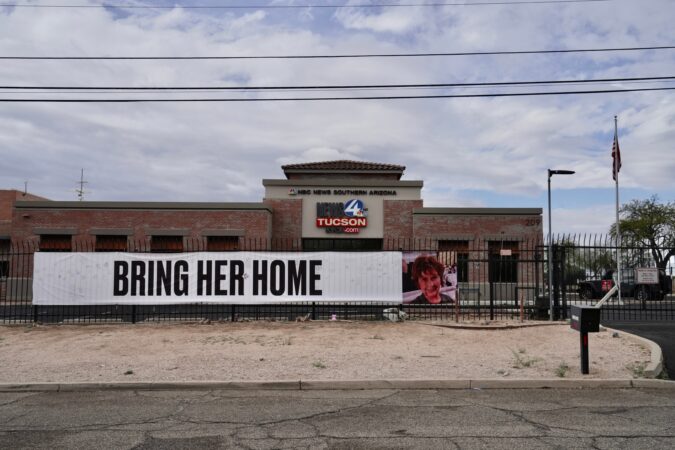
    TUCSON, Ariz. — Law enforcement agents have been gathering more potential evidence as the search for Today show host Savannah Guthrie‘s mother heads into its third week.

    Nancy Guthrie, 84, was last seen at her Arizona home on Jan. 31 and was reported missing the following day. Authorities say her blood was found on the front porch. Purported ransom notes were sent to news outlets, but two deadlines for paying have passed.

    Authorities have expressed concern about Nancy Guthrie’s health because she needs vital daily medicine. She is said to have a pacemaker and have dealt with high blood pressure and heart issues, according to sheriff’s dispatcher audio on broadcastify.com.

    Here’s what to know about her disappearance and the intense search to find her:

    Video of masked man

    The Federal Bureau of Investigation released surveillance videos of a masked person wearing a handgun holster outside Guthrie’s front door in Tucson the night she vanished. A porch camera recorded video of a person with a backpack who was wearing a ski mask, long pants, jacket, and gloves.

    On Thursday, the FBI called the person a suspect. It described him as a man about 5 feet, 9 inches tall with a medium build. The agency said he was carrying a 25-liter “Ozark Trail Hiker Pack” backpack.

    Investigators initially said there was no surveillance video available since Guthrie didn’t have an active subscription to the doorbell camera company. But digital forensics experts kept working to find images in back-end software that might have been lost, corrupted, or inaccessible.

    Studying DNA

    Investigators collected DNA from Guthrie’s property which doesn’t belong to Guthrie or those in close contact with her, the Pima County Sheriff’s Department said. Investigators are working to identify who it belongs to.

    Evidence requiring forensic analysis is being sent to the same out-of-state lab that has been used since the beginning of the case, the department said.

    Investigators found several gloves, the nearest about 2 miles from Guthrie’s home, and submitted them for lab analysis, the sheriff’s department said. It did not specify what type of gloves.

    The sheriff stressed his department is working closely with the FBI.

    Sorting through tips

    The Pima County sheriff and the FBI announced phone numbers and a website to offer tips. Several hundred detectives and agents have been assigned to the case, the sheriff’s department said.

    The FBI said it has collected more than 13,000 tips since Feb. 1, the day Guthrie was reported missing. The sheriff’s department, meanwhile, said it has taken at least 18,000 calls.

    The sheriff’s department has not said whether any tips have advanced the investigation.

    Intensive searches

    Late Friday night, law enforcement sealed off a road about 2 miles from Guthrie’s home as part of their investigation. A parade of sheriff’s and FBI vehicles, including forensics vehicles, passed through the roadblock.

    The two agencies also tagged and towed a Range Rover SUV from a Culver’s restaurant parking lot. The restaurant is just over 2 miles from Nancy Guthrie’s home. This activity took place at the same time the sheriff’s office closed a road just north of the Guthrie home.

    The Pima County Sheriff’s Department confirmed Saturday that a federal court-ordered search warrant was executed at the home Friday in connection with the Guthrie case. The warrant was based on a lead the agency had received. No arrests were made.

    A traffic stop was also conducted, and while someone was questioned, no arrests were made, the sheriff’s office said.

    No additional information was released Saturday.

    On Tuesday, sheriff deputies detained a person for questioning during a traffic stop south of Tucson. Authorities didn’t say what led them to stop the man but confirmed he was released.

    The same day, deputies and FBI agents conducted a court-authorized search in Rio Rico, about an hour’s drive south of the city.

    Family pleas

    Savannah Guthrie, her sister, and her brother have shared on social media multiple video messages to their mother’s purported captor.

    The family’s Instagram videos have shifted in tone from impassioned pleas to whoever may have their mom, saying they want to talk and are even willing to pay a ransom, to bleaker and more desperate requests for the public’s help.

    The latest video on Thursday was simply a home video of their mother and a promise to “never give up on her.”

    A quiet neighborhood

    Nancy Guthrie lived alone in the upscale Catalina Foothills neighborhood, where houses are spaced far apart and set back from the street by long driveways, gates, and dense desert vegetation.

    Savannah Guthrie grew up in Tucson, graduated from the University of Arizona, and once worked at a television station in the city, where her parents settled in the 1970s. She joined Today in 2011.

    In a video, she described her mother as a “loving woman of goodness and light.”
  • Russia poisoned Alexei Navalny with dart frog toxin, European nations say

    Russia poisoned Alexei Navalny with dart frog toxin, European nations say

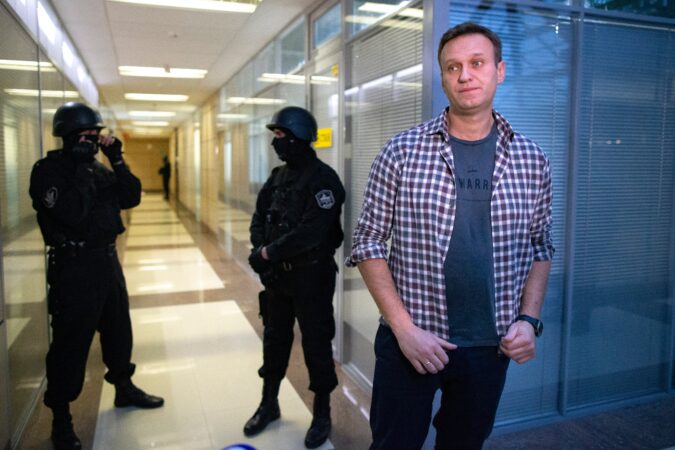
    LONDON — Russian opposition leader Alexei Navalny was poisoned by the Kremlin with a rare and lethal toxin found in the skin of poison dart frogs, five European countries said Saturday.

    The foreign ministries of the U.K., France, Germany, Sweden, and the Netherlands said analysis in European labs of samples taken from Navalny’s body “conclusively confirmed the presence of epibatidine.” It is a neurotoxin secreted by dart frogs in South America that is not found naturally in Russia, they said.

    A joint statement said: “Russia had the means, motive and opportunity to administer this poison.”

    The five countries said they were reporting Russia to the Organization for the Prohibition of Chemical Weapons for a breach of the Chemical Weapons Convention. There was no immediate comment from the organization.

    Navalny, who crusaded against official corruption and staged massive anti-Kremlin protests as President Vladimir Putin’s fiercest foe, died in an Arctic penal colony on Feb. 16, 2024, while serving a 19-year sentence that he believed to be politically motivated.

    “Russia saw Navalny as a threat,” British Foreign Secretary Yvette Cooper said. ”By using this form of poison the Russian state demonstrated the despicable tools it has at its disposal and the overwhelming fear it has of political opposition.”

    French Foreign Minister Jean-Noël Barrot wrote on X that the poisoning of Navalny shows “that Vladimir Putin is prepared to use biological weapons against his own people in order to remain in power.”

    Navalny’s widow says results confirmed her accusations

    The European nations’ assessment came as Navalny’s widow, Yulia Navalnaya, attended the Munich Security Conference in Germany, and just before the second anniversary of Navalny’s death.

    She said last year that two independent labs had found that her husband was poisoned shortly before he died. She has repeatedly blamed Putin for her husband’s death. Russian officials have vehemently denied the accusation.

    Navalnaya said Saturday that she had been “certain from the first day” that her husband had been poisoned, “but now there is proof.”

    “Putin killed Alexei with chemical weapon,” she wrote. She said Putin was “a murderer” who “must be held accountable.”

    Russian authorities said that the politician became ill after a walk and died from natural causes.

    U.K. has accused Russia of previous attacks

    Epibatidine is found naturally in dart frogs in the wild, and can also be manufactured in a lab, which European scientists suspect was the case with the substance used on Navalny. It works on the body in a similar way to nerve agents, causing shortness of breath, convulsions, seizures, a slowed heart rate, and ultimately death.

    Navalny was the target of an earlier poisoning in 2020, with a nerve agent in an attack he blamed on the Kremlin, which always denied involvement. His family and allies fought to have him flown to Germany for treatment and recovery. Five months later, he returned to Russia, where he was immediately arrested and imprisoned for the last three years of his life.

    The U.K. has accused Russia of repeatedly flouting international bans on chemical and biological weapons. It accuses the Kremlin of carrying out a 2018 attack in the English city of Salisbury that targeted a former Russian intelligence officer, Sergei Skripal, with the nerve agent Novichok. Skripal and his daughter became seriously ill, and a British woman, Dawn Sturgess, died after she came across a discarded bottle with traces of the nerve agent.

    A British inquiry concluded that the attack “must have been authorized at the highest level, by President Putin.”

    The Kremlin has denied involvement. Russia also denied poisoning Alexander Litvinenko, a former Russian agent turned Kremlin critic who died in London in 2006, after ingesting the radioactive isotope polonium-210. A British inquiry concluded that two Russian agents killed Litvinenko, and Putin had “probably approved” the operation.

  • Westtown girls’ and boys’ basketball teams secure a Friends Schools League title

    Westtown girls’ and boys’ basketball teams secure a Friends Schools League title

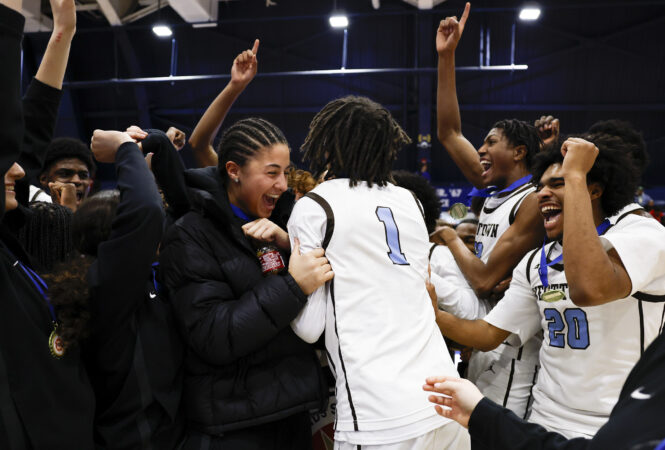
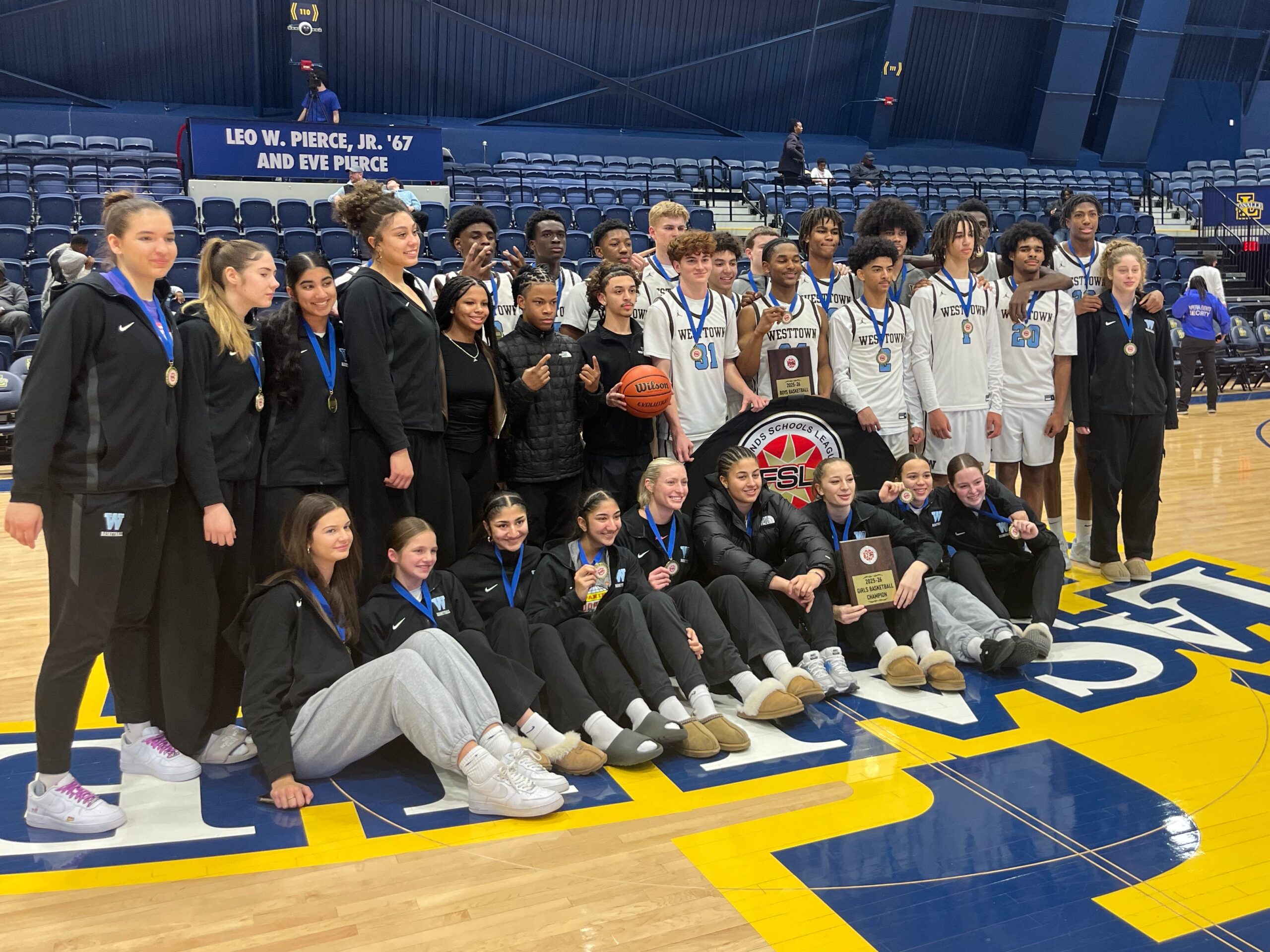
    After the Westtown boys’ basketball team claimed its first Friends Schools League title since 2022 with a 64-54 win over Academy of the New Church on Friday night, the girls’ team joined the medal ceremony at the center court.

    The Westtown girls had their own hardware to show off for a championship photo op. The Moose hung on for a 53-46 win over Friends’ Central hours earlier in the FSL’s championship doubleheader at La Salle’s Glaser Arena.

    It was the sixth consecutive FSL title for the Westtown girls and the first time the teams had shared the court as champions since 2022.

    “I think the girls and the boys teams have a great bond at Westtown,” said guard Rowan Phillips. “It was good to see us win a championship because [the girls] have been doing this for a minute. So we’re just trying to catch up to them.”

    The Westtown boys and girls basketball teams pose with their championship medals. Westtown won both FSL titles in the same year for the first time since 2022.

    Westtown girls outlast Friends’ Central

    While the final score was closer than the Westtown coaching staff would have liked, the Moose scraped by No. 2 seed Friends’ Central behind Jordyn Palmer’s 19 points.

    “I don’t think there was a lot going well for us,” coach Fran Burbidge said. “But I thought we defended and made some really good things [happen] in the second half. … We kept battling.”

    The Phoenix held a 16-8 lead at the end of the first quarter, but the Moose outscored them, 19-6, in the second to take a five-point halftime lead.

    Friends’ Central whittled Westtown’s advantage to one in the fourth, but the Phoenix could not retake the lead.

    While Palmer’s performance did not match her 34-point output from last year’s title game, the 6-foot-2 forward took command in the final minutes.

    Palmer, a nationally ranked recruit in the class of 2027, scored four of the game’s final five points, including a layup to put the Moose up, 50-46, with less than a minute remaining.

    “I think it was at the three-minute mark, I talked with Jordan,” Burbidge said. “I said, ‘All right, things haven’t gone real well up to this point, but now’s your time. … You up for that?’ She said, ‘Yeah, I got it.’”

    Westtown’s Jordyn Palmer (right) lays up the basketball in the fourth quarter on Friday.

    Westtown’s Jada Lynch scored 12 and Atlee Vanesko, a senior guard who is the No. 74 prospect in ESPN’s rankings and is committed to Ohio State, added nine.

    Ryan Carter led Friends’ Central with 16 points, while Zya Small had 15. Like Palmer (No. 6), Carter (No. 12) and Small (No. 47) are in ESPN’s top 60 prospects for 2027.

    Westtown, which is ranked eighth nationally by Sports Illustrated, is the top seed in the PAISAA state tournament. The Moose will host the winner between Agnes Irwin and Episcopal Academy in the quarterfinals.

    Second-seeded Friends’ Central will play the winner of a first-round matchup between Germantown Academy and Penn Charter in the quarterfinals.

    Westtown boys beat Academy of the New Church

    Phillips’ 20-point performance led Westtown boys to be crowned FSL champions.

    The 6-6 sophomore guard transferred to Westtown after spending his freshman year at Archbishop Wood. The FSL title was the first high school championship of any kind for Phillips, who is a four-star prospect ranked 21st nationally in the class of 2028.

    “It feels great,” Phillips said. “It feels good to get one for the coaching staff and to see all the smiles on the guys’ faces for the first ’ship.”

    Marshall Bailey added 15 points for the Moose. Academy of the New Church’s Ryan Warren led all scorers with 22 points, but his outburst was not enough for the Lions to beat Westtown.

    Westtown School’s Rowan Phillips dunks in the fourth quarter past Academy of the New Church’s Antonio Lozada on Friday.

    Friday night’s title was far from the first for coach Seth Berger, who led Westtown to eight consecutive FSL titles from 2014 to 2022. But he noted that this season’s FSL championship was the first title for every player on his team and three of his assistant coaches.

    “I can’t tell you how ecstatic I am for them to experience what it is to be a Friends League champion,” Berger said. “This is such an incredibly tough league, and ANC is a fantastic, tough, and well-coached team. I’m super happy for everybody, and mostly for the first time champs.”

    Westtown is the top seed in the PAISAA state tournament and will host No. 16 seed Kiski School in the tournament’s opening round.

    Seventh-seeded Academy of the New Church will host No. 10 seed Penn Charter in the first round.

  • Source: Former Phillies OF Nick Castellanos agrees to deal with Padres

    Source: Former Phillies OF Nick Castellanos agrees to deal with Padres

    CLEARWATER, Fla. — Nick Castellanos has a new team.

    Two days after the Phillies released him with one year left on his contract, Castellanos agreed Saturday to join the Padres, a major league source confirmed.

    The Phillies will pay all but the major league minimum ($780,000) portion of his $20 million salary for 2026.

    The Phillies were intent on moving on from Castellanos after he clashed last season with manager Rob Thomson. In response to a report that was about to be published by The Athletic, Castellanos detailed a June 16 incident in which he brought a beer into the dugout in the eighth inning of a game in Miami after Thomson replaced him for defense. Castellanos was benched for the next game.

    Castellanos, who ranked among the worst defenders in the sport, also lost his everyday role in right field in August and publicly criticized Thomson in September for “questionable” communication.

    “It was just a difficult situation,” Thomson said recently on Phillies Extra, The Inquirer’s baseball podcast. “The thing with Nick, the bottom line is, he wants to play every day. He wants to play every inning, every day, and you can’t fault him for that. I think I respect him a great deal, just for being that guy.”

    Castellanos played literally every day for most of his time with the Phillies after signing a five-year, $100 million contract in 2022. He started 236 consecutive games, including all 162 in 2024. It was the longest streak by a Phillies player since Pete Rose started 350 consecutive games from 1980 to 1983.

    A two-time All-Star with 250 career homers, Castellanos batted .260 with 82 homers and a .732 OPS for the Phillies. His OPS+ of 100 indicated league-average production relative to all major league hitters.

    Castellanos reportedly will play first base for the first time in his career for the Padres, who also intend to use him as a designated hitter. He could see time in the outfield, although San Diego is well-stocked with Fernando Tatis Jr. and Ramón Laureano in right and left, respectively, with Jackson Merrill in center field.

    The Phillies play the Padres on May 25-27 in San Diego and June 2-4 at Citizens Bank Park.

  • Jersey’s historic diners keep closing. This legislation aims to keep more alive.

    Jersey’s historic diners keep closing. This legislation aims to keep more alive.

    There may be new hope for diners in New Jersey.

    In recent years, a string of the state’s iconic diners have shuttered their doors. New state legislation aims to keep the lights on at those still in business.

    The bill, which was introduced in the New Jersey Senate in January, would provide some diners and other historic restaurants with tax benefits.

    “Diners, and specifically historic diners, are a cornerstone of our great state, having served residents and visitors for many decades. They are part of our culture and our history, and we have a duty to help them thrive,” State Sen. Paul Moriarty of Gloucester County, a sponsor of the bill, said in a statement Thursday.

    The legislation, which would establish a registry of historic diners and restaurants, would give the businesses a tax credit of up to $25,000. Only diners and family-owned restaurants operating for at least 25 years will qualify.

    The bill has been referred to the Senate Budget and Appropriations Committee.

    “It has been heartbreaking to see so many of these well-known establishments close or dramatically cut their hours,” Moriarity said.

    Where have diners closed in New Jersey?

    The origin of the modern diner can be traced back to a horse-drawn lunch wagon in 19th-century Rhode Island and the model has evolved since then. New Jersey has been coined the “diner capital” of the U.S. but has seen closures in recent years due to increased operating expenses, the challenge of finding employees, and the impact of the pandemic.

    The Cherry Hill Diner closed in 2023 after 55 years in business and following the co-owner’s unsuccessful search for a buyer. South Jersey’s Gateway Diner in Gloucester County closed that same year amid construction of the Westville Route 47 Bridge and the state’s acquisition of the site. The Red Lion Diner in Burlington County also sold, making way for a Wawa.

    In January 2024, the Star View Diner in Camden County closed. Last year, the Collingswood Diner shut its doors in August, to be replaced by a marijuana dispensary.

    The trend extended in Philadelphia where the Midtown III closed in 2020. Last year, the Mayfair Diner in Northeast Philadelphia was listed for sale.

  • Daniel Hilferty: We know Philadelphia can shine on the FIFA World Cup stage. Let’s show it.

    Daniel Hilferty: We know Philadelphia can shine on the FIFA World Cup stage. Let’s show it.

    Last June, I was in my office at the Xfinity Mobile Arena when I saw sparks flying on Pattison Avenue. That’s not a metaphor. I saw literal sparks, plumes of red and black smoke, and heard a steady beat of drums. Thousands of people were marching toward Lincoln Financial Field, chanting, with all the gusto in the world, to a soccer match.

    It was 10:30 a.m.

    As a lifelong Philadelphian, I know our love of sports. I’ve witnessed my fair share of tailgates, and in the last three years, I’ve seen that devotion, up close and personal, in my role as governor of the Philadelphia Flyers. But as I stared out my office window and watched this parade of passion, I was struck by the extraordinary power and potential of the FIFA World Cup ’26 in Philadelphia this summer.

    Since 2000, we have experienced some of the largest and most significant events ever to take place in our city, from the papal visit in 2015 to the Democratic National Convention the following year, to the 2017 NFL Draft. I’ve had the privilege of helping to lead many of these civic efforts and, no doubt, 2026 promises to be a game changer with America’s 250th anniversary, PGA Championship, ArtPhilly, and Major League Baseball’s All-Star Week.

    Wydad AC fans cheer during the FIFA Club World Cup match in June against Manchester City FC at Lincoln Financial Field.

    But what I learned last summer, as Moroccan fans flooded the stadium complex, was that soccer is the world’s love language. It unites sports, culture, and national pride. Fans live and breathe every minute from opening kick through stoppage time. There is no arriving late to a match, and there is no movement from one’s seat during it.

    I’m frequently asked, “Are we ready for 2026?” The answer is yes, because Philadelphia hosts major international events so well. But what I’m not sure we are ready for is what a spectacular celebration the FIFA World Cup is.

    I’m not sure we understand just how important this sport — and this tournament — is to the world. And I’m not sure we realize there is no host city more ready to embrace the fans who will come for this party than Philadelphia.

    That’s what makes this so exciting for 2026 — and so important beyond this year.

    FIFA chose Philadelphia to host six of the tournament’s 104 matches here, including a Round of 16 match on July 4. We have been asked to play host to soccer fans from around the globe, especially those who will root for Brazil, the Ivory Coast, Croatia, Curaçao, Ecuador, Haiti, France, Ghana, and a few yet-to-be-determined national teams.

    It’s crucial we recognize that among the many reasons Philadelphia was selected by FIFA was our authentic passion for sports and our unabashed pride for this place we call home.

    The match pennant is held by Stefan Lainer of FC Salzburg as he walks out prior to a FIFA Club World Cup match in June against Real Madrid CF at Lincoln Financial Field.

    We know Philadelphia can shine on the world stage. We know that hundreds of thousands of visitors will walk our streets, dine in our restaurants, and experience our neighborhoods. The global media will spotlight our skyline and highlight our stories. Investment will flow into tourism and community development. But to unlock the economic, cultural, and civic potential of the FIFA World Cup, and of 2026, we need one important thing.

    We need you to be here. We need every Philadelphian to help us welcome the world.

    So, how can you do that?

    Come to the FIFA Fan Festival at Lemon Hill, which will be free to enter during the tournament. And don’t just come once!

    Adopt a rooting interest among the teams coming here, in addition to our U.S. men’s national team.

    When visitors ask where to eat (and they will!), give them your best hidden neighborhood gem.

    Paulinho of Palmeiras scores his team’s first goal past John of Botafogo during a FIFA Club World Cup at Lincoln Financial Field in June.

    If someone asks what they absolutely must do or see when here, tell them your favorite experience, whether it’s in arts and culture, history, culinary, or even shopping.

    And when you’re asked to take a picture at the top of the “Rocky Steps,” happily do it!

    What makes Philadelphia special is its people. It’s why we won our bid in 2022, and it’s why this year has the potential to be a launchpad for Philadelphia as a global destination. This summer, the eyes of the world will be on us, and we want them to see the best of who we are: welcoming, inclusive, fun, proud, and united.

    But to show that, we need you to be here. We need you to be part of the action. And we need you to help us make history together.

    Daniel J. Hilferty is the chairman and CEO of Comcast Spectacor and governor of the Philadelphia Flyers. He has served as cochair of Philadelphia Soccer 2026 since 2021, alongside Michelle Singer.

  • 🚙 An awkward ride | Morning Newsletter

    🚙 An awkward ride | Morning Newsletter

    Good morning.

    We’re promised a sunny Saturday with a high near 44.

    The snow, which is melting at a historically slow pace, has reached a 65-year milestone in Philadelphia for the length of time spent with at least three inches still on the ground.

    Did an Inquirer reader cross the line by hitching a ride from a kind stranger? Who was responsible for the uncomfortable trip?

    Scroll along to read our advice chat, as well as details of a new bill that could help save historic Jersey diners, ChatGPT’s “opinion” of Philadelphia, and our report card for this week in Philly news.

    — Paola Pérez (morningnewsletter@inquirer.com)

    If someone forwarded you this email, sign up for free here.

    What you should know today

    Carpool courtesy

    In our latest advice chat, we’re chatting about a carpool conundrum.

    Consider the following problem, presented to us by a reader:

    A friend and I were waiting for Regional Rail for Center City when the announcement came that the train was canceled. It being freezing weather, I asked other passengers what their transit apps were saying, and what their plans were. A man said he was planning to drive to Center City, and his car was parked in the lot. Before I could stop myself, I asked for a ride. His wife did not like the idea, giving a wide-eyed look, but the man agreed after hesitating.

    The husband was very nice, as was the car, but the wife was irritated the whole way into the city — she never said hi or introduced herself and when we tried to include her in the conversation, she sat silent.

    Was it weird for me to ask for a ride or was it weird for her to treat us like a nuisance?

    For this tricky situation, Inquirer editor Evan Weiss recruited features columnist Stephanie Farr and food and dining reporter Beatrice Forman. They hit several key points: the kindness of strangers, Philly’s helping spirit, and the importance of reading the room. To them, it sounds like all parties involved left the wife out in the cold.

    “My 2026 resolution was to be less of a hater and I do fear this question has set me back,” Beatrice said.

    Read along for my colleagues’ verdicts. And if you’re looking for advice, we’re all ears. Send in your pressing Philadelphia problems here.

    One viewpoint

    As more fare-evasion-resistant gates pop up at SEPTA stations, some riders look to New York Mayor Zohran Mamdani’s efforts to make bus fares free, and wonder why Philadelphia can’t do the same with its transit.

    In this week’s Shackamaxon, Inquirer columnist Daniel Pearson considers the suggestion: “While that all sounds exciting, it isn’t a good idea. Especially not here,” Pearson writes.

    Get Pearson’s take on the cost of free rides, along with his thoughts on the city school district’s facilities plan “going the way of SEPTA’s Bus Revolution.”

    📍 Find the location

    Every Saturday, we’ll show you a photo taken in the Philly area, and you drop a pin where you think it was taken. Closer to the location results in a better score. This week is all about Valentine’s Day. Good luck!

    Think you know where this cherry blossom-filled kiss took place? Our weekly game puts your knowledge of Philly places to the test. Check your answer.

    🧩 Unscramble the anagram

    Hint: A new European destination from PHL

    TROOP

    Email us if you know the answer. We’ll select a reader at random to shout out here.

    Cheers to Jan Dalina, who correctly guessed Friday’s answer: Limerick. Sheetz opened its first Philly-area store in the Montgomery County township — right across from a Wawa. The rivalry rages on. Or, as reader Gerry Frank put it, “Bad for Wawa but good for customers.”

    💡 We were there

    Staff photojournalist Monica Herndon captured these ice sculptures made by artist Emily D. Stewart in Narbeth. Their days are numbered as temperatures rise, making them an “ephemeral” art form.

    Stewart said she was inspired to craft them after reading about Swedish lanterns.

    “I love working with snow in my yard or other public places because it is inherently social,” Stewart said. “As I work, people walk by, cars pull over. I get to have conversations with neighbors and meet new friends.”

    Somewhere on the internet in Philly

    It seems like it was just yesterday that we shared theories of what Nick Castellanos might have said or done to get benched. Now, Phillies fans are bidding him adieu. “This feels like the new Jersey Shore note,” commented Q102 Philly radio host @rach_ontheradio.

    The new Sheetz is also a big talker on our Instagram. Among the hilarious reactions on FOX 29’s Facebook: “Sheetz is just Wawa with a deep fryer.” “this was the first shot in the Gastaurant wars.” “Are you Sheeting me?” (lol)

    Abbott Elementary posted some cute candygrams for Valentine’s Day.

    And as we continue to thaw out, let this reel be a reminder that we’ll be rewarded real soon.

    👋🏽 That’s it for now. I’ll catch up with you again tomorrow.

    By submitting your written, visual, and/or audio contributions, you agree to The Inquirer’s Terms of Use, including the grant of rights in Section 10.

  • At 82, he’s as fit as a 20-year-old. His body holds clues to healthy aging.

    At 82, he’s as fit as a 20-year-old. His body holds clues to healthy aging.

    As a model of successful aging, you can’t beat 82-year-old Juan López García.

    Really, you can’t beat him.

    Sixteen years ago, at age 66, López García first tried running a mile. He’d recently retired after spending his entire working life as a car mechanic in Toledo, Spain. In all those years, he’d never trained as an athlete or exercised much at all.

    He couldn’t finish that first mile. He could barely start it.

    Now, at age 82, López García is the world record holder in the 80-to-84 age group for the 50-kilometer (31-mile) ultramarathon. In 2024, he also won the world marathon championship for his age group, with a time of 3:39:10, setting a European record in the process.

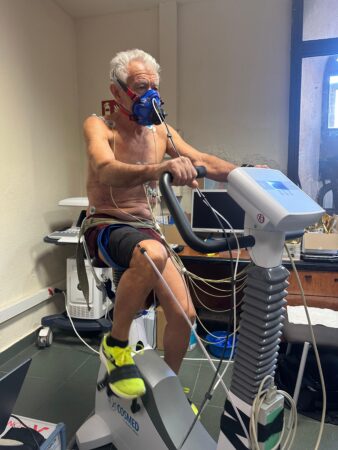
    His outsize success caught the attention of a group of European scientists who study aging. They invited López García to their lab for extensive testing. Their findings, published in January in Frontiers in Physiology, are, at once, revealing and “inspiring,” said Julian Alcazar, an exercise scientist at the University of Castilla-La Mancha in Spain and a co-author of the study.

    The researchers found that López García has the highest aerobic fitness recorded in an octogenarian, matching that of healthy 20-to-30-year-old men. His muscles also absorb and use oxygen unusually well. But in other ways, his biology, biomechanics, and training seem relatively ordinary.

    Taken as a whole, López García’s physiology and performance in his 80s may help upend some common assumptions about what’s possible and normal as we age, the researchers concluded, including whether it’s ever too late for the rest of us to tackle that first mile.

    What sets older athletes apart?

    “There are still many questions about the trajectory of aging,” said Simone Porcelli, an exercise physiologist at the University of Pavia in Italy and senior author of the study.

    To help answer them, he and colleagues in Italy and Spain recently began collaborating on a major research project about whether growing old necessarily involves steep, inevitable declines in muscle, speed, strength, and agency.

    That interest led them, unsurprisingly, to older, elite athletes, whose trajectory of aging can seem almost otherworldly. Deep into their 70s, 80s, and even 90s, these men and women typically preserve or even add to their fitness and strength, and they rarely develop serious illnesses. Most appear younger than their birth years.

    What sets them apart, the researchers wondered? Is it training, genetics, luck? How do their bodies differ from those of their peers, and what lessons can we take from their daily routines?

    An unusual athlete

    Enter López García, a man whose aging has been both ordinary and exceptional. Physically unprepossessing at about 5-foot-2 and 130 pounds, he once spent several weeks walking 500 miles of the Camino de Santiago pilgrimage route in France and Spain. But otherwise, exercise had always been, at best, an afterthought for him. Then, at 66, he tried running and slowly, stubbornly upped his mileage until, at 70, he began to compete, starting with the 800 meters, then longer distances and, eventually, ultras.

    The older he got, the longer and faster he ran.

    “That’s not,” Alcazar said, pausing for words, “ … usual.”

    Intrigued, Alcazar and his Italian colleagues set up López García on a treadmill and a stationary bicycle at their lab and tested his endurance capacity, running economy, fuel usage, power, muscle oxygen uptake, and other measures of how his body responds to high-speed exercise. They also asked about his training and nutrition.

    The greatest fitness ever measured

    Some of the numbers proved eye-popping.

    López García’s VO2 max, the standard gauge of aerobic fitness, was the highest the researchers had seen in someone in their 80s. A measure of how much oxygen the body takes in and delivers to muscles, VO2 max usually declines by about 10% each decade after middle age. But his almost certainly had been rising after he reached his mid-60s and began to train and is similar to someone a quarter his age.

    His muscles also were better able than those of most older — or younger — people to absorb and use that oxygen, allowing López García to run for long periods at a fast, steady pace. He averaged a 9:14 mile during his record-setting ultramarathon. He also produced considerable power during each stride.

    But he didn’t have an especially high lactate threshold or running economy, both of which contribute to endurance and speed. His were good, similar to those of competitive athletes in their 60s, but not spectacular, suggesting he still has room to improve as a runner.

    How he eats and runs

    Even López García was startled by his prowess. His only thought when he started to train, he said, “was to run a little to maintain my health, never to reach the level I have reached today.”

    Now, he runs about 40 miles a week when he’s not readying for a competition and almost double that mileage in the buildup to a race. Most of his workouts are long and moderately taxing. But a few times a week, he does intervals of various lengths, sprinting at near or past race pace for a brief spurt, slowing and then sprinting again. (He has a professional coach guiding his workouts.)

    He also weight-trains a few times a week, mostly at home, primarily with body weight exercises, and eats a “totally normal” Mediterranean-style diet, he said.

    ‘It’s never too late’

    The big question with López García’s or any older athlete’s successful aging is whether the rest of us can replicate it. Or is he somehow unique, gifted with an ideal mix of genes and background unavailable to most people?

    Alcazar suspects it’s both. López García was fortunate to have reached age 66 without serious illnesses or disabilities, Alcazar said, despite being sedentary, which might have been, in large part, because of his genetics, as well as lifestyle.

    But Alcazar and his colleagues also believe López García’s successful aging is not just aspirational but achievable by most of us. “Not so long ago, it wasn’t really seen as possible or a positive for older people to do much exercise,” Alcazar said. López García shows otherwise. “It is not only possible. It should be recommended,” Alcazar said.

    Begin slowly, if you are older and new to exercise, López García said, as he did. “Start by walking fast and then maybe start running, which is very beneficial,” he said.

    “It’s never too late,” Porcelli said. He and the other scientists are continuing to study López García and other aging athletes, as well as more sedentary older people, to understand the molecular and functional differences between them. The researchers expect to publish more studies soon.

    In the meantime, López García’s example is already a lodestar for the researchers. “I’m 35,” Alcazar said. “I’m thinking about how to age well. Having seen him, of course I exercise.”

    For his part, López García has no plans to slow down. “When I think about the number 80,” he said, “I remember my grandparents. At this age, they were like little old people. Today, I do not feel old.”

  • Only 1 in 10 people survive cardiac arrest. Here’s how to help if you’re a bystander.

    Only 1 in 10 people survive cardiac arrest. Here’s how to help if you’re a bystander.

    When Bob Borzillo collapsed a few months ago, he could have become a statistic: More than 350,000 people go into cardiac arrest each year, with a 90% fatality rate. But his wife’s quick response — and a calm 911 dispatcher — saved his life.

    Bystanders could do this too, advocates say.

    But in the Philadelphia region, only 26% of people suffering cardiac arrest receive bystander intervention, said Jeffrey Salvatore, the vice president of community impact for the American Heart Association of Greater Philadelphia. That’s much lower than the national average of 40%.

    Though often used interchangeably, a heart attack and a cardiac arrest are not the same, and they warrant (slightly) different responses.

    A heart attack is a “plumbing issue,” where there’s some blockage in the arteries that supply blood to the heart, Salvatore said.

    But a cardiac arrest is an “electrical problem;” the heart pumps through an electrical system, and when something misfires or stops, that’s when a cardiac arrest occurs. It necessitates CPR.

    “When the heart stops doing its job, we have to take over, and that’s when CPR comes into play,” he said.

    That’s what happened to Borzillo.

    Someone in cardiac arrest is unresponsive, and requires immediate intervention to prevent death.

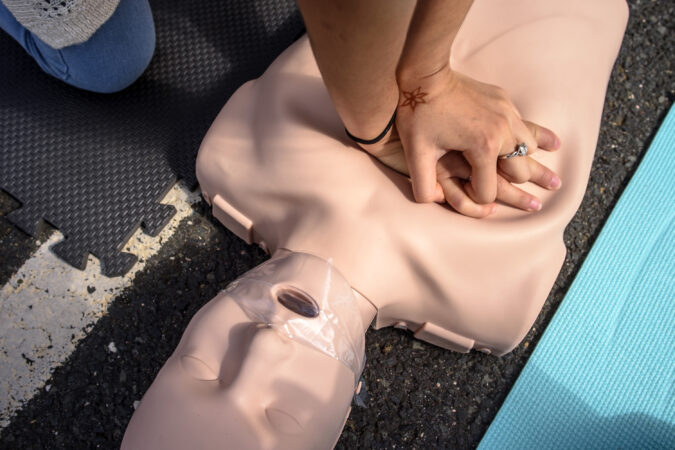
    You can check for unresponsiveness by tapping someone on the shoulder, rubbing their chest, or yelling loudly. If they don’t respond, call 911, and begin hands-only CPR, pressing hard and fast in the center of the chest.

    In many cases, 911 operators have been trained to walk callers through delivering CPR.

    A heart attack can lead to cardiac arrest, but it can also happen separately, and never result in the heart stopping, Salvatore said.

    If someone is exhibiting signs of a heart attack — chest discomfort; or discomfort in other areas of the upper body, such as arms, back, neck, jaw and stomach; shortness of breath; cold sweats; light-headedness; rapid or irregular heartbeat — call 911, Salvatore said.

    The American Heart Association is seeking to expand training in hands-only CPR for adults and teens, to increase low bystander-intervention rates.

    Just doing chest compressions — no mouth-to-mouth contact required — and calling 911 can double someone’s chance of survival, Salvatore said.

    “They are the first responder before EMS gets to the scene,” he said.

    For more information, or to get CPR certified, you can go to cpr.heart.org

  • A Chesco man’s heart stopped. His wife’s fast response — and a steady 911 dispatcher — saved him.

    A Chesco man’s heart stopped. His wife’s fast response — and a steady 911 dispatcher — saved him.

    Bob Borzillo has a deal with his wife Terri: She puts everything in the dishwasher, but he has to unload it.

    That’s what he was doing on a night in November, after the couple had arrived back home in Willistown from Barcelona. He was putting the very last thing — a wine glass — away. That’s where the 65-year-old’s memory stops.

    But for Terri Borzillo, also 65, that’s where a terrifying ordeal began.

    She had been just a few feet away, writing in her journal as her husband unloaded the dishwasher in the background. She heard him groan and glass shatter. She got up to help him, expecting to find him picking up glass shards. Instead she found him on the floor, unresponsive.

    What they did not know then was that a piece of plaque had broken off, completely blocking his artery. He was in cardiac arrest — not breathing, no pulse. After having walked around Barcelona, averaging 18,000 steps a day, he had no symptoms, no warning signs, until he collapsed in their kitchen.

    More than 350,000 people annually experience cardiac arrest outside hospitals, and only one in 10 survives, said Jeffrey Salvatore, the vice president of community impact for the American Heart Association of Greater Philadelphia.

    The association has been leading a campaign to teach more teens and adults hands-only CPR to increase bystander response rates. Nationally, 40% of those who experience cardiac arrest each year are helped by a bystander. The rate in the Philadelphia region is significantly lower: less than 26%.

    The association also holds telecommunicator CPR training, so dispatchers can instruct people over the phone on how to provide CPR, said Salvatore.

    “Cardiac arrest is 100% fatal without any intervention. If nobody does anything for the person, there’s no chance of survival,” he said. “By just calling 911 and just doing compressions, you can still double someone’s chance of survival.”

    Terri Borzillo immediately went into action, calling 911.

    “I think my husband’s having a heart attack,” she remembers screaming to the dispatcher.

    Calmly, the Chester County dispatcher, Kayla Wettlaufer, had Borzillo describe her husband’s condition.

    “She said, ‘OK, lady, get control of yourself. We’re going to do this together,’” Borzillo recalls. “By the command in her voice, and because there was no option, I had to do this.”

    Wettlaufer led Borzillo through CPR over the phone — telling her where to place her hands, when to compress. Wettlaufer even told her when it was time to unlock the front door so the nearby first responders could get in.

    “It was horrible to watch my husband in that condition, and it was horrible to know that I had the balance of his life in my hands,” Borzillo said.

    With Wetlaufer guiding her — and, she swears, every doctor in heaven — she did compressions until the EMTs arrived, using paddles to restart his heart.

    As the EMTs wheeled Bob Borzillo out, Terri Borzillo retrieved the bottles of holy water they had picked up at Our Lady Lourdes in Barcelona. She sprayed her husband and the EMTs.

    It got her an odd look, but, she said, “For somebody who has deep faith, I know all the angels and saints were there with us, and we’re smiling today instead of crying,” she said.

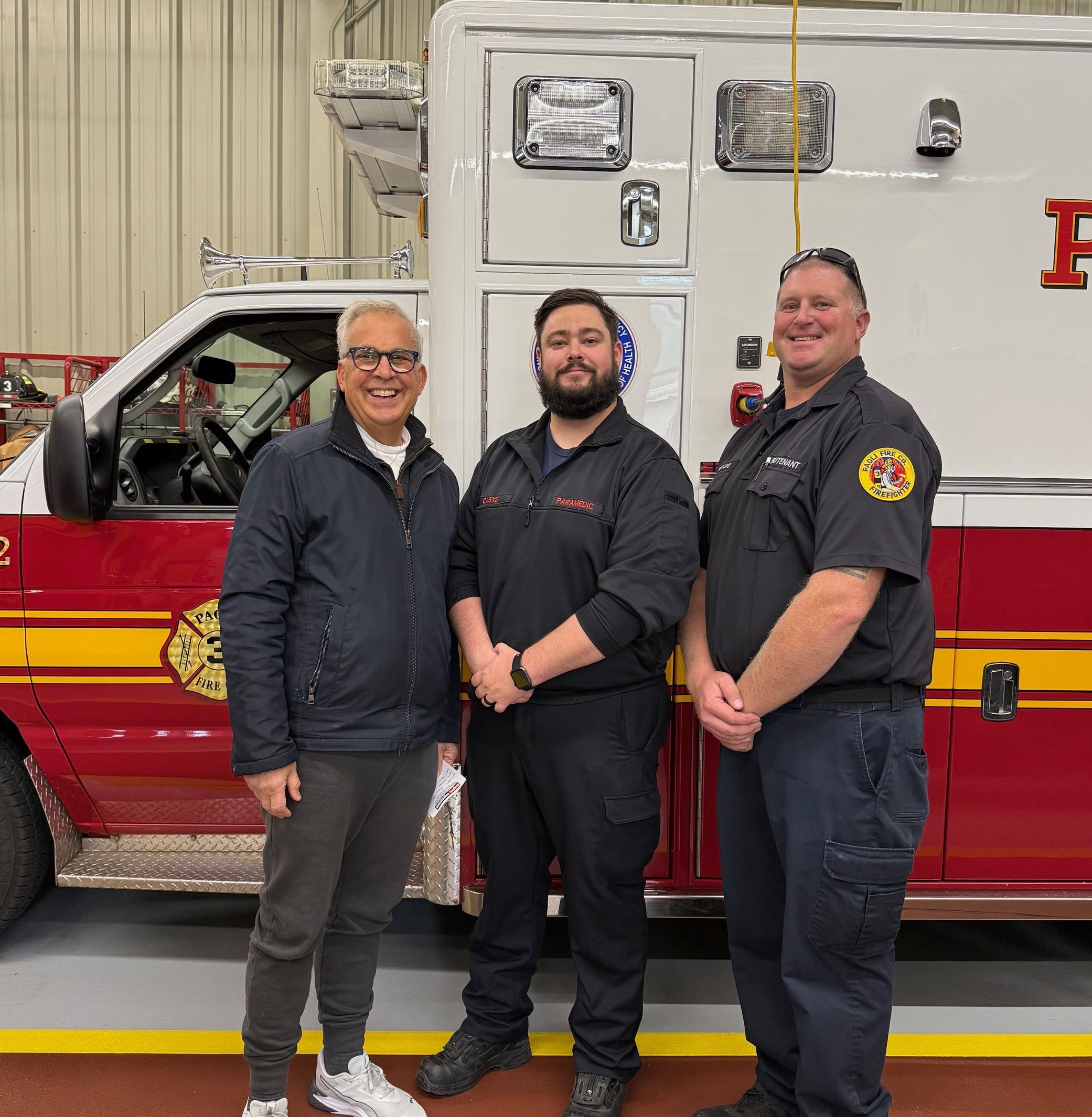
    Bob Borzillo, left, takes a photo with two first responders who arrived to his home in November when he was in cardiac arrest.

    Terri Borzillo’s faith runs back to their first date, more than 40 years ago. It was 1982, she was single, and her coworker asked her if she’d like to meet a nice guy. What do I have to lose? she thought. Acting as an intermediary, that colleague — a friend of Bob Borzillo’s family — told Bob about Terri. The young man’s father happened to know Terri’s father. He told his son, “Call that girl.” Bob listened.

    On their blind date, Terri Borzillo knew he was the one. There was something to how he talked, explaining — of all things — turbine generators.

    He really was a nice guy, she thought. (“I was a nerd,” he said.) She felt something click. Dear God, she thought, let him ask me out again.

    One big Italian wedding, three sons, and seven grandchildren later, the two have lived in Chester County for more than 40 years.

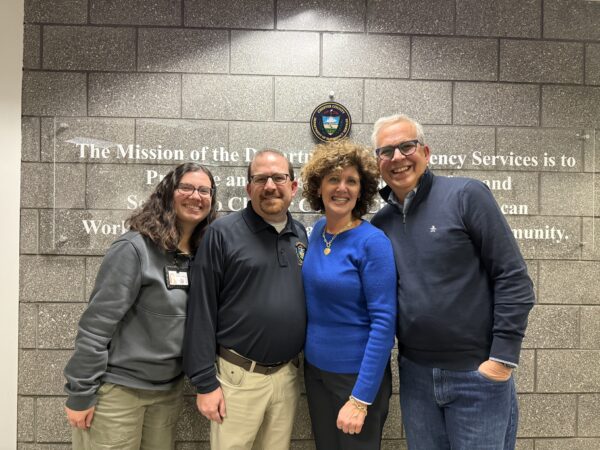
    This experience has made him proud to be a county resident, Bob Borzillo said. After he was released from the hospital a few days later, Borzillo went to the firehouse and met the first responders. He and his wife met Wettlaufer, and toured her workplace.

    Wettlaufer, an operator who has been with the county for almost five years and was honored by the county this month, was the start of a well-oiled machine, Borzillo said. Their proximity to the firehouse and Paoli Hospital helped get him professional care quickly.

    “If the Eagles offense executed that efficiently, we would have been in the Super Bowl,” he said.

    Terri Borzillo said meeting Wetlaufer helped ease the trauma of the situation.

    “She’s beautiful. And what they do there is amazing, and they get all of the credit,” she said.

    Saturday marks three months since Bob Borzillo’s cardiac arrest. He and his wife are in Florida while he recovers, and will celebrate Valentine’s Day with friends from Chester County.

    “Certainly the heart and what Valentine represents has a special meaning this year, and I am blessed to be here to celebrate it,” he said in an email.

    This suburban content is produced with support from the Leslie Miller and Richard Worley Foundation and The Lenfest Institute for Journalism. Editorial content is created independently of the project donors. Gifts to support The Inquirer’s high-impact journalism can be made at inquirer.com/donate. A list of Lenfest Institute donors can be found at lenfestinstitute.org/supporters.