Blog

  • The story behind a colonial-era grave site hidden in residential Cherry Hill

    The story behind a colonial-era grave site hidden in residential Cherry Hill

    Giancarlo Brugnolo moved to Cherry Hill’s Woodcrest neighborhood in 2014, but it wasn’t until last year that he heard about the centuries-old cemetery just a stone’s throw away from his house. When friends first mentioned it, he assumed they were joking.

    “I was like, ‘What are you talking about? What graveyard?’” he remembers saying. “We live in a residential neighborhood, there’s no way there’s a graveyard.”

    Yet tucked away under sassafras trees and in the shade of neighboring houses, members of one of South Jersey’s first colonial families are laid to rest.

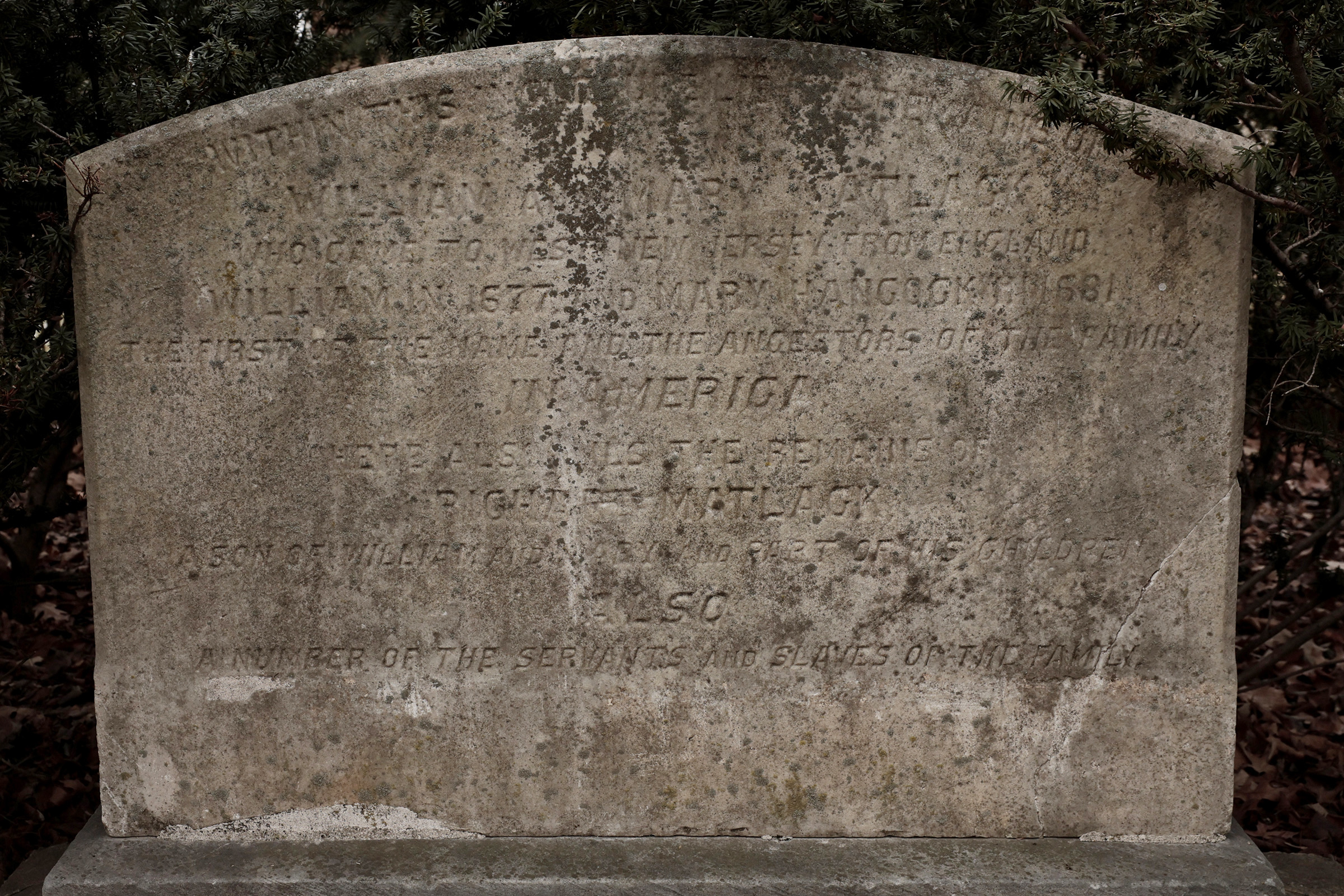
    The Matlack Family Cemetery is located on the 500 block of Cherry Hill’s Balsam Road. At the small grave site lie the remains of William and Mary Matlack, some of their descendants, and an unspecified number of servants and enslaved people. William Matlack is believed to have died in 1738, at around age 90, and Mary Matlack in 1728, at around age 62.

    Wanting to know more about the cemetery, Brugnolo took his question to Curious Cherry Hill, The Inquirer’s forum for answering local questions. Who was the Matlack family, and how did their grave site end up in a residential neighborhood?

    » ASK US: Have something you’re wondering about in Cherry Hill? Submit your Curious Cherry Hill question here.

    William Matlack, a carpenter, came to New Jersey in 1677 from Cropwell Bishop in Nottinghamshire, England. He traveled to the Americas on a ship named the Kent as an indentured servant to Thomas Ollive and Daniel Wills. Wills was appointed as the commissioner of West Jersey and sent to make deals with the Lenni-Lenape people who had long lived on the land. Many of the Kent’s travelers, including Matlack, were Quakers. The ship traversed the Atlantic Ocean from England, ultimately heading up the Delaware River to present-day Burlington County. Matlack is said to have been the first European settler to put his foot on the shore of what is now the city of Burlington (however some historians believe Swedes settled there a half-century earlier).

    At the time Matlack and Wills arrived in South Jersey, the spot was “a bleak haven” from their English homes, covered in dense forest and impenetrable at night, according to a 1970 article in the Courier-Post. Yet South Jersey stood out as a “long-sought destination thousands of miles from the brutality of bigots” in England who persecuted them for their Quaker practices.

    Matlack owed Wills four years of servitude and, in 1681, was granted 100 acres of land in return. While working for Wills, Matlack helped build two of the first houses and the first corn mill in the area.

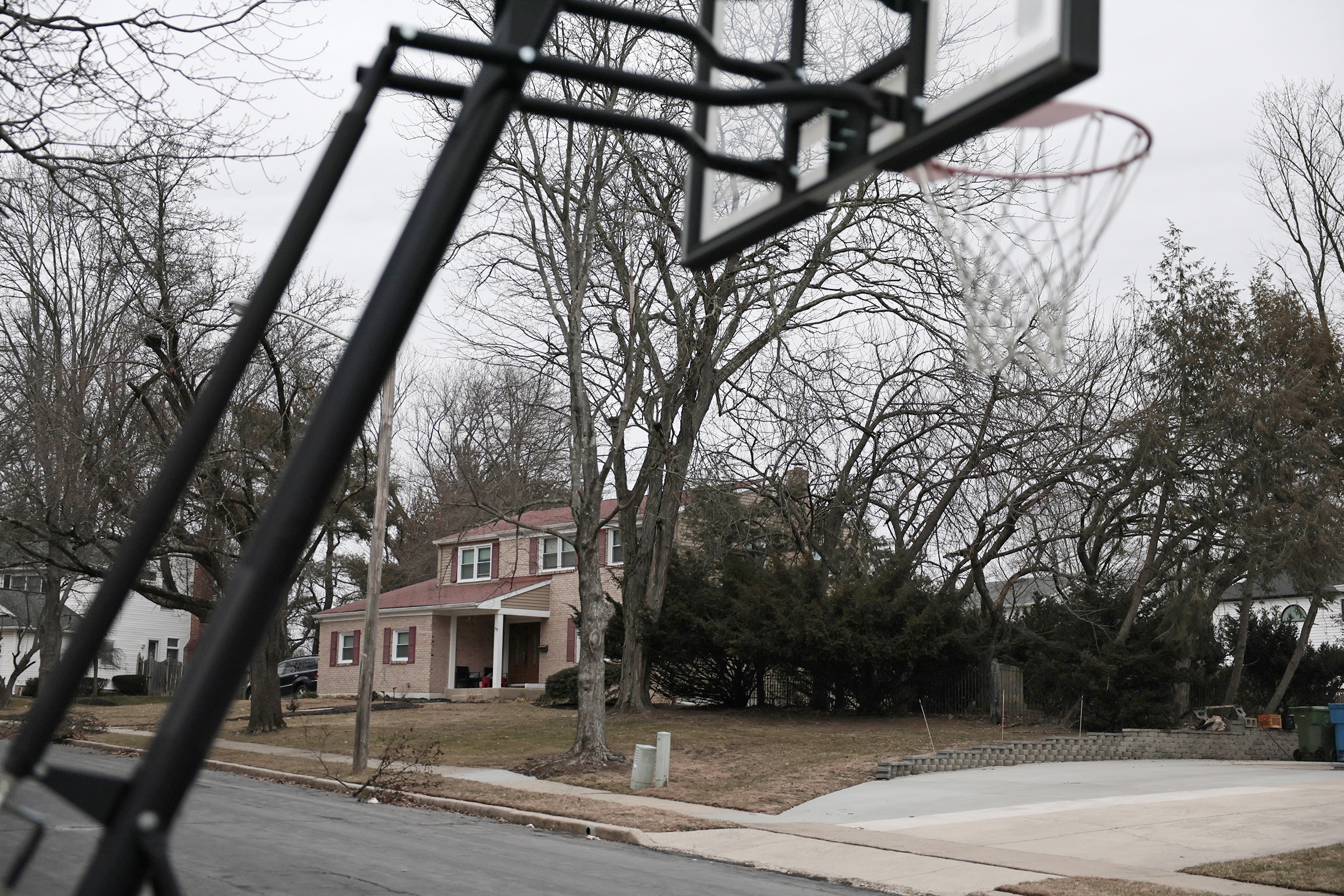
    The headstone in the Matlack Family Cemetery on the 500 block of Balsam Road in Cherry Hill.

    Matlack would become the patriarch to one of the largest families in colonial South Jersey. In the early 1680s he married Mary Hancock, who had recently come to New Jersey from England with her brother, Timothy. At the time of their marriage, William Matlack was 34 and Mary Matlack was 16. The Matlacks lived between two branches of Pennsauken Creek in present-day Maple Shade. William Matlack would come to own around 1,500 acres of land across South Jersey. The couple had six sons, three daughters, and an estimated 40 grandchildren.

    Though Quakers became one of the first religious movements to reject slavery, many Quakers in early America, including the Matlacks, enslaved people. Research turned up little information about the enslaved people buried at the Matlack grave site. Birth and death records for enslaved people were often poorly kept in the age of chattel slavery, making it difficult to conduct genealogical research and historical inquiries into the lives of people held in slavery.

    We do know, however, that slavery was pervasive in Philadelphia’s suburbs during and after the colonial era. Despite abolitionist activism, much of which was driven by Quakers in the Philadelphia region, thousands of people remained enslaved in New Jersey through the turn of the nineteenth century. New Jersey was the last Northern state to officially abolish slavery in 1866, when Gov. Marcus Ward signed a state constitutional amendment outlawing the institution. The amendment followed the 1865 ratification of the 13th Amendment to the U.S. Constitution, which New Jersey had initially rejected.

    The Matlack Family Cemetery is a small graveyard in a residential neighborhood.

    One well-known descendant of the Matlacks was Timothy Matlack, a politician and delegate to the Second Continental Congress who inscribed the Declaration of Independence. In Facebook groups and blog posts, dozens of residents of the Mid-Atlantic region say they are descendants of the first New Jersey Matlacks — likely claims given the expansive Matlack family tree, but difficult to prove.

    William and Mary Matlack were not originally buried at the Balsam Road site, according to archival materials from the Rancocas Valley Chapter of the National Society of The Colonial Dames of America. They were initially buried on their son Richard’s farm near Springdale and Evesham Roads and were moved to the Balsam Road grave site in the late 1800s.

    The grave was discovered by a Girl Scout troop on a camping trip in what was then an apple orchard, according to a Courier-Post article from 1990. The housing development surrounding the grave site went up in 1972, but the graveyard was left in tact due to its historical value. Today, it’s owned and maintained by the township.

    This suburban content is produced with support from the Leslie Miller and Richard Worley Foundation and The Lenfest Institute for Journalism. Editorial content is created independently of the project donors. Gifts to support The Inquirer’s high-impact journalism can be made at inquirer.com/donate. A list of Lenfest Institute donors can be found at lenfestinstitute.org/supporters.

  • How Bo Bichette could wind up with the Phillies

    How Bo Bichette could wind up with the Phillies

    There is a long list of reasons that you shouldn’t waste your daydreams on visions of Bo Bichette wearing red pinstripes and hitting behind Bryce Harper. The Phillies’ reported interest in the Blue Jays star only barely distinguishes them from the 29 other major league teams that likewise are interested in signing very good baseball players at the right price. Interest is not a differentiator. You can’t buy a Bentley with affection.

    Circumstance, context, and logic suggest that Bichette will end up signing elsewhere. And that’s great if you’re into those things. The rest of us will be over here indulging ourselves. On the 12th day of Christmas, the New York Post’s Jon Heyman gave to us a vaguely worded, thinly sourced report connecting the Phillies to a big-ticket free agent. What are we supposed to do? Underreact?

    The least we can do is try to proceed with some level of dignity and decorum. This often is easiest to do under the guise of asking questions. There are no dumb questions, only dumb questioners, right? So let’s fire away.

    The Phillies already have a shortstop in Trea Turner. Presumably, Bo Bichette would move to second base in any scenario that brought him to Philadelphia.

    Only a few weeks ago, Dave Dombrowski sounded like a man who didn’t expect any more major additions to his roster. What would have caused that to change? Is Bitcoin about to spike again?

    This is the however-many-million-dollar question. Five weeks out from pitchers and catchers reporting, the roster looks pretty close to set. Ken Rosenthal of The Athletic reported Monday that the Phillies still were in the market for another right-handed-hitting outfielder, which is encouraging, because they really could use a viable Plan B in case Justin Crawford turns out to be late-stage Juan Pierre or Ben Revere. They don’t need anything major. Veteran Randal Grichuk, whom the report mentioned specifically, would make a lot of sense. Otherwise, there isn’t an obvious opening that would compel the Phillies to make an offer with the sort of necessity premium that often distinguishes a winning bid from the rest.

    One thing that may have changed is Dombrowski’s evaluation of the market. Not much has happened since the last time he spoke. Not only do most of the major free agents remain unsigned, we aren’t even seeing smoke. Bichette, Cubs outfielder Kyle Tucker, Red Sox third baseman Alex Bregman, Yankees outfielder Cody Bellinger, Mariners third baseman Eugenio Suárez, not to mention Ranger Suárez and the rest of the starting pitchers … the complete lack of movement at the top of the market is abnormal.

    We’ve seen slow-moving markets before. But there is some reason to believe that this one is reaching a point of collapse. The money may not be out there this year. Virtually all of the big-market teams already are at or above the luxury tax threshold with the money on their books. Last year, the Phillies were at a disadvantage because teams like the Mets, Red Sox, and Cubs were in payroll expansion mode. Other teams simply had more money to spend than they did. That may not be the case this year.

    The Cubs still are a potential market maker, with roughly $80 million in space before the first luxury tax threshold. It shouldn’t surprise anybody if they make a flurry of moves that alters the current narrative about the NL landscape. Same goes for the Mets, who presumably have whatever money they would have paid to Pete Alonso and Edwin Díaz before both signed elsewhere. The Orioles are always lingering. The Blue Jays are pushing $300 million but seem to be operating with the taste of blood in their mouths. So there still is plenty of reason to doubt that the Phillies can win via aggression.

    But there are a lot of players out there. And there don’t seem to be the usual dark-horse lurkers among the midmarket clubs. It’s worth noting the situation in Minnesota, where the Twins are shedding payroll as if they need to make rent. The middle class might be content to sit this one out, especially with next year’s labor talks looming.

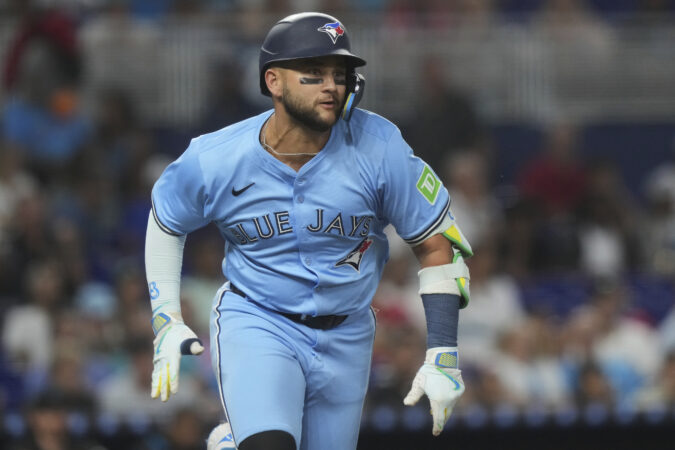
    Bo Bichette was an MVP-level hitter after he broke out of an extended slump last season.

    So Bichette might be more affordable than the Phillies thought?

    Yes and no. It’s awfully hard to project a contract for a player who is an anomaly in terms of his age (only 28 this season), career production (24 home runs per 162 games and 121 OPS+) and pedigree (Dante Bichette’s kid), but who also is less than a year removed from a brutal 18-month stretch in which he posted a .651 OPS in 651 plate appearances. Trea Turner’s career numbers were nearly identical (minus the steals) when the Phillies signed him to an 11-year, $300 million contract heading into his 30-year-old season. FanGraphs had Bichette projected at seven years and $189 million entering the offseason. ESPN recently updated its projection to five years and $150 million. If that second number is close to reality, the Phillies may well readjust their expectations.

    What’s this about Bichette posting a .651 OPS in 651 plate appearances? Isn’t that a concern?

    It is. But it also might be an opportunity, if other teams are worried. Once he snapped out of his funk early last season, Bichette was an MVP-level hitter. In his last 102 games, he hit .325/.372/.528 with 17 home runs. From the right side of the plate. While playing middle infield. He has always had the kind of skill set scouts drool over. Bichette’s contact rate ranked in the top 20% of qualified hitters last season. At 83.2%, it would have ranked third among Phillies regulars, behind Alec Bohm (87%) and Bryson Stott (86.1%). His chase rate also ranked at the high end of the spectrum — in a bad way. Only 18 qualified hitters chased more often: Bichette’s 37.9% ranked just behind Bryce Harper (38.1%).

    That said, Bichette did make some steady progress last season. It’s fair to wonder if he emerged from his slump as a different hitter. Only 10 hitters in baseball had a lower strikeout rate after the All-Star Break — his 11.1% was a dramatic improvement over an already-solid roughly 15%. He coupled that with a huge boost in his walk rate, from an anemic 5.5% to a slightly-better-than-average 8.8%. If the Phillies think they can get a $250 million player for $175 million, that might change things.

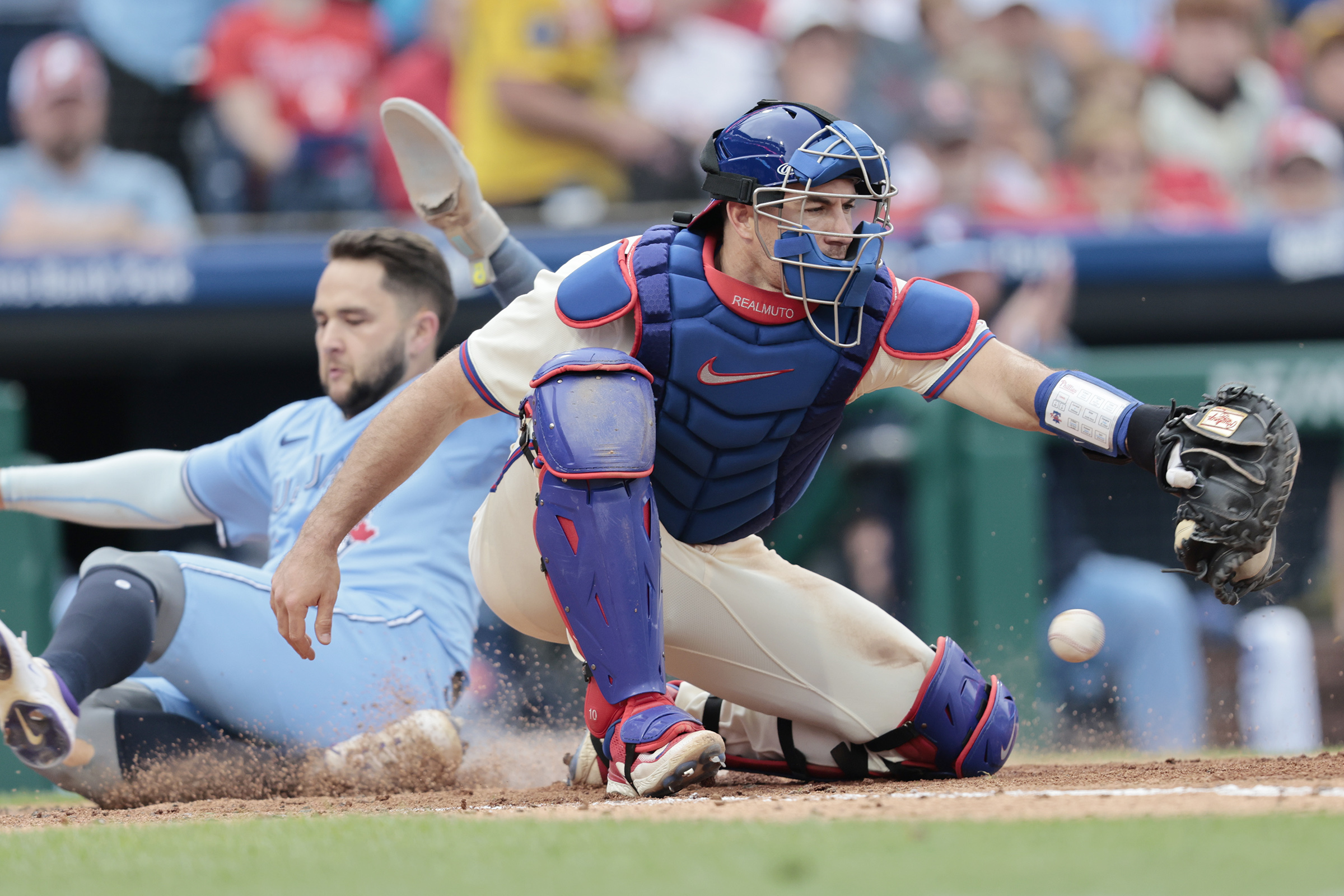
    Bo Bichette scoring a run for the Blue Jays in June as Phillies catcher J.T. Realmuto tries to catch the throw.

    Why wouldn’t the Blue Jays just match any offer?

    I guess Christmas is over, isn’t it? Assuming Bichette likes Toronto, which seems to be the case, and the Blue Jays are willing to spend, which seems to be the case, the Phillies presumably would need to land Bichette the old-fashioned way: by guaranteeing him more than anybody else is willing to guarantee him. They have close to $60 million coming off the books next season and theoretically would be able to accommodate another big deal, biting the bullet on the luxury tax this season while freeing up $15 million to $20 million by trading Bohm and Edmundo Sosa and finding someone to pay a little bit of Nick Castellanos’ salary.

    But, then, we’d be back where we started. Realizing that Bichette probably won’t be here.

  • Eagles vs. 49ers: These numbers and trends could impact Sunday’s result

    Eagles vs. 49ers: These numbers and trends could impact Sunday’s result

    The Eagles and San Francisco 49ers meet at Lincoln Financial Field in the playoffs Sunday for the second time in four seasons.

    And while some things have changed since that NFC championship game won by the Eagles in January 2023, others remain the same.

    It’s a high-powered 49ers offense against a pretty good Eagles defense, and a fairly average Eagles offense against a pretty unremarkable 49ers defense.

    Who has the edge? Oddsmakers say the Eagles. But here’s a look at some numbers and trends that could play a part in the final result Sunday:

    2.93

    This isn’t a shocking development, but news flash: Hall of Fame tackles are a big deal.

    The Eagles sorely miss right tackle Lane Johnson whenever he’s not in the lineup. (Luckily for them, he’s on track to return Sunday.) Likewise, the 49ers operate their offense at a different level when Trent Williams is starting at left tackle compared to when they’re forced to plug in a 28-year-old journeyman who made his first NFL start last week. All due respect to Austen Pleasants.

    Brock Purdy entered last week as one of only two quarterbacks in the NFL (the other being Caleb Williams) to average a time to throw of more than three seconds. But without Williams, who missed Week 18 with a hamstring injury, Purdy’s average time to throw was 2.93 seconds — his second-lowest number in nine games this season, according to Next Gen Stats.

    49ers quarterback Brock Purdy passes against the Eagles in 2023.

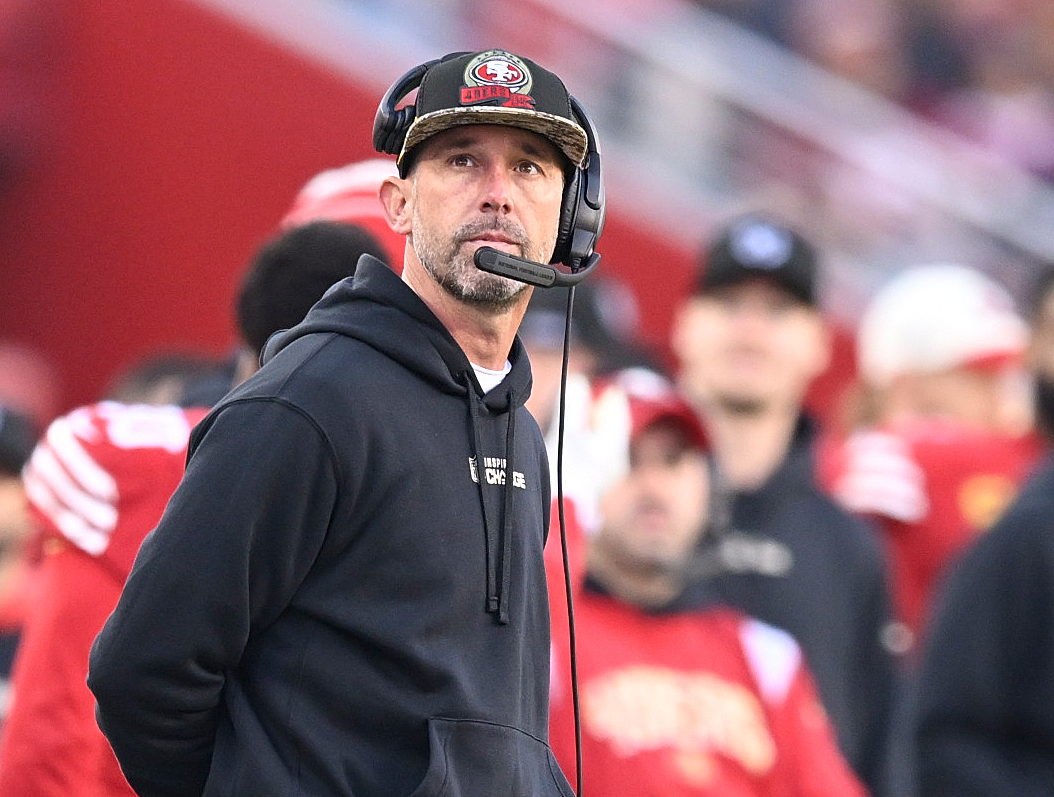
    Williams will be evaluated throughout the week, 49ers coach Kyle Shanahan told reporters on Monday, and his absence obviously was a big one.

    The caveat here is that Seattle has one of the best defenses in the NFL, but without Williams, Purdy was pressured on 34.1% of his drop backs Saturday. That’s slightly above the 49ers’ average pressure rate allowed of 31.9% and much higher than San Francisco’s previous two contests (23.7%, 22.2%). Only nine teams protect the quarterback at a better rate than San Francisco does.

    The Eagles, meanwhile, have a 35% pressure rate on opposing quarterbacks. Their ability to disrupt the pocket for Purdy, and make him get rid of the ball quicker than he likes, will be a key factor.

    70.45%

    The Eagles might have the 24th-ranked offense in yards per game, but they are the best in the NFL at converting red zone opportunities into touchdowns. It’s getting to the red zone that has been a problem.

    The Eagles score touchdowns on 70.45% of their red zone trips. Cincinnati ranked second during the regular season at 66.67%. The difference between the Eagles and some of the teams at the bottom is drastic. Houston, for example, had the worst conversion rate for a playoff team at 46.3%, 30th in the league.

    There are a lot of things that have gone wrong in Kevin Patullo’s first season as Eagles offensive coordinator, but his red zone designs are something to hang his hat on. He probably helped Dallas Goedert earn some extra money in his next contract, too, since Goedert is up to a career-high 11 touchdowns and all but one of them were in the red zone (many of them in the deep red zone).

    Dallas Goedert is having a career year at age 31 thanks to his usage in the red zone.

    The Eagles’ ability to move the ball against a defensive unit that has struggled and is a bit banged-up will be a big factor, but once they get in the red zone, San Francisco’s ability to hold the Eagles to field goals will be critical. The 49ers have the 12th-ranked red zone defense and allow touchdowns on 53.85% of red zone trips.

    413

    And you thought Saquon Barkley had too many touches during his record-breaking 2024 season with the Eagles?

    Christian McCaffrey played in all 17 of the 49ers’ games this season and finished with 311 carries and 102 receptions. His 413 touches during the regular season were 44 more than the next player on the list (Jonathan Taylor).

    That’s a lot of work, and maybe it’s not such a coincidence that Saturday was one of the least productive games of McCaffrey’s NFL career. Again, Seattle’s defense is elite, but McCaffrey still managed 142 all-purpose yards when they met in Week 1. He struggled to get anything going on Saturday with just 23 yards on eight carries and six catches for 34 yards.

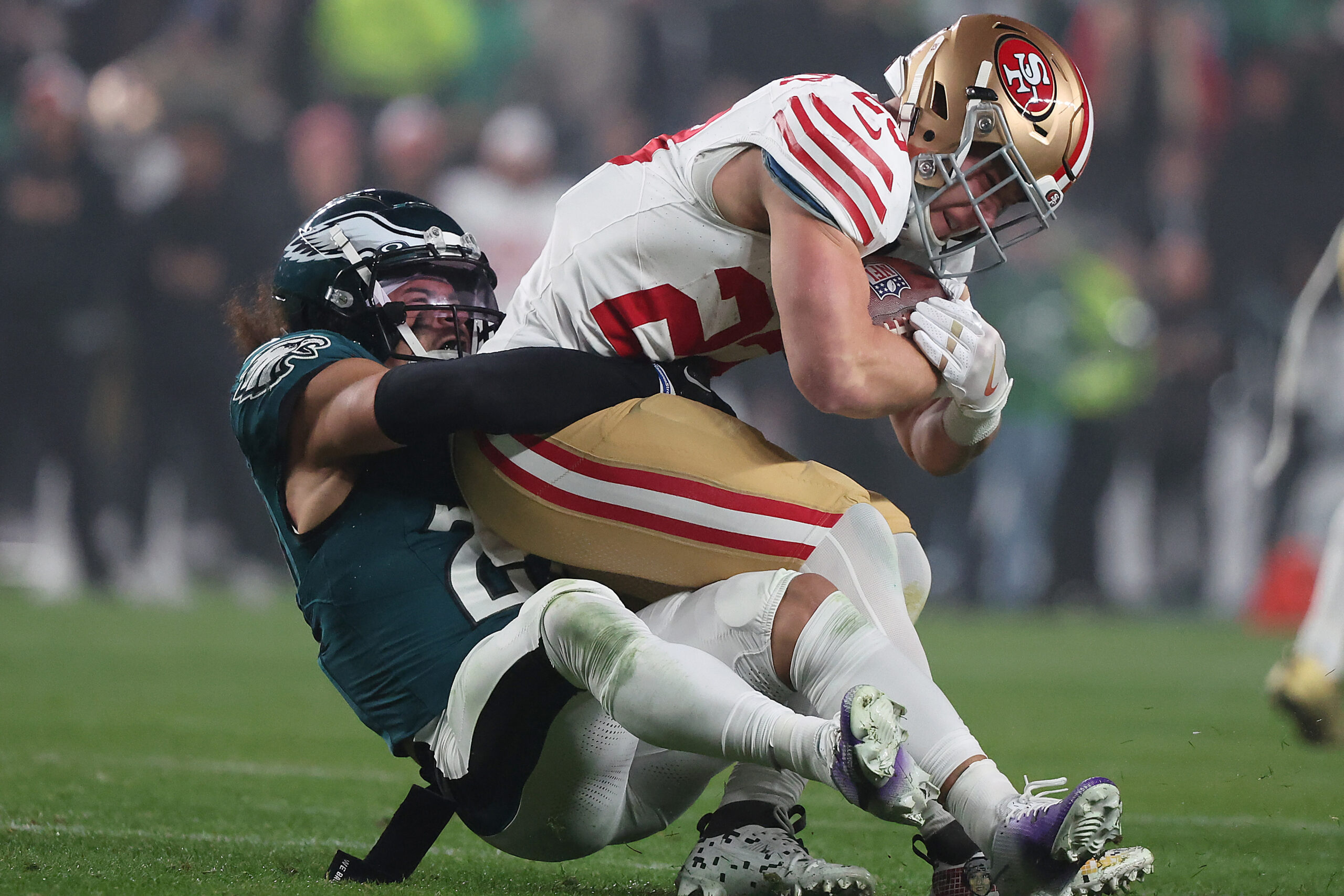
    Eagles safety Sydney Brown tackles 49ers running back Christian McCaffrey in a 2023 meeting.

    Purdy had trouble moving the ball down the field, and once he checked down to McCaffrey, the running back who was second in the league in yards from scrimmage didn’t find a whole lot of room to run.

    The Eagles certainly will be studying the film to see what Seattle did well and try to emulate it. Slowing McCaffrey down and keeping San Francisco in third-and-long scenarios will make everything easier for Vic Fangio’s defense.

    1

    For the first time all season, the Eagles will have a second consecutive home game. Hard to believe. How did the NFL treat its Super Bowl champion from a season ago? It made the Eagles the first champion in league history to not have back-to-back home games on the schedule.

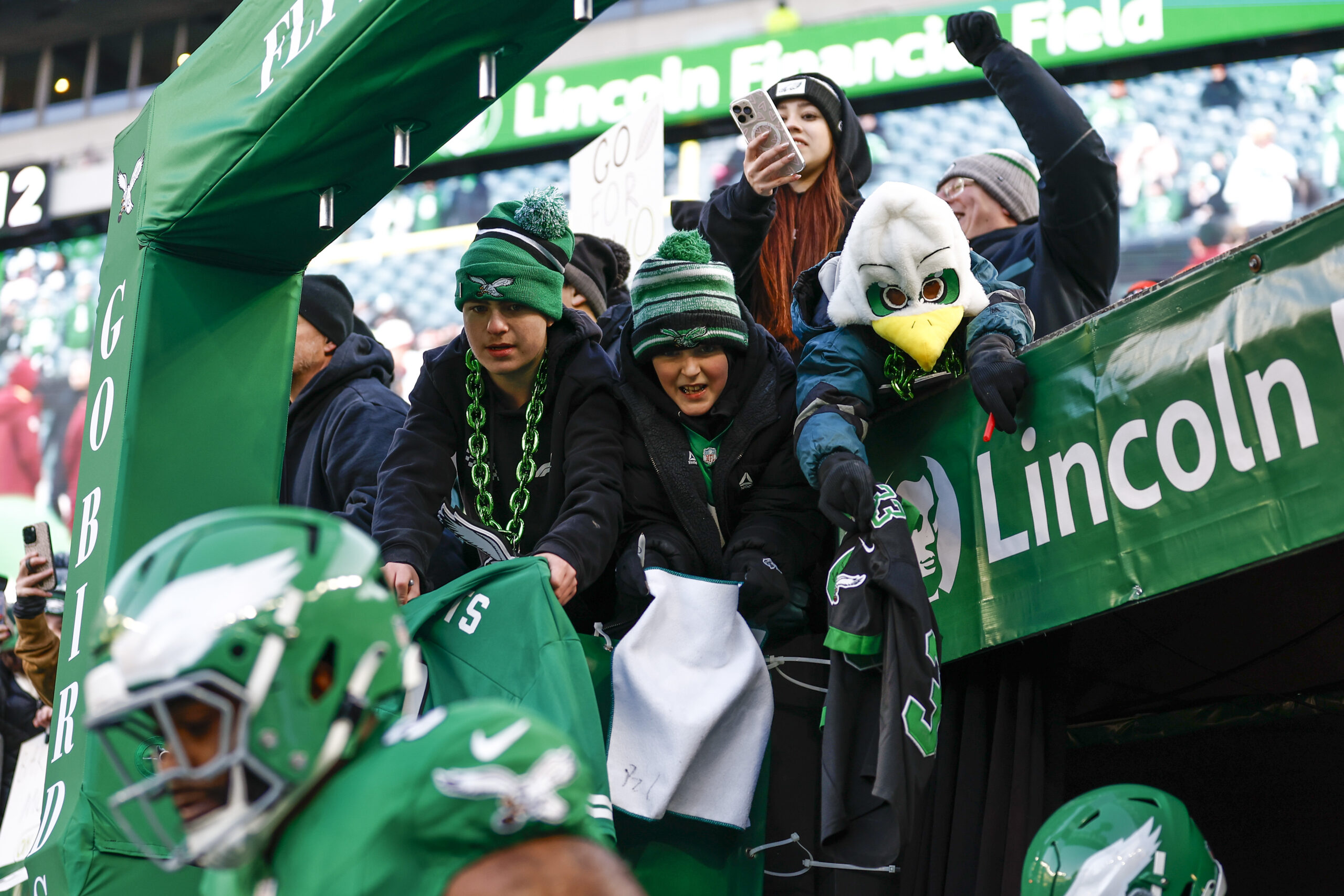
    Eagles fans cheer as players take the field for warmups at Lincoln Financial Field last Sunday.

    Home field for the Eagles has been a big deal in the playoffs, which may sting come next week if the Eagles advance and have to travel to Chicago for a road divisional-round matchup.

    The Eagles, with Nick Sirianni and Jalen Hurts in charge, are 5-0 with a plus-105 point differential in home playoff games. The 31-7 NFC title game victory over the 49ers during the 2022 playoffs helped pad that differential.

  • ⚽ Pitch perfect | Sports Daily Newsletter

    ⚽ Pitch perfect | Sports Daily Newsletter

    Medford’s Brenden Aaronson joined Leeds United in 2022. His time with the club hasn’t always been greeted with a warm welcome, especially when he went on a season-long loan to Germany’s Union Berlin after the Peacocks were relegated from the Premier League in 2023.

    Aaronson is chased by criticism from U.S. men’s national team fans, too: He doesn’t score enough goals as an attacking midfielder. Lately, though, the tides on both sides of the Atlantic have turned back in Aaronson’s favor.

    In Leeds, he has become a key contributor as the club went seven games unbeaten from Dec. 3 through New Year’s Day. Then came this past Sunday, and perhaps the most famous game of all.

    Aaronson scored a big goal against Manchester United in a 1-1 draw. Leeds might not be as big of a club in Philadelphia as United, Arsenal, Chelsea, and Liverpool, but children can grow up now wanting to emulate the 25-year-old whom Union fans once called “the Medford Messi.”

    No other local product has Aaronson’s trifecta of Premier League, Champions League, and World Cup experience, either. If he makes this year’s World Cup squad, it will be his second — a feat other area soccer greats Peter Vermes, Bobby Convey, and Chris Albright did not achieve.

    For now, he’s got his hands full as Leeds tries to avoid relegation from the Premier League again. He’s also enjoying each minute on the pitch, since it’s not easy getting to Europe, but he’s proving that Americans can play in the best leagues, too.

    — Isabella DiAmore, @phillysport, sports.daily@inquirer.com.

    If someone forwarded you this email, sign up for free here.

    ❓Which matchups are you most looking forward to in the World Cup? Email us back for a chance to be featured in the newsletter.

    Dean likely to return

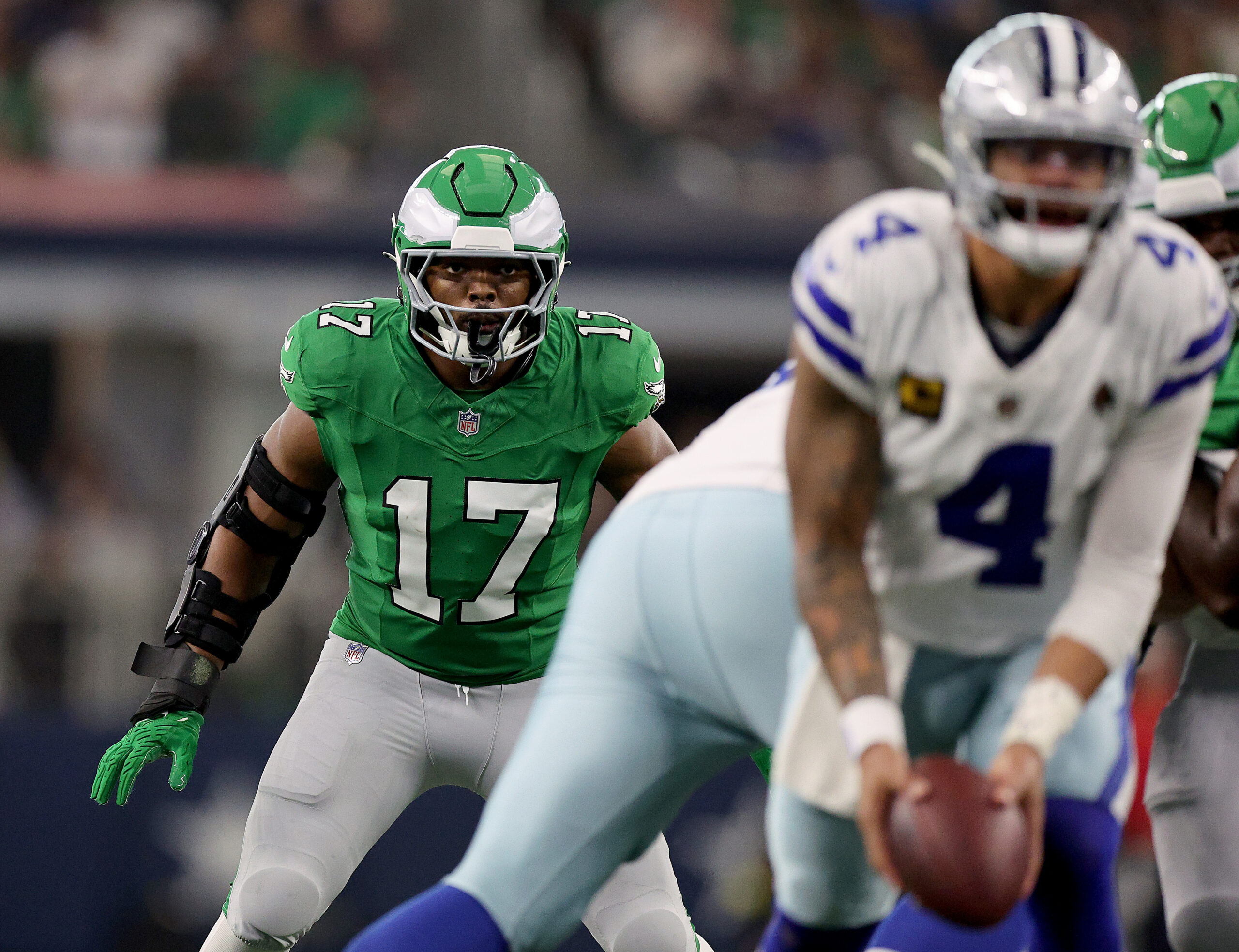
    Eagles linebacker Nakobe Dean has made an impact when available amid an injury-plagued 2025 season.

    Nakobe Dean is expected to return in the Eagles’ wild-card game against the San Francisco 49ers on Sunday. The linebacker has been inactive for the last two weeks while recovering from a hamstring injury. With the stakes higher entering the postseason, the Eagles could certainly use Dean against a strong 49ers offense.

    Dean will be tasked with helping keep George Kittle and Christian McCaffrey in check. Vic Fangio acknowledged what it means to have Dean back in a critical matchup: “You play an offense this good and this diverse, all 11 got to be cooking.”

    This is the second time in four seasons that the Eagles and 49ers will meet at Lincoln Financial Field in the playoffs. While some things have changed since that NFC championship game won by the Eagles in January 2023, other things remain the same. Here are the numbers and trends that could be the difference maker on Sunday.

    Zegras shows out

    Flyers’ Trevor Zegras celebrates his second goal of the game Tuesday night against the Ducks.

    In a matchup against his former team, Trevor Zegras scored twice in the Flyers’ 5-2 win over the Ducks. Former Flyer Cutter Gauthier opened the scoring for Anaheim.

    Gauthier played his second game in Philadelphia since being traded nearly two years ago to Anaheim. Fans still don’t like their former prospect and let him hear it with boos, but Zegras’ emergence has helped eased the pain.

    Speaking of offseason signings, goalie Dan Vladař has been a godsend for the Flyers. On Tuesday, his breakout season earned him a spot on Czechia’s Olympic team.

    A work in progress

    Tyrese Maxey has received increased scrutiny as the Sixers’ go-to option in clutch situations.

    Tyrese Maxey’s NBA ascension has known no bounds in recent years, with the 25-year-old swiftly jumping from reserve to starter to star. That rise has been on display more than ever this season, with Maxey landing among the league’s top scorers and receiving the fifth-most All-Star votes in the most recent fan returns.

    But Maxey still needs to smooth out a few rough edges, including his ability to close out games as the Sixers franchise player and focal point in the clutch. Maxey missed shots at the end of regulation and overtime of the Sixers’ 125-124 loss to the depleted Nuggets.

    That’s been true across the 2025-26 season as Maxey’s shotmaking in the clutch remains a work in progress. Maxey is shooting 39.7% from the floor, including 22.7% from three-point range in those minutes, significant dips from his overall shooting numbers (47.5% from the field, 40.5% from long range).

    Sports snapshot

    Isabeau Levito performs her free skate in the Grand Prix of France in October in Angers.
    • Olympic dreams: South Jersey figure skater Isabeau Levito looks to vault onto the Olympic team, and this year Games are especially meaningful.
    • Seeking redemption: Penn came up short to longtime rival Princeton in the Ivy League opener. It’s a loss the Quakers might be wishing they got back.
    • Sudden departure: Villanova announced that forward Tafara Gapare is no longer with the program. The senior played under Kevin Willard at Maryland last season.
    • ‘Progressing positively’: Brewers pitching prospect Frank Cairone, a Gloucester County native, remained in the hospital as of Tuesday after a serious car accident.

    Mike Sielski’s take

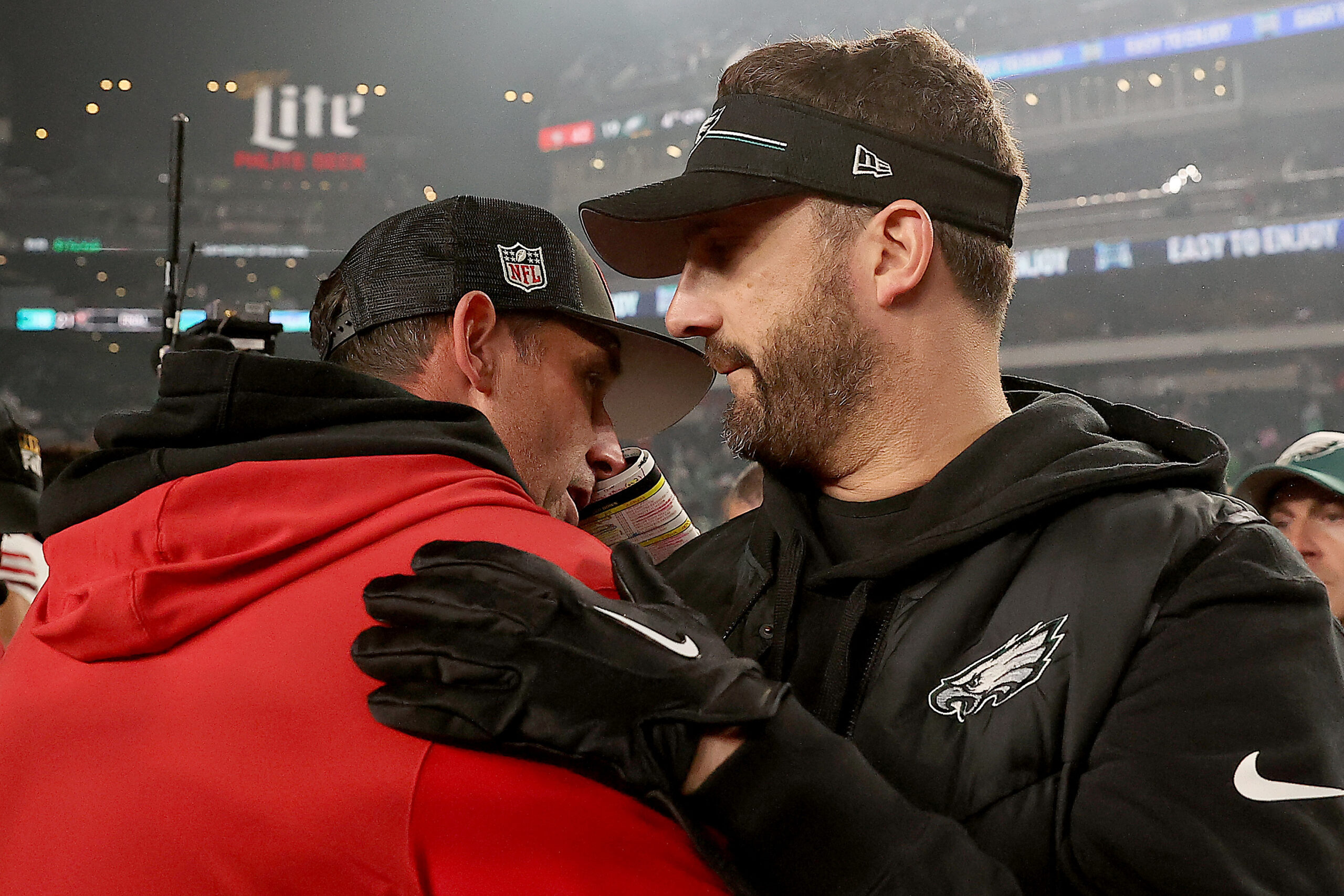
    49ers coach Kyle Shanahan (left) and Eagles coach Nick Sirianni are revered in the NFL for different reasons.

    When it comes to NFL coaches, this is the era of the great play-caller, the great play-designer, the great scheme-creator, the brilliant and beautiful brain. The matchup between the Eagles and 49ers is really Nick Sirianni vs. Kyle Shanahan. Shanahan is a terrific coach in just about every regard, having guided the 49ers to two Super Bowls and two other appearances in the NFC championship game. Sirianni and Kevin Patullo are not considered the same kinds of coaches that Shanahan is. But Shanahan has yet to win a Super Bowl. What Sirianni does well sometimes isn’t so easy to see. Come Sunday, may the best savant win, writes columnist Mike Sielski.

    🧠 Trivia time answer

    Which Eagle had the most career Pro Bowl selections with eight?

    B) Chuck Bednarik

    What you’re saying about Eagles’ contributors

    We asked: Which Eagle do you expect to come up big against the 49ers? Among your responses:

    It’s now or never to show us what you’ve got left in the tank. Looking for Cooooooper DeJean to have 2 INTs and 8 tackles with BG having 2½ sacks. On the other side of the ball, Barkley rushing for 100+ yards and AJ playing out of his mind with 7 receptions and 2 TDs. Hurts will pay no mind to the play calling and call his own plays. The impossible just takes a little longer to figure out! — Ronald R.

    I think Dallas Goedert will come up big against the 49ers. Earlier in the season I wrote on SD that the Eagles really needed to use him more and soon after they did and he was very effective. Dallas ended up with 60 receptions 3rd behind Smith and Brown and lead the team in TD’s with 11 and was tied for 2nd with most tight end TD receptions in the NFL. — Everett S.

    Eagles tight end Dallas Goedert celebrates his touchdown with quarterback Jalen Hurts on Dec. 20.

    It’s playoff time, so I’m looking for Jalen Hurts to come up big and do what he needs to do to win. Eagles win and Jake Elliott is the man in the final seconds of the game, but Hurts put them in that position. — Tom G.

    I’d like to think it would be the entire roster between now and Super Bowl Sunday! Inconsistencies have marred the regular season and now is the time for professional players to show their individual talents and complete their responsibilities. — Bill B.

    We compiled today’s newsletter using reporting from Olivia Reiner, Jonathan Tannenwald, Jackie Spiegel, Gabriela Carroll, Isabella DiAmore, Mike Sielski, Jeff Neiburg, Ellen Dunkel, Keith Pompey, Gina Mizell, and Sean McKeown.

    By submitting your written, visual, and/or audio contributions, you agree to The Inquirer’s Terms of Use, including the grant of rights in Section 10.

    As always, thanks for reading. Kerith will catch back up with you on Thursday with the latest sports stories, till then! — Bella

  • Eagles-49ers is really a matchup of Nick Sirianni and Kyle Shanahan, savants in their own ways

    Eagles-49ers is really a matchup of Nick Sirianni and Kyle Shanahan, savants in their own ways

    For most of professional football’s history, few people among the millions who tuned in every Sunday and every Monday night actually understood what was happening on the field. There was a quarterback, of course, dashing and rugged, the clear leader. There were collisions of giant bodies. There were smaller, faster men with a ballet dancer’s flexibility and a sprinter’s speed who made breathtaking plays. But no one really knew how those men freed themselves, or were freed, to make those plays. How did anyone get open? Who was supposed to block that blitzing linebacker?

    This is a newer, more informed era. This is the era of All-22 film, available to everyone, showing everything. This is the era of the next-level analyst, the football-aholic who grinds tape, the mind who can demystify an entire sport for you. Which means that, when it comes to NFL coaches, this is the era of the great play-caller, the great play-designer, the great scheme-creator, the brilliant and beautiful brain. The players are more than just athletes with distinct strengths and roles and personalities. They are clusters of pixels on a screen, moving as if drawn by a magnet on a particular route to a particular spot on the field.

    Kyle Shanahan, the head coach of the San Francisco 49ers, whom the Eagles face Sunday in the NFC wild-card round, is considered one of these savants. He is a terrific coach in just about every regard, having guided the 49ers to two Super Bowls and two other appearances in the NFC championship game. But it is in his creativity and orchestration of the team’s offense where he is truly elite.

    San Francisco 49ers coach Kyle Shanahan has had his share of success, but a Super Bowl title has eluded him.

    Shanahan calls all the 49ers’ plays, and his offense is so quarterback-friendly that the team has reached those two Super Bowls and four NFC title games with Jimmy Garoppolo, who backed up Tom Brady in New England, and Brock Purdy, who was the last player picked in the 2022 draft, as its starters at the position. Loaded with motion and deception, based on a zone-running attack that features Christian McCaffrey, Shanahan runs as close to a plug-and-play system for a quarterback as it gets in the NFL, and it works. San Francisco has finished among the top 10 teams in scoring in four of the last seven years.

    “They have a really good scheme,” Eagles defensive coordinator Vic Fangio said Tuesday. “It’s all packaged together very nicely. They give you a lot of good motions. Everything they do is with a purpose and they do a really good job of it.”

    Nick Sirianni, the Eagles’ head coach, and Kevin Patullo, their offensive coordinator, are not considered the same kinds of coaches that Shanahan is. Say what you want about them — and a lot of what is said about them around here, especially about Patullo, can’t be repeated in decent company — but generally they are not among the first names mentioned when anyone starts listing the top offensive minds in the NFL. Sirianni stopped calling plays, for instance, in 2021, his first season as a head coach. Patullo had never been an NFL coordinator or play-caller before this season, and the Eagles’ up-and-down (to put it kindly) performance has made him a convenient and oft-deserved target of criticism.

    Nick Sirianni has yet to have a losing season or miss the playoffs in his five years with the Eagles.

    NFL coaching, though, is about more than being an offensive wizard. Shanahan hasn’t won a Super Bowl in his career yet, and one of the reasons is that, when he and his teams have had opportunities to bury their opponents, they’ve failed to do it. He was the offensive coordinator of the 2016 Atlanta Falcons, who infamously blew a 28-3 lead in Super Bowl LI to the Patriots in part because Shanahan got too aggressive in his late-game play selection. Under him, the 49ers had double-digit fourth-quarter leads in Super Bowl LIV and in the 2021 season’s NFC title game … and lost both. And in Super Bowl LVIII against the Kansas City Chiefs, Shanahan took the ball first in overtime, opted to kick a field goal on fourth-and-4 from the Chiefs’ 9-yard line, and handed the ball back to Patrick Mahomes with a chance to win the game. Patrick Mahomes, to no one’s surprise, won the game.

    Sirianni, meanwhile, has won a Super Bowl, has reached another, and has yet to have a losing season or miss the playoffs in his five years with the Eagles. Does he need a Shanahan-like or Shane Steichen-style play-caller to make his offense go? The presence of such an assistant certainly helps. But by all indications, he makes up for whatever shortcomings his coordinators — or, in fairness, his quarterback, Jalen Hurts — might have with his abilities as a culture-builder.

    “Week-to-week, day-to-day, his energy, his passion, everything you want in a leader who stands in front of this team in team meetings and at practice, he gives you,” Patullo said. “His attention to detail — we talk about core values all the time: toughness, together, detailed, all that stuff. And when we look at those things, that’s what he embodies and brings that to the team. Every day, he’s consistent in who he is. You’re not going to get somebody who goes back and forth on what they say, and I think when he speaks, everybody receives it and they’re ready to go.”

    There’s more than one way to be an excellent head coach, even if one of those ways gets a little more attention, a little more scrutiny, a little more credit these days. The film can tell you how good a coach Kyle Shanahan is. What Nick Sirianni does well sometimes isn’t so easy to see. Come Sunday, may the best savant win.

  • The best (and weirdest) tech we found at CES 2026

    The best (and weirdest) tech we found at CES 2026

    LAS VEGAS — This week, 2.5 million square feet of prime Las Vegas real estate is packed with visions of the future. Some of them are sensible and going on sale soon, others are way out there and still in development.

    That’s business as usual at CES, the massive tech confab once known as the Consumer Electronics Show that opens today. It’s a place where robots roam free, TVs tower over footsore onlookers, and artificial intelligence lurks around every corner.

    Here’s what has stood out from the crowd so far.

    Uber’s new robotaxi

    The ride-booking giant’s road to robotaxis has been a complicated one: An early Uber self-driving test vehicle killed a pedestrian in 2018. The company sold off its autonomous driving project in 2020 and has since partnered with its would-be rival Waymo in some parts of the country.

    Now, Uber is getting ready to roll its own self-driving cars onto city streets once again.

    The ride-hailing company didn’t build this thing from scratch. Autonomous driving company Nuro provided the cameras, sensors, and self-driving smarts, all of which are integrated into a Gravity model three-row electric SUV from Lucid Motors.

    Uber invested $300 million in Lucid last year and fleshed out the in-car experience for riders. You’ll be able to pick out playlists, adjust the cabin temperature, and make other customizations that are also already offered by Alphabet’s Waymo robotaxis.

    On Monday, Uber said that its Lucid vehicles are already being tested on public roads. It plans to make robotaxis available to Uber riders in the San Francisco Bay Area later this year.

    There’s no word yet on when these new self-driving Ubers will make it out of California, but at least it doesn’t seem like you’ll have to pay extra for one. When you hail a ride where these vehicles are active, the company says, you won’t have the option of selecting a robotaxi until you’ve already locked in a fare.

    A CES attendee sits on VOVO’s $4,990 Smart Toilet Neo.

    A toilet that can call for help

    VOVO’s $4,990 Smart Toilet Neo comes with now-standard niceties like a built-in bidet and automatic flushing. And VOVO claims its built-in urine analysis sensor can provide deeper insights into a user’s overall health, splashed across a screen meant to be installed nearby.

    Scanning one’s pee is par for the course at CES though: stand-alone liquid waste sensors have been floating around the show for years. The Smart Toilet Neo’s standout feature? When installed in a senior’s home, it can send messages to family members if no one has used it for more than eight hours, prompting loved ones to check in and make sure everyone is OK.

    Samsung’s 130-inch Micro RGB TV.

    A TV for the ‘size matters’ crowd

    Samsung’s 130-inch Micro RGB TV broke cover this week, and is so big that the svelte metal frame surrounding it looks barely up to the job.

    Long story short, Micro RGB TVs use gobs of incredibly small LEDs in red, green, or blue to light up the screen. That makes them better at delivering bright, accurate colors compared to a more standard LED TV.

    It’s unclear when Samsung plans to offer this monstrosity up to consumers, but when it does be sure to steel yourself before checking out the price tag. The company began selling a similar 115-inch model last year for an eye-watering $30,000.

    The Pinwheel Home phone.

    A retro landline phone for kids

    If you’re old enough to remember the pre-cellphone days, cast your mind back to all the time you spent tying up your parents’ phone line when you were young. A company called Pinwheel wants kids of the smartphone era to know what that feels like — without getting distracted by a screen.

    The $99 Pinwheel Home, slated for sale in the coming months, is a dead ringer for the corded phones you’d find affixed to kitchen walls in the 1980s. The company says it’s designed to help young ones hone their verbal and social skills by chatting with a handful of preset contacts.

    Calling other households with a Pinwheel Home costs parents nothing, but placing calls to regular phone numbers will set you back $9.99 a month. To sweeten the deal and help this throwback gadget further appeal to youngsters, the device will ship with a sheet of stickers.

    A portable, battery-powered food allergen detector

    For people allergic to gluten or dairy, even a simple meal out can feel like a minefield. Allergen Alert, spun out of a family-owned French biotech firm, wanted to help — by building a $200 portable allergen-sensing gadget they allege delivers lab-grade results.

    Here’s how it works: You unpack one of the company’s test pouches (available in packs of five to seven as part of a monthly subscription), and cram a bit of a suspect meal into a slender spoon. Pack all of that into the sensing device, which is about the size of a thick paperback, and you’ll get a result back in a few minutes.

    The catch? For now, the company only offers gluten test kits. It says that dairy-specific models will launch soon and that by 2028 the lineup will include tests for most major food allergens, including nuts and dairy.

    LEGO chief product and marketing officer and executive vice president Julia Goldin talks as a Wookiee stands behind her during a LEGO news conference ahead of the CES tech show Monday, Jan. 5, 2026, in Las Vegas.

    Star Wars and Lego announce a new partnership

    When Lucasfilm chief creative officer David Filoni brought out an array of X-Wing pilots, Chewbacca, R2D2, and C-3PO, he won the Star Wars fandom for Lego.

    Lego announced its Lego Smart Play platform on Monday, which introduces new smart bricks, tags, and special minifigs for your collection. The new bricks contain sensors that enable them to sense light and distance, and to provide an array of responses, essentially lights and sounds, when they are used in unison.

    Combine this with a newly announced partnership with the Star Wars franchise, and now you can create your own interactive space battles and light-saber duels.

    An LG Electronics home robot interacts with the audience during an LG news conference ahead of the CES tech show Monday, Jan. 5, 2026, in Las Vegas.

    LG reveals a new robot to help around the home

    File this one under intrigued, for now.

    The Korean tech giant LG gave the media a glimpse Monday of its humanoid robot that is designed to handle household chores such as folding laundry and fetching food. Although many companies have robots on display at CES, LG is one of the biggest tech companies to promise to put a service robot in homes.

    The Associated Press contributed to this article.

  • Brenden Aaronson is on a hot streak with Leeds United at an ideal time for his World Cup hopes

    Brenden Aaronson is on a hot streak with Leeds United at an ideal time for his World Cup hopes

    LEEDS, England — When Brenden Aaronson joined Leeds United in 2022, the fans welcomed him in their traditional way: They wrote him a song.

    Come to Elland Road and you will see him play.

    Signed from Red Bull Salzburg and he’s here to stay.

    I really want to live in Beeston with you.

    You’ll be my American boy, American boy.

    Since then, relations between Leeds fans and the Medford native haven’t always been so warm. In Beeston, the Leeds suburb near the club’s Elland Road stadium, they remain scarred by his season-long loan to Germany’s Union Berlin after the Peacocks were relegated from the Premier League in 2023.

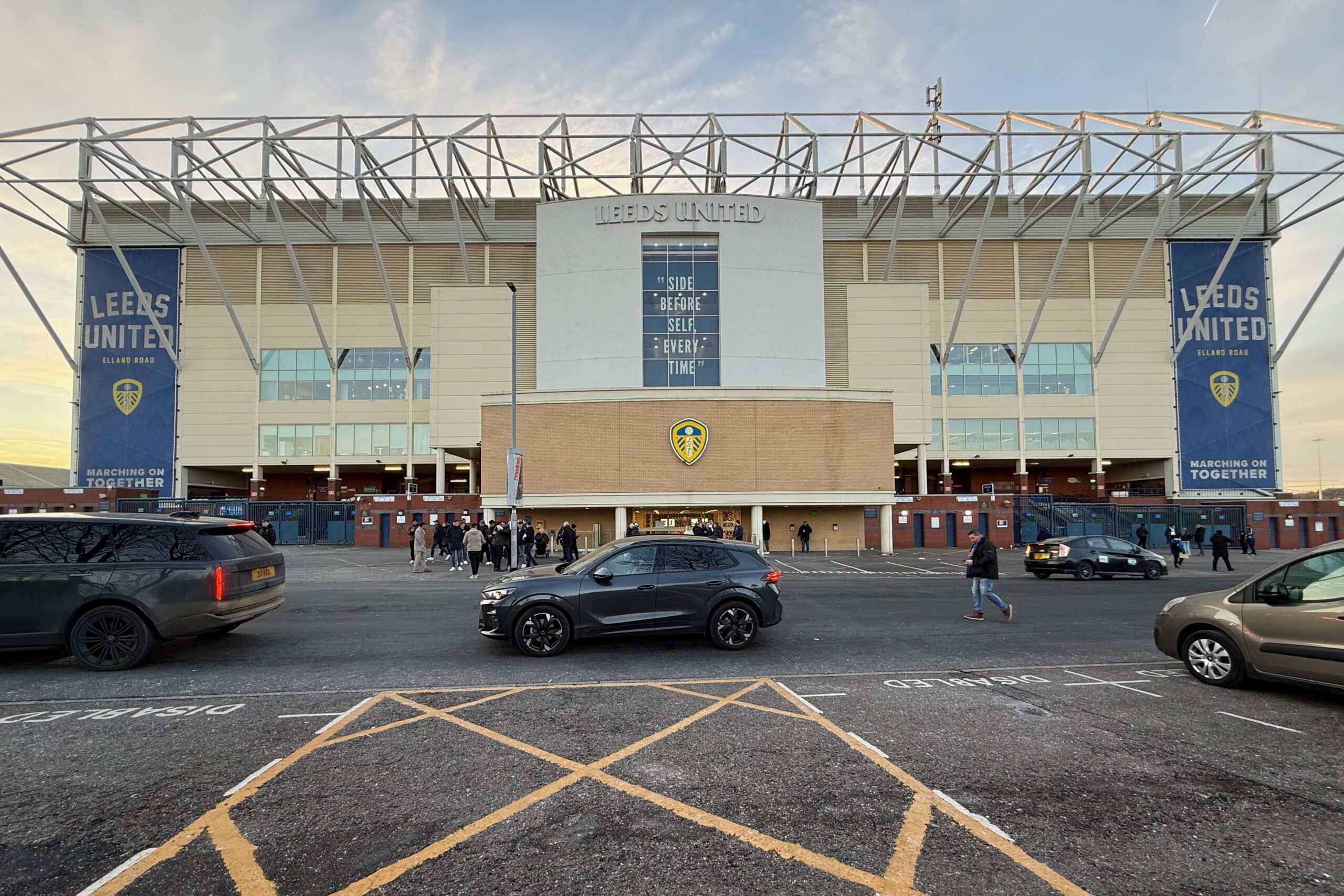
    A giant banner on the outside of Elland Road’s main stand proclaims “Side before self,” a quote from Leeds legend Billy Bremner. He captained the team during its most famous era, including league championships in 1969 and ’74, the 1972 FA Cup title and three more finals, and the 1975 European Cup final. Every player who has entered the gates since then has been held to his words.

    The banner with Billy Bremner’s famous “Side before self” quote at Leeds United’s Elland Road stadium.

    Aaronson is also chased by a criticism he gets from U.S. men’s national team fans, too: He doesn’t score enough goals as an attacking midfielder. That one carries more weight at the moment.

    Lately, though, the tides on both sides of the Atlantic have turned back in Aaronson’s favor.

    In the U.S., his high energy and pressing have earned Mauricio Pochettino’s respect. In Leeds, he had two assists and many more plays that could have added more as the club went seven games unbeaten from Dec. 3 through New Year’s Day.

    Then came this past Sunday, and perhaps the most famous game of all in these parts. Elland Road is an electric venue on any day, but it goes to another level when Manchester United visits from across the Pennine Hills.

    It was the 114th clash between the clubs, the modern version of a regional rivalry between Leeds’ Yorkshire and Manchester’s Lancashire that dates back to the 15th century. Though it was a 7:30 a.m. kickoff in Philadelphia, if you woke up in time, you’d have been jolted out of bed by Leeds’ fans singing their club anthem, “Marching On Together.”

    Scarves for sale from a street vendor near Leeds United’s Elland Road stadium on Sunday, including one with Brenden Aaronson’s name and face in the middle.

    Flying Philly’s flag worldwide

    With that as the backdrop, where better to start this World Cup year than at the home of the most successful men’s soccer player from the Philadelphia area?

    Yes, Aaronson has earned that title now. Though other local products have played on big stages, none has his trifecta of Premier League, Champions League, and World Cup experience. And if Aaronson makes this year’s World Cup squad, it will be his second — a feat Peter Vermes, Bobby Convey, and Chris Albright did not achieve.

    That counts for something, just like the ability to watch a hometown hero play on the Premier League stage on TV every week. Leeds might not be as big of a club in Philadelphia as longtime powers like Manchester United, Arsenal, Chelsea, and Liverpool, but children can grow up now wanting to emulate the 25-year-old whom Union fans once called “the Medford Messi.”

    “It means the world,” Aaronson told The Inquirer. “When I’m able to see young kids back home — it’s possible to get over here, you know. It might not be easy sometimes to get to Europe being an American, but it’s always possible to play in the best leagues in the world. And for the kids, just keep believing in themselves and keep chasing their dreams.”

    To some U.S. national team observers, Aaronson gets credit simply for being a regular player in the Premier League. Just four men have that status right now: he, Tyler Adams (Bournemouth), Chris Richards (Crystal Palace), and Antonee Robinson (Fulham).

    But if goals are what you care about most, you got what you asked for on Sunday. Aaronson scored his second of the season, sprinting past Ayden Heaven in the 62nd minute to grab a loose ball and slot it to the far corner. Elland Road roared as Aaronson sprinted to a corner of the Norman Hunter Stand, mock-shrugging in celebration then getting a hoist in the air from teammate Dominic Calvert-Lewin.

    “That one felt really good, to be honest with you,” Aaronson said. “Of course, to score against your rival is huge, and I’m really proud of it. And keep going from here.”

    Alas, Manchester United equalized just three minutes later, jumping on Leeds’ own defensive error. That was it for the day’s scoring, though Leeds had a few shots at a late winner that it couldn’t finish.

    Winning over critics in Leeds

    Aaronson had a strong day all over the field, throwing himself into eight defensive recoveries along with his attacking play. When he was subbed out in the 87th minute, the jam-packed crowd of 36,909 gave him a warm ovation.

    Asked if he noticed the fans’ change of mood, Aaronson said, “For sure — I think it’s really good. But for myself, I’ve kind of kept this mentality of just staying straight and not letting myself get too high, not letting myself to get too low.”

    Views on him have changed in the media, too. Graham Smyth, a veteran Leeds United beat reporter for the Yorkshire Evening Post newspaper, noted how Leeds manager Daniel Farke recently said Aaronson “polarizes opinion.” But Smyth’s player ratings for games show Aaronson’s rise in form and popularity. Aaronson earned an 8 out of 10 on Sunday, a level he has reached a few times recently.

    “Right now, I don’t think anyone would disagree that he’s probably in his best moment as a Leeds player,” Smyth said. “The performances he’s managed to put in over the last couple of weeks, the end product that he’s managed to add to it as well — I don’t think I can remember a period where he has silenced his critics quite as effectively as this last little period.”

    A moment later, he added something that would sound as familiar in Haddonfield as it does in Harrogate.

    “Leeds fans have very long memories, and they don’t forgive easily,” Smyth said. “They don’t suffer fools lightly, and they don’t forgive easily. But there is always a route back to popularity if you’re an attacker, and it’s very simple: Score goals, make goals, because everyone celebrates them. And that’s the way for Aaronson.”

    As coincidental as it was that Aaronson’s hometown newspaper watched him score, it also happened that some of his family were in attendance: father Rusty, mother Janell, sister Jaden (who just finished her freshman season on Villanova’s women’s soccer team), and fiancée Milana D’Ambra. While D’Ambra is able to spend a decent amount of time in England, Aaronson said his immediate family comes over “once or twice a year.”

    They picked a good one.

    Brenden Aaronson celebrates with the crowd after scoring his goal.

    “I think when they come out, to be honest, I probably have some of my best performances, so it was good,” Aaronson said. “It’s really good to have them out, always. It’s like home coming to you.”

    The race for the World Cup

    With six months to go until kickoff, the World Cup is also on his mind. There’s a big step to take before then, as he aims to make the squad for the U.S. team’s high-profile March friendlies against Portugal and Belgium. Those will be the last games before the tournament roster is named in late May.

    Aaronson politely said making the team is “out of my control, so [I] just keep trying to perform the best on the field and I just go from there.” He also has plenty on his plate right now as Leeds try to avoid relegation from the Premier League, after having returned this season. In the previous two campaigns, the three teams that came up went straight down again, so Leeds has to buck a trend.

    But he can hear two clocks ticking: the 154-year-old one on the Time Ball Buildings in Leeds’ city center, and the brand-new one at U.S. Soccer’s national training center in suburban Atlanta. The Premier League season ends on May 24, and the World Cup team will begin assembling the next day.

    Brenden Aaronson (right) in action for the U.S. men’s soccer team against Paraguay at Subaru Park in November.

    Pochettino and his staff will have noticed not just Aaronson’s good play lately, but how a tactical shift by Leeds manager Daniel Farke has helped. The 3-5-2 formation that Farke switched to recently puts Aaronson in a midfield spot that’s similar to where he plays for the U.S. — perhaps slightly deeper to start, but with latitude to press, get forward, and push the attack.

    “It’s nice when you can play three in the back, because you have a little more freedom as an attacking player where you’re not having to defend as much,” Aaronson said. “So you kind of have the energy and you kind of have the legs to then, with the ball, do things. I really like playing the position when we play in a three-back [setup].”

    On Sunday, Farke tweaked it a little, withdrawing one of the forwards to make it even more like Pochettino’s 3-4-2-1.

    “I think for Brenden, it’s just important that you use him where he can play to his strengths,” Farke said. “I would never use him as a winger who just runs to the corner flag and puts some crosses in. So if he plays as a winger, then he has to have license to move into the pocket, to play closer to the striker, to play give-and-goes, and to use his mobility, and also that he likes to open up between the lines.”

    Brenden Aaronson (right) on the ball against Liverpool on Jan. 4.

    He also said that Aaronson “deserves all the plaudits at the moment, because his work rate is and was never in doubt. He always works his socks off for the team.”

    It was not the first time Farke praised Aaronson publicly, and some of the past times were when the player wasn’t doing so well. Aaronson gave his boss thanks for the support.

    “It’s always great to know that the coach has your back, and for him to say the things that he’s said about me, it’s huge,” he said. “I think he really believes in me, he believes in my quality, and it means a lot when you’re a player because you feel like you can go out there and do your thing.”

  • Parents and teachers want smaller classes and no school closures. Here’s what else they said in Philly’s facilities planning survey.

    Parents and teachers want smaller classes and no school closures. Here’s what else they said in Philly’s facilities planning survey.

    The Philadelphia School District now has the feedback officials said they needed before making decisions about school closings and reconfigurations.

    The topline result: Philadelphians don’t want their local schools closed.

    Some urged prioritizing small classes. Others suggested adding more magnets, like Masterman; pouring more resources into neighborhood K-8s and high schools, and modernizing facilities.

    But while Superintendent Tony B. Watlington Sr. promised to use the feedback to shape the district’s plan, he and other district leaders have said school closings are a given — the district has 70,000 excess seats in schools across the district of 113,000, and dozens of buildings that are in poor shape.

    That process is expected to play out this year. It initially was to have yielded decisions in December, but Watlington said his administration needed more time to analyze data and reach out to school communities before ordering sweeping changes that they say are necessary.

    Watlington now says he will present a draft facilities plan sometime this winter, with more feedback and revisions to come before a board vote. The timeline for a final vote is not clear.

    In an email, he thanked those who participated in the survey and other parts of the planning process. “We have, and will continue to take your feedback very seriously, as we know these will be difficult decisions that could impact many families,” he wrote, adding that there will be additional “community conversations” before the final plan goes to the board.

    The district last engaged in a similar process in 2012, closing 30 schools by 2013, a hugely controversial process that officials later said did not improve academic outcomes for students or yield significant long-lasting savings for the district. Officials have said they will undertake the process more deliberately and with different aims in this incarnation.

    More than 8,000 parents, teachers, students, and community members participated in Watlington’s survey, sharing their priorities for the long-awaited facilities master planning process.

    Boosting neighborhood high schools, strengthening K-8s

    The new survey data, released by officials as winter break began, did not yield surprises, but reiterated themes that will be tough for the cash-strapped district to balance.

    Officials had previously identified four main topics that have emerged from more than a year of analyzing data and gathering feedback — strengthening K-8 schools, reinvesting in neighborhood high schools, reducing school transitions for students, and expanding access to grades 5-12 criteria-based high schools.

    Survey respondents rated each of those “important” or “very important” — with reinvesting in neighborhood high schools (85%) and strengthening K-8 schools (81%) at the top of the priority list.

    Overall, those who responded to the survey support their local schools, want strong schools close to where they live, and want the buildings closest to where they live to be renovated, not shut down.

    Respondents raised concerns around several topics districtwide: overcrowding, inadequate staffing, school safety, insufficient supports for students with disabilities, student behavior issues, facilities quality and cleanliness, and support for libraries, recess, and extracurricular activities.

    Some also expressed worries about transparency in the facilities planning process, and worries that when the district says its goal is “better use of space” it means that it will close schools.

    They outlined fears about potential hardships that closing schools could create, such as longer walks to school or tough bus rides in unfamiliar or unsafe areas. And they flagged worries about merging more than one school into a single building and having large grade spans in a single building. (Though some said they relished the idea of having many grades in one spot.)

    In their own words

    Respondents had plenty of ideas for officials as they plan steps that will have implications for the city for years to come. Here are some excerpts from survey responses:

    “I believe that we should stop closing schools and update areas so that we can utilize small class sizes. The ONLY way to accomplish meeting the needs of students, emotionally, physically, psychologically, and educationally is to have SMALL class sizes,” one person wrote.

    By closing buildings and combining schools, some children will have to walk an additional distance, most likely making them late or just deciding on certain days that the travel distance is just not worth it,” another respondent said.

    We need new high schools, middle schools, especially with vocational training. Current year textbooks, technology, air-conditioning, and programs for Tech and Art,” said another writer.

    Many [Philadelphia high schools] currently lack basic college-preparatory opportunities — few or no Honors or AP courses, limited world languages, and minimal enrichment options. This pushes academically motivated students into magnet schools, leaving neighborhood schools underenrolled and concentrated with students who have the highest support needs,” wrote one commenter.

    More schools like Masterman will prevent families from leaving the city if their child cannot get in through the lottery. It is beneficial to Philadelphia as a whole to keep these parents/families in the city instead of fleeing to the suburbs,” wrote one person.

  • Emails outline potential cuts affecting thousands of FEMA disaster responders

    Emails outline potential cuts affecting thousands of FEMA disaster responders

    The Department of Homeland Security has drafted plans to drastically cut the Federal Emergency Management Agency workforce in 2026, according to documents obtained by the Washington Post that detail potential reductions to thousands of disaster response and recovery roles.

    The terminations are likely to come in waves, according to three people familiar with the plans who, like some others interviewed for this report, spoke on the condition of anonymity for fear of retribution. They said the cuts began on New Year’s Eve with the elimination of about 65 positions that were part of FEMA’s largest workforce, known as the Cadre of On-Call Response and Recovery (CORE) — staffers who are among the first on the ground after a disaster and often stick around for years to help communities recover.

    Independent journalist Marisa Kabas and CNN earlier reported a portion of the New Year’s Eve cuts.

    Emails sent to senior agency leadership in late December include detailed tables identifying roles that can be cut from the agency’s divisions. These tables include a 41% reduction in CORE disaster roles, amounting to more than 4,300 positions. They also list reductions in surge staffing, standby workers who are often the first on the ground when a disaster strikes, by 85%, or nearly 6,500 roles.

    In a statement, FEMA spokesperson Daniel Llargués said the agency has “not issued and is not implementing a percentage-based workforce reduction.”

    “The materials referenced from the leaked documentation stem from a routine, pre-decisional workforce planning exercise conducted in line with OMB and OPM guidance,” Llargués added. “The email outlining that exercise did not direct staffing cuts or establish reduction targets.”

    Homeland Security Secretary Kristi L. Noem has long wanted to cut back on CORE staffing, according to two former senior officials.

    Losing a large number of disaster-specific workers over a short period “would mean greater delays in processing and survivors not being dealt with as quickly as they had been before,” said Cameron Hamilton, who led FEMA as acting administrator in the early months of President Donald Trump’s second term.

    Internal agency emails and documents, as well as people familiar with the plans, suggest Noem is spearheading the drastic reductions, which may impede FEMA’s ability to fulfill its legal obligation to help the nation respond to disasters, according to three FEMA officials.

    Noem, who has exercised a tight grip over FEMA since taking over its parent department, has repeatedly expressed a desire to shrink or eliminate the agency. The Post reported that she previously made recommendations to cut agency staffing by about half.

    Although the documents call the staffing reduction an “exercise” and say “no staffing actions or personnel decisions are being directed or implemented as part of this request,” two officials familiar with the situation said the tables reflect Noem’s targets for the agency.

    An email describes the tables, which list total reduction counts and percentages for most of the agency’s divisions, as a “planning document.”

    Llargués said in FEMA’s statement that the “accompanying spreadsheet was an internal working tool used to collect planning inputs.”

    The emails show that there have been “deliberate” discussions regarding workforce reductions, said a person familiar with them, who added that the documents request “senior leadership to review and ensure that whatever staff is retained is absolutely necessary.”

    DHS has said publicly that it terminated 50 people in early January and that the cuts were “a routine staff adjustment of 50 staff out of 8000.”

    Two officials with knowledge of the process said that number is closer to 65. The officials had been told to expect that hundreds more people would lose their jobs by the end of January. CORE staffers whose jobs were supposed to be renewed this week still have not heard anything about their status, officials said.

    Llargués said the New Year’s Eve cuts were unrelated to the “planning exercise described in the leaked email.”

    The potential for additional cuts come less than a year after a wave of FEMA terminations, including of hundreds of probationary employees. FEMA officials are also awaiting a final draft of a report by a Trump-appointed review council on the agency’s future, which was supposed to be released last month. The Post previously reported that a version of that report recommended making FEMA leaner but also more independent — findings that countered recommendations from Noem, the council’s co-chair.

    Three FEMA officials raised concerns about the rapid and drastic dismantling of the agency workforce.

    Under the Post-Katrina Emergency Management Reform Act, the homeland security secretary is prohibited from taking actions that “substantially or significantly reduce the authorities, responsibilities, or functions” of FEMA.

    “It’s not just unprecedented — it directly contradicts the law,” said a veteran FEMA official who has also worked within DHS.

    Having the head of DHS determine the fate of disaster response roles “strips FEMA leadership of its statutory authority and puts control of the nation’s disaster workforce in the hands of a department that Congress explicitly told to step back after Katrina,” that person added.

    Emergency management historian Scott Robinson said cutting FEMA’s staffing at these levels “would [undo] an act of Congress without an act of Congress.”

    “The president is using a lot of administrative tools to try and do things we would have traditionally expected legislation to do,” Robinson said.

    There are about 17,500 CORE employees spread across the country — the majority of FEMA’s workforce of 22,316, an agency official said. Under the Stafford Act, FEMA hires these staffers for multiyear terms using the disaster relief fund.

    CORE teams partner directly with state and local officials to support ongoing response and recovery after a hurricane strikes or a fire tears through a town. They may move resources from warehouses to hard-hit communities; they process grants and conduct trainings. Some staffers were working on long-term projects related to Hurricanes Sandy, Maria, and Fiona. CORE teams also include lawyers, IT experts, and others who may help oversee nuclear plant operations or help in hazard reduction for earthquakes.

    For example, in a region that includes Texas, Louisiana and more than 60 tribal nations, about 80% of the FEMA staffers deployed in support roles are CORE employees, a former senior official said.

    Ongoing discussions to downsize FEMA also underscore how much autonomy the nation’s emergency management agency has lost since the start of Trump’s second term. FEMA has been without a congressionally appointed leader for nearly a year, cycling through temporary officials who have lacked disaster management experience, which is required by law to lead the agency. After David Richardson resigned in November, DHS tapped its chief of staff at the time, Karen Evans, to act as the agency’s interim administrator.

    An agency official familiar with the discussions said Evans has been part of conversations about the future of this disaster-specific workforce for the past few weeks, including about whether to extend positions for a month or two until the agency has had enough time to review the need for the roles. But the official said it seemed that Noem was making the final decision.

    As documents detailing workforce cuts made rounds within the agency over the past week, FEMA officials were stunned and pointed out that getting rid of nearly half of the nation’s disaster workforce would greatly harm communities in various stages of disaster recovery. States would need much more time to prepare and bolster their own disaster capabilities before the federal government significantly pulled back resources such as CORE employees.

    “The entire framework of a reduction should be built on stronger state partnerships, not knee-jerk reactions from the federal government,” Hamilton said.

    CORE appointments are typically renewed every two to four years. When the end of an employee’s contracted term approaches, their supervisors submit paperwork to renew those roles and send it up the chain. Most of the positions are usually reinstated, according to four current and former FEMA officials, in part because recovery work is long and complex.

    In mid-December, DHS took away FEMA’s authority to independently renew these positions, and it instituted a hiring process that requires Noem to review all CORE positions and help decide whether they should continue to exist, according to emails and a person familiar with a meeting where these new requirements were discussed.

    An email from Dec. 17 described how Noem — often referred to as “S1” in internal DHS and FEMA conversations and documents — created parameters for keeping the CORE employees.

    “To improve DHS review outcomes, each CORE term renewal justification must be written to fit what the S1 verification form is designed to capture,” it said.

    Noem overseeing hiring for disaster-specific employees “is completely outside the norm,” said the veteran FEMA official who also served within DHS. “CORE renewals have always been handled inside FEMA, as Congress intended under the Post-Katrina Emergency Management Reform Act.”

    The new system created year-end confusion as supervisors scrambled to send in detailed letters justifying a variety of positions.

    For example, in one region with 40 CORE employees whose jobs were to be renewed in January, supervisors sent lengthy justification notes for about 35 of those workers. That same day, they were told to trim the letters and send them again.

    They heard nothing in response, until they learned on Dec. 31 that they would lose nine employees “regardless of the recommendations of emergency management experts,” one official familiar with the situation said. The fate of the rest is unknown, a supervisor said. He said he was also told “there was no plan” to extend any other CORE employees whose jobs were supposed to be renewed this month.

    It is unclear whether FEMA or DHS took the justification memos into account.

    In the last weeks of December, the office was inundated with hundreds of these justification memos, including statistics and data meant to explain why specific roles were crucial to FEMA’s mission to help communities recover from disasters.

    Then, on New Year’s Eve, human resources staffers were told to inform people they had lost their jobs, according to a person familiar with the situation and memos obtained by the Post. Some CORE staffers learned they were fired on New Year’s Day while on vacation, and they were asked to send in their equipment by Jan. 2.

    Several agency officials who supervise CORE team members were shocked when they learned that numerous employees had suddenly lost their jobs, emails show.

    “This must be a mistake,” one supervisor wrote to FEMA’s HR services and other officials, explaining that they had approved their employee’s renewal and sent the paperwork through the proper channels.

    Another supervisor overseeing recovery work for Hurricane Helene expressed concern and confusion over losing a staffer, stating in a New Year’s Eve note to human resources that “based on the attached emails and form,” the worker’s “appointment should be renewed.”

    “I would like to resolve this ASAP, as this is a disappointing and confusing email to get right before a holiday,” the supervisor said.

    In response, a top human resources official said the situation was essentially out of their hands.

  • Hot neighborhoods and big swings: Analyzing Philly’s 2026 dining forecast

    Hot neighborhoods and big swings: Analyzing Philly’s 2026 dining forecast

    A statement like “more than 100 new restaurants are on the way to the Philadelphia region in 2026” may seem dramatic, as if we’re living in a Semiquincentennial-fueled boom time.

    But that’s how it has been during the last few years as out-of-town groups and expansion-minded local restaurateurs sign leases in a town that seems to enjoy dining out, whether at fast-casual spots or fancier restaurants.
    The math maths, and the region’s roster is growing. My census last January found in excess of 110 projected 2025 openings, and by the end of the year, I counted 86 closings, including the 11 Pennsylvania and New Jersey locations of Iron Hill Brewery.
    At this point, I don’t see the area’s 250th celebrations driving too many new groundbreaking restaurant deals. The timeline of big-budget restaurants — like Borromini (last year’s big splash) and Mr. Edison (this year’s) — is equivalent to the gestation period of an elephant. (Another example: Burtons Grill & Bar, which signed a lease last year for Barn Plaza in Doylestown, is targeting a 2027 opening.)

    A rendering of Mr. Edison, Jeffrey Chodorow’s first Philadelphia restaurant, with a bartop carousel at left. The restaurant is due to open in the Bellevue in spring 2026.

    What is apparent this year is a solid collection of culinary entrepreneurs committing capital — nothing too extravagant. Ellen Yin and Teddy Sourias both have projects coming downtown (both unnamed as yet), Greg Vernick is close to opening his first venture outside of Center City, and chef Christopher Kearse is overhauling Varga Bar’s space with design-firm partners PS & Daughters. Michael Schulson — whose last opening was Dear Daphni in December 2024 — also says he’s planning three more restaurants for 2026.

    Where the growth is

    The Kensington-Fishtown corridor

    The city’s most active development zone remains Kensington-Fishtown, buoyed by new construction and adaptive reuse — and landlord incentives. Just like previous years, the incoming projects (like Emilia and Adda, both signed long ago) signal sustained interest from serious operators. Barcelona Wine Bar recently signed on for a second Philadelphia location, on Lee Street near Pizzeria Beddia and Hiroki. Corner bars (Ponder Bar, ILU) and fast-casual concepts (7th Street Burger, Slider & Co.) are positioned to meet everyday demand.

    Washington Square West and Queen Village

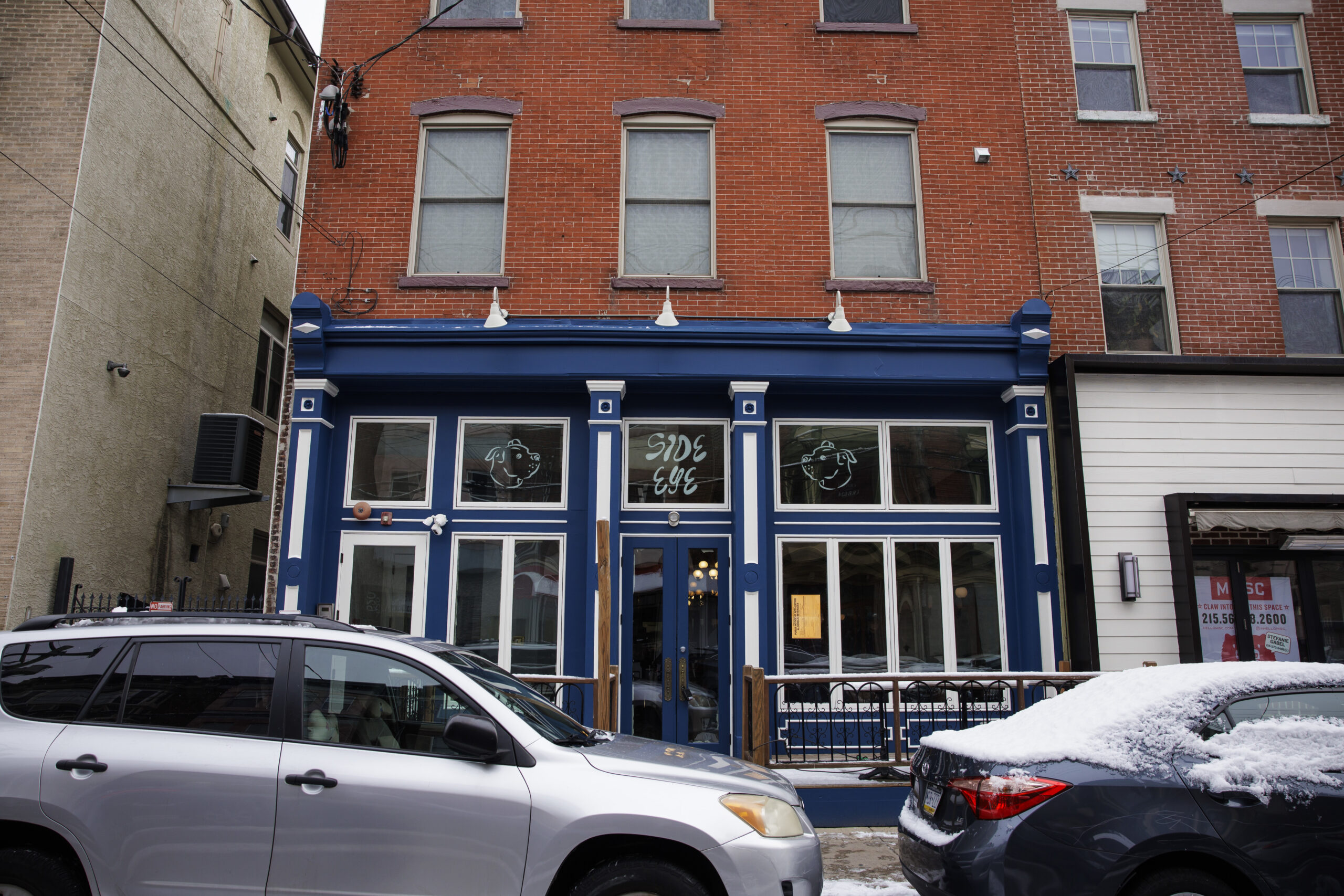
    Washington Square West and Queen Village have long boasted a French-leaning dining cluster (the Good King Tavern, Le Caveau, Mabu Kitchen, Sofi Corner Cafe). Now come three more: Soufiane at the Morris, Side Eye, and Known Associates (from Forsythia’s Kearse).

    The exterior of Side Eye on Monday, Dec. 15, 2025, in Philadelphia. Side Eye is located at 623 S. Sixth St.

    University City

    As University City’s life-sciences footprint grows north of Market Street, food and beverage have followed. The Triad at 38th and Lancaster will house DiDi, Kabobeesh with Karak Cha House, and Shibam Coffee, creating a dense, international hub tied to student and office traffic, adding to current occupants including Han Dynasty, Two Locals, and Corio.

    Chestnut Hill

    Northwest Philadelphia’s toniest neighborhood has drawn the classy concepts Lovat Square (wine shop/tasting room) and Blue Warbler (all-day cafe/bar). I also hear that Fiesta Pizza is returning, so it’s not completely bougie.

    Main Line and South Jersey

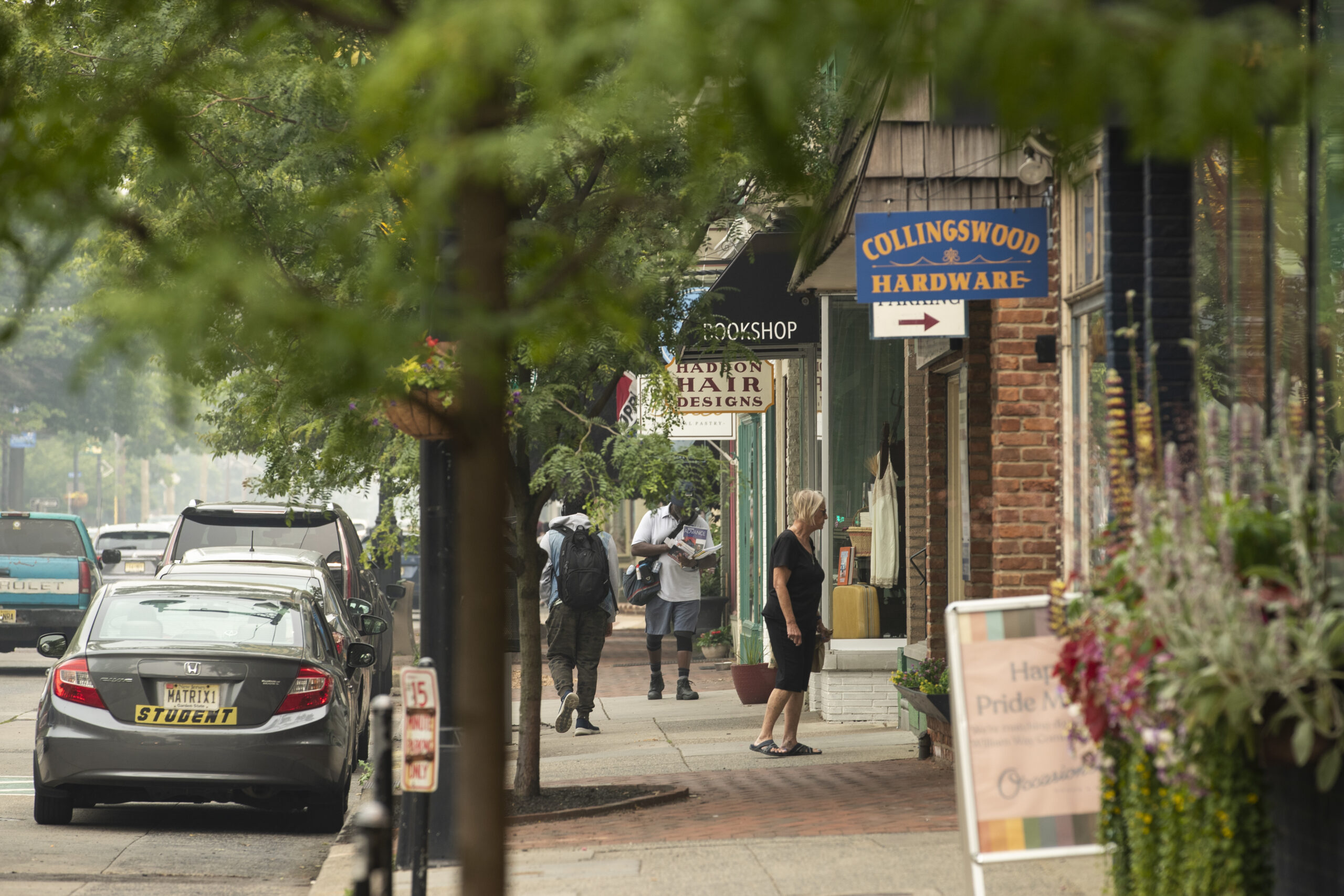
    The Main Line (Ardmore, Bryn Mawr, Wayne, Narberth, Devon) continues to see growth mainly from locals like Bart’s Bagels, Gouldsburger’s, and Love & Honey Fried Chicken, while Merchantville, Collingswood, Haddon Township, and Marlton remain reliable for both chef-driven and neighborhood concepts. When a restaurant closes in those towns, a replacement is usually close behind.

    Haddon Avenue in Collingswood.

    What’s trending

    Fast-casual keeps scaling

    Burgers, fried chicken, halal concepts, and kiosks continue to proliferate. New York imports like Harlem Shake and 7th Street Burger are joining the locals.

    Coffee is still surging

    Philly’s first M.O.T.W. Coffee is opening in Center City, with Cake & Joe also on deck. Haraz Coffee House is expanding into the suburbs, while Happy Bear Coffee and Thank You Thank You are multiplying.

    A “one on one” espresso and coffee at the Thank You Thank You Coffee shop.

    Bakeries and bagels rebound

    Bagel shops (Bart’s Bagels, PopUp Bagels, Penny’s Bagels) are moving from pop-ups and delivery into permanent homes. Pretzel Day Pretzels follows that same arc, while the homegrown Wild Yeast Bakehouse is part of a new wave of boutique sourdough operations.

    More, more, more

    Amma’s South Indian Cuisine will head to Bucks County for its fifth location, while Chinatown standout EMei expects two expansions. Additional growth is coming from Dim Sum House by Jane G’s, Dim Sum Factory, Amina’s Felicia Wilson and Darryl Harmon (Table 8460 by Amina, Amina Ocean), 13th Street Kitchen’s Michael Pasquarello (Piccolina), and the partners at Libertee Grounds (Lucky Duck).

    The Ghee Roast Dosa at Amma’s on Chestnut Street in Philadelphia on Wednesday, Aug. 21, 2024.

    Philadelphia’s bar scene remains active. Expected arrivals include a mix of highbrow (Liquorette, Bar Caviar, ILU), casual drop-ins (Lillian’s, O’Morrey’s), and fun (Claude’s Comedy Club & Bar).

    High-end dining is also expanding: Friday Saturday Sunday is adding space, while Bucks County will see its first rooftop venue with Main Sip Rooftop. Meanwhile, established operators are relocating or upgrading — Crust Vegan Bakery is moving to East Falls, Flakely is going full retail in Bryn Mawr, Kabobeesh is shifting within University City, and Luna Cafe is relocating within Olde Kensington.