Blog

  • A Philly restaurant regular’s devotion inspired his son to build a $1,500 Lego replica

    A Philly restaurant regular’s devotion inspired his son to build a $1,500 Lego replica

    To be loved is to be known — or, better yet, to inspire a 3,233-piece custom Lego set.

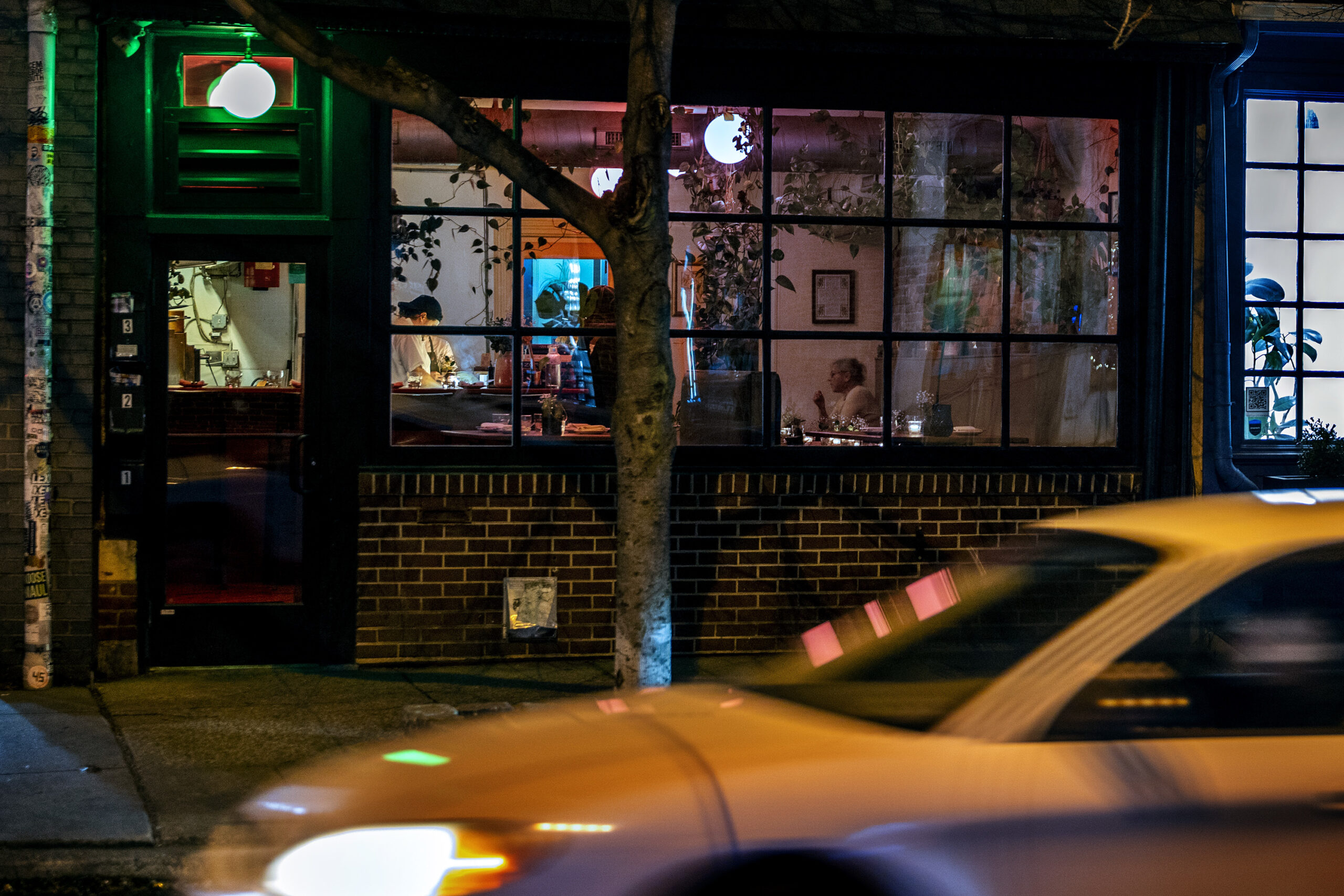
    Gene Gualtieri is devoted to Friday Saturday Sunday. Almost every Friday since 2021, the Fitler Square resident has lined up at 4:30 p.m. to score the same seat at the first-floor bar of Chad and Hanna Williams’ acclaimed Rittenhouse Square restaurant, where he is known to house a full roast chicken — bones and all — and order off-menu sherry martinis from bartender Paul MacDonald. It’s a ritual that has inspired a tattoo on Gualtieri’s bicep: “B9,” code for bar seat no. 9.

    “It’s my seat,” said Gualtieri, 57, an engineer. “This feeling of hospitality and being welcomed [at the bar] … it’s a social hub for me.”

    So when Gualtieri’s 21-year-old son, Leo, needed a Christmas present for his father, everyone from his aunt Claire to his older brother Sam had the same idea. What if, Leo recounts them wondering, there was a way to shrink Friday Saturday Sunday so it fits in your house?

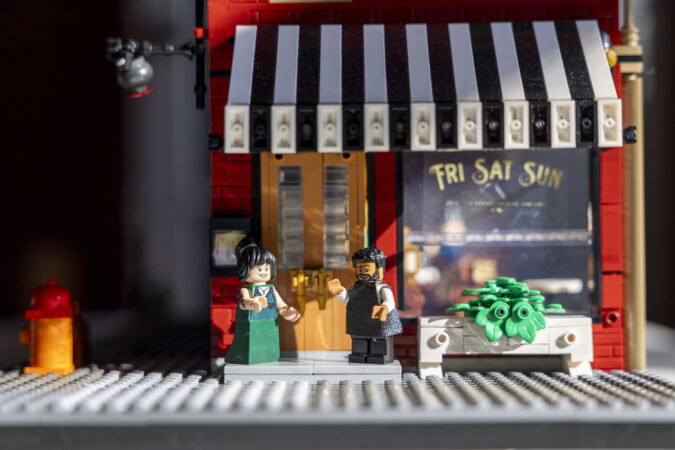
    The resulting gift — a 1½-foot-tall replica of Friday Saturday Sunday’s facade and its ground-level Lovers Bar, constructed out of more than 3,200 Legos — doesn’t skimp on the details. Leo recreated everything, down to the discolored patches of sidewalk out front.

    A figurine of bartender Paul MacDonald shows off a Lego version of his Fibonacci sequence wheel to a miniature of Gene Gualtieri inside a Friday Saturday Sunday replica his son built out of Legos.

    Friday Saturday Sunday (Leo’s version) comes with Lego figurines of the Williamses, bartender MacDonald, and his father that can be posed to sit in one of the bar’s 13 tiger-print chairs. There’s a petite version of the Fibonacci carousel MacDonald uses to perfect his mixology, plus miniatures of the bar’s gargoyle- and raven-shaped pour spouts, mermaid caryatids, and towering citrus bowls. In honor of restaurant’s Michelin star, Leo even included a tiny and perfectly rotund Michelin Man.

    Leo stored the pieces in a repurposed Seinfeld Lego set box that he wrapped in a rendering of the finished design. When Gualtieri opened it on Christmas morning, he cried. The finished version inspired a similar response from others after Gualtieri and the restaurant posted photos on Instagram at the end of January.

    Leo Gualtieri made custom packaging for the Friday Saturday Sunday Lego set he got his father Gene for Christmas.

    “This is so beautiful I wanna cry,” commented one person. “Top 10 most impressive things I have ever seen,” wrote another.

    Leo’s dad concurs. “I was pretty blown away,” Gualtieri said. “At first glance, it looks like a Lego set you’d get a store.”

    A replica built brick by (plastic) brick

    Recreating Friday Saturday Sunday was a labor of love for Leo, a self-described former Lego kid currently finishing up his senior year at Emerson College as a comedy major. As a child, Leo was fixated on building an ever-expanding amusement park out of the plastic blocks alongside his dad. It was an obsession that served him well this holiday season.

    To reconstruct the restaurant, Leo first had to create a rendering of the bar and its exterior in Brick Link, Minecraft-esque software that lets users build and source their own custom Lego sets. Leo said he spent roughly 100 hours translating all the tiny details into Lego form, working first off images of the facade from Google. When those weren’t precise enough, he said, Leo begged MacDonald to send him photos of all the minutiae, from the glassware to close-ups of the light fixtures.

    A replica of the Lovers Bar at Friday Saturday Sunday, built out of more than 3,200 custom Legos by Leo Gualtieri.

    “It was addicting … I would work on it in class,” said Leo while on Zoom with his father, who scoffed at the admission. “Time would pass much faster because I was locked in.”

    Once the rendering was complete, Leo and his mom spent $1,500 on the Lego pieces, sourced from 13 different Lego resellers across Japan, Spain, and the Netherlands. To find a realistic version of Chad Williams’ beard and apron, Leo had to commission custom blocks from an Etsy seller.

    After Christmas, Leo spent the remainder of his winter break from college building mini Friday Saturday Sunday, developing calluses from clicking the bricks into place. Dad, Leo said, wasn’t much help.

    Hanna Williams, co-owner of Friday Saturday Sunday, holds Lego characters of herself and Gene Gualtieri, whose son Leo spent over 100 hours creating a miniature version of the restaurant out of the plastic blocks.

    “He tried to build some chairs,” Leo said of his father. “I don’t think he’s cut out for it.” (Gualtieri agreed. Leo, he admitted, gets his dexterity from his mother.)

    Every time he looks at the replica, Gualtieri said he discovers new details, like how the bottles mimic the exact ones behind MacDonald’s bar. Hanna Williams, Friday Saturday Sunday’s co-owner, felt the same when Gualtieri sent her progress updates on the build out.
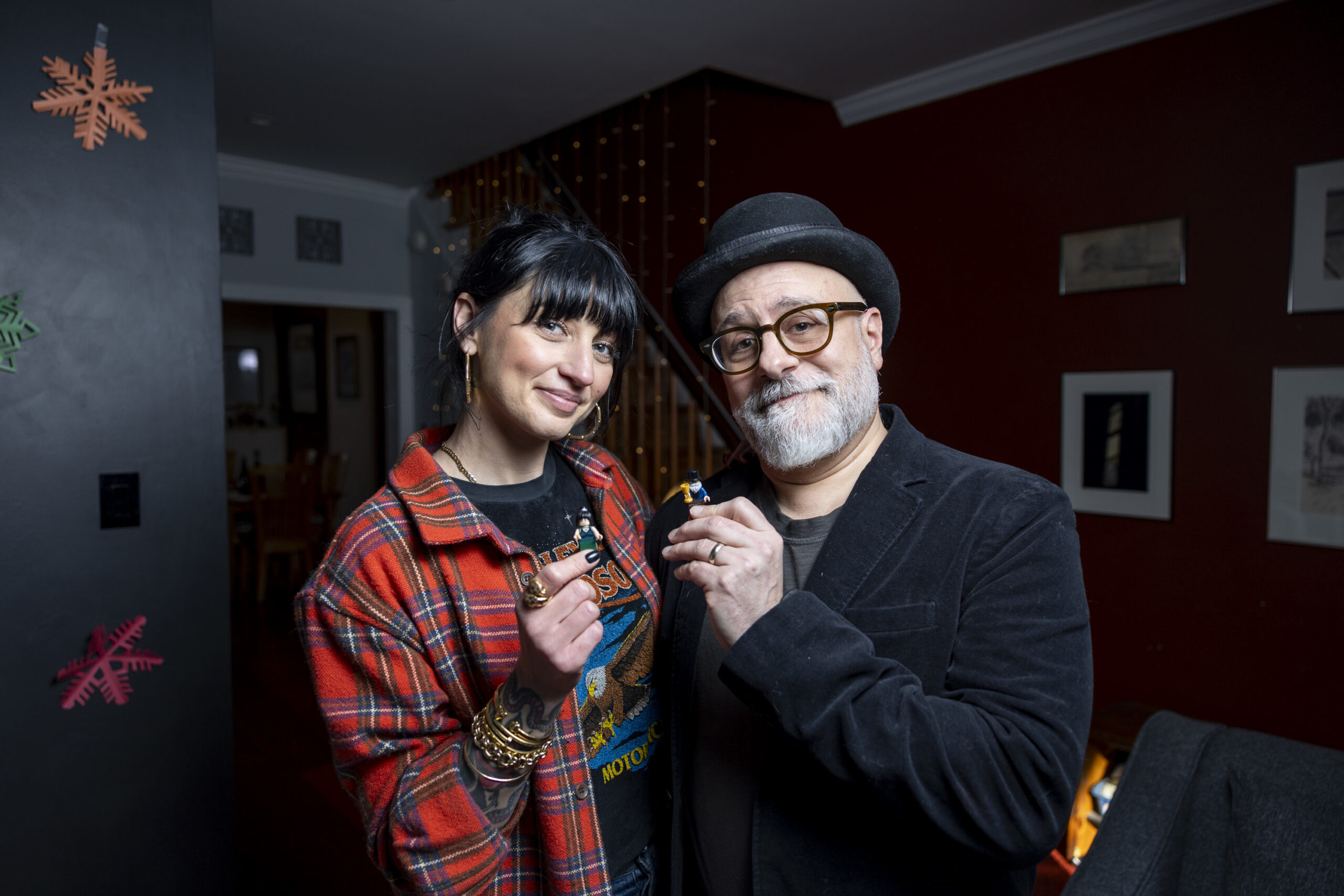
    Hanna Williams, co-owner of Friday Saturday Sunday, and Gene Gualtieri, a regular at the restaurant, pose with Lego action figures of themselves created by Gene’s son Leo.

    “I think [Leo] might know every inch of the bar better than me,” she said. Williams especially loves her Lego dopplegangër: “A high bun, bangs, and tattoos? That’s so me.”

    Williams is used to her restaurant being the recipient of the highest order of affection. In the decade since she and her husband revamped Friday Saturday Sunday from a classic fine-dining restaurant with excellent mushroom soup into cozy bar for walk-ins with a top-floor tasting menu that melds Caribbean, Asian, and soul food influences, the restaurant has earned a Michelin Star, a James Beard Award, and a spot on the World’s 50 Best North American restaurants. Just last week, Friday Saturday Sunday won an award for excellence in hospitality from the Tasties, Philly’s homegrown culinary honors.

    And yet, Williams said, the Lego replica represents an extra-special type of achievement.

    “It’s completely overwhelming,” she said. “But at the same time, there’s nothing that could make you feel better.”


  • Putting the Joe Frazier statue in the shadow of the Rocky statue is a low blow

    Putting the Joe Frazier statue in the shadow of the Rocky statue is a low blow

    I thought the absolute nonsense around the Rocky statue being permanently exalted to the top of the steps of the Philadelphia Museum of Art couldn’t be any more embarrassing for Philly. Then, the people in charge of these decisions ripped open my eyes, like Mick, to prove me wrong.

    On Wednesday, the Art Commission approved a proposal from Creative Philadelphia, the city’s office of arts and culture that maintains and preserves Philly’s art collection, to move the statue of legendary Philadelphia boxer “Smokin’” Joe Frazier from the stadium complex, where it’s been since 2014, to the base of the steps of the Art Museum.

    This would normally be a great thing — the Art Museum is in a much more prominent place in the city and Frazier deserves that honor — except that in this case, the Frazier statue is getting the Rocky statue’s leftovers. It’s a bigger smack in the face than a sucker punch in the ring.

    Creative Philadelphia didn’t think the nice little cove at the base of the Art Museum steps where the city’s Rocky statue has been displayed since 2006 was good enough for it anymore. So last month — despite an informal Inquirer poll that showed it was the last thing Philadelphians wanted — the commission approved Creative Philadelphia’s proposal to permanently move the city’s Rocky statue to the top of the steps. (There are currently three Rocky statues in Philadelphia; don’t even get me started on that.)

    A visitor poses with the Rocky statue atop the Philadelphia Museum of Arts steps.

    At the January meeting, commissioner Rebecca Segall said of the Rocky statue: “I believe it’s one of Philadelphia’s most meaningful monuments, and I believe we should just get him out of the bushes and put him up top.”

    Creative Philadelphia and the Art Commission decided “the bushes” weren’t good enough for Rocky, but will be good enough for Joe Frazier. They will put the statue of the real legendary Black boxer right there near a shipping container called the Rocky Shop that sells Sylvester Stallone-licensed products, as if it were some Black History Month consolation prize.

    I mean, c’mon! Do they even hear themselves?

    If any statue belongs at the top of the steps, it’s Frazier’s.

    I’m not the first to point out that Frazier deserves the recognition this city gives to Rocky, and if history is any indicator, I sadly won’t be the last.

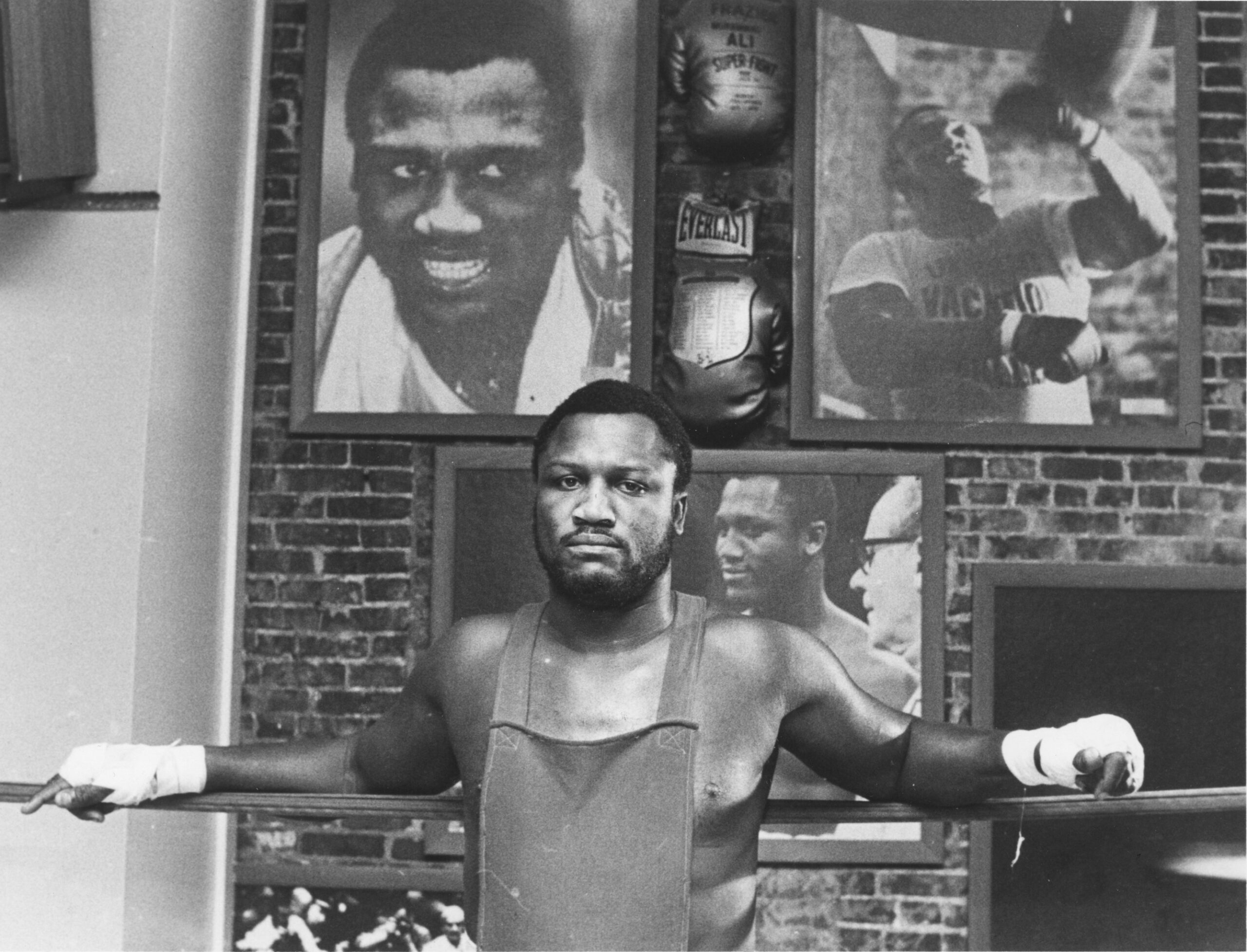
    Joe Frazier poses in front of pictures from his career in an undated photo.

    In a letter of support for the move of Frazier’s statue, Mayor Cherelle L. Parker wrote that putting it at the Art Museum “affirms Philadelphia’s commitment to honoring real-life achievement alongside cultural mythology.”

    But when President Donald Trump’s administration is removing historical facts about slavery from the President’s House Site, why should mythology get top billing?

    At this time, we should not be elevating fiction in Philadelphia as the federal government is attempting to erase our facts.

    Yes, Rocky is a fictional Philadelphia icon, but Frazier, a former world heavyweight champ, was a real-life inspiration for the character, according to Creative Philadelphia, which mentioned it in its recent proposal.

    Frazier, who worked at a Philly slaughterhouse, claimed in a 2008 interview with the Guardian that he’d “go down that long rail of meat and work on my punching.”

    “That’s how [Sylvester] Stallone got the same idea for Rocky — just like he used the story about me training by running up the steps of the museum in Philly,” Frazier said. “But he never paid me for none of my past. I only got paid for a walk-on part. Rocky is a sad story for me.”

    Joe Frazier

    Frazier wasn’t just one of the inspirations for Rocky, he was one of the greatest heavyweight pugilists ever. In 1964, he won the Olympic gold medal in heavyweight boxing with a broken thumb, and in 1970, he won the world heavyweight title. Here in Philly he gave back, purchasing his own gym in North Philadelphia where he didn’t charge rent and trained a new generation of boxers who found community there.

    Putting the Rocky statue at the top of the steps is clearly designed to appeal to tourists, but those steps are not just a tourist attraction. They are the very place where Philadelphians go to celebrate and protest.

    It’s where the Eagles celebrated their Super Bowl wins and where Live 8 took place. It’s where people gathered during the protests against the murder of George Floyd in 2020 and I saw the lyrics of Woody Guthrie’s “All You Fascists” written on the steps in chalk. It will be the center stage for the nation’s 250th birthday celebrations on July Fourth, and in the center of it all will be the Rocky statue.

    The lyrics to Woody Gurthie’s “All You Fascists” written in chalk on the steps of the Philadelphia Museum of Art in 2020.

    Did Frazier not suffer enough slings and arrows in his life that even in death, this city is choosing to exalt the fictional character he inspired over the very man himself?

    That’s a sad story for Philadelphia.

    I understand why those who love and respect Frazier wrote letters of support for his statue’s move from the sports complex to the base of the Art Museum, where it will have more visibility and more people will get a chance to learn about him.

    Visitor pose with the Rocky statue at the base of the Philadelphia Museum of Art, the proposed location for Joe Frazier’s statue.

    But we can and should do so much better to honor Frazier’s story, and Philadelphia’s. It should not have taken moving the Rocky statue to the top of the steps to get Frazier’s at the base, and when it does go there later this year, it should not be overshadowed by a fictional character based, in part, on him.

    The truth — especially about Black history in this country — is too important.

  • When the doctor needs a checkup

    When the doctor needs a checkup

    He was a surgical oncologist at a hospital in a Southern city, a 78-year-old whose colleagues had begun noticing troubling behavior in the operating room.

    During procedures, he seemed “hesitant, not sure of how to go on to the next step without being prompted” by assistants, said Mark Katlic, director of the Aging Surgeon Program at Sinai Hospital in Baltimore.

    The chief of surgery, concerned about the doctor’s cognition, “would not sign off on his credentials to practice surgery unless he went through an evaluation,” Katlic said.

    Since 2015, when Sinai inaugurated a screening program for surgeons 75 and older, about 30 from around the country have undergone its comprehensive two-day physical and cognitive assessment. This surgeon “did not come of his own accord,” Katlic recalled.

    But he came. The tests revealed mild cognitive impairment, often but not necessarily a precursor to dementia. The neuropsychologist’s report advised that the surgeon’s difficulties were “likely to impact his ability to practice medicine as he is doing presently, e.g. conducting complex surgical procedures.”

    That didn’t mean the surgeon had to retire; a variety of accommodations would allow him to continue in other roles. “He retained a lifetime of knowledge that had not been impacted by cognitive changes,” Katlic said. The hospital “took him out of the OR, but he continued to see patients in the clinic.”

    Such incidents are likely to become more common as America’s physician workforce ages rapidly. In 2005, more than 11% of doctors who were seeing patients were 65 or older, the American Medical Association said. Last year, the proportion reached 22.4%, with nearly 203,000 older practitioners.

    Given physician shortages, especially in rural areas and key specialties like primary care, nobody wants to drive out veteran doctors with skills and experience.

    Yet researchers have documented “a gradual decline in physicians’ cognitive abilities starting in their mid-60s,” said Thomas Gallagher, an internist and bioethicist at the University of Washington who has studied late-career trajectories.

    At older ages, reaction times slow; knowledge can become outdated. Cognitive scores vary greatly, however. “Some practitioners continue to do as well as they did in their 40s and 50s, and others really start to struggle,” Gallagher said.

    A few health organizations have responded by establishing late-career practitioner programs mandating that older doctors be screened for cognitive and physical deficits.

    UVA Health at the University of Virginia began its program in 2011 and has screened about 200 older practitioners. Only in four cases did the results significantly change a doctor’s practice or privileges.

    Stanford Health Care launched its late-career program the following year. Penn Medicine at the University of Pennsylvania also put in place a testing program.

    Nobody has tracked how many exist; Gallagher guesstimated as many as 200. But given that the United States has more than 6,000 hospitals, those with late-career programs constitute “a vast minority,” he said.

    The number may actually have shrunk. A federal lawsuit, along with the profession’s lingering reluctance, appears to have put the effort to regularly assess older doctors’ abilities in limbo.

    Late-career programs typically require those 70 and older to be evaluated before their privileges and credentials are renewed, with confirmatory testing for those whose initial results indicate problems. Thereafter, older doctors undergo regular rescreening, usually every year or two.

    It’s fair to say such efforts proved unpopular among their intended targets. Doctors frequently insist that “‘I’ll know when it’s time to stand down,’” said Rocco Orlando, senior strategic adviser to Hartford HealthCare, which operates eight Connecticut hospitals and began its late-career practitioner program in 2018. “It turns out not to be true.”

    When Hartford HealthCare published data from the first two years of its late-career program, it reported that of the 160 practitioners 70 and older who were screened, 14.4% showed some degree of cognitive impairment.

    That mirrored results from Yale New Haven Hospital, which instituted mandatory cognitive screening for medical staff members starting at age 70. Among the first 141 Yale clinicians who underwent testing, 12.7% “demonstrated cognitive deficits that were likely to impair their ability to practice medicine independently,” a study reported.

    Proponents of late-career screening argued that such programs could prevent harm to patients while steering impaired doctors to less demanding assignments or, in some cases, toward retirement.

    “I thought as we got the word out nationally, this would be something we could encourage across the country,” Orlando said, noting that Hartford’s program cost only $50,000 to $60,000 a year.

    Instead, he has seen “zero progress” in recent years. “Probably we’ve gone backward,” he said.

    A key reason: In 2020, the federal Equal Employment Opportunity Commission sued Yale New Haven over its testing efforts, charging age and disability discrimination. The legal action continues (the EEOC declined to comment on its status), as does the hospital’s late-career program.

    But the suit led several other organizations to pause or shut down their programs, including those at Hartford HealthCare and at Driscoll Children’s Hospital in Corpus Christi, Texas, while few new ones have emerged.

    “It made lots of organizations uncomfortable about sticking their necks out,” Gallagher said.

    Instituting later-career programs has always been an uphill effort. “Doctors don’t like to be regulated,” Katlic acknowledged. Late-career programs have “in some cases been very controversial, and they’ve been blocked by influential physicians,” he said.

    As health systems wait to see what happens in federal court, most national medical organizations have recommended only voluntary screening and peer reporting.

    “Neither works very well at all,” Gallagher said. “Physicians are hesitant to share their concerns about their colleagues,” which can involve “challenging power dynamics.”

    As for voluntary evaluation, since cognitive decline can affect doctors’ (or anyone’s) self-awareness, “they’re the last to know that they’re not themselves,” he added.

    In a recent commentary in The New England Journal of Medicine, Gallagher and his co-authors recommended procedural policies to promote fairness in late-career screening, based on an analysis of such programs and interviews with their leaders.

    “How can we design these programs in a way that’s fair and that therefore physicians are more apt to participate in?” he said. The authors emphasized the need for confidentiality and safeguards, such as an appeals process.

    “There are all sorts of accommodations” for doctors whose assessments indicate the need for different roles, Gallagher noted. They could adopt less onerous schedules or handle routine procedures while leaving complex six-hour surgeries to their colleagues. They might transition to teaching, mentoring, and consulting.

    Yet a substantial number of older doctors head for the exits and retire rather than face a mandated evaluation, he said.

    The future, therefore, might involve programs that regularly screen every practitioner. That would be inefficient (few doctors in their 40s will flunk a cognitive test) and, with current tests, time-consuming and consequently expensive. But it would avoid charges of age discrimination.

    Faster reliable cognitive tests, reportedly in the research pipeline, may be one way to proceed. In the meantime, Orlando said, changing the culture of healthcare organizations requires encouraging peer reporting and commending “the people who have the courage to speak up.”

    “If you see something, say something,” he continued, referring to healthcare professionals who witness doctors (of any age) faltering. “We are overly protective of our own. We need to step back and say, ‘No, we’re about protecting our patients.’”

    The New Old Age is produced through a partnership with The New York Times.

    KFF Health News is a national newsroom that produces in-depth journalism about health issues and is one of the core operating programs at KFF — the independent source for health policy research, polling, and journalism.

  • Lower Merion and Narberth want to make Montgomery Avenue safer. Here’s how you can weigh in.

    Lower Merion and Narberth want to make Montgomery Avenue safer. Here’s how you can weigh in.

    Lower Merion and Narberth are seeking residents’ input as they embark on an effort to make Montgomery Avenue safer for drivers, cyclists, and pedestrians.

    At a meeting Feb. 3, officials from the township and the borough laid out long-standing safety issues on Montgomery Avenue and took feedback from attendees, many of whom said they no longer feel safe walking and driving along one of the Main Line’s busiest arteries.

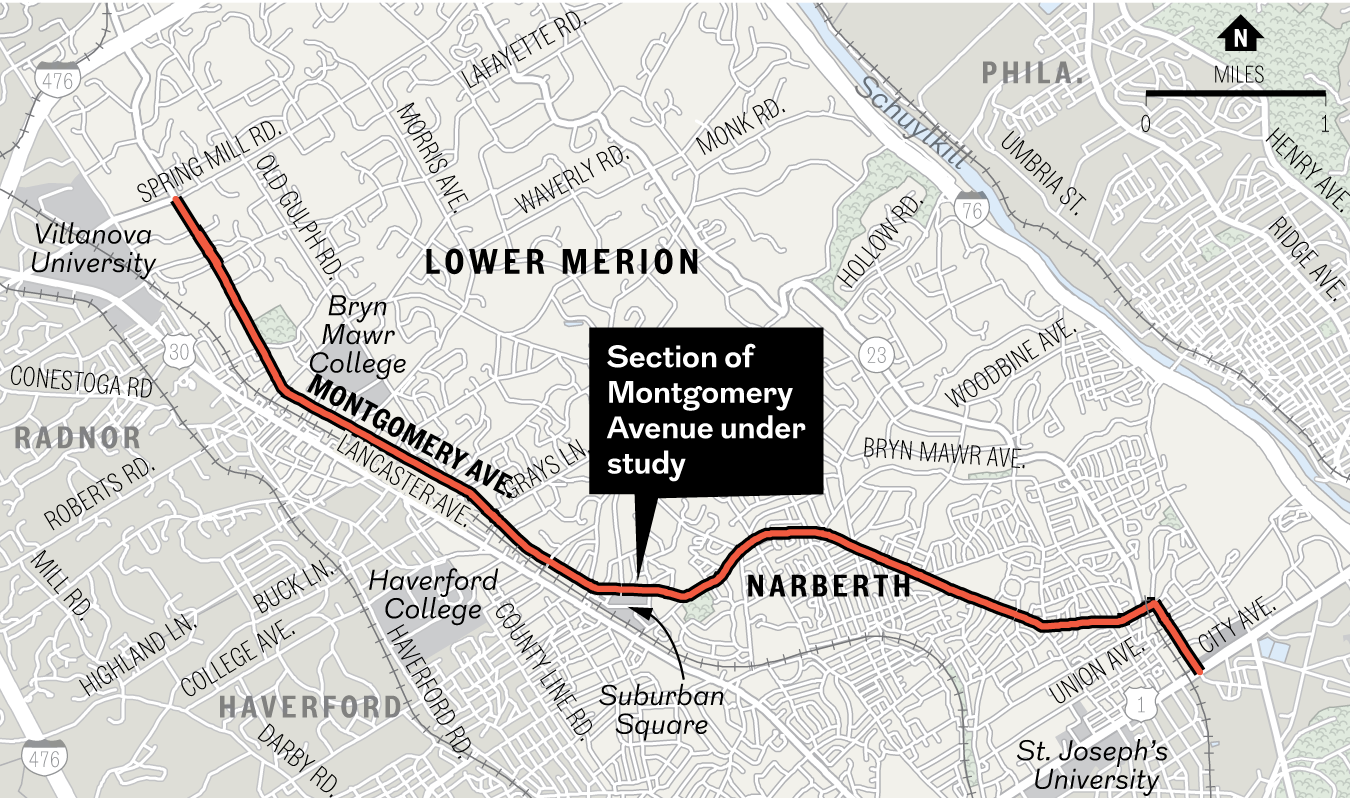
    The U.S. Department of Transportation has awarded Lower Merion and Narberth $340,540 to study a seven-mile stretch of Montgomery Avenue, from Spring Mill Road to City Avenue, through the federal Safe Streets and Roads for All program. The program awards funds to municipalities working to limit roadway deaths and serious injuries. The study will inform safety improvements at 35 intersections on that stretch of Montgomery Avenue.

    Map showing the section of Montgomery
    Avenue in Lower Merion and Narberth undergoing a comprehensive traffic safety study.

    Officials cited a long list of safety issues on Montgomery Avenue, from out-of-date pedestrian push buttons, sidewalk curb ramps, and crosswalk lighting to regular speeding and weaving by drivers. Without proper turn lanes and signals, drivers making left turns on Montgomery Avenue often slow traffic and can endanger pedestrians and other motorists, township representatives added.

    The traffic-calming effort comes at the heels of Lower Merion’s Comprehensive Safety Action Plan, which was published in 2025. The plan calls for eliminating all roadway fatalities and serious injuries in Lower Merion, with a goal of achieving a 50% reduction by 2030. Last summer, township commissioners approved a plan to install automated red-light enforcement cameras at four intersections, beginning with the intersection of Lancaster Avenue and Remington Road.

    Unlike previous traffic studies that focused on individual intersections, this project will take a more comprehensive approach, officials said.

    Between 2020 and 2024, there were 532 reportable crashes on Montgomery Avenue between Spring Mill Road and City Avenue. A reportable crash is defined as a crash resulting in an injury or vehicle damage serious enough to require towing. Around 2.5% of such crashes involved a serious injury. Just over half involved a minor injury, and the rest, around 46%, involved property damage only. In the same time frame, there were 920 minor crashes, or incidents with no injury and no need for towing.

    In total, 3,767 crashes were reported in Lower Merion at-large between 2019 and 2023. In that time frame, Lower Merion Township accounted for 8% of crashes with a fatality or serious injury within Montgomery County.

    Pennsylvania is the only state in the country where local police officers are prohibited from using radar for speed enforcement, said Andy Block, Lower Merion’s police superintendent, making it difficult for his department to enforce speed limits.

    At the meeting, residents told stories of their own crashes and near-misses on Montgomery Avenue.

    Kim Beam, a social worker at Bryn Mawr Hospital, used to walk to work along Montgomery Avenue every day before she was nearly hit by a car a few weeks ago.

    “I had an event which would have made me one of your fatalities,” Beam said, describing her walk to work as poorly lit, contributing to dangerous, and almost deadly, conditions for pedestrians like herself.

    Residents of Lower Merion and Narberth were encouraged to complete a survey that will inform officials as they develop a preliminary set of safety recommendations. A public meeting will be held once the recommendations are developed to gather additional feedback.

    Residents can fill out the survey online via www.lowermerion.org/Home/Components/News/News/5605/50 or print it out and drop it off at Narberth or Lower Merion’s municipal buildings. Completed forms can also be mailed to Brandon Ford, Assistant Township Manager, Lower Merion Township, 75 E. Lancaster Ave., Ardmore, Pa. 19003.

    This suburban content is produced with support from the Leslie Miller and Richard Worley Foundation and The Lenfest Institute for Journalism. Editorial content is created independently of the project donors. Gifts to support The Inquirer’s high-impact journalism can be made at inquirer.com/donate. A list of Lenfest Institute donors can be found at lenfestinstitute.org/supporters.

  • Kaylah Turner went from Temple’s top reserve to leading scorer in the American — and she isn’t satisfied

    Kaylah Turner went from Temple’s top reserve to leading scorer in the American — and she isn’t satisfied

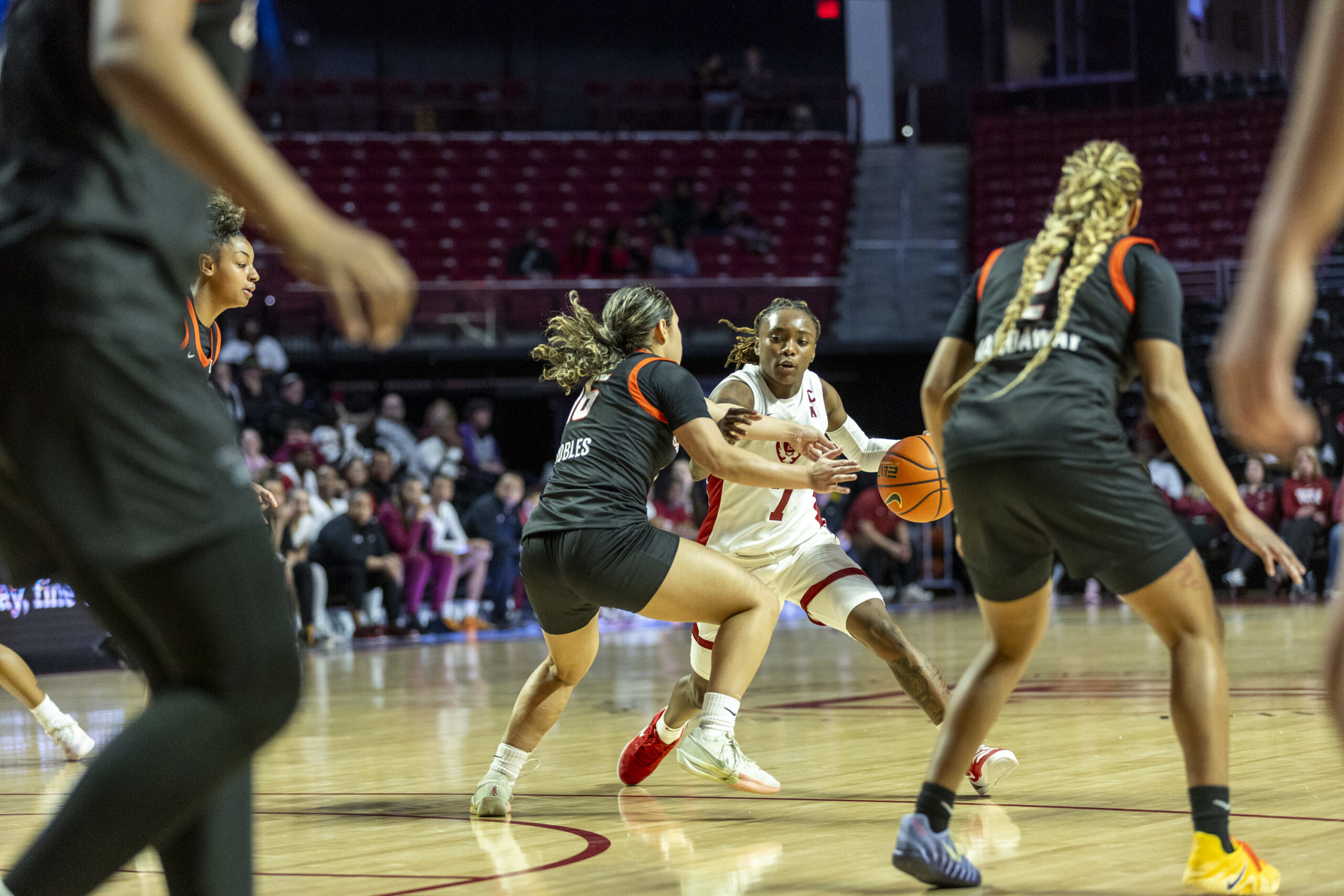
    Temple guard Kaylah Turner describes her play as “KT ball,” which she says is scoring at all three levels and being a pest on defense.

    However, the 5-foot-6 junior is constantly looking to improve, whether it’s becoming a better passer or grabbing more rebounds. Her drive has helped her blossom into one of the best players in the American Conference.

    The Alabama A&M transfer and reigning American sixth player of the year leads the conference in scoring with 17.2 points per game. It’s been a difficult stretch for the Owls in conference play, and Turner has led Temple (10-13, 4-7) to three wins in its last seven games. She scored 12 points in Tuesday’s 52-43 loss against University of Texas San at Antonio.

    “We just have to focus on the next game,” Turner said. “We can’t really draw on all the losses.”

    Temple guard Kaylah Turner is averaging 17.2 points per game.

    Turner had high expectations this season. She was named to the American’s preseason all-conference first team after a strong first season with the Owls, in which she averaged 9.9 points on 38.5% shooting off the bench. With the graduation of guards Tiarra East and Tarriyonna Gary, Turner moved into the starting lineup this season.

    “First-team preseason was cool, but I think I should have been preseason player of the year,” Turner said. “So that’s on my mind, and that’s what’s motivated me every day to get better because I didn’t get my original goal, so I still have another couple of goals in mind. I’m just never satisfied.”

    Moving into the starting lineup paired Turner with point guard Tristen Taylor, who led the American in assist-to-turnover ratio last season. Turner’s scoring prowess and Taylor’s facilitating has forged a formidable backcourt.

    “We play very well together,” Taylor said. “I feel like we’re actually the best backcourt duo in the conference, and I’ll say that. But Kaylah comes in here and works hard every day. She is a great teammate, not just to me, but to everybody. She always brings energy, and I just feel like that flows onto the court when she goes out and plays.”

    That energy has helped Turner lead the conference in scoring and shoot 41.6% on three-pointers, which is second in the conference..

    However, when Temple lost four of its first five American contests, Turner was one of the players who couldn’t find her groove.

    Turner shot below 40% in four of those five games. Before Temple’s game against South Florida on Jan. 20, the team held a meeting to go over everyone’s role on the floor. The Owls beat the Bulls, 86-83, and are 3-3 since the meeting. Turner has been one of the biggest beneficiaries of the refreshed role clarity.

    Temple’s Kaylah Turner has surpassed 1,000 career points this season.

    She had a 27-point outburst in Temple’s 67-65 overtime win over Tulane on Jan. 31 and came up with a steal and assisted forward Jaleesa Molina’s game-winning layup in the final seconds.

    “We were just super locked in on that play,” Turner said. “I got the steal, but all my teammates were all talking at that time. So that’s why we got that steal and Jaleesa was able to get the bucket.”

    Turner also eclipsed 1,000 career points after knocking down a three-pointer in the second quarter in the win over the Green Wave.

    “It definitely means a lot,” Turner said. “I was definitely happy when I got it. Just seeing my success that I had at Alabama A&M, and then having the same thing here is just incredible, seeing my hard work pay off in that aspect.”

    Despite having the best season of her career, Turner sees plenty of room for improvement. With Temple ninth in the 13-team American with seven games to play, Turner is looking to give the Owls momentum heading into the conference tournament.

    “Looking at these games that we won recently, it was with the defense and 50/50 balls, intensity, urgency, all that type of stuff,” Turner said. “So we can make sure we really emphasize the little things. We can sit here and look at scout and run our plays, but what wins games is everything that’s not on the scout. Energy, talking, getting on the floor, that type of stuff. Just being consistent with our spicy defense, like Coach [Diane Richardson] always talks about.”

  • U.S. men’s World Cup hopeful Noahkai Banks is taking the slow and steady approach

    U.S. men’s World Cup hopeful Noahkai Banks is taking the slow and steady approach

    As the clock ticks toward the World Cup, the buzz continues to grow around 19-year-old U.S. national team centerback prospect Noahkai Banks.

    Though there’s no guarantee yet that he’ll make the tournament squad, the attention is warranted. He has played in 16 of the last 17 games for his club, FC Augsburg of Germany’s Bundesliga, and often has looked good on the field.

    That puts Banks squarely on the list of names you’d want to know before the World Cup — and certainly before the U.S. team’s last auditions in March.

    He knows it, as he said when he spoke with The Inquirer earlier in the season. This week brought another opportunity to get to know him, as the Bundesliga hosted a roundtable with Banks for U.S. media.

    Noahkai Banks (rear) in action against Eintracht Frankfurt in a German Bundesliga game in December.

    There was much to talk about, starting with his reflections on his one U.S. team camp so far last fall.

    “I was pretty nervous when I got into camp because I was 18 years old at the moment,” said Banks, who turned 19 on Dec. 1. “So I thought maybe the older guys will think, ‘Who’s that,’ or ‘What is he doing here?’”

    In fact, the opposite happened.

    “For example, Tim Ream, the first day in training, he helped me a lot, because he plays in my position,” Banks said of the fellow centerback and frequent U.S. captain. “He has coached me a lot and helped me to get into the training and into the new tactics — because, obviously, it was a big jump. But also, the older guys also had dinner and they said, ‘Come sit at our table.’”

    Little things like that are a great sign of the strong spirit in the American program.

    “Players like [Christian] Pulisic, [Tim] Weah, they helped me a lot,” Banks said, naming two of the Americans’ biggest stars. Of others, he said, “How they welcomed me, how they made my life easy, was very cool, to be honest.”

    It was no surprise that he praised manager Mauricio Pochettino, but how he did so was news.

    “He has been a centerback back in the day [as a player], he knows the position very well, and he’s helped me with small details like positioning and stuff like this,” Banks said. “Just the small things, which make a difference at the highest level. He gave me some tips, and I hope I can do what he told me in the future.”

    ‘Happy with the U.S.’ and ‘grounded’ at home

    National team staff has remained in touch with Banks since then, further raising the odds of a March call-up. But because he hasn’t formally committed to the senior U.S. team yet, the Hawaii native still can switch allegiance to Germany, where he has lived since age 10.

    Noahkai Banks in action against German power Bayern Munich earlier this season.

    “I’ve been in touch with Germany before, to be honest,” Banks said, but he “was always very happy with the U.S. You can’t tell what happens in the future, but at the moment, there’s not a thought of switching, or something like this, because I’m happy with the U.S.”

    That happiness dates back to playing for various U.S. youth teams, including at the 2023 under-17 World Cup.

    “One of the best experiences in my life,” he said. “And then also at [the] U-19 and U-20 level, I was always just very happy to get into camp to see my friends again, because we were a big class of friends. It was not like I [would] go to the national team and play football, it was like I meet my friends and play football with them.”

    Banks does not lack for confidence, but he carries it well.

    “To be honest, I was always very confident — I think I have that from my mom,” he said. “So I always believed in myself, and I always believed I can play in the Bundesliga. But I think, also, confidence grows and builds itself up with time and with games.”

    Those games have earned the trust of Augsburg’s coaching staff, a feat made harder by two managerial changes since last summer. The club has been fighting all season to avoid relegation. It’s currently 13th in the 18-team league, but just three standings points into safety.

    “It has been a great year so far, because I didn’t expect to play that much, to be absolutely honest with you,” Banks said. “But yeah, the coaches have given me a lot of trust, a lot of minutes. So [over] time, as I said before, I got more confident with the team, with my teammates, with the players, with the tactics.”

    Family matters a lot to him, too. He is close with his mother, Nadine, whose own athletic genes earned her a shot at college basketball before repeated tears to her ACL derailed it. She moved Banks to Germany after separating from his father, settling in a Bavarian mountain town just over an hour from Augsburg.

    “I think it’s easy to stay grounded because I have a great family behind me,” the son said. “And also the club doesn’t allow [otherwise] because my teammates are all very grounded and very humble. It’s like a big family here.”

    Then he added a flourish that far-away Philadelphia would appreciate: “Also, my mom would kick my [butt] if I’m not grounded anymore, so there’s no chance of that.”

    Nor is there a chance of Banks looking too far ahead — as in, to the World Cup — before Augsburg’s season is settled.

    “As I said a lot of times before, I think it’s not the right moment to think about the World Cup for me, because we have a lot of games left here,” he said. “So, really, just focus. A lot of players say it, but I really mean it: I really just focus on the games we have here. And, yeah, then let’s see what happens in summer.”

  • Villanova and Notre Dame finalizing a deal to open 2026-27 basketball season in Italy

    Villanova and Notre Dame finalizing a deal to open 2026-27 basketball season in Italy

    An audience with the Pope?

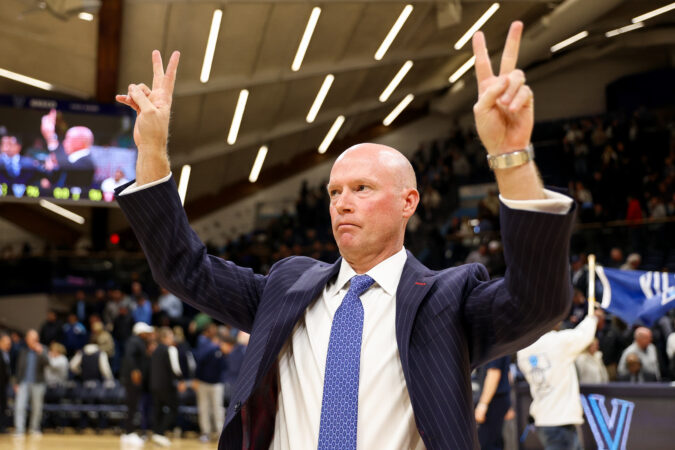
    Villanova and Notre Dame are finalizing an agreement to open the 2026-27 men’s and women’s basketball seasons with a doubleheader in Rome, sources told The Inquirer.

    CBS Sports was first to report the news Tuesday night.

    A contract has not been signed, and some logistics are still being worked out, but the schools are working toward that point, sources said. According to CBS, the schools received a special waiver to play the games on Sunday, Nov. 1, despite the college basketball season officially starting a day later.

    The games will be played at the Palazzetto dello Sport, which seats 3,500 people for basketball, according to CBS.

    This video screen grab shows Pope Leo XIV wearing a Villanova hat gifted to him during a meeting with an Italian heritage group.

    The contests are likely to give Villanova an audience with arguably the school’s most famous graduate. Pope Leo XIV is a 1977 Villanova alumnus formerly known as Robert Prevost. Notre Dame, meanwhile, is the largest Catholic university by endowment.

    The game gives Villanova’s men’s team another power-conference opponent on its nonconference schedule. The Wildcats will host Michigan and Wisconsin and also play at Pittsburgh during their nonconference slate next season.

  • Grand jury refuses to indict Democratic lawmakers in connection with illegal military orders video

    Grand jury refuses to indict Democratic lawmakers in connection with illegal military orders video

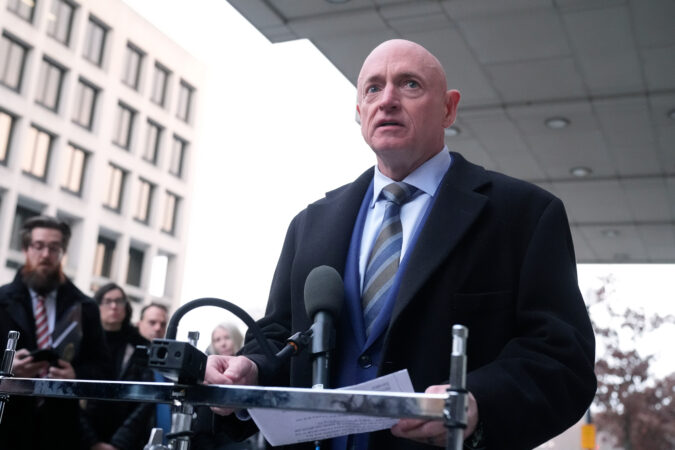
    WASHINGTON — A grand jury in Washington refused Tuesday to indict Democratic lawmakers in connection with a video in which they urged U.S. military members to resist “illegal orders,” according to a person familiar with the matter.

    The Justice Department opened an investigation into the video featuring Democratic Sens. Mark Kelly and Elissa Slotkin and four other Democratic lawmakers urging U.S. service members to follow established military protocols and reject orders they believe to be unlawful. All the lawmakers previously served in the military or at intelligence agencies.

    Grand jurors in Washington declined to sign off on charges in the latest of a series of rebukes of prosecutors by citizens in the nation’s capital, according to the person, who spoke on the condition of anonymity because they were not authorized to publicly discuss the matter. It wasn’t immediately clear whether prosecutors had sought indictments against all six lawmakers or what charge or charges prosecutors attempted to bring.

    Grand jury rejections are extraordinarily unusual, but have happened repeatedly in recent months in Washington as citizens who have heard the government’s evidence have come away underwhelmed in a number of cases. Prosecutors could try again to secure an indictment.

    Spokespeople for the U.S. attorney’s office and the Justice Department didn’t immediately respond to requests for comment Tuesday.

    The FBI in November began contacting the lawmakers to schedule interviews, outreach that came against the backdrop of broader Justice Department efforts to punish political opponents of the president. President Donald Trump and his aides labeled the lawmakers’ video as “seditious” — and Trump said on his social media account that the offense was “punishable by death.”

    Besides Slotkin and Kelly, the other Democrats who appeared in the video include Reps. Jason Crow of Colorado, Chrissy Houlahan of Pennsylvania, Maggie Goodlander of New Hampshire and Chris Deluzio of Pennsylvania.

    Slotkin, a former CIA analyst who represents Michigan, said late Tuesday that she hopes this ends the Justice Department’s probe.

    “Tonight we can score one for the Constitution, our freedom of speech, and the rule of law,” Slotkin said in a statement. “But today wasn’t just an embarrassing day for the Administration. It was another sad day for our country,” she said.

    Kelly, a former Navy pilot who represents Arizona, called the attempt to bring charges an “outrageous abuse of power by Donald Trump and his lackies.”

    “Donald Trump wants every American to be too scared to speak out against him,” Kelly said in a post on X. “The most patriotic thing any of us can do is not back down.”

    In November, the Pentagon opened an investigation into Kelly, citing a federal law that allows retired service members to be recalled to active duty on orders of the defense secretary for possible court-martial or other punishment. Defense Secretary Pete Hegseth has censured Kelly for participating in the video and is trying to retroactively demote Kelly from his retired rank of captain.

    The senator is suing Hegseth to block those proceedings, calling them an unconstitutional act of retribution. During a hearing last week, the judge appeared to be skeptical of key arguments that a government attorney made in defense of Kelly’s Jan. 5 censure by Hegseth.

  • Let us help you find a date night restaurant | Let’s Eat

    Let us help you find a date night restaurant | Let’s Eat

    Need an evening out, just the two of you? Try our online finder for the answer.

    Also in this edition:

    Mike Klein

    If someone forwarded you this email, sign up for free here.

    Let us help you with date night

    “Where do we go for date night?” We have answers for you! Answer five simple questions and let The Inquirer’s Date Finder match you with the ideal Philly-area restaurant.

    ❤️ Where to find love in the city? These happy people tried its oldest bar.

    ❤️ Valentine’s Day coincides with Lunar New Year. Here’s where to celebrate.

    A wine shop-plus in Chestnut Hill

    A couple saw opportunity in a courtyard in Chestnut Hill, and they’re launching a bottle shop and ambitious wine-focused restaurant.

    Craig LaBan reviews Tesiny

    At Tesiny, the striking new oyster bar and grill from lox and caviar queen Lauren Biederman, critic Craig LaBan finds craft cocktails, shareable plates, and “an extra pulse of intimacy.”

    ❗Biederman is targeting April for the opening of Biederman’s Rittenhouse, the second location of her South Philly appetizing shop. It’s coming together at 20th and Spruce Streets, the former Charley Dove/Audrey Claire space, with more baking and prepared foods.

    Tasty baked goods by the road

    Chester County appears to be a growing incubator of homespun bakeries, some with carts and stands dotting residential roads.

    Bad news comes in threes

    Cookie crumbles: The two Taylor Chip locations in Philadelphia closed in the last week. What’s up there?

    Deli drama: The Kibitz Room in Cherry Hill has filed for bankruptcy protection as a former owner says he wants to buy it.

    Grocery woes: Di Bruno Bros. is bowing out of the burbs, but there’s hope for the former Ardmore location.

    The best things we ate last week

    Too pretty to eat? You’d be denying yourself a crunchy treat if you skipped the Bloom Shroom, an appetizer at Manong in Francisville. Check out this dish and gems from Emmett and Apricot Stone in our weekly feature.

    Scoop

    This is quite early, but a high-end Japanese restaurant is planned for a building that will eventually rise on the former site of Kitchen Kapers at 17th and Chancellor Streets in Center City. Among those involved is Tony Rim, formerly of 1225 Raw. Put down the chopsticks, as this one might be two years away. Still, it’s a sign that the upscale Rittenhouse Japanese scene (Dancerobot, Uchi, and Kissho House) is growing further.

    Restaurant report

    It’s the Year of the Horse, and Kiki Aranita offers a rundown of dining spots where you can celebrate.

    Briefly noted

    At ease! There’s been a truce in a trademark lawsuit surrounding the recreation of Tun Tavern in Old City.

    The “saucer” at Love Park — the old visitor’s center — is in line to reopen this year with a food, beverage, retail, or other hospitality business.

    Texas Roadhouse has set Feb. 16 for the opening of its third area location (after Bensalem and Montgomeryville) at Greentree Square in Marlton. It replaces the TGI Fridays that closed two years ago.

    Shibam Coffee, a Yemeni coffee house, is looking at next week for its soft opening at 3748 Lancaster Ave. in University City.

    Cake & Joe has penciled in Feb. 18 for its opening at 1735 Market St., its third location.

    Aurora Cafe opens Saturday at 17th and Christian Streets, bringing a zenlike espresso-bar sensibility — and Albanian coffee culture — to Graduate Hospital. The corner café comes from cousins Arjan Parllaku and Bledar Noka, among partners at the Queen Village restaurants Capri and Casa Nostra. Baked goods include wares from home bakers and items produced at Capri. They’re particularly stoked for a feature called “F1 on the bar”: a $2 espresso shot you order at the standing bar, priced less than to-go orders. Initial hours: 7:30 a.m.-4 p.m. daily.

    Wonder announced this week that it’s acquired New York’s vaunted Blue Ribbon Fried Chicken. This is Wonder’s first full purchase; its other restaurant brands were created in-house or licensed to Wonder. No word on which locations will carry it. Meanwhile, Wonder has created a salad brand (Pop Salad) and a Mexican bowl brand (El Diez). They’ll be sold starting today at the Fishtown, Rittenhouse, South Philly, and University City locations.

    ❓Pop quiz

    What kind of dog does Kalaya chef/owner “Nok” Suntaranon own?

    A) Portuguese water dog

    B) beagle

    C) poodle

    D) Pomeranian

    Find out if you know the answer, and see a cute photo.

    Ask Mike anything

    What happened to the Taylor Chip cookie shops in Rittenhouse and Fishtown? — Dianne M.

    Taylor Chip has permanently closed its Philly locations after only 17 months. Read on to see how the Lancaster County company is now selling a lot of cookies.

    📮 Have a question about food in Philly? Email your questions to me at mklein@inquirer.com for a chance to be featured in my newsletter.

    By submitting your written, visual, and/or audio contributions, you agree to The Inquirer’s Terms of Use, including the grant of rights in Section 10.

  • Take a breath: Medicaid hasn’t changed yet | Expert Opinion

    Take a breath: Medicaid hasn’t changed yet | Expert Opinion

    “Another month without insurance,” our patient’s mother sighed. She had brought her 18-month old to all his doctor’s appointments in his first year. Then his Medicaid coverage was cut off, and she had no idea why.

    She tried multiple times to contact Medicaid, but couldn’t get through, and assumed incorrectly that this must be due to changes in the state-federal insurance program she had heard about on the news. She spent a week’s wages on care so her baby would not fall behind on his recommended visits, but wondered if she could afford future appointments. What would happen if he needed emergency care?

    As pediatricians, we worry about kids not getting the care they need. Health insurance, particularly Medicaid and CHIP (Children’s Health Insurance Program), is essential to children receiving recommended care. Navigating insurance coverage is confusing on a good day. We know it’s about to become even more challenging for children to get and stay covered because of changes coming to the Medicaid program.

    Fortunately, there was positive news to share with our patient that we wanted to share with everyone: Medicaid has not changed yet. Plus, there are things families can do to prepare for upcoming changes.

    Medicaid is the federal and state insurance program that covers two in five Pennsylvanian children and over half of children nationally.

    What has happened, and what can you expect?

    • January 2026: Premium tax credits expired. These tax credits helped low- and middle-income people without affordable employer insurance pay for Affordable Care Act marketplace coverage, based on a sliding scale.
    • October 2026: Many legally residing immigrants previously eligible for Medicaid will lose coverage, including refugees, asylum-seekers, and victims of trafficking.
    • January 2027: Certain adults will have work requirements and need to prove Medicaid eligibility every six months rather than annually. This will apply to adults who are not pregnant, disabled, or the parents or caregiver for a child under 14 or foster youth under age 26. Six month redetermination will also apply to moderate-income Pennsylvanians who became eligible under Medicaid expansion a few years ago.

    What does this mean for families?

    • If you have private insurance with ACA tax credits, you may pay more for coverage.
    • Even if your own Medicaid eligibility changes, your child will likely remain eligible, and you must show they’re eligible annually, not every six months. .This is important as research shows that children are less likely to stay enrolled when parents lose coverage.

    How can Pennsylvania families prepare?

    In this changing policy landscape, pediatricians aren’t just clinicians — we’re essential partners in keeping children covered and cared for. We will always want to hear from you. So, tell your pediatrician about any insurance struggles. If you have questions or are confused by information you hear, visit Pediatric Health Chat and tell CHOP what topics you’d like to learn more about. Because we will always advocate for health insurance that covers all children and gives them a healthy future.

    Elizabeth Salazar and Diana Montoya-Williams are attending neonatologists at the Children’s Hospital of Philadelphia (CHOP), Assistant Professors of Pediatrics at the University of Pennsylvania, and health services researchers at CHOP PolicyLab and the Penn Leonard Davis Institute of Health Economics.