Blog

  • Clintons finalize agreement to testify in House Epstein probe, bowing to threat of contempt vote

    Clintons finalize agreement to testify in House Epstein probe, bowing to threat of contempt vote

    WASHINGTON — Former President Bill Clinton and former Secretary of State Hillary Clinton finalized an agreement with House Republicans Tuesday to testify in a House investigation into Jeffrey Epstein this month, bowing to the threat of a contempt of Congress vote against them.

    Hillary Clinton will testify before the House Oversight Committee on Feb. 26 and Bill Clinton will appear on Feb. 27. It will mark the first time that lawmakers have compelled a former president to testify.

    The arrangement comes after months of negotiating between the two sides as Republicans sought to make the Clintons a focal point in a House committee’s investigation into Epstein, a convicted sex offender who killed himself in a New York jail cell in 2019.

    The Clintons resisted the subpoenas, but House Republicans — with support from a few Democrats — had advanced criminal contempt of Congress charges to a potential vote this week. It threatened the Clintons with the potential for substantial fines and even prison time if they had been convicted.

    Even as the Clintons bowed to that pressure, the negotiating between GOP lawmakers and attorneys for the Clintons was marked by distrust as they wrangled over the details of the deposition. The belligerence is likely to only grow as Republicans relish the opportunity to grill longtime political foes under oath.

    Clinton, like a number of other high-powered men, had a well-documented relationship with Epstein in the late 1990s and early 2000s. He has not been accused of wrongdoing in his interactions with the late financier.

    The Clintons have remained highly critical of Comer’s decision, saying he was bringing politics into the investigation while failing to hold the Trump administration accountable for delays in producing the Department of Justice’s case files on Epstein.

    Still, the prospect of a vote raised the potential for Congress to use one of its most severe punishments against a former president for the first time. Historically, Congress has given deference to former presidents. None has ever been forced to testify before lawmakers, although a few have voluntarily done so.

  • U.S. shoots down Iranian drone that approached aircraft carrier, military says

    U.S. shoots down Iranian drone that approached aircraft carrier, military says

    WASHINGTON — A U.S. Navy fighter jet shot down an Iranian drone that was approaching the aircraft carrier USS Abraham Lincoln in the Arabian Sea, U.S. Central Command said Tuesday, threatening to ramp up tensions as the Trump administration warns of possible military action to get Iran to the negotiating table.

    The drone “aggressively approached” the aircraft carrier with “unclear intent” and kept flying toward it “despite de-escalatory measures taken by U.S. forces operating in international waters,” Central Command spokesman Capt. Tim Hawkins said in a statement.

    The shootdown occurred within hours of Iranian forces harassing a U.S.-flagged and U.S.-crewed merchant vessel that was sailing in the Strait of Hormuz, the American military said.

    The developments could further escalate the heightened tensions between the longtime adversaries as President Donald Trump has threatened to use military action first over Iran’s bloody crackdown on nationwide protests and then to try to get the country to make a deal over its nuclear program. Trump’s Republican administration has built up military forces in the region, sending the aircraft carrier, guided-missile destroyers, air defense assets and more to supplement its presence.

    The Shahed-139 drone was shot down by an F-35C fighter jet from the Lincoln, which was sailing about 500 miles from Iran’s southern coast, Hawkins said. No American troops were harmed, and no U.S. equipment was damaged, the military’s statement noted.

    Talks between special envoy Steve Witkoff and Iranian officials are still planned, White House press secretary Karoline Leavitt told reporters.

    “President Trump is always wanting to pursue diplomacy first, but obviously it takes two to tango,” Leavitt said. She added, “As always, though, of course, the president has a range of options on the table with respect to Iran.”

    Hours before the drone was shot down, Iranian Foreign Minister Abbas Araghchi posted on Telegram that he had spoken with his counterparts in Kuwait, Qatar, Turkey and Oman regarding regional developments and the importance of protecting “regional stability and security.”

    U.S. says Iran also harassed a merchant vessel

    Hours after the shootdown, Iran’s Islamic Revolutionary Guard Corps forces harassed the merchant vessel Stena Imperative, the military said. Two boats and an Iranian Mohajer drone approached the ship “at high speeds and threatened to board and seize the tanker,” Hawkins’ statement said.

    The destroyer USS McFaul responded and escorted the Stena Imperative “with defensive air support from the U.S. Air Force,” the statement said, adding that the merchant vessel was now sailing safely.

    Tensions began to rise again between the U.S. and Iran as the Islamic Republic spent weeks quelling protests that began in late December against growing economic instability before broadening into a challenge to the country’s ruling theocracy.

    Trump had promised in early January to “rescue” Iranians from their government’s protest crackdown before starting to pressure Tehran again to make a deal over its nuclear program. That is even as the Republican president insists Iranian nuclear sites were “obliterated” in U.S. strikes in June.

    “We have talks going on with Iran. We’ll see how it all works out,” Trump told reporters Monday. Asked what his threshold was for military action against Iran, he declined to elaborate.

    “I’d like to see a deal negotiated,” Trump said. “Right now, we’re talking to them, we’re talking to Iran, and if we could work something out, that’d be great. And if we can’t, probably bad things would happen.”

    Iran’s president said Tuesday that he instructed the country’s foreign minister to “pursue fair and equitable negotiations” with the U.S., marking one of the first clear signs from Tehran that it wants to try to negotiate with Washington despite a breakdown of talks last summer.

    Turkey had been working behind the scenes to make the talks happen there later this week as U.S. Mideast envoy Steve Witkoff is traveling in the region. A Turkish official later said the location of talks was uncertain but that Turkey was ready to support the process.

    U.S. military builds up presence in the region

    Meanwhile, the U.S. military has been moving a growing number of assets into the region over the past several weeks, including the Lincoln and several destroyers, which arrived last week.

    The carrier strike group, which brought roughly 5,700 additional service members, joined three destroyers and three littoral combat ships that were already in the region.

    Analysts of flight-tracking data also have noticed dozens of U.S. military cargo planes heading to the region.

    The activity is similar to last year when the U.S. moved in air defense hardware, like a Patriot missile system, in anticipation of an Iranian counterattack following the U.S. bombing three key nuclear sites. Iran launched more than a dozen missiles at Al Udeid Air Base in Qatar days after the strikes.

    The U.S. has several bases in the Middle East, including Al Udeid, which hosts thousands of American troops and is the forward headquarters for U.S. Central Command.

  • Paris police raid X offices as part of expanded criminal probe

    Paris police raid X offices as part of expanded criminal probe

    French investigators raided X’s Paris headquarters on Tuesday as part of an expanded criminal probe involving seven alleged offenses including spreading antisemitic content and involvement in distributing child pornography.

    The investigation comes amid a broader effort by European governments to curb the spread of unlawful content on the social media platform formerly known as Twitter, with a particular focus on the spread of sexualized imagery produced without consent. The probe could deepen a growing schism between the United States and other countries over how to tackle potentially harmful online content, reflecting broader divides over how to balance free speech online against other rights.

    In a statement Tuesday, Paris Public Prosecutor Laure Beccuau said her office conducted the search alongside Europol and French police specializing in cybercrime. Authorities also summoned current and former X employees, including owner Elon Musk and former chief executive Linda Yaccarino, to attend voluntary interviews in Paris in April, she said.

    “This investigation is being conducted in a constructive manner, with a focus on collaboration with the individuals and companies involved,” the statement said. It added that investigators wanted to give Musk and other employees the opportunity to present their views.

    French authorities initiated their investigation more than a year ago, focused initially on X’s algorithm and handling of data. In the months since, authorities said, they have also started looking into the alleged distribution of child abuse imagery, sharing of Holocaust denial content and use of a person’s image without their consent by Grok, X’s AI tool, to generate sexually explicit deepfakes.

    No charges have yet been brought. X did not immediately respond to a request for comment Tuesday morning.

    The company categorically denied wrongdoing last year, when the French probe was limited to allegations of potential algorithmic manipulations and fraudulent data extraction. In a July statement, the platform accused French authorities of launching a “politically-motivated criminal investigation” in violation of its users’ free speech.

    On Tuesday, the Paris prosecutor’s office said child abuse images appeared to proliferate on X in 2025 after the platform apparently changed its detection tools, resulting in a reported drop in the number of abusive images being flagged.

    Authorities also voiced increasing concern over Grok’s generation of sexual images of people without their consent, and glorification of crimes against humanity and antisemitic content. Investigators also accused X of hindering separate criminal investigations into online hate speech by denying authorities’ requests — which had previously been granted — to help identify users.

    “The investigations are based on the non-compliance with French legislation by Grok for generating and disseminating child pornography, sexual deepfakes or antisemitic contents,” the Paris prosecutor’s office said.

    In France, it is a criminal offense to deny the existence of the Holocaust, with those convicted facing up to one year’s imprisonment and potential fines of up to around $50,000. And across Europe, laws governing free speech generally allow for more balancing between speech and other rights than they do in the United States. In many nations, hate speech targeting racial, religious or other groups is outlawed — reflecting a broader cultural and legal gap over free speech that divides the Atlantic.

    Also on Tuesday, Britain’s Information Commissioner’s Office said it opened new investigations into potential data breaches by X, though they are narrower in scope and didn’t include criminal allegations. “We have taken this step following reports that Grok has been used to generate non‑consensual sexual imagery of individuals, including children,” the ICO said.

    Britain’s communications regulator, Ofcom — a separate body — also said it was analyzing evidence to determine whether X broke the law. Last month, it opened an investigation of its own following reports that Grok was “being used to create and share undressed images of people — which may amount to intimate image abuse or pornography — and sexualised images of children that may amount to child sexual abuse material.”

    Last week, the European Commission announced a separate investigation into X to assess whether the platform’s deployment of Grok in Europe breached European law. The investigation also relates to the dissemination of sexually explicit images.

    In response to outrage from governments and regulators, Musk said last month that X had stopped Grok from generating sexualized images of people without their consent “in those jurisdictions where it’s illegal.”

    A Washington Post investigation found that Musk’s AI start-up, xAI, allegedly embraced and rolled back guardrails on sexualized material, ignoring warnings about potential legal and ethical risks.

  • This South Philly restaurant has a killer soup cocktail

    This South Philly restaurant has a killer soup cocktail

    Cocktails in Philly have been getting ever more savory, taking inspiration from pickles, salad, even soup — the last being the most seasonally timed. Several local bars like El Techo and Jerry’s Bar have even been poking fun at cocktail’s “soup season,” posting videos of people consuming their margaritas and espresso martinis with spoons, blowing on the sips as they go.

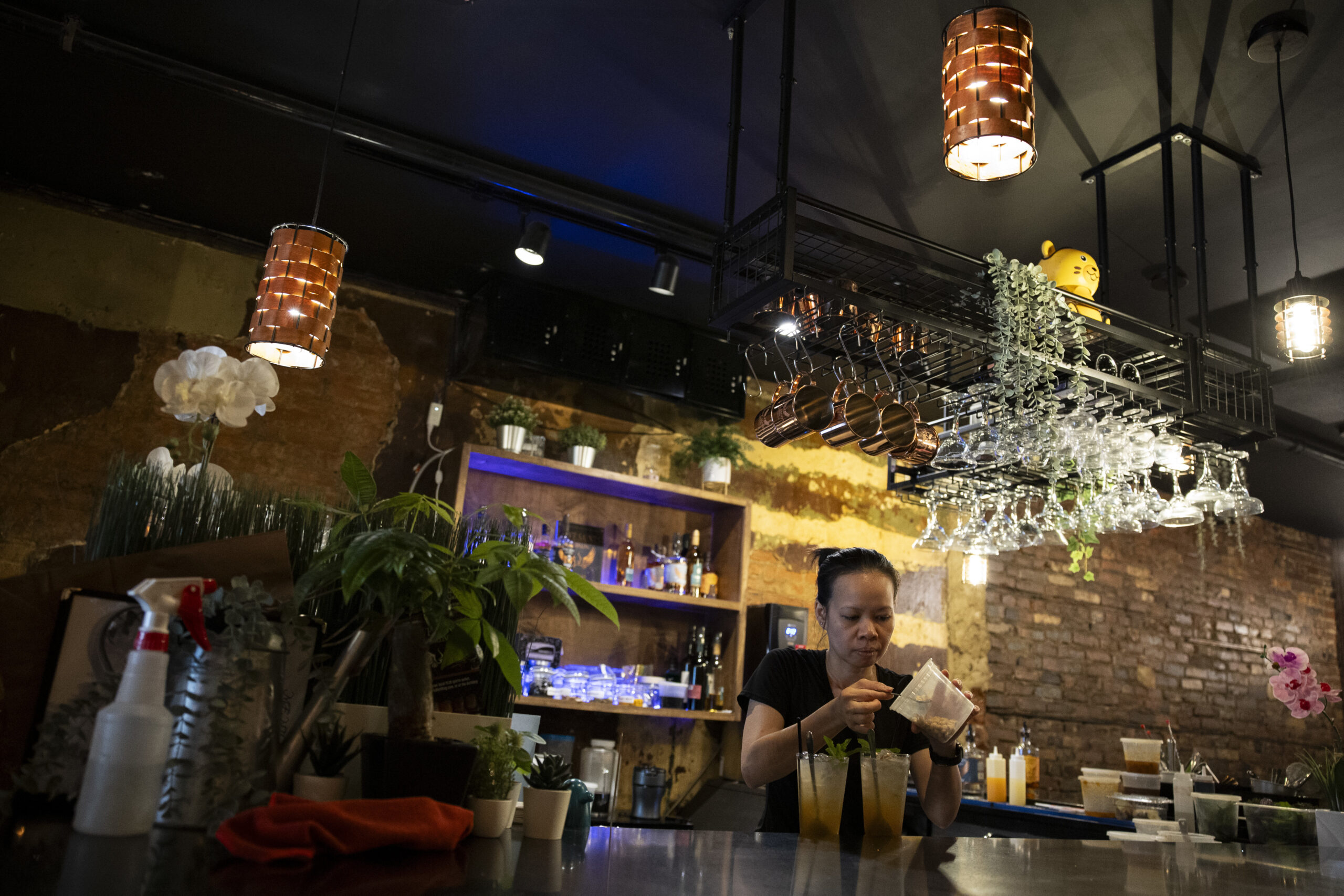
    But there’s at least one soup cocktail taking the trend more seriously. Chef Thanh Nguyen’s signature pho cocktail at Gabriella’s Vietnam is a many-layered marvel. It’s not like drinking pho broth spiked with vodka. Instead, it’s warming and softly spicy — the heat hits the back of your throat and sinks into your chest — the beefiness only an umami-laden back note. It’s complex, mildly sweet, and more well-balanced than, say, a typical spicy margarita. A tiny squirt of Sriracha muddled with fresh culantro and ginger adds a soft orange hue.

    Chef Thanh Nguyen prepares drinks at Gabriella’s Vietnam in Philadelphia on Wednesday, Aug. 28, 2024.

    “Culantro is what gives you the true pho flavor,” said Nguyen. “In South Vietnam, we use culantro more for pho than basil, which they do here [in Philly]. And of course, we need Sriracha.”

    The cocktail is shaken up with fresh lime juice, simple syrup, and a mix of vodkas (one part pho-infused vodka, three parts plain vodka).

    The liquor license at Gabriella’s (a two-time pick for The 76 most essential restaurants in Philadelphia) is a satellite license associated with Five Saints Distilling — allowing the restaurant to serve any beer, wine, and liquor made in Pennsylvania — and so the Norristown distillery’s line of spirits forms the backbone of Gabriella’s bar program.

    Two bottles of beef infused vodka: the one on the left has been steeping with herbs for six weeks and the one on the right has beef only and has been steeping for three weeks.

    There’s actual beef steeped in the vodka that forms the base of Gabriella’s pho cocktail. Thin slices of brisket and eye of round, like the ones in a typical bowl of phở tái, are seared, then crammed into the bottles of vodka, to sit for three weeks, creating a lava-lamp effect as they release droplets of fat into the liquid. At the three-week mark, the vodka is strained multiple times through coffee filters. (Nguyen discards the beef that infuses the vodka with its meaty flavor. I tried a bite before it went in the bin, but that was all: If I had kept on eating, I risked inebriation by beef.)

    Next, toasted spices are added to the bottle: fresh ginger, star anise, coriander, fennel seed, cardamon, cloves, and cinnamon. “The exact same spices for when I made pho,” said Nguyen. The concoction steeps for another three weeks, “until it’s the color of Coke,” said Nguyen.

    Nguyen approaches mixing cocktails with the mind of a chef. This is most apparent in this cocktail, which is simultaneously an ode to the pho she served at her former restaurant, Melody’s Vietnam Grill in Ambler, and to the medicinal concoctions her now 94-year-old grandfather made her drink as a child and, later, as a postpartum mother.

    “He would make vodka — yes, homemade vodka — and put garlic, ginseng, or ginger in it. This was his medicine. He’s never taken any other medicine in his life,” said Nguyen. “After I had my daughter, he had me drink this liquor with ginger soaked in it.”

    Chef Thanh Nguyen posed for a portrait at her restaurant, Gabriella’s Vietnam on Thursday, Sept. 11, 2025 in Philadelphia.

    Pho-spiced cocktails are common in bars in Vietnam, made popular at upmarket places like the Michelin-starred Anan Saigon and the Anantara Hoi An (whose pho cocktail is heavily garnished with fresh cilantro and whole star anise). The cocktail is frequently credited to Hanoi bartender Pham Tien Tiep. But each of these versions take the inspiration of pho far less literally than Nguyen does.

    “I don’t want to limit myself to one thing,” Nguyen said, explaining her experimentation behind the bar. “I love cooking but I have more fun behind the bar sometimes.” And she wants there to be constant crossover between her kitchen and bar. The passion fruit that her beef carpaccio is marinated in goes into her margarita. The kumquats that appear seasonally in her salads are muddled into her Saigon smash cocktail and blended into margaritas.

    As for the future of her soup-based cocktails, Nguyen is working on developing a bún bò huế-infused vodka. “I’m still trying to get shrimp paste and lemongrass flavors to come through,” she said.

  • Homeland Security is targeting Americans with this secretive legal weapon

    Homeland Security is targeting Americans with this secretive legal weapon

    He had decided that the America he believed in would not make it if people like him didn’t speak up, so on a cool, rainy morning in the suburbs of Philadelphia, Jon, 67 and recently retired, marched up to his study and began to type.

    He had just read about the U.S. Department of Homeland Security’s case against an Afghan it was trying to deport. The immigrant, identified in the Washington Post’s Oct. 30 investigation as H, had begged federal officials to reconsider, telling them the Taliban would kill him if he was returned to Afghanistan.

    “Unconscionable,” Jon thought as he found an email address online for the lead prosecutor, Joseph Dernbach, who was named in the story. Peering through metal-rimmed glasses, Jon opened Gmail on his computer monitor.

    “Mr. Dernbach, don’t play Russian roulette with H’s life,” he wrote. “Err on the side of caution. There’s a reason the U.S. government along with many other governments don’t recognise the Taliban. Apply principles of common sense and decency.”

    That was it. In five minutes, Jon said, he finished the note, signed his first and last name, pressed send, and hoped his plea would make a difference.

    Five hours and one minute later, Jon was watching TV with his wife when an email popped up in his inbox. He noticed it on his phone.

    “Google,” the message read, “has received legal process from a Law Enforcement authority compelling the release of information related to your Google Account.”

    Listed below was the type of legal process: “subpoena.” And below that, the authority: “Department of Homeland Security.”

    That’s how it began. Soon would come a knock at the door by men with badges and, for Jon, the relentless feeling of being surveilled in a country where he never imagined he would be.

    Administrative subpoena

    Jon read the message a second time, then a third. He didn’t tell his wife right away, worried she would panic. It could be fake, he thought, or a mistake. Or maybe, he feared, it had something to do with that four-sentence email he’d sent a prosecutor for the federal government.

    Google hadn’t provided him a copy of the subpoena, but it wasn’t the conventional sort. Homeland Security had come after him with what’s known as an administrative subpoena, a powerful legal tool that, unlike the ones people are most familiar with, federal agencies can issue without an order from a judge or grand jury.

    Though the U.S. government had been accused under previous administrations of overstepping laws and guidelines that restrict the subpoenas’ use, privacy and civil rights groups say that, under President Donald Trump, Homeland Security has weaponized the tool to strangle free speech.

    For many Americans, the anonymous ICE officer, masked and armed, represents Homeland Security’s most intimidating instrument, but the agency often targets people in a far more secretive way.

    Homeland Security is not required to share how many administrative subpoenas it issues each year, but tech experts and former agency staff estimate it’s well into the thousands, if not tens of thousands. Because the legal demands are not subject to independent review, they can take just minutes to write up and, former staff say, officials throughout the agency, even in mid-level roles, have been given the authority to approve them.

    In March, Homeland Security issued two administrative subpoenas to Columbia University for information on a student it sought to deport after she took part in pro-Palestinian protests. In July, the agency demanded broad employment records from Harvard University with what the school’s attorneys described as “unprecedented administrative subpoenas.” In September, Homeland Security used one to try to identify Instagram users who posted about ICE raids in Los Angeles. Last month, the agency used another to demand detailed personal information about some 7,000 workers in a Minnesota health system whose staff had protested Immigration and Customs Enforcement’s intrusion into one of its hospitals.

    “There’s no oversight ahead of time, and there’s no ramifications for having abused it after the fact,” said Jennifer Granick, an attorney for the American Civil Liberties Union. “As we are increasingly in a world where unmasking critics is important to the administration, this type of legal process is ripe for that kind of abuse.”

    Since the start of Trump’s second term, the ACLU has repeatedly heard from people whom Homeland Security targeted with administrative subpoenas, the organization says. It’s taken on three of those cases, but none of them, its attorneys say, illustrate how the agency has exploited that legal power better than Jon’s.

    “This subpoena was part of a criminal investigation,” Assistant Secretary Tricia McLaughlin said in a statement, noting that Homeland Security Investigations has “broad administrative subpoena authority” under the law.

    McLaughlin didn’t say who was under criminal investigation, and the agency didn’t answer questions about Jon’s case or its broader use of administrative subpoenas.

    In his living room on that fall day, Jon tried to make sense of the email.

    He’d attended a No Kings rally last year, he said, and sent a few notes of criticism to lawmakers and maybe one to Trump’s administration during the president’s first term. But Jon, who worked in insurance, had never been arrested or questioned, he said, and his messages were written with the same “moderation” he displayed in the email to Dernbach, whose address he’d easily found on Florida’s bar association website.

    Jon, who asked that the Post withhold his last name out of fear for his family’s safety, followed a link in the email that led him to a form letter. Google didn’t tell Jon what information the government officials wanted, but to keep them from getting it, he would have to file a motion in federal court and submit it to Google within seven days. Jon’s heart thudded in his ears.

    He felt sick. Unsure of what to do, he told his wife.

    “This is crazy,” she said. “How can our government be doing this?”

    Born in England to a Jewish family, he grew up hearing the story of how his mother, at 20, joined an intelligence service amid the Holocaust to help Britain fight the Nazis. In 1978, while he studied law and politics at Cardiff University in Wales, he organized a protest of the Soviet Union’s oppression of Jews, and he later traveled to the country to visit families who’d been ostracized. During a stay in Israel, he demonstrated against the movement to resettle the West Bank. In the mid-1980s, he supported mine workers in their bitter dispute with British Prime Minister Margaret Thatcher.

    It was around then that Jon fell for a girl from Philly, and in 1989 he moved with her to Pennsylvania to raise a family a half hour from Independence Hall, where the U.S. was founded.

    A year later, Jon watched President George H.W. Bush sign the Immigration Act of 1990, a bill that the Republican praised for recognizing “the fundamental importance and historic contributions of immigrants to our country.” Jon applied for citizenship a few years later, because this was his home now and he wanted to vote for the people in charge of it.

    He admired nothing more about the U.S. than the Constitution he’d studied before swearing his oath of allegiance. The rights it guaranteed made the country unlike any in the world, Jon thought, and he was proud to be part of it.

    Now, in his 27th year as a citizen, he was staring at his phone, terrified that the same country was trying to strip him of those rights.

    No copy of subpoena

    Jon needed help, so a day or two after he received the email from Google, he called Judi Bernstein-Baker, who, at 80, remains one of Philadelphia’s most well-known immigration lawyers.

    She was willing to offer advice, she told him, but first needed to see the subpoena.

    “They didn’t send me the subpoena,” Jon explained over the phone.

    “How do you challenge a subpoena you don’t have a copy of?” she asked.

    Worse, he told her, Google had given him a single week to file a motion to quash the government’s demand.

    Unless you’re rich, Bernstein-Baker recalled thinking, nobody can find an attorney to go to federal court in seven days.

    Jon assumed the subpoena had been approved by a judge or grand jury, because he didn’t know any other kind existed, but when he called the federal court district mentioned in Google’s notice, a clerk told him they could find no trace of it.

    Jon pored over Reddit posts and old news coverage, eventually working out on his own that the subpoena was not judicial, but administrative.

    The U.S. government has issued such subpoenas for decades, but their use expanded, and became more controversial, after the Sept. 11, 2001, attacks. A vast range of agencies — from the FBI to the Labor Department — can deploy them for specific types of investigations.

    Proponents describe administrative subpoenas as critical tools that allow investigators to avoid protracted judicial reviews to obtain information that could, for example, help them identify someone sexually exploiting a child or track down a suspected drug trafficker.

    Speed is what makes them so useful, former and current federal investigators told the Post. With no external bureaucracy, the government can obtain phone, financial and internet records in days.

    Detractors argue that the lack of independent oversight and the secrecy with which they can be wielded threaten core democratic principles.

    “This vast administrative power has remained opaque even to those who receive these subpoenas and invisible to those it affects most,” Lindsay Nash, a professor and researcher, wrote for the Columbia Law Review last year.

    For Jon, discovering the nature of his subpoena made it no easier to obtain.

    Google had notified him from a “noreply” address and directed him to request a copy from Homeland Security but didn’t provide a phone number. Jon’s efforts to reach the agency led to a maddening, hours-long circuit of answering machines, dead numbers, and uninterested attendants.

    “It is a rigged process, designed to keep people in the dark,” Jon wrote an attorney at a nonprofit in California that offered him basic guidance.

    Google did not answer questions from the Post specific to Jon’s case or explain why it gave him only seven days to respond to a subpoena it didn’t provide.

    The company is not required by law to inform users of government requests, but a spokesperson said it does unless it’s legally prohibited from doing so or in exceptional circumstances, such as when someone’s life is in jeopardy. Google can extend the seven-day deadline, the spokesperson said, though in Jon’s case, the company never told him that or provided a way to request more time.

    Like other large tech firms, Google regularly publishes “transparency reports” that show how many government demands for user data it receives, but the companies don’t differentiate between judicial and administrative subpoenas, despite their fundamental differences.

    Both Google and Meta received a record number of subpoenas in the U.S. during the first half of last year, as Trump began his second term in office, according to the companies’ most recent reports. Google, which has shared subpoena data since 2012, was sent 28,622, a 15% increase over the previous six months.

    Meta, Microsoft, Amazon, Apple, and Snap say that they, like Google, alert their users to administrative subpoenas unless they’re barred from doing so or in extenuating circumstances.

    T-Mobile and TikTok, in contrast, say they notify users when required to by law. Verizon and AT&T wouldn’t tell the Post whether they provide any notice, and X did not reply to questions.

    Jon kept searching for answers as Google’s deadline passed.

    In the case of the Instagram users posting about ICE raids, he read, the government dropped its case after the ACLU filed a 40-page legal challenge.

    In a similar case in Pennsylvania, Homeland Security asked Meta to identify the people behind a Facebook and Instagram account that tracked ICE raids in Montgomery County. Federal attorneys argued in a court filing that the accounts invited scrutiny when they posted pictures of ICE agents’ faces, license plates, and weapons.

    “John Doe, through his social media accounts, is threatening ICE agents to impede the performance of their duties,” the government told the judge in December.

    A month later, it withdrew the subpoena, and the case was closed.

    Even if courts decide that Homeland Security abused its authority and violated constitutional rights, legal experts doubt the agency will be forced to stop the practice.

    The more Jon learned about administrative subpoenas, the more troubled he was that many Americans had never heard of them.

    After leaving England, he had fallen into insurance work, but he’d begun his career in British law, representing social workers from some of London’s poorest neighborhoods. As he neared retirement, he signed up for a certificate program at Villanova University that trains people to help immigrants navigate a legal system that often feels overwhelming.

    Now here he was, struggling to navigate the same system. But Jon wouldn’t let it go. He kept researching, calling, emailing.

    “Obsessed,” his wife said.

    “Beyond my personal situation, is the bigger question of how they misuse their powers to target innocent victims across the board,” he wrote one attorney. “If this goes unchallenged, we are all complicit or vulnerable in allowing the Government to abuse its powers.”

    Police at the door

    Through the window, his wife saw them coming.

    “It’s the police!” she screamed.

    Jon hurried downstairs. It was about 9:30 on the morning of Nov. 17. On his porch, he found a local officer, in uniform, with two men in slacks and sport coats.

    “We’re with Homeland Security,” he recalled one of them saying.

    They showed him their badges.

    His breath quickened, but he tried not to panic. A diabetic now on Social Security, Jon stands 5-foot-6, and the few remaining hairs on his head turned gray years ago. He speaks in a plodding British accent, and unless he’s watching a Tottenham Hotspur soccer match, he hardly ever raises his voice.

    But he’d seen videos of Homeland Security encounters that turned violent, even for women, teenagers, and old men.

    Inside, he could hear the dog yelping and his wife shouting, “Don’t you have anything better to do?”

    One of the federal agents showed him a copy of the email to Dernbach.

    “We want to hear your side of the story,” he recalled one of them saying.

    He told the men about Tthe Post’s investigation and his dismay over Homeland Security’s attempt to deport the Afghan who’d supported the U.S. war effort.

    When they asked how he knew Dernbach’s email address, Jon, whose only social media is Facebook, told them he found it through a basic Google search.

    He also shared the notice from Google, which, he said it seemed, they had not seen. Someone from Homeland Security’s headquarters in Washington had told their office to interview Jon, the men shared, though they didn’t give a name.

    His message to Dernbach, he told them, was an opinion, protected by the First Amendment.

    “This is as mild as one could possibly interpret,” he recalled saying.

    The investigators agreed that the email broke no law, he said, but they pointed to his mentions of Russian roulette and the Taliban. Perhaps, they conjectured, the prosecutor felt threatened.

    That was absurd, given the context, Jon thought, but he didn’t say that.

    After about 20 minutes, the men thanked him for his time.

    But Jon had one more question.

    He sometimes returned to England to visit family, and he and his wife had planned to travel over Christmas to Puerto Rico for their 40th wedding anniversary.

    “I hope this doesn’t mean I’m going to get stopped at the airport,” he said. “Am I on a list now?”

    Of course not, he said the men told him. He had nothing to worry about.

    Homeland Security demands

    An online privacy expert gave Jon a little-known email address he could use to request the subpoena from Google, though the guy warned him he might not get a response. Jon tried it anyway.

    That same day, Nov. 21, a Post reporter contacted Google about his case. Two hours after that — 22 days after Google notified Jon of the subpoena — the company provided him a copy, though the name of the official who authorized it had been redacted.

    The investigators who questioned Jon told him Homeland Security couldn’t obtain his emails, documents, photos, or other content with an administrative subpoena, he said, but the breadth of what federal investigators did ask for shook him.

    Among their demands, which they wanted dating back to Sept. 1: the day, time, and duration of all his online sessions; every associated IP and physical address; a list of each service he used; any alternate usernames and email addresses; the date he opened his account; his credit card, driver’s license, and Social Security numbers.

    Then came another revelation three days later, when Google informed him that it had “not yet responded” to Homeland Security’s legal demand. Jon had assumed Google provided the government everything it asked for weeks earlier, well before the agents visited his home.

    The company didn’t explain the delay to Jon or the Post.

    “Our processes for handling law enforcement subpoenas are designed to protect users’ privacy while meeting our legal obligations,” a spokesperson told the Post. “We review all legal demands for legal validity, and we push back against those that are overbroad or improper, including objecting to some entirely.”

    The ACLU agreed to represent Jon pro bono, filing a motion to quash in federal court on Monday to prevent Google from ever releasing his information. His attorneys accused the government of violating the statute that limits the use of administrative subpoenas for “immigration enforcement,” and the organization argued that Homeland Security had violated Jon’s right to free speech.

    “It doesn’t take that much to make people look over their shoulder, to think twice before they speak again,” said Nathan Freed Wessler, one of the ACLU attorneys. “That’s why these kinds of subpoenas and other actions — the visits — are so pernicious. You don’t have to lock somebody up to make them reticent to make their voice heard. It really doesn’t take much, because the power of the federal government is so overwhelming.”

    The knowledge that Google never sent the government the information it requested both comforted and unnerved Jon, because it meant that those two federal agents had tracked him down some other way.

    He’d noticed that on the subpoena’s final page, the government had asked Google not to tell him about it.

    “Any such disclosure,” the message read, “will impede the investigation and thereby interfere with the enforcement of federal law.”

    Google had ignored that request, too, and he was relieved. But it made Jon wonder.

    What if the U.S. government had investigated him in other ways? And what if it still was?

    No real safeguards

    One morning in early December, Jon shared his story with two acquaintances as they rode the train into Philadelphia for an interfaith protest, unrelated to the subpoena, outside ICE’s field office.

    “They don’t have to go into court,” Jon said of Homeland Security. “They don’t have to bother spending the money to do that. They just rely on the acquiescence of these companies to do their bidding.”

    “Clearly they’re doing it to further a particular agenda,” David Mosenkis said from the seat in front of Jon.

    “To intimidate,” Jon interjected.

    “That’s what they want,” said Rabbi Leah Wald, sitting next to Mosenkis. “They want everyone to be scared, right?”

    Jon thought back to how it had all started, with the note to Dernbach.

    “There are no real safeguards anymore,” he said, “until people recognize that we’re all potential targets.”

    Mosenkis, 65, stared out the window into the morning sunlight, his eyes drifting across a city where he’d demonstrated against perceived injustices for more than three decades.

    “I organize this weekly gathering, protest,” he said, “called ‘We the People Wednesdays.’”

    The group took on a different topic each week — “Election integrity,” “Defending the Constitution against domestic enemies” — and wrote postcards to public officials.

    Their letters, Mosenkis realized, were no different from Jon’s email.

    “This is exactly the kind of thing we do,” he said. “And we tell people to sign their names and ZIP codes.”

    He shook his head. He rubbed his forehead.

    “If that’s subject to surveillance,” Mosenkis said, “then anything could be.”

    The train soon pulled into the city, where they gathered in the cold with about 100 other people outside the ICE office. On the sidewalk, they listened to a rabbi recall the Torah’s command to love the stranger. Jon waved signs that read “STOP ICE RAIDS” and “LOVE THY NEIGHBOR.”

    In the weeks that followed, he tried to turn his attention to the holidays and his anniversary trip with his wife.

    Just before Christmas, the couple left for Puerto Rico. At the airport outside San Juan, they waited at baggage claim until every other passenger had left. Their luggage, they were told, remained in Philadelphia.

    “Is this a coincidence?” he asked his wife.

    The bags arrived at their cruise ship later that night, and the couple opened them in the cabin.

    Nothing looked out of place in his wife’s, but in Jon’s, he found a notice from the Transportation Security Administration.

    “Your bag,” the standard form read, “was among those selected for physical inspection.”

    It did not explain why.

    Jon didn’t want to talk about what it might mean, not then. So he took a photo, closed the bag and tried to go to sleep.

    — — –

    Drew Harwell and Nate Jones contributed to this report.

    John Woodrow Cox can be reached securely on Signal at johnwoodrowcox.01.

  • ‘Sun Ra: Do the Impossible’ is headed to ‘American Masters’ on PBS

    ‘Sun Ra: Do the Impossible’ is headed to ‘American Masters’ on PBS

    Sun Ra, the Afrofuturist bandleader and intergalactic visionary who based his Arkestra in Philadelphia for decades, is heading to PBS.

    Sun Ra: Do the Impossible, the Christine Turner-directed documentary that screened at last year’s Black Star Film Festival in Philadelphia, will air as part of PBS’ American Masters series during Black History Month.

    It will be shown locally on WHYY at 9 p.m. Feb. 20.

    Sun Ra, who was born Herman Poole Blount in Birmingham, Ala., founded Arkestra, now led by 101-year-old saxophone player Marshall Allen after Sun Ra’s death in 1993. He moved with the band to a house in Germantown in the late 1960s, where Allen still lives. The Morton Street house was originally owned by Allen’s father.

    Turner’s film includes how Blount, who was known as “Sonny,” experienced a “transmolecularization” in 1936 in which he claimed to have been teleported to Saturn and returned to Earth with a musical mission to bring peace and understanding to the world.

    Sun Ra’s music encompasses the history of jazz — from its New Orleans beginnings to out-there experimentation with electronic instruments, King Britt, Philadelphia DJ-producer-turned Blacktronika professor at the University of California San Diego, explains in the film.

    Other Philadelphians who offer analysis in the documentary include poet-musician-activist Moor Mother, and critic and WRTI-FM (90.1) editorial director Nate Chinen.

    The film’s title is inspired by a Sun Ra quote that Turner kept on her desk while she worked on the documentary. It read: “The possible has been tried and failed. Now it’s time to try the impossible.”

    The American Masters treatment arrives at a time when Sun Ra’s presence is larger than ever.

    Since 2023, the organization has released five Sun Ra tribute albums. Sun Ra’s oeuvre was central to the Metropolitan Museum of Art’s recent “Flight into Egypt: Black Artists and Ancient Egypt” exhibit, and his image is featured prominently at the Institute of Contemporary Art’s “Entryways: Xenobia Bailey” exhibit currently on view.

    Do the Impossible adds to the growing Sun Ra film library that includes the 1972 movie Space is the Place, and Philly filmmaker Robert Mugge’s 1980 Sun Ra: A Joyful Noise. Another doc, coproduced by Allen along with his son Ronnie Boyd titled Sun Ra: Door to the Cosmos, is in the works.

    Sun Ra Arkestra bandleader Marshall Allen with “Sun Ra: Do the Impossible” director Christine Turner at the Sun Ra house on Morton Street in Germantown. The documentary will be shown on PBS on Feb. 20.

    “As a culture, we’re just catching up with a lot of the ideas and the music that was so ahead of its time,” Turner said of her film’s subject in an interview with The Inquirer in July.

    “He’s become an icon of Afrofuturism, and I think that is resonating with people because we’re deeply in need of new ideas and radically imagining another kind of future. And I think people are really hungering for that.”

  • Joel Embiid not sweating All-Star Game snub: ‘I don’t need any validation from anybody’

    Joel Embiid not sweating All-Star Game snub: ‘I don’t need any validation from anybody’

    LOS ANGELES — Joel Embiid is content to spend his All-Star break on a family vacation after the 76ers’ standout center was not selected as an Eastern Conference reserve by the NBA’s coaches.

    “I don’t need any validation from anybody,” Embiid said following the Sixers’ victory over the Clippers on Monday night. “I’m happy where I’m at. I’m excited to be playing every night. If [the All-Star Game selection] didn’t happen, who cares? I get a week off to rest, anyway.”

    Embiid may need to keep those plans tentative, however. He still could be named an injury replacement for the game on Feb. 15, with Milwaukee Bucks star Giannis Antetokounmpo out with a calf strain that is expected to keep him sidelined for at least a month.

    Sixers coach Nick Nurse and Tyrese Maxey, who earlier was named an All-Star starter for the first time, acknowledged that they were surprised Embiid was not among those selected as a reserve. Embiid’s production has exploded in recent weeks, with the big man averaging 29.6 points on 52.2% shooting along with 7.9 rebounds and 4.4 assists in 18 games since Dec. 23. It has been an impressive progression in Embiid’s recovery from multiple knee surgeries.

    “He’s been super dominant,” Nurse said of Embiid before the game against the Clippers. “… I thought, just the general buzz or feel I was getting, was that he would make it.”

    Added Maxey: “It’s life. I understand it. He’s going to keep being Joel.”

    Embiid and the Sixers (28-21) had been doing some recent campaigning for his inclusion in the midseason showcase for the eighth time in his career. Following a Jan. 9 game at the Orlando Magic, Embiid said he believed he deserved the honor and added, “I think you guys [the media] should start putting the word out that Joel Embiid is back.” And when Maxey was asked at a news conference following a Jan. 22 victory over the Houston Rockets which teammate he would like to join him at All-Star Weekend, he said, “Process!” and tapped the microphone.

    “Sixers, put that out there!” Maxey said.

    Sixers guard Tyrese Maxey (right) campaigned for teammate Joel Embiid to join him in the All-Star Game.

    The Eastern Conference reserves are the Toronto Raptors’ Scottie Barnes, the Detroit Pistons’ Jalen Duren, the Atlanta Hawks’ Jalen Johnson, the Cleveland Cavaliers’ Donovan Mitchell, the Miami Heat’s Norman Powell, the Indiana Pacers’ Pascal Siakam, and the New York Knicks’ Karl-Anthony Towns. They join starters Maxey, Antetokounmpo, Detroit’s Cade Cunningham, New York’s Jalen Brunson, and the Boston Celtics’ Jaylen Brown.

    Rookie guard VJ Edgecombe also will represent the Sixers at All-Star Weekend as part of the Rising Stars competition.

    For now, Embiid will plan to enjoy his vacation and rest an “ankle thing” that he has been playing through in recent games. And the 2023 NBA MVP reiterated that “there’s only one thing missing” from his personal basketball accomplishments while glancing at his wedding ring, a clear reference to winning an NBA championship.

  • When it comes to school closures, the process matters

    When it comes to school closures, the process matters

    The school closures and consolidations proposal for Philadelphia schools that was announced in January was not surprising. The district, like many districts across the country, has signaled that it is grappling with declining enrollment, underutilized buildings, and tight budgets. The issue is so pervasive that the consulting firm Bellwether published a full report about it last fall called “Systems Under Strain: Warning Signs Pointing Toward a Rise in School Closures,” warning that many districts would soon face similar decisions.

    The process isn’t surprising, either. Seattle similarly wrestled with a school closures plan before it got so complicated that the city simply dropped the issue after intense community backlash, concerns over student well-being, and the realization that there wasn’t a clear plan for how much the closures would chip away at the roughly $100 million budget deficit.

    The situation in both Philadelphia and Seattle has many similarities to Chicago’s school closures in 2013. Chicago Public Schools closed 47 elementary schools — the largest national mass closures up to that point.

    My colleagues and I at the University of Chicago Consortium on School Research studied that process, releasing reports on families’ priorities and choices in finding new schools, and on staff and students’ experiences, including academic outcomes. The findings from our research offer important lessons and considerations for district leaders and community members in Philadelphia today.

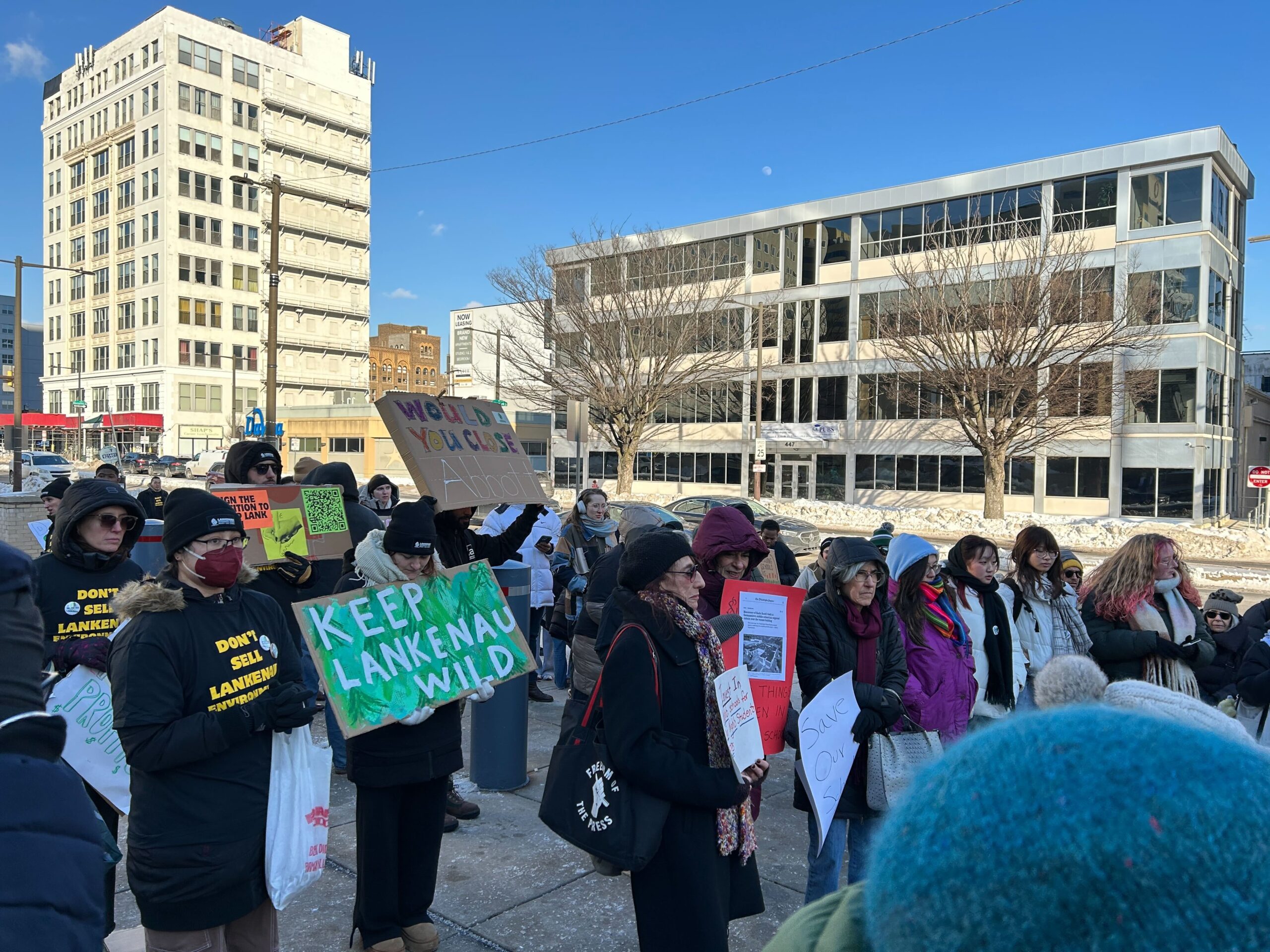
    Demonstrators rallied against school closures outside the School District of Philadelphia headquarters in Center City on Jan. 29.

    First, school is a very personal space and choice for students and families. Families assess the quality of a school in many different ways, from class size to specific course offerings to the availability of specific extracurriculars.

    A school’s reputation, sometimes going back multiple generations, is often a factor. And both safety and accessibility — proximity and available transportation — are always paramount. Closing a school isn’t just an administrative change; it is a profound disruption of community and family life.

    Second, logistics matter enormously and proved more difficult than expected in Chicago. The management of closing some schools and merging into others was a massive pain point in Chicago’s school closures.

    Some teachers could not find their personally purchased furniture, technology, and classroom supplies. Critical details were overlooked, which caused significant challenges for staff and students. Closures require thorough and transparent operational planning.

    But last and most importantly, it is critical to consider the effect of school closures on the people who experience them. In our interviews with both students and staff, we repeatedly heard that they wished their grief and loss had been acknowledged, validated, and addressed.

    When we looked at the data, we found that test scores dropped for students whose schools closed — and the drops started the year potential closures were announced, reflecting the effects of uncertainty and upheaval. Test scores also dropped for students whose schools were “receiving schools,” enrolling many of the affected students.

    Our University of Chicago colleague, professor Eve L. Ewing, wrote in her commentary in our report that “we must ask how and why we continue to close schools in a manner that causes ‘large disruptions without clear benefits for students.’”

    The way this plays out in Philadelphia matters, as young people, families, and educators are already emphasizing. In Chicago, school staff wished for more communication, more transparency, more training on merging school communities, longer-term transitional funding, and more emotional support for adults, whose feelings were still raw three years later when we interviewed them.

    Students wished school actions provided better facilities, from building and green space to sufficient toilet paper and warm water. And they wished they had more counselors and social workers, and general emotional support from all school staff, who were, themselves, grieving. Simple yet powerful reminders of what makes schools feel like places of care, connection, and community.

    In 2023, our fantastic Chicago education reporters covered the 10-year anniversary of Chicago’s massive school closures in Chalkbeat Chicago and in a WBEZ/Chicago Sun-Times collaboration. The students, families, neighbors, and staff shared similar messages in those stories as they had in our research: being told one thing and experiencing another; seeing the process as “hurtful” and without any benefit to young people or the community; wishing they could see the district and the city investing in schools, housing, and community resources where they live.

    Regardless of what final decisions are made, a difficult path lies ahead for school communities across Philadelphia. Chicago’s experience tells us that any district considering school closures needs to plan meticulously, communicate frequently and transparently, and keep the experiences of students, families, and school staff at the center of the process.

    Marisa de la Torre is managing director and senior research associate at the University of Chicago Consortium on School Research, part of the Kersten Institute for Urban Education within the Crown Family School of Social Work, Policy, and Practice.

  • Hats, gloves, and a hot dog launcher: Countdown to baseball begins as Phillies load spring training truck

    Hats, gloves, and a hot dog launcher: Countdown to baseball begins as Phillies load spring training truck

    It may not look like it outside, but spring was in the air Tuesday in South Philly.

    After a long morning of packing, members of the Phillies front office staff surrounded the first-base gate at Citizens Bank Park and waved their 2026 All-Star Game rally towels as the team truck pulled out and began its journey to spring training in Clearwater, Fla.

    The truck — decorated for this year’s All-Star Game, which is July 14 at Citizens Bank Park,— will travel 1,054 miles, passing through eight states before arriving at BayCare Ballpark. Spring training begins in just over a week, on Feb. 11, for pitchers and catchers; the full squad will report on Feb. 16.

    Throughout the Phillies’ six weeks in Florida, they’ll need to have all the necessities — from 600 pairs of pants to a single stroller and one very important hot dog launcher — and that’s where the Phillies staff comes in to help.

    “Today, we’re packing up the truck,” said Tim Schmidt, a clubhouse attendant for the Phillies. “It’s a pretty long process. I mean, there’s a lot of inventory that goes into it. We have to label everything, we have to put it in bins, and then there’s thousands of items. So, it’s not like it’s just a couple of Nike orders. It’s a lot. It’s time consuming.”

    For a job this big, the team has to get an early start. The packing process began two weeks after the end of the season and officially concluded on Tuesday morning. Workers from Old Dominion Freight Line and members of the Phillies staff began loading up the truck’s three 28-foot trailers at about 8 a.m. and didn’t wrap up until 11:40 a.m.

    Of course, they did have a little help from the Phanatic, who made some brief appearances — directing traffic and attempting to ride the forklift.

    Despite the distraction, workers packed plenty of essential items for any baseball team into the truck, including …

    • 5,000 paper cups
    • 2,400 baseballs
    • 2,000 short- and long-sleeved shirts
    • 1,200 bats
    • 900 pairs of socks
    • 600 pairs of pants
    • 600 batting practice hats
    • 350 pairs of shorts
    • 300 batting gloves
    • 250 batting practice tops
    • 200 fleeces
    • 200 light jackets
    • 200 pairs of assorted shoes
    • 140 batting helmets
    • 125 leather and elastic belts
    • 40 heavy jackets
    • 20 coolers
    • Several children’s bikes
    • and one stroller

    “I’ve been doing this for nine years,” Schmidt said. “My boss has been doing it for close to, I think, 40 years. So I’m sure there were a couple of hiccups along the way, but now we kind of have it down pat. We know what to do. We know what to bring. We know how much to bring.”

    Of course they couldn’t forget the most important item of all — the Phanatic’s high-powered hot dog launcher.

    “I’ve been asked a couple times today, ‘What’s the unique item?’” Schmidt said. “It’s the hot dog launcher. That’s the last thing to get loaded onto the truck. Once that’s loaded, everyone gets excited because you kind of know you’re done.”

    The Phillies will open their Grapefruit League schedule on Feb. 21 against the Toronto Blue Jays in Dunedin, Fla. Spring training ends March 23 with a game in Clearwater against the Tampa Bay Rays.

    Opening day for the Phillies is March 26 at home against the Texas Rangers.

  • Tony Watlington and Cherelle Parker: Philadelphia’s future is built in our schools

    Tony Watlington and Cherelle Parker: Philadelphia’s future is built in our schools

    Philadelphia is a city of neighborhoods, and at the heart of every neighborhood is a school. Schools are where our children learn, where families gather, and where communities take shape. When our schools thrive, Philadelphia thrives.

    That is why the Philadelphia School District’s recently announced Facilities Master Plan is so important — not just for students and educators, but for the future of our entire city.

    This plan is about more than bricks and mortar. It is about opportunity. It is about ensuring every child, in every zip code, has access to high-quality academic programs, safe and modern learning environments, and the extracurricular experiences that help young people discover their talents and chart their paths forward.

    For too long, inequities in school facilities have mirrored broader inequities across our city. Some students learn in buildings that limit what they can access — advanced coursework, arts and music programs, athletics, career and technical education, and modern technology — while others have more opportunities simply because of where they live. That is not acceptable, and it is not sustainable.

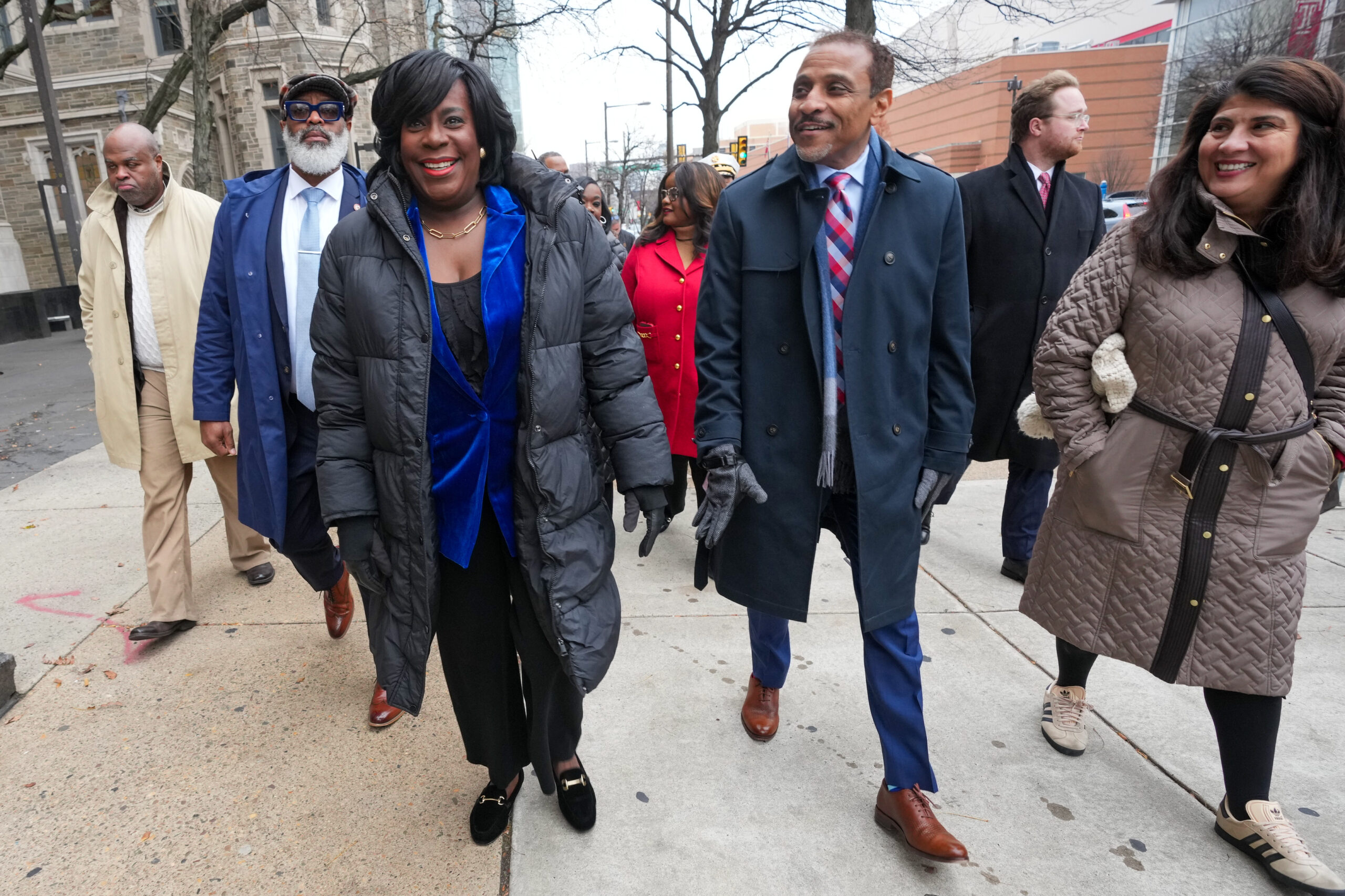
    Mayor Cherelle L. Parker and Superintendent Tony B. Watlington Sr. on Temple University’s campus in December 2024. Inequities in school facilities are unacceptable, the pair write.

    The Facilities Master Plan directly confronts these challenges. It takes a thoughtful, data-driven approach to aligning school buildings with student needs, enrollment trends, and program quality. The goal is clear: to expand access to strong academic offerings and enriching extracurricular programs across neighborhoods, while making smarter use of resources and improving learning conditions citywide.

    Ninety percent of impacted students will be reassigned to schools with comparable or better academic outcomes, and 100% of impacted students will be reassigned to schools with comparable or better academic outcomes and/or comparable or better building conditions.

    When students have access to well-equipped schools with robust programs, outcomes improve. Graduation rates rise. Attendance improves. Students are better prepared for college, careers, and civic life. These are not abstract benefits — they translate into a stronger workforce, safer neighborhoods, and a more vibrant local economy.

    The impact extends well beyond the classroom. Modernized and rightsized school facilities can anchor neighborhood revitalization. They attract families, support local businesses, and create hubs for community use — from recreation and arts to adult education and workforce training. Investments in schools are investments in communities.

    This plan also reflects a commitment to partnership and transparency. It is grounded in community engagement and recognizes that schools do not exist in isolation. The city of Philadelphia and the school district are working together to ensure that planning decisions consider housing, transportation, economic development, and public safety — because when we coordinate our efforts, everyone benefits.

    One of us, Mayor Parker, has made clear that creating a safer, cleaner, and greener city with access to economic opportunity for all is critically important to the success of our young people. Strong schools are foundational to that vision.

    The other one of us, Superintendent Watlington, has, over the past three years, led a series of sweeping improvements in the district: student attendance, teacher attendance, graduation rates, and test scores in grades four through eight have all increased. During the same period, dropout rates have decreased by more than half.

    The Facilities Master Plan brings these priorities together in a way that will drive even stronger and faster progress in an ambitious and responsible manner.

    Change is never easy, and conversations about school facilities can be deeply personal. Families care about their schools because schools are part of their identity.

    That is why continued engagement and listening will remain central as the plan moves forward. The school district and the city are committed to working with students, families, educators, and community members every step of the way.

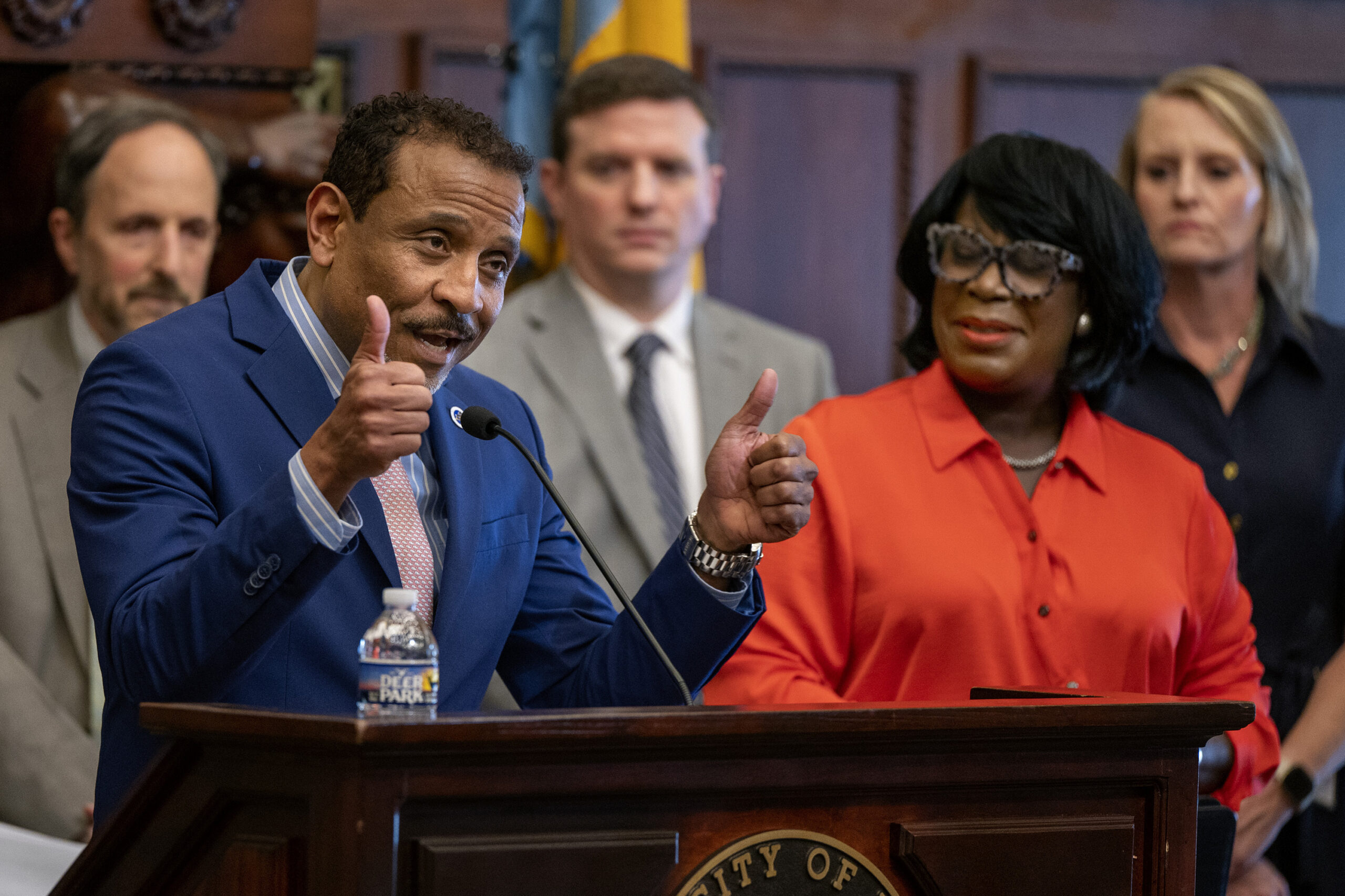
    Superintendent Tony B. Watlington Sr. joins Mayor Cherelle L. Parker at a City Hall news conference in August 2024.

    What unites us is a shared belief that Philadelphia’s children deserve the best we can offer — and that the city’s future depends on how well we prepare them today.

    This Facilities Master Plan is a long-term investment in equity, excellence, and opportunity. It is a commitment to making sure that no matter what zip code a child grows up in in Philadelphia, they have access to high-quality education and enriching experiences that open doors and expand horizons.

    By building better schools, we are building a stronger Philadelphia — for this generation and the next.

    Tony B. Watlington Sr. is the superintendent of the Philadelphia School District. Cherelle L. Parker is the 100th mayor of Philadelphia.