Blog

  • Israeli airstrikes kill 32 in Gaza, Palestinian officials say

    Israeli airstrikes kill 32 in Gaza, Palestinian officials say

    JERUSALEM — Airstrikes killed at least 32 people in Gaza overnight Friday, according to hospital and emergency response officials in the enclave, as Israel launched what it said were extensive strikes targeting Hamas militants and weapons sites.

    It was one of the bloodiest nights in Gaza since the Israel-Hamas ceasefire brokered by President Donald Trump in October, as the peace process enters its precarious second phase. Israel is due to open the key Rafah border crossing with Egypt on Sunday and begin allowing the limited entry and exit of people — a concession made by Prime Minister Benjamin Netanyahu under pressure from Trump.

    Egypt, a mediator in the conflict, condemned the strikes as the latest of Israel’s “repeated violations” of the ceasefire. An Israeli security official said Hamas had provoked Israel with “blatant violations” of the ceasefire by sending eight militants out of a tunnel in Rafah the previous night.

    Israel also struck weapons storage, manufacturing, and launch sites in Gaza, the Israel Defense Forces said in a statement.

    The Gaza Civil Defense emergency response team and hospital officials said Israel struck a tent in Khan Younis that housed the Abu Hadayed family, killing seven people; a residential home in the al-Nasr neighborhood west of Gaza City; and a police station in Gaza City’s Sheikh Redwan area.

    The majority of the 32 dead as of Saturday afternoon were women and children, according to Gaza Civil Defense spokesperson Mahmoud Bassal.

    The Israeli military has killed 509 Gazans and injured more than 1,400 since the ceasefire took effect Oct. 11, according to the Gaza Health Ministry. The Israeli campaign has killed more than 71,000 people in the enclave since October 2023, according to the ministry, which does not distinguish between combatants and civilians.

    The Israeli government launched the campaign after Hamas led an assault on southern Israel that killed 1,200 people and took 251 back to Gaza as hostages, according to Israeli officials.

    The IDF believes the number of deaths in Gaza is about 70,000, not including bodies buried under rubble, a senior Israeli military official told Israeli reporters on background this week. The IDF is still reviewing how many of the dead were combatants and how many were civilians, the official said.

    After Israeli media reported the official’s comments, the IDF clarified that it was not disclosing formal casualty estimates.

    “The details published do not reflect official IDF data,” Lt. Col Nadav Shoshani wrote on X. “Any publication or report on this matter will be released through official and orderly channels.”

  • ICE claim that a man shattered his skull running into wall triggers tension at a Minnesota hospital

    ICE claim that a man shattered his skull running into wall triggers tension at a Minnesota hospital

    MINNEAPOLIS — Intensive care nurses immediately doubted the word of federal immigration officers when they arrived at a Minneapolis hospital with a Mexican immigrant who had broken bones in his face and skull.

    Immigration and Customs Enforcement agents initially claimed Alberto Castañeda Mondragón had tried to flee while handcuffed and “purposefully ran headfirst into a brick wall,” according to court documents filed by a lawyer seeking his release.

    But staff members at Hennepin County Medical Center determined that could not possibly account for the fractures and bleeding throughout the 31-year-old’s brain, said three nurses familiar with the case.

    “It was laughable, if there was something to laugh about,” said one of the nurses, who spoke to the Associated Press on the condition of anonymity because they were not authorized to discuss patient care. “There was no way this person ran headfirst into a wall.”

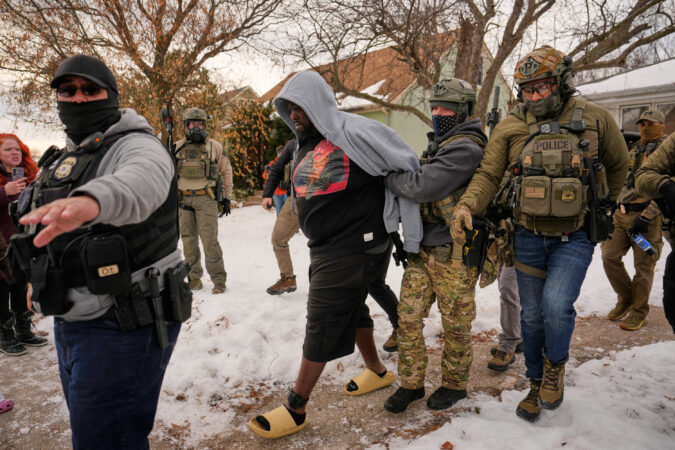
    The explanation from ICE is an example of recent run-ins between immigration officers and healthcare workers that have contributed to mounting friction at Minneapolis hospitals. Workers at the Hennepin County facility say ICE officers have restrained patients in defiance of hospital rules and stayed at their sides for days. The agents have also lingered around the campus and pressed people for proof of citizenship.

    Since the start of Operation Metro Surge, President Donald Trump’s immigration crackdown in Minnesota, ICE officers have become such a fixture at the hospital that administrators issued new protocols for how employees should engage with them. Some employees complain that they have been intimidated to the point that they avoid crossing paths with agents while at work and use encrypted communications to guard against any electronic eavesdropping.

    Similar operations have been carried out by federal agents in Los Angeles, Chicago, and other cities, where opponents have criticized what they say are overly aggressive tactics. It’s not clear how many people have required hospital care while in detention.

    Injuries appeared inconsistent with ICE account

    The AP interviewed a doctor and five nurses who work at HCMC, who spoke on condition of anonymity to talk about Castañeda Mondragón’s case and conditions inside the hospital. The AP also consulted with an outside physician who affirmed his injuries were inconsistent with an accidental fall or running into a wall.

    ICE’s account of how he was hurt evolved during the time that federal officers were at his bedside. At least one ICE officer told caregivers that Castañeda Mondragón “got his (expletive) rocked” after his Jan. 8 arrest near a St. Paul shopping center, the court filings and a hospital staff member said. His arrest happened a day after the first of two fatal shootings in Minneapolis by immigration officers.

    The situation reached a head when ICE insisted on using handcuffs to shackle his ankles to the bed, prompting a heated encounter with hospital staff, according to the court records and the hospital employees familiar with the incident.

    At the time, Castañeda Mondragón was so disoriented he did not know what year it was and could not recall how he was injured, one of the nurses said. ICE officers believed he was attempting to escape after he got up and took a few steps.

    “We were basically trying to explain to ICE that this is how someone with a traumatic brain injury is — they’re impulsive,” the nurse said. “We didn’t think he was making a run for the door.”

    Security responded to the scene, followed by the hospital’s CEO and attorney, who huddled in a doctor’s office to discuss options for dealing with ICE, the nurse said.

    “We eventually agreed with ICE that we would have a nursing assistant sit with the patient to prevent him from leaving,” the nurse said. “They agreed a little while later to take the shackles off.”

    The Department of Homeland Security, which includes ICE, did not respond to repeated requests for comment on Castañeda Mondragón’s injuries. A deportation officer skirted the issue in the court documents, saying that during the intake process at an ICE detention center, it was determined he “had a head injury that required emergency medical treatment.”

    Gregorio Castañeda Mondragón said his older brother is from Veracruz, Mexico, and worked as a roofer. He has a 10-year-old daughter living in his hometown who he helps support.

    According to his lawyers, Alberto Castañeda Mondragón entered the U.S. in 2022 with valid immigration documents. Minnesota incorporation filings show he founded a company called Castañeda Construction the following year with an address listed in St. Paul.

    He appears to have no criminal record. His lawyers told a court that Castañeda Mondragón was racially profiled during the crackdown, and that officers determined only after his arrest that he had overstayed his visa.

    “He was a brown-skinned, Latino Spanish speaker at a location immigration agents arbitrarily decided to target,” his lawyers wrote in a petition seeking his release from ICE custody.

    Hours after arrest, immigrant has eight skull fractures

    Castañeda Mondragón was initially taken to an ICE processing center at the edge of Minneapolis. Court records include an arrest warrant signed upon his arrival by an ICE officer, not an immigration judge.

    About four hours after his arrest, he was taken to a hospital emergency room in suburban Edina with swelling and bruising around his right eye and bleeding. A CT scan revealed at least eight skull fractures and life-threatening hemorrhages in at least five areas of his brain, according to court documents. He was then transferred to HCMC.

    Castañeda Mondragón was alert and speaking, telling staff he was “dragged and mistreated by federal agents,” though his condition quickly deteriorated, the documents show.

    The following week, a Jan. 16 court filing described his condition as minimally responsive and communicative, disoriented, and heavily sedated.

    AP shared the details of Castañeda Mondragón’s injuries with Lindsey C. Thomas, a board-certified forensic pathologist who worked as a medical examiner in Minnesota for more than 30 years. She agreed with the assessment of hospital staff.

    “I am pretty sure a person could not get these kinds of extensive injuries from running into a wall,” Thomas said, adding that she would need to see the CT scans to make a more definitive finding.

    “I almost think one doesn’t have to be a physician to conclude that a person can’t get skull fractures on both the right and left sides of their head and from front to back by running themselves into a wall,” she said.

    ICE officers stay with hospitalized detainees for days

    ICE officers have entered the hospital with seriously injured detainees and stayed at their bedside day after day, staffers said. The crackdown has been unsettling to hospital employees, who said ICE agents have been seen loitering on hospital grounds and asking patients and employees for proof of citizenship.

    Hospital staff members said they were uncomfortable with the presence of armed agents they did not trust and who appeared to be untrained.

    The nurses interviewed by AP said they felt intimidated by ICE’s presence in the critical care unit and had even been told to avoid a certain bathroom to minimize encounters with officers. They said staff members are using an encrypted messaging app to compare notes and share information out of fear that the government might be monitoring their communications.

    The hospital reminded employees that ICE officers are not permitted to access patients or protected information without a warrant or court order.

    “Patients under federal custody are first and foremost patients,” hospital officials wrote in a bulletin outlining new protocols. The hospital’s written policy also states that no shackles or other restraints should be used unless medically necessary.

    “We have our policies, but ICE personnel as federal officers don’t necessarily comply with those, and that introduces tension,” said a doctor who spoke on condition of anonymity because they were not authorized to comment for the hospital.

    Hospital spokesperson Alisa Harris said ICE agents “have not entered our facilities looking for individuals.”

    On Saturday, more than two weeks after Castañeda Mondragón was arrested, a U.S. District Court judge ordered him released from ICE custody.

    “We are encouraged by the court’s order, which affirms that the rule of law applies to all people, in every corner of our country, including federal officers,” said Jeanette Boerner, director of Hennepin County Adult Representation Services, which filed the lawsuit on Castañeda Mondragón’s behalf.

    To the surprise of some who treated him, Castañeda Mondragón was discharged from the hospital Tuesday. A hospital spokesperson said she had no information about him.

    The Justice Department filed court documents this week affirming Castañeda Mondragón is no longer in custody. Prosecutors did not respond to a request for comment on the man’s injuries.

    Castañeda Mondragón has no family in Minnesota and co-workers have taken him in, the man’s brother said. He has significant memory loss and a long recovery ahead. He won’t be able to work for the foreseeable future, and his friends and family worry about paying for his care.

    “He still doesn’t remember things that happened. I think (he remembers) 20% of the 100% he had,” said Gregorio Castañeda Mondragón, who lives in Mexico. “It’s sad that instead of having good memories of the United States, you’re left with a bad taste in your mouth about that country because they’re treating them like animals.”


  • Paul George is suspended 25 games for violating the NBA’s anti-drug policy

    Paul George is suspended 25 games for violating the NBA’s anti-drug policy

    The 76ers’ season, which was starting to take shape, suffered a significant blow Saturday.

    The NBA announced that Paul George will be suspended 25 games without pay for violating the terms of the NBA and National Basketball Players Association anti-drug program.

    “Over the past few years, I’ve discussed the importance of mental health, and in the course of recently seeking treatment for an issue of my own, I made the mistake of taking an improper medication,” George said in a statement to ESPN. “I take full responsibility for my actions and apologize to the Sixers organization, my teammates, and the Philly fans for my decision-making during this process.

    “I am focused on using this time to make sure that my mind and body are in the best condition to help the team when I return.”

    Under the suspension, George won’t be eligible to play until the March 25 game against the Chicago Bulls at Xfinity Mobile Arena. The 35-year-old will lose $11.7 million during the suspension.

    As a result, the Sixers will receive a $5.8 million tax variance credit.

    After the fifth game of his suspension, George will be moved from the active to the suspended list. The Sixers will be able to sign an additional player once he’s on that list.

    The Sixers head into Saturday’s home game against the New Orleans Pelicans with the Eastern Conference’s sixth-best record of 26-21.

    With George and Joel Embiid healthy, the Sixers were recognized as one of the NBA’s most dangerous teams. They were a squad capable of beating any team on any given night.

    The 6-foot-8 forward is averaging 16.0 points, 5.1 rebounds, 3.7 assists, and 1.5 steals in 27 games this season.

    Sixers coach Nick Nurse said before Saturday’s game that he’s spoken to George. Nurse also didn’t say that George didn’t exhibit signs of dealing with mental-health issues this season.

    “I’m not gonna share anybody’s mental health issues with anybody, in general,” he said. “I think he’s been fine. Been really fun to coach, a really good teammate, his teammates really like him. I think showing some great leadership, and I think he’s played well, and I think he’s, again, slotted into a situation where he kinda sees OK, Tyrese [Maxey] is going here, and [Joel Embiid]’s coming back, and this is what I need to do, and I think he was doing things at a really high level.”

    Prior to this suspension, he was dealing with injuries during his tenure with the Sixers.

    George, in his 16th NBA season, missed the first 12 games of the season with left knee injury management. He has yet to be cleared to play in back-to-back games.

    Paul George was considered the NBA’s top free agent when he signed with the Sixers.

    The Sixers signed George to a four-year, $211.5 million contract in July 2024 to form the Big Three with Embiid and Tyrese Maxey.

    As the NBA’s top free-agent target that summer, his presence was encouraging for a Sixers franchise with championship aspirations.

    The six-time All-NBA selection and four-time All-Defensive pick averaged 22.6 points, 5.2 rebounds, 3.5 assists, and 1.5 steals in 2023-24 for the Los Angeles Clippers. He shot a career-best 41.3% on three-pointers.

    Yet George played in only 41 games last season as a Sixer, hampered by various injuries. His final contest of the season was on March 3 against the Minnesota Timberwolves. He was officially ruled out for the remainder of that season on March 17, the day he received injections in the left adductor muscle in his groin and left knee.

    George was expected to return in time for training camp. However, the nine-time All-Star had arthroscopic left knee surgery on July 11. As a result, he missed all four exhibition games and the start of the regular season.

    “He’s still part of the team,” Nurse said. “He can’t play the games, but still allowed in the facility. and practices and all that stuff.

    “We’re gonna make sure those things continue to happen to get him back, and I just told him listen—as with all our players dealing with this type of stuff—we care about him. We’re here to help him, the organization is, in any way possible, and gotta get through it the best way we can, and then go from there.“

  • New cache of Epstein documents yields details on his ties to the rich and powerful

    New cache of Epstein documents yields details on his ties to the rich and powerful

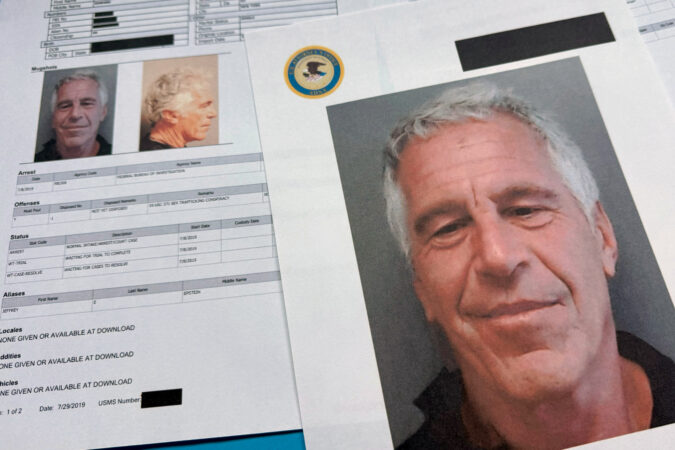
    NEW YORK — Newly disclosed government files on Jeffrey Epstein are offering more details about his interactions with the rich and famous after he served time for sex crimes in Florida, and on how much investigators knew about his abuse of underage girls when they decided not to indict him on federal charges nearly two decades ago.

    The documents released Friday include Epstein’s communications with former White House advisers, an NFL team co-owner, and billionaires including Bill Gates and Elon Musk.

    President Donald Trump’s Department of Justice said it would be releasing more than 3 million pages of documents along with more than 2,000 videos and 180,000 images under a law intended to reveal most of the material it collected during two decades of investigations involving the wealthy financier.

    The files, posted to the department’s website, included documents involving Epstein’s friendship with Britain’s Andrew Mountbatten-Windsor, formerly known as Prince Andrew, and Epstein’s email correspondence with onetime Trump adviser Steve Bannon, New York Giants co-owner Steve Tisch, and other prominent contacts with people in political, business, and philanthropic circles.

    Other documents offered a window into various investigations, including ones that led to sex trafficking charges against Epstein in 2019 and his longtime confidant Ghislaine Maxwell in 2021, and an earlier inquiry that found evidence of Epstein abusing underage girls but never led to federal charges.

    Draft indictment detailed Epstein’s abuse

    The FBI started investigating Epstein in July 2006 and agents expected him to be indicted in May 2007, according to the newly released records. A prosecutor wrote up a proposed indictment after multiple underage girls told police and the FBI that they had been paid to give Epstein sexualized massages.

    The draft indicated prosecutors were preparing to charge not just Epstein but also three people who worked for him as personal assistants.

    According to interview notes released Friday, an employee at Epstein’s Florida estate told the FBI in 2007 that Epstein once had him buy flowers and deliver them to a student at Royal Palm Beach High School to commemorate her performance in a school play.

    The employee, whose name was blacked out, said some of his duties were fanning $100 bills on a table near Epstein’s bed, placing a gun between the mattresses in his bedroom, and cleaning up after Epstein’s frequent massages with young girls, including disposing of used condoms.

    Ultimately, the U.S. attorney in Miami at the time, Alexander Acosta, signed off on a deal that let Epstein avoid federal prosecution. Epstein pleaded guilty instead to a state charge of soliciting prostitution from someone under age 18 and got an 18-month jail sentence. Acosta was Trump’s first labor secretary in his earlier term.

    Epstein offers to set Andrew up on a date

    The records have thousands of references to Trump, including emails in which Epstein and others shared news articles about him, commented on his policies or politics, or gossiped about him and his family.

    Mountbatten-Windsor’s name appears at least several hundred times, including in Epstein’s private emails. In a 2010 exchange, Epstein appeared to try and set him up for a date.

    “I have a friend who I think you might enjoy having dinner with,” Epstein wrote.

    Mountbatten-Windsor replied that he “would be delighted to see her.” The email was signed “A.”

    Epstein, whose emails often contain typographical errors, wrote later in the exchange: “She 26, russian, clevere beautiful, trustworthy and yes she has your email.”

    Concerns over how DOJ handled records

    The Justice Department is facing criticism over how it handled the latest disclosure.

    One group of Epstein accusers said in a statement that the new documents made it too easy to identify those he abused but not those who might have been involved in Epstein’s criminal activity.

    “As survivors, we should never be the ones named, scrutinized, and retraumatized while Epstein’s enablers continue to benefit from secrecy,” it said.

    Meanwhile, Maryland Rep. Jamie Raskin, the top Democrat on the House Judiciary Committee, pressed the department to let lawmakers review unredacted versions of the files as soon as Sunday. He said in a statement that Congress must assess whether the redactions were lawful or improperly shielded people from scrutiny.

    Epstein’s ties to powerful on display

    The released records reinforced that Epstein was, at least before he ran into legal trouble, friendly with Trump and former President Bill Clinton. None of Epstein’s victims who have gone public has accused Trump, a Republican, or Clinton, a Democrat, of wrongdoing. Both men said they had no knowledge Epstein was abusing underage girls.

    Epstein killed himself in a New York jail in August 2019, a month after being indicted.

    In 2021, a federal jury in New York convicted Maxwell, a British socialite, of sex trafficking for helping recruit some of his underage victims. She is serving a 20-year prison sentence.

    U.S. prosecutors never charged anyone else in connection with Epstein’s abuse. One victim, Virginia Roberts Giuffre, sued Mountbatten-Windsor, saying she had sexual encounters with him starting at age 17. The now-former prince denied having sex with Giuffre but settled her lawsuit for an undisclosed sum.

    Giuffre died by suicide last year at age 41.

  • ‘Philly started it’: Eve finally gets her Grammy, 27 years after her verse on The Roots’ ‘You Got Me’

    ‘Philly started it’: Eve finally gets her Grammy, 27 years after her verse on The Roots’ ‘You Got Me’

    Rapper and actor Eve finally got recognition for her contribution to a Grammy Award-winning song by The Roots, and she had kind words for her hometown.

    “I will say Philly started it,” Eve told a reporter at the Recording Academy Honors, presented by the Black Music Collective. “I came from Philadelphia. I think we’re used to being the underdogs in that city. And we also like to prove to you that you can underestimate me, but I’m going to show you.”

    Rapper Eve Jeffers outside Martin Luther King High School in Philadelphia in 1999.

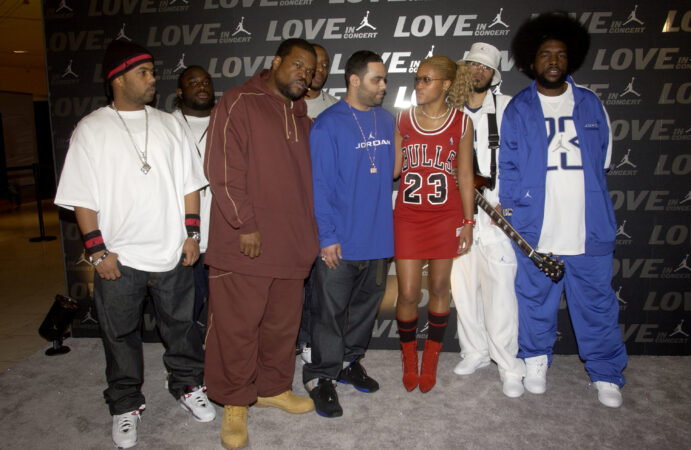
    Eve grew up in West Philly and Germantown. In 1999, when she was a 19-year-old rapper going by “Eve of Destruction,” she laid down the essential second verse for The Roots’ “You Got Me.”

    A year later, the song earned the Philly hip-hop group a Grammy for Best Rap Performance By a Duo or Group. Erykah Badu, who sang the hook, also won the award.

    But Eve, who was not signed with a recording label, was not listed as a contributing artist on the song’s 1999 release and was overlooked by the awards committee.

    That didn’t stop her from launching a successful solo career and winning a Grammy in 2002 for “Let Me Blow Ya Mind,” a Gwen Stefani collaboration that drips with early aughts vibes.

    Eve’s memoir is titled ‘Who’s That Girl?’

    At the ceremony Thursday in Los Angeles, Eve told the crowd that “this is actually for little Eve from Philly” on stage.

    “What is yours never can miss you,” she said.

    Addressing the crowd, Eve gave a shout-out to broadcaster Ebro Darden, who discussed the song at length on his podcast, The Message. She credited him for keeping people interested in seeing her receive a Grammy for the song.

    Eve said she found success through being determined and understanding what kind of life she wanted to live. She encouraged other Black women to be there for themselves and fight for their dreams.

    “I think, you know, we owe it to ourselves to show up for ourselves, to fight for ourselves, to be our own champion,” she said. “We deserve it. We are always the strongest for everyone else. We need to be the strongest for ourselves.”

  • Devin Askew’s team-high 20 points off the bench lifts Villanova past Providence

    Devin Askew’s team-high 20 points off the bench lifts Villanova past Providence

    Villanova leaned on sixth man Devin Askew’s team-high 20 points to defeat Providence, 87-73, on Friday night at Finneran Pavilion.

    Villanova (16-5, 7-3 Big East) shot 47% from three-point range in the first half to build a 17-point cushion. Askew went 4-for-5 from three and scored 17 first-half points. He now has four games with 20 or more points off the bench this season.

    “[We are] trying to get [Devin] to play off his strengths ever since he’s now kind of back to strength,” said Villanova coach Kevin Willard. “He had a great week of practice. I think that was the big thing. I think everybody did. We had three really good days of practice, and that’s the way he played for the last three days.”

    Askew, who suffered a major knee sprain over the summer, is averaging 15.8 points in his last six games. He missed about two months of practice as the team prepared to open the season.

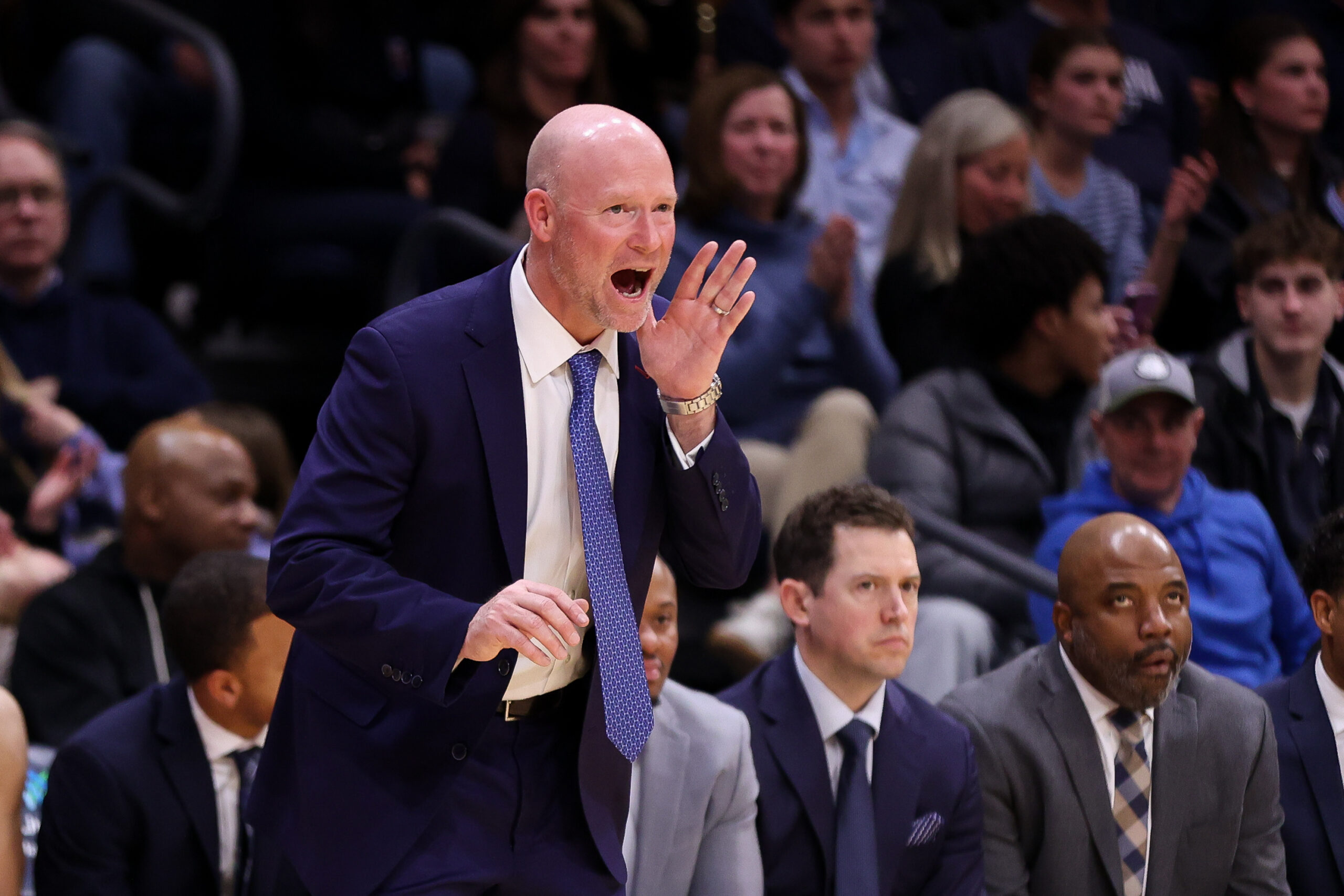
    Villanova coach Kevin Willard reacts in the second half against Providence on Friday.

    “I feel really good out there,” Askew said when asked about his health. “But just like always, I still have some work to do. Still got to get better every day.”

    Junior guard Tyler Perkins scored 19 points, marking his fifth consecutive game in double digits. He shot 6-for-11 from the field, including 3-for-6 from three-point range.

    “I just [have] been in the gym,” Perkins said. “We have a great strength coach in [Justin McClelland], and he gets us better every day, especially in the summer. We do ‘Strong Man,’ and that’s a big part of just being in shape and getting your body right for the season. So it’s just a testament to the coaching staff that we have around us.”

    Villanova shot 51% from the field and made a conference-high 13 three-pointers (45%).

    Deflections and turnovers

    Villanova scored 20 fast break points to Providence’s two. Askew and Perkins were a main reason why Villanova was successful on fast break opportunities.

    “We’re a really good transition team,” Perkins said. “We got a bunch of good shooters like Devin, Bryce [Lindsay], so if we get out and run, we got a good opportunity to score.”

    Villanova guard Tyler Perkins gathers teammates Bryce Lindsay, Duke Brennan, and Acaden Lewis against Providence on Jan. 30.

    Villanova forced Providence (9-13, 2-9) into 10 first-half turnovers, including seven steals, three by freshman guard Acaden Lewis. Villanova scored 15 first-half points off those forced turnovers.

    The Wildcats currently rank 36th in KenPom’s defensive ratings after the win over Providence.

    Slow second half

    Despite being a strong second-half team, Villanova came out flat. The Wildcats missed their first ten field goal attempts, allowing Providence to cut its deficit to eight points.

    “I think the defensive end we kind of gave, [Stefan Vaaks], he’s good,” Willard said. “He’s a pro with his size and the way he shoots it. We left him [open] twice to start the second half, and kind of gave them nine points and let them right back into the game. So I thought we did a much better job of just sitting down, defending.”

    Villanova forward Matt Hodge shoots a three-pointer against Providence guard Stefan Vaaks, who finished a game-high 25 points, on Friday.

    Vaaks, a 6-foot-7 freshman guard, finished with a game-high 25 points

    In the final 11 minutes of play, however, Villanova went 12-for-13 from the field, which included an 11-1 scoring run.

    “They don’t fold,” said Providence coach Kim English. “They stick to that process. We guarded them [well] to start the second half. They didn’t score for a long time to start, think it was like 20% or something. But they stuck with their process. They’re a really good shot quality team, and that’s what it takes. Paint decisions was the game.”

    Up next

    Villanova will host Seton Hall (15-6, 5-5) on Wednesday (6:30 p.m., Peacock). In its last meeting, Villanova beat Seton Hall, 64-56, to pick up a Quad 1 win in the NCAA NET Rankings. This time, it would be a possible Quad 2 victory. This season, Villanova is 3-4 in Quad 1 wins and 2-1 in Quad 2.

  • John Fetterman has voted to fund the government. Here’s how other local senators have voted.

    John Fetterman has voted to fund the government. Here’s how other local senators have voted.

    The U.S. Senate passed a bill late Friday to fund the federal government, but a short-term shutdown still went into effect Saturday.

    Senate Democratic leadership struck a deal earlier this week with President Donald Trump to separate Department of Homeland Security funding from the budget for other federal agencies after a national backlash to the ongoing ICE operation in Minnesota.

    The agreement with the White House emerged late Thursday after every Democrat, including Sen. John Fetterman of Pennsylvania, and several Republicans voted down the original package.

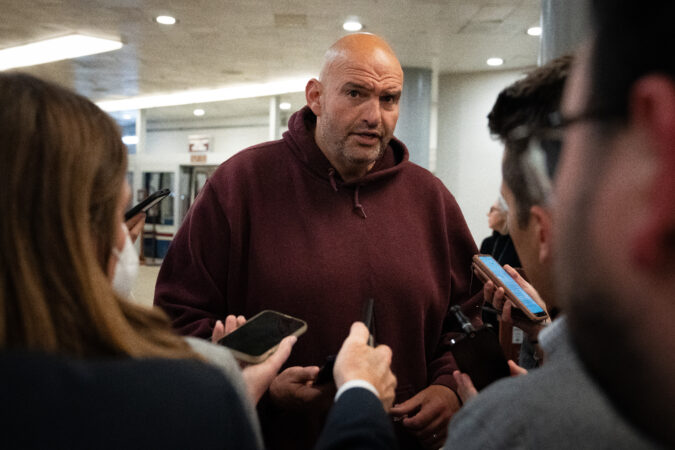
    Fetterman was among 23 Democrats to cross the aisle to vote for the compromise bill. With their support, the bill passed 71-29, despite five GOP defections.

    Here’s how the senators from the Philadelphia area voted:

    • Sen. John Fetterman (D., Pa.): Yes.
    • Sen. Dave McCormick (R., Pa.): Yes.
    • Sen. Andy Kim (D., N.J.): No.
    • Sen. Cory Booker (D., N.J.): No.
    • Sen. Chris Coons (D., Del.): Yes.
    • Sen. Lisa Blunt Rochester: (D., Del.): No.

    Even with the Senate passage, a partial government shutdown took effect Saturday because the bill still needs to pass the House, which is not expected to take up the legislation until Monday.

    It’s the second shutdown to begin since October when the federal government entered a 43-day shutdown, the longest in its history.

    Democrats took issue with funding in the earlier bill for DHS, the department that oversees the two agencies involved in fatal shootings of civilians this month in Minnesota.

    The Senate worked late Friday as some Republicans objected to the deal. McCormick, the lone Republican senator in the region, voted for the measure as expected.

    “I’m just not in favor of shutting down the government or stopping funding the government, and that’s the position that I’ve had through the last shutdown,” McCormick said Tuesday.

    The affected departments include the Departments of Defense, State, Transportation, Education, Labor, Treasury, Health and Human Services, and Housing and Urban Development, in addition to DHS.

    The deal struck with the White House would provide two weeks of funding for DHS, but funds the rest of the departments through September.

    Democrats on Thursday halted the original package that would have provided long-term funding for DHS, which oversees ICE and the Border Patrol.

    Fetterman had called for the DHS funding to be separated from the other departments as a compromise, which is ultimately what happened.

    The DHS funding dispute came after the national furor over the killings of Renee Good, a poet and mother, and Alex Pretti, a nurse who worked at a VA hospital, both of whom protested the ongoing operation in Minnesota and were fatally shot by federal agents.

    Democrats pushed for provisions to curb ICE’s immigration enforcement operations in order to fund DHS. Their demands include increased training for ICE agents, requiring warrants for immigration arrests and for agents to identify themselves, and for the Border Patrol to stay on the border instead of helping ICE elsewhere.

    Lawmakers from both parties have called on DHS Secretary Kristi Noem to resign or be fired, including all of the local Democrats.

    McCormick, a Trump ally who has been vocally supportive of ICE, called for an investigation into the fatal shooting of Pretti.

    This article contains reporting from the Associated Press and staff writer Fallon Roth.

  • A baby with fussiness, constipation, and poor feeding | Medical Mystery

    A baby with fussiness, constipation, and poor feeding | Medical Mystery

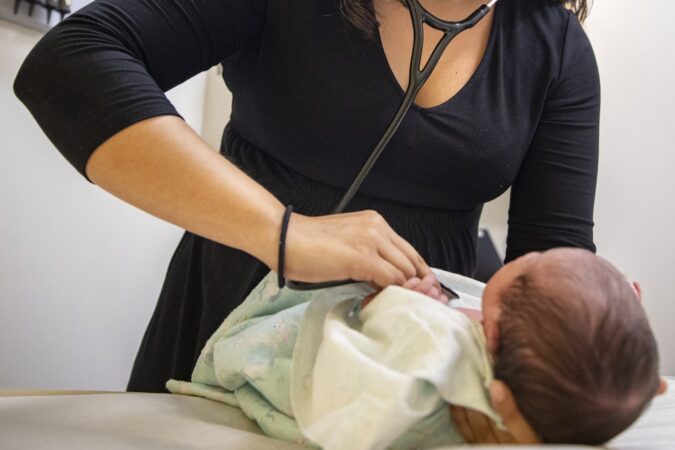
    A 4-week-old baby girl came into the emergency room because she’d been fussy for a full day, and wouldn’t drink from her bottle. On further questioning, the parents said that she had not pooped for 3 days, had been drooling more, had a weaker cry, and seemed very floppy.

    In the ER, she was very weak with low muscle tone, droopy eyelids, and a significant amount of drool. The ER physicians could not elicit her normal newborn reflexes. Due to her severe weakness and concern for her ability to keep breathing on her own, the decision was made to insert a breathing tube into her airway to help her breathe.

    Low muscle tone and weakness in a newborn baby can have many different causes. Some of these causes include infection, low blood sugar, thyroid problems, neuromuscular diseases, brain bleeds, drug exposure, and genetic or metabolic disorders.

    All babies are screened 48 hours after birth for a variety of genetic and metabolic conditions. This baby had a normal newborn screen, so metabolic disorders were unlikely, though. The ER also collected thyroid studies which were normal. This baby had been healthy with normal muscle tone prior to this event, probably eliminating other genetic disorders such as trisomy 21.

    Infections, such as sepsis (blood infection), meningitis (brain infection), pneumonia (lung infection), and urinary tract infections can also present with low muscle tone in newborns. In this patient a lumbar puncture, or spinal tap, proved negative for meningitis. Urine and blood cultures were negative for infection. A chest X-ray did not show pneumonia, and a nasal swab was negative for any respiratory viruses.

    Drug ingestions or exposures can also present with altered mental status or low muscle tone, but neither turned up in a urine drug screen.

    Problems within the brain, such as a tumor or bleed, can also cause low muscle tone. But a head CT scan on our patient was normal.

    Finally, low muscle tone can be a feature of some disorders of the neuromuscular system, which is the pathway between the brain and muscles that make muscles work properly. Some examples of these disorders are spinal muscular atrophy, myasthenia gravis, Guillan-Barre syndrome, or infant botulism.

    The solution

    Given this patient’s age and symptoms, and after eliminating other possibilities, a test for botulism in the baby’s stool was performed. While awaiting the results, this outcome appeared so likely that the baby was treated for presumed botulism.

    Botulism is caused by the bacteria Clostridium botulinum, which causes a neuromuscular paralysis that starts with symptoms at the head and descends to the toes. It can occur when infants ingest spores of these bacteria, which sometimes appear in dirt and honey, among other sources. It predominantly affects babies younger than 12 months. Because of the immaturity of a baby’s gut microbiome, the spores can stay in their intestines longer than they would in an older child or adult, and release the botulism toxin.

    Pennsylvania has one of the highest rates in the country of these spores, accounting for 17% of all cases in the United States in 2018. It is most commonly reported in infants who live near construction zones. This infant’s father was a construction worker and had a project going on in their backyard.

    Fortunately, a treatment exists. It is called botulism immunoglobulin, otherwise known as BabyBig. This treatment provides antibodies to the bacteria, which bind to and neutralize the toxin. Even with this therapy, recovery is a slow process that can take several months. However, patients who are hospitalized and treated quickly should expect a full recovery.

    This patient is doing well, and no longer needed the breathing tube after receiving BabyBig. She still has some trouble with feeding and required a feeding tube for some time.

    Her treatment was started immediately because test results take so long, and the treatment would not have harmed her if she hadn’t tested positive. In her case, we got the results after she went home from the hospital and it confirmed the botulinum toxin.

    Our advice

    Do not give honey to any baby under the age of 12 months. If a family member works in construction, especially in high-risk states, make sure to bathe and change into clean clothes before touching a young baby..

    BriarRose Edwins is a second-year pediatric resident and Hayley Goldner is a pediatrician in the adolescent medicine department at Nemours Children’s Hospital, Delaware.

  • 🛷 Sled finder, sled keeper? | Morning Newsletter

    🛷 Sled finder, sled keeper? | Morning Newsletter

    Good morning.

    We’re still in the arctic-cold single digits, and snowpacks continue to melt at a glacial pace. Resident weather expert Tony Wood explains its profoundly chilling effect on cleanup efforts.

    Today, we take on a reader’s question about unclaimed sleds on snowy hills.

    Plus, there’s news on Sixers co-owner Josh Harris’ email exchanges with Jeffrey Epstein, what customers are saying about Di Bruno Bros. closing three stores, and our weekly report card for the latest regional news.

    Scroll along for these stories and more.

    — Paola Pérez (morningnewsletter@inquirer.com)

    If someone forwarded you this email, sign up for free here.

    What you should know today

    • At a Friday hearing, a federal judge chastised a Trump administration attorney for making “dangerous” arguments over the abrupt removal of slavery-related exhibits from the President’s House. The judge said she will visit the site at Independence Mall before deciding the fate of the dismantled displays.
    • One year ago today, a deadly medical jet crash devastated Northeast Philadelphia. City officials plan to hold a memorial observance this evening to honor its victims.
    • Newly released emails reveal an ongoing business relationship between Jeffrey Epstein and Sixers co-owner Josh Harris. The records — buried within 3 million documents — shed light on a yearslong correspondence.
    • While Di Bruno Bros. shoppers lamented the imminent closure of three grocery stores, some said that they weren’t surprised and that they had noticed a change in quality over the last few years.
    • A month after dangerous winds led Mummers string bands to cancel their New Year’s Day Parade competition, one string band says it’ll be too cold to play Saturday’s makeup show at the Linc. Here’s how the Eagles and other Philly pro sports teams pulled strings of their own to help make the event happen.
    • Journalist, tireless community activist, and “Philadelphia institution” Dan McQuade has died at 43. “He understood Philadelphians better than anyone because he was one,” a colleague said, “quirky and funny, competitive and humble, loyal and kind.”
    • Eli Lilly plans to build a $3.5 billion pharmaceutical plant in the Lehigh Valley to expand manufacturing capacity for next-generation weight-loss medicines.
    • An appeals court declined to reinstate racketeering charges against George Norcross. It will be up to a new attorney general to decide what’s next.
    • A federal jury in Philadelphia ruled that Comcast owes a start-up company $240 million for infringing on its patent and using its voice-remote technology.
    • From Center City West’s increasingly grimy sidewalks to the unhinged return of savesies, catch up on the good, bad, and weird from recent stories out of Philly.

    About those stray sleds

    With the snow sticking around, slopes across the Philadelphia region are still being used for sledding fun.

    But what happens if you come across a lonely sled? We’re answering this reader question: Every time we go sledding, my kids somehow inevitably lose a sled. And every time, there seem to be extra, unclaimed sleds lying around. Is taking one of those stealing (from a child!), or just part of the karmic redistribution of sleds?

    To discuss sled etiquette, Inquirer editor Evan Weiss called on two other fathers, reporters Jason Nark and Mike Newall. Their chat touched on every possible option, from posting about a found sled on Facebook to borrowing it for the afternoon — and then just leaving it be.

    They also reminisced on the “rough business” of being a kid and fighting for your sled, and using things like garbage can lids as makeshift sleds. (That reminded me of this absolutely wild reel of a guy trying his luck with a suitcase, a mattress, and … a frying pan.)

    Read along for their full take. And if you’re looking for advice, we’re all ears. Send in your pressing Philadelphia problems here.

    One viewpoint

    Inquirer columnist Daniel Pearson is a strong advocate for snow days. Snow weeks? Not so much.

    In the latest edition of Shackamaxon, Pearson gives his take on Philadelphia’s “underwhelming” snow response, as well as political incentives and the city’s “resign to run” provision.

    📍 Find the location

    Every Saturday, we’ll show you a photo taken in the Philly area, and you drop a pin where you think it was taken.

    Think you know where this historic house is located?

    Our weekly game puts your knowledge of Philly’s places and streets to the test. Check your answer.

    🧩 Unscramble the anagram

    Hint: Music school

    INTUIT CRUSTIEST

    Email us if you know the answer. We’ll select a reader at random to shout out here.

    Cheers to Maria Francesconi, who correctly guessed Friday’s answer: Atlantic City. The resort hub’s international airport is getting more southbound flights on Breeze Airways.

    We were there

    Juli Pasquale, of Painted Lady Tattoo Co. in Las Vegas, tattoos the Virgin Mary and La Santa Muerte on the back of Giselle Bewley, of Los Angeles.

    Hundreds of the world’s best tattoo artists and their fans got together at the Villain Arts Tattoo Festival in Philadelphia Jan. 23 to 25. Staff photographer Tyger Williams captured the ink in action.

    Somewhere on the internet in Philly

    “I beg your finest pardon?!?!?” This runner takes dedication to a whole new level.

    Over on Facebook, the Philadelphia Art Museum posted Guy Carleton Wiggins’ 1935 piece “Snowstorm, Fifth Avenue” for the snowy occasion. I also saw this nice frosty sunrise view from Conshohocken.

    And I’m still not over the car found encased in slush and ice in Fishtown. At least its windshield wipers are up…

    👋🏽 That’s it for now. I’ll bring you the news again tomorrow morning.

    By submitting your written, visual, and/or audio contributions, you agree to The Inquirer’s Terms of Use, including the grant of rights in Section 10.

  • The regime does not make mistakes

    The regime does not make mistakes

    Manuel Contreras, the head of the secret police during Chile’s dictatorship, which reigned from 1973 to 1989, once explained why so many seeming innocents — students, union leaders, local activists — were murdered by the state: “The guerrilla tries to act like a normal citizen, honest and good, and lies even to his family. When discovered, he will always deny the facts.”

    The regime does not make mistakes.

    “The lack of specific information … demonstrates that they are terrorists with regard to whom we lack a complete profile.”

    That last bit wasn’t the head of Chile’s secret police, though. It was a U.S. Immigration and Customs Enforcement field director, Robert Cerna, explaining last March why 75% of Venezuelan deportees to El Salvador’s mega-prisons had no criminal background.

    I am a scholar of authoritarian politics at the University of Pennsylvania. I research and teach about repression and censorship. The Trump administration is engaged in state terror. And, in a page ripped from the autocrat’s playbook, they are trying to convince us that the victims deserve it.

    On Jan. 7, Secretary of Homeland Security Kristi Noem claimed Renee Goodshot in the head by an ICE agent while observing a raid — engaged in an “act of domestic terrorism.” Noem said that Good “weaponized” her car (the same car with a glove compartment overflowing with her child’s stuffed animals and a friendly dog in the back).

    The very next day, federal agents shot two people in Portland, Ore., during a traffic stop. DHS claims the driver “is believed to be a member of the vicious Venezuelan gang Tren de Aragua,” who again “weaponized his vehicle.” The same claim appears again and again: to justify why federal agents killed Silverio Villegas Gonzalez in Chicago, and why they shot Marimar Martinez five times (the U.S. Department of Justice brought, and then dropped, charges against her). After Alex Pretti, a Veterans Affairs nurse, was executed by federal agents in Minneapolis on Jan. 24, White House Deputy Chief of Staff Stephen Miller called him a “would-be-assassin.”

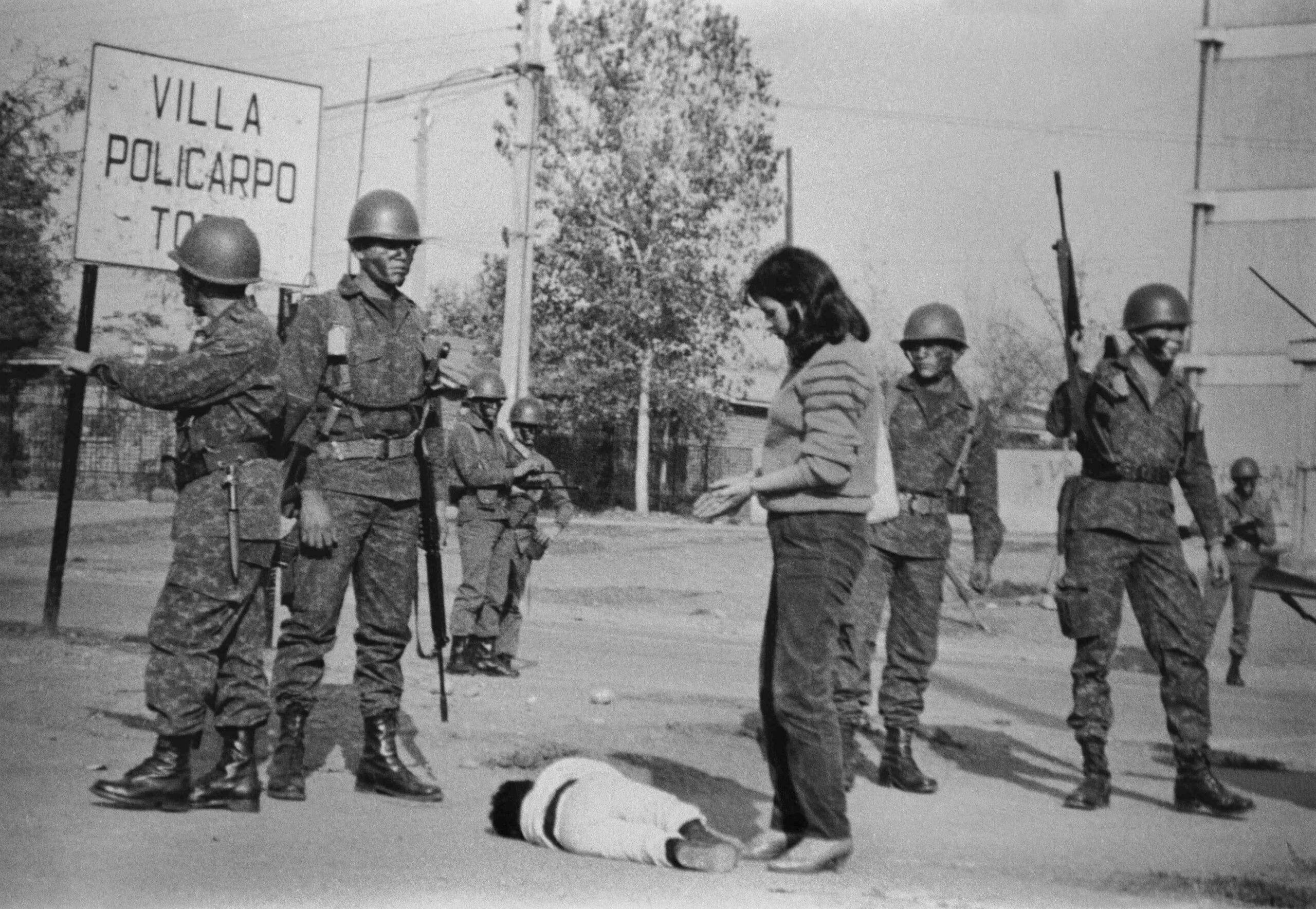
    These are the same lies Augusto Pinochet told in Chile, where the regime frequently falsified reports that blamed the victims for their own deaths. Rather than executions, victims died in “shootouts.” The official government account of the death of one 28-year-old activist was that he was a “subversive” killed while attacking a barracks. But witnesses saw him being arrested two days earlier. A miner with no known political affiliation, the press claimed, “tried to seize a policeman’s weapon … and so he was shot.” Two victims executed by army troops were accused of “criminal or subversive activities.”

    A boy lies weeping by his mother after his father was arrested by soldiers in Santiago, Chile, during the Pinochet reign in 1986.

    Like Pinochet, the Trump administration wants you to believe the people they are terrorizing and killing deserve it. They want us to accept, or even celebrate, their crimes. Because if a victim deserves what happened to them, if there is a reason for it, then perhaps it can be stomached, or excused away, or ignored.

    During Argentina’s brutal 1970s dictatorship, civilians often justified repression using the phrase “Por algo será” — roughly, “There must be a reason for it.”

    Victimization implied that the victims were guilty of something. People are thrown out of planes while drugged. Por algo será. They are taken from their families in the middle of the night. Por algo será. Bodies are dumped in mass graves. Por algo será.

    And if there is a reason for it, then anyone can avoid being a victim by staying home. By not fighting. By letting the administration do whatever it wants, with no pushback.

    Good was a 37-year-old white mother from Colorado, her death filmed at multiple angles, all of which make the government’s lies harder to swallow for an American audience. But who the victim is should not matter: The government is violating fundamental human rights.

    It is our responsibility to refuse to accept these lies. To demand — and to pressure our representatives to demand — accountability for these crimes.

    Jane Esberg is an assistant professor of political science focused on authoritarian repression and censorship, particularly in Latin America, at the University of Pennsylvania.