Blog

  • Shared stories on social media can fight addiction | Expert Opinion

    Shared stories on social media can fight addiction | Expert Opinion

    When you think of tools for studying substance use and addiction, a social media site like Reddit, TikTok, or YouTube probably isn’t the first thing that comes to mind. Yet the stories shared on social media platforms are offering unprecedented insights into the world of substance use.

    In the past, researchers studying peoples’ experiences with addiction relied mostly on clinical observations and self-reported surveys. But only about 5% of people diagnosed with a substance use disorder seek formal treatment. They are only a small sliver of the population who have a substance use disorder — and until recently, there has been no straightforward way to capture the experiences of the other 95%.

    Today, millions of people openly discuss their experiences with drugs online, creating a vast collection of raw narratives about drug use. As a doctoral student in information science with a background in public health, I use this material to better understand how people who use drugs describe their lives and make sense of their experiences, especially when it comes to stigma.

    These online conversations are reshaping how researchers think about substance use, addiction, and recovery. Advances in artificial intelligence are helping make sense of these conversations at a scale that wasn’t possible before.

    The hidden population

    The vast majority of people diagnosed with a substance use disorder address the issue informally — seeking support from their community, friends or family, self-medicating, or doing nothing at all. But some choose to post about their drug use in dedicated online communities, such as group forums, often with a level of candor that would be difficult to capture in clinical interviews.

    Their social media posts offer a window into real-time, unscripted conversations about substance use. For example, Reddit, which is comprised of topical communities called subreddits, contains over 150 interconnected communities dedicated to various aspects of substance use.

    In 2024, my colleagues and I analyzed how participants in drug-related forums on Reddit connect and interact. We found that they focused on the chemistry and pharmacology of substances, support for drug users, recreational experiences such as festivals and book clubs, recovery help, and harm reduction strategies. We then selected a few of the most active communities to develop a system for categorizing different types of personal disclosures by labeling 500 Reddit posts.

    Policymakers and public health experts have expressed concerns that social media encourages risky drug use. Our work did not assess that issue, but it did support the notion that platforms such as Reddit and TikTok often serve as a lifeline for people seeking just-in-time support when they need it most.

    When we used machine learning to analyze an additional 1,000 posts, we found that most users in the forums we focused on were seeking practical safety information. Posters often posed questions such as how much of a substance is safe to take, what interactions to avoid, and how to recognize signs of trouble.

    We observed that these forums function as informal harm reduction spaces. People share not just experiences but warnings, safety protocols, and genuine care for each other’s well-being. When community members are lost to overdose, the responses reveal deep grief and renewed commitments to keeping others safe. This is the everyday reality of how people navigate substance use outside medical settings — with far more nuance and mutual support than critics might expect.

    We also explored TikTok, analyzing more than 350 videos from substance-related communities. Recovery advocacy content was the most common, depicted in 33.9% of the videos we analyzed. Just 6.5% of the videos showed active drug use. As on Reddit, we frequently saw people emphasizing safety and care.

    Why AI is a game changer

    Platforms like Reddit, TikTok, and YouTube host millions of posts, videos, and comments, many filled with slang, sarcasm, regional language, or emotionally charged stories. Analyzing this content manually is time-consuming, inconsistent, and virtually impossible to do at scale.

    That’s where AI comes in. Traditional machine learning approaches often rely on fixed word lists or keyword matching, which can miss important contextual cues. In contrast, newer models — especially large language models like OpenAI’s GPT-5 — are capable of understanding nuance, tone, and even the underlying intent of a message. This makes them especially useful for studying complex issues like drug use or stigma, where people often communicate through implication, coded language, or emotional nuance rather than direct statements.

    These models can identify patterns across thousands of posts and flag emerging trends. For example, researchers used them to detect shifts in how Canadians on X, the social media site formerly called Twitter, discussed cannabis as legalization approached — capturing shifts in public attitudes that traditional surveys might have missed.

    In another study, researchers found that monitoring Reddit discussions can help predict opioid-related overdose rates. Official government data, like that from the Centers for Disease Control and Prevention, typically lags by at least six months. But adding near-real-time Reddit data to forecasting models significantly improved their ability to predict overdose deaths — potentially helping public health officials respond faster to emerging crises.

    The role that stigma plays in substance use disorder is difficult to capture in traditional surveys and interviews.

    Bringing stigma into focus

    One of the most difficult aspects of substance use to study — and to address — is the stigma.

    It’s deeply personal, often invisible, and shaped by a person’s identity, relationships, and environment. Researchers have long recognized that stigma, especially when internalized, can erode self-worth, worsen mental health, and prevent people from seeking help. But it’s notoriously hard to capture using traditional research methods.

    Most clinical studies rely on surveys or interviews conducted at regular intervals. While useful, these snapshots can miss how stigma unfolds in everyday life. Stigma scholars have emphasized that understanding its full impact requires paying attention to how people talk about themselves and their experiences over time.

    On social media platforms, people often discuss stigma organically, in their own words, and in the context of their lived experiences. They might describe being judged by a healthcare provider, express shame about their own substance use, or reflect on how stigma shapes their relationships. Even when posts aren’t directly naming the experience as stigma, they still reveal how stigma is internalized, challenged, or reinforced.

    Using large language models, researchers can begin to track these patterns at scale, identifying linguistic signals like shame, guilt, or expressions of hopelessness. In recent work, my colleagues and I showed that stigma expressed on Reddit aligns closely with long-standing stigma theory — suggesting that what people share on social media reflects recognizable stigma processes, not something fundamentally new or separate from what researchers have long studied.

    That matters because stigma is one of the most significant barriers to treatment for people with substance use disorder. Understanding how people who use drugs talk about stigma, harm, recovery, and survival, in their own words, can complement surveys and clinical studies and help inform better public health responses.

    By taking these everyday expressions seriously, researchers, clinicians, and policymakers can begin to respond to substance use as it is actually lived — messy, evolving, and deeply human.

    Layla Bouzoubaa is a doctoral student in information science at Drexel University.

    Reprinted from The Conversation.
  • 4 Parkinson’s disease symptoms that can show up decades before a diagnosis

    4 Parkinson’s disease symptoms that can show up decades before a diagnosis

    Many people think of a tremor as the quintessential warning sign of Parkinson’s disease. But other symptoms — many of them not involving changes in movement — can appear much earlier than what’s known as a resting tremor.

    In fact, a resting tremor, which is a rhythmic shaking of a body part such as a hand when at rest, isn’t even required for diagnosis. Up to 20% of people with Parkinson’s disease don’t have one.

    “Parkinson’s is what we call a movement disorder because it affects our movement, but there’s a whole side of Parkinson’s that is non-motor,” said Rachel Dolhun, a neurologist and principal medical adviser at the Michael J. Fox Foundation for Parkinson’s Research. “We long thought it was just a movement disease, but now we see that it affects the whole body in different ways.”

    Certain symptoms show up years before motor changes

    Parkinson’s disease is one of the most common neurological disorders in the world, with cases expected to reach 25.2 million by 2050. While inherited genetic mutations are associated with 10 to 15% of cases, the rest have no known cause. Symptoms can be managed with available treatments, but there is no cure — although exercise is thought to reduce the risk of developing the condition. And there are several other things you can do to reduce your risk of Parkinson’s disease, as well.

    To make a Parkinson’s diagnosis, neurologists look for characteristic movement symptoms, including slowness, stiffness, and resting tremor. However, common non-motor symptoms of Parkinson’s, such as constipation and loss of sense of smell, often precede such changes in movement by more than a decade. This early stage of Parkinson’s, known as the prodromal phase, marks the beginning of a gradual onset of disease.

    “It’s a slow disease, and we’re realizing just how slow it can be,” said Ronald Postuma, a professor of neurology and neurosurgery at McGill University in Montreal. “It’s progressing in the brain, year by year, until it crosses a threshold at which doctors can make the diagnosis.”

    Parkinson’s disease damages neurons that produce dopamine, a chemical that transmits signals between cells and plays a crucial role in controlling movement and coordination in the brain. By the time motor symptoms show up, 50 to 70% of these neurons in the substantia nigra, a small but vital structure for voluntary movement located in the brain stem, have already died.

    In the last two decades, researchers have made major advances in understanding markers of prodromal Parkinson’s that they hope could, one day, be used for earlier diagnosis.

    “It’s important to stress that not everyone who has these symptoms goes on to develop Parkinson’s,” Dolhun said. “But we know that in some people, these can be some of the earliest signs.”

    Here are four early symptoms that often appear in people who are later diagnosed with Parkinson’s disease:

    Loss of sense of smell

    The inability to detect odors, known as anosmia, can be a temporary side effect from a cold or sinus infection, or even a more permanent issue after COVID. But more than 90% of people with Parkinson’s disease lose their sense of smell gradually over a long period of time. It can begin years or even decades before motor symptoms.

    “We’ve estimated that the loss of the sense of smell is occurring 20 years before the disease is diagnosed,” Postuma said.

    “We know that people who lose their sense of smell have about a fivefold increased risk of developing Parkinson’s in the future,” he said. “People lose their ability to detect and identify odors, and they are often not very aware because it happens so gradually.”

    Researchers are still trying to understand what causes anosmia in Parkinson’s disease and why it is one of the earliest symptoms. One hypothesis states that the disease could actually begin in the olfactory bulb, the part of the brain that controls sense of smell, where abnormal proteins wreak havoc and damage neurons.

    Adults ages 40 and older in the United States or Canada who have not been diagnosed with Parkinson’s disease can request a free scratch-and-sniff smell test from the Michael J. Fox Foundation for Parkinson’s Research. The test is part of a brain health study that uses loss of sense of smell as a way of identifying people who haven’t yet developed Parkinson’s but might in the future.

    Acting out dreams

    Normally, the body enters a state of almost total paralysis during rapid eye movement (REM) sleep, which is the sleep stage with the most vivid dreams. REM sleep behavior disorder is a chronic condition characterized by a loss of this paralysis that leads people to physically act out their dreams. They will sit up in bed, have one-sided conversations, and even punch or kick their partner.

    Studies have shown that between 50 and 70% of people with REM sleep behavior disorder will develop Parkinson’s disease or a related condition such as Lewy body dementia within an average of five to 10 years. People ages 50 and older with REM sleep behavior disorder have a 130 times greater likelihood of developing Parkinson’s compared with someone without the sleep condition.

    If you think you’re acting out your dreams, talk to your doctor and request a sleep study for confirmation. People who receive a diagnosis can sign up for a registry established by the North American Prodromal Synucleinopathy (NAPS) Consortium, which aims to develop treatments to delay or prevent Parkinson’s and related diseases.

    Constipation

    Constipation is one of the most common gastrointestinal complaints in the United States and usually not serious. However, chronic constipation that persists for several weeks or longer affects two-thirds of all people with Parkinson’s. Parkinson’s can affect the nerves that line the digestive tract, and studies have found clumps of abnormal protein in neurons lining the intestines of people with Parkinson’s.

    A meta-analysis of nine studies found that people with constipation — either assessed by a questionnaire or diagnosed by a healthcare professional — were twice as likely to develop Parkinson’s compared with those without constipation. Another study followed 6,790 men ages 51 to 75 over a 24-year period, and those who had a bowel movement less often than once a day had a greater risk of Parkinson’s.

    “Even people who are constipated in their 20s or 30s seem to have an increased chance of getting Parkinson’s 30, 40 years later,” Postuma said. “So, now we’re starting to wonder: Is the disease affecting the nerves that control the gut, or is being constipated a risk factor for Parkinson’s, as well?”

    Dizziness when standing up

    Postural low blood pressure, known as orthostatic hypotension, is a drop in blood pressure that occurs when a person goes from sitting or lying down to standing. It can lead to dizziness, lightheadedness, and even fainting. Orthostatic hypotension can be triggered by mild dehydration, low blood sugar, or overheating. But chronic, persistent orthostatic hypotension can be more serious.

    “When it’s neurological in origin — in other words, not dehydration, medication, or a heart problem — about half of these patients develop Parkinson’s or a related condition,” Postuma said. “So it’s a very high risk factor. Most people, though, don’t have a neurologic cause.”

    Researchers have identified orthostatic hypotension as a possible feature of prodromal Parkinson’s disease, although the evidence is not as strong as for other markers. For example, one study found that otherwise unexplained orthostatic hypotension was associated with an eventual diagnosis of Parkinson’s or a related condition in 18 of 79 (23%) patients after a 10-year follow-up.

    What prodromal markers mean

    At this point, these prodromal markers aren’t specific enough to definitively signal Parkinson’s on their own, and there’s a good chance they may be because of a different cause or medical condition. But if you have several markers at once or a family history of the disease, you may want to speak to your doctor.

    “If you start to combine some of these symptoms, then it really increases your risk for developing Parkinson’s disease in the future,” said Kelly Mills, director of the Parkinson’s disease and Movement Disorders Center at Johns Hopkins Medicine. “If someone has constipation, loss of smell sensation, and they’re acting out their dreams, you’re adding the risk of those different factors. But don’t necessarily jump to any conclusions without getting an evaluation.”

  • Officials should be ready to protect Philadelphia from Trump’s immigration overreach | Editorial

    Officials should be ready to protect Philadelphia from Trump’s immigration overreach | Editorial

    The killings, assaults, and gaslighting by the Trump administration in Minneapolis have been heart-wrenching and appalling.

    But the costly chaos has also raised a difficult question: Is Philadelphia prepared if Donald Trump launches an immigration crackdown here?

    Mayor Cherelle L. Parker has largely remained mum on all things Trump. She believes non-provocation is the best way to keep the peace. Given the president’s erratic approach to governing, that strategy may work until something as inane as a Fox News segment sets him off.

    That’s why two progressive City Council members, Kendra Brooks and Rue Landau, want the city to do more. They proposed a package of bills designed to make it harder for Trump’s U.S. Immigration and Customs Enforcement agents to operate in Philadelphia.

    If approved, the measures would codify into law the existing practices that limit cooperation with immigration enforcement agents, which are currently in place through executive orders by previous mayors. Those orders prohibit city officials from holding undocumented immigrants in custody without a judicial warrant, among other things.

    The Council bills would go further by barring ICE agents from wearing masks, using city-owned property for staging raids, or accessing city databases.

    The measures seem well-intended, but Parker administration officials doubt they will withstand legal challenges. Nor does Parker welcome anything that may irk Trump.

    Tear gas is deployed amid protesters near the scene where Renee Good was fatally shot by an ICE officer in Minneapolis.

    “Our strategy is working, and it’s keeping Philadelphia safe from all this nonsense,” an administration official who asked not to be identified told the Editorial Board.

    Some argue the mayor’s silence signals complicity, and is cold comfort for the city’s estimated 76,000 undocumented immigrants, or the many others who have legal status but still fear harassment — a perfectly rational concern given how ICE under the Trump administration has conducted itself so far.

    Beyond the murders of two U.S. citizens in Minneapolis, everyone has watched federal agents act with violent impunity in the name of purportedly going after the “worst of the worst” undocumented immigrants.

    Armed ICE agents entered a U.S. citizen’s home without a warrant and took him away in his underwear. Masked agents dragged a woman from her car and detained innocent children.

    More than 170 U.S. citizens have been detained by ICE, including one man with a Real ID who was arrested twice during immigration raids at construction sites in Alabama.

    More than 30 immigrants have died in ICE custody. The causes of death include homicide, seizure, and suicide.

    Hundreds of thousands more have been deported, often without due process enshrined in the Fifth and 14th Amendments. Meanwhile, protesters have been shot, assaulted, and pepper-sprayed in violation of their First Amendment rights.

    Given the stakes, Philadelphia would best be served if the mayor and Council put aside political differences and figured out how to marshal a unified plan that protects all residents from Trump’s overreach.

    It would be even better if state and city leaders developed a plan together in case Trump sends the National Guard or ICE agents to Philadelphia.

    The Shapiro administration has engaged in “tabletop exercises” to simulate what a federal incursion would look like, a spokesperson told the Editorial Board, adding that the governor speaks often with the mayor.

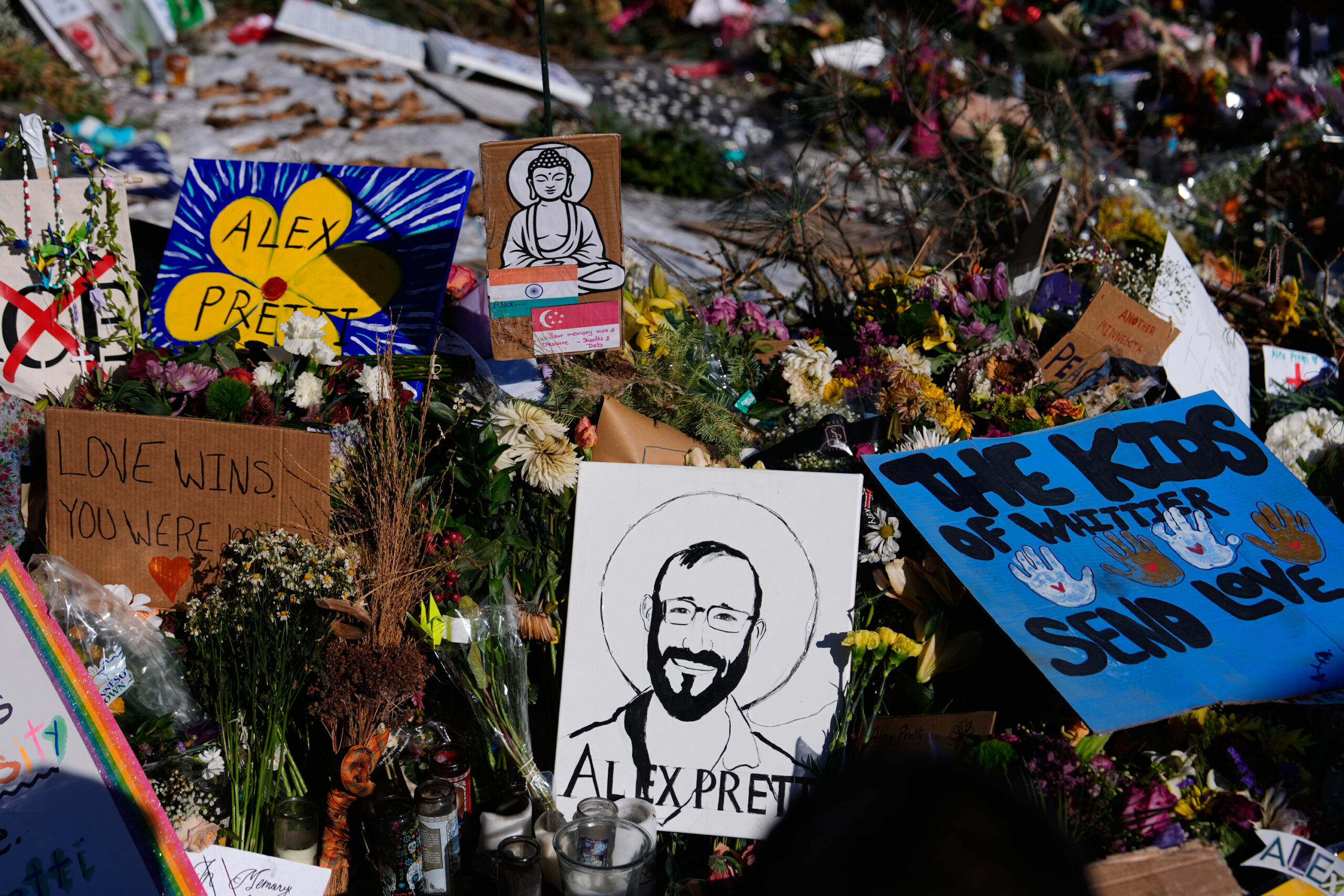
    A drawing of Alex Pretti is displayed at the scene where 37-year-old Pretti was fatally shot by a U.S. Border Patrol officer in Minneapolis.

    Gov. Josh Shapiro has sued the Trump administration 19 times to protect federal funding for critical programs and other issues, including stopping the unlawful deployment of the National Guard into cities.

    While Trump has somewhat dialed down the rhetoric in the face of broad pushback following the killing of Alex Pretti by Border Patrol agents, he has shown no sign of ending his misguided and unconstitutional immigration crackdown. That is even more reason why other leaders must develop a plan to stop the madness.

    The governor of Illinois and the mayor of Chicago were successful in going to the U.S. Supreme Court and getting Trump to withdraw National Guard troops. While cities and states can only go to court after Trump oversteps his authority, it is never too early to prepare.

    Democratic lawmakers in other states have proposed a variety of measures to limit and prevent Trump’s heavy-handed immigration tactics.

    A bill in Delaware, modeled after one in New York, would prohibit airlines from receiving jet fuel tax exemptions if they transport people detained by ICE without warrants and due process.

    A proposed measure in Colorado would allow individuals to sue federal law enforcement officials for civil rights violations.

    In a reminder of just how divided the country remains, lawmakers in some red states have proposed measures to ensure local officials cooperate with ICE.

    A bill in South Carolina would require county sheriffs enter into formal agreements to work with ICE, while a measure in Tennessee would require schools to check the immigration status of K-12 students.

    It’s beyond head-spinning that any reasonable person — let alone elected officials sworn to uphold the Constitution — could watch how ICE is operating and want more.

    Enough is enough. As the country prepares to celebrate the 250th anniversary of the Declaration of Independence, city and state officials here must work on a unified plan to ensure everyone is free to pursue life, liberty, and happiness.

  • Gameday Central: Phillies Extra with Whit Merrifield

    Gameday Central: Phillies Extra with Whit Merrifield

    In 2024, Whit Merrifield was the newcomer to a Phillies’ roster that was virtually unchanged from the previous season. Now, the retired former infielder joined Phillies Extra to discuss the team’s decision to keep the core of the roster intact, as well as his close friend Brad Keller’s path to the Phillies’ bullpen and why Rob Thomson was his favorite manager. Watch here.

  • John du Pont shot and killed Olympic wrestler Dave Schultz on this week in Philly history

    John du Pont shot and killed Olympic wrestler Dave Schultz on this week in Philly history

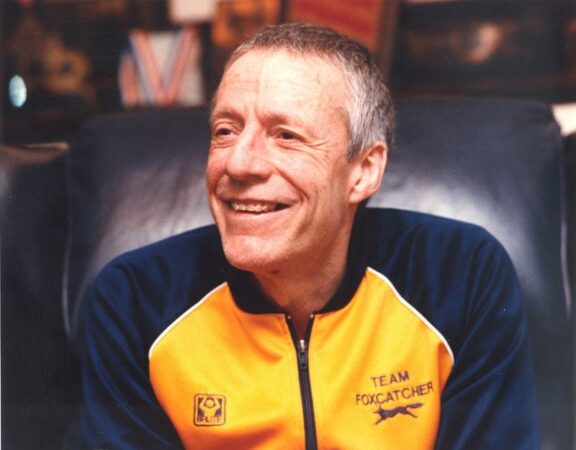
    The multimillionaire became a murderer on Jan. 26, 1996. That part is known.

    But why John du Pont shot and killed Dave Schultz, an Olympic champion freestyle wrestler who was living and working on du Pont’s Newtown Square estate, is still a mystery.

    Foxcatcher

    John Eleuthere du Pont was not a captain of industry, but he was a descendant of one.

    His great-great-great-grandfather was Eleuthere Irenée du Pont de Nemours, who founded the Wilmington chemical giant.

    The most notable title of the du Pont heir’s life was sports enthusiast.

    He transformed his 800-acre estate, known as Foxcatcher Farm, into a world-class athletic training facility. He opened the facility to athletes and their families so they had a place to stay while wrestlers, like Schultz, could prepare for major competitions.

    In 1996, Schultz, a 1984 Olympic gold medalist, and his family stayed there while he trained for that year’s Summer Olympics.

    But even before the run-up to the Summer Games, du Pont’s behavior had become increasingly strange.

    Conviction

    His sister-in-law, Martha du Pont, said they expected something like this to happen.

    Foxcatcher’s overseer had been abusing cocaine and alcohol, and had been walking around with loaded guns for several years.

    During angry outbursts, he would even threaten athletes with guns.

    But why he pointed a .44-caliber revolver at the 36-year-old Schultz during an argument on the estate’s grounds and fired three times will forever be a mystery.

    Du Pont holed up in his mansion for two days before surrendering to police after his heat was cut off during an especially cold weekend.

    On Feb. 25, 1997, he was ruled guilty but mentally ill, and convicted of third-degree murder.

    He offered no explanation for his behavior, only excuses.

    He was sentenced to 13 to 30 years in prison.

    Du Pont died in prison at age 72 on Dec. 9, 2010, four years before an award-winning film starring Steve Carell about the incident would hit theaters.

    Nearly 30 years after his conviction, he is the only member of the Forbes 400 richest Americans to have been convicted of murder.

    Nancy Schultz, who witnessed the shooting, said she never understood why her husband was killed. And she was struck by something du Pont never did.

    “He never just said, ‘I’m sorry.’”

  • URBN’s Reclectic is moving from Philly to the suburbs

    URBN’s Reclectic is moving from Philly to the suburbs

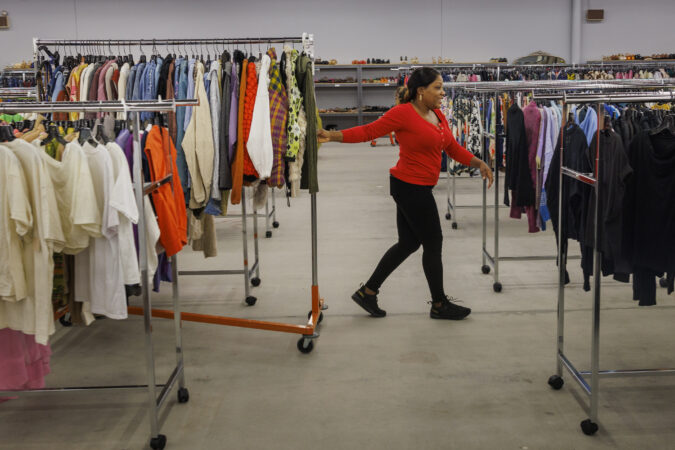
    Reclectic, URBN’s discount store, is moving from one Philly-area mall to another.

    The 40,000-square-foot site which opened in 2023 at the Franklin Mall (still widely known to locals by former name Franklin Mills) will relocate to a larger space in Willow Grove Park Mall next month, into the first floor of the former Sears store.

    The move comes as Reclectic’s Franklin Mall lease nears its end and as the store has seen an “overwhelming increase in demand,” said Kevin Dorfmeyer, executive director of strategy, corporate development and Reclectic at URBN.

    Reclectic sells items typically 50% to 60% off the ticket price and includes new, slightly damaged inventory, or items that have cycled through URBN’s clothing rental service, Nuuly. The store sells shoes, clothing, home furnishings, and accessories.

    The Franklin Mall location will close on Feb. 21, and the new site at Willow Grove Park Mall will open on Feb. 27.

    The Reclectic store at the Franklin Mall opened in 2023.

    The company is also looking to expand locations this year, said Dorfmeyer, who described the Franklin Mall store as “extremely successful.”

    To date, URBN has opened Reclectic locations in North Carolina, Illinois, Texas, New York, and Arizona.

    “We’re actively working on expansion into new metro regions across the U.S.,” Dorfmeyer said. “It’s too early to tell now where we’re headed, but, [we’re] looking to expand further.”

    Shoppers are traveling upwards of 30 to 60 miles to visit Reclectic stores, Dorfmeyer said.

    “Our customer loves the thrill of the hunt,” he said. “They’re coming to us to discover new brands, to experiment and play and, quite honestly, just to uncover the possibility with a new type of inventory that we offer in Reclectic.”

    URBN, which was founded in Philadelphia, is the parent company of Anthropologie, Free People, and Urban Outfitters. The business launched Nuuly, a clothing rental subscription, in 2019.

    An assortment of colorful couches and other furniture for sale at Reclectic in the Franklin Mall in August 2023.
  • Meet Jefferson hoops freshman Chris Cervino, a rising social media influencer

    Meet Jefferson hoops freshman Chris Cervino, a rising social media influencer

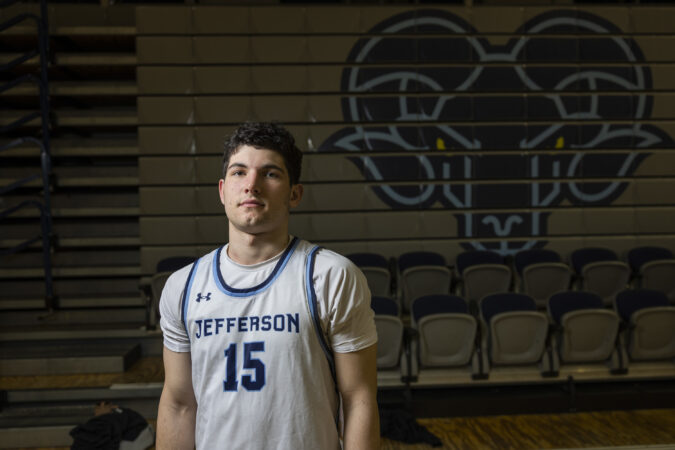
    Chris Cervino wasn’t trying to become a TikTok influencer. He just wanted to make a “funny, trolling” video to get in his opponents’ heads before a game last year. That was until he went viral.

    “I made this video, it was called, ‘Road to D2,’” said the Thomas Jefferson freshman guard. “There’s this kid, his name [online] is ‘Road to D1,’ and we were going to play against his team. … I made the video, it blew up. And then in that game, I actually ended up having a really good game. There were a bunch of videos posted about me [afterward]. One actually got like 2 million views and like 700,000 likes.

    “It was a lot happening all at once, but it was a really cool experience. That’s kind of how it took off just from that moment right there.”

    “Road to D1” is Troy Hornbeck, a 2026 recruit who has documented his journey to play Division I basketball and gained a large following doing so. He has more than 466,900 followers on his TikTok and is attending IMG Academy in Bradenton, Fla.

    The two played against each other in the Overtime Elite league last year when Cervino’s YNG Dreamerz beat Hornbeck’s Diamond Doves en route to an OTE championship. The Atlanta-based league acts similar to a professional league, offering high-level training for athletes ages 16 to 20 years old. It also claims to boost athletes’ brand and social media presence.

    So Cervino took advantage of the traction he gained on social media and continued to post videos — from dancing to highlighting moments in his basketball career — while playing at Jefferson. He’s the only player on the men’s basketball team with an NIL deal and has gained 9,090 followers on TikTok.

    “On social media, I like to just display myself,” he said. “I don’t really care about what other people think of me, even in basketball games. I wear gray socks. I don’t care what people think of me. People have looked down on me my whole life. … I’m happy with myself and who I am as a person.”

    But the most interesting aspect of Cervino’s journey is how he got there.

    The Franklin Lakes, N.J., native grew up playing basketball with San Antonio Spurs rookie Dylan Harper, who was drafted second overall in June. The two became close friends while playing AAU ball for Brick City, a team coached by Harper’s mother, before high school.

    “In my backyard, we would go at it one-on-one almost every day, because we lived so close to each other,” Cervino said. “We would just play one-on-one in the backyard, talk smack to each other. I would run away with a bloody nose; it was a lot of fun. We would always challenge each other when we were young, and seeing him grow up to play where he is now, it’s crazy.”

    While Harper played for Don Bosco Prep, Cervino won back-to-back state championships at Ramapo.

    As a junior, he was part of the team’s first state title in program history. During his senior year, Cervino eclipsed 1,000 career points after he scored 34 in the state final. Playing in college was always the dream, he said. It didn’t matter the level.

    Before arriving at Jefferson, Chris Cervino had a stop at Moravian Prep in North Carolina, which is an affiliate of Overtime Elite.

    Coming out of high school, he had interest from one school, Felician University, which competes with Jefferson in the Central Atlantic Collegiate Conference.

    However, he didn’t know if he was ready yet. Instead, he decided to opt for a prep year.

    “If I got an extra year, I would be much more developed,” Cervino said. “So I took the extra year. I went to a really good school, played in the Overtime Elite League, played against five stars every single day, got my body better, developed myself as a player, and then that eventually led me to come here.”

    He attended Moravian Prep in North Carolina, which is considered one of the top high school basketball programs in the nation. The school is also an affiliate with Overtime Elite, meaningit plays two schedules during the year: a national high school schedule and an OTE schedule, where the team is called YNG Dreamerz.

    “Moving to North Carolina, it was a crazy jump,” he said. “But I learned a lot about life there, and how basketball could open up opportunities for me. For example, with social media, basketball opened that up for me, so I learned a lot from there.”

    Through Overtime, Cervino was exposed to a social media agency called Press Upload, which gave him pointers on how to monetize his name. He eventually signed with an agency that finds brand deals on his behalf — like VKTRY insoles, which he partnered with and noted “it was really cool” since he grew up wearing those in his shoes.

    @ccswish

    Need a gift for the holidays? Get VKTRY insoles today!🎁🔥 #vktrypartner @VKTRY Gear

    ♬ original sound – Chris.cervino

    Cervino, a 6-foot shooting guard, is still learning the ropes in his first year at Jefferson. He has played in three games this season and tries to be a sponge in practice under coach Jimmy Riley, who spent 15 seasons on Hall of Famer Herb Magee’s staff.

    When it comes to his social media platform, Cervino is not chasing a number of followers or views; it’s about having fun with it while “living in the moment and seeing what happens next.” He also hopes other athletes at the Division II level see that they can have a platform, too.

    “There’s always going to be people overlooking you,” Cervino said. “You only can control what you can control, which is how much work you put in, the effort you put into it, and all that stuff. Focus on yourself, focus on what you need to do.”

  • Pete Buttigieg endorses Bob Brooks, a firefighter running for Congress in the Lehigh Valley

    Pete Buttigieg endorses Bob Brooks, a firefighter running for Congress in the Lehigh Valley

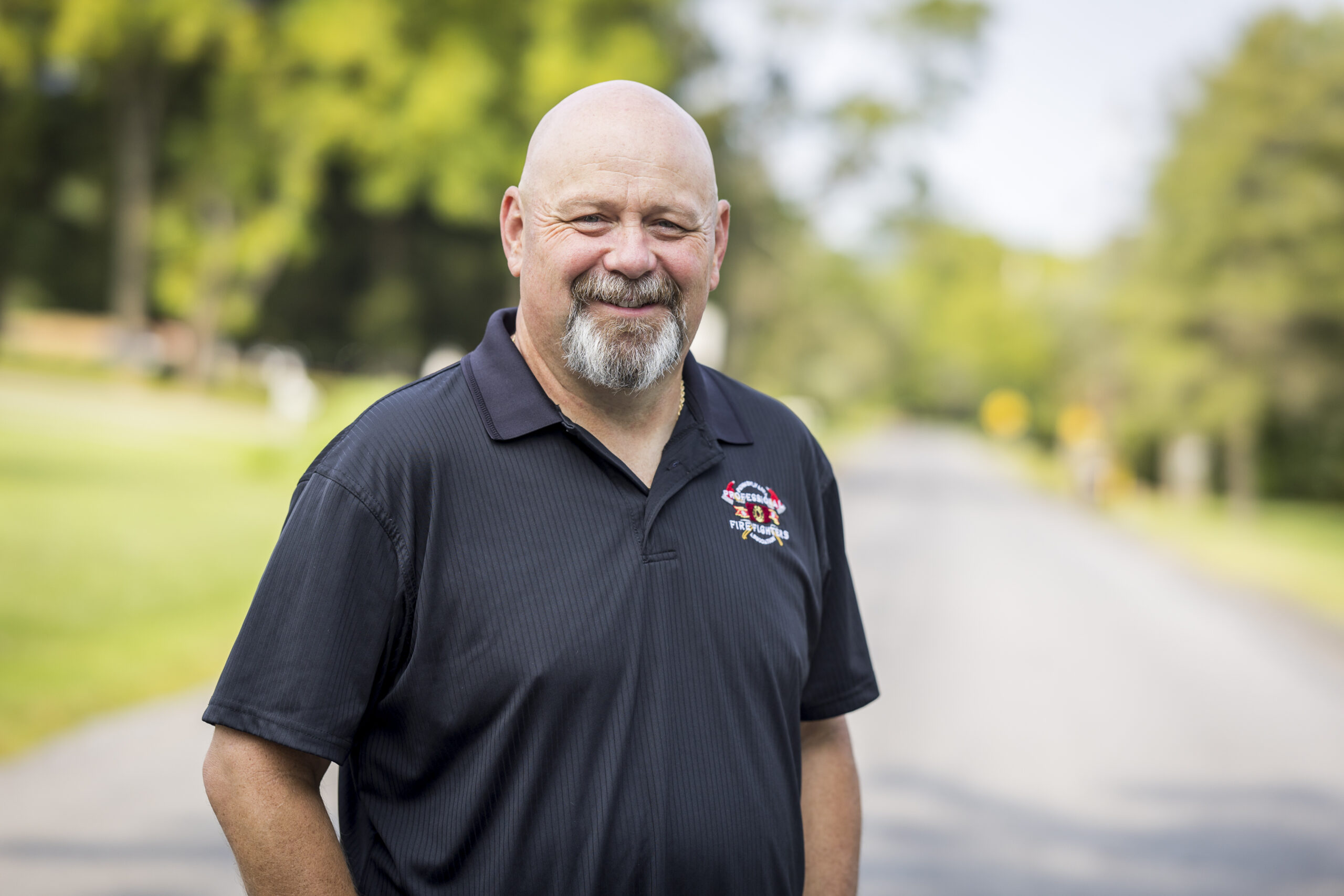
    Pete Buttigieg, former President Joe Biden’s transportation secretary and a potential presidential hopeful for 2028, has endorsed Democrat Bob Brooks, a firefighter running for Congress in the Lehigh Valley.

    Brooks, the president of the Pennsylvania Professional Fire Fighters Association, is running to represent Pennsylvania’s 7th Congressional District, which is currently held by freshman U.S. Rep. Ryan Mackenzie, a Republican. At least six other Democrats are also vying for the nomination as of this month.

    Buttigieg’s endorsement of Brooks, shared first with The Inquirer, illustrates the political importance of the Lehigh Valley, a national bellwether.

    Democrats see the 7th Congressional District as one of a limited number of flippable Republican-held seats in the 2026 midterms. It’s also notable that Buttigieg, who could once again be on the national stage in 2028, is weighing into politics in Pennsylvania, a key battleground state.

    “People are seeking leaders who understand their lives and fight for their needs,” Buttigieg said in a news release, noting Brook’s experience as a firefighter, union leader, and snowplow driver.

    “He understands the urgency of lowering costs because he’s lived it – working long hours, juggling jobs, and fighting for a paycheck that actually covers the basics,” Buttigieg added. “It’s a perspective Washington needs more of, and I’m proud to endorse him.”

    This undated photo provided by Bob Brooks for Congress in August 2025 shows Bob Brooks, president of the Pennsylvania Professional Fire Fighters Association. (Bob Brooks for Congress via AP)

    In addition to Buttigieg, Brooks has also received the backing of Gov. Josh Shapiro (another potential 2028 candidate), Lt. Gov. Austin Davis, U.S. Rep. Chris Deluzio, Sen. Bernie Sanders (I-Vt.), various unions, and other elected officials.

    Brooks said in the news release that Buttigieg’s endorsement “means a great deal.”

    “He’s focused on listening to new voices and making government work for everyday people at a time when too many feel shut out and left behind,” Brooks said. “It’s an honor to have him on board as we fight to build a Congress that looks like and works for the people it serves.”

    Mackenzie’s seat is a top target for the Democratic Congressional Campaign Committee, along with Republican U.S. Reps. Brian Fitzpatrick, of Bucks County, Scott Perry, of York County, and Rob Bresnahan of Lackawanna County.

    President Donald Trump has endorsed Mackenzie (and every other congressional Republican in Pennsylvania except Fitzpatrick) and Vice President JD Vance swung through the district in December.

    But Trump may not be the boon for Mackenzie he was two years ago.

    Trump made his biggest gains in the state in 2024 in the Lehigh Valley and Northeastern Pa., but recent interviews with voters and polling data suggests his support in the region could be dwindling heading into the midterms.

  • What the Sean Mannion hire as Eagles offensive coordinator says about Nick Sirianni’s future

    What the Sean Mannion hire as Eagles offensive coordinator says about Nick Sirianni’s future

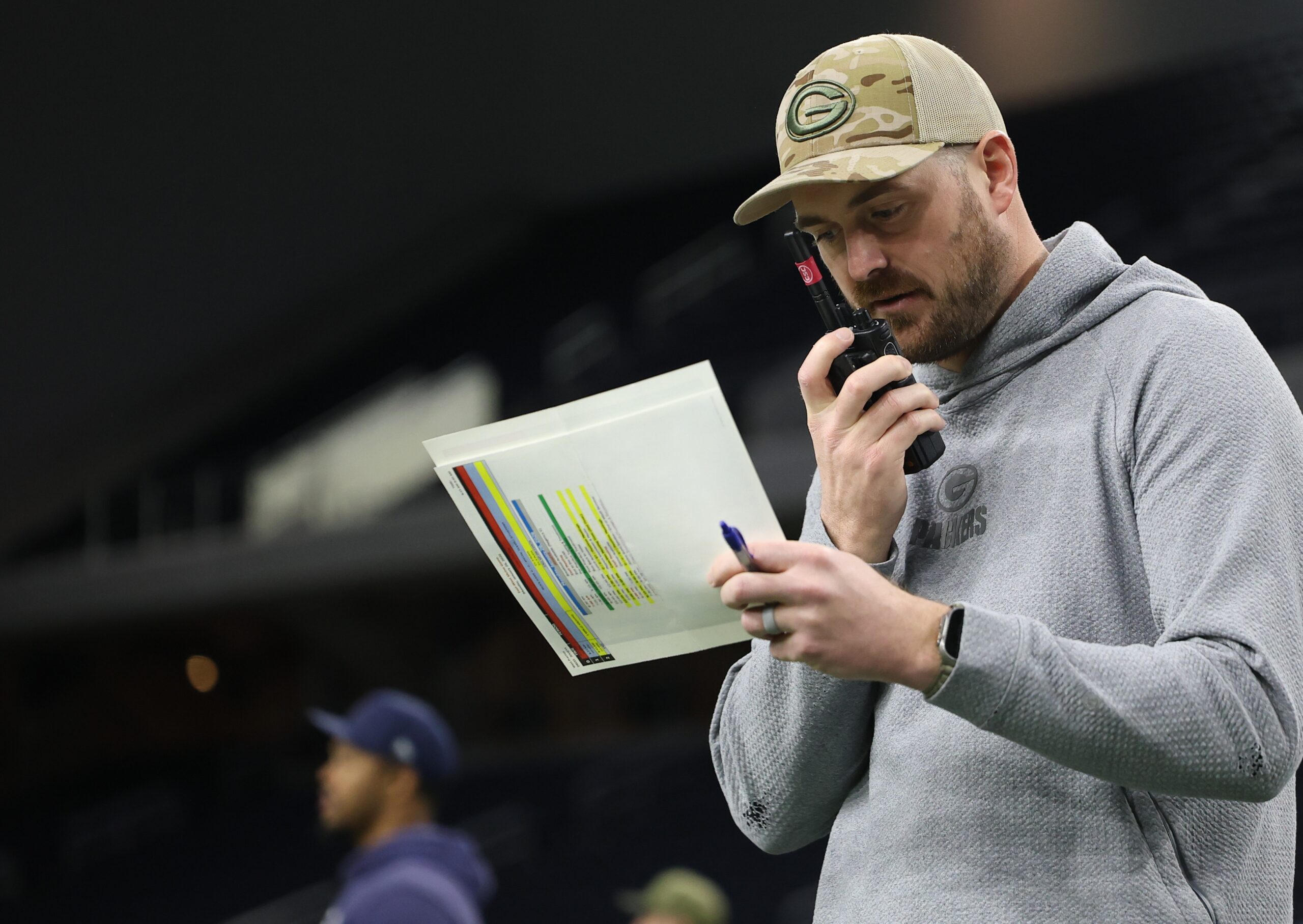
    Sean Mannion, for all intents and purposes, is an unknown. The Eagles’ new offensive coordinator has been a coach for just two seasons. The 33-year-old has never devised or implemented a scheme. He’s never authored a game plan. And he’s never called plays.

    He could end up the next Bill Walsh or the next Tom Walsh. More than likely the former backup quarterback will end up somewhere between those polar extremes when it comes to offensive minds of the last four decades. But it’s nearly impossible to assess with any certainty how the neophyte will fare in Philadelphia.

    The hire says more about Nick Sirianni’s future than it does about almost anything related to Mannion or the Eagles offense. Whether he made the ultimate decision or not, the coach will have to take ownership for selecting one of the least experienced coordinators in the NFL, if not the least experienced.

    Sean Mannion will have a major challenge as he sorts out the Eagles’ offensive issues.

    Sirianni could be rewarded with immediate success. The Eagles could even have marginal offensive improvement that would allow Sirianni to maintain Mannion for more than one season. But if there is further regression, or even sudden failure, the gamble could push Sirianni into a firing line that saw nine coaches lose their jobs over the past several months.

    And here’s why: The line between success and failure for Sirianni is thinner than for most because he doesn’t have a discernible offensive philosophy or calls plays. He does a lot as a CEO-type coach, more than some on the outside are willing to concede.

    But winning here is suddenly not like winning at most places. Sirianni helped raise those expectations. But clearing that bar or falling short of it would both seemingly have him back where he’s been four times before: having to replace an offensive coordinator.

    Shane Steichen and Kellen Moore became head coaches, while Brian Johnson and Kevin Patullo ended up either fired or demoted. That disparity explains varying perceptions of the job, but ultimately Sirianni chose a candidate who didn’t interview for any of the other 14 coordinator openings.

    That doesn’t mean the Eagles didn’t find a diamond. Mannion played under some of the brightest offensive minds in the game today. He rose to quarterbacks coach in Green Bay in just his second season and became an assistant the Packers didn’t want to lose.

    “He’s seen as a climber,” said an agent who represents coaches, “and Nick might have gotten in on the ground floor.”

    But the Eagles are again making a projection — one even bigger than those they made with first-time play callers Johnson and Patullo.

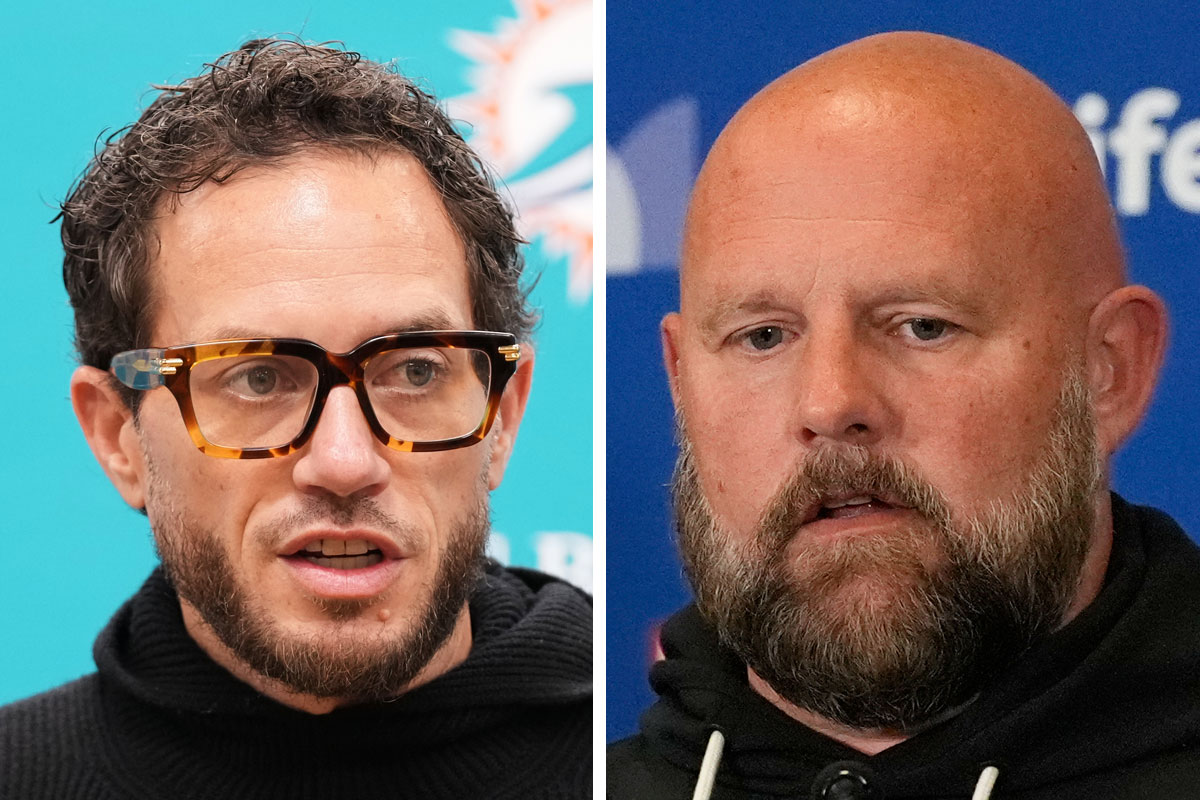
    Former Dolphins coach Mike McDaniel (left) and former Giants coach Brian Daboll became offensive coordinators elsewhere.

    They opened their search with former head coaches Mike McDaniel and Brian Daboll at the top of their list, sources said. That doesn’t mean the Eagles were ready with offers. They had an informal conversation with McDaniel over a video call and met in person with Daboll for a more formal interview.

    McDaniel and Daboll eventually took coordinator jobs with the Los Angeles Chargers and Tennessee Titans, respectively. The Eagles interviewed others around the same time, but the search expanded and included more than a dozen coaches interviewed and others in which some form of contact was made.

    Some made it clear they wanted to pursue other opportunities. Some declined to be interviewed and opted to stay in their current positions. And some the Eagles deemed not the right fit. Aside from Mannion, Indianapolis Colts offensive coordinator Jim Bob Cooter, former Tampa Bay Bucs offensive coordinator Josh Grizzard, and Houston Texans quarterbacks coach Jerrod Johnson met with the Eagles for a second time. A source told The Inquirer on Friday that Grizzard will join the Eagles as the team’s new pass game coordinator.

    “Some came with years of experience running an offense and calling plays. Others were young, sharp, and dynamic coaches on the rise,” Sirianni said in a statement. “I felt it was important to be patient and thorough to allow the right fit to reveal himself to us. Sean did just that.”

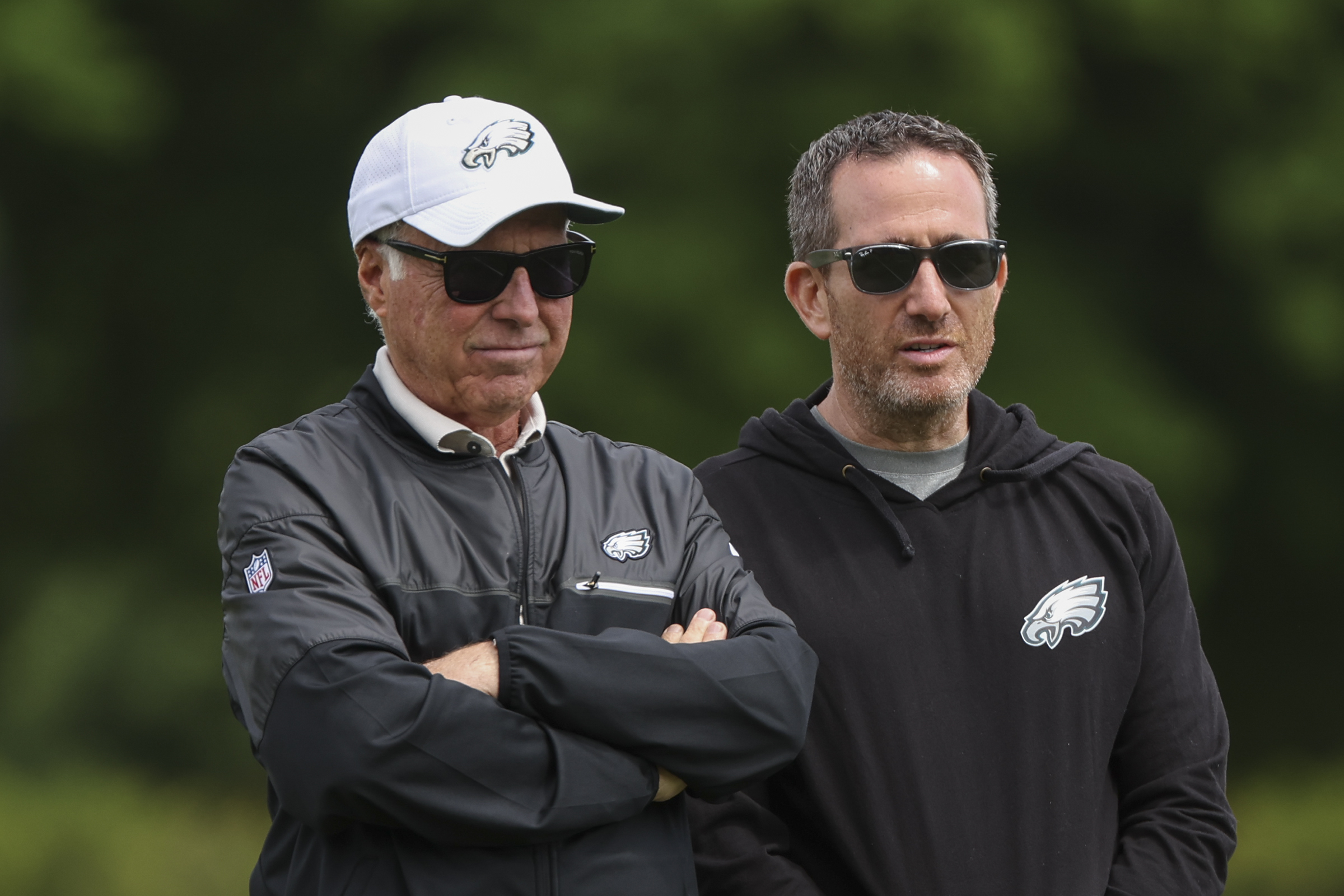
    Sirianni led the process, as he should. But general manager Howie Roseman was heavily involved. And owner Jeffrey Lurie, despite maintaining his winter residence in Florida, was conferenced into the interviews.

    The Eagles will say that Sirianni made the final call, but recent history shows Lurie has asserted himself or Roseman’s connections when he has deemed it necessary. The Eagles’ track record in plucking head coaches from relative anonymity — e.g. Andy Reid, Doug Pederson, and Sirianni — is strong.

    Sirianni did well with his first coordinator hires: Steichen, who had prior experience, and defensive coordinator Jonathan Gannon, who did not. He struck out with their replacements: Johnson and Sean Desai.

    How much input did Jeffrey Lurie (left) and Howie Roseman have into the Sean Mannion hire? That answer could inform what happens after 2026.

    Moore and Vic Fangio have been viewed as Lurie-Roseman-led correctives, and understandably so. The owner and GM interviewed Moore for the head coaching job in 2021, and Roseman made the initial calls to Fangio when the Eagles first tried to hire him in 2023 and when they finally did a year later.

    They don’t have an obvious link to Mannion. Sirianni may have been permitted to make the decision all on his own. He did win a Super Bowl just a year ago, and earned a contract extension as a result. Lurie and Roseman may also be giving him all the rope he needs.

    There are many unknowns at this stage, beyond Mannion’s qualifications. He will call plays, a source said. But will he have autonomy over the offense or will Sirianni oversee the operation? Will the scheme and terminology be his or will there be a meshing?

    The Eagles aren’t planning to hold a news conference. Sirianni’s next media availability will probably be at the NFL scouting combine next month. Mannion will be shielded until the spring. They likely see little reason to divulge their plans unless required.

    There’s also a lot to figure out. Beyond the Xs and Os, there’s the coaching staff and the roster. The Eagles do know who their quarterback will be, barring something unforeseen. It’s hard not to view the inability to snag a proven name as an indictment on Jalen Hurts, just as much as it was on Sirianni.

    Locals may view Hurts through the prism of his excellence in the biggest games, but consensus from the rest of the league isn’t as generous. Of course, many of them don’t have his ring or Super Bowl MVP.

    Mannion will be charged with elevating Hurts into being more consistent in the dropback game. He has been credited with helping Packers starter Jordan Love and backup Malik Willis advance and with helping them become better pocket passers.

    Will Sean Mannion’s chops as a former QB help him win Jalen Hurts over?

    It should matter that Mannion played the position and that he’s done it recently. But there could be the question of whether he has enough gravitas for the stoic old soul in Hurts. Sirianni might have suggested two weeks ago that he would include the quarterback in the coordinator search, but his involvement was minimal at best, sources close to the situation said.

    Sirianni needs a modern passing game that utilizes under-center play action, not just for Hurts, but for the entire offense, especially the wide receivers. A.J. Brown may be more inclined to want to stay if he sees the possibility of an explosive air attack.

    Mannion spent most of his formative playing years with Los Angeles Rams coach Sean McVay, but he also spent time with Kevin Stefanski, Matt LaFleur, Kevin O’Connell, Zac Taylor, Gary Kubiak, Klint Kubiak, Dave Canales, and Grant Udinski.

    Most have fallen under the Kyle Shanahan umbrella. They’ve all deviated from the core principles in some form, but the marrying of the run and pass through under-center play action has been one of the foundations of its success.

    Hurts has had to learn to play under center in the NFL and has made incremental improvements, but the Eagles have been far behind the curve. There are other facets as important in modern offenses, but that change should be coming to the Eagles.

    It could affect offensive line coach Jeff Stoutland’s role. He has long been the run game coordinator, but he didn’t have as much input last season when the Eagles shifted their game planning and play calling to offset the early struggles on the ground, NFL sources said.

    How does revered offensive line coach Jeff Stoutland fit into a Sean Mannion-guided staff?

    Mannion could be allowed to bring in his own staff, but it’s unlikely he has assistants at the ready. Sirianni could use the new coordinator as an opportunity to make a few changes. It seems unlikely that the esteemed Stoutland would be one, although the new scheme could allow him to focus exclusively on the O-line.

    In question is how involved Sirianni will be in the offense. He could act as a senior consultant to Mannion, or he could hire a trusted veteran to help the young coordinator. Sirianni might want to avoid someone who could be considered a threat or a break-glass-in-case-of-emergency alternative.

    Or maybe he just reassigns Patullo to that role. There may not be anyone better suited to understand the rigors of being the Eagles’ offensive coordinator — both inside the building and out. Patullo had little margin for error.

    Mannion should be granted a longer grace period. But how long is Sirianni’s? They’re likely bound together.

  • TSA’s faster PreCheck lane is expanding to more airports

    TSA’s faster PreCheck lane is expanding to more airports

    A faster way to get through airport security may be coming to an airport near you.

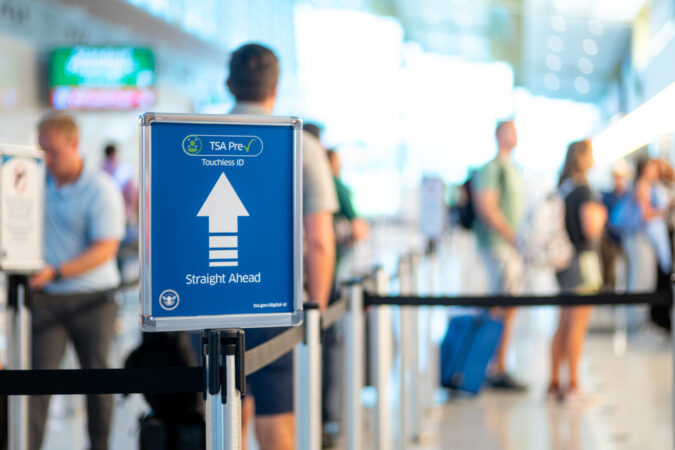
    TSA PreCheck Touchless ID, a new program that uses facial recognition, is expanding to 65 airports this spring. The expansion will prioritize 2026 World Cup host cities, where travel is expected to surge, said Transportation Security Administration spokesperson R. Carter Langston.

    “Passengers seem to absolutely appreciate it — the speed, the efficiency,” Langston said. “All they show is their face, and the officer just waves them right into the checkpoint. No hassling with passports or IDs or phones.”

    TSA launched the first iteration of the program in 2021 in partnership with Delta Air Lines at Hartsfield-Jackson Atlanta International Airport. It’s now available for five airlines across 22 airports.

    Critics worry that the program raises privacy concerns. It is voluntary, and travelers can opt out at any time and use a standard ID verification instead.

    What is PreCheck Touchless ID?

    TSA said in an email that the initiative is a joint effort from U.S. Customs and Border Protection, airports, and airlines that allows travelers “to move through dedicated lanes with ease, enjoying a smoother and more convenient airport experience.”

    The program uses the CBP Traveler Verification Service to create “a secure biometric template of a passenger’s live facial image taken at the checkpoint and matches it against a gallery of templates of pre-staged photos that the passenger previously provided to the government (e.g., U.S. Passport or Visa),” the agency website said.

    Who is eligible for PreCheck Touchless ID?

    To use the program, fliers must be a current TSA PreCheck member with a valid “known traveler number” and an active airline profile (such as being enrolled in a loyalty program). They must also have a valid passport uploaded to their airline profile.

    The airlines currently participating in the program include Alaska, American, Delta, Southwest, and United.

    TSA PreCheck Touchless ID offers current TSA PreCheck members an expedited airport security screening by way of “facial comparison technology.”

    It’s only available at select airports, through participating airlines — which vary. For example, travelers at John F. Kennedy International Airport, but only if they are flying with Alaska, America, or Delta. It is available at George Bush Intercontinental in Houston, but only for passengers flying with American. For a list of availability, visit the TSA website.

    How can travelers opt in?

    To use the program, travelers must first opt in through their airline’s website or app before checking in to their flight.

    The process varies by airline, but you can generally find the prompt under a “travel documents” section (where you add your known traveler number or passport details) of your airline loyalty program app or website.

    American Airlines customers, for example, will find the opt-in choice toward the bottom of the “Information and password” page of their AAdvantage profile, while Alaska Airlines customers should go to their account settings, then click into the “travel documents” section.

    Once travelers have opted in, then checked in for their flight, a TSA PreCheck Touchless ID symbol should then appear on their boarding pass. If the symbol is not on your boarding pass, you won’t be able to use the lane, even if you show an employee that you are enrolled in the program.

    At the airport, travelers should follow signs to a separate TSA PreCheck Touchless ID lane. Instead of handing an ID over to an officer to verify your identity, you’ll instead pause to scan your face, then keep moving.

    Is it really faster?

    It can be, for two reasons.

    First: There is no slowdown to hand over and scan your ID; travelers must only pause during their walk through the line dividers before proceeding to the X-ray machines.

    Second: Because the program is new, requires signing up in advance, and is not available for every airline, it’s getting a fraction of the traffic that regular security, Clear, or PreCheck lanes are.

    We’ve had mixed results. When it works, it’s incredible; you really are through in seconds.

    But we’ve also been delayed when the facial comparison machine was undergoing maintenance and out of use, sending us back into the longer PreCheck lane.

    Which airports offer PreCheck Touchless ID?

    TSA PreCheck Touchless ID is already available at 22 airports (however, participating airlines will vary; check the TSA website for more information):

    • Boston Logan International Airport
    • Charlotte Douglas International Airport
    • Chicago O’Hare International Airport
    • Dallas-Fort Worth International Airport
    • Denver International Airport
    • Detroit Metropolitan Wayne County Airport
    • Dulles International Airport
    • George Bush Intercontinental Airport
    • Harry Reid International Airport in Las Vegas
    • Hartsfield-Jackson Atlanta International Airport
    • John F. Kennedy International Airport
    • LaGuardia Airport
    • Los Angeles International Airport
    • Minneapolis–Saint Paul International Airport
    • Newark Liberty International Airport
    • Palm Beach International Airport
    • Philadelphia International Airport
    • Portland International Airport in Oregon
    • Ronald Reagan Washington National Airport
    • Salt Lake City International Airport
    • San Francisco International Airport
    • Seattle-Tacoma International Airport

    What are the privacy concerns?

    The TSA is using more facial recognition at the airport, including in regular security lanes and CBP checks.

    The CBP says its Enhanced Passenger Processing involves taking a traveler’s photo using “auto capture technology” to simplify the inspection and adjudication process.

    Travelers can also use biometric screenings to speed through Global Entry, using a CBP app.

    TSA says on its website that it may share your information with “CBP, DHS S&T, or others as necessary.” The agency confirmed that includes sharing information about travelers with Immigration and Customs Enforcement to check for deportation orders.

    There has been a bipartisan effort to put more guardrails on its use at airports.

    In 2019, the Department of Homeland Security said that photos of travelers were taken in a data breach, accessed through the network of one of its subcontractors. (TSA says its databases are encrypted).

    A new Senate bill would allow officers to continue scanning travelers’ faces if they opt in; it would ban the technology’s use for anything other than verifying identities. It would also require the agency to immediately delete the scans once the check is complete.

    If you change your mind about TSA PreCheck Touchless ID, you can opt out at any time and ask for standard ID verification instead. You can opt out of any facial recognition at the airport by saying, “I’d prefer a standard ID check.”

    The agency also says it deletes photos and personal data within 24 hours of scheduled flight departures. The TSA website’s FAQ section addresses some privacy concerns and says that all data collected during facial comparison checks is protected.