Blog

  • Penn says its finances are stronger than anticipated. More budget cuts are still coming.

    Penn says its finances are stronger than anticipated. More budget cuts are still coming.

    The University of Pennsylvania will institute another round of budget cuts in response to Trump administration actions that threaten future funding and revenues, and because of rising legal and insurance expenses.

    That is even though officials said finances look better than they anticipated a year ago, though they did not provide specific numbers.

    Penn’s schools and centers have been directed to cut 4% from certain expenses in the next fiscal year and keep in place financial cutbacks instituted last year, including a staff hiring freeze and freezes on midyear adjustments in staff salaries. Schools and centers also were asked last year to cut 5% of certain expenses, and the new 4% reduction would be on top of this.

    The university did not detail which expenses would be cut, but it is likely that discretionary funds for things like travel and entertainment would be targeted.

    Penn leaders cited changes in student loan programs and visa policies, an increase in the endowment tax, and potential losses in research funding as reasons for continued financial restraint. Legal, insurance, and employee-benefit expenses also are rising faster than revenues, said Mark F. Dingfield, executive vice president, and John L. Jackson Jr., provost.

    “Taken together, these conditions reinforce our responsibility to continue careful financial management to stabilize our finances for the long term,” the leaders wrote. “It is important to note that this planning effort is just that — an effort to plan deliberately and collaboratively against a changing financial landscape.”

    Penn, which is the city’s largest private employer, with about 53,000 employees across the university and its health system, is expected to set tuition and fees and discuss its budget at board of trustee meetings in March.

    Penn’s legal expenses have increased as the university responds to the Trump administration’s demands and investigations, including an ongoing Equal Employment Opportunity Commission lawsuit seeking in effect personal contact information for Jewish faculty and staff. And the school faced additional costs related to a data breach in November.

    School officials noted that Penn has not enacted some of the deeper cuts instituted by its peer schools. Columbia University in May laid off 180 people following the loss of government research grants. Stanford said in August it would lay off more than 360 staff as part of budget cuts. Duke also instituted voluntary buyouts and layoffs last year. And Brown University, amid a $30 million deficit last year, planned for dozens of layoffs.

    But Penn said it had to take steps to prepare for the ongoing impact of federal policies.

    The tax on Penn’s endowment earnings will rise to 4% in 2027, up from the 1.4% the school has been paying since 2022. In 2024, Penn — which has a $24.8 billion endowment — paid $10.4 million in endowment tax. The increase is not as steep as the 14% to 21% that federal lawmakers had included in earlier budget versions, but it will still financially impact the school. The tax is applied to net investment income.

    Penn also stands to lose about $250 million if President Donald Trump’s cap on indirect cost reimbursement from the National Institutes of Health, currently the subject of litigation, is allowed to proceed.

    Concerns, too, remain about Trump’s policies regarding international students. In the last year, the administration for a period paused student visa interviews, sought to bar international students from Harvard, and promised to “aggressively” scrutinize Chinese students over whether they will be permitted to study here.

    It is unclear what long-term impact those policies may have on international enrollment. International student enrollment at U.S. colleges declined 1% from fall 2024 to fall 2025, according to the Institute of International Education. The number of international graduate students declined 12%.

    Penn also is bracing for the effects of the federal government’s decision, among other policy changes, to place new caps on loans that graduate students can take out.

  • Philly schools reopened Thursday. Some students returned to snowbanks, burst pipes, and frigid classrooms

    Philly schools reopened Thursday. Some students returned to snowbanks, burst pipes, and frigid classrooms

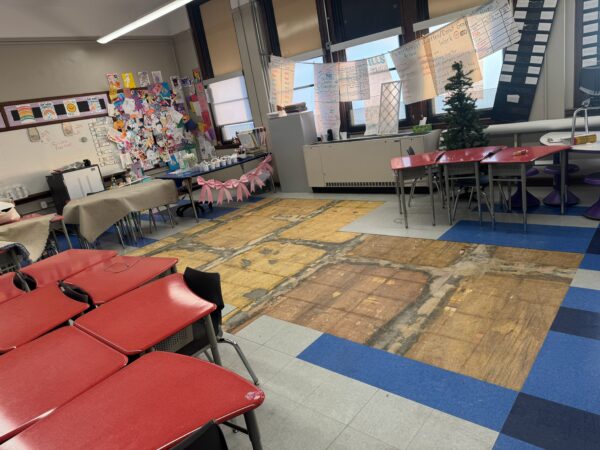
    Conditions were rough when staff and students arrived at Penrose Elementary in Southwest Philadelphia — some paths they needed to access to get inside the school were untouched by shovels or plows.

    Some buses could not open their doors to let students out at their usual spot because snow banks were so high, according to multiple people who work at the school and teachers union officials. A ramp that students with disabilities use to get into the school was blocked.

    And the heat was on the fritz for part of the day as outside temperatures were barely in the double digits.

    “It’s about 45 degrees inside this classroom,” one Penrose staffer said Thursday morning. The staffer was not authorized to speak to the media and asked not to be identified. “We’re all in jackets and hats.”

    After Monday’s snow day and virtual learning Tuesday and Wednesday, Philadelphia schools reopened Thursday, but for many students, it was anything but an inviting return. The combination of accumulated snow, days of subfreezing temperatures, and a clutch of old buildings — many of which have maintenance issues — made in-person learning challenging across the district.

    The rocky return came just hours before a planned rally to protest the district’s proposed $2.8 billion school facilities master plan, which is necessary, officials say, because of poor building conditions and other disparities.

    Around some schools, crosswalks were covered by giant piles of snow, forcing children to walk in streets. Elsewhere, there was no place for staff to park.

    At Vare-Washington Elementary, in South Philadelphia, pipes burst, rendering six classrooms, the cafeteria, the gym, and the entire basement unusable, according to the Philadelphia Federation of Teachers. There was a strong chemical odor throughout the building.

    At Mitchell, another Southwest Philadelphia elementary, “it’s a mess,” said a staffer who asked not to be identified for fear of retribution.

    A pipe broke at the school, and Mitchell had no running water for most of the day, with just one brief window where students could use the bathroom. And Mitchell’s student lunches were never delivered, so kids were fed cereal for lunch.

    “A lot of our kids rely on those lunches to sustain them throughout the day,” the staffer said.

    In addition, Mitchell’s back doors and fire tower exits were blocked by snow, so if there had been a fire or emergency, the only available exits would have been the front doors.

    Robert Morris, in North Philadelphia, which the district recently announced it was targeting for closure, also reported not having student lunches delivered.

    Taylor, also in North Philadelphia, also had burst pipes, with four rooms unusable and most of the school cold. School officials asked for permission to hold classes virtually Friday, but had received no response as of Thursday afternoon.

    The Philadelphia Federation of Teachers has called on the district to return to remote learning on Friday in light of “treacherous commutes and dangerous building conditions,” Arthur Steinberg, PFT president, said in a statement issued Thursday afternoon.

    Steinberg said in an interview that his office was inundated with reports of heating issues or a lack of snow removal or other problems at schools including School of the Future in Parkside; Farrell, Swenson, Mayfair, and Fox Chase in the Northeast; and others.

    “The District must also show respect to students, families, and our members by rectifying the broken heaters, burst pipes, icy sidewalks, and piles of snow in parking lots as soon as possible, so that students and staff can safely resume in-person instruction on Monday,” he said in the statement.

    Monique Braxton, a district spokesperson, said “the safety and well-being of our students, staff, and families remains our top priority.”

    Staff worked long hours inspecting boilers and buildings, restarting heating systems, clearing snow and ice, and more, Braxton said.

    “Across the district, teams are responding in real time to heating concerns, snow and ice conditions, and other weather-related issues as they arise. When conditions do not meet District standards, we work closely with school leaders to take appropriate action and communicate directly with our families,” she said in a statement. “We will continue to closely monitor building conditions throughout this bitter cold period and make adjustments as needed, while temperatures remain below freezing.”

    Both Thursday and Friday had long been scheduled as half days for students, with parent-teacher conferences planned. Those would be held virtually.

    John Bynum, a former building engineer who is now an official with 32BJ SEIU Local 1201, the union representing 2,000 Philadelphia school building engineers, maintenance workers, and bus drivers, said the going was rough for many schools in terms of building condition.

    “Most of these buildings are operating with the original boilers,” Bynum said. “We know with antiquated equipment, there’s going to be problems.”

    In some cases, snowblowers that school staff were using to attempt to clear parking lots and sidewalks failed, Bynum said.

    And like other school staff, his members often coped with trouble getting to work themselves, he said.

    “There were challenges regarding SEPTA not running at a full schedule and the anxiety of getting to work without a robust transportation system,” Bynum said. “Street conditions weren’t the greatest. However, they made the best of it, and they showed up.”

    Conditions like Thursday’s, Bynum said, highlight why the district needs more resources to address its buildings — and students’ learning conditions.

  • A veto-proof majority of Philadelphia City Council members have signed onto the ‘ICE Out’ proposal

    A veto-proof majority of Philadelphia City Council members have signed onto the ‘ICE Out’ proposal

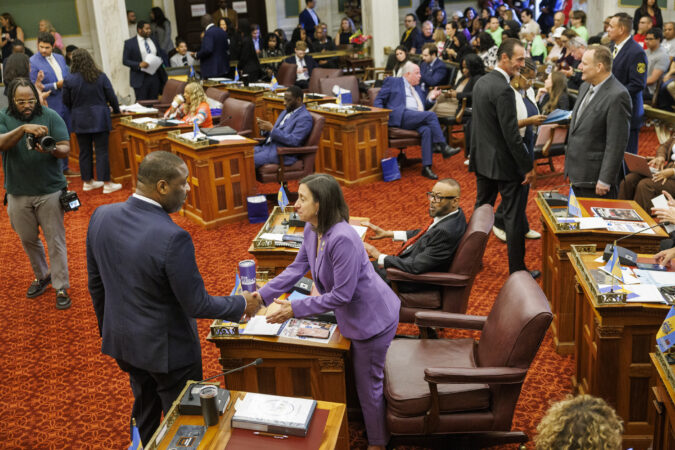
    All but two of Philadelphia’s 17 City Council members have sponsored a package of legislation aimed at limiting ICE operations in the city, a level of support that could ensure the measures become law even if they are opposed by the mayor.

    The 15 cosponsors, confirmed Thursday by a spokesperson for Councilmember Kendra Brooks, indicate a potentially veto-proof majority of lawmakers back the sweeping “ICE Out” effort.

    Brooks and Councilmember Rue Landau, the proposal’s authors, on Thursday formally introduced the seven bills in the package, which includes measures that would codify Philly’s “sanctuary city” status, ban U.S. Immigration and Customs Enforcement from operating on city-owned property, and prohibit employment discrimination on the basis of immigration status.

    Landau said that “reaching a majority sends a clear message.”

    “Philadelphia stands with our immigrant communities,” she said in a statement. “At a moment when the federal government is using fear and violence as governing strategies, this level of support shows that Council will do everything we can to protect our immigrant neighbors.”

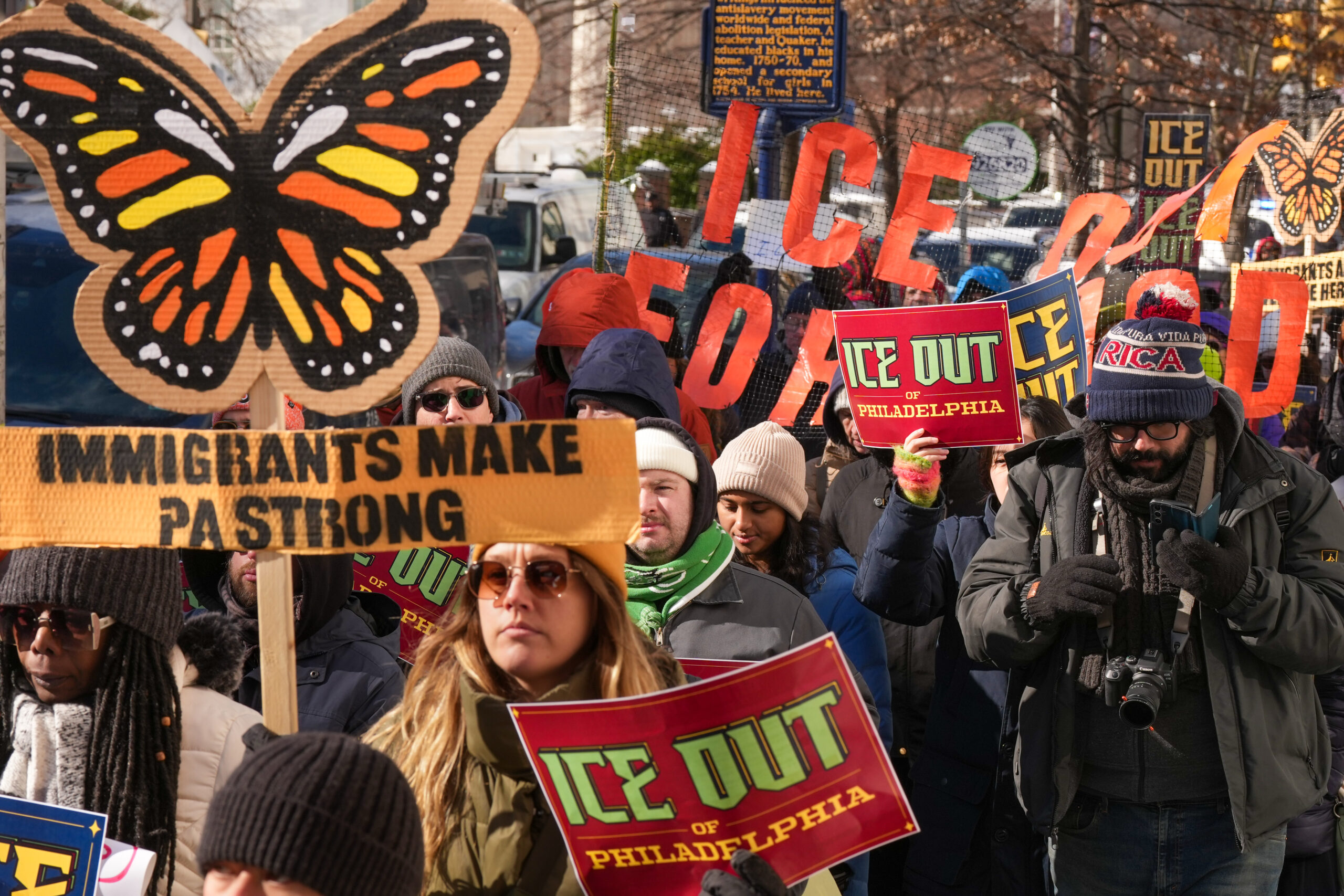
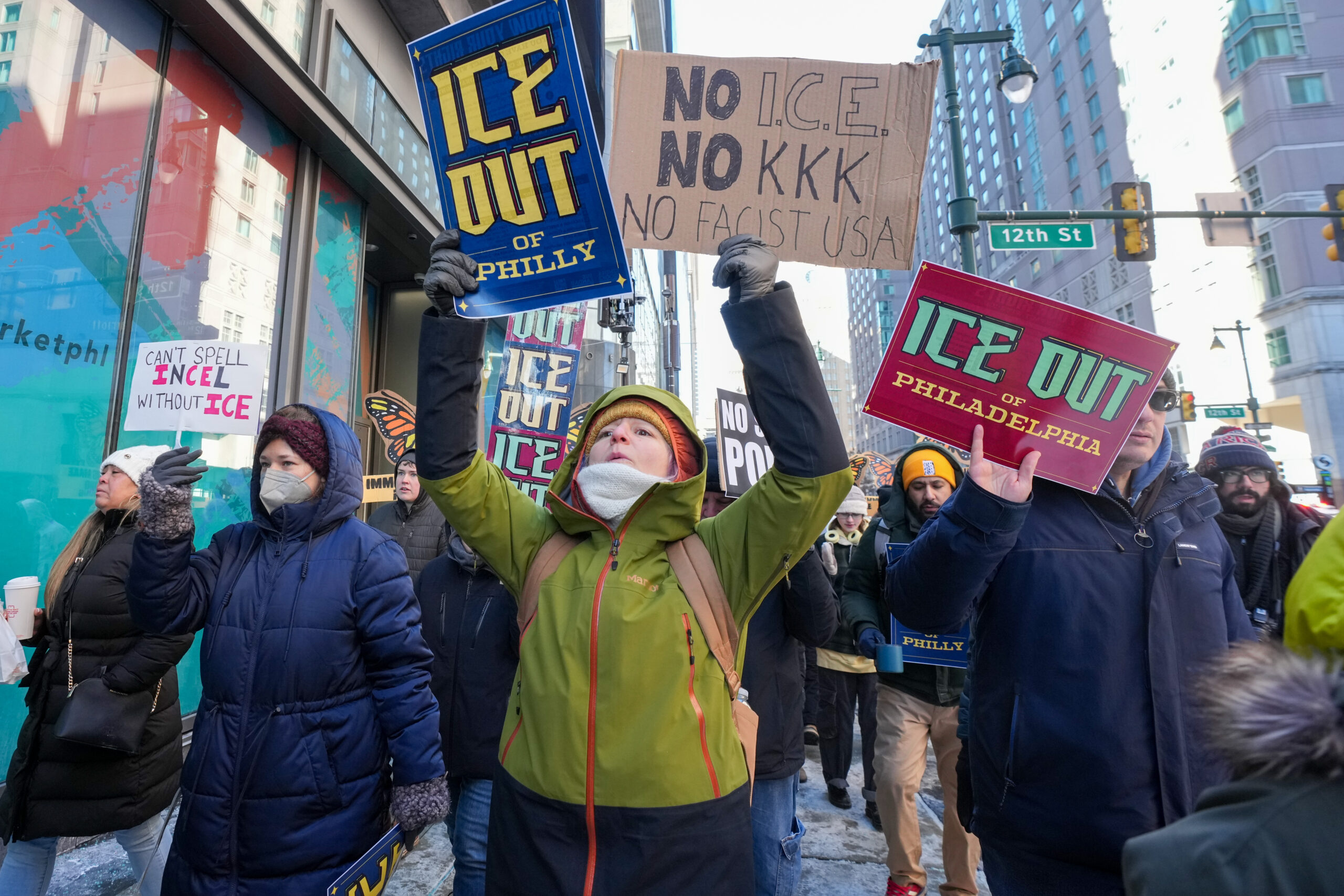
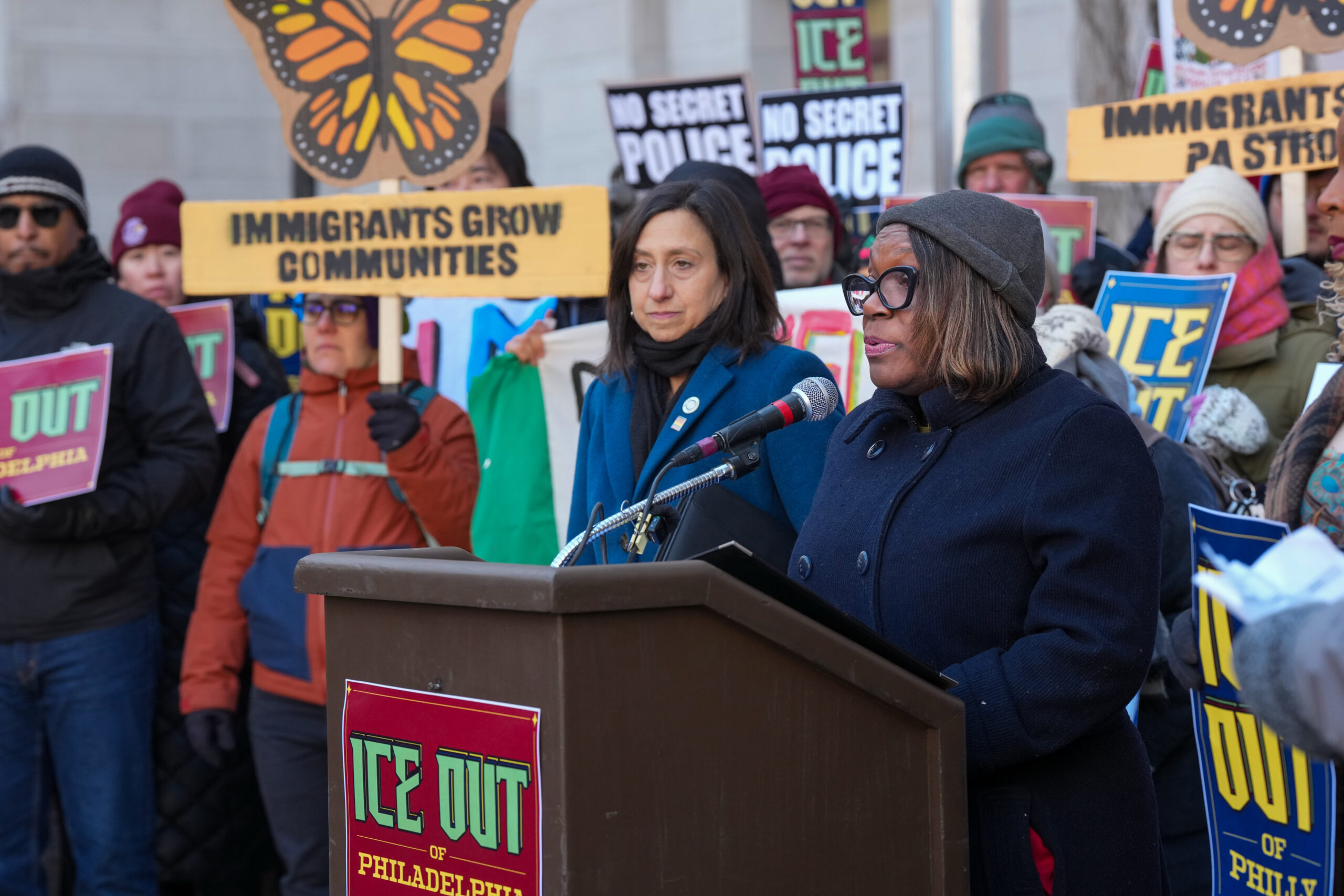
    Advocates and protesters call for ICE to get out of Philadelphia, in Center City, January 27, 2026.

    The 15 lawmakers on board with Brooks and Landau’s proposal have each cosponsored all seven bills, Brooks’ spokesperson Eric Rosso said. Only Councilmembers Mike Driscoll, a Democrat, and Brian O’Neill, Council’s lone Republican, declined to cosponsor the legislation, he said.

    Driscoll, who represents lower Northeast Philadelphia, said in a statement that the shootings of Renée Good and Alex Pretti by federal agents in Minneapolis this month “caused real pain and fear” and “deserve serious attention.”

    But he indicated that he had concerns about whether the “ICE Out” legislation would hold up in court. Similar legislation, including a California ban on law enforcement officers wearing masks, has faced legal challenges.

    “Locally, we should aim for immigration policies that are focused, proactive and aimed at practical, long-term solutions that ultimately hold up in court,” he said.

    Driscoll said he is open to amended versions of the legislation.

    O’Neill, whose district covers much of Northeast Philadelphia, could not immediately be reached for comment.

    The developments Thursday prompted Mayor Cherelle L. Parker to make one of her first public comments about President Donald Trump’s mass deportation campaign, saying in a statement that her administration “understand[s] the public’s fear of the unknown as it relates to federal policy associated with immigration.”

    “We have a comprehensive approach to public safety, and we will always be prepared for any emergency, as we have consistently demonstrated and will continue to demonstrate,” Parker said. “I have a great deal of faith in our public safety leaders — our subject matter experts — who I asked to be a part of this team and we’re going to do our best to work in an intergovernmental fashion, along with City Council, to keep every Philadelphian safe.”

    Parker said she and her team are reviewing the legislation.

    Advocates and protestors call for ICE to get out of Philadelphia, in Center City, January 27, 2026.

    The mayor has largely avoided confrontation with Trump’s administration over immigration policy, a strategy some have speculated has helped keep Philadelphia from the National Guard deployments or surges of ICE agents seen in Minneapolis, Chicago, Los Angeles, and elsewhere.

    But the popularity of the “ICE Out” package among Council members may force her to wade into the issue. Administration officials will testify when the bills are called up for committee hearings. If they are approved, Parker will have the choice of signing the bills into law, vetoing them, or letting them become law without her signature.

    Council bills require nine votes for passage, and 12 votes are needed to override mayoral vetoes. With 15 Council members already signaling their approval for the bills, chances appear strong that the city’s legislative branch has the numbers to override any opposition.

    Mayor Cherelle L. Parker has avoided confrontation with the White House on immigration issues.

    In a Council speech, Brooks addressed the debate over whether the legislation would draw Trump’s ire.

    “Staying silent is not an option when people are being publicly executed in the streets and the federal government is covering up their murders,” Brooks, of the progressive Working Families Party, said. “I want to be clear: ICE is already here. We don’t want a Minneapolis situation, but I reject the claim of those who are pretending we don’t already have a problem.”

    Council President Kenyatta Johnson, a centrist Democrat and an ally of Parker, shared a similar view.

    “From my perspective, the Trump administration has already been looking at the city,” Johnson told reporters. “Overall, the majority of members of City Council support the legislation, and so we see this legislation being successfully voted out of committee.”

    ICE agents have been arresting suspected undocumented immigrants in the city before and during Trump’s tenure, and his administration has canceled grants for the city and educational and medical institutions in Philadelphia. But the city has not seen a mass deployment of ICE agents or federalized troops.

    Councilmember Anthony Phillips, also a centrist and Parker ally, represents the 9th District, from which the mayor hails.

    “What the ’ICE Out’ legislation ultimately says to Donald Trump,” Phillips said, “is that no matter what you try to do to undermine the health and safety and well-being of Philadelphia citizens, we will stand up to you.”

    Johnson suggested potential legal issues could be ironed out through amendments if needed.

    “The reality is this: This is a moral issue, right?” he said. “And if there are any legality issues that has to be addressed as a body, we’ll work with our members to address it.”

    Next, Johnson will refer the legislation to committee, where members will hold one or more hearings featuring testimony from administration officials, experts, stakeholders, and the public. Council members can also amend the bills in committee.

    Kendra Brooks shown here during a press conference at City Hall to announce a package of bills aimed at pushing back against ICE enforcement in Philadelphia, January 27, 2026.

    Supporters of the legislation packed Council chambers Thursday morning, and many spoke during public comment, ranging from leaders of advocacy organizations to a former immigration judge to immigrants who tearfully pleaded for Council to pass the package swiftly.

    Several Spanish-speaking residents spoke through interpreters; other residents testified on behalf of friends or family members who are undocumented and were fearful to come to City Hall themselves. A school nurse told Council members that her students have asked her what tear gas feels like.

    “The traumatic effects of these [ICE] raids on our children and our families and our communities will last for years and generations to come,” said Jeannine Cicco Barker, a South Philadelphia psychologist who said she is the daughter of immigrants. “These times call for bold, brave new measures to protect our community, and you have a chance to do some of that here. Philly urgently needs these protections.”

    Ethan Tan, who said he is an immigrant and a father of two, said he is fearful for his family and community.

    “To this administration, fear is the point. Alienation is the point. Isolation is the point,” he said. “The ‘ICE Out’ package says to me and immigrants that we may be afraid, but we can show solidarity and resolve anyway.”

  • USWNT star Crystal Dunn announces retirement from soccer at age 33

    USWNT star Crystal Dunn announces retirement from soccer at age 33

    PARIS — United States international Crystal Dunn has retired from professional soccer after a decorated playing career to spend more time with her family.

    The 33-year-old New York native helped the U.S. win the 2019 women’s World Cup and the gold medal at the Paris Olympics.

    “This decision has not come easily, but I am at peace and deeply fulfilled with all that I have accomplished,” she wrote in an Instagram post Thursday. “I’ve achieved nearly everything I dreamed of in this sport and gave all I had to give.

    “I’m ready to embrace the life that awaits me on the other side. I look forward to spending more time with my family and being a more present mom.”

    Dunn was under contract with Paris Saint-Germain, which said Thursday that both sides agreed to end their collaboration. A versatile player who contributed from multiple positions, Dunn joined PSG in January 2025 after leaving Gotham FC of the NWSL. She made nine appearances for PSG, scoring two goals and providing two assists.

    Dunn appeared in 160 games for the United States, scoring 25 goals.

    “As one of the first Black stars of the U.S. women’s national team, especially as a field player, Dunn has long been a role model to many young players of color across the country who aspired to reach the highest levels of the game,” the U.S. Soccer Federation said in its announcement about Dunn’s retirement.

    “Dunn’s career will be remembered for her versatility, her tremendous one-on-one defending, her ability to perform far above her size (5-foot-1), her popularity among her teammates, her ability to inspire generations of U.S. Women’s National Team players and for a heck of a lot of winning.”

    Before Gotham, Dunn played for the Portland Thorns and took most of 2022 off for the birth of her son, Marcel. She also had stints with the North Carolina Courage, Chelsea, and the Washington Spirit.

  • Trump says he’s instructed U.S. officials to reopen Venezuelan airspace for commercial travel

    Trump says he’s instructed U.S. officials to reopen Venezuelan airspace for commercial travel

    WASHINGTON — President Donald Trump said Thursday he has informed Venezuela’s acting president, Delcy Rodríguez, that he will open up all commercial airspace over the Venezuela and Americans will soon be able to visit.

    Trump said he instructed his transportation secretary, Sean Duffy, and U.S. military leaders to take steps to open the airspace for travel by the end of the day.

    “American citizens will be very shortly able to go to Venezuela, and they’ll be safe there,” the Republican president said.

    Venezuela’s government did not immediately comment.

    While the State Department continued to warning Americans against traveling to Venezuela, at least one U.S. airline announced its intention to soon resume direct flights between the countries.

    American Airlines was the last U.S. airline flying to Venezuela when it suspended flights in 2019 that it operated between Miami and the capital, Caracas, as well as the oil hub city of Maracaibo. The airline said Thursday it would share additional details about the return to service in the coming months as it works with federal authorities on security assessments and necessary permissions.

    “We have a more than 30-year history connecting Venezolanos to the U.S., and we are ready to renew that incredible relationship,” Nat Pieper, American’s chief commercial officer, said in a statement. “By restarting service to Venezuela, American will offer customers the opportunity to reunite with families and create new business and commerce with the United States.”

    Before Venezuela came undone in the mid-2010s, it was not uncommon for Venezuelans to take weekend leisure trips to Miami. U.S. airlines stopped flying to Venezuela before the Department of Homeland Security in 2019 ordered an indefinite suspension, arguing that conditions in Venezuela threatened the “safety and security of passengers, aircraft, and crew.”

    Earlier this week, Trump’s administration notified Congress that it was taking the first steps to possibly reopen the shuttered U.S. Embassy in Caracas as it explores restoring relations with the country after the U.S. military raid that ousted then-President Nicolás Maduro. In a notice to lawmakers dated Monday and obtained by The Associated Press, the State Department said it was sending in a regular and growing contingent of temporary staffers to conduct “select” diplomatic functions.

    “We are writing to notify the committee of the Department of State’s intent to implement a phased approach to potentially resume Embassy Caracas operations,” the department said in separate but identical letters to 10 House and Senate committees.

    Diplomatic relations between the two countries collapsed in 2019.

    Even as Trump suggested Americans will be safe in Venezuela, his State Department kept in place its highest-level travel advisory: “Do not travel,” a warning of a high risk of wrongful detention, torture, kidnapping and more.

    The department did not immediately respond to a message inquiring whether it would be changing that warning.

    In November, as Trump was ramping up pressure on Maduro, the American president said the airspace “above and surrounding” Venezuela should be considered as “closed in its entirety.”

    The Federal Aviation Administration, which has jurisdiction generally over the United States and its territories, told pilots to be cautious flying around Venezuela because of heightened military activity.

    After that FAA warning, international airlines began canceling flights to Venezuela.

    The FAA issued a similar 60-day warning in January, urging U.S. aircraft operators to “exercise caution” when flying over the eastern Pacific Ocean near Mexico, Central America, and parts of South America. The warning was issued after Maduro’s capture but came as the U.S. has threatened to continue military strikes on alleged drug trafficking boats in the area.

    The FAA on Thursday said it was lifting four Notices to Airmen (NOTAMs) for the region that it said were “issued as precautionary measures and are no longer necessary.”

    “Safety remains our top priority,” the FAA said in a statement, “And we look forward to facilitating the return of regular travel between the U.S. and Venezuela.”

  • A shadow network in Minneapolis defies ICE and protects immigrants

    A shadow network in Minneapolis defies ICE and protects immigrants

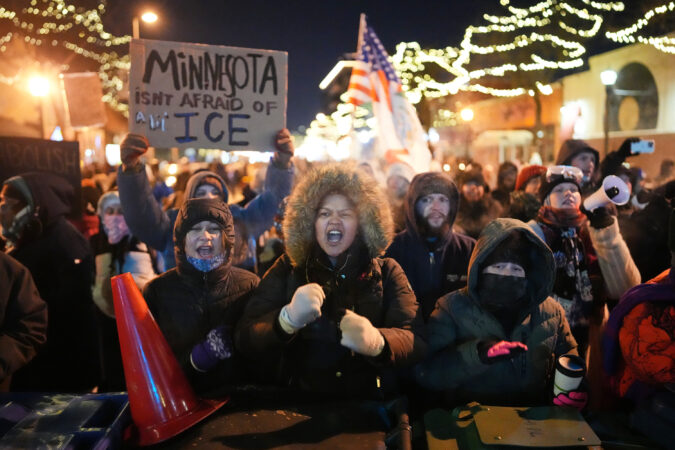
    MINNEAPOLIS — If there’s been a soundtrack to life in Minneapolis in recent weeks, it’s the shrieking whistles and honking horns of thousands of people following immigration agents across the city.

    They are the ever-moving shadow of the Trump administration’s Operation Metro Surge.

    They are teachers, scientists and stay-at-home parents. They own small businesses and wait tables. Their network is sprawling, often anonymous and with few overall objectives beyond helping immigrants, warning of approaching agents or filming videos to show the world what is happening.

    And it’s clear they will continue despite the White House striking a more conciliatory tone after the weekend killing of Alex Pretti, including the transfer of Gregory Bovino, the senior Border Patrol official who was the public face of the immigration crackdown.

    “I think that everyone slept a little better knowing that Bovino had been kicked out of Minneapolis,” said Andrew Fahlstrom, who helps run Defend the 612, a hub for volunteer networks. “But I don’t think the threat that we’re under will change because they change out the local puppets.”

    The surge begins

    What started with scattered arrests in December ramped up dramatically in early January, when a top ICE official announced the “largest immigration operation ever.”

    Masked, heavily armed agents traveling in convoys of unmarked SUVs became commonplace in some neighborhoods. By this week, more than 3,400 people had been arrested, according to Immigration and Customs Enforcement. At least 2,000 ICE officers and 1,000 Border Patrol officers were on the ground.

    Administration officials insist they are focusing on criminals in the U.S. illegally, but the reality in the streets has been far more aggressive. Agents have stopped people, seemingly randomly, to demand citizenship papers, including off-duty Latino and Black police officers and city workers, area officials say.

    They smashed through the front door of a Liberian man and detained him without a proper warrant, even though he’d been checking in regularly with immigration officials. They have detained children along with their parents and used tear gas outside a high school in an altercation with protesters after detaining someone.

    To be sure, federal agents are barely a presence in many areas, and most people have never smelled a whiff of tear gas. But the crackdown rippled quickly through immigrant-heavy neighborhoods. Patients are avoiding life-saving medical care, doctors said. Thousands of immigrant children are staying home. Immigrant businesses shut down, cut their hours or kept their doors locked to everyone but regular customers.

    Pushback comes quickly

    Activist groups rapidly organized across deeply liberal Minneapolis-St. Paul and some suburbs. Small armies of volunteers began making food deliveries to immigrants afraid to leave their homes. They drove people to work and stood watch outside schools.

    They also created interlocking webs of dozens, perhaps hundreds, of rapid response networks — sophisticated systems involving thousands of volunteers who track immigration agents, communicating with encrypted apps like Signal.

    Tracking often means little more than quietly reporting the movement of convoys to dispatchers and recording the license plates of possible federal vehicles.

    But it’s not always quiet. Protester caravans regularly form behind immigration convoys, creating mobile protests of anger and warning that weave through city streets.

    When agents stop to arrest or question someone, the networks signal the location, summoning more people who sound warnings with whistles and honking, film what’s happening and call out legal advice to people being detained.

    Trump’s border czar, Tom Homan, warned Thursday that activists will continue to “be held accountable.”

    “Justice is coming,” he told reporters.

    Many protesters come expecting trouble

    Sometimes it all can feel performative, whether it’s Bovino in body armor tossing a smoke grenade, or young activists who rarely take off their helmets and gas masks, even when law enforcement is nowhere to be seen.

    But crowds often lead to real confrontations, with protesters screaming at immigration agents. Agents respond only sometimes, but when they do it’s often with punches, pepper spray, tear gas and arrests.

    Those confrontations worry some in the activist world.

    Take the recent afternoon in south Minneapolis, where dozens of protesters, some in gas masks, clashed with immigration agents in south Minneapolis. Protesters screamed at agents, threw snowballs and tried to block their vehicles. Agents responded by shoving protesters who got too close, firing pepper balls and finally throwing tear gas grenades and driving away. Demonstrators without masks wretched in the streets as volunteers handed out bottles of water to flush their eyes.

    By then, even many of the people in the protest weren’t sure what started it, including the city council member who soon arrived.

    Minneapolis has a long tradition of progressivism, and Jason Chavez is a proud part of that.

    He bristled when asked about the confrontation.

    “I didn’t see anybody ‘confronting,’” said Chavez. “I saw people alerting neighbors that ICE was in their neighborhood. And that’s what neighbors should continue to do.”

    Tracking immigration in an immigrant neighborhood

    To understand this world, talk to a woman known in the rapid response networks only by her nickname, Sunshine. She asked that her real name not be used, fearing retaliation.

    A friendly woman who works in health care, she has spent hundreds of hours in her slightly beat-up Subaru patrolling an immigrant St. Paul enclave of taquerias and Asian grocery stores, watching for signs of federal agents. She can spot an idling SUV from the tiniest hint of exhaust, an out-of-state license plate from a block away, and quickly distinguish an undercover St. Paul police car from an unmarked immigration vehicle.

    On the messaging apps, she’s simply Sunshine. She knows the real names of few other people, even after working with some for weeks on end.

    She hates what is happening, and feels deeply for people living in fear. She worries the Trump administration wants to push the nation into civil war, and believes she has no choice except to patrol — “commuting” it’s often called, half-jokingly — every day.

    “Sometimes people just want to pick up their kid and walk their dog and go to work. And I get that. I get that desire,” she said while driving through the neighborhood last week. “I just don’t know if that’s the world we live in anymore.”

    She runs constant equations in her head: Should she report an immigration vehicle to the network’s dispatcher, or honk her horn as a warning? Would honking unnecessarily scare residents who are already afraid? Are agents leading her around? Are federal vehicles moving to launch a raid, or are they distracting observers while other agents make arrests elsewhere?

    She is careful and avoids confrontation. She also finds hope in the community that has been created, and how offers to volunteer exploded after the Jan. 7 killing of Renee Good by an ICE agent. And she understands the anger of the people who face off against agents.

    “My strategy, my approach, my risk calculation is different than other peoples’. And at the same time, the vitriol, the frustration, I get it,” she said. “And sometimes it feels good to see someone unleash that.”

    Not everyone agrees. Nationally, some activist groups avoid protest strategies that could lead to clashes.

    “Loud does not equal effective,” a group in a heavily immigrant Maryland county said in a recent social media post, explaining why their volunteers don’t use whistles.

    The Montgomery County Immigrant Rights Collective notes that it isn’t suggesting how other groups should operate, and that “local conditions should guide your local tactics.” But it warns its own members that whistling can “escalate already volatile ICE agents who don’t respect our rights” and “increase the likelihood of aggression toward bystanders or the detained person.”

    “This is not an action movie,” the post says. “You are not in a one-on-one fight with ICE.”
  • Trump says he asked Putin not to target Kyiv for 1 week during brutal cold spell

    Trump says he asked Putin not to target Kyiv for 1 week during brutal cold spell

    KYIV, Ukraine — President Donald Trump said Thursday that President Vladimir Putin has agreed not to target the Ukrainian capital and other towns for one week as the region experiences frigid temperatures. There was no immediate confirmation from the Kremlin that Putin has agreed to such a pause.

    Russia has been pounding Ukraine’s critical infrastructure, hoping to wear down public resistance to the war while leaving many around the country having to endure the dead of winter without heat.

    “I personally asked President Putin not to fire on Kyiv and the cities and towns for a week during this … extraordinary cold,” Trump said during a Cabinet meeting at the White House, adding that Putin has “agreed to that.”

    Kremlin spokesman Dmitry Peskov was asked earlier Thursday whether a mutual halt on strikes on energy facilities was being discussed between Russia and Ukraine, and he refused to comment on the issue.

    Ukrainian President Volodymyr Zelensky late Wednesday had warned that Moscow was planning another large-scale barrage despite plans for further U.S.-brokered peace talks at the weekend.

    Trump said he was pleased that Putin has agreed to the pause. Kyiv, which has grappled with severe power shortages this winter, is forecast to enter a brutally cold stretch starting Friday that is expected to last into next week. Temperatures in some areas will drop to minus-22 Fahrenheit, the State Emergency Service warned.

    “A lot of people said, ‘Don’t waste the call. You’re not going to get that.’” the president said of his request of Putin. “And he did it. And we’re very happy that they did it.”

    Zelensky, for his part, thanked Trump for his effort and welcomed the “possibility” of a pause in Russian military action on Kyiv and beyond. “Power supply is a foundation of life,” Zelensky said in his social media post.

    Trump did not say when the call with Putin took place or when the ceasefire would go into effect. The White House did not immediately respond to a query seeking clarity about the scope and timing of the limited pause in the nearly four-year war.

    Russia has sought to deny Ukrainian civilians heat and running water over the course of the war, which began with Russia’s full-scale invasion on Feb. 24, 2022. Ukrainian officials describe the strategy as “weaponizing winter.”

    Last year was the deadliest for civilians in Ukraine since 2022 as Russia intensified its aerial barrages behind the front line, according to the U.N. Human Rights Monitoring Mission in the country.

    The war killed 2,514 civilians and injured 12,142 in Ukraine — 31% higher than in 2024, it said.

    A Russian drone attack killed three people in Ukraine’s southern Zaporizhzhia region overnight and caused a major blaze in an apartment building, officials said Thursday.

    Firefighters also worked through the night to put out fires in the central Dnipropetrovsk region, where two people were injured, officials said.

    Zelensky said Ukrainian intelligence reports indicate Russia is assembling forces for a major aerial attack. Previous large attacks, sometimes involving more than 800 drones as well as cruise and ballistic missiles, have targeted the Ukrainian power grid.

    The ongoing attacks discredit the peace talks, Zelensky said. “Every single Russian strike does,” he said late Wednesday.

    Russia’s daily bombardment of civilian areas behind the roughly 600-mile front line has continued despite international condemnation and attempts to end the fighting.

    Ukraine is working with SpaceX to address the reported use of its Starlink satellite service by Russian attack drones, Ukrainian Defense Minister Mykhailo Fedorov said Thursday on the Telegram messaging app.

    He said his team contacted the American aerospace company run by Elon Musk and “proposed ways to resolve the issue.” Starlink is a global internet network that relies on around 10,000 satellites orbiting Earth.

    Fedorov thanked Musk and SpaceX President Gwynne Shotwell for their “swift response and the start of work on resolving the situation.”

    Musk and SpaceX have sought to steer a delicate course in the war.

    Shotwell said a year after the invasion that SpaceX was happy to provide Ukrainians with connectivity “and help them in their fight for freedom.” At the same time, the company sought to restrict Ukraine’s use of Starlink for military purposes, she said.

    Negotiations between the two sides are poised to resume on Sunday amid doubts about Moscow’s commitment to a settlement.

    The European Union’s top diplomat accused Russia of not taking the talks seriously, calling Thursday in Brussels for more pressure to be exerted on Moscow to press it into making concessions.

    “We see them increasing their attacks on Ukraine because they can’t make moves on the battlefield. So, they are attacking civilians,” Kaja Kallas said of Russia at a meeting of EU foreign ministers.

    She stressed that Europe, which sees its own future security at stake in Ukraine, must be fully involved in talks to end the war. The push for a settlement has been led over the past year by the Trump administration, and European leaders fear their concerns may not be taken into account.

    Steve Witkoff, Trump’s special envoy, said Thursday “a lot of progress” was made in recent three-way talks and expressed optimism that more headway can be made when the parties meet again in the coming days.

    “I think the people of Ukraine are now hopeful and expecting that we are going to deliver a peace deal sometime soon,” Witkoff added.

    The number of soldiers killed, injured or missing on both sides during the war could reach 2 million by spring, with Russia suffering the largest number of troop deaths for any major power in any conflict since World War II, according to an international think tank report published Tuesday.

  • Joe Walsh, Hall of Fame football coach and longtime West Chester teacher, has died at 75

    Joe Walsh, Hall of Fame football coach and longtime West Chester teacher, has died at 75

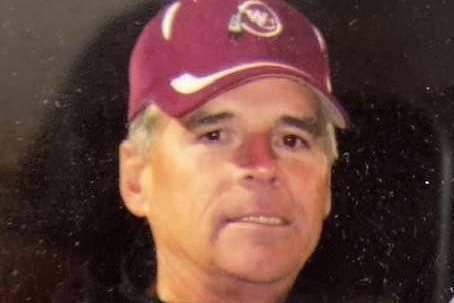
    Joe Walsh, 75, of West Chester, member of four athletic Halls of Fame, longtime high school and college football coach, retired health and physical education teacher at West Chester Henderson High School, mentor, and neighbor extraordinaire, died Tuesday, Jan. 27, of cancer at his home.

    Mr. Walsh grew up in the Farmbrook section of Levittown, Bucks County, and played football at the old Woodrow Wilson High School and what is now West Chester University. He got a job as a health and physical education teacher and assistant football coach at Henderson in 1972 and spent the next five decades coaching thousands of high school and college athletes, teaching thousands of high school students, and mentoring hundreds of friends and colleagues.

    He coached football, wrestling, lacrosse, and tennis at Henderson, and his football teams at Henderson and Sun Valley High School combined to win four league championships. He coached in 13 all-star football games and was named the Chester County area football coach of the year four times, the Ches-Mont League coach of the year three times, and the Del-Val League coach of the year once.

    In 1992, an Inquirer reporter asked him to describe himself. “I am an easygoing, volatile kind of coach,” he said with a big chuckle, the reporter wrote. “Actually,” he said, “I think I’m a player’s coach. I think my rapport with my players is my strong point.”

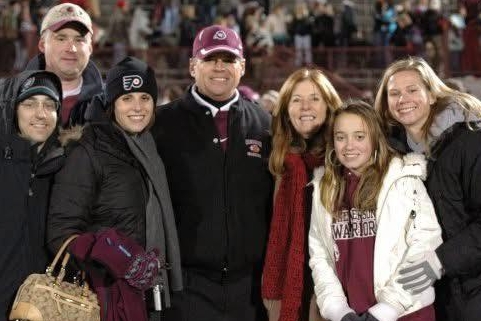
    Mr. Walsh (center) had many occasions to celebrate with family and friends on the football field.

    Former colleagues, players, and friends said in online tributes that Mr. Walsh was “an inspiration,” “a great coach,” and “a positive example for many, many young people.” On Threads, his brother, Russ, called him a “Hall of Fame human being.”

    “He was always there,” said John Lunardi, assistant principal at Henderson, who played quarterback for Mr. Walsh and served later as his assistant coach, “a steady, reliable role model, somebody who could be counted on no matter what.”

    In 20 years as head football coach at Henderson, from 1992 to 2011, Mr. Walsh’s teams won 131 games, lost 104, and captured three Ches-Mont League championships. From 1988 to 1991, he went 17-25 as head coach at Sun Valley and won the 1990 Del-Val League championship.

    His 2007 team at Henderson went 12-2, won the Ches-Mont title, and made it to the district championship game. “Our motto,” he told The Inquirer in 2004, “is no excuses, just results.”

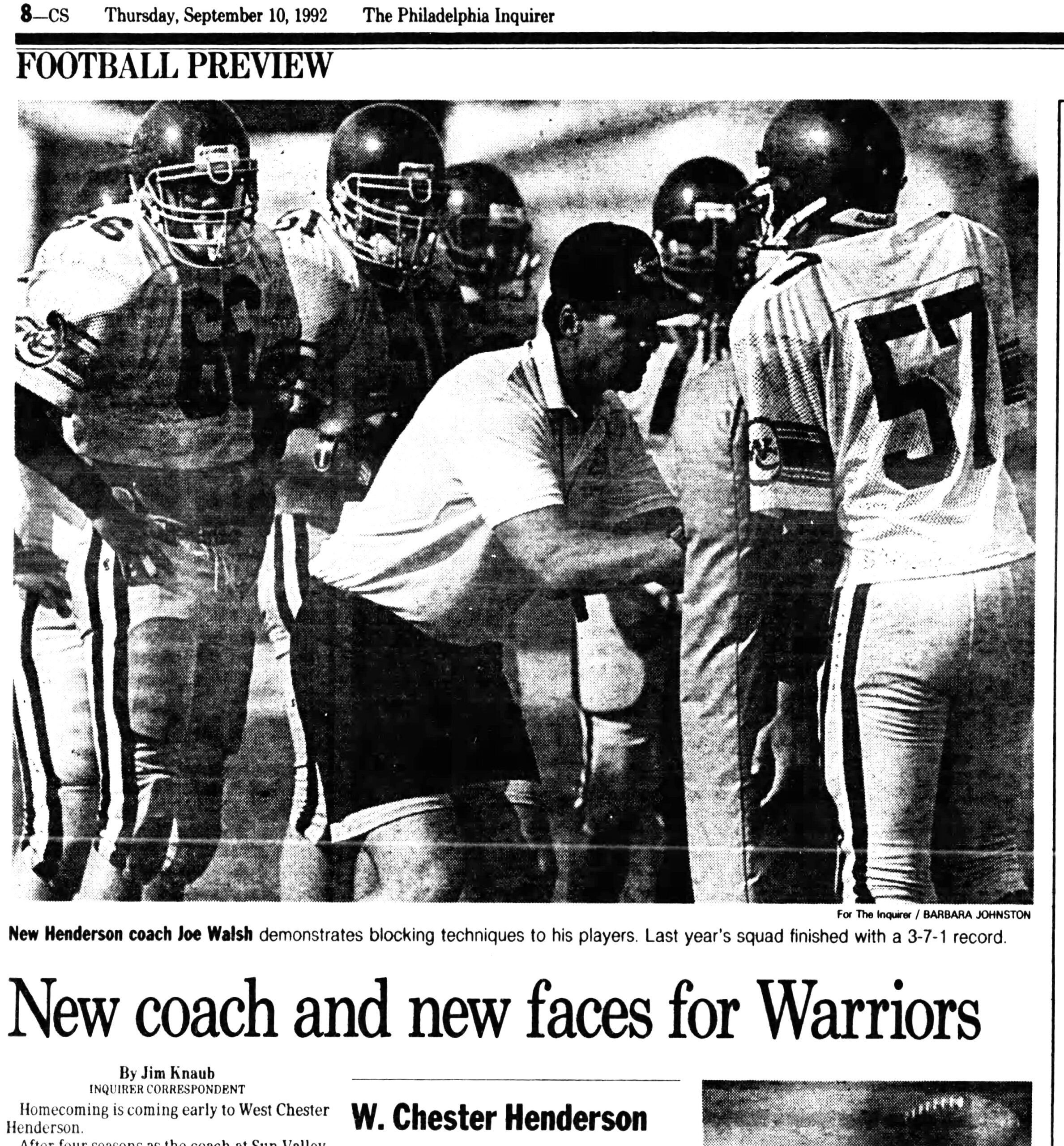
    Mr. Walsh and his Henderson football team were featured in The Inquirer’s 1992 preview section.

    He coached the West Chester University defensive linemen as an assistant for seven seasons after leaving Henderson and was inducted into the university’s Killinger Football Foundation Hall of Fame in 2001. He entered the Pennsylvania State Football Coaches Association Hall of Fame in 2014 and the Ches-Mont League Hall of Fame in 2018.

    In 2025, he was inducted into the Chester County Sports Hall of Fame, and colleagues there noted his “remarkable achievements and contributions to local athletics” in a Facebook tribute. He earned a standing ovation after speaking at the ceremony, and Henderson officials recognized his legacy with a moment of silence at a recent basketball game. They said in a tribute: “Joe Walsh was a Hall of Fame person in every possible way.”

    Mr. Walsh taught health and physical education at Henderson from 1972 to 2008. He organized offseason clinics to encourage all students to join sports teams and told The Inquirer in 1992: “I’ve always tried my best to get as many people out and make it enjoyable for them so they stay out.”

    He served as board president for the Killinger Football Foundation and cofounded W & W Option Football Camps LLC in 2001. “It wasn’t about the wins and losses for him,” said his wife, Pam. “It was all about the kids, and he was that way in all aspects of his life.”

    Mr. Walsh and his wife, Pam, had many adventures together and spent countless afternoons at football games.

    Joseph Richard Walsh was born Feb. 5, 1950, in Philadelphia. He lettered in football, wrestling, and track in high school, and graduated from Wilson in 1968.

    He earned a bachelor’s degree in health and physical education at West Chester in 1972 and played center on its two-time championship football team.

    He married Sharon Clark, and they had a son, Joe, and a daughter, Kelly. After a divorce, he married Pam Connor in 1978, and they had a daughter, Jen, and lived in Downingtown and then West Whiteland Township since 1985.

    Mr. Walsh enjoyed all kinds of fishing and golf. In 2023, he and his wife visited half a dozen college football stadiums on a wild cross-country road trip to Yellowstone National Park.

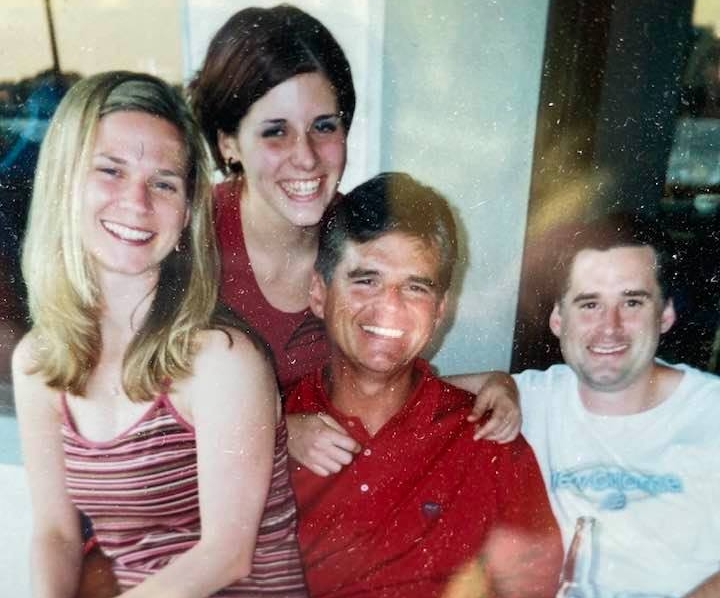
    Mr. Walsh enjoyed time with his children.

    They entertained often at home, and his gourmet soups were usually the hit of the party. He doted on his children and grandchildren, and never lost his sense of humor, they said.

    He was the best neighbor ever, friends said. He cleared miles of sidewalks and driveways with his snowblower every winter, hosted late-into-the-night firepit parties every summer, and could fix practically anything.

    “He was gentle but strong,” his wife said. “He was kind and considerate, and he never badmouthed anybody. He truly was a great man.”

    In addition to his wife, children, brother, and former wife, Mr. Walsh is survived by seven grandchildren, one great-granddaughter, sisters Eileen and Ruth, and other relatives.

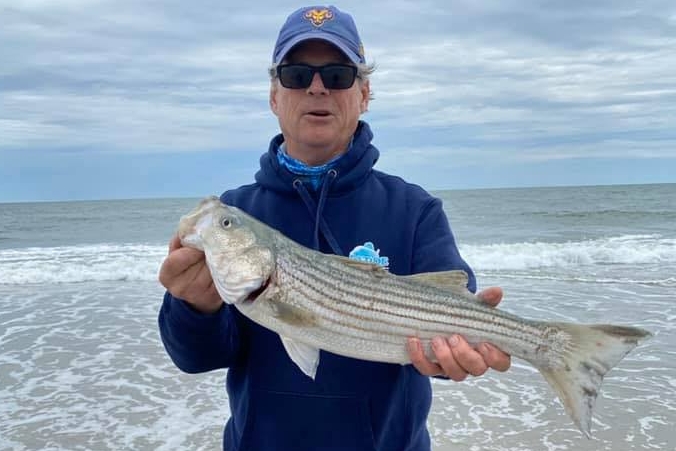
    Mr. Walsh rarely let the big ones get away.

    Visitation with the family is to be from 5 to 8 p.m. Thursday, Feb. 5, and from 9 to 10:30 a.m. Friday, Feb. 6, at DellaVecchia, Reilly, Smith & Boyd Funeral Home, 410 N. Church St., West Chester, Pa. 19380. A celebration of his life is to follow Friday at 10:30.

    Donations in his name may be made to the Joe Walsh Scholarship Fund, c/o the Athletic Department, West Chester Henderson High School, 400 Montgomery Ave., West Chester, Pa. 19380.

  • 🏀 The best hoopers in the world show Philly how to ball|Things to do

    🏀 The best hoopers in the world show Philly how to ball|Things to do

    After a foot of snow hit the region last weekend, there hasn’t been much movement in Philadelphia (or so it seems).

    The snow and slush has been as stubborn as Ben Simmons’ fans during his Sixers days. No matter how much sun has peeked out from under the winter clouds, the roads are still covered with mounds of snow, and cars are still boxed in from the plowed piles.

    But that hasn’t stopped Philadelphians from their weekly commute, and certainly won’t stop them from enjoying the many events happening this weekend.

    That includes the Philadelphia Auto Show, the celebration of Asian cultures for CultureFest!, and a clam chowder crawl in Manayunk. The best WNBA players in the world are also going head-to-head at Xfinity Mobile Arena on Friday for Philly is Unrivaled.

    And if the city still looks like the inside of a snow globe this weekend, maybe we all head to another impromptu sledding fest at the Rocky Steps.

    — Earl Hopkins (@earlhopkins_, Email me at thingstodo@inquirer.com)

    If someone forwarded you this email, sign up for free here.

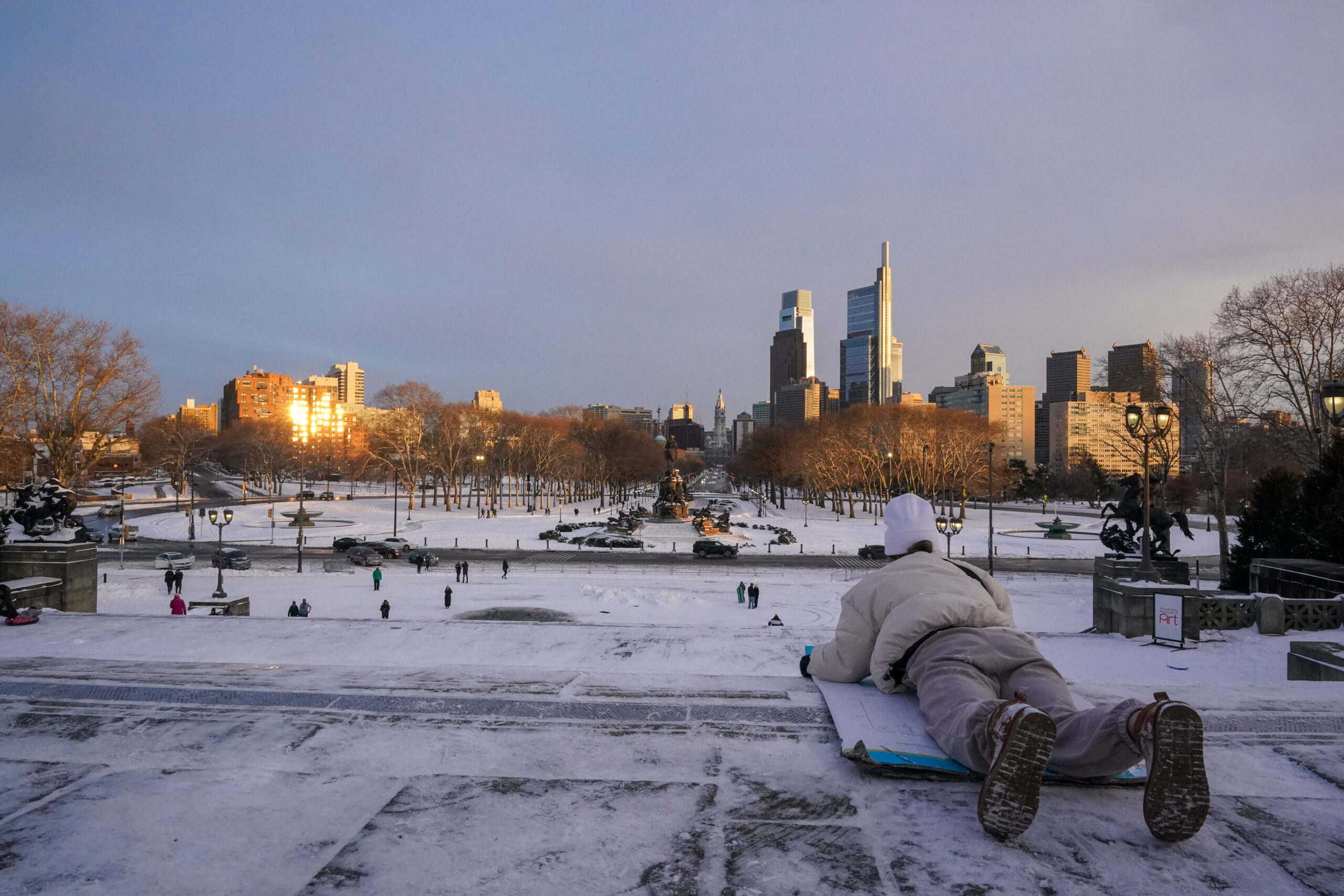
    Brooke Piazza prepares to takeoff sledding on a piece of cardboard at the Philadelphia Art Museum in Philadelphia, Pa., on January 29, 2022.

    The best sledding hills in the region

    Forecasts indicate another weekend of freezing temps is likely in the cards, giving Philly sledders plenty of terrain to enjoy the city’s winter wonderment.

    Along with the Philadelphia Art Museum steps, my colleagues Nick Vadala and Dugan Arnett suggest bundling up and taking a trip to places like Lemon Hill, Water Tower Recreation Center, Clark Park, and other nearby sledding havens.

    Read the rest of their suggestions here.

    The best things to do this week

    🏀 Show Philly how to ball: Philly Is Unrivaled, an offseason professional women’s basketball league, is coming to Xfinity Mobile Arena this Friday. The event will feature 3-on-3 games between four clubs, with the WNBA’s best players duking it out in playoff-style.

    🍺 A taste of international brew: On Saturday, craft beers from Japan, Mexico, Spain, and other distant lands will be front and center at Ardmore Passport: World Pours at Ardmore Music Hall. The event will include international menu items, music, and other activities for the one-day event.

    🇺🇸 Philly history is back, baby: After four months of closure, due to a government shut down and planned repairs, Independence Hall reopens to the public on Thursday.

    ❄️ Bundle up for a Freeze-Out: Manayunk’s signature Founders Philly Freeze-Out returns to Main Street, offering some winter fun. The day also includes a three-mile Founders Freeze Out Fun Run and the Manayunk Chowder Crawl.

    📅 My calendar picks this week: Jessie J at Theatre of the Living Arts and the Mummers String Band Competition at the Linc.

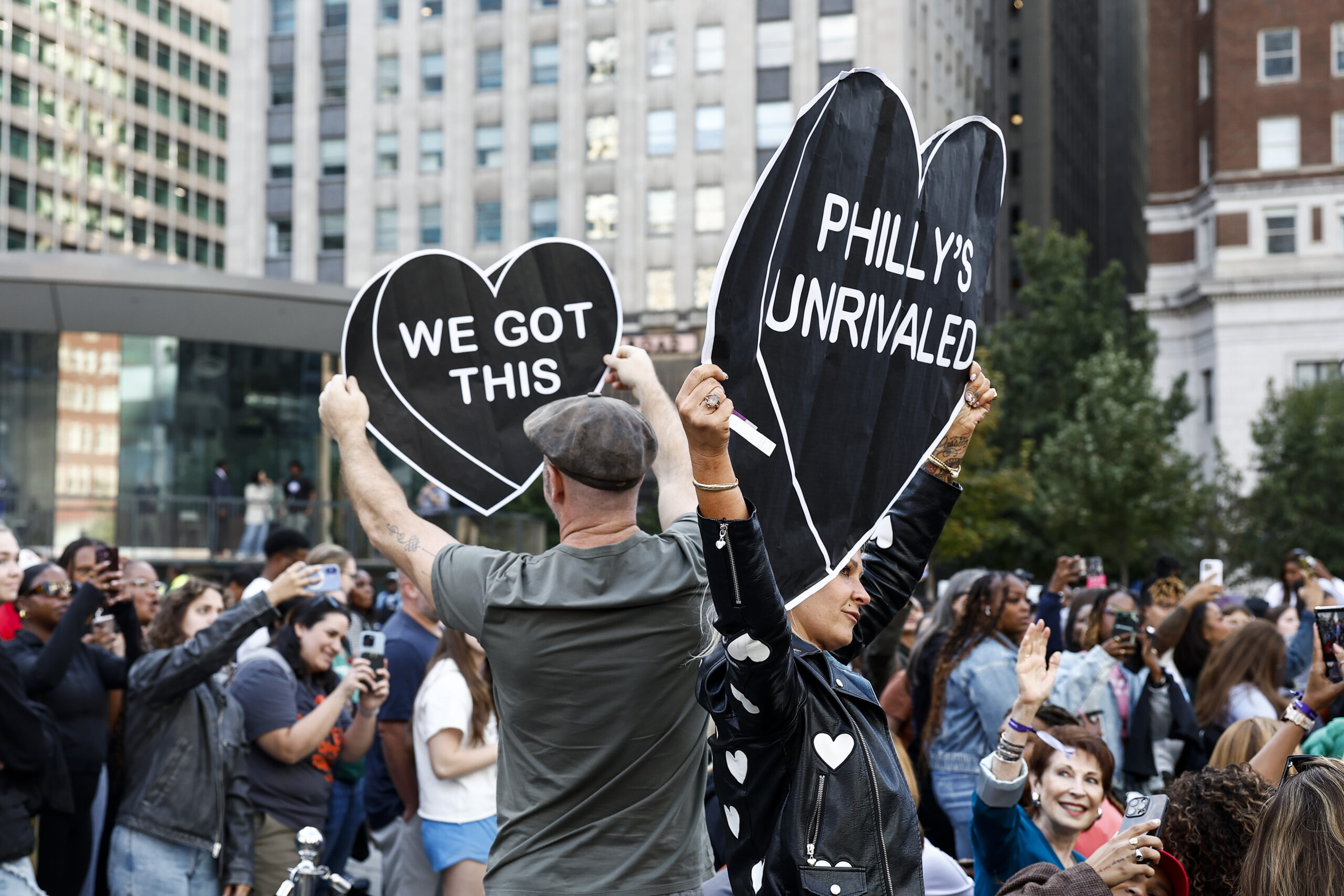
    Attendees hold up signs during an announcement about the Unrivaled Women’s Basketball League 2026 Philly tour stop at LOVE Park on Thursday, Oct. 2, 2025 in Philadelphia. Xfinity Mobile Arena was announced as Unrivaled’s first tour stop, with two games to be played here on Jan. 30.

    Unrivaled kicks off its tour in Philly Friday night

    Not to be confused with the WNBA, which begins its 30th season in May, Unrivaled is a three-on-three professional women’s basketball league that lands in Philly to kicks off its second season.

    Four of the eight teams will head to Xfinity Mobile Arena for a doubleheader on Friday. It will be a homecoming for North Philly native Kahleah Copper, and an ultimate win for fans of women’s hoops.

    Read more of my colleague Brooke Ackerman‘s story here.

    Winter fun this week and beyond

    🪭 Year of the fire horse: Learn more about Chinese, Vietnamese, Korean, Tibetan and other Asian cultural traditions at the 45th annual Lunar New Year celebration for Penn Museum’s signature CultureFest! series.

    🍜 NoLibs bites: Two dozen bars and eateries will offer special prix fixe menus for this year’s Northern Liberties Restaurant Week, which runs through Feb. 8.

    🏎️ Rev your engines: The Philadelphia Auto Show is a can’t miss annual winter classic. Hundreds of hot rides will be on display at the Pennsylvania Convention Center through Feb. 8, offering guests test drive opportunities in and outside the venue.

    📜 An ode to Black history: This Sunday, Black History Month programming kicks off at the National Constitution Center. The monthlong celebration will feature daily crafts, scavenger hunts, trivia, and discussions about some of the most influential figures in American history.

    Staffer picks

    Pop music critic Dan DeLuca lists the top concerts this weekend and a few holiday pop-up jams happening this month.

    🎸 Thursday: 1990s Seattle emo band Sunny Day Real Estate take the stage at Brooklyn Bowl with a lineup that includes original members Jeremy Enigk, Dan Horne, and William Goldsmith.

    🕺🏽 Friday: Former NPR host Ari Shapiro stars in a cabaret show, “Thank You for Listening,” which is adapted from his memoir, The Best Strangers in the World. He will flex his musical muscles at City Winery this Friday.

    🎸 Saturday: The Brooklyn indie rock band Wild Pink, still touring from the group’s 2024 album Dulling the Horns, stop by for a back-to-back show at MilkBoy Philly.

    🎤 Sunday: West Philly emcee Reef the Lost Cauze kicks of the first of the series, “A Month of Black Excellence at the Fallser Club.” The afternoon event will feature a mix of vendors, food, art, and community-centered activities.

    🎤 Monday: While Irish music season doesn’t fully kick off until March, brothers Brian and Diarmuid Mac Gloinn of Ye Vagabonds will bring their hauntingly modern jams to Johnny Brenda’s. Local bluegrass songwriter Daphne Ellen opens.

    Put your snow shovel to good use, so you can free yourself out of snow jail, and enjoy what’s in store this weekend. You won’t regret it.

    — Earl Hopkins

    Courtesy of Giphy.com
  • A developer is seeking to expand its proposed data center in East Whiteland

    A developer is seeking to expand its proposed data center in East Whiteland

    A developer wants to increase the size of its proposed data center on a remediated Superfund site in East Whiteland Township, stoking ire from nearby residents who worry about the increased scope stressing the power grid and driving up costs, along with environmental and health risks.

    The facility — which would exceed 1.6 million square feet in the amended plan —would sit on roughly 100 acres at 13 S. Bacton Hill Rd., located along the boundary line for East and West Whiteland Townships, and near U.S. Route 202.

    The amended plan, brought before the township’s planning commission Wednesday, would increase the size of the two data center buildings by roughly 61% from what was previously approved.

    Other changes in the new plan include:

    • Scrapping two microwave towers, antenna yards, and ground-mounted cooling towers
    • Relocating office and loading facilities to face Swedesford Road
    • Redesigning cooling equipment to use waterless chillers instead of water-consuming cooling towers, reducing water use by about 3 million gallons per day

    The applicants are asking the planning commission to approve the modifications because the currently approved plan is outdated, in both technology capacity and what occupants of such centers would need, said Josh Rabina, principal for Sentinel Data Centers, who is working with Green Fig Land LLC on the project.

    The planning commission had approved the original plan in 2024, but the project has been underway since at least 2018, when the developer sought zoning changes to OK data center use. After the planning commission’s approval in 2024, Sentinel joined the project, and suggested changes to address water and energy consumption, said Lou Colagreco, the attorney for the applicant.

    “They just looked at it with a different set of eyes, and they said, ‘First plan works; this plan probably works better,’” Colagreco told the commission. “It addresses certain concerns that we have heard about regarding data centers.”

    But nearly an hour and a half of public comment showed that residents’ concerns weren’t assuaged by the proposed new plan.

    “My head’s spinning with what’s going on here. I think you guys are way out over your skis here with what you should be asking, and there’s a lot that appears to me that you don’t even know you should be asking,” said one resident, Dean Prescott.

    Across the county — and the region — data center projects have been met with scrutiny from the people who will reside near them. Their opposition clashes with Democratic Gov. Josh Shapiro, who has been championing data center development, promoting a 10-year plan that includes cutting regulatory “red tape” to make it easier to approve them. The governor’s office also recently announced Amazon would spend $20 billion to develop data centers and other artificial-intelligence campuses across Pennsylvania.

    Despite the enthusiasm at the state level, 42% of Pennsylvania say they would oppose the centers being built in their area, according to a recent survey.

    And it’s creating a bind for local officials, who are limited in what they can do to prohibit development in areas that are zoned for such purposes.

    Residents in nearby East Vincent, also in Chester County, are pressing hard on their board of supervisors to reject a proposed data center at the historic Pennhurst State School and Hospital. The board there had sought to impose restrictions on data centers, but last month declined to move forward with an ordinance after the township’s solicitor warned it could lead to a challenge from the developer.

    In East Whiteland, as residents called on officials to reject the plan, township solicitor Michael Gill warned it wasn’t that simple.

    “This property is zoned to allow a data center use,” Gill said. “From a perspective of sheer outright denial of the use, that is not likely something that the township has the authority to do at this point in time. Nor did the township ever have the opportunity or the legal right to completely say, ‘We do not want data centers at all in East Whiteland Township.’”

    The proposed data center would be located at a former limestone mining site that eventually became a lithium ore-processing business called the Foote Mineral Co., which closed in 1991. A Superfund cleanup was completed in 2010.

    It is slated to sit across from Malvern Hunt, a neighborhood with about 280 homes and would be intersected by the Chester Valley Trail, a 18.6-mile route popular with walkers, cyclists, and runners.

    Residents worried about the noise, the safety of their well water, and whether digging at a remediated site could adversely affect health. They also raised concerns about the stress — and cost — the facility could put on the power grid.

    The facility would be adjacent to Peco’s Planebrook substation, and the developer is paying for the upgrades needed to support the project, they said Wednesday. Peco officials said previously that surrounding customers wouldn’t see any impact.

    The developers sidestepped questions about resident utility cost increases. The township’s planning director, Zachary Barner, said they had not seen “any sort of detailed analysis of consumer prices or anything like that.”

    Chris Fontana, a Wakefield resident who said he works in software and infrastructure engineering leadership at Zillow, the real estate website, said industrial noise, massive infrastructure, and energy demands make buyers hesitate, affecting home values.

    “Any tax benefit does not outweigh the permanent impact on our land, the strain on local utilities infrastructure, and the risk to the value of our homes, the single biggest investment most families here will ever make,” he said.

    The developer will submit a revised plan and responses to consultant review letters in the coming days, township officials said. The developer will return to the planning commission next month, seeking a positive recommendation from the planning commission to go forward to the township’s board of supervisors.