Blog

  • You asked, Craig LaBan and co. answered: The Inquirer’s food team fields readers’ questions

    You asked, Craig LaBan and co. answered: The Inquirer’s food team fields readers’ questions

    Last week was a busy one for our food desk: Michelin announced its first-ever stars and honorees in Philadelphia’s food scene, a much-anticipated reveal sandwiched between The Inquirer’s inaugural food festival and Thanksgiving week. To cap it all off, we solicited subscribers’ questions on our site. No surprise, there were lots of Michelin questions, along with a slew of requests for restaurant recommendations.

    Our team had answers. Read on for our musings on Michelin, where Philly’s restaurant scene is going, and staff picks for red gravy joints, BYOBs, and Philly’s best roasted duck.
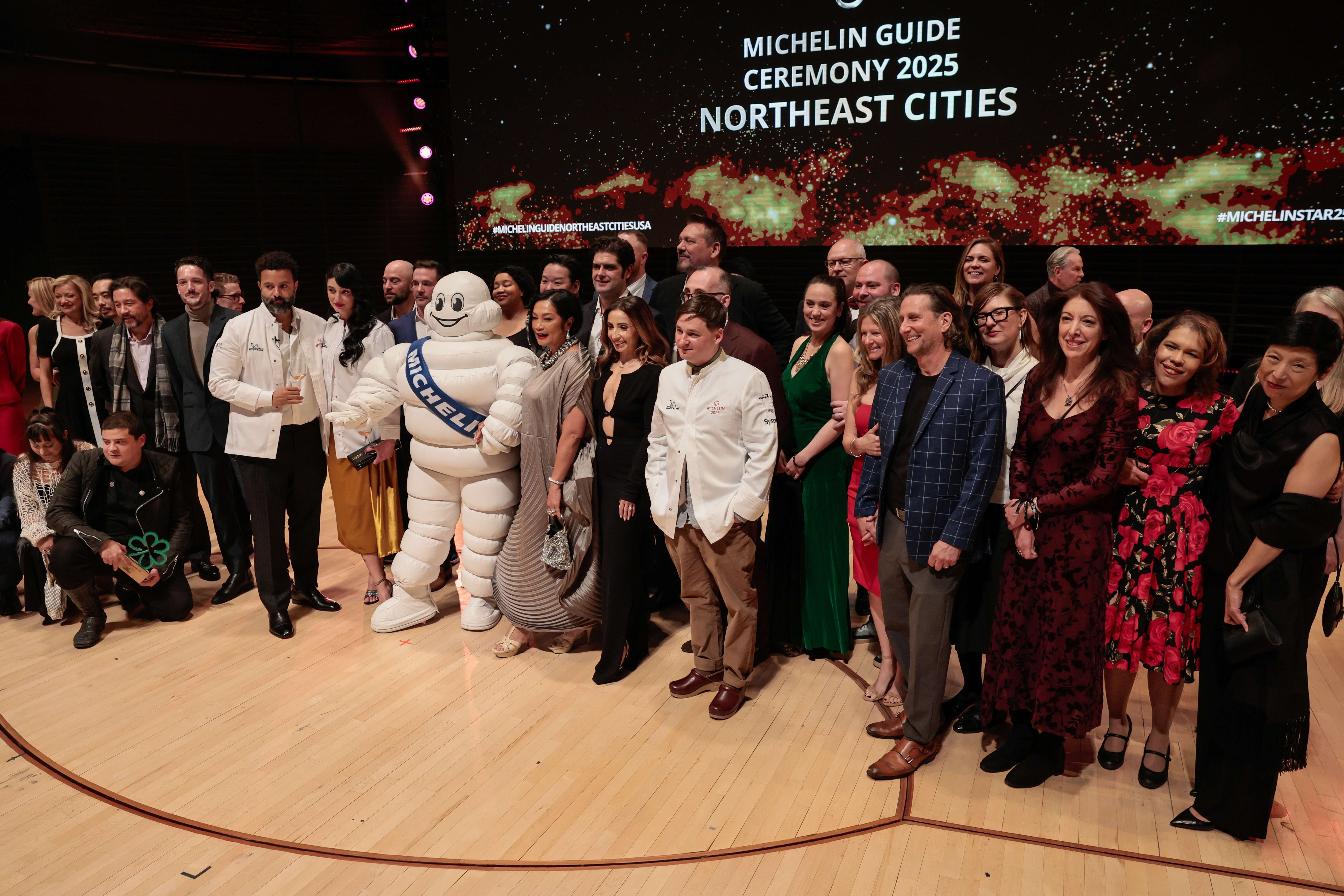
    The Philadelphia chefs acknowledged at the Michelin Guide announcements at the Kimmel Center Tuesday, Nov. 18, 2025, in Philadelphia.

    Michelin machinations

    Can you give us an idea how much the [Philadelphia Convention and] Visitors Bureau had to pay Michelin to come to Philadelphia? It was shocking to find out these awards are “pay to play,” but now I understand why decades of world-class dining in Philadelphia have never garnered a Michelin star until now. Is it possible James Beard awards are more highly regarded, which I doubt, since they are not pay to play.

    Michael Klein, food & dining reporter: We don’t have any idea how much Michelin was paid. As a private nonprofit, the Philadelphia Convention & Visitors Bureau does not have to release that. It’s rolled into its budget, and it likely will be rolled into unspecified marketing fees. Its most recent tax return, which covered July 1, 2023, to June 30, 2024, was filed in February 2025. The deal for this year’s other new Michelin city, Boston, also was not made public; one report pegged it as over $1 million for the three-year partnership. Typically, small markets and individual cities pay $70,000 to $300,000 per year, typically in three-year deals. For the 2025 American South regional guide that came out Nov. 3, cities and states across the South collectively are contributing $1.65 million per year for three years (about $4.95 million total).

    Why wasn’t Mawn recognized by the Michelin Guide? Are you surprised by fact there was no recognition for Mawn?

    Jenn Ladd, deputy food editor: Michelin’s decision-making is famously secretive, but we are operating with an informed assumption that an inspector could not get a table/reservation there (or perhaps couldn’t get more than one, since they are supposed to make repeated visits) and so did not include it. You can find more thoughts in our writers’ reactions to the Michelin picks.

    As a team, we definitely were surprised by that choice. While it’s understandable (to at least some on the food desk) that Royal Sushi’s omakase wasn’t considered due to how difficult it is to get a reservation there, Mawn’s lunch is walk-ins only. Will you have to arrive early and wait in line? Yes, but it’s not impossible to dine there without connections. Hopefully next year, Michelin’s inspectors have a longer timeline during which to consider our city’s food scene.
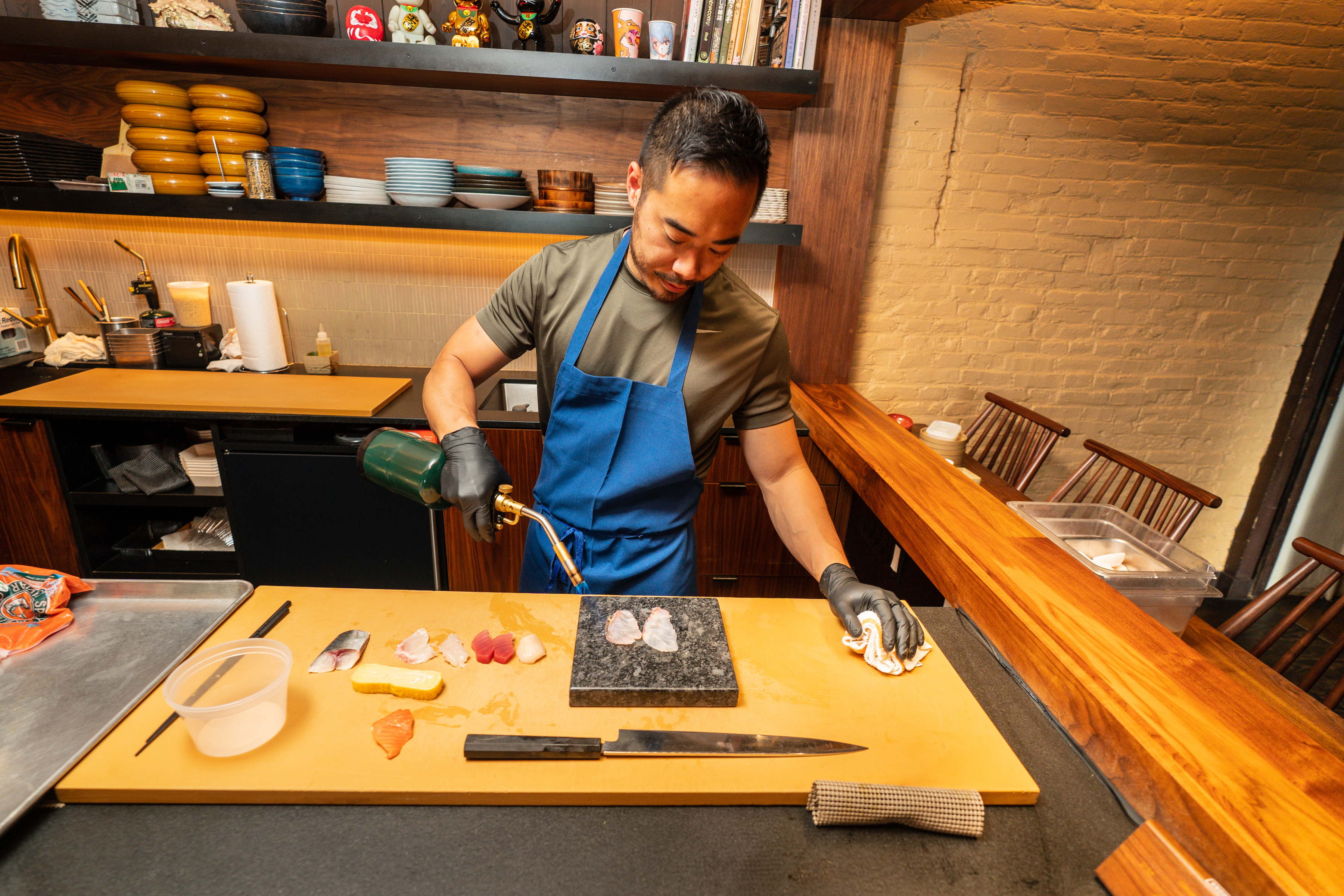
    Chef-owner Jesse Ito makes “Industry Chirashi” (a late night bargain chirashi they make in a plastic tub with scraps from the nigth’s omakase, at Royal sushi and Izakaya, in Philadelphia, Friday, August 11, 2023.

    Is there a general concern that higher-end restaurants will get even more expensive and perhaps “one-dimensional” in a way in striving to impress Michelin with more tasting menus and the like? What do we not want to see in prospective changes?

    JL: This is a concern we share. As Craig wrote earlier, “My only hope is that restaurateurs keep cooking from the heart, and that they don’t alter what they do simply in pursuit of a star.”

    We were heartened by the fact that Michelin gave such a spotlight to Her Place Supper Club, which had a characteristically Philly start (from Penn dorm room to BYOB pop-up residency to full-fledged restaurant). I also think there are plenty of restaurant chefs and owners in Philadelphia who aren’t aspiring to Michelin-star status, who just want to cook good food for people. I’m an admitted Michelin skeptic, but even I would have to say, I don’t think Philly will lose its restaurant-scene identity anytime soon, even if we do see more awards-bait menus.
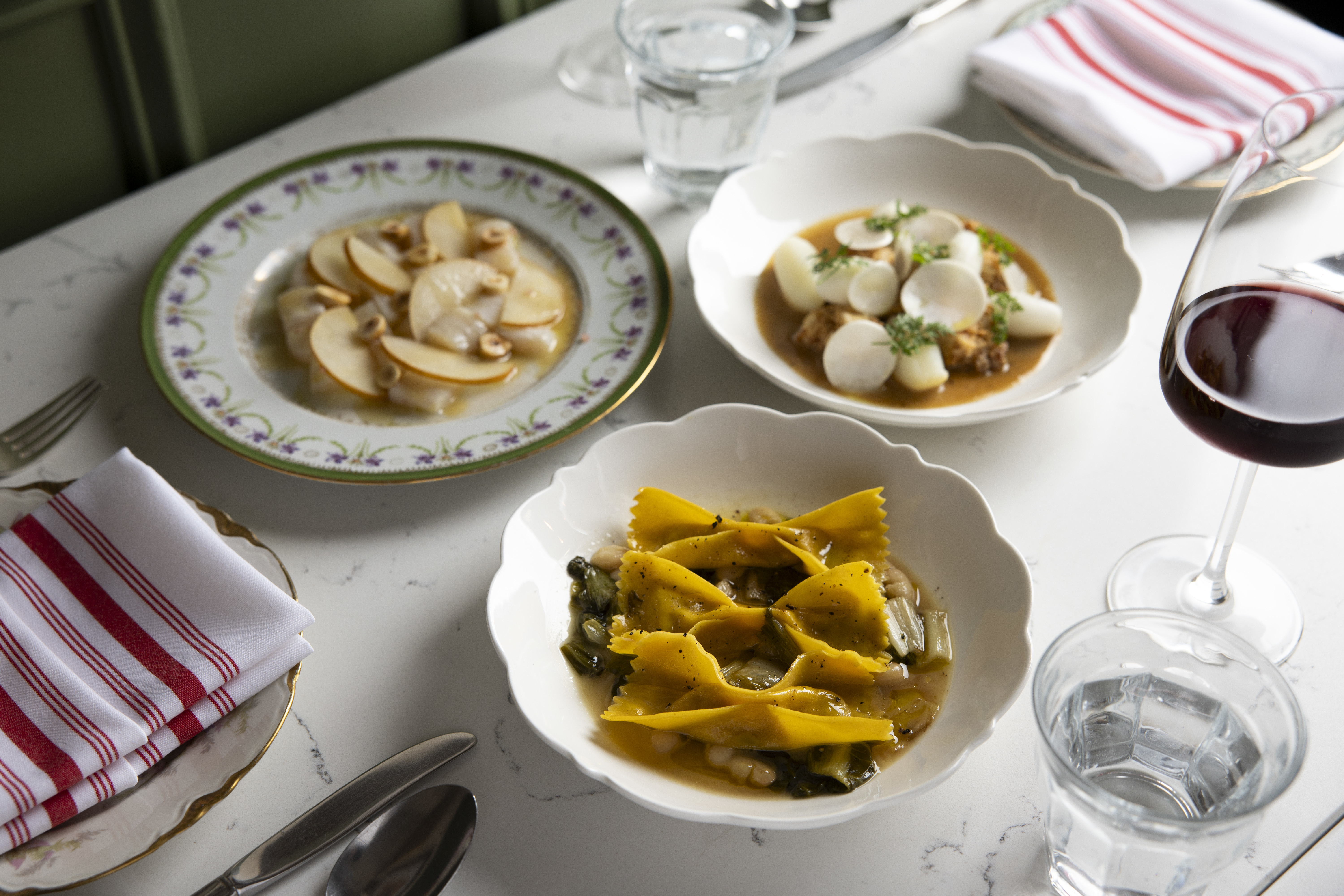
    The bean and prosciutto-stuffed farfalle, center, at Her Place Supper Club on Tuesday, Nov. 26, 2024 in Philadelphia. Her Place is located at 1740 Sansom Street in Center City.

    If each of you could pick your top 5 restaurants that didn’t make any of the Michelin Philly selections, what would they be?

    Bea Forman, food & dining reporter: First off: There’s a lot more than five restaurants I wish Michelin would’ve selected. All the honorees are so deserving, but I couldn’t help but feel like the Bib Gourmand selection especially painted a white-washed version of Philly’s dining scene. They hit up at least three cheesesteak places but couldn’t find it in their hearts (or stomachs) to find a gem in Chinatown? Or a Vietnamese restaurant? Or more restaurants that speak to Philly’s rich tradition of excellent Mexican, Latino, and African food? Lame. Tomato. Tomato. My five picks for Bibs or recommendations would be:

    The Ghee Roast Dosa at Amma’s on Chestnut Street in Philadelphia on Wednesday, Aug. 21, 2024.

    Hira Qureshi, food & dining reporter: I’d love to have seen these five/six restaurants get a Bib or Recommended: Amsale Cafe for their beautiful injera-lined platters with kitfo and gomen wat; Samson Kabob House for their insane chapli kababs alone; and Kabobeesh for their mutton karahi that’s just as good as my mom’s. Apricot Stone or Al-Baik Shawarma & Grill have the best hummus and falafels in Philly. And Black Dragon Takeout really does nail personality like no one else in the city.

    A saturated restaurant scene?

    There are so many good and great restaurants in the city — many moving into neighborhoods that are still deep into renovation/gentrification (i.e. near the York/Dauphin station for example), and there are quite a few empty seats especially on non-prime evenings. Is the Philly restaurant scene reaching a point of saturation?

    JL: Hard to speak for our entire team on this one, but my best guess — from years on the food beat here and from reading my colleagues’ work very closely over the past 7 years — is not a chance. Year after year, there have been more restaurant openings than the last, even post-pandemic. There IS more out-of-town interest in opening in Philadelphia (a theme that’s been building all year and is sure to play out more in 2026), which could affect our restaurant scene in all sorts of ways.

    We are seeing fewer BYOBs open and more capacious, expensive restaurants, but there are plenty of neighborhoods left in Philadelphia — I live in one! — that could use more restaurants. I for one hope that as the rents go up in the saturated neighborhoods, the scrappy entrepreneurs and chefs that have defined our culinary scene start to consider properties in those pockets of town.
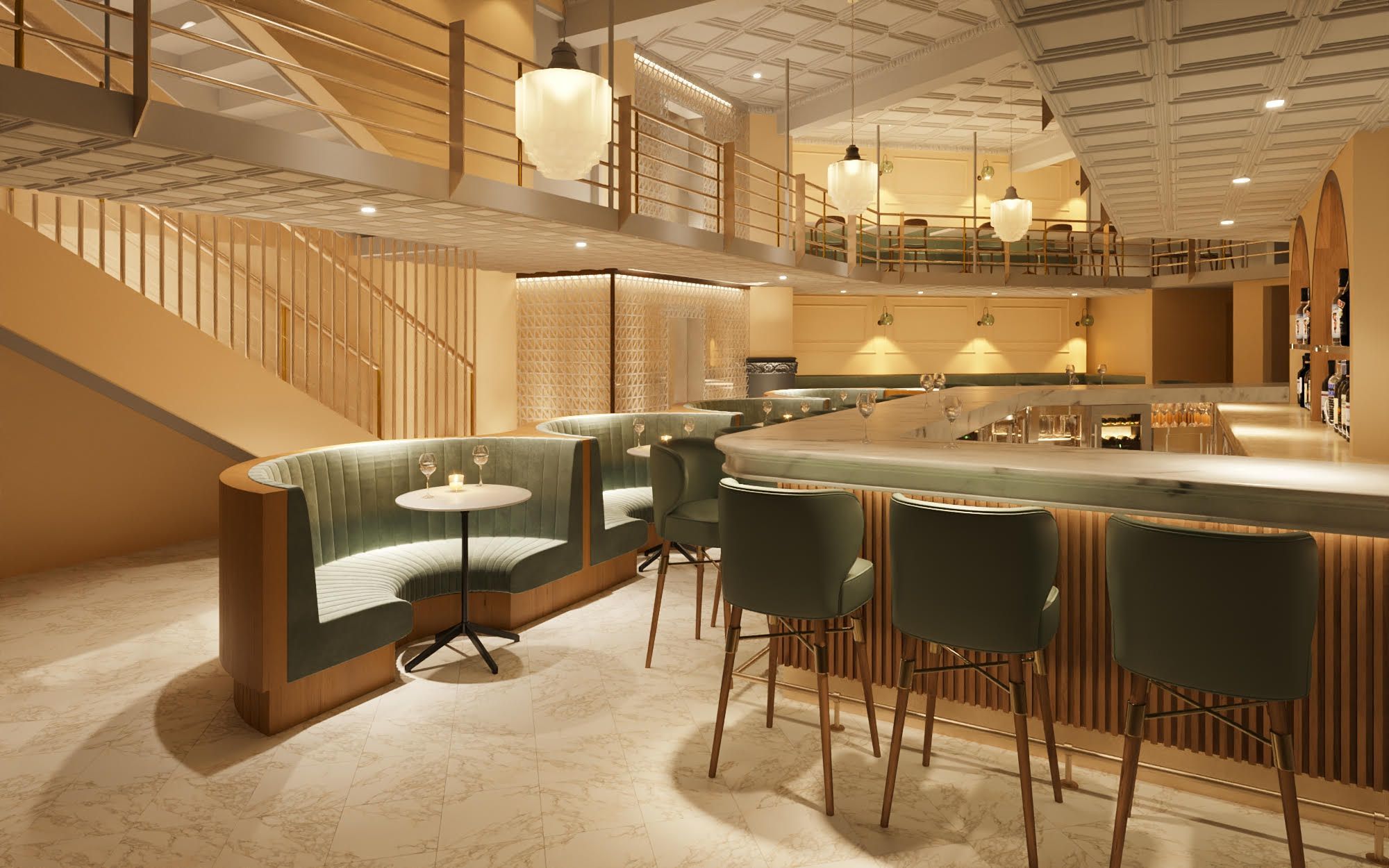
    A rendering of the bar at Flueur’s, 2205 N. Front St.

    Craig LaBan, restaurant critic: I think only time will tell on this question. There is a lot of new construction going up in these very neighborhoods, and some extremely ambitious restaurants to match. I’m thinking of Fleur’s, for example, which is farther north than many of the earlier Fishtown hits. It was quite the midweek night I visited, but that is totally normal for a new restaurant. Once it starts to get press and social media buzz, if it is positive, that will change. They have to be well-capitalized to weather the storm of early months as they build their audience. If they do a good job, Philly diners will come. Restaurant-goers’ enthusiasm for excellent new places, in fact, almost always helps boost gentrification.

    Helm, for example, was one of the few destinations on its block, save for a good neighboring taqueria, when it opened there… Now it is completely surrounded by new development. Same for Que Chula es Puebla at Second and Master. The new Honeysuckle is dealing with the same dynamic on North Broad Street. It is very much a residential neighborhood in progress of being built. It’s all about timing, capitalization, and performance. So far the quality the food is there for Honeysuckle. Hopefully the business will follow.

    Restaurant recommendations

    As an old-timer, I go back to the days of the great Django with BYOs. Are there some underrated BYOBs that didn’t make your 76 list?

    JL: There are quite a few — 76 spots gets awful tight when you’re considering the full range of the Philly region’s restaurants! Illata in Grad Hospital, Little Fish in Queen Village, Helm in Kensington, and Elwood in Fishtown, not to mention a slew of suburban gems like Spring Mill Cafe in Conshy, Maize in Perkasie, Charcoal in Yardley, for starters.
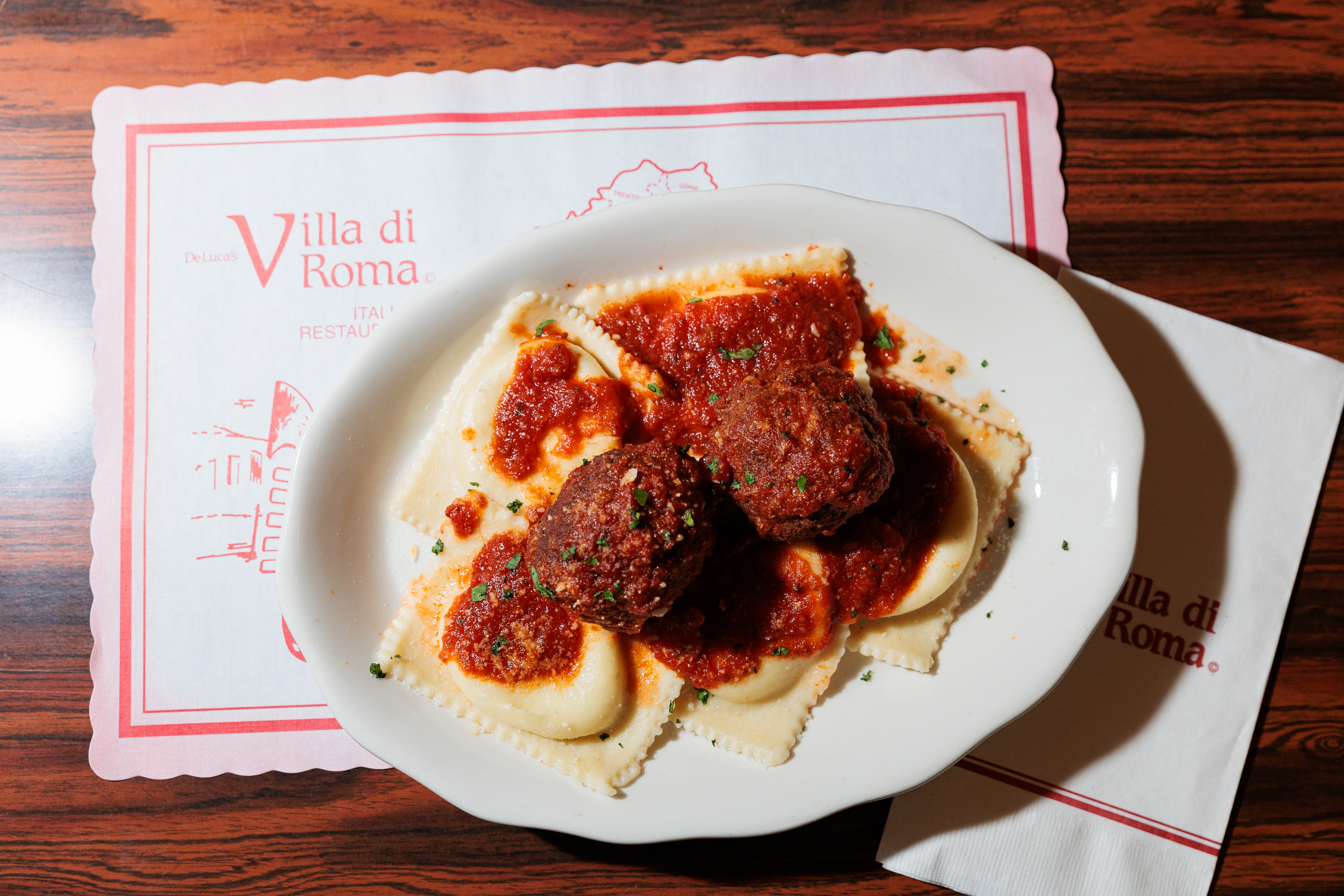
    Ravioli with meatballs from Villa Di Roma on Wednesday, Sept. 11, 2024, in Philadelphia .

    In addition to Dante and Luigi’s, what other old school “red gravy” joints have best survived the passage of time?

    MK: Ralph’s, Victor Cafe, Villa di Roma. You might also count Ristorante Pesto, whose owner Giovanni Varallo had the long-ago Io E Tu on Passyunk. (Craig LaBan adds: “Scannicchio’s! But technically a ‘post-red gravy’ generation restaurant, not unlike Pesto.”)

    Where are the best places in Philly for college students to eat at? (Besides food trucks)

    BF: Penn class of ’22 grad here, so I would be silly to not shout out our campus bar Smokey Joe’s for having sneakily excellent and oversized pizza and burgers. If you go for lunch or dinner early in the evening, it’s kind of the platonic ideal of a dive bar.

    Michael Wirzenberger, managing partner at Sampan Philly, mixes a scorpion bowl of cucumber margarita at the restaurant’s Graffiti Bar. Wirzenberger came up with the recipe. ( Abi Reimold / Staff Photographer )

    Otherwise, you and your friends should be taking advantage of happy hour deals throughout Philly and far, far away from your campuses. Food is cheaper that way. My faves:

    • Rosy’s Taco Bar: Happy hour is 3 – 5 p.m so it’s always been mostly other college students. Everything is $5, and deeply reliable.
    • Sampan: Very yum pan-Asian small bites all under $10. Split a scorpion bowl with your friends if everyone is of drinking age.
    • La Chinesca: This is for when you want to feel classy and cool and adult, eating tacos from a retrofitted mechanic’s shop.
    • Harp & Crown, Giuseppe & Sons, and Bud & Marilyn’s all felt the right amount of fancy for a college student for happy hour. Very solid small bites, lots of young people.

    If you are actually looking for places to to eat and not experiences with good enough food like I wanted in college, I would recommend just exploring Reading Terminal Market and a lot of the mom-and-pop or hole-in-the wall restaurants in Chinatown and the Italian Market. You’ll feel like you actually live here.

    Is it fair to say that the very best roasted duck in Philly is sold at Ting Wong on 11th Street in Chinatown??

    CL: Ting Wong reopened earlier this year after a short closing and everyone rejoiced because it’s such a neighborhood standby for Hong Kong-style noodles, soups, and BBQ meats — including a stellar roast duck. It’s still very good, but I’ve long been a bigger fan of two others in Chinatown: Siu Kee, the takeout-only duck shop just across 10th Street from Ting Wong, which supplies many of the best restaurants in Chinatown with their ducks (including Tai Lake, which I revisited this year), but also Lau Kee, a cozy little storefront on the 900 block of Race Street owned by the longtime former duck chef of Sang Kee. It’s great!
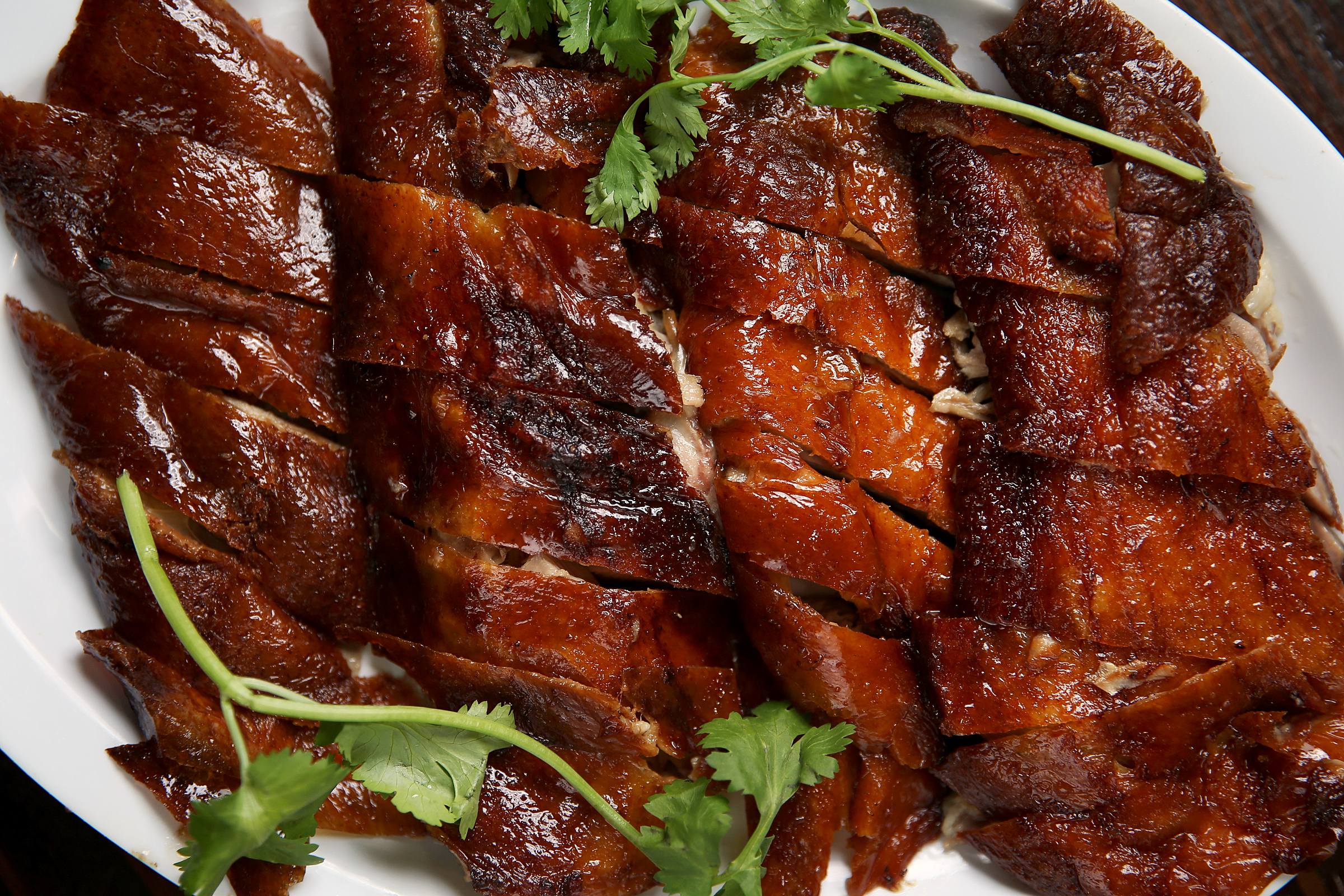
    The Peking duck is pictured at Lau Kee in Philadelphia’s Chinatown on Thursday, April 1, 2021.

    One more: While these previously mentioned shops are examples of the savory, marinated Hong Kong duck style, a newer entry called Beijing Peking Duck and Seafood Restaurant on Arch Street makes one of the best Peking-style ducks I’ve had — with a cracker-crispy golden skin that gets carved dramatically tableside. You have to order a whole duck, but it is an event worth the splurge.

    I miss Gigi Pizza and Nomad Pizza so much. Are there any casual pie spots with great sides and salads like them in Center City or in the works? Vetri Pizza is missing something lately and Pietro’s is good but Rittenhouse gets SO crowded anymore…

    MK: Gigi and Nomad had a good thing going. A little fancier is Sally at 23rd and Spruce Streets, which just was awarded a Bib Gourmand by the Michelins. Charcuterie boards, fab meatballs, really nice salads (the green salad with miso and pickled shallot), and crispy pies, like the Loud Red, whose arrabbiata sauce is perfect for the spice fans… Wilder at 20th and Sansom has a raw bar, a few salads, and seasonal wood-fired pies, like the lamb bacon…. Clarkville at 43rd and Baltimore has a warm cauliflower salad that supplements the pizza list… I’m also really fond of the new-ish Corio at 37th and Market, not only for the pizza, pasta, and salads, but the inviting vibe.

    The Zucchini Pizza and Stuffed Long Hots at Corio on Thursday, Sept. 18, 2025 in Philadelphia.

    When I lived and worked in Philly in the ’90s, Caribou was near the top of my dining list. The menu still looks fine. What is your take on this restaurant?

    CL: Caribou is still kicking! This Center City standby — going on 33 years in its current Walnut Street location — had a change of ownership over a year ago, with chef Townsend Wentz’s group taking it over. I’ve not been since a solid lunch in the early weeks of Wentz’s takeover, but here’s a few basic observations: They’ve largely kept the classic brasserie vibe intact, including that fantastic long bar with its art deco statuettes, and they’ve simply made an effort to update and improve some of the classic French bistro fare. Wentz is good at that, and I loved the initial French onion soup I tasted there. But I’d like to return for a check-in. As the weather gets cold, a good stewy plate of boeuf bourguignon or a hearty choucroute garnie sounds good to me. But you never know until you go. With the unfortunate closing of Bistrot La Minette last year, Center City needs all the great French bistros it can hold onto.
  • SEPTA won $43 million for diesel-electric hybrid buses from the Trump administration

    SEPTA won $43 million for diesel-electric hybrid buses from the Trump administration

    Since taking office for his second term, President Donald Trump has moved to cancel tax incentives and spending for clean-energy technology and prioritized expanded production of oil and natural gas.

    But the federal government apparently is not 100% out of the green fuels business.

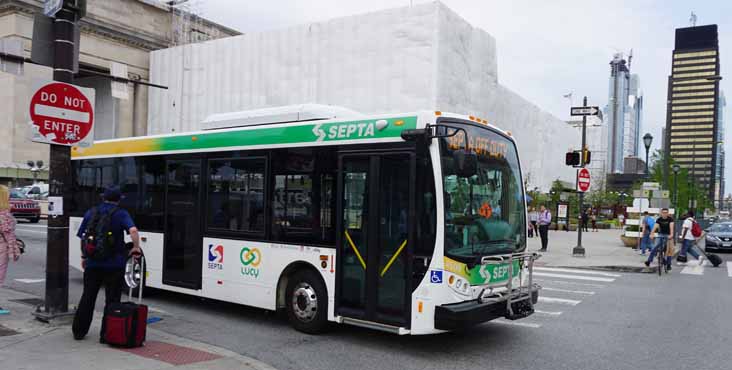
    Last week, SEPTA won a $43 million grant from the Federal Transit Administration to replace 35 diesel-powered 30-foot buses with an equal number of cleaner diesel-electric hybrid buses that are 32 feet long.

    The money comes from the FTA’s Bus Low- and No-Emission grant program.

    When the new buses are delivered, expected to be in 2028, SEPTA no longer will have diesel-only buses in its fleet.

    Most SEPTA buses are 40 feet long or 60-foot articulated models (the ones with the accordion in the middle). The shorter hybrids will be used on the LUCY Loop in University City and Routes 310, 311, 312, and Route 204, which runs from Eagleville to Paoli Station.

    “These new hybrid buses will increase operational efficiency and help ensure that SEPTA can continue to provide reliable service for customers,” general manager Scott Sauer said.

    SEPTA applied for the grant in July, a spokesperson said.

    “This is a major win for Philadelphia,” U.S. Rep. Brendan Boyle of Philadelphia said. “These new hybrid buses will mean more reliable service, a stronger transit system, and cleaner air for the hundreds of thousands of riders who depend on SEPTA every day.”

    Boyle, a Democrat, said the money came from President Joe Biden’s bipartisan infrastructure law, which Boyle helped champion. The grants were given from the fiscal year 2025 federal budget.

    “Delivering new-and-improved bus infrastructure is yet another example of how America is building again under President Trump,” U.S. Transportation Secretary Sean P. Duffy said in a statement. “More people travel by bus than any other form of public transportation.”

    SEPTA’s grant was part of $1.1 billion distributed from the fiscal year 2025 federal budget. The U.S. Department of Transportation said in the announcement that $518 million would be added to the low- and no-emission bus grant program from the fiscal 2026 budget.

  • Penn State asks Pa. Supreme Court to stop the release of internal trustee documents

    Penn State asks Pa. Supreme Court to stop the release of internal trustee documents

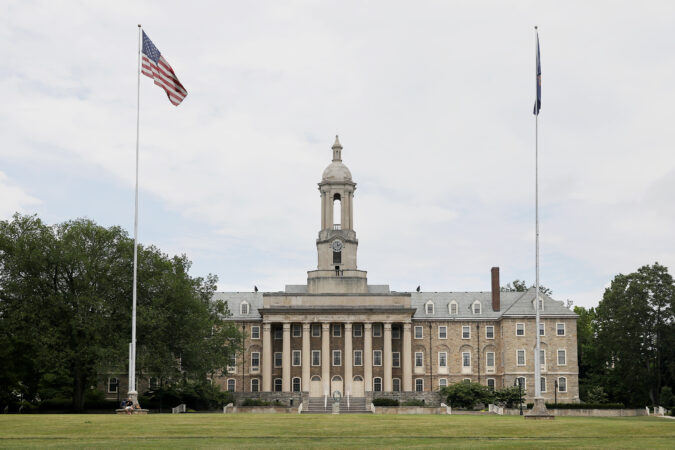
    Pennsylvania State University and the Pennsylvania Department of Education want the state’s highest court to overturn a recent lower court ruling that sided with Spotlight PA and stop the release of internal Board of Trustees documents.

    The case could have major implications in the state for public access to documents stored in cloud-based services.

    Last week, the university and state agency each filed a “petition for allowance of appeal,” asking the Pennsylvania Supreme Court to hear the public records case. There is no timeline for the court to decide whether it will hear the arguments, and the court denied 87% of requests to review a lower court decision in 2024, according to the court’s annual report.

    Spotlight PA is represented pro bono by the Reporters Committee for Freedom of the Press and the Cornell Law School First Amendment Clinic. Paula Knudsen Burke, the Pennsylvania attorney for RCFP, said in a statement: “The Commonwealth Court rightly made clear that Penn State trustees cannot shield certain records from the public simply by storing them in a file-sharing system or alleging they contain proprietary information. We will continue to push for access to these records on behalf of Spotlight PA so that all Pennsylvanians can better understand how a prominent state-related institution — supported with millions of dollars of public money — is operating.”

    A Penn State spokesperson told Spotlight PA in an email that the university does not comment on “pending litigation.” The state education department did not respond to a request for comment.

    In May 2023, Spotlight PA filed public records requests with Pennsylvania’s agriculture and education departments for documents the agencies’ secretaries used while serving on Penn State’s governing board. While the university is largely exempt from the state’s Right-to-Know Law due to a legal carveout, a 2013 court ruling said records that the agencies’ secretaries used as trustees could be accessed by the public.

    The Office of Open Records ruled in 2023 that some of the records the newsroom requested should be made public. Penn State and the education department appealed the decision to Commonwealth Court.

    Penn State, in legal filings and in court in September, argued the state agencies did not possess or control the records Spotlight PA sought because Penn State housed the files on Diligent, a cloud-based file-sharing service. The online system allows the university to control who can access which files and whether the records can be downloaded.

    The court sided with Spotlight PA in its decision last month, ruling that Penn State’s argument was “without merit.” Taking the university’s position, the court said, would contradict the intent of the state’s open records law for transparency and would “perversely incentivize Commonwealth agencies, local agencies, and affected third parties like Penn State to utilize remote servers and/or cloud-based services, in order to ensure that they would no longer need to disclose what would otherwise constitute public records.”

    Penn State was also ordered to unredact portions of a 2022 document given to trustees about the university’s “fiscal challenges” and altering the budget to better align with Penn State’s “priorities and values.”

    In its petition to the state Supreme Court, Penn State said the lower court wrongly determined that the agency secretaries received the records and therefore could provide them to the newsroom. By providing documents to trustees through Diligent, the university controls who can “download, print, forward, or otherwise obtain the document.”

    The file-sharing service, the university wrote, “is the electronic equivalent of a Penn State official holding a physical document in their hand and inviting the Secretaries to look at the document. Importantly, in this analogy, the Penn State official never lets go of the document, and the Secretaries never possess the document.”

    The education department, in its filing, said the lower court’s decision ignores the intent of, and improperly expands, Pennsylvania’s open records law.

    Spotlight PA, through its legal team, will file its response to the petition in the coming days.

    Earlier this year, the Penn State board settled a separate lawsuit that Spotlight PA brought against it over alleged violations of Pennsylvania’s Sunshine Act, the state law mandating transparency from governing bodies.

    As part of the settlement, the board agreed to release more information about its private meetings, including who is leading the gatherings and the topic discussed. The board also participated in a legal training in September on the open meetings law and what governing bodies must do to comply with it. The terms of the settlement will last for five years. Read the full agreement here.

    This story was produced by the State College regional bureau of Spotlight PA, an independent, nonpartisan newsroom dedicated to investigative and public-service journalism for Pennsylvania.

    SUPPORT THIS JOURNALISM and help us reinvigorate local news in north-central Pennsylvania at spotlightpa.org/donate. Spotlight PA is funded by foundations and readers like you who are committed to accountability and public-service journalism that gets results.

  • The Catch-22 around Trump’s illegal orders | Will Bunch Newsletter

    There’s an old saying — well, there ought to be one — that the surest way to jinx something is to write, “I don’t want to jinx it…” My Border Patrol tornado-chasing trip to Charlotte was doomed the moment I posted about it here — frantically canceled when I learned 17 hours before takeoff that the BP had abruptly ditched North Carolina. There is a Plan B but no way will I jinx it a second time.

    If someone forwarded you this email, sign up for free here.

    It’s better to stop Trump’s illegal orders than hope troops will disobey them

    Lt. William L. Calley Jr., center, and his military counsel, Maj. Kenneth A. Raby, left, arrive at the Pentagon for testimony before an Army board of investigation hearing into the My Lai Massacre in December 1969. Calley led the U.S. soldiers who killed hundreds of Vietnamese civilians in the most notorious war crime in modern American military history.

    A U.S. Army helicopter pilot named Hugh Thompson Jr. may be the greatest American hero you’ve probably never heard of. On March 16, 1968, Thompson — a warrant officer serving in Vietnam — and his crew were dispatched to support a “search and destroy” mission supposedly targeting the Viet Cong in a tiny hamlet called My Lai.

    Instead, the Georgia-born soldier came up upon arguably the most notorious war crime in U.S. history — with thatch hutches ablaze and countless villagers, including women and children, laying dead or dying in an irrigation ditch.

    Thompson landed and found the commander on the ground, Lt. William Calley. “What is this?” he asked. “Who are these people?”

    “Just following orders,” Calley replied. After some more back and forth, the flustered Thompson replied: “But, these are human beings, unarmed civilians, sir.”

    What Thompson and his helicopter crew did next was truly remarkable. Holding Calley and their other U.S. comrades at bay, they shielded a group of Vietnamese women, children and old men as they fled. Eventually, he loaded 11 villagers into the helicopter, and then Thompson and his men thought they detected movement in the ditch. Two fellow solders found a boy, just 5 or 6, hiding under the corpses, “covered in blood and obviously in a state of shock.” After safely evacuating the boy to a military hospital, Thompson reached a lieutenant colonel who ordered Calley to stop the killings.

    Near the end of his life, Thompson — who died in 2006 — and two comrades were recognized for their courage and the many lives they saved at My Lai, awarded the Army’s highest award for bravery not in conflict with an enemy (the Soldier’s Medal), as well as the the Peace Abbey Courage of Conscience Award. He even returned to My Lai for an emotional reunion in 1998.

    But it wasn’t like that in real time. During the war, a prominent congressman demanded that Thompson be court-martialed. “I’d received death threats over the phone,” he told CBS’ 60 Minutes in 2004. “Dead animals on your porch, mutilated animals on your porch some mornings when you get up.”

    A generation after Thompson’s death, the kind of bold action he took that day in 1968 — disobeying what he correctly understood as an illegal order — is yet again on America’s front burner. This time, the debate is fueled by a video from six veterans who now serve as Democrats in Congress ― reminding today’s soldiers about their sworn duty to disobey unlawful commands.

    That every expert in military law agrees with this principle hasn’t stopped President Donald Trump or his defense secretary, Pete Hegseth, from going ballistic — calling the Democrats “traitors” or even reposting calls for their death by hanging.

    On Monday, Hegseth kicked things up a notch by endorsing a plan for one of the six — Arizona Sen. Mark Kelly, a former astronaut and decorated Navy fighter pilot — to return to active duty, so that he can be court-martialed for taking part in the video. A statement from the Pentagon, which Trump and Hegseth call “the Department of War,” insisted that “orders are presumed to be lawful. A servicemember’s personal philosophy does not justify or excuse the disobedience of an otherwise lawful order.”

    Even as the growing controversy dominates the headlines, there is one aspect to the illegal-orders debate that practically no one is talking about. Actions like Thompson’s refusal at My Lai don’t only stand out for the soldier’s gumption. It is also the stuff of peace prizes and 60 Minutes profiles because it is so incredibly rare.

    Do your own research. It’s very difficult to find examples in America’s 249-year history of troops disobeying orders because they are believed to be illegal. To be sure, there are famous incidents of soldiers who disobeyed an order and heroically saved lives — but almost all of them were because the command was reckless or just plain stupid, which isn’t the same as illegal or unconstitutional.

    It’s not like there haven’t been opportunities. There have been American war crimes from Wounded Knee to Abu Ghraib, what Barack Obama famously called “dumb wars” like the 2003 assault on Iraq, and moments of intense moral agony, like dropping atomic bombs on Hiroshima and Nagasaki. These did produce a few whistleblowers or conscientious objectors, of course, but cases of actually refusing an order are few.

    It’s not hard to understand why. Most military orders — even ones later reviled by history — come with some veneer of legality, whether it’s an opinion from a military lawyer or a congressional authorization vote, as happened with Vietnam, Iraq, and other conflicts.

    The video recorded by Kelly and the others (including Pennsylvania Reps. Chrissy Houlahan and Chris Deluzio) focuses only on the widely accepted principle that military men and women must follow the law and the Constitution above all else, and doesn’t mention Trump or any specific disputed orders. In interviews, though, Democrats like Kelly and Houlahan have criticized Trump’s ongoing attacks on boats off South America that the regime claims are smuggling drugs.

    While almost every expert on military laws describes these attacks — which have killed at least 83 people— as extrajudicial killings lacking legal justification, the Office of Legal Counsel in Trump’s Justice Department has nonetheless written a secret classified memo to justify them. Any officer or lower-level troop ordered to blow up these boats and kill all the people on board hasn’t seen the memo. And they won’t get a medal for saying “no” — at least not in 2025. They will be court-martialed and vilified by MAGA.

    New York Times opinion writer David French, a Harvard Law grad who served as an Army lawyer in Iraq, notes the congressional video didn’t advise troops on what exactly is an illegal order, and adds: “Individual service members don’t have sufficient knowledge or information to make those kinds of judgments. When time is of the essence and lives are on the line, your first impulse must be to do as you’re told.”

    Not always, as Thompson showed at My Lai, but military matters are rarely that black and white. The Trump regime’s sending of National Guard units and even active-duty military into cities such as Los Angeles may be an unnecessary and inflammatory violation of democratic norms, but experienced judges continue to debate its legality. Expecting the rank-and-file troops to decide is asking a lot.

    It is very much in the spirit of Joseph Heller’s World War II novel and its legendary Catch-22: A soldier must disobey an illegal order, yet orders, in the heat of the moment, are almost never illegal.

    That doesn’t mean Trump and Hegseth threatening Kelly and the other Democrats with jail and possibly the noose isn’t utterly outrageous. After all, they did nothing more than remind soldiers of their obligation to the law in the same language their drill sergeants use in boot camp.

    I do also think — understanding the limitations of a MAGA-fed Congress — that good people of both parties on Capitol Hill should be doing a lot more to invoke the War Powers Act, hold hearings, debate impeachment, and do whatever else they can to prevent Trump’s reckless acts in the Caribbean and elsewhere. In other words, stop illegal orders before they’re given.

    That said, as the Trump regime deteriorates, there may come a day when right and wrong feels as obvious as it did that 1968 day in the rice paddies of Vietnam. If, heaven forbid, this government ever ordered troops to put down a protest by firing on citizens, we will need a platoon full of Hugh Thompsons and no William Calleys, “just following orders.”

    Yo, do this!

    • The writer Anand Giridharadas is the best of today’s public intellectuals, with a laser focus on the 1 Percent and the devastating role of income inequality in works such as Winners Take All, which rips apart the facade of modern philanthropy. So who better to pour through the late financier-and-sex-fiend Jeffrey Epstein’s emails and find the true meaning? His recent, masterful New York Times essay — “How the Elite Behave When No One Is Watching: Inside the Epstein Emails” — parses the small-talk and atrocious grammar of America’s rich and powerful to decipher how they rule. It is a must read.
    • Saturday was the 62nd anniversary of the day that changed America, for bad: the assassination of President John F. Kennedy as his motorcade rolled through downtown Dallas. It was also the day I was savaged by several dozen people on Bluesky for expressing an opinion shared by 65% of Americans: that we haven’t been told the whole truth about what really happened on Nov. 22, 1963. Kudos to ABC News for a new special that aired Monday looking at both sides of the endless controversy — Truth and Lies: Who Killed JFK? — that included skeptics like veteran journalist Jefferson Morley of the excellent site JFK Facts. The one hour-special is now streaming on Hulu.

    Ask me anything

    Question: Why is the Trump administration uncritically regurgitating the Russian “peace plan”? — @kaboosemoose.bsky.social via Bluesky

    Answer: That’s a great question as our president has consistently told us that the “Russia! Russia! Russia!” scandal around Vladimir Putin’s U.S. election interference and his seeming sway over the 45th and 47th president is all a massive hoax. How to explain, then, that the supposedly-Trump-drafted 28-point peace plan to end the fighting in Ukraine was translated from its original Russian, with its details hashed out in Florida by corrupt and contented Trump son-in-law Jared Kushner and Kirill Dmitriev, a U.S.-sanctioned Russian envoy? It’s probably true that liberals were naive during Trump’s first term to believe the strange ties between MAGA and the Kremlin would bring down his presidency, but it’s also true that where there’s smoke, there’s fire. We all want peace in Ukraine, but Trump and his U.S. government simply are not honest brokers.

    What you’re saying about…

    Last week’s question about the Jeffrey Epstein files, and whether they’ll ever see the light of day despite enactment of the law calling for their release, was kind of open-ended, and thus it drew an array of responses. But most agreed with my view that it’s highly unlikely we’ll see the files, or see very much. “They won’t release them because they are now investigating the Democrats in the files, thus they won’t be able to release them due to the investigation,” Rosann McGinley wrote. “Also they’d be heavily redacted, ‘nothing to see here.’” Added Judy Voois: “I would not be surprised if he declared war on Venezuela just to steer the media and public interest away from continued scrutiny of the Epstein saga.”

    📮 This week’s question: The heated reaction I received online about the JFK assassination now has me wondering what newsletter readers think. Do you believe Lee Harvey Oswald was the lone killer of John F. Kennedy, or do you think there was a conspiracy? Please email me your answer and put the exact phrase “JFK assassination” in the subject line.

    Backstory on Pennsylvania’s budget deal with the devil

    Pennsylvania Gov. Josh Shapiro speaks at a news conference at the United Association Local 524 union building in Scranton, Pa. in March 2024.

    Saturday was the 62nd anniversary of the JFK assassination, but on Nov. 22, 2025 it was the entire planet that was under fire. One researcher declared that globally it was the hottest Nov. 22 ever recorded. It didn’t feel that way at my windswept dog park in Delco, but it did from the American Southeast — experiencing a record heat wave — to Tehran, where an epic drought has seen water fountains run dry. And yet the world’s leaders were on a full-fledged retreat from climate action, from the White House, where U.S. CEOs toasted the oil dictatorship of Saudi Arabia at a posh dinner, to Brazil, where a global summit on climate change failed to take on the hegemony of fossil fuels, to Harrisburg.

    In a state that’s kowtowed to Big Oil and Gas interests since the days of John D. Rockefeller, Pennsylvania Republicans used the shame of the nation’s longest state-budget impasse to finally ram home their most cherished agenda item: gutting efforts in the Keystone State to work with our neighbors to control the greenhouse-gas pollution behind climate change. The GOP-run state Senate backed Democratic Gov. Josh Shapiro into a corner. Pennsylvania had to withdraw from Regional Greenhouse Gas Initiative (RGGI), a regional pollution-control system, or the money wouldn’t resume flowing to schools and other vital services.

    To be clear, the drivers of this giant step backward were state lawmakers who’ve been swimming in Big Oil’s tainted campaign cash for a couple of decades now. But the capitulation, even at political gunpoint, was not Shapiro’s finest hour — especially as the Democrat with apparent ambition for higher office continues to push for polluting and energy-devouring data centers that he claims will boost the economy. As the American Prospect noted in a new piece, Pennsylvania’s environmental retreat came at the same time Virginia was electing a Democratic governor in Abigail Spanberger who’d promised to restore her state to the RGGI. If Shapiro does run for president in 2028, he may struggle to explain this deal to climate-minded voters.

    The real problem, though, is that the best way to tackle climate change is by going on offense, with aggressive programs to promote alternative energy such as wind (there seems to be a lot of that around here) and solar that aren’t not only cleaner but a better deal for beleaguered consumers. While Pennsylvania — second only to Texas in natural-gas production — went all in on fracking, a 2024 survey found the commonwealth was 49th on expanding wind power and energy efficiency. With RGGI in the rearview mirror, the Shapiro administration needs to work a lot harder on green energy. That would be good for our governor’s White House dreams, but it would be a lot better for the planet.

    What I wrote on this date in 2020

    In the late fall of 2020, when I wasn’t trying to warn people that Donald Trump was planning a coup, I turned my attention to the incoming president, Joe Biden — and it’s both fascinating and sad to read how naive we were in the giddy aftermath of Trump’s defeat. In writing about Biden’s early Cabinet picks, the subhead read: “America is seeing the start of something it’s not used to: A White House that’s experienced, qualified … and boring. Could Biden’s ploy work?” NO! The answer turned out to be “no.” But still read the rest: “Biden’s Cabinet is ‘delightfully boring.’ Can reality-TV-addled America deal with it?”

    Recommended Inquirer reading

    • Only one column last week as I spent time both preparing for and then canceling the Charlotte trip that never happened. In that piece, I vented my rage at the lavish White House shindig for a monster: Saudi Crown Prince Mohammed bin Salman, who was behind the brutal bone-saw murder of Washington Post journalist Jamal Khashoggi. The man that Joe Biden all too briefly promised to make “a global pariah” was feted by the CEOs of Apple, Nvidia, GM and just about any big business entity you can think of, in a stunning embrace of corruption that should end the myth of “woke corporations.”
    • There are two things, more than anything else, that keep local news in America alive: Hometown sports teams, and restaurants. Here in Philly, it was a lousy week for the former but a remarkable moment for the latter, as restaurants in the City of Brotherly Love competed for the very first time for recognition from the world’s ultimate dining survey, the Michelin Guide. In a glitzy ceremony at the Kimmel Center, Michelin bestowed its coveted star on three Philadelphia restaurants and honored more than 30 others — and Inquirer readers were obsessed. Four of the newsroom’s top seven most-read articles online last week were about the Michelin madness — including the bittersweetness of one eatery cited just before its closing, the cheesesteak shop that was honored but not invited, and other various snubs and surprises. The Inquirer has amped up its food coverage this year, and if you live and eat in this region I don’t know how you’d survive without it. If you don’t subscribe, please sign up today.

    By submitting your written, visual, and/or audio contributions, you agree to The Inquirer‘s Terms of Use, including the grant of rights in Section 10.

  • Temple looks to be challenged in its trip to the Bahamas for the Baha Mar Hoops tournament

    Temple looks to be challenged in its trip to the Bahamas for the Baha Mar Hoops tournament

    The Temple women’s basketball program had not taken a trip outside the United States since 2019, when it competed in the Cancun Challenge in Mexico.

    Coach Diane Richardson wanted to take a similar trip with her team this season, and this time the Owls are set to land in the Bahamas for the Baha Mar Hoops Nassau Championship.

    Temple will play No. 20 Michigan State at 6:30 p.m. Friday, then Clemson or Western Carolina on Sunday.

    The trip will give the Owls a chance to bond and experience a foreign country, Richardson said, while also continuing to gain experience against difficult competition in preparation for American Conference play.

    “Not only is it a competitive environment with the sports, but they get to see the culture and all of that other stuff,” she said. “We’ll do some cultural things while we’re over there, too.”

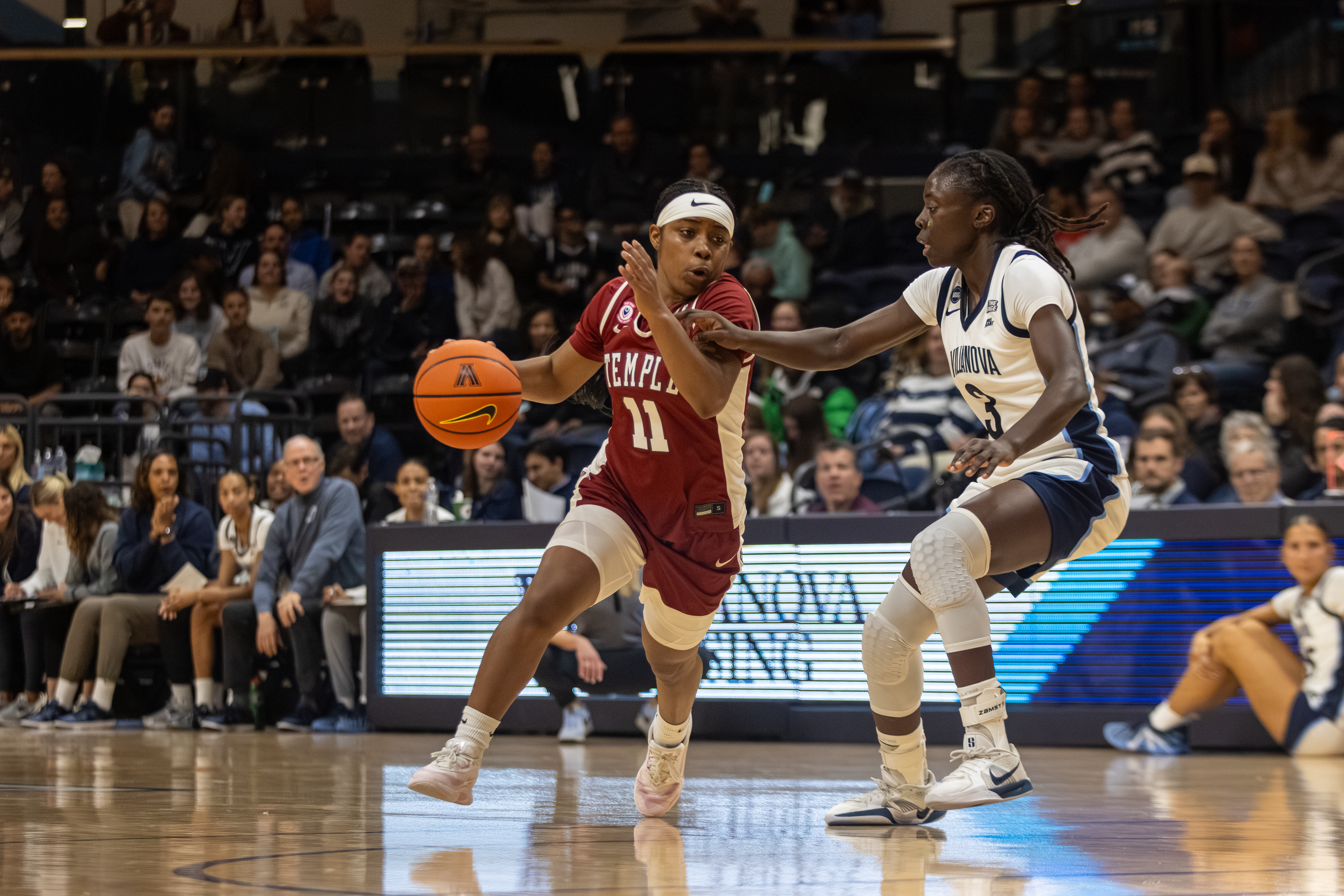
    Temple’s Tristen Taylor drives against Villanova’s MD Ntambue during Saturday’s game.

    When the Owls head to the islands Wednesday, they’ll have a special guest with them.

    New York Liberty forward Jonquel Jones is a Bahamas native and Richardson’s adopted daughter. Jones will be with the Temple players for most of the trip to help show them the culture.

    The Owls have competed in multiteam events in the last two years. They went to Tempe, Ariz., for the Briann January Classic in 2023 and Berkeley, Calif., for the Raising The B.A.R Invitational last season. However, this event will be a different experience, Richardson said.

    “They’re going to swim with the dolphins
and maybe some yoga with the flamingos,” she said. “So we’ll do some nice cultural things. Take up a lot of the different Bahamian meals … and meet some of the townspeople. It’ll be a great experience.”

    Richardson said she and the rest of the coaching staff will not partake in every activity because they still are preparing and scouting for the games.

    With all the fun planned, Richardson’s squad still is ready to compete.

    “It’s well planned out,” Richardson said. “We’re going down there with serious business to compete as well.”

    The Owls (3-3) enter the tournament following an 88-58 drubbing against Villanova on Saturday. Another tough test awaits.

    The Spartans are unbeaten through six games and have scored at least 90 points in each game. Michigan State also will be the fourth team the Owls face this year that made the NCAA Tournament last season.

    Savannah Curry and Temple lost big to Kelsey Jones and Villanova on Saturday.

    Depending on the results of the first round of games, Temple then will face Clemson or Western Carolina. The Tigers had a losing record last season but are 4-2 so far. The Catamounts entered Tuesday with a 2-4 record.

    “It’s important for us to be challenged early, so that we’re used to that,” Richardson said. “And then we’re resilient and can fight through some things because we’ll be challenged by some Top 25 teams. And when we get to conference play, it won’t be a heavy lift because we’ll have been through it already.”

  • The Day After: An indictment of Sirianni’s scheme

    The Day After: An indictment of Sirianni’s scheme

    It looked like Sunday’s game in Dallas was going to be everything the Eagles needed. In the end, they wound up getting exactly what they deserved. Lack of focus, poor execution, conservative play calling. The Eagles picked each of these poisons, and died a miserable 24-21, walk-off death. In the aftermath of a defeat that knocked the defending Super Bowl champs out of the top spot in the NFC, The Philadelphia Inquirer’s Jeff McLane and Mike Sielski scrutinize head coach Nick Sirianni’s scheme and approach, and explain how these factors have contributed to the Eagles’ issues. They also forecast what the Eagles – specifically a potentially short-handed defense – can expect with the surging Bears coming to town on Black Friday.

    unCovering the Birds is a production of The Philadelphia Inquirer and KYW Newsradio Original Podcasts. Look for new episodes throughout the season, including day-after-game reactions.

  • Cherry Hill brides ‘Say Yes to the Dress’ with bridal fashion superstar Randy Fenoli

    Cherry Hill brides ‘Say Yes to the Dress’ with bridal fashion superstar Randy Fenoli

    On a gray November morning last Saturday, in a converted Cherry Hill Dunkin’ Donuts, bridal magic was in the air.

    At around 9:30 a.m., members of the staff at Dress 2 Impress, a new bridal boutique on Route 38, were furiously preparing for the arrival of one of bridal fashion’s biggest celebrities: designer and Say Yes to the Dress star Randy Fenoli.

    Floors were swept, lipstick was applied, and dainty chocolate pastries were laid out on a towering display.

    Fenoli, 61, is a marquee name in the bridal world. He served as the fashion director for New York City’s Kleinfeld Bridal from 2007 to 2012 and starred in the TLC reality show Say Yes to the Dress, set at Kleinfeld, and later his own, shorter-lived show, Randy to the Rescue.

    Fenoli is currently on a cross-country tour promoting his Keepsake Kollection, a new line of bridal gowns set to hit stores in early 2026. Dress 2 Impress, an authorized dealer of Fenoli’s dresses, was part of a select group of stores debuting the line early, an honor that came with a guest appearance from Fenoli himself.

    He’s “a real celebrity,” especially in South Jersey, said Beni Deliivanova, managing partner of Dress 2 Impress.

    Randy Fenoli is looking for dresses for a bride to try on at the new Dress 2 Impress location.

    Saturday marked the grand opening of Dress 2 Impress’ second store. Their first boutique, located in Linwood, has been open for 13 years.

    It’s a bit of “an American dream story,” said Ivaylo Deliivanov, Beni Deliivanova‘s husband, who managed the front desk and topped off mimosas as Fenoli and the bridal staff tended to customers on Saturday morning.

    Deliivanov‘s mother, Violeta Deliivanova, ran a dressmaking factory back in Bulgaria. When she immigrated to the U.S. around two decades ago, she got into the alteration and dry cleaning business. She opened Dress 2 Impress in Linwood in 2013. In 2022, Beni, Violeta’s daughter-in-law, left the corporate world to become a Dress 2 Impress managing partner.

    Though Dress 2 Impress’ Linwood location has long been a destination for Jersey Shore brides, Deliivanov said they were losing out to boutiques in Cherry Hill, where there are more bridal shops, and a giant mall, to meet brides’ needs. The grand opening of their second location marks an entrance into Cherry Hill’s formidable retail economy.

    The boutique is curated with keepsakes and designed for photo-ops. Sequin-covered purses and statement earrings sit in triptych glass cases. White champagne flutes and feathered fans embroidered with “BRIDE” rest next to a large bell that’s rung when a bride meets her perfect dress. A walk-in closet opens into changing rooms and a sitting area where brides perform mini fashion shows for adoring groups of female family members and bridesmaids.

    Maria Leonetti, of San Carlos, Calif., is trying on dresses with the help from Randy Fenoli.

    Before the marathon of brides arrived, Fenoli and Dress 2 Impress’ staff huddled in a back room, as the celebrity stylist imparted his time-tested wisdom onto the group. How do you match a bride to the right silhouette for her body type? How do you manage an overbearing family member with too many opinions?

    Chewy, Fenoli’s Shih Tzu, meandered around the boutique, at times chasing a stuffed macaroni noodle (Chewy has been on at least 80 flights with Fenoli this year).

    The morning’s first bride was Olivia Hafner, a 23-year-old Cherry Hill teacher engaged to her middle school sweetheart. The couple has been together for 10 years. Maria Hafner, Olivia’s mom, called it “a fairytale.”

    Both Hafner women are Say Yes to the Dress fans. They booked an appointment at Dress 2 Impress after seeing an ad online.

    “I’m open to trying different things, but I want a ball gown,” Olivia Hafner said, waiting in the foyer for Fenoli and Susanna Kavee, her enthusiastic bridal stylist.

    Over the next hour, Hafner emerged from the dressing room in dress after dress, first in a strapless gown with a structured corset top, then another with sequins, one with lace, and another with elegant detachable sleeves.

    Olivia Hafner, 23, of Cherry Hill, N.J., is trying on some dresses with the help from bridal stylist Susanna Kavee.

    The curated selection and hands-on assistance makes for a “boutique” experience, Fenoli said, one that sets the store apart from a trip to Macy’s or the mall.

    What do brides want these days? Fenoli says “everything”: glitter, ball gowns, princess-style skirts, traditional silhouettes. “Clean and simple” is having a moment, Fenoli added (perhaps linked to the omnipresence of the laid-back-but-still-stylish “clean girl aesthetic,” which has dominated TikTok in recent months, with ample criticism).

    Fenoli said the world of bridal fashion has changed “completely” from his mid-2000s Say Yes to the Dress days.

    Brides show up to appointments with screenshots from Instagram and TikTok videos, asking to try on dresses from unknown designers, located oceans away. Others come with AI-generated images that are impossible to match. More and more, original designs are being ripped off and sold for cheap on the internet.

    “I think technology and the internet has really hurt us,” he said.

    He quickly added: “Don’t ever, ever, ever, ever order a wedding dress online.”

    Dress 2 Impress’ Cherry Hill boutique is open from 10:30 a.m. to 6:30 p.m., Mondays through Fridays; 10:30 a.m. to 6 p.m. on Saturdays; and 11 a.m. to 4 p.m. on Sundays.

    This suburban content is produced with support from the Leslie Miller and Richard Worley Foundation and The Lenfest Institute for Journalism. Editorial content is created independently of the project donors. Gifts to support The Inquirer’s high-impact journalism can be made at inquirer.com/donate. A list of Lenfest Institute donors can be found at lenfestinstitute.org/supporters.

  • One of Philly’s most acclaimed bakeries has permanently closed

    One of Philly’s most acclaimed bakeries has permanently closed

    Facing mounting personal, legal, and financial pressures, acclaimed baker Tova Du Plessis has permanently closed Essen Bakery and said she is considering filing for bankruptcy protection, six months after she and her husband announced unexpectedly that they were “hitting pause for a few days.”

    The four-time James Beard Award nominee’s shops, on East Passyunk Avenue in South Philadelphia and Berks Street in Kensington, never reopened after the announcement on May 31, which blindsided her estimated two dozen employees.

    In late July, Tova Du Plessis told The Inquirer that she and her husband, Brad, were “navigating deeply personal challenges” and hoped to reopen in September. Meanwhile, disgruntled former employees and investors had been left in the dark.

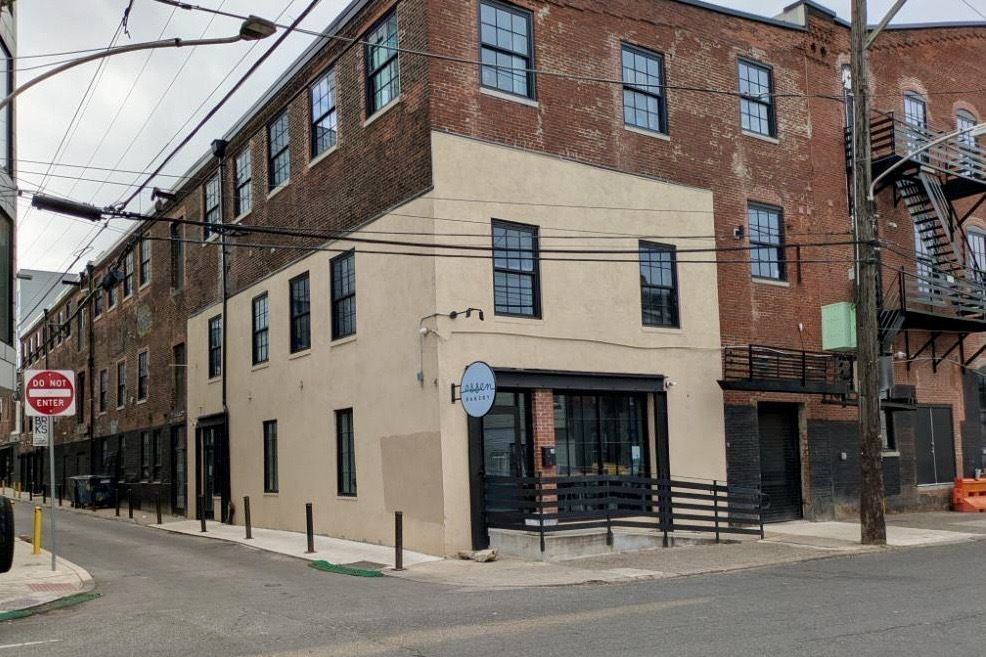
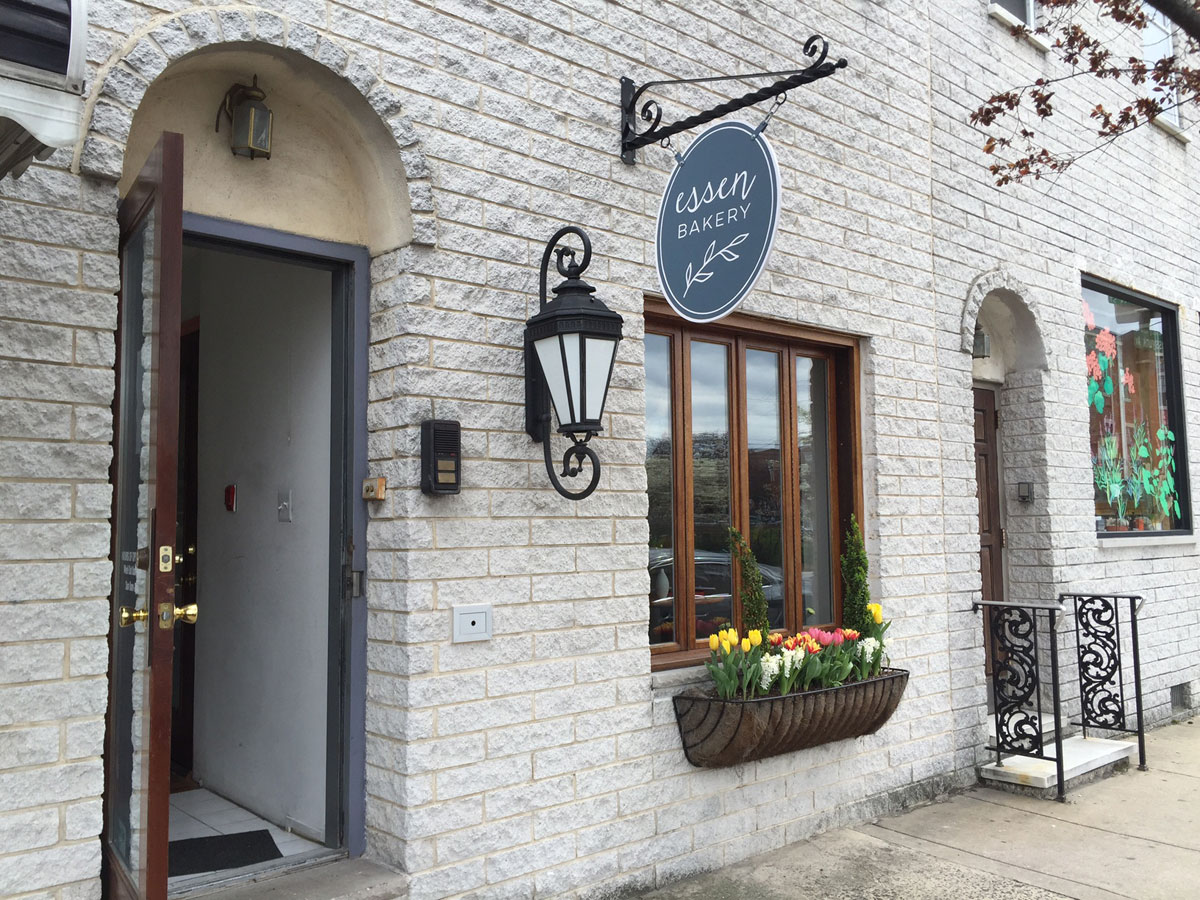
    Essen Bakery’s location at 110 W. Berks St. on Oct. 29, 2025.

    Du Plessis said it took a long while before she realized that reopening was not an option. “I don’t think that I can really pull off what I need to — not just to be open, but to make it financially sustainable,” she said. “There always was that potential, but after what I experienced, I just don’t have the confidence, the head space, and the people in place.” She also said her struggle with narcolepsy, the chronic interruption of the sleep cycle, had worsened.

    Du Plessis said she had explored different plans to relaunch or restructure Essen but couldn’t make any of them work. “I think I just needed to come to terms with that,” she said.

    The early days

    Du Plessis, who turned 40 last summer, grew up in a kosher home in Johannesburg, baking challah for Shabbat each week. She and Brad, her high school sweetheart, relocated to the United States while she pursued a biology degree at the University of Houston with a goal of becoming a doctor. Following a trip to Paris, she pivoted toward cooking. They headed to California, and she enrolled at the Culinary Institute of America’s Greystone campus in Napa Valley, where she specialized in baking and pastry arts.

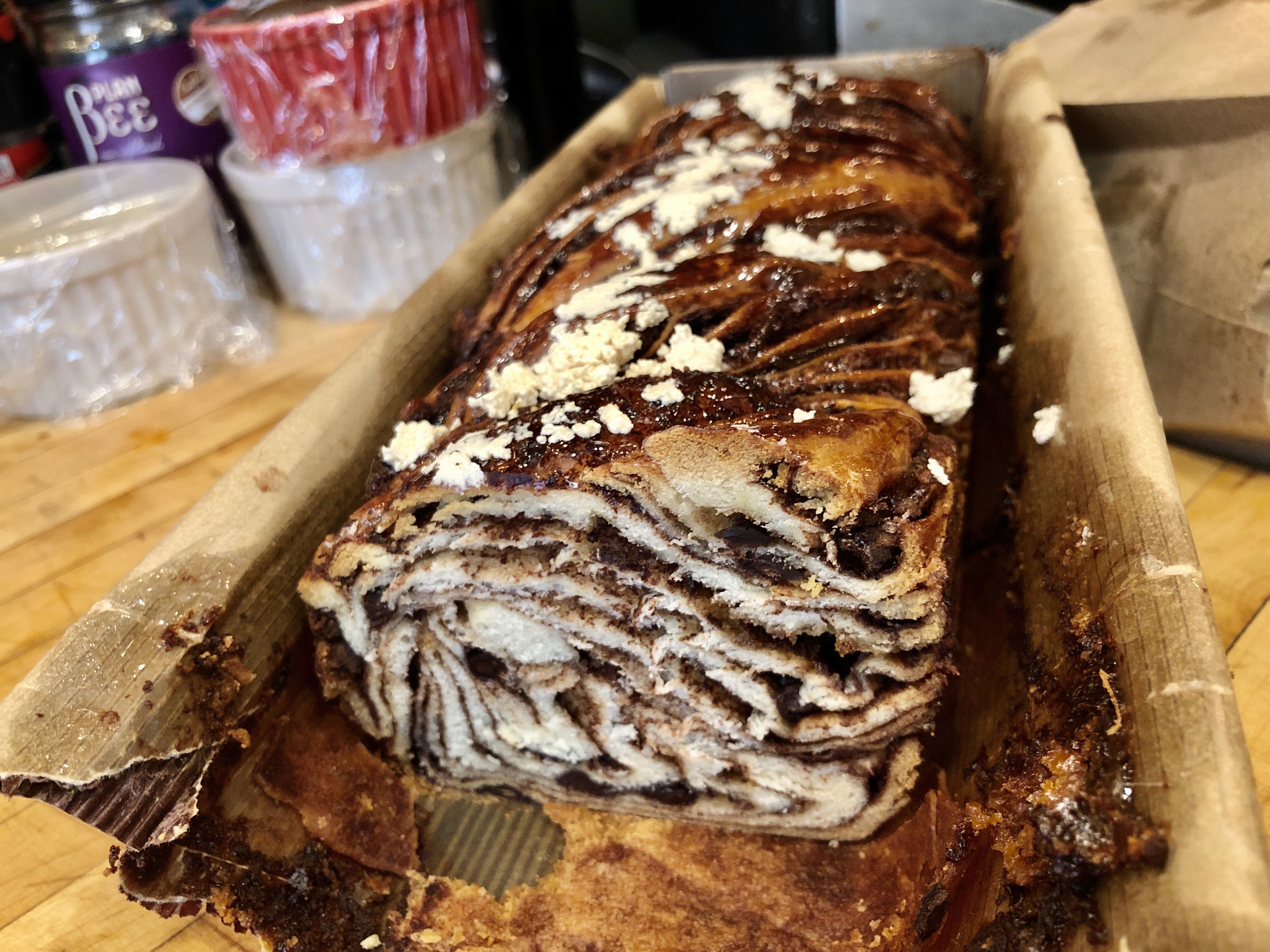
    Chocolate-halva babka, one of the specialties at Essen Bakery.

    While working at the Restaurant at Meadowood in Napa, she met chef Michael Solomonov during his visit as a guest chef in December 2011. Soon after, she and her husband moved to Philadelphia, where she worked as a line cook at Zahav before becoming sous chef at Citron & Rose, the Main Line kosher restaurant that Solomonov and Steve Cook briefly consulted on. She then served as executive pastry chef at the Rittenhouse Hotel.

    In 2016, she leased a storefront on East Passyunk Avenue near Dickinson Street to launch Essen, which became known for its challah, babka, laminated pastries, and seasonal breads. Great reviews followed, including four James Beard Award semifinalist nominations for Outstanding Baker between 2017 and 2020.

    By 2022, with Essen outgrowing Passyunk Avenue, Du Plessis began looking for a second, larger location. In January 2023, she signed the lease on a newly constructed building on Berks Street, a half-block from the Market-Frankford El near Norris Square, at the corner of Berks and Hope.

    Brad du Plessis and Tova du Plessis at the Kensington location of Essen Bakery, 110 W. Berks St.

    Financial strain

    Tova Du Plessis said financial pressures began mounting last spring. She is facing a lawsuit filed by their Berks Street landlord over unpaid rent, and the space, just off Front Street, is being shown to prospective tenants. The landlord of Essen’s East Passyunk Avenue location has found a new tenant, Du Plessis said last week.

    The Du Plessises are also in arrears on a loan repayment to Frank Olivieri, owner of Pat’s King of Steaks. Olivieri said he and his wife, Nancy Schure, had provided a “substantial” amount of money last year to help fund the Berks Street shop, which opened in November 2024 after nearly a year of delays Du Plessis attributed to contractor issues and permitting. Initially investors, Olivieri and Schure later converted their ownership stake to a loan, he said.

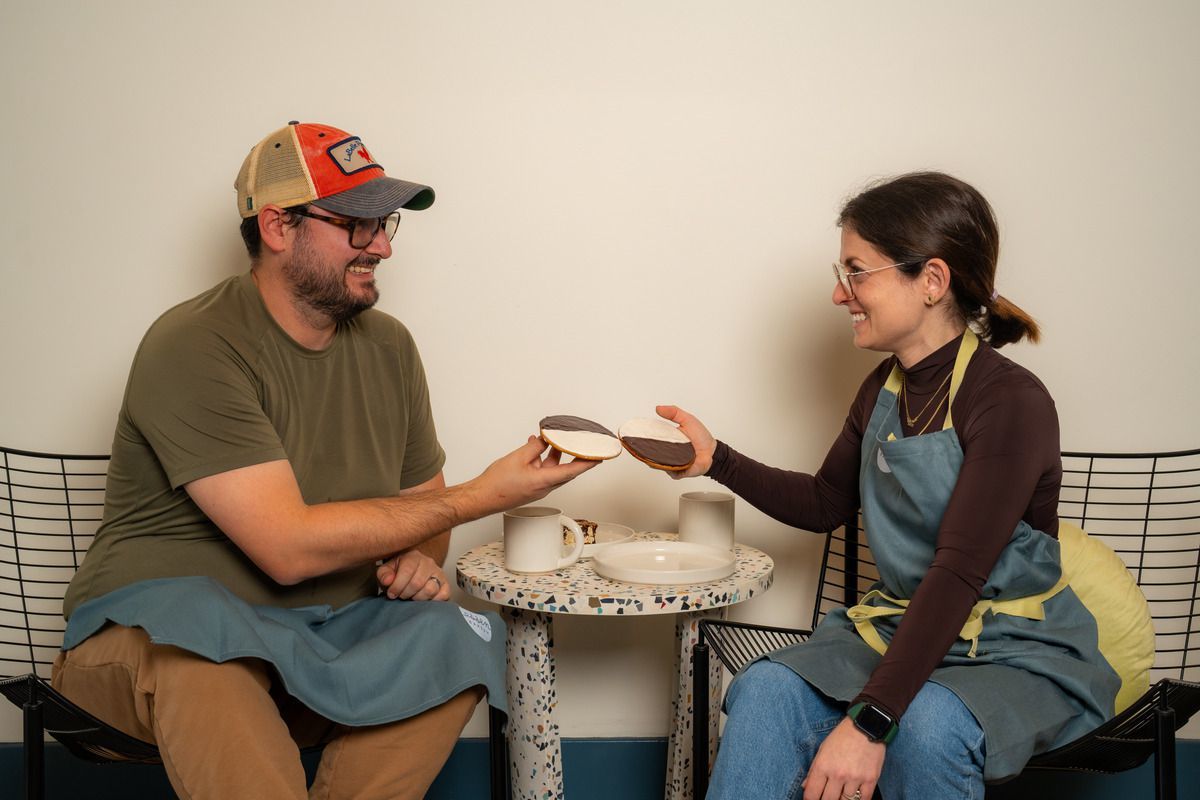
    Essen Bakery’s signature black-and-white cookies.

    Olivieri said they had been customers of the Passyunk Avenue location when Brad Du Plessis contacted them last year to ask if they would be interested in investing. Olivieri said he noticed issues with day-to-day operations, and eventually, he said, “It just seemed like we were becoming more like counselors rather than investors.”

    Later, Olivieri said, the couple ignored his advice and grew silent. “You have to have an open line of communication to be successful, and unfortunately that’s one of the components that was missing,” he said.

    Employee fallout

    It was the silence that distressed the idled Essen employees, too. They told The Inquirer over the summer, after its July report that the bakery owners hoped to reopen, that they were given no clues about the business’ future. Several former employees disputed the couple’s assertion to the newspaper that they had been taken care of during the shutdown.

    In the days after the closing, one former employee said, workers messaged the couple to say that they couldn’t pay their rent and were desperate to learn when they would be able to work again. “After several promised reopening dates came and went with no opening, they simply stopped responding to staff,” said the worker, who asked for anonymity because they wanted to move on with their life.

    Essen Bakery’s first location opened in 2016 at 1437 E. Passyunk Ave.

    Another employee, who had worked at Essen from September 2024 until the shutdown, aired her grievances in a TikTok video. Others told PhillyVoice, in an article published Aug. 13, that they were suffering and that the Du Plessises were blocking the accounts of people who discussed the situation on social media.

    Personal strain

    Tova Du Plessis said that just before the shutdown, she and her husband were “discovering issues in our relationship that we didn’t understand, and it was impacting the business in such a drastic way. Running the business was our escape from dealing with our issues.”

    The stress in their marriage “was just magnified because we were running a business together,” Du Plessis said. “It was undeniable — it was a problem we had to face head-on.”

    Initially, they thought that a brief shutdown would suffice, “but as we tackled those issues, we were discovering how deep and difficult they were,” she said.

    The loss of income added further stress. Brad Du Plessis, who had left his job in wine sales in April 2024 to work with his wife, got a new job over the summer. “But then I had to face the reality that I didn’t have another partner or investor,” she said. “I didn’t feel I could do it on my own.”

    Looking ahead

    Last week, Du Plessis said she was attempting to sell all of Essen’s baking equipment. She said she believed that bankruptcy was the next step.

    Despite Essen’s failure, Du Plessis said she remains proud of what it accomplished. “It made me really feel like I’m part of a community,” she said.

    She said she wants to take several months before making her next move. “I’m still too affected by the burnout and the loss,” she said. “It’s not just giving up the business. It’s a whole bunch of family and relationships.” Du Plessis said she wants to return to baking, possibly even for someone else. Brad Du Plessis, who declined to comment for this article, is working again in the wine business. “He’s really in the position he should be in,” she said.

    “For a long time, I was afraid I’d be looking at bankruptcy and divorce — and I’m happy to say I’m probably just looking at bankruptcy,” Du Plessis said last Friday. “To me, that’s a happy ending, or a beginning, depending on how you want to see it. I actually feel like this experience may have saved our marriage.”

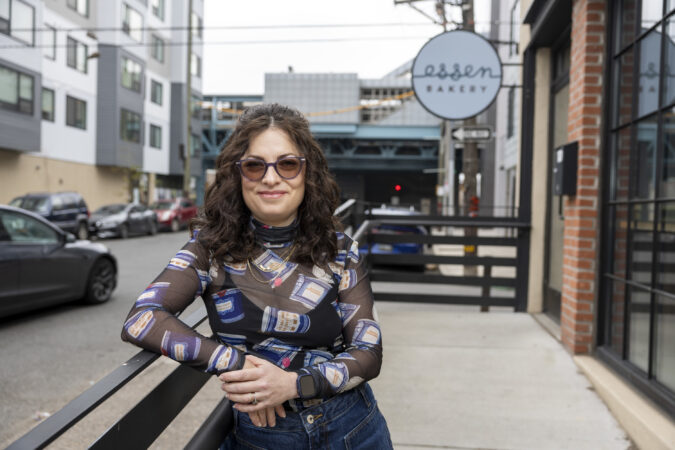
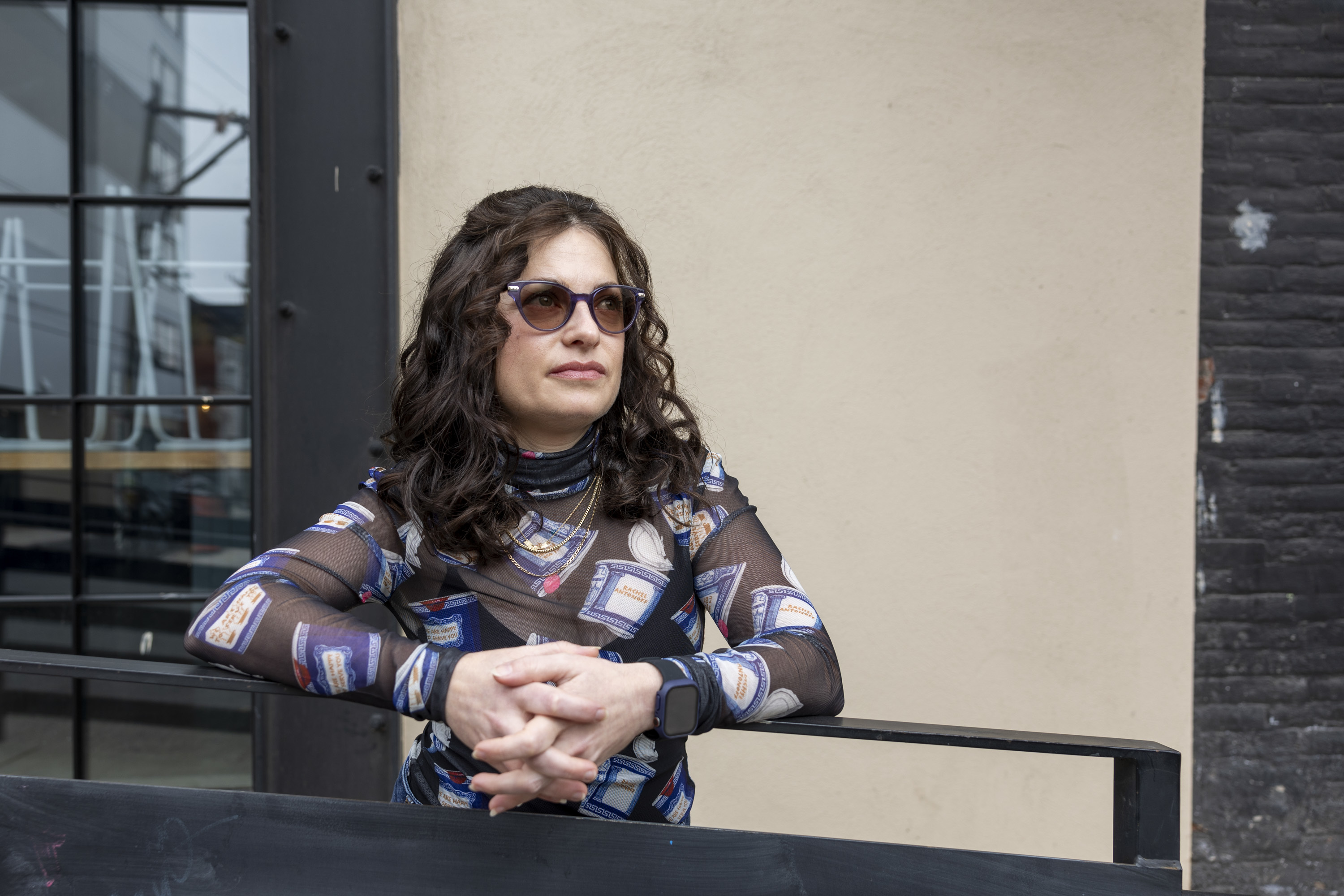
    Tova Du Plessis, owner of Essen Bakery, poses for a portrait in front of her former bakery in Philadelphia, on Friday, Nov. 21, 2025.
  • Philly radio shuffle: Paul Kelly takes over Matt Cord’s WMGK slot

    Philly radio shuffle: Paul Kelly takes over Matt Cord’s WMGK slot

    The sudden death of Pierre Robert has forced a Philly radio shuffle, with veteran host and Sixers PA announcer Matt Cord returning to 93.3 WMMR to take over the midday show, which Robert hosted for 44 years.

    Taking over Cord’s morning show at 102.9 WMGK will be another radio veteran — the versatile Paul Kelly, who’s been a utility infielder at the station since 2019, hosting just about every shift.

    Now Kelly will take over WMGK’s morning show, the former home of famed Philly radio host John DeBella, who retired in 2023.

    Both Cord and Kelly will begin their new hosting gigs Monday.

    “This has been a dream come true — rocking in the same building I visited on my bike as a kid,” Kelly said in a statement. “It’s been amazing working alongside the personalities I grew up listening to — Matt Cord, Tony Harris, John DeBella, Debbi Calton, and Andre Gardner!”

    Kelly, a Philadelphia native, has been working on the air since 1989, hosting shows in Atlantic City, Wilkes-Barre, Scranton, and Poughkeepsie, N.Y. He also runs his own radio consultancy firm and is a founding member of Kelly Music For Life, a nonprofit that turned an old retail store in Havertown into the Kelly Center, a home for concerts, festivals, and shows.

    “Paul’s deep Philadelphia roots, his lifelong love of classic rock, and the genuine connection he’s built with our listeners over the years make him the ideal choice for mornings on WMGK,” said program director Chuck Damico. “He understands this city, he understands this music, and he brings an energy and authenticity that resonate with our audience every time he cracks the mic.”

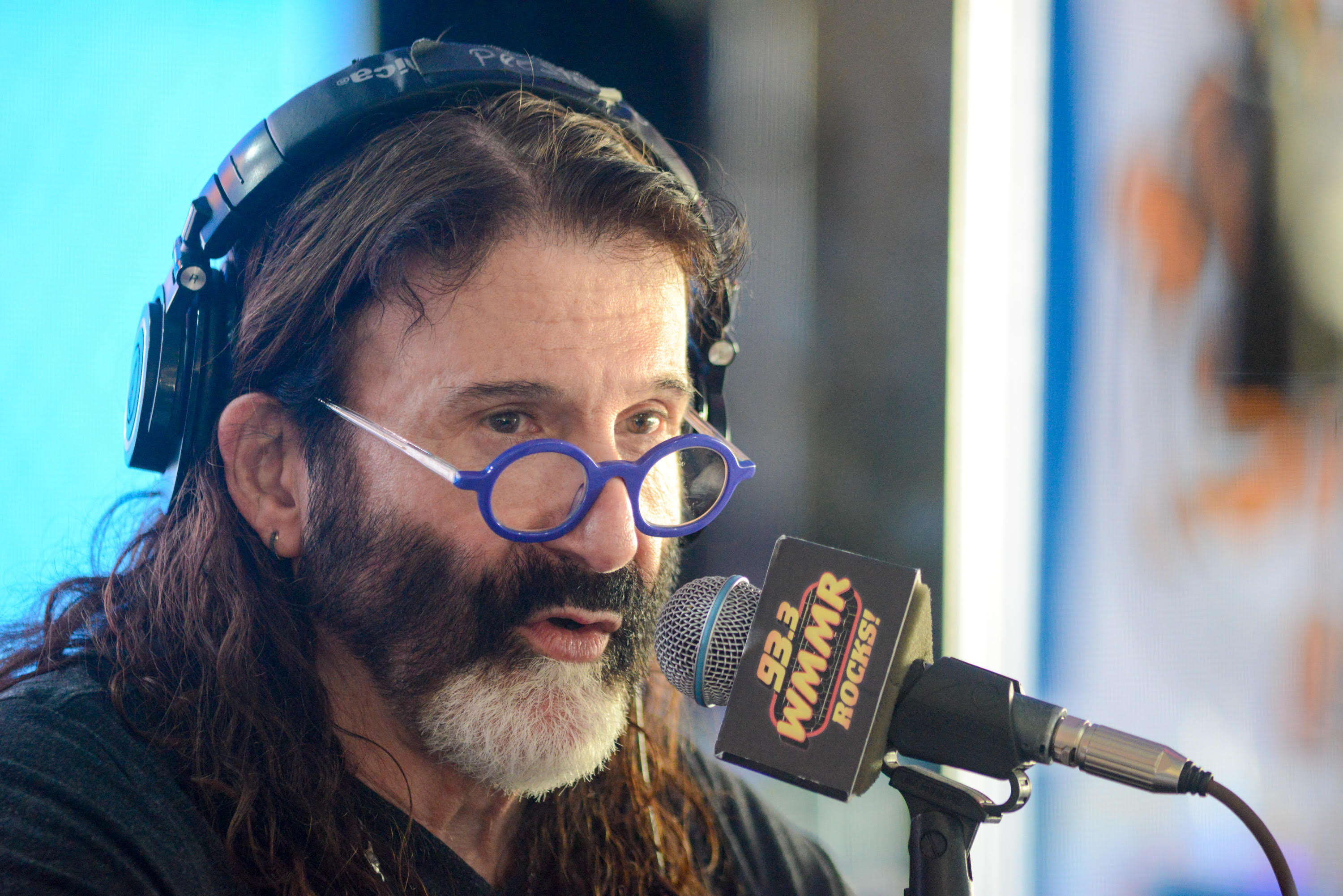
    Pierre Robert, seen here broadcasting on WMMR in 2017.

    Robert, 70, was found dead in his Gladwyne home on Oct. 29 after failing to show up for his midday show. The cause of Robert’s death was not disclosed and officials don’t plan to release additional information. Caroline Beasley, the CEO of WMMR’s parent company, Beasley Media Group, said foul play was not suspected.

    “Everything seemed to be natural,” Preston Elliot said on air following Robert’s death. “It just appears he passed overnight.”

    Robert was beloved by musicians, who are hosting a memorial concert in his honor at the Fillmore on Dec. 17, with a portion of the proceeds going to MANNA, the Metropolitan Area Neighborhood Nutrition Alliance.

    The show will feature bands and musicians near and dear to the former WMMR host’s heart, including the Hooters, Brent Smith and Zach Meyers of Shinedown, Lizzy Hale and Joe Hottinger of Halestorm, and Ed Roland of Collective Soul.

    “Nobody replaces Pierre — let’s make that clear,” Cord said in a statement. “I promise to carry his amazing spirit into the studio bearing his name and do my best to make him proud.”

  • Philly principals union has a tentative contract

    Philly principals union has a tentative contract

    Philadelphia School District principals have a contract — and raises.

    The tentative, four-year deal was struck Monday night, nearly three months after an August contract deadline for the Commonwealth Association of School Administrators, Teamsters Local 502.

    It also came days after CASA members publicly called out district officials, accusing them of negotiating in bad faith.

    Robin Cooper, president of the nearly 1,000-member union — which represents principals, assistant principals, climate managers, and other administrators — said in a statement that the contract “will provide continued stability for our administrative leaders.

    The pact, Cooper said, “affirms the dedication and innovative leadership of CASA administrators, recognizing them as pivotal change agents, who drive both student and teacher success. It also represents a meaningful step toward honoring and uplifting our exceptional leaders by addressing wage compression, providing across-the-board salary increases, and including collaborative language that acknowledges administrators as vital partners in the educational process.”

    Details of the contract were not immediately available; neither was the date CASA members will meet to consider ratifying the contract.

    “We are pleased to have reached a tentative four-year agreement that both honors the dedication of our CASA members and upholds our commitment to strong financial stewardship,” Superintendent Tony B. Watlington Sr. said in the statement. “This agreement provides the stability, clarity, and momentum we need to continue our strong partnership with CASA and to advance our five-year strategic plan, Accelerate Philly.”

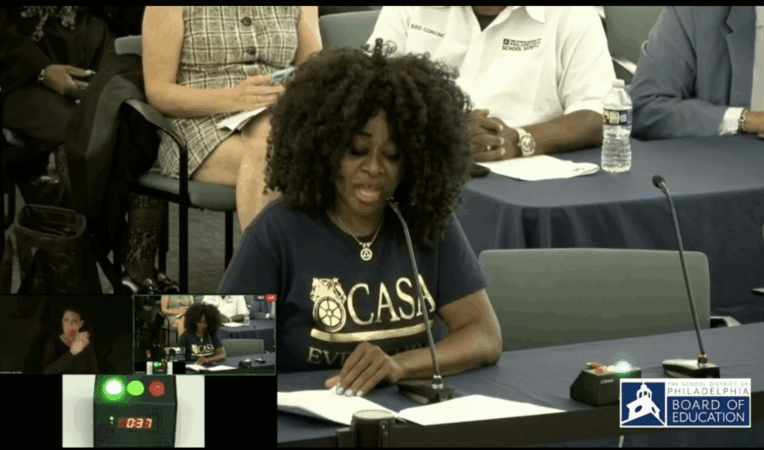
    Last week, Cooper rallied her members publicly, appearing at a hearing on district matters before City Council and at a school board meeting to draw attention to CASA’s lack of a contract.

    Cooper had said that the main sticking points in the negotiations were related to finances.

    “First-year people are making what senior people make,” Cooper said.