This story was produced by the State College regional bureau of Spotlight PA, an independent, nonpartisan newsroom dedicated to investigative and public-service journalism for Pennsylvania. Sign up for Talk of the Town, a daily newsletter of local stories that dig deep, events, and more from north-central PA, at spotlightpa.org/newsletters/talkofthetown.
Raymond Hohl, the director of the Penn State Cancer Institute, resigned Friday following a Spotlight PA investigation into his care of patients and leadership of the center.
Hohl made the decision “thoughtfully and with the best interests of the Institute in mind,” according to an internal email, which was signed by Karen Kim, dean of the Penn State College of Medicine, and Michael Kupferman, CEO of Penn State Health. The email says he will remain a faculty member of the university’s medical college.
Hohl started as director in 2014 with the goal of achieving National Cancer Institute designation, a prestigious federal recognition, for the center based in the Milton S. Hershey Medical Center. The university invested hundreds of millions of dollars in the cancer center in pursuit of designation, records show.
A Spotlight PA investigation published Nov. 20 found that Hohl was the subject of a series of damning internal reviews between early 2022 and mid-2023. The reviews found a series of problems with Hohl’s care of at least 10 patients. His sloppy recordkeeping caused multiple errors. Several of Hohl’s patients received extra doses of chemotherapy by accident. Others faced unexplained delays in changing their treatment, or having scans done to check whether their cancer had progressed, according to documents obtained by the newsroom.
Penn State’s reviews also concluded that Hohl perpetuated a toxic culture of fear and mistrust that chewed up doctors and researchers, who left the organization in droves during this time period. Getting federal designation was Hohl’s top priority, but after nearly a decade under his leadership and some $410 million invested, the cancer institute was “significantly behind where it needs to be,” a December 2022 review found. Records show that Hohl disputed the findings and offered a rosier assessment at the time.
Penn State Health’s former chief executive officer and former chief operating officer, as well as the hospital’s then-chief medical officer and two medical school deans, including Kim, had extensive knowledge of these problems, records show.
In 2023, leaders privately considered removing Hohl as director of the cancer institute, internal records show. The doctor kept his position and was placed on a two-month performance improvement plan, under which he was asked to adhere to national guidelines for cancer treatment, demonstrate active listening skills, and show that he was a team player, among other goals.
In May 2024, Penn State quietly removed Hohl’s oversight of clinical care, a move the Penn State Health spokesperson declined to explain in September 2025. Hohl was still seeing patients as of early 2025.
Following publication of Spotlight PA’s investigation, Penn State Health said in a statement: “We believe the reporting by this outlet is based almost entirely on materials more than two years old and it does not provide an accurate representation of Penn State Cancer Institute (PSCI) as it exists today. During the last two years — we have made significant changes to PSCI’s leadership, staffing, operations, clinical capabilities and research processes.”
According to the internal announcement, institute deputy director Jeff Peters will be the interim director of the cancer center.
SUPPORT THIS JOURNALISM and help us reinvigorate local news in north-central Pennsylvania at spotlightpa.org/donate. Spotlight PA is funded by foundations and readers like you who are committed to accountability and public-service journalism that gets results.
Temple University Health System‘s medical malpractice expenses have surged in the two years that ended June 30 as part of a campaign to reduce financial risk by settling old cases.
The hope is that “aggressively” settling cases will pay off over the next few years by reducing medical malpractice expenses, Michael DiFranco, the health system’s chief accounting officer, told investors during a conference call last week on the health system’s fiscal 2025 financial results.
Temple’s annual medical malpractice expenses increased nearly fourfold, to $117.8 million in fiscal 2025 from $31.6 million two years ago. Over the same period, it cut its reserves for future expenses by $88 million, or 22%. Temple’s reserves peaked at $402.9 million in 2023.
Rising medical malpractice costs are reverberating throughout healthcare. Tower Health recently boosted its reserves after its auditor decided they should be higher to deal with anticipated claims. Lifecycle Wellness, a birth center in Bryn Mawr, blamed its decision to stop delivering babies in February in part on rising medical malpractice costs.
The average number of medical malpractice lawsuits filed in Philadelphia every month has risen from 34 and 35 in the two years before the pandemic to 51 last year and 52 so far this year, according to the Philadelphia Court of Common Pleas.In additional to lawsuits against hospitals, the tally includes litigation against physicians, nursing homes, and other healthcare providers.
Contributing to the increase was a rule change at the beginning of 2023 that allowed more cases to be filed in Philadelphia rather than the county where an injury occurred. Malpractice lawyers say they like to file in Philadelphia because the system for trying cases is efficient. Health systems often note that Philadelphia juries sometimes award large verdicts.
A ‘wake-up call’ at Temple
Temple Health started rethinking its medical malpractice strategy after John Ryan started as general counsel in January 2022. A month before he started, The Inquirer published an article about three suicides at Temple Episcopal Hospital in 2020. At least two of the families sued Temple.
“That was a wake-up call,” Ryan said in a recent interview on his approach to handling malpractice cases.
Then in May 2023, a Philadelphia jury hit Temple with a $25.9 million verdict in a case involving a delayed diagnosis of a leg injury leading to an amputation.
After that loss, Temple changed the kinds ofoutside lawyers it hiresto defend it in malpractice cases, Ryan said, swapping medical malpractice specialists for commercial litigators from firms like Blank Rome, Cozen O’Connor, and Duane Morris. Such lawyers cost more, but it’s paying off, he said.
“The settlements we’re getting from the plaintiff lawyers, because they can see that we’re serious, are much better,” Ryan said. The two Episcopal cases were settled this year for undisclosed amounts, according to court records. A birth-injury lawsuit against Temple University Hospital in federal court settled for $8 million this month.
In 2024, a jury awarded $45 million to a teen who was shot in the neck and suffered brain damage from aspirating food soon after his release from Temple. Temple appealed and the judge who oversaw the original trial ordered a new one. That case then settled at the end of October for an undisclosed amount.
The new approach has helped Temple reduce the number of outstanding cases at any one time to 65 or so now compared to 110 three years ago, according to Ryan.
Temple is using the money it is saving on malpractice costs to invest in better and safer care, Ryan said. “That’s not a byproduct of all we’re trying to do as the lawyers. It’s the goal,” he said.
Inquirer staff reporter Abraham Gutman contributed to this article.
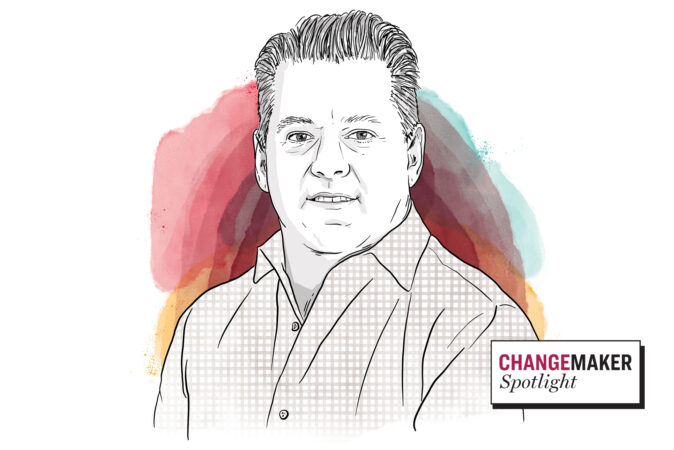
For more than five decades, Philadelphia’s Children’s Crisis Treatment Center (CCTC) has opened its doors to vulnerable young people and families who have been impacted by violence, loss, and adversity. “Helping a child heal doesn’t just change their life. It strengthens their family, their extended network, and, in a very real way, their community,” the organization’s CEO Antonio “Tony” Valdés, 61, said. “That’s what continues to inspire me: understanding that the work we do at CCTC ripples outward, touching countless lives beyond the one child sitting in front of us.” Since taking the helm in 1997, Valdés has transformed CCTC from a small local agency into a cornerstone of children’s mental health care in the greater Philly region, helping the nonprofit expand from four programs to 15, to reach more than 3,500 young people each year.
Valdés has spent his career focused on the guiding belief that every child, no matter their circumstances, deserves the chance to feel safe, seen, and supported. Under his leadership, CCTC has redefined what community-based care looks like, meeting families where they are, honoring their cultures and experiences, and building systems of care rooted in empathy and equity. In this Q&A, Valdés reflects on the urgent mental health needs facing Philadelphia’s children, the evolution of trauma-informed care, and how CCTC continues to offer hope where it’s needed most.
What inspired you to do the work you do today?
I think it has a lot to do with how I grew up. I was very fortunate as a child. My parents are immigrants, my father from Cuba, my mother from the Dominican Republic. When I was young, my dad started his own business and we moved from the States back to the Dominican Republic. Living in another country as a teenager gave me a deeper sense of perspective.
It made me think about culture as the environment we live and grow in, the “soup,” so to speak, that shapes our narratives and defines how we experience the world. That way of seeing things naturally led me to think about systems: families, neighborhoods, schools, and how they all influence children’s lives.
So when I began working in mental health, I was already thinking in those systemic terms. A few years later, I had the chance to work with children and it immediately clicked. I realized that the earlier you reach a child, the greater the impact you can have.
Helping a child heal doesn’t just change their life. It strengthens their family, their extended network, and, in a very real way, their community. That’s what continues to inspire me: understanding that the work we do at CCTC ripples outward, touching countless lives beyond the one child sitting in front of us.
What do you bring to this job that is unique?
First, I’m very persistent. Once I decide to go down a path, I keep pushing forward. Second, I’m personable and social. I interact casually with people, which makes me approachable. Finally, I bring a practical, analytical approach to the work. Many CEOs in this field come from operations or program backgrounds, and I do too, but I also have a knack for numbers and finance. That combination allows me to manage the business side of CCTC effectively while staying deeply connected to our programs and the families we serve.
Right now, our annual budget is about $30-35 million, and managing that while staying true to our mission requires both persistence and practicality.
You’ve talked about the importance of early intervention. Why does that matter so much?
The earlier you intervene and support families, the better. A lot of our work at CCTC focuses on helping parents and caregivers understand what their children are experiencing, what we call “psychoeducation.” We help them see that many behaviors, even the difficult ones, make sense in light of what a child has lived through. It’s not “bad behavior.” It’s a natural response to trauma. It’s actually not normal for a child to go through terrible things and show no signs of distress.
Science now backs this up. The landmark Adverse Childhood Experiences (ACEs) study, conducted more than 20 years ago, revealed powerful connections between early trauma and long-term health outcomes, including not only behavioral issues or substance use problems, but even higher rates of heart disease and cancer. What we’ve learned since then, through brain imaging and neuroscience, is that trauma in early childhood can actually shape how the brain develops. The brain adapts to prioritize survival, and other areas, the ones that regulate learning, relationships, and emotion, can be underdeveloped as a result.
That’s why early, loving, consistent relationships are so crucial. The most powerful protective factor is the presence of caring, dependable adults in a child’s early life. The next is a sense of belonging and community. When those are strong, children build resilience.
Some adversity can actually help children grow, as long as that balance tips toward safety, love, and connection.
How has CCTC evolved since its early days?
The people who founded CCTC in the early ’70s probably wouldn’t have used the language we use today, but they were clearly responding to a growing awareness that children’s behavior was often rooted in trauma. That early insight has shaped CCTC from the beginning. Over the years, the field has evolved, and so have we. About 18 years ago, we made a major shift by embedding trauma-informed principles into every part of the organization. It changed not only how we treat children, but how we support staff, collaborate with partners, and engage with the community. It became a core philosophy, not just a clinical model.
That focus has kept us true to our mission. We’re not trying to be all things to all people. We’re a children’s behavioral health agency and everything we do aligns with that purpose. Staying disciplined in that way allows us to build stronger partnerships and deliver deeper impact.
Today, we serve children from about 18 months through 18 years old, but most of the kids we work with are between three and 13. Roughly 75% are 10 or younger. That’s really where our heart is: early and elementary-age children, because that’s where we can make the greatest difference.
What’s been the biggest challenge for CCTC over the years?
One of the biggest challenges has been working within systems that are incredibly complex, whether that’s government, insurance, or even community and political structures. These systems often tend to move toward the least common denominator: keeping things steady, avoiding risk. Innovation doesn’t always get rewarded.
But CCTC has always been an organization that looks ahead. We’re constantly asking: What’s next? Where do we need to be two, three, four years from now? That kind of thinking sometimes puts us at odds with the larger system, and that can be frustrating. There have been times when we knew an idea would make a real difference, but it took years before the funding or policy landscape caught up.
A good example is care coordination, or what some call “case management.” We’ve always believed in helping families navigate all the challenges that can prevent them from engaging in treatment: housing instability, food insecurity, lost utilities, lack of transportation. For years, that kind of work wasn’t funded or even recognized as essential. But to us, it was obvious, since if a family’s basic needs aren’t met, therapy alone won’t change much.
What’s a big goal for CCTC’s future?
One of our biggest goals is to bring what we do directly into the natural settings where children and families already are. That’s where real access happens: in schools, recreation centers, community programs, and other places that feel familiar and safe.
When mental health care is part of everyday life, it becomes normalized. We’re already doing some of this, placing parenting groups and educational programs in community settings, to help families better understand the roots of behavioral challenges. Many parents we meet are doing their best, but no one’s ever helped them recognize how their own childhood experiences might still be shaping their parenting today.
What transformations have you seen in the development of children who have come to CCTC?
I look at it on two levels: observable outcomes and how a child functions in their life. On the surface, success shows up in things like fewer suspensions or detentions, reduced fights, and improved grades.
But real success goes beyond behavior. It’s about helping children make sense of what happened to them. Kids who’ve experienced trauma should never simply forget it. They need to learn how to live with it, understand its impact, and gain the skills to respond differently. That helps them manage triggers, regulate emotions, and gain self-awareness.
What misconceptions about trauma or mental and behavioral health do you most want to challenge?
There are a few. The first is one that still lingers. The idea that “kids are young, they’ll forget.” That’s just not true. When a child experiences something terrible at four years old and starts acting out at nine, those behaviors are often connected. Ignoring that link does a real disservice to the child.
The second misconception is about resilience. People sometimes say, “She’s stronger because of what she went through.” Trauma doesn’t make you stronger; protective factors do. Maybe that person had strong family support, stable housing, or a teacher who cared. Those things build resilience, not the trauma itself.
And the third is about the multigenerational nature of trauma. When harmful behaviors aren’t addressed, they echo through families. A parent who grew up with abuse or neglect might not repeat the same actions, but the emotional patterns of anger, control, and detachment can still carry forward. Recognizing that connection across time, generations, and communities is key to breaking the cycle.
What is your mantra?
I try to live by the idea of focusing on what you can actually impact. I stay focused on what makes the biggest difference.
PHILLY QUICK ROUND
Favorite Philly food? For Dominican food, I really like Mamajuana in Fishtown and a few spots in North Philly, like El Meson and Barú.
Sports team you love: I’ve been a Phillies fan my whole life.
What you wish people knew about those who call Philly home: What I wish people knew about Philadelphians is how much the city has changed over the past 20 years. Many outsiders still see Philly as it was 25-30 years ago, but today it’s far more diverse, not just in food and restaurants, but across neighborhoods.
Greatest Philadelphian of all time? My pick for greatest Philadelphian of all time is easy: Ben Franklin.
Favorite thing to do when you have free time in and around Philly: I love exploring new restaurants I haven’t tried yet, especially with friends.
Lucy Danziger is a journalist, an author, and the former editor-in-chief of Self Magazine, Women’s Sports & Fitness, and The Beet.
For years, shopping for wine in the Philly area felt like a choice between the bland or the expensive. Over eight years spent building a major retail wine program — I worked as the wine buyer at Di Bruno Bros. until recently — I strived to offer customers a different path by focusing on high-quality offerings from smaller independent makers. Happily, this has since become the local status quo for independent bottle shops. Our region has enjoyed a retail wine renaissance since the 2016 passage of Act 39 (which allowed businesses beyond the Fine Wine & Good Spirits stores to sell wine to go), with diverse, vibrant shops popping up all over.
If you know where to look, excellent value can even be part of the deal. The only trick? Being open to a label you don’t recognize. Here are four affordable favorites available around town.
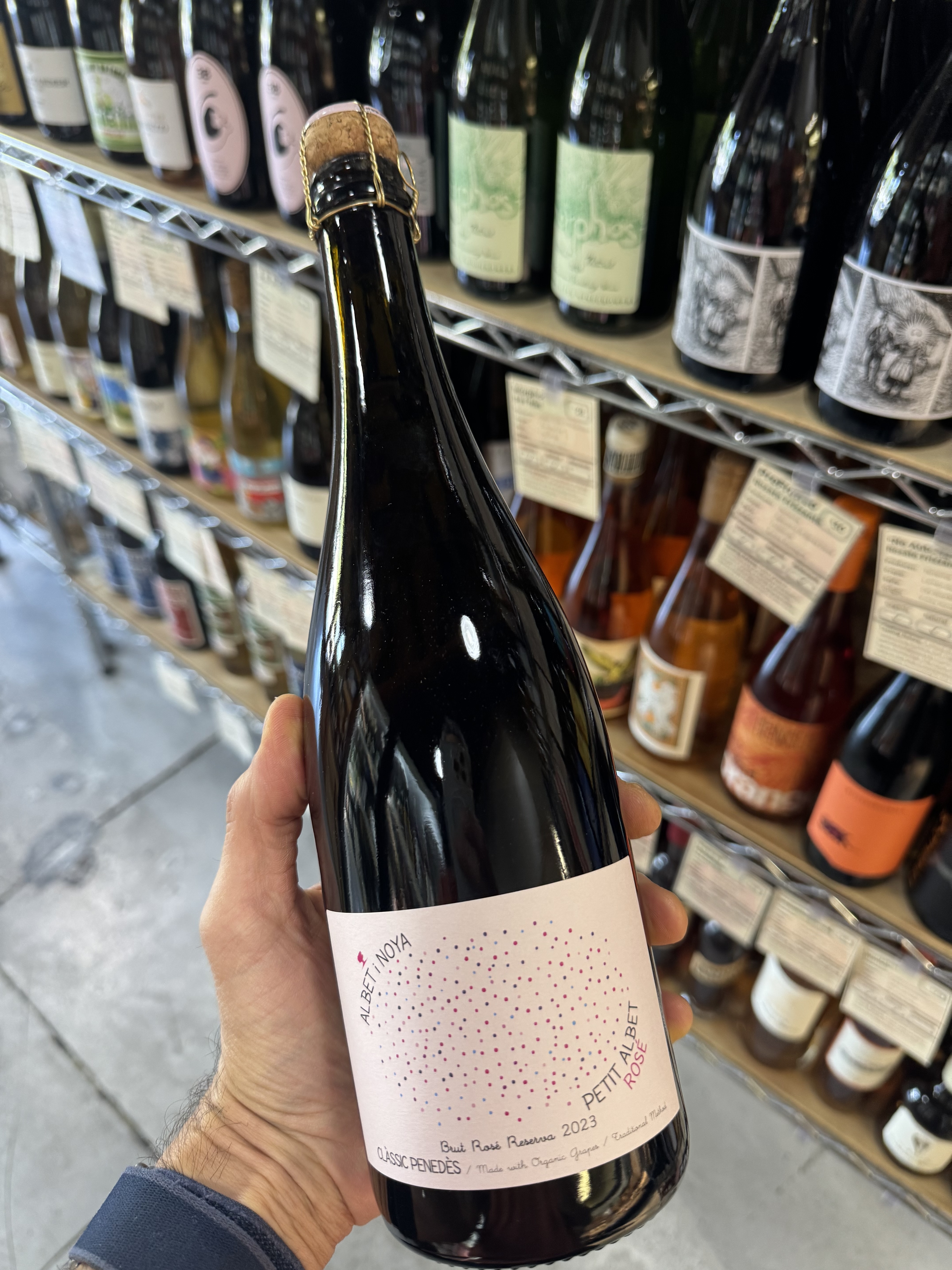
An excellent sparkling rose — Albet i Noya Petit Albet Brut Rosado Reserva — by way of Penedès, Spain.
Sparkling isn’t just for special occasions
Albet i Noya Petit Albet Brut Rosado Reserva (Penedès, Spain)
Repeat after me: You may enjoy bubbles without a particular reason. From gentle Italian frizzante (Prosecco-ish, but more sparkle than big bubble) to old-school pétillant naturel from pretty much anywhere, a little fizz can make anything fun. A bubble in your beverage also helps scrape your mouth clean when paired with food, leaving you refreshed for your next bite. Hot wine tip: Bottles without the obvious words on the label (Prosecco, Champagne, etc.) tend to be some of the more interesting values around.
Everything about this bottle of sparkling rose is just so joyful. A friendly blend of organic pinot noir and garnacha, it sings with fresh fruit, flowers, and herbs, intermingled with refreshing tiny bubbles. A cheese wine, an olives and almonds wine, there’s no need to sit on this great value — just enjoy it.
$20 at 320 Market, 211 W. State St., Media, 610-565-8320; 713 S. Chester Rd., Swarthmore, 610-328-7211; the320marketcafe.com
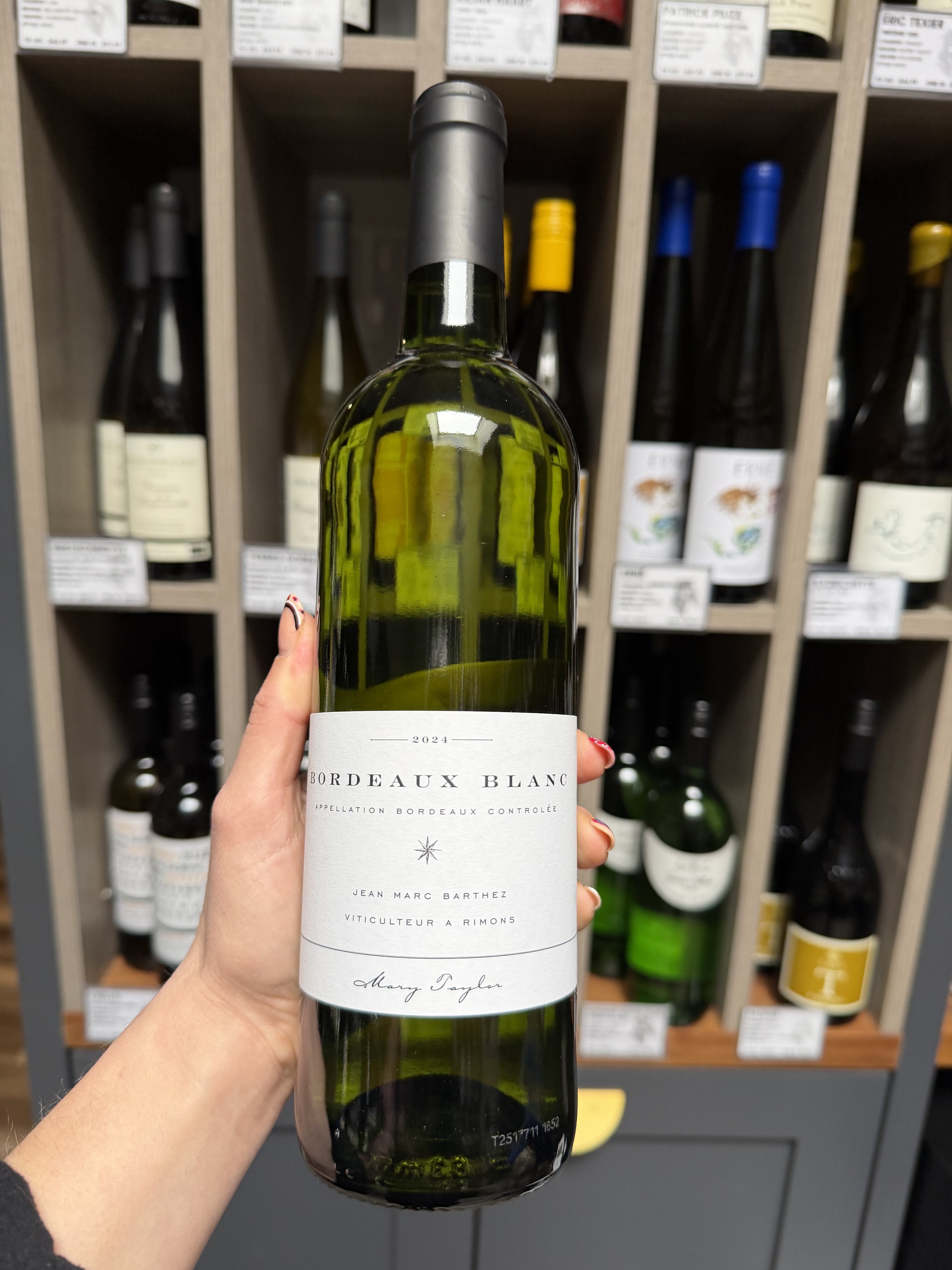
Mary Taylor Bordeaux Blanc from Bordeaux, France.
White wine is wonderful, even in cooler seasons
Mary Taylor Bordeaux Blanc (Bordeaux, France)
If you find the suggestion of drinking white wine, from stoic Bordeaux, in the late fall / early winter, to be absolutely insane … that’s fine. Do it anyway. You can wear white jeans after Labor Day — they’re a very cute fall staple, in my humble fashion opinion — and you can drink white wine year-round.
The Mary Taylor white label project is a dream for value hunters. Mary isn’t the winemaker; she facilitates distribution under her namesake label for smaller makers who may not have the means to reach a larger market otherwise. The labels are simple, the bottles are affordable, and the wines are reliably excellent. Consider Mary Taylor’s line an affordable pathway to try off-the-beaten-path wines from Spain, Portugal, Italy, and beyond. In particular, this Bordeaux blanc — mostly sauvignon blanc with a hint of honeyed Sémillon — is a light, bright delight. Technically a natural wine, but as clean and classic as they come.
Word to the wise: Have you checked out the updated Bloomsday retail section lately? There are a great handful of sub-$20 gems; get after them!
$20 at Bloomsday, 414 S. Second St., 267-319-8018, bloomsdayphilly.com
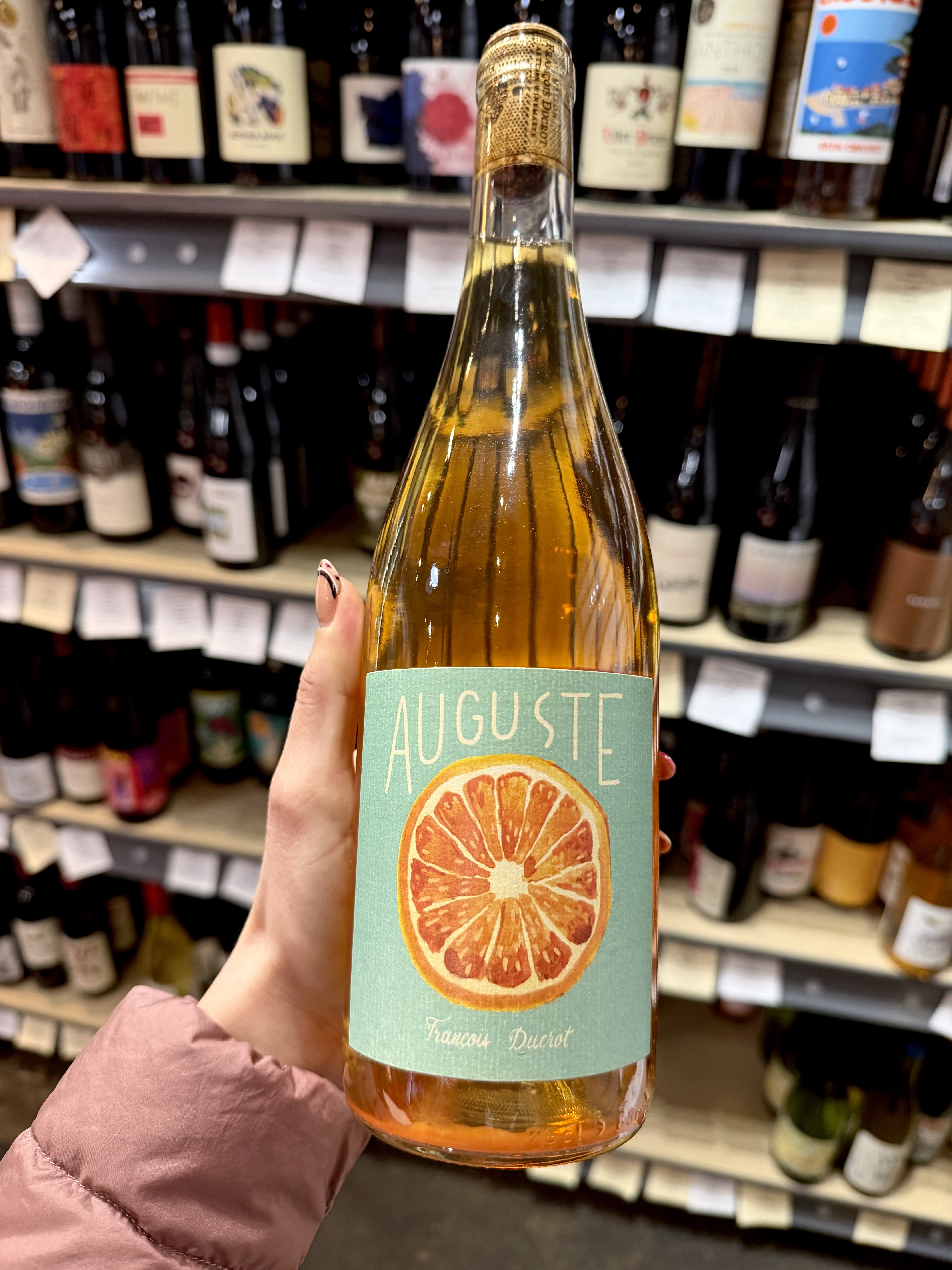
François Ducrot “Auguste” Orange VDF from Languedoc, France.
Of course, an orange wine
François Ducrot “Auguste” Orange VDF (Languedoc, France)
If you’re an orange wine enthusiast, and you’re ready to enjoy something beyond Gulp Hablo liters, try this instead. Orange wines have been flooding the market lately — with Gulp breaking sales barriers everywhere — but orange wines require a more time- and labor-intensive process. This generally results in a higher price tag.
It’s tough to find a good orange wine (one of the few flourishing areas in an otherwise diminishing wine market) without a steep price tag. This under-the-radar bottle blending grenaches blanc and gris from the Languedoc — a great region for French wine values — delivers everything that you want it to: texture, aromatics, the whole shebang. The cute label doesn’t hurt either.
$17 at Herman’s Coffee, 1313 S. Third St., hermanscoffee.square.site
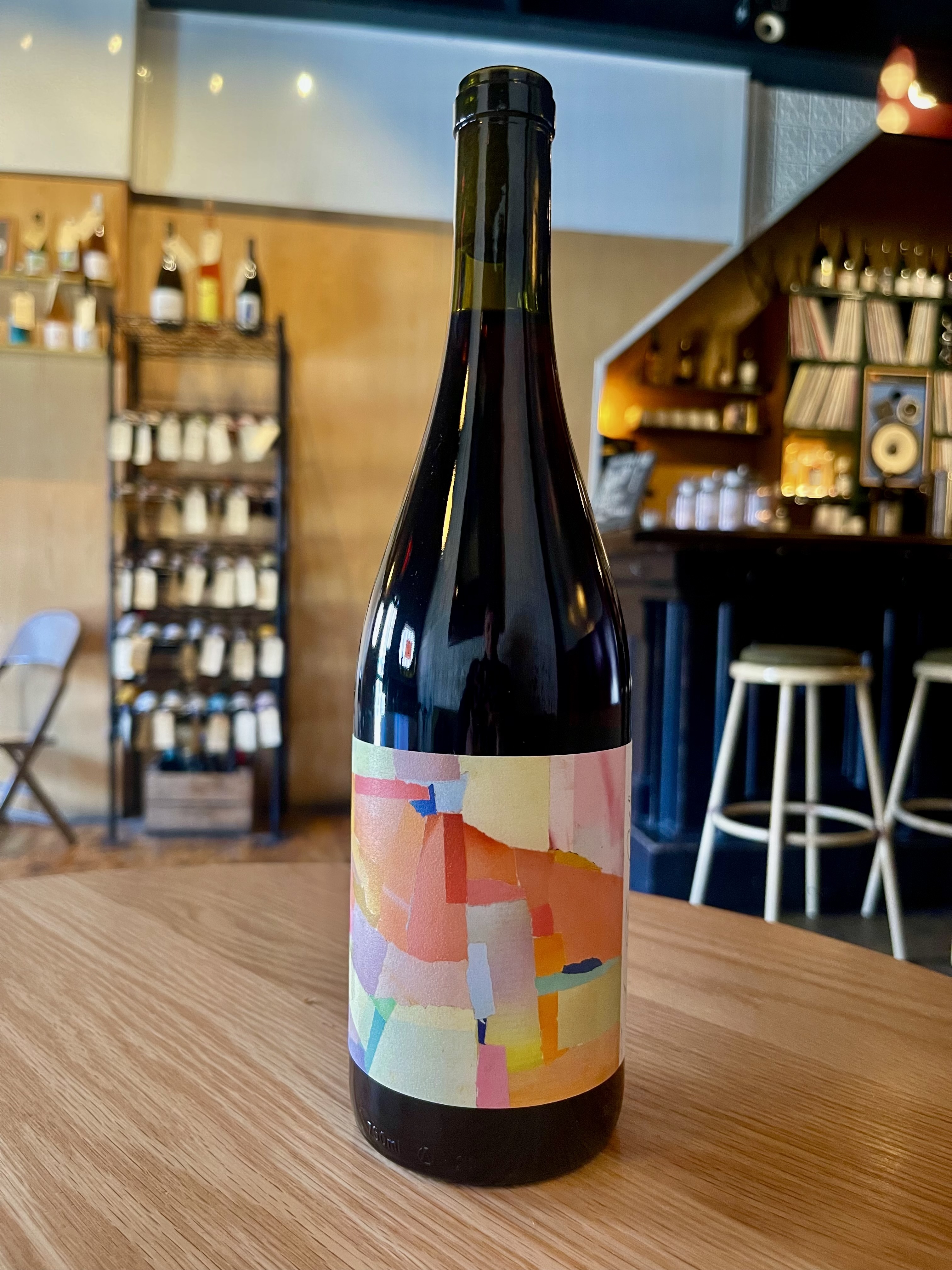
Ann Faure Pinot Noir from Stellenbosch, South Africa.
Righteous red wine with a romantic edge
Ann Faure Pinot Noir (Stellenbosch, South Africa)
Stunning pinot noir for $20 should be a no-brainer. This bottle in particular packs a punch of value, quality, and ethereal flavor all in one.
Ann Faure is a newish sub-label from Mick and Jeanine Craven of Craven Wines. It combines their children’s middle names, Ann and Faure, and is a nod to ‘amphorae,’ a traditional clay vessel used to ferment, store, and age delicate wines like this. Mick arguably holds the title of most frequent visitor from South Africa to Philadelphia, popping up around town several times a year thanks to his longtime relationships with many Philly wine bars. All of the wines the Cravens produce are lively, food-friendly, and flat-out delicious. The gorgeous label on this bottle doesn’t boast the grape — a prime example that it is possible to have a cute label and great wine inside.
Solar Myth may not come to mind as a retail destination, but if you find yourself on South Broad, do pop by. They’ve been quietly rotating a small selection of $20ish bottles for takeout that are well worth the stop.
$20 at Solar Myth, 1131 S. Broad St., solarmythbar.com
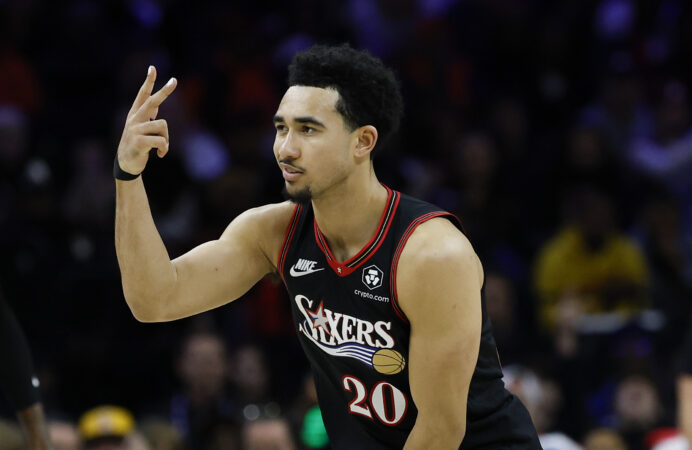
Jared McCain called for a Dominick Barlow screen, then created the space to get to his spot and elevate for a mid-range jumper.
The 76ers’ second-year guard has long identified that “bump middie” as one of his favorite types of shots. And that first-quarter bucket ignited McCain’s best performance — in statistical production and in mobility — since returning from a nearly 11-month absence following knee and thumb surgeries.
It was evidence of the positive steps McCain has taken since going on a G League assignment — and an encouraging longer-term sign for a Sixers team already utilizing guard-heavy lineups this season.
“I felt really good today,” McCain said after the game. “I felt like I got a little burst for my first step. Just continue to build off each game, the more minutes I play.”
He played only five minutes during last Monday’s home victory over the Los Angeles Clippers. Then he finally made his first shot in Wednesday’s loss to the Toronto Raptors, a moment of “pure joy” captured when he threw his arms out and yelled in celebration. He then cleared another medical checkpoint by also playing the second half of a back-to-back the following night at the Milwaukee Bucks, scoring eight points and looking “a little bit more like we needed him to play,” coach Nick Nurse said.
Sunday afternoon, the still-uber-popular McCain was greeted with exuberant cheers upon entering the game late in the first quarter. After his first bucket, he got downhill for a finger-roll layup and flexed after burying a game-tying three-pointer late in the second quarter. A third-quarter deep shot from the top of the key pushed his point total into double figures for the first time this season. Another three-pointer got the Sixers within 102-96 early in the final period, before Miami’s final surge.
An acceleration in McCain’s reacclimation would be a plus for a Sixers team already thriving while playing three-guard lineups.
Tyrese Maxey, Quentin Grimes, and Edgecombe have boasted a plus-14.6 net rating (and have averaged 121.1 points per 100 possessions) while sharing the floor for 213 minutes in 15 games, often in closing lineups. Before the season, Nurse even floated experimenting with four guards on the floor together. But if Edgecombe’s calf issue lingers, McCain could immediately slide into such personnel combinations.
This long recovery process has taught McCain — who was an early Rookie of the Year front-runner before suffering a torn meniscus in mid-December — to practice patience and recognize “small wins.” Being able to walk again after surgery. Or play in an NBA game. Or take a hit from a defender and still step back onto his left foot and fire a shot.
He proclaimed earlier this week that there was “no such thing as garbage time” while regaining comfort on the floor. And even after he missed his first nine shot attempts over four games since debuting Nov. 4 at the Chicago Bulls, he said he did not believe in slumps.
“I put in the work,” McCain said after shootaround last Monday, “so I know it’s going to show whenever it needs to.”
Aiding that recent progress has been a switch from a bulky knee brace — “every time I dribbled, it felt like I was about to fall over,” McCain said — to a compression sleeve called Incrediwear. He also said he is unbothered by the brace he continues to wear on his shooting hand, though: “I try not to put any negative energy in the universe talking about the thumb.”
So what are McCain’s next incremental goals?
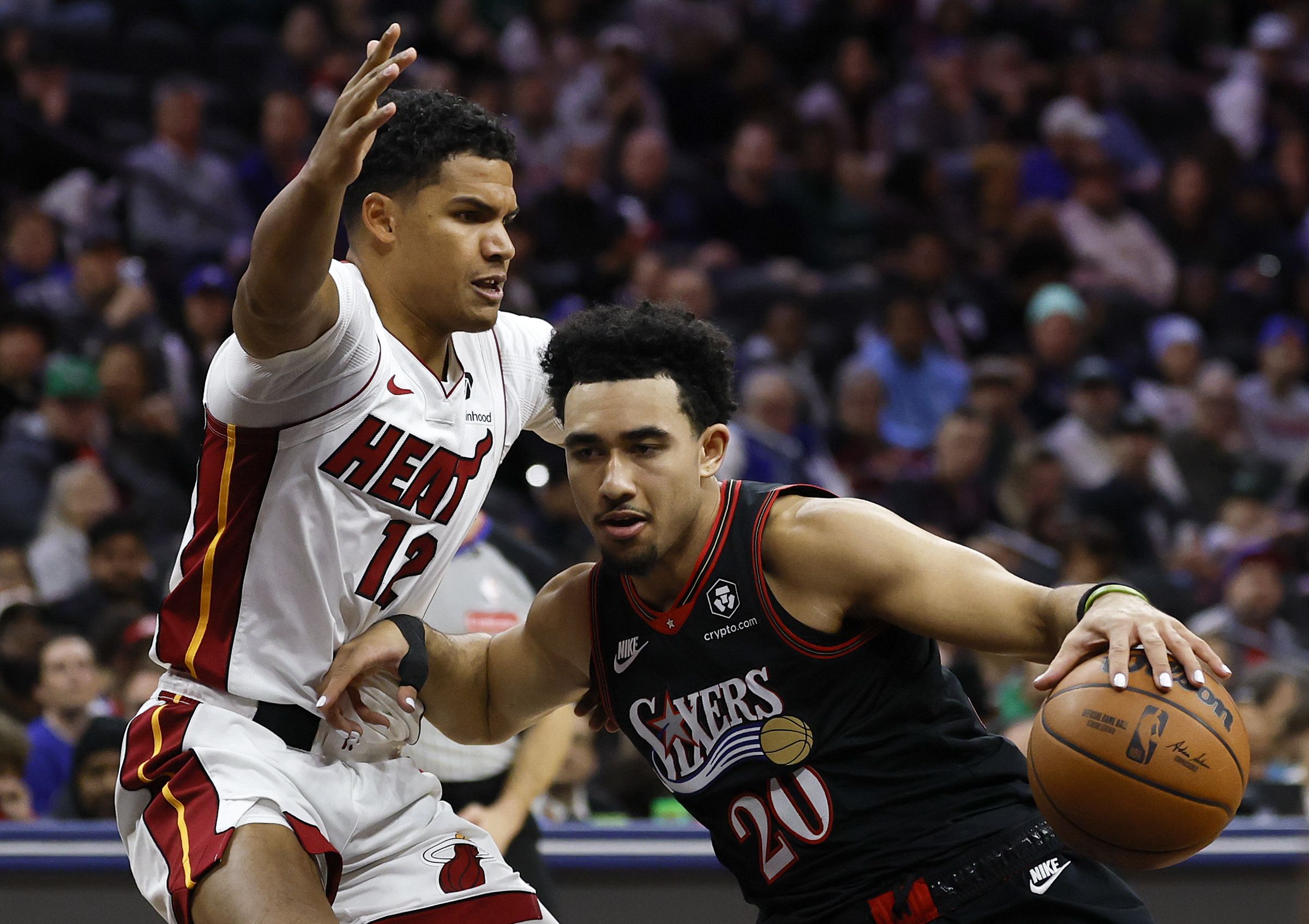
Sixers guard Jared McCain drives to the basket against Miami’s Dru Smith on Sunday.
Defensively, he wants to improve at running full speed to close out on a shooter, then push off his left leg to change direction to cut off another player. Offensively, his first step with the ball in his hands still can get quicker.
And after Sunday’s game, Nurse reemphasized the importance of McCain’s three-point shooting, after he made 38.3% of his 5.8 attempts in 23 games as a rookie and shot 41.4% from long range during his one college season at Duke. That floor-spacing can be particularly valuable when Maxey relentlessly attacks the rim.
“I know I keep saying that,” Nurse said, “but we do need that production from him.”
As Sunday’s halftime clock ticked down, McCain was one of the first players out of the Sixers’ locker room.
He uses that additional time to get his knee moving again, after sitting during the break. But he also aims to mimic part of the routine of future Hall of Fame sharpshooter Stephen Curry, who said he visualizes shots falling before the third quarter begins.
“I just want to get loose again,” McCain said. “So I try to come out as early as possible and get my reps up, and see the ball go through the net.”
McCain is still not back to the player he was before his surgeries and lengthy absence. But Sunday marked his best game since his return, an important step for him and the Sixers.
“I just want him to keep being aggressive and keep being himself,” Maxey said of McCain earlier this week. “ … It’s going to take some time. I think [we need to] just keep pushing confidence into him.
“Just remind him who he is, and remind him what he does.”
Nick Sirianni takes blame for Eagles’ penalty outburst
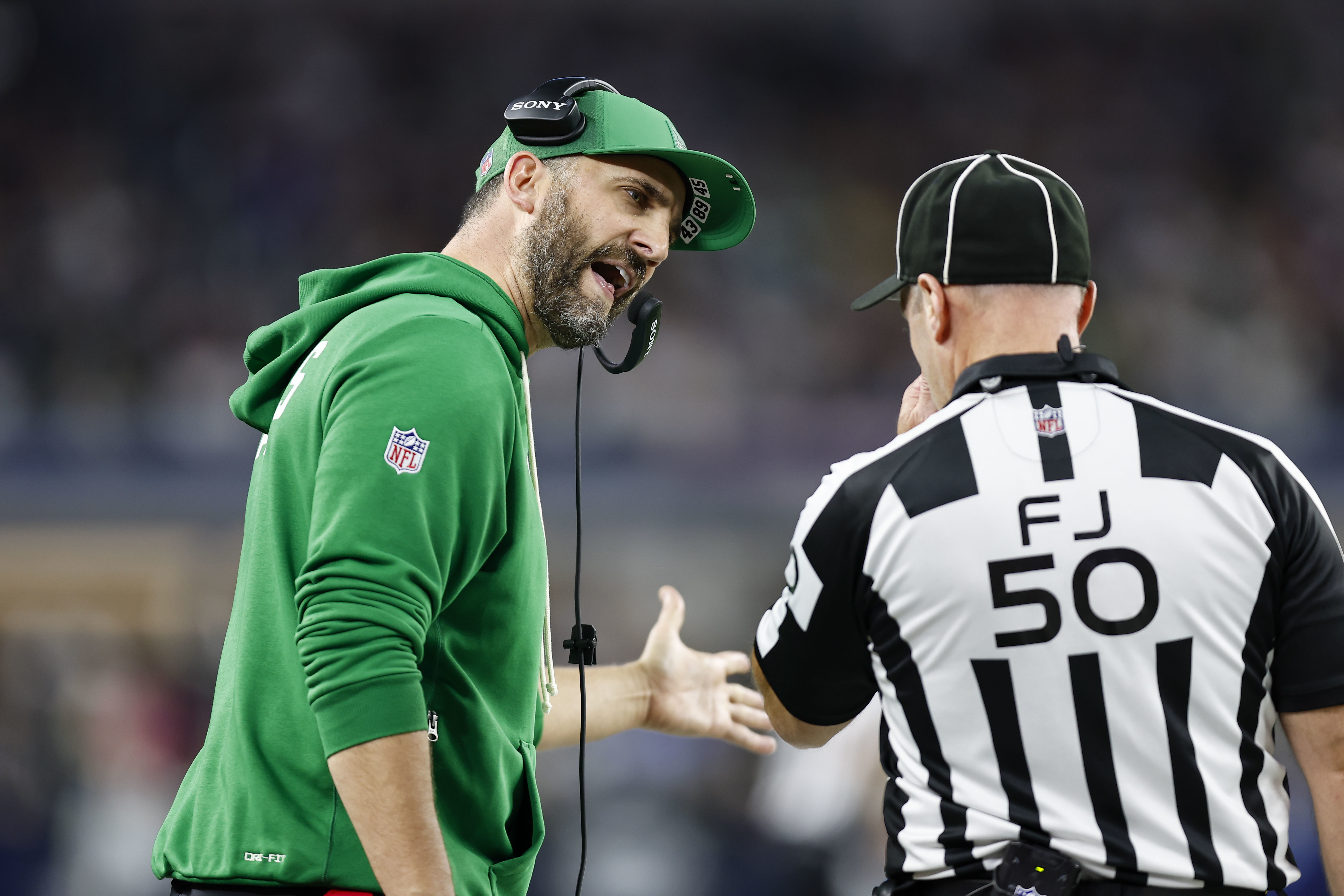
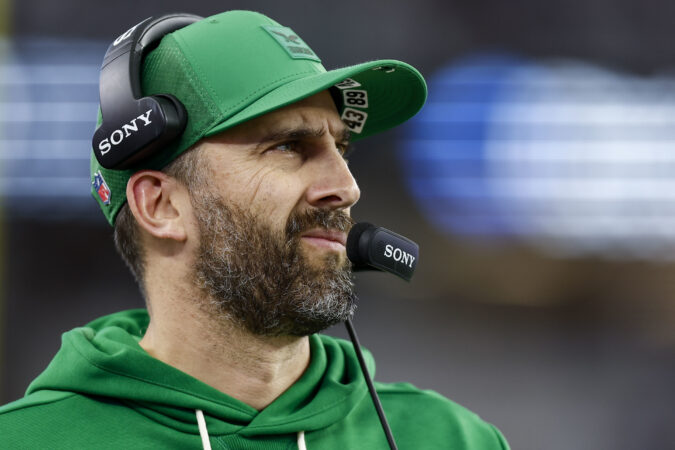
Eagles head coach Nick Sirianni has some words for an official during the the fourth quarter of his team’s 24-21 loss to Dallas.
The Eagles matched their high for penalties in the Nick Sirianni era with 14. As mentioned, seven of them were on the offense and a few of them wiped out key plays.
The Eagles had three false starts. They also had an illegal formation penalty out of the jumbo package with Matt Pryor on the field as an extra blocker.
Sirianni said it’s “hard to sustain the success of a game when you have those.”
It has made a struggling offense’s problems even worse.
“Anytime it’s penalties like that, or any time it’s ball security, or any time it’s the fundamentals, or something within ‘tough, detailed, together,’ I’m going to put that on myself,” the Eagles head coach said Monday. “Just point blank, I have to do a better job of coaching it and finding different ways to make sure it gets through.”
Were Eagles surprised by Cowboys’ five-man front? Depends who you ask.
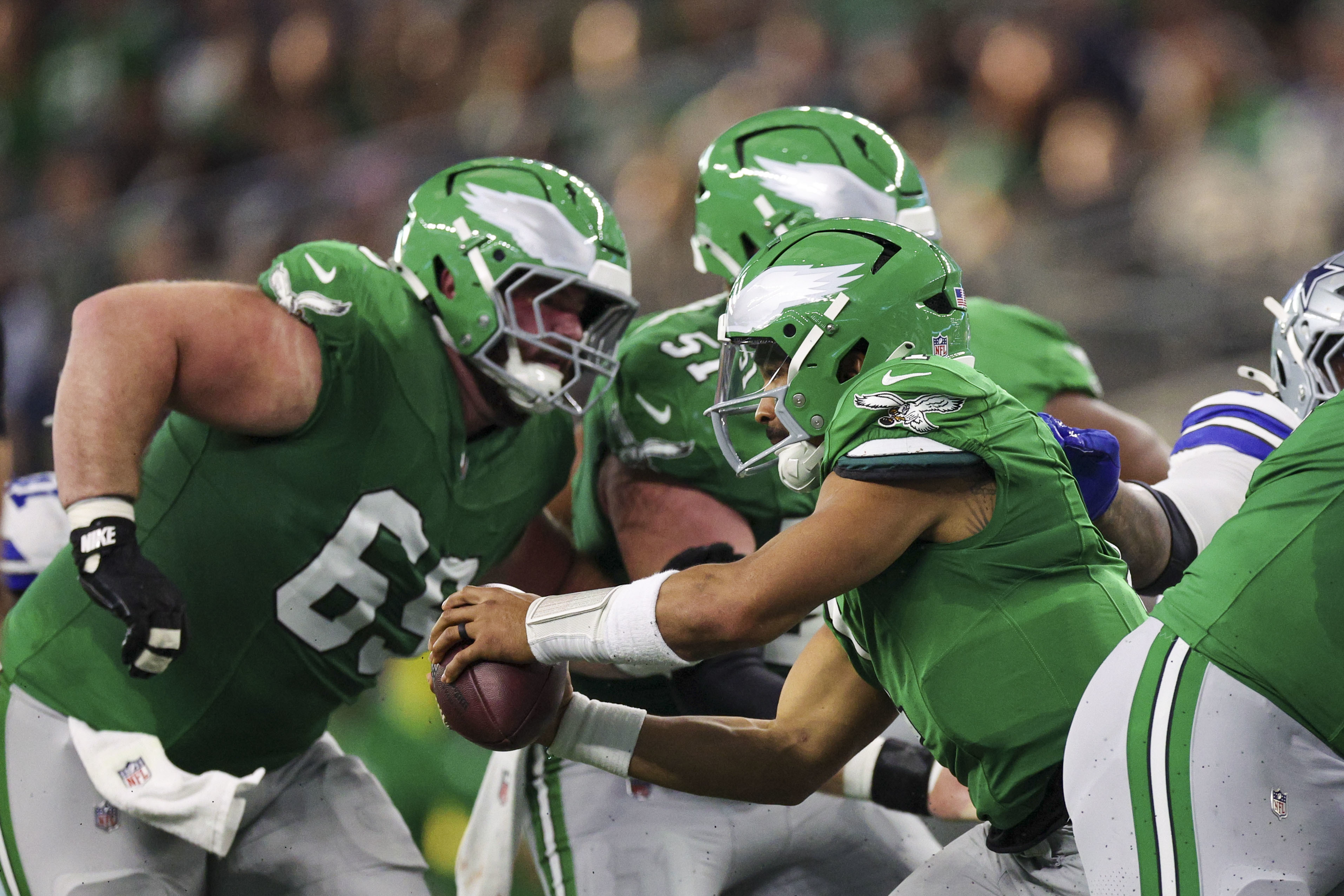
Quarterback Jalen Hurts scrambles in the second quarter before completing a pass to Saquon Barkley.
Landon Dickerson said after the game that the Eagles were surprised by Dallas’ frequent use of a five-man front. Jalen Hurts said “that’s how they’re built now” after the Cowboys acquired Quinnen Williams and retooled their defense.
The front gave the Eagles fits at times, especially as they tried to establish a run game that never got going. Saquon Barkley rushed 10 times for 22 yards.
Dallas showed that five-man front a week earlier vs. Las Vegas. So, were the Eagles prepared for it or were they not?
“You go into every week and you’re trying to play the game in your mind as much as you possibly can, not just with how you call it but how you plan it for practice as well, and how you plan for drills,” Nick Sirianni said Monday. “The walk-throughs, the practice, your drill work, you’re trying to identify what you think and what you’re always trying to do is say, ‘how many reps do I need to devote towards this? How many reps do I need to devote towards that?’ And you try to make educated guesses there.”
Which is to say …
“We devoted time for all of them,” Sirianni said. “We knew they had that in their package and their plan. They played a little bit more there, even than anticipated. So, of course, as coaches, you say to yourself ‘Well, I wish I would’ve gave them a couple more reps on this one.’
“Now, you’re limited as far as how many reps you actually have at walk-through, at live, at drill work. … No one’s ever going to pitch a perfect game here. Looking back at it, yeah, sure, I wish I would’ve given us a couple more reps there.
“We prepared for the things that we thought we were going to get, some more than others, and then sometimes it doesn’t play out that way when you look at it after the game.”
Nick Sirianni sticking with Kevin Patullo as Eagles’ play-caller
Philadelphia Eagles quarterback Jalen Hurts returning to the bench and celebrating with Offensive Coordinator Kevin Patullo at AT&T Stadium on Sunday, Nov. 23, 2025, in Arlington , TX.
One day after the Eagles’ offense stalled and was shut out after building a 21-0 lead 18-plus minutes into the game, Nick Sirianni said the Eagles are “searching for answers” for their ailing offense.
But the head coach said there won’t be any changes to who is calling plays.
“I haven’t considered that,” Sirianni said when asked on Monday if he had considered taking play-calling duties away from offensive coordinator Kevin Patullo.
“It’s every piece of the puzzle: coaching, playing, execution, scheme, everything. We’ve got to be better in all those aspects. And so yesterday, I thought Kevin did a good job of calling it. Obviously, he’s going to want some plays back, just like every player and myself, we all want plays back.”
The Eagles hurt themselves with self-inflicted wounds. Of their 14 penalties, seven were on the offense. Two of them erased gains of 16 and 20 yards that had a major impact on the game. But even still, the offense that looked dynamic and creative for the first few series’ went silent. The Eagles didn’t get past Dallas’ 38-yard line in the second half.
What gives Sirianni confidence that the Eagles can make a course correction this late in the season?
“I feel like we’ve got the right people, as players, as coaches, that have had success,” Sirianni said. “And we’re all searching for answers to make it more consistent. There are some good things, obviously there are some not so good things. And we’ve got to find the things that we really can hang our hat on, and then the complements that come off of that.”
Watch: Nick Sirianni addresses reporters on Monday
// Pinned
// Timestamp 11/24/25 2:59pm
Safety Drew Mukuba suffered leg fracture, likely headed to IR
Rookie Andrew Mukuba was injured in the Eagles’ loss to the Cowboys.
Eagles rookie safety Drew Mukuba suffered a right leg fracture in the waning moments of Sunday’s loss, sources confirmed to The Inquirer.
ESPN and the NFL Network were first to report.
Mukuba will likely be heading to injured reserve.
The second-round pick was injured after making a tackle on Dallas wide receiver George Pickens. He was helped into the locker room without being able to put pressure on his right foot, and was later seen in a walking boot and with crutches.
The Eagles lost both of their safeties to injury before the game ended. Earlier in the game, Reed Blankenship suffered a thigh injury and did not return.
Sydney Brown filled in for Blankenship and played 26 snaps. It’s unclear if Blankenship will miss Friday’s game vs. Chicago.
The Eagles are thin at safety and have only those three on the active roster. Andre’ Sam is on the practice squad, and Marcus Epps is on injured reserve.
Cooper DeJean and Michael Carter II would be potential options if the Eagles need a fill-in for Blankenship.
You can check out the rest of the Eagles’ injury updates, here.
Brady has been instrumental in the hiring of staff, including retread head coach Pete Carroll and failed Eagles head coach Chip Kelly, the offensive coordinator who was fired Sunday after 11 games. The Raiders reportedly are on the hook for the remainder of Kelly’s three-year, $18 million contract, the amount it took to pry Kelly away from the coordinator job at Ohio State.
More evidence that Kelly — who also failed in San Francisco — might be able to manage lesser beings in the NCAA, but he clearly lacks the depth to coach the elite, independent athletes in the NFL. Also more evidence that Brady, who reportedly met with Kelly at least twice a week to discuss strategies, is unable to manage the roles he now fills.
The Raiders are 2-9 and also fired special teams coordinator Tom McMahon on Nov. 7. They visit the Eagles on Dec. 14.
The Eagles will face St. Joseph’s Prep grad D’Andre Swift, a former Eagles running back, when they host the Bears on Friday.
After the epic collapse, the Eagles face a short turnaround as they prepare to host the Chicago Bears on Black Friday. The two teams last met during the 2022 season, a 25-20 road win for the Birds.
This time around, the game will be in Philly as the Eagles attempt to bounce back from an embarrassing loss to their division rivals. Meanwhile, the Bears are heading into Friday’s game on a four-game winning streak, including their latest over the Pittsburgh Steelers Sunday. Despite the divergent results, sportsbooks are favoring Philadelphia by a touchdown, with the Eagles opening Week 13 as seven-point favorites.
Nick Foles has a theory about the Eagles’ offensive struggles
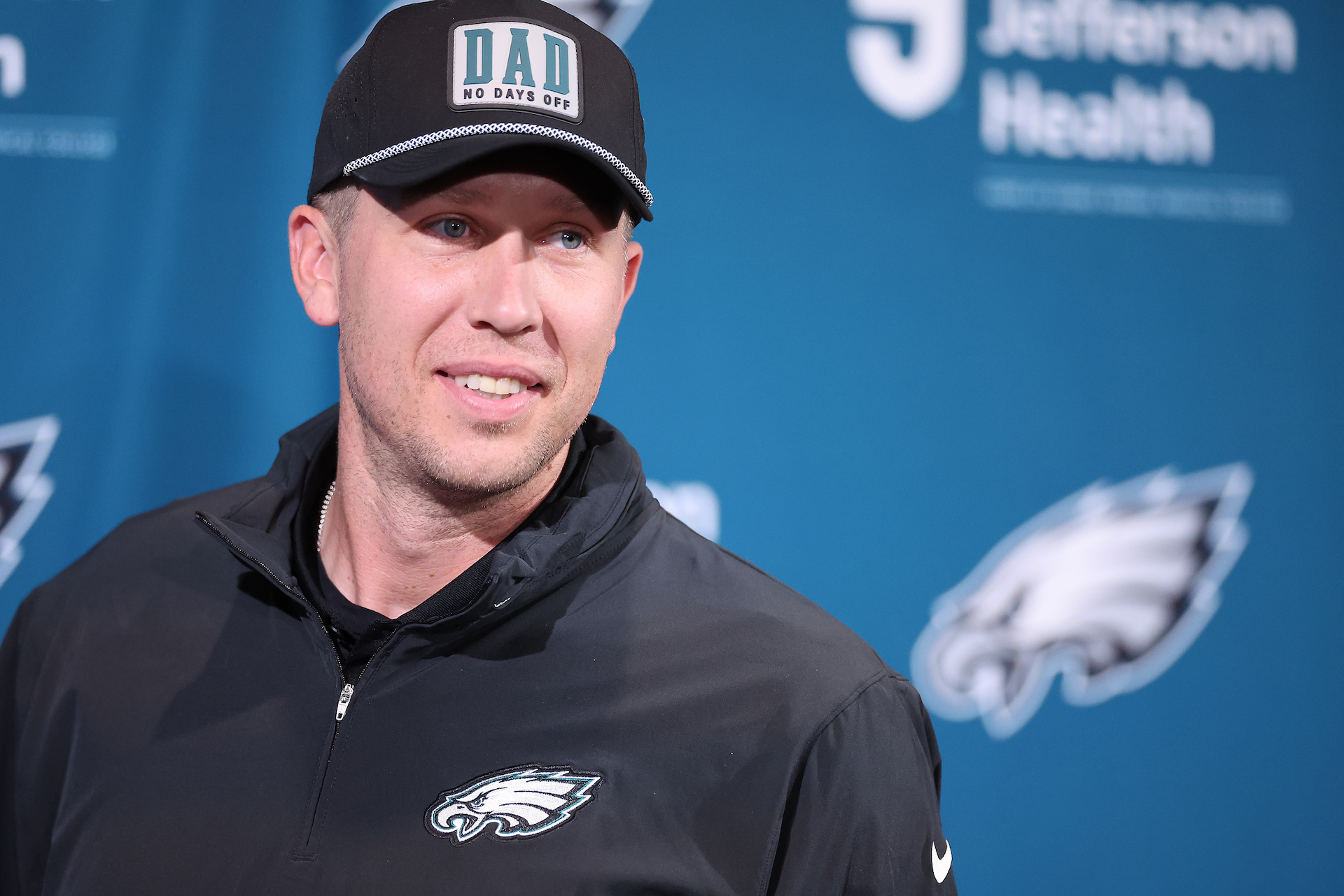
Nick Foles was the first Eagles quarterback to win a Super Bowl title.
Even before Sunday’s game, Nick Foles seemed to have a theory about why the Eagles “superpowered” offense hasn’t been able to get into a good rhythm this year. It’s the playcalling, according to the former Eagles QB, and a lack of creativity.
Foles called out the team’s route designs, which haven’t put A.J. Brown and DeVonta Smith in the best position to get open, which also prevents Saquon Barkley from finding the holes he found last year. The former Eagles quarterback told cohost Evan Moore that the Eagles utilize “simplistic” route trees (or the combination of routes a player can run at a given time) that don’t create space for the players, forcing them to get open and make plays on their own.
“The great teams, those guys are wide open. Even when I’m watching with [my wife] Tori, she’s like, ‘Why are these guys so wide open?’” Foles explained. “And I’m like, ‘Well, it’s a complementary route to a deep route. … You need those downfield shots because it puts more pressure on the [defensive backs], it opens up more one-on-one matchups, but you’ve got to have complementary [routes], because then the DB can’t key and can’t guess.
“So the creativity is key as a playcaller, and calling the plays at the right time. … There’s just an art. And I don’t see that this year. I don’t think anyone sees it. Fans that are passionate Eagles fans — because I’ve been to Philly several times, and you hear, every time I run across Philly fans, ’Man, what do you think is going to happen with the offense? What’s going on? Is this Jalen?’ I’m like, ‘Listen, it’s a team thing. Kevin Patullo is probably a great dude, a great coach, but there’s an art to playcalling that not everyone has and it’s not showing up this year.
“They’re in more of a trajectory of the 2023 season. … I would argue that they’re more on that trajectory than last year’s trend line, but at the same time, I do know that they have the players.”
Snap count takeaways: Jihaad Campbell’s decreasing playing time
The Eagles were forced to dip into their depth chart on defense due to multiple injuries during their 24-21 loss to the Cowboys.
But another player saw his playing time decrease even more Sunday.
Here are some notes and thoughts on the Sunday snap counts.
Jihaad Campbell’s playing time continues to decrease. Nakobe Dean’s play has forced Vic Fangio’s hand, and the Eagles don’t really need Campbell taking snaps on the outside. Campbell played just 11 snaps, and his snap total and snap share (15%) were lows for the season. Campbell told The Inquirer recently that he’s handling the change well and sees the bigger picture.
A rare thing happened Sunday: The Eagles started and finished a game with the same offensive line. All five linemen played 100% of the snaps.
But Lane Johnson’s absence and Fred Johnson’s start at right tackle led to the Eagles using the jumbo package less. Matt Pryor came on the field for that package just twice Sunday.
Tank Bigsby has been running well for the Eagles when given a chance, but the running back was on the field for just three snaps Sunday, five fewer than Will Shipley.
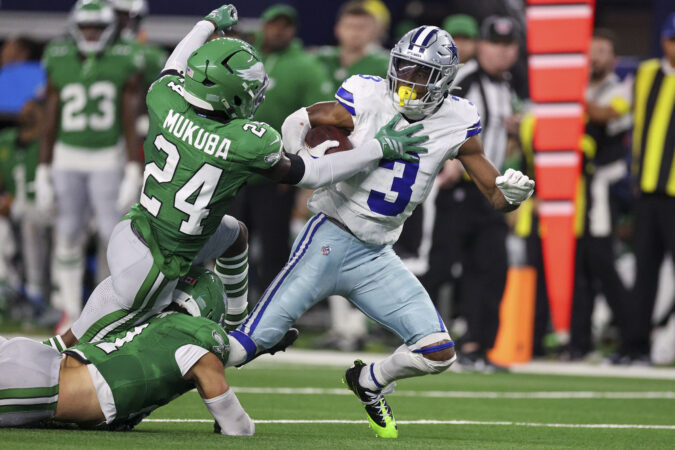
Reed Blankenship’s thigh injury led to Sydney Brown playing 26 snaps. Michael Carter II (25) also saw an increase in work after Adoree’ Jackson (26) left with a concussion.
Brandon Graham played just eight snaps Sunday, the same number as last week vs. Detroit. Meanwhile, Nolan Smith’s workload increased from 22 snaps last week to 40 this week as he works his way back from a triceps injury.
Eagles running back Saquon Barkley rushed for just 22 yards Sunday.
There was a disagreement in the visitor’s locker room at AT&T Stadium, 20 minutes and 20 feet apart.
“I’m in a little funk right now,” Saquon Barkley said at his locker stall after he totaled just 22 rushing yards on 10 carries, his lowest output in a game with at least 10 carries since 2022.
Jordan Mailata doesn’t agree.
“He’s not in a funk, man,” Mailata said. “He’s hard on himself. … It’s on all of us up front.”
One thing the running back and left tackle could probably agree on, though, is that what happened Sunday — the Eagles blowing a 21-point lead in a 24-21 loss to the Cowboys — would never, could never, have happened to the 2024 Eagles.
The Eagles lost for a lot of reasons Sunday. They beat themselves with 14 penalties, which tied a high in the Nick Sirianni era. They raced to a 21-0 lead behind an opened-up and aggressive playbook and then went too conservative. They didn’t apply enough pressure on Dak Prescott. They struggled covering Dallas’ one-two punch at wide receiver, especially later in the game with a banged-up secondary.
But they lost Sunday, too, because of their yearlong problem running the football. Yes, they tried to — and sometimes with great success — get their passing game going against one of the worst pass defenses in the NFL, but they have consistently struggled this season to control a game and control the clock with what was their greatest weapon in 2024: a running game that broke records. This, with almost the same personnel.
Eagles secondary will limp into Black Friday matchup against the Bears
Eagles safety Reed Blankenship limps off the field in the third quarter of Sunday’s loss.
It is still a little too early to speculate, but the Eagles could be looking at a makeshift secondary for a pivotal Black Friday game vs. the Chicago Bears (8-3) in just four days.
The unit was decimated during Sunday’s defeat.
Adoree’ Jackson, who left the Eagles’ Week 7 game in Minnesota and missed their Week 8 home game vs. the New York Giants due to a concussion, suffered another head injury Sunday. He was being evaluated for a concussion and never returned to the game.
The Eagles opted to roll with Cooper DeJean on the outside in the nickel package and put Michael Carter II in the slot. DeJean was burned twice on deep passes. The Eagles also tried Kelee Ringo for a few snaps, and on his first he was flagged for pass interference.
The Eagles also lost both safeties. Reed Blankenship left the game first with a thigh injury, and later, Drew Mukuba was injured on the final Dallas drive. Mukuba had to be helped into the locker room by Dom DiSandro and a team trainer and couldn’t put weight on his right foot. He was later seen in a boot and using crutches.
It’s unclear how severe any of the injuries are — though you can make some assertions regarding Mukuba. Still, there’s a non-zero chance the Eagles enter Friday without either of their safeties.
What would happen? The Eagles don’t have much safety depth. They could try using Sydney Brown and DeJean, or maybe Brown and Carter, who has the ability to play safety.
Safety Marcus Epps is on injured reserve, and the Eagles also have Andre’ Sam on the practice squad.
If DeJean is used as a safety, that would diminish the corner position. That unit, with DeJean at safety and Jackson in concussion protocol, could have Quinyon Mitchell and Kelee Ringo or Jakorian Bennett outside with Carter in the slot.
Whoever is captaining the Eagles offense veered off course Sunday
Offensive Coordinator Kevin Patullo and Jalen Hurts during Sunday’s loss to the Cowboys.
The Eagles couldn’t run the ball again, and yet, after they jumped out to a 21-0 lead, Saquon Barkley rushed on four first downs in the next five possessions.
He gained a total of five yards on the carries.
The play-calling defied logic after the offense had used an 8-18 run-pass ratio to score touchdowns on their first three drives. Offensive coordinator Kevin Patullo powered down the engine, but make no mistake, it was coach Nick Sirianni who was at the commands.
He’s the driver of the Eagles’ conservatism this season and it finally caught up to his team, who coughed up a 24-21 loss to the Dallas Cowboys on Sunday at AT&T Stadium.
There were myriad reasons for the Eagles falling to 8-3. Two uncharacteristic turnovers. Fourteen penalties — many of them unforced. And an injury-marred defense that succumbed under the weight of the offense’s ineffectiveness.
But Sirianni and Patullo turtled up when they should have pounced on the Cowboys’ sloppiness. Running the ball into five-man fronts — more on that mystery later — was puzzling. The lack of aggressiveness before the half and in fourth-down situations weren’t as egregious, but decisions in those situations were emblematic of the overall timidness.
“We just weren’t very efficient as an offense in that second half,” Sirianni said. “I didn’t really feel that we took our foot off the gas.”
It’s been the tale of the Eagles’ offense for the past three months. They have spurts or even an entire half of efficiency. But consistency has been fleeting. The game plan opened with quick passes from quarterback Jalen Hurts to A.J. Brown, and eventually a downfield shot to DeVonta Smith.
There was diversity in the calls and innovation in the red zone. But the Cowboys adjusted and the Eagles failed to counter.
Wide receiver Xavier Gipson was hurt in the fourth quarter of Sunday’s loss to the Cowboys.
With 35 seconds remaining in the game, safety Drew Mukuba went down after George Pickens’ 24-yard catch. On Monday, Jeff McLane reported that he’s headed to IR after suffering a leg fracture.
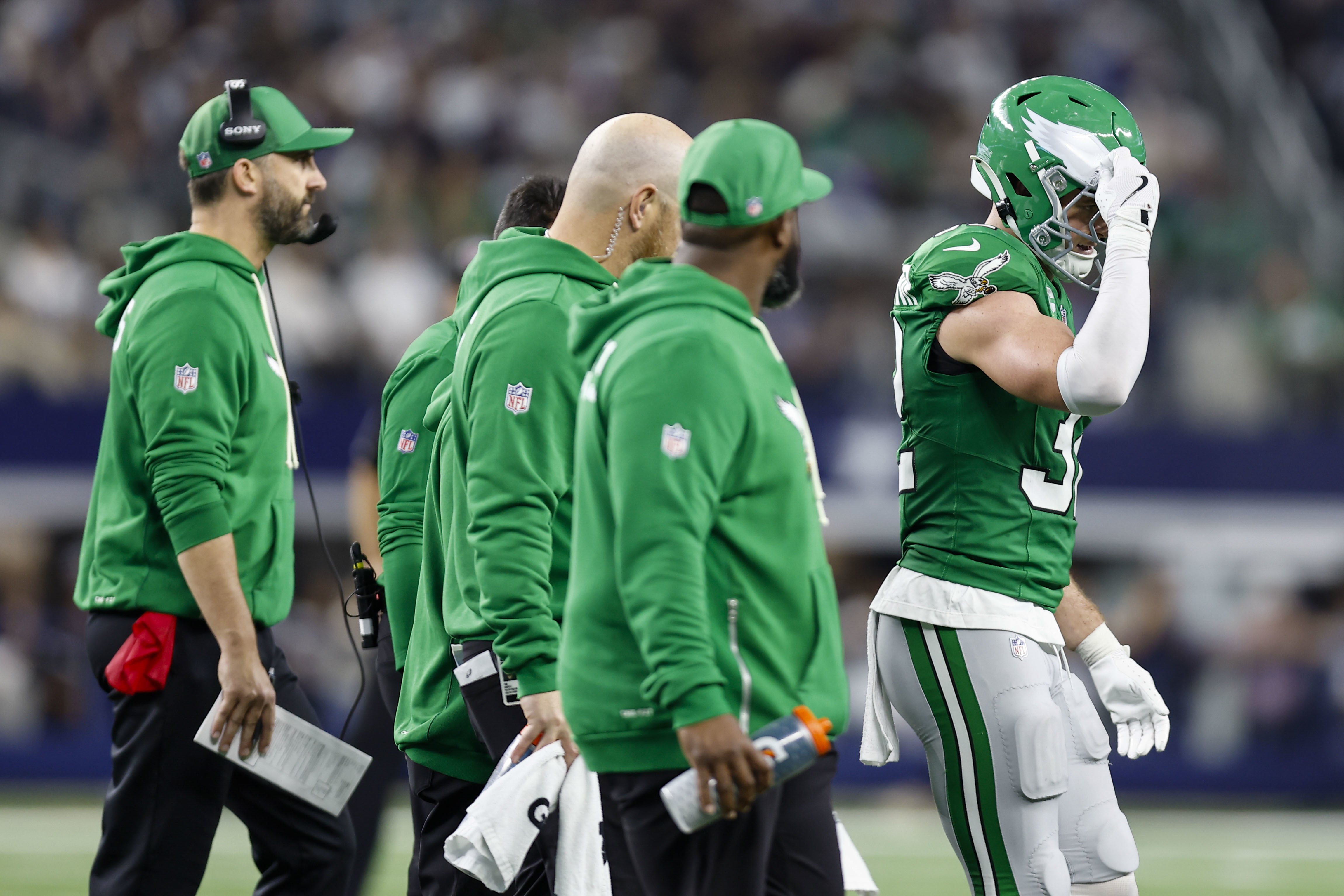
Safety Reid Blankenship left the game in the third quarter after injuring his thigh while making a tackle.
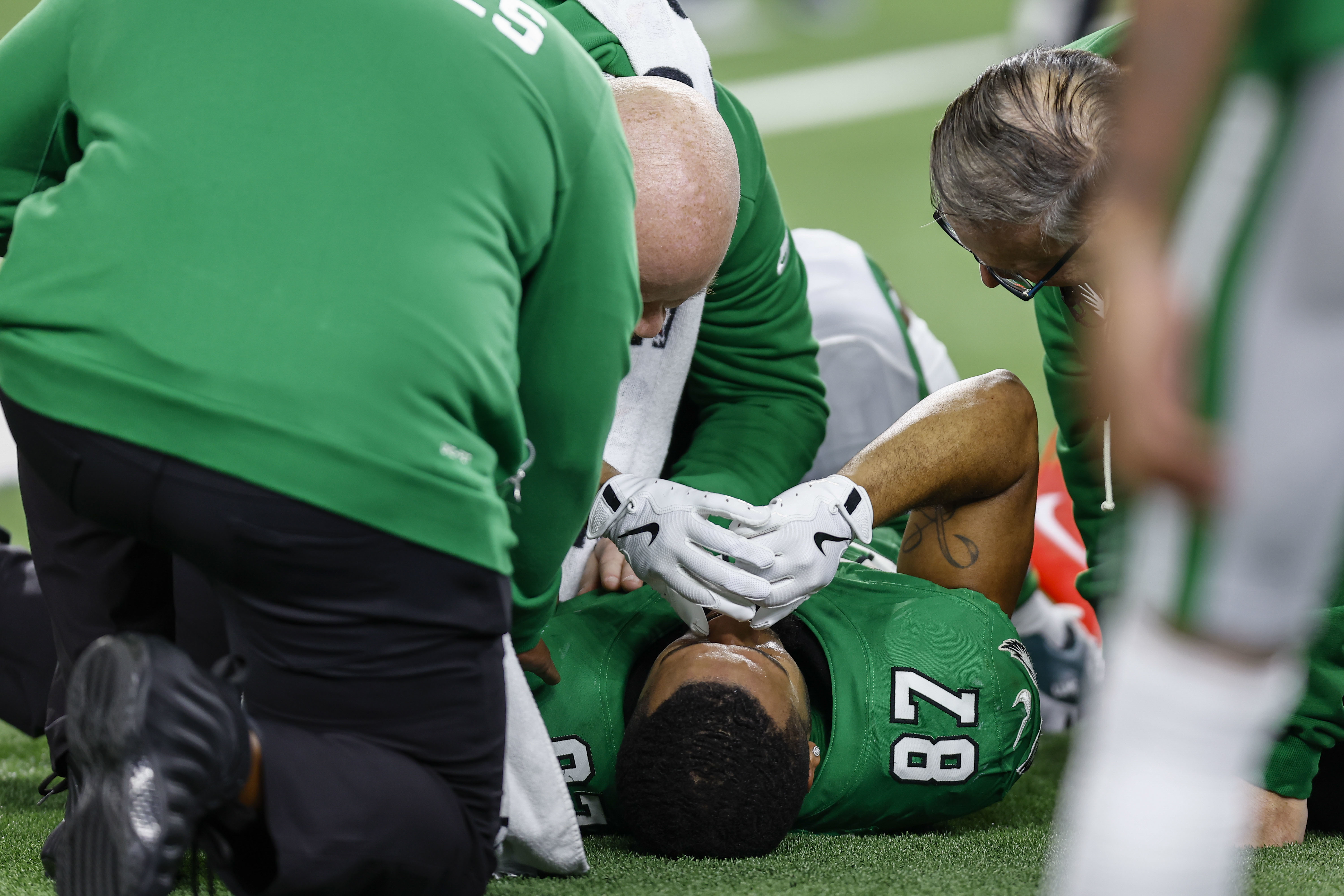
Wide receiver Xavier Gipson went down with a shoulder injury following his fourth-quarter fumble on a punt return. He was carted from the medical tent to the locker room. After the game, Gipson was in the locker room with his right arm in a sling.
Cornerback Adoree’ Jackson suffered another head injury Sunday. He was being evaluated for a concussion and never returned to the game.
NFC playoff picture: Eagles drop out of the top spot
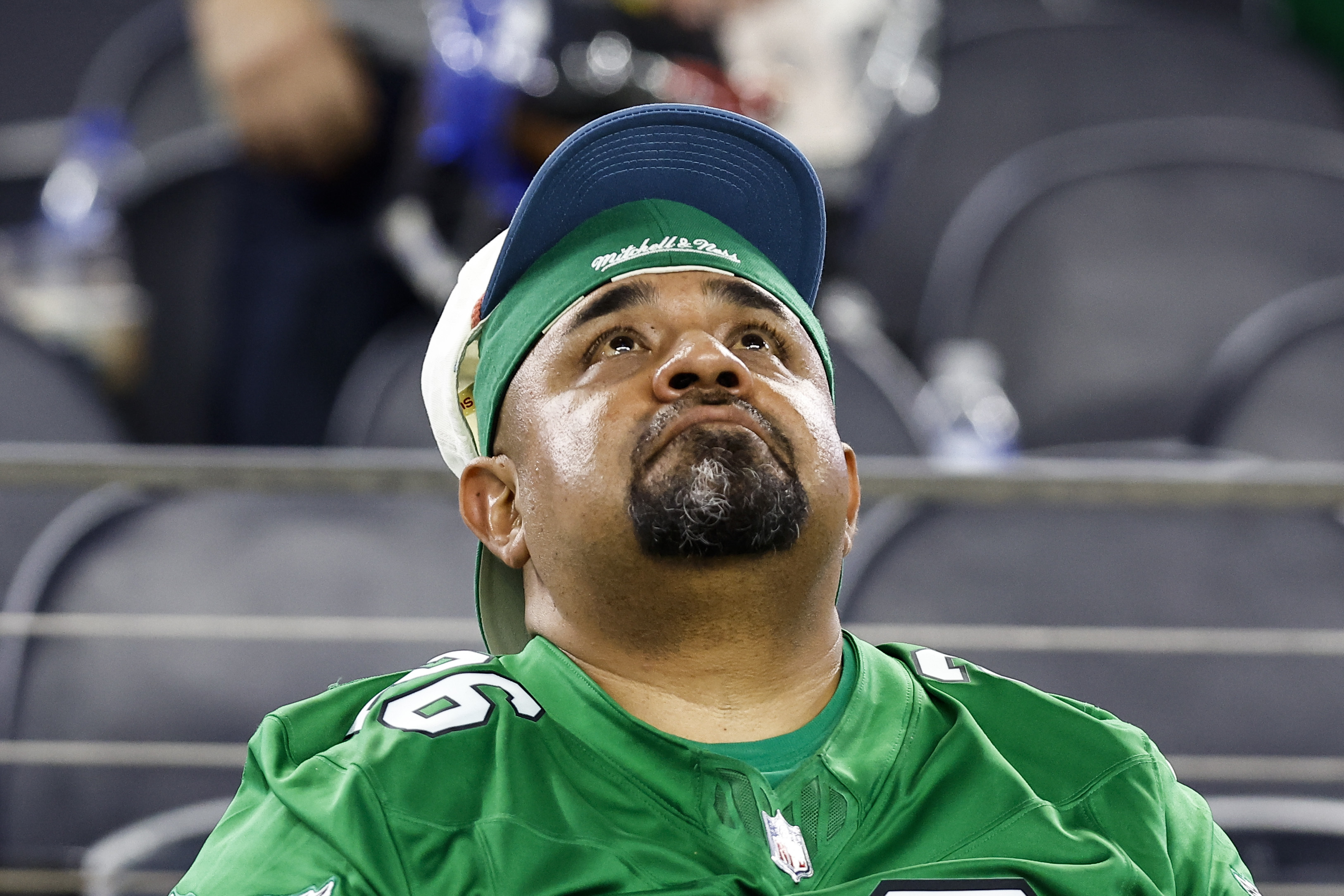
An Eagles fan reacts to the Birds’ loss against the Cowboys Sunday.
The Los Angeles Rams’ (9-2) blowout win against the Tampa Bay Buccaneers (6-5) Sunday night bumped the Eagles (8-3) down to the No. 2 spot in the NFC.
The Birds’ last-second loss to the Dallas Cowboys (5-5-1) dropped Philly’s odds of landing the No. 1 seed (and a first-round bye) down to 33%, according to the New York Times playoff simulator.
The Eagles will face the Chicago Bears (8-3) on Friday, with the winning team gaining a crucial tiebreaker as the top NFC teams remain bunched together in the standings.
While they aren’t scheduled to play the Seattle Seahawks (8-3) this season, the Eagles currently hold the tiebreaker with a better conference record (7-2 vs. 4-3).
The San Francisco 49ers (7-4) could also quietly improve to eight wins with a win against the Carolina Panthers (6-5) Sunday night. While that would give the 49ers a better conference record than the Birds (8-2 vs. 7-2), the Eagles would remain in the No. 2 spot because San Francisco trails the Rams in the division.
We also had our first playoff elimination — the New York Giants (2-10), who lost to the Detroit Lions (7-4) Sunday.
It’s the earliest playoff exit for the Giants since 1976 and the soonest a team has been eliminated since the New York Jets in 2020, according to NFL playoffs analyst Joe Ferreira. The Giants also became just the 11th team since 1990 to be eliminated from playoff contention before their bye week.
NFC standings
window.addEventListener(“message”,function(a){if(void 0!==a.data[“datawrapper-height”]){var e=document.querySelectorAll(“iframe”);for(var t in a.data[“datawrapper-height”])for(var r,i=0;r=e[i];i++)if(r.contentWindow===a.source){var d=a.data[“datawrapper-height”][t]+”px”;r.style.height=d}}});
As for the NFC East, the Eagles’ magic number remains four.
Despite Sunday’s loss, the Birds still hold a 2.5 game lead over the Cowboys in the division with six games remaining. The New York Times gives the Eagles a 98% chance to win the NFC East, so long as they can avoid a 2023-level collapse.
The Cowboys kept their playoff hopes alive, almost assuring their Thanksgiving matchup against the Kansas City Chiefs (6-5) will be the most-watched regular season NFL game in league history.
The Washington Commanders (3-8) were on their bye Sunday, but with Jayden Daniels sidelined, their playoff chances are barely better than the eliminated Giants.
NFC East standings
!function(){“use strict”;window.addEventListener(“message”,function(a){if(void 0!==a.data[“datawrapper-height”]){var e=document.querySelectorAll(“iframe”);for(var t in a.data[“datawrapper-height”])for(var r,i=0;r=e[i];i++)if(r.contentWindow===a.source){var d=a.data[“datawrapper-height”][t]+”px”;r.style.height=d}}})}();
Refs were off the mark again during Eagles-Cowboys
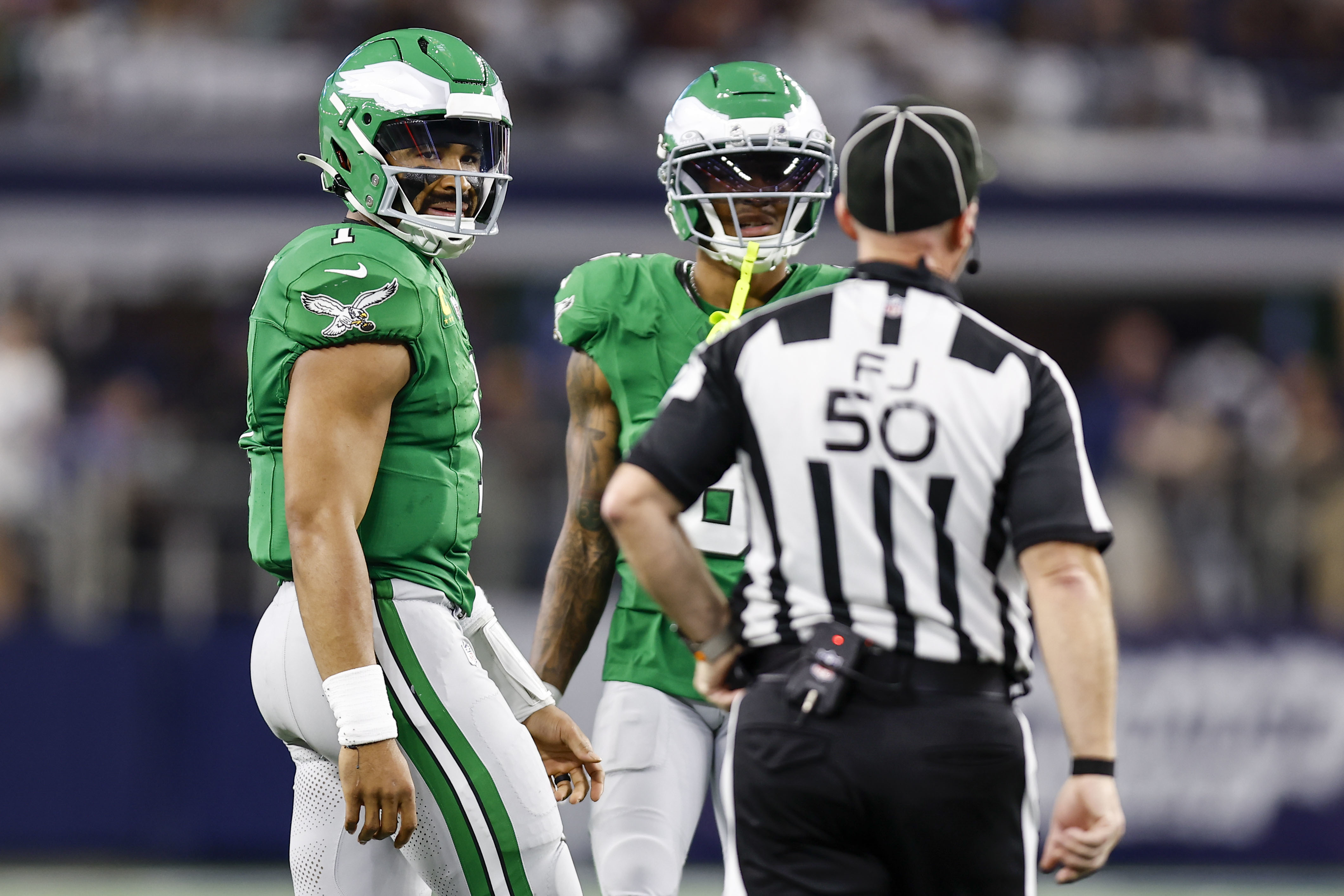
Jalen Hurts and DeVonta Smith talk with the ref after offensive pass interference call in the fourth quarter Sunday.
Can we go a single week without a bad penalty impacting a game?
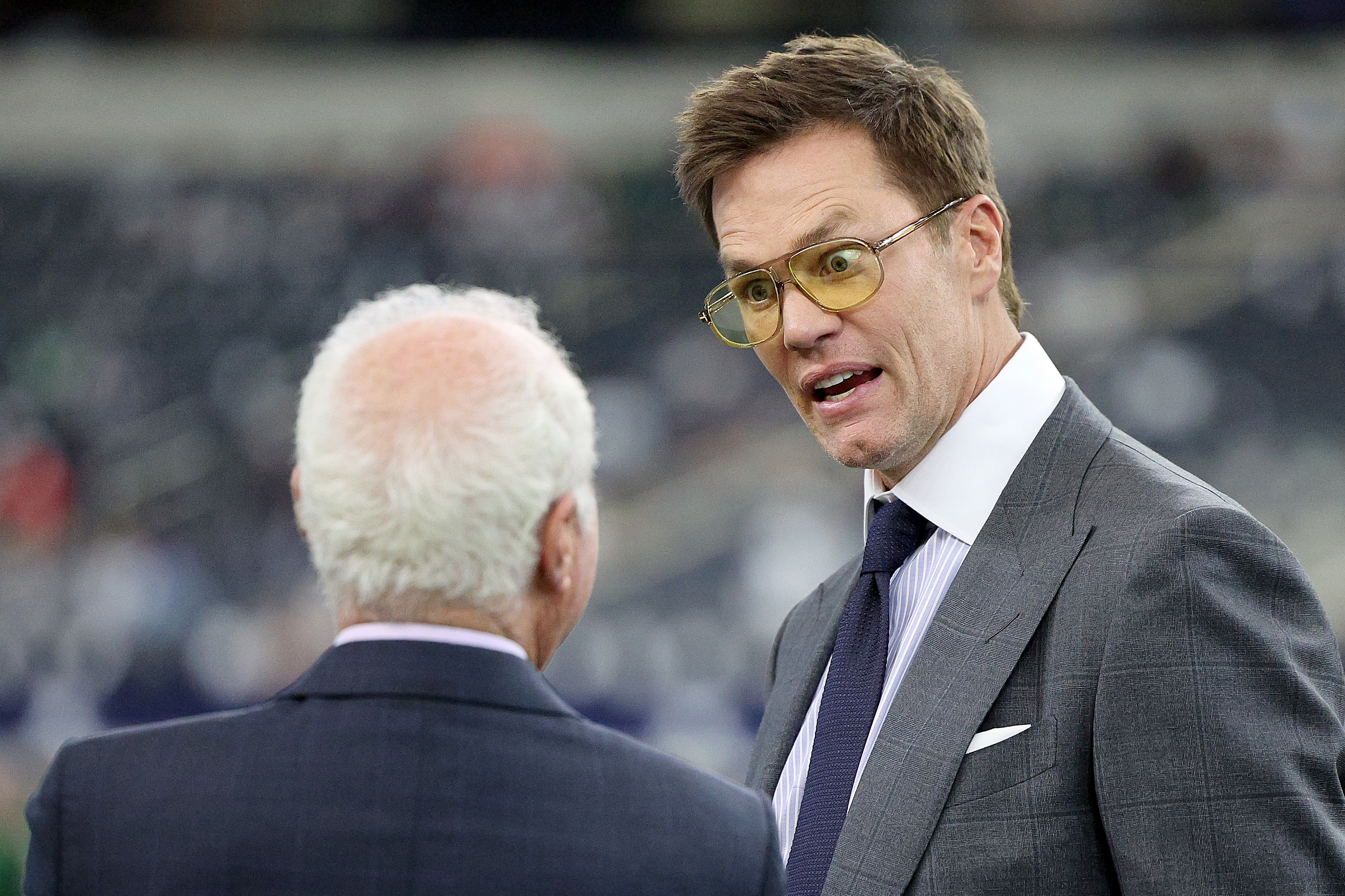
During the Eagles’ loss to the Cowboys Sunday, Cooper DeJean was called for pass interference on a 48-yard Cowboys pass that seemed very clearly to be offensive pass interference by CeeDee Lamb. Though neither Tom Brady nor Fox rules analyst Mike Pereira seemed to notice.
“A little hand fighting,” Brady said during the broadcast.
The Eagles also benefited from a roughing the punter call that gave them a free first down in the first quarter. The ball was tipped, which should have negated the penalty, but the refs missed it and the Cowboys didn’t challenge.
The Cowboys tipped (blocked) the punt on which the roughing penalty retained the ball for the #Eagles, but Ryan Flournoy, who blocked it, must not have told his coaches, since they didn't ask for a replay. https://t.co/ofAWDx60s8
Poor officiating wasn’t limited to the Eagles-Cowboys game. Over in Kansas City, CBS analyst Tony Romo blasted the refs over a phantom offensive pass interference penalty called on Chiefs tight end Travis Kelce.
“This is the worst call I have seen all year,” Romo said.
Tony Romo called this OPI on Travis Kelce "the worst call I have seen all year" 😳 pic.twitter.com/yVQxKd6OBd
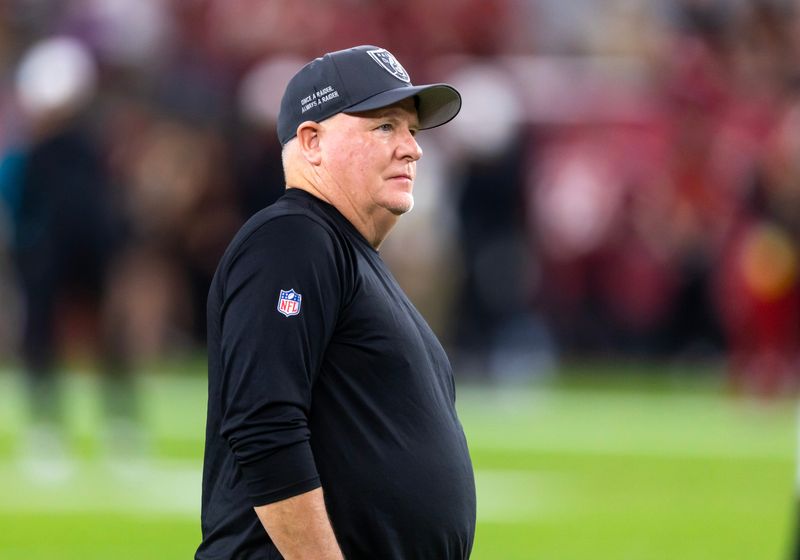
Chip Kelly was in his first season as the Raiders’ offensive coordinator.
The Eagles won’t get to face their former head coach after all.
The Las Vegas Raiders fired offensive coordinator Chip Kelly following a 24-10 loss to the Cleveland Browns, the team announced Sunday night.
“I spoke with Chip Kelly earlier this evening and informed him of his release as offensive coordinator of the Raiders,” head coach Pete Carroll said in a statement. “I would like to thank Chip for his service and wish him all the best in the future.”
The Raiders hired Kelly away from Ohio State in February, where he served as offensive coordinator and helped push the Buckeyes to a national title. He was reportedly being paid $6 million a year. He also served as the head coach of UCLA and spent one season with the San Francisco 49ers after the Eagles fired him with one game left in the 2015 season.
The Eagles face the Raiders in Week 15 on Dec. 14.
Chicago Bears up next on a short week for the Eagles
Caleb Williams and the Bears will face the Eagles on Black Friday.
No rest for the weary.
The Eagles (8-3) will be back in action in just a couple of days, taking on the Chicago Bears (8-3) the day after Thanksgiving on Amazon’s Black Friday game.
The Bears are coming off a narrow win against the Pittsburgh Steelers (6-5), where Caleb Williams threw for three touchdowns and Aaron Rodgers didn’t play due to a fractured left wrist.
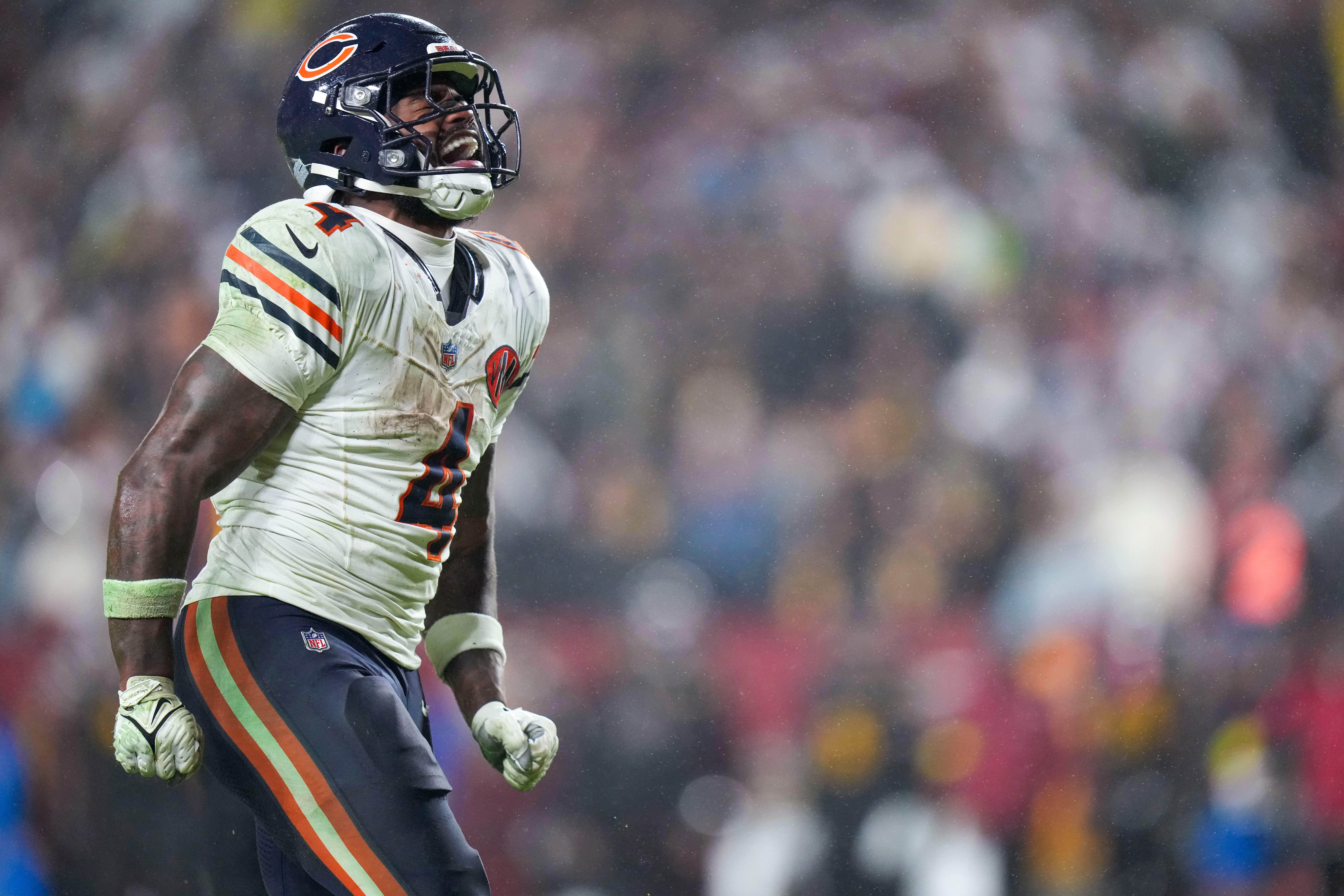
The surprising Bears have now won four straight games behind the league’s second-best rushing offense, averaging 142.3 yards on the ground per game. Former Eagles running back D’Andre Swift leads the team with 649 yards rushing, through he was stonewalled Sunday by the Steelers, limited to just 15 yards rushing on eight carries.
The Eagles have faced the Bears just twice over the past seven seasons (2019 and 2022) and won both games, though they were close.
While Thanksgiving games have been a tradition for decades, it’s just the third season the NFL has scheduled a game on Black Friday, which will stream exclusively on Amazon’s Prime Video.
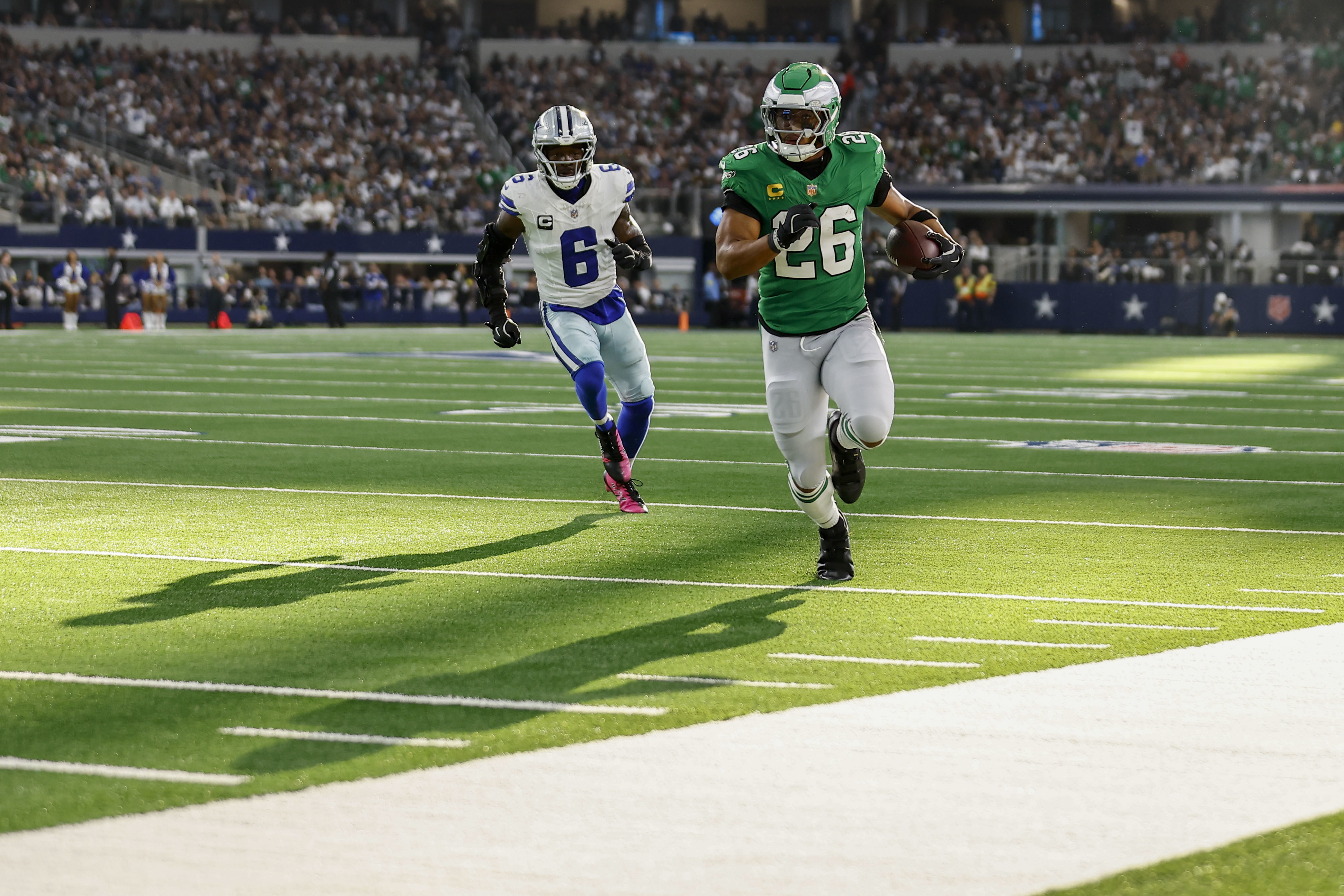
ARLINGTON, Texas — The Eagles couldn’t run the ball again, and yet, after they jumped out to a 21-0 lead, Saquon Barkley rushed on four first downs in the next five possessions.
He gained a total of 5 yards on the carries.
The play-calling defied logic after the offense had used an 8-18 run-pass ratio to score touchdowns on its first three drives. Offensive coordinator Kevin Patullo powered down the engine, but make no mistake, it was coach Nick Sirianni who was at the commands.
He’s the driver of the Eagles’ conservatism this season and it finally caught up to his team, which coughed up a 24-21 loss to the Dallas Cowboys on Sunday at AT&T Stadium.
There were myriad reasons for the Eagles falling to 8-3. Two uncharacteristic turnovers. Fourteen penalties — many of them unforced. And an injury-marred defense that succumbed under the weight of the offense’s ineffectiveness.
But Sirianni and Patullo turtled up when they should have pounced on the Cowboys’ sloppiness. Running the ball into five-man fronts — more on that mystery later — was puzzling. The lack of aggressiveness before the half and in fourth-down situations wasn’t as egregious, but decisions in those situations were emblematic of the overall timidness.
“We just weren’t very efficient as an offense in that second half,” Sirianni said. “I didn’t really feel that we took our foot off the gas.”
It’s been the tale of the Eagles offense for the past three months. They have spurts or even an entire half of efficiency. But consistency has been fleeting. The game plan opened with quick passes from quarterback Jalen Hurts to A.J. Brown, and eventually a downfield shot to DeVonta Smith.
There was diversity in the calls and innovation in the red zone. But the Cowboys adjusted and the Eagles failed to counter.
“They tried to take away some of the things that we were throwing to A.J. and Jalen did a good job on some of those, getting the ball down to Saquon [Barkley] in the flat,” Sirianni said. “Just a little different variations of how they played the coverages from what I’m seeing on the fly.
“Hats off to them.”
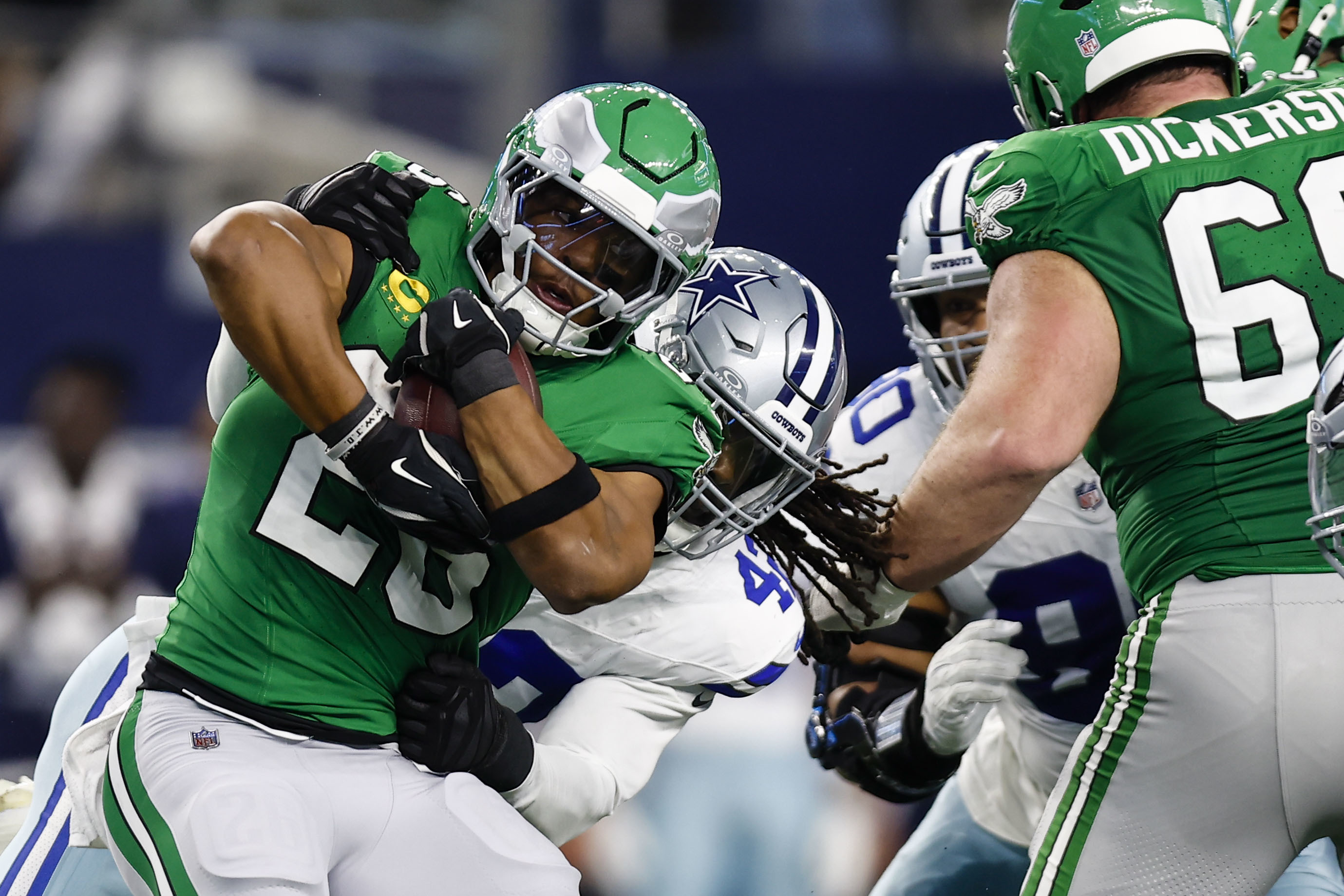
Saquon Barkley had another substandard day on the ground for the Eagles attack.
But this wasn’t a comparable defense to that of the Green Bay Packers and Detroit Lions, who held the Eagles to 16 and 10 points in the previous two games. The Cowboys’ defense entered Week 12 ranked 31st in expected points added per drive, 30th in points per drive, and near the bottom in most other statistical categories.
They’ve had marginal improvement after the trade for defensive tackle Quinnen Williams, partly due to a schematic change. Coordinator Matt Eberflus started utilizing more five-man fronts — with Kenny Clark and Osa Odighizuwa also in the interior — to help a unit that was last in the NFL in rush success percentage.
“I think that’s just how they’re built now, given the three interior defenders they have,” Hurts said. “They want to keep their best guys on the field, and it’s very effective, and it was something that we didn’t handle as good as we like to.
“So good opportunity to build if that’s something that teams show us.”
Eagles guard Landon Dickerson had a different take on Dallas’ five-man front.
“It’s not usually, typically something they were running a whole lot,” he said, “and turns out that was their flavor of the day.”
But opponents haven’t been vanilla in defending the Eagles ground game all season. They’ve been exotic and the offensive line has yet to find a blocking scheme to counter extra bodies in the box.
“I think a big thing is … time on task,” Dickerson said. “Obviously, you can’t run every play to every defense during the week, so I think we really just have to [home] in on having a game plan for every defense that a team has run, and every possible defense that they could run, and make sure that we can execute against all of them.”
This is who the Eagles are on offense now. They used to run the ball at will, especially when matched up against nickel defenses. But the O-line isn’t as strong because of injuries, a personnel change at right guard, and age.
And Barkley, who gained 22 yards on 10 tries and had a costly fumble as a receiver, just doesn’t seem to have the same pop. He said he’s healthy, but he’s clearly wearing down from all the attention.
“I’m tired of the excuse of people trying to stop the run game,” said Barkley, who’s gone from last year’s 5.8-yard rushing average to 3.7. “I don’t really subscribe to that. Just got to be better. Got to make plays.”
Jalen Hurts put up good passing numbers against the Cowboys and scored two TDs on the ground, but also had some notable negative plays.
And that goes for Hurts, as well, who should be able to check out of bad runs vs. heavy fronts. But more than anything, he needs to make defenses pay when they’re light in the secondary, and he and the pass offense didn’t do it enough.
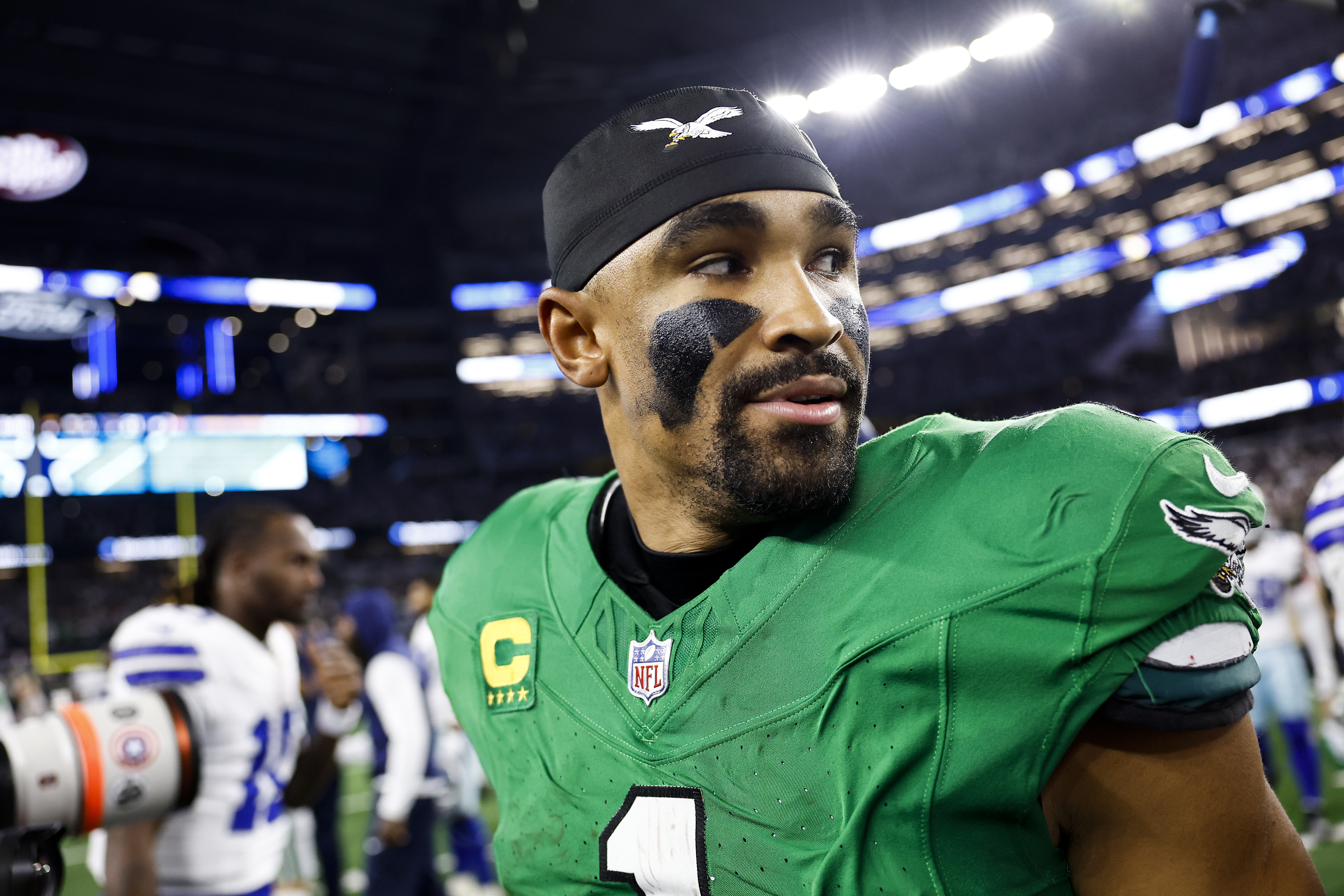
The quarterback’s numbers don’t look so bad on paper: 27 of 39 for 289 yards and a touchdown with no turnovers. Hurts also rushed for two TDs. But given the chance to lead the Eagles on a game-winning drive, he took a third-down sack after holding the ball for four-plus seconds.
“There’s nothing more you can ask for than to have the ball in your hands to go out and drive and finish the game on your terms, and we had an opportunity to do that,” Hurts said. “And I didn’t do enough.”
But this loss was more on the coaches. Fourteen penalties — for 96 yards — matched a high in the Sirianni era.
“You always put that on me,” Sirianni said. “If there’s stuff that like that that we spend time going over, obviously, I’ve got to get my message across better. So that’s got to be on me.”
Two offensive penalties negated catches for 20 and 16 yards in the second half. On the first, Matt Pryor was flagged for lining up in an illegal formation.
“I believe I was supposed to line up off the ball,” Pryor said. “Miscommunication going in. So it’s just something that I have to catch onto the formation that we call and make sure we’re aligned.”
Lane Johnson’s absence due to a foot injury forced Fred Johnson in at right tackle and meant Pryor filled the latter Johnson’s role as a sixth O-lineman. But why wasn’t he prepared in that moment?
Sirianni called the high number of penalties “uncharacteristic,” but the Eagles’ 84 penalties are the seventh-most in the NFL, and have consistently put them behind the sticks. The offense added three more three-and-outs to its league-worst total. Sirianni’s game management is seemingly an admission that he knows his once-potent unit is substandard.
Given the ball with 17 seconds left in the half and two timeouts at the Eagles 28, Sirianni had Patullo call a running play. Barkley gained a yard running off left tackle.
“We tried to run it to see if we could bounce one out of there and see what happened after that,” Sirianni said, and noted the Cowboys “had their timeouts, as well, and that kicker can make it from long range. We had a 21-7 lead.”
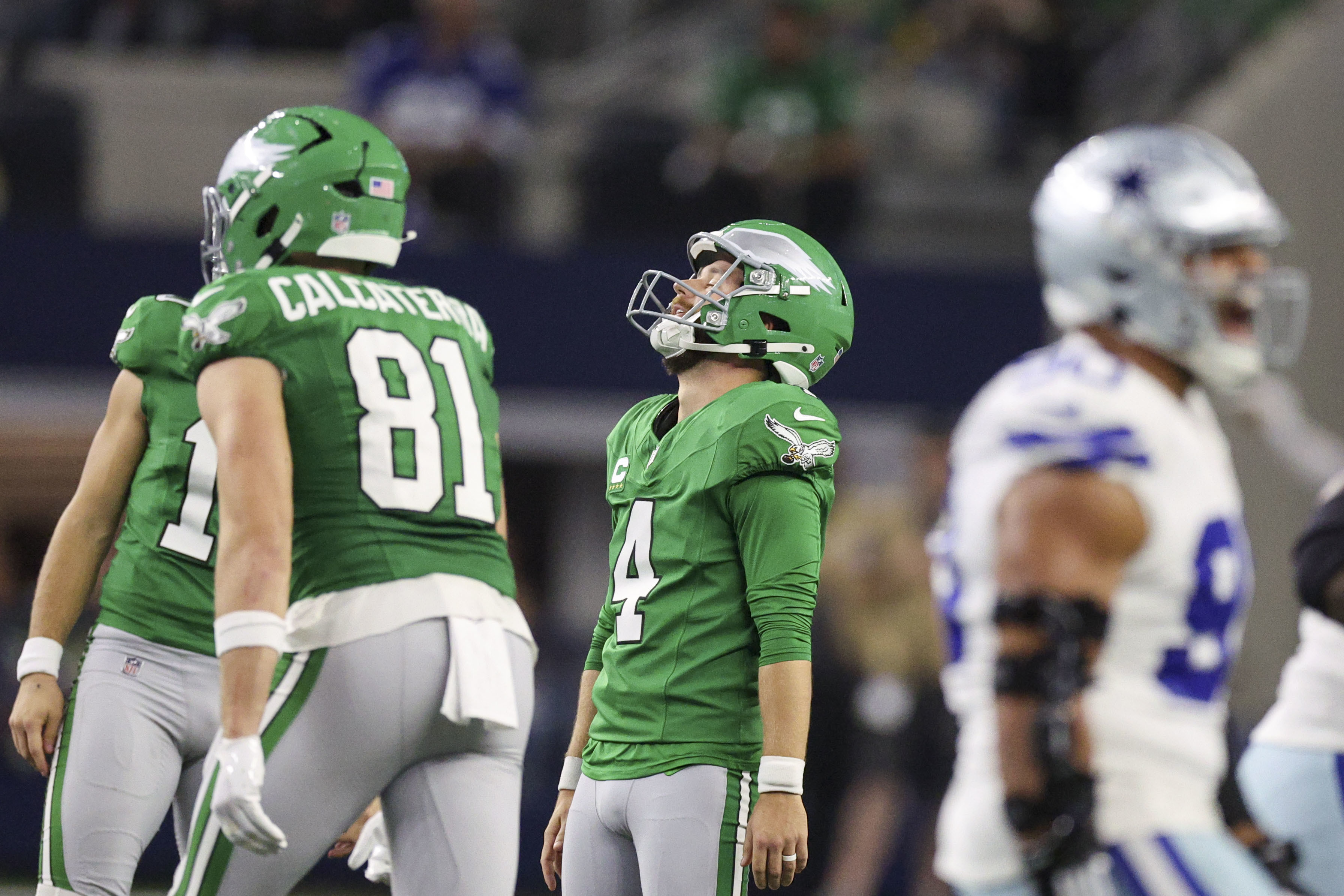
The score remained the same early in the third quarter when the Eagles punted on fourth-and-5 at their own 48. The Cowboys cut the margin in half two series later. Early in the fourth quarter, Sirianni elected to have Jake Elliott attempt a 56-yard field goal on fourth-and-5. The kicker missed wide right.
Jake Elliott’s rare field goal miss helped magnify the Eagles’ issues, and conservatism, on offense.
Both decisions can be justified. But they were indicative of a coach who has increasingly played not to lose. Even that philosophy can be defended to some degree. Sirianni won eight of his first 10 games that way.
Losing to the 5-5-1 Cowboys shouldn’t be the end of the world. The Eagles control their NFC East destiny, if no longer for the No. 1 seed in the playoffs. A win over the 8-3 Bears on a short week would right the ship.
But after 11 games, it’s difficult to see the offense at the wheel, and whether there’s someone competent on the bridge.
“I’m not going to make any sweeping judgments right this particular time,” Sirianni said. “I think it was a wide variety of things. Obviously, at the end of the day, we didn’t coach well enough, we didn’t play well enough.”
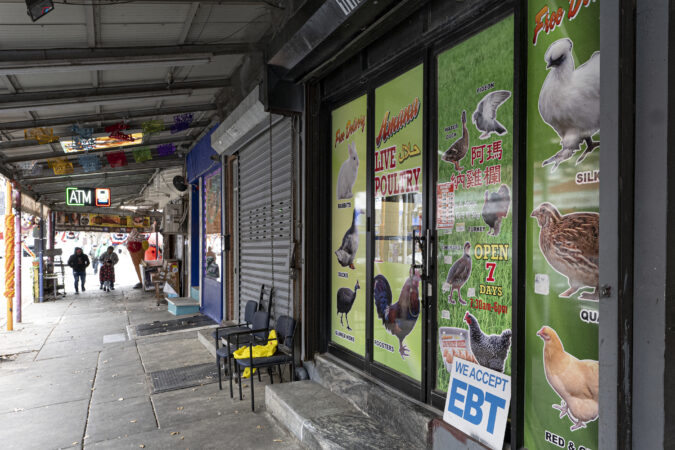
The sounds of clucks and tiny eyes looking through metal cages are part of the Italian Market background, as some stores sell live poultry.
Citywide, chickens, ducks, quails, and other animals are kept alive until purchase, only leaving the store when becoming someone’s food source.
Struggling to understand the dynamics of the live poultry business, a reader asked Curious Philly, The Inquirer’s forum for questions about the city and region: Who is buying these live chickens, where do they come from, and where are they slaughtered?
The Pennsylvania Department of Agriculture oversees what is called the live bird marketing system, a structure that involves farms, distributors, and stores.
About 500,000 birds weekly are sent to live poultry stores across Pennsylvania, New York, and New Jersey, according to an article published in the Delaware Journal of Public Health in 2021.
Statewide there are 17 live bird markets, according to the Pennsylvania Department of Agriculture. Most are in the Philly area, but there is no state registry of the markets.
In the city, the health department licenses and inspects these facilities. The birds are subjected to the same regulations to curb the transmission of avian influenza as all poultry producers in Pennsylvania, a spokesperson for the Pennsylvania Department of Agriculture said.
Alex Lemus, 29, and Juan Amador work at one of South Philadelphia’s live poultry stores. They weren’t authorized to speak for their workplace, but said they put effort into making the chickens feel as comfortable as they can.
“We take good care of them; we give them corn, and they grow up free-range,” said Lemus, who has been working in the live poultry industry for seven years.
The birds sell fast, hesaid, pointing to 16 long metal cages, each with at least 10 chickens and ducks inside. “At least 80 people per day come to buy, mostly Asian and Latino, and that is not counting the holidays,” Amador said.
Among quacks and clucks, longtime customer Nu Aing walked into the store. Stepping over a lone feeder and some light brown liquid residue on the floor, she selected six chickens.
As one worker swept the floor, another weighed the chosen chickens and placed them into a box for Amador to take to the back room. The chickens clucked loudly.
Aing drove an hour and a half from the suburbs because, she said, the chickens here are tender and better for recreating her family’s Vietnamese cuisine.
“Meat is better than the grocery store for soup, but they are good in anything,” Aing said. Around the Vietnamese New Year,“a lot of people are here; the line is long.”
In the back room, the chickens were killed and their bodies plucked and placed in white plastic bags, at Aing’s request.
“It is killed inside in 30 seconds,” Lemus said. “This part of the job was horrible when I started, but you get used to it over time.”
Within 20 minutes, the store is packed with at least 15 people waiting for their orders.
Guatemalan native Carlos Baten, 42, sent pictures of the birds to his family to help him pick the best option. He asked for his chicken to be cut into pieces for a chicken and vegetable soup that would feed three people.
“The freshness of the meat is unmatched,” Baten said. “They just feel like they are healthier and fed with fewer chemicals.”
The idea of eating a healthier type of meat also brought Guatemalan native Mayra González, 35, to the store with her 2-year-old daughter. But as soon as González placed her order, she fled to wait outside.
“I don’t like the scent inside, it smells like chicken feed,” González said. But the meat is “way better than the one at the grocery store,” she said.
To her, live poultry meat feels “silky,” and can feed more people for less. The cost of each chicken depends on the weight, but two chickens are enough to feed 11 people, González said.
“I feel bad for them, but since you can’t see when they are sacrificed, it’s the same as when you buy them at the grocery store,” González said.
This is not to say people of color aren’t getting city business. The Office of Economic Opportunity (OEO) said what it calls “minority, women, and disabled business enterprises” received more than $370 million in city contracts in fiscal year 2023.
The city’s goals call for 35% of city contracts to be awarded to businesses owned by women, people of color, and people with disabilities. During the 2023 fiscal year, 31.4% of city contracts went to companies owned by people from those demographic groups.
However, Black-owned businesses only accounted for about 13.5% of all city contracts.
So why don’t participation goals work better for Black people? I believe the answer is simple. Bias and race-based exclusion are built into a system where money is plentiful but accountability is not.
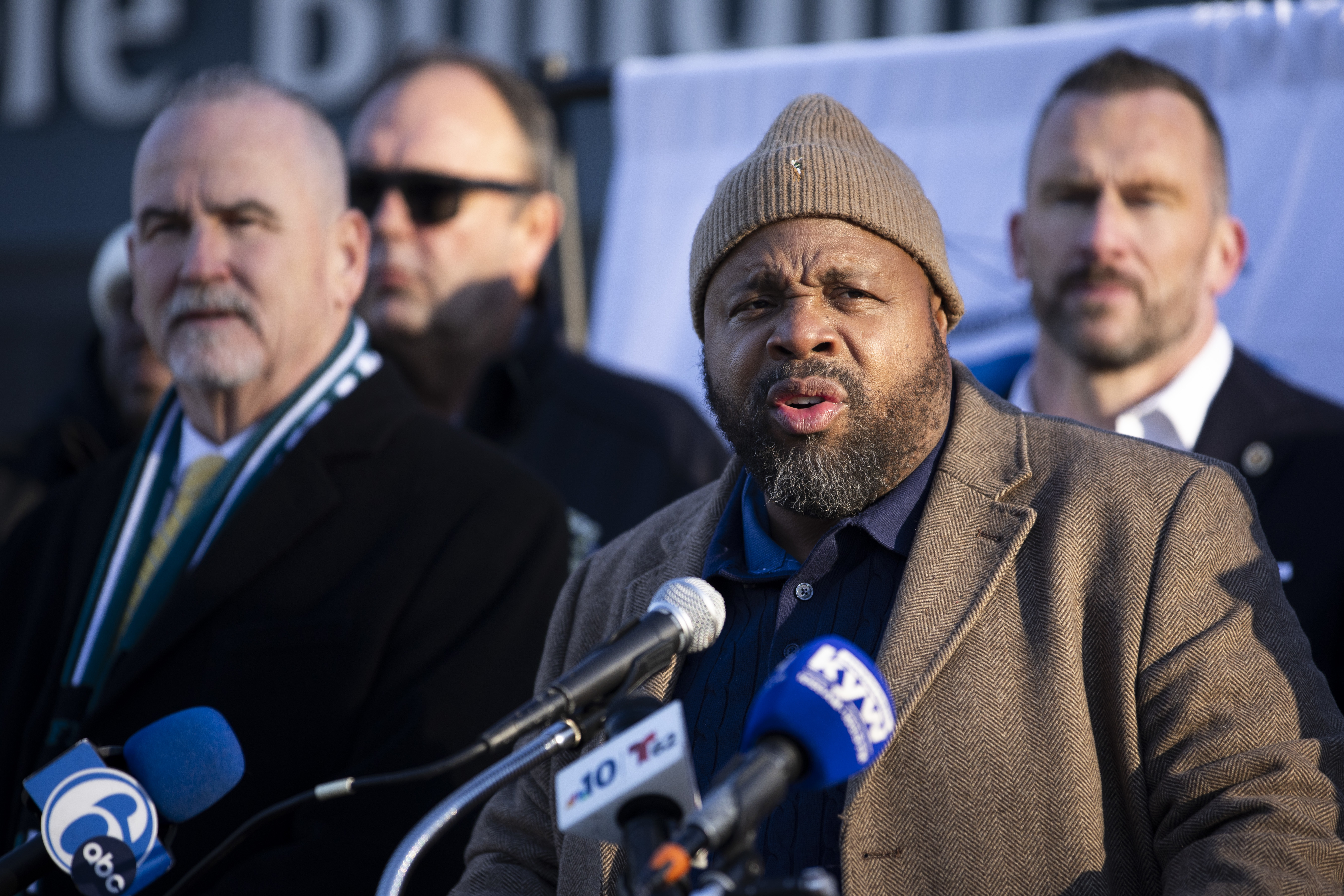
Ryan Boyer, the head of the city’s building trades unions, speaks at a January news conference. Although Boyer now leads the group, the unions spent generations excluding Black people, Solomon Jones writes.
That leaves the city asking white-owned businesses with largely white workforces to meet minority participation goals set by the Office of Economic Opportunity.
According to a former manager in the OEO, who would speak to me only on the condition of anonymity, companies that don’t meet the goals rarely face consequences.
That’s been the case for years. In fact, I wrote a 2016 Inquirer column that noted that in the 2015 fiscal year, nearly 70% of city-funded construction projects with budgets over $250,000 did not reach the city’s participation goals for people of color, and 44% had no participation by people of color at all.
Very few were held accountable for it then, and very few are held accountable now.
But even if the goals didn’t deliver what they should have, it’s galling to lose them at a time when the president is pushing an anti-Black agenda, complete with policies that led to job losses for over 300,000 Black women during his first year in office. Sadly, that’s just the tip of the iceberg.
But this is about more than the president’s recent actions. This is about Trump’s long game. From Road-Con Inc. v. City of Philadelphia, which challenged the city’s minority set-asides, to the U.S. Supreme Court’s decision to kill affirmative action, the multipronged attack is not just meant to set precedents. This attack is meant to set us back.
That’s why, when we see our civil rights gains under attack, we want our leaders to stand and fight.
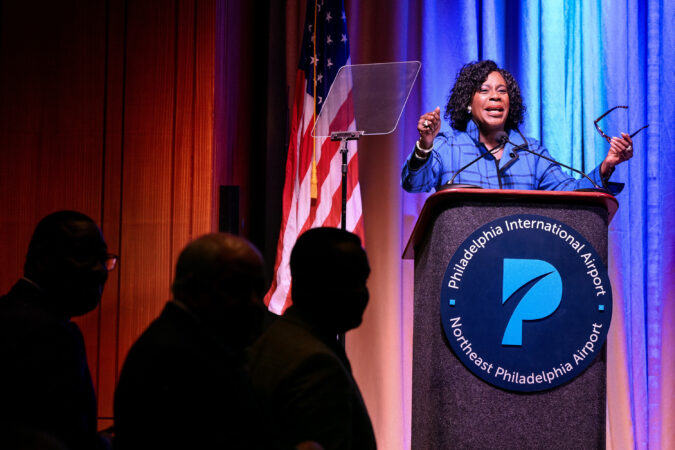
I asked Mayor Cherelle L. Parker if changing the minority participation goals to small and local business goals represented the kind of fight our community wants from her.
“I am 53 years old,” she said, “and I have been working in government and public service since I was 17 years old. I don’t know anyone in this city who knows me who has ever questioned whether or not I’m willing to fight for what I believe in. I’m a product of this city. You heard me reference the intersection of race and gender. But I thank God that I’m made and built from the kind of material that says a speech is not enough. You have to deliver tangible results.”
The mayor went on to say the community should hold her accountable. I agree, and we will.
But I am also one of those people who have known the mayor for years. She is indeed a fighter, and she’s fighting this her way. We only need one thing from her: a win.
Philadelphia stands to lose tens of millions of dollars for housing as President Donald Trump’s administration changes the way aid goes to cities.
And two days before a West Philly apartment complex went up in flames in June, its owner, embattled city landlord Phil Pulley, transferred the vacant property to a New York investment firm. Read on for the latest in the suspected arson case.
A U.S. Department of Housing and Urban Development plan released earlier this month calls for cutting funds for permanent housing by two-thirds.
HUD’s new plan: The department will funnel most of the money for permanent housing into short-term housing programs with requirements for work and addiction treatment. HUD is also encouraging religious groups to apply for funding, and would limit funding to organizations that support “gender ideology extremism,” among other ideological preconditions.
Local impact: Philadelphia counts 2,330 units of permanent housing, many of them financed by $47 million the city received from HUD last year, according to city officials. Advocates say the lost funds could lead to a spike in homelessness by forcing people who were once homeless, but are now living in subsidized housing, back on the street.
Notable quote: “It’s a misguided approach that blames the victim and fails to address the lack of affordable housing,” one expert told The Inquirer, about the administration’s move toward transitional housing and required treatment.
In other government funding news: Rape crisis centers are finally getting funding from Pennsylvania’s budget, but advocates say it’s not enough to support survivors. Plus, SEPTA’s Zero Fare program for low-income riders could end next year. Some elected officials are pushing to save it.
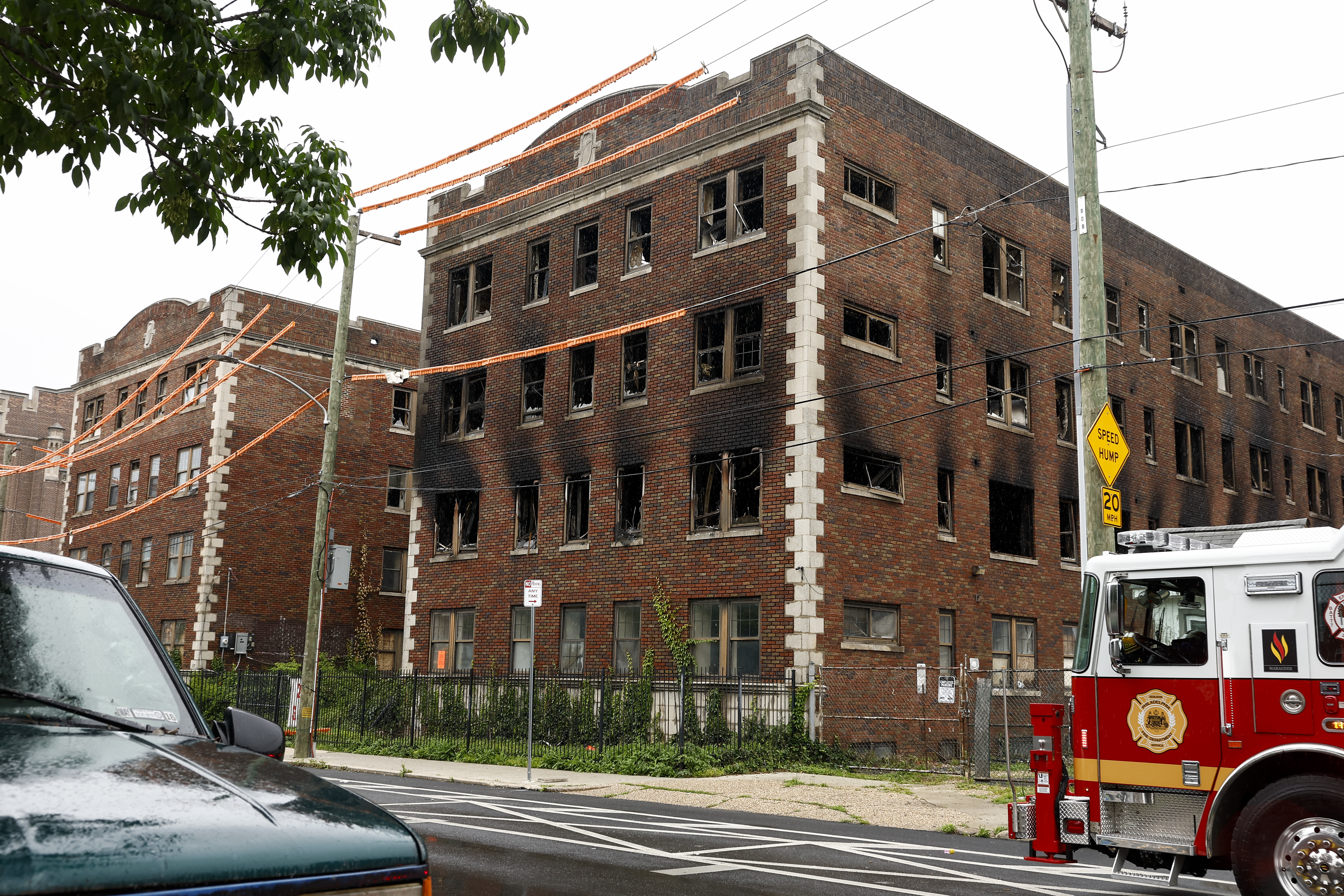
New details are emerging about a vacant apartment complex destroyed in June by a four-alarm fire, the circumstances of which are now being investigated by federal authorities.
Property records show the notorious landlord of the decaying Admiral Court apartments at 48th and Locust streets, Phil Pulley, had signed a deed transfer two days before the blaze.
This month, the new owner of the building — which records show is linked to investors in South Korea and Saudi Arabia — obtained a permit to demolish it.
West Philadelphia Councilmember Jamie Gauthier on Friday blasted the deal: “The new owner appears to be a shell corporation with little transparency,” she said, “and I’m deeply concerned that demolishing Admiral Court will create new blight and safety hazards.”
A federal judge has blocked the Trump administration from obtaining the private medical records of youth who sought gender-affirming care at Children’s Hospital of Philadelphia.
Trump this weekend doubled down on his call for six Democratic members of Congress, including two from Pennsylvania, to be jailed over their video directed at U.S. troops. Both U.S. Reps. Chrissy Houlahan of Chester County and Chris Deluzio of Western Pennsylvania reported bomb threats at their district offices on Friday.
The mother of Steven Dreuitt Jr., the Mount Airy man who died in January’s plane crash in Northeast Philadelphia, spoke about her son during a remembrance event on Saturday.
U.S. Rep. Brian Fitzpatrick introduced a bill Thursday to modernize pipelines and emergency responses in the wake of a leak of a Sunoco pipeline detected this year in Bucks County.
Councilmember Jeffery Young’s latest plan for the Cecil B. Moore Library — to build a new library nearby and convert the aging building into another public space — was met with pushback from neighbors who want to see it renovated.
Bryn Mawr birth center Lifecycle Wellness is shutting down operations amid growing financial pressure, the nonprofit said Thursday.
Penn Museum on Saturday unveiled a new gallery showcasing the artistic, linguistic, spiritual, and revolutionary traditions of Native Americans across the country.
If you hoped to get a reservation at one of the city’s newly honored restaurants … well, good luck. The “Michelin effect” is already at work, with a surge in bookings soon after the awards ceremony.
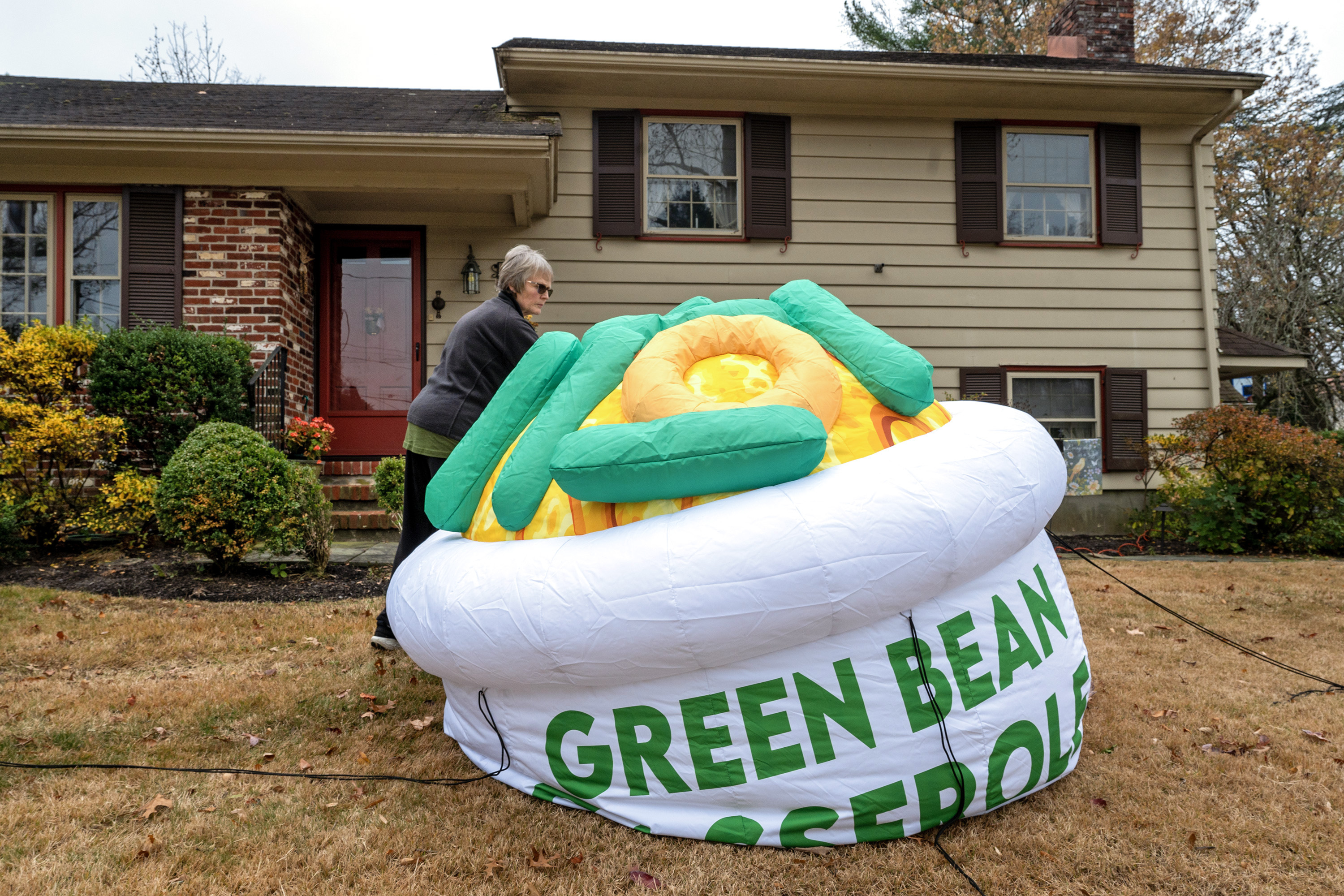
Dorcas R. Tarbell, daughter of the inventor of the green bean casserole, turns on the blowers to inflate the Thanksgiving decoration in the front yard of her father’s home in Haddonfield.
Add another entry to the “Wait, that’s a Philly(ish) thing?” list: The green bean casserole turns 70 this year, and its creator’s family is honoring the iconic Thanksgiving side dish with a six-foot inflatable green bean lawn decoration for their home in Haddonfield.
📬 Your ‘only in Philly’ story
Think back to the night that changed your life that could only happen in Philly, a true example of the Philly spirit, the time you finally felt like you belonged in Philly if you’re not a lifer, something that made you fall in love with Philly all over again — or proud to be from here if you are. Then email it to us for a chance to be featured in the Monday edition of this newsletter.
This “only in Philly” story comes from reader Ellen Pannell, who describes raising the next generation of Philadelphians:
I am a South Philly transplant who grew up near Valley Forge. During the ’70s, my immigrant mom would drag our family to every historic event in the city. When deciding where to plant my roots after college, Philly already felt familiar from all those bicentennial and civic events visited as a kid.
My husband and I bought our home between Broad Street and the Italian Market in 1996 when most friends gasped, “Below Washington?!” As transplants, we knew we had to get into good graces with the old Italian ladies on the block who would sit on their stoops in their house dresses and ask “So, whaddaya making for dinner tonight?” (I think four were named Mary.) We learned the lingo (“gravy” not “sauce”), planted trees, picked up trash, called the cops when things got out of hand — we made a go of it!
Those ladies asked whether we planned to fill “that big house” with kids, and with each pregnancy, they were the first to say “Gah-bless!”
Each kid was born at Jefferson, sometimes after we walked to the emergency room or took the subway after a recent street-closing snowstorm. Jefferson always took care of us, with old-timer nurses giving advice (“Don’t be a martyr for the pain, honey!”) to new, super-fit nurses aptly named Adrienne with a pep talk (“C’mon, you don’t need another epidural, you got this!”) to a novice sent to give me my IV (“The nurses said you won’t mind because you’re a pro”) to a room full of interns and residents there to be educated while Baby Four came into this world.
Fast forward through the child-rearing years of Moonstone Preschool, Palumbo Rec Center, Independence Charter, Central High, and eventually college, when I couldn’t convince even one member of my South Philly brood to leave the city they called home. (Thank you Temple, Drexel, and CCP!)
And now I am almost an empty nester and the old lady on the block, minus the house dress. All four kids have started their own lives in the city they love too much to leave, and where I am so proud to say they are true “born and raised South Philadelphians.”
Shout-out to the Marys among us. Have a good one.
By submitting your written, visual, and/or audio contributions, you agree to The Inquirer’s Terms of Use, including the grant of rights in Section 10.