On Friday morning, Kayla wore glittery makeup and a big smile as she stood inside the Convention Center. “I used to live in Philadelphia and I came to be with my siblings, and we all love board games, so it’s just a great time,” she said.
The Crestview, Fla., resident is a former Philadelphian who came back to the city to attend Pax Unplugged, the gaming convention she loves returning to.
On Friday, the massive main hall at the Convention Center was crammed to the brim with booths selling game accessories, memorabilia, and whimsical gifts like plushies and stickers.
On one side, gamers were engrossed in games of Magic or Dungeons & Dragons. Influencers sat in special areas to meet fans and sign autographs amid a constant hum of chatter and excited energy.
Guests attend Pax Unplugged, held at the Pennsylvania Convention Center on Friday, Nov. 21, 2025. The gaming convention, which is held in Philadelphia every year, has become a major event for fans of Dungeons & Dragons, Warhammer, Magic: The Gathering, and other tabletop role-playing games.
While other conventions in the Pax family include video games, Philly’s Unplugged focuses on tabletop games. Anyone looking for the Valhalla of tabletop role-playing games, accessories, merch, and communities was in the right place.
Since November 2017, Pax Unplugged has become a major event for fans of Dungeons & Dragons, Warhammer, Magic: The Gathering, and other tabletop role-playing games, and it’s held only in Philadelphia. Pax, “a celebration of gaming and gaming culture,” holds conventions in other cities, like Boston (for Pax East) and Seattle (for Pax West), but the Unplugged convention is exclusive to Philadelphia, drawing fans, vendors, and special guests from all over the country.
The 2025 edition of Pax Unplugged plays host to major Dungeons & Dragons stars and personalities — like Dropout TV standouts Ify Nwadiwe and Aabria Iyengar as well as Critical Role star Matthew Mercer, the last of whom also lent his voice to the Nintendo game The Legend of Zelda: Tears of the Kingdom.
Guests attend Pax Unplugged, held at the Pennsylvania Convention Center on Friday, Nov. 21, 2025.
Heidi Archer, who owns and operates MeloriaMaille — which sells handmade jewelry, trinkets, and stickers — travels from Derry, N.H., every year to run a vendor booth at Pax Unplugged. “I love gamers and I’m a nerd myself, and the fact that I can bring my handmade goods to the nerd populace … it makes it worth it,” said Archer, who has worked at Pax three times. “And I bring them stuff that represents queer pride in fandoms that people might not otherwise have access to.”
At Archer’s stall, there were stickers and other items that represented the LGBTQ+ and Dungeons & Dragons communities. A sticker on sale proclaimed “Naturally Genderfluid” with a 20-sided die as a reference to rolling a “natural 20.”
Guests attend Pax Unplugged, held at the Pennsylvania Convention Center on Friday, Nov. 21, 2025.
This inclusivity is a big part of what brings fans and merch-makers back to Philadelphia every year.
Chris Vicari had traveled from New York City to attend his fourth Pax Unplugged. “[It] is a great representation of how inclusive the community is.” said Vicari, the author of Behind the Screen: A Dungeon Master’s Guide to Crafting Campaigns, who also runs a Substack about crafting Dungeons & Dragons games.
“This is the warmest tabletop show. It’s not the biggest, but it’s the warmest,” said Patrick Rami, the owner of Lethal Shadows, which makes “miniatures” — small figurines used for gameplay during Dungeons & Dragons. This was the fifth time he had traveled from Seattle to attend the convention.
“This is one of everybody’s favorite shows as a vendor,” said Quentin Weir, a managing partner of Elderwood Academy, which makes Dungeons & Dragons dice sets and other items.
“It’s a consumer show, so you’re talking directly to the community. It can be hard to make this work in other markets, but Philly has been great,” said Weir, a Ypsilanti, Mich., resident, who once had to deal with a dead car battery at a previous Pax Unplugged visit. Without hesitating, he said, Convention Center staffers gave the car a jump.
Guests at Pax Unplugged held at the Pennsylvania Convention Center on Friday, Nov. 21, 2025. The gaming convention that is held in Philadelphia every year, has become a major event for fans of Dungeons & Dragons, Warhammer, Magic: The Gathering, and other tabletop role-playing games.
Weir and his team have been to Pax Unplugged seven times.
Across three days, Pax Unplugged offers panels, vendors selling all kinds of TTRPG-related goodies, and even massive table setups where people can hang out and play marathon rounds of whichever games they want.
There’s also quite a bit of cosplay action, as many attendees show up in elaborate costumes.
One fan, Emily, was dressed as her Dungeons & Dragons character Mara, carrying a staff and adorned in a mushroom-themed outfit complete with a cap. (For those in the know, Emily informed us that Mara is a “nature slash death cleric.”)
“I feel like there’s not much else locally that’s available for our community,” said Emily, who lives in Lancaster and has attended six Pax Unplugged conventions.
From stalls full of intricately carved miniature figurines to brand new independent tabletop role-playing games on display, Pax Unplugged is a feast for any TTRPG fan. In an increasingly divided world, it’s thrilling — whether you play board games or not — to spend time in a space where people feel free, happy, and literally playful.
Pax Unplugged runs through Sunday at the Convention Center, 1101 Arch St. unplugged.paxsite.com
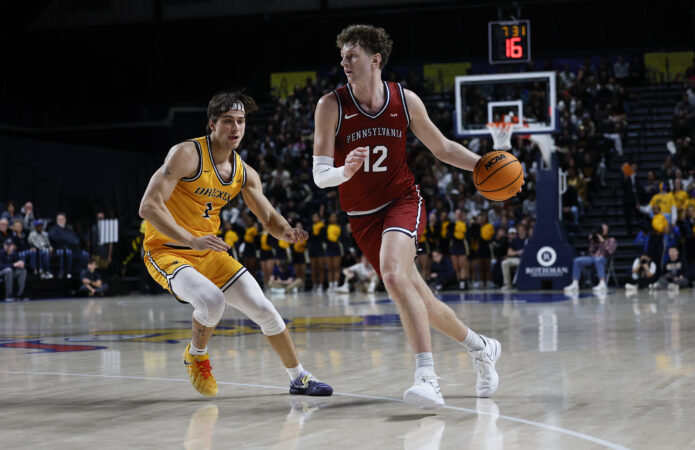
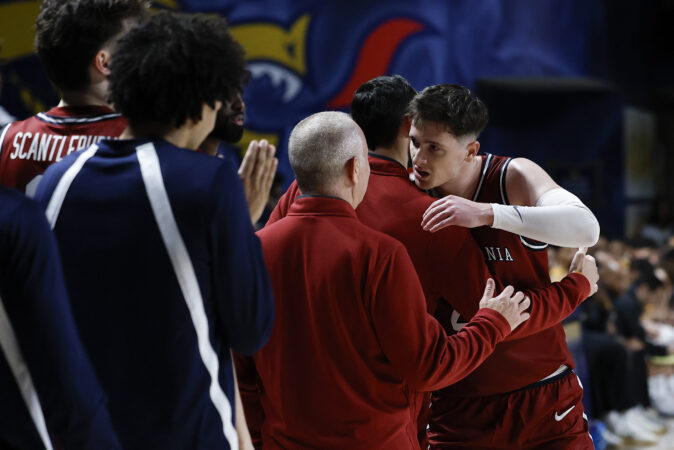
After finishing last in Big 5 play the previous two seasons, Penn men’s basketball is set to compete for a Big 5 Classic Championship inside Xfinity Mobile Arena on Dec. 6, following the Quakers’ 84-68 victory over Drexel on Friday.
Penn (3-2) was led by Ethan Roberts (30 points and 8 rebounds) and TJ Power (18 points). While Drexel (2-4) countered with its bench mob, outscoring the Quakers 40 to 10 at the substitutions table — led by Josh Reed’s 21 points on 9 of 14 shooting, a career high.
“It’s just exciting,” Roberts said. “We are just excited about the team in general, but even more so, having Coach Fran McCaffery here.”
Next, Penn will host Merrimack on Nov. 28 (4:30 p.m./ESPN) and Drexel faces Old Dominion on Sunday at home (2 p.m.).
Roberts set the tone, notching his second straight 30-point performance. He had a 31-point outburst in Penn’s victory over St Joe’s on Monday.
Roberts scored 11 of Penn’s first 19 points and finished the half with 19, with an efficient 8 of 12 shooting.
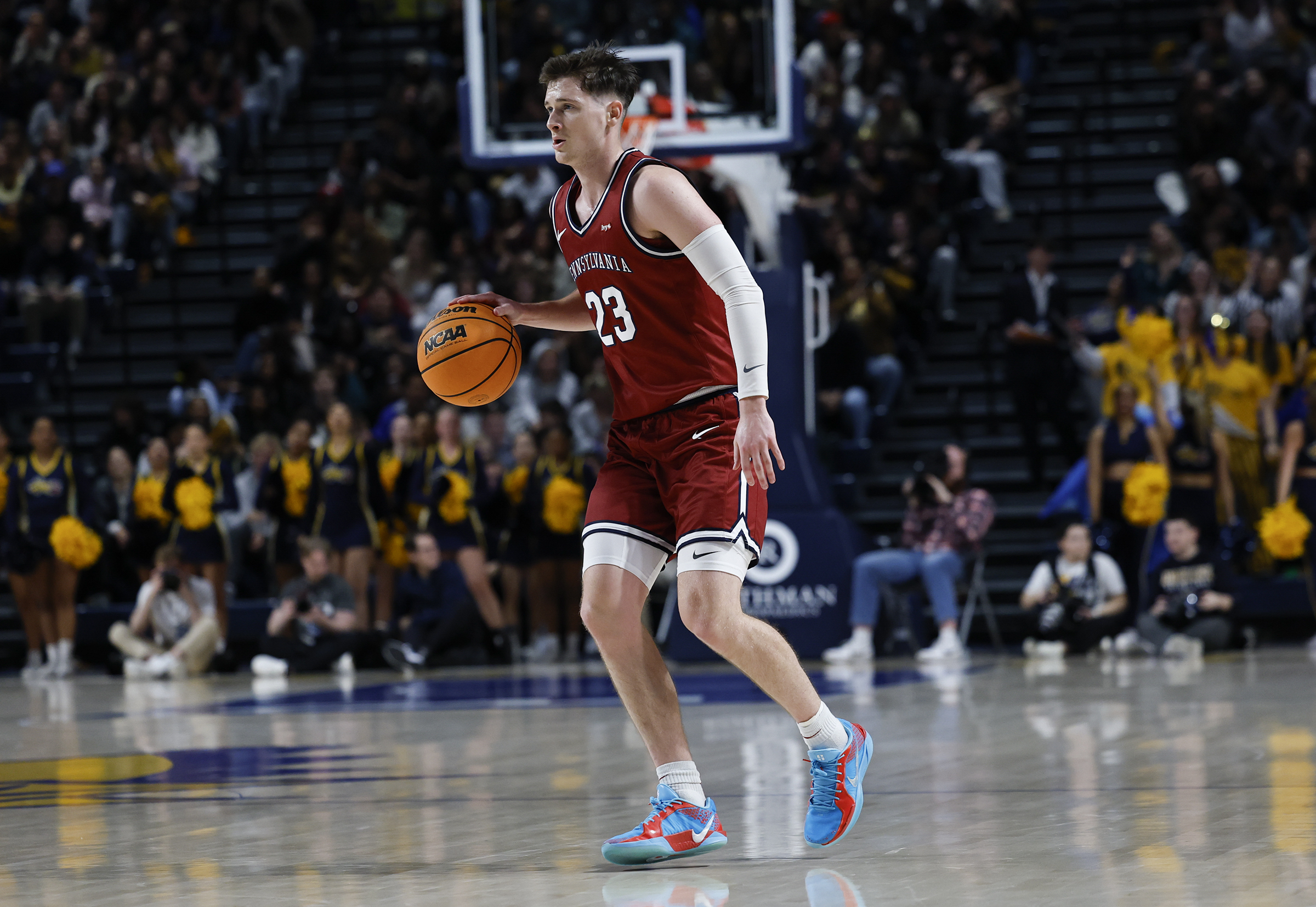
Penn forward Ethan Roberts dribbles the basketball against Drexel on Friday.
“It’s just a natural fit in coach McCaffery’s system,” Roberts said in reference to his hot start this year. “I work really hard, so there is an expectation that I get a little bit better each season.”
Bought in
Penn dominated the second half. The Quakers made 13 of 25 attempts (52%) and contained the Dragons to 30 points, as they made 10 of 26 shots from the field.
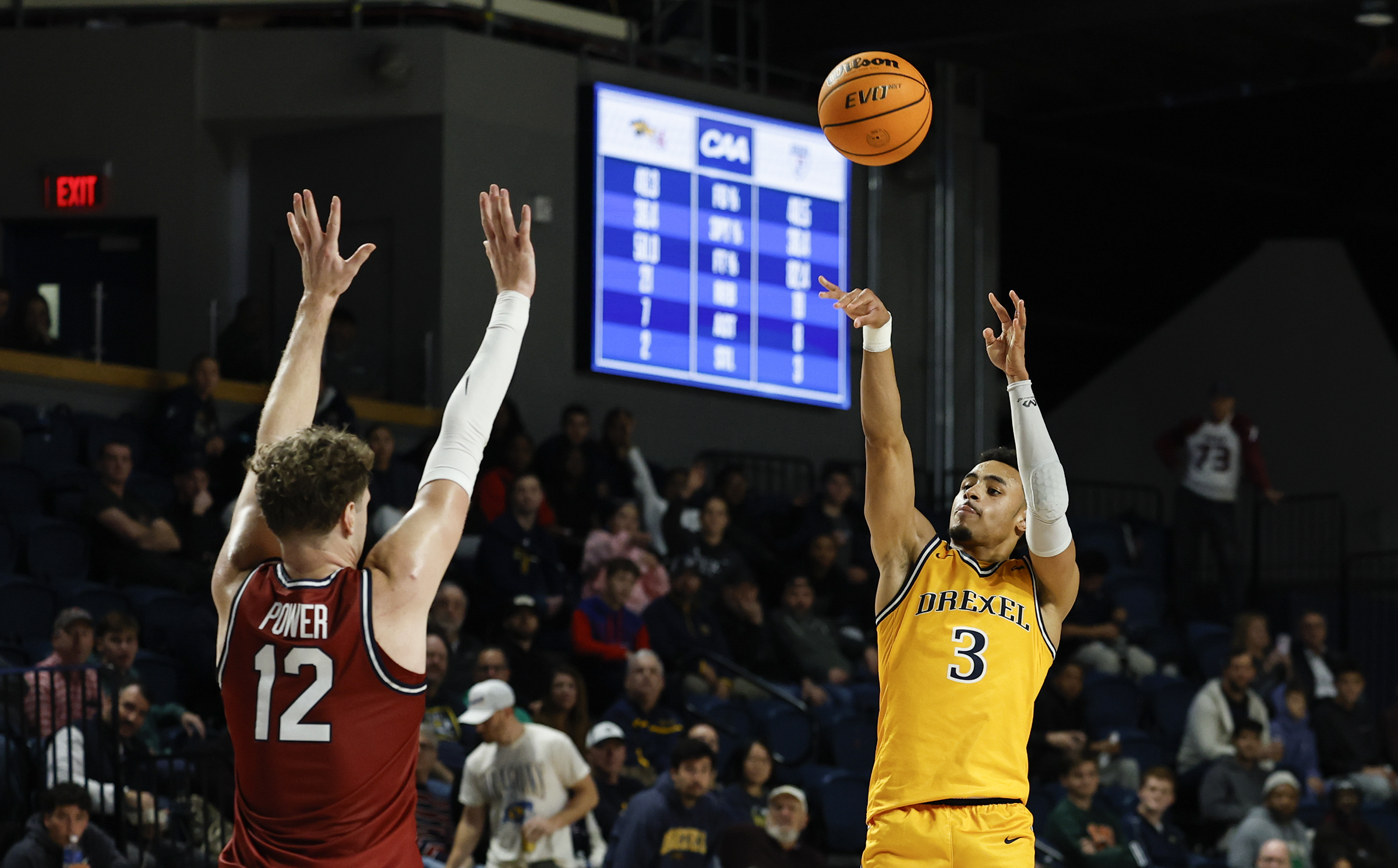
Drexel guard Kevon Vanderhorst shoots the ball against Penn forward TJ Power on Friday.
“These guys want to be coached,” McCaffery said. “They’re listening and they’re making appropriate changes, both individually and collectively.”
The Dragons’ starters scored only 28 of the team’s 68 points, with Eli Beard, Kevon Vanderhorst, and Shane Blakeney scoring 24 combined.
Drexel coach Zach Spiker believes his team wasn’t aggressive enough in response to the Quakers’ run-and-gun offense, commenting on the free-throw disparity. The Quakers made 22 of 28 attempts at the free-throw line, while Drexel went 7-for-17.
“We’ve got to do a better job of defending without fouling and then find a way to put that pressure on the other end,” Spiker said.
The scene Friday at Drexel was one that wasn’t supposed to happen, at least for some people.
When the Big 5’s organizers rearranged the pods for this season, they knew they were taking a risk. Splitting St. Joseph’s and Villanova took away a guaranteed contest of the city’s most famous rivalry for the first time since the 1997-98 season, but opened the door for an even bigger matchup in the title game.
At the time the decision was made — and that time was before last season’s Big 5 Classic, when the word first got out — there were enough reasons to believe the title game clash would happen.
Sure, Villanova was down, but not far enough down to not be favored against Temple and La Salle. Steve Donahue wasn’t gone from Penn yet, Billy Lange was far from gone from St. Joe’s, TJ Power was still at Virginia, and Xzayvier Brown was still on Hawk Hill.
Shuffling the pods really felt like two things at the time. A St. Joe’s-Penn-Drexel pod made the Hawks clear favorites on paper, while a Villanova-Temple-La Salle pod guaranteed the schools with the two biggest fan bases would face off. As long as the Hawks made the final, a matchup with Villanova or Temple would be intriguing — and good for the box office, too.
By the time the season tipped off, the scene looked totally different. And when the Hawks walked out of the Palestra on Monday on the losing end, the dream final was halfway to going up in smoke.
St. Joe’s needed a Drexel win, which would have left all three teams at 1-1. The tiebreaker is the NCAA’s NET rating, the first edition of which lands on Dec. 1 — the day Villanova hosts Temple in the last pod game of the season — and the Hawks would presumably have taken it. At Friday’s tipoff, they were No. 151 in Ken Pomeroy’s rankings to Drexel’s 249 and Penn’s 265.
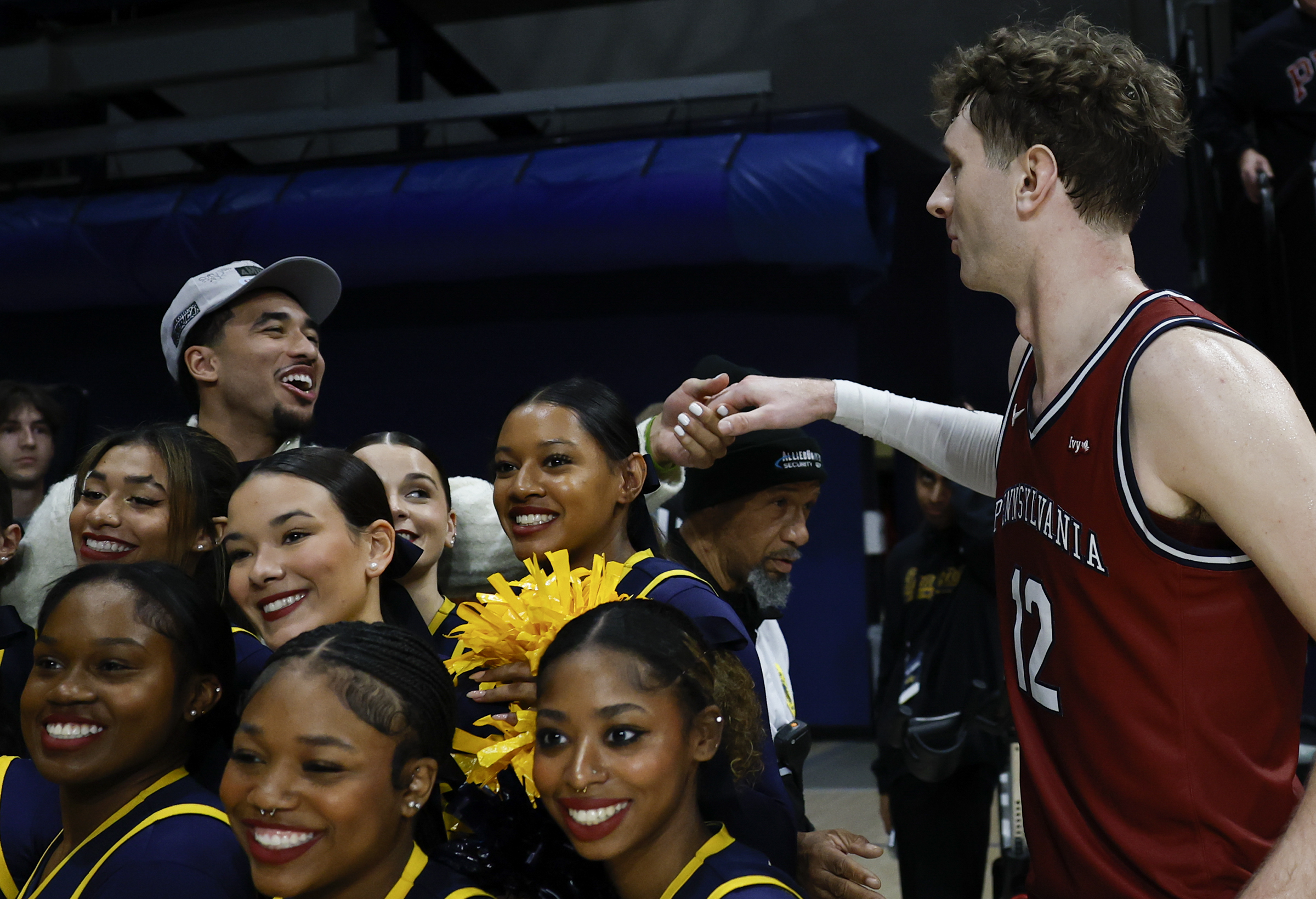
Now the die is officially cast. Led by Power and Ethan Roberts, Penn never trailed against Drexel and ended up rolling to an 84-68 win at the Daskalakis Athletic Center. Roberts scored 30 points for his third 20-plus game of the year, and his second straight with 30; and Power continued to show his talents with 18.
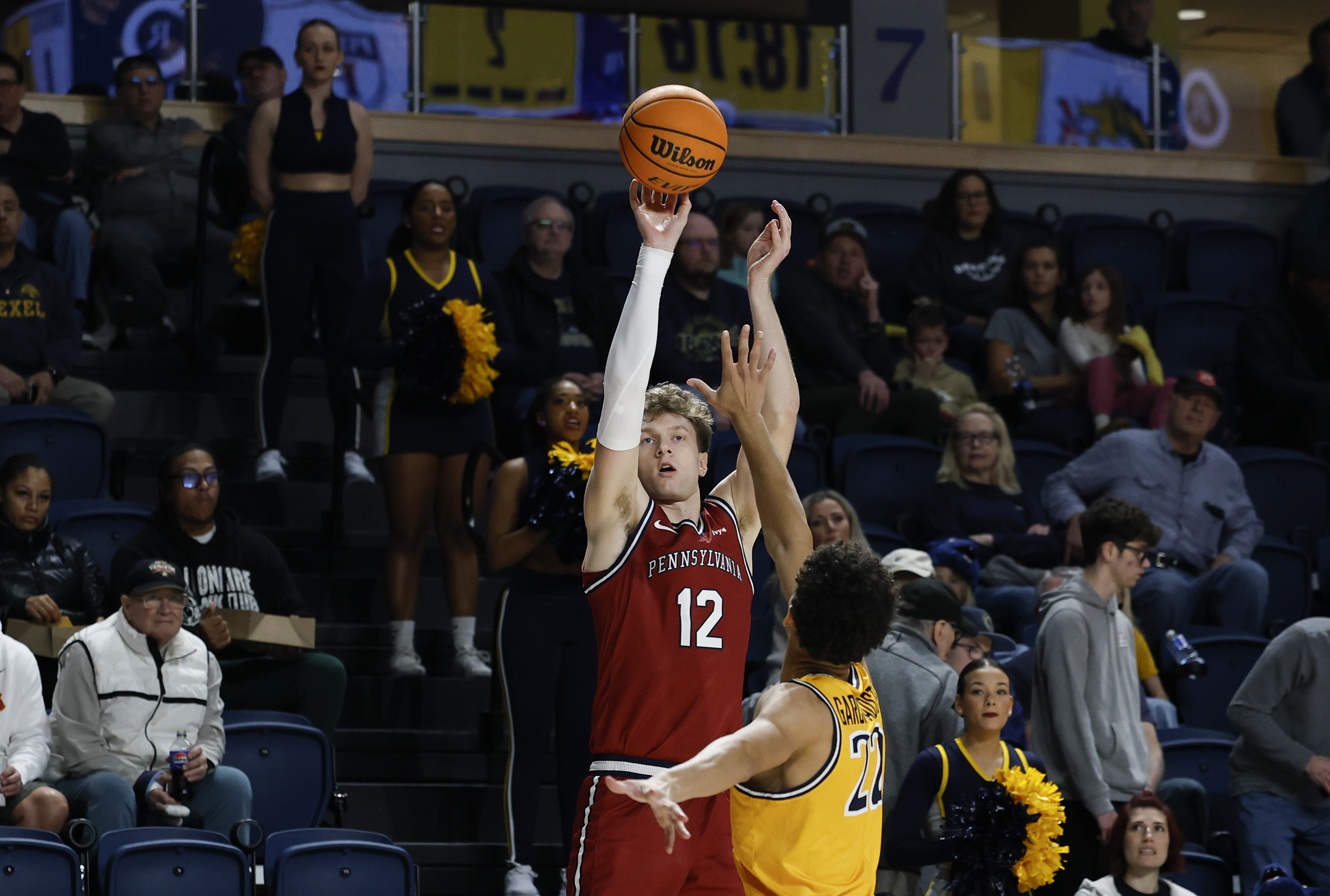
Penn’s TJ Power shoots over Drexel’s Villiam Garcia Adsten during the first half.
The crowd on Market Street was lively and bipartisan, announced as 1,984 — a few hundred short of a full house, and not far from the lowly 2,384 crowd at St. Joe’s-Penn on Monday. Drexel’s student section turned out well, and at one point unfurled an old-fashioned rollout mocking Penn’s students for not showing up at the Palestra.
They had a point, and would have in many past years, too. But for this night, the atmosphere felt real.
“I think coming in as a transfer, you don’t completely understand the Big 5 hype until you play in those games,” said Power, whose former Duke teammate Jared McCain was in the stands with the Sixers off. “These past two games have been some of the most intense games I’ve played in, and for us to get to that championship [final] in coach’s first year, it’s a real feeling, I think. I’m looking forward to playing in that championship game.”
The action was not just intense, but good quality for two teams still getting to know themselves. Penn shot 50% from the floor and Drexel shot 42.2%. That doesn’t always happen in the City Series, a fact some long-timers might not want to admit while reminiscing about the old days.
(This writer, for example, has been scarred for 21 years by the 2004 Temple-Villanova game at the Palestra: a 53-52 Owls win where the teams missed a combined 80 of 120 shots.)
“Jared’s my best friend since my freshman year at Duke, and to have him in the city has been really cool,” Penn’s TJ Power (right) said of the Sixers’ Jared McCain (left).
The big picture
Does missing out on a St. Joe’s-Villanova final mean the risk wasn’t worth taking? The ticket sales for the Big 5 Classic on Dec. 6 will offer one verdict, and fans can decide if they want to offer another.
If there isn’t going to be a full round-robin, there shouldn’t be anything wrong with the principle of changing up the pods from time to time. This season was the first time that happened, and it’s expected that the new groups will run for two years as the first set did.
Was there a way to keep St. Joe’s and Villanova together in the first change? There weren’t many moves to make, since St. Joe’s and La Salle have to stay separate being in the same conference.
A St. Joe’s-Temple-Villanova pod obviously would not make sense. So the only other option besides the move they settled on — swapping Villanova and Drexel — would have put Villanova, St. Joe’s, and Drexel together. That would have sent the Wildcats to the city’s smallest gym in one of the two years, which felt unlikely this early in the pod system.
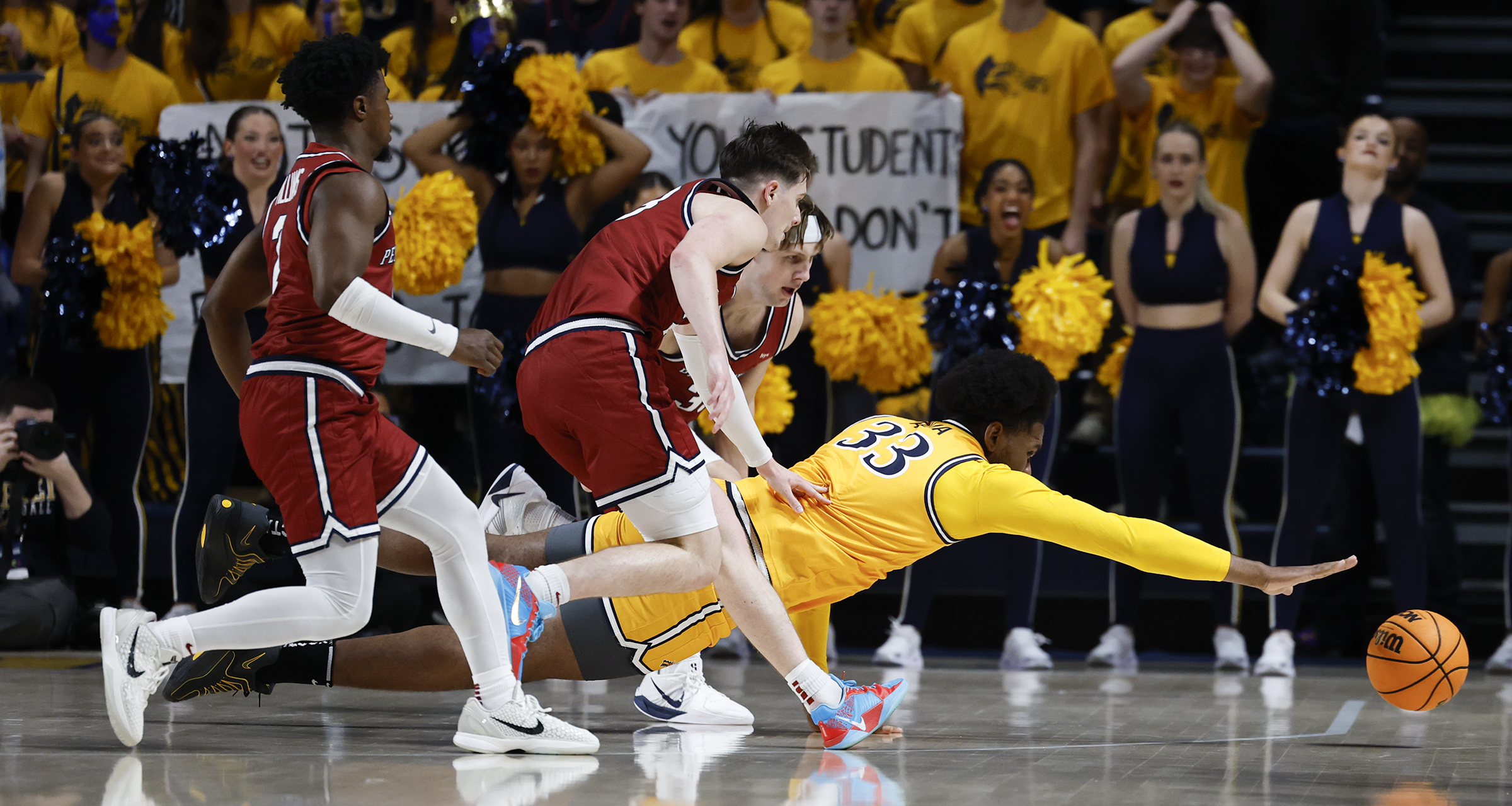
Drexel’s Ralph Akuta (right) dove for a loose ball in front of the Dragons’ student section as they held up a banner mocking Penn students for not showing up to their team’s games.
So it was understandable that the people in charge tried. A little uncertainty is no bad thing anyway, as it livens up the early-season slate. And though the Big 5 still feels stratified, the pod format also heightens the stakes of each game. One loss can tip the whole thing, as just happened to the Hawks.
It could happen again if Temple upsets Villanova on the Main Line. That would give us a ‘Nova-St. Joe’s game after all, just in the third-place game.
What the final will look like is a different question, but that’s not Penn’s problem for now. Coach Fran McCaffery, Power, and the rest can celebrate just getting there — and laying down a strong marker to start McCaffery’s tenure at his alma mater.
“When you come into a season, there are certain things that you hope to be able to accomplish collectively, and that clearly is one,” he said. “I think everybody knows the respect I have for the Big 5 and its history, and also for the level of talent and coaching in all the teams. We just beat two really good teams, two really well-coached teams, and then we’ll get to play another one.”
This time, it will be on the city’s biggest stage.
What Big 5 pods work? Reality limits the answer.
St. Joe's and La Salle can't be in the same pod since they're in the same conference.
It doesn't make sense to have Villanova, St. Joe's and Temple all on the same side.
Stephanie Maslanik was sitting on her couch Tuesday night when her phone dinged with a text message from a friend. But she was doing something with the kids and didn’t look at it right away.
“Then I opened it up and I was like, ‘Whaaaat?’ It took me a minute to put two and two together and I gave it to my husband,” she said. “I told him, ‘Does it say what I think it says?’”
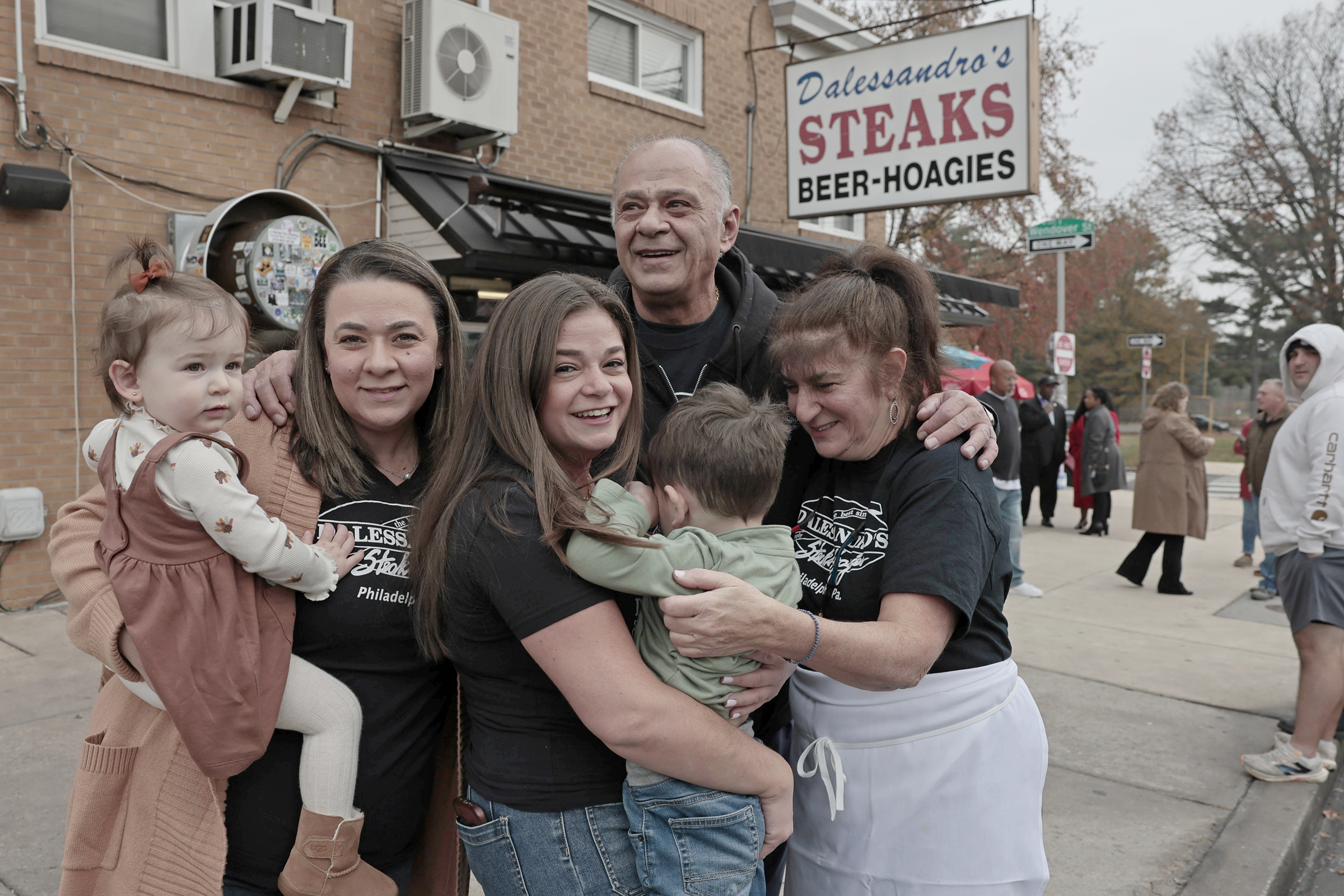
Steve and Margie Kotridis (right) with their daughters, Stephanie Maslanik (left) and Christina Kotridis (middle), and grandchildren Charlotte, 1, and a very bashful Steven, 4, outside Dalessandro’s.
It was exactly what she thought it said: It was a video clip of that evening’s Michelin Guide Northeast Cities ceremony, where Dalessandro’s — the family’s cheesesteak shop in Roxborough — had been among the recipients of an award.
Their old-school corner shop was officially Bib Gourmand royalty — Michelin’s category for great food at a great value. Dalessandro’s was one of three cheesesteak shops that impressed arguably the world’s fussiest food critics.
Maslanik blew up the family group chat: her parents, Steve and Margie Kotridis, and her younger sister, Christina.
“I’ve been in the food business for 50 years, and this is a dream,” said Steve Kotridis, 63, who with his wife, 67, bought Dalessandro’s from the founding family in 2008. William Dalessandro opened in 1961 at Henry Avenue and Wendover Street, a year after its founding on nearby Ridge Avenue.
Michelin is living up to its reputation of international mystery. As of Saturday, the Kotridises said they had not heard from Michelin (though Dalessandro’s is listed on its website, accompanied by an unrelated photo). It is also not clear why the Kotridises apparently never received an invitation to the gala. The owners of the other Bib Gourmand cheesesteak shops, Nish Patel of Del Rossi’s and Danny DiGiampietro of Angelo’s, were seated in Marian Anderson Hall that night.
Steve Kotridis was doing paperwork and knocking around the house that night — Margie was in Florida for a niece’s shower — and he didn’t read his daughter’s text until the next day.
He had never realized that a cheesesteak place could even be eligible for a Michelin award, “but certainly if one would be, this would be the place,” he said. “It’s validation.”
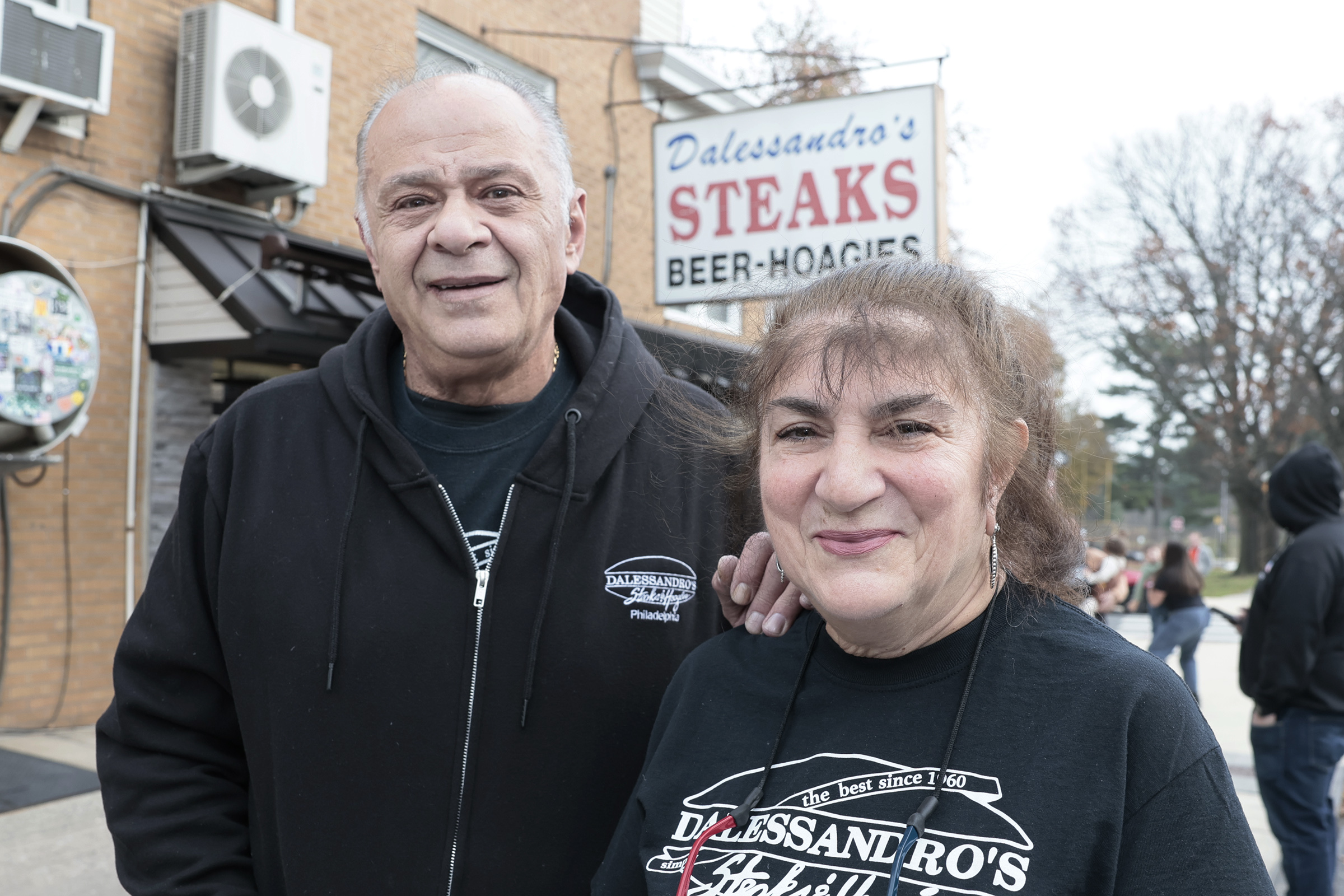
Steve and Margie Kotridis at their Dalessandro’s Steaks in Philadelphia on Friday, Nov. 21, 2025.
The Dalessandro’s scene
On Friday afternoon, the line at the ordering window was just as long as on any other chilly Friday afternoon in late November. Inside, the spatulas slapped and the rib eye sizzled on the flattop. The crew cheered in unison at each tip left by a customer.
“I’ve been getting a lot of people telling us it’s their first time coming, but it’s mostly our really good customers who are saying, ‘Everybody knows now,’” Margie Kotridis said.
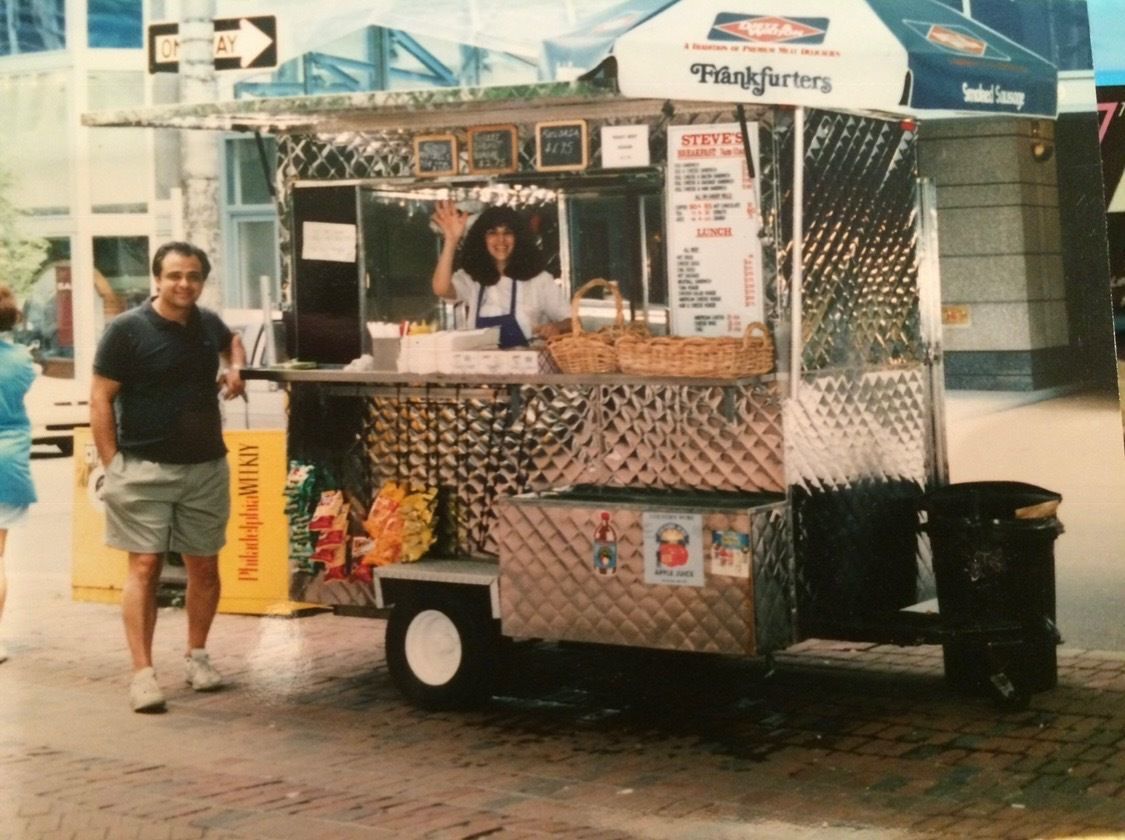
Steve and Margie Kotridis at their food cart on 17th Street in the early 1990s.
Steve and Margie come from food families. Her late father, George Tsihlas, owned Towne Pizza at 19th and Pine Streets from 1967 to 1994. Steve’s mother, Antigoni, now 92, still oversees a series of food carts in Center City — including the cart outside the United Engineers Building at 30 S. 17th St. that Steve ran for 30 years.
Soon after they were married in 1982, they bought a building in Lafayette Hill and opened a diner, Stefano’s Restaurant & Pizza. After two years, “we had to get rid of it,” Margie said. “We were throwing plates at each other.” They went back to vending but kept the building, now home to the Persian Grille.
Meanwhile, Steve had been a Dalessandro’s customer. “I sat down at that counter and I’d put two cheesesteaks down like it was nothing,” he said. “I’ve lost weight since then.” (His go-to is a cheesesteak with American cheese, fried onions, salt, black pepper, and long hots.)
In 2008, five years after William Dalessandro’s death, the Kotridises bought the shop and kept it much as it was.
They shut down for 10 weeks at the start of the pandemic in March 2020. The setup, where takeout customers were smushed against people eating at the counter, could not continue in the new social-distancing world.
The Kotridises installed two windows — one for ordering, one for pickup — and locked the front door. (Regulars can ask to come inside to eat, especially when the patio is full or the weather is bad.) A friend set them up with an ordering system that displays wait times and names on a monitor outside and provides text alerts. There’s no yelling. An electronic voice calls out customers’ names and directs them to the correct window. It’s still cash-only.
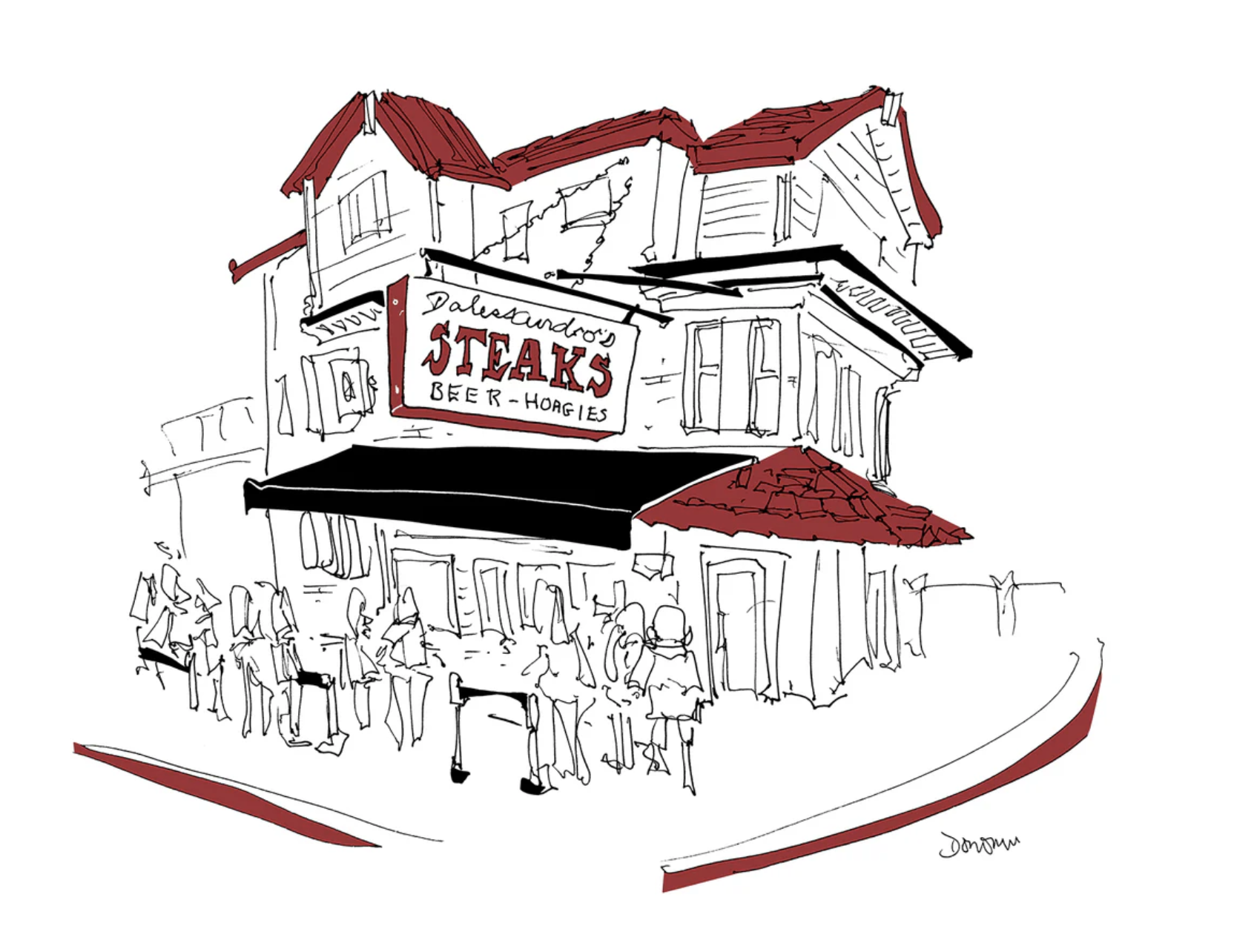
This sketch of Dalessandro’s Steaks by John Donohue was part of a recent show called “The Art of Philly Dining” at Gleaner’s Cafe and Gallery.
The typical wait is 10 to 15 minutes during the week, but an hour Friday, Saturday, and Sunday, as the line wends along the sidewalk and traffic snarls on Henry Avenue.
About the Dalessandro’s steak
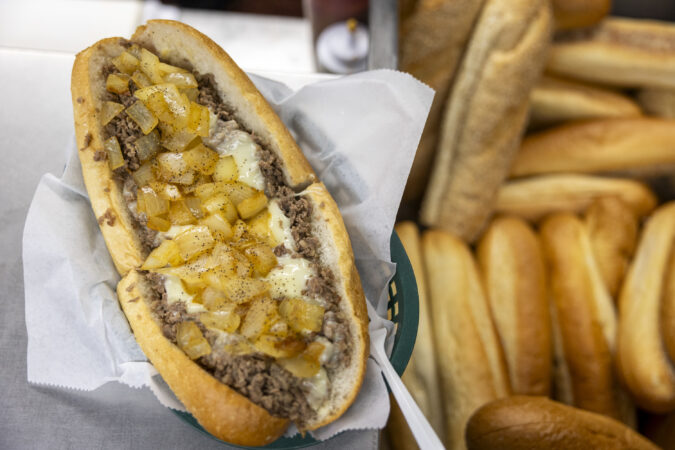
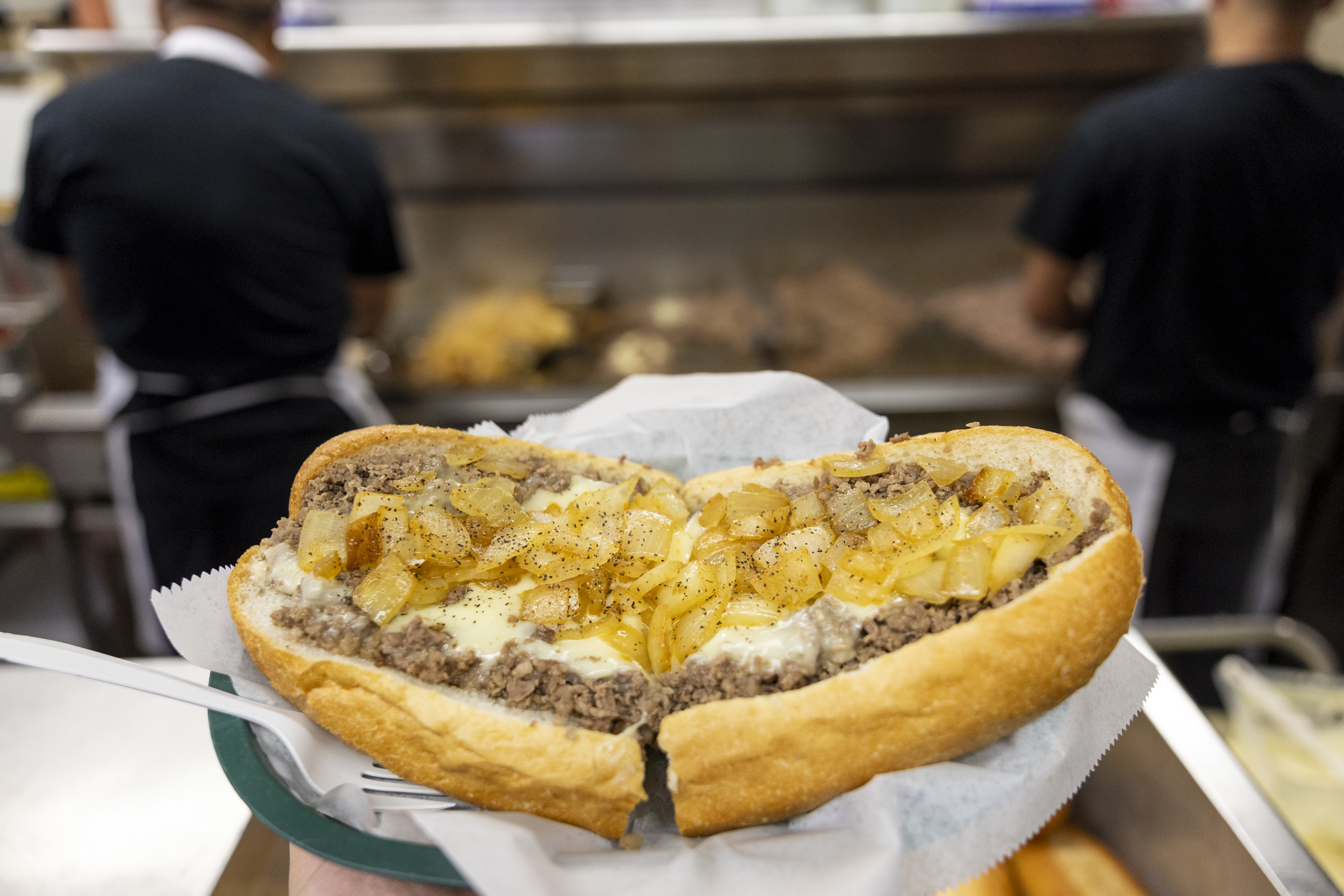
Dalessandro’s serves an old-school sandwich: The rib eye is chopped fine — almost minced. The cheese is layered atop the beef, not mixed. The Amoroso’s roll is softer than the crispy-crusted, house-baked breads from such newer-generation shops as Del Rossi’s and Angelo’s. Dalessandro’s chops its fried onions in a huge, toothsome dice.
A cheesesteak from Dalessandro’s in Philadelphia, on Friday, Nov. 21, 2025.
Dalessandro’s flatly resists the recent industry move to Cooper Sharp American cheese. “We brought it in like a year ago and we tasted it,” Margie said. “All Cooper Sharp is, is sharp American cheese. We already use sharp American cheese. We made [test] cheesesteaks. Nobody could tell the difference.”
Asked what made their steaks stand out to Michelin, Steve said: “I’m not sure. We just do it the right way and we make food the way we would like to eat it. We slice fresh rib eye all day long. Our rolls get here at 11. We fry our own peppers.”
Margie said she routinely drops an order slip, anonymously, into the queue and samples the sandwich.
“Consistency is very important,” she said. “I go out to eat somewhere and I find something I love and it’s so delicious. You go back the next time and it’s like a whole different sandwich or a different meal than what you ate last time.”
Former Sixers player Ben Simmons and Jimmy Fallon sampling a Dalessandro’s cheesesteak on the “Tonight” show.
“One of the four of us is always here,” Margie said.
This is why Steve said he has resisted offers to open additional locations. “At this age, I’m not interested. The problem today is you can’t be everywhere. To run a good place, you have to be on top of it, so you could wind up killing the name.”
“I think the people that pay attention to Michelin and … the foodies — it’s going to make a big difference,” Steve said. “They’re all going to come and try it, and they’ll all have their own opinions of what they like and what they don’t like, and hopefully everybody will love it and come back again.”
Margie said: “But then, everybody has a favorite, right? Some people like vanilla, some people like chocolate, and some people like strawberry ice cream. You can’t please everybody.”
In one kind of ideal world, Cavan Sullivan wouldn’t be with the Union right now.
He’d be with the U.S. under-17 national team, which took one of its strongest squads in program history to this month’s World Cup in Qatar.
The Americans won their group with a perfect record for the first time since 1991, with Sullivan in a starring role. He had two goals, both game- winners, and an assist in those three games.
However, their luck ran out after that. Morocco edged them in the round of 32 last Friday, scoring a late equalizer for a 1-1 draw and then winning a penalty kick shootout. Sullivan assisted on the U.S. goal and scored his penalty attempt, but he could do no more.
“It’s going to be an electric night,” Sullivan told The Inquirer. “It’s probably going to be a little chilly, but our fans don’t care and us players don’t care. We’re ready to battle, show up for the city, and on a personal level, I just want to be ready to come into the game and make a difference. Yeah, I’m excited.”
Union manager Bradley Carnell said it was “a real shame” that the U.S. went out of the tournament early, but that Sullivan “has incorporated well into the group again.”
The lessons that Sullivan learned at the World Cup were the kind that should pay off as the 16-year-old develops, whether with the Union, his future club home at England’s Manchester City, or with future U.S. national teams.
“You learn what a World Cup’s all about,” Sullivan said. “Got to understand the experience, the atmospheres, what it’s like representing your country at the highest level.”
“MVP,” Vassilev said, before offering the real answer: “Don’t play with your food, just finish it up.”
That indeed was the lesson from a game that the U.S. was on the cusp of winning. Had the Americans held on, they’d have advanced in an under-17 World Cup knockout round for just the third time in program history.
“ … Don’t play with your food,” Sullivan continued. “I wish we just did things differently and closed out that game, but that’s reality. And I’m back here now, and my focus is on the game Sunday.”
Coincidentally, the U.S. under-17s, last month’s under-20s (including Frankie Westfield), and last year’s under-23s at the Olympics (with many Union ties) all got knocked out of their championships by Morocco. That created some chatter back home, and Sullivan said his team talked about it too.
“Yeah, people were definitely talking about it, but [it was] not in my mind,” he said.
What was in his mind was getting to play with three close friends who are currently in the Union’s academy: forwards Kellan LeBlanc, Jamir Johnson, and defender Jordan Griffin.
“I’ve played with those guys for over five years now apiece — Jordan since I was, like, 7; Kellan since I was, like, 9; and Jamir since I was, like, 10,” Sullivan said. “So we know each other really well, and we definitely stick together. And I’m really proud of those guys.”
With the U.S. under-17 World Cup in the rearview, Cavan Sullivan says he’s focused on helping the Union anyway he can in the MLS playoffs.
The Union’s total of four players on the 23-man squad was the most of any club, another endorsement of its strength at developing American prospects.
Sullivan also knew well that while he was away, four more Union products were with the senior U.S. team at Subaru Park. And earlier this year, his oldest brother Quinn made his senior-squad debut.
“It’s definitely pretty special to have the Union produce players that are now abroad and getting called into the national team regularly,” he said. “For my own brother to make a few caps as well was pretty special for my family.”
Quinn Sullivan earned his senior U.S. men’s national team debut over the summer.
For all that went into the tournament buildup, does the sting of an early departure now motivate Sullivan to push harder with the Union?
“I wouldn’t say it’s anything to really dwell on too long or use it as — like, it’s not going to fuel me Sunday night,” he said. “But I definitely want to build off the performances I had, and continue to finish out this year on a good note. And what are we two games ‘til a final?”
Yes, that’s the number.
“Big games,” Sullivan said. “But no matter what it’s at home, so that’s a benefit.”
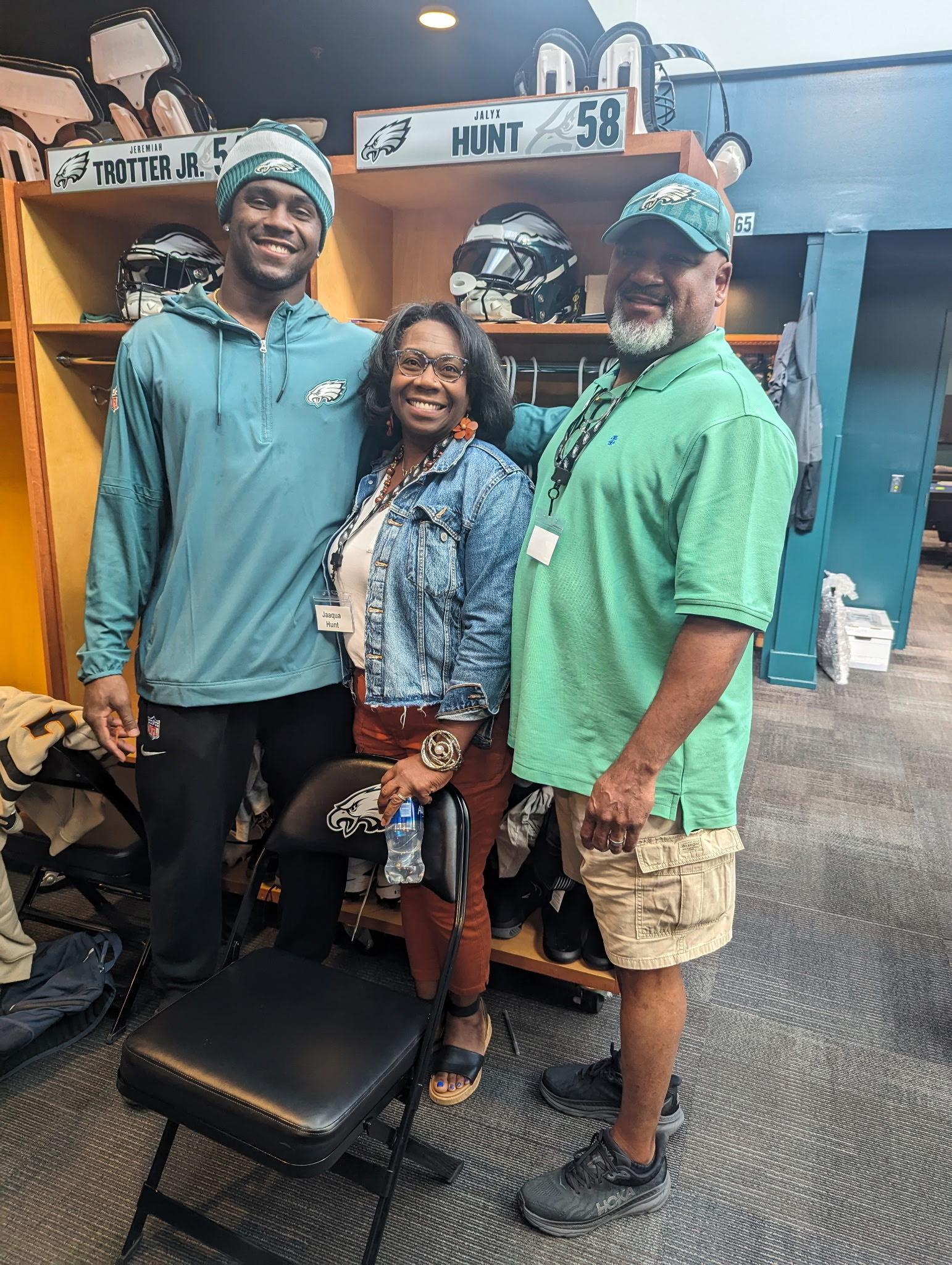
Two years into his Eagles career, Jalyx Hunt counts his blessings in pairs of cleats and gloves.
He doesn’t lack either. About a dozen brand-new white gloves wrapped in cellophane are stacked on a low shelf on the left side of his stall in the NovaCare Complex. Hunt has four pairs of cleats sitting on the racks below that shelf, but he knows that if he busts them, he can ask assistant equipment manager Craig Blake for another pair.
The 6-foot-3, 252-pound outside linebacker still isn’t used to the extravagance. He didn’t take his first charter flight with a football team until two years ago, his senior season at FCS-level Houston Christian. If he wore through a pair of cleats, the cost for new ones came out of his pocket.
Hunt, 24, picked up odd jobs to pay for those expenses integral to attaining his NFL dream, especially his training. He delivered takeout for DoorDash. He and his friends signed up to work as overnight security guards at the 24-hour library on campus, even when they had to lift in the morning.
In high school in Orlando, the zero-star recruit worked nights as a janitor at the urgent care where his father, James, served as a physician’s assistant.
The experiences that shaped Jalyx didn’t magically evaporate after the Eagles selected him in the third round of the 2024 draft.
“I got a chip on my shoulder to a certain degree,” Hunt said on Wednesday. “But I also just appreciate things a lot more, because a lot of these people were able to be blessed coming out of high school. … I was like, ‘Should I be paying for training? If I have to do this, is it really that feasible?’”
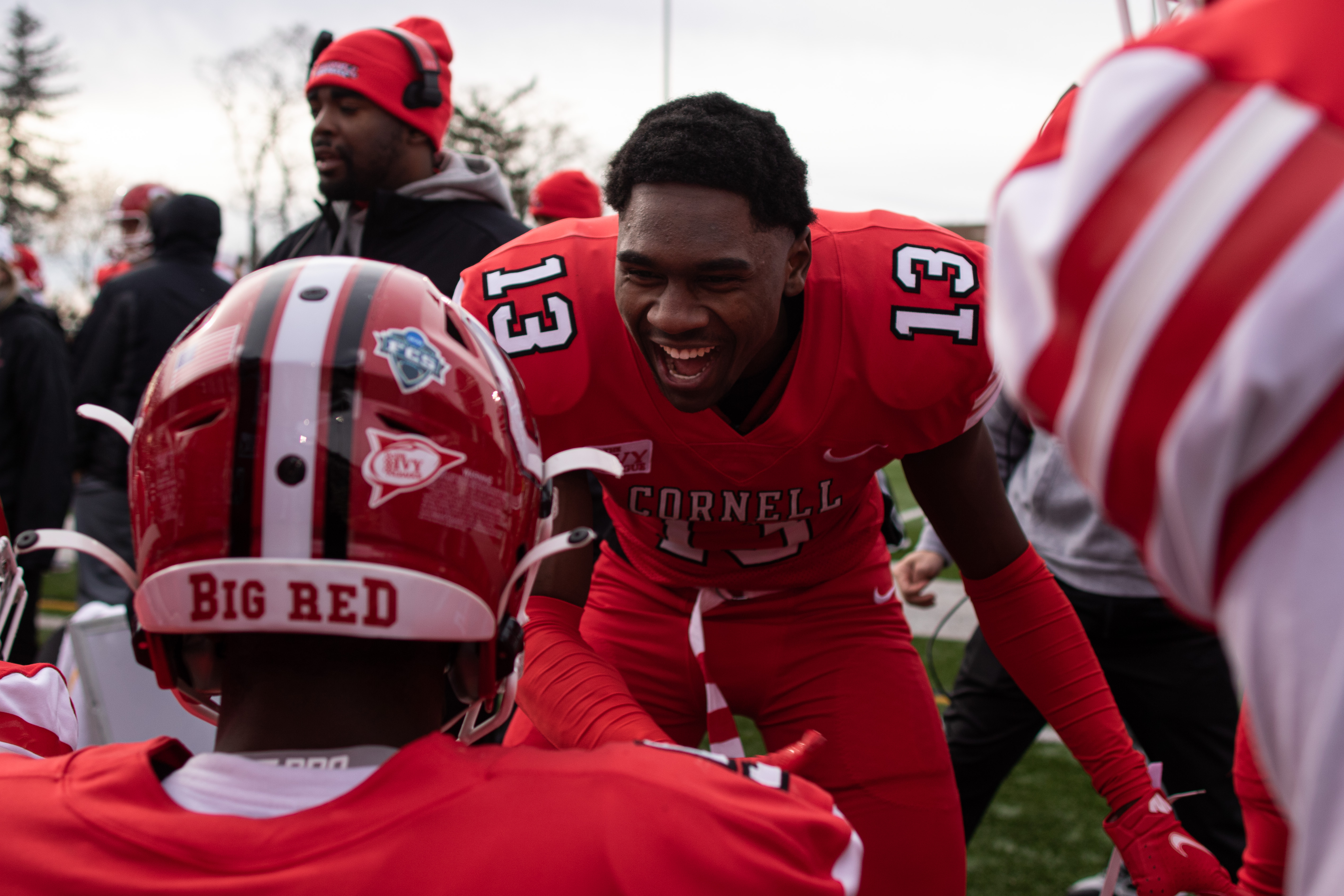
Cornell and the Ivy League gave Hunt his start as a college football player.
A cursory glimpse at his early football path suggests that Hunt’s NFL dream was a long shot. He began his collegiate career at Cornell, a struggling program not known for producing pro players. One of the rising edge rushers on the NFL’s most feared defense just four years ago could be found working as an Ivy League safety.
When Hunt entered the transfer portal in 2022, all he said he needed was an opportunity to make an impact. That, and a program that thought he had a chance to reach the NFL.
Houston Christian gave him both in earnest. A shift closer to the line of scrimmage altered the trajectory of his football journey. His perseverance in realizing a once-unlikely dream doesn’t surprise those close to him, however.
“People think I say stuff like this because he’s my son,” said James Hunt. “But I don’t. My wife will tell you I am very, very real and upfront with my son, my daughter, anybody I know, any kid trying to do something. She calls me a dream killer, because I’m going to tell you.
“But I didn’t think it would be an issue, because I truly feel you can put Jalyx anywhere and he will get it done.”
Jaaqua Hunt discovered her son’s unrelenting motor long before he charged after quarterbacks on Sundays.
Jalyx was always busy, always moving. James recalled how long it took to get him dressed in the mornings before school because he couldn’t stand still. A teacher herself, Jaaqua emphasized to his educators that he needed an activity to do after he finished his work, otherwise he would talk the ears off his classmates and no one would get anything done.
Hunt’s enthusiasm and energy for all things found a natural outlet on the football field.
“I told his doctor when he was 15 months [old] that he had ADD,” Jaaqua said. “And they said, ‘You couldn’t possibly know that now. He’s 15 months.’ And I said, ‘Yeah, I do.’ I was at home at the time. I said, ‘He doesn’t have an off switch. He hits the floor in the morning, and he is nonstop until he drops at night.’”
Behavioral therapy as a child helped Hunt learn how to channel his energy in a productive way. His therapist recommended origami, so he folded up what felt like millions of ninja stars, paper cranes, and waterbombs. Origami gave way to thousand-piece puzzles, LEGOs, the saxophone, and most recently the guitar.
Sports became an outlet for Hunt’s energy, too. He started playing basketball around age 6 at the YMCA. James served as an assistant coach for his team.
“He was really dominating these kids,” James said. “They were the same age, but he just had that ‘it.’ And he was bigger. So you kind of felt bad for that, but then you started realizing everything he did, it’s like the environment would change.”
The Hunt family moved around, spending Hunt’s adolescence in the Orlando area where James completed a physician-assistant program, then came Tennessee, Maryland, and eventually South Carolina to be closer to their daughter, Jessica, who was a track athlete at Winthrop University.
The Hunts’ frequent moves made it difficult for Jalyx to find his footing with coaches and potential recruiters.
Jalyx longed to play football, just like his father had at Alcorn State and Ole Miss. His parents encouraged it, too, believing his chances of earning a scholarship in football were greater than in basketball by sheer numbers alone. Plus, Hunt was cut out better for football, Jaaqua said.
“His dad told him he didn’t have the mentality to play D-I basketball,” Jaaqua said. “And it’s true. Jalyx is a sharer. He’s not selfish enough to play basketball. Even in high school, and all the way back to when he was 6 or 7 years old, he would get a rebound and then give it to someone who didn’t have any points so that they could try and score.”
The Hunt family moved back to Florida before his sophomore year, as James figured that every college football program in the country would recruit in the state. Still growing into his body, Hunt primarily played cornerback and eventually added receiver to his resumé in his senior year.
But he had a hard time getting on the field, finishing his senior season with 20 catches for nearly 500 yards. His recruitment was limited, James said, because he didn’t play much. James put together a highlight video and sent it out to more than 100 schools, which garnered offers from smaller programs and walk-on offers from bigger ones, such as Florida, Marshall, Boston College, and Georgia State.
Cornell was among the smaller programs. Hunt appreciated the opportunity to get an Ivy League education in addition to his football pursuits. He aspired to earn an engineering degree, which he thought would blend his hands-on personality and his affinity for math.
Ultimately, it felt good to feel wanted, and that’s how Cornell made Hunt feel.
“You loved the girl who loves you the most,” Jaaqua said. “They loved him. Simple as that.”
Hunt transitioned to serving as a big free safety in Cornell’s defense. Hunt was responsible for rolling down into the box to play outside linebacker, but would also play in the post and cover receivers downfield.
Hunt was an important part of the Cornell defense, but as a safety was ultimately playing outside of his natural position.
Hunt was still growing, though, and James always thought he played better when he was closer to the line of scrimmage. The position issue was indicative of the struggles that Hunt had faced throughout his football career.
“Part of the problem he had, his coaches didn’t know how to use his ability,” James said. “Because he was very athletic, and then when you start to grow, he was a bigger guy who had small-guy skills. What do you do with this guy? So let’s put him here. Let’s try him there. They just didn’t know where to put him.”
COVID-19 didn’t make things easier, especially from a mental health perspective. His parents could tell that the isolation — Cornell’s entire 2020 season was canceled — was taking a toll on Hunt’s wellbeing. It showed in his slipping grades, too. Hunt wanted to stick it out at Cornell, according to James, but his parents encouraged him to make a change.
Hunt entered the transfer portal after his junior year in 2021. He garnered interest from some Power 5 programs, including Texas Christian and Boston College, but Hunt was behind on class credits. Houston Christian was the only program that had a plan, on and off the field, for Hunt.
Houston Christian, a 4,700-student member of the Southland Conference, was clear during its recruitment that it viewed Hunt as a defensive lineman/linebacker rather than as a safety.
“We didn’t feel like he could dominate the game covering 20 yards down the field man-to-man,” said Roger Hinshaw, Houston Christian’s linebackers coach. “But you just could see … we [could] make him faster by just moving him closer to the ball.”
Houston Christian was prepared to bring Hunt into its summer school at the local community college so he could get back on track from an academic standpoint, too.
It didn’t matter to Jaaqua or James that they had never heard of Houston Christian (formerly known as Houston Baptist) or its nine-year-old football program. Hunt said defensive coordinator Shane Eachus displayed a sense of belief in him that no one else had.
Houston Christian believed in Hunt as a pass rusher, and he thrived quickly in the role.
“He said, ‘We think you can make it to the League,’” Hunt said. “That’s all I need to hear. Like, if you believed in me, bet, let’s go. Even if you’re lying to me, you could be lying to me, but I just needed somebody to even fake it. So, shoot, that’s why I went. That’s the only reason.”
Hunt had all of the physical traits — from his athletic ability to his size to his length — that former Houston Christian defensive line coach Isaac Mooring was looking for in an edge rusher. Hunt had a natural talent at some aspects of the position, Hinshaw said, that his coaches couldn’t teach.
“When he was lined up and the ball was snapped, he was dynamic, which is really the key to any good pass rush,” Hinshaw said. “Quite frankly, that was a DNA thing. God gave him that. Everybody doesn’t get that.”
But beyond his inherent traits, Hunt had a strong desire to learn the position and to be great. Mooring detected that desire through the residency Hunt took up in his office. He was constantly watching film, asking questions in meetings, and taking notes.
Mooring would pull NFL clips and study them with Hunt, and once the young pass rusher began to learn the requisite technique of the position, he began to point out technical nuances on film.
That diligence translated to the football field. If Hunt didn’t get a drill down pat in practice, he would stay after and work on it some more. It didn’t matter if the team had just completed a 24-period session. Hunt could be found striking the sled because he wanted to make sure his hand placement was correct.
Mooring discovered that Hunt had that same attitude after games. After Hunt’s third or fourth contest with Houston Christian, Mooring went around the locker room as he typically would to hug his players and offer words of encouragement. He couldn’t find Hunt.
Eventually, Mooring was told that Hunt was still out on the field. Sure enough, there he was, running 100-yard sprints after playing anywhere from 50 to 70 snaps. He ran sprints at home and on the road, win, lose, or draw.
“I learned to be the type of player that I feel like if we lose, it’s because of me,” Hunt said. “I feel like it’s because of me, like I could have made more plays. I could have done this, I could have done that. So it was one way for me to just think, get some lactic acid out of my legs, but also condition a little bit more.
Hunt’s explosive work as a pass rusher in the Southland Conference got him on the radar of NFL scouts.
“Sometimes, I’d get home, off the bus, and go work out, like on the field or bags, whatever the case may be, just so I could do something more. I just felt I needed to get better right now.”
Hunt gradually improved. He began to put on the weight needed to go up against 300-pound offensive tackles. He leaned on the football IQ that he had developed as a safety to understand run fits and drops in coverage when he wasn’t rushing the passer.
Development turned into sacks, and sacks turned into recognition from NFL teams that traveled to Houston Christian to scout him ahead of the draft. In 2022, his first season with the Huskies, Hunt led the Southland in forced fumbles (three) and tackles for a loss (11.5), and his team in sacks (seven).
The following year, he earned the conference’s defensive player of the year honors, leading the team in tackles for a loss (nine), sacks (6.5), and forced fumbles (two). He also had a 16-yard interception returnfor a touchdown.
“That just shows the guys that don’t let somebody tell you just because you’re here at Houston Christian, nobody’s going to find you,” Hinshaw said. “That’s not the case at all.”
Hunt solidified himself as a second-day pick with an eye-opening performance at the 2024 combine. (AP Photo/Michael Conroy)
Patrick Johnson, the Eagles’ 2021 seventh-round defensive end out of Tulane, first met Hunt through one of his high school teammates who played for Cornell. That fall, Cornell visited Philadelphia to play against Penn.
Immediately, Johnson was struck by Hunt’s size.
“When I first met him, I was like, ‘Dang, you sure you’re a safety, not an outside linebacker?’” Johnson recalled.
Johnson and Hunt didn’t keep in touch. It wasn’t until Johnson dug into the newest Eagles outside linebacker’s film after the 2024 draft that he realized who Hunt was — and that he had made a position change.
Hunt had independently caught the eyes of both Vic Fangio and Jeremiah Washburn, the Eagles’ defensive ends/outside linebackers coach, in the lead-up to the 2024 draft. Washburn saw him at the combine — where he had a 128-inch broad jump (95th percentile among edge defenders) and a 4.64 40-yard dash (81st percentile) — and his pro day.
Hunt possessed great size and athleticism at the position, but he also had an intangible that convinced Washburn that he would be a fit for the team.
“He had intense focus,” Washburn said. “He just had a good demeanor to him, a competitive demeanor, and it just felt like he was an Eagle.”
An Eagle who helped the team win a Super Bowl in his rookie season, notching a sack in that game to boot. In hindsight, though, Hunt wasn’t satisfied with his overall performance in his rookie season, as he finished the year with 1.5 sacks.
Hunt’s emergence included a sack of Jared Goff in Sunday night’s win over the Lions.
He still isn’t this year, but Hunt is beginning to show progress. He has two sacks (five quarterback hits total) in his last three games. He said he is stronger, too, sitting at roughly 260 pounds after listed at 252 this year and last year.
In Hunt, Jaelan Phillips said he sees a “stud” with a deep toolbox of pass-rush moves, an ability to blend speed, power, and agility, with a high motor. Brandon Graham said he sees a sense of confidence in Hunt that he didn’t this time last year. Washburn said he sees a more decisive player now compared to his Week 1 performance against the Dallas Cowboys.
Hunt sees room for improvement, but said he’s learned to become patient with himself.
“It takes a lot of patience not to get [ticked] off,” Hunt said. “Like, ‘Oh, I want to get a sack right now,’ especially at the beginning of the year. I didn’t start out how I wanted to start out. But my goal, and I’ve stuck through to it, is I just want to improve on something each week. And I think if you watch my film, you can definitely see that.”
The support of mother Jaaqua and father James has helped guide Jalyx on his unusual football journey.
While Hunt has evolved as a player, the small-school chip on his shoulder hasn’t gone away. The stack of fresh gloves in his stall serves as a daily reminder of where he came from. He doesn’t just internalize his journey. He is vocal about it, too, even on the league’s biggest platforms.
In the aftermath of the Super Bowl and his sack on Patrick Mahomes, Hunt appeared on the NFL Network’s Good Morning Football. Mooring’s ears perked up when he gave his coach a shout-out for seeing a skill set in him as a pass rusher that he didn’t recognize in himself.
“That just kind of shows you even though he’s reaching all these types of heights that people only dream of, he’s still humble Jalyx where he understands his beginnings and still [gives] his flowers to people that poured into him,” Mooring said.
On the eve of another Eagles-Cowboys game, let me tell you a few ways Philadelphia is superior to Dallas.
The sports teams, of course. There’s the downtown walkability, the history, and the overall gritty culture (as in “this might be the best show of my life in a room that’s maybe not up to code” energy)
Philly’s food scene is superior, too. And now we have proof.
The Michelin Guide’s awards for Texas were announced last month, and Dallas — how do we put this? — underperformed, not only against Philly but even against the rest of Texas.
Tatsu, an omakase experience, retained its one star from last year’s Michelin awards. This year, Mamami, a French-Italian bistro, scored a star. That’s two stars total for the Big D, compared with Austin’s seven, Houston’s six, and San Antonio’s three.
Philly was awarded three one-stars on Nov. 18 in its very first showing: Friday Saturday Sunday, Her Place Supper Club, and Provenance. (Boston received only one, but that’s another rivalry for another day.)
Apparently, everyone in Dallas seems to know that the food scene is lacking — even D Magazine, which headlined its Michelin predictions story: “Dallas, prepare to be underwhelmed.”
While the post-Michelin food mood in Philadelphia has been generally celebratory, they’re crying in their beer in Dallas. Drew Stephenson, an observer of the Metroplex food scene who says he has eaten at all 18 Texas Michelin-starred restaurants, addressed the local shock, indignation, and outrage over Michelin’s selections on his Instagram, @drewthefoodguy.
According to Stephenson, the reactions show that Dallas diners and Michelin inspectors speak different languages. Dallasites prioritize vibes, service, decor, portions, and price, while Michelin judges ingredient quality, technique, cuisine personality, fair value, and consistency. “We’re just new to Michelin’s framework,” he said.
For the record, Stephenson — who calls himself “a very big Cowboys but not a proud one” because of the ownership — thinks the Eagles will win a close one Sunday.
Why is there so often tension between grandparents and parents when it comes to the grandchildren?
Watching your child turn into a parent — and care for your grandchild — is one of the great joys that life has to offer. And yet, grandparents often give unsolicited opinions on the decisions that parents are making, from bedtime to mealtime to general attitudes about discipline — or pretty much anything else. As a grandparent who’s also a pediatrician of more than 30 years, I understand why it’s tempting to play the parental-experience card (not to mention the medical training card), but the better part of valor is to wait and give advice only when — and if — you’re asked for it.
We’ve had our innings. We got to make each and every one of those decisions when we were bringing up our own children, and, child-rearing being what it is, we made them over and over, day after day, all those bedtimes, all those mealtimes, all those opportunities to teach, to set limits, to celebrate, to discipline.
We reared responsible adults, able to take on the complex tasks of parenting, ready to make good choices. So this is our moment to stand back and respect those choices, weigh in when we’re asked to, and recognize that there are many different ways to navigate the complex waters of parenthood.
Here are a few common mistakes grandparents make and my advice on how to become a respectful and helpful grandparent.
Failing to accept that parenting patterns change with time
There are real changes that happen over time in parenting styles. My own parents decided that they would never spank their children, which was a deliberate break from their own upbringings in the 1930s. Their parents would have seen that as moving in a permissive direction. On the other hand, they also would have thought that my parents were too preoccupied with knowing where the children were at any given moment. Still, I was allowed to walk without an adult to second grade in New York City, keeping an eye on my younger brother, which I wouldn’t have allowed my own children to do.
I couldn’t resist asking my own son, Benjamin Klass, a child and adolescent psychiatrist, who is also the father of my almost 3-year-old grandson, about his perspective. (And you can just imagine the complex dynamics of the pediatrician mother trying to decide how to give advice — or not — to the child psychiatrist son!)
He told me that even though grandparents worry all the time about how their grandchildren are doing, it can seem to parents like they don’t worry enough or realize how much parents may agonize over small issues of diet or behavior. “It’s understandable why there is a push and a pull all the time,” he said.
Thus, some grandparents want to be more casual about food treats, screen time, or even supervision, which creates conflict with parents who take them all much more seriously.
Remember that you are indeed in a different role now and may see things very differently than you did when you were the parent, with all the responsibility resting on you.
Blaming your child’s partner
You don’t want to be in conflict with your child over your grandchild. You don’t want to be in conflict with your child over your child’s partner. As much as possible, respect that parental unit, assume that your child is an integral part of the decision-making process, and remind yourself that if you love being a grandparent, you owe a good deal to the partner who made it possible. And if you do find yourself making a suggestion, treat it as a suggestion that you are in fact making to that parental unit — don’t go behind the other parent’s back.
Assuming it’s the parents’ fault when a grandchild is struggling
Remember how bad it feels to have a child who isn’t happy or isn’t doing well or is in some other way going through a bad patch? This is not the time to say “I told you so” or to point out that things in the home have been too disorganized or too strictly organized. Given the complexities of parenting, it’s rare to be able to attribute a child’s distress to any one factor, and it’s common for parents to beat themselves up over everything, including things they don’t control. If there’s a grandchild with a problem, be part of that child’s support system and part of the parents’ support system; ask them how you can help and listen when they want to talk.
Making it a fight instead of a discussion
You probably saw this coming, but I’m going to give you permission to advocate for regular pediatric care, immunizations and, within reason, to discuss other specific health-related issues. With immunizations, after all, since you’re among the older adults who will be caring for this child, you have a vested interest in knowing that said child is immunized against measles, RSV, influenza, coronavirus, etc.
You don’t want to see your grandchild sick with measles (the most infectious virus in the world) for lots of reasons. But I also tell you, as a pediatrician, these can be very hard conversations — in the home as well as in the pediatric exam room — and you have to try to stay respectful, be clear that you’re speaking out of love and concern, make your case, leave the question open if necessary, and return to it — and don’t let it dominate the relationship.
And you should certainly set a good example by making it clear that you’re getting all the recommended vaccines yourself.
Weighing in too often, especially when you weren’t asked to
You already know that picking your battles is a big part of parenting. Every parent of a toddler learns this, and every parent of an adolescent really learns it. There may turn out to be issues along the way, but choose those topics carefully — and pick your words with even more care.
The goal of this entire enterprise is to help your precious grandchild grow into a responsible adult who can make good choices. You did this once, with your own child, so you know it can be done — and the more you recognize and respect those choices as your child makes them, the more you will be honoring your new role and helping everyone involved understand what goes into making a family.
The Philadelphia Art Museum’s trustees responded to the lawsuit filed by recently-ousted director and CEO Sasha Suda, saying she was dismissed after an investigation determined that she “misappropriated funds from the museum and lied to cover up her theft.”
On Thursday, the museum filed a petition in the Philadelphia Court of Common Pleas that says Suda repeatedly asked for raises, and when she was denied them by the museum board’s compensation committee, she took matters into her own hands.
“Given Suda’s misconduct, no responsible board member could have done anything other than vote to remove Suda for cause,” says the petition, which asks the court to compel arbitration of the dispute. Suda had requested a trial by jury.
“The museum’s accusations are false,” Suda’s lawyer, Luke Nikas of Quinn Emanuel Urquhart & Sullivan said Friday.
“If the museum had nothing to hide, it would not be afraid to litigate in state court where we filed the case.”
In her original complaint, Suda claims she was “terminated when her efforts to modernize the museum clashed with a small, corrupt, and unethical faction of the board intent on preserving the status quo. The museum, in their petition said her complaint was “laden with false, dishonest, and irrelevant allegations.”
The latest season of “The White Lotus” delivered big ratings for HBO — and fueled a surge of Google searches for a risky antianxiety prescription drug featured on the show, according to research published this month.
The paper, published in JAMA Health Forum, highlights Hollywood’s outsize cultural influence and the common use of benzodiazepines, a class of anxiety-relieving medications that can cause physical dependence and agonizing withdrawal symptoms.
The third season of the show, which depicts well-heeled guests at a luxury resort in Thailand, includes a storyline of a mother hooked on lorazepam pills and her husband who starts to steal and take them as he faces financial ruin and criminal charges.
Researchers from the University of California at San Diego found that Google searches for lorazepam and two benzodiazepines with different names remained stable for years before the release of the show’s third season in February. Searches for lorazepam skyrocketed for the next 12 weeks, nearly 99% higher than expected — representing 1.6 million additional searches. During that time, searches for similar drugs, alprazolam and clonazepam, remained at expected levels, the study showed.
Many of the queries asked how to get lorazepam, although that doesn’t mean viewers bought them, said Kevin Yang, the study’s lead author and a psychiatrist specializing in addiction at the UC-San Diego School of Medicine. “But it’s at least a good indicator of public interest in that medication,” he said.
Yang got the idea for the study on his couch while watching “The White Lotus” with his now-wife. “It almost felt as if it was being glorified,” Yang said.
A long history
Benzodiazepines — which include drugs such as Xanax and Valium — are commonly prescribed for anxiety, bouts of panic, and insomnia.
The sedative drugs are highly effective but should not be used longer than two to four weeks because of the risk of dependence, said Alexis Ritvo, assistant professor of psychiatry at the University of Colorado School of Medicine and a member of the nonprofit Alliance for Benzodiazepine Best Practices.
“Very rarely are people adequately educated about that before they’re given a prescription for these meds,” Ritvo said.
The medical community has long known about the dangers of prolonged use of benzodiazepines, or benzos, as they are often called.
In 2020, the Food and Drug Administration issued stronger warnings for benzodiazepines, detailing the risk of abuse, addiction, and withdrawal symptoms. The updated boxed warning came amid rising concerns about benzodiazepine abuse, with the agency estimating half of prescriptions were for longer than two months.
Stopping the drugs abruptly after prolonged use can worsen anxiety and insomnia, leading some patients to start again on higher doses. Withdrawals can last months or even years. Nicole Lamberson, a physician assistant who began taking prescription Xanax for anxiety in her early 20s, spent eight years battling withdrawal symptoms. During that time, she became gaunt and bedridden, afflicted by bedsores.
“I was crippled with panic, anxiety, terror, racing thoughts, suicidality. I was fully dissociated,” said Lamberson, medical director of the Benzodiazepine Information Coalition, a nonprofit aimed at raising awareness about the dangers of the medications.
Patients have access to other pharmaceutical anxiety medication, including SSRIs and buspirone. Earlier this year, the American Society of Addiction Medicine published new guidelines for reducing doses for patients who have been regularly taking benzodiazepines.
Long-term benzodiazepine use poses other risks such as memory loss, difficulty concentrating, and brain fog — particularly dangerous for elderly patients susceptible to falls.
Benzodiazepines can also amplify the effects of other prescription drugs or alcohol. “If you have an opioid problem or alcohol problem, adding benzos to the equation is like pouring gasoline onto a fire,” said Wayne Kepner, a Stanford University addiction researcher involved in the “White Lotus” study.
(Victoria, the mother taking lorazepam in “The White Lotus,” slurs at dinner while drinking wine.)
Researchers have also noted cases of “designer” benzos — which are not approved for medical use but can be purchased online — creeping into the illicit drug supply, an added wrinkle to the nation’s drug crisis. Sometimes known as “benzo dope,” the mix of opioids such as fentanyl and benzodiazepines slows breathing and heart rate and lowers blood pressure, increasing the possibility of an overdose.
Cultural imprint
Benzodiazepines have long made appearances in popular culture, reflecting their common use as a prescription and recreational drug.
Books, TV shows, and movies have depicted or hinted at housewives grappling with suburban malaise by taking Valium. The hard-partying stockbroker in “The Wolf of Wall Street” mentions taking Xanax to “take the edge off.” Hip-hop artists rap about them, and not always to glorify — Future’s “XanaX Damage” is about the drug’s harms.
“We have a culture of, ‘You work hard, keep going, you shouldn’t feel pain, you shouldn’t feel distress,’” said Ritvo, the addiction psychiatrist. “If you feel anxious, if you feel overwhelmed, then you should do something to take that feeling away.”
An HBO spokesperson did not return a request for comment.
The visibility of benzodiazepines on “The White Lotus” could serve as a learning moment, the study researchers said.
In the paper, they noted the surge in Google searches showed “a level of engagement that few public health interventions achieve in such a short time frame.”
Yang and Kepner, in an interview, suggested that such shows could include disclaimers on benzodiazepine misuse or steer viewers to help lines or websites, as is often done when media touches on suicide, child abuse, or gambling. “There needs to be some discussion on guardrails,” Kepner said.
On “The White Lotus” (spoilers ahead), Victoria Ratliff appears to be spared excruciating withdrawal as her husband, Timothy, raids her lorazepam supply and descends into a detached, drugged haze. He considers killing himself and his family but eventually runs out of the drug and finds peace.