Blog

  • NBC’s Cris Collinsworth says Eagles fans haven’t changed, Comcast CEO channels Jason Kelce

    NBC’s Cris Collinsworth says Eagles fans haven’t changed, Comcast CEO channels Jason Kelce

    For a moment, Comcast CEO Brian Roberts sounded a bit like Jason Kelce, without the foul mouth and not wearing a Mummers outfit.

    During an NBC event Wednesday in New York City to hype its upcoming broadcasts of the 2026 Super Bowl and Milano Cortina Olympics, Sunday Night Football announcers Mike Tirico and Cris Collinsworth discussed the teams they might see in Santa Clara next month.

    Collinsworth said he was “hedging” a bit but sticking by his prediction the Seattle Seahawks will represent the NFC in the Super Bowl. The announcers also mentioned the Los Angeles Rams, Buffalo Bills, and Aaron Rodgers and the Pittsburgh Steelers as intriguing possibilities, along with Drake Maye and the bounce-back New England Patriots.

    After the panel, Roberts, a Philly native, took the stage and directed some criticism at his company’s top NFL talent over one notable omission.

    “Cris and Mike, what the heck? You don’t even mention the Eagles once in the Super Bowl conversation?” Roberts joked. “I’m just a Philly guy, what can I say?”

    He might as well have been saying, “No one likes us. We don’t care.

    While we still have the entire NFL playoffs to get through, Comcast-owned NBC is preparing for a busy February that will include broadcasting the Super Bowl, the Winter Olympics, and the NBA All-Star Game in Los Angeles.

    While Tirico is an Olympics veteran and has long been praised as one of TV’s best sports announcers, he will be calling his first Super Bowl for NBC. It’s a fitting achievement for the Queens native who was baptized the morning the Packers and Kansas City Chiefs faced off in Super Bowl I.

    “This has been a part of my life from truly the beginning of my life,” Tirico said. “To call the game, only a dozen people have done it, it’s the pinnacle of our business.”

    Collinsworth: Eagles fans haven’t changed
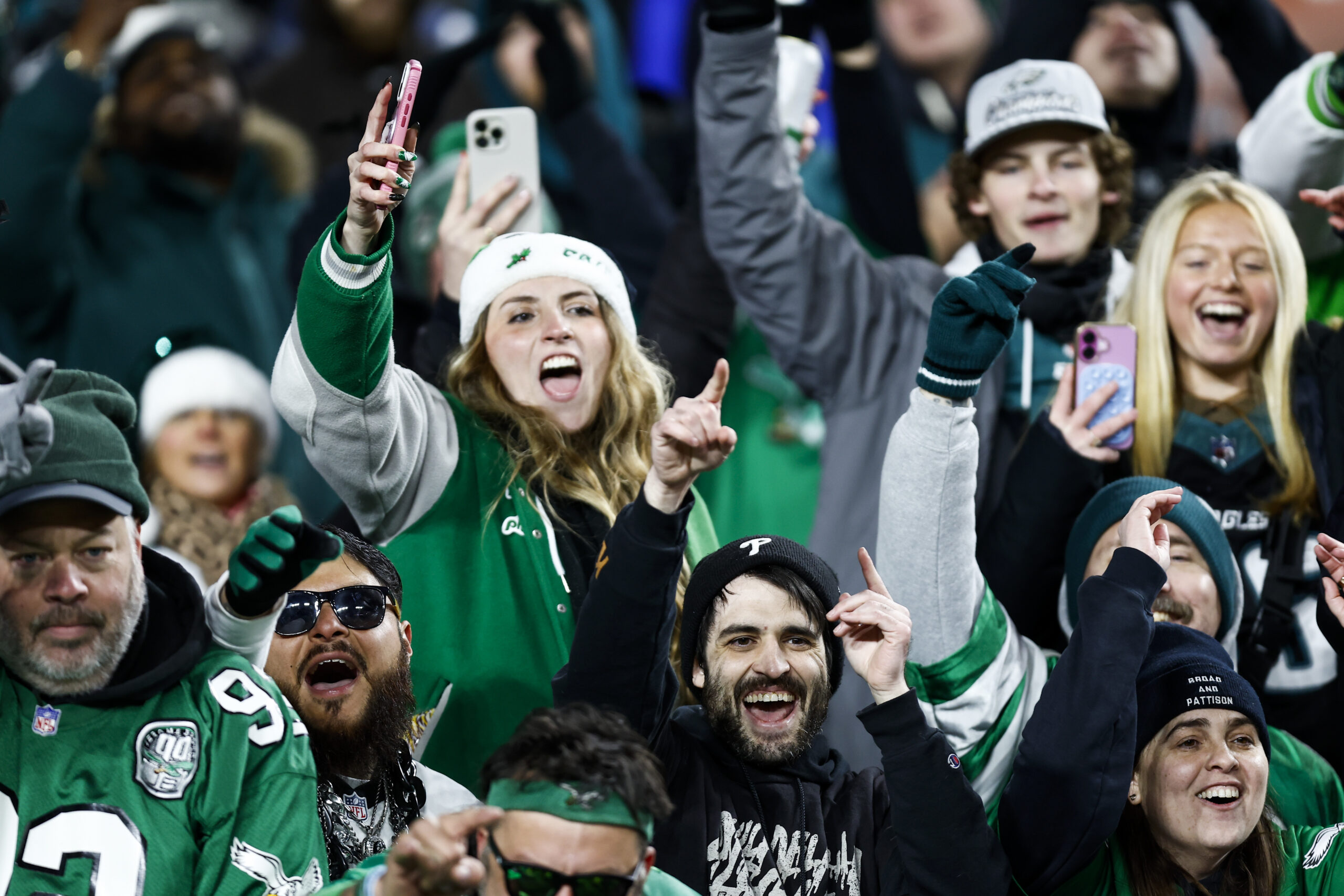
    Philadelphia Eagles fans cheer after the game against the Washington Commanders at Northwest Stadium on Saturday, Dec. 20, 2025 in Landover, Md.

    Collinsworth said NFL fans across the country share one common thread — they all think he hates their team.

    Eagles fans are certainly no exception. They still hold a grudge over Collinsworth’s call of the 2018 Super Bowl, where he thought in the moment two Eagles touchdown catches — one by running back Corey Clement and one by tight end Zach Ertz — should be overturned by officials.

    That anger lingered into the Birds’ Super Bowl parade, where fans booed Collinsworth during replay of the broadcast airing on TVs along Broad Street.

    The animosity is one reason Collinsworth actually looks forward to calling Eagles games, pointing out the passion of Philly fans.

    But have Eagles fans become nicer to him since winning two Super Bowls?

    “Oh, heck no,” Collinsworth said. “It’s a passionate place, man. I’ll just say that.”

    This will be Collinsworth’s sixth Super Bowl in the booth, and his first alongside Tirico. Collinworth’s first Super Bowl was in 2005 for Fox alongside Joe Buck and Troy Aikman, and he’s called four since returning to NBC in 2006 — all alongside former partner and current Amazon play-by-play voice Al Michaels.

    “I’m the one dumb enough to replace John Madden twice,” Collinsworth said.

    Despite picking the Seahawks to win the NFC, Collinsworth said the conference appears wide open and he could easily see the Eagles making another run to the Super Bowl. But only if they start looking like last year’s squad, where both the offensive and defensive lines were dominant.

    “When I see that Philly team again, then I’ll know they’ve got a real shot,” Collinsworth said.

    Why Eagles-49ers isn’t airing on NBC
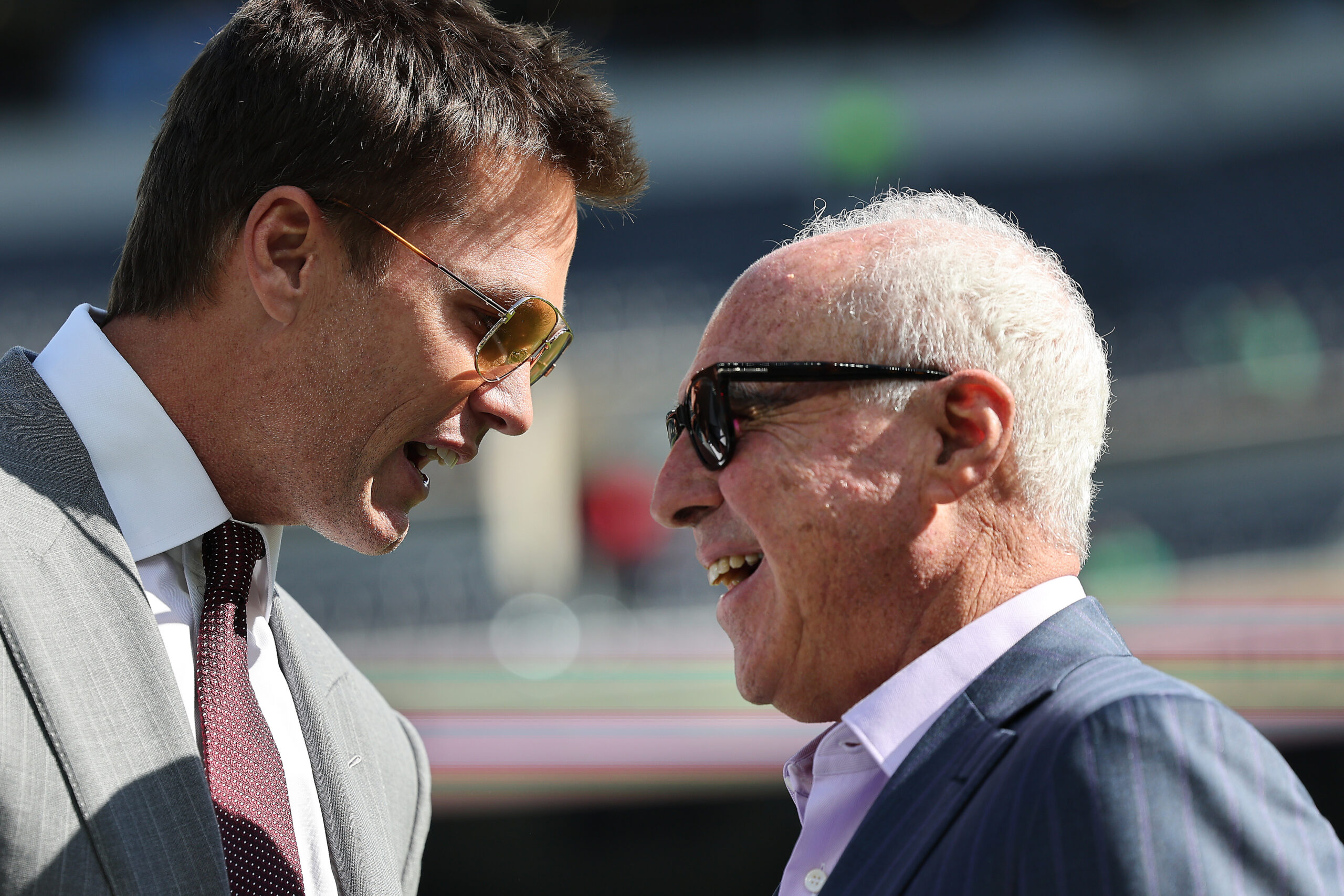
    Tom Brady, seen here with Birds’ owner Jeffrey Lurie, will call Sunday’s Eagles-49ers wild-card game on Fox.

    NBC and every other network was angling to carry the two stand-out games of wild-card weekend — the Eagles’ matchup against the San Francisco 49ers and the Green Bay Packers’ game against the Chicago Bears, just the third time the historic teams have met in the playoffs.

    NBC got neither. Instead, they got Patriots vs. Justin Hebert and the Los Angeles Chargers.

    49ers-Eagles landed on Fox in the Sunday 4:25 p.m. slot, a no-brainer considering last year’s Eagles-Packers game in that spot drew 35.9 million viewers, the most-watched game in the wild-card round. But instead of giving NBC Packers-Bears for the Sunday evening game, they tossed it to Amazon to stream on Prime Video Saturday night.

    The move has largely been viewed by sports media pundits as a gift to Amazon as the NFL seeks to renegotiate its TV deals before they’re able to opt out in 2029. But it will also be the tech giant’s final NFL game in a season where they averaged 15.3 million viewers game, increasing the likelihood we’ll see a streamer land a Super Bowl during the next decade.

    In addition to the Super Bowl, NBC will also broadcast one of the four divisional-round playoff games. If the Eagles win Sunday, they’ll hit the road to face Bears or host the Rams or Carolina Panthers at the Linc.

    Tirico has been bullish on the Eagles, despite the Birds’ well-documented offensive struggles. During last Sunday’s broadcast, Tirico pointed out Jalen Hurts, last year’s Super Bowl MVP, is quietly lurking out there as Matthew Stafford, Josh Allen, and other quarterbacks dominate the conversation.

    “There’s something about this Eagles’ team that I think even people in Philadelphia want to be a little skeptical of,” Tirico said. “But this team might be just as good as last year, and I can see them getting on a roll, 1,000%.”

    And the possibility of an Eagles-Rams divisional playoff game landing on NBC?

    “That would be awesome,” Tirico said.

    Full wild-card TV schedule

    window.addEventListener(“message”,function(a){if(void 0!==a.data[“datawrapper-height”]){var e=document.querySelectorAll(“iframe”);for(var t in a.data[“datawrapper-height”])for(var r,i=0;r=e[i];i++)if(r.contentWindow===a.source){var d=a.data[“datawrapper-height”][t]+”px”;r.style.height=d}}});

    Other NBC notes

    • Beginning with their Chargers-Patriots wild-card game Sunday night, NBC will introduce a new graphics presentation that will include players’ hometowns, something they’re pulling in from their Olympics coverage. “We want to tell stories. We want to make you feel something about the human being inside that uniform,” Collinsworth said.
    • Sunday Night Basketball will debut on NBC Feb. 1, with Tirico joining the broadcast following the Olympics. So far, the Sixers aren’t slated to appear on Sunday Night Basketball, but that could change as the season moves forward.
    • NBC is bringing back its popular Gold Zone (and host Scott Hanson) for this year’s Olympics, but it won’t be exclusive to Peacock. The whiparound show will also air on the newly relaunched NBCSN cable channel.
    • Sunday Night Baseball, which is ending its 36-season run with ESPN, will begin on NBC at the end of May, following the Western Conference finals. Tirico has no immediate plans to call baseball games, but said “at some point I would like to.”
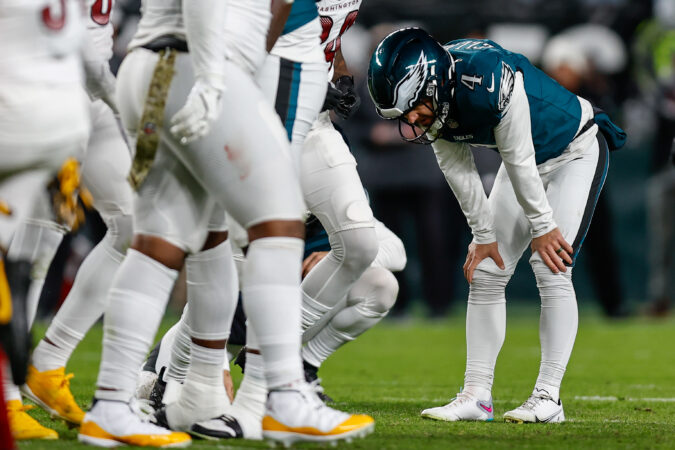
  • Wind gusts of 40 mph are possible during the Eagles’ playoff game Sunday. Kickers beware.

    Wind gusts of 40 mph are possible during the Eagles’ playoff game Sunday. Kickers beware.

    Eagles kicker Jake Elliott has had some issues this season, and on Sunday he may be confronting a formidable foe — the atmosphere.

    While a “soaking rain” is due on Saturday, the precipitation is expected to shut off before game time Sunday, when a strong cold front is forecast to incite winds perhaps gusting 40 mph during the Eagles-49ers playoff game at Lincoln Financial Field.

    The winds evidently won’t be taking sides: The stadium’s orientation is more or less north-south, and the winds will be blowing from the west and then “swirling around in the Linc,” said Matt Benz, a senior meteorologist with AccuWeather Inc.

    In any event, they won’t be much help to the quarterbacks or the kickers — San Francisco’s Eddy Piñeiro or Elliott, whose 74.1% field goal percentage this season was the second-lowest of his nine-year career. Piñeiro hit on 28 of 29 attempts.

    Temperatures at the 4:30 p.m. kickoff are expected to be in the mid-40s and drop into the upper 30s during the game, and steady winds of 20 mph may drive wind chills into the upper 20s.

    “At least it will be dry,” said Benz.

    That won’t be the case around here Saturday.

    The winds are to follow some drought-easing rains

    After temperatures again climb well into the 50s on Friday, showers are possible at night, but the rains will be more “widespread” on Saturday, said Zach Cooper, a meteorologist with the National Weather Service office in Mount Holly.

    No severe weather is expected, although rumbles of thunder are at least possible, he said.

    Said Benz, “It’s going to be soaking rain Saturday afternoon into the evening.”

    While rainfall amounts remain uncertain, about an inch was likely, the weather service said. Given the local rain deficits and the low water levels in the streams, no flooding was expected.

    In the interagency U.S. Drought Monitor weekly update posted Thursday, the entire region is classified as either “abnormally dry” or in “moderate drought.” A drought warning remains in effect for all of New Jersey.

    In the last 60 days, precipitation deficits across the region range from 20% to nearly 40%, according to data from the Middle Atlantic River Forecast Center.

    The only precipitation measured this month at Philadelphia International Airport, all of 0.1 inches, came from a dusting of snow on New Year’s Day.

    Snow prospects are not exactly robust

    Rain is possible the middle of next week, but the extended forecast remains flakeless, in least in the reliable range.

    Temperatures on Monday will top out near 40 degrees, close to normal for the date, and reach the mid and upper 40s Tuesday and Wednesday. Another cooldown is expected late next week.

    NOAA’s Climate Prediction Center has chances favoring below-normal temperatures in the Northeast in the Jan. 16-22 period, which would be approaching the season’s climatological peak snow season.

    As for winter storm potential, its Thursday afternoon discussion that accompanied the extended outlook foresaw “an overall more active pattern.”

  • Is red wine better for you than white? The answer may surprise you.

    Is red wine better for you than white? The answer may surprise you.

    The question: Is red wine healthier than white wine?

    The science: Many people think red wine is better for you than white wine or other types of alcohol.

    The notion was partly born from studies — some of which have been disputed — that suggested that certain compounds found in red wine could improve cardiovascular health.

    Now the evidence suggests that any type of alcohol — including red wine — is unlikely to make you any healthier than drinking no alcohol at all.

    “There’s no isolated health benefit of red wine over white wine over any other beverage containing alcohol,” said George Koob, the director of the National Institute on Alcohol Abuse and Alcoholism. And, he added, “There’s no physical health benefits of which we can attribute to alcohol.”

    While it’s long been known that heavy alcohol consumption can cause serious health problems, the potential benefits and risks of moderate drinking — defined as up to two drinks per day for men and one for women — have been murkier. In the past, some research suggested that people who drank small amounts of alcohol in general might have a health advantage compared with those who didn’t drink at all.

    But as research has evolved over the years, we now know that even modest drinking is linked to a higher risk of developing certain cancers such as breast, colorectal, and esophageal cancers, as well as brain changes and dementia, heart problems, and sleep problems.

    Dietary guidance has also changed. Current guidelines from the U.S. Department of Agriculture state that “emerging evidence suggests that even drinking within the recommended limits may increase the overall risk of death from various causes.” The American Heart Association recommends limiting or abstaining from alcohol, even though the association published a scientific review in 2025 that concluded that light drinking poses no risk for coronary artery disease, stroke, sudden death, and possibly heart failure, and may even reduce the risk of developing such conditions — though not all experts agreed with that conclusion.

    The argument in favor of red wine used to focus on certain compounds.

    Red wine contains more polyphenols — plant compounds with antioxidant and anti-inflammatory properties — because the grape juice is fermented with the grape skins, where these compounds are concentrated. (White wine grapes are pressed, and the skins removed, before the fermentation process.)

    These polyphenols include procyanidins, flavonoids, and resveratrol, which is often mentioned in cancer research. Another type, anthocyanins, helps give red wine its rich color and has been studied for potential cardiovascular benefits.

    Most of the health benefits associated with these polyphenols have been observed in studies at much higher doses than what you would get from a couple glasses of wine, so there’s no real advantage, experts said.

    “The concentrations are sufficiently low that you would have to drink more than moderate amounts to truly get that much more benefit from the polyphenols in red wine,” which could lead to health issues, said Eric Rimm, a professor of epidemiology and nutrition at the Harvard T.H. Chan School of Public Health, who has studied the health effects of alcohol.

    Instead, you could add stronger sources of anthocyanins into your diet, including darker berries such as blueberries, apples, onions, black or green tea, and dark chocolate, Rimm said.

    As for other risks and benefits, some people may avoid red wine because it can stain teeth and cause headaches and even allergy-like symptoms. While red wine headaches are not fully understood, some people may be especially sensitive to the tannins in the grapes, histamines, or sulfites produced through fermentation, or the additional sulfites added to preserve wine. Some research suggests quercetin, an antioxidant found in grapes, may be responsible.

    In one study, people who had a wine intolerance were more likely to report allergy-like symptoms such as nasal congestion, itching, flushed skin, and stomach upset more often after drinking red wine than white wine.

    What else you should know

    While drinking alcohol probably won’t lead to any positive health effects, you may be able to reduce potential negative effects by how you drink it.

    First, speak with your healthcare provider about whether drinking alcohol is safe for you. People who are pregnant, have certain medical conditions, take medications that interact with alcohol, or have or are recovering from an alcohol-use disorder should not drink, according to USDA. Also, teetotalers, people who don’t already drink, should not start drinking for any health reasons, health officials said.

    Assuming you’re of legal drinking age — 21 years or older in the United States — here are some tips from experts:

    • Eat first. Food, particularly foods with some protein, fats, and carbohydrates, slows the absorption of alcohol into the bloodstream, reducing potential ill effects.
    • Understand drink sizes. A standard alcoholic drink has 0.6 ounces of pure alcohol. That’s equal to 5 ounces of wine with 12% alcohol, 12 ounces of beer with 5% alcohol, or a shot — 1.5 ounces — of an 80-proof liquor. When buying alcohol at a store, check the alcohol content. “Beer used to be 4 or 5% alcohol. There are a lot of beers now that are 8 to 10%. So you may want to drink a little bit less if you have a higher alcohol-containing beer or a higher alcohol-containing spirit,” Rimm said.
    • Keep in mind that men and women may process alcohol differently. Women generally don’t produce as much of an alcohol-metabolizing enzyme called alcohol dehydrogenase, which means they break down alcohol more slowly and are at a higher risk of alcohol-related health problems.
    • Drink in moderation, which is defined as up to two drinks per day for men and one for women. Also, space out drinks throughout the week — meaning don’t drink all 7 or 14 drinks in one weekend.

    The bottom line

    While red wine has more polyphenols, which are associated with cardiovascular benefits, than white wine, they aren’t in a high enough concentration to provide a health advantage. In addition, red wine may be more likely than white wine to cause headaches and allergy-like symptoms in people who are susceptible.

  • Challenging ICE detentions in court | Morning Newsletter

    Challenging ICE detentions in court | Morning Newsletter

    It’s Friday, Philly. Today may bring clouds and light wind, but Eagles fans and kickers should beware: Wind gusts of 40 mph are possible during Sunday’s playoff game.

    In dozens of cases, federal judges in Philadelphia have ruled against a Trump administration policy that mandates detention for nearly all undocumented immigrants. The pushback has added to a chorus of similar decisions in federal courts nationwide.

    And Regional Rail service is creeping back to normal. Still, packed trains and skipped stops persist on some lines, frustrating commuters.

    — Julie Zeglen (morningnewsletter@inquirer.com)

    If someone forwarded you this email, sign up for free here.

    Philly judges push back on ICE

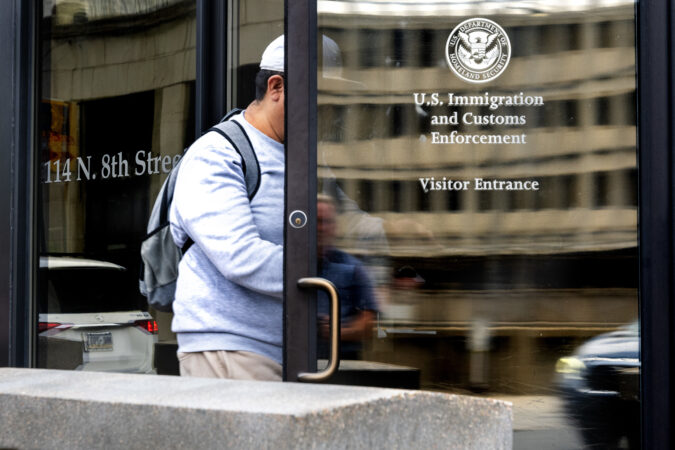
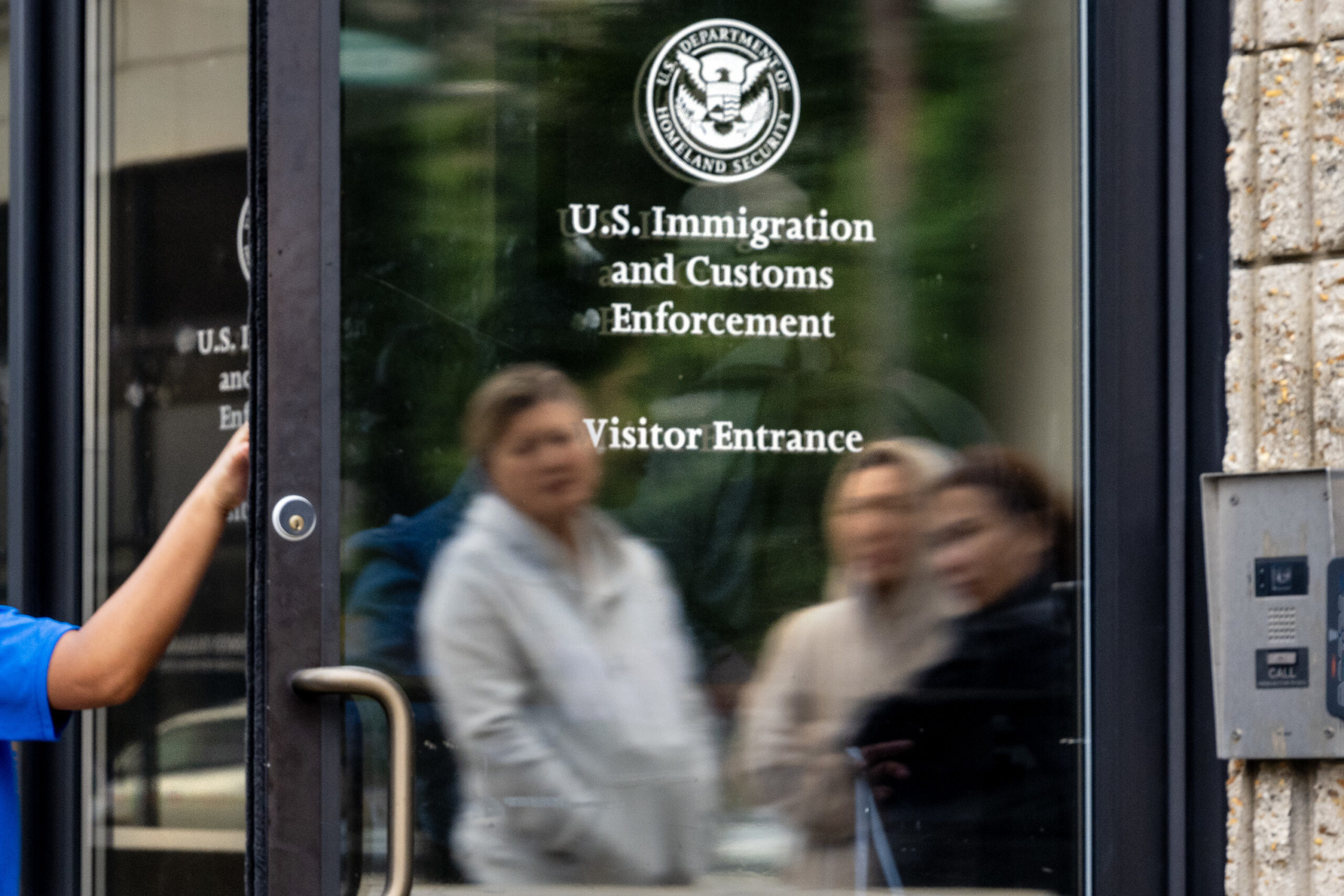
    A mandatory detention policy rolled out by U.S. Immigration and Customs Enforcement last summer has been found unlawful dozens of times by Philly-based federal judges, as well as in courts across the country.

    The ICE directive has dramatically boosted the number of immigrants being held in detention — including those seeking to stay in the United States through legal channels — past 65,000, a two-thirds increase since President Donald Trump returned to the White House in January.

    Under Trump, it has also gotten harder for detainees to be released on bond, especially those without the money to hire a lawyer and sue.

    Notable quote: “They are doing it because they can, and because the consequences are that most [immigrants] cannot fight this and will end up being deported,” a local immigration attorney told The Inquirer.

    Reporters Chris Palmer and Jeff Gammage explain the dramatic change in precedent.

    In other ICE news:

    Rebounding Regional Rail

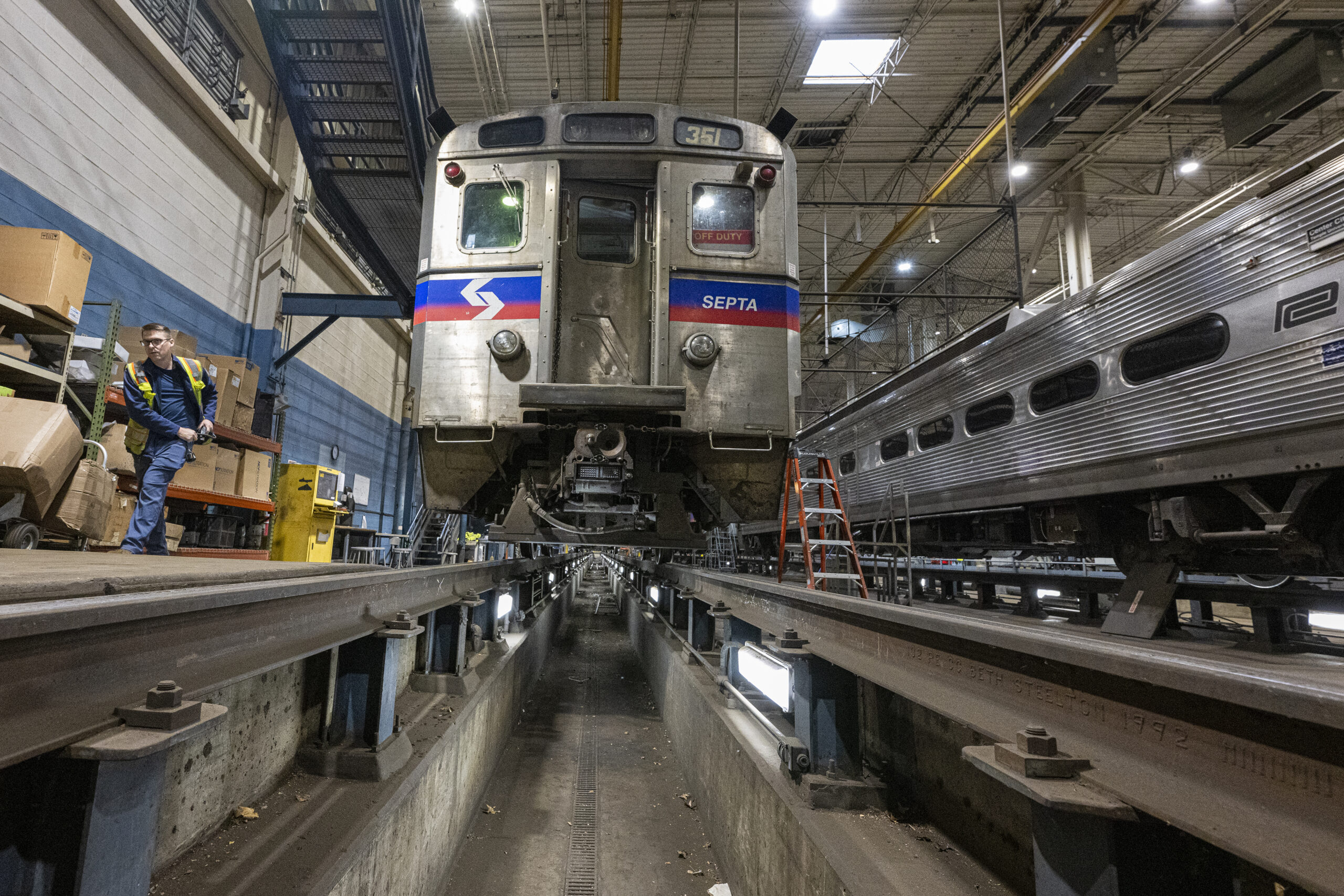
    Following a rough year for SEPTA and its riders, the transit agency reports improvements to its Regional Rail service, with more to come.

    🚆 The big picture: Regional Rail trains are operating with fewer canceled trips and running with more cars.

    🚆 By the numbers: As of Thursday, 180 of the 223 Silverliner IV cars the transit agency was mandated to inspect and repair have been cleared to return to service — though only 78 have actually returned.

    🚆 On the way: Packed two-car trains and skipped stops persist on some lines during peak travel times as SEPTA continues to add cars, including 10 passenger coaches leased from Maryland’s commuter railroad.

    Transportation reporter Tom Fitzgerald has more.

    What you should know today

    Plus: What makes something a unit block in Philadelphia?

    Welcome back to Curious Philly Friday. We’ll feature both new and timeless stories from our forum for readers to ask about the city’s quirks.

    This week, we have an explainer from reporter Michelle Myers on an urban planning term you might have heard in news reports: “unit block,” used to describe certain addresses in cities that operate on a grid, as Philadelphia does.

    The term might appear when a report wants to communicate where an incident happened without giving the exact address. Here’s the full story.

    Have your own burning question about Philadelphia, its local oddities, or how the region works? Submit it here and you might find the answer featured in this space.

    🦅 Heads up, Eagles fans: It’s playoff time in Philadelphia, which means you probably have a lot of questions about the Birds. Eagles beat reporter Olivia Reiner is ready to answer them during a Reddit AMA in r/Eagles today. Join the conversation at 9 a.m.

    🧠 Trivia time

    Which article of clothing or accessory did CBS Philadelphia anchor Jim Donovan set the Guinness record for having the largest collection of?

    A) Socks

    B) Beanies

    C) Tie clips

    D) Ties

    Think you got it? Test your local news know-how and check your answer in our weekly quiz.

    What we’re …

    🥼 Heeding: Health officials’ call to get vaccinated as flu cases surge in Pennsylvania.

    🏈 Delighted by: The history of the rowdy Eagles-49ers game that led to Eagles Court.

    📺 Hoping for: A second season of Delco-set Mare of Easttown.

    💻 Recycling: Old electronics the right way, according to e-waste experts.

    🌈 Considering: How lies feed attacks on transgender and nonbinary people.

    🧩 Unscramble the anagram

    Hint: 300 acres in the Delaware River

    DENSITY SPLAT

    Email us if you know the answer. We’ll select a reader at random to shout out here.

    Cheers to Steve Cameron, who solved Thursday’s anagram: Sing Us Home. Now in its fourth year, the music festival will be staged on Venice Island in Manayunk from May 1 to 3.

    Photo of the day

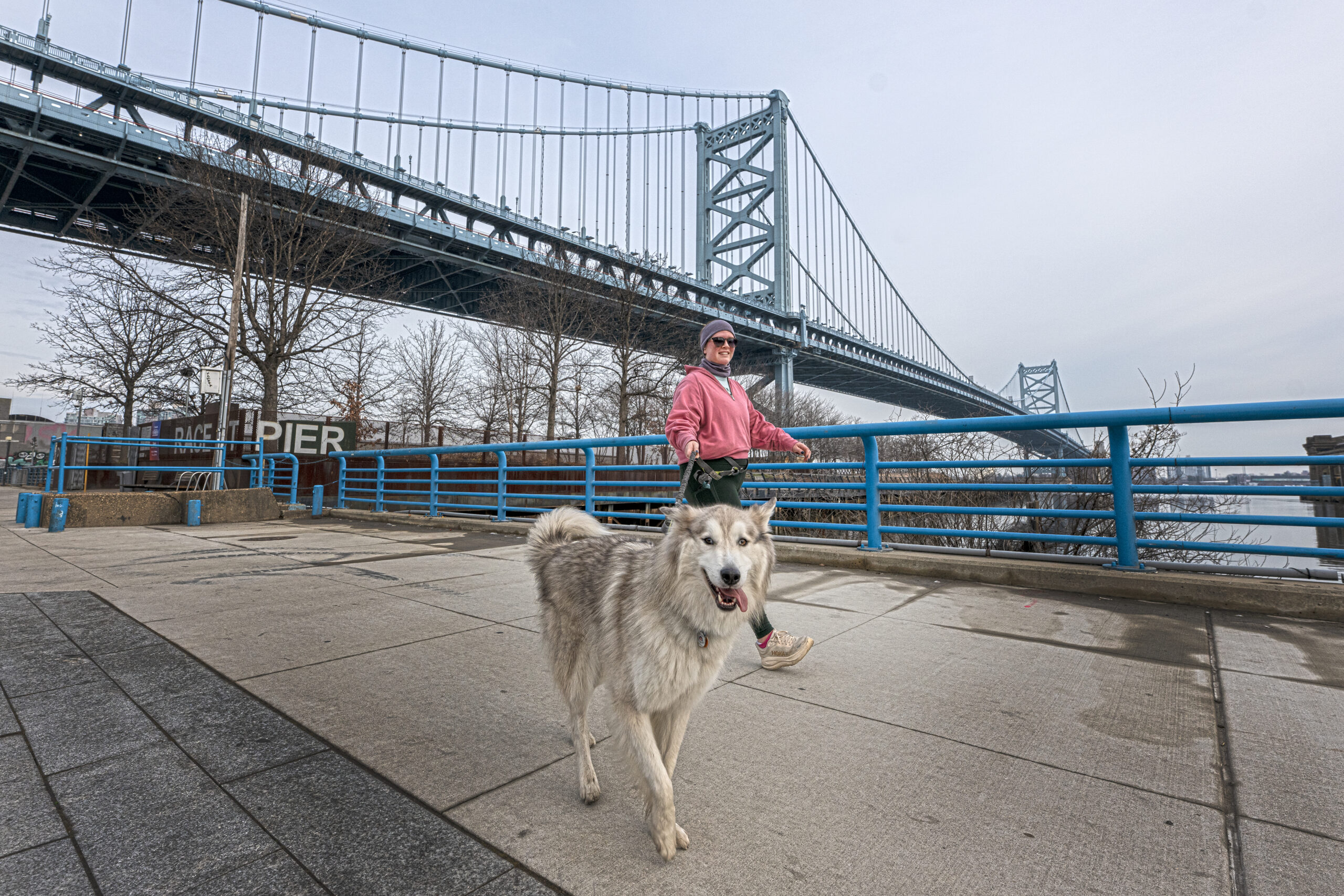
    Emily Umstattd walks her dog for exercise along Columbus Boulevard.

    This good pup hopes you have a pleasant weekend (probably) and so do I. Paola has you covered with the news Saturday and Sunday, and I’ll be back with you Monday. Till then, be well.

    By submitting your written, visual, and/or audio contributions, you agree to The Inquirer’s Terms of Use, including the grant of rights in Section 10.

  • Mobs have attacked U.S. temples of freedom before

    Mobs have attacked U.S. temples of freedom before

    I was a firsthand witness to the riot at the U.S. Capitol on Jan. 6, 2021. Inside the House chamber, we heard shouts, footsteps, and gunshots. Speaker Nancy Pelosi was rushed off the floor. The rest of us, representatives and journalists, stayed as frozen as the Rotunda statues.

    The thousands who stormed the terrace, breaking windows and doors to gain entry, were white nationalists loyal to the president who lost the 2020 election. His name is now emblazoned all over Washington: Donald Trump.

    That was not only an attack on the building itself. That bitter day destroyed an illusion we Americans held dear about our nation: Fair is fair. Win or lose, peace prevailed in our elections. We took pride in our place as the world’s oldest democracy.

    Echo in history

    History shows that much the same thing happened in Philadelphia, the Quaker city where our cherished founding documents were drawn up by the signers of the Declaration of Independence and the Constitution.

    But slavery festered in Jacksonian America, and open hostility to abolitionists was common. Elijah Lovejoy, an abolitionist editor, was murdered by a mob in Alton, Ill. Philadelphia was not spared.

    In 1838, a majestic new building changed the Philadelphia cityscape. Built by the Society of Friends (the Quakers) for abolitionist gatherings, Pennsylvania Hall was envisioned as a temple of liberty and free speech, with elegant touches like damask drapes and a sunflower-shaped mirror.

    There, Philadelphia Quakers worked with “the world’s people,” as they called non-Quakers — notably Bostonians and Unitarians — to speak out against slavery. Fiery William Lloyd Garrison spoke during opening week. The Grimké sisters, Sarah and Angelina, white abolitionists from South Carolina who had fled North and become Friends, bore witness to the evils of slavery.

    It did not last long.

    Founded in 1833, the American Anti-Slavery Society stood just a few blocks away.

    Lucretia Mott, the leading Philadelphia Quaker abolitionist voice, cofounded the Female Anti-Slavery Society.

    Lucretia Mott, the leading Philadelphia Quaker abolitionist voice, cofounded the Female Anti-Slavery Society. And it was Mott who most enraged some Southerners studying medicine in the city.

    The medical students jeered at Black and white female abolitionists walking together in pairs, a procession led by Mott. The word for Black-white mixed company in those days was “amalgamation,” and the racist Southerners would not tolerate it, hurling insults at the members of the Female Anti-Slavery Society.

    On Sixth Street, the students grew into a pack of hundreds, perhaps thousands, rioting and eventually focusing on the beautiful hall, which they burst into and set ablaze in one of the worst mob scenes in antebellum America.

    Narrow escape

    But the rampage was not over. Lucretia and James Mott, their son, Thomas, and others went to the Mott home on North Ninth Street. They sensed the mob might be looking for them, and they were right.

    They were spared an ugly scene by the Quaker poet and journalist, John Greenleaf Whittier. He kept pace with the moving mob as it shouted, “To the Motts!” and pointed them in the wrong direction. (Much as Capitol Police Officer Eugene Goodman did in the U.S. Senate on Jan. 6.)

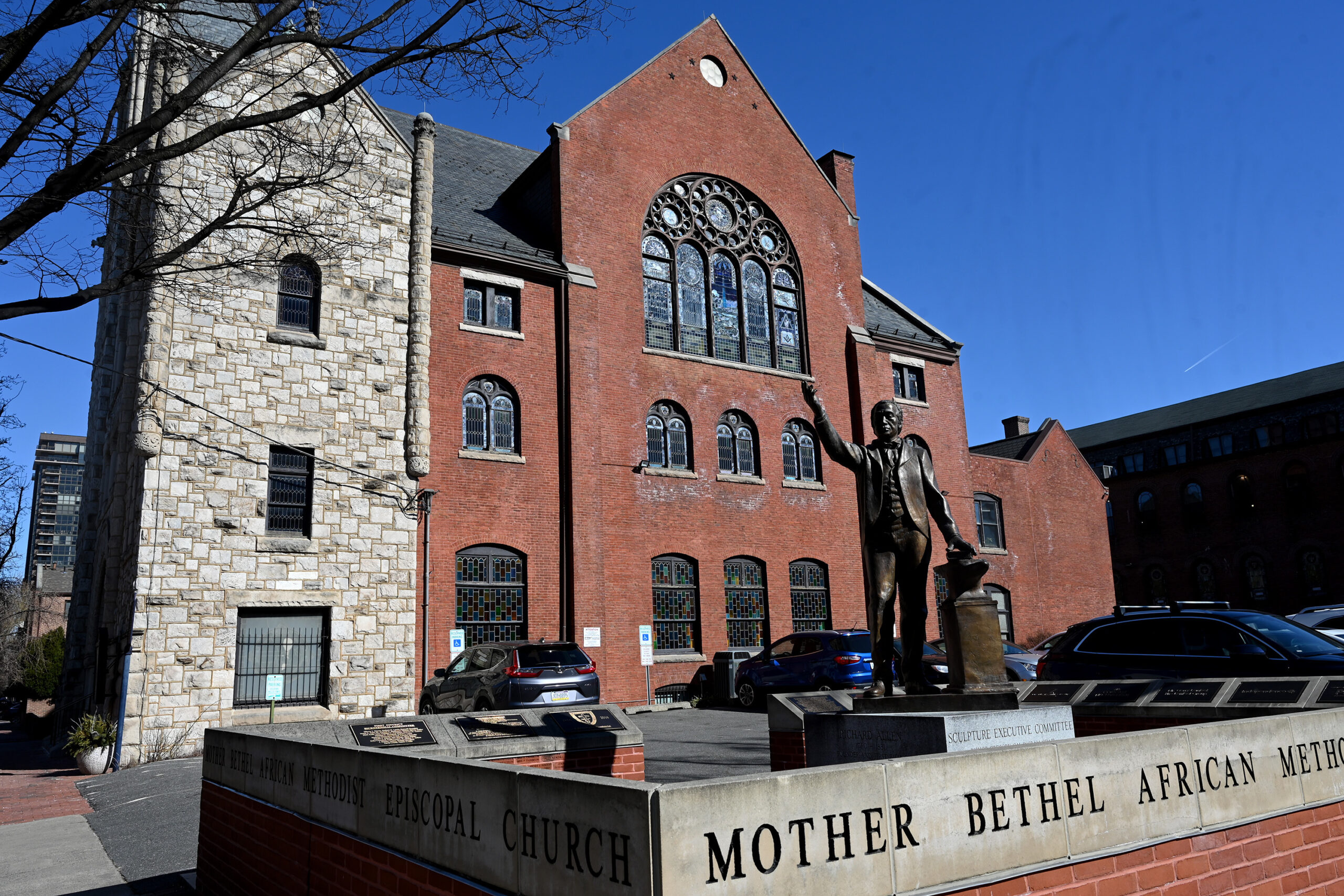
    A bronze statue of Bishop Richard Allen outside Mother Bethel AME Church, photographed in February 2024.

    Instead, the mob damaged Mother Bethel, a Black church and the oldest African Methodist Episcopal congregation in the nation, as well as a nearby Black orphanage.

    That shattering night shocked Philadelphia’s civic pride as a haven for freedom and democracy. Was it a place where the free Black community could still feel safe? Clearly not.

    For sobered antislavery advocates, the riot and fire landed as a moment of reckoning. Violence in Philadelphia meant they had an even more determined foe in proslavery forces than they had thought. Abolitionists would have to rise from the ashes and press their campaign harder for the next 25 years.

    Today, we may see Pennsylvania Hall’s burning as a template for the savage attack on the Capitol in our own era. White nationalism, no stranger to America’s streets, rose again — with a vengeance.

    Jamie Stiehm, author of “The War Within” and a Creators Syndicate columnist, is at work on a biography of Lucretia Mott. She lives in Washington, D.C.

  • Keeping seniors fit in Philly takes a citywide effort | Expert Opinion

    Keeping seniors fit in Philly takes a citywide effort | Expert Opinion

    One in five Philadelphians are age 60 or older, and the city’s senior population has been growing for at least the past decade.

    I’m a Philly-based physical therapist and researcher who studies how to boost physical activity for seniors and people with disabilities. Patients, participants in the studies I conduct, and older community members alike often ask me: “What should I do to stay healthy?”

    My answer is simple: Movement is one of the most powerful tools we have to support our bodies and minds, and to stay independent as we grow older.

    The World Health Organization recommends that all adults, no matter their age, should aim for at least 150 minutes of cardio activities per week, and strength training twice a week. Older adults should also practice balance training through activities like tai chi, yoga, or dance to prevent falls.

    But most older adults don’t meet all these metrics. In fact, in Philadelphia, 30% of seniors report having difficulty with mobility activities like walking or climbing stairs.

    While staying active is key to aging independently, the environments where we live also influence these outcomes. Think about “blue zones,” places where some of the healthiest and longest-living people in the world reside. They usually live longer because of a combination of social connections, movement opportunities, and diets.

    Philly is definitely not a blue zone, but there are pros to moving through your golden years here … and some cons.

    Urban infrastructure

    Philadelphia’s regular street grid, close neighborhoods and the fact that much of Center City is accessible by foot help explain why Philly was named the most walkable city in the U.S. by USA Today for the past three years.

    If you’re taking in the city on foot, you’re very likely to stumble upon a public park like one of the five historic squares designed by William Penn in the 1680s, the massive Fairmount Park — which is over 10 times the size of Central Park in New York — or the bustling Clark Park in West Philadelphia, among others.

    In fact, 95% of all Philadelphia residents — and 94% of those 65 and older — live within a 10-minute walk of a public park. However, those parks tend to be smaller and lower-quality for people in low-income neighborhoods.

    Philly’s public transit system, however, tends to receive less praise.

    In the beginning of 2025, over 700,000 people rode some form of Southeastern Pennsylvania Public Transportation Authority, or SEPTA, public transit daily. But this year was marked by dramatic service cuts — though they were quickly reversedfunding uncertainty, and fare increases.

    Public transportation is directly linked to the overall health of a city and its residents. Healthy public transportation can stimulate local economies, improve air quality, and increase access to work, school, and healthcare for everyone, whether they own a car or not.

    And the physical activity often required to get to and from a bus, train, or trolley stop can provide some extra movement for riders.

    Since older adults make up a significant portion of SEPTA riders, service cuts mean that some seniors cannot get where they need to go, are less physically active, and may become lonelier.

    Of course, Philly’s historic cobblestone streets, narrow alleyways, and uneven sidewalks aren’t wheelchair- or cane-friendly, and are a challenge for people with mobility limitations. However, in 2023, Philadelphia settled a class-action lawsuit over inaccessible sidewalks and curb ramps that resulted in a federal mandate that requires the city to install or fix 10,000 curb ramps by 2038. Philly has installed or fixed about 25% of that total so far.

    Philadelphia also has many historic buildings, and this designation allows for a loophole to Americans with Disabilities Act compliance laws. These buildings are often inaccessible to people who use wheelchairs or other mobility devices.

    Services for seniors

    In 2011, Philly launched the Mayor’s Commission on Aging to support policies and projects that aim to improve the quality of life of older adults.

    At the time, the U.S. was experiencing a massive shift in demographics. The number of adults age 65 and older grew by nearly 40% from 2010 to 2020. According to research from the Pew Charitable Trusts, Philly experienced a similar, albeit less dramatic, upward trend. The city’s senior population grew by 22% from 2013 to 2023.

    The Mayor’s Commission on Aging advocates for older residents and often partners with agencies like the Philadelphia Corporation on Aging that focus on seniors. PCA offers several programs to support senior independence and wellness, such as the Senior Housing Assistance Repair Program and the Caregiver Support Program, which provides help for the family and friends who support seniors.

    PCA also oversees 28 senior community centers throughout the city. Each of the centers offers a variety of free or low-cost classes, including nationally recognized physical activity programs that improve strength, balance, quality of life, and other important health metrics for older adults.

    The Salvation Army Kroc Center of Philadelphia in North Philadelphia is another great resource for older Philadelphians. The state-of-the-art health club offers fitness, swimming, and gardening opportunities. An annual membership is $451 for adults over age 62, and the club accepts some insurance wellness benefits.

    This year, I will partner with the Kroc Center to launch Bingocize, an evidence-based physical activity program for older adults, as part of a research study funded by the Arthritis Foundation. We hope to find out if the new program boosts physical function and physical activity, and improves arthritis symptoms and quality of life. We’re also looking at what factors will make the program sustainable at the Kroc Center long after the study is over.

    I believe Philly has more work to do when it comes to providing seniors access to physical activities that promote healthy aging. But the seeds planted over a decade ago to protect and support the city’s rapidly growing aging population demonstrate a commitment to positive change, and an understanding that where we live affects individual and collective health.

    Laura Baehr is an assistant professor of physical therapy and rehabilitation sciences at Drexel University.

    Reprinted from The Conversation.

  • Trump’s imperial Venezuela policy based on lies and delusions

    Trump’s imperial Venezuela policy based on lies and delusions

    No one should mourn for Nicolás Maduro, and the U.S. military extraction of the Venezuelan dictator was a military tour de force.

    Those are the only two positive things to be said about President Donald Trump’s latest made-for-TV foreign operation, which has squandered American guns and taxpayer money on a lunatic venture based entirely on lies.

    Contrary to prior White House claims, the removal of Maduro had nothing to do with drug cartels, terrorism, or threats to U.S. security. Nor was it meant to restore democracy to Venezuela (as Trump stiffs exiled opposition leaders and stifles talk of future elections).

    Instead, based on the president’s own words, this monthslong exercise was aimed at taking control of Venezuela’s oil. It was also aimed at reinforcing Trump’s personal role as virtual emperor of the Western Hemisphere (and expediting the collapse of Cuba).

    Trump’s emperor complex has also renewed threats to seize Greenland or bludgeon longtime NATO ally Denmark into selling the autonomous island.

    In truth, the administration’s Venezuelan adventure threatens to drag America into another foreign quagmire and undermine U.S. security around the world.

    Smoke rises from Fort Tiuna, the main military garrison in Caracas, Venezuela, after multiple explosions were heard and U.S. aircraft swept through the area Saturday.

    After years of denouncing GOP hawks and Democrats over regime change gone bad in Baghdad and Kabul, Trump now says he intends to “run” Venezuela and manage its oil — indefinitely. While he fixates on the derring-do of the Maduro extraction, the president’s proposals for follow-up are incoherent and contradictory. His intense focus on our hemisphere distracts U.S. attention from the growing Russian and Chinese threats in Europe and the Indo-Pacific.

    As Anne Patterson, a former U.S. ambassador to Colombia and Ecuador who also served as assistant secretary of state for International Narcotics and Law Enforcement Affairs, asked, in frustration: “What is a carrier strike group doing in the Caribbean?

    “We’ve been fighting this drug war for decades,” she recounted, “but it is a huge public health problem, not a security threat. It is nothing like China circling around Taiwan” with warships and planes.

    Instead of facing reality, the White House is trying to sell Trump’s fantasies to the public with an endless stream of falsehoods and fake facts.

    For starters, the Venezuelan regime change will hardly affect the U.S. drug problem. Fentanyl is the drug that has killed hundreds of thousands of Americans and Venezuela neither makes nor exports fentanyl. That drug is manufactured in Mexico using precursor chemicals from China. (Some cocaine passes through Venezuela, but it goes mainly to Europe.)

    A government supporter holds an image of President Nicolás Maduro during a women’s march to demand his return in Caracas, Venezuela, on Jan. 6, three days after U.S. forces captured him and his wife.

    In other words, the fentanyl problem Trump claims to be addressing can only be resolved via negotiations with Mexico and China.

    Moreover, the U.S. Department of Justice has just dropped criminal charges that Maduro led a drug cartel. The reason for this shift? As Latin America experts have long contended, the so-called Cartel de los Soles — cited by Trump officials as a terrorist threat — was not a real organization at all. It is a Venezuelan slang term used for officials corrupted by drug money, including the Maduro regime.

    Now that the Justice Department plans to bring Maduro to trial, perhaps Attorney General Pam Bondi realized she could not present fake facts about cartels under oath. Maduro is a corrupt thug who no doubt made money off drug dealers, but he did not lead a terrorist cartel.

    Again, a distinct downgrade from the monster threat the White House has painted as justification for its raid.

    The Trump team has also put forward no plan for a transition from Maduro’s corrupt, repressive government to one that might curb what drug dealing does go on. He has not even spoken to opposition leaders in exile who won the 2024 election before Maduro stole it.

    Delcy Rodríguez meets with her brother, National Assembly President Jorge Rodríguez, at the Foreign Ministry in Caracas, Venezuela, in 2023. Delcy Rodríguez, Maduro’s vice president, has been sworn in as the leader of Venezuela.

    Instead, the president has chosen to recognize Maduro’s vice president, Delcy Rodríguez, and her brutal interior and defense ministers, who have increased repression against political opponents since Maduro was taken.

    “In fact, the government remains the same,” I was told by Venezuelan native Carolina Jiménez Sandoval, the head of the Washington Office on Latin America. “Are we seeing a transition without a transition for another strongman more conducive to American interests? Venezuelans want an answer.”

    In truth, Trump is himself acting like a strongman, insisting he will “run” Venezuela indefinitely. He seems to believe that by enforcing U.S. (and his personal) control of all Venezuelan oil sales and revenues, in a cockamamie scheme that appears both illegal and unmanageable, the repressive regime in Caracas can be forced to do U.S. bidding.

    When asked by the New York Times whether the U.S. would “remain Venezuela’s overlord” for more than a year, the president replied, “I would say much longer.”

    Why? What possible reason is there for Trump to expend U.S. resources on running Venezuela? Even the lure of oil money makes little sense.

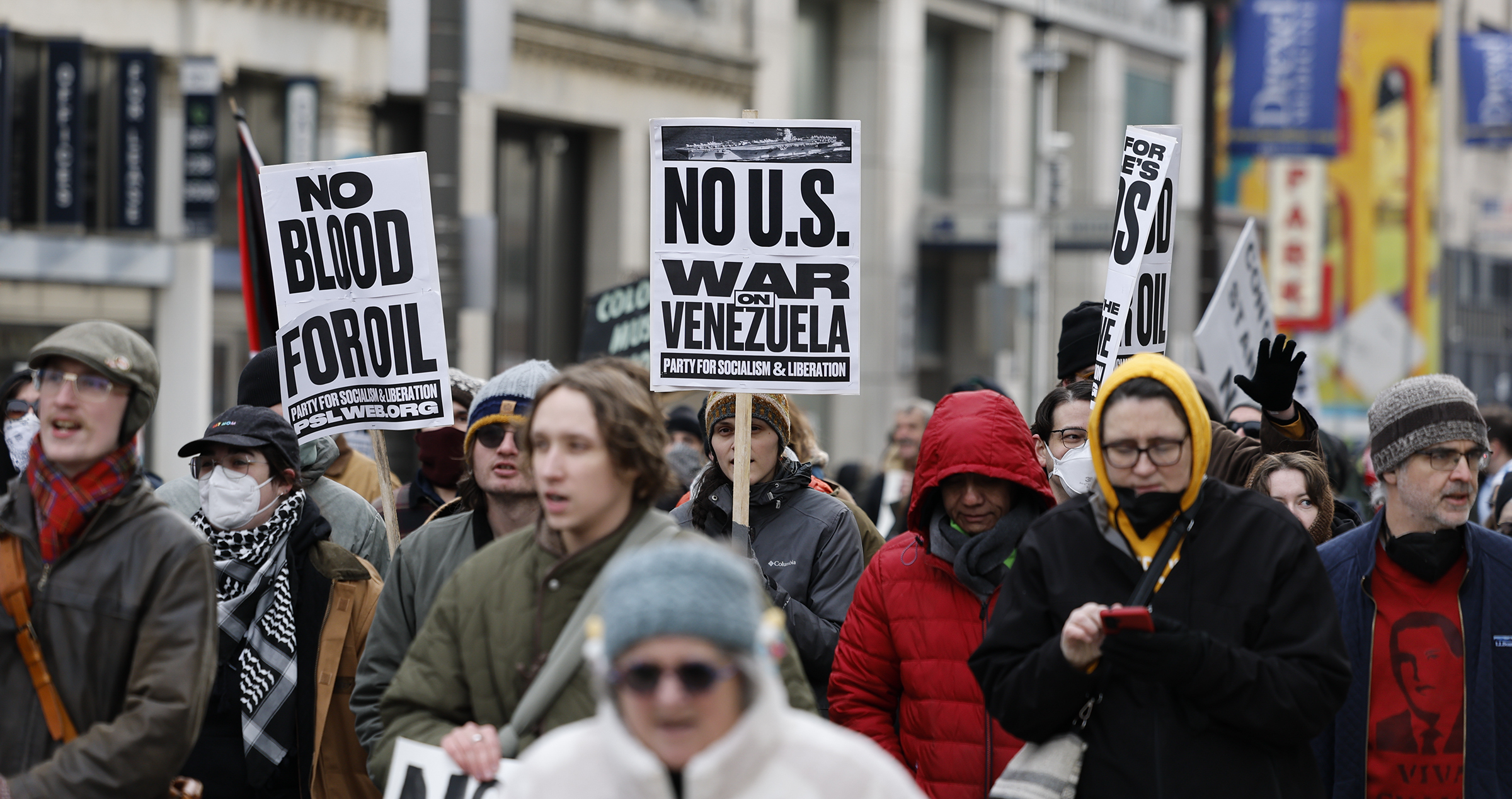
    Demonstrators march along North Broad Street reacting to U.S strikes on Venezuela on Saturday.

    The president insists there are fortunes to be made if U.S. oil firms return to develop its enormous oil reserves. But apart from Chevron, which has remained in the country, large U.S. companies are reluctant. That’s because it will take tens of billions of dollars in investment to make the country’s neglected fields viable, global oil is abundant, prices are low, and Venezuela’s future is uncertain.

    If Venezuela pumps more oil and drives global prices down further — as Trump is demanding — it will negatively affect the interests of oil producers on the U.S. mainland. In fact, large producers’ interest in Venezuela is so tepid that Trump is actually offering to use taxpayer money to subsidize the return of U.S. companies to the country.

    To sum up, neither drugs, nor cartels, nor terrorism, nor oil are valid or legitimate reasons for taking out Maduro, especially as we are leaving his thuggish government in place.

    What’s worse, his Venezuelan venture appears to be inspiring Trump to fantasize about other snatch operations or military takeovers — in tragic imitation of a Vladimir Putin or Xi Jinping.

    Asked in the Times interview if there were any limits on his global powers, Trump said: “Yeah, there is one thing. My own morality. My own mind. It’s the only thing that can stop me.”

    These are the words of a wannabe dictator.

    If they don’t awaken more GOP legislators to vote to curb his future use of military force in Venezuela — via a bipartisan bill now under Senate debate — then they will be complicit in the trashing of U.S. security by an egomaniac who believes his own lies.

  • How to recycle your old electronics the right way, according to e-waste experts

    How to recycle your old electronics the right way, according to e-waste experts

    If you got an iPhone, smart TV, or laptop as a holiday gift, you may be facing the age-old dilemma of what to do with your old electronics.

    Or maybe you’ve already thrown your now-outdated device in the kitchen junk drawer to languish for years alongside flip phones from the early aughts.

    “People want to do the right thing, but they don’t know what to do,” Joe Connors, CEO of the Pennsylvania-based secure e-waste recycler CyberCrunch. Something like an old TV “often ends up in their basement or in their garage.”

    There is a better way to bid adieu to these electronics, experts say, and it’s not even that complicated.

    “It’s easier than people think,” said Andrew Segal, head of operations at eForce Recycling in Grays Ferry. “A lot of people scratch their heads, [saying] ‘I don’t know what to do with this stuff.’ … [But] there are plenty of electronics recyclers out there.”

    The industry has grown in recent decades, particularly after state laws began governing e-waste recycling in the early 2000s.

    Let experts answer your questions about how to responsibly dispose of old electronics.

    Can I put TVs, phones, and other electronics out with my regular trash or recycling?

    Electronics can’t be picked up with regular trash or recycling, but they can be taken to places like Philadelphia’s sanitation services centers.

    That’s a resounding no.

    Throwing out electronics is technically illegal in Pennsylvania and New Jersey, and consumers can face fines for disposing of e-waste. As of January, 25 states and D.C. have such laws on the books.

    Leaving TVs and other large electronics outside also poses environmental risks.

    “The screens wind up getting cracked, and they get rained on, and that all can wash up into the waterways,” Segal said. “It’s not good.”

    Only put electronics on the curb if you have arranged a pickup with a certified recycler, experts say.

    It can be difficult to find a company that will pick up electronics, e-recycling executives say. Some said they used to recommend the service Retrievr, but it recently paused its Philly-area services indefinitely. If a consumer does find such a service, they say it’s likely to come at a cost.

    If an electronic is too heavy to lift alone, and you don’t want to pay for a pickup, experts recommend asking neighbors, friends, or relatives to help get the item into the car. Once you get to a collection site, they say, workers can usually take it from there.

    So what should I do with old electronics?

    Electronics are stacked on pallets at the Greensburg, Pa., facility of CyberCrunch, an electronics recycling and data destruction service, as pictured in 2022.

    Take it to a certified electronics collection site.

    “Google ‘e-waste recycling’ and see what options exist” in your area, said Tricia Conroy, executive director of Minneapolis-based MRM Recycling, which helps electronics manufacturers recycle sustainably. “Most phone carriers will recycle on the spot.”

    Other programs and services vary by location, Conroy said.

    Philadelphians can drop off items for free at any of Philadelphia’s sanitation convenience centers. And in New Jersey, you can search free sites by county at dep.nj.gov/dshw/rhwm/e-waste/collection-sites.

    Elsewhere, you can search for township or county e-recycling events. You can also bring electronics to Goodwill Keystone Area stores, Staples, or Best Buy to be recycled. Call or go online to check a store’s specific e-recycling policy before making the trip.

    North Jersey-based Reworld waste management helped design Goodwill’s program in 2024 to “address a gap in Pennsylvania’s electronics recycling infrastructure,” spokesperson Andrew Bowyer said in a statement.

    “Prior to its launch, many counties, including densely populated areas around Philadelphia, had limited or fee-based options for recycling electronics — particularly bulky items like televisions — which often led to illegal dumping.”

    Consumers can also make appointments to drop off devices at places like CyberCrunch in Upper Chichester, said Connors, whose company specializes in data-destruction, e-waste recycling, and reuse.

    About 90% of CyberCrunch’s business comes from commercial clients, Connor said. But the Delaware County warehouse, he said, accepts drop-offs from consumers, usually for no fee (with the exception of TVs, which cost money to sustainably discard, Connors said).

    What should I do before I recycle an old smartphone, computer, or smart TV?

    Consumers should take care to remove data from old smartphones before they are recycled, industry experts say.

    Delete all data, experts say.

    “Most people, once [a device] leaves their hands, they don’t think about it,” Connors said. And “people don’t think that bad things are going to happen.”

    But consumers’ digital information gets stolen every day in increasingly creative ways, Connors said.

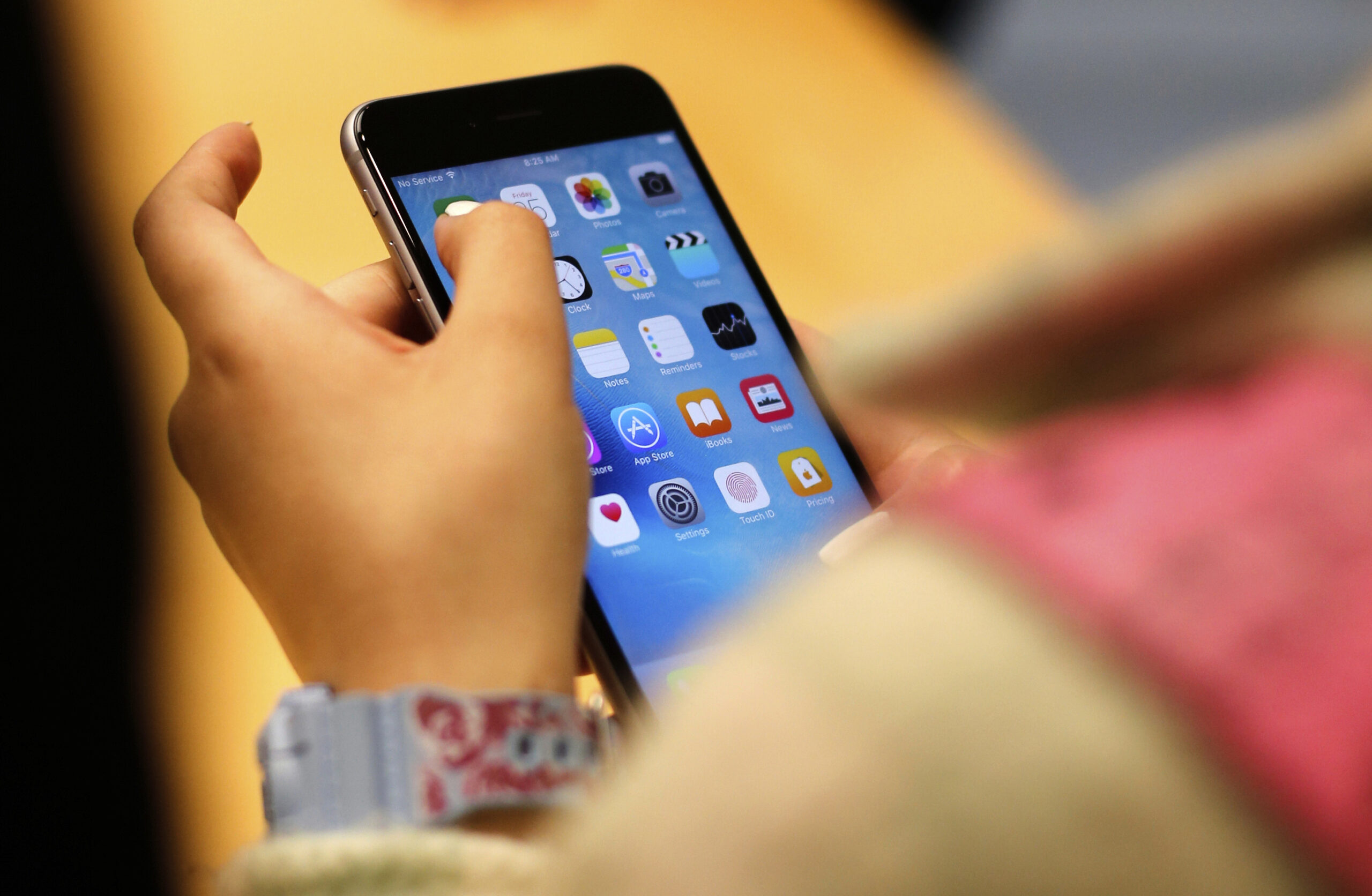
    To be safe, Connors recommends people remove the SIM cards from all old smartphones, whether they’re sitting in a junk drawer or heading to an e-recycling facility. SIM cards hold much of a user’s important, identifying data. On iPhones, SIM cards are located in a tray on the side of the phone and can be removed by putting a straightened paper clip or similar tool into the tiny hole on the tray.

    When removing data from an old laptop, Connors recommends more than a factory reset. Take it to a professional who can wipe the computer clean entirely, he said.

    Don’t forget to also remove data from old smart TVs, where users are often logged into multiple apps, including some like Amazon that are connected to banking information, Connors said.

  • The Eagles’ toughest playoff opponent won’t be the 49ers or Rams or Seahawks. It’ll be themselves.

    The Eagles’ toughest playoff opponent won’t be the 49ers or Rams or Seahawks. It’ll be themselves.

    Is anyone on or around the Eagles having any fun? It doesn’t seem that way. It hasn’t seemed that way all season. Sure, Jordan Davis has a personality as big and buoyant as he is, and Brandon Graham’s return from retirement has brought some effervescence back to the locker room. But on the whole, things have been pretty dour, or at least kind of grave and serious and humorless, for a team that’s coming off a championship.

    The examples are everywhere. Jalen Hurts has won a Super Bowl, was named the most valuable player in that Super Bowl, plays his best in the Eagles’ most important games, and has a smile that would stop a beauty shop. Yet in public, he often has a demeanor that suggests that, if he so much as grinned, his face would split open down the middle. Before he left the lineup because of his foot injury, Lane Johnson had not spoken after a game since the Eagles’ loss to the New York Giants on Oct. 9, when he called out the team’s offense for being “too predictable.” Not exactly Once more into the breach, dear friends stuff.

    Hurts’ relationship with A.J. Brown has been a source of speculation and tension for months. Brown has made his feelings about getting the ball — or, more accurately, not getting the ball — plain on social media, and his complaints sparked a ridiculous discussion about whether the Eagles might/should trade him in the middle of this season. Adoree’ Jackson and Kelee Ringo have, at various times, been considered the single worst cornerback in team history, as if Izel Jenkins, Nnamdi Asomugha, or Bradley Fletcher had never lined up against a decent receiver and immediately been burnt like toast. And if you want to be the ultimate Debbie Downer at a friendly get-together, just say the words Kevin Patullo, and you’re bound to start one of the partygoers ranting like a wing nut online influencer. Hell, your house might even wind up covered in egg yolk.

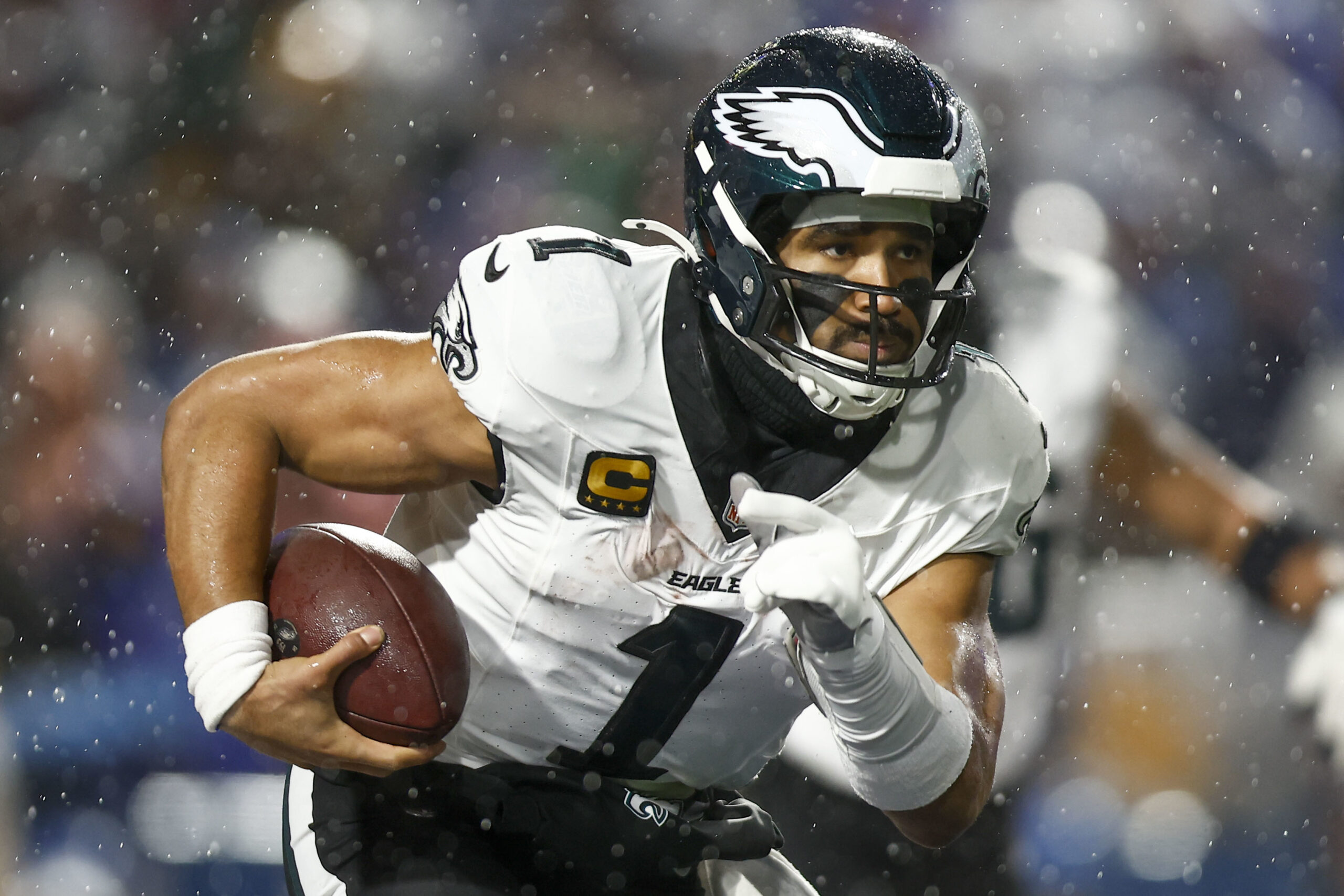
    Eagles quarterback Jalen Hurts, the Super Bowl LIX MVP, has come under criticism this season.

    The point here is not to suggest that the Eagles have been beyond criticism. Of course they haven’t. The point is that their entire season has felt like one of their offensive possessions. It has been a generally joyless slog that, even when it leads to a good outcome — a touchdown, a victory, a second straight NFC East title — hasn’t inspired much optimism or hope that the team will repeat or sustain that success.

    You don’t need to be a gridiron genius or a Philly sports sociologist to understand why. There are plenty of cities and markets where, if a team won a Super Bowl in the manner that the Eagles did last season — winning 16 of its final 17 games, dominating the conference championship game and the Super Bowl itself — the celebratory buzz would last for years. Championship? Who needs another championship? We just won one! That backup long-snapper never has to buy a drink in this town again.

    Philadelphia is not one of those cities or markets. Here, winning is the most addictive of drugs, and when it doesn’t happen, or when it doesn’t happen in the most satisfying manner, the entire region goes into a collective withdrawal, and a more powerful hit — a higher high — is required for everyone to level off.

    From Eagles fans to the players themselves, there has seemed to be an ever-present blanket of expectations weighing on them. It’s as if the only thing that would make anyone happy and relieved at any moment this season would be another Super Bowl victory — a benchmark so lofty that it virtually guarantees people will be worried at best and miserable at worst unless the Eagles win every game 49-0.

    Jeffrey Lurie and his Eagles are chasing that Super Bowl glow again.

    The one person who appears to acknowledge this dynamic, and appears to be fighting against it, is Nick Sirianni. He has spoken since the middle of last season about his attempts to “bring joy” to every practice, every game, every day of work, as if to lighten the burden that his staff and players were bearing.

    “In professional football,” he said recently, “there are all these pressures, these ups and downs and everything like this, but we got into this game because we loved it. I think that’s a really important thing. In the world, you can let things beat you down a lot and not really give knowledge to all the things you have going on that are really good.”

    Hanging on a wall in Sirianni’s office is a photograph of him and his three children. The photo was taken after the Eagles’ 20-16 victory over the Cleveland Browns last season — the game after which Sirianni brought the kids into his postgame news conference and was criticized bitterly for it. I did some of the criticizing, and I stand by it. The gesture was silly and tone-deaf at the time, mostly because the Eagles were 3-2 and playing terribly and Sirianni’s career-dissipation light was flickering. No one was about to give him or them the benefit of the doubt then.

    But now that they have won a championship, it’s easier to see that moment as part of a continuing effort by a head coach to keep the pressure of meeting that standard from crushing his team. In that way, the Eagles’ toughest opponent in this postseason won’t be the San Francisco 49ers or the Los Angeles Rams or the Seattle Seahawks or whatever team they meet in Super Bowl LX if they happen to make it that far. Their toughest opponent will be, and has been all along, themselves.

  • The race between Josh Shapiro and Stacy Garrity for Pa. governor has officially begun. Here’s what you need to know.

    The race between Josh Shapiro and Stacy Garrity for Pa. governor has officially begun. Here’s what you need to know.

    Pennsylvania’s race for governor has officially begun. And 10 months before the election, the November matchup already appears to be set.

    Democratic Gov. Josh Shapiro formally announced his reelection campaign Thursday — not that anyone thought he wouldn’t run. And Republicans have rapidly coalesced behind the state party’s endorsed candidate, Pennsylvania Treasurer Stacy Garrity.

    The race will dominate Pennsylvania politics through November, but it could also have a national impact as Democrats hope Shapiro at the top of the state ticket can elevate the party’s chances in several key congressional races.

    Here’s what you need to know about the high-stakes contest.

    The candidates

    Josh Shapiro

    Shapiro is seeking a second term as Pennsylvania’s top executive as he’s rumored to be setting his sights on the presidency in 2028. Just weeks after his campaign launch, Shapiro will head to New York and Washington, D.C., as part of a multicity book tour promoting his memoir.

    Shapiro was first elected to public office in 2004 when he flipped a state House seat to represent parts of Montgomery County. As a freshman lawmaker, he quickly built a reputation of brokering deals across party lines. He went on to win a seat on the Montgomery County Board of Commissioners in 2011, flipping the board blue for the first time in decades.

    Shapiro was elected state attorney general in 2016, a year when Pennsylvania went for Republican Donald Trump in the presidential contest. The position put Shapiro in the national spotlight in 2020 when Trump sought to overturn his loss in the state that year through a series of legal challenges, which Shapiro’s office successfully battled in court.

    He went on to decisively beat Trump-backed Republican State. Sen. Doug Mastriano for the governorship in 2022. Despite an endorsement from Trump, Mastriano lacked the support of much of Pennsylvania’s Republican establishment and spent the election cycle discouraging his supporters from voting by mail.

    Throughout Shapiro’s first term as governor, he has highlighted his bipartisan bona fides and ability to “get stuff done” — his campaign motto — despite contending with a divided legislature. His launch video highlights the quick reconstruction of I-95 following a tanker explosion in 2023.

    In 2024, Shapiro was vetted as a possible running mate for then-Vice President Kamala Harris, who ultimately snubbed the Pennsylvanian in favor of Minnesota Gov. Tim Walz. Harris went on to lose the state to Trump.

    Stacy Garrity

    Garrity is Shapiro’s likely opponent in the general election. She earned an early endorsement from the Pennsylvania Republican Party in September after winning a second term to her current position in 2024 with the highest total of votes in history for a state office, breaking a record previously held by Shapiro.

    She has been quick to go on the attack against the Democratic governor in recent months. Throughout Pennsylvania’s monthslong budget impasse Garrity criticized Shapiro’s leadership style and panned the final agreement he reached with lawmakers as fiscally irresponsible.

    Garrity’s campaign has focused on contrasting her priorities with Shapiro’s, arguing the governor is more interested in higher office than he is in Pennsylvania.

    A strong supporter of Trump, Garrity is one of the only women that has been elected to statewide office in Pennsylvania history. If elected, she would be the first female governor in state history.

    Garrity is a retired U.S. Army colonel who was executive at Global Tungsten & Powders Corp. before she was elected treasurer in 2020. Running a relatively low-key state office, Garrity successfully lobbied Pennsylvania’s General Assembly to allow her to issue checks to residents whose unclaimed property was held by her office, even if they hadn’t filed claims requesting it.

    Anyone else?

    While Shapiro and Garrity are the likely nominees for their parties, candidates have until March to file petitions for the race. That theoretically leaves the possibility of a primary contest open for both candidates, but it appears unlikely at this point.

    Mastriano, who ran against Shapiro in 2022, spent months floating a potential run for governor against Garrity. He announced Wednesday that he would not be seeking the Republican nomination.

    The stakes

    Why this matters for Pennsylvanians

    The outcome of Pennsylvania’s gubernatorial race could hold wide-ranging impacts on transportation funding, election law, and education policy, among other issues.

    The state’s governor has a powerful role in issuing executing actions, setting agendas for the General Assembly, and signing or vetoing new laws. The governor also appoints the secretary of state, the top Pennsylvania election official who will oversee the administration of the next presidential election in the key swing state.

    Throughout the entirety of Shapiro’s first term, he has been forced to work across the aisle because of the split legislature. Throughout that time the balance of power in Harrisburg has tilted toward Democrats who hold the governor’s mansion and the Pennsylvania House. But many of the party’s goals — including expanded funding for SEPTA and other public transit — have been blocked by the Republican-held Senate.

    If Garrity were to win that dynamic would shift, offering Republicans more leverage as they seek to cut state spending and expand school voucher options (while Shapiro has said he supports vouchers, the policy has not made it into any budget deals under him).

    Shapiro’s ambition

    Widely rumored to have his sights set on higher office, Shapiro’s presidential ambitions may rise and fall with his performance in his reelection campaign.

    Shapiro coasted to victory against Mastriano in 2022, winning by 15 points. The 2026 election is expected to be good for Democrats with Trump becoming an increasingly unpopular president.

    But Garrity is viewed as a potentially stronger opponent to take on Shapiro than Mastriano, even though her political views have often aligned with the far-right senator.

    When the midterms conclude, the 2028 presidential cycle will begin. If Shapiro can pull off another decisive win in a state that voted for Trump in 2024, it could go a long way toward aiding his national profile. But if Garrity wins, it could end the governor’s chances of putting up a serious campaign for the presidency in 2028.

    Every other race in Pennsylvania

    The governor’s contest is the marquee race in Pennsylvania in 2026. Garrity and Shapiro have the ability to help or hurt candidates running for Pennsylvania’s statehouse and Congress.

    The momentum of these candidates, and their ability to draw voters to the polls could play a key role in determining whether Democrats can successfully flip four competitive U.S. House districts as they attempt to take back the chamber.

    Democrats also narrowly hold control of the Pennsylvania House and are hoping to flip three seats to regain control of the Pennsylvania Senate for the first time in decades. If Democrats successfully flip the state Senate blue, it would offer Shapiro a Democratic trifecta to push for long-held Democratic goals if he were to win reelection.

    Strong Democratic turnout at the statewide level could drive enthusiasm down-ballot, and vice versa. Similarly, weak turnout could aid Republican incumbents in retaining their seats.

    The dates

    The election is still months away but here are days Pennsylvanians should put on their calendars.

    • May 4: Voter registration deadline for the primary election.
    • May 19: Primary election.
    • Oct. 19: Voter registration deadline for the general election.
    • Nov. 3: General election.