Blog

  • RFK Jr. is upending U.S. vaccine policy. A Philly expert says child hospitalizations and deaths will rise as a result.

    RFK Jr. is upending U.S. vaccine policy. A Philly expert says child hospitalizations and deaths will rise as a result.

    Sweeping changes to the United States’ childhood vaccine schedule announced Monday by federal officials will decrease the number of recommended childhood immunizations from 17 to 11.

    Outraged pediatricians and infectious disease experts say the move will increase cases of preventable illnesses, hospitalizations, and deaths. Among the vaccines affected is an immunization for rotavirus whose co-inventor, Paul Offit, directs the Vaccine Education Center at the Children’s Hospital of Philadelphia.

    Now, vaccination for the serious gastrointestinal illness is among those no longer universally recommended by the Centers for Disease Control and Prevention.

    The guidance change also affects immunizations for flu, respiratory syncytial virus (RSV), meningococcal disease, hepatitis A, and hepatitis B. The CDC now recommends them for children at high risk of serious illness, or when parents of otherwise healthy children decide with their doctor to give their child vaccines for these diseases.

    The CDC’s move is the latest in a chaotic upheaval of the nation’s vaccine policy overseen by Health and Human Services Secretary Robert F. Kennedy, Jr.

    “I think the goal of RFK Jr. is to make vaccines optional,” said Offit, a longtime critic of Kennedy, saying the anti-vaccine activist “is doing everything he can to make vaccines less available, less affordable, and more feared.”

    Other experts said the decision was made without transparency and had little scientific backing. It comes at a time when more Americans are refusing vaccines; in Pennsylvania kindergarteners’ measles vaccination rates have dipped below the critical 95% threshold required to prevent the disease from spreading widely.

    The Infectious Disease Society of America called the move “the latest reckless step in Secretary Kennedy’s assault on the national vaccine infrastructure that has saved millions of lives.”

    Ronald G. Nahass, a New Jersey-based physician and IDSA’s president, said in a statement that Kennedy’s actions “put families and communities at risk and will make America sicker.”

    The American Academy of Pediatrics, a leading professional medical society, said it would continue to recommend that all children be vaccinated against rotavirus, hepatitis, and other diseases removed from the CDC’s routine immunization list.

    Under the new guidelines, the CDC will continue to recommend that all children get vaccinated for diphtheria, tetanus, whooping cough or pertussis, haemophilus influenzae type b, pneumococcal conjugate, polio, measles, mumps, rubella, human papillomavirus or HPV, and chickenpox.

    The agency will also recommend that children at high risk for serious complications receive vaccines for respiratory syncytial virus (RSV), hepatitis A, hepatitis B, dengue, and two meningococcal diseases.

    <iframe title="U.S. Childhood Immunization Schedule Overhauled" aria-label="Table" id="datawrapper-chart-Yz6OU" src="https://datawrapper.dwcdn.net/Yz6OU/1/" scrolling="no" frameborder="0" style="width: 0; min-width: 100% !important; border: none;" height="848" data-external="1"></iframe><script type="text/javascript">window.addEventListener("message",function(a){if(void 0!==a.data["datawrapper-height"]){var e=document.querySelectorAll("iframe");for(var t in a.data["datawrapper-height"])for(var r,i=0;r=e[i];i++)if(r.contentWindow===a.source){var d=a.data["datawrapper-height"][t]+"px";r.style.height=d}}});</script>

    Previously, an independent committee that advises the agency in November recommended delaying hepatitis B vaccines for newborns.

    “This framework empowers parents and physicians to make individualized decisions based on risk, while maintaining strong protection against serious disease,” said Mehmet Oz, a physician and administrator of the Centers for Medicare & Medicaid Services, in a statement.

    Federal officials said that insurance will continue to cover vaccinations, the Associated Press reported.

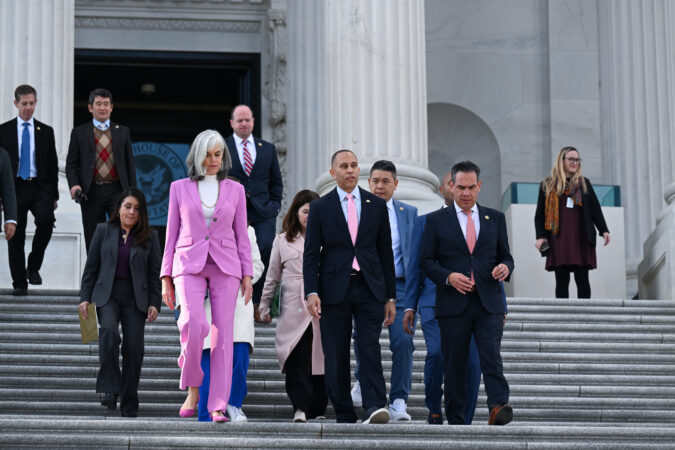
    President Donald Trump is joined by Health and Human Services Secretary Robert F. Kennedy Jr., left, and Centers for Medicare & Medicaid Services administrator Dr. Mehmet Oz in the Roosevelt Room of the White House in September.

    Vaccine policy around the world

    Offit spent 26 years developing a rotavirus vaccine after treating children with the illness during his medical residency in Pittsburgh — including one patient who died. Rotavirus causes vomiting and diarrhea that can lead to dehydration and is particularly dangerous for young children. There are two vaccines available, one of which Offit helped to develop.

    “I try not to take this personally,” he said of the new federal guidance.

    Before rotavirus vaccines were recommended by the CDC in 2006, up to 70,000 children were hospitalized with rotavirus each year, he noted.

    Within a decade, hospitalizations plummeted.

    “But what we hadn’t eliminated was the virus,” he said.

    HHS officials said that their review of worldwide vaccination policies found that the United States vaccinates for more diseases than other developed countries.

    But, they said, many countries that recommend fewer vaccines still achieve “strong child health outcomes” and “maintain high vaccination rates through public trust and education rather than mandates.”

    Trump has touted Denmark, which recommends routine vaccinations for 10 diseases, as a potential model for the U.S.

    Denmark may have better health outcomes, but it also has a national healthcare system, a lower childhood poverty level, and free childcare, Offit noted in a recent blog post.

    And, he said, Denmark — which does not recommend routine rotavirus or RSV vaccination — sees children hospitalized from those viruses at higher rates than the United States.

    “Denmark is nothing to emulate. They should be emulating us,” Offit said.

    Likewise, AAP president Andrew Racine said in a statement that America is a “unique country” with different health risks and public health infrastructure than Denmark.

    “This is no way to make our country healthier,” Racine said.

    Pennsylvania Gov. Josh Shapiro said that the state will “continue to rely on evidence-based guidance” including vaccine recommendations from the AAP.

    “RFK Jr. is once again trying to sow chaos and confusion among parents — but know this: these changes at the federal level do not affect Pennsylvanians’ access to vaccines in our Commonwealth,“ he said in a statement. ”Pennsylvanians should continue to consult with their doctors and make informed decisions based on the best scientific evidence.”

    New Jersey’s Acting Health Commissioner Jeffrey A. Brown said in a statement that the state sets vaccine requirements for school and childcare, and that those have not changed despite shifts at the federal level. He added vaccines in the state remain covered by insurance and the state is committed to protecting residents’ health.

    “Federal efforts to reduce the number of vaccines recommended for all children in the United States are not supported by the available data nor the consensus of public health and medical experts,” Brown said. “Instead, deterring participation in vaccination risks leaving children vulnerable to serious and preventable infections.”

    Changing public attitudes

    In a December survey, the Annenberg Public Policy Center at the University of Pennsylvania found that more than a third of 1,006 Americans polled were more likely to trust the American Medical Association, a leading professional medical society, over the CDC if the two conflicted on vaccine policy.

    At the time of the survey, the CDC had recently changed its website to suggest — against decades of evidence showing otherwise — that there could be a link between vaccines and autism.

    Asking the public to make their own decisions on whether to vaccinate their children can make people vulnerable to misinformation, Annenberg director Kathleen Hall Jamieson said in an interview with The Inquirer last week.

    “The public doesn’t have time to do research on its own, on average, and in the process, they can get lost in a mire of misinformation and confusion very easily,” she said. “It’s easy to think one is doing one’s research when one is way down the rabbit hole.”

    In the poll, the preference to trust the AMA over the CDC held true across political parties and was particularly pronounced among older Americans. The only age group more likely to accept the CDC over the AMA in the event of conflicting vaccine advice was 18- to 29-year-olds.

    “The fact that, as the CDC began to change statements, the public shifted its trust to other organizations on consequential issues — that’s a statement that says the public intelligence is real,” Jamieson said.

    The AAP’s Racine reiterated Monday that the society will continue to publish its own vaccine recommendations and help physicians to advise parents.

    “Your child’s pediatrician has the medical training, special knowledge, and scientific evidence about how to support children’s health, safety, and well-being. Working together, you can make informed decisions about what’s best for your child,” Racine said.

    Offit cautioned parents against avoiding vaccinations, as high rates do not just protect healthy children — they’re also vital for children with immune disorders who cannot be vaccinated.

    And, he said, parents shouldn’t discount the risks of hospitalization or death from vaccine-preventable diseases.

    “There’s this sort of myth of invulnerability — you never think it’s going to happen to you, until it happens to you,” he said.


  • Their homes survived the historic LA area wildfires, but a year later they fear living in them

    Their homes survived the historic LA area wildfires, but a year later they fear living in them

    ALTADENA, Calif. — “DANGER: Lead Work Area” reads a sign on a front door of an Altadena home. “May damage fertility or the unborn child. Causes damage to the central nervous system.”

    Block after block, there are reminders that contaminants still linger.

    House cleaners, hazardous waste workers, and homeowners alike come and go wearing masks, respirators, gloves, and hazmat suits as they wipe, vacuum, and power-wash homes that weren’t burnt to ash.

    It’s been a year of heartbreak and worry since the most destructive wildfires in the Los Angeles area’s history scorched neighborhoods and displaced tens of thousands of people. Two wind-whipped blazes that ignited on Jan. 7, 2025, killed at least 31 people and destroyed nearly 17,000 structures, including homes, schools, businesses, and places of worship. Rebuilding will take years.

    The disaster has brought another wave of trauma for people afraid of what still lurks inside their homes.

    Indoor air quality after wildfires remains understudied, and scientists still don’t know the long-term health impacts of exposure to massive urban fires like last year’s in Los Angeles. But some chemicals released are known to be linked to heart disease and lung issues, and exposure to minerals like magnetite has been associated with Alzheimer’s disease.

    Ash in the area is a toxic soup of incinerated cars, electronics, paints, furniture, and every other kind of personal belonging. It can contain pesticides, asbestos, plastics, lead, or other heavy metals.

    Many people with homes still standing are now living with the hazards left by the fires.

    People forced back into their Altadena homes

    Nina and Billy Malone considered their home of 20 years a safe haven before smoke, ash, and soot seeped inside, leaving behind harmful levels of lead even after professional cleaning. Recent testing found the toxin is still on the wooden floors of their living room and bedroom.

    They were forced to move back home in August anyway, after insurance cut off their rental assistance.

    Since then, Nina wakes up almost daily with a sore throat and headaches. Billy had to get an inhaler for his worsening wheezing and congestion. And their bedroom, Nina said, smells “like an ashtray has been sitting around for a long time.” She worries most about exposure to unregulated contaminants that insurance companies aren’t required to test.

    “I don’t feel comfortable in the space,” said Nina, whose neighbors’ homes burned down across the street.

    They’re not alone.

    Data shows dangerous lead levels still in homes

    According to a report released in November by the Eaton Fire Residents United, a volunteer group formed by residents, six out of 10 homes damaged from smoke from the Eaton Fire still have dangerous levels of cancer-causing asbestos, brain-damaging lead, or both. That’s based on self-submitted data from 50 homeowners who have cleaned their homes, with 78% hiring professional cleaners.

    Of the 50 homes, 63% have lead levels above the Environmental Protection Agency’s standard, according to the report. The average lead levels were almost 60 times higher than the EPA’s rule.

    Even after fires were extinguished, volatile organic compounds from smoke, some known to cause cancer, lingered inside of people’s homes, according to a recent study. To mitigate these risks, residents returning home should ventilate and filter indoor air by opening windows or running high-efficiency particulate air (HEPA) purifiers with charcoal filters.

    Zoe Gonzalez Izquierdo said she can’t get her insurance company to pay for an adequate cleanup of her family’s Altadena home, which tested positive for dangerous levels of lead and other toxic compounds.

    “They can’t just send a company that’s not certified to just wipe things down so that then we can go back to a still contaminated home,” Gonzalez said, who has children ages 2 and 4.

    Experts believe the lead, which can linger in dust on floors and windowsills, comes from burned lead paint. The University of Southern California reported that more than 70% of homes within the Eaton Fire were built before 1979, when lead paint was common.

    “For individuals that are pregnant, for young children, it’s particularly important that we do everything we can to eliminate exposure to lead,” said pediatrician Lisa Patel, executive director for the Medical Society Consortium on Climate and Health and a member of the climate group Science Moms.

    The same goes for asbestos, she added, because there is no safe level of exposure.

    “We have to live in the scar”

    People who lived in the Pacific Palisades, which was also scorched, face similar challenges.

    Residents are at the mercy of their insurance companies, who decide on what they cover and how much. It’s a grueling, constant battle for many. The state’s insurer of last resort, known as the California Fair Access to Insurance Requirements Plan, has been scrutinized for years over its handling of fire damage claims.

    Homeowners want state agencies to enforce a requirement that insurance companies return a property to prefire condition.

    Julie Lawson won’t take any risks. Her family paid about $7,000 out of pocket to test the soil in their Altadena home, even though their insurance company had already agreed to pay to replace the grass in their front yard. They planned to test for contaminants again once they finished remediating the inside, the process of making a home contaminant-free after a fire. If insurance won’t cover it, they’ll pay for it themselves.

    Even if their home is livable again, they still face other losses — including equity and the community they once had.

    “We have to live in the scar,” she said. “We’re all still really struggling.”

    They will be living in a construction zone for years. “This isn’t over for us.”

    Challenges and mental health toll

    Annie Barbour with the nonprofit United Policyholders has been helping people navigate the challenges, which include insurance companies that resist paying for contamination testing and industrial hygienists disagreeing on what to test for.

    She sees the mental health toll it’s having on people — and as a survivor herself of the 2017 Tubbs Fire in Northern California, she understands it.

    Many were at first joyful to see their houses still standing.

    “But they’ve been in their own special kind of hell ever since,” Barbour said.

    Now residents like the Malones are inspecting their belongings, one by one, fearing they may have absorbed toxins.

    Boxes, bags, and bins stuffed with clothes, chinaware, and everything in between fill the couple’s car, basement, garage, and home.

    They have been painstakingly going through their things, assessing what they think can be adequately cleaned. In the process, Nina is cleaning cabinets, drawers, and floors and still finding soot and ash. She wears gloves and a respirator, or sometimes just an N95 mask.

    Their insurance won’t pay to retest their home, Billy said, so they’re considering paying the $10,000 themselves. And if results show there’s still contamination, their insurance company told them they will only pay to clean up toxins that are federally regulated, like lead and asbestos.

    “I don’t know how you fight that,” said Nina, who is considering therapy to cope with her anxiety. “How do you find that argument to compel an insurance company to pay for something to make yourself safe?”

  • Flyers goalie prospect Aleksei Kolosov named AHL Player of the Week

    Flyers goalie prospect Aleksei Kolosov named AHL Player of the Week

    Oh, what a difference a year can make.

    Need proof? Look no further than Flyers prospect Aleksei Kolosov.

    A year after a season marred by underwhelming play and off-ice drama, the Lehigh Phantoms goaltender has bounced back beyond belief, culminating in him winning the American Hockey League’s Player of the Week award this week. Kolosov went 2-0-0 with a 0.50 goals against average and a .984 save percentage for the Phantoms. He stopped 60 of the 61 shots he faced over the two games, including posting a 30-save shutout of Hershey on New Year’s Eve.

    “He is a different player, different personality. He’s really trying to fit in,” Flyers assistant general manager and scouting head Brent Flahr told The Inquirer last month of Kolosov. “He’s very athletic, very competitive, and he’s giving our team a chance to win down there almost every night. He’s a talented kid, so he’s got a chance to be an NHL goalie now. He just skipped a step last year. Now he’s building it back up again here, and we’ll see where it goes.”

    Kolosov’s award is the biggest highlight in an impressive season for the 24-year-old netminder. He is now 9-8-1 with a .910 save percentage in 18 AHL games. The Belarusian also looked more comfortable in the NHL than he was last season, stopping 26 of 28 shots (.929 save percentage) over two games in November while Sam Ersson was injured.

    This all comes after an offseason where many speculated that Kolosov and the Flyers would part ways. Kolosov famously tried to force a loan move back to his native Belarus before last season and later reported to training camp late. There were reports that he felt isolated and was frustrated with the Flyers’ goaltending hierarchy.

    “I think on [Kolosov’s] end, it’s more about he wants to be guaranteed a spot in the NHL. If not, he prefers to stay over there, and that’s not the way we see it,” Flyers general manager Brière said in September of 2024.

    “We agreed last year to loan him back [to the KHL] for one year because he wanted to stay home. But at some point, you signed a contract, and we want him here. We want him to start integrating himself with the game the way it’s played here in North America, the smaller ice, and learning the language and all of that. And I guess he doesn’t see it that way at the moment.”

    Things didn’t improve during the season as the Flyers inexplicably carried three goalies for large stretches, in part seemingly to accommodate Kolosov, who didn’t want to be in the AHL. The on-ice results weren’t good either, as Kolosov posted a 3.11 goals against average and .884 save percentage in 12 minor league games, and 3.59 and .867 splits in 17 games with the Flyers. During a stretch last January, Kolosov remained up with the Flyers despite not playing in a game for 20 days.

    When asked for an update last March, Brière told The Inquirer that the situation was “not ideal, but I’ll leave it at that.”

    Aleksei Kolosov seems to be a different person and player than he was last season as a rookie.

    But despite expectations that the Flyers would trade the disgruntled goalie or terminate his contract and free him to return to Europe, Kolosov remained a Flyer throughout the summer and was present on the first day of training camp. He’s won back even more good faith since then.

    Might it mean a recall to the NHL is imminent?

    When asked on Monday if Kolosov could unseat the struggling Ersson (.868) for the backup role, Flyers coach Rick Tocchet said this:

    “I think organizationally, the internal competition is huge. There’s guys in the minors, they’re pushing, right? They’re trying to get up. It’s a domino effect, right? So yeah, he’s just challenging the goaltending situation, he’s come into camp really focused, and just from the reports down there, he’s stringing a bunch of good games together, not one good game, one bad, like he’s stacking good games together, and that’s a sign of maturity, and that internal competition helps the organization.”

    Kolosov’s turnaround is just one of several promising developments when it comes to the Flyers’ goaltending situation. Free-agent signing Dan Vladař has looked every bit of a No. 1 goaltender through 24 starts with a .910 save percentage, while 2023 draft picks Carson Bjarnason, who has a .912 save percentage as Kolosov’s partner in Lehigh Valley, and Egor Zavragin (.919 SV% in Kontinental Hockey League) continue to come along nicely.

    Could the Flyers’ goalie curse finally be over? Well, it might be a little early to go that far just yet.

  • Camden reaches its lowest homicide total in 40 years

    Camden reaches its lowest homicide total in 40 years

    The city of Camden last year reached its lowest homicide total since 1985, police said.

    In 2025, Camden recorded 12 homicides, the same number as in 1985. Homicides dropped down from 17 in 2024, and the declining year-end total comes after Camden experienced its first homicide-free summer in 50 years.

    Camden saw an overall 6% drop in violent crime in 2025 compared to the prior year, including a 32% decrease in sexual assaults and 12% decrease in robberies, according to police.

    “The consistent engagement with residents and community policing efforts have helped to build trust within our community,” said Camden Mayor Victor Carstarphen in a statement. “There is still plenty of work yet to be done, but through this collaborative effort we are building a safer and healthier Camden.”

    window.addEventListener(“message”,function(a){if(void 0!==a.data[“datawrapper-height”]){var e=document.querySelectorAll(“iframe”);for(var t in a.data[“datawrapper-height”])for(var r,i=0;r=e[i];i++)if(r.contentWindow===a.source){var d=a.data[“datawrapper-height”][t]+”px”;r.style.height=d}}});

    Leaders have attributed the shift largely to the disbandment of the city of Camden’s police department in 2013. Since then, the replacement Camden County Police Department and the city have embraced more community policing strategies, paired social workers with officers, and supported programming that provides better opportunities and care for at-risk youth.

    Homicides have dropped by 82% since 2012, the last full year of the former police structure. But leaders have also credited the city’s investments in third spaces and infrastructure in recent years, like $100 million in parks over the past five years and repaving streets.

    Thirteen years ago, “a homicide-free summer would have been a pipe dream for us,” Louis Cappelli Jr., director of the Camden County Board of Commissioners, said in a statement.

    Center for Family Services lead counselor Lyzza Tyson (left) works with Camden County Metro Police Capt. Vivian Coley (center) and Lt. Luis Gonzalez (right) talking with an unhoused person living in the park at Waterfront South Raingardens in July. Some of the department’s new social workers are stationed inside the downtown police headquarters for walk-ins while others are deployed in the field alongside officers doing door knocks, engaging transients at encampments, and making referrals for social services.

    Camden’s homicide and violent crime rates match national trends of decline after having surged during the pandemic. Philadelphia experienced its lowest homicide total in nearly 60 years in 2025, and other cities historically marked by higher rates of violence like Baltimore and Chicago have also seen major homicide declines.

    Crime researchers have been unable to identify any singular cause behind the nation’s drop in violence, but they theorize that cities, like in Camden, have broadly shifted toward greater investments in violence prevention programs and infrastructure, as opposed to traditional policing.

    window.addEventListener(“message”,function(a){if(void 0!==a.data[“datawrapper-height”]){var e=document.querySelectorAll(“iframe”);for(var t in a.data[“datawrapper-height”])for(var r,i=0;r=e[i];i++)if(r.contentWindow===a.source){var d=a.data[“datawrapper-height”][t]+”px”;r.style.height=d}}});

    For Derrick Gallashaw, life in Camden today feels much different than it did when he was growing up there in the 1980s and ’90s. It was more dangerous back then, and the community’s relationship with police was more strained.

    “It feels like the city is safe now,” he said.

    Gallashaw is the regional director of Mighty Writers, a nonprofit offering afterschool writing programs for youth and food distribution. The Camden County police credited its partnership with Mighty Writers and other groups for helping to reduce violence.

    Gallashaw is a believer in the strategy, too. He said the community policing initiative, paired with support for programs like his, have made a major impact on reducing violence. They are able to reach more people in need and address the conditions that often lead to crime.

    “You give them options and you’re providing a need. If someone is hungry, you’re not giving them a reason to have to go out and steal something to eat. We’re finding a resource for you right now,” he said.

    As Camden resets its violence statistics at the new year, Gallashaw said sustaining the city’s success would require leaders to continue listening to community members about their needs and not impose solutions from the top down.

    It’s not just the city and police who are responsible for keeping the numbers low — he wants groups and community members to continue filling people’s needs as well.

    “We all have to get together because it expands that reach,” he said.

  • Democrats look primed to win the House, but a wave might be harder

    Democrats look primed to win the House, but a wave might be harder

    Democrats are celebrating signs that the tide is turning their way for the 2026 midterms. But translating dissatisfaction with President Donald Trump into an electoral tsunami, or even a wave election, will be much harder to achieve than in years past.

    History, polling, a narrow Republican majority, a string of off-year victories, and voter anxiety over the economy favor the Democrats, who lead in support for control of Congress by five percentage points in a Post average of November and December national polls.

    It’s unclear what effect the Trump administration’s recent intervention in Venezuela will have, if any, and will probably depend on how deeply the U.S. involves itself in running that country’s affairs. Democrats hope it further splits Trump’s MAGA coalition.

    But the battlefield in the House is smaller than ever, according to political analysts, experts, and operatives, meaning Democrats will need to compete in districts that Trump won by large margins to pick up a significant number of seats.

    Of the 39 seats Democrats are competing for, 28 are in districts that Trump won by five or more percentage points.

    A gerrymandering spree instigated by Trump has narrowed the number of truly competitive seats, furthering a trend that was already underway in recent elections as the nation has become more polarized. That has not affected the race for the Senate, which Republicans are favored to hold.

    Just 36 races in this year’s election are rated competitive by the Cook Political Report, compared with 49 races at the same point in the 2018 cycle. Half of the seats rated competitive by Cook this year are already held by Democrats, leaving the party even less room to gain ground.

    “Democrats will have a very narrow but viable path to the majority. That’s a different scenario than 2006 or 2018, when Democrats put a ton of Republican-held seats in play,” said David Wasserman, senior editor and elections analyst at the Cook Political Report. “There’s so little elasticity in U.S. House elections these days compared to prior eras.”

    Democrats won 40 House seats in the “blue wave” of 2018 during Trump’s first term, easily erasing the Republicans’ then 23-seat governing margin.

    The good news for Democrats this year: They need only three seats to regain control of the House.

    That is achievable, but 2018-sized “waves” are harder now given increasingly partisan maps and a more divided electorate that has become more rigidly partisan, according to Wasserman and other analysts.

    Party leaders, however, argue they are well positioned to compete in heavily Trump districts. Trump’s 2024 victory was powered by a historic realignment of the electorate that upended decades of traditional coalitions. He made inroads with Latinos, young voters, first-time voters, and middle- and lower-income households. Democrats say they can unwind many of those gains with a slate of less traditional, and in some cases less partisan, candidates.

    One of them is Paige Cognetti, the mayor of Scranton, Pa., who won her current seat by running as an independent in a campaign called “Paige Against the Machine.” Even though Trump won her district by about eight percentage points, voters are open to her because they still cannot afford basic necessities like housing and groceries and are not “bleeding Democrats or hardcore Republicans,” she said in an interview. She noted that Gov. Josh Shapiro (D) won the same district by eight percentage points in 2022.

    Cognetti is challenging Rep. Rob Bresnahan (R., Pa.), who has faced scrutiny for stock trades while he was in Congress after campaigning on a ban on stock trading for members of Congress.

    “This is the exact type of public corruption and cynical behavior that people here really, really loathe,” Cognetti said. “Government should work and people want to see it at their local level and federal level, too.”

    Bresnahan supported an effort last year that would restrict members of Congress from trading stocks and has said lawmakers should not profit off the information that they have. Bresnahan’s stocks are in an institutionally managed fund that is run by financial advisers, spokesperson Hannah Pope said.

    In a statement, Bresnahan’s campaign attacked Cognetti’s record as mayor and as “a former Goldman Sachs banker who made the richest Americans even richer.”

    Democrats have coalesced around a midterm message focused on the cost of living and healthcare, hammering Republicans for passing a $4 trillion budget bill that includes steep cuts to Medicaid and food stamps. They have also highlighted Republicans’ failure to extend pandemic-era Obamacare subsidies that expired Dec. 31 that will drive up premiums for millions of Americans this year.

    Democratic Party leaders have been energized by off-year and special elections in which Democrats performed above expectations. In a Tennessee special election last month in a district Trump won by 22 points, Republican Matt Van Epps won by about nine percentage points.

    Some Republicans have urged the party to focus more on affordability, rather than solely focusing on issues such as crime or immigration that played a significant role in their 2024 sweep. Trump kicked off a tour last month in Pennsylvania to focus on Americans’ struggles with rising prices, but veered off-script, mocking the word “affordability,” touting the stock market, and disparaging Somalia.

    Republicans say they also have a slate of strong candidates in the country’s most competitive districts, including Kevin Lincoln, a former mayor and pastor running against incumbent Adam Gray (D., Calif.) in a central California district, and Eric Flores, a Republican army veteran and lawyer challenging Rep. Vicente Gonzalez (D., Texas) in Texas’s 34th Congressional District, near the state’s southern Gulf Coast and the border with Mexico.

    Mike Marinella, spokesperson for the National Republican Campaign Committee, agreed the battlefield is smaller than in past midterm elections. But he said Republicans hold the advantage, pointing to about a dozen Democratic incumbents who are fending off challenges in districts that Trump won narrowly.

    “Fundamentally, we have the upper hand just by looking at the pure numbers, and Democrats are certainly on defense in a lot more districts than we are,” Marinella said.

    Rep. Suzan DelBene (D., Wash.), chairperson of the Democratic Congressional Campaign Committee, said in an interview that many candidates competing in Trump districts are closely connected to their communities and “independent-minded.”

    “Authenticity matters a ton because you’re talking to folks across the political spectrum,” DelBene said.

    Democrats believe they have effectively neutralized Republican efforts to pick up additional seats through gerrymandering in Texas, Ohio, and North Carolina by gaining seats of their own in California and Utah. The Indiana Senate rejected a partisan gerrymander last month, and Democrats are still exploring whether they could pick up seats in Virginia, Illinois, and Maryland. Wasserman said the post-gerrymandering landscape remains “pretty equitable to both parties.”

    As Trump’s approval ratings fall — 39% of voters approve of the job he is doing, according to a Washington Post average of polls in early December — Democrats are working to wipe out some of the gains he made with voter groups that are traditionally aligned with them.

    In South Texas, Tejano music star Bobby Pulido is competing in one of the new districts Republicans drew to try to maintain the House majority.

    Key to Trump’s victory in Texas’ 15th District, which includes the Rio Grande Valley, was an unprecedented rightward swing among Latino voters. Pulido has broad name recognition in the Southwest and in Mexico in large part because of his 1995 debut single “Desvelado.” Trump’s immigration crackdown is devastating tourism and the rest of the economy in South Texas, Pulido said, creating an opening among those who supported him.

    “These immigration raids are hurting a lot of these small business owners or builders where their workforce they’ve had for years is no longer either there or afraid to go to work,” Pulido said in an interview. “I understand that a lot of Democrats don’t want to get labeled open borders. I’m sure as heck not open borders. … But due in large part to the immigration policies this administration has taken, we need to fix it.”

    There are still myriad questions about where the final map for 2026 will end up. In addition to ongoing gerrymandering efforts by both parties, the Supreme Court is expected to decide whether to strike down the last major pillar of the Voting Rights Act, a provision that has bolstered the power of minority voters and candidates for more than 50 years.

    If the court issues a ruling early enough and sides with Louisiana and the Trump administration — which has argued that race played too large a role in the decision to create a second Black-majority congressional district in the state — some states might scramble to redraw their maps and add Republican seats.

    Chris Warshaw, professor of political science at the McCourt School of Public Policy at Georgetown University, said it’s not clear how aggressively Republican states will respond, if at all, if the Supreme Court strikes down Section 2 of the Voting Rights Act. Even if Republican states try to redraw their maps, he said, Democrats have shown they are willing to respond.

    But the cost of last year’s redistricting fights is the health of American democracy, particularly as the country had previously made progress toward less partisan maps, he said.

    “The unwinding of that progress is really sad, and there’s no reason to think this genie is going to go back into the bottle,” Warshaw said.

  • The Eagles are entering the playoffs relatively healthy, while the 49ers have a few key injuries

    The Eagles are entering the playoffs relatively healthy, while the 49ers have a few key injuries

    One team had a meaningful game with a lot on the line and everything in its control. The other had a meaningful game with a lot on the line and only some things in its control.

    The Eagles, the latter team, went the conservative route and rested most of their regulars. The San Francisco 49ers, meanwhile, played a big game in prime time Saturday and lost at least one starter for the playoffs in the process.

    Of course, had the Eagles been in a situation in which a win guaranteed them the No. 2 seed in the NFC, Nick Sirianni likely would have made a different decision for Week 18 vs. Washington.

    As it happens, the decision may have cost the Eagles a chance at a second home playoff game, but what it did guarantee was them entering wild-card weekend with the healthiest roster they could have. It was an extra week for right tackle Lane Johnson and linebacker Nakobe Dean to continue working toward their returns from foot and hamstring injuries, respectively. It was a day off for defensive tackle Jalen Carter to give his ailing shoulders a break. Edge rusher Jaelan Phillips got to rest his ankle injury. Tight end Dallas Goedert got to stay off his knee.

    Lane Johnson (left) and Jaelan Phillips rested during the Eagles’ loss to Washington.

    The 49ers, meanwhile, lost linebacker Tatum Bethune to what coach Kyle Shanahan told reporters was a season-ending groin injury during their Saturday night loss to Seattle. San Francisco remains without star linebacker Fred Warner (ankle), who has been out since Week 6 and is unlikely to be ready until at least the NFC championship game. Bethune started in Warner’s stead. Two other linebackers, Dee Winters (ankle) and Luke Gifford (quadriceps), will be evaluated this week for their injuries, Shanahan told reporters on Monday. Winters has played 92% of the 49ers’ defensive snaps this season.

    The Eagles could be facing a hodgepodge of linebackers on Sunday (4:30 p.m., Fox29).

    San Francisco also was without star left tackle Trent Williams for its game Saturday. Williams is dealing with a hamstring injury, and the 49ers struggled offensively without him, although the Seahawks have one of the best defenses in the NFL. San Francisco was held to 173 yards and managed just nine first downs vs. the Seahawks, while 49ers quarterback Brock Purdy was sacked three times. Wide receiver Ricky Pearsall practiced in a limited fashion last week but was ruled out for the game with knee and ankle injuries.

    Johnson, the Eagles’ star tackle, seems to be trending toward returning for the postseason. Dean’s status remains unclear, but his Week 16 injury was not expected to be long-term. “Good news is, I don’t think it’s too serious and I don’t think we’re done seeing him for this season,” Vic Fangio said on Dec. 23. The Eagles could end up starting their postseason run with all of their active-roster regulars ready for action. (Rookie safety Drew Mukuba is on injured reserve.)

    “I think it’s always a fine line of there’s two things that need to happen,” Sirianni said Monday. “[You’ve] got to have your players available, and you do different things to make sure that happens throughout the year, but it is so important that you continue to get better as the season goes on.

    “Our guys know how to practice. They know how to practice efficiently. So we’ve had a tendency of getting better while also having guys healthy.”

    More in the Tank?

    Resting the regulars meant Tank Bigsby got the start at running back with Saquon Barkley on the sideline.

    Bigsby has flashed in his limited role as a backup, and he showed Sunday why some are clamoring for more of him.

    Bigsby rushed 16 times for 75 yards and a touchdown. He also turned a check-down completion into a 31-yard gain, making Washington’s Jordan Magee miss with a nifty cut in the process. Bigsby, however, played just two snaps in the fourth quarter and did not have a touch after the third quarter during the 24-17 loss.

    Eagles running back Tank Bigsby rushed for 75 yards on 16 carries on Sunday.

    “He runs hard,” Sirianni said. “He’s got extremely good ability to make you miss while also being able to put his shoulder down and finish runs through contact.

    “The way he walks through, the way he practices, it really does show up in the game with how hard he runs and how hard he plays.”

    Perhaps the Eagles will feature more of him, especially if they find success on the ground vs. a weakened San Francisco front seven.

  • Adventure Aquarium unveils new baby African penguin, asks public to pick name

    Adventure Aquarium unveils new baby African penguin, asks public to pick name

    A new baby African penguin at the Adventure Aquarium in Camden was unveiled Monday and a contest was announced to name him.

    The unnamed chick was hatched Nov. 21 and was the third African penguin to be hatched at the Adventure Aquarium in 2025. The announcements of new chicks are held off until biologists determine the new bird is healthy and expected to survive.

    The other two baby African penguins, Duffy and Oscar, hatched earlier in November.

    “Although he’s a little bit younger than the other two, he does make up for it in size. He is quite a big baby penguin chick,” Maddie Olszewski-Pohle, a biologist, says in the aquarium’s introduction video posted on social media.

    Starting Monday, aquarium visitors can vote on one of four names offered for the new penguin: “Scrappy,” “Zero,” “Flounder,” or “Toothless.”

    The unnamed chick is being parented by Mushu and Hubert, who also parented a 2024 chick, Shubert. Mushu was named for a dragon sidekick from the Disney movie “Mulan,” so the aquarium’s birds and mammals team chose possible names using a dragons and sidekicks theme.

    The naming contest will close Jan. 19, and the winner will be announced Jan. 20, Penguin Awareness Day, the aquarium staff said.

    African penguins, which originate from the waters around southern Africa, are classified critically endangered, so the hatches are important to the survival of the species.

    The naming contest will benefit the Association of Zoos and Aquariums SAFE African Penguin program and the nonprofit Southern African Foundation for the Conservation of Coastal Birds.

    “As an ambassador for his species, this chick is helping raise awareness and funds to protect African penguins in South Africa,” Olszewski-Pohle said in a statement.

    The three baby penguins will remain behind the scenes until they develop waterproof feathers and the weather warms up, aquarium staff said.

  • Trump revives an old vision of American power, with global implications

    Trump revives an old vision of American power, with global implications

    The nighttime raid that ousted Venezuelan President Nicolás Maduro this weekend was the most dramatic demonstration of President Donald Trump’s vow to focus U.S. might on the Americas, as the White House re-creates a stance toward the Western Hemisphere that more resembles its 19th century empire-building era than the laissez-faire attitude of recent generations.

    Trump and his top allies suggested that the Venezuelan operation could be the start of efforts to remake the region, warning the governments of Cuba and Colombia that they might be next. Trump and some backers have also brought up Mexico as a potential target, and they are reviving talk of attempting to acquire Greenland, a Danish territory.

    After announcing Maduro’s capture, Trump boasted of the “Donroe Doctrine,” a twist on the strategy articulated by President James Monroe in 1823 that European powers should stop interfering in the Western Hemisphere. The national security strategy released by the White House in December noted a “Trump Corollary” to the Monroe Doctrine that promised “to protect our homeland and our access to key geographies throughout the region.”

    The effort carries significant risks. Washington could get pulled into the nation-building invasions that Trump has long sworn to avoid if the Venezuelan military or people are unwilling to go along with his plans. It also makes it harder for the United States to argue to Russia and China that they should steer clear of their neighbors. And it may reshape global affairs more broadly, as smaller nations that were long dependent on Washington’s guarantees for global trade and stability hedge their bets by building ties elsewhere.

    Backers of Trump’s strategy downplay the drawbacks and say a narrower focus on U.S. regional interests is long overdue.

    “The goal of the policy is to see changes in Venezuela that are beneficial to the United States first and foremost, because that’s who we work for, but also, we believe, beneficial for the people of Venezuela, who have suffered tremendously,” Secretary of State Marco Rubio told NBC’s Meet the Press on Sunday, a day after Trump said U.S. forces were ready to reinvade Venezuela if Maduro’s de facto successor, Delcy Rodríguez, did not comply with his wishes.

    Rubio — the son of Cuban immigrants to the United States — has long backed efforts to oust Venezuela’s leaders, who have presided over a decline in their country’s economy, ignored election results, and built ties to U.S. adversaries including Russia and China. Deposing Venezuela’s government would probably weaken the Communist leaders of Cuba as well, since they have long depended on Caracas for energy and other economic support.

    “This emphasis on the Western Hemisphere should not come as a surprise to anybody. It matters more to American security than any other part of the world,” said Nick Solheim, chief executive of American Moment, a group that backs Trump’s policies and trains junior staffers.

    But he said advocates of a more robust focus on the Western Hemisphere were not saying Washington should abandon global affairs entirely.

    “It’s making sure that our neighbors are not doing anything that is, that would adversely affect the United States, and then focused on our greatest geopolitical challenge right now, which is China,” he said. “That is not a retreat from the world of foreign policy. It is an accurate prioritization of what actually matters the most, what poses the biggest threats to the United States.”

    The move against Venezuela drew criticism from both the center and the right, as some influential “America First” advocates said that military conflicts and expanded foreign opportunities for U.S. oil companies weren’t why voters backed Trump.

    “This is the same Washington playbook that we are so sick and tired of that doesn’t serve the American people, but actually serves the big corporations, the banks, and the oil executives,” Marjorie Taylor Greene, a longtime Trump ally who is retiring from Congress after breaking with the president, said on NBC’s Meet the Press on Sunday. “We don’t consider Venezuela our neighborhood. Our neighborhood is right here in the 50 United States, not in the Southern Hemisphere.”

    Washington has a long history of efforts to back friendly leaders in Latin America, including at times intervening with force to do so. But it has not done so directly since the 1991 end of the Cold War, and Venezuela — with 30 million residents and a territory double the size of Iraq’s — is an especially large nation to take on.

    “I understand how we got here, but there’s been no forethought to the difficulties of the plan or the ideas that they seem to have adopted as the way ahead, and there definitely is no plan to the level of detail that’s required,” said Jennifer Kavanagh, a senior fellow at Defense Priorities, a think tank that advocates a more limited role for the U.S. military in the world.

    She said she wasn’t sure that China and Russia would be emboldened by Trump’s actions, since they already appear to feel unconstrained toward their neighbors. But she noted that Trump appears to be cautious about tangling with militaries that can inflict serious damage on the United States.

    “This sort of spectacular operation is very consistent. He likes to hit adversaries that can’t hit back, whether it’s small drug-smuggling boats, or Iran with no air defenses, or Venezuela, which is also weak,” she said. “And to me, that explains the more accommodating approach to Russia and China, in the sense that his view of military power is kind of go big or go home. But that model doesn’t work against Russia and China.”

    Some of Trump’s former advisers warn that the world the president is building may turn out to be more dangerous than the era of the 1990s and 2000s, when the United States was the preeminent global power and backed a broad effort to strip barriers to trade.

    “It just seems to be back to the 18th and 19th centuries,” said Fiona Hill, an expert at the Brookings Institution who was Trump’s top Russia adviser in his first term. “If you’ve bought into the idea of competition among the great powers and that Russia is another great power that’s inevitably going to dominate in its region, just as China is in its region, then this is the logical conclusion from this.”

    Hill said countries that have deep, allied ties to the United States but are threatened by Trump may seek to protect themselves by building trade and security relationships elsewhere, a move that will ultimately weaken Washington, not strengthen it.

    The raid has sparked fears elsewhere that Trump could act on other threats toward U.S. neighbors, which have included demands to take over the Panama Canal, to turn Canada into the 51st state, to annex Greenland, and to overthrow Cuba’s government.

    Trump on Sunday said he didn’t plan action against Havana, but offered tough language nevertheless.

    “I think it’s just going to fall. I don’t think we need any action,” he told reporters on Air Force One. “You ever watch a fight, they go down for the count, and Cuba looks like it’s going down.”

    He was sharper toward Greenland.

    “We need Greenland from a national security situation,” Trump said. “It’s so strategic. Right now, Greenland is covered with Russian and Chinese ships all over the place. … Denmark is not going to be able to do it.” On Saturday, an influential former White House aide, Katie Miller, posted on social media an image of Greenland with the U.S. flag superimposed on top of it.

    The president’s repeated statements about Greenland drew a sharp response earlier Sunday from Danish Prime Minister Mette Frederiksen. “I have to say this very directly to the United States: It makes absolutely no sense to talk about the need for the United States to take over Greenland,” she said.

    In a statement, she said Denmark is a U.S. military ally and that the United States has extensive access to Greenland.

    “I would therefore strongly urge the United States to stop the threats against a historically close ally and against another country and another people who have said very clearly that they are not for sale,” she said.

  • P.J. Whelihan’s restaurant group may move into a former Iron Hill Brewery

    P.J. Whelihan’s restaurant group may move into a former Iron Hill Brewery

    The company that owns P.J. Whelihan’s may be moving into a former Iron Hill Brewery in Bucks County.

    PJW Opco LLC, which is registered at the headquarters of PJW Restaurant Group, was approved to take over a lease for the shuttered Iron Hill in Newtown, effective Dec. 31, according to documents filed in U.S. Bankruptcy Court in New Jersey.

    PJW marketing director Kristen Foord declined to comment.

    The nearly 8,000-square-foot brewpub in the Village at Newtown shopping center has sat empty since September, when Iron Hill abruptly closed all its locations and filed for liquidation bankruptcy. The Newtown Iron Hill had been among the chain’s newest locations, having opened in 2020.

    A view from the outside looking in on the closed Iron Hill Brewery in West Chester in October.

    Brixmor Property Group, which owns the Village at Newtown, is “excited about what’s in the works” for the former Iron Hill space, spokesperson Maria Pace said in a statement, but she declined to share details.

    The court documents did not indicate PJW’s plans for the Newtown site.

    PJW’s most well-known franchise is P.J. Whelihan’s, the regional bar-restaurant chain that started in the Poconos in 1983. There are now 25 P.J. Whelihan’s locations from Harrisburg to Washington Township, with the vast majority in the Philadelphia area.

    Haddon Township-based PJW also owns the Pour House, which has locations in Exton, North Wales, and Westmont, Haddon Township; the ChopHouse in Gibbsboro; the ChopHouse Grille in Exton; Central Taco & Tequila in Westmont; and Treno, also in Westmont.

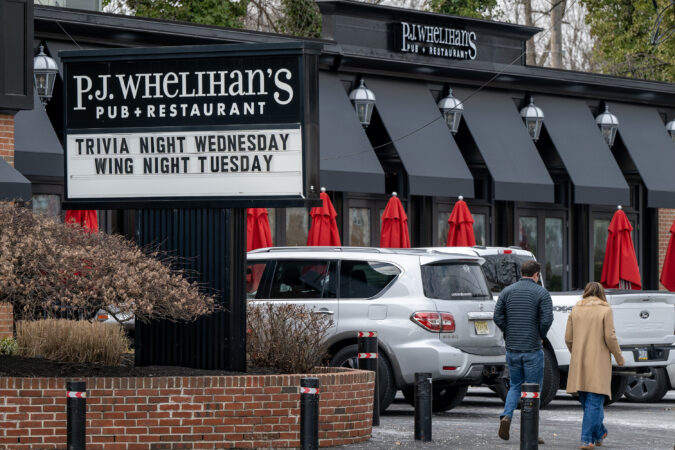
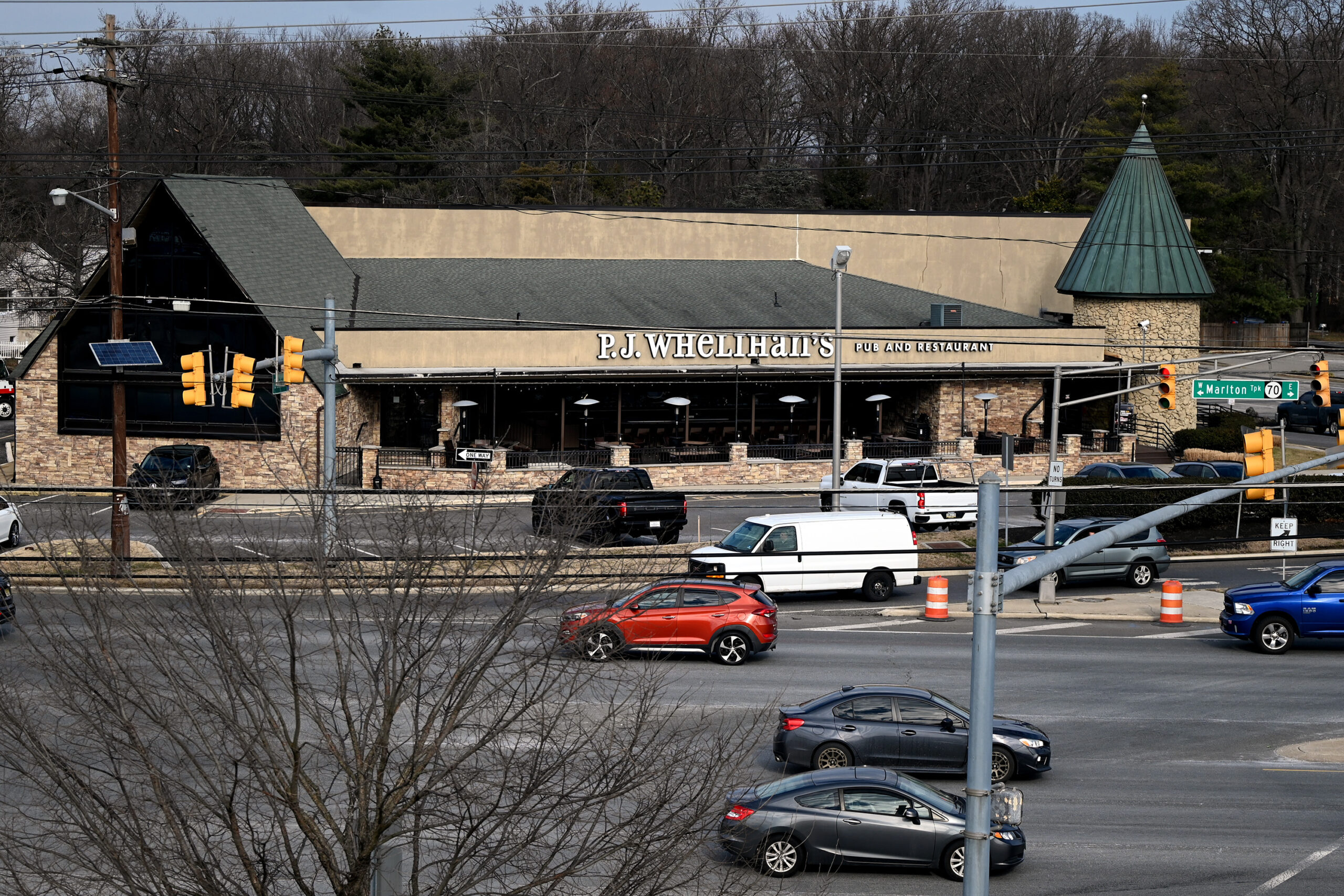
    The P.J. Whelihan’s on Route 70 in Cherry Hill.

    As 2026 gets underway, Iron Hill’s bankruptcy case continues to make its way through the courts. In recent weeks, Iron Hill’s leases in Exton, Maple Shade, and North Wales were formally rejected, according to court documents. That means these empty breweries are getting closer to finding new tenants.

    At the Shops at Eagleview in Exton, landlord Suresh Kagithapu is already advertising the nearly 20,000-square-foot taphouse and production facility that Iron Hill vacated.

    “Any out-of-town brewery with plans to leverage existing brewery infrastructure and scale its operations in the region would be a good fit, as it would save significant tenant improvement costs,” Kagithapu said in a statement. “I also believe a grocery store would serve the community very well.”

    The Iron Hill Brewery TapHouse in Exton is pictured in 2020. After Iron Hill’s bankruptcy, the Exton landlord is seeking a new tenant for the massive space.

    In West Chester, landlord John Barry is also on the hunt for a new restaurateur to take over prime real estate long occupied by Iron Hill.

    On Christmas Eve, Barry, a Massachusetts-based real estate investor, inked a deal to buy the liquor license and all interior assets of the location at the borough’s central corner of High and Gay Streets.

    “It will not be reopening as Iron Hill Brewery,” Barry said in a recent interview. “My goal would be to find something similar,” though not necessarily a brewery.

    Barry purchased the assets from Jeff Crivello, the former CEO of Famous Dave’s BBQ, who in November was approved by a bankruptcy judge to revive 10 Iron Hills under the same name or as a new concept. Barry and Crivello declined to disclose the financial details of the West Chester deal.

    Pedestrians walk by the closed Iron Hill Brewery in West Chester in October.

    Crivello said he has since sold the assets of the South Carolina Iron Hills — in Columbia and Greenville — to Virginia-based Three Notch’d Brewing Co.

    The Newtown location was originally among the locations of which Crivello was approved to buy the assets, pending negotiations with landlords. Court documents indicate the asset sale was put on hold amid a landlord objection.

    Founded in Newark, Del., Iron Hill Brewery operated for nearly 30 years, earning a reputation as a local craft-brewing pioneer and a family-friendly mainstay in the Philadelphia suburbs. In recent years, the chain had expanded into South Carolina and Georgia and had announced plans to open a Temple University location that never materialized.

    When brewery executives filed for bankruptcy, they reported that they owed $20 million to creditors and had about $125,000 in the bank.

  • Sixers guard Tyrese Maxey is Eastern Conference player of the week for second time this season

    Sixers guard Tyrese Maxey is Eastern Conference player of the week for second time this season

    Tyrese Maxey was named the NBA’s Eastern Conference player of the week on Monday.

    The 76ers point guard averaged 34.7 points on 61.2% shooting along with 8.7 assists, 6.7 rebounds, 1.7 steals, and 1.3 blocks in three games last week — all road victories — against the Memphis Grizzlies, Dallas Mavericks, and New York Knicks.

    “He’s having an amazing year, and he just kind of keeps coming up with some really big moments or really big games,” coach Nick Nurse said. “And the biggest thing for me is, as I continue to watch here, he’s getting better and better defensively. And that’s really great. That’s really great to see. It really is.”

    Maxey started the week Tuesday with 34 points and a game-high 12 assists in a 139-136 overtime victory over the Grizzlies at FedExForum. The Garland, Texas, native followed that with game highs of 34 points and 10 assists in a 123-108 triumph over the Mavs at American Airlines Center on New Year’s Day. That marked the first time in his career he had recorded at least 30 points and 10 assists in consecutive games.

    The sixth-year veteran concluded the week with 36 points, eight rebounds, four assists, one steal, and two blocks Saturday in a 130-119 victory over the Knicks at Madison Square Garden.

    He made 14 of 26 three-pointers throughout the week, making at least four in each contest.

    This is the second time in Maxey’s career that he has been named player of the week. The first time was on Oct. 30 after the first week of the season.

    Sixers home slate

    Starting with Monday’s contest against the Denver Nuggets, the Sixers will play 11 of 14 games at Xfinity Mobile Arena.

    “That’s awesome,” Adem Bona said Monday after shootaround. “Ending the road trip with three [wins] in a row, that’s good for the team, good for the spirit. And to come back with a three-game winning streak is good for the fans.

    “We’re really excited to be back home, also be back in our comfort space to put the motor a little bit more.”

    On paper, the Sixers (19-14) have a great chance to match their season-best, four-game winning streak.

    The Nuggets (23-12) have lost two straight and four of their last five games heading into Monday night’s matchup.

    Three-time MVP and seven-time All-NBA selection Nikola Jokić is expected to miss four to six weeks after hyperextending his left knee against the Miami Heat on Dec. 29. The Nuggets center is averaging a triple-double: 29.6 points, 12.2 rebounds, and 11.0 assists.

    Standout guard Jamal Murray (sprained left ankle), power forward Aaron Gordon (strained right hamstring), and backup center Jonas Valanciunas (right calf strain) are among Denver’s seven other sidelined players. The others are: Tamar Bates (left foot surgery), Christian Braun (sprained left ankle), Tim Hardaway Jr. (illness management), and Cameron Johnson (right knee bone bruise).

    After facing the banged-up Nuggets, the Sixers will entertain the Washington Wizards on Wednesday before a three-game road trip against the Orlando Magic (Friday) and Toronto Raptors (Sunday and Jan. 12). Then they’ll play six games at home. After a road game against the Charlotte Hornets, they’ll close out the month with a three-game homestand.

    Embiid finding his rhythm

    On Saturday, Joel Embiid had 26 points on 9-for-15 shooting along with 10 rebounds and five assists against the Knicks in his first game at Madison Square Garden since Game 5 of the 2024 first-round playoff series.

    The center recorded his first dunk of the season late in the game, which garnered a lot of attention. And Bona was still raving over it on Monday.

    “That was hyped,” he said. “I know you saw the whole bench. We were all hyped. It was just a wide-open dunk, but we took it as it was a dunk. First dunk of the season. We were hyped.”

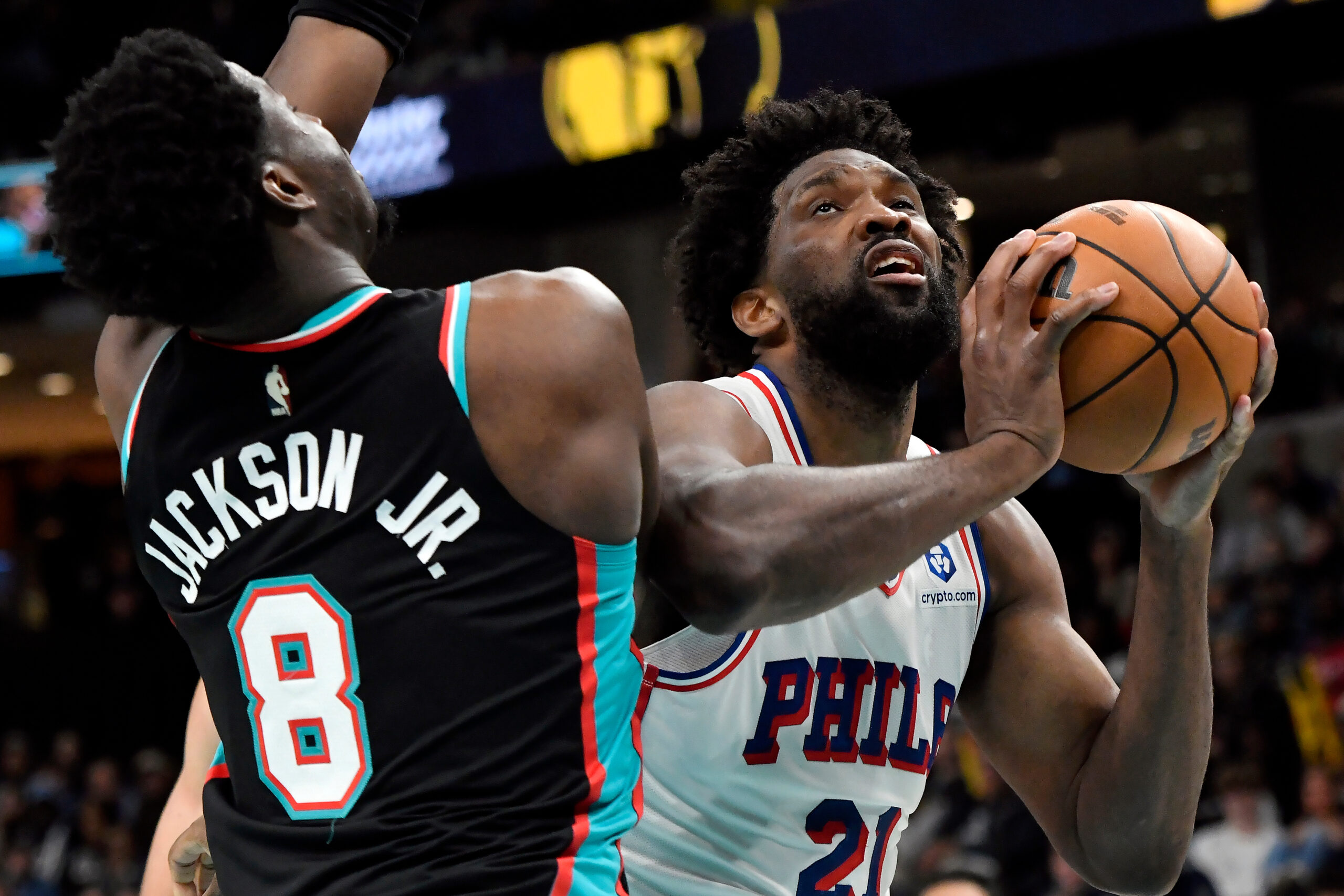
    Joel Embiid is averaging 28.7 points, 8.3 rebounds, and 4.0 assists over his last seven games.

    But the Sixers have more than a dunk to be excited about when it comes to Embiid. The 2023 MVP has found his offensive rhythm, averaging 28.7 points, 8.3 rebounds, and 4.0 assists over his last seven games.

    Embiid has missed 17 games this season because of right and left knee injuries and a sprained ankle. However, he’s set to play in his fourth consecutive game on Monday, which will provide another opportunity to add to his recent stellar play.

    “It’s great for the team,” Bona said of Embiid finding success. “It’s great for the environment, you know. Getting back to the Joel we know, it’s really awesome. His health is getting better, and his morale is high. We’re playing good together. It’s just good all around.”