KYIV, Ukraine — President Donald Trump said Monday that while he thinks it is possible that Ukraine can defeat Russia, he’s now doubtful it will happen.
The comments from Trump added a fresh layer of skepticism toward Kyiv as he plans to meet again in the coming weeks with Russian President Vladimir Putin for face-to-face talks in Budapest, Hungary, on ending the war.
“They could still win it. I don’t think they will, but they could still win it,” Trump told reporters on Monday at the start of a White House meeting with Australian Prime Minister Anthony Albanese.
But after a lengthy call with Putin last week followed by a meeting with Ukrainian President Volodymyr Zelenskyy, Trump made another reversal and called on Kyiv and Moscow to “stop where they are” and end their brutal war.
Asked on Monday about his whiplashing opinion on Kyiv’s position, Trump offered the dour assessment about Ukraine’s chances. He added, “I never said they would win it. I said they could. Anything can happen. You know war is a very strange thing.”
Earlier Monday, Zelenskyy said that during the White House meeting Trump informed him that Putin’s maximalist demand — that Ukraine cede the entirety of its eastern Donetsk and Luhansk regions — was unchanged.
Still, Zelenskyy described the meeting as “positive,” even though Trump also rebuffed his request for long-range Tomahawk cruise missiles.
In public comments in the weeks leading up to his meeting with Zelenskyy, Trump had appeared to warm to the possibility of sending the Tomahawks, which would allow Ukrainian forces to strike deeper into Russian territory.
But the U.S. leader’s tone changed after his latest call with Putin and he made clear that he was reluctant to send Ukraine the missile system, at least for the time-being.
“In my opinion, he does not want an escalation with the Russians until he meets with them,” Zelenskyy told reporters on Sunday. His comments were embargoed until Monday morning.
Zelenskyy also expressed skepticism about Putin’s proposal to swap some territory it holds in the Kherson and Zaporizhzhia regions if Ukraine surrenders Donetsk and Luhansk, saying the proposal was unclear. The Donetsk and Luhansk regions make up the Donbas.
Ukraine’s leader said Trump ultimately supported a freeze along the current front line.
“We share President Trump’s positive outlook if it leads to the end of the war,” Zelenskyy said, citing “many rounds of discussion over more than two hours with him and his team.”
Zelenskyy was diplomatic about his meeting with Trump despite reports that he faced pressure to accept Putin’s demands. The meeting followed the disastrous Oval Office spat on Feb. 28 when the Ukrainian president was scolded on live television for not being grateful for U.S. support.
Zelenskyy said he has not been invited to attend but would consider it if the format for talks were fair to Kyiv.
He also took a shot at Hungarian Prime Minister Viktor Orban, saying he does not believe that a prime minister “who blocks Ukraine everywhere can do anything positive for Ukrainians or even provide a balanced contribution.”
Zelenskyy said he thinks that all parties have “moved closer” to a possible end to the war.
“That doesn’t mean it will definitely end, but President Trump has achieved a lot in the Middle East, and riding that wave he wants to end Russia’s war against Ukraine,” he added.
Ukraine is hoping to purchase 25 Patriot air defense systems from U.S. firms using frozen Russian assets and assistance from partners, but Zelenskyy said procuring them would require time because of long production waits. He said he spoke to Trump about help procuring them more quickly, potentially from European partners.
Zelenskyy said the United States is interested in bilateral gas projects with Ukraine, including the construction of an LNG terminal in the southern port city of Odesa. Other projects of interest include those related to nuclear energy and oil.
A divided U.S. appeals court ruled on Monday that Donald Trump can send National Guard troops into Portland, Oregon, despite objections by the leaders of the city and state, giving the Republican president an important legal victory as he dispatches military forces to a growing number of Democratic-led locales.
A three-judge panel of the 9th U.S. Circuit Court of Appeals granted the Justice Department’s request to put on hold a judge’s order that had blocked the deployment while a legal challenge to Trump’s action plays out.
The court said that sending in the National Guard was an appropriate response to protesters, who had damaged a federal building and threatened U.S. Immigration and Customs Enforcement officers.
The unsigned majority opinion was joined by Circuit Judge Bridget Bade and Circuit Judge Ryan Nelson, who were both appointed by Trump in his first term. Nelson also wrote a concurring opinion saying that courts have no ability to even review the president’s decision to send troops.
Circuit Judge Susan Graber, an appointee of Democratic President Bill Clinton, dissented. She said that allowing troops to be called in response to “merely inconvenient” protests was “not merely absurd” but dangerous, and she said the full 9th Circuit should overturn the ruling before Trump has a chance to send troops.
White House spokeswoman Abigail Jackson welcomed the ruling, saying Trump had exercised his lawful authority to protect federal assets and personnel from protesters.
Portland’s city attorney did not immediately respond to a request for comment.
On October 4, Portland-based U.S. District Judge Karin Immergut, who Trump appointed during his first term as president, ruled that Trump likely acted unlawfully when he ordered troops to Portland. She had blocked Trump from sending any National Guard troops to Portland at least until the end of October, and has scheduled a non-jury trial set to begin on October 29 to determine whether to impose a longer-term block.
DEMOCRATIC-LED STATES SEEK TO HALT DEPLOYMENTS
In an extraordinary use of the U.S. armed forces for domestic purposes, Trump has sent National Guard troops into Los Angeles, Washington, D.C., and Memphis, and announced plans for deployments to Portland and Chicago.
Democratic-led states and cities have filed lawsuits seeking to halt the deployments, and courts have not yet reached a final decision on the legality of Trump’s decisions to send the National Guard to U.S. cities.
Trump has asked the U.S. Supreme Court to weigh his authority to send troops to Democratic-led cities, after another U.S. appeals court ruled against his decision to send troops to Chicago.
City and state officials sued the administration in a bid to stop the Portland deployment, arguing that Trump’s action violates several federal laws that govern the use of military forces as well as the state’s rights under the U.S. Constitution’s 10th Amendment.
The lawsuit accused Trump of exaggerating the severity of protests against his immigration policies to justify illegally seizing control of state National Guard units.
Trump on September 27 ordered 200 National Guard troops to Portland, continuing his administration’s unprecedented use of military personnel in U.S. cities to suppress protests and bolster domestic immigration enforcement. Trump called the city “War ravaged” and said, “I am also authorizing Full Force, if necessary.”
Police records provided by the state showed that protests in Portland were “small and sedate,” resulting in only 25 arrests in mid-June and no arrests in the 3-1/2 months since June 19.
A federal law called the Posse Comitatus Act generally restricts the use of the U.S. military for domestic law enforcement purposes. In ordering troops to California, Oregon and Illinois, Trump has relied on a law – Section 12406 of Title 10 of the U.S. Code – that allows a president to deploy state National Guard to repel an invasion, suppress a rebellion or allow the president to execute the law.
The National Guard serves as state-based militia forces that answer to state governors except when called into federal service by the president.
During arguments in the case on October 9, the two Trump-appointed judges suggested that Immergut had focused too closely on protests in the city in September without fully considering more serious protests two months before the troop deployment. Circuit Judge Ryan Nelson said that courts should not engage in a “day by day” review of whether troops were needed at any given time.
Immergut issued decisions against the administration on October 4 and October 5, first ruling that Trump could not take over Oregon’s National Guard and then ruling that he could not circumvent that decision by calling in National Guard troops from other states.
The judge said there was no evidence that recent protests in Portland rose to the level of a rebellion or seriously interfered with law enforcement, and she said Trump’s description of the city as war-ravaged was “simply untethered to the facts.”
Immergut is one of three district court judges who have ruled against Trump’s use of the National Guard, and no district court judge has yet ruled for Trump in the National Guard cases.
Appeals courts have split over the issue so far, with the 9th Circuit previously backing Trump’s use of troops in California and the 7th Circuit ruling that troops should stay out of Chicago for now.
It’s always a good time to sit down with former Phillies slugger Greg Luzinski. But it’s particularly timely this week, as the team marks the 45th anniversary of its first World Series championship. The Bull discusses his starring role in the 1980 NL Championship Series, his career with the Phillies, the current team’s struggle to get over the postseason hump, the power of Kyle Schwarber, and more. Watch here.
You can also subscribe to the podcast version of Phillies Extra on Spotify or Apple Podcasts.
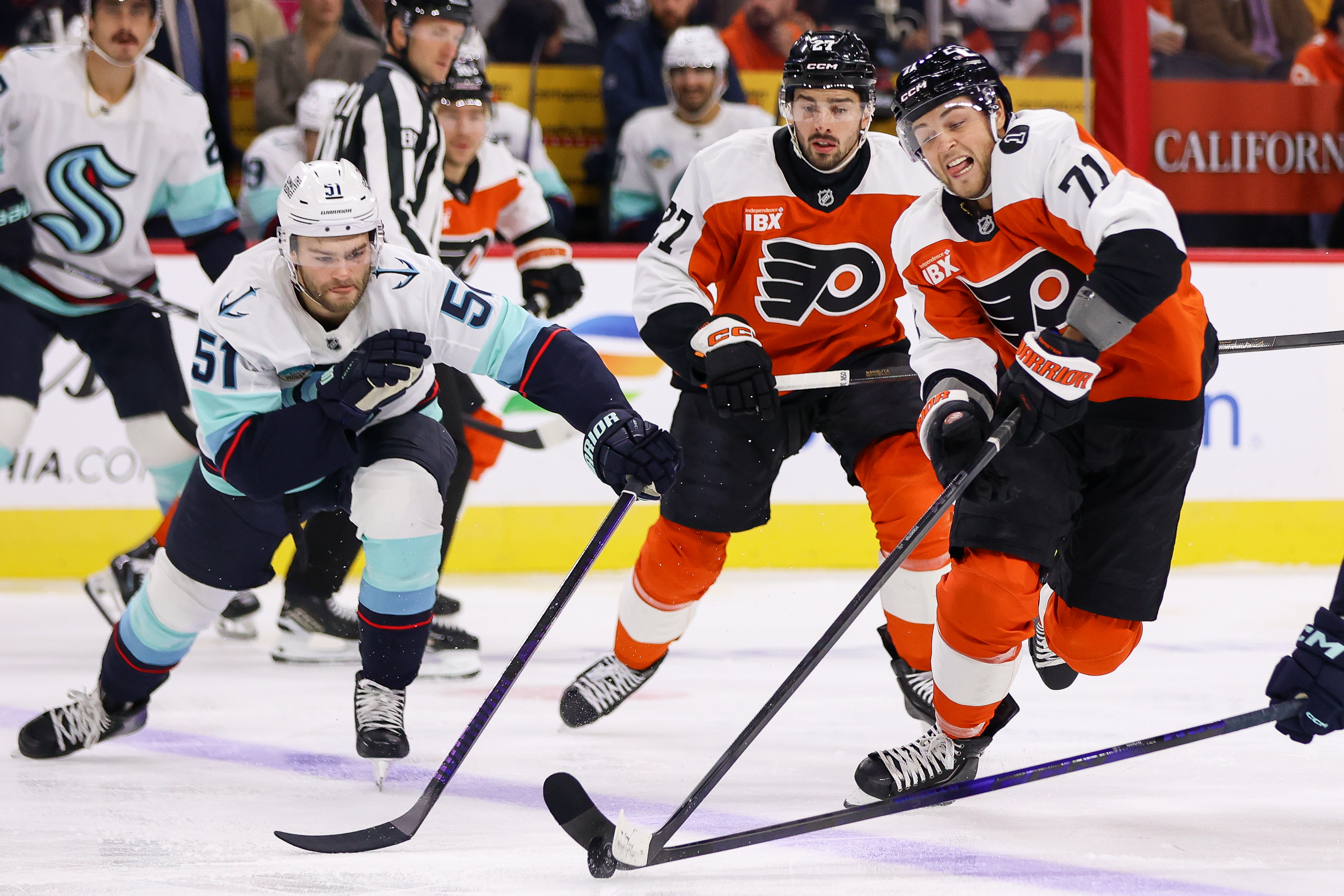
Entering Monday night, the Flyers were tied for the sixth-fewest goals per game this season, averaging just 2.6.
But Monday night, they rose from the depths with a 5-2 win to hand the visiting Seattle Kraken its first regulation loss of the season. The Flyers have now won two straight and three of their last four and are 3-2-1 to start the season.
The Orange and Black did it backed by two goals from Owen Tippett, two power-play goals — one by Tyson Foerster and one from Noah Cates — three assists by Cam York, and with several players registering their first point, including Travis Konecny notching his first goal of the season.
Tippett stayed hot by snagging his fourth goal of the season in six games, to tie the game 1-1 at the midway point of the first period. Sean Couturier stripped Kraken goalie Joey Daccord as he tried to play the puck behind the goal line. The captain fed Nick Seeler as he snuck down into the left circle and tried to rip a shot. It deflected off the stick of Eeli Tolvanen, allowing Tippett to shovel the puck home into a gaping net.
Foerster then gave the Flyers the lead with a power-play goal less than 4 minutes later.
The winger and Bobby Brink worked the boards after a return pass by York missed its connection with Brink. Foerster got the puck and the two got to work with Brink drawing two Kraken players to him before passing to an open Foerster, who took his time and picked the top corner. The 23-year-old Foerster now has two goals and five points in six games.
Konecny hinted Thursday that he wasn’t too worried about not having a goal, but the reaction after he scored told a different story. The play started when Matvei Michkov corralled the puck in the neutral zone, carried it into the offensive zone, and found trailing Egor Zamula.
The defenseman, who is well known for his patience with the puck, used it wisely as he skated down to the bottom of the left faceoff circle — used a little shoulder shrug to get around Jani Nyman along the way — and found Konecny for the tap-in at the right post to make it 3-1. It was Zamula’s first assist of the season.
Tyson Foerster has three goals in the early going this season.
Cates got the Flyers their second power-play goal less than a minute later, tipping in a point shot by York. The blueliner received a great pass from Trevor Zegras after the center drew winger Tye Kartye in tight, creating space. Cates has three goals and five points in six games.
Tippett added his second, to extend the lead to 5-2, with a bad-angle shot that squeezed through Daccord and the left post with under five minutes remaining in the second period.
Jordan Eberle had gotten the Kraken on the board first in the opening frame when a point shot by Cale Fleury hit him in the slot and changed direction on Flyers goalie Dan Vladař, who was ready to make the glove save. The puck instead went over his right shoulder.
Nyman had made it 4-2 on a Seattle power play when Matty Beniers found him in the right circle after a scramble in front.
Vladař, who was starting his second straight game, made 21 saves on 23 shots, including a big pad save on Kartye during a two-on-one when the Flyers were on the power play in the first period and then Chandler Stephenson on a breakaway four seconds later. Foerster scored his first on the power play soon after.
Breakaways
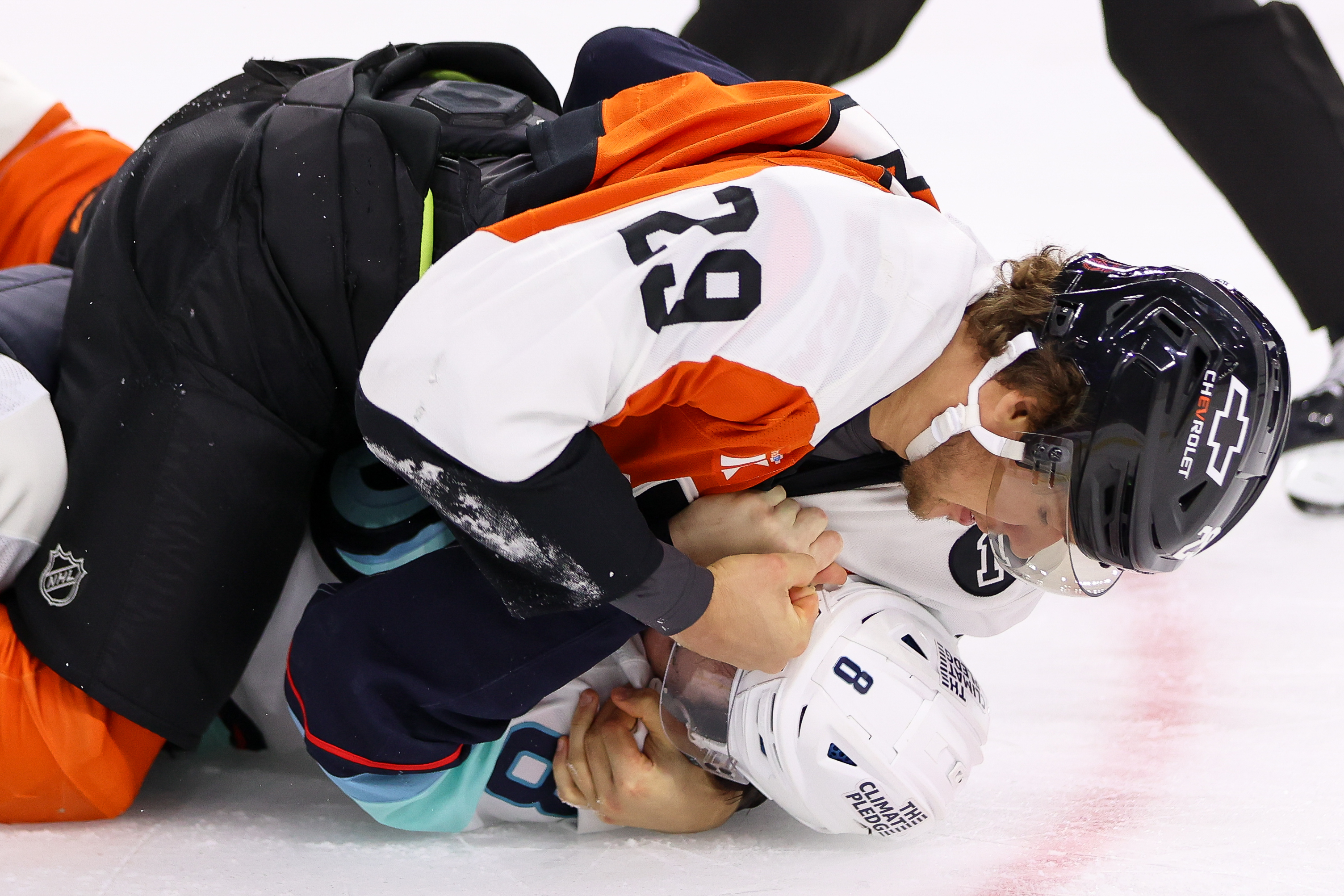
Nikita Grebenkin got back into the lineup and made an impact by coming to the defense of his teammate, Garnet Hathaway, who was hit awkwardly by Fleury along the boards in the neutral zone. The Russian earned five for fighting, two for instigating, and a 10-minute misconduct but earned his money by body-slamming Fleury down and then motioning to the crowd — a la Nic Deslauriers — to get excited. … In the third period, Konecny also dropped the gloves and was given a 10-minute misconduct. He went to the defense of Couturier, who was cross-checked unexpectedly and from behind by former New York Rangers defenseman Ryan Lindgren. The play happened after Tippett nailed Kartye in front of the Kraken’s bench. … Jett Luchanko also returned to the lineup and played 8 minutes, 43 seconds and had a shot on goal in what was his fourth game of the season.
Nikita Grebenkin earned himself some props from his teammates after standing up for Garnet Hathaway.
Up next
The Flyers hit the road for a matchup with the Ottawa Senators on Thursday (7 p.m., NBCSP). The Sens will be without captain Brady Tkachuk, who is out 6-8 weeks after thumb surgery.
Seven months after he gave a tear-filled speech announcing his retirement following 15 seasons with the Eagles, Brandon Graham is set rejoin the team, league sources told The Inquirer.
Graham, 37, is the Eagles’ all-time leader in games played with 206, a number he will add to, and his 76½ sacks rank third in team history. He returns to the Eagles at a time when they desperately need help at his position.
An already thin group of edge rushers took a hit last week when Za’Darius Smith abruptly retired from football. Then Azeez Ojulari went down with a hamstring injury during the first quarter Sunday in Minneapolis. Nolan Smith and Ogbo Okoronkwo are both on injured reserve with triceps injuries. Smith is due back, likely after the Week 9 bye week, but Okoronkwo’s season is over.
A reunion with the Eagles became more of a possibility as the injuries mounted, and Graham is a low-cost addition who adds depth and leadership to the defense. They still might make a move for another pass rusher. The rush had a stronger performance Sunday, with Joshua Uche earning his first sack of the season, but the edge rushers have not consistently gotten to quarterbacks for impact plays.
The Eagles had an open spot on the 53-man roster and do not have to make a corresponding move after adding Graham.
It’s unclear how much ramp-up time Graham will need before he sees the field. The Eagles play Sunday at home vs. the New York Giants before hitting their bye week. They come out of the bye with a Nov. 10 Monday Night Football game in Green Bay.
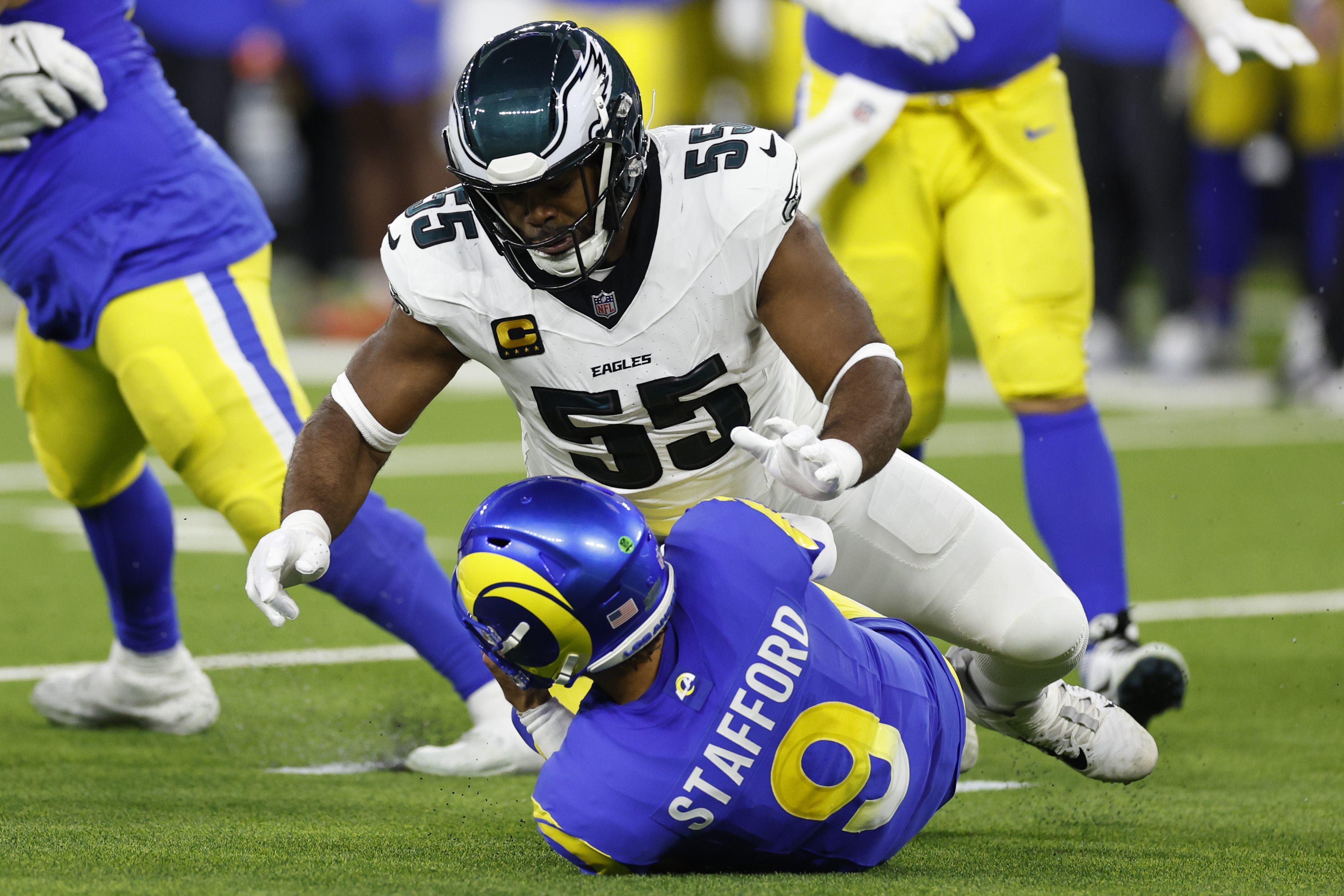
Graham admitted he played better than he even expected last year during what was supposed to be his farewell tour of sorts. But his regular season ended when he suffered a torn triceps in a Week 12 win over the Los Angeles Rams, against whom he picked up his fourth sack of the season. It was possible at the time that Graham’s NFL playing career ended on the SoFi Stadium field, but he made a remarkable comeback to play in Super Bowl LIX.
Brandon Graham got his fourth sack of the season against the Rams in Week 12, but he also suffered a torn triceps that kept him out until the Super Bowl.
Graham logged 13 snaps during the Eagles’ blowout win in New Orleans in February, but he also suffered a second torn triceps. His retirement life has featured his own podcast, Brandon Graham Unblocked, and public appearances.
How impactful will he be on the field? That question doesn’t have a clear answer. The Eagles entered Sunday with just nine sacks, and only six teams had fewer. They got two more Sunday, one from an edge rusher, but lost another in the process. Graham might be more useful at the start against the run, helping to set the edge.
Graham would bring “the juice, the energy, the vibe,” linebacker Zack Baun said. “He just lives his life with so much to give. Obviously his play as well. I thought last year, him retiring, he was at the point where he could still do a lot and still go out there and play and play well. But I think we miss his vibe in the locker room.”
Edge rusher Patrick Johnson, who has been with the Eagles since 2021, with a brief stop with the Giants last season, said he’d seen the rumors on social media. If Graham was to return, Johnson said he’d be a welcomed presence to his position group.
“He’s going to bring that spark that we need for sure and that leadership,” Johnson said.
Graham’s former locker stall was given to Za’Darius Smith, whose role with the Eagles was to include a veteran presence for a position group in transition. Smith was logging 26-plus snaps per game with the Eagles, and while the team probably won’t ask Graham to step into that kind of workload, at least not right away, they will ask him to step back into that stall and assume his typical off-field duties.
“BG is BG, man,” said defensive tackle Moro Ojomo, who leads the Eagles with three sacks. “He’s just an amazing guy. I love to be around that guy.
“Jeffrey Lurie said it last year, said it perfectly, that there are people that are energy takers and energy givers and BG is an energy giver, and I think we all feel that.”
“You’re always going to feel like you can do something,” he said. “You want people to grow, too, and right now it’s hard for some people. It’s hard, especially for the young guys.
“They got some battles that they got to fight, but if they do it together, they’ll be in a good spot.”
Now, he’ll be part of helping that happen.
Staff writer Jeff McLane contributed to this story.
Despite strong pressure from the Trump administration, including a call with the White House on Friday, colleges and universities are largely rejecting the president’s offer of preferential treatment for funding in exchange for compliance with his ideological priorities.
Six of nine universities offered the deal earlier this month had publicly said no to the White House request by Monday’s deadline.
The administration has said it is seeking to make sure the country’s schools are merit-based, but many universities and higher education advocates said the White House’s proposed agreement would undermine the merit-based process currently utilized to award research grants.
The “Compact for Academic Excellence in Higher Education” is a new attempt by the administration to get schools to eliminate diversity, equity and inclusion policies and ensure more conservative viewpoints and values are integrated into campus life.
The Trump administration offered it to nine colleges earlier this month, casting it as a means to gain competitive advantage for federal and philanthropic benefits and invitations to White House events in return for what the administration described as compliance with civil rights law and “pursuing Federal priorities with vigor.”
The ideological tension was reflected during a call on Friday, which the White House organized and presented as a chance to workshop the terms of the compact in partnership with colleges and universities that had not yet responded, according to a person close to the situation, who spoke on the condition of anonymity because of the sensitivity of the matter.
From the Trump administration, Education Secretary Linda McMahon; White House Domestic Policy Director Vincent Haley, Special Assistant Eric Bledsoe and adviser May Mailman; Josh Gruenbaum of the General Services Administration; and billionaire Marc Rowan were on the call, the person said.
But within a day of the call, University of Virginia and Dartmouth College rejected the compact, joining ranks with MIT, Brown University, the University of Pennsylvania and the University of Southern California. The University of Texas at Austin was invited to sign on and the chair of the University of Texas System Board of Regents expressed enthusiasm. The University of Arizona and Vanderbilt University have not publicly responded.
Echoing a term that has been often used by the Trump administration, U-Va.’s president said the agreement violated the merit-based nature of the competition for federal research funding. The federal government currently awards billions of dollars in research grants based on peer reviews and scientific merit.
On Saturday, Dartmouth President Sian Beilock wrote to McMahon, Mailman and Haley that she welcomed further engagement on enhancing the partnership between the federal government and research universities and ensuring that higher education “stays focused on academic excellence.” But, she wrote, “I do not believe that the involvement of the government through a compact-whether it is a Republican- or Democratic-led White House-is the right way to focus America’s leading colleges and universities on their teaching and research mission.”
White House spokeswoman Liz Huston described the Friday call as “productive.”
“The Administration hosted a productive call with several university leaders. They now have the baton to consider, discuss, and propose meaningful reforms, including their form and implementation, to ensure college campuses serve as laboratories of American greatness,” Huston said in a statement. “These leaders are working steadfastly to improve higher education and have been invited to the table to share ideas with the Administration, and we look forward to discussing transparent ways that, together, we will produce future generations of American excellence.”
A White House official, speaking anonymously to discuss private conversations, said universities will not lose their federal funding because they decided not to engage in the compact.
The sweeping terms of the compact called on schools to adopt the administration’s priorities, including pledging to freeze tuition for five years, cap international enrollment at 15 percent of a college’s undergraduate student body, and bar the consideration of factors such as gender, race and political views in admissions and other areas.
Some legal scholars said the terms were unconstitutional. Trump administration officials have insisted they are protecting free speech by compelling universities to reject a culture that suppresses far-right thought.
Officials asked for “limited, targeted feedback” in writing no later than Oct. 20, with hopes of a signed agreement by Nov. 21.
As schools turned it down, citing similar concerns – Christina H. Paxson, Brown’s president, wrote in a letter to the White House that provisions in the compact restricting the university’s academic freedom and institutional autonomy would impede its mission – the Trump administration invited more universities to participate. Washington University in St. Louis, the University of Kansas and Arizona State University joined Friday’s call.
In a Monday statement, Washington University Chancellor Andrew Martin said he had not endorsed or signed on to the compact but agreed to discuss it with the Trump administration. “We believe it is in the best interest of our university, and higher education more broadly, for us to participate constructively, share our experience and expertise, and help inform policies that strengthen the nation’s research and education ecosystem,” Martin said.
Some of the wording in the compact is vague. But the magnitude of the stakes is clear: The Trump administration has frozen billions of dollars of federal research funding at multiple colleges that it has accused of violating federal civil rights laws for issues such as having diversity, equity and inclusion policies and allegedly not doing enough to prevent antisemitism.
At Harvard University, which has filed two lawsuits to fight the government’s actions, the administration has tried to bar international students and scholars from campus, threatened to revoke the university’s tax-exempt status and has begun an effort to block the school from receiving any federal grants.
Faculty, alumni and students at many of the nine schools urged university leaders not to sign. Rallies against the compact occurred on multiple campuses, and student leaders from seven of the nine original schools issued a joint statement opposing it. More than 30 higher education associations issued a statement of opposition Friday, saying “the conditions it outlines run counter to the interests of institutions, students, scholars, and the nation itself.” A coalition formed of alumni groups opposed to the compact.
President Donald Trump wrote on social media that the administration would continue efforts to swiftly enforce federal law at universities that “continue to illegally discriminate based on Race or Sex,” but that “those Institutions that want to quickly return to the pursuit of Truth and Achievement” were “invited to enter into a forward looking Agreement with the Federal Government to help bring about the Golden Age of Academic Excellence in Higher Education.”
NEW YORK — After months of speculation and waiting, the United States’ big bid to organize the 2031 women’s World Cup across the continent became official on Monday.
The U.S. launched its effort with Mexico, Costa Rica, and Jamaica, with one eye on the tournament’s expansion to 48 teams and another on giving women’s soccer in the Concacaf region a big boost.
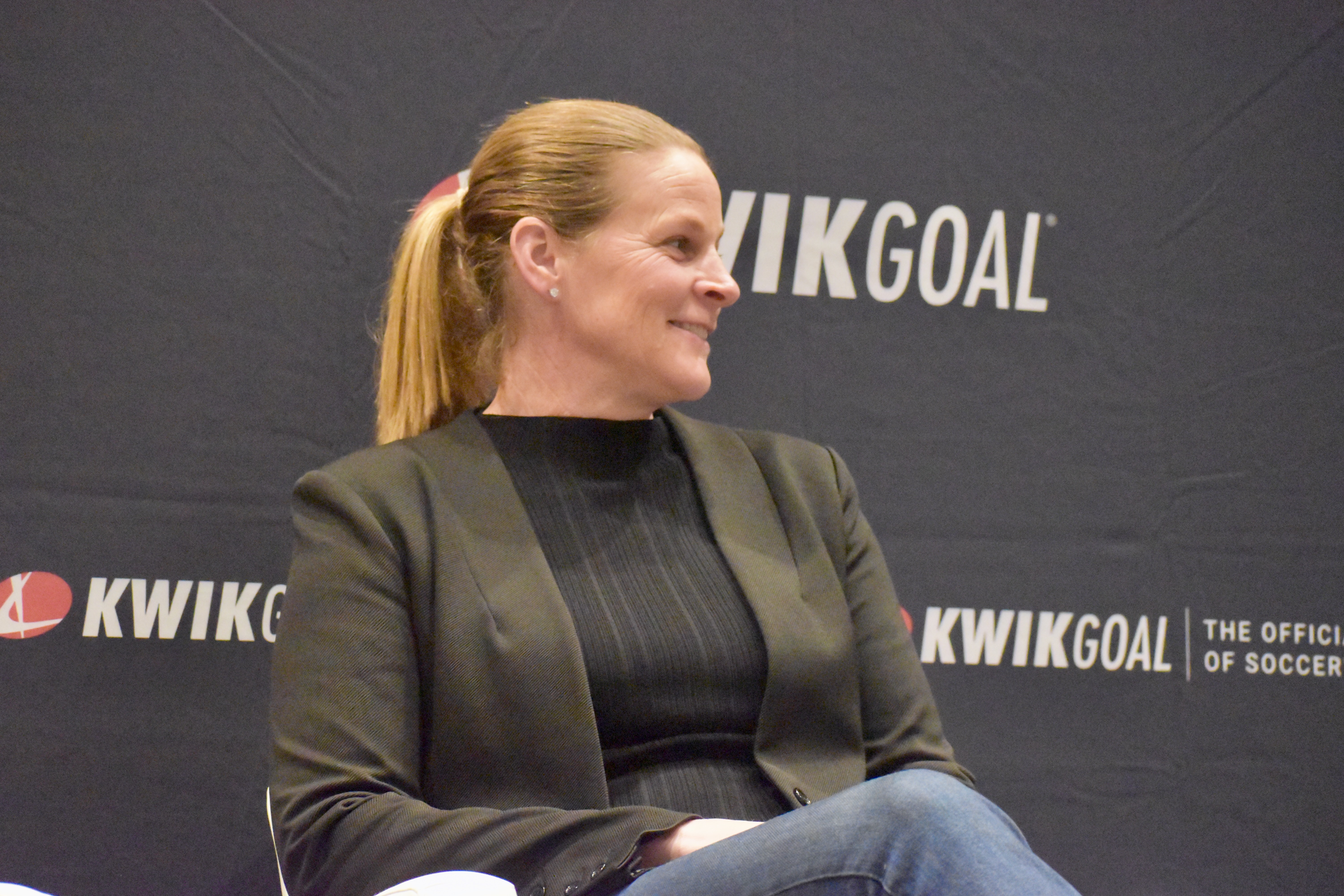
“We’re proud to lead this bid, and we chose to do it together with our Concacaf partners because this moment is bigger than any one country,” U.S. Soccer Federation president Cindy Cone said at a news conference with officials from the three other countries and a number of former star players.
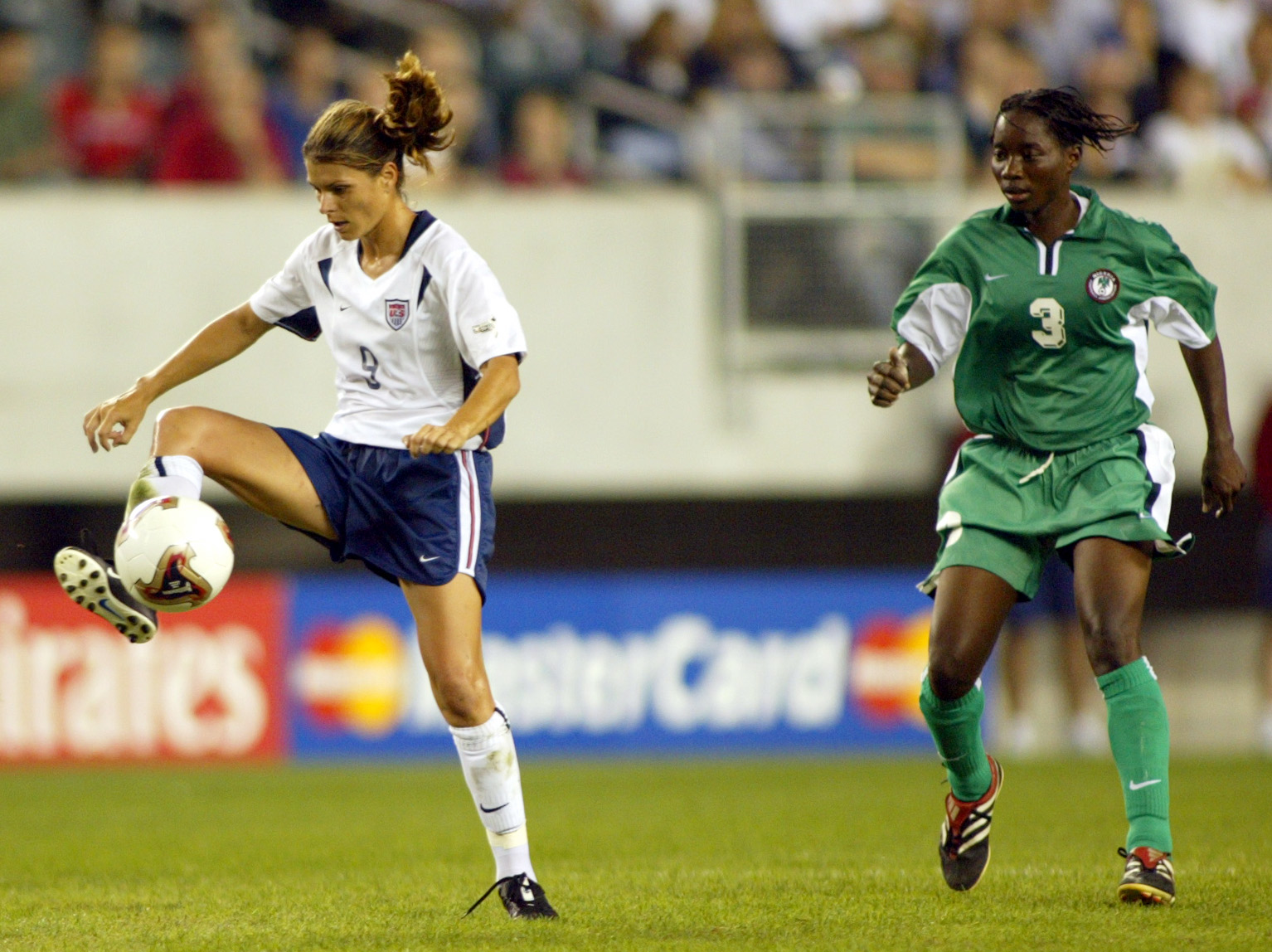
More than 30 U.S. cities have expressed interest in getting involved, including Philadelphia. The city was a host the last time the women’s World Cup was in the U.S., in 2003, and will host the men’s tournament for the first time next year.
Mia Hamm (left) led the United States’ win over Nigeria at Lincoln Financial Field in the 2003 women’s World Cup.
“We are excited for the possibility to host the women’s World Cup and learning the bid process, and we’re definitely interested to learn more,” PHL Sports deputy executive director Brea Stanko told The Inquirer. “We hosted the women’s World Cup in 2003 — it’s grown exponentially. It was a great event for us, and we’re excited to see what we could bring here.”
The World Cup would come a year after Philadelphia’s WNBA team launches, continuing the growth of women’s sports in the city.
“You can see the growth of the sport, as we heard tonight,” said Maria Grasso, chiefs sales officer for the Convention and Visitors Bureau. “I think that’s truly exciting for us. We have a tremendous relationship with FIFA, as well as U.S. Soccer, which just gives us all the reasons we [are] really excited about this, like the rest of this room.”
The official bid book is due in November, and this bid is expected to be the only one worldwide. While it’s not official yet, it’s likely just a formality. And though the due date is a month from now, the host cities don’t have to be officially set when the bid book goes in.
U.S. Soccer Federation CEO JT Batson in January.
Cone and U.S. Soccer CEO JT Batson said the selection process won’t happen until after next year’s men’s tournament is done, given how much work is going into that. (For comparison, North America’s 2026 men’s bid won a vote in 2018, and cities were picked in 2022.)
“As the only bidders for the FIFA 2031 women’s World Cup, I admit I like our chances,” Cone said with a laugh. “When we are officially selected, we’ll work with FIFA to deliver the biggest, most impactful women’s sporting event in history.”
FIFA’s vote is expected next April at the global governing body’s congress in Vancouver, the host city of the 2015 women’s World Cup final and one of the many hosts of next year’s men’s tournament.
“Our confederation’s commitment to women’s football has never been stronger, and hosting the FIFA women’s World Cup [in] 2031 will build on this momentum,” Concacaf president and FIFA vice president Victor Montagliani said in a statement. He was unable to attend in person.
U.S. Soccer president Cindy Cone
Cone said when she pitched the multi-country idea to Montagliani, “he didn’t hesitate for a second. He jumped in immediately, offered his full support, and has been one of the strongest advocates for our vision from day one.”
It will be the third time the U.S. hosts the tournament, after the groundbreaking 1999 edition and the on-short-notice 2003 edition. Mexico hosted a world championship for women’s national teams in 1971 before FIFA officially launched a women’s World Cup 20 years later, and the country will become a three-time men’s World Cup host next year — 1970, 1986, and 2026.
Costa Rica and Jamaica, meanwhile, will host a senior-level FIFA tournament for the first time.
“One of our goals of an inclusive 2031 women’s World Cup was [to be] an instigator for investment, obviously in our countries, but also across the region and ultimately the world,” Batson said. “And for Jamaica and Costa Rica to show the world that they can host a Women’s World Cup and obviously field great teams, that is a great motivator to programs and countries all across the world.”
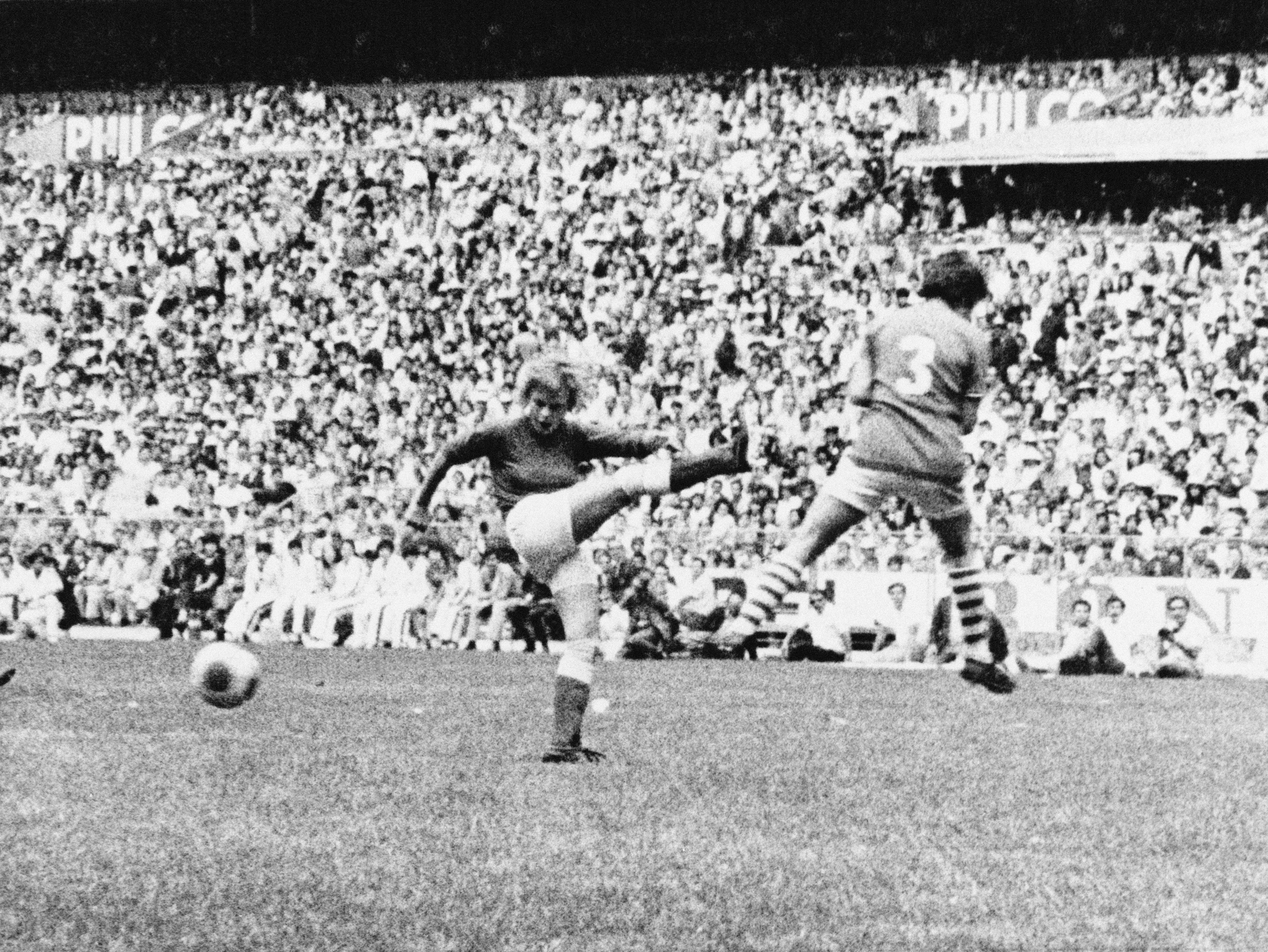
Mexico hosted an unofficial women’s soccer world championship in 1971. In modern times, FIFA has officially recognized the event’s significance in growing the sport.
The proposed venues in the other countries aren’t official yet, nor is how many games each country will get. Mexico will have choices to make, with Monterrey, Guadalajara, and Mexico City set to be host cities next year. Monterrey in particular has become a hotbed for the women’s game in recent years.
Costa Rica and Jamaica will presumably use their national stadiums: the former’s 42,000-seat modern venue in San José, and the latter’s historic 35,000-seat venue in Kingston.
“To realize that there’s a chance that globally, people can experience this on this great of a scale, and for the U.S. to recognize the beauty of that, and to be in partnership with us, it means so much,” said former Jamaican national team player Cheyna Matthews, who played in the 2019 and 2023 World Cups and for seven years in the NWSL.
“I just think about the impact that this is going to have for young girls in Jamaica,” Matthews continued. “I think even young boys who aspire to be part of the Reggae Boyz [Jamaica’s men’s team], I think that this just provides an opportunity for them to see it. Because some can’t travel, some have never left Kingston. … I think that it will obviously inspire, but it’ll continue to have that dividend later on.”
The Union clinched the second Supporters’ Shield in club history on Oct. 4 and finished the regular season with the best record in Major League Soccer. Now they’re getting ready to celebrate that accomplishment ahead of the playoffs with a pep rally at the City Hall Courtyard on Thursday.
The pep rally, which is open to the public, will take place between noon and 2 p.m., featuring interactive games, photo opportunities, surprise guest appearances, and an appearance from Phang, the Union’s mascot.
The Union finished with 66 points and a 20-8-6 record, setting a club mark for wins in a season. The first time the Union clinched the Supporters’ Shield was in 2020.
The Union will open the MLS Cup playoffs at Subaru Park on Sunday against the winner of Wednesday’s wild-card match between the Chicago Fire and Orlando City SC. As the top seeds, the Union will have home-field advantage throughout the playoffs.
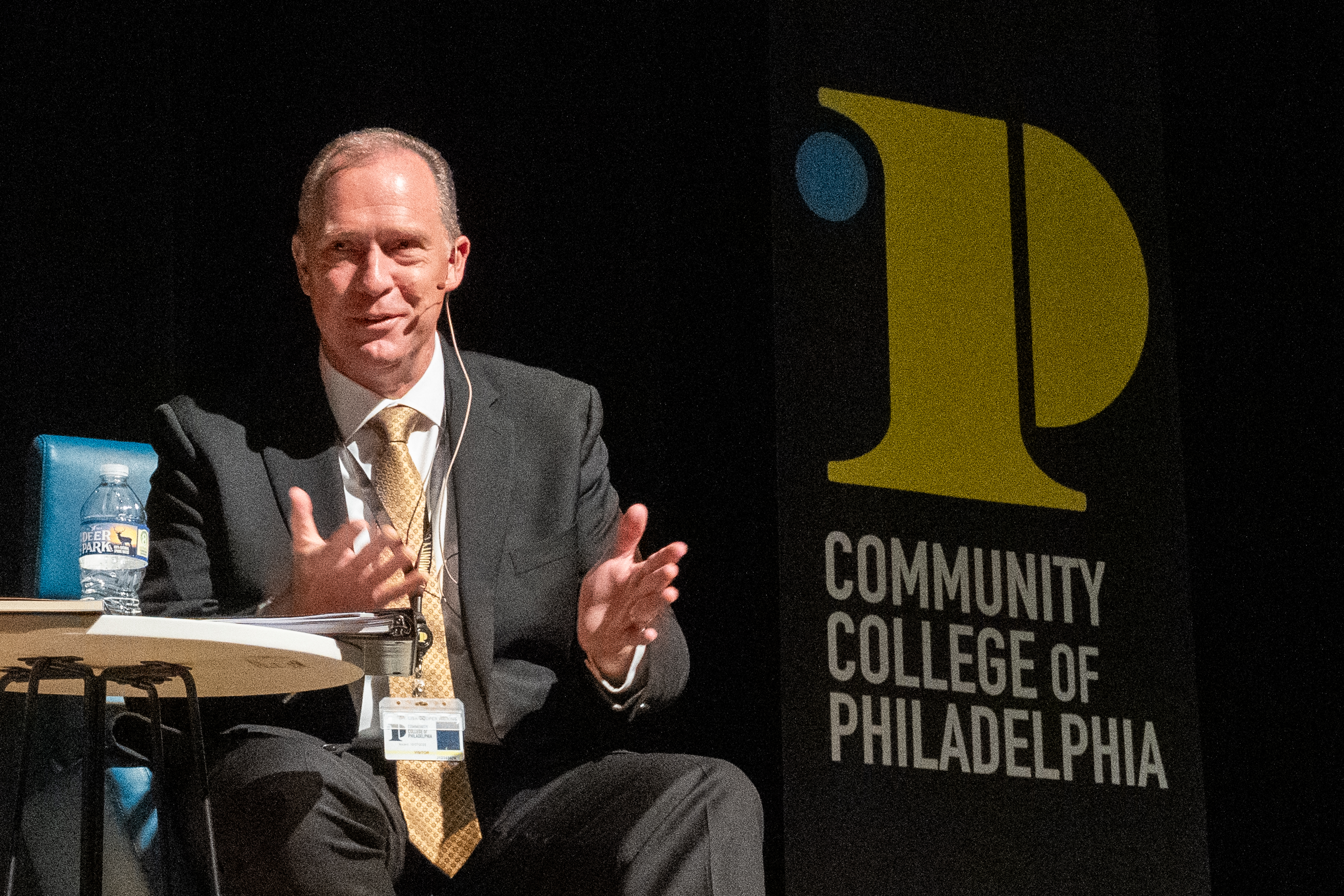
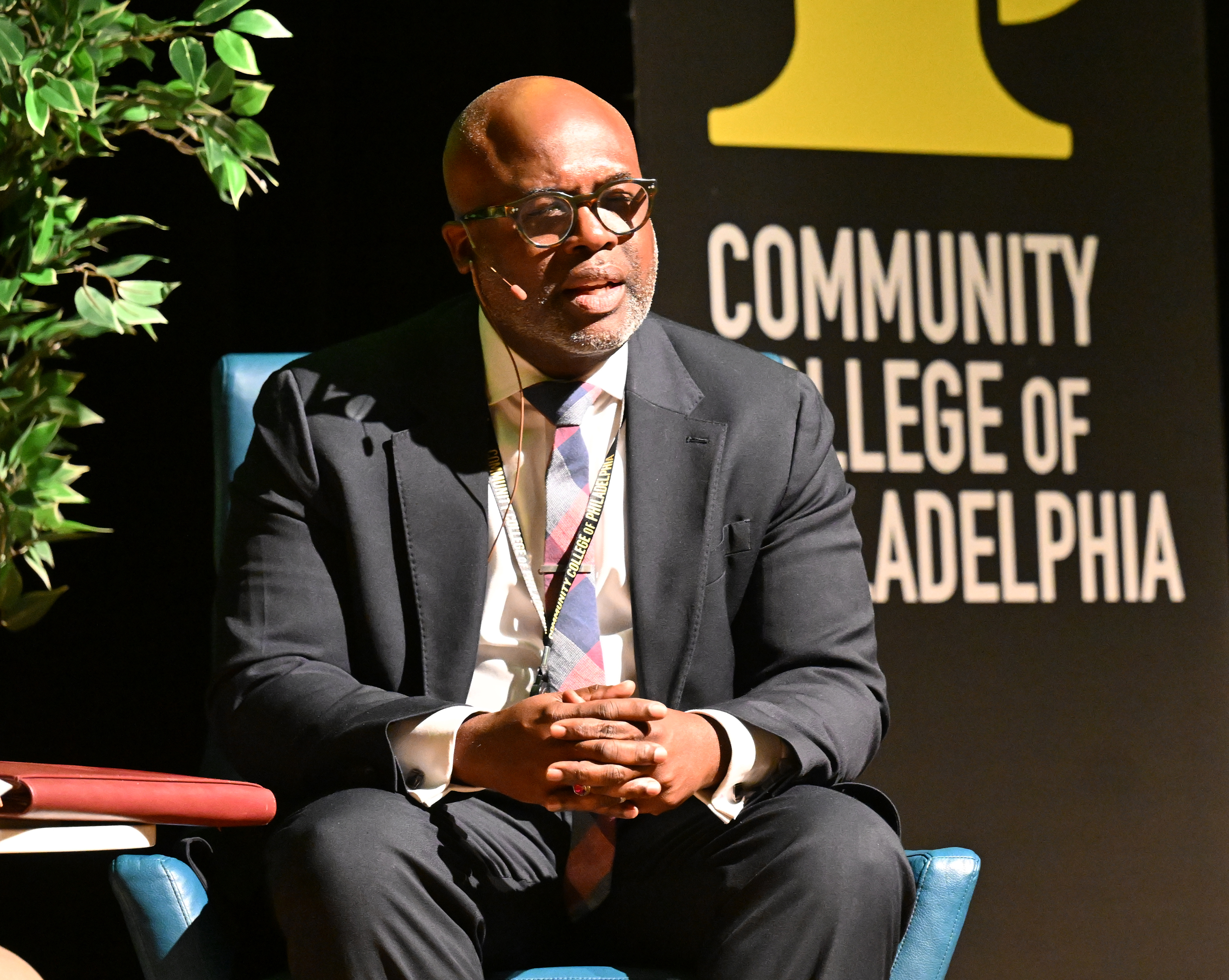
The Community College of Philadelphia’s Board of Trustees is preparing to select a new president, possibly as soon as Tuesday morning.
A special meeting has been scheduled for 8 a.m. on Zoom “to approve an offer of employment to a presidential candidate,” according to the board’s website.
The selection follows daylong interview sessions with the four finalists, who came to campus earlier this month and met with faculty, staff, students, and board members.
“Each comes with their strengths and weaknesses,” said Sandra Gonzalez-Torres, CCP’s director of articulation and transfer, who attended meetings to hear all four candidates. “At this time, the college really needs strong leadership that will guide us to a strong future. The college needs strong fundraising and ways to support our students in retention and graduation.”
Two have limited experience as a college president, including the interim CCP president. Three are candidates of color. One candidate has extensive fundraising experience, and another is a native Philadelphian who once worked at the college and has a background in counseling.
Candidates addressed the college’s low morale and said they had the skills to help it heal following the forced departure of former president Donald Guy Generals after 11 years in the post.
Lisa Cooper Wilkins, a finalist in the Community College of Philadelphia’s search for a president, speaks at an interview forum last week.
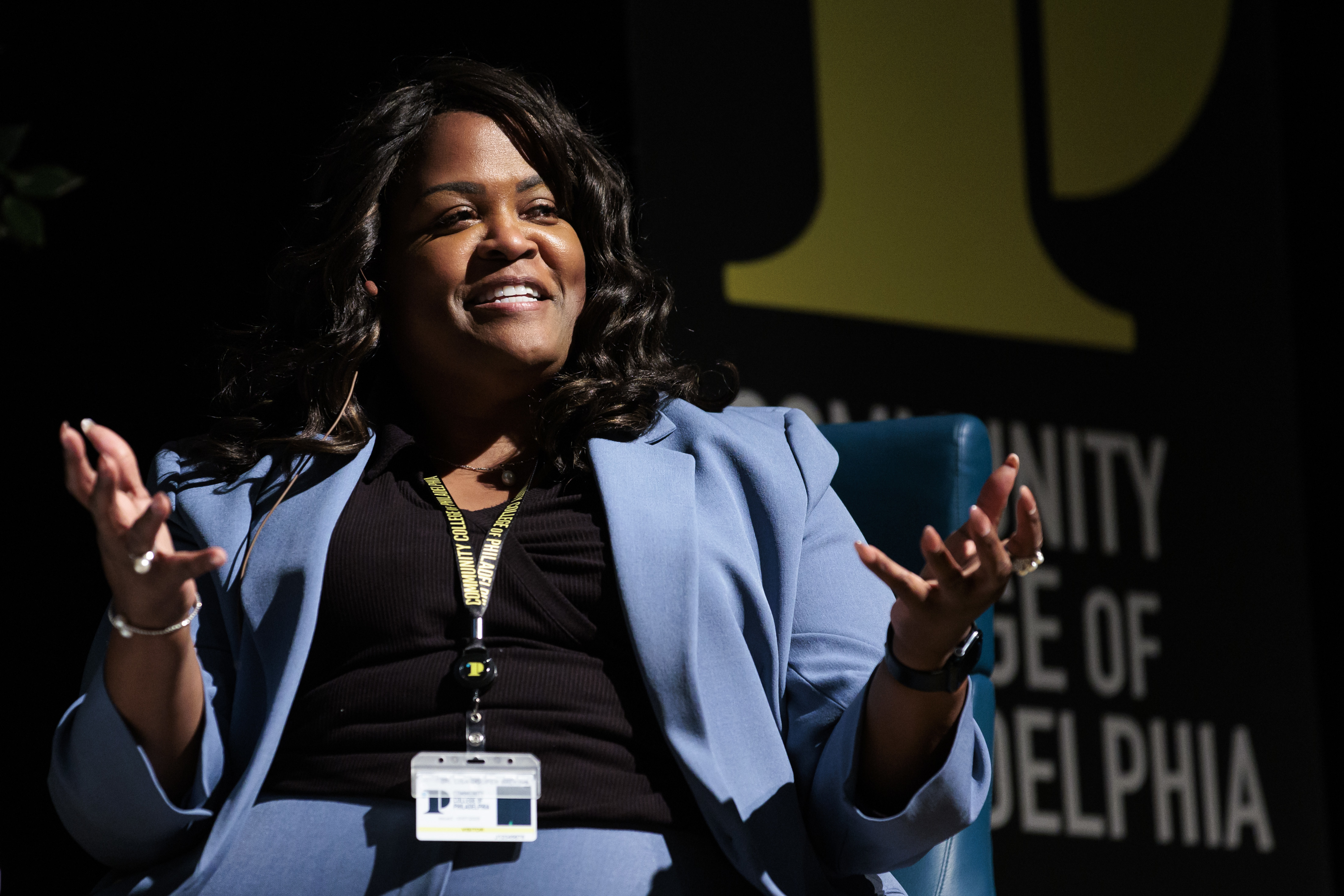
Lisa Cooper Wilkins touted more than 25 years of higher education experience, from faculty member to dean to her current position as vice chancellor of student affairs at City College of San Francisco — where she has worked since 2020.
“I consider myself to be a very collaborative leader and one that leans into communication as one of the primary strategies to work effectively across constituencies,” said Cooper Wilkins, a first-generation college student who grew up in a single-parent home.
Cooper Wilkins, who previously worked at San Joaquin Delta College and the University of the Pacific, cited her background in counseling as a plus. She described herself as a “very calming presence,” which could be helpful in leading CCP out of a tumultuous time.
She is the only candidate who is a native of the Philadelphia region, having attended the Philadelphia High School for Girls and later CCP.
Cooper Wilkins also served as a dean at CCP from 2008 to 2010, during which time she said she made a point of visiting the regional centers. She said she would continue to devote time to them if she became president.
“I’ve worked at institutions where, unfortunately more often than not, they feel like an afterthought,” she said.
She also wasassistant director and senior counselor for student support services at Drexel University in the mid-1990s.
Cooper Wilkins acknowledged that her fundraising experience has been “limited” but that she had some experience during her time at CCP.
She received her bachelor’s degree from Goucher College, master’s degrees from Marymount College and Villanova University, and her doctoral degree in higher education administration from George Washington University.
Alycia Marshall
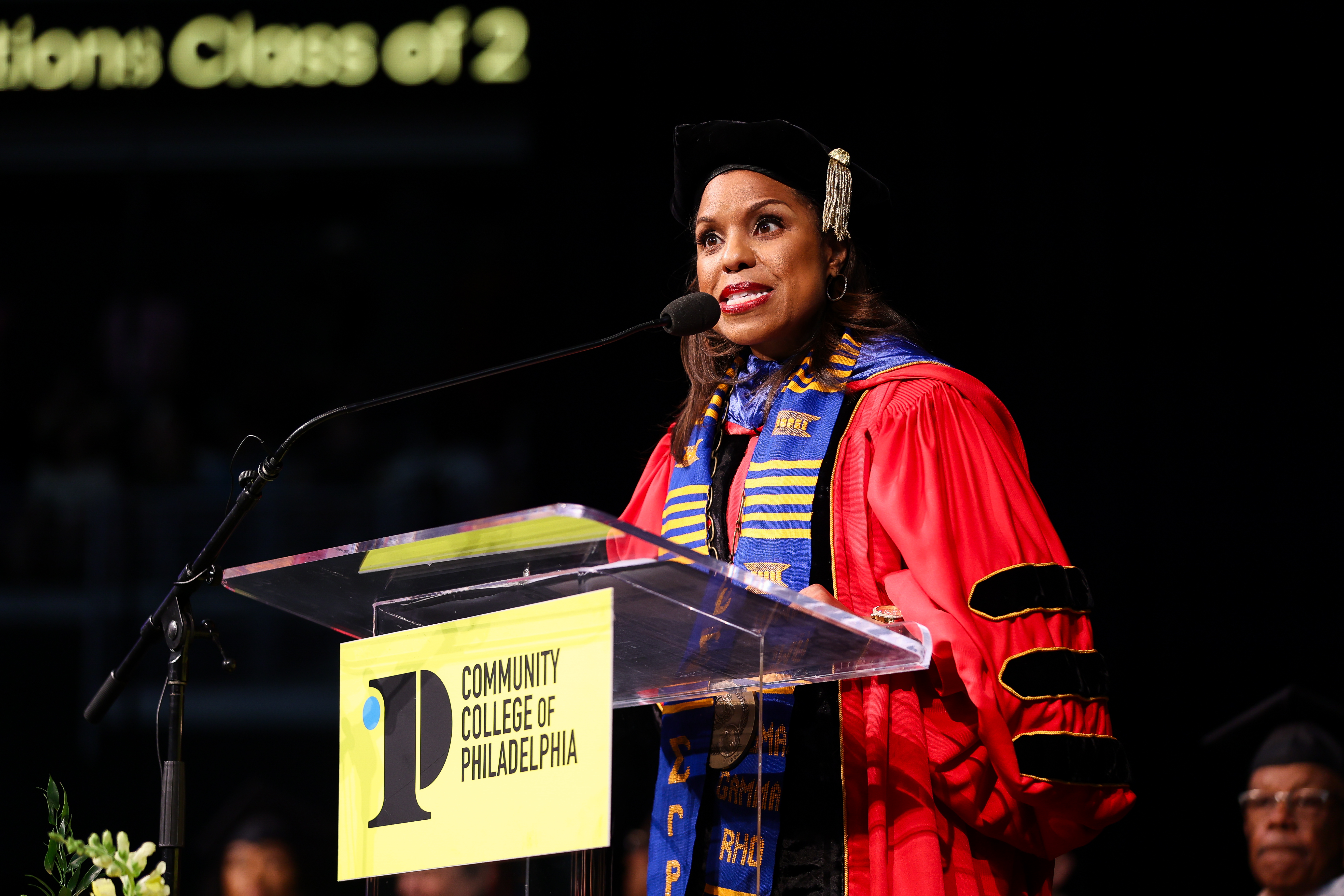
Community College of Philadelphia interim President Alycia Marshall speaks at commencement in May.
Alycia Marshall, who has been serving as interim president since Generals’ departure, leaned heavily on her experience in the role and how she stepped in to keep the college running smoothly just weeks before commencement.
“Having someone who is understanding about the particular state that the institution is in, who sees where the opportunities are, who is supportive and about ensuring a culture of inclusivity, of collaboration … would be a critical piece” for the next president, she said during an interview session.
Marshall, who wasthe college’s provost and vice president for academic and student success for nearly three years before becoming interim president, said she would lead both internally and externally, focusing on faculty and staff satisfaction as well as building relationships with funders and donors.
She said she has already met more than 20 City Council members and state legislators.
She acknowledged that an employee satisfaction survey that she commissioned when she became interim president showed low morale and promised to address it.
“Things that would be a priority to me [are] insuring transparency and frequent communication,” she said.
A native of Maryland, Marshall started her career as an adjunct professor at Anne Arundel Community College in Maryland, near Annapolis, and later became a full tenured professor and chair of the mathematics department. She was promoted to associate vice president at the Maryland community college, where she spent 23 years and founded the African American Leadership Institute.
Marshall said that over the last six months she learned to be comfortable not knowing what will happen next. After a board meeting earlier this month, a consultant who is the liaison to the presidential search committee said on a still-active microphone that Marshall had not been well-received on campus.
Marshall said at the interview session that she did not agree with that and that she has developed relationships with people across the college.
“If you have worked directly with me, you will know I am here for the students and I am here to support faculty and staff,” she said.
Marshall received her bachelor’s in mathematics from the University of Maryland, Baltimore County, her master’s in teaching from Bowie State University, and her doctorate in mathematics education from the University of Maryland.
Jesse Pisors
Jesse Pisors, a finalist applying to be president of the Community College of Philadelphia, speaks at an interview forum on Oct. 9.
Jesse Pisors most recently served as president of the 10,000-student Pasco-Hernando State College, a community college in the Tampa Bay area, but resigned after less than 18 months on the job.
“The political situation in Florida had devolved to a point where I felt I would not be able to continue to be effective as president,” Pisors told the audience at one campus meeting.
He acknowledged about a half percentage point drop in retention.
“That is exactly why one of our top 10 priorities in the strategic plan … had improving retention,” he said. “We were working on that.”
But he said he’s still proud of his time there, noting the creation of a strategic plan and an increase of more than 8% in full-time equivalent enrollment.
Citing the need for CCP to bring in more money at a time when public funding is tight, Pisors touted his experience in fundraising and marketing, noting his previous positions as a vice president at Texas A&M University-San Antonio and the University of Houston. He also had served as executive director of development and alumni relations at the University of Pittsburgh.
Though he is the lone white candidate, he noted that he had served as a principal of a school in Mexico is fluent in Spanish, and is married to a native of Mexico.
Pisors has 27 years of educational leadership experience, from kindergarten through the college level, which he said gives him “wide exposure” and broad “understanding.”
“Community colleges kind of live in the middle,” said Pisors, who got his bachelor’s in history from Oral Roberts University, a master’s from Oral Roberts, and his doctoral degree in higher education administration from Texas Tech University. “They reach back into high school. They reach forward into universities.”
Jermaine Wright
Jermaine Wright, a finalist for the presidency of the Community College of Philadelphia, speaks during his interview session with faculty, staff, students, and board members on Oct. 13.
Jermaine Wright, who is vice president for student affairs at City University of New York-Herbert H. Lehman College, said he was drawn to CCP by its mission and its students who have a similar background to his.
He said he’s a first-generation college student and an immigrant who became a naturalized citizen. His father worked as a porter. and his mother and grandmother cleaned office buildings.
“I am CCP,” said Wright, who has worked at Lehman for five years and previously held administrative positions at Southern Connecticut State University and City University of New York. “CCP is me.”
He cited his experience in workforce development and work in programs that help underrepresented students succeed.
Asked to describe his vision for the college, he cited increasing enrollment, finding different funding streams, ensuring academic excellence, and creating a more inclusive campus environment.
But he cautioned that any new vision would have to be developed with faculty and staff to get full support.
He also cited experience in fundraising and said success can be achieved by knowing where people are and meeting them there.
“We need to have constant face time,” he said.
Wright said he wouldn’t mind if members of the board of trustees showed up at the college a lot.
“That means they care just as much as I do,” he said.
Once an adjunct lecturer at Rutgers-Newark, Wright got his bachelor’s degree from Binghamton University, a master’s from CUNY, and his doctoral degree in public administration from Rutgers-Newark.
For the 76ers, Monday was all about preparation for their season opener against the Boston Celtics.
Joel Embiid had a towel wrapped around his waist and his blue practice jersey was drenched in sweat as media members entered the gym. Both courts were occupied by players who stuck around for post-practice shooting drills.
Every player on the roster practiced, with Jared McCain, who remains sidelined after surgery on his right thumb, being the only exception.
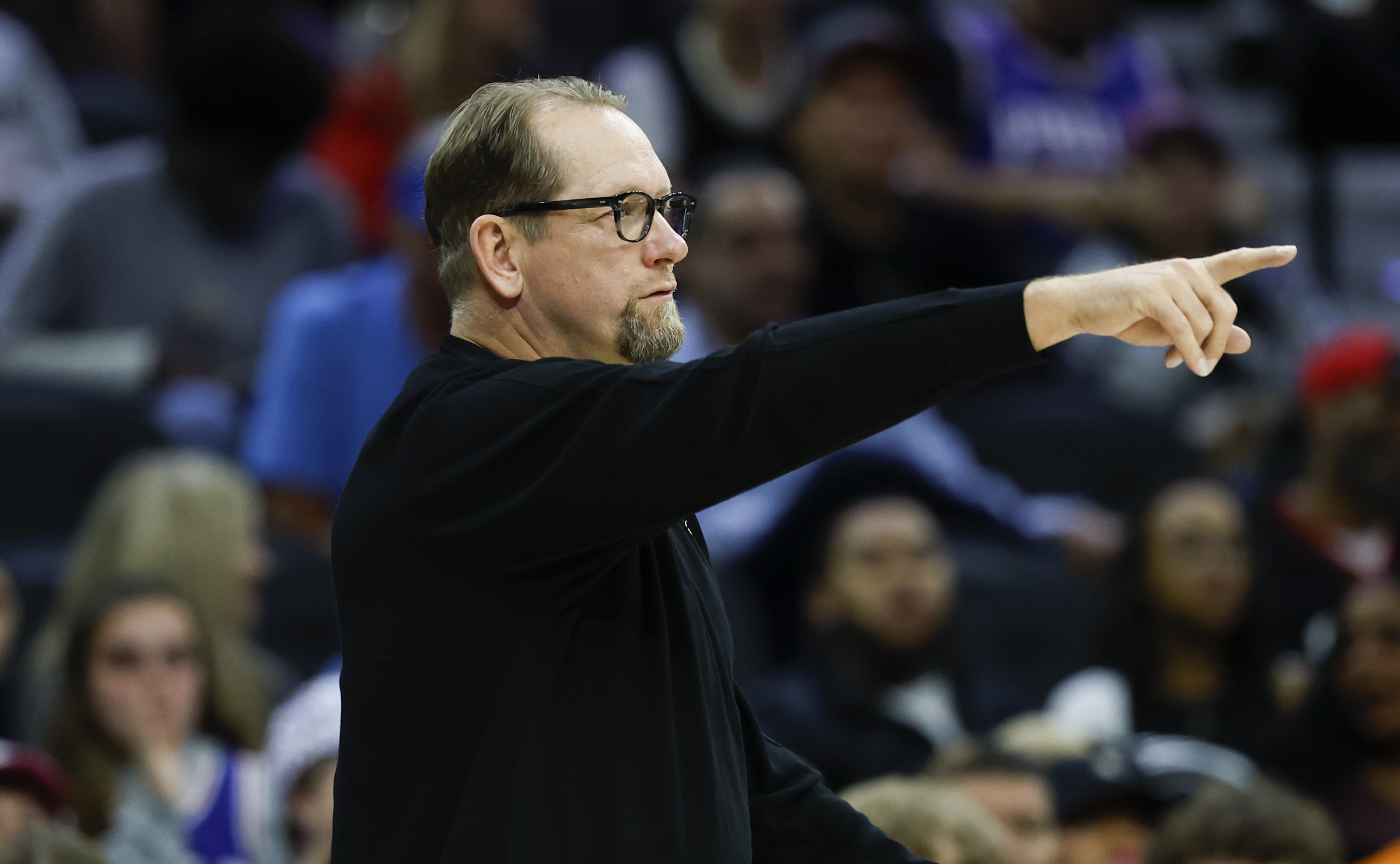
“Listen, we’re at the stage now where we’re doing game prep,” coach Nick Nurse said of Wednesday’s contest at TD Garden. “So everybody was involved in all of what we were doing today.
“So we were just getting ready for Boston, cleaning up some stuff, and one more of those quickies tomorrow before we hit the road and then it’ll be game time.”
The Sixers are eager to erase memories of last season’s 24-58 record. It marked their first losing campaign since they finished 28-54 in 2016-17. They also want to see how their new fast-paced, free-flowing offense fares in an actual NBA game.
Coach Nick Nurse and the Sixers are eager to erase memories of last season’s 24-58 record.
“Listen, like I said this the other day, I think we’re digging ourselves out of a pretty big hole,” Nurse said of last season. “I think that we’ve made a lot of progress, and we’ve worked hard, but you’ve got to go play the games now for real. And then you’re going to really learn about your team and what progress you made, and much of the hard work has paid off, and can it get results.
“I mean, I think it feels good right now, the changes we’ve made. … I think it’s a tremendous test for this group Wednesday to go on the road and play a team that’s got a bunch of guys playing together for forever. I know they have changes too, but they still have a core group that’s been together forever and we’re looking forward to the test.”
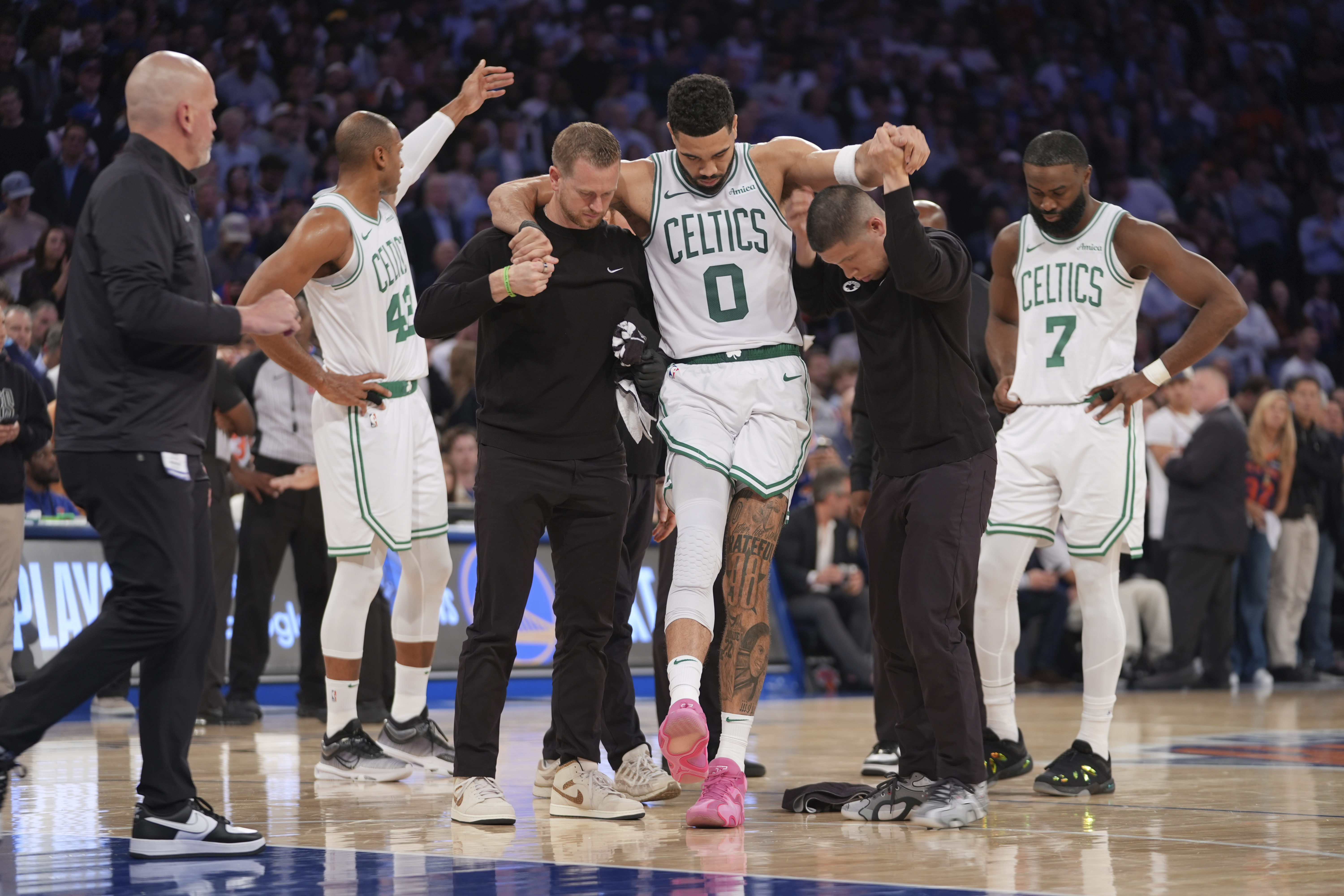
While the Celtics do return several role players, the team will have a different look from the last two seasons. And a lot of the changes are a result of Celtics superstar Jayson Tatum’s Achilles injury. With Tatum out, the 2024 NBA champions made drastic roster moves and underwent a semi-rebuild to get under the second luxury-tax apron.
Over the summer the Celtics traded Jrue Holiday to the Portland Trail Blazers and Kristaps Porzingis to the Atlanta Hawks. They also didn’t re-sign Al Horford, who accepted a two-year deal with the Golden State Warriors.
Boston isn’t void of talent, though.
Celtics’ Jayson Tatum (0) suffered an Achilles tendon injury that altered the team’s direction.
It received standout shooting guard Anfernee Simons from Portland in exchange for Holiday. And the Celtics’ roster changes haven’t altered their style of play.
“They’re going to play a lot of guys that can shoot the ball,” Nurse said. “They’re going to try to get you in mismatches, and they’re just really good at playing one-on-one and scoring. And if they don’t score, they find the open man. And that’s usually a three-ball.
“So it’s the same. Some of the names have changed and the pieces have moved a little bit, for sure. But they’re playing, doing some similar things.”