Blog

  • Judge blocks Trump effort to strip security clearance from attorney who represented whistleblowers

    Judge blocks Trump effort to strip security clearance from attorney who represented whistleblowers

    WASHINGTON — A federal judge has blocked the Trump administration from enforcing a March presidential memorandum to revoke the security clearance of prominent Washington attorney Mark Zaid, ruling that the order — which also targeted 14 other individuals — could not be applied to him.

    The decision marked the administration’s second legal setback on Tuesday, after the Supreme Court declined to allow Trump to deploy National Guard troops in the Chicago area, capping a first year in office in which President Donald Trump’s efforts to impose a sweeping agenda and pursue retribution against political adversaries have been repeatedly slowed by the courts.

    U.S. District Judge Amir Ali in Washington granted Zaid’s request for a preliminary injunction, after he sued the Trump administration in May over the revocation of his security clearance. Zaid’s request called it an act of “improper political retribution” that jeopardized his ability to continue representing clients in sensitive national security cases.

    The March presidential memorandum singled out Zaid and 14 other individuals who the White House asserted were unsuitable to retain their clearances because it was “no longer in the national interest.” The list included targets of Trump’s fury from both the political and legal spheres, including former Deputy Attorney General Lisa Monaco, New York Attorney General Letitia James, former President Joe Biden, and members of his family.

    The action was part of a much broader retribution campaign that Trump has waged since returning to the White House, including directing specific Justice Department investigations against perceived adversaries and issuing sweeping executive orders targeting law firms over legal work he does not like.

    In August, the Trump administration said it was revoking the security clearances of 37 current and former national security officials. Ordering the revocation of clearances has been a favored retributive tactic that Trump has wielded — or at least tried to — against high-profile political figures, lawyers and intelligence officials in his second term.

    Zaid said in his lawsuit that he has represented clients across the political spectrum over nearly 35 years, including government officials, law enforcement and military officials and whistleblowers. In 2019, he represented an intelligence community whistleblower whose account of a conversation between Trump and Ukrainian President Volodymyr Zelensky helped set the stage for the first of two impeachment cases against Trump in his first term.

    “This court joins the several others in this district that have enjoined the government from using the summary revocation of security clearances to penalize lawyers for representing people adverse to it,” Ali wrote in his order.

    Ali emphasized that his order does not prevent the government from revoking or suspending Zaid’s clearance for reasons independent of the presidential memorandum and through normal agency processes. The preliminary injunction does not go into effect until January 13.

    Zaid said in a statement, “This is not just a victory for me, it’s an indictment of the Trump administration’s attempts to intimidate and silence the legal community, especially lawyers who represent people who dare to question or hold this government accountable.”

  • Pentagon says China’s nuclear warhead growth slows, commits to stabilizing tensions

    Pentagon says China’s nuclear warhead growth slows, commits to stabilizing tensions

    The Pentagon assesses that China’s production of nuclear warheads has slowed after a rapid buildup since 2020, with fewer new weapons added to its arsenal. But China’s program continues to expand, focusing on lower-yield nuclear weapons and early counterstrike capabilities, and remains on track to field 1,000 warheads by the end of the decade.

    The China Military Power Report — an annual unclassified Pentagon assessment of Beijing’s capabilities delivered to Congress — departs from the language of recent editions that emphasized the looming challenge of China’s military buildup, instead highlighting President Donald Trump’s efforts to stabilize ties with the world’s fastest-growing military power.

    Beijing’s total nuclear warhead arsenal likely remained in the low 600s, the report says, similar to last year’s figures, “reflecting a slower rate of production” — down from the estimated 100 additional warheads a year since 2020. The report notes that the People’s Liberation Army is, however, continuing “its massive nuclear expansion,” and showing “no appetite” for arms control discussions.

    The report strikes an overall more conciliatory tone on Beijing’s military ambitions. Where last year’s assessment described Beijing as the “pacing challenge” for the U.S. military — a term also used during Trump’s first administration, this year’s report describes China’s rapidly expanding military as a “logical” result of the country growing more wealthy and powerful.

    “President Trump seeks a stable peace, fair trade, and respectful relations with China, and the Department of War will ensure that he is able to achieve these objectives,” it reads.

    Despite the shift in tone, the report lays out mounting challenges posed by Beijing’s ambitions to assert control over Taiwan and expand a conventional missile force that is increasingly approaching U.S. capabilities.

    Analysts say it highlights the challenges facing the Trump administration in balancing efforts to prioritize U.S. interests in trade while projecting military dominance in the Indo-Pacific.

    “There’s an inherent contradiction running through the report: It lays bare the scale of China’s military expansion and Taiwan ambitions while simultaneously suggesting the relationship is stabilizing. Those two stories can’t be reconciled — no matter how hard the administration tries to preserve the trade truce,” said Craig Singleton, senior China fellow at the Foundation for Defense of Democracies think tank.

    The annual military assessment comes as Trump prepares to travel to Beijing next year, following a trade détente reached with Chinese leader Xi Jinping in South Korea that eased tensions over Trump’s aggressive tariff program and Beijing’s weaponization of its rare-earth monopoly.

    The report comes as the White House is signaling different priorities on China. The recently released National Security Strategy — a document outlining the administration’s defense priorities — frames China’s challenge more in economic terms while shifting the U.S. focus to threats in the Western Hemisphere.

    Even as tensions have eased since the South Korea meeting, national security frictions continue to flare up between the two countries. On Monday, Beijing reacted angrily to the U.S. seizure of a Venezuelan oil tanker en route to China amid escalating tensions between Washington and Caracas. Chinese officials also strongly condemned the approval of a record $11 billion U.S. weapons package for Taiwan last week.

    The Pentagon report notes that Beijing is ramping up efforts to “coerce” Taiwan to unify with China through a campaign of military patrols — including a twofold increase in incursions into Taiwan’s air defense identification zone between 2023 and 2025 — and using increasingly aggressive political rhetoric as part of a campaign to undermine the island’s independent rule.

    China’s embassy in Washington, D.C., did not immediately respond to a request for comment.

    Despite producing fewer nuclear warheads, China’s broader nuclear program has expanded in other ways, including the development of more versatile low-yield weapons and upgrades to its counterstrike systems, the report notes. China has likely loaded more than 100 intercontinental ballistic missiles into desert silos, advancing capabilities for long-range strikes closer to U.S. territories.

    At over 600 nuclear warheads, China’s arsenal remains far smaller than U.S. stockpile of around 3,700, but the report says upgrades in China’s program likely have enhanced its ability to rapidly retaliate. “This reliance on the strategic level of deterrence — likely nuclear weapons, but also cyber and space capabilities — indicates the growing confidence and comfort the PLA has with conventional escalation,” it said.

    The significance of China’s expanding arsenal has been thrown into sharper relief amid rising global tensions over nuclear weapons. Russia has stepped up nuclear intimidation since its invasion of Ukraine, while Trump has ordered the United States to resume nuclear testing “immediately,” accusing Moscow and Beijing of skirting a three-decade moratorium.

    Analysts said a slowdown in the production of nuclear weapons could also point to changes in China’s threat perception. “Beijing may currently perceive a reduced existential threat from the United States and, accordingly, less urgency to pursue nuclear expansion at maximum speed than during the peak of U.S.-China hostility around 2021,” said Tong Zhao, a nuclear specialist and senior fellow at the Carnegie Endowment for International Peace.

    He added that China’s 2023 overhaul of the PLA Rocket Force following a corruption scandal could mean the country is working to “prioritize internal reform and more sustainable, effective long-term growth.”

    Elsewhere, the Pentagon report notes China’s advance of military programs in artificial intelligence, biotechnology, quantum technology, and advanced semiconductors — partly through acquisitions of U.S. technology. While restrictions on high-end processors have constrained China’s AI industry, illicit smuggling networks have likely allowed companies such as Deepseek and Huawei to obtain U.S. semiconductors for projects with potential military significance.

    The Trump administration has sought to balance U.S. security and trade with Beijing — maintaining restrictions on some high-end chips while, earlier this month, lifting controls to allow approved customers in China access to advanced Nvidia H200 semiconductors.

    “The Pentagon is warning that China already treats advanced accelerators as a strategic asset — using intermediaries and shell networks to evade controls — so the White House’s desire to reopen the export spigot is strategically backward,” Singleton said. “It turns an enforcement problem into a policy choice that strengthens exactly the capability the report flags as a growing threat.”

  • Gaza’s Christians, battered by war, celebrate Christmas for first time in 3 years

    Gaza’s Christians, battered by war, celebrate Christmas for first time in 3 years

    BEIRUT — For the first time in three years, the Gaza Strip’s tiny Christian community is celebrating Christmas without the immediate threat of war.

    A ceasefire has brought the enclave a measure of calm, and over the past few weeks, Christians there have embraced the holiday spirit, lighting up trees and passing out sweets.

    On Sunday, the Latin patriarch of Jerusalem, Cardinal Pierbattista Pizzaballa, led a Christmas Eve Mass at Holy Family Church in Gaza City, where he baptized the newest member of the community, a baby named Marco Nader Habshi.

    Cardinal Pierbattista Pizzaballa (second from left), the Latin patriarch of Jerusalem, leads a Mass ahead of Christmas celebrations at Holy Family Catholic Church in Gaza City on Sunday.

    “It will not be full of joy, but it is an attempt to renew life,” Elias al-Jilda, 59, a prominent member of Gaza’s Orthodox population, said of this season’s holiday celebration. He said he remembers the days when Christmas in Gaza meant citywide festivities, with Muslims and Christians coming together. “It was a special occasion,” he added, “an opportunity for us to breathe.”

    But while the holidays have long brought a sense of relief, the Christian community in Gaza — one of the world’s oldest — was already in decline. Now, with the devastating conflict between Hamas and Israel, the population has further diminished, and church leaders warn that postwar deprivation could push more people to leave.

    Like most Palestinians in Gaza, Christians’ “houses were destroyed, their businesses were destroyed, their living conditions are difficult,” said Archbishop Atallah Hanna, head of the Sebastia diocese of the Greek Orthodox Church in Jerusalem.

    According to Hanna and Jilda, who serves on the council of the Arab Orthodox Church in Gaza, the territory’s total Christian population has fallen from about 1,000 members before the war to almost half of that today. It’s a drop that reflects, in part, a long-term trend of Christian emigration from the Palestinian territories — only in Gaza, the number of Christians is so small that any loss feels like a substantial blow.

    At the same time, Israel’s military actions in Gaza have accelerated Christian flight from the enclave. Residents began leaving at a steady clip, either with help from family members abroad or in medical evacuations. Jilda described the departures as “an attempt to survive,” while those who stayed in Gaza “survived by what can only be described as a miracle,” he said.

    At least 44 Palestinian Christians have been killed in the conflict, according to a committee overseen by the Palestinian government. Some were killed in Israeli sniper or artillery attacks that hit Gazan churches, the committee said, while others died of illness, injury, or malnutrition because of a lack of food or medical care.

    According to the Gaza Health Ministry, more than 70,000 Palestinians have been killed in Israel’s military campaign, which began after the Hamas-led attacks on Israeli communities on Oct. 7, 2023. The ministry does not distinguish between civilians and combatants but says a majority of the dead are women and children. Around 1,200 people were killed in the Hamas assault, and some 250 others were taken into Gaza as hostages.

    Nearly all of Gaza’s 2.1 million residents have been displaced, the United Nations says, and wide swaths of the enclave, including houses, farmland, and infrastructure, are destroyed.

    The fighting forced Gaza’s Christians — the majority of whom are Greek Orthodox or Catholic — to take refuge in its two main churches. Most sheltered in Holy Family Church in the Rimal neighborhood of Gaza City. The church, which is Catholic, has much more space for accommodating the displaced. Others huddled about 1.5 miles away in the Greek Orthodox Church of St. Porphyrius, established in the year 425.

    “There is an assumption that Gaza has no Christian population, or no Christian history,” said Yousef AlKhouri, a Gaza native and dean at Bethlehem Bible College in the West Bank. “And that’s not true.”

    He said that Gaza, despite its size, has produced many Christian theologians, politicians and scholars over the years. Jesus, Mary and Joseph are also believed to have passed through the territory on their way to Egypt, AlKhouri said — a story that, according to him, gave Holy Family Church its name.

    For Jilda and his family, Holy Family Church served as a sanctuary after their home in Gaza City’s Tel al-Hawa neighborhood was destroyed one month into the war. After the ceasefire began, they moved into a rental home in the city but are still trying to furnish it.

    Today, most of the region’s Palestinian Christians are still sheltering at the churches, as reconstruction has yet to begin and a rainy winter season has inundated the tents in which displaced residents live.

    Like Jilda, AlKhouri, who grew up in Gaza in the 1990s, said he remembers a time when Christian life there was not just about survival. “The celebrations of Christian and Muslim festivals were shared,” he said, adding that there was always a sense of solidarity among “Palestinian Christians and Muslims in Gaza: going to school together, playing together, going to the YMCA.”

    But over time, as the peace process with Israel collapsed and hopes for a Palestinian state dimmed, the conflict began tearing at the community. In Gaza, Hamas and its secular rival, Fatah, fought a brief but bloody civil war that saw the Islamists take control. Since then, Christmas celebrations have been largely private and subdued.

    Still, as Pizzaballa held a high-profile Mass this week, he urged Christians in Gaza to hold on.

    “We are called not only to survive, but to rebuild life. We must bring the spirit of Christmas — the spirit of light, tenderness and love. It may seem impossible,” he said, “but after two years of terrible war, we are still here.”

  • A ‘New Heights’ gift guide for ‘dudes who can’t shop good:’ Where do scented candles and gift cards stand?

    A ‘New Heights’ gift guide for ‘dudes who can’t shop good:’ Where do scented candles and gift cards stand?

    If you’re still on the hunt for any last minute Christmas gifts, or you’re already preparing for next year, then Jason and Travis Kelce have got you covered.

    On the latest episode of New Heights, the former Eagles center and Kansas City tight end put together the ultimate gift guide for “dudes who can’t shop good” — but of course, they had some help from Not Gonna Lie host, Kylie Kelce.

    Here are some of the best gifts included in the New Heights gift guide:

    Gift cards. Jason and Travis Kelce approved.

    Gift cards

    You typically can’t go wrong with a gift card. When it comes to last-minute shopping, these are some of the easiest gifts you can grab for friends and loved ones. Sure, it may not be the most thoughtful gift option in the world, but it’s definitely going to be one of the more useful ones.

    “If it’s to a store you know that she shops, yes,” Kylie said. “I think some women may find this to be a little impersonal. But also, with online shopping then she’s guaranteed to get something she wants and it’ll come right to her door.”

    But is a gift card enough on its own? According to Jason, it’s not.

    “i just feel like if it’s somebody special, I wouldn’t roll into the holidays with just a gift card,” Jason said.

    Candles are great. Assuming you or your special person isn’t allergic to them.

    Scented candles

    So, what pairs well with a gift card? To Kylie, a scented candle would have been perfect. Unfortunately, she happens to be married to someone who doesn’t enjoy the fresh smells of cinnamon, gingerbread, and peppermint taking over the house.

    “I’m anti-candles,” Jason said. “I don’t like chemicals just burned and thrust into the air for me to be breathing in all day so I can get brain cancer.

    “I don’t think it makes any sense. Why would I want some artificial [expletive] flower thing in the air that some person made in a lab from some combination of vegetable this and that. And this essence, I don’t want it in my face.”

    When it comes to last-minute gifts, Kylie Kelce thinks a nice piece of jewelry is “a great idea.”

    Jewelry

    If you’re gift hunting for that special someone, then you may be looking for something bigger than gift cards and candles. Jewelry can be another option — whether it’s a nice set of earrings, a pearl necklace, a tennis bracelet, or a shiny ring.

    “Jewelry is a great idea,” Kylie said. “Because I think there’s varying degrees of jewelry.”

    Jason responded: “Is there a bad degree of jewelry? Like, would you get something and be like ‘Oh, this is not it and I’m mad?’”

    “I don’t know if I would be mad,” Kylie said. “I just think that if it’s going to turn your skin green, probably don’t get it as a gift.”

    That new refrigerator you’ve been eyeing up? Chances are your significant other has been eyeing it too, according to the Kelces.

    Kitchen appliances

    To Travis, some of the perfect gifts can even be kitchen appliances. The Chiefs tight end revealed that one of his fiancé Taylor Swift’s favorite gifts that she’s ever received from him was a bread slicer.

    “I will say that one of Tay’s favorite gifts that I got her was the bread slicer,” Travis said. “She’s been throwing together so much [expletive] sourdough. Gosh, the best gut health there is.”

    Health and fitness gifts might sound great but could be a silent trap you don’t want to fall for, according to Kylie.

    Health & fitness related gifts

    And when it comes to health and fitness-related gifts, this one can be a little tricky.

    “You’re asking the wrong person because I would say yes,” Kylie said. “More [generally], I would say — unless she explicitly asks for it — absolutely not.”

    “You also buy her a set of pants that are a size smaller,” Jason said, jokingly. “With a card that says ‘You can do it.’”

    Kylie responded: “Aggressively, no.”

  • Zelensky open to withdrawing troops in new peace draft, awaits Russian reply

    Zelensky open to withdrawing troops in new peace draft, awaits Russian reply

    KYIV, Ukraine — Ukrainian President Volodymyr Zelensky presented journalists a new version of a peace plan Wednesday that suggests he is open to withdrawing troops from eastern Ukraine to create a demilitarized zone if Russia agrees to do the same as part of a settlement to end the war.

    The suggestions marks Zelensky’s first inch toward any sort of compromise on the issue of territory in the eastern Donbas region, which Russia has demanded full control of despite failing to take several major cities militarily. The issue of territory remains one of the most contentious in discussions, with Ukraine arguing that giving up its land will only embolden Russia to attack again.

    The 20-point draft Zelensky publicized Wednesday is far from final and has not been agreed to by Russia, which will probably oppose several major points, including the demand for both sides to withdraw their forces from Ukraine’s east.

    The document is the latest iteration of a proposal to end the war after weeks of difficult negotiations following a U.S. threat last month to cut off all support for Ukraine unless the country signed on to a 28-point version that made major concessions to Russia.

    That warning triggered a diplomatic frenzy, including many meetings between a Ukrainian delegation and President Donald Trump’s negotiators, including special envoy Steve Witkoff and the president’s son-in-law Jared Kushner.

    The latest plan makes clear that Ukraine continues to oppose the idea that it would be forced to withdraw its troops from its east but would consider doing so if Russia did the same. The goal would be to create a free economic zone that is not controlled by either military, Zelensky said.

    Any such agreement, however, would require a national referendum, which would be difficult to organize without a ceasefire in place. It would also require Russia agreeing to this and other points in the document, which remains unlikely.

    The establishment of a free economic zone would require significant work to determine who would control the territory, including potentially foreign peacekeepers. Russia has previously opposed the idea that foreign troops be stationed in Ukraine and the two sides will likely find it difficult to agree which countries would contribute troops to such a mission.

    Such an arrangement was suggested by the United States, which has repeatedly raised various suggestions that would prioritize business after the war. Zelensky previously said that if Ukrainian forces were to withdraw from any territory, it would only be logical for Russian forces to withdraw the same amount. He had also cast skepticism on how to secure such a zone, citing potential vulnerabilities to Russian infiltration.

    Russia has previously stated that even if it did withdraw its military from some regions, it would expect to still control the area with police and national guard units.

    Zelensky also said Wednesday that the current draft includes a peacetime Ukrainian military of 800,000 troops. The initial version would have limited the size to 600,000. Ukraine has repeatedly stated that its best security guarantee is its own armed forces.

    The draft also includes references to security guarantees that would amount to similar protections as NATO’s Article 5, which sees an attack on one member as an attack on all. An earlier draft of the plan had barred Ukraine from becoming part of NATO, which was deemed unacceptable to Ukrainians, who have put joining the alliance into their constitution.

    Zelensky has emphasized in recent remarks that no one can view Ukraine as an obstacle to the peace process, but any plan cannot condemn future generations of Ukrainians to war with Russia.

    Kremlin spokesman Dmitry Peskov did not respond to specific points in the plan Wednesday but told journalists that Russia’s main demands “are well known to our colleagues in the U.S.”

    Russia intends “to formulate our further position and continue our contacts in the very near future through the existing channels that are currently working.”

    Russia has shown little sign it is interested in finding a real settlement to the war. Ukraine had requested a Christmas truce, which Russia declined. Russia has continued to aggressively bomb Ukraine in recent days, targeting the energy grid and triggering more widespread blackouts across the country. Russia’s early-morning attack on Tuesday killed three people, including a 4-year-old child.

    Warnings continue that more bombardment is likely as the energy system is under greater stress responding to the subzero temperatures taking hold across Ukraine.

    On Wednesday, meanwhile, a police car exploded in Moscow, killing two police officers in the same spot where a general was killed by a car bomb two days earlier. Ukraine did not claim responsibility for the attacks but Russia has suggested Kyiv could be behind the operations.

    The Russian Investigative Committee said in a statement that two traffic police officers saw a suspicious individual near a police car. As they approached to detain him, an explosive device detonated.

    Two prominent Russian military bloggers pointed fingers at Ukrainian and European special services, blaming them for the attack and attempting to destabilize Russia from within.

    “I believe that the Ukrainian (British, and U.S.) intelligence services are trying to open a second (subversive) front inside Russia,” state media military correspondent Alexander Sladkov wrote on his Telegram blog.

    Sladkov also questions whether the CCTV surveillance system bolstered in Moscow in recent years would help identify those responsible for the attack, and noted that if the investigation results are not released this week, it will be a “demonstration of weakness.”

    Another war reporter, Alexander Kots, wrote that the explosion “clearly bears the mocking signature” of special services from Ukraine and Britain.

    “This is a typical British anti-crisis: sow panic among the population, destabilize it from within, create a sense of insecurity, undermine the authority of the authorities and the security services, provoke public discontent with the special military operation, and provoke rallies calling for its swift end,” Kots wrote.

  • Local pro athletes bring Christmas surprise to Chester County family

    Local pro athletes bring Christmas surprise to Chester County family

    They almost didn’t put up a Christmas tree this year.

    R.C. Wilson Sr. knew things were going to be tight for his family this holiday, with him starting a new job and “life just being hard,” he said. It was a week before Christmas when he reached out to Justin Brown, who leads an organization that connects athletes with community initiatives and had arranged several holiday donation drives this season, asking if Brown knew of any agencies that might donate some gifts to Wilson’s six kids.

    Brown reached out to the Chester County community, and he got an outpouring of support. He asked NFL tight end Kenny Yeboah, a former Temple player who later joined the New York Jets and Detroit Lions, and former Phillies pitcher Tommy Greene to be part of a surprise. He told Wilson to put up the Christmas tree.

    And on their quiet Coatesville street a few days before the holiday, the community showed up at Wilson’s doorstep with bags upon bags of gifts — essentials like clothing and shoes and food, plus toys and more than $500 in gift cards.

    “We always try to do what we can for [the kids] to give them the best, but they also understand life gets hard for everybody. We went from, I feel like, being up top to rock bottom,” Wilson said Tuesday. “It’s amazing to get to see in person. Seeing it in person, especially when I needed the help, was a blessing from the community and for my family.”

    Nevaeh Miller-Wilson, 8, organizes presents after a Christmas surprise from former Philadelphia Phillies pitcher Tommy Greene and New York Jets tight end Kenny Yeboah at her home in Coatesville, Pa. Greene and Yeboah surprised the family, which includes six children, with a full Christmas celebration, providing gifts and holiday essentials.

    The gifts were stacked under the Christmas tree and through the living room. It was overwhelming, said his wife, Chelsea Miller.

    Yeboah, a new resident of Downingtown, and Greene signed footballs, baseballs, and the backs of T-shirts and posed for photos with the family.

    It was cool to see, said Aadan Miller-Wilson, 15.

    “I’ve never met an athlete, and I play two of the sports they play, too,” he said.

    Yeboah, out with an injury, offered to coach the kids while he recovered. He had wanted to give back to the community he was now part of, and was connected with Brown.

    New York Jets tight end Kenny Yeboah interacts with members of a family of six children, from left, Nevaeh, Robert, Bryden, Jacob, David and Aadan, during a Christmas gift surprise at their home in Coatesville, Pa.

    “To come here and see all these people help out and give back to the community that they’re in, it’s just an amazing feeling,” Yeboah said. “It’s really, really cool to see that everyone’s here just to help out.”

    Greene credited his “better half,” Wendy, for quickly becoming involved with the surprise. When you help each other out, you help everyone out, Greene said.

    “When you get a chance to make a difference, you do,” he said.

    Wilson, who kept the surprise a secret from his family until the community showed up at their door, also found the support overwhelming.

    “It’s a blessing,” he said.

    This suburban content is produced with support from the Leslie Miller and Richard Worley Foundation and The Lenfest Institute for Journalism. Editorial content is created independently of the project donors. Gifts to support The Inquirer’s high-impact journalism can be made at inquirer.com/donate. A list of Lenfest Institute donors can be found at lenfestinstitute.org/supporters.

  • ICE documents reveal plan to hold 80,000 immigrants in warehouses

    ICE documents reveal plan to hold 80,000 immigrants in warehouses

    The Trump administration is seeking contractors to help it overhaul the United States’ immigrant detention system in a plan that includes renovating industrial warehouses to hold more than 80,000 immigrant detainees at a time, according to a draft solicitation reviewed by the Washington Post.

    Rather than shuttling detainees around the country to wherever detention space is available, as happens now, U.S. Immigration and Customs Enforcement aims to speed up deportations by establishing a deliberate feeder system, the document says. Newly arrested detainees would be booked into processing sites for a few weeks before being funneled into one of seven large-scale warehouses holding 5,000 to 10,000 people each, where they would be staged for deportation.

    The large warehouses would be located close to major logistics hubs in Virginia, Texas, Louisiana, Arizona, Georgia, and Missouri. Sixteen smaller warehouses would hold up to 1,500 people each.

    The draft solicitation is not final and is subject to changes. ICE plans to share it with private detention companies this week to gauge interest and refine the plan, according to an internal email reviewed by the Post. A formal request for bids could follow soon after that.

    Tricia McLaughlin, a spokeswoman for the Department of Homeland Security, said she “cannot confirm” the Post’s reporting and declined to answer questions about the warehouse plan.

    NBC and Bloomberg News previously reported on ICE’s internal discussions about using warehouses as detention centers. The full scope of the project, the locations of the facilities, and other details contained in the solicitation have not been previously disclosed or reported.

    The warehouse plan would be the next step in President Donald Trump’s campaign to detain and deport millions of immigrants, which began with a scramble to expand the nation’s immigrant detention system, the largest in the world. Armed with $45 billion Congress set aside for locking up immigrants, his administration this year revived dormant prisons, repurposed sections of military bases and partnered with Republican governors to build immigrant tent encampments in remote regions.

    The administration has deported more than 579,000 people this year, border czar Tom Homan said earlier this month on the social media platform X.

    The new facilities will “maximize efficiency, minimize costs, shorten processing times, limit lengths of stay, accelerate the removal process and promote the safety, dignity and respect for all in ICE custody,” the solicitation said.

    “We need to get better at treating this like a business,” ICE acting director Todd M. Lyons said at a border security conference in April, according to the Arizona Mirror. The administration’s goal, he said, was to deport immigrants as efficiently as Amazon moves packages: “Like Prime, but with human beings.”

    Commercial real estate experts say concentrating detainees in warehouses would create its own logistical problems. Such structures are designed for storage and shipping, not human habitation. They tend to be poorly ventilated and lack precise temperature controls — and, because they are typically located far from residential areas, they may not have access to the plumbing and sanitation systems needed to support thousands of full-time residents.

    “It’s dehumanizing,” said Tania Wolf, an advocate with the National Immigration Project who is based in New Orleans — about one hour south from the site of a planned warehouse in Hammond, La. “You’re treating people, for lack of a better term, like cattle.”

    ICE plans to heavily modify the structures to include intake areas, housing units with showers and restrooms, a kitchen, dining areas, a medical unit, indoor and outdoor recreation areas, a law library, and administrative offices, according to the solicitation. Some of the facilities will include special housing designed for families in custody.

    The majority of the planned warehouses are in towns, counties, and states led by Republicans supportive of Trump’s immigration policies. Two of the largest warehouses are planned for towns with Democrat-led local governments: Stafford, Va., and Kansas City, Mo.

    If the government leased a warehouse in Stafford, it would need to comply with the city’s zoning laws and building codes, said Pamela Yeung, one of seven supervisors on Stafford’s Democrat-led board.

    “Immigration policy is federal, but its impacts are local,” Yeung said in an emailed statement. “Any facility of this scale would affect infrastructure, public safety, and social services.”

    ICE held more than 68,000 people at the beginning of this month, agency data shows, the highest number on record. Nearly half, or 48 percent of these people, have no criminal convictions or pending criminal charges, ICE data shows.

    Some administration officials have complained about the complexity of the current detention system. A 2015 government watchdog report found that deportation flights often leave the country with empty seats because of the logistical difficulty of bringing enough people eligible for deportation to an airplane at the same time.

    The government already awarded one $30 million contract for help with “due diligence services and concept design” for the new facilities, procurement records show. That award fueled a public backlash among members of the Prairie Band Potawatomi Nation, a Kansas tribe that said a business connected to the tribe had acted against their wishes in pursuing the contract.

    Tribal chairman Joseph “Zeke” Rupnick said in a Dec. 17 video that the tribe has exited the contract and plans “to ensure that our nation’s economic interests do not come into conflict with our values in the future.”

    The business that won the award, KPB Services LLC, could not be reached at phone numbers listed online for the company.

    The biggest newly proposed warehouse would hold up to 10,000 detainees in Stafford, an industrial area 40 miles south of Washington. A facility with capacity for up to 9,500 people is planned for Hutchins, near Dallas; and another with space for 9,000 in Hammond, east of Baton Rouge. Currently, ICE’s biggest facility is a makeshift tent encampment built this summer at the Fort Bliss U.S. Army base in Texas. It now holds around 3,000 people but was expected to have a capacity of 5,000 by year’s end.

    The warehouse solicitation document names nine active detention centers as part of the project’s final phase, suggesting that at least those facilities would continue to be used. The plan does not mention whether other existing facilities would be phased out.

    It does not give a timeline for beginning work on the project but says the facilities must begin accepting detainees 30 to 60 calendar days after the start of construction.

    Staffing facilities of this size is likely to be a challenge, said Jason Houser, a former ICE chief of staff under President Joe Biden. Prospective workers will need medical or other specialized training and will have to pass federal security clearances, he said.

    This problem is already bearing out in other new facilities. In September, the government’s own inspectors found that the Fort Bliss site employed less than two-thirds of the security personnel it had agreed to in its contract.

    “We can always find more warehouses,” Houser said. The ability to operate the facilities safely, he said, is “always limited by staffing.”

  • Residents could be given bottled water after a ‘significant’ amount of gasoline leaked at Delco tank farm

    Residents could be given bottled water after a ‘significant’ amount of gasoline leaked at Delco tank farm

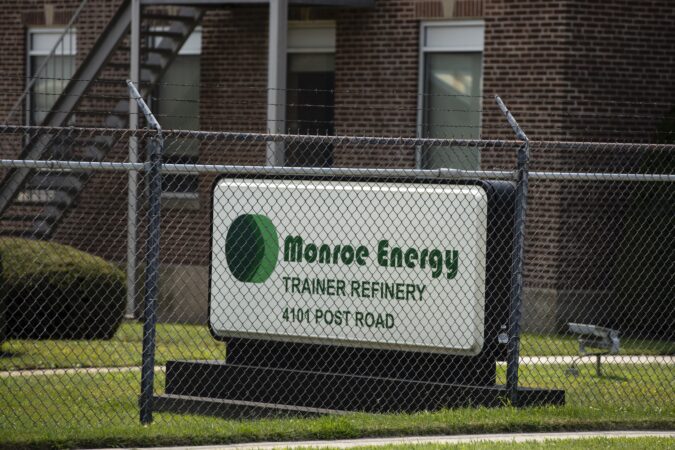
    Hundreds of thousands of gallons of gasoline leaked over a period of months at a Monroe Energy petroleum tank farm in Aston, Delaware County, according to company and state officials.

    The leak was first identified in August, and it was traced in December to a one-quarter-inch hole in the bottom of a tank. It totaled about 9,000 barrels, or 378,000 gallons, at the Chelsea Pipeline Station and Tank Farm.

    The facility contains 12 aboveground tanks and is operated by MIPC LLC, a subsidiary of Monroe Energy. It is about five miles north of the company’s Delaware River refinery, which is in Trainer, Delaware County.

    The Pennsylvania Department of Environmental Protection (DEP) said Tuesday it has ordered that some nearby homes with wells within 1,000 feet of the facility’s western border be provided bottled water if requested. And it ordered that the company “begin an interim cleanup plan and thorough investigation.”

    MIPC said in a statement that it had notified local, state, and federal authorities. It said that on Dec. 13 crews determined that the source of the spill was traced to one tank.

    It further said that an EPA-approved lab it had contracted tested residential wells, “and all results have shown no petroleum related compounds.”

    MIPC said that the tanks are routinely inspected and that the company is conducting daily testing of monitoring wells along its fence line and inspecting local waterways.

    “No further releases have been found,” the statement said.

    “We sincerely apologize for any concern that this may be causing our neighbors,” the statement continued. “MIPC is committed to ensuring that the entire affected area is remediated and returned to its original condition.”

    Adam Gattuso, a Monroe Energy spokesperson, said the leak is “considered one cumulative event, over the course of several months.”

    He said that if people are within 1,000 feet of the facility’s western border and have a potable groundwater well and would like bottled water delivered to their home, the company would do so within 24 hours. He said the company will soon mail letters to those residents.

    DEP Secretary Jessica Shirley said in a statement Tuesday that “swift action by the company is necessary to fully investigate the extent of damage and address the community’s needs.”

    According to the DEP order, the first report of an issue came over the summer at the facility, where a series of aboveground tanks are part of a pipeline network.

    The company notified county officials on Aug. 19 of hydrocarbons found in a storm sewer at the facility. It said no leaks were found, but there was “sheening” on the water.

    MIPC did not know the source of the gasoline on the water and said it would continue investigating.

    On Sept. 3, the company notified officials it “had discovered water with petroleum odors discharging from a concrete drainage pipe” leaking unleaded gasoline at a rate of five gallons per minute.

    The DEP ordered MIPC to treat and discharge the contaminated water.

    The agency said the company’s investigations from September through November found no signs of additional leaking.

    The DEP had not heard from MIPC regarding any leaks until Dec. 5, when the company reported to the U.S. Environmental Protection Agency’s National Response Center “that the amount of gasoline released may be significant and was impacting soil and groundwater.”

    It notified officials that the source of the leak had been found in the tank.

    As a result, the DEP has ordered MIPC, in addition to supplying bottled water, to identify residents with private wells within 1,000 feet of the facility that spans Bethel, Upper Chichester, and Aston Townships.

    And it ordered the company to sample private wells for petroleum, submit a plan to detect potential vapors near homes, schedule environmental investigations, submit a remedial plan, and communicate with officials and the public.

    As of yet, the DEP has not cited any violations or issued any fines.

    Editor’s Note: This story has been updated to include additional information about water bottle availability for residents.

  • Montgomery County school board votes to fire the principal who reportedly made antisemitic remarks

    Montgomery County school board votes to fire the principal who reportedly made antisemitic remarks

    The Wissahickon school board moved Tuesday night to fire an elementary school principal who was recorded making antisemitic remarks.

    The vote to fire Philip Leddy, who had been principal of Lower Gwynedd Elementary, was unanimous.

    Sue Kanopka, the former Lower Gwynedd principal who had been promoted to curriculum supervisor for the school system, will return as acting principal.

    Dan Strauss, a board member who is Jewish, said at the special board meeting he was pleased with the board’s swift actions around Leddy.

    “This incident was something that was extremely personal for me and my family, and I witnessed you acting swiftly and decisively, leaving no room for doubt that antisemitism has no place in our district,” said Strauss, a Democrat. “I’ve also personally had a chance to speak with the parent who received the voicemail, and they’ve shared with me that even though this has been a dark moment for their family, immediate and continued response from the district has been overwhelmingly supportive.”

    Officials with the Jewish Federation of Greater Philadelphia have said that in the recording, Leddy was heard saying something about “Jew money” and that “they [Jews] control the banks.”

    Leddy was asked if the parent he was speaking to was a lawyer and then remarked, “the odds probably are good.”

    District officials said Leddy, who could not be reached for comment, acknowledged that he made the call, thought it had disconnected, and continued speaking.

    No actions were taken Tuesday against the other staff member who was present when Leddy made his comments, but who allegedly did not report them. That staffer has been placed on leave as the matter is investigated.

    No members of the community spoke in support of Leddy.

    One resident, Jesse Klein, called his swift firing “a public shaming and execution,” contrasting what he saw as a difference in Wissahickon’s responses to Leddy’s comments and its response to some Jewish parents’ concerns over the district’s handing of student discourse about the Israel-Hamas war and the pro-Palestinian movement.

    Klein and Danielle Parmenter, a Wissahickon resident and a rabbi, said those concerns have been minimized.

    “That inconsistency is deeply destabilizing, and it erodes trust,” Parmenter said.

    Leddy’s firing “was necessary,” Parmenter said. “Antisemitism must never be tolerated, especially from those entrusted with the care of children.”

    Carmina Taylor, another Wissahickon resident, said the Black community is “in support of the way you’ve handled the situation, and how you’re trying to have a meeting of healing for the Jewish community, but understand that the Black community is also hurting for the way we’ve been treated over the years. … We hope that you’re mindful of our concerns as well.”

  • 19 states and D.C. sue the U.S. Department of Health and Human Services over a move that could curtail youth gender-affirming care

    19 states and D.C. sue the U.S. Department of Health and Human Services over a move that could curtail youth gender-affirming care

    NEW YORK — Pennsylvania and New Jersey, along with 17 other states and the District of Columbia, on Tuesday sued the U.S. Department of Health and Human Services, its secretary, Robert F. Kennedy Jr., and its inspector general over a declaration that could complicate access to gender-affirming care for young people.

    The declaration issued last Thursday called treatments like puberty blockers, hormone therapy and surgeries unsafe and ineffective for children and adolescents experiencing gender dysphoria, or the distress when someone’s gender expression doesn’t match their sex assigned at birth. It also warned doctors that they could be excluded from federal health programs like Medicare and Medicaid if they provide those types of care.

    The declaration came as HHS also announced proposed rules meant to further curtail gender-affirming care for young people, although the lawsuit doesn’t address those as they are not final.

    Tuesday’s lawsuit, filed in U.S. District Court in Eugene, Ore., alleges that the declaration is inaccurate and unlawful and asks the court to block its enforcement. It’s the latest in a series of clashes between an administration that’s cracking down on transgender healthcare for children, arguing it can be harmful to them, and advocates who say the care is medically necessary and shouldn’t be inhibited.

    “Secretary Kennedy cannot unilaterally change medical standards by posting a document online, and no one should lose access to medically necessary healthcare because their federal government tried to interfere in decisions that belong in doctors’ offices,” New York Attorney General Letitia James, who led the lawsuit, said in a statement Tuesday.

    The lawsuit alleges that HHS’s declaration seeks to coerce providers to stop providing gender-affirming care and circumvent legal requirements for policy changes. It says federal law requires the public to be given notice and an opportunity to comment before substantively changing health policy — neither of which, the suit says, was done before the declaration was issued.

    A spokesperson for HHS declined to comment.

    HHS’s declaration based its conclusions on a peer-reviewed report that the department conducted earlier this year that urged greater reliance on behavioral therapy rather than broad gender-affirming care for youths with gender dysphoria.

    The report questioned standards for the treatment of transgender youth issued by the World Professional Association for Transgender Health and raised concerns that adolescents may be too young to give consent to life-changing treatments that could result in future infertility.

    Major medical groups and those who treat transgender young people have sharply criticized the report as inaccurate, and most major U.S. medical organizations, including the American Medical Association, continue to oppose restrictions on transgender care and services for young people.

    The declaration was announced as part of a multifaceted effort to limit gender-affirming healthcare for children and teenagers — and built on other Trump administration efforts to target the rights of transgender people nationwide.

    HHS on Thursday also unveiled two proposed federal rules — one to cut off federal Medicaid and Medicare funding from hospitals that provide gender-affirming care to children, and another to prohibit federal Medicaid dollars from being used for such procedures.

    The proposals are not yet final or legally binding and must go through a lengthy rulemaking process and public comment before becoming permanent. But they will nonetheless likely further discourage healthcare providers from offering gender-affirming care to children.

    Several major medical providers already have pulled back on gender-affirming care for young patients since Trump returned to office — even in states where the care is legal and protected by state law.

    Medicaid programs in slightly less than half of states currently cover gender-affirming care. At least 27 states have adopted laws restricting or banning the care. The Supreme Court’s recent decision upholding Tennessee’s ban means most other state laws are likely to remain in place.

    Joining James in Tuesday’s lawsuit were Democratic attorneys general from California, Colorado, Connecticut, Delaware, Illinois, Maine, Maryland, Massachusetts, Michigan, Minnesota, New Jersey, New Mexico, Oregon, Rhode Island, Vermont, Wisconsin, Washington and the District of Columbia. Pennsylvania’s Gov. Josh Shapiro also joined.