Mark Worker said his two-bedroom, one-bathroom house in Queen Village has “so much character” and is “close to everything,” with “a true neighborhood feel.”
Probably built in the late 1800s as part of a cluster of homes to house workers for an adjacent factory, it was augmented in the early 2000s by an extension in the rear.
Worker, a software account manager, bought it in 2022 when he was single, but he soon married, and now he and his wife are moving to London for his work.
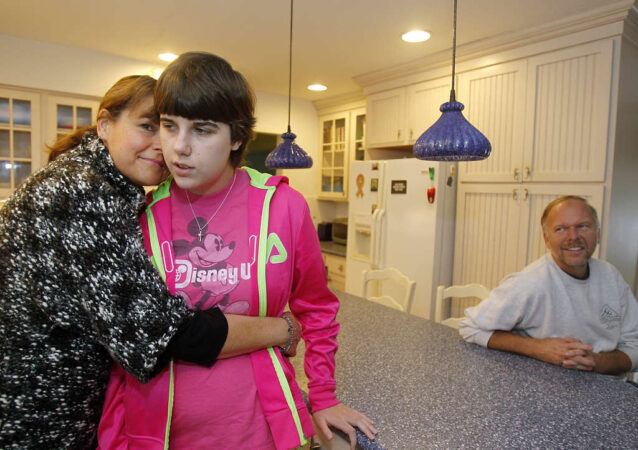
The dining area.
The house is 1,092 square feet and sits on a tree-lined street in the heart of Queen Village.
It has hardwood floors throughout, all new windows, updated plumbing, a new HVAC system, and a new roof.
The interior has been freshly painted and the bedroom windows let in abundant natural light.
The primary bedroom. The windows let in abundant natural light.
The primary bedroom is on the second floor. A second bedroom, on the third floor, was used as a nursery by previous occupants.
“The third floor is really the best part of the house,” Worker said. It has an open floor plan and is being used as a living room and office, although Worker previously used it as a bedroom.
The third floor is being used as the living room.
The deck, just off the third-floor room, was carefully landscaped, with a picnic table and a variety of plants.
The home has an unfinished basement for storage, and a dedicated outdoor space in the rear.
The roof deck, which is landscaped with a picnic table and a variety of plants.
Commuting is easy with ready access to public transportation, I-95, and other major highways.
Adjacent landmarks include South Street and Head House Square.
The house is listed by Jay Edwards of OCF Realty for $519,995.
All 17 of Philadelphia’s City Council members have indicated they will seek reelection in 2027. And if they follow through, that election would mark the first time all members simultaneously asked voters for new four-year terms since the city’s Home Rule Charter was adopted in 1951.
The 2027 primary is more than a year away, and plenty can happen before then. Past lawmakers have declined to seek reelection for a variety of unexpected reasons, such as receiving an appointment to another post or being indicted. And while incumbents usually prevail in Council elections, several current members are likely to see serious challengers.
Still, if the incumbents all run and prevail, Philadelphia could potentially see for the first time in its modern political history a cohort of Council members serving more than four years together.
In some ways, it makes sense that this crop of Council members might be the first to achieve that feat. Council is remarkably inexperienced at the moment, with 12 of its members having served less than two terms. And it appears no current Council members are expected to resign their seats to run for other offices until after 2027, given that none have entered the race for Philadelphia’s open U.S. House seat next year and that Mayor Cherelle L. Parker is in her first term and unlikely to face a reelection challenge from Council’s ranks.
“It’s no surprise this City Council all wants to return,” said John C. Hawkins, a City Hall lobbyist. “They are much younger and newer than previous iterations, and they’re feeling confident that they and their leadership are representing their constituents well.”
While many voters may not start paying attention to who is running for Council until much closer to the primary, potential candidates and political insiders are already hard at work trying to figure out which seats will be open or vulnerable and who might run in the 2027 election cycle.
In addition to being an opportunity for special interests to wine and dine the state’s political class, Pennsylvania Society also serves as a breeding ground for rumors about future elections. This year, there was little if any talk of vacancies emerging on Council.
O’Neill to seek 13th term
In the run-up to every recent city election cycle, speculation has swirled around whether Councilmember Brian J. O’Neill, the body’s lone Republican member and by far its longest-serving, will run for reelection.
O’Neill, who turns 76 later this month and was first elected in 1979, said he is up for the challenge of extending his own record by seeking a 13th four-year term.
“I am definitely running,” O’Neill said Monday. “If my health or my wife’s changed, that would be a big factor. Right now, she’s pretty healthy, and so am I.”
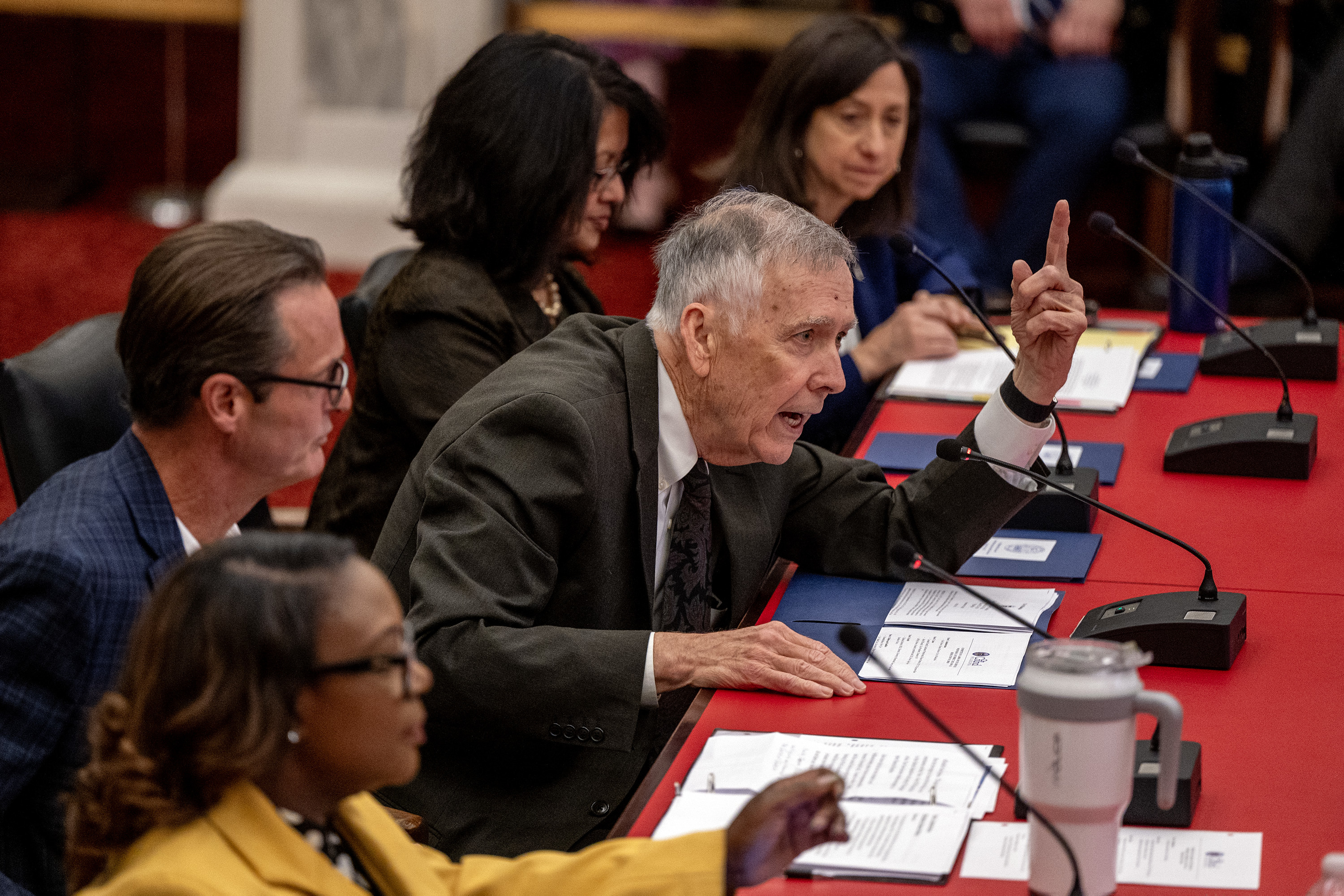
Councilmember Brian J. O’Neill (center) speaks during a hearing in City Council Monday, Oct. 27, 2025 on former Mayor Jim Kenney’s tax on sweetened beverages. Behind him, front to rear, are: Councilmembers Kendra Brooks, Jimmy Harrity, Nina Ahmad, and Rue Landau.
O’Neill said he decided long ago that if he could no longer knock on doors while campaigning, he would call it quits. After shoveling snow for more than two hours last weekend, O’Neill said, he is confident that won’t be a problem.
What is most remarkable about O’Neill’s longevity is that he is one of the few district Council members who regularly face opposition. That’s because his Northeast Philadelphia-based 10th District is the only one in deep-blue Philly that could be considered purple.
In fact, a majority of voters registered with parties in the district are now Democrats. But O’Neill has successfully swatted away a series of Democratic challengers, doing so most recently in 2023 against Gary Masino, who led the sheet metal workers’ union.
O’Neill, who avoids partisan political debates in Council and focuses almost entirely on Northeast Philly neighborhood issues, expects another challenge in 2027. But he is not concerned.
“I try not to think about it because I could never have predicted any of the races I’ve had,” O’Neill said. “It’s a waste of energy because no matter who runs against you, they all present different situations.”
The Council members who are viewed as potentially vulnerable include some of the newest and some who must navigate ideologically divided constituencies.
Councilmember Jimmy Harrity, one of seven Council members who represent the entire city, was the last-place finisher among Democrats in the 2023 primary, putting a target on his back for the 2027 primary.
In the last two election cycles, Councilmembers Kendra Brooks and Nicolas O’Rourke of the progressive Working Families Party won at-large seats set aside for minority-party or independent candidates. The GOP, which had held those seats for 70 years, may seek to mount a comeback.
City Council candidates Kendra Brooks and Nicolas O’Rourke celebrate after the Working Families Party declared victory at their election night gathering at Roar Nightclub in Philadelphia, Pa. on Tuesday, Nov. 7, 2023.
Councilmember Cindy Bass, a centrist who represents the 8th District, which includes parts of North and Northwest Philadelphia, narrowly eked out a win over progressive Democrat Seth Anderson-Oberman in the 2023 primary and may see another challenge from the left in 2027.
And Councilmember Jeffery “Jay” Young Jr., who represents the North Philadelphia-based 5th District, has already drawn a potential challenger.
Young won his seat without opposition after being the only candidate to qualify for the ballot in a bizarre scenario triggered by former Council President Darrell L. Clarke’s last-minute decision not to seek reelection in 2023.
Council members do not have to make their reelection campaigns official for more than a year, and they gave a variety of answers when asked if they planned to seek new terms.
“I can’t see a reason why I wouldn’t,” said Council President Kenyatta Johnson, who represents the 2nd District in South and Southwest Philadelphia.
“I’m strongly considering yes,” said Councilmember Curtis Jones Jr., whose 4th District includes parts of West and Northwest Philadelphia.
Councilmember Isaiah Thomas, who holds an at-large seat, said yes, and added, “What I like is the fact this legislative body as a collective is so young.”
Councilmembers Nina Ahmad, Harrity, O’Rourke, Jamie Gauthier, Rue Landau, Quetcy Lozada, and Mike Driscoll all simply affirmed they would likely run. And numerous City Hall insiders told The Inquirer they expect all members to seek new terms.
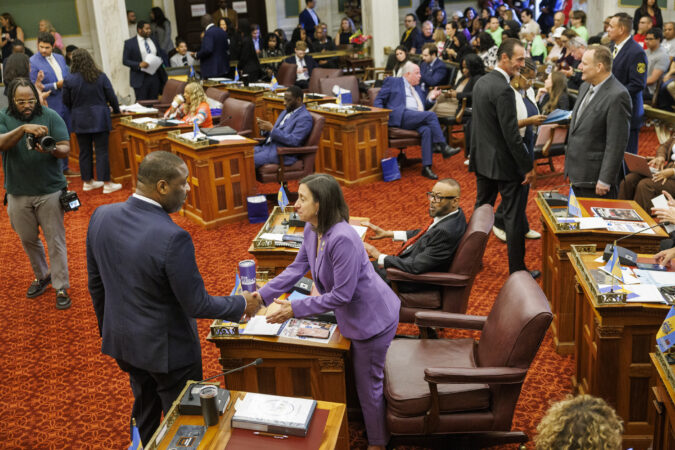
Councilmember Rue Landau speaks with Councilmember Curtis Jones Jr. on first day of City Council on Jan. 23, 2025, Caucus Room, Philadelphia City Hall.
Young gave perhaps the most puzzling answer.
“It’s not up to me to make that decision,” he said. “It’s up to the people of the 5th District.”
Asked how he would discern whether voters wanted to keep him before the next election, Young said he would gauge support by doing outreach in his district. But he also said he would personally like to serve another four years.
“I like doing my job,” he said.
2031 mayoral election race on horizon
Even if they all win reelection, it is unlikely that this group of Council members will stay together for future elections.
One major driver of Council turnover is the City Charter’s “resign to run” rule, which requires city employees to step down if they want to campaign for an office other than the one they hold. Consequently, mayoral elections are a major driver of resignations.
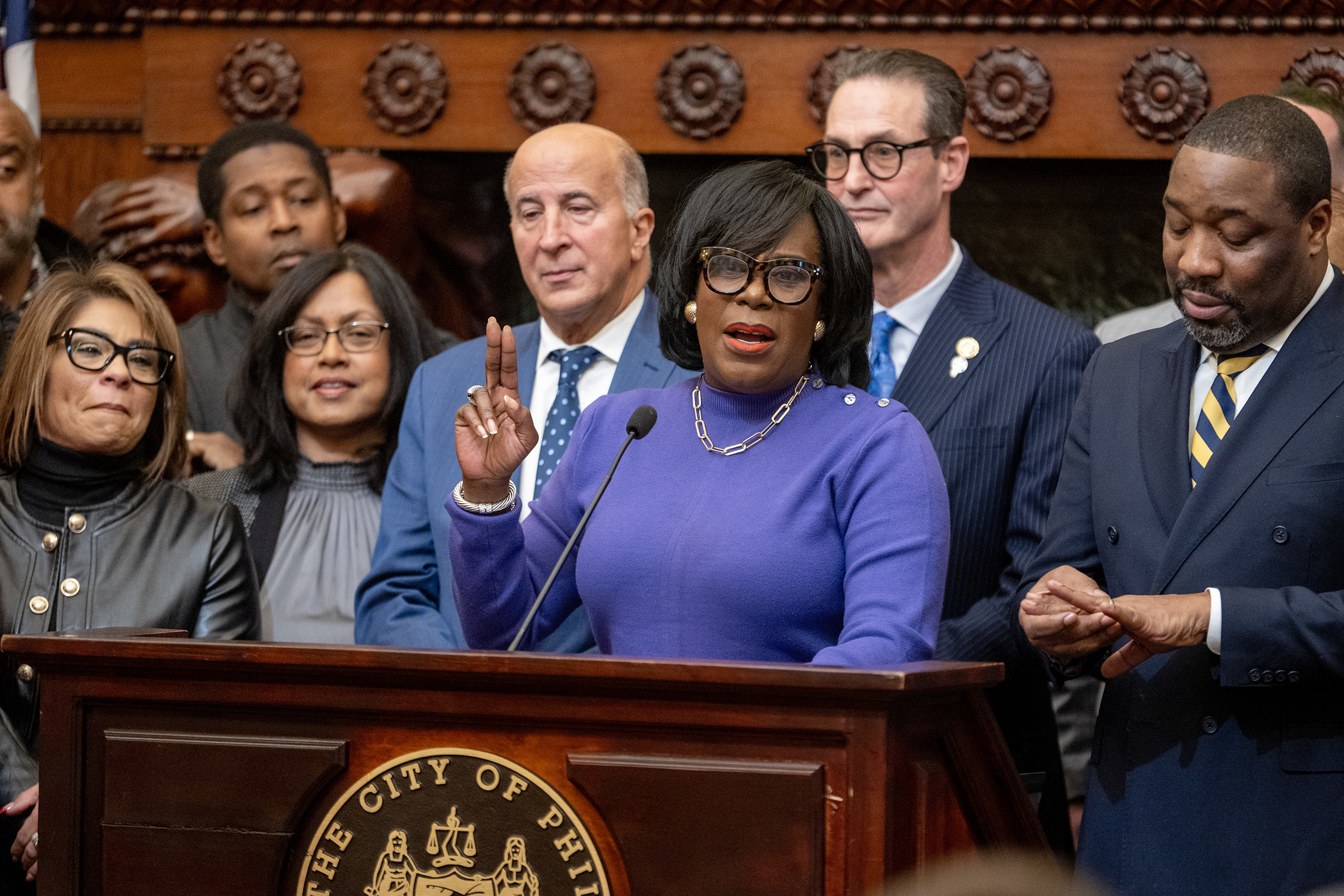
Mayor Cherelle L. Parker is with City Council President Kenyatta Johnson (far right) and supportive Council members in the Mayor’s Reception Room at City Hall Thursday, Dec. 19, 2024 after Council gave final approval to the Sixers arena.
Assuming Parker wins reelection in 2027, she will be unable to seek a third consecutive term in 2031, and several current members are likely to throw their hats in the ring to replace her.
Johnson, Thomas, Gauthier, and Majority Leader Katherine Gilmore Richardson are all seen as potential contenders for that race.
Mike Golic still remembers standing on the sideline when quarterback Randall Cunningham fell to the grass at Lambeau Field. It was Game 1 of the 1991 Eagles season. In the second quarter, Packers linebacker Bryce Paup lunged at Cunningham’s knees.
The trainers rushed to his side. Golic and his defensive teammates were stunned. This was supposed to be their year. Now, as Cunningham rolled on his back in agony, that seemed less likely.
With Cunningham out for the season, the Eagles cycled through a litany of quarterbacks in 1991. It gave the defense virtually no room for error — but instead of faltering, it rose to the occasion.
The Eagles could not rely on quarterback Randall Cunningham in 1991, after Cunningham suffered a season-ending injury in Week 1.
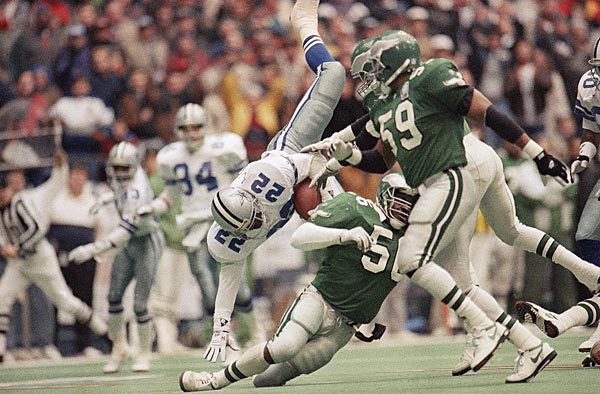
Over the next 16 games, the group put together one of the best defensive seasons in NFL history — if not the best — surrendering the fewest passing yards and rushing yards along with the lowest completion percentage in the NFL that season.
“I know that group all too well,” analyst Troy Aikman said on Monday Night Football on Dec. 8. “Because I played against them. Number one against the run. Number one against the pass. I could name the roster for you, on the defensive side of the ball.”
The 1991 Eagles recorded the most sacks in the league (55) and ranked third in interceptions (26). They allowed an average of 15.3 points per game.
“We knew that we were going to go as far as the defense could carry us,” linebacker Seth Joyner recalled in late November. “And that just turned the intensity up.”
The current Eagles defense is not in quite the same predicament. Their quarterback is healthy. Nevertheless, through 14 games, Jalen Hurts’ offense has not performed relative to its talent level.
And while the 2025 defense has not been as consistent as the 1991 group, it has shown flashes of the same caliber of dominance, particularly since the bye week.
If the Eagles have any hopes of returning to the Super Bowl, such a run would likely have to involve an elite defense.With that being said, here is what three members of Gang Green — Joyner, Golic, and Clyde Simmons — are seeing from Vic Fangio’s group.
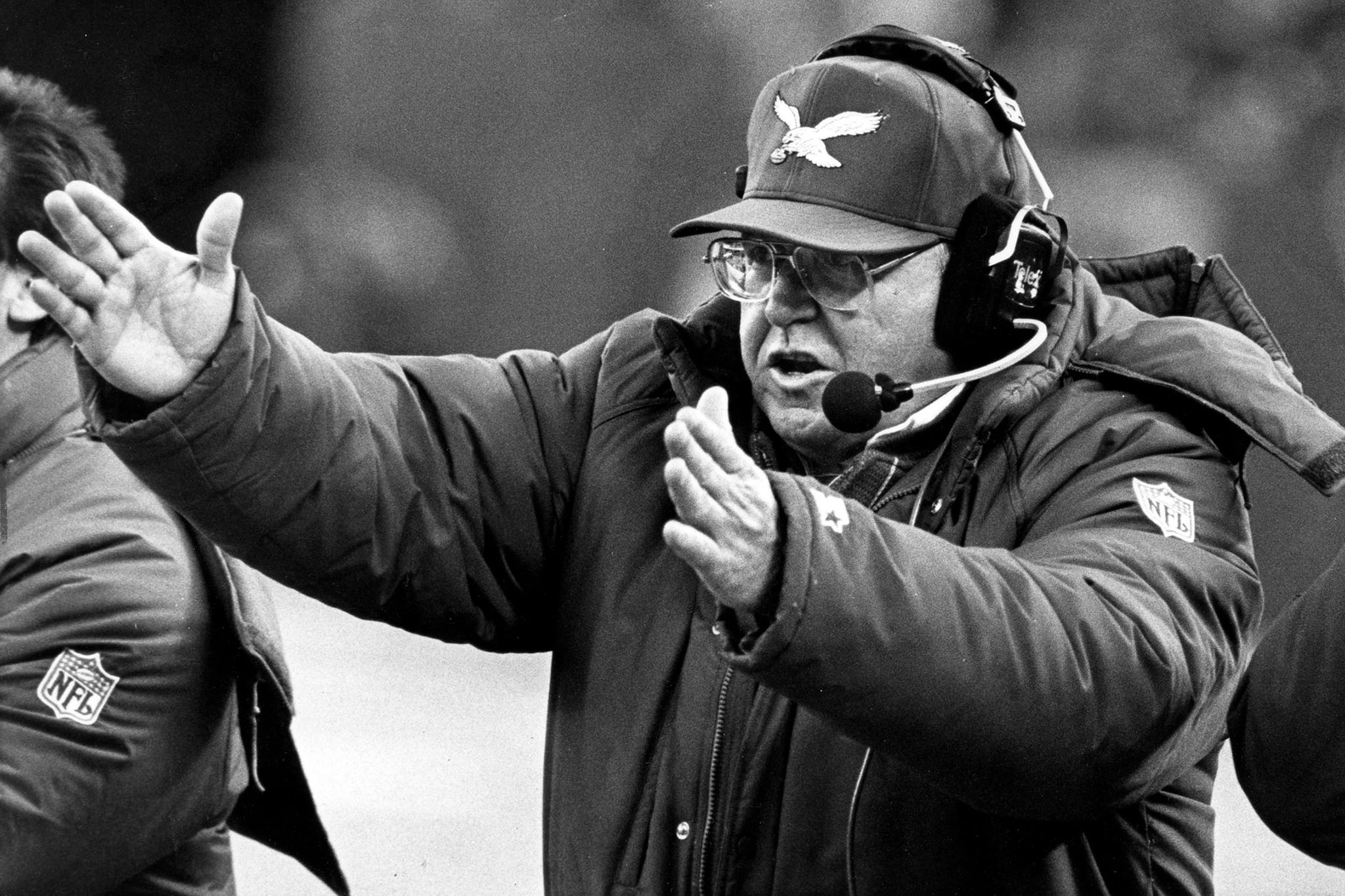
Buddy Ryan was gone by 1991, but his stamp was still all over the Eagles defense.
Aggressiveness
Buddy Ryan, the defensive guru who coached the Eagles from 1986-90, had a mantra: “Score on defense.”
This meant pitching the ball from player to player if you got an interception. Or, if you got a fumble, trying to scoop and score instead of falling on the ball. Or, if you didn’t score, giving the offense a shorter field.
Ryan’s philosophy wasn’t just about preventing a team from scoring; it was about putting that team’s offense on the defensive.
That carried over to the 1991 team, even after Ryan was fired following the 1990 season. The 1991 defense, coached by coordinator Bud Carson, brought this concept to a new level.
With Cunningham out, it was unlikely the Eagles would be scoring 20-30 points a game. So, the defensive players took it upon themselves to score — or, at a minimum, make things easier for the offense.
Golic, a former defensive tackle who now hosts a show on FanDuel Sports Network, said this message was largely player-driven. It was always reiterated, either on the sidelines or in defensive meetings.
“We played aggressively anyway, but we kind of even upped that,” Golic saidin November. “And it wasn’t disparaging to the offense. It was just, like, ‘Listen, we don’t have our starting quarterback anymore. We know we do a lot on this team, but we know we now have to do more.’ So it was more of an up-tempo, upbeat, ‘Let’s do more. Let’s help out more.’”
Added Simmons, a dominant defensive end: ”We’d always prided ourselves with being a really good defense, but we knew we had to be even better to win ballgames. It started really getting tightened down. Just try to be sure to give ourselves all the opportunities in the world to win ballgames, keep people off the scoreboard, and keep the yardage down.”
Golic and Joyner see a similar aggression in the Eagles’ current group — both in the play-calling and in the players. This has been especially true with the addition of Jaelan Phillips, the return of Brandon Graham, and Nakobe Dean playing above expectations after returning from a serious knee injury.
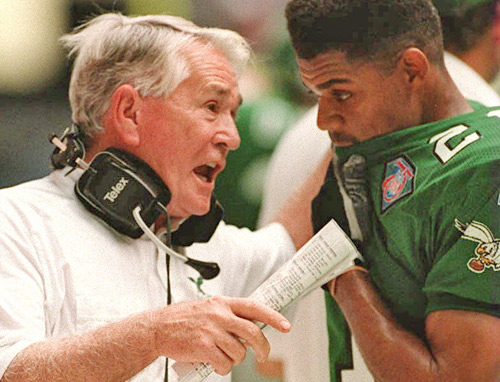
Bud Carson (with star cornerback Eric Allen) coordinated a unit that finished No. 1 against the run and the pass in 1991.
It has freed up the pass rush, allowing Fangio to be more unpredictable — a Ryan/Carson staple. Fangio isn’t blitzing as much as those teams, but he is mixing in different looks. One example is that he favors a simulated pressure in which at least one linebacker rushes and one lineman drops into coverage.
“Bud Carson as the D coordinator, he was a very aggressive coordinator, and certainly Vic’s a very aggressive coordinator,” Golic said. “And players love playing aggressively. You’d rather be attacking than reacting. So that’s probably the biggest comparison.
“I mean, obviously I’m biased toward my 1991 team. The stats were ridiculous. But I would say overall, yeah, the aggressiveness of the two units would be comparable.”
He added: “A lot of it is just trusting the person next to you, behind you, in the secondary, and them trusting us up front that we’re going to get there. Players know when they’re going to be on an island and understand that and accept the responsibilities of it. And coaches like Fangio and Bud Carson certainly weren’t afraid to be aggressive and put people on islands.”
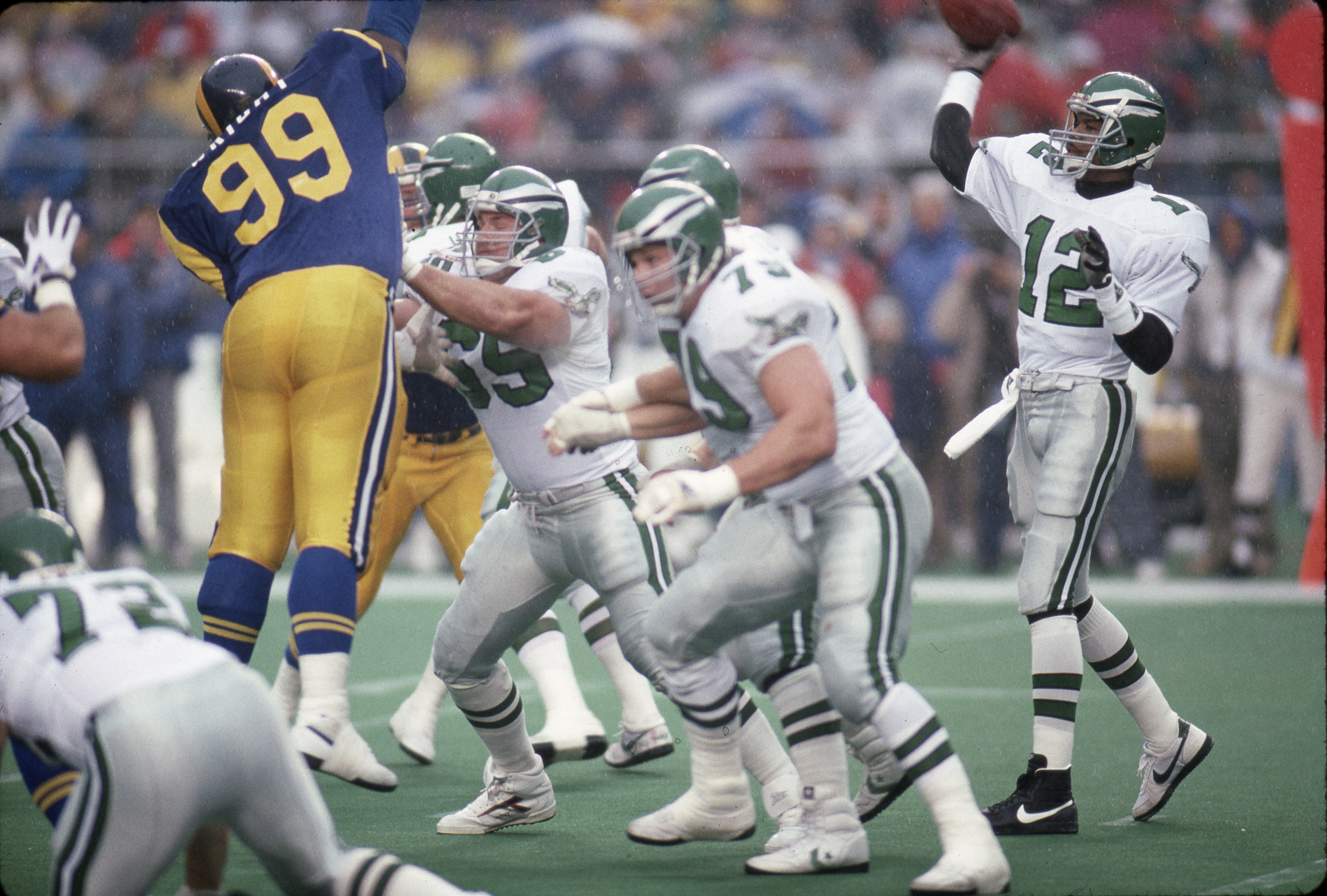
Those who witnessed both play see similarities between current Eagle Jalen Carter and the legendary Jerome Brown (99).
Players who would fit on Gang Green
There was only one player whose name came up repeatedly as example of someone who evoked the 1991 team — and it shouldn’t come as a surprise.
The family of Jerome Brown said in March that they see some of the late Eagles defensive tackle in current Eagles DT Jalen Carter,who has been sidelined the past two weeks with shoulder injuries. To the 1991 Eagles, the comparisons are obvious.
Simmons, the defensive line coach at Bowling Green, doesn’t have much time to keep tabs on the Eagles. But even in the limited games he has watched, Carter has stood out.
“I know they’ve got a couple good players in there, like a Jalen Carter, who is such a big man, and so explosive, and a game-controlling guy,” Simmons said last month. “He’s special. You don’t see a lot of people that big, who are that explosive.”
“He plays on the other side of the line [of scrimmage],” Golic added. “I mean, he just plays with leverage, with strength. You know, and the ends were bigger at that point. Reggie [White] was 315 pounds, Clyde was 290 pounds, Jerome was 300, I was in the 280s, 290, so was Mike Pitts.
“Jalen [Carter] is a 300-pounder who is quick off the ball and plays on the other side of the line. That’s what we always did. We always played on the other side of the line. And he would have, jeez … I mean, put him on that line, with Jerome [Brown] in the middle, would have been ridiculous.
“If there’s one player on that defense that would have fit in our defense, it definitely would have been Jalen [Carter].”
Clyde Simmons (96) draws comparisons to current Eagle Jaelan Phillips.
Joyner, a former linebacker who hosts pregame and postgame Eagles shows on YouTube, made a different comparison. In Phillips, he saw a bit of Simmons — a multifaceted player who could run different formations and be put in different spots.
“I probably would have to compare him to Clyde,” Joyner said of Phillips. “I definitely wouldn’t compare him to Reggie [White, a Hall of Famer] because there’s just no comparison to that guy. But I think when you when you think about Clyde, especially under Buddy … because under Buddy, we ran a little bit of everything. We ran 30 front and 40 front, unders, overs, swim package, with all three linebackers off the ball in an even front. We ran a little bit of everything.
“And in the 30 front, Clyde was pretty much the weakside outside linebacker. Like, we could line up in a four-man front, quarterback getting his cadence. We could shift to a 30 front, Clyde would kick his hand off the ground, and stand up as an outside linebacker. And sometimes even drop into coverage, believe it or not.
“Those are some of the intangibles that Jaelan Phillips brings to the table. Because like I said, I was shocked to see Vic actually drop him off in coverage out of that five-man front [against the Lions]. And in some of the zone blitzes where you brought a linebacker from the other side and you dropped him off into the flat. He brings a versatility.”
“It’s definitely possible” for the Eagles to win back-to-back, titles, ex-Eagles defensive tackle Mike Golic says.
A Super Bowl-caliber defense
All three former players looked at the 1991 season as a lost opportunity. They believe that if Cunningham had stayed healthy, they could have won a Super Bowl.
Instead, the 1991 Eagles went 10-6 and didn’t make the playoffs. But these Eagles are in a different spot, which leads Simmons, Joyner, and Golic to believe the outcome could be better for them.
Joyner sees the same confidence in the 2025 group that the 1991 group had. Golic sees it, too.
Now, it’s a matter of play-calling and playing with the same confidence on the offensive side of the ball.
“It’s definitely possible [for them to go back-to-back],” Golic said. “Listen, the offense, it’s tough to duplicate. The [offensive] line has not been what it was last year. They still run more than they pass. They still try and live off the run. But you can never negate a great defense. What a great defense will do will always keep you in the game, always.
“So you look at some of the top defenses, like Denver, like Houston, Philly, certainly is one of them, you’re always going to be in the game. And then you just need the offense to produce some. And certainly the Eagles offense has the ability to [do that].
“Statistically, they’re not what they were last year, but they have the ability to show it. But when you have a really good defense, you’re going to be in every game.”
Top federal officials talk about finding a cause for autism, generating more buzz by the day. More substantively, the owner of the Philadelphia Eagles gave an extraordinary sum — $50 million — to a local hospital to discover its cause and develop new treatments.
Each year, more than 120,000 young people with autism turn 18 and “age out” of pediatric medicine. They enter an adult system that is unprepared to help them. They enter a world with no standardized guidelines for care, no specialized training for physicians, and far less support. Families must navigate a cliff, not a bridge. More than five million adults now push past herculean obstacles for what is often worse care.
I view this crisis as a pediatric emergency medicine doctor and as the mother of a transition-age autistic son.
Fear for the future
We parents are terrified by what will happen to our adult children when we are no longer around to care for them. Parents weep — and sometimes wail — when I refer them to an alternate site for adult care. Our system can no longer remove an appendix or mount a crisis intervention once these children cross over.
As a doctor, I know how this change can cause unnecessary admissions and a loss of social work and case management. Caregivers must suddenly educate the provider on the patient’s basic needs. As a parent, I watch my son Alexander and others hop from one tiny island of support to another.
When Alexander broke his arm at age 6, surgeons were called in to pin his shattered bone and clean the wound where the disrupted muscle had burst through the skin. Alexander was ridiculously compliant and poised; I was less so.
His surgeons accidentally cut one of the three main motor nerves in the arm when they tried to stabilize his floppy elbow. It took many visits over eight weeks to get proper attention. By then, his arm was floppy from a medical error.
In our home, we work hard to protect him: Trampolines are forbidden, helmets always on, seat belts firmly buckled. Yet, I failed to anticipate how Alexander’s autism could hurt him. This label — his scarlet letter “A” — kept his surgeons at a dangerous distance.
I continue to teach Alexander to be responsible for his care so he will thrive when I cannot be beside him. In 2023, the National Institutes of Health formally designated people with disabilities as disadvantaged. I am relieved to see a growing acknowledgment of autistic people as a vulnerable group, at risk for health disparities, deserving of tailored care.
Justin Pierce (center), who has autism and is an account support associate, meets with his team at Ernst & Young offices in Chicago.
I have also gained confidence in my voice as an advocate for Alexander. I’ve become a “gang member.”
Senior staffers for Gov. Josh Shapiro respectfully dubbed my fellow autism advocates as “the mom gang.” It is reassuring only in this context that I present as intimidating. Our band of six wants to make sure that half-baked federal plans to create a national autism registry never happen in Pennsylvania without privacy safeguards.
Meanwhile, the autism community holds diverse opinions on what to do. Should profound autism be classified separately from other presentations? Is “cure” the right goal? Is Tylenol a risk factor?
While these conversations pull us in different directions, we must not lose sight of a common purpose to create a better system.
Autistic adults deserve accessible and affirming change. There are models, tools, and innovations in which to invest:
Training emergency, inpatient, and outpatient teams to recognize how autism presents in adults
Designing calming public environments that ease communication
Creating dedicated consult services — including behaviorists, communication specialists, and caregivers — available in person and via telehealth
Prioritizing prevention and de-escalation over restraint
Highlighting the voices of autistic individuals in policy decisions that affect them
And, critically, funding and scaling programs that treat autism across the lifespan
Lack of resources
Resources are scarce. Historic gifts fill some gaps from interrupted government funds pulled from disability and diversity programming. Casualties include the Department of Education’s “Charting My Path for Future Success” transition program, a research-based effort to help high school students with disabilities enter the workforce or higher education.
We may all agree there is an immediate need to build better supports for adults with autism.
I worry for my son. I need to know I have pushed every edge of possibility to smooth his way forward. I do this for my daughters, too, who learned from their earliest days their brother needs the same supports they are accustomed to, but he is often denied.
One day, they will take my place slaying this dragon.
Eron Friedlaender is a public health investigator, an emergency medicine physician at Children’s Hospital of Philadelphia, and a board member of the Institute for Human Centered Design.
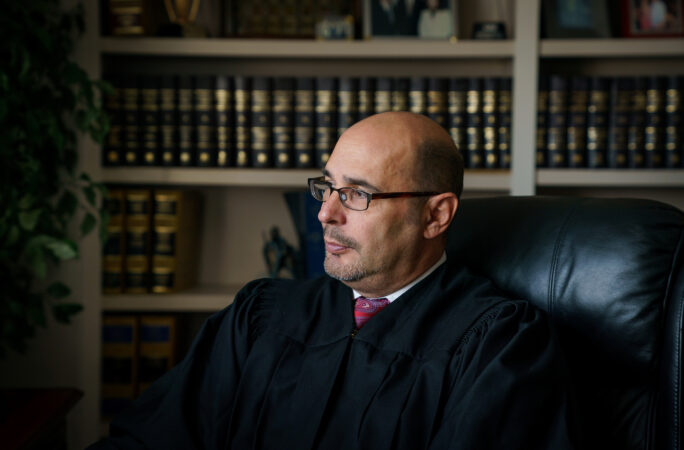
When Common Pleas Court Judge Scott DiClaudio sat before the Court of Judicial Discipline in October and answered questions under oath about whether he sought to influence a colleague’s decision in a case, he denied having summoned the fellow judge to his Philadelphia courtroom.
DiClaudio said he did not ask Judge Zachary Shaffer to come see him that day in June. Shaffer, he said, showed up unannounced.
“I was unaware that day he was going to walk in,” DiClaudio said. “He was unannounced and unexpected.”
But a recording captured by digital audio systems inside DiClaudio’s and Shaffer’s courtrooms and obtained by The Inquirer calls that account into question.
According to the recording, DiClaudio asked his assistant, Gary Silver, to contact Shaffer on the morning of June 12.
“Is Judge Shaffer on the bench right now?” DiClaudio asked his court staff around 11 a.m., according to the recording. “Can you call down there and see if he’s still on the bench, please?”
A few minutes later, according to a recording from the digital system inside Shaffer’s courtroom, Silver visited Shaffer.
“1001 wants to see you,” Silver told the judge, referring to the number of DiClaudio’s courtroom, according to the audio.
The recordings raise questions about DiClaudio’s sworn testimony before the disciplinary panelas he faces charges from the Judicial Conduct Board that he sought to influence Shaffer’s handling of a gun case involving a defendant with ties to Philadelphia rapper Meek Mill.
Elizabeth Hoffheins, deputy counsel for the Judicial Conduct Board, said during thehearing that DiClaudio’s conduct was so egregious that it brought the judiciary into disrepute.
DiClaudio has denied that he sought to influence Shaffer’s decision-making and said his colleague misunderstood his words and intentions on that day. He has been suspended without pay as the disciplinary case proceeds.
DiClaudio’s attorney, Michael van der Veen, declined to comment on the recordings and said the judge had done nothing wrong.
“It would not be appropriate to comment about alleged secondhand partial evidence in an ongoing matter,” van der Veen said in a statement Monday. “It remains very concerning that there are continual leaks of information somewhere in this process. As from the beginning, my client professes his innocence.”
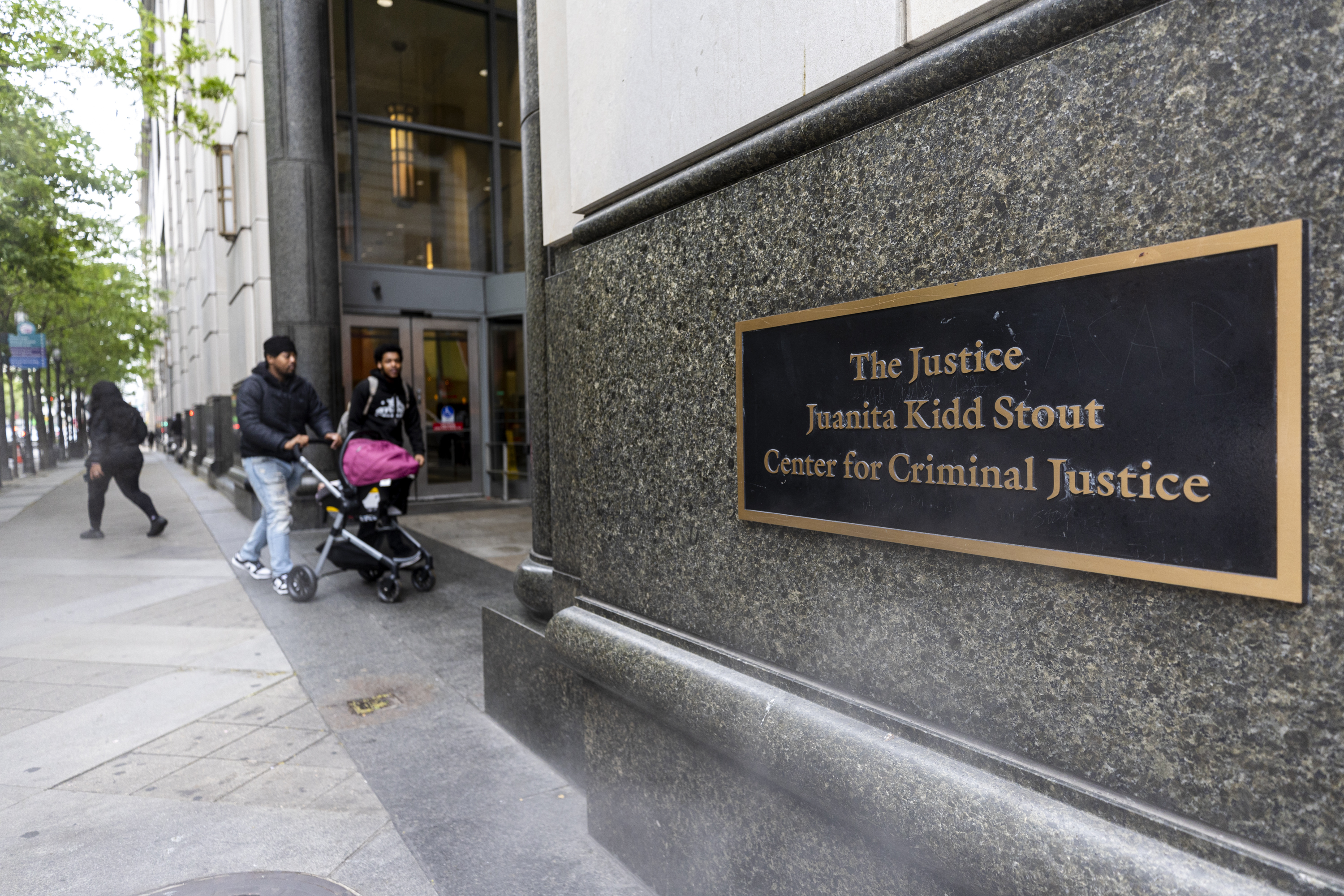
Common Pleas Court Judge Zachary Shaffer testified that Judge Scott DiClaudio’s assistant came to his courtroom on the ninth floor of the city’s criminal courthouse and said DiClaudio wanted to see him on the morning of June 12.
The conversations were captured on a digital audio recording system embedded in dozens of courtrooms across Philadelphia to aid in the transcription of testimony and proceedings. The systems, which have been in city courtrooms since 2003, can be turned on and off between hearings at the discretion of court reporters, who transcribe hearings.
On the morning of June 12, inside courtrooms 1001 and 905, the systems captured the brief side conversations of the judges and their staff.
At the hearing in the Court of Judicial Discipline, Shaffer testified that he was seated in his ninth-floor courtroom when Silver, DiClaudio’s assistant and a former defense attorney, came in and said DiClaudio wanted to see him.
Shaffer said that during that week in June, he and his court clerk, Nicole Vernacchio, had been in touch with DiClaudio about buying T-shirts from DiClaudio’s wife’s cheesesteak shop.
About 45 minutes after Silver came by, he said, they went up to DiClaudio’s 10th-floor room, assuming the shirts were ready to be picked up.
They met in DiClaudio’s robing room and talked for about 10 minutes before DiClaudio asked Vernacchio to leave the room, he said. Vernacchio also testified that the judge asked her to step out.
After she left, Shaffer said, DiClaudio pulled out a piece of lined paper with “Dwayne Jones, courtroom 905, and Monday’s date” written on it.
DiClaudio held it out at his side, he said, then looked at him and said, “OK?”
Shaffer said he was confused, and hesitantly said, “OK.”
Then, he said, DiClaudio ripped up the paper and threw it away.
The judges then spoke casually about unrelated topics for a few minutes, he said. As he started to leave, Shaffer said, DiClaudio told him, “‘You probably would have done the right thing anyway.’”
Shaffer said he was shocked. He believed DiClaudio was suggesting that he should give a favorable sentence to Jones, who was scheduled to appear in front of him in a few days on illegal gun possession charges connected to a fatal shooting.
The next morning, Shaffer said, he reported the conversation to his supervisors, and they referred the matter to the Judicial Conduct Board. He recused himself from Jones’ case.
In September, the Judicial Conduct Board charged DiClaudio with multiple ethical violations, saying his actions on that day represented “conduct that was so extreme that it brought the judicial office itself into disrepute.”
At the October hearing, held to determine whether DiClaudio should be suspended without pay amid the ongoing inquiry, DiClaudio took the stand and vehemently denied Shaffer’s version of events.
He said he had met Jones at The Roots Picnic on June 1. During a brief conversation, he said, Jones mentioned that he had a gun case in front of Shaffer, and gave DiClaudio his business card.
“I eventually say, ‘Judge Shaffer is a good judge. He does the right thing,’” DiClaudio said he responded. “He gives me his card. I put it in my cell phone case. Then he leaves, never to be seen again.”
He’d forgotten about the conversation, he said, until he saw Shaffer on June 12 and remembered he still had Jones’ business card. He took out the card and relayed the conversation he’d had with Jones before tossing it into the trash, he said.
“I was relating the story to Judge Shaffer to give him a compliment,” DiClaudio said. “I wasn’t trying to influence a case.”
He also denied asking Vernacchio, the clerk, to leave the room.
Van der Veen asked DiClaudio whether he asked Shaffer to come to his courtroom.
“Never,” he said.
Van der Veen told the disciplinary panel that he and DiClaudio had never before heard Shaffer’s contention that his fellow judge had summoned him for a conversation and said it was “shocking.” And he noted that there was no mention of such a request in the summary of Shaffer’s interview with the investigator from the disciplinary board.
(Shaffer, for his part, insisted that he told the investigator DiClaudio had asked him to come to his courtroom. He said he did not review the summary of his conversation with the investigator before it was shared with the board and DiClaudio and his lawyer, and said the report was incomplete and in some ways inaccurate.)
Van der Veen seized on the omission. He suggested that the assertion that DiClaudio had called Shaffer to his courtroom was a “new fact” belatedly raised to support his contention that DiClaudio had sought to influence him.
“Otherwise‚” the lawyer said, “it is completely nonsensical. If you’re going to come to the theory of the prosecutors, that this was … clandestine, premeditated, and designed by Judge DiClaudio, that’s completely false if Judge DiClaudio didn’t call for the meeting.”
Hoffheins, the attorney for the Judicial Conduct Board, told the disciplinary panel DiClaudio orchestrated the meeting with Shaffer to seek a favorable sentence for Jones. The judge did so, she said, because Jones is a friend of Meek Mill. DiClaudio is also a friend of Mill’s, and has worked with him on criminal justice reform issues related to the rapper’s nonprofit.
“The nature of misconduct here is not a technical misstep. It is an abuse of judicial privilege,” she said of DiClaudio’s actions. “It was made behind closed doors, and it was an attempt to tilt the scales of justice for a personal acquaintance.”
The judicial officers on the disciplinary court agreed that the allegations were consequential. In November, they suspended DiClaudio without pay.
The case now awaits a trial before the disciplinary tribunal. If the panel finds that DiClaudio violated judicial ethics or constitutional rules, he could be censored, fined, or removed from office.
DiClaudio was elected to Philadelphia’s Court of Common Pleas in November 2015, and took the bench in January 2016. In recent years, he has mostly heard cases filed by people seeking to have their murder convictions overturned.
He has presided over many high-profile exonerations and wrongful-conviction cases and approved the release or resentencing of dozens of people who had been serving life in prison.
Over the last decade, he has faced multiple inquiries from the Judicial Conduct Board.
In 2020, the Court of Judicial Discipline determined that he violated the code of conduct for judges when he failed to report debts on annual financial disclosure forms and repeatedly defied a judge’sorders to pay thousands of dollars in overdue bills to a Bala Cynwyd fitness club. He was suspended for two weeks, and placed on probation through 2026.
Then, in April of this year, the board filed charges against DiClaudio for allegedly using his position as a judge to promote his wife’s cheesesteak shop. In so doing, the board said, he had eroded public trust in the judiciary and abused the prestige of the office for personal gain. DiClaudio has denied the allegations, and the case is pending before the disciplinary court.
DiClaudio was reelected to another 10-year term last month, though he has publicly discussed retiring after the New Year.
Two horrific mass shootings over the weekend offered a contrasting study in political leadership.
In Australia, after a father and son allegedly killed at least 15 people and injured more than two dozen others who gathered on a Sydney beach to celebrate the start of Hanukkah, Prime Minister Anthony Albanese called an emergency meeting and announced immediate reforms to the country’s already strict gun laws.
In the United States, after a shooter killed two students and injured nine others at Brown University, President Donald Trump essentially shrugged and said, “Things can happen.”
Trump then showed his distinctive lack of empathy by offering the victims and their families his “deepest regards and respects from the United States of America.” For good measure, he lamely added “and we mean it.”
It did not seem as if Trump could get hollower than that. But hours later he showed his bottomless capacity to go lower.
After Hollywood director Rob Reiner and his wife were found stabbed to death in their home, Trump turned the tragedy into a narcissistic social media post that suggested the deaths were all about him.
The Reiners’ son Nick, who battled addiction, was arrested, but any motive for the killings remains unknown.
Yet, Trump claimed without evidence that Reiner, 78, a successful actor and director who was active in Democratic politics and critical of Trump, died because of “the anger he caused others through his massive, unyielding, and incurable affliction with a mind crippling disease known as TRUMP DERANGEMENT SYNDROME, sometimes referred to as TDS.”
Rob Reiner and Michele Singer Reiner arrive on the red carpet at the State Department for the Kennedy Center Honors gala dinner in Washington in December 2023.
Amid a weekend of unspeakable violence, Trump managed to make things worse. So, don’t expect any leadership, let alone efforts to unite or console the country, during times of crisis or tragedy.
If Trump cared about the safety and welfare of others beyond himself, he could offer sympathy rather than solipsism. He would condemn the carnage and vow to crack down on the gun epidemic that continues to kill, maim, and traumatize the United States.
Instead, taxpayers will get zero effort by Trump or any Republican state or federal lawmaker to do a damn thing about the mass shooting or nearly 50,000 annual suicides that have become all too routine. Sorry, “things can happen.”
This year there have been nearly 14,000 gun deaths and more than 25,000 injuries in the United States, according to the Gun Violence Archive, which also counts 392 mass shootings. (Important reminder: Despite Trump’s innuendo about crimes committed by immigrants and Black Americans, the majority of mass shootings are carried out by white males.)
There have also been at least 75 school shootings. The school shootings have become so routine at least two Brown University students had survived previous attacks and trauma when they were in high school.
It does not have to be this way.
A woman kneels in prayer at a memorial to shooting victims outside the Bondi Pavilion at Sydney’s Bondi Beach on Monday, a day after a shooting.
But the powerful gun lobby spends millions to essentially buy off Republican elected officials and prevent the passage of gun measures. So the bloodletting in America continues.
While the mass shooting in Australia was heartbreaking, it was also rare.
In 1996, after a gunman killed 35 people, then-Prime Minister John Howard, a conservative, responded 12 days later with a sweeping overhaul of the country’s gun laws that included banning high-powered automatic weapons.
After gun reform and a massive gun buyback program believed to have taken about a million firearms out of circulation, the country did not have another mass shooting until 2018, when a man killed six members of his own family.
One day after the latest mass shooting, Australia’s elected leaders agreed to bolster gun laws already considered the gold standard by implementing a national registry and limiting the number of guns a person can own.
While Trump rambles on social media, real political leaders in Australia have already acted.
Nothing will change in the U.S. until voters fed up with mass shootings hold elected officials accountable.
Victor Acurio Suarez is 52 but childlike, born with developmental disabilities that have left him unable to live on his own.
He likes to talk to people, said his brother, who takes care of him. And on Sept. 22, in a Lowe’s parking lot near the brothers’ home in Seaford, Del., he tried to flag down an ICE agent, apparently thinking the officer could help him find work.
Instead, Acurio Suarez, originally from Ecuador, was arrested for being in the country without permission and sent to the Moshannon Valley Processing Center, an ICE detention facility in central Pennsylvania.
Acurio Suarez doesn’t realize he’s in custody, his brother, Lenin Acurio Suarez, said in an interview. He thinks he’s on vacation, provided with three free meals a day and allowed to buy snacks and kick a soccer ball.
But in phone calls from Moshannon, he says that after three months, he’s grown tired of vacation and wants to come home.
In fact, Acurio Suarez faces deportation to Ecuador ― with a key Immigration Court hearing that had been scheduled for Thursday now postponed. When that hearing takes place, he could be granted asylum and allowed to stay in the U.S., safe from the gang violence he fled, or ordered returned to his homeland.
His case, said his attorney, Kaley Miller-Schaeffer, is a prime example of how Trump-administration policy shifts have encouraged ICE to detain even the most vulnerable and to treat potential discretionary relief as irrelevant in a bid to boost deportations.
Her Sept. 30 request to have Acurio Suarez released to the care of his brother while his immigration case goes forward was denied.
Asked about Acurio Suarez’s arrest and detention, ICE said in a statement that they screen and look out for the health of all detainees.
“U.S. Immigration and Customs Enforcement is firmly committed to the health, safety, and welfare of all detainees in custody. ICE’s National Detention Standards and other ICE policies require all contracted facilities to provide comprehensive medical and mental health screenings from the moment an alien arrives at a facility and throughout their entire time in custody.”
At an earlier court hearing, Miller-Schaeffer said, she watched as Acurio Suarez struggled to answer basic questions. He told the judge he didn’t know if he had an attorney or know what an attorney does.
His ability to testify was so limited, she said, that the judge allowed his brother to take the stand to explain his sibling’s experience and situation.
Acurio Suarez can recall big events in his life, she said. He remembers being beaten by gangs who seized on his vulnerability, but he couldn’t tell you exactly when that occurred.
Today, as President Donald Trump pursues an unprecedented mass-deportation campaign, more migrants including Acurio Suarez have been made subject to mandatory detention. That means they’re held in custody during their deportation proceedings, unable to seek release on bond.
Victor Acurio Suarez’s empty room at his home in Seaford, Del.
That includes immigrants whose only offense was crossing the border without approval, who in the past might have been issued a notice to appear in court and allowed to live in the community while their cases go forward.
The administration says it is arresting the “worst of the worst,” dangerous immigrants who have committed serious and sometimes violent offenses. But data show 74% of those in detention have no criminal convictions.
That includes Acurio Suarez, who worked at odd jobs in Ecuador before coming to this country in 2021.
According to an ICE report, at 9:14 a.m. on Sept. 22, an ICE team was conducting operations in Seaford, a southern Delaware city of 9,000 where 13% of the population is foreign-born.
The ICE officer wrote that he was looking for a place to park in the Lowe’s lot when a man in paint-stained clothing, Acurio Suarez, approached him. Acurio Suarez waved his hand, signaling the officer to come to him, according to the ICE account.
The officer kept going, then stopped his car and watched Acurio Suarez from another lot. Acurio Suarez tried to hail other cars, and could be seen talking to people who were loading lumber onto a trailer in the parking lot, he said.
It looked like Acurio Suarez was trying to find daily work, which is why he tried to get the ICE officer to stop his vehicle, the report said.
It’s common for undocumented immigrants seeking a day’s pay to wait in the parking lots of big home-improvement stores like Lowe’s and Home Depot, hoping to connect with building contractors who need laborers.
Lenin Acurio Suarez said his brother cannot hold a full-time job, able only to handle small tasks, provided someone is beside him giving directions.
A second ICE officer arrived, and both parked their cars near where Acurio Suarez had left his lunch box unattended. Acurio Suarez walked back toward the officers, and one of the agents approached and questioned him.
Acurio Suarez said he had no identification or immigration documents and was placed in handcuffs. He told the officer he was in good health, the report says.
Lenin Acurio Suarez holds a photograph of his brother, Victor, at his home in Seaford, Del., on Wednesday. Victor was arrested by ICE on Sept. 22.
Records show that four years ago, on Aug. 2, 2021, he and his brother were stopped by the U.S. Border Patrol as they tried to enter the country near Eagle Pass, Texas, southwest of San Antonio.
The brothers were processed separately by immigration authorities. Lenin Acurio Suarez was issued a notice to appear in court and released. His immigration case was later dismissed.
Victor Acurio Suarez was ordered deported and subsequently returned to Ecuador on Sept. 24. But three days later, for reasons that are unclear, the deportation order was found to have been issued incorrectly, and Acurio Suarez was brought back by authorities to the U.S.
In October 2021, he was granted temporary permission to stay in the country. He had filed his asylum case by the time that permission expired a year later.
The group projects that intentional homicides in Ecuador could reach 9,100 in 2025, a 40% increase over the previous year.
That’s a rate of nearly 50 per 100,000 inhabitants, which would continue to give Ecuador the highest homicide rate in Latin America, the organization said. In the U.S. the figure is about five per 100,000 people.
While ICE agents were arresting Acurio Suarez, Lenin was frantically searching the neighborhood, initially not having realized that his brother had left their home. Lenin called local police for help, and officers checked the Lowe’s security cameras. The video showed Victor being taken into custody.
In an interview, Lenin, 49, explained that he has always taken care of his younger brother, since their mother left when they were teenagers in Ecuador.
In this country, Lenin has a job in housing construction that enables him to provide for himself and his brother and to live with others in a rented house. He worries what will happen to Victor if he’s sent back to Ecuador, where there’s no one to care for him.
“Thanks to God I’ve been able to pay rent and food for me and my brother,” Lenin said. “I am grateful for this country, to be in this country. But I want my brother to have a fair life, with me, out of detention. He won’t be able to survive by himself in Ecuador.”
More than two years ago, a Chester County Voter Services employee made a dire prediction.
In an eight-page grievance against Voter Services Director Karen Barsoum, the employee described a hostile work environment in which election workers were subjected to “bullying” from the department’s director.
At the time of the complaint, the employee wrote, 15 people had left the 25-person department since Barsoum was hiredin 2021.
“I have very legitimate fears that there will be a mass exodus from voter services in the coming months,” the employee, who asked not to be named for fear of retaliation, wrote in the grievance document he provided to The Inquirer. “My concern is how this will impact the 370k voters of Chester County.”
Two years later, it appears that his prediction had come true. The number of staff departures since Barsoum took over grew to 29 by November of this year, according to a Chester County spokesperson.
Election offices across the nation have experienced a high level of turnover and staff burnout in recent years in the face of election denialism and threats, but Chester County’s churn-rate is nearly double the number of departures in Montgomery and Delaware Counties’ elections departments that have lost 16 and 15 people respectively in the same time period. Both departments are larger than Chester County’s election office.
Accounts and records from three former staffers at Chester County Voters Services Department, two of whomasked not to be named, paint a picture of a hostile work environment where employees were often made to feel as though management had placed a target on their back.
These concerns have been raised to elected and non-elected county leaders for more than two years.
Barsoum saidin an interview that she couldn’t respond to allegations from employees but described her management style as collaborative.
Employees, she said, had left for a variety of reasons including jobs in other Southeast Pennsylvania election offices that pay better than Chester County. Others, she said, left to pursue other opportunities or for family reasons.
Some, she said, left because of the increased pressures of election work as state law changes and the intensity increases.
“I encourage everyone to do what is the best for them,” Barsoum saidThursday.
Though Barsoum acknowledged it was challenging for the office when people left, she said she and other managers were very hands-on in training staff and ensuring that staff members knew the ins and outs of various positions.
Karen Barsoum, Chester County’s director of voter services, at the Chester County Government Services Building in 2022.
The employee who filed the grievance said he feared that the attrition would leadto mistakes during the 2024 presidential election, when the eyes of the nation were on Pennsylvania.
Ultimately, everyone who wanted to vote was able to, county officials said. But the error created a chaotic scene as the county kept polls open two additional hours and more than 12,000 voters were asked to cast provisional ballots — which require more steps from election workers and voters to be counted.
The county hired a WestChester law firm to investigate how and why the poll book error occurred.
Chester County’s CEO David Byerman, the county’s top unelected official, said that turnover across all departments can be attributed to a variety of factors in the county including pay and managers.
He described working in elections today as a “pressure cooker” as a result of the political climate.
The investigation, he said, would look closely at management in the department and whether factors existed that would have hindered staff from identifying or reporting concerns.
“The very fact that we’re doing an investigation into what happened last month … indicates that we want to learn more about what happened in this particular election,” Byerman said. “Part of that investigation is looking at the performance of our management team in voter services.”
It’s unclear at this stage whether the error can be attributed to the turnover and environment in voter services, but Paul Manson, a professor at Portland State University who researches challenges faced by election workers, said the turnover seen in Chester County is unusual and alarming.
Often, Manson said, staff tends to be relatively stable in election offices because they care deeply about the work. Stressors of reduced staffing and the toxic environment described by threeformeremployees, he said, could create a dynamic that makes mistakes more likely.
“When we have these periods of turnover local election officials really sort of grit their teeth because they worry about these small errors turning into big errors,” he said.
Election workers process mail ballots for the 2024 general election at the Chester County, administrative offices in West Chester. (AP Photo/Matt Slocum)
Allegations of ‘hostility’ toward staff
Barsoum, who came to Chester County from Berks County in 2021, has earned respect in the election field nationally and within Pennsylvania. Barsoum had been the assistant director in the Berks election office.
“Karen Barsoum has an extraordinary knowledge that is a resource both statewide here in Pennsylvania and has been a resource nationally. I don’t think anyone doubts her knowledge of election processes,” said Byerman, the Chester County CEO.
“At the end of the day I think any manager needs to combine two abilities. An ability to manage an office effectively and an ability to be knowledgeable and an expert.”
Byerman said each manager in the county is evaluated on these criteria regularly, but when asked whether Barsoum possessed both qualities, Byerman did not respond.
Former county employees said Barsoum’s high reputation outside Chester County did not align with what they experienced in their jobs.
The employee who filed the grievance against Barsoum said he got along with her well when she started and he received high marks on performance reviews, according to documents provided to The Inquirer.
But after a reorganization in the department in 2022, he said, he noticed that more and more staff members were leaving. The employee was promoted to a new role and during the 2022 election did that job while maintaining responsibilities from his prior role.
He said he expressed concern about being overworked and received little support in the new role. After the employee said he dropped the ball on a minor item and reported it to Barsoum, she began treating him differently.
“In Karen’s eyes you’re either 100% right or 100% wrong,” he said in an interview.
The employee filed his grievance in August of 2023 after a meeting where, he said, Barsoum listed accomplishments of staff members and refused to acknowledge any of his work.
Barsoum’s “hostility” toward him in the meeting was so noticeable, he wrote in the complaint, that eight colleagues approached him afterward to say they noticed it.
“After so many months of mistreatment and disrespect in such a hostile work environment, it eventually gets to the point that something needs to be said. If the Presidential Election were to not run smoothly next year and ChesCo voters were disenfranchised due to the Voter Services, I would forever regret not sending this grievance,” the employee wrote in his grievance.
That employee left the department the next year. He was placed on a performance-improvement plan weeks after submitting his grievance, and, after completing that plan, he was placed on another as a result of a low performance review and quit before he could be terminated.
Elizabeth Sieb, who worked at the election office for eight years before leaving in 2022, said she had similar experiences with Barsoum to those detailed in the grievance. For the past year and a half she has been telling county officials about her concerns.
In 2022, Barsoum reorganized the office to respond to the new stressors of elections and new responsibilities that come with mail voting. Since then, she said, she and staff work to evaluate after each election what worked and what didn’t so adjustments can be made.
But Sieb said Barsoum didn’t take constructive criticism well when changes were made and stifled discussion among staff members.
Sieb was fired from the department in 2022. She said she was placed on a personal-improvement plan that demanded that she seek mental health treatment and subsequently placed on a three-day unpaid suspension.
Following the suspension, Sieb said, she was directed not to speak to her colleagues if it was not directly related to her work. She said she was fired for violating that rule when she reported to a lower-level manager concerns about another manager speaking disparagingly about a job applicant in earshot of other employees.
Sieb, who at times questioned Barsoum’s decisions, said she felt that the director was threatened by long-term staff and was prone to outbursts when employees would correct her.
“She was slowly but surely wearing down and getting rid of all the people that had been there a long time,” Sieb said.
Jennifer Morrell, the CEO of the Elections Group, a company that assists local election officials, said turnover in election offices happens for a variety of reasons — including the long hours and relatively low pay civil servants receive.
She noted that training programs from state agencies and associations are designed to help prevent errors as a result of turnover and that a larger department, like Chester County, may be able to fill rolls with election workers from other counties.
“Karen is highly respected in the election community, super professional,” Morrell said. “Our hearts just ached with what happened because it could have happened to anybody.”
Commissioners respond to concerns
After leaving the department, Sieb said, she believed she suffered from PTSD related to her experience.
Beginning in 2024 she began reaching out to Republican Commissioner Eric Roe with her concerns. Roe, Sieb said, investigated the complaints and brought them to the other commissioners, Democrats Josh Maxwell and Marian D. Moskowitz. The commissioners also serve as the county’s election board.
“I have had a lot of people come to me with various concerns throughout county government, and voter services is certainly one of them,” Roe told The Inquirer, explaining that his role as minority party commissioner makes him a frequent recipient of workforce complaints.
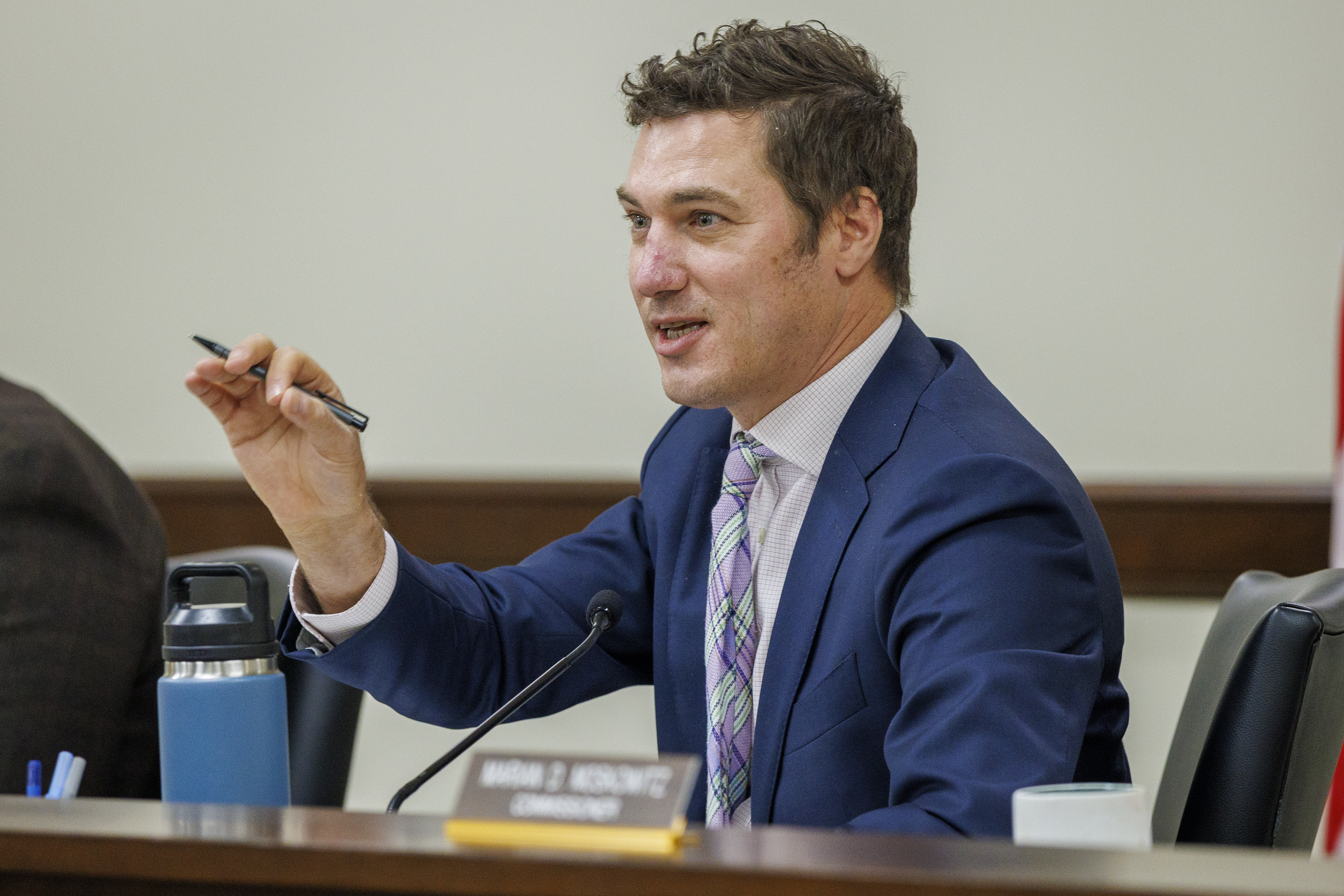
Chester County Commissioners (from left) Eric M. Roe, Josh Maxwell, and Marian D. Moskowitz at a board meeting in September.
But a year and a half later, Barsoum remained in her role and Sieb continued to hear from her former colleagues with concerns. Twice this year, Sieb went before the Chester County Election Board to raise public concerns about turnover under Barsoum.
Maxwell, who chairs the Chester County Election Board, said the county reviews reports from departments when they receive them. He said he was unable to comment on specific departments or personnel matters but said the county needed to do everything it could to support its election workers.
“We need to do a better job, I think, making sure that people feel valued. Including the folks that unfortunately we’ve lost,” he said.
Election work in Pennsylvania and elsewhere has gotten increasingly fraught. The work itself is more intense than it once was with more mail voting, and workers now deal with threats, longer hours, and a camera on them when they’re working with ballots.
“We were seen as clerical people, maybe, in the past; now we are wearing many different hats,” Barsoum said.
Moskowitz attributed much of the turnover in the county to burnout and noted the threats that election employees have faced in her years on the job.
Barsoum became emotional as she said she had worked to ensure that her staff had the resources they needed to feel safe, including mental health resources through the Human Resources department, team building outside election cycles, and a space for workers to step off camera.
“We can count on each other; we lean on each other. It’s a strong bond, a camaraderie,” she said.
When hiring new staffers, Barsoum said she warns them of what’s to come — that they’re not walking into a normal 9-to-5 job, that they won’t be able to plan vacations through about half of the year, and that they’ll be asked to take phone calls from irate people.
It’s a lifestyle, she said, that isn’t right for everyone — including some parents.
“If you’re leaning on a daycare and that is your sole, the go-to, it will be very hard to work in the department because there is 24/7 operations, and there are so many things that are going off and beyond the regular work schedule.”
Josh Maxwell, chair of Chester County Commissioners and the county Elections Board, presides over a September commissioners meeting.
Maxwell and Moskowitz declined to comment specifically when asked if they were confident in Barsoum’s leadership, but Maxwell has repeatedly asked residents to direct their anger at November’s error at him rather than Barsoum or her staff.
“I think it’s important that we protect these folks and we empower them to make the best decisions possible,” Maxwell said at an election board meeting last week.
Speaking to The Inquirer, he reiterated that point.
“We want to make sure that people feel welcomed and empowered and are in a working environment they appreciate,” Maxwell said in an interview.
“Elections have changed so much in five years it’s not surprising to me that some people want to find something new to do.”
This suburban content is produced with support from the Leslie Miller and Richard Worley Foundation and The Lenfest Institute for Journalism. Editorial content is created independently of the project donors. Gifts to support The Inquirer’s high-impact journalism can be made at inquirer.com/donate. A list of Lenfest Institute donors can be found at lenfestinstitute.org/supporters.
A story about ghosts is barely holiday season fare, but since Charles Dickens’ A Christmas Carol first published on Dec. 19, 1843, it has remained a holiday classic.
The story of wealthy Ebenezer Scrooge being haunted by three ghosts (four if you’re counting Jacob Marley) in an effort to change his ways and save his soul, was so popular that the first printing sold out before Christmas Eve.
The haunting narrative was almost immediately adapted for the stage, having its first production in 1844. Since then, there have been countless adaptations in just about every artistic medium. Every holiday season, theaters around the country take this wintry ghost story and add their own theatrical spin to it.
The Philadelphia region is no different, with four productions currently underway. .
Kouraj (left) and Righteous Jolly in “A Levittown Christmas Carol.”
The Levittown version at New Hope Arts Center
Dec. 18-20, 2 Stockton Ave., New Hope
Most audiences have seen some version of this story before. While there are many direct adaptations of Dickens’ work, some take the plot and translate it into a different time and place. Such is the case with A Levittown Christmas Carol.
This production at the New Hope Arts Center ditches the Victorian England setting in exchange for Levittown, with a healthy dose of ’80s and ’90s nostalgia thrown in for good measure.
This adaptation, written by New Hope native Righteous Jolly, uses the story of Scrooge and spirits to explore more nuanced topics regarding the community’s history of racial segregation and the complexities of growing up among it.
So what is it about the Dickens novella that still grabs audiences as it celebrates its 182nd anniversary?
“Mercy, grace, forgiveness. The want to be more whole, and the subsequent excavation that sends a person to discover, what was doesn’t mean what will be, and what can be, may be even more joyous and wholesome than we could imagine,” said Jolly. $33-$39. newhopearts.org
William R. McHattie and Michael Doheny in Walnut Street Theatre’s “A Christmas Carol.”
The kids’ version at Walnut Street Theatre
Through Dec. 21, 825 Walnut St., Phila.
For some local theaters, this show has become a seasonal tradition. America’s oldest theater, the Walnut Street, puts up an annual production as part of its WST for Kids Series. It’s been around since 2001, and while there are slight changes every year, the core intention of their production is to honor Dickens’ original text.
“For many, it is their first experience with live theater,” says Jessica Doheny, Walnut’s general manager, “which is a wonderful gift for us to share.” $24-$29. walnutstreettheatre.org
Tony Lawton plays all the characters in the one-man version of “A Christmas Carol” at Lantern Theater Company.
The one-man-plays-everyone version at Lantern Theater Company
Through Dec. 28, 923 Ludlow St., Phila.
The Lantern Theater’s version is slightly more alternative than the Walnut’s. Here, longtime Lantern Theater collaborator Anthony Lawton revives the show and performs all the characters in the story. Originally presented in this form in 2018, the production, now in its seventh year, has become a bit of a Philadelphia tradition. “When a great story is told effectively, we want to experience that story over and over again because it moves us,” says Stacy Dutton, executive director of Lantern Theater Company. $32-$40. lanterntheater.org
Ian Merrill Peakes and Anna Faye Lieberman in People’s Light’s “A Christmas Carol” panto.
The panto version at People’s Light
Through Jan. 4, 39 Conestoga Rd, Malvern.
Another theater looking to create an annual holiday tradition is People’s Light in Malvern.
“Rituals are what make holidays so special. Nothing competes with being with loved ones and doing the same thing together each season,” said Zak Berkman, artistic director of People’s Light. “Our holiday musical pantos at People’s Light, and now this new version of A Christmas Carol, offer a similar opportunity for families and friends to enjoy something together year after year.”
This production takes the original Dickens narrative and puts it through the lens of a child sitting in their attic, using things around them to create the world of the story and live it out anew. The production’s original music is inspired by 19th-century carols (with a folk spin) and aids in elevating the storytelling of this production. $64-$94. peopleslight.org
When any one branch of our federal government gains power, another loses some. For several years, the Supreme Court has expanded the power of the executive branch to the detriment of the legislative. President Donald Trump’s implementation of tariffs and his refusal to provide information to Congress about the military operations in the Caribbean, the Pacific, and off the Venezuelan coast are recent examples in which the White House has pushed the limits of its authority and sidestepped lawmakers.
A 90-year-old Supreme Court decision in Humphrey’s Executor v. United States upheld the independence of these executive branch agencies, the justices seem to be signaling that they intend to reverse this long-standing precedent.
Our founders wanted governing and decision-making to be done collaboratively with Congress, where the three branches work together, and no single individual wields too much control. We need to resist this ongoing shift in power and demand a return to a balance that best serves our ability to self-govern.
Joseph Goldberg, Philadelphia
Questionable buzzwords
There are many flaws in Rabbi Linda Holtzman’s op-ed which advocates limiting military aid to Israel, but the overriding flaw in this piece is its dishonesty. By using the buzzwords “Palestinian liberation” and “anti-Zionist,” she is cleverly avoiding stating the real aim of her organization and its allies, namely, the destruction of the state of Israel as a homeland for the Jewish people.
She recognizes, of course, that saying this out loud would not fly with most readers of the Inquirer, Jewish and non-Jewish alike. The fact that the author is a rabbi and teacher at a Jewish institution gives no special credence to this extreme position, but may fool some readers to think that she speaks for mainstream Jewish opinion.
And speaking of liberation, my hope is that the Palestinian people will be liberated from the corrupt and hateful leaders whose rejectionist position over the years has denied them the opportunity to have a state of their own.
In the face of a fractured Congress and a seemingly complicit Supreme Court, it’s up to the free press to inform and empower everyday people to step up and denounce the inhuman and unjust treatment of our immigrant neighbors. Citizens have an important role to play in defending neighbors who contribute so much to our communities and our economy. Let us hope our fellow Americans will become as concerned with the deplorable treatment of other human beings as they are about the economy.
Sister Veronica Roche, Westmont
Join the conversation: Send letters to letters@inquirer.com. Limit length to 150 words and include home address and day and evening phone number. Letters run in The Inquirer six days a week on the editorial pages and online.