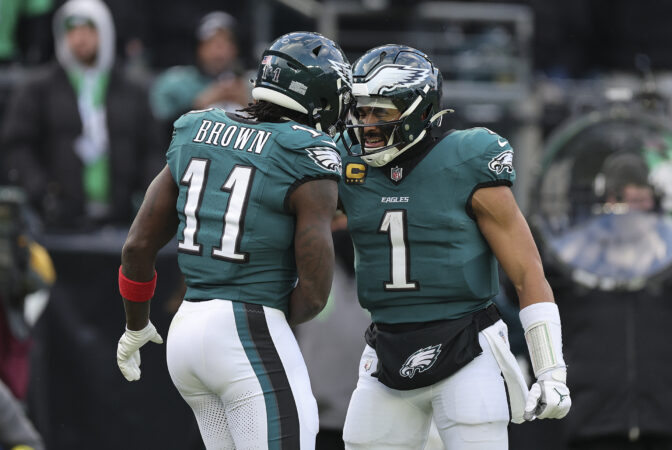
The Eagles could break a 20-season streak on Saturday.
Their magic number to clinch the NFC East reached one late Sunday night after the Eagles blew out the Las Vegas Raiders, 31-0, earlier in the day, and the Dallas Cowboys lost a home game, 34-26, to the Minnesota Vikings in prime time.
The Eagles, at 9-5, have a 2½-game lead over the 6-7-1 Cowboys.
Any Eagles win or Cowboys loss over the final three weeks of the season would clinch the NFC East for the Eagles and make them the first repeat champions in the division since the 2001-04 Eagles.
The Eagles won the division in 2022 before Dallas won in 2023. The Eagles clinched their 2024 division title with a 41-7 home victory over the Cowboys last December. The 2025 title would give them three in four years.
The Cowboys made things interesting in the division after they stormed back from a 21-0 deficit to beat the Eagles in Week 12. They followed that with a Thanksgiving Day victory over Kansas City. But Dallas’ defense, which has continuously let down the league’s best offense by yards per game, couldn’t hold up in losses to Detroit and Minnesota, and the Eagles inched closer to the finish line.
The Eagles play their first of two games in three weeks vs. Washington (4-10) on Saturday at 5 p.m. in Landover, Md. The Eagles opened as 5½-point favorites at most sportsbooks.
The Commanders started Marcus Mariota at quarterback Sunday and beat the lowly Giants, 29-21. It was Washington’s first win since Oct. 5. Three of Washington’s four wins are against the Giants and Raiders. The Commanders did, however, beat the Chargers in that Oct. 5 game. Washington’s No. 1 quarterback, Jayden Daniels (elbow), was shut down for the remainder of the season Monday.
The Eagles remain two games behind the top-seeded Rams, who are tied with the Seahawks in the NFC West at 11-3, and a game behind second-seeded Chicago in the NFC playoff race.
At this stage, the No. 1 seed seems like a stretch, but it’s unlikely the Eagles finish below the third seed.
Less than a year after President Abraham Lincoln signed the Emancipation Proclamation, while our nascent nation was still in the throes of the Civil War, two industrious Philadelphians devised a plan to help raise money for injured Union soldiers, war widows, and children left orphaned by the war.
Charles Godfrey Leland, a Union Army veteran of the Battle of Gettysburg, and George Henry Boker, a founder of the Union League of Philadelphia, had the text of the Emancipation Proclamation printed in Philadelphia in 1864. They got Lincoln to sign 48 copies and then sold them for $10 each, which was about a week’s worth of wages for a day laborer at the time.
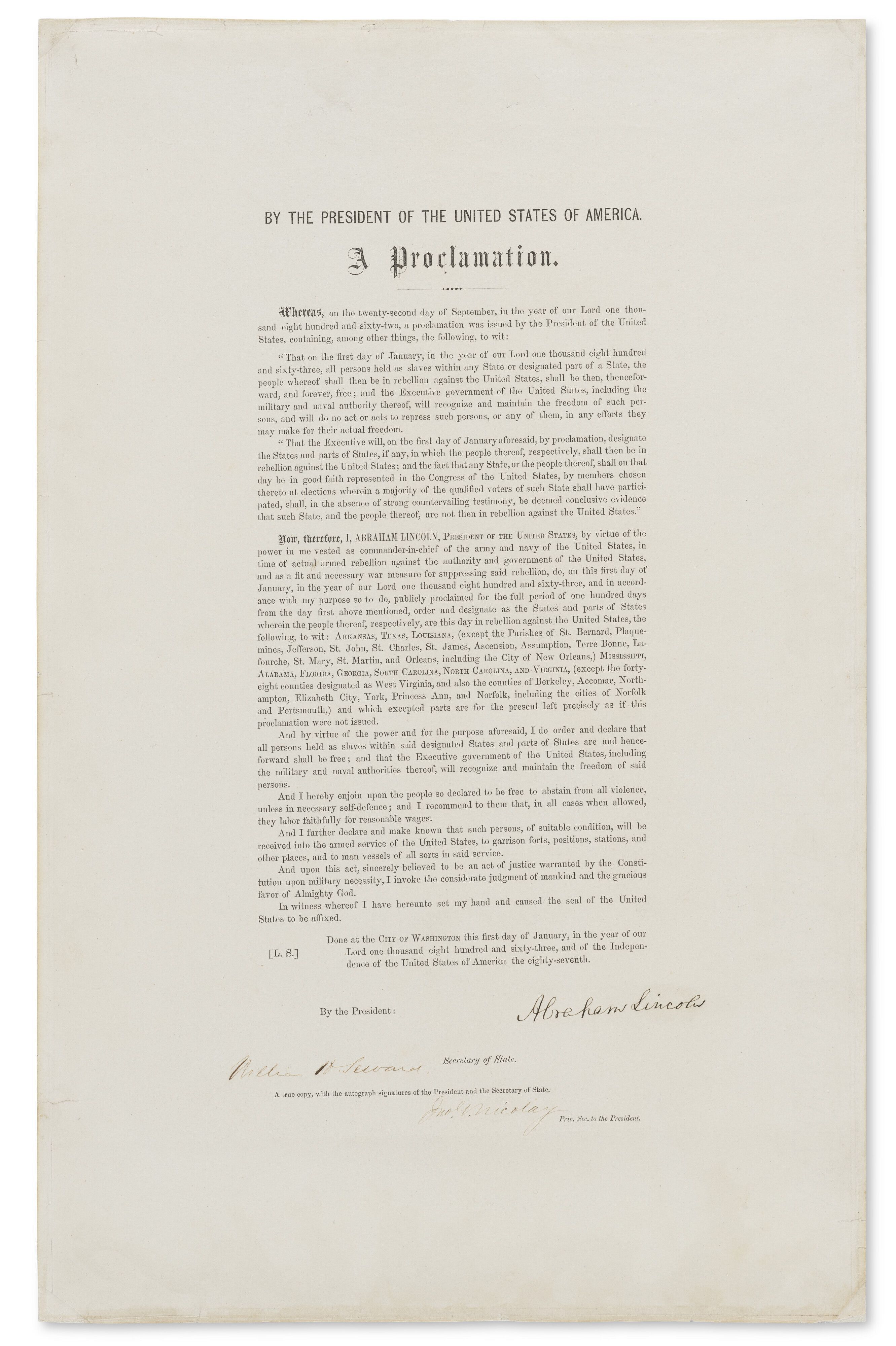
Just 27 copies are still known to exist of what is referred to as the Leland-Boker broadside — the only authorized, printed edition of the full text of the proclamation to be signed by Lincoln — and one of them will be sold by Christie’s next month as part of its “We the People: America at 250” auction.
Christie’s is auctioning one of 27 printings left known in existence of the Leland-Boker broadside, an authorized edition of the Emancipation Proclamation which was printed in Philadelphia and signed by President Abraham Lincoln.
Yes, even a British auction house is getting in on our Semiquincentennial celebrations (though, to be fair, the sale is taking place at Christie’s New York offices).
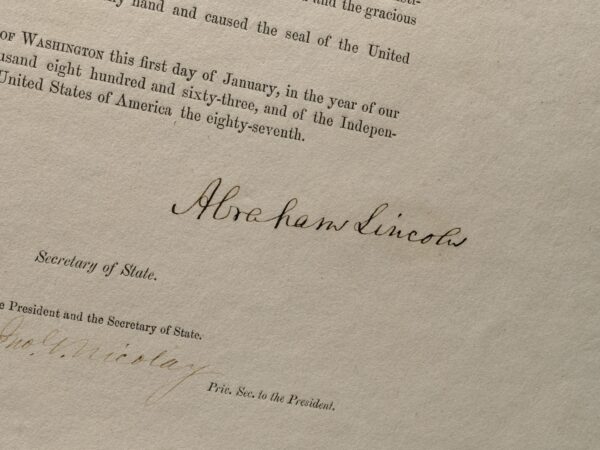
The broadside, which was also signed by Lincoln’s secretary of state, William Seward, and his private secretary, John Nicolay, is expected to fetch somewhere between $3 million to $5 million when it’s auctioned on Jan. 23.
Peter Klarnet, senior specialist for Americana books and manuscripts at Christie’s, said that while the Emancipation Proclamation did not end slavery, it was the document that paved the way for the 13th Amendment.
“It’s part of our historical evolution. As our society changes and society’s mores change, we adjust our founding documents accordingly,” he said. “The Emancipation Proclamation is really a reaffirmation of American freedom in so many ways. It’s now extending that freedom to people who didn’t have it before and extending the promise of what was in the Constitution.”
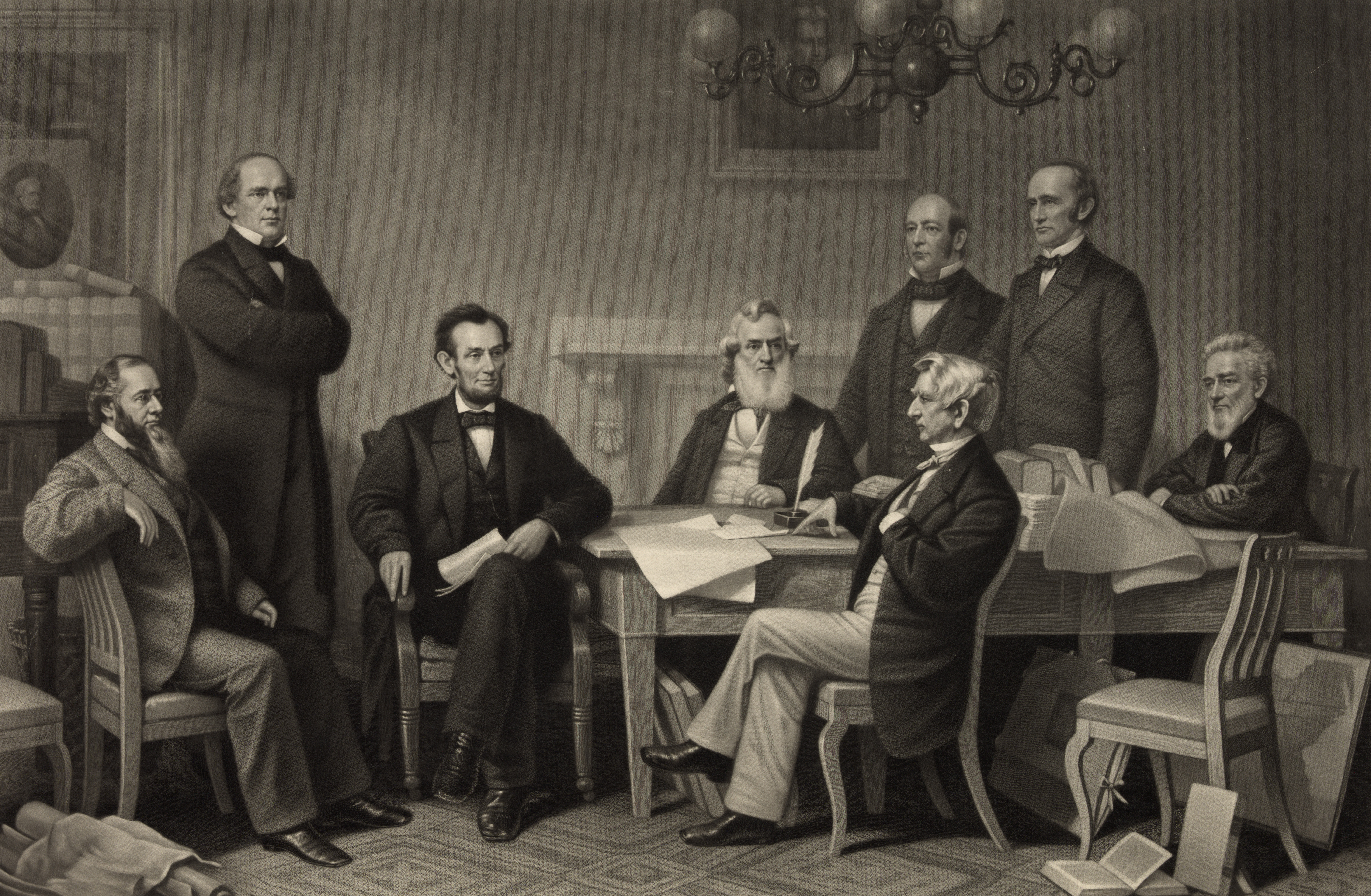
“The first reading of the Emancipation Proclamation before the cabinet,” painted by F.B. Carpenter, engraved by A.H. Ritchie, circa 1866. Those depicted, from left to right: War Secretary Edwin M. Stanton, Treasury Secretary Salmon P. Chase, President Abraham Lincoln, Navy Secretary Gideon Welles, Interior Secretary Caleb B. Smith, Secretary of State William H. Seward, Postmaster General Montgomery Blair and Attorney General Edward Bates.
Both Leland and Boker were born into well-to-do families in Philadelphia, attended Princeton University, and became writers. Leland was a journalist and author with an interest in folklore and the occult, and who traveled extensively through Europe. Boker was a poet, playwright, and diplomat who served as an ambassador to Turkey and Russia. Both men are buried at Laurel Hill Cemetery.
It’s unclear how the two met, but Klarnet said they most likely traveled in similar social circles in Philadelphia and were organizers of the Great Central or Sanitary Fair held at Logan Square in 1864, which raised funds for supplies and necessities for the Union Army. The fair — which Lincoln attended with his wife, Mary — brought in more than $1 million.
At these fairs, which happened in numerous Union cities, autographs of famous Americans were sold to raise funds, according to Klarnet. The year prior, Lincoln’s signed original manuscript of the Gettysburg Address sold at a similar fair in New York City for $1,000. At a fair in Chicago, Lincoln’s handwritten original draft of the Emancipation Proclamation was auctioned off for $3,000, only to later be destroyed in the Great Chicago Fire of 1871. The official proclamation is housed at the National Archives in Washington.
Leland and Boker commissioned their copies to be printed in Philadelphia by Frederick Leypoldt as broadsides on very fine paper with wide, dramatic borders.
“Surprisingly, not all sold,” Klarnet said. “A few were sold at other fairs and others were donated to institutions.”
Of the 27 left known in existence, only a half-dozen or so are in private hands, Klarnet said. Most are in institutional collections, including here in Philadelphia where we have three — one at the Historical Society of Pennsylvania, one at the University of Pennsylvania Libraries (which also has two marked-up proofs of the broadside), and one at the Union League. The National Constitution Center previously had one on loan from a private collector, but it was sold for $4.4 million at a Sotheby’s auction in June to a hedge fund billionaire.
The first known owner of the authorized edition being sold by Christie’s was Philip D. Sang, a corporate executive from Chicago whose collection was sold around the late 1970s. The current owner is the Gilder Lehrman Institute of American History in New York City, which is selling the piece to benefit its acquisitions and direct care fund, according to Klarnet.
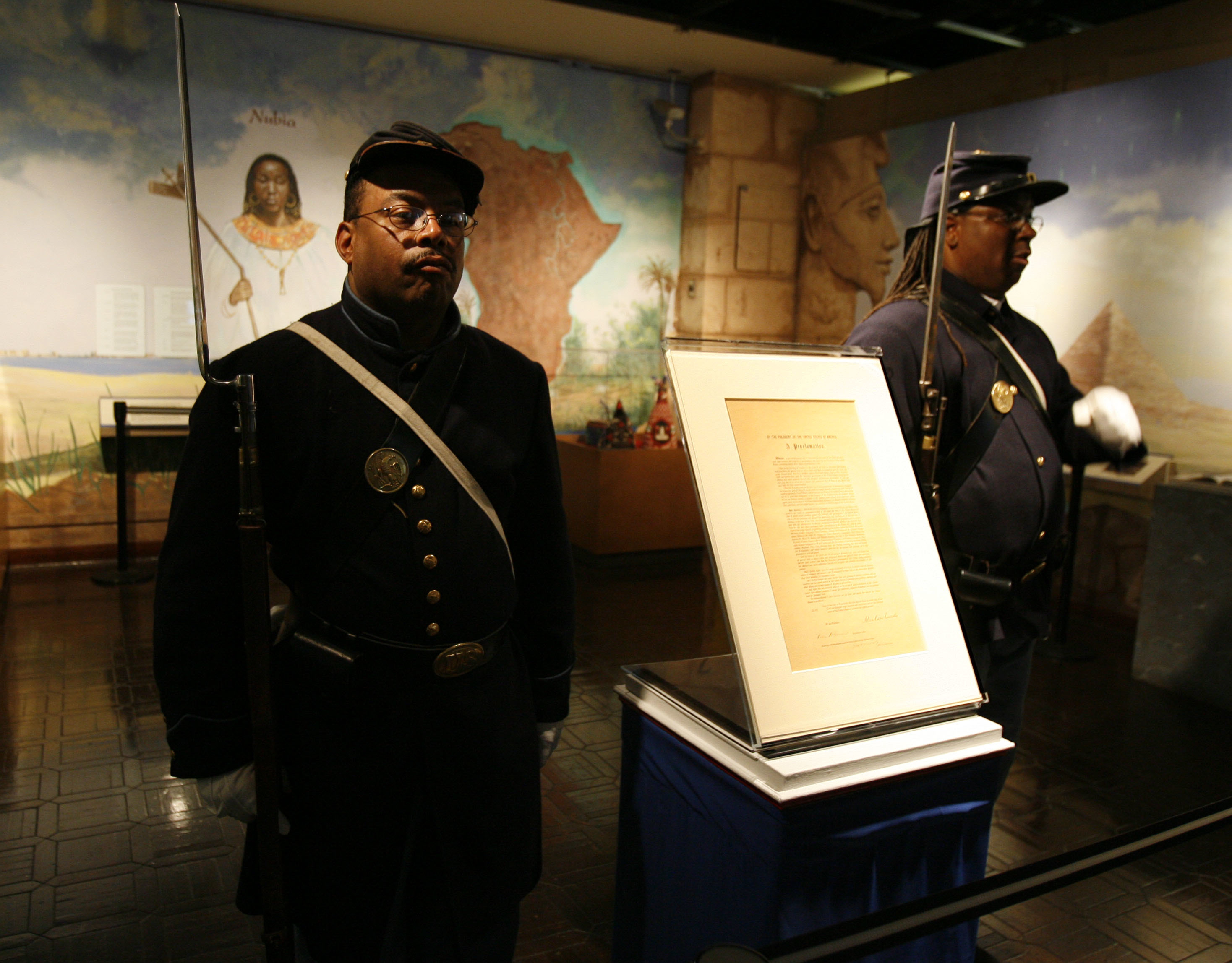
To commemorate Juneteenth in 2006, a Leland-Boker broadside of the Emancipation Proclamation was transported by horse-drawn carriage from the the Historical Society of Pennsylvania to the African American Museum of Philadelphia. Members of the 3rd U.S. Colored Infantry guard the proclamation at the African American Museum.
Other works with notable Philadelphia ties in Christie’s upcoming “We the People: America at 250″ auction include an edited Committee of Style draft of the U.S. Constitution, which was written in Philadelphia five days before the final draft was printed; a U.S. Centennial flag; and a 1779 letter written by Benjamin Franklin to his friend David Hartley.
All cases and hearings in Philadelphia Courts, both in-person and virtual, scheduled for Monday will be held two hours later than originally scheduled.
Trash and recycling pickup remain unaffected and operating on their regular schedule.
Bitter cold temperatures hit the region last night, allowing many of the roads locals use to commute to work to get icy overnight. The region saw snowfall totals ranging from 4.2 inches at the Philadelphia International Airport to 7 or 8 inches in some suburbs, said Alex Staarmann, a meteorologist with the National Weather Service in Mount Holly.
The Office of Emergency Management urged travelers to use caution on sidewalks and roads. “Cold temperatures can create refreeze and black ice conditions and high wind gusts can cause blowing snow and reduce visibility while driving,” the office said in a statement. Drivers can check road conditions at 511pa.com.
The Office of Homeless Services has declared an “Enhanced Cold Blue,” opening warming centers for anyone to visit. Extra outreach teams will engage with people they see living or sleeping outdoors. Find a warming center using the city’s online map tool.
Severe cold can negatively impact your health and home. The Office of Emergency Management has shared an online guide on bracing for the cold weather and protecting your household.
Injuries around the league could shake up playoff races
Los Angeles Rams wide receiver Davante Adams left his team’s win over the Detroit Lions after aggravating a hamstring injury.
Micah Parsons is the Packers’ best defensive player. He entered Sunday’s game with 12½ sacks and a league-high 60 QB pressures, a brilliant return on the Packers’ investment. He cost the Pack two first-round picks and defensive tackle Kenny Clark in a blockbuster trade with Dallas, then signed a four-year, $188 million contract extension.
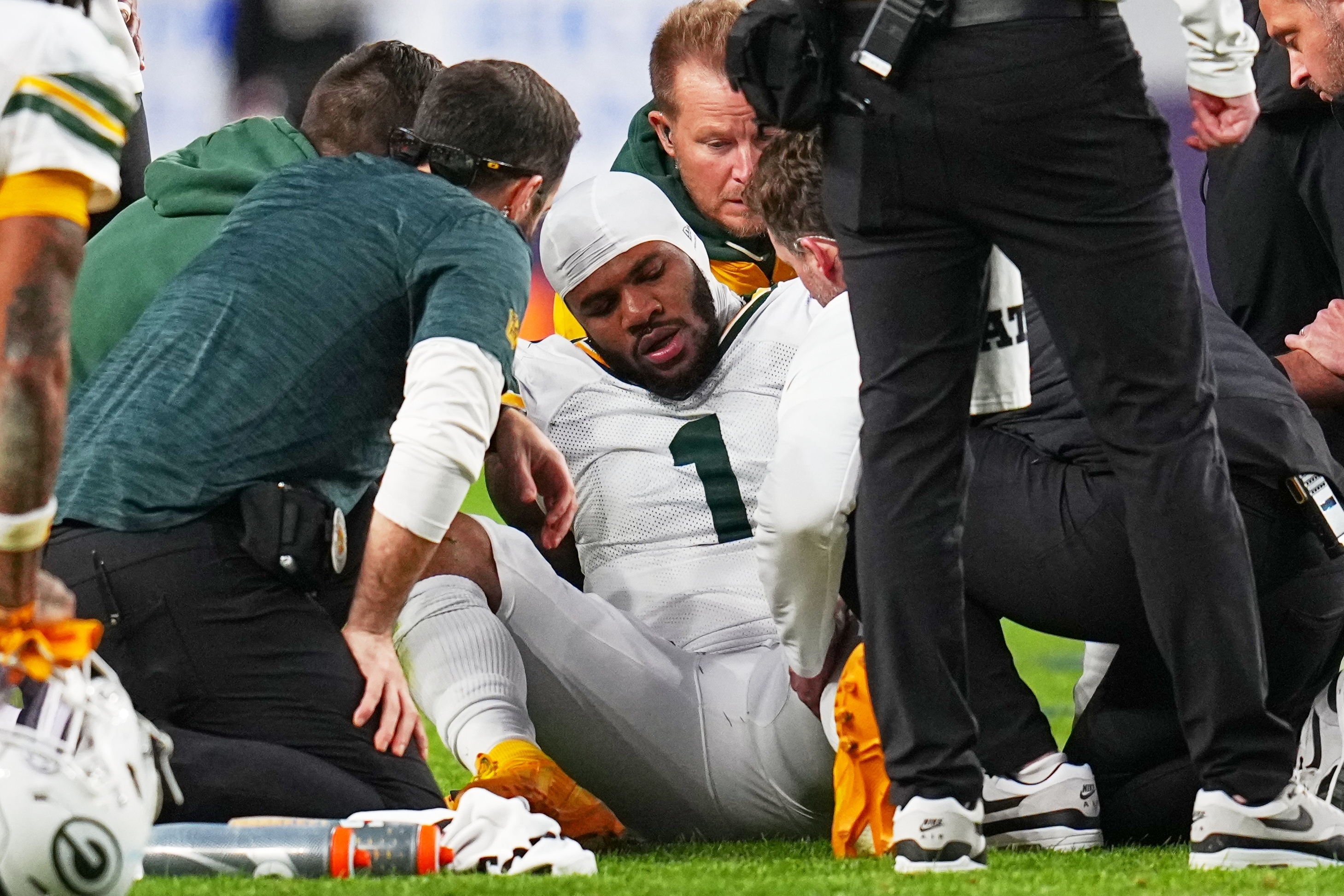
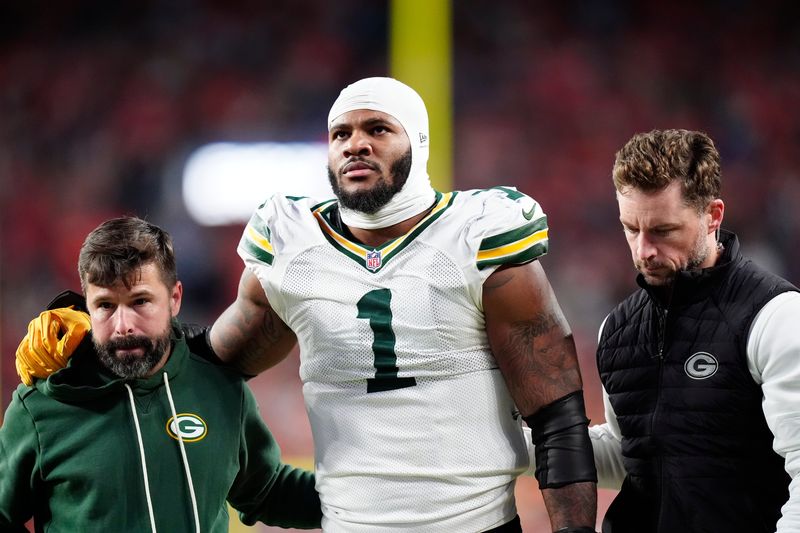
Then, Sunday. Parsons left the game with a knee injury in the third quarter just before the Broncos took the lead for good in their 34-26 win. Reports indicate that he has a torn ACL.
The loss dropped the Packers to 9-4-1, a half-game in the NFC North standings behind the 10-4 Bears — the team they visit Saturday night — but Green Bay leads the 9-5 Eagles, in case that matters. Parsons’ absence might matter more than anything. It would be like the Browns losing Myles Garrett, or maybe even like the Chiefs losing Patrick Mahomes.
On that point …
Mahomes left the Chiefs’ loss Sunday with a torn ACL. The Chiefs were eliminated from playoff contention.
So, suddenly, the best player on an elite NFC team is gone, and, while the return from an ACL injury can be as short at eight months, Parsons, a dynamic athlete who relies on speed, probably won’t be the same until 2027.
Also, suddenly, the best player in the NFL over the last eight seasons on the best team in the NFL over the last eight seasons is gone, and, as perhaps the most effective mobile quarterback in history, Mahomes probably won’t be the same until 2027, either. Neither will the Chiefs.
Finally, star wideout Davante Adams left the Rams’ comeback win against the visiting Lions when he aggravated a hamstring injury. Adams has 14 touchdown receptions, which leads the league by six. He’s seventh on the all-time TD catches list with 117, and he’s the active leader by 11. The Rams sit atop the NFC at 11-3, which might be enough to secure the No. 1 seed, but the impact of a diminished Adams could resonate in the playoffs.
In Mariota, Eagles will again face a former backup QB
Quarterback Marcus Mariota will start for the Commanders on Sunday.
For a second straight week, the Eagles are set to face off against one of their former backups. This time, it will be Marcus Mariota at the helm of the Commanders’ offense on Saturday.
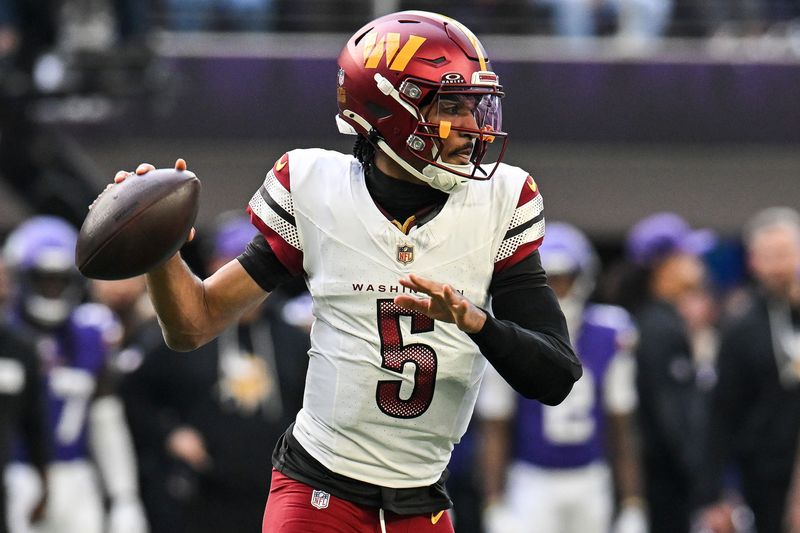
Jayden Daniels, the NFL’s 2024 offensive rookie of the year, has missed seven games this year due to a litany of injuries, including a knee sprain, a hamstring strain, and now an elbow issue. He initially dislocated his elbow injury in their Week 9 loss to the Seattle Seahawks, and while he returned to action a month later, he aggravated the injury in his first game back against the Minnesota Vikings.
After the second-year quarterback missed the Week 15 win over the New York Giants, Commanders head coach Dan Quinn announced on Monday afternoon that he is being shut down for the rest of the season.
But the injuries to Daniels aren’t the only reason behind Washington’s decline from an offensive standpoint in 2025. The Commanders lack playmakers, and they’re now down two more with former Eagles tight end Zach Ertz tearing his ACL two weeks ago and wide receiver Noah Brown exiting Sunday’s game with a rib injury. Laremy Tunsil, the team’s standout left tackle, also left the Giants game with a shoulder injury.
The Eagles are well-acquainted with Mariota. Much like Daniels, the 32-year-old quarterback has the ability to extend plays with his legs, a quality that has given the Eagles defense fits at times this season.
Mariota was particularly effective on deep passes on Sunday. In fact, he had almost all of his production come on downfield passes, as he went 7-for-11 for 181 yards and a touchdown on throws greater than 10 air yards, according to Next Gen Stats.
Still, the Commanders’ offense practically tried to lose to the worst team in the NFC East. At one point, they had a 15-point lead, then fumbled the ball away twice in the fourth quarter (once from Mariota and another by running back Jeremy McNichols) to give the Giants a shot at a comeback. Saturday’s game shouldn’t be too difficult a test for Vic Fangio’s defense.
Commanders to sit Jayden Daniels for rest of season
Sources: The #Commanders have decided to shut down QB Jayden Daniels for the final 3 games, turning his focus to supporting Marcus Mariota.
Daniels was re-evaluated today & not yet cleared. With him expected to be medically ruled out vs. the #Eagles, then facing a short week vs.… pic.twitter.com/hTu3Sv5wpw
How age, injuries, and a little less luck hurt the Commanders
The Commanders are just 2-5 in games Jayden Daniels played in this season.
They say age is only a number. But for the Washington Commanders, it’s a number that helps explain how a trip to the NFC championship game last year can be followed up by a 4-10 record through 14 games.
The easiest thing to point to is that young quarterback Jayden Daniels has only been available for seven games. But the Commanders are just 2-5 in the games Daniels has played.
Back to the age issue. The Commanders were a prime candidate for regression — this writer had them missing the playoffs in 2025 — in part because of their age, but also because they were abnormally lucky in 2024. The luck also included a low number of injuries. But the age may have caught up in 2025.
Daniels aside — the quarterback turns 25 this week — the Commanders’ season has been marred by injuries to “older” players.
As ESPN’s Bill Barnwell pointed out Monday, Washington has the league’s oldest team weighted by snaps. It has the league’s oldest defense at 28.9 years old and the fourth-oldest offense at 28.0 years old. That defense alone currently has three players aged 28 or older on injured reserve: defensive end Dorance Armstrong (28), cornerback Marshon Lattimore (29), and defensive end Deatrich Wise Jr. (31).
Additionally, 33-year-old defensive end Preston Smith has been limited to 10 games, 32-year-old corner Jonathan Jones has played in nine games, 28-year-old defensive end Jalyn Holmes has eight appearances, and 29-year-old safety Will Harris has played in six games.
Veterans Von Miller (36) and Bobby Wagner (35) have stayed healthy, but that’s a lot of stress asking the two of them to anchor a defense at this stage.
Only one team allows more yards per game than Washington (382.6).
Then there’s the offense. The latest major injury to the Commanders hit former Eagles tight end Zach Ertz, whose season ended last week after suffering a torn ACL. But 30-year-old receiver Terry McLaurin, who held out in camp and was later signed to a three-year, $96 million extension, has been limited to seven games, and 29-year-old receiver Noah Brown has played in four.
A nightmare season is almost over for the Commanders, and it remains to be seen if they will let Daniels take the field again to play in meaningless football games.
Micah Parsons out for the rest of season with torn ACL
Micah Parsons will miss the rest of the season with a torn ACL.
Micah Parsons suffered a torn ACL during the Green Bay Packers’ loss to the Denver Broncos Sunday and will miss the rest of the season, according to multiple reports. Parsons confirmed the injury on social media.
“I may be sidelined, but I am not defeated,” Parsons wrote, calling the injury his “greatest test.”
The injury happened near the end of the third quarter. Parsons was chasing Broncos quarterback Bo Nix when he suddenly stopped running and grabbed his knee.
“It’s obviously tough,” Packers coach Matt LaFleur told reporters following the game. “We all know what type of player he is and the impact he’s had on our football team. To lose somebody like that, it’s tough. … We’ve got to find a way. Guys have to rally around one another.”
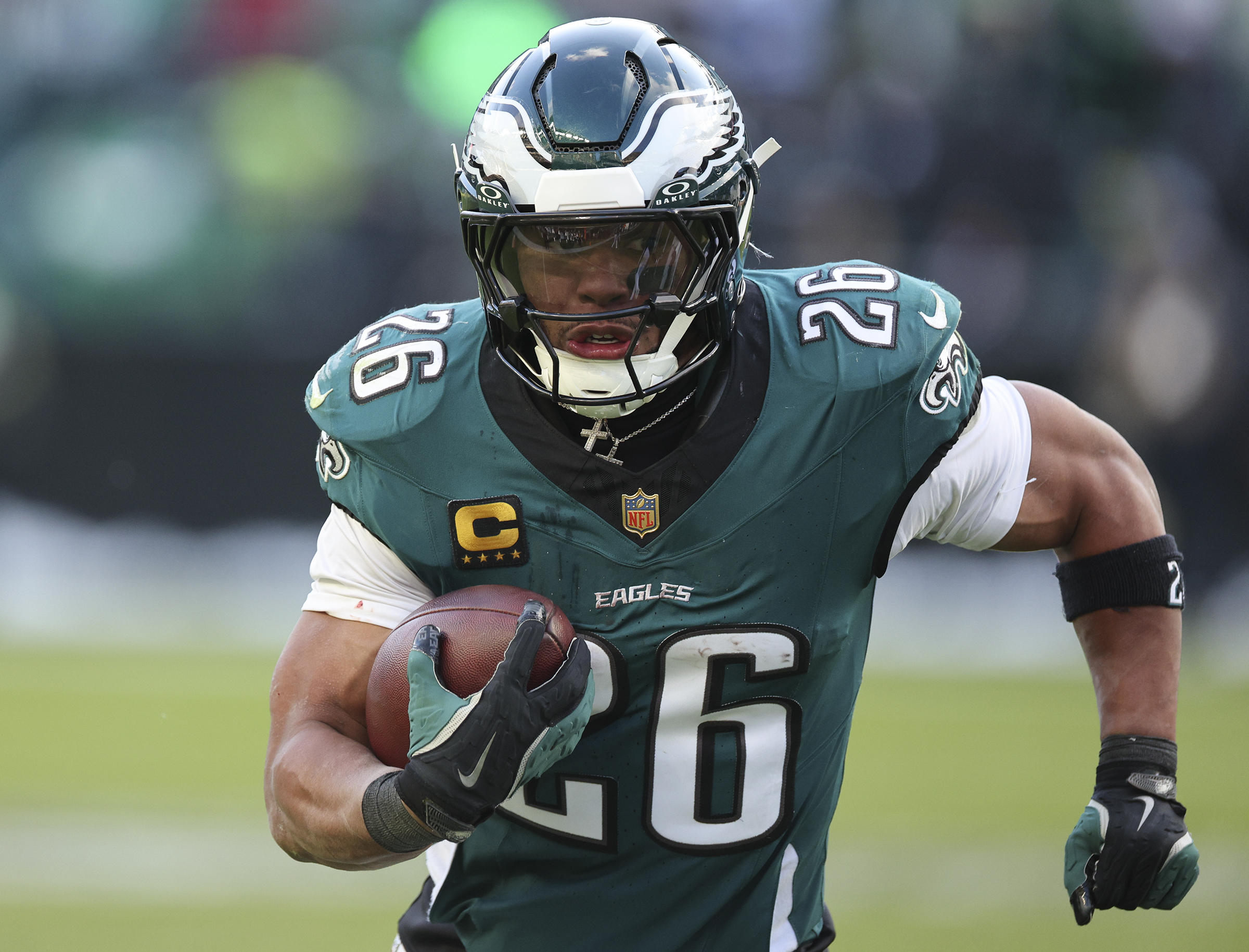
Saquon Barkley and the Eagles will likely end the season with the NFC’s No. 3 seed.
While it remains mathematically possible for the Eagles (9-5) to still end the season as the NFC’s No. 1 playoff seed, it remans a very, very improbable outcome for the season.
But what about the No. 2 seed? That’s how the Eagles entered the playoffs last season, and their postseason run ended with a Super Bowl victory.
The Eagles will enter Week 16 in the NFC’s No. 3 spot, which means if the season were over they’d be hosting the San Francisco 49ers (10-4) at the Linc in a wild card game.
The current No. 2 seed is the Chicago Bears (10-4), who are essentially two games up on the Eagles because of the Birds’ loss to Chicago last month on Black Friday. So there are two scenarios where the Eagles can overtake the Bears:
Eagles end the season 12-5 (winning their final three games), Bears end the season 11-6 (losing two of their final three).
Eagles end the season 11-6 (winning two of their final three games), Bears end the season 10-7 (losing their final three).
The Bears’ final three games are against the Green Bay Packers (9-4-1), 49ers, and Detroit Lions (8-6). So losses to the Packers and/or Lions could impact the standings in the NFC North, where the Bears hold a slim half-game lead over the Packers.
NFC North standings
window.addEventListener(“message”,function(a){if(void 0!==a.data[“datawrapper-height”]){var e=document.querySelectorAll(“iframe”);for(var t in a.data[“datawrapper-height”])for(var r,i=0;r=e[i];i++)if(r.contentWindow===a.source){var d=a.data[“datawrapper-height”][t]+”px”;r.style.height=d}}});
If the Packers end up winning the NFC North, the Eagles would need to end the season a half-game up to secure the No. 2 seed, thanks to Green Bay’s tie against the Dallas Cowboys earlier this season.
In the unlikely event the Lions overtake both and win the division (the New York Times gives them a 5% chance), the Eagles hold the tiebreaker thanks to their Week 11 win at the Linc.
The good news is the only way the Eagles would drop to the No. 4 seed is if they lost their final three games and either the Tampa Bay Buccaneers (7-7) or the Carolina Panthers (7-7) won out, since they face each other twice in the final three weeks of the season.
There is a highly improbably scenario where the Eagles and Panthers both end the season 10-7, have the same conference record, and Carolina could win a tiebreaker with a better record among common foes (if they sweep the Buccaneers). In that highly unlikely case, the Panthers would move up to the No. 3 slot and the Birds would drop down to No. 4.
Micah Parsons is believed to have torn his ACL and could miss the rest of the season.
Micah Parsons is the Packers’ best defensive player. He entered Sunday’s game with 12½ sacks and a league-high 60 QB pressures, a brilliant return on the Packers’ investment. He cost the Pack two first-round picks and defensive tackle Kenny Clark in a blockbuster trade with Dallas, then signed a four-year, $188 million contract extension.
Then, Sunday. Parsons left the game with a knee injury in the third quarter just before the Broncos took the lead for good in their 34-26 win. Reports indicate that he has a torn ACL.
The loss dropped the Packers to 9-4-1, a half-game in the NFC North standings behind the 10-4 Bears — the team they visit Saturday night — but Green Bay leads the 9-5 Eagles, in case that matters. Parsons’ absence might matter more than anything. It would be like the Browns losing Myles Garrett, or maybe even like the Chiefs losing Patrick Mahomes.
On that point …
Mahomes left the Chiefs’ loss Sunday with a torn ACL. The Chiefs were eliminated from playoff contention.
So, suddenly, the best player on an elite NFC team is gone, and, while the return from an ACL injury can be as short at eight months, Parsons, a dynamic athlete who relies on speed, probably won’t be the same until 2027.
Also, suddenly, the best player in the NFL over the last eight seasons on the best team in the NFL over the last eight seasons is gone, and, as perhaps the most effective mobile quarterback in history, Mahomes probably won’t be the same until 2027, either. Neither will the Chiefs.
Finally, star wideout Davante Adams left the Rams’ comeback win against the visiting Lions when he aggravated a hamstring injury. Adams has 14 touchdown receptions, which leads the league by six. He’s seventh on the all-time TD catches list with 117, and he’s the active leader by 11. The Rams sit atop the NFC at 11-3, which might be enough to secure the No. 1 seed, but the impact of a diminished Adams could resonate in the playoffs.
#Jets coach Aaron Glenn has fired defensive coordinator Steve Wilks. Glenn made the announcement at his news conference, a day after another frustrating performance. pic.twitter.com/j6N4qYuZ4S
Playoff picture taking shape means Jalen Carter can continue to rest
Jalen Carter has been out since undergoing a procedure on both his shoulders after the Eagles’ loss to Chicago.
What’s in it for the Eagles to rush Jalen Carter back to the field? Not much. Their magic number dropped to one Sunday with their 31-0 victory over the Raiders being coupled with a Cowboys loss.
The Eagles are in the driver’s seat, and, according to ESPN analytics, are at 99% to become NFC East champions for the second consecutive season — a win that would break a 20-season streak of no repeat champions.
Further, their likely playoff seeding is taking shape. The Eagles remain two games back of the Rams and Seahawks (who are vying for the No. 1 seed at 11-3) and a game behind second-seeded Chicago (10-4). The Eagles are sitting comfortably in the third seed in the NFC, two games ahead of the NFC South-leading Tampa Bay Buccaneers.
The Eagles, according to ESPN analytics, are at 83% to enter the playoffs as the third seed. It’s possible their seeding could be decided by the end of Week 17, which would make their Week 18 home game vs. Washington a meaningless game played by backups.
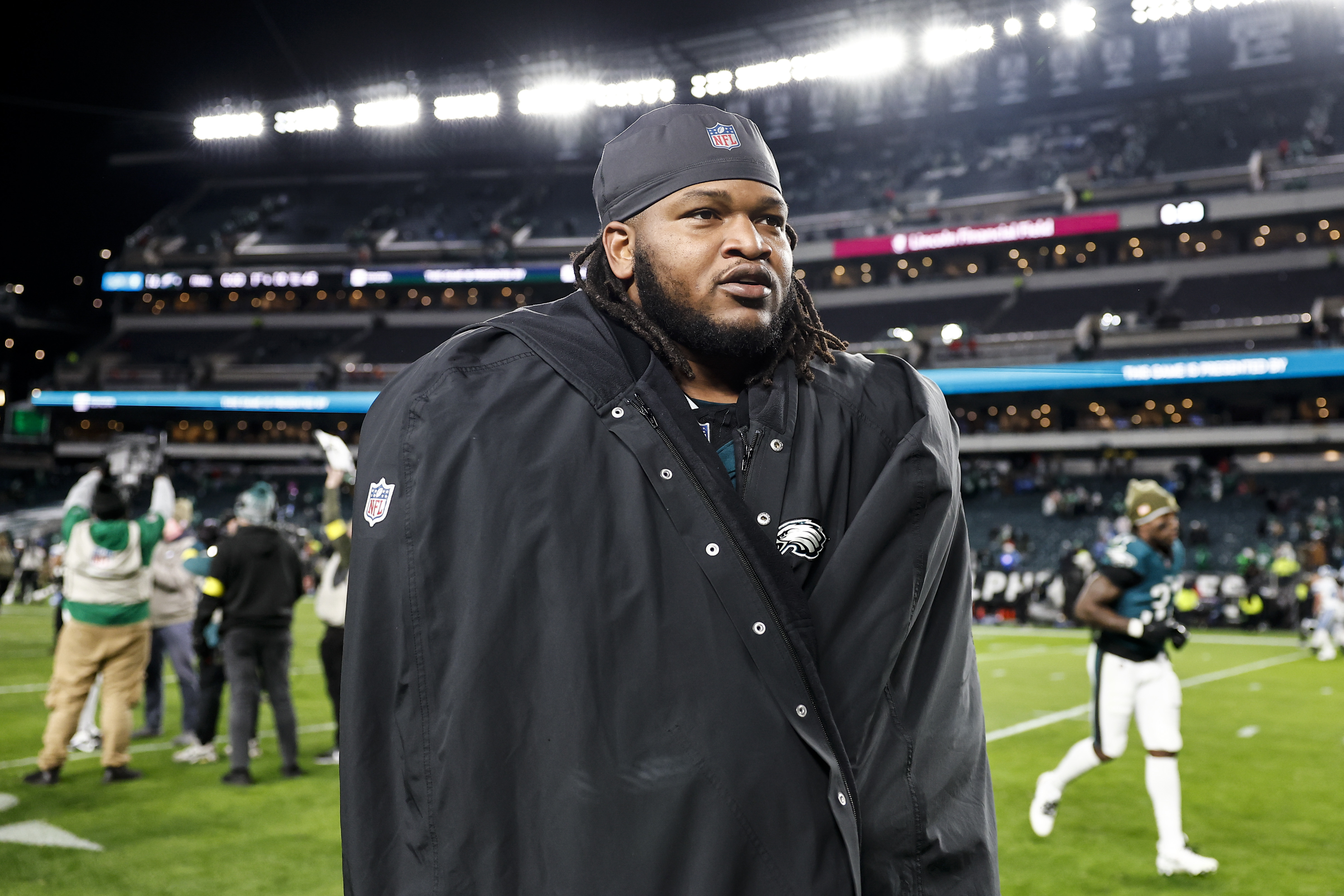
Surely, the Eagles won’t mind. All of this clarity just means more rest for Jalen Carter’s ailing shoulders. The star defensive tackle had a procedure on both of his shoulders after the Eagles’ loss to Chicago.
The Eagles did not put Carter on injured reserve, leaving open the possibility that he could return within four games. Sunday was Carter’s second consecutive absence, and the Eagles really won’t have much incentive to rush him back to the field. The Eagles are getting fine production from their interior defensive linemen after moving Brandon Graham inside and running a rotation of Jordan Davis, Moro Ojomo, Byron Young, and Graham (who had two sacks Sunday).
Carter should be able to work his shoulders back to as close to full strength as possible as the Eagles prepare for their playoff run.
Lane Johnson, meanwhile, who missed his fourth consecutive game with a Lisfranc injury in his foot, could return to the field as soon as Saturday, according to a report from the NFL Network.
Eagles numbers: Dallas Goedert joins an exclusive Birds club
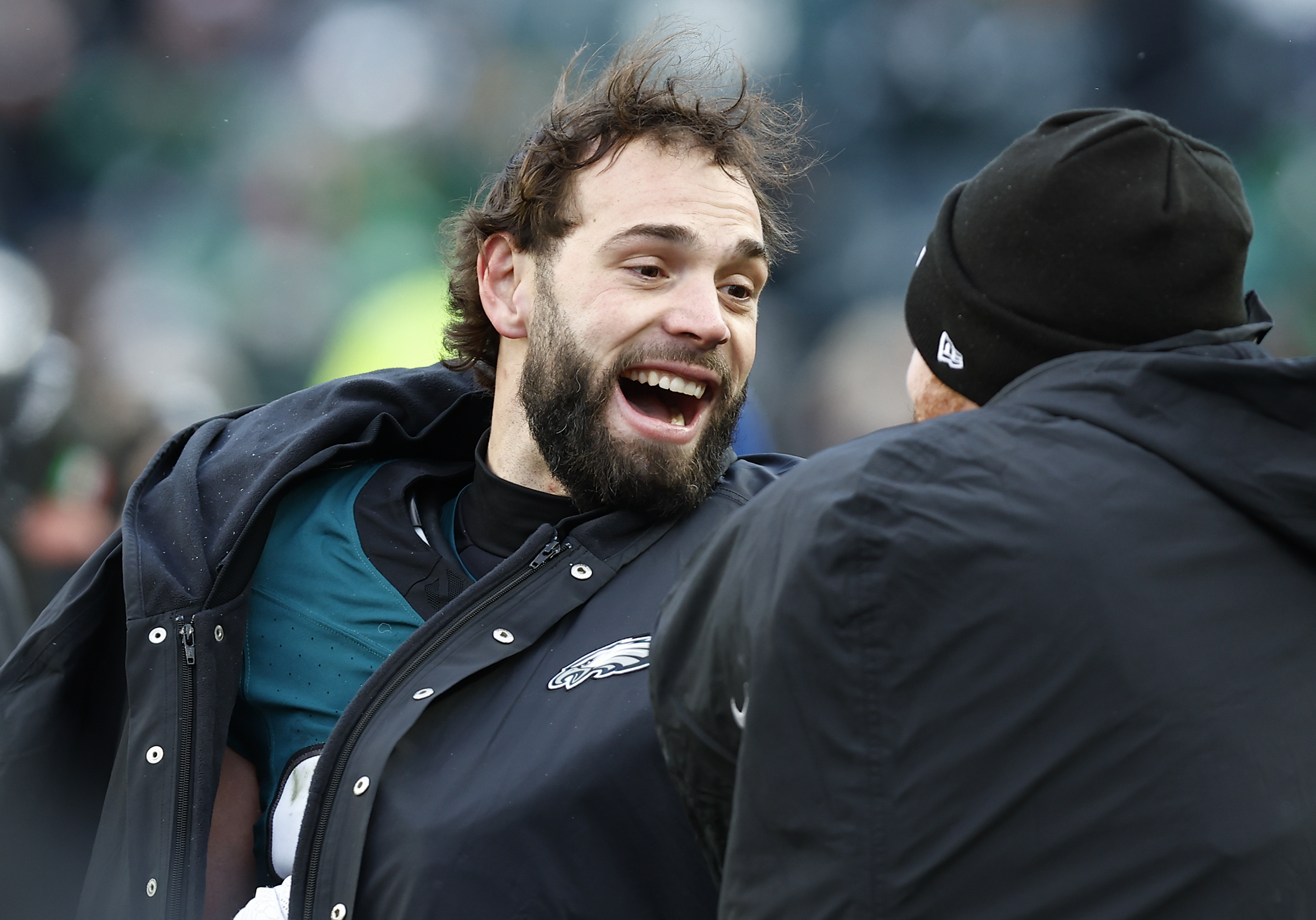
Eagles tight end Dallas Goedert laughs on the sidelines Sunday.
Leave it to the lowly Las Vegas Raiders to help the Eagles snap a three-game losing streak in style. The Eagles’ 31-0 victory over the Raiders on Sunday afternoon at Lincoln Financial Field made history and had plenty of notable numbers come out of it.
Here’s a look:
At 2 hours, 31 minutes, Sunday’s game was the quickest Eagles game since at least 1999.
The Eagles posted their first shutout since Dec. 30, 2018. The 31-point margin was the Eagles’ largest margin of victory during a shutout since Dec. 16, 1990, a 31-0 victory over Green Bay.
The 75 yards the Eagles limited the Raiders to were the fewest allowed by the Eagles in the Super Bowl era, and fewest overall since they surrendered just 49 yards to the Chicago Cardinals in Dec. 4, 1955. It was also the fewest yards allowed by a team in the NFL since Cleveland allowed just 58 yards by Arizona on Nov. 5, 2023.
The 312-yard advantage in total yards was the Eagles’ largest margin since Sept. 7, 2008, when they out-gained St. Louis by 356 yards.
Dallas Goedert scored twice, reaching nine touchdowns on the season. He has more touchdowns in 2025 than his previous three seasons combined. Goedert became the fifth player in Eagles history to reach 400 career receptions, joining Harold Carmichael (589), Zach Ertz (579), Pete Retzlaff (452) and Brian Westbrook (426).
Goedert is now one off the single-season record for touchdowns by an Eagles tight end. Retzlaff had 10 in 1965.
Brandon Graham, at 37 years, 255 days, became the oldest player in Eagles history to register a sack in a game. The record was previously held by Richard Dent, who registered a sack on Dec. 14, 1997 in Atlanta on the day after his 31st birthday. Graham also became the oldest NFL player to produce multiple sacks in the first half of a game since Bruce Smith on Nov. 28, 2002 (39 years, 163 days).
Zack Baun picked up his third interception of the season. He is the only NFL player with at least 100 tackles, three sacks, and three takeaways this year.
Jalen Hurts became the first quarterback in Eagles history to record multiple games with a 150-plus passer rating (154.9) and 80% completion percentage in the same season. He previously accomplished the feat in Week 7 at Minnesota (158.3 rating and 82.6% percentage).
The Eagles secured their fifth consecutive winning season with Nick Sirianni at the helm — the longest streak to start a career in franchise history. Sirianni is the 10th head coach since 1970 to start their career with five straight winning seasons, joining Bill Cowher, John Harbaugh, Mike Holmgren, Chuck Knox, Sean McVay, George Seifert, Mike Sherman, Mike Smith, and Mike Tomlin (according to Elias).
This is the 21st winning season under Jeffrey Lurie’s ownership, making the Eagles one of only four teams with 21-plus winning seasons since Lurie took over — joining Green Bay (24), New England (24) and Pittsburgh (23).
(Stats courtesy of Philadelphia Eagles’ public relations.)
Jalen Hurts and a return to the Eagles’ winning formula
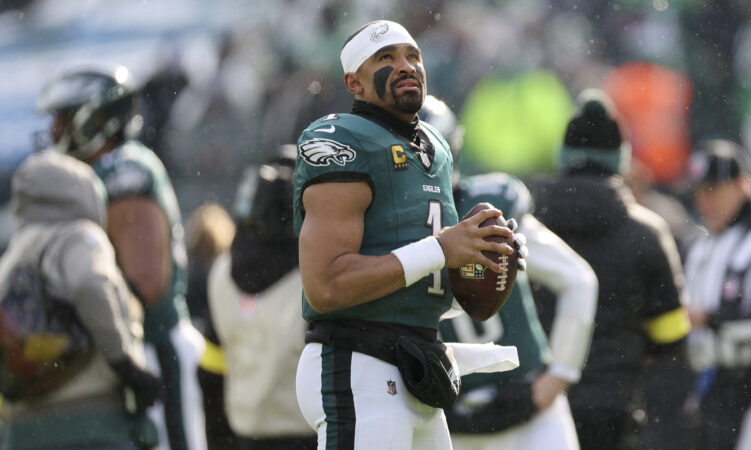
Jalen Hurts’ ability to run the football kept the Raiders defense on their heels throughout the 31-0 blowout in Week 15.
When Jalen Hurts and the first-unit offense took their well-earned rest early in the fourth quarter of an eventual 31-0 blowout over the Las Vegas Raiders, the Eagles had a run-pass ratio of 32 to 17.
There were myriad reasons for a ground-heavy attack on Sunday at Lincoln Financial Field: from wintry weather conditions and schematic improvements to situational play-calling with a lead and rebuilding Hurts after a disastrous performance vs. the Chargers.
But mostly the Eagles ran the ball because it’s what they need to establish if they want to repeat as Super Bowl champions. Coach Nick Sirianni would never cop to looking that far ahead, nor should he, but the hapless Raiders offered the opportunity to give his directionless offense a compass for the future.
The run game wasn’t exactly efficient or close to explosive, especially on traditional handoffs to running back Saquon Barkley. The 2025 offense is unlikely to become the 2024 version of itself.
But a formula closer to that of a year ago — and, really, for most of the five years of the Hurts-Sirianni partnership — is the Eagles’ best hope. That meant, obviously, more carries for Barkley and backup Tank Bigsby, but also more diversity in the calls, more runs from under center, more up-tempo, and perhaps most importantly, more of Hurts on designed keeps.
“These are things that have been staples in our offense for a long time, and we’re just continuing to use things that we think fit for that week,” Sirianni said. “I haven’t watched anything on Washington, but next week we could come out and it could be a completely different game.
“We have core philosophies and visions of our identity, but we’ll see.”
NFL Playoff picture: Eagles will clinch NFC East with a win
Eagles fans have a reason to be happy.
Thanks, Minnesota!
With the Vikings defeating the Cowboys 34-26 on Sunday Night Football, the Eagles will clinch the NFC East and a playoff berth with a win Saturday against the Washington Commanders.
The Birds will also clinch the NFC East with just one more Cowboys loss.
NFC East standings
!function(){“use strict”;window.addEventListener(“message”,function(a){if(void 0!==a.data[“datawrapper-height”]){var e=document.querySelectorAll(“iframe”);for(var t in a.data[“datawrapper-height”])for(var r,i=0;r=e[i];i++)if(r.contentWindow===a.source){var d=a.data[“datawrapper-height”][t]+”px”;r.style.height=d}}})}();
That would make the Eagles the first repeat champions in the division since the 2004 Eagles.
The Eagles won the division in 2022 before Dallas won in 2023. The Eagles clinched their 2024 division title after a 41-7 home victory over the Cowboys last December. The 2025 title would give them three in four years.
The only way for the Cowboys to win the division at this point would be for the Eagles to lose out while Dallas wins their final three games — at home against the Chargers and on the road against the Commanders and New York Giants (2-12).
Considering the Birds will likely face the Marcus Mariota-led Commanders twice in the final three weeks, oddsmakers see that as impossibly unlikely. As in less than a 1% chance, according to the New York Times.
Can the Eagles still end up with the NFC’s No. 1 seed?
You’re saying there’s still a chance?
Despite Sunday’s win, the Eagles still face an all-but-impossible chance to end the season in the NFC’s No. 1 playoff spot.
NFC playoff picture
window.addEventListener(“message”,function(a){if(void 0!==a.data[“datawrapper-height”]){var e=document.querySelectorAll(“iframe”);for(var t in a.data[“datawrapper-height”])for(var r,i=0;r=e[i];i++)if(r.contentWindow===a.source){var d=a.data[“datawrapper-height”][t]+”px”;r.style.height=d}}});
What would have to happen? For starters, the Birds need to win their final three games ― against the Buffalo Bills (10-4) and twice against the Commanders ― to even have a shot at the top playoff seed.
Now comes the tricky part. In all likelihood, the Eagles would need four of the NFC’s top teams to lose two of their final three games, according to Wharton professor and Eagles analytics nerd Deniz Selman — the Los Angeles Rams (11-3), Seattle Seahawks (11-3), San Francisco 49ers (10-4), and Bears.
All four teams won Sunday, so the Eagles already-slim odds got worst, despite the Birds’ win.
There are some even less-likely scenarios where the Eagles could win on tiebreakers, but it all points to the road to a Super Bowl repeat not going through the Linc.
Odds are the Eagles will win the NFC East and enter the playoffs at the NFC’s No. 3 seed, but the Birds could also end up as the No. 2 seed if things fall their way. Having tiebreakers against most of the top NFC teams helps, though not with the Packers because of that pesky tie.
The Birds entered the playoffs as the No. 2 seed last year, and that seemed to work out well.
Merrill Reese called out Hurts critics at WIP and elsewhere
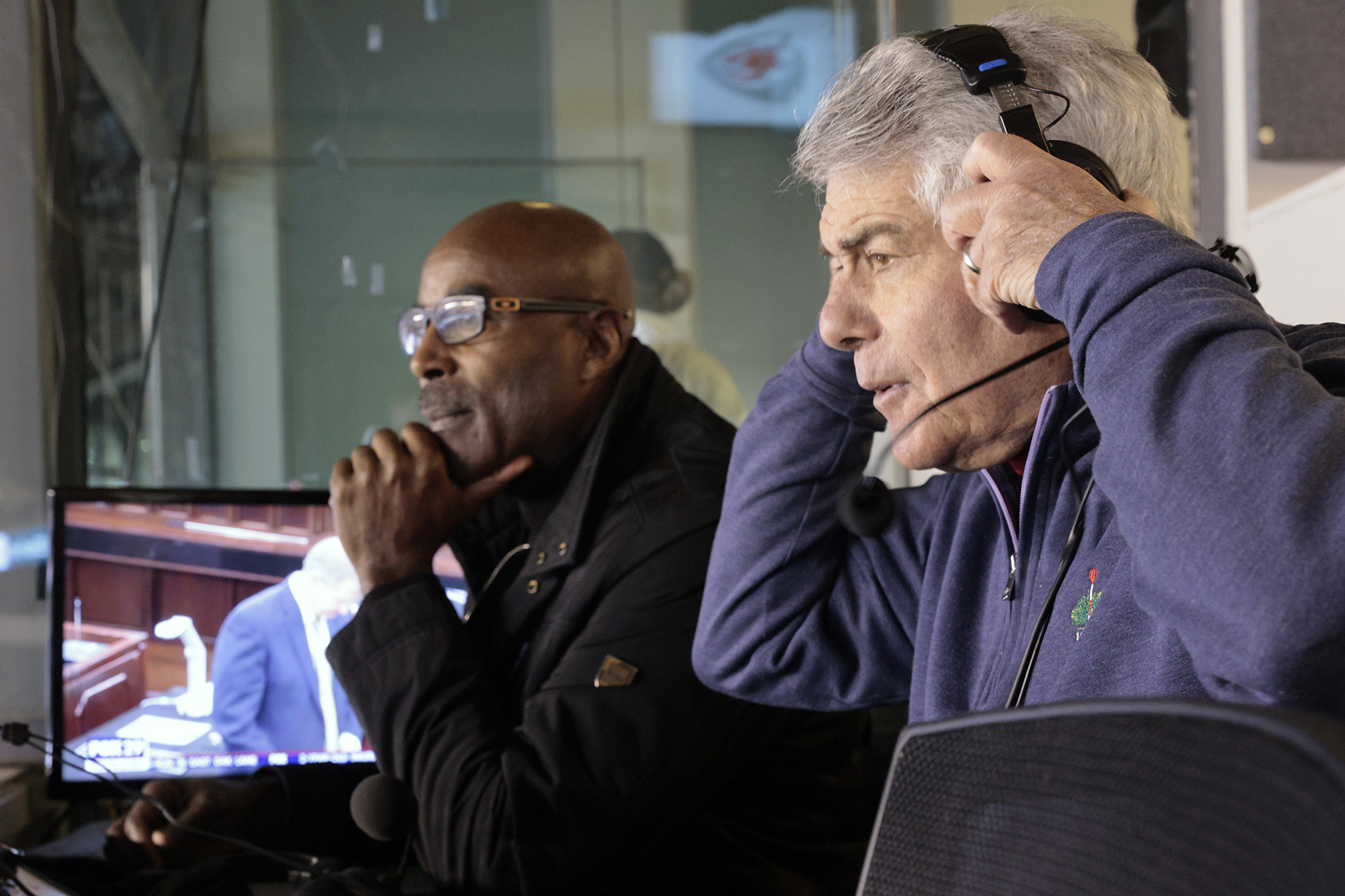
Eagles radio announcers Mike Quick (left) and Merrill Reese.
While there were no pundits that directly called for Jalen Hurts to be benched, a lot of talking heads on 94.1 WIP and elsewhere got close following the Eagles’ three-game losing streak.
“I do think he’s earned the right to start Sunday,” WIP host Joe Giglio said of Hurts leading up to the game. “But that’s the end of where I go with earned, deserve, and all those kind of words. … I would pull the plug if he keeps playing the way he has the last month.”
Inquirer columnist Marcus Hayes also echoed those remarks, writing the Eagles would’ve been right to bench Hurts if he struggled against the Raiders Sunday, which thankfully he didn’t.
“It might sound heretical to say of the Super Bowl MVP, but if Hurts continues to struggle, he damn well should be benched,” Hayes wrote prior to Sunday’s win. “He is not sacred.”
That brings us to Sunday, where we saw a return to the Hurts who protects the ball and runs effectively, as Jeff McLane put it. That led beloved Eagles announcer Merrill Reese, who obviously heard the chatter from his WIP colleague and elsewhere, to take a shot at all the critics during the game.
“You don’t hear any cries for them to bench him, do you?” Reese asked during the broadcast after Hurts converted a long first down with his legs.
“Not from anyone with good sense,” a laughing Mike Quick responded.
7. Hurts converts a 3rd and 12 with his legs!
Merrill: You don't hear any cries for them to bench him, do you?
The Eagles will take on the Washington Commanders in Week 16 in a Saturday night matchup at Northwest Stadium in Landover, Md. Kickoff is scheduled for 5 p.m, and the Eagles opened as 5½-point favorites at most sportsbooks.
It’s a rematch of last-year’s NFC Championship game, but a lot has happened between then and now.
The Commanders have already been eliminated from the playoffs, and under center will possibly be another former Eagles backup quarterback – Marcus Mariota, who is filling in for an injured Jayden Daniels (elbow).
Washington just ended a eight-game losing streak, defeating the lowly New York Giants 29-21. It was Washington’s first win since Oct. 5.
Three of Washington’s four wins are against the Giants and Raiders. The Commanders did, however, beat the Los Angeles Chargers back in October.
The Eagles will also face the Commanders in two weeks at the Linc in their final game of the season, which has yet to be scheduled. But unless it has some impact on the playoffs or the Eagles are in the hunt for the No. 1 seed, expect the Birds’ Week 18 game to take place at 1 p.m. on Jan. 4.
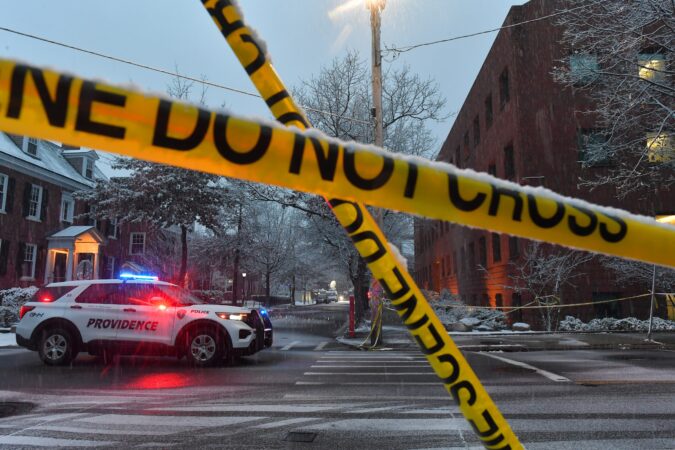
PROVIDENCE, R.I. — A person of interest detained after a Brown University shooting that killed two students and injured nine will be released after law enforcement authorities determined there was no basis to keep the individual in custody, officials said Sunday night.
The disclosure, made at a hastily convened late night news conference, represents a dramatic setback in an investigation into killings that set off hours of chaos on the Ivy League campus and unravels progress that authorities thought they had made earlier in the day when they detained a man at a Rhode Island hotel in connection with the attack.
No current suspect in deadly shooting
The release of the lone person of interest leaves law enforcement without any known suspect, with officials pledging to redouble efforts in the investigation by canvassing for video surveillance that could help pinpoint the killer’s identity.
“We have a murderer out there,” said Attorney General Peter Neronha, while Providence Mayor Brett Smiley acknowledged that ”the news is likely to cause fresh anxiety for our community.”
Despite an enhanced police presence at Brown, officials are not recommending another shelter-in-place order like the one that followed the Saturday afternoon shooting, when hundreds of officers searched for the shooter and urged students and staff to shelter in place. The lockdown, which stretched into the night, was lifted early Sunday, but authorities had not yet released information about a potential motive.
On Sunday morning, officials took into custody a person of interest at a Hampton Inn hotel in Coventry, Rhode Island, about 20 miles (32 kilometers) from Providence. Two people familiar with the matter identified that individual as a 24-year-old man from Wisconsin, though authorities never released the individual’s name.
“I’ve been around long enough to know that sometimes you head in one direction and then you have to regroup and go in another and that’s exactly what has happened over the last 24 hours or so,” Neronha said.
He said that “certainly there was some degree of evidence that pointed to the individual” who’d been taken into custody but “that evidence needed to be corroborated and confirmed. And over the last 24 hours leading into just very, very recently, that evidence now points in a different direction.”
The shooting occurred during one of the busiest moments of the academic calendar, as final exams were underway. Brown canceled all remaining classes, exams, papers and projects for the semester and told students they could leave campus, underscoring the scale of the disruption and the gravity of the attack.
As police scoured the area for the shooter, many students remained barricaded in rooms while others hid behind furniture and bookshelves. One video showed students in a library shaking and wincing as they heard loud bangs just before police entered the room to clear the building.
University President Christina Paxson teared up while describing her conversations with students both on campus and in the hospital.
“They are amazing and they’re supporting each other,” she said at a news conference. “There’s just a lot of gratitude.”
The gunman opened fire inside a classroom in the engineering building, firing more than 40 rounds from a 9 mm handgun, a law enforcement official told AP. Two handguns were recovered when the person of interest was taken into custody and authorities also found two loaded 30-round magazines, the official said. One of the firearms was equipped with a laser sight that projects a dot to aid in targeting, said the official, who was not authorized to discuss the investigation publicly and spoke to AP on the condition of anonymity.
One student of the nine wounded students had been released from the hospital, said Paxson. Seven others were in critical but stable condition, and one was in critical condition.
Durham Academy, a private K-12 school in Durham, North Carolina, confirmed that a recent graduate, Kendall Turner, was critically wounded. The school said her parents were with her.
“Our school community is rallying around Kendall, her classmates, and her loved ones, and we will continue to offer our full support in the days ahead,” the school said.
Community comes together to remember victims
On Sunday evening, city leaders, residents and others gathered at a park to honor the victims. The event originally was scheduled as a Christmas tree and Hanukkah menorah lighting.
“For those who know at least bit of the Hanukkah story, it is quite clear that if we can come together as a community to shine a little bit of light tonight, there’s nothing better that we can be doing,” Mayor Brett Smiley said at a news conference earlier in the day.
Smiley said he visited some wounded students and was inspired by their courage, hope and gratitude. One told him that active shooting drills done in high school proved helpful.
“The resilience that these survivors showed and shared with me, is frankly pretty overwhelming,” he said.
Exams were underway when the shooting began
Investigators were not immediately sure how the shooter got inside the first-floor classroom at the Barus & Holley building, a seven-story complex that houses the School of Engineering and physics department. The building includes more than 100 laboratories, dozens of classrooms and offices, according to the university’s website.
Engineering design exams were underway. Outer doors of the building were unlocked but rooms being used for final exams required badge access, Smiley said.
Emma Ferraro, a chemical engineering student, was in the lobby working on a final project when she heard loud pops. Once she realized they were gunshots, she darted for the door and into a nearby building where she waited for hours.
Surveillance video released by police showed a suspect, dressed in black, walking from the scene.
Former ‘Survivor’ contestant left the building just before shooting
Eva Erickson, a doctoral candidate who was the runner-up earlier this year on the CBS reality competition show “Survivor,” said she left her lab in the engineering building 15 minutes before shots rang out.
The engineering and thermal science student shared candid moments on “Survivor” as the show’s first openly autistic contestant. She was locked down in the campus gym following the shooting and shared on social media that the only other member of her lab who was present was safely evacuated.
Brown senior biochemistry student Alex Bruce was working on a final research project in his dorm across the street from the building when he heard sirens outside.
“I’m just in here shaking,” he said, watching through the window as officers surrounded his dorm.
Brown, the seventh-oldest higher education institution in the U.S., is one of the nation’s most prestigious colleges, with roughly 7,300 undergraduates and more than 3,000 graduate students.
The Washington Post recently sparked a familiar debate by ranking the top sports cities in the country — and left Philadelphia off the list. While local journalists rushed to defend our passionate fandom, they missed the most important question: Does our city truly deserve the title of “Best Sports City” if we systematically deny our own children the chance to participate?
If we believe in the power of Philadelphia sports, it’s time for our professional teams and our famous citizens to commit to making every child a winner by funding athletics in the Philadelphia School District.
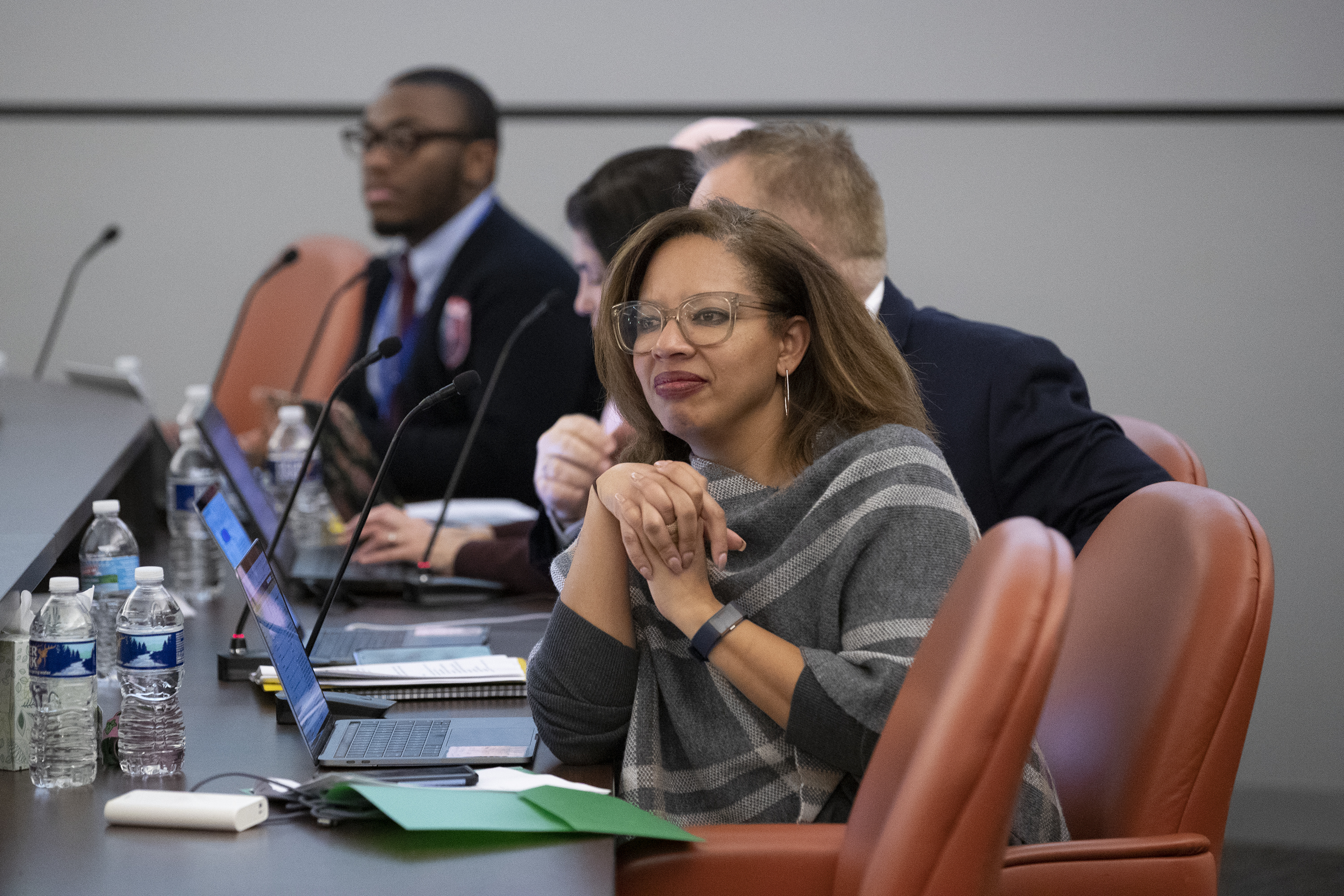
Angela McIver at the meeting of the Phiadelphia Board of Education in 2020.
I could not, in good conscience, vote for a budget that answered that question by allocating four times the amount of money for school police than it did for athletics programming.
I believe funding decisions like these are an indictment of our priorities.
For our students, the impact of this financial neglect is not abstract — it is a daily indignity. For example, while my children were on the Central High School swim team, the team routinely had to scramble for practice facilities. One of their regular practice pools was a therapeutic pool for children with disabilities, which kept the water temperature above 80 degrees — a condition dangerous for intense athletic training.
A swim team practices at the Marian Anderson Recreation Center, in South Philadelphia in 2022.
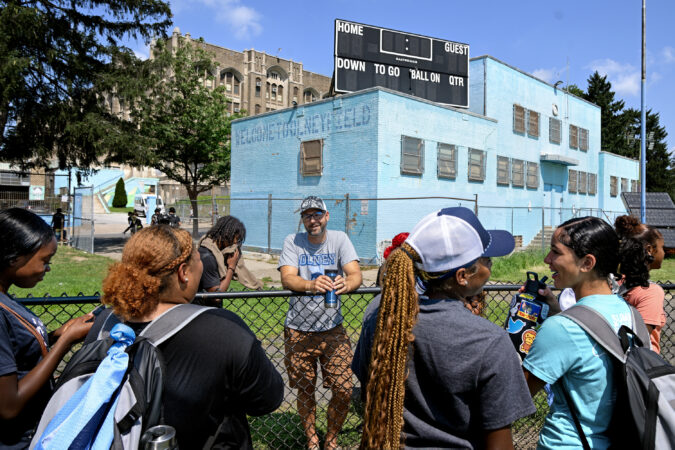
Across the district, our track teams often have no actual track, forcing students to run laps in crowded school hallways. Our baseball teams must clear rocks and debris off their own fields just to hold a practice session.
While school districts across this region consistently allocate between 1% and 1.5% of their budget to athletics, Philadelphia allocates a mere two-tenths of 1% (0.2%). Consider the scale: In 2023, when I wrote an op-ed about school budgets for The Inquirer,Lower Merion spent nearly $4 million on athletics for two high schools and three middle schools. Philadelphia spent a mere $9 million for 57 high schools and more than 150 middle schools.
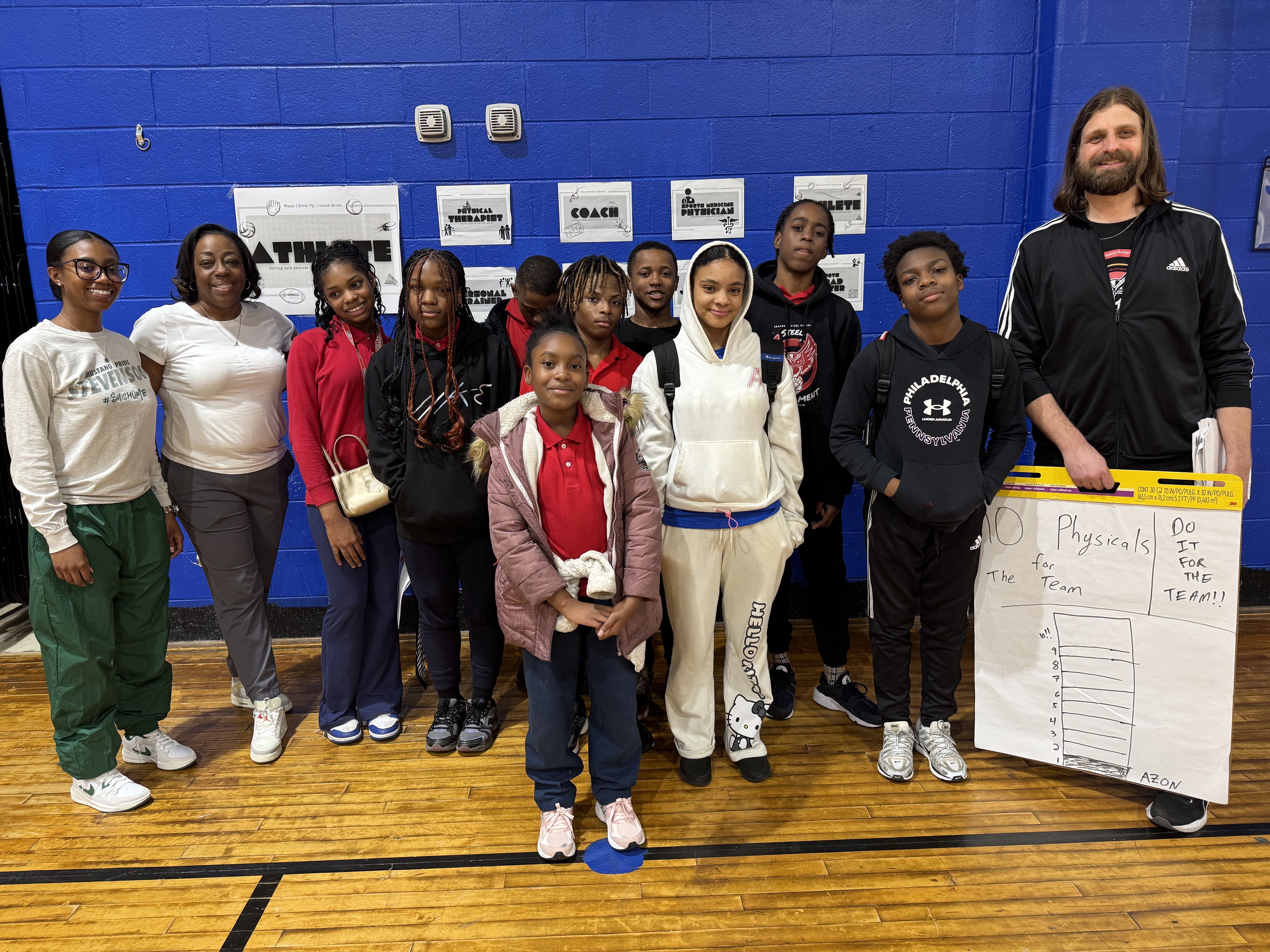
Students and coaches from Steel Elementary, pictured here in March, were hoping to establish a track team —its first Philadelphia School District-sponsored extracurricular activity.
If the Philadelphia School District could allocate funding according to the formula used by our neighboring districts, we could transform thousands of students’ lives. Unfortunately, competing financial realities (like the cessation of COVID-19 funding and the critical need to address deteriorating facilities) relegate athletics to the bottom of the priority list.
A challenge to Philadelphia’s champions
We know the benefits of participation in sports are profound: lower rates of depression, better mental health, stronger self-regulation, and increased confidence. Investing in athletics develops students’ passions and talents.
Moreover, in a city grappling with gun violence, the impact is immediate and tangible: it keeps thousands of our students off the streets during the times when they are most likely to become victims of, or engage in, disruptive behavior.
Unfortunately, the reality is that this funding gap reflects a systemic financial disparity facing our city. I recognize the immense difficulty the current administration faces in allocating dollars while working with far less funding per student than wealthier suburban districts. If Philadelphia truly values its sports identity, it’s time for those who embody that spirit to step up.
My challenge goes out directly to:
Our professional sports teams (Eagles, Sixers, Phillies, Flyers, Union): If our city’s identity is tied to your success, then your success must be tied to our children. Commit a percentage of your organization’s substantial revenues to help close the school district’s athletics funding gap to finally bring parity with suburban districts.
Our celebrities and ambassadors: Every time Kevin Hart, Quinta Brunson, Hannah Einbinder, or Bradley Cooper says, “Go Birds!” on the red carpet, they use their platform to amplify Philadelphia pride. Now, we need them to use their wallets and voices to amplify opportunity. Commit to a sustained, philanthropic effort to fully fund athletics across our public schools.
We have amazing, talented children with gifts to share. A true “Best Sports City” doesn’t just celebrate its pros; it gives every child the chance to become one.
Let’s turn our fanatical passion into foundational funding.
Angela McIver served as a member of the Philadelphia school board from 2018-2021.
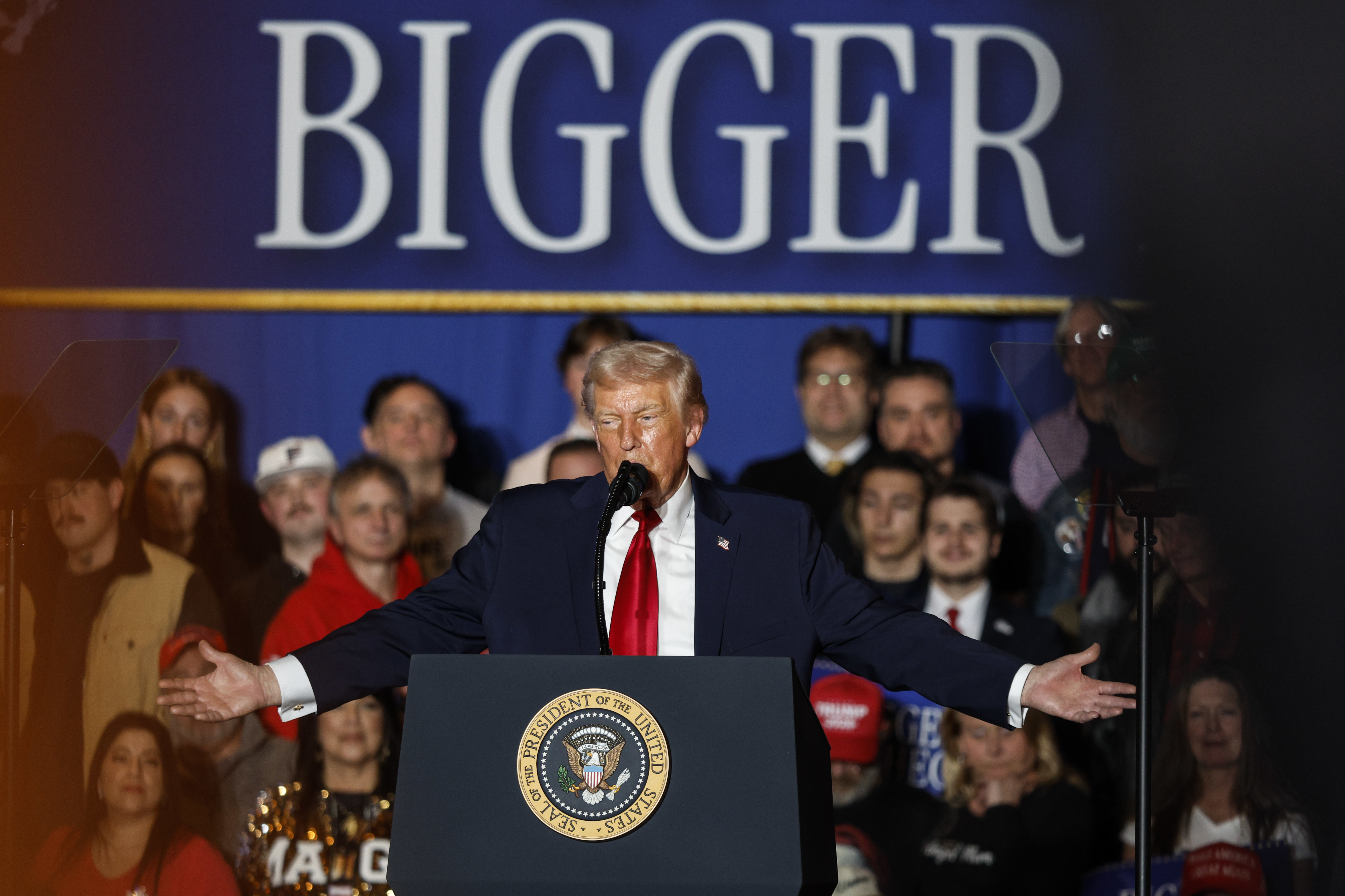
President Donald Trump makes his first stop on an “economic tour,” in Mt. Pocono, Pa., Tuesday, Dec. 9, 2025.
Welcome to a new week, Philly.
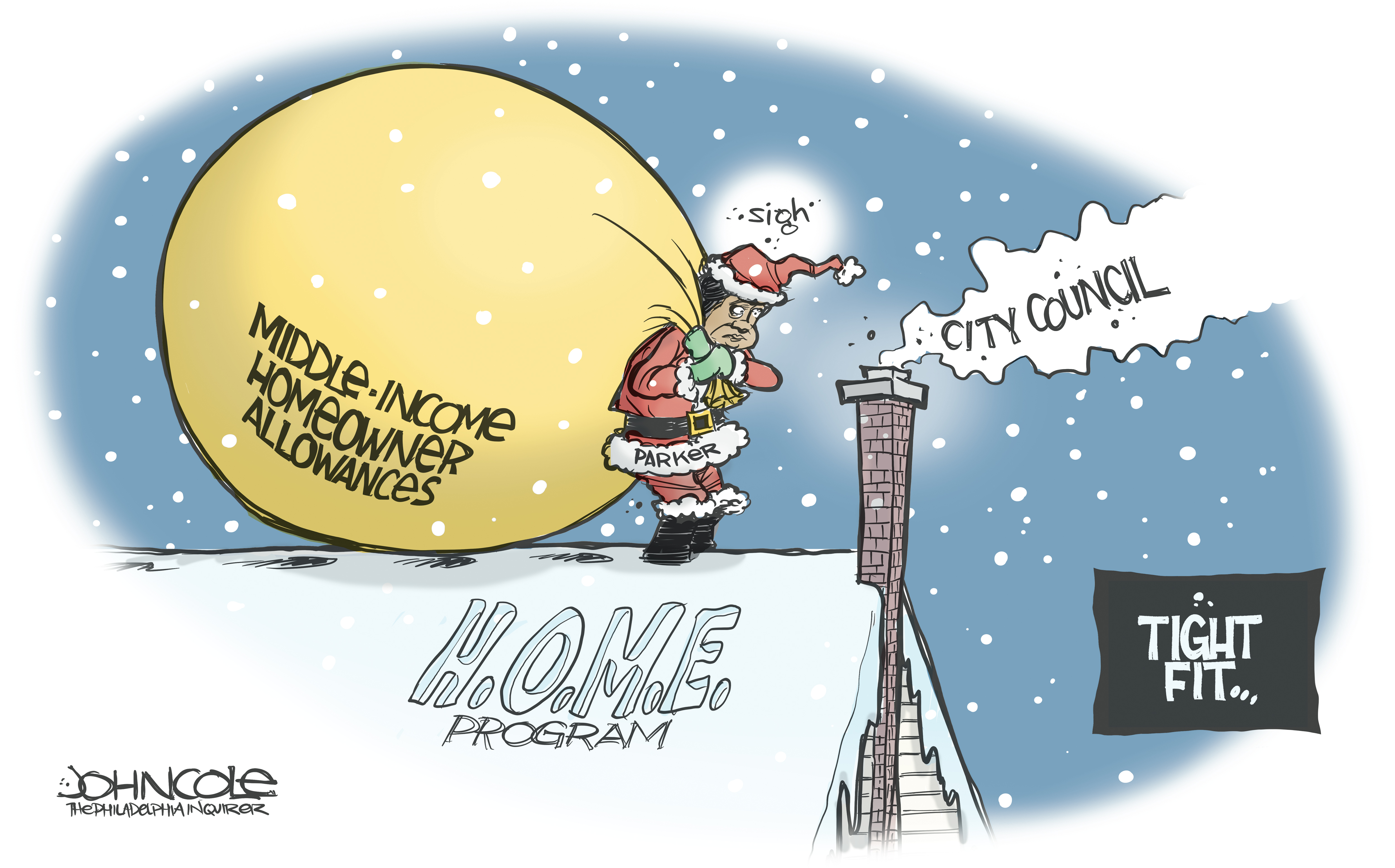
Some have been wondering, why hasn’t President Donald Trump sent troops to Philadelphia, the city where “bad things happen?” Especially when troops are in smaller, less prominent cities. Nobody knows for sure, but The Inquirer has some theories.
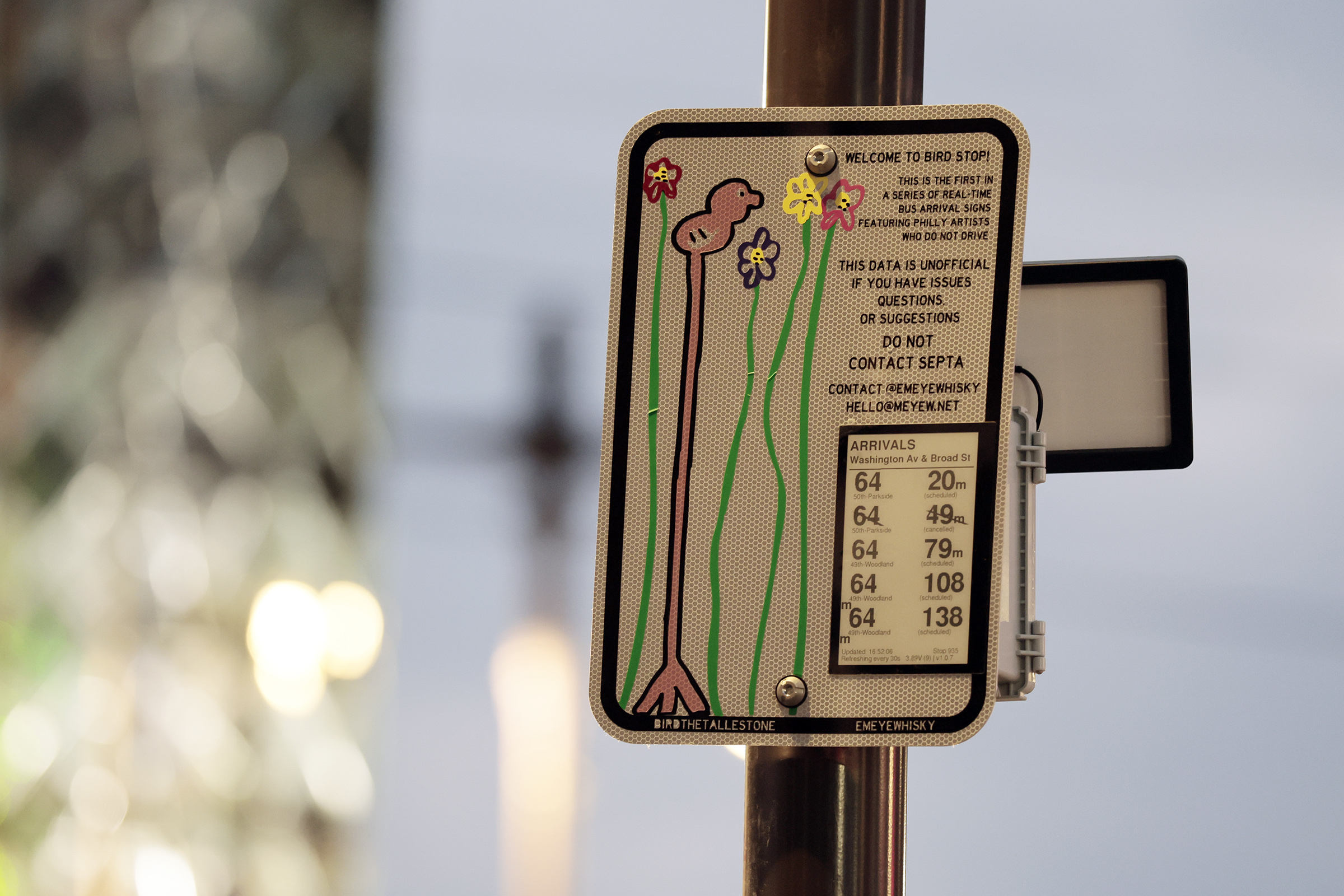
And last year, SEPTA promised solar-powered screens at bus stops that would give riders real-time info. With the initiative stalled, an anonymous street sign artist is filling the void — with their own real-time tracker.
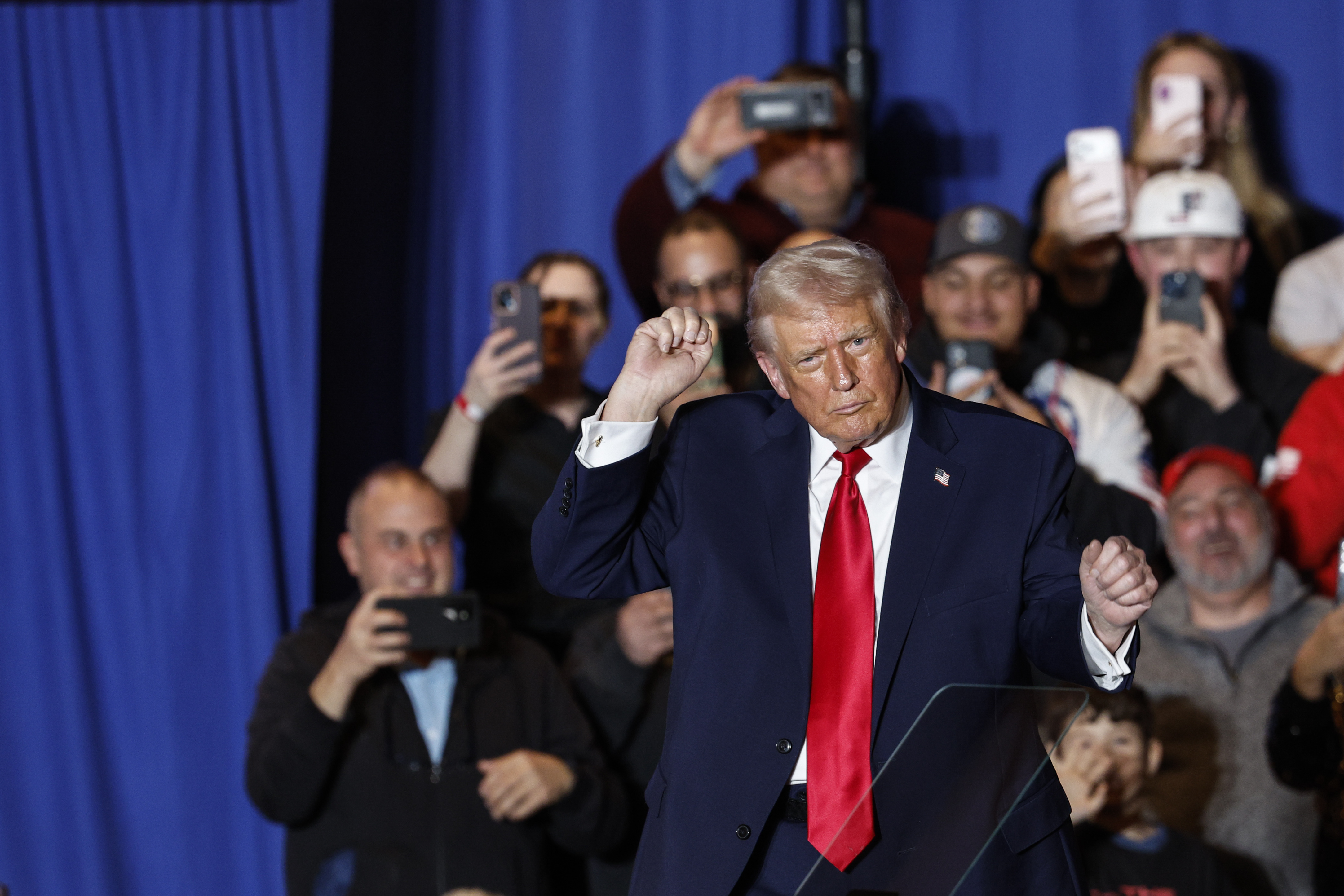
A dancing President Donald Trump after he made his first stop on an “economic tour,” in Mt. Pocono, Pa., Tuesday, Dec. 9, 2025.
In the last six months Trump has sent troops, immigration agents, or both to Democratic cities from coast to coast. The list includes Los Angeles, Chicago, Washington, Memphis, Portland, Ore., Charlotte, N.C., New Orleans, and Minneapolis. But not Philadelphia.
The city that seemed an obvious early target, condemned by Trump as the place where “bad things happen,” has somehow escaped his wrath. At least so far.
That has sparked speculation from City Hall to Washington over why the president would ignore the staunchly Democratic city with which he has famously feuded. We offer some insight into whether that’s likely to change.
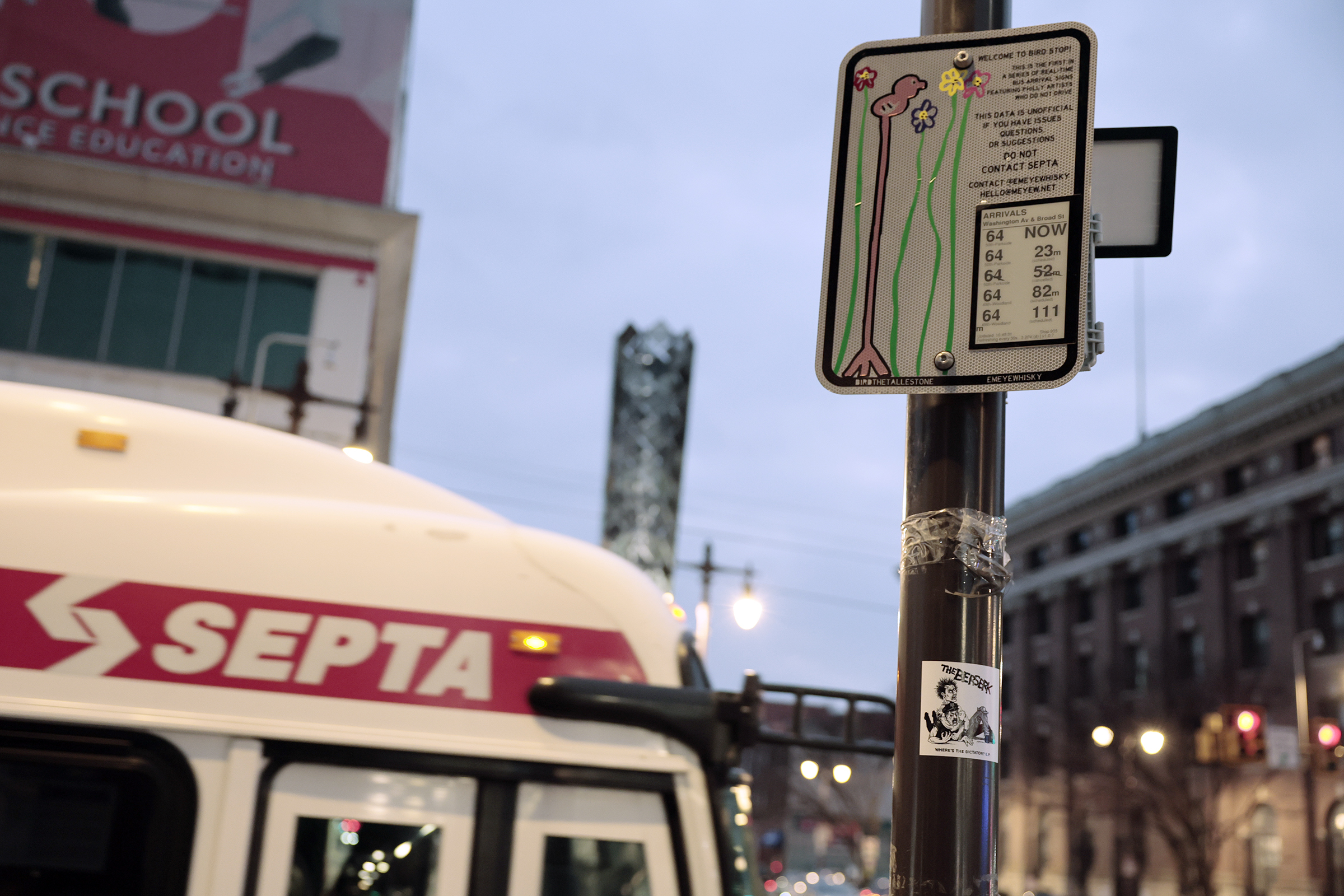
The digital real-time bus tracker that has been installed at the Route 64 bus stop on the northeast corner of Broad Street and Washington Avenue in Philadelphia on Sunday, Dec. 7, 2025.
While waiting for a bus earlier this year, two Philadelphia street artists who rely on public transportation diagnosed an all-too-familiar ailment: I have no idea when the bus will be here.
Earlier this month, their brainchild — a solar-powered e-reader mounted into a street sign that provides bus arrival information — went live on the northeast corner of Broad Street and Washington Avenue in South Philadelphia, along bus Route 64.
The device pulls real-time arrival times from publicly available data (the same dataset that feeds SEPTA’s app), according to artist Make It Weird, who engineered the rig and asked to remain anonymous because their work meanders into a legal gray area.
What you should know today
As Jews around the world celebrate Hanukkah, a deadly attack in Australia has shocked Jewish communities in the Philadelphia region, leading some to increase security at services.
An upcoming U.S. Supreme Court ruling on the legality of the sweeping tariffs that President Donald Trump rolled out in April — briefly sending markets worldwide into a tailspin — could be the next test for stocks that have been flying high.
An American Airlines flight attendant who works out of the Philadelphia International Airport is suing the airline, alleging that flight attendants aren’t properly paid.
When it comes to funding his presidential library, former President Joe Biden is far behind on funds, the New York Times reported.
FIFA opened the lottery for its latest ticket presale on Thursday. It showed tickets, priced in the hundreds, for all 72 group-stage matches, including the five headed to Philly.
From data centers to casinos, one of Philly’s most successful investors, Ira Lubert, says he’ll give until he’s dead — and after.
Quote of the day
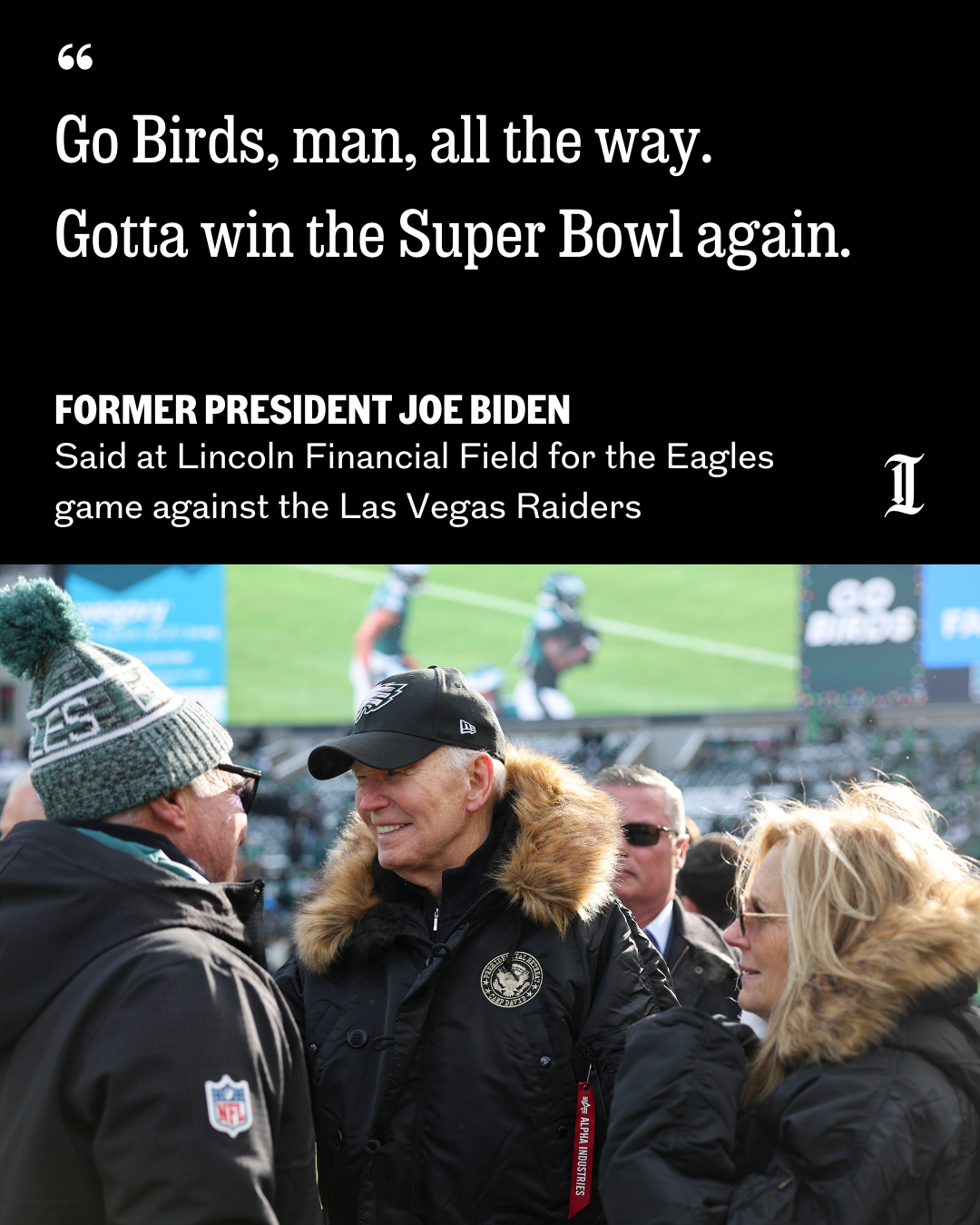
Former President Joe Biden supports the Eagles at Lincoln Financial Field.
Former President Joe Biden and former first lady Jill Biden touched down at the Linc for the snowy Sunday matchup between the Philadelphia Eagles and the Las Vegas Raiders. Joe and “that girl from Philly,” Jill, were spotted on the sidelines with Eagles owner Jeffrey Lurie before the 1 p.m. kickoff.
🧠Trivia time
With roots stretching back 170 years, this nonprofit was originally founded to serve the Jewish population but has since expanded to offer a range of services to all.
Cheers to Jason Wermers, who solved Sunday’s anagram: Coatesville. The area school district will soon see a swath of changes as it prepares to shutter two elementary schools, open a new one, and realign its attendance boundaries.
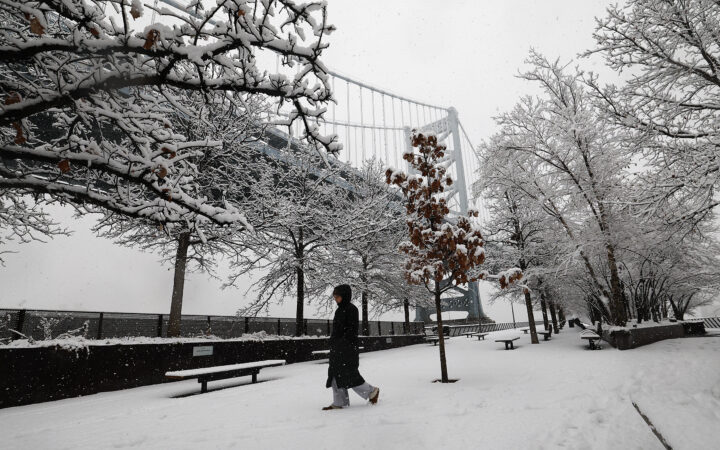
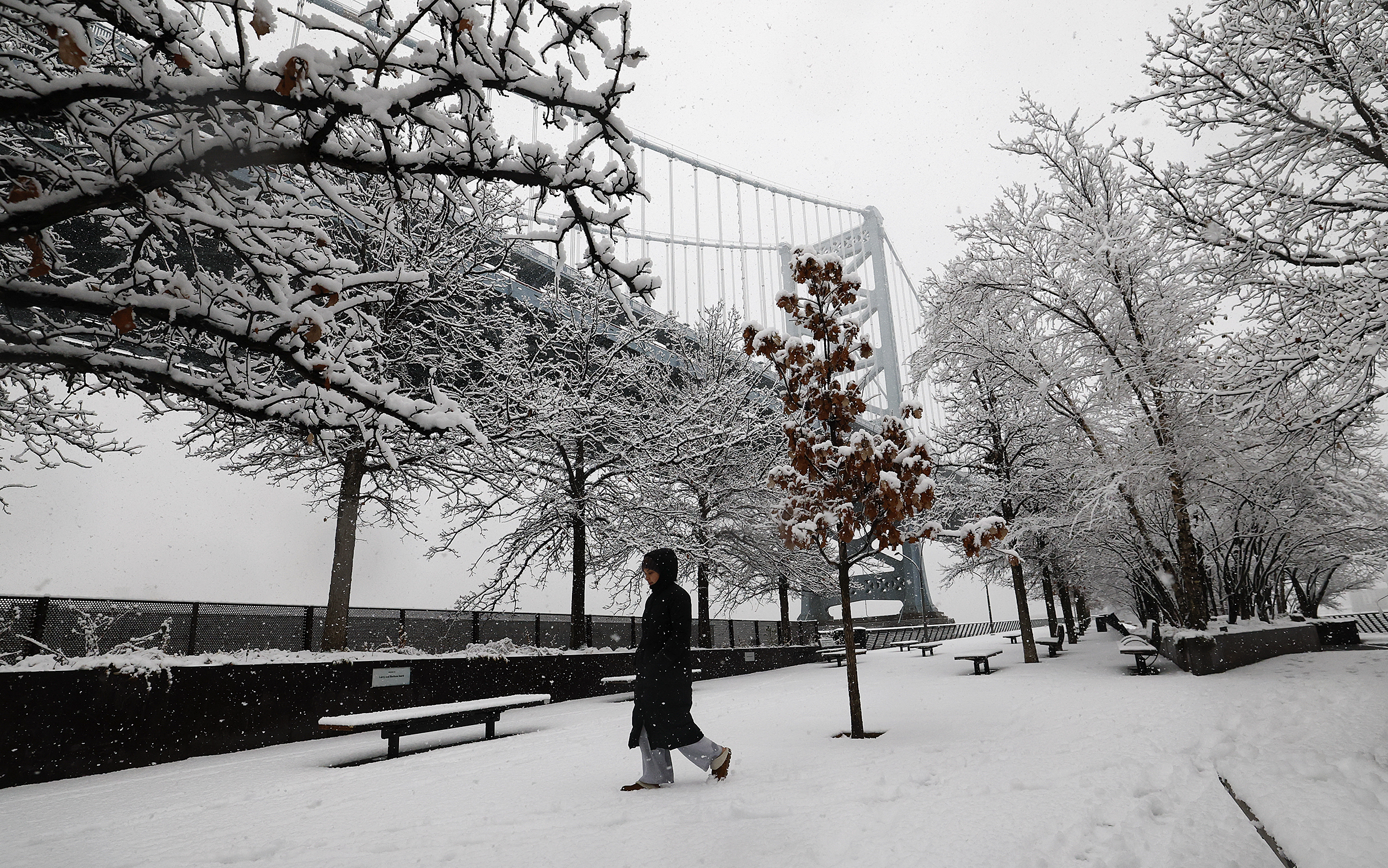
A pedestrian walks along the Race Street Pier as snow falls on Sunday, Dec. 14, 2025.
❄️ Philadelphians awoke to the first significant snowfall of the season on Sunday, with 3 to 7 inches of snow blanketing the area.
📬 Your ‘only in Philly’ story
Think back to the night that changed your life that could only happen in Philly, a true example of the Philly spirit, the time you finally felt like you belonged in Philly if you’re not a lifer, something that made you fall in love with Philly all over again — or proud to be from here if you are. Then email it to us for a chance to be featured in the Monday edition of this newsletter.
This “only in Philly” story comes from reader Joe Morris, who describes classroom shenanigans in the early days of the Community College of Philadelphia:
The Community College of Philadelphia admitted its first class in September 1965, just a year after community colleges received Pennsylvania legislative approval in 1964. The school took over the former Snellenburg’s department store in Center City.
One of the best classes was Mr. Beck’s History of Western Civilization class. Beck was the most nattily dressed of all the professors and was both captivating and unshakeable. Fifty minutes with him passed rapidly, and his lectures ended precisely as the bell rung. I bet my buddy Frank that I could rattle Beck out of his unflappable persona. During the last class of my first semester, as Beck was taking questions on the material, I asked, “Mr. Beck, where do you purchase your ties?” Beck didn’t flinch: “Given the breadth of material we’ve covered, I’m disappointed that you don’t have an interest in something other than my haberdasher.”
I doubled my bet with Frank, thinking I might shake him during the next semester. I sat in the back row directly underneath three very tall windows, with a small ledge on the outside. Before class, I closed the blinds on either side of the center window and opened the center blind to full height. I clutched my books and hoisted myself out onto the ledge and moved carefully behind the closed blinds. Beck entered and began his lecture. A couple of minutes in, I made my way along the ledge, prompting stares and pointing from the pedestrians below, then, once in the open center window, stepped down into the classroom and took my seat.
I believed Beck paused slightly and I whispered to Frank, “You owe me $10.” Frank maintained that it was merely Beck’s typical pause to emphasize a fact. Atypically, Beck ended class a few seconds early, then said, “Mr. Morris, might you stop by to see me after class?”
Confident that I had shaken him and expecting a reprimand for ledge lingering, I approached his desk and nonchalantly said, “Mr. Beck, I believe you wanted to see me?” He replied, “Yes, could you make more of an effort to be on time for class?” Frank smirked and put out his hand for the 10 bucks.
Thanks for starting your week with The Inquirer. I’ll be back with you tomorrow.
By submitting your written, visual, and/or audio contributions, you agree to The Inquirer’s Terms of Use, including the grant of rights in Section 10.
We are standing at the crosswalk of a bold new era in street design and management.
Streets make up roughly 30% of a Philadelphia’s land. Yet, most are locked into a single use: moving and storing cars. What if, instead, we treated them as dynamic public spaces capable of changing function and meaning depending on the time of day, the season, or the needs of the neighborhood?
That question guided a recent pilot project I helped lead in Chinatown, which will be unveiled next month. As part of “the Chinatown Stitch” — an ambitious effort led by the city’s Office of Transportation and Infrastructure Systems, with state and federal partners, meant to heal a neighborhood long divided by transportation infrastructure. Our team designed a movable market stall, a piece of street furniture that serves as both a vendor kiosk and a community gathering space.
During Chinese New Year or other festivals, when the streets overflow with people and energy, the stall slides into the roadway, transforming asphalt into a festive plaza. When the celebration ends, it retreats, making way for traffic once again.
For a neighborhood starved of public space, this small, movable structure has become a powerful symbol: The street itself can flex, adapt, and respond. It embodies what planners and landscape architects call the Flexible Street Strategy — a vision for cities that recognizes streets as living systems, not fixed infrastructures.
Open Streets
For more than a century, street planning has been governed by rigid right-of-way definitions. Sidewalks for walking. Lanes for driving. Curbs for parking. These rules answer only one question: what belongs where? The flexible street concept asks another: when? When should a street prioritize cars, and when should it belong to people?
Based on research my team completed last summer, the results have been stunning. Foot traffic soars. Businesses thrive. And, perhaps most tellingly, children return. On a normal day, we counted two kids passing through a block in 15 minutes. During one Open Streets event, that number jumped to 39.
It’s not just a statistic; it’s a story of safety, belonging, and joy. For once, the street was everyone’s.
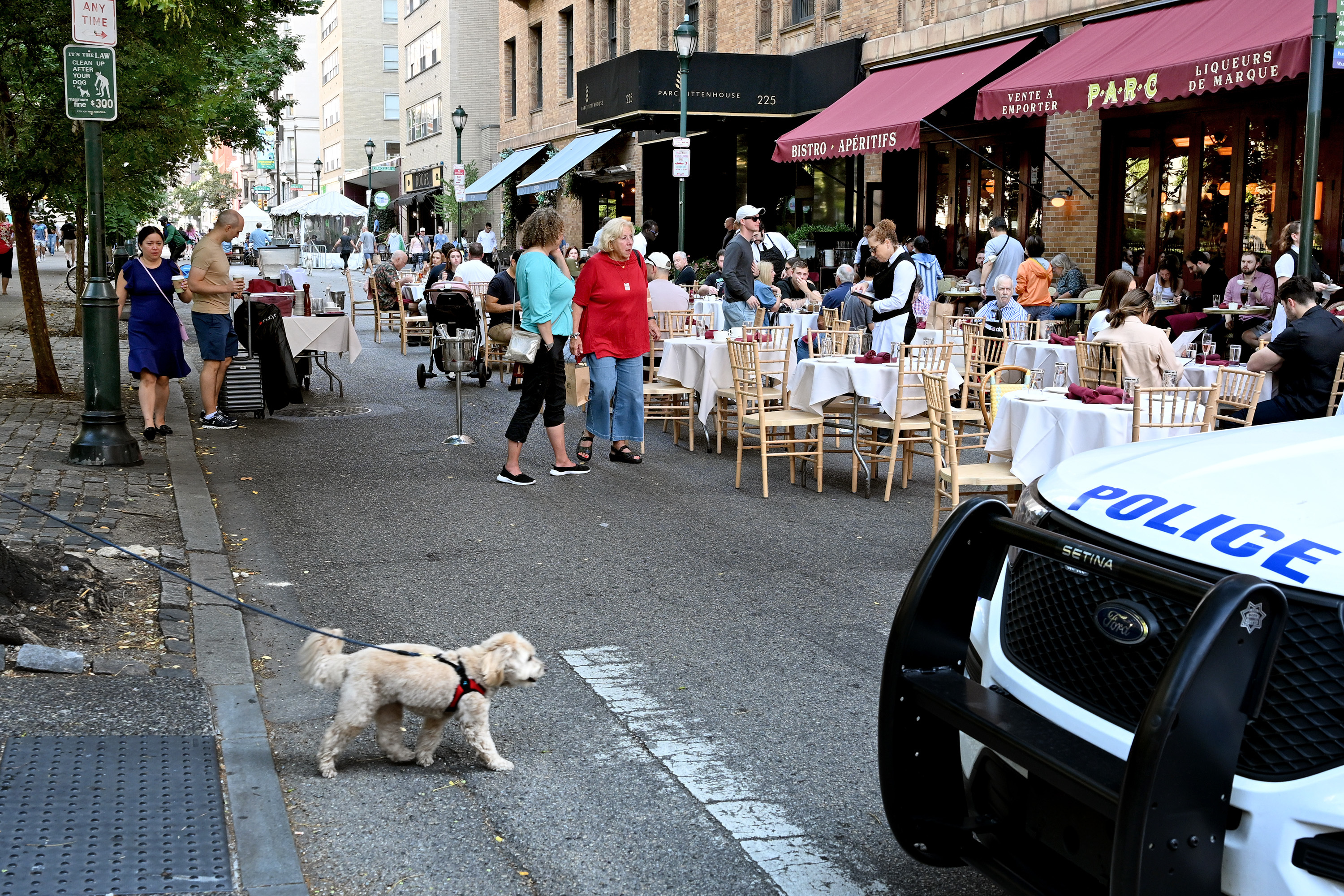
Restaurants take over 18th Street as the streets around Rittenhouse Square are closed to vehicular traffic for pedestrian-only zones for the city’s Open Streets program.
When the Open Streets program began, its organizers expected bureaucratic hurdles — clashes between departments, debates over lost parking revenue. Instead, city agencies from streets to parking embraced it. Post-pandemic, there’s a new understanding: Streets are no longer merely conduits for cars. They are the connective tissue of civic life.
The success of the program, first launched in 2024 and revived last summer, has inspired plans to expand across downtown. But as encouraging as such pilots are, they still exist as exceptions to the rule. But the Flexible Street Strategy holds that flexibility should not require special permission. It should be baked into the DNA of how cities plan, design, and manage their streets.
This means rewriting the system itself. Instead of rigid right-of-way codes, cities need regulatory frameworks that acknowledge streets as time-based spaces — spaces whose use shifts dynamically according to demand, culture, and context.
To move from philosophy to practice, flexibility can now be managed with precision through technology.
Using digital twin models, IoT sensors, and AI-driven analytics, our team is building a data platform that identifies “flex windows” — hours when converting a street from traffic to pedestrian use offers the greatest benefit with the least disruption. The system integrates live data on street anchor activities (schools, restaurants, parks, etc.), traffic volumes, safety, and equity to recommend optimal transformation times.
A community stage
Still, the real power of the flexible street idea lies in its simplicity. It doesn’t require new infrastructure — just imagination, data, and a willingness to test. Its nonpermanent, pilot-friendly nature allows cities to experiment at low cost and low risk. Just like the market stall installed in Chinatown, which amplified existing street events and vividly showed how a street can transform into a stage for community life.
If the official Chinatown Stitch aims to reconnect neighborhoods divided by a sunken highway through large-scale infrastructure, our market stall serves as a micro-stitch — achieving the same goal on the scale of the city block by redefining the street as public space and reconnecting residents, shops, and everyday social life.
Although the Chinatown Stitch funding was cut by the Trump administration’s One Big Beautiful Bill Act, the project has still secured planning funds. Led by OTIS and PennDot, the whole design team is actively finalizing the design. The market stall pilot project is part of this work and serves as an important advocacy and outreach tool for the overall project, supported strongly by Philadelphia Chinatown Development Corporation.
At the end of the day, whether they recognize it or not, our cities no longer have the luxury of static infrastructure. Between climate change, social fragmentation, and changing mobility patterns, flexibility is not a design preference — it’s survival. The street of the future isn’t just paved for movement; it’s programmed for life.
If we want streets that truly belong to everyone, we must give them the freedom to change.
Yadan Luo is a landscape architect, lecturer in the Department of Landscape Architecture at the University of Pennsylvania Stuart Weitzman School of Design, and the creative director of YH LAB.
While waiting for a bus earlier this year, two Philadelphia street artists who rely on public transportation diagnosed an all-too-familiar ailment: I have no idea when the bus will be here.
“No one knows when the bus is coming,” one recalled saying.
“We should really make something.”
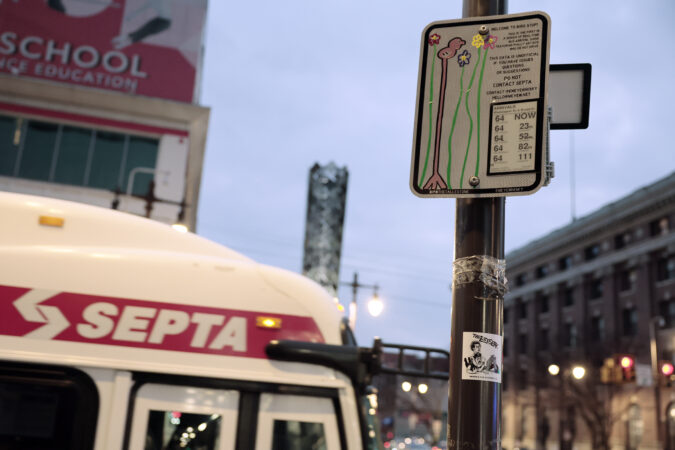
Earlier this month, their brainchild — a solar-powered e-reader mounted into a street sign that provides bus arrival information — went live on the northeast corner of Broad Street and Washington Avenue in South Philadelphia, along bus Route 64.
The device pulls real-time arrival times from publicly available data (the same dataset that feeds SEPTA’s app), according to artist Make It Weird, who engineered the rig and asked to remain anonymous because their work meanders into a legal gray area.
The digital real-time bus tracker that has been installed at the Route 64 bus stop on the northeast corner of Broad Street and Washington Avenue in Philadelphia on Sunday, Dec. 7, 2025.
Their creation is inconspicuous; to passersby, it could be a road sign graffitied with a lanky bird and stalky flowers. Commuters might get closer and see it reads, “This data is unofficial. … Do not contact SEPTA.”
“We have a fundamental issue with funding transit in Pennsylvania,” Make It Weird said. “We, as citizens, often make excuses for real quality-of-life improvements that could be made by saying, ‘Well, SEPTA doesn’t have money, so quit complaining.’ We’re just saying, ‘This could be better.’”
The sign is akin to a Band-Aid on a public transportation network plagued by infrastructure issues, financial turmoil, and an ever-constricting budget, as well as a resource for people who don’t have access to a smartphone with unlimited data or SEPTA’s app, said Make It Weird and collaborator Bird, the alias for the artist whose signature statuesque and slender pink bird appears on the sign.
“Accessibility is something that’s hugely important to me,” Bird said. “It comes from a really large place of privilege that people always assume that everyone has a phone or can look something up, and that’s just not the case. Trying to provide that kind of accessibility for everyone — I think it’s an important place to start.”
Late last month, a prototype of the device near South Philly’s Benna’s Cafe caught the attention of Conrad Benner and wound up on Streets Dept’s Instagram.
The video has garnered more than 8,500 likes; the comments section is filled with fire emojis and clapbacks at SEPTA. One commenter wrote, “This is a sincere public service. Artists are extraordinary. Septa should hire them.” Another said, “Hopefully, it doesn’t find the same fate as Hitchbot did.”
“I’ve been really appreciative of how many people think it’s cool,” Make It Weird said. “I’ve been also really appreciative of how many people say, ‘Yeah, other cities are doing this.’”
Digital screens that feed real-time tracking information have already popped up in other major cities, like New York City and Minneapolis. But Philadelphia has been slow to adopt the tech: While a five-year, $6 million contract to install iPad-sized trackers mounted to bus stops was publicized last year, SEPTA spokesperson Kelly Greene said in an email that none of the screens have been deployed yet, citing cybersecurity.
“We recognize the importance of real-time bus tracking for our customers and will provide an update on this initiative as soon as possible,” Greene said.
Make It Weird started making goofy and whimsically mock street signs in June; all their signs are configured to meet the federal standards, they said, which helps their art meld with the monotonous “No Parking” and “Tow-Away Zone” verbiage. (One sign near City Hall said, “Stop Parking, Ride SEPTA: Fund Public Transit, Sell Your Car,” in the ubiquitous, red Highway Gothic sans-serif font. Another triptych read, “Go Birds,” “F— ICE,” and “Free Palestine,” quoting Hannah Einbinder’s bleeped Emmy acceptance speech.)
The Route 64 sign is the first in hopefully a series of 10, all featuring collaborations with other Philly artists who don’t drive.