Hundreds of Philadelphians live next to dangerous abandoned buildings. The city’s Department of Licenses and Inspections stopped using a tool meant to track vacant properties.
And in other housing news, Mayor Cherelle L. Parker visited pulpits across West and North Philadelphia on Sunday, promoting her vision for her signature H.O.M.E. initiative that’s heightening tensions in City Hall.
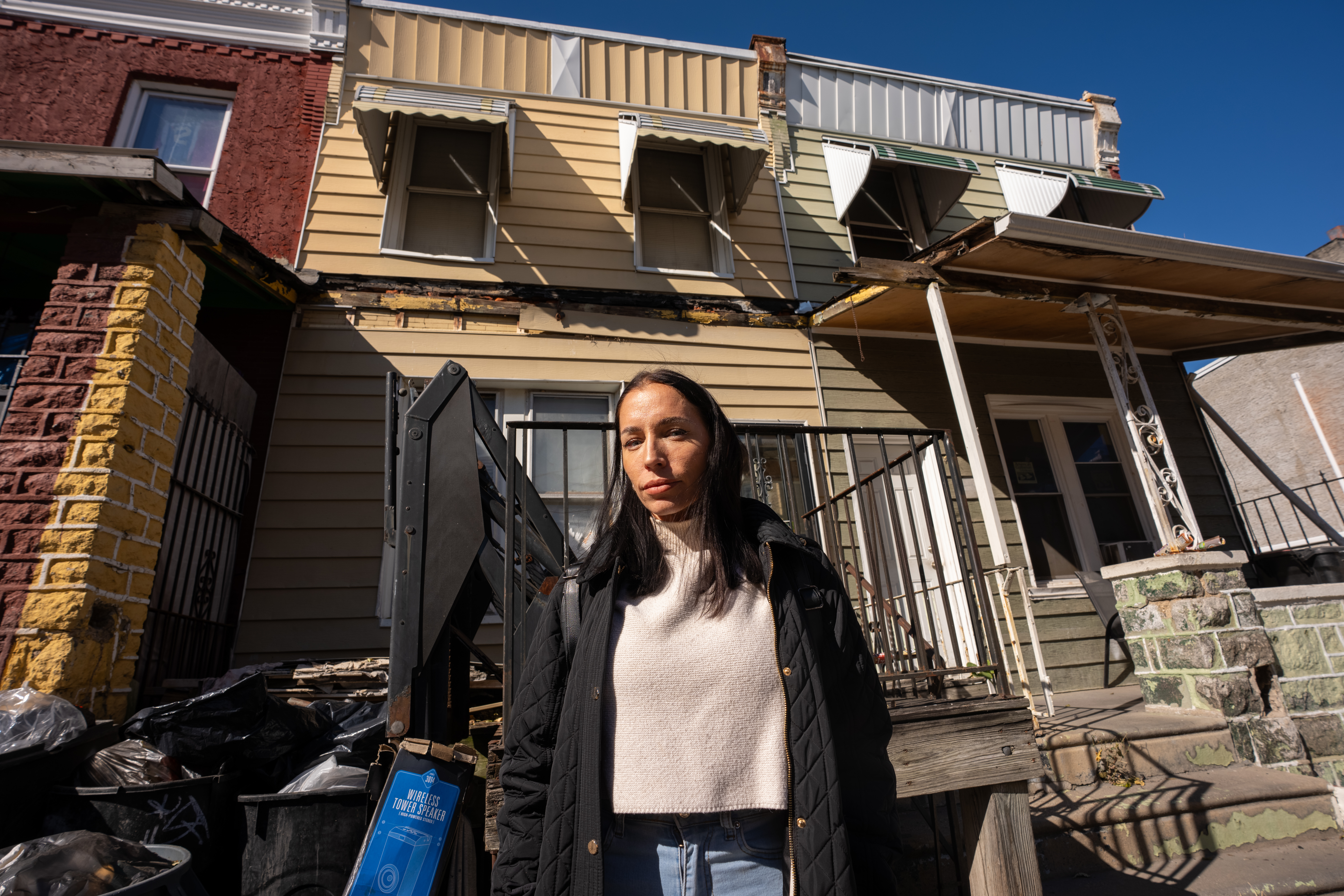
Across Philadelphia, scores of families live next to vacant properties that are or could become dangerous — houses with collapsing porches, flooded basements, foundation-cracking weeds, and the like.
Many of those empty and imminently dangerous buildings are rowhouses, which share walls with neighboring homes. Disproportionately, they are based in the city’s poorest zip codes.
The total amount, though, is unclear. L&I’s methods of tracking vacant properties have shifted in recent years, including the discontinuation of an algorithmic tool to predict whether a property is likely to be vacant.
In the meantime, concerned residents and community activists want L&I to do more to ensure their safety, in some cases organizing to get the city to deal with abandoned properties more quickly.
Amid City Hall tensions, Mayor Cherelle L. Parker spent the weekend seeking public support for her signature housing initiative, the Housing Opportunities Made Easy program, aka H.O.M.E.
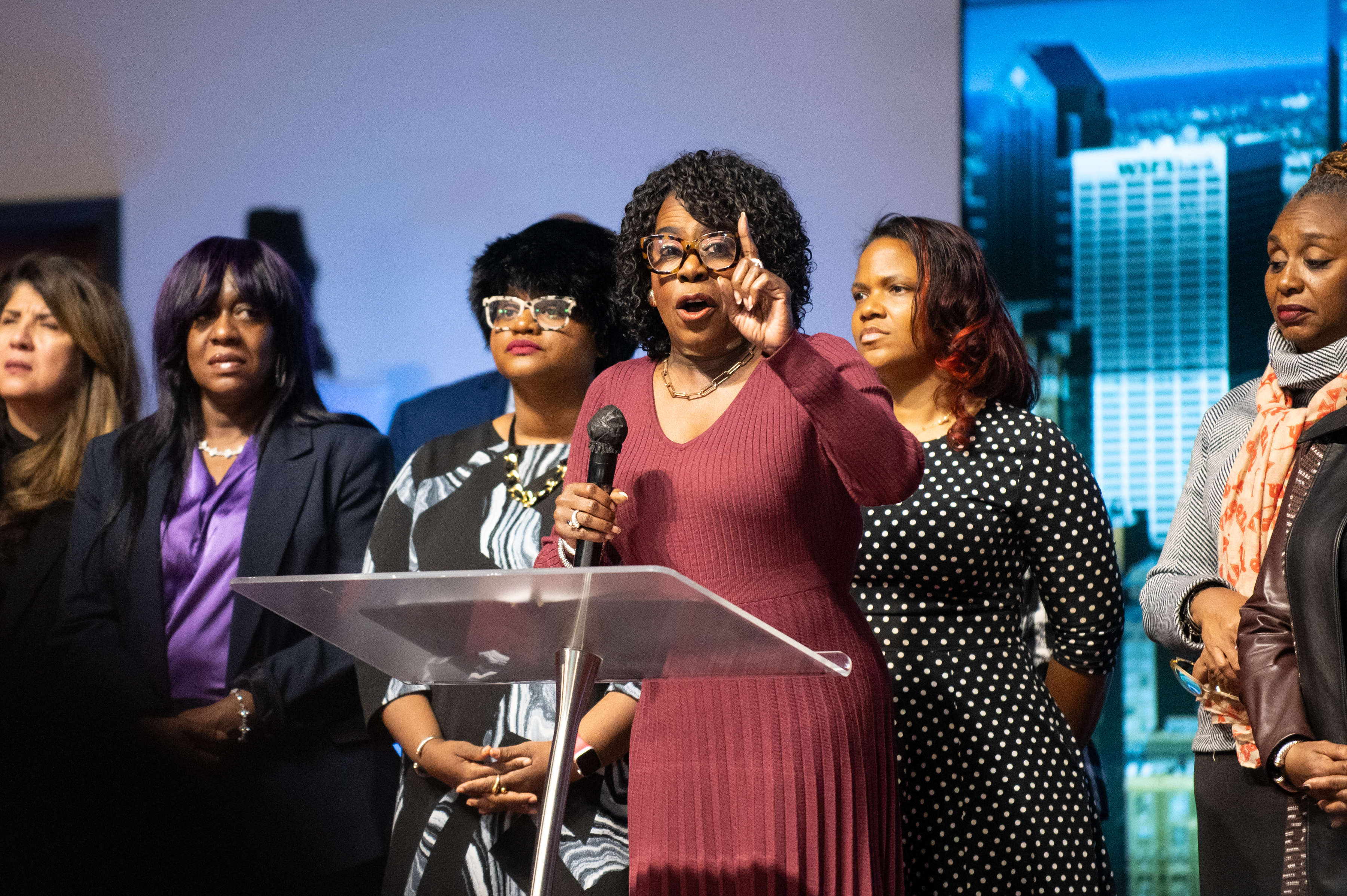
🏠 Parker on Sunday promoted the $800 million program to congregants at 10 churches, emphasizing that she wants to ensure the funding helps Philadelphians of varying incomes.
🏠 The speaking tour followed City Council’s changes last week to H.O.M.E.’s initial budget and eligibility requirements to prioritize Philly’s lowest-income households.
🏠 “We’ve got to take care of the people who are most in need, but we can’t penalize the people who are going to work every day, pay their taxes, contribute to the city, and they can’t benefit from home improvement programs,” Parker said during a stop at Cobbs Creek’s Church of Christian Compassion.
In other local funding news: A bilingual credit union, Finanta Credit Union, is now open in Port Richmond. It’s seeking “unbanked” customers who want to buy homes and build businesses.
U.S. Rep. Brian Fitzpatrick plans to introduce a bipartisan bill to extend Affordable Care Act subsidies after this fall’s shutdown battle left the issue unresolved. Meanwhile, for every person who signed up for Obamacare health insurance in Pennsylvania last month, two others dropped their plans in anticipation of skyrocketing costs.
Former U.S. Sen. Bob Menendez is permanently banned from holding public office in New Jersey — and if he tries, he could face criminal charges.
Jeffrey Yass, Pennsylvania’s richest man, detailed how school vouchers drive his massive political spending operation in a rare interview with The Washington Post.
A Wistar Institute scientist’s study has found a new approach to ovarian cancer treatment, which tends to be resistant to hormone therapy.
Former Fabric Workshop and Museum leader Christina Vassallo will become executive director of the Pew Center for Arts & Heritage on Jan. 5, Pew announced Monday.
The students of Room 221 at Fanny Jackson Coppin Elementary in South Philly watched a massive construction project rise for months outside their classroom window. At teacher Kate Atkins’ request, the builders came to class last week and answered their questions about the project.
Among them: “Why did you decide to make the house bigger by making it taller instead of making it wider?” and “Will it be done by Christmas?” (The latter answer is no — and not by Hanukkah, either.)
🧠Trivia time
Tony Award-winning playwright Tom Stoppard died last week at 88. To which Philadelphia theater did the Czech writer have a close connection?
Cheers to Nick Petryszyn, who solved Sunday’s anagram: Not for Nothing. The South Philly crime drama debuted on Amazon Prime this week.
Photo of the day
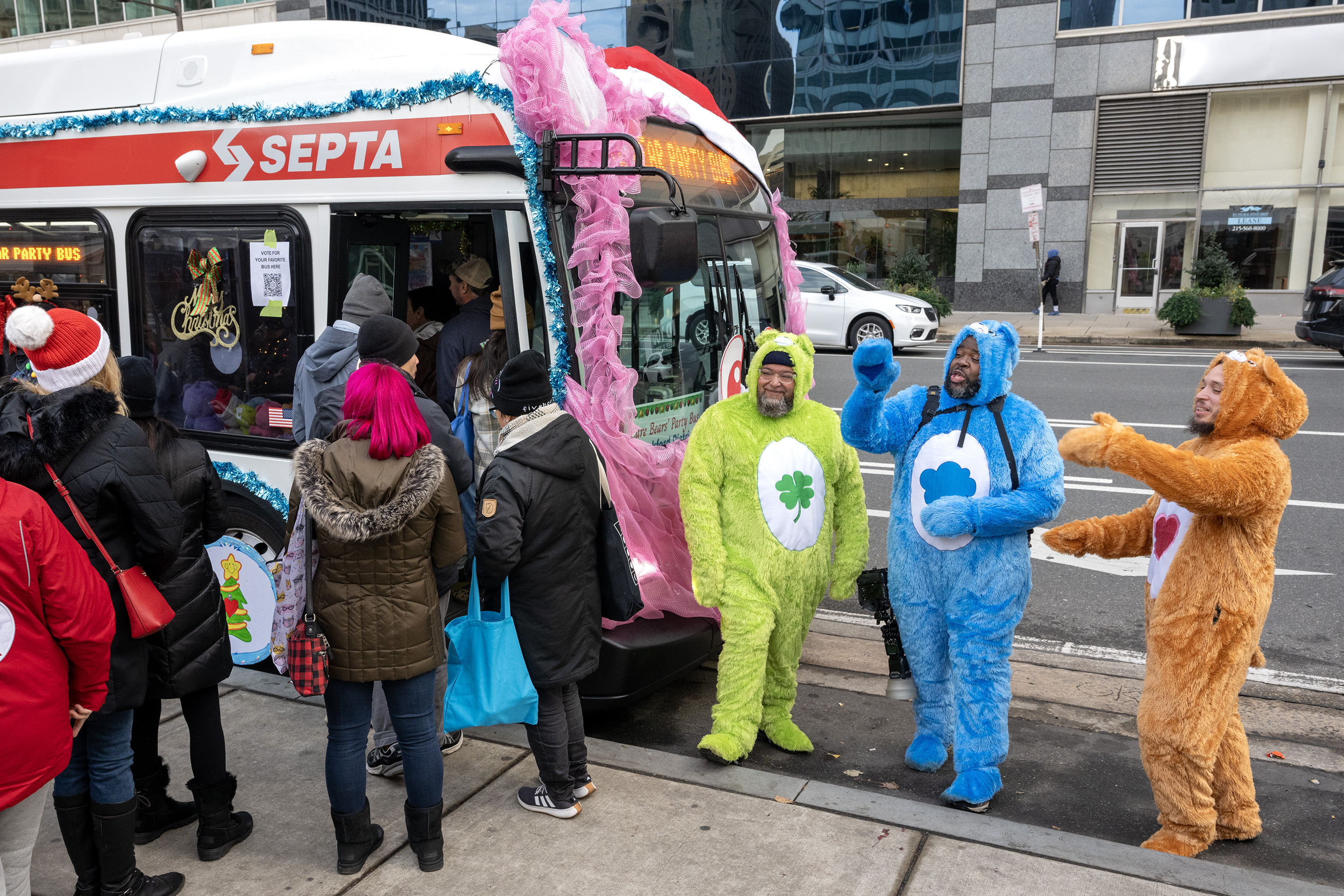
SEPTA operators costumed as Care Bears (from left) Jose DeCos and James Smith with mechanic Raymond Borges greet visitors during the Festibus Competition on Saturday.
Think back to the night that changed your life that could only happen in Philly, a true example of the Philly spirit, the time you finally felt like you belonged in Philly if you’re not a lifer, something that made you fall in love with Philly all over again — or proud to be from here if you are. Then email it to us for a chance to be featured in the Monday edition of this newsletter.
This “only in Philly” story comes from reader Jack Kapp, who describes a perfect game — and afternoon — from his youth in Northeast Philadelphia:
I was 10 in the summer of 1964. My father started letting me handle the lawn mower. We didn’t have much of a lawn, but it needed to be done. I did a fairly good job, and he proposed that my twin and I start a small business mowing the neighbors’ lawns. We agreed, enticed by the idea of making money.
I clearly remember mowing lawns the day of Phillies pitcher Jim Bunning’s perfect game on Father’s Day, June 21, 1964. This was to become a seminal event in Philadelphia sports history — one of the greatest games ever pitched. It was a doubleheader. His game was first. It was a hot day, and we rushed to get our work done. My father didn’t watch too much TV or baseball, but I guess because it was Father’s Day, he watched it with us.
It was the first perfect game in the National League since 1880, the first in regular-season baseball since 1922, and only the seventh in the history of the majors. Quite the achievement. Bunning, the father of seven children at that time (he would have two more after that), threw only 90 pitches, and struck out 10 batters.
It was also one of the best days that I ever spent with my father. Bunning would go on, after a fabulous Hall of Fame career, to become a U.S. senator from Kentucky for many years. I met him once, and told him this story. He thanked me politely.
Wishing you a smooth start to your week. See you back here tomorrow.
By submitting your written, visual, and/or audio contributions, you agree to The Inquirer’s Terms of Use, including the grant of rights in Section 10.
When Christina Vassallo was head of the Fabric Workshop and Museum, she landed several substantial grants from the Pew Center for Arts & Heritage.
Now she is moving to the other side of that donor-recipient relationship.
Vassallo is the newly named executive director of the Pew Center for Arts & Heritage, starting Jan. 5, Pew announced Monday.
“The center embodies everything I value about arts leadership — intellectual curiosity, rigorous support for artists and arts organizations, and a true commitment to public life,” said Vassallo. “So for the center, I’m drawn to its dual identity as a grantmaker and as a hub for ideas, and for the opportunity to connect the arts with civic purpose.”
Leadership and operational changes at the Pew arts center are closely watched in Philadelphia’s arts and culture community since the center, along with the William Penn Foundation, accounts for some of the largest foundation giving in the area.
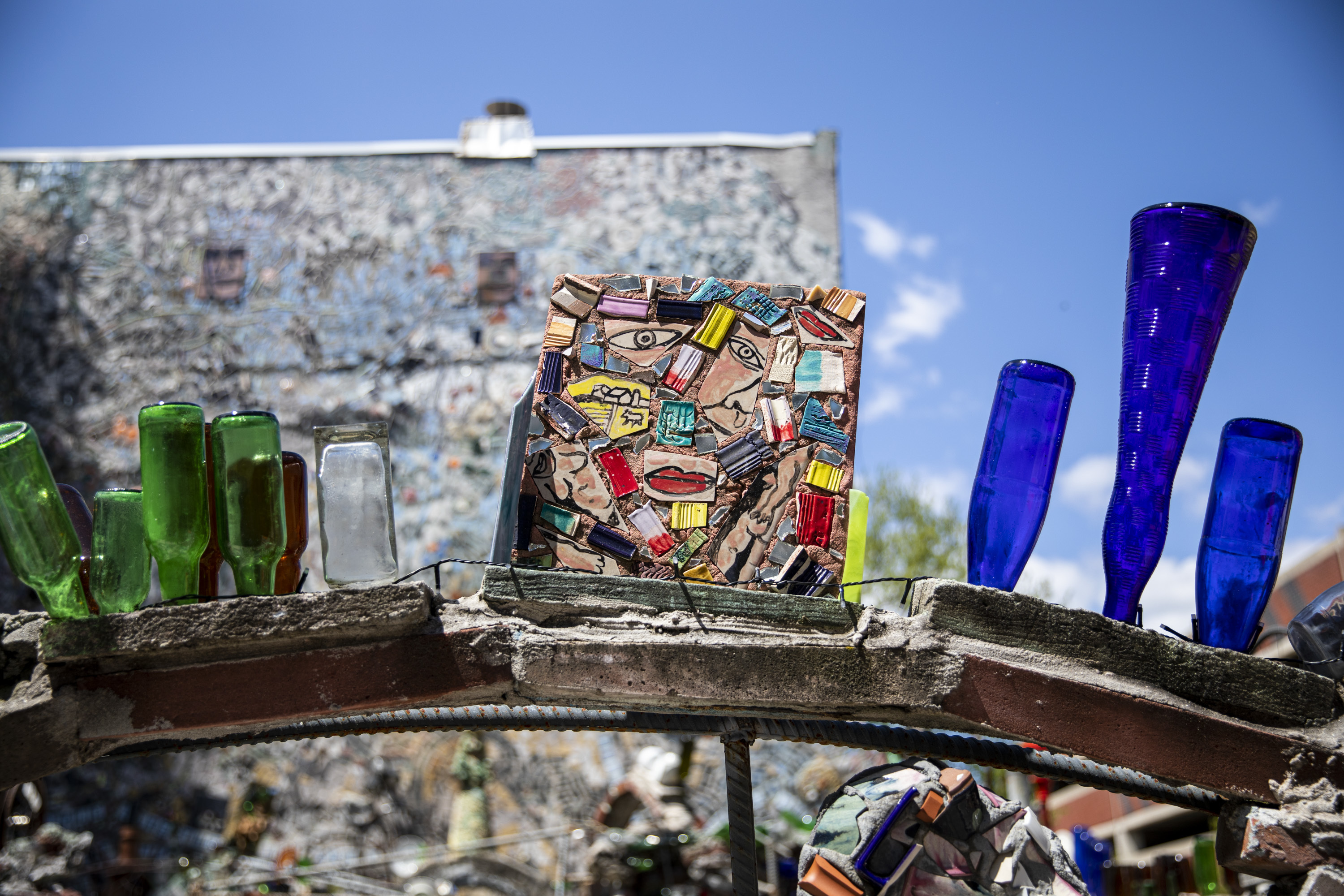
Pew’s center, for instance, also announced on Monday that it has awarded $8.6 million to 44 Philadelphia-area groups — nearly $180,000 to the Black Pearl Chamber Orchestra for a project on Black women composers, $360,000 to Monument Lab for the creation of environmental soundworks as a “living monument to Philadelphia’s birds,” and to projects by Mural Arts Philadelphia, Philadanco, Philadelphia’s Magic Gardens, theater companies, dance troupes, and museums.
After leaving the Fabric Workshop in 2023, Vassallo became director of the Contemporary Arts Center in Cincinnati. Before the Fabric Workshop, she was executive and artistic director of the alternative art gallery SPACES, in Cleveland. She was born in the Bronx and grew up in New York City and northern New Jersey, and holds two degrees from New York University — a bachelor’s in art history and a master’s in nonprofit visual arts management.
Vassallo arrives as Philadelphia’s arts scene grapples with a number of challenges. Many groups are facing the double whammy of attendance numbers that are still lower than pre-COVID levels, and cuts in federal funding under the Trump administration.
The Pew arts center specifically has undergone a significant change with the 2024 collapse of the University of the Arts, which had been its operational partner. In June, Pew announced that the Barnes Foundation would take UArts’ place, and Vassallo suggested that the Barnes — which also had a hand in her hiring — could take on a more significant role.
“I think there is tremendous potential there programmatically beyond their administrative role,” said Vassallo, who called the relationship between the Pew center and the Barnes an “evolving” one.
Dancers from Philadanco, which received a grant from the Pew Center for Arts & Heritage.
One significant change has already occurred. Vassallo will report to Barnes Foundation executive director and president Thomas Collins, whereas Marincola reported directly to Pew. The Barnes isn’t seen as getting involved with the Pew center’s grant-making process, but, rather, could work with the center on creating new programming.
“We could imagine partnerships between the [Pew Fellowships in the Arts] fellows … being able to engage in the collection at the Barnes, for example, we can imagine the center and the Barnes partnering on community conversations,” said Elinor Haider, senior director of Pew’s Philadelphia Program.
The Pew Center for Arts & Heritage will continue to be based in its offices on Walnut Street, Haider said.
Vassallo called Philadelphia’s arts scene “incredibly rich and vital.” About its challenges, she said — while noting that she needs to relearn Philadelphia’s arts and culture community — that “we are having to find new ways to fund our work. I have seen this in the form of creating new business models, coming up with innovative ways to increase ticket sales and engage current and new audiences to create new revenue streams.”
She said she has “always been a strong believer in nurturing the next generation of art enthusiasts, ensuring that kids have access to the arts across disciplines.”
As for future funding priorities, the center has not yet determined whether it will undertake a strategic planning process, she said.
“Not only are we assessing feedback from grantees and external parties, but we’re also understanding the state of the city, and then you have the various partners involved — you have Pew, you have the center staff, and now you have the Barnes. So I think within that there’s going to be a very special alchemy that starts to further determine the future of center funding decisions.”
All will have plenty to prove against the Chargers. But none will have more than the guys whose primary responsibility is putting the quarterback on his back. The most important players on the field Monday night will be the Eagles edge rushers.
The pressure is on the pressure.
Or, rather, the pressure-ers.
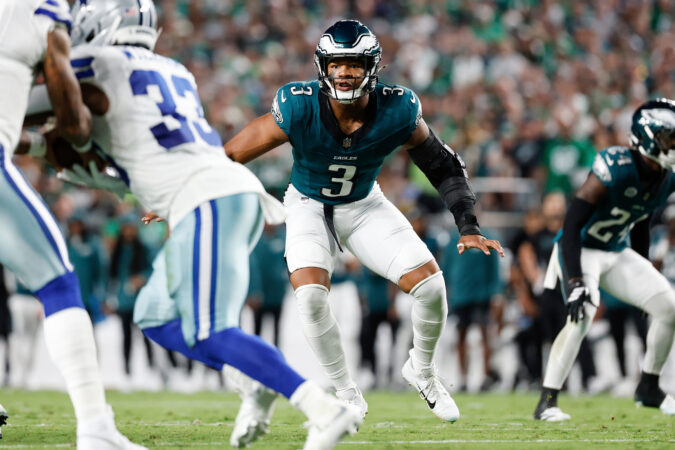
Jaelan Phillips, Nolan Smith, Jalyx Hunt. These are the names you will need to hear with regularity against the Chargers. We haven’t heard them nearly enough this season.
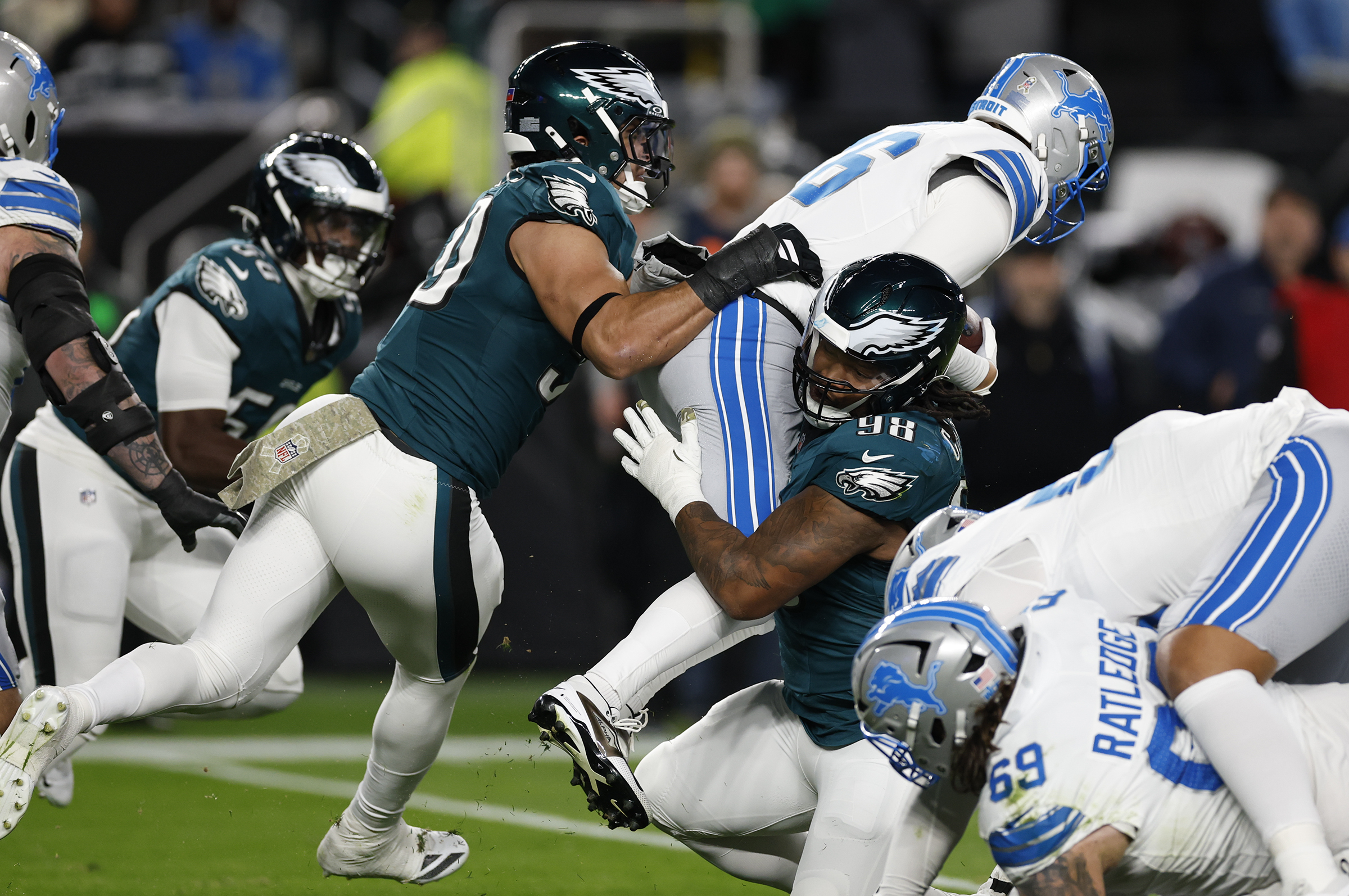
Eagles defensive tackle Jalen Carter (right) and edge rusher Jaelan Phillips stop Lions quarterback Jared Goff on Nov. 16.
Through 12 games, the Eagles have gotten just eight sacks combined out of their edge rushers.
True, five of them have come in the last five games, a stretch that has seen Smith return from injured reserve and Phillips arrive via trade from the Dolphins. But it still isn’t enough. Three years ago, Haason Reddick, Josh Sweat, and Brandon Graham combined for 38 sacks, an average of more than two per game. That’s the kind of output the Eagles should be expecting on Monday night.
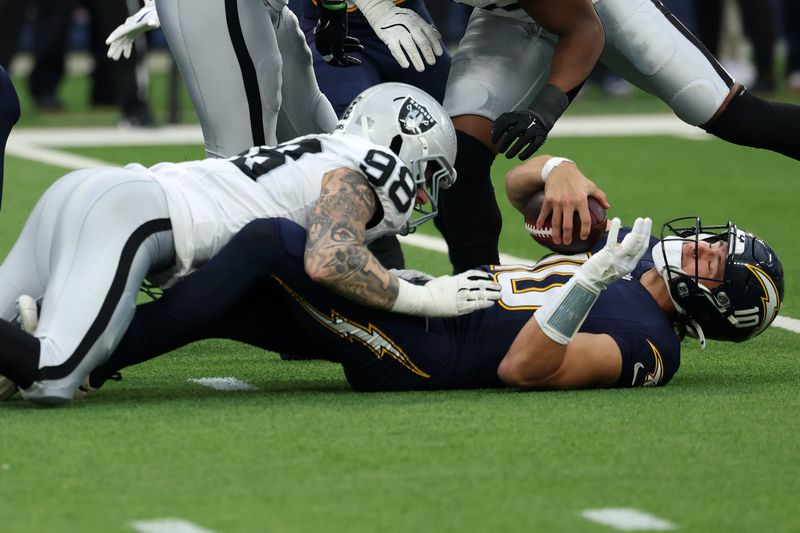
Rarely have the Eagles faced an opponent so ripe for the picking. The Chargers have been a mess up front all season. In late August, they lost starting left tackle Rashawn Slater to a season-ending knee injury. A month ago, they lost All-Pro right tackle Joe Alt to a season-ending ankle injury. In the four games since Alt went down, the Chargers have allowed a remarkable 17 sacks. That included three last week against the Raiders, a game that ended with Justin Herbert nursing a broken non-throwing hand.
Chargers quarterback Justin Herbert is expected to play against the Eagles.
This should be a get-right game for the Eagles’ most underperforming unit. That’s true regardless of who is under center — or in shotgun, or in the pistol — on the other side of the line of scrimmage. It will be especially true if that player is Herbert, who is reportedly preparing to play despite undergoing surgery to repair a broken bone in his left hand early last week.
The Eagles have already seen firsthand what Herbert can do when given an ample amount of time to throw. The Chargers veteran shredded them during Sirianni’s first season as coach, completing 32 of 38 passes for 356 yards and two touchdowns in a 27-24 win in Week 9. That afternoon was one of the 11 times in Herbert’s career that he was not sacked. The Chargers are 9-2 with a plus-110 point differential in those 11 games.
It goes without saying that none of those games has occurred this season. Herbert has been sacked multiple times in 11 of 12 of his starts in 2025, with three-plus sacks in eight. Heading into Sunday, the Chargers were one of five teams in the NFL to allow five-plus sacks in at least four games. At 8-4, they are the only one of those teams with a winning record. The other four have combined to go 10-38.
The Eagles need to take advantage. Whatever the overall numbers say, they have more than enough talent on the edge to be a deciding factor Monday night. We’ve seen flashes of dominance from the group. Apart from maybe the cornerbacks, the Eagles’ edge rushers were the best unit on the field in back-to-back victories over the Packers and Lions. In a 10-7 win over Green Bay in Week 10, the group combined for two sacks, three tackles for losses, and five quarterback hits against Jordan Love. The following week, Phillips and Hunt combined for five hits on Lions quarterback Jared Goff, including Phillips’ first sack in an Eagles uniform. The pressure on Goff was one of the biggest reasons the veteran completed just 14 of 37 passes with an interception.
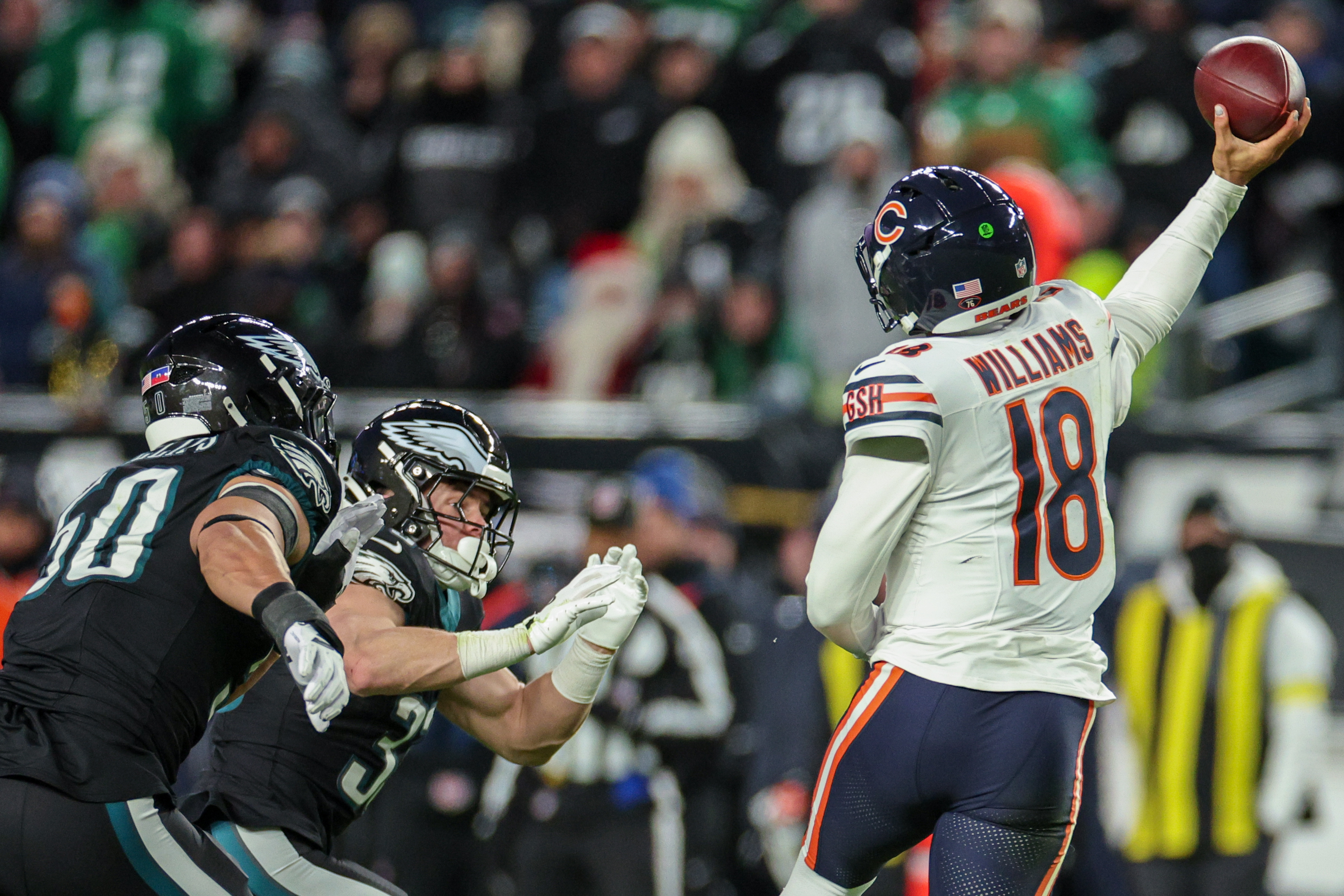
But those two wins feel like a distant memory, don’t they? For the first time in the Vic Fangio era, the Eagles are coming off back-to-back games of 400-plus yards of total offense allowed. Two weeks ago, Dak Prescott was way too comfortable while completing 23 of 36 passes for 354 yards. Last week, the Bears gashed them for a ridiculous 281 rushing yards, with running backs D’Andre Swift and Kyle Monangai combining for 255 yards on 40 carries.
The Bears gained 281 yards on the ground against the Eagles.
The four truest words in the NFL came out of Jordan Davis’ mouth earlier this week.
“It’s a copycat league,” the Eagles defensive tackle said.
With Herbert ailing and the Chargers pass protection in shambles and the Eagles taking the field without All-World defensive tackle Jalen Carter, we should expect to see Greg Roman do as Sean McVay and Ben Johnson did before him.
“We’ve got to play the run well enough to where they just don’t run it a bunch,” Fangio said. “They run it, and like most teams that run it well, they have a good play-action game, and not give up the shots in the play-action passing game, which they do a good job of.”
But stopping the run can only carry you so far against a quarterback like Herbert. The Eagles need to put themselves in a position to pummel him as thoroughly as the rules allow. They need Smith to be the guy he was down the stretch last season, when he recorded 10½ sacks in his last 16 games, including four in the playoffs. They need Phillips to be the guy he was against the Packers.
The best offense is a good defense. And the best defense is a great pass rush.
LOS ANGELES — The sky is falling in the city of Philadelphia, just not between Broad and 17th Streets, from Pattison Avenue to Hartranft Street. There, at the NovaCare Complex, the laws of gravitational pull and atmospheric pressure remain normal.
The 8-4 Eagles have lost two consecutive games, their second such losing streak of the season. Their offense, under first-year coordinator Kevin Patullo, can be generously described as inconsistent and harshly described at times as incompetent. The defense, normally a steady strength, got tossed around on Black Friday against the Chicago Bears.
“They sky’s falling outside the locker room,” Saquon Barkley said after that game.
Not inside.
The Eagles, Barkley included, say the energy at the practice facility reflects that. The Eagles have been attentive in the meeting room. They have had spirited practices. They feel like they have the right game plans.
“But [you’ve] got to go out there Monday and do it,” Barkley said Saturday after the Eagles finished their final practice before their Monday night matchup against the Los Angeles Chargers at SoFi Stadium. “That’s where we’re at.”
That’s where the translation hasn’t occurred. The Eagles are struggling, and the vibes on the sideline reflect a team that is trying hard to correct its issues without success.
“Honestly I think it’s been awful,” Barkley said when asked what the sideline energy has been like. “I think if you asked anybody, if they’re being honest, we’ll all agree on that.”
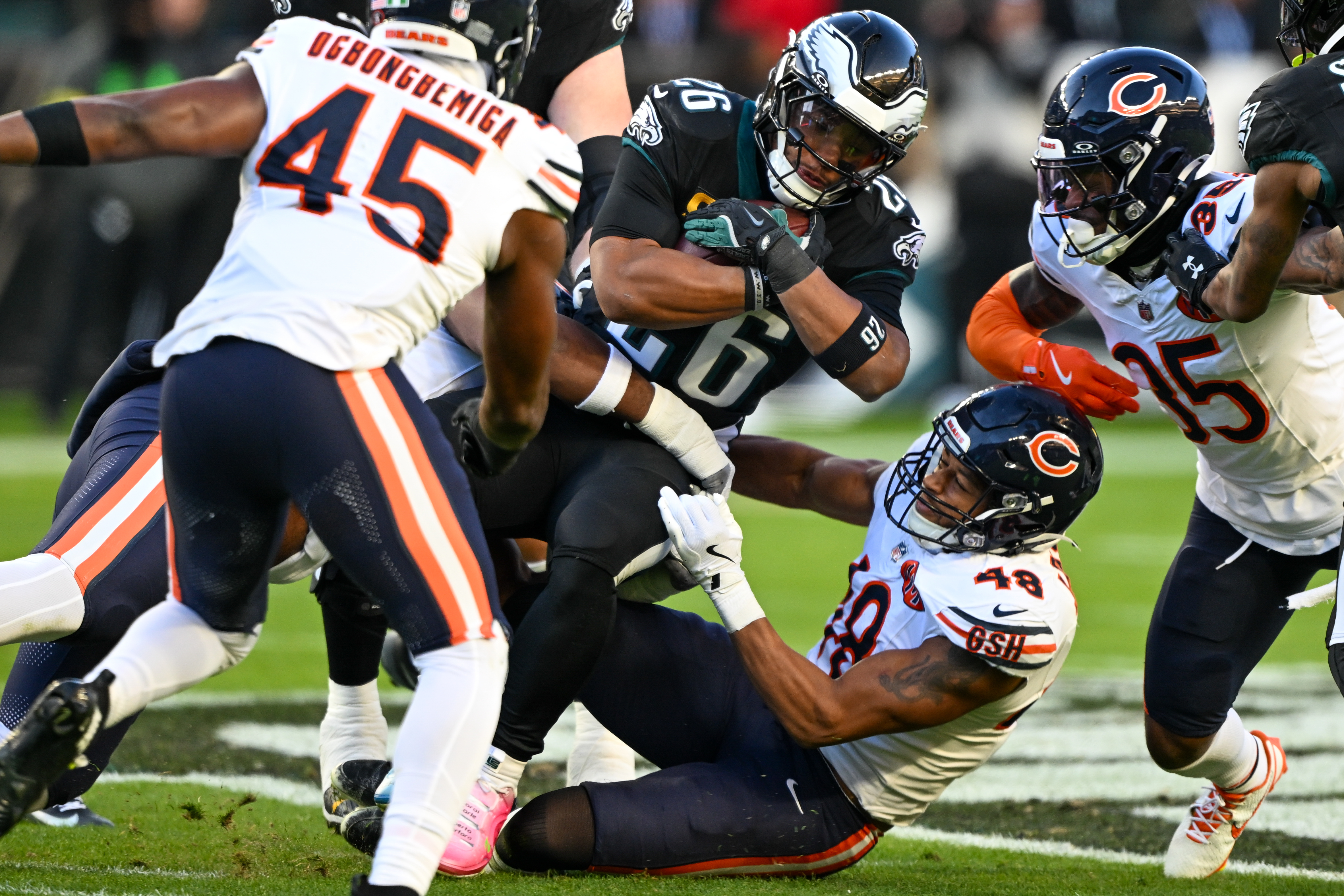
Eagles running back Saquon Barkley is stopped by the Bears on Nov. 28.
To be fair, who could blame them? The Eagles, with one of the highest-paid offenses in the NFL, haven’t scored more than 21 points in four consecutive games. Barkley ran for 2,000 yards last season but is finding it difficult at times to top 50 during a given game. The principals in the passing game haven’t been able to get on the same page, as evidenced by the sequence in which Jalen Hurts and DeVonta Smith didn’t have their signals down and missed a potential touchdown in the loss to the Bears.
“We haven’t been playing well,” Barkley said. “It’s easy to come on the sideline and have great energy when you rip off a 60-yard touchdown. That’s the truth. We know that.”
Barkley went back to a saying he picked up from offensive line coach and running game coordinator Jeff Stoutland. “Execution fuels emotion,” Barkley said. “When you make plays and score touchdowns it’s going to get the energy going on game days. Energy has been great throughout the week of practice.
“We got to carry that to game day.”
There’s an argument to be made that Barkley and the running game can lead the charge in changing those vibes. The Eagles have faced defenses that have keyed in on stopping the run. Only four teams are pitted against a stacked box more often than the Eagles, who see eight or more defenders in the box 32.7% of the time.
Patullo and Stoutland haven’t yet figured out a way to consistently break through against the opposition, and the passing game hasn’t been good enough for defenses to change their approach. Barkley’s blockers have been banged up, which has certainly affected the outcomes, but Barkley does not look like the same runner, either. He has had a nagging groin injury that hasn’t forced him to miss any time, and he has repeatedly said he is healthy.
New wrinkles are on the way, left tackle Jordan Mailata said earlier in the practice week leading into Monday’s game vs. the Los Angeles Chargers at SoFi Stadium. Barkley smiled Saturday when asked about the topic. “I don’t know what change they’re talking about,” he said.
“I really love the game plan.”
Barkley said he thinks positivity is important on the sideline.
“It’s kind of been a role I’ve tried to take on ever since I came into the league,” he said. “I feel like it’s big. Sometimes it’s just the sense of having confidence and having great energy is going to help us out on the football field. I’m a believer in that.”
A few feet away from Barkley’s locker stall as he spoke Saturday in the locker room at the NovaCare Complex was a large inflatable Easter bunny. Barkley said he didn’t know how it arrived there. Earlier in the day, though, AJ Dillon took the credit. The backup running back, who has been a healthy scratch, has anointed himself the “vibes guy.”
“I was told that it’s a vibes bunny,” Barkley said. “And the vibes are high.”
The Eagles have installed the “positivity rabbit” into the locker room
It showed up today and the offensive line stressed to me they are not sad they just wanted a good vibes bunny 👍 pic.twitter.com/zJi0M93SEr
The Eagles on Sunday waived wide receiver and returner Xavier Gipson. They now have an open spot on the 53-man roster, which will likely go to safety Marcus Epps, who is expected to be activated from injured reserve and could start next to Reed Blankenship on Monday night.
Gipson missed the Eagles’ Week 13 game with a shoulder injury, one he suffered during a mistake on a punt return that helped flip the result of the team’s Week 12 loss to Dallas. The team will continue to use Britain Covey as a returner.
The Eagles also downgraded Myles Hinton (back) to out for Monday’s game. Hinton’s 21-day practice window is nearing its end. The Eagles have until Wednesday to activate their rookie offensive tackle or he will be sidelined for the rest of the season — like fellow rookie lineman Willie Lampkin, whose window expired on Nov. 27.
When Villanova hosted the first women’s Big 5 Classic tripleheader last year, the Wildcats intended to cap it off by winning the title.
Instead, the Temple Owls spoiled the party plans and left the Main Line with the title in their hands.
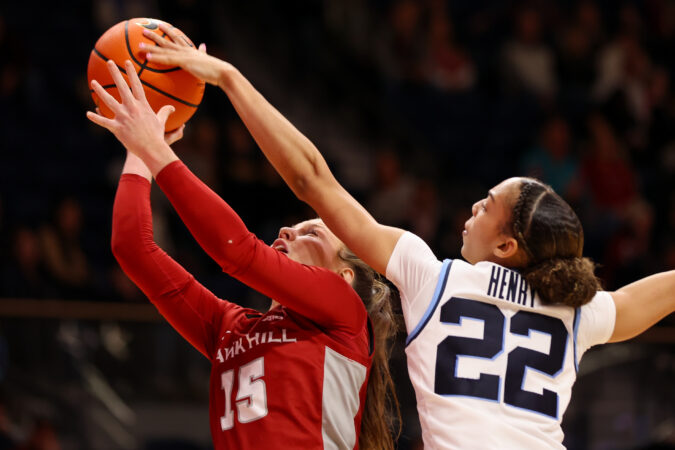
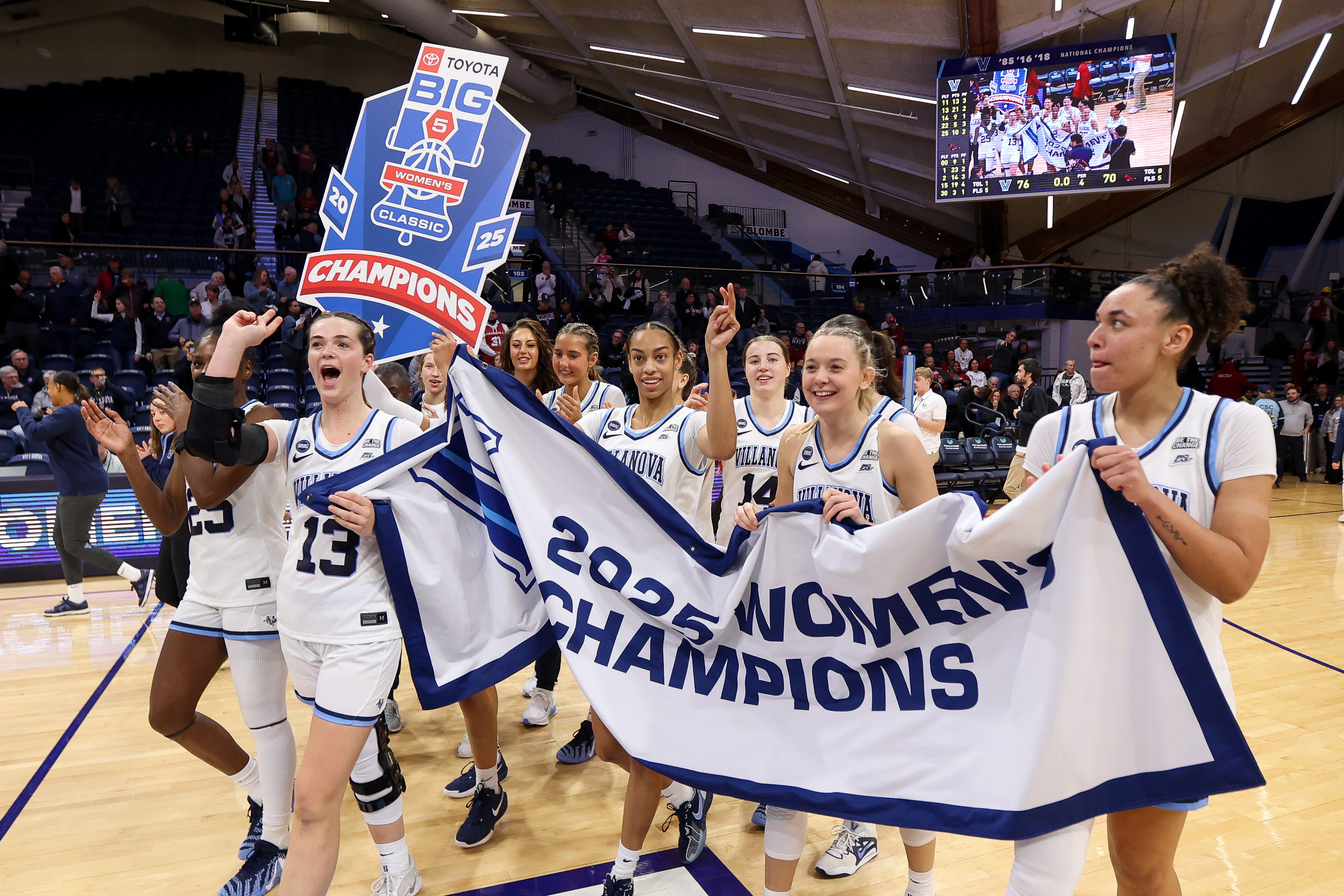
This year, the Wildcats delivered. Led by Brynn McCurry’s 21 points, they topped St. Joseph’s, 76-70, Sunday in a title game that was close throughout. It marked ’Nova’s 22nd women’s Big 5 crown, the most of any City Series team.
For as much as rosters in college basketball change by season these days, coach Denise Dillon admitted she had kept last year’s loss in mind.
“That’s the responsibility of myself and our staff, to explain to our players, because of so many new players on the roster, and not recognizing what Philly basketball is,” she said. “Yeah, the taste stuck with me, and I think some of the others who were playing in that game. Denae Carter and Jasmine Bascoe last year, they knew they gave something up here on our home court, and wanted to make sure we took care of business here today against St. Joe’s.”
Villanova’s players celebrate with the Big 5 champions’ banner.
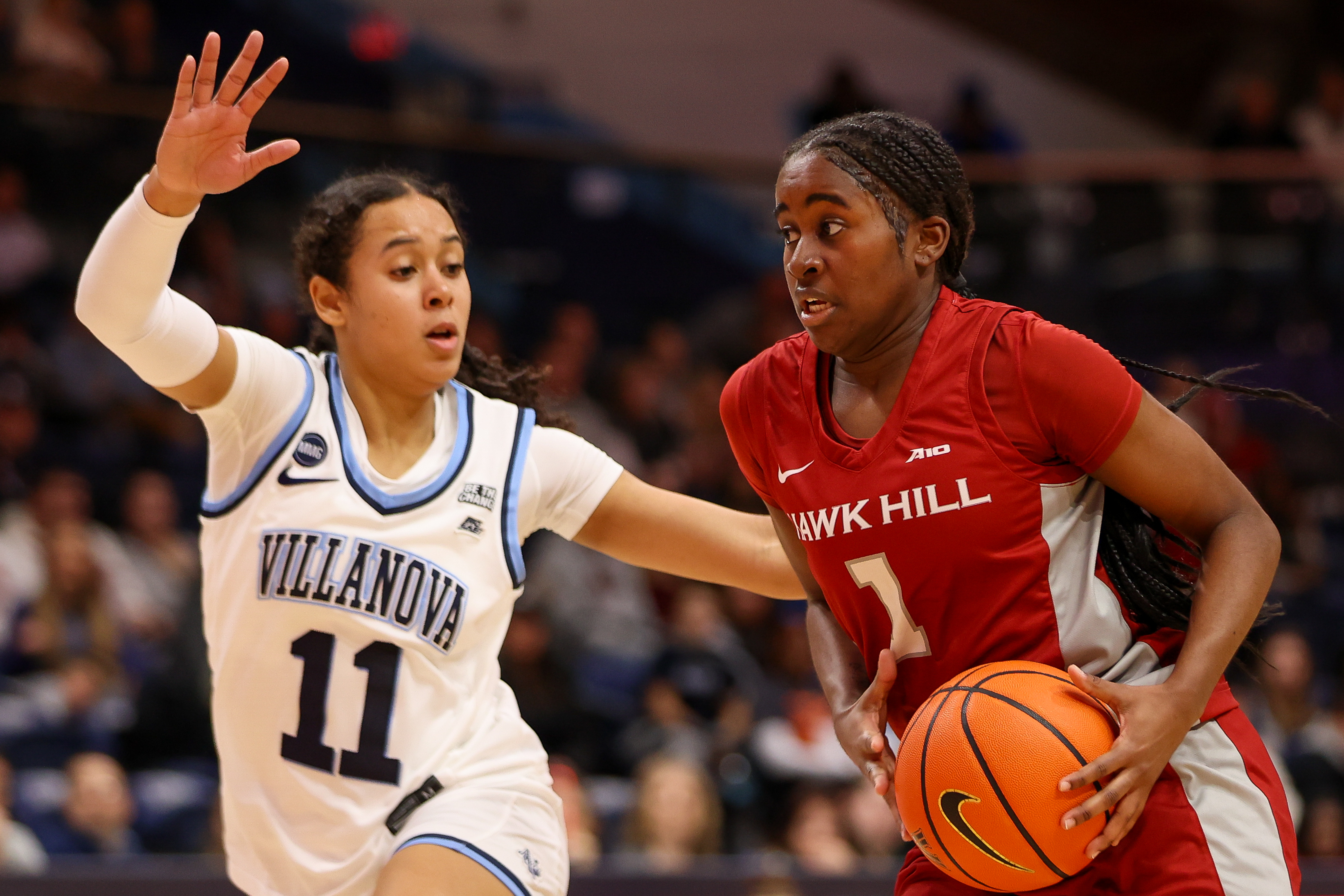
The Hawks were more than valiant. Rhian Stokes totaled 23 points and six assists, while Gabby Casey had 19 points and eight rebounds.
At the other end, St. Joe’s held Bascoe to 4-of-16 field-goal shooting, though she still had 13 points. McCurry, who missed all of last season with a knee injury, delivered her third straight 20-point outing.
“Kudos to [McCurry] and to her teammates for stepping up, because I thought we did a hell of a job on Bascoe,” Hawks coach Cindy Griffin said,
December obviously isn’t March, but Villanova is on some national bracketologists’ early NCAA Tournament bubbles. Though the Wildcats lost at Princeton last month, they made up for it with a win at then-No. 25 West Virginia last Monday, and followed it with a win at Georgetown on Thursday to open Big East play.
Villanova’s Jasmine Bascoe defending Rhian Stokes of St. Joe’s, who led all scorers with 23 points.
Their next game, following exams, should be another solid barometer: home vs. Seton Hall on Dec. 19. The Pirates were picked third in the preseason conference poll, with ’Nova fourth.
“We gave up a tough one to Seton Hall last year in this place,” Dillon said of a 56-55 defeat. “We’ll remind them [at practice] on Tuesday.”
The rest of the day
Drexel topped Temple in the third-place game, 59-52. With Dragons star guard Amaris Baker held to just seven points on 2-of-13 shooting, Deja Evans stepped up with 18 points on 8-of-14 shooting, plus seven rebounds and three assists.
“Things weren’t going our way, our scorers weren’t making shots, but they still found a way to lock in and stay focused on what we needed to do to win the game,” Drexel coach Amy Mallon said. “And to me, that’s what Drexel basketball is about, and how we find ways to win.”
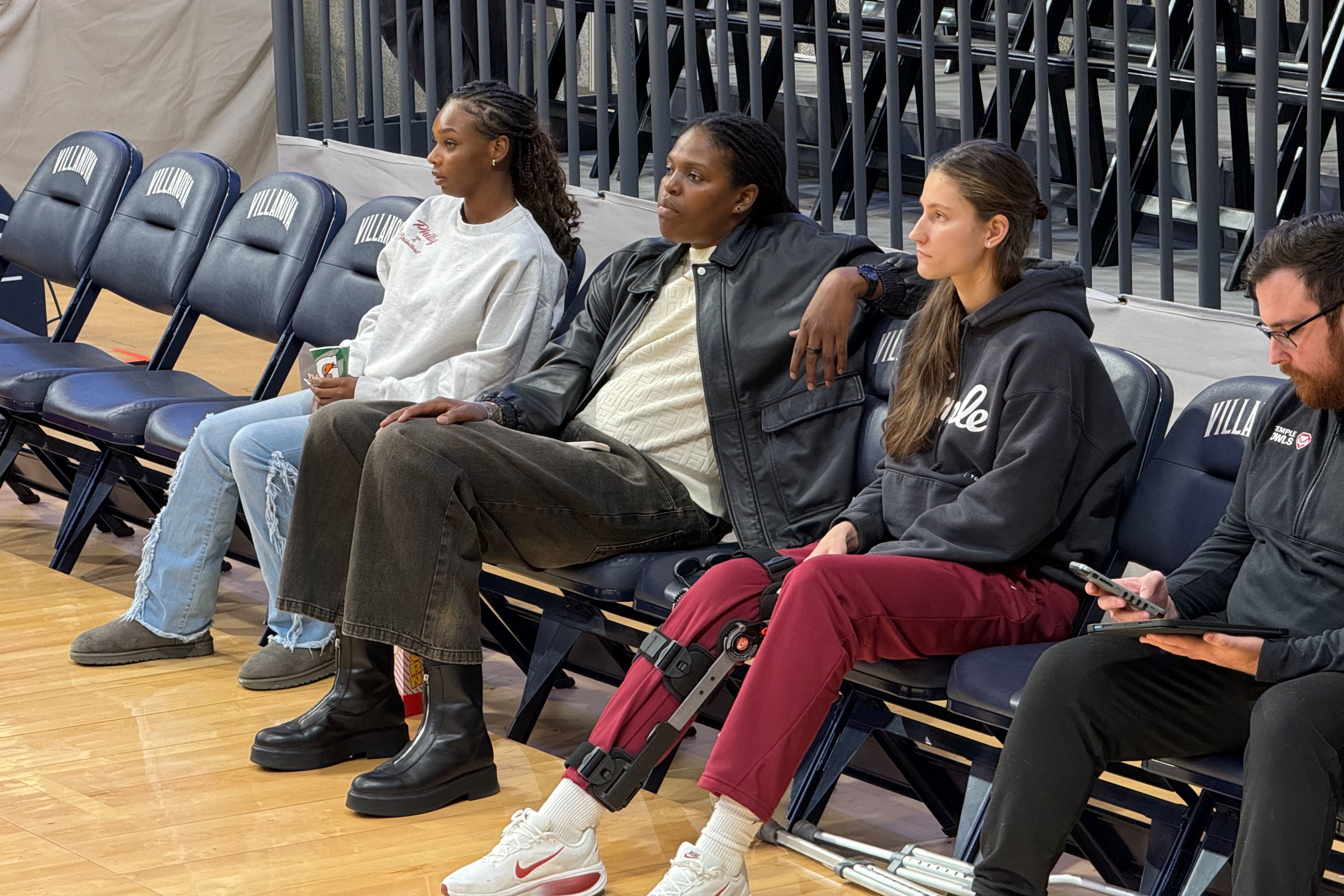
New York Liberty star Jonquel Jones, the adopted daughter of Temple women’s coach Diane Richardson, sat courtside to watch the Owls. That was a reminder of how big women’s basketball is nationally these days, though the stardust hasn’t landed on the Big 5.
Jonquel Jones (second from left) sitting courtside during the Temple-Drexel game.
“Well, I’d love to have her on the court, but we have already exhausted that eligibility,” the always-charismatic Richardson said. “It’s great. She loves our kids and she’s got some time off because of her [ankle] injury, so she’s been spending a lot of time with me. We’re glad to have her here, and not only just for us, but for women’s basketball — and here at the Big 5, where we want to shine a light.”
Penn won the fifth-place game over La Salle, 65-52, led by Katie Collins’ 20 points and nine rebounds. The Quakers led by 21 points in the third quarter, but the Explorers rallied to within five at the end of the period before Penn pulled away in the fourth.
As The Inquirer confirmed a few days ago, the women’s tripleheader will change location next season. Sunday marked Villanova’s second straight year, and the second straight year of disappointingly small crowds on the Main Line: 1,242 fans over the three games.
Though it’s not official yet, the Palestra is the favorite right now to host as part of the arena’s 100th birthday celebration. Penn’s coach isn’t alone in hoping that moving the games to the city’s most famous college basketball venue will draw more fans to watch them.
“I know one thing: Penn would put on a first-class event, just like Villanova has done here,” said Mike McLaughlin, who has long championed having the women’s tripleheader at the city’s most famous venue. “This has been a great event for our athletes, and Penn will do the same if it’s at the Palestra.”
It has been 22 days since the Eagles last won a game. It has been a lot longer than that since they last felt good about their offense.
On the positive side, at 8-4, they can move a step closer to clinching the NFC East with a road victory this evening against the Los Angeles Chargers on Monday Night Football. Still, the Eagles are struggling and the vibes on the sideline reflect a team that is trying hard to correct its issues without success, Jeff Neiburg writes.
“Honestly I think it’s been awful,” Saquon Barkley said when asked what the sideline energy has been like. “I think if you asked anybody, if they’re being honest, we’ll all agree on that.” Maybe Barkley and the running game can lead the charge in changing those vibes.
And maybe the offense could finally get untracked if Jalen Hurts ran the ball more. Designed runs have become rarities for Hurts in his fifth season as the Eagles’ starting quarterback. He has gotten hurt both in and out of the pocket throughout his NFL career, which has caused him to miss games. The threat of injuries figures into the equation, but the offense gets a jolt when he runs the ball.
It’s unlikely the Eagles will suddenly have a high-powered offense at this late stage, Jeff McLane writes in his keys to the game. There is room for improvement and one way to address that is having Hurts run more.
The defense must get the job done without Jalen Carter, who is out after undergoing a medical procedure on both shoulders. Carter’s absence figures into the predictions from our writers on how things will pan out in California. Not everyone’s picking the Eagles, either.
How can the defense turn things around? The Eagles will need a huge game from edge rushers Nolan Smith, Jaelan Phillips, and Jalyx Hunt, David Murphy writes.
Here’s everything you need to know before Hurts and the Birds face Justin Herbert and the Chargers for the first time since 2021.
Maybe this completely different take on the game could calm the nerves of some Eagles fans: ESPN2 will offer a real-time animated broadcast of Eagles-Chargers set in the universe of Disney/Pixar’s Monsters, Inc. franchise. The alt-cast will use real-time player tracking data to place Barkley, Hurts, and the rest of the Eagles in the animated Monsters universe.
Flyers center Trevor Zegras fires a shot during the third period against Colorado at Xfinity Mobile Arena.
The Colorado Avalanche came into Xfinity Mobile Arena with an NHL-best 20-2-6 record, but the Flyers held their own Sunday in a 3-2 loss.
“Some people use games as measuring sticks, and I think we don’t need to do that anymore,” Travis Konecny said. “We’ve shown we can compete with the best teams, so why not start believing that we should be right there with them?”
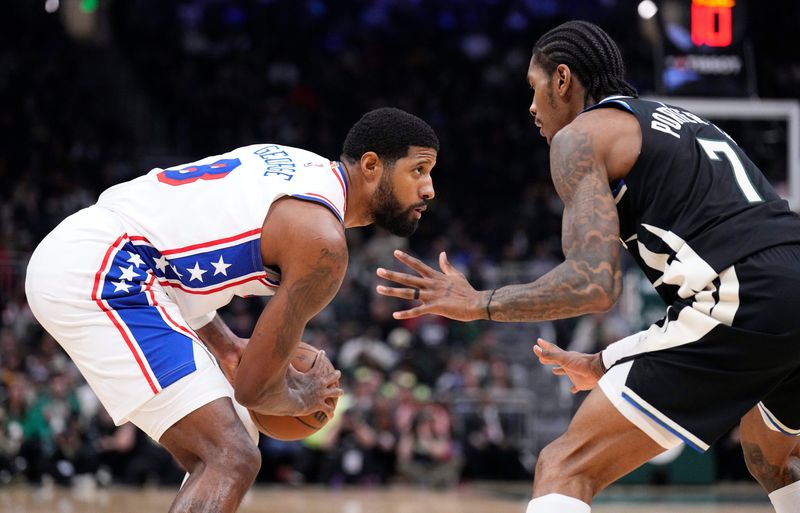
Paul George stares down Milwaukee Bucks guard Kevin Porter Jr. on Friday at Fiserv Forum.
There was a promising Paul George sighting for the Sixers in their victory over the Bucks on Friday night. George finished with 20 points, five rebounds, and five assists in just under 30 minutes. Even after knee surgery and an injury-riddled first season as a Sixer, he has shown flashes of the player who became a perennial All-Star.
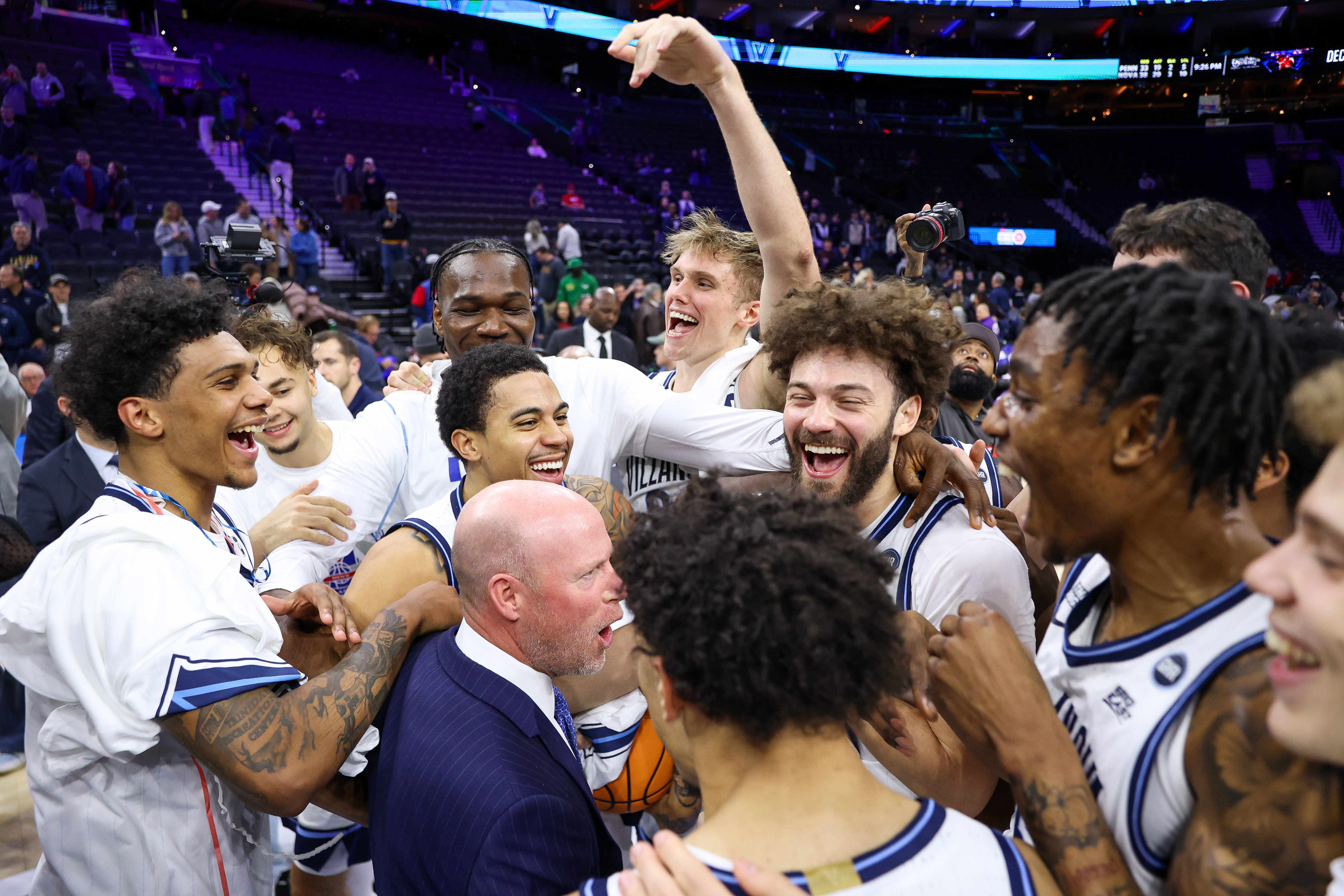
The Villanova Wildcats celebrate defeating the Penn Quakers in the Big 5 championship at Xfinity Mobile Arena on Saturday.
Villanova came up short in the first two iterations of the Big 5 Classic, but the Wildcats left no doubt as they closed the tournament’s tripleheader Saturday night at Xfinity Mobile Arena. They beat Penn, 90-63, in the finale and won their three Big 5 games by an average margin of 20 points.
Now they’ll take a big step up in competition. Next up for 7-1 Villanova is a showdown with unbeaten Michigan on Tuesday night in Ann Arbor. “We have a big test Tuesday because I think, by far, they’re playing the best basketball in the country,” Wildcats coach Kevin Willard said.
The loss to ’Nova was a costly one for Penn, as star forward Ethan Roberts was taken to the hospital after leaving the game with a injury.
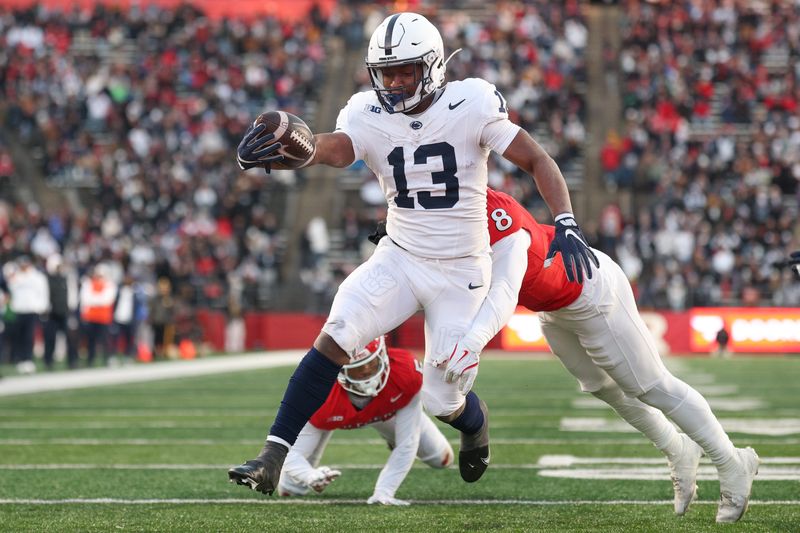
Penn State’s Kaytron Allen scoring a touchdown against Rutgers.
Penn State will close a tumultuous season with a date against Clemson in the Pinstripe Bowl. The Dec. 27 game at Yankee Stadium will close a chapter on Nittany Lions football before new coach Matt Campbell takes over. Clemson (7-5, 4-4 Atlantic Coast Conference) has seen its own ups and downs this season, but the Tigers won six of their last eight games to earn bowl eligibility.
In the Football Championship Subdivision, Villanova advanced to the quarterfinals with a 14-7 upset of Lehigh.
Join us before kickoff
Gameday Central: Eagles at Chargers
Live from SoFi Stadium in Inglewood, Calif.:Beat writers Jeff McLane and Olivia Reiner will preview tonight’s Eagles game against the Los Angeles Chargers at 6:45 p.m. Tune in to Gameday Central.
Sports snapshot
La Salle’s leader: Notre Dame-bound Joey O’Brien lifted the Explorers past Pittsburgh Central Catholic for the PIAA Class 6A state championship.
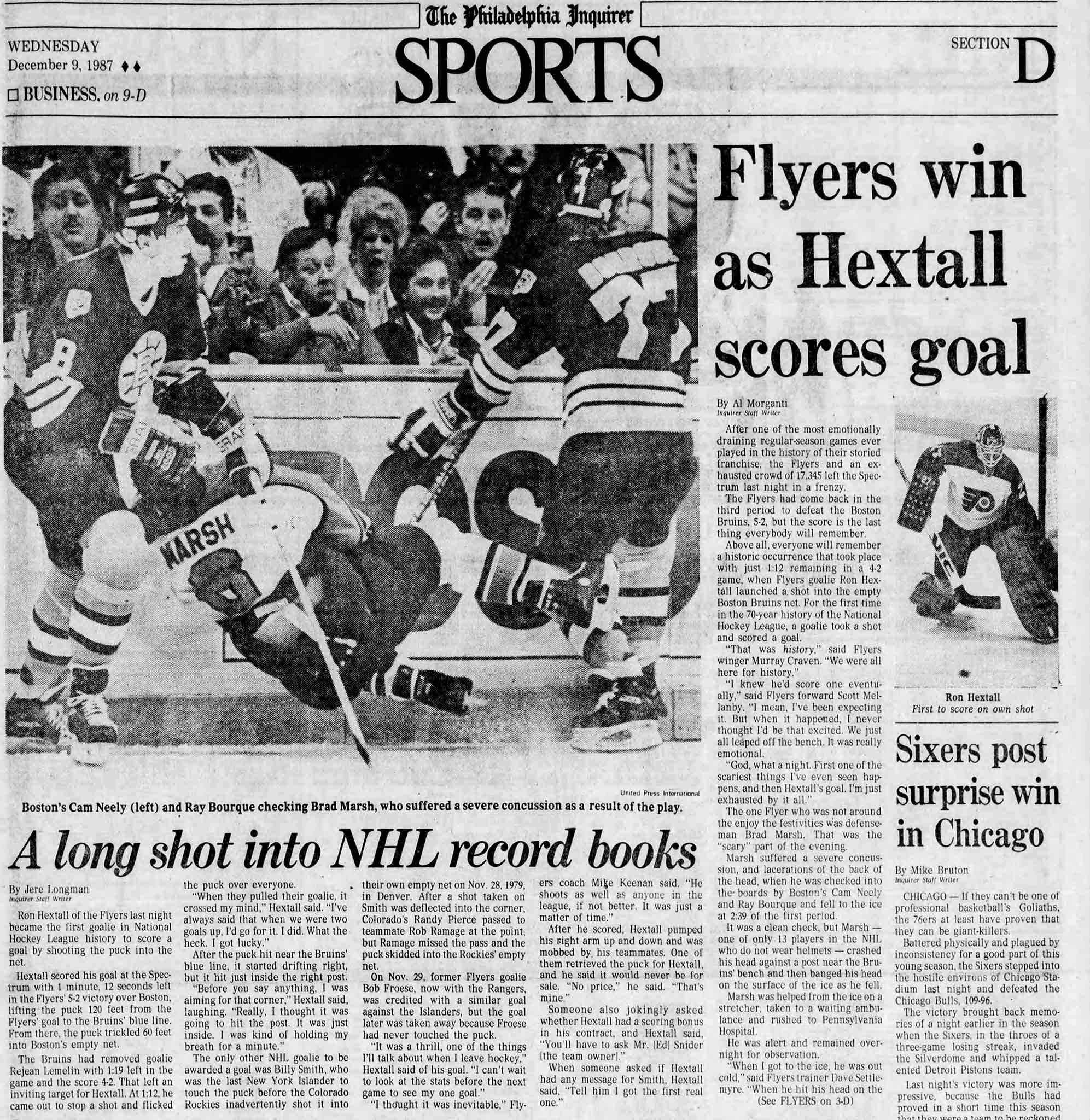
Ron Hextall becomes the first NHL goalie to score a goal by shooting the puck into the opposing net as the Flyers beat Boston, 5-2, on Dec. 8, 1987.
Dec. 8, 1987: Flyers rookie Ron Hextall became the first NHL goaltender to score a goal. Hextall scored an empty-netter in a 5-2 victory against the Boston Bruins at the Spectrum.
Jalen Hurts has to start playing up to his contract if the Eagles are to make another Super Bowl run.
Now that the drop-off in Jalen Carter’s play in 2025 compared with 2024 has been explained by his deteriorating shoulders, the responsibility for a late-season surge falls more squarely on the shoulders of embattled quarterback Jalen Hurts.
He’s got to throw better passes. He’s got to run the offense more efficiently. He’s got to start using his legs as a weapon, because the main weapon on defense is gone.
We compiled today’s newsletter using reporting from Jeff Neiburg, Olivia Reiner, Jeff McLane, David Murphy, Owen Hewitt, Jackie Spiegel, Keith Pompey, Marcus Hayes, Jonathan Tannenwald, Devin Jackson, Greg Finberg, Dylan Johnson, and Katie Lewis.
By submitting your written, visual, and/or audio contributions, you agree to The Inquirer’s Terms of Use, including the grant of rights in Section 10.
Thank you for reading Sports Daily. I’ll see you in Tuesday’s newsletter. — Jim
Dan Orlovsky has four children who are Eagles fans and Disney devotees, so he couldn’t turn this opportunity down. On Monday night, the former NFL quarterback will provide analysis for ESPN’s animated Monsters Funday Football alternate broadcast of the Birds’ matchup with the Chargers at SoFi Stadium.
The alt-cast, which will air on ESPN2 (as well as the Disney Channel and Disney XD) and stream on Disney+ at 8 p.m., will be a real-time animated broadcast set in the universe of Disney/Pixar’s Monsters, Inc. franchise. It will be the third edition of the Football Funday series, which was set in The Simpsons’ Springfield last season and in the Toy Story franchise in 2023.
Orlovsky was on the call for the Simpsons broadcast last season, but his children are far more excited about this year’s broadcast.
“When I had told them I got asked to do Monsters, it was an excitement that was different,” Orlovsky said. “My wife is from Philly, and my kids are crazy Eagles fans. So, when I told them [it was] Monsters and it was an Eagles game, it was, like, to the moon.”
The alt-cast will use real-time player tracking data to place Saquon Barkley, Jalen Hurts, and the rest of the Eagles in the animated Monsters universe, where they’ll face off against the Chargers inside the cheer factory in Monstropolis.
Eagles vs. Chargers. Monsters Funday Football edition 👀
Watch exclusively on ESPN2, Disney+, Disney XD, Disney Channel and the ESPN App on Dec. 8 pic.twitter.com/QmVJJbgwws
The real-time animation is handled by Beyond Sports, an AI-based data analysis and visualization company owned by Sony. Using data from NFL Next Gen Stats and Hawk-Eye Innovations optical tracking, Beyond Sports’ virtual recreation engine will animate live action between the Eagles and the Chargers for viewers.
Drew Carter and Orlovsky will call the game from ESPN’s headquarters in Bristol, Conn., while wearing tracking suits that allow them to pilot characters in the Monsters universe.
“We’re in a big studio and they set up a couple monitors where we can watch the regular live broadcast,” Carter said. “We have that synced up with our animated broadcast, which makes it easier to see what’s happening. But, for the most part, I’m looking at 22 cartoons running around and trying to decipher what’s happening.”
A look inside the “Monsters, Inc.” stadium that will play host to the Eagles-Chargers “Funday Football” broadcast on ESPN2 and Disney+ Monday.
Carter has done play-by-play for all three of ESPN’s Funday Football alt-casts as well as its animated Big City Greens NHL broadcast. He has high praise for the technology that makes the broadcast possible, but he is preparing for the Eagles’ signature quarterback sneak to push the system to its limits.
“If they do the Tush Push, I don’t know what’s going to happen to the technology,” Carter said. “It’s going to be very hard to spot the ball when everyone’s animated. That’s the time where I’ll look at the live game.”
Carter also calls other live events for the network, but the animated games require an extra layer of preparation, especially when he’s unfamiliar with the source material, as he was for The Simpsons alt-cast. Fortunately for Carter, he’s already familiar with Monsters, Inc., which came out when he was a young child. Still, he circled back to the 2001 film and its 2013 prequel, Monsters University, to prepare for Monday’s broadcast.
“It is kind of like prepping for a regular game,” Carter said. “You just don’t want to be caught off guard by anything. We have an element that rolls in and it’s, for example, the pig from Monsters University. I don’t want to be like, ‘Who the heck is that?’ because I’ve only seen Monsters, Inc.”
ESPN analyst Dan Orlovsky on the set of “First Take.”
Orlovsky was already very familiar with the Monsters franchise. He has made 15 trips to Disney World with his children. One of his oldest boys, 13-year-old Madden, is interested in animation and drawing and is particularly drawn to the Monsters movies.
“I’ve seen Monsters, Inc. and Monsters U a dozen times, if not more,” Orlovsky said. “I know the Monsters, Inc. Laugh Floor in Disney World very well. I have a son who is autistic and his superpower is animation and creation. Obviously, that’s one of the cores of Monsters, Inc. when it comes to their characters. So I know it very well.”
For Orlovsky, the more difficult aspect of the broadcast will be doing less of his X’s and O’s analysis and leaning into the animated aspect of the game.
“No one who’s watching our alt-cast is watching it for football,” Orlovsky said. “Everybody is watching it for the unique element of it. … My default is to be very football-centric, and so I have to just be very conscious of understanding [that] no one’s watching that game for the football part of it.”
They were way too quick with that answer 😂
Watch Monsters Funday Football with the Eagles and Chargers Dec. 8, exclusively on ESPN2, Disney+, Disney XD, Disney Channel and the ESPN App 🙌 pic.twitter.com/FGoYxnZxW6
While the Funday Football broadcasts primarily target younger audiences, Carter says the broadcast can be enjoyed by anyone of any age. John Goodman and Billy Crystal will voice their characters from the film franchise, James “Sully” Sullivan and Mike Wazowski, who will explain basic football rules for young viewers in prerecorded cutaways during the broadcast. There will also be an animated short during halftime that will feature Mike and Sully battling to collect cheers from the crowd.
“I’m an adult who’s watched football my entire life, and I find those interesting, even though I know the rule they’re explaining,” Carter said. “I just think it’s funny to hear John Goodman as Sully explaining what a football is.”
A look inside the “Monsters, Inc.” stadium that will play host to the Eagles-Chargers “Funday Football” broadcast on ESPN2 and Disney+ Monday.
Orlovsky hopes the broadcast can provide a different experience for football fans and the opportunity to enjoy the game as a family.
“If you’re a family that, you know, you don’t watch the football game together, try this one together,” Orlovsky said. “If your kids and you don’t necessarily stay up late for Monday Night Football, this would be the one time to do it, because it’s just a very different way to take in the game. It’s going to be visually a very cool experience. I think it’s just a great way to share football.”
For Eagles fans who want to check out the Funday Football broadcast but do not want to miss out on the experience of watching the regular broadcast, the animated alt-cast will be available on demand on Disney+ shortly after the game ends.
Across Philadelphia, people live next to vacant properties that are or could become dangerous.
Drew Miller, a paralegal at the legal aid nonprofit Community Legal Services of Philadelphia, said residents living next to risky vacant buildings can take certain steps right away to protect themselves and their properties.
Take pictures. When they start having concerns, they should immediately take pictures of the inside and outside of their home, especially basements and shared walls, Miller said.
“Having those initial photos is crucial for them to very clearly show that damage happened over this period of time,” he said.
Submit a 311 request. They should submit a 311 service request to the city’s Department of Licenses and Inspections by calling or using the online portal or app. Miller recommends submitting virtual complaints to easily track updates and to upload photos to give inspectors a head start before they arrive at a site.
“They can often see in the photo whether or not the issue is urgent,” he said. “That can be a helpful tool if the resident’s concern is that this is prioritized.”
Make a specific complaint. And if residents are concerned that a building is dangerous, they should make sure they select the right category for their complaint.
Complaints about vacant properties can range from trash or high grass to structural issues that need urgent attention. So “a vacant property complaint might not immediately be taken as seriously,” Miller said.
“In the most extreme circumstances,” if residents are worried that a building may collapse, they should consider filing a “construction complaint,” which clues L&I in that there may be a structural issue, he said.
But if part of a property collapses, a building facade is crumbling, or the situation otherwise seems like an emergency, call 911, said Basil Merenda, commissioner for L&I’s Inspections, Safety & Compliance division.
Contact your Council member. Merenda also encouraged residents to contact their City Council representative if they are concerned about a vacant property that doesn’t constitute an emergency.
Wistar Institute scientist Maureen Murphy wants to solve a decades-long mystery: Why is ovarian cancer often resistant to hormone therapy?
In a recently published study, she shared a new theory as to why treatments designed to block or remove hormones, known as hormone therapy, often fail in ovarian cancer — and a potential approach to make them more effective. Such therapies have cut the risk of death from certain breast cancers by a third and reduced the odds of a recurrence by half.
She pinpointed a problem facing hormone therapy — the vast majority of ovarian cancer cases have mutations in a key protein called p53.
Her study, published last month in the medical journalGenes and Development, suggests that mutations in p53, a protein that normally works to stop tumors from growing, drive resistance to hormone therapy and that their effects could be reversed.
“There are very few drugs that treat it,” Murphy said.
Her p53 mutation discovery led to her identifying a drug currently in clinical trials that’s promisingin a small number of cases. Murphy wants doctors to start testing the combination of the drug and hormone therapy in ovarian cancer.
If the approach makes it into a clinical trial, it would still take years to evaluate the safety and efficacy of the combination. Most treatments tested in clinical trials do not become standard practice.
“For ovarian cancer, the treatment hasn’t changed much in the last 20 years, and so we really do need new treatments,” Murphy said.
How does hormone therapy work?
Hormones are like the body’s mail service.
These chemicals carry messages to cells throughout the body, controlling mood, growth, reproduction, and development.
Tumors can co-opt hormones for their own purposes using proteins called receptors, which act like mailboxes to receive the messages.
Breast cancers, for example, often have estrogen receptors so that they can receive more of a hormone called estrogen. Similar to how bodybuilders use steroids to build muscle, tumors use estrogen to grow and divide.
“Breast and ovarian tumors love estrogen. They grow on it,” Murphy said.
Hormone therapy works by either blocking the receptors from receiving the hormones, or reducing the amount of hormones in the body altogether.
One of the first hormone therapy drugs for cancer, tamoxifen, was approved in the U.S. in 1977 to target the estrogen receptor in metastatic breast cancer.
In this study, Murphy looked at fulvestrant and elacestrant, two anti-estrogen drugs approved for breast cancer.
More than 70% of cases of the most common type of ovarian cancer express estrogen receptors, making them theoretically a good target for hormone therapy, if the p53 problem can be fixed.
Solving the mystery
In her first professor job at Temple’s Fox Chase Cancer Center in 1998, Murphy chose to study the tumor suppressor protein p53, with a focus on genetic variants in women of African and Ashkenazi Jewish descent that put them at risk of cancer.
Decades later, Murphy expanded her focus at Wistar to look at hundreds of genetic variants of the protein found in the general population, in an effort to predict people’s risk of cancer.
Murphy started to wonder whether mutant p53 controlled the function of the estrogen receptor, and how it might affect the response of tumor cells to hormone therapy.
That led her team to look atovarian cancer because of its high prevalence of p53 mutations. They used cell lines and a lab model to mimic stage 3 and 4 tumors.
The researchers found that when mutant p53 was bound to the estrogen receptor in these models, it inhibited part of the estrogen receptor’s activity, driving resistance to hormone therapy.
By simply removing the mutant protein, tumors “responded great” to the hormone therapy, Murphy said.
A lab at the Wistar Institute in Philadelphia.
Hope for hormone therapy?
While it’s easy to take away p53 in the lab, it’s not as easy in a patient.
There is, however, a promising drug currently being tested in clinical trials. Called rezatapopt, it can convert mutant p53 into a normal-functioning version of the protein.
It works for one particular mutation, Y220C, found in roughly 4% of ovarian cancers.
Murphy’s team foundadministering rezatapopt alongside hormone therapy led to 75% shrinkage of ovarian tumor models, versus 50% shrinkage when the hormone therapy was given alone.
This finding lined up with rezatapopt’s early data from clinical trials.
“For reasons we didn’t understand, women with ovarian cancer were responding best to this drug,” Murphy said.
Nineteen out of 44 women treated with rezatapopt alone saw their tumors shrink, with one even having a complete response, according to recent interim results from a phase 2 trial.
Murphy hopes this paper will prompt clinical trials to test rezatapopt in combination with anti-estrogen therapy.
However, since rezatapopt only targets one p53 mutation, this approach is limited to a small subset of patients. Murphy hopes that more drugs can be developed thatfix other mutant forms of p53 seen in ovarian cancer.
Murphy’s findings make sense conceptually and present a “promising avenue for future clinical trials,”said Tian-Li Wang, the head of the Molecular Genetics Laboratory of Female Reproductive Cancer at Johns Hopkins University, who was not involved in the Wistar study.
A caveat is that the study looked at a limited number of cell lines, she said.
She thinks the results should be confirmed in cases of ovarian cancer that have other types of p53 mutations to see if it could be applied more broadly.
“[I’m] really interested to see if the approach can benefit patients,” Wang said.
Emily Phillips and her family never slam doors or walk too heavily inside their North Philadelphia rowhouse. They’re afraid of what too much movement could do to the vacant house next door.
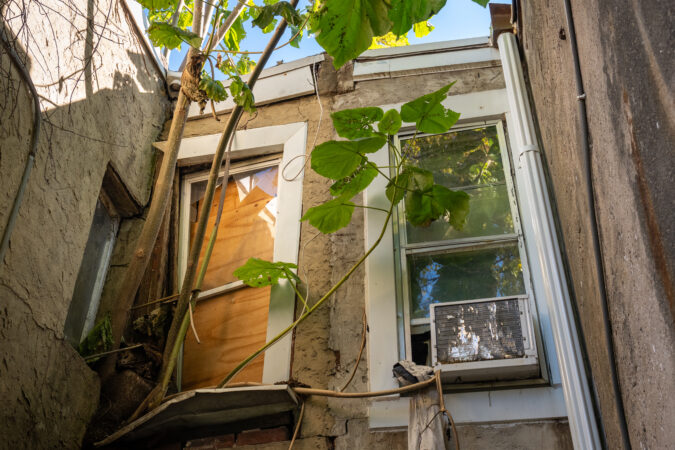
In early August, a back window and part of a wall came crashing down during harsh winds and rain. An inspector for the city’s Department of Licenses and Inspections declared the vacant rowhouse “imminently dangerous,” which means it is at risk of collapsing.
“I never know when something’s going to actually happen,” Phillips said in late October. “We know it’s just a matter of time. … I’m so scared right now.”
Across Philadelphia, families are living in a limbo of anxiety next to buildings that the city has determined are unsafe or imminently dangerous. The buildings at greatest risk of collapse are usually vacant.
Renters Emily Phillips (left) and Dayani Lemmon examine the basement wall that their home shares with the abandoned and dangerous rowhouse next door.
Philadelphians rely on the city to keep an eye on vacant properties that are or could become dangerous. And in 2016, the city rolled out a method for determining which properties were likely to be vacant. L&I’s commissioner at the time said the inventory tool was making the department more proactive in protecting the public from deteriorating vacant buildings.
But L&I officials now say the department no longer uses the tool. They said the department mainly relies on residents’ complaints and its list of vacant property licenses — which L&I admits is a massive undercount — to monitor empty buildings.
(function() {
var l2 = function() {
new pym.Parent(‘imm_dang_map’,
‘https://media.inquirer.com/storage/inquirer/projects/innovation/arcgis_iframe/imm_dang_map.html’);
};
if (typeof(pym) === ‘undefined’) {
var h = document.getElementsByTagName(‘head’)[0],
s = document.createElement(‘script’);
s.type = ‘text/javascript’;
s.src = ‘https://pym.nprapps.org/pym.v1.min.js’;
s.onload = l2;
h.appendChild(s);
} else {
l2();
}
})();
L&I points out that property owners are responsible for securing vacant properties and repairing dangerous buildings, and the department steps in as resources and laws allow.
Around the time Inquirer reporters spoke with Phillips, the city’s spreadsheet of likely vacant properties listed about 8,000 vacant buildings — a potentially serious threat to their neighbors. An Inquirer analysis of the city’s list of imminently dangerous buildings showed that 79% of those also appeared on the list of likely vacant buildings.
Just under half of those vacant and imminently dangerous buildings were rowhouses, which are especially risky to neighbors because of shared walls. This risk is not borne equally by all of Philadelphia’s residents.
Emily Phillips and her landlord, Samantha Wismann, stand next to a neighboring abandoned rowhouse, where part of a wall collapsed and a tree grows inside.
Nearly eight in 10 of all such rowhouses are in the poorest 25% of the city’s zip codes. The zip code with the most such rowhouses — 19132, where Phillips lives — has a median income of $31,000, according to the latest Census Bureau data. Philadelphia’s median household income is $61,000.
Seven in 10 vacant rowhouses that the city identified as imminently dangerous are in the 34% of the city’s zip codes that are predominantly Black. Roughly nine in 10 residents in 19132 are Black.
Dianna Coleman, a community activist who lives in Southwest Philadelphia, called vacant properties “one of Philadelphia’s most pressing and overlooked crises.”
This summer, a hole opened in the back of an abandoned rowhouse that is connected to a North Philadelphia house owned by Samantha Wismann.
When Coleman and a group of residents in Southwest and West Philadelphia came together last summer to organize around quality of life issues, residents’ top concern was fixing vacant properties. They partnered with the grassroots social justice nonprofit OnePA and launched their first campaign — asking the city to deal with abandoned buildings and vacant lots.
“While we recognize that the city has taken steps — demolishing some buildings, addressing some lots — the pace is way too slow, the resources too scarce, and the strategy too weak,” Coleman, cochair of OnePA West/Southwest Rising, said at a news conference this summer. “Unsafe buildings are left standing for years, growing more hazardous, pulling down property values, and pushing people out of their homes.”
The vacant rowhouse next to Emily Phillips’ North Philadelphia home had its collapsing porch roof removed, but the rest of the home remains in disrepair.
The city’s questionable vacancy data
About a decade ago, the city started using an algorithm that takes feeds from a variety of datasets (such as whether a property has had its water cut off) to determine whether a property is likely to be vacant.
City officials celebrated the tool when it launched.
“Protecting the public from deteriorating vacant, abandoned properties as they grow more and more likely to collapse is critical to L&I’s mission,” former L&I Commissioner David Perri said in a 2016 news release announcing the index. “The Vacant Property Model and dataset are making us more proactive and strategic in carrying out that mission.”
But the reliability of the city’s list of likely vacant buildings and lots was recently called into question by individuals who have worked closely with the tool and collaborated with city officials in the past.
For more than three years, Clean & Green Philly, a nonprofit that — until its closure earlier this year — used data to help Philadelphians deal with vacant properties in their neighborhoods, relied on the city’s tool in combination with other data to identify vacant properties in greatest need of addressing.
But last year, founder Nissim Lebovits and the organization’s former executive director, Amanda Soskin, noticed something was wrong.
For years, the city’s list of suspected vacant properties had hovered somewhere around 40,000 records — buildings and land combined. But then, according to Lebovits and Soskin, that number plunged to around 24,000 in June 2024.
“And at first I was like, ‘OK. Something’s probably broken,’ and we looked into it,” Lebovits said. “And we realized that the city’s actual underlying datasets were no longer reporting the same number of vacant properties.”
window.addEventListener(“message”,function(a){if(void 0!==a.data[“datawrapper-height”]){var e=document.querySelectorAll(“iframe”);for(var t in a.data[“datawrapper-height”])for(var r,i=0;r=e[i];i++)if(r.contentWindow===a.source){var d=a.data[“datawrapper-height”][t]+”px”;r.style.height=d}}});
The spreadsheet was showing only about 14,000 records as of this June, according to Lebovits and Soskin.
Then at some point between June and early November, the index grew to about 37,000 total properties.
Inquirer reporters began investigating the connection between vacancy and structural deficiencies in buildings after the April collapse of an abandoned rowhouse in Sharswood. At that time, L&I offered the vacancy index while asserting it could not provide detailed information about the data and referring reporters to CityGeo, the department that developed and maintains the index.
At no point during an hour-long interview with the department’s chief data officer in early June did city officials mention any concerns about the reliability of the data.
Reporters learned about issues with the data when Lebovits and Soskin wrote an article for The Inquirer’s opinion section later that month detailing their concerns. They wrote that city sources told them the process of collecting and publishing vacancy estimates “was quietly discontinued after [Mayor Cherelle L.] Parker took office.”
In an email, a CityGeo spokesperson said the city has not stopped updating the index, asserted that its accuracy depends on continued updates from various departments, and noted that CityGeo pauses updates “every few years” for “a month or so” to ensure the tool continues to work, most recently this past summer.
The spokesperson did not respond to questions about why the index’s size had varied so greatly recently. Lebovits and Soskin told The Inquirer that nobody from the city reached out to them after their article was published.
“My big takeaway here is that the lack of transparency around this dataset is a major liability,” Lebovits wrote in an email. “Having so little accountability regarding data production and quality seriously hampers any community groups trying to use these data and undermines the credibility of the City’s vacancy work.”
The tree inside an abandoned North Philadelphia rowhouse towers above the roofs of the house and its neighbor, owned by Samantha Wismann.
‘Very, very scary’
When Phillips’ landlord, Samantha Wismann, bought the house on North Woodstock Street in 2020, she didn’t know that its neighbor was vacant.
Wismann noticed the house looked a little shabby, but it wasn’t until Phillips moved in the following year that the women saw no one lived there. They didn’t know how long it had been vacant, but they watched it quickly deteriorate.
Most pressing back then was the collapsing porch roof, which was dragging down the roofs of the porches on either side of it.
Someone eventually tore it down. But the rest of the home remains in disrepair.
“It’s very, very scary,” Wismann said in October, “because eventually, if it’s not handled, it’s gonna come down.”
Cracks snake between the homes.
From the women’s backyard, through the door-sized hole in the back of the neighboring house, they can see past splintered beams and an abandoned refrigerator, beyond the staircase that leads to the second floor, and straight through to the front door.
Then there’s the tree that’s growing inside the vacant house. It has pushed outward through bricks and plaster and busted a second-story window. The tree’s branches tower over the homes, and some have reached the window of the bedroom where Phillips’ grandchildren stay.
L&I’s Contractual Services Unit is responsible for inspecting unsafe and imminently dangerous properties and administers the city’s demolition program. The unit has 10 members and openings for two more inspectors, said Basil Merenda, commissioner for L&I’s Inspections, Safety & Compliance division.
“We’re out there doing our job,” he said. “We’re out there making sure that these unsafe and [imminently dangerous] properties are properly addressed through procedures and that public safety is always being maintained.”
Renter Dayani Lemmon looks at the abandoned property located next door to his home in North Philadelphia.
But a 2024 report by the City Controller’s Office said the unit used to have 15 inspectors, which the office said was not enough to keep up with inspections of unsafe and imminently dangerous properties.
Merenda said L&I is “making do with what we have” and mobilizes inspectors in other units when needed.
After L&I declares a property to be unsafe or imminently dangerous, it must issue notices to the property owner, who is responsible for repairs. The department can take unresponsive owners to court and pursue demolition in emergency situations, such as when a property is likely to collapse, is next to an occupied building, and has recent structural failures, Merenda said. The city demolishes imminently dangerous buildings in order of the risk officials determine they pose.
A tree can be seen growing inside the vacant North Philadelphia rowhouse through a hole in the back wall, which partially collapsed this summer.
The city charges owners for tear-down costs and places liens on properties if they do not pay.
L&I was unable to say how many such tear-downs the department has conducted this year and referred questions about the cost of demolitions — and the proportion of those costs recouped from owners — to the city’s Department of Revenue. The revenue department did not provide any figures to The Inquirer.
“In many, many cases, property owners surface at the last minute and request a continuance, request a temporary restraining order from us going in and demolishing the property,” Merenda said. “And you know, that’s the purview of the courts. It’s beyond us.”
In the meantime, people living next to dangerous properties are left in the dark.
Kate and Dan Thien and their daughter stand in the backyard of their Port Richmond home, the foundation of which is cracking because of weed trees next door.
Frustrated with L&I
After the back of the abandoned rowhouse on North Woodstock Street opened up this summer, Phillips led an L&I inspector through her home so he could see.
“He went in the backyard, he looked over and was like, ‘My god!’” Phillips said. “I said, ‘Yeah, I can see right through their house.’ And he looked up and was like, ‘It’s a tree!’ I said, ‘Yeah, the tree is pushing the house out.’”
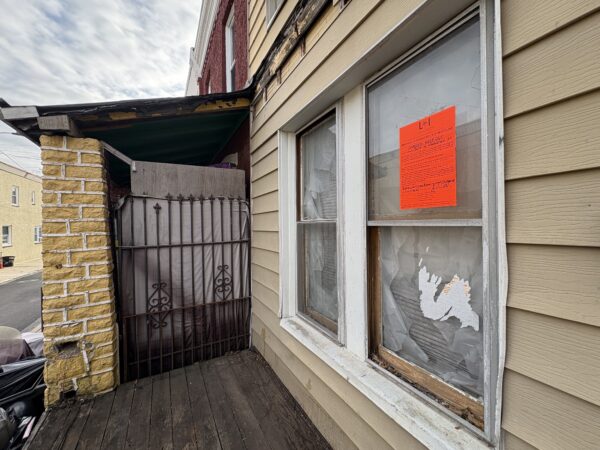
The inspector put an orange “imminently dangerous” notice on a front window, and Phillips and her landlord thought they wouldn’t have to worry much longer. But days after the notice went up, it was ripped down.
Weeds from the neighboring vacant property surround Kate and Dan Thien’s home in Port Richmond.
The property has attracted rats and mice. Water leaked into Phillips’ basement until her landlord reinforced the shared wall with concrete.
For months, her landlord got no response from the city to her calls and emails asking for help.
On Nov. 20 — 3 ½ months after the partial collapse — an L&I inspector visited the vacant rowhouse to post a “final notice” that the owner must repair or demolish the home or else the city will have it demolished.
Kate and Dan Thien are trying to live with the vacant property next to their rowhouse in Port Richmond as they wait for the city to respond to their 311 complaints.
When they bought their house in February 2024, they saw that the neighboring backyard was a mess, but they didn’t know the house was vacant.
Renters who had lived in what is now the Thiens’ home had used and maintained the neighboring backyard. But it quickly became overgrown. Neighbors later told the Thiens that the home had been vacant for more than a decade.
The backyard of the abandoned North Philadelphia rowhouse is full of debris.
“Pretty much the entire neighborhood knows about this house,” Kate Thien said.
She and neighbors on the other side have filed complaints with the city. The property has racked up 19 violations since 2012. Public records show that the city cited the property for “high weeds” last fall and most recently inspected it last December. The property passed inspection.
A year later, a weed tree’s branches stretch above and behind the Thiens’ two-story home. Tree roots are growing into their home’s foundation and cracking the concrete. Trees are “very rapidly growing” as Thien waits for the city to do something, she said. She worries about her home’s property value as the situation worsens.
This abandoned property on Spruce Street in West Philadelphia, pictured on July 30, was one of the houses on a list of problem vacant properties compiled by OnePA West/Southwest Rising.
“It’s not going away,” she said.
Annette Randolph and her husband, Dennis, live in a Point Breeze rowhouse next to a home that’s been vacant for more than a decade and that the city classifies as unsafe, a step below imminently dangerous. Four generations of her family have lived in her home. She hopes she’s not the last.
A tree growing inside the vacant house burst through its back roof, next to a tarp-covered hole. Randolph has had to repair her own roof because of damage from next door. Water gets into her basement.
The home’s legal owners are dead. A scheduled sheriff’s sale in 2011 for overdue property taxes gave Randolph hope for a resolution. But right before the sale, someone paid part of the tax bill to stop it.
On Nov. 20, an inspector with Philadelphia’s Department of Licenses and Inspections posted a final notice on the vacant North Philadelphia rowhouse that says owners must repair or demolish the home.
Now, “for sale” signs hang in the front windows, and a contractor showed up last week. Randolph hopes any work on the house won’t damage the one she’s called home for 66 years.
She has lost track of the number of times she’s called 311 about the situation. She’s felt helpless. When she needed new homeowner’s insurance, companies told her they wouldn’t insure her or would charge more because of the attached vacant and unsafe house.
“L&I and the city I blame for allowing this type of stuff to happen,” Randolph said.
Merenda said L&I hears neighbors’ complaints, “and we’re going to try to take action as efficiently and properly as possible.”
“I want to make, during my watch, L&I more accessible, responsive, and accountable to the neighbors, stakeholders, contractors, developers, average citizens, the City Council,” he said.
A collapsing roof was removed but the rest of the vacant rowhouse was left to deteriorate.
Neighbors band together
In September 2024, OnePA West/Southwest Rising launched its campaign to get the city to deal with abandoned properties.
The group created a list of 20 of the worst ones as submitted by neighbors. Among the vacant buildings, some had collapsing porches, one’s basement had flooded and damaged a neighbor’s house, and one’s walls were crumbling. Some had squatters, including a property where human waste was dumped in the backyard.
City Councilmember Jamie Gauthier’s office got the group a meeting with staff at L&I this January.
As a result, this summer, the group celebrated successes: five lots cleaned by the Pennsylvania Horticultural Society, three properties cleaned and sealed by the city, five properties whose owners the city took to court, and three properties that were repaired and returned to use.
The group believes it was able to get L&I to act because it had the weight of a Council member behind it.
“I do think L&I is overwhelmed. I don’t think they have enough staff to really stay on top of this,” said Eric Braxton, project director for OnePA West/Southwest Rising. “But clearly there are people in leadership that care about our communities and are trying to do the right thing.”
Now the group plans to push for systemic change. It wants the city to make small repairs to stabilize vacant buildings and charge the owners.
“There’s a gap in the system when it comes to dealing with unsafe abandoned buildings,” Braxton said. “The result of that is that those buildings just get worse and worse until they are imminently dangerous and have to be demolished.”