Blog

  • Haverford president is considering convening committee to review Howard Lutnick’s name on campus library

    Haverford president is considering convening committee to review Howard Lutnick’s name on campus library

    Haverford College president Wendy Raymond is considering convening a committee that would review whether mega donor and U.S. Commerce Secretary Howard Lutnick’s name should remain on the campus library.

    Raymond’s statement to the campus community this week follows concerns expressed by Haverford students and alumni about Lutnick’s ties to sex offender Jeffrey Epstein. She noted “a growing number of Fords have written to express their dismay.”

    “While forming a naming review committee does not predetermine any outcome, it is a serious step and not something I would take lightly,” Raymond wrote to the campus. “I will take the time necessary to continue to reflect and to engage with thought partners before determining whether to activate a review committee.”

    Under Haverford’s gift policy, the school can rename a building if “the continued use of the name may be deemed detrimental to the college, or if circumstances change regarding the reason for the naming.” If Raymond convenes a committee, she would then consider its recommendations and make her recommendation to the external affairs committee of the board of managers, as well as to its chair and vice chair. The external affairs committee then would make its recommendation to the full board of managers.

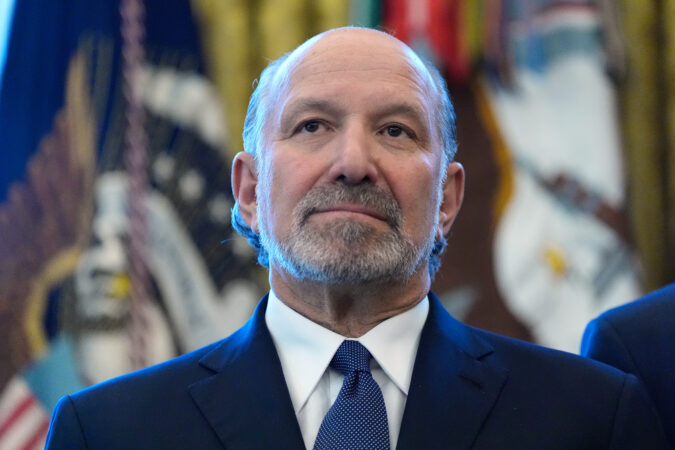
    Lutnick, a 1983 graduate and former chair of the college’s board of managers, is one of the school’s biggest donors, having given $65 million. Documents released by the U.S. Justice Department this month show that Lutnick had contact with the late financier as recently as 2018, long after Epstein pleaded guilty to obtaining a minor for prostitution and soliciting a prostitute.

    And during congressional testimony last week, he said he visited Epstein’s private island with his family in 2012. Lutnick previously said he had not been in a room with Epstein, whom he found “disgusting,” since 2005.
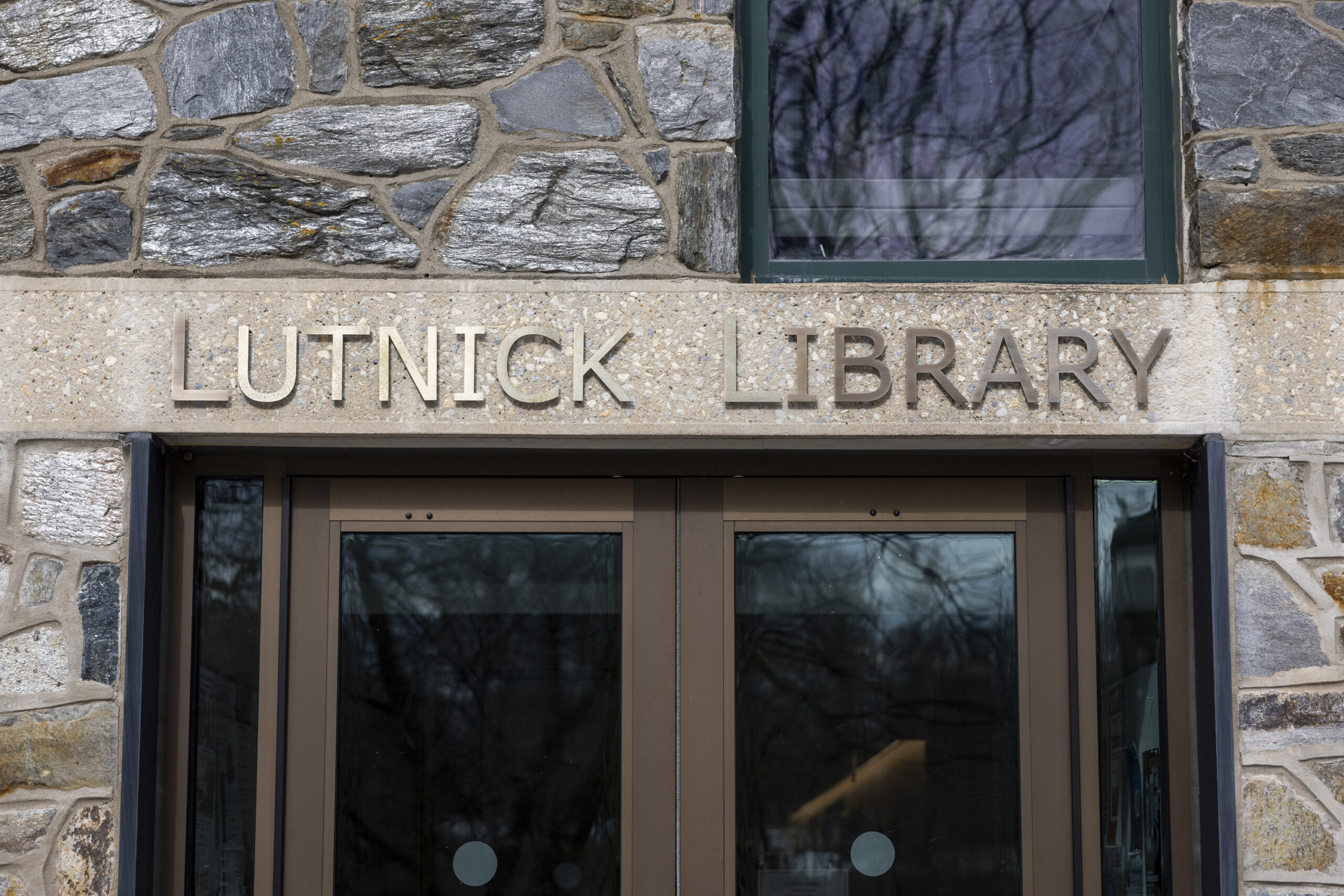
    The outside of the Lutnick Library at Haverford College.

    Raymond’s announcement comes one day after students held a town hall to discuss their concerns and feelings about Lutnick‘s ties to Epstein.

    Students who organized the town hall said Raymond’s communications about Lutnick have fallen short. They said they had hoped at least to see a review committee started.

    “Many students, including myself, are deeply disappointed and, in many cases, hurt by the neutral and softened language in these communications,” senior English major Paeton Smith-Hiebert wrote to Raymond.

    Smith-Hiebert is co-founder of the Haverford Survivor Collective, which started in 2023 and is led by Haverford students and survivors of sexual assault. She said while Raymond notes she is having conversations about the topic, the collective hasn’t been consulted.

    “Given the gravity of this situation, survivors are among those most directly affected,” she wrote. “Many are feeling significant harm and institutional betrayal … While I understand there are many stakeholders to consult, it is difficult to reconcile the stated commitment to engagement with the apparent absence of those most impacted.”

    Raymond’s message, she said, also should have included a reference to resources or support for survivors who are struggling, she said.

    Between 50 and 100 students attended the nearly two-hour town hall, several attendees said, with no students speaking in favor of keeping Lutnick’s name on the building. Students introduced an open letter with demands that has since been signed by 235 students, staff, and alumni as of 8:30 a.m. Friday, said Smith-Hiebert. The letter calls on the college to immediately convene a review committee, rename the library, acknowledge the distress and harm members of the community are experiencing, and “adopt a clear and unambiguous morals clause” in the gift policy.

    Students also discussed the possibility of protest actions to urge the college to act as soon as possible.

    The issue of Lutnick’s name on the library is likely to come up at a plenary session, where students discuss and vote on important campus issues. That session is scheduled for March 29.

    If the students were to pass a resolution calling for the removal of Lutnick’s name from the library, it would go to Raymond for signing.

    Milja Dann, 19, a sophomore psychology major from Woodbury, N.J., said she went through all of the Epstein files that mention Lutnick and Epstein and saw references to at least seven planned in-person encounters. Students compiled a 10-page document on the Lutnick-related material in the files.

    “I feel it is extremely difficult for survivors of sexual violence to see that name and know it is so closely associated with a man who has perpetuated violence and harm to so many people,” Dann said.

    A Commerce Department spokesperson told the Associated Press last month that Lutnick had had “limited interactions” with Epstein, with his wife in attendance, and had not been accused of “wrongdoing.” Lutnick told lawmakers last week: “I did not have any relationship with him. I barely had anything to do with him.”

    Some students at the town hall talked about the difficulty of going in the library, which is the heart of the academic campus.

    “For me, walking into that space has been uncomfortable for a while,” Smith-Hiebert said, referring to when Lutnick was named President Donald Trump’s commerce secretary. “That discomfort has only intensified given this news.”

    Lutnick, formerly chairman of Cantor Fitzgerald L.P., a New York City financial firm that lost hundreds of employees in the 9/11 World Trade Center attacks, served on Haverford’s board for 21 years.

    In addition to the library, which also bears his wife Allison’s name, the indoor tennis and track center is named for his brother Gary Lutnick, a Cantor Fitzgerald employee who was killed on 9/11, and the fine arts building carries the name of his mother, Jane Lutnick, a painter. He also funded the college’s Cantor Fitzgerald Art Gallery.

    Students discussed whether removing Lutnick’s name from the library would be enough or if other references should come down, too, said Cade Fanning, the associate editor of the Clerk, Haverford’s student newspaper, who attended the meeting.

    “That had the most split opinions,” said Fanning, 21, a senior history major from Annapolis.

    But people were concerned that seeing the Lutnick name on anything, even if it was a relative, would be difficult for survivors, Fanning said. And the relatives’ names still signify Lutnick’s “imprint” on the college, he said.

    Students also discussed that while they want his name off the library, the college should install a plaque explaining the history, rather than erasing it, Smith-Hiebert said.

  • Reese’s grandson accuses Hershey of degrading chocolate, making it ‘not edible.’ Is he right?

    Reese’s grandson accuses Hershey of degrading chocolate, making it ‘not edible.’ Is he right?

    The grandson of the inventor of Reese’s Peanut Butter Cups went viral after penning an open letter to Pennsylvania’s Hershey Company on Feb. 14. But it was far from a valentine.

    Brad Reese, 70, accused the confectionery manufacturer of hurting the brand his grandfather H.B. Reese began a century ago, cutting corners with its chocolate quality. Within the week, Reese’s post has sparked discussions about brand integrity, ingredients, and legacy.

    In a LinkedIn post, Reese said Hershey’s assortment of Reese’s products (including the valentine heart-shaped ones he had recently sampled) include different, cheaper ingredients, swapping milk chocolate for compound coatings and peanut butter for peanut butter créme.

    “How does The Hershey Co. continue to position Reese’s as its flagship brand, a symbol of trust, quality, and leadership, while quietly replacing the very ingredients (Milk Chocolate + Peanut Butter) that built Reese’s trust in the first place?” Reese wrote.

    Reese isn’t wrong. Several Reese’s products today — including the valentine’s hearts and the Easter egg-shaped versions — use chocolate-flavored coatings that cannot be legally called “milk chocolate,” a term that’s regulated by the Food and Drug Administration. It’s unclear exactly when the swaps occurred.

    The flagship Reese’s Peanut Butter Cups continue to list milk chocolate and peanuts as the first two ingredients.

    Still, the product line’s variance represents a shift across the candy industry as cocoa prices continue to rise, driven by a combination of factors, including climate-sparked changes in supply, tariffs, and labor shortages, the New York Times reports. Chocolate companies, including Hershey’s, have responded by making cost-effective ingredient swaps. The Times reported that several chocolate-forward Hershey’s candies no longer listed milk chocolate among their ingredients during last Halloween season.

    Hershey doesn’t deny the swaps, but is defending its quality.

    The company said in a statement Wednesday that Reese’s Peanut Butter Cups are made the same way they’ve always been, with house-made milk chocolate and roasted peanuts, but that ingredients for some other Reese’s products can vary based on demand.

    “As we’ve grown and expanded the Reese’s product line, we make product recipe adjustments that allow us to make new shapes, sizes, and innovations that Reese’s fans have come to love and ask for, while always protecting the essence of what makes Reese’s unique and special: the perfect combination of chocolate and peanut butter,” the company said.

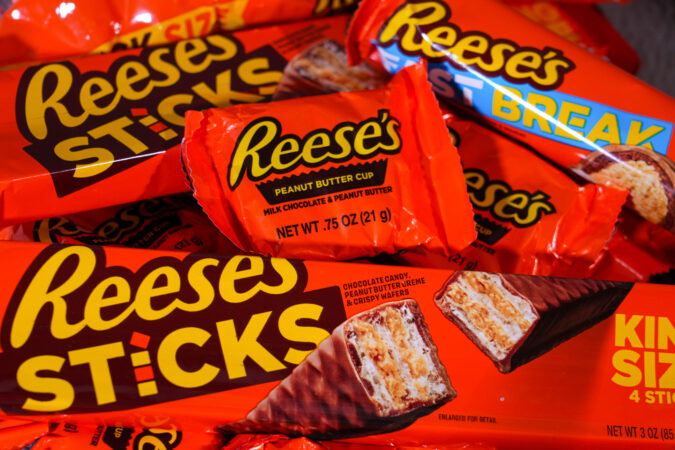
    A package of Reese’s Hearts is shown on Tuesday, Feb. 17, 2026, in New Jersey. (AP Photo/Pablo Salinas)

    A government database last updated in 2023 shows changes to the ratio of peanuts and milk chocolate used in Reese’s Peanut Butter Eggs over the years. Three years ago, the egg chocolates had more peanuts and milk chocolate than anything else. But the current formula lists sugar and vegetable oil first — and no milk chocolate.

    Reese said he thinks Hershey has gone too far this time.

    He picked up a bag of Reese’s Mini Hearts for Valentine’s Day, but threw them away after sampling.

    “It was not edible,” Reese told The Associated Press. “You have to understand. I used to eat a Reese’s product every day. This is very devastating for me.”

    Reese’s grandfather, H.B. Reese, spent two years at Hershey before leaving to form his own company, H.B. Reese Candy Co. in 1919. The company manufactured about 12 types of chocolate, made with ingredients that included real cocoa butter, fresh cream, and freshly roasted peanuts.

    He invented Reese’s Peanut Butter Cups in 1928. They were a hit and had wrappers included the slogan: “Made in Chocolate Town, so they must be good.” H.B. Reese died in 1956. His six sons eventually sold his company to Hershey in 1963.

    Now, Reese is waging war.

    He redesigned his personal website to take on Hershey’s ingredient swaps. The lead photo on the homepage shows an orange cap with the phrase “MAKE REESE’S GREAT AGAIN” stitched on the front. He says the website is devoted to “protecting Reese’s brand integrity.” It includes a list of news coverage his LinkedIn call-out has received to date.

    “Right now, the REESE’S story is diverging from what’s inside REESE’S products. And that divergence puts REESE’S and the legacy behind it, at risk,” Reese said on LinkedIn. “As the grandson of the man who created REESE’S Peanut Butter Cups, I’m not asking for nostalgia. I’m asking for alignment. For truth in REESE’S brand stewardship.”

  • Keeping Black history alive | Morning Newsletter

    Keeping Black history alive | Morning Newsletter

    It’s Friday, Philly. Don’t put away the winter boots yet: Accumulating snow is looking more likely Sunday into Monday.

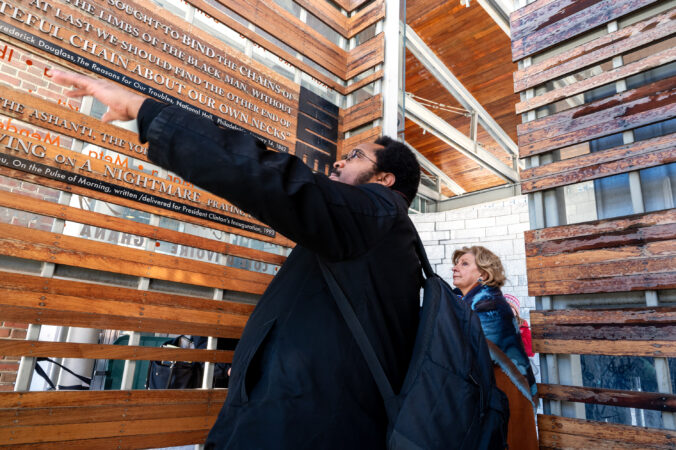
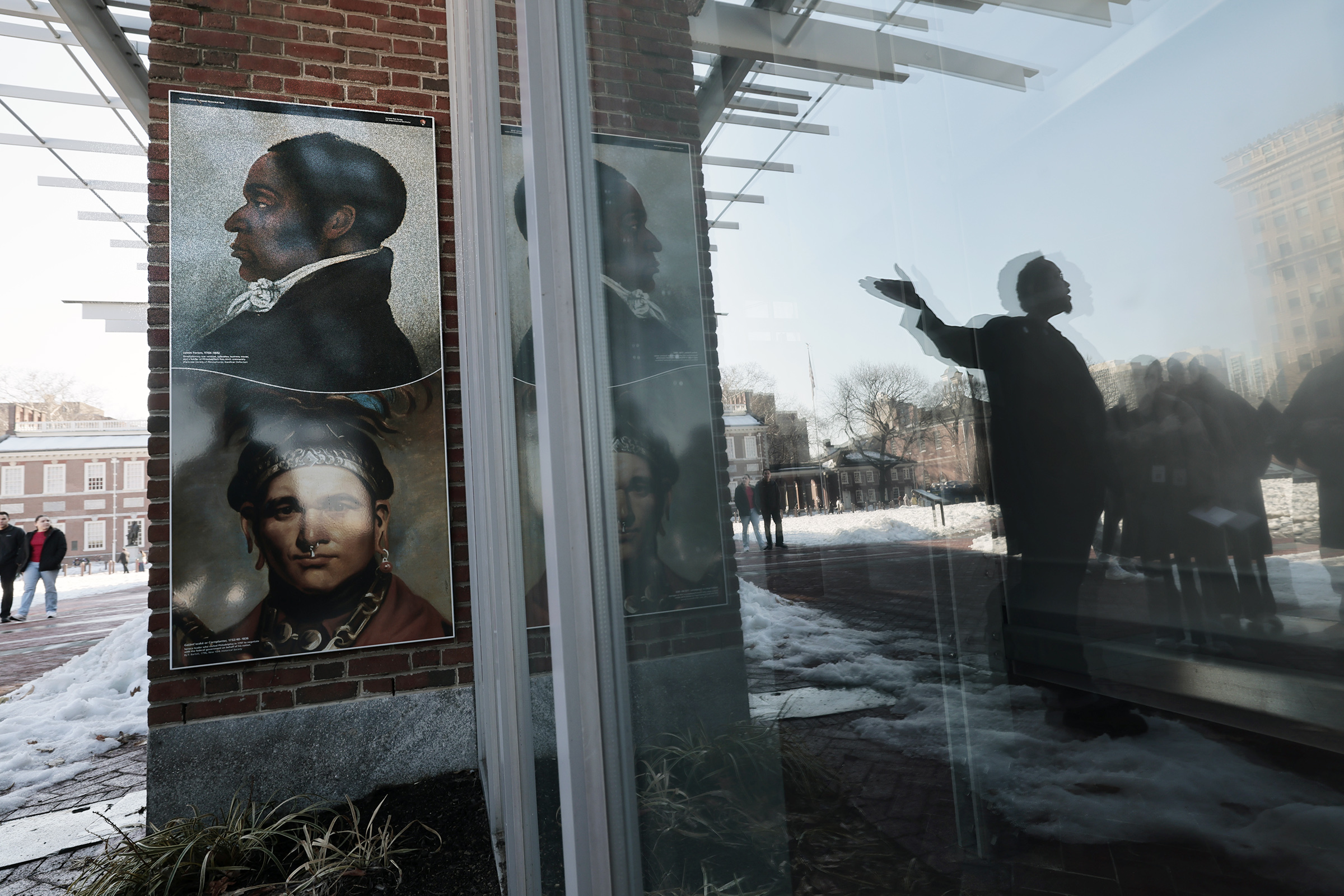
    National Park Service employees began restoring the slavery exhibits to the President’s House on Thursday. See how a Black history tour kept the historic site’s story alive after the Trump administration tried to erase it.

    And the Philadelphia Housing Authority took over its first private-sector apartment building last year. Some tenants say the transition has not gone smoothly.

    — Julie Zeglen (morningnewsletter@inquirer.com)

    If someone forwarded you this email, sign up for free here.

    ‘We can tell the full story of America’

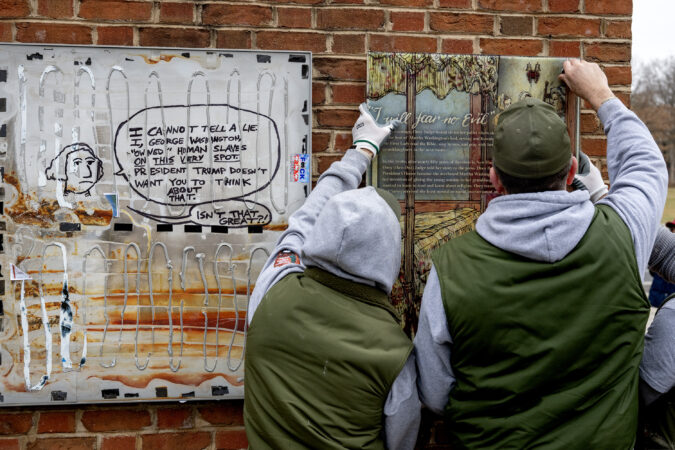
    Almost a month after abruptly dismantling exhibits about slavery from the President’s House, National Park Service employees began reinstalling the panels late Thursday morning ahead of a court-imposed deadline.

    The site’s restoration comes after weeks of community pushback and legal action against President Donald Trump’s administration, which removed the panels last month because they were deemed to “inappropriately disparage” the United States.

    The exhibits may face further legal scrutiny. But the groups that have rallied for them to be reinstalled are committed to keeping the stories they tell about Black history in Philadelphia alive.

    Notable quote: “We’re here and you can try and erase whatever you want, as much as you want, but guess what? There are lots of us and we’re just going to keep moving and moving and moving toward truth,” said Mona Washington, a playwright and board member for Avenging the Ancestors Coalition, which fought to develop and now protect the site.

    Reporter Fallon Roth joined The Black Journey, a walking tour that includes a stop at the President’s House, for this look at the local response to the site’s changes.

    A long troubled apartment building’s new landlord

    PHA last year began buying struggling private-sector apartment buildings with a goal to expand the affordable housing supply in the city. The agency plans to fill these buildings with Section 8 voucher holders, though many still have tenants paying market-rate rents.

    Tenants at its first acquisition, The Dane in Wynnefield, report a rocky transition, including lost access to a rent payment portal and delayed maintenance. A high turnover rate not seen at PHA’s other properties hints at challenges within the new model.

    Still, they say, PHA is a better landlord than the company that ran the building before — and is now no longer in business.

    Real estate reporter Jake Blumgart has the story.

    In other housing news: A $105 million mixed-use complex with apartments is set to rise in the shadow of the Willow Grove mall.

    What you should know today

    Plus: Why does Philly have so many chicken bones lying around?

    Welcome back to Curious Philly Friday. We’ll feature both new and timeless stories from our forum for readers to ask about the city’s quirks.

    This week, we have an explainer from reporter Nate File on where the heck all these strewn-about chicken remnants are coming from. Why does it seem like every other city block is the scene of a fowl crime?

    As a dog owner who must dig a bone out of a drooly mouth on just about every walk we take through West Philly, I’m thrilled to have someone to blame. Here’s the full story.

    Have your own burning question about Philadelphia, its local oddities, or how the region works? Submit it here and you might find the answer featured in this space.

    🧠 Trivia time

    For the 800th episode of The Simpsons, the show showcased Philadelphia and parodied National Treasure. Which Philly-tied celebrity was not featured in the episode?

    A) Kevin Bacon

    B) Questlove

    C) Taylor Swift

    D) Quinta Brunson

    Think you got it? Test your local news know-how and check your answer in our weekly quiz.

    What and whom we’re…

    🪩 Mourning: Magic Gardens creator Isaiah Zagar, who has died at 86.

    ⛸️ Applauding: South Jersey’s Isabeau Levito for her impressive first turn in the Olympics.

    🪿 Concerned about: The 50-plus dead geese found at Alcyon Lake in Gloucester County.

    🚎 Sorry to say: Some Delco SEPTA riders will have longer commutes, beginning Monday.

    🏥 Remembering: When a nearly 250-year-old hospital’s closure was announced on this week in Philly history.

    🧩 Unscramble the anagram

    Hint: State representative from Northwest Philadelphia

    RICH BARBS

    Email us if you know the answer. We’ll select a reader at random to shout out here.

    Cheers to Bob Brauckmann, who solved Thursday’s anagram: Morey’s Piers. A man was arrested this week in the theft of more than $175,000 worth of metal and mechanical components from the iconic Wildwood theme park.

    Photo of the day

    Phillies pitcher Aaron Nola throws a live batting practice session during spring training in Clearwater, Fla. on Wednesday.

    See? We’re so close to baseball season, and spring. ’Til then, be well.

    By submitting your written, visual, and/or audio contributions, you agree to The Inquirer’s Terms of Use, including the grant of rights in Section 10.

  • What the Supreme Court throwing out Trump’s tariffs means for you

    What the Supreme Court throwing out Trump’s tariffs means for you

    The Supreme Court ruled Friday that most of President Donald Trump’s widespread tariffs put in place last year are invalid — but that doesn’t mean shoppers will suddenly see prices drop.

    The high court ruled that Trump overstepped his authority by relying on a decades-old emergency law to impose tariffs on goods from nearly every country.

    Now, the fate of the tariffs is uncertain. Trump indicated at a news conference Friday that he would not back off from his prominent economic policy and would impose tariffs using other laws.

    Here’s what the ruling means for American consumers and what happens next.

    Does this mean all tariffs are off?

    No. The Supreme Court’s ruling applies to the tariffs Trump imposed under the International Emergency Economic Powers Act (IEEPA). That includes the country-specific tariffs such as a 15% levy on goods from European Union countries or a 20% tariff on imports from Vietnam.

    That includes most of the tariffs Trump put into place last year, but not all of them. Sector-specific tariffs, such as duties on steel, aluminum, and autos will remain in place.

    What does this mean for prices?

    Tariffs contributed to rising prices throughout the past year, though not as significantly as some analysts had initially feared. Still, the Yale Budget Lab estimates that the average household would lose about $1,800 because of the cost of tariffs in the short term.

    Federal Reserve Chair Jerome H. Powell said in December that tariff price increases caused much of the overshoot in inflation, which has remained stubbornly higher than the Fed’s target rate of 2%.

    But even with IEEPA tariffs gone, consumers are unlikely to see much immediate relief in their shopping bills.

    “Generally, prices don’t go down once they’ve gone up,” said Joe Feldman, senior managing director and retail analyst at Telsey Advisory Group. “We might see a little bit of relief.”

    Companies may be wary to reduce prices when so much uncertainty remains about the future of tariffs.

    For months last year, many companies stocked up on imports in anticipation of tariffs. That gave them a cushion before they had to raise prices to make up for the increased cost of goods. That advance inventory started running out for many late last year, but it’s possible that throwing out the IEEPA tariffs will prevent future price increases that would have otherwise taken place.

    Will I get any rebates?

    Probably not. For the most part, tariffs are paid by importing companies during a Customs and Border Protection process. Individual consumers eventually see some of those fees in the form of cost increases but do not pay tariffs directly.

    It’s unlikely that individual businesses will refund customers for price increases.

    Trump said several times last year that he planned to use the tariff revenue, which was about $200 billion as of mid-December, to give stimulus checks to Americans. But there are many challenges inherent in that plan, including that tariff funds go to the Treasury and must be allocated by Congress before they are used.

    Will businesses get refunds from tariff payments?

    Maybe. There’s already a process in place for importers to adjust and dispute the duties they’ve paid at the border, and it’s possible that companies will use that system to appeal the fees they’ve paid over the past several months.

    But the government has yet to say if or how refunds would work or how long they might take to reach companies. The Supreme Court did not address what to do about refunds.

    At a news conference shortly after the decision was announced, Trump criticized the Supreme Court for not addressing the refund issue.

    “I guess it has to get litigated for the next two years,” he said.

    Businesses are preparing for a potential refund process, and some had already started petitioning CBP for refunds even before the court ruled, in the hopes of getting put in the front of the line.

    Costco, one of the nation’s largest retailers, sued customs officials in late November, saying separate legal action was needed to guarantee its refund rights.

    What does this mean for the future of tariffs?

    Trump is unlikely to simply dismiss the idea of tariffs because of the legal setback. Members of the Trump administration have already discussed other avenues to impose levies. After the Supreme Court oral arguments, Trump told reporters his team would “develop a ‘game two’ plan.”

    There are more traditional — albeit slower — ways to put tariffs in place, such as the sector-specific tariffs on steel, aluminum, and copper. Those are generally proceeded by a government investigation and are more specific than the countrywide tariffs Trump imposed last year.

    Trump said Friday after the decision that the government would use a separate law, Section 122, to implement a 10% global tariff. That law allows tariffs to be imposed for 150 days.

    He also said he would impose “several” new tariffs under Section 301, which applies to unfair trade practices.

    One way Trump might proceed would be to use a different law to temporarily put in place tariffs of up to 15% for about five months, said Patrick Childress, an international trade attorney at Holland & Knight in D.C. and a former assistant general counsel at the Office of the U.S. Trade Representative. During that time, the Trump administration could conduct investigations using a separate law to potentially put in place country-specific tariffs.

    “This is the path I think the administration is most likely to take because it gives them speed. They have flexibility to raise tariffs up or down, and they result in country-specific tariffs much like the IEEPA tariffs,” Childress said.

    If that’s how the White House ultimately tackles tariffs, it could mean that not much changes at all for consumers.

  • Phillies Extra with Brad Keller

    Phillies Extra with Brad Keller

    A year ago, Brad Keller was trying to win a job with the Cubs as a nonroster invitee to spring training. Now, he’s a key member of the Phillies’ bullpen on a two-year contract. And in a few days, he will join the most talented U.S. team ever assembled for the World Baseball Classic. Keller sat down with “Phillies Extra,” The Inquirer’s baseball podcast, to discuss how much has changed in a year, what led him to Philadelphia, why he believes he can duplicate his success in 2025, and more. Watch here:

  • A Willow Grove man who used insider info to make $617,000 trading stocks was sentenced to two years in prison

    A Willow Grove man who used insider info to make $617,000 trading stocks was sentenced to two years in prison

    A Willow Grove man who made more than $600,000 by trading stocks based on confidential information his then-girlfriend gave him about an impending corporate acquisition was sentenced Friday to two years in federal prison.

    Carlos Sacanell, 59, apologized for his actions before U.S. District Judge Wendy Beetlestone, saying he’d made a “terrible decision” and had “profound regret” for what he did.

    “This action does not represent who I am,” said Sacanell, who pleaded guilty last year to one count of securities fraud.

    Sacanell’s crimes occurred in 2023, prosecutors said, when his longtime partner told him that her company, the Chicago-based Oak Street Health Inc., was about to be acquired by CVS Health.

    The next day, prosecutors said, Sacanell — without his girlfriend’s knowledge — bought hundreds of thousands of dollars worth of Oak Street stocks and call options.

    Sacanell adjusted his purchases over the next few weeks as his girlfriend continued sharing occasional insights about whether or not the deal might go through, prosecutors said. The woman was not aware that he was trading on the information she gave him, prosecutors said, but when the acquisition ultimately closed, Sacanell netted about $617,000.

    In April 2023, prosecutors said, the FBI confronted Sacanell — who worked as a scientist — about what they viewed as his suspicious trades, but he denied that he had any insider information about Oak Street or the deal.

    Sacanell was indicted in late 2024. His relationship with his then-girlfriend has since ended, his lawyer said, and he is now expected to report to prison in about two months.

    He is also expected to be deported once his term of incarceration ends, his lawyer said. Sacanell was born and raised in Spain before becoming a lawful permanent resident of the United States, but will now likely be deported due to his conviction.

    Sacanell said he had already repaid about $300,000 worth of his illicit proceeds, and vowed that he would not commit any similar infractions in the future.

    “I regret it every day of my life,” Sacanell said.

  • Barcelona’s Sagrada Familia reaches its maximum height after more than a century

    Barcelona’s Sagrada Familia reaches its maximum height after more than a century

    BARCELONA, Spain — Barcelona’s towering Sagrada Familia basilica reached its maximum height on Friday, though the magnum opus of Catalan architect Antoni Gaudí remains years away from completion.

    A crane placed the upper arm of a cross atop the Tower of Jesus Christ, the church’s soaring central piece, which now stands 566 feet above the city.

    With Friday’s addition, the Sagrada Familia inched closer to being done. The unfinished monument became the world’s tallest church last year after another part of its central tower was lifted into place.

    The first stone of the Sagrada Familia was placed in 1882, but Gaudí never expected it to be completed in his lifetime. Only one of its multiple towers was finished when he died at the age of 73 in 1926, after being hit by a tram.

    In recent decades, work has sped up as the basilica became a major international tourist attraction, with people enthralled by Gaudí’s radical aesthetic that combines Catholic symbolism and organic forms.

    Inside, the Tower of Jesus Christ is still being worked on. Those who wish to actually see the cross will have to wait until the tower’s inauguration this summer, when the scaffolding surrounding it will be removed, according to the church.

    Topping the central tower, which soars above the transept, has been a priority ahead of celebrations this June that will mark the centenary of Gaudí’s death.

    As Gaudí had planned, the cross has four arms so its shape can be recognized from any direction, said Sagrada Familia’s rector, the Rev. Josep Turull. If Barcelona’s city government will allow it, the original plan also includes a light beam shining from each of the cross’ arms, symbolizing the church’s role as a spiritual lighthouse, he added.

    Millions of tourists visit the Sagrada Familia every year, and entrance fees largely fund the ongoing construction.

    This year, the Sagrada Familia will hold several events to celebrate the Catalan Modernist’s legacy, which includes other stunning buildings in Barcelona and elsewhere in Spain.

    The Sagrada Familia became the world’s tallest church last October, when it rose above the spire of Germany’s Ulmer Münster, a Gothic Lutheran church built over more than 500 years, starting in 1377. That church tops out at 530 feet.

    At Sagrada Familia, a prayer verse is included at the base of the cross installed Friday afternoon, said church rector Turull.

    It reads: “You alone are the Holy One, you alone are the Lord, you alone are the Most High.”

  • Yes, the slavery exhibits have been returned to the President’s House — but I’m still waiting for the other shoe to drop

    Yes, the slavery exhibits have been returned to the President’s House — but I’m still waiting for the other shoe to drop

    Late Thursday morning, when the National Park Service began restoring the panels commemorating nine people enslaved by George Washington at the President’s House at Sixth and Market, it should’ve been a time of jubilation.

    Instead, it left many activists waiting for the other shoe to drop.

    The National Park Service, which removed the panels from the site in late January to comply with an executive order by President Donald Trump, was successfully sued by Mayor Cherelle L. Parker’s administration. U.S. District Judge Cynthia Rufe ordered the NPS to restore the display, but the agency appealed.

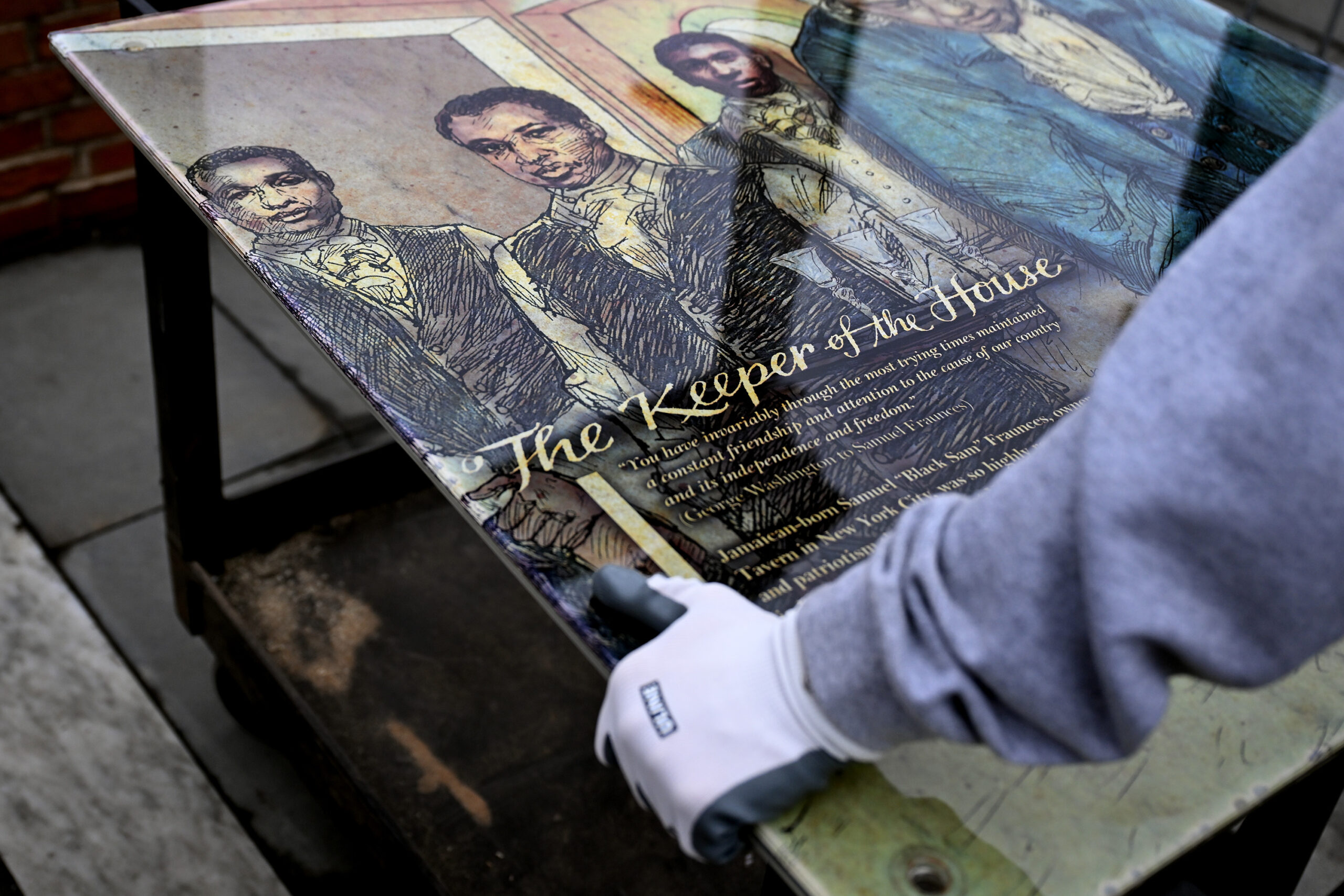
    A worker carries one of the slavery-related exhibits, “The Keeper of the House,” before rehanging it at the President’s House in Independence National Historical Park on Thursday.

    So yes, the federal government complied with the judge’s order, but only for the moment.

    Friday morning, Judge Rufe denied the government’s motion for an emergency stay of the order, but the Trump administration’s appeal is ongoing, thus continuing the fight to remove the panels for good.

    It was yet another dramatic turn in a month in which I’ve lived the joys and pains of Black history.

    I was there when Judge Rufe took lawyers into the National Constitution Center to inspect the materials the Trump administration pried from the walls with crowbars. I spoke at a rally where the Avenging the Ancestors Coalition (ATAC) demanded the restoration of the slavery memorial. I listened as ATAC founder Michael Coard announced that Judge Rufe had ordered the panels to be restored.

    Like so many in Philadelphia, I have watched the fight for the President’s House unite people of all stripes. I’ve experienced the emotional victories and defeats.

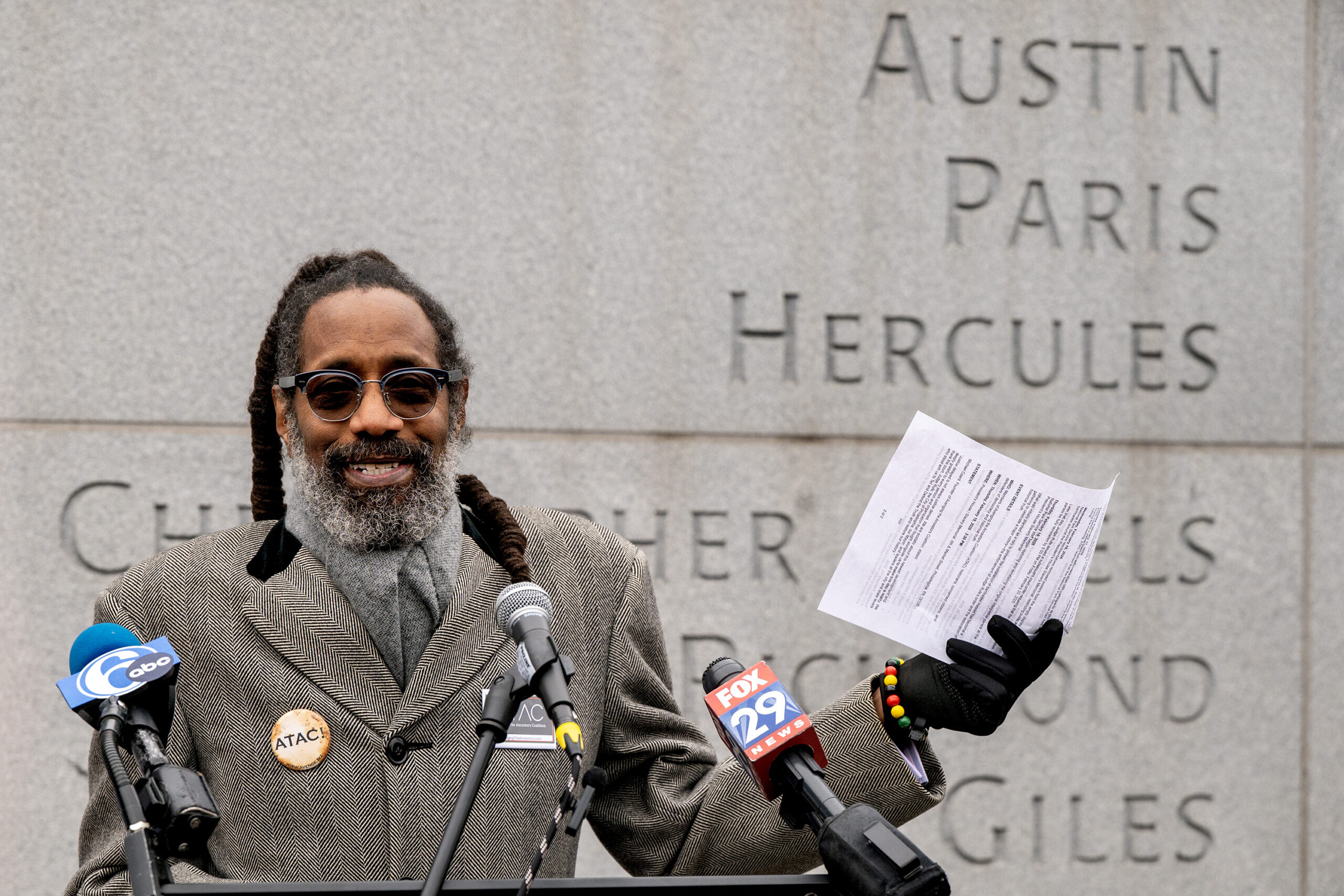
    Attorney Michael Coard, leader of the Avenging the Ancestors Coalition, speaks during a rally at the President’s House in Independence National Historical Park on Thursday, after the return of some of the slavery exhibits the National Park Service removed last month. The names of nine enslaved people who lived and worked in the household of George Washington, engraved in stone behind him, were not among those removed by the NPS.

    But even with the restoration of the panels, we are all left teetering on the razor-thin edge that separates celebration from grief, and elation from rage. We cannot stay there. We must continue to fight for the truth.

    In Philadelphia, a city that frequently hosted civil rights leader Jesse Jackson, who died this week after a life spent fighting for justice, we fight.

    Here, in the place where the story of enslavement lived side by side with the struggle for freedom, we fight.

    Here, in a place where a new generation of combatants joins a centuries-old battle for the truth, we fight.

    More rallies will come, and in the shadow of Independence Hall, where wealthy white men declared their own freedom while withholding liberty from my ancestors, a new American Revolution will take shape from the same war of ideas Jackson fought. It will be based on the rhetoric of America’s founders.

    If indeed all men are created equal, our history should be equally told. That idea cannot be contained by metal barriers. We’ll see if it can be enforced in the courts.

    Still, truth is not about legalities or displays.

    The truth of slavery in Philadelphia exists in the names of our neighborhoods, our streets, and even our schools. It exists in the very fabric of who we are.

    The neighborhood of Logan is named for James Logan, who served as secretary to William Penn. He also enslaved people.

    Chew Avenue is named for the Chew family, who lived in an estate called Cliveden, which is also the name of a street. The Chews enslaved people at Cliveden.

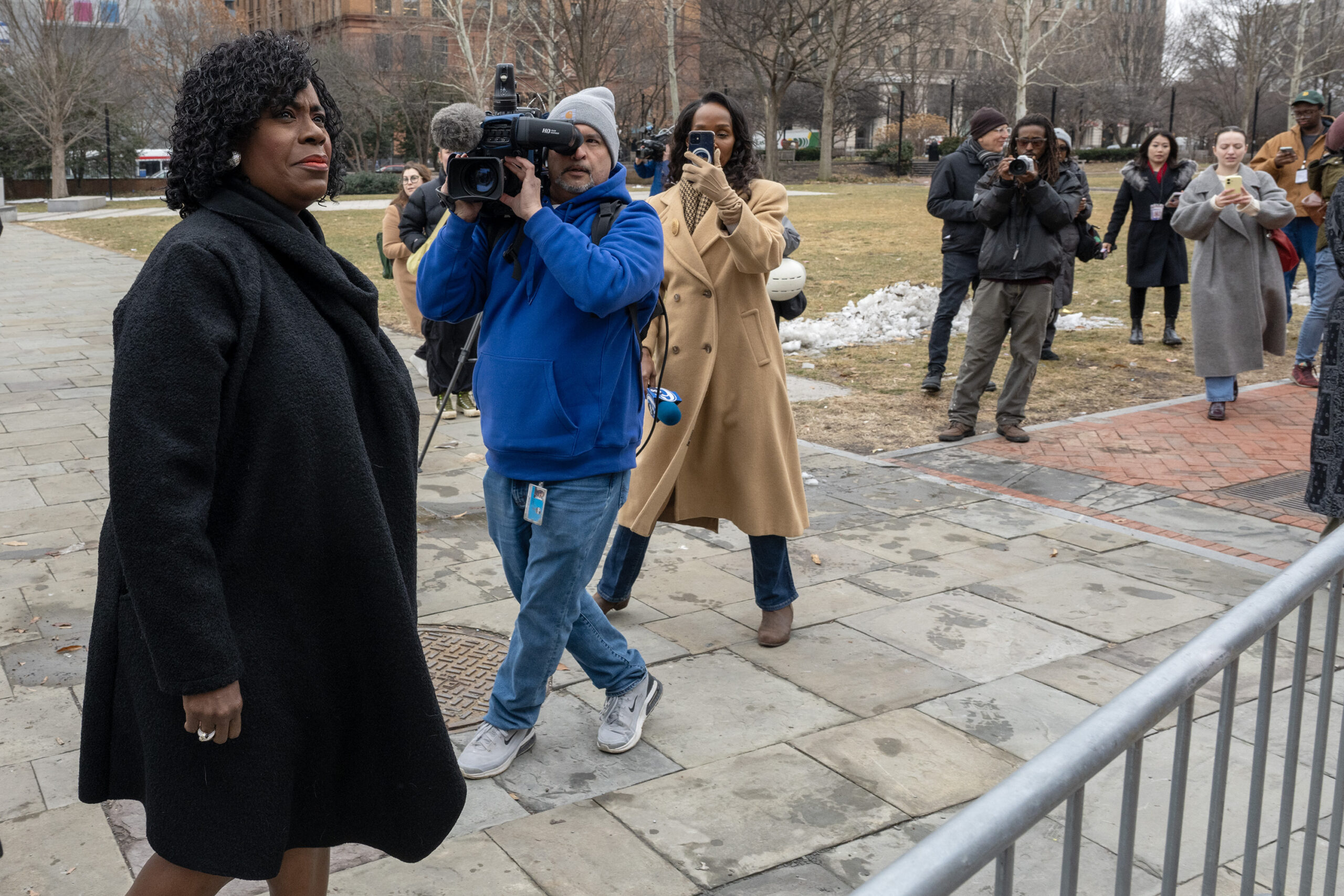
    Mayor Cherelle L. Parker visits the President’s House as workers return the slavery exhibits at the site on Thursday. Parker thanked them, and one replied, “It’s our honor.”

    Front and Market, home to the London Coffee House, once hosted a market of a different kind. People were sold there. It was a key element of the business of slavery.

    Girard Avenue is named for Stephen Girard. He was a very rich man with a very complicated legacy, and yes, he was also an enslaver.

    Perhaps that’s why I was so angry when I went to the President’s House in the days after the Trump administration pried truth from the walls.

    It was almost like someone had taken something that belonged to me, and in truth, they did. They took my history, but as I stood in that barren space on a cold afternoon, it was as if my ancestors were all around me — like the great cloud of witnesses from Scripture — telling me all they had endured.

    Perhaps the Trump administration will ultimately achieve its goal and remove the panels from the site. Or maybe the truth will prevail.

    But our fight is about more than the nine people Washington enslaved. This is about all of us, and it will take all of us to win.

  • With a playoff race ahead, the Sixers are still figuring out how to play without Joel Embiid

    With a playoff race ahead, the Sixers are still figuring out how to play without Joel Embiid

    On media day at the start of the season, Nick Nurse said the Sixers were building their game plan around not having Joel Embiid in the lineup. If they had him, great. If not, no big deal.

    That plan worked in early stretches. The Sixers opened the season a perfectly respectable 10-7 in their first 17 games without Embiid on the floor, while going 7-7 in their first 14 games with the former MVP.

    When the calendar turned to 2026, Embiid suddenly was available more than he had been in a long time, missing just three games in January. Embiid played at an All-Star level, and the Sixers went 10-7 for the month. But they dropped all three games Embiid missed.

    Now, with Embiid sidelined with right shin soreness, the Sixers have lost three straight, the latest being a home loss Thursday to Atlanta.

    “I don’t anticipate it being a long time,” Nurse said of how long before Embiid returns. “I’m pretty optimistic about it.”

    The Sixers are 1-7 in their last eight games without Embiid.

    “He’s a walking 30 points,” VJ Edgecombe said. “We miss Joel; he’s a big presence. He requires so much gravity, so now all the attention is on Tyrese [Maxey], and we’ve got to make his job easier.”

    With Embiid out of the lineup, defenses hyperfocus on Maxey, who regularly faces double teams and traps. Theoretically, that should open up space for other players, like Edgecombe, Kelly Oubre Jr., and Quentin Grimes.

    Without Embiid, Edgecombe said, the burden is on the rest of the players to create more of their own offense, instead of relying on the pick-and-roll game with Embiid or on just finding Embiid in the paint.

    “It’s easy, man,” Edgecombe said. “You can just hit Joel, and he’s going to score. No one can guard him.”

    Those stylistic differences from game to game even are challenging for more experienced players like Maxey. Dealing with defensive coverages in games without Embiid has led to a decrease in Maxey’s overall efficiency.

    Since Jan. 1, Maxey is shooting 46.8% from the field. In the games without Embiid, he has shot 38.4%. Maxey’s total points scored don’t take too much of a hit — he’s averaged 26.5 points in 2026, and that number only drops to 24 in games without Embiid — but it takes a lot more effort to get him there.

    “We’re playing multiple styles of basketball,” Tyrese Maxey said. “That’s why I said for myself a couple games ago, it’s weird. I’ve had a successful year, but I’ve played three different roles.”

    Tyrese Maxey’s shooting has been off lately when Joel Embiid isn’t in the Sixers’ lineup.

    A big part of that inefficiency, Nurse said, is that Maxey’s shots inside the three-point line are virtually always contested. Without Embiid, Maxey is the Sixers’ primary offensive engine, and he draws a huge amount of respect from opposing defenses.

    The extensive time with Embiid back in January “probably” is forcing the team back into a learning curve as they adjust back to playing without him, Grimes said.

    But the biggest point of emphasis has been for Embiid’s teammates to just keep taking their own shots.

    “Guys got to make plays,” Maxey said. “Just got to go out there and be aggressive. Don’t be nervous or scared to make a play and make a mistake. Be aggressive, man, go out there, and just play.”

  • Taking Amtrak? Now you can order Parc’s spaghetti bolognese on the train

    Taking Amtrak? Now you can order Parc’s spaghetti bolognese on the train

    Now you can order Parc en route to New York or D.C. Amtrak is rolling out dining experience with new dishes from Philly mainstays Parc, Pizzeria Stella, and Buddakan, in partnership with STARR Restaurant Group. But you’ll have to book a first class ticket on the NextGen and FirstGen Acela trains to enjoy these favorites on board.

    The three-year-old collaborative menu has been updated with a rotating selection of seasonal dishes for lunch and dinner services.

    The options include: lasagna al forno, saucy lasagna with rich ricotta, mozzarella, and Parmesan cheese, from Pizzeria Stella. There’s also spiced black pepper marinated tenderloin topped with wok-tossed herbs, red finger chilies, and crispy Chinese crullers from Buddakan, or Parc’s rich, slow-simmered spaghetti bolognese with crunchy garlic toast.

    STARR Restaurant Group is led by Philadelphia-based restaurateur Stephen Starr, who recently opened his 41st restaurant, Borromini, with mixed reviews. And while he’s an operator known for fanatical attention to detail and an assortment of over-the-top restaurants, it hasn’t stopped him from getting in some hot water on occasion — he is facing union-busting charges brought by the National Labor Relations Board.

    A server pushes a bar cart down the aisle of a business class car in a NextGen Acela

    Onboard, Amtrak aims to offer the same culinary expertise enjoyed at Starr’s restaurant portfolio across Amtrak’s Northeast Corridor.

    “Serving elevated offerings in Acela First Class in partnership with STARR Restaurant Group adds an exceptional touch to our customers’ experience onboard on our trains,” said Eliot Hamlisch, Amtrak’s executive vice president and chief commercial officer, in a statement.

    Amtrak is also debuting two new dishes by executive chef David Gottlieb. There’s a caramelized apple bread pudding for breakfast and chilled harissa salmon for lunch and dinner.