Blog

  • As a Black man, I was initially angry about plans to scrap DEI goals for city contracts. But then I remembered: They don’t work for us anyway.

    As a Black man, I was initially angry about plans to scrap DEI goals for city contracts. But then I remembered: They don’t work for us anyway.

    I felt a rush of anger when I learned the Parker administration planned to scrap the so-called minority participation goals for city contracting. Then I remembered what I’d learned while covering race and city contracting over the last decade: participation goals don’t work well enough for Black people.

    This is not to say people of color aren’t getting city business. The Office of Economic Opportunity (OEO) said what it calls “minority, women, and disabled business enterprises” received more than $370 million in city contracts in fiscal year 2023.

    The city’s goals call for 35% of city contracts to be awarded to businesses owned by women, people of color, and people with disabilities. During the 2023 fiscal year, 31.4% of city contracts went to companies owned by people from those demographic groups.

    However, Black-owned businesses only accounted for about 13.5% of all city contracts.

    Given that Black Philadelphians make up the city’s largest ethnic group — we’re more than 38% of the population — that’s a problem.

    So why don’t participation goals work better for Black people? I believe the answer is simple. Bias and race-based exclusion are built into a system where money is plentiful but accountability is not.

    In construction, a business where city contracts abound, developers and contractors tend to be big political donors.
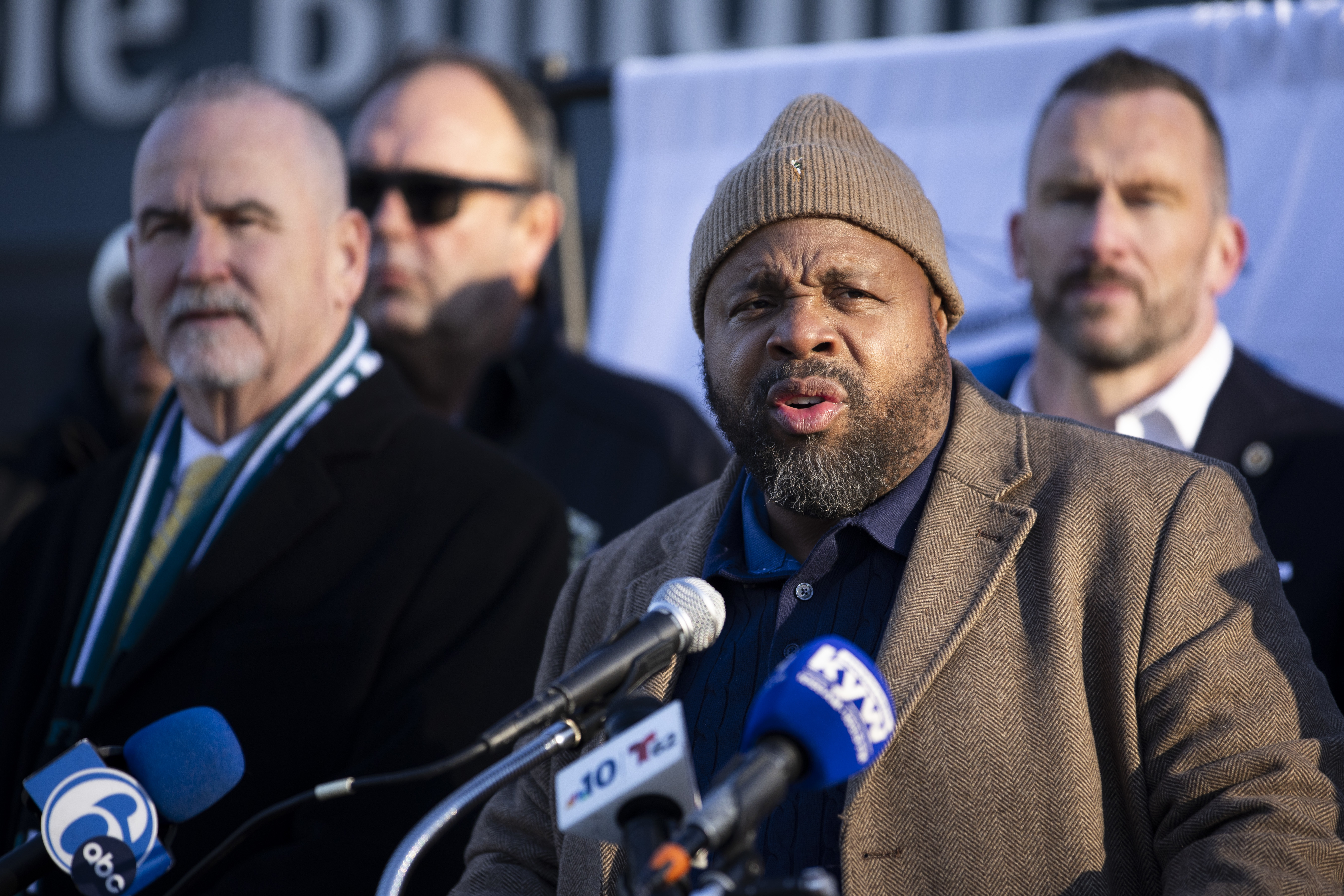
    Ryan Boyer, the head of the city’s building trades unions, speaks at a January news conference. Although Boyer now leads the group, the unions spent generations excluding Black people, Solomon Jones writes.

    The companies are almost always white-led, since only 9.2% of Philadelphia businesses with employees were Black-owned as of 2022.

    In addition, the building trades unions, though they are now run by a Black man, Ryan Boyer, spent generations excluding Black people.

    That leaves the city asking white-owned businesses with largely white workforces to meet minority participation goals set by the Office of Economic Opportunity.

    According to a former manager in the OEO, who would speak to me only on the condition of anonymity, companies that don’t meet the goals rarely face consequences.

    That’s been the case for years. In fact, I wrote a 2016 Inquirer column that noted that in the 2015 fiscal year, nearly 70% of city-funded construction projects with budgets over $250,000 did not reach the city’s participation goals for people of color, and 44% had no participation by people of color at all.

    Very few were held accountable for it then, and very few are held accountable now.

    But even if the goals didn’t deliver what they should have, it’s galling to lose them at a time when the president is pushing an anti-Black agenda, complete with policies that led to job losses for over 300,000 Black women during his first year in office. Sadly, that’s just the tip of the iceberg.

    Donald Trump has sought to erase Black history in our city by pushing for the removal of a slave memorial. He sent federal agents to snatch Black American citizens and Venezuelan immigrants from their beds in Chicago. He has targeted Black political representation with a Texas redistricting scheme that judges have blocked — for now.

    But this is about more than the president’s recent actions. This is about Trump’s long game. From Road-Con Inc. v. City of Philadelphia, which challenged the city’s minority set-asides, to the U.S. Supreme Court’s decision to kill affirmative action, the multipronged attack is not just meant to set precedents. This attack is meant to set us back.

    That’s why, when we see our civil rights gains under attack, we want our leaders to stand and fight.

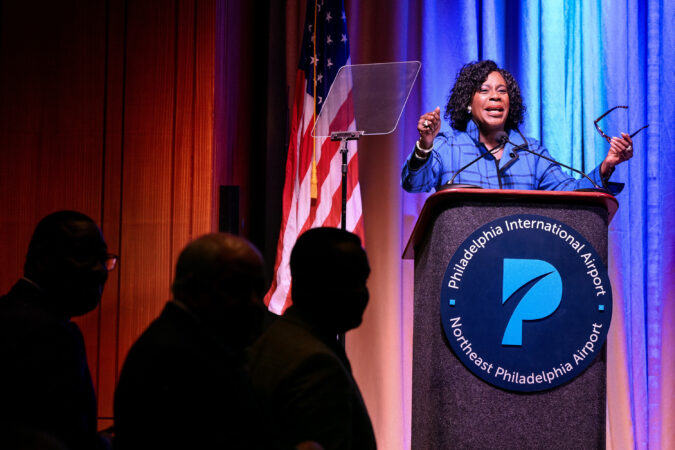
    I asked Mayor Cherelle L. Parker if changing the minority participation goals to small and local business goals represented the kind of fight our community wants from her.

    “I am 53 years old,” she said, “and I have been working in government and public service since I was 17 years old. I don’t know anyone in this city who knows me who has ever questioned whether or not I’m willing to fight for what I believe in. I’m a product of this city. You heard me reference the intersection of race and gender. But I thank God that I’m made and built from the kind of material that says a speech is not enough. You have to deliver tangible results.”

    The mayor went on to say the community should hold her accountable. I agree, and we will.

    But I am also one of those people who have known the mayor for years. She is indeed a fighter, and she’s fighting this her way. We only need one thing from her: a win.
  • A ‘disastrous’ shift in housing policy | Morning Newsletter

    A ‘disastrous’ shift in housing policy | Morning Newsletter

    It’s a sunny start to the new week, Philly.

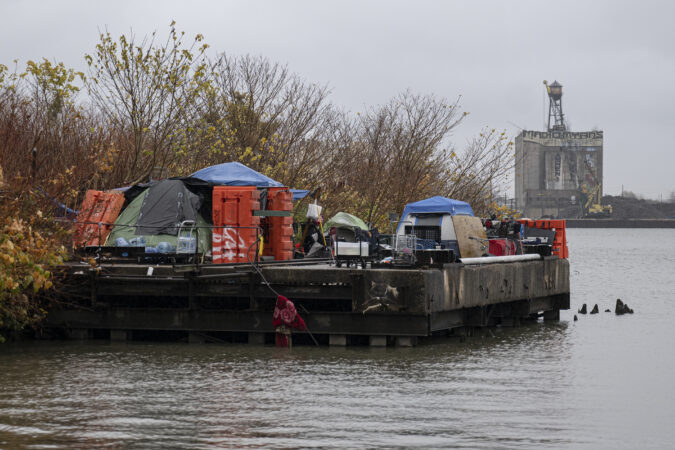
    Philadelphia stands to lose tens of millions of dollars for housing as President Donald Trump’s administration changes the way aid goes to cities.

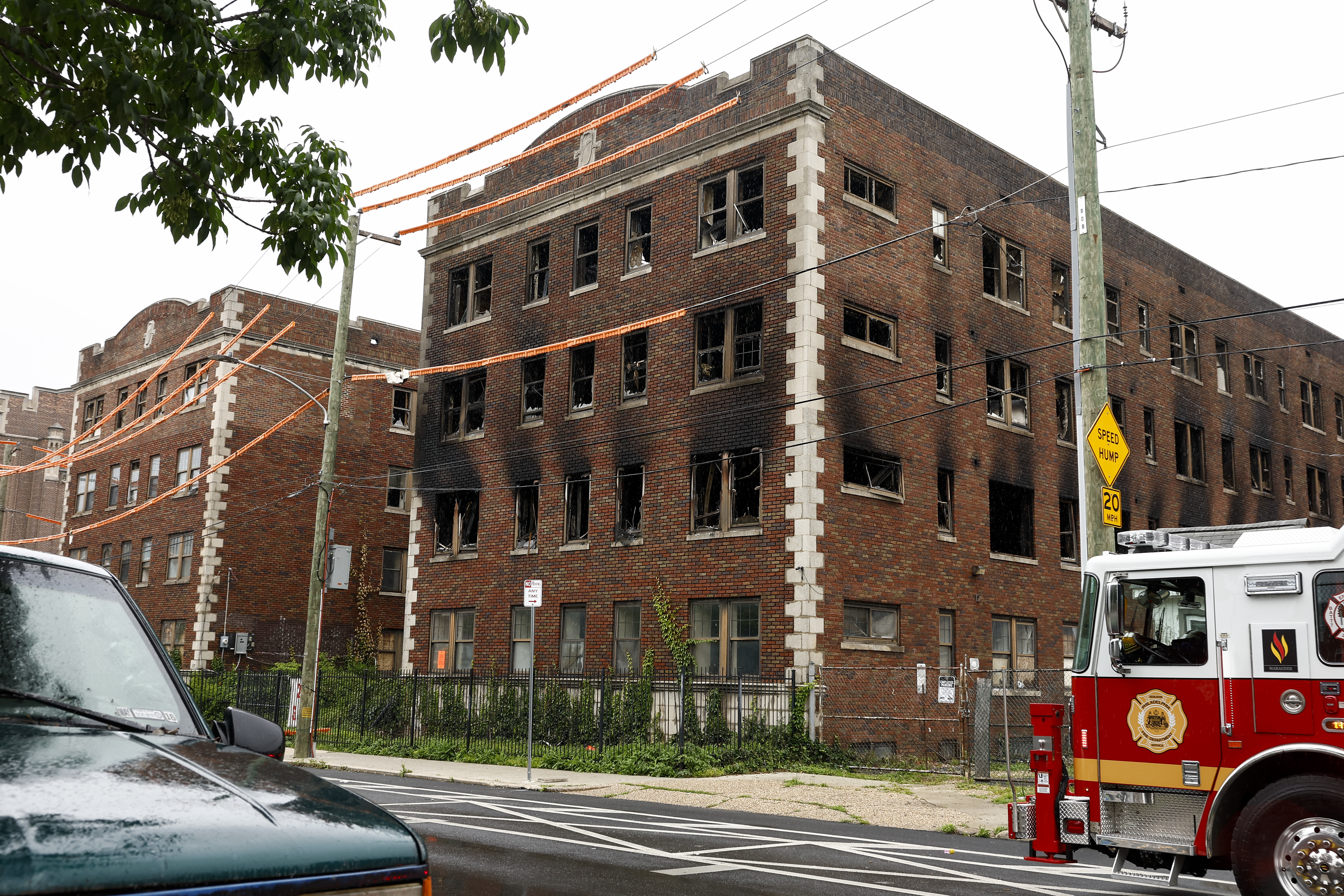
    And two days before a West Philly apartment complex went up in flames in June, its owner, embattled city landlord Phil Pulley, transferred the vacant property to a New York investment firm. Read on for the latest in the suspected arson case.

    — Julie Zeglen (morningnewsletter@inquirer.com)

    If someone forwarded you this email, sign up for free here.

    ‘Disastrous for homelessness in Philadelphia’

    A U.S. Department of Housing and Urban Development plan released earlier this month calls for cutting funds for permanent housing by two-thirds.

    HUD’s new plan: The department will funnel most of the money for permanent housing into short-term housing programs with requirements for work and addiction treatment. HUD is also encouraging religious groups to apply for funding, and would limit funding to organizations that support “gender ideology extremism,” among other ideological preconditions.

    Local impact: Philadelphia counts 2,330 units of permanent housing, many of them financed by $47 million the city received from HUD last year, according to city officials. Advocates say the lost funds could lead to a spike in homelessness by forcing people who were once homeless, but are now living in subsidized housing, back on the street.

    Notable quote: “It’s a misguided approach that blames the victim and fails to address the lack of affordable housing,” one expert told The Inquirer, about the administration’s move toward transitional housing and required treatment.

    Reporter Alfred Lubrano has the story.

    In other government funding news: Rape crisis centers are finally getting funding from Pennsylvania’s budget, but advocates say it’s not enough to support survivors. Plus, SEPTA’s Zero Fare program for low-income riders could end next year. Some elected officials are pushing to save it.

    Investigating a blaze

    New details are emerging about a vacant apartment complex destroyed in June by a four-alarm fire, the circumstances of which are now being investigated by federal authorities.

    Property records show the notorious landlord of the decaying Admiral Court apartments at 48th and Locust streets, Phil Pulley, had signed a deed transfer two days before the blaze.

    This month, the new owner of the building — which records show is linked to investors in South Korea and Saudi Arabia — obtained a permit to demolish it.

    West Philadelphia Councilmember Jamie Gauthier on Friday blasted the deal: “The new owner appears to be a shell corporation with little transparency,” she said, “and I’m deeply concerned that demolishing Admiral Court will create new blight and safety hazards.”

    Reporters Ryan Briggs and William Bender have more details.

    What you should know today

    • A federal judge has blocked the Trump administration from obtaining the private medical records of youth who sought gender-affirming care at Children’s Hospital of Philadelphia.
    • Trump this weekend doubled down on his call for six Democratic members of Congress, including two from Pennsylvania, to be jailed over their video directed at U.S. troops. Both U.S. Reps. Chrissy Houlahan of Chester County and Chris Deluzio of Western Pennsylvania reported bomb threats at their district offices on Friday.
    • The mother of Steven Dreuitt Jr., the Mount Airy man who died in January’s plane crash in Northeast Philadelphia, spoke about her son during a remembrance event on Saturday.
    • U.S. Rep. Brian Fitzpatrick introduced a bill Thursday to modernize pipelines and emergency responses in the wake of a leak of a Sunoco pipeline detected this year in Bucks County.
    • Councilmember Jeffery Young’s latest plan for the Cecil B. Moore Library — to build a new library nearby and convert the aging building into another public space — was met with pushback from neighbors who want to see it renovated.
    • Bryn Mawr birth center Lifecycle Wellness is shutting down operations amid growing financial pressure, the nonprofit said Thursday.
    • Penn Museum on Saturday unveiled a new gallery showcasing the artistic, linguistic, spiritual, and revolutionary traditions of Native Americans across the country.
    • If you hoped to get a reservation at one of the city’s newly honored restaurants … well, good luck. The “Michelin effect” is already at work, with a surge in bookings soon after the awards ceremony.

    Quote of the day

    Thousands of runners crossed the Philadelphia Marathon finish line Sunday after an at-times-brutal 26.2-mile run, including up the hills of Manayunk. Meet the race’s winners here.

    🧠 Trivia time

    Which homegrown celebrity has been tapped to deliver Temple University’s commencement speech in May?

    A) Quinta Brunson

    B) Kylie Kelce

    C) Colman Domingo

    D) Will Smith

    Think you know? Check your answer.

    What we’re …

    🦃 Planning: How and where to watch Philly’s 2025 Thanksgiving Day Parade.

    🪧 Watching: For a possible graduate student worker strike at the University of Pennsylvania.

    🚨 Checking out: Cherry Hill’s Activate Gaming, which transforms childhood games into immersive arenas.

    Noting: The Union’s 2026 MLS schedule, including when Lionel Messi might visit.

    🗳️ Considering: Whether the Chester County poll book debacle is a prelude to 2026 elections.

    🧩 Unscramble the anagram

    Hint: Borders Philadelphia

    CANDY BYLAW

    Email us if you know the answer. We’ll select a reader at random to shout out here.

    Cheers to Patti Carr, who solved Monday’s anagram: Henri Rousseau. Albert C. Barnes acquired 18 of his paintings. Eleven are on display now in an ongoing show.

    P.S. Here’s why Friday’s anagram was Plymouth Meeting: The Montgomery County mall is slated to be sold by owner PREIT to a Philly developer.

    Photo of the day

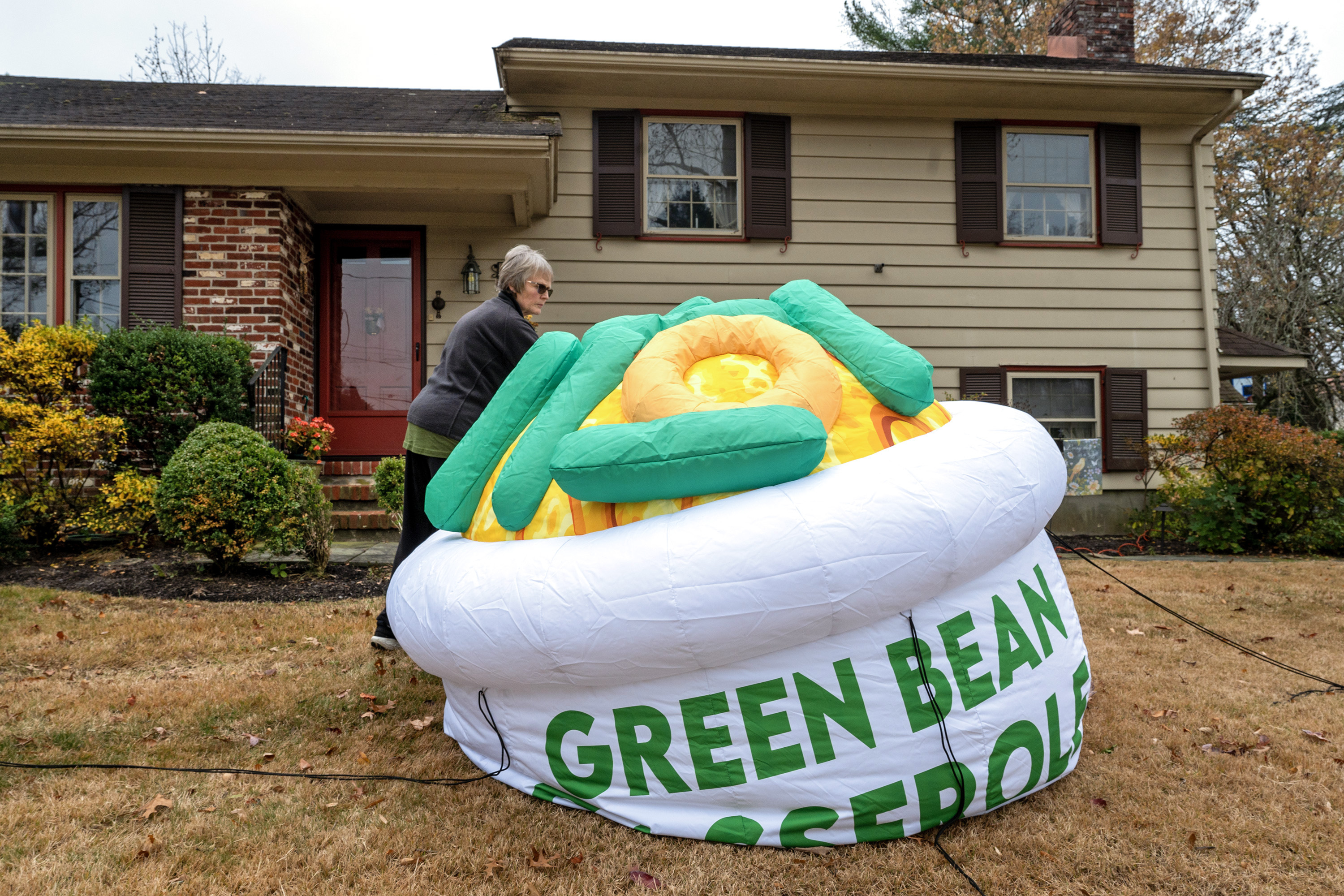
    Dorcas R. Tarbell, daughter of the inventor of the green bean casserole, turns on the blowers to inflate the Thanksgiving decoration in the front yard of her father’s home in Haddonfield.

    Add another entry to the “Wait, that’s a Philly(ish) thing?” list: The green bean casserole turns 70 this year, and its creator’s family is honoring the iconic Thanksgiving side dish with a six-foot inflatable green bean lawn decoration for their home in Haddonfield.

    📬 Your ‘only in Philly’ story

    Think back to the night that changed your life that could only happen in Philly, a true example of the Philly spirit, the time you finally felt like you belonged in Philly if you’re not a lifer, something that made you fall in love with Philly all over again — or proud to be from here if you are. Then email it to us for a chance to be featured in the Monday edition of this newsletter.

    This “only in Philly” story comes from reader Ellen Pannell, who describes raising the next generation of Philadelphians:

    I am a South Philly transplant who grew up near Valley Forge. During the ’70s, my immigrant mom would drag our family to every historic event in the city. When deciding where to plant my roots after college, Philly already felt familiar from all those bicentennial and civic events visited as a kid.

    My husband and I bought our home between Broad Street and the Italian Market in 1996 when most friends gasped, “Below Washington?!” As transplants, we knew we had to get into good graces with the old Italian ladies on the block who would sit on their stoops in their house dresses and ask “So, whaddaya making for dinner tonight?” (I think four were named Mary.) We learned the lingo (“gravy” not “sauce”), planted trees, picked up trash, called the cops when things got out of hand — we made a go of it!

    Those ladies asked whether we planned to fill “that big house” with kids, and with each pregnancy, they were the first to say “Gah-bless!”

    Each kid was born at Jefferson, sometimes after we walked to the emergency room or took the subway after a recent street-closing snowstorm. Jefferson always took care of us, with old-timer nurses giving advice (“Don’t be a martyr for the pain, honey!”) to new, super-fit nurses aptly named Adrienne with a pep talk (“C’mon, you don’t need another epidural, you got this!”) to a novice sent to give me my IV (“The nurses said you won’t mind because you’re a pro”) to a room full of interns and residents there to be educated while Baby Four came into this world.

    Fast forward through the child-rearing years of Moonstone Preschool, Palumbo Rec Center, Independence Charter, Central High, and eventually college, when I couldn’t convince even one member of my South Philly brood to leave the city they called home. (Thank you Temple, Drexel, and CCP!)

    And now I am almost an empty nester and the old lady on the block, minus the house dress. All four kids have started their own lives in the city they love too much to leave, and where I am so proud to say they are true “born and raised South Philadelphians.”

    Shout-out to the Marys among us. Have a good one.

    By submitting your written, visual, and/or audio contributions, you agree to The Inquirer’s Terms of Use, including the grant of rights in Section 10.

  • Big D-feat | Sports Daily Newsletter

    Big D-feat | Sports Daily Newsletter

    How did the Eagles collapse Sunday in Arlington, Texas? Let us count the ways …

    They coughed up a 21-point lead to the Dallas Cowboys. Their running game vanished. They fumbled the ball away twice in the fourth quarter. Dak Prescott passed for 354 yards against their defense. And they had 14 penalties, which tied the largest total in a single game since Nick Sirianni began coaching them.

    So it was Cowboys 24, Eagles 21, thanks to Brandon Aubrey’s 42-yard field goal as time expired. A four-game Eagles winning streak ended with a thud.

    This one’s on Sirianni, Jeff McLane writes in his grades on the game. The coach’s conservatism finally cost the Eagles, who were sloppy with all those penalties. That’s on the coaching.

    Tom Brady praised Jalen Hurts in Fox’s coverage of the game, but Hurts and the offense went nowhere in the second half.

    “I’m in a little funk right now,” Saquon Barkley said at his locker stall after he totaled just 22 rushing yards on 10 carries.

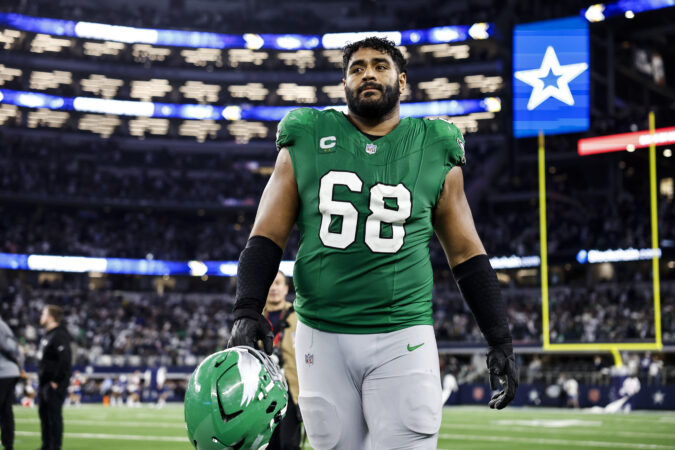
    “All it is is a lack of focus,” left tackle Jordan Mailata said of the Birds’ sorry effort. “First, look internally, because that’s the only way we can move forward.”

    Focus? Marcus Hayes wonders how the team could not do that when it could have virtually wrapped up the NFC East title with six weeks to go.

    Now the Eagles will need to turn things around quickly with the 8-3 Chicago Bears heading to Lincoln Financial Field for a game on Black Friday.

    More coverage from Sunday’s game can be found here.

    — Jim Swan, @phillysport, sports.daily@inquirer.com.

    If someone forwarded you this email, sign up for free here.

    ❓What bothers you most about this Eagles loss? Email us back for a chance to be featured in the newsletter.

    Down and out

    New York City FC goalkeeper Matt Freese stops a shot on goal during the Eastern Conference semifinal against the Union.

    New York City FC bounced the Union out of the MLS playoffs with a 1-0 victory Sunday night at Subaru Park. Matt Freese, a former backup goalkeeper for the Union from Wayne, did in his old team, making four saves. The Union earned the Supporters’ Shield as the team with the best record in MLS, but they were shut out at home for just the second time this season.

    NYCFC advances to face Lionel Messi’s Inter Miami squad in the Eastern Conference final on Friday.

    Fastest to the finish line

    Men’s winner Melikhaya Frans, left, of South Africa and women’s winner Anna Oeser, of Brookfield, Conn., cross the finish line at the Philadelphia Marathon.

    On a brisk Sunday among 17,000 contestants, Melikhaya Frans of South Africa captured the 32nd annual Philadelphia Marathon title in 2 hours, 13 minutes, 57.74 seconds. A former Boston College runner, Anna Oeser of Brookfield, Conn., won the women’s title.

    Can’t beat the Heat

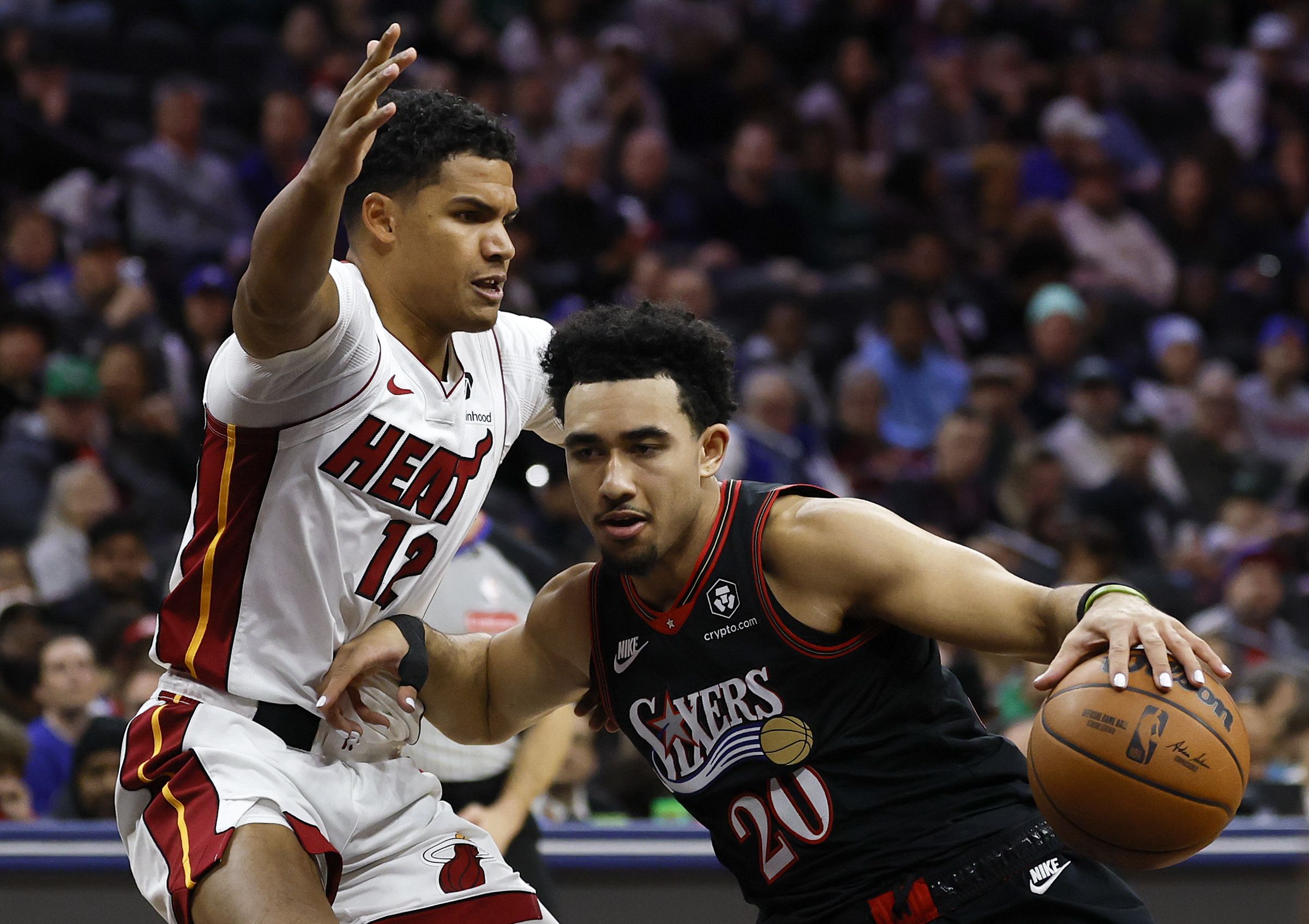
    Sixers guard Jared McCain looks for a way around Miami’s Dru Smith on Sunday.

    The good news for the Sixers: Jared McCain had his best game of the season Sunday against the Miami Heat, finishing with 15 points. The bad news: Their big men could not contain 7-footer Kel’el Ware and 6-foot-9 Bam Adebayo in a 127-117 loss at Xfinity Mobile Arena. The home team played without former MVP Joel Embiid for the seventh straight game, and rookie VJ Edgecombe sat out, too. Injuries continue to hamper the Sixers, who sank to 9-7.

    Things are looking up

    Flyers goaltender Dan Vladař stops the puck in the second period against the New Jersey Devils on Saturday.

    At the 20-game mark this season, the Flyers are 11-6-3 and sit in a playoff spot in the Eastern Conference. Three of their four lines scored Saturday in a 6-3 rout of the New Jersey Devils. On defense, the pairing of Jamie Drysdale and Emil Andrae held the Devils scoreless when they were on the ice.

    In goal, Dan Vladař has emerged as the team’s clear No. 1, sporting a 2.42 goals-against average and a .912 save percentage. Jackie Spiegel has seven takeaways from an impressive win.

    Sports snapshot

    Villanova’s Ja’briel Mace scores a touchdown in a victory against against Sacred Heart on Saturday.

    On this date

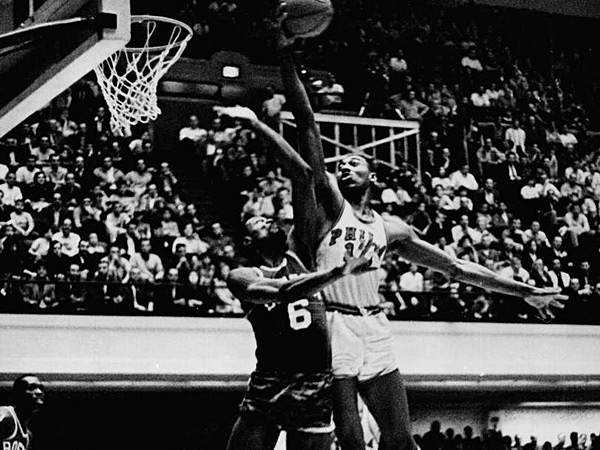
    Hall of Fame matchup: Wilt Chamberlain (right) of the Warriors and Bill Russell of the Boston Celtics.

    Nov. 24, 1960: Wilt Chamberlain pulled down an NBA-record 55 rebounds for the Philadelphia Warriors in a 132-129 loss to the Boston Celtics.

    We compiled today’s newsletter using reporting from Jeff McLane, Jeff Neiburg, Olivia Reiner, Marcus Hayes, Gabriela Carroll, Owen Hewitt, Keith Pompey, Jackie Spiegel, Scott Lauber, Katie Lewis, Greg Finberg, Dylan Johnson, and Colin Schofield.

    By submitting your written, visual, and/or audio contributions, you agree to The Inquirer’s Terms of Use, including the grant of rights in Section 10.

    Happy Monday as we head into a holiday week. Bella will bring you the newsletter on Tuesday. Thanks for reading. — Jim

  • Fully booked: The ‘Michelin effect’ is being felt at Philly’s honored restaurants

    Fully booked: The ‘Michelin effect’ is being felt at Philly’s honored restaurants

    As chef Nicholas Bazik climbed into bed late Tuesday night, he checked the reservations at Provenance, his posh restaurant in Society Hill. Business at Provenance, with its 25 seats and $225 French-meets-Korean tasting menu, had been respectable especially since September, when it appeared on Bon Appétit’s list of the country’s best new restaurants.

    Bazik discovered that Provenance was fully booked, 30 days out. The next day at noon, the next round of tables was snapped up in six minutes, he said.

    Chef Nicholas Bazik of Provenance, with wife Eunbin Whang, accepts a star at the Nov. 18 Michelin Guide ceremony.

    The so-called Michelin effect was at work. Provenance — as well as Her Place Supper Club and Friday Saturday Sunday, both in Rittenhouse — received one star from the Michelin Guide at Tuesday’s Northeast Cities ceremony, placing them in a rarefied league of 280 so-honored U.S. restaurants.

    In city after city since Michelin’s arrival in the United States two decades ago, newly starred restaurants report full books, wait lists stretching weeks or months, and in some cases double- or triple-digit growth in reservations. Winning a Michelin star — one or especially two or three — is no small task, and customers are known to travel to dine at a starred restaurant.

    Her Place Supper Club chef Amanda Shulman (left) and husband Alex Kemp take a photo at the Sixers game Wednesday. Shulman rang the bell at the start of the game.

    At Her Place, where it’s been what chef-owner Amanda Shulman called “a whirlwind of a week,” it’s difficult to determine Michelin’s impact. “We’re a small restaurant to begin with, but we’ve definitely seen a jump in email inquiries that are keeping our reservationist/administrative queen Natalie busy, along with a bump in social following. Truly a surreal experience and we’re just excited to welcome in more new faces.” (The Sixers invited Shulman to ring the bell before Wednesday’s game.)

    Friday Saturday Sunday already was one of Philadelphia’s hardest reservations, even before it won the James Beard Award for best new restaurant in 2023, and owners Chad and Hanna Williams are planning an expansion to the rowhouse next door.

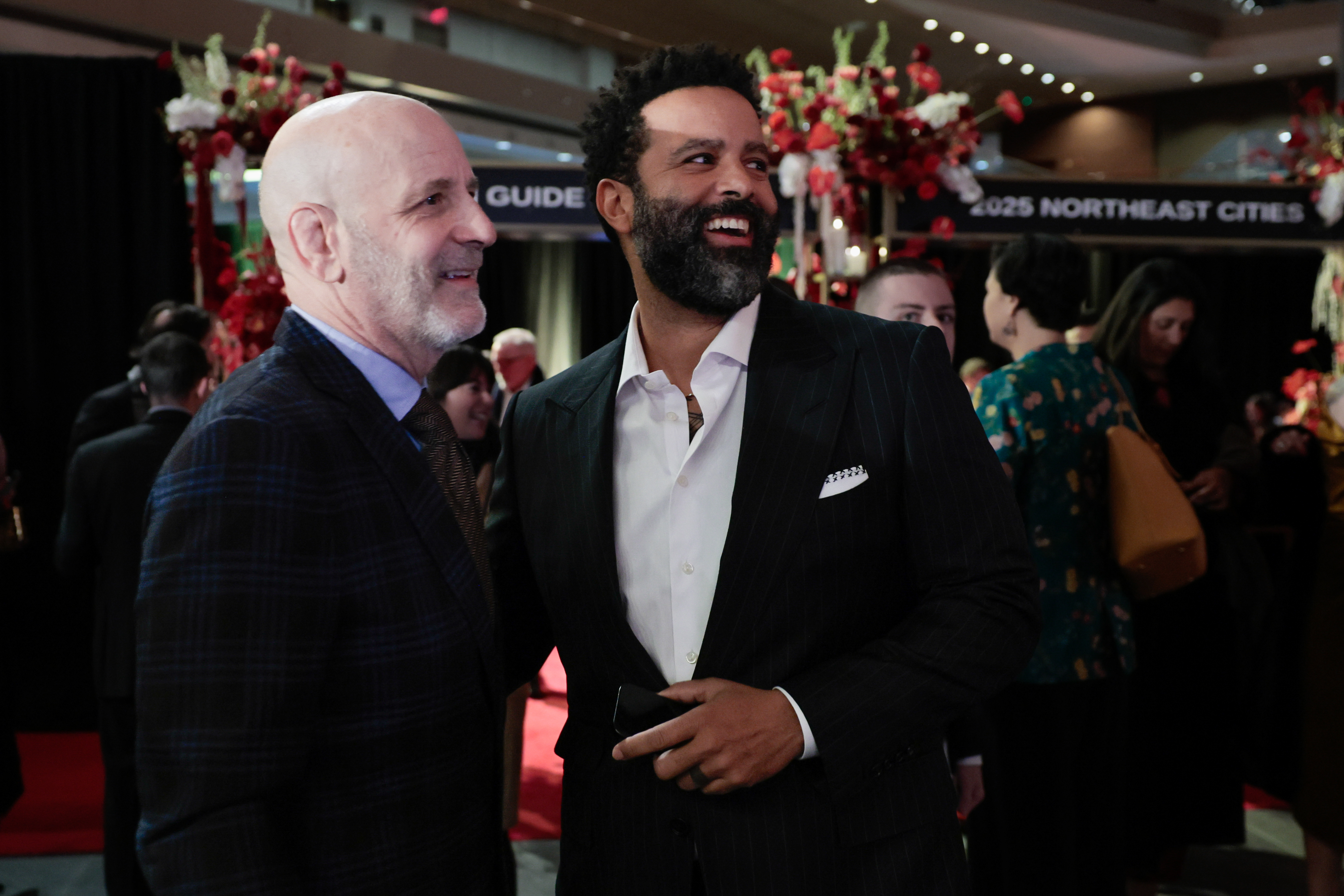
    Chefs Marc Vetri (left) and Chad Williams during the cocktail hour, at the Michelin Guide announcement at the Kimmel Center.

    Restaurants that were included in Michelin’s Bib Gourmand (best value) and “recommended” categories also reported an uptick in business.

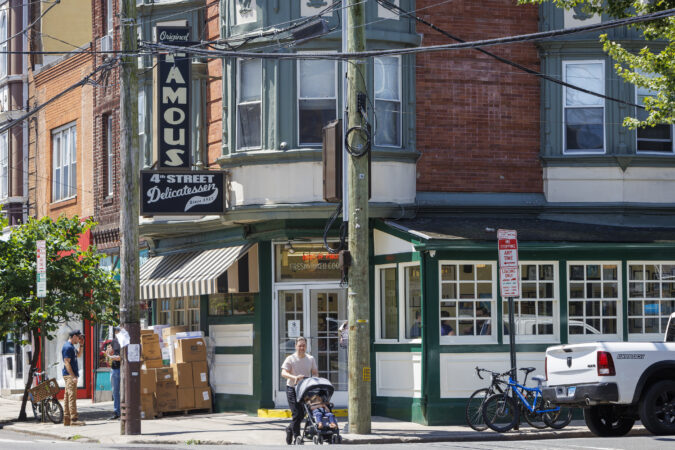
    “It’s been an outpouring of positivity,” said Louis Novak, general manager at Famous 4th Street Deli in Queen Village, a Bib Gourmand recipient where all business is walk-in. He reported “exceptional” sales. “It’s also a ‘Day 1’ mentality moving forward. It’s a responsibility to live up to being a Michelin award winner.”

    At chef Jesse Ito’s Royal Izakaya in Queen Village, a Bib recipient, the line is longer and the weekday wait list is growing earlier than usual, said Daisy Zeijlon, who handles the restaurant’s publicity.

    At Sally (Bib), a pizzeria near Fitler Square, business was up 10% since the announcement, said owner Cary Borish.

    At Mish Mish (recommended), Alex Tewfik was ebullient on Sunday: “Being in South Philly, and the Eagles being the last monoculture we have left as a city, our Sundays have been brutal. Today, they are no longer brutal, which is, in ways, a sort of godsend situation.”

    Although hard numbers were hard to come by so far, the good vibes are everywhere as the restaurant industry enters its typically busy period between Thanksgiving and New Year’s.

    Chef Chris Kearse of Forsythia with his wife, Lauren, at the Michelin Guide announcement.

    “We have received such amazing support from the culinary community,” said Chris Kearse, chef-owner of Forsythia (recommended). “It feels like the whole city has come together to celebrate the excitement of the awards, and we’ve been touched by how many guests have stopped in to sit at the bar and share a celebratory drink with our team.”

    Al Lucas — a partner at Defined Hospitality, which operates Suraya (recommended), Kalaya (recommended), and Pizzeria Beddia (Bib) — said reservations “have already been very robust so we really cannot tell the impact quite yet. We have, however, seen a lot of anecdotal positive responses through Instagram, emails, and DMs.”

    Ellen Yin, who owns High Street (recommended), said it was too early to tell Michelin’s long-term recognition; “however, the energy is palpable.”

    Study after study has cautioned that Michelin acclaim does not always translate to success.

    A report in the Strategic Management Journal challenges the assumption that Michelin stars only help restaurants, finding that starred establishments are actually more likely to close due to increased operational pressure.

    Daniel B. Sands of University College London examined New York restaurants deemed “at risk” of earning a star by tracking those that received favorable New York Times reviews and later Michelin recognition. His analysis and interviews with owners revealed that while stars boost prestige, they also intensify strain along the value chain. Landlords, suppliers, and employees often demand higher compensation, while staff may leverage the star to seek better opportunities or launch competitors.

    At the same time, customer dynamics shift: New diners arrive with heightened expectations or tourist motivations, and regulars may visit less often. Some restaurants make costly adjustments to accommodate new guests without increasing revenue. Sands concludes that Michelin stars can bring mixed outcomes, with some businesses thriving but others buckling under the added pressure.

    Can the good vibes last? “Having seen bumps from things like being on lists [and] getting accolades in the past, the ‘pop’ doesn’t always last,” said Tewfik, at Mish Mish. “I’m aware that we’re in uncharted territory with Michelin, but usually it dies away in a few weeks. So we’ll see, but for now, we’re so so so thrilled.”

    Philadelphia chef Marc Vetri, who took Michelin nods for Fiorella (Bib Gourmand) and Vetri Cucina (recommended), tempers exuberance through experience. His first major award was in 1999, when Food & Wine named him one of its best new chefs. “These awards, while exciting and give the city a big boost, are not a magic pill,” Vetri said.

    “Lists, awards, Beards, Michelin — it’s all the same,“ he said. ”Over time, they will bring more visitors, and if you have a good reputation and you are consistent, if you keep putting in the work and [are] evolving, more people will come. That’s the award: The customers who keep coming back. People are going to be very sorry if they think a nod from anyone is going to validate them and make them super busy. That’s just not how it works.”

  • Darris Nichols and his brother have one mission at La Salle: Make Explorers men’s hoops a winner

    Darris Nichols and his brother have one mission at La Salle: Make Explorers men’s hoops a winner

    Growing up in Radford, Va., basketball games between Darris and Shane Nichols almost always ended in a fight.

    Shane is two years older than Darris and was stronger and faster when they were kids. The brothers were ultracompetitive, but the tone shifted when they began to play organized basketball. The fights stopped, and they focused on pushing each other on the court.

    Darris and Shane went on to play college basketball at West Virginia and Wofford, respectively, before shifting to the sidelines. They made multiple stops at different schools as assistant coaches but never overlapped in their first decade as coaches.

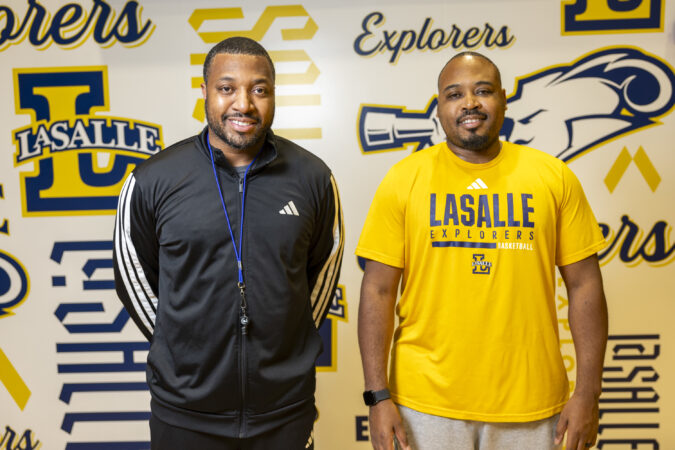
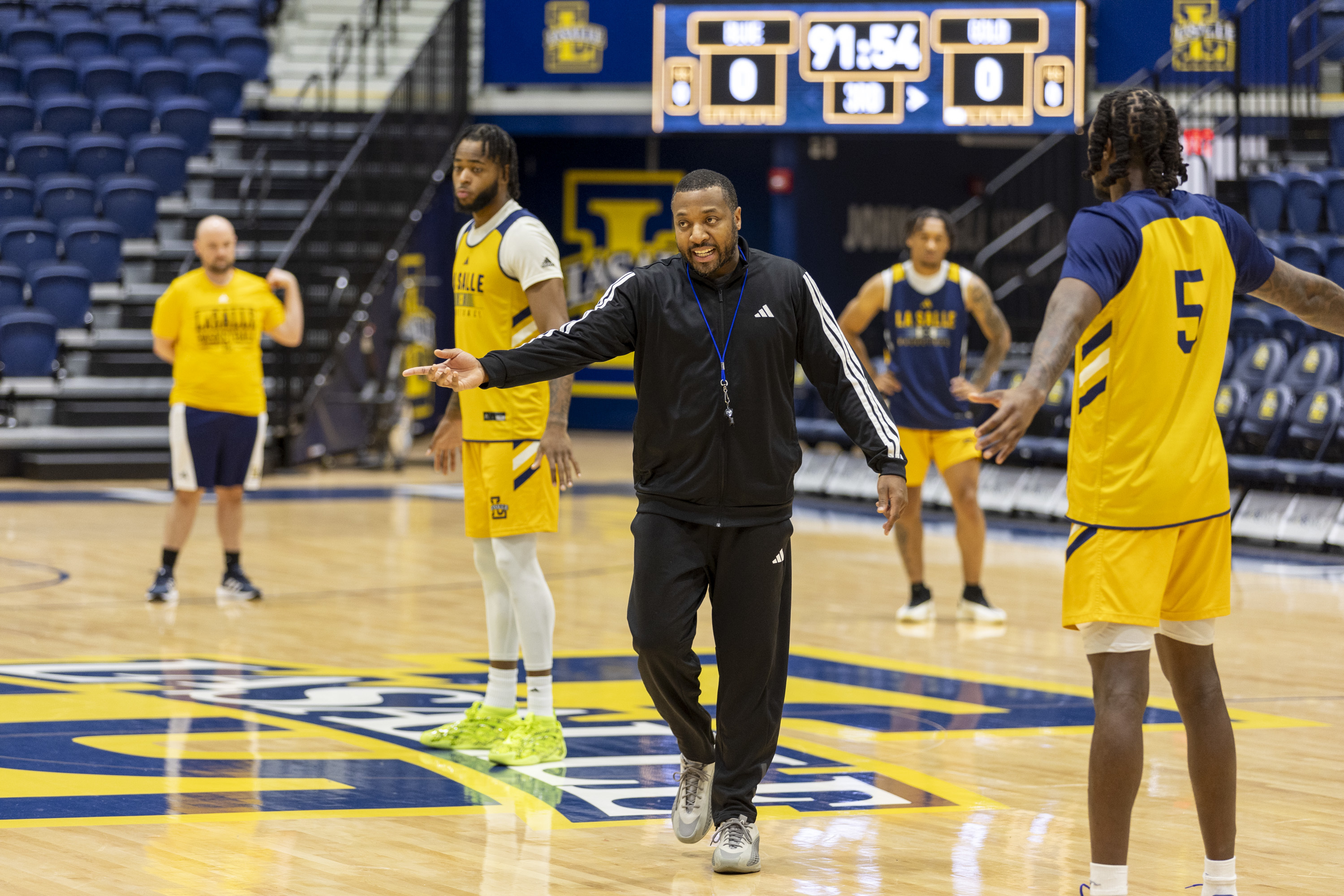
    That was until Darris was named Radford’s head coach in 2021 and he brought Shane with him. The pair led the Highlanders to multiple 20-win seasons, before Darris earned a new opportunity at La Salle and was named its head coach in March. Shane followed again as the associate head coach. The brothers, now in the City of Brotherly Love, are ready to lead the Explorers back to success behind a culture built on toughness.

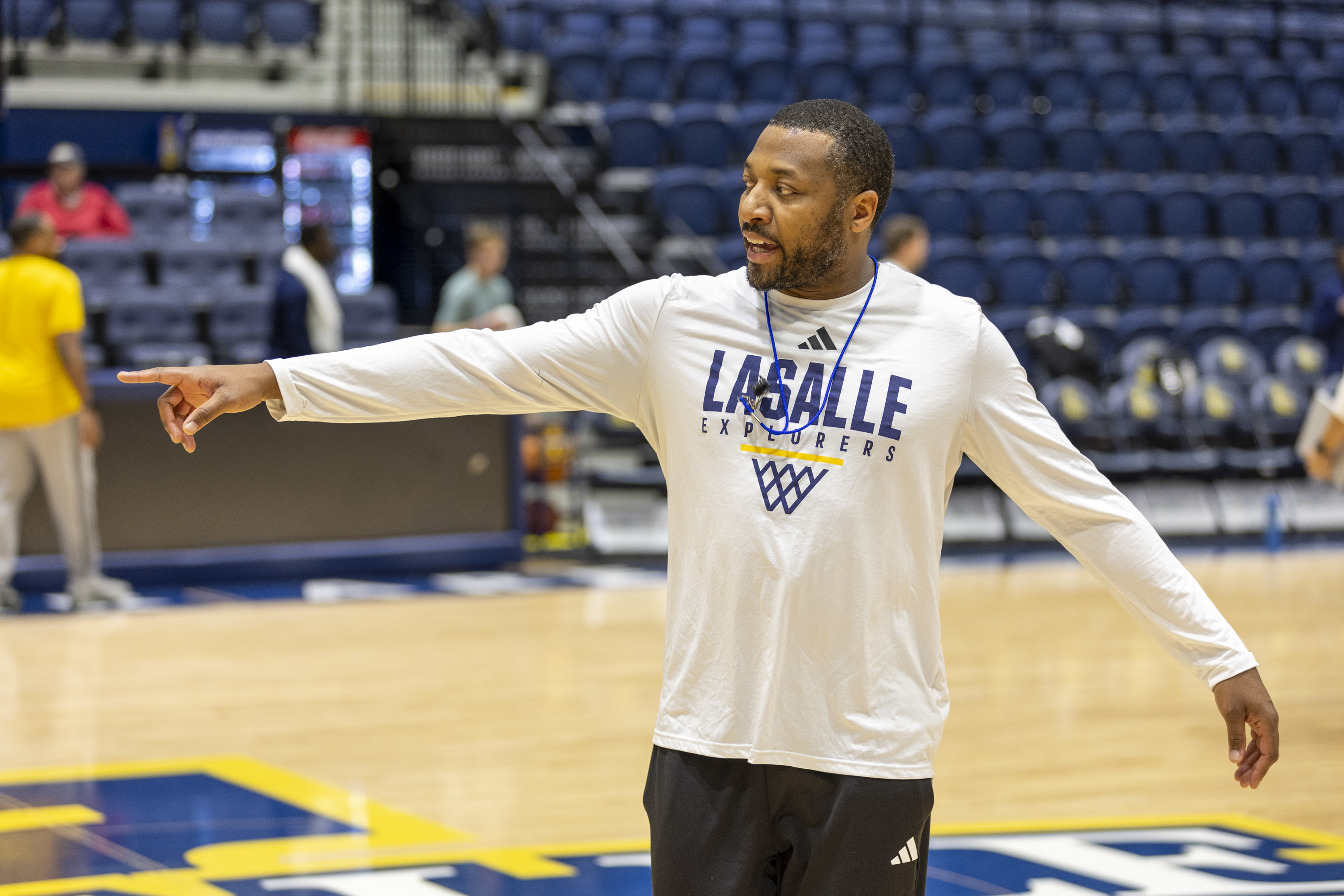
    La Salle coach Darris Nichols conducts practice at John E. Glaser Arena on Nov. 14.

    “We value toughness before anything,” Darris said. “I think that when you have a common [theme] in college basketball where guys just leave after every year or two years, it’s hard to build toughness. So you got to recruit to it.
And I think we’ve done a pretty good job of that in Year 1. So that’s kind of in our philosophy of getting in the right direction.”

    The brothers had similar coaching paths. Darris and Shane went overseas to play professionally following their college careers, but that time was short-lived.

    Darris injured both knees and Shane also got banged up. Their post-playing days were unceremonious at first, with Darris working as a valet and Shane at a sales job.

    Shane missed basketball and spent time coaching at Radford High School, his alma mater, before returning to Radford University in 2010 as an assistant coach. Darris turned to his West Virginia coach Bob Huggins and joined his staff as a graduate assistant in 2010.

    The brothers spent the next 10 years building their profiles as assistant coaches at multiple schools. They made sure to consistently stay in touch during the season and would bounce ideas off each other and learn more about players the other may have faced.

    La Salle head coach Darris Nichols had multiple 20-win seasons in his four years at Radford University.

    “We talked every day,” Darris said. “Most of the time it was about, ‘Have you seen this player? What do you know about this? Can you send me this guy’s contact info?’
It was a lot of that going on.”

    Darris also jokingly tried his luck with poaching future NBA All-Star Ja Morant from Shane when his older brother was at Murray State, and he was at Florida.

    “When he was at Murray State, they had Ja Morant, and I called him and I said, ‘Hey, man, I’m trying to get Ja Morant to transfer.’ He said he wasn’t going to do a transfer.”

    Darris earned the head coaching job at Radford after six seasons as an assistant at Florida. Shane was coaching at Murray State at the time, and the Racers had won three straight regular-season conference championships with him on staff. Still, the decision to join forces with his brother back home was a no-brainer.

    “I wanted to come help my brother be successful, and I felt like there was nobody else in the profession that could help him do that more than me,” Shane said. “That’s just because I got his back. He can trust me, and I’m going to work hard to make sure he is successful.”

    The brothers spent the next four seasons building the Radford program together.

    Radford won 21 games in 2022-23 and 20 games in 2024-25. Darris and Shane won 68 games in their four years with the Highlanders, but a new opportunity presented itself this past offseason.

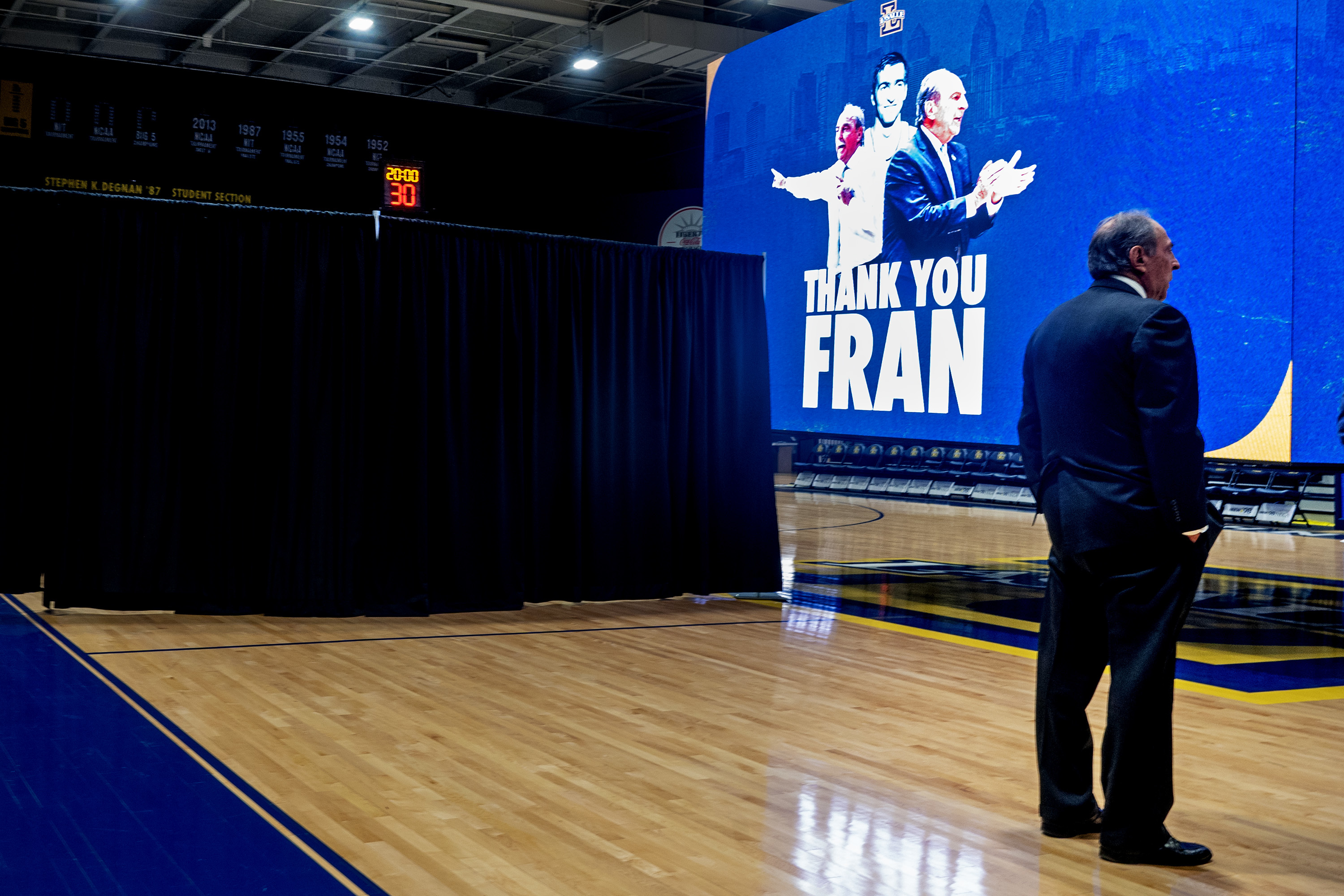
    The Nichols brothers replaced La Salle and Big 5 legendary coach Fran Dunphy, who retired after returning to coach his alma mater in 2022.

    La Salle’s head coaching job was open following the retirement of Fran Dunphy, and Darris got the offer to fill the role. The move offered a change and new challenge in his eyes, so he made the move up to 20th and Olney. Shane followed suit.

    “It was cool opportunity because most of the college jobs that I’ve been at have been in college towns or small towns,” Darris said. “So I wanted something different. Let’s coach in the college city.”

    The brothers are taking over an Explorers program that has not won more than 20 games or the Big 5 title since the 2012-13 season. Darris and Shane crafted a natural family feel at Radford and are looking to do the same at La Salle.

    “Throughout the years with the teams we’ve had is just being able to mold and really build them, and they take on our mentality to the game,” Shane said. “You see it toward the middle and end of the year where they buy into the toughness piece. They buy into the togetherness piece. Right now, our guys are doing that. We just got to keep molding that, building that, and making it stronger.”

  • Your guide to Philly’s 2025 Thanksgiving Day Parade

    Your guide to Philly’s 2025 Thanksgiving Day Parade

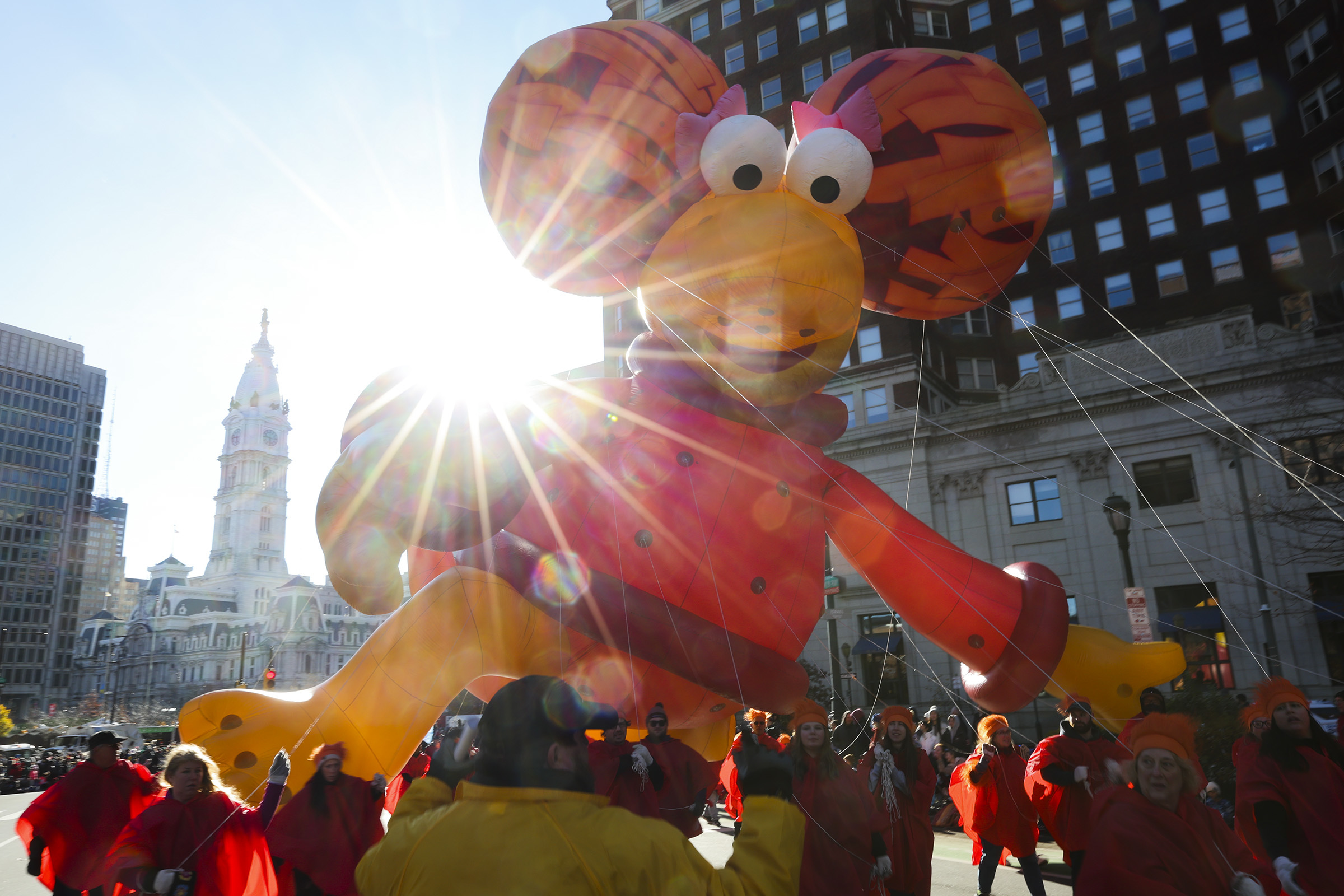
    When you think of a Thanksgiving parade do you immediately picture the Macy’s Thanksgiving Day Parade in New York City? Well, you shouldn’t! Not when Philadelphia has its very own parade that happens to be the oldest Thanksgiving parade in the country. New York City may have Snoopy, but we have Red Fraggle from Fraggle Rock, OK? And if that’s not hip enough for you, we also have Peppa friggin’ Pig. Take that, Charlie Brown.

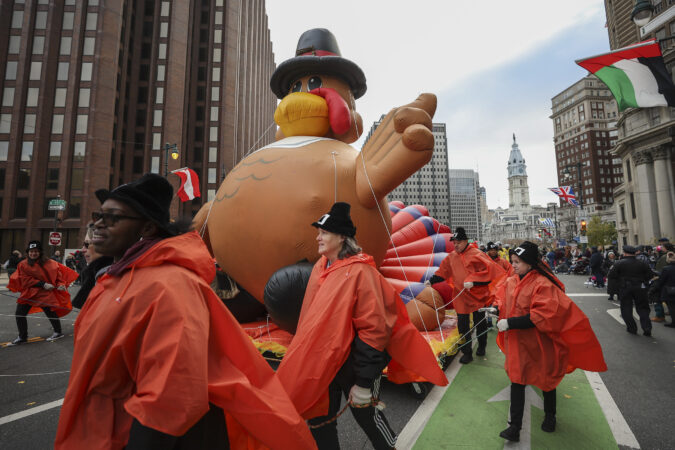
    Now in its 106th year, the 2025 6abc Dunkin’ Thanksgiving Day Parade will be stacked with performers and stars like Kelly Ripa and, did we already mention, Red Fraggle from Fraggle Rock? The cast of Abbott Elementary will be there too.

    Whether you plan on attending in person, or catching it on television, here is everything you need to know about the nation’s first (and best) Thanksgiving Day parade. Happy Thanksgiving, Philly.

    Red Fraggle from the hit TV show “Fraggle Rock ” makes her way down 16th Street toward the Parkway during the 6abc Dunkin’ Thanksgiving Day Parade in 2023.

    Parade route

    This year’s 6abc Dunkin’ Thanksgiving Day Parade broadcast starts at 8:30 a.m., with the parade kicking off at 9 a.m.

    The route starts at 20th Street and John F. Kennedy Boulevard and heads east toward 16th Street, where it turns left and heads north to the Benjamin Franklin Parkway. From there, the parade follows the Parkway west to Eakins Oval and the Philadelphia Art Museum, where it concludes. The parade is free to attend.

    Weather

    Thanksgiving is still a few days away, but early reports from Weather.com are calling for partly cloudy skies with highs hovering in the mid-40s and lows in the 30s.

    Make sure to check the National Weather Service the day before Thanksgiving for the most accurate forecast.

    Thanksgiving parade road closures

    The following street closures will be in effect on Thursday, Nov. 27:

    Midnight to noon

    • 20th Street between JFK Boulevard and Market Street

    2 a.m. to 11 a.m.

    • 20th Street between the Ben Franklin Parkway and Race Street

    5 a.m. to noon

    • 20th Sreet between JFK Boulevard and Arch Street

    6 a.m. to noon

    • 20th Street between Market Street and the Ben Franklin Parkway

    7:30 a.m. until the end of the parade

    Full parade route, including:

    • JFK Boulevard from 30th Street to 16th Street
    • 20th Street from Market Street to the Ben Franklin Parkway
    • 16th Street from JFK Boulevard to the Ben Franklin Parkway
    • Ben Franklin Parkway to the Art Museum

    Parking

    There will be “Temporary No Parking” signs posted in areas on and around the parade route starting Wednesday, Nov. 26, at 6 p.m., the Office of Special Events said. Cars parked in prohibited parking areas will be relocated. If you believe your car has been relocated, The Inquirer has a guide on what to do when you’ve been “courtesy towed.”

    Metered parking elsewhere in the city is free on Thanksgiving. Additionally, you can check the Philadelphia Parking Authority’s website for a list of parking garages and parking lots around the parade route.

    SEPTA service

    The parade route is blocked off to traffic, impacting SEPTA’s bus service from 2 a.m. until 5 p.m. on Thursday, Nov. 27.

    Routes affected during this time include Route 2, Route 7, Route 17, Route 27, Route 31, Route 33, Route 38, Route 43, Route 44, Route 48, Route 49, Route 124, Route 125, L1 OWL.

    For detailed information about route detours, check SEPTA’s System Status Page at septa.org. You can also follow real-time updates on the agency’s System Status website, via TransitView on the SEPTA app, or on X at @SEPTA_Bus.

    Actor Lisa Ann Walter, from “Abbott Elementary,” waves to the crowd during the 105th Thanksgiving Day Parade in 2024 in Philadelphia.

    Parade floats and performers

    Guests this year include the aforementioned Kelly Ripa and Mark Consuelos, Ryan Seacrest, Vanna White from Wheel of Fortune, former NFL quarterback Troy Aikman, and Good Morning America weather forecaster Sam Champion. There will also be performances from the iconic funk group Cameo and Motown legends the Four Tops.

    As for the floats, you saw our note about Red from Fraggle Rock, right? What more could you want?

    Where to watch

    If you’re looking to attend the parade, you can watch from anywhere along its route, for free.

    Some favorite spots to watch include the Franklin Institute, the Philadelphia Museum of Art, Eakins Oval, and Logan Circle.

    How to watch from home

    The parade will air live from 8:30 a.m. until noon on 6abc and can be streamed via the station’s website, the 6abc Philadelphia News App, or on Disney+ and ABCNewsLive beginning at 9 a.m.

  • Is the Chester County poll book debacle a prelude to 2026 elections? After a heated local contest, this township hopes not.

    Is the Chester County poll book debacle a prelude to 2026 elections? After a heated local contest, this township hopes not.

    Now and then, we still see the Amish horse and buggy tooling its way down Fairview Road. Occasionally, someone will alert their neighbors in a Facebook post that a cow or a horse has escaped a pasture and is blocking the road. “That’s so Glenmoore,” a local resident will chime in nostalgically.

    But Glenmoore, like the rest of America, is changing, in ways both obvious and subtle.

    It’s rare now to see a horse travel down a road that has a steady flow of traffic. Where cows once used to escape to sip the water of the branch of the Brandywine Creek that flows through the part of town residents call “the village,” you can look up a hill and see the large homes of the newest development, just one in an array of luxury homes built on the hill.

    Don’t get me wrong. Wallace Township (the Glenmoore postal area is significantly larger) is still pretty amazing. It’s Glen Moore Fire Co. members lined up in a row at a funeral inside one of our historic churches to honor the wife of a longtime member. It’s Pete the cat walking his people to the elementary school on days when it’s in session. Some of my best friends are people I’ve met on walks, often punctuated with a stop at the village coffee shop, the Mean Bean.

    The Chester County poll book debacle in the Nov. 4 election didn’t help nurture a sense of calm about something many of us had taken for granted — the sanctity of our vote. In case somehow you missed the hubbub, when independent and third-party voters (there are approximately 18% of us) got to the polling place, we were told that, because they hadn’t gotten the right poll books for us, most of us would have to cast provisional ballots.

    I was aware of others in my position. We kept checking to see if our vote showed up on the Voter Services website. As of last Monday, resident Dorothy Kirk, an independent, said, “I am skeptical that our votes were counted.” It took almost 15 days to register Kirk and her husband’s votes on the Voter Services website.

    Unlike some other townships in our environs, which have become increasingly blue, Wallace voters are registered as more than 50% Republican, and have been for many years.

    This year, we already had more of a local stress test: a competitive race for one seat in the three-member board of supervisors — replete with candidate websites, campaign literature, and canvassing. That’s a lot of drama for our relatively small (less than 3,000 registered voters) township.

    Call me naive, but knowing the local judge of elections, I had confidence my vote would count.

    But it wasn’t long before I started to hear from other residents. Let’s just say, they had questions.

    Tish Molloy, a former Wallace poll worker, spent a few hours observing the ballot certification process in West Chester after the election, curious to see how it was done. Though onlookers could not see everything, she said, the workers seemed to be “careful, cautious, and mindful,” as well as efficient.

    Though Wallace Supervisor Rob Jones, serving as a Republican, had some pointed comments about the potential for mismanagement at the county level, he said he didn’t think anything “nefarious” had occurred. “I just think we have a basically honest populations out there,” said Jones. “I do think the county learned a lesson.”

    As for the township? Jones was ready to move on from what was a fairly heated campaign by Wallace standards, urging neighbors in this small community to avoid viewing each other through a political lens. “The way you show love for people with your township is through what you do. When I make a decision [about the township], I don’t care what their party is. How can I bless the most people in the township?”

    Though he came closer than other Democratic candidates in recent memory, Andrew Holets conceded the supervisor’s race to Republican candidate John Thomas last Friday evening. Perhaps it’s not surprising, in a town where so many people know and depend on each other, that his vision is similar to that espoused by Jones. Building trust isn’t just up to leadership, he said. It’s about practicing kindness and doing the right thing.

    “Everybody has responsibility,” said Holets. “How they wake up and how they spend their day makes a difference in how much we care for ourselves and others. I don’t want to buy into the division that seems to be here in our country. I don’t think we need to have that locally.”

    Nonetheless …

    The bonds of mutual trust and affection are still pretty strong around here. At the same time, it’s hard not to wonder what else could go wrong, and it’s arrogant to think ourselves immune from the polarization that has divided neighbor from neighbor and family from family.

    While it’s up to Chester County to rectify its mistake, the future of our community is also, as both Jones and Holets said, in our hands. We can’t afford to assume our neighbors trust us. We have to renew those bonds together, one act of service, citizenship, and kindness at a time.

    We’ve had our shot across the bows. Now it’s up to us to make sure we get safely to harbor. The cost of drifting is way, way too high.

    Elizabeth Eisenstadt Evans is a freelance journalist in Chester County. Her writing has appeared in Religion News Service, the National Catholic Reporter, Sojourners, Christian Century, the Washington Post, and The Inquirer.

  • Trump is changing the way aid goes to cities. Philly stands to lose tens of millions of dollars for housing.

    Trump is changing the way aid goes to cities. Philly stands to lose tens of millions of dollars for housing.

    Philadelphia stands to lose tens of millions of dollars in federal funds intended to fight homelessness under a plan issued by the Trump administration that advocates say could significantly disrupt permanent housing programs and return formerly homeless people to the streets.

    The U.S. Department of Housing and Urban Development released the plan earlier this month, saying it would “restore accountability” and promote “self-sufficiency” in people by addressing the “root causes of homelessness, including illicit drugs and mental illness.”

    Nationwide, advocates say, the HUD plan could displace 170,000 people by cutting two-thirds of the aid designated for permanent housing.

    The number of individuals in Philadelphia at risk of losing stable housing hasn’t been tallied because the city’s Office of Homeless Services (OHS) is still reviewing the plan’s impact, said Cheryl Hill, the agency’s executive director.

    Overall, there are 2,330 units of permanent housing, many of them financed by $47 million the city received from HUD last year, according to city officials.

    The new strategy comes as Mayor Cherelle L. Parker attempts to move ahead with an ambitious plan to increase the supply of affordable housing in the city. Parker declined to comment on the Trump administration’s policy shift.

    A preliminary analysis by HopePHL, a local anti-homelessness nonprofit, estimates around 1,200 housing units with households of various sizes would lose federal aid and no longer be accessible to current residents, all of whom are eligible for the aid because they live with a physical or mental disability.

    HUD plans to funnel most of the funding for permanent housing into short-term housing programs with requirements for work and addiction treatment. The agency also said that it’s increasing overall homelessness funding throughout the United States, from $3.6 billion in 2024 to $3.9 billion.

    “This new plan is disastrous for homelessness in Philadelphia,” said Eric Tars, the senior policy director of the National Homelessness Law Center, who lives and works in Philadelphia. “The biggest immediate harm would be that those who were once homeless but are now successfully living in apartments will be forced out of their homes.”

    Other critics say the policy is based on a failed model that strips away civil liberties and doesn’t address what scholars and people who run anti-homelessness agencies say is the main reason Americans are homeless: the dearth of affordable housing.

    “We have broad concerns about what we’re seeing,” said Candice Player, vice president of Advocacy, Public Policy and Street Outreach for Project HOME, the leading anti-homelessness nonprofit in Philadelphia. “We are all in a very difficult position here.”

    Amal Bass, executive director of the Homeless Advocacy Project, which provides legal services to those experiencing homelessness, agreed, saying the city is “bracing for homelessness to increase in Philadelphia as a result of these policy choices.”

    The need to house thousands of people suddenly made homeless would force cities, counties, and states to spend money they may not have, according to a statement from the National Alliance to End Homelessness.

    Asked for comment, a HUD spokesperson sent a statement saying the agency seeks to reform “failed policies,” and refutes claims that the changes will result in increased homelessness.

    HUD hopes that current permanent housing shift to transitional housing will include “robust wraparound support services for mental health and addiction to promote self-sufficiency.”

    The agency added that it wants to encourage the “12,000 religious organizations in Pennsylvania to apply for funding to help those experiencing homelessness.”

    New restrictions on ‘gender ideology extremism’

    The federal government funds local governments to address homelessness through so-called Continuums of Care (CoC), local planning bodies that coordinate housing and other services. In Philadelphia, the CoC is staffed by the city’s Office of Homeless Services, and governed by an 18-member board, including homeless and housing service providers, and physical and behavioral health entities.

    In its plan, HUD will require the local planning bodies to compete for funding, and will attach ideological preconditions that could affect how much money a community like Philadelphia receives.

    For example, the new HUD plan “cracks down on DEI,” essentially penalizing a local board for following diversity, equity, and inclusion guidelines. HUD would also limit funding to organizations that support “gender ideology extremism“ — programs that “use a definition of sex other than as binary in humans.” And HUD will consider whether the local jurisdiction“prohibits public camping or loitering,” an anti-encampment mandate that advocates such as the Legal Defense Fund say criminalizes homelessness.

    Funding for programs that keep people in permanent housing could be cut off as early as January, according to HUD documents.

    Philly an early adopter of Housing First

    The new HUD policy dovetails with the views of President Donald Trump, who signed an executive order in July that sought to make it easier to confine unhoused people in mental institutions against their will.

    Trump has also said he wants municipalities to make urban camping illegal, helping to clear homeless encampments from streets and parks. He’s expressed a preference for moving people who are homeless from municipalities to “tent cities.”

    Planners in Utah are working toward creating such a facility known as an “accountability center” that would confine people who are experiencing homelessness and force them to be treated for drug addiction or behavioral health issues.

    HUD’s new direction is a repudiation of Housing First, which gives people permanent housing and offers services without making them stay in shelter and mandating treatment for drug abuse or behavioral health issues. Philadelphia was an early adopter and was the first U.S. city to use it specifically for people with opioid disorders, according to Project HOME, which was cofounded by Sister Mary Scullion, an early proponent of Housing First.

    Time and again it’s been proven that “offering, rather than requiring, services to help those who are homeless, has greater effect,” said Michele Mangan, director of Compliance and Evaluation at Bethesda Project, which provides shelter, housing, and case management services to individuals experiencing homelessness in Philadelphia.

    The administration’s move toward transitional housing and required treatment hasn’t worked before, according to Dennis Culhane, a social policy professor at the University of Pennsylvania who’s an expert in homelessness and assisted housing.

    The people most in need of help couldn’t comply with clean and sober requirements and were evicted, he said.

    “It’s a misguided approach that blames the victim and fails to address the lack of affordable housing,” Culhane said. On the other hand, Housing First has had an 85% success rate in helping to lead people out of homelessness, Culhane said.

    He added that he “distrusts the administration’s motivation. It just wants people out of sight and moved into fantastical facilities with tents and alleged care because they’re seen as a nuisance.”

    Ultimately, said Gwen Bailey, HopePHL’s vice president of programs, it’s not clear whether the Trump administration “thinks it’s doing the right thing. I don’t know their data.

    “But in Philadelphia right now, today, I see all kinds of people facing frightening situations.”

    Staff writer Sean Collins Walsh contributed to this article.

  • What’s open and closed on Thanksgiving Day in the Philly area: Grocery stores, liquor stores, trash pickup, and more

    What’s open and closed on Thanksgiving Day in the Philly area: Grocery stores, liquor stores, trash pickup, and more

    Thanksgiving is almost here, and whether you’re putting the turkey in early, running out for last-minute butter, or realizing you forgot to buy wine (again), knowing what’s open — and what’s not — can save you a scramble.

    From grocery stores and pharmacies to transit, trash pickup, and big-box retailers, here’s what’s open and closed in the Philadelphia region on Thanksgiving.

    Grocery stores

    Acme Markets

    ✅ Acme Markets locations will be open from 7 a.m. to 4 p.m. Check your local store’s hours at local.acmemarkets.com.

    Whole Foods

    ✅ Most Whole Foods locations will be open on Thanksgiving from 7 a.m. to 1 p.m. Check your local store’s hours at wholefoodsmarket.com/stores.

    Giant Food Stores

    ✅ Giant locations will be open between 6 a.m. to 2 p.m. Check your local store’s hours at giantfoodstores.com/store-locator.

    South Philly Food Co-op

    ✅ South Philly Food Co-op will be open from 8 a.m. to 3 p.m.

    Sprouts Farmers Market

    ✅ Sprouts will be open from 7 a.m. to 2 p.m.

    Trader Joe’s

    ❌ Trader Joe’s stores will be closed on Thanksgiving.

    Aldi

    ❌ Aldi will be closed on Thanksgiving.

    Reading Terminal Market

    ❌ Reading Terminal Market will be closed.

    Liquor stores

    Fine Wine & Good Spirits

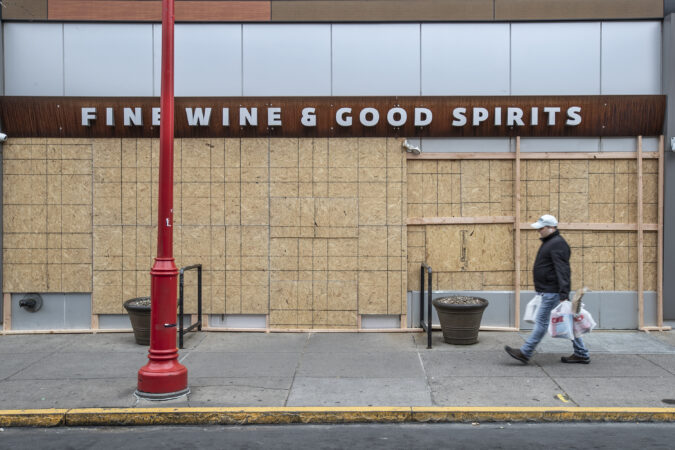
    ❌ If you need wine for dinner, make sure to get it before Thanksgiving Day. Fine Wine & Good Spirits will be closed on Thursday, Nov. 27.

    Mail and packages

    U.S. Postal Service

    ❌ Post offices are closed on Thanksgiving Day.

    UPS, FedEx, and DHL

    UPS, FedEx, DHL are closed on Thanksgiving Day.

    Banks

    ❌ Most, if not all, banks including TD Bank, Bank of America, Wells Fargo, Chase Bank, and PNC Bank will be closed on Thanksgiving Day.

    Transit

    SEPTA

    ✅ SEPTA buses, trains, and trolleys will run on a Sunday schedule on Thanksgiving. You can follow real-time updates on the agency’s System Status website, via TransitView on the SEPTA app, or on Bluesky at @SEPTA_Bus.

    For more detailed information about route detours, check SEPTA’s System Status Page at septa.org.

    PATCO

    ✅ PATCO will be running on a holiday schedule, which you can view at ridepatco.org.

    Pharmacies

    CVS

    ✅ All non-24-hour CVS locations will close early on Thanksgiving. Call your local store before visiting or view hours at cvs.com/store-locator/landing.

    Walgreens

    ❌ All non-24-hour Walgreens locations will be closed for Thanksgiving Day. Check your local store’s hours at walgreens.com/storelocator.

    Trash collection

    ❌ There is no trash or recycling pickup during Thanksgiving or Black Friday. Trash pickup will resume two days later than scheduled. To find your trash and recycling collection day, go to phila.gov.

    Big-box retail

    Costco

    ❌ Costco will be closed on Thanksgiving Day, but reopen at 9 a.m. on Black Friday. Check your local Costco for Black Friday hours.

    Target

    ❌ Target will be closed on Thanksgiving Day, but reopen at 6 a.m. on Black Friday.

    Lowe’s

    ❌ Lowe’s stores will be closed on Thanksgiving Day, but reopen at 6 a.m. on Black Friday.

    Home Depot

    ❌ Home Depot locations will be closed on Thanksgiving Day, but reopen at 6 a.m. on Black Friday.

    Walmart

    ❌ Walmart locations will be closed on Thanksgiving Day, but reopen at 6 a.m. on Black Friday.

    Shopping malls

    ❌ The Shops at Liberty Place will be closed on Thanksgiving and reopen at 7 a.m. on Black Friday.

    ❌ Fashion District Philadelphia won’t be opening on Thanksgiving, but will reopen on Black Friday at 10 a.m.

    ❌ Franklin Mall, King of Prussia Mall, and Cherry Hill Mall will be closed on Thanksgiving. On Black Friday, Franklin Mall will open at 10 a.m., King of Prussia Mall will open at 6 a.m., and Cherry Hill Mall will open at 7 a.m.

  • Landlord Phil Pulley transferred ownership of West Philly apartments days before suspected arson, records show

    Landlord Phil Pulley transferred ownership of West Philly apartments days before suspected arson, records show

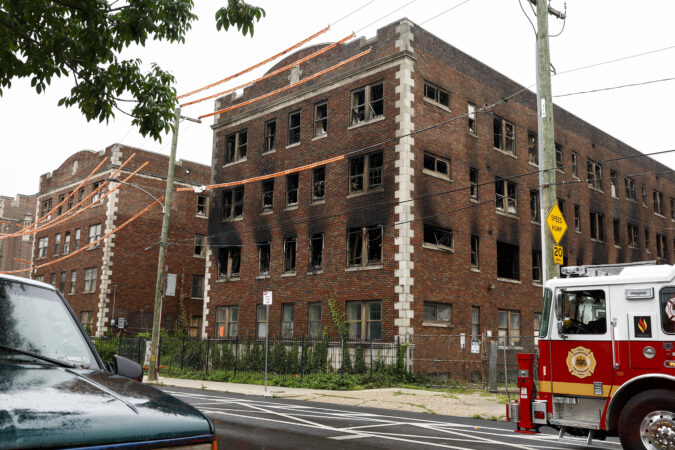
    Two days before an apartment complex once hailed as a shining example of Philadelphia’s urban renewal went up in flames, its owner, embattled city landlord Phil Pulley, transferred the vacant property to a New York investment firm.

    Federal investigators are treating the fire as arson.

    The property’s new owner, Aureus Special Asset Management, which records show is linked to investors in South Korea and Saudi Arabia, is now demolishing the West Philadelphia structure, known as Admiral Court.

    Earlier this year, Pulley faced a $29.4 million foreclosure over unpaid debts linked to a fizzled redevelopment of Admiral Court and an adjacent complex, Dorsett Court. Instead of seeing investors foreclose on the property, he agreed to transfer both apartment complexes to his lenders.

    Pulley signed the deed for that transaction on June 5. Less than 48 hours later, a fire broke out at the vacant building at 48th and Locust Streets, drawing more than 150 firefighters and support personnel to the scene. About 750 neighbors temporarily lost power. No injuries were reported.

    The deed transfer for Admiral Court did not become a public record until late September, when it was sent to the Philadelphia Records Department and finalized.

    West Philadelphia Councilmember Jamie Gauthier, who in June called Pulley a “slumlord” and blamed him for allowing the buildings to rot, on Friday blasted the deal.

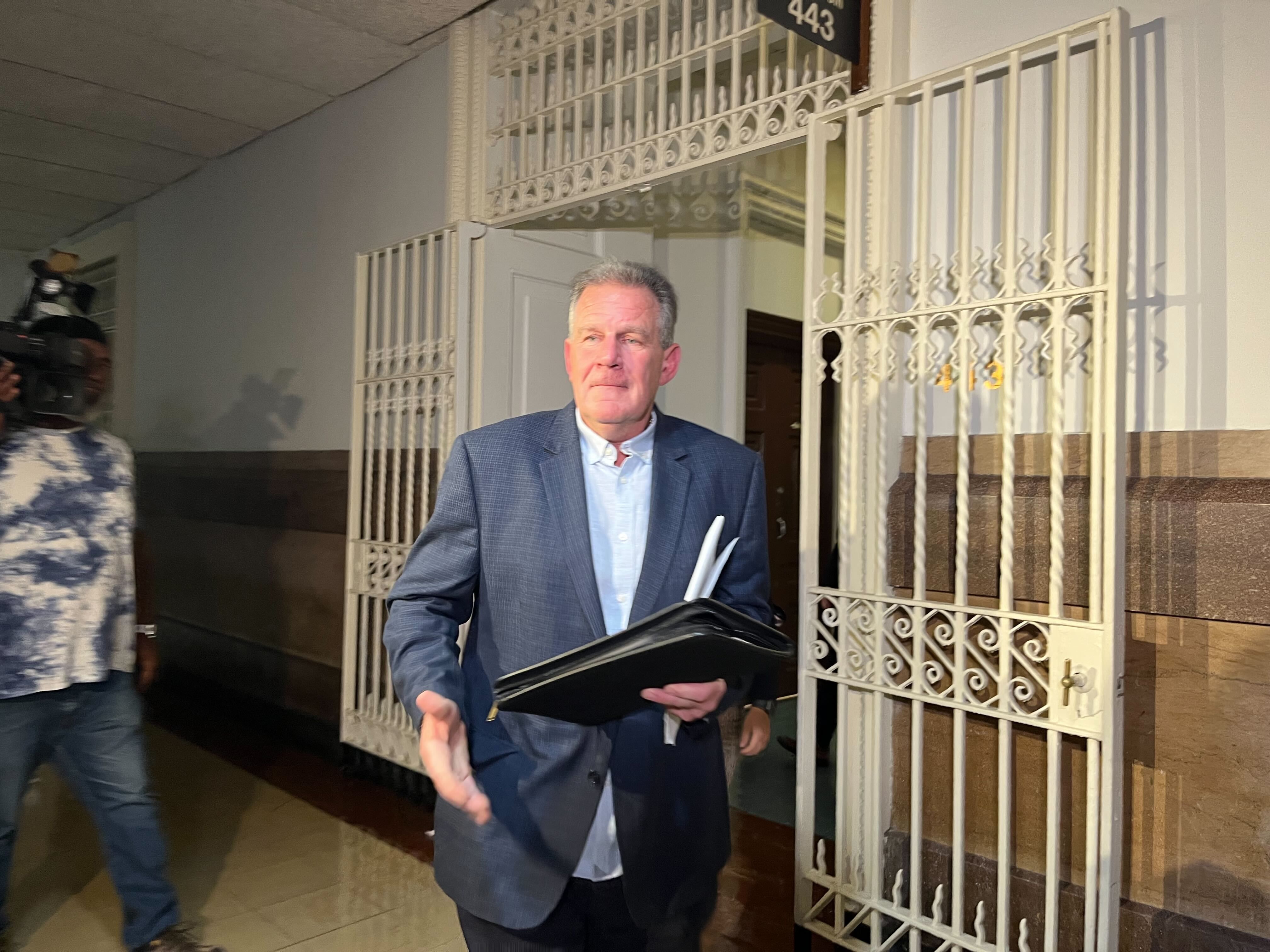
    Phil Pulley outside a courtroom in September 2022 following the partial collapse of one of his buildings, Lindley Towers, in the city’s Logan section.

    “The Admiral and Dorsett Court buildings could have provided affordable housing in one of West Philly’s most desirable neighborhoods. Instead, landlord Phil Pulley ignored repeated safety violations, leading to a devastating four-alarm fire,” Gauthier said in a statement. “The new owner appears to be a shell corporation with little transparency, and I’m deeply concerned that demolishing Admiral Court will create new blight and safety hazards.”

    Crews started tearing down the building last week.

    Pulley’s checkered history includes millions in unpaid taxes, hundreds of building code violations, and voter fraud. Two of his other apartment complexes have partially collapsed in recent years.

    Pulley did not respond to requests for comment about the fire or deed transfer.

    The circumstances of the blaze are now being investigated by the Bureau of Alcohol, Tobacco, Firearms and Explosives, along with Philadelphia police and fire investigators. Ben Benson, a spokesperson for the ATF’s Philadelphia field office, said the agency had “determined that this was an intentionally set incendiary fire, and no accident.” He declined to comment further.

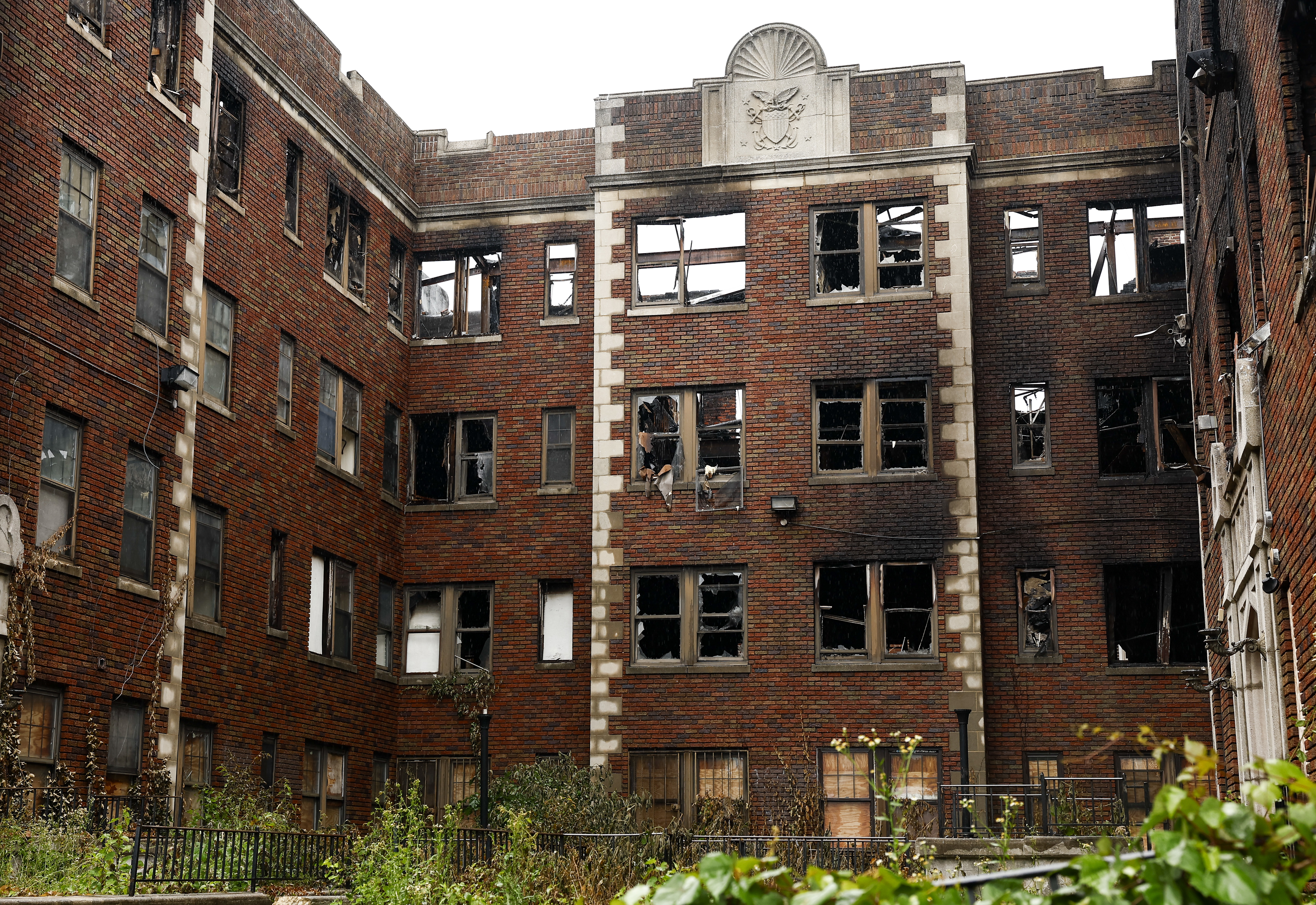
    The aftermath of a large fire at the Admiral Court apartment building at 48th and Locust Streets on Sunday, June 8, 2025 in Philadelphia.

    This month, the new owner of the charred four-story apartment building, Aureus Special Asset Management, obtained a permit to demolish it, according to Philadelphia records.

    Aureus does not have a digital footprint. It shares a Madison Avenue mailing address with the New York City offices of Pacific General, an investment firm specializing in “transactions covering the United States, South Korea, and the Kingdom of Saudi Arabia.”

    Pacific General’s corporate officers also signed documents for Descartes Specialty Finance, a Cayman Islands company that took over the mortgage for the troubled renovation of the West Philadelphia complexes. The company took Pulley to court in 2024 over the $25 million default, adding on millions in fees.

    Reached at an office number for Pacific General, an individual who declined to be identified refused to comment. An attorney for Descartes did not respond to requests for comment.

    Ed Nordskog, a former arson investigator with the Los Angeles County Sheriff’s Department, said uncovering possible fraud connected to an arson is often a painstaking process. It can involve obscure insurance policies, construction loans, or hard-to-trace schemes.

    “If it’s a fraud case, that can take months, if not years, to sort through the paperwork,” Nordskog said. “They are really difficult cases for local investigators.”

    A history of troubled buildings

    In 1989, then-U.S. Sen. John Heinz toured Admiral Court after the crumbling apartment building had been rehabbed with federal affordable-housing tax credits. He hailed the project as a symbol of Philadelphia’s revitalization.

    Roughly 15 years later, Pulley acquired the building and neighboring Dorsett Court, along with a string of other affordable apartment complexes across the city.

    The buildings quickly fell back into decay.

    Both West Philadelphia properties have been vacant since 2018, when Pulley evicted dozens of families — many of them low-income — to make way for a planned renovation and sale.

    While some work was done on Dorsett Court, on Locust Street next to Henry C. Lea Elementary School, progress stopped without explanation.

    Admiral Court alone was cited 33 times by building inspectors since 2018, including several fire code violations in 2022.

    “To watch them just sitting there vacant was heartbreaking for everyone involved,” said Phil Gentry, who has one child attending Lea and another who graduated. “It seems crazy, in the middle of this thriving neighborhood that desperately needs more housing, these nice-looking buildings are falling apart, catching on fire, or sitting vacant.”

    Tenants have long complained about conditions in Pulley’s buildings. Two have partially collapsed in recent years.

    Meanwhile, the city has continued to pursue Pulley in court over other properties.

    In 2022, the facade of another Pulley complex — Lindley Towers, in Logan — collapsed, exposing a large section of the upper floors. The building was rendered uninhabitable, displacing about 100 residents. The city took Pulley to court, seeking millions to cover emergency repairs and other costs. That case is pending.

    In October 2024, the Darrah School Apartments — which was also run by Pulley’s main property management company, SBG Management — partially collapsed, raining debris onto a Francisville side street. No injuries were reported. The building had been cited by city inspectors more than a dozen times.

    This year, the city filed a fresh lien against Pulley’s company, citing $51,000 in unpaid gas bills. The city also launched a petition seeking a court-ordered sequestrator at yet another complex in West Philadelphia owned by Pulley’s company, the Winchester Apartments. That order would empower a third party to collect rent on SBG’s behalf in order to satisfy outstanding tax and utility bills.

    Pulley is also facing an ongoing consumer-protection lawsuit filed in 2023 by the Pennsylvania Attorney General’s Office. It accuses Pulley and a network of affiliated companies of mistreating tenants and a range of other “deplorable conduct.”

    In January, Pulley was sentenced to three years’ probation and 100 hours of community service for casting ballots in several different counties in the 2020 and 2022 elections. He also pleaded guilty in May to voting in both Philadelphia and Montgomery County in 2021 and 2023.

    Staff writers Jake Blumgart and Abraham Gutman contributed to this article.