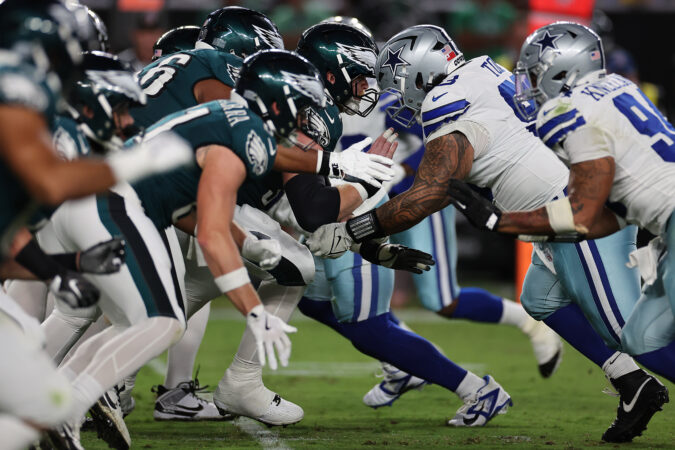
The Eagles and Cowboys met to open the NFL season back on Sept. 4 in a game the Eagles won, 24-20.
They meet again Sunday in Dallas, and although the Eagles are running away with the NFC East, this game presents a challenging potential roadblock for the Eagles in their pursuit of the No. 1 seed in the NFC.
Here’s how our writers see it …
Jeff Neiburg
This isn’t your 2-month-old’s Cowboys.
The team that practically gave Micah Parsons away before the season added Quinnen Williams to its defensive front at the trade deadline, and he immediately provided a spark. The Raiders doubled him on half of his 28 pass rushes on Monday and he still put up a season-high five pressures, according to Next Gen Stats, while being credited for 1½ sacks.
Even if center Cam Jurgens clears concussion protocol and plays, the Eagles will have their hands full up front.
If the Eagles are finally going to fix their scuffling offense, it will be a challenge, though Dallas has been very beatable in the air. The Cowboys play a ton of zone, using man coverage just 14.8% of the time, the fourth-lowest rate in the NFL.
If the Eagles are going to figure out their inability to beat zones through the air, Sunday will be a big test, but one they should be able to ace with the right plan.
Dallas’ offense, meanwhile, is one of the best in the league. The game sets up as a great offense and a bad defense (Dallas) against a great defense and a bad offense (Eagles). The game will probably be decided by who wins the matchup between Dallas’ offense and the Eagles’ defense.
Who has the upper hand? It’s hard to pick against the Eagles right now.
Prediction: Eagles 27, Cowboys 16
Olivia Reiner
On paper, Eagles-Cowboys is set to be a strength-on-strength, weakness-on-weakness matchup.
Vic Fangio declared the Cowboys offense one of the best in the NFL, and the numbers back that up, especially in the passing game. The Dak Prescott-led offense leads the league in passing yards (2,587), ranks second in passing touchdowns (22), and places third in passing attempts.
George Pickens leads the way with 908 receiving yards and seven touchdowns on the season, above CeeDee Lamb (557 yards and two touchdowns in just seven games) and tight end Jake Ferguson (400 yards and seven touchdowns).
But the Eagles defense is playing like one of the best in the league lately, too. The last two games, against playoff contenders the Green Bay Packers and the Detroit Lions, were defensive masterclasses, with the Eagles limiting those opponents to a combined 16 points.
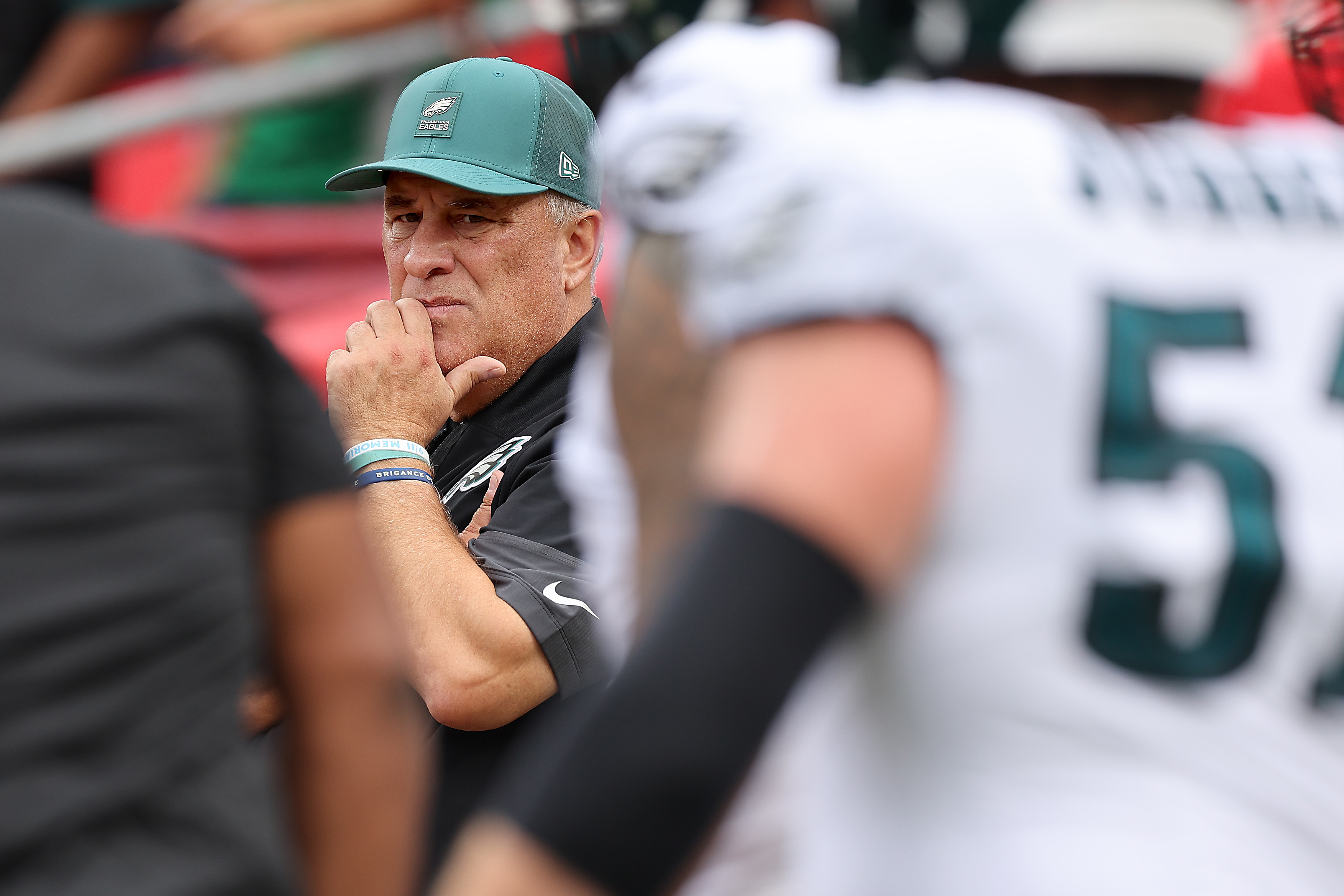
Vic Fangio expects to have his hands full with the Cowboys offense.
While the Eagles defense ought to be up for the challenge, can the same be said for the offense? The Cowboys defense has been one of the worst groups in the league overall, but they boast a formidable interior defensive line that recently added Williams to the mix.
The offensive line has been solid at pass blocking this year, even when Lane Johnson goes down, but the run blocking has seen a serious drop-off from last season. Though I’m not so sure this will be the get-well game on the ground the Eagles are looking for, they could have a chance to get going in the passing game, given that the Cowboys are conceding 6.9 net yards per passing attempt — No. 29 of 30 teams in the league.
Prediction: Eagles 21, Cowboys 17
Matt Breen
Will the Eagles fix their offensive problems on Sunday? It feels like we’ve been asking the same question for three months. So maybe this is just their offense. And that might be OK thanks to a defense that is suddenly the best in the NFC.
The defensive line is overwhelming, and Quinyon Mitchell is playing like an All-Pro in the secondary. The Cowboys looked good last week, but they won’t be playing the Raiders on Sunday.
Teams have picked apart the Dallas defense through the air this season, but I’ll wait and see if the Eagles can do the same. It’s hard to see the Eagles offense, especially with a banged-up line, suddenly flipping a switch. By now, it’s fair to have a read on who a team is.
But the defense is elite and they’ll carry them again on Sunday. We’ll find out how far that unit can carry them the rest of the way.
They’re cute, even cuddly, and promise learning and companionship — but artificial-intelligence toys are not safe for kids, according to children’s and consumer advocacy groups urging parents not to buy them during the holiday season.
These toys, marketed to kids as young as 2 years old, are generally powered by AI models that have already been shown to harm children and teenagers, such as OpenAI’s ChatGPT, according to an advisory published Thursday by the children’s advocacy group Fairplay and signed by more than 150 organizations and individual experts such as child psychiatrists and educators.
“The serious harms that AI chatbots have inflicted on children are well-documented, including fostering obsessive use, having explicit sexual conversations, and encouraging unsafe behaviors, violence against others, and self-harm,” Fairplay said.
AI toys, made by companies including Curio Interactive and Keyi Technologies, are often marketed as educational, but Fairplay says they can displace important creative and learning activities. They promise friendship but disrupt children’s relationships and resilience, the group said.
“What’s different about young children is that their brains are being wired for the first time, and developmentally it is natural for them to be trustful, for them to seek relationships with kind and friendly characters,” said Rachel Franz, director of Fairplay’s Young Children Thrive Offline Program. Because of this, she added, the amount of trust young children are putting in these toys can exacerbate the harms seen with older children.
Fairplay, a 25-year-old organization formerly known as the Campaign for a Commercial-Free Childhood, has been warning about AI toys for years. They just weren’t as advanced as they are today. A decade ago, during an emerging fad of internet-connected toys and AI speech recognition, the group helped lead a backlash against Mattel’s talking Hello Barbie doll that it said was recording and analyzing children’s conversations.
This time, though AI toys are mostly sold online and are more popular in Asia than elsewhere, Franz said some have started to appear on store shelves in the U.S. and more could be on the way.
“Everything has been released with no regulation and no research, so it gives us extra pause when all of a sudden we see more and more manufacturers, including Mattel, who recently partnered with OpenAI, potentially putting out these products,” Franz said.
It’s the second big seasonal warning against AI toys since consumer advocates at U.S. PIRG last week called out the trend in its annual Trouble in Toyland report that typically looks at a range of product hazards, such as high-powered magnets and button-sized batteries that young children can swallow. This year, the organization tested four toys that use AI chatbots.
“We found some of these toys will talk in-depth about sexually explicit topics, will offer advice on where a child can find matches or knives, act dismayed when you say you have to leave, and have limited or no parental controls,” the report said. One of the toys, a teddy bear made by Singapore-based FoloToy, was later withdrawn, its CEO told CNN this week.
Dana Suskind, a pediatric surgeon and social scientist who studies early brain development, said young children don’t have the conceptual tools to understand what an AI companion is. While kids have always bonded with toys through imaginative play, when they do this they use their imagination to create both sides of a pretend conversation, “practicing creativity, language, and problem-solving,” she said.
“An AI toy collapses that work. It answers instantly, smoothly, and often better than a human would. We don’t yet know the developmental consequences of outsourcing that imaginative labor to an artificial agent — but it’s very plausible that it undercuts the kind of creativity and executive function that traditional pretend play builds,” Suskind said.
Beijing-based Keyi, maker of an AI “petbot” called Loona, didn’t return requests for comment this week, but other AI toymakers sought to highlight their child safety protections.
California-based Curio Interactive makes stuffed toys, like Gabbo and rocket-shaped Grok, that have been promoted by the pop singer Grimes. The company said it has “meticulously designed” guardrails to protect children, and the company encourages parents to “monitor conversations, track insights, and choose the controls that work best for their family.”
In response to the earlier PIRG findings, Curio said it is “actively working with our team to address any concerns, while continuously overseeing content and interactions to ensure a safe and enjoyable experience for children.”
Another company, Miko, based in Mumbai, India, said it uses its own conversational AI model rather than relying on general large language model systems such as ChatGPT in order to make its product — an interactive AI robot — safe for children.
“We are always expanding our internal testing, strengthening our filters, and introducing new capabilities that detect and block sensitive or unexpected topics,” said CEO Sneh Vaswani. “These new features complement our existing controls that allow parents and caregivers to identify specific topics they’d like to restrict from conversation. We will continue to invest in setting the highest standards for safe, secure and responsible AI integration for Miko products.”
Miko’s products are sold by major retailers such as Walmart and Costco and have been promoted by the families of social media “kidfluencers” whose YouTube videos have millions of views. On its website, it markets its robots as “Artificial Intelligence. Genuine friendship.”
Ritvik Sharma, the company’s senior vice president of growth, said Miko actually “encourages kids to interact more with their friends, to interact more with the peers, with the family members etc. It’s not made for them to feel attached to the device only.”
Still, Suskind and children’s advocates say analog toys are a better bet for the holidays.
“Kids need lots of real human interaction. Play should support that, not take its place. The biggest thing to consider isn’t only what the toy does; it’s what it replaces. A simple block set or a teddy bear that doesn’t talk back forces a child to invent stories, experiment, and work through problems. AI toys often do that thinking for them,” she said. “Here’s the brutal irony: When parents ask me how to prepare their child for an AI world, unlimited AI access is actually the worst preparation possible.”
Temple University Hospital’s Episcopal campus was cited by the Pennsylvania Department of Health for failing to maintain cleaning logs for the crisis center in May.
The incident was among more than a dozen times inspectors visited Temple’s main campus, Jeanes campus, or Episcopal campus to investigate potential safety problems between September 2024 and August. The three campuses operate under a shared license, and inspection reports do not always distinguish which campus inspectors visited.
Here’s a look at the publicly available details:
Sept. 27, 2024: Inspectors came to investigate a complaint but found the hospital was in compliance. Complaint details are not made public when inspectors determine it was unfounded.
Oct. 1: Inspectors followed up on a January 2024 citation and found the hospital was in compliance. The Episcopal campus had been cited for failing to properly update and document mental health patients’ records and treatment plans every 30 days.
Jan. 6, 2025: The Joint Commission, a nonprofit hospital accreditation agency, renewed the hospital’s accreditation, effective May 2024, for 36 months.
Jan. 11: Inspectors came to investigate three separate complaints but found the hospital was in compliance.
Jan. 16: Inspectors came to investigate a complaint but found the hospital was in compliance.
Jan. 21: Inspectors came to investigate a complaint but found the hospital was in compliance.
Jan. 29: Inspectors came to investigate a complaint but found the hospital was in compliance.
Feb. 5: Inspectors came to investigate a complaint but found the hospital was in compliance.
Feb. 11: Inspectors came to investigate a complaint but found the hospital was in compliance.
Feb. 21: Inspectors came to investigate a complaint but found the hospital was in compliance.
March 4: Inspectors came to investigate a complaint but found the hospital was in compliance.
March 10: Inspectors came to investigate a complaint but found the hospital was in compliance.
March 12: Inspectors visited for a monitoring survey and found the hospital had violated rules related to patients’ rights to care by competent personnel. Details of the problem were not made public because the issue was fixed before inspectors arrived. The hospital’s correction plan included educating staff about how to protect vulnerable patients from leaving the hospital against medical advice. Administrators also established a system to review patients at risk and an environmental safety checklist.
March 31: Inspectors came to investigate a complaint but found the hospital was in compliance.
April 4: Inspectors came to investigate a complaint but found the hospital was in compliance.
May 6: Inspectors cited Temple’s Episcopal campus for not having sanitation documentation and cleaning logs for the crisis response center. Administrators retrained staff on the hospital’s sanitation policies and record-keeping requirements.
May 8: Inspectors came to investigate a complaint but found the hospital was in compliance.
June 10: Inspectors came to investigate a complaint but found the hospital was in compliance.
July 14: Inspectors came to investigate a complaint at the Jeanes campus but found the hospital was in compliance.
This week’s Shackamaxon asks: Who should pay for public safety, and why didn’t Philadelphia’s big employers do more to save SEPTA?
Bills for thee, unlimited OT for me
My intrepid newsroom colleagues Ryan W. Briggs and Max Marin have shed light on another frustrating phenomenon in local government: the city’s haphazard and uneven policy on security for events.
While some independent community and cultural groups have been hit with bills as high as $40,000 for their festivals, others haven’t been asked to contribute a dime. This includes events hosted by local politicians, who get their costs added to the city’s $150 million police overtime bill.
Instead of forcing communities to end or curtail long-standing and successful events over security costs, the city should focus on finding ways to lower the cost. This should start by taking away the decision-making process from individual police captains and making these calls at the Managing Director’s Office.
The city should also invest in security options that don’t require personnel, like the portable vehicle barricades used by the Center City District for its Open Streets events. This would eliminate or reduce the need for police presence. Lowering the overall amount the city pays for events will make it easier to take on the cost for all of them and eliminate the need for the current, inequitable status quo.
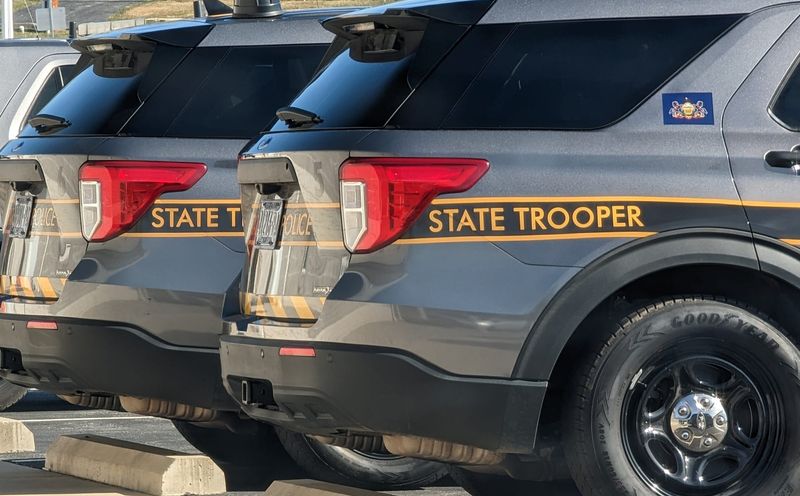
Some of Pennsylvania’s towns and villages do not spend on their own police force, instead relying on the Pennsylvania State Police.
More blue for less green
City Council members and some favored community groups aren’t the only ones benefiting from an uneven cost structure for public safety.
While Philadelphia spends almost $900 million per year on policing, at a cost of over $550 per resident, some of Pennsylvania’s towns and villages are getting an absolute bargain — they don’t pay for police at all.
It’s a growing phenomenon in which rural and exurban communities, most of them Republican-led, are essentially defunding the police — it isn’t just hamlets in Forest County that are benefiting from the dollar savings either. Sizable towns like Lower Macungie, the second-largest population center in Lehigh County, rely solely on the Pennsylvania State Police to keep order.
State Rep. Justin Fleming has proposed a solution. His bill would create a fee structure for towns that forgo local police coverage, with the aim of growing and strengthening the state police. Fleming, who represents a small town outside Harrisburg that pays for its own police force, presents his plan as a fair way to cover the cost of public safety across the commonwealth. It is long overdue.
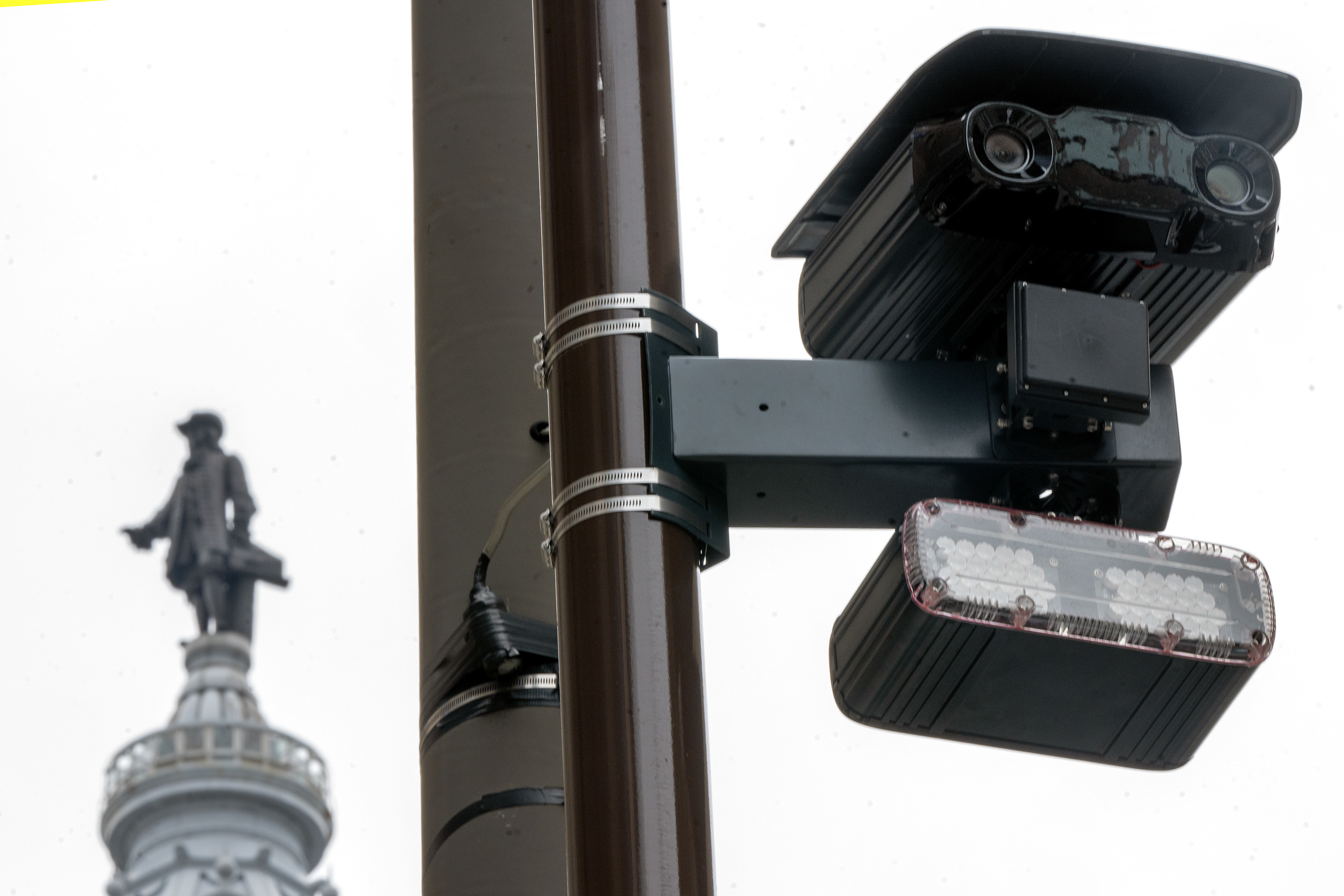
An automated speed enforcement camera is mounted on North Broad Street at Arch Street in September.
The truth about the PPA
No one likes getting a ticket, but many Philadelphia motorists harbor a special resentment for the Philadelphia Parking Authority. The recent implementation of (PPA-administered) speed cameras on Broad Street has led to an outbreak of often-conspiratorial claims about the agency.
Some critics have gone so far as to claim the PPA is a “private company,” or that “all the money goes to Harrisburg.” Even City Council President Kenyatta Johnson claimed ignorance when asked about some aspects of the PPA on a local podcast, saying he needed to look into it.
In reality, the PPA is a state agency, governed by a board that’s appointed by the governor and legislative leaders. In a typical year, it directs more than $50 million to local needs, and Executive Director Rich Lazer has moved away from the opaque and patronage-heavy policies the agency was once known for.
The speed cameras, far from being a way to raise revenue, are aimed at changing behavior. When implemented on Roosevelt Boulevard, speeding decreased — as did fines. You can’t make money from speedsters if they stop speeding.
Of course, there’s an easy way to avoid ever getting a ticket: park legally and don’t speed. If anything, the city would be better off if its other enforcement agencies were as effective as the dreaded PPA.
SEPTA commuters at 11th and Market Streets.
Transit failure
It is no secret that Gov. Josh Shapiro and Harrisburg Democrats folded on mass transit funding this year. Despite claiming a sustainable solution was their “top priority,” they agreed to subject riders to two more years of uncertainty, with no guarantee of a future solution.
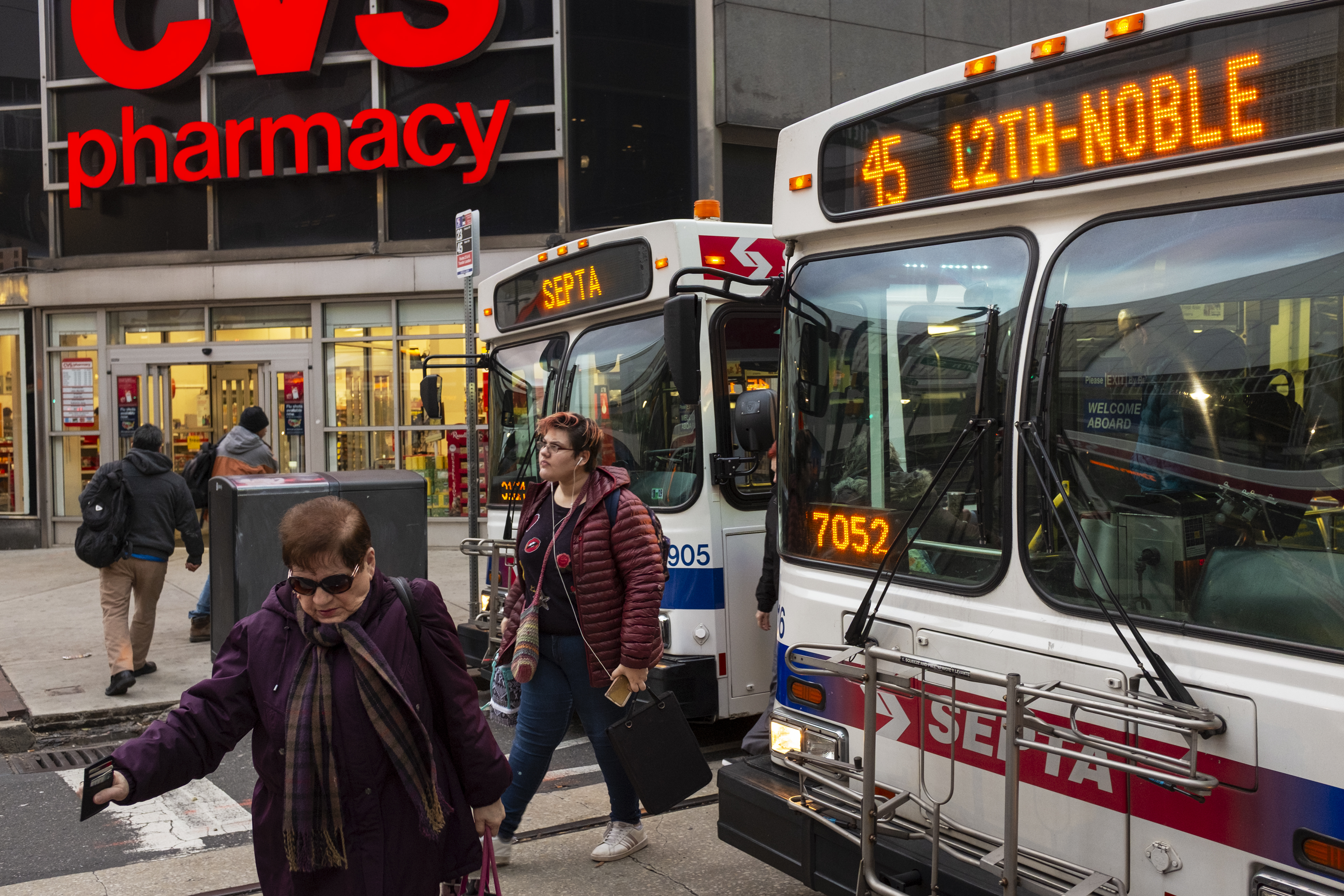
But there’s another set of regional power brokers who failed to adequately address the public transportation system’s needs: our biggest employers.
Thomas Jefferson University, Comcast, Children’s Hospital of Pennsylvania, the University of Pennsylvania, and the Chamber of Commerce will gladly say they support transit funding. Just don’t ask them to spend a dime on it.
While the lobbies for casinos, sports gambling, so-called skill games, and marijuana all have plenty of cash to splash, transit has next to nothing. That lack of money made it hard to win over Senate Republicans, who mostly represent districts without many mass transit riders, leaving them immune to grassroots pressure to fund the system. This meant that a last-minute effort to fund transportation off taxing sports betting failed, with gambling companies and their social media influencer allies scaring legislators off.
According to local transit advocate Jon Geeting, Philadelphia’s major institutions have contributed next to nothing to the yearslong effort to forge a sustainable solution in Harrisburg. Geeting told me, “It’s really disappointing and sad that for three years in a row, it fell to out-of-state philanthropy to support the entirety of state transit funding advocacy.”
Despite the collective billions at their disposal, efforts by local industry and institutions to support mass transit funding have mostly consisted of sending in op-eds and occasionally speaking at rallies. If we are to save public transit in Philadelphia, Comcast and Penn should not be content to have the same reach as determined high school students.
The staggeringly vile actions of Donald Trump continue to pour out of his administration. Two recent articles highlight that.
The ruler of Saudi Arabia, a country that supports terrorism, denies human rights, beheads its enemies in public, and has others brutally murdered on foreign soil, is welcomed by this president with open arms. Trump brushes off Mohammed bin Salman’s crimes with a wave of the hand, saying “things happen,” then considers selling him F-35s, the most advanced fighter jet in the world, in a deal that could land the plane’s technology in the hands of bin Salman’s close ally, China.
And on Air Force One last week, Trump, who has stalled the release of the Jefferey Epstein files until it became clear even his allies in Congress were going to force his hand, responded to Bloomberg News correspondent Catherine Lucey with, “Quiet, quiet, piggy,” when she asked him about the files. It is just one in a long list of examples of Trump’s antipathy toward strong women.
But I guess we should expect nothing less from a man who admires dictators and is a convicted sexual abuser. These are just two examples of what so saddens me, that so many in my country can support him. A common refrain from my friends who do support him is that they don’t like the man, but they like his policies. Is there no one out there among Republicans who is not amoral and lacks honor, and who can implement the same policies they support?
Steven Barrer,Huntingdon Valley
Pardonpalooza
The recent editorial on Donald Trump’s abuse of presidential pardon power is so important. Everyone should read it. Trump’s Department of Injustice, under Pam Bondi, is a travesty. Trump talks about “weaponizing” the Justice Department, and that’s exactly what he has done. The Justice Department is supposed to be independent of the executive branch, not subservient to it. Bondi does whatever Trump tells her to do, whether it’s legal or not. The Injustice Department was just caught using Trump’s signature, with or without his permission, to pardon criminals.
In a recent letter to the editor, Terry Hansen wrote about Daniel Rodriguez, one of the insurrectionists on Jan. 6, 2021, who received a pardon from Trump. He repeatedly drove a stun gun into the skull of a police officer, Michael Fanone, causing him to lose consciousness and suffer a heart attack. Rodriguez was sentenced to 12 years in prison. Trump pardoned him.
Trump has pardoned all 1,500 of the insurrectionists from Jan. 6. Trump issued two pardons for Daniel Edwin Wilson — the first for the invasion of the U.S. Capitol Building on Jan. 6 and the second recently for gun charges. He pardoned Suzanne Kaye, who was sentenced to 18 months for threatening an FBI agent. Trump has also pardoned numerous convicted criminals for all sorts of violent crimes, fraud, embezzlement, extortion, and other felonies — all in just his first 10 months in office.
The big question is, why? Trump never does anything that does not benefit Trump or the Trump family’s fortunes. Is he setting a new precedent? Or is he sending a message to his loyal followers: No matter what you do on my behalf, I will pardon you. Don’t you worry.
Most presidents don’t hand out pardons until their last year in office. We have three more Trump years to go. What more can we expect?
Patrick Thompson, Media
Hope on the horizon
Unexpectedly, I long for the days of George H.W. Bush’s call for “a kinder, gentler nation” and Richard Nixon’s creation of the Environmental Protection Agency and focus on energy efficiency. After decades of increasing respect for the rights of all, regardless of race, gender, and social status, we have entered a period of degradation, incivility, greed, and violent threats toward others. Earth is threatened by strident demands to stop renewable energy projects. Immigrants, even American citizens, are being ruthlessly and indiscriminately torn from families. As noted in a recent Inquirer editorial, drug runner suspects have been summarily executed without due process. The government shutdown caused needless hardship for furloughed federal employees and for the hardworking poor who rely on SNAP and affordable healthcare. This month’s election offered a glimmer of hope, but the greed of a few continues to oppress the many. Let’s hope our course changes with next year’s midterm election, if we have one.
John Groch,West Chester
Fatal illusion
Trudy Rubin’s recent column correctly identifies the fundamental flaw in Donald Trump’s Gaza peace plan: its failure to address Palestinian political aspirations.
Peace is indeed achievable, as Rubin suggests, but it requires more than clever diplomacy or economic incentives. It demands one basic ingredient that has been consistently missing: genuine recognition of Palestinian aspirations to live free from occupation.
Rubin describes how Trump’s plan “regurgitates ideas that have previously failed” by offering economic benefits without political sovereignty. But this pattern extends far beyond the current administration. For decades, Israel has pursued a strategy of dividing the Palestinian people — separating Gaza from the West Bank, Fatah from Hamas, and creating internal rivalries — to maintain the occupation while claiming there is “no partner for peace.”
As long as Israel continues this division strategy, violence will persist. The occupation itself breeds resistance, and Israel seems to exploit Palestinian disunity as justification for maintaining control.
Real peace requires moral clarity: the recognition that Palestinians have the right to live free from military occupation, just as Israelis have the right to security. These rights are not mutually exclusive, but the current approach — attempting to offer economic development under permanent military control — is fundamentally wrong and will never succeed.
Sam Kuttab, cofounder, Prayers for Peace Alliance, Philadelphia
. . .
“If you will it, it is no dream” was a core belief of those who defied the odds and built the great country of Israel.
I am appalled at the treatment of Yifat Tomer-Yerushalmi, Israel’s top military prosecutor, by her own government, after she shone a light on the brutal abuse of Palestinian prisoners. Prime Minister Benjamin Netanyahu calling her a traitor, as well as his apparent indifference to violent attacks by settlers in the West Bank, further undermines his legitimate authority.
I agree with Trudy Rubin that the only path to long-term peace is a two-state solution. I hope responsible leaders in Israel will rise and will this dream to come true.
Citing the 70,000 number without explaining expected class sizes, estimated special education programs, and specialists’ needs (or maybe even a library one day!) creates an exaggerated sense of urgency that manipulates the public into supporting closures.
At my child’s school, the district claims we are not at capacity, but our special education teachers are sharing classrooms, autistic students have no sensory room, there is no storage for excess materials, and if we ever got funding for a library, there would be no place to put it.
If I have two pairs of pants, you could technically say I have a surplus of pants, but we all know two pairs of pants is still not many pants. Claiming everything beyond the bare minimum is a surplus sends a message that we have no right to expect more for our students.
Tamara Sepe,Philadelphia
Join the conversation: Send letters to letters@inquirer.com. Limit length to 150 words and include home address and day and evening phone number. Letters run in The Inquirer six days a week on the editorial pages and online.
DEAR ABBY: My 19-year-old niece didn’t finish high school and has been in and out of rehab for years. She’s about to leave a residential program and is looking for a place to live. Her parents have implemented “house rules” she doesn’t like, notably staying drug-free and away from her boyfriend.
I have three kids at home, and I’m not able to take her in. My elderly father just offered to let her live with him. This is going to be a disaster. Financially and physically, he is barely able to keep an apartment on his own. We perform a lot of his daily tasks and have been looking for home health options for when he’s ready to accept more help.
Dad is in no position to take in a troubled teenager. However, he thinks he is, and since he’s still independent, it’s his choice. If she could help take care of him, that would be great, but there’s no way it is going to happen. I’m not even sure it would be safe for him to have her and her friends in his place.
My father won’t listen to reason. My niece’s social worker won’t talk to me, citing privacy issues. Her parents have warned Dad with the same result I’ve had. I want to protect my father. How do I get in front of this craziness before it gets ugly?
— DREADING IT IN MISSOURI
DEAR DREADING IT: I don’t think there is any way for you to prevent your father from taking the girl in. Stay in close touch so you can monitor what’s happening. Let this play out and step in if you see the situation becoming dangerous to his health and welfare, which, at that point, may require involving the authorities.
** ** **
DEAR ABBY: I have a nephew and niece who are in their 20s. As teens and adults, they chose not to acknowledge gifts. I stopped sending them anything as a result.
I have recently learned my nephew is engaged. He will be eloping and then having a family reception in a few months. Nobody in my family has met his fiancée. I do not live in the same town they do. Would it be wrong to not attend the reception? I have never said anything to their father (my brother) about his kids’ lack of acknowledgment. I know my mother will give me grief, because she did a few months ago when I didn’t attend my niece’s graduation party.
— STAYING AWAY IN NORTH CAROLINA
DEAR STAYING AWAY: I understand you are miffed because you weren’t thanked for gifts you gave your niece and nephew when they were younger. However, I am sorry you didn’t attend your niece’s graduation and even sorrier that you are planning not to attend your nephew’s wedding reception.
Are you estranged from your brother? Aren’t you the least bit curious about the young woman who will be joining your extended family? By pouting and not having a conversation with your brother about your feelings, you are effectively estranging yourself from that branch of the family, which I feel is a mistake.
ARIES (March 21-April 19). Today it’s not just about knowing what steps to take; it’s knowing what order to take them in. Get the help of someone who’s done it, and don’t be afraid to ask lots of questions. Getting the order right is absolutely crucial to a successful outcome.
TAURUS (April 20-May 20). You can feel deeply for what others are going through and still know that not every situation is yours to rescue. Because your first responsibility is to yourself and your inner circle. When that is taken care of, then you can extend compassion outward.
GEMINI (May 21-June 21). Your vibe is delightfully odd today, and the right people will love it. Expect curious glances and unexpected introductions. When the universe sends kindred spirits your way, get their number. The plot thickens from here.
CANCER (June 22-July 22). You’re skilled at weighing options, which is great for understanding but not great for momentum. When you’ve decided on a direction and are ready to progress, close off all other roads. Commit to one destination and route, and success will follow.
LEO (July 23-Aug. 22). Tides of change are powerful and pointless to fight. Stay relaxed, and provide no resistance. Float through. Eventually, seas calm, and that’s when you can start to swim again in the direction that makes sense.
VIRGO (Aug. 23-Sept. 22). If you reach and they run, you’re not in a relationship of reciprocity; you’re in a game. It’s better to be in a dance than a game. There’s no chasing in dance, just maintaining space to avoid stepping on toes.
LIBRA (Sept. 23-Oct. 23). You’ll see how you’re a little different from who you were, and that’s proof of how you’ve grown and where you’re going, too. Today brings indicators you can use when you decide what stays and what goes for the new version.
SCORPIO (Oct. 24-Nov. 21). You pay attention, notice how things work and show genuine interest in others. This way of being has you blending and contributing. It’s social savvy. It’s cultural intuition. It’s why you belong everywhere. Your curiosity, humility and respect make any environment feel like home.
SAGITTARIUS (Nov. 22-Dec. 21). Newness is often inherently uncomfortable, which is why not everyone is an adventurer. But you know the secret. You never know where you might find belonging until you step out of the places where you already belong.
CAPRICORN (Dec. 22-Jan. 19). The person you can be silly around is a treasure in your realm of relationships and worthy of special care. Don’t think in terms of what you need to do to keep connected; think in terms of what you can do that’s over the top. Make a memory.
AQUARIUS (Jan. 20-Feb. 18). An eagle sees sharply from above; an owl sees in the dark — animals develop sight suited to finding their food. You, too, see what you seek. Your longings and goals determine what stands out to you in the world.
PISCES (Feb. 19-March 20). You’re a kind of channeler today. Once the channel opens, insights will start to flow effortlessly — an abundance of ideas, phrases, plans, solutions will seem dictated from a wiser part of yourself. Grab a pen and get this down as fast as it comes to you.
TODAY’SBIRTHDAY (Nov. 21). Welcome to your Year of Luxury. You’ll crave and manifest quality over quantity in every realm — possessions, people, plans. Elegance becomes your superpower. More highlights: There will be five significant gatherings, meaningful to your group and your legacy. Some are peaceful, some exciting. Important exploration is a theme, too — driven by intuition and curiosity. Aries and Capricorn adore you. Your lucky numbers are: 7, 18, 19, 3 and 20.
Pitcher and outfielder Kelsie Whitmore is returning to familiar surroundings after being selected by San Francisco with the first pick in the inaugural Women’s Pro Baseball League draft on Thursday night.
Mo’ne Davis, meantime, had to wait until the 10th pick before being selected by Los Angeles. The 24-year-old Davis, who’s from Philadelphia, competed at the 2014 Little League World Series at age 13 and became the first girl to win a game and pitch a shutout.
Whitmore is from San Diego and made her professional debut in the Bay Area with a coed team, the Sonoma Stompers, in 2016. The 27-year-old has won two silver medals representing the United States at the Women’s Baseball World Cup and won gold at the 2015 Pan-Am Games in Toronto.
“You ask a 6-year-old version of me about this opportunity happening right now, she would, one, probably not believe you, but, two, just be so, so, so, so excited for it,” said Whitmore, who in 2022 signed with the Staten Island FerryHawks, becoming the first woman to compete in pro baseball’s Atlantic League. She played for the Savannah Bananas this season.
Whitmore was among 120 players selected in the six-round draft that also included teams representing New York and Boston.
Major League Baseball commissioner Rob Manfred opened the draft by congratulating the WPBL for its launch. The league is scheduled to begin play on Aug. 1.
Each team made five picks per round, with the order of selection determined by a random draw. Teams will cut their 30-player rosters to 15 for the start of the season.
Mo’ne Davis slides to third base during the first day of tryouts for the Women’s Professional Baseball League on Aug. 25.
Japan’s Ayami Sato went No. 2 to Los Angeles. The 35-year-old right-hander is a five-time World Cup winner and the only player to earn three tournament MVP honors.
New York selected U.S. infielder Kylee Lahners with the third pick. Boston chose South Korean catcher Hyeonah Kim at No. 4.
The startup league had a four-day tryout camp in Washington this summer with more than 600 hopefuls on hand.
The league is scheduled to play all of its games at Robin Roberts Stadium in Springville, Illinois. Teams will be based there over a seven-week season, split up into a four-week regular season, a week for all-star activities and a two-week playoff.
The WPBL was co-founded by Justine Siegal, who became the first woman to coach for an MLB team with the Oakland Athletics in 2015. It will be the first pro baseball league for women since the All-American Girls Professional Baseball League — immortalized in the film “A League of Their Own” — dissolved in 1954.
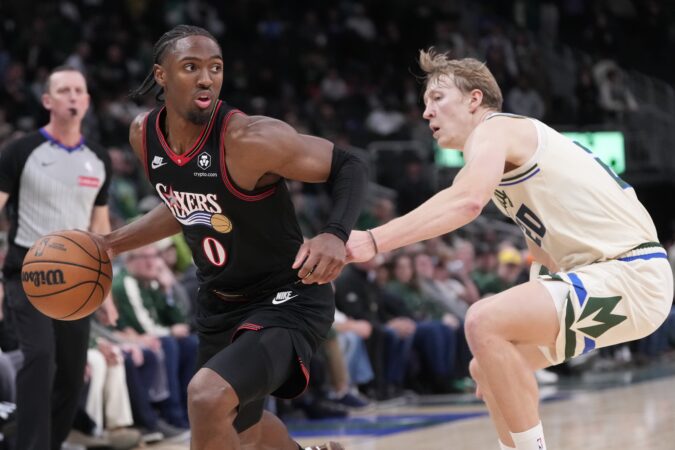
Maxey showed why he’s a legitimate candidate for MVP, scoring a career-high 54 points on 18-for-30 shooting to go with nine assists, five rebounds, three steals, and three blocks. His 54 points tied Hall of Famer Allen Iverson for the ninth-most points scored in a regular-season game in team history. Iverson did it twice, in December 2004 and January 2001.
Maxey joins Hall of Famer Wilt Chamberlain (March 18, 1968) as the only two players in franchise history to produce at least 50 points and nine assists in a single game.
“Great. We won. That’s what matters most,” Maxey said of tying Chamberlain.
But how does he feel about being in that company?
“Blessed,” Maxey said. “I thank God for it. Anytime you are in a conversation with Wilt, who scored 100 points, you can’t complain.”
Maxey didn’t have a repeat of Wednesday night when he attempted one fourth-quarter shot attempt — a miss — in a 121-112 loss to the Toronto Raptors. On Wednesday, he passed out of double teams and made what would typically be the correct play in the fourth quarter. In the game, Maxey attempted only 14 shots, which is 9.4 shots below his average of 23.4.
However, the Sixers aren’t good enough for him to serve as a decoy or a secondary player at this moment.
Against the Bucks, with the Sixers down 85-82 with 10 minutes, 10 seconds remaining, Maxey came up with three clutch plays in a short span.
He drained a 20-foot jumper to pull the Sixers within one point. After grabbing the defensive rebound on the ensuing possession, Maxey drained a three-pointer to put the Sixers up, 87-85, with 9:26 to play.
He scored 22 in the fourth quarter and overtime session on 6-for-9 shooting. He made four clutch foul shots in overtime.
The Sixers need Maxey to remain aggressive throughout games to win.
Coach Nick Nurse said after Wednesday’s loss that Maxey needed to shoot the ball more.
“It was a different game last night,” Maxey said of Wednesday. “I definitely was not as aggressive as I should have been. I got hit in the head, and I also got hit in the quad. So it was a little tough for me. Kind of like pop up and get the ball and be extremely aggressive, as I probably need to be. And we were making some shots. I made some plays and got guys open. So I was trying to feel the game out.
“But [Nurse is] definitely right. I got to be aggressive. Joel [Embiid] definitely got on me as soon as I got in the locker room. He pulled out the stat sheet, showed me the 14 shots, and said, ‘This ain’t going to cut it.’ And Joel is normally right.”
The Sixers’ Paul George played a major role on both sides of the ball.
George’s presence
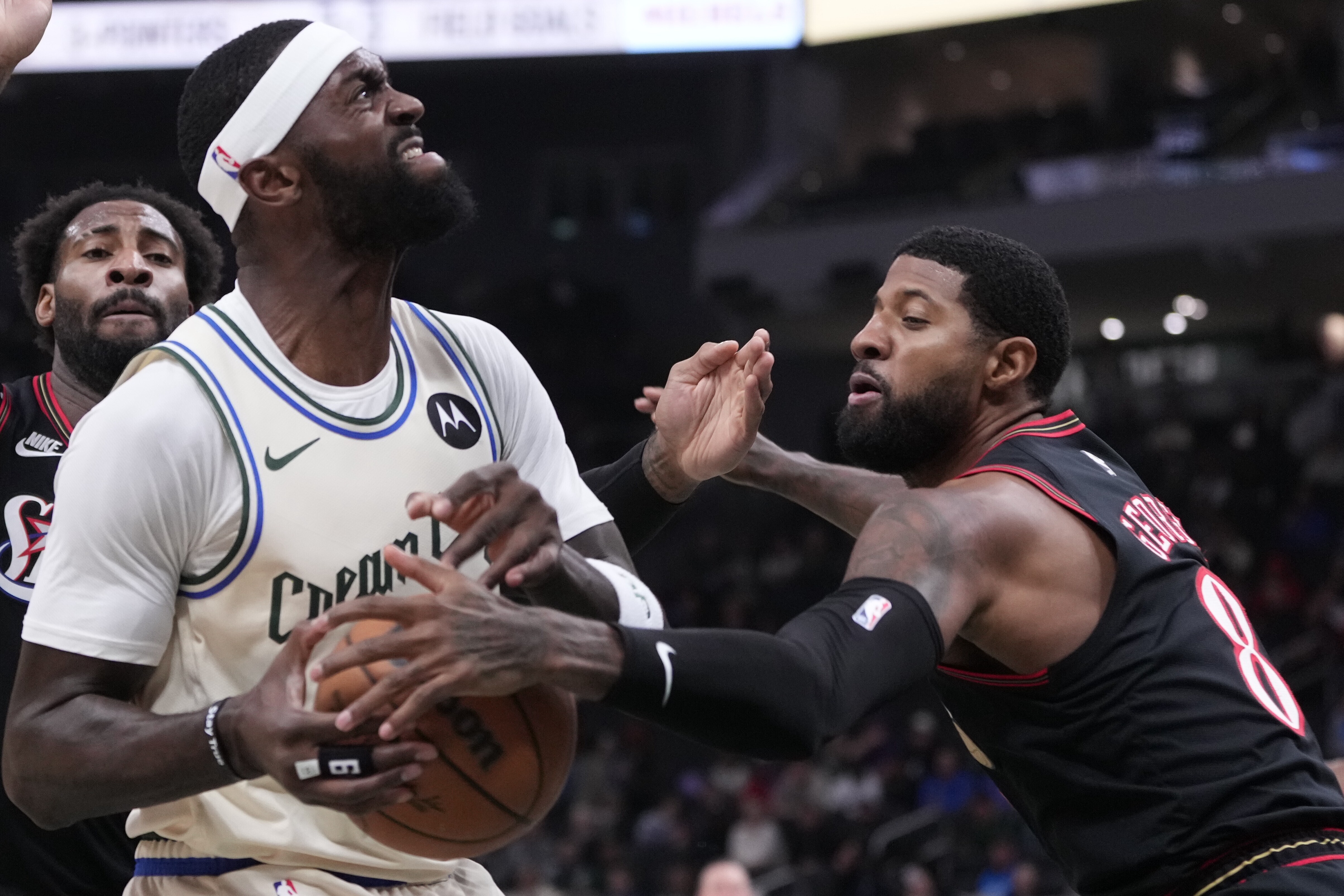
George’s presence has been noticeable in the two games he’s played in this season. The 35-year-old, who made his season debut on Monday, provided early offense and made a defensive impact in Monday’s victory over the Los Angeles Clippers and in Thursday’s win against the Bucks.
He finished with 21 points, five rebounds, and two steals while playing 24 minutes, 42 seconds against Milwaukee. This comes after George had nine points, seven rebounds, three assists, and two blocks vs. the Clippers.
George had an excellent start for the second consecutive game.
After scoring the game’s first five points in Monday’s debut, he scored the Sixers’ first 11 points while making his first four shots.
He scored the game’s first basket by driving through the lane and muscling his way to a basket. Then he added three-pointers on the Sixers’ next three possessions.
“That was kind of the mindset,” George said of attacking Thursday’s game from the start after sitting out Wednesday’s loss. “I know these guys played last night.. So I’m fresh. I tried to come in, get the boost, just morale on both ends. I tried to impose my will on the defense, and then come out with a burst offensively.”
The Sixers’ following points came when he assisted on an alley-oop dunk by VJ Edgecombe to make the Sixers’ lead 13-4 with 7:11 left in the quarter. George came out with 6:16 left in the quarter before returning at the start of the second.
While he missed his lone shot and committed a turnover, George made a pair of foul shots and had an assist to go with a steal in his short stint.
George did a solid job running the Sixers’ offense in the half-court and provided solid defense. One of his highlights was stealing the ball on Kyle Kuzma’s layup attempt at the 8:30 mark of the third quarter.
“Listen, whatever it is, to make the game easy for No. 0,” George said of running the offense. “I’ve been saying he’s been doing a lot for us. He might not want to say it, but I know he’s tired. He’s got to be tired. So, you know, I’m just trying to make the game easy for him within the offense, play my game.
“But also, you know, I do feel like I can see plays ahead and kind of see where guys should be and balancing the floor and just trying to give us the best possibility of getting a good shot each possession.”
If there was a negative to his performance, it was that he appeared to run out of gas. He missed five of his next six shots after starting the game 4-for-4. He even missed a third-quarter layup.
Edwards’ defense
With Kelly Oubre Jr. out (sprained left knee), Edwards made his second consecutive start at small forward. There was no drop-off defensively with him in the lineup. While Maxey and George provided the offensive scoring, the former Imhotep Charter standout provided stiff defense. Edwards finished with a season-high two steals, both coming in the opening quarter. The most he had in a game before Thursday was one. And he did that three times in his first 12 games.
“I take pride in it,” Edwards said of his defense. “You know that’s what the coaches expect from me every game. So, you know, I go out there and try to guard everybody’s best ballhandler and put them to the test, honestly.”
While he struggled shooting (seven points, 3-for-10 shooting), Edwards kept making the right plays on the offensive end. On one occasion, he drove the lane and wrapped a pass around a defender and into the arms of Andre Drummond, who scored an easy layup. Edwards had three assists and four rebounds.
But Edwards made two huge baskets in overtime. He opened the extra session with a three-pointer to give the Sixers a 109-106 advantage. Then, with 2:23 left, his 14-foot pull-up jumper gave them a five-point cushion.
He mentioned what the three-pointer meant to him after struggling from the field most of the game.
“It doesn’t bother me,” he said. “But it does bother me. I ain’t even going to lie. I was about to try to do my media-training stuff, but it does bother me. I just got to have short-term memory, because I feel like I’ve made a lot of growth. Last year, maybe college, I probably would not have shot that. I probably would have driven it. But that just shows the confidence in myself. I put the work in. I shot that shot a million times.”
Sixers forward Justin Edwards was one of the players charged with guarding breakout star Ryan Rollins.
Battered teams
The Sixers were without Embiid (right knee injury management), Oubre, and Adem Bona (sprained right ankle). Maxey (right quadriceps contusion) was cleared to play right before the game.
Meanwhile, Milwaukee’s Giannis Antetokounmpo (left adductor strain) could be out for up to two weeks. The Bucks were also missing Taurean Prince (neck surgery) and Kevin Porter Jr. (right knee meniscus surgery).
But long injury lists aren’t isolated only to the Sixers and Bucks. Injuries have been up around the league this season.
Sacramento Kings standout center Domantas Sabonis (partially torn meniscus in left knee) will miss three to four weeks. Los Angeles Clippers guard Bradley Beal (fractured hip) is expected to have season-ending surgery. And the Dallas Mavericks’ Anthony Davis, Portland Trail Blazers’ Jrue Holiday, San Antonio Spurs’ Dylan Harper, and Memphis Grizzlies’ Ja Morant and Ty Jerome are out with calf strains.
“Anybody can speculate about what they think it is, right?” Nurse said. “I think nutrition plays a big part of it. I think that the preseason plays a part of it, too. I think we are not getting a lot of gamelike reps [in the preseason], and then all of a sudden we’re going 100 miles an hour [in the regular season.]
“And like I said … on our way over here, this is our third road back-to-back, and it isn’t even Thanksgiving yet. The games early in the season have been coming out of the chute. It’s a heavy, heavy load.”
It was the Sixers’ fourth back-to-back overall through their 17 games. And the Sixers have been dealing with injuries all season, as George (left knee injury management), Jared McCain (right thumb surgery), and Trendon Watford (hamstring) have also missed time.
A 20-year-old woman and a 19-year-old man who were critically wounded in a shooting Thursday night were dropped off by a private vehicle at Children’s Hospital of Philadelphia, police said.
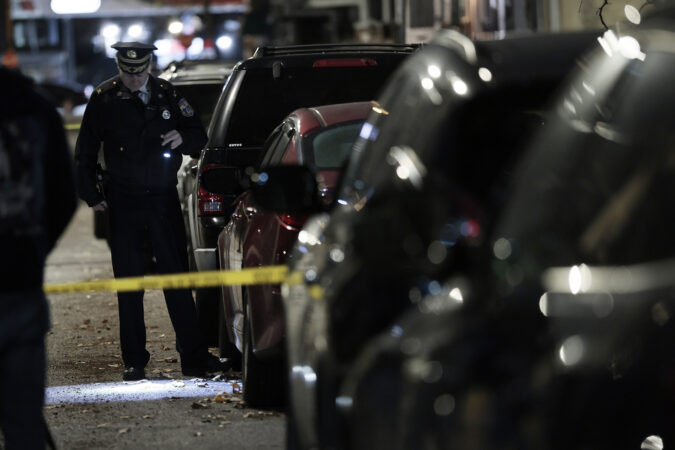
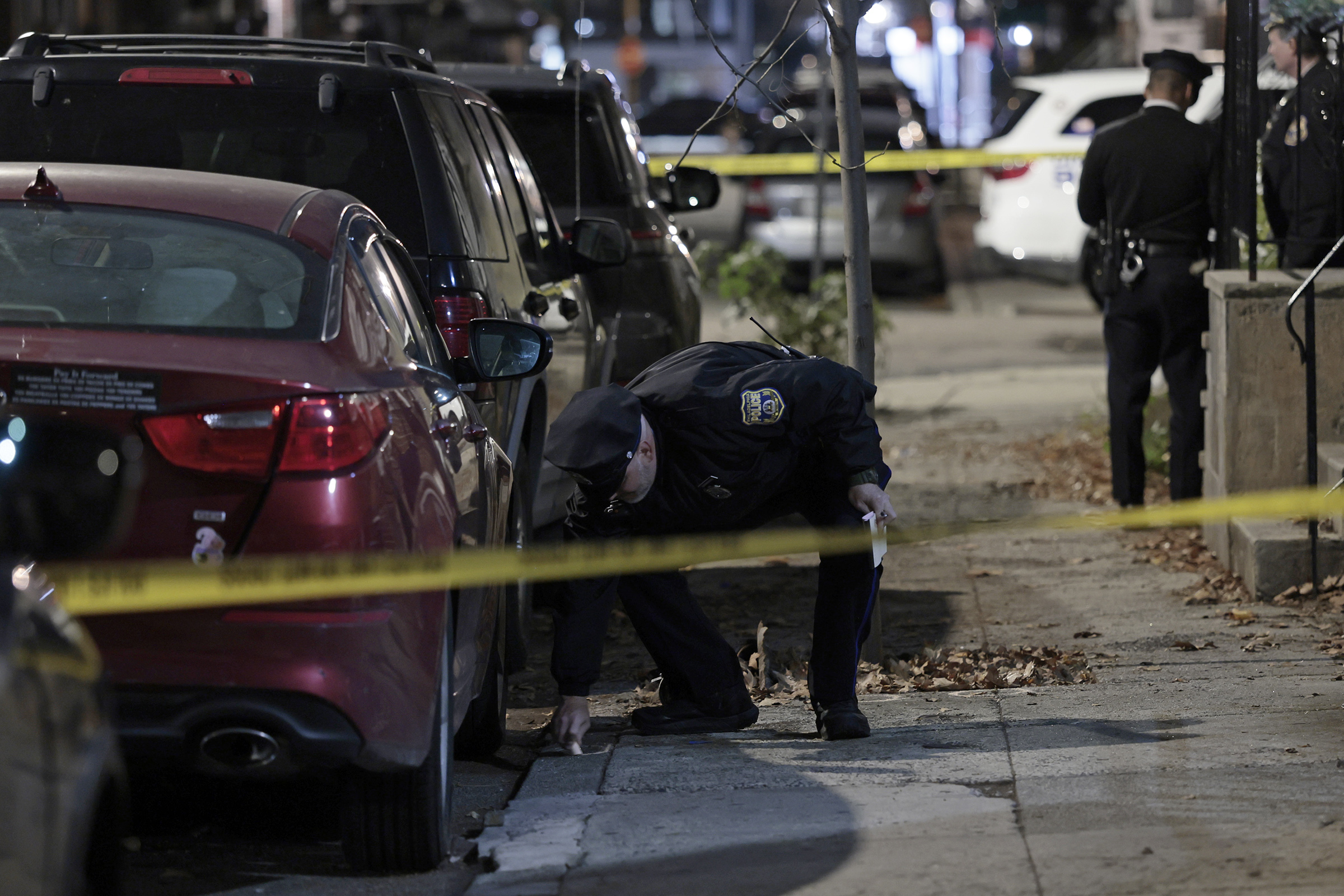
The shooting “likely” happened on the 2100 block of South Norwood Street in South Philadelphia, where 14 spent shell casings were found, said Chief Inspector Scott Small.
However, the victims have been unable to speak and no witnesses had yet been located to say for certain where the two people were shot, Small said.
Shortly before 8:30 p.m., police responded to a report of gunshots in the area of 21st and Jackson Streets and found the shooting scene nearby on the 2100 block of South Norwood Street, Small said.
Police investigating shooting evidence on the 2100 block of South Norwood Street in Philadelphia on Thursday.
A short time later, police were notified that two shooting victims were taken by private vehicle to Children’s Hospital of Philadelphia, Small said. The vehicle did not remain at the hospital.
There were no other shooting incidents reported to police around the time the victims were dropped off at the hospital, Small said.
Police also did not find blood evidence on Norwood Street, adding to uncertainty about what happened, Small said.
Police were checking to see if any security cameras recorded video in the area, Small said.