Blog

  • ‘Philly crime’ and the specter of Donald Trump are dominating two Bucks County law enforcement races

    ‘Philly crime’ and the specter of Donald Trump are dominating two Bucks County law enforcement races

    Bucks County Republicans are stoking fears about crime in Philadelphia even as violent crime in the city steadily drops from its high during the pandemic.

    Digital ads Republicans have circulated for the county’s sheriff and district attorney races since August tell voters to “keep Philly crime out of Bucks County,” borrowing a tactic from President Donald Trump, who regularly promotes exaggerated visions of crime-ridden liberal cities.

    Republicans in the purple collar county hope the message will boost the GOP incumbents, District Attorney Jen Schorn and Sheriff Fred Harran, as they face off this fall against their respective Democratic challengers, Joe Khan and Danny Ceisler.

    “We’re letting anarchy take over our country in certain places, and that’s not something we want in Bucks,” said Pat Poprik, the chair of the Bucks County Republican Party.

    Meanwhile, Democrats are eager to tie the GOP incumbents to Trump, portraying them as allies of a president whose nationwide approval rate is dropping.

    Khan, a former county solicitor and former federal prosecutor who unsuccessfully ran for attorney general last year, is seeking to portray himself as less politically motivated than Schorn, a veteran prosecutor who is running for a full term as district attorney after being appointed to the position last year.

    Ceisler, an Army veteran and an attorney who worked for Democratic Gov. Josh Shapiro’s administration, has taken a similar approach in his race against Harran, the outspoken Republican sheriff who has sought a controversial partnership with U.S. Immigration and Customs Enforcement.

    “Democrats are far more enthusiastic about voting precisely because they see what’s happening on the national level. They are really infuriated by what Donald Trump is doing,” State Sen. Steve Santarsiero, who chairs the Bucks County Democratic Party, said. “They’re going to make their displeasure heard by coming to the polls.”

    The local races in the key county, which Trump narrowly won last year, will be a temperature check on how swing voters are responding to Trump’s second term and will gauge their enthusiasm ahead of the 2026 midterms, when Shapiro stands for reelection.

    As the Nov. 4 election approaches, early signs indicate Democrats’ message might be working — polling conducted by a Democratic firm in September found their candidates ahead, and three weeks before Election Day, Democrats had requested more than twice as many mail ballots as Republicans.

    “I think the Republican Party has the same problem it always does. … They turn out when Trump’s on the ticket, but when he’s not, there’s less enthusiasm,” said Jim Worthington, who has run pro-Trump organizations in Bucks County. “Truth be told, the Democrats do a hell of a job just turning out their voters.”
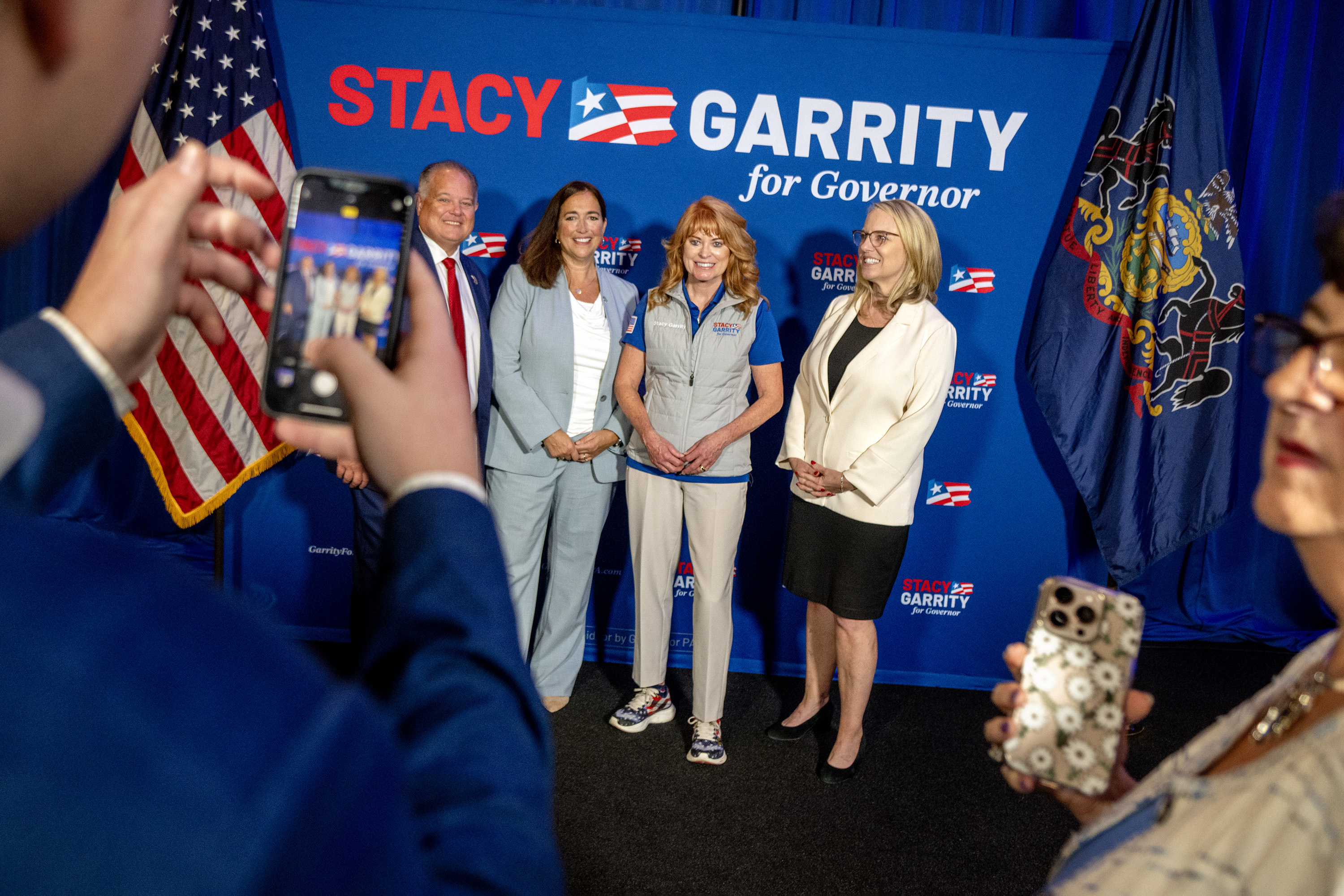
    State Treasurer Stacy Garrity, a Republican running for Pa. governor, poses with Bucks County elected officers following her campaign rally Sat the Newtown Sports & Events Center. From left: Bucks County Sheriff Fred Harran; Bucks County District Attorney Jennifer Schorn; Garrity; and Pamela Van Blunk, Bucks County Controller.

    GOP warns of ‘dangerous’ policies

    Republican messaging in the two races focuses on the idea that Bucks County is safe, but its neighbors are not.

    GOP ads, which have run over the course of four months, suggest that Khan and Ceisler would enact “dangerous” policies in Bucks County such as “releasing criminals without bail” and “giving sanctuary to violent gang members.”

    Democrats reject these ads as scare tactics. The ads make implicit comparisons to Philly’s progressive District Attorney Larry Krasner, who is poised to win a third term in the city but remains a controversial figure in the wider region even as violent crime rates have fallen in the city.

    They frame Harran and Schorn in stark contrast to their opponents as lifelong Bucks County law enforcement officers with histories of holding criminals accountable.

    “I think it resonates beyond the Republican base,” said Guy Ciarrocchi, a Republican analyst, who contended frequent news coverage of Krasner makes the message more viable.

    Khan, a former assistant Philly district attorney who unsuccessfully ran against Krasner in the 2017 primary, has noted that he campaigned “very, very vigorously” against Krasner and challenged his ideas on how to serve the city.

    “I accept the reality that I didn’t win that election,” said Khan, whose platform in 2017 included a proposal to stop prosecuting most low-level drug offenses. “Unlike my opponent, who seems to basically enjoy the sport of scoring political points by sparring with the DA of Philadelphia.”

    Schorn, however, is adamant that politics has never played a role in her prosecutorial decisions. Her mission, she said, is “simply to get justice.”

    A lifelong Bucks County resident who has been a prosecutor in the county since 1999, Schorn handled some of the county’s most high-profile cases and spearheaded the formation of a task force for internet crimes against children.
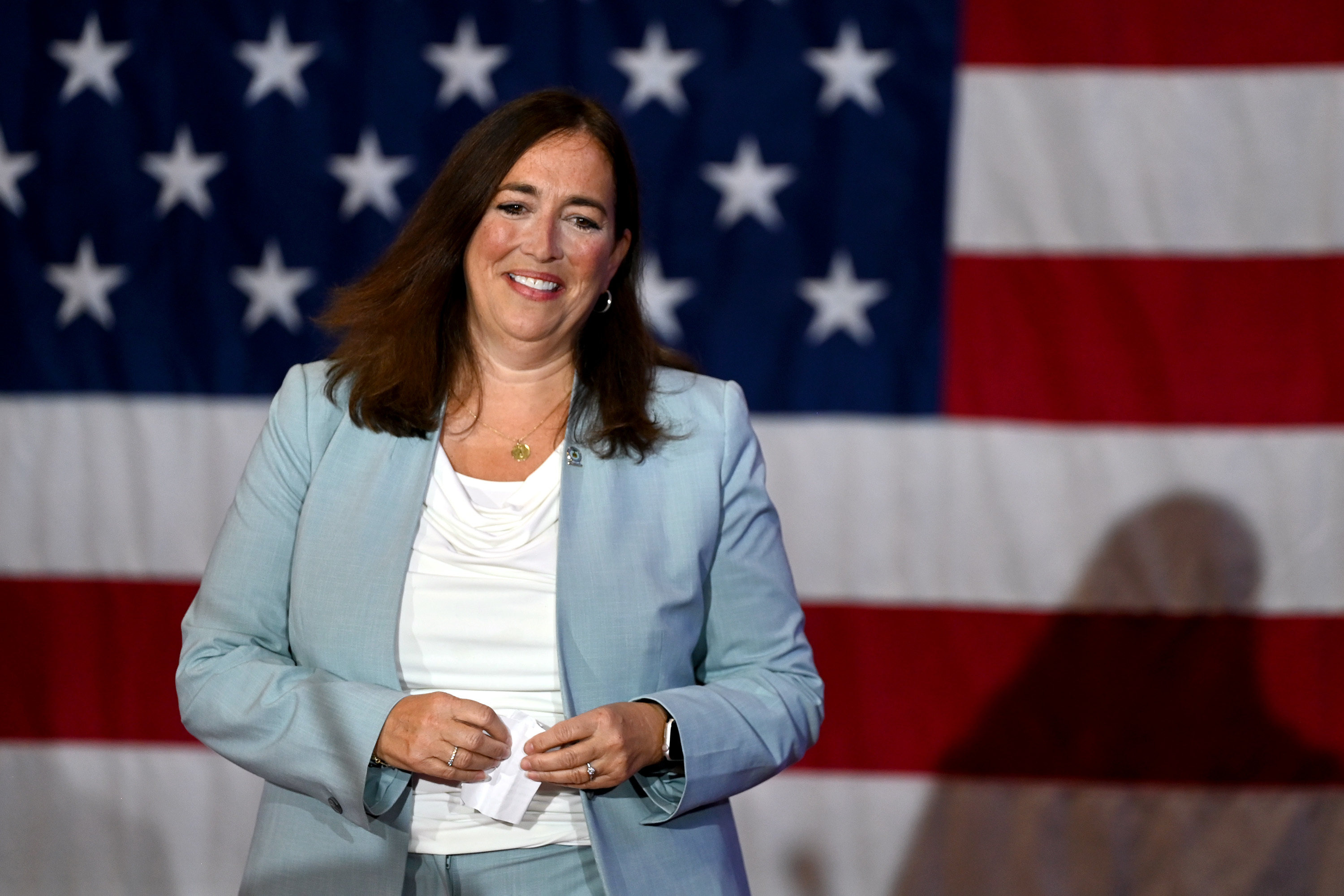
    Bucks County District Attorney Jennifer Schorn speaks at a Republican rally at the Newtown Sports & Events Center in September.

    “This has been my life’s mission, prosecuting cases here in Bucks County, the county where I was raised,” she said. “I didn’t do it for any notoriety. I didn’t do it for self-promotion. I did it because it’s what I went to law school to do.”

    Harran spent decades as Bensalem’s public safety director before first running for sheriff in 2021. He is seeking reelection amid controversy caused by his decision to partner his agency with ICE, a move that a Bucks County judge upheld last week after a legal challenge.

    “Being Bucks County Sheriff isn’t a position you can learn on the job. For 39 years, I’ve woken up every day focused on keeping our communities safe,” Harran said in an email to The Inquirer in which he criticized Ceisler as lacking experience.

    Although Ceisler has never worked directly in law enforcement, he argues the sheriff’s job is one of leadership in public safety. That’s something he says he’s well versed in as a senior public safety official in Shapiro’s administration who previously served on the Pentagon’s COVID-19 crisis management team.

    Harran, who described his opponent as a “political strategist,” criticized “politicians” for bringing “half-baked ideas like ‘no-cash bail’” into law enforcement. The concept, which is repeatedly derided in the GOP ads, sets up a system by which defendants are either released free of charge or held without the opportunity for bail based on their risk to the community and likelihood of returning to court.

    Khan and Ceisler each voiced support for the concept in prior runs for Philadelphia district attorney and Bucks County district attorney, respectively.

    Both say they still support cashless bail. Neither, however, would have the authority to implement the policy if elected, though Khan as district attorney could establish policies preventing county prosecutors from seeking cash bail in certain cases.
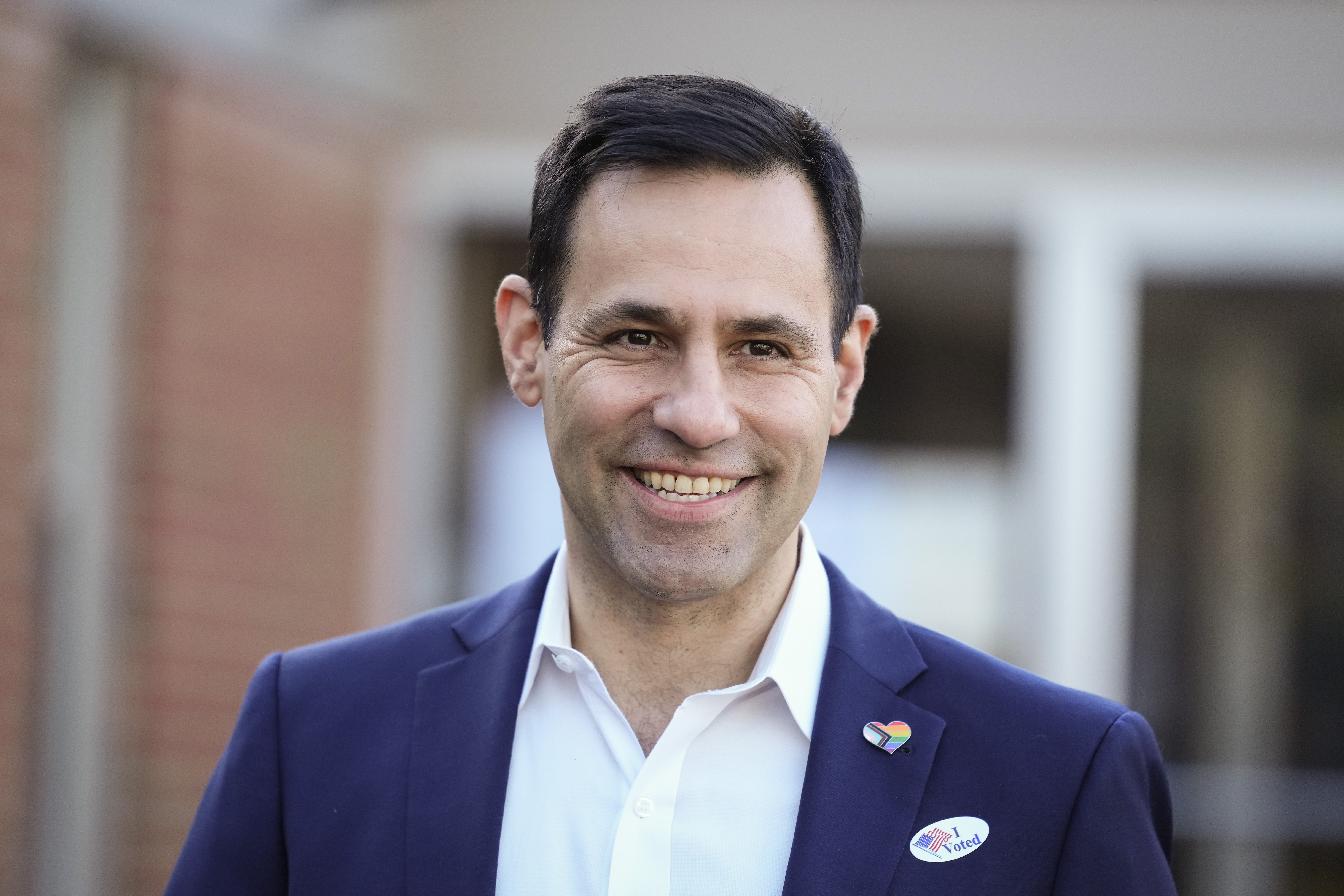
    Joe Khan, a Democratic candidate running for Bucks County DA, walks from his polling place in Doylestown, Pa. in April 2024 when he was running for attorney general.

    “When a defendant is arrested and they come into court, every prosecutor answers this question: Should this person be detained or not?” Khan said. “If the answer is yes, then your position in court is that this person shouldn’t be let out, and it doesn’t matter how much money they have. And if the answer is no, then you need to figure out what conditions you need to make sure they come to court.”

    Democrats claim to ‘keep politics out’

    Even as Democrats view voter anger at Trump as a key piece of their path to victory, they are working to present themselves as apolitical.

    Democratic ads attack Schorn for not investigating a pipeline leak in Upper Makefield and Harran as caring about nothing but himself. Positive ads highlight Ceisler’s military background and Khan’s career as a federal prosecutor.

    Khan and Ceisler, the Democratic Party’s ads argue, will “stop child predators, stand up to corruption, and they’ll keep politics out of public safety.”

    Khan has described Schorn as a political actor running her office “under Trump’s blueprint.” He has focused on her decisions not to prosecute an alleged child abuse case in the Central Bucks School District or investigate the company responsible for a jet fuel leak into Upper Makefield’s drinking water.

    The jet fuel case was turned over to the environmental crimes unit in Pennsylvania Attorney General Dave Sunday’s office. And prosecutorial rules bar Schorn from discussing the alleged abuse.

    “During the last, I don’t know, 13 years when [Khan] has been pursuing politics, I’ve been a public servant,” Schorn said. “For someone accusing me of putting politics first, he seems to be using politics to further his own agenda.”

    But Schorn appears in GOP ads alongside Harran, a figure who has frequently invited political controversy in fights with the Democratic-led Bucks County Board of Commissioners, his effort to partner with federal immigration authorities, and his early endorsement of Trump last year.

    At a September rally in Newtown for Treasurer Stacy Garrity, a Republican running for governor, Harran cracked jokes about former President Joe Biden’s age as he climbed onto the stage and falsely told voters that they will “lose [their] right to vote” if they don’t vote out three Pennsylvania Supreme Court justices standing for retention.

    Harran has long contended that his decision to partner with ICE was not political.

    “I’m a cop who ran to keep being a cop. This isn’t about politics for me — it’s about doing everything I can to keep my community safe,” Harran said.

    Harran’s opponent, Ceisler, paints a different picture as he draws a direct line between the sheriff and the president.
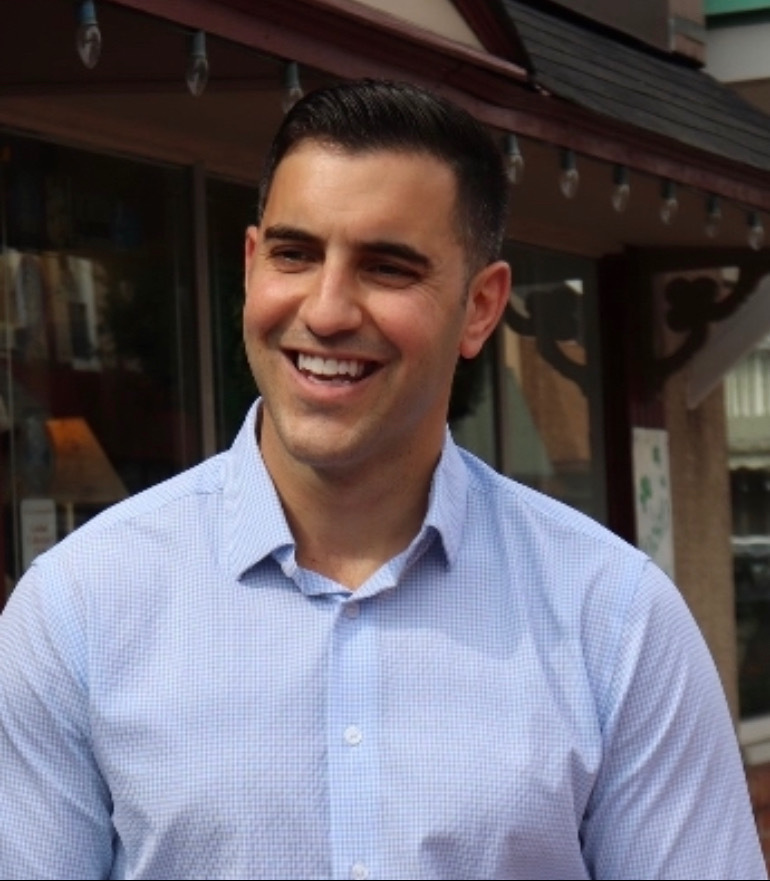
    Danny Ceisler, a Democrat, is running for Bucks County sheriff.

    Trump, Ceisler said, has inserted politics into public safety in his second term, and he contended that Harran has done the same.

    “[Harran] used his bully pulpit to help get the president elected, so to that extent he is linked to the president for better or worse,” Ceisler said in an interview.

    Ceisler has pledged to take politics out of the office and end the department’s partnership with ICE if elected.

    At an event in Warminster last month, voters were quick to ask Ceisler which party he was running with. Ceisler asked them to hear his pitch about how he would run the office first.

    “Don’t hold it against me,” he quipped as he ultimately admitted to one voter he’s a Democrat.

    Staff writer Fallon Roth contributed to this article.

    This suburban content is produced with support from the Leslie Miller and Richard Worley Foundation and The Lenfest Institute for Journalism. Editorial content is created independently of the project donors. Gifts to support The Inquirer’s high-impact journalism can be made at inquirer.com/donate. A list of Lenfest Institute donors can be found at lenfestinstitute.org/supporters.

  • Regional banks’ bad loans spark concerns on Wall Street

    Regional banks’ bad loans spark concerns on Wall Street

    NEW YORK — Wall Street is concerned about the health of the nation’s regional banks, after a few of them wrote off bad loans to commercial customers in the last two weeks and caused investors to wonder if there might be more bad news to come.

    Zions Bank, Western Alliance Bank, and the investment bank Jefferies surprised investors by disclosing various bad investments on their books, sending their stocks falling sharply this week. JPMorgan Chase CEO Jamie Dimon added to the unease when he warned there might be more problems to come for banks with potentially bad loans.

    “When you see one cockroach, there are probably more,” Dimon told investors and reporters on Tuesday, when JPMorgan reported its results.

    The KBW Bank Index, a basket of banks tracked by investors, is down 7% this month.

    There were other signs of distress. Data from the Federal Reserve shows that banks tapped the central bank’s overnight “repo” facilities for the second night in a row, an action banks have not needed to take since the COVID-19 pandemic. This facility allows banks to convert highly liquid securities like mortgage bonds and treasuries into cash to help fund their short-term cash shortfalls.

    Zions Bancorp shares sank Thursday after the bank wrote off $50 million in commercial and industrial loans, while Western Alliance fell after the bank alleged it had been defrauded by an entity known as Cantor Group V LLC. This came on top of news from Jefferies, which told investors it was might experience millions of dollars in losses from its business with bankrupt auto parts company First Brands.

    All three stocks recovered a bit Friday. Jefferies’ CEO told investors that the company believes it was defrauded by First Brands and that there were no broader concerns in the lending market.

    The last banking flare-up, in 2023, also involved midsize and regional banks that were overly exposed to low-interest loans and commercial real estate. The crisis caused Silicon Valley Bank to fail, followed by Signature Bank, and led to the eventual sale of First Republic Bank to JPMorgan Chase in a fire sale. Other banks like Zions and Western Alliance ended up seeing their stocks plummet during that time period.

    While banks do fail or get bought at fire sale prices, all bank deposits are insured by the Federal Deposit Insurance Corporation, up to $250,000 per account, in case of a bank failure. In the nearly 100 years since the FDIC was created in 1933, not one depositor has lost their insured funds.

    Still, even the larger banks aren’t immune in this latest round of trouble. Several Wall Street banks disclosed losses this week in the bankruptcy of Tricolor, a subprime auto dealership company that collapsed last month. Fifth Third Bank, a larger regional bank, recorded a $178 million loss from Tricolor’s bankruptcy.

    That said, the big banks believe that any losses will be manageable and do not reflect the broader economy.

    “There is no deterioration, we’re very confident with our credit portfolio,” Deutsche Bank CEO Christian Sewing said, in an interview on Bloomberg Television on Friday.

    While the big Wall Street banks get most of the media and investor attention, regional banks are a major part of the economy, lending to small- to medium-sized businesses and acting as major lenders for commercial real estate developers. There are more than 120 banks with between $10 billion and $200 billion in assets, according to the FDIC.

    While big, these banks can run into trouble because their businesses are not as diverse as the Wall Street money center banks. They’re often more exposed to real estate and industrial loans, and don’t have significant businesses in credit cards and payment processing that can be revenue generators when lending goes south.

  • Letters to the Editor | Oct. 20, 2025

    Letters to the Editor | Oct. 20, 2025

    The death of Ellen Greenberg

    Try as I may, I can’t wrap my head around Chief Medical Examiner Lindsay Simon’s recent ruling that 27-year-old Ellen Greenberg’s stabbing death was by suicide.

    You most likely are familiar with the details of the case: In January 2011, Greenberg was found on the kitchen floor of the Manayunk apartment she shared with her fiancé, Sam Goldberg, a politically connected producer at NBC Sports. Greenberg had been stabbed 20 times, and she was discovered by Goldberg, who was never considered a suspect or charged with any crime.

    Simon, in her recent review, which was prompted by two lawsuits Greenberg’s parents filed against the city, discovered 20 additional bruises and three additional “perforations of her skin” never before documented, raising the number of bruises to 31 and stab wounds — including one in the back of her neck — to 23. Well, I’m not a medical examiner, a criminal investigator, a police officer, an assistant DA, or an attorney. But I have so many questions.

    Although Simon states that all of the wounds and bruises could have been self-inflicted, it seems to me that only a skilled contortionist could accomplish what was described. Did Simon conduct further interviews to validate her conclusions? Did she examine Greenberg’s emails?

    Mostly, though, I remain clueless about how, through the long years since Greenberg’s death, her parents, Joshua and Sandra Greenberg, have held on to any semblance of the ability to rest, to sleep — or even breathe.

    SaraKay Smullens, Philadelphia

    U.S. strikes again

    Donald Trump claims he won the election in 2020. He didn’t. He fumes that he didn’t receive this year’s Nobel Peace Prize, which was given for accomplishments in 2024, a year in which he didn’t serve as president. Trump, who was handed more money at birth than most of us will ever earn, has an overdeveloped sense of victimhood while completely lacking in humanity.

    Another six people who were suspected of being drug smugglers were killed on their boat, bringing the total to 27. We don’t know their names. We haven’t been presented with evidence of their crimes. We do know there was no due process. These strikes are accelerating. I worry this might turn inward, as the administration militarizes our cities. Our Congress on both sides of the aisle must wake up and act. We must make sure they do.

    Elliott Miller, Bala Cynwyd

    Rebuilding the Middle East

    The ceasefire in the Middle East brings relief, but there is ongoing pain and trauma to address for those of us who have witnessed it. When I look at the areas to which the people of Israel and Gaza will be returning, it resembles the destruction and loss of life in Western Europe after World War II.

    I am reminded of the Marshall Plan, the U.S.-led initiative that was meant to help rebuild Europe after the Second World War. It seems the world community needs to unite and do something similar now to restore infrastructure, finance reconstruction, and stabilize governments. Can East and West join forces to make life better for the people of Gaza and Israel now?

    Mary McKenna, Philadelphia

    The ebb and flow

    It is starting to really weigh me down — not too much chocolate or an inadequate amount of exercise in the rain, but the day-to-day headlines about everything from American citizens “being disappeared” to drastic cuts in special education funding and the dissolution of a functioning Congress.

    Like countless other people around the world, I was so happy for the families of the Israeli hostages who came home. All that elation, though, was not far removed from the prospect of generational wealth exhibited by the very deliberate presence of Jared Kushner and other allies of President Donald Trump. Trump’s plans for a playground for the rich in the ruins of war now seem more likely than ever — the ebb and the flow.

    The coming days and weeks will continue to illuminate for us all whether or not we can stand up for the weakest, most disconnected and challenged citizens in this country while we can still vote, or are we already too worn out by all the daily blasphemies toward the oppressed and the routinized dismissal of the rule of law?

    Mary Kay Owen, Downingtown

    Dems’ stance on ACA

    Our national shutdown is a fight about restoring tax credits to the Affordable Care Act marketplace and reversing the pending Medicaid cuts. For a public largely indifferent to health policy, it is a gamble for Democrats, who have to explain how these programs might impact them. Even today, most Americans do not understand Medicaid or the ACA marketplace. A criticism of the Dems is, what do they stand for besides being against Donald Trump? Now is the time to stand up for a policy that goes beyond restoring cuts to a bureaucratic, dysfunctional, irrational system to one that is simple enough that all Americans can understand — a properly funded, national health insurance covering everyone.

    Walter Tsou, Philadelphia

    The writer is a former health commissioner of Philadelphia.

    . . .

    I am not surprised to see so many Republican politicians beginning to support the idea of keeping the income caps removed from receiving premium tax credit subsidies under the Affordable Care Act (ACA), also known as Obamacare. And this policy, which began during the COVID-19 pandemic, will undoubtedly receive more and more support from them if they consider it thoughtfully rather than reacting impulsively.

    However, I find it puzzling that Democrats are making the continuation of this policy part of their platform at all, much less a central component of the government shutdown. Obamacare was designed to expand access to healthcare for low- and middle-income Americans who had previously struggled to afford insurance, and removing the income caps contradicts the original purpose of the law. It also raises questions about fiscal responsibility and equity, as without the income caps, many wealthy families without employers effectively receive five-figure bonus checks each year from Obamacare that are paid for by everyone else.

    Meanwhile, due to the Big Beautiful Bill, married couples with student loans on income-driven repayment will now qualify for $0 in Obamacare premium tax credit subsidies if they wish to limit their student loan payments to a 1,000% increase instead of 2,500%, as this requires filing their federal taxes as “married filing separately” — which also disqualifies them from various other benefits, including the child tax credit.

    It is baffling how Democrats have become so misaligned with their priorities that they are doing the work of Republicans for them.

    Calvin J. Haneline, Paragould, Ark.

    Love for the Phillies

    Like letter writer Peter Schmidt, I find I have a new perspective on the epic saga that is the Phillies. For most of my seven decades, I have been only a casual fan of city teams. Still, I’ve acquired that shell so many in our region wear — a shield against disappointment built of cynicism and a grumbling.

    But the last few seasons have been different. My daughter lives 700 miles away in Georgia, but we share our thoughts on games almost every night by a stream of text messages, stats, and emoji-decorated cheers and groans.

    Though I questioned if the Phils had the stuff to win the World Series, I grew to love everybody involved, heroes and goats alike. When we took my grandsons (13 months and 3 years old) to a game this summer at their aunt’s insistence, the whole family reveled in the boys’ enjoyment. Despite their lack of understanding of the game, they delighted in the general fun at the Bank: the Phanatics’ antics, the massive pile of ice cream in a miniature batting helmet, and the chance to yell “Go Phillies!” without being shushed.

    Even at its most serious, the game is just a game, and our disappointment is not tragedy. But the bond fans have with the team — and with each other — bridges gaps of miles, age, and unfamiliarity. That sense of sharing, almost in spite of ourselves, is why I love the Phillies.

    Joe Jones, Mount Holly

    Join the conversation: Send letters to letters@inquirer.com. Limit length to 150 words and include home address and day and evening phone number. Letters run in The Inquirer six days a week on the editorial pages and online.

  • Horoscopes: Monday, Oct. 20, 2025

    ARIES (March 21-April 19). Caring for others is a big part of your life. Sometimes, this seems to lead to getting ground down by stress. Stress is not your identity; it’s just a habit your body and mind learned to keep up. Let it move through you as breath does: inhale, exhale.

    TAURUS (April 20-May 20). When the butterfly of happiness flits past, just remember that every emotion has its merits. Even sadness can be a beautiful reminder of our humanity, which deepens our experience and shows us we’re capable of love and attachment.

    GEMINI (May 21-June 21). Because thank-you notes are rare these days, writing one stands out and makes you memorable. The same principle applies more broadly: You’ll mix thoughtfulness, gratitude and initiative, and make a strong and favorable impression.

    CANCER (June 22-July 22). The number of moving parts is what makes this part of the story interesting. It’s also a bit stressful since you are dealing with so much that is out of your control. State what you want, step aside, and let things work themselves out.

    LEO (July 23-Aug. 22). When it feels like no one is listening, remember the value of listening to yourself. Many never hear the song of their own soul. Keep tuning in, and yours will grow so strong and clear that it can’t be ignored.

    VIRGO (Aug. 23-Sept. 22). Relationships are like feelings: none is more or less correct than another. Each is a unique, unfolding dynamic. Some people are easier to be around, but that doesn’t determine the value of the bond.

    LIBRA (Sept. 23-Oct. 23). When you want to be a part of what’s happening in the room, your approach matters the most — think tone over technical skill. It all starts with noticing what’s needed and matching your attitude to the environment. When in doubt, default to kindness.

    SCORPIO (Oct. 24-Nov. 21). Passion doesn’t have to be dramatic to be profound. It doesn’t have to be big to be effective. Even your most secret desire will change you from the inside out. When you change, your circumstances are next.

    SAGITTARIUS (Nov. 22-Dec. 21). When approaching people with something new, you’re likely to hit obstacles. People say no. It’s awkward and others see this. There are false starts that can be embarrassing too. But this is all part of the natural friction of beginnings. Keep going. It gets better.

    CAPRICORN (Dec. 22-Jan. 19). Ambition is a fire that must be tended carefully. Too much fuel at once burns you out; too little and you sputter. Today’s work is to strike balance: steady logs on the fire, not a bonfire.

    AQUARIUS (Jan. 20-Feb. 18). The stars are giving you a pep talk about resilience. It’s in the way the nature around you keeps regenerating, the children grow, the tide goes out and comes back in. New oxygen is everywhere.

    PISCES (Feb. 19-March 20). You’ve already proven your strength. You wouldn’t be where you are if you hadn’t powered through tough situations with determination. Don’t forget that track record. You deserve acknowledgment for it.

    TODAY’S BIRTHDAY (Oct. 20). Welcome to your Year of Unscripted Adventures. You’ll stumble into scenes you couldn’t have planned, like the wrong turn that leads to a right person, the pet that chooses you, and/or a surprise reunion that gets you dreaming in a whole new direction. More highlights: a stretch of financial mastery that could subsidize your grandest plan, laughter in serious projects that points to a soul connection, and a string of lucky “coincidences.” Gemini and Capricorn adore you. Your lucky numbers are: 13, 27, 5, 41 and 22.

  • Dear Abby | Family reenters school and workplace after tragedy

    DEAR ABBY: Six months ago, my oldest child died in a horrific car accident. Our family went into a sort of hibernation for several months, mourning and trying to deal with the sadness of the situation.

    Now the kids are back in school, and I’m starting to work again. I’m interacting with a lot of people I haven’t seen since before the accident who maybe don’t know what happened. How do I respond when they ask perfectly reasonable questions, like “What’s new?” or “How was your break?” I want to be honest and let people know I’m not really OK. But I also want to avoid “trauma dumping,” or providing too much information they aren’t ready for.

    The full truth is a lot for anyone to hear. If I say something like, “We’ve had some family issues that have been hard,” people tend to assume I’m getting a divorce or have cancer, which changes how they interact with me. If I tell the truth they almost always start crying, which makes me cry, and then the situation is derailed. What can I say that is true, and that also indicates they don’t really want to know more?

    — SURVIVOR IN TENNESSEE

    DEAR SURVIVOR: Please accept my deepest sympathy for the tragic loss of your first-born child. If someone asks what’s new or how you are, respond, “We’ve been through some trials and tribulations, but we’re moving forward.” If you are questioned further, simply say, “I’d rather not go into detail right now,” and change the subject.

    ** ** **

    DEAR ABBY: Six months ago, my grandson, “Levi,” 23, told his father (“Alex”) and me that he wants no contact with us. Levi and his dad had an argument when Alex asked for help paying the utilities, since Levi and his girlfriend live rent-free in Alex’s house. Alex has tried to reach out to Levi through texting, but his texts are ignored. I tried sending texts and letters but received no response either.

    My son is not perfect, but he has always been a loving and devoted father. Levi means the world to him, and this estrangement is causing Alex physical and mental health problems. I have always doted on my grandson and been warm and kind to his girlfriend, so we don’t understand why he turned on me, too. Should I keep trying to reach out, or accept that Levi does not want me in his life? Please advise.

    — DISTRESSED GRANDMOTHER

    DEAR GRANDMOTHER: Levi may be a young adult, but he’s acting like a spoiled child. His father’s request that Levi contribute to the cost of the utilities in the home where he had been living rent-free wasn’t unreasonable. I can only wonder where he and his girlfriend are now living and presumably getting a better deal.

    Stop trying to reach out only to be rejected. When Levi grows up a little, or needs something else from you and his father, he will show up in your lives again. Right now, because Alex isn’t doing well, concentrate on your son’s health.

  • ‘Task’ has a bittersweet ending, just as Brad Ingelsby intended

    ‘Task’ has a bittersweet ending, just as Brad Ingelsby intended

    (Spoilers ahead!)

    The Delco-set crime thriller Task came to a gut-wrenching end on Sunday, tying up loose plot lines, killing off the bad guys, catching the mole, and granting the most aggrieved characters happy endings.

    The finale was also a real tearjerker, thanks to a profound and powerful performance by Mark Ruffalo.

    The veteran actor, who recently joked about being in his “sad dad” era, is the central patriarch in a show that — underneath all the gunfighting and backstabbing — provides a brooding, layered examination of fatherhood in various forms.

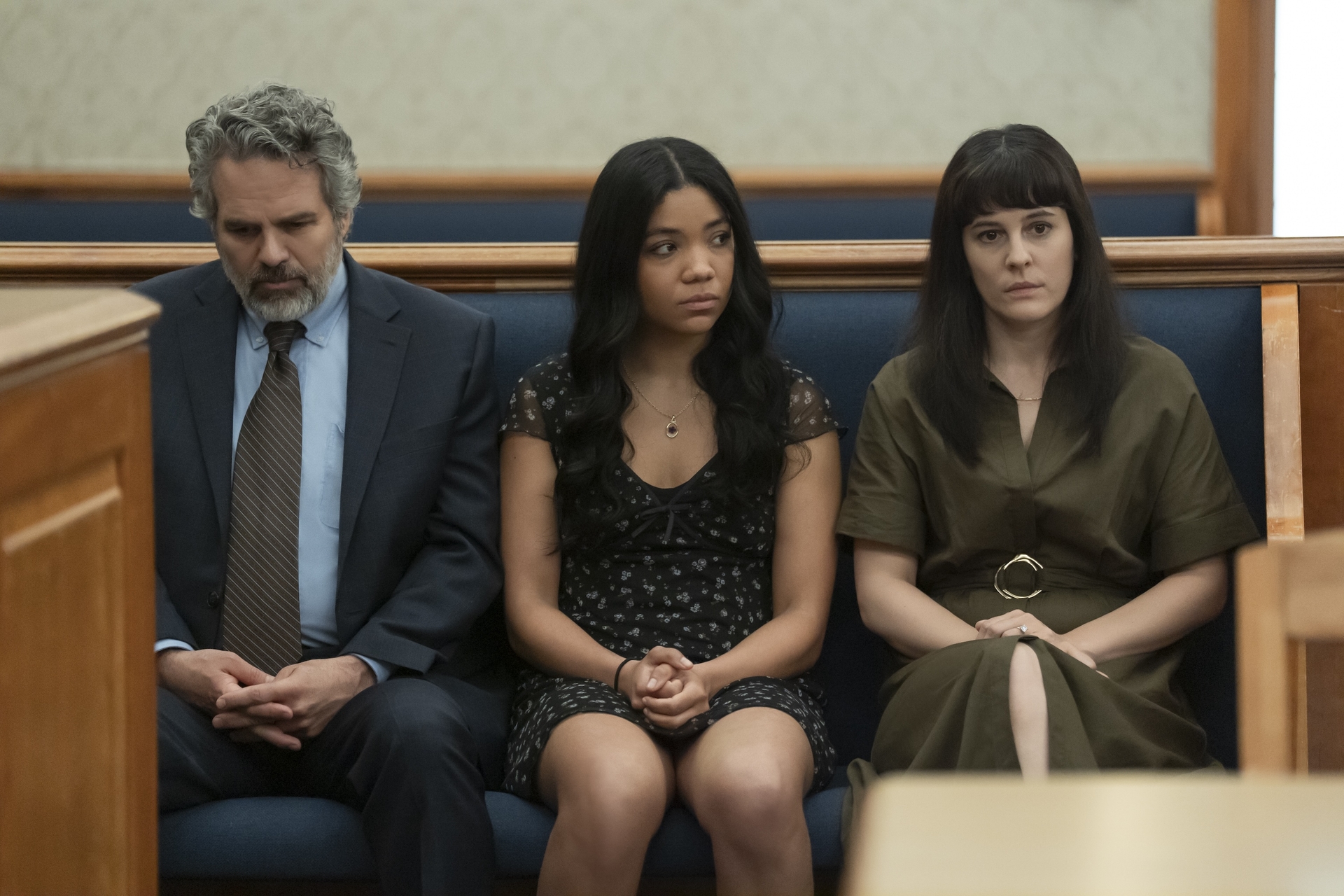
    Tom (Mark Ruffalo), Emily (Silvia Dionicio), and Sara (Phoebe Fox) in “Task.”

    After months of wallowing in a Phillies souvenir cup full of vodka, Ruffalo’s Tom Brandis promises to be a better father to his adopted teen daughter Emily (Silvia Dionicio). To prove it, Tom steps up to deliver the long-debated family statement at his adopted son Ethan’s (Andrew Russel) court hearing, where he was being tried for accidentally killing his mother during a schizophrenic episode.

    All season, Tom struggles to face Ethan. But he, finally, stops running away and tells the judge about the difficulties and joys of Ethan’s childhood before asking his son to look him in the eye.

    “Ethan, I don’t want you to live with the shame anymore,” says Tom. “I forgive you. I love you. I’m not here today to tell the court when my son should be released. That’s not up to me. I’m here today to let you know, Ethan, that when that day comes, I’ll be ready. Come straight home. I’ll be there waiting for you.”

    Meanwhile, Tom has acted like a father figure to another boy — Sam (Ben Doherty), the gentle boy who was kidnapped by Robbie (Tom Pelphrey). Tom, a registered foster parent, decides to bring Sam, an orphan, home from a shelter. They develop a close bond; though Tom insists that it’s a temporary situation, there’s a possibility Sam could stay with the Brandis family long-term.

    Tom (Mark Ruffalo) and Sam (Ben Doherty) in ‘Task.’

    When a family is found for Sam, though, Tom confronts the painful question of whether the boy should go. His priest friend Daniel (Isaach de Bankolé) suggests that Tom might not be in a good place to raise a young kid, especially once Ethan returns home.

    “Have you done that good thing for the boy, or for yourself?” asks Daniel. He tells Tom to be “unselfish” with his love and “recognize that what’s best for you may not be what’s best for the boy.”

    Ultimately, Tom makes the heartbreaking decision to let Sam go. It’s a plot choice that creator Brad Ingelsby fought to keep, though he anticipates it might upset some viewers.

    “I’m a little nervous about the ending, because I feel like people probably want Sam to stay with Tom. But I also felt like the story was about Tom and Ethan, and that has to be what Tom is ready for at the end,” said Ingelsby, also the creator of Mare of Easttown. “We had to fight HBO on that.”

    Executives at the network thought it would be better to end the finale after the courtroom scene, but Ingelsby believed that would be a “betrayal of Tom as a character.”

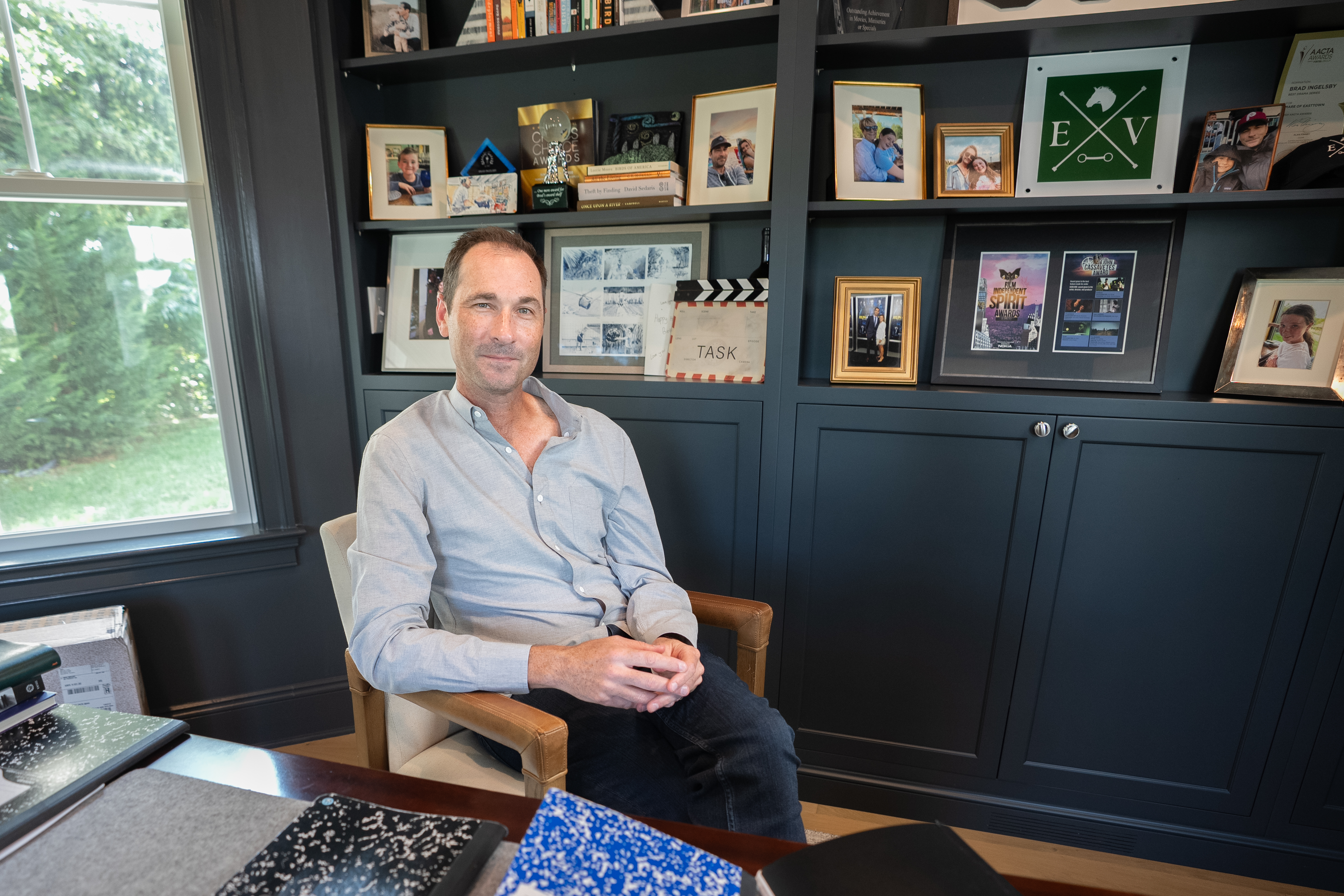
    Brad Ingelsby in his office in Berwyn.

    “I really wanted [Tom’s answer] to be, ‘No, I’m getting ready for my son. I’m not replacing him with this boy, who’s this cute little kid that everyone loves.’ Nope. We have to do something better than that,” said Ingelsby. “I’m sure we’ll catch some slack, like, ‘Why didn’t he just keep the boy?’ Which I know people will want — but I just couldn’t.”

    Parenting requires sacrifice, and the fathers in Task exemplify that. Tom gives up Sam so he can dedicate himself to his biological daughter, Sara (Phoebe Fox), Emily and, eventually, Ethan. Robbie sacrifices himself to ensure that his niece Maeve (Emilia Jones) and his kids could live comfortably after his death. Within the biker gang, Perry (Jamie McShane), can’t bring himself to kill Jayson (Sam Keeley), whom he considers a son, despite receiving multiple commands to do so. Even after Jayson stabs him, Perry, with his dying breath, warns him of an impending betrayal.

    It may be a bittersweet ending, but that’s just as Ingelsby intended.

  • Eagles center Cam Jurgens suffers right knee injury, status uncertain for Giants game

    Eagles center Cam Jurgens suffers right knee injury, status uncertain for Giants game

    MINNEAPOLIS — Eagles center Cam Jurgens exited Sunday’s 28-22 win over the Minnesota Vikings in the first quarter with a right knee injury, bringing his status for next Sunday’s rematch against the New York Giants into question.

    Jurgens, who is in his second season as the starting center, appeared to sustain the injury on the first play of the game. Vikings defensive lineman Jonathan Allen fell on the back of Jurgens’ right leg on a Saquon Barkley run play. Jurgens immediately grabbed his knee.

    But Jurgens stayed in for the rest of the scoring drive, which lasted 8 minutes, 1 second and included a Tush Push conversion on a fourth down. Jurgens returned for the Eagles’ second possession with a brace on his right knee. For the third drive, though, Brett Toth entered at center.

    After the game, Toth said Jurgens is going to undergo an MRI to determine the extent of his injury.

    “Obviously, he’s a fighter,” Toth said. “Tried going back out there, fighting with a brace on as well. And then just couldn’t keep fighting. It’s unfortunate. Things happen.”

    With Landon Dickerson playing his first game in two weeks following an ankle injury, Toth had almost exclusively taken snaps at left guard in practice in the week before the Vikings game. He said he only took three reps at center in a walk-through.

    Toth was critical of his play after the game. He acknowledged that he gave up a couple of tackles for loss in the run game and had close calls in pass protection, too. Toth also said Dickerson “saved my a—” at times throughout the afternoon.

    “I’m very thankful for having Landon next to me as well,” Toth said. “He’s definitely the smartest guy in the room. Can help me as well because I had a lot of bad plays and a lot of mispointed plays that I need to work on. I think the biggest thing is as a unit, we stick together, find a way, get through it. I’m thankful for the guys that were around me.”

    The Eagles offensive line has been hit throughout the season by injuries. Dickerson has been hobbled by meniscus and back injuries in addition to the ankle issue that forced him to drop out of the loss to the Denver Broncos two weeks ago and sidelined him last week. Lane Johnson left the Week 3 game against the Los Angeles Rams with a stinger and the Week 4 contest against the Tampa Bay Buccaneers with a shoulder injury.

    Jurgens underwent back surgery in the offseason, an issue he acknowledged following the Broncos loss was “getting a little better” with every game. Still, Toth didn’t make excuses for the offensive line.

    “It’s football,” Toth said. ”You look around the league as well, everyone handles injuries. You harp on the cohesion of the unit as a whole. Again, I can only speak for my part into how that reflected on a unit as a whole. I wasn’t good enough today and just got to keep getting better.”

  • Jalyx Hunt’s pick-six and timely sacks help Eagles defense deliver in win over Vikings

    Jalyx Hunt’s pick-six and timely sacks help Eagles defense deliver in win over Vikings

    MINNEAPOLIS — Jalyx Hunt dropped an interception last week and there were repercussions, even if he claimed that he never saw the ball. First came the teasing teammates, who wondered why the former college safety couldn’t catch the ball. Then came the coaching adjustment.

    Eagles edge rushers don’t normally go through the full catch circuit drills during practices. They spend more time during individual drill sessions working on pass-rushing techniques. But after Hunt failed to pull in an interception in an embarrassing loss to the New York Giants, Nick Sirianni made the edge rushers go through the catch circuit during practice last week.

    It paid off Sunday against the Minnesota Vikings when Hunt dropped into coverage early in the second quarter, picked off Carson Wentz, and returned the interception 42 yards to give the Eagles a 14-3 lead in a game they never trailed at U.S. Bank Stadium.

    “I didn’t see last week’s,” Hunt said later. “Everybody made fun of me. I’ll take that to the chin. Can’t say nothing now.”

    The spin through the catch circuit may be here to stay, Hunt said.

    Hunt’s touchdown was the signature play for an Eagles defense that needed a bounce-back performance after it was bullied at times last week vs. the Giants. The Eagles weren’t perfect defensively Sunday, but they made impact plays when it mattered. They bent — the Vikings took six trips to the red zone — but they did not break. The Vikings kicked five field goals in those six trips.

    Hunt is part of a maligned pass-rush unit that hasn’t gotten home consistently. After Za’Darius Smith’s surprise retirement last Monday following the mini-bye, Patrick Johnson was the lone healthy Eagles edge rusher with a sack this season. The Eagles entered Sunday with just nine sacks, and only six teams had fewer. They got key contributions in that regard from Moro Ojomo and Joshua Uche at pivotal points.

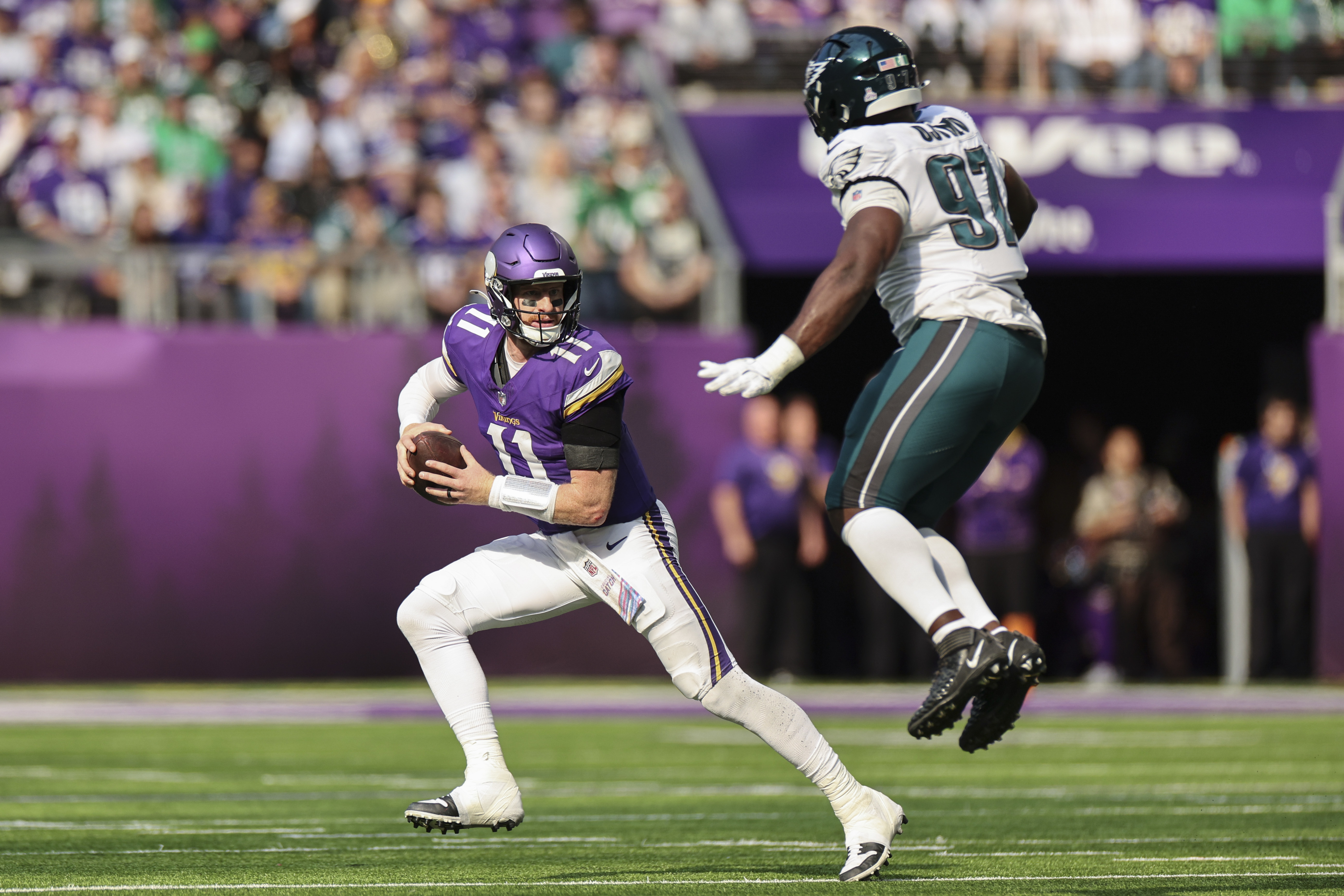
    Minnesota Vikings quarterback Carson Wentz tries to scramble away from the Eagles’ Moro Ojomo during the second quarter.

    First up was Ojomo, an interior rusher. The Vikings were threatening to take the lead four minutes into the fourth quarter when Ojomo sacked Wentz for a 7-yard loss on a third-and-5 from the Eagles’ 10-yard line, forcing a field goal that kept the Eagles in front, 21-19. Then came Uche’s sack off the edge, again on a play from the 10-yard line, this time on a first-and-goal inside three minutes to play. Uche dropped Wentz for an 8-yard loss, and the Vikings eventually were forced to kick another field goal.

    The Eagles entered Sunday ranked eighth in the NFL in red zone defense, having allowed touchdowns on only 52.9% of their opponents’ red zone trips.

    “Everything gets tighter down there,” linebacker Zack Baun said. “It makes it hard to score, especially when you’re playing good defense.”

    The Eagles had other key plays besides the sacks, like when Cooper DeJean broke up a sure touchdown from Wentz to Justin Jefferson in the end zone, another play that resulted in the Vikings eventually kicking a field goal — a four-point swing.

    There were moving parts for much of Sunday, too. The Eagles inserted Nakobe Dean back into an off-ball linebacker role and moved rookie Jihaad Campbell to the edge for more snaps. Their edge rushing plans took a hit, too, when Azeez Ojulari went down with a hamstring injury in the first half and never returned. Baun said Campbell still saw a similar amount of edge work as planned, but the Eagles were down to three regular edge rushers for most of the game.

    “It’s plug-and-play,” Baun said of all the moving parts. “All of us can play multiple different positions. Just let us know and we’ll go out there and do it.”

    Hunt’s big play came in a non-rushing role, and showed that Vic Fangio, despite his defense’s mounting injuries, can still scheme ways to make a big impact. The Eagles showed a blitz and sent Baun from the linebacker spot. But they dropped Hunt and rushed four. The Vikings had Jefferson matched up with rookie safety Drew Mukuba — who also had a second-quarter interception — in the slot. Jefferson unsurprisingly beat Mukuba badly, but Wentz never saw Hunt.

    The simulated pressure the Eagles showed also allowed Jalen Carter to not be doubled, and he was in Wentz’s face almost instantly and crushed the quarterback as he released the ball.

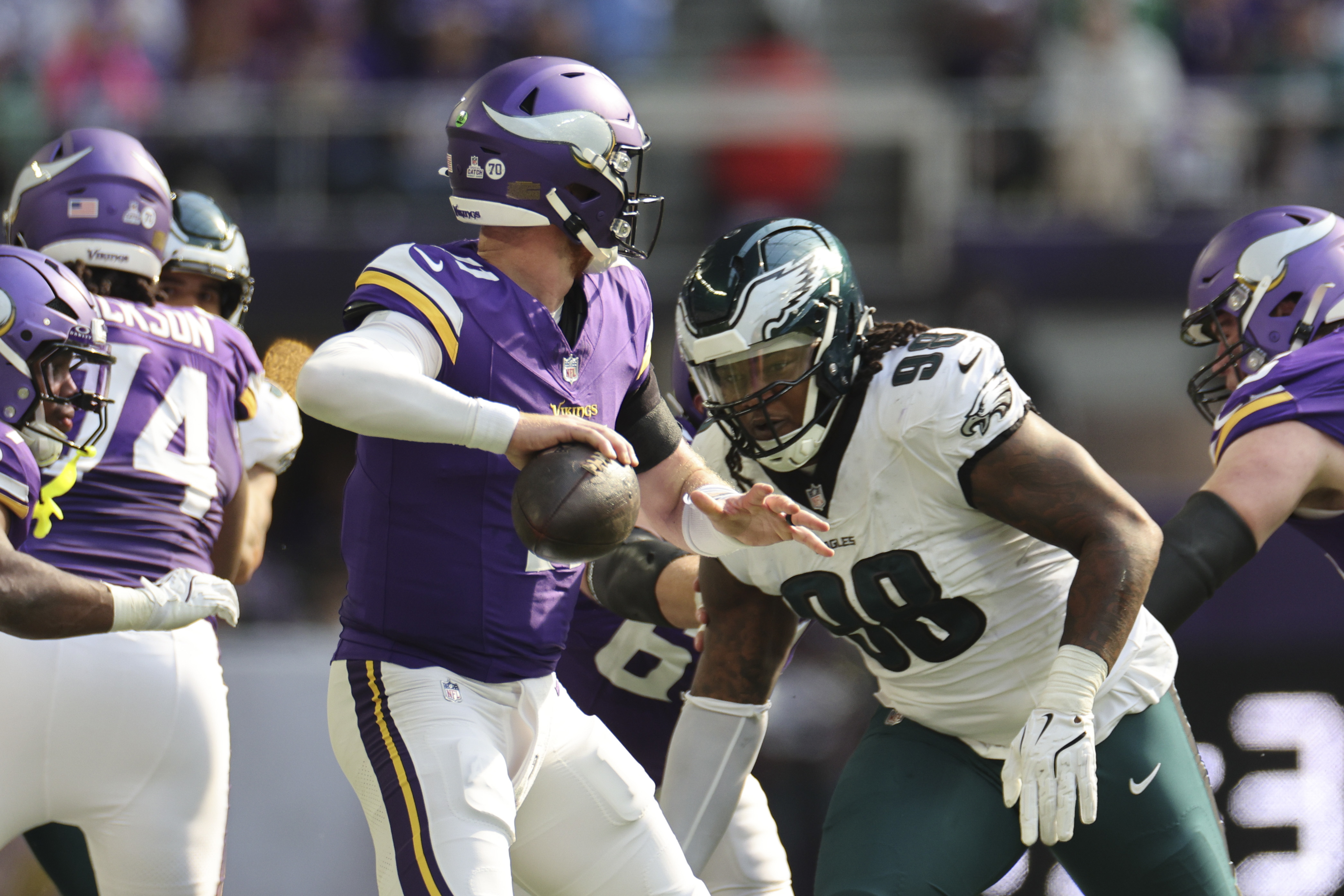
    Eagles defensive tackle Jalen Carter pressures Vikings quarterback Carson Wentz during the second quarter.

    Hunt started his college career at Cornell as a safety and said those skills help him in those spots.

    “I’m way more comfortable than, I’d say, a lot of outside linebackers, especially in space,” he said. “I understand what routes might be going on behind me.” Hunt said he didn’t notice Jefferson matched up with Mukuba one-on-one in the slot. “I just know where I needed to be,” he said.

    News broke before the game that Brandon Graham is considering ending his seven-month-long retirement and rejoining the Eagles, and while Ojulari’s status is unknown, his injury underscored the Eagles’ needs at that position, especially as Nolan Smith (triceps) remains on injured reserve.

    But even an undermanned pass rush found a way when it mattered to get to Wentz and help preserve an Eagles win.

    Much has been made about the pass rush’s inability to get home at times. “Yeah, y’all have,” Hunt said when that fact was mentioned to him Sunday after the game.

    “Not to listen to y’all and just to keep working,” he said when asked what Sunday showed. “We know it’s hard to get sacks in this league. They get paid, we get paid, and sacks take a lot of effort, a lot of scheming. You’ve got to be rushing the right way when your time comes, and the time came, Uche great rush off the edge, Mo with his brainpower.”

    Players like to say sacks come in bunches, and time will tell if Sunday was the start of something more for a defense that needs to get going.

    “They’re hungry,” Baun said. “They know where they’re at right now, the rush, and the linebackers as well, too, we haven’t gotten home too much either. We know where we’re at in that department and it just makes you hungrier to do it.”

    There’s still a lot to improve on, Uche said.

    “But it’s just great to have that spark,” he said. “Once you get a spark on it turns into a big fire, so we just got to keep rolling.”

  • DNA confirms police found the body of Kada Scott, sources say, and new details emerge on what led police to her corpse

    DNA confirms police found the body of Kada Scott, sources say, and new details emerge on what led police to her corpse

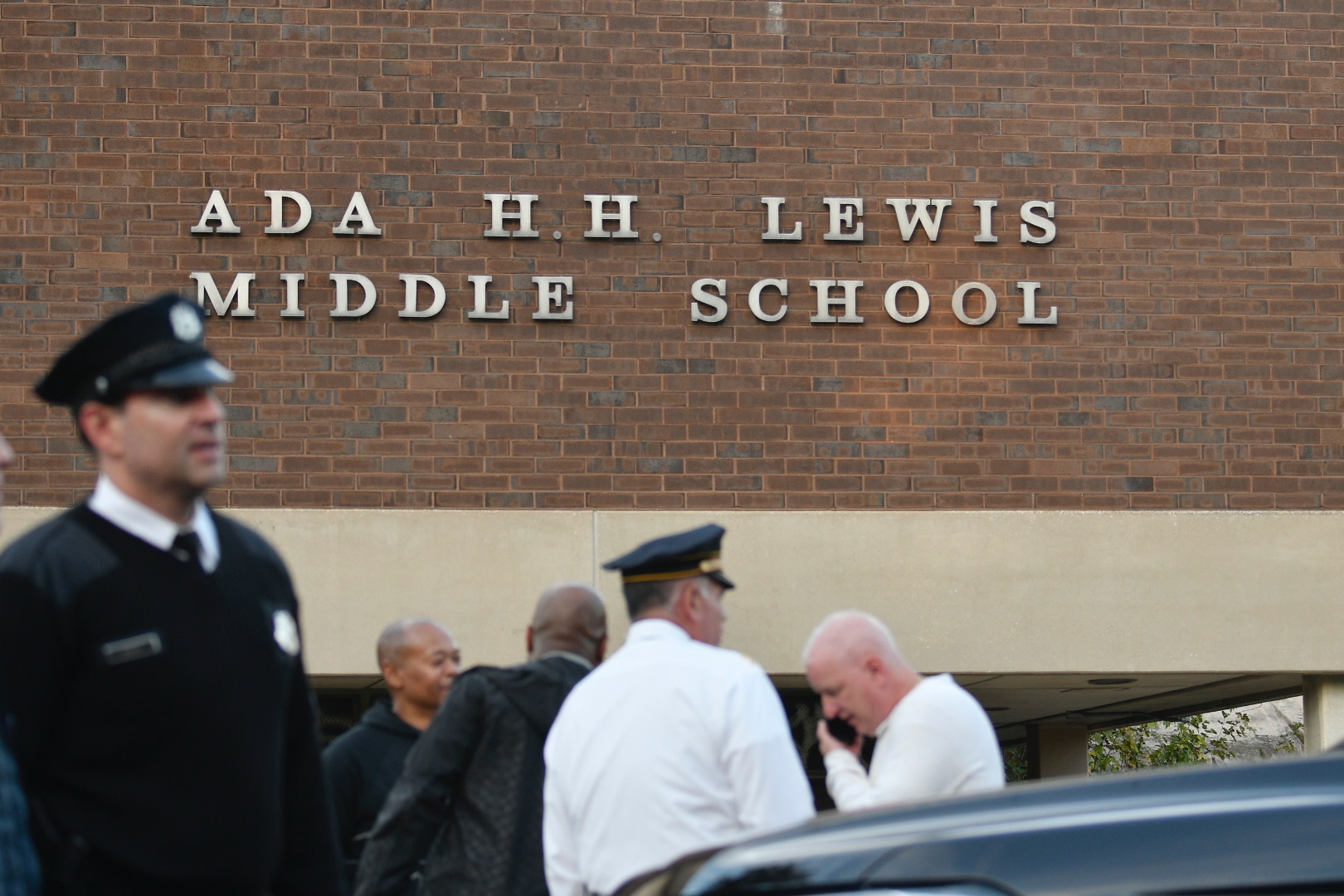
    DNA analysis confirmed that the body recovered in the woods behind Ada H.H. Lewis Middle School in East Germantown is that of Kada Scott, the young woman who officials say was kidnapped two weeks ago, law enforcement sources said Sunday, and new details emerged about what led investigators to find her corpse.

    An anonymous tipster contacted police Friday night, adamant that Scott’s body was on the grounds of the school.

    Police had missed it in their earlier searches, the tipster said, and they should look along the old wooden fence that divides the school from the recreation center next door, said the sources, who spoke on the condition of anonymity to discuss an ongoing investigation.

    “GO BACK YOU MISSED HER,” the tipster wrote, according to the sources.

    And so, investigators returned to the school on Saturday morning, freshly scouring an area police had focused much of their search efforts on throughout the week after cell phone location data placed Keon King — the man suspected of kidnapping Scott, 23, from her workplace on Oct. 4 — nearby on the night she disappeared.

    Days earlier, they had found Scott’s debit card and pink phone case behind the school, but nothing else.

    Sources say DNA evidence has confirmed that police discovered the body of Kada Scott in a wooded area near Awbury Recreation Center on Saturday.

    Officers were walking through the densely wooded area again on Saturday afternoon, the sources said, when one stepped on a patch of earth that felt softer than the rest — leaves, sticks, and debris scattered loosely on top.

    Police excavated the area, and, a few feet down, they found Scott’s body.

    It’s not yet clear how she died. It could take days or weeks for the Medical Examiner’s Office to determine the cause of death.

    But new video evidence suggests that Scott was likely killed within just 30 minutes of her leaving her workplace the night she went missing, the sources said.

    The discovery of the shallow grave, two weeks after Scott disappeared, came after anonymous tips that grew more detailed with each passing day, the sources said, coupled with location data from Scott’s Apple Watch, and finally, new surveillance footage recovered near the school.

    It was a painful end to a search and story that Scott’s family and people across Philadelphia had prayed would end differently.

    Kada Scott, 23, had been missing since Oct. 4.

    Scott, a vibrant young woman from the Ivy Hill section of Mount Airy, disappeared from her workplace, a nursing home in Chestnut Hill, on the night of Oct. 4.

    Investigators believe she and King, 21, had been texting, and that night, she walked out of work to meet him shortly after 10 p.m. but never returned.

    Police are still investigating the nature and extent of Scott’s relationship with King.

    After detectives identified King as a suspect, they pored over the location data from his and Scott’s phones. It showed that King was the last person in touch with Scott on Oct. 4, that his phone traveled with hers briefly before her phone was turned off, and that he was in the area of Awbury Arboretum later that night, a law enforcement source said.

    Late last week, police learned that Scott had been wearing an Apple Watch on the night she disappeared. Location data showed that, around 1 a.m., the watch was in the parking lot of the Awbury Recreation Center, said the source.

    Police discovered a grave containing female human remains in the area of Ada H. H. Lewis Middle School, a closed school facility near the Awbury Arboretum in Germantown on Saturday.

    Investigators went to the recreation center on Friday and recovered new surveillance footage that showed King pull into the parking lot around 10:30 p.m. on Oct. 4 in a Hyundai Accent that had been reported stolen, two sources said. He left the car there that night — most likely with Scott’s body inside, the sources said.

    The footage appeared to show King return to the car two days later and retrieve and move what they believe to be Scott’s body, the sources said. It’s not clear whether he acted alone.

    The next day, the sources said, the car was set on fire behind homes on the 7400 block of Ogontz Avenue. King’s cell phone data placed him there at the time of the blaze, the source said. (Police had initially been searching for a gold Toyota Camry that King was seen driving but no longer believe that car was used in the crime, the sources said.)

    The district attorney’s office said prosecutors would wait for additional information from police and the medical examiner before determining whether to charge King in connection with Scott’s death.

    King is expected to be charged with arson in the coming days for allegedly setting the car on fire in West Oak Lane, according to the sources.

    Police don’t know the identity of the tipster who steered them to the location of Scott’s body. But if King had help moving it, the sources said, the accomplice may have confided in others, and one of those people may have contacted police.

    The investigation is continuing.

    Staff writer Maggie Prosser contributed to this article.

  • Michael Days, pioneering journalist who led the Philadelphia Daily News during its 2010 Pulitzer Prize win for investigative reporting, has died at 72

    Michael Days, pioneering journalist who led the Philadelphia Daily News during its 2010 Pulitzer Prize win for investigative reporting, has died at 72

    Michael Days, a pillar of Philadelphia journalism who championed young Black journalists and was beloved among reporters who worked for him at the Daily News and Philadelphia Inquirer, died suddenly on Saturday at 72 in Trenton.

    A devout Catholic who grew up in North Philadelphia, Mr. Days was instrumental in developing talent among Philadelphia’s journalism community, leading with a kind but direct approach that nurtured journalists and caused reporters to break out in spontaneous applause when he returned to the Daily News in 2011 after an interim stint at the then-rival Inquirer.

    Mr. Days was also respected beyond Philadelphia, receiving Hall of Fame honors from the National Association of Black Journalists and the Pennsylvania News Media Association. He was a past president of the Philadelphia Association of Black Journalists (PABJ) and at the time of his death was president of NABJ-Philadelphia, which formed as an alternative to PABJ.

    Mr. Days’ wife, Angela Dodson, said Sunday afternoon she was comforted by the outpouring of support and love from journalists who knew him.

    “He was the kind of person who wanted to serve,” Dodson said. “People could talk to him, and he had something wise to say.”

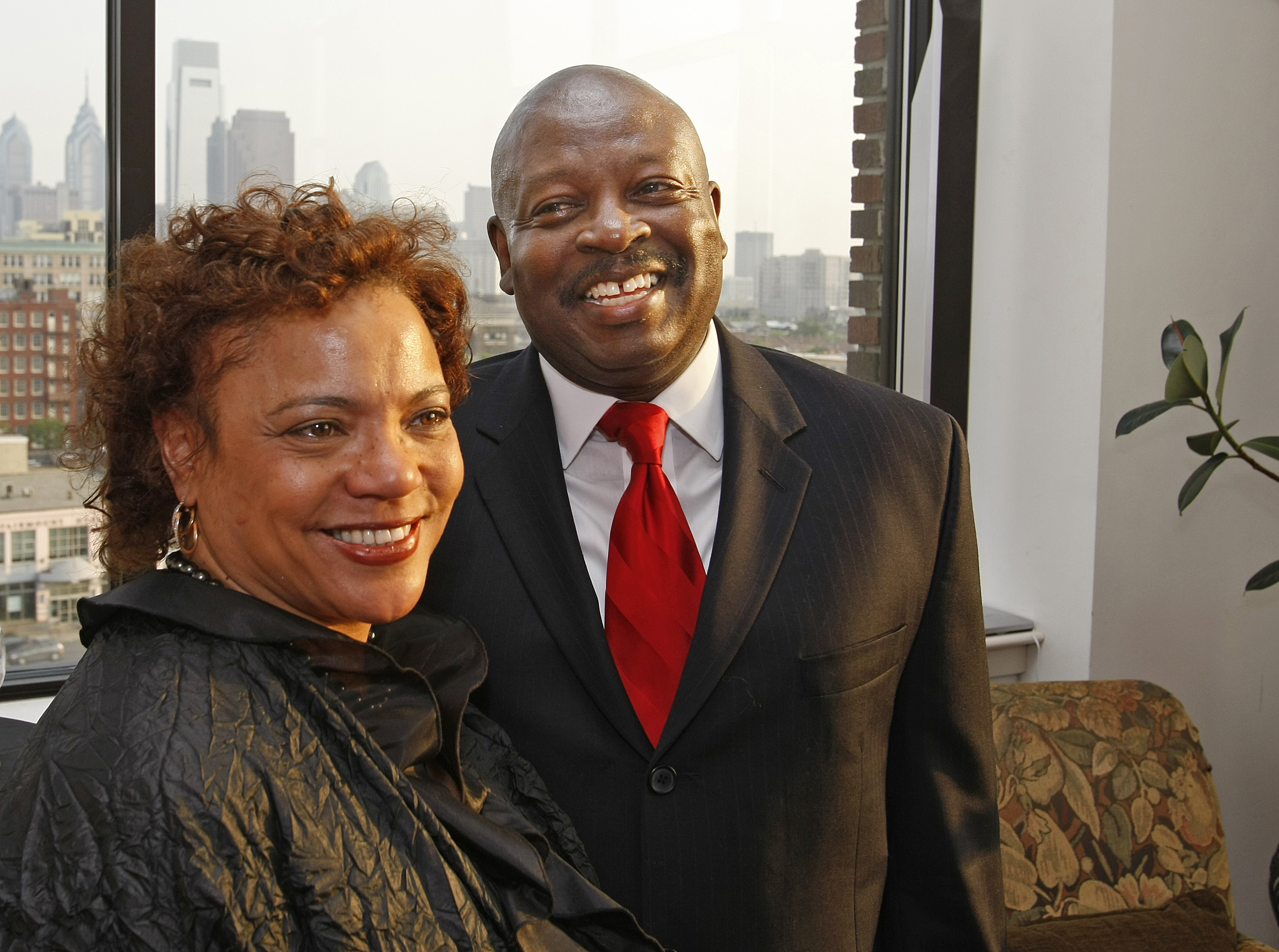
    Michael Days (right), Editor, Philadelphia Daily News and Trailblazer Award winner with his wife, Angela Dodson (left)

    Dodson, a journalist and author, said she and her husband had a long-running disagreement over where they had first met. She believes it was in Rochester, N.Y., when they were working for rival newspapers. But Mr. Days believed he’d met her a year earlier, at an NABJ convention.

    “People loved him,” Dodson said. “He commanded such respect that I used to say, people would elect him president of anything.”

    In recent years, Dodson enjoyed listening as her husband took long phone calls from journalists seeking advice. “What we all need is somebody who listens to us, and he was a master at that,” Dodson said.

    Former Daily News reporter and current Inquirer journalist Stephanie Farr recounted Mr. Days’ infectious laugh and his habit of adding Post-it notes to clips of reporters’ articles to tell them they had done a good job, sometimes with simple messages like “amazing quote!” that gave reporters a little extra pride in their work.

    “You didn’t get one every day, but when you got one, you were on top of the world,” Farr said.

    She still has a box full of these “Mike-O-Grams,” as they became known, and many others do, as well. “The small gestures, in the end, are really the big ones,” Farr said.

    Tributes and condolences poured in Sunday from journalists who were shaped by Mr. Days’ leadership.

    “It is with a very heavy heart that NABJ Philadelphia mourns the sudden passing of our President Michael I. Days, a respected journalist, mentor and cherished friend whose legendary career and commitment to excellence inspired us all,” wrote Inquirer education reporter and NABJ-Philadelphia Vice President Melanie Burney.

    NABJ President Errin Haines said she first met Mr. Days when she moved to Philadelphia in 2015 to work for the Associated Press. Haines said she was struck by his seemingly boundless energy for helping younger reporters. She remembered him as a universally respected leader, and someone who had shown other Black journalists a path to success.

    “It was seismic in the industry, and a huge point of pride for NABJ,” said Haines.

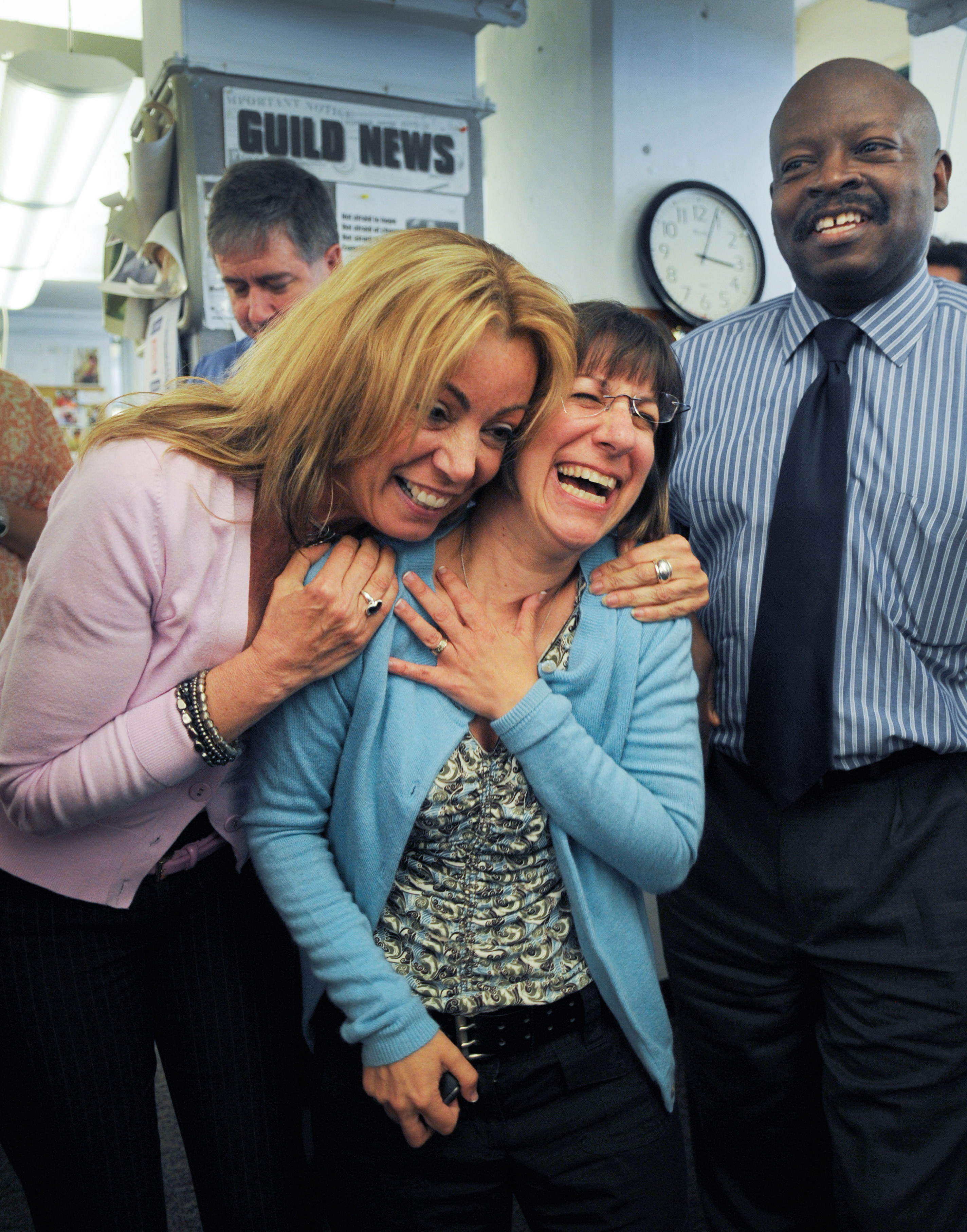
    Philadelphia Daily News reporters Barbara Laker (left) and Wendy Ruderman, and editor Michael Days react as they hear the news that the two reporters won the 2010 Pulitzer Prize for investigative reporting.

    As editor of the Daily News, Mr. Days played an essential role in the decisions that would lead to its 2010 Pulitzer Prize win for investigative reporting, said Inquirer senior health reporter Wendy Ruderman. She and her colleague Barbara Laker won the prize.

    “You could walk into his office anytime and talk to him,” Ruderman said. “He just was very approachable — but also, you respected him.”

    Ruderman recounted sitting in Mr. Days’ office late one evening, alongside Laker and a company lawyer, as they discussed whether to move forward with a story about a Philadelphia Police Department narcotics officer. The story, the lawyer said, stood a good chance of getting them sued.

    With a “directness and sincerity” that were his hallmark, Mr. Days turned to the reporters.

    “He said, ‘I trust my reporters, I believe in my reporters, and we’re running with it,’” Ruderman said. That story revealed a deep dysfunction within the police department, Ruderman said, and led to the newspaper’s 2010 Pulitzer Prize win.

    Retired Daily News managing editor Pat McLoone remembered Mr. Days as a quietly authoritative presence, and a leader who brought elegance and class to everything he did — even as he had to preside over the early days of the news industry’s difficult shift from print to digital media.

    “He was the best possible boss to work for,” McLoone said. “He was in the 100th percentile as a human being.”

    Michael Days (far right) with other former presidents of the Philadelphia Association of Black Journalists in 2021. He served as president in the 1980s.

    After graduating from Roman Catholic High School in Philadelphia, Mr. Days earned degrees from College of the Holy Cross and the University of Missouri. He worked at the Wall Street Journal and other newspapers before joining the Daily News as a reporter in 1986.

    In 2011, Mr. Days was named managing editor of the Philadelphia Inquirer, where he held several management roles until he retired in October 2020. Inquirer Editor and Senior Vice President Gabriel Escobar said Sunday that Mr. Days was a “leading light in Philadelphia journalism.”

    “Mike was a son of Philadelphia, a believer in the power of journalism to do right, and a mentor to scores of young journalists who benefited over many decades from his attentive guidance,” Escobar wrote in an email to Inquirer staff. “He spent his life fighting for better journalism because he understood its limitations and, when it came to diversity, its flaws.”

    After his own retirement, Mr. Days’ work mentoring Black journalists didn’t stop, said retired journalist Linda Wright Moore.

    “He had all the things you need,” Wright Moore said. “He was steady. Principled. He could do tough. He balanced what the craft demands of all of us with the fact that we’re humans, and not perfect.”

    Wright Moore had known Mr. Days when she was a columnist at the Daily News from 1985 to 2000. But they stayed in touch over the years and saw one another every year at the annual NABJ convention.

    In August, the NABJ celebrated its 50th anniversary — a historic moment for the organization and for Wright Moore, whose late husband, Acel Moore, was one of the group’s founding members.

    For her and Mr. Days, it demonstrated the significance of the group’s survival, a half century later, despite the ongoing dismantling of DEI programs at many organizations.

    “I could just feel how proud he was to be there, to have made it to this point,” Wright Moore said.

    Mr. Days is survived by Dodson, three adopted sons, Edward, Andrew, and Umi, and three grandchildren. Mr. Days is predeceased by his adopted son Adrian.

    Services for Mr. Days will be held Oct. 25, at Sacred Heart Church, 343 S. Broad Street, Trenton, N.J. The Viewing will be held from 10 a.m. to 12 p.m. followed by Mass at noon.

    Donations in his memory may be made to the following: College of the Holy Cross; St. Rosa of Lima school; Dodson, Dotson and Hairston Family Scholarship through the Marshall University Foundation.