Blog

  • The battle for backyard chickens | Inquirer South Jersey

    The battle for backyard chickens | Inquirer South Jersey

    Good morning, South Jersey.

    A small but mighty group of Collingswood residents are fighting to legalize backyard chickens.

    And hospitals in New Jersey could lose an estimated $3.6 billion through 2032 because of Medicaid changes.

    Plus, home insurance rates in New Jersey are on the rise, and more news of the day.

    — Taylor Allen (southjersey@inquirer.com)

    If someone forwarded you this email, sign up for free here.

    ‘Let the chicken people have their thing

    The push to lift Collingswood’s ban of chickens has been an ongoing effort for years.

    But after new leadership joined and reshuffled the board of commissioners, a small group of residents thinks this could be their year to finally get the green light to have backyard chickens.

    Advocates have been showing up at board meetings lately. And most recently, they provided proposed language for the board to use in a future ordinance to support it during its last working meeting earlier this month.

    In the past, commissioner and former Mayor Jim Maley has said he would not support a backyard chicken pilot program. Meanwhile, Deputy Mayor Amy Henderson Riley said she suspects this effort has better chances than the ones before.

    Reporter Sarah Nicell details the specifics of what advocates want in the proposal.

    P.S. Read the article for the local government news, but stay for the chicken pictures.

    N.J. hospitals could lose $3.6 billion

    During a panel discussion in Cherry Hill last week, Inspira Health Network CEO Amy Mansue said New Jersey hospitals could lose about $3.6 billion from Medicaid changes through 2032.

    According to Mansue, these changes will force hospitals to alter the way they operate to bring expenses in line.

    That high-figure estimate does not include the costs that hospitals absorb from the growing number of uninsured people who show up to emergency departments because they don’t have the money for a doctor’s visit.

    Almost 69,000 people’s individual coverage from New Jersey’s Affordable Care Act marketplace have already lapsed, and thousands more are expected to lose their Medicaid coverage when new requirements go into effect next year.

    The Inquirer’s Harold Brubaker explains the hospitals’ regulatory hurdles and workforce development efforts.

    Plus: Gov. Sherrill’s visit at SoccerFest26

    🎤 Allow me to pass the mic to South Jersey politics reporter Aliya Schneider.

    Gov. Mikie Sherrill visited the SoccerFest26 fan fest at the Wiggins Waterfront in Camden on Friday afternoon.

    “These are kind of heavy times, they’re kind of dark times; there’s a lot of conflict going on,” Sherrill said in brief remarks on stage in front of a scarce crowd during her Friday afternoon visit. “But what I love about soccer is, it doesn’t matter where you’re from, doesn’t matter who you voted for, it doesn’t matter who you pray to. We all come together as a world.”

    Officials credited Sherrill for including South Jersey in World Cup festivities. Former Gov. Phil Murphy’s administration planned to hold a large fan fest in North Jersey but Sherrill’s administration canceled that plan and instead organized regional celebrations.

    Her Camden visit came just days before the state budget deadline on Tuesday. The governor agreed on a budget framework with legislative leaders a week before the deadline, but the details remained unclear.

    “I’m getting a little more concerned,” she told reporters on Friday. “And so I know they [legislators] are hard at work and I’m going to keep reminding them of the constitutional deadline.”

    Sherrill proposed massive funding cuts to various South Jersey programs in her March budget proposal. But because of cuts she’s found in the budget with legislative leaders, there’s money for lawmakers to “really push into their local projects,” she said. Rowan University’s veterinary school, a medical center for abused children, and Hispanic Women’s Resource Centers are among the many causes asking for a piece of the pie.

    What to know today

    🧠 Trivia time

    What year was Burlington City established?

    A) 1596

    B) 1677

    C) 1776

    D) 2000

    Think you know? Check your answer.

    What we’re…

    💧Borrowing: A kayak to explore the The Cooper River Water Trail.

    🛍️ Shopping: For a new sundress at the Cherry Hill Mall.

    🏡 Ogling: This two-bedroom bungalow built in 1930. (Did you recently buy a home in South Jersey? Share the story of how you did it. Email Inquirer real estate reporters at properties@inquirer.com)

    📬 Your South Jersey view

    Festival goers watch a large screening of a match during opening night of SoccerFest26 on Thursday at Wiggins Park in Camden.

    My fiancé and I strolled through the festival, ate tacos, and watched the games as the sun was setting.

    What does your community look like? Submit a photo and a brief description for a chance to be featured in the Monday edition of this newsletter.

    🗞️ What other South Jersey residents are reading

    Thanks for starting your week with The Inquirer. I’ll catch you tomorrow. 👋🏽

    By submitting your written, visual, and/or audio contributions, you agree to The Inquirer’s Terms of Use, including the grant of rights in Section 10.

  • U.S. refinery accidents, including in Pa., raise questions about cost impact as fuel demand rises

    U.S. refinery accidents, including in Pa., raise questions about cost impact as fuel demand rises

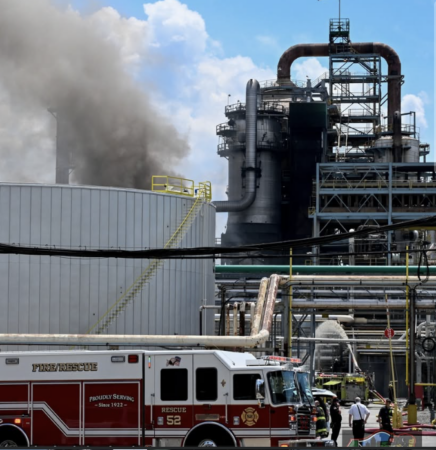
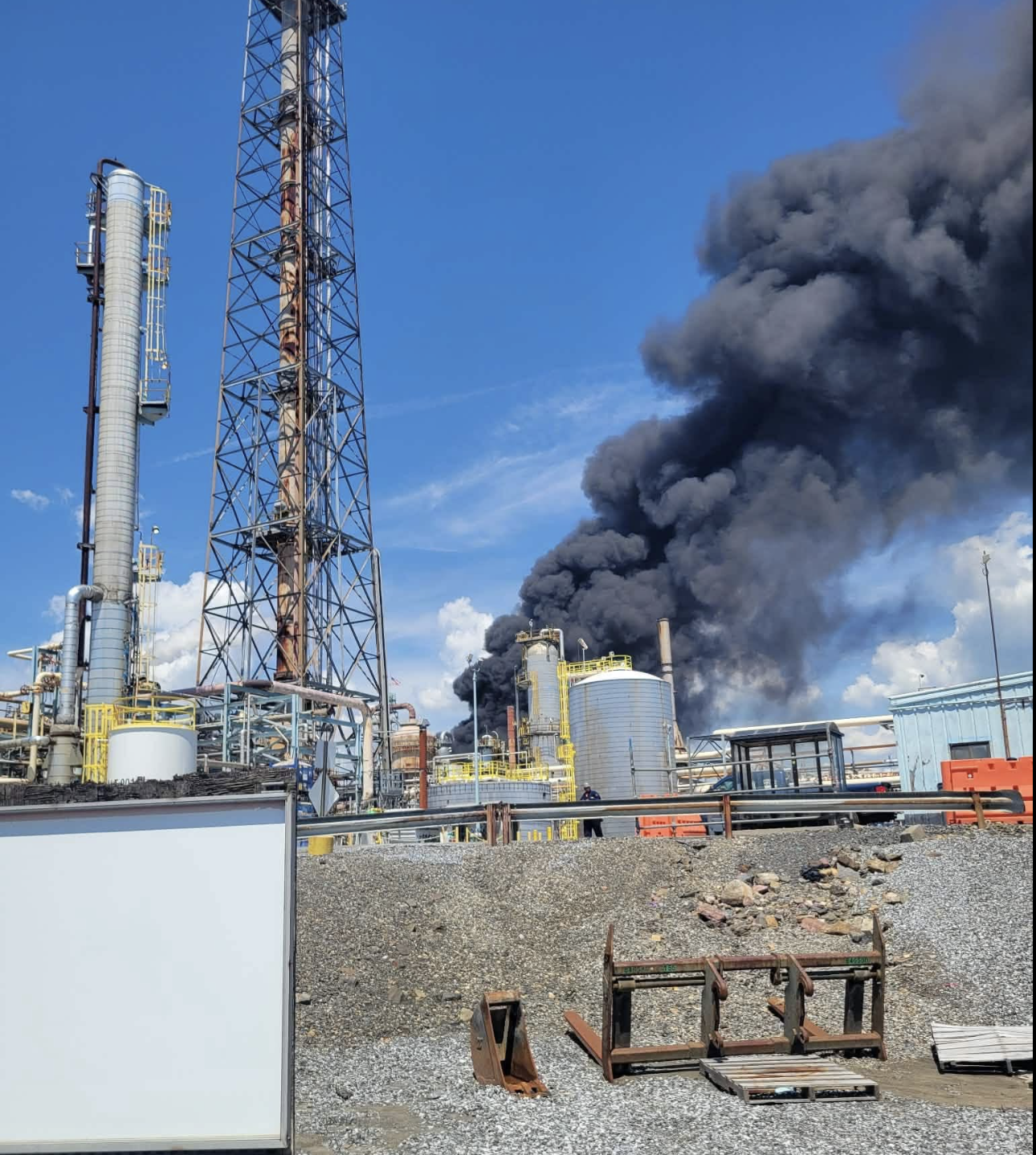
    A leak and then a fire that stalled production at Delta Air Lines’ Monroe Energy oil refinery in Delaware County is just one of several unplanned stoppages that have dented U.S. oil production this summer, even as companies work to keep up with shifting supply and demand from the Iran war.

    A welcome drop in U.S. gas prices “masks” a string of U.S. supply issues that put stress on fuel markets, Industrial Info Resources told clients in a note last week.

    Beyond the stoppage at the 200,000-barrels-a-day Trainer plant, problems include:

    Fire at Delta Air Lines’ Monroe Energy refinery in Trainer, Delaware County, on Friday.

    In all, U.S. refineries can produce up to 18 million barrels a day.

    Refinery margins tripled after the U.S. and Israel attacked Iran in February and the Strait of Hormuz closed, and refineries felt pressure to boost production during what is normally the spring “maintenance season” of reduced production, said Stephen Schork, cofounder of the daily Schork Report on energy markets, based in King of Prussia.

    During the missile attacks, “crude oil went as high as $120-$130 a barrel; jet fuel traded at $180-$190 a barrel,” tripling the usual profit margins, Schork said. “More than half the jet fuel on the East Coast comes from the Monroe refinery.”

    Gasoline and diesel was also in high demand, he said.

    “When you can make $50 [in profit] a barrel, you will be running that refinery as hot as you can,” Schork said. But “when you run as complex a piece of engineering as a refinery at nearly 100% capacity, the risk of unscheduled maintenance is increased.”

    With prices now dropping, pressure from short-term shutdowns should be less, he said.

    Overall, petroleum prices that spiked during the war have dropped since the U.S.-Iran ceasefire began bringing back oil refining and shipping in nations that had been attacking each others’ oil infrastructure.

    The Brent crude benchmark price of oil fell to near prewar levels for the first time since the U.S. and Israel attacked Iran at the end of February and Iran retaliated with attacks on U.S. allies.

    U.S. gasoline prices fell below $4 a gallon in late June, according to AAA.

    But with the U.S. Strategic Petroleum Reserve half depleted to prevent prices from rising higher in the near future and oil-thirsty countries scouring the globe for new supplies, the industry is sensitive to slowdowns. President Donald Trump’s energy adviser, Kevin Hassett, has said he’s confident reserves are adequate.

    Monroe confirmed an internal leak at the Trainer facility on Tuesday, six months after addressing a long-running gasoline leak at its Aston tank farm.

    Industry sources say the plant leak shut the plant’s distilleries, which process up to 200,000 barrels of oil a day, much of it for jet fuel, to help Delta control the cost of keeping its commercial jets flying.

    According to a Monroe Energy statement, a process pump at the Trainer plant caught fire Thursday, injuring a worker. County officials said two others were treated for heat effects after refinery staff and volunteer fire companies mobilized to fight the blaze. Monroe said air monitoring showed no risk to people outside the plant. The fire is under investigation.

    Firefighters outside the plant noticed smoke rising from the refinery at 11:30 a.m. Tuesday, even before reports began flowing in from neighboring fire companies and Delaware County emergency workers, who urged residents to shelter in place, according to a statement by the Upper Chichester Volunteer Fire Co.

    The fire was declared under control, and the shelter order lifted at 2:54 p.m.

    In line with company policy not to discuss operations, a Monroe spokesperson declined to estimate when the plant would be fully back online.

    The earthquake this week in Venezuela, an oil source for East Coast U.S. refiners, did not disrupt production at the nation’s main Paranagua oil complex, but the second-largest concentration, at Morón, was temporarily stopped, Reuters reported. The loss of electric power and other infrastructure damage across Venezuela is expected to slow tanker shipments out of the stricken nation.

  • After bankruptcy and a kiln disaster, Felt and Fat is remaking itself

    After bankruptcy and a kiln disaster, Felt and Fat is remaking itself

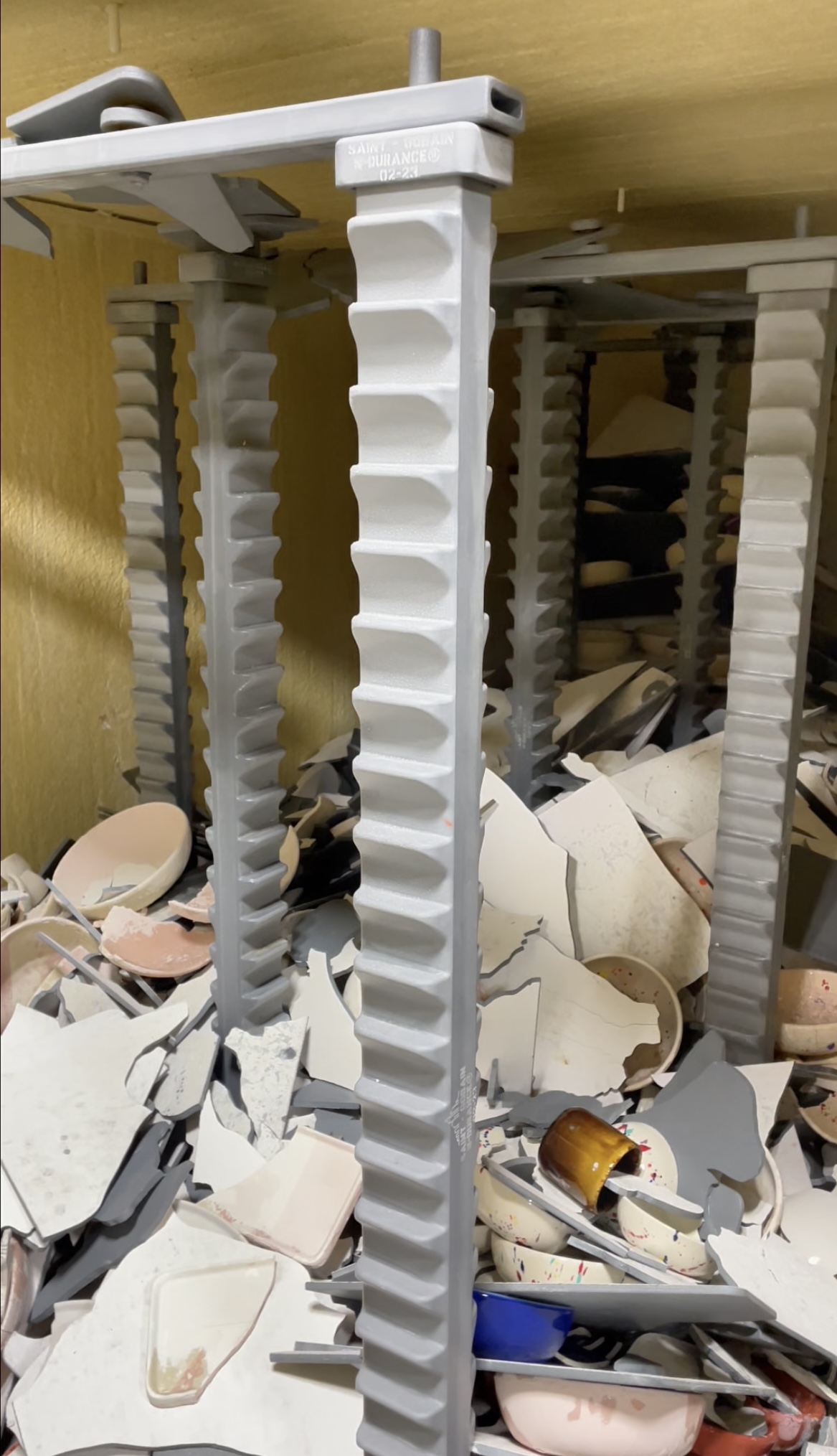
    The vibrant, paint-flecked, confetti-esque glazed bowls are Philly icons. But at the end of January, these and hundreds of other ceramic dishes lay in ruins inside Felt and Fat’s kiln.

    The wreckage after a winter cold snap destroyed Felt and Fat’s kiln in January 2026.

    Philly’s back-to-back snowstorms and cold temperatures froze the ceramic producer’s warehouse’s sprinkler lines, causing sprinkler heads to crack.

    Mist blanketed Felt and Fat’s kiln — and kilns are not supposed to ever get wet — for 12 hours. The kiln was just over a year old, custom-ordered from the Netherlands. It cost over $300,000 and was the keystone of founder Nate Mell’s plans for expansion.

    The kiln took a year to arrive and was outfitted with a specialized rack system that made loading and unloading pieces — up to 250,000 per year — easy.

    “The kiln company told us they couldn’t repair it and with high-pressure gas going into the kiln, even if they could, they couldn’t speak for it in terms of liability,” said Mell, 40. The electrical components were all soaked and frozen. The inside was completely destroyed. “We still haven’t quantified our revenue loss,” he said, despite getting his old kiln back in use about a month after the disaster.

    The kiln explosion came on the heels of Felt and Fat filing for Chapter 11 bankruptcy. “We were really struggling in 2024 and 2025, which was a terrible time to raise money. The early 2020s for us were all about growth,” said Mell.

    To get out of bankruptcy, Mell had to come up with a reorganization plan for his creditors. It required getting back to Felt and Fat’s roots.

    It all started in 2013, when Ellen Yin and Eli Kulp commissioned custom ceramics from Mell for the original High Street restaurant, which opened in September of that year. He officially formed the business in 2014, and over the next decade, Felt and Fat grew from a two-person ceramics studio — encompassing Mell and former business partner Wynn Bauer, who left the company in 2017 — into one of the region’s most recognizable dinnerware manufacturers. Their plates were seemingly at every award-winning Philadelphia restaurant, from River Twice to Tesiny to the now-closed Laurel.

    “We had been growing the same way everyone else grows: build a factory, add people, add machines,” said Mell, a Temple grad who admitted that this trajectory had little to do with what he had been trained in. “I went to the Tyler School of Art and Architecture and studied glass but took classes in ceramics. I worked as a server in Philadelphia restaurants for eight years and started delving deeper into ceramics by working part-time at the Clay Studio back when it was in Old City.”

    Felt and Fat provides Provenance with custom ceramic dinnerware.

    He realized that what he and his team does well is “great design, really interesting glaze work with relatively low minimum-order quantities, and interesting collaborations.” His expansion plans were taking him away from that design and glaze work. “The bulk of what we were doing, and what every other factory does, is taking clay and turning it into a shape.”

    Collection of canapés served at Provenance in 2024 on Felt and Fat ceramic dinnerware.

    He reached out to an old contact, the company Anfora, located outside of Mexico City, which has been making ceramics for over a century. “They do massive volume, making stuff the way we do. They treat their people well and make the same quality dinnerware with the same porcelain clay we use.”

    Food from Zahav on Felt and Fat dishes.

    His restructuring plan meant Anfora would produce the shapes for Felt and Fat, and they would be glazed by hand in Philadelphia. Mell has just received the first of his shapes from Anfora, with more to come.

    “We’re going to have our standard shapes formed at Anfora. But we’re going to expand our high-touch, low-output forming — hand thrown and slip cast,” he said. “We’re going to be even more handmade than we were before. And we’ll be able to lean into that. But we’ll also have the consistency of our standard pieces.”

    Felt and Fat dishes are stacked and lined up at the ceramic company’s Kensington facility.

    These days, Felt and Fat has just seven employees, including Mell. “Everybody gets their hands in everything. We’re a tight little team,” said Mell, though he hopes to add more employees at a more sustainable rate than before.

    “The two years leading up to this were tortuous,” said Mell. But he hopes the future will be brighter, with slower, more purposeful growth.

    Felt and Fat’s studio is open for browsing by appointment from Monday to Friday, 9 a.m. to 4 p.m. at 3750 M St., Philadelphia, Pa., 19124. To make an appointment, email support@feltandfat.com or call 215-259-8773. Orders can also be placed online at Felt and Fat’s website and picked up at the studio.

  • Historical reenactors’ Super Bowl | Morning Newsletter

    Happy Monday, Philly! Welcome to the start of a new week.

    As we near the pinnacle of Semiquincentennial celebrations on July 4, historical reenactors recall the long months of arduous work it took to perfect their roles.

    And Eagles training camp is almost here! Before football season kicks off, The Inquirer took a look at some of the newbies joining the Birds’ roster.

    Plus, The Inquirer sat down with Pa. Attorney General Dave Sunday, and more news of the day.

    — Sam Stewart (morningnewsletter@inquirer.com)

    If someone forwarded you this email, sign up for free here.

    📜 Bringing history to life

    The lead-up to the nation’s Semiquincentennial is historical reenactors’ Super Bowl run.

    A cast of Ben Franklins, John Adamses, and Betsy Rosses — actors who have spent months and uprooted their lives to learn about and live as colonial America’s key characters — will be at the front lines of the 250th birthday celebrations. They will become de facto historians, guides, entertainers, and ushers to an expected crush of tourists, all while anchoring how the country’s earliest days are memorialized and whose stories get to be told.

    The set of actors is part of Historic Philadelphia’s Once Upon a Nation program. This year is expected to be one of its biggest ever, with the most actors, plays, scripts, and events.

    “Speaking in 18th-century tongue continuously, I am nervous about that. I want to portray it real,” one reenactor said.

    Dana Munro and Maggie Prosser have the full story.

    🦅 A look at the new Birds

    With Eagles training camp drawing nearer, The Inquirer is taking a closer look at the more than three dozen new faces who are expected to report along with the rest of the team on July 28.

    Whether they’re a 2026 draft choice, a veteran addition, or a rookie free-agent hopeful, we’re telling you more about each player’s potential role this season.

    The first player we’ll take a look at is 38-year-old quarterback Andy Dalton. Dalton has the most NFL experience on the 2026 Eagles — that’s unless Brandon Graham returns. The veteran quarterback is going into his 16th NFL season.

    Fun fact: Dalton has zero career playoff wins and has thrown just one touchdown pass in the postseason.

    The Inquirer’s Olivia Reiner has more.

    What you should know today

    • A federal judge dismissed a U.S. Department of Justice lawsuit seeking to obtain Pennsylvania’s entire, unredacted, voter-registration database.
    • Home insurance costs in N.J. and Pa. are below national averages, but are still on the rise, experts say.
    • The Cathedral Basilica of SS. Peter and Paul was a center of resilience Sunday, as dozens of Philly Venezuelans gathered to collect aid for folks affected by two earthquakes that struck the South American country on Wednesday.
    • Philadelphia has a long-standing reputation as an underdog city, but when it comes to hosting the FIFA World Cup, Anne Ryan, Pennsylvania’s deputy secretary of tourism, sees Philadelphia as a front-runner.
    • Frances Ratay was among those in Temple-led research who saw improvements in well-being, as her fear of bees transformed into a greater appreciation for nature.
    • Philly’s Jaron Ennis knocked out Xander Zayas to become the junior middleweight champion.

    Quote of the day

    Big Night is a food movie, an Italian American movie, and on top of all of that, it’s a Jersey Shore movie. Actor Tony Shalhoub took a look back at his time making the iconic film.

    🧠 Trivia time

    This local university will create the first endowed editor position at its student newspaper thanks to a million-dollar gift.

    A) Penn State University

    B) Drexel University

    C) La Salle University

    D) Temple University

    Think you know? Check your answer.

    What we’re…

    📰 Reading: An Inquirer interview with Pa. Attorney General Dave Sunday. He talked about a recent Supreme Court ruling on the work of DA Larry Krasner’s Conviction Integrity Unit.

    🛒 Trying: The “store of the future” unveiled by Walmart in Warminster. Some shoppers say they love the improvements.

    🏀 Analyzing: The divide between Pennsylvania’s public and private high school sports. For years, there’s been tension — but a new law could change things.

    🏡 Admiring: How a man bought his dream Shore house. He lives in California, but having spent his childhood in Wildwood, he wanted a place his family could gather and revive old traditions.

    🧩 Unscramble the anagram

    Hint: TV news program host and liberal political commentator.

    CHARMED WALDO

    Email us if you know the answer. We’ll select a reader at random to shout out here.

    Cheers to Meg Fagan, who solved Sunday’s anagram: Bam Margera. The “Jackass” star has been mired in legal issues, in and out of rehab, for years. Now, his family says he seems to be “out of the darkness.”

    Photo of the day

    Suzanne Passante holds one of her chickens, Zuzu, inside the chicken coop in the backyard of her home in Haddon Township. She has battled for pro-chicken ordinances.

    🐣 And one last cool thing: Residents in Collingswood have spent years fighting for backyard chickens. Now, there’s hope they might win.

    📬 Your ‘only in Philly’ story

    Think back to the night that changed your life that could only happen in Philly, a true example of the Philly spirit, the time you finally felt like you belonged in Philly if you’re not a lifer, something that made you fall in love with Philly all over again — or proud to be from here if you are. Then email it to us for a chance to be featured in the Monday edition of this newsletter.

    This “only in Philly” story comes from reader Bobby Reed, who describes his found family in the City of Brotherly Love:

    When I moved to Philadelphia in the fall of 2009 I did not know a single person (other than my former partner). I did not have a job, didn’t know what a Wawa was, and could not yet justify throwing snowballs at Santa Claus (who was drunk). I hit the pavement and got a few odd jobs, one of which was tutoring a family’s kids.

    My moment was when I was invited to this family’s Thanksgiving dinner. Because I had to work during the holiday and couldn’t afford a flight, I couldn’t get home to Colorado to see my biological family.

    But the entire meal made me feel like I was at home. They told me stories about the Eagles and Phillies, what Philadelphia was like when they grew up in the ’80s, how the city has changed, and how the parents met and fell in love.

    From that night forward, I knew I had a group of folks that I could lean on. I had a Philadelphia family that would help me through thick and thin, the way Philly families do. I walked around the city the next day with a sense that I belonged here.

    I wasn’t that different from the people here. I had simply grown up in a different state, but still held the same values and had the same fight and fire for those values.

    I’ve lived here now for almost 17 years and I’m proud to say that I’m from Philadelphia, the most underrated city in America.

    👋 That’s all from me, folks. Have a good rest of your day!

    By submitting your written, visual, and/or audio contributions, you agree to The Inquirer’s Terms of Use, including the grant of rights in Section 10.

  • Incyte is built to grow, says the company’s CEO, who sold previous biotechs for billions

    Incyte is built to grow, says the company’s CEO, who sold previous biotechs for billions

    Bill Meury got the call early last year after the last company he ran got sold for $3 billion. Billionaire biotech investor Julian C. Baker asked Meury: Would you be interested in running Incyte, a 2,800-person, publicly traded drug developer in Wilmington with $5 billion in yearly sales?

    Under its previous CEO, Hervé Hoppenot, Incyte had multiplied sales of its breakout drug Jakafi (“JACK-ah-fye”), which treats blood cancers and transplant conditions. The company plowed revenues into hiring scientists, building labs, buying smaller businesses, and testing new products against the day Jakafi’s key patent runs out in 2028.

    But new Incyte products were coming to market slowly. Shares peaked at over $130 in 2017, then fell into the $50s by early 2025, when Meury took over that June.

    Meury’s signing-year compensation at Incyte was valued at over $30 million, mostly in stock grants and in options vesting over six years. (Hoppenot was given $17 million for his retirement year.)

    With Meury as CEO — and Baker, whose firm is its largest investor, succeeding Hoppenot as board chair — Incyte shares have again topped $100 a share. Investors are hoping that Incyte delivers the drugs it has been readying for market — or that the company gets sold at a premium price like Meury’s previous employers Anthos, Karuna, Allergan, and Forest Labs.

    Baker is also a director and investor in Madrigal Pharmaceuticals, a $1 billion (yearly sales), $12 billion (stock value) company based in Conshohocken, best known for Rezdiffra, which treats liver disease.

    Meury, who has been building a top management team with new chief financial, human-resources, and strategy officers, took questions from The Inquirer in his office atop Incyte’s glass-fronted hillside headquarters near U.S. Route 202.

    The interview has been edited for clarity and brevity.

    Why did you take this job?

    I did a great deal of diligence. I found their pipeline [of new therapies] was fundamentally under-appreciated. The company has excellent R&D and commercial capabilities. It has excellent potential products in three of the strongest areas of biotech — oncology, hematology, immunology — really good areas for long-term growth.

    That’s ultimately what companies solve for. When you have products, you win.

    Don’t all big pharma companies have that?

    Incyte has top-10 pharma scientists without the bureaucracy. Our researchers punch above our weight. Incyte is not a diversified giant, but it’s not a small start-up either. We avoid the downsides of both.

    Just for one example, Patrick Mayes, our chief scientific officer, is out of the University of Pennsylvania. We have a very capable group of scientists — biologists, chemists, translational researchers, drug developers. We are able to colocate here in Wilmington, which results in faster iteration.

    We have a lot to prove over the next couple of years. If we can advance half our assets through Phase 3 [clinical trial] to FDA approval of some scientifically and medically important products, Incyte will be much larger.

    I believe we have the potential to double or triple [sales] in five to seven years.

    For example?

    We are developing the first oral-targeted treatment for pancreatic cancer, which has been considered an undruggable target for decades.

    This is the Everest of oncology. Our scientists designed a small molecule to target KRAS G12D, a protein that causes [cancerous] cells [to reproduce uncontrollably]. We are in a race to be No. 1 with an approved treatment.

    And we have therapies for a group of blood cancers and for colorectal cancer. These are first-in-class molecules that can make a pronounced difference for those cancers.

    How can anyone avoid the ‘bureaucracy’ you say slows successful organizations?

    You can’t solve bureaucracy through structure and process. You have to solve through the attitudes of exceptional leaders. Hervé built a great culture on good hiring decisions. You have a bunch of people that trust each other.

    Failure is always right around the corner. Management has to be self-aware, to know the strengths and weaknesses of the employees. We are not running the company from 30,000 feet.

    Do you expect your board and major shareholders will want you to sell Incyte, like your previous companies?

    In general, companies can have two value-creation paths: There’s the independent path, and then there’s merger and acquisition.

    The only path that a management team controls is the independent path. We are focused on running the company, building a great business for the employees, customers, physicians, and patients — and for the shareholders.

    It hurts companies when there is a merger and acquisition theme all around them. If [buyers with offers] approach us, we have to listen. But we are building this company for the next decade. Most people want to work with a company that wants to be around in 10 years.

    You’re not antimerger. On June 16, you agreed to buy Vega Therapeutics for up to $2 billion.

    Vega has a novel compound [a treatment for an inherited blood disease] that we believe has potential sales of over $1 billion. If we can do several deals like this that fit one of our categories, in this case hematology, we will do them. These will never be more important than internal R&D, but each can be a multiplier for our business, with the right risk-and-reward profile.

    By the time Jakafi loses exclusivity in December 2028 — and it may go beyond that — we will have $3 billion to $4 billion in non-Jakafi revenues.

    Americans aren’t happy with the cost and availability of medical care, including drugs. Do you see any hopeful signs?

    Three things have to be in place for biopharma to thrive: First, patent and trademark laws have to be predictable. Second, pricing policy has to be balanced. Third, FDA has to run effectively. There have been headwinds, but I think those pillars will be in place as disruption settles.

    Are U.S. consumers and employers subsidizing world drug development with our high prices?

    It’s true there’s an imbalance. But Americans have access to the best medical care in the world, such as novel cancer treatments.

    But we have to get a better framework for global pricing. You’d like to see prices outside the U.S. come up, if they are going to moderate inside the U.S.

    Can the U.S. compete with China?

    China will be a source of innovation and competition. We have four or five major biotech centers in the U.S. They have 15. China is here to stay. For the U.S. to remain the leader, we have to create an environment where biotech can continue to thrive.

    Incyte was founded in 2002 by scientists from Wilmington-based DuPont, but recent plans to grow your space stalled. Will Incyte keep growing here?

    In the last two years we have added more than 150 [in Delaware] and anticipate adding another 250 [by 2031]. We will be here for as long as I’m here. The biotech labor market is not as strong as Boston, but it is strong here, with Thomas Jefferson and Penn in Philadelphia, and Johns Hopkins in Baltimore.

    We’ll grow somewhere else if we have to. I’m not religious about it. But the base of this company is here in Wilmington.

  • DACA and TPS recipients pump billions into the U.S. economy. Trump wants them gone anyway.

    DACA and TPS recipients pump billions into the U.S. economy. Trump wants them gone anyway.

    Immigration is complicated. That makes polling on the topic difficult, as the same Americans who will tell you they support mass deportation one day will turn around and say they back a path to citizenship the next. So, which is it? Well, it depends.

    As crowded scenes of immigrants clustering at the southern border were endlessly repeated on TV, many Americans felt the Biden administration was not taking national security seriously and had flung open the golden door to anyone with a pulse and a sob story.

    Then, as U.S. Immigration and Customs Enforcement agents descended on Minneapolis, masked, heavily armed, and dangerously encouraged to ignore people’s constitutional rights — ultimately killing two U.S. citizens because they dared to question authority — even many Donald Trump supporters rose up to say this is not what they voted for.

    Unsurprisingly, most Americans fall somewhere in the middle — where balancing immigration control with humanitarian values looks at what makes the most sense for the country and for the people who are looking for a better life here.

    But that’s illegal immigration. On legal immigration, most Americans are all in, with only one in five opposing it. Why, then, is the Trump administration hell-bent on making life miserable for legal immigrants?

    Earlier this month, a court ruled against an administration decision that froze processing of immigration benefits like work permits and green-card applications for nationals of 39 countries targeted by a travel ban. These are people already in the United States legally who found themselves in limbo for months — many losing their jobs and risking deportation — after U.S. Citizenship and Immigration Services determined in January it would keep the $1 billion in fees these immigrants paid and give them nothing in return.

    Meanwhile, renewals under the Deferred Action for Childhood Arrivals (DACA) program for immigrants brought here as children have been hit with delays, and approvals of legal permanent residency applications, known as green cards, have fallen by around 16% — all part of the administration’s strategy of bureaucratic sabotage in the guise of “enhanced security.”

    The administration has also banned permanent legal residents from qualifying for government-backed small-business loans, while some immigrants, including DACA recipients, can no longer hold commercial driver’s licenses, regardless of possessing a legal work permit.

    Two U.S. Supreme Court decisions released last week will only continue to embolden the administration’s anti-legal immigrant push.

    Members of the Supreme Court sit for a group portrait in 2022. Bottom row, from left, Associate Justice Sonia Sotomayor, Associate Justice Clarence Thomas, and Chief Justice of the United States John Roberts. Top row, from left, Associate Justice Amy Coney Barrett, Associate Justice Neil Gorsuch, and Associate Justice Brett Kavanaugh.

    On Tuesday, the court’s conservative justices affirmed that border officers do not need “clear and convincing evidence” that a green-card holder seeking to reenter the U.S. has committed a crime to deny them entry. While I hope that one day the Clarence Thomas “border vibe check” joins the “Kavanaugh stop” in the annals of legal ignominy surrounding immigration enforcement, the court’s 6-3 decision makes a mockery of the idea that someone is innocent until proven guilty.

    Perhaps even more immediately concerning is the high court’s ruling Thursday allowing the president to end Temporary Protected Status, or TPS, for roughly 350,000 Haitians and 6,000 Syrians.

    The TPS program, a bipartisan congressional creation under President George H.W. Bush, gives immigrants work permits and protection from deportation if they come from countries determined to be too dangerous to go back to. While the word temporary is right there in the name, some program participants have been in the country for decades and have built lives here. For others, the nations they fled are still unsafe to return to, including Haiti, which is in the grip of gang violence and widespread hunger.

    That the conservative justices also found that Trump’s comments against Haitians were not “overtly racial” is absurd. Trump infamously referred to Haiti and African nations as “shithole countries” in the same 2018 meeting in which he wondered aloud why America couldn’t have more immigrants from places like Norway. For context, this is the same administration that considers white South Africans the only persecuted minority worthy of asylum in the U.S.

    For the moment, the court’s decision applies only to Haitian and Syrian immigrants with TPS, but it has opened the door for the president to do what he has wanted to do since his first term, which is to end the program wholesale. That would impact the 1.3 million TPS holders from around 17 nations and their families, many of whom are U.S. citizens.

    While the human impact on communities of this mass de-legalization effort is immeasurable, the economic damage of Trump’s anti-immigrant policies is not.

    The 500,000 or so DACA recipients, for example, contribute nearly $17 billion to the U.S. economy annually, also paying into federal social safety net programs they are not legally able to access themselves, according to the immigration rights group FWD.us. TPS recipients contribute about $29 billion a year to the economy and pay $7.8 billion in combined federal, payroll, state, and local taxes.

    An immigration policy calculator produced by the Manhattan Institute finds that the kind of policies favored by the administration would add $618 billion to the national debt over 10 years, and leave every American poorer.

    Reasonable people can disagree on immigration, but at the very least, Trump’s exclusionary ideas are an economic dead end.

  • Pa.’s Medicaid rollback on obesity drugs is a crisis in slow motion

    Pa.’s Medicaid rollback on obesity drugs is a crisis in slow motion

    The assault on healthcare for America’s most vulnerable is not only coming from Washington. It’s creeping into statehouses across the nation — even here in the commonwealth.

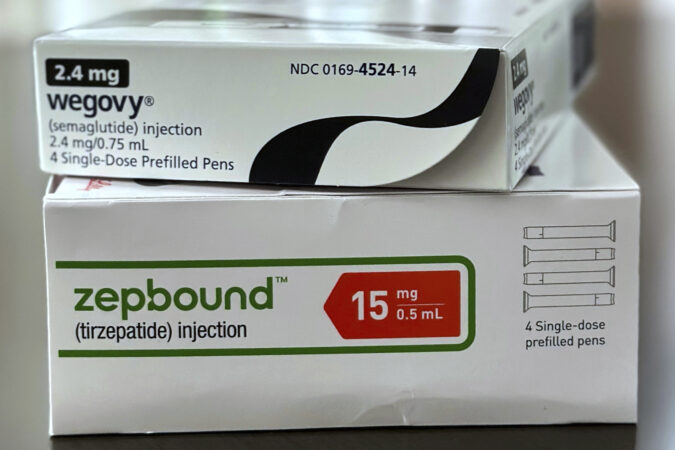
    In Pennsylvania, Medicaid beneficiaries rang in the New Year without the obesity treatments they previously had access to, thanks to the actions of policymakers who moved to prohibit Medicaid coverage to meet tighter state budget benchmarks.

    As a cardiologist who has spent my career treating many Black and brown patients, I have witnessed the consequences of unmanaged obesity play out in the most brutal and preventable ways: men in their 40s having heart attacks, women with decades of life ahead of them receiving stroke diagnoses, and heart failure caught too late for treatment to make a real difference. I have sat with families and explained that the disease that took their loved one was manageable — if caught earlier, with the right treatment. It’s devastating.

    That’s why Pennsylvania’s decision to strip Medicaid coverage for obesity medications, effective Jan. 1 of this year, is a sign of further catastrophe that may be coming.

    Pennsylvania has long been heralded as a champion of health equity, but our legislature is unintentionally sending a message that advances in medicine should be reserved for the privileged, the justification being cost. However, this rationale suffers from tunnel vision — the cost of untreated obesity and its complications is far greater. Treating obesity prevents its complications and saves money.

    Obesity is not a lifestyle failure. It is a chronic disease that exacerbates cardiovascular conditions, already killing Black and brown Pennsylvanians at disproportionate rates. Obesity costs the U.S. nearly $173 billion annually in direct medical costs and more than $1.4 trillion in total economic impact. Cutting access to treatment will only worsen the obesity epidemic and continue to drive up costs.

    Nearly 60% of Black women live with obesity, along with half of all Black and Latino adults. Pennsylvania is home to approximately 3.5 million adults living with obesity — one in three residents, irrespective of race or ethnicity. That number is projected to reach one in two by 2030. But for Black and brown communities, already burdened by decades of systemic underinvestment in preventive care and access to healthy food, the cardiovascular consequences of untreated obesity are the daily reality of emergency rooms and cardiac units across Philadelphia, Pittsburgh, Harrisburg, and everywhere in between.

    Gaps in state budgets shouldn’t be closed by compromising the health of the underserved, communities of color, those with disabilities, and millions of others who depend on public healthcare coverage. Access to healthcare should be more than just a budget debate — it’s both a civil rights and a human rights issue.

    At the same time, when patients cannot access FDA-approved obesity medications through Medicaid, they resort to whatever fills the void. Right now, that means a predatory market of unregulated, potentially unsafe, compounded GLP-1 drugs aggressively marketed to low-income communities.

    Attorney General Dave Sunday has already warned Pennsylvanians about the dangers of these products. The Shapiro administration itself fined a Chester County pharmacy $1 million for producing unauthorized injectable weight-loss drugs. The state knows this market exists, but fails to see how cutting Medicaid coverage for FDA-approved treatments drives patients straight into it.

    State Rep. Justin Fleming (D., Dauphin) has introduced the GLP-1 Safety Act, which would crack down on illegal compounders and protect Pennsylvanians from dangerous counterfeit medications. His bill deserves passage.

    However, enforcement without access is not a health policy. It forces patients to choose between nothing and something dangerous. For Black and brown patients in Pennsylvania, this is not hypothetical, but their current reality.

    Pennsylvania once led the nation by expanding Medicaid to cover chronic conditions like obesity. But now, with Washington dismantling Medicaid at the federal level — 310,000 Pennsylvanians are projected to lose coverage under federal cuts beginning this year — it’s important that the state moves in the right direction at the state level.

    Choosing exclusion and shortsighted cuts is weak policy and will not achieve future healthcare savings. Pennsylvania can once again lead in equitable access to obesity treatment. Our shared progress in the fight against obesity is not negotiable.

    Marietta Ambrose is a cardiologist in Philadelphia and is affiliated with the Hospital of the University of Pennsylvania and Penn Presbyterian Medical Center. She is a member of the Association of Black Cardiologists.

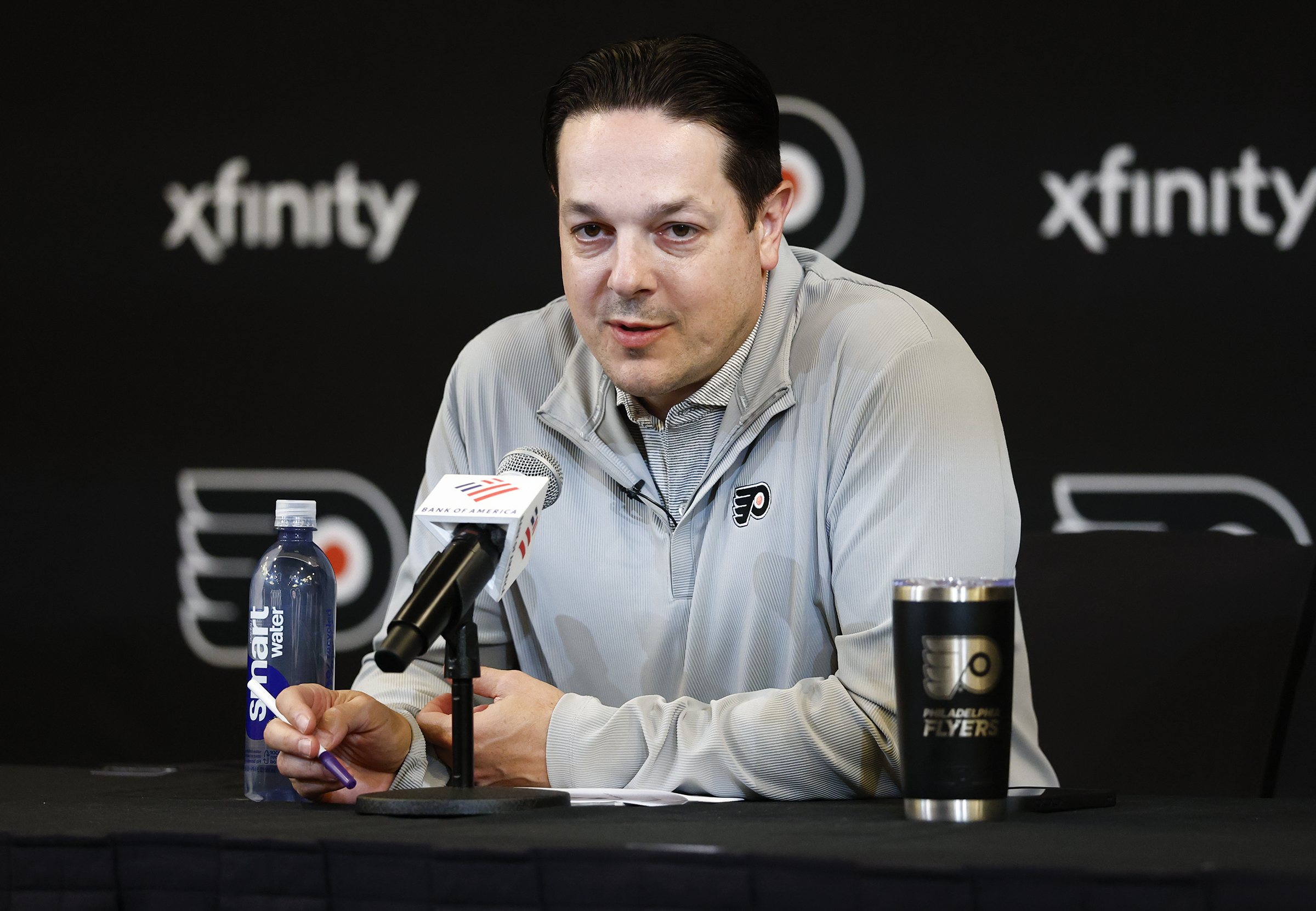
  • At first glance, the Flyers’ 2026 draft feels underwhelming. Only time will tell.

    At first glance, the Flyers’ 2026 draft feels underwhelming. Only time will tell.

    ATLANTIC CITY — You can be overwhelmed. You can be underwhelmed. Can you ever be just whelmed?

    Because that’s the feelings after the Flyers’ 2026 draft. It doesn’t feel fantastic. It doesn’t feel terrible. It just feels … there.

    Is that what was conveyed by assistant general manager Brent Flahr, speaking after they wrapped things up?

    “This draft, I’ll be honest with you, there’s layers, and especially early on, our layers got cleaned out quickly. And I’ve never seen it like that before,” he said. “Even as the draft went along, but we were able to move back in the first, and then we’re able to move around and get players we’re happy with, so it worked out fine.”

    Maybe that’s it. It was fine.

    Yes, it’s too early to tell where this draft will land because 99% of the time, players need time to develop and grow. And there may have been something in the air because while the gambling floor of the Hard Rock Hotel & Casino had people testing their luck with the press of a button on a slot machine, on each spin of the roulette wheel, and every roll of the dice, that appears to have permeated upstairs to the Flyers’ draft room as they selected their next generation in the 2026 NHL draft.

    The Black and Orange opted for long-term wait-and-see projects. (They love projects, don’t they?) And, to be fair, they have some time with the past few draft classes finally bearing fruit.

    Maksim Sokolovskii, the Flyers’ first-rounder who Flahr called “a unicorn,” is a big, mean defenseman who needs to continue building his defensive game while also trying to add some offense. Goalies Martin Psohlavec and Marek Sklenička looked great at the U18s for Czechia — another Flyers trademark — but are still raw. And second-rounder Brek Liske, probably the best story of the draft, just for the fact that his dad is a diehard Flyers fan, has a solid foundation, but does have to work on his skating — where have we heard that before?

    The Flyers were higher than most on Maksim Sokolovskii. They view him as a defensive “unicorn.”

    Center KJ Sauer missed most of this past season after tearing his posterior cruciate ligament the year prior and compared his style of play to that of Brady Tkachuk. Flahr said last week the Flyers could add a small, dynamic defenseman — but in the later rounds — and they got Max Laatikainen, a small Finnish defenseman they are hoping still can grow.

    Whether they actually see an NHL game is truly a crapshoot anyway. But that’s always the case. In 2020, DobberProspects did a study showing that 60 NHL players from a draft class eventually make it to the NHL, which is less than 27%. TSN director of scouting Craig Button recently told NBC Sports Philadelphia that “approximately 45 players from any draft will play 350 games or more in the NHL.” That’s not a whole lot.

    Entering this draft, since Flahr has been at the helm, the Flyers have drafted 50 players. Not counting the two previous classes, although Porter Martone and Jett Luchanko have already played NHL games, 44% have played at least one NHL game. Will this class make it? Who knows.

    Now it does feel like they stayed the course and went down the path of previous drafts with a slight twist.

    They again drafted for size — even though Flahr said Saturday it wasn’t a focus — with only Laatikainen of the six picks under 6 feet. In the process, they left players like dynamic but risky small defensemen Ryan Lin, Tommy Bleyl, and Xavier Villeneuve on the table in the first round and talented forwards like the Ruck Twins, Jack Hextall, J.P. Hurlbert and Brooks Rogowski.

    But Flahr and general manager Danny Brière did stress that players drafted today will not help the team in the near future — so drafting a power-play specialist would not have made the atrocious power play better in the here and now — and they needed goaltending and defensive depth.

    It just felt like maybe there were better options?

    But who is to know today what tomorrow brings?

    Rugged defenseman Maksim Sokolovskii was the second-biggest player drafted this past weekend.
  • Public vs. private sports | Sports Daily Newsletter

    Public vs. private sports | Sports Daily Newsletter

    For years, there’s been a rift between Pennsylvania’s public high schools competing against private schools in state playoffs.

    Since the Catholic League and Public League moved under the jurisdictional umbrella of the PIAA in the fall of 2008, complaints have become common among public school coaches, administrators, parents, and players about issues of fairness.

    But this fierce debate could soon be cast in stark relief, writes Mike Sielski.

    Back in April, Pennsylvania State House of Representatives passed a bill that would allow the PIAA to “establish separate playoffs and championships for athletics for boundary schools and non-boundary schools.”

    However, it has yet to be voted by the state’s senate. In the meantime, local coaches share their thoughts on the divide between public and private schools in the PIAA.

    — Isabella DiAmore, @phillysport, sports.daily@inquirer.com.

    If someone forwarded you this email, sign up for free here.

    ❓Should high school state playoffs be split between non-boundary and boundary schools? Email us back for a chance to be featured in the newsletter.

    Time for change

    Folarin Balogun (center) running with teammates during a United States men’s national soccer team practice at Great Park in Irvine, California on Sunday.

    Leading up to Wednesday’s round of 32 contest with Bosnia & Herzegovina, it’s good to remember that the U.S. men’s soccer team has won just one World Cup knockout game ever.

    So while it may feel cliché to say this is one of the biggest moments in U.S. men’s history, it’s also true.

    And now that the World Cup knockout bracket is set, let’s take a look at the 32 games left to go between now and the July 19 final.

    What we’re…

    ⚽ Reminiscing: The best moments from Philly’s World Cup group stage matches, which ended Saturday night.

    🥊 Learning: Philly’s Jaron Ennis knocked out Xander Zayas to become junior middleweight champ at the Barclays Center on Saturday.

    🤔 Wondering: What grade writer Jackie Spiegel gave Flyers general manager Danny Brière after the first round of the NHL draft.

    📖 Reading: Cheryl Reeve and Elena Delle Donne reflect on what it means to be inducted to the Women’s Basketball Hall of Fame.

    Historic homer

    Kyle Schwarber hit the 30-homer mark in the Phillies’ 84th game, which is faster than any player in franchise history.

    Kyle Schwarber reached the 30-homer mark on Sunday in the Phillies’ 84th game, faster than any player in franchise history. His 408-footer to right-center field against Mets righty Kodai Senga in the seventh inning also gave the Phillies the lead to power a 5-4 victory that drew them to within three games of first place in the NL East.

    After a wildly successful road trip, the Phillies’ flaws still bubbled to the surface: they’re vulnerable to left-handed pitching; the middle relief can be exposed when the starter doesn’t go six innings; the defense isn’t good. Ideally, the Phillies will address a few areas before the Aug. 3 trade deadline, writes Scott Lauber.

    Also, Andrew Painter made his first start for triple-A Lehigh Valley on Sunday. While Don Mattingly is counting on having the 23-year-old back, the interim manager doesn’t have an outlined timetable for Painter’s return.

    Meet the newcomers

    Eagles quarterback Andy Dalton (left) was brought in to compete for a role behind Jalen Hurts. Will he emerge as QB2 during training camp and preseason?

    With the Eagles training camp on the horizon, let’s take a closer look at the more than three-dozen new faces who are expected to report along with the rest of the team on July 28.

    Our writers will roll out two players per day in a mostly unscientific order that balances offense and defense, bigger names with mysteries, and locks with longer shots to be chosen for the 53-man roster — starting with Andy Dalton and a lesser-known name, defensive back Kapena Gushiken.

    Underwhelming draft

    Maksim Sokolovskii, right, stands with NHL commissioner Gary Bettman, left, after being drafted by the Flyers with the 27th pick in the draft.

    The feelings after the Flyers’ 2026 draft doesn’t feel fantastic. It doesn’t feel terrible. It just feels there.

    The Flyers did, however, stick to their usual script of prioritizing size and two-way responsibility over offensive flash. It will take a few years before we know if that was the right course.

    And here’s everything to know about the Flyers’ development camp, which starts this week.

    David Murphy’s take

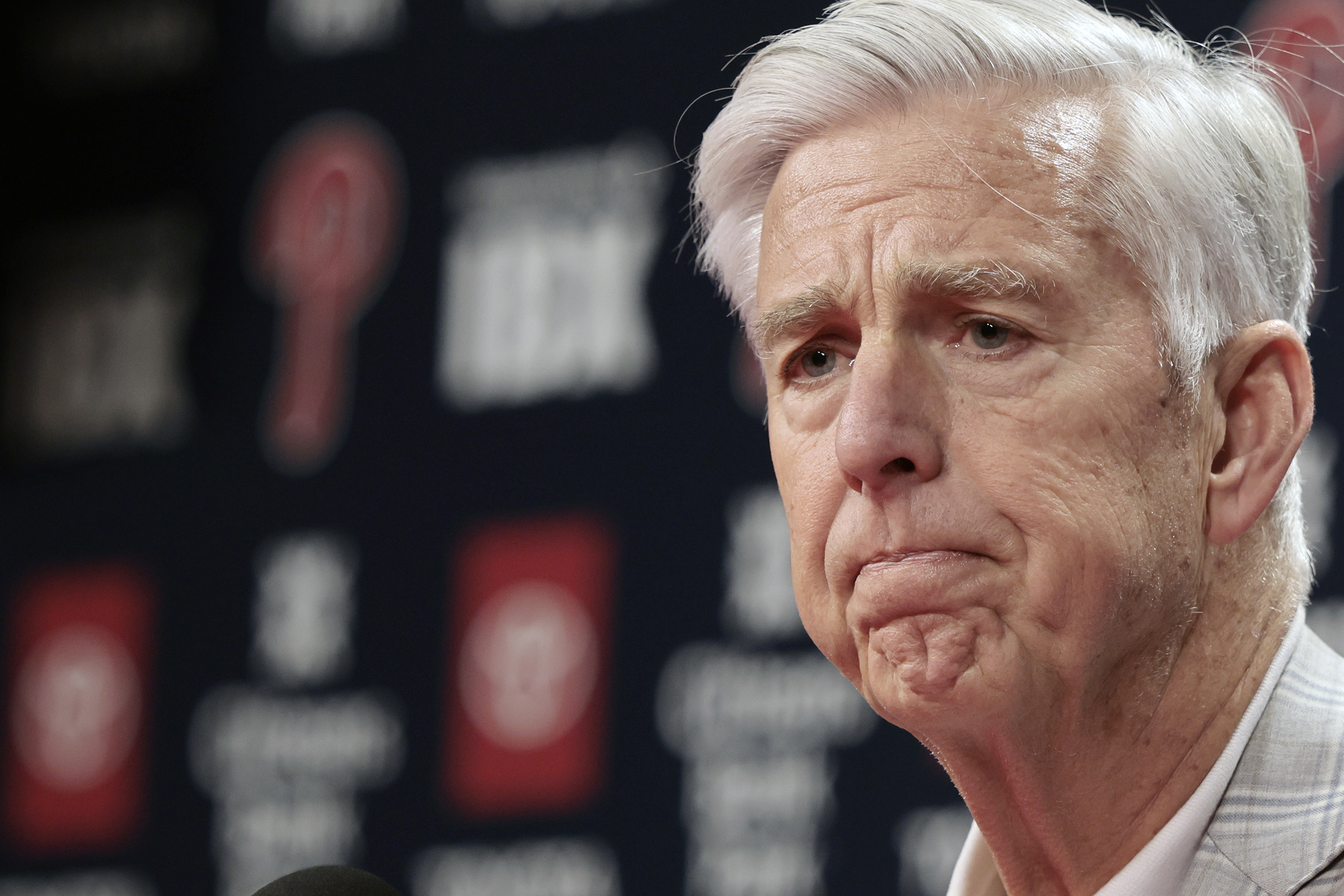
    Right now, Dave Dombrowski’s offseason looks like a near-total failure.

    There isn’t an executive in Major League Baseball that should be feeling more pressure than Dave Dombrowski now that Bryce Harper has answered fully and satisfactorily the infamous question that the Phillies president posed this offseason.

    “Can he rise to the next level again? I don’t really know that answer.”

    With just over a month to go until the trade deadline, Dombrowski and his front office better have a serious plan for broadening the team’s potential contributors, writes columnist David Murphy.

    We compiled today’s newsletter using reporting from David Murphy, Mike Sielski, Jonathan Tannenwald, Matt Breen, Mel Greenberg, Jackie Spiegel, Scott Lauber, Olivia Reiner, and Kerith Gabriel.

    By submitting your written, visual, and/or audio contributions, you agree to The Inquirer’s Terms of Use, including the grant of rights in Section 10.

    Thanks for getting your morning started with me. Have a wonderful Monday, we’ll be back in your inbox tomorrow. — Bella

  • Bryce Harper has proven he is still elite. Now, it’s Dave Dombrowski’s turn.

    Bryce Harper has proven he is still elite. Now, it’s Dave Dombrowski’s turn.

    The funny thing about Bryce Harper’s 2026 world-wrecking tour is that he has somehow managed to both vindicate his boss and hang him over the dunk tank. There isn’t an executive in Major League Baseball that should be feeling more pressure than Dave Dombrowski now that Harper has answered fully and satisfactorily the infamous question that the Phillies president posed this offseason.

    “Can he rise to the next level again?‚” Dombrowski asked about Harper after the Phillies’ postseason loss to the Dodgers. “I don’t really know that answer.”

    Eight months later, Dombrowski should know it better than anyone. The Phillies’ personnel boss has spent 84 games watching Harper bail him out of another failure of an offseason. One year after the Phillies’ superstar posted an .844 OPS that was his lowest since 2016, his current .915 OPS would be his best since 2021, when he hit .309/.429/.615 with 35 home runs en route to winning his second MVP.

    Harper’s 19 home runs in his first 83 games were his second-most as a member of the Phillies. His .391 wOBA ranked eighth in the major as of Saturday. His .278/.379/.536 batting line is pretty much exactly his career baseline. It is a lofty baseline. You might even call it elite.

    While Harper might argue that retribution is a dish best served raw (like milk), his performance this season actually lends some credence to his boss’ offseason critique. Harper isn’t proving Dombrowski wrong. He is proving him right.

    Fact is, Harper wasn’t an elite player in 2025. Between 2021 and 2024, Harper was one of five players in the majors with a wOBA of .390+. The other four were Aaron Judge, Shohei Ohtani, Juan Soto and Yordan Alvarez. Add in Ronald Acuña Jr., Freddie Freeman, and Mookie Betts, and those were the truly elite hitters in Major League Baseball.

    Bryce Harper has hit 19 home runs this season.

    In 2025?

    Harper’s .361 wOBA ranked 25th, behind guys like Ramon Laureano (.364), Pete Alonso (.368) and Geraldo Perdomo (.370). That was Dombrowski’s whole point. You can certainly question whether it was an appropriate one to make. The under-the-hood numbers suggested that Harper’s “down” year was mostly attributable to chance.

    There weren’t any significant dips in his hard hit rate or his strikeout rate or his bat speed. He showed fewer signs of regression than most 32-year-old hitters. The Phillies could not have hoped for a better return on the first seven years of the 13-year, $330 million contract that Harper signed in 2019. As the old saying goes, don’t look a gift horse in the mouth and tell him he isn’t elite.

    At the same time, Dombrowski’s assessment was correct. In 2025, Harper’s production wasn’t in the same realm as a Judge or a Soto or an Ohtani. It just wasn’t. He was still a very, very good player. He just wasn’t a singular one.

    Here in 2026, Harper is reminding us just how much of an impact he can make when he is elite. The Phillies have been the best team in baseball since the beginning of May despite a lineup that has five regulars who have been 30% worse than league average as measured by OPS+. Harper’s 146 OPS+ is more than twice as high as those of four of the six guys who hit behind him in the lineup.

    The onus is now on Dombrowski to do his part.

    How active will Dave Dombrowski and the Phillies be at the MLB trade deadline?

    As good as the Phillies have been since replacing Rob Thomson with Don Mattingly, any realist should wonder how good they’d be with a roster that wasn’t completely reliant on two MVP seasons at the plate, two Cy Young seasons in the rotation, and one of the best closers in the game … and Brandon Marsh. It would be foolish for anybody to think that formula can carry them through a month of playoff baseball.

    With just over a month to go until the trade deadline, Dombrowski and his front office better have a serious plan for broadening the team’s potential contributors for a postseason series against the Dodgers or Braves.

    window.addEventListener(“message”,function(a){if(void 0!==a.data[“datawrapper-height”]){var e=document.querySelectorAll(“iframe”);for(var t in a.data[“datawrapper-height”])for(var r,i=0;r=e[i];i++)if(r.contentWindow===a.source){var d=a.data[“datawrapper-height”][t]+”px”;r.style.height=d}}});

    Even with Marsh’s All-Star-worthy season, the Phillies’ outfield entered Sunday with the sixth-worst collective OPS in the majors. At catcher, theirs is the second-worst OPS. They rank in the bottom five at third base and shortstop and are 23rd at third base. But, hey, other than that they’ve been great.

    Right now, Dombrowski’s offseason looks like a near-total failure. Adolis García, J.T. Realmuto, Andrew Painter, Brad Keller, Justin Crawford — all received his stamp of approval as he tinkered with a roster that had suffered three straight playoff disappointments.

    Even if you are willing to credit Crawford with being a perfectly adequate bottom-of-the-order hitter at a premium position in center field, the aggregate output of the offseason maneuvering still qualifies as a man-made disaster.

    It may not be now or never. But it is getting close. The Phillies owe it to Harper, Schwarber, Zack Wheeler, Cristopher Sánchez and Jhoan Duran to aggressively address the holes that threaten to undermine one of the greatest efforts we’ve ever seen from five superstars in one season.

    Harper is still elite.

    The jury is out on Dombrowski.