Blog

  • As the future of college athletics takes shape, Penn State doesn’t need permission to speak for itself

    As the future of college athletics takes shape, Penn State doesn’t need permission to speak for itself

    Universities should not need permission from sports conference administrators to engage with Congress on legislation that will shape their future. That statement should be obvious.

    As what had been a slow-brewing crisis in college athletics comes to a boil, Washington is finally paying attention.

    For years, universities have struggled to manage a system increasingly shaped by sweeping court rulings, a patchwork of often-contradictory state laws, and endlessly competing commercial interests rather than any coherent national policy. Athletes navigate a tangle of name, image, and likeness rules, which govern the compensation they can receive and which vary widely by state. Administrators make decisions without knowing what the rules will look like six months from now. And fans watch their favorite players transfer from campus to campus with few reliable guardrails in place.

    Yet as Congress considers the Protect College Sports Act, the most significant attempt in years to establish a national framework for college athletics — many universities appear reluctant to engage publicly while conference administrators increasingly position themselves as the primary voice speaking on behalf of their members.

    That should concern every university trustee, president, donor, alumnus, college athlete, and policymaker.

    This is not a debate about whether the Protect College Sports Act is perfect. It isn’t. Nor is it a debate about whether conference commissioners are talented leaders. Many are.

    This is a debate about who should speak for universities when the future of higher education and intercollegiate athletics is being decided.
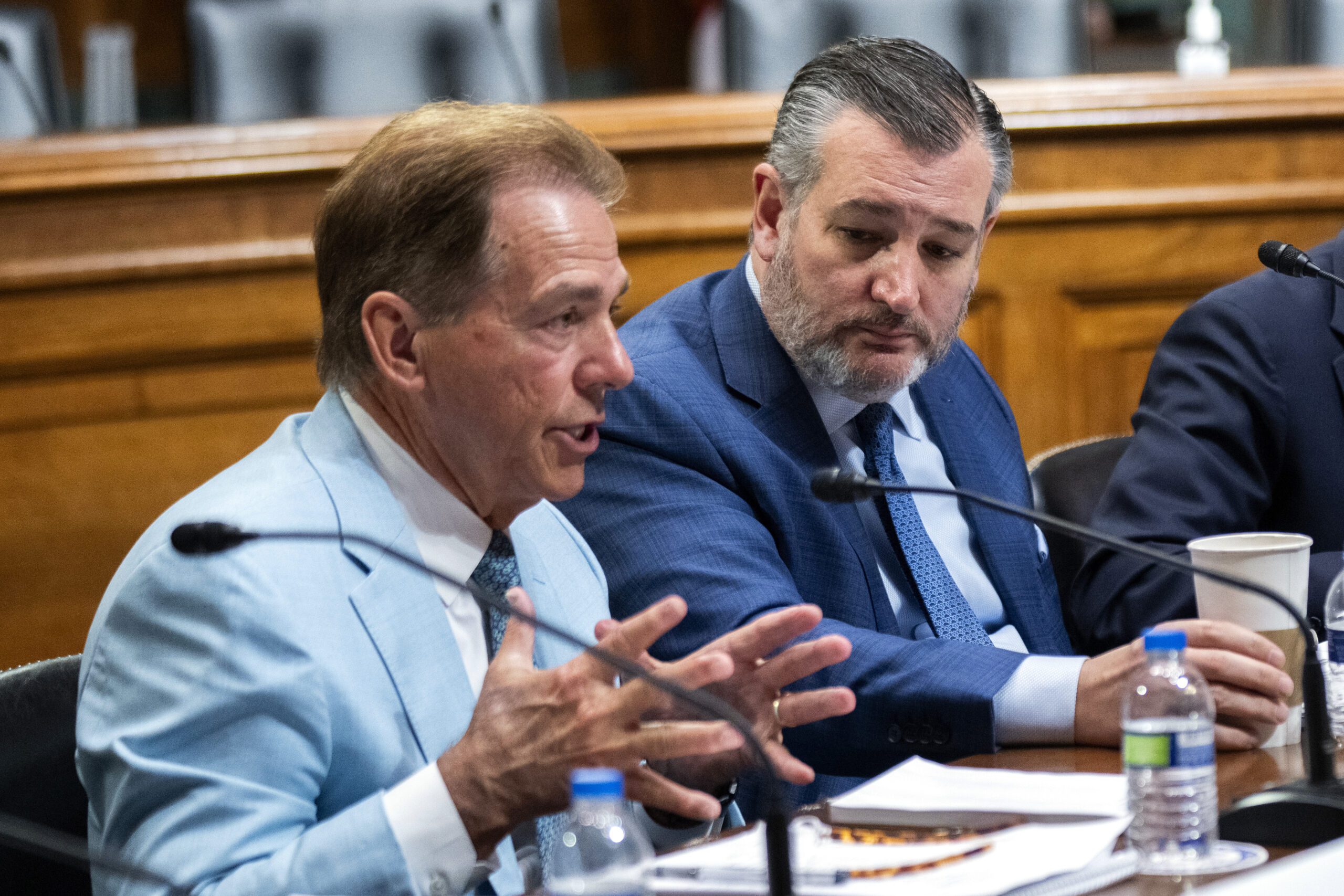
    Nick Saban (left), the former University of Alabama football coach, speaks as Sen. Ted Cruz (R., Texas) listens during a roundtable on the future of college athletics on Capitol Hill in March 2024.

    The current system is broken — and there are only two realistic options for what comes next: a federal framework that restores stability and national standards, or the continuation of today’s chaos. There is no option three.

    What troubles me most is not opposition to the Protect College Sports Act. Reasonable people can disagree. What troubles me is the notion that universities should remain silent while others speak for them.

    As a Penn State graduate, two-time NCAA All-American wrestler, donor, parent of a future Penn State athlete, and someone who has spent four decades building businesses and advising organizations throughout college athletics, I have watched this moment unfold from nearly every angle.

    My perspective comes from life as an athlete, entrepreneur, executive, adviser, and parent. From the wrestling mat to the boardroom, I have never seen college athletics facing greater uncertainty than it does today.

    Congress is not asking the Big Ten what is best for Penn State. Congress is asking stakeholders what is best for college athletics.

    In fact, one of the bill’s cosponsors, Sen. Maria Cantwell of Washington, recently challenged the growing influence of conference administrators in the legislative process, asking whether universities were really comfortable allowing conferences to drive the discussion.

    It’s a fair question.

    Penn State should answer that question itself.
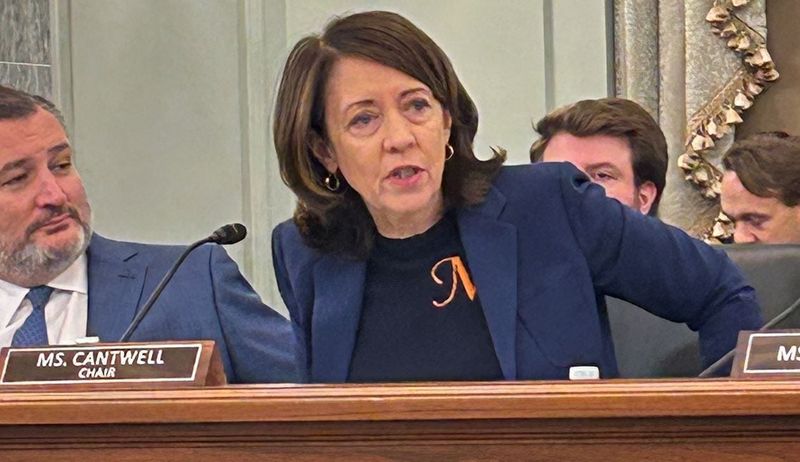
    Sen. Maria Cantwell (D., Wash.) recently challenged the growing influence of conference administrators in the debate over the Protect College Sports Act.

    Lawmakers are finally engaging. They are asking questions. They are seeking input from universities, athletic leaders, and stakeholders across the country. Penn State should be part of that conversation.

    If conference administrators are prohibiting university leaders, trustees, athletic directors, donors, and other stakeholders from engaging directly with lawmakers or expressing support for legislation, then conference employees are attempting to silence the voices of the institutions that created them. That is not their role.

    Universities created the conferences. Conferences exist to serve universities — not to control them.

    If institutions with Penn State’s stature are unwilling to engage directly with lawmakers, then the future of college athletics will increasingly be shaped by others.

    The stakes extend far beyond football. As a former student-athlete, I know firsthand that the value of college athletics goes well beyond the sports that generate the largest television audiences. Wrestling, volleyball, gymnastics, swimming, track and field, soccer, softball, lacrosse, and dozens of other sports depend on a healthy and sustainable collegiate model.

    The opportunities those programs create changed my life, as they have changed the lives of countless others. They deserve to exist for future generations as well. That is what is at stake.

    The decisions being made in Washington will affect every university in the nation. They will shape opportunities for college athletes for decades to come.

    Pennsylvania’s universities deserve a voice in that discussion. Penn State certainly does — and it should take its seat at the table and speak with its own voice, as should other institutions that have recently voiced independent concerns, including Michigan, Ohio State, and USC.

    Not because the legislation is perfect. Not because every stakeholder agrees. But because leadership requires engagement.

    Penn State has never been a follower. It shouldn’t start now.

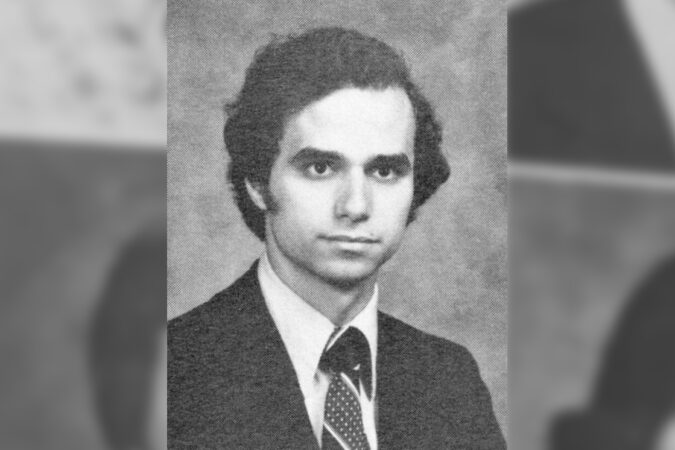
    Chris Bevilacqua is a veteran of four decades in sports, media, and technology as an entrepreneur, operator, investor, and adviser, including founding the nation’s first 24-hour college sports television network. He is a 1986 graduate of Penn State where he was a two-time NCAA All-American on the wrestling team and also competed internationally for USA Wrestling.

  • Trump says he is nominating former Oklahoma state trooper Lance Schroyer as ICE director

    Trump says he is nominating former Oklahoma state trooper Lance Schroyer as ICE director

    NEW YORK — President Donald Trump on Saturday said he is nominating Lance Schroyer, a former Oklahoma state trooper, as the next director of Immigration and Customs Enforcement.

    Trump said on his Truth Social platform that his new pick for the immigration enforcement agency is a former U.S. Marine and a “PATRIOT with real operational experience.” He called Schroyer a ”proven leader with DECADES of experience locking up the worst of the worst.”

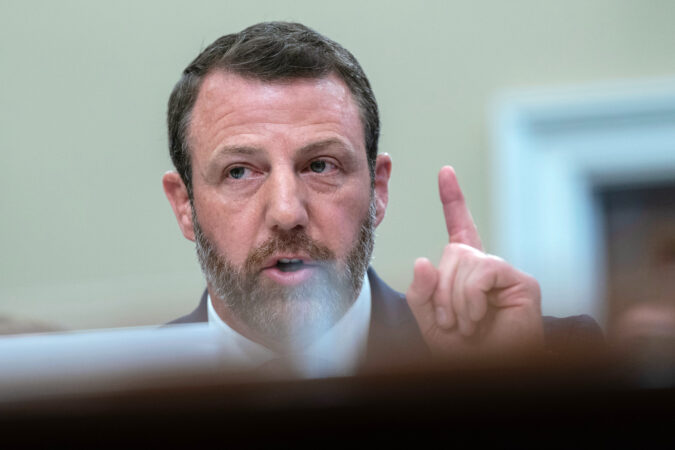
    Schroyer hails from the same home state as the new Department of Homeland Security Secretary Markwayne Mullin, a former congressman. Earlier this month, Mullin brought Schroyer onstage at a National Sheriffs’ Association event, calling him a “good friend of mine” and noting DHS had recently hired him.

    On Saturday, Mullin quickly praised Schroyer in a statement highlighting the former trooper’s 29-year career and his work with federal and state partners on a U.S. immigration enforcement program.

    “President Trump made a great pick, and I’m confident Lance’s strong leadership and firsthand experience will empower the men and women of ICE to deport criminal illegal aliens, secure the homeland, and protect the American people,” Mullin said.

    If confirmed, Schroyer will lead ICE at a time when the public mood has soured on Trump’s immigration crackdown, which sent surges of federal immigration officers into American cities to round up immigrants. Those raids sent tensions soaring and prompted clashes between protesters and law enforcement, leading to the fatal shootings of two U.S. citizens in Minneapolis earlier this year.

    Trump returned to the White House on a promise of mass deportations, and ICE has been a central executor of that vision. The agency is undergoing massive growth from a one-time injection of $75 billion last year, which has allowed for the hiring of 12,000 officers and increased detention capacity.

    Mullin, who started in his role in March, has promised to keep his department out of the headlines and has indicated a softer tone on immigration, although he is expected to align with the president’s priorities on mass deportations.

    Claire Trickler-McNulty, a former senior ICE official, said prior confirmed ICE directors have often been attorneys, though some state and local law enforcement officials have also been nominated. She said Schroyer’s background in Oklahoma suggests Mullin likely had influence over the pick.

    “I think probably given the attention on ICE, he wants to feel like he has somebody he can trust in there,” she said in an interview.

    John Torres, another senior ICE official, said Schroyer faces an uphill climb toward Senate confirmation but his experience being at the state and local level instead of the federal level might help.

    “He won’t have any of that baggage, where they’re going to turn around and say, oh, well, he worked for this administration or that,” Torres said.

    Schroyer’s nomination comes after former ICE director Todd Lyons resigned at the end of May. David Venturella, a former executive at a private prison operator, has been serving as the acting head of the agency. Venturella is expected to stay on as the acting director until Schroyer is Senate confirmed, according to a DHS official speaking on condition of anonymity.

    ICE has not had a Senate-confirmed director since the Obama administration, a result of polarizing politics around the agency and immigration policy.

  • NASA races to save Swift telescope from falling back to Earth with daring rescue mission

    NASA races to save Swift telescope from falling back to Earth with daring rescue mission

    CAPE CANAVERAL, Fla. — NASA is racing to save an aging telescope from falling back to Earth with a daring rescue mission.

    The $30 million salvage operation gets underway as soon as this week with the planned launch of a robotic lifesaver.

    NASA hired startup Katalyst Space Technologies to boost the Swift Observatory to a higher orbit where it can continue hunting for some of the universe’s biggest explosions. A three-armed spacecraft built by Katalyst will chase after Swift once it takes off from an atoll in the Pacific’s Marshall Islands aboard an airplane-launched Pegasus rocket. Liftoff could occur as early as Tuesday.

    Scanning the cosmos since its launch in 2004, Swift has been sinking faster and faster because of recent intense solar activity. It needs to get to a higher, more stable orbit as soon as possible to survive.

    NASA’s Hubble Space Telescope — also at risk — could be next.

    Like Swift, Hubble is losing altitude as the sun erupts with one flare after another. Katalyst Space CEO Ghonhee Lee said his company’s next-generation robot, still in development, could save the day for the much bigger Hubble in a couple years.

    Only China has attempted a mission like the upcoming one, successfully boosting a satellite into a higher graveyard orbit four years ago.

    “This is the first American space robot to go up and do anything like this,” Lee told the Associated Press. “NASA has all these big senior observatories … all of them can benefit from a service like this. So what we’re proving with this mission is this is a new play in the playbook that’s available.”

    It will take Katalyst’s autonomous spacecraft, named Link, about a month to rendezvous with Swift and catch it, and another couple of months to raise its orbit from the current 224 miles to the desired 373 miles.

    The 1.6-ton gamma ray observatory must be above 185 miles for the rescue to work. It’s expected to reach that point of no return in October, according to the latest estimates.

    Roughly the size of a small kitchen refrigerator with a 40-foot solar wingspan, Link sports three arms with a reach of just over 3 feet. Each arm has two fingerlike pinching grippers that resemble the hands of a Lego mini figure.

    If all goes well, Swift could be back in business by September, according to Lee.

    Worth hundreds of millions of dollars, Swift was never designed to be repaired, let alone retrieved by hands — human or otherwise. That’s what makes this so challenging, according to company officials, who stress there is no guarantee it will work.

    NASA signed a contract with Katalyst last September with only two requests: It has to be a rush job, but please don’t make things worse. Nine months later, the company is ready to rumble.

    “I have to be honest. No one thought it was going to be possible. No one thought we would get as far as we’ve already gotten today,” said Shawn Domagal-Goldman, NASA’s astrophysics director.

    NASA has bought a little more time for Swift, turning off all scientific instruments to slow its descent. Observations ceased in February.

    NASA’s science mission chief Nicky Fox said it’s worth the effort.

    “If we let Swift reenter, we would lose that telescope. We would lose a lot of capability,” she said. “We don’t currently have the budget to build another one to replace that.”

    While not everything can be saved in space, Swift is special, said Domagal-Goldman.

    True to its name, Swift is designed to pivot quickly to capture late-breaking astronomical events such as gamma ray bursts and exploding stars. With more discoveries expected by the Webb Space Telescope and soon-to-launch Roman Space Telescope, Swift, if saved, would be busier than ever as “NASA’s first responder.”

    Katalyst sees Swift as the jumping-off point for a new repair business in space. The company’s next-generation robotic rescuer, scheduled to fly next year, will tackle satellites as high as 22,300 miles up. Lee envisions hundreds of robots in orbit one day, not only fixing and hoisting satellites but also refueling them and building solar farms, data centers, and other platforms.

    Hubble, which is 36 years old and received repeat servicing by spacewalking astronauts during the shuttle era, could follow in 2028 with a life-extending Katalyst boost.

    “It’s a national treasure,” Fox said. “People love Hubble.”

  • No, Pope Leo XIV wasn’t at a ’70s Villanova University fraternity party in this viral photo

    No, Pope Leo XIV wasn’t at a ’70s Villanova University fraternity party in this viral photo

    Did Pope Leo XIV actually go to a Villanova University fraternity party?

    That’s what one user on X purported when he posted an aged photo of the leader of the Catholic Church standing with a group of young men — one wearing a Villanova T-shirt and holding a small dog — in front of a brick bungalow. “The future Pope Leo XIV at a Villanova frat party in 1976,” the caption read.

    The tweet had 1.4 million views and more than 15,000 likes as of Sunday.

    But internet sleuths were suspicious:

    “Not one of them is holding even a beer. That’s one tame frat party,” one of nearly 150 comments read.

    “Doesn’t this look more like a step ranch in/near Chicago than anything on the Main Line?” another user smartly deduced.

    The photo was actually taken at a fellow Wildcat’s house on the South Side of Chicago, where the pontiff is from, according to a classmate who has a copy. The classmate, who declined to be named for privacy reasons, assured The Inquirer it was not a frat party and dated the photo to the mid-’70s.

    Pope Leo graduated from Villanova in 1977. He’s the first U.S.-born pope, which presumably could also mean he’s the first to brush up against Greek life, but Villanova does not have fraternity and sorority housing. The Holy See, the Vatican’s governing body, did not immediately respond to an email seeking more information about the photo.

    Still, people were intrigued by the idea of the Pope at a party:

    “It’s important to me that the pope has been to a frat party even if it was a daytime frat party of eight,” one user wrote.

    Another said, “Learning your frat bro is now the pope. That’s like something from the epilogue of Animal House.”

  • Venezuela government accused of politicizing earthquake relief

    Venezuela government accused of politicizing earthquake relief

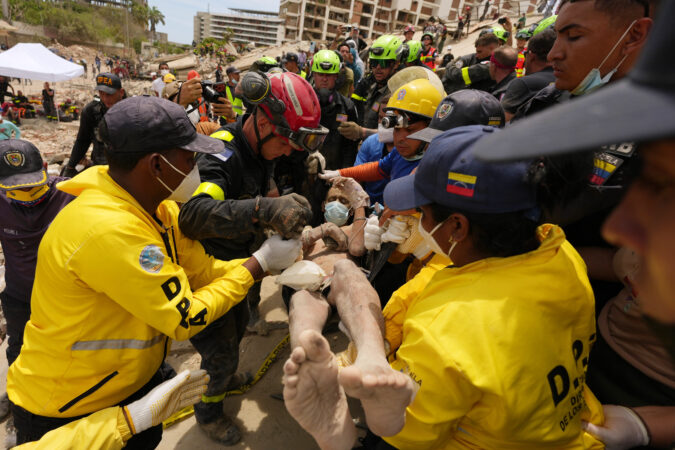
    The Venezuelan opposition party led by exiled former legislator and Nobel laureate María Corina Machado mobilized volunteers throughout the nation last week to collect donations for homeless earthquake survivors, but it encountered an unexpected obstacle: the National Police.

    On Thursday, Heidy Loicett, a leader of the opposition party, Vente, stood under a blue tarp on a sidewalk in Portuguesa, a state some 275 miles from the disaster zone, as people came by with a variety of items such as diapers, bottled water, and used clothing. The police came by, too, she said.

    Several Venezuelan National Police officers and officials from the federal Civil Protection agency tried to shut down the charity drive, she explained in a telephone interview after the encounter, adding that she was told that all donations had to be channeled through the federal government.

    “They said we couldn’t have a donation center, that the only authorized donation drop-off center was Civil Protection and the government,” Loicett said. “That was political persecution.”

    The clash over who gets to take credit for the humanitarian relief effort for the earthquake-shattered nation highlights a much larger, high-stakes battle for political survival in a fractured Venezuela.

    Last week Venezuela suffered two devastating earthquakes that killed more than 1,400 people, just six months after the U.S. military raided the country and seized the country’s former leader, Nicolás Maduro. Critics say they fear that Venezuela’s acting president, Delcy Rodríguez, will politicize the tragedy, using the disaster response to establish her legitimacy at a critical inflection point.

    Rodríguez’s government, which did not respond to requests for comment, has said the authorities are trying to impose order and keep areas and roads hit by the earthquakes clear so relief convoys and emergency responders can do their work unimpeded.

    It is also a general rule of politics that opposition figures are quick to highlight any failures of the governing party.

    Rodríguez had been vice president before the United States captured Maduro and said it was going to run the country, elevating her to the top job. Her tenure depends on the Trump administration’s approval, and her management of this crisis is also a key moment for President Donald Trump.

    White House officials have said the alliance with Rodríguez was meant to stabilize Venezuela and help revive its battered economy. The disaster is likely to put that relationship to a severe test.

    Experts say that tightening control over aid and stifling the opposition’s grassroots relief efforts is a page out of a decades-old authoritarian playbook. Rodríguez, they say, is gambling that international crisis management can mask the state’s internal decay and secure her hold on power.

    That strategy was on full display in a widely circulated video in which a police officer appears to tell volunteers where the United Socialist Party of Venezuela, the ruling government party, had authorized donation drop-offs. Donation centers set up by the opposition in other cities were told that they could not display signs reading “Donation Center,” because those words could be used only by the government’s authorized drop-off sites, political activists said.

    “They told us we could not use the words ‘donation center,’ like if they had trademarked those words,” said María Oropeza, a Vente party official. “It is inevitable that they will try to use this tragedy at their favor to stay in power.”

    Party officials said police backed off after crowds started gathering and taking videos. The volunteers took down the offending signs, and the drive continued.

    Volunteers from the opposition planned to try to make deliveries to the earthquake zone over the weekend, but the authorities announced that civilians without authorization would be prohibited from entering La Guaira, the hardest-hit coastal area.

    Government officials said the rush of volunteers in the disaster zone was blocking traffic, which was critical for the movement of heavy machinery.

    “Those who do not have rescue or security duties in La Guaira state should please refrain from traveling there, as you are obstructing the movement of personnel needed for our military, police, Civil Protection, firefighters, and rescue workers to reach the disaster zone,” Rodríguez said. “These are critical hours.”

    She called for unity in the time of crisis, and has welcomed a number of international search and rescue delegations, including from the right-wing governments of El Salvador and Argentina.

    Rodríguez’s decision to accept help from political adversaries underscored a delicate balance of projecting an image of effective disaster management while scoring political points before potential elections, said Pablo Quintero, a political consultant, who said he works mostly with the opposition in Venezuela.

    “In the face of catastrophes, governments act based on political interests,” he said. “In this case, the Chavista government is acting to gain greater prominence, to demonstrate its management capacity to the international community, and in some way to send a message to the population that they have managed to unify the country.”

    But Machado is acting in her own interests too, he said.

    “María Corina Machado has a political agenda,” he said. “And the objective reality is that her media operatives are running a campaign to demonstrate the government’s incompetence.”

    Machado was said to be trying to go back to Venezuela, which frustrated some U.S. officials, who considered a return in the wake of an emergency to be a “political stunt,” the New York Times reported Saturday.

    A spokesperson for Machado said she was not available for comment.

    Rodríguez, as Maduro’s vice president in charge of the economy, was part of a repressive government that stole a presidential election in 2024.

    After the U.S. raid in January that removed Maduro but allowed Rodríguez to stay on as interim leader, the Trump administration said Venezuela would eventually move toward elections and a restoration of democracy. The disaster engulfing Venezuela could delay such a transition, experts said.

    “It’s hard to imagine that Delcy won’t use the earthquakes to delay discussions of a democratic transition; some of that is certainly legitimate in the face of such an overwhelming humanitarian emergency,” said Cynthia Arnson, an adjunct professor at the Johns Hopkins University School of Advanced International Studies.

    But it may not work out as she hopes, Arnson said.

    “The political effects of natural disasters are often severe,” she said. “Weeks or a few short months after the immediate emergency, the quakes are likely to magnify the incapacity of the government to meet basic needs, let alone undertake any kind of reconstruction.”

    Widespread corruption of international aid sent after a 1972 earthquake in Nicaragua was among the events that led to the unraveling of a dictatorship led by Anastasio Somoza Debayle. An earthquake in Mexico City in 1985 helped lead to the end of one-party rule there more than a decade later.

    Benigno Alarcón, the former director of the Center of Government and Political Studies at Universidad Católica Andrés Bello, said there was “no doubt” that Rodríguez would try to capitalize on the catastrophe — and she would not be the first.

    He said many Venezuelans still recall the 1999 mudslides that occurred in the quake zone — including La Guaira — when the ruling party’s former leader, Hugo Chávez, refused to accept humanitarian assistance from the U.S. military.

    “Remember that these are not new people in power,” he said. “These people in the government have been in government for a long time.”

    Rodríguez and Machado would hardly be the first to politicize natural disaster recovery, said Brian Naranjo, a former top U.S. diplomat in Venezuela. He cited the words of the liberator, Simon Bolivar, amid the political machinations following a catastrophic earthquake in 1812 in Venezuela.

    “If nature opposes us,” Bolívar said, “we shall fight nature and make it obey.”

  • With time running out, Trump digs in on changing midterm election rules

    With time running out, Trump digs in on changing midterm election rules

    President Donald Trump’s efforts to alter how elections are run faced an avalanche of setbacks last week, as Republican senators rebuffed him and court after court hindered his administration’s plans to, as one judge put it, undercut “the sacred right to vote.”

    The pushback has infuriated the president, who has ramped up his threats and demands as he openly grows increasingly worried about the investigations and impeachment that could come if Democrats win control of Congress.

    But with the general elections just four months away, Trump is racing the clock as states make final preparations for early voting.

    The urgent push to change election rules by several arms of the federal government has created a volatile sea of shifting and contested election policies, many of which are before the courts. The climate of uncertainty is creating headaches for election officials and risks confusing voters, reanimating conspiracy theories about rigged elections, and spurring postelection disputes.

    “The administration is doing as much as possible to inject chaos into the election cycle,” said Wendy Weiser, vice president for democracy at the Brennan Center for Justice at New York University, a voting rights organization that has sued the administration over election policies. “A top priority for this administration is to try to interfere in this election.”

    Trump has issued executive orders on voting rules and cheered on Justice Department investigations of past elections. He’s pressed Republicans in Congress to require Americans to provide proof of citizenship to register to vote. He’s called for sharply curbing mail voting and urged ending the use of voting machines.

    He has been hampered not only by judges and reluctant GOP senators, but also a portion of the Constitution that gives states — not the federal government — primary authority over elections.

    “We can never let elections get rigged again,” Trump told supporters Tuesday during a stop in Macungie, Pa.

    Courts are ruling against Trump

    Courts dealt Trump five adverse rulings last week, the first coming on Monday when a judge barred using a federal immigration database to determine voter eligibility. U.S. District Judge Sparkle L. Sooknanan determined the use of the Department of Homeland Security database violates federal privacy laws and was responsible for revoking the voter registrations of some citizens who were wrongly listed as noncitizens.

    “The federal government has knowingly trampled on the privacy rights of American citizens in a manner that threatens the sacred right to vote,” she wrote. “This Court cannot stand idly by while that happens.”

    James Percival, the general counsel at DHS, expressed frustration with the ruling. “It’s amazing how hard the Left will fight to stop us from solving problems they insist do not exist,” he wrote on social media, responding to critics who emphasize the dearth of evidence of noncitizens voting in large numbers.

    Trump ordered the creation of the database last year in an executive order that also sought to require voters to provide proof of citizenship to register to vote. The provision on voter registration has been blocked by other judges, including one who issued a decision on Wednesday.

    Frustrated by the rulings, Trump has spent months demanding that the Senate pass a law requiring Americans to submit documents proving their citizenship to register to vote and show identification to cast a ballot. The measure remains stalled because GOP senators have declined to lift long-standing filibuster rules that would allow them to pass it with a simple majority.

    Trump on Wednesday put new pressure on the Senate by canceling the signing of a bipartisan housing bill until it acts on the election legislation. Hours later, he urged Senate Republicans to pass the voting measure in a closed-door meeting.

    “President Trump is committed to ensuring that Americans have full confidence in the administration of elections, and that includes totally accurate and up-to-date voter rolls free of errors and unlawfully registered noncitizen voters,” White House spokesperson Abigail Jackson said.

    DHS last week sought to prod states to go along with Trump’s plans by threatening to withhold federal funding from states if they don’t perform citizen checks on voters and agree to phase out some types of electronic voting systems.

    Checking citizenship records, frequently updating voter rolls, and tightening ballot deadlines would “enhance public trust in outcomes,” said Jason Snead, executive director of the conservative Honest Elections Project.

    Trump is trying to achieve those goals with powers he doesn’t have, said Dax Goldstein, senior counsel at the nonprofit States United Democracy Center, a nonpartisan group that assists state election officials.

    “It is all part of this overall effort to take power away from the states that they have constitutionally and aggrandize it to the administration so that the president can interfere in the way that elections are run,” Goldstein said.

    Elections under a microscope

    Amid the efforts to alter voting procedures, federal prosecutors have been investigating elections, often with Trump urging them along.

    Trump last week said he recently asked a federal prosecutor to “take a look” at California’s primary for governor, calling into question the state’s slow method of counting ballots. Separately, the FBI has seized 2020 ballots in Georgia, obtained images of 2020 ballots in Arizona, and questioned current and former election officials in Wisconsin about the 2020 election. The Justice Department has unsuccessfully sought 2024 ballots in Michigan, and the FBI recently raided the offices of a progressive group in Ohio that focuses on voter registration.

    Trump has argued repeatedly and falsely that the 2020 election was stolen from him, despite ample evidence that Joe Biden won fairly.

    Rattled by the investigations and worried the administration could interfere with voting, Senate Democrats said they would send election observers to the polls this fall. “We’re not waiting for the chaos to arrive,” said Senate Minority Leader Chuck Schumer (D., N.Y.). “We’re preparing now.”

    In March, Trump tried another tack by issuing an executive order that seeks to limit who can receive mail ballots. Postmaster General David Steiner told senators last week that proposed rules prompted by the order would bar mail ballots from being sent in states that don’t turn over voter information.

    But a judge put a stop to Trump’s plans on Thursday, saying the administration doesn’t have authority to impose such sweeping changes. The White House said it will appeal, and election officials said if the measure goes into effect it could impede voting, particularly in states such as Colorado that conduct almost all voting by mail.

    “Now is not the time for an experiment with people’s fundamental right to vote,” said Amanda Gonzalez (D), the county clerk in Colorado’s Jefferson County and a candidate for secretary of state.

    Time running out to adopt changes

    Election officials have little time to adjust to any new voting policies because they must start sending mail ballots for the general election to military and overseas voters by mid-September. Significant changes to rules would require them to retrain workers, buy supplies, redesign ballot envelopes, and modify their voting procedures.

    “Trump is sowing seeds of confusion into our election system,” said Rebekah Caruthers, chief executive of the Fair Elections Center, a nonprofit group focused on voting rights. “It’s confusing to young people, especially college students, who oftentimes are voting for the very first time.”

    The fight over how elections are run is particularly acute in the swing state of North Carolina, where Republicans last year took over elections boards after GOP lawmakers put a Republican official in charge of making appointments. Republicans on county election boards have sought to eliminate early voting sites or move them to more conservative areas. The GOP-controlled state elections board will have the final say on determining the location of many early voting sites.

    Supreme Court may shorten mail deadlines

    Other attempts to change the mechanics of elections have failed. The Justice Department has sued 30 states to get copies of their voter rolls but has lost each of the nine cases and one appeal that have been ruled on.

    Trump’s allies are hoping to secure a victory before the Supreme Court soon in a case that could tighten deadlines for mail ballots. Republicans want to make sure mail ballots are counted only if they are in the hands of election officials by Election Day.

    Fourteen states and D.C. allow mail ballots to be counted if they arrive after Election Day as long as they’re postmarked on time, and another 16 states allow late returns for military and overseas voters. New deadlines would prompt states to engage in costly campaigns to alert millions of voters that they’ll need to return their ballots sooner — especially amid concerns about mail delays.

    Other cases are just getting started. The Republican National Committee this month sued Nebraska and Colorado officials to prevent some citizens living out of the country — including adult children of citizens who have never lived in the U.S. — from casting ballots.

    Many Democrats see the attempts to make last-minute changes to election laws as voter suppression.

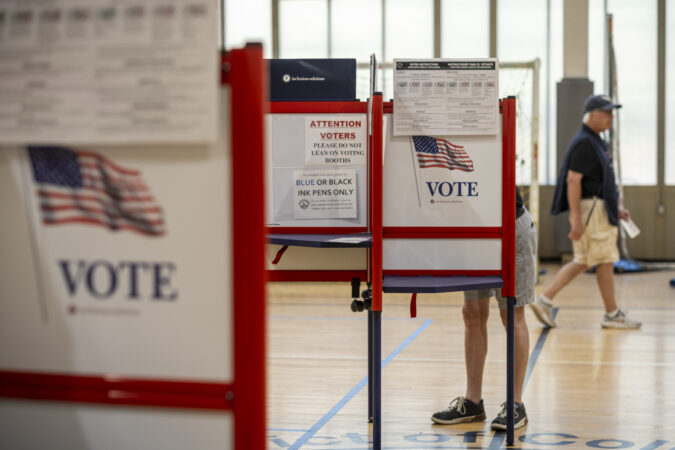
    “Less access has always been something historically that has endangered more people than helped anyone,” visual artist Nadya Yaksich, 30, said after voting in the Democratic primary at a high school in Wheaton, Md., last week.

    But book cataloger Carola Lewis, 62, said after voting in the Republican primary at the same school that she would have more confidence in election results if all voters were required to show IDs and prove that they are citizens.

    “As a citizen, I abide by the law, I pay my taxes, I do what I’m supposed to do, I go out and vote,” Lewis said. “And then to not be 100% confident that it’s only Americans that are voting is actually terrifying to me.”

  • America at 250: 50-year sentences for progressive protesters. Freedom for millionaires.

    America at 250: 50-year sentences for progressive protesters. Freedom for millionaires.

    A few months back, the Donald Trump-fried chair of the Federal Communications Commission, Brendan Carr, urged broadcasters to air patriotic programming for America’s 250th birthday — including regular on-air recitations of the Pledge of Allegiance.

    I couldn’t find any reports about TV or radio stations that have actually done this. Maybe they’ve figured out that the bit at the end — that stuff about “liberty and justice for all” — has been rendered into utter baloney by Carr’s strongman boss.

    For anyone who still believes the myth that the United States’ criminal justice system is the envy of the world, I say: Let them come to Fort Worth. In northern Texas, a crime committed by one man with the “wrong” politics gave the Trump regime the ammunition it craved for a free-speech crackdown that makes a mockery of America’s birthday bash.

    Ironically, it was on July 4, 2025, that a crew from the small but tight-knit left-wing community in the Dallas-Fort Worth (DFW) metroplex ventured 30 minutes south to the Prairieland Detention Center run by U.S. Immigration and Customs Enforcement to protest the squalid conditions and overcrowding there.

    The protesters dressed in black; some brought fireworks or medical supplies. The evidence shows they committed some minor crimes — vandalizing a vehicle, for example. But when local police were called, one man — Benjamin Song, an ex-Marine known to local activists as “Champagne” — committed a serious offense, firing a gunshot that wounded a town police officer in the neck. The officer later acknowledged he was pointing his gun at a fleeing protester when Song fired his weapon.

    The Prairieland incident came right as the Trump regime was striving to brand “antifa” — a loose ideology that fascism should be resisted by any means necessary — as some kind of highly organized terrorist cell. FBI agents fanned out across DFW, ultimately building a riot-and-terrorism case against nearly two dozen leftists, including the group — now known as the Prairieland 9 — that stood trial this winter at the Fort Worth federal courthouse.

    Among the evidence prosecutors presented to bolster their contention that the protesters were part of some kind of terror cell included their black garb, their Signal chats in which they discussed plans for a “noise protest” at Prairieland, or their decision to bring medical supplies with them to the demonstration, which occurred at a time when anti-ICE protests were meeting violent responses. One of the alleged coconspirators wasn’t even at the protest; he’d moved a box of anti-fascist magazines before agents visited his home after his wife called from jail.

    Tamera Hutcherson, a local activist who attended much of the trial as a paralegal for defendant Savanna Batten, told me by phone Saturday that the case against Batten “was based on the fact that she showed up to the protest wearing black, she had medical supplies on her, which included a tourniquet, and that she was there for a noise demonstration to set off fireworks.”

    Batten, Song, and the other seven were convicted in March, and their sentencing was decided by the trial judge — Mark Pittman, a Trump appointee — and his colleague, Reed O’Connor, a federal jurist so well known for his right-wing rulings that the Trump regime and allies like trillionaire Elon Musk look for excuses to bring cases before him.

    In this case, O’Connor was happy to say the quiet part out loud: that a repressive government is seizing on this case to send a message to anyone who wants to aggressively protest mass deportation or other abuses. He called the protest “an assault on democracy,” adding, “The need to deter this type of conduct is high.”

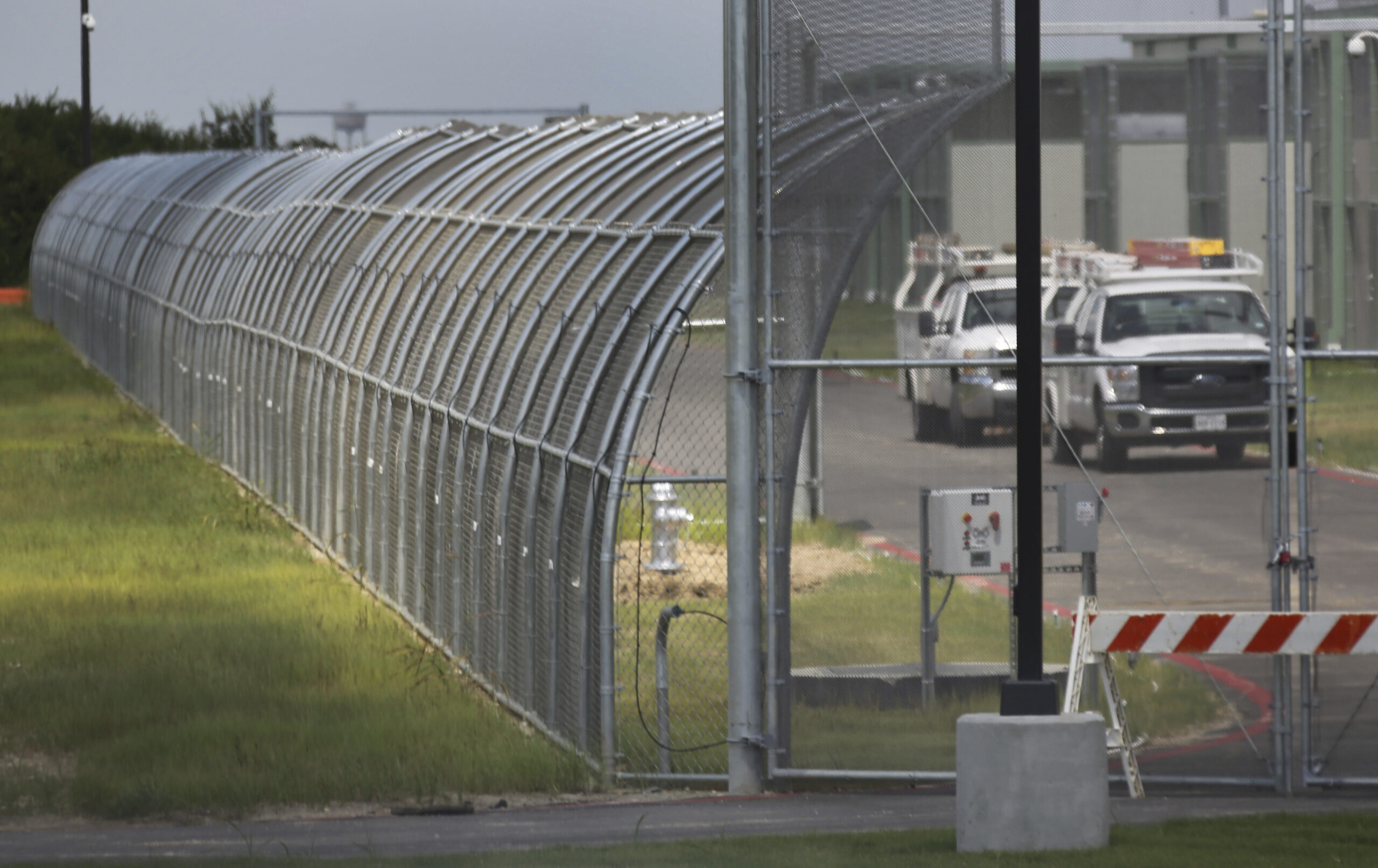
    Trucks drive at the Prairieland Detention Center in Alvarado, Texas, in September.

    Still, courtroom observers were stunned when the sentences came down. It wasn’t a total shock when Song, convicted of attempted murder, was given 100 years, but Batten, the black-clad medic, got 50 years — a virtual life sentence for dissent — as did several others. Daniel Sanchez Estrada, the magazine mover, got 30 years.

    Hutcherson, who was in the courtroom for last week’s sentencing, called O’Connor’s comments “chilling … to have the judge say this out loud, it really sunk in.”

    What’s sunk in is that the federal government is pouncing on the Prairieland 9 convictions to unleash a crackdown on left-wing protest that will make America’s past sins like the Palmer raids, McCarthyism, and the trial of the Chicago 7 look like child’s play.

    In recent days, we’ve seen federal charges against the Minneapolis 15 protesters who monitored the Minnesota ICE raids in Signal chats, and an indictment against two Atlanta protesters against the “Cop City” police training center — even after a local judge had essentially laughed state charges against them out of his court. When a state prosecutor offered evidence of criminality that the Cop City demonstrators wore black clothes and masks, Judge Robert Flournoy said, “Oh, that sounds like ICE.”

    There’s a lot going on here. The Trump regime — which last fall designated “antifa” (again, not an actual group) as a terrorist organization, abusing its vast post-9/11 powers as many of us feared it would — is aggressively clamping down on the First Amendment-protected right of dissent ahead of the November midterms, when its dictatorial-minded leader will stop at nothing to keep his party in power.

    But these 50-year prison sentences, which carry the sauerkraut stench of German cooking, circa 1933, are also an exclamation point on the death of even pretending there is anything resembling impartial criminal justice in America. We are now a land where left-wing dissenters will spend decades behind bars reading about the latest millionaire fraudster or Republican apparatchik to get out of jail free.

    Look, we’ve always been more than delusional about praising U.S. justice as the supposed envy of the free world despite the reality that rich kids or celebrities like the late O.J. Simpson who hire the best lawyers can walk free after people die, and white-collar crime is treated as a sport, while Black, brown, and poorer defendants form the backbone of one of the planet’s highest incarceration rates.

    But the Prairieland most-of-your-life sentences didn’t happen in a vacuum. They are the counterweight to Trump’s Day One pardons for the roughly 1,500 right-wing rioters on Jan. 6, 2021, who stormed and vandalized the U.S. Capitol in an insurrection blamed for five immediate deaths, with more than 140 police officers injured.

    And that’s not all. Trump has individually pardoned and granted clemency to well over 100 or so others in his second term — including just about every high-ranking Republican who’d been convicted of a federal crime, big-time donors to his political campaigns, or those who hired the president’s friends for big bucks.

    At the same time the Prairieland 9 were getting frontier justice, the New York Times reported that Trump’s Justice Department quashed a criminal probe into the circumstances behind the president’s clemency for a multimillionaire named David Gentile. The private equity executive had been sentenced to seven years in prison and ordered to pay $15.5 million in restitution for a $1.6 billion scheme that defrauded small investors. Many lost their life savings — arguably a greater harm than anything that happened at the Texas ICE detention center.

    But Trump granted clemency to Gentile after just two weeks in prison. Prosecutors were looking into the relationship between Gentile and a retired priest from Queens who has become a top supporter and personal friend of Trump and who lobbied the president for Gentile’s release. But higher-ups reportedly told New York mid-level prosecutors to end their probe into questions like whether the priest was paid.

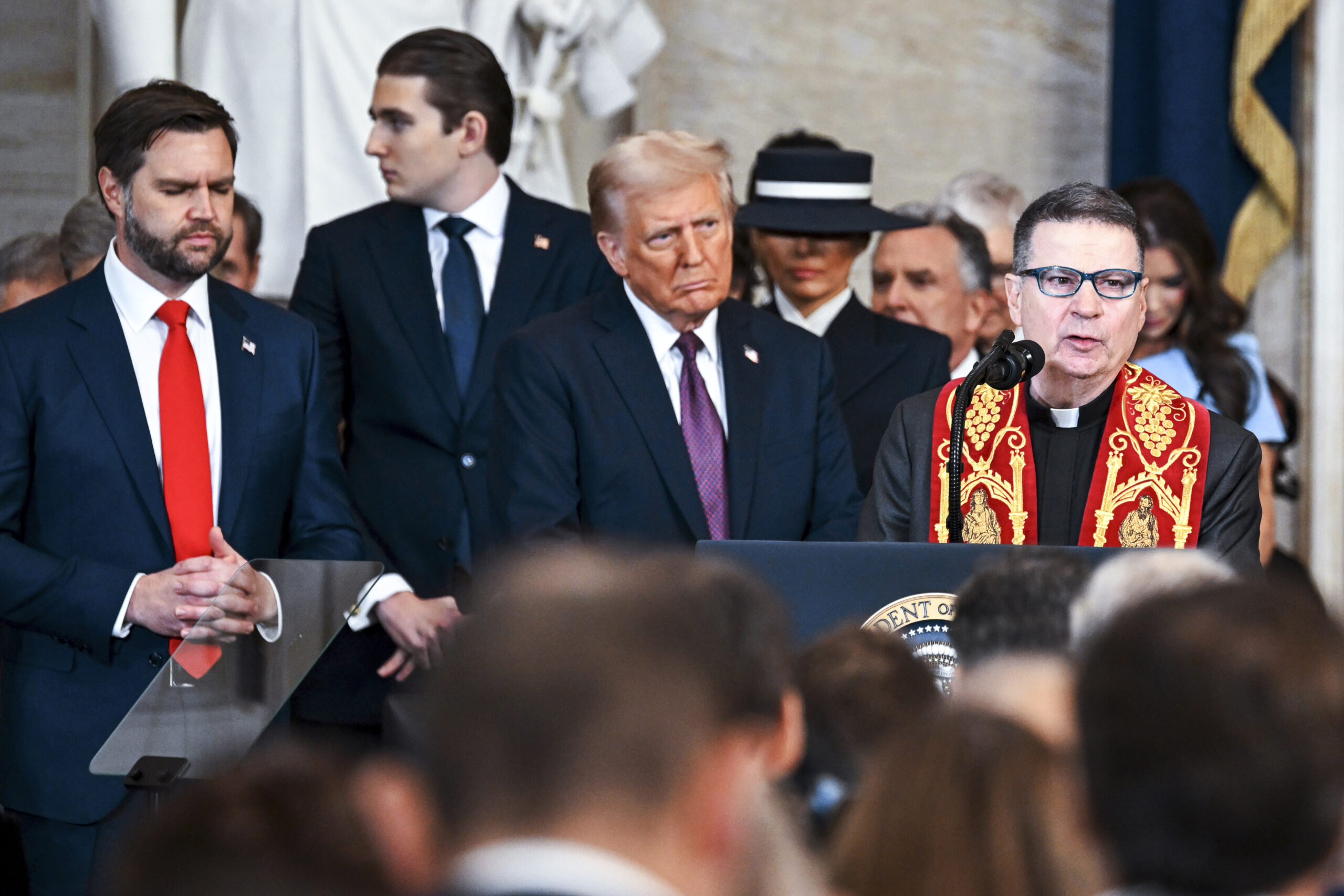
    The Rev. Frank Mann speaks next to Donald Trump during Trump’s second inauguration at the U.S. Capitol on Jan. 20, 2025.

    In a matter of months, Trump has exploited the existing cracks in the federal justice system to make it a blunt instrument of personalist dictatorship — a “purge” for his criminal friends or bad guys willing to make a donation, while depriving those who dissent of their liberty.

    I’m just barely scratching the surface, as Trump’s injustice department also conducts high-profile investigations into law-abiding political opponents, including top Democrats or people like former FBI chief James Comey. Or consider this: No action has been taken against Jonathan Ross, the ICE agent who’s been publicly identified as the killer of unarmed Minneapolis motorist Renee Good. When a Syracuse, N.Y., woman ID’d Ross and asked why he had not been indicted in an Instagram post, federal agents entered a voting place where she was working as a poll worker and ordered her to take the inarguably true post down.

    The nation’s founders, who declared American independence 250 years ago this week, strongly believed that justice was the backbone of their experiment in democracy. The Bill of Rights they’d enact in 1791 is largely about the right to a fair trial, avoiding unlawful searches and seizures, and the essential liberty of protesting an unjust government. More than two centuries later, the White House seems more governed by George Orwell’s 1984, as they criminalize left-wing “thoughtcrime.”

    “I think it’s very symbolic … that this protest happened on the Fourth of July,” the Texas activist Hutcherson told me. “This year is the 250th year of America being America. And when we think about the inception of this nation, it was because of protest; it was because of dissent. And so it feels very contradictory that because someone has leftist or anti-fascist views that now they can be deemed criminal or a terrorist to the U.S. government. You know, we’re not seeing the same energy given toward people that have right-wing views.”

    The firecrackers of dissent that went off on Independence Day 2025 over an ICE gulag in Texas were much more of a tribute to what America was supposed to be than whatever Trump detonates over his morally empty National Mall on this July Fourth. In a United States with liberty for billionaires and justice for none, what are we even celebrating?

  • 3 firefighters killed, 2 injured while tackling wildfires on the Colorado-Utah border

    3 firefighters killed, 2 injured while tackling wildfires on the Colorado-Utah border

    BEAVER, Utah — Three firefighters were killed and two sustained burn injuries when they were overcome by flames from fast-moving wildfires in hot, windy conditions near the Colorado-Utah border.

    The firefighters deployed emergency shelters during the burnover incident on Saturday in Mesa County, Colo., the U.S. Interior Department said.

    They worked for the U.S. Wildland Fire Service and U.S. Forest Service and were part of an interagency response to the Knowles and Gore fires, which merged with other fires to form the Snyder Fire. So far, about 44 square miles have burned.

    Temperatures in Grand Junction hit a high of 93 degrees Fahrenheit, with winds gusting to 44 mph, according to the National Weather Service.

    The U.S. Wildland Fire Service, created earlier this year to streamline firefighting and fire reduction across public lands, said in a statement that it “stands united” with the Forest Service in grief and “in our unwavering support for the loved ones left behind.”

    “Their bravery, dedication, and sacrifice will never be forgotten,” the statement said.

    The names of the firefighters who perished were being withheld pending notifications to their loved ones, the Interior Department said.

    The Mesa County Sheriff’s Office was asking people to evacuate the potential path of the fire and to turn on irrigation water to saturate the land. The federal Bureau of Land Management closed public access to lands it manages nearby.

    “Firefighter and public safety are the highest priority,” the agency said in a statement. “The temporary closing of the lands is to reduce exposure to hazardous situations due to the rapid rates of spread and fire behavior that the fire has exhibited. The public is to remain clear of these closed lands.”

    Hot, dry, and windy conditions

    Wildfire activity has intensified across the western United States, as consecutive days of hot, dry, and windy weather have fueled flames in Utah, Arizona, and elsewhere as new fires popped up across the region.

    The largest blaze, the Cottonwood Fire, was burning in rugged terrain in southwest Utah. It ballooned Saturday to more than 144 square miles after marching through canyons and mountainsides, destroying part of a ski resort and other summer cabins along the way.

    Authorities in Beaver County began working with fire teams on Saturday to assess the extent of the damage, but no estimates were immediately available. Utah Gov. Spencer Cox in a post on social media called it bleak, but he thanked crews for what he called “several miraculous stops and saves.”

    The cliffs and steep slopes have made the job even harder, said Alyssa Mason, a spokesperson assigned to the fire.

    “It’s hard to get dozers and other heavy equipment into that. It’s hard to get engines into that,” she said. “It doesn’t make it impossible to firefight, but it does just kind of slow things down.”

    Hundreds of firefighters have been arriving in the arid state to battle new starts as well as those that have been growing because of what forecasters called critical fire weather — dangerously low humidity levels, warm temperatures, and gusty winds.

    The danger is even higher this year because of Utah’s record-low snowpack and its warmest winter on record. Much of the West is grappling with similar conditions, according to the National Interagency Fire Center.

    Nationally, nearly 3 million acres have burned since the start of the year. That is more than the 10-year average.

    Emergencies declared in Utah and Colorado

    The conditions in Utah were critical enough for Cox to declare an emergency earlier this week and clear the way for the state to ban fireworks ahead of the July Fourth holiday. The order comes as Utah is experiencing one of the most severe wildfire seasons in recent history, fueled by historic drought conditions.

    State officials said that over the past week, Utah has seen an increase in wildfire starts, with each fire showing unprecedented behavior. These starts have stretched the state’s wildland firefighting capabilities, State Forester Jamie Barnes said.

    Colorado Gov. Jared Polis also declared an emergency on Saturday, and authorized the use of the National Guard to tackle the fires.

    Forecasters with the National Weather Service over recent days have been issuing red flag warnings for a wide swath of the West, from California to Arizona and New Mexico.

    South of Grand Canyon National Park, authorities said the flames of a new wildfire were moving away from Grand Canyon Village and the nearby community of Tusayan on Saturday. But about 50 miles away, another fire prompted Coconino County officials to issue evacuation orders for those near Kendrick Mountain.

    Parts of northern Arizona were without power Saturday as the utility serving the area initiated a safety shut-off in hopes of lessening the wildfire risk.

    Power shutoffs have become more common in the West as wildfire risk has expanded. It is usually a last resort after utility forecasters weigh factors like sustained wind and gust speeds, available fuels, and topography.

    With extreme fire conditions persisting in Utah, Rocky Mountain Power also shut off power lines serving Beaver County and other areas.

  • France records around 1,000 additional deaths as extreme heat breaks European records

    France records around 1,000 additional deaths as extreme heat breaks European records

    BERLIN — France saw around 1,000 additional deaths last week at the height of its record-smashing heat wave, the country’s public health agency said Sunday, as the head of the World Health Organization warned that Europe is now the fastest-warming continent and needs to do more to protect its citizens.

    Temperature records were toppled in several countries on the weekend, wildfires were sparked in Germany, and Berlin police used water cannons to cool down the crowds.

    Meanwhile, the heat wave slowly moved toward eastern parts of the continent.

    Germany marked a new record for the third day in a row with 107 degrees Fahrenheit in Neißemünde, near the border with Poland, which baked under its new all-time high of 104.9 F. The Czech Republic also experienced its hottest day ever with 106.4 F.

    A new study from the World Weather Attribution, a Europe-based collaboration of scientists, reported Friday that the record-breaking heat and humidity in Europe this past week would not have been possible without climate change.

    The rapid study found that the heat would have been virtually impossible just five decades ago, and is 200 times more likely today than it would have been 20 years ago.

    France records surge in deaths during heat wave

    France reported a surge in deaths last week, including a sharp increase at private homes, especially in the Paris region, the national public health agency said Sunday.

    There were more than 1,200 deaths on Wednesday, when France was sweltering under its hottest temperatures, increasing to more than 1,400 deaths on each of the two following days, Public Health France said. In April and May, before the heat wave, France’s rate of deaths was about 900 to 1,000 per day.

    The agency concluded that France experienced a total of at least 1,000 additional deaths during those three days alone, an estimate it cautioned is likely to increase as more data is collected, including for deaths at home.

    The increase was sharpest in areas under red warnings of extreme heat, it said. Those warnings blanketed about three-quarters of the country at the peak of the heat wave. The agency said that 85% of the deaths involved people aged 65 and above.

    Europe is fastest-warming continent, WHO warns

    “Europe is the fastest-warming continent on Earth, heating at twice the global average,” WHO Director-General Tedros Adhanom Ghebreyesus said Sunday on X. “Right now 150 million people are living under extreme heat, hundreds have died, schools are shut, grids are buckling.”

    Driven by climate change and global warming, the “once-in-a-generation” heat wave is now occurring nearly every year, Tedros said, adding that more than 1,300 excess deaths have been recorded since June 21 linked to high temperatures in Europe.

    “Heat stress is often called the ‘silent killer’ — and European homes, workplaces, and schools were not built for these temperatures,” Tedros warned as he called on European countries to implement action plans. He said they should focus on preparedness, prevention, and stronger health system responses.

    Lightning strikes Swedish theme park

    In Sweden, several people were injured when they were hit by lightning at an amusement park, the country’s TT news agency reported.

    Three adults were taken to the hospital, among them a woman with serious injuries, after the lightning struck the Tosselilla Sommarland park in Tomelilla in the south of the country.

    Across Europe, the extreme heat has been followed by severe thunderstorms.

    Denmark, which marked new temperature records on Saturday, recorded 1,156 lighting strikes by Sunday morning, according to public broadcaster DR.

    Wildfires burn forests contaminated with WWII ammunition

    In Gohrischheide, in eastern Germany, a fire broke out in a large forest that’s still contaminated with ammunition from World War II, which made the firefighters’ efforts even more complicated.

    Similarly, a major firefighting operation was underway in southwest Germany near the village of Traisen, where the heat sparked a forest fire in an area that also contained unexploded ordnance. Firefighters had to be temporarily stop after explosions took place and an ordnance disposal unit was brought in to continuously assess the situation, German news agency dpa reported. Some 650 people in Traisen had to leave their homes Sunday afternoon because the fire continued to spread.

    The big cities’ fire departments were busy sending out ambulances to people suffering from heat-related illnesses. In Berlin, an additional 500 ambulance dispatches were reported on Saturday, most of them heat-related.

    Berlin police use water cannons to cool down locals. tourists

    The German capital’s police found a way to help suffering Berliners and tourists alike. They put up two huge water cannons — usually used to disperse unruly protesters — in front of the city’s iconic Brandenburg Gate and sprayed the cool water across the cheering crowd.

    The heat also continued to damage the country’s infrastructure, with the concrete surface on countless highways breaking up, and a weekend warning by national rail operator Deutsche Bahn to avoid all unnecessary train travel.

    More than 600 passengers had to be evacuated from an overheated train in Brandenburg after a tree fell onto an overhead power line during a storm on Saturday evening. The train, which was on its way from Hamburg to Prague, lost power. The air conditioners stopped working and the doors were locked until emergency responders forced them open. Two people were hospitalized with heat-related problems, dpa reported.

    In the eastern city of Leipzig, no trams will be running until early Monday morning due to heat damage to tracks and switches. The Leipzig Public Transportation Authority said that the high temperatures had caused the joint sealant for asphalt and concrete in switches and tracks to run and clump together in many places throughout the city’s network.

  • Philly’s Jaron Ennis knocked out Xander Zayas to become junior middleweight champ and take career to ‘next level’

    Philly’s Jaron Ennis knocked out Xander Zayas to become junior middleweight champ and take career to ‘next level’

    NEW YORK — Jaron Ennis’ head tilted back Saturday night and his feet wobbled after a right hand from Xander Zayas snuck through Ennis’ guard and rocked his face.

    Ennis won his previous 35 fights but this — appearing hurt in a ring surrounded by a Brooklyn crowd roaring for him to be finished — was uncharted territory.

    The fighter from Germantown has long been considered to be a future superstar of boxing. He had all the skills — defense, footwork, and power — to make it happen. And he never seemed to be in danger in the ring, often outclassing foes who could not match his talent.

    Now, he was in the deep end. And everything — the career that started with a kid wanting to be like his older brothers who became a world champion under the tutelage of his dad — was on the line with more than 60 seconds left in the third round at the Barclays Center.

    Ennis had to find a way to survive the bigger Zayas, who was pushing for a knockout. He did just that.

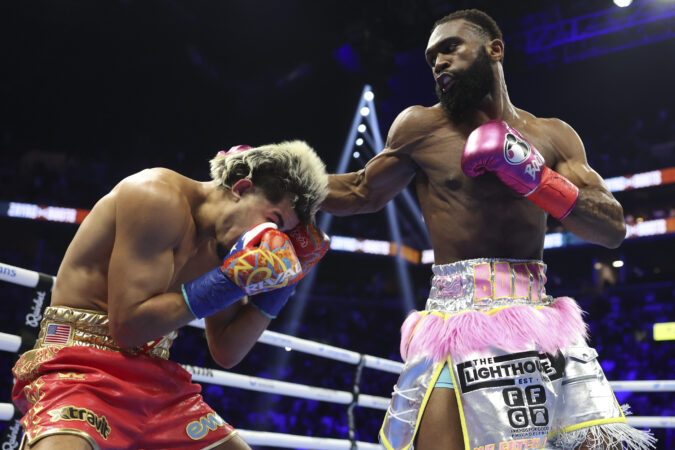
    Ennis didn’t just escape the danger but rallied from that stomach-churning round to deliver an all-time Philly boxing performance. He regained control, knocked down Zayas in the fifth round, and then again in the seventh before the Puerto Rican’s corner stopped the fight as Ennis became the WBO and WBA junior middleweight champion.

    “I think this is the one that takes it to the next level,” Ennis said. “We’re just getting started. I’m a pay-per-view superstar and the face of boxing.”

    It was hard to doubt Ennis’ skills before Saturday night, which was the first time he headlined a pay-per-view event. But he had yet to enter a fight where the result seemed in question when the bell rang. This was the biggest test of his career, and it was his resilience — the ability to take a punch and keep moving — that was most impressive.

    Ennis wants to be the “face of boxing.” Now it’s obvious that his face has the chin to make that happen.

    “I came back to the corner and he was like ‘Yo man, stop playing,’” Ennis said, imitating his father and trainer Bozy. “I was chilling. I’m cool, calm, and collected. When there’s madness going on, I just get calm and be patient.”

    “They might have thought I was hurt. But I was calm and relaxed. I was catching a lot of shots, too.”

    Ennis was booed by the partisan crowd, who waved Puerto Rican flags for the island’s 23-year-old star. Ennis joked that they weren’t booing him but yelling “Boots.” He’s never been jeered before and didn’t mind being the foil, holding his hand to his ears when the boos drowned out the ring announcer when he was introduced.

    “Give Boots credit, it changed quickly,” said Ennis’ father, Bozy, who trains his son. “But we don’t care about the boos. We just do our job.”

    Ennis (36-0, 32 knockouts) came out throwing as he pushed the pace against Zayas (23-1, 13 KOs) and knocked him down with a right less than two minutes into the first round.

    He controlled the ring in the second round before Zayas found his shot in the third round. The building rocked but Ennis dug deep. Thirty seconds after being dazed, he was already bobbing his head away from Zayas’ onslaught. It was as if he had been revived in the ring.

    “Boots was dazed? He wasn’t dazed,” Bozy Ennis said. “He wasn’t dazed. How are you going to be dazed and come back like he came back? If you’re dazed, you’re going to be done. You know what I mean? That’s what dazed is.”

    Undeterred, Ennis started the fourth-round by dragging Zayas into the center of the ring. The fighters exchanged phone-booth punches, giving the crowd the action they came to see.

    Ennis was not hurt again after that third round. He used a perfectly placed hook to score another knockdown in the fifth and a left-right combination to drop Zayas to a knee in the seventh. The fighter looked to his corner, who decided Ennis had inflicted enough punishment and stopped the fight.

    “I was being lazy on the inside,” Ennis said of the punch he took in the third round. “That’s on me. I have to sharpen that up. I’m going to sharpen that up. Don’t worry about that. It was a cool, little performance but I give myself a ‘C.’ I’m just getting started. I’m way better than that.”

    Ennis, according to Compubox, landed 148 punches while Zayas landed just 90. Some questioned how Ennis would combat the bigger opponent as perhaps he would have to be crafty to win. The Philadelphian simply went right at him. Ennis was already a boxing star. But he left the ring as a superstar while Zayas was taken to the hospital as a precaution.

    “I knew I would be too strong and I was the faster guy,” Ennis said. “He wouldn’t be able to see my shots.”

    Ennis will likely return to the ring later this year against WBC champ Sebastian Fundora (24-1-1, 16 KOs) as the boxer wants to become the undisputed champ at 154 pounds. A fight with Vergil Ortiz Jr. (24-0, 22 KOs) was supposed to happen earlier this year before litigation between Ortiz and his promoter squashed the bout. That fight remains in play.

    The next year could be career defining as Ennis will have the stage to prove himself as a pound-for-pound boxer and flag bearer of the sport. The journey to those fights started long ago in the gritty Philadelphia gyms his dad calls “dungeons.” He watched his older brothers train in a church basement with neighborhood kids in Germantown and dreamed of doing the same thing.

    Jaron Ennis landed 148 punches while Xander Zayas landed just 90.

    Ennis was there every afternoon, waiting for his dad to finish work so they could train in a gym without air conditioning. Boxing is all Ennis ever wanted to do since he was a boy in the “Brickyard” neighborhood.

    And it was those dungeons that prepared Ennis for what happened on Saturday night when the walls appeared to be closing in. But everyone who knows where Ennis came from knew the Philadelphian was never in danger.

    “He likes to fight,” Bozy Ennis said. “He can box. You can see he can box. You see what he’s doing with that jab. Pop. Pop. But then he likes to fight. I told everyone that Boots is going to stop him. They said Boots was the bully at 147 but he would be the bully at 154. I said ‘It doesn’t make a difference because he can knock heavyweights out.’”