Tag: Atlantic City

  • Atlantic City Mayor Marty Small Sr. found not guilty on all counts of abusing his teenage daughter

    Atlantic City Mayor Marty Small Sr. found not guilty on all counts of abusing his teenage daughter

    Atlantic City Mayor Marty Small Sr. was acquitted of child endangerment and related crimes Thursday after being accused of repeatedly assaulting his teenage daughter.

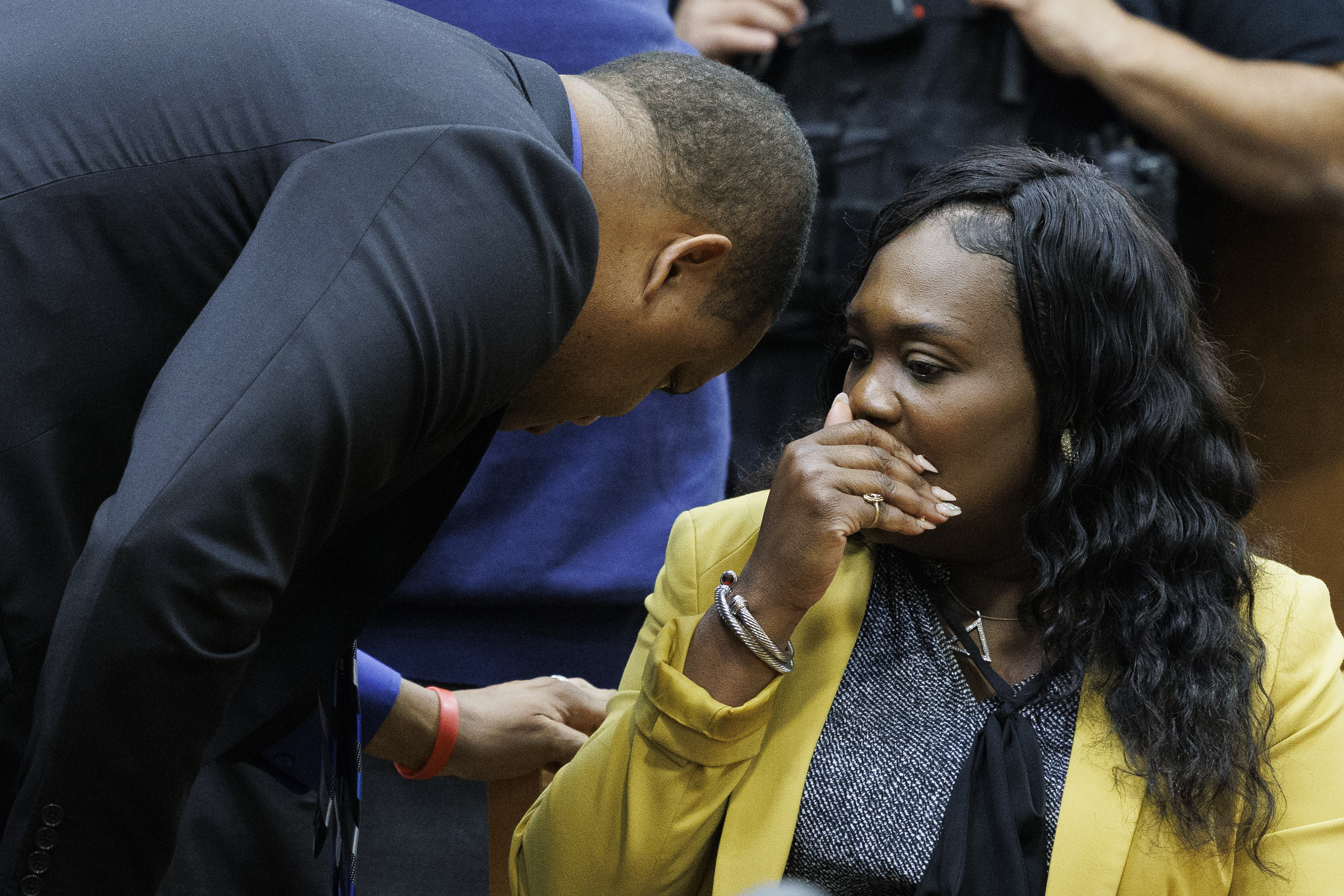
    Small, 51, faced charges stemming from a handful of incidents in late 2023 and early 2024 in which prosecutors said he and his wife abused and assaulted the teen. The couple said the incidents stemmed from their disapproval of their daughter’s relationship with a young man, leading to escalating tension and arguments in the family home.

    The jury delivered its verdict at 12 p.m. after deliberating for two days. They found Small not guilty of endangering the welfare of a child, aggravated assault, making terroristic threats, and witness tampering.

    “Thank you, Jesus! Thank you, jury!” Small said as the verdict was announced and broke into tears.

    Speaking to reporters outside the courthouse, Small said he and his family were prepared to “put this chapter behind us, in peace.”

    “It’s a lot of political forces out here that are against the leadership of my wife and I,” Small said. “But guess what? The people of Atlantic City want us, the people of Atlantic City need us, and the people of Atlantic City deserve us.”

    Had Small been convicted of any of the crimes, he would have been required by state law to cede his office.

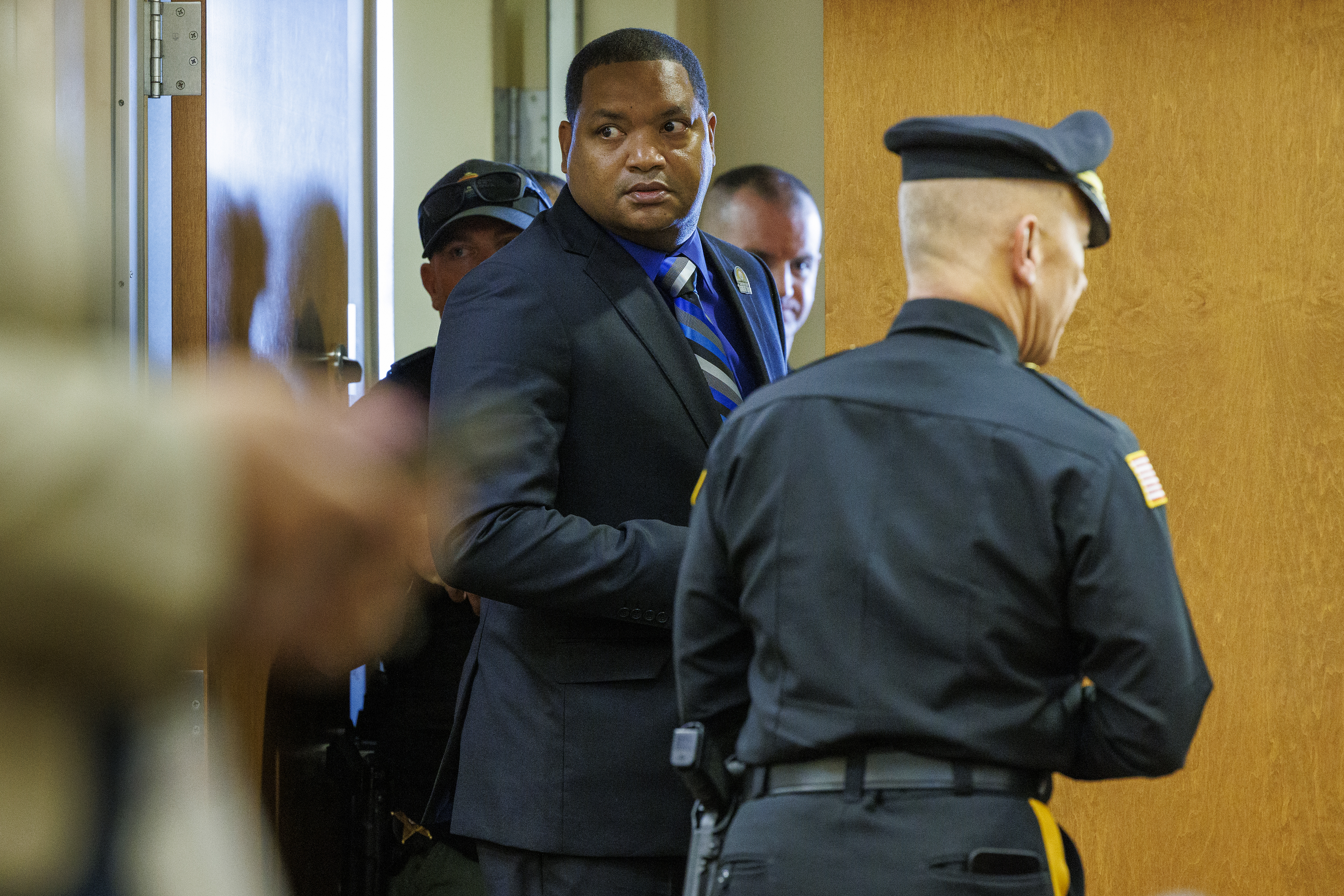
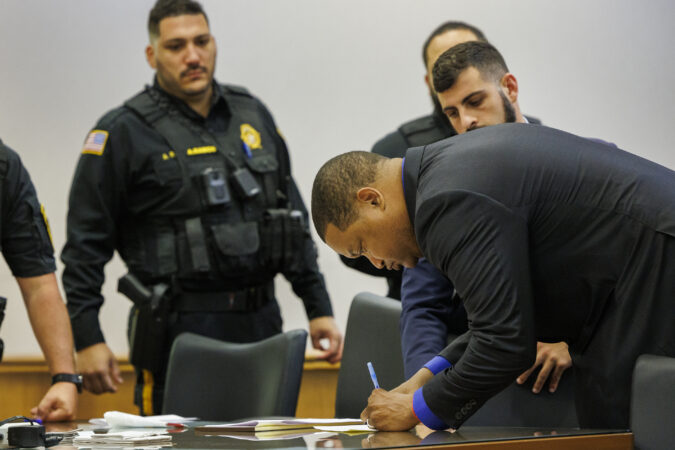
    Those stakes were evident as the mayor’s friends and supporters packed into the courtroom for nearly two weeks of the trial. Supporters surrounded Small and broke into cheers outside the courthouse, celebrating a political career whose future had depended on the opinion of jurors.

    Small said he had been heavily scrutinized for more than a year after news of the allegations broke in spring 2024. He said he and his wife had since been “drug through the mud” and cast as child abusers by the media.

    Small’s defense attorney, Louis Barbone, said the verdict was “absolute proof that our justice system works” and that “honest men like Marty Small are vindicated.”

    Atlantic County Prosecutor William Reynolds said he and his office “respectfully disagree with the verdict.”

    “We acted based upon the complaints of the victim,” Reynolds told reporters. “The trial in this case was truly to give the victim a voice — the jury chose not to believe that voice.“

    Prosecutors said Small, a Democrat who was reelected this year amid his legal struggles, punched his daughter and beat her with a belt. In an incident central to their case against the mayor, prosecutors said, Small struck her in the head with a broom multiple times, knocking her unconscious.

    Jurors heard a conversation the teen recorded on her phone, in which Small told the girl he would “earth slam” her down the staircase. And prosecutors said that after the girl reported the abuse and investigators stepped in, Small encouraged his daughter to “twist up” her account of the events to minimize his involvement.

    Over the course of the trial, Small and his wife, La’Quetta — who also faces charges of abusing the teen — looked on as prosecutors described the mayor’s actions as criminal. Prosecutors presented photos of the teen’s bruises and listened to testimony from a pediatrician who said the injuries did not appear accidental.

    Small’s defense team, by contrast, told jurors that the teen had lied to investigators and exaggerated the extent of her injuries, and that she and her boyfriend had conspired against her father.

    Barbone had called the trial “extortion by child.” He said the mayor was a caring father who was only attempting to discipline an out-of-control child, and presented jurors with more than 40 character witnesses on his behalf.

    Small also testified and said he loved his daughter. He denied abusing her in the manner she described, telling jurors: “I did not hit my daughter with a broom.”

    The girl, now 17, took the stand last week and described being punched in the legs by her father in his “man cave” after her parents found out she had sneaked her boyfriend into the family home to have sex.

    “He said some words and put his hands on me,” the teen testified. Her father, she said, “was punching me in my legs and he hit me with a belt.”

    Prosecutors said the girl’s decision to testify was one of the most challenging things a teenager could do, and they rebuffed Barbone’s suggestion that the girl was a liar who sought retribution against her politically powerful father.

    As for the broom incident, Barbone said, the mayor had not hit the girl but was wrestling the broom out of her hands when she fell and hit her head.

    Prosecutors showed jurors photos of marks on the girl’s face. But a nurse who treated the teen at a hospital several days after the girl complained of headaches said she had not been able to find signs of injury.

    Jurors asked to review multiple pieces of evidence during their deliberation, including video of Small’s testimony about the broom incident.

    Again they watched the mayor recall the morning he urged his daughter to get ready to attend a peace walk in January 2024 following a spate of killings in Atlantic City.

    The teen refused, cursing at Small before ripping his shirt and throwing laundry detergent on him, the mayor testified. A scuffle broke out when she picked up a butter knife and the broom, he said.

    Mentioning the hospital examination, the mayor asked: “Where is the bruise, where is the bump, where is the bleeding?”

    In less than half an hour, jurors returned their verdict.

    Small, in his post-verdict remarks, described his daughter as “lost” and vowed to right the course of his family life.

    “I’m gonna get my daughter back,” Small said. “In the Bible, it says, ‘Father, forgive her, for she know not what she do.’ And that’s what we’re gonna do.”

    Prosecutors declined to comment on what would happen to the girl, who is still a minor and does not currently live with her family.

    Small’s wife, La’Quetta, is scheduled to stand trial in January on charges of endangering the welfare of a child and simple assault. La’Quetta Small, the superintendent of Atlantic City public schools, is accused of repeatedly beating her daughter.

    Also facing a forthcoming trial is Constance Days-Chapman, the principal of the Smalls’ daughter’s high school. Prosecutors say when the teen reported her parents’ abuse, Days-Chapman failed to notify child welfare authorities and instead told the couple of the report.

    Days-Chapman, who is Marty Small’s former campaign manager, was later charged with official misconduct and related crimes.

    Reynolds, the county prosecutor, said his office would hold an internal meeting to discuss the charges against La’Quetta Small and Days-Chapman. They will also meet with the Smalls’ daughter, he said.

    “We need to get the victim in here and have a discussion with her before any decisions are made — and that’s out of respect for her,” Reynolds said.

  • Here is our Jersey Shore off-season report card, town by town

    Here is our Jersey Shore off-season report card, town by town

    The Shore this time of year is truly a lovely, if sometimes desolate, place. But the desolation is the point: Emptied of its chaotic summer bustle, the simple natural beauties take center stage.

    But yet. There are still plenty of humans here, and they are doing things, some good, some dubious, and so we will take note. Here is our first-ever winter solstice Shore Town Report Card.

    As to the grading system, let’s just say, it was tough to give any town less than a B- when that winter light turns the sunset sky over the ocean a thousand shades of pink, and snow turns a magical place even more magical. Even Atlantic City, in spite of its burgeoning mayoral and other problems, is worth an off-season visit.

    Atlantic City

    The paradoxical Shore town has had a doozy of a year, with its newly reelected Mayor Marty Small Sr. on trial for allegedly physically abusing his daughter, charges he denied during the trial, and for which a jury on Thursday acquitted him. Meanwhile, three casinos were green-lit in New York City, New Jersey is contemplating how to tighten its control over Atlantic City, Peanut World caught fire, and ICE was making car stops in city neighborhoods.

    The city’s holiday parade featured the red-clad Mayor Marty Small on a special Mayor’s Office float, with his wife, schools Superintendent La’Quetta Small, festively clad in a fluffy red coat, beside him. She is also charged with child abuse.

    When will Atlantic City, arguably the last affordable Shore destination along the entire Northeast coast, finally break out of its slump? I explain in this story. A+ for holiday traditions like the elaborately decorated and festive iconic spots, from the Irish Pub to the Knife & Fork Inn; for its new skate and dog parks; and its casino giveaways. But, behind the salt air tinsel, A.C. is juggling some C+ drama.

    Ventnor

    You’re never more aware that your town tilts toward summer than when it rebuilds its boardwalk during the winter. A big chunk of the boardwalk (from Surrey to Cambridge) has been closed since November for a complete reconstruction and will remain closed until at least May. A similar chunk up to the A.C. border will be rebuilt after next summer. Hence the odd sight of lots of people on Atlantic Avenue detoured from the beloved wooden pathway. In better news, some of Ventnor’s favorite places have stayed open into the dead of winter. On a recent weekend, I trudged in the snow over to my friends at Remedee Coffee for a specialty hot cocoa (delish) and was surprised to find the place … full of people. Everyone in town had had the same idea, apparently, and with no boardwalk, it’s not even out of the way. B

    Brigantine

    The city declared a state of emergency for its badly eroded beaches. B+

    Margate

    Margate’s business administrator launched a personal investigation of the city’s CFO and was making public accusations against one of its commissioners. A former mayor wants him fired. What even is going on over there? C+

    Ocean City

    The identity crisis continues. The town did a complete turnaround earlier this month with respect to the former Wonderland Pier site, voting to ask the planning board whether the site is in need of rehabilitation as requested by developer Eustace Mita, who wants to build a luxury hotel. Meanwhile, its mayor declared bankruptcy and got sued by his stepmother. The iconic McDonald’s in town abruptly closed. Still, Playland’s Castaway Cove is offering its half-price ticket sale now through New Year’s Day. B-

    Sea Isle City

    The city canceled its holiday parade, which made people a wee bit annoyed. But dollars are being spent, most recently on a new community center and with the adoption of a five-year, $50-million capital budget targeting flood control, road work, beach projects, emergency vehicles, and sewer upgrades. . B+

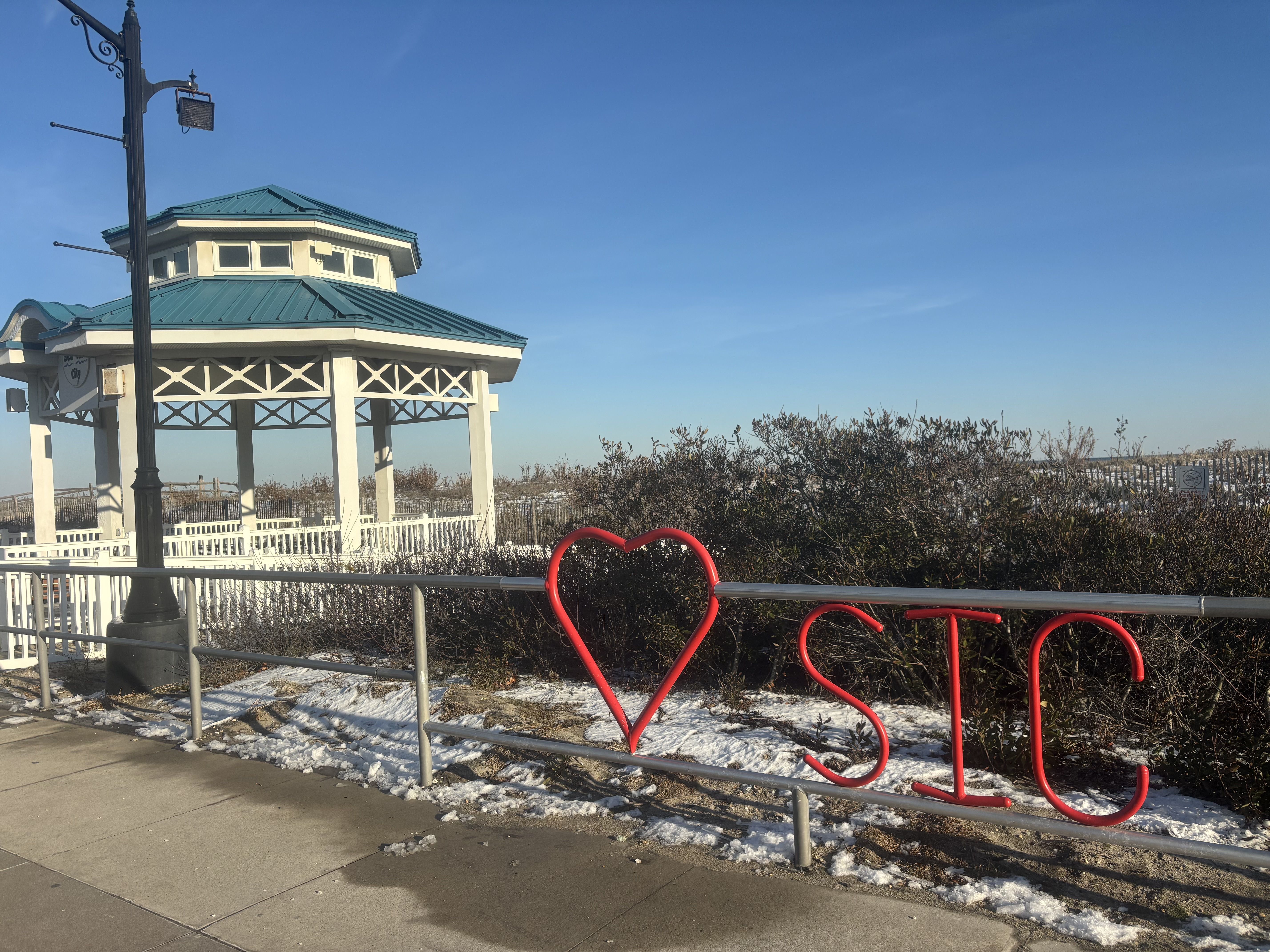
    A winter Sea Isle City with just a dusting of snow. Dec. 16, 2025.

    Avalon

    The sleepy offseason town, which came in for some summer criticism for its off-the-charts exclusivity, gets an A+ from me for its sensible and family-friendly 5:30 p.m. New Year’s Eve fireworks plan.

    Stone Harbor

    The city adopted a 3% occupancy tax on hotels, motels, and short-term rentals. Mayor Tim Carney said in an e-mailed statement: “This local tourism tax will generate revenue for the Borough while helping us avoid any increase to homeowner property taxes in 2026.”

    However, on behalf of short-term visitors from Philly, though, and amid criticism over the quality of the Garden Club’s urn-based Christmas decorations, I’ll have to score the town a B-.

    The Wildwoods

    Wildwood and Wildwood Crest cut loose North Wildwood on their beach replenishment sharing agreement. Meanwhile, North Wildwood signed a 10-year agreement to police West Wildwood. Wildwood proper recently approved 24 new homes for its gateway area.

    It’s one island divided into the have-sands and the have-not sands. This winter could exacerbate both ends of the spectrum. B-

    Long Beach Island

    The city was battling mail delivery issues, but otherwise, the peace and quiet and lack of crowds seemed to be settling well over locals, who boasted of martini towers at the Hotel LBI and $10 lunch specials at Joy & Salt Cafe (also available, $45 short ribs). Whoever it is that lives there this time of year must know something. A-

    Cape May

    The city is lovely this time of year. Victorian homes! Christmas decorations! There’s a winter wonderland at Congress Hall, candlelight house tours, and oh those sunsets at Cape May Point. A

  • In Marty Small Sr. trial, jurors will decide whether A.C. mayor is guilty of child abuse

    In Marty Small Sr. trial, jurors will decide whether A.C. mayor is guilty of child abuse

    MAYS LANDING, N.J. — After a week in court, attorneys delivered closing arguments Tuesday in the child abuse trial of Atlantic City Mayor Marty Small Sr.

    Defense lawyers for Small, a 51-year-old Democrat who was reelected this year, said the allegations that he and his wife had abused their teenage daughter multiple times in late 2023 and early 2024 were false.

    “We are not guilty,” his attorney, Louis Barbone, told jurors in New Jersey Superior Court.

    Small faces charges of endangering the welfare of child, aggravated assault, making terroristic threats, and witness tampering. He has denied the charges, and testifying in his own defense last week, he told jurors he “would do anything to protect” the girl and said he did not strike her with a broom as she has alleged.

    More than 40 people testified on behalf of Small in the trial’s final days. It comes as Atlantic City ends the year in struggles both political and financial.

    Prosecutors say Small not only struck his daughter but also attempted to cover up the abuse as he and his wife, La’Quetta, grew increasingly in conflict with the teen over a relationship with a boy they did not approve of.

    They said he punched her and beat her with a belt in addition to hitting her with a broom, and later told her to “twist up” her account of the incidents to investigators to minimize his involvement.

    “Violence is not a solution,” Assistant Prosecutor Elizabeth Fischer told the panel. “Abuse is not parenting.”

    But Small’s lawyer, Barbone, told jurors prosecutors lacked sufficient evidence to make their case and said they had inappropriately interceded in a private, family matter in the Small household.

    “Why have we taken this man’s life and made a spectacle of it?” Barbone asked. “Because they can.”

    He scoffed at prosecutors’ idea that the teen had been intimidated by her father’s political power, calling the trial “extortion by the child.”

    The girl, Barone said, had lied about her injuries to both doctors and investigators, conspiring with her boyfriend to secretly record her father and compromise him.

    Much of the attorney’s attention fell on the January 2024 incident in which Smalls’ daughter said he struck her multiple times in the head with a broom during an argument over her attending the Atlantic City Peace Walk.

    Barbone said the girl had also been holding a butter knife and that as the mayor struggled with her over the broom, the teen fell and hit her head.

    The attorney said the teen then exaggerated her injuries, and he said the bristle side of a broom couldn’t do damage. He told jurors to look no further than the testimony of the girl’s nurse, who could not rule that the teen suffered a concussion as she contended.

    And Barbone returned to the topic of Small’s daughter’s sexually explicit messaging with her boyfriend, which prosecutors called a “shining ball in the corner” meant to distract jurors from both the teen’s testimony of the alleged abuse and the photos of her bruises.

    Barbone said the conflicts began after the Smalls discovered their daughter had sneaked the boy into the family home and had sex without their knowledge. He later displayed an emotionally charged text chain between the girl and her mother in which the teen threatens to go off birth control.

    Meanwhile, Fischer, the prosecutor, asked jurors to remember the “truth” of what Small’s daughter had endured. .

    Fischer said the teen had been brave to testify against her father — arguably the most powerful figure in Atlantic City government — as well as her mother, who is the superintendent of Atlantic City Public Schools. La’Quetta Small also faces a child endangerment charge in a case scheduled for trial in January.

    It was “the most difficult thing a person can do,” Fischer said of the girl’s decision to testify against her parents, giving her little incentive to lie.

    The prosecutor said a nurse who tended to the girl’s injuries had diagnosed the teen with a head injury, and that it was impossible to tell if she was concussed through a CT scan alone.

    And a pediatrician who specializes in child abuse testified that the girl’s injuries were “nonaccidental,” Fischer added.

    Prosecutors said the girl first reported the abuse to her principal, Candace Days-Chapman. They say Days-Chapman, who previously served as Marty Small’s campaign manager, did not file a report with child welfare authorities. She instead told Smalls herself, and staff at the school only learned of the abuse after the teen reported it a second time after watching a mental health presentation. Chapman was later charged with official misconduct and related crimes.

    Fischer, her voice swelling with emotion, expressed disbelief that Small had allowed his attorney to characterize his daughter as both an “animal” and “Tasmanian devil” in describing their conflicts at home.

    “This is offensive at its highest level,” she said.

    And she told jurors that some of those who testified on behalf of the mayor had strong ties to Atlantic City government and stood to gain from the mayor’s success. And in the end, she said, they had not witnessed the conflicts between Small and his daughter.

    “Character,” the prosecutor said, ”is how you act when no one is watching you.“

  • Janney Montgomery Scott sheds investment bank under owner KKR and focuses on brokers

    Janney Montgomery Scott sheds investment bank under owner KKR and focuses on brokers

    Philadelphia-based Janney Montgomery Scott LLC has confirmed plans to exit the investment banking business and will focus exclusively on beefing up its wealth advisory business under its private-equity owner KKR, which bought Janney last year.

    The firm has made what CEO Tony Miller called “a strategic decision” to sell the last of its banking units.

    Investment bankers raise money for companies and governments by selling stock shares, bonds, and other financial instruments to investors, for a cut of the proceeds, a sometimes lucrative but hard-to-predict business. Research analysts help attract those clients by writing about their financial prospects.

    Wealth advisors, typically registered with the SEC or licensed through the industry group FINRA, are paid to guide clients’ investments, and may sell exchange-traded funds (ETFs), and other approved products. Business has soared with the U.S. stock markets in recent years. Miller, the Janney CEO, called investing in that business a better road to “long-term success.”

    Janney plans to sell its last bond and investment banking units, including staff in Philadelphia, at its TM Capital in Atlanta, and in other offices, to Ohio-based Huntington Bancshares and its financial institutions banking, research, and sales units to New York-based Brean Capital. Janney officials hope to close the deals in early 2026. The prices haven’t been disclosed.

    Janney, which recently added advisors in Texas among other states, will remain based in Philadelphia. The company employs around 900 in the region.

    Regional commercial banks and other small to midsize financial institutions were among the last industry groups Janney investment bankers and analysts covered. Just last month, Janney bankers announced that they had advised Georgia-based First Southern Bank on its unusual $51 million sale to member-owned Community First Credit Union of Jacksonville, Fla.

    Former Janney employees said Janney’s owners had the option of taking the time and money to build up the investment banking unit, such as regional brokerages Piper Sandler, Raymond James, and Baird & Co. have done in recent years, instead of cutting back and relying entirely on trading and investment volume that rises and falls with market prices.

    Until the late 1900s, Philadelphia was a financial center, and generations of investment professionals — at firms started by Stephen Girard, Jay Cooke, J.P. Morgan’s mentor A.J. Drexel, the predecessors of what’s now Morgan Stanley Wealth Management, the Butcher clan, as well as Janney and smaller firms — raised money for enterprises ranging from the Pennsylvania Railroad to Donald Trump’s ill-fated Atlantic City casinos. Janney notoriously fired critical analyst Marvin Roffman in 1990 at Trump’s insistence.

    Successful investment bankers were paid a percentage of the deals they closed, built Main Line and Shore estates, and established branches in other cities.

    But even locally based companies now bank with giant Wall Street firms. Janney’s wealth advisory office network, juiced by the relentless rise in the U.S. stock markets, has lately accounted for more than 90% of Janney’s revenue, with investment banking only a thin sliver, according to a statement the company gave The Inquirer.

    “The big investment banks are feasting on deals,” said Robert Costello, a veteran Philadelphia-area money manager. “But the small deals have been drying up, and if they are getting rid of the municipal-bond desk, there’s nothing left.”

    “It’s ‘another one bites the dust,’” said Ryan Connors, a Bucks County-based former Janney analyst who covers utility stocks for Northcoast Research.

    “Philadelphia is thriving as a city, but our business has left it,” Connors said.

    Yet investment research has survived the decline in regional investment banking, he added.

    When Connors left Boenning & Scattergood, a Philadelphia investment bank where he had been director of research before it sold and shut down in 2022, “they told us [stock] research was dying.”

    But Connors said research-based firms like his employer are doing well because hedge funds and other large investors have proven willing to pay for financial research.

  • Atlantic City is ending the year in crisis. Its mayor is on trial, New York casinos are coming, Peanut World caught fire. There are more worries.

    Atlantic City is ending the year in crisis. Its mayor is on trial, New York casinos are coming, Peanut World caught fire. There are more worries.

    ATLANTIC CITY — The journey through Atlantic City is bumpy these days, and not only because Atlantic Avenue is desperately in need of paving.

    Ducktown Tavern owner John “Johnny X” Exadaktilos has one wish for Atlantic City that has nothing to do with the gut-jarring avenue that runs in front of his bar.

    “Just normal,” says Exadaktilos. “I just want things to be normal.”

    Atlantic City, a place of historic mayoral misdeeds, multimillionaire overreach, and chronic unwanted attention, has managed in this waning year, even as its workers string up holiday decorations, to come up with a new plot twist: Its newly reelected Democratic Mayor Marty Small Sr. is on trial for alleged physical abuse of his teenage daughter.

    The trial has left Small untethered from his cell phone as new casinos have been green lit in New York City, and the state moves to tighten its authority over the town. Another trial, of Small’s wife, La’Quetta Small, who is the superintendent of schools, is set for Jan. 12.

    With Small reporting to an Atlantic County courthouse each day to face his daughter, who spent seven hours testifying against him on Tuesday, a bit of a hush has fallen on the city as it awaits the outcome, which could come this week.

    The sentiment in City Hall, where many employees owe their jobs to Small, leaned toward the assumption that Small would beat this charge like he’s beaten two previous indictments on voter fraud charges.

    But will the city emerge unscathed?

    “Every day, people who live in Atlantic City want to know what those of us are elected are doing to make their lives better and respond to their issues and concerns,” said council member Kaleem Shabazz, who was going from a planning board meeting to a mayor-less City Hall last week. “Whatever will happen will happen. The city still has to function. People have to be responsible.”

    On Dec. 1, as Small readied for jury selection in Mays Landing, New York City approved three casinos, two for Queens and one for the Bronx, a development long feared in Atlantic City.

    On Dec. 5, with the jury picked, the iconic Peanut World on the Boardwalk erupted in flames. On Dec. 9, with the mayor listening to his daughter, legislators in Trenton were proposing more state oversight of A.C. including a surprise provision that would give the state the power to pick developers for major projects.

    The biggest threat may come from the New York casinos, which some in the industry estimate could threaten as much as 30% of A.C.’s business and lead to the shuttering of one casino, if not more.

    Small, meanwhile, took the stand took the stand in his own defense on Friday, testifying that his daughter was his “best friend,” until becoming involved with a boy the family disapproved of, and denied he had abused her. The same day, community group El Pueblo Unido Of Atlantic City posted photos of ICE agents making car stops in city neighborhoods.

    Small could face jail time and be forced to step down as mayor under New Jersey law, if convicted. He and his wife, who has been attending her husband’s trial, taking notes in the back, have resisted calls to relinquish their powerful roles as mayor and superintendent.

    “It’s not ideal obviously,” said Shabazz. “If you had to pick a multiple choice question what would you want to be happening in your public schools, that wouldn’t be something you would pick, if you’re a parent or a taxpayer.”

    Atlantic City Mayor Marty Small and his wife, Superintendent of Schools La’Quetta Small, chat before the start of arraignment on Oct. 10, 2024. Mayor Small stood trial last week in Mays Landing. Cameras were barred from the courtroom during the trial.

    ‘A wake-up call’

    Early one morning last week, having just come from a planning board meeting, Shabazz said the city was going about its business. “I’m not at the trial, I’m on my way to City Hall,” he said. “The work of government has to go on.”

    Shabazz, who’s been focused for years, even decades, on some of the same intractable problems of the resort, remains optimistic. It’s a city where it can be hard to read the scorecard: progress seems to be there, but not there, at the same time.

    The city’s only full-size supermarket, the beleaguered Save A Lot is under new management, and the adjacent nuisance liquor store is expected to close. High-profile developers like Jared Kushner and K. Hovnanian appear to be going forward with residential projects in the city’s Inlet section. There are new restaurants, like the Byrdcage in Chelsea and Simpson’s, relocating next month to Atlantic Avenue.

    Shabazz is hoping the state will return zoning authority back to the city after years of the Casino Reinvestment Control Authority overseeing planning and zoning in the city’s tourism district.

    Kaleem Shabazz, president of the local chapter of the NAACP in Atlantic City, and Maryam Sarhan, a community organizer, stand in front of mural honoring civil rights leaders. “The city still has to function,” he said, while its mayor is on trial for alleged child abuse. “People have to be responsible.”

    But last week, as the mayor listened to his daughter testifying that he struck her in the head with a broom, after she threw detergent at him and refused to go to a community march, the state went in the opposite direction: a bill to renew the state’s takeover of Atlantic City for another six years that would allow the state to pick a “master developer” to oversee big projects, the Press of Atlantic City reported.

    “We have to be competitive,” Shabazz said. “We have to let people know that we’re open for business and we’re safe and secure. Crime is down significantly.”

    Like others interviewed, he believes Atlantic City can sell itself as a safe and affordable seaside destination. “We still have a free beach,” he said. “We have to let people know what we have.”

    Atlantic City Mayor Marty Small arriving for his arraignment before Judge Bernard DeLury at the Atlantic County Criminal Courthouse in Mays Landing on Oct. 10, 2024. Small testified in his own defense Friday during his trial. Cameras were barred from the courtroom.

    What the city has, chronically, is mayors under indictment. Small is the fifth mayor since 1981 to face indictment, following in the dubious footsteps of Michael Matthews (taking bribes), James Usry (accepting bribes, a charge later dropped), Bob Levy (defrauding the Veterans Administration), and Frank Gilliam (wire fraud).

    Small has defended himself by describing this latest situation as a private family problem, not related to his job performance. He has called the prosecution politically motivated and an overreaction. A jury will now weigh in.

    John Boyd Jr., a principal in the Boyd Co., which advises companies on where to locate, said many developers (and homeowners) continue to balk at Atlantic City, despite the upward pressure on Jersey Shore real estate that has left the city as arguably the last affordable seashore town in the entire Northeast.

    He called the three New York City casino licenses “a wake-up call” for New Jersey, and advocates a plan where the state allows casinos at the Meadowlands and/or Monmouth Park but shares the revenue with Atlantic City.

    “If you ask national developers their opinion of Atlantic City, it wouldn’t be a very positive one for a myriad of reasons,” he said.

    “Good governance is fundamental to economic development success. Companies want to minimize risk. It’s more than the mayor being on trial. It’s the uncertainty.”

    Meanwhile at the slots

    Inside Hard Rock casino during a blustery stretch last week, people were three deep at the holiday-branded Mistletoe Bar in the lobby, and nine guitars had become a menorah in the atrium.

    Gamblers were locked in as names were called for a random spin-the-wheel drawing every half hour. A convention of real estate agents brought lines to the check-in desk. The trial was off in the distance, invisible to most.

    “I do love coming to Atlantic City,” said Adam Druck, 33, a Realtor from York, Pa. “I hope the trial doesn’t make too much difference to what’s going on here.”

    Asked about New York casinos, Joe Pendle, 71, a retired police officer from North Jersey, said he was comfortable with his routines at Hard Rock, where free rooms and meals anchored his pleasant stays. (Hard Rock itself has one of the three licenses in New York City, an $8.1 billion project near Citi Field in Queens, which it projects will result in $1 billion a year in tax revenue.)

    “I have a three-room suite upstairs,” noted Pendle. “I like the beach.”

    Arthur Austin, 70, of Old Bridge, said he had worked for decades on Wall Street and had no desire to travel to New York for a casino weekend.

    “I worked in the city for 20 years,” he said. “I only go into the city if I have to.”

    Adam Druck, 33, of York, Pa., and Eric Moeller, 36, of Reading, inside Hard Rock casino on Dec. 9, where they were staying as part of Triple Play Realtor Convention and Trade Expo in Atlantic City.

    Out-of-towners like Austin hadn’t heard about Small’s trial, but the local gamblers at Hard Rock sure had.

    “Atlantic City is a crooked place, and it’s always gonna be crooked because of what everybody’s into,” said a 57-year-old woman who lives locally and was playing the slots. She did not want her name used so that she could speak her mind in a small town.

    “People want their guy to stay in there,” said the woman. “He gives everybody a job. You could flourish, but only if you are with the right people.”

    “I don’t think that it hurts Atlantic City,” said Seng Bethia, 40, of Atlantic City, who was at the slots. “His daughter is such a sweet girl. It was bad, just the whole thing.”

    ‘Are you kidding me right now?’

    Exadaktilos, the Ducktown Tavern owner who is Small’s loudest detractor, said he had taken things down a notch of late, putting aside his popular weekly Facebook live rants that he said had started consuming him.

    Still, last week, as the prosecution wound up its case, the city sent out a contractor to do some temporary filling in of cracks on Atlantic Avenue in advance of the city’s holiday parade, and Exadaktilos found himself back on Facebook live.

    “Are you kidding me right now?” he said over footage of the roadway. “What happened to Atlantic Avenue is going to be paved? Horrible.”

    Boyd, the location consultant, points to bright spots. The national developers are a vote of confidence, as is the September opening of the SeaHaus boutique hotel on the Boardwalk, a Marriott property. Showboat and the Sheraton near the Convention Center are converting rooms to residences.

    Boyd sees potential for Atlantic City to follow the likes of Coney Island, which has seen a renaissance, to attract film business, to market itself as a live-work-play destination.

    Outgoing council member George Tibbitt looks at the Kushner plan, a 180-unit apartment complex, as another missed opportunity. “No vision there,” he said. “That’s desperate development.”

    The property is on the inlet near Gardner’s Basin and at one point was viewed as a potential spot for an ambitious mixed-use development similar to the Inner Harbor in Baltimore.

    “New York City definitely makes me afraid,” said Tibbitt. “There’s only so many gambling dollars to go around. Adding more casinos is going to be devastating. We have to clean the city up. We have to get the neighborhoods filled back up.”

    One industry the city bet heavily on was cannabis: Its midtown quickly filled with 16 dispensaries. But after complaints from the cannabis entrepreneurs themselves, city council capped the number at 16, leaving many that have been approved but have yet to open (including one that necessitated the demolishing of a historic church) in limbo.

    Atlantic City is a place where things can seem to be finally coming together, while simultaneously unraveling. Big plans vaporize, like the highly touted gym and nightclub outside Showboat, where last summer, the owner set up couches, DJ booths, and exercise machines, got stalled by permitting issues, and quietly dismantled them.

    Miguel Lugo, general manager at AC Leef, which held out for a strategic spot on Albany Avenue, said his cannabis business has been good. He looks forward to the dispensary running financial literacy classes for the community, and getting its cultivation license.

    “On this side of the town, everything’s been phenomenal,” Lugo said. “I’m super focused on AC Leef. I don’t know what’s going on with the mayor.”

  • Once opposed, A.C. wind farm has become a landmark 20 years later

    Once opposed, A.C. wind farm has become a landmark 20 years later

    Blustery winds propelled the giant blades of five turbines at the Jersey-Atlantic Wind Farm on a recent day. Set on a back bay island, they were once contested over fears of noise, aesthetics, and worries of threats to Shore birds.

    But two decades later, they have emerged as a spinning landmark to Atlantic City.

    The 380-foot turbines silently rotate in clear view of motorists streaming to casinos. Some visitors have even requested hotel rooms facing the structures, which are taller than the Statue of Liberty.

    The embrace of the land-based wind farm contrasts sharply with the more recently divisive battle over offshore wind projects, an effort stalled by economics and the Trump administration.

    Together, the Jersey-Atlantic Wind Farm turbines produce 63% of the energy for the Atlantic County Utilities Authority’s wastewater treatment plant, which serves 14 municipalities. Officials calculate the farm has saved ratepayers $8.8 million since its grand opening on Dec. 12, 2005.

    It is one of only two wind farms operating in New Jersey. The other is a much smaller farm in Bayonne.

    “This was a total home run for everybody involved,” said Richard Dovey, president of the ACUA at the time it was built. “It’s been nothing but successful, environmentally and economically … [an] inspiration for many other entities, whether they’re public or private.”

    How the wind farm came to be

    The idea for a wind farm near Atlantic City came from a worker in the energy industry who passed the idea onto Dovey in the early 2000s. With Dovey’s help, it picked up support in former Gov. Jim McGreevey’s administration.

    Dovey believed in renewable energy and thought it could power the ACUA’s regional wastewater treatment plant on City Island in Absecon Bay, about two miles from the Atlantic Ocean. He thought Atlantic City’s ample breezes from land and sea would make it an ideal location.

    Atlantic City’s ample breezes from land and sea made an ideal location for a wind farm.

    Community Energy Inc., a developer of wind power based in the Philadelphia suburbs, played a significant role in the project’s development and received a $1.7 million grant from the New Jersey Board of Public Utilities.

    The New Jersey Sierra Club backed the project.

    Construction began in mid-2005. The project cost $12 million and included driving pilings into an island of upland surrounded by wetlands and installing intricate concrete bases to support the turbines made by GE.

    Currently, the wind farm is owned by Texas-based Leeward Energy. Leeward rents the land for the wind farm from ACUA.

    In return, ACUA has a 20-year agreement to purchase the power produced by the turbines from Leeward for 7.9 cents a kilowatt-hour, which was cheap even then. Now, the rate is about half the market rate for energy.

    It has helped ACUA keep some of the lowest sewer rates in the state.

    However, that agreement is expiring, and the two sides are in negotiations to renew a contract, which could change the rate the ACUA pays for its wind power.

    window.addEventListener(“message”,function(a){if(void 0!==a.data[“datawrapper-height”]){var e=document.querySelectorAll(“iframe”);for(var t in a.data[“datawrapper-height”])for(var r,i=0;r=e[i];i++)if(r.contentWindow===a.source){var d=a.data[“datawrapper-height”][t]+”px”;r.style.height=d}}});

    Community concerns

    Initially, the wind farm faced resistance. Residents in the neighboring Venice Park section of Atlantic City were concerned primarily about potential noise from the turbines.

    To allay their fears, Dovey organized a bus trip that took residents to visit a wind farm in Somerset County in Pennsylvania.

    “Their major concern was noise,” Dovey, now 73, recalls. “We drove literally underneath the turbine. One neighborhood leader took one step out and said my air conditioner is louder than this; let’s go home. They thought the turbines were beautiful, even inspiring.”

    In addition, there were apprehensions regarding how the turbines would affect birds and marine life. The wind farm is just below the Edwin B. Forsythe National Wildlife Refuge, a 48,000-acre area of coastal habitat. New Jersey Audubon agreed to monitor the impact on the bird population as part of its support for the project.

    According to the ACUA, a three-year study by NJ Audubon found “a small number of bird deaths which could be attributed to collisions with turbines.” It found more fatalities were caused by raccoons, feral cats, and collisions with wires and trucks.

    People were also concerned about the visual impact, fearing they might spoil scenic views, affect property taxes, and hurt tourism. However, the wind farm has since become an iconic part of the landscape.

    The concerns were part of a broader debate at the time regarding the emerging push among some New Jersey leaders for offshore wind farms, which had faced a moratorium by the state.

    Even though the moratorium was lifted, and Gov. Phil Murphy backed a large offshore wind program that would have powered millions of homes, the debate continued. This year, President Donald Trump issued an executive order to stop offshore wind, making any project in the near future unlikely.

    However, a federal judge recently ruled that Trump exceeded his authority with the order, a ruling the administration is likely to challenge. It is unclear whether renewable energy companies still have the political will for a renewed push to build an offshore wind farm off the coast of New Jersey.

    Taking advantage of wind

    The Jersey-Atlantic Wind Farm is an example of how wind power can work, even if on a smaller scale. The farm is ideally located because of consistent land and ocean breezes. If winds exceed 45 mph, the turbines, each equipped with a weather station, switch off to protect the machinery. That happens only a few times a year.

    Matt DeNafo, current president of the ACUA, says the wind farm has been a “huge project” for his organization. The ACUA is operating a pilot project that would store energy captured by the turbines in a battery. A solar array on site also provides about 3% of the facility’s power.

    DeNafo said the arrangement with Leeward brought significant economic stability through the 20-year fixed rate. He said it allows the agency to offer the lowest wastewater rates in the region.

    At the same time, the ACUA does not have to pay for maintenance of the turbines, while still collecting rent from Leeward.

    If winds exceed 45 mph, the turbines, each equipped with a weather station, switch off to protect the machinery.

    “It’s really been a great partnership for us. It’s been a beacon for our organization,” DeNafo said. One casino was “getting a lot of requests for windmill-view rooms because it’s got a calming effect.”

    Harrah’s, MGM, and Borgata casino hotels all are in view of the windmills.

    Amy Menzel, a spokesperson for the ACUA, said summer tours of the wind farm and treatment plant are popular.

    “We give open house tours in the summer on Wednesdays,” Menzel said. “People can just drop in. We have a lot of curious people who are visiting the Shore. The tours are really a mix of locals and out-of-town visitors, people who just want to get a little closer and learn more.”

    Editor’s note: This article has been corrected to note that the wind farm is on an upland, not a wetland.

  • ‘I didn’t want to get hit’: A.C. mayor’s teen daughter testifies against him in child abuse trial

    ‘I didn’t want to get hit’: A.C. mayor’s teen daughter testifies against him in child abuse trial

    MAYS LANDING, N.J. — The daughter of Atlantic City Mayor Marty Small Sr. took the stand in an Atlantic County courtroom Tuesday morning to testify against him at trial as he stands accused of physically abusing her.

    As a Superior Court judge looked on, the teen told jurors her father had beaten and punched her and struck her with a broom.

    “He put his hands on me,” she said.

    Small, a Democrat, faces charges of child endangerment, aggravated assault, and witness tampering in connection with a series of incidents in which prosecutors say he punched, beat, and threatened his then-15-year-old daughter, largely over his disapproval of her relationship with her boyfriend. He has denied any wrongdoing, and his lawyers have challenged his daughter’s credibility.

    The girl, now 17, recounted the abuse in a soft voice, calmly answering prosecutors’ questions — and rejecting suggestions by an attorney for her father that she had lied about key details.

    “My dad came home and he was like, upset,” the girl said as prosecutors asked her about crimes they allege took place in the Small family home in January 2024.

    She said her mother had recently gone through her phone and learned that she had sneaked her boyfriend into the house. Her father, she testified, was “mad and disappointed.” As she sat in a chair that she recalled as having a Philadelphia Flyers theme, she told the jury, he hit her with a belt and punched her in the legs.

    Louis Barbone, an attorney for Small, maintained that there were inconsistencies in statements the girl gave to investigators, and he disputed her account of the incident with the broom.

    Earlier in the day, prosecutors played video footage they say the teen recorded at home.

    Though the camera did not show images of Small or others, it captured the sound of the girl and her parents screaming amid what prosecutors described as the chaos that descended on the home after the teen started a relationship they did not approve of.

    Prosecutors also showed Instagram messages the girl exchanged with her boyfriend about the alleged abuse, including one in which she told him, ”I’m scared to get in the shower because my bruise is gonna burn.”

    Small’s daughter told jurors that as her father was rousing his family one January morning to attend the Atlantic City Peace Walk, she did not have her hair done and didn’t want to go. She said she and her father argued and he pushed her, so she splashed him with laundry detergent.

    Small, she said, then got a broom and struck her multiple times in the forehead. She testified that she passed out, and the next thing she remembered was her father telling her brother to get her some water.

    On cross examination, Barbone returned to a theme he struck in his opening statement to the jury on Monday — that Small was a caring father who, watching his daughter’s life veer off course because of a relationship he believed to be manipulative and inappropriate, had legally disciplined a disobedient child.

    He told jurors prosecutors did not have a recording of the incident involving a broom, and he said the girl had been wielding a butter knife and the injuries she sustained that day happened when she fell as the two wrestled for the broom.

    Barbone said the teen had exaggerated her injuries, and he noted that when initially questioned by investigators, she told them she felt safe at home.

    “I didn’t want to get taken away,” the girl said, “so I said, ‘yes.’”

    The trial is expected to continue through the end of the week.

  • The Trump regime murders that aren’t on video | Will Bunch Newsletter

    There’s this idea in the sports world that when your team wins a championship like the Super Bowl, fans can’t really complain about whatever happens in the next season or two. The author of that maxim has obviously never been to Philadelphia, which is experiencing a 1776-level revolt over the Eagles’ three-game losing streak and the increasingly erratic play of the Super Bowl MVP, quarterback Jalen Hurts. So much for brotherly love, pal.

    If someone forwarded you this email, sign up for free here.

    Trump’s body count is a lot higher than two men on a wrecked ship

    A malnourished child receives treatment at Banadir Hospital in Mogadishu, Somalia, in May.

    You might have thought it would have happened when hundreds of men — in apparent conflict with a judge’s order, and often based on nothing more than a misreading of their tattoos — were shackled and flown to a notorious El Salvador torture prison.

    Or maybe it would have been making billions of dollars on crypto investments or real-estate deals with foreign dictators while running the government. Or pretending that climate change doesn’t exist. Or pardoning hundreds of bad guys, including those who launched an insurrection against the United States on Jan. 6, 2021. Even the president’s friendship with the world’s most notorious sex trafficker wasn’t exactly it.

    No, the thing that finally caused the mainstream media to go all Watergate all the time on Donald Trump and his Pentagon chief was a lot more simple, if harder to stomach: the early September murder by drone strike of two men — their identities still unknown to the world, or most of it — clinging to a piece of ship-wreckage in the Caribbean Sea near Venezuela.

    Flip on the favorite show of the Beltway set — MS Now’s Morning Joe — and there practically is no other story than the second attack on the seemingly helpless victims of an initial drone strike that killed their nine comrades. The media is demanding to learn what did self-proclaimed “Secretary of War” Pete Hegseth know about the strike, and when did he know it. Commentators are calling the killing a war crime at best, a murder at worst. An unnamed lawmaker who saw a video of the second strike told reporters that the film is nauseating.

    Pressure on the Trump regime to release this 45 or so minutes of footage of the boat attack is intensifying, and it’s not hard to understand why. It’s a bit like 2020’s video of the excruciating cop murder of George Floyd in Minneapolis, which made a problem that activists had been talking about for decades — police brutality — so real for everyday folk that millions took to the streets.

    Likewise, people have been calling Trump names — including the “f-word,” fascist — ever since the Manhattan real-estate mogul descended the escalator at Trump Tower to run for president in 2015. But somehow the mental image of men reportedly begging to be saved seconds before an admiral gives the order to obliterate them has captured the angry imagination in a way that past Trump outrages did not. No wonder Trump has flip-flopped on releasing the video.

    Look, I’m glad the media and Congress, including some Republicans, are finally taking seriously the idea that major felonies are being committed in Trump World. Still, the two men killed in what’s called the double-tap strike came after nine other people had already been blown up, in an attack against civilians of a nation America is not at war with, who were accused of committing a crime — drug trafficking — that is not a capital offense.

    There is no legal, let alone moral, justification for this attack — and it was the first of a series of drone strikes that have killed at least 86 people. There’s a strong case that every one of these is a war crime. It’s just that the killing of the two men clinging to debris appears even more egregious.

    This highlights an even weightier issue. From Day One of Trump’s second term, there has been a callous indifference to human life — a hallmark that the current U.S. government unfortunately shares with many other authoritarian regimes throughout history. But the media, and the watchdogs, have struggled to convey this reality with so many of the deaths taking place off camera.

    So far, the worst crime has been the rash move back in the first weeks of the new administration by Trump’s billionaire then-ally Elon Musk and his so-called Department of Government Efficiency, or DOGE, to dismantle the U.S. Agency for International Development (USAID) — a once-thriving $34-billion-a-year agency that funded food, medicine, classrooms and other aid in developing nations.

    The Musk team labelled USAID as inefficient and out of whack with Trump’s new priorities like curbing immigration. This despite the fact that experts saw the American agency as the best projector of “soft power” around the globe as it saved literally millions of lives, especially for children under age 5.

    “We are now witnessing what the historian Richard Rhodes termed ‘public man-made death,’ which, he observed, has been perhaps the most overlooked cause of mortality in the last century,” Atul Gawande, a surgeon who worked with USAID in the Joe Biden years, wrote last month in the New Yorker. Gawande estimated that the wanton destruction of USAID programs that offered vaccines and fought AIDS and infectious disease outbreaks caused 600,000 needless deaths in the first 10 months of the Trump regime, with millions more to come.

    This week, the philanthropic Gates Foundation reported that for the first time in the 21st century, mostly preventable deaths of children under age 5 are rising instead of falling, and the main culprit is cuts in development aid, led by the United States. “We could be the generation who had access to the most advanced science and innovation in human history,” the billionaire philanthropist Bill Gates said, “but couldn’t get the funding together to ensure it saved lives.”

    The MAGA comebacks to cries that Trump is a fascist dictator often claim that innocent people aren’t getting slaughtered as happened under Adolf Hitler or Mao Zedong or other historic despots. The truth is that the regime’s cruelty-is-the-point demagoguery is inevitably becoming a death cult, epitomized by Musk’s chainsaw DOGE shtick. The murder happens in small batches, on boats off South America, and it also happens in big lots in places like famine-plagued South Sudan, as children die from aid cuts to badly needed health centers.

    And increasingly, Trump’s death cult is taking root here at home, from the 25 humans, and counting, who’ve died in ICE’s overcrowded detention centers this year, to individuals like Roberto Carlos Montoya Valdez, who was struck by cars while running away from immigration agents who raided a Home Depot parking lot in Southern California. This is before we know the full and likely lethal impact of alarming health policy changes from Robert F. Kennedy Jr.’s Health and Human Services Department, and the toxic anti-vaccine culture he promotes.

    We should be just as outraged by the deaths that take place out of sight, in dusty and remote places on the other side of the world, as by two premeditated murders captured in a MAGA snuff film. Understanding the nature of Trump’s cult of death is critical for folks to find the courage to rise up and stop this before it gets much, much worse.

    Yo, do this!

    • The one thing that truly sets MS Now’s Rachel Maddow apart from her peers as an opinionated late-night cable-news host is her love for history, and her ability to put today’s crisis in the context of what came before. In her second life as a top podcaster, Maddow’s sweet spot has become America before, during, and immediately after World War II, and what memory-holed stories from that era tell us about today. Her new audio series, Burn Order, is about immigration, paranoia and demagoguery — not now, but in the unconscionable internment of Japanese-Americans in the 1940s. Two episodes in, it’s her best podcast yet.
    • I’ve never really kept my promise to include great restaurants and bars in this space, but here goes. During last week’s fairly frantic journalistic sojourn to New Orleans, I took one night off and grabbed a beer in what might be the greatest American dive bar, Jake and Snake’s Christmas Club Bar. This shotgun shack of a watering hole in the middle of an otherwise residential street has to be seen to be believed, both on the ramshackle outside and in the dark interior pumping 1950s rockabilly and lit only by — what else? — Christmas lights. There is no better way to kick off your holiday season.

    Ask me anything

    Question: All things considered, the U.S. has weathered this first year of the second Trump regime OK. But three more years of this? Any guesses as to what happens between now and then? — Shawn “Smith” Peirce (@silversmith1.bsky.social) via Bluesky

    Answer: Weathered? Just barely. But I do exit 2025 slightly more optimistic than I began the year, thanks to the size of the No Kings protests and the growing resolve of citizen resistance to immigration raids. What happens in the next three years? I think 2026 will be pivotal. Trump will surely look at his sagging polls and double down on dictatorship, which could include misguided foreign wars, more aggressive use of troops at home, and efforts to somehow nullify next November’s midterms. I also think these will fail, which means a Democratic Congress in 2027 and 2028 that will certainly impeach Trump and restrain his worst impulses. If not, I may be writing this newsletter from my prison cell.

    What you’re saying about…

    The question I posed here two weeks ago about the John F. Kennedy assassination was a good, evergreen topic ahead of a long break. Maybe it was my boomer-heavy readership, but all but one respondent didn’t believe that Lee Harvey Oswald acted alone. “I also saw Jack Ruby shoot Oswald on live television, another searing memory,” wrote Laura Hardy, who was 8 in 1963. “Nothing ever added up in my mind. Still doesn’t. Was it the Russians? The CIA? The mob?” The one naysayer was Armen Pandola, who argues that “JFK was a fairly conservative Democrat at the time…Where is the motive?”

    📮 This week’s question: This has been asked before, but it’s still the most important thing going. Trump is appearing in public with a bruised, bandaged hand, prone to weird digressions or outbursts. So what is the deal with his health? Please email me your answer and put the exact phrase “Trump’s health” in the subject line.

    Backstory on an all-too fitting venue for Trump’s Pa. speech

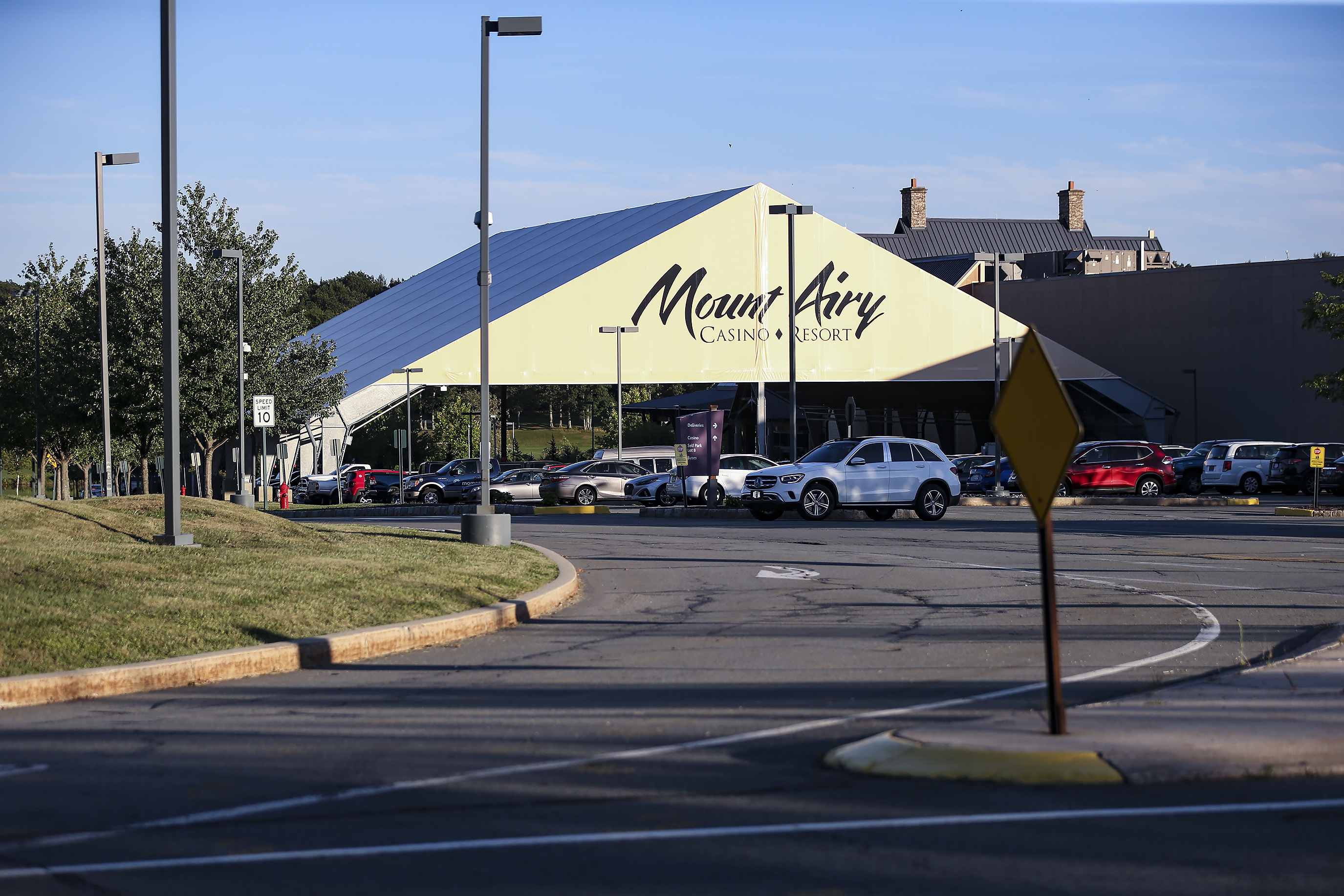
    The Mount Airy Casino Resort in Mount Pocono, Pa.

    Donald Trump may be constitutionally ineligible to run again for president — no seriously, he can’t — but that factoid apparently isn’t stopping the 47th POTUS from campaigning in the critical swing states. Why else did Trump choose Pennsylvania — a state he visited a gazillion times as a candidate — as the location for a major speech on the economy, to convince citizens that what they are seeing in supermarket aisles is not what’s happening? I can’t even imagine what Trump will say Tuesday night, but I was stunned to learn the regime’s choice of venue: The Mount Airy Casino Resort, the former honeymoon haven in Mount Pocono.

    It’s not just that Trump is touting economic security in a casino, which seems way too fitting in an America where so many folks have decided that the only way they’ll ever get rich is through gambling, whether that’s a get-rich-quick investment in crypto or meme stocks, or by an addiction to the betting sites like DraftKings that are devouring the sports world. Or that the backdrop might remind people that Trump was the rare entrepreneur who drove his own Atlantic City casinos — supposedly a license to print money — into bankruptcy.

    The real problem is that the Mount Airy Lodge is the epitome of the real Trump economy: Public corruption. Like Trump’s real-estate empire, the original Mount Airy Lodge fell on hard times in the 1990s, and its longtime owner died from a self-inflicted gunshot wound in 1999. The supposed savior was the state’s headlong rush into casino gambling and northeastern Pennsylvania’s landfill magnate Louis DeNaples, long dogged by allegations of ties to Scranton’s organized crime family. In 2008, DeNaples was indicted on four counts of perjury tied to his casino permit application; ultimately the politically connected businessman turned over the casino to a trust chaired by his daughter and saw the charges dropped. But the Mount Airy Resort Casino remains dogged by controversy, including a recently proposed $2.3 million settlement with its table-games dealers who accused the owners of years of wage theft.

    But Trump considers DeNaples “a close friend,” and the Mount Airy casino nabbed a $50 million federal bailout loan during the COVID-19 pandemic in the final year of Trump’s first term. Five years later, is there a positive story about the Trump economy that can be told from this stage of dropped felony charges, alleged wage theft, and government largesse for the well-connected? Don’t bet your nest egg on it.

    What I wrote on this date in 2015

    Ten years ago, I was fascinated by the decades-long political rise of Vermont senator and then-White House hopeful Bernie Sanders. This left-wing curmudgeon and relic of the 1960s didn’t capture the White House but changed America, for good. On Dec. 9, 2015, I touted my Amazon Kindle Single e-book about Sanders (The Bern Identityit’s still available!) and offered highlights. I wrote: “Politics mattered then, before Chicago and Kent State and Watergate and all the cynicism, and the unvarnished, authentic voice of Bernie Sanders is bringing that feeling back for many.” Read the rest: “5 things I learned writing an e-book about Bernie Sanders.”

    Recommended Inquirer reading

    • Did I mention that I went to New Orleans? I wrote two columns from the scene of Homeland Security’s immigration raid that the Trump regime has branded “Catahoula Crunch” in a gross homage to the Louisiana state dog. The first piece looked at Day One of the operation — the Big Lie behind the raids that claim to target criminals but instead go after day laborers, usually without criminal records — and the fear that pervaded the Latino community. The second column was a much more hopeful look inside the growing citizen resistance, as I profiled the everyday folks who are taking risks to blow whistles, chase cars, and generally impede Trump’s mass deportation agenda.
    • Last week — if you could somehow make it through the sickening bromance between Donald Trump and FIFA, the world governing body of soccer — we finally learned the key groupings and early-stage matches of the 2026 men’s World Cup finals across the United States as well as our now frenemies Canada and Mexico. You won’t be surprised to know that The Inquirer’s soccer writer extraordinaire Jonathan Tannenwald was all over the key developments. We learned who the U.S. team will play: Paraguay, a to-be-determined European qualifier, and Australia, in a June 19 Seattle match I still want to attend if I can start a GoFundMe (kidding…maybe) for the astronomical ticket prices. The Philadelphia matches include perennial contenders France and Brazil as well as a Curaçao-Ivory Coast showdown that I’m excited for because I might be able to afford it. The World Cup is going to be one of the biggest stories of 2026, and you know the Inquirer will cover this like an Italian center back. This alone will be worth the price of a subscription, so what are you waiting for?

    By submitting your written, visual, and/or audio contributions, you agree to The Inquirer‘s Terms of Use, including the grant of rights in Section 10.

  • Two New Yorkers found dead in Atlantic City Borgata hotel room

    Two New Yorkers found dead in Atlantic City Borgata hotel room

    Atlantic City Police are investigating the deaths of two New Yorkers who were found dead in a casino hotel room Sunday afternoon.

    Police were called to the Borgata Hotel Casino and Spa around 5 p.m., where they found the bodies of Baoyi Bowie Zheng, a 36-year-old woman from Staten Island, and Wei Guo Liang, a 68-year-old man from Brooklyn.

    An autopsy determined Bowie Zheng died of a broken neck. Guo Liang was found to have died from self-inflicted stab wounds.

    Many details regarding the individuals, including their connection, if any, and how long they’d been at the Borgata, had not been made public as of Wednesday, when the Atlantic County Prosecutor’s Office encouraged people with information about the incident to call in.

    A spokesperson for the hotel could not be reached for comment.

  • Philly radio shuffle: Paul Kelly takes over Matt Cord’s WMGK slot

    Philly radio shuffle: Paul Kelly takes over Matt Cord’s WMGK slot

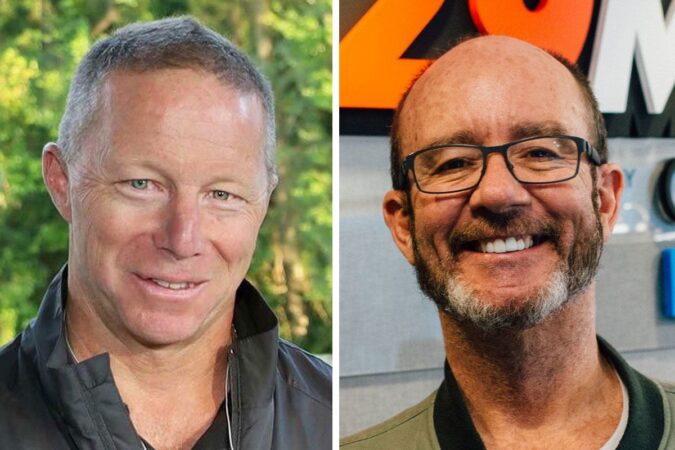
    The sudden death of Pierre Robert has forced a Philly radio shuffle, with veteran host and Sixers PA announcer Matt Cord returning to 93.3 WMMR to take over the midday show, which Robert hosted for 44 years.

    Taking over Cord’s morning show at 102.9 WMGK will be another radio veteran — the versatile Paul Kelly, who’s been a utility infielder at the station since 2019, hosting just about every shift.

    Now Kelly will take over WMGK’s morning show, the former home of famed Philly radio host John DeBella, who retired in 2023.

    Both Cord and Kelly will begin their new hosting gigs Monday.

    “This has been a dream come true — rocking in the same building I visited on my bike as a kid,” Kelly said in a statement. “It’s been amazing working alongside the personalities I grew up listening to — Matt Cord, Tony Harris, John DeBella, Debbi Calton, and Andre Gardner!”

    Kelly, a Philadelphia native, has been working on the air since 1989, hosting shows in Atlantic City, Wilkes-Barre, Scranton, and Poughkeepsie, N.Y. He also runs his own radio consultancy firm and is a founding member of Kelly Music For Life, a nonprofit that turned an old retail store in Havertown into the Kelly Center, a home for concerts, festivals, and shows.

    “Paul’s deep Philadelphia roots, his lifelong love of classic rock, and the genuine connection he’s built with our listeners over the years make him the ideal choice for mornings on WMGK,” said program director Chuck Damico. “He understands this city, he understands this music, and he brings an energy and authenticity that resonate with our audience every time he cracks the mic.”

    Pierre Robert, seen here broadcasting on WMMR in 2017.

    Robert, 70, was found dead in his Gladwyne home on Oct. 29 after failing to show up for his midday show. The cause of Robert’s death was not disclosed and officials don’t plan to release additional information. Caroline Beasley, the CEO of WMMR’s parent company, Beasley Media Group, said foul play was not suspected.

    “Everything seemed to be natural,” Preston Elliot said on air following Robert’s death. “It just appears he passed overnight.”

    Robert was beloved by musicians, who are hosting a memorial concert in his honor at the Fillmore on Dec. 17, with a portion of the proceeds going to MANNA, the Metropolitan Area Neighborhood Nutrition Alliance.

    The show will feature bands and musicians near and dear to the former WMMR host’s heart, including the Hooters, Brent Smith and Zach Meyers of Shinedown, Lizzy Hale and Joe Hottinger of Halestorm, and Ed Roland of Collective Soul.

    “Nobody replaces Pierre — let’s make that clear,” Cord said in a statement. “I promise to carry his amazing spirit into the studio bearing his name and do my best to make him proud.”