Tag: Black History Month

  • ‘Don’t uproot our education,’ Pennypacker fourth graders plead as their school faces closure

    ‘Don’t uproot our education,’ Pennypacker fourth graders plead as their school faces closure

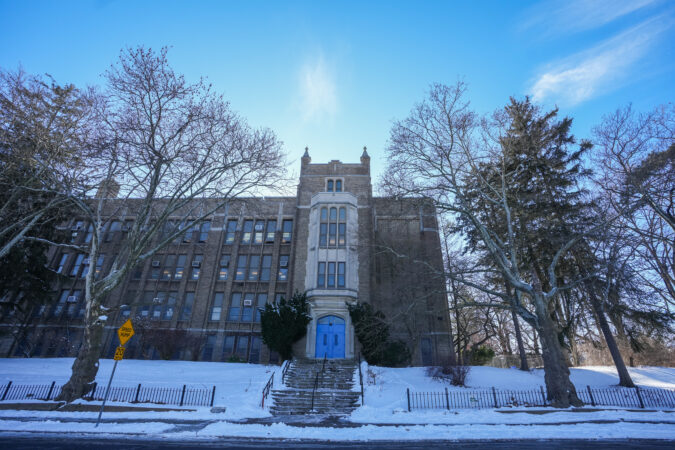
    For nearly a century, the Samuel Pennypacker School has survived — a three-story brick anchor of the West Oak Lane neighborhood in Northwest Philadelphia.

    Now it faces the threat of extinction.

    The Philadelphia School District says the school’s building score is “unsatisfactory” and modernizing it would cost more than $30 million. District officials are calling for shuttering Pennypacker following the 2026-27 school year, funneling its students to nearby Franklin S. Edmonds or Anna B. Day schools — part of a citywide proposal to close 20 district schools.

    The recommendation, district officials say, is no reflection of the “incredible teachers, community, [and] students” at Pennypacker. Rather, it is an attempt by the district to optimize resources and equity for students.

    Like many district schools, Pennypacker, which serves students in kindergarten through eighth grade, is aging and outdated, having opened in 1930. At just over 300 students, it is among the city’s smaller schools — and operating at about 64% of building capacity.

    Yet, it is those same qualities — its size and longevity — that represent some of its greatest strengths, say those in the school community who are not happy about the proposed closure.

    It’s a school, they say, that is more than the sum of its aging parts.

    On the school’s walls are pocks of chipped paint, yes, but also the colorful detritus of a small but vibrant student population: a poster composed of tiny handprints in honor of Black History Month; a “Blizzard of Positivity” — handwritten messages reading “Smile” and “Hugs” and “Help your friends when they fall.”

    It’s where Wonika Archer’s children enrolled soon after the family emigrated from Guyana — the first school they had ever known.

    “A lot of firsts,” Archer said. “Their first friends, their first teachers outside of their parents.”

    It’s where, since 1992, Andreas Roberts’ youth drill team has been allowed to practice. The team, which includes some Pennypacker students, recently participated in its first competition and won first place.

    “Pennypacker has been very, very useful to us,” he said. “We have nowhere else to practice for the kids.”

    It’s where Christine Thorne put her kids through school, her son and her daughter, and where her grandchildren now go. Around the school, they call her “Grandmama.”

    “I feel as if my household is being destroyed,” she said recently.

    For students, news of the imminent closure has been no less jarring.

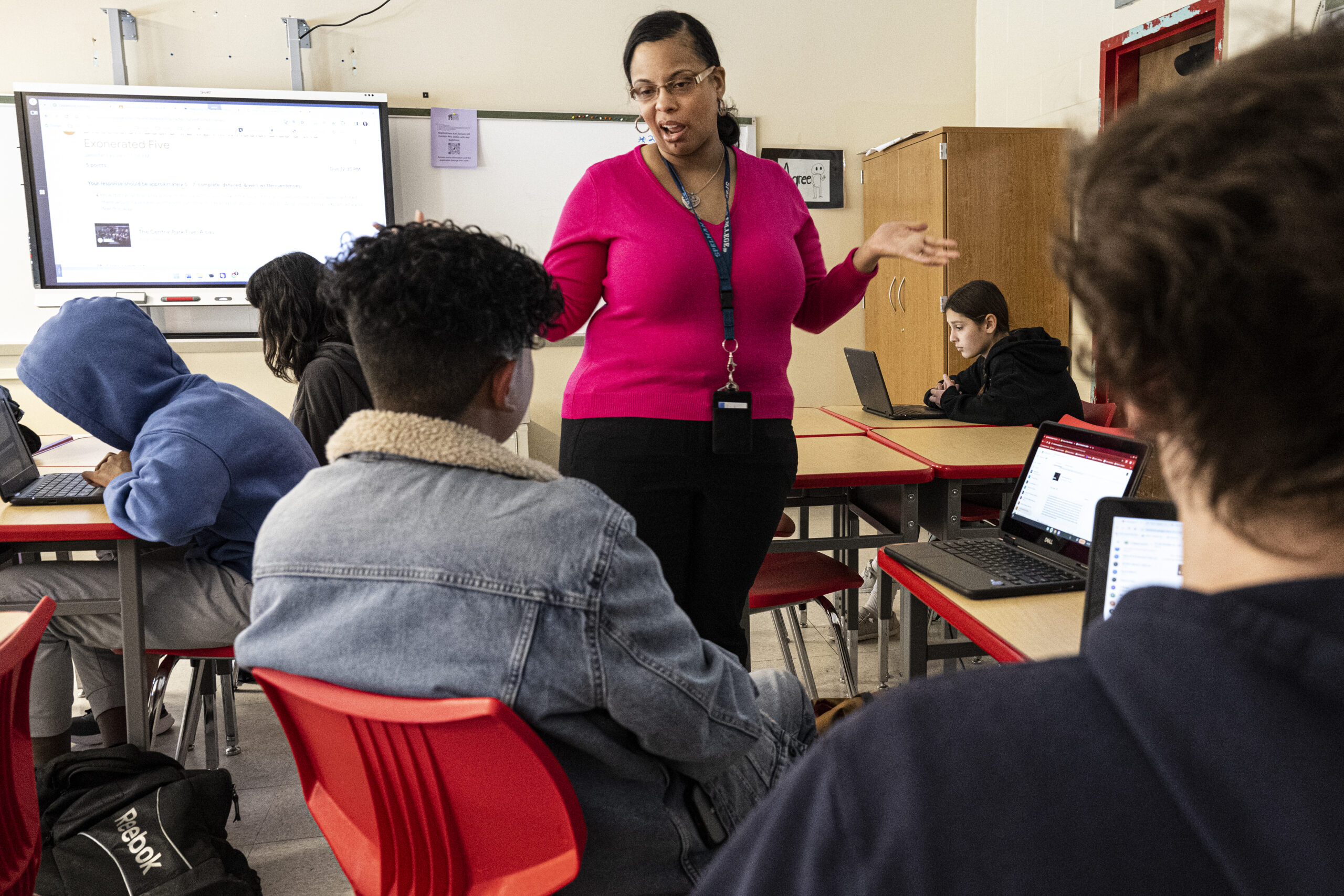
    When Janelle Pearson’s fourth-grade students learned recently that their school was poised to be shuttered under the district’s plan, they took it as a grim reflection on themselves.

    “It makes them feel like, ‘What did we do wrong that they want to close our school?’” said Pearson, who has taught at Pennypacker for about a decade. “That’s the part that tugs at your heart.”

    Unwilling to go down without a fight, the fourth graders resolved to do what they could. Soon, a poster took shape, in marker and crayon, a series of pleas addressed to Philadelphia Superintendent Tony B. Watlington Sr.

    “Pennypacker is our home.”

    “Don’t uproot our education.”

    “Our neighborhood depends on this school!”

    The poster was presented to district officials earlier this month at a community meeting held in the school’s wood-seated auditorium.

    At that meeting, representatives from the district did their best to explain the reasoning for the proposed closures. They presented a tidy PowerPoint and talked of student retention and program alignment, of building capacity and neighborhood vulnerability scores.

    It stood in stark contrast to the parents and teachers and staffers who, one by one, held a microphone and spoke of love and family and community, of teachers and staffers who routinely went above and beyond to make their children feel safe. To make them feel special.

    “It’s not just about a building,” said Richard Levy, a onetime Pennypacker teacher who now works at St. Joseph’s University. “The challenges here aren’t reasons to close the school — they’re reasons to strengthen it.”

    Whether their appeals might affect the district’s decision remains to be seen. Other schools in the district slated for closure have mounted efforts of their own, and, despite a recent grilling by City Council members, it seems all but certain that several schools will ultimately shutter.

    A school board vote on the district’s proposal is expected later this winter.

    Until then, those at Pennypacker are holding tight to the possibility of an eleventh-hour reprieve for the longtime neighborhood institution.

    “I’m hoping there’s a chance,” Archer said. “I’m so hopeful.”
  • In the 1940s, she was denied service at a Delco restaurant. She spent the rest of her life bridging racial divides in Media.

    In the 1940s, she was denied service at a Delco restaurant. She spent the rest of her life bridging racial divides in Media.

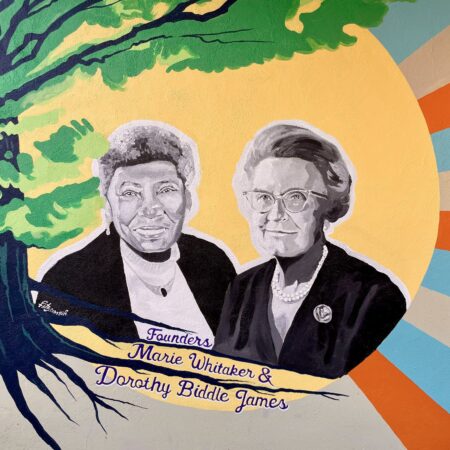
    When the Media-area NAACP was selecting a few Black figures to spotlight throughout Black History Month, adding Marie Whitaker to the list was a no-brainer, said Cynthia Jetter, president of Media’s NAACP chapter.

    Within the community, “I think most people know the story,” Jetter said.

    The story, that is, of when Whitaker sat down for a meal at the Tower Restaurant at the corner of State and Olive Streets with her baby in her arms and her sister by her side in 1943.

    No one waited on them.

    This bothered Dorothy James, a white Quaker woman who was dining at the restaurant. So she approached a worker there who explained that the waitresses did not serve Black people, James recounted in a letter she wrote a few days after the incident.

    Whitaker soon left the restaurant with her baby and sister and went elsewhere. Soon, James joined them, she wrote.

    Whitaker and James became fast friends and cofounded Media Fellowship House the following year. The goal was to bring together Media residents of all races and religions for events and meals. It grew over the course of its first decade, and in 1953, they raised enough money from community members to buy a property on South Jackson Street, where the organization flourished.

    Whitaker died in 2002, but the fellowship house lived on. In its 82 years, it has gone from hosting sewing circles and childcare events to helping Black people buy homes in restricted neighborhoods to now offering assistance to first-time homebuyers and helping those facing foreclosure.

    For Amy Komarnicki, who now runs the Media Fellowship House, the values Whitaker championed — inclusion, resilience, and courage — are always guiding her.

    “I think you have to move toward the injustice that you see and not ignore it,” Komarnicki said.

    That is especially difficult to do when you’re on the receiving end of the injustice, she added.

    “Being willing to accept an invitation to talk about it takes enormous bravery and trust,” Komarnicki said. “It’s good to be uncomfortable. It’s good to make people uncomfortable for the greater good. It opens up space for dialogue.”

    Whitaker’s legacy stretches beyond the bounds of Media. Her daughter, Gail Whitaker, once the infant with her at the restaurant where she did not get served, became the first Black woman to practice law in Delaware County and served on the Media Borough Council. She died in 2024. Her son, Bill Whitaker, is a 60 Minutes correspondent for CBS.

    Living in Media and going to Fellowship House growing up exposed him to people from all kinds of demographics and religions, Bill Whitaker said. And that was no accident; it was something his mother and Fellowship House helped lay the groundwork for.

    “She was resolute and knew what she wanted, not just for her family, but for her community and for her world,” Whitaker said. “She had a vision of what Fellowship House stands for, bringing people together and having people speak across what seems now to be a chasm of our differences — she wanted people to speak across that, to reach across that and come together.”

    As long as Fellowship House stands, that work, just as important now as then, will continue, Bill Whitaker said.

  • Jesse Jackson’s death during Black History Month only magnifies an already immense loss

    Jesse Jackson’s death during Black History Month only magnifies an already immense loss

    Pick any of the seminal moments from Black history over the last six decades — from the assassination of the Rev. Dr. Martin Luther King Jr. in 1968 to Barack Obama’s first speech as president-elect 40 years later — and the chances are that the Rev. Jesse Jackson Sr. was there, front and center.

    Jackson had spoken to King only moments before the civil rights leader was fatally shot while standing on a balcony of the Lorraine Motel in Memphis on April 4, 1968. Even though he was only 26 years old, Jackson went on to position himself to take up the mantle of leading the civil rights movement.

    Years later, Jackson explained to an interviewer, “What I was clear on was that we could not let one bullet kill the whole movement.” He used the analogy of an athletic event during which the best player gets hurt. The answer, he said, isn’t to forfeit the game: “You can’t run away. You’ve got to keep fighting.”

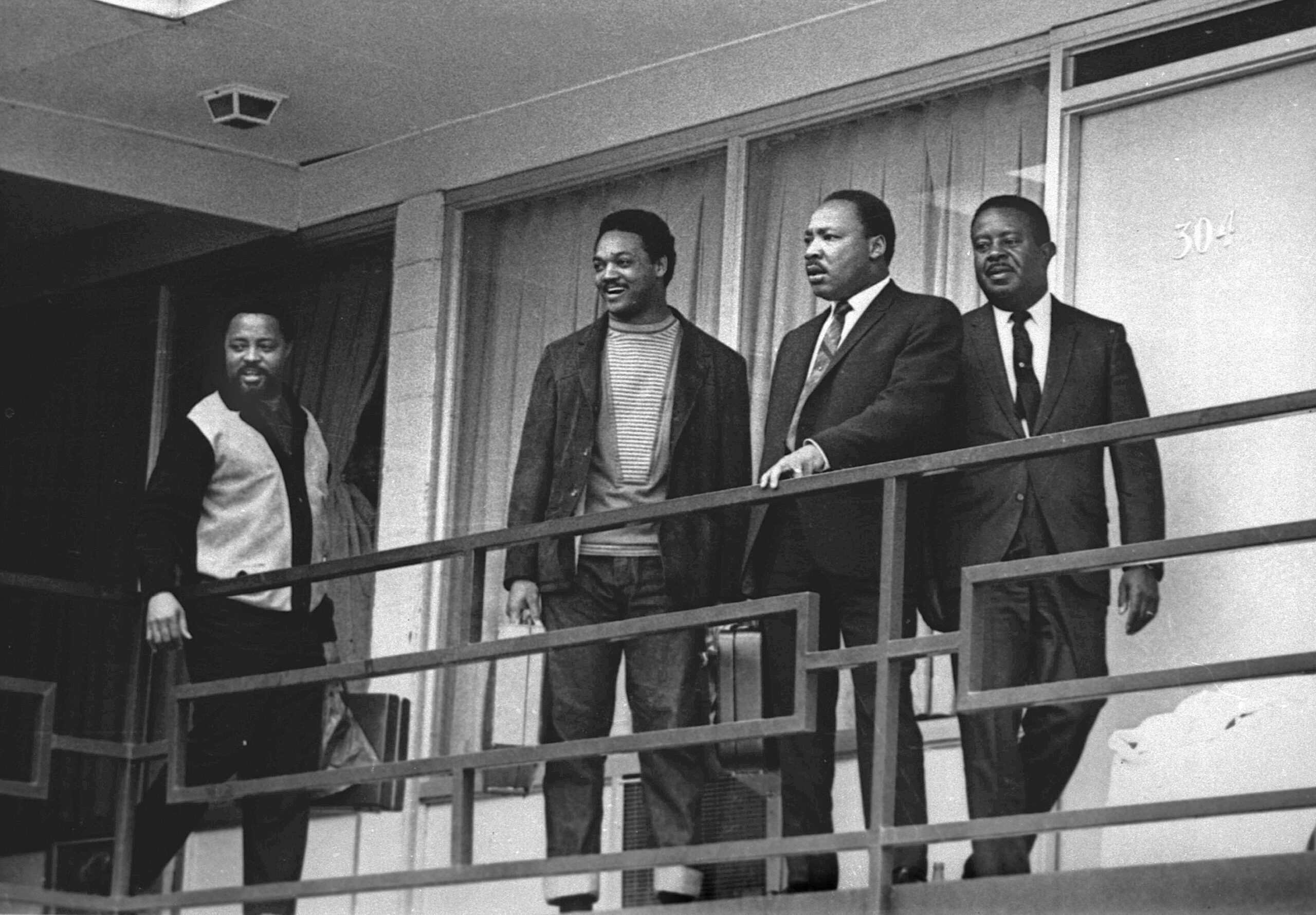
    The Rev. Martin Luther King Jr. (second from right) stands with Hosea Williams (left), Jesse Jackson (second from left), and Ralph Abernathy (right) on the balcony of the Lorraine Motel in Memphis on April 3, 1968, a day before he was assassinated while standing in approximately the same spot.

    And that’s what he did for the rest of his life, advocating tirelessly for an end to racial injustice as well as for economic opportunities for poor people of all racial backgrounds through his iconic Rainbow coalition and during his two historic runs for the presidency.

    Back when most Americans couldn’t conceive of a Black man becoming president of the United States, he could and tried to get the rest of us to believe in it, too. Jackson launched his first bid for the Democratic presidential nomination in 1984 and again in 1988.

    Jackson rarely gets the credit, but his run for the White House helped lay the groundwork for the election of Obama, who fulfilled Jackson’s vision.

    And, yes, when Obama gave his victory speech in Chicago’s Grant Park on election night 2008, Jackson was there, too. While Obama spoke, Jackson could be seen holding a miniature American flag with tears streaming down his cheeks.

    “I wish for a moment that Dr. King or Medgar Evers” — the civil rights leader who was assassinated in Mississippi in 1963 — “could’ve just been there for 30 seconds to see the fruits of their labor,” Jackson later told the Associated Press about his emotions that night. “I became overwhelmed. It was the joy and the journey.”

    Jackson’s death on Tuesday at the age of 84 came after years of illnesses, including a rare neurological disorder. Even in his later years, however, he stayed in the game — to continue his football metaphor — making an appearance onstage to thunderous applause during the Democratic National Convention in Chicago in 2024.

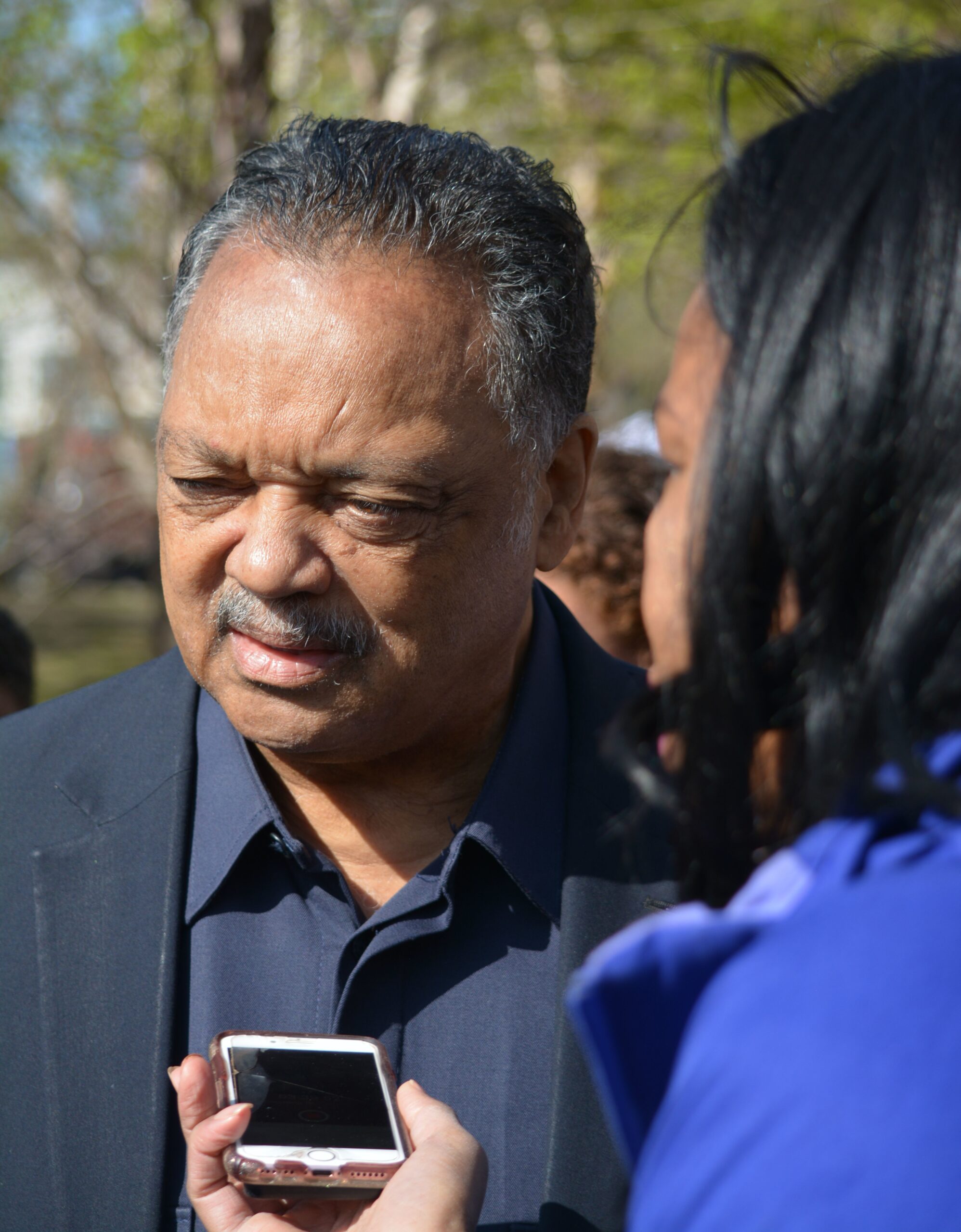
    Inquirer columnist Jenice Armstrong interviews Jesse Jackson during the 50th anniversary commemoration of the assassination of the Rev. Martin Luther King Jr. on April 4, 2018.

    News he had died hit me as hard as if I’d lost a dear relative. I didn’t know Jackson personally, but had the privilege of interviewing him multiple times during my career.

    In fact, the first time I met him was as a student journalist on the campus of Howard University. The last time I’d actually gotten a chance to interview him was in 2018 during the 50th anniversary commemoration of King’s assassination in Memphis outside what had been the Lorraine Motel, which is now part of the National Civil Rights Museum. I wish I’d kept the recording of what he said.

    As I processed the news of his death, I made a point of posting on Abby Phillip’s Instagram page a brief note of thanks for her work chronicling Jackson’s life and legacy in her book, A Dream Deferred: Jesse Jackson and the Fight for Black Political Power. Phillip told me last year that she knew she was working against time and Jackson’s frail health to finish the project before his death.

    Her goal, she said, “was to make sure that this chapter didn’t get lost to history.”

    I was a kid in the 1970s during the Black Power era who repeated his chants, “I am somebody!”

    Back then, it was affirming to see Jackson on TV with his then-signature Afro, or later delivering electrifying speeches during his groundbreaking runs for the presidency. We used to chant, “Run Jesse Run!”

    One of the first articles I wrote for my student newspaper was about Jackson’s Operation PUSH, or People United to Save Humanity.

    Jackson spent his adult life at the forefront of the pursuit of equality for African Americans, and for that, we should always be grateful.

    To me, losing this great leader in February during Black History Month — at a time when our people’s contributions to the nation’s history are being threatened with erasure — only magnifies the sense of loss. It should also remind those of us who care about civil and human rights that it’s our turn to take up the struggle — and keep fighting.

  • Art Commission votes to move Joe Frazier statue from South Philly to the Art Museum

    Art Commission votes to move Joe Frazier statue from South Philly to the Art Museum

    “Smokin’” Joe Frazier is heading to the Philadelphia Museum of Art.

    Philly’s statue of the famed heavyweight boxing champion is slated to be installed at the base of the museum’s steps later this year following a Philadelphia Art Commission vote Wednesday that approved the move. All five commissioners present Wednesday voted in favor of the statue’s relocation from its longtime home at the sports complex in South Philadelphia.

    The proposal, presented by Creative Philadelphia, the city’s office for the creative sector, will see the Frazier statue installed where Philly’s original Rocky statue stands today. The Rocky statue, meanwhile, will be installed at the top of the museum’s steps.

    “Placing the Joe Frazier statue at the Art Museum allows us to share a more complete history about Philadelphia’s spirit,” Marguerite Anglin, the city’s public art director, said Wednesday. “One rooted in real people, real work, and real pride in this city.”

    The Frazier statue should move to the Art Museum sometime this spring, Anglin said. That relocation coincides with the move of the Rocky statue currently at the base of the steps, which is slated to be temporarily installed inside the museum for the first time as part of the forthcoming exhibition “Rising Up: Rocky and the Making of Monuments.” That Rocky statue will then be installed at the top of the museum’s steps in the fall, while the Rocky statue now at the top of the steps will go back into actor Sylvester Stallone’s private collection.

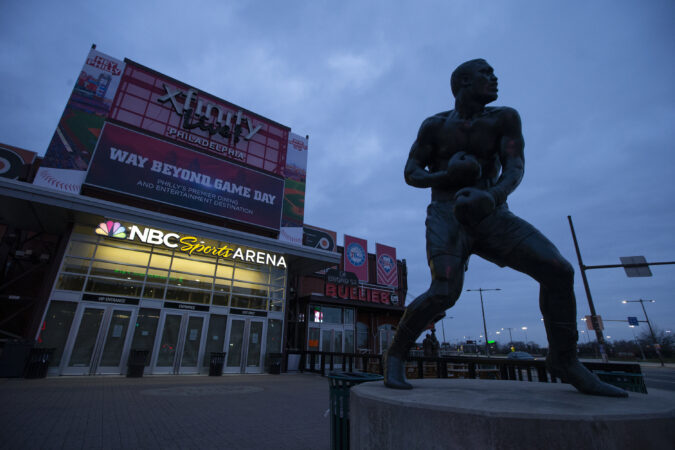
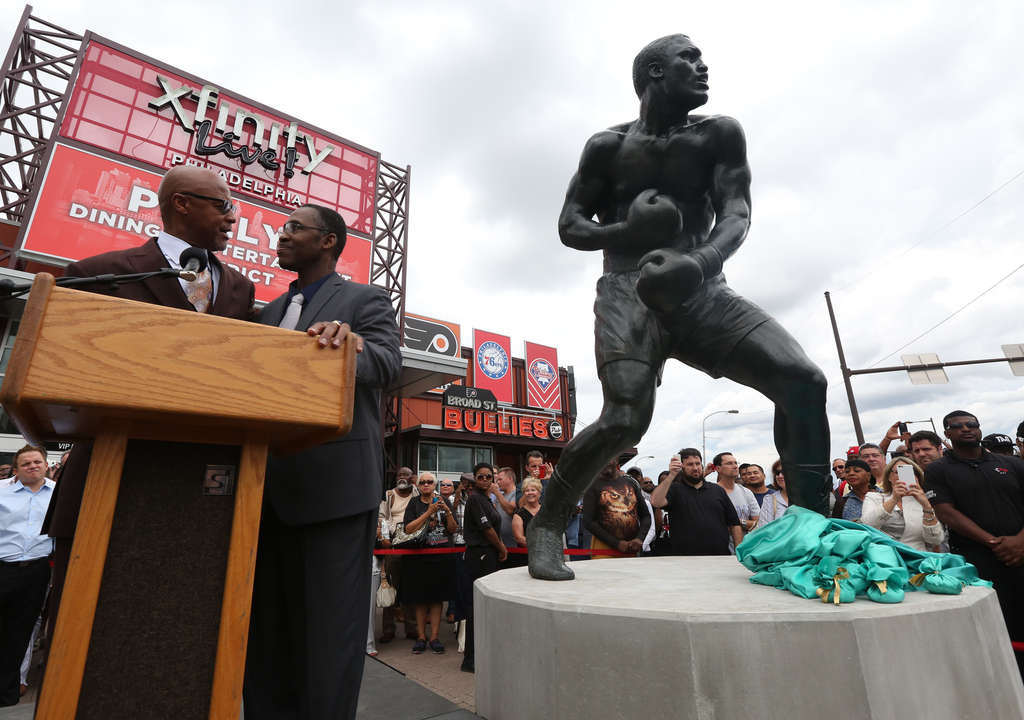
    Created by sculptor Stephen Layne, the Frazier statue was unveiled in 2015 at what is now Stateside Live! at the sports complex in South Philadelphia. Its debut came years after Frazier’s death in 2011, which kicked off a campaign to erect the statue in his memory. Standing at 12 feet tall, it depicts the boxer moments after knocking down Muhammad Ali during the “Fight of the Century” — a famed March 1971 bout in which Ali suffered his first professional loss after a brutal 15-round skirmish.

    For years before its creation, Frazier’s supporters lamented the fact that Philadelphia had long had a Rocky statue, but lacked one showing its own real-life champion. Our Rocky statue, in fact, has been around for more than 40 years, and has stood outside the Art Museum for two decades — about twice as long as the Frazier statue has even existed.

    “Tell them Rocky was not a champion, Joe Frazier was,” the Rev. Jesse Jackson famously said at Frazier’s funeral. “Tell them Rocky’s fists were frozen in stone. Joe’s fists were smokin’.”

    Creative Philadelphia’s plan featured widespread support from leaders including Mayor Cherelle L. Parker, as well as Frazier’s family and friends. It received little pushback at Wednesday’s meeting, with Gabrielle Gibson, a granddaughter of Frazier’s, asking what is perhaps the most obvious question about the placement: Shouldn’t the Frazier statue be at the top?

    He was, after all, a real person, a real Philadelphian, and a real champion. Rocky, meanwhile, is a fictional character who appears to be an amalgamation of several real-life boxers’ stories — Frazier included, according to Creative Philadelphia. Many speakers Wednesday noted that, like Rocky, Frazier was known to run up the Art Museum’s steps and was said to have boxed sides of beef during his training, among other parallels.

    And then there is the symbolism of where the Rocky and Frazier statues will stand.

    “During Black History Month, I think we need to understand the new placement,” Gibson said. “A real boxer and a Black man’s image and likeness would be placed at a lower position beneath the fictional white character whose story was inspired by real boxers.”

    The Frazier statue’s placement at the bottom of the steps, Anglin said, was for two main reasons. First, she said, having Frazier at the bottom makes it the first statue visitors will encounter at the Art Museum — even if they are there expressly to see Rocky — which will provide “an opportunity to be grounded in history.”

    Second, the Rocky statue’s footprint is roughly half the size of the Frazier statue, which would not be “safe or feasible” to install on high, Anglin said. Putting Rocky at the top, Anglin said, allows for better circulation around the monument, and avoids the potential logistical and code-related issues putting Frazier there could present.

    His son, and former heavyweight boxer Marvis Frazier (right), and Rev. Blane Newberry from Enon Tabernacle Baptist Church bless a 12-foot-tall 1,800-pound bronze statue of “Smokin’ Joe” Frazier after it was unveiled in 2015.

    Jacqueline Frazier-Lyde, Frazier’s daughter, a retired professional boxing champion and a Municipal Court judge, expressed support for the move Wednesday, calling the statue a reminder that “we can overcome any obstacle and achieve.” She also recounted her father’s feelings on the Rocky statue, specifically when he would see tourists taking photos with Stallone’s character.

    “At times,” she said, “he would say, ‘Don’t they understand that I’m the heavyweight champion?’”

  • A romantic Valentine’s Day musical weekend in Philly awaits

    A romantic Valentine’s Day musical weekend in Philly awaits

    Philly Valentine’s Day weekend musical options include Diana Krall and the R&B Lovers Tour in Atlantic City, Eric Benet at City Winery, Stinking Lizaveta at the Khyber, La Cumbia Del Amor at Johnny Brenda’s, Marshall Allen at Solar Myth, Langhorne Slim in Ardmore, and a road trip to see Boyz II Men. What could be more romantic?

    Thursday, Feb. 12

    Lazyacres / Bowling Alley Oop

    Philly songwriter Josh Owens doesn’t seem to have a fully functioning keypad. His dreamy indie pop band Lazyacres’ EP is called Nospacebar. He’s playing South Street hotdog nightclub Nikki Lopez with Attic Posture, Bowling Alley Oop, and Dante Robinson. 8 p.m., Nikki Lopez, 304 South St., @nikkilopezphilly

    Big Benny Bailey, with Ben Pierce and Shamir Bailey, plays the Fallser Club in East Falls on Friday.

    Friday, Feb. 13

    Big Benny Bailey

    The winning Black History Month programming at the Fallser Club continues with Big Benny Bailey, the duo of South Philly songwriters Shamir Bailey and Ben Pierce. It’s a bluegrass, folk, and country project that promises to be another compelling adventure from the multitalented Shamir, who released his 10th album, Ten, last year. He has a GoFundMe going to get his screenplay Career Queer made into a feature film. Reese Florence and Lars open. 8 p.m., Fallser Club, 3721 Midvale Ave., thefallserclub.com

    Umphrey’s McGee

    The veteran jam band, which formed at the University of Notre Dame and called its 1998 debut album Greatest Hits, Vol. III, released its latest improvisatory adventure, Blueprints, in 2025. 8 p.m., Fillmore Philly, 29 E. Allen St., thefillmorephilly.com

    The Knee-Hi’s

    Chicago’s self-described “female fronted garage glam rock band existing as a living love letter to rock and roll” tops a bill with Ione, Star Moles, and Thank You Thank You. 8 p.m., Ortlieb’s 847 N. Third St., 4333collective.com

    Boyz II Men

    Shawn Stockman, Nate Morris, and Wanya Morris usually stay close to home on Valentine’s Day weekend. This year is a little different, with the Boyz on the road on the “New Edition Way” tour with New Edition and Toni Braxton. The trio of R&B stars will arrive in Philly at the Liacouras Center on March 15, but on this heart-shaped weekend, they’re in New Jersey. 8 p.m., Prudential Center, 25 Lafayette St., Newark, prucenter.com

    Iron & Wine

    Sam Beam, who leads Iron & Wine, has a free-flowing new album coming Feb. 27, called Hen’s Teeth. “I’ve always wanted to use that title,” he said in a statement. “I just love it. To me it suggests the impossible. Hen’s teeth do not exist. And that’s what this record felt like: a gift that shouldn’t be there but it is. An impossible thing but it’s real.” Noon, World Cafe Live, 3025 Walnut St., xpn.org

    Diana Krall

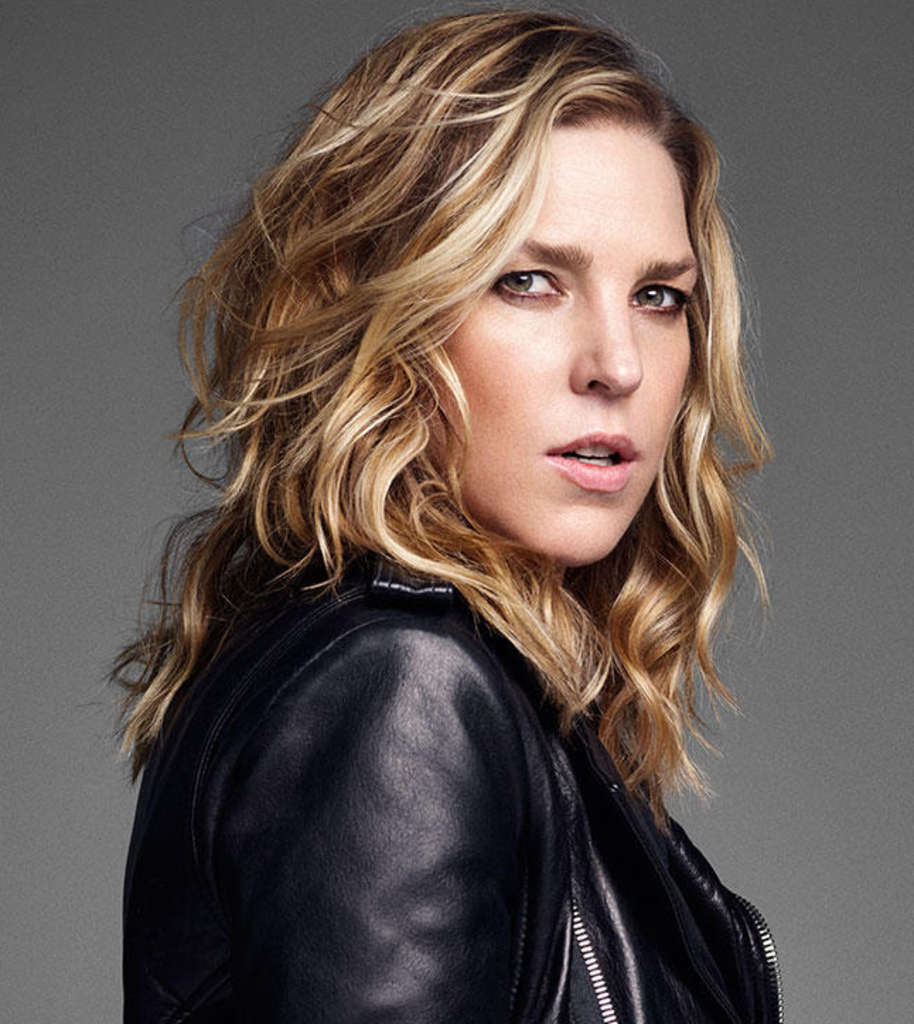
    Jazz pianist Diana Krall makes two date-night stops in the region this weekend. On Friday, the vocalist, whose most recent album, This Dream of You, is named after a Bob Dylan song, is in Bethlehem. On Saturday, she’s down the Shore. 8 p.m. Wind Creek Event Center, 77 Wind Creek Blvd, Bethlehem, windcreekeventcenter.com, and 8 p.m., Ocean Casino Resort, 500 Boardwalk, Atlantic City, theoceanac.com

    Diana Krall performs in Bethlehem on Friday and Atlantic City on Saturday.

    Saturday, Feb. 14

    The R&B Lovers Tour

    This package tour gathers together stars of 1990s silky pop R&B and soul, with featured sets by Keith Sweat, Joe, Dru Hill, and Ginuwine. 8 p.m., Boardwalk Hall, 2301 Boardwalk, Atlantic City, boardwalkhall.com.

    Eric Benet

    The R&B love man, formerly betrothed to Halle Berry, and now married to Prince’s ex-wife Manuela Testolini, was a regular hitmaker in the 1990s and 2000s, topping the charts with “Spend My Life With You” with Tamia in 1999. Last year saw the release of his album The Co-Star and a holiday collection. 6 and 9:30 p.m., City Winery Philadelphia, 990 Filbert St., citywinery.com/philadelphia

    Stinking Lizaveta

    Cozy up to your honey while listening to high-volume doom jazz by the power trio named after a character in Dostoyevsky’s novel The Brothers Karamazov. The band consists of drummer Cheshire Augusta and guitarist brothers Yanni and Alexi Papadopoulos, whose 1996 debut album Hopelessness and Shame, recorded by Steve Albini, has just been issued on vinyl for the first time. 8 p.m., Upstairs at the Khyber Pass Pub, 56 S. Second St., @upstairsatkhyberpasspub

    La Cumbia Del Amor

    Philly cumbia klezmer punk band Mariposas Galacticas joins forces with Baltimore-based cumbia ska outfit Soroche and DJ Pdrto Criolla for a dance party celebrating “radical love in all its forms.” 9 p.m., Johnny Brenda’s, 1021 N. Franklin St., johnnybrendas.com

    Philly Gumbo

    Long-standing rhythmically adept party band Philly Gumbo is now in its 47th year. Fat Tuesday is coming up this week, and the band’s bons temps rouler repertoire is deep. This should be a Mardi Gras dance party to remember. 7 p.m., 118 North, 118 N. Wayne Ave., Wayne, 118Northwayne.com.

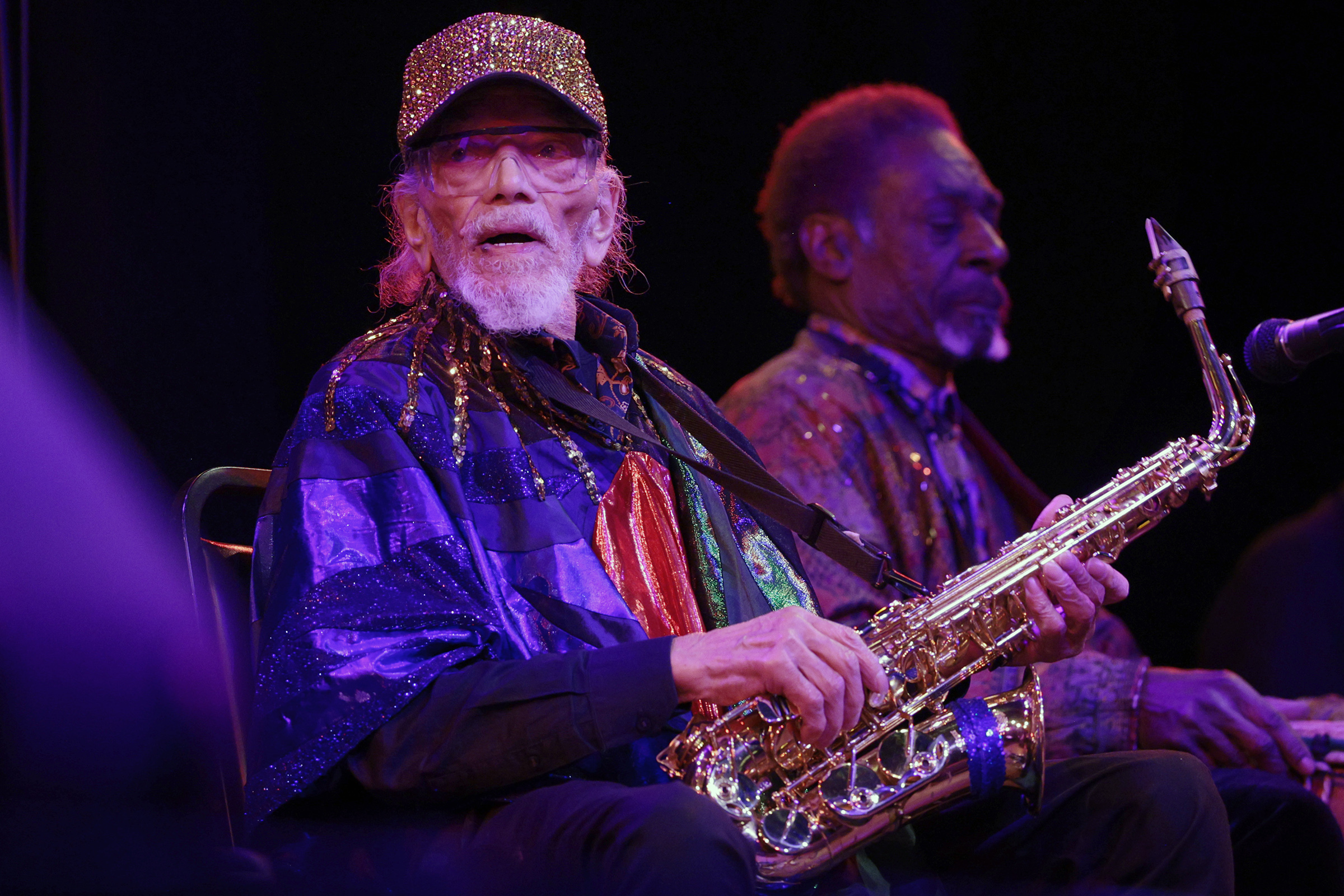
    Marshall Allen at World Cafe Live in Philadelphia in April 2025. The Sun Ra Arkestra leader plays with his band Ghost Horizons on Saturday at Solar Myth.

    Marshall Allen’s Ghost Horizons

    The indefatigable Sun Ra Arkestra leader is back at the former Boot & Saddle with a version of his Ghost Horizons band that includes DM Hotep on guitar, Joe Morris on bass, and Matthew Shipp on piano. 8 p.m., Solar Myth, 1131 S. Broad St., arsnovaworkshop.org

    Sunday, Feb. 15

    Marissa Nadler

    Folk-goth guitarist Marissa Nadler creates dreamy noir-ish soundscapes that have won her a following with folkies and metal heads. Her latest is the haunting New Radiations. 7:30 p.m., MilkBoy Philly, 1100 Chestnut St., milkboyphilly.com

    Langhorne Slim

    Bucks County’s own Langhorne Slim turns up the volume on The Dreamin’ Kind, his most rocked-out album, produced by Greta Van Fleet bassist Sam F. Kiszka. That album follows 2021’s Strawberry Mansion, named for the Philly neighborhood where his grandfathers were raised. Get there early for Laney Jones and the Spirits, the Nashville quintet whose raucous 2025 self-titled debut is full of promise. 7 p.m., Ardmore Music Hall, 23 E. Lancaster Ave., Ardmore, ardmoremusichall.com

    The Blackbyrds

    The Washington jazz and R&B band, which formed when its members were students of trumpeter Donald Byrd, scored a smash with 1975’s “Walking in Rhythm.” Its music is familiar to hip-hop fans through “Rock Creek Park,” which was sampled by MF Doom, De La Soul, and Wiz Khalifa, among many others. 5 and 8:30 p.m., City Winery Philadelphia, 990 Filbert St., citywinery.com/philadelphia.

  • We cannot understand American history without Black history

    We cannot understand American history without Black history

    One cannot truly claim to understand American history without knowing African American history, and without understanding America’s complete history, we’re condemned to repeat past mistakes.

    The recent removal of the slavery exhibit at the President’s House made me realize that there were forces at work actively trying to erase uncomfortable truths about America’s history.

    With that recent obfuscation in mind — and in celebration of Black History Month — I’d like to introduce readers to some little-known history from Philadelphia during World War II.

    Discrimination decades ago in Philadelphia is not to be confused with racial murder in Philadelphia, Miss. However, to understand current race-related issues, we must acknowledge that whatever violence was inflicted on African Americans down south, equally insidious behavior took place in Northern cities like Philadelphia.

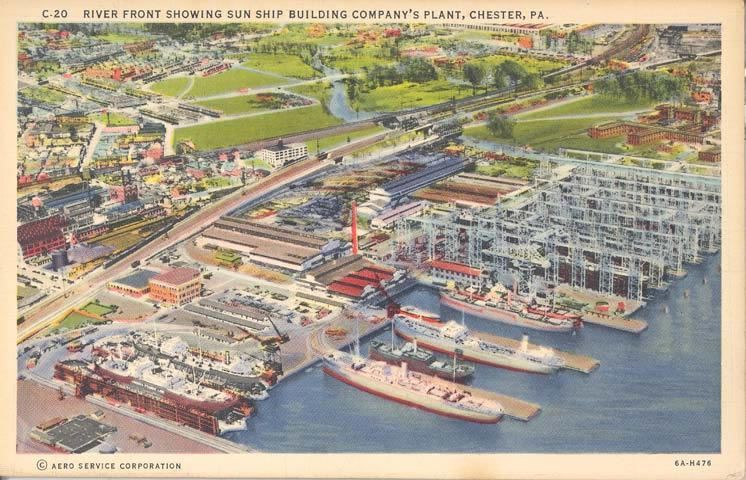
    A postcard depicts an aerial view of the Sun Shipyard in the 1930s.
    • Although the Fair Employment Practices Committee barred racial discrimination during World War II, Chester’s Sun Shipyard maintained a 5,000-plus man segregated shipyard, which company officials claimed was needed to limit racial strife.
    • Philadelphia’s newspapers legally listed nonfederal defense job openings and apartment rentals by race.
    • Newsreels and movies about the iconic battles of Guadalcanal, Saipan, the Bulge, Iwo Jima, and Okinawa almost never featured any Black servicemen, but they were there.
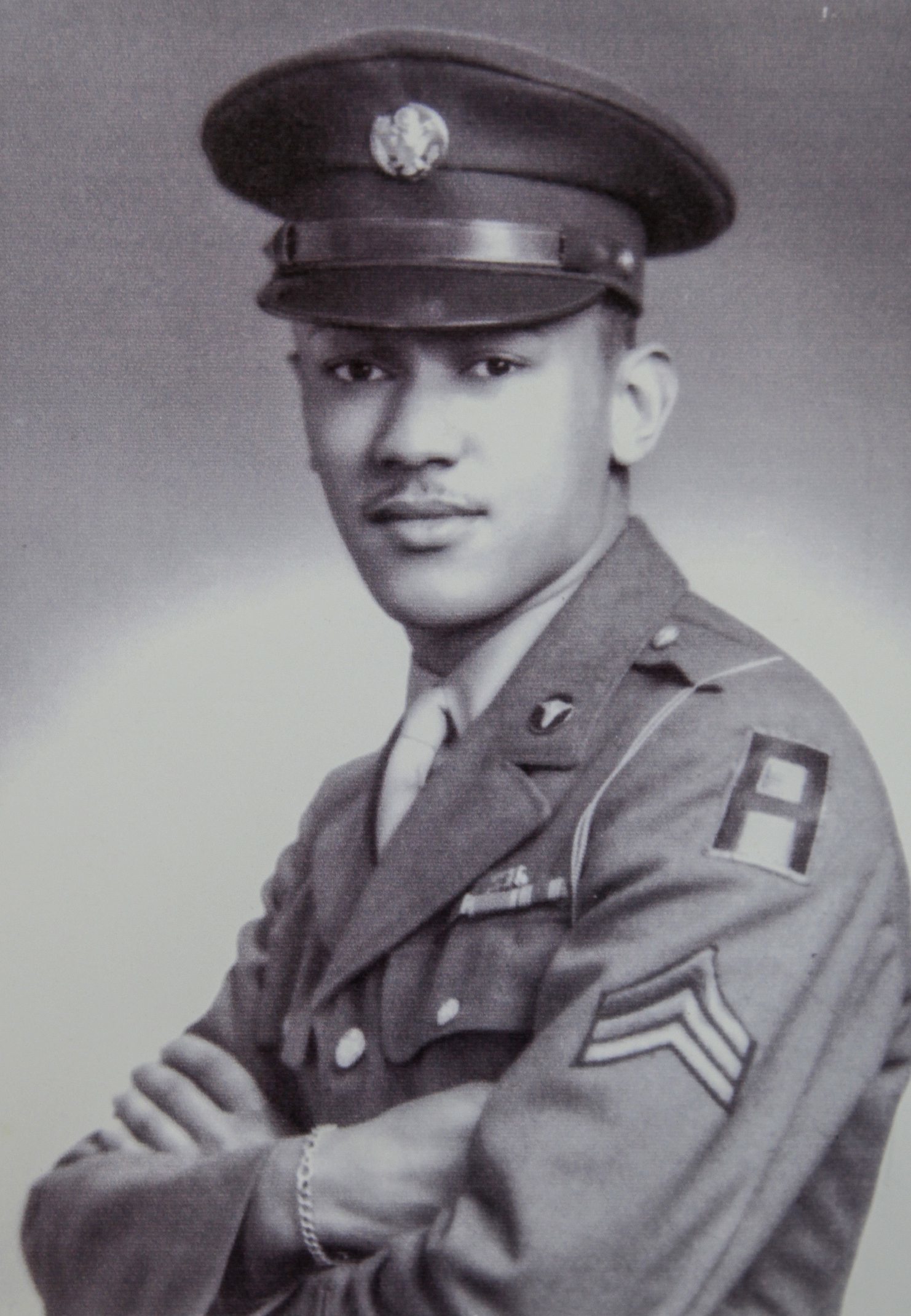
    Cpl. Waverly B. Woodson Jr. was an army medic assigned to the 320th Barrage Balloon Battalion. The battalion’s job was to set up explosive-rigged balloons to deter German planes. At a time when the military was still segregated by race, the balloon battalion was the only African American combat unit to land on Normandy on June 6, 1944.
    • On D-Day, Overbrook High grad Waverly B. Woodson Jr., a Black combat medic who, despite being wounded, treated over 200 soldiers at an Omaha Beach field dressing station. After toiling for over 30 straight hours and being completely exhausted, he resuscitated three soldiers who had nearly drowned in the frigid waters off the English Channel.
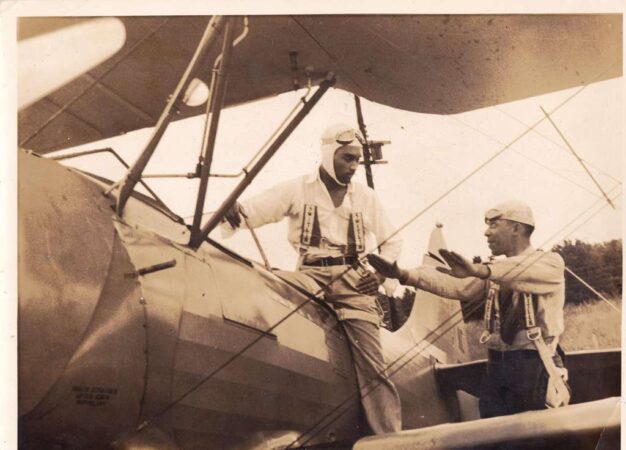
    • In 1943, Milton R. Henry, a Philadelphia Tuskegee pilot, got into a confrontation with an armed white Montgomery, Ala., bus driver over being forced to sit in the back of a bus. Henry might have been murdered if not for the quick intervention of several white English pilots.
    • In 1944, a racist Durham, N.C., bus driver murdered Pvt. Booker T. Spicely in cold blood. They had “had words” over Spicely’s initial choice of a bus seat. The bus driver was tried and quickly acquitted. Spicely lived in Philadelphia with his sister prior to his enlistment.
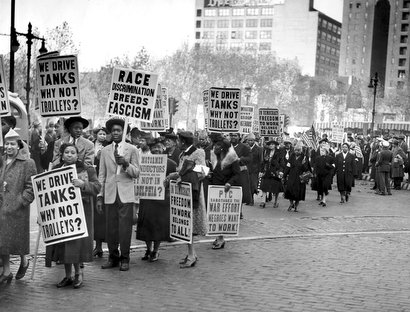
    A Philadelphia Transit Co. (which would eventually become SEPTA) protest supporting Black trolley drivers enters Reyburn Plaza across from City Hall on Nov. 8, 1943.
    • In 1944, racists struck the Philadelphia Transit Co., SEPTA’s predecessor, and prevented workers from using trolleys, buses, and subways for several days. Worker absenteeism caused the loss of a million war matériel production hours. President Franklin Delano Roosevelt ordered 5,000 troops to Philadelphia — instead of to Europe or the Pacific — to restart and guard its transit system.
    • In a top-secret 1945 operation, African American paratroopers fought West Coast forest fires ignited by Japanese balloon bombs. Norristown native Pfc. Malvin L. Brown died during one of the 555th Parachute Infantry Battalion’s firefighting operations.
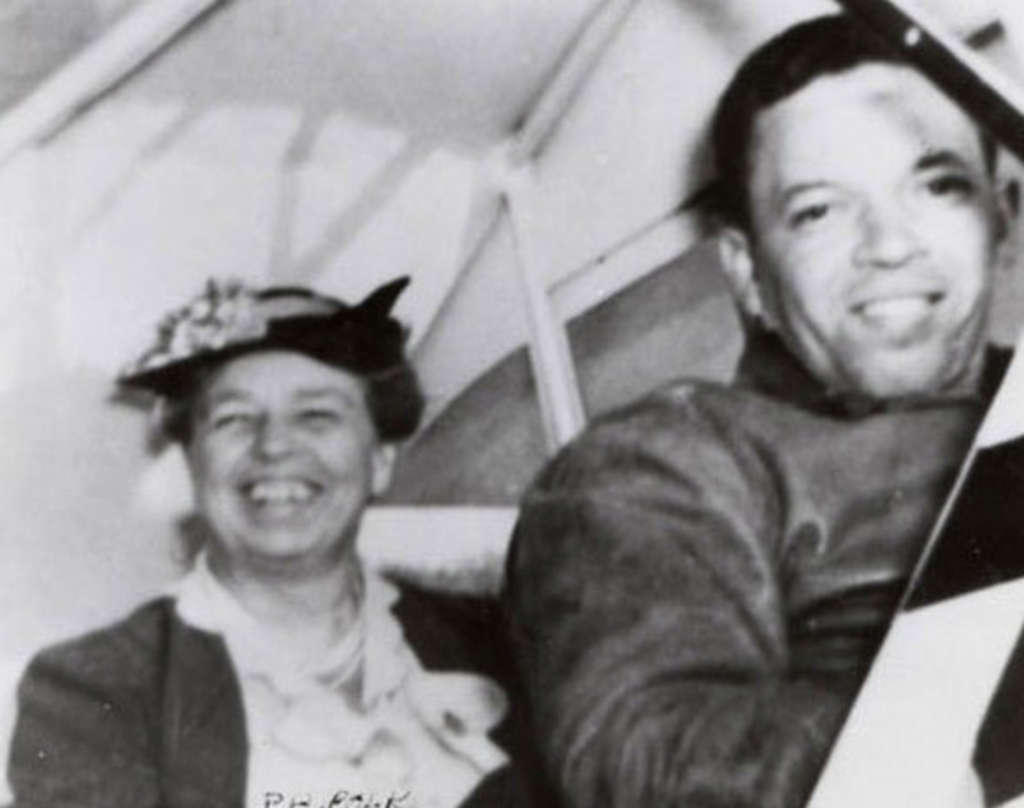
    First lady Eleanor Roosevelt got a flight over the Tuskegee Institute with C. Alfred Anderson at the controls.
    • Irrespective of the Tuskegee Airmen’s flying skills, after the war, none was hired by a commercial airline. Some pilots had received their initial training from Bryn Mawr native C. Alfred “Chief” Anderson. In March 1941, Anderson flew Eleanor Roosevelt around Tuskegee, Ala., which caused some War Department skeptics to reevaluate their initial hesitancy with Black pilot training.
    • In April 1945, 101 Tuskegee Airmen, including several Philadelphians, were arrested for disobeying an unlawful discriminatory order. The charges were quickly dropped, but administrative reprimands were placed in these officers’ 201 files.
    • Philadelphia native William T. Coleman, a summa cum laude University of Pennsylvania graduate, interrupted his Harvard Law School studies to serve as an Army Air Force officer. Honorably discharged, he returned to Harvard, graduated first in his class, and clerked for a federal appeals court judge and a U.S. Supreme Court justice. Armed with his very substantial résumé and glowing recommendations, he initially moved to New York — as no white Philadelphia firm would hire him.
    • Throughout the war, while Philadelphia-based Whitman’s Chocolates was producing millions of pounds of “Samplers,” it was also producing “Pickaninny Peppermints,” despite protests by the NAACP to remove the offensive slur from the product’s name.
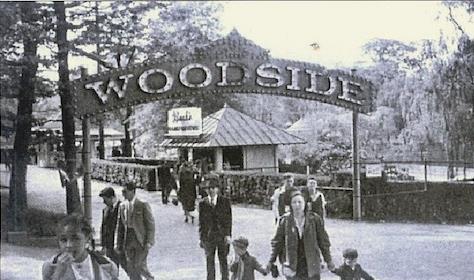
    The Woodside Amusement Park. The Fairmount Park Transit Co.’s trolley stopped at the park until the line closed in 1946.

    Over the last few years, some politicians have claimed that the United States is not a racist country, that slavery didn’t cause the Civil War, and that slavery benefited enslaved people by teaching them useful skills. The ignorance of these 21st-century politicians, who have many followers, makes it imperative that everyone study African American history, not just in February, but all year long.

    Paul L. Newman is an amateur historian specializing in African American history of the first half of the 20th century. He has created a mini-series docudrama that highlights the events in this essay.

  • Preserving Black history must start in the classroom

    Preserving Black history must start in the classroom

    James Baldwin liked to remind us: “History is not the past. It is the present. We carry our history with us. We are our history. If we pretend otherwise, we are literally criminals.”

    Any teaching of our collective story that erases the genius, the contributions, the struggles, and the successes of Black people isn’t history at all. It is indoctrination. Propaganda. The criminal theft of an entire people’s existence.

    Ours is a story that should not — cannot — be confined. Nor segregated within a designated month, select classrooms, or special curricula.

    To build on the words of Malcolm X, America has tried to destroy Black people by denying and obliterating the nation’s collective understanding of Black history through lies and gross omissions, or by flattening the full contours of our story into one of only oppression and resistance. The renewed burial of the previously buried history of the President’s House that the Avenging the Ancestors Coalition and others worked so hard to have mounted is a prime and recent example of these attempts to erase.

    Through multiple generations (up to this very day), students of all backgrounds have missed out on learning and benefiting from the full humanity of the Black experience where they rightfully should have expected it: in their schools.

    That our history has survived and even been enriched over the years is itself a testament to the power of our intergenerational communities. In our grandparents’ living rooms, through family lore and handed-down traditions, photos and treasures, we have resisted the robbing of our past and appropriation of our identity.

    But despite this resistance, there have been lasting impacts of this ongoing, systemic exclusion. One of them is that our teaching force (including Black educators) feels ill-equipped to share the story of Black people, continuing the cycle of misinformation and diminished returns not just for students, but for us all.

    We can change this. As Makinya Sibeko-Kouate once said, “Education should be a maker of a virgin future rather than a slave to an unjust and shopworn past.”

    Living up to this requires not only the creation of temporal and physical space for Black inclusion throughout the school year and across all disciplines, but also the adoption of a new mentality.

    And educators, it starts with us.

    To realize Black history’s potential of shaping the academic experience as a praxis in liberation — where the American story includes everyone and excludes nothing, from the soul-searing to the inspirational — we must be willing to learn along with our students. Embarking on this journey together with our students, however, requires seeing ourselves as students, the lead learners in the classroom.

    Share with your students what you’re curious about. What you’re thinking, feeling, and learning — including what they are teaching you.

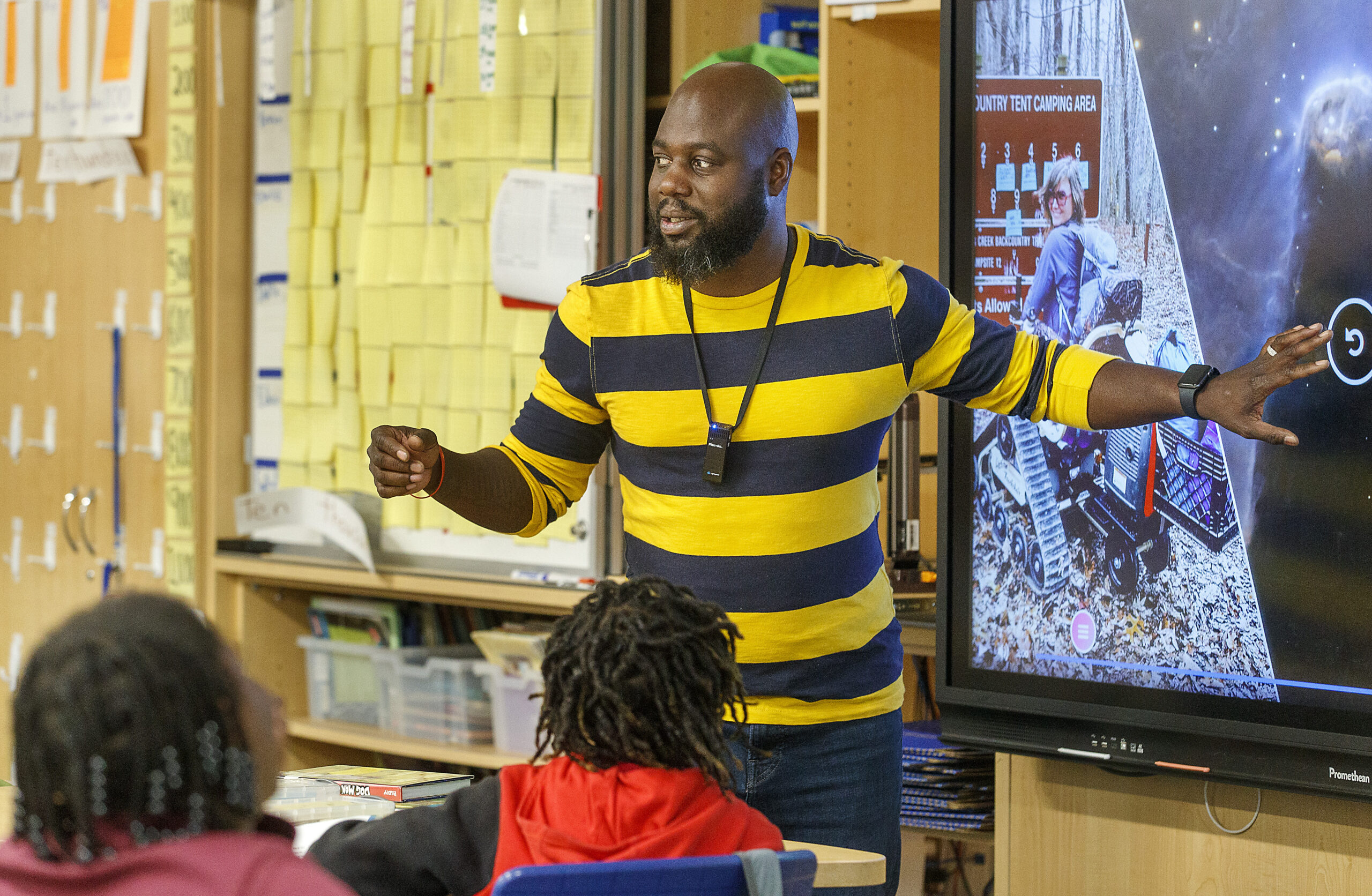
    Tyler Wright teaches fourth grade in Charleston, S.C. Teachers must be willing to learn along with their students, writes Sharif El-Mekki.

    With this kind of demonstrated humility, we educators can present not just windows but mirrors to brighter futures, reflecting for our students the change and growth possible in the learning enterprise that is so essential to a liberatory education.

    Beyond abstractions and idealisms, here is more practical guidance for all educators who strive for excellence.

    Honor your students. Let them know you’re eager to learn about them, where they come from, their intergenerational stories, and their neighborhood champions, along with their dreams and aspirations.

    Jennifer LaSure teaches a Black history course at Cherry Hill High School East in 2024. Learning the full humanity of the Black experience begins in the classroom with inspiring teachers, writes the educator Sharif El-Mekki.

    Show them how their families and communities offer rich entry points to telling the larger American story. Explore how their families got here.

    Are they multigenerational Philadelphians or recent arrivals? Who was the first to migrate from the South or immigrate from overseas? How did they overcome unjust challenges? What were their contributions to community and society? How did they bring joy and love? What broke their hearts, but not their spirits? What type of ancestors and descendants do they strive to be?

    That our students are here is proof that those who came before them persevered. Do more than just tell them that. Expand the idea and reality of history through student agency. The impact is immeasurable, as are the consequences for not doing this.

    Show them images of the Ishango bone, a 25,000-year-old Paleolithic artifact discovered in Congo, considered to be one of humanity’s oldest mathematical tools, carefully engraved for tallying, doubling, prime numbers, even calendaring — giving lie once and for all to the blasphemy that scientific advancement is somehow the province of only one culture or continent.

    By allowing for the learning of Black history in shaping the academic experience as a praxis in liberation for students and educators alike, we can imagine a very different future.

    One where every student would gain the critical thinking skills necessary to avoid the repetition of unjust history. Armed with a more complete context and meaningful perspectives, each of us is better able to recognize patterns and make better decisions for our society.

    All that’s required is for us all to have the humanity to realize that history isn’t truly history unless everyone’s history is included. And for the rest of society not to criminally pretend otherwise.

    Sharif El-Mekki, a former principal and teacher, is the founder/CEO of the Center for Black Educator Development and a co-organizer of the upcoming “Still We Teach. Still We Rise.” summit, a national convening for advancing Black history and the Black teacher pipeline.

  • Democracy, engineered in the Black metropolis

    Democracy, engineered in the Black metropolis

    Public narratives of American democracy often emphasize founding documents, elections, and constitutional milestones while obscuring the long and contested process through which democratic practice was learned, refined, and sustained, particularly by people denied formal power.

    The portrayal of Black civic life in early America is often reduced to suffering, resistance, or individual achievement, but these things conceal a deeper truth.

    In 1840, Philadelphia’s Black community numbered nearly 20,000 people. This population was concentrated in the center of the city, including Society Hill, Queen Village, and Washington Square in the south, 41st and Ludlow in West Philadelphia, and Northern Liberties in the north. With this intensive concentration of people, institutions, and ideas, Black Philadelphia was a metropolitan center in its own right.

    A thriving community

    By 1845, the community sustained more than 17 Black churches, along with 21 public and private schools, two fraternal lodges, more than 80 mutual aid and literary societies, labor organizations, over 600 Black-owned businesses, and a printing press.

    Formal democratic structures grew from these institutions. Churches functioned as civic laboratories, and mutual aid societies were exemplars of rules-based organizations.

    Philadelphia was where Black life cohered into a national political identity. People who had defined themselves as African, Caribbean, Indigenous, enslaved, or free identified themselves collectively as African American.

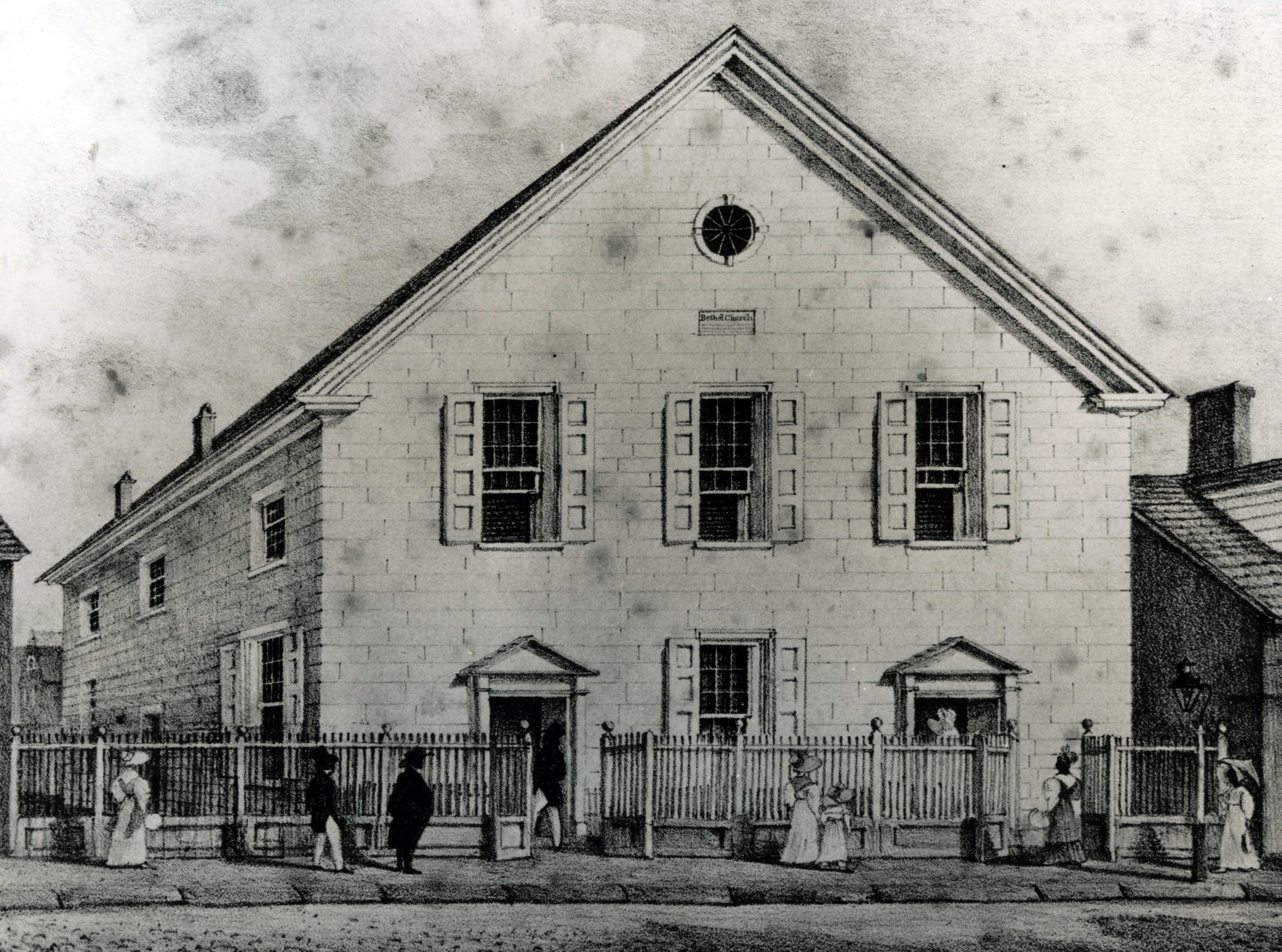
    By 1814, the Black Philadelphians were organized. They defended the city at Gray’s Ferry during the War of 1812. In 1817, they met at Mother Bethel, the country’s first African Methodist Episcopal Church, to decide if they would consider emigration to Haiti or Africa. “No!” was the resounding answer.

    Black organizations in Philadelphia served as national models. Conventions at Mother Bethel spawned the Colored Conventions Movement beginning in 1830, which extended concepts of civic and human rights across the United States. Constitutional scholar James W. Fox Jr. argues that these conventions articulated a national constitutionalism rooted in the Declaration of Independence, asserting that human rights were inherent and not contingent on state or local laws, a concept far ahead of its time that anticipated the post-Civil War ideas of citizenship and rights.

    A melting pot

    Black Philadelphia was its own melting pot, too. People arrived from the Caribbean, including Haiti, bringing revolutionary ideas. These ideas moved outward from Philadelphia nationwide and across the Atlantic through transnational anti-slavery networks. Anti-slavery Black activists Olaudah Equiano and James Somerset moved between London and Philadelphia in the 1760s. A song written by the Philadelphia-based pastor Shadrach Bassett was discovered in the papers of Nat Turner, the enslaved man who led an uprising in the Carolinas in 1831.

    The fight for social justice that grew up in Black Philadelphia demonstrated clear evidence of sustained civic practice. By 1787, the Free African Society had formed, and its leaders, Absalom Jones and Richard Allen, appeared in municipal records demanding religious freedom, the right to proper burial, and the right to assembly. In 1838, Black leaders in Philadelphia and Pittsburgh lobbied in Harrisburg.

    The understanding that there are civic rights within a democracy was a foundational concept for Black Philadelphians. In fact, we see an early use of the term “civil rights” in the records of the Social, Civil, and Statistical Association in 1863, nearly a 100 years before the 20th-century civil rights movement.

    A Nov. 12, 1862, entry from the Social, Civil, and Statistical Association, showing the use of the words “civil rights.” C.S. Statistical Association of Philadelphia, Civil and Social Committee of Superintendence, Constitution, By-Laws, Roll, Minutes [Ams .54, Part 2]

    Other examples: In 1842, after mobs destroyed the newly built Beneficial Hall, Stephen Smith sued the city for not protecting the structure. Smith won his case, setting a very public example of Black Philadelphians’ assertion of rights through the rule of law.

    In 1861, after the Rev. Richard Robinson was forced to ride outside a trolley during a storm and died when it crashed, Black leaders organized legal aid to support his widow and challenge transit segregation.

    In 1867, Caroline LeCount refused to surrender her seat on a streetcar. After being forcibly removed, she obtained a certified copy of the law, returned with a magistrate, and confronted the conductor. He was arrested on the spot.

    Asserting their rights

    All of this civic activism occurred before Black Philadelphians were enfranchised citizens.

    Black Philadelphians boldly asserted their own democratic rights across the 18th and 19th centuries, all within the context of America’s denial of human rights with enslavement and disenfranchisement.

    Yet, even as Black Philadelphians engineered this civic infrastructure, the city refused to acknowledge their achievements. Major historical texts on Philadelphia erased Black institutions entirely. Henry Simpson’s Lives of Eminent Philadelphians Now Deceased, written in 1859, doesn’t even mention Absalom Jones, James Forten, or Richard Allen, or the major religious denomination born here in Philadelphia, the African Methodist Episcopal Church.

    Mother Bethel African Methodist Episcopal Church in Society Hill, founded in 1794 and rebuilt in 1809, has long been the locus of Philadelphia’s Black community, writes Michiko Quinones.

    No Black churches or institutions appear in Moses King’s exhaustive civic visual history, Philadelphia and Notable Philadelphians, from 1902, a purportedly definitive account meant to define the city’s civic identity.

    Arguably, there is a deeper reverence in American public memory for a woman who sewed a flag than for an entire population that defined democracy and held the nation accountable to its own written ideals. That imbalance reveals not just a lack of attention to history, but a refusal to honor people who forced democracy to become real.

    The question facing Philadelphia now is whether it will recognize early Black civic engineering as foundational to its identity, or continue to exist with parallel histories, thriving yet separate. There could be no better time to ask than the 250th anniversary of our country’s founding.

    Michiko Quinones is the lead public historian and cofounder of the 1838 Black Metropolis Collective.

  • African American personal faith and organized traditions have had historic impact

    African American personal faith and organized traditions have had historic impact

    When you hear the word faith in relation to the history of African Americans in the United States, what do you imagine? Do you see a preacher, or a gospel choir, or imagine a church mother in a resplendent hat?

    These images, while valid depictions of the Black church, are not the only measures of how faith informs and shapes the history of African American life.

    For African Americans, faith has not been simply about belief in a deity. By necessity, it has also been about having the faith to fight for freedom, faith in showing the shortcomings of democracy, faith in finding hope during struggle, and protecting the community. It was also the only way, for many years, to organize and establish places of worship or set up businesses.

    In the American context, many equate African American religion with Protestant Christianity. Yet, faith isn’t limited to a particular religious tradition or organized religion. It is an intentional practice of believing. The history of African Americans’ personal faith and organized faith traditions is what has sustained them in their tumultuous history in America.

    It is impossible to speak about the history of faith and African American life without speaking of the brutal realities of the Atlantic slave trade and slaveholding in America. Africans who were captured and sold into slavery from ports in West Africa came to the Americas from rich traditions steeped in different African religious practices, like Vodun.

    Some of the enslaved, like Omar Ibn Said, were Muslim, and still others were from places like Congo and had been introduced to Christianity in Africa. Examples of the longevity of these religious traditions can be seen in the practices of the Gullah people in South Carolina, who have shared their traditions like rice growing, ring shouts, and burial practices from enslavement to the 21st century.

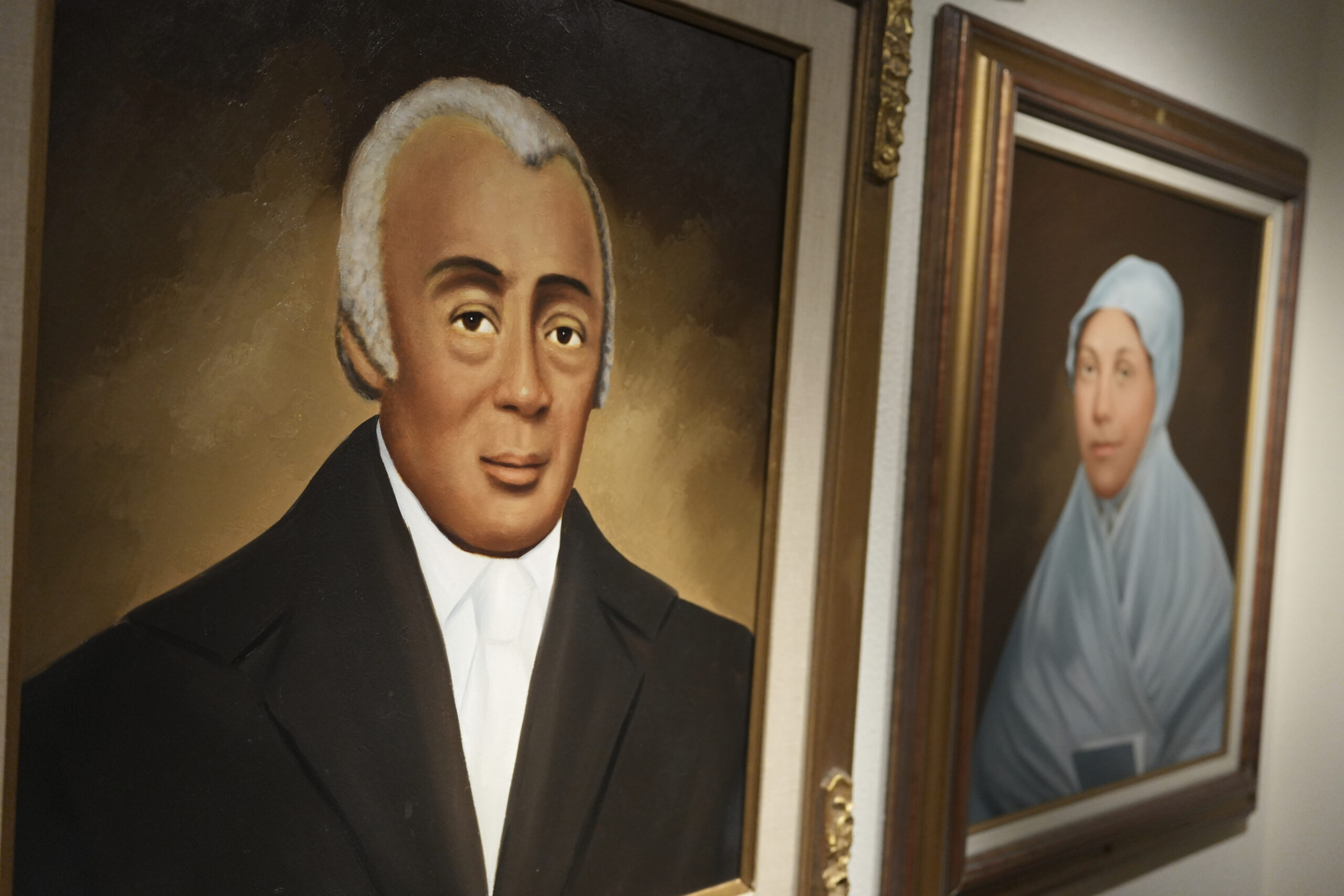
    Portraits of Mother Bethel AME Church founder, the Rev. Richard Allen, and his wife, Sarah, are displayed on a wall at the church’s museum in Philadelphia.

    Faith also defined the involvement and influence of African Americans in the struggle for equality and freedom. Richard Allen and Absalom Jones, both important members of the freed Black community in Philadelphia, left St. George’s United Methodist Church over the racism there. Both Allen and Jones would establish churches: Allen starting Mother Bethel African Methodist Episcopal Church and Jones establishing the African Episcopal Church of St. Thomas.

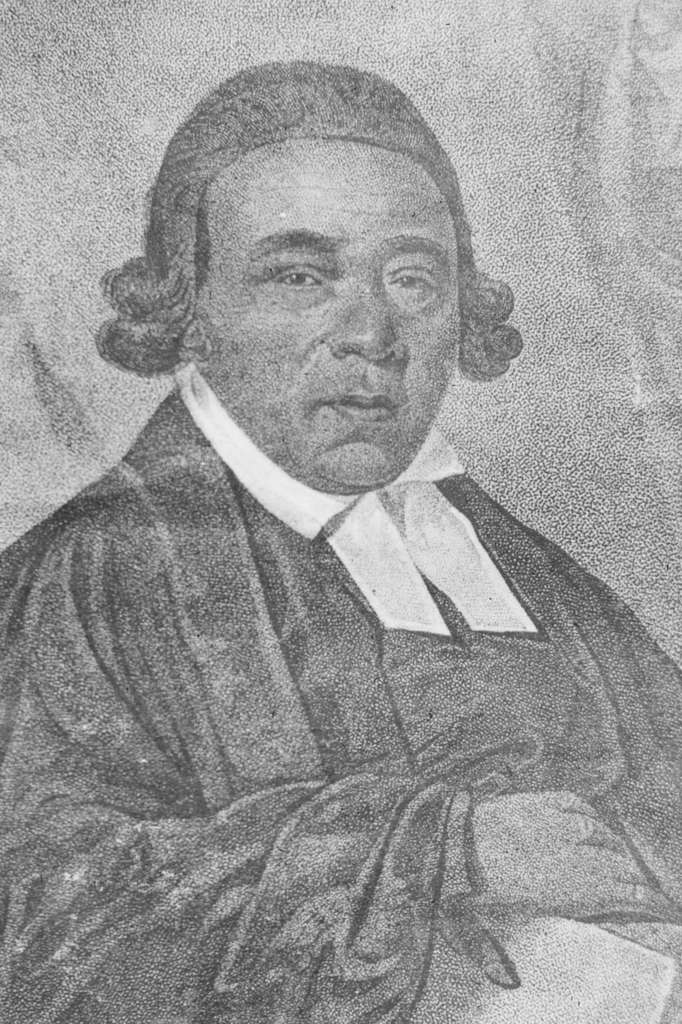
    The Rev. Absalom Jones was a priest in the African Episcopal Church of St. Thomas.

    To wrest Mother Bethel from the attempts of the white Methodist group to gain control over it, Allen would use the legal system, incorporating the church in 1796 and then fighting to keep control of it from the larger white Methodist denomination. Faith, as well as acumen, would give him the determination to see the legal process through to incorporation in Pennsylvania.

    Today, the AME denomination is a worldwide church, estimated to have more than two million members.

    Faith would also play a role in establishing organizations within the African American community.

    Schools in the 19th and early 20th century found their formation in religious organizations post-Civil War. Clergy would pair with white denominations to form schools such as Spellman and Morehouse. Other organizational structures formed by religious communities would include insurance organizations, funeral homes, fraternities, and sororities. The best-known organization, the National Association for the Advancement of Colored People, would also find pastors and religious figures in the initial call for its formation.

    Faith leaders from various religious communities were also instrumental in reminding and challenging white leadership of the promises of democracy and freedom in our founding documents.

    In the 20th century, new religious movements such as Garveyism, Moorish Science Temple, the Nation of Islam, and Father Divine’s peace movement would all organize as a counternarrative to the harsh conditions of racism and Jim Crow in American life. All these movements offered an alternative narrative of not only uplift but also promoted different visions of race through religion that drew followers who questioned the merits of white Protestantism for African Americans.

    Of course, we cannot forget the role of faith in the civil rights movement. While it is obvious to think of the Rev. Dr. Martin Luther King Jr., it is important to remember that King not only found his voice through Christianity, but through the principle of satyāgraha, soul force, coined by Mohandas Gandhi, the famous Hindu leader who promoted nonviolent struggle that formed the foundations of the civil rights movement. Diane Nash, who was Catholic and considered being a nun before becoming an activist while at Fisk College in Nashville, would become an important part of the movement — along with figures like the late U.S. Rep. John Lewis, who was enrolled in divinity school before joining the movement.

    All of these are very brief examples from a very diverse history of faith in the African American community that was not only about individual belief, but many times served as a counter to the racism of religious communities in America that treated African Americans as second-class citizens.

    Suppressing this history by altering it or calling it DEI does an injustice to the history of faith-based organizing in America.

    African Americans’ faith, and the challenges they brought to bear on the racial issues of America, highlighted the promises of the Declaration of Independence and the Constitution. Now, more than ever, we need that faith to sustain us during the 250th anniversary of America.

    Anthea Butler is the Geraldine R. Segal Professor in American Social Thought at the University of Pennsylvania.

  • Despite Trump’s disdain, Black History Month matters

    Despite Trump’s disdain, Black History Month matters

    I doubt Black History Month will be paid any attention this year by a president who no longer feels the need to be so hypocritical that he would stand among Christians with a smile on his face and a Bible in his hand, only to later confess his ever passing through the pearly gates of heaven is highly unlikely.

    Donald Trump no longer feels compelled to go through the motions of pretending to be something he never was. With age 80 rapidly approaching, he knows he’s never going to run for another political office. So why should he put on another performance to cull votes from demographic groups he never really cared about anyway?

    Trump fell only 3% short of winning the Hispanic vote in the 2024 presidential race, a 21% improvement from the 2020 election. I wonder how many of Trump’s Hispanic supporters regret voting for him after having family members or friends detained by U.S. Immigration and Customs Enforcement police and possibly deported?

    President’s disdain

    More Black folks were enticed by Trump’s blarney, too. He nearly doubled his Black support from 8% in 2020 to 15% in 2024. Trump repaid Black voters by signing the One Big Beautiful Bill Act that he pushed through a Republican Congress, which cut taxes for higher-income households by slashing funding for food and medical assistance programs sorely needed by disproportionately poor Black families.

    Trump signaled with his recent criticism of the 1964 Civil Rights Act that he wouldn’t be adding his voice to a chorus of “Lift Every Voice and Sing” during Black History Month. He said the law unfairly discriminated against white people.

    “White people were very badly treated,” he said. “People that deserve to go to a college or deserve to get a job were unable to get a job. So it was, it was a reverse discrimination.”

    Such an uninformed statement being made by a president of the United States is exactly why this country still needs Black History Month. Trump’s comment, however, also underscores the need to change how that 100-year-old celebration has been observed.

    Trump isn’t wrong to call the Civil Rights Act a reversal, but he failed to put that assessment in context. He may drive nothing more powerful than a golf cart these days, but nonetheless, he should know that sometimes you have to put a vehicle in reverse to stop it from going in the wrong direction.

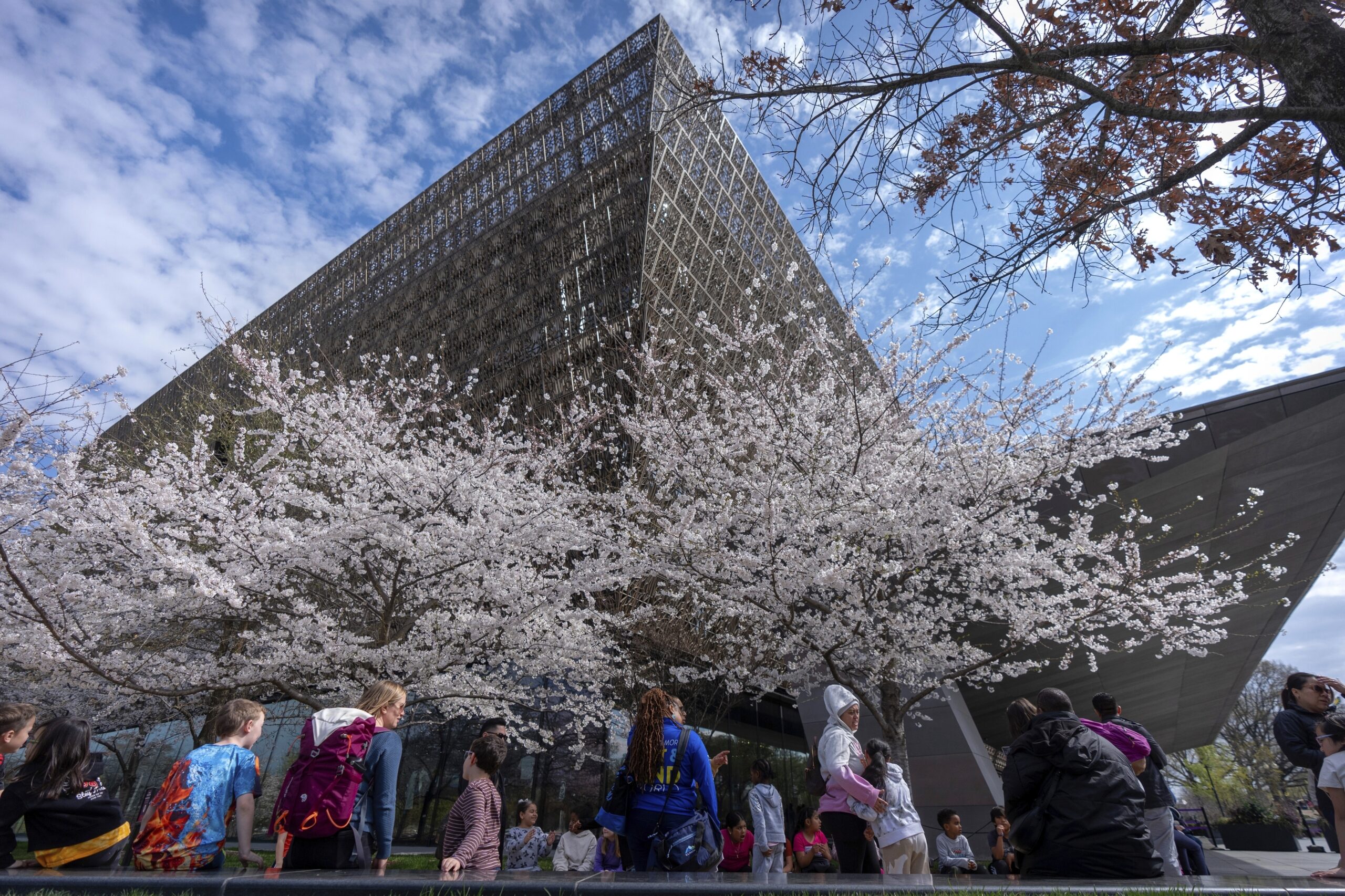
    The National Museum of African American History and Culture on the National Mall in Washington is a repository of Black history.

    The Civil Rights Act was needed to reverse the course of both the legal and traditional segregation that persisted in America decades after the Civil War ended slavery. It was hoped that affirmative action laws would, in time, become unnecessary and could end when all Americans were assured of equal treatment regardless of their race.

    In fact, Justice Sandra Day O’Connor opined in a 2003 college admissions case before the U.S. Supreme Court “that 25 years from now, the use of racial preferences will no longer be necessary.” But in too many respects, the need for policies designed to reverse the significantly diminished but nevertheless enduring racism in this country has not gone away.

    More people might accept that reality if they had a better understanding of American history and realized that laws such as the Civil Rights Act of 1964 and the Voting Rights Act of 1965 were passed by Congress on a bipartisan basis and upheld again and again by a nonpartisan Supreme Court because it was the right thing to do. Context is important, which brings us back to Black History Month.

    Honoring people and ideas

    What began as Negro History Week in 1926 was created by Howard University professor Carter G. Woodson to instill a greater sense of pride among African American students who mostly attended all-Black schools.

    That week saw teachers place greater emphasis on historical figures such as Phillis Wheatley, who, even as an enslaved woman, became one of the best-known poets in colonial America; George Washington Carver, who, after leaving slavery, became an esteemed botanist whose agricultural research improved farming across America; and, of course, the Rev. Martin Luther King Jr., who until his assassination in 1963 led the American civil rights movement.

    Focusing on these and other historically significant African Americans, including Sojourner Truth, Booker T. Washington, W.E.B. Du Bois, Malcolm X, and Mary McLeod Bethune, may have been fine when I attended segregated public schools in Alabama in the 1960s and ‘70s. But now, with white students attending integrated schools also observing Black History Month, it’s time to move beyond Woodson’s effort to instill pride among African American students.

    Instead of celebrating individuals, Black History Month should focus more on the events and ideas that continue to impact how Black and white people coexist in an America that continues to struggle with both covert and subtle racism. Projects and book reports should explore the arguments made when the Civil War began, consider why Reconstruction failed to place African Americans on even footing with whites, and note the similarity of racist rhetoric 60 years ago and now.

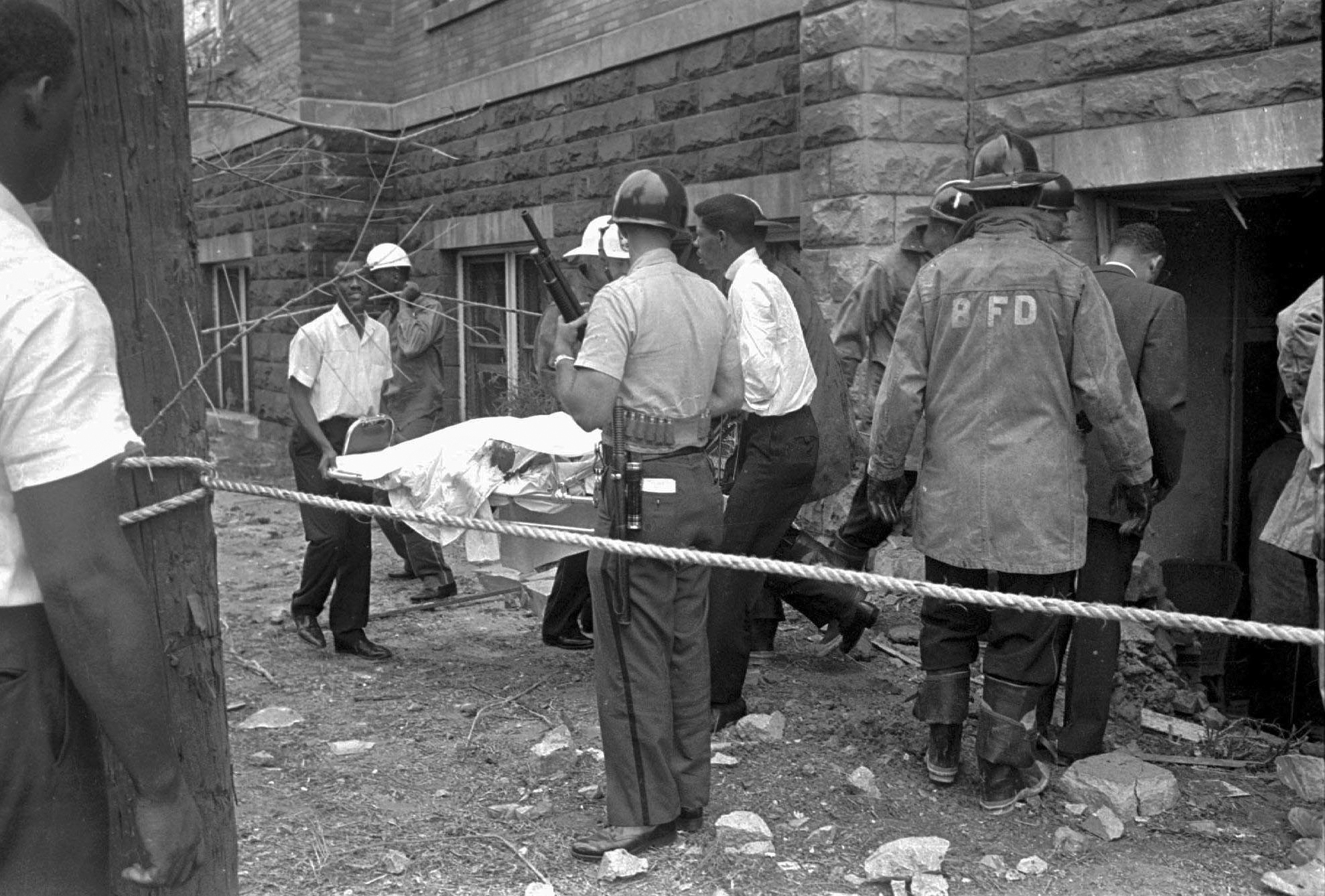
    A body is removed from the 16th Street Baptist Church in Birmingham, Ala., Sept. 15, 1963, after a bomb set by the Ku Klux Klan detonated during services, killing four girls. The author, Harold Jackson, was a child in the city at the time.

    Sixty years ago, I was a 12-year-old attending an all-Black school in Birmingham, Ala. Two years earlier, 16th Street Baptist Church was bombed by Ku Klux Klansmen, and a child who attended my elementary school was one of the four little girls killed. Four years prior to that, I remember my mother walking me to an alley to relieve myself because no white store downtown would let a Black person use its bathrooms.

    Birmingham is so much better than that now. America is better, too. But some days it seems to have prematurely shifted to reverse. Remedies to discrimination are being prematurely discarded even as racist rhetoric rises to levels that are uncomfortable reminders of what America was, and not what we want it to be. Black History Month is a good time to reflect on that reality and take steps to avoid slipping into a past we need to remember but not repeat.

    Harold Jackson, who served as editorial page editor for The Inquirer from 2007 to 2017, was awarded the Pulitzer Prize for editorial writing in 1991 and retired from the Houston Chronicle in 2020. His memoir, “Under the Sun: A Black Journalist’s Journey,” was published in April by the University of Alabama Press.