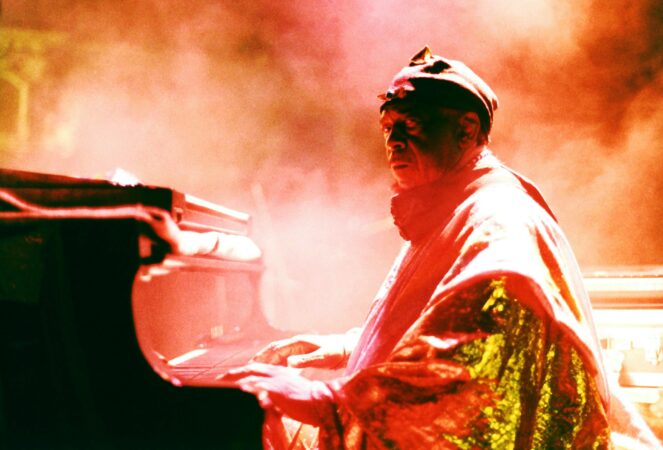
Sun Ra, the Afrofuturist bandleader and intergalactic visionary who based his Arkestra in Philadelphia for decades, is heading to PBS.
Sun Ra: Do the Impossible, the Christine Turner-directed documentary that screened at last year’s Black Star Film Festival in Philadelphia, will air as part of PBS’ American Masters series during Black History Month.
It will be shown locally on WHYY at 9 p.m. Feb. 20.
Sun Ra, who was born Herman Poole Blount in Birmingham, Ala., founded Arkestra, now led by 101-year-old saxophone player Marshall Allen after Sun Ra’s death in 1993. He moved with the band to a house in Germantown in the late 1960s, where Allen still lives. The Morton Street house was originally owned by Allen’s father.
Turner’s film includes how Blount, who was known as “Sonny,” experienced a “transmolecularization” in 1936 in which he claimed to have been teleported to Saturn and returned to Earth with a musical mission to bring peace and understanding to the world.
Sun Ra’s music encompasses the history of jazz — from its New Orleans beginnings to out-there experimentation with electronic instruments, King Britt, Philadelphia DJ-producer-turned Blacktronika professor at the University of California San Diego, explains in the film.
Other Philadelphians who offer analysis in the documentary include poet-musician-activist Moor Mother, and critic and WRTI-FM (90.1) editorial director Nate Chinen.
The film’s title is inspired by a Sun Ra quote that Turner kept on her desk while she worked on the documentary. It read: “The possible has been tried and failed. Now it’s time to try the impossible.”
The American Masters treatment arrives at a time when Sun Ra’s presence is larger than ever.
Since 2023, the organization has released five Sun Ra tribute albums. Sun Ra’s oeuvre was central to the Metropolitan Museum of Art’s recent “Flight into Egypt: Black Artists and Ancient Egypt” exhibit, and his image is featured prominently at the Institute of Contemporary Art’s “Entryways: Xenobia Bailey” exhibit currently on view.
Do the Impossible adds to the growing Sun Ra film library that includes the 1972 movie Space is the Place, and Philly filmmaker Robert Mugge’s 1980 Sun Ra: A Joyful Noise. Another doc, coproduced by Allen along with his son Ronnie Boyd titled Sun Ra: Door to the Cosmos, is in the works.
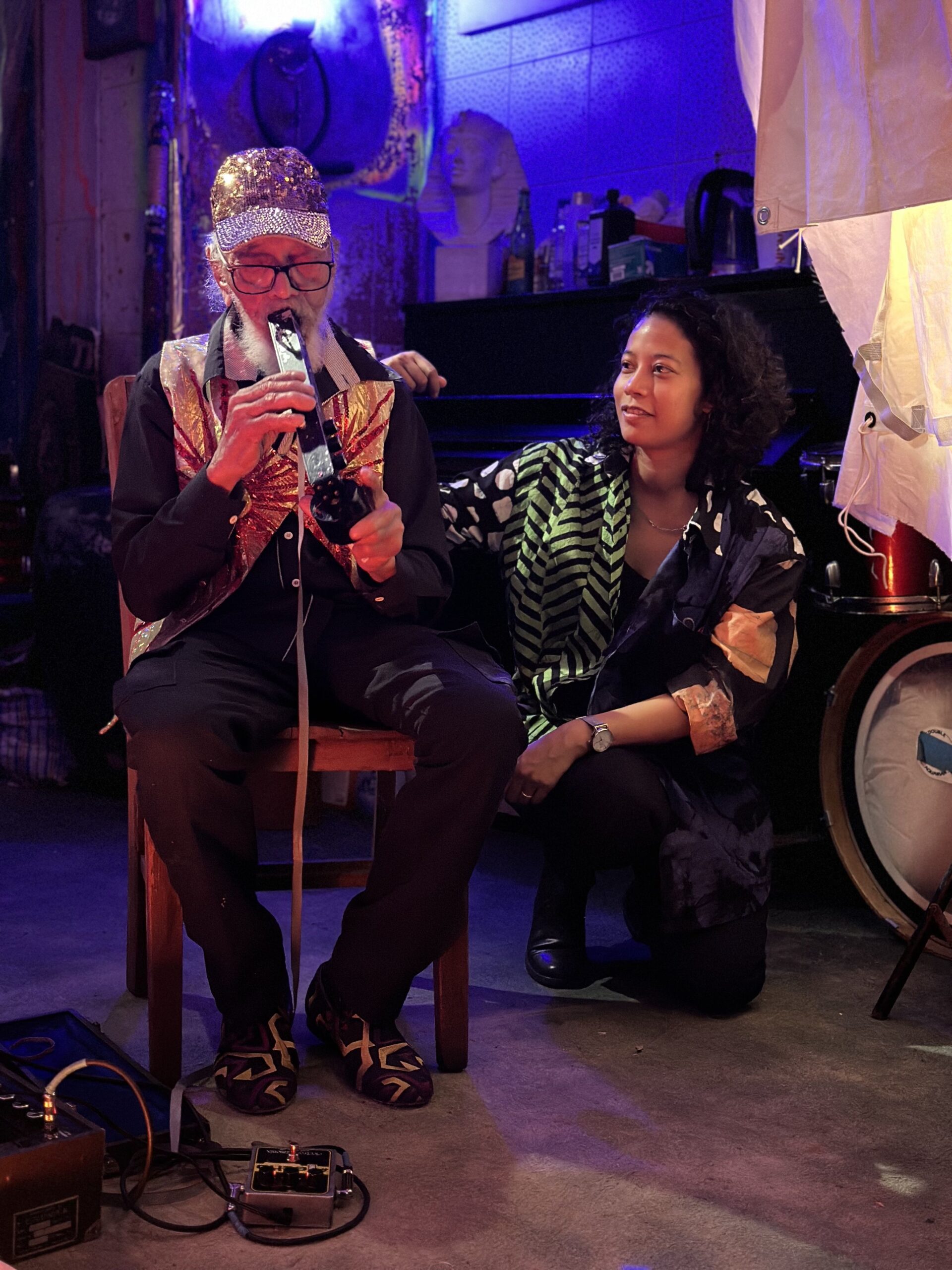
Sun Ra Arkestra bandleader Marshall Allen with “Sun Ra: Do the Impossible” director Christine Turner at the Sun Ra house on Morton Street in Germantown. The documentary will be shown on PBS on Feb. 20.
“He’s become an icon of Afrofuturism, and I think that is resonating with people because we’re deeply in need of new ideas and radically imagining another kind of future. And I think people are really hungering for that.”
Black media matters. Right here, right now, and more than ever before. We are the essential workers on the front lines of a growing resistance movement.
As the owner and operator of WURD Radio, Philadelphia’s only multiplatform Black talk radio station, my team and I are focused on a singular mission: fighting back against this administration’s attempt to destroy Black history, culture, institutions, and people. We provide our communities with our most powerful weapon: trusted, accurate, culturally specific information.
The recent arrest of Don Lemon and Georgia Fort, two independent Black journalists, underscores the lengths this government will go to silence dissent — which, by the way, is protected by the First Amendment of the U.S. Constitution.
The Black press has been fighting a system that has sought to weaken our institutions, marginalize our reporting, and underfund our organizations for centuries. And frankly, for too long, mainstream media has been complicit in maintaining that system of devastating racial oppression.
Throughout history, the mainstream media has been complicit in maintaining the system of racial oppression by focusing on and reinforcing negative narratives about African Americans, writes Sara Lomax.
In the 1800s, newspapers profited by running ads to capture enslaved Africans, and throughout history, they‘ve reinforced the caricatures and negative narratives used to justify a racial hierarchy.
In this new era, it feels as though we are slipping back in time, forced to fight battles we thought were won. The quest for newsroom diversity in mainstream media, for example. The brief glimmer of self-awareness that followed the murder of George Floyd — when pledges were made to hire more reporters of color, diversify sources, and commit to nuanced coverage — was tragically short-lived.
But if you are Black in America, you know the drill: Racial progress is always followed by a wicked backlash. Now is no different.
Still, we look to our history for the blueprint of our survival.
We draw strength from Samuel Cornish and John B. Russwurm, who founded Freedom’s Journal, the first Black newspaper, in 1827. They advocated for the full humanity of Black people nearly 40 years before slavery was abolished nationwide. Imagine the courage and tenacity it took for two Black men to start a newspaper in a country that said it was illegal — in some places, punishable by death or maiming — to read and write.
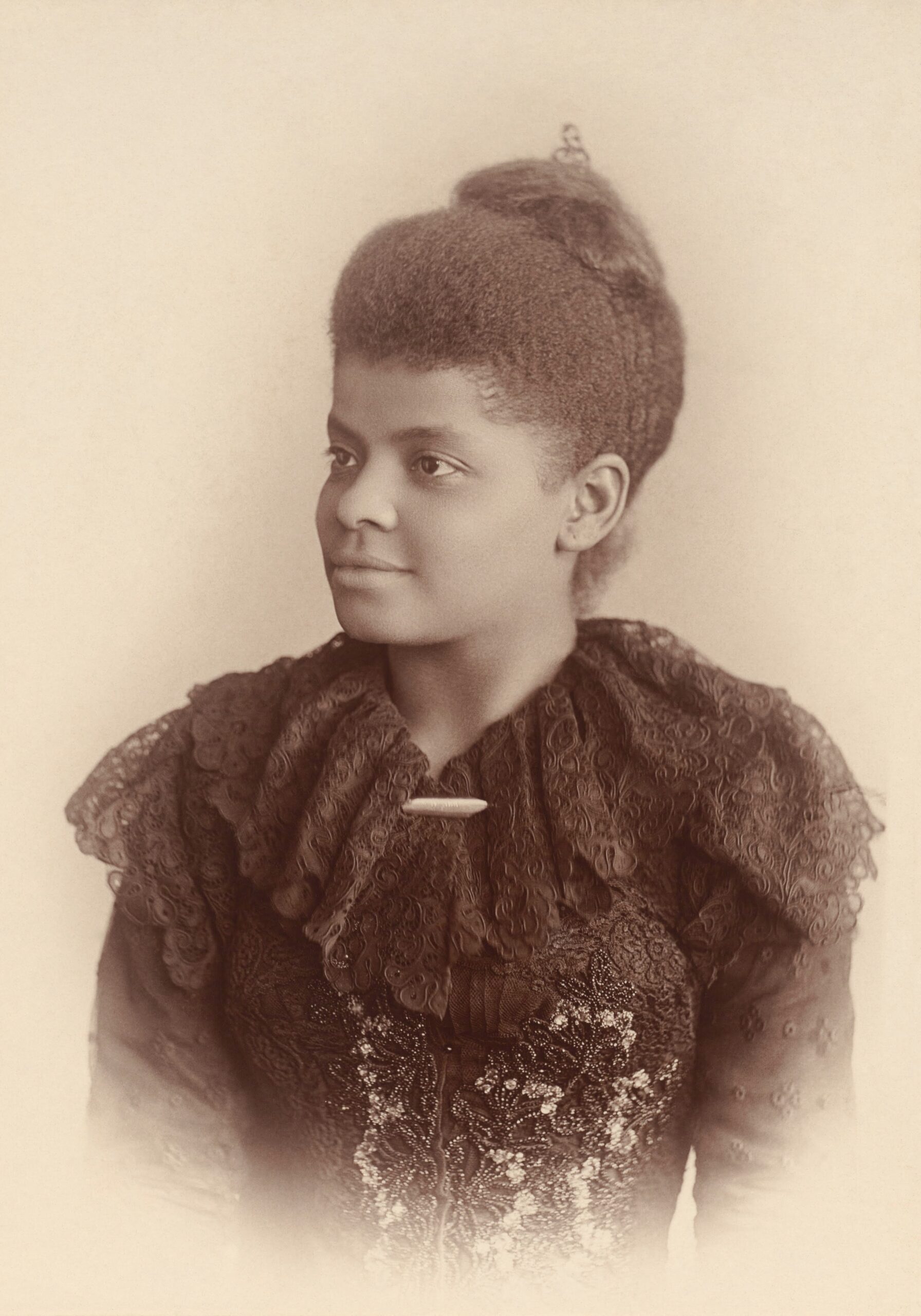
Ida B. Wells-Barnett, in a photograph by Mary Garrity from c. 1893.
I am inspired by Ida B. Wells-Barnett, who used the power of her pen to expose the barbaric practice of lynching through the Red Record. She traveled the country with a bounty on her head, determined to move the nation away from its most diabolical instincts.
I think of Robert Abbott, who launched the Chicago Defender from a landlord’s dining room in 1905. He built a secret network of Black Pullman porters to smuggle his papers into the South, serving as a catalyst for the Great Migration — the movement of roughly six million Black Americans from the rural South to the urban North and West between 1916 and 1970.
And, of course, there is Christopher Perry, who founded the Philadelphia Tribune in 1884, which remains the longest-running Black newspaper in the nation.
This history is in our DNA. We call on these ancestors now because we face an overt hostility unlike anything I have seen in my lifetime.
This moment is clarifying. Statistics highlight the stark disparities in housing, health, and education — but without the historical context of Jim Crow, redlining, and voter suppression, the public is left to believe the administration’s lie: that Black people are “inherently inferior” or merely “unqualified social promotions.”
This hypocrisy is as old as the nation itself — a country whose “Founding Fathers” codified slavery while declaring all men equal. When your foundational document is based on a lie you refuse to address, it tracks that you would spawn a president who is morally bankrupt. As Malcolm X said, “The chickens are coming home to roost.”
Yes, our nation has a serious problem. Yet, we persist.
2025 was the most difficult year of my career. WURD weathered an anti-DEI lawsuit, layoffs after an advertising collapse tied to anti-DEI policies, and the day-to-day exhaustion of covering relentless racial animus in Washington.
Yet, we did some of our best work, including a special series called Exonerated, which earned us an NAACP Image Award nomination — a rare recognition for local radio. And we’ve launched two new yearlong initiatives to make sure Black voices are centered as part of the 250th birthday festivities.
Our ancestors didn’t just dream of a free press — they built one. We will continue using all our platforms to tell our stories and center the complexity and diversity of our history, culture, and community.
We know that in this season of increased tension and hostility, our voice is our most potent weapon and our most sacred sanctuary.
We don’t just broadcast; we bear witness. And in that witnessing, we find the power to not only endure the present, but to author a future where there is a possibility to be finally and fully free.
Sara Lomax is the president and CEO of WURD Radio and the cofounder and president of URL Media.
The racism in education worked through politics. After all, schools were run by the government and funded by tax dollars, and while the students were segregated by race, the lessons were unified in their promotion of white supremacy.
As Woodson would later write in his book, The Mis-Education Of The Negro: “It is strange, then, that the friends of truth and the promoters of freedom have not risen up against the present propaganda in the schools and crushed it. This crusade is much more important than the anti-lynching movement, because there would be no lynching if it did not start in the schoolroom. Why not exploit, enslave, or exterminate a class that everybody is taught to regard as inferior?”
Woodson had a point. The politics of American education meant the stories of America’s wars were told from a Eurocentric perspective. America’s economic rise ignored the role of racism. The country’s cultural norms formed a tapestry of whiteness, and at the root of it all was an underlying theme that Black people were something less than human.
That was the prevailing attitude, but Black Americans kept proving their own nation wrong.
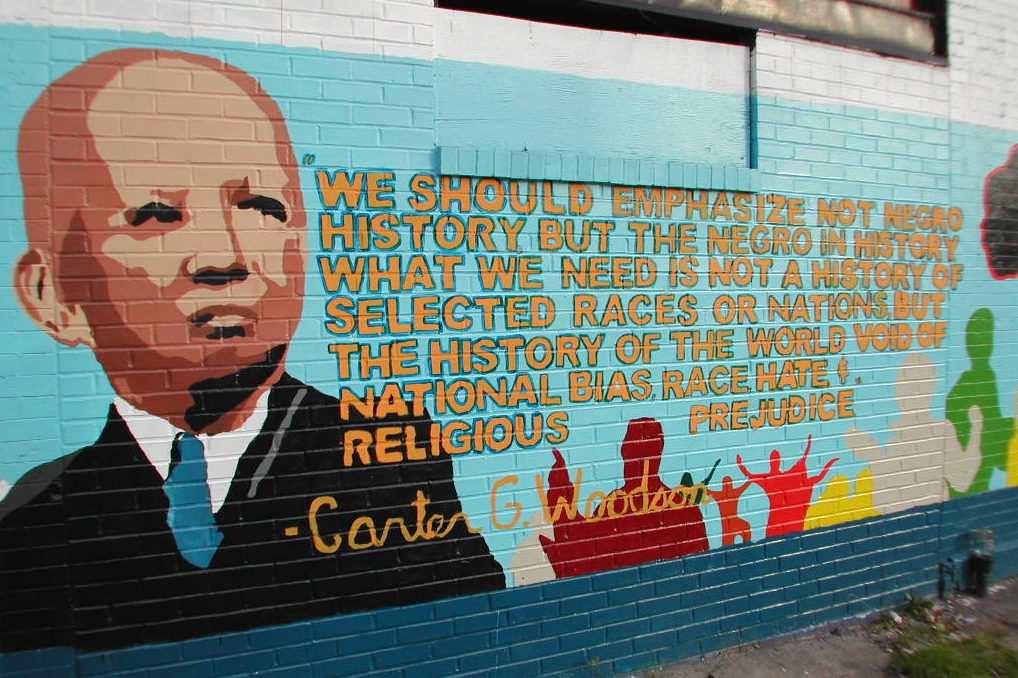
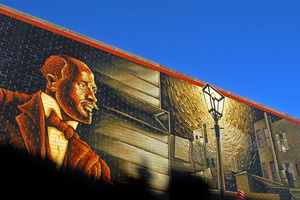
A mural in Washington, D.C., pays tribute to historian Carter G. Woodson, who in 1926 created what became Black History Month.
Sharing such history is inconvenient because it unravels the narrative that white America acquired everything through hard work and sacrifice, while Black America lost everything through laziness and incompetence.
Maintaining such historical lies requires political will and a story people want to believe. In 1915, America got both.
D.W. Griffith released a film called The Birth of a Nation. Its racist narrative portrayed Black men as savages, while depicting the Ku Klux Klan as heroes.
President Woodrow Wilson, who screened the film in the White House, said The Birth of a Nation was “like writing history with lightning.”
In truth, the film was not history. It was racist propaganda, and it helped to fuel the resurgence of the Ku Klux Klan. By 1921, African Americans were facing a full-on assault. In Tulsa, Okla., they endured what the U.S. Department of Justice later called a “coordinated, military-style attack” on a prosperous Black community. It was an assault that destroyed property worth millions of dollars, and it happened with the cooperation of the police and National Guard.
In 1923, the political leadership changed. Republican President Calvin Coolidge, in his first congressional address, said that under the Constitution, Black people’s rights “are just as sacred as those of any other citizen,” while calling on Congress “to exercise all its powers of prevention and punishment against the hideous crime of lynching.”
However, the president was only willing to go so far. He said racial issues should be worked out locally, and ultimately chose not to endorse an anti-lynching bill because he feared that in doing so, he would jeopardize tax legislation he was trying to push through the Senate. Black people weren’t his priority.
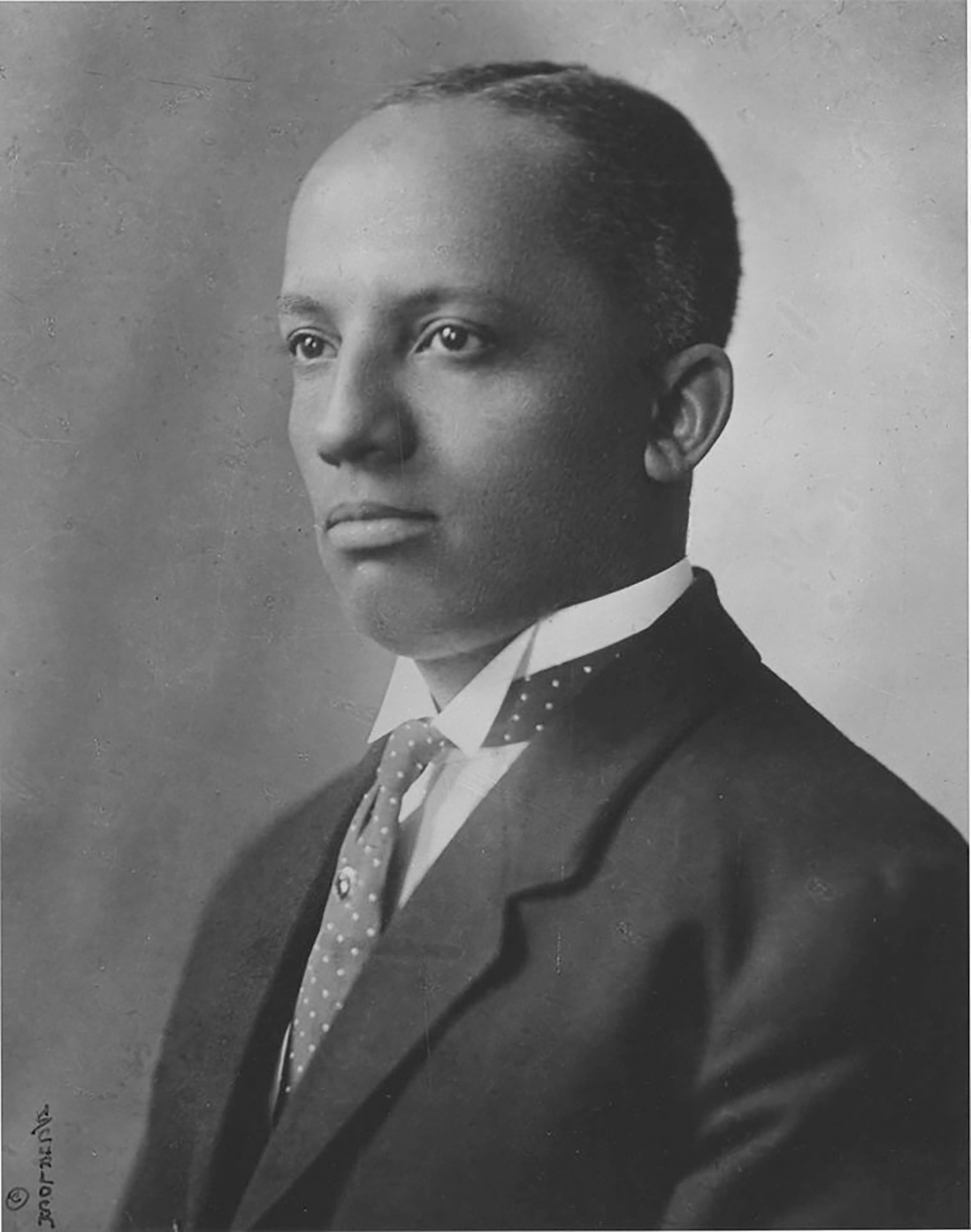
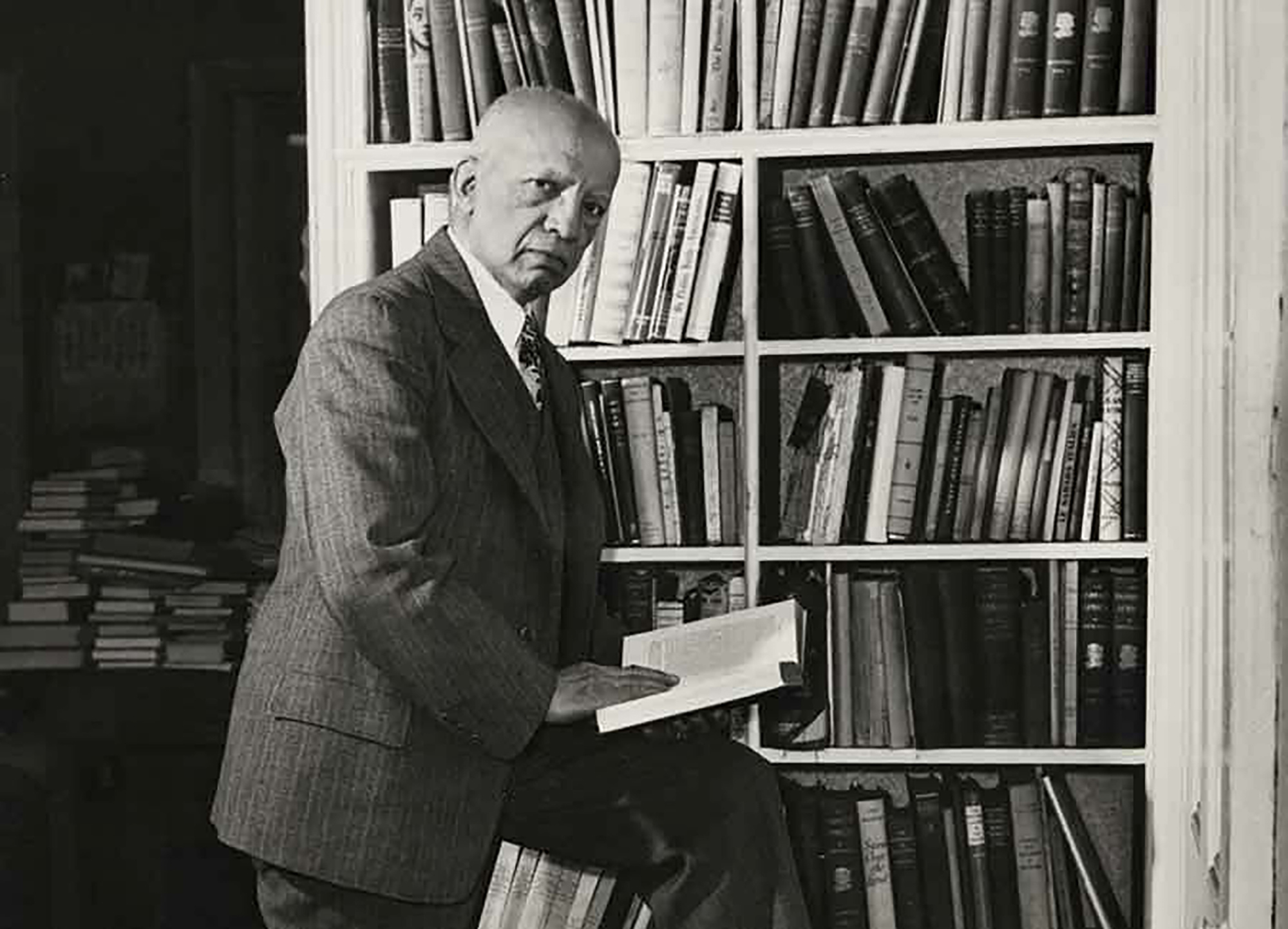
Carter G. Woodson created Negro History Week in 1926 largely because he believed the nation’s educational system sought to enslave Black minds, Solomon Jones writes.
It was against that political backdrop that Woodson founded Negro History Week — a celebration that wasn’t officially sanctioned by the federal government until 1976, when President Gerald Ford recognized Black History Month. A decade later, Congress passed it into law.
Between then and now, as political winds have shifted, we are once again facing backlash against Black progress.
In this moment, when the weight of Black history both strengthens and comforts us, I am reminded that Woodson, in his seminal work, The Mis-Education of the Negro, warned Black people against staking our hopes solely on politics.
“History does not show that any race, especially a minority group, has ever solved an important problem by relying altogether on one thing, certainly not by parking its political strength on one side of the fence because of empty promises,” he wrote.
In other words, if the past has taught Black people anything, it has shown us how to look beyond the rhetoric of politics and seek out each other for strength.
I am not a huge fan of comic books and superheroes, but I appreciate the storytelling. In comics, the origin story is just as important as the hero saving the day. The same is true for Black History Month, which originated as Negro History Week.
Negro History Week was created by Carter G. Woodson, the child of two formerly enslaved parents. According to Harvard historian Jarvis R. Givens, Woodson was taught by his two uncles, John and James Riddle, his mother Anne Riddle’s brothers, who had also been enslaved. Both had been educated in a Freedmen School toward the end of Reconstruction, and they became Woodson’s first teachers.
“As a student, [Woodson] witnessed the shared vulnerability of Black people through the story of his teachers and family,” writes Givens. “These first encounters taught Woodson more than just reading, writing, and arithmetic. He also inherited a political orientation to schooling informed by the lived history of the teachers standing before him … Here, Woodson encountered the project of Black education.”
The historian and author Carter G. Woodson is widely regarded as the father of what has become Black History Month. Much of the observance’s origin can be traced to Philadelphia, writes Rann Miller.
That project, which continues to this day, was the equipping of Black people with the practical knowledge to do a thing, and the historical memory to understand why they do it. This was the basis with which Woodson founded the Association for the Study of Negro Life and History (ASNLH) in 1915 and created Negro History Week in 1926, as a time for Black people to not only learn about Black history, but to take the time to reflect on it.
In Woodson’s words: “It is evident from the numerous calls for orators during Negro History Week that schools and their administrators do not take the study of the Negro seriously enough to use Negro History Week as a short period for demonstrating what the students have learned in their study of the Negro during the whole school year.”
A mural honoring W.E.B. Du Bois on a firehouse at Sixth and South Streets in Philadelphia. He was an early advocate of Black history events.
The first Negro History Week took place from Feb. 7 to 13, 1926. The Philadelphia Tribune, in an article published Feb. 6, 1926, said: “It is essential to the future growth of the Negro race that we become acquainted with our past … We have passed the point in our advancement where we can afford to disregard our history.” That sentiment remains true today.
In April 1928, the Germantown YMCA hosted an event called Negro Achievement Week for the Germantown community, featuring such prominent African Americans as Alain Locke, W.E.B. Du Bois, and James Weldon Johnson. The week’s events received little media attention but were robust, including a mass community meeting, a music night, an art night, and a history lecture, held in both Germantown and Center City, according to David Young, director of the Historical Society of Montgomery County.
The events were aimed at educating white people, as well, with Du Bois’ pointedly noting that “he reminded the whites too often of their injustice to the Negro.”
Planning for Negro Achievement Week in Philadelphia began in 1923 at the “Black Branch” of the Germantown YMCA, known as the “Colored Y,” under the guidance of Olivia Yancey Taylor and Eva del Vakia Bowles.
Members of the Colored Y formed an interracial committee to plan the week’s activities, including a variety of African American heritage events.
The first Negro Achievement Week, which became Negro History Week, happened in 1925, influenced by a partnership between Woodson and members of the Black fraternity Omega Psi Phi, who created Negro History and Literature Week, first celebrated in April of 1921.
“Celebrations took the form of public programs in churches, schools, and events partnering with literary societies,” according to Givens. “Given the success of the program, a committee was established in 1923 to outline a strategic plan: to develop plans for fostering the study of Negro History in the schools and colleges of the country.”
The week subsequently became a shared project between Woodson and Black schoolteachers.
While Negro Achievement Week in Philadelphia didn’t take place after 1928, Negro History Week continued nationwide because Black people understood that they were past “the point in our advancement where we can afford to disregard our history.”
Although President Gerald Ford officially expanded Negro History Week to become Black History Month in 1976, Black communities had already done so on their own, believing one week was not sufficient to contain their history.
Philadelphia stands proudly in that tradition — from the Colored Y to educator Nellie Bright. Thanks to Carter G. Woodson and countless Black educators, their vision endures a century later.
Rann Miller is an educator and freelance writer based in southern New Jersey. His “Urban Education Mixtape” blog supports urban educators and parents of children attending urban schools. urbanedmixtape.com@RealRannMiller
This week’s Philly music options include 1990s R&B hitmakers 112, newsman-turned-singer Ari Shapiro, pop-punks Say Anything and Motion City Soundtrack, K-pop girl group Unis, and Philly hip-hop blues band G. Love & Special Sauce. Plus, some terrific folk tandem with Loudon Wainwright III and Chris Smither. And the kick off for Black History Month programming at the Fallser Club.
Wednesday, Jan. 28
Tashi Dorji
Bhutan-born, Asheville, N.C., guitarist Tashi Dorji makes alternately tuned instrumental music that never settles for being merely pretty. Sometimes it reads as politically defiant, as on songs like “And the State Sank into the Abyss” and “Meet Me Under the Ruins” on his most recent album on the Drag City label, We Will Be Wherever the Fires Are Lit. 8 p.m., Asian Arts Initiative, 1219 Vine St., r5productions.com
Thursday, Jan. 29
Sunny Day Real Estate
1990s Seattle emo band Sunny Day Real Estate re-formed in 2022 and has stayed busy since with a lineup that included original members Jeremy Enigk, Dan Horne, and William Goldsmith. 8 p.m., Brooklyn Bowl, 1009 Canal St., brooklynbowl.com/philadelphia
Atlanta R&B vocal group 112 play the Met Philly on Friday.
Friday, Jan. 30
Dave P.’s Juntos benefit
Making Time impresario David Pianka is DJing an all-night “All I Want for 2026 is PLURT” party for Juntos, the South Philadelphia organization “fighting for the human rights of the Latine community as workers, parents, youth, and immigrants.” PLURT takes “Peace, Love, Unity, and Respect” and adds a Dave P. favorite word: “Transcendence.” 8 p.m., The Dolphin, 1539 S. Broad St, ra.co/events/2351165
Ari Shapiro
Former NPR host Ari Shapiro’s “Thank You for Listening” is a cabaret show adapted from his memoir, The Best Strangers in the World. He’ll flex the musical muscles previously put to use in collaborations with Alan Cumming and Pink Martini. 7:30 p.m., City Winery, 990 Filbert St., citywinery.com/philadelphia
112
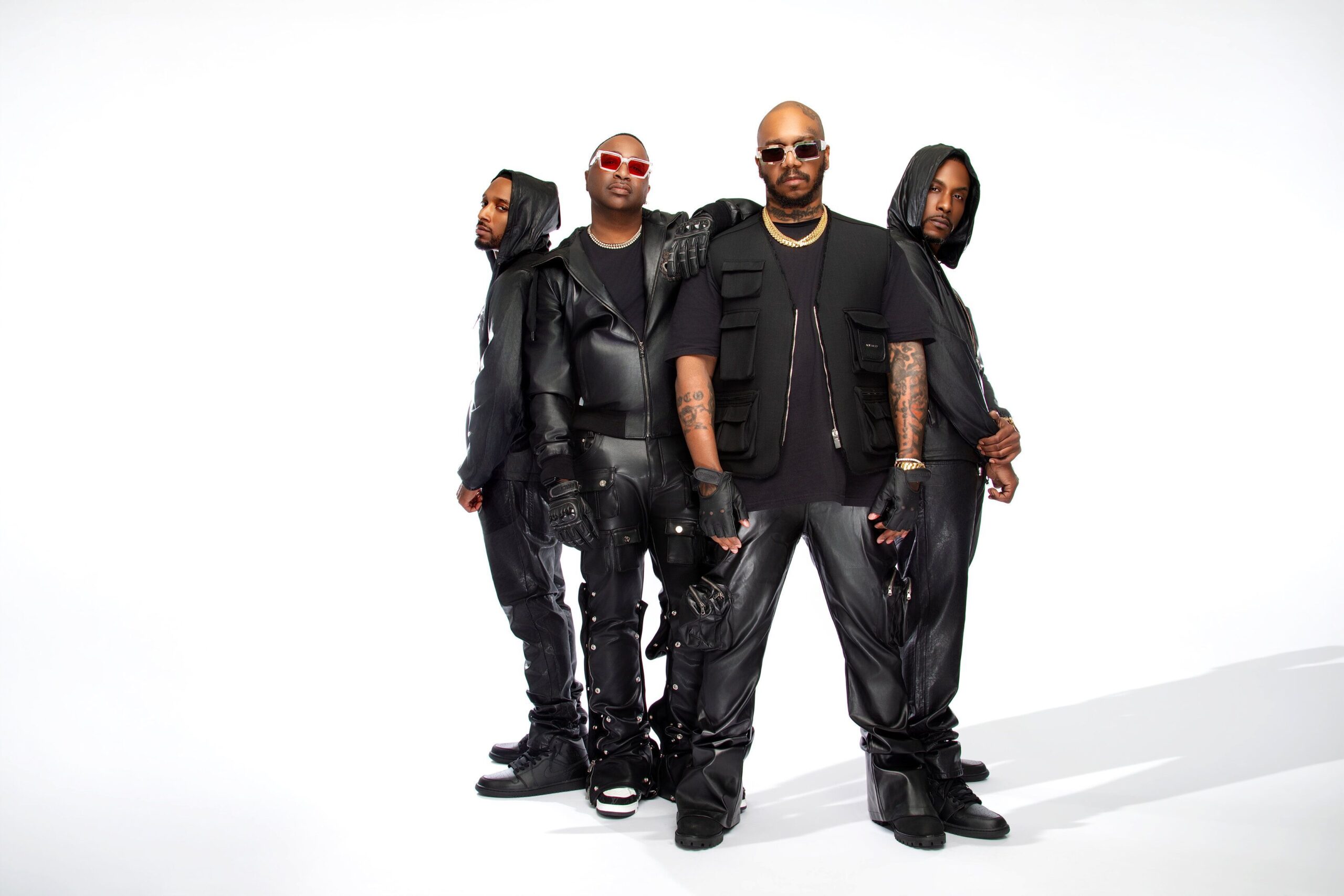
R&B’s 112 — pronounced “one twelve” — is the Atlanta group that signed to now-disgraced music executive Sean Combs’ Bad Boy label in the 1990s. In addition to hits like “Cupid” and “It’s Over Now,” the band joined Combs on vocals on “I’ll Be Missing You,” the 1997 megahit that eulogized the Notorious B.I.G. 8 p.m., Met Philly, 858 N. Broad St., themetphilly.com
Unis
K-pop girl group octet Unis comes to South Street, supporting 2025’s album Swicy. The band fronted by lead singer Hyeonju triumphed on the Seoul Broadcasting System reality show Universe Ticket in 2024. 8 p.m., Theatre of Living Arts, 332 South St, tlaphilly.com
Jobi Riccio plays Free at Noon at the World Cafe Live on Friday.
Jobi Riccio
Colorado songwriter Jobi Riccio won praise for her 2023 debut album, Whiplash. That same year, she was awarded the John Prine Fellowship at the Newport Folk Festival. She has a new single, “Buzzkill,”which along with the previously released protest song “Wildfire Season” will be on a forthcoming album. Noon, World Cafe Live, 3025 Walnut St., xpn.org
The Naked Sun
Philly rock quintet the Naked Sun will celebrate a new album, Mirror in the Hallway. It was produced by Brian McTear and Amy Morrissey at Miner Street Recordings. McTear’s Bitter, Bitter Weeks plays a rare full band set as openers. 8 p.m., Fallser Club, 3721 Midvale Ave., thefallserclub.org
Saturday, Jan. 31
Wild Pink
Brooklyn indie outfit Wild Pink comes through for an early show, still touring behind the excellent 2024 album Dulling the Horns. The band then needs to make way for a Taylor Swift DJ night that follows. 6 p.m., MilkBoy Philly, 110 Chestnut St., milkboyphilly.com
G. Love plays the Sellersville Theater on Saturday with his band, Special Sauce.
G. Love & Special Sauce
G. Love’s 2006 album Lemonade was a solo affair, but he’s celebrating its 20th anniversary with Special Sauce, the band with whom he recorded 215-proud staples such as “Philadelphonic” and “I-76.” Hawaiian surfer Makua opens. 8 p.m. Sellersville Theater, 24 W. Temple Ave., Sellersville, st94.com
Pine Barons
KC Abrams’ Philly experimental rock trio Pine Barons released its fourth album TV Movie in September. This week, the band headlines a show in Fishtown, with Special World and Rentboy. 9 p.m. Johnny Brenda’s, 1201 N. Frankford Ave. johnnybrendas.com
Dave P. will DJ all night long in a benefit for Juntos on Friday at the Dolphin in South Philly.
Say Anything / Motion City Soundtrack
Two emo-adjacent bands that emerged in the early 00s are touring together. Los Angeles’ Say Anything’s latest is The Noise of Say Anything’s Room Without …, while Minneapolis’ Motion City Soundtrack recently returned after a decade with The Same Old Wasted Wonderful World. 7:30 p.m., Fillmore Philly, 29 Allen St., thefillmorephilly.com
Riverside / My Favorite / Polaroid Fade
A top-notch trio of indie bands, headlined by 1990s Philly veterans Riverside. Also on the bill are Brooklyn’s My Favorite and Ocean City, N.J.’s, Polaroid Fade, fronted by 20-year-old singer Nicoletta Giuliani, whose sounds draw from shimmery ‘90s bands like the Sundays and the Ocean Blue. 8:30 p.m., PhilaMoca, 531 N. 12th St., PhilaMoca.org
Loudon Wainwright III plays the Zellerbach Theatre at the Annenberg Center with Chris Smither on Sunday.
Sunday, Feb. 1
Loudon Wainwright / Chris Smither
From his 1970 self-titled debut to Lifetime Achievement in 2022, Loudon Wainwright III has always been an unflinching and unfailingly funny songwriter whose acute observations never spare himself or his family members. Pairing him with ever-soulful folk blues guitarist and songwriter Chris Smither, who has had a fruitful career of equal length, is a masterstroke. Hopefully, they’ll play together. 8 p.m., Zellerbach Theatre, 3680 Walnut St., pennlivearts.org
Reef the Lost Cauze
West Philly rapper Reef the Lost Cauze is first up at “A Month of Black Excellence at the Fallser Club,” with an afternoon event featuring “vendors, food, art, community actions.” The series includes African Friends: Bakithi Kumalo, Tanyaradzwa Tawengwa, and Youba Cissokho on Feb. 6 and V. Shane Frederick and Rev. Chris on Feb 17. 4 p.m., Fallser Club, 3721 Midvale Ave., thefallserclub.org
Jon Spencer
Jon Spencer has been playing high-volume blues with exaggerated gusto for three decades. Along with a recent show by Richard Lloyd and Lenny Kaye, this booking is another sign that Nikki Lopez, the South Street venue on the site of the former JC Dobbs, is becoming a welcome home for veteran acts who can still kick out the jams as well as young punk and metal bands. 8 p.m., Nikki Lopez, 304 South St., instagram.com/nikkilopez/philly
Monday, Feb. 2
Ye Vagabonds
Full-on Irish music season doesn’t arrive until March, when Emerald Isle musicians will blanket the Philly region. Get a head start with this stellar band, led by brothers Brian and Diarmuid Mac Gloinn who make haunting music that sounds ancient and brand new at the same time. Philly bluegrass songwriter Daphne Ellen opens. 8 p.m., Johnny Brenda’s, 1201 Frankford Ave., johnnybrendas.com
Concert Announcements
Shows that announced in the past week include a number of enticing double bills.
None of this makes America great again. It doesn’t bring down the cost of groceries. It doesn’t help Americans whose healthcare premiums have skyrocketed. It doesn’t make our streets safer. It doesn’t do anything but rile up Confederate flag-waving racists in Trump’s base. They had an awful lot to say about preserving history when monuments honoring traitorous soldiers who fought for the Confederacy and the right to own Black folks were torn down. But not so much when it comes to the destruction that happened at Sixth and Market Streets Thursday afternoon.
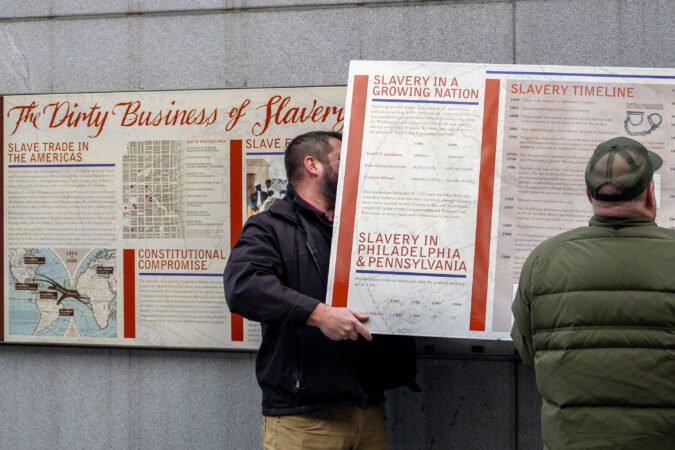
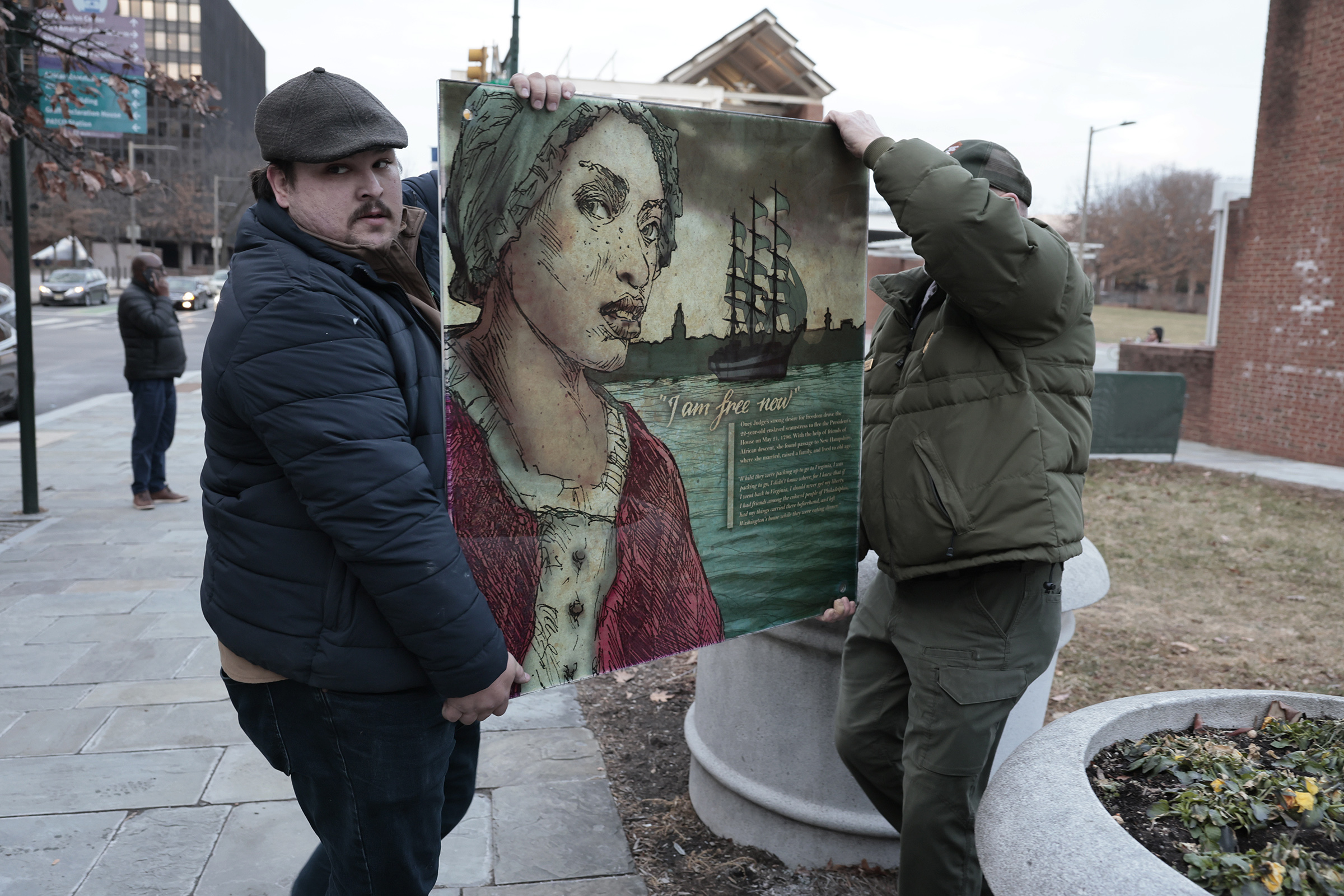
National Park Service workers remove the displays at the President’s House site in Independence National Historical Park in Philadelphia on Thursday.
I hope the spirits of the enslaved Africans whose stories had been immortalized in that display adjacent to the Liberty Bell will forever haunt Trump. It is my sincere wish that he and the henchmen who took down signs and dismantled the panels documenting the sad history of the nine enslaved Black people owned by our nation’s first president will never forget what they’ve done.
From this day forward, may they toss and turn each night as they remember the destruction they have wrought, as well as the names of the enslaved whose memorial they defiled: Austin, Paris, Hercules, Christopher Sheels, Richmond, Giles, Oney Judge, Moll, and Joe.
Trump and his enablers can try to hide the facts, but chattel slavery is an undeniable part of America’s founding. This nation wouldn’t be what it is now without the free labor of Africans dragged to these shores against their will and forced to toil for free in brutally inhumane conditions. It’s our story and one that should be acknowledged — not played down because Trump says so.
What will he do next? Take a sledgehammer to the Martin Luther King Jr. statue in Washington, D.C.? Empty out the Smithsonian’s National Museum of African American History and Culture? Burn the books about slavery and Black codes that have been for sale in museum gift shops and national parks?
The exhibit at the President’s House was the first I’d ever seen that, instead of glorifying the nation’s first president, humanized the poor people Washington held in the worst kind of bondage. The offices of The Inquirerare right across the street, and I’ve walked through the free outdoor exhibit many times. I used to enjoy seeing the expressions of tourists as they learned about the side of Washington that’s left out of most history books.
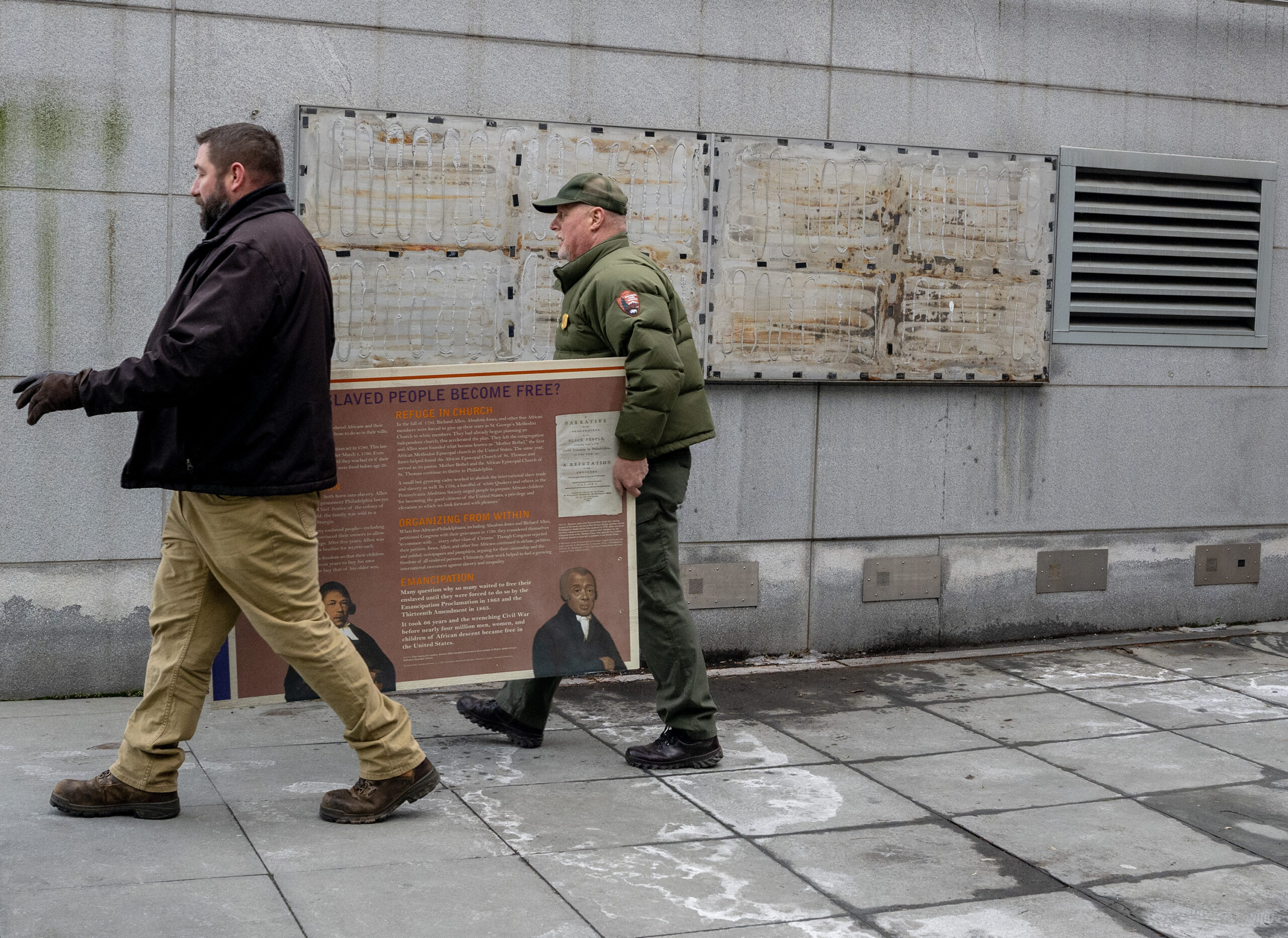
Workers remove display panels about slavery at the President’s House site in Independence National Historical Park on Thursday, leaving only empty spaces where history has been redacted by President Donald Trump.
Now all that’s left are the empty spaces where the various signs used to be. These sudden omissions at Independence Park make it feel like the historical account now being told at the site is a lie — not unlike the foundational lie of white supremacy that was used to justify the sin of slavery in the first place.
The removals are just another step in Trump’s brutal agenda to take things in America back to how they used to be when white men had everything and Black people had nothing.
Since his return to power, it has been one thing after another: his attempts to destroy all vestiges of diversity, equity, and inclusion, including his decision to no longer allow free admission to national parks on the federal holidays celebrating the late Rev. Dr. King and Juneteenth. Instead, parkgoers can enjoy free admission on Trump’s birthday, as if that’s really a thing.
The president would destroy Black History Month, too, if he could, and I don’t put it past him to try. He’s been clear about his racial animus, restoring the names of Army bases to those of Confederate military figures and using U.S. Immigration and Customs Enforcement agents to inflict a reign of terror on Black and brown people.
I’m proud Philadelphia has filed suit to take back what was removed from the President’s House. This is the beginning of the City of Brotherly Love, showing the Trump administration that, in the words of Sheriff Rochelle Bilal, “You don’t want this smoke.”