Once again, there will be music on the beach in Atlantic City this summer.
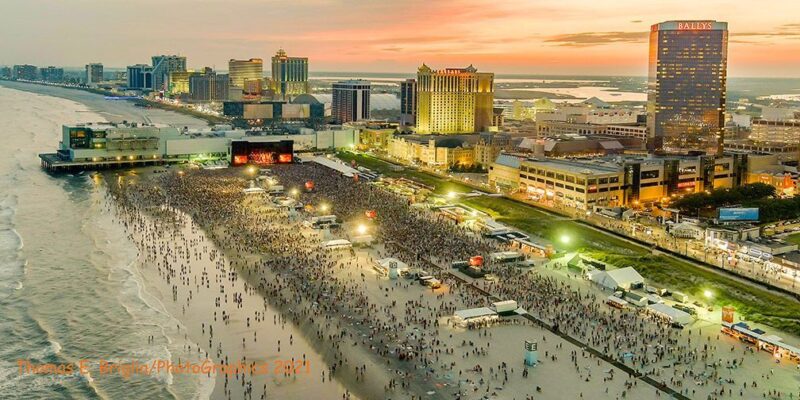
Australian electronic dance music trio Rüfüs Du Sol will perform on the ocean side of the A.C. boardwalk on Aug. 29 in what’s expected to be the first in a wave of shows to take place this year.
That show by the Sydney-based pop/house music band, which is also playing Bonnaroo, Wrigley Field, and Madison Square Garden, will mark a return to the tradition of A.C. beach shows. The stage on the Arkansas Avenue beach will face north, with the Caesar’s Pier (formerly the Million Dollar Pier) behind it.
Over the years, beach concerts have included Pink in 2017, the Vans Warped Tour in 2019, three-nights of Phish in 2021 and 2022, the pop-punk Adjacent Music Festival in 2023, and the TidalWave country fest in 2022 and 2023.
Australian electronic dance music act Rufus Del Sol will perform on the Atlantic City beach on August 29.
For the last two years, however, there have been no large scale A.C. beach shows (though Philly impresario Dave P. did stage an intimate Making Waves festival last year).
Music fans had to travel north to Asbury Park for Sea. Hear. Now or south to Wildwood for the Barefoot Country to experience a surf side musical blowout.
But now Visit Atlantic City, the public-private partnership funded by New Jersey’s Casino Reinvestment Development Authority, has announced a new Atlantic City collaboration with Live Nation.
“With the help of Live Nation and our partners,” Gary Musich, Visit Atlantic City president and CEO said in a statement, the storied Jersey resort town aims to “attract a wide range of world class performers, energize our tourism economy, and continue delivering experience that resonate with visitors year round.”
That means more shows and not just in the summer, Molly Warren, Live Nation senior vice president of booking said in a statement. The concert promotion company regularly books venues such as Boardwalk Hall, Hard Rock Hotel & Casino, Borgata Hotel Casino, or, Warren said, “even right on the beach.”
No other 2026 Atlantic City beach concerts have been announced as of yet. Tickets for Rüfüs Du Sol go on sale on Thursday, Feb. 26, at 10 a.m. at RüfüsDuSol.com/live.
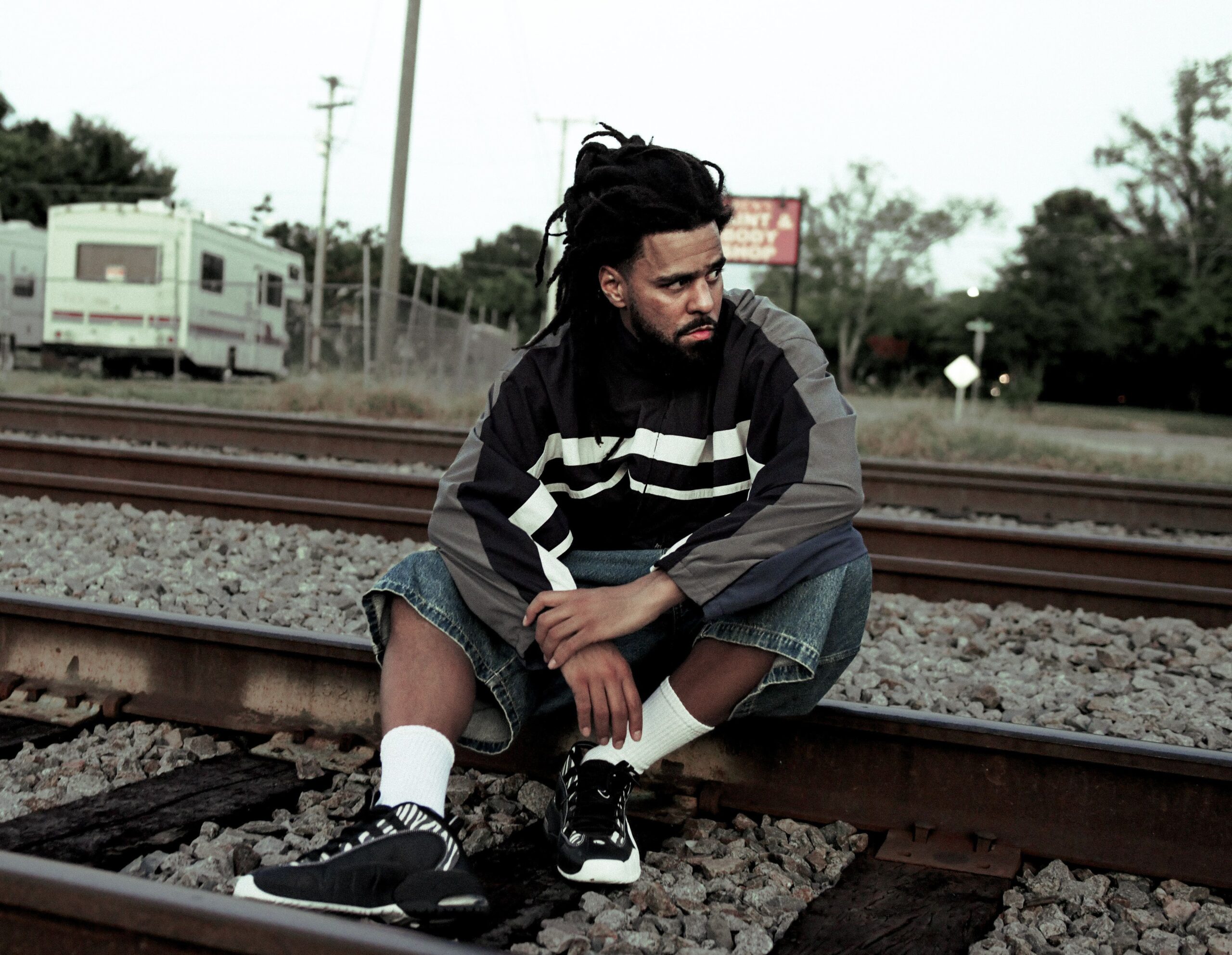
J. Cole play Xfinity Mobile Arena in South Philly on July 20.
Rapper J. Cole will bring his “Fall-Off Tour” to Xfinity Mobile Arena on July 20. It’s the Grammy-winning North Carolina producer and artist’s tour for his new album of the same name. It will take him not only across the U.S., but also to Europe and South Africa. Tickets for the Philly show go on sale Friday at 11 a.m. at thefalloff.com.
Three days later, Shinedown, the Jacksonville, Fla., rock band led by singer Brent Smith and guitarist Zach Myers, will play the Xfinity Mobile Arena on their “Dance Kid Dance: Act II” Tour.
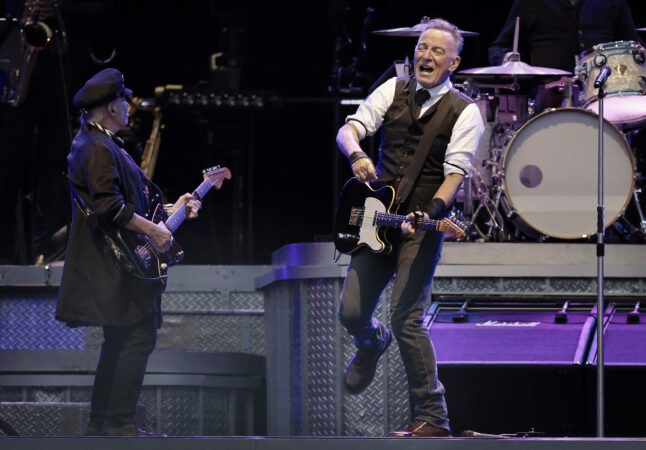
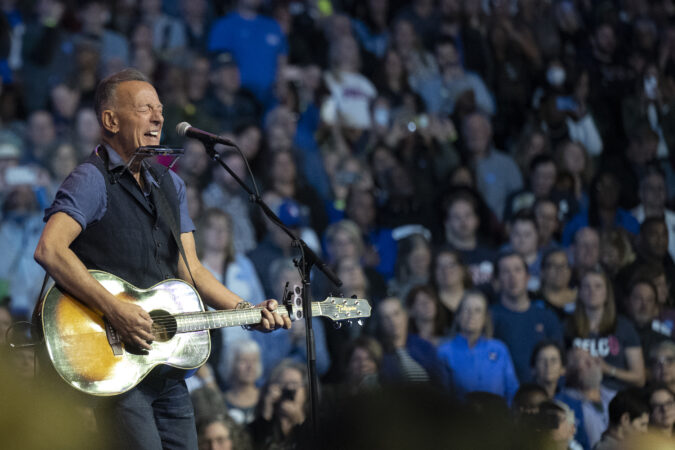
Bruce Springsteen & the E Street Band is headed out on the road this spring on its first U.S. tour dates in two years. These will be the band’s first performances since Springsteen made news last month with his anti-ICE protest song, “Streets of Minneapolis.”
Appropriately enough, the “Land of Hope and Dreams American Tour” begins in Minneapolis on March 31 before making its way to the Xfinity Mobile Arena in South Philly on May 8.
The itinerary includes east coast dates in Newark, N.J.; Long Island; Manhattan; and Brooklyn. There are 19 indoor arena shows in all, plus a closing night baseball stadium show in Washington on May 27.
In a statement accompanying the tour announcement, Springsteen said: “We are living through dark, disturbing and dangerous times, but do not despair — the cavalry is coming! Bruce Springsteen and The E Street Band will be taking the stage this spring from Minneapolis to California to Texas to Washington, D.C., for the Land of Hope And Dreams American Tour.”
“We will be rocking your town in celebration and in defense of America — American democracy, American freedom, our American Constitution and our sacred American dream — all of which are under attack by our wannabe king and his rogue government in Washington, D.C.,” Springsteen said in the statement.
Last year, the Boss made headlines while on tour in Europe for his pointed comments about the Trump administration, which he called “corrupt, incompetent, and treasonous” before performing his patriotic song “Land of Hope and Dreams.”
Trump responded on Truth Social by calling Springsteen “highly overrated” as well as a “dried out prune of a rocker” and “not a talented guy — Just a pushy, obnoxious JERK.”
Last month, Springsteen wrote “Street of Minneapolis” on the day that Alex Pretti was fatally shot by federal immigration enforcement agents in Minneapolis and released it three days later.
Calling out “King Trump’s private army from the DHS,” Springsteen memorializes “two dead, left to die on snow-filled streets, Alex Pretti and Renee Good.”
“Everyone, regardless of where you stand or what you believe in, is welcome — so come on out and join the United Free Republic of E Street Nation for an American spring of Rock ‘n’ Rebellion! I’ll see you there!,” Springsteen said in the statement.
Tickets for the Philadelphia stop of Bruce Springsteen’s “Land of Hope and Dreams” tour go on sale Feb. 21, 10 a.m. via Ticketmaster. The full tour itinerary is at BruceSpringsteen.net.
Philadelphia has always understood that music is never just music; sometimes rhythm becomes resistance. In this city, songs have spilled out of union halls and church basements, echoed off rowhouse walls, and marched alongside movements for labor rights and racial justice.
That tradition shows why Bruce Springsteen’s music, and his choices, still matter, decades after a summer night in East Berlin when rock and roll quietly challenged both sides of a superpower rivalry.
In 1988, nearly 300,000 young East Germans gathered for the largest rock concert in the history of the German Democratic Republic. The performer was Springsteen, a working-class songwriter whose music had already been widely misunderstood in the United States.
Ronald Reagan appropriated the pounding chorus of “Born in the U.S.A.” as a patriotic anthem while ignoring its verses — the story of a Vietnam veteran sent off “to go and kill the yellow man,” only to return home abandoned by the country he served.
In East Germany, those lyrics landed differently. Listeners heard the betrayal beneath the beat. They recognized themselves in the song’s moral tension. That understanding is why, unlike most Western rock stars, Springsteen was invited to play behind the Iron Curtain.
Pressure to stop the concert came from both sides of the Cold War. The U.S. Embassy urged Springsteen to cancel, fearing the show would legitimize a communist regime. At the same time, the East German youth organization sponsoring the concert — without Springsteen’s knowledge — advertised it as a “solidarity concert” for Nicaragua’s Sandinista government.
Springsteen refused both. He told U.S. officials he would not cancel. He told East German organizers he would not perform unless Sandinista banners were removed. His music, he insisted, belonged to ordinary working people, not to politicians.
About an hour into the concert, Springsteen stopped and addressed the crowd in halting German. “It’s great to be in East Berlin,” he said. “I’m not here for or against any government. I came to play rock and roll for East Berliners in the hope that, one day, all barriers will be torn down.”
He had wanted to say “walls,” but anxious officials begged him to soften the language. So he let the music finish the thought, launching into Bob Dylan’s “Chimes of Freedom,” a song written for the refugees, the silenced, the imprisoned, which Springsteen has lately reprised. A year later, the Berlin Wall fell. Many described the night as a widening crack — a moment when imagination briefly outran fear.
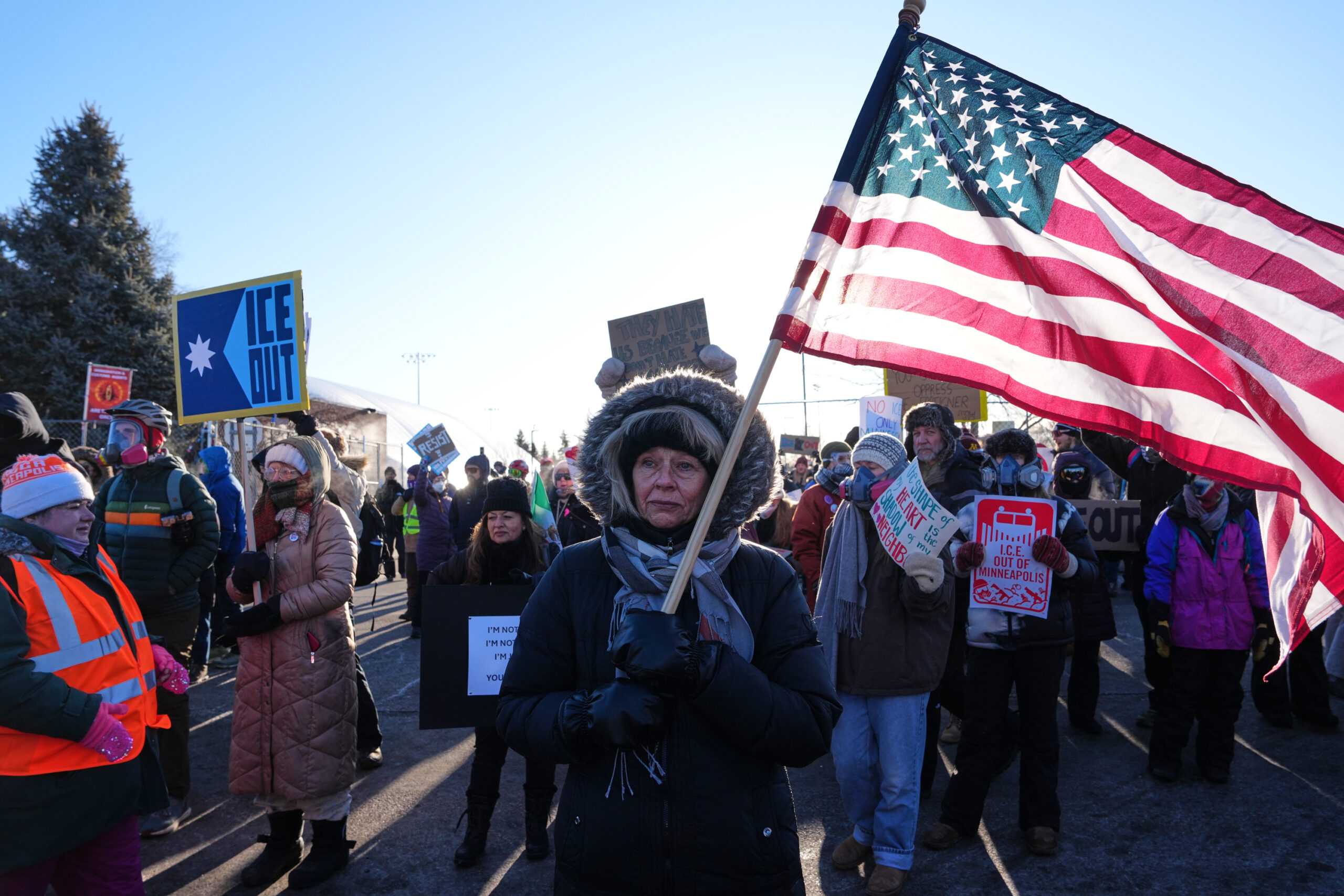
People protest against ICE outside the Bishop Henry Whipple Federal Building on Jan. 30 in Minneapolis.
This pattern is familiar. Springsteen’s work has long been embraced by audiences while misread, or deliberately misunderstood, by power. His songs are moral arguments set to melody, like the Academy Award-winning tune “Streets of Philadelphia.” They insist the American dream is fragile. It collapses when dignity, accountability, and justice are denied.
His message to them has never changed. Freedom does not come from walls. Power does not come from cruelty. The streets belong to everyone, or they belong to no one. Will this be the moment when they hear Donald Trump’s administration is destroying whatever is left of the American dream?
Music alone does not tear down barriers — or walls. But it shapes what people are willing to imagine, what they are willing to demand, and who they are willing to stand beside.
Springsteen’s music calls us to rise up against injustice, whether in the streets of Philadelphia, Berlin, or Minneapolis.
Kristen Ghodsee is a professor of Russian and East European studies at the University of Pennsylvania. She is the author of 12 books and is currently on academic sabbatical as an honorary fellow of the Einstein Forum in Potsdam, Germany. Susan Neiman has been the director of the Einstein Forum since 2000. She is a philosopher, essayist, and the author of 10 books.
Bruce Springsteen has released an anti-ICE protest song called “Streets of Minneapolis.”
Singing out on behalf of Renee Good and Alex Pretti, both of whom were shot to death by federal immigration enforcement agents this month, Springsteen’s song is harshly critical of the Trump administration and the Department of Homeland Security’s occupying force in Minnesota this year.
“King Trump’s private army from the DHS, guns belted to their coats,” Springsteen sings in the slowly building, folk-gospel song’s opening verse. “Came to Minneapolis to enforce the law, or so their story goes.”
“I wrote this song on Saturday, recorded it yesterday and released it to you today in response to the state terror being visited on the city of Minneapolis,” Springsteen said on social media on Wednesday. “It’s dedicated to the people of Minneapolis, our innocent immigrant neighbors, and in memory of Alex Pretti and Renee Good. Stay free.”
The second verse continues:
“Against smoke and rubber bullets, in the dawn’s early light / Citizens stood for justice, their voices ringing through the night / And there were bloody footprints, where mercy should have stood / And two dead left to die on snow-filled streets, Alex Pretti and Renee Good.”
Springsteen campaigned against Trump in 2024, singing at a rally for Democratic presidential candidate Kamala Harris at the Liacouras Center on the Temple University campus in North Philly in the lead-up to the election.
Last year, while on tour in Europe, Springsteen began his concerts by calling the Trump administration “corrupt, incompetent, and treasonous” before performing his patriotic song, “Land of Hope and Dreams.”
President Trump responded by calling Springsteen “Highly Overrated,” “not a talented guy,” and a “dried prune of a rocker.”
“Streets of Minneapolis,” which is Springsteen’s third “Streets” song after “Streets of Fire” and “Streets of Philadelphia,” speaks truth to power not only about Trump, but also Department of Homeland Security head Kristi Noem and White House deputy chief of staff Stephen Miller.
Referring to claims that ICE agents responded with gunfire because their own lives were at risk, Springsteen sings, as the music swells: “Their claim was self-defense sir, just don’t believe your eyes / It’s our blood and bones and these whistles and phones / Against Miller and Noem’s dirty lies.”
The weekend before Pretti’s death, Springsteen made a surprise appearance at the Light of Day benefit concert in Red Bank, N.J., where he dedicated “Promised Land” to Good and said, “If you believe you don’t deserve to be murdered for exercising your American right to protest, then send a message to this president, as the mayor of the city said: ‘ICE should get the f— out of Minneapolis.’ ”
“Streets of Minneapolis” leans into its rage as it progresses, and promises to continue to honor Good and Pretti, as it closes with Springsteen singing:
“We’ll take our stand for this land, and the stranger in our midst / We’ll remember the names of those who died on the streets of Minneapolis.”
On Thursdays at 7 a.m., Laura Carlson is by the iconic granite and bronze sculpture of an open book on University of Delaware’s Mentor’s Circle.
As the new university president, she invites faculty, staff, students and community members to join her there and run a five-kilometer loop through campus. Typically 10 to 20 people show.
“Rain or shine, we run down to the track on South Campus, loop the track and come back,” said Carlson, 60, who began the treks as interim president last summer and is continuing them in her permanent role, which started earlier this month.
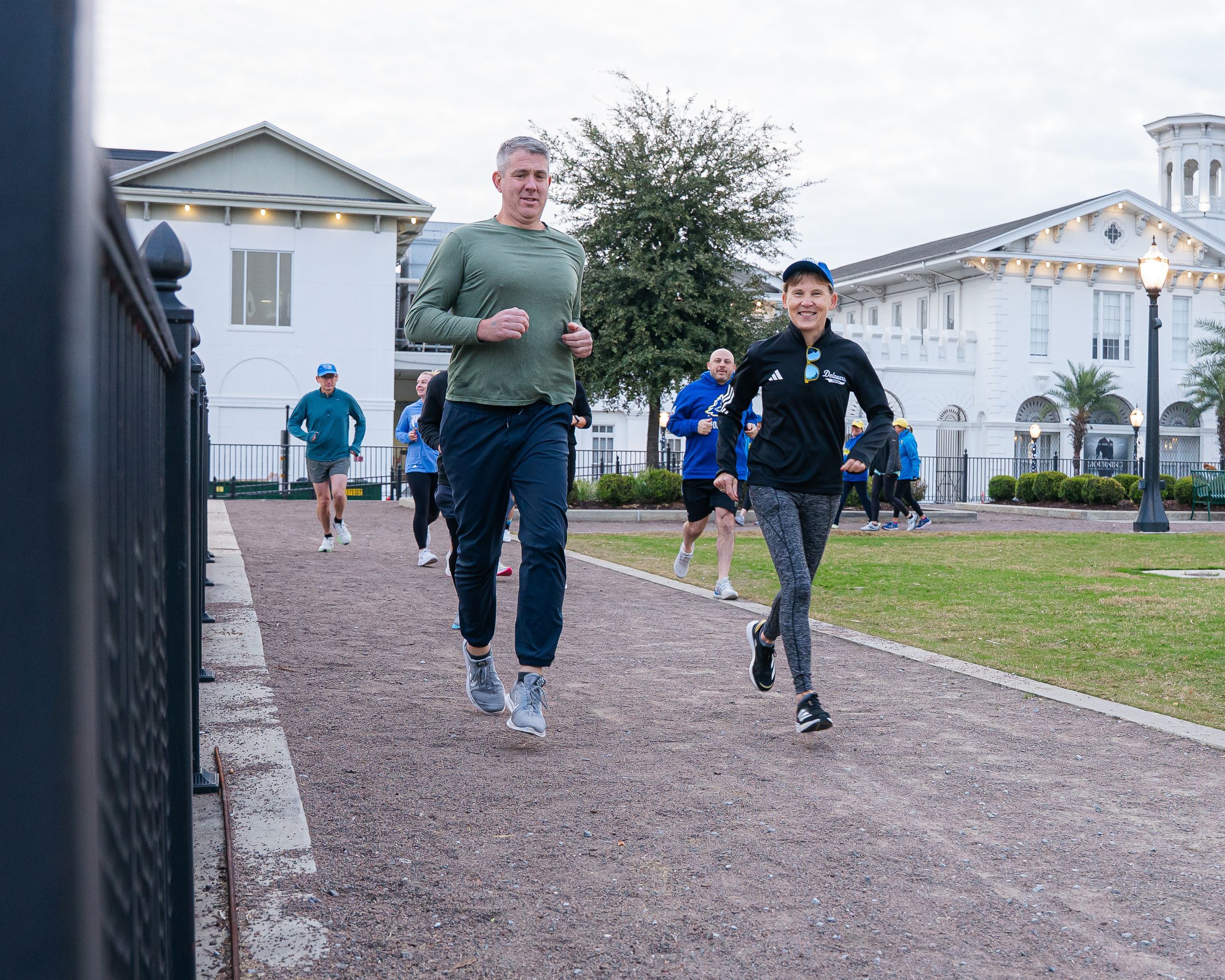
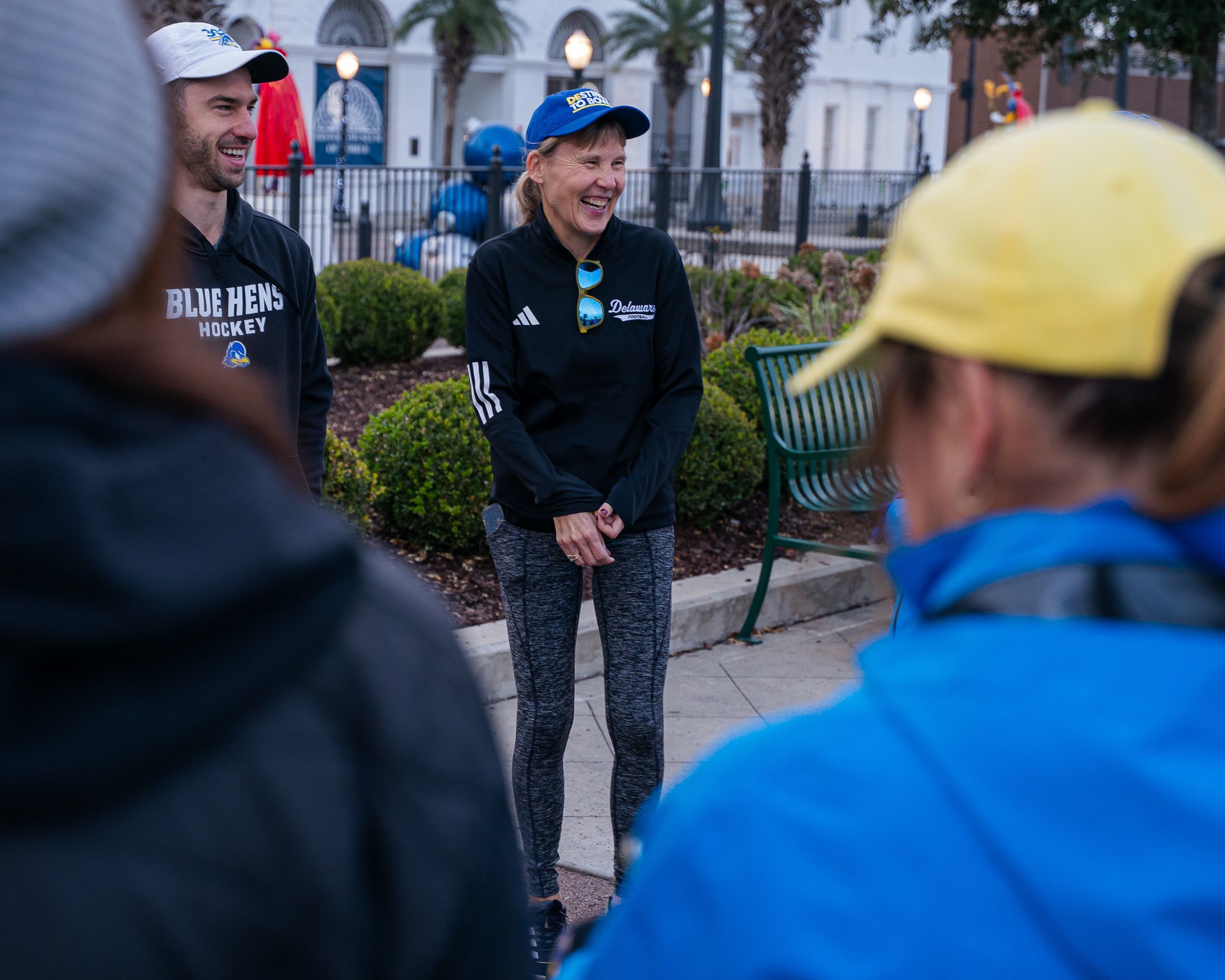
University of Delaware president Laura Carlson (right) goes on one of her Prez Runs in Mobile, Ala., where the Blue Hens won a bowl game, defeating Louisiana-Lafayette 20-13 on Dec. 17, 2025.
The “Prez Run” is just one way the psychology scholar — who plans to run her 15th Boston Marathon in April — is building relationships on campus, with alumni and with the community and state. She also runs with alumni, employees, and students during events in other cities.
“I’ve heard that the alumni association is going to put it on their bucket list of 10 things to do before you graduate,” she said.
Carlson, a Dartmouth alumna who got her doctorate in cognitive psychology from the University of Illinois Urbana-Champaign, is focused on strengthening relationships with state and local governments and internally with faculty. Finding new revenue streams to plug holes from terminated federal grants and recruiting students in new national markets also are on her list.
The Massachusetts native previously served as provost for three years, having come to Delaware after 28 years as a faculty member and administrator at the University of Notre Dame in Indiana. She’s the first internal candidate to get the presidential appointment in about 50 years.
She follows Dennis Assanis, who resigned in June and is now chancellor of the University of California at Santa Barbara.
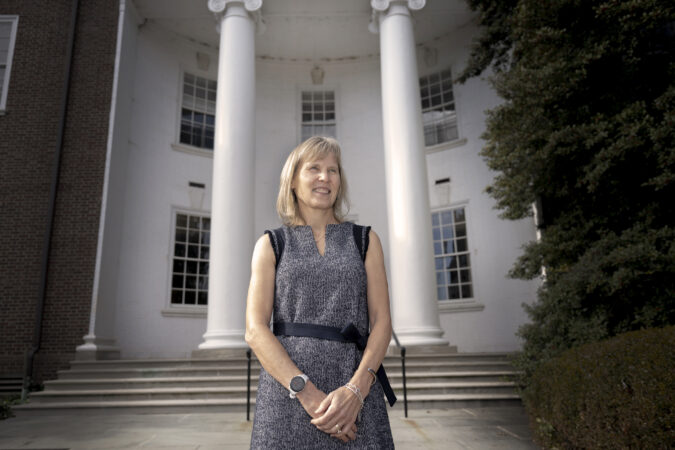
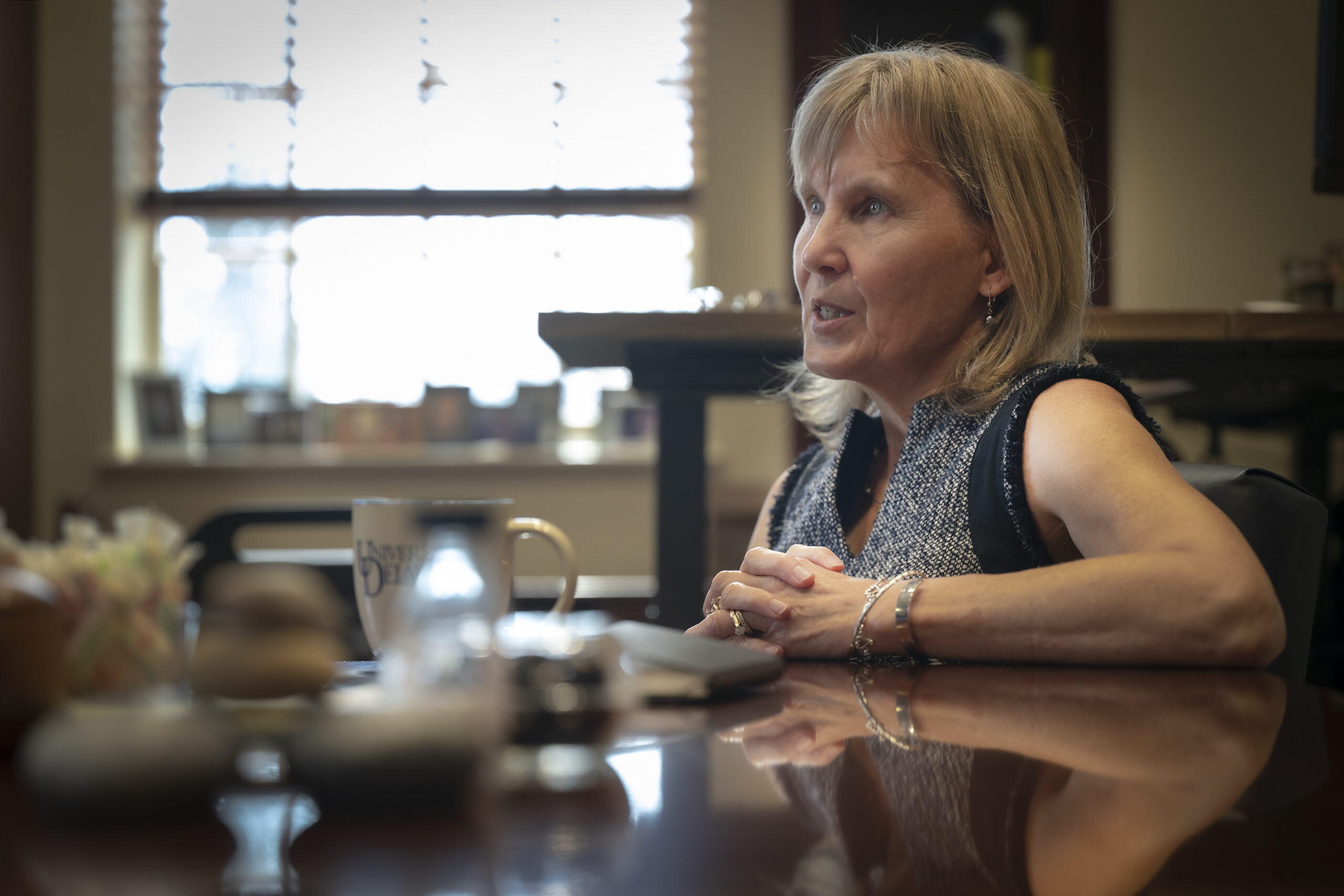
Laura Carlson, president of the University of Delaware
Carlson is visiting classes each semester, including elementary organic chemistry and mechanical engineering.
“I want to make sure I don’t feel distant from the rhythm of the academic year,” she said. “Anything we value, we should put attention on it.”
When building a team, she asks participants to pick their top 10 values, such as family, world peace, humor, and authenticity, and rank them. Her top value is always purpose.
University of Delaware president Laura Carlson talks to fellow runners during one of her Prez Runs in Mobile, Ala., where the football team won a bowl game.
“I want to live a life of purpose,” she said.
Partnering with state and local government
She’s attempting to change the way the partnership with the state is viewed.
“We lead with what does the state need from us, as opposed to what do we need from the state,” she said.
Southern Delaware, where the university has a campus in Lewes and Georgetown, has housing, healthcare, education and workforce development needs, and the university can help, Carlson said.
She said she can envisiona public-private partnership for new housing in Lewes, she said,or a classroom building with event space for the community.
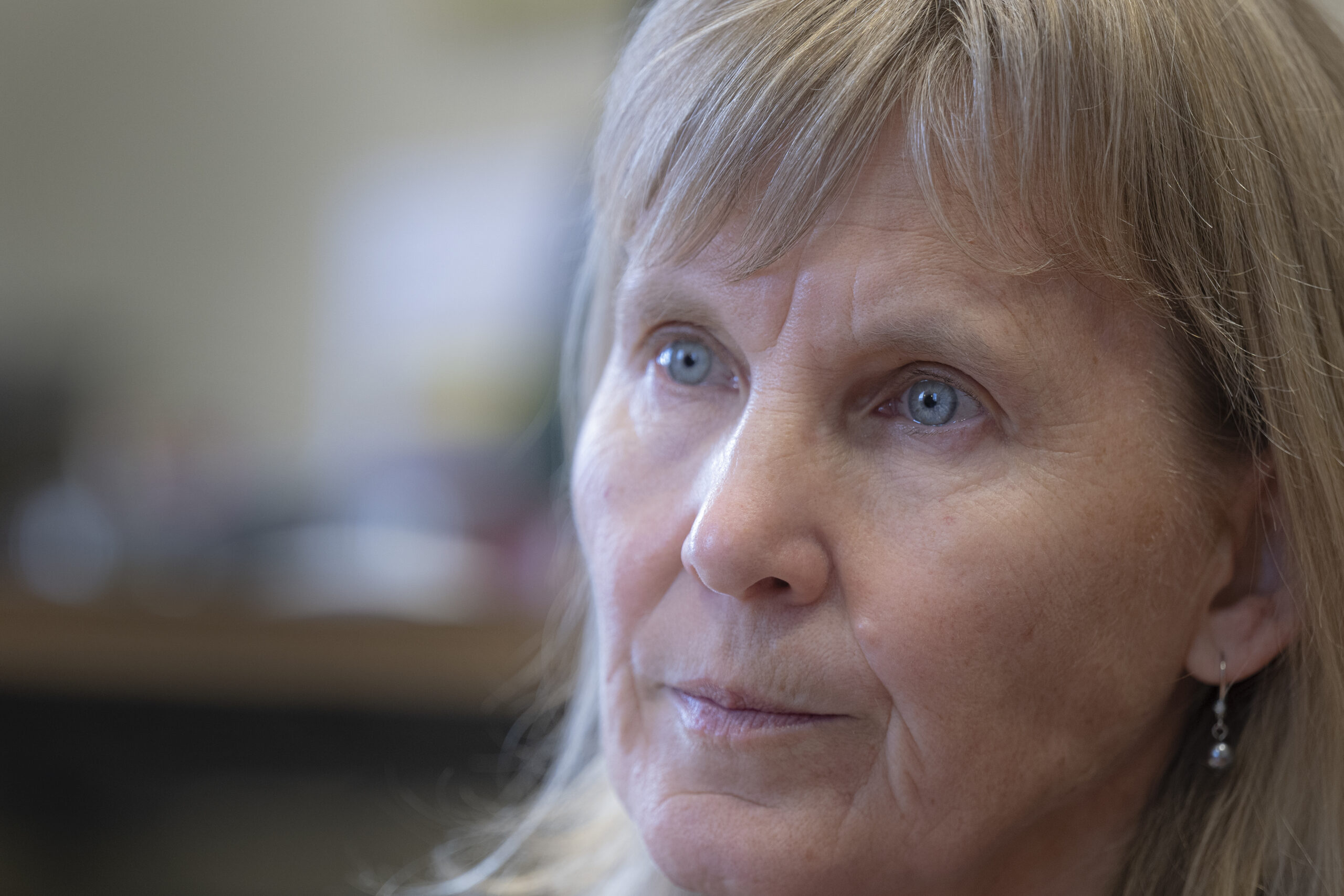
Laura Carlson, president of the University of Delaware, discusses her priorities.
“If we are a university for the whole state, we need to show up in the whole state, and we need to be responsive to the needs across the state,” she said.
She’s also looking at the possibility of more residential space for the main campus in Newark — possibly a “sophomore village” — through a public-private partnership. The university has about 7,100 residential beds in Newark.
“That would take some of the pressure off the city,” she said, noting the tight rental market, and adding that parents and students may prefer on-campus housing options.
She also wants to help Delaware Gov. Matt Meyer with his plan to bring medical education to the state. Delaware remains one of few states without a medical school. The idea is not to build one from scratch but to partner with an existing medical university, she said.
“We’ve been in conversations with Thomas Jefferson” in Philadelphia, which has a nonexclusive memorandum of understanding with the state to explore a partnership, she said. “What we offer is the classrooms, the lab space, and so on to do kind of the first part of that medical school type of training.”
Dealing with the federal government could be more challenging. The university has lost 41 grants worth $33.9 million since President Donald Trump took office last year. Those span engineering, biological sciences, arts, and sustainability, she said, and impact 117 graduate students and 27 postdoctoral students.
In total, $1.1 million in salaries and $2.1 million in stipends have been lost, though the university has been working to find other funding through foundations and industry, she said. No one has lost their job, she said.
“I’ve been really working hard on … kind of strengthening those relationships with our business community,” she said.
The school also has experienced a 19% decline in international graduate students following Trump’s pause on student visas and other policies, and the school lowered its doctoral admissions by 19.5% last year amid concerns over federal funding. What will happen with doctoral admissions this year is unclear.
“Each college is sort of looking strategically program by program and trying to figure out what is the right size for their doctoral programs,” she said. “If they’re compressing their number of students coming in, it’s because they’re trying to prioritize funding for their existing students.”
The school’s overall enrollment of more than 24,000 rose last fall and applications are up 10%, she said. But as another drop in high school graduates begins this year, the university has found success in new recruiting areas such as Colorado and Wake Forest, N.C., where the football team played as part of the school’s entry into Conference USA, she said.
“We’ve been very strategic about putting marketing in there, convening alumni and really using that as a way to establish ourselves more nationally,” she said.
Biden Institute — and a conservative counterpart
She said the university is on course to build Biden Hall, an academic building named for former President Joe Biden, a Delaware native. It will house the school’s Biden School of Public Policy and Administration and the Biden Institute on government theory and practice. The design phase likely will begin this spring.
Fundraising is also continuing for Siegfried Hall, which will include the Institute for Free Leadership and Enterprise. The donors, Robert L. Siegfried Jr., a certified public accountant and his wife, Kathleen Marie (Horgan) Siegfried, have said they wanted to bring a “conservative” vision and offer a balance to the Biden Institute.
Carlson said she doesn’t view the halls as conservative and liberal, but rather places where ideas can be vetted. She noted the Biden Institute is nonpartisan.
“Siegfried is a think tank on conservative economics, but part of that building will be also to sort of question the limits of those policies,” she said. “That’s what we do in any discipline.”
Personal life
Here are a few fun facts about Carlson, whose husband, Robert West, is a professor of psychological and brain sciences at the university.
Last book read: Chris Whitaker’s All the Colors of the Dark.
Favorite band or musical group: Bruce Springsteen.
Favorite food: Indian. Greek.
Favorite vacation spot: “I spend so little time at my house. Some of my best days on break are if you don’t even get out of your pajamas.”
Pierre Robert’s unexpected death in October sent Philadelphia rock fans into a state of shock.
How could the community of WMMR-FM (93.3) listeners carry on without the kind-hearted DJ? He was an unfailingly reliable source of good cheer and boundless musical enthusiasm on the airwaves, and at concerts and charity events across the region for over 40 years.
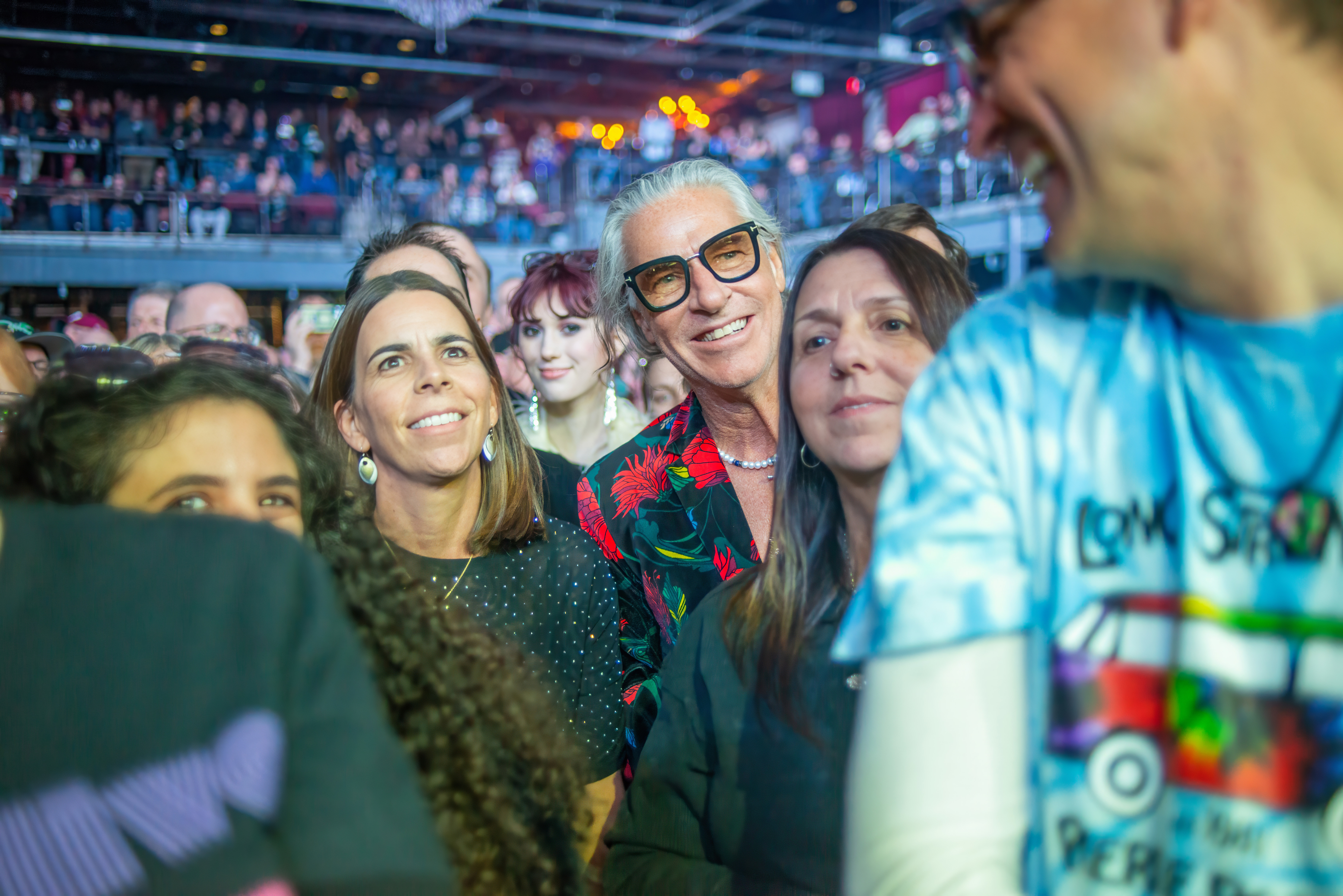
On Wednesday night at the Fillmore in Fishtown, a sold-out crowd of 3,000 “good citizens” — as Robert called his fellow Philadelphians — struggled through their grief in a combination concert and wake that was billed as “Pierre Robert: A Show of Life.”
Collectively, the friends of Robert who performed and spoke on stage at the event came up with a mutually agreed upon strategy: Life without Pierre Robert would be tolerable for the MMR family only if it essentially remained a life with Pierre Robert. That is, if through music and his memory, his spirit can be kept alive.
The memorial concert raised money for Manna, the Philly nonprofit that feeds people with life-threatening illnesses, that was a favorite among many worthy causes Robert supported.
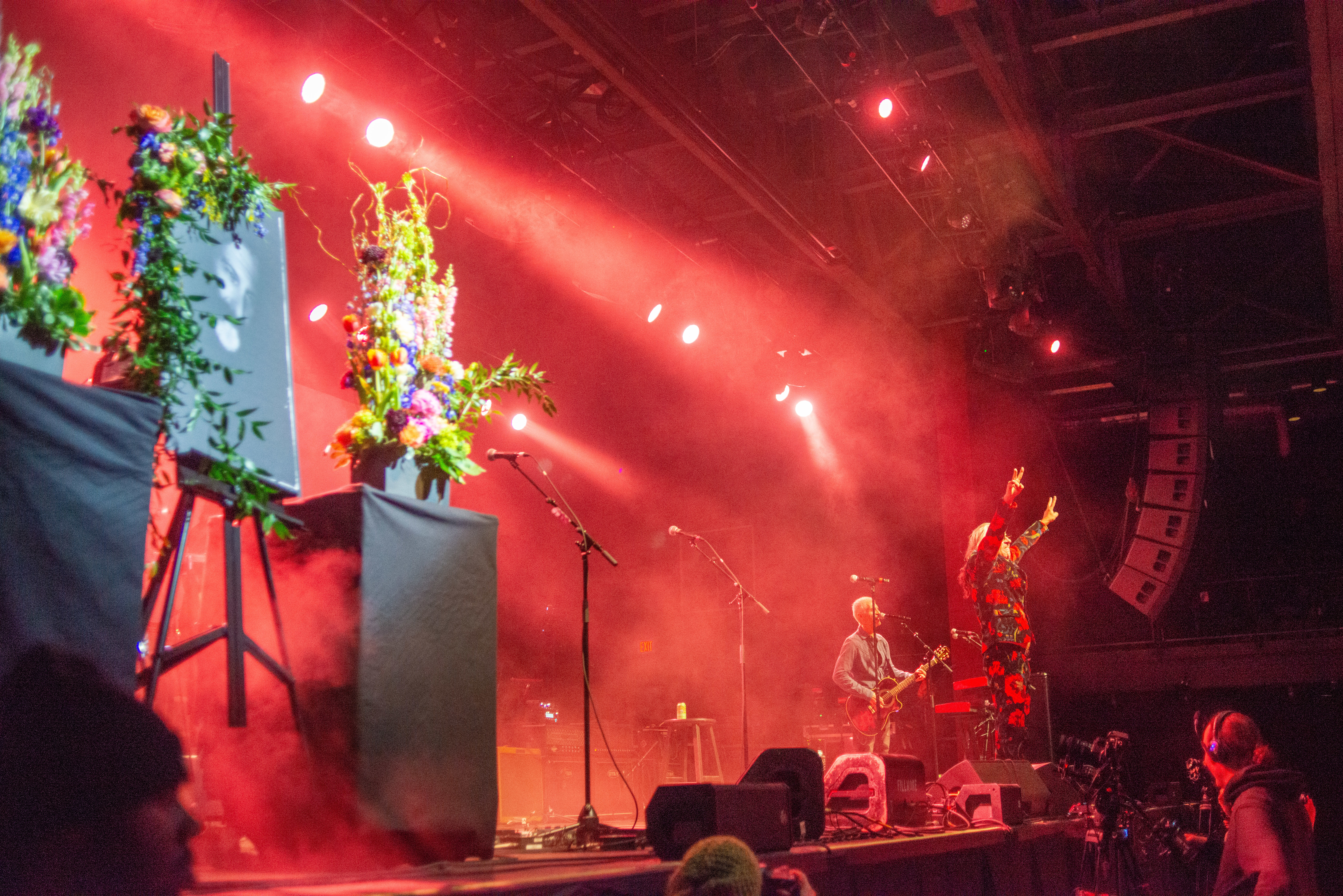
The evening began with Robert’s family gathering on stage, with niece Nicole Horder and nephew Brett Robert addressing the crowd while a portrait of their uncle and his tie-dyed lab coat were on display to their right.
Ed Roland of Collective Soul performs during the “Pierre Robert: A Show of Life” concert on Dec. 17, 2025 at the Fillmore in Philadelphia.
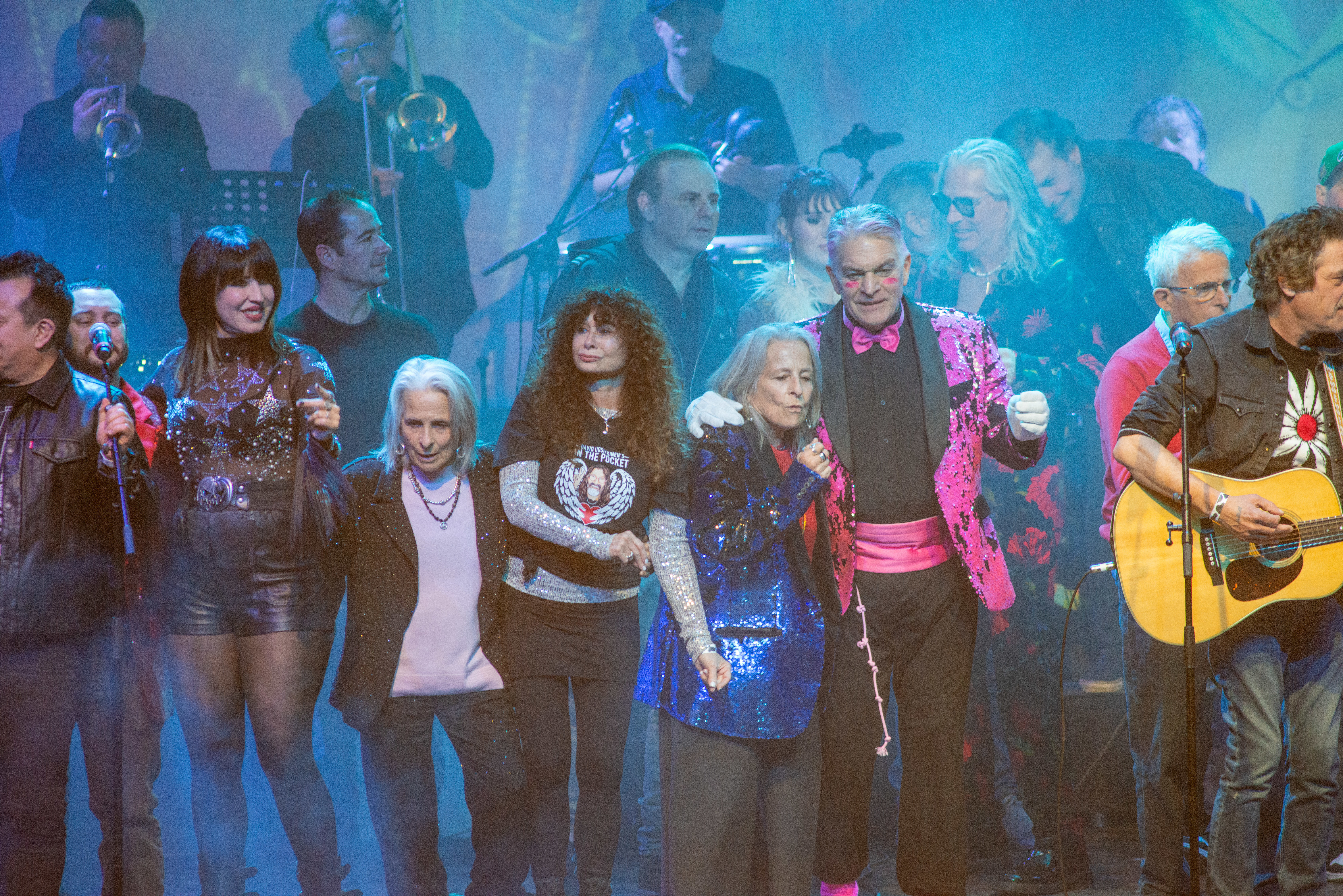
It ended five hours later, with Philly songwriter Ben Arnold leading a chorus of close to 40 musicians, friends, and family members on a singalong version of “Get Together,” the 1967 Youngbloods hit and countercultural anthem that fit the long-haired, bearded, and peace-sign-flashing Robert to a T.
In between, there were spirited, heartfelt, and sometimes tearful performances by David Uosikkinen’s In the Pocket, Marc LaBelle of Dirty Honey, and Ed Roland of Collective Soul, plus stripped-down duo sets by members of Philly hard rock band Halestorm and Jacksonville, Fla.’s Shinedown. And of course, there was Robert’s favorite Philly band, the Hooters.
Robert grew up in California, and his passion for the city he relocated to in the early 1980s and came to call home, was noted throughout the evening.
“If you tried to make a list of someone who would never make it in Philadelphia,” his nephew said at the start, “it would be a crazy hippie from California that’s a vegetarian, and ‘it’s all about peace and love man.’
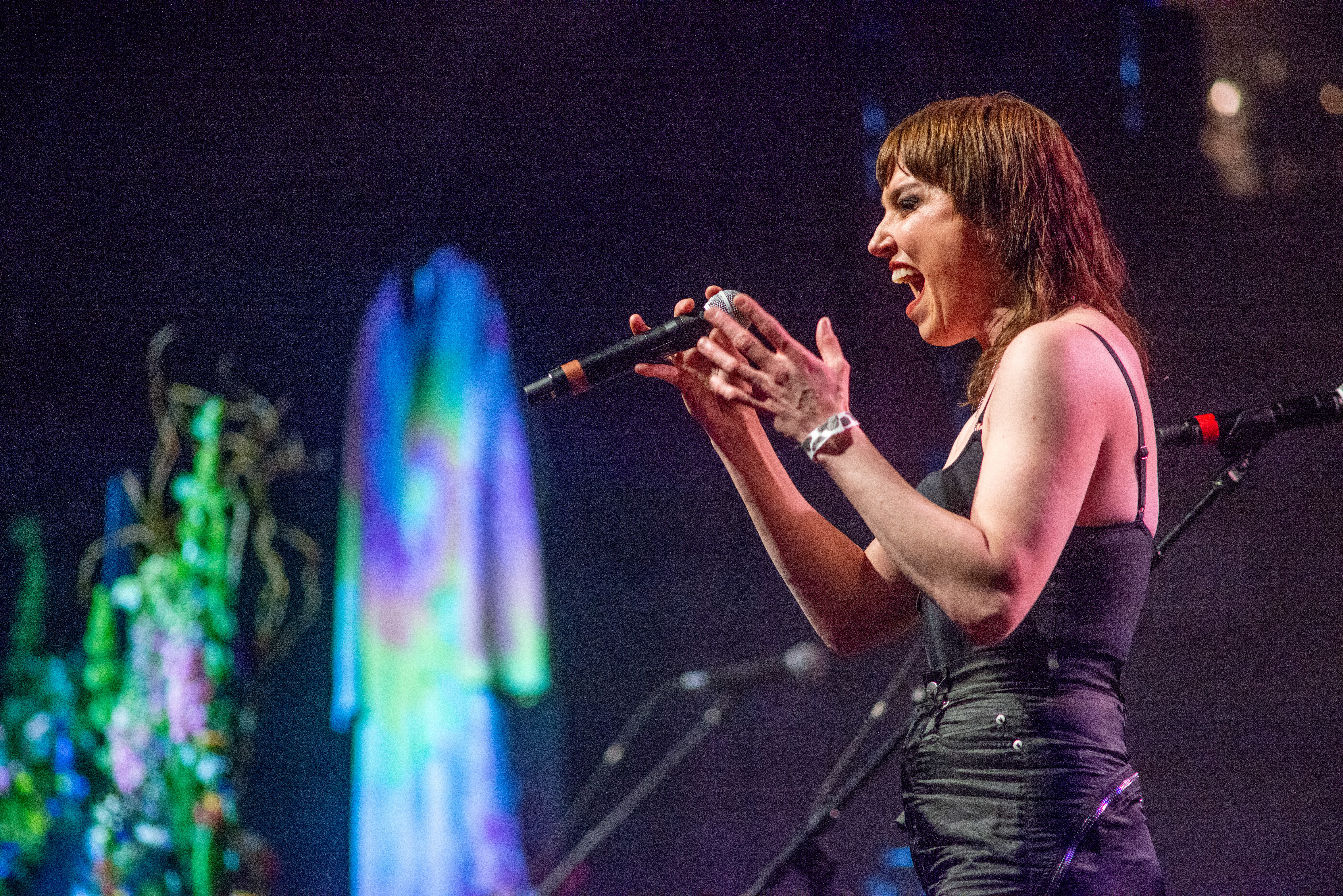
Lzzy Hale of Halestorm performs during the Pierre Robert Show of Life concert Wednesday, December 17, 2025 at The Fillmore in Philadelphia, Pennsylvania. (Photo by William Thomas Cain/CAIN IMAGES for WMMR)
“But the thing about Philly is, Philly loves people who are unapologetically themselves. And he never forgot for a second that he got to live the life of his dreams because you guys tuned in and listened and showed up for him.”
That theme of Robert being an outsider who chose to become a Philadelphian was cleverly echoed by Adam Weiner of Low Cut Connie.
Weiner’s song selection was “Young Americans,” which was recorded at Sigma Sound Studio a half-century ago by David Bowie, “another great artist who fell in love with Philadelphia,” he said.
Uosikkinen was the hard-working hero of the night, keeping the beat both with In the Pocket and later the Hooters, while just five weeks out of knee replacement surgery.
The ITP set of local luminaries, who set a high bar for the rest of the evening, began with Steve Butler and Richard Bush singing the Kinks’ “Sunny Afternoon” (a Robert favorite). It also included Cliff Hillis doing Todd Rundgren’s “I Saw the Light,” Arnold taking on Robert Hazard’s “Change Reaction,” and three-song sets by Tommy Conwell and Bob “Beru” McCafferty.
During one interlude, Philadelphia Councilmember Rue Landau came on stage to pay tribute to Robert, who was honored last week by a resolution introduced by Councilmember Mark Squilla that renames Latimer Street between 12th and Camac Streets as “Pierre Robert Way.”
Nicole Horder, niece of Pierre Robert and Ed Roland of Collective Soul dances during the Hooters performance during the “Pierre Robert: A Show of Life” concert on Dec. 17, 2025 at the Fillmore in Philadelphia.
Matt Cord, who has taken over the MMR midday time slot, introduced bands and was one of many who joked about Robert’s habitual lateness.
Robert’s fellow DJ and mentee Jackie Bam Bam aptly called his late friend “the Santa Claus of Philadelphia, the Mister Rogers of Philadelphia on the radio.”
After Dirty Honey’s LaBelle revved up the crowd with satisfyingly shrieking covers of Led Zeppelin and AC/DC, the lengthy show settled in to a strummy hard-rock acoustic duo midsection.
Ed Roland of Georgia band Collective Soul played, accompanied by producer Shawn Grove, a Philly area-native and Pierre-ophile. Before getting to the band’s signature 1993 hit “Shine,” Roland thanked the Eagles for drafting several Georgia Bulldogs defensive players, then was taken by surprise by a raucous “E-A-G-L-E-S” chant.
“I love you already, and now I love you even more,” he told the crowd.
Halestorm is the band led by singer Lzzy Hale and guitarist Joe Hottinger that hails from Red Lion in York County. Hale is a full-throated rock star, and ripped it up on “I Miss the Misery” and “Love Bites (So Do I).” She dedicated a forthright piano ballad, “How Will You Remember Me?” to Robert.
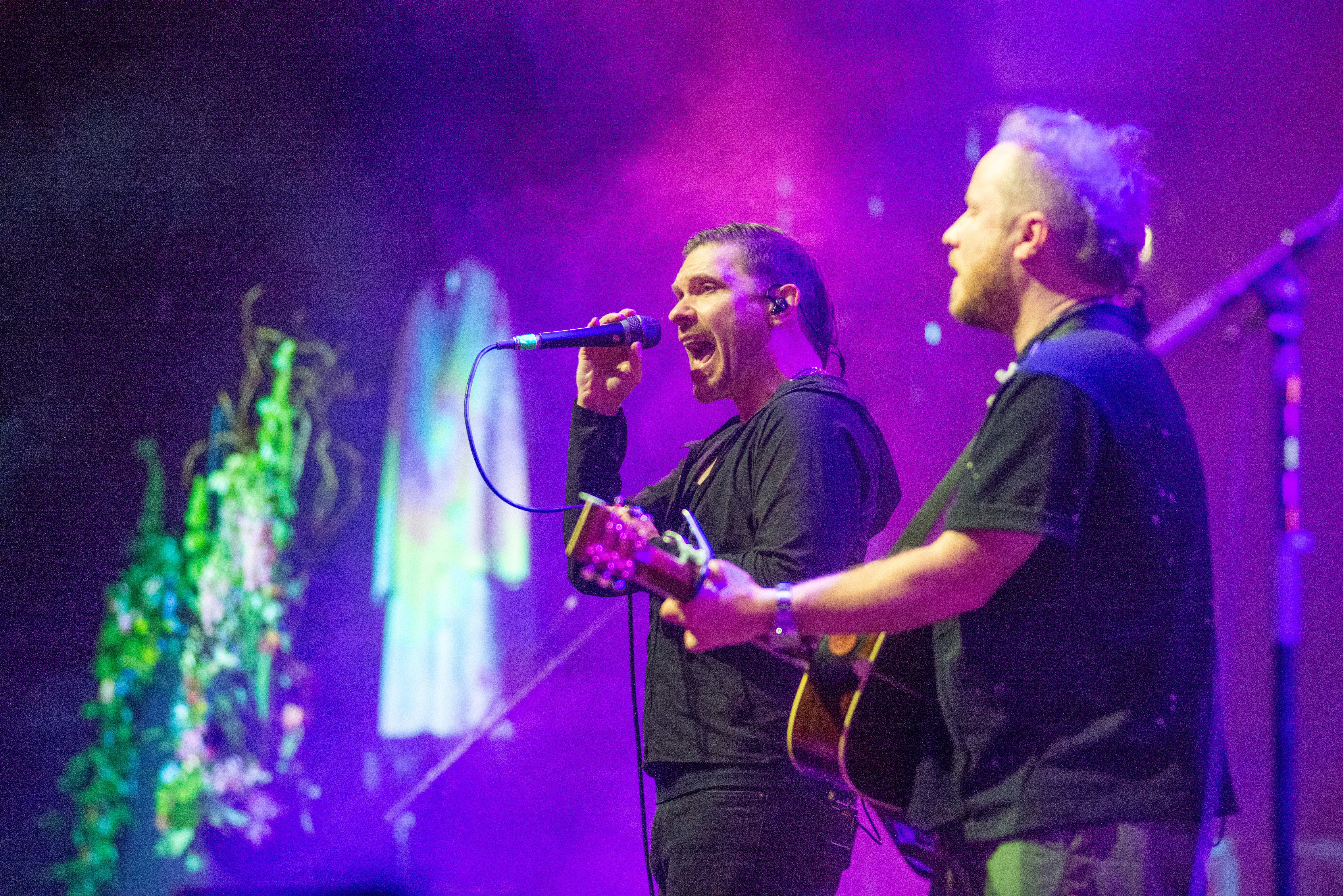
Brent Smith and Zach Myers of Shinedown followed and had the room singing with hits like “A Symptom of Being Human” and “Three Six Five.”
“There will never be another human on this earth who loves music more than that guy,” Myers said of Robert. Thanks to Robert, “Philly feels like a second home to us,” he said.
The quality of material was elevated considerably with Myers’ cover of Bruce Springsteen’s “Dancing in the Dark.”
The soul of the evening, however, belonged to the Hooters. The band was introduced twice. First by Robert’s longtime MMR colleague John DeBella, who noted that the Eric Bazilian and Rob Hyman-fronted Philly band was Robert’s favorite, along with the Rolling Stones.
(Curiously, none of the acts covered a Stones song, or anything by the Grateful Dead, who Robert also dearly loved.)
The second time, the Hooters were intro’d by Robert himself, who referred to the band as “joy generators” in a recording from one of the band’s annual shows at the Keswick Theatre, the last of which he attended just days before his death.
Brent Smith and Zach Meyers of Shinedown perform during the Pierre Robert Show of Life concert Wednesday, December 17, 2025 at The Fillmore in Philadelphia, Pennsylvania. (Photo by William Thomas Cain/CAIN IMAGES for WMMR)
The band kept it bright, opening with the carpe diem optimism of “I’m Alive” and the hopeful “Silver Lining,” looking for a light even when “in your deepest shade of black.”
“This is a joyous occasion,” Bazilian said. “But it’s life, and it’s one that was so well-lived. And that we all got to share.”
The sextet named after a melodica — the instrument which Hyman and guitarist John Lilly played simultaneously at one point — made sure to include Robert’s picks, such as “Boys Will Be Boys.”
And the city that Robert came to love was celebrated in its closing song “Beat Up Guitar,” with a lyric that could have been voiced by its departed friend.
“I may leave this place tomorrow, but my soul is here to stay,” Hyman and Bazilian sang, “In the town that rocked the nation — Philadelphia, Pa.”
All performers throughout the evening sing “Get Together” as the final song during the “Pierre Robert: AShow of Life” concert on Dec. 17, 2025 at the Fillmore in Philadelphia.
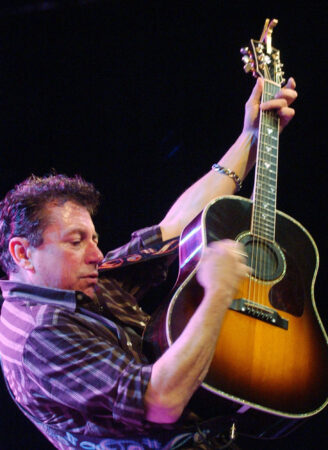
AUSTIN, Texas — Joe Ely, 78, the influential Texas-born singer-songwriter whose blend of honky-tonk, rock, and roadhouse blues made him a favorite among other musicians and led to collaborations with Bruce Springsteen and the Clash, has died.
Mr. Ely died in Taos, N.M., of complications from Lewy body dementia, Parkinson’s disease, and pneumonia, with his wife and daughter by his side, according to a post on his Facebook account Monday night and later confirmed by his representatives.
Mr. Ely was considered a key figure in the progressive country music movement as a founder of the influential country-rock band the Flatlanders with Jimmie Dale Gilmore and Butch Hancock, and later as a solo artist.
“Joe Ely performed American roots music with the fervor of a true believer who knew music could transport souls,” said Kyle Young, CEO of the Country Music Hall of Fame and Museum.
“But his true measure came through in the dynamic intensity of his powerhouse live performances, where he could stand his ground aside fellow zealots Bruce Springsteen, who recorded duets with Ely, and the [Rolling] Stones and the Clash, who took Ely on tour as an opening act,” Young said.
After signing with MCA, Mr. Ely released his first solo album in 1977. He would release more than 20 albums over his career, including Love and Freedom earlier this year.
Born in Amarillo, Texas, Mr. Ely stayed connected to his Texas roots through decades of recording and performing that lacked a mainstream breakthrough but made him a favorite of other artists.
“Every time I start a new album I head up to West Texas and drive around, you know, drive on those old cotton roads and in the wide-open spaces, and every once in a while I’ll come across a place where I’ve spent some time,” Mr. Ely told Texas Monthly in 2011.
It was a soundcheck for a show in London that led to the collaboration with British punk band the Clash. Mr. Ely would later open for the Clash at several shows and sang backup vocals for their hit song “Should I Stay or Should I Go?”
The Golden Globe Awards on Mondayannounced its nominees for the best in television and movies, and with it, another chance for victoryfor regional productions and local actors.
The ceremony airsJan. 11 with awards given in 28 categories.
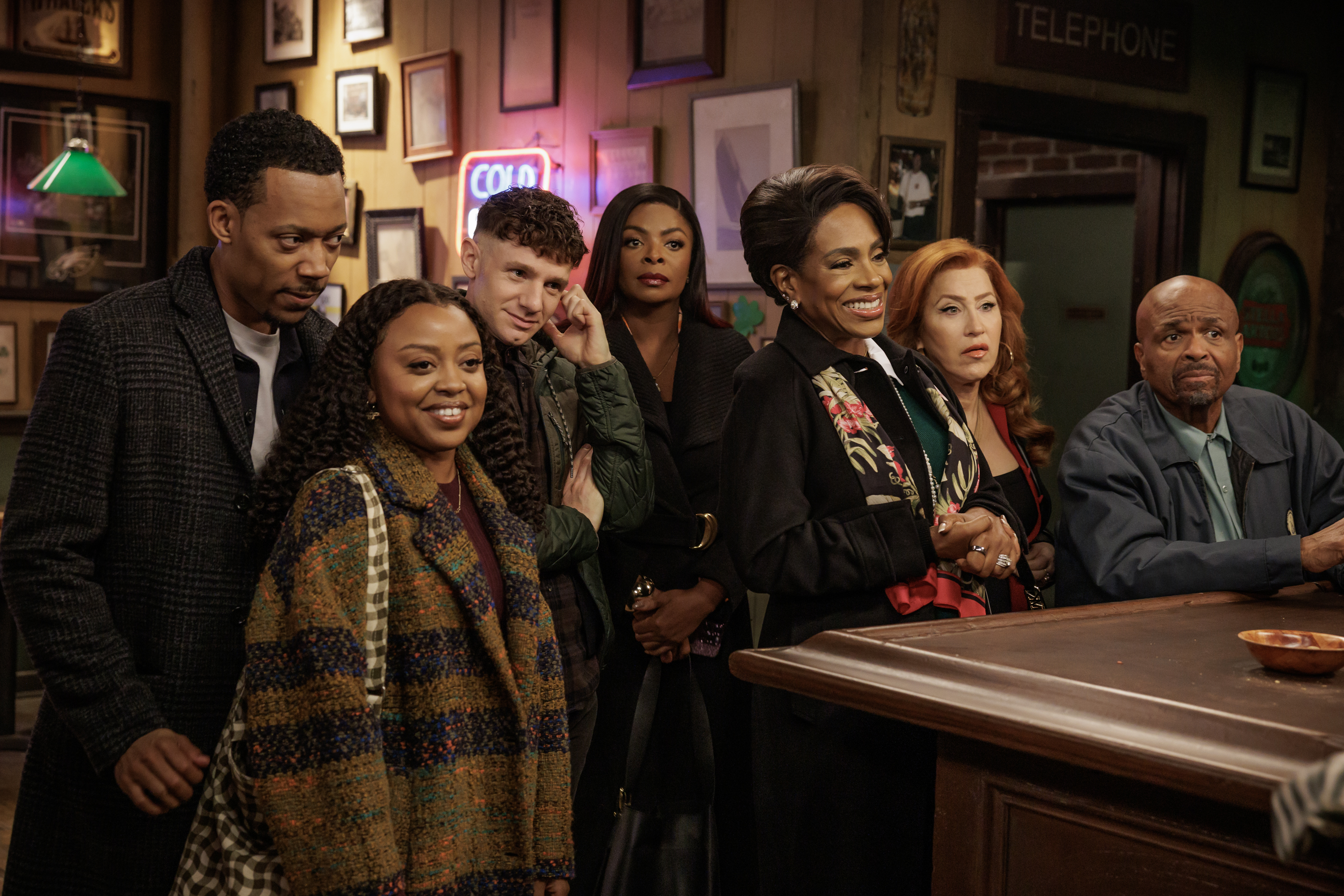
The Abbott Elementary crew visits the Always Sunny gang at Paddy’s Pub in the “It’s Always Sunny in Philadelphia” and “Abbott Elementary” crossover.
In its fifth season, Abbott Elementary has already won the hearts of Philadelphians and three Golden Globes. Still, this wholesome band of teachers, starring Philly-native Quinta Brunson, isup again for best musical or comedy television series.
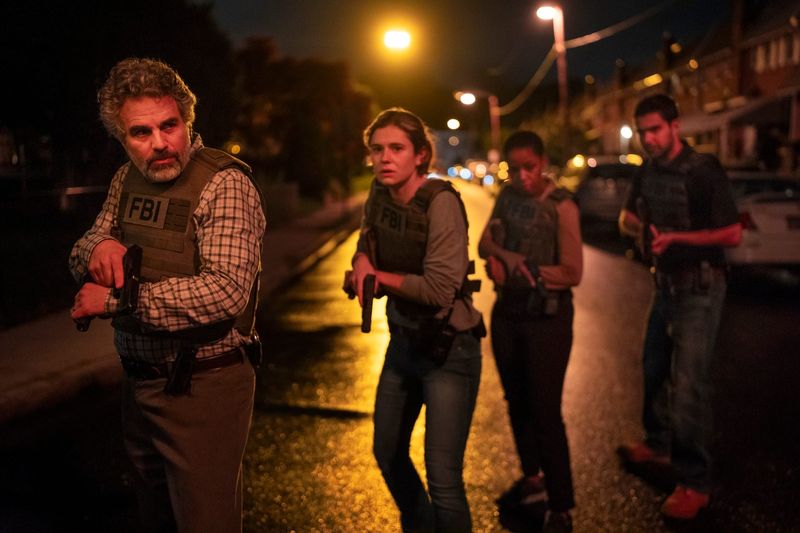
HBO’s Task and Peacock’s Long Bright River, two crime thrillers set in Philadelphia neighborhoods and suburbs, both have leading actors nominated for Golden Globes this season.
Mark Ruffalo as Tom, Alison Oliver as Lizzie, Thuso Mbedu as Aleah, and Fabien Frankel as Anthony in “Task.”
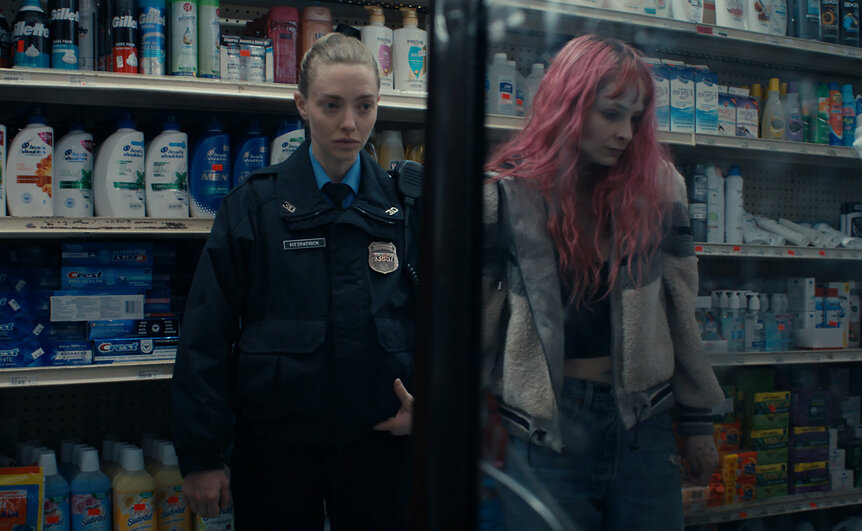
Amanda Seyfried (left) and Asleigh Cummings in the Kensington-set Peacock series “Long Bright River,” based on the novel of the same name by Temple professor and novelist Liz Moore.
Liz Moore’s crime novel Long Bright Riverturned heads when it was released in 2020, detailing the harrowing story of a Kensington police officer, played in the series by Amanda Seyfried, searching for her sister in a cat-and-mouse chase with a killer targeting sex workers. While the television adaptation was filmed in New York City, the bulk of the show takes place in Kensington and other Philadelphia neighborhoods, with Seyfried grabbing a nomination for best female performance in a dramatic limited series.
Hometown stand-up icon Kevin Hart was back to his roots with a new comedy special, Kevin Hart: Acting My Age, tackling injuries after 40, Chick-fil-A’s spicy chicken sandwich consequences, and slipping in the shower. He earned a nomination for best stand-up comedy performance on television.
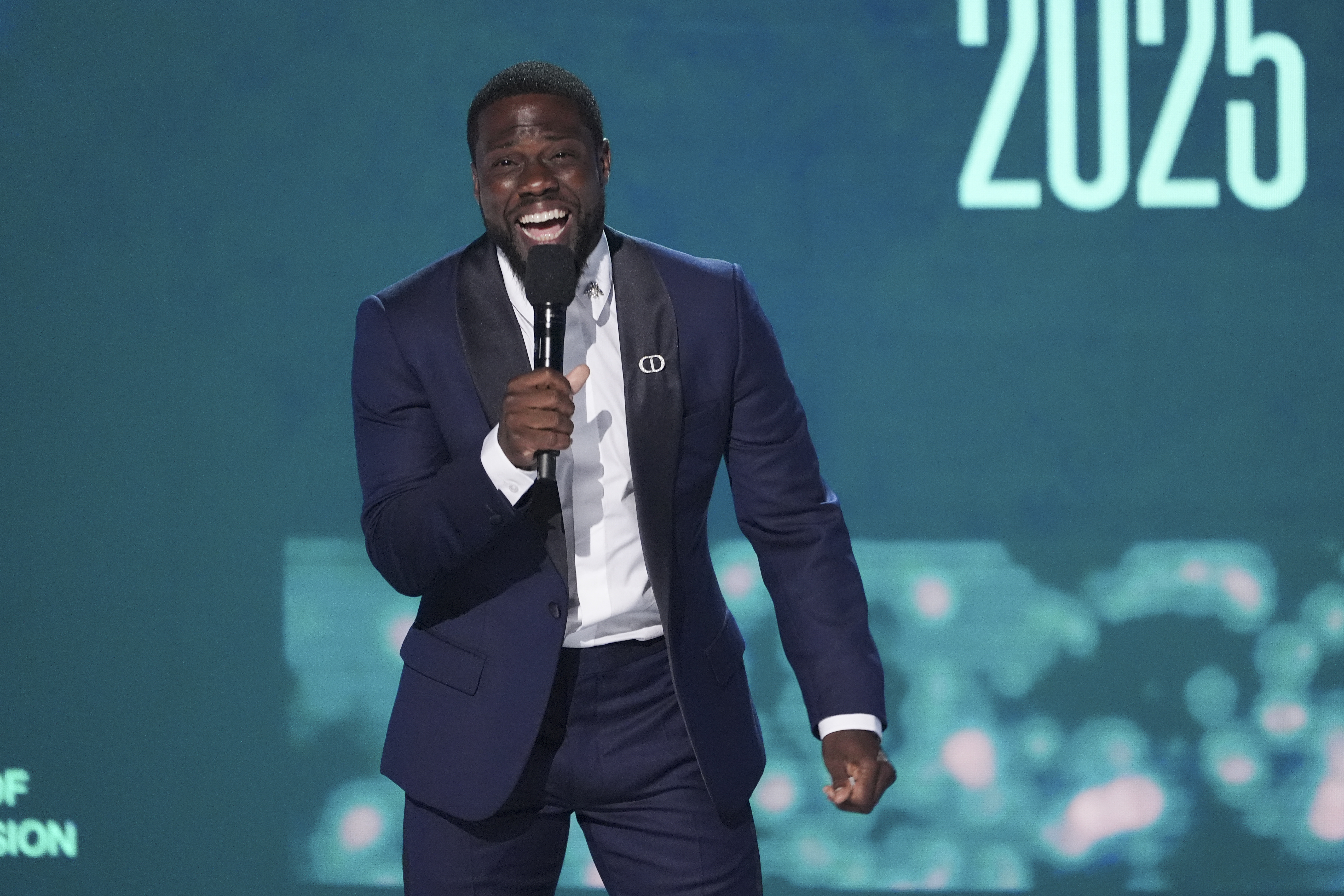
Host Kevin Hart speaks during the BET Awards on Monday, June 9, 2025, at the Peacock Theater in Los Angeles.
And through a few degrees of separation, several other nomineescan be claimed as Philly-adjacent.
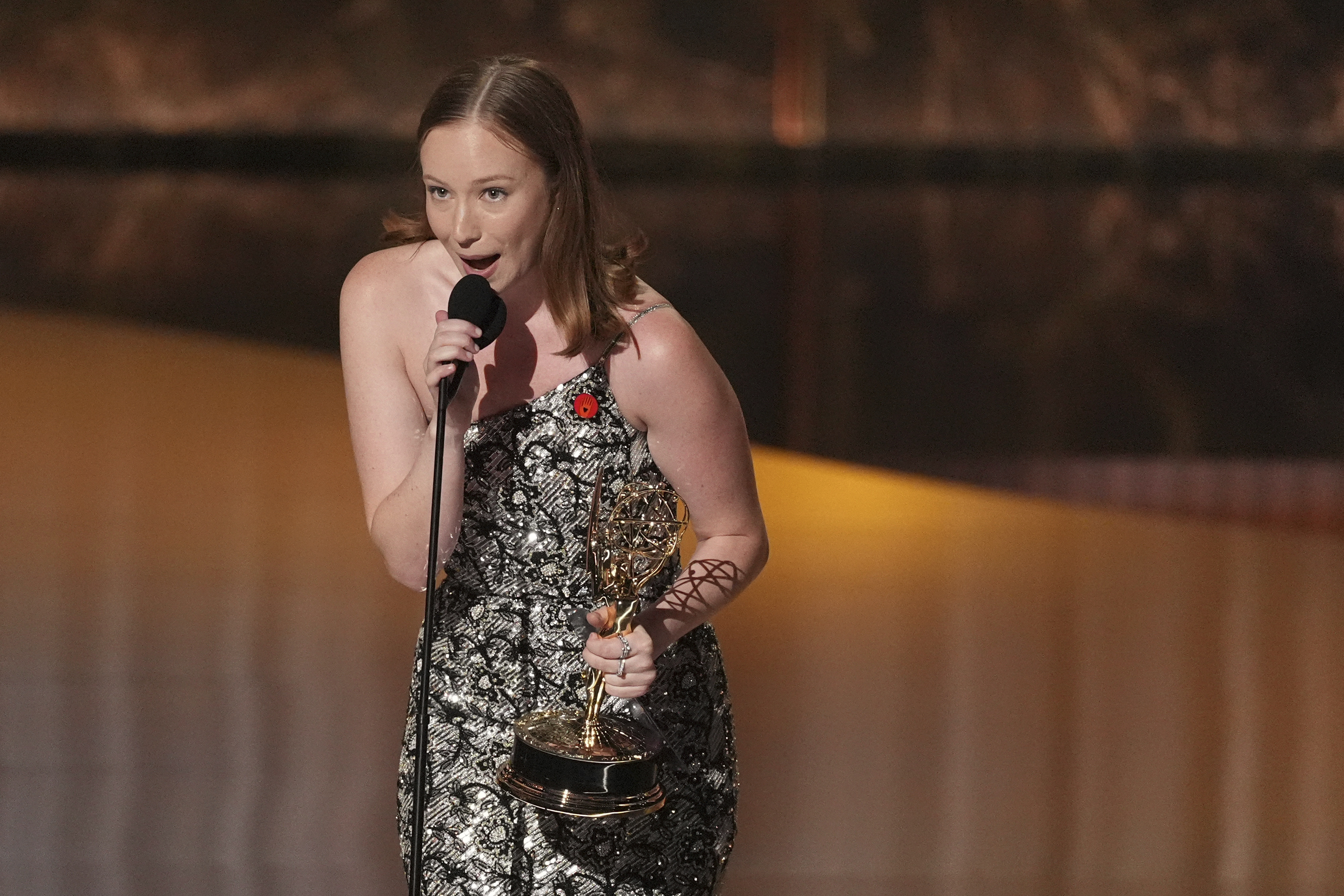
Hannah Einbinder, whose father is from Doylestown, accepts the award for outstanding supporting actress in a comedy series for “Hacks” during the 77th Primetime Emmy Awards on Sunday, Sept. 14, 2025, at the Peacock Theater in Los Angeles. (AP Photo/Chris Pizzello)
Take Hacks actress Hannah Einbinder, who shouted “Go Birds!” during her speech after winning an Emmy for best supporting actress in a comedy series, and was filmed by the evening news crying in the streets of Los Angeles after the Eagles’ 2018 Super Bowl win.
She may not be from Philadelphia (her father, actor Chad Einbinder, is from Doylestown), but she reps the city. HBO’s Hacks, which follows a veteran Las Vegas comic mentoring a young comedy writer, is up for best musical or comedy television series, with Einbinder and costar Jean Smart nominated for best supporting female actor and best actor in a musical or comedy series, respectively.
And there are some broader Pennsylvania and New Jersey ties among the nominees.
The breakout medical drama The Pitt, which takes place in the fictional Pittsburgh Trauma Center, depicts a 15-hour shift in an emergency room, split across 15 one-hour episodes. The Pitt’s lead actor, Noah Wyle (known for his role as Dr. John Carter in NBC’s ER), is up against Ruffalo for best male actor in a dramatic television series.
After a major overhaul of the award show in recent years, including the sunsetting of the Hollywood Foreign Press Association due to ethics and diversity concerns, the new Golden Globe Awards are judged by a panel of 400 journalists from across the world.
The Golden Globes will be broadcast live on Jan. 11 at 8 p.m. Philadelphia time on CBS and streaming on Paramount+.
It’s OK if you don’t want to admit how many times you listened to “Golden” from KPop Demon Hunters — Spotify will tell us, anyway.
Spotify Wrapped — the music platform’s annual, aesthetically pleasing deep dive into users’ listening habits — is back again with the feature dropping Wednesday morning.
The 11-year-old feature is both beloved and feared by users for its unflinchingly honest view into users’ favorite music over the last year-ish. So much so, last year, U.S. Rep. Josh Gottheimer of New Jersey admitted that he manipulated his Wrapped results to be Bruce Springsteen-forward.
Features include users’ most-listened-to songs, artists, and albums, as well as the duration of time spent listening to music. There are also some bragging rights involved — in the past, users within an artist’s top 1% of listeners could access a special video message and sometimes purchase exclusive merch.
Across social media, users share parodies of their Spotify summary, saying things like “You spent 25,684 minutes this year complaining about Nick Sirianni.” Know Your Meme says the meme format dates back to about 2017.
Wrapped is considered one of Spotify’s signature calling cards and a major driver for user engagement and customer retention. This year, it dropped at the same time some users are boycotting Spotify entirely citing ads heard on the platform and its CEO’s investments.
Here’s more on that and Wrapped 2025:
When did Spotify Wrapped results drop?
Spotify Wrapped was released on Wednesday morning.
Historically, the feature usually drops the week after Thanksgiving, around the first week of December.
How do I see and share my Spotify Wrapped results?
Once Spotify Wrapped is live, here’s how you can see your results. Use the service’s mobile or web browser versions. It is not available on the desktop app.
Here are the steps:
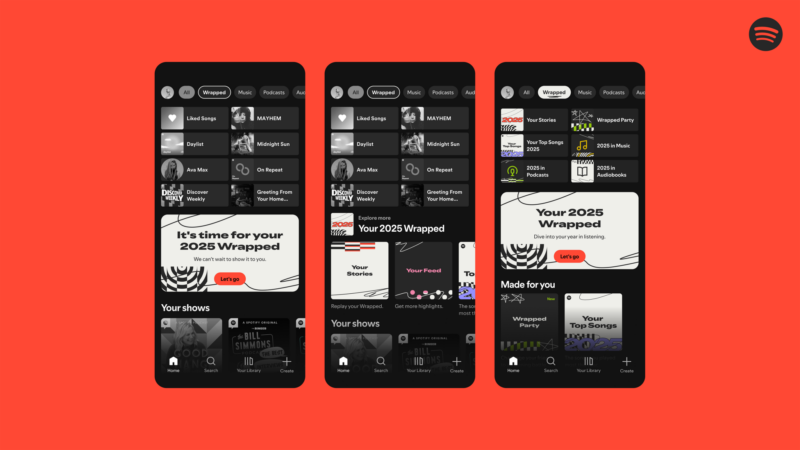
Open Spotify on your phone. A prompt to see your 2025 Wrapped should be visible from the homepage of the app. If it isn’t, or you’re using a web browser, visit www.spotify.com/us/wrapped.
Find the “Wrapped” section in the top navigation bar, a featured playlist, or by typing “Wrapped” in Spotify’s search bar.
This year’s Wrapped results include a “report” and assign listeners to a club based on their listening habits, like the Serotonin Club or the Grit Club. It also has a visual component that shows artists racing for the top of your streams month by month. With bold black and white designs and colorful fonts, it walks you through your listening journey, featuring your total minutes spent listening to music, top songs, artists, genres, and podcasts. One new feature includes users’ “listening age” based on how trendy their picks are among generations.
Each slide of the Wrapped Story has a “share” button at the bottom. Click that button to save each individual slide to your camera roll or post on social media. At the end of your Wrapped Story, there will be a second opportunity to save your Top Artists summary.
What’s the time frame for Spotify Wrapped data?
It’s fuzzy. While Spotify spokespeople previously said data was analyzed between January and October, the streaming platform said in 2023 that Wrapped was still counting past Halloween.
The announcement sparked light controversy among audiophiles — the last week of October was once treated like the ultimate good-music-curating season to ensure impressive results.
Spotify users would also treat November and December like open season, free to blast holiday music on repeat without fear of it reflecting on their “cultural report card.”
But with an indefinite cutoff date, users remain left in the dark when it comes to how their listening habits will be reflected when Wrapped drops. Last year, the company again promised that data collection would happen past Halloween, but hasn’t disclosed a firm deadline.
We don’t know exactly when listening data stopped being collected this year. But we can guess it was sometime in mid- to late November.
Can I modify my results? What does ‘excluding from my taste profile’ really mean?
Where’s the fun in that?
There’s no way to modify your Wrapped results (unless you’re the aforementioned U.S. rep and opt to photoshop them). You get what you get, guilty pleasure songs and all — unless you plan ahead.
Spotify has a feature you can opt out of, including some elements from your listening data.
While using Spotify, users can click the ellipses next to a playlist and select “exclude from your taste profile.” For example, you can exclude your nightly “10 hours of ocean waves” playlist or your kid’s Disney playlist to keep those tracks from influencing your weekly Discover playlists and annual Wrapped data, Spotify says.
The caveat here is this only works for playlists, not individual songs, artists, or albums. A loophole could be curating a playlist of every sleep song, white noise track, guilty pleasure bop, or kids’ music that isn’t yours and excluding that entire playlist from your taste profile. But you’d have to do this ahead of time.
You can’t make edits to your Wrapped results after the fact.
What can I do with my Spotify Wrapped data?
You can post it on social media to brag about your incredible taste, obviously.
Beyond that, there are several third-party sites you can link your Spotify account to that will analyze your Wrapped data and roast you even more.
How Bad is Your Spotify is an AI bot that will judge your music taste. And be warned, it’s kind of harsh. Some results include: “Your spotify was tay-tay-fangirl-cling-clang-pots-and-pans-music-ponytail-pop bad,” “Your spotify was bon-iver’s-impact-escape-room cabincore bad,” and “Your spotify was folklore-evermore-dumbledore-witch-pop-escape-room-has-a-1975-lyric-tattoo bad.” You get the idea.
Receiptify reports your top songs in the form of a shareable shopping receipt graphic, while Instafest conceptualizes a music festival lineup based on your top artists.
What’s up with the Spotify boycott?
In recent months, Spotify’s received backlash over reports that its CEO, Daniel Ek, invested $693.6 million in the European defense technology start-up Helsing. The tech has been criticized for its role in driving the military-industrial complex and ethical concerns over surveillance technology.
Around the same time, reports came out that Spotify — and other streaming services — were running ICE recruitment ads. A spokesperson for the company said the ads were part of a wider ad campaign by the U.S. government running across multiple platforms.
Rolling Stone reported that the Spotify users hearing the ads were using the streaming platform’s free ad-supported tier and that other streaming platforms running the same ad campaign included Amazon Music, Hulu, Max, YouTube, and Pandora as early as April. Apple Music did not run the ads, but it’s a paid-only service with no free ad-supported tier.
Is there a version of Spotify Wrapped for Apple or Amazon Music?
Yes and no. For the first time last year, Amazon Music launched 2024 Delivered, its clapback to the Spotify Wrapped experience. The feature gives a graphic breakdown of users’ listening habits. Amazon Music users can access it by opening the Amazon Music app and tapping a banner that says “2025 Delivered” in their Library.
Apple Music has a feature called Replay, which is available all year and allows users to see a detailed view of their listening habits. Similar to Wrapped, Replay has a “year-end experience.” The Replay year-end experience debuted in 2023. Critics said at the time that Apple’s version lacked in the shareable experiences and themes that Spotify does so well.
YouTube Music also offers a “year in review” recap with breakdowns of users’ top songs, albums, artists, and total listening time over the year.
But none of them feel quite like Wrapped, which is praised for its extra pizazz.
The sense of loss that has permeated 2025 struck again this weekend when we learned of the sudden death of a Philly journalism legend, Michael Days, who guided the Philadelphia Daily News during most of its last dozen freewheeling and Pulitzer-winning years before we merged with The Inquirer in 2017. He was just 72, far too young. The top-line of Mike’s obituary was how, as the first African American to lead a newsroom in America’s founding city, he paid it forward by mentoring the next generation of rising Black journalists. But people like me who worked for him remember him more simply as the wisest and mostempathetic human being we ever had as a boss. He leaves right when the nation’s newsrooms need decent souls like Mike Days more than they ever did.
What a $10M bribe rumor says about Trump, Middle East peace, and America’s fall
President Donald Trump talks with Egypt’s President Abdel-Fattah el-Sissi during a summit to support ending the more than two-year Israel-Hamas war in Gaza after a breakthrough ceasefire deal, Oct. 13 in Sharm El Sheikh, Egypt.
The thing about being a 79-year-old president is that sometimes you just blurt stuff out, with no filter as to whether your words might be embarrassing, undiplomatic — or potentially incriminating.
Consider the case of Donald John Trump, the 47th U.S. president and the oldest one on the day of his election. Last week, in what may prove to be a fleeting moment of triumph as Trump celebrated a Gaza peace deal that included the release of 20 Israeli hostages, POTUS arrived at an Egyptian resort town for a Middle East summit. He kicked off the day with a one-on-one sit-down with Egypt’s strongman ruler, Abdel-Fattah el-Sissi.
“There was a reason we chose Egypt [for the summit] because you were very helpful,” Trump said as a gaggle of reporters and photojournalists entered their meeting room.
Really? Helpful in what way?
“I want to thank you,” the American president told Sissi, who seized power in a 2013 coup. “He’s been my friend right from the beginning during the campaign against Crooked Hillary Clinton. Have you heard of her?”
Here Trump was pushing, ever so absurdly, for the Nobel Peace Prize, and then he had to spoil it all by saying somethin’ stupid like, you bribed me. Well, he almost spoiled it, if more journalists — aside from MSNBC’s brilliant Rachel Maddow, who seized on the remark hours later — had grasped the potential import of this presidential prattle.
It’s certainly legal, if gross, for Trump to be close pals with Sissi, even if Human Rights Watch reports that the Egyptian dictator is “continuing wholesale repression, systematically detaining and punishing peaceful critics and activists and effectively criminalizing peaceful dissent.” What would not be legal is the Middle Eastern nation interfering in the 2016 election, in which Trump narrowly defeated Clinton in the handful of swing states that tipped the Electoral College.
What made Trump’s comments last week so jaw-dropping is that U.S. federal investigators worked for several years trying to prove exactly that scenario. In August 2024, days after Trump was nominated by the GOP for his second reelection bid, the Washington Post reported that the Justice Department investigated a tip that Sissi’s Egypt provided Trump with $10 million the candidate desperately needed in the 2016 homestretch to defeat Clinton. That happened right before Trump, as 45th president, reopened the spigot of foreign aid that had been halted because of Sissi’s human rights abuses.
It’s known that Trump did put $10 million into the campaign, which he listed as a loan. The Post in 2024 offered a tantalizing, if circumstantial, piece of evidence — that the Cairo bank had received a note from an agency believed to be Egyptian intelligence to “kindly withdraw” nearly $10 million in two, 100-pound bags full of U.S. $100 bills, five days before Trump took the oath of office.
But the investigative trail ran cold. In 2019, then-special counsel Robert Mueller turned the matter over to Trump’s appointees in the Justice Department, who of course didn’t pursue the president’s bank records. Neither — inexplicably — did Joe Biden’s attorney general, Merrick Garland, as the statute of limitations expired in January 2022. That’s where things stood last week before Trump started blathering in Sharm El Sheikh.
One reason I’m writing about this is the sheer frustration that Trump — yes, allegedly, possibly — might have gotten away with bribery to the point where he’s almost bragging about it in public. But I also think the mysterious case of the Egyptian bags of cash speaks to the present, dire American moment in a couple of ways.
For one thing, it casts a light on what’s really behind what Trump hopes will be viewed as the signature achievement of his second presidency. That would be the fragile peace deal that aims to end the last two years of bloodshed in Gaza that started with the Hamas terror attack of Oct. 7, 2023 and has resulted in at least 67,000 dead Palestinians and the utter destruction of their seaside homeland.
How did Trump get a deal that had eluded his predecessor Biden, in a region that has vexed every American president from both parties? It certainly helped that most of the power brokers with the clout and the cash to help end the fighting in Gaza are repressive strongmen — or, as Trump might call them, role models. And they all seem to speak the same language of corrupt back-scratching.
If those bags with $10 million in greenbacks did make their way to Trump in 2017, it looks like small change in today’s cross-Atlantic wheeling-and-dealing. After all, a key go-between in the negotiations — Qatar, which has good relations with Hamas and has hosted its exiled leaders — gifted America a $400 million jet that Trump plans to use not just as Air Force One but in his post presidency, while his regime has promised to protect the Qatari dictators if they are ever attacked.
Another key supporter of the plan is the United Arab Emirates, which also backs the UAE firm that recently purchased a whopping $2 billion in cryptocurrency from a firm owned by Trump’s family as well as the family of Steve Witkoff, the regime’s lead Middle East negotiator. At the same time, Trump’s U.S. government allowed UAE to import highly sensitive microchips used in artificial intelligence.
Witkoff’s negotiation end–game brought in Trump’s son-in-law, Jared Kushner, who forged close ties during his father-in-law’s first term with Saudi Arabia’s murderous de facto ruler Prince Mohammed bin Salman, who pulled the levers for a $2 billion investment in a hedge fund created by Kushner despite no prior expertise.
Those Saudi ties could prove critical to future stability in the region, and in a joint interview with CBS’ 60 Minutes Sunday night, Kushner and Witkoff made no apologies for mixing billion-dollar deals with the pursuit of world peace. “What people call conflicts of interest,” Kushner said, “Steve and I call experience and trusted relationships.”
OK, but those “trusted relationships” are built on a flimsy mountain of cash that could collapse at any minute. Look, I’m thrilled like everyone else that 20 Israeli hostages are finally reunited with their loved ones, and to the extent Trump and his regime deserve any credit, I credit them. But the art of the deal that the president is bragging about is all about the Benjamins — more worthy of applause on the floor of the New York Stock Exchange than a Nobel Peace Prize.
Real peace is based on hard work and trust, not Bitcoin — so is it any wonder that the ceasefire is already collapsing with two dead Israeli soldiers and fresh, lethal airstrikes in Gaza? The only thing with any currency among a rogues’ gallery of world dictators is currency, and that transactional stench has fouled everything from Cairo to K Street.
Is it any surprise that a regime whose origin story allegedly includes bags of Egyptian cash would do absolutely nothing when it was told that its future border czar, Tom Homan, was captured on an audiotape accepting $50,000 in a fast-food bag from undercover FBI agents who said they wanted government contracts?
In hindsight, the failure to pursue that report of the $10 million Egyptian bribe opened up a floodgate of putrid corruption, wider than the Nile. It signaled a sick society where everything is for sale — even world peace — but nothing is guaranteed.
Yo, do this!
The 1970s and ‘80s are having a cultural moment right now, and this boomer is here for it! On Apple TV (they’ve dropped the “+,” probably after paying some consultant $1 million for that pearl of wisdom) comes the long-awaited five part docuseries about the life and times of filmmaker Martin Scorsese, the savior who rose from NYC’s mean streets to give us Goodfellas, Raging Bull, Taxi Driver, and so much more. Watching Mr. Scorsese is going to make the eventual death of the baseball season so much easier to take.
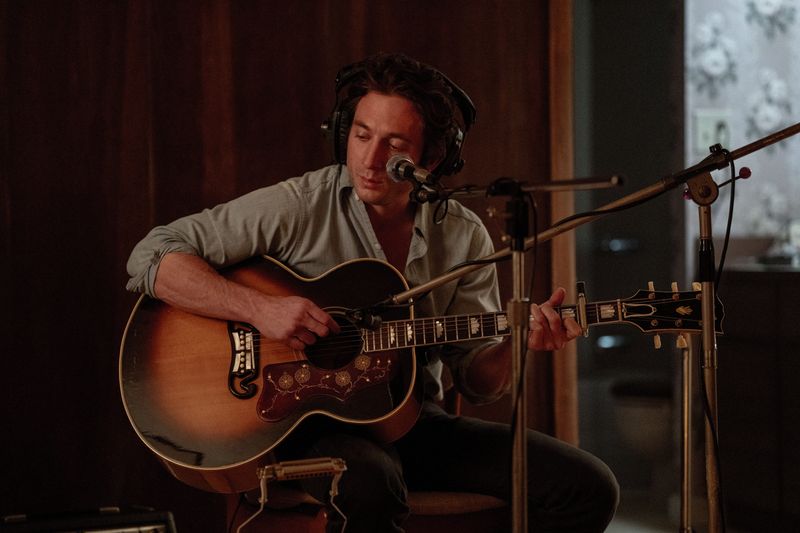
The earthy, urban musical equivalent of Scorsese would have to be Bruce Springsteen, who has been marking the 50th anniversary of his breakthrough Born to Run LP with all kinds of cool stuff, capped with Friday’s long-awaited release of the first-ever biopic about “The Boss,” Deliver Me from Nowhere. Staring The Bear’s Jeremy Allen White as Springsteen, the film’s unlikely narrative — focusing on the making of 1982’s highly personal and acoustic Nebraska as the rock star seeks release from a bout of depression — sounds like exactly the uplift that America needs right now.
Ask me anything
Question: As someone living in Ireland and looking across the ocean. Trump won’t be in power forever, but how is anyone going to deal with the MAGA crowd that helped elect him? That level of stupidity, hatred and racism cannot be fixed. How is [t]he USA ever going to heal? — Stephen (@bannside@bsky.social) via Bluesky
Answer: That’s a great question, Stephen, and like most great questions there’s no easy answer. Although I’m optimistic that the 2026 midterms and the 2028 presidential election will happen and that the anti-Trump coalition that we witnessed at “No Kings” will prevail, I agree with you that it’s only a partial and temporary fix. I’d fear an Iraq-level resistance could rise up in the regions we call “Trump country.” My long-term solution would be along the lines of what I proposed in my 2022 bookAfter the Ivory Tower Falls: Fix higher education — broadly defined as from the Ivy League to good trade schools — to made it a public good that reduces inequality instead of driving it. And promote a universal gap year of national service for 18-year-olds, to get young people out of their isolated silos. There are ways to prevent the next generation from becoming as stupid or hateful or racist as the Americans who came before them, but it will take time and patience that we seem to lack right now.
What you’re saying about…
Remember the Philadelphia Phillies? When I last saw you here two weeks ago, their annual postseason collapse and the fate of manager Rob Thomson was a hot topic. As expected, there was minimal response from you political junkies, and opinions were split — even before the team defied the conventional wisdom and announced he’ll be returning in 2026. Thomson’s supporters were more likely to blame the Phillies’ inconsistent sluggers, with John Braun asking “who could you hire who could guarantee clutch hits?” Personally, I’m with Kim Root: “I follow the Philly Union, who just won the Supporters Shield — that is all.”
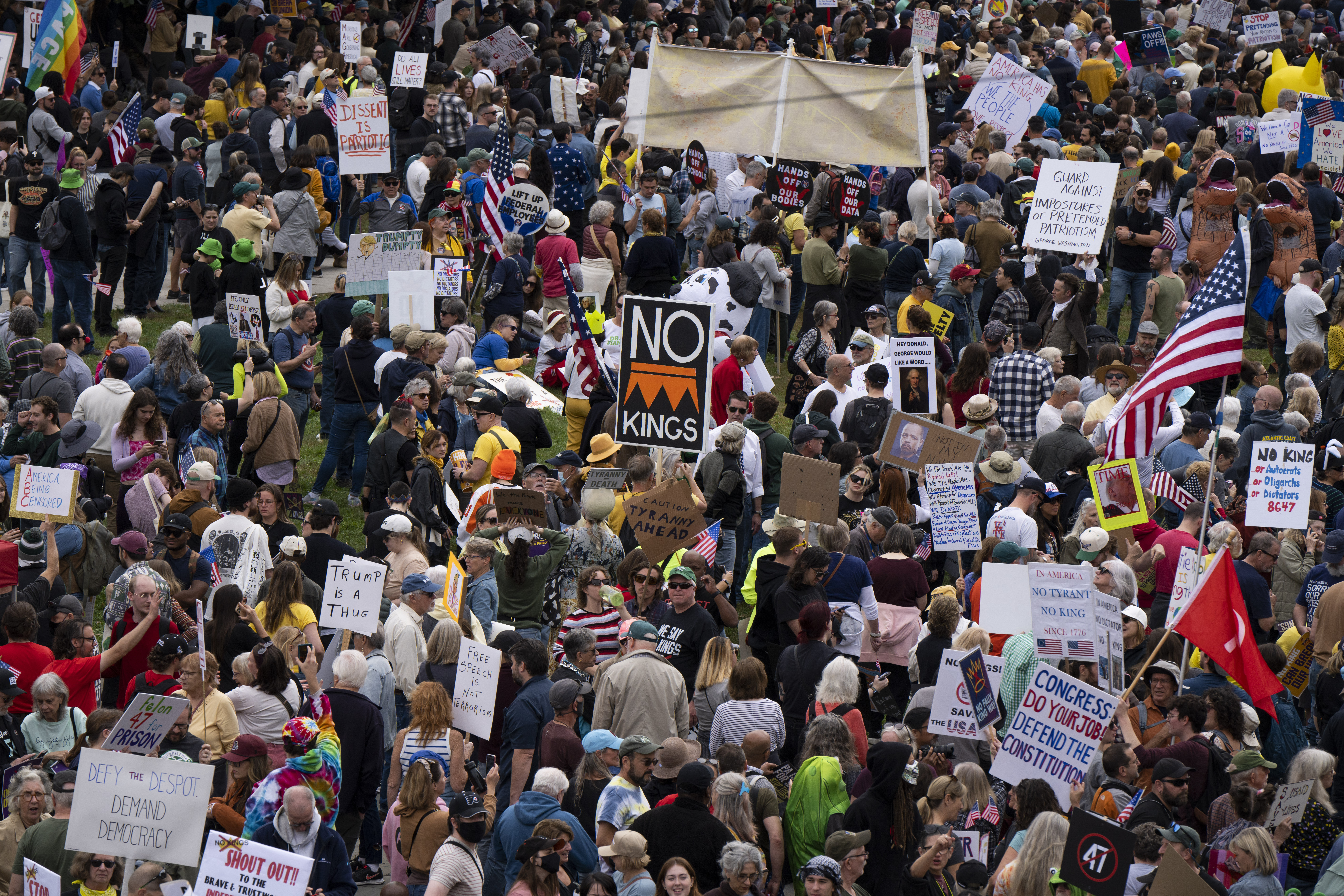
📮 This week’s question: Back to the issue at hand: I’m curious if newsletter readers attended the “No Kings” protest last Saturday, and what you see as the future of the anti-Trump movement. Are more aggressive measures like a nationwide general strike needed, or is the continued visibility of nonviolent resisters enough? Please email me your answer and put the exact phrase “No Kings future” in the subject line.
Backstory on who the “No Kings” protesters really were
Demonstrators gather for a ’No Kings’ rally in Philadelphia on Saturday.
They clogged city plazas and small-town main streets from San Diego to Bangor on Saturday, yet the more than 7 million Americans who took part in the massive “No Kings” protest — the second-largest one day demonstration in U.S. history, behind only the first Earth Day in 1970 — seemed to mystify much of the befuddled mainstream media. Just who were these people protesting the Donald Trump presidency, and why are they here?
Instead of a journalist, it took a sociologist to get some answers. Dana Fisher — the Philadelphia-area native who teaches at American University and is the leading expert on contemporary protest movements — was out in the field Saturday at the large “No Kings” march in Washington, D.C., collecting data with a team of researchers. She’s shared her early top-line results with me, aiming to both give a demographic and ideological snapshot and also compare Saturday’s crowd with her findings at other recent rallies.
If you were among the 7 million on Saturday, some of this data won’t surprise you. The protesters were, on the whole, older than the average American, with a median age of 44 (compared to 38 for the nation as a whole.) Once again, the “No Kings” participants were overwhelmingly white (87%) with women (57%) in the majority. But it’s also worth noting that men (39%) were more likely to take part than earlier protests tracked by Fisher, and the 8% who identified as Latino is double the rate of Hispanic participation in the 2017 Women’s March.
That last finding may reflect the passions of the “No Kings” protesters, who listed immigration as a key motivation at a rate of 74%, second only to their general opposition to Trump (80%, kind of a no brainer). That certainly jibed with the demonstrators at the rally I attended in suburban Havertown, who again and again mentioned the sight of masked federal agents grabbing migrants off the street as what compelled them to come out.
Fisher’s most telling findings may have been these: The people out in the streets are mad about what they see happening to America, with 80% listing “anger” as an emotion they are feeling, trailed closely by “anxiety” at 76%. Yet few of those who spoke with her team believed that will translate into violence. The number of demonstrators who agreed with the statement that “because things have gotten so off track, Americans may have to resort to violence in order to save our country” was only 23% — lower than other protests her team has surveyed. It seems like the larger the public show of resistance to Trump’s authoritarianism, the more optimism that the path back to democracy can be nonviolent.
What I wrote on this date in 2021
I hate to say I told you so but… On this date four years ago, Joe Biden was still clinging to dreams of a presidential honeymoon after ousting Donald Trump in the 2020 election, but there were dark clouds on the horizon. On Oct. 21, 2021 I warned that sluggish action on key issues was starting to hurt his standing with under-30 voters. I wrote that “while the clock hasn’t fully run out on federal action around issues like student debt or a bolder approach on climate — the disillusionment of increasingly jaded young voters could change the course of American history for the next generation, or even beyond.” How’d that turn out? Read the rest: “From college to climate, Democrats are sealing their doom by selling out young voters.”
Recommended Inquirer reading
I returned from a much-needed staycation this weekend by leaving the sofa and spending a glorious fall morning at the boisterous “No Kings” protest closest to home in Delaware County, which lined a busy street in Havertown. I wrote about how the protests are winning back America by getting under the skin of Donald Trump and the GOP, who can no longer pretend to ignore the widespread unpopularity of their authoritarian project.
Every election matters, even the ones that are dismissed as “off-year” contests. In today’s heated and divisive climate, even what used to be a fairly routine affair — the retention of sitting judges on the state and local level — has taken on greater importance. Here in Pennsylvania, the state’s richest billionaire, Jeff Yass, is spending a sliver of his vast wealth to convince voters to end the tenure of three Democrats on the state Supreme Court. The Inquirer’s Editorial Board is here to explain why that’s a very bad idea. On the other hand, some judges up for retention in the city of Philadelphia — where jurists haven’t always lived up to the promise of America’s cradle of democracy — deserve closer scrutiny. The newsroom’s Samantha Melamed revealed a leaked, secret survey detailing what Philadelphia attorneys think of some of the judges on the November ballot, and it is not pretty. The bottom line is that you need to vote this year, and subscribing to The Inquirer is the best way to stay informed. Sign up today!
By submitting your written, visual, and/or audio contributions, you agree to The Inquirer‘s Terms of Use, including the grant of rights in Section 10.